
It might seem odd to group The Homesman and The East together for consideration. The first is a solid but somewhat frustrating Western, with a feminist edge. The second is an embarassingly broad, largely contemptible genre picture about cartoonish, dumpster-diving eco-terrorists that consistently rings false. One is a worthwhile attempt at reinvigorating a genre; the other is exploitation of the worst sort.
I liked The Homesman; I did not care for The East. I prefer Kelly Reichardt to either. More on that in a second.
They are different films but certain things link them. Both center on a female lead who is compelled by circumstance to deal with a male protagonist with whom she shares little. Both relate her journey from a position of power, strength, and resilience to a kind of co-dependency, as she begins to take on aspects of those around her and her expectations shift. Both deal with “going back to nature,” on some level, and leaving the trappings and comforts of polite society behind. Both films are unsure whether they are about her dynamism or the roughneck, anti-hero allure of their compromised men, or desire on the margins of respectability. In both, desire proves deadly.
Tommy Lee Jones’ The Homesman is an anti-Western. Contrary to form, it features women at is center, and is specifically focused on the horrors they face. Jones’ George Briggs, rescued from a near-hanging, is enlisted to accompany Hilary Swank’s Mary Bee Cuddy and her three, damaged female charges across the Nebraska Territory to a sanitarium in the east. He only gets wrangled into this thanks to his incompetence and hated status; no one wants this job. Swank is pious and devout; Jones is wily, weary, and dissolute. Of course, it becomes, as Mike D’Angelo noted, a buddy road trip.
A second act catastrophe stills any giggling, though it makes perfect sense. This is a world God has seen fit to abandon. Jones has agreed to transport the woen to Ohio for payment, and lays it out as clear as he can: “There’s $300 at the end. There’s nothing else.” Swank protests, but there’s the sense that even she knows he’s right. In all the long shots of setting suns across the plains, you never expect to get away. There’s open land, but there’s no way out.
In The East, Brit Marling is a government agent who infiltrates a group of anarchists. Like Swank’s Cuddy, she finds herself removed from the world she’s known. Whereas she presumably used to eat apples from the store, for instance, now she has to eat apples the store threw out. The humanity! The film seems to find this shocking, and, in a climactic scene, empowering. We are all day-off apple eaters, aren’t we. It’s mostly just boring. It is a film frantically struggling to be hip and relevant to the kids. My sympathy extends to the kids.
The East is the name of a revolutionary splinter cell, with a penchant for Dantean retribution. “Spy on us? We’ll spy on you!” says the tagline. One character’s dad, a resolute polluter, is made to bathe in polluted water, and a too-long segment revolves around the ethics of “an eye for an eye.” A pharmaceutical company gets a taste of their own medicine! Got it? Well, I’d hope so.
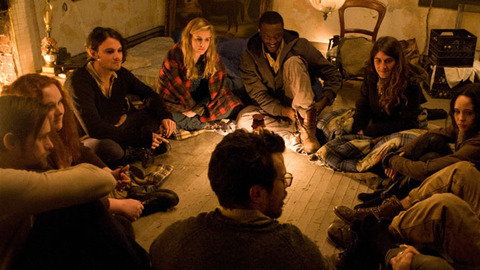
Brit Marling is unsurprisingly strong, but the rest of the cast is checked out, perhaps realizing how silly they sound. For long segments of the first hour, we are introduced to dumpster-diving as if it were exotic, we watch a cultish dinner in which people have to eat off plates in straight-jackets to demonstrate their commitment, and suffer through an interminable game of spin the bottle, which aims to demonstrate both the aspirations and shortcomings of polyamory and also the tribulations of being an undercover agent, and also just being shy and hot, but mainly succeeds in affirming the fact that I wouldn’t mind making out with Ellen Page and/or Alexander Skaarsgaard. Which I already knew.
As the plot proceeds, and we come to learn what new “jams” (as they insist on calling them) the dissidents have planned, it gets exponentially less involving. Marling’s non-Bureau life is dull, so it’s easy to see why she might glom onto these folks, but the stakes still feel low. The anarcho-radicals are, to a person, caricactures, as is Patricia Clarkson as her boss on the side of cynical law (she mainly wants a solid bust to boost departmental stats and career advancement). Nothing seems to have any substance or weight. Even multiple deaths don’t seem to up the ante.
I will at this point admit my profound prejudice. As Will Potter as heroically noted, the whole notion of “eco-terrorism” is a canard, and I disliked seeing it played this way. We are meant to identify with Marling’s agent against these (transparently) dangerous radicals — the fact that the they are a fiction, and no such figures have ever killed people notwithstanding. I don’t really care about the plots people dredge up — I don’t actually think throwaway narratives in shitty movies structure our lives, exactly — but this one stings, at least in part because it’s so stupid and ill-considered.
Years ago, I helped do legal work in a town preparing to host a major national political convention. Various groups were infiltrated; in fact, people later found out that those close to them had been spies. It’s deeply unsettling. One time, we drove out of a parking lot in the middle of the night with our lights turned off, hoping to elude surveillance as we transported legal documents. That’s bananas, but it happened. That’s something I bring to the movies.
So this film, which posits the state as a corrupt but ultimately stabilizing force confronted by a wellspring of activist discontent that helps it right the ship kind of hit a nerve. The filmmakers are smart enough to cover their bases, which kind of made it worse. People play banjos at jamborees, they bemoan the waste inherent in consumer culture, they speak of self-care, they do a number of things that — sorry, won’t lie — are kind of familiar. But they are also sociopathic and cultish, and the narrative organizes them as a dangerous loose end, a set of goofy aberrations to be reconciled. It’s firmly on the side of order, even if it winks that it’s not.
Which brings us back around The Homesman. After an entire narrative focused on patriarchy and the ways in which frontier cruelties zero in on women, it ends up with a man at its center. He’s a surrogate for the women he’s helped, and he’s learned a thing or two on the long road home. Good for him. Like The East, it wants to say something about how, when our choices are circumscribed, we do the best we can. But like The East, it can’t figure it out. The delivery of the women to their new home is an afterthought; we are left with the meaningless warbling of an old man on a barge, slapping his knees, and even his mission turns up empty. We are alone in the night.
Is it a brave message? The Homesman argues that the West is no place for a woman; The East argues that no one good gets out alive. In neither case is it particularly uplifting. I think Jones’ film at least centers on women in a genre traditionally skeptical of them, and it’s interesting for that reason alone. It doesn’t quite pull it off, but there are flashes of brilliance (and some incredible shots of sunsets on the prairie). I think The East is a confused film that doesn’t know what it wants to do, and ends up with a politically soppy vision of both resistance movements and state power. No one learns anything, least of all us.
I also think Kelly Reichardt made both these films already, and so much better: Meek’s Cutoff examined the lonely role of women in The West, the demands placed on them, and the unease with which men enter the scenario and give directions; Night Moves remains the best examination of radical conviction and humanistic doubt around, a film in which the pivotal event is a muffled echo a long way away and its consequences all too close.
Neither of these films come close to hers, but then few do. Let’s all go watch Kelly Reichardt. Watch The Homesman if you like Westerns, and especially if you like the Beady Small Eyes of Tommy Lee Jones. Just skip The East. Your time would be better spent liberating animals, please and thanks.

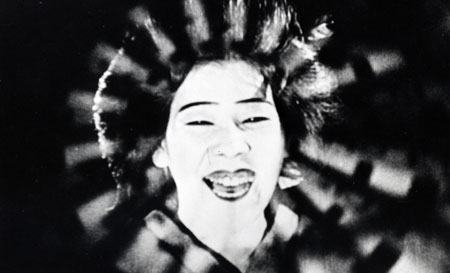 To make matters worse, he believes he’s killed the rival suitor, placing both him and his sister in a precarious position. As he holes up in their apartment and she tries to negotiate these dangerous waters, the world impinges on them both. Kinugasa finds shadows even in the darkness they live in, which is occasionally near-total. There is little light, and little hope for redemption. All the figures in the story either want something from Okiku or strategize how to best exploit Rikiya’s situation. This is an unforgiving world that punishes people for having the temerity to fall in love.
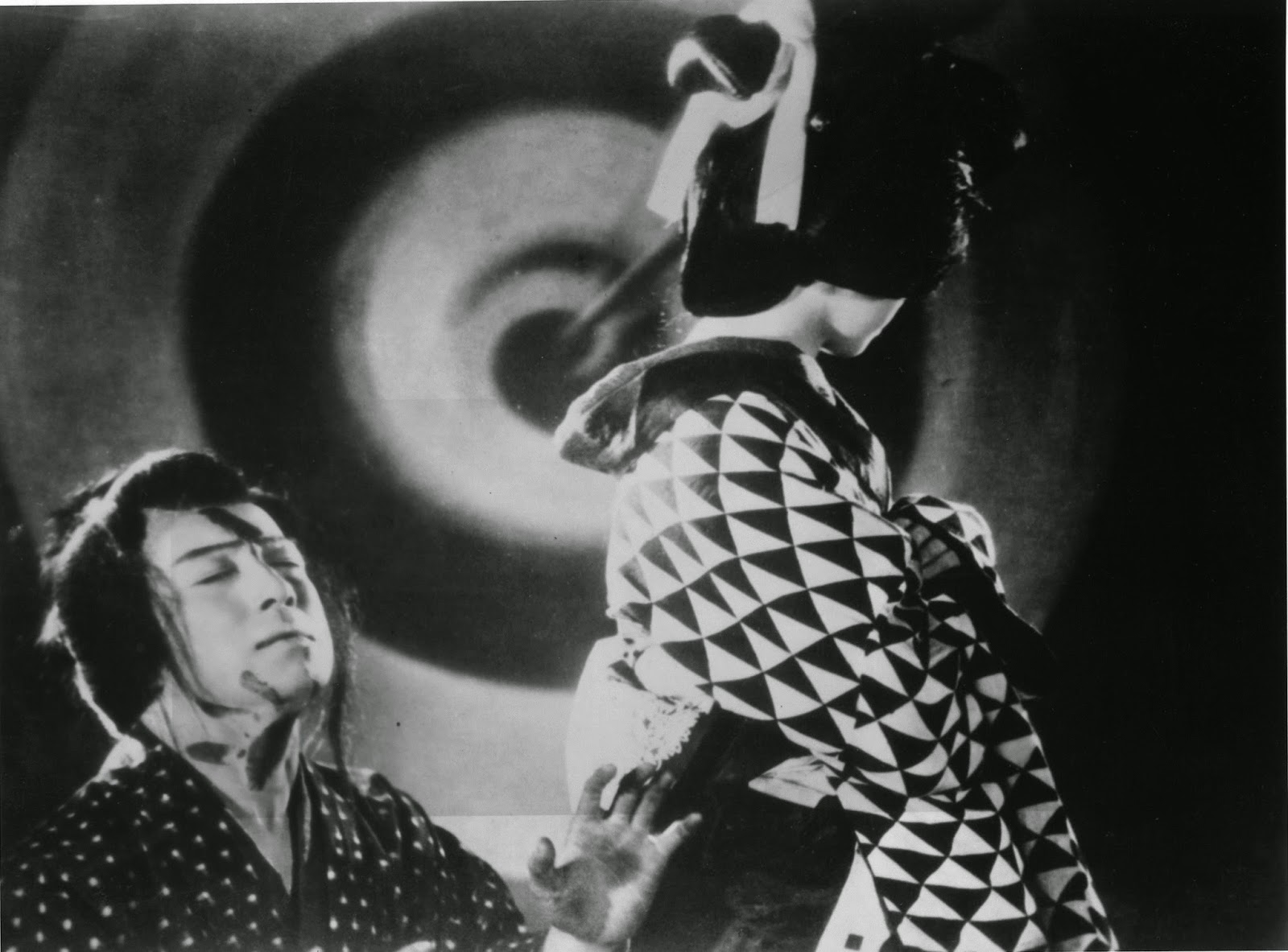 In the end, it doesn’t matter. In classic melodrama fashion, the facts of the world are immovable and the choices that have been made irrevocable. Things are headed for a fall from the start. In the meantime, though, Kinugasa fills the frame with impressionistic touches that put us fully in the place of the characters. Some are pretty bold — he deploys superimpositions and double exposures and a spinning camera, turning wheels and rotating lanterns as motifs. Crossroads flashes back and forward with ease, emphasizes the rush of memory through quick cutting, and fades to bright lights and what seems to be falling snow to indicate wounded eyes struggling to come into focus. The decision to position us in individual characters’ points of view, visually, is an unusually evident stylistic choice for 1928.

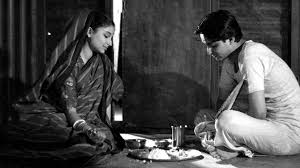

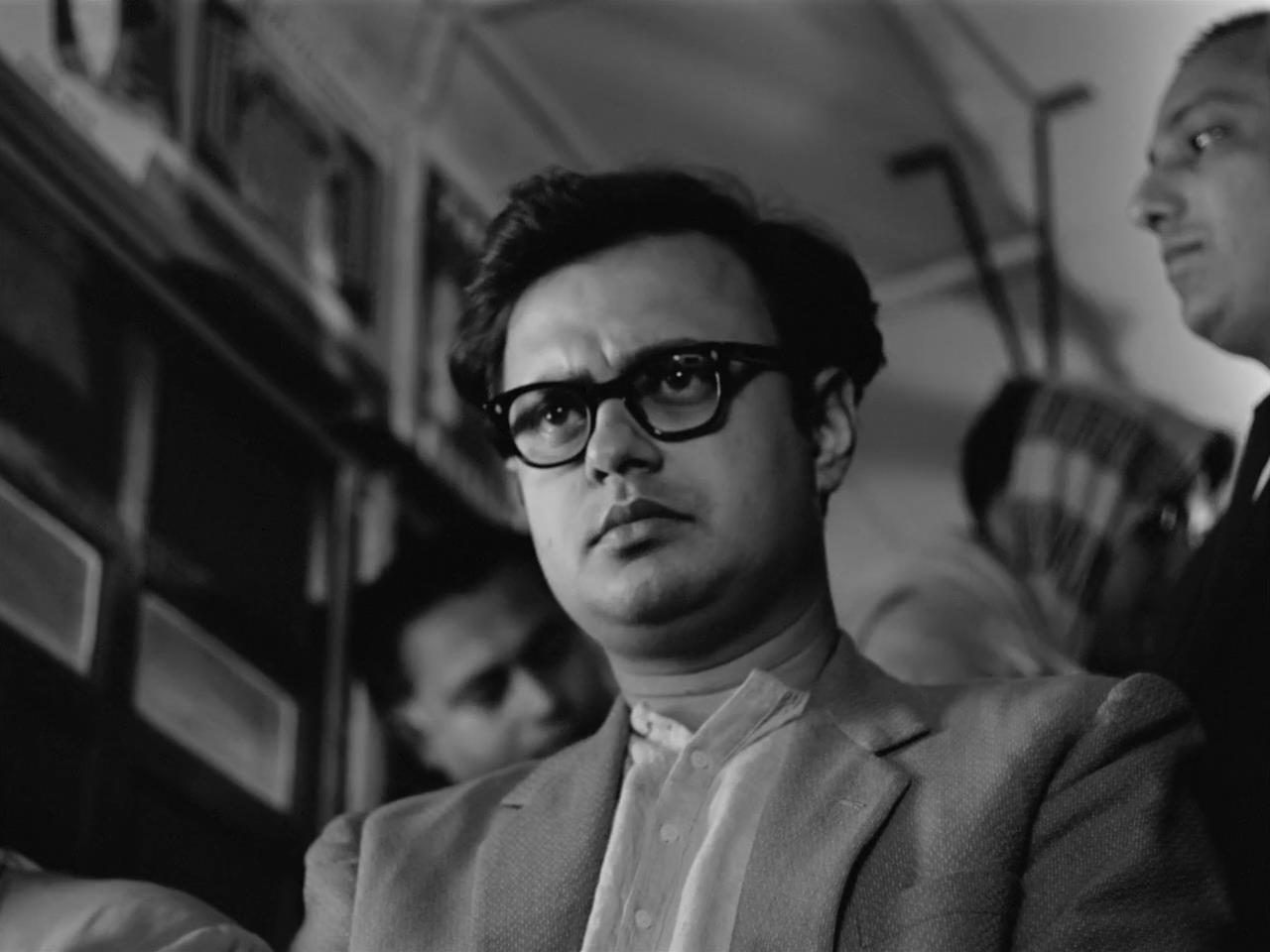 At the start, The Big City shares much with his earlier work. We open in the Mazumder house in Calcutta, which is small but warm, and filled with life. Subrata and Arati give the immediate sense of a loving couple, his teasing eliciting knowing smiles and slight sarcasm as they start their day. His sister lives there as well, also receiving her fair share of teasing, while the youngest child plays games off in a corner, occasionally piping up with something adorable. Subrata’s parents also live here – the house seems full but happy.
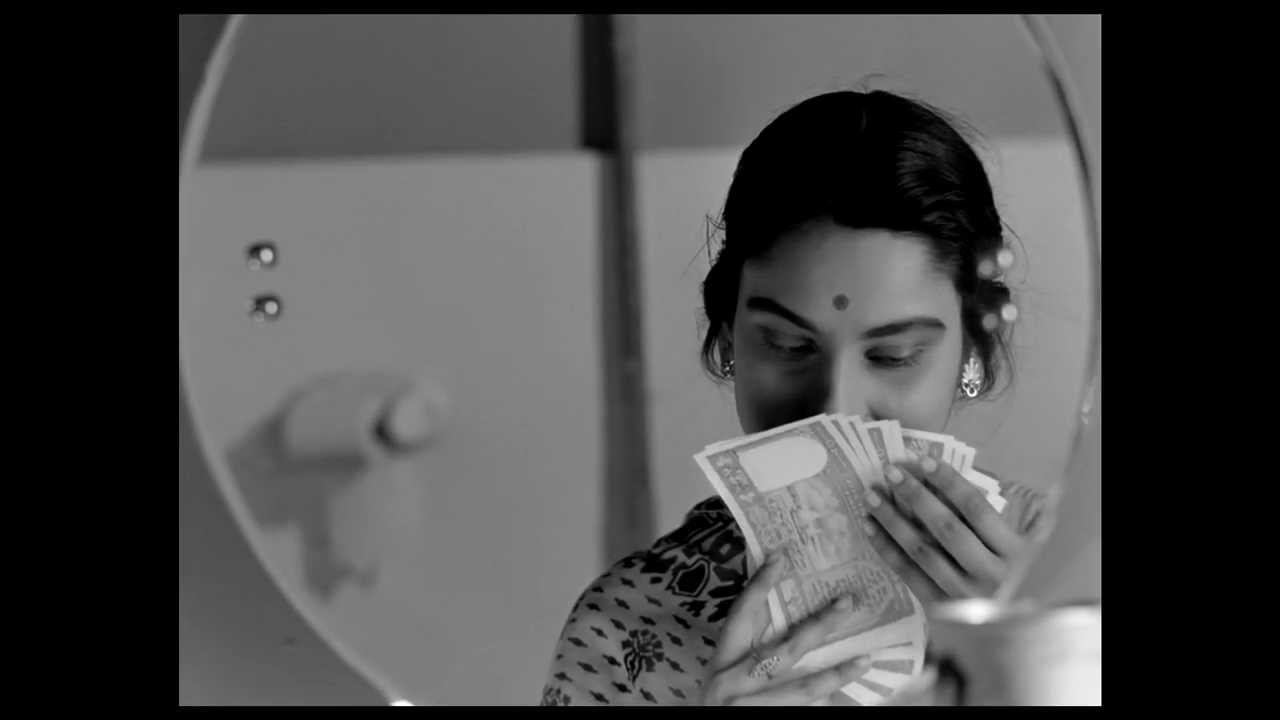 It turns out Arati is exceptionally good at her new job, and before long is making more than her husband. Her father-in-law, bound by tradition, was already dismayed by the situation, refusing to talk to the family or accept gifts bought with this ill-got money, from a housewife employed outside the home. Now Subrata, formerly seeming quite progressive and practical about the whole thing, now feels a sting, too. Even young Pintu resents his mom’s absence (though he can bought off fairly easily, if temporarily, with new toys). Subrata demands she resign for the good of the household, promising to get that part-time job at once.