Top Posts
Madeline’s Madeline: An Unclassifiable Panic Attack Maybe-Masterpiece
Shoplifters Steals Moments of Wonder from the Mundane
Burning and Forgetting What’s Not There
Kusama: Infinity Expands Beyond The Canvas
Mandy Risks Little, Wins Little
In We The Animals, The Children Are Away...
The Seagull Isn’t Quite Chekhov, But It’s Still...
5 Million Ways Boots Riley Isn’t Sorry To...
American Animals’ and the Queasiness of the Heist
A Star Is Born In Hearts Beat Loud
  • Reviews
  • Commentary
  • Great Movie Project
    • Great Movie Project
      Bride of Frankenstein is a movie for and…

      January 25, 2018

      Great Movie Project
      The Enduring Appeal of Nick and Nora in…

      November 29, 2017

      Great Movie Project
      The Ahistorical Fever Dream of The Scarlet Empress

      August 2, 2017

      Great Movie Project
      Dreams, Mundanity, and the Anarchist Yearnings of L’Atalante

      July 12, 2017

      Great Movie Project
      Duck Soup Is And Will Always Be A…

      April 19, 2017

  • Counter Programming
    • Great Movies: The Counter Programming
      Walking and Talking in the Shadow of Kanchenjungha

      March 7, 2018

      Great Movies: The Counter Programming
      A Brief Encounter in My Mother and Her…

      February 9, 2018

      Great Movies: The Counter Programming
      Horror’s Refusal in Farrokhzad’s The House Is Black

      October 13, 2017

      Great Movies: The Counter Programming
      The rage and beauty of The Cloud-Capped Star

      October 3, 2017

      Great Movies: The Counter Programming
      The daylight noir and social issue empathy of…

      June 22, 2017

  • Vegan Horror
    • Vegan Horror
      Julia Ducournau doesn’t think her film Raw is…

      June 7, 2017

      Vegan Horror
      Licking our wounds: The vampiric masculinity of Ravenous

      December 13, 2016

      Vegan Horror
      Eggertsson and animals: An approach to horror cinema

      September 15, 2016

      Vegan Horror
      “It’s Not My Nature” – Vegetarianism, Body Horror,…

      August 30, 2016

      Vegan Horror
      Bodies and Carcasses in Predator 2

      August 23, 2016

  • Interview
    • Interview
      Jasmine Leyva’s doc The Invisible Vegan aims to…

      May 3, 2017

      Interview
      Bridging The Abyss: An Interview With The Directors…

      November 28, 2016

      Interview
      7 Days in Ohio: An Interview with Nathan…

      September 12, 2016

      Interview
      Film Critic Phil Dy talks New Filipino Cinema

      June 17, 2016

      Interview
      “I Love Seeing Film Projected.” A Conversation with…

      March 22, 2016

Luddite Robot
Film critique, theory, and assorted nonsense.
CommentaryFilm

China Girls, Death Proof, and the Hidden Face

April 14, 2019

Old News: Old Noise Edition

April 8, 2019

Old News: April 1, 2019

Nicolas Winding Refn, Marginalia, and the Deaths of Cinema

CommentaryFilm

And now, let us praise Kanopy

January 24, 2019

Warren Sonbert and the Relief of Anti-Narrative

January 14, 2019

The World Is Ending and It Doesn’t Matter

The Best Films of 2018

FilmReviews

Madeline’s Madeline: An Unclassifiable Panic Attack Maybe-Masterpiece

December 21, 2018

Shoplifters Steals Moments of Wonder from the Mundane

December 11, 2018

Burning and Forgetting What’s Not There

Alien, Musicology, and Reading Soundtracks

CommentaryFilm

Shocktober III: Halloween 2018 Edition

October 24, 2018

Shirley Jackson’s The Lottery Traumatized Schoolkids in 16 mm

October 18, 2018

Shocktober 2018 II: Another Reshockening (of Horror)

Häxan is a movie made by a movie character

CommentaryFilm

Shocktober 2018

October 7, 2018

Unprofessional! Spring Night, Summer Night

October 3, 2018

The Wild Boys: A Luddite Robot Conversation

Kusama: Infinity Expands Beyond The Canvas

FilmReviews

Cosmopolis (David Cronenberg, 2012)

by rick December 15, 2014
written by rick

Is there any living director who’s had a weirder career trajectory than David Cronenberg?

After carving out a very specific niche as a low-budget horror director fixated on technology and the body (Shivers, Rabid, The Brood), he moved on to bigger, more sci-fi oriented projects that maintained this focus (Videodrome, The Fly). This period peaked with austere, highly mannered treatments of the same fixations, but which abandoned all the earlier viscera in favor of mind games and looming dread and meta-critique, with the occasional body-related freak-out (Dead Ringers, Naked Lunch, Crash).

And then … an entirely different variety of film. Since 2005’s A History of Violence, Cronenberg movies have maintained the sleek production of Crash, but without all the body stuff, or at least not overtly. Both that film and 2007’s Eastern Promises were genre excursions, and A Dangerous Method was a moderately perverted period piece, a sort of Canadian Merchant Ivory production with more spanking (and considerably more Keira Knightley flopping around). It touched on what you could call Cronenbergian motifs, but seemed a world away from Videodrome, much less The Brood.

So this is where Cosmopolis, Cronenberg’s adaptation of a Don Delillo short story, arrives on the scene.

Twilight’s Robert Pattinson stars as Eric Packer, a terminally disinterested and megarich financier, and full-time terrible human being, who is traveling across town in his limo to get a haircut. Various people arrive to brief and/or fuck him. Anarchists spraypaint his car as he sits in interminable traffic. He gets his daily (daily!) physical in the back of the limo, complete with prostate exam. As in Leos Carax’s Holy Motors, the impossibly large space in the car delineates inside and out. But while in Carax’s vision the two worlds exist in weird and maybe inextricable harmony, in Cronenberg and Delillo’s scenario, they are bound to collide violently. The limo is a protective fortress, and as Packer is driven through the city, it’s clear the walls aren’t going to hold much longer.

Cronenberg’s fixation on cars is a thing to consider – as in Crash, the camera both eroticizes the sharp metal angles and imbues them with anxiety. (The Fly also expresses deep ambivalence: Seth Brundle’s whole goal is to eradicate the need for physical transport.) Being inside the limo is clearly “safer,” but, in its claustrophobia and increasing vulnerability, also seems like a threat. Technology intimidates, with its seductive aspects and its promises to streamline human interaction to their most logical structures. But the same machine that takes you across town for a nostalgic visit to a specific barber also cuts you off from authentic engagement with people along the way, and maybe puts you at more risk than you already were.

Pattinson’s casting is amusing on a number of levels – he continues to play a vampire of sorts, and, even now that his libido has been released from the confines of tween cinema, he takes no joy in it. He’s not exactly “good” so much as he is “Robert Pattinson, the guy from Twilight.” Which is good enough.

So what does this have to do with Croenenberg’s earlier work or what it means moving forward? I honestly don’t know (and haven’t seen Map To The Stars, his newest film). There seem to be two David Cronenbergs, with only occasional overlap. In any case, I won’t go so far as David Ehrlich, but in Cosmopolis, one of those Cronenbergs made a pretty good movie.

December 15, 2014 0 comments
0 FacebookTwitterPinterestEmail
FilmSong for a Sunday

Song for a Sunday – The Long Goodbye (Various, The Long Goodbye)

by rick December 14, 2014
written by rick

Robert Altman strikes again. This will be the last one for a while, I promise.

As in his previous Song for a Sunday entries McCabe and Mrs. Miller and Popeye, Altman’s neo-noir The Long Goodbye leans so heavily on its idiosyncratic score for mood and meaning(s) that it’s hard to imagine the film without it. It might be even more true in this case, since the film shares its title with both the Raymond Chandler novel on which it’s based (give or take) and the song that (almost) constitutes its entire soundtrack.

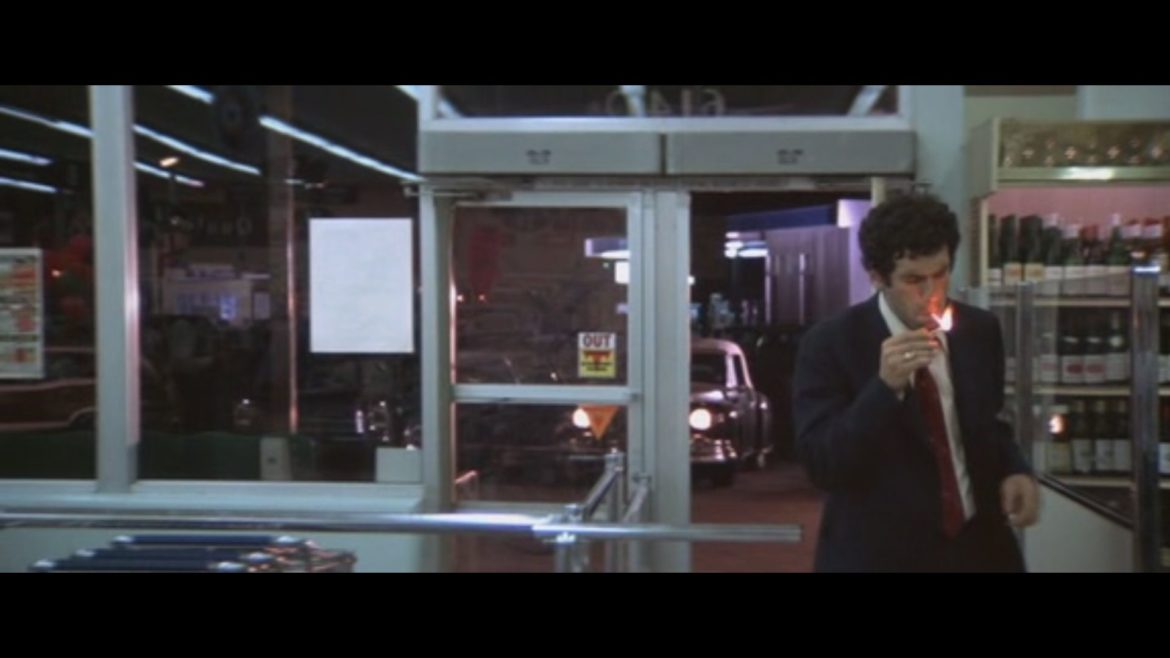
As in McCabe, where three haunting Leonard Cohen songs weave in and out at key moments (setting the stage, commenting on aspects the script omits, and providing an aural epilogue of sorts), The Long Goodbye deploys its title song over and over in different variations, both diegetic and non. It’s playing constantly – to name a few instances, Elliot Gould’s Marlowe humorously hums it to himself right after its introduction as the theme, it’s on the car radio, a Muzak version plays in the grocery store, and it even shows up as a doorbell chime.

Altman says he inserted the motif because it amused him, which, while no doubt true, also sounds like typical Altman puckishness and genial mindfuckery. With all due respect to the auteur, I think we can safely assume that an aesthetic choice like using variations on a single song to constitute the near entirety of the score was made with a bit more consideration than “It’d be funny.” And even if not, the result allows for a closer reading than that anyway.

I was hesitant to start writing this, even though it’s a fantastic song and movie, for two reasons: 1) I’ve now included three Altman films, and I’m aware there are other films in the world, and 2) Adam Scovell of Celluloid Wicker Man, an excellent site I discovered while looking up details on the film, has written up a formidable and persuasive analysis already. Seriously, go read it. It’s great.

There are a couple things left to say about the song’s use(s) here, though. The film, a revisionist 70s noir in much the same way McCabe was a revisionist 70s Western, has been slammed as pastiche, especially upon its release. Critics savaged it – as Pauline Kael noted, a lot of people, especially cinephiles, didn’t appreciate their iconic Marlowe being toyed with. Instead of Dick Powell or (especially) Bogart, we get stumbling, mumbling Elliot Gould, a man out of time, wearing suits and chain-smoking while his hippie neighbors lounge around in the nude or do yoga, and seemingly out of his depth and not really seeing the whole picture, casually responding to everything with “It’s alright with me,” abiding like some proto-Dude. Altman and Gould privately called this character “Rip Van Marlowe,” implying he fell asleep in the 50s and woke up 20 years later, adhering to a code that no longer quite fit.

This is one function of the song(s) – they too seem to be sometimes from another era, sometimes from this one, wedded to commercial uses like grocery store Muzak and kitsch technologies like novelty doorbells, played on sitar to signal the hippie collective, emanating from the car radio as a torch song hearkening back to a bygone era. It’s a song going through some sort of identity crisis, as it shifts and is reformulated to suit individual scenes, reworked in miniature like Altman is doing with the mythic Marlowe in general.

It also gives the sense of some grand, mysterious interconnectedness, some underlying grammar linking scenes, calling back to others, giving glimpses of hidden threads. Which, after all, are what both detectives, even goofballs like Gould’s Marlowe, are after, just as we are as viewers, readers, audiences.

And anyway, if the film is simply pastiche as its earlier critics alleged, what better joke than to constantly rework its score in endless variations? Maybe Altman was right – that would be pretty funny.

The scene in which Marlow tries to trick his cat into eating off-brand catfood showcases much of this, with the song weaving in and and morphing in the background:


December 14, 2014 0 comments
0 FacebookTwitterPinterestEmail
FilmReviews

We Are The Best! (Lukas Moodysson, 2013)

by rick December 13, 2014
written by rick

We Are The Best! is a lot of fun. If you were ever in a band as a kid, or into punk rock, or in a punk rock band with your friends prior to actually learning how to play your instrument, you owe it to yourself to check it out. With its focus on three well-drawn female protagonists, with coming-of-age issues to grapple with apart from their fledgling band, it might speak even more directly to the punk rock and ex-punk ladies in the audience. But the broad comedic strokes are pretty universal – anyone who ever spent more time coming up with band names than learning songs will relate, as will anyone who ever felt marginalized, awkward, and generally confused as a teenager (which, you know: everyone).

Bobo and Klara are friends in early-80s Stockholm, two 13-year-old kids intent on keeping punk alive, even though everyone seems to have moved on to New Wave and who knows what else. On a whim, and in part to spite a dude-heavy local act, they decide to form a band themselves. They don’t have any instruments and wouldn’t know how to play them if they did, but why should that stop them?

Their signature song is “Hate The Sport,” an anthemic denunciation of social apathy, a cri de couer against a world that ignores human suffering in favor of frivolous recreation and willful ignorance. Or, as the chorus phrases it in a slightly more punk rock fashion: “Hate the sport! Hate the sport!”

One day, they’re bowled over by the guitar-playing of a classmate named Hedvig, a shy Christian girl who sits by herself at lunch. They awkwardly and adorably recruit her into the band, pragmatically deciding that, though she’s religious and that’s not punk at all, she does actually know how to play, which is a plus.

Hedvig teaches the other two some basics, and they gear up for their big debut at Santa Rock, which is billed as a momentous holiday event but is really just some amateur show in an auditorium/basement in front of a small crowd. (Again, anyone who was in or around shitty high school bands knows this auditorium/basement, regardless of country.)

Other plotlines involve fashioning their identities through hair styles, discussing the pros and cons of various bands they admire, and navigating young love and rivalries. A scene where Hedvig forces Bobo and Klara to reconcile after a fight is painfully cute and affecting. All three leads are great, especially Mira Barkhammer as the angsty Bobo, who sometimes feels marginalized even within her clique on the margins.

All that said, the film feels a little slight and minor by the end – issues are touched on and then more or less abandoned, and Hedvig’s transformation never feels entirely believable or complete. But the light-hearted mood that pushes everything along, and the winning performances, smooth all that over. The exclamation point in the title is there for a reason – it’s impossible not to root for these characters, so full of excitement and convinced of their own power, and hope things turn out well for them.

And as Klara joyously antagonizes and taunts the crowd at the end – in the most punk-as-fuck way she can manage, the entire band grinning ear to ear as they start a near-riot – it feels like they probably will.

December 13, 2014 0 comments
0 FacebookTwitterPinterestEmail
FilmReviews

Ida (Pawel Pawlikowski, 2013)

by rick December 13, 2014
written by rick

Ida, a haunting Polish film tracing a young woman’s journey into the past (both her own and her country’s), has to be one of the most gorgeous looking films of the year. Released in 2013 but in contention this awards season, it ought to be nominated for cinematography and editing, but will more likely fight it out with the Dardennes brothers’ 2 Days, 1 Night for Best Foreign Film, unless Boyhood somehow manages to win that one, too.

This is the sort of film invariably described as “luminous,” and it is. Shot in crisp black and white, carefully framed to the point where multiple shots could be printed and hung on a gallery wall, and presented in Academy ratio, it’s simply stunning to behold.

Its title character (the ethereal Agata Trzebuchowska) is a novitiate preparing to take her vows, in the convent where she’s been raised since she was dropped off as an infant. However, she discovers that she has a living relative after all, an aunt named Wanda (Agata Kulesza, excellent) who’d been avoiding her all these years, and is encouraged (well, ordered, really) to make contact with her before becoming a full-fledged nun. This is the first of many revelations, as she ventures into the mysteries and barely repressed horrors of 20th century Europe.

After an unpromising first meeting, hard-drinking, cynical Wanda takes a liking to her stoic charge, and the film turns into a road-movie of sorts, as the two of them travel through the countryside trying to find out what happened to Ida’s parents, and where they are buried.

Ida’s never been anywhere outside the convent, so everything seems both alluring and dangerous. A handsome, Coltrane-loving saxophonist they pick up hitchhiking into town provides occasion for some questioning on Ida’s part, and Wanda’s role as an apparatchik in the Communist government is thrown into stark relief. The film does a good job of showing how this mission impacts both Ida and Wanda in different ways. They mean to seek out and dig up aspects of their shared histories, and it’s clear a lot has been buried in the Polish countryside.

The Academy ratio framing also serves a narrative purpose, along with being visually arresting. Pawlikowski and his DPs Ryszard Lenczewski and Lukasz Zal use negative space in the box-like frame to great effect – again and again, characters appear just along the bottom, as though they are themselves at risk of burial under the weight of the image. There’s a sense of compression, of being smothered by the world, which suits the often bleak material.

Viewers will have to decide for themselves what to make of Ida and Wanda’s final choices in the film, and how they relate to each other. But what lingers in Ida is the fragile beauty of the images, the struggle of its characters to know and define themselves, and the heartbreaking ironies of the past, hidden in plain sight in the present.

December 13, 2014 0 comments
0 FacebookTwitterPinterestEmail
FilmReviews

Holy Motors (Leos Carax, 2012)

by rick December 11, 2014
written by rick

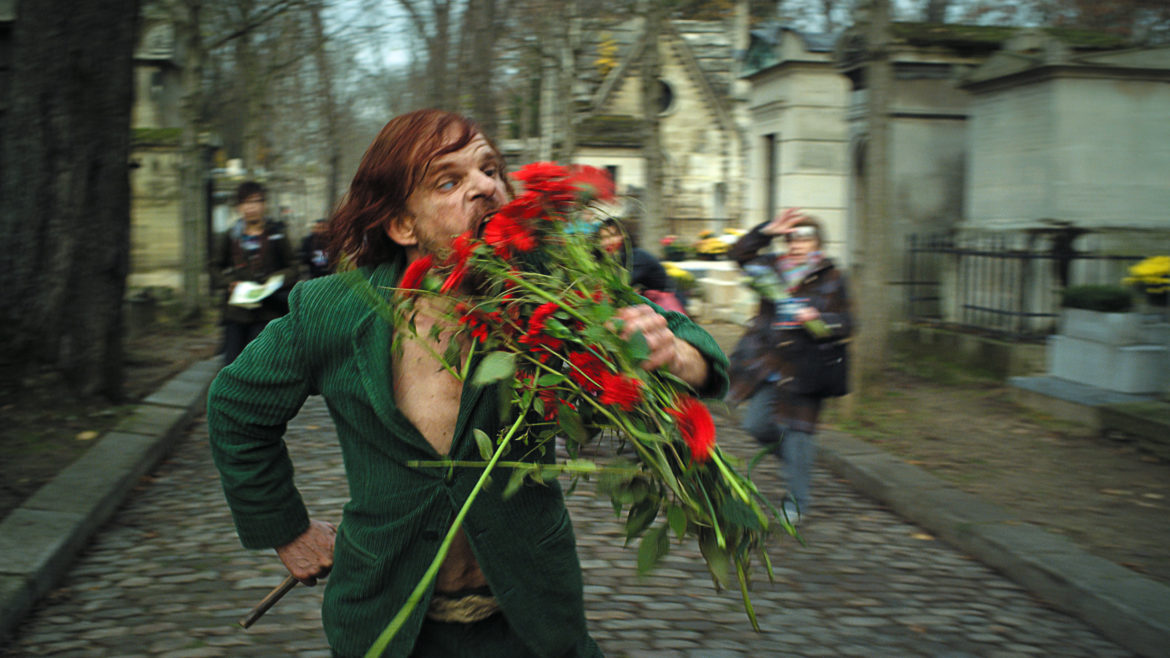
Of all the 2012 films I’ve recently seen that are set mostly in the back of improbably spacious limousines (that would be two, if you’re keeping score), Holy Motors is the best.

In fact, Leos Carax’s surreal, unclassifiable ode to cinema and performance might be my favorite movie I’ve watched all year – on the AV Club, Mike D’Angelo memorably and accurately called it 2012’s “most electrifying whatsit.”

It expertly teases audience expectations, dropping hints and allowing for inferences about what is going on, while never fully explaining itself – and closes with the most “Are you fucking kidding me right now?” gesture in recent film that I know of. Anyone who fails to laugh at the sheer batshit insanity of its final scene is beyond help.

It’s best not to spoil too many of the surprises for anyone who hasn’t seen it, so I’ll be brief with the summary. Monsieur Oscar (the chameleonic Denis Levant) is introduced leaving his comfortable home and loving family for work – his daughter adorably cries out, “Work hard today!” – and climbs in the back of a limo. He reviews files and asks his driver Celine (Edith Scob, of Georges Franju’s frankly terrifying Eyes Without A Face from 1960 – an inside joke that Carax has fun with here) how many appointments he has today. They are numerous, and he sighs.

Up to this point, we could be watching the morning ritual of a banker or a CEO, someone economically important enough to exit his front door to a waiting limo and inquire about his schedule. The film, however, goes in something of a different direction.

These “appointments” are essentially roles to play, and the limousine is changing room, office, and trailer. M. Oscar peels on and off different faces, switches costumes, applies makeup, and reads notes. The roles, however, are portrayed as events occurring in the real world, though it’s not clear to what end. There’s an implication of a hierarchy, of bosses and fellow workers in the business of limousine-chauffered artifice, and a further suggestion that hidden cameras film all these goings-on. Is this how movies are made now, in this world Carax has built? Is that why M. Oscar seems so despondent in between appointments, why he’s lost his passion for his work?

There are lovely sequences of dance scenes morphing into simulated eroticism and then into animation of monsters curling around each other. There are gross-out scenes and murders and intrigue. And in the end, M. Oscar retires to the car, the back of which seems increasingly elongated and impossible as the film goes on, and his collection of characters grows.

There are other backstories – one involving his daughter, for instance, and another involving a past romantic and professional partner who resurfaces. These are no doubt relevant, but most of the film’s joy is in the appointments themselves.

This is the rare film where it actually is true that you never know what’s coming next. It could be anything. Carax, I think, is out to reclaim the entire medium of cinema from those who would make it safe and predictable, and to emphasize that at the heart of its artifice, like all performance, is a kind of dangerous magic.

December 11, 2014 2 comments
0 FacebookTwitterPinterestEmail
FilmSong for a Sunday

Song for a Sunday – Jockey Full of Bourbon (Tom Waits, Down By Law)

by rick November 30, 2014
written by rick

Jim Jarmusch’s films are all about textures and surfaces. Down By Law is emblematic.

It sometimes feels like he’s hinting at wellsprings of deeper meaning or emotion, but everything is held at a remove – cold, observing, often ironic. This probably contributes to the love-it-or-hate-it reactions his films seem to inspire, especially the early ones: are they studies in the carefully calibrated hipsterism of people who cloak their authentic selves in the trappings of cool, or particularly egregious examples of it? Both? Neither?

In either (or any) case, they certainly look good: shot in stark black and white, and obsessed with contours and physical details, the camera glides over the surroundings, or stays completely still as people come and go. It’s hard to find a better word for it than “cool.”

In his feature debut, 1984’s Stranger Than Paradise, the arrival of a foreign, female cousin broke the routines of two caddish, cynical American guys, and the three set out on a bickering, amusing road trip to Florida. It even obliquely addressed issues of constructed identity: the cool guy’s cousin irritates him, with her old-country ways that highlight how much he’s tried to leave them behind and her unironic embrace of American pop culture. (It also is easily a contender for another Song for a Sunday, as she dances around the kitchen to Jarmusch regular Screamin’ Jay Hawkins’ “I Put a Spell On You.” “Fuck is that?” he asks. “I really hate that kind of music.”)

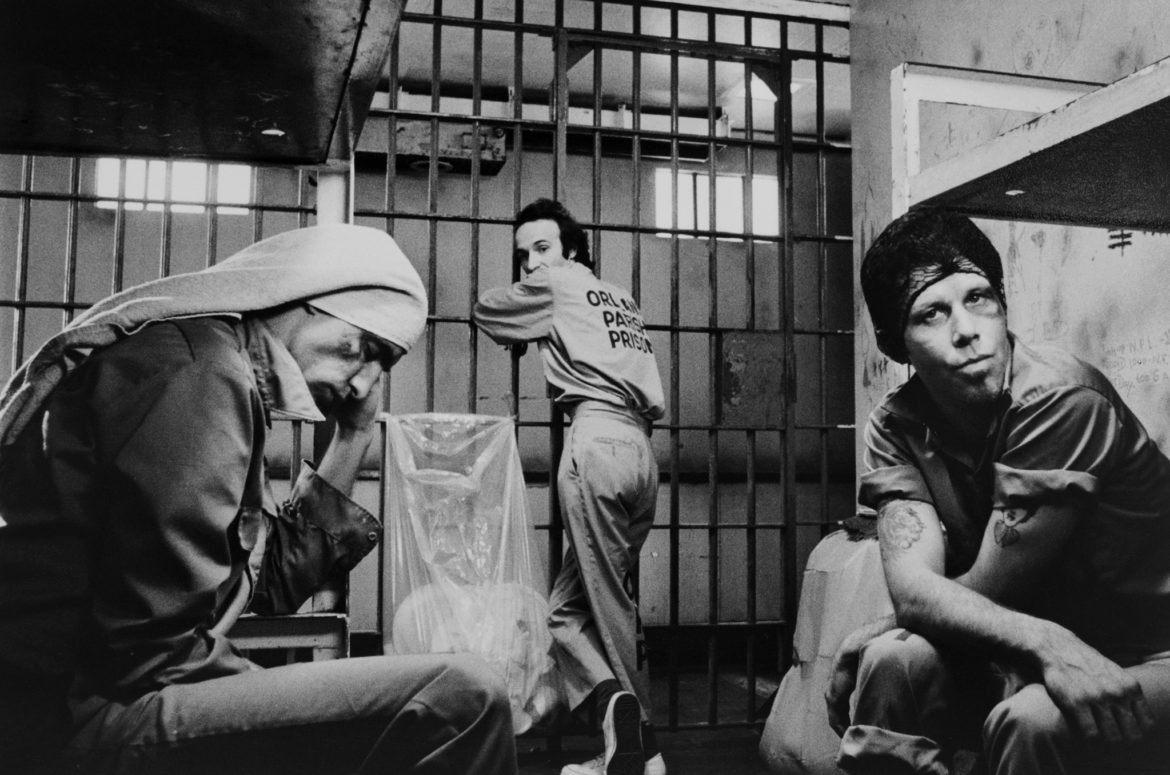
Down By Law, from 1986, features another triad: a pimp, an unemployed DJ, and an Italian tourist who wind up, for various reasons, in a jail cell together in New Orleans. It’s typical of the film that their escape from jail is left off camera: one minute they’re locked up, the next they’re on the run through the Louisiana bayou. Jarmusch doesn’t have the time or inclination to sketch out their big plan. The movie traffics in Hollywood tropes, but from odd angles.

According to Roger Ebert, Jarmusch said he’d never seen the bayou before arriving to shoot Down By Law. This also makes a lot of sense. The New Orleans and surrounding areas here are more related to cinema than geography – these are noir landscapes, Southern Gothic cemeteries, sweaty unventilated upstairs rooms in fleabag motels, waterways that seem more out of Night of the Hunter than anywhere specific in the world.

The film’s opening conveys a lot of this. Beginning with a sleek shot of a hearse, it’s a constantly shifting montage set to Tom Waits’ “Jockey Full of Bourbon,” the first single off Rain Dogs. It’s a travelogue of some sort of imaginary South, gleaned from film. Waits also stars – again, appropriately enough, for a very self-aware kind of movie – as the unemployed DJ who’s set up for a murder he didn’t commit.

The song combines a lot of things at once: spaghetti western flourishes, driving blues, jazz riffing, Waits’ whiskey growl. The lyrics are pastiche nonsense, but the repeated phrase lingers at the start of this movie, giving everything a feeling of rootless dread: “The house is on fire, the children are alone.”

I especially like how Jarmusch fades the song out for brief exchanges, before coming back full blast. John Lurie rises from his bed, asks (presumably) one of the sex workers what she’s doing outside on the porch – she replies, “Just watching the light change.” He lies back down, and the girl in his bed opens her eyes and stares at the ceiling. Waits enters some other room in town, clearly drunk at dawn; graffiti on the wall has a gallows’ humor thing going – the most visible reads, “It’s not the fall that kills you, it’s the sudden stop.” He too lies down next to a girl, who might’ve just been pretending to sleep; her eyes open and she too stares at the ceiling.

Jarmusch manages to convey a lot of information quickly about these characters, where they are, and how they relate to each other, while leaving much of it mysterious. And all the while, the song keeps pulsing, with Waits warning, “The house is on fire, and the children are alone.” The shots are beautiful and alluring, but there’s clearly some bad shit afoot.

November 30, 2014 3 comments
0 FacebookTwitterPinterestEmail
FilmReviews

Near Dark (Katheryn Bigelow, 1987)

by rick November 29, 2014
written by rick

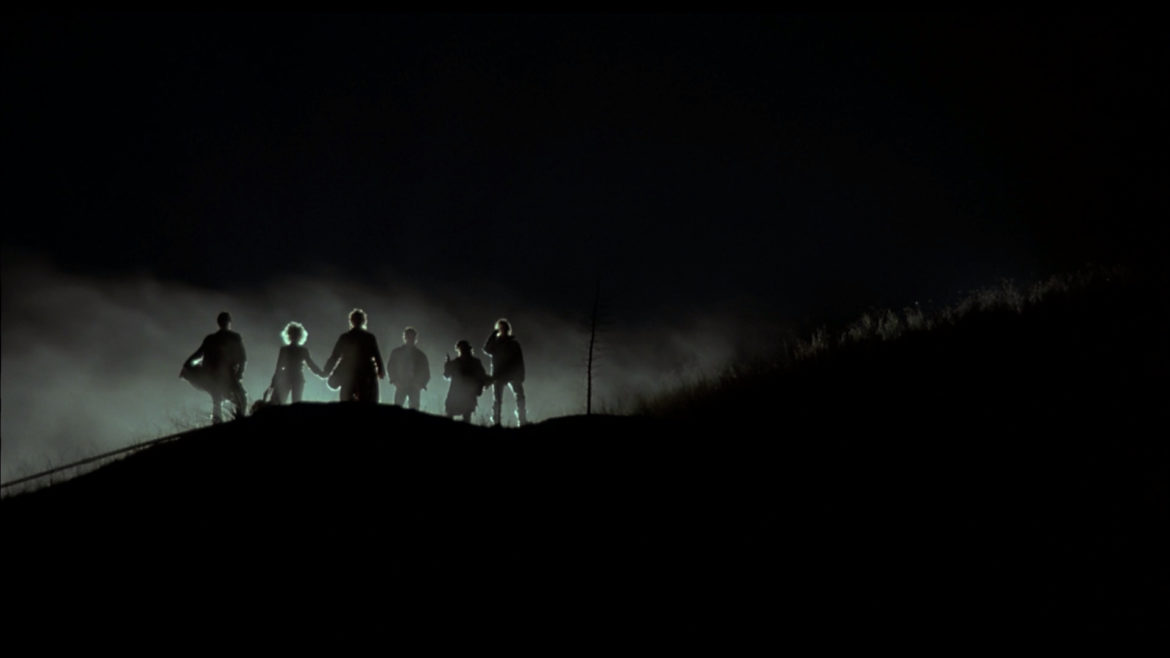
Katheryn Bigelow’s clever, mostly successful postmodern take on the vampire mythology opens with a nice bit of misdirection. Caleb, our pretty-boy protagonist, is goofing around with his crew of country fellas outside a Southern bar when they notice Mae, a lovely young lady awkwardly hanging out by herself. Caleb calls dibs and approaches her, standing in shadows and making small-talk come-ons. This being a vampire movie, there’s every reason to suspect she’s his next victim: he even mentions how he won’t bite. She’s aloof and shy, playing the soon-to-be-victim to the hilt.

This, it probably goes without saying, is not how things shake out.

Mae is in fact part of a crew of modern-day vampires, who travel the countryside feeding at night and sleeping during the day in various holdouts. Unlike many incarnations, these vampires are neither sexy nor anguished – they’re a lot more like a tight-knit outsider group committed to self-preservation, a gang. They have protocols to follow and internal hierarchies and long-standing grudges. And they really, really like having a good time, in their fashion – tormenting bar patrons (in the film’s best and bloodiest scene), drinking heavily, committing strategic arson, and playing good-natured games of Russian roulette in hotel rooms (since this can’t kill them, it’s just for a laugh).

Mae turns Caleb, much to the chagrin of her comrades, who (rightly) don’t think he’s made out for this life. The rest of the film follows his change, the group’s adventures, and Caleb’s bewildered family’s desperate attempts to track him down. One particularly effective sequence, finding humor in the notion of modern-day vampires, finds Caleb in a bus station, unable to function as his humanity is drained away and replaced by something darker; he’s all sweat and callow flesh and bloodshot eyes. A cop interrogates him, naturally, about what drugs he’s on.

The film is shot in half-light (or is it near dark?) almost from start to finish, maybe suggesting the creatures’ dual natures or, alternately, Bigelow’s conviction that it would look cool (if the latter, she was right). Both Lance Hendrickson and Bill Paxton give nice, occasionally frightening turns as murderous borderline-psychotics who also happen to drink blood, and the kid from Teen Witch continues to be unsettling, though in a less hornball fashion this time. There are also some really well done set-pieces, like a house in which they’re hiding getting shot up and allowing light to come through, noir and/or Blood Simple-style, in criss-crossing rays, any one of which can painfully light the vampires on fire. They huddle together, deathless villains cornered by the day.

Refreshingly, there is no complicated back-story to explain these creatures; they just are, and apparently have been for many, many years. This allows Bigelow to treat the film as a crime movie with bloodsucking monsters, rather than an entry into increasingly convoluted mythologies. It’s way more fun than brooding versions like Herzog’s Nosferatu or Dreyer’s Vampyr, for instance, even if it falls, let’s say, a bit short on their artistry. The film’s conclusion is a cop-out, I think, and way too sentimental for everything that preceded it. Unfortunate, since there are a number of other directions they could’ve chose for the climax. On the other hand, everything that preceded it was pretty enjoyable.

Buffy the Vampire Slayer fans will also have fun picking out the substantial number of things Whedon borrowed: the blacked-out car windows, for instance, or the gag of running through the sun with a blanket over your head. I’m not sure if these little touches have earlier instances; if not, Whedon owes Bigelow some major credit.

November 29, 2014 0 comments
0 FacebookTwitterPinterestEmail
FilmReviews

Katzelmacher (Rainer Werner Fassbinder, 1969)

by rick November 29, 2014
written by rick

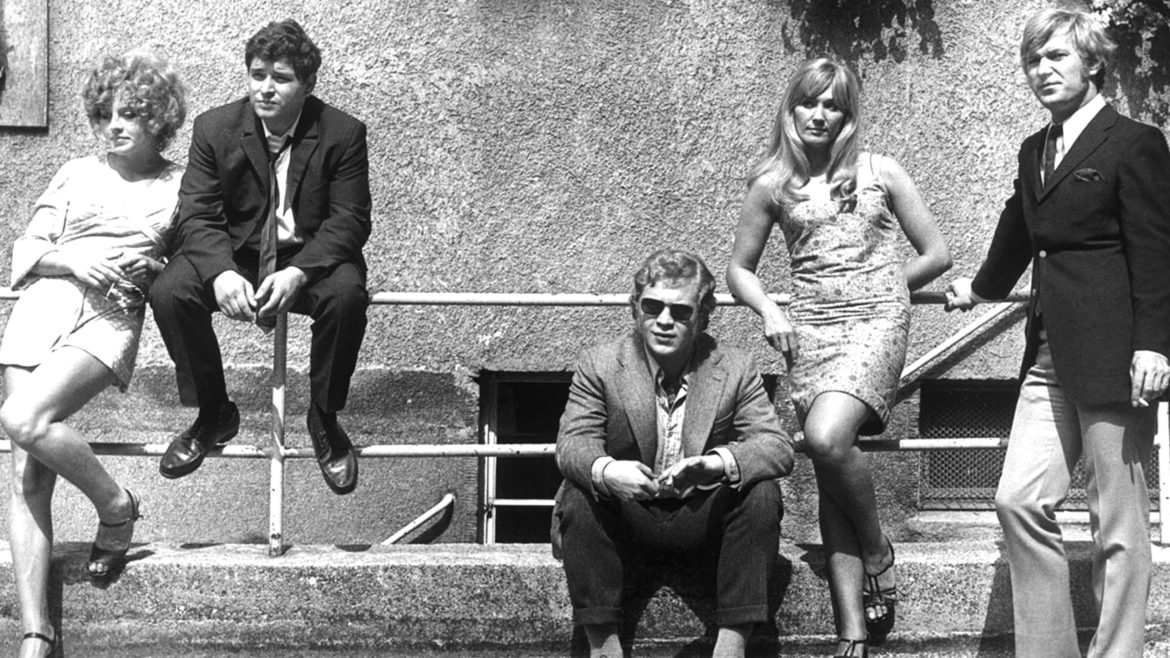
Fassbinderbased his second feature film on his stage play from a year prior, and it shows. Nearly every scene frames two to five characters against a plain backdrop – the front of an apartment building, the bare wall of one of the rooms inside, a table at the local tavern – where they alternately snipe at each other, spread rumors and ugly gossip, and talk haltingly, with blank expressions, about not very much.

There’s a biting, satiric edge, and a visceral anti-racist undertone (shared with Ali: Fear Eats The Soul, the only other Fassbinder I’m familiar with), but it’s kind of a slog. A repeated visual theme – a couple (by the end of the film, nearly every permutation has been included) walking through the courtyard to the sounds of a stately piano, like they’re walking down the aisle or in some sort of ritual procession, helps break up the minimalist tedium – but it’s a suffocating vision of insularity, xenophobia, sexism, casual violence, and economic malaise. I admired the film but I didn’t enjoy it.

The plot, such as it is, can be summarized very quickly. A group of young Germans, with little to do, no jobs, and not much hope, hang out and talk shit about each other. They are frustrated economically and sexually – the film definitely implies these two things are related on a fundamental level.

Their aspirations are minor: a quick buck, the promise of an acting career based on a photo shoot, a marriage or, failing that, some affection. In their restless ennui, they pass the time by passing judgment on each other, and each one is a hypocrite: the girl who trades sex for “gifts” of money is scorned, for instance, while it’s implied one of the tough guys is doing the same for out-of-town men. Each of them looks for any opportunity to distinguish and elevate their own compromises under oppressive conditions from those of the others.

Satire or not, these are unpleasant folks to be around.

Eventually, one of the residents takes in a lodger, a Greek laborer (played by Fassbinder), and the gossip shifts into high gear. The logic of the film’s structure indicates that all the simmering resentment that had previously circulated through the group now has an external outlet in this simple, uncomprehending Other. He sleeps naked! He is “better built,” as his unwitting roommate puts it! (How so, someone asks? “His dick,” he answers, as though what he meant wasn’t clear already.) He’s a cunning communist! He assaults German women, maybe! These allegations also sit right alongside their opposites – that Greeks don’t bathe and are undesirable, that he doesn’t have a thought in his head, and so forth. Since all these characters do is talk, his lack of German fluency renders him a cipher, and they can make of him whatever their free-floating resentment requires.

It culminates, as you’d expect, in an act of violence. But nothing much changes. In fact, Fassbinder’s final fuck-you gesture in Katzelmacher (“Cat fucker,” incidentally, which Wikipedia informs me is pejorative Bavarian slang for foreign workers) is to close on a note rendering even that violence perfunctory and meaningless.

Aside from the one character making money from renting rooms, these people are not economic agents in their own lives – they just sort of inhabit a world where things happen which they can’t control, and even scapegoating and violence do nothing but underline their powerlessness. All that’s left is to stew about it, try to find someone, close at hand, to blame, and talk shit on an apartment stoop, and dream of an escape that no one really thinks is coming.

November 29, 2014 0 comments
0 FacebookTwitterPinterestEmail
Song for a Sunday

Song for a Sunday: Then He Kissed Me (The Crystals, Goodfellas)

by rick November 23, 2014
written by rick

One of the Big Deals of the 70s films we’d later refer to as the New Hollywood was their use of contemporary music, as opposed to a scripted score or relying on the classics. These choices could comment on the things happening on the screen, underline them, or invert them: Robert DeNiro’s entrance in Martin Scorcese’s Mean Streets to the Rolling Stones’ “Jumping Jack Flash” manages to do all three at once. Previous entry McCabe & Mrs. Miller did something similar with Leonard Cohen dirges: they seem to be tailor-made for the scene, but we know they exist outside of it. It’s sort of showoff-y, this impulse to sync radio hits with camera movement, but when it works, it really works.

And after all, Fellini and others had music playing on set to provide a rhythm to the actors’ movement; it’s just we didn’t get to hear the music. In New Hollywood cinema – and, unfortunately, in attempts to replicate it – the music sometimes seems to come first: the mood and perspectives hinge on it, the score clues us in on what the script leaves out. After the creation of MTV and all the montages we’ve suffered under, we might wonder if it was worth it, given how shitty most people are at this.But it’s worth remembering it was new and dangerous once.

Scorcese’s Goodfellas, released far after these 70s breakthroughs and their inferior replications were over, is essentially a master lesson in how to use songs to further plot points, focus energies, and contextualize perspective. Each period of the lives of its protagonists is perfectly scored, so that we both know when and where we are, and what these people are like. It comes off a bit like a stunt maybe, song-wise: “Oh, Aretha Franklin’s “Baby, I Love You”? Got it!” But at least everyone can probably admit the songs they chose are pretty rad and would make a good mixtape.

The genius in Goodfellas, though, is how Scorcese matches song with moment. This is nowhere more apparent than in the famous Copacabana scene, where rising mobster Henry and Karen – the girl he was set up with on a double date, spurned, and then fell for – go on their first proper outing as a couple. The song is The Crystals’ “Then He Kissed Me.”

This is in many ways the easiest choice imaginable, on my part. It’s a great song and it accompanies one of the most impressive scenes in modern cinema, as the Steadicam tracks Henry and Karen leaving a car with an attendant, descending through a secret entrance to the club, winding their way through corridors, bantering with people Henry seems to know, palming $20 bills on everyone, gracefully side-stepping people as they pass through a working kitchen, and emerging in the club, talking charmingly all the while and occasionally guiding, gently, his awestruck lover.

It’s an undeniably virtuoso job, technically amazing. As they arrive on the floor, a man swoops in with a table to seat them, someone buys them a bottle of wine, and the camera itself almost seems out of breath; it hasn’t stopped either. It might be the most exhilarating, dinner-related sequence ever filmed.

Karen’s question when finally seated: “What is it you said you do again?”

Which brings us back to the song. “Then He Kissed Me” is as breathless as the scene: it describes a whirlwind romance, moments of doubt. It’s a song for a prom: nervous, hopeful, longing, and a bit awkward. It even starts with the word, “Well….”, like it was in mid-sentence. Its thundering production insists that something earth-changing is afoot, even if it’s just kissing a boy, and its use here immediately position us with the characters (and mostly with Karen). We sort of luxuriate in Henry’s privilege and are as wowed by it as she is: the song and the shot keep us on everyone’s team, ultimately, at least for the time being. It’s a wonderful moment when anything seems possible.

Of course, all things aren’t possible, if you stop to think. It makes complete and total sense for Karen to finally sit down, catch her breath, and wonder aloud what it is this guy does. But the dizzying motion and excitement of everything that preceded her question also explains why she might want to hang around, even after she finds out the answer.

November 23, 2014 0 comments
0 FacebookTwitterPinterestEmail
Song for a Sunday

Song for a Sunday – The Stranger Song (Leonard Cohen, McCabe & Mrs. Miller)

by rick November 9, 2014
written by rick

Yes, three “Song for a Sunday” features and two of them are Robert Altman films. (Wait until we get to Nashville!) The only connecting thread in these is that I like them and think the songs are used well in the movie, and Altman definitely knows how to deploy songs to structure the plot and mood.

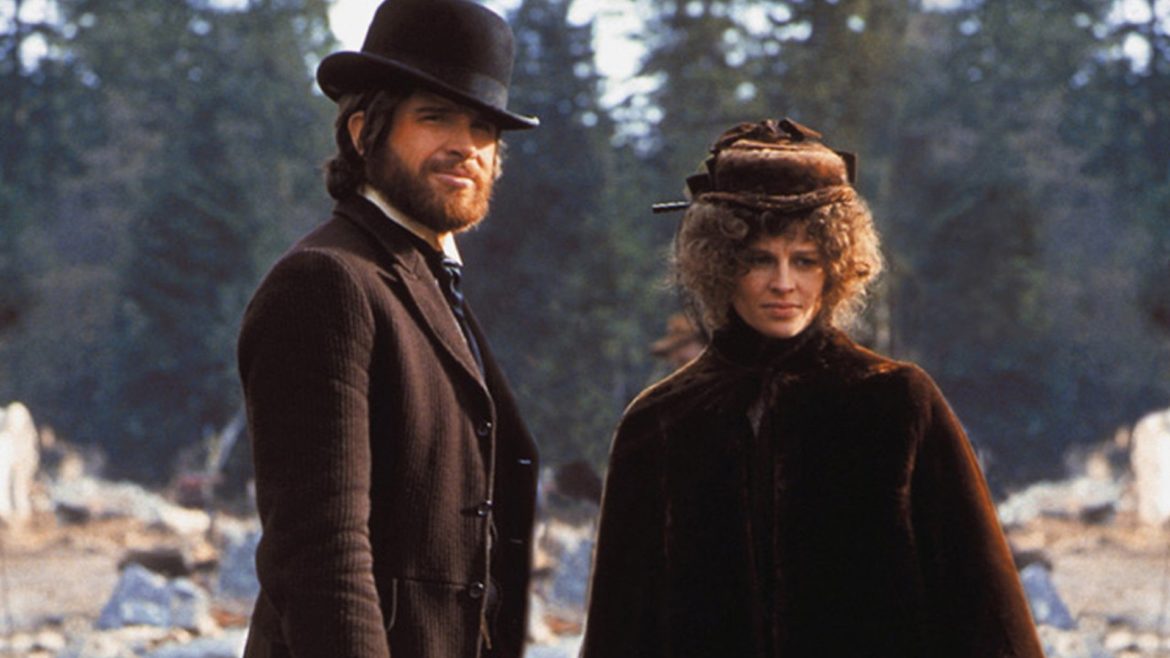
McCabe & Mrs. Miller is an austere version of that skill, and maybe the best non-Nashville example of it. The story – of a travelling gambler and would-be whorehouse entrepreneur teaming up with an experienced madam to make a life in the mining town of Presbyterian Church, just as the mythic West of the American imagination is being overrun by the trappings of civilized society – is scored to exactly three songs, each by Leonard Cohen, which fade in and out of the film at distinct points. Cohen’s vaguely, ambiguously mournful melodies, the enveloping strumming of the guitar, the barebones nature of the recordings, and his seemingly wise, exhausted crooning suit the film perfectly. It’s a funeral for something or someone – a way of life, a possibility of a kind of freedom, and, eventually, for a flawed hero who told himself he had poetry in him, even if no one else could see it.

McCabe & Mrs. Miller is one of my favorite films, so it’s easy to wax rhapsodic about it, but as far as the music goes, it really is singularly effective. In terms of the washed-out images, the scenes so damp you feel kind of cold just watching them, the lamp-lit interiors that Stanley Kubrick apparently phoned Altman about, to find out how he got those shots – these are natural environments for a Leonard Cohen song.

And, in terms of plot, it’s amazing: when Cohen sings, “He was just some Joseph looking for a manger,” how could he be speaking about anyone except Warren Beatty’s McCabe, rising and falling and searching for rebirth in a town called Presbyterian Church? When, in “Winter Lady,” one of the two other songs, he intones, “I’m just a station on your way / I know I am not your lover,” how can he possibly not be referring to McCabe’s melancholy desire for Julie Christie’s Mrs. Miller, doomed by their partnership, his impetuousness, her aloofness and addiction, all the dangers and distractions of this self-creating town?

And yet Cohen had already written and recorded the songs before the film was even in production. (In fact, he didn’t even initially like how Altman used them, if “Easy Riders, Raging Bulls,” Peter Biskind’s rather disreputable catalog of 70s New Hollywood gossip, is to be believed … which is a big if.)

In any case, the lyrics and mood are almost too on-the-nose … or would be, if they had been written for the film. That they weren’t ends up feeling mysterious, like a lot about McCabe & Mrs. Miller. A few more: “Like any dealer he was watching / for the card that is so high and wild / he’ll never need to deal another,” for example. Or: “I was waiting, I was sure / we’d meet between the trains we’re waiting for / I guess it’s time to board another.” That’s, of course, part of Cohen’s genius as a songwriter and part of why he’s so intensely admired by his fans: these are lyrics from everywhere and nowhere, oddly specific and yet taking on the feel of a universal statement. You can enter into them from wherever you stand, and imagine they were written specifically for you.

But notice the past tense in each of those lines, and the resignation: these are, if nothing else, songs written from the future. McCabe’s dream unfolding in the film, and Mrs. Miller’s too, weren’t even impossible … they were already over while they were beginning, in the rain and snow and creeping politics and sudden violence of a non-place in the middle of nowhere. They were just some Josephs looking for a manger.

Opening scene:

Full song, live version:

November 9, 2014 0 comments
0 FacebookTwitterPinterestEmail
Newer Posts
Older Posts

About

About

Towards a provisional theory of the cinema, or, failing that, just some shit about movies

Authors
Rick Kelley
Lark Lundberg

Keep in touch

Facebook Twitter

Categories

  • Conversation
  • Film
  • Film By Film
  • Great Movie Project
  • Great Movies: The Counter Programming
  • Guest
  • News
  • Other
    • Commentary
    • Film
    • Interview
    • Reviews
    • Song for a Sunday
  • Streaming Selections
  • TV
  • Uncategorized
  • Vegan Horror

Archives

  • April 2019
  • March 2019
  • January 2019
  • December 2018
  • November 2018
  • October 2018
  • September 2018
  • August 2018
  • July 2018
  • June 2018
  • May 2018
  • April 2018
  • March 2018
  • February 2018
  • January 2018
  • December 2017
  • November 2017
  • October 2017
  • September 2017
  • August 2017
  • July 2017
  • June 2017
  • May 2017
  • April 2017
  • March 2017
  • February 2017
  • January 2017
  • December 2016
  • November 2016
  • October 2016
  • September 2016
  • August 2016
  • July 2016
  • June 2016
  • May 2016
  • April 2016
  • March 2016
  • February 2016
  • January 2016
  • December 2015
  • October 2015
  • September 2015
  • August 2015
  • July 2015
  • June 2015
  • May 2015
  • April 2015
  • March 2015
  • February 2015
  • January 2015
  • December 2014
  • November 2014
  • October 2014
  • August 2009
  • September 2008

Recent Posts

  • China Girls, Death Proof, and the Hidden Face
  • Old News: Old Noise Edition
  • Old News: April 1, 2019
  • Nicolas Winding Refn, Marginalia, and the Deaths of Cinema
  • And now, let us praise Kanopy

Recent Comments

  • Franklin Kat on Michael Shannon shines again in Frank & Lola
  • Sean Tempesta on Cinema and dream-logic in Meshes of the Afternoon
  • ludditerobot on The Left-Wing Slapstick and Iconic Songs of 1937’s Street Angel
  • Franklin Kat on The Left-Wing Slapstick and Iconic Songs of 1937’s Street Angel
  • Arijit Mukherjee on Great Movies Project: The Counter-Programming
  • Facebook
  • Twitter

@2021 - All Right Reserved. Designed and Developed by PenciDesign


Back To Top
Luddite Robot
  • Reviews
  • Commentary
  • Great Movie Project
    • Great Movie Project
      Bride of Frankenstein is a movie for and…

      January 25, 2018

      Great Movie Project
      The Enduring Appeal of Nick and Nora in…

      November 29, 2017

      Great Movie Project
      The Ahistorical Fever Dream of The Scarlet Empress

      August 2, 2017

      Great Movie Project
      Dreams, Mundanity, and the Anarchist Yearnings of L’Atalante

      July 12, 2017

      Great Movie Project
      Duck Soup Is And Will Always Be A…

      April 19, 2017

  • Counter Programming
    • Great Movies: The Counter Programming
      Walking and Talking in the Shadow of Kanchenjungha

      March 7, 2018

      Great Movies: The Counter Programming
      A Brief Encounter in My Mother and Her…

      February 9, 2018

      Great Movies: The Counter Programming
      Horror’s Refusal in Farrokhzad’s The House Is Black

      October 13, 2017

      Great Movies: The Counter Programming
      The rage and beauty of The Cloud-Capped Star

      October 3, 2017

      Great Movies: The Counter Programming
      The daylight noir and social issue empathy of…

      June 22, 2017

  • Vegan Horror
    • Vegan Horror
      Julia Ducournau doesn’t think her film Raw is…

      June 7, 2017

      Vegan Horror
      Licking our wounds: The vampiric masculinity of Ravenous

      December 13, 2016

      Vegan Horror
      Eggertsson and animals: An approach to horror cinema

      September 15, 2016

      Vegan Horror
      “It’s Not My Nature” – Vegetarianism, Body Horror,…

      August 30, 2016

      Vegan Horror
      Bodies and Carcasses in Predator 2

      August 23, 2016

  • Interview
    • Interview
      Jasmine Leyva’s doc The Invisible Vegan aims to…

      May 3, 2017

      Interview
      Bridging The Abyss: An Interview With The Directors…

      November 28, 2016

      Interview
      7 Days in Ohio: An Interview with Nathan…

      September 12, 2016

      Interview
      Film Critic Phil Dy talks New Filipino Cinema

      June 17, 2016

      Interview
      “I Love Seeing Film Projected.” A Conversation with…

      March 22, 2016