
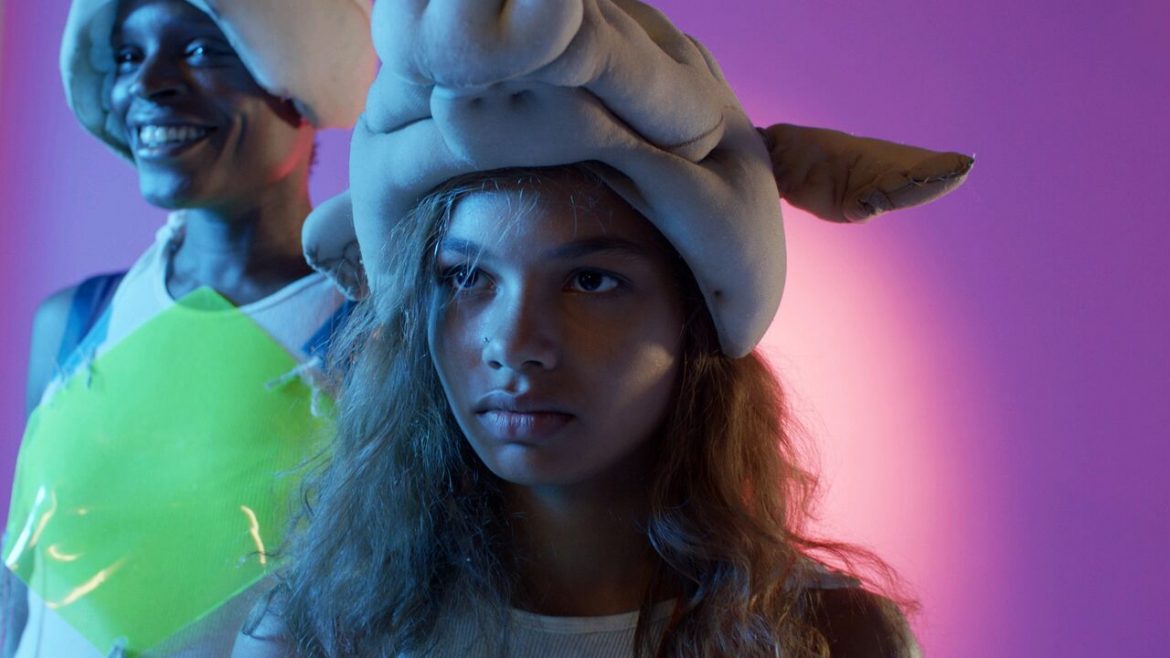
Josephine Decker‘s work carries with it a high-wire sense of danger, an aesthetic of possibility and collapse. Whether in the costumed genre trappings of Thou Wast Mild and Lovely, the shifting and uneasy ambivalence of Butter on the Latch‘s just-this-side-of-horror stay at a Balkan folk gathering, or (especially) the self-immolation of Flames, in which Decker’s camera focused with supreme discomfort on her own relationship, the viewer is simultaneously at a remove and much, much too close, piecing together fragments with a mounting sense that the whole edifice could topple. Hers is a performance art sensibility transferred to cinema, and Madeline’s Madeline is her wobbly magnum opus.
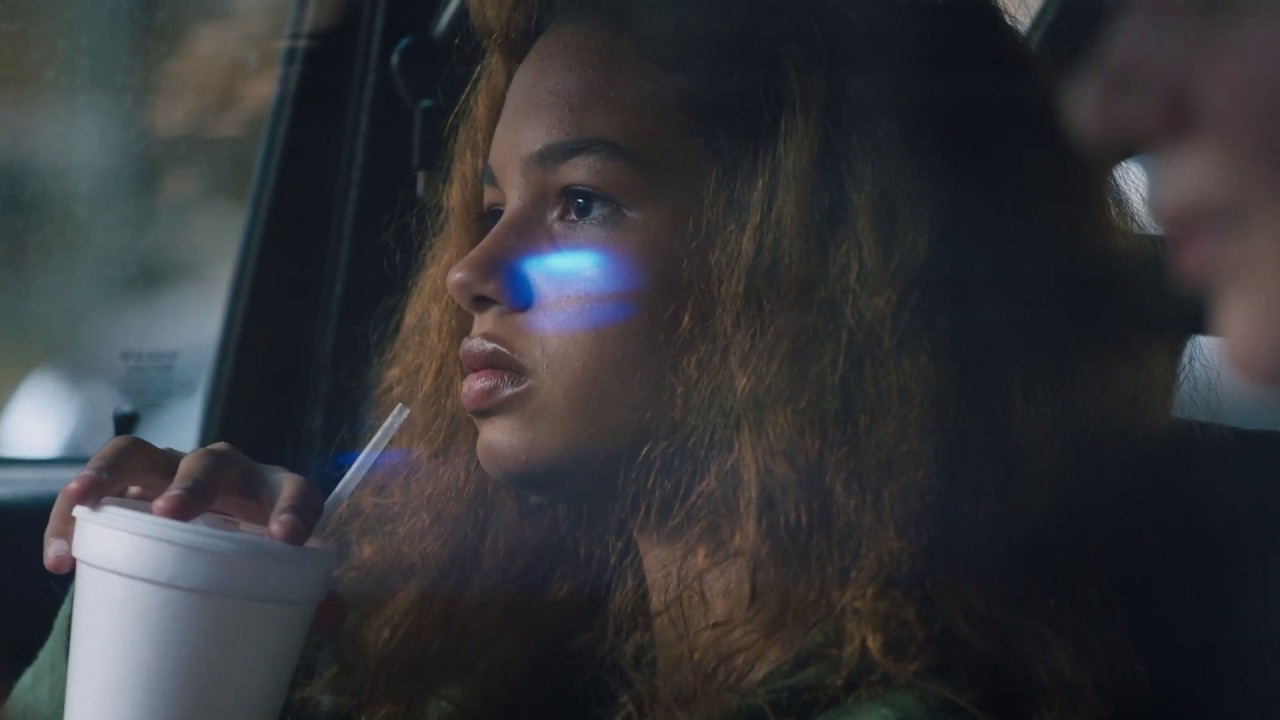 Fitting, then, that Madeline’s Madeline should explicitly focus on performance art. The title evokes Proust — appropriate for a film pitched between memory and enactment — but also identity and self-determination for the film’s actual Madeline (instant star Helena Howard). Madeline is a 16 year old struggling with some sort of obliquely referenced mental illness, a source of constant worry to her constantly worried mom (Miranda July, rounding out the performance art meta-text but expertly cast against type).
Her father is apparently absent, and things at home have been tough, which makes it all the more meaningful when Madeline discovers a home away from home: an avant-garde ensemble somewhere in the Village, which registers as both surrogate family and a near-cultish group of true believers in thrall to the charismatic Evangeline (Molly Parker), who’s mounting a collectively determined piece about … mental illness. Things will go through the looking glass shortly, with a far more convincing portrait of destabilizing dance magic than the overwrought extra witchiness of Suspiria could muster.
If ever there were a film that should be experienced rather than described, it’s Madeline’s Madeline, so we’ll leave the plot there. Decker, cinematographer Ashley Connor, editors Harrison Atkins and Elizabeth Rao, composer Caroline Shaw, and the Pig Iron Theater Company aim for something more like synaesthesia than spectatorship — this is participatory immersion cinema, and Madeline’s Madeline feels off-putting and new.
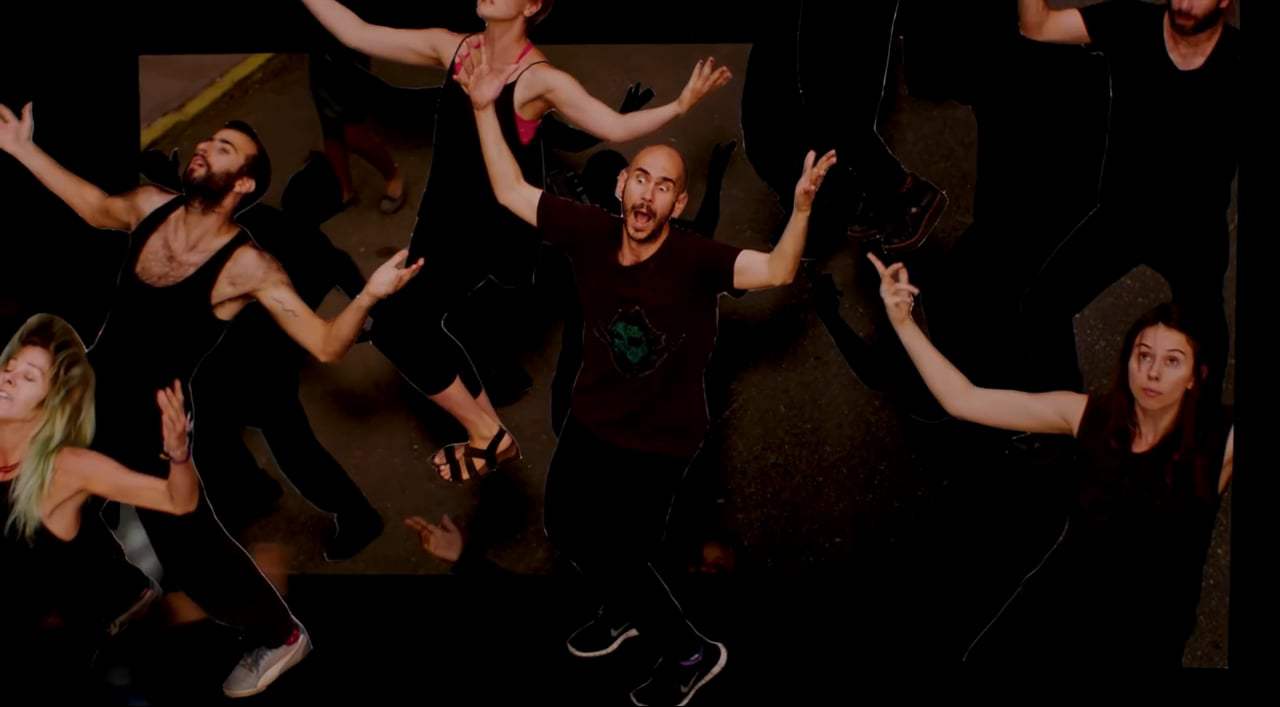 Decker, after all, is the same woman who sat across from Marina Abramović and took her own clothes off, until the cops dragged her out; she wanted to be “as vulnerable to [Abramovic] as she constantly makes herself to us,” but it’s hard not to think that this impulse also relates to a suspicion of calcified art, of unresponsive aesthetics. Madeline’s Madeline is in a constant state of psychic undress, and it’s not entirely a pleasant experience.
But it might be a masterpiece. Its themes — of the ethics and responsibilities of representation, the boundary-blurring and existential dangers of making art together, the Frankenstein-like ambiguities of parenting and care, the blindnesses to race and class and gender even in spaces dedicated to their exploration — are as timely as they come. If Decker never made another film — and it seems she barely made this one, unconvinced of her work’s relevance, a heaving anxiety that makes it every bit as nail-biting as recent panic attacks like Good Time — Madeline’s Madeline establishes her as a pivotal artist of our moment.
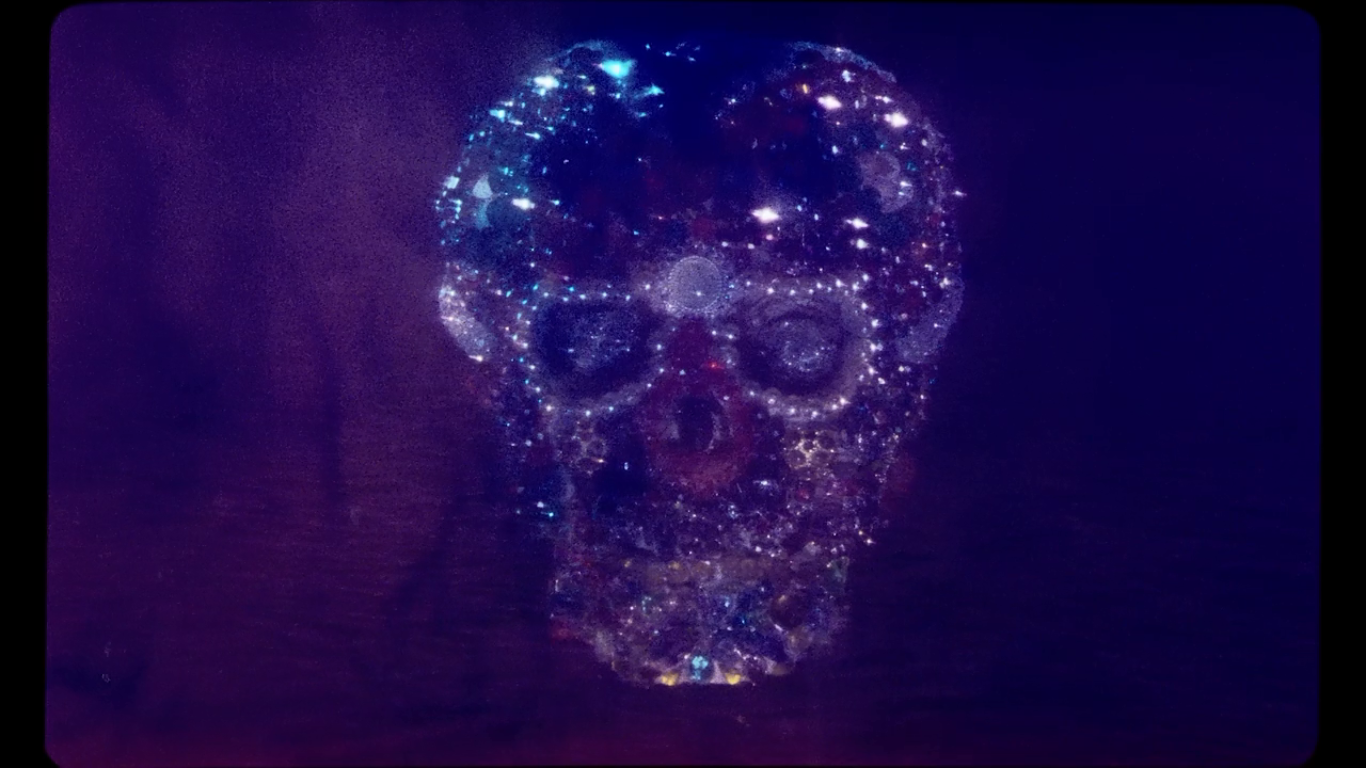 Liz: Well, Rick, I’ve now picked two movies for our discussion pieces –
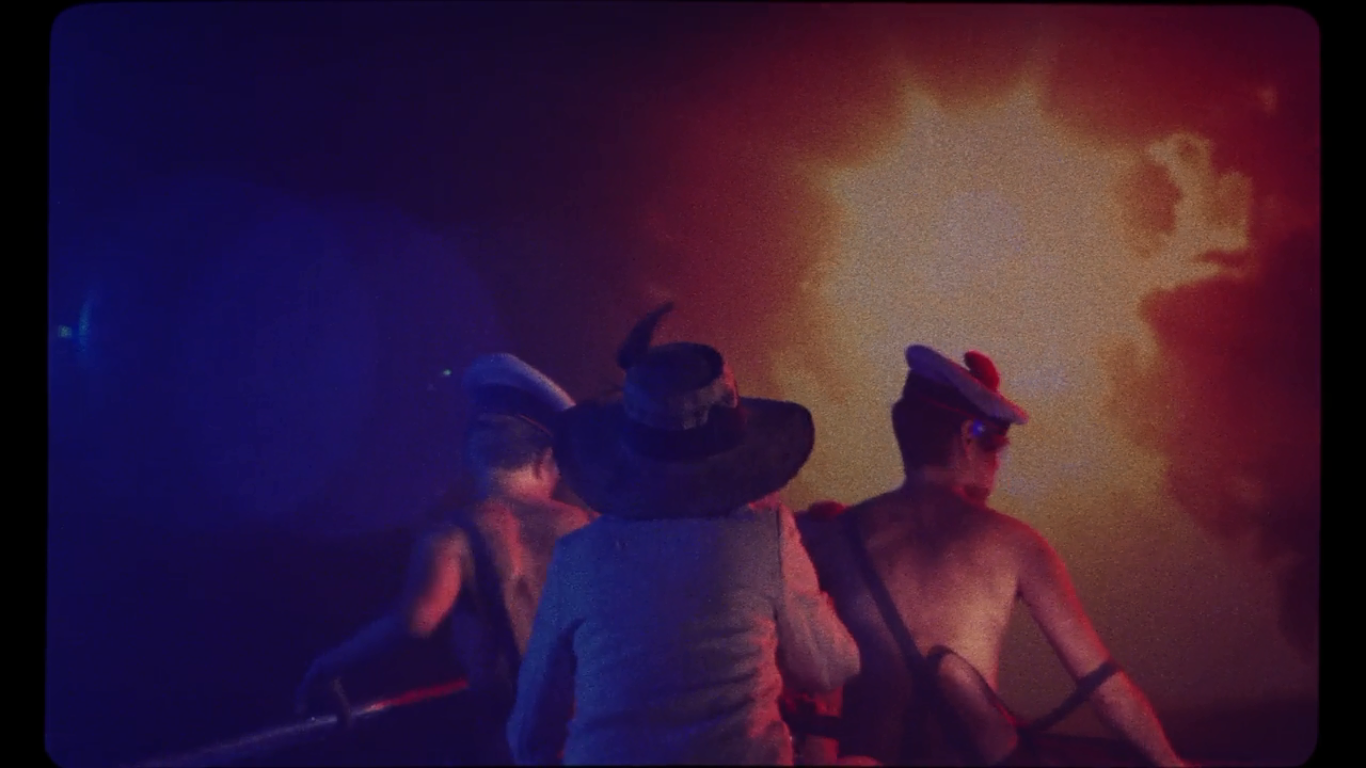
 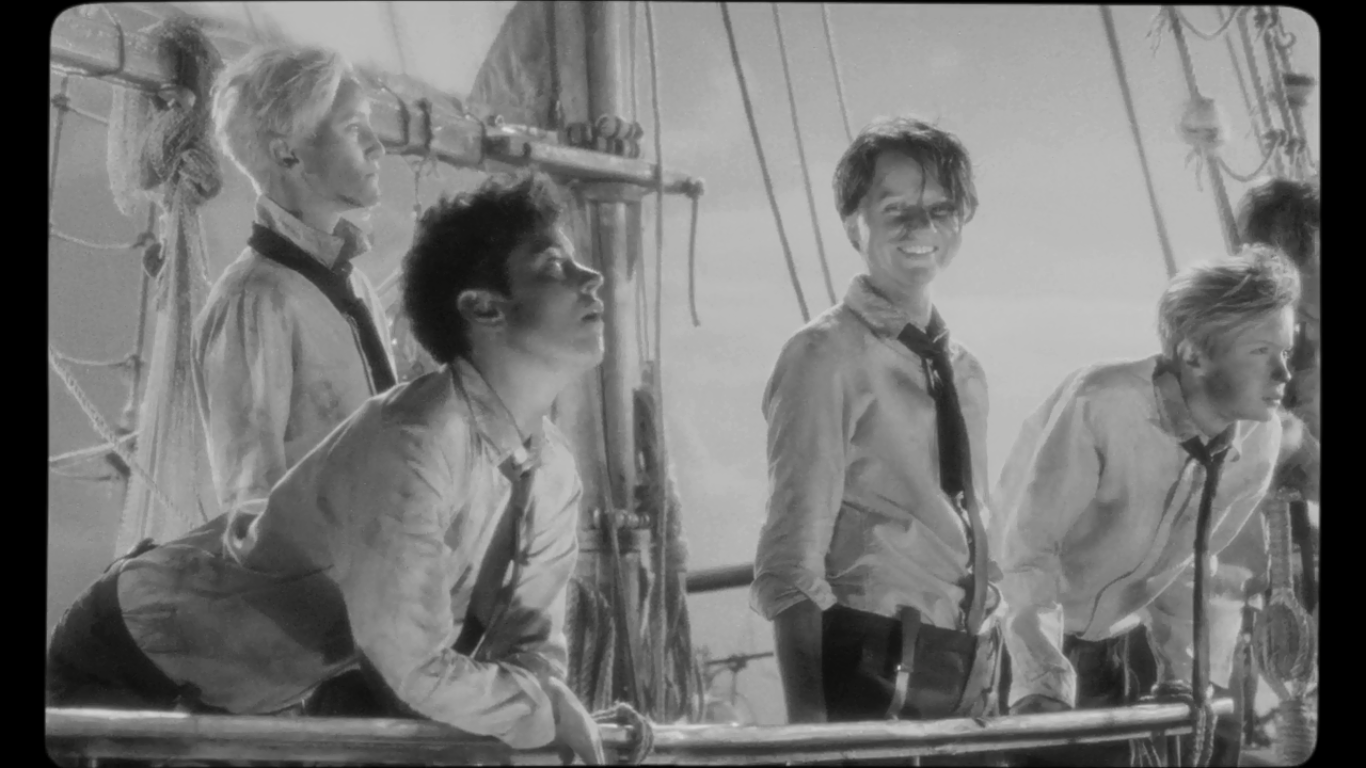 Here we kind of hold on that transition, and play with it in weird ways. In the traditional Western gender roles, boy children are basically considered girls; here, instead of boy-girl children maturing into men, unequivocally male children/teenagers “mature” into women.
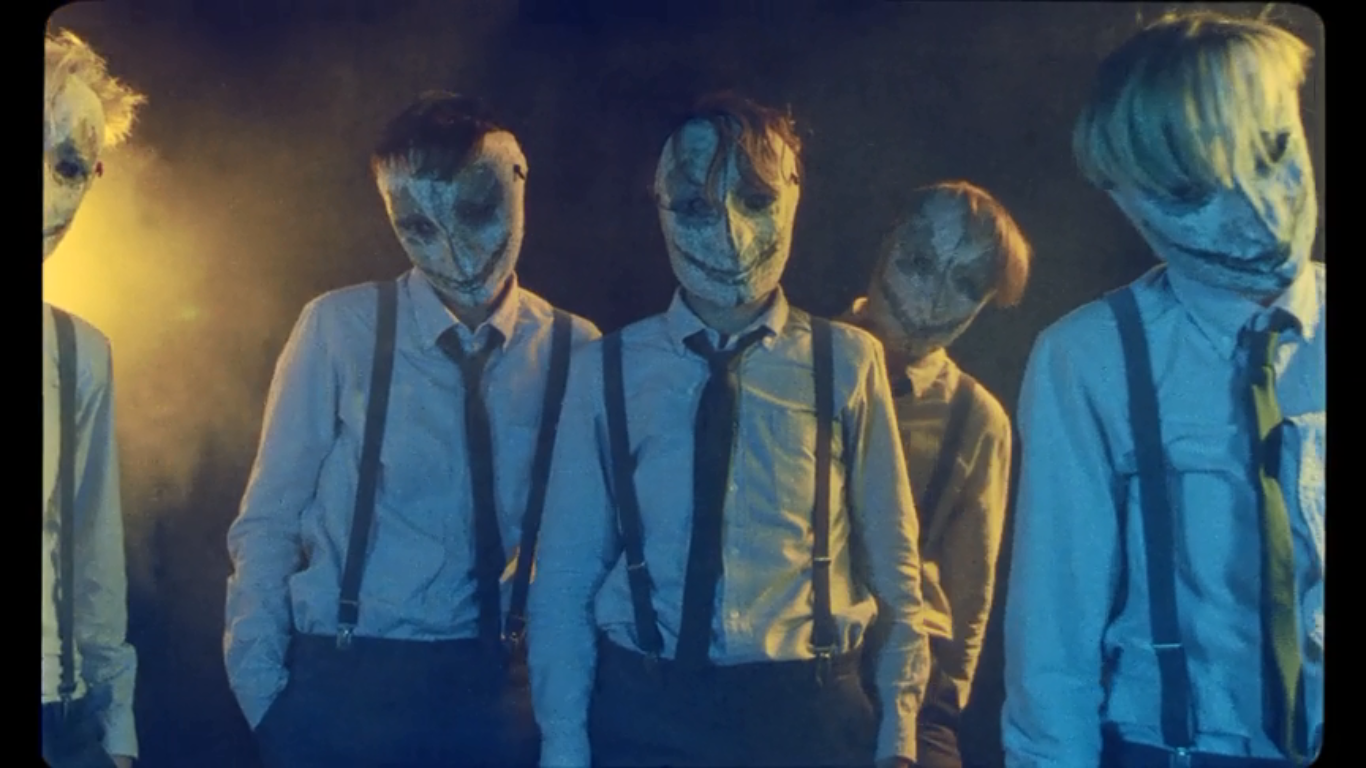 Liz: Well, for starters, I think that, for all of those references — some of which I definitely recognize — in Wild Boys, the film is much less interested in showing off and making sure you know them than Eisenstein is (and as
 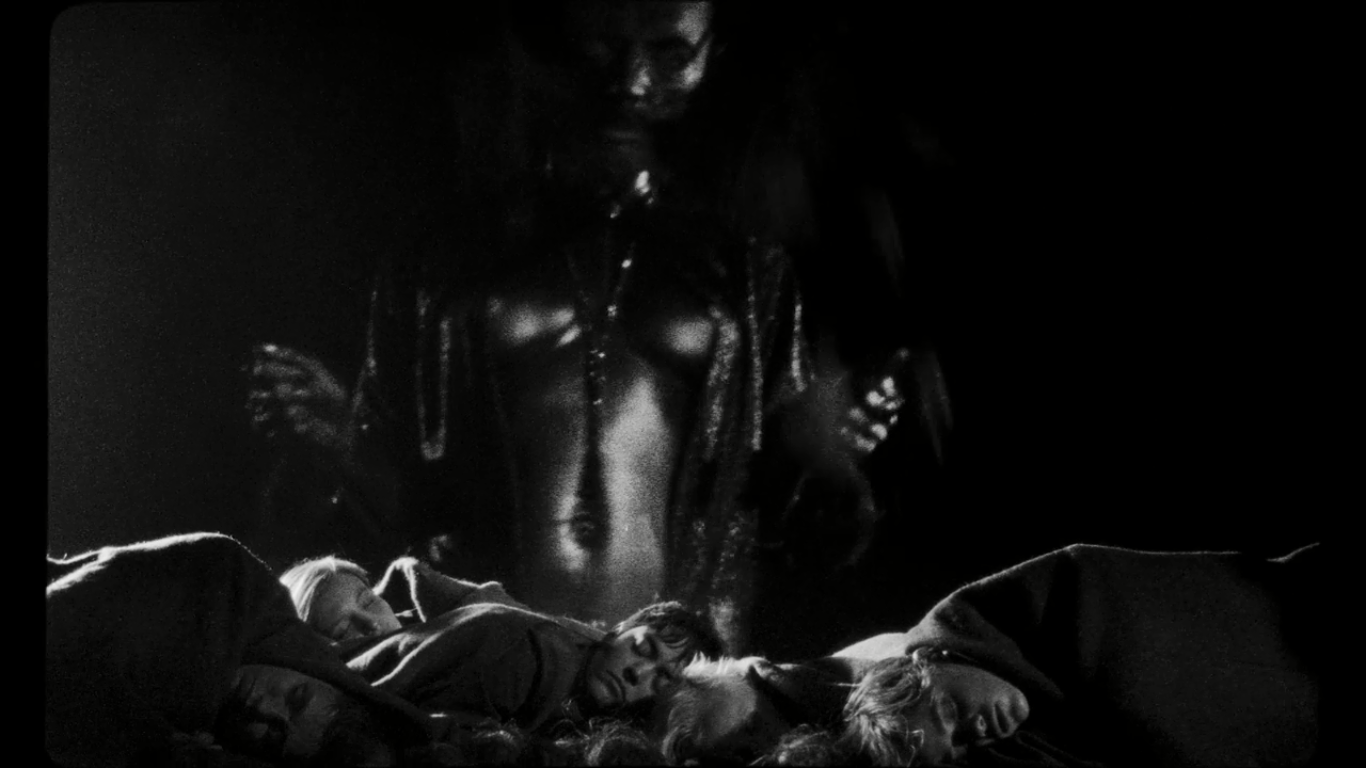 In queer circles, there often is this complicated sense of micro-power dynamics, that threaten to replicate the patriarchal structures that people in theory are trying to escape. The way that as soon as some of the boys begin to transform into women at the end of the film, they open themselves up to being victims of sexual violence, seemed to me to be the culmination of that thread through from the teacher (to the questionable figure of the judge at the school, to some extent) to the captain of the ship to the boys themselves. It seemed fully explored enough that I didn’t feel like it was just a matter of exploitative sexual prurience.
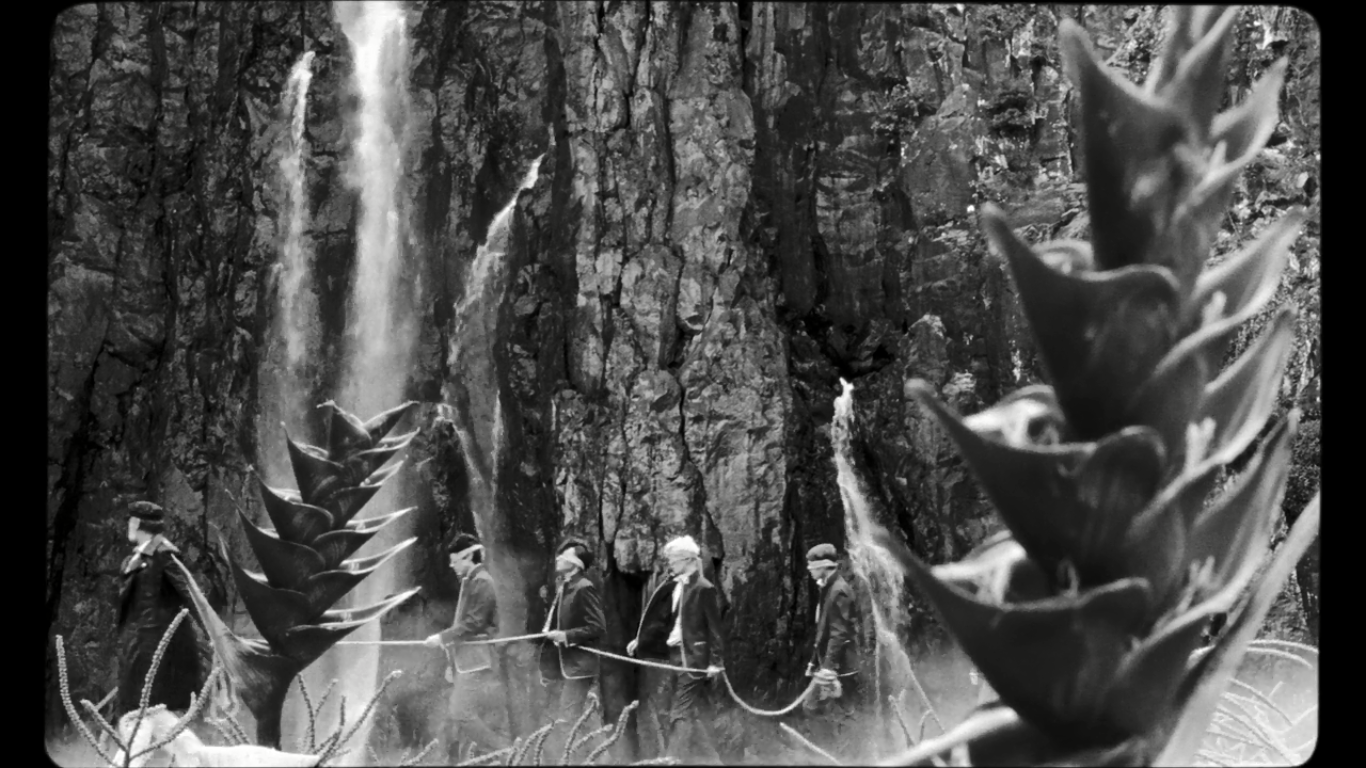 But that way in which it is horror-but-not-quite, that genre trope playfulness, applies across the board. Mandico is clearly having a lot of fun mixing and matching, not “subverting” tropes so much as sending them spinning against each other. The very notion of being sent to an island of pleasure as a form of transformative punishment is part of this set of contradictions and imploded binaries.
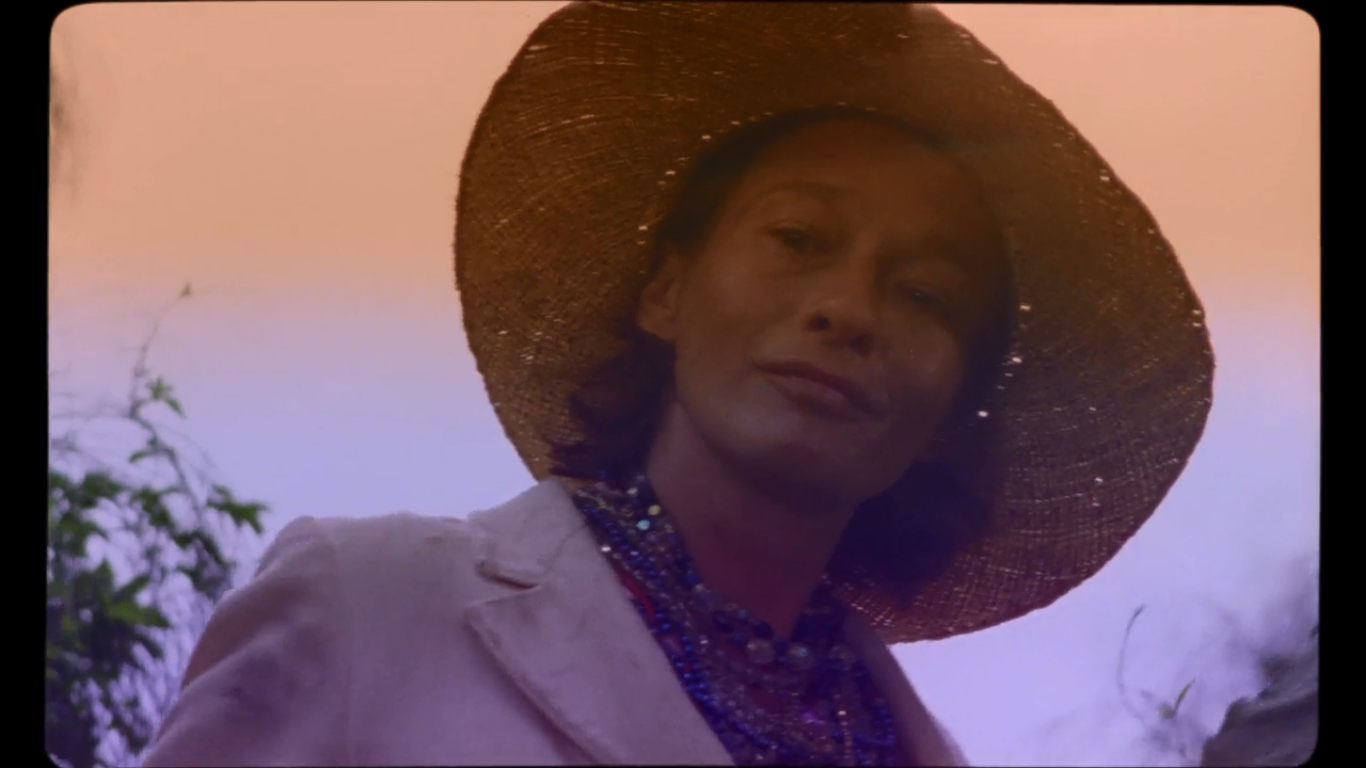 Rick: And further discussion! We’ve talked all this time and haven’t really touched on the remarkable performances.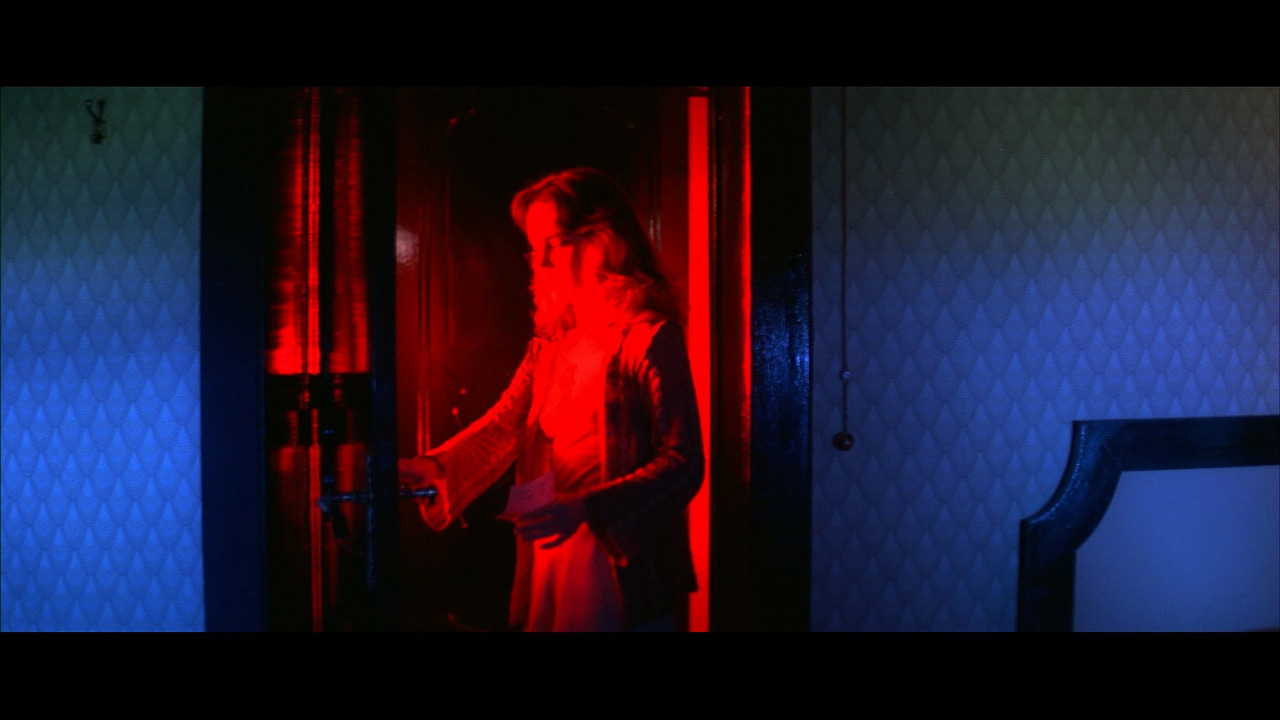
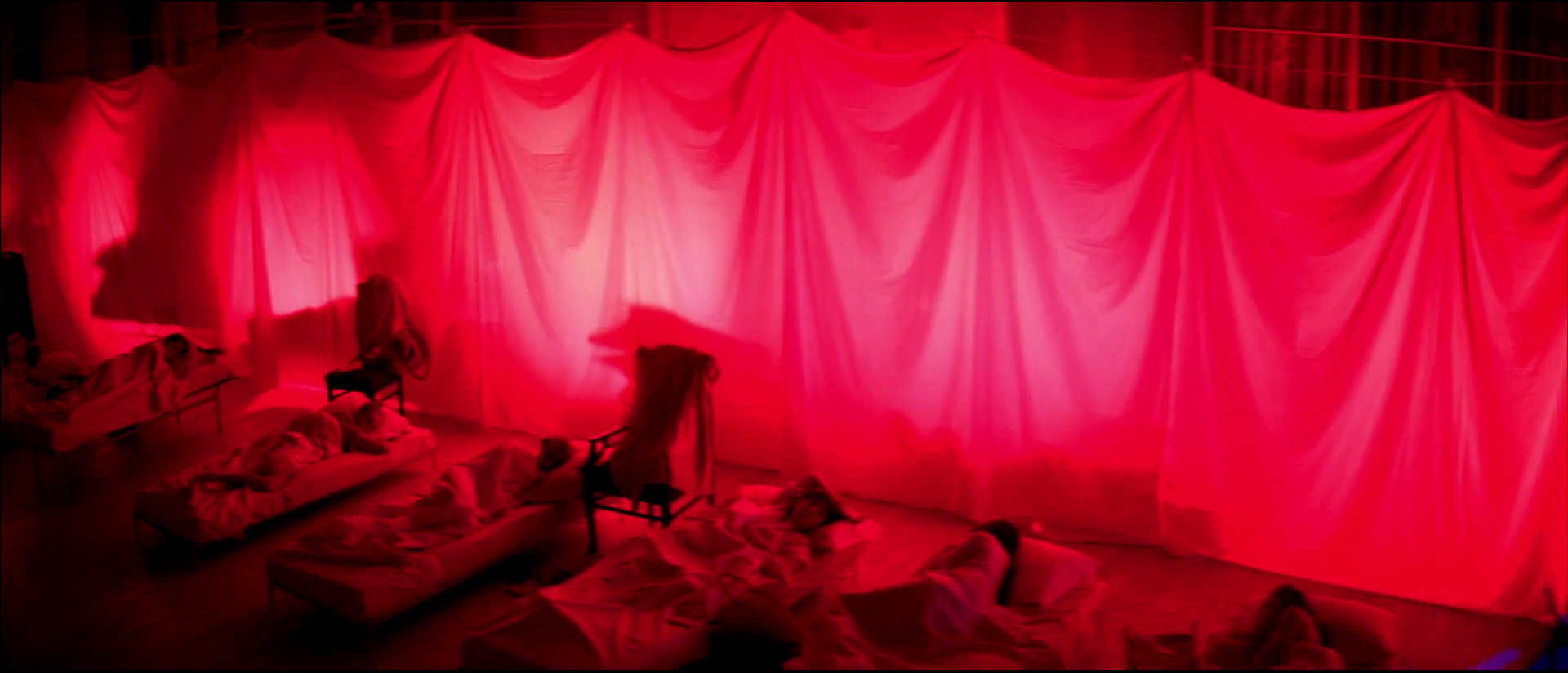 The colors coat every surface, to the point where it becomes impossible to tell how much is paint and how much is lighting. They are impossibly, cartoonishly vibrant, almost becoming a form of violence against the viewer. They are so garish one has to turn away from the screen. In their own way, they take the place of the violence typical of the
 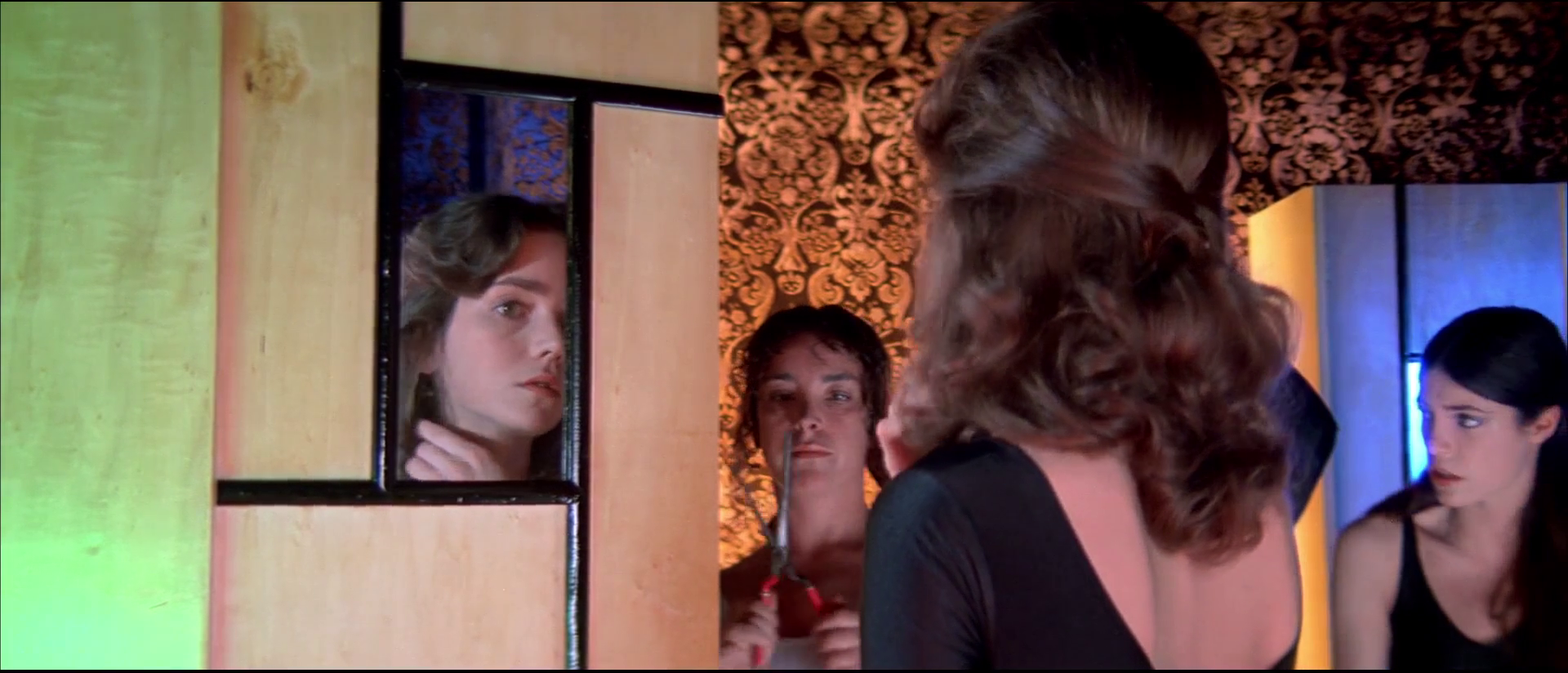 What strikes me most about Suspiria‘s colors is the way they completely fail to coordinate in any meaningful way. The colors may be technically complementary — the blue and gold so notoriously overused in movie posters make quite a few appearances — but they don’t act as complements to one another, with one breaking up the other as an accent.
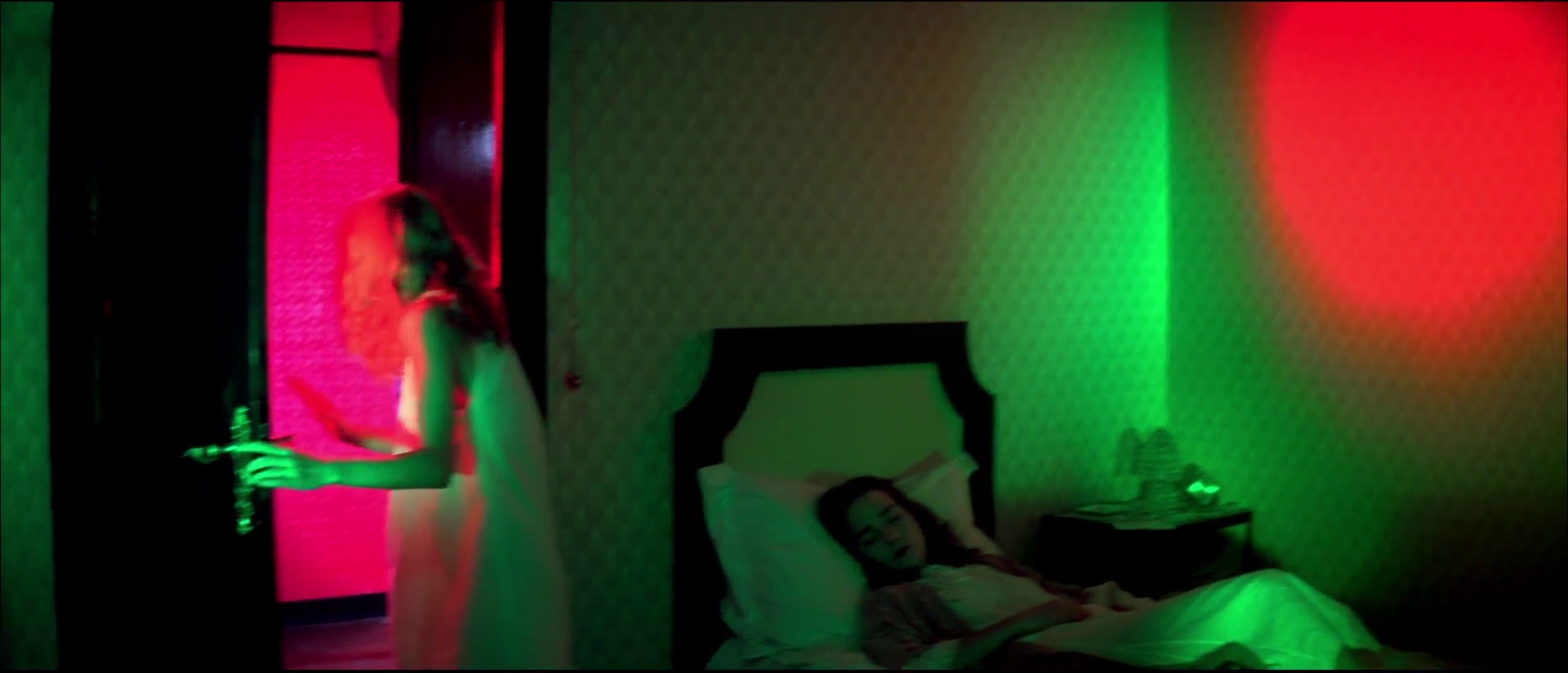 The very impossible brightness of the brightest patches and the completely monochromatic design draw our eyes to the shadows and the nuances in a way the typical use of color does not. It is as if we are watching a black-and-white movie, but one in which there are different kinds of white at play.