Top Posts
Madeline’s Madeline: An Unclassifiable Panic Attack Maybe-Masterpiece
Shoplifters Steals Moments of Wonder from the Mundane
Burning and Forgetting What’s Not There
Kusama: Infinity Expands Beyond The Canvas
Mandy Risks Little, Wins Little
In We The Animals, The Children Are Away...
The Seagull Isn’t Quite Chekhov, But It’s Still...
5 Million Ways Boots Riley Isn’t Sorry To...
American Animals’ and the Queasiness of the Heist
A Star Is Born In Hearts Beat Loud
  • Reviews
  • Commentary
  • Great Movie Project
    • Great Movie Project
      Bride of Frankenstein is a movie for and…

      January 25, 2018

      Great Movie Project
      The Enduring Appeal of Nick and Nora in…

      November 29, 2017

      Great Movie Project
      The Ahistorical Fever Dream of The Scarlet Empress

      August 2, 2017

      Great Movie Project
      Dreams, Mundanity, and the Anarchist Yearnings of L’Atalante

      July 12, 2017

      Great Movie Project
      Duck Soup Is And Will Always Be A…

      April 19, 2017

  • Counter Programming
    • Great Movies: The Counter Programming
      Walking and Talking in the Shadow of Kanchenjungha

      March 7, 2018

      Great Movies: The Counter Programming
      A Brief Encounter in My Mother and Her…

      February 9, 2018

      Great Movies: The Counter Programming
      Horror’s Refusal in Farrokhzad’s The House Is Black

      October 13, 2017

      Great Movies: The Counter Programming
      The rage and beauty of The Cloud-Capped Star

      October 3, 2017

      Great Movies: The Counter Programming
      The daylight noir and social issue empathy of…

      June 22, 2017

  • Vegan Horror
    • Vegan Horror
      Julia Ducournau doesn’t think her film Raw is…

      June 7, 2017

      Vegan Horror
      Licking our wounds: The vampiric masculinity of Ravenous

      December 13, 2016

      Vegan Horror
      Eggertsson and animals: An approach to horror cinema

      September 15, 2016

      Vegan Horror
      “It’s Not My Nature” – Vegetarianism, Body Horror,…

      August 30, 2016

      Vegan Horror
      Bodies and Carcasses in Predator 2

      August 23, 2016

  • Interview
    • Interview
      Jasmine Leyva’s doc The Invisible Vegan aims to…

      May 3, 2017

      Interview
      Bridging The Abyss: An Interview With The Directors…

      November 28, 2016

      Interview
      7 Days in Ohio: An Interview with Nathan…

      September 12, 2016

      Interview
      Film Critic Phil Dy talks New Filipino Cinema

      June 17, 2016

      Interview
      “I Love Seeing Film Projected.” A Conversation with…

      March 22, 2016

Luddite Robot
Film critique, theory, and assorted nonsense.
CommentaryFilm

China Girls, Death Proof, and the Hidden Face

April 14, 2019

Old News: Old Noise Edition

April 8, 2019

Old News: April 1, 2019

Nicolas Winding Refn, Marginalia, and the Deaths of Cinema

CommentaryFilm

And now, let us praise Kanopy

January 24, 2019

Warren Sonbert and the Relief of Anti-Narrative

January 14, 2019

The World Is Ending and It Doesn’t Matter

The Best Films of 2018

FilmReviews

Madeline’s Madeline: An Unclassifiable Panic Attack Maybe-Masterpiece

December 21, 2018

Shoplifters Steals Moments of Wonder from the Mundane

December 11, 2018

Burning and Forgetting What’s Not There

Alien, Musicology, and Reading Soundtracks

CommentaryFilm

Shocktober III: Halloween 2018 Edition

October 24, 2018

Shirley Jackson’s The Lottery Traumatized Schoolkids in 16 mm

October 18, 2018

Shocktober 2018 II: Another Reshockening (of Horror)

Häxan is a movie made by a movie character

CommentaryFilm

Shocktober 2018

October 7, 2018

Unprofessional! Spring Night, Summer Night

October 3, 2018

The Wild Boys: A Luddite Robot Conversation

Kusama: Infinity Expands Beyond The Canvas

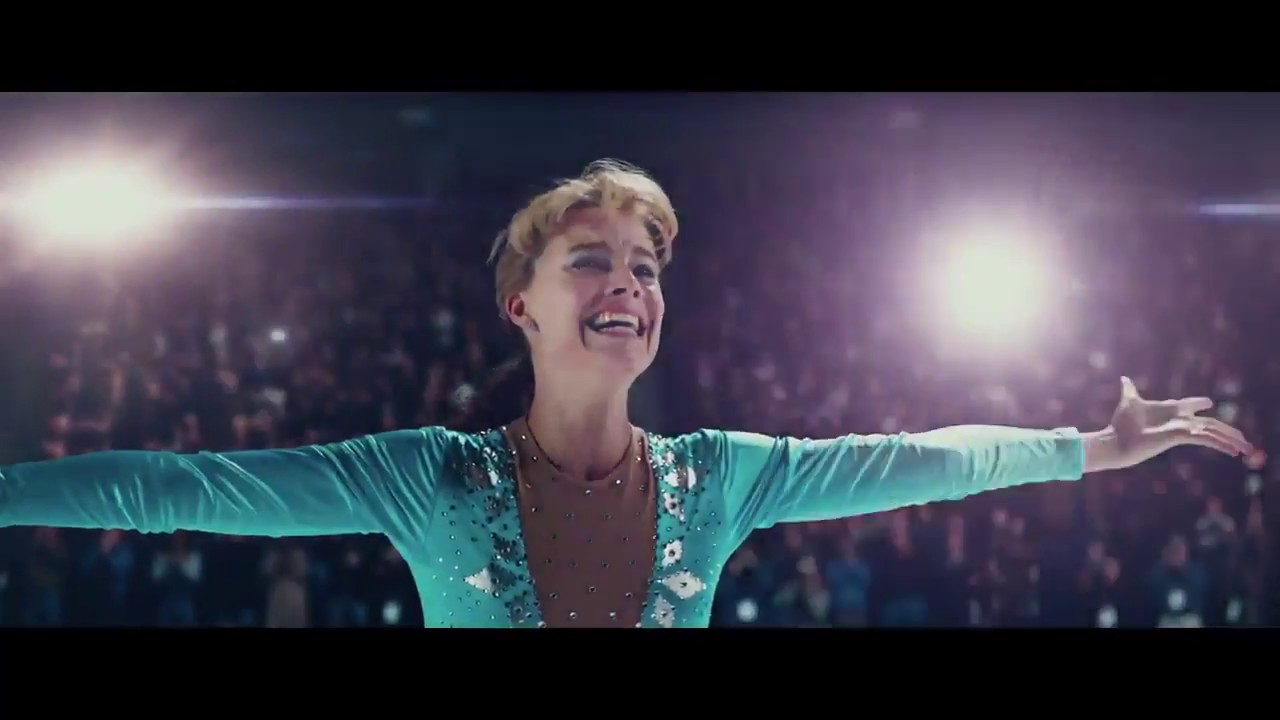
Smiling Margot Robbie in I, Tonya
FilmReviews

Margot Robbie And Allison Janney Can’t Save I, Tonya From Itself

by rick January 9, 2018
written by rick

“There is no such thing as truth,” Tonya Harding (Margot Robbie) tells us at one of the many caustic, slippery moments in I, Tonya. “Everyone has their own truth.” This could serve as the self-congratulatory motto for Craig Gillespie‘s well-acted film, a distinctly, and appropriately, Trumpian sentiment for what might be the first of a genre: the Fake News Biopic. Let’s hope it’s not.

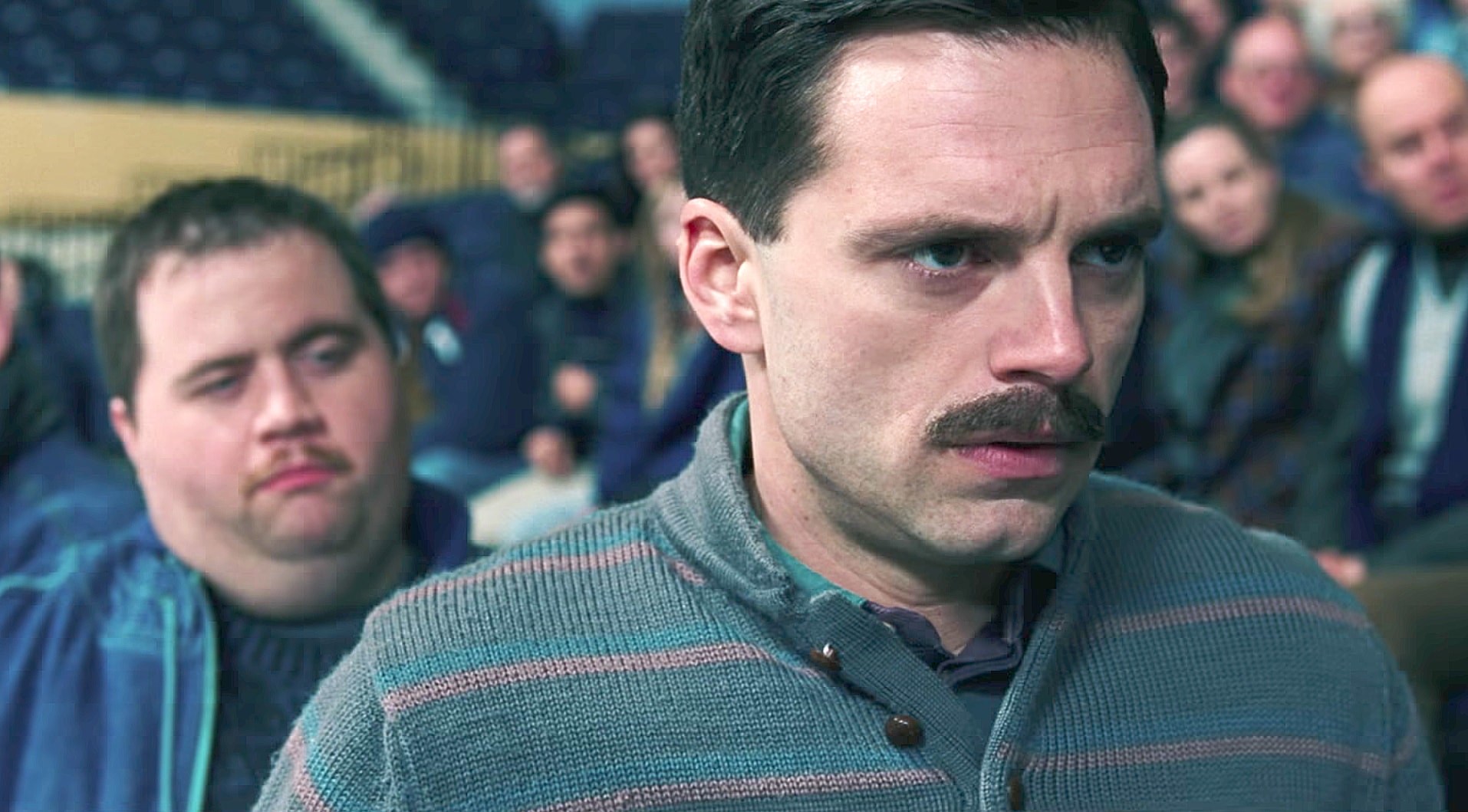
The half-remembered details of 1994’s second-most salacious celebrity story provide the occasion for the film, though not its crux — the irresistible tale of figure-skating infighting, the attack on eventual Olympic medalist Nancy Kerrigan (barely on screen here), the involvement of Harding’s ex-husband Jeff Gillooly (Sebastian Stan) and doofus “bodyguard” (a Dorito-crumb-covered Paul Walter Hauser), the media frenzy are all starting points for a different project. What that project is, exactly, remains an open question.

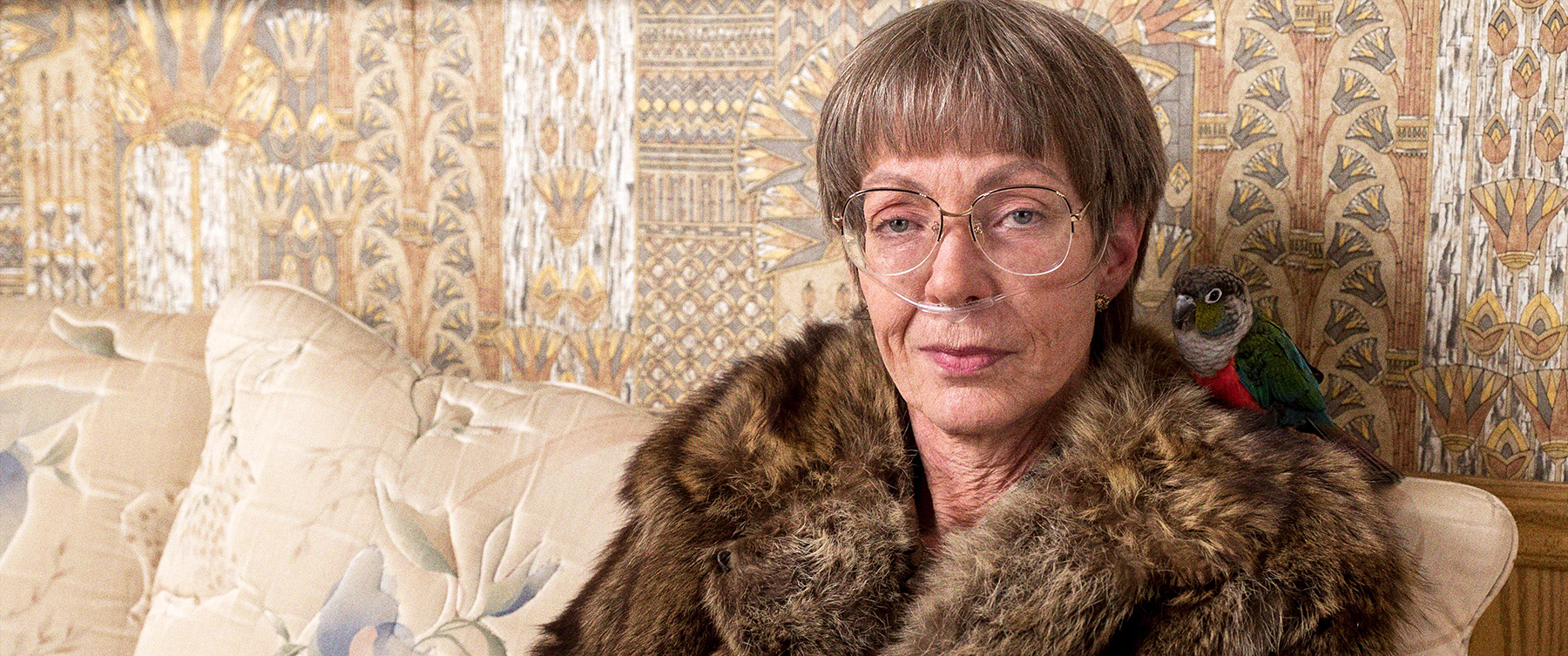
If Gillespie and his team hope to generate empathy for Harding, or at least humanize her, I, Tonya has effective moments. TheYoung Tonya in I, Tonya classism on display, as a rarefied world of hoity-toity ice princesses and stodgy judges react with nothing short of contempt for a roughneck upstart who can land jumps no one else can, helps. So do the biographical details — a monstrous mother (Allison Janney) who nearly single-handedly corrupted her talented daughter in the name of personal profit, an avalanche of later physical abuse at the hands of her husband. It’s a misery to consider.
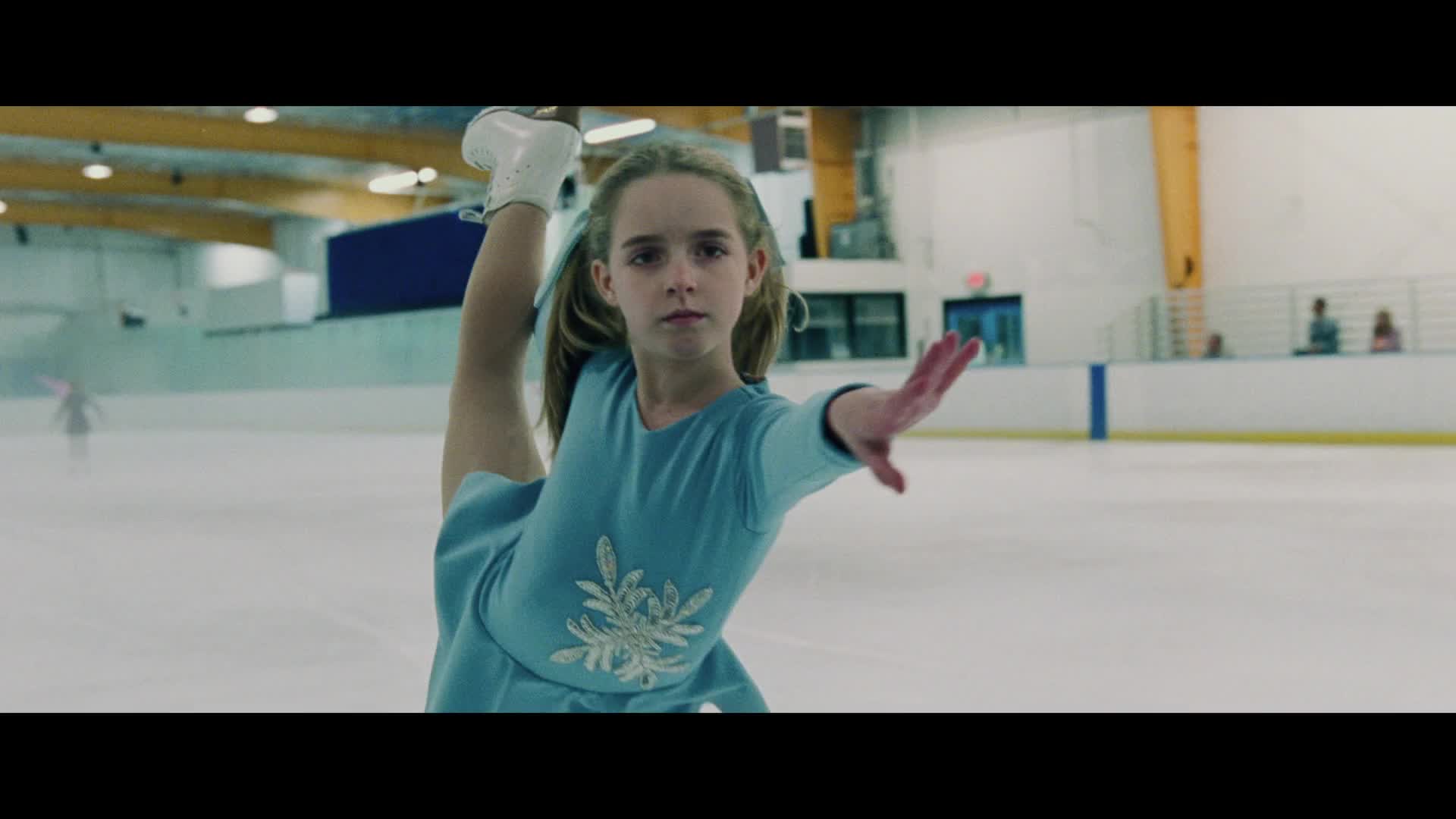
And it’s a misery played for laughs, introducing one of I, Tonya‘s distressing elements. Domestic violence is mined for jump scares, with their attendant anxious humor. Janney, a near-lock for supporting actress awards across the board, revels in comic grotesquerie, some sort of cross between chain-smoking, white trash sports-mom and Cruella De Vil.

It’s all of a piece with a larger aesthetic of collisions, some tonal, some physical, and some more epistemological, as that quote at the start implies. Intro text informs us that the I, Tonya is based on the “wildly contradictory” testimonies of the central players, and this seems true enough to Gillespie’s method, but it quite clearly means to take aim at us, too. It’s a spectacle dripping with reproach for its spectators.
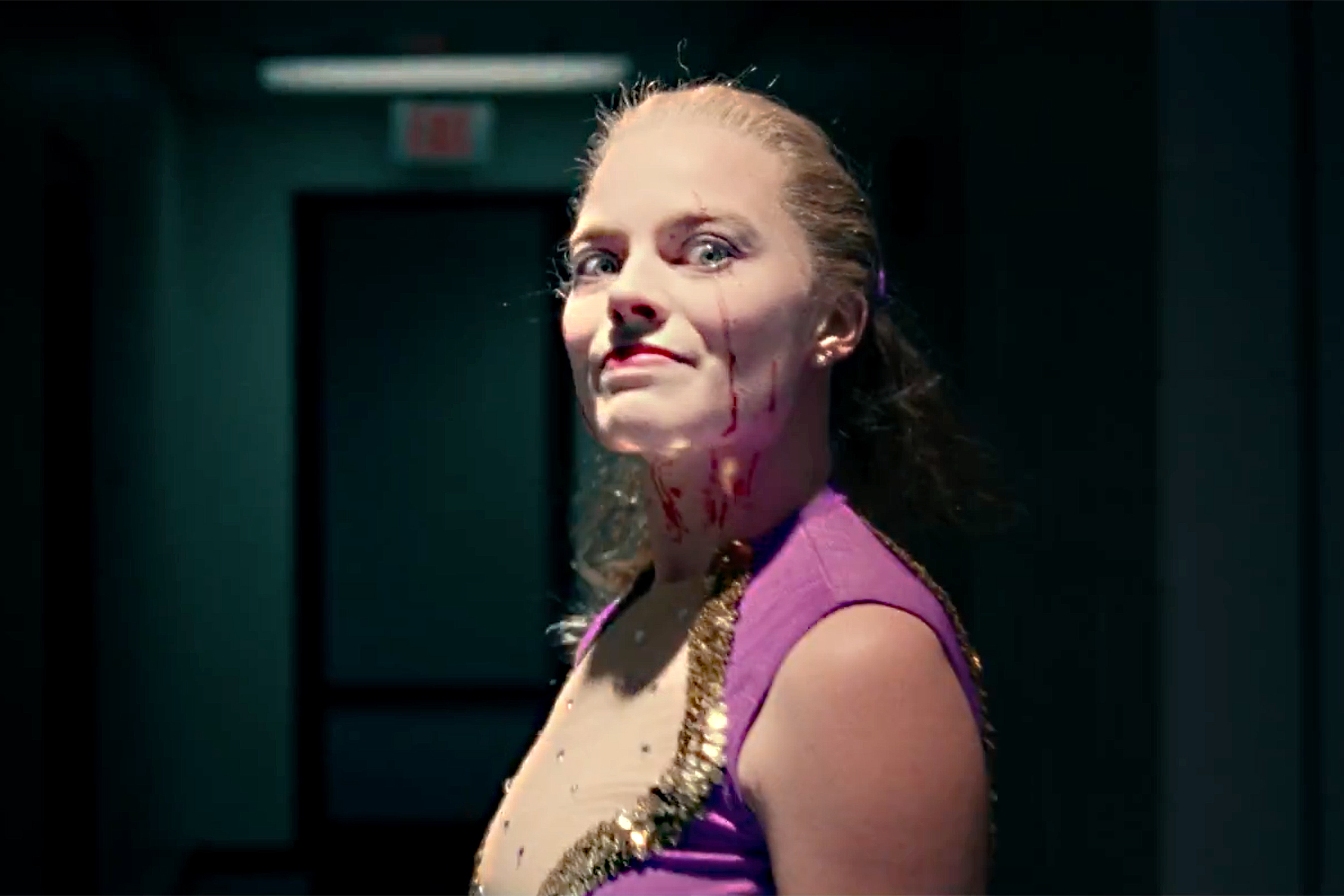
Bloody Margot Robbie in I, TonyaThis tendency reaches its nadir in a fantasy sequence of Harding beating Kerrigan personally, horror-movie-style, brutally quick-cut, Tonya’s gleeful, bloody face. Introduced by a bemused Gillooly, it’s a mock execution for all the morons in the world (read: the audience) who imagined this is how it went down. But it’s also a re-enactment that fulfills that viewing desire. We are meant to laugh at the idiocy of the vision while simultaneously celebrating the cleverness of having it presented to us, having our bluff called by a film that knows: this is what you came here to see, isn’t it? Again and again, I, Tonya wants it both ways: to disown and pillory toxic celebrity while catering to its worst aspects, to mock its redneck players in the name of anti-classism, to deploy every trick it can muster to engineer snappy fun out of brutality and then chide us for indulging in the fantasies it created. The effect is striking, and not in a good way.

This is far from the only time I, Tonya tries to pull these tricks. The horror/action grammar of that meta-pastiche has all kinds of corollaries (Tarantino, Rashomon, and, most of all, The Big Short), but Gillespie’s favorite is a sort of low-rent Scorsese imitation, amping up the energy through Goodfellas-esque needledrops and sudden (in this case, almost exclusively domestic) violence.

The terror of that domestic violence itself is undercut by all the meta-tomfoolery. In my theater, there were gasps at suddenSebastian Stan and Paul Walter Hauser in I, Tonya violence, but also some laughs … which the jump-scare has trained us to do. The film’s conceit seems to be that, by eliding tones and genres in these discordant ways, something important will be said about viewership as much about Tonya, or the 24 hour news cycle, or anything else. What’s more clear is how little I, Tonya actually cares about the violence it deploys in attempts to be cute.
What I, Tonya misses is that something like Goodfellas also wants us to identify with the glamour, with the aspirational, to place us in the position of these protagonists, all reflecting these different viewpoints and experiences, before pulling out the rug. In I, Tonya, its entire nesting-doll structure precludes this. The “As far back as I can remember, I always wanted to be a gangster” sequence has a grace and edgy desire that Gillespie can’t pull off because the story won’t allow it. Instead, the story I, Tonya insists on telling is the story of us watching I, Tonya and not feeling terrific about it.

A late-in-the-film background shot of O.J. Simpson being arraigned on TV draws a muddled parallel – the film seems to be saying, “we are at the birth of the 24-hour news cycle, the cults of celebrity are collapsing.” So is Harding a victim of that culture? Is the point that she is “no OJ”? Most people probably would say, regardless of whether the individuals implicated are guilty of those crimes, that the crimes themselves are pretty different, so okay. Or, more likely, is the point that we, as viewers and consumers of tabloid scandal and a kind of voyeuristic American bloodlust, are the real perpetrators? In which case, are Harding and O.J. kind of the same? Or … what?
Alison Janney in I, TonyaI, Tonya would, I am certain, laugh at any expectation of a “moral,” but is it too much to ask for some kind of rigor to the filmmaking, a desire to contextualize things in ways that resolve into something more than “Everyone has their own truth,” spit out with disdain for the players, the audience, even for the film itself? Reflexive self-laceration and gotcha finger-wagging, what Gillespie seems to imagine are the film’s contributions, are nothing new, certainly not in a world where Haneke already exists.

But the notion that claims to truth should be hurled back with spite onto the guests you’ve invited over might be. I, Tonya is as cynical as modern American cinema comes, and it will be, and has already been, celebrated for that reason. Maybe it’s the movie of our time. So much the worse for our time.
January 9, 2018 0 comments
2 FacebookTwitterPinterestEmail
CommentaryFilm

A Cinematic New Year’s Resolution

by Lark January 8, 2018
written by Lark

I was never tempted by an explicit resolution like the 52 Films by Women project Rick did last year. I remember people motivating each other to watch “30 films from 30 countries” at some point last year, but couldn’t work up the energy. Even when my friends do things like “Spooktober” (watching horror movies all through October—which, let’s all admit, for most male film nerds differs from every other month of the year only by being explicit), I was left scratching my head a little.

On the one hand, I have been an obsessive list maker in the past, trying to watch every movie by actor x or director y or musician z. But I always lacked the tenacity to make it all the way through; I ended up abandoning one list for another. I often was so bad at finishing things that I ended up with lists of lists of things to watch, or even lists of lists of lists. The nesting got somewhat out of hand.

So, my aversion may be partially because I know how addicting projects like that can be for me. But on the other hand, it also feels a little claustrophobic. We all know the feeling of hearing about some weird movie and suddenly wanting to abandon everything to see it. What if you’re in the middle of some resolution? (“Wait, it’s a Godard movie that stars Peter Sellars and Molly Ringwald? I need to watch this right now! Oh, that’s right, I decided to watch one movie that starts with every letter of the alphabet this month…”)

So, when I was thinking about making a film resolution for the New Year, I was a little apprehensive. But putting together my ranking of every movie from 2017 while thinking up real-life New Year’s resolutions, some things came to mind.

That article was, frankly, a little nuts, and not at all representative of what art I’m usually interested in. I mean, there was never a chance I was going to like Logan or Brawl in Cell Block 99. Action movies about middle-aged men aging is my least favorite genre of media in the world. I’m sorry to my genre-movie loving friends—and hey, I like a genre movie as well as the next guy—but when those themes are put in the context of an action movie, what you end up with is usually not an exploration of aging, but a denial of it. You get a 2-hour trip into a fantasy world in which aging is overcome by a potent mixture of punching very hard and defending wives and daughters. (Brawl helpfully combines the 2 dependent woman roles into a pregnant wife.)
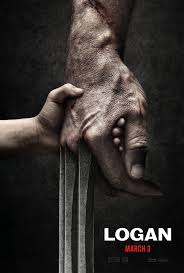
The point is not to re-fight all the arguments I’ve had about the movies I didn’t like last year, though. Maybe those conversations were partially just because I’m a jerk who never met an adversarial position I wouldn’t take, but they were also about frustration at myself, frustration that I felt pressured to watch movies I knew from the pitch I wouldn’t like.
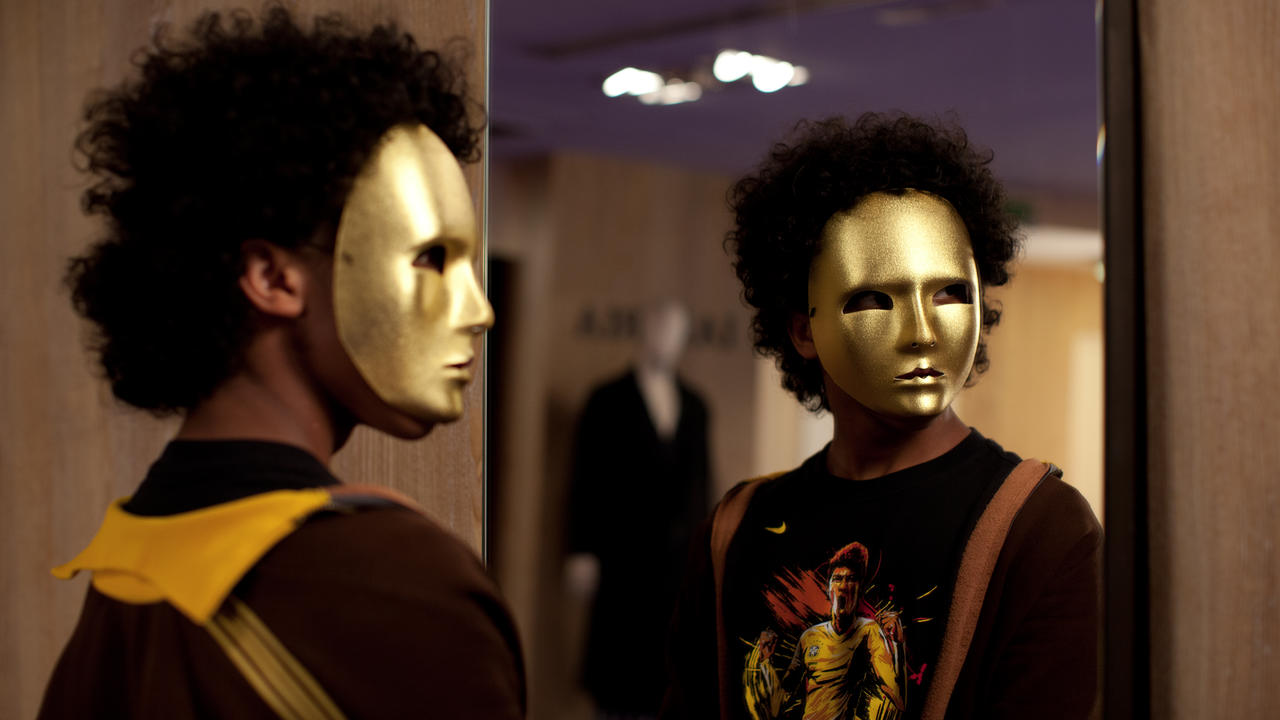
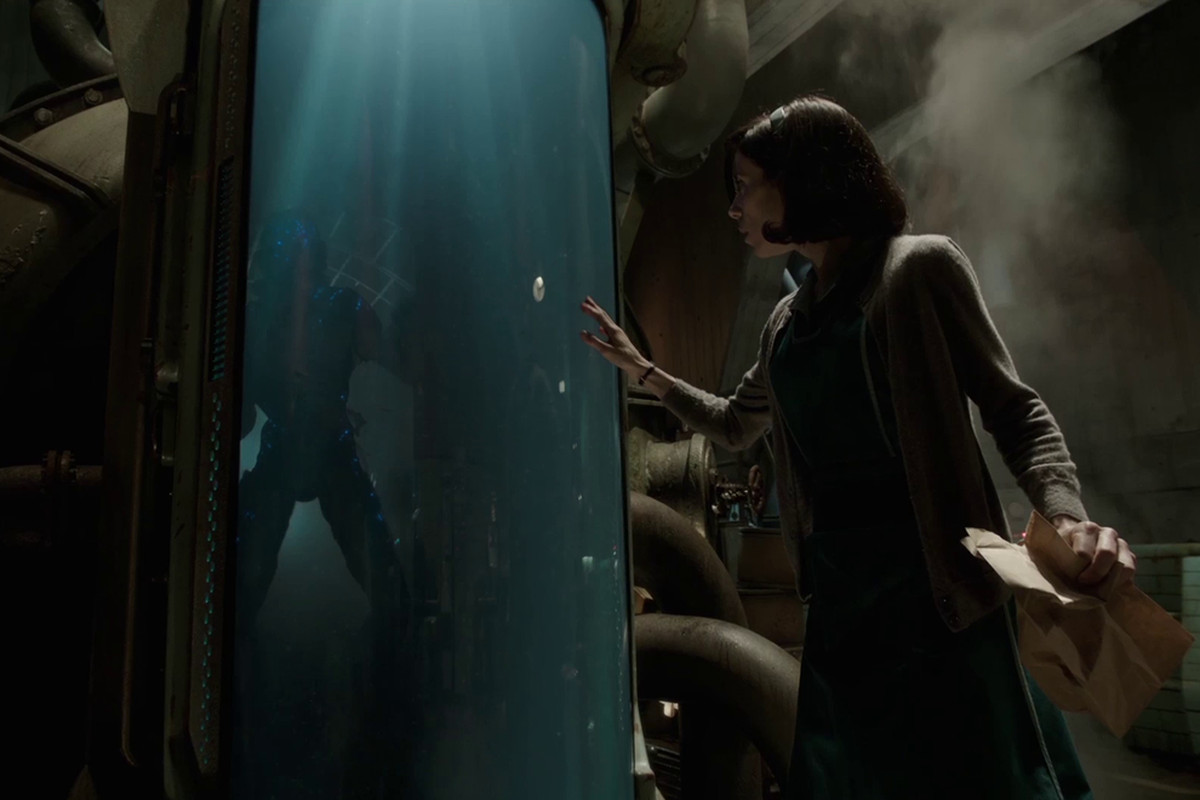
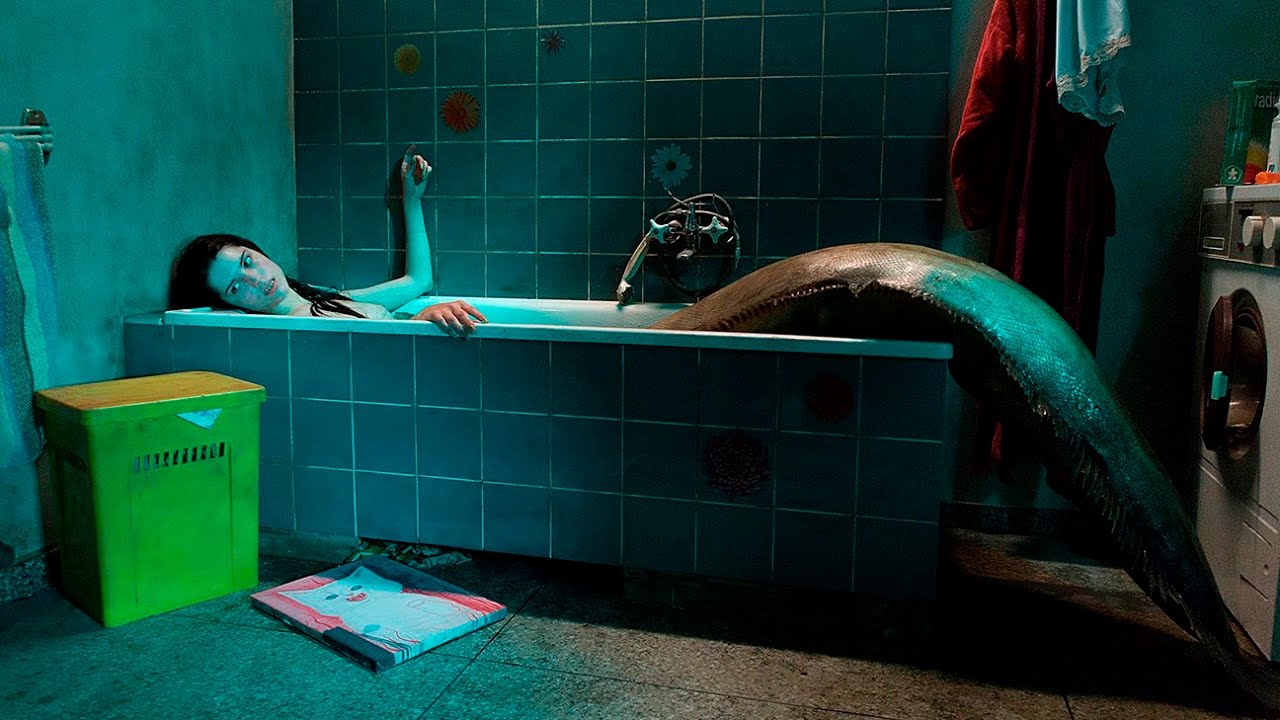
It was listening to an old episode of How Did This Get Made? that made it finally click in my head. Listening to endless female comedians be forced by the hosts to watch some new inanity made me realize that I was doing that to myself. I was forcing myself to watch things just because my film nerd friends, a mostly male group who tend to assume their love of angry men grunting is universal, made it sound as if everyone needs to watch something.

I suppose I had a perverse desire to argue, to tell them that these stories were not nearly as universal in appeal as the talk around them suggests, and to do that properly I had to watch the movies myself. But that’s a stupid need.

So, this year, I resolve I’m not going to force myself to watch things I know I won’t like just so I can make a point later, a point that will usually convince very few. (Usually the only person who agrees with me on this stuff runs this site.) For one thing, it’ll make me a happier viewer; for another, I’m pretty sure it will always be more helpful and more positive not to argue against watching movie x, but argue for watching movie y. Expansion is always an easier sell than contraction.

So I’m hoping to hold to a resolution after all, but one that will be very easy to keep: don’t watch things I don’t want to watch. Hopefully it’ll be as easy to keep to as it sounds.

January 8, 2018 0 comments
2 FacebookTwitterPinterestEmail
CommentaryFilm

The 10 Best Films of 2017

by rick December 29, 2017
written by rick

It’s an assumption, an article of faith, but it always bears repeating: every best-of list is a subjective snapshot, bound by what we could or would see, the genres to which we gravitate, the last-minute audibles called because we simply can’t bear to leave out a title. The 10 Best Films of 2017 comes with a parenthetical, always — “(for me)”. Anything else is folly.

Looking back now, my cinematic 2017 was full of ghosts and water. Why? As Olivier Assayas notes, cinema is the land of the dead, and in 2017 it wasn’t just people who’d died. There are ghost buildings, ghost commodities, empty malls, abandoned dwellings, a lot of mirrors. There is confinement — in tanks, in bodies, in crowded apartments we can’t leave, in poverty, in the sunken places of our culture. It’s all there on the screen, and on this list.

And so here it is — definitively undefinitive, the best. 2017 was such a good year for film that I could include any of my next 10 picks and feel fine about it: Ma’ Rosa, Lady Bird, Lucky, Karl Marx City, Dunkirk, The Lost City of Z, Casting JonBenet, Okja, The Beguiled, Song To Song. That’s a hell of a list right there.

But it’s not The List. Read on for that, and see you next year.


10. The Shape of Water

The year’s best rom-com, and a film that foregrounds the incommunicable. Bonus: it’s always nice when movies remember they are made of pictures, which Guillermo del Toro‘s always do.

Sally Hawkins is perfectly cast and nails the part, deploying a charming wordlessness, in service to a film’s conceit rather than plotty affectation. She’s marvelous, and a million people who haven’t fucked a fish-guy (yet) can instantly relate. Early scenes depicting her morning masturbatory routine reveal The Shape of Water‘s ulterior motive — to find and present a rift in our desires, a set of possibilities … and, if possible, upend Creature From The Black Lagoon, kicking the authoritarians’ patriarchy once or twice in the process. Pescaterians might recoil, not to mention anyone hoping for something less slippery, but fans of outcast fairy tales and renegade love stories — Guillermo del Toro people — will rejoice.


9. The Lure

2017 was, among other things, a big year for the Fish-people who live among us, with Agnieszka Smoczynska‘s The Lure providing the more brutal, much weirder flip-side to The Shape of Water‘s gentle fantasy.

There are serious and troubling narrative digressions about body dysphoria and Cronenbergian touches throughout, but this is, fundamentally, a horror musical about killer mermaids. A horror musical about killer mermaids. The Lure lives up to that bizarre summary through sheer will and a fierce commitment to its bonkers conceit. (Commentary here.)


8. Nocturama

Bertrand Bonello‘s portrait of a group of young terrorists holed up in an empty shopping mall is one of several 2017 entries explicitly about commodity fetishism and surface appeal, weaseling into our sympathies and turning us into aesthetic accomplices. It’s a sharp film that feels as aimless as our protagonists’ outrage, until the method in Bonello’s visual madness starts to emerge. 

Nocturama starts intriguingly wordless and tense, and ends with quiet, shocking violence all the more horrific for being mediated through different surveillance technologies. The narrative is a slow crawl to a meaningless death in a Cathedral to Capitalism, and it might be the most appropriate end-note to 2017. (Commentary here.)


7. Sieranevada

A 3-hour Buñuel-like feast of false starts and farcical interruptions, filled with offhand discussions of Romanian post-Communism, faulty power outlets, religious tradition and modernity, and claustrophobic family dynamics?
It would appear that director Cristi Puiu made a film specifically for me. (Review here.)


6. Logan Lucky

The flat-out most enjoyable, satisfying release of 2017 (and the 3rd and final to prominently feature “Take Me Home, Country Roads”, for reasons no one can adequately explain).
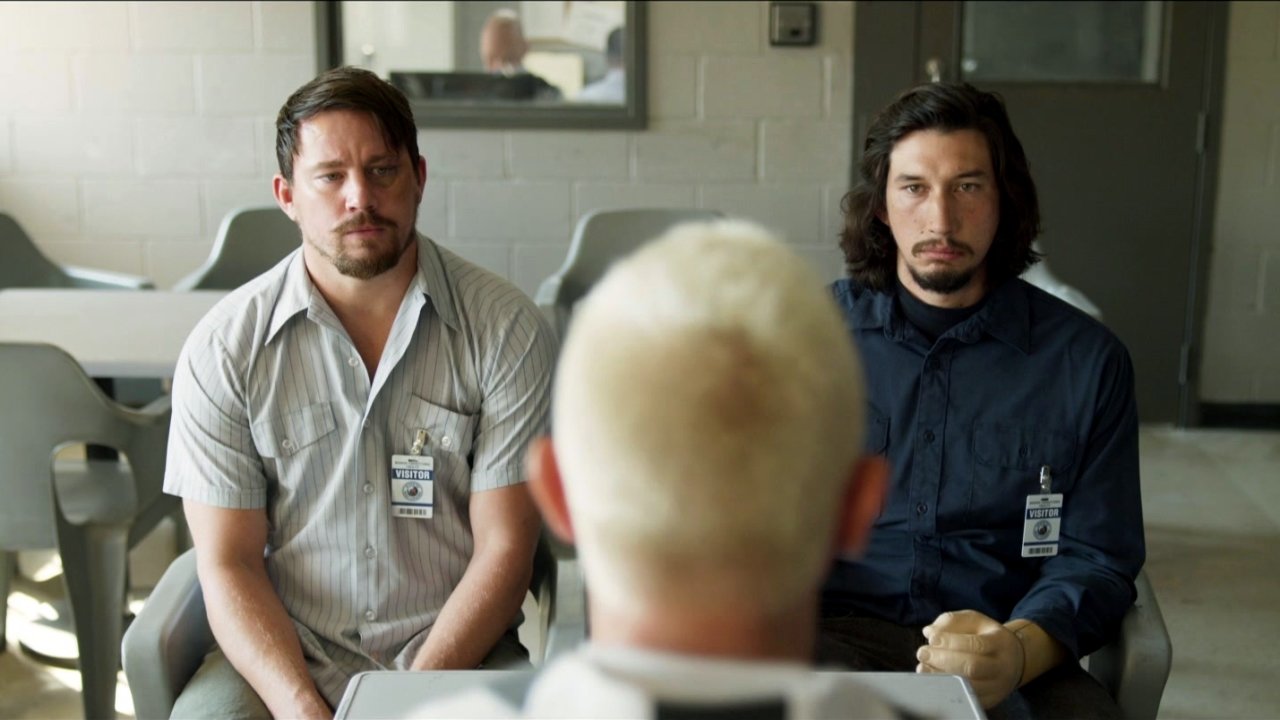
Steven Soderbergh keeps things clicking along like clockwork in this declasse heist flick, cheekily referred to in the film as “Ocean’s 7-11” because of course it is. Magic Mike and Kylo Ren are both great as brothers carrying out that heist, or trying to, and the NASCAR country trappings feel genuine and affectionate. This is just classic populist filmmaking, modest in its ambitions and succeeding at being exactly what it is. (Review here.)


5. Get Out

Jordan Peele‘s audacious genre-hybrid debut keeps its sense of humor and its horror savant underpinnings even as it lays bare the real terrors in the heart of liberal white supremacy. (Responding to thinkpiece debates about whether Get Out is a “drama” or a “comedy,” Peele drily countered, “It’s a documentary.”)

It’s hard to imagine a more “of-the-moment” production in the foul political wasteland of 2017, but Peele’s best decision was to steer clear of obvious Trumpian villainy and aim directly at us “good white people,” the ones who, in Bradley Whitford‘s memorable line, “would’ve voted for Obama a third time” if we could’ve.

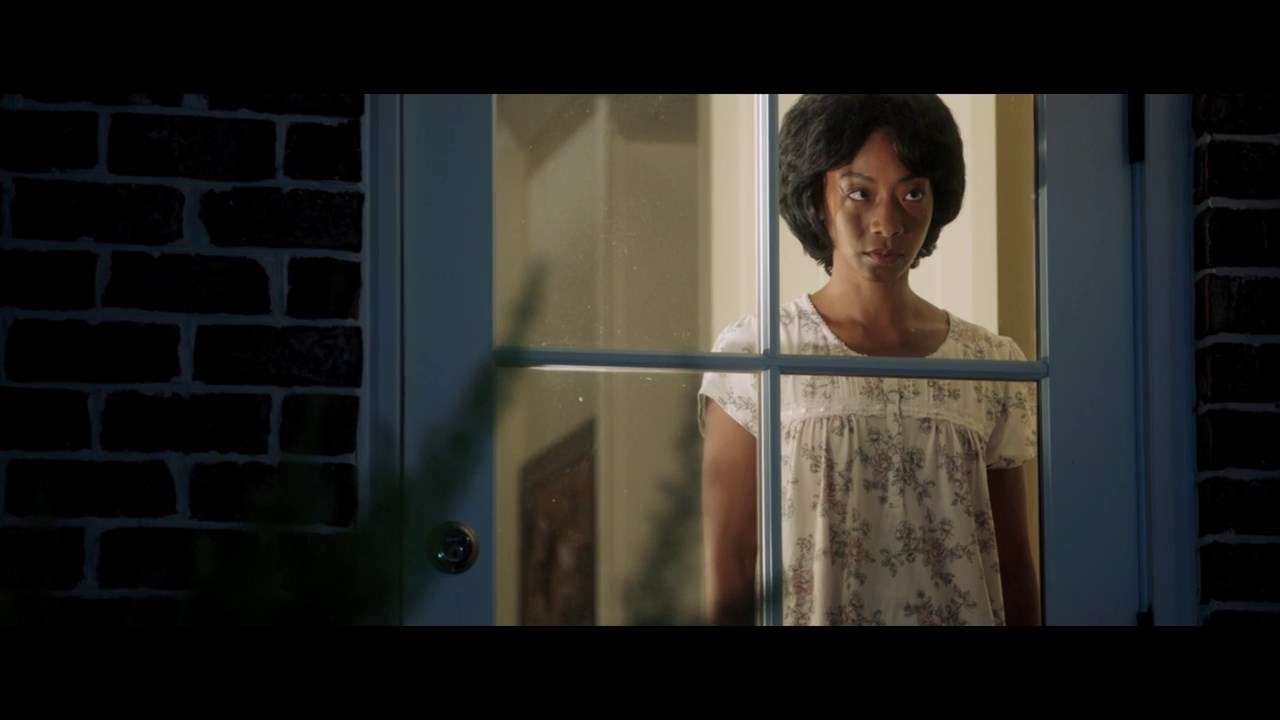
The catalog of microaggressions cascading into aggression-aggression provokes both chills and nervous recognition, and the “sunken place” may have been the single most resonant contribution to our vernacular this year. (Review here.)


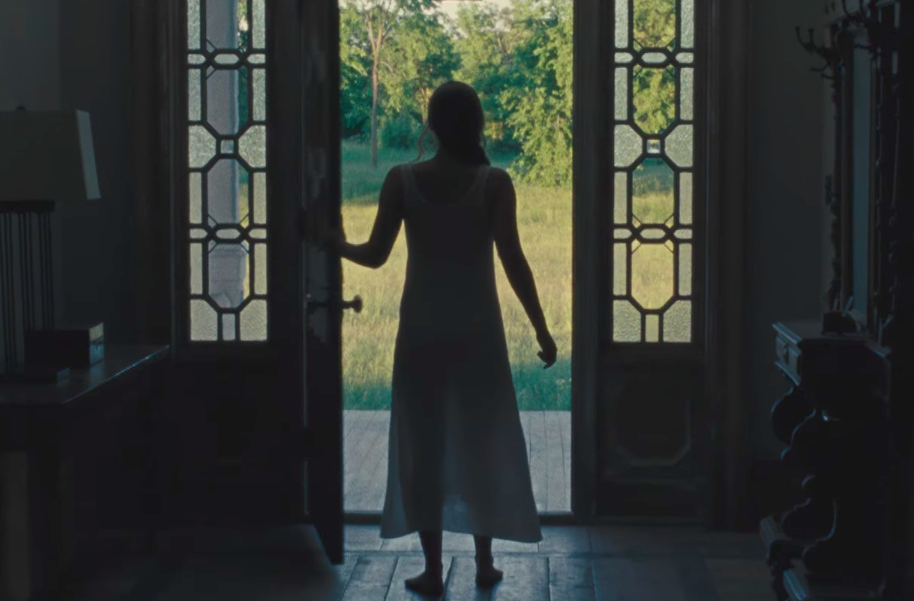
4. mother!

So this is what it looks like when Darren Aronofsky‘s head goes so far up his own ass that it pops back out of his neck again and he just walks around like a normal person.

Whether that’s a good thing or not is up to the viewer, and viewers had decidedly different responses to the experience. But an experience it definitely is, and mother! is vital, pretentious, infuriating, fascinating, brilliant, almost impossibly wackadoodle filmmaking, stealing wholesale from Repulsion and also The Bible and maybe also from justifiably irritated letters from Aronfsky’s ex-lovers. It absolutely earns its scorn and its praise, which is one of the best things you can say about a film. (Review and commentary here and here.)


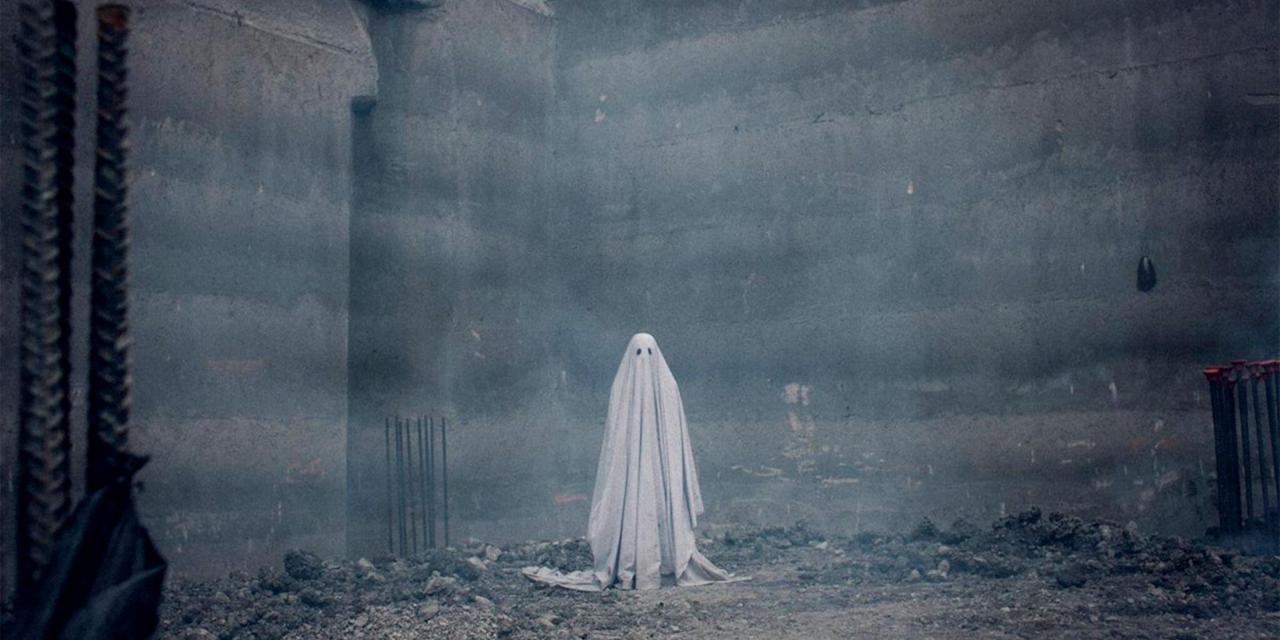
3. A Ghost Story

With its self-consciously lo-fi costuming, extended single-take depiction of a woman eating a pie, and the sudden appearance of Will Oldham waxing cosmic and philosophical at some indeterminate dinner table of the future, David Lowery‘s film sets itself up for ridicule. But its sincerity and guilelessness undercut any such attempt; irony has no place here. 
A Ghost Story is profoundly melancholy and ultimately moving, another 2017 haunted house story that builds something genuinely experimental out of the most basic parts. A fractured narrative and insistent understated score help Lowery set the mood, and we’re off on the kind of cinematic journey we want to immediately return to when it’s through. (Review here.)


2. Personal Shopper

“Film,” Olivier Assayas says, “has always been the land of the dead.”

He was referring to the moment when the Silent Era stars started dying, and movie fans started living in a graveyard of images, surrounded by the perpetual, ghostly motions of people who weren’t around anymore. It’s a strange thing to imagine an age where almost no one in the movies was dead. It’s a stranger thing to now be surrounded by recent likenesses, to see them continue to live and change. Fred Astaire selling vacuums is one thing: it’s patently ridiculous. Yet we write eulogies on social media, and Facebook sometimes straight up sends you pictures of people you’re mourning (which, by the way, is a really dick move, Facebook).

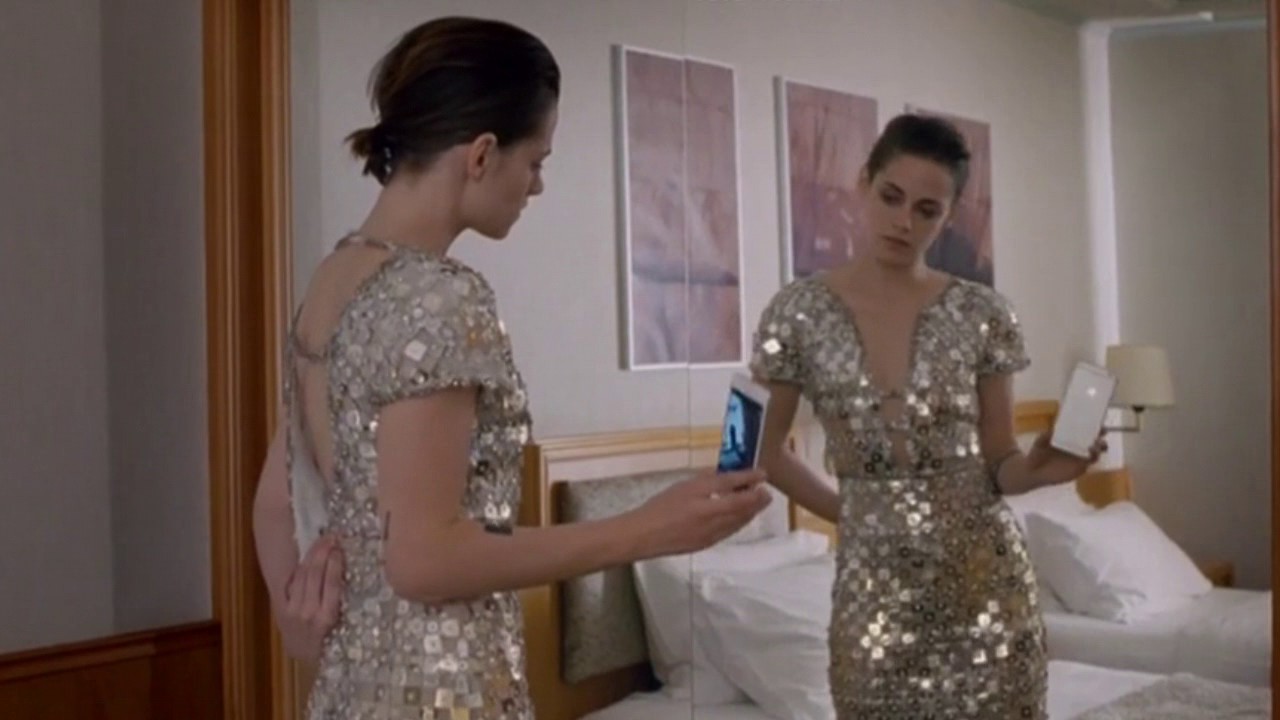
But it could apply just as easily to his own films. Kristen Stewart’s performance, as a medium trying to make contact with her dead twin brother, is soaked in the most postmodern of spiritual maladies, conjuring ghosts in empty buildings while floating invisibly through the world herself. Personal Shopper is a note-perfect depiction of grief that understands how we live, die, and, maybe, continue on. (Review here.)


1. The Florida Project

There was no more visceral experience in movie theaters this year than Sean Baker‘s deeply empathetic portrait of life in the shadows of the Magic Kingdom.
Every performance is nuanced and finely shaded — Brooklynn Prince‘s, Bria Vinaite‘s, Willem Dafoe‘s, everybody’s. All the right notes are hit, even the problematic dissonances that constitute life as it’s lived. The saturated colors pop, accentuating the film’s child-eye view of a world filled with knock-off motels, parking lots, abandoned houses, creepy old men, ice cream shops, johns, marks, sunsets, purple paint, new friendships, and impossible dreams of escape. Baker effortlessly brings this place to weird life, with a simmering outrage just out of the frame. It’s wonderful filmmaking, the best of the year. (Review here.)

December 29, 2017 0 comments
3 FacebookTwitterPinterestEmail
CommentaryFilm

The Best, Worst, and Only Movies of 2017

by Lark December 28, 2017
written by Lark

Listen, guys, I’m going to let you in on a big secret: I’m woefully unqualified to write for any movie site. And of the many reasons why, one always comes up around this time of year. I don’t live near any art house or smaller theaters, so unless movies come to the theater attached to the nearby mall (hey, $5 matinees every day!), I don’t get to see them until home video, usually the year after.

And because I’m not a big fan of movie theaters in general, I usually only end up going if my movie nerd friends are talking about something a lot, which heavily weights what I end up seeing. I’m not particularly a huge fan of action blockbusters, but for some reason they’re the movies I end up seeing the most. (Keep an eye out for our 2018 media resolutions, in which I’ll address this more.)

So, since writing a “Best of 2017” list would be pretty impossible and unrepresentative of my interests, what you’re getting instead is a complete ranking of every 2017 movie I saw, from first to worst (with links to articles). Here’s to all the great movies from this year that I’ll finally be able to tell you about in 2018!


Every 2017 Movie I Saw in 2017, Ranked

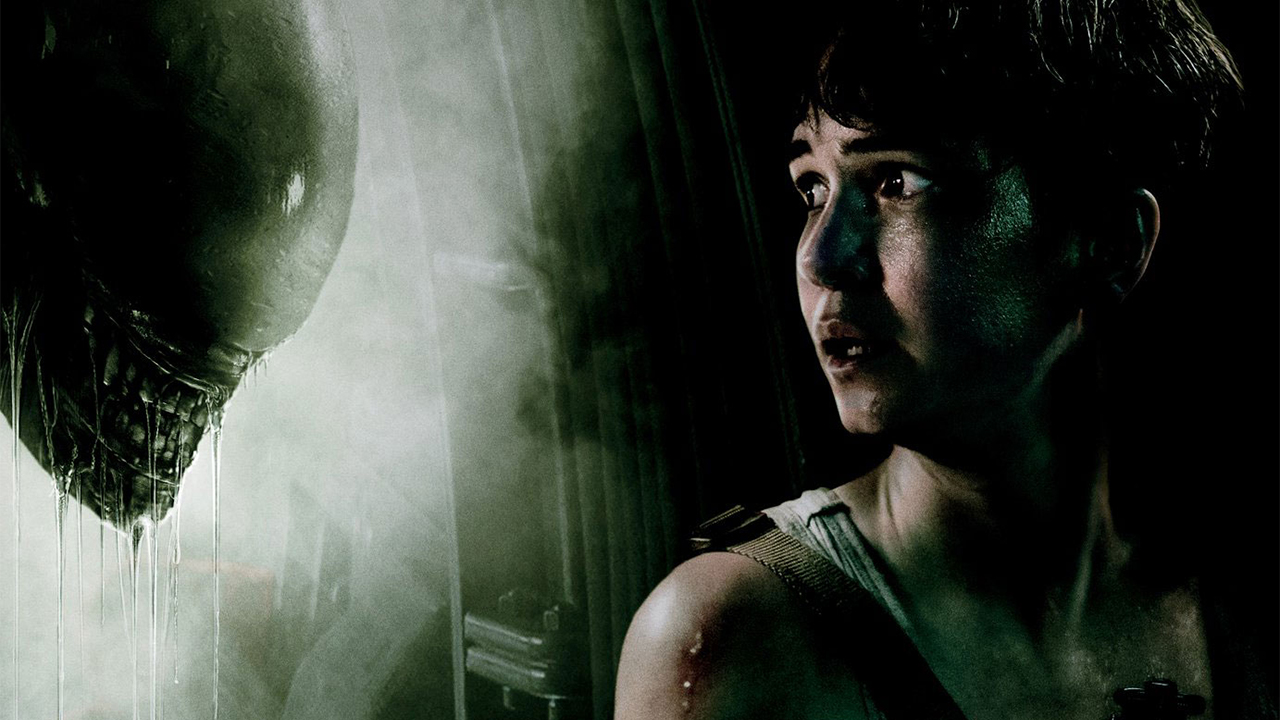
1. Alien: Covenant
It may spend its first half hour playing out the standard tropes of the Alien franchise, but once you arrive in Michael Fassbender’s bizarre alien Dracula castle, it becomes something else. Bonus points for being one of three movies to prominently use “Take Me Home, Country Roads” this year. (Read Liz’s commentary here.)


2. John Wick: Chapter 2
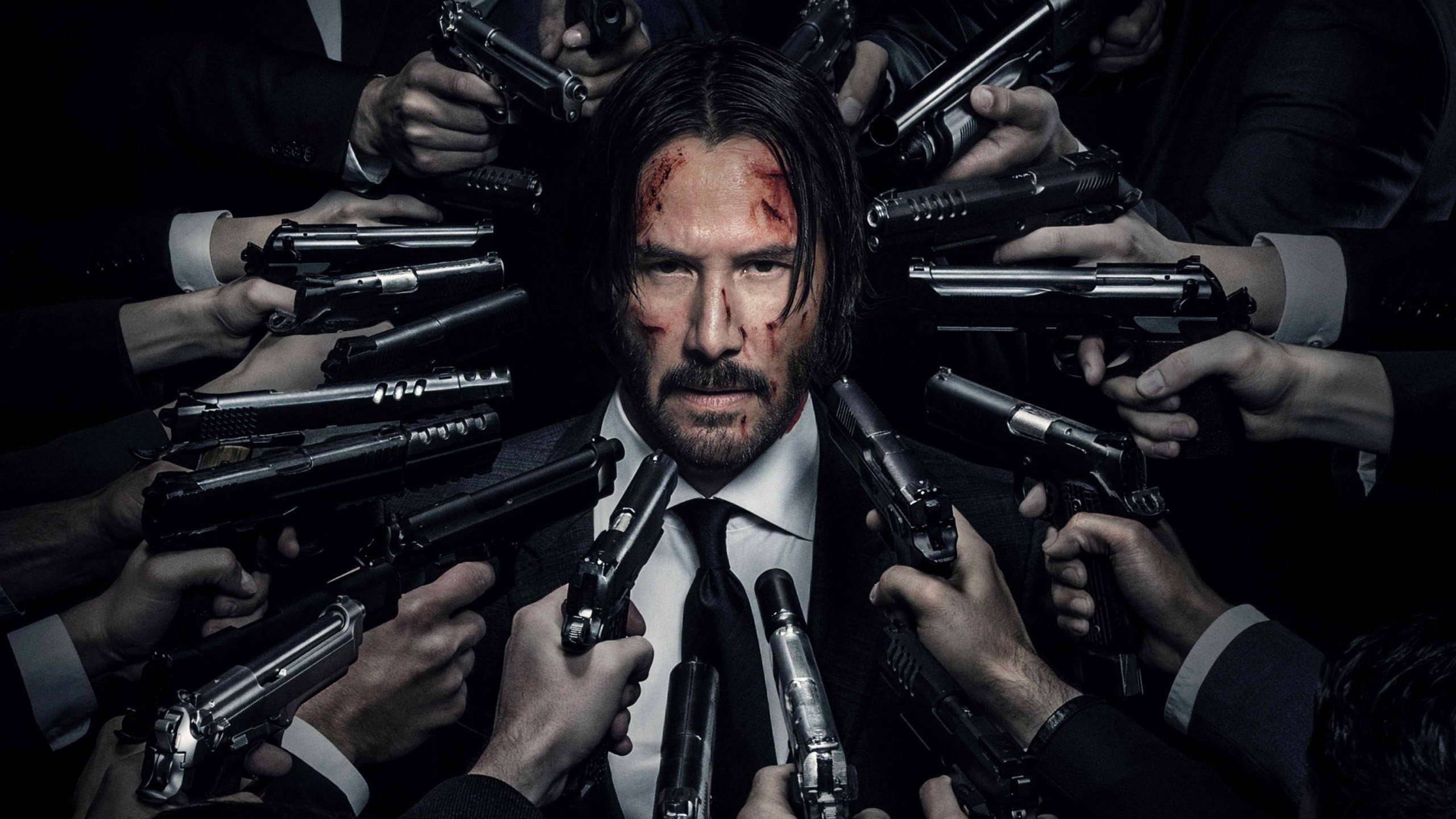
All of my friends put up with a lot of talking about the original and this sequel over the last 2 years or so. (How does the economy make any sense? Getting rid of a body costs as much as a drink?) But this one felt much, much cooler than the original to me, which relied on goofy-looking dudes in suits being inherently visually fascinating. Also, no Marilyn Manson this time.


3. IT
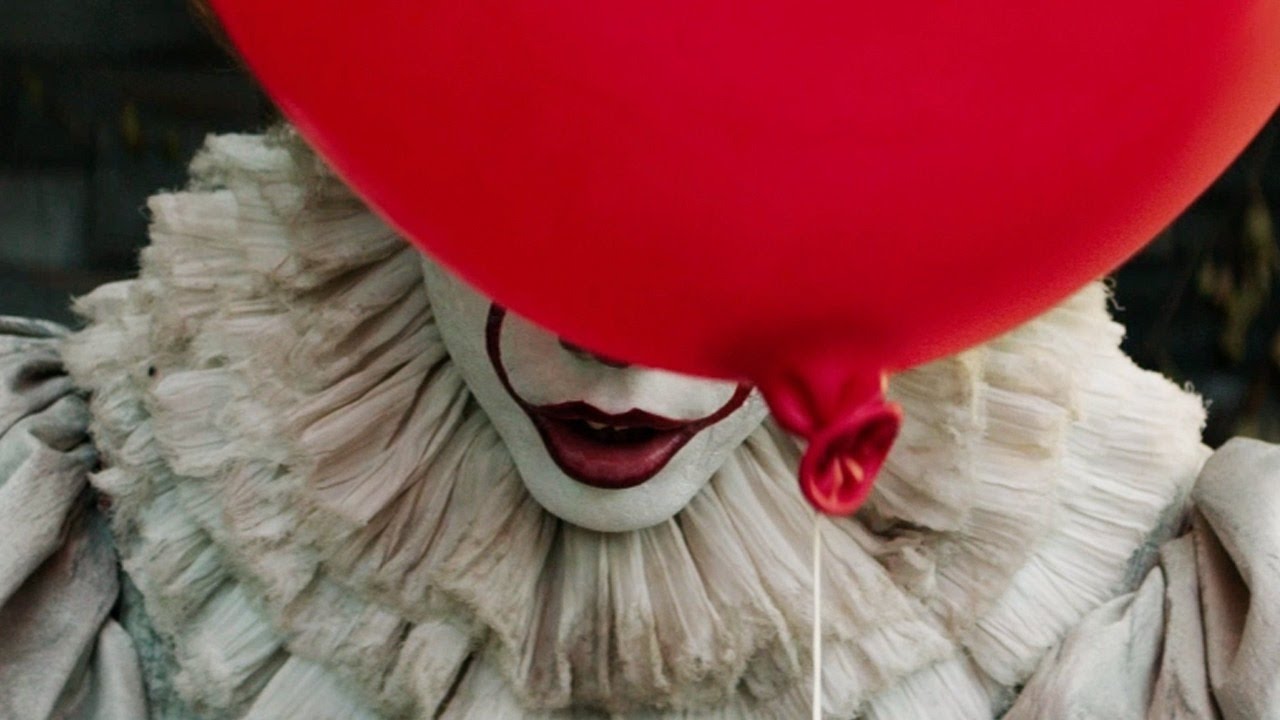
I will stand by my fervent anti-Stephen King bias—I think he’s atrocious—but this movie helped me get the appeal. There is a sense of a genuine wider American horror mythology at play here, much wider and less place-dependent (and less explicitly dependent on racist fears) than Lovecraft. Everything about Beverly was exhausting and lazy, but I get why this was a phenomenon. (Read Rick’s review here.)



4. The Little Hours
I have a piece on this in the works, but frankly, I am always going to be excited about an adaptation of 14th century writer Boccaccio’s impossibly ribald Decameron. It’s the definition of slight, but Kate Micucci (Garfunkel & Oates) is a revelation, and it manages to use Jemima Kirke’s aggressively irritating affect for good.


5. Happy Death Day
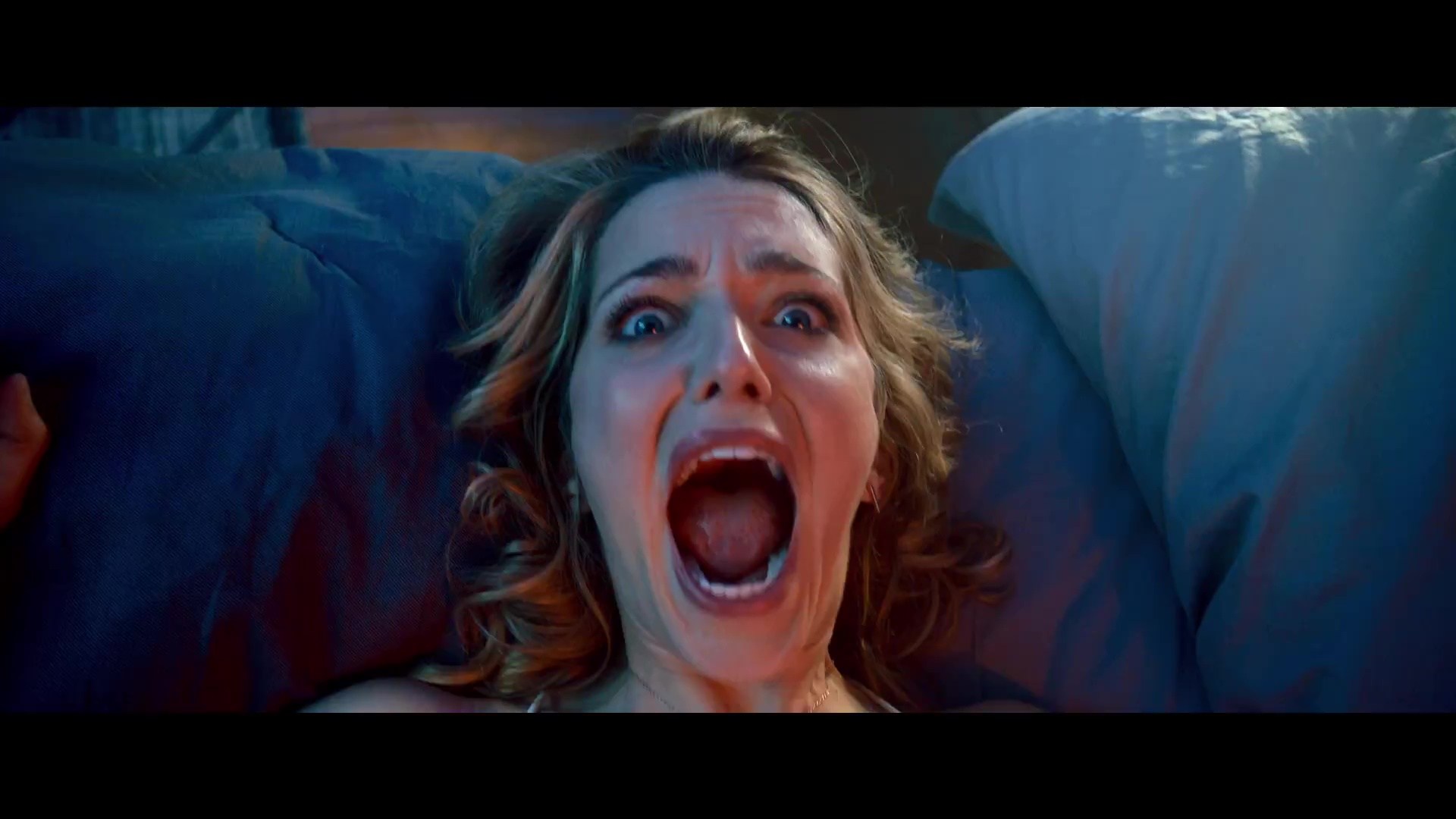
Yes, it’s just Groundhog Day as a horror movie, but the free mixture of pop music empowerment and horrible murder makes this something really curious and charming. One particular montage set to Demi Levato’s “Confident” is simply the best use of music I saw this year. (Read Liz’s commentary here.)


6. xXx: The Return of Xander Cage
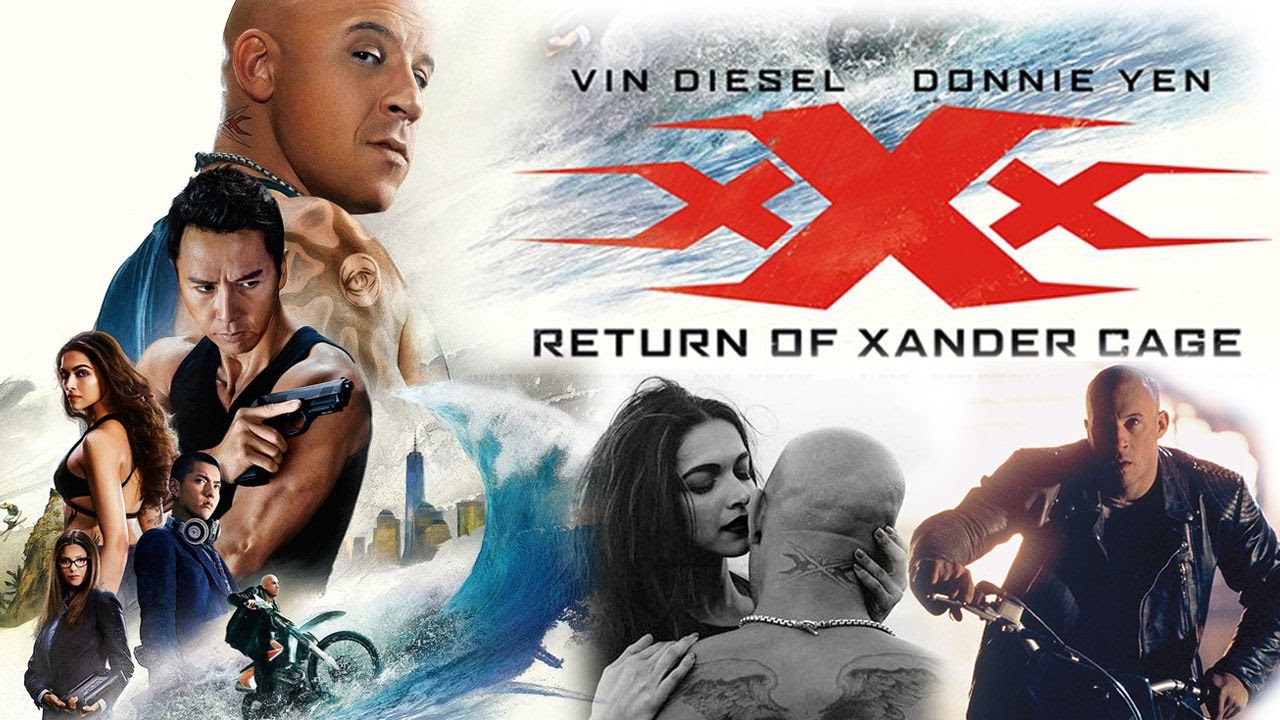
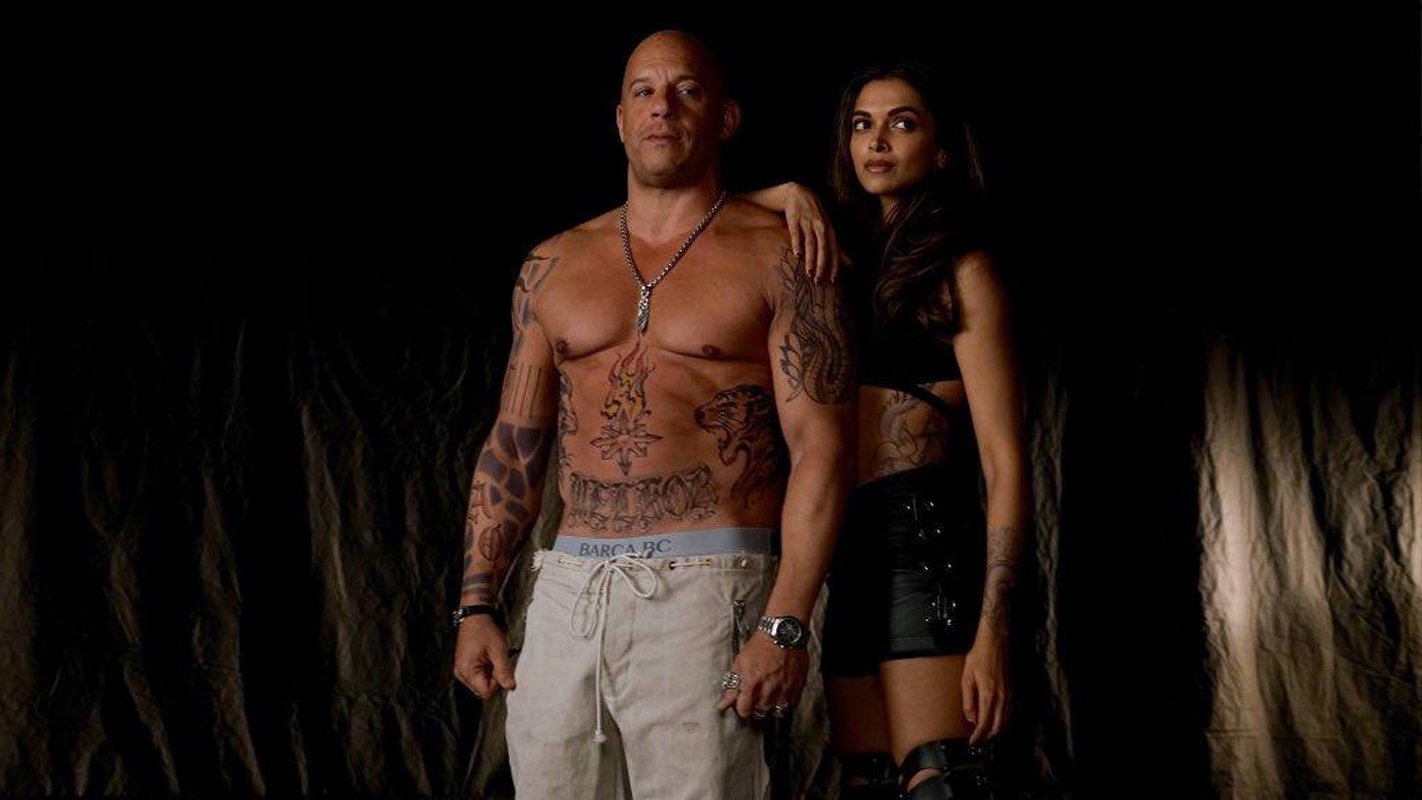
Vin Diesel’s throbbing cock became sentient and made a movie. Two stars.
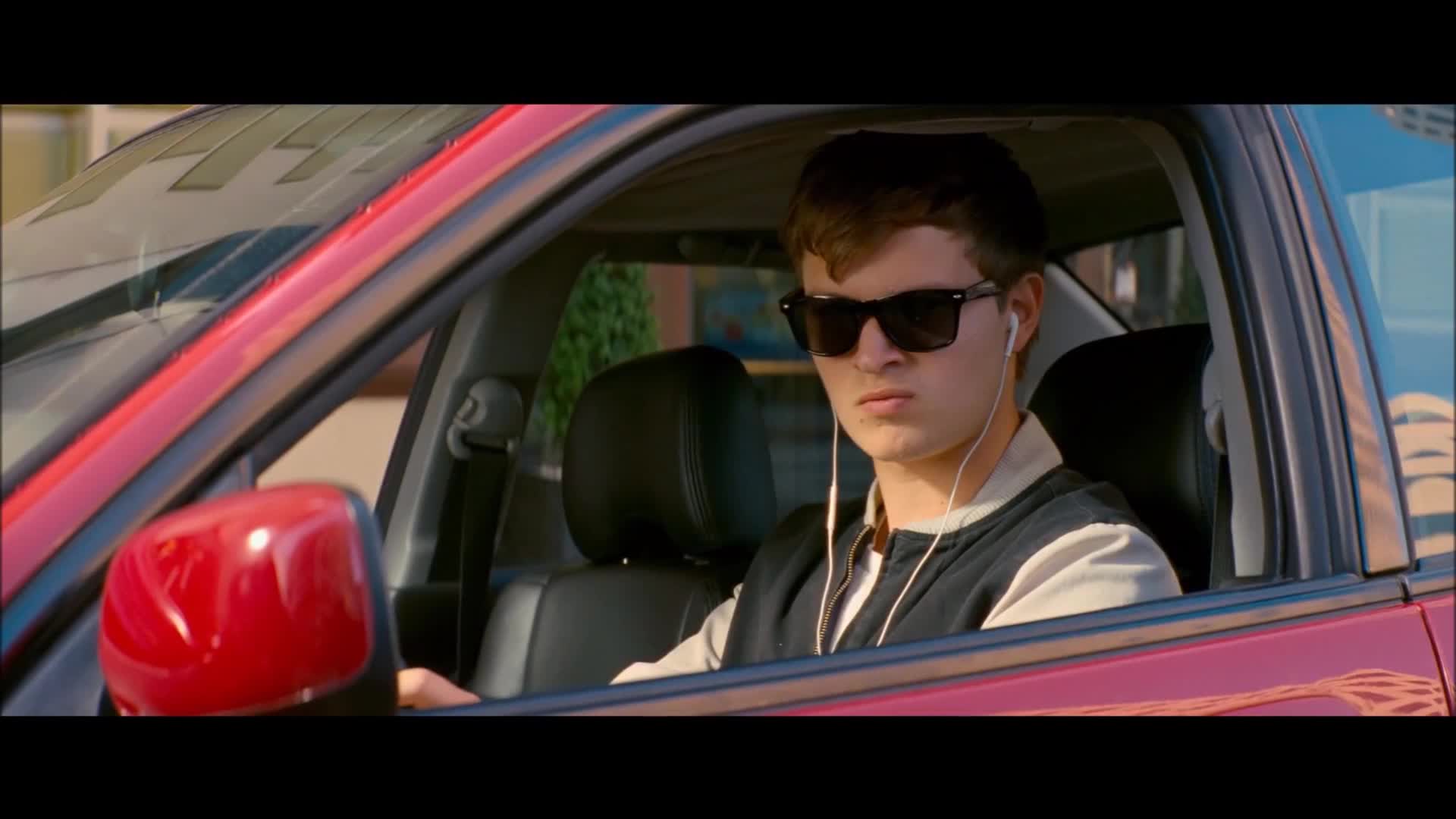


7. Baby Driver
What idiot called this car chase movie with intensely weird Oedipal themes “Baby Driver” and not “Oedipus Wrecks”? Thank you.



8. Blade Runner 2049

What would this movie be if it ended the frame before Harrison Ford showed up on screen? The idea that Rick Deckard—less a character than a narrative point in the original film, a fold in the world that helped reveal how the viewer’s assumption of the protagonist’s point of view can make them complicit in quiet fascism—is suddenly to be embraced as hero could be done, but it would require a hell of a lot more set-up than we get here. I do appreciate the implication, however, that Edward James Olmos has the magical ability to intuit what animal fills the fantasy life of each character. (Read Liz and Rick’s conversation here.)
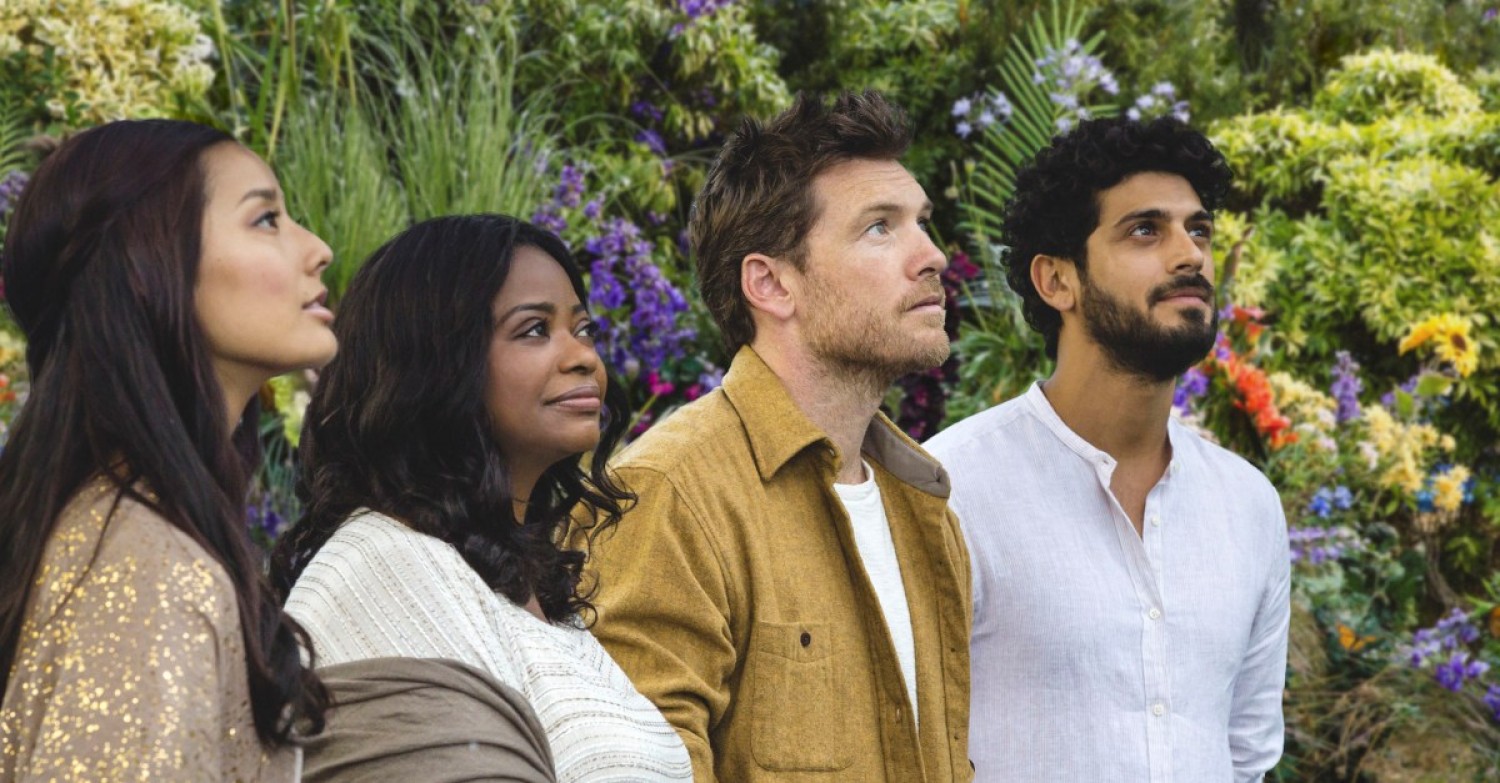
 

9. The Shack
We recorded an episode of Pod’s Not Dead about this, only for my computer to delete everything for no reason. This is a movie so boring even a computer can’t remember it.


10. Brawl in Cell Block 99
Someone will probably make the argument that we’re not supposed to like Vince Vaughn’s protagonist here—I tend to assume that a movie with a traditional narrative wants us to not just empathize with, but like our protagonist unless there’s strong evidence to the contrary—but there is a thick gross layer of tough-guy worship over this movie. It’s firmly in the tradition of Taken or Die Hard, movies for divorced dads who sit at home thinking, “Oh, she thinks I’m prone to violence now, but when she’s kidnapped by ambiguously ethnic criminals she’ll appreciate me.”


11. The Man with the Iron Heart
A historical biopic not even quite interesting enough to fall into the “released directly to 12th grade US history class” camp. (Read Liz’s commentary here.)
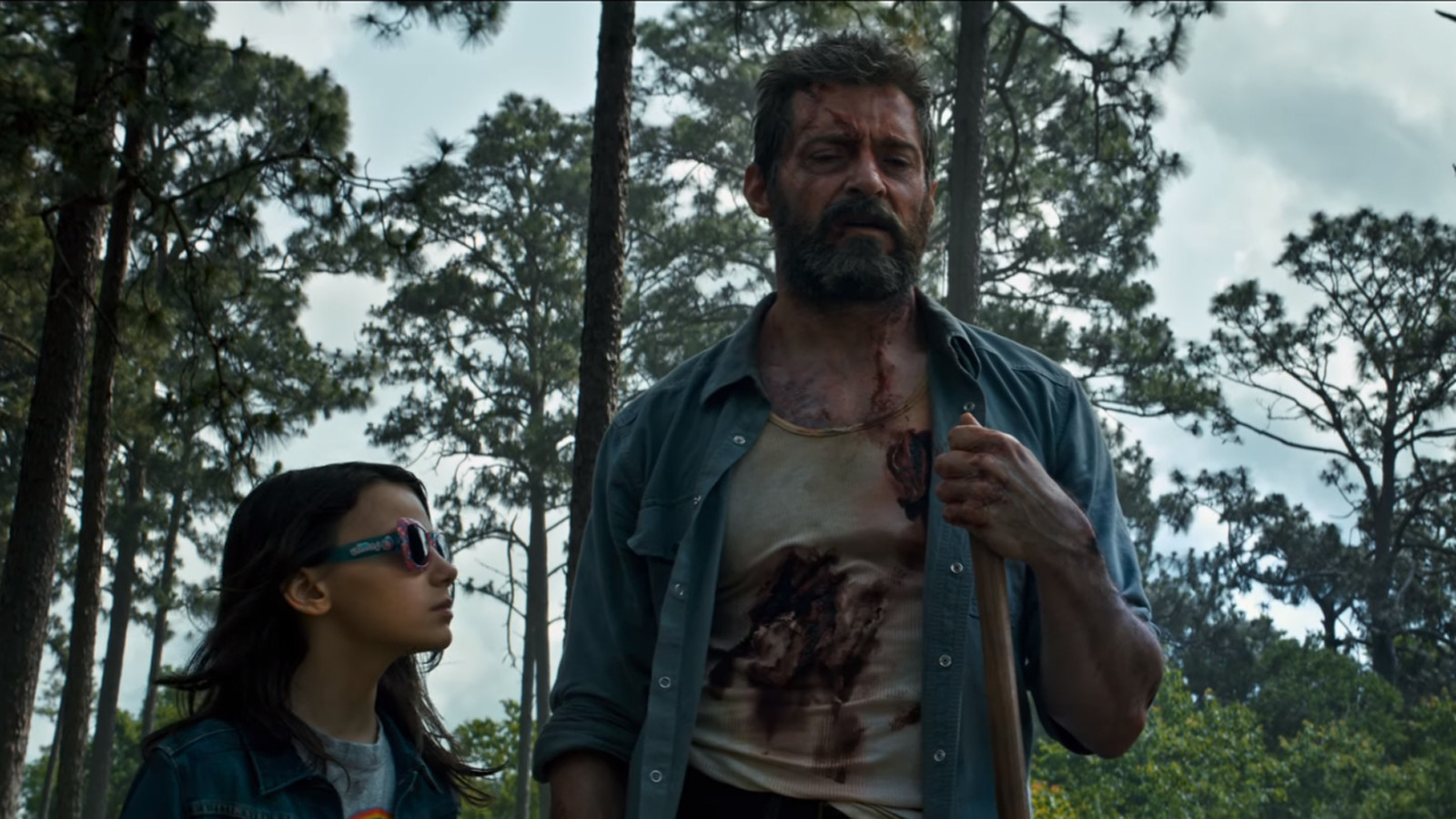


12. Logan
This is only ranked so low because I was so hyped up for it. There’s one perfect moment: when Wolverine instinctively uses his body to protect the limo from gunfire. That brief moment perfectly encapsulates the world he’s living in and his place in it. Unfortunately, the rest of the movie is unbelievably boring (everyone always knew that getting stabbed with claws is violent and horrible—seeing the blood oozing out adds nothing). I’ve never felt more separated from other movie dorks than on this, honestly.
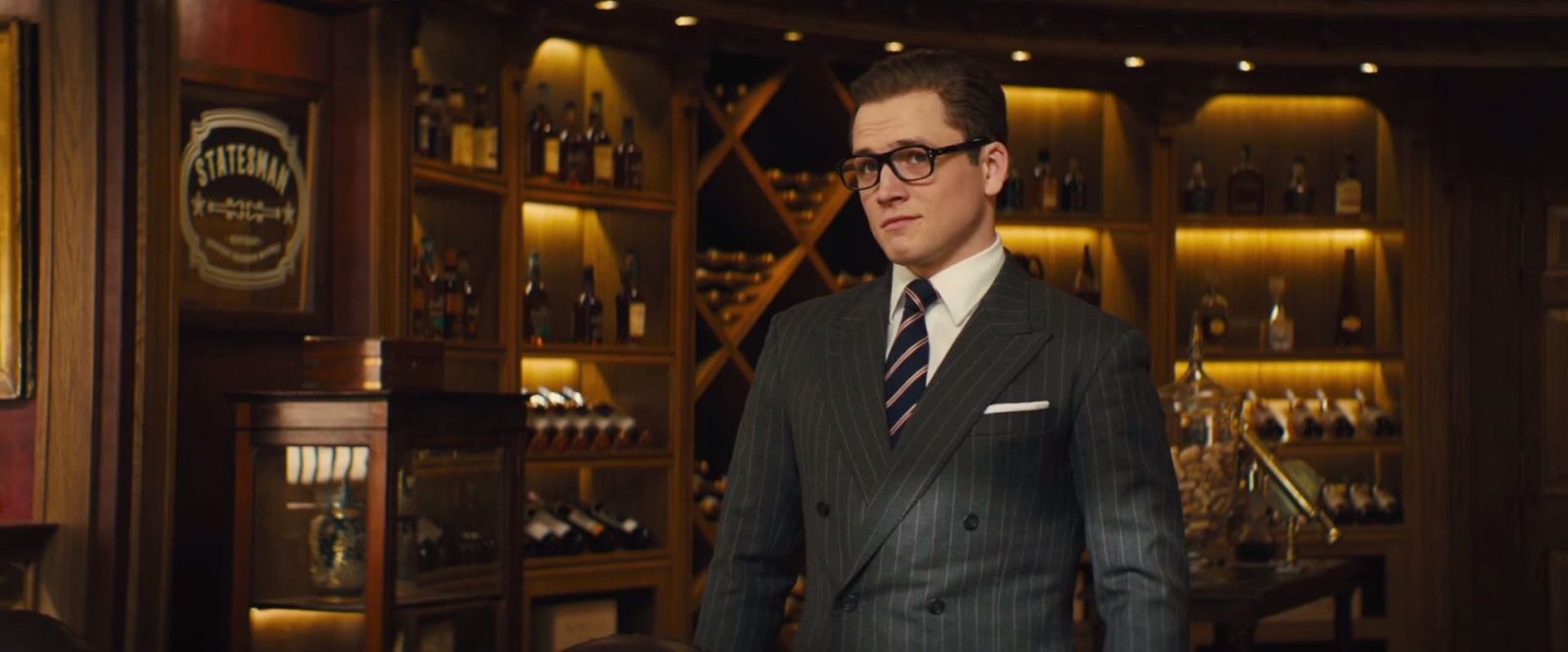


13. Kingsmen: The Golden Circle
Axe body spray in an Yves Saint Laurent bottle. Points taken off for the absolute worst usage of “Take Me Home Country Roads” this year. (Logan Lucky apparently used it, too; I’ll let you know how it was in 2018 sometime.) (Liz’s review here.)
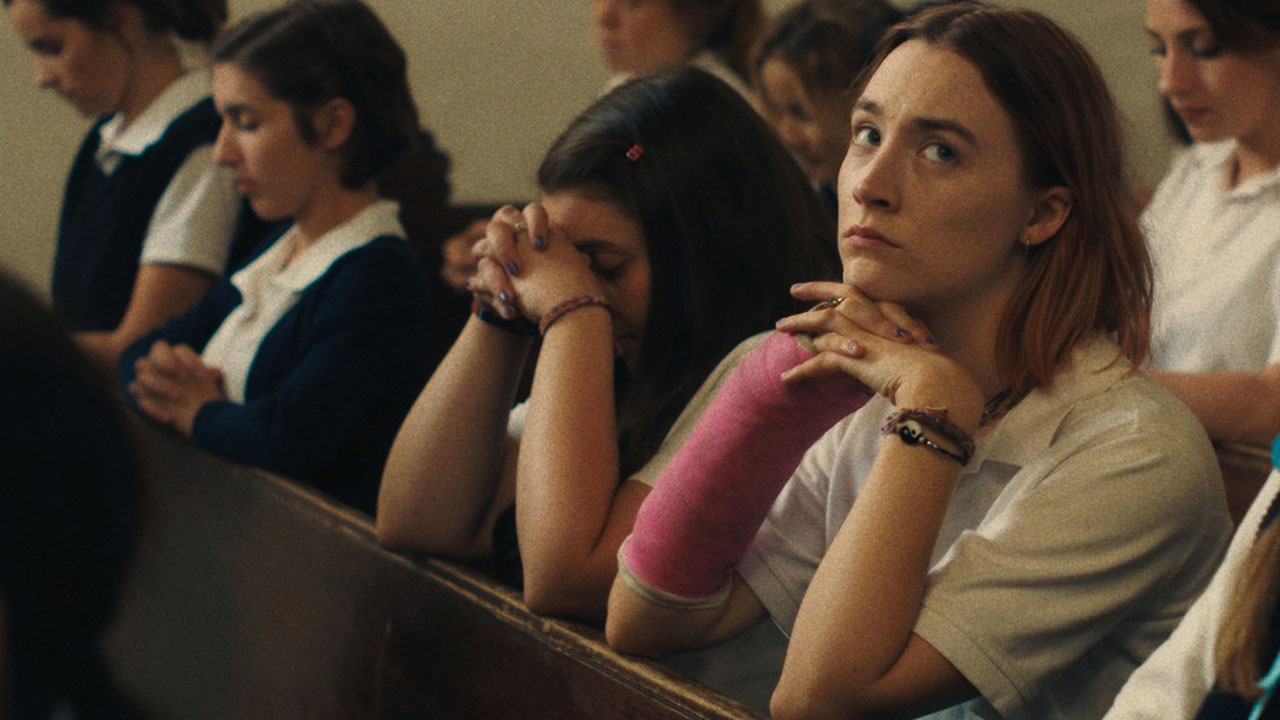
December 28, 2017 0 comments
2 FacebookTwitterPinterestEmail
CommentaryFilm

52 Films By Women: Yearly Wrap-Up 2017

by rick December 27, 2017
written by rick

Back in January of this year, inspired by the folks at WIF and the initiative they created, I resolved to watch 52 films by women directors in 2017. With only a few days left on the calendar, it seems like a good time to check back in on this “challenge.”

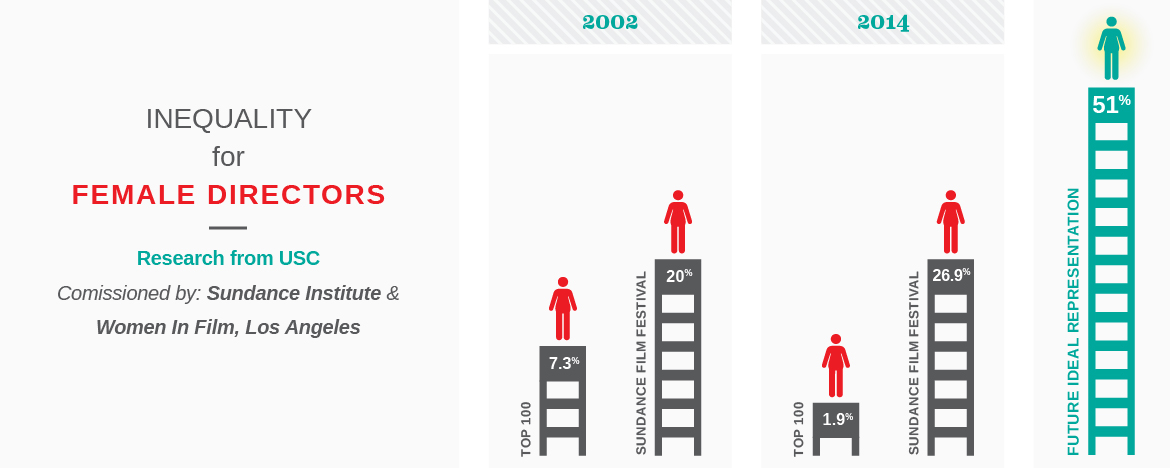
“Challenge” definitely belongs in quotation marks here. While it’s absolutely true that our culture defaults to the masculine in basically all realms, and women directors are grossly underrepresented, it turns out that it’s really not that difficult to hit this mark — embarrassingly easy, in fact, with even minimal effort. The problem, of course, is that many of us just don’t make the effort. One thing I learned this time around: when presented with two viewing options of more or less equal interest, just watch the one that isn’t by the dude. It’s not revolutionary, but it’s also not exactly a back-breaking, Herculean effort, and you’ll often be rewarded with amazing films you might’ve missed thanks to cultural inertia (and patriarchy!).
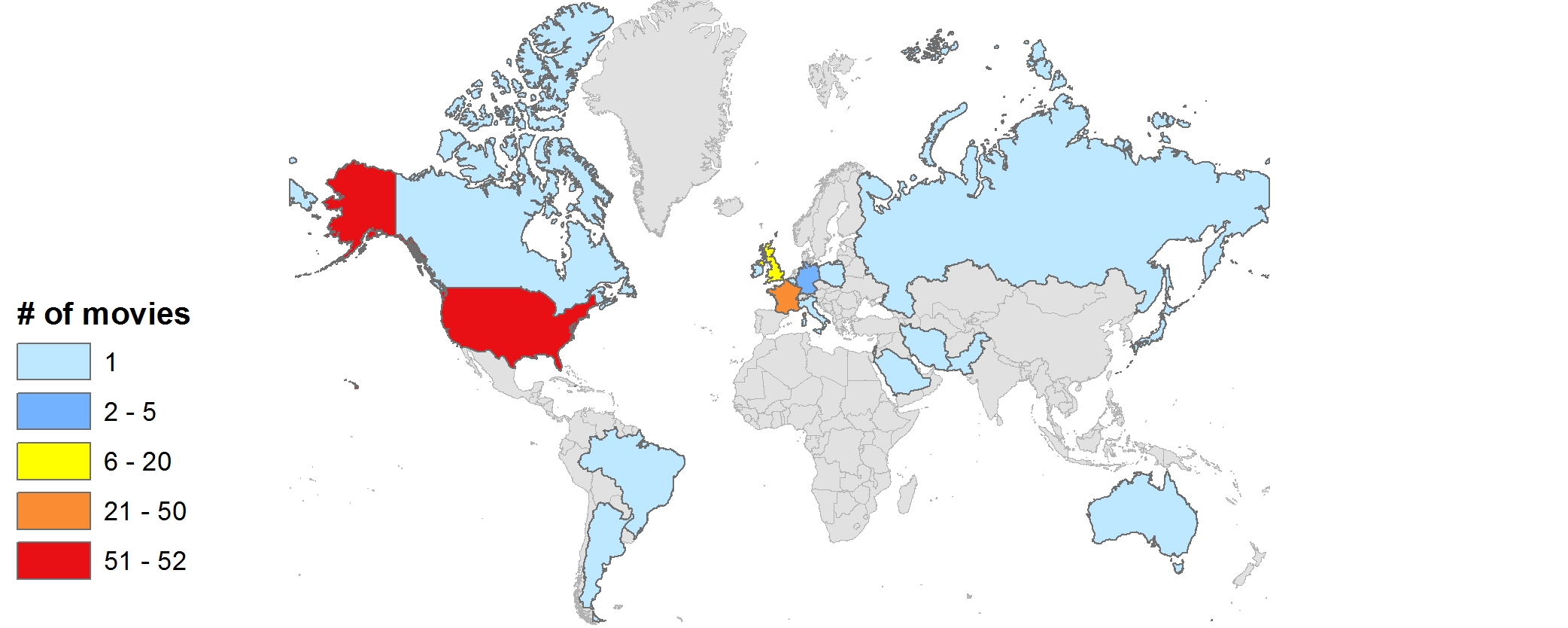
Some numbers from my navel-gazing data self-analysis. I watched a total of 66 features and 36 shorts by women, mostly first-time viewings. This is roughly 30% of everything I watched, give or take. (Film only; none of this includes serialized TV, a realm in which women directors have been faring better.) Women directors from 18 countries were represented; 10 from outside the U.S./Canada/England/Western Europe.
Every decade since cinema’s inception made an appearance … except for the 1980s, weirdly. Another, even longer piece would address the prevalence of women behind the camera in early film (and yet another would include discussions of women’s leading roles as editors and other non-directing contributions). The overwhelming majority were U.S. productions since 2010.

What conclusions can be drawn from any of that? Not too many. There was no rigor to this survey: it’s simply a reflection of the kinds of films, genres, and periods that interest me personally, and as they intersect with current availability and, presumably, the historical/material conditions of production and women’s participation in the director’s chair. (Though the self-selection largely precludes drawing deeper insights; I’m pretty sure women were directing films in the 80s.) Those intersections are fascinating, though, and worthy of more serious consideration. Maybe next year.

In any case, I saw a lot of great stuff, and wrote about much of it. Bolded titles in the list below link to earlier write-ups — the list itself has a bit of a virtue-signalling flavor, I’m afraid, but I’m including it both for those links and for anyone interested or looking for something to watch tonight. (Watch The Lure so we can talk about it!)

And here are 10 films by women that I didn’t write about, for lack of time or occasion. This is not a “10 Best By Women Directors” list — I am certain no one needs a straight white U.S.-based film dude constructing that sort of thing — and doesn’t reflect any particular cross-section. These are just a handful of films that made an impression on me in 2017 but didn’t show up anywhere on the site until now.

I was so enthusiastic about this whole process, initiated with some amount of intentionality but eventually kind of humming along in the background, that it’ll be an annual pledge for me. See you in 2018.

1. Appropriate Behavior 

I missed Desiree Akhavan‘s feature debut when it came out in 2014, amid what seemed at the time (to me) a glut of millenial cringe-comic examinations of Relationships In The Big City (Of New York). I’m glad I caught it now, because it’s actually an accomplished, frank affair.

Representations of bisexuality are rare enough, much less ones so attuned to cultural identities and desires. It’s smart filmmaking, too, with an admirable frankness about sex that might owe something to Girls (on which Akhavan would appear for several episodes the following year) but plays here with a rhythm and set of interests all its own.

2. Le Bonheur

Agnès Varda is all over the Best Documentary lists this year for Faces Places, but I only just caught up with her 1965 masterpiece.  

Amy Taubin, for Criterion, sums up its enduring mystery well: “Is it a pastoral? A social satire? A slap-down of de Gaulle–style family values? A lyrical evocation of open marriage? Is the central character a good husband who knows how to enjoy life, a psychopath, a cad, or an unreal cardboard construction? Are the implications of the film’s title ironic or sincere? And, indeed, what is happiness?”

The story is remarkable in its banality, impossible and uncanny cheeriness, and the wash of saturated colors that construct a sort of hyper-reality. Le Bonheur is the kind of film that seems to only result in questions like Taubin’s, or mine — “What the hell did we just see?” Varda is among the greats of this or any age.

3. Daughters  of the Dust

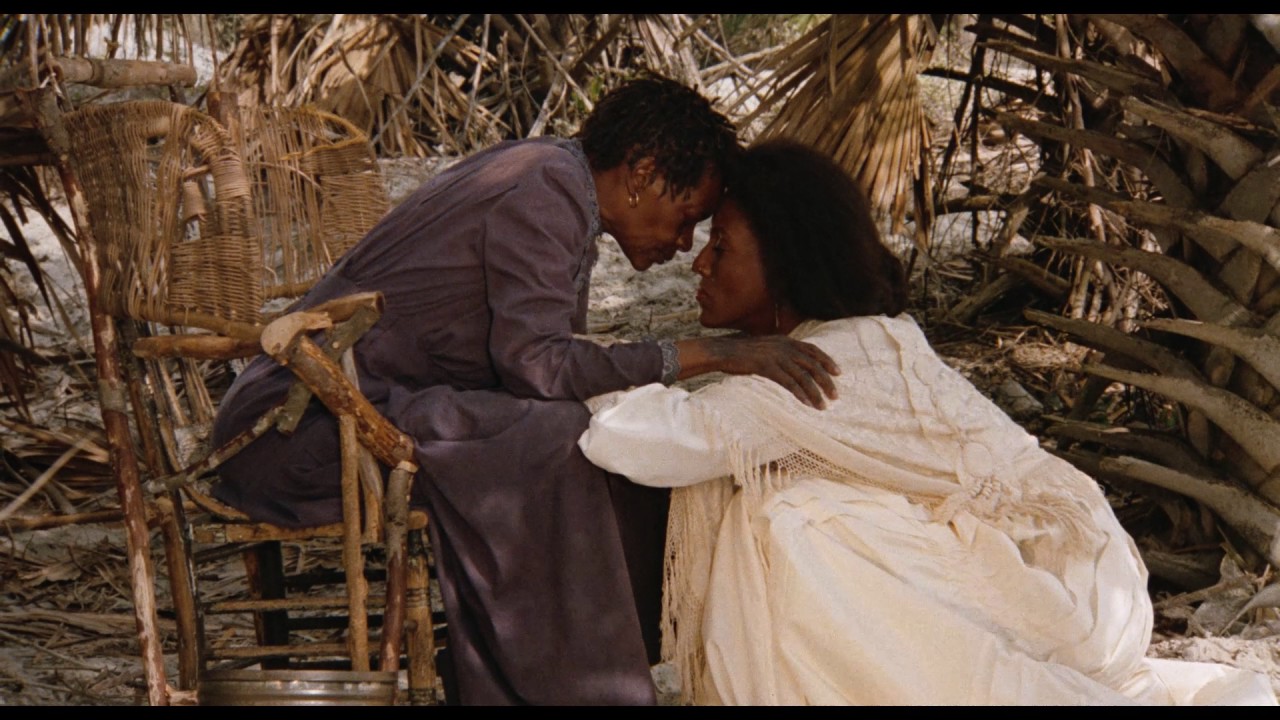
One of the pivotal films of the L.A. Rebellion, Julie Dash‘s sweeping, evocative, dialect-heavy portrait of Gullah women at a cultural and historical cross-roads is a wonder. There’s really nothing else like it: the poeticism comes through in the language and the images, with tradition echoing into the unsure present and the conflicted future of a people. It’s gorgeous in every way.

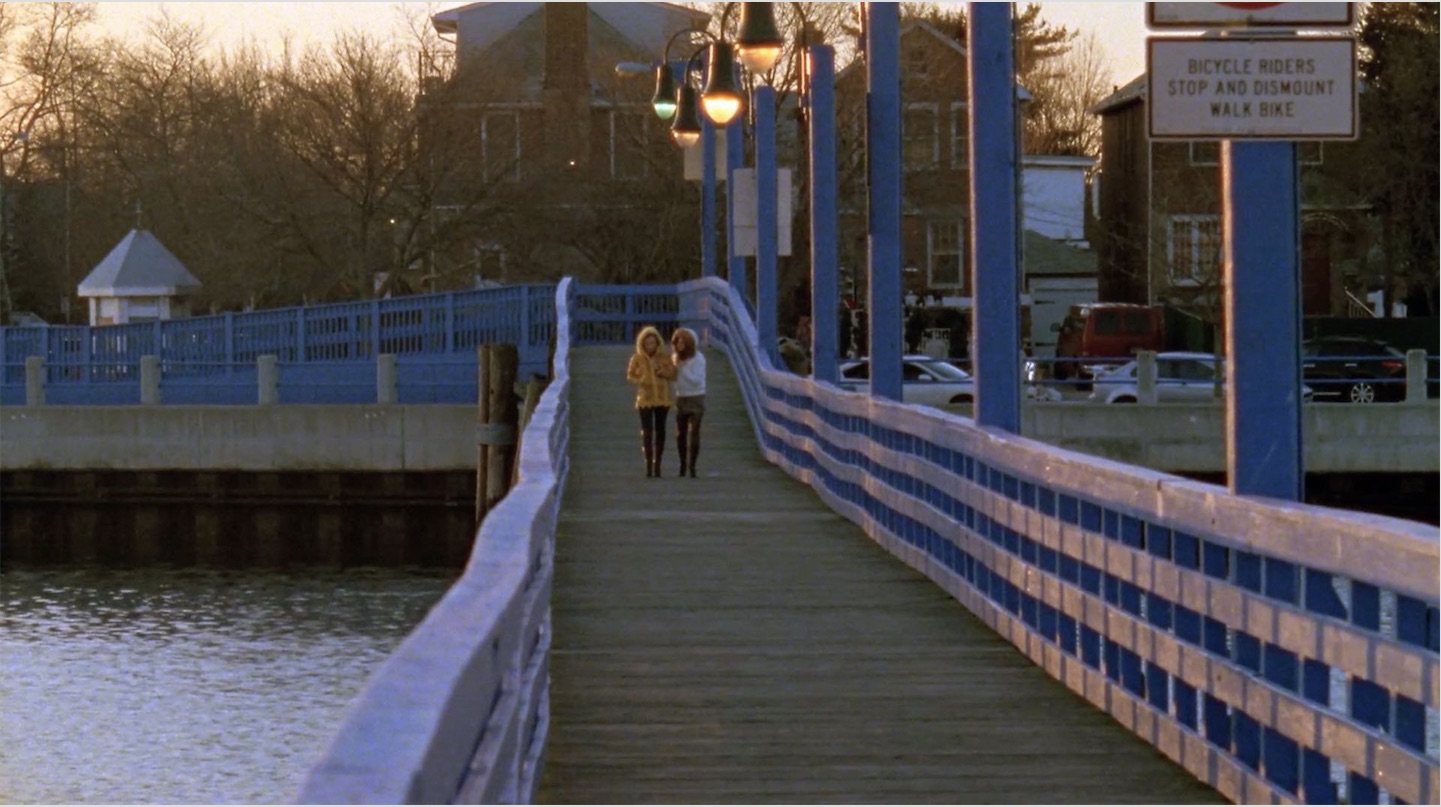
The film will make another, more detailed appearance (eventually) in the Counter-Programming series, and it remains a profound injustice that Dash isn’t better known, but Daughters of the Dust deserves as many mentions as it can get. (For those who are already admirers, Scout Tafoya’s video essay on the film is a must.)

4. Fish Tank

My arguably overheated enthusiasm for Andrea Arnold’s American Honey is already a matter of public record, so it’s probably no surprise that I returned to her work again and again in 2017.

Wasp, Red Road, and Wuthering Heights all appear on the list below, but it’s Fish Tank that left the biggest bruise. Katie Jarvis‘ lead performance, as another of Arnold’s lower-class heroes coming of age through confusion and self-sabotage, is blistering, and the director’s eye for casually realist detail is in full effect. At a crucial moment in its third act, you might find yourself hoping against hope that things aren’t headed where they seem to be; Fish Tank‘s magic comes the moment after, when you realize that of course they are. Arnold is without judgment and the film never devolves into poverty-porn. It’s honest and bracing.

5. Forever’s Gonna Start Tonight

Eliza Hittman is another filmmaker having a big 2017, with her sophomore feature Beach Rats showing up on more than a few cinephile lists.

I didn’t have a chance to catch that one, but her 2011 short guarantees I will eventually. Filmed on location in a Brooklyn immigrant community and the adjacent dance clubs our protagonist flees to at night, Hittman’s film conveys a palpable sense of place and of being stuck in between– nostalgia, modernity, adolescence, adulthood. It packs a lot of growth into its 16 minutes.

6. Frank Film

It’s hard to imagine a purely experimental short work winning an Oscar these days, but things were apparently a little different in 1974, when Caroline and Frank Mouris’ exuberantly postmodern Frank Film arrived.

It’s pure auteurist pastiche. The Mourises “researched, cut out, and glued onto acetate cells 11,592 images – photographs, illustrations, and other graphic work – arranging them in geometric patterns that cascade up, down, and across the frame, timed to both an internal rhyme scheme (pie begets desserts, televisions beget other appliances) and to the soundtrack.” The effect is bewildering and trance-inducing, something like Len Lye by way of Jasper Johns, with John Cage throwing the I-Ching on the repetitive, overlapping score. Honest-to-god mindfuckery, and I mean that in the best way possible.

7. Landline

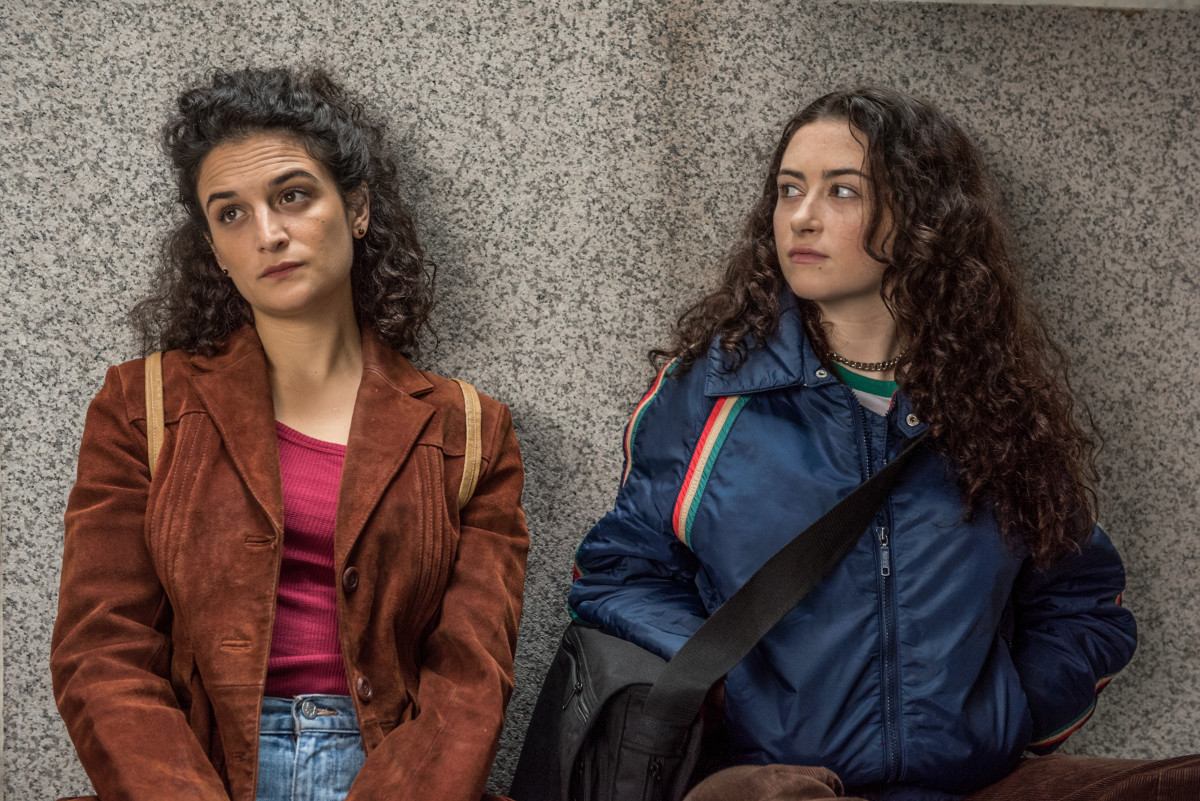
Gillian Robespierre and Jenny Slate followed up their unfailingly sweet abortion rom-com Obvious Child with this 90s throwback about family dysfunction and sisterhood. If Landline lacks the sure narrative footing (and irresistible logline) of the previous film, it makes up for it in shaggy charm and small moments of recognition. (The lovingly detailed, decade-specific touches don’t hurt either, at least for those of us who very much remember dial-up internet.)
Slate is wonderful, again, but it’s much less of a one-woman show here, with Edie Falco, John Turturro, Jay Duplass, and (especially) Abby Quinn as her wise-ass little sister rounding out the ensemble. 

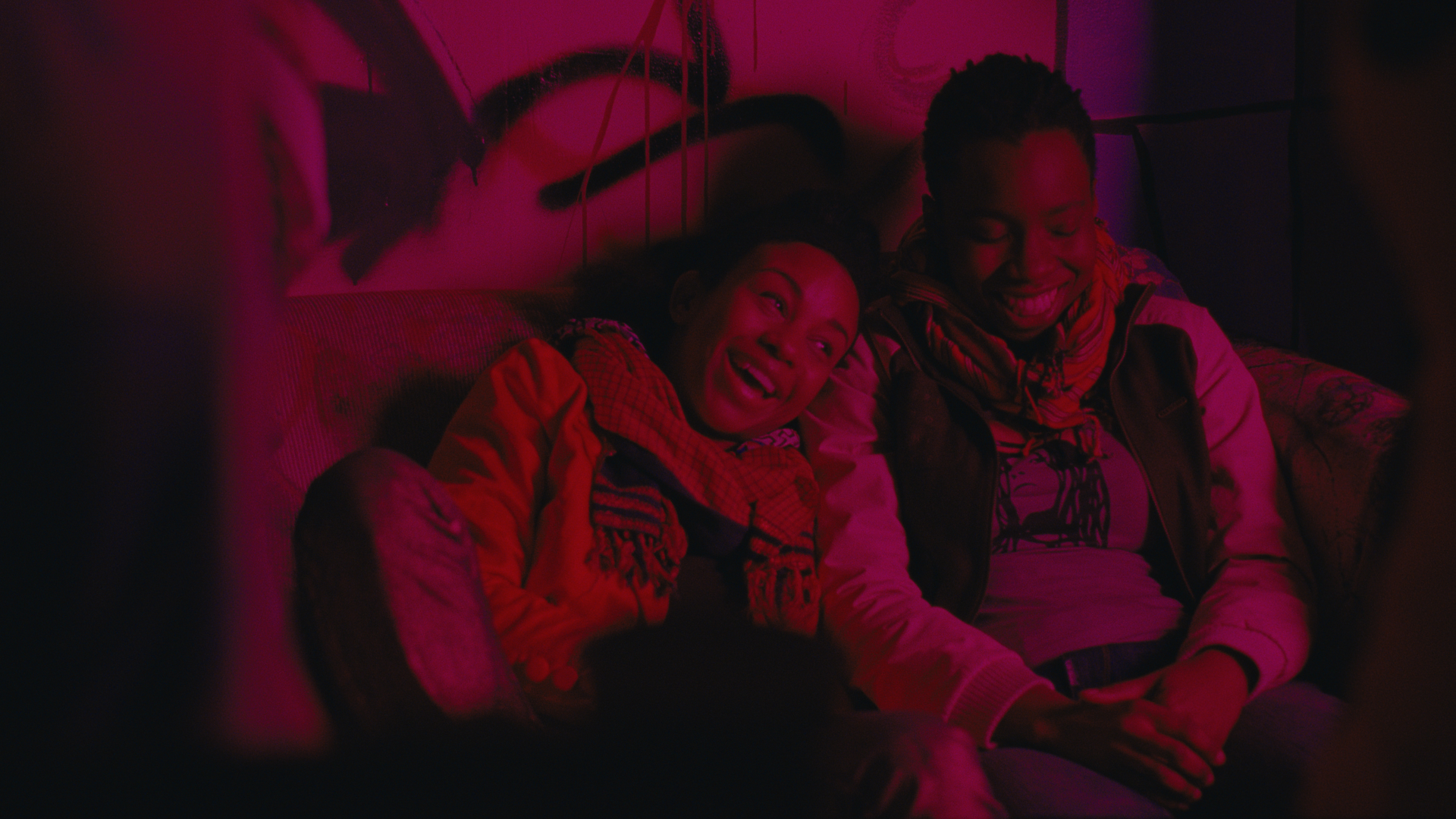
8. Pariah

Her 2017 Mudbound was stately, ambitious, and filled with good performances, but the smaller scale urgency of Dee Rees‘ 2011 film is much more to my taste.

As the protagonist Alike, a queer teen navigating treacherous water, Adepero Oduye turns scene after scene into moments of quiet revelation and halting discovery, conveying fierceness and vulnerability the whole time. It’s a remarkable performance in a film that feels genuinely dangerous, and Rees structures the narrative with total confidence.

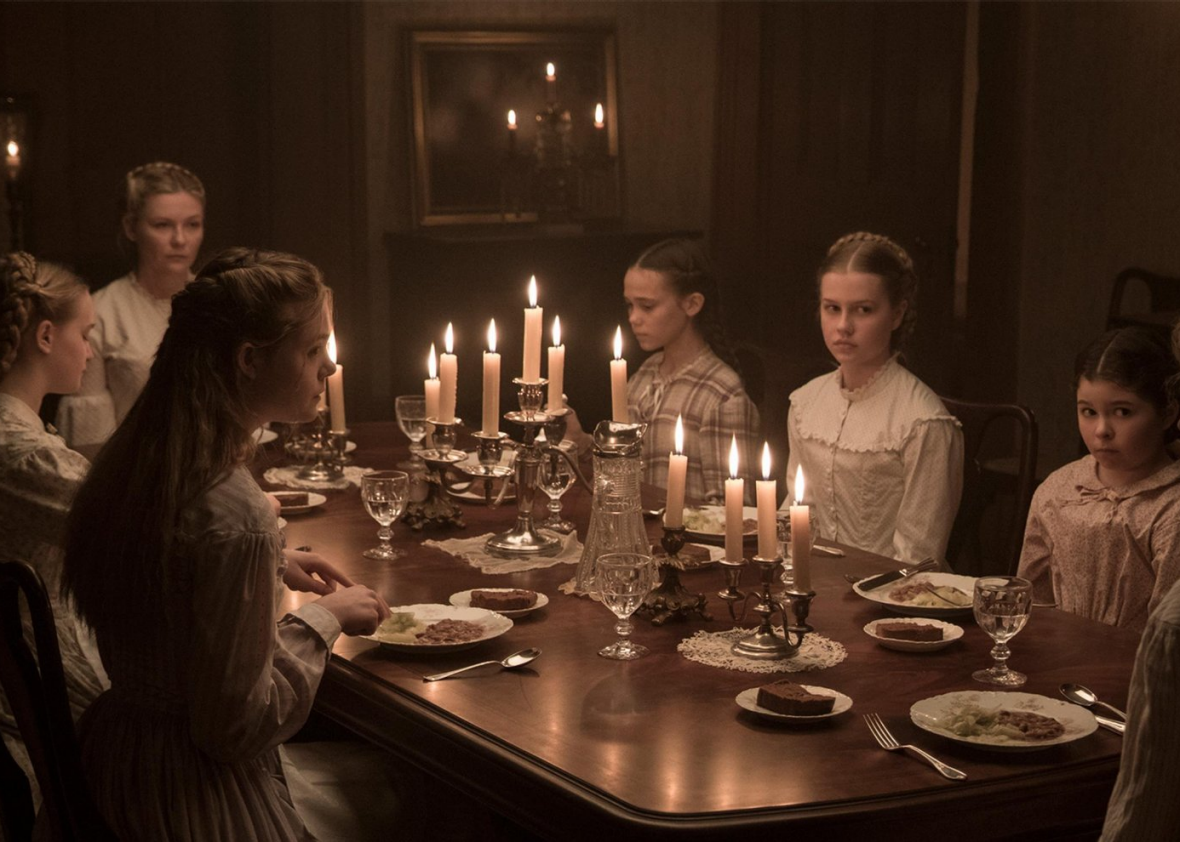
9. The Beguiled

Few directors, women or otherwise, capture insularity like Sofia Coppola, and The Beguiled is Coppola at her most closed-off. There’s something undoubtedly perverse about a Civil War story in which the Civil War barely registers, much less slavery, and many viewers were critical of it for this reason. 
That’s fair, but it’s also of a piece with the film’s Gothic aspect of creeping dread, much more haunted house narrative than historical drama, its costuming and setting aside. The pervasive eeriness is (almost) all atmospheric, with Coppola drawing out sexual tension and jealousy in this weird cloister. When things finally, definitively go off the rails, it almost comes as a relief.

10. We Need To Talk About Kevin

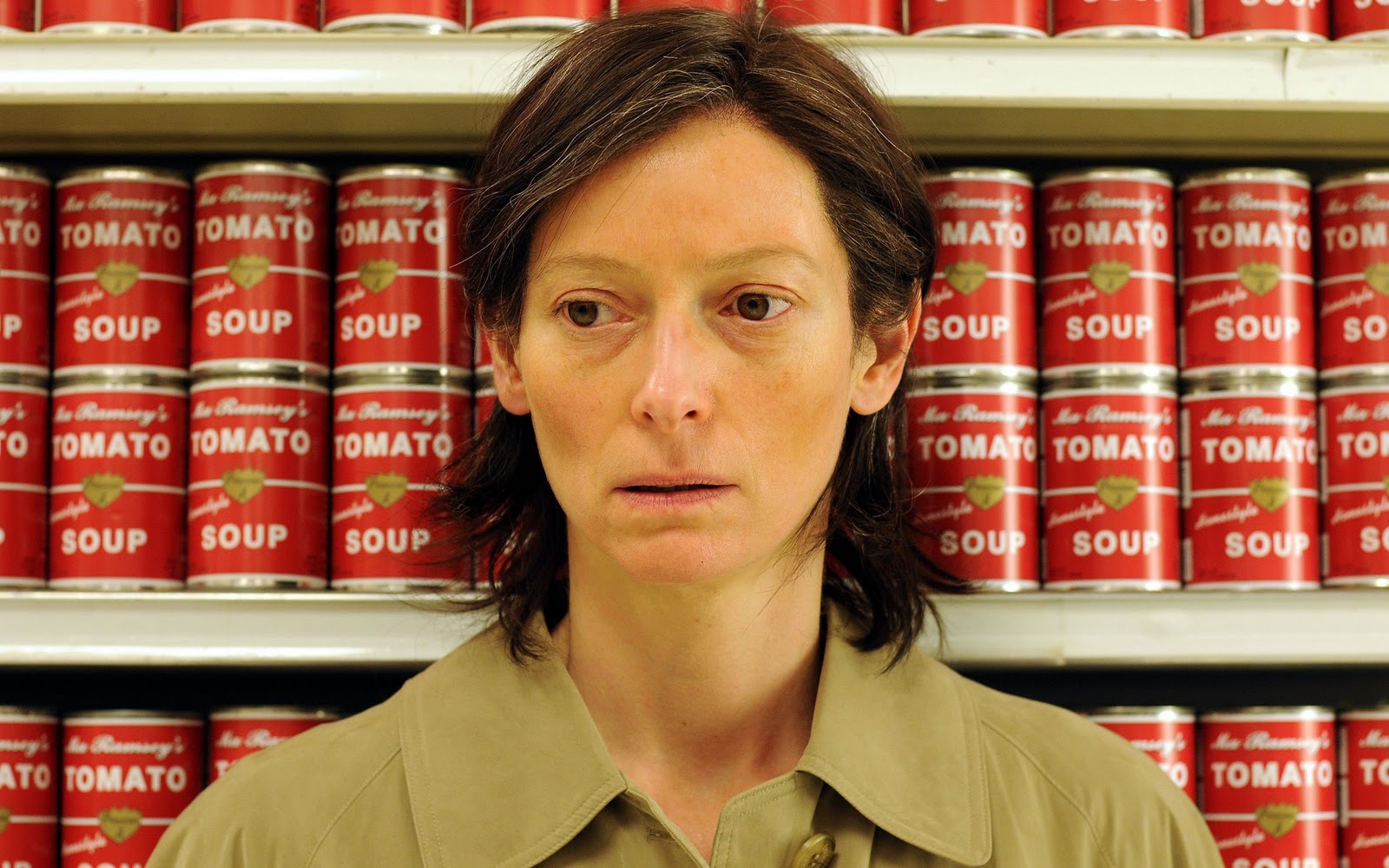
I watched Lynne Ramsay‘s tour-de-force adaptation on a plane on the way to a funeral, which may or may not have been the best way to see it.

Ramsay’s assured pacing and cross-cut narrative is the epitome of slow-burn psychological terror, with a never-better Tilda Swinton grounding the whole thing in utter, discomfiting believability. The unease that registers across her face throughout is a hard aspect to shake once it’s through — an unease with motherhood in the first place morphing into dawning awareness, outrage, and remorse. There is ample room for exploitation in the story of a disturbed child, but We Need To Talk About Kevin finds personal tragedy in the haunted social body instead.

Title Director Year F/S Country
2 Days in New York Julie Delpy 2012 Feature US
After The War Annarita Zambrano 2017 Feature Italy
American Honey Andrea Arnold 2016 Feature US
Appropriate Behavior Desiree Akhavan 2014 Feature US
Au bal de Flore Alice Guy-Blaché 1900 Short France
Back For Good Mia Spengler 2016 Feature Germany
Butter on the Latch Josephine Decker 2013 Feature US
Cameraperson Kirstin Johnson 2016 Feature US
Casting JonBenet Kitty Green 2017 Feature US
Consommé Catherine Fordham 2016 Short US
Daughters of the Dust Julie Dash 1991 Feature US
Divines Houda Benyamina 2016 Feature France
Dukhtar Afia Nathaniel 2014 Feature Pakistan
E is for Exterminate (from The ABCs of Death) Angela Bettis 2012 Short US
Eden Mia Hansen-Løve 2014 Feature France
Enough Said Nicole Holofcener 2013 Feature US
Evolution Lucile Hadzihalilovic 2015 Feature France
Falling Leaves Alice Guy-Blaché 1912 Short France
Fish Tank Andrea Arnold 2009 Feature UK
Forever’s Gonna Start Tonight Eliza Hittman 2011 Short US
Frank Film Caroline Mouris, Frank Mouris 1973 Short US
Gasman Lynne Ramsey 1997 Short UK
Hannah Arendt Margarethe von Trotta 2012 Feature Germany
Hard Labor Juliana Rojas, Marco Dutra 2015 Feature Brazil
Heaven-Bound Traveler Eloyce Gist, James Gist 1935 Feature US
I Want You Inside Me Alice Shindelar 2016 Short US
In Chris Marker’s Studio Agnès Varda 2011 Short France
In Deep Waters Sarah Van Den Boom 2015 Short France
Innsmouth Izzy Lee 2015 Short US
Into The Forest Patricia Rozema 2015 Feature US
Jennifer’s Body Karyn Kusama 2009 Feature US
Joe’s Violin Kahane Cooperman 2016 Short US
Karl Marx City Petra Epperlein, Michael Tucker 2016 Feature Germany
La Chair et Les Volcans Clémence Demesme 2014 Short France
La Novia de Frankenstein Agostina Gálvez, Francisco Lezama 2015 Short Argentina
La Pointe-Courte Agnès Varda 1955 Feature France
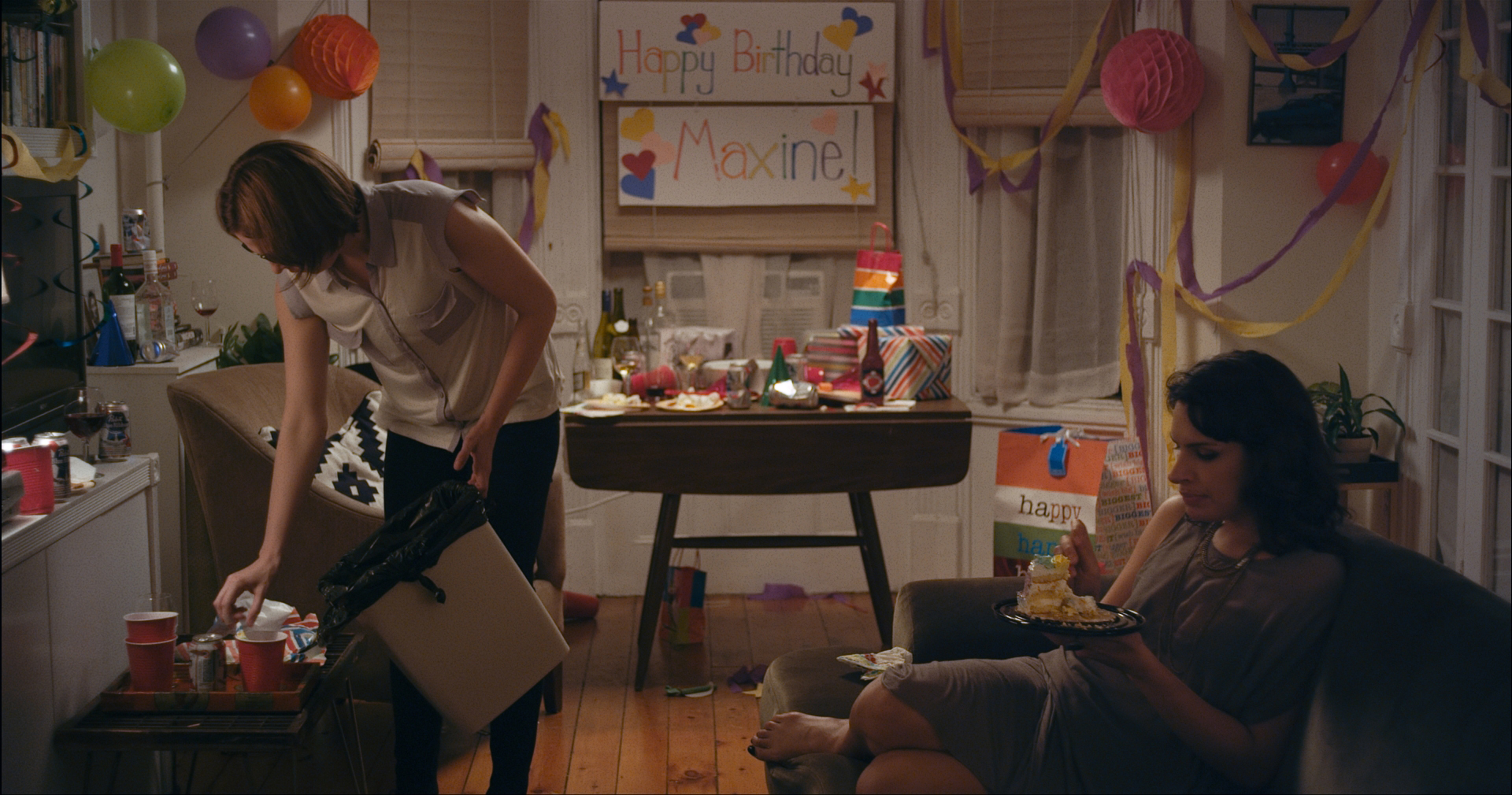
Lady Bird Greta Gerwig 2017 Feature US
Landline Gillian Robespierre 2017 Feature US
Le Bonheur Agnès Varda 1965 Feature France
L’invitation au voyage Germaine Dulac 1927 Feature France
Maggie’s Plan Rebecca Miller 2015 Feature US
Maman(s) Maïmouna Doucouré 2015 Short France
Meshes of the Afternoon Maya Deren 1943 Short US
Mirror Mirror Marina Sargenti 1990 Feature US
Miss Sharon Jones! Barbara Kopple 2015 Feature US
Mississippi Grind Anna Boden, Ryan Fleck 2015 Feature US
Mudbound Dee Rees 2017 Feature US
No Home Movie Chantal Akerman 2015 Feature Belgium
O is for Orgasm (from The ABCs of Death) Hélène Cattet and Bruno Forzani 2012 Short France
Of Shadows and Wings Eleonora Marinoni, Elice Meng 2015 Short France
Once There Was A Winter Ana Valine 2017 Feature Canada
Once Upon A Line Alicja Jasina 2016 Short US
Pariah Dee Rees 2011 Feature US
Pierrete’s Escapades Alice Guy-Blaché 1900 Short France
Prevenge Alice Lowe 2016 Feature UK
Queen of Katwe Mira Nair 2016 Feature US
Radiance Naomi Kawase 2017 Feature Japan
Raw Julia Ducournau 2016 Feature France
Red Road Andrea Arnold 2006 Feature UK
Rudy Shona Auerbach 2017 Feature UK
Sand Storm Elite Zexer 2016 Feature Israel
Seeking a Friend for the End of the World Lorene Scafaria 2012 Feature US
Severe Injuries Amy Lynn Best 2003 Feature US
Strange Birds Élise Girard 2017 Feature France
The Ascent Larisa Shepitko 1977 Feature Russia
The Bad Batch Ana Lily Amirpour 2016 Feature US
The Beguiled Sofia Coppola 2017 Feature US
The Bigamist Ida Lupino 1953 Feature US
The Cabbage Fairy Alice Guy-Blaché 1896 Short France
The Consequences of Feminism Alice Guy-Blaché 1906 Short France
The Dumb Girl of Portici Lois Weber, Phillips Smalley 1916 Feature US
The Edge of Seventeen Kelly Fremon Craig 2016 Feature US
The Fire, The Blood, The Stars Caroline Deruas-Garrel 2008 Short France
The Funeral Sophie Savides 2016 Short US
The Good Time Girls Courtney Hoffman 2017 Short US
The Hitch-Hiker Ida Lupino 1953 Feature US
The House Is Black Forugh Farrokhzad 1963 Short Iran
The Love Witch Anna Biller 2016 Feature US
The Lure Agnieszka Smoczynska 2015 Feature Poland
The Other Side of Sleep Rebecca Daly 2011 Feature Ireland
The Plumber Méryl Fortunat-Rossi, Xavier Seron 2016 Short France
The Puppet Man Jacqueline Castel 2016 Short US
The Road To Paradise Houda Benyamina 2011 Short France
The Room at the Top of the Stairs Briony Kidd 2010 Short Australia
The Seashell and the Clergyman Germaine Dulac 1928 Feature France
The Smiling Madame Beudet Germaine Dulac 1923 Feature France
The Tale of Four Gabourey Sidibe 2017 Short US
The Tango Lesson Sally Potter 1997 Feature UK
The Yellow Island Léa Mysius, Paul Guilhaume 2016 Short France
Thou Wast Mild and Lovely Josephine Decker 2014 Feature US
Un Grand Silence Julie Gourdain 2016 Short France
Venefica Maria Wilson 2015 Short US
Verdict: Not Guilty Eloyce Gist, James Gist 1933 Feature US
Wadjda Haifaa Al-Mansour 2012 Feature Saudi Arabia
Wasp Andrea Arnold 2003 Short UK
We Need To Talk About Kevin Lynne Ramsey 2011 Feature US
Where Are My Children? Lois Weber, Phillips Smalley 1916 Feature US
Whip It Drew Barrymore 2009 Feature US
Woman In Deep Janicza Bravo 2016 Short US
Wonder Woman Patty Jenkins 2017 Feature US
Wuthering Heights Andrea Arnold 2011 Feature UK
XX Karyn Kusama, Jovanka Vuckovic, Roxanne Benjamin, St. Vincent 2017 Feature US
December 27, 2017 0 comments
1 FacebookTwitterPinterestEmail
CommentaryFilmStreaming Selections

Streaming Selections: Water Protectors of Wakpa Waste

by Sam and Rick December 22, 2017
written by Sam and Rick

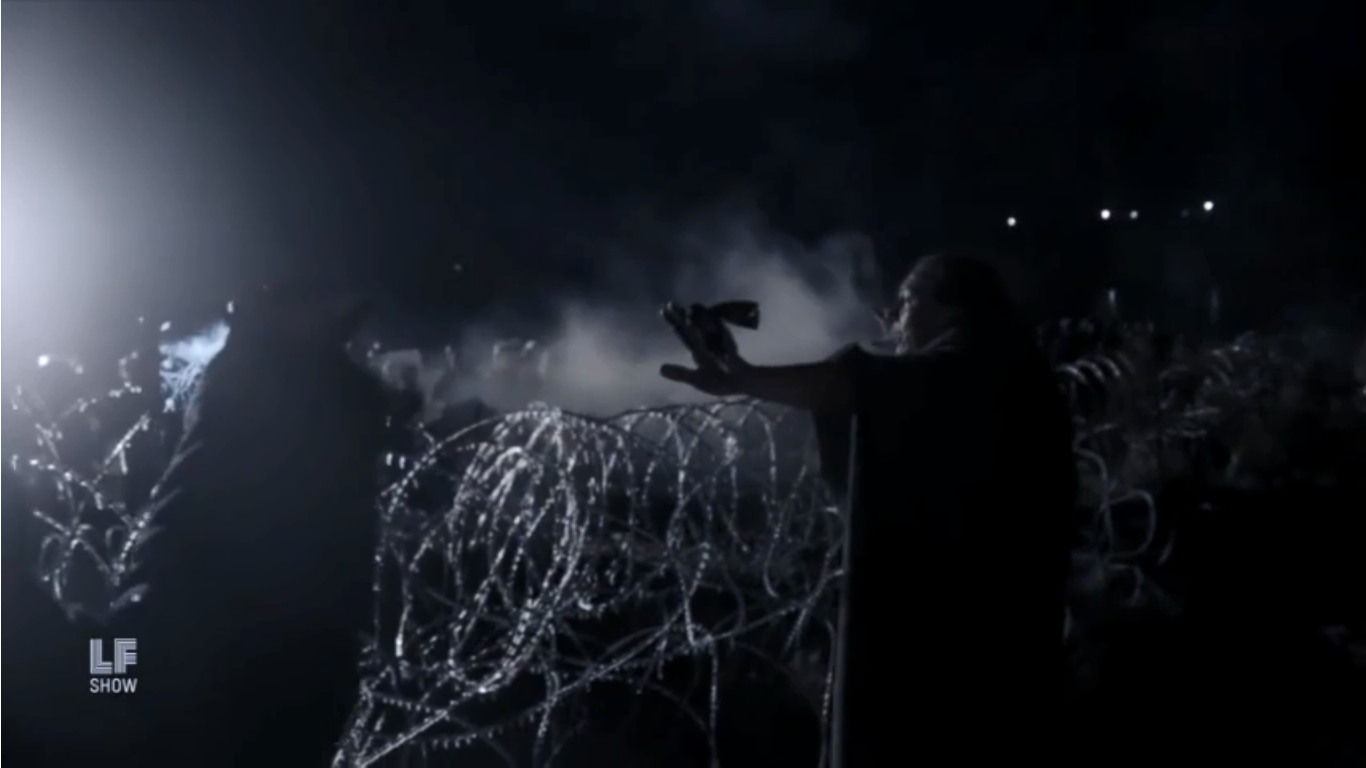
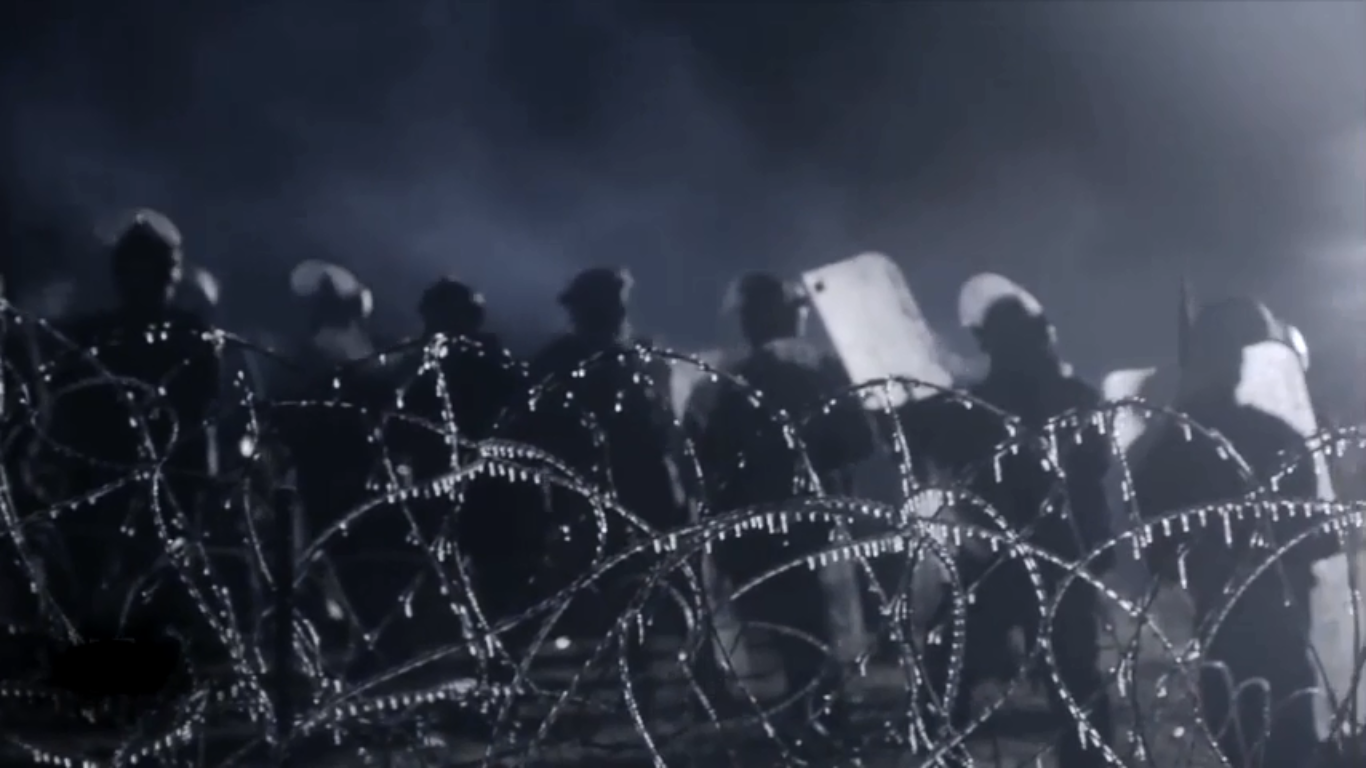
There is a recurring image in The Water Protectors of Wakpa Waste — the new documentary about anti-pipeline and extractive energy struggles on the Cheyenne River Sioux Reservation in South Dakota, and the people waging those struggles — that sticks in the mind: small icicles clinging to concertina wire.

It’s a small detail, even a passing one. Particularly in a documentary filled with startling on-the-ground footage of the brutality inflicted by the U.S. Government on tribal members and allied water protectors, and sobering aerial views of the land beloved by its inhabitants (and rightful “owners,” to whatever degree land can be owned) but treated as little more than a resource by corporatist bureaucrats. But its quiet poeticism lingers — it literally is an image, even in its sad stillness, of the conflict between water and jagged metal, between life and the tools of those who would bend it to their will regardless of the cost.

The Water Protectors of Wakpa Waste charts that conflict, among others. For some of us, the Dakota Access Pipeline and the dangers it poses — to tribal sovereignty and upheld treaties, to the environment, to ways of life — can seem distant. This is clearly not the case for those most impacted, and the doc takes us into their lives, histories, and demands. Make no mistake, this is an overtly ideological piece of work, intended to inform but primarily to outrage and spur to action. It’s entirely successful on the first count; one hopes the second will follow.
A series of talking heads — filmed, for the most part, outside on location, a smart move — provide the background. More importantly, perhaps, they provide an opportunity to put faces and names to a political movement of water protectors that, far from being over, might just be starting to coalesce. As the Tribe notes,

The fight is not over and there is so much left to do in the Dakota Access Pipeline lawsuit.  We are working with experts – biologists, hydrologists, ethnobotanists, eco-toxicologists, and others – to develop proof that the pipeline is unsafe.  We have been fighting since August 2016 and we may not be done for years.


The Cheyenne River Sioux Tribe is doing everything it can to protect the waters and the lands that sustain us all.  But we don’t have the same endless resources that fund Big Oil and the deep bench of litigators behind the U.S. government.

Water Protectors also doesn’t shy away from some of the internal tensions. A strong segment details the conflicting viewpoints of elders and returning veterans about the best path forward at critical moments, a refreshingly honest self-reflection that steers things away from simple fist-in-the-air polemicism. Any resistance movement is a collection of such tensions; it’s to the film’s credit that they aren’t ignored.

Still, the overwhelming sense is one of solidarity and urgency. There is a dangerous idea, Water Protectors of Wakpa Waste contends, that the struggle is over, and the good guys lost. Nothing could be further from the truth.

Not yet, anyway. Watch, learn, and act.  

(Rick – Streaming at https://www.wakpawaste.com/film)

Quick Links

Battles Without Honor and Humanity series (The Yakuza Papers)

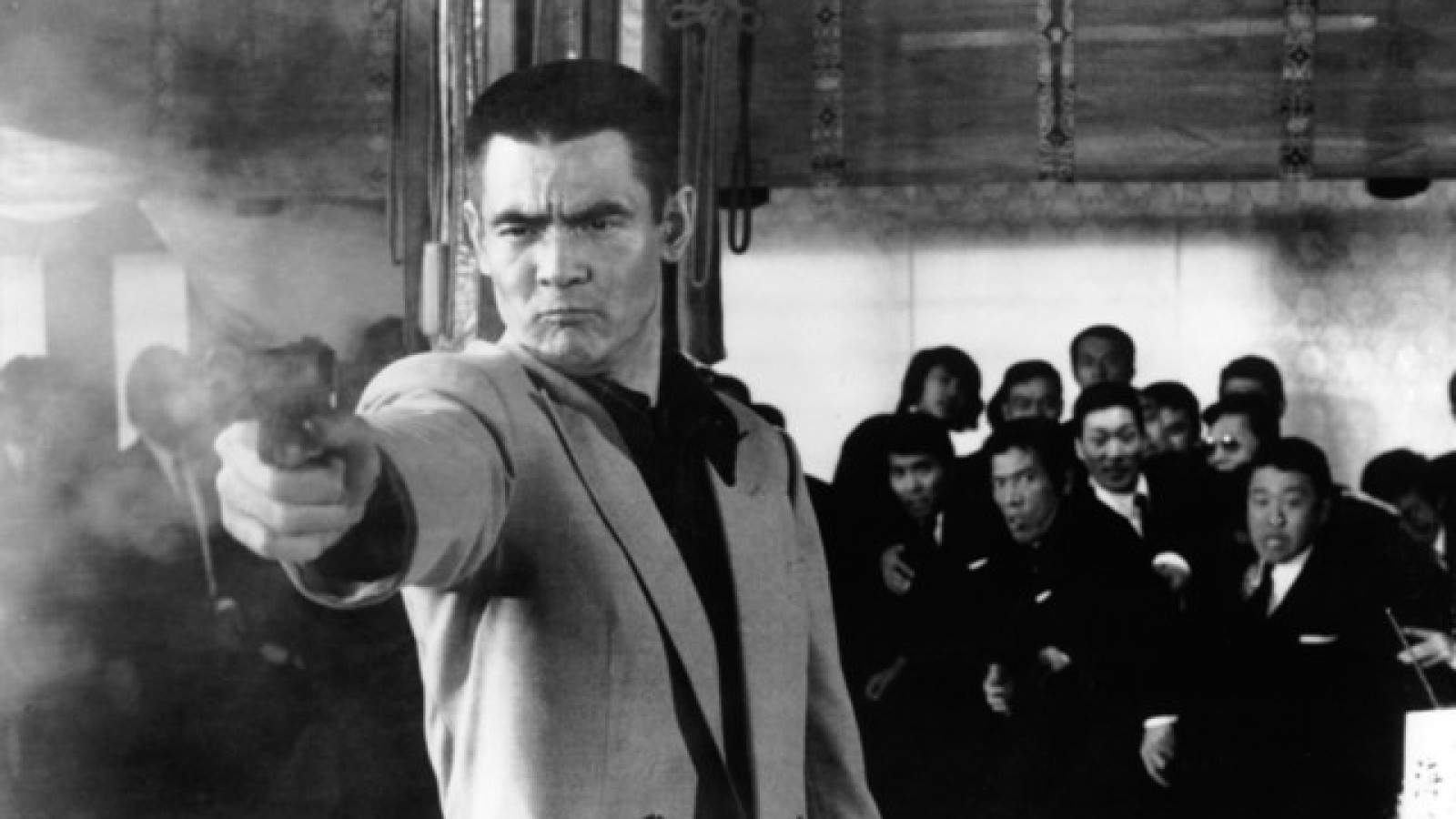
As Goodfellas is to The Godfather, the Battles Without Honor and Humanity series (released in the U.S. as The Yakuza Papers) is to countless yakuza movies before it.

Earlier Japanese filmmakers may have made the yakuza seem evil, but Kinji Fukasaku’s 5 films (don’t waste your time with anything after 1974’s Final Episode) make them stupid in a wonderfully energetic way. In no other movie would a yakuza go through the infamous yubitsume procedure (where the penitent crook chops off the end of his pinkie and sends it to the person he is apologizing to), only for it to fly off and land in a chicken coop.

Produced with that breakneck speed that only Japanese film series are capable of—all 5 original films came out in 1973 or 1974, with the “reboot”, New Battles Without Honor or Humanity, coming out just 6 months after the final entry!—it’s a blast and a half. Just accept that you’re going to lose track of the particulars of the plot pretty fast.

(Liz – All streaming on Filmstruck)

Decasia

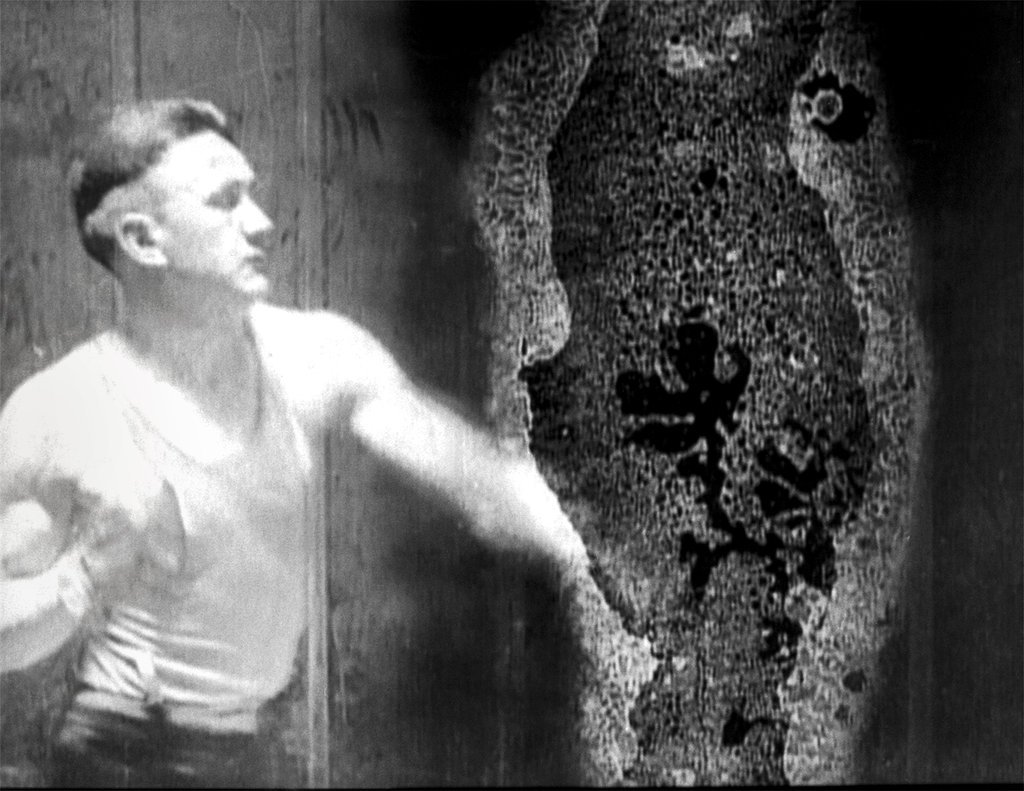
One of the true instant masterpieces of the recent American avant-garde, Bill Morrison‘s 2002 Decasia is unique in form, structure, and content. Composed of the non-linear, non-narrative presentation of decaying nitrate stock, it has a particular appeal to anyone interested in archival excavation, accidental surrealism, and even psychedelia. It’s an entirely different sort of film.

Beginning with current, intact images of film processing equipment, Decasia proceeds across time and place, with Morrison brilliantly editing together unrelated footage he unearthed in various locales. There is a haunting sense of memories lost forever but also a love of the material form and its idiosyncrasies, the new possibilities that destruction allows. Some seem almost impossibly perfect; others seem to be in conversation with each other across decades, linked by the editing, perhaps, but also by their shared impermanence. It’s also trippy as fuck, if that’s your thing.

Morrison’s latest, Dawson City: Frozen Time, is short-listed for an Oscar this year, and it’s available with nearly the entirety of his collected works here.

(Rick – All streaming on Filmstruck)

Pottersville

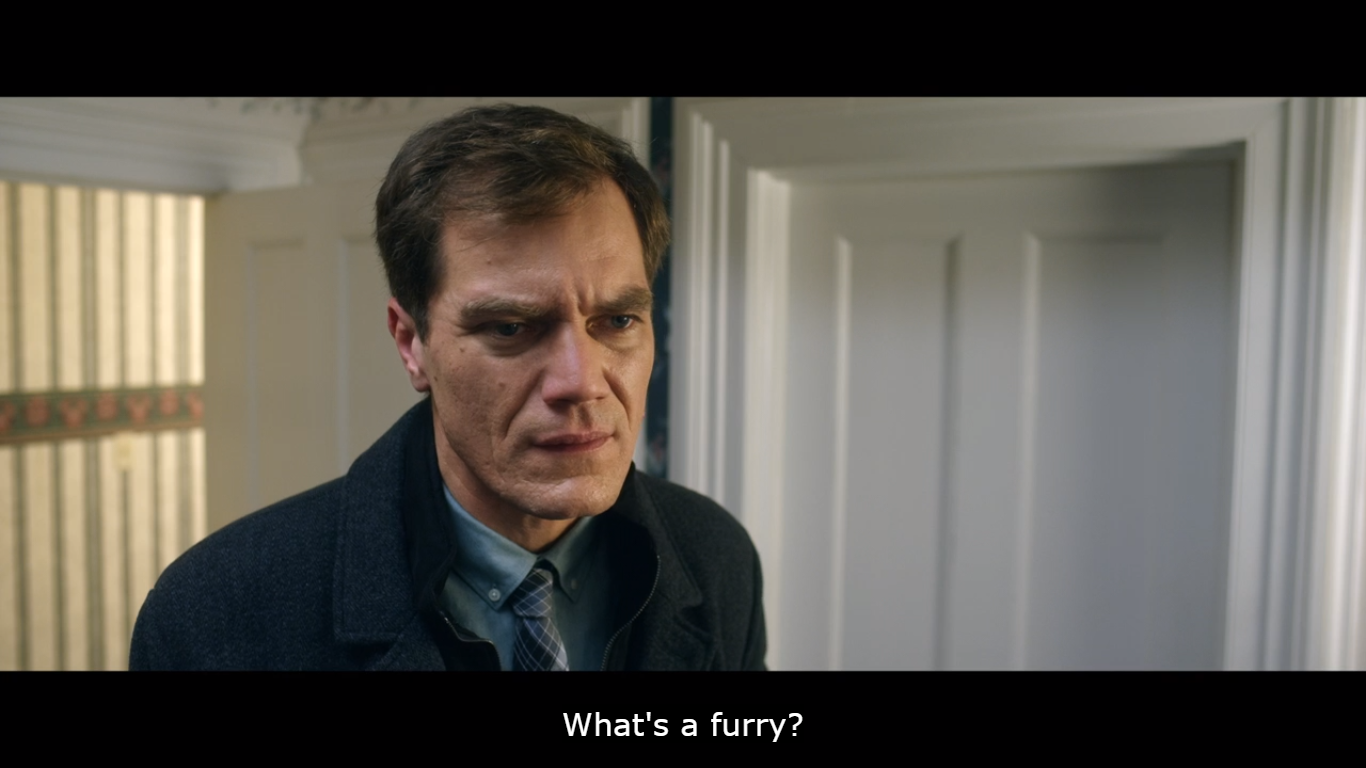
From its mind-blowingly terrible poster art to its suspiciously over-qualified cast, the very existence of Pottersville was greeted as something like a prank. “What is this Christmas movie?” the internet asked. “Why is Michael Shannon smiling and wearing an apron? Is it about It’s A Wonderful Life, given that it’s tagline is ‘It’s A Magical Life’? For the love of God, what is this?”

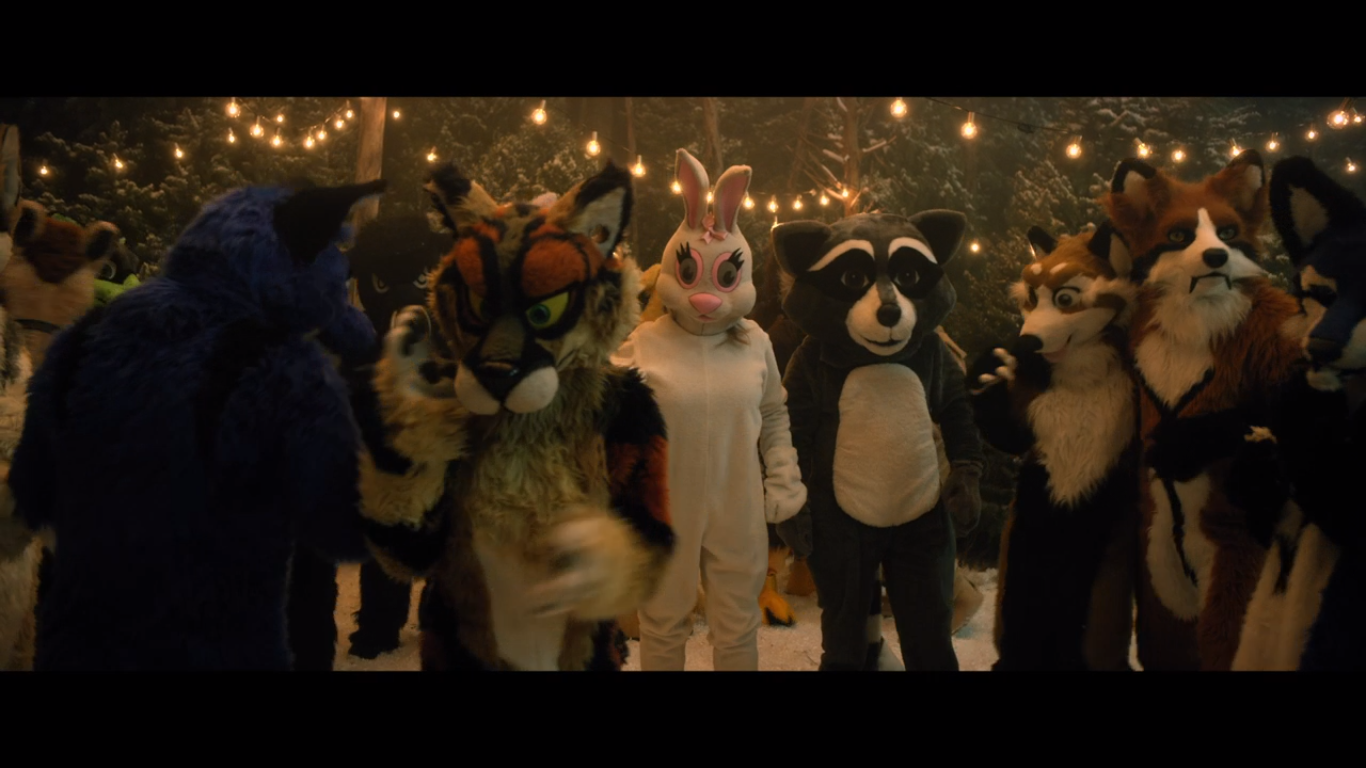
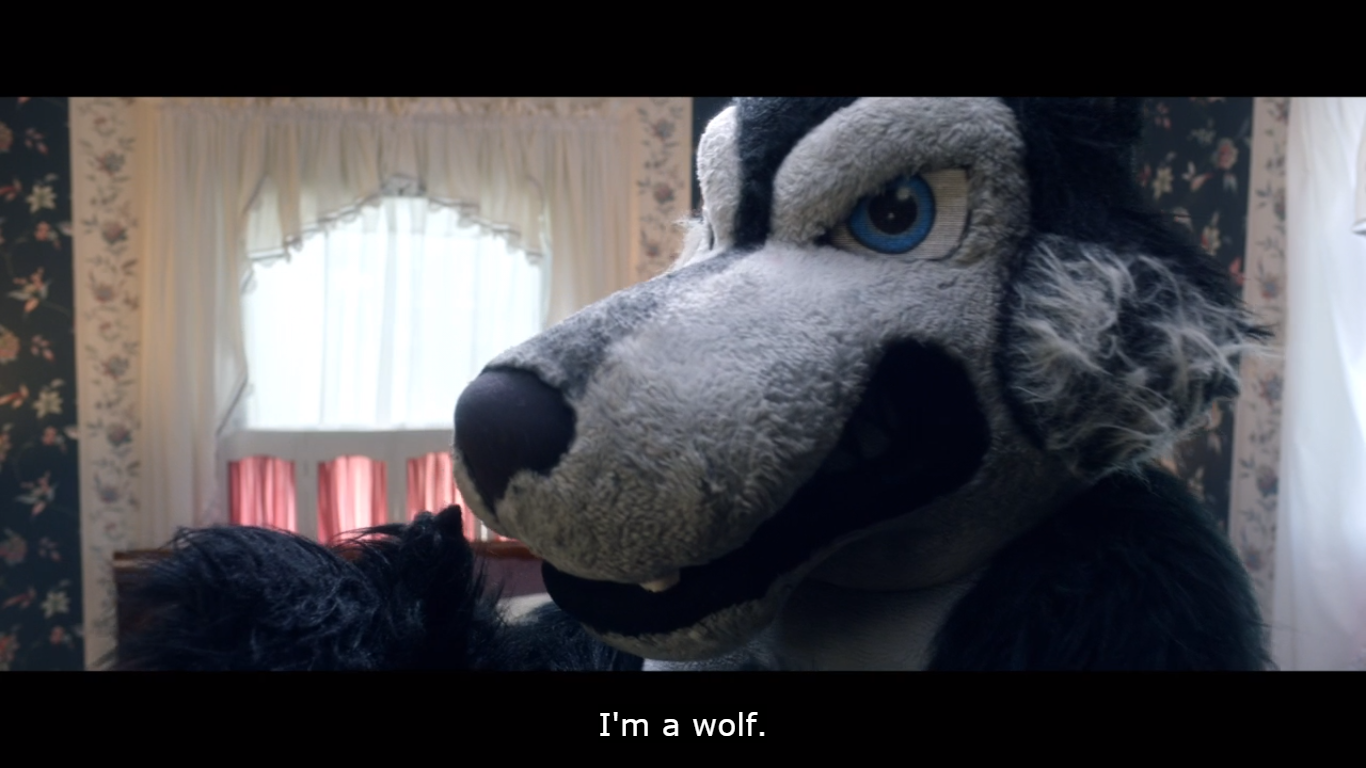
As word leaked out that it did exist and was a Christmas movie, but specifically one about Bigfoot and small-town furries, the confusion was not allayed. If anything, this only raised the stakes for Pottersville and for those who relish inscrutable bargain-bin absurdities.
Turns out, it’s neither as good-bad or as bad-bad as these details make it sound. In fact, it’s kind of … sweet? Still terrible, and kind of kink-shaming, and extremely visually flat (Michael Shannon must never smile again; that’s all the smiling the world can allow from Michael Shannon), but, you know, you get what you pay for.

And if what you want is a furry-themed Christmas movie about fake-Bigfoot and the town he saves through drunken participation in their curiously specific sexual proclivities, Pottersville has you covered.
Also, if you’re wondering whether the great Ron Perlman, who is sleeping with the criminally under-employed Christina Hendrick’s bunny rabbit, gets off in the film on being a wolf, and enjoys making this clear by stating that he is a wolf, then the answer is yes. Yes, he is a wolf.


[REC] 2

Found footage forever, guys.

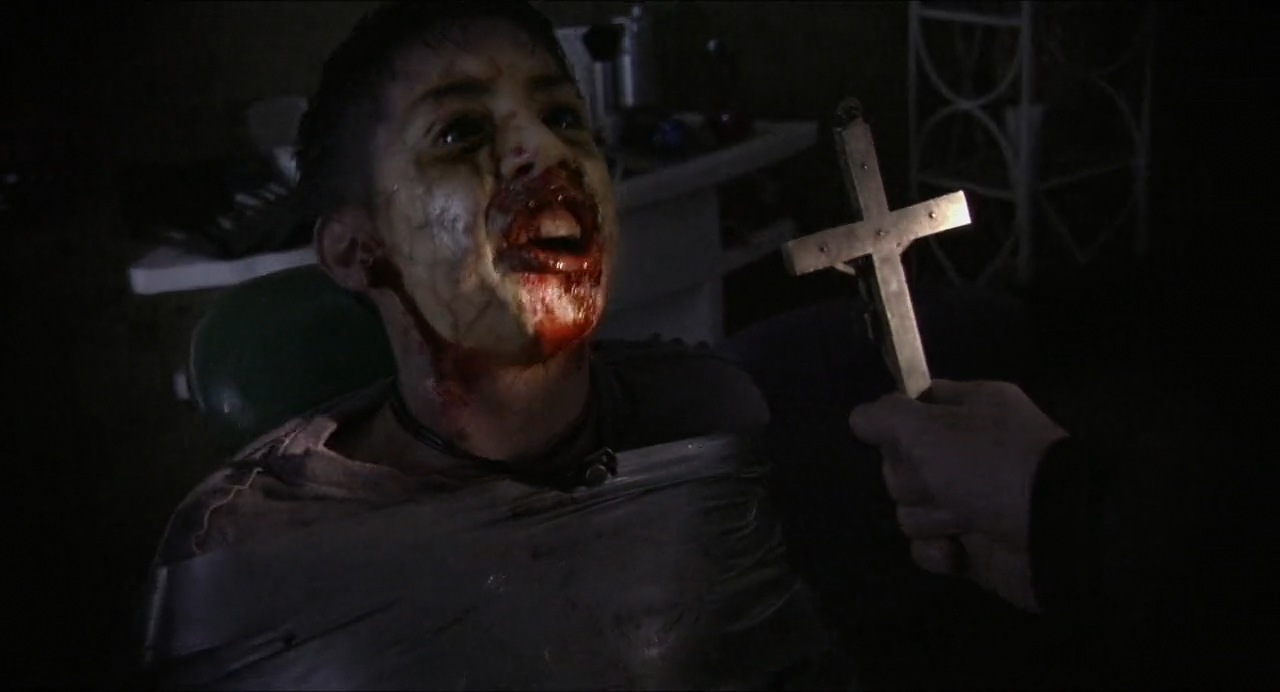
This micro-genre may have run out of steam (any doubts? check out the final Paranormal Activity movie, a lifeless dead cod of a film that even the absurdity of people watching footage of people watching footage of people watching footage can’t enliven) but its peaks are still electrifying, at least for me. 2007’s [REC] may be the only great foreign found footage movie, a throwback to the pre-Romero zombie movies where the monsters weren’t too well-defined and it’s never clear what the rules are.

I won’t spoil anything for anyone, but it’s also a horror movie that could only be made in a deeply Catholic country—a fact that the sequel, 2009’s [REC] 2, doubles down on in a fascinating way.

(Liz – Both streaming on Shudder)


December 22, 2017 0 comments
1 FacebookTwitterPinterestEmail
CommentaryFilm

RoboCop And Our Collective Desire For Oracles

by Lark December 20, 2017
written by Lark

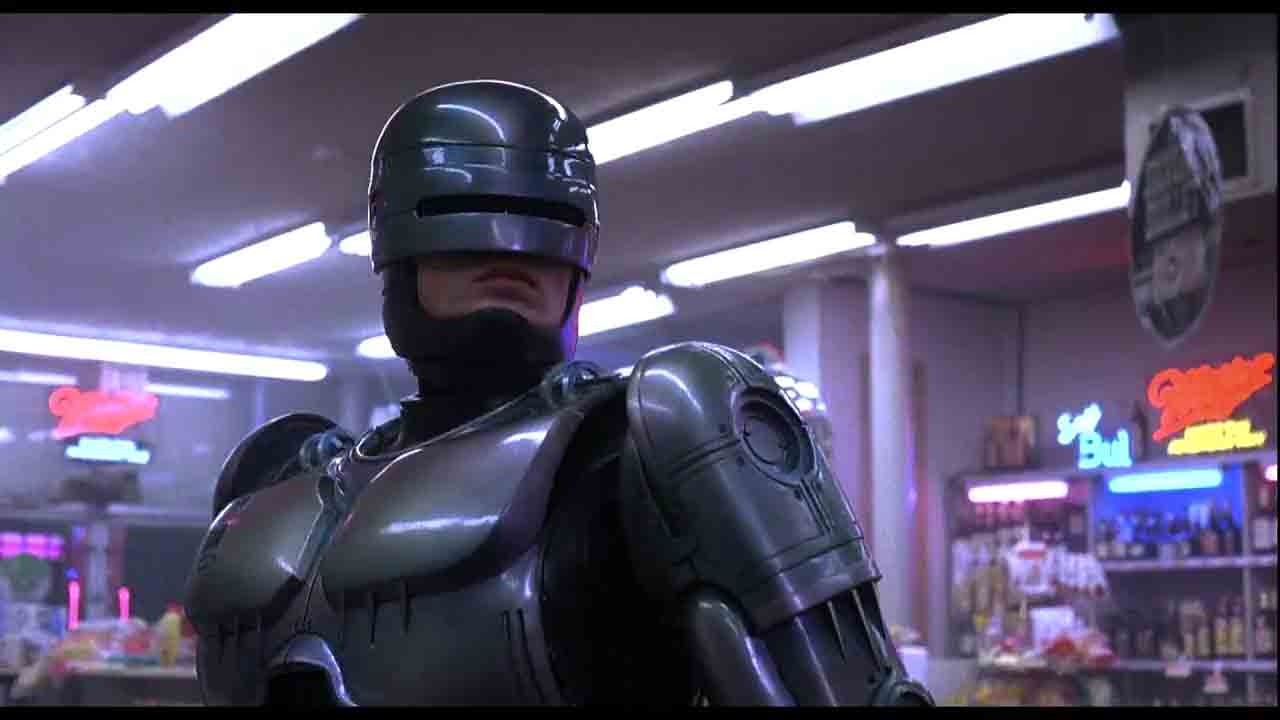
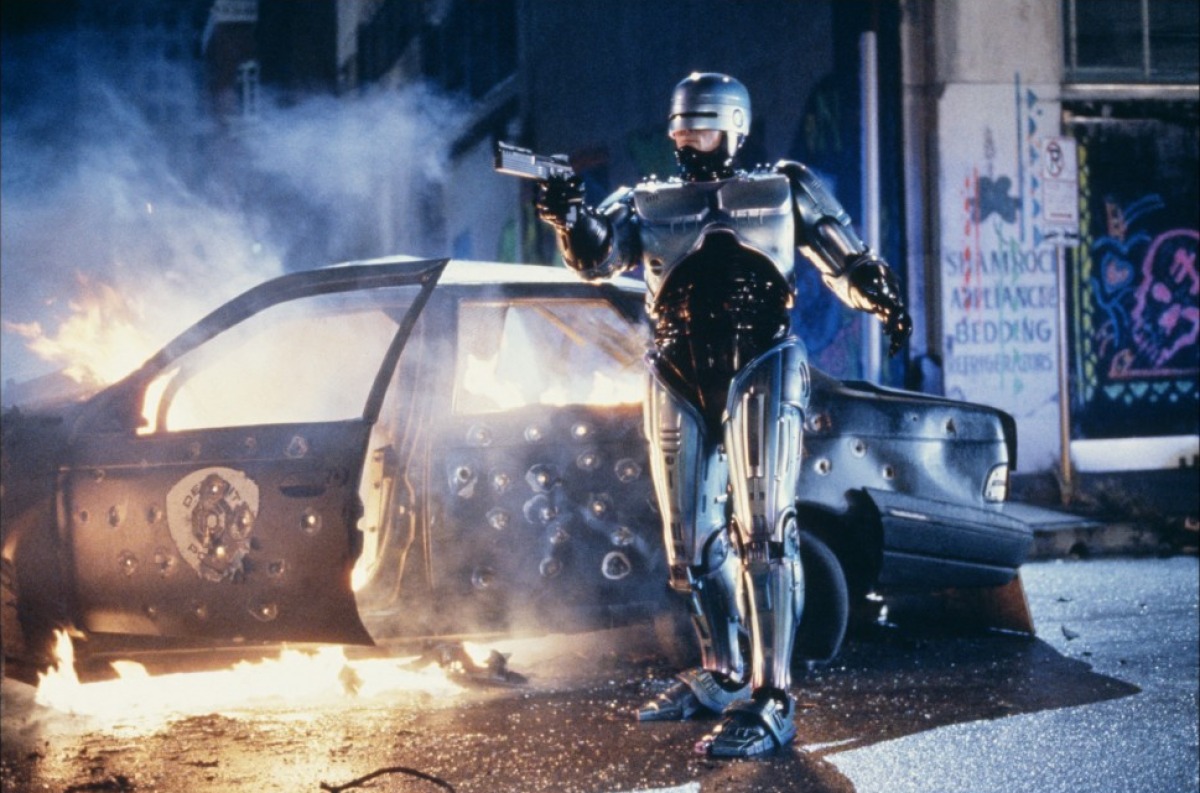
RoboCop didn’t predict shit.

I see certain statements come up a lot in pop culture-literate leftist circles — and I am afraid this is going to be a Political Piece, one that assumes shared beliefs (although maybe no more than simply a recognition that something is wrong in the world) — that RoboCop predicted our world today. Or They Live, or Starship Troopers, or some other dystopian movie.

They want us to look at those movies, depicting a world where everyone worships a stupid state that mixes brutal violence and inanity to ensure a sense of order. Then, they want us to look at the world, where exactly those states seem to fill the West. What else can we say? They clearly were predictive.
But the films aren’t predictive. They aren’t predictive because they’re not trying to predict anything; they’re trying to depict. It’s not a coincidence most of them were made in the heyday of Ronald Reagan and Margaret Thatcher.

RoboCop (to use it as a representative example) didn’t need to predict the way police work today, because those same ideas were just as present in 1987. In fact, thank God it isn’t trying to predict anything, or the complete lack of any acknowledgement of the racism at work in police forces would be disqualifying.

And it wasn’t making any predictions that in the future, the population would be too distracted by simplistic, repetitive media to care about their world. And again, thank God for that: it’s a lazy observation when people do make it, and it’s far less accurate in describing the fragmented, complex ways we consume even mass art in 2017.
Why do we want prognosticators so badly? At the risk of beating one of my hobbyhorses to death, I’d suggest it’s a way to sneak back in, in the guise of leftist politics, the old dull idea of the author as genius. Even when it seems like we have brought back into focus the cultural and economic world in which an artist creates and from which he (the pronoun is not accidental) draws, we can still be in awe of his brilliance. He foresaw the future, that things would get worse — or, at the very least, stupider.

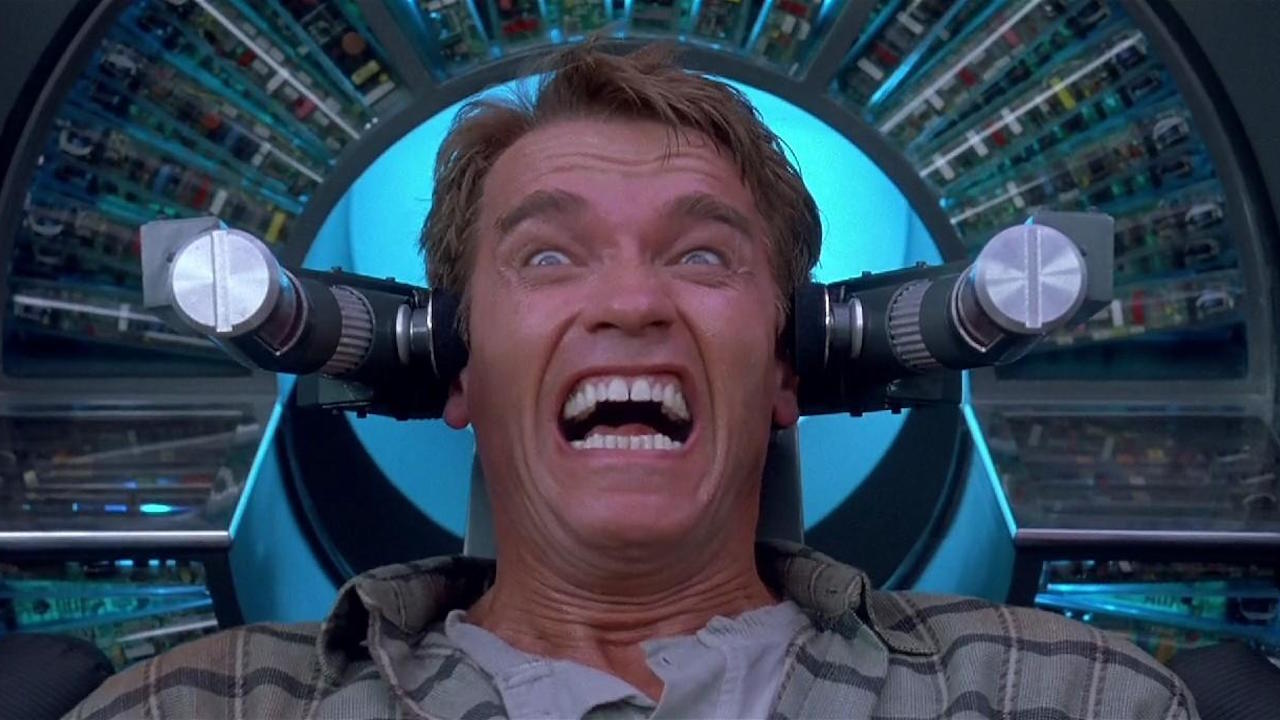
In the case of RoboCop in particular, this isn’t quite earned. Paul Verhoeven is a curious figure, not quite the Jeremiah-style invective-spitter he is sometimes made out to be. His movies (particularly Starship Troopers, RoboCop, and Total Recall, which form something of a set) present bizarre futures where things have gotten worse. There’s an intermingling of fascistic worship of the state and worship of the corporation. It seems designed to appeal to film-loving leftists.

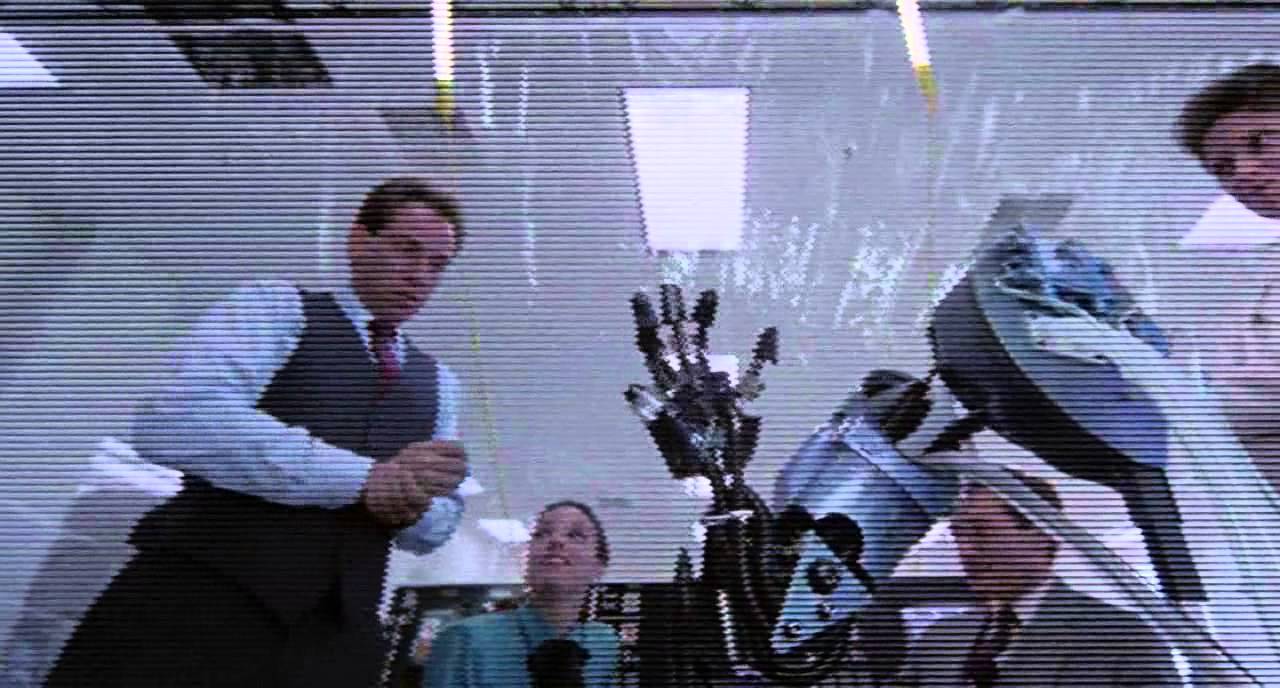
But Verhoeven has always been more self-aware than I think he is given credit for, and partially aware of that on which he is open to critique. He’s aware that his movies visually celebrate the fascism they depict. RoboCop is a fun movie, and the action scenes are enthralling. Seeing ED-209 blow the guy apart is hilarious, in a terrible way, and in being amused by the horror we are part of it.
So, there are both universal and particular issues with the idea of Verhoeven-as-oracle: that it assumes the artist is predicting the present/future from a time in which whatever cultural trend was in its nascent stages, only able to be picked out by their individual genius (when in fact, all those elements were just as present then — that they are depicting, not predicting), and that it ignores the fact that we are not shielded from the stultifying excitement of the stupid future.

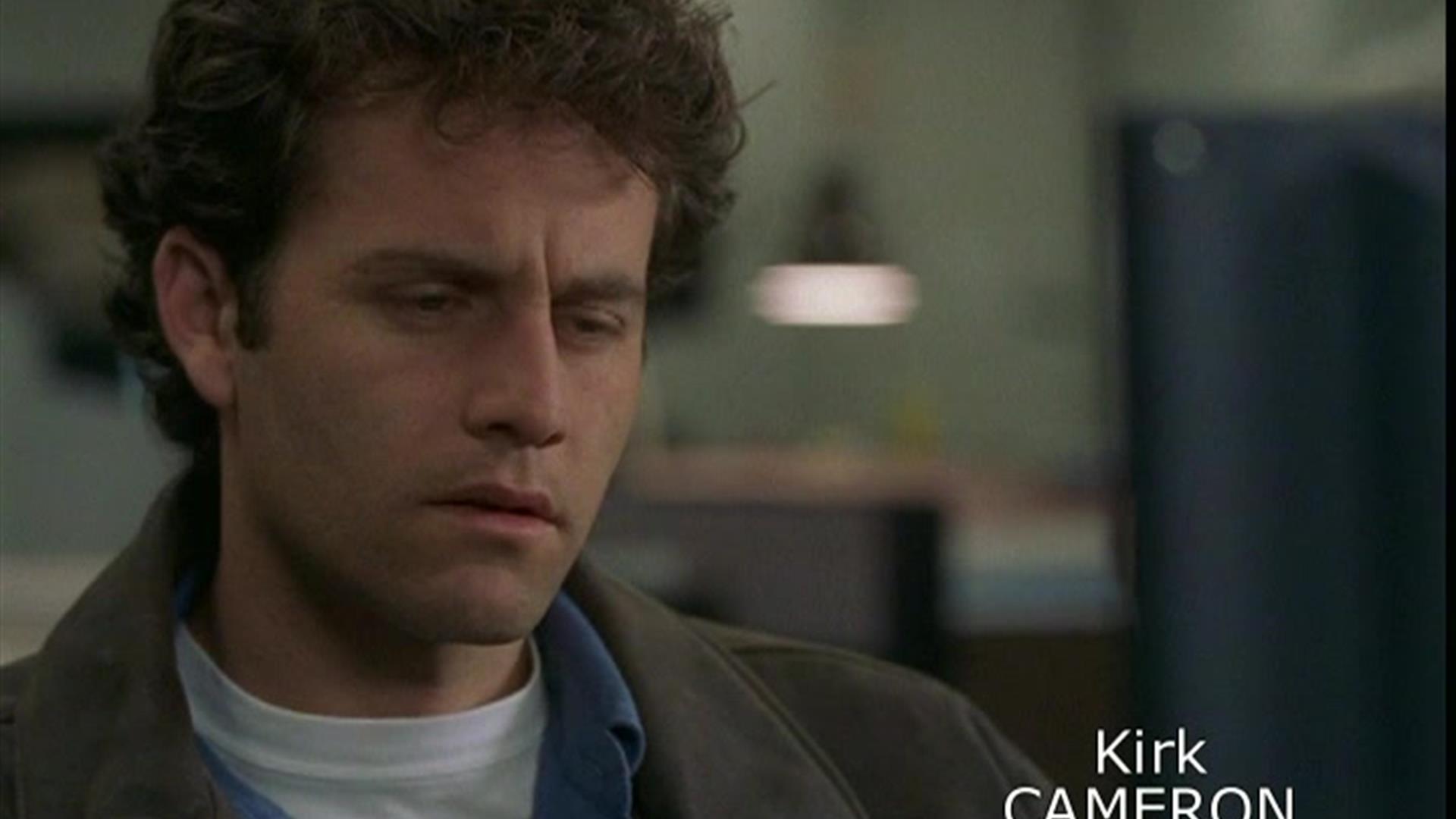
I’d like to give a slightly different way of thinking about RoboCop in particular and dystopian fiction in general, drawing on the Book of Revelation. Revelation may be one of the most mistreated books of the Christian Bible. It, like these movies, is not predicting the future — or, at least, is not predicting it in the way that Kirk Cameron and millions of conservative evangelicals would have you believe.

John was not telling his readers, “Keep an eye out for this Antichrist guy — he could come at any time!” For John, he was already here. He was named Nero (whose name, converted from Hebrew letters into Hebrew numbers, calculated to 666), and he was a very literal, current presence. But he wasn’t just Nero; he was every force of evil who would rule the state to come. He was a particular present figure, and he was a representative of something bigger, something supra-historical.

Just as billions of Christians have assumed that John was predicting someone to come and shuddered as they waited for its arrival, political film fans have (in perhaps a more circumspect manner) looked at the modern corporation and assumed that the films of the 80s and 90s “predicted” them.
Instead, we should watch these movies as both hyper-intensified versions of the historical circumstances of the art, material specifics made psychedelic and exaggerated to emphasize their reality (no more predictions than Marx’s statements about specters haunting meant he believed in ghosts), and also observations about pervasive forces that transcend a historical moment. We can take those, examine them, enjoy them, be thrilled and fascinated by them — but always reinterpret them for the world now, the world that no one predicted. Not Paul Verhoeven, not John Carpenter, not Philip K. Dick. Let’s not waste any more time inventing oracles.

December 20, 2017 0 comments
1 FacebookTwitterPinterestEmail
FilmReviews

Living With Ghosts In Olivier Assayas’ Personal Shopper

by rick December 19, 2017
written by rick

Personal Shopper is a film about ghosts. Olivier Assayas says, in a spectacularly moving piece from David Ehrlich, that he thinks all movies are about ghosts:

Especially old movies. People became aware of whatever cinema was in the late ’50s, early ’60s, when the first generation of silent actors were gone, and, all of a sudden, you had these movies that were just full of specters. So film has always been the land of the dead.

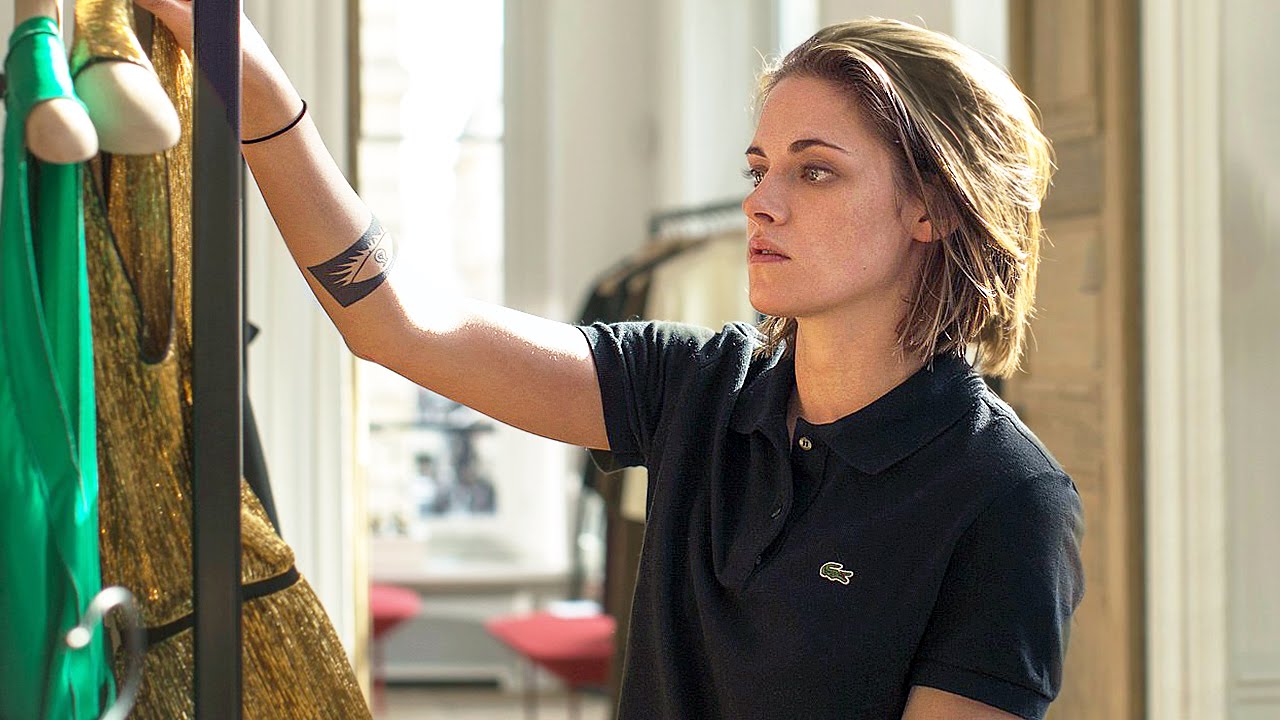
In Personal Shopper, Assayas’ current muse Kristen Stewart — top-tier contender for best actor working today, in no small part thanks to this film and their previous collaboration, Clouds of Sils Maria, another ghost story of sorts — is a medium. She has a connection to the indefinable aspect permeating our world. She couldn’t say what that aspect is if she tried. Language fails, again and again, in that particular Kristen Stewart fashion: bit lip, quick drag off a cigarette, shrug. She’s haunted.
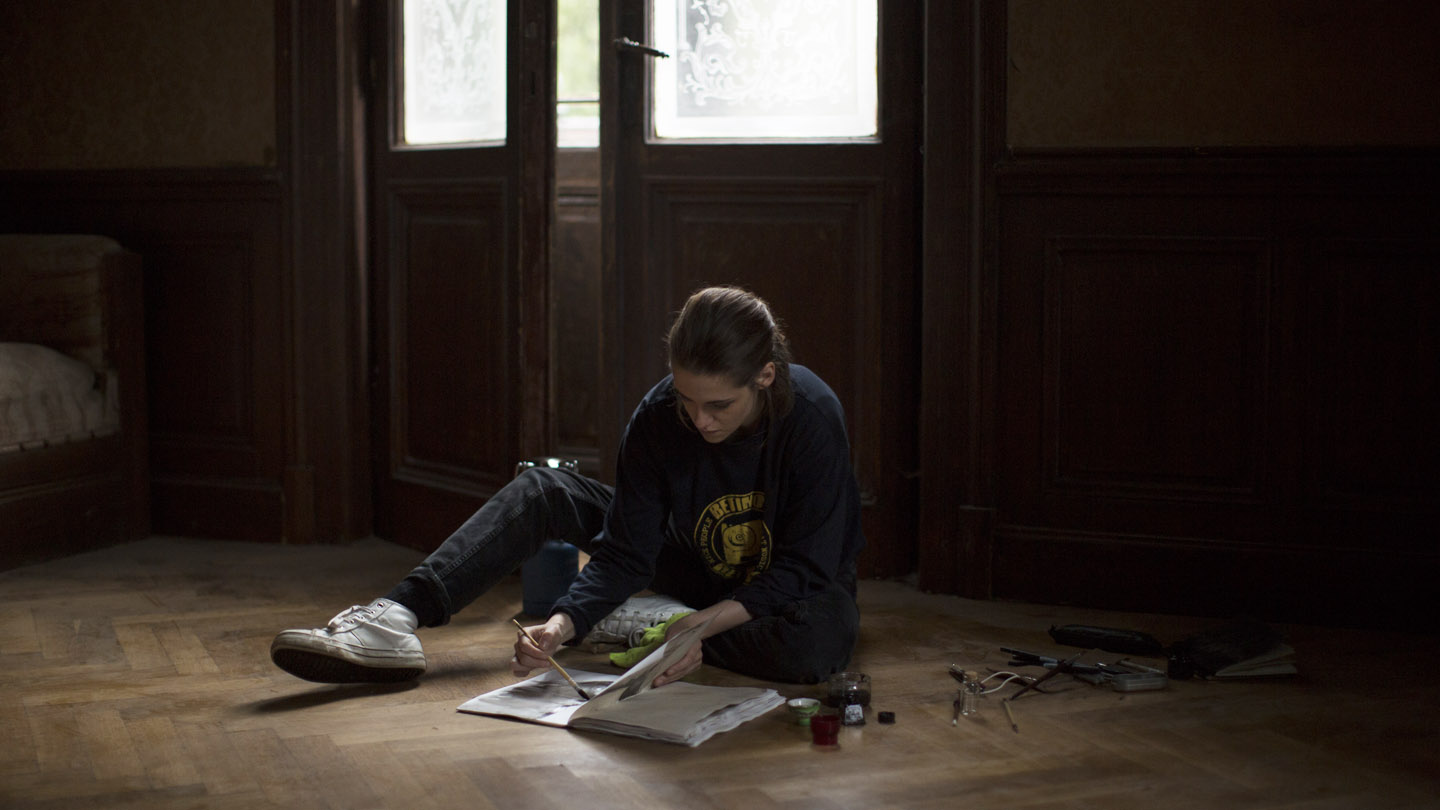
Her twin brother, another medium, has died, and, in an attempt to fulfill their childhood promise to contact each other from beyond the grave, she is looking everywhere for him. What she finds is an open question that Personal Shopper is more interested in asking obliquely than answering definitely. In its startling final moments, Assayas’ film comes right out and asks. Are we the ghosts Stewart is seeking?

But there are other spectres haunting our world. (The Assayas of Après Mai is always dropping references, even into the future.) Stewart’s character is herself one — beautiful, privileged, wandering in and out of expensive boutiques with casual disregard, spending money that isn’t hers, for clothes she’s not allowed to wear, snapped in mirror-images sent to people she’ll never meet. (Or will she?) Her employer, a high-powered fashionista, is another — seen only once on camera, making entitled demands on a conference call about, inexplicably, gorilla habitat preservation. Like most of the characters aside from Stewart, she mostly registers the way we all do now to each other: spectral presences on cell phone SMS messages, on Skype, on voicemail, representing ideologies we never fully inhabit, navigating shadows. We are neither here nor there. We’re haunted.
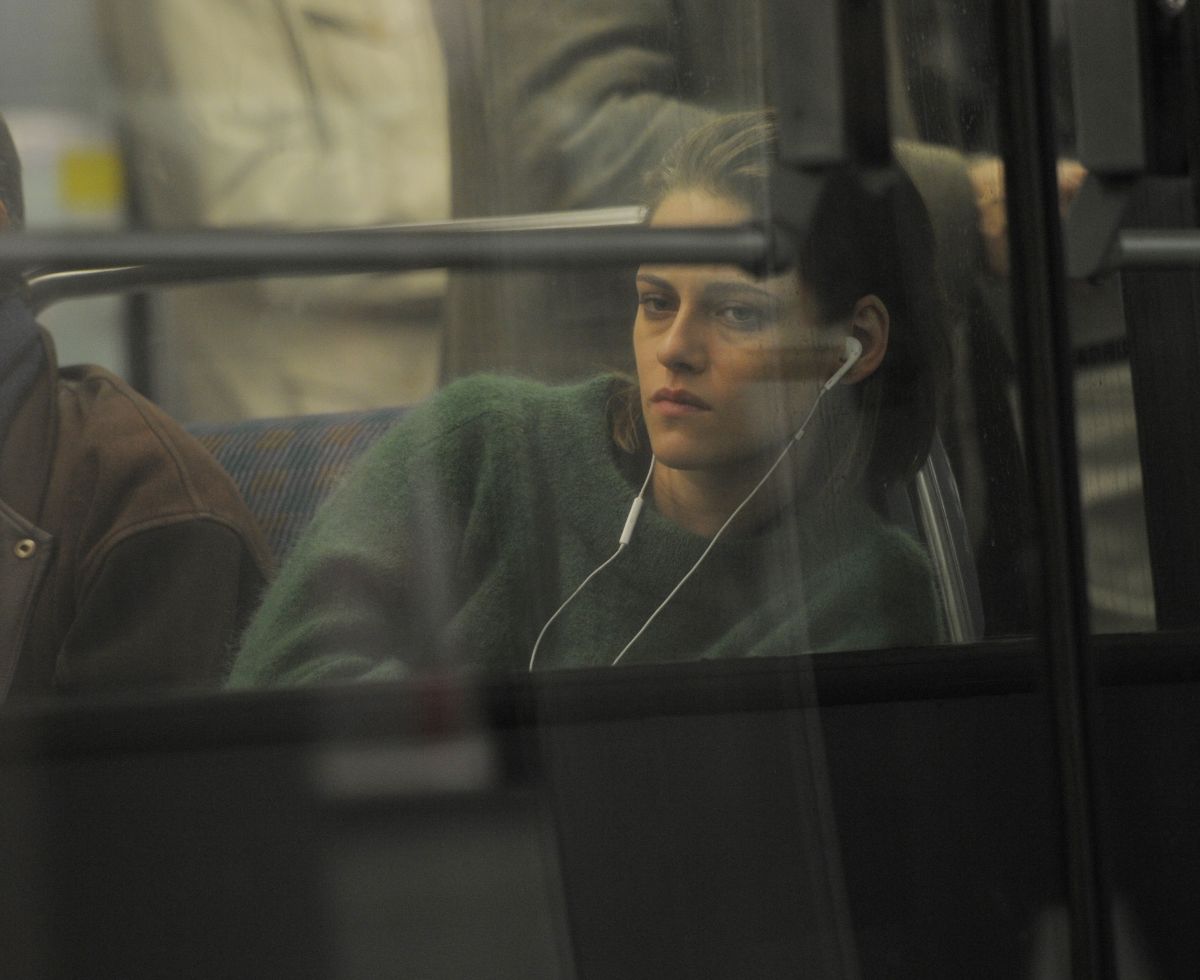
“Neither here nor there” is an easy shorthand for our relationship not just to technology, but culture more generally. Derrida’s hauntology (works much better in French) is part and parcel of the relationship — the “always-already absent present.” Personal Shopper traces it through Stewart’s relationship to all kinds of mediations and accoutrements: the clothes, phones, mirrors, train windows. Her every word sounds like an echo in an abandoned mansion. (Or better yet, Nocturama‘s empty mall, or A Ghost Story‘s eternal recurring house. 2017 has been a year of ghost buildings.)

Commodity fetishism is one thing. Missing people is another. (We hope. What are we shopping for again?) In that Ehrlich interview, Stewart remarks:

I can’t imagine going back and knowing that my entire text thread with this person is still there and they’re not. People’s Facebooks become memorial-type things.

She’s right, and you know it. Or at least I do, having posted more than one remembrance on a social media wall. Like Ehrlich, my dad also died recently. And like Ehrlich, I also find it gauche to bring it up. And I also have absolutely included him on emails, by accident, inertia, or wish. We’re neither here nor there. Personal Shopper asks, “Fair enough — but where are we?”

Stewart’s answer to that question — and to her own, “Is it better to let things go and be affected by them, or always have it there to dwell on?” — is the only one I can conjure, too.

“Who knows?”


December 19, 2017 0 comments
0 FacebookTwitterPinterestEmail
CommentaryFilm

Time Travel and Love’s Truth-Event in The Lake House

by Lark December 18, 2017
written by Lark

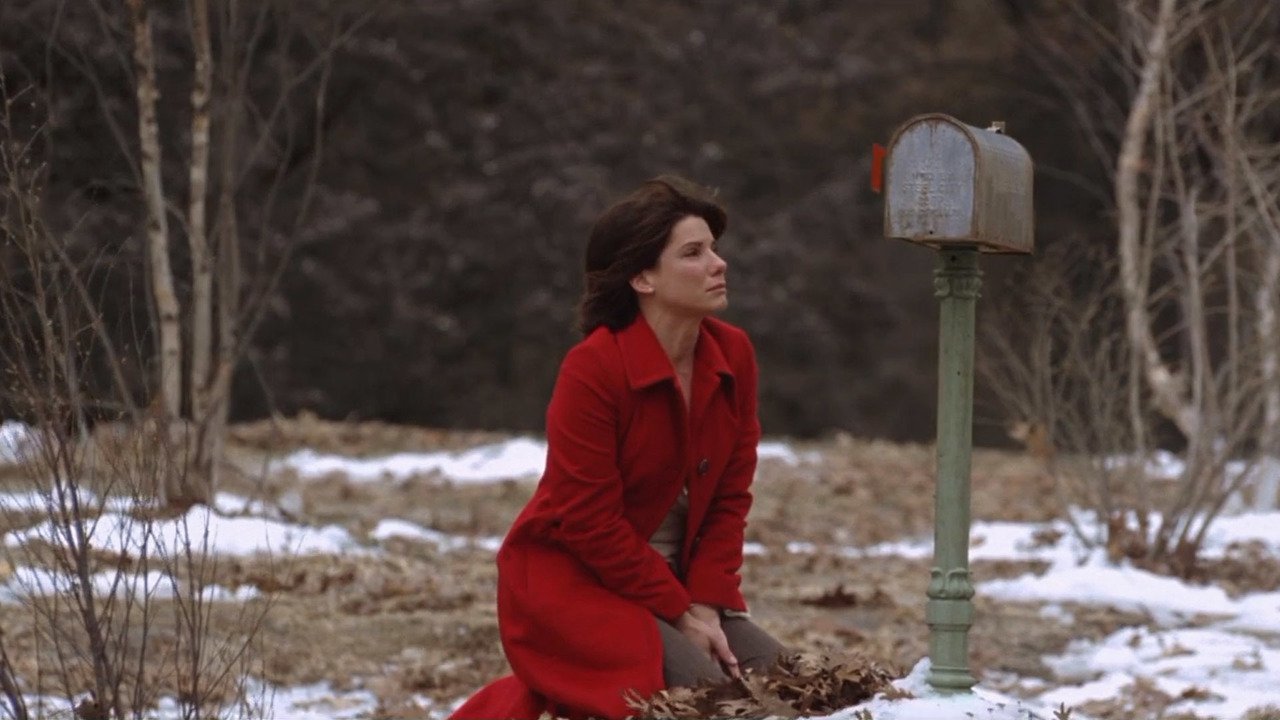
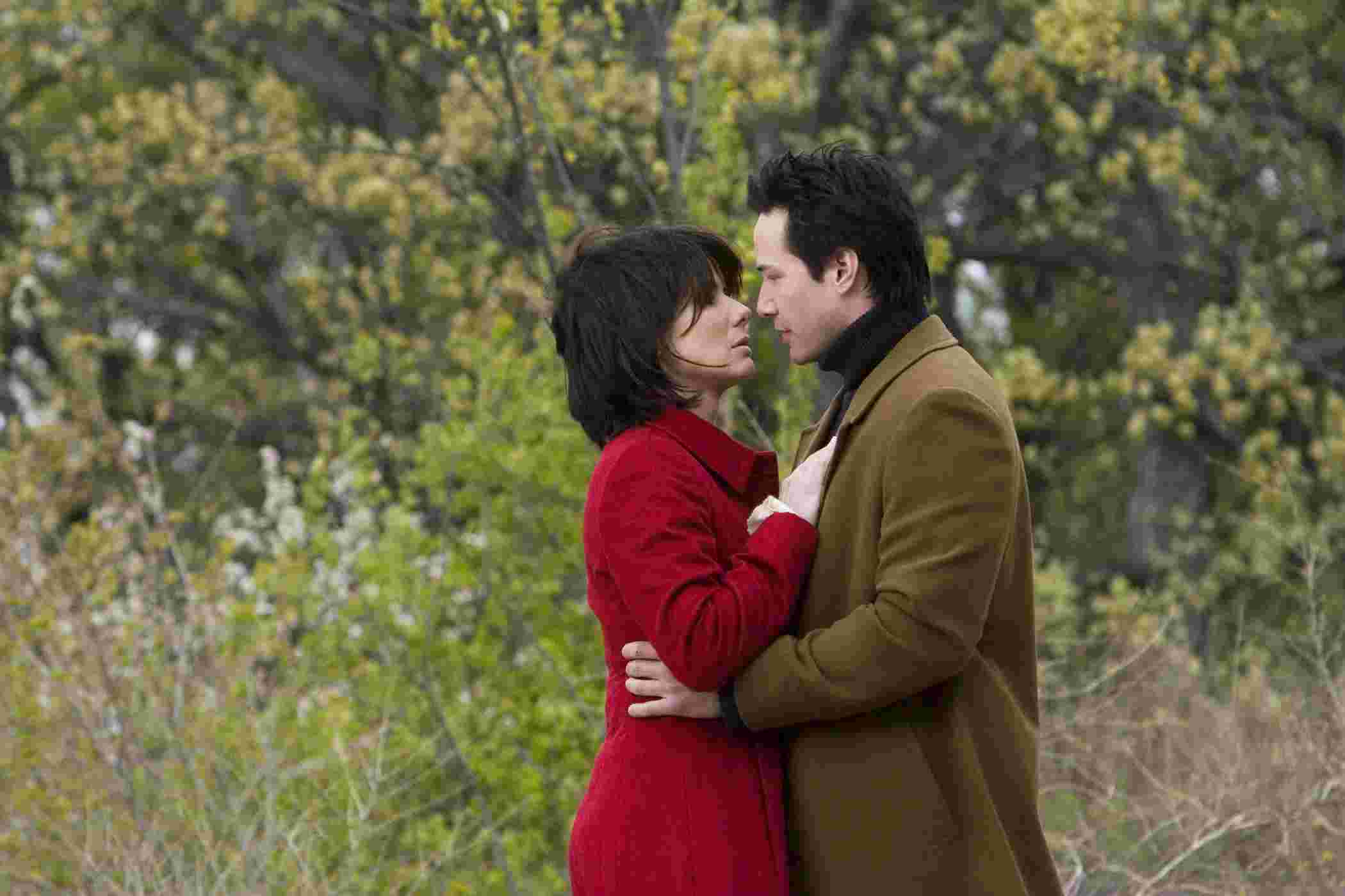
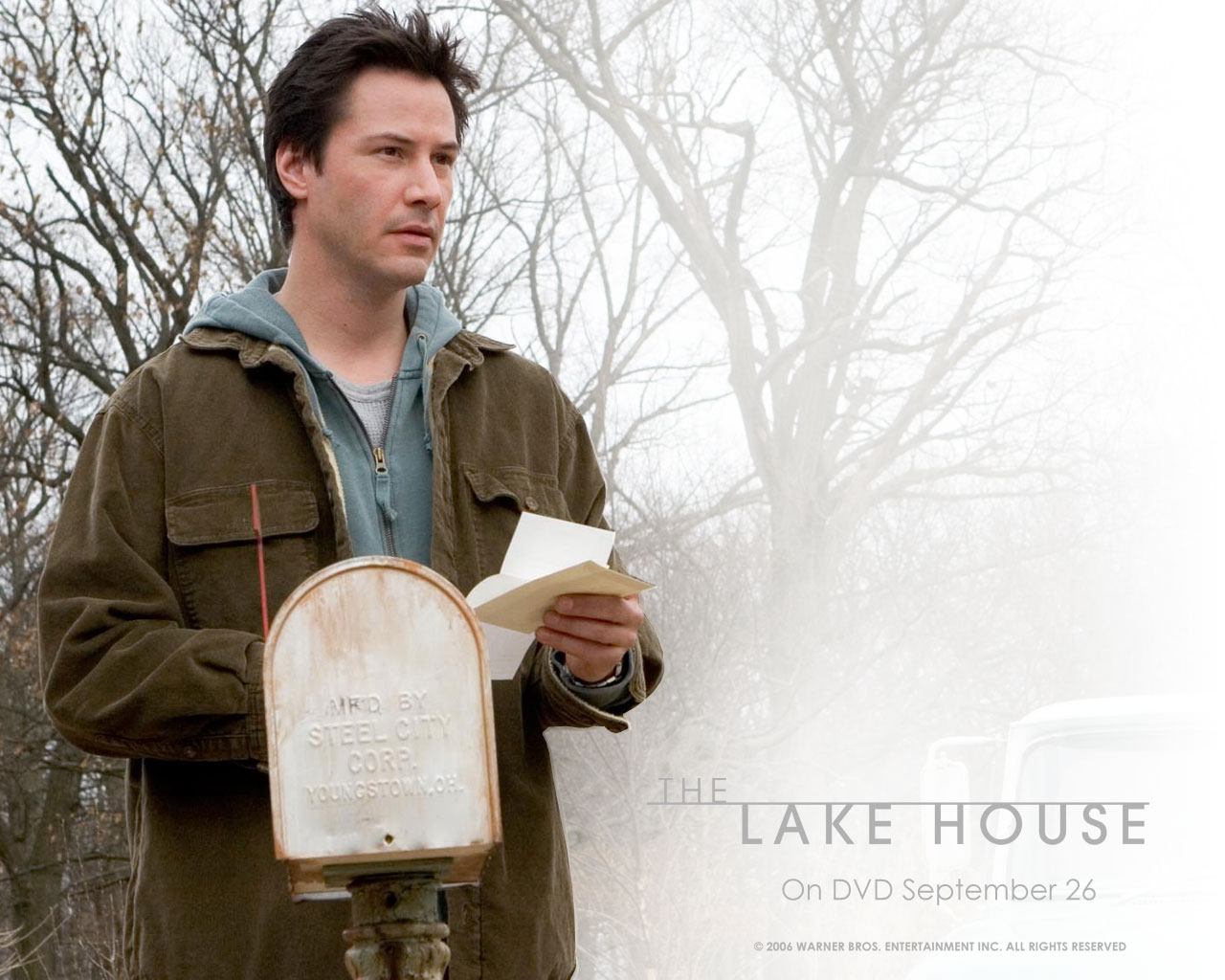
The premise of The Lake House — that two lonely singles, Keanu Reeves and Sandra Bullock, can fall in love by sending messages back and forth to one another through the time-travelling mailbox outside the home that they both, on different occasions, owned — opens itself up to two smart-ass questions, or maybe two smart-ass fields of questions. One relates to its romantic drama trappings, and the other to its time-travel trappings.

The first one is: How can we believe any of this? How do we know that 10 months after The Lake House ends, they won’t be broken up after one too many arguments about Keanu leaving his socks out?

I’ll leave aside the fact that these questions are usually asked from a position of pseudo-feminism, by men who have managed to find a way to demean anything consumed mostly by women in the name of defending them. Even ignoring the obviously shallow place these criticisms come from, they ignore what we all implicitly know about these romances.

These romances have nothing to do with relationships. This is not a world of relationships. At least one of the leads, if not both, come saddled with a relationship when the movie opens; in The Lake House, Bullock gets Dylan Walsh as her borderline-stalker “old partner” who was just too boring for her. (Walsh is, like many former boyfriends over the last couple decades, trying desperately to channel Bill Pullman.)

The philosopher Alain Badiou talks a lot about the “truth-event”, unpredictable and unforeseeable moments in life in which something completely new opens up, something that reorganizes how you look at life. It is to a person’s day-to-day life what a black hole opening up in a downtown, metropolitan area would be. Suddenly, everything has a new point towards which it must orient itself.

Badiou gives us four “orders” of events: science, politics, art, and love. It is this sense of love, not as a relationship but as an event, that these movies enact, and it is a desire for them that drives our emotional involvement. Romantic movies transcend mere romance. They speak to a desire to reorient everything.

But, of course, these movies don’t offer a real revolution, whatever that would mean. I’m not arguing that we should sit quietly and ignore the details of the films. The question is not “Is this relationship believable?” The question is, “How does the narrative manufacture this event of romance? What tricks does it use to make what should be a sudden surprise slowly inevitable?”

For While You Were Sleeping, the conceit that manufactured the romance was a subway accident; for Sleepless in Seattle, it’s Tom Hanks’ son calling in to the radio. For The Lake House, it’s more explicitly magical: the mailbox outside the two leads’ home, which sends messages between them.

This conceit opens up the second field of smart-ass questions, which goes something like this: How does the time travel work? Is it consistent? Are there any plot holes? If they could send messages, why didn’t they just do X, why didn’t they just invest in the stock market and make millions, why didn’t they stop random murders?

The demand for consistency is uniquely aimed against time-travel movies. I understand the urge: the rules usually seem clear, which leads the audience to try to figure out other ways that perfectly rational characters, according to a rather peculiar but mostly unquestioned definition, could solve their problems.

But the problem here is a lot like the problem with the romance questions. Time travel has a function beyond just being another way to complicate a plot. The driving need for romance in our lives, not defined as a particular type of relationship but as something electric and inexplicable, comes from a feeling that we must find love, that we must live life to the fullest.

One of the phrases associated with Kant’s ethics is “ought implies can”. If we ought to do something, then we must be able to do it; otherwise, it would not be reasonable to say we ought to do it. We are sent messages that we ought to live life to the fullest, but there’s no guarantee that we can do that. It may be we ought to fall in love, but it’s completely possible that it never happens to us.

Time-travelling protagonists and romantic protagonists both are offered a conceit, a narrative world, in which their response to these ethical injunctions can definitely be positive. The mailbox at the lake house, as both romantic and time-travelling conduit, is a guarantee of living life to the fullest. It reaches out and grabs them.

This is a very long preamble for an entire other essay, honestly. Because it is the specific semiotic form that that solution takes that gives the character to a romantic movie, comedy or drama. In the same way that what is interesting about a slasher movie is not the basic format but the trappings, the superfluous extras that try to cover up that structure, what is interesting about romantic movies is not the basic format but the form that that short circuiting, that guarantee of love and truth reaching out towards the protagonists, takes.

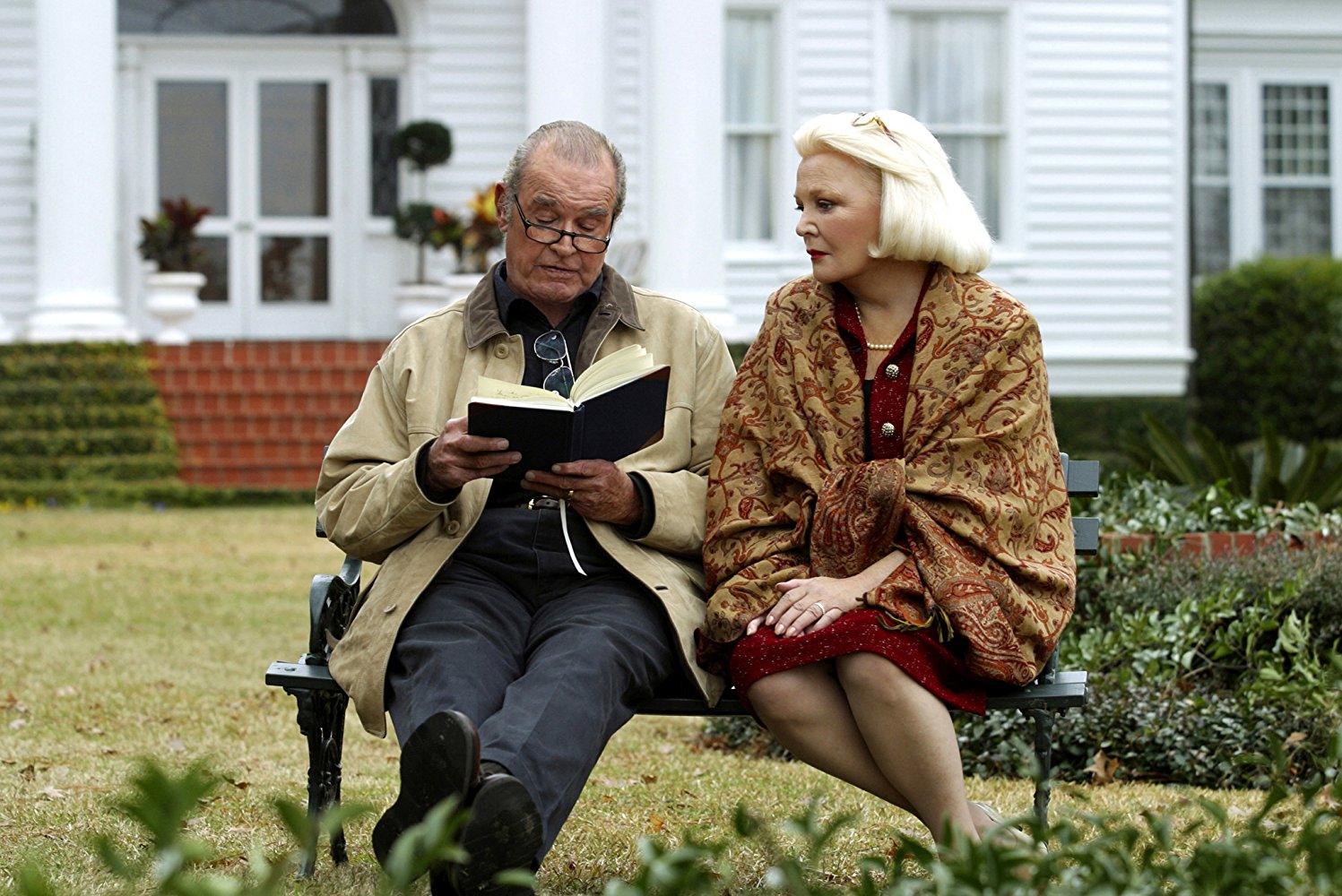
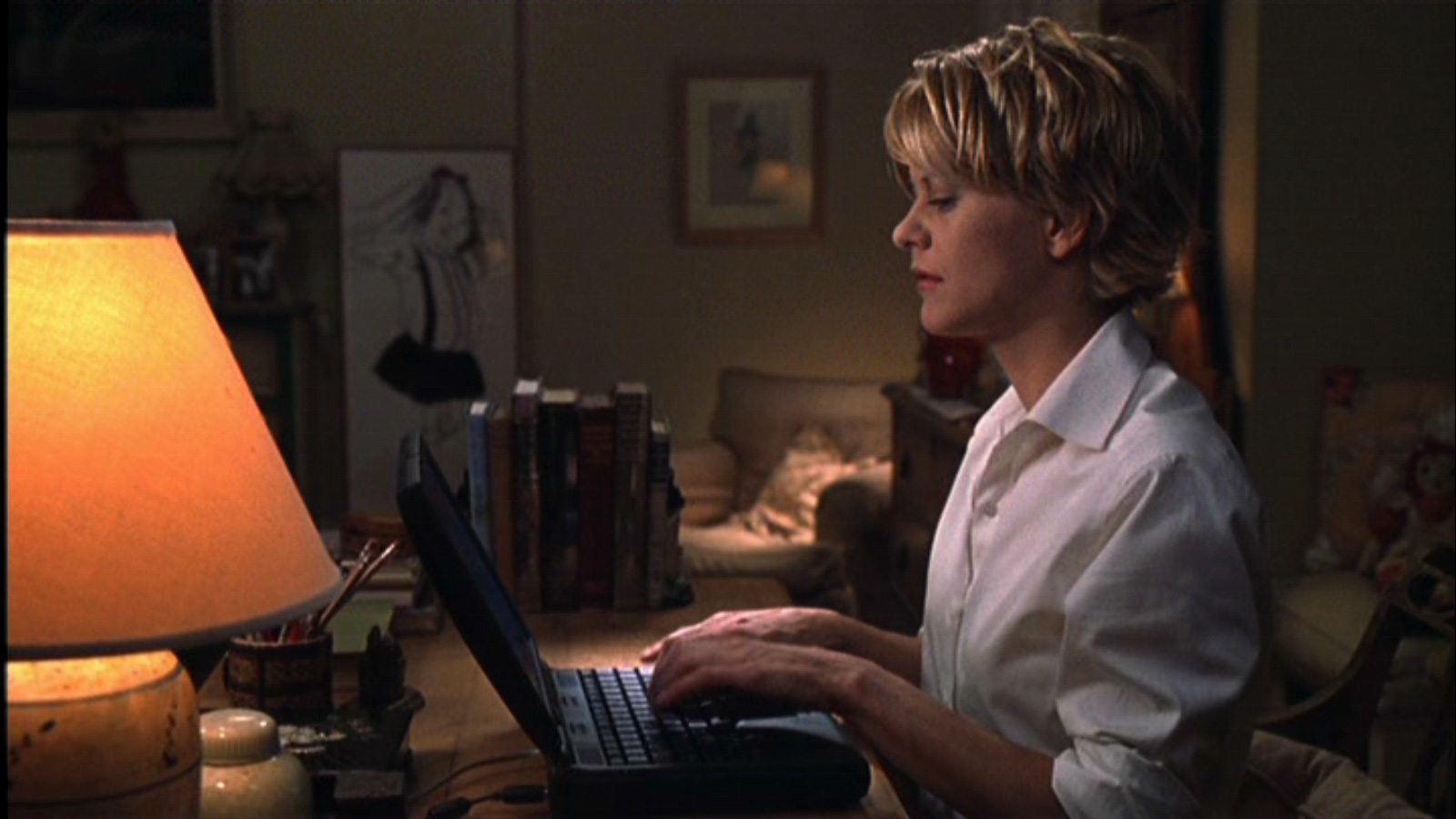
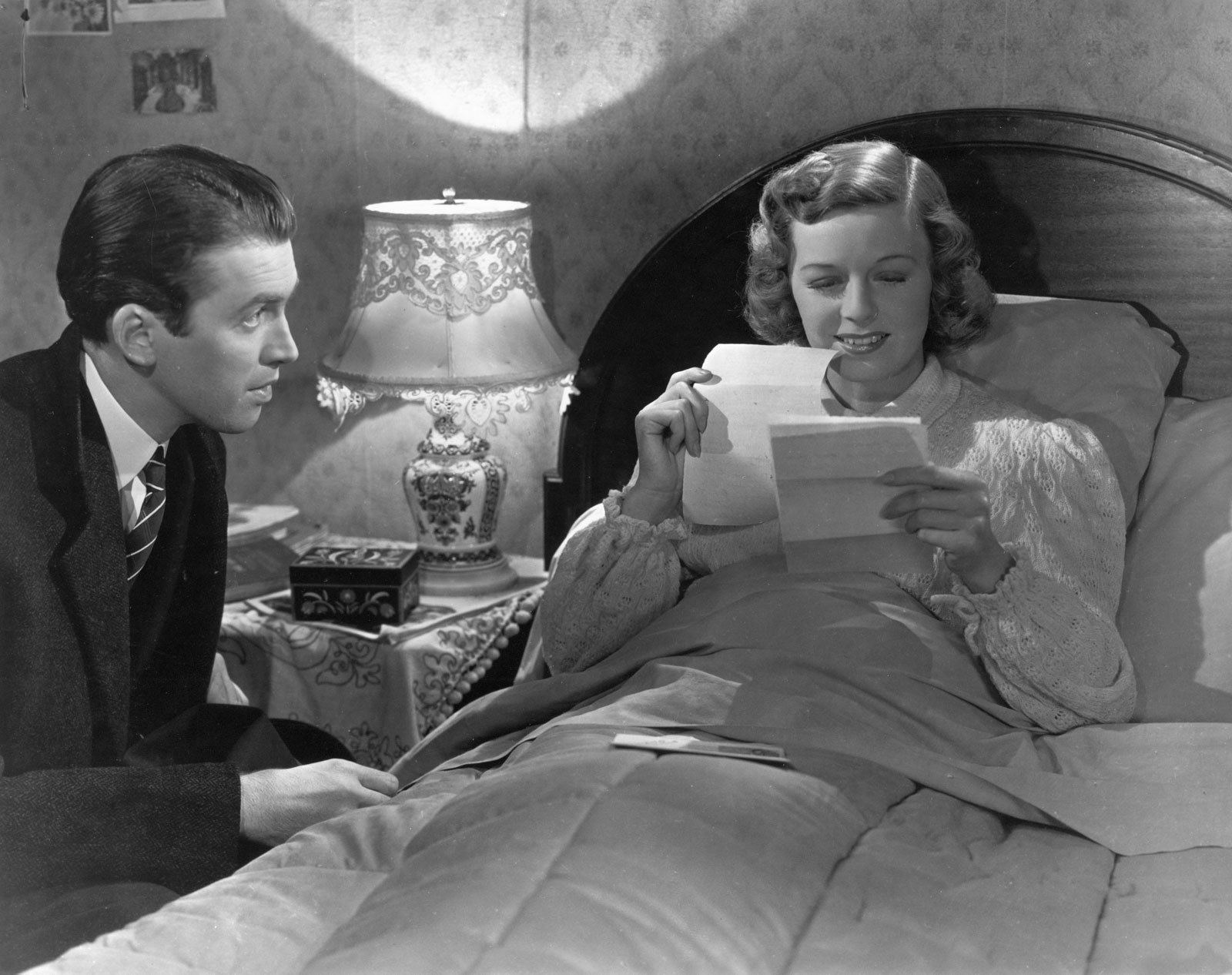
For an entire sub-genre of movies, it is something about writing, from The Notebook to You’ve Got Mail (and The Shop Around the Corner) to The Lake House. The semiotic system is the magic bullet that makes the world livable. I’m hoping to turn and write more about this soon, but if I don’t get a chance, keep this in mind when you watch a romantic movie: how is this movie trying to justify making “ought mean can”? What’s the system it establishes, the conceit it creates, to try to make that necessary?

December 18, 2017 0 comments
1 FacebookTwitterPinterestEmail
FilmReviews

Three Billboards Outside of Ebbing, Missouri Is A Lie

by rick December 14, 2017
written by rick

Martin McDonagh has made one very good film (his 2008 debut In Bruges) and has coasted on this. General affection for that nasty bit of comedic melancholy, along with his stage credentials, has resulted in a pretty striking forgiveness on the part of critics. We are simply told that these are Good, Important Films, or maybe understandable overreaches, or, at the very least, ambitious failures. The fact that they are tone-deaf and stupid and insulting seems like a footnote instead of the lede, a fact half-heartedly noted before moving on to other topics, like Oscar candidacies. In a better world, the complete and utter failure of Three Billboards Outside Ebbing, Missouri would end this charade. As it tops critical list after critical list, it’s clear we don’t live in that world.

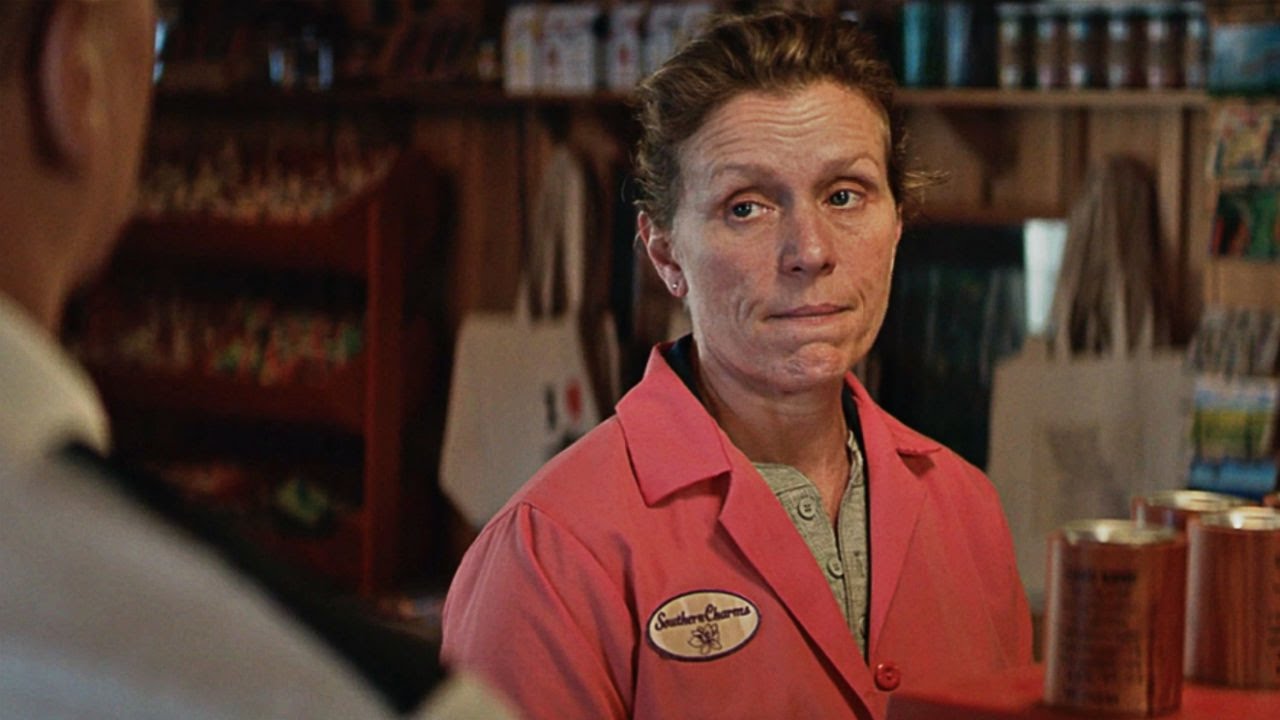
Where to start? From its stagy self-important title on down, Three Billboards means to be a film of the moment. The story is a simple one: a mom (Frances Mcdormand, my vote for the best actor working today) whose daughter was raped and murdered hires out those three billboards to press the local police chief (Woody Harrelson) to follow through on the investigation. It’s been 7 months and nothing has materialized. She feels discarded by the system, maybe by the town itself, and so wants to use the system to strike back.

McDonagh complicates this by giving the police chief cancer, so she’s really kicking a guy while he’s down — and anyways, the fact is there are no leads. Sometimes horrible shit happens. That’s it. A racist, drunk cop (Sam Rockwell) staggers about, trading barbs with his even more racist mom.  Everyone is right, everyone is wrong. So forth.

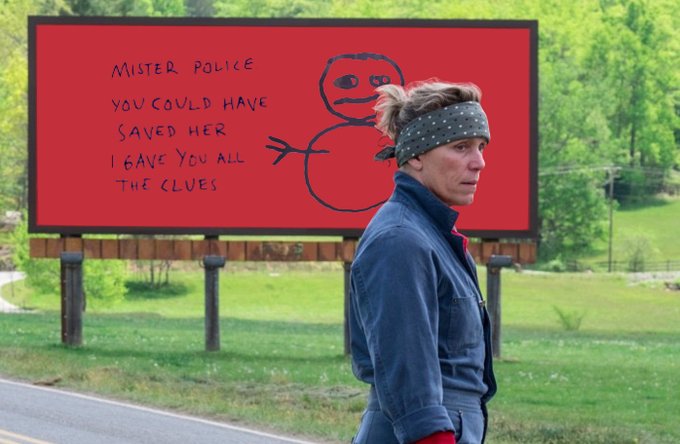
Credit to https://mobile.twitter.com/cameronscheetz/status/928036322530484225

But Three Billboards isn’t content with even that platitude. The existential dread of the unsolvable crime dissipates too, with a rando rapist conjured out of thin air in the final act. It piles on misogyny — McDormand, for all her gifts, can’t resuscitate a character drawn in broad strokes (her “mannishness” is accentuated to an almost comical degree, if you enjoy jokes about dwarves and spousal abuse), as she squares off not just with the town but specifically with the ditzy women inserted, like walking symbologies, to give her gravitas. None of this is funny, or smart, or clever. None of it.

And then, like shit icing on a poop cake, we are tasked with relating to the most racist people in the film. Three Billboards is, without a doubt, an apologia for racism. It absolutely demands we celebrate the redemptive arc of cartoonishly villianous bigots, and insists that this is transgressive. It is not. It is a lie told by a screenwriter who doesn’t have the faintest idea about small town America but thought such things were edgy. Count the number of POC folks on screen; count their lines. This number is low, but Three Billboards thinks it’s heroic truth-telling on their behalf, mixed with macabre thrills. Seriously.

McDormand might win an Oscar for this. People will talk about Rockwell’s bravery, and Harrelson’s self-effacing turn. Hell, McDonagh might get a screenwriting nomination. We’re being lied to.


December 14, 2017 0 comments
0 FacebookTwitterPinterestEmail
Newer Posts
Older Posts

About

About

Towards a provisional theory of the cinema, or, failing that, just some shit about movies

Authors
Rick Kelley
Lark Lundberg

Keep in touch

Facebook Twitter

Categories

  • Conversation
  • Film
  • Film By Film
  • Great Movie Project
  • Great Movies: The Counter Programming
  • Guest
  • News
  • Other
    • Commentary
    • Film
    • Interview
    • Reviews
    • Song for a Sunday
  • Streaming Selections
  • TV
  • Uncategorized
  • Vegan Horror

Archives

  • April 2019
  • March 2019
  • January 2019
  • December 2018
  • November 2018
  • October 2018
  • September 2018
  • August 2018
  • July 2018
  • June 2018
  • May 2018
  • April 2018
  • March 2018
  • February 2018
  • January 2018
  • December 2017
  • November 2017
  • October 2017
  • September 2017
  • August 2017
  • July 2017
  • June 2017
  • May 2017
  • April 2017
  • March 2017
  • February 2017
  • January 2017
  • December 2016
  • November 2016
  • October 2016
  • September 2016
  • August 2016
  • July 2016
  • June 2016
  • May 2016
  • April 2016
  • March 2016
  • February 2016
  • January 2016
  • December 2015
  • October 2015
  • September 2015
  • August 2015
  • July 2015
  • June 2015
  • May 2015
  • April 2015
  • March 2015
  • February 2015
  • January 2015
  • December 2014
  • November 2014
  • October 2014
  • August 2009
  • September 2008

Recent Posts

  • China Girls, Death Proof, and the Hidden Face
  • Old News: Old Noise Edition
  • Old News: April 1, 2019
  • Nicolas Winding Refn, Marginalia, and the Deaths of Cinema
  • And now, let us praise Kanopy

Recent Comments

  • Franklin Kat on Michael Shannon shines again in Frank & Lola
  • Sean Tempesta on Cinema and dream-logic in Meshes of the Afternoon
  • ludditerobot on The Left-Wing Slapstick and Iconic Songs of 1937’s Street Angel
  • Franklin Kat on The Left-Wing Slapstick and Iconic Songs of 1937’s Street Angel
  • Arijit Mukherjee on Great Movies Project: The Counter-Programming
  • Facebook
  • Twitter

@2021 - All Right Reserved. Designed and Developed by PenciDesign


Back To Top
Luddite Robot
  • Reviews
  • Commentary
  • Great Movie Project
    • Great Movie Project
      Bride of Frankenstein is a movie for and…

      January 25, 2018

      Great Movie Project
      The Enduring Appeal of Nick and Nora in…

      November 29, 2017

      Great Movie Project
      The Ahistorical Fever Dream of The Scarlet Empress

      August 2, 2017

      Great Movie Project
      Dreams, Mundanity, and the Anarchist Yearnings of L’Atalante

      July 12, 2017

      Great Movie Project
      Duck Soup Is And Will Always Be A…

      April 19, 2017

  • Counter Programming
    • Great Movies: The Counter Programming
      Walking and Talking in the Shadow of Kanchenjungha

      March 7, 2018

      Great Movies: The Counter Programming
      A Brief Encounter in My Mother and Her…

      February 9, 2018

      Great Movies: The Counter Programming
      Horror’s Refusal in Farrokhzad’s The House Is Black

      October 13, 2017

      Great Movies: The Counter Programming
      The rage and beauty of The Cloud-Capped Star

      October 3, 2017

      Great Movies: The Counter Programming
      The daylight noir and social issue empathy of…

      June 22, 2017

  • Vegan Horror
    • Vegan Horror
      Julia Ducournau doesn’t think her film Raw is…

      June 7, 2017

      Vegan Horror
      Licking our wounds: The vampiric masculinity of Ravenous

      December 13, 2016

      Vegan Horror
      Eggertsson and animals: An approach to horror cinema

      September 15, 2016

      Vegan Horror
      “It’s Not My Nature” – Vegetarianism, Body Horror,…

      August 30, 2016

      Vegan Horror
      Bodies and Carcasses in Predator 2

      August 23, 2016

  • Interview
    • Interview
      Jasmine Leyva’s doc The Invisible Vegan aims to…

      May 3, 2017

      Interview
      Bridging The Abyss: An Interview With The Directors…

      November 28, 2016

      Interview
      7 Days in Ohio: An Interview with Nathan…

      September 12, 2016

      Interview
      Film Critic Phil Dy talks New Filipino Cinema

      June 17, 2016

      Interview
      “I Love Seeing Film Projected.” A Conversation with…

      March 22, 2016