Top Posts
Madeline’s Madeline: An Unclassifiable Panic Attack Maybe-Masterpiece
Shoplifters Steals Moments of Wonder from the Mundane
Burning and Forgetting What’s Not There
Kusama: Infinity Expands Beyond The Canvas
Mandy Risks Little, Wins Little
In We The Animals, The Children Are Away...
The Seagull Isn’t Quite Chekhov, But It’s Still...
5 Million Ways Boots Riley Isn’t Sorry To...
American Animals’ and the Queasiness of the Heist
A Star Is Born In Hearts Beat Loud
  • Reviews
  • Commentary
  • Great Movie Project
    • Great Movie Project
      Bride of Frankenstein is a movie for and…

      January 25, 2018

      Great Movie Project
      The Enduring Appeal of Nick and Nora in…

      November 29, 2017

      Great Movie Project
      The Ahistorical Fever Dream of The Scarlet Empress

      August 2, 2017

      Great Movie Project
      Dreams, Mundanity, and the Anarchist Yearnings of L’Atalante

      July 12, 2017

      Great Movie Project
      Duck Soup Is And Will Always Be A…

      April 19, 2017

  • Counter Programming
    • Great Movies: The Counter Programming
      Walking and Talking in the Shadow of Kanchenjungha

      March 7, 2018

      Great Movies: The Counter Programming
      A Brief Encounter in My Mother and Her…

      February 9, 2018

      Great Movies: The Counter Programming
      Horror’s Refusal in Farrokhzad’s The House Is Black

      October 13, 2017

      Great Movies: The Counter Programming
      The rage and beauty of The Cloud-Capped Star

      October 3, 2017

      Great Movies: The Counter Programming
      The daylight noir and social issue empathy of…

      June 22, 2017

  • Vegan Horror
    • Vegan Horror
      Julia Ducournau doesn’t think her film Raw is…

      June 7, 2017

      Vegan Horror
      Licking our wounds: The vampiric masculinity of Ravenous

      December 13, 2016

      Vegan Horror
      Eggertsson and animals: An approach to horror cinema

      September 15, 2016

      Vegan Horror
      “It’s Not My Nature” – Vegetarianism, Body Horror,…

      August 30, 2016

      Vegan Horror
      Bodies and Carcasses in Predator 2

      August 23, 2016

  • Interview
    • Interview
      Jasmine Leyva’s doc The Invisible Vegan aims to…

      May 3, 2017

      Interview
      Bridging The Abyss: An Interview With The Directors…

      November 28, 2016

      Interview
      7 Days in Ohio: An Interview with Nathan…

      September 12, 2016

      Interview
      Film Critic Phil Dy talks New Filipino Cinema

      June 17, 2016

      Interview
      “I Love Seeing Film Projected.” A Conversation with…

      March 22, 2016

Luddite Robot
Film critique, theory, and assorted nonsense.
CommentaryFilm

China Girls, Death Proof, and the Hidden Face

April 14, 2019

Old News: Old Noise Edition

April 8, 2019

Old News: April 1, 2019

Nicolas Winding Refn, Marginalia, and the Deaths of Cinema

CommentaryFilm

And now, let us praise Kanopy

January 24, 2019

Warren Sonbert and the Relief of Anti-Narrative

January 14, 2019

The World Is Ending and It Doesn’t Matter

The Best Films of 2018

FilmReviews

Madeline’s Madeline: An Unclassifiable Panic Attack Maybe-Masterpiece

December 21, 2018

Shoplifters Steals Moments of Wonder from the Mundane

December 11, 2018

Burning and Forgetting What’s Not There

Alien, Musicology, and Reading Soundtracks

CommentaryFilm

Shocktober III: Halloween 2018 Edition

October 24, 2018

Shirley Jackson’s The Lottery Traumatized Schoolkids in 16 mm

October 18, 2018

Shocktober 2018 II: Another Reshockening (of Horror)

Häxan is a movie made by a movie character

CommentaryFilm

Shocktober 2018

October 7, 2018

Unprofessional! Spring Night, Summer Night

October 3, 2018

The Wild Boys: A Luddite Robot Conversation

Kusama: Infinity Expands Beyond The Canvas

CommentaryFilm

Luis Buñuel Goes To The Opera

by Lark December 12, 2017
written by Lark

It is hard to know exactly how solid Luis Buñuel’s cultural capital is these days. The economy of film’s memory is shifting under our feet, and sometimes to be too well remembered can mean one is already half-forgotten. Luckily, Buñuel has reached that point at which he becomes grist for adaptations, something that always buoys one’s reputation.

Thomas Adès’ operatic adaptation of The Exterminating Angel (1962) was released last year, and just played at the Metropolitan Opera (and, through their wonderful cinema program, to movie theaters across the country). Meanwhile, Stephen Sondheim’s musical adaptation of The Exterminating Angel and The Discreet Charm of the Bourgeoisie (1972) idles toward release.

I haven’t seen Adès’ opera yet, but even the existence of these two adaptations places these two films in a new light. What is it about them that raises such musical interest?

For The Exterminating Angel, the most obvious answer is rather pat. The film is set at a dinner party following the performance of an opera; several of the performers are attending, and a few opera jokes are tossed around in the first half hour. A piano sonata is played—there is in general a musical atmosphere.

Sure, but that doesn’t survive the revelation of the film’s conceit. Having spent an evening tolerating one another’s company, the guests slowly realize that they can’t leave. There’s no force preventing them, but for some reason they simply can’t bring themselves to walk through the door out of the mansion’s wing.
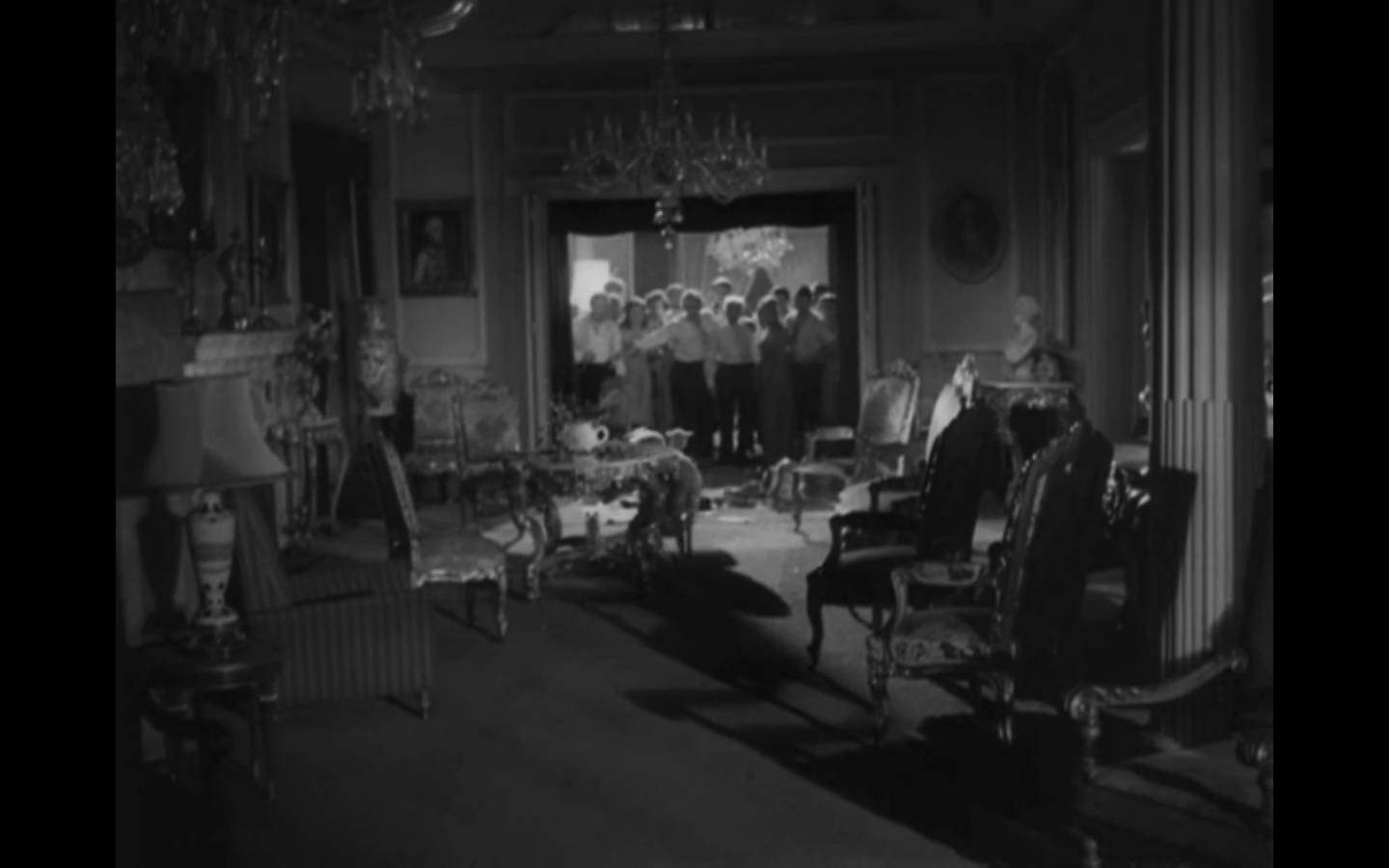
It’s a fantastic idea, and Buñuel has wonderful fun with it. (The police, for example, set up a heavily guarded perimeter—even though it is, they admit, just as impossible to enter the house as to leave it.) But once the absurdity of the premise is accepted, what we end up with is another movie about the barbarous breakdown of the upper class. The core of the film, the million petty ways in which the inhabitants aggravate one another, could play out just as easily on a deserted island, around a plane that crash-landed in the Alps, or anywhere else. In other words, the surreality does not suffuse the push of the film.

The Discreet Charm is a movie that is structurally opposite in the way only two very similar films can be. Instead of a dinner party that refuses to end, the dinner party refuses to start. We begin with one dinner, planned by four upper middle-class couples, but every time they are about to sit down for dinner something interrupts them—at first, relatively simply (there is confusion about the date; the restaurant is somehow sold out of all food), but then for increasingly absurd reasons (the couples are all arrested for drug trafficking; a group of terrorists murder them all).
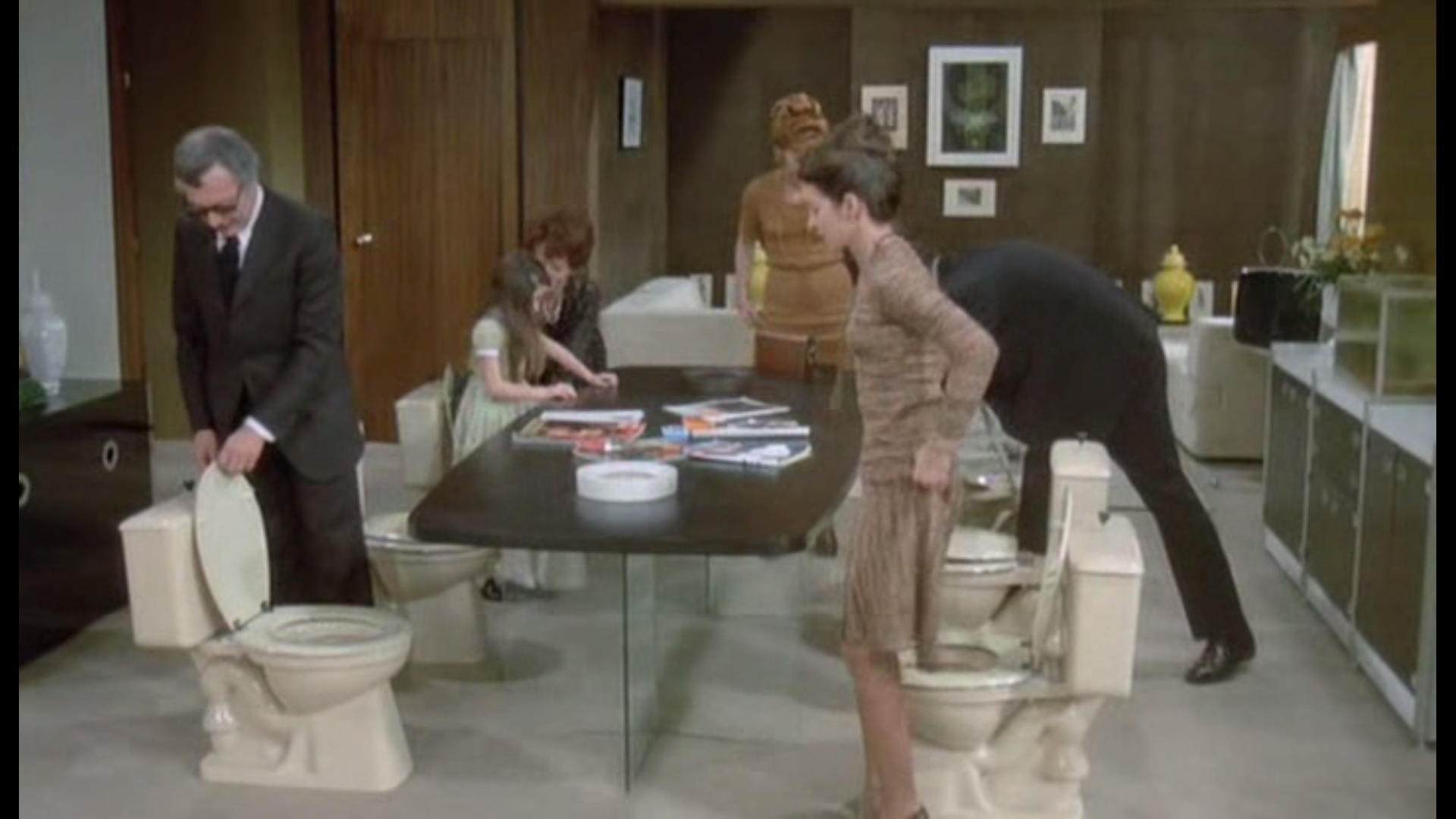
Despite the similarity of their premises, however, Discreet Charm is a much freer, more thoroughly surreal movie, mainly because of how it treats death. In Angel, the task of staving off death still makes up part of Buñuel’s narrative. The (somewhat) entrapped partiers must dig through the walls to find a water pipe, or one of the sick members of the crew has to take his medication, or fights break out among the men about the women.

But the dinner party of Discreet Charm do die. They’re gunned down by terrorists in the middle of the dining room, just feet away from their meals. But we then cut to one of the party in their bed, startled awake: it was just a dream. Buñuel pulls this trick repeatedly in the back half of the movie, as the stories become more and more fantastic.

But the dreaminess of it doesn’t undercut the fact that that which is kept off-screen in Angel (literally—the only people to die in the movie, a couple who die in one another’s arms, happens in a hidden closet off-screen), the threat of death, is explicitly brought on stage in Discreet Charm. But even death can’t stop the show. Our characters trudge on towards their dinner date that never comes.

It’s that death that never arrives that makes The Exterminating Angel such an operatic film, and one which Adès can adapt in his highly modernist style. The atonal cry of modern, post-Schoenbergian opera expresses the anxious fear of death. The complete absence of the possibility of harmonic resolution announces the loss of any firm grounding that will prevent death’s slow arrival. But death, in its terrible way, can provide that resolution—at least, in the form of an end.

Discreet Charm’s characters can’t even look forward to their death to free them from the quest for the dinner party. But without that anxiety, they—and the staged world they inhabit—has room for play, for movement (the exact play and movement that Sondheim’s modernist musicals work in).
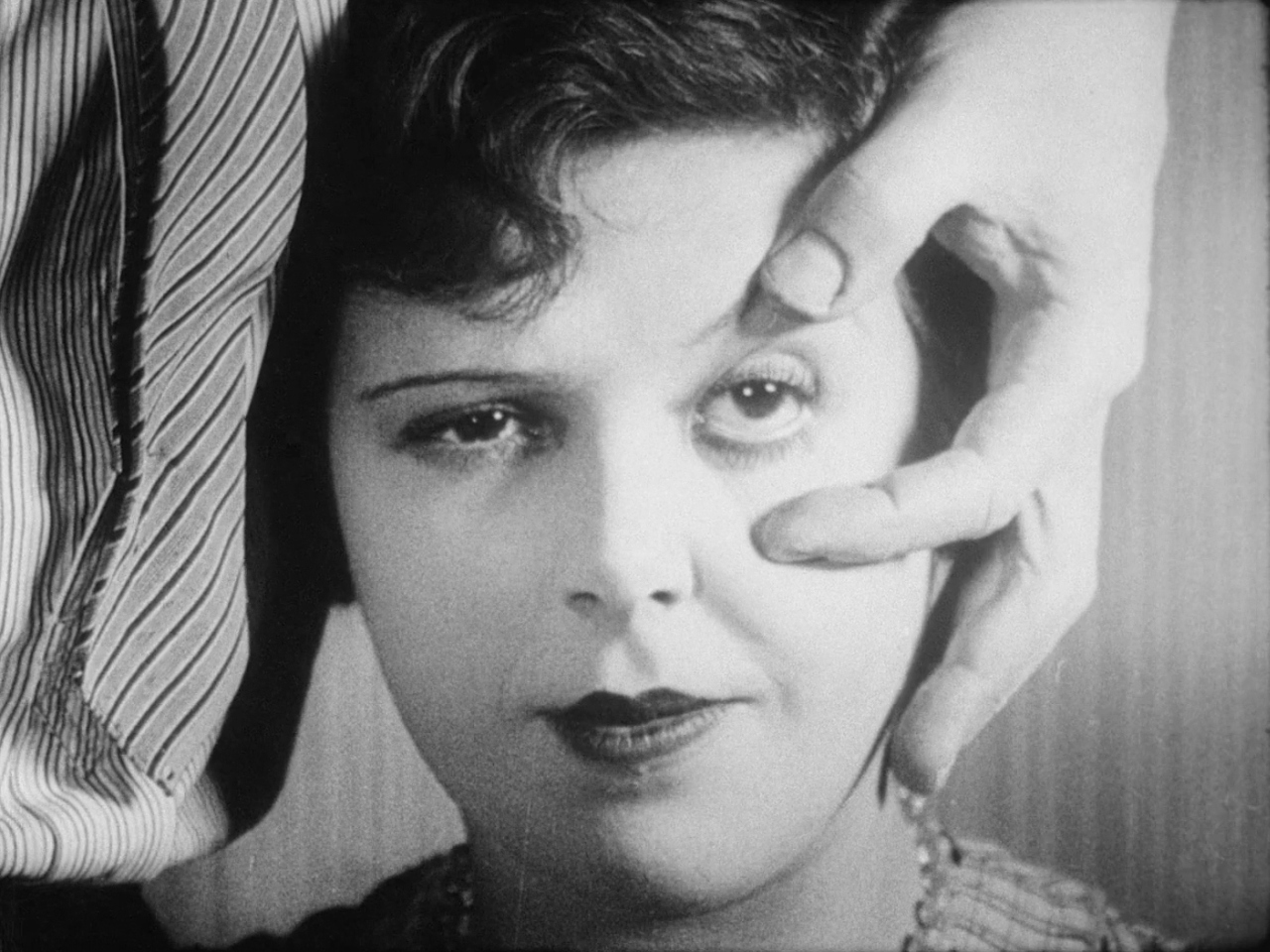
Buñuel’s two films really represent two kinds of surrealism. The highly romantic one that can be traced backwards from Angel to Un Chien Andalou (a movie about which I have to agree with Rick), one in which surrealism is really a heightening of death and angst and everything else; and one that can be traced forward from Discreet Charm, one which can see the same absurdity in being paralyzed by the fear of death as any other kind of belief or fear.

One wonders if the modern adaptation-obsessed world of opera and musicals has the tools to follow this latter trend, or if Sondheim’s amalgam of these two films that are quietly very different will smooth over the differences. Only time will tell.


December 12, 2017 0 comments
0 FacebookTwitterPinterestEmail
FilmReviews

A Different Haunting, A Different Ghost Story

by rick December 7, 2017
written by rick

There is almost no reason why, on paper, A Ghost Story should work. David Lowery’s fourth feature centers on the ghostiest kind of ghost – the bedsheet-with-eyeholes-cut-out variety. Its aesthetic is characterized by long takes and even longer silences. (At one point, we literally watch paint dry.) It’s a deeply, near-cosmically sad portrait of loss and dislocation across time and space, populated by figures and moments that should be comic instead. Fucking Casey Affleck is in it. It shouldn’t work.

And for many, I imagine it won’t. (Affleck’s participation alone, even mediated through his literal invisibility for much of the film, might already be a bridge too far.) For myself and many others, though, A Ghost Story will rank among the year’s best, both daring and confident in its oddball choices, mesmerizing, bracing, ultimately heartbreaking. If it risks putting the audience to sleep, so much the better – that was Kiarostami’s mark of a good film anyway.

It’s a difficult film to discuss without giving away what little there is to hold on to in the narrative. As in Lowery’s gorgeously lyrical, quasi-Western Ain’t Them Bodies Saints, Affleck stars alongside Rooney Mara. (In fact, Lowery has built something of a stock company: A Ghost Story’s haunting score comes from regular collaborator Daniel Hart, shares production and costume designers with his earlier films, etc.) The two nameless leads (C and M, according to the credits) are introduced as a couple, possibly going through hard times but still clinging to each other in the house they share.
One day, he dies. No fanfare is delivered announcing this; he just dies, the way people have a tendency to do. A minutes-long take observes his corpse on the metal table in the cold hospital basement, covered by a white sheet; the partially obscured image, with a door on the left of the frame and the camera set towards the back of an adjacent room, gives the impression that we are peeking in, motionless. It’s voyeuristic but also sad, the silent stillness placing us among the bereaved.

Then he jerks upright.

It’s both a jump scare and a joke (if you grant that distinction). Suddenly, we are in a horror movie, and the disjunction from what’s preceded it elicits a laugh. The score suddenly pulses with that familiar tension, an ambient drone of dread. But when he stands up, we see the two stupid eyeholes, the laziest, most prosaic of Halloween costumes. A Ghost Story has veered back to silly.

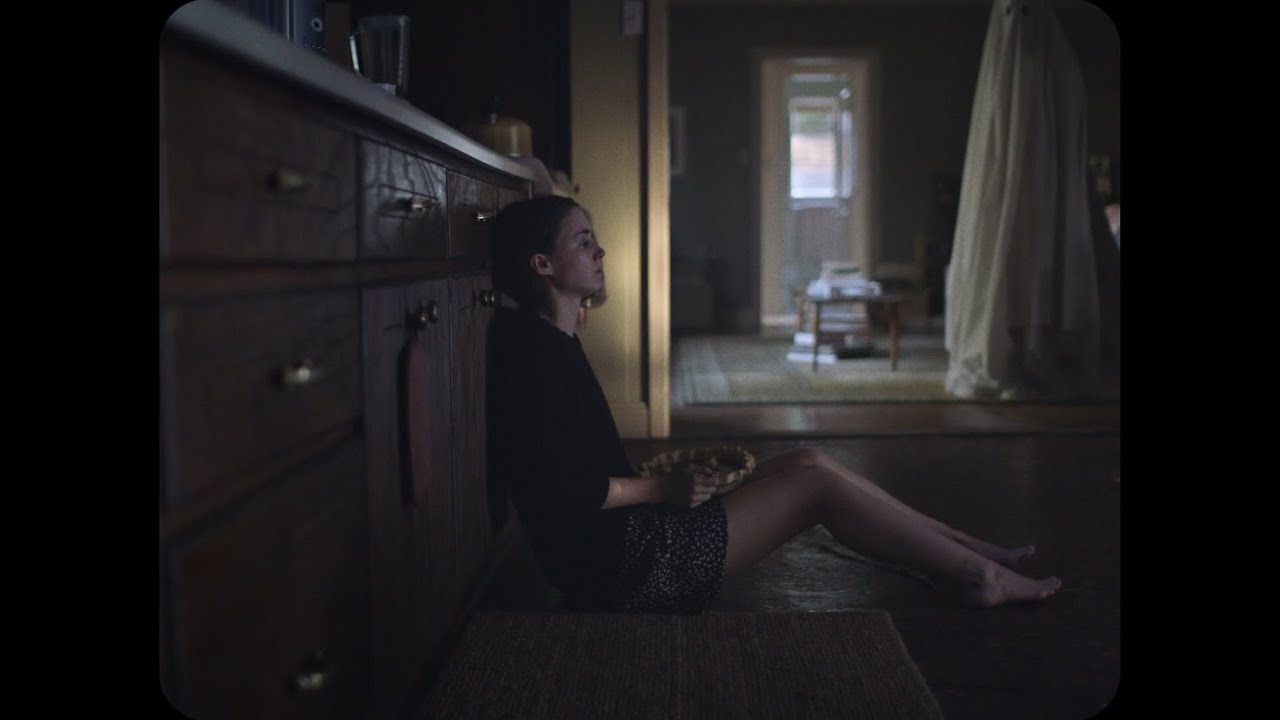
This is the tone Lowery maintains for much of the film, a very fine balance between horror trope and prop comedy that ultimately evokes melancholy instead. As the Ghost haunts his house and perches wordlessly in corners, he discovers another Ghost in the neighbor’s house, with whom he exchanges telepathic banalities through the windows. In its most-talked about sequence, Mara eats nearly the entirety of a pie, sitting on the kitchen floor in silence for a good 5 minutes. It’s tense, absurd, wacky, and — in the context of overwhelming, conflicted grief, as a picture of someone who doesn’t know what to do right now just doing something because the alternative is far worse – viscerally moving. It’s the saddest pie-eating contest in cinema history.
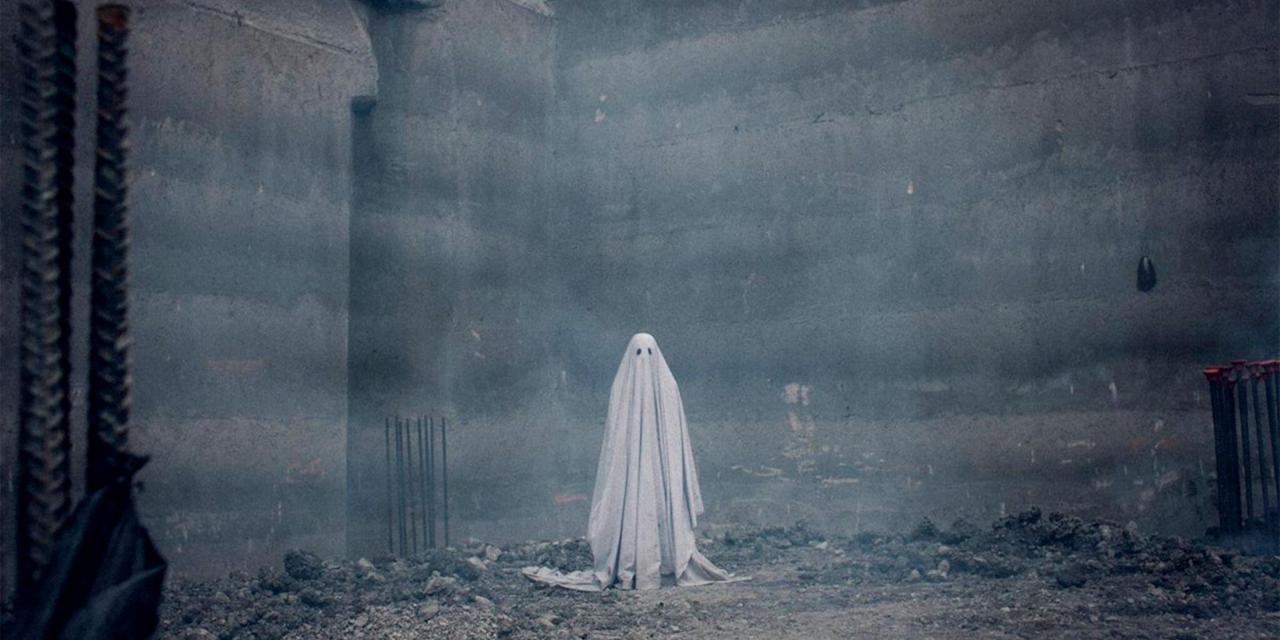
The rest of A Ghost Story’s running time will color in the margins, jumping back and forth in time to “explain” how we got here without ever really explaining much. The house itself plays a central role, a space He was afraid to let go of in life just as in death, and which has housed and will house generations of people with dreams and fears. Will Oldham will show up as a partygoer somewhere down the line who holds court at the kitchen table, waxing poetic about the mysteries and futilities of time and memory. Characters come and go, and the narrative becomes decidedly non-linear. The almost farcically simple costume gimmick and one-set location open up to something experimental and grand.

Pretty heady stuff, and seemingly a world away from the CGI wonderment of Lowery’s previous Pete’s Dragon. There’s obvious humor in the fact that the director and his team went from constructing a (very beautiful) Disney spectacle to its antithesis – a guy wearing a sheet – but the films might not be so far removed. And A Ghost Story’s haunted fixation on the unstable past and present shares more than a little with Lowery’s early shorts (A Catalog of Anticipations in particular).

Still, there is the feeling of something very new and unexpected going on in A Ghost Story. The interplay of its narrative threads, the tones that aren’t so much juggled as blended and filtered through a particular vision, and the pervasive longing for home, whatever that means, which transcends its genre mix-and-match … these all linger after it’s through. I can’t wait to watch it again, wherever I end up.

December 7, 2017 0 comments
1 FacebookTwitterPinterestEmail
CommentaryFilm

Why I Still Write About Movies

by Lark December 6, 2017
written by Lark

I remember, very distinctly, when I regained a delight in writing about movies. It was around January 2016, and I was in a pretty miserable place. I had left a college I liked for a number of reasons, among them because I was giving up on my film studies plans. It had been so thrilling at first, getting a couple of chapters published and getting to present at conferences. It took me a while to realize that, frankly, there were no jobs, and that the bar to publication was a lot lower than it seems.

So I had given up and returned to a college I hated, just because it was the shortest path between me and my long, long delayed bachelor’s degree. (Finally graduating on Friday, only eight years after I left high school!) When I gave up on the possibility of a practical career in academic film studies, I also gave up on a certain ideal that had been slipping for a while, an ideal I never quite had and that never quite fit in with the rest of what I believed—a belief in the demystifying value of film studies.

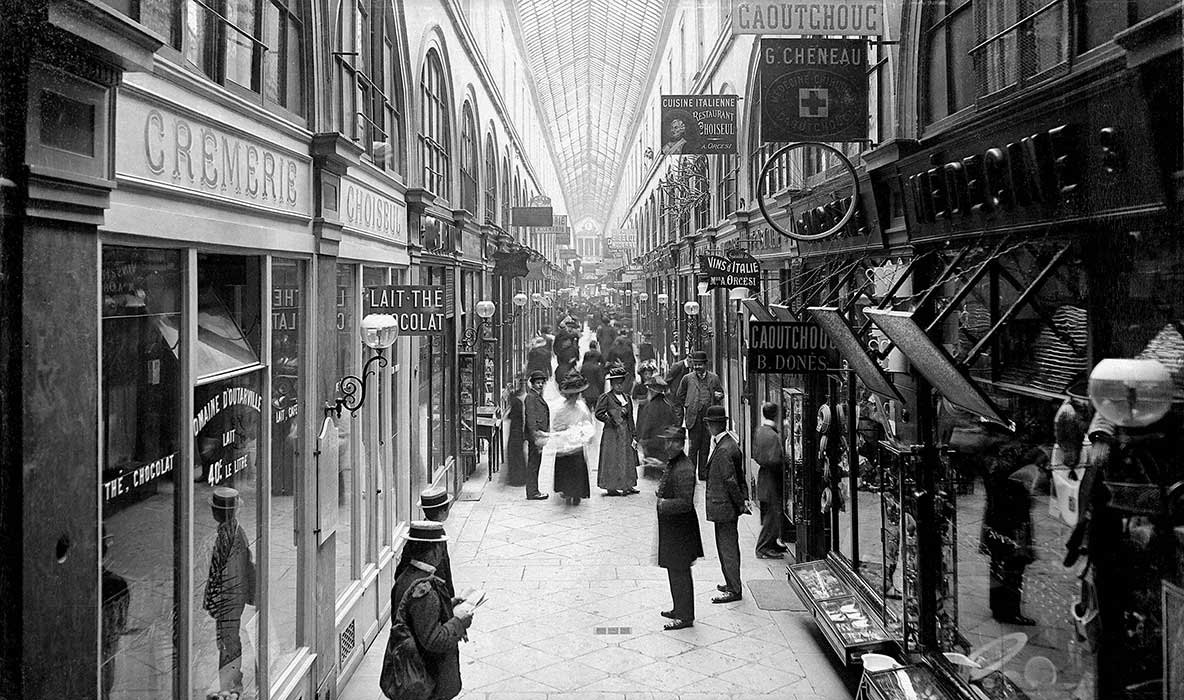
That ideal, that lies dormant in a lot of film studies even now, was expressed by Theodor Adorno in his letter denying Walter Benjamin funding for his Arcades project. He had judged Benjamin’s project—which, in its exploration of popular culture and the popular world, didn’t fall into the Frankfurt School’s belief in the slow, careful demolishing of capitalist culture—to be “located at the cross-roads between magic and positivism. This place is bewitched. Only theory can break the spell.”
That’s what we all seemed to want to do: to break a spell. I was at heart a Lacanian. It was, funnily enough, not Zizek, but Todd McGowan’s The Impossible David Lynch that converted me to that curious cult. It featured a clear-cut set of concepts that could be applied to basically any traditional narrative. It really felt like it could break spells. It could turn every theater into Burrough’s naked lunch: “a frozen moment when everyone sees what is on the end of every fork.”

I still think Lacanian film studies is a fascinating field, much more interesting than just Zizek. It wasn’t the type of writing I was doing that was letting me down, and it wasn’t that despite all of the spell-breaking everyone I was reading was doing nothing in the world seemed to change. It was something more general.

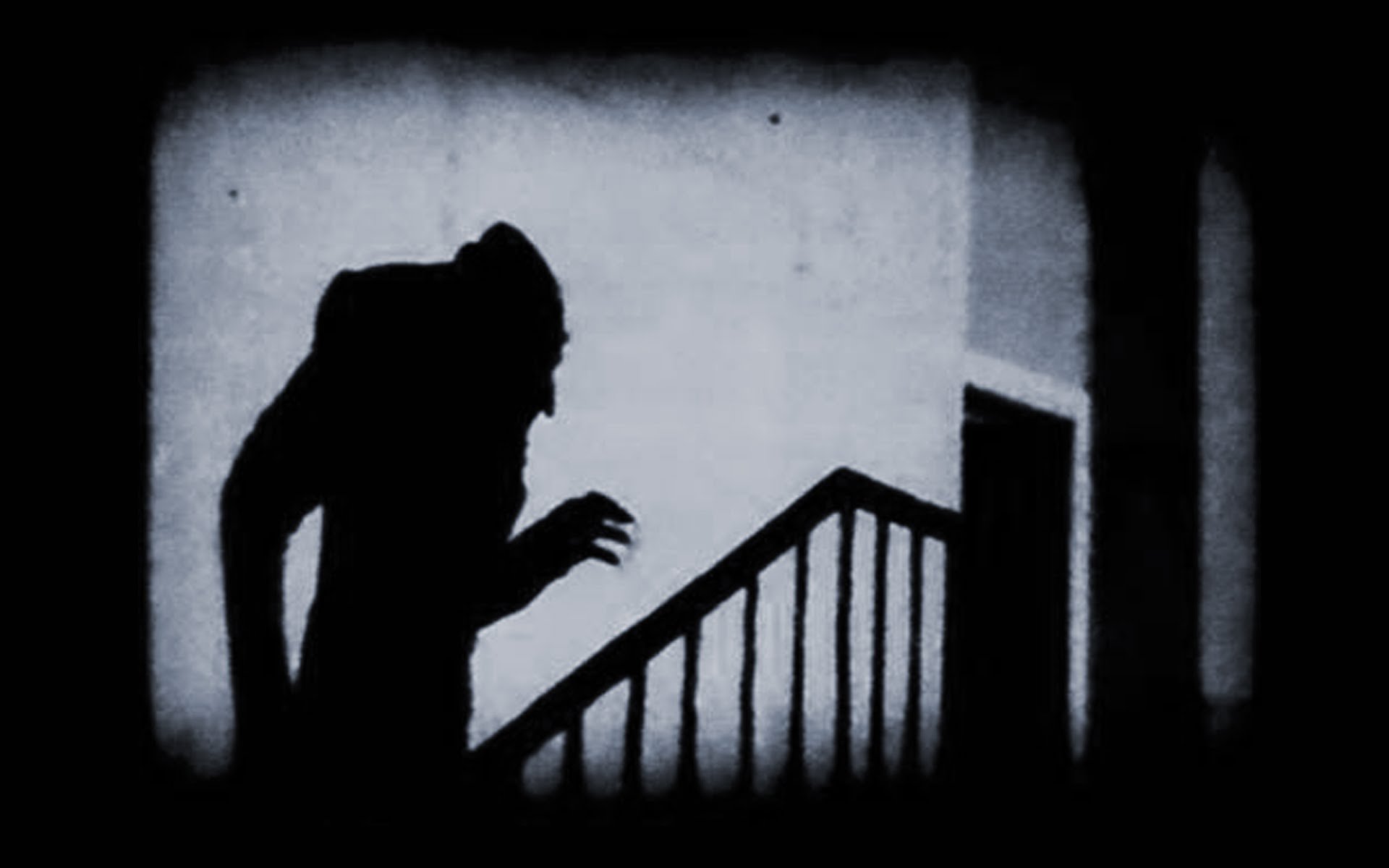
It was, I now realize, a problem with the entire vampiric structure of that kind of writing. That kind of film studies writing takes the pleasure of an audience and attempts to explain it like an alien. It can be “duped” pleasure, false pleasure, like what Adorno and the Frankfurt School was looking for, like the psychoanalytic schools and Marxist schools dissected, or “un-duped” pleasure, sincere pleasure, which we see more in the formalist, “scientific” schools of Bordwell and his Post-Theoryians.
The point is that none of this writing can explain the pleasure of writing and reading about movies itself. Academics and traditional film critics both have their explanations for this. For academics, the explicit pressure is the slow progress of objective knowledge, and the implicit pressure is the academic structure—publish or perish, as they say. Film critics are writing about their own pleasure (or lack of pleasure), and are writing so that you, in the future, can increase yours, by watching something enjoyable or avoiding something painful.

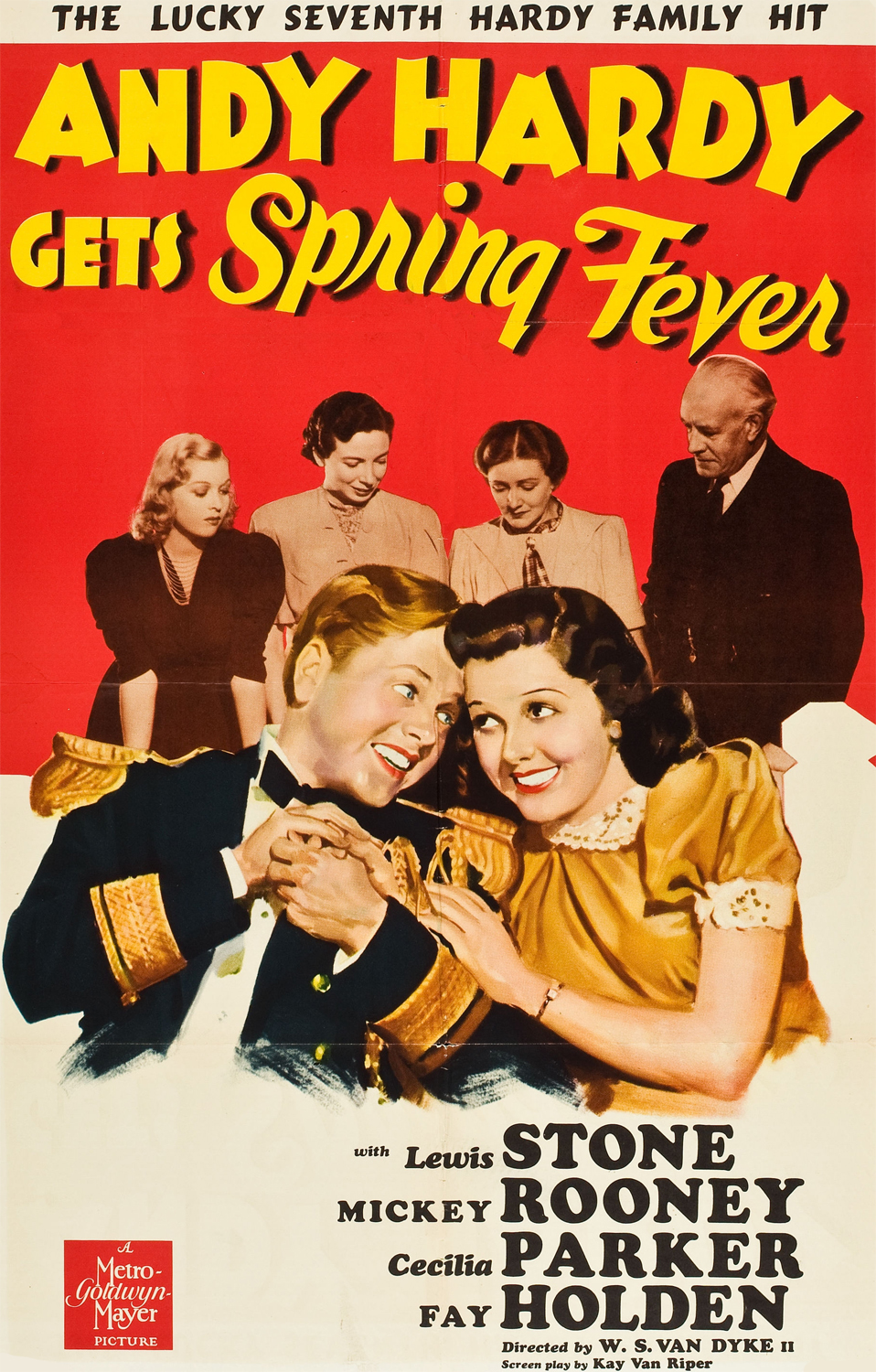
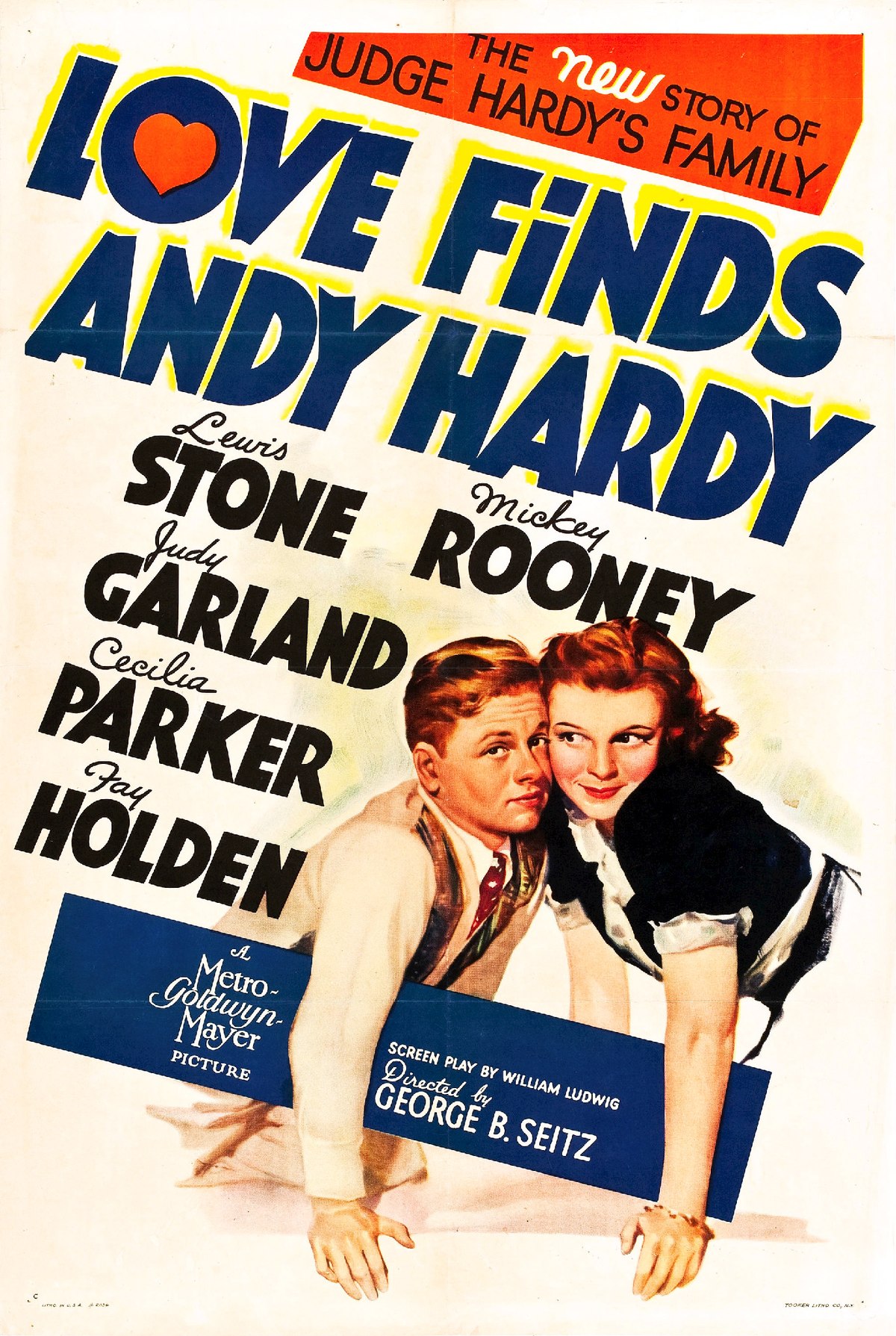
But whether it’s academic or popular-level, the paradigm of film writing, the ends it seems to be aiming for, have nothing to do with giving you a reason to enjoy reading it. Which is why I had given up on it, until I was wandering through our library’s PN section (that’s film, in Library of Congress) and randomly grabbed a book by Robert Ray: The Avant-Garde Finds Andy Hardy.

Ray’s book is mainly focused on using a variety of oddball techniques to analyze the Andy Hardy movies, an enormously popular series of films in its day that gets practically no serious attention these days. He borrows a few techniques from Roland Barthes, but most of them are his own invention (apparently, along with his grad students, who he is careful to cite—something tragically rare in academic writing). But more than the tricks, it’s the style in which he is writing, and his goals in writing. He’s writing to write writing that’s fun to read.

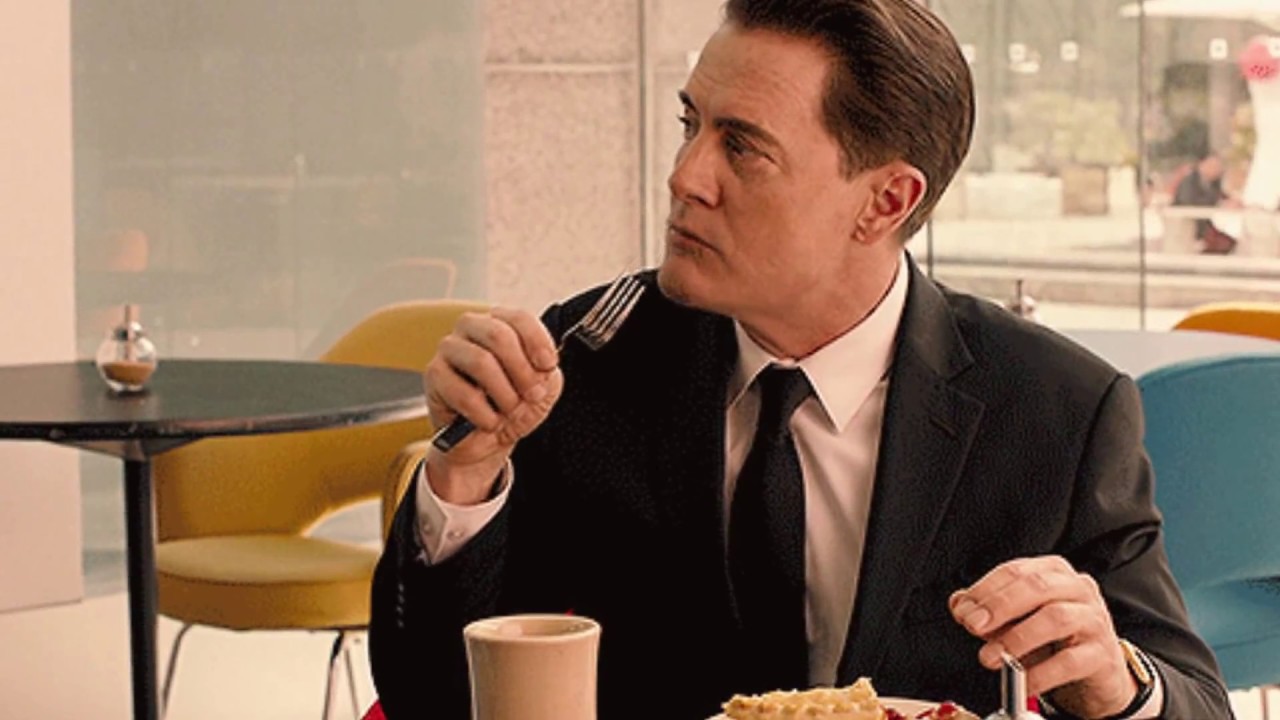
That’s my favorite thing about Ray, and it crosses all his books. (The ABCs of Classical Hollywood is tremendously fun.) Pleasure and mystery ooze from the pages. It revitalized me, like Dougie sticking a fork in an electrical socket.

To this day, that’s been my goal: to write writing that’s fun to read.

—

There are two reasons I am talking about all of this here. For the last month, I’ve been putting together two pieces a week for this site, and I began to wonder how well I was communicating my goal here. Rick is super well-versed in critical theory (probably more so than me, honestly), but he tends to reference it less in his articles on here. I, on the other hand, can’t get through a piece about Alien: Covenant without referencing Kierkegaard.

Too often when writing about anything in the humanities—film, literature, theater, or anything else—writers (but academics in particular) bring up thinkers from other fields, but mostly philosophy, and apply those thinkers to the text in question, as if they can clarify the film/book/play under discussion. I think that’s a bad way to think about film criticism.

I don’t think other writers—Marx, Lacan, or anyone else—can be brought in to “demystify” a film. I tend to think of philosophy like Gilles Deleuze did: a particular kind of literature, with concepts filling in for characters. (Perhaps like a very odd kind of mystery novel, where other writers can respond to the detective,  “No, that’s not how it happened, and I can prove it.”)

When philosophers write about art, they are usually writing about a concept they created called art. They’re not revealing some kind of substrate level. (Again, to use Deleuze: the reason he took so long to be popular in film studies was because people kept using his books Cinema 1 and 2 [PDFs], which are explicitly books about the philosophical concept of film, not books about film.)

The only reason I bring up philosophers when talking about movies is because it’s fun. It’s fun to try to work out connections between adjacent fields like philosophy and art. It’s fun to see how the systems line up, how there are certain things in the relationships between objects in and around a movie that are similar to relationships between concepts.

So when I’m connecting some writer to a movie, don’t think I’m trying to, to use Adorno’s term, demystify anything. The only thing I’m trying to do is write things that are fun to write and fun to read (because writing is, really, just a form of reading.)

—

The other thing regards a bit of a rut into which I’ve gotten myself. When you’re looking at an upcoming week—“oh, gotta get pieces in by Monday and Wednesday”—it’s easy to plan simply to watch one new movie, then write 600 words about it or whatever. That works wonderfully for a lot of people, but it doesn’t really work for me.

I’m a compulsive re-watcher (as well as re-reader, re-listener, re-everything-er). And usually when re-watching something, I end up connecting it in different ways. A piece is more an impression of a particular viewing than anything else.

Academics don’t like to write about movies more than once. You write your David Lynch book and move on to the next guy, and so on. The implicit narrative of academia is that when you’re writing about something you’re extracting something from the movie. You’re using the tool of some author to get down to its core and drawing it out. But I’m not working that way, so I don’t see any reason to do it.

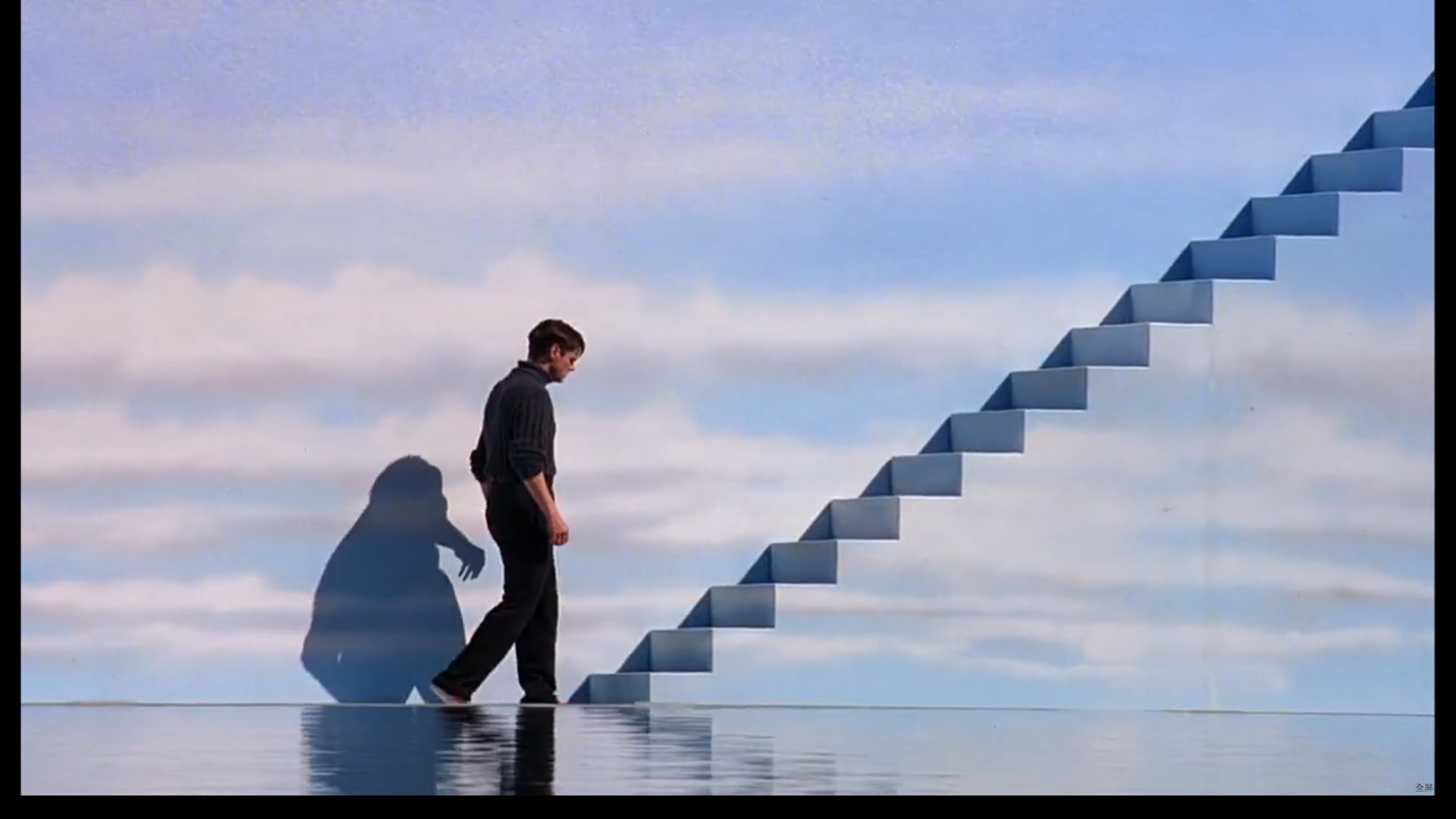
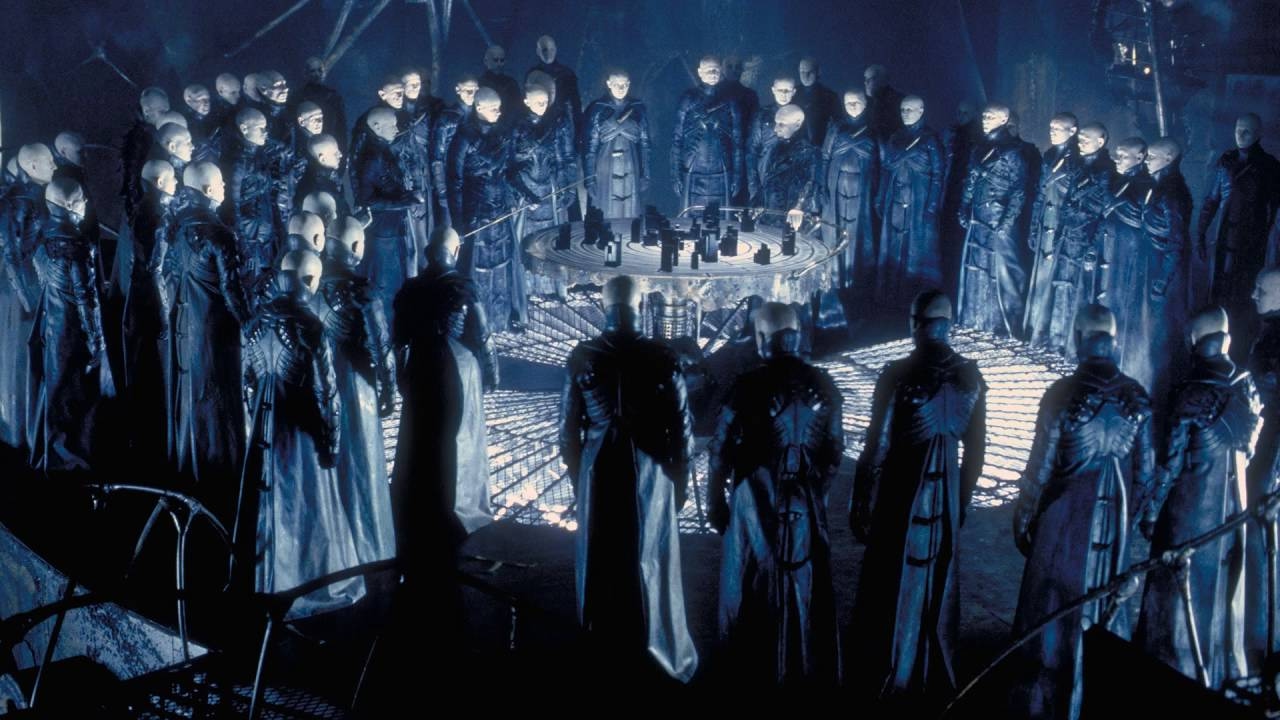
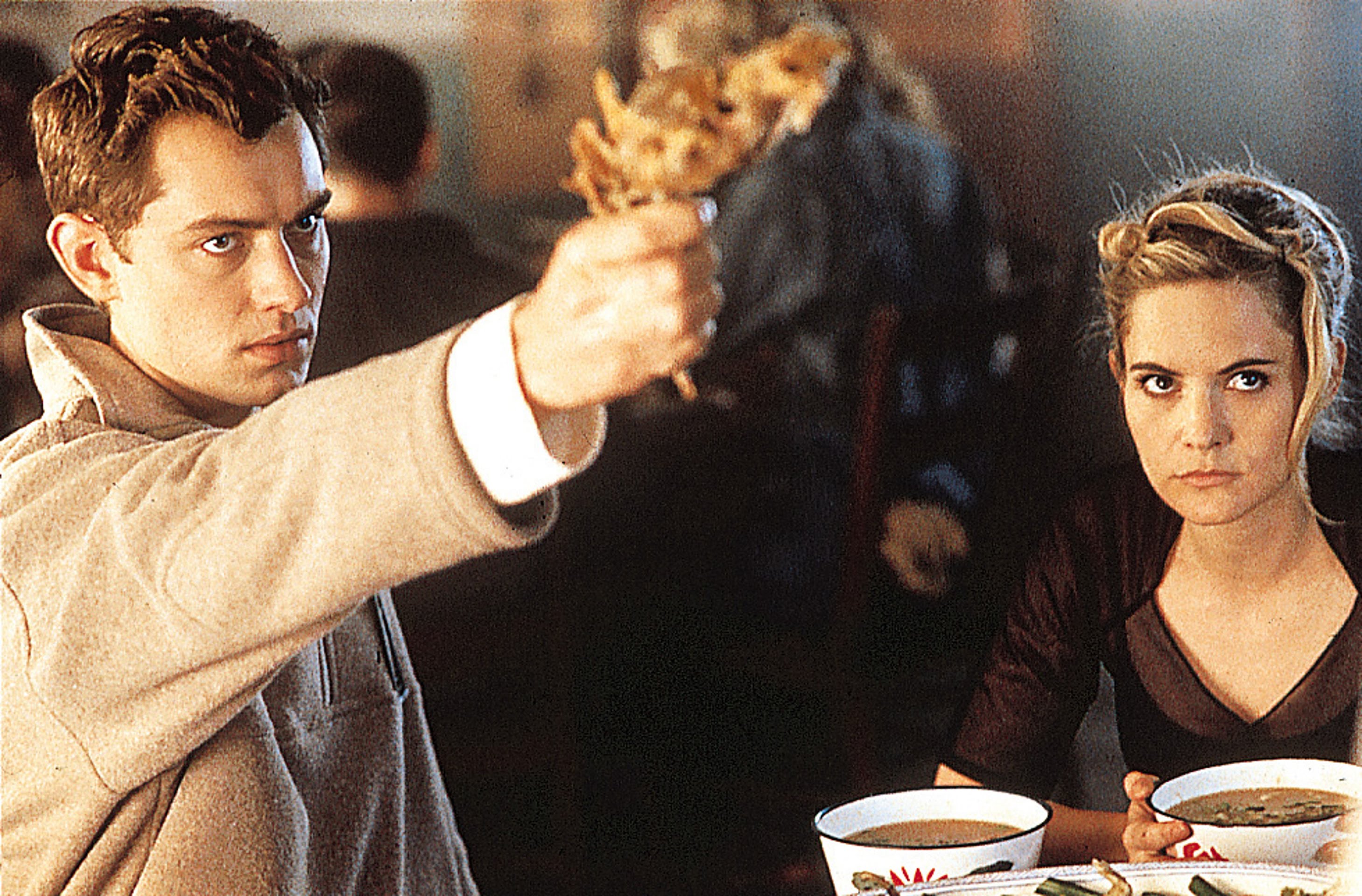
In other words, I treat this space as much as a journal, a workspace, as anything else. I’m planning in the coming weeks to write about a number of contemporaneous films about realizing your world is “fake”—The Matrix, eXistenZ, The Thirteenth Floor, Dark City, and The Truman Show, all from 1998/1999. But the articles that come out of that mini-project are going to be more an attempt to work through a theory than to present one. In other words, the writing is as much a process of discovery as one of explanation.

So it’s useful to think of these pieces more as a workbook than a review. No piece has the final word on a movie. There could always be more, if there’s a good excuse.

—

Hopefully all of this methodology hasn’t been too boring for anyone, particularly those without an academic background. It just seemed useful to explore why I write for Luddite Robot. I haven’t mentioned Rick in any of this, mostly just because I didn’t feel comfortable speaking for him.

I guess really, my hope is this: that this was pleasurable to read.

December 6, 2017 0 comments
1 FacebookTwitterPinterestEmail
CommentaryFilm

A Night with Lubitsch, Dieterle, and the SF Silent Film Festival

by rick December 4, 2017
written by rick

Saturday night marked the return of the annual A Day of Silents program at the Castro, one of the many events the San Francisco Silent Film Festival hosts outside of its weeklong extravaganza in the spring. I was only able to catch the evening double bill – missing out on the very silly-looking The Last Man on Earth, Henry King’s dark pastoral Tol’Able David, the Ivor Novello-starring The Rat, and, saddest of all, Reiniger’s Prince Achmed, one of the earliest entries in the Counter-Programming series — but it was, as usual, delightful.

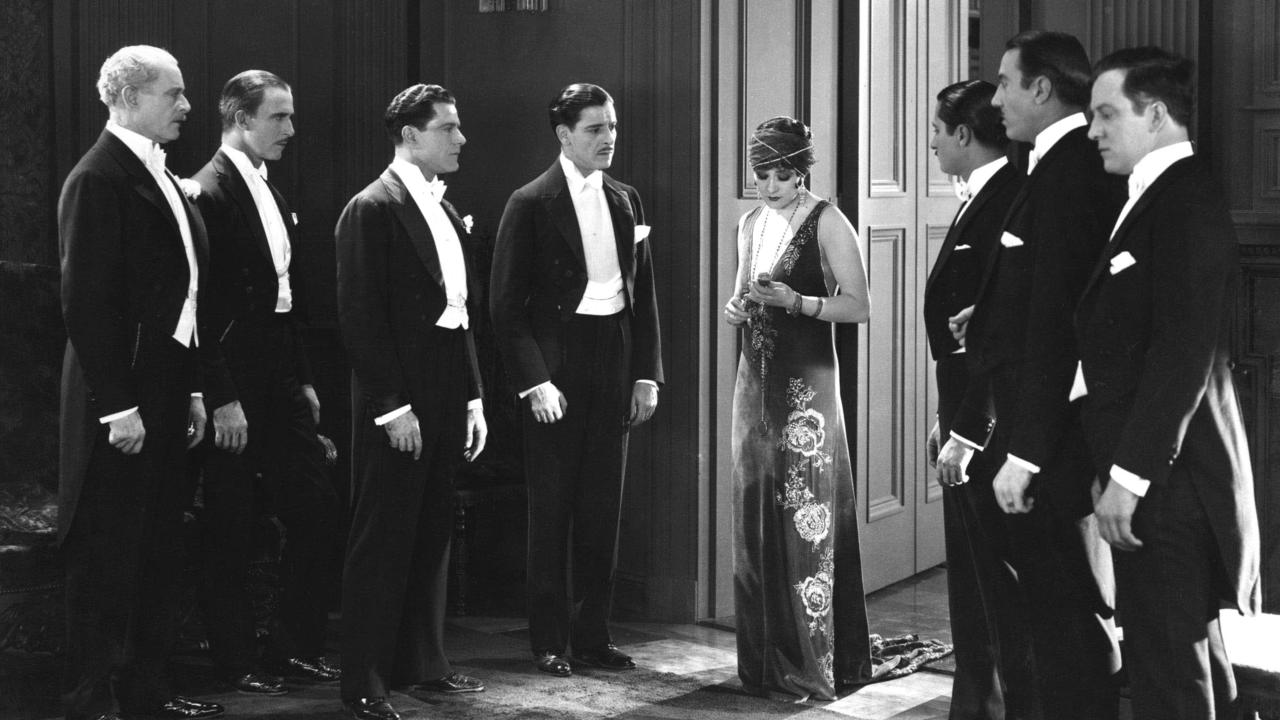
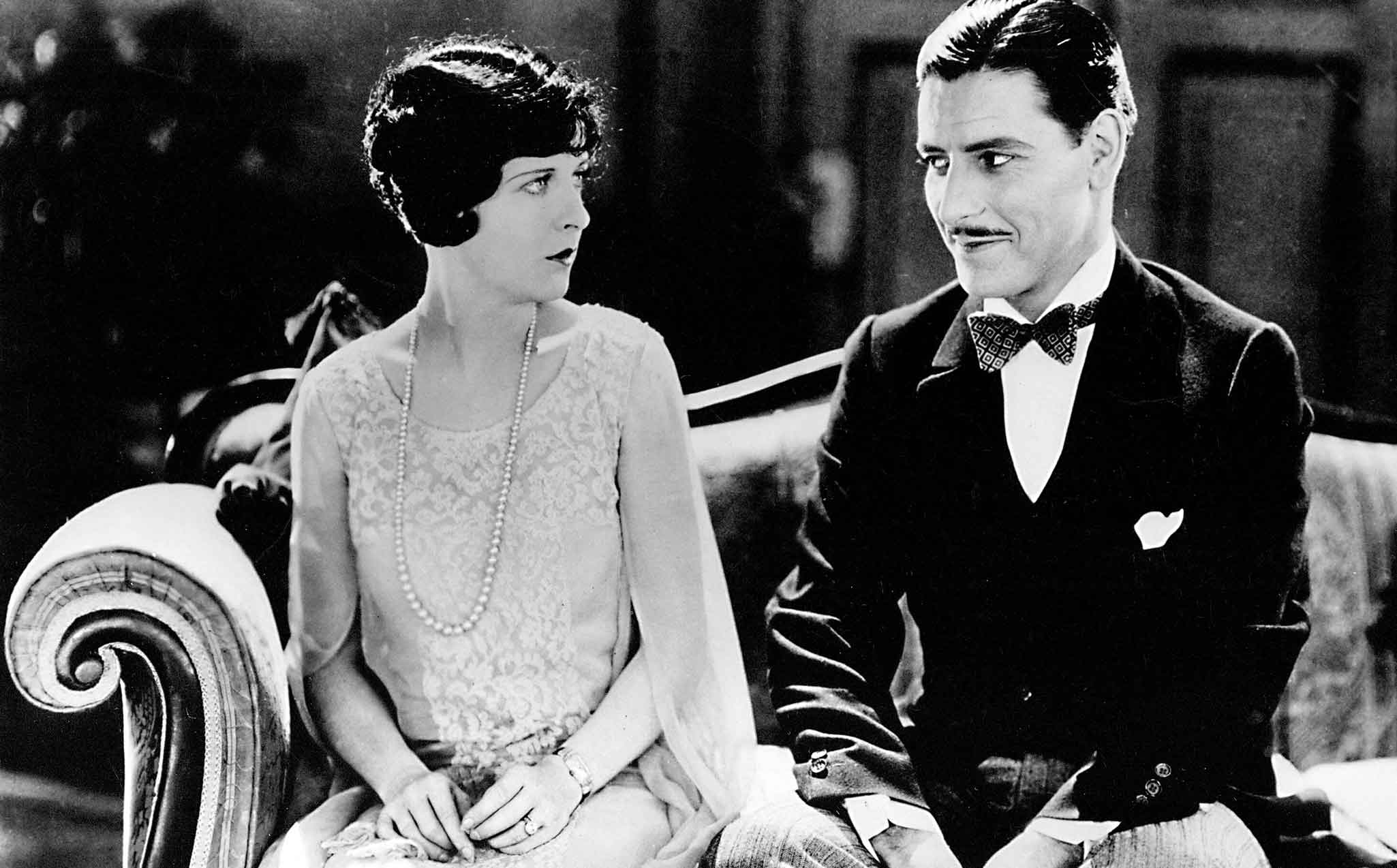
First up was a screening Ernst Lubitsch’s Lady Windermere’s Fan, his witty 1925 silent film treatment of Oscar Wilde’s classic. There’s something delightfully perverse about the very notion of presenting a silent Wilde, jettisoning the epigrams while presenting visual interpretations that still somehow capture the tone.

Lubitsch was, unsurprisingly, the right man for the job, no matter how much anxiety he caused the Warners. (“HIS PICTURES GREAT BUT SUBTLE,” worried Harry. No particular love seems lost on Lubitsch’s side, either, according to anecdotes relayed prior to the screening; forced by the brothers to cast Ronald Colman in the lead, on loan from Samuel Goldwyn, the director would apparently berate him on set: “Here comes Colman across the room, courtesy of Samuel Goldwyn.”) The film is both elegantly staged and light on its feet – both requirements for anything “Wildean” — and, as Monica Nolan writes in the program:

Wilde’s play gave Lubitsch the perfect excuse to explore his favorite themes: wobbling marriages, the farcical pursuit of love, and the sexually aggressive woman who tramples on society’s strictures and goes her way unpunished. Wilde’s dialogue was beside the point.

As the first silent Lubitsch I’ve seen, the highlights included visual jokes that easily could’ve been found in Trouble In Paradise and other later films: quick comic reaction shots, coyly raised eyebrows, misdirection, enormous doors that dwarf the players passing through them, an elaborate racetrack setpiece in which binoculars and other visual devices play a central role, with watchers and watched framed by their surroundings, occasionally trading places in a whole panopticon of high society nonsense.  There’s no shot out of place here, and many have huge comic payoffs. Just masterful, slyly subversive filmmaking, beautifully presented on the Library of Congress’ 35 mm print and accompanied by the Mont Alto Motion Picture Orchestra.
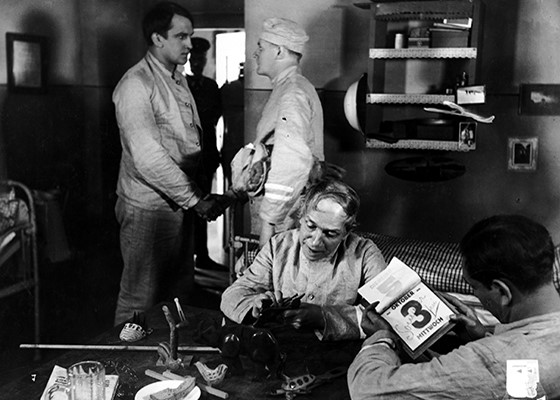
The final screening of the night was the Weimar-era Tenzenfilm / “social awareness picture” Sex In Chains, which, it should be noted, isn’t nearly as scandalous as the English-language title would suggest. (The original German Geschlect is a much better fit than “sex”, but close enough, I guess.)

Directed by and starring William Dieterle – who would go on to an Oscar nomination for The Life of Emile Zola in 1937 and quasi-blacklisting for films like Blockade (and, one assumes, co-founding the antifascist publication The Hollywood Tribune) – Sex In Chains is a strange creature. Based in part on the prison memoirs and agit-prop of Karl Plättner, it’s an appeal for institutional reform, an outraged, melodramatic cry against the indignities of incarceration that deprive inmates of their basic sexual needs. To make this case, unfortunately, it basically argues that jail gay-ifies you.

Still, it could be much worse. Dieterle and the cast don’t treat homosexuality as either inherent to the system (the protagonist’s cellmate-turned-lover was apparently already gay before he entered the frame, for one thing) and there’s no condescension to be found. In fact, the depiction could hardly be more sympathetic – in some ways, Sex In Chains is simply a doomed love triangle between a man, his wife, and his lover by circumstance, well-acted, occasionally Expressionist, and ultimately fairly unforgiving in its narrative. The Weimar open-mindedness towards all things sexual – seen in much more risqué, passionate fashion in something like Different From The Others and the work, more generally, of Magnus Hirschfeld – largely overshadows the tepid, dubious premise of jailhouse desire.
All in all, a terrific evening at the movies, courtesy of the good folks with SF Silent Film. The 2018 Silent Film Festival proper kicks off May 30th, with the schedule announced in March. (Before then, the Castro will also be hosting Noir City Xmas, “a double-feature of rare noir-stained 1940s’ yuletide films to darken your spirits,” and, yes, of course I will be there.)

December 4, 2017 0 comments
1 FacebookTwitterPinterestEmail
FilmReviewsStreaming Selections

Streaming Selections: I Don’t Feel At Home In This World Anymore.

by Sam and Rick December 1, 2017
written by Sam and Rick

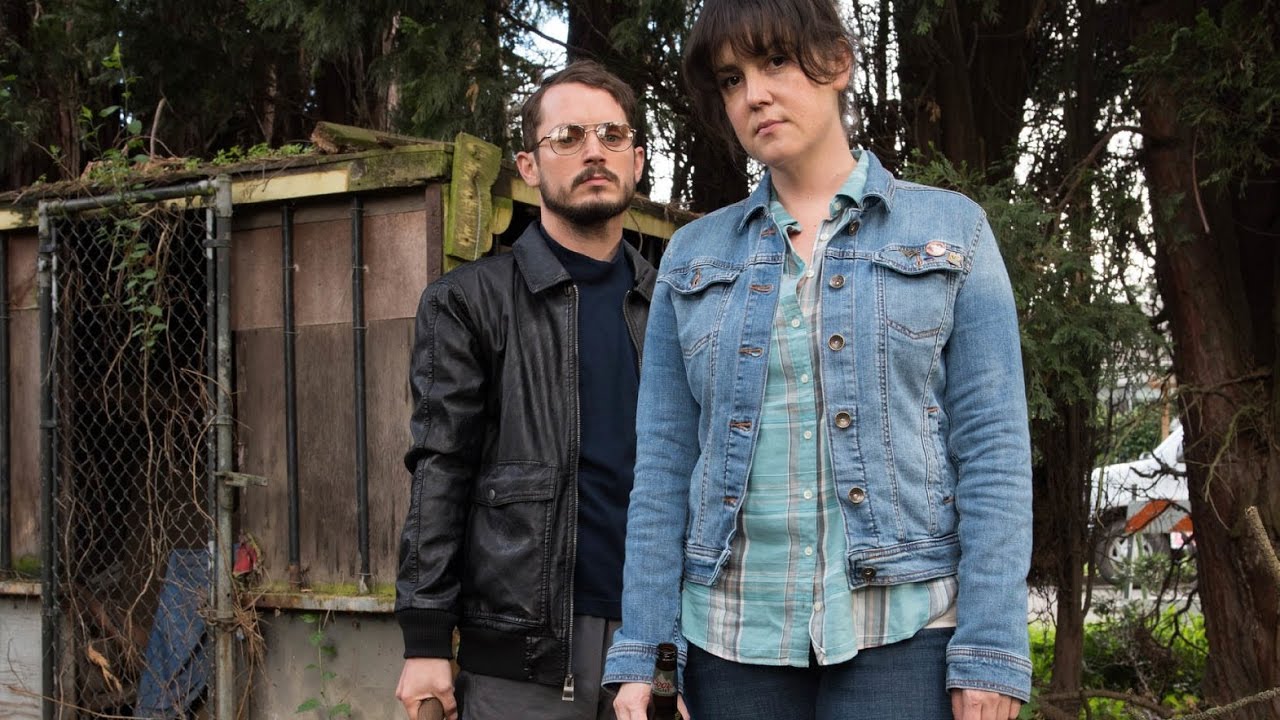
Macon Blair doesn’t personally show up much in his writing/directing debut I Don’t Feel At Home In This World Anymore. — he has more screen time in The Florida Project, probably — but you can feel his jittery, cold-sweat presence throughout.

Like quirk-revenge drama Blue Ruin and neo-Nazi punk thriller Green Room, his breakout collaborations with director Jeremy Saulnier, his I Don’t Feel At Home is positioned on the margins of respectable society, steadily gaining momentum as small decisions move toward inevitable, sudden violence. Blair’s secret weapon here, though, is a healthy dose of absurdist humor to go along with the brutality.

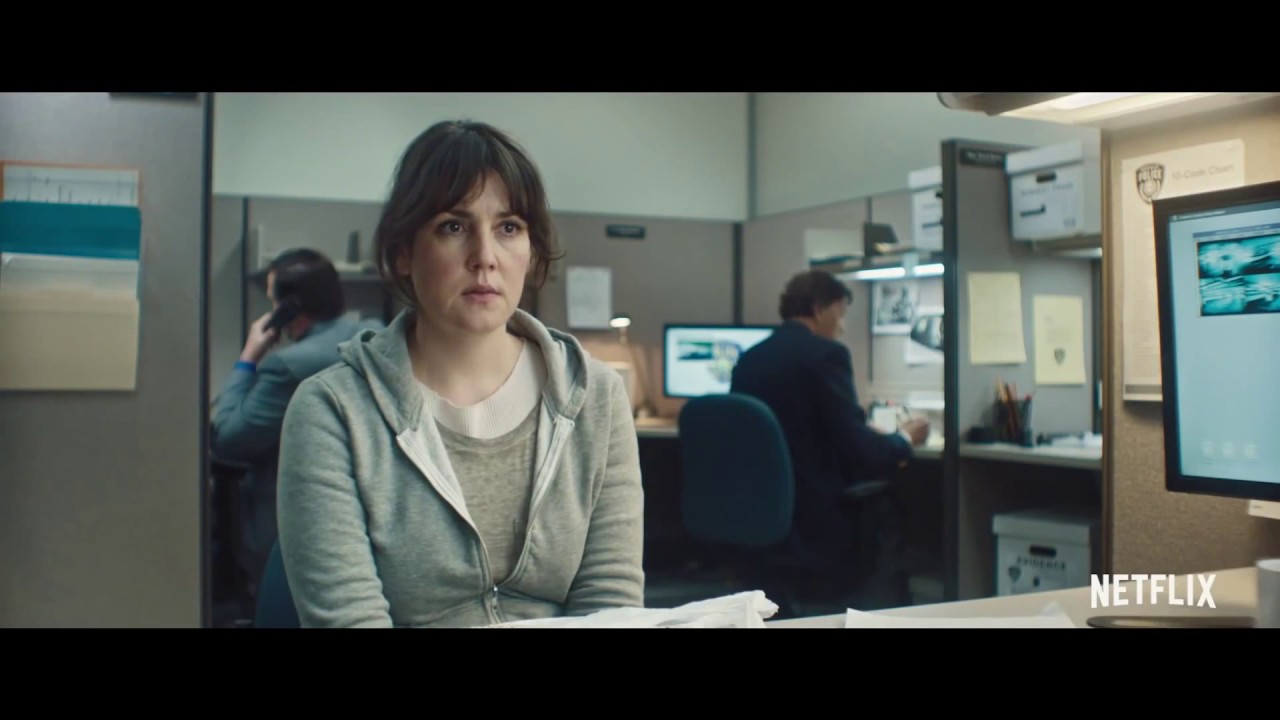
Melanie Lynskey in Macon Blair's I Don't Feel At Home In This World Anymore.

I Don’t Feel At Home effectively functions as a distaff Falling Down, with Michael Douglas’ had-it-up-to-here embodiment of tortured white masculinity subverted. Instead, we get Ruth (Melanie Lynskey), an aggressively normal suburban lady just trying to make it through the day. Everyone, she notes, is “an asshole … and dildoes.” Hard to disagree. They cut in line at the supermarket. They don’t pick up their dog’s poop. Blair casts himself as a rando at the bar who casually spoils the ending of the book she’s reading, before blithely bidding her good day. These fucking people.

When her house gets robbed and the cops shrug it off, she flips into vigilante mode. But unlike a Douglas, she doesn’t immediately turn to violent solo vengeance. On the contrary, she enlists the help of another oddball on the block (Elijah Wood, all rat-tail, cut-off metal t-shirts, and dubious nunchaku skills) to get her shit back. They make for a decidedly off-brand superhero duo, and their attempts at justice, which sometimes fumble their way into success, are played for laughs.

Until, of course, they’re not. Lynskey and Wood are both ideal in their roles, pairing legitimate outrage at minor social trangressions with a dawning awareness that maybe, just maybe they’re not the best candidates to plunge into the criminal underworld and demand everyone be nicer in general. 

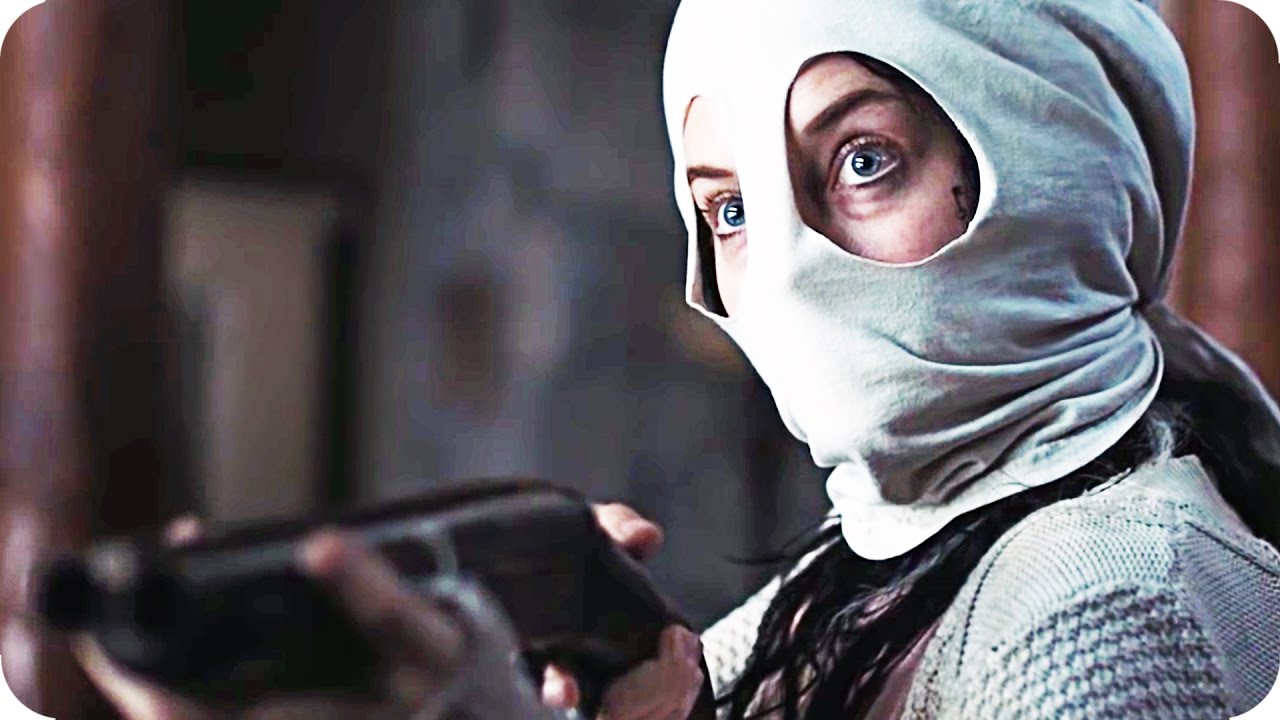
Robbery in Macon Blair's I Don't Feel At Home In This World Anymore.

Blair holds on to both the ludicrous and deadly serious tones admirably for most of I Don’t Feel At Home, though he’s set himself a nearly impossible task. The final, bloody set-pieces unleash a kind of free-floating queasiness that undermines some of the comic flourishes that came before, but this is a writer and director who certainly knows how to play in that particular sandbox.

If the whole thing doesn’t exactly cohere, it’s not for lack of trying, and I Don’t Feel At Home has plenty to recommend it for fans of grimy genre and Sundance quirk alike.

(Rick – Streaming on Netflix)

Quick Links

The Big Sick

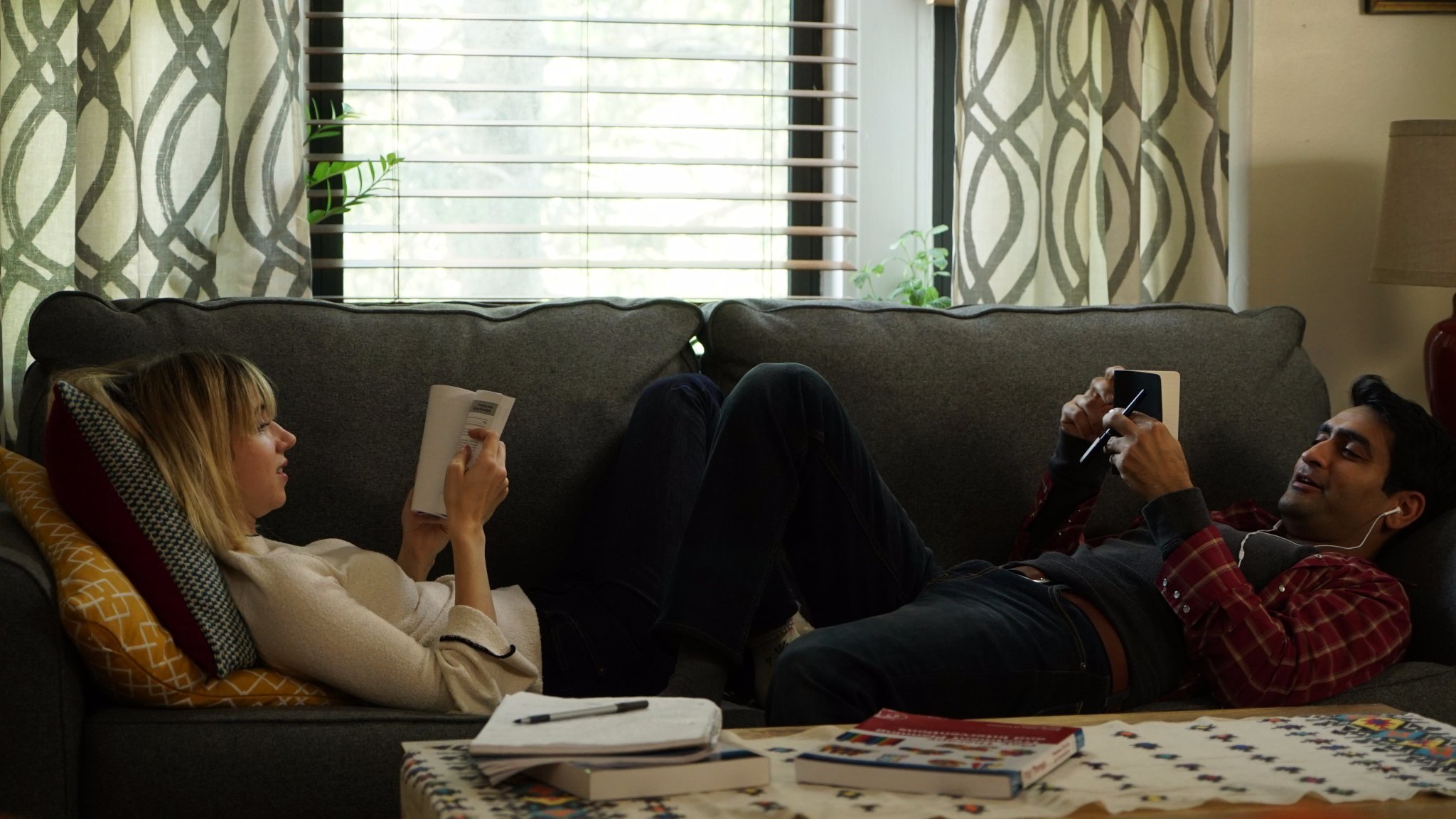
Kumail Nanjiani and Emily V. Gordon in The Big Sick

It seems that the romantic comedy is always on the verge of dying, and so always finding itself resuscitated by an unlikely contender. This year, The Big Sick is its salvation, which even goes so far as to include an actual confrontation with death as its romantic premise.

And it works. So well. Comedian Kumail Nanjiani stars as, well, Kumail, and co-wrote the film with real-life spouse Emily V. Gordon, the two concocting a sort of couple’s autobiography that plays much better than it sounds. Largely elevating itself above the inherent preciousness and pitfalls of pathos, The Big Sick finds an honest approach to family, culture, and our fraught attempts to connect. Zoe Kazan is great as Emily, but Ray Romano and Holly Hunter mostly steal the show as her parents, with whom Kumail ends up spending a lot of time.

Ultimately, this is just a nice film, both generous and forgiving to its ensemble for their foibles, touching and laced with unexpectedly acidic barbs. It feels very of-the-moment while still planting its feet firmly in the genre. It is, as they say, a good time at the movies.

(Rick – Streaming on Amazon Prime)

Blind Chance

Kieslowski's Blind Chance

Watching Kieslowski’s earlier films—before, let’s say, Dekalog—is a peculiar experience. It’s always easy to spend the runtime trying to pick out points that gesture at what’s to come, but it’s particularly easy with him. It’s like watching someone shake off, in real time, his documentary past, the “fright of real tears” that put him on the road to fiction filmmaking.

Blind Chance is a fascinating movie on its own, but as a frozen moment of Kieslowski working out the fractal possibilities of fiction as opposed to the simple given reality of documentaries, it’s a particularly fascinating testament. (Pair it with Run Lola Run, Sliding Doors, and the “Sliding Frasiers” episode of Frasier—season 8, episode 13—for a very peculiar night.)

(Liz – Streaming on Filmstruck)

Jim & Andy: The Great Beyond – Featuring A Very Special, Contractually Obligated Mention Of Tony Clifton 

Jim Carrey in Jim & Andy: The Great Beyond - Featuring A Very Special, Contractually Obligated Mention Of Tony Clifton 

Although I saw it years ago on its release, I don’t particularly remember Man on the Moon, Milos Forman‘s portrait of anti-comedy pioneer Andy Kaufman. If anything, the title seems likelier to conjure up the R.E.M. song in my brain.

This is odd, since that film coincided with a Kaufman obsession on my part and featured a stacked, oddball cast (Jim Carrey in the lead, of course, plus Danny Devito, Paul Giamatti, and, er, Courtney Love). For whatever reason, it didn’t stick.

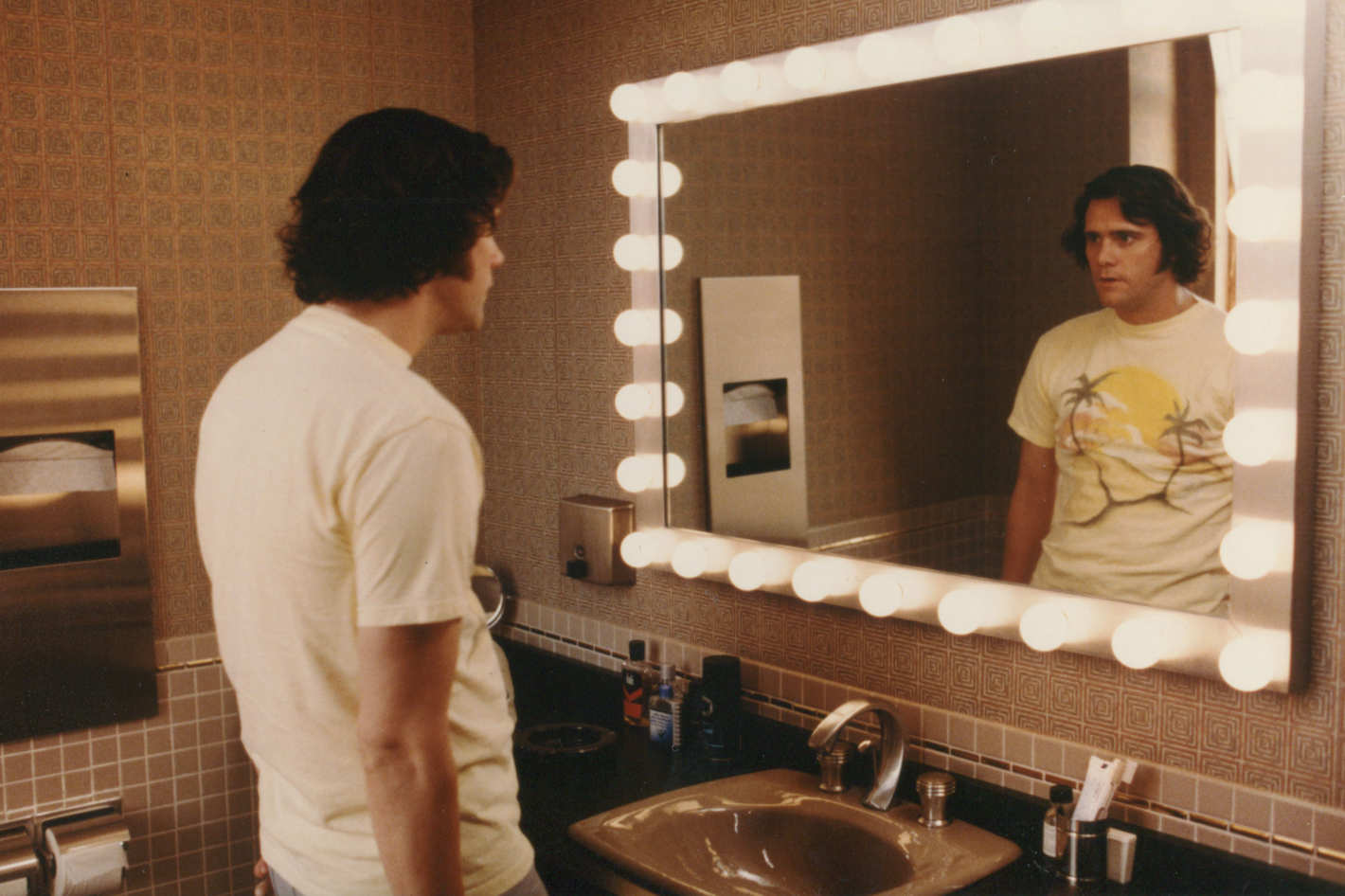
Jim & Andy makes a strong case to revisit it. Focusing on the rather elaborate, Method-esque lengths its lead went to embody his muse(s), the doc is split between on-set footage and current reminiscences from Carrey — some of which are legitimately fascinating, many of which swirl upwards in a tornado of woo-woo shit. But there’s no doubting Carrey’s sincerity, and the film situates this particular role within the context of his career in ways I hadn’t appreciated.

There are larger questions that go frustratingly unasked and unanswered here, particularly at a moment when issues of workplace harassment and misconduct dominate the news cycle. How far is too far? We can all agree that Jared Leto’s inane Joker stunts can’t be justified, but what about Carrey’s, particularly in his Carrey-as-Kaufman-as-Tony Clifton personae? Jim & Andy doesn’t dive into the ethics.

In fact, Jim & Andy often pulls back at the most interesting moments, and seems more content to marvel at the lunacy of the whole endeavor than to really wrestle (natch) with its implications and consequences. But it does reveal a lot about Carrey himself, and its hall-of-mirrors structure is often rewarding.

(Rick – Streaming on Netflix)

(nostalgia)

Hollis Frampton's (nostalgia)

I am nowhere near as up on short films as my buddy Rick is (too many fall into the same trap as post-war short stories — “constructed mousetrap-like to supply, at the finish, a tiny insight typically having to do with innocence violated,” in Barthelme’s wonderful phrase), but all of Hollis Frampton’s are close to my heart, and none are closer than (nostalgia).

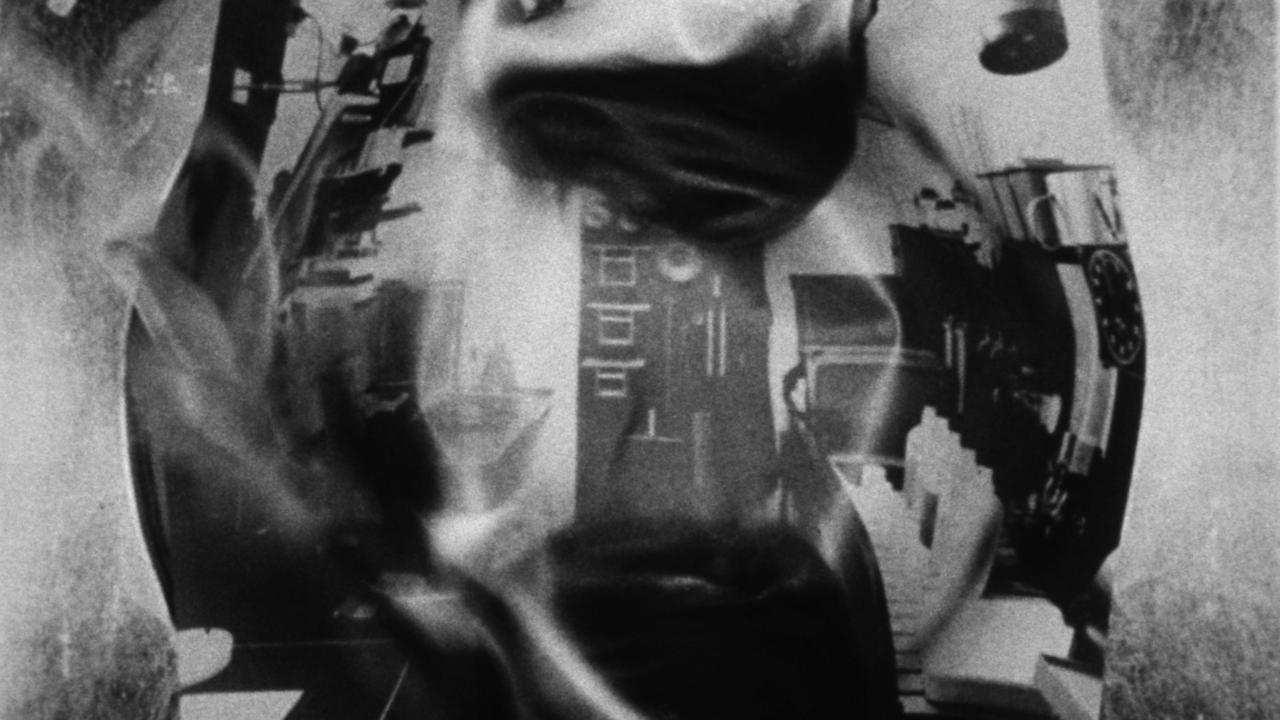
Over the course of 36 minutes, Frampton describes a photograph he took and then sets it on a stove burner to, well, burn. As he describes the next one, laconically and brilliantly, we watch the previous one crumple into a shiny black husk. It’s incredibly moving, somewhere between art film and NPR.

(Liz – Streaming on Filmstruck)

December 1, 2017 0 comments
1 FacebookTwitterPinterestEmail
CommentaryFilmFilmReviewsStreaming SelectionsTV

November Digest: New Films, Old Films, Good Films, Kingsman

by rick November 30, 2017
written by rick

As November staggers to its close, amid an endless avalanche of horrific revelations about terrible men and also whatever calamitous idiocy the U.S. President committed while I was literally writing this sentence, some things are still good. Twin Peaks! Everyone likes Twin Peaks. Guy Maddin’s hockey enthusiasm. Nick and Nora goddamn Charles. We hold tight to these and other bright spots — along with their shadowy, Kingsman-and-Sacred–Deer-clad doubles, always on hand to remind us why we can’t have only nice things — presented here in digest form!

Here’s the monthly wrap. Thanks for reading! And, as the header image hopefully demonstrates, there’ll be more to come in December — your counter-programmings, your Liz & Rick Story Time Hours, your furry-themed holiday celebrations, your yearly retrospectives and #52FilmsByWomen and random asides about things that struck us at the very last moment before we were preparing to hit “publish.” All kinds of things! Stay tuned.

Liz

  • The Endlessly Parting Curtains of Twin Peaks
  • Happy Death Day and the Slasher Cult of the Teenager
  • Recollection v. Repetition in Alien: Covenant
  • Channel Zero Misunderstands What Makes Technology Creepy
  • The Geeky Sincerity of Guy Maddin’s Voice
  • Power, Soft Bodies, and The Big Heat
  • The Colonialist Action Movie Logic of The Professional
  • The Rich Man’s Burden Runs Deep in Kingsman: The Golden Circle

Rick

  • Spooktober Wrap-Up: The Final Conflict
  • The Hollow Shocks of The Killing of a Sacred Deer
  • Surveillance, Memory, and the Image in Karl Marx City
  • Saoirse Ronan is Greta Gerwig is Lady Bird
  • The Enduring Appeal of Nick and Nora in The Thin Man

Streaming Selections

  • Oddball Films (Stephen Parr, RIP) — a remembrance of San Francisco’s pre-eminent archivist of the Weird, plus Beyond The Black Rainbow, The Five Obstructions, Get Out, and Romeo Is Bleeding
  • Starlet — capsules on Starlet, Hatchet For The Honeymoon, Mudbound, My Night at Maud’s, and the Shatterbox Anthology
November 30, 2017 0 comments
1 FacebookTwitterPinterestEmail
CommentaryFilmGreat Movie Project

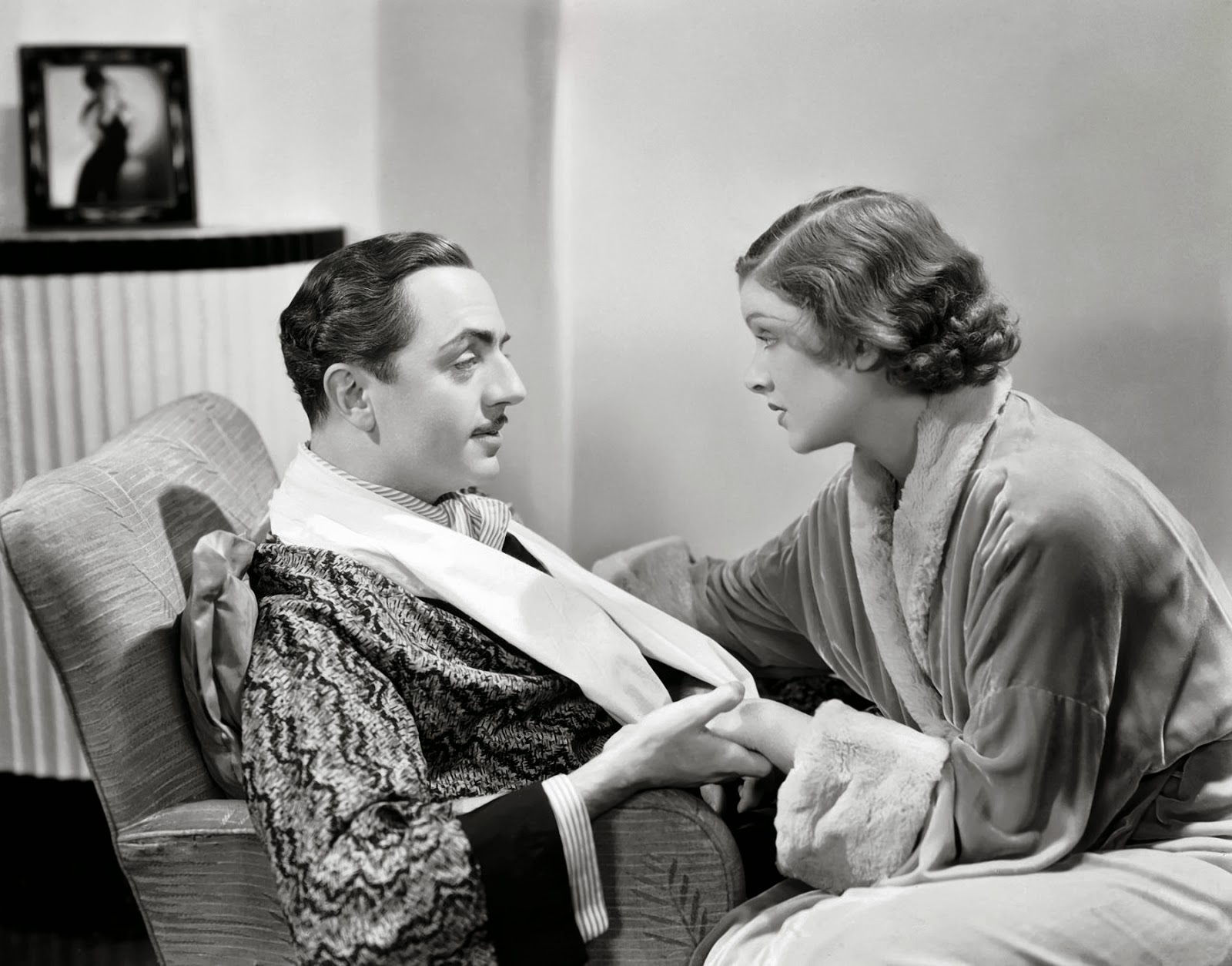
The Enduring Appeal of Nick and Nora in The Thin Man

by rick November 29, 2017
written by rick

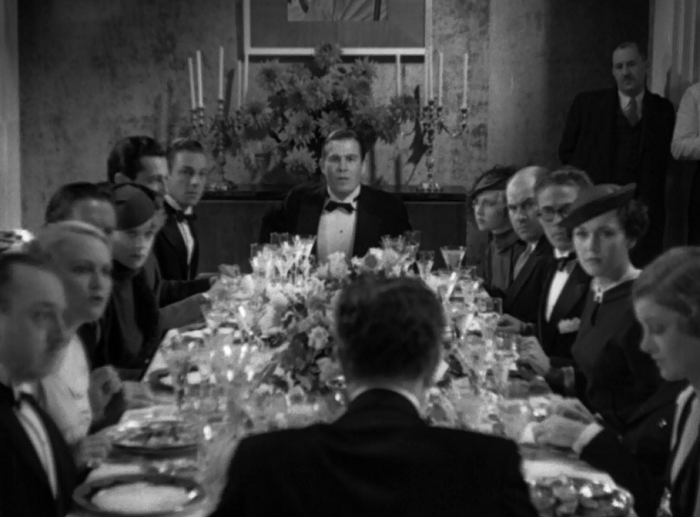
Quick quiz: in 1934’s MGM classic The Thin Man, what is the key piece of evidence that leads Nick (William Powell) and Nora Charles (Myrna Loy) to convene the dinner party at which the killer of Claude Wynant (Edward Ellis), Julia Wolf (Natalie Moorhead), and the stool pigeon Nunheim (Harold Huber) is revealed?

If you answered, “Well, obviously it’s the leg shrapnel that Nick discovers in an x-ray of the body buried in Wynant’s workshop!” you probably have a better memory than most, or at least have seen the film more recently. The speed with which The Thin Man zooms past this erstwhile revelation is pretty impressive.

Too easy? Fine. How about: why did Wynant’s ex Mimi (Minna Gombell) remove his watch chain from the scene of Julia’s murder?

Actually, this isn’t even part of the quiz; I’m legitimately asking. I assume it’s because Mimi needed Wynant to be perceived as alive so that she can keep getting payoffs from his attorney MacCauley (Porter Hall), not realizing that the will MacCauley drew up for Wynant specified she’d only be cut off from the family fortune if she remarried, but because her husband Chris Jorgenson (Cesar Romero) turns out to be a bigamist who was never actually divorced from his previous wife, she’s still the rightful heir, leading Mimi to roll over on MacCauley, thereby removing suspicion from the embezzling bookkeeper Tanner (Cyril Thornton), who had been splitting his ill-gotten proceeds with Julia prior to her murder. And Nunheim just knew too much, and had a history of squealing. I think.

Luckily, none of this matters. (But wait … why wouldn’t Mimi at least then be charged as an accessory after the fact? Could she actually have been trying to shield her daughter Dorothy (Maureen O’Sullivan) from the knowledge of her father’s death, thereby keeping the gravy train rolling while also preserving some semblance of familial innocence? Ok, just let it go.)

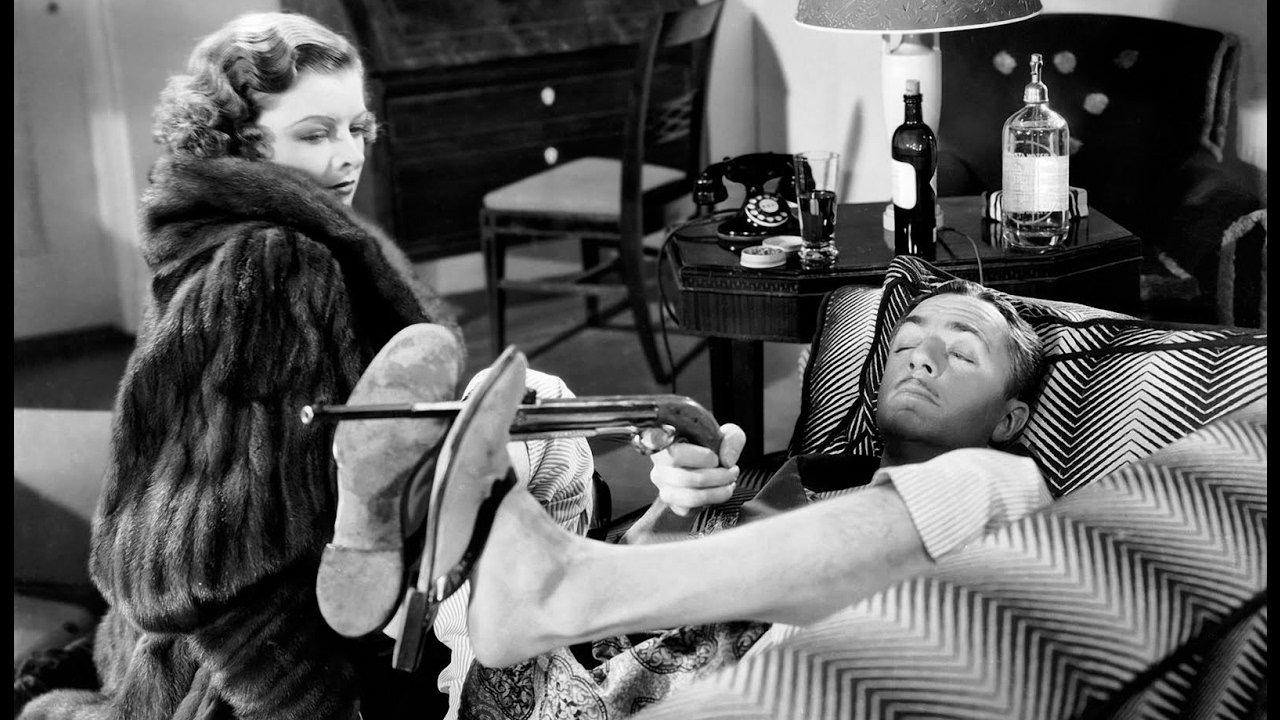
In W.S. Van Dyke‘s brisk, bubbly Dashiell Hammett adaptation, the convoluted narrative is itself part of the joke. (And then that joke becomes the title!) The film — dashed off in 2 weeks of shooting, apparently, like a last nightcap before bed — became a surprise mega-hit at the height of the Depression, on the strength and charm of its leads rather than its occasional noir-ish elements. The audience is mostly placed in the middle of the commotion, like our bemused heroes, lost in wordplay and casual glamour. Ebert’s comparison of Nick and Nora to Fred Astaire and Ginger Rogers is entirely apt.

Just as no one would bring up Top Hat or Swing Time to celebrate the intricacies of their plotting (“The real hero here is Allan Scott,” said nobody ever), The Thin Man is rightfully remembered as a particularly appealing pas de deux, escapist spectacle at its best (and often silliest).

Nick and Nora’s banter is inspired, but it’s all in the ease of the delivery, an obvious affection for each other that let the newly official Hays Code censors overlook gags that might otherwise have been shut down, particularly if they weren’t married. There’s a lot of lap-sitting, necking, and innuendo here — not to mention Asta The Dog covering his eyes in a reaction shot when our heroes actually get down to lovin’ off-camera — but it can be accepted in the larger depiction of a truly happy, if unconventional, union.
At the same time, there’s some real darkness lurking in the corners of The Thin Man, both courtesy of master cinematographer James Wong Howe (particularly in the near-blackness of the workshop sequence) and on the more thematic level those images mirror. As Nora Fiore writes in an entertaining post:

Whether it meant to or not, The Thin Man betrays considerable anxiety about the fragility of family. From the bit-part drunk at Nick and Nora’s party, wailing “Ma!” long distance into the telephone, to the more central questions of the plot, less-than-ideal relationships prove to be the norm, rather than the exception… Dorothy’s speech about giving birth to a bunch of little murderers who will hopefully “kill each other and keep it in the family” may be the most genuinely creepy line of dialogue ever spoken at M-G-M. We witness Nunheim’s ugly domestic quarrel and ultimately find out that Jorgeson is a bigamist… Within this mess, Nick and Nora stand out as the Harlequin and Columbine whose magical union somehow holds the key to our continued hope for love.

That “magic,” though, is at the heart of The Thin Man‘s enduring appeal. Unlike the similarly witty, urbane anti-heroes of something like Trouble In Paradise, where the darkness is only held at bay by the famous “Lubitsch touch,” Nick and Nora convey a particular sort of innocence along with their insolence. What could ever happen to these people?

It’s all a lark — even when people get shot. (“I read you were shot 5 times in the tabloids.” “It’s not true! He didn’t come anywhere near my tabloids.”) Nick is only a detective these days by circumstance, whim, and Nora’s urging, anyway, and, even with three murders to account for, the mystery mostly gets in the way of the drinking. (“Is he working on a case?” “Yeah, a case of Scotch. Pitch in and help him.”)

The details trail away like bits of overheard conversation at a party. You just remember the movement, the swirl of it all, and two very funny people who seem to really like each other.

Favorite Ebert passage:

After a prologue set three months earlier, most of the movie takes place over the holiday season, including cocktail parties on Christmas Eve and Christmas Day, and the exposure of the killer at a dinner party sometime around New Years’ Eve. The movie is based on a novel by Dashiell Hammett, one of the fathers of noir, and it does technically provide clues, suspects and a solution to a series of murders, but in tone and intent it’s more like an all-dialogue version of an Astaire and Rogers musical, with elegant people in luxury hotel penthouses and no hint of the Depression anywhere in sight.

November 29, 2017 0 comments
1 FacebookTwitterPinterestEmail
FilmReviews

The Rich Man’s Burden runs deep in Kingsman: The Golden Circle

by Lark November 28, 2017
written by Lark

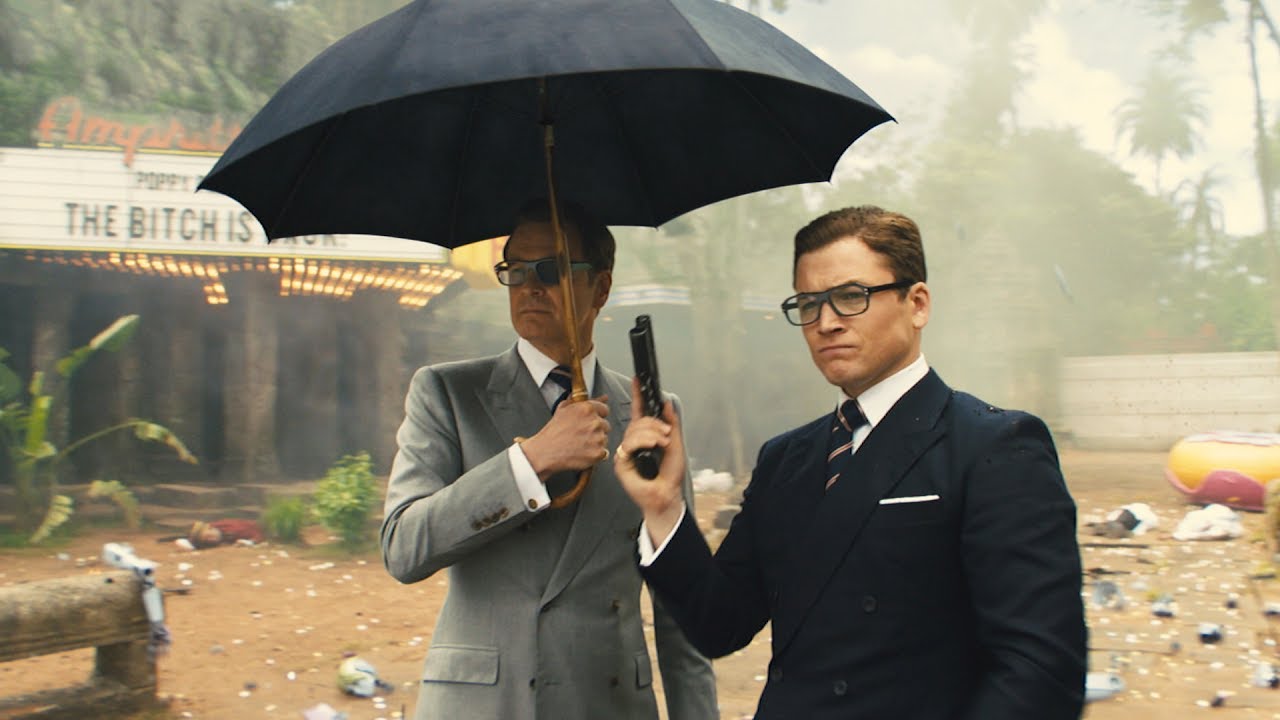
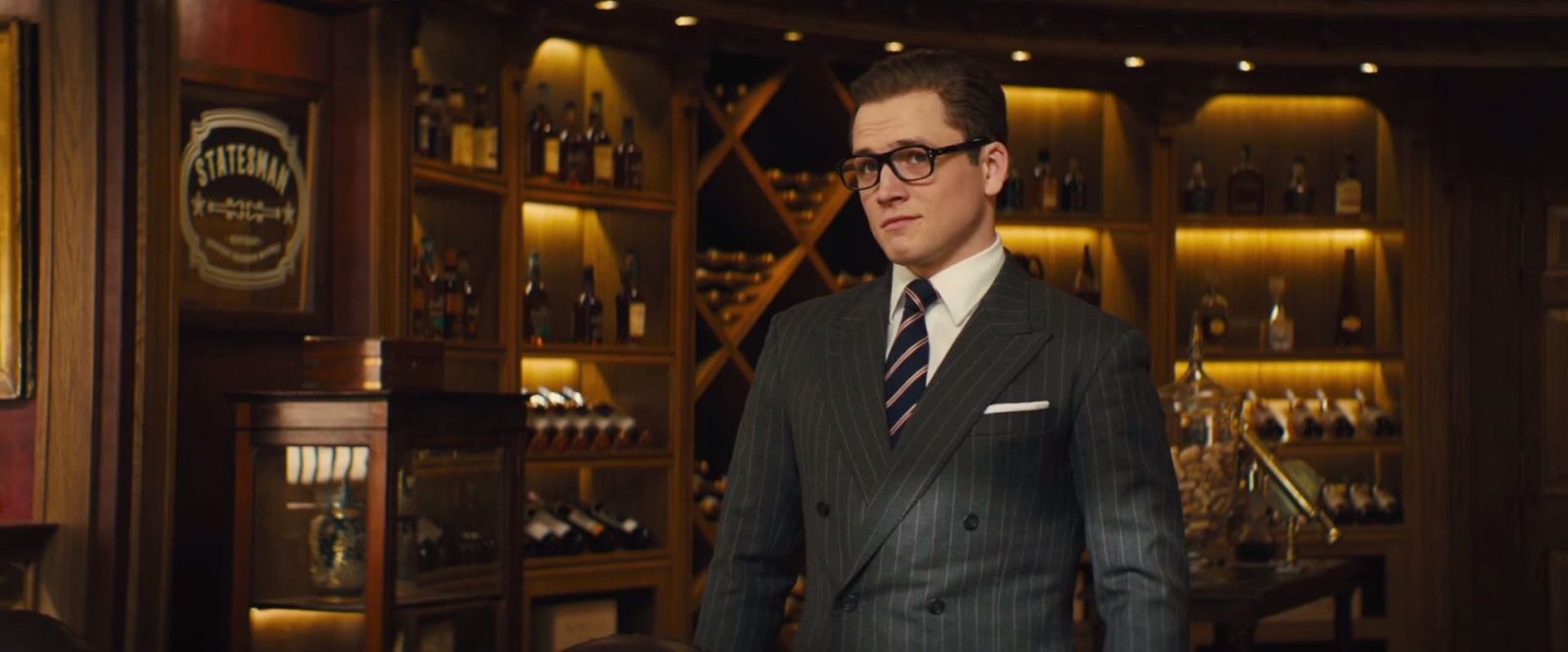
I remember being shocked at how much push-back I received when talking about the completely explicit classism of the first Kingsman movie in 2014. Hopefully, now that the sequel is a gimcrack turd, we can be more honest: both the original and its 2017 sequel, The Golden Circle, are Horatio Alger stories with guns.

The Kingsmen—the film’s non-governmental secret agents, who work out of a tailor’s and whose training includes instruction on how to use what knife—are the same type of secret world order that pops up in every Mark Millar adaptation. Like the assassins from Wanted or the superheroes from Kick-Ass, they serve as a secret backbone for the world, and on that framework director Matthew Vaughn (along with his co-writer, the nauseatingly twee Jane Goldman) have hung a story of the natural superiority of the ways of the rich.

Whatever, one supposes—the first one was goofy fun, and there’s a whiff of the fascist to any superhero movie. (It absolutely is a superhero movie, a fact the score betrays; our hero Eggsy’s superpower is, basically, code-switching.) But Kingsman: The Golden Circle’s peculiar seriousness reveals how deep this belief in the Rich Man’s Burden is.

Julianne Moore—who, as a perky supervillain drug dealer, is (like Samuel L. Jackson in the first) by far the most interesting part of the movie—has secretly poisoned all her drugs, worldwide. Every person who uses drugs is now paralyzed, and will die without her antidote, which she will only release if the War on Drugs ends and all drugs are legalized.

That’s already a lot of real-world politics for something that claims to be escapist goofery. It might be that dissonance that motivates the filmmakers to slather on subplots, leaving entire half-hours of its inexcusably long runtime (141 minutes, just 20 minutes short of Solaris in length!) to wander aimlessly through betrayals and half-setpieces—anything to avoid actually talking about the War on Drugs.

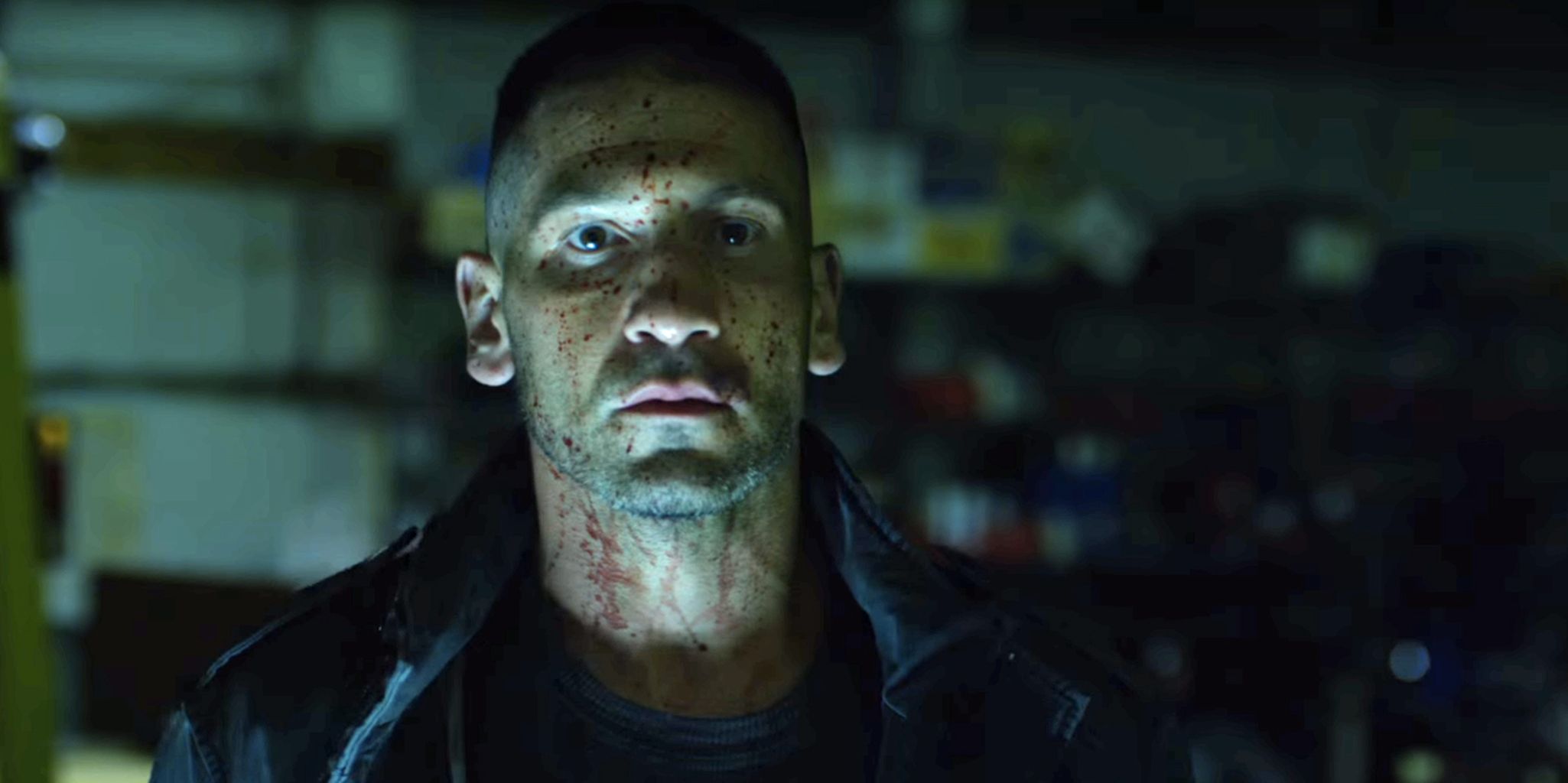
I happened to be watching an episode of The Punisher right before the film, the one in which our characters literally have a debate about gun control on the radio. It’s a truly stupid piece of media, partially because it pretends to have a serious conversation while shifting the terms. (The debate is apparently between “no guns anywhere” and “everyone has guns all the time.”) Kingsman pulls the same phony move: while pretending to be “about” drug use, it changes the terms of the debate: letting all drug users die horrible deaths or legalizing everything.

But this choice to deal with real-world issues is not a bug of the movie; it’s a necessary result of the world the series is building. Kingsman: The Secret Service, it is worth remembering, had a similar basic structure. Jackson’s Silicon Valley billionaire, in an attempt to avoid global warming and overpopulation, had a plan that revolved around releasing a rage virus around the world. Again, the specter of a very real real-world problem is raised.

But this is a natural result of separating our secret agent super-spies from a nation and a government. James Bond, obviously, was inseparable from the state for which he worked; even when he stopped international villains, it was only because Britain is in the world.

The Kingsmen instead function like a non-government organization which hovers between countries. The series is almost embarrassed at their materiality: once again, it revels in destroying the characters it has established (hope you didn’t get too attached to Sophie Cookson as “the only female agent”; she’s killed off unceremoniously 15 minutes into this). I suppose I won’t spoil which of our heroes dies in a dramatic sacrifice in the finale, but I will say it is one of the most unnecessary sacrifices in history.

The movie loves to kill off its characters because there are two forces pulling in different directions at the heart of its idea of a secret service. There is the material side, which is attached to a particular aesthetic, that of the British upper class, and the philosophical side, which is attached to the idea of governing the world—and particularly, the bodies of the “masses”.

Whatever: it’s a fart in the wind. Elton John and Julianne Moore tell each other to fuck themselves, while Colin Firth hides behind him, popping out to hit a robot dog with a bowling ball. Channing Tatum (whose role is basically a cameo, and whose Southern accent is a nightmare) basically re-enacts a scene from 21 Jump Street. It’s a big fluffy cloud of nothing, and its not worth the amount of attention one could pay it.

It should be added to Netflix, but only viewable after midnight by lonely drunks. In other words: it’s a Kingsman movie.

November 28, 2017 0 comments
1 FacebookTwitterPinterestEmail
CommentaryFilm

The Colonialist Action Movie Logic of The Professional

by Lark November 27, 2017
written by Lark

It’s dumb—I know it’s dumb—but watching The Professional reminded me I have never completely gotten over the strangeness of seeing schlock blockbusters from traditionally art-house countries.

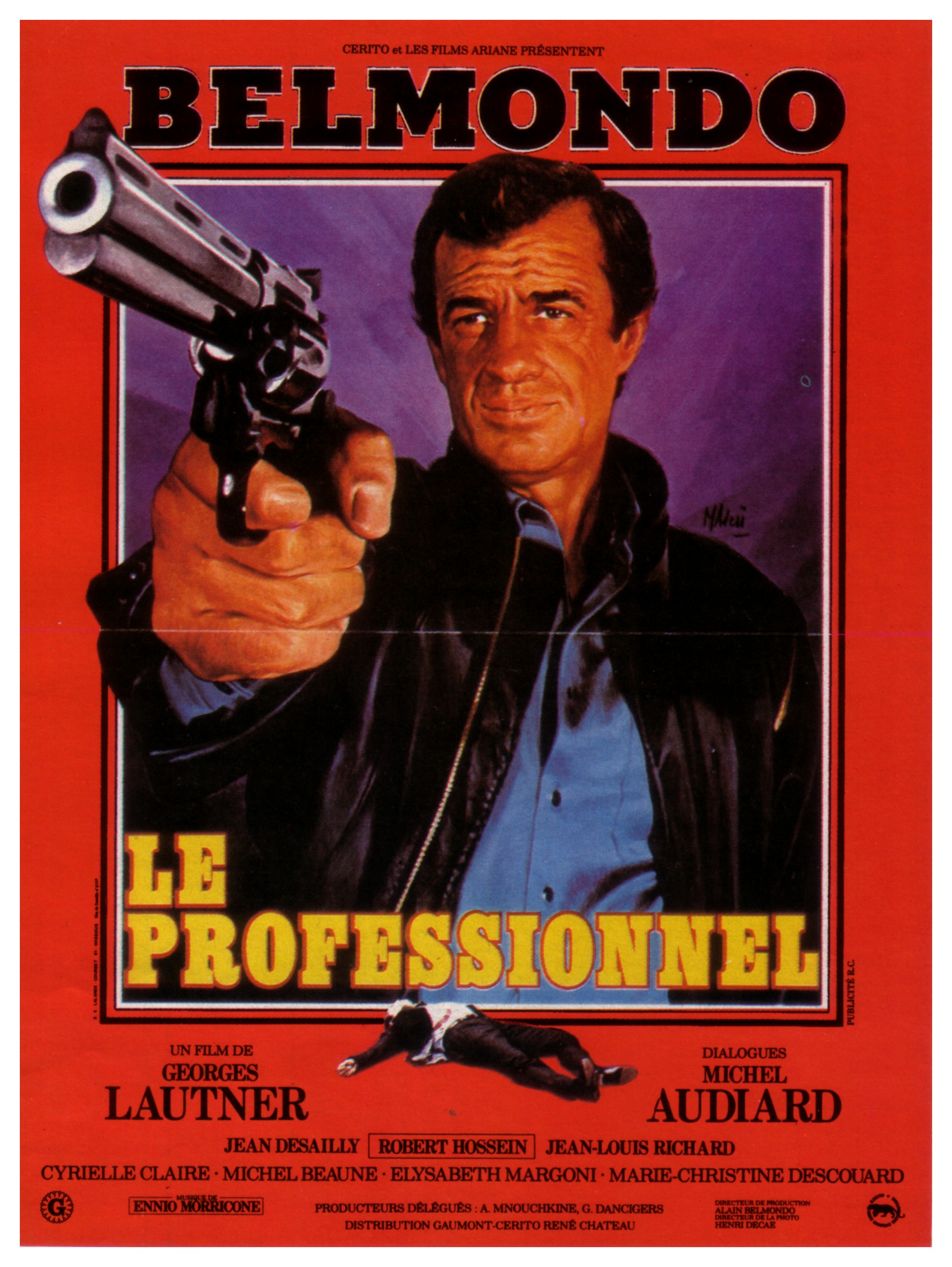
Is that Jean-Paul Belmondo of Breathless and Pierrot le Fou fame offering goofy quips about “kicking ass” and beating up blonde henchmen? (Yes, it is.) Did this really come out of France in the same year Marguerite Duras made Agatha and the Limitless Readings? (Yes, it did.)

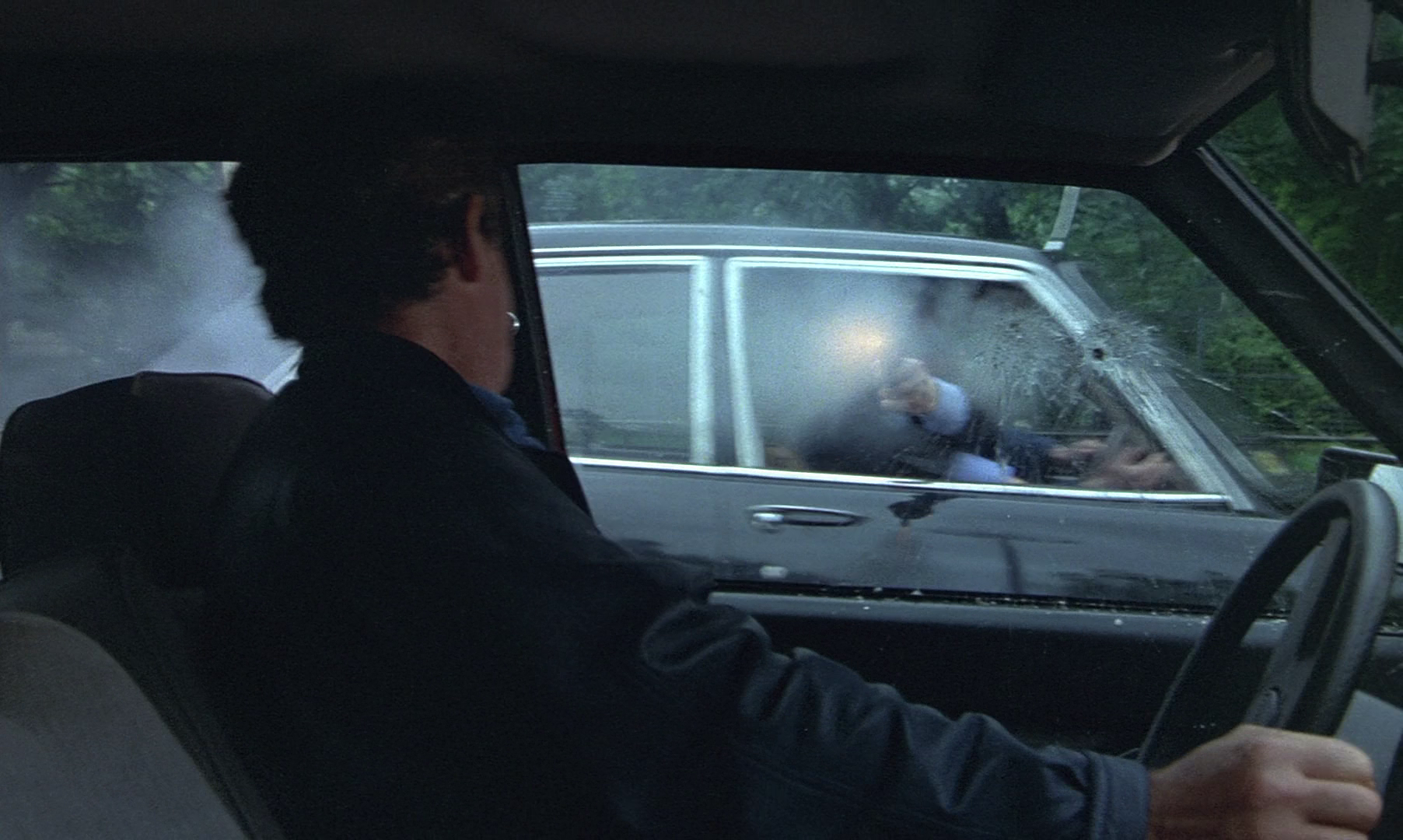
B-movies I understand. Exploitation movies I understand. But there is something particularly weird about seeing foreign movies that so clearly ape American rhythms and style. Coming out in 1981, The Professional was on the vanguard of the blockbuster period, let alone its European variant (Raiders of the Lost Ark unsurprisingly beat it in the theaters, but it still sold the fourth-most tickets period that year in France, including among American films). There’s a car chase around the Eiffel Tower (and it’s heartening to know that even French movies feel it is required to use the Eiffel Tower to establish Paris-ness). It’s a weird, goofy mix of 70s Eurospy camp and 80s Rambos I and Part II half-spoiled patriotism.

But what is most interesting about The Professional is one particular trope, which manages to transcend its political particulars. The plot outline has become a mainstay of spy movies: a professional with a steely jaw is on a mission for his country when he is stabbed in the back by weaselly politicians; he survives on gruel in a foreign prison until he escapes and returns, looking for revenge. But it’s the mission itself that’s interesting: Belmondo is sent to knock off the leader of a nameless African country, and when he escapes and returns to France, he makes it his mission to finish the job. (Luckily for the film’s budget, the leader happens to be visiting Paris at the time.)

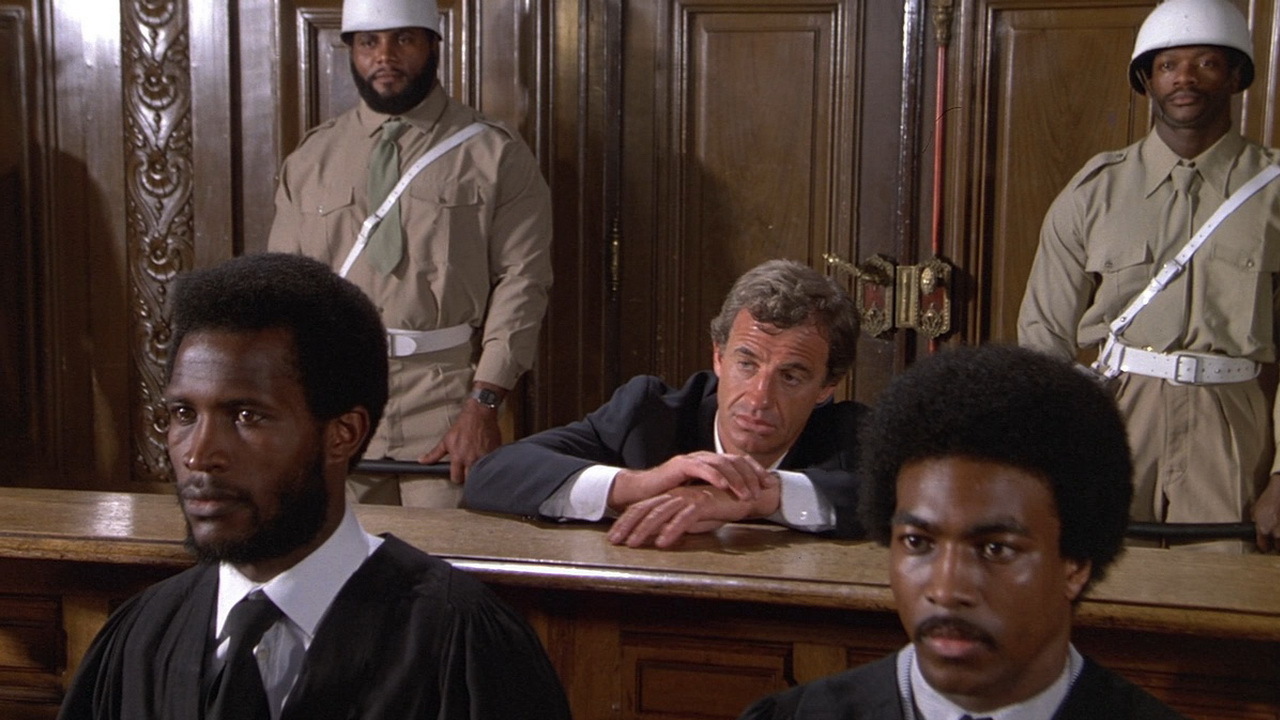
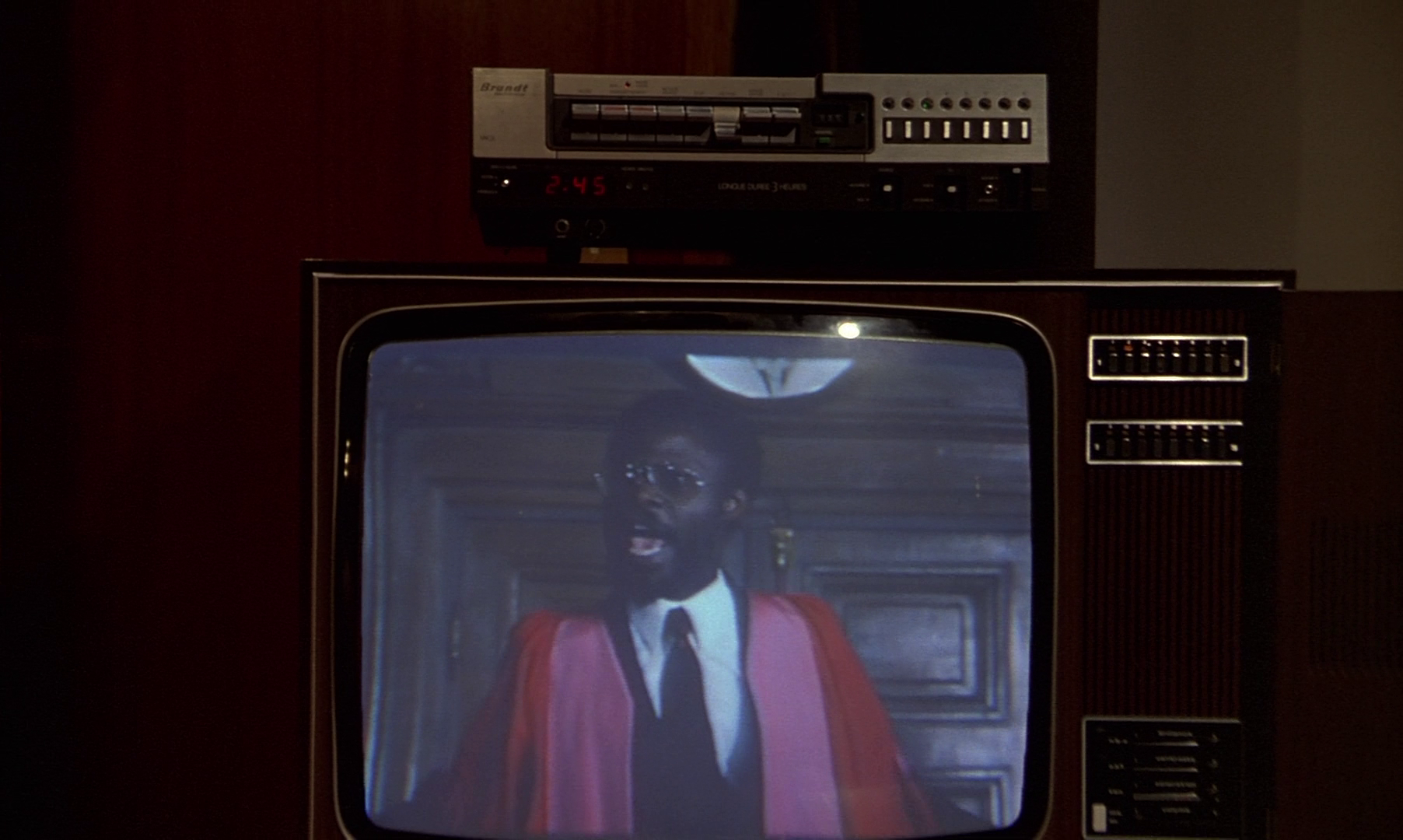
It was only seeing it in this context, of a France coming to terms with its colonizing past—a past that is finally just past enough that it can return quietly to the cultural unconscious—that this trope made historical sense. The film opens on and luxuriates in Belmondo’s trial, in which the drugged-up white man struggles to stand in a room full of black faces. We see it repeatedly—the government officials who betrayed Belmondo have it on videotape. It’s this moment of embarrassment before a trial, rather than the torture that follows, that the movie focuses on as the source of deepest betrayal.

That moment is only possible in a world where former colonies can claim themselves to be political equals to their former oppressors. The entire scenario is inseparable from the world of the United Nations and of the Hague. The fear that those of “us” in the colonizer’s country can now be judged by their laws is the motivating anxiety that generates this world.

The fear of the judging gaze (both legally and psychologically judging) is a variant of the “wrongfully imprisoned man” movie that is more popular in the U.S. Someone goes to jail for something they didn’t do, breaks out, finds the killer, et cetera et cetera, with The Fugitive being the modern touchstone. There, a plot revolving around the exception (what if our justice system fails, and an innocent person is imprisoned?) serves to buttress the system itself (if you’re innocent, you’ll find a way to escape and everything will be worked out—the modern version of the trial by combat).

In The Professional, the rule (what if all the rhetoric is true, that people will be judged for their colonialist actions, that we will actually have to begin treating these countries as equals?) serves to undermine the system (don’t worry, they’re not powerful enough to keep our soldiers down; their claims of justice will fail because of our inherent superiority).

And within this context, the rather cliché finale takes on a new dimension. Belmondo finally tracks down his target and tricks the French government into killing him (he manages to get him to pick up an empty gun in front of a window at the perfect angle—listen, this isn’t a good movie). It’s curious because it testifies to the ambivalence the filmmakers feel towards their structure of justice. The hero can’t simply murder in cold blood; instead, he manages to get the official forces of justice to kill the “right” person, the target deigned moral by the logic of the film, instead of their actual target, the “wrong man” of our hero assassin.

It’s a short circuit, in a way: the circuit of a universal justice is recreated. They manage to return to a colonialist logic of the virtuous forces of civilization executing the villainous forces of foreign self-ruling despotism; but, at the same time, this can only be done by tacitly admitting that this is something immoral that the government can’t do, that it’s only by a trick that this happens—in other words, the dominance of colonialist France over its former colonies is both reduced to and elevated to a cosmic element of reality.

There’s a lot to say about how the spy genre has addressed and absorbed rhetorical discourse about international law and national sovereignty. I definitely am not qualified to write that history, as much as I would like to. At the very least, though, it is remarkable how watching spy movies with that lens in mind can make explicit so much subtext, even in the stupidest of movies.

November 27, 2017 0 comments
1 FacebookTwitterPinterestEmail
CommentaryFilm

Power, Soft Bodies, and The Big Heat

by Lark November 22, 2017
written by Lark

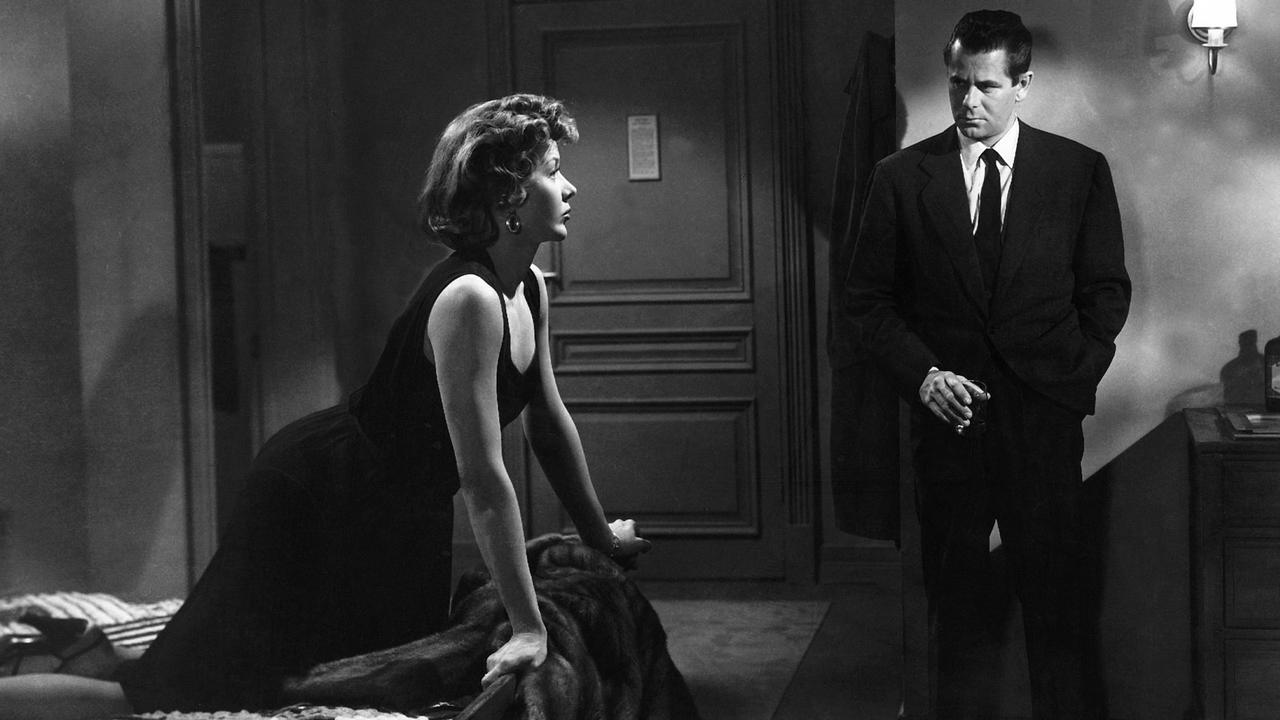
The tagline for The Big Heat —“A hard cop and a safe dame!”—is, to quote Otto, “flagrant false advertising.”

Combined with the poster, it promises a classic noir clash between a sultry dame and a hard-boiled detective. In reality, the two of them (Glenn Ford and Gloria Grahame) barely share three scenes with one another. And there’s never any chance of them falling in love: Glenn Ford is far too in love with this dead wife (Jocelyn Brando, Marlon’s incredibly talented sister who should have been far more popular than she was), whose murder he spends most of the film revenging.

But in another sense, it’s actually very accurate. The women in The Big Heat are soft—literally. Their bodies are recipients of force, and they bear its marks.

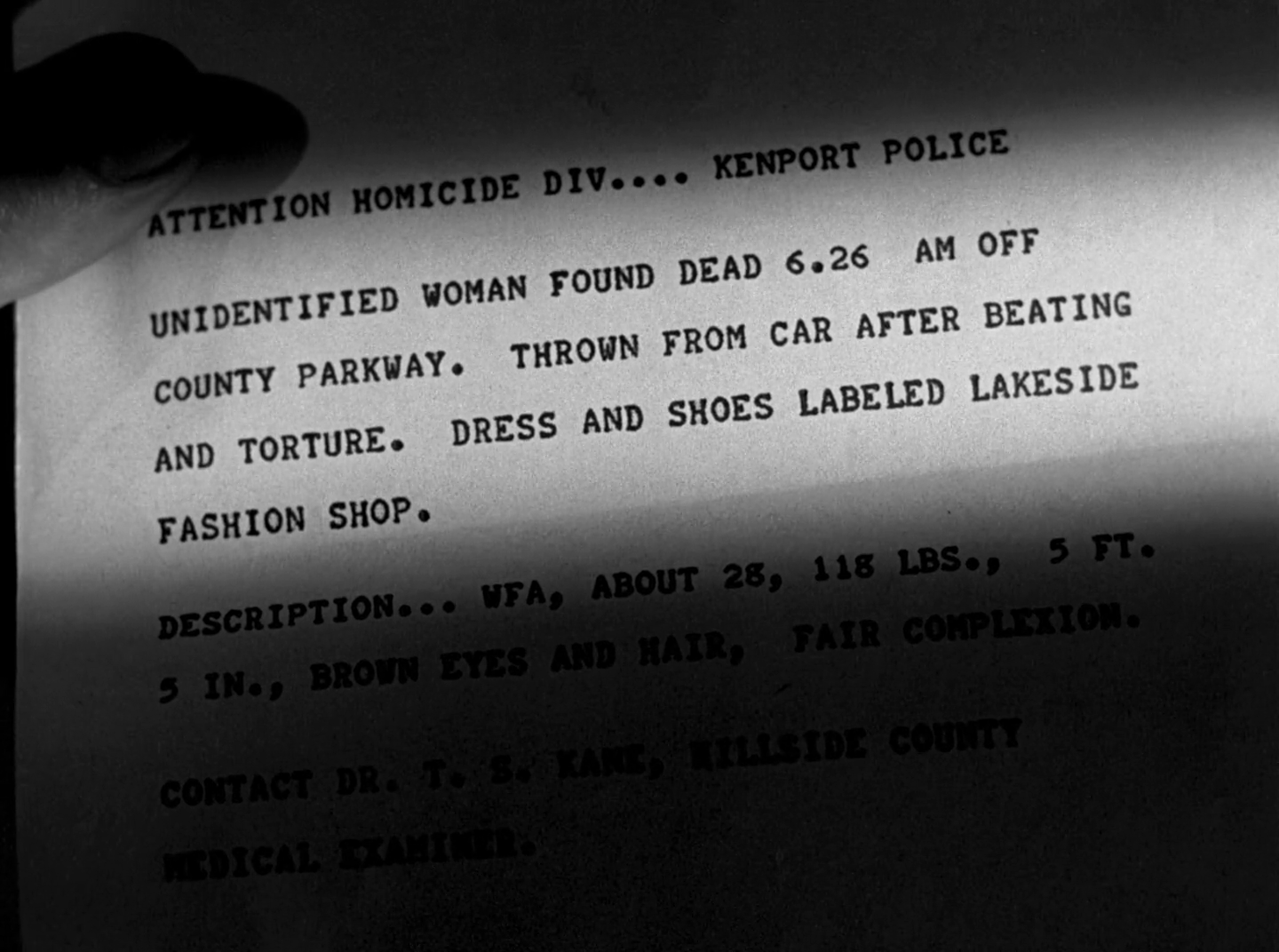
All four of the significant women characters die before the end of the film. The mistress of the cop whose suicide kicks off the film is murdered off-screen, tortured with cigarette burns and thrown into a river; the explicit description of it as “torture” is uniquely explicit for the 1950s. Glenn’s wife is blown up by a car bomb meant for him just barely off-screen—we see the brightness from the explosion and the wreckage afterwards.

Gloria Grahame’s mob moll has her face burned off by Lee Marvin and a pot of boiling coffee, leaving her with Harvey Dent-level scars down the side of her face. Finally, the dead cop’s widow is shot dead, getting off fairly easily and merely slumping to the floor.
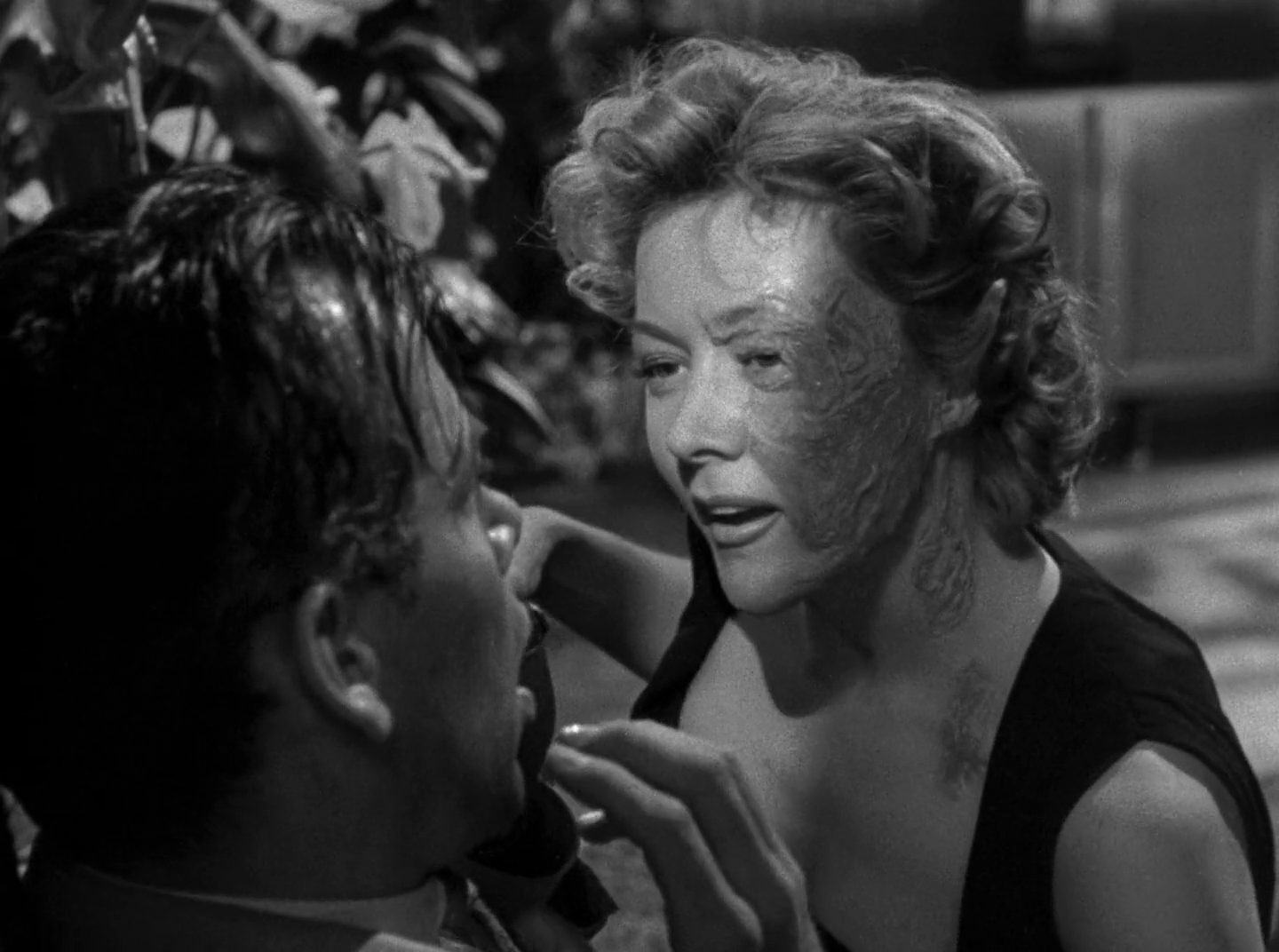
It’s incredible the amount of violence that women receive. Even those who barely appear don’t come out unscathed: one scene has Marvin burn a random woman with a cigarette.

This is paired with a surprising lack of violence against the men of The Big Heat. They make out pretty well, with one exception at the climax, when Grahame gets her coffee-based revenge, scarring Marvin’s face. (Although, it’s Lee Marvin, so it’s not exactly a major loss.) All the bad guys are indicted off-screen, and we’re informed via the classic spinning paper. How do we square this distribution of labor?

It might have something to do with how un-mysterious this movie is. It’s basically never a secret who is behind the suicide that puts everything in place: Alexander Scourby’s “Lagana”, an easy stand-in for all corruption and authority. Ford goes through the signs of investigation, but even at the end when he figures out who planted the bomb in his car that killed his wife, no progress is made.

It’s more accurate to describe the first 80 minutes of this 90-minute movie as slowly increasing intensities. More than any unraveling of clues, every character just stands around and becomes more and more motivated, more and more hateful, more and more energetic. Within their bodies, motivation builds and builds and builds until it explodes.

And how can these mostly male bodies express their building amounts of energy? Only by expressing their force on the soft bodies of women, whose separation from the world of power politics makes them purely objects. The cigarette burns, the explosion, the horrific scars: they are signs of force, of narrative force, acted out permanently.

The Big Heat then might be something like a noir about noirs, or a noir without a skeleton. In short, among mainstream 1950s noirs, it’s completely unique, and well worth watching.

November 22, 2017 0 comments
0 FacebookTwitterPinterestEmail
Newer Posts
Older Posts

About

About

Towards a provisional theory of the cinema, or, failing that, just some shit about movies

Authors
Rick Kelley
Lark Lundberg

Keep in touch

Facebook Twitter

Categories

  • Conversation
  • Film
  • Film By Film
  • Great Movie Project
  • Great Movies: The Counter Programming
  • Guest
  • News
  • Other
    • Commentary
    • Film
    • Interview
    • Reviews
    • Song for a Sunday
  • Streaming Selections
  • TV
  • Uncategorized
  • Vegan Horror

Archives

  • April 2019
  • March 2019
  • January 2019
  • December 2018
  • November 2018
  • October 2018
  • September 2018
  • August 2018
  • July 2018
  • June 2018
  • May 2018
  • April 2018
  • March 2018
  • February 2018
  • January 2018
  • December 2017
  • November 2017
  • October 2017
  • September 2017
  • August 2017
  • July 2017
  • June 2017
  • May 2017
  • April 2017
  • March 2017
  • February 2017
  • January 2017
  • December 2016
  • November 2016
  • October 2016
  • September 2016
  • August 2016
  • July 2016
  • June 2016
  • May 2016
  • April 2016
  • March 2016
  • February 2016
  • January 2016
  • December 2015
  • October 2015
  • September 2015
  • August 2015
  • July 2015
  • June 2015
  • May 2015
  • April 2015
  • March 2015
  • February 2015
  • January 2015
  • December 2014
  • November 2014
  • October 2014
  • August 2009
  • September 2008

Recent Posts

  • China Girls, Death Proof, and the Hidden Face
  • Old News: Old Noise Edition
  • Old News: April 1, 2019
  • Nicolas Winding Refn, Marginalia, and the Deaths of Cinema
  • And now, let us praise Kanopy

Recent Comments

  • Franklin Kat on Michael Shannon shines again in Frank & Lola
  • Sean Tempesta on Cinema and dream-logic in Meshes of the Afternoon
  • ludditerobot on The Left-Wing Slapstick and Iconic Songs of 1937’s Street Angel
  • Franklin Kat on The Left-Wing Slapstick and Iconic Songs of 1937’s Street Angel
  • Arijit Mukherjee on Great Movies Project: The Counter-Programming
  • Facebook
  • Twitter

@2021 - All Right Reserved. Designed and Developed by PenciDesign


Back To Top
Luddite Robot
  • Reviews
  • Commentary
  • Great Movie Project
    • Great Movie Project
      Bride of Frankenstein is a movie for and…

      January 25, 2018

      Great Movie Project
      The Enduring Appeal of Nick and Nora in…

      November 29, 2017

      Great Movie Project
      The Ahistorical Fever Dream of The Scarlet Empress

      August 2, 2017

      Great Movie Project
      Dreams, Mundanity, and the Anarchist Yearnings of L’Atalante

      July 12, 2017

      Great Movie Project
      Duck Soup Is And Will Always Be A…

      April 19, 2017

  • Counter Programming
    • Great Movies: The Counter Programming
      Walking and Talking in the Shadow of Kanchenjungha

      March 7, 2018

      Great Movies: The Counter Programming
      A Brief Encounter in My Mother and Her…

      February 9, 2018

      Great Movies: The Counter Programming
      Horror’s Refusal in Farrokhzad’s The House Is Black

      October 13, 2017

      Great Movies: The Counter Programming
      The rage and beauty of The Cloud-Capped Star

      October 3, 2017

      Great Movies: The Counter Programming
      The daylight noir and social issue empathy of…

      June 22, 2017

  • Vegan Horror
    • Vegan Horror
      Julia Ducournau doesn’t think her film Raw is…

      June 7, 2017

      Vegan Horror
      Licking our wounds: The vampiric masculinity of Ravenous

      December 13, 2016

      Vegan Horror
      Eggertsson and animals: An approach to horror cinema

      September 15, 2016

      Vegan Horror
      “It’s Not My Nature” – Vegetarianism, Body Horror,…

      August 30, 2016

      Vegan Horror
      Bodies and Carcasses in Predator 2

      August 23, 2016

  • Interview
    • Interview
      Jasmine Leyva’s doc The Invisible Vegan aims to…

      May 3, 2017

      Interview
      Bridging The Abyss: An Interview With The Directors…

      November 28, 2016

      Interview
      7 Days in Ohio: An Interview with Nathan…

      September 12, 2016

      Interview
      Film Critic Phil Dy talks New Filipino Cinema

      June 17, 2016

      Interview
      “I Love Seeing Film Projected.” A Conversation with…

      March 22, 2016