Top Posts
Madeline’s Madeline: An Unclassifiable Panic Attack Maybe-Masterpiece
Shoplifters Steals Moments of Wonder from the Mundane
Burning and Forgetting What’s Not There
Kusama: Infinity Expands Beyond The Canvas
Mandy Risks Little, Wins Little
In We The Animals, The Children Are Away...
The Seagull Isn’t Quite Chekhov, But It’s Still...
5 Million Ways Boots Riley Isn’t Sorry To...
American Animals’ and the Queasiness of the Heist
A Star Is Born In Hearts Beat Loud
  • Reviews
  • Commentary
  • Great Movie Project
    • Great Movie Project
      Bride of Frankenstein is a movie for and…

      January 25, 2018

      Great Movie Project
      The Enduring Appeal of Nick and Nora in…

      November 29, 2017

      Great Movie Project
      The Ahistorical Fever Dream of The Scarlet Empress

      August 2, 2017

      Great Movie Project
      Dreams, Mundanity, and the Anarchist Yearnings of L’Atalante

      July 12, 2017

      Great Movie Project
      Duck Soup Is And Will Always Be A…

      April 19, 2017

  • Counter Programming
    • Great Movies: The Counter Programming
      Walking and Talking in the Shadow of Kanchenjungha

      March 7, 2018

      Great Movies: The Counter Programming
      A Brief Encounter in My Mother and Her…

      February 9, 2018

      Great Movies: The Counter Programming
      Horror’s Refusal in Farrokhzad’s The House Is Black

      October 13, 2017

      Great Movies: The Counter Programming
      The rage and beauty of The Cloud-Capped Star

      October 3, 2017

      Great Movies: The Counter Programming
      The daylight noir and social issue empathy of…

      June 22, 2017

  • Vegan Horror
    • Vegan Horror
      Julia Ducournau doesn’t think her film Raw is…

      June 7, 2017

      Vegan Horror
      Licking our wounds: The vampiric masculinity of Ravenous

      December 13, 2016

      Vegan Horror
      Eggertsson and animals: An approach to horror cinema

      September 15, 2016

      Vegan Horror
      “It’s Not My Nature” – Vegetarianism, Body Horror,…

      August 30, 2016

      Vegan Horror
      Bodies and Carcasses in Predator 2

      August 23, 2016

  • Interview
    • Interview
      Jasmine Leyva’s doc The Invisible Vegan aims to…

      May 3, 2017

      Interview
      Bridging The Abyss: An Interview With The Directors…

      November 28, 2016

      Interview
      7 Days in Ohio: An Interview with Nathan…

      September 12, 2016

      Interview
      Film Critic Phil Dy talks New Filipino Cinema

      June 17, 2016

      Interview
      “I Love Seeing Film Projected.” A Conversation with…

      March 22, 2016

Luddite Robot
Film critique, theory, and assorted nonsense.
CommentaryFilm

China Girls, Death Proof, and the Hidden Face

April 14, 2019

Old News: Old Noise Edition

April 8, 2019

Old News: April 1, 2019

Nicolas Winding Refn, Marginalia, and the Deaths of Cinema

CommentaryFilm

And now, let us praise Kanopy

January 24, 2019

Warren Sonbert and the Relief of Anti-Narrative

January 14, 2019

The World Is Ending and It Doesn’t Matter

The Best Films of 2018

FilmReviews

Madeline’s Madeline: An Unclassifiable Panic Attack Maybe-Masterpiece

December 21, 2018

Shoplifters Steals Moments of Wonder from the Mundane

December 11, 2018

Burning and Forgetting What’s Not There

Alien, Musicology, and Reading Soundtracks

CommentaryFilm

Shocktober III: Halloween 2018 Edition

October 24, 2018

Shirley Jackson’s The Lottery Traumatized Schoolkids in 16 mm

October 18, 2018

Shocktober 2018 II: Another Reshockening (of Horror)

Häxan is a movie made by a movie character

CommentaryFilm

Shocktober 2018

October 7, 2018

Unprofessional! Spring Night, Summer Night

October 3, 2018

The Wild Boys: A Luddite Robot Conversation

Kusama: Infinity Expands Beyond The Canvas

Great Movies: The Counter Programming

Horror’s Refusal in Farrokhzad’s The House Is Black

by rick October 13, 2017
written by rick

Plenty of films, indeed much of modern art and poetry, has sought beauty in apparent hideousness. At least since Baudelaire fondly remembered a romantic stroll among the graceful swarm of putrid maggots inside “that superb cadaver / blossom[ing] like a flower,” it’s been a constant theme. But few have merged the mytho-poetic and the decaying flesh with as much compassion as Forough Farrokhzad did in 1962’s The House Is Black.

In just 22 minutes, and in her only film, the Iranian poet dove deeper into suffering, empathy, and transcendence than many horror filmmakers (or film-essayists, for that matter) have since.
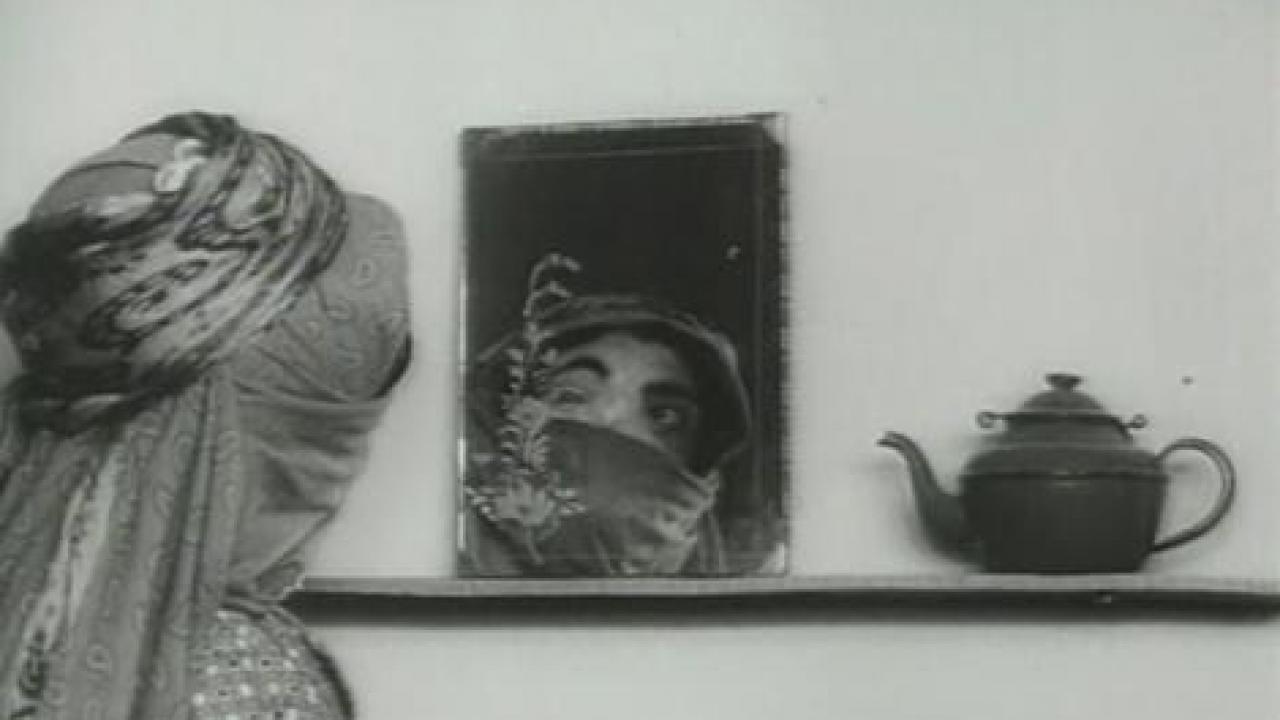
Already controversial for verses articulating female desire in a cultural context less than eager to hear about such things, The House Is Black exists on an entirely different plane. Combining a recitation of extraordinary beauty over elegantly framed, jaggedly edited images — horrific, banal, joyous by turn — the film both bears witness and exalts, in a sort of Persian riff on the Old Testament. It’s aware of the body and aware of the horror, and opts for the body. There’s nothing like it.

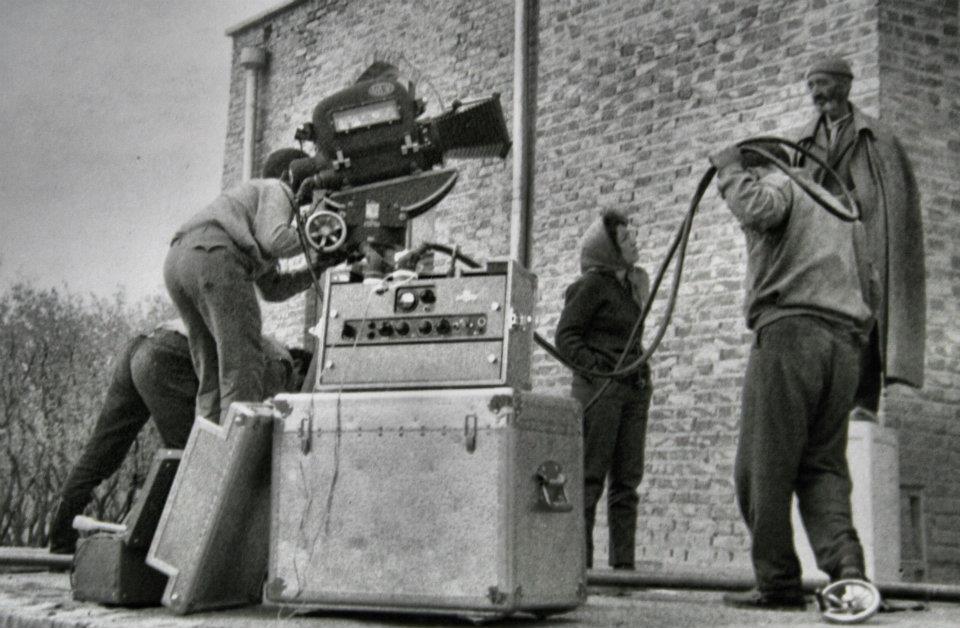
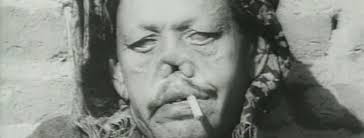
Filmed, unflinchingly but with unmistakable specificity, entirely in a hospice in East Azerbaijan Province, a leper colony that may as well exist in another dimension, The House Is Black is a marvel of visual storytelling: no dialog, no linked incident, and just Farrokhzad’s narration. We are presented with a catalog of suffering: a blind man traces the contours of a wall, a man with no face smokes a cigarette in an unexpected fashion, lesions (shudder) are scraped from the bottoms of feet.
The filmic resonances echo and rebound: Freaks, probably first and foremost, but also Chris Marker’s aesthetic, Cronenbergian fixations on deteriorating flesh, Bunuel’s incursions into fictive documentary. But from its opening title card, in which Farrokhzad makes clear she intends The House Is Black to be a defense and an instruction, there are examples closer to home: say, Kiarostami’s early work with Institute for the Intellectual Development of Children and Young Adults in Tehran, or the earliest works of pedagogical cinema from Oscar Micheaux or Lois Weber (or even, for that matter, the wildly-misconceived final section of Haxan). At least by its own account, The House Is Black aims to educate with the camera as much as it shocks.

But the striking thing about Farrokhzad’s film — one of the striking things — is the way in which it goes about accomplishing this. What could have been a tour of grotesquerie ends up affirming, in sorrow, our commonalities rather than the vicarious pleasure we sometimes find, even against our will, in the abject. Students still go to class to study The Koran, albeit with particular vantage points. (One child, asked to name beautiful things, says, “Mother, Father.” Asked to name ugly things, he replies, “Hand. Foot.”) They play outside, with a joy untempered by physical limitation. There’s a wedding ceremony.

Farrokhzad sugarcoats nothing. These are not ways to paper over the isolation, substitute joys. But they are solaces amid lives circumscribed by the inexplicable, and testaments to the will to persevere — if not in the face of God’s cruelty (how could God be cruel?), then despite His tests over bodies we didn’t choose. The Film Sufi considers three levels on which The House Is Black functions:

  1. The first level concerns the immediate and concrete conditions of the lepers in the leper colony – their circumstances of social neglect and misery.
  2. There is a second level or theme concerning how we understand and respond to what we encounter in the world, especially given the fact that there are always mysteries that we can’t explain.  On this level the film contrasts two main approaches  – the religious and the scientific – and how they deal with the scourge of leprosy.
  3. At a still more abstract level there is the despondent idea of leprosy seen as a general metaphor for the human condition.  Under this guise, we are all seen as lost and lowered to the lepers’ level of misery.

None of these are separable, but, as non-lepers, it is presumably the final one that lasts in the mind. As the door closes in the final frames, we too are left in the dark, in the house, behind fences, alone or with others, and always with our own deformities (which hopefully don’t require quite so many literal scalpels … though let’s not be too certain about that). Though, just as hopefully, there will be a friend inside to comb our hair, as an act of both love and resistance.
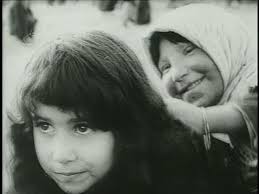
The House Is Black is a tough watch, because it is a tough film. The cinematography can only be called beautiful, and not just in Baudelaire’s sense. We feel we’ve witnessed something honest, which is rare enough, but also something searching, questioning, and in pain, even amid the occasional kindness and the rare laugh. It looks a lot like life.

An excerpt from Farrokhzad’s poem is worth repeating in full:

“I will sing your name, O Lord.
I will sing your name with the 10-string lute.
For I have been made in a strange and frightening shape.
My bones were not hidden from you when I was being created.
I was molded in the bowels of the earth.
In your book all my parts have been written . . .
. . And your eyes, O Lord, have seen my fetus.
I won’t see the spring.
These lines are all that will remain.
As the heavens circles, I fell into the bedlam.
I’m gone.
My heart is filled with sorrow.
O Muslims, I am sad tonight.


I said if I had wings of a dove,
I would fly away and be at rest.
I would go far away and take refuge in the desert.
I would hasten my escape from the windy storm and tempest.
For I have seen misery and wickedness on earth.


The universe is pregnant with inertia .
. . and has given birth to time.
Where would I escape from your face?
And where would I go from your presence?
If I hang on to the wings of the morning breeze
And reside in the deep of the sea,
Your hand will still weigh on me.
You have made me drunk with indecision.
How awesome are your deeds!


I speak of the bitterness of my soul.
When I was silent, my life was rotting
. . . from my silent screams all day long.
Remember that my life is wind.
I have become the pelican of the desert,
. . the owl of the ruins,
And like a sparrow, I am sitting alone on the roof..


I am poured out like water
. . . as those who have long been dead.
On my eyelids is the shadow of death.
Leave me.
Leave me, for my days are but a breath.
Leave me before I set out for the land of no return,
. . . the land of infinite darkness.


Alas, for the day is fading,
the evening shadows are stretching.
Our being, like a cage full of birds,
Is filled with moons of captivity.
And none among us knows how long he will last.
The harvest season passed,
The summer season came to an end,
. . . and we did not find deliverance.
Like doves, we cry for justice.
. . and there is none.
We wait for light and darkness reigns.


O overrunning river driven by the force of love,
. . . flow to us, flow to us.

Despite its title, The House Is Black is not the darkness; it’s the river, captured, briefly, on film.
October 13, 2017 0 comments
1 FacebookTwitterPinterestEmail
CommentaryGuest

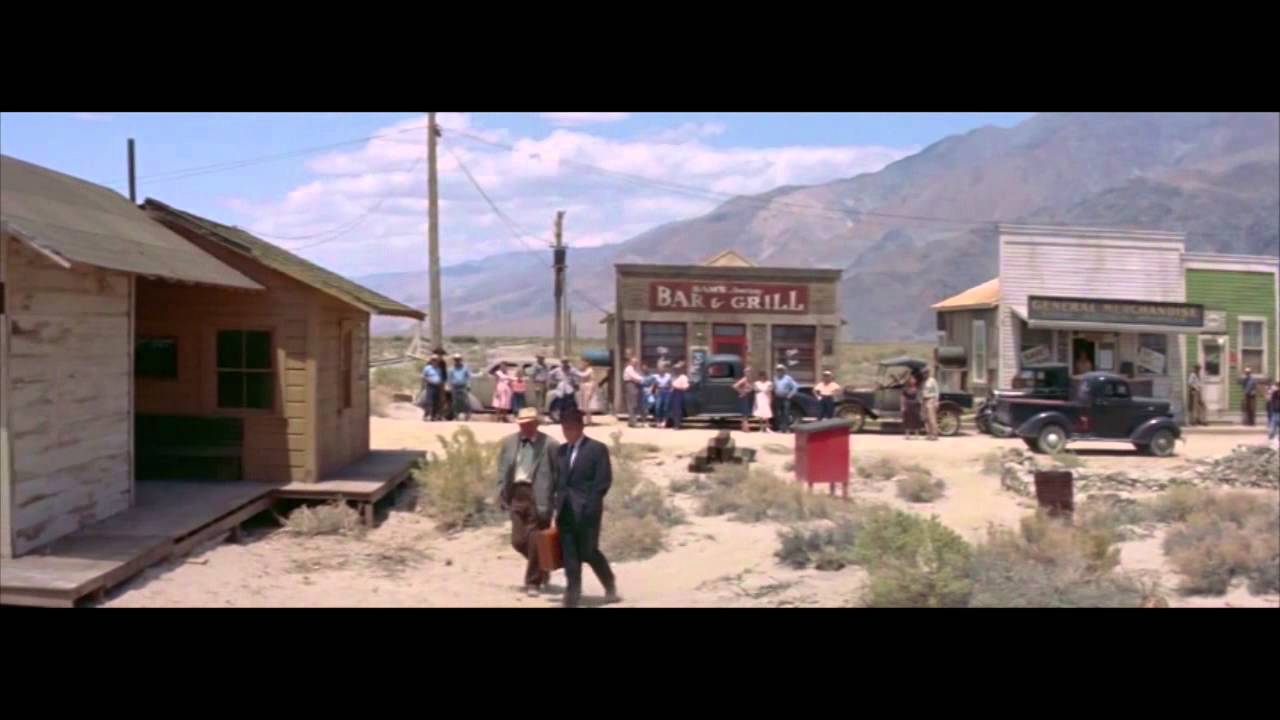
The Blank Slate Politics of Bad Day at Black Rock

by Lark October 12, 2017
written by Lark

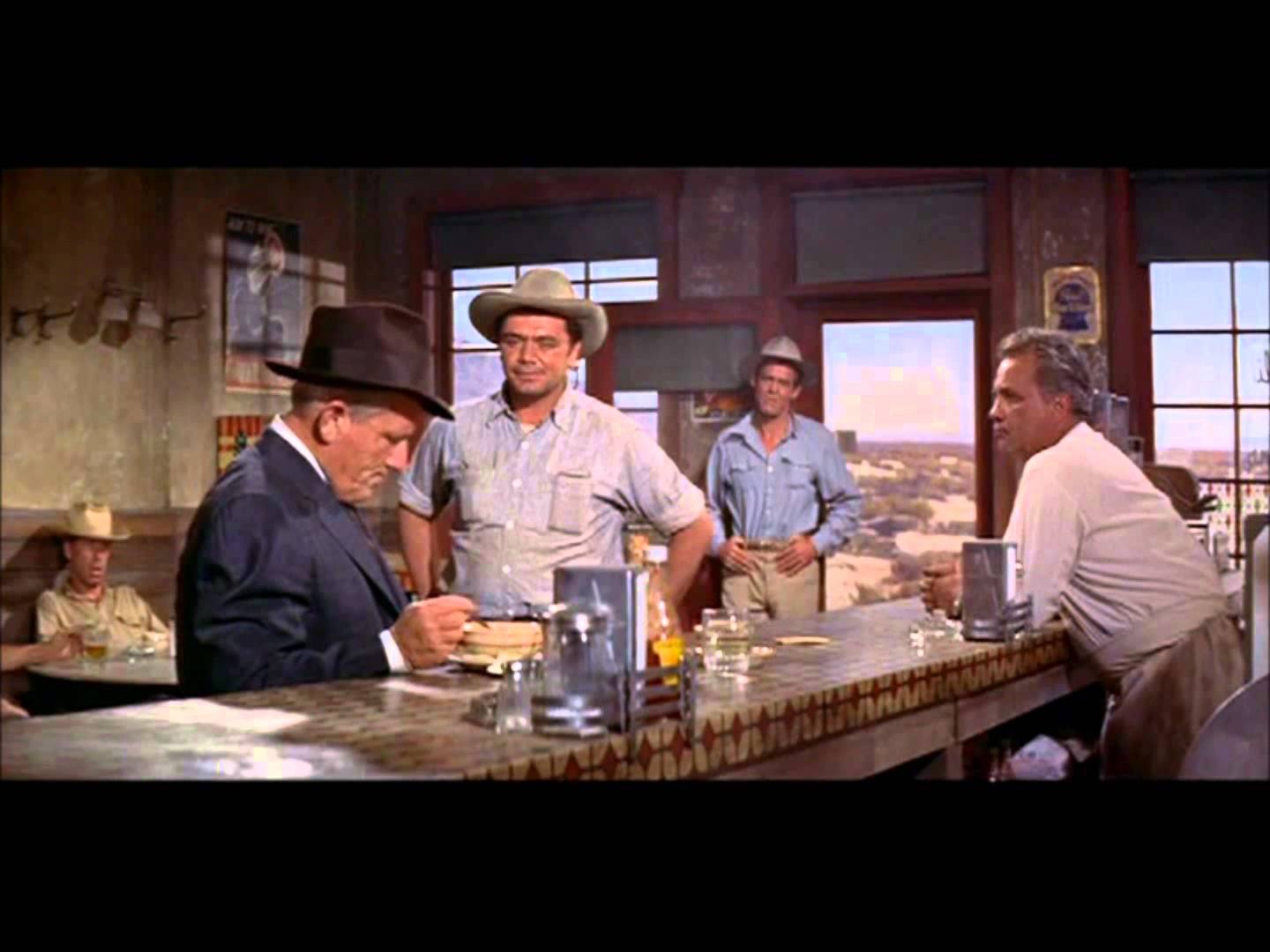
A stranger comes to town with a mysterious past. He’s looking for someone, a Japanese farmer named Komoko, but no one will tell him anything; it’s clear the name brings up dark memories. Some details about him come out: he’s a veteran of World War II, which had recently ended; he’s there to deliver a medal to the father of someone who died saving his life; and he can do karate. And in turn, the secrets of the town dribble out: The father was murdered by the gang that not only runs the town, but seems to be the entirety of its inhabitants, in a fury after Pearl Harbor, and they’re waiting for nightfall to kill him so it doesn’t come out. Well, night falls, guns are fired, and the hero escapes to spread the truth to the world. That’s the thrust of Bad Day at Black Rock, a remarkable example of the Efficient Genre Picture of Hollywood’s Golden Age.

It’s a peculiar mix of film noir and Western – perhaps the only film noir to be shot in widescreen and in gaudy full color. As a little puzzlebox of narrative, building on the inherent propulsive push of the diurnal cycle, it simply works wonderfully.

Bad Day at Black Rock

And that is an interesting word to use here: works. I hear few themes pop up more often in modern film dork culture than the praise of the efficient genre film. These films are the purest form of that old doctrine of screenwriting, that one should get the hero up a tree, throw rocks at him, then get him down. They are almost Aristotelian in form, with a focus on those events that take place over the wonderfully fertile time range between the completely real time and a day/night cycle (with denouement a little after daybreak).

Often this drive for the film that is efficiently plotted internally is wrapped up with a desire for movies to be shorter externally. Listen, I get it: movies are too long. But it is too easy to conflate these two ideas together.

There are a lot of things at play in this drive for the efficient movie, but I would like to suggest a particular reason for its popularity: that it shrinks the size for “themes,” crudely defined, or political aspects, broadly defined. With smaller and smaller scopes, it feels more like the films are “un-thinkpiece-able”. We feel free from the specter of liking something problematic. (No matter how many articles I am shown, I don’t think I’ll ever be convinced that it is as easy as saying it is OK to like “problematic” things, and to have it left at that.)

To circle back around to Bad Day at Black Rock:

It was halfway through the viewing experience that I took a bathroom break, and was flipping through the Trivia tab for the film. That was when I learned a bit that completely interrupted my viewing: that Bad Day was one of the most played films at the White House theater.

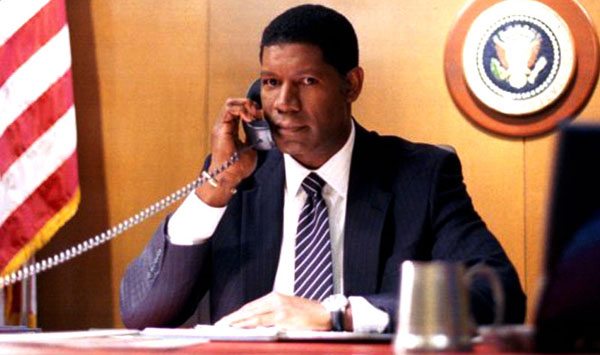
OK, it’s insane. It shouldn’t have bothered me. I get it. It’s not a very good film critic-y thing to do. But at that moment I felt a different kind of specter float into the room and hang between me and the TV, Max Cady-style, laughing too loudly at any jokes, cheering too loudly at any successes. I learned later that it was JFK in particular who loved the movie and drove up its view count, but the one that was haunting me wasn’t any particular president. It was an amalgam of them all. It was whatever original person that Aaron Eckhart, Morgan Freeman, and the guy from the Allstate commercials all copied from. It wasn’t a president – it was The President.

I suppose I try to suppress my desire to view every movie politically. After all, at that point it becomes extremely hard to avoid making a value judgment based on its politics, which would cut us off from so much wonderful art in our history. And yet, and yet, as I sat there watching this purely efficient film, a film that just works, I was stuck ruminating on how that idea and the political are so intertwined.
After all, so many of these ideas of narrative efficiency go straight back to Aristotle’s Poetics, and those standards Aristotle put together were explicitly politically normed. Those rules made good plays, and good plays made a good civilization.

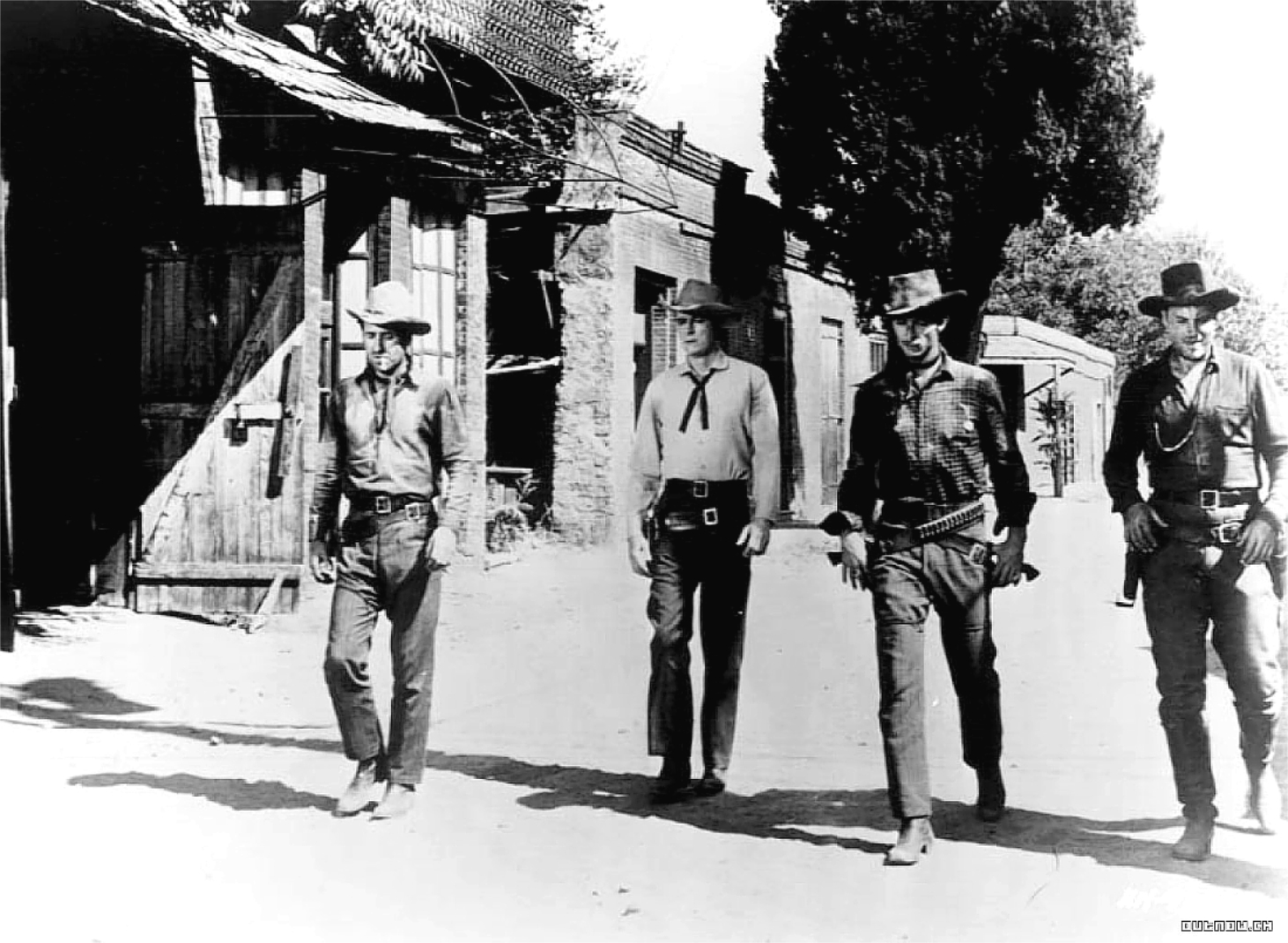
And it is exactly that idea, that the efficiently-made film plays into a healthy civilization however defined, that was brought out by the President as a viewing b buddy. It made me think of another wholly efficient film, one that shares a lot of similarities with Bad Day: High Noon. High Noon is an easy film to see politically, at least for me.

It’s nothing else than a creation myth for the family, an explanation for how the elemental Father can turn from his duty to the city as a whole to the specific duty to his family. It is a narrative that attempts to resolve a recurrent tension in America’s moral systems, the idea that the duty of the family and the duty of the polity feed into one another – and the implicit question of how to choose between them. And in attempting to resolve that tension, it merely makes it more explicit.

High Noon and Bad Day at Black Rock

Bad Day at Black Rock is in many ways an inverted version of High Noon in a number of ways. One of the most obvious inversions is in the final moment. In High Noon, the protagonist throws his badge to the ground in contempt for the town he defended. In Bad Day, the protagonist gives the medal he came to town to deliver to the murdered Japanese farmer to the town in general, to begin rebuilding. Like High Noon – and, in a way, like the tragedies Aristotle described – it acts out on a small stage the restitution of and foundation of justice (for justice is never founded for the first time; it is always rediscovered and re-founded, always promising a fresh start and a just society).

And what’s wrong with that? After all, justice is less a political “theme” per se than merely the form of the narrative itself. Justice is a story: crime and punishment. Its recurrence in these efficient genre pictures doesn’t make them political, as much as it makes them simply more efficient.

All that is true. But I can’t help thinking, as the President watches Bad Day with me, cheering to the new foundation of the town at the end, what will happen to Komoko’s land. The Japanese farmer was murdered, among other reasons, for not being tricked. The head of the gang sold him land that was supposed to be dry and desolate, but he drilled down far enough to start a well; it was that that truly led to his death.

And what happens to the land now? The gang has been punished for their murder, and the town promises to start again in justice – but what happens to the well he discovered? It will, presumably, become incorporated into the town, or become some new property. In other words, for all the declaration of a new start, the success and health of that new start is reliant on the sins of the past.

And maybe — and this is definitely a maybe — that points to part of the appeal of these movies, where everything wraps up perfectly at the end. There is a sense of a “blank slate” as justice returns, and in that justice the sins of the past can be ignored without any lingering effects. It’s by ignoring pesky questions like what happens to his land that the films remain unpolitical. It allows us to return to the one uncomplicated place: the healed city, just after the cowboy leaves.

October 12, 2017 0 comments
0 FacebookTwitterPinterestEmail
Great Movies: The Counter Programming

The rage and beauty of The Cloud-Capped Star

by rick October 3, 2017
written by rick

It would be easy, accurate, and a little reductive to call Ritwik Ghatak “the poet of Partition.” But it’s inescapable. Ghatak’s films are obsessed with that existential trauma, even in something like previous Counter-Programming entry Ajantrik. Here is a guy who can make a love story about a man and his car, a sort of fart-filled Herbie, and still conjure up deeply-felt anxieties about colonialism and territorial integrity. In 1960’s The Cloud-Capped Star, we get something significantly more angry.

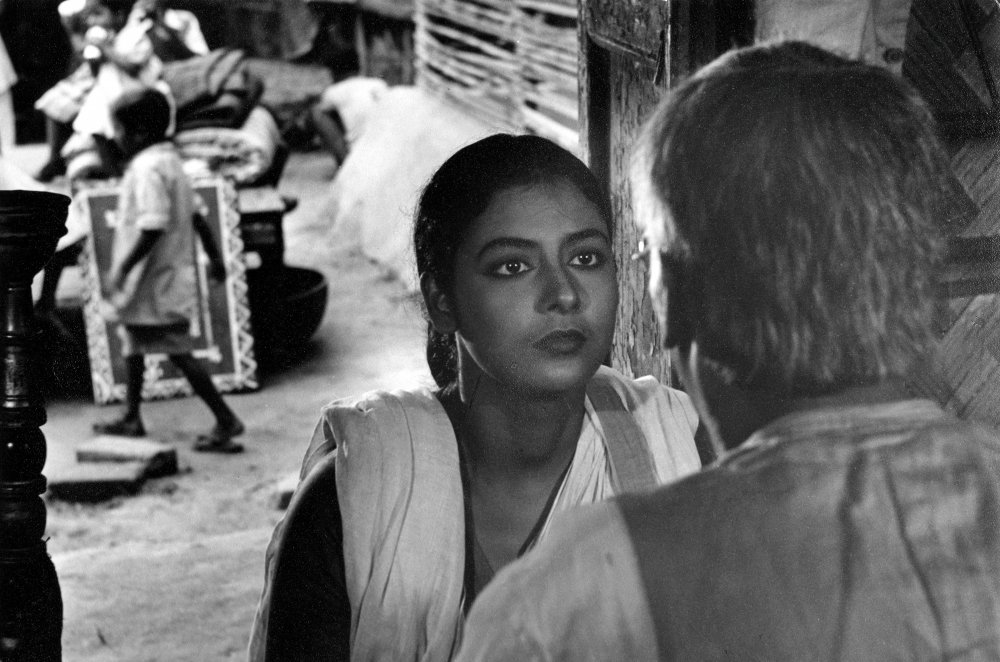
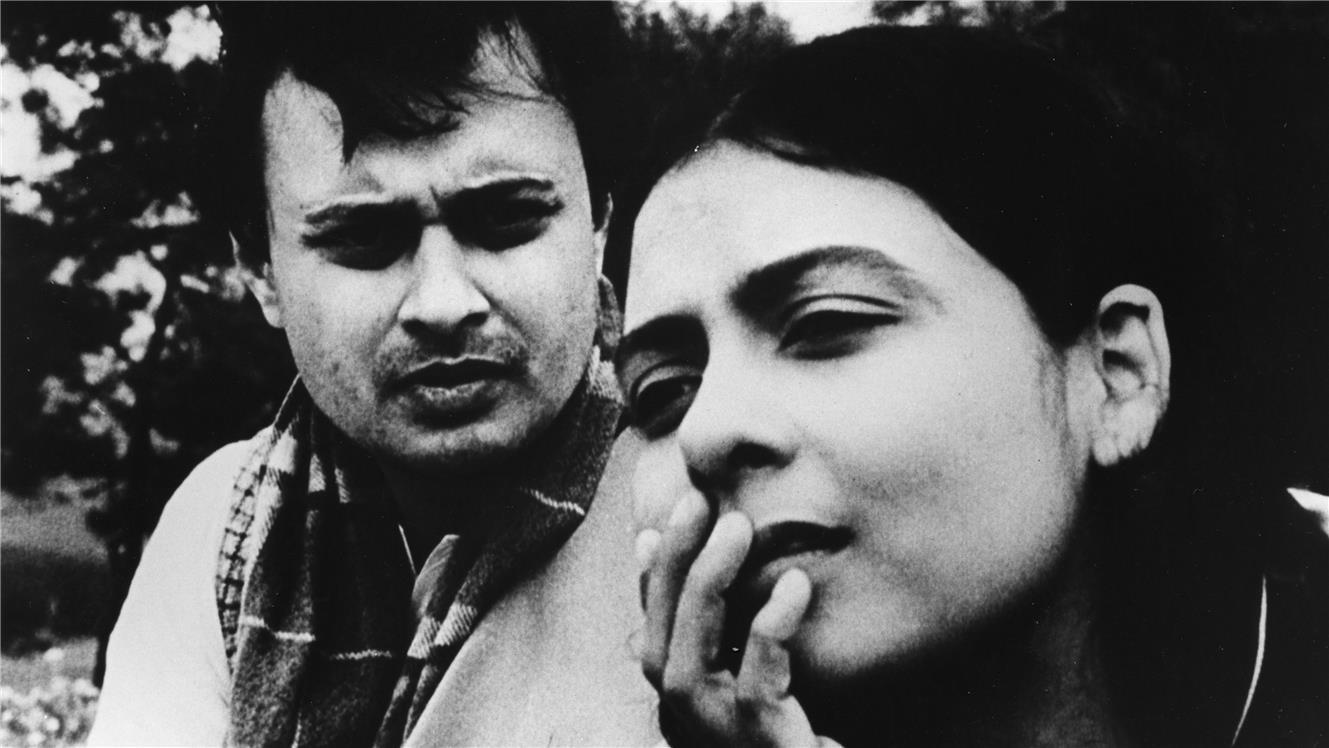
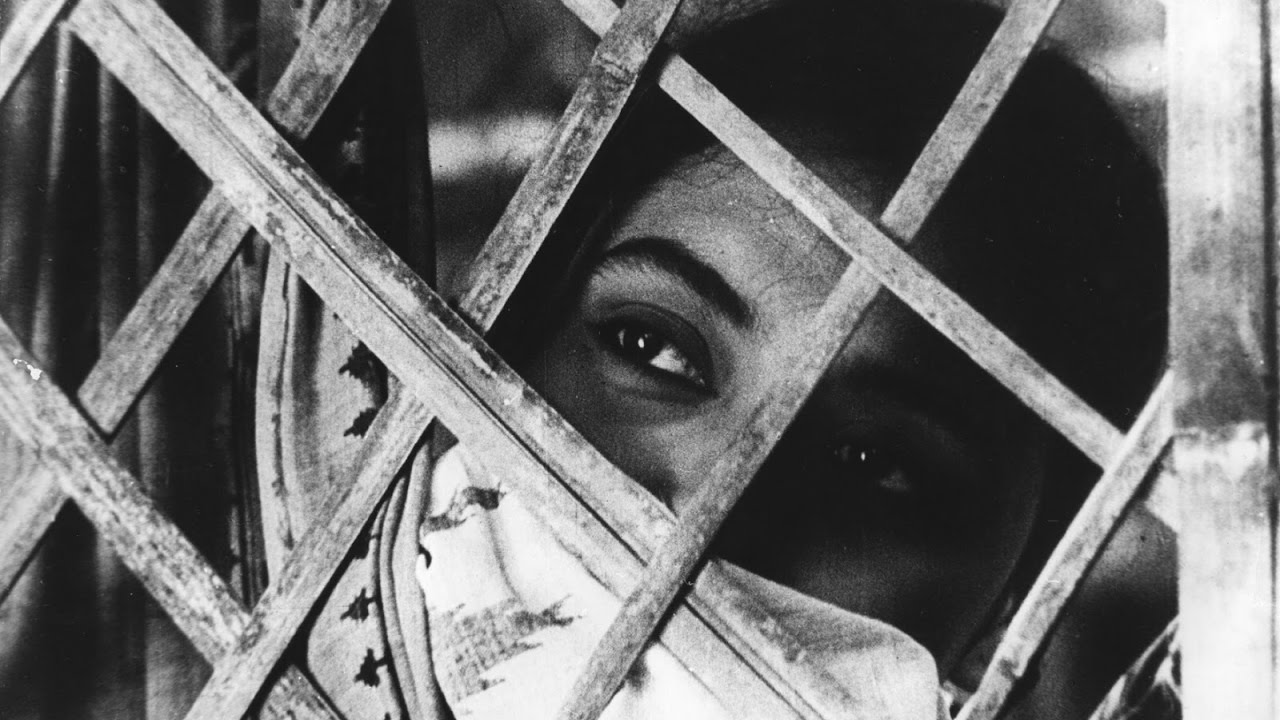
Supriya Choudhury and Anil Chatterjee in Ritwik Ghatak's The Cloud-Capped Star

There are no farting cars in The Cloud-Capped Star, though the sound design is still integral to the aesthetic. (If Ajantrik mined laughs from the failing vehicle, The Cloud-Capped Star has more jarring things in mind with every sizzling stove.) But we are now in a full-fledged melodrama.

The narrative is brief and brutal. Neeta (Supriya Choudhury) takes care of her family — two parents, three siblings. They depend on the money she’s able to raise from a teaching gig. Her father is an intellectual who increasingly realizes he’s betrayed her kindness and filial care. Her mother resents her seeming angelic behavior, inventing reasons for irritation while simultaneously conveying a sense of her own loss in life. Her sister is a conceited sort of monster. Her two brothers are either entitled or simply able to shrug off her sacrifices, as they pursue their own goals.

Supriya Choudhury in Ritwik Ghatak's The Cloud-Capped Star

Much of The Cloud-Capped Star takes place in the family home, or in the marketplace, or, significantly, near the river. This is where we first meet Neeta and her song-singing brother Shankar (Anil Chatterjee). Their relationship will form the crux of the film, though Ghatak cleverly incorporates all sorts of relations into the narrative. It’s a surprisingly sprawling film, given the focus on the home — we keep going outside.

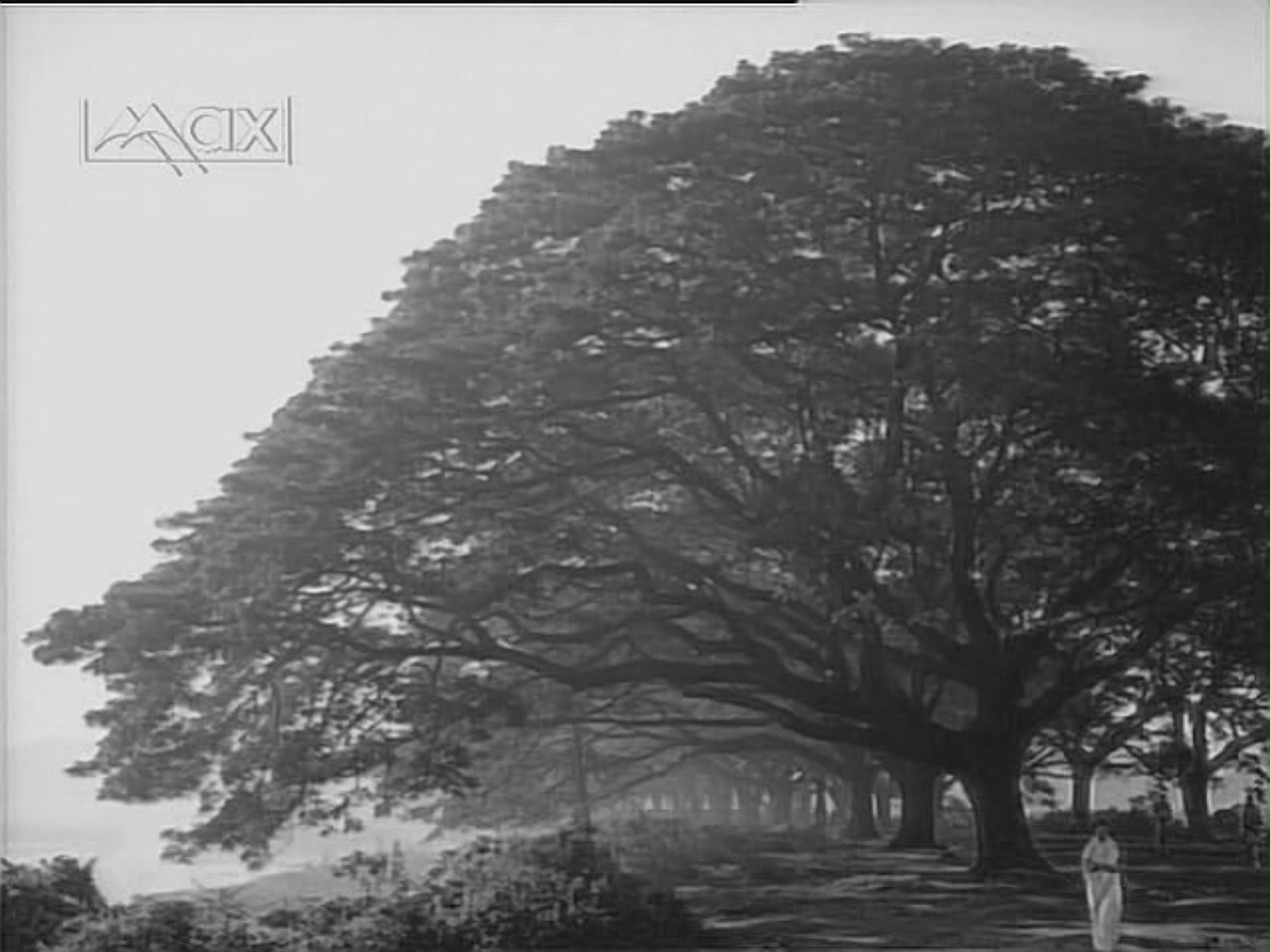
Shankar’s love for his sister is evident, as is hers for him. This is presented in the first frame, as she finds him practicing under a tree. (In a staggeringly astute formal analysis, Raymond Bellour examines its relevance.) He’ll go on to great success, though too late; she will end up in a sanitarium in the mountains, crying out, in what some folks call Bollywood’s most famous line, “I wanted to live!” Here we are.

Supriya Choudhury in wide shot with tree Ritwik Ghatak's The Cloud-Capped Star

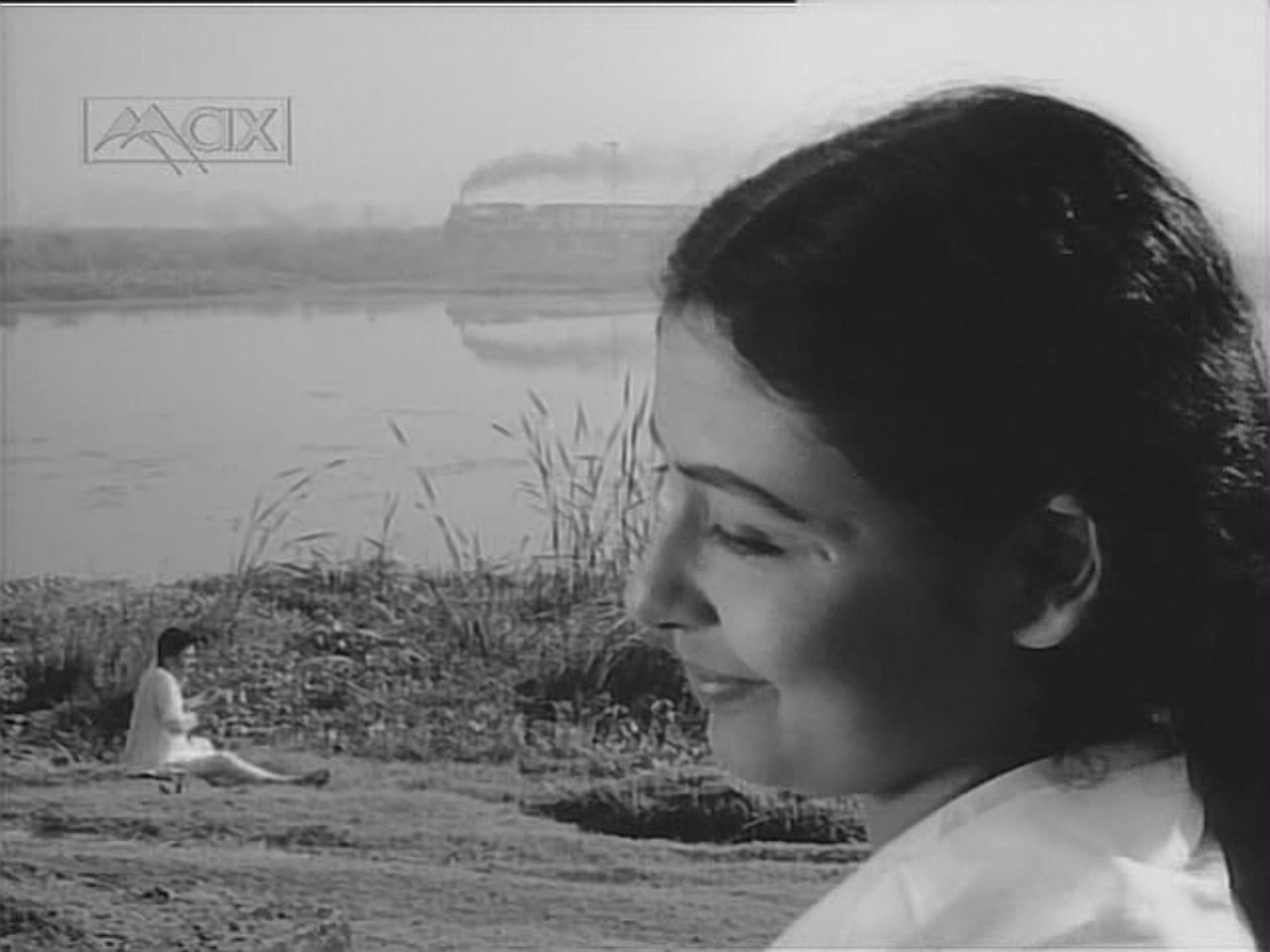
Ghatak’s anti-colonial feminism is on full display. The Cloud-Capped Star is an angry film, at times a strident one, but always visually compelling. As though in a direct appeal to my personal sensibilities, the train plays a central role.

Ghatak embodies Partition through actual cuts in the frame, the passing train being the most obvious one. Nothing seems to hold as modernity divides our protagonists. Love brings people together, but all kinds of distances and desires separate them. Ghatak seems to feel it could’ve been another way.

Along with the anger, there’s a deep sorrow, a deep pessimism about the future. Even the acute angles suggest something off balance. Neeta has an opportunity to find happiness with a man she admires; he’ll end up with her sister instead, since there’s no time for their love between her work and his ambition.

Supriya Choudhury in Ritwik Ghatak's The Cloud-Capped StarIs it all so obvious? The Cloud-Capped Star certainly doesn’t hide its affinities. Ghatak films in broad strokes half the time, without filters, and with extraordinary nuance for the rest. The Bengali specificity is there, but there’s a more general, even universal rage here. I have trouble even getting at my admiration for this movie. Like The Goddess, it’s exactly the sort of film I hoped to see when considering this series. It is so rooted in its moment, and so applicable to ongoing struggles, that I just wonder at it.
Ghatak would survive another 16 years after its release, eventually recognized as a master filmmaker, though increasingly lost to alcoholism and depression. Some of the songs in The Cloud-Capped Star would become the most famous of their kind. They remain, and the images remain.


October 3, 2017 0 comments
0 FacebookTwitterPinterestEmail
CommentaryFilm

Darren Aronofsky in the Library of Babel: mother! and Excess, Part 2

by rick September 25, 2017
written by rick

“The universe (which others call the Library) is composed of an indefinite and perhaps infinite number of hexagonal galleries, with vast air shafts between, surrounded by very low railings. From any of the hexagons one can see, interminably, the upper and lower floors.”

So begins Jorge Luis Borges’ classic 1941 story The Library of Babel, which imagined a finite collection of texts assembled from the same rudimentary characters, that would nevertheless contain every book it was possible to write, every conceivable idea and its negation, and a whole lot of randomly assembled gibberish. This is where the text of Darren Aronofsky’s mother! can be found.

Among all its outraged or adoring thinkpiece responses, and the responses to those responses, and the responses to those in turn, all composed by the “imperfect Librarians” of the mother! Decoding Industrial Complex (m!DIC), the text itself remains elusive and unstable.

Aronofsky, with admirable passion and lamentable critical impulses, insists on telling us what it means, and we are immediately reminded that no one should ever listen to artists talk about their art. Authors lack such authority. Like Tobe Hooper proclaiming that The Texas Chainsaw Massacre is “about meat,” we can only respond to Aronofsky’s insistence that he made a climate-change horror: “Well, sure; that’s one theory, anyway.”
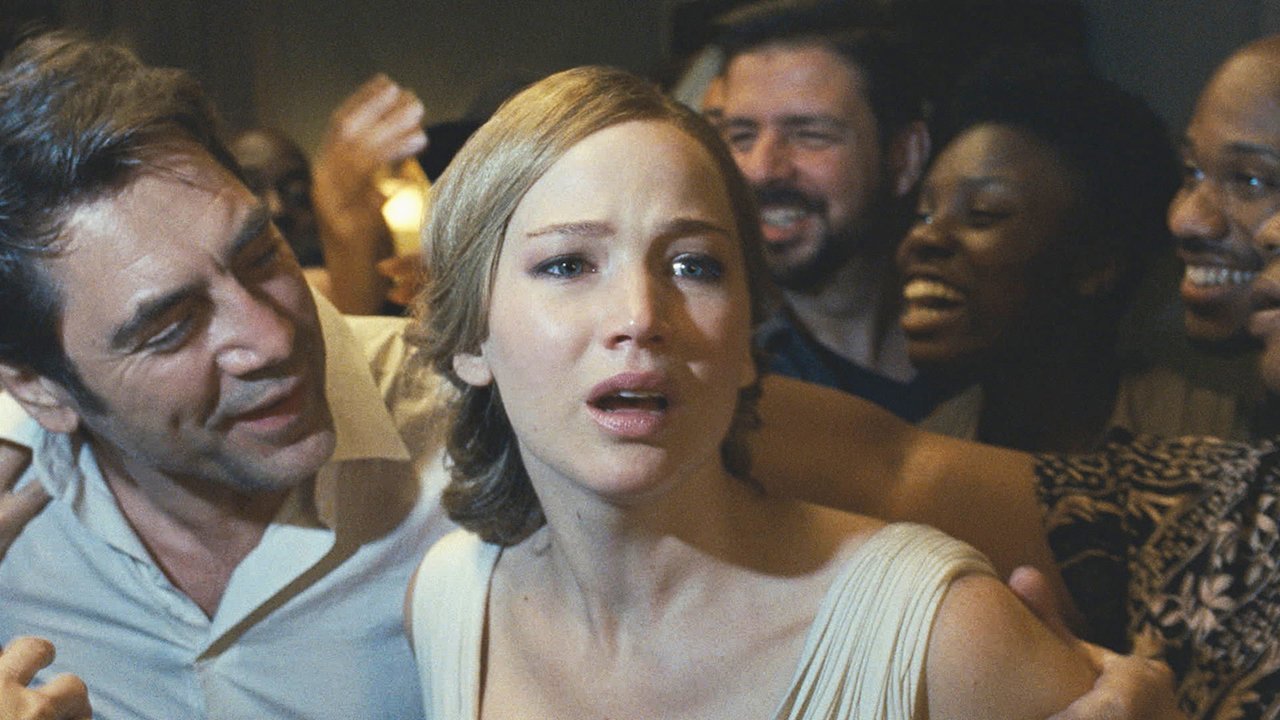
There are, of course, others.

If empirical evidence is needed for a reader-response model, mother! is just sitting there, a catalog of contradictory reactions. Aronofsky himself becomes just another reader among many. (It would be much better if he adopted the attitude of the Coens or a Kelly Reichardt, adamantly refusing to weigh in; on the other hand, the clear insufficiency of Aronofsky’s reading to encapsulate his text turns out to be instructive.)

Rarely has a contemporary text been so excoriated by its readers for ludicrous obviousness and self-evident allegory, with so little consensus on what’s so obvious and what point, exactly, its allegory is beating into the ground. Is it the reading insisted on by Aronofsky and Jennifer Lawrence, the cautionary tale about mistreatment of the Earth?

Lawrence has repeatedly mentioned that the part didn’t click until they had her character go barefoot throughout the film. (Apparently, much of the incidental sound in the House is composed of her modified voice, in case we missed the connection.) A New York Times profile mentions that mother! arose from Aronofsky’s “conversations with Susan Griffin, the author of ‘Woman and Nature,’ a 1979 feminist text … [weaving] together ideas about men and women and the roles we’ve historically been assigned: man battling nature, woman in tune with it.” (Fascinatingly, that same profile can’t help casting the real-life Lawrence as the emotive, passionate complement to her more withdrawn, analytically-minded boyfriend, as though the primacy of this reading of the film is also a decoder key for a celebrity relationship; the allegory has jumped right off the screen.)

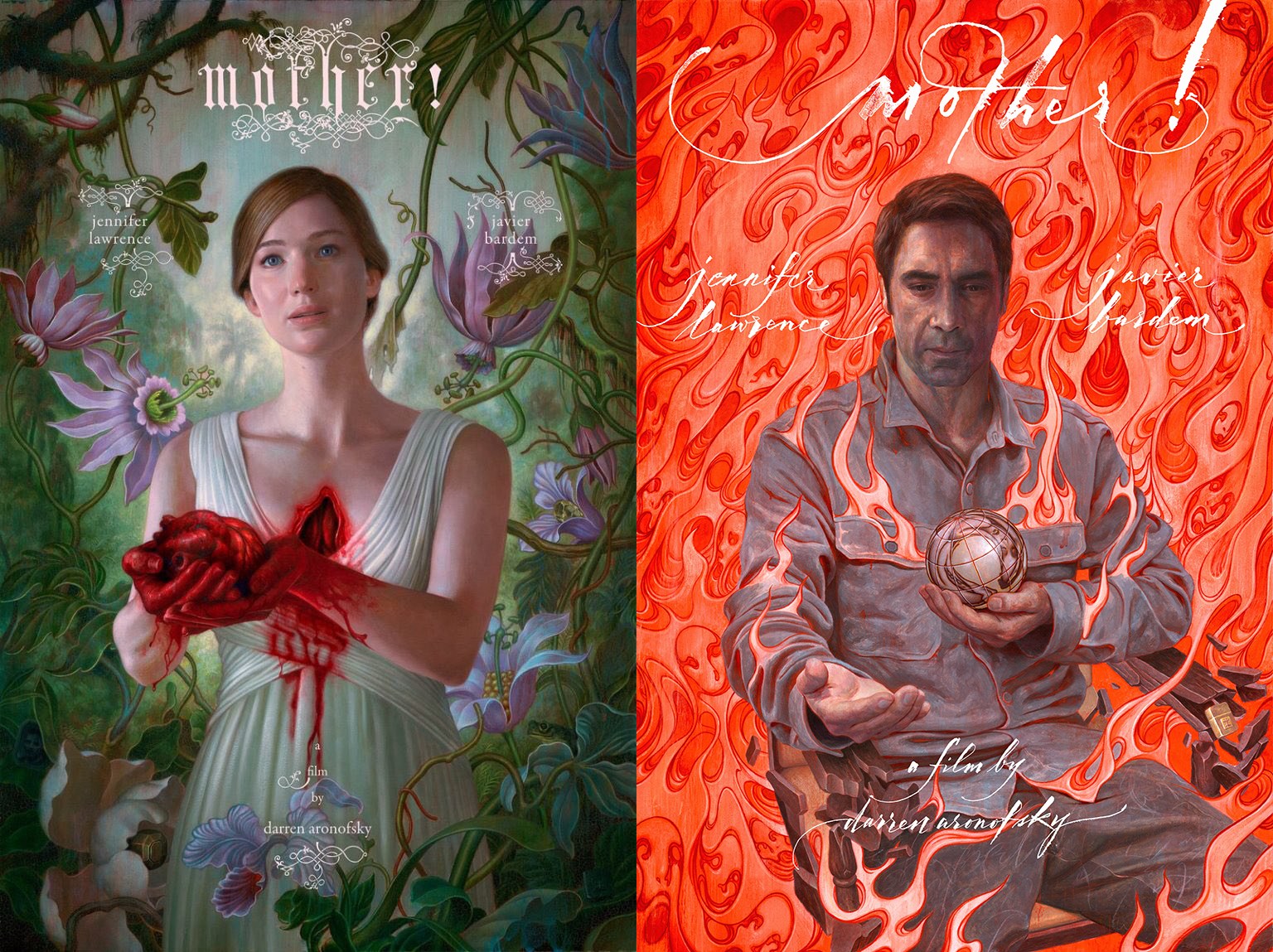
But contra Aronofsky’s eco-feminist fable, many commentators instead find mother!‘s Biblical trappings too “on-the-nose,” insulting in their shorthand, pretentious in their broad strokes.  Here, Javier Bardem’s poet (“Him”) is indeed God, Jennifer Lawrence’s wife (“Mother”) is a hybrid idealization of Earth and the Virgin Mary, and Ed Harris and Michelle Pfeiffer are the first “Man” and “Woman” (as the credits identify them), their sons are Cain and Abel, Lawrence’s child (conceived in holy violence) is The Christ, his body cannibalized by fervent parishioners. The film was originally titled “Day Six.” There are floods and plagues. A bit schematic and unsubtle? A friend retorts that subtlety is overrated. Meanwhile, the National Review sputters in breathless outrage at the heresies on display.

Another friend was surprised when these religious underpinnings were pointed out, an alien and uncompelling accounting of a film he experienced as clearly a relationship horror, even a specific apologia for the director’s self-absorption and toxic masculinity. After all, Aronofsky, once again, is directing his muse and lover, this time in a film in which her character is destroyed for his art. (The New Yorker: “Darren Aronofsky’s ‘Mother!’ Has A Muse Problem”) Bardem is even 48, like our auteur. Surely this is what mother! is about.

Still others roll their eyes: mother! is obviously, obviously about the relationship between Art, the Artist, and the world that destroys both in the process of adulation or ecstatic demolition. (Given the proliferation of thinkpieces about what the film “really means,” even after he and his star have explicitly told us, I wonder if Aronofsky himself is moving closer to this position privately.)

The point, though, is the play between meanings. mother! is excessive in every way, from its pretty hilarious exclamation point to its semantic overload. Its excess is its best, most vital aspect, preemptively mocking our quests for a totalizing reading. This is less a reflection of Aronofsky’s auteurism than something about the text itself. Like the books in Borges’ Library, mother! contains all of these meanings and none of them.
Against Explanation

With every beat of mother!’s heart, we are back in Borges’ Library, where Edgar Allen Poe and Charlotte Perkins Gilman share not just a shelf but a page, maybe a sentence. Perhaps our temptation, and the evil from which we need deliverance, is interpretation itself, the insistence on coherence in extra-textual collisions. (Pynchon: “It wasn’t our Original Sin – the latest name for that is Modern Analysis – but it happens that Subsequent Sin is harder to atone for.”)

In the Library, we are confronted by endless hexagons: “hexagonal galleries,” “hexagonal rooms [which] are a necessary form of absolute space or, at least, of our intuition of space,” “five shelves for each of the hexagon’s walls.” The hexagons have “chiefs” in Borges’ telling; they are fiefdoms. His narrator was born in one hexagon, and will die in a hexagon nearby. Hexagons are “native” or “foreign,” like soil; one travels through hexagons seeking a “catalogue of catalogues,” hexagons “exhausted” by “inquisitors” in endless excavations and marauding for meaning.

The certitude that some shelf in some hexagon held precious books and that these precious books were inaccessible, seemed almost intolerable. A blasphemous sect suggested that the searches should cease and that all men should juggle letters and symbols until they constructed, by an improbable gift of chance, these canonical books. The authorities were obliged to issue severe orders. The sect disappeared, but in my childhood I have seen old men who, for long periods of time, would hide in the latrines with some metal disks in a forbidden dice cup and feebly mimic the divine disorder.

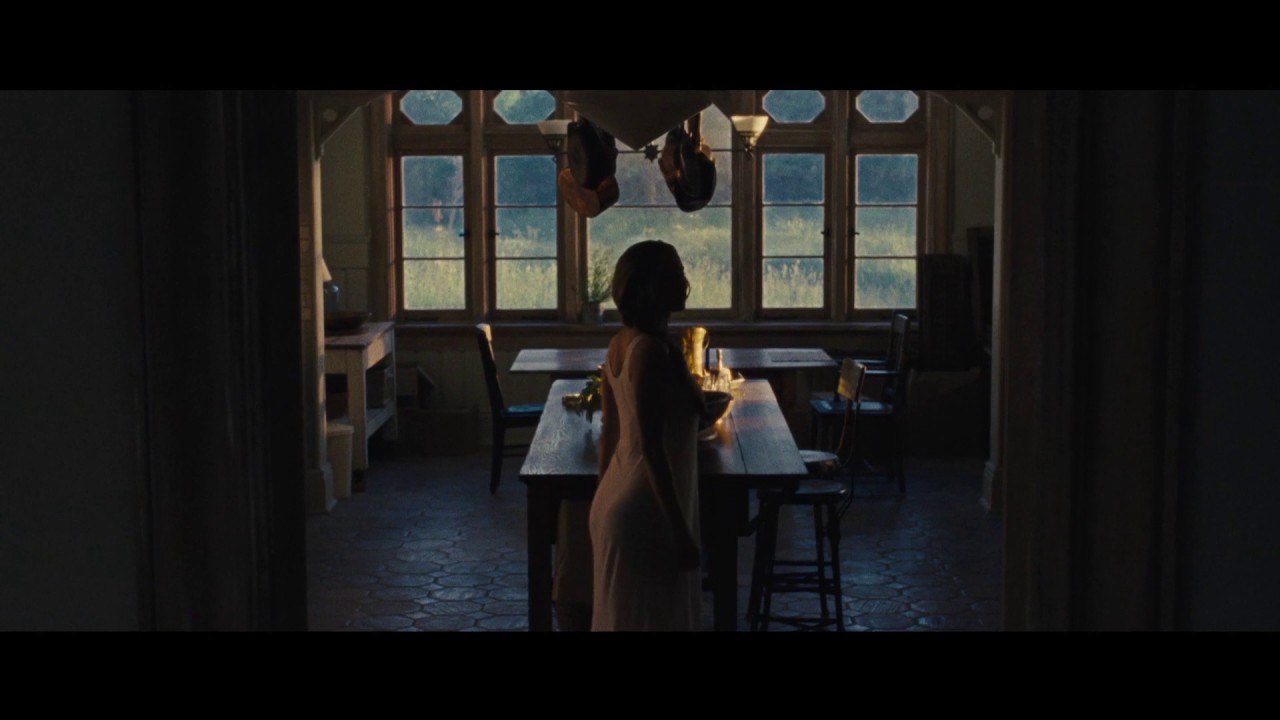
In mother!, the hexagons have become octagons. The shape haunts and structures Aronofsky’s self-described “fever dream” – windows, rooms, the winding, walled-in confines of the text take on eight sides with a regularity that demands interpretation. (Unluckily for us, Aronofsky is once again on hand to “explain”.)

It’s more fun to consider the addition of two sides as only underscoring mother!’s excess. One imagines if the set could’ve been a dodecahedron, Aronofsky would’ve opted for that in a heartbeat, self-conscious asides about Victorian architecture aside. There is nothing in mother! that can’t be translated as an addition; the entire project is supplementary. There is no center, and therefore no reason to stop building out. Mother! is textual sprawl.

So, yes. Climate change. The Bible, neatly divided in two for the slower audiences. Art and the artist. Guilt and expiation. Transcendence and suffering. The Cerebral Masculine and Earth Mother. Poe and Perkins Gilman, Polanski and Dreyer, Von Trier and Aronofsky himself. Above all, excess. Excessive meaning, and excessive negation.

If it’s a useful shorthand to consider any work of art as tripartite – divided between author, world, and text – Aronofsky’s deftest sleight-of-hand is to map each category to the other, obscuring them individually. When we see a movie, do we attribute its meaning to authorial intent (i.e. Aronofsky’s apologia for apparently being kind of a shit in relationships, and casting his girlfriend as the Muse whose heart he steals to make a genre of God-like poetry that also serves as a hate-letter to himself)? Is meaning located in our reactions, our reactions to those reactions, others’ reactions to our reactions, our reactions to their reactions, in true Borgesian fashion, until there is nothing left to say or do? Does mother! even want us watching? Perhaps the text was stable until we arrived; perhaps the Library, rather than constituted by our queries and desires, was whole already. What if Scripture didn’t have us in mind? (It is not, nor has it ever been, “In the beginning was the Reader.”)

To be sure, none of these interpretations are final, though perhaps they are technically “self-evident.” Aronofsky’s claim to the auteurist tradition sure is, even as our readings explode outwards (or spiral down, if you’re sick of all this business by now). There’s no sense in which mother! is some kind of automatic text, or Burroughsian cut-up. John Cage is not on hand to throw the i-Ching. For all its debts to Polanski and Dreyer, no one but Darren Aronofsky could’ve, or would’ve, made this film.

And not all readings are created equal, in Borges or in mother!. Bardem doesn’t represent Donald Trump, Lawrence is not Angela Merkel, and the House is not the Trans-Pacific Partnership. Ed Harris is not a peanut allergy, Michelle Pfeiffer is not the Internet. The one guy sitting on the unbraced sink is not our complacency about aging infrastructure. The text’s open contours are still bound by their relations to the image, and our positionality.

But what Borges’ story reveals is that such things can be thoughts, argued, negated, reimagined in the simplest forms. As a collection of still images organized in sequence to allow for the illusion of perceptive wholeness — you know, as a movie — mother! is provocative enough, tenuously anchored by the leads’ performances and all the chiaroscuro lighting, formalist as a Renaissance painting, ending in headache-inducing virtuosity. But it’s as a vehicle for the proliferation of meanings and their discontents — as a text — that it triumphs. The dangled promise of unity, a unity of meaning to mirror its structural rigor, is a wink and a lie; no such thing adheres.

At the end of The Library of Babel, Borges’ narrator “suggest[s] this solution to the ancient problem”:

The Library is unlimited and cyclical. If an eternal traveler were to cross it in any direction, after centuries he would see that the same volumes were repeated in the same disorder (which, thus repeated, would be an order: the Order).

Against himself, almost despite himself, Aronofsky’s excess affirms this. After a history of our relations, after pre-Edenic unity and the Fall, after everything but hands groping, Repulsion-like, through walls, after a rush through the militarization of End Times desires, we end where we began, emptied and on fire.

“My solitude,” Borges concludes, “is gladdened by this elegant hope.” Waking in a bed untouched by the fires we’ve witnessed, a woman who is not Jennifer Lawrence rolls over and asks, “Baby?” (Yes, the final word in a film called mother! is “baby.”) Another volume for the shelf of the possible, and the inevitable. Perhaps mother!’s cruelest joke on its critics is that this literally will never end.

On the other hand, maybe this is all a bunch of bullshit. Maybe mother! really does come down to one, crucial thing, and maybe that thing is an urgent appeal to brace our sinks. That’s also possible. File it away.

September 25, 2017 0 comments
0 FacebookTwitterPinterestEmail
Film

mother! and Excess: The (Mostly) Spoiler-Free Version

by rick September 18, 2017
written by rick

The delirious excess and unstable allegories of Darren Aronofsky’s mother! make it both a work of auteurist genius and a second-year term paper by someone who just discovered Borges. Its uncompromising commitment to fever dream logic places it high on the list of Aronofsky’s most essential deep-dives into shallow pools, while also courting charges of both insulting obviousness and self-adoring incomprehensibility. Its images are careful and fraught, and guided by intuitions and half-truths. Its narrative is pure allegory, except for that part where this is completely wrong.

mother! demands to be widely seen (it won’t be), insists on its own thorough decoding (unlikely outside of critical circles), withholds secrets even as they’re uttered aloud. It’s dumb, brilliant, maddening, hilarious, gross, misogynistic, feminist, lovingly assembled, gleefully torn apart, and altogether too much at once.

In other words, it’s a great film, and the most daring studio offering in many, many years.

As others have noted, however, mother! is also definitely another thing: nearly impossible to critique without spoilers. (Jonathan Rosenbaum’s observation that we are horrified of spoilers in fiction and cinema because we want to “experience the bliss of being taken there by benevolent parents” acquires a certain, odd aptness in this case.) I’ll give it a spoiler-free go here, with a spoiler-full commentary to come later.

In its narrative heart, mother! is a haunted house story. We are introduced to a woman (Jennifer Lawrence, whose character is not and will not be named until the credits) who is fixing this place up, seemingly from scratch. Her husband (Javier Bardem, credited as Him) has a relation to the house, which we will discover in time.

He’s a once-famous poet stymied by something like writer’s block; we get the sense She (for convenience’s sake, I’ll refer to the Lawrence character with this pronoun) is focused on the house both as a psychic help to him and simply to keep busy, leave him to his work. (She’s also an interior designer, so there’s some internal logic to her massive renovations.)

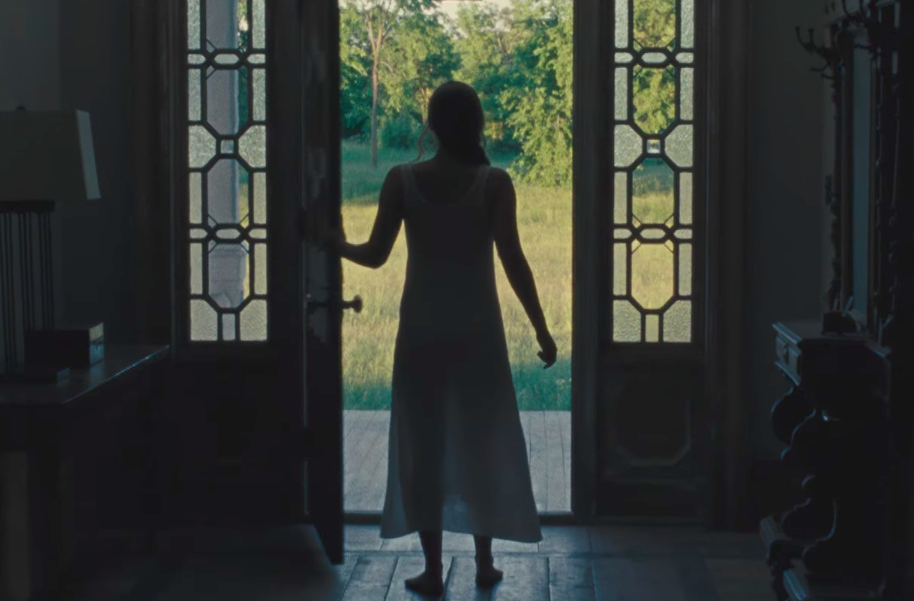
The house they occupy is surrounded, we can see obliquely through the octagonal windows and a front door that (as far as we can tell) may as well be a portal, is surrounded by an expanse of terrain — fields, trees, sun, but no road or anything approximating civilization. They are way out there, somewhere. Cell service is perpetually down (“Just as we like it,” He’ll note), though they have a landline. From the start, mother!’s setting is indeterminate, and unstable because of it.

Which makes it even more unusual when a stranger (Ed Harris) arrives. Mistaking this remote locale for a B&B, he chats his way inside. He (Bardem) is pleased to meet a new person, seemingly to take his mind of the work he’s not getting done at his quill-and-ink-adorned writing table (and maybe just to have someone new to talk to in this enormous place). Harris spends the night at His invitation, over Her private objections.

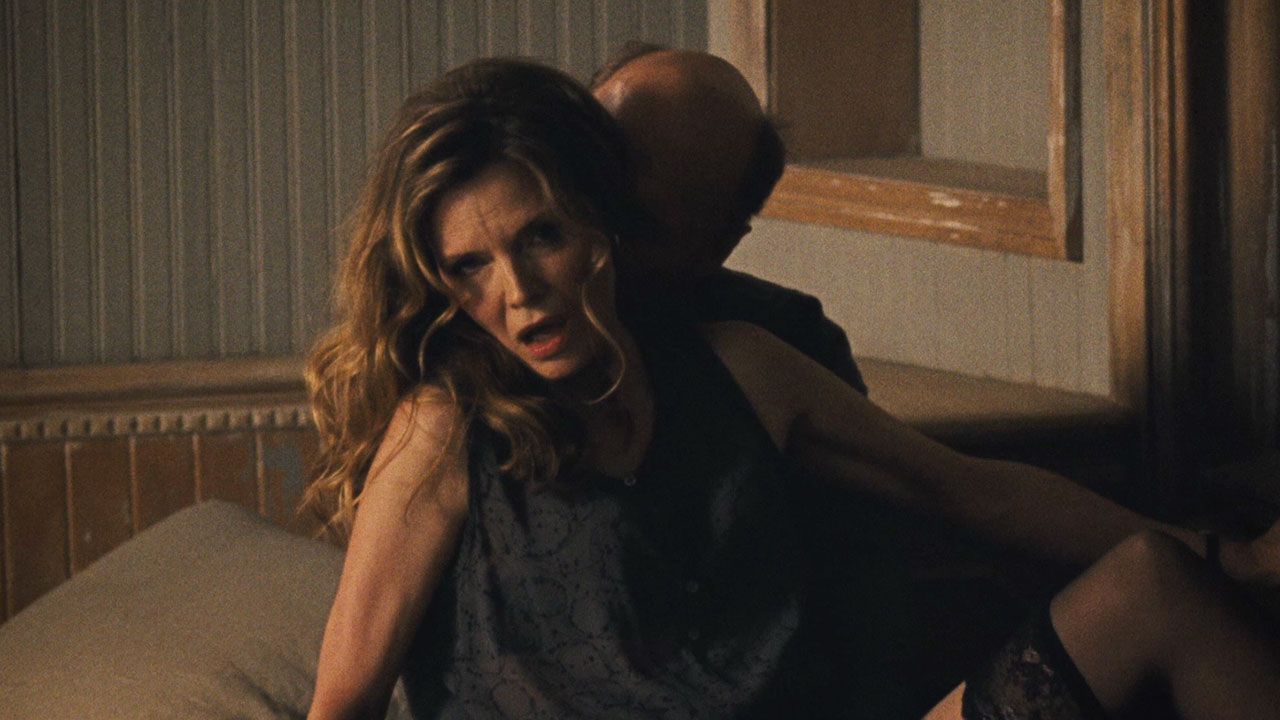
The following day, Harris’ wife (Michelle Pfeiffer) arrives, barreling into this stage-play like a whirlwind of drunken false-friendliness and imposition. The two house guests smoke inside, make messes in every room, eventually break things, have scandalous sex. Worst guests ever. But from here, things get much worse. Effectively, their arrival sends a kind of quiet marital detente into utter chaos. As the number of guests increases, She asks, “Who are these people?”

Who indeed.

From here, Aronofsky pours on layers and layers of symbolic meaning that require actual spoilers to properly examine (and watch as they devour themselves in turn). There is violence, and, as the title itself “spoils,” a baby. The first half of the film — which is shot largely in chiaroscuro compositions by Matthew Libatique (Aronofsky’s skilled collaborator for every feature but The Wrestler), jumping back and forth between Caravaggio and Polanski — is all creeping dread. The second half is ecstatic mania. Only 9 people attended my screening, myself included; 3 had left midway through the second half, apparently in disgust.

It’s not hard to see why. Two particular scenes are excruciatingly difficult to watch, and I don’t fault anyone for not much wanting to watch them. By the time the slow-burn horror turns to … something else entirely, we’ve been transported; kidnapped, even. mother! earns that excessive titular punctuation through its own visual and semantic excess.

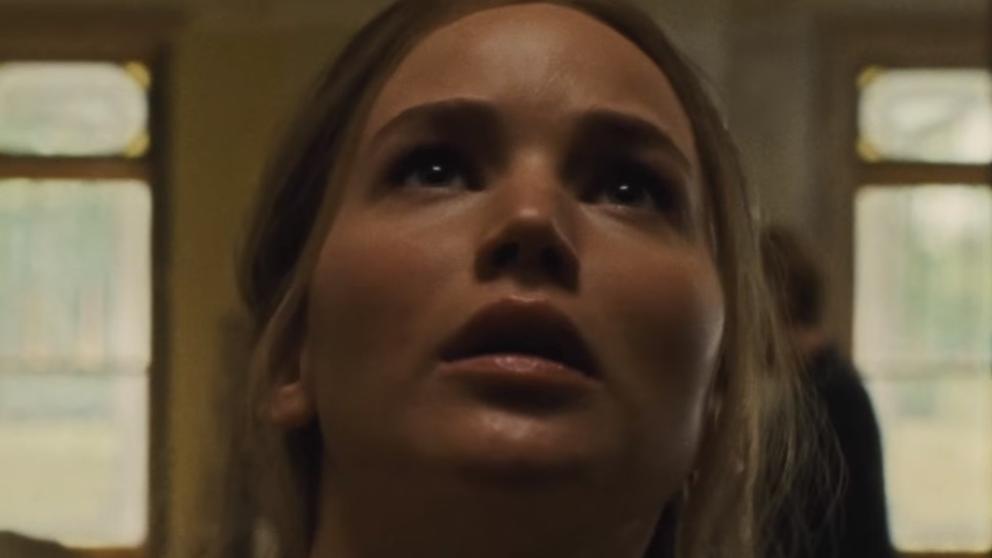
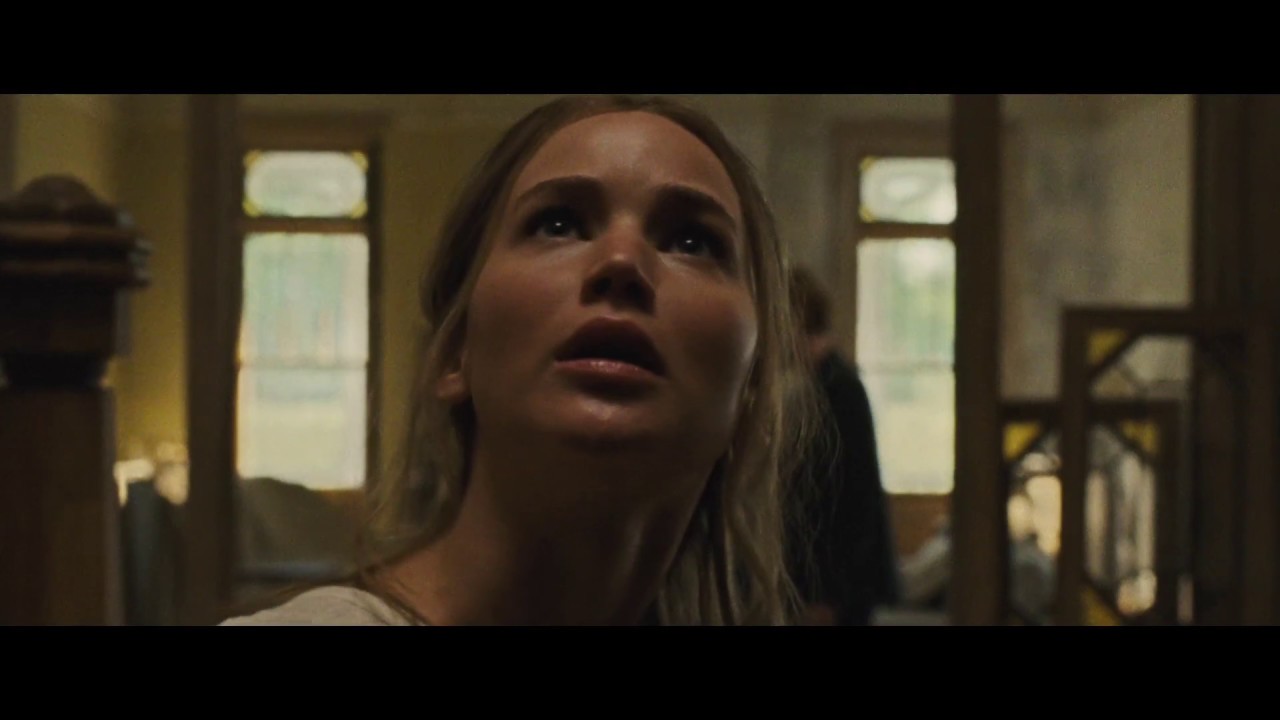
But as a wobbly, deeply committed encounter with questions of faith, art and the artist, the cruelty of creation, and agency, mother! is a lacerating, and self-lacerating, masterpiece. Poe’s presence is felt, as is that of Charlotte Perkins Gilman. Lawrence, lit from below, appears a Renaissance Madonna and, in eyebrow-to-mid-chin close-up, like Maria Falconetti. Her performance, in eyes and gesture, is at the heart of the film, and it’s remarkably astute. It will also raise questions about the male gaze, and it should.

There are few films, certainly few studio films, with so much on their minds. In the internet age, this is generally considered to be a failure of communication on the filmmakers’ part, or a gratuitous lack of concision at least — “the allegory doesn’t work,” we are told. “Here are the things mother! gets wrong.”

But I’ve rarely seen a film so steeped in its own self-aware gratuitousness; those discussions of moral ambivalence miss the tactile rawness of the whole thing. Call it Bible Study Exploitation. And that anger is almost entirely self-directed. mother! is a film at war with itself, guided by anxious, enormously skillful hands, hoping for transcendence and loathing the whole enterprise simultaneously. That’s got to be worth something.


September 18, 2017 0 comments
0 FacebookTwitterPinterestEmail
Film

Streaming Selections: Nocturama

by rick September 15, 2017
written by rick

In Kelly Reichardt’s masterful 2013 meditation on terrorism Night Moves, we’re slowly introduced to a trio of disaffected young people staging a dramatic intervention: the explosion of a dam. Memorably, and in true Reichardt fashion, that explosion, which by all standard narrative conventions should occupy the film’s central spot, registers in the narrative instead as a muted, distant noise. The real drama lies with our conflicted protagonists, not their plot. Bertrand Bonello‘s Nocturama is up to a similar sleight-of-hand.

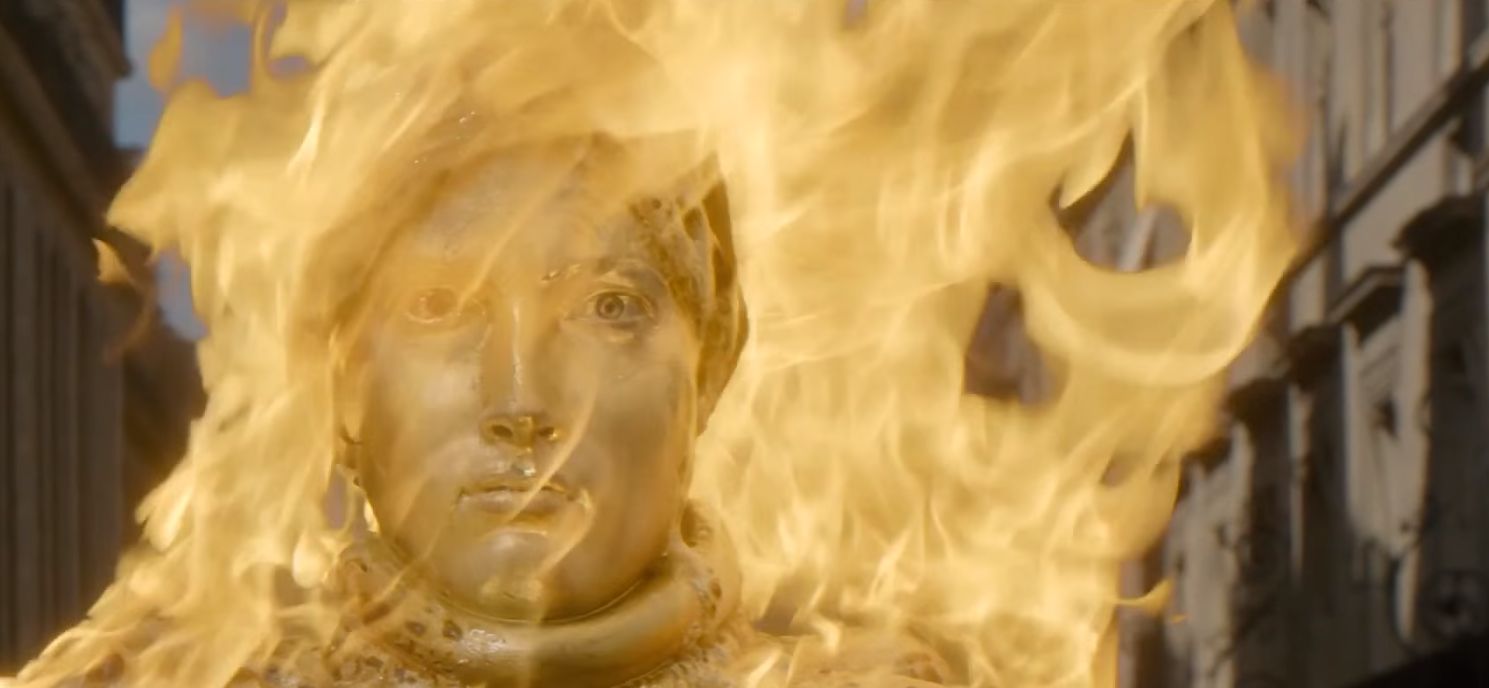
But Bonello is way too much of an aesthete to deprive us of the fireworks entirely. And why should he? Against a canvass of casual nihilism and consumer fetishes, Nocturama sketches blown-out windows and a burning Joan of Arc statue as though they were simply the end-games of a youth culture with little to grip onto in the first place, apart from how pretty things look when they’re on fire.

We meet our anti-hero protagonists, 10 of them in all, in a silent, circuitous procession through the Paris Metro. Bonello knows we will try to piece together their aims, and so he’s right. Wordlessly, they meet up on trains, pass by each other on streets, and generally emanate an ominous mood that something is afoot. They are, by turn, over-privileged children of the white establishment, shy Black youths, possibly second-generation Muslim 20-somethings, security guards, and more. There is no throughline provided, and, as Nocturama winds its way to the inevitable, no motives explained: no fiery speeches, only the faintest articulation of social outrage. Perhaps they simply want to watch the world burn.

Nocturama is almost perverse in its insistence on surfaces and sheen. What little is said can be taken many different ways, and their impromptu dance parties only underscore a lack of affect. Again and again, Bonello emphasizes the vapidity of culture, and also the desperate desire of even its enemies to enact it. Nocturama is art-house cinema with a bomb in its backpack.

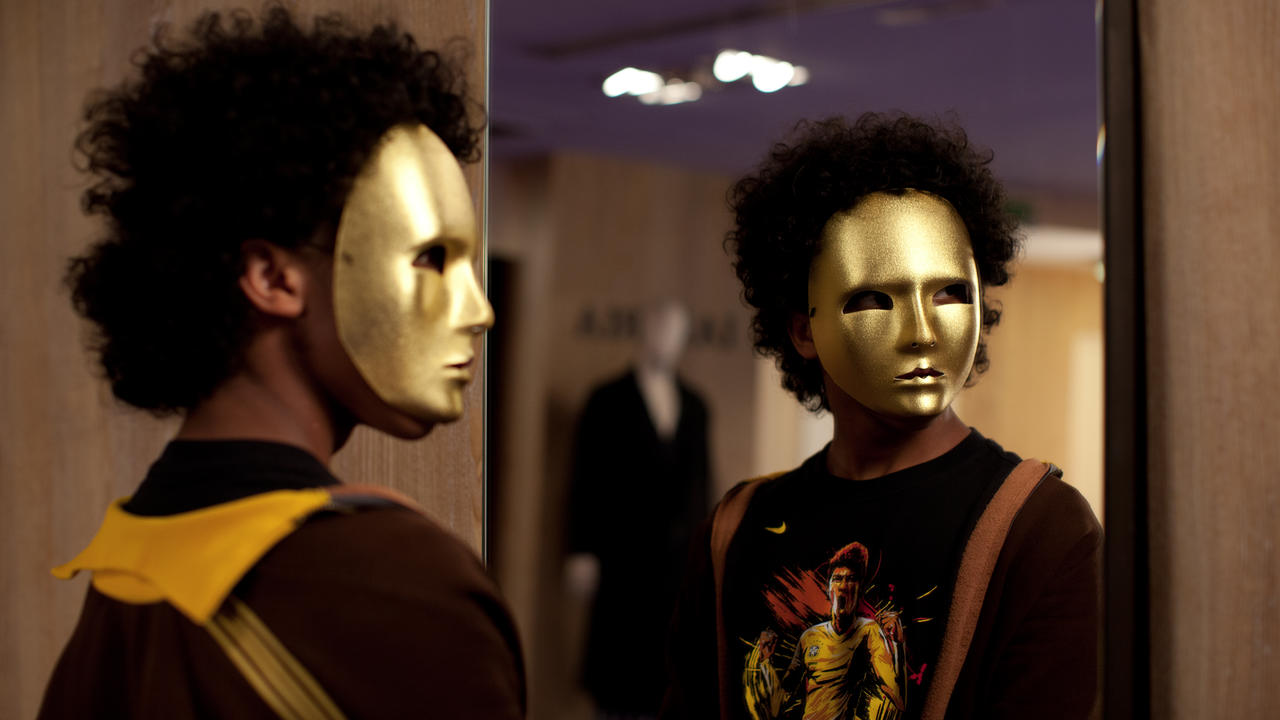
Eventually, fleeing from their simultaneously orchestrated attacks — which, though they insist casualties are to be minimized, also involve straight-up quadruple homicide — the dwindling members of this ersatz cell take shelter in a lush, shuttered department store (in fact, the Samaritaine, the same one Leo Carax featured for the Kylie Minogue segment in Holy Motors, as Richard Brody points out in an atypically acerbic pan that stinks of decades-old ideology and willful misreading).

There, we enter Dawn of the Dead territory, as Bonello channels cinematic flash-points one after the other, without ever digging very deep. Why would he? In a film of surfaces and malaise, such an expectation seems out of place. The pulsing unease of the first half of the film is replaced with frightened camaraderie and make-believe, as the indefinable terrorists spend a night trying on clothes and wallowing in the shallowness they (allegedly) mean to disrupt.

Nocturama is a slow-moving trainwreck of anti-ideological whims and vaguely grasped desires. All the leads are strong, and the film’s ultimate trick is to make you at least start to care for these people, even though there actions have been provided little to no justification.

On the street outside the Ballardian enclave, one character has slipped out to have a smoke. He asks a bystander what’s been going on. She shrugs and says, “It was bound to happen.” In the absence of unifying forces, apart from cell-solidarity, or anything approaching class-consciousness, we are left with surfaces, and we are made of those surfaces, too. That the kids should blow up a government building and escape to stage a fancy dinner of stolen goods in newly-acquired luxury wear makes all too much sense. As does the violence — calm, unsparing, nastier in its silence than it would be at full volume. It was bound to happen.

(Streaming on Netflix)

Quick Links

Nocturnal Animals

As long as we’re talking about films by unapologetic aesthetes with references to night in the title, there’s also Tom Ford’s Nocturnal Animals. It’s actually curious to think what this former fashion designer would’ve made of Nocturama, and what Bonello would’ve done with this story-within-a-story-within-a-story.

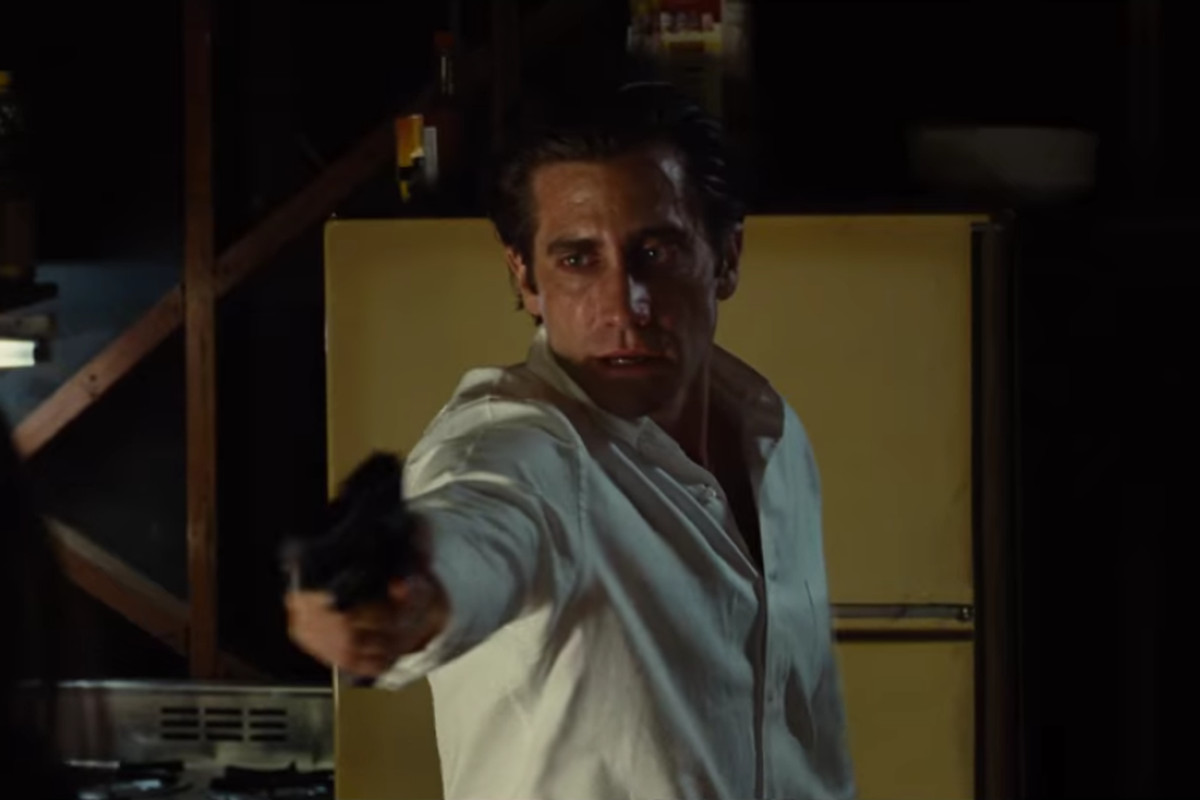
Where Nocturama takes its title from a phrase denoting where zoo animals are kept at night, Nocturnal Animals refers both to itself as well as the novel that Jake Gyllenhahl’s sensitive writer character delivers to his gallery-owning ex-wife (Amy Adams). In neither case do things end well.

Those allergic to meta-narratives and ostentatiously tricky time-stamps won’t much care for either, but both films have so much style it’s impossible to dismiss them completely. Here, we are introduced to Gyllenhahl’s protagonist setting out across West Texas with his wife and daughter; the genre trappings weigh heavy on the evening.

It’s no real surprise when back-country monsters intercept them — first, as road warriors playing dangerous games with cars, and then as out-and-out kidnappers who steal his family away for nefarious purposes. (Aaron Taylor-Johnson‘s shudderingly eerie leader of the pack reveals previously unknown capabilities for the actor.)

Barely escaping, Gyllenhahl winds up paired with Michael Shannon’s pulp-cowboy-detective (so good), a sort of nothing-left-to-lose remnant of an earlier mythology of the West. They’re out for justice, but it’s clear justice won’t be pure.

This is the stuff of serialized Westerns, cross-bred with exploitation. It’s also the plot of the book that Amy Adams’ Susan is reading, which provides an entrance way into flashes of memory, particularly her relationship with ex-husband Edward (also Gyllenhahl). Is the book an elaborate metaphor for a shared trauma in “real life”? The actresses who play the novel’s wife and daughter are dead ringers for Adams and her daughter.

On top of this, there’s a third narrative woven through, as Susan tries to recontact Edward, profoundly moved by his novel. Ford showcases Susan’s isolation in the loveless marriage of privilege to the man she wedded to ensure a future. She stages gallery centerpieces of obese women dancing, which Ford films in slow-motion (natch). It would be grotesque if it weren’t so sad and unnerving.

The pervasive sense of emptiness and haunting is almost too much, at least in Ford’s hands, and reactions to the film were unsurprisingly mixed. But it’s impossible to look away.

(Streaming on Amazon Prime)


Butter On The Latch / Thou Wast Mild And Lovely

Josephine Decker is a singular talent, and her one-two punch of Butter on the Latch and Thou Wast Mild and Lovely confirm this. 

The two films, released nearly simultaneously, bookend each other. The horrors of the first are entirely internal; in the second, they spill over into third-act schlock that only an arthouse exploitation fan could love.

But in both, the central female protagonists wander through unsure terrain, bucolic evocations of the feminine that turn either threatening or empowering (depending on where you’re seated). And in both, the visuals are remarkable, paired with a mumblecore / performance-art improvisation style that suits the mood.

Whether you want anything to do with this mood is a matter of taste. I’m not sure Decker cares one way or the other.

(Streaming on Shudder)

Superbad

Still the sweetest of that increasingly irritating Apatowian genre — the nerd wish-fulfillment narrative — Superbad gets points on rewatch for actually playing with the formula. (The funniest scene to me now is Michael Cera and Jonah Hill awkwardly trying to talk their way out of waking up a little too close, in dialog that self-consciously brings to mind a one-night stand.)

But no one’s watching Superbad for its analysis of male bonding and the very real anxieties of heading off to college, realizing you might’ve just wasted your teenage years doing fuck-all with your loser friends. We’re watching it for the one-liners, and they’re still pretty funny.

(Streaming on Amazon Prime)

This Is Spinal Tap / Following / Cronos / Eraserhead / The Duelists / Hunger / Sweetie / Blood Simple / Mala Noche / Poison / Stony Island

Jason Bailey pointed this out two weeks ago, but I’d be remiss if I didn’t echo it. FilmStruck has a series of First Movies, and it’s a doozy.

(Streaming on FilmStruck)

David Lynch on the History of Surrealist Cinema

Have you calmed down about Twin Peaks: The Return yet? No?

Well, then perhaps you’d like to hang out with your buddy David Lynch, circa 1987, and watch some shorts and excerpts from films he’s enjoyed.

Lynch has never really been a Surrealist, but that hasn’t stopped anyone from describing him as such over the years. For the BBC, he leaned into the characterization. The result, complete with a shitty VHS transfer, is always here for your perusal.

(Streaming on dailymotion, via OpenCulture)


September 15, 2017 0 comments
0 FacebookTwitterPinterestEmail
Film

The toothless teeth-horror and barbed anxieties of IT

by rick September 14, 2017
written by rick

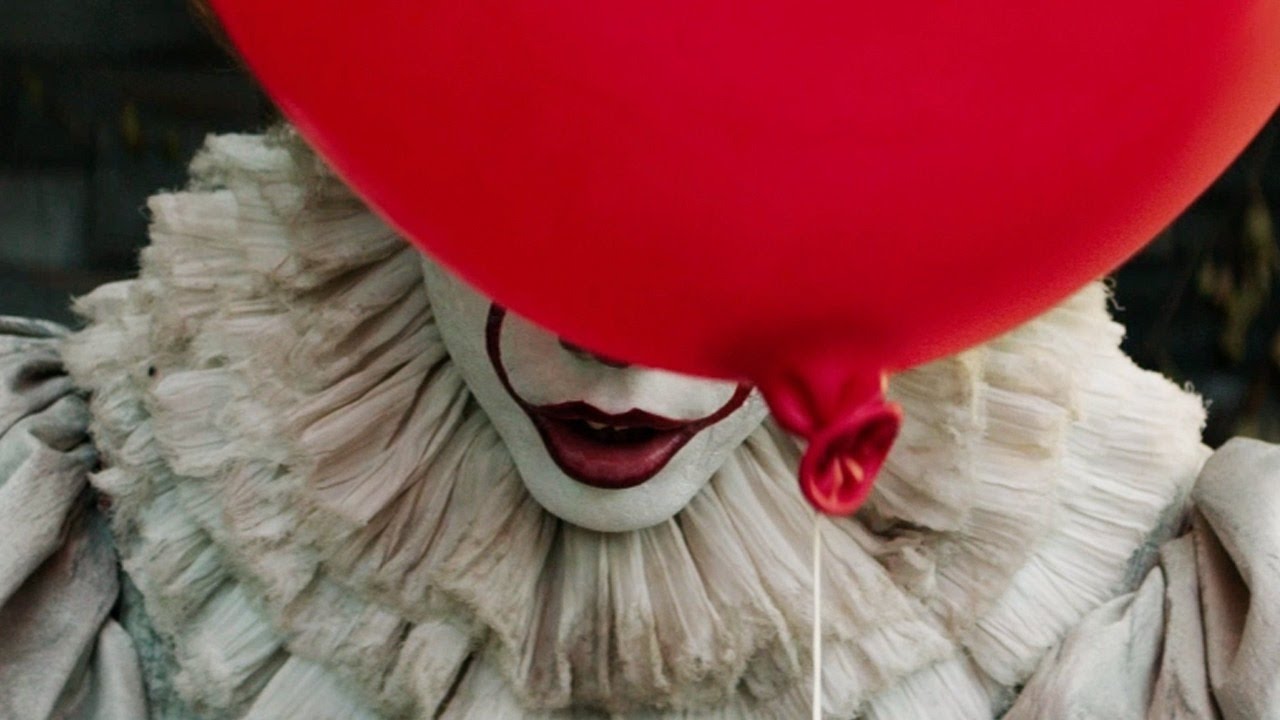
IT has broken every record in the book, except maybe something related to professional curling, or to sequels (which it — It — will remedy next year, where I have it on good information that the entire second half of Stephen King’s adapted magnum opus will involve the grown-up children of Derry, ME becoming curling champions battling Pennywise, The Metaphysical Curling Clown in its final moments, and maybe securing their victory with the help of also the Curling Turtle Who Curls).

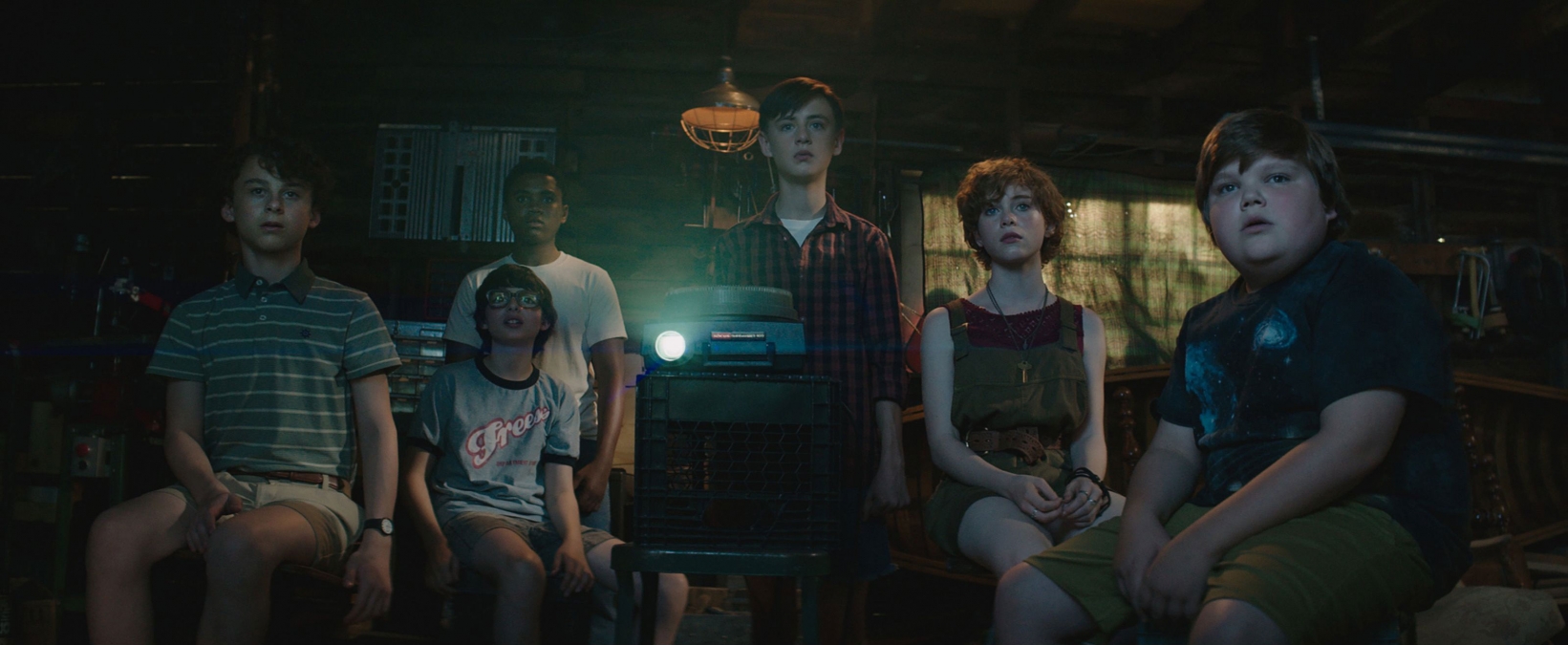
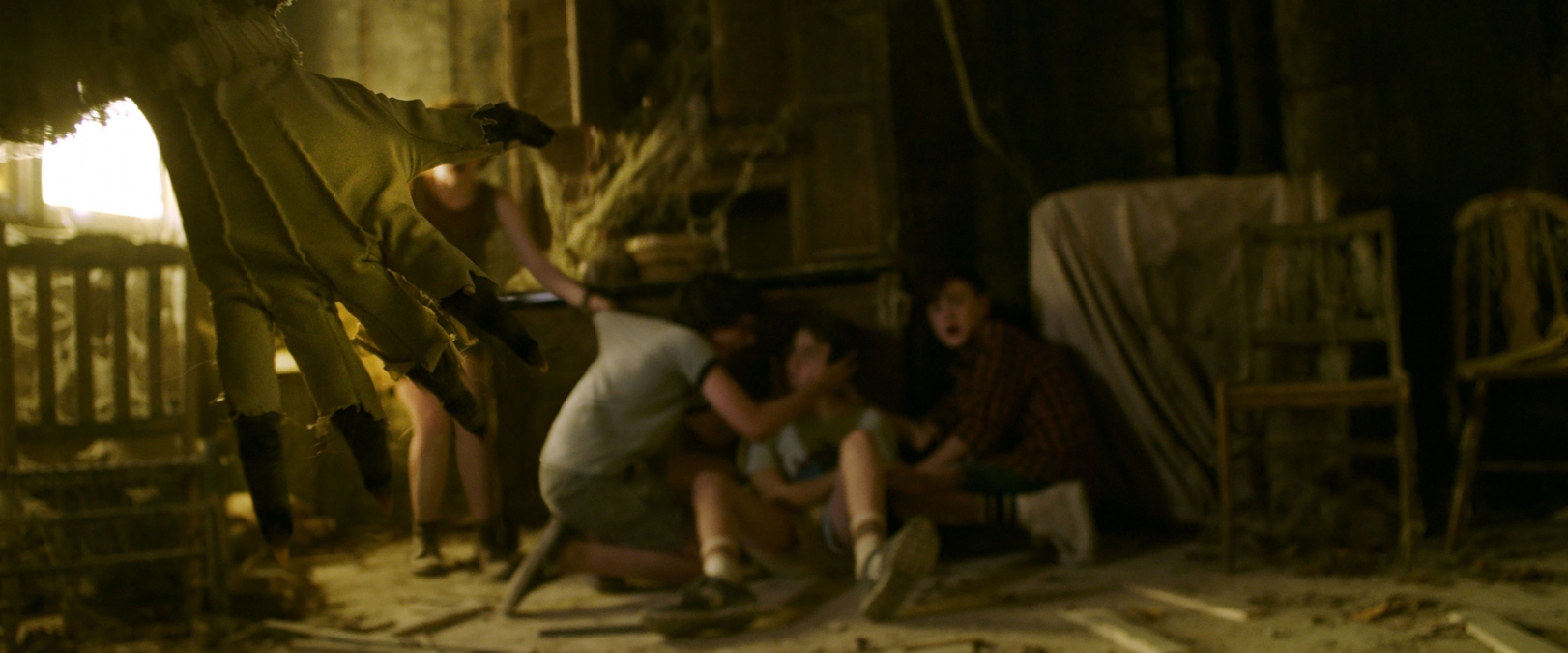
And it’s not hard to see why, even if the enormity of IT‘s initial box office is unexpected. Stephen King’s mammoth novel is a perennial favorite, the performances from a child ensemble are uniformly impressive, and it wisely updates King’s 1950s suburban terror with some 1980s in-jokes and nostalgic atmospherics. IT‘s smart right down the line in its choices, frequently honing in on the anxieties of adolescence with wit and some terrific jump-scares, while still managing to be something of a grown-up meditation on loss. That’s a lot of heavy lifting for a movie that is also about a dancing, child-murdering clown.

So why did I find IT a bit toothless, as it were? Competent, visually astute, well-acted and scripted, and a nice mainstream rebuttal, as Brandon Ledet points out, to what some horror fans have started referring to derisively as “A24 horror,” those moody affairs that occasionally seem to forget, or seem to look down on, the conventional trappings of the very genre they’re working in.

Nearly 20 years ago, I watched The Blair Witch Project in a theater. As with IT, it was a cheap day, a $5 dollar sort of affair, because I was cheap as fuck even before streaming came along, and at a kind of notoriously shouty venue. (IT at Jack London, here in Oakland; Blair Witch 2,812 miles away at another Regal Cinema, at Union Station in D.C.)

In D.C., the early laughs at Blair Witch‘s conceit — those anxious horror exhalations masquerading as tough-guy posturing we all can see through immediately — were promptly stifled by fellow moviegoers, and not politely: “Shut the fuck up!” was the refrain, from an army of young folks who waited with baited breath for the next shot. I’d never been to a quieter movie.

IT also played to a quiet, packed theater. But for much of it, I felt an anxious quality that had nothing to do with what shot might come next. With the exception of a horrifying death at the film’s start, IT never really ropes you in, scare-wise. Actually, rather like some of the A24 films it’s supposedly an antidote for, IT also trusts that the mood will guide you, settling in for background creeps and subtextual anxieties. (Though there are also definitely a few moments that will lead to some popcorn being spilled.)

But for the most part, the narrative is uneasy and unsure, having stripped away so much from the novel (and only being a first installment of a quite long book, for that matter.) The 80s reference points, substituted for the 50s homogeny King obviously loathed so much, seem fun. We laugh at NKOTB, and write a piece on Medium about Stranger Things, or the Carpenter-esque scores Adam Wingard and Simon Barrett dig. The metaphors clunk along. It seems like a film afraid to hold its audience in thrall, that to do so would be dangerous, or weird, or maybe unprofitable. It’s an R-rated horror, the most successful of all time, that can’t quite float, and I don’t think I was the only one who left the theater with the word ‘tame’ bouncing around my head.

Still, even if IT is not the masterpiece I want it to be, it succeeds just fine on its own terms. This owes as much to the finely-sketched characters of the novel — in several instances, sketched much more broadly on screen (poor Mike!), but still very believable in their relations to each other and the small, increasingly frightening world in which they live.

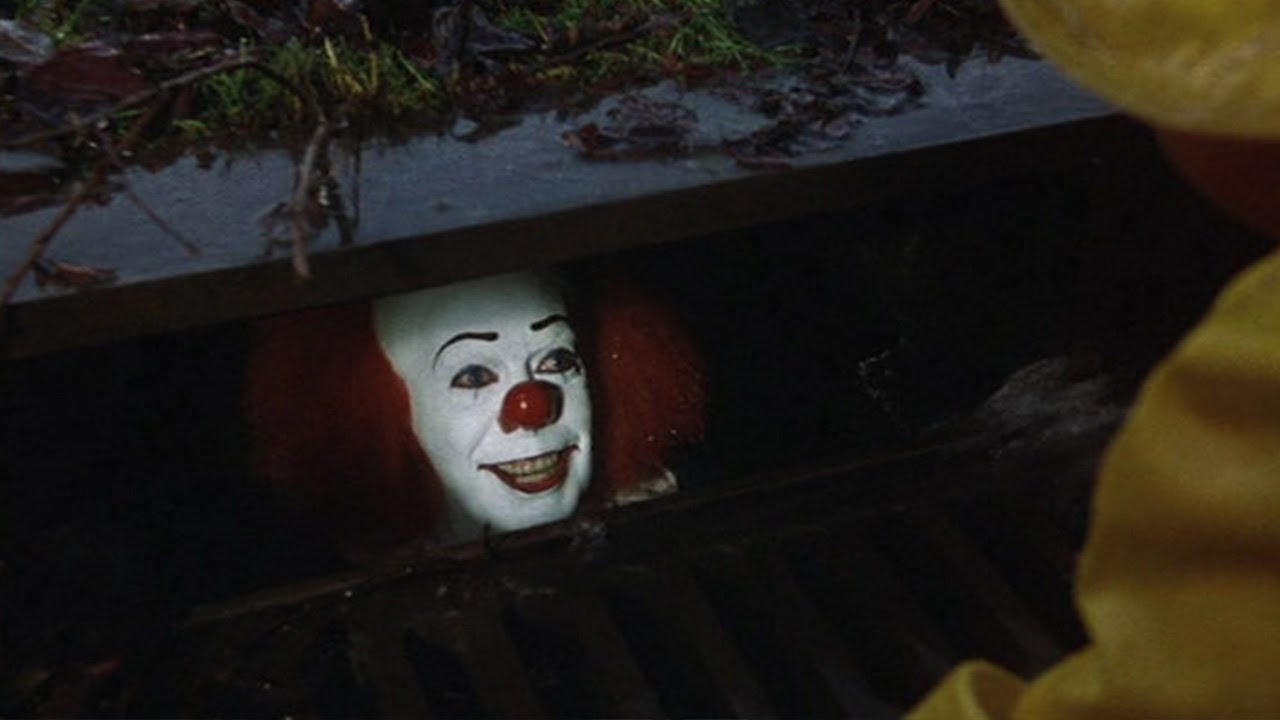
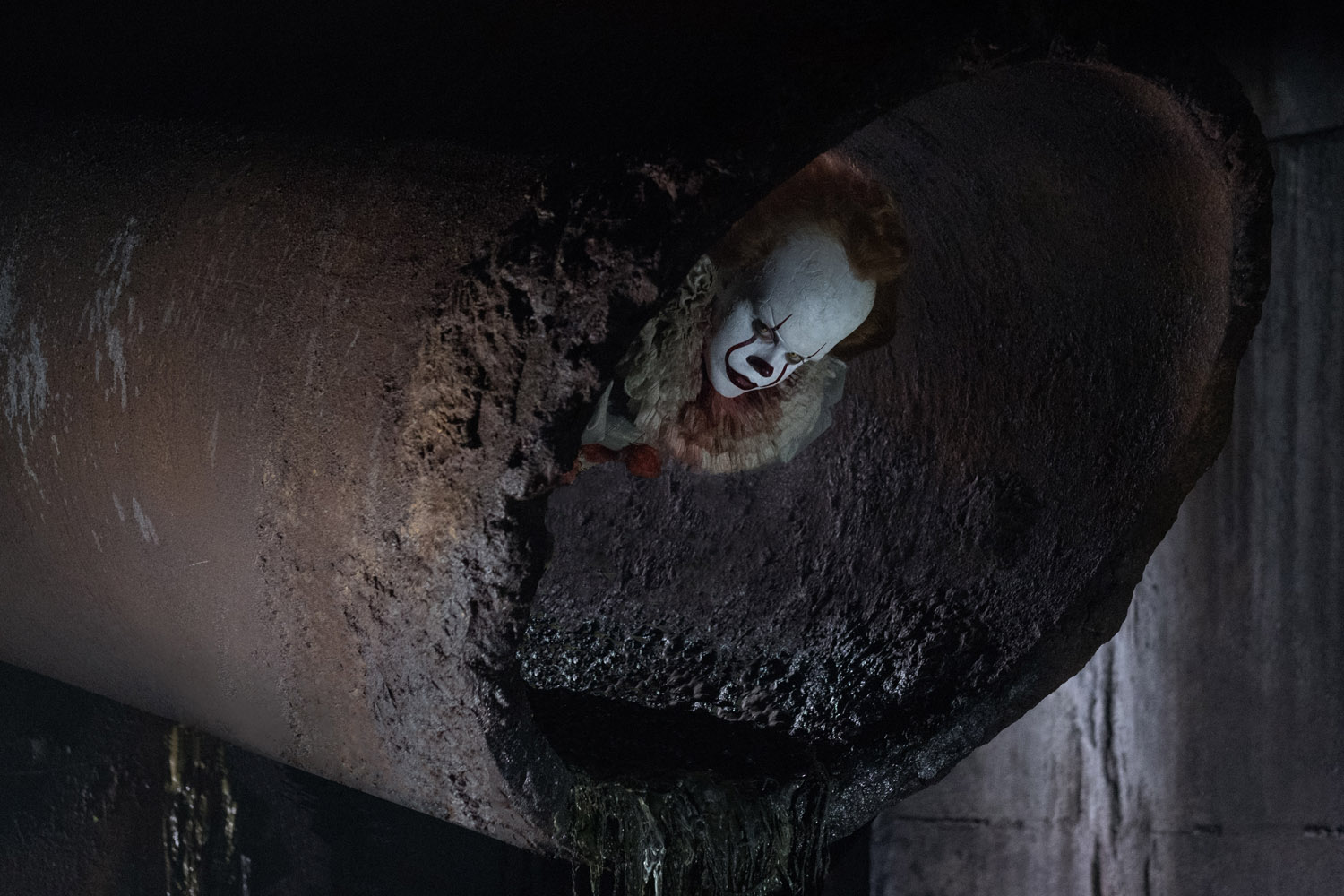
Sophia Lillis (emanating charisma, even if she’s ultimately a bit betrayed by the third act) and Finn Wolfhard (from the before-mentioned Stranger Things, wiseacreing his way the whole thing, like the funniest friend you weren’t lucky enough to have as a kid) are the stand-outs of a very good crew of Losers. Bill Skarsgård‘s Pennywise is appropriately off-putting, with every line delivered in a weirdly shifting cadence, punctuated by insidious smiles or expressions much more overtly horrific.

The overarching thing IT gets right is what it feels like to be caught between childhood and adulthood, where your lack of agency combined with your growing knowledge of dangers that seem elemental leave you even more vulnerable. The horrors at play here include a murderous clown, sure, but they also register in the bullying, the hinted evils waiting in certain homes, the dis-ease and complacency of an adult world that barely seems to notice you exist. That you’re on your own, except, hopefully, for a friend or five.

If that makes IT sound like a quieter, more reflective film than its stills would indicate (or its masterful trailer, advertising a film they manifestly did not make), it should. The lessons in this narrative have much more to do with grounded horrors than killer klowns. Knowing that going in might lead to a better appreciation of what the filmmakers (and King) hoped to accomplish, what ended up working, and what was jettisoned into the sewers.

In any case, I can’t imagine the filmmakers are worrying too much about these quibbles. IT is a bona-fide phenomenon, and deserves praise on many levels. It’s sweet, charming, funny, and, like Pennywise, it gets kids. It’s even kind of scary sometimes, if that’s your thing!


September 14, 2017 0 comments
0 FacebookTwitterPinterestEmail
CommentaryGuest

Lady Chatterley’s Lover and its Sexless Adaptations

by Lark September 14, 2017
written by Lark

In the original text of D.H. Lawrence’s Lady Chatterley’s Lover, first published privately in Italy in 1928, the word fuck appears 26 times.

He first comes on the scene as one of the upper-class Lord Chatterley’s friends entertains the company by explaining, while denouncing sexual prudery and praising free love (with restraint), that he doesn’t “over-eat [himself] or over-fuck [himself]”; he makes his curtain call in the final moments, when the titular lover tells his now-divorced, disgraced beau that they “fucked a flame into being.” (“Even the flowers are fucked into being,” he goes on, “between the sun and the earth,” at the very least displaying a poor knowledge of seed germination.)

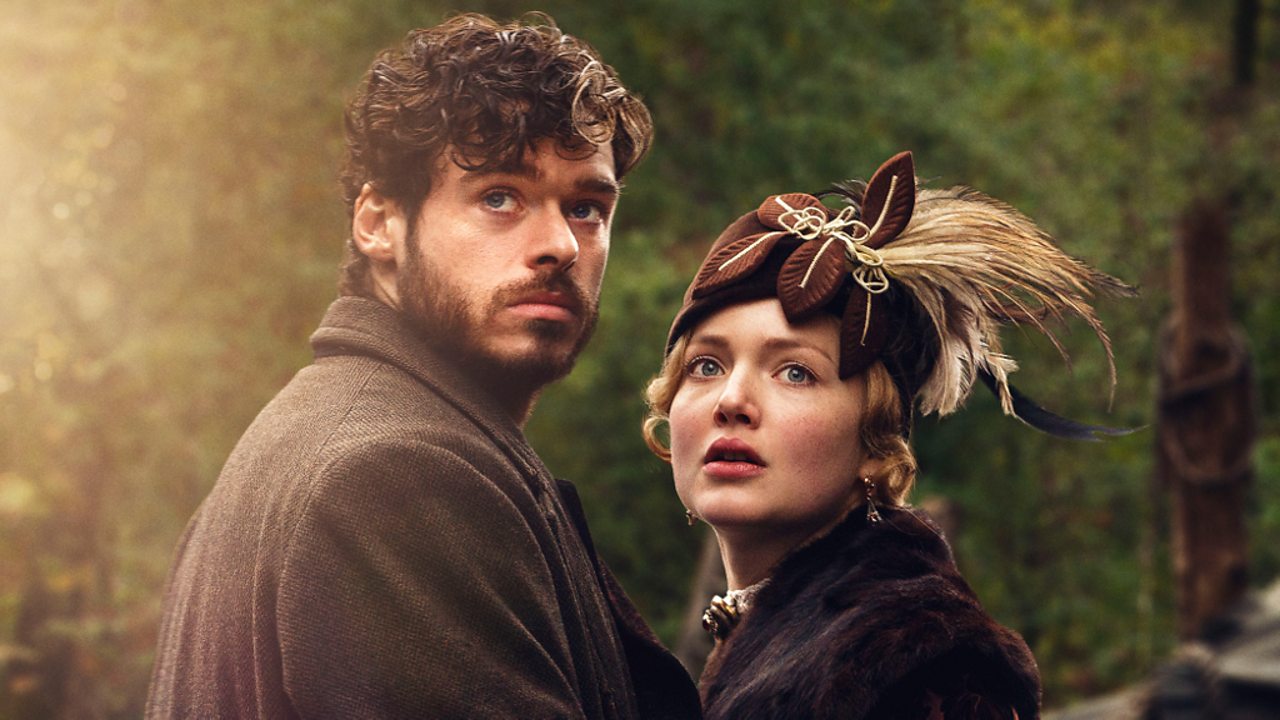
In the 2015 BBC film adaptation of the novel, our featured star makes no appearances. (We are forced to wait until minute 86 to even get a “cock”.) But just as peculiarly, there are no upper-class friends praising free love and denouncing sexual prudery, and the film ends not with an ambiguous letter between ambiguously placed protagonists but with them driving off snuggled in the front seat of a period-appropriate car.

To be fair, no adaptation of Lady Chatterley (that I have seen) has managed to include the more risqué language from the original text. None have included the preposterously hippie-ish scene, a scene desperate to be snuck into W.R.: Mysteries of the Organism, of the two protagonists intertwining flowers in each other’s public hair as a pseudo-marriage. (His dick, they decide, is named John Thomas, and her vagina is named Lady Jane. If, in the future, you wish to refer to your genitals while making a literary reference, you are welcome.)

But why is it that adaptations, fresh from excising anything more risqué than two characters being horizontal simultaneously, also insist on making mincemeat of the original structure? The question soon becomes: why adapt Lady Chatterley at all? The fundamental narrative—a woman who has married into an upper-class family has an affair with a servant at the house—could come from a hundred and ten sources.

The answer cannot be the vibrancy and brilliance of the original work. Make no mistake: by Lawrence’s standards, by the standards of the man who created Women in Love, The Rainbow, and Sons and Lovers, Lady Chatterley is a bad novel. It is such a bad novel that F.R. Leavis, his earliest proponent and his defender against T.S. Eliot’s constant barbs (yes, all British writers were required by law to go by initials until WWII), directed readers to read Lawrence’s defense of the novel instead. It wanders aimlessly and confusedly through its tragedy and ends on a famously bizarre note: almost all of the drama promised by the premise happens while Lady Chatterley is in another country, receiving updates by letter.

And one gets the feeling looking at polite adaptations like this film that while the explicit goal may be something to the effect of making it more alive for the current viewer and bringing our cultural heritage to the modern age, that the real reason these books are dragged back to life, Weekend at Bernie’s style, is more than anything because of an embarrassment about their knotty inscrutable structure.

The adapters serve as a mixture of studio-notes-givers and high school composition teachers, guiding Lawrence away from his mistakes and towards a proper narrative. “It’s a wonderful first draft, Lawrence, but why not have Mellors, the lover, be a World War I veteran who served in Lord Chatterley’s unit? We could even have him be present when he is crippled, to really wrap everything up emotionally,” the studio notes would read. “It’s a wonderful, passionate first draft,” the composition teacher writes, “but the themes are a bit all over the place. Why don’t you compress the class dynamic and make it clearer, and situate the story more in its setting and time?”

It is this condescension that suffuses not just this adaptation, but all the adaptations of British classic novels that jump from art house theater to PBS to high school classrooms with exhausting speed. What ultimately defines them is not their aesthetic boredom, their interchangeable soundtracks, their unchanging stable of passionate young hunks and energetic, quirky young women who can look fashionable in styles from the Georgian era clear through the Edwardian.

What defines them, above all, is their condescension for their source material. The texts themselves are treated with the same barely hidden contempt with which the crippled Lord Chatterley is treated. “Don’t mind this forty-page digression on industrialization,” the smiles seem to say; “Lawrence didn’t really know what he was doing. For decorum’s sake, we’ll pretend it never happened.”

One wishes and hopes for an adaptation by someone with a little less decorum, someone who could—to quote from a novel—“fuck a flame into being.”

September 14, 2017 0 comments
0 FacebookTwitterPinterestEmail
Film

Logan Lucky is a perfectly engineered late-summer popcorn flick

by rick August 31, 2017
written by rick

Much has been made of the unconventional, even “game-changing” financing model that Steven Soderbergh employed to get his new Logan Lucky out to the world. And much more will be written about whether or not it “worked,” whether its success revolutionized the film industry — saving the mid-budget movie by wresting profits and control from the suits and placing them back in the hands of the creators — or if its failure spells doom for the model. (Hint: it doesn’t look good, at least this time out.)

All this speculative breathlessness tends to overshadow a more basic fact: Logan Lucky is a very good film!

Soderbergh’s frequently hilarious, tongue-in-cheek deconstruction of the heist narrative (“Ocean’s 7-11,” a character on screen helpfully summarizes) is tailor-made for the moment. It’s paced like clockwork, full of charming performances, and, like all of Soderbergh’s work, shot with a more loving attention to detail than the genre material itself might suggest it needs.

Whether anyone goes to see it — and accounts both official and empirical indicate not very many people have so far — Logan Lucky is a near-perfect piece of popcorn entertainment, an ideal Tuesday afternoon matinee option, as we slouch, broke and exhausted with Trump’s America, toward Labor Day.

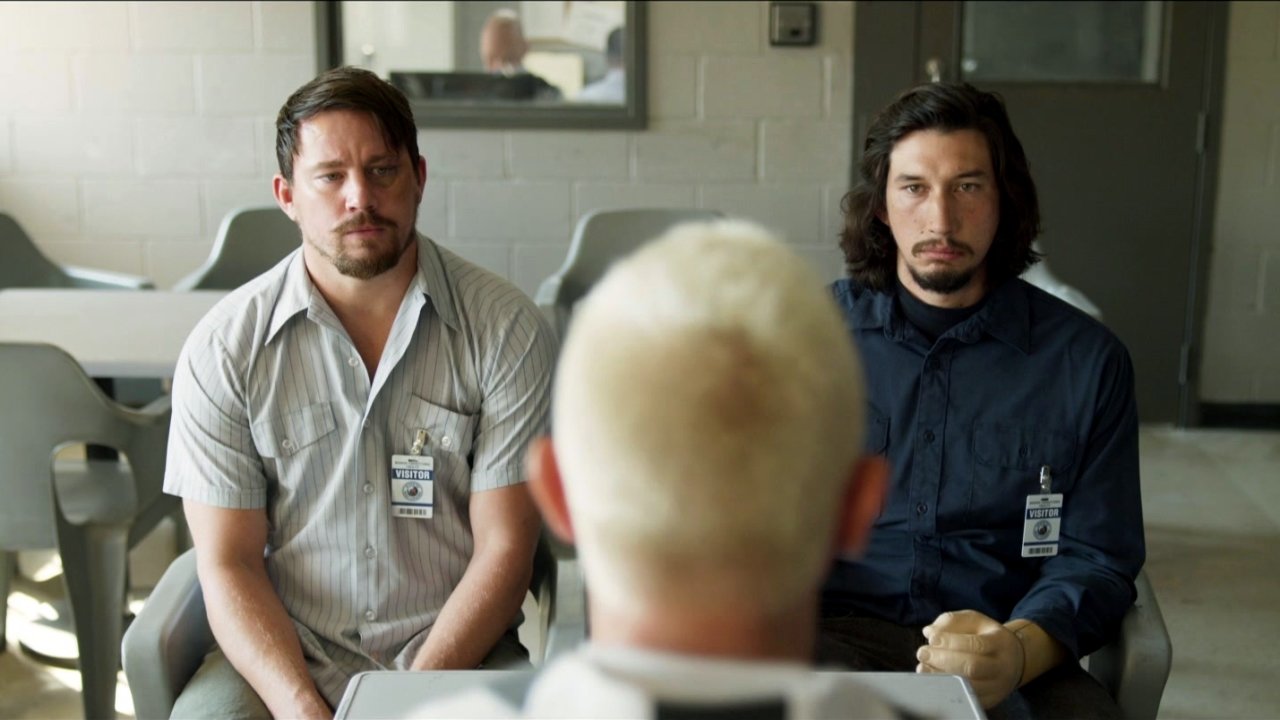
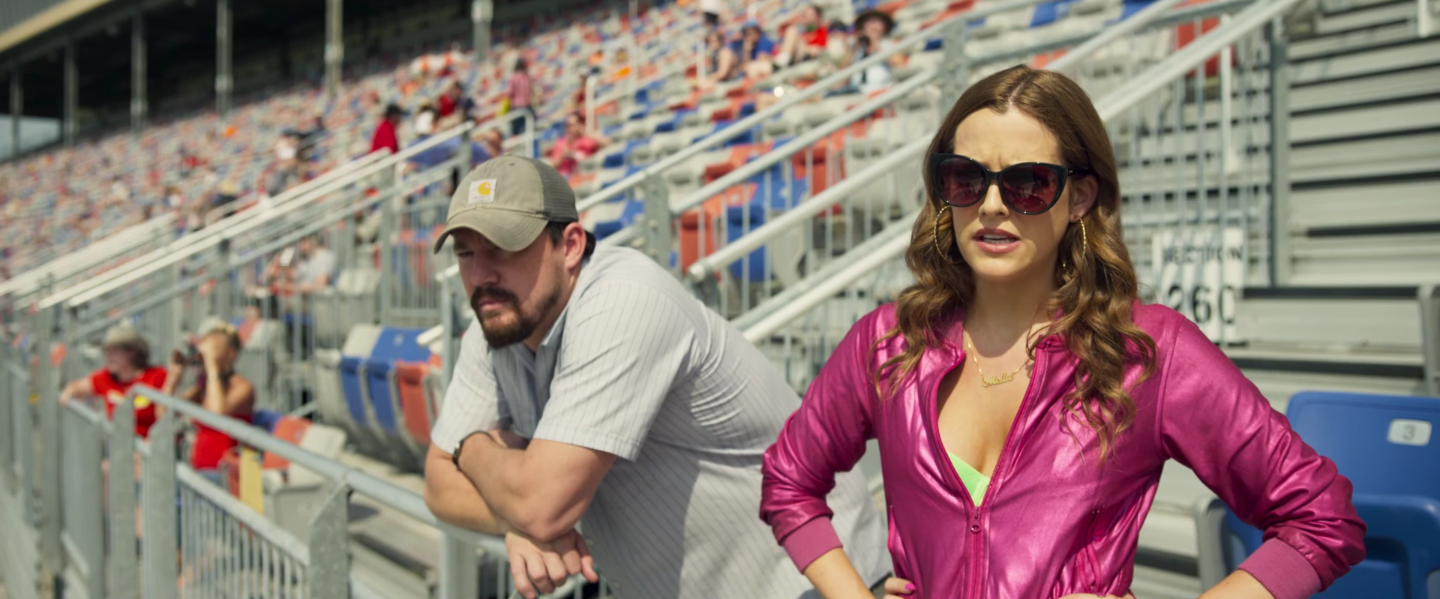
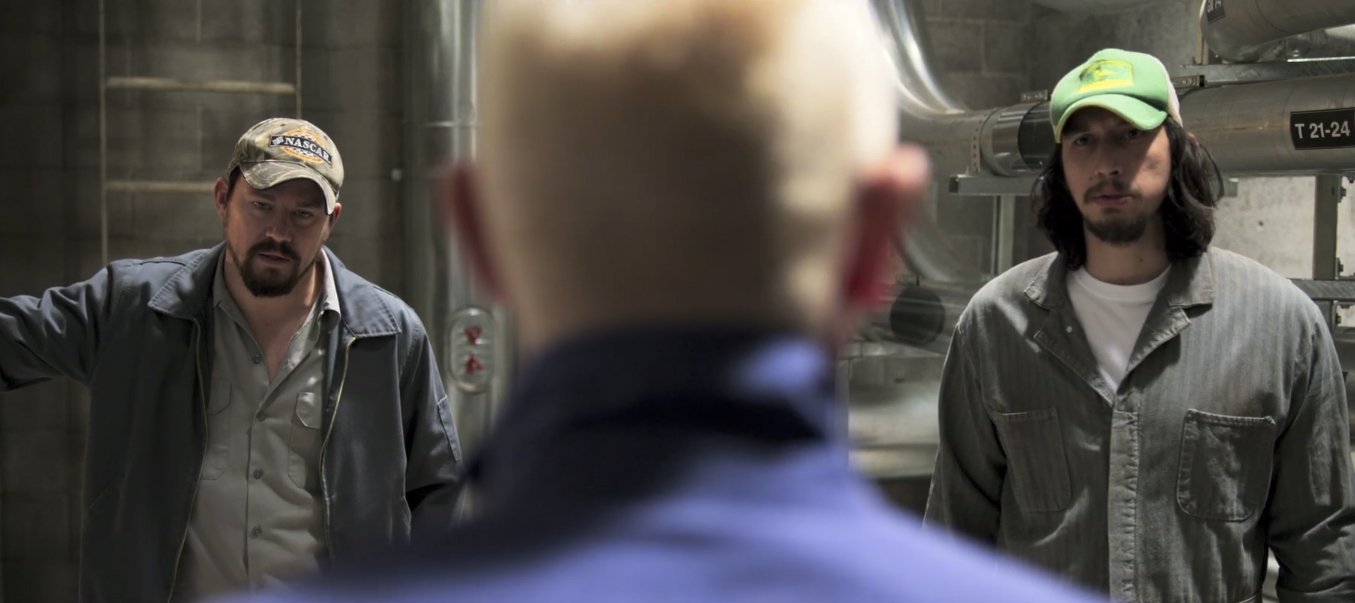
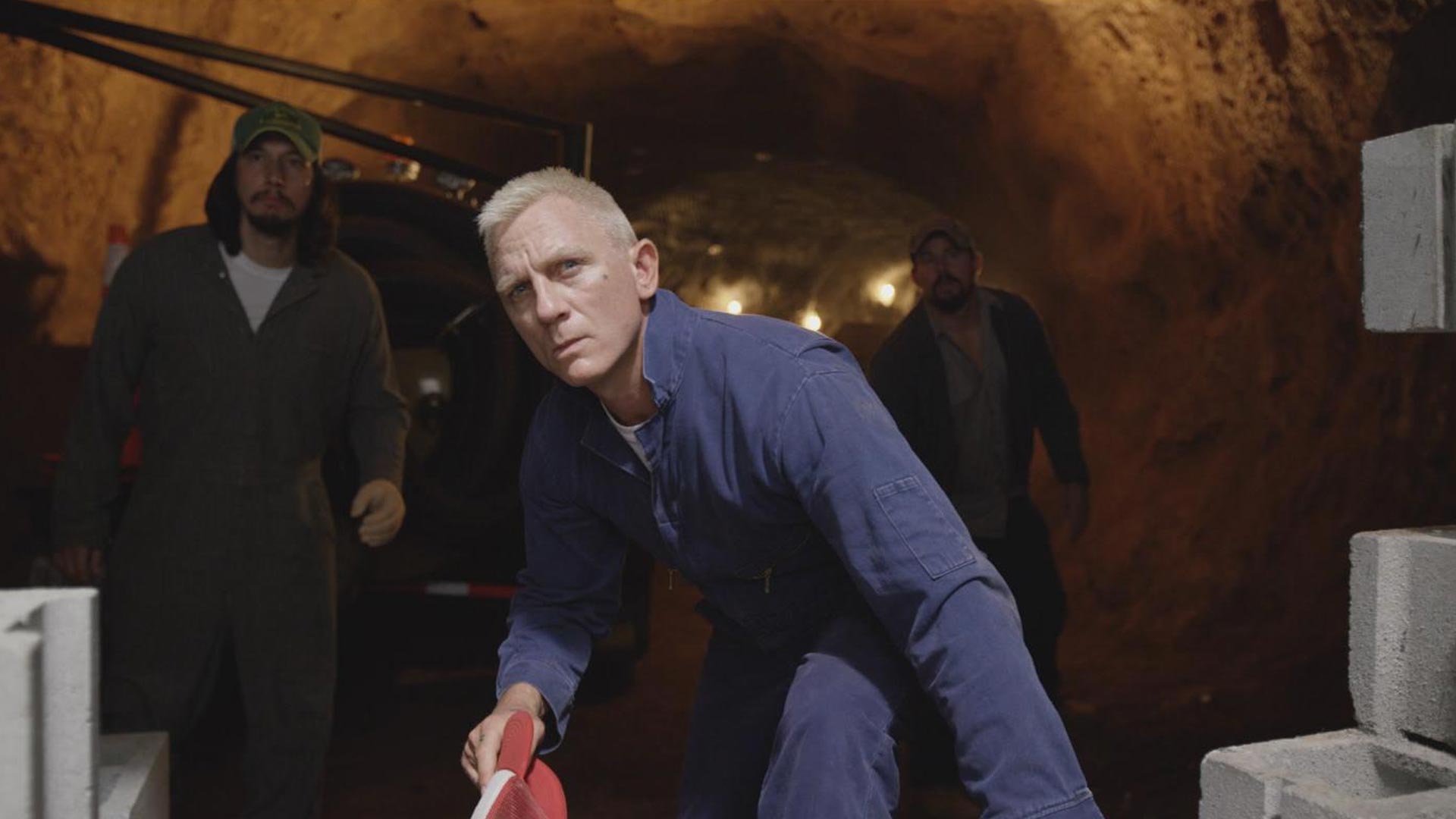
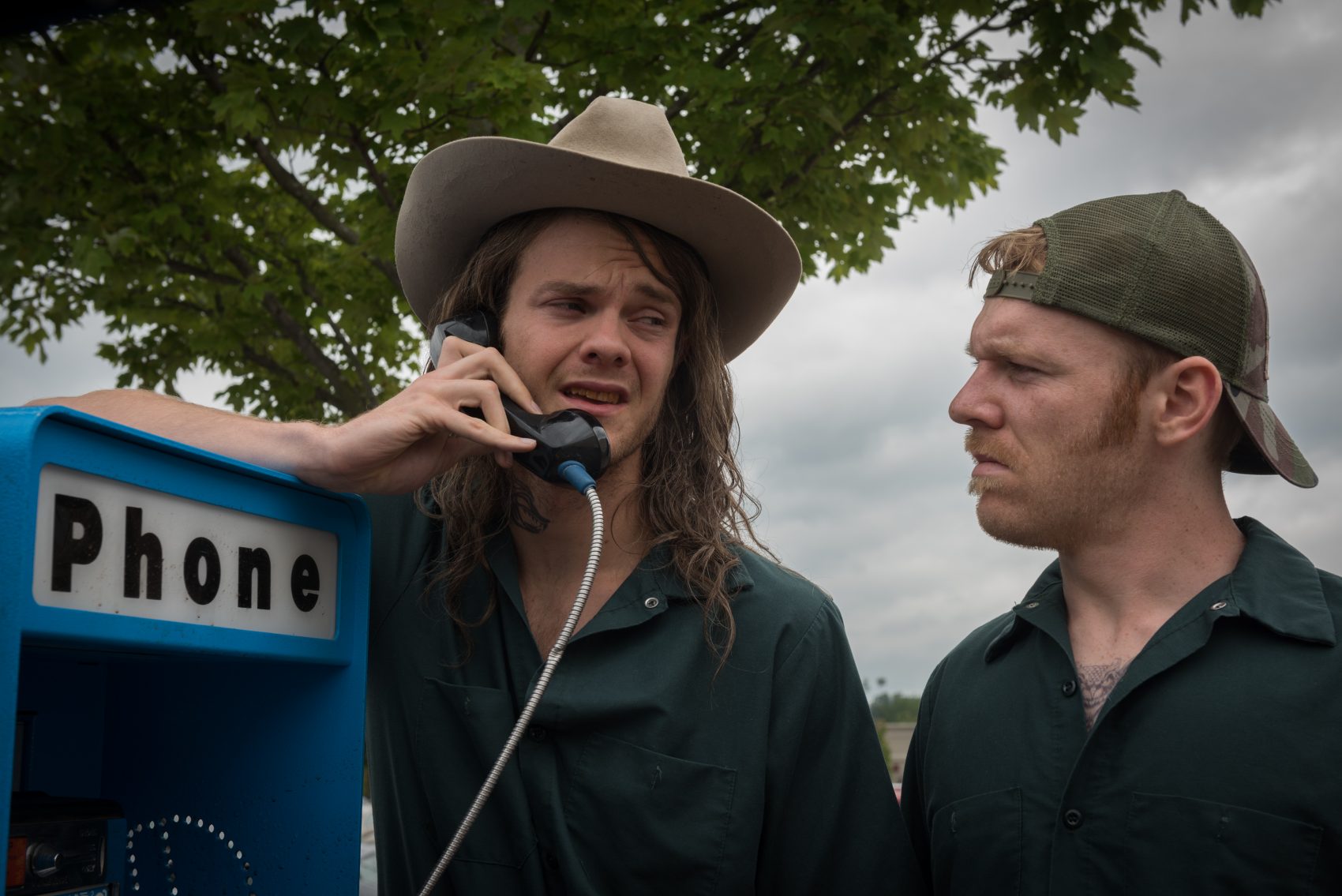
Jimmy Logan (Channing Tatum, Soderbergh’s “post-retirement” muse) is a recently out-of-work laborer who stumbled across inside information for a potentially lucrative possibility: robbing the Charlotte Motor Speedway. Soderbergh has fun with the genre staples as Jimmy assembles a team — including his brother Clyde (Adam Driver) and sister Mellie (Riley Keough), imprisoned demolitions guy Joe Bang (Daniel Craig), and Joe’s idiot brothers Fish and Sam (Jack Quaid and Brian Gleeson, respectively) — and hatches a plan. (Of course, that plan is a little bit wonky: even Jimmy’s list of 10 heist reminders includes the entry “Shit Happens” on it, twice.)

The ways in which the heist unfolds are, unsurprisingly, some of the chief pleasures of Logan Lucky, and don’t need to be spoiled here. But the heist is almost ancillary to the main thrust of the film, which is entirely character-based. Soderbergh and his stock company allow plenty of time for things to play out, giving the movie and its protagonists room to breathe.

Tatum channels all of his good-guy-down-on-his-luck charm into the role: his firing was the result of failing to disclose an injury to his corporate employers, a pre-existing condition that manifests in both a limp and a sense of wounded pride. A former small-town high-school football star, with an ex-wife (Katie Holmes) he tolerates and a beauty-pageant daughter (Farrah Mackenzie) he adores but can’t do much to provide for, Jimmy would be a stock figure if it weren’t for the dignity Tatum brings.

Clyde is another wounded soul — literally and figuratively, with a distant look, detached demeanor, and a fake hand to replace the one he lost in Iraq — and Driver is (once again) impressive. Watch how he stands: there’s a slump to his otherwise motionless posture throughout Logan Lucky that seems to hint at a former military guy, almost but not quite beaten down by circumstance. Clyde’s convinced the family is fundamentally unlucky, even cursed. He has ample data to back up the conspiracy.

And in between the brothers stands Craig’s quirky, vaguely menacing figure of jailhouse mystery, a mediation Soderbergh repeatedly emphasizes through the framing and blocking.

Others have found objectionable rural stereotypes in these figures, and indeed, if you add in the Nascar setting, Mellie’s long beautician nails and exposed bras, and Fish and Sam’s half-drunk doofus hijinks, the argument is just sitting there on screen, waiting to be made.

But this ignores all the affection in the characterizations, the sense of place (state borders play a central role), and the infectiousness of the genre unfolding. Even the physical damage to the brothers’ bodies — from callously shrugged-off workplace injury and the wounds of cynical wars — argues against that reading. Sure, there are laughs to be had, but Lucky Logan is extraordinarily specific, and it isn’t punching down. At its core, this is a film about sticking it to the elites, who never saw it coming.

All of which, to return to the financing discussion, perhaps provides a subtext to Soderbergh’s larger project. Is it an accident that his first foray into alternate ways of structuring funding and profit-sharing focuses on a bunch of idealistically empowered down-and-outers robbing The Man?

Maybe that’s too much. And no one grafts weird intelligence onto these barebones narratives like Soderbergh in the first place. Potential subtext aside, there’s just a huge sense of fun and freedom in Logan Lucky.

Which makes sense. In his now-famous State of Cinema address at the 56th San Francisco International Film Fest, Soderbergh bemoaned that:

When I was coming up, making an independent film and trying to reach an audience I thought was like, trying to hit a thrown baseball. [Now this] is like trying to hit a thrown baseball – but with another thrown baseball. That’s why I’m spending so much time talking to you about the business and the money, because this is the force that is pushing cinema out of mainstream movies.

But in the same speech, he also concluded:

The other thing I tell young filmmakers is when you get going and you try to get money, when you’re going into one of those rooms to try and convince somebody to make it, I don’t care who you’re pitching, I don’t care what you’re pitching – it can be about genocide, it can be about child killers, it can be about the worst kind of criminal injustice that you can imagine – but as you’re sort of in the process of telling this story, stop yourself in the middle of a sentence and act like you’re having an epiphany, and say: You know what, at the end of this day, this is a movie about hope.

Logan Lucky is, in part, about shaking off a curse through sheer boldness. Whether or not it works out in the long run, it’s certainly fun while it lasts. Maybe that’s enough to hope for.

August 31, 2017 0 comments
0 FacebookTwitterPinterestEmail
CommentaryGuest

The Crash Was Already Coming In David Cronenberg’s Cosmopolis

by Lark August 17, 2017
written by Lark

“All this optimism, all this booming and soaring… Things happen like (snap) bang, this and that, simultaneous. I put out my hand, and what do I feel?” Jay Baruchel delivers these lines at the beginning of Cosmopolis, and it prepares the viewer for what will follow.

Actors trying desperately to make Don DeLillo’s distinct, odd dialogue, almost all taken directly from the source novel, sound like it is coming from human beings. Each actor deals with it in their own way.

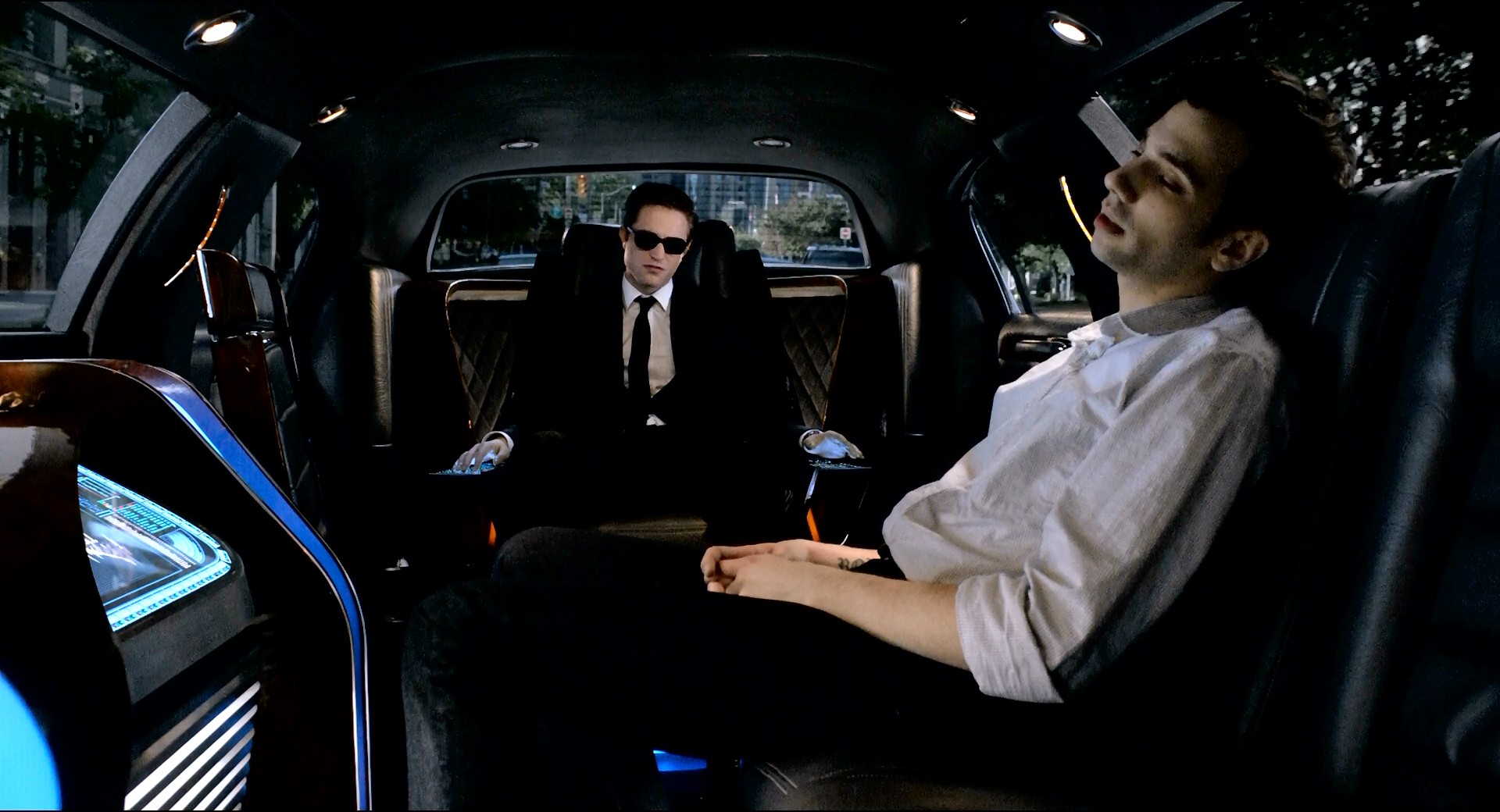
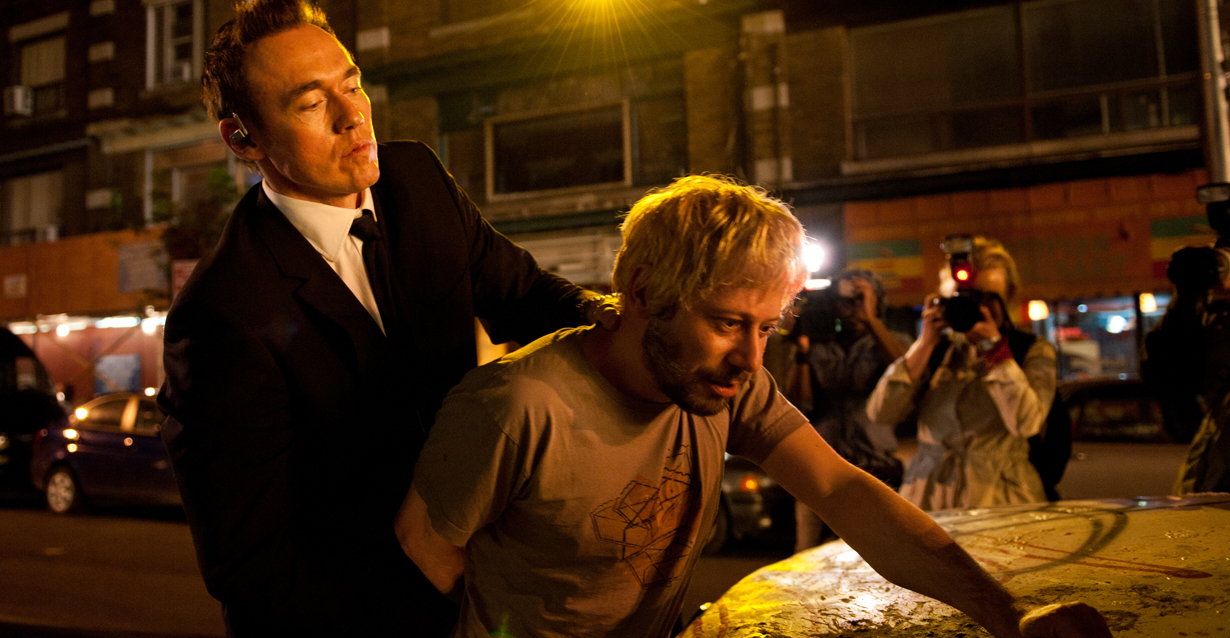
Baruchel, in his brief appearance as Robert Pattinson’s head of cyber security, delivers it in the up-all-night-on-Adderall feel of so many tech wizards; Kevin Durand, his bodyguard, delivers it in a world-weary tone that suggests he’s picked up the style from his boss in a show of deference; Sarah Gadon, his wife, delivers it with a perfect crystalline affect that makes her seem completely alien.

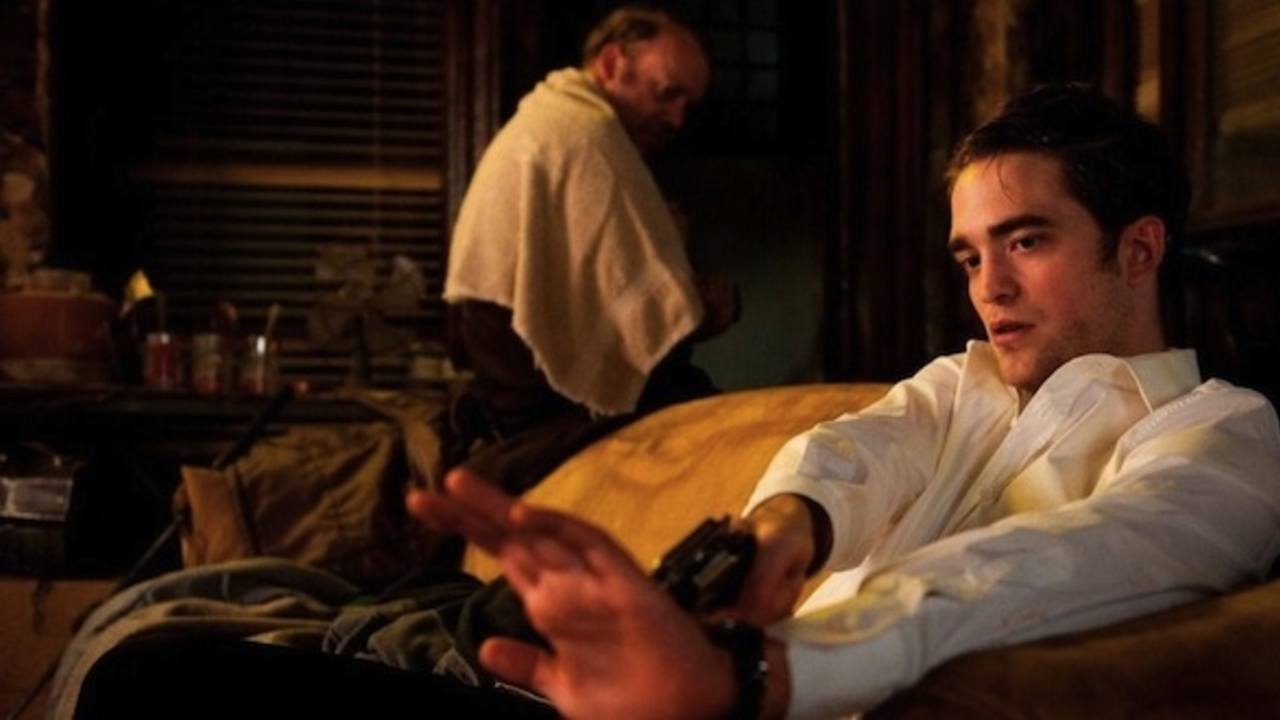
Pattinson himself, though, is the most curious adopter of them all in Cosmopolis. As the currency speculator protagonist, winding his way through Manhattan in his limo in search of a haircut, he perpetually seems too young for the lines, like he has stepped into his father’s suit.

It’s somewhat hard to buy his playboy performance as he sleeps with roughly half the women he meets, and certain lines about sexuality—“I’m a world citizen with a New York set of balls” particularly falls hilariously flat—seem to be borrowed from another film. His voice has no resonance, and is somewhat higher than expected. In short, he perpetually seems like he is wearing his father’s suit.

It is a particularly strange choice of a protagonist — first for a novel and then for a film, for two creators who are well into their dotage.

But perhaps it is not particularly accurate to think of either as at the end of their careers in anything but the most literal sense. Both changed profoundly in 2001 in a way that reveals how 9/11 designates not just the event itself, but an entire shift in the world that was reflected in the art of the time.

DeLillo turned from increasingly lengthy historical work (culminating in the massive Underworld) to slim elliptical novellas with The Body Artist, and Cronenberg’s surreal horrific worlds became subjectivized in Spider, his first film with a relatively realistic objective world. Their careers since these shifts have been more scattered and diffuse, less obvious about their messages, more wandering and exilic.

Perhaps it is because art is no longer the only art. DeLillo was always fascinated with terrorists of one kind or another, from the Maoists of Mao II to the cult of The Names.

He always served as a narrative voice to give context, or deny context, to his fictive terrorists; now, suddenly, he found himself in a place where terrorists give their own declarations of meaning directly to camera, streamed to news desks worldwide. Cronenberg was fascinated by the extension and manipulation of the human form, but when this ceased to be the exclusive field of the artist he lost interest.

In this way, Pattinson serves as a surrogate new artist in the world, matching the new artists Cronenberg and DeLillo have become after their respective shifts.

His reading and interpreting of the currency market is spoken of as a creative, artistic act, and there is a constant dialogue between it and art, particularly modernist art. (His wife’s poetry, described in the book as brief, particular, and terse, is not described in the movie, but its style is immediately obvious from Gadon’s performance. One scene in which he attempts to buy the Rothko Chapel, however, makes it explicit.)

The anarchist protests which inconvenience him are indistinguishable from performance art (particularly when he is hit with a pie in the face by Mathieu Amalric, “the pastry assassin”).

But, in Cosmopolis, Pattinson is increasingly irrelevant to the system at large. He reacts wholly to the system and instructs others to do the same. This Zen-like receptivity to the environment, however, can just as easily be adopted into the system itself. (In this way the film can be seen as a commentary on the efficient markets hypothesis—the idea that, effectively, all information about the system is already part of the system itself.) He is a fleshy bit of excess wasting away.

And is not the artist doing the same thing? Cronenberg himself has declared film more or less dead (significantly, after his short film At the Suicide of the Last Jew in the World in the Last Cinema in the World, made specifically in response to Hezbollah).

Just like Pynchon, DeLillo seems to have given up any dream of his novels meaningfully commenting on the world. The world may just as well be an efficient market, in that any art that can be made out of the world is already contained within the world.

And this is what we are left with in the march through Manhattan.

Cosmopolis the novel is interrupted by the diary of the protagonist’s murderer, but Cosmopolis the film removes these, and cuts away before the fatal shot is fired. That last moment of death is unrepresentable; it is the only thing towards which and around which art can be organized, since it is the last thing that cannot be depicted.

It is a deeply pessimistic approach, but it is the only one possible when one outlives one’s own art’s potential.

August 17, 2017 0 comments
0 FacebookTwitterPinterestEmail
Newer Posts
Older Posts

About

About

Towards a provisional theory of the cinema, or, failing that, just some shit about movies

Authors
Rick Kelley
Lark Lundberg

Keep in touch

Facebook Twitter

Categories

  • Conversation
  • Film
  • Film By Film
  • Great Movie Project
  • Great Movies: The Counter Programming
  • Guest
  • News
  • Other
    • Commentary
    • Film
    • Interview
    • Reviews
    • Song for a Sunday
  • Streaming Selections
  • TV
  • Uncategorized
  • Vegan Horror

Archives

  • April 2019
  • March 2019
  • January 2019
  • December 2018
  • November 2018
  • October 2018
  • September 2018
  • August 2018
  • July 2018
  • June 2018
  • May 2018
  • April 2018
  • March 2018
  • February 2018
  • January 2018
  • December 2017
  • November 2017
  • October 2017
  • September 2017
  • August 2017
  • July 2017
  • June 2017
  • May 2017
  • April 2017
  • March 2017
  • February 2017
  • January 2017
  • December 2016
  • November 2016
  • October 2016
  • September 2016
  • August 2016
  • July 2016
  • June 2016
  • May 2016
  • April 2016
  • March 2016
  • February 2016
  • January 2016
  • December 2015
  • October 2015
  • September 2015
  • August 2015
  • July 2015
  • June 2015
  • May 2015
  • April 2015
  • March 2015
  • February 2015
  • January 2015
  • December 2014
  • November 2014
  • October 2014
  • August 2009
  • September 2008

Recent Posts

  • China Girls, Death Proof, and the Hidden Face
  • Old News: Old Noise Edition
  • Old News: April 1, 2019
  • Nicolas Winding Refn, Marginalia, and the Deaths of Cinema
  • And now, let us praise Kanopy

Recent Comments

  • Franklin Kat on Michael Shannon shines again in Frank & Lola
  • Sean Tempesta on Cinema and dream-logic in Meshes of the Afternoon
  • ludditerobot on The Left-Wing Slapstick and Iconic Songs of 1937’s Street Angel
  • Franklin Kat on The Left-Wing Slapstick and Iconic Songs of 1937’s Street Angel
  • Arijit Mukherjee on Great Movies Project: The Counter-Programming
  • Facebook
  • Twitter

@2021 - All Right Reserved. Designed and Developed by PenciDesign


Back To Top
Luddite Robot
  • Reviews
  • Commentary
  • Great Movie Project
    • Great Movie Project
      Bride of Frankenstein is a movie for and…

      January 25, 2018

      Great Movie Project
      The Enduring Appeal of Nick and Nora in…

      November 29, 2017

      Great Movie Project
      The Ahistorical Fever Dream of The Scarlet Empress

      August 2, 2017

      Great Movie Project
      Dreams, Mundanity, and the Anarchist Yearnings of L’Atalante

      July 12, 2017

      Great Movie Project
      Duck Soup Is And Will Always Be A…

      April 19, 2017

  • Counter Programming
    • Great Movies: The Counter Programming
      Walking and Talking in the Shadow of Kanchenjungha

      March 7, 2018

      Great Movies: The Counter Programming
      A Brief Encounter in My Mother and Her…

      February 9, 2018

      Great Movies: The Counter Programming
      Horror’s Refusal in Farrokhzad’s The House Is Black

      October 13, 2017

      Great Movies: The Counter Programming
      The rage and beauty of The Cloud-Capped Star

      October 3, 2017

      Great Movies: The Counter Programming
      The daylight noir and social issue empathy of…

      June 22, 2017

  • Vegan Horror
    • Vegan Horror
      Julia Ducournau doesn’t think her film Raw is…

      June 7, 2017

      Vegan Horror
      Licking our wounds: The vampiric masculinity of Ravenous

      December 13, 2016

      Vegan Horror
      Eggertsson and animals: An approach to horror cinema

      September 15, 2016

      Vegan Horror
      “It’s Not My Nature” – Vegetarianism, Body Horror,…

      August 30, 2016

      Vegan Horror
      Bodies and Carcasses in Predator 2

      August 23, 2016

  • Interview
    • Interview
      Jasmine Leyva’s doc The Invisible Vegan aims to…

      May 3, 2017

      Interview
      Bridging The Abyss: An Interview With The Directors…

      November 28, 2016

      Interview
      7 Days in Ohio: An Interview with Nathan…

      September 12, 2016

      Interview
      Film Critic Phil Dy talks New Filipino Cinema

      June 17, 2016

      Interview
      “I Love Seeing Film Projected.” A Conversation with…

      March 22, 2016