Top Posts
Madeline’s Madeline: An Unclassifiable Panic Attack Maybe-Masterpiece
Shoplifters Steals Moments of Wonder from the Mundane
Burning and Forgetting What’s Not There
Kusama: Infinity Expands Beyond The Canvas
Mandy Risks Little, Wins Little
In We The Animals, The Children Are Away...
The Seagull Isn’t Quite Chekhov, But It’s Still...
5 Million Ways Boots Riley Isn’t Sorry To...
American Animals’ and the Queasiness of the Heist
A Star Is Born In Hearts Beat Loud
  • Reviews
  • Commentary
  • Great Movie Project
    • Great Movie Project
      Bride of Frankenstein is a movie for and…

      January 25, 2018

      Great Movie Project
      The Enduring Appeal of Nick and Nora in…

      November 29, 2017

      Great Movie Project
      The Ahistorical Fever Dream of The Scarlet Empress

      August 2, 2017

      Great Movie Project
      Dreams, Mundanity, and the Anarchist Yearnings of L’Atalante

      July 12, 2017

      Great Movie Project
      Duck Soup Is And Will Always Be A…

      April 19, 2017

  • Counter Programming
    • Great Movies: The Counter Programming
      Walking and Talking in the Shadow of Kanchenjungha

      March 7, 2018

      Great Movies: The Counter Programming
      A Brief Encounter in My Mother and Her…

      February 9, 2018

      Great Movies: The Counter Programming
      Horror’s Refusal in Farrokhzad’s The House Is Black

      October 13, 2017

      Great Movies: The Counter Programming
      The rage and beauty of The Cloud-Capped Star

      October 3, 2017

      Great Movies: The Counter Programming
      The daylight noir and social issue empathy of…

      June 22, 2017

  • Vegan Horror
    • Vegan Horror
      Julia Ducournau doesn’t think her film Raw is…

      June 7, 2017

      Vegan Horror
      Licking our wounds: The vampiric masculinity of Ravenous

      December 13, 2016

      Vegan Horror
      Eggertsson and animals: An approach to horror cinema

      September 15, 2016

      Vegan Horror
      “It’s Not My Nature” – Vegetarianism, Body Horror,…

      August 30, 2016

      Vegan Horror
      Bodies and Carcasses in Predator 2

      August 23, 2016

  • Interview
    • Interview
      Jasmine Leyva’s doc The Invisible Vegan aims to…

      May 3, 2017

      Interview
      Bridging The Abyss: An Interview With The Directors…

      November 28, 2016

      Interview
      7 Days in Ohio: An Interview with Nathan…

      September 12, 2016

      Interview
      Film Critic Phil Dy talks New Filipino Cinema

      June 17, 2016

      Interview
      “I Love Seeing Film Projected.” A Conversation with…

      March 22, 2016

Luddite Robot
Film critique, theory, and assorted nonsense.
CommentaryFilm

China Girls, Death Proof, and the Hidden Face

April 14, 2019

Old News: Old Noise Edition

April 8, 2019

Old News: April 1, 2019

Nicolas Winding Refn, Marginalia, and the Deaths of Cinema

CommentaryFilm

And now, let us praise Kanopy

January 24, 2019

Warren Sonbert and the Relief of Anti-Narrative

January 14, 2019

The World Is Ending and It Doesn’t Matter

The Best Films of 2018

FilmReviews

Madeline’s Madeline: An Unclassifiable Panic Attack Maybe-Masterpiece

December 21, 2018

Shoplifters Steals Moments of Wonder from the Mundane

December 11, 2018

Burning and Forgetting What’s Not There

Alien, Musicology, and Reading Soundtracks

CommentaryFilm

Shocktober III: Halloween 2018 Edition

October 24, 2018

Shirley Jackson’s The Lottery Traumatized Schoolkids in 16 mm

October 18, 2018

Shocktober 2018 II: Another Reshockening (of Horror)

Häxan is a movie made by a movie character

CommentaryFilm

Shocktober 2018

October 7, 2018

Unprofessional! Spring Night, Summer Night

October 3, 2018

The Wild Boys: A Luddite Robot Conversation

Kusama: Infinity Expands Beyond The Canvas

Burning Chang-dong Lee
FilmReviews

Burning and Forgetting What’s Not There

by rick December 7, 2018
written by rick

“The world is a mystery to me,” the awkward, aspiring writer Lee Jong-su tells his new “Gatsby-like” acquaintance Ben, at a moment of a maximum queasiness in Chang-dong Lee‘s Burning. The film is a mystery to us, not just in its genre mechanics but in terms of how we are supposed to engage with it: Burning talks and moves like a mystery, lingering on images in ways we’ve been trained to recognize as meaningful, before trailing away like smoke.

Another character explains pantomime over drinks: the goal isn’t to pretend she’s eating a tangerine; you have to forget that she’s not. Burning is less a cinematic sleight of hand, in the mold of Haneke’s Caché, than an attempt to occupy negative space. It’s deeply unsettling, and one of the best films of the year.
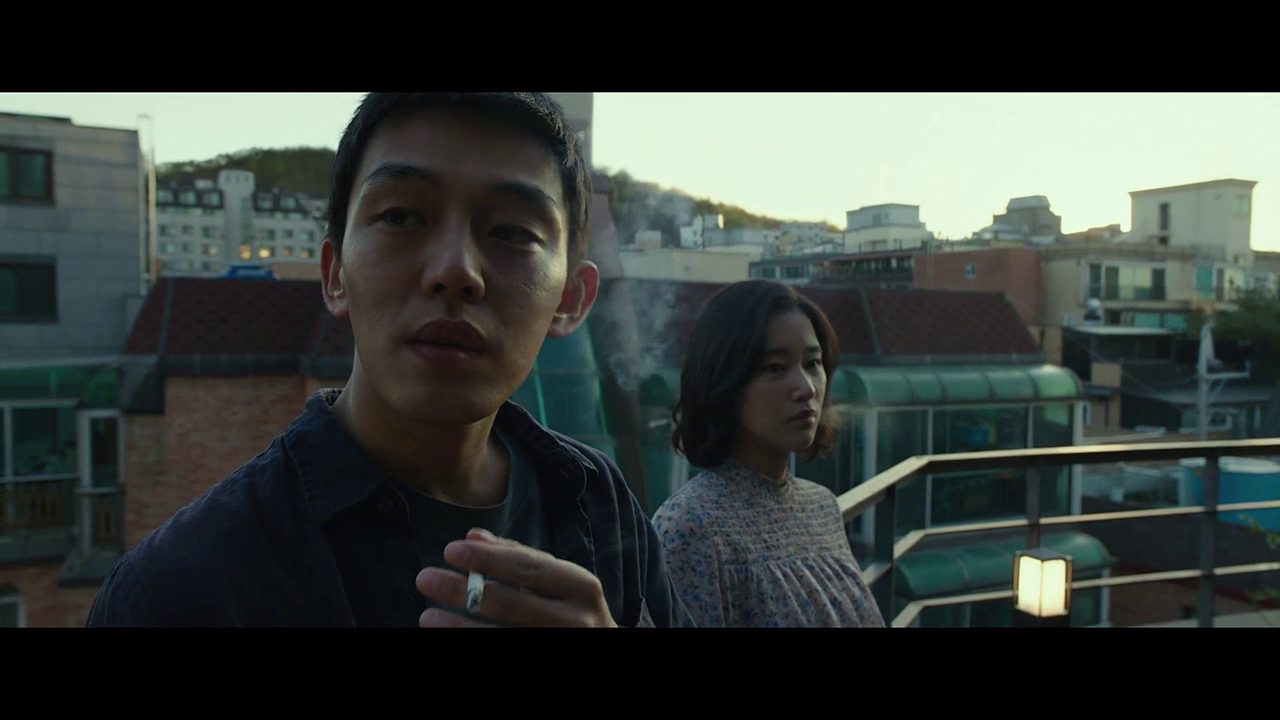
Jong-su (Ah-In Yoo) and Hae-mi (Jong-seo Jeon) in Chang-dong Lee's BurningThe narrative seems too slight to sustain Burning‘s 148 minutes. Jong-su (Ah-In Yoo) meets a childhood friend Hae-mi (Jong-seo Jeon) outside of a store he’s delivering goods to. (Class asserts itself early and often in Burning: he’s a part-time delivery driver, she dances in front of shops, calling out deals to entice customers and giving away raffled knick-knacks.) “Friend” is too strong a word; he barely remembers her, though they grew up together. They strike up a conversation, and then a casual relationship, and then she asks him to look after her cat while she travels to Kenya. It’s an odd request, but fitting with her sense of unmoored longing. They’re both dreamers.

She returns from Africa with the bluntly-named Ben (a dashing, disconcerting Steven Yeun, having a big year), who immediately inserts himself between the two lovers. The others work, he “plays”. He drives a Porsche, lives in a well-appointed apartment above the city, and carries himself with an ease that either speaks to inherited wealth or sociopathic tendencies. (Assuming you make such distinctions.) He yawns at the entourages he assembles, as though he suffers others’ company for exactly as long as they prove entertaining and no longer; it’s not his only feline characteristic. Ben lights a joint on the porch of Jong-su’s father’s farm on the North Korean border, where speakers blare propaganda at no one in particular and Donald Trump prattles on about “America First” on a TV glimpsed in passing, and tells Jong-su that he burns down greenhouses as a hobby. Soon, Hae-mi vanishes without a trace.
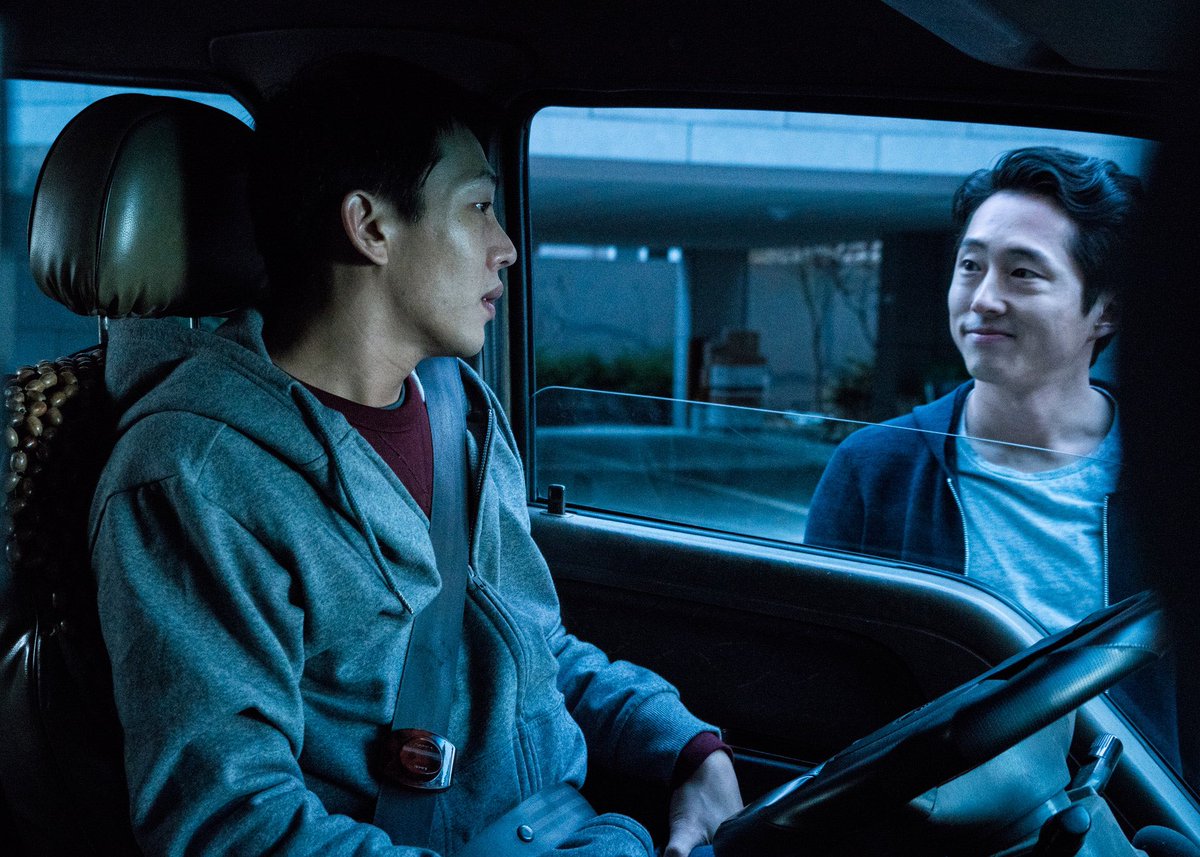
Jong-su (Ah-In Yoo) and Ben (Steven Yeun) in Chang-dong Lee's BurningThe rest of Burning trails Jong-su as he trails Ben. The question of Hae-mi’s fate hangs over everything, but the film keeps it at a remove. Clues materialize, along with doubt as to whether they are clues at all. Jong-su’s jealousy clouds the issue; so does Ben’s nonchalance. Burning balances ambiguities, dropping them into a carefully tenuated portrait of Korean millenial angst, and it becomes increasingly difficult to turn away from our own role in distinguishing what’s there from what’s not not there. Is Ben a Dickie Greenleaf or a Tom Ripley? Did Hae-mi fall in a well as a child? Why does she pointedly tell Jong-su that he’d called her ugly as a teenager, that it was the only thing he said to her in middle school? What is the role of the older generation — the women who refuse to see Hae-mi until she pays back her debts, the father on trial for assaulting a police officer? How does it fit together?

Chang-dong Lee steers clear of crescendo reveals, preferring an accumulation of resonance. References to Fitzgerald and Faulkner underscore Burning‘s sense of dislocation, and a crucial moment of sun-dappled freedom, interpreted so differently by each lover, is set to Miles Davis’ score for Elevator To The Gallows. We are nowhere, it’s now, options are dwindling, and, somewhere, something is about to be set on fire.
December 7, 2018 0 comments
0 FacebookTwitterPinterestEmail
Alien Ridley Scott Tom Skerritt
CommentaryFilm

Alien, Musicology, and Reading Soundtracks

by Lark November 21, 2018
written by Lark

One of the many wonderful things about my friendship with Rick Kelley is that, despite being two contrarian film nerds, and despite one of us being a queer woman living in rural Indiana and the other one being a straight guy living in Berkeley, we actually end up with pretty similar opinions on a lot of things. (One of the few exceptions: Halloween III.)

For example, we both do not like film soundtracks—in particular, the idea of casually listening to recordings of film soundtracks. While I might not be quite as vociferous about this as I used to be, I’m still going to argue that most soundtracks are essentially just classical music from an alternate dimension where every composer was dropped as a baby, and that there is similar but objectively more interesting music out there for 95 percent of released scores performed before, say, 2000.

And yet, I have been thinking about film music a fair amount recently. A bit of Lawrence Kramer’s very good, extremely dense summa of the New Musicology movement, Interpreting Music, made me wonder if my (justified) dislike of film scores proper has made me forget the ways in which they can be interesting to examine as elements within the film.

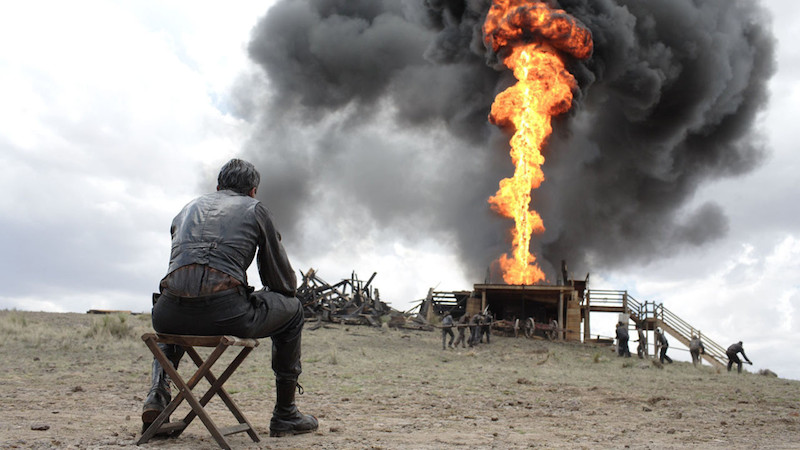
Kramer brings up film in his last pages, where he talks about There Will Be Blood. As the oil well begins pumping, an orchestra performs a concerto by Brahms, the only tonal music in the film. The music grinds against the soundtrack that fills the rest of the film: grim, dissonant music for strings, the sound of machines and misery.

There Will Be Blood PTA DDL oil wellThe Brahms concerto bursts out of the sound of the film. Here, for once, is joy and optimism, the sound of the future. Except, to us, knowing what comes, knowing the score that fills the rest of the film, we know it is nothing of the kind. It is the promise of destruction for the pastoral land that the music celebrates. (We may even know, if we are watching the film for a second time, that the oil well itself will soon kill one person and deafen another.)

The Brahms anticipates the spread of culture along with capitalism. The strings anticipate the future of vehicles and machinery and pollution.

Kramer’s point is valid – and, as he points out, the more one knows about classical music the richer the irony is. I want to look briefly at another piece of classical music in a film: Hanson’s Symphony No. 2 in Alien.

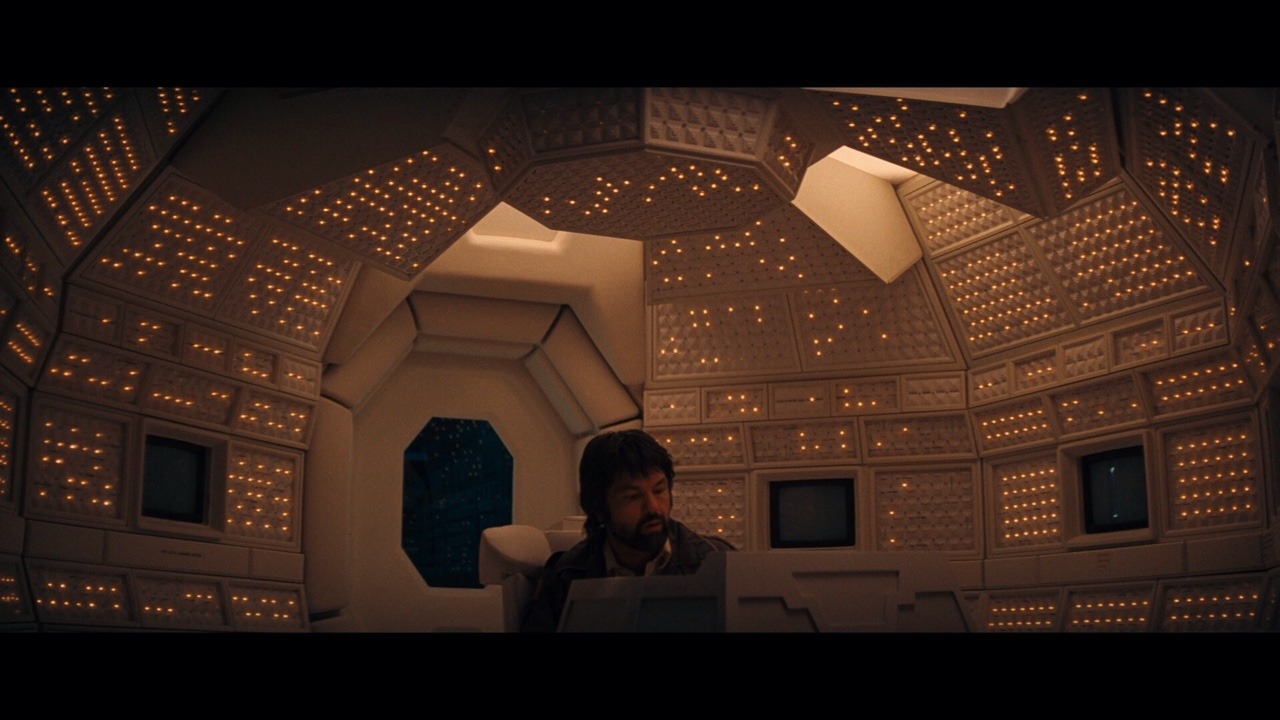
Alien is balanced between two eras of science fiction and horror, and the score reflects it. It opens with tense, drone-y strings as the crew begins to wake up. This, Alien says in its opening shots, is not the space of Star Trek, where mystery is welcome and the exception is to be sought out. This interruption of mystery into these truckers’ lives is frightening.

But as the scene begins to develop, the score cues turn more romantic—more what one would expect from Jerry Goldsmith (and closer to his Star Trek scores). What is interesting, though, is that they are more likely to be attached to any character except Ripley.

They’re mostly attached to Dallas. In fact, Dallas is the only character in Alien associated diagetically with music; he listens to Eine kleine Nachtmusik in the observation deck. The score singles him out as the Romantic hero. So what does the film look like with him as the hero?

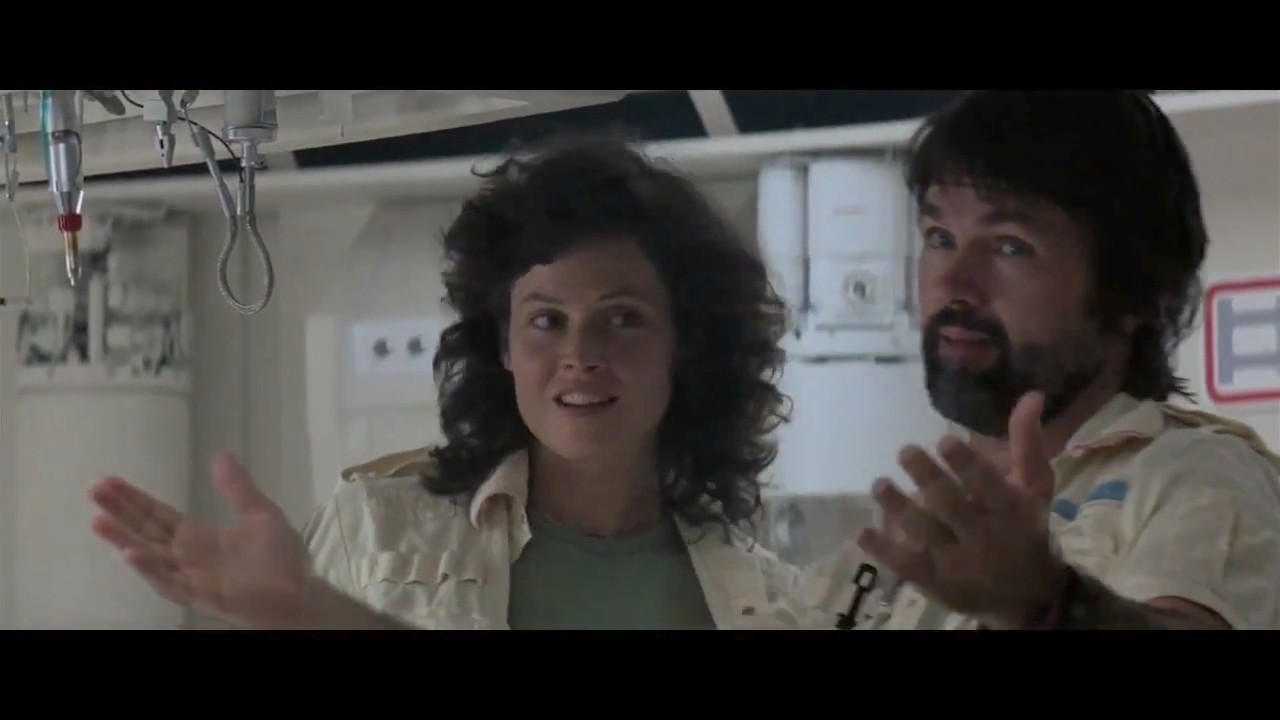
Alien Tom Skerritt Sigourney WeaverDallas fits the position of the space rogue, along with Captain Kirk and Han Solo (two characters whose associated music is not dissimilar to Goldsmith’s Alien score, if more consonant). He trusts in his pragmatism to get him through—as opposed to Ripley’s rational, systematic responses.
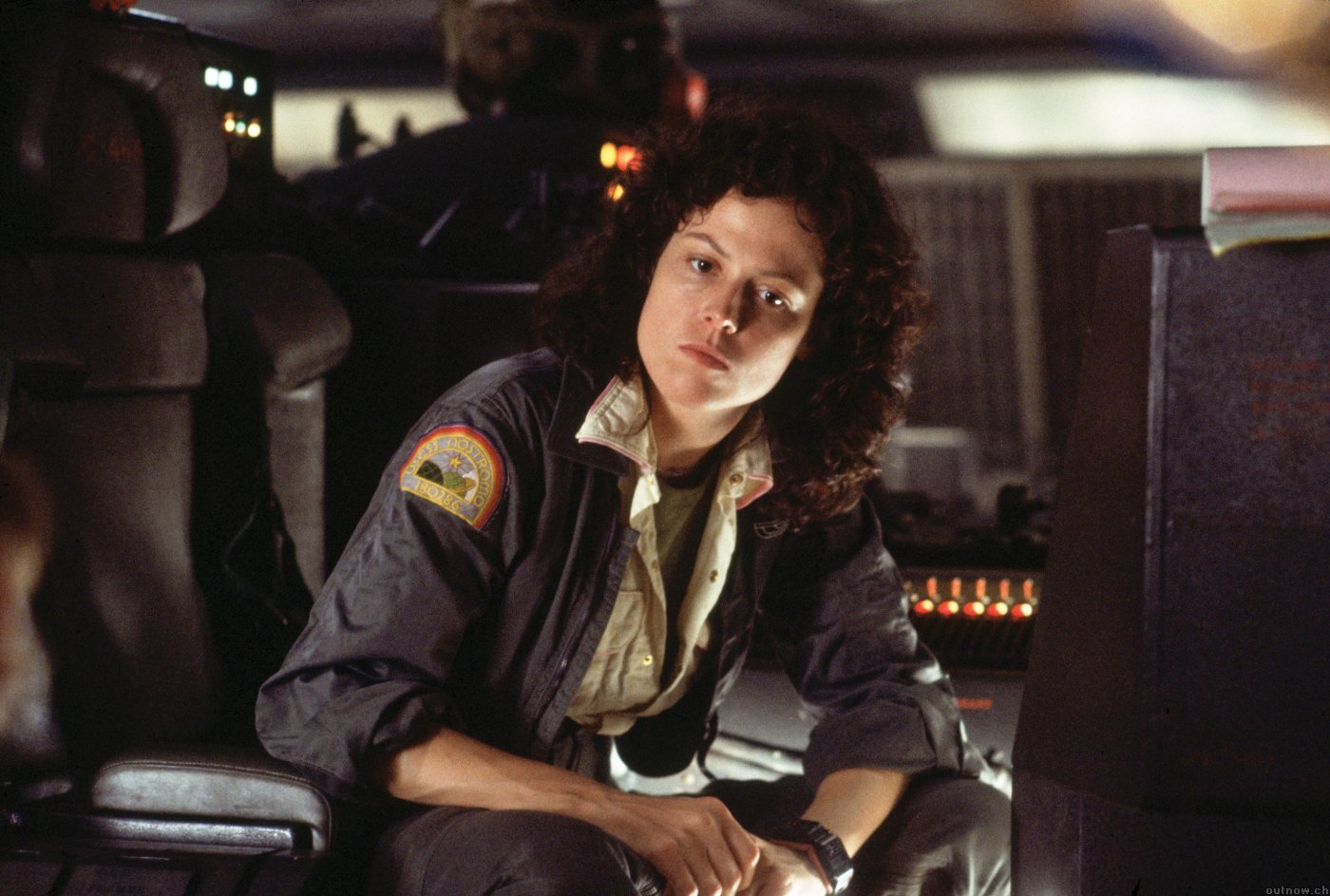
That is, inside his supposed cynicism—“I don’t trust anyone but myself,” he tells Ripley, when she voices (it turns out, justified) concerns about Ash—is a deeply romantic trust in some inner sense of what to do. That kind of trust in one’s own ability to make sense of the exception is what one sees in Kirk every week: a strange thing happens, Spock points out its illogicality, and Kirk figures out a way to make it fit within the system of knowledge (the system of figuring out planets, one by one, the system of scanning the universe and making it Cartesian).

That Romantic devil-may-care improvisatory attitude, then, is actually trust in a system made abstract. Dallas believes he knows how the capitalist system works, with the absent “company” sending the AI Mother as its representative. He doesn’t try to figure out why they are stopping at a particular planet; he assumes he understands, because, as a rogue, he knows the system.

That’s exactly the kind of Byronic deep individualism that the Romantic music of Alien‘s score celebrates. Ripley, rational and careful, doesn’t get anything like that for the first half of the film. She doesn’t even get dissonant strings. She’s an absence in the logic of the score.

The irony is that Ripley’s belief in the rules and suspecting only those who are suspicious would have brought the crew home safely. She rightly points out that the be-Alien’ed Kane should stay outside for 24 hours, which would have saved everyone else; she rightly points out that Ash is suspicious as hell. By not treating the situation as exceptional, she would have saved the day—but she gives up her place within the film score, which only acknowledges the exception.

After Dallas dies, Ripley suddenly becomes a totally different character. She begins to develop a series of Kirk-like solutions, and gains a place in the score, although mostly just when she wanders around and gets spooked. Which leads us to the Hanson quote.

The second movement of Howard Hanson’s Symphony No. 2 begins playing the moment the Alien is destroyed by the engines. Hanson’s symphony is, frankly, dull, the kind of composition that gets dragged out by symphonies doing music aimed at the public to prove the modern world is not all dissonant and scary.

It does, however, combined with shots of the stars, give a sense of the grandeur of space (so much so, in fact, that John Williams used the same symphony three years later for the basis of his soundtrack to E.T.—listen to the former and then the latter, and you’ll never unhear it).

Alien Sigourney Weaver RipleyThe score quotation puts Ripley explicitly in the line of Dallas, and explicitly in the line of the romantic space hero. She can re-establish the system: humans can survive in space, space travel is safe, the human dominion over space continues to expand. Hanson’s music is jarringly joyful for Alien, and only makes sense within these meaning structures.
Especially because it is joined to a strange action of Ripley’s: she broadcasts a message as a survivor and attempts to float back somewhere to be picked up. Why, though, does she expect to be? After all, this omnipotent company has shown they have no respect for human life, and she knows about their plan.

Is she expecting to stay quiet about the “secret order”? I would argue, no, as we see in the sequel. Ripley is depending on exposure to save her. She is relying on the fact that, once she tells her story, she will be safe—a surprising lack of paranoia. But her trust in the message’s exposure ties her back in to Dallas’ logic, the logic of Kirk: continue to spread information and the system will figure it out.

I want to return briefly to Kramer’s book. Kramer’s reading of There Will Be Blood (reading is a strong word – it’s an aside that takes up about a page) is interesting, and points out the importance of interpreting the scores of films within the context of classical music’s reception.

But on the other hand, I think it is too easy to notice this only in cases like There Will Be Blood, where the point is an ironic juxtaposition of consonant and dissonant music. That type of reading always turns out the same thing: modern vs past, and so on and so on.

Alien’s score also combines dissonant and consonant music, and they also serve to contrast one another. But in some ways, the Romantic music represents the future: the future of systems and logic, and the individual human trying to trust their inner self, for better or for worse. And I’m not sure the two tonal approaches are in direct opposition as much as they represent an internal struggle.

And I’m not sure it’s fair to automatically associate Romantic with human and dissonant with inhuman. After all, the robot Ash gets a few reasonably Romantic cues—although he hides in plain sight by being more human than human (making an “exception”, for example, to let the wounded Kane in).

And most importantly: this is not merely a statement that film scores are more “interesting” than I thought. As pure music, I still think the Alien soundtrack is forgettable. And I still suspect that people who listen to film scores are listening for the purpose of forgetting a film more properly: forgetting anything difficult or knotty about it and reducing it to their simplest memories of genre tropes.

I am simply wondering if reading scores within the history of classical music can reveal new aspects of the films themselves as films, and can shock us out of overly-familiar readings.

And regardless, it is true that there’s no reason to pretend film scores have the monopoly on being boring.

November 21, 2018 0 comments
1 FacebookTwitterPinterestEmail
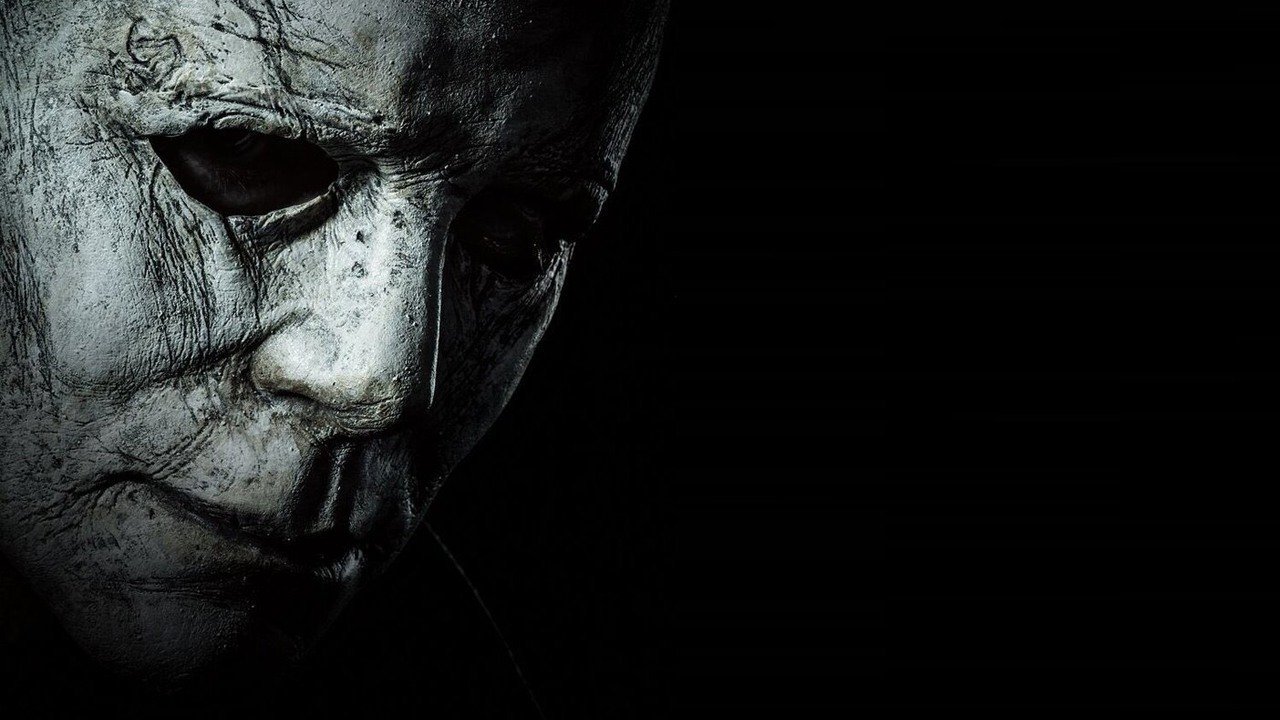
Halloween 2018
CommentaryFilm

Shocktober III: Halloween 2018 Edition

by rick October 24, 2018
written by rick

Halloween is a week out now! Scared yet?

No? Perhaps it’s something like the genre exhaustion we’ve been feeling, or the gnawing sense that the horrors of the screen are ill-equipped to keep pace with the horrors of the world. (Am I alone in finding First Reformed to be the best horror movie of 2018?) Or maybe scary movies were never that scary in the first place? Now that’s a frightening idea.

In any case, my 31 days of Shocktober horror count continues apace, even if the write-ups here have lagged. Here are more, with more to come. Perhaps the next seven days will deliver something vital and jarring. If not, I’ll have to settle for my two favorite first-watches of the month, maybe even the year.

Halloween might not be terrifying anymore, but it’s still the weirdest time of the year.

~ Rick

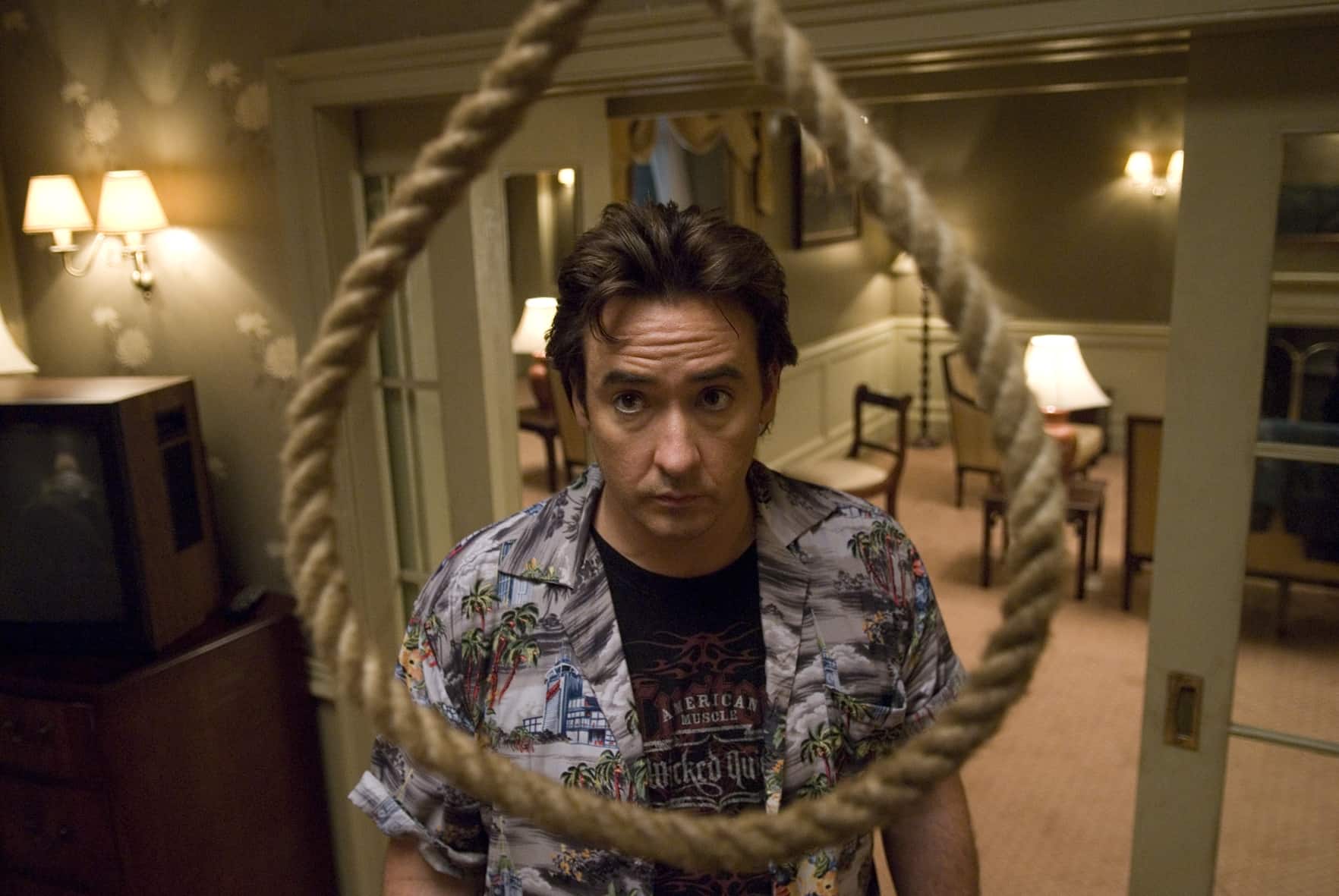
John Cusack in 1408 Halloween 20181408

Many Stephen King stories focus on his struggles with alcoholism, the haunted architecture of addiction. This is another one of those, for better or worse.

Mostly for worse. 1408 isn’t bad, per se, but it feels like such a pro forma retread of the themes that you spend the entire running time simply waiting for it to resolve.

John Cusack plays (guess what) a writer, this time the jaded chronicler of the supposedly supernatural who’s finally encountering the real deal. Samuel L. Jackson haunts the fringes as a dubious hotelier. We’ve seen it all before.


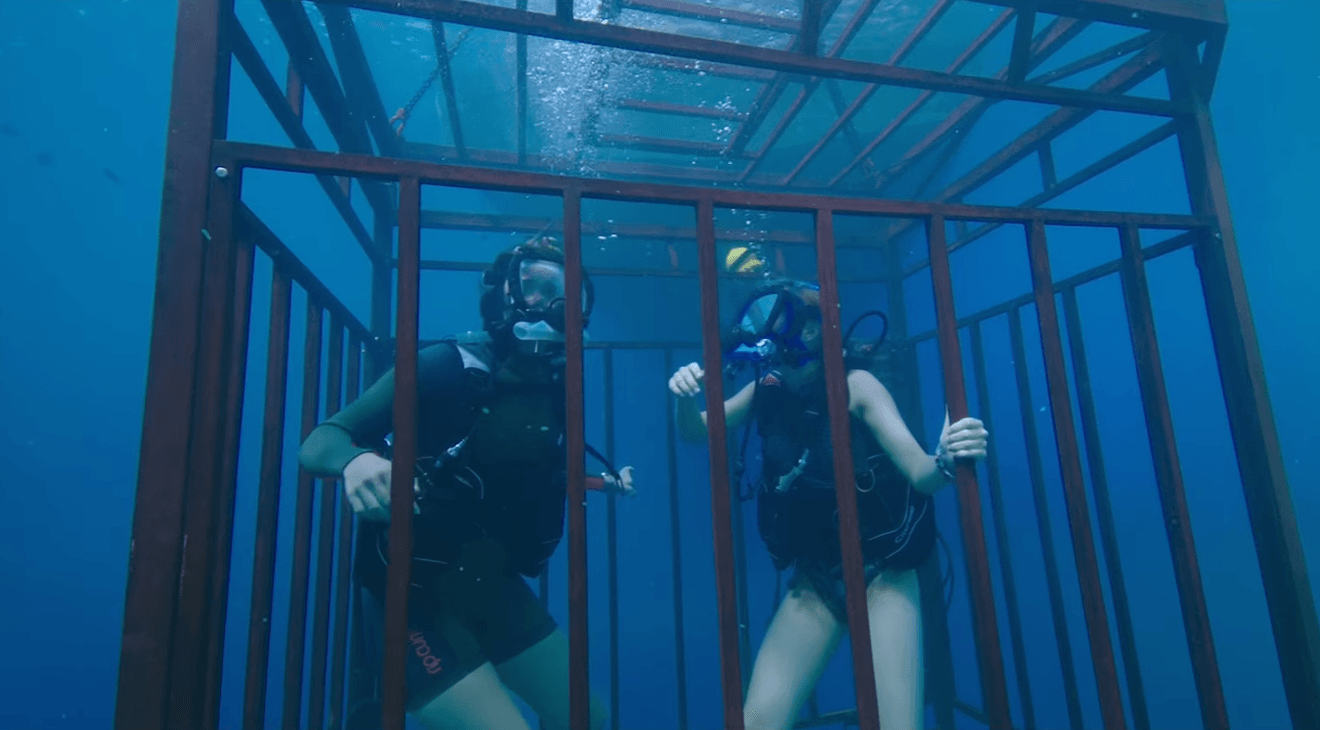
47 Meters Down Halloween 201847 Meters Down

Although its (apparently hellish, poisonous seaweed and broccoli-water-filled) production began earlier, the Mandy Moore-starring sharkfest 47 Meters Down lagged behind The Shallows in arriving on screens, and predictably suffered as a result.

This lack of acclaim may also have something to do with the fact that The Shallows is a far better film. Where that film’s Blake Lively is given an effective if genre-exaggerated backstory, our risk-taking protagonists here mainly want to stick it to an ex-boyfriend. Where Lively is stranded and alone, forced to summon all her strengths in desperate circumstances, here we have Matthew Modine on a radio, king of a George Clooney-in-Gravity figure who actually exists (terrible accent and everything). The supporting cast is all local idiot color, and worst of all, the leads in 47 Meters Down are able to get out of the cage — leading to expansive, tension-dissipating tableaux that someone like Collet-Serra would never allow, even if we do get some spectacular underwater photography out of the deal.

It all just has a lingering sense of mediocrity and inferiority. Knowing the backstory of its production and Weinstein-stunted release, I feel bad for everyone involved, but not bad enough to recommend this in a world where we already have The Shallows.

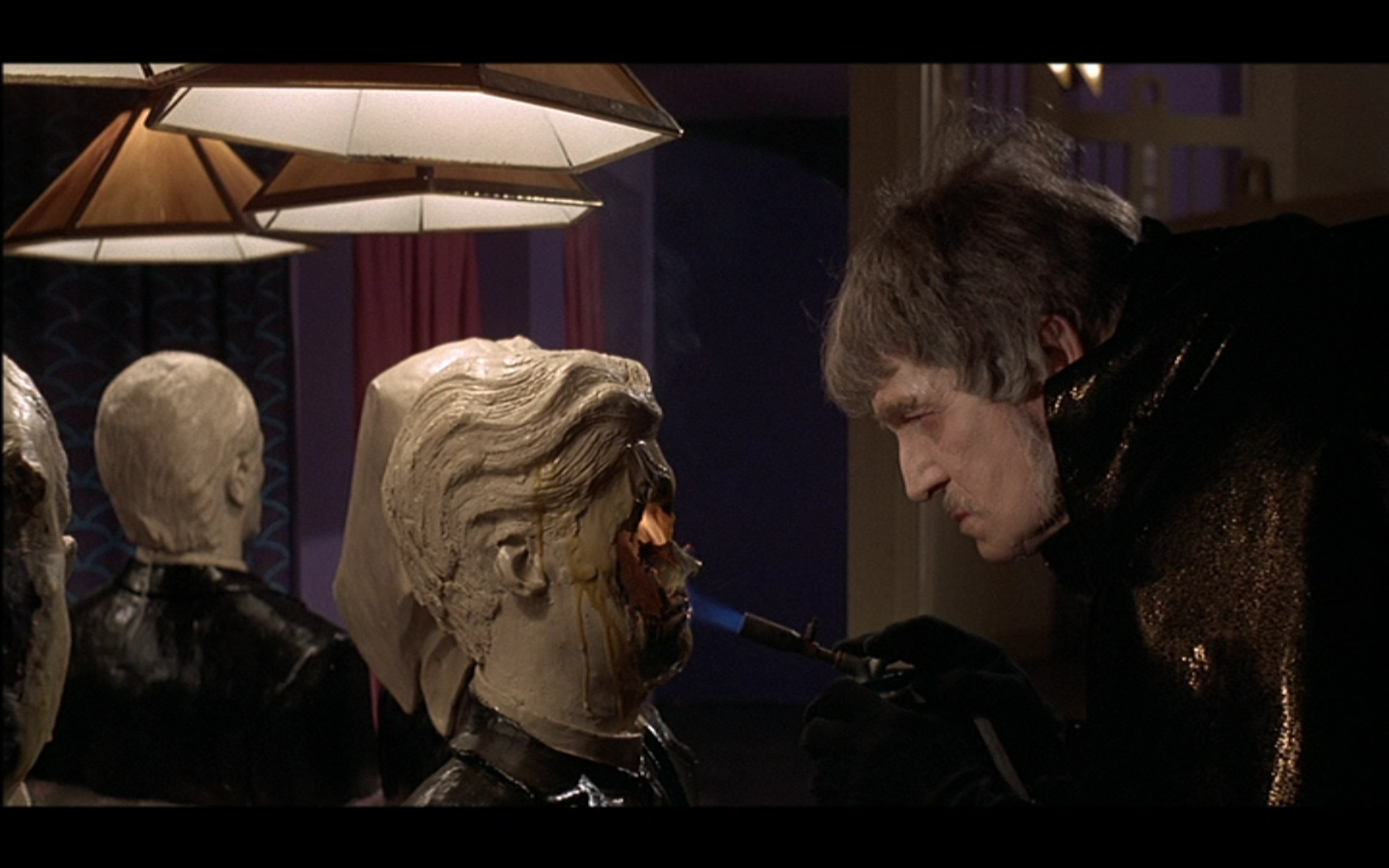
Vincent Price The Abominable Dr. Phibes Halloween 2018The Abominable Dr. Phibes

No amount of cult hype could’ve prepared me for my second favorite Halloween season first-watch. From its opening moments — or rather, its first, disorientingly wordless 10 minutes — I knew that Dr. Phibes would be going into regular rotation, Halloween season or not.

Vincent Price places the titular doc cum celebrated organist (the kind of pun only British horror, and I, could love). He’s introduced, cape to the camera, leading a psychedelic band of unnervingly masked musicians, and we discover he only speak through a gramaphone. Things only get weirder from there.

The plot itself is sort of a Talmudic pre-mash-up of Seven, Saw, and The Phantom of the Opera, with Phibes eliminating one by one the people he deems responsible for his beloved wife’s death in surgery and his own disfigurement. Hilariously hapless cops trail him through town, trying and failing to thwart his occult revenge, and we’re treated to extended, candy-colored musical interludes. By the time he reveals the final, ludicrously complicated setpiece, I’m all in. This movie is batshit in every right way.

Creepy Kiyoshi Kurosawa Halloween 2018Creepy

Kiyoshi Kurosawa is revered in Japan but less well-known elsewhere. He’s probably most familiar to American audiences for his 2001 Pulse, a terrifying genre entry that helped solidify one of today’s most au courant subgenres, the “internet is trying to kill you” movie, and was remade terribly five years later with Kristen Bell. (Fun fact: Harvey Weinstein, noted world’s worst man, was so disappointed in it that he nixed the director’s preferred bummer ending for 47 Meters Down before briefly relegating that film to the Walmart bargain bin. It all comes back around.)

Creepy epitomizes the slow-burn tendency in modern horror. There’s eventually a suitably horrific pay-off for all its mood, but Kurosawa is less interested in guts-and-gore genre tropes — if anything, the genre most centered here is the police procedural — than a more basic anxiety: we live more or less on top of each other without ever really knowing our neighbors. In Creepy, a deeply unsettling Teruyuki Kagawa embodies every concern you’ve ever had that there’s something off about the guy next door, as bucolic gates turn sinister and the narrow separations between dwellings and identities collapse.

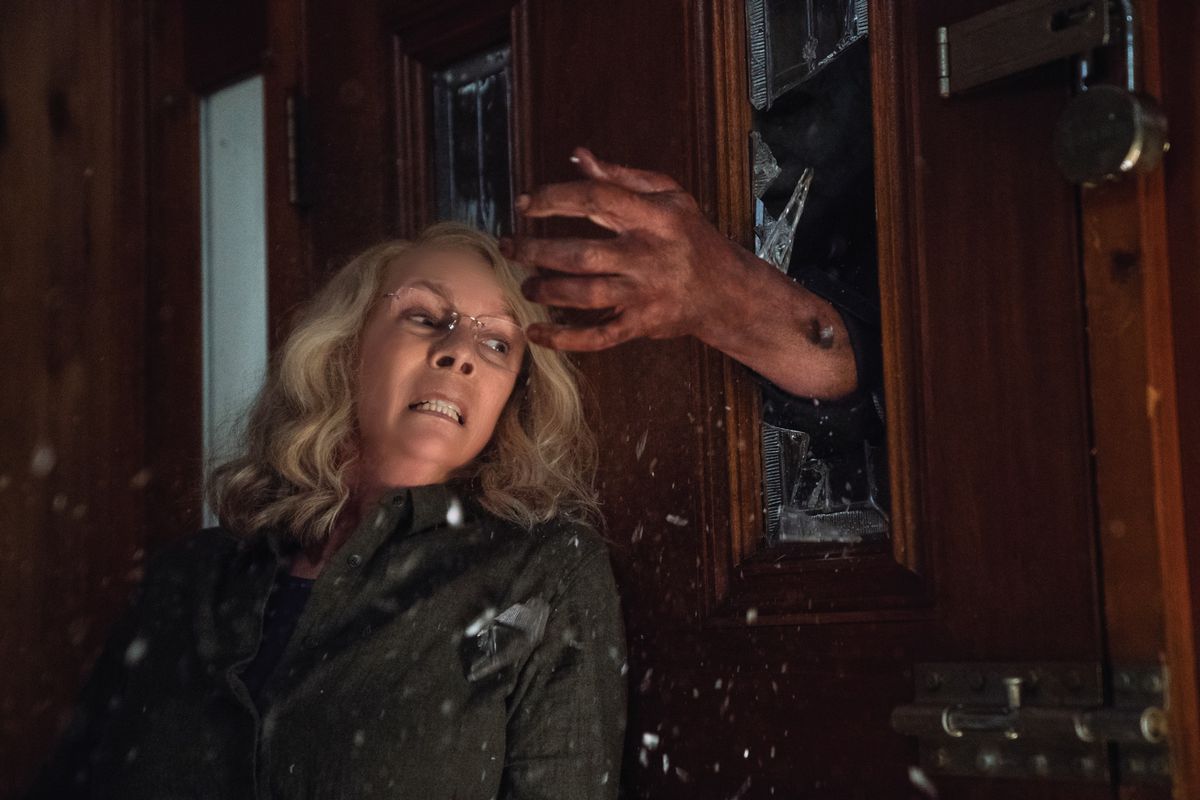
Jaime Lee Curtis in David Gordon Green's HalloweenHalloween

For effectively its entire history, horror, and the slasher subgenre, has weathered disrepute, and a range of critical charges: of exploitation and the fetishization of violence, of misogyny, of juvenile escapism, of desensitization to cruelty. The latest installment, which flat-out ignores everything since John Carpenter‘s pivotal 1978 stage-setting, seems squarely focused on recuperation.

That might be a good thing or a bad thing, depending on your point of view, but it’s not a particularly scary thing. As the current crop of horror turns relentlessly inward, its representations of anxiety shifting more toward of examinations of fractal trauma itself, there’s a feeling of desire for respectability in its images and accompanying commentary. We’ve been given both the text and supplementary reading at the start of the semester; the exam is open book.

Thus, in David Gordon Green‘s Halloween we get offhand mentions of Viktor Frankl alongside inverted references to the original film, with Jamie Lee Curtis‘ Laurie Strode occupying physical spaces (outside windows, absent from spaces on the grass she’d been moments before) associated with her nemesis, Michael Myers. In this Halloween, she’s Sarah Connor, waiting patiently in a fortified existence for the return of the repressed. The trauma is intergenerational and elastic; we watch it cascade from mother to daughter to granddaughter, enveloping the family.

It’s poignant, though Green and co-writer Danny McBride undercut it with ill-advised stabs at humor throughout. (The silent theater response to a zany Black kid who’s included to deliver one-liners amid the murders was my most awkward moment at the movies in 2018; if Halloween is woke af with regard to female trauma, it’s not quite there as far as race is concerned.)

Does it matter when horror isn’t scary? Halloween 1978 was an inchoate scream, and Halloween 2018 is a term paper about screaming. Your call.

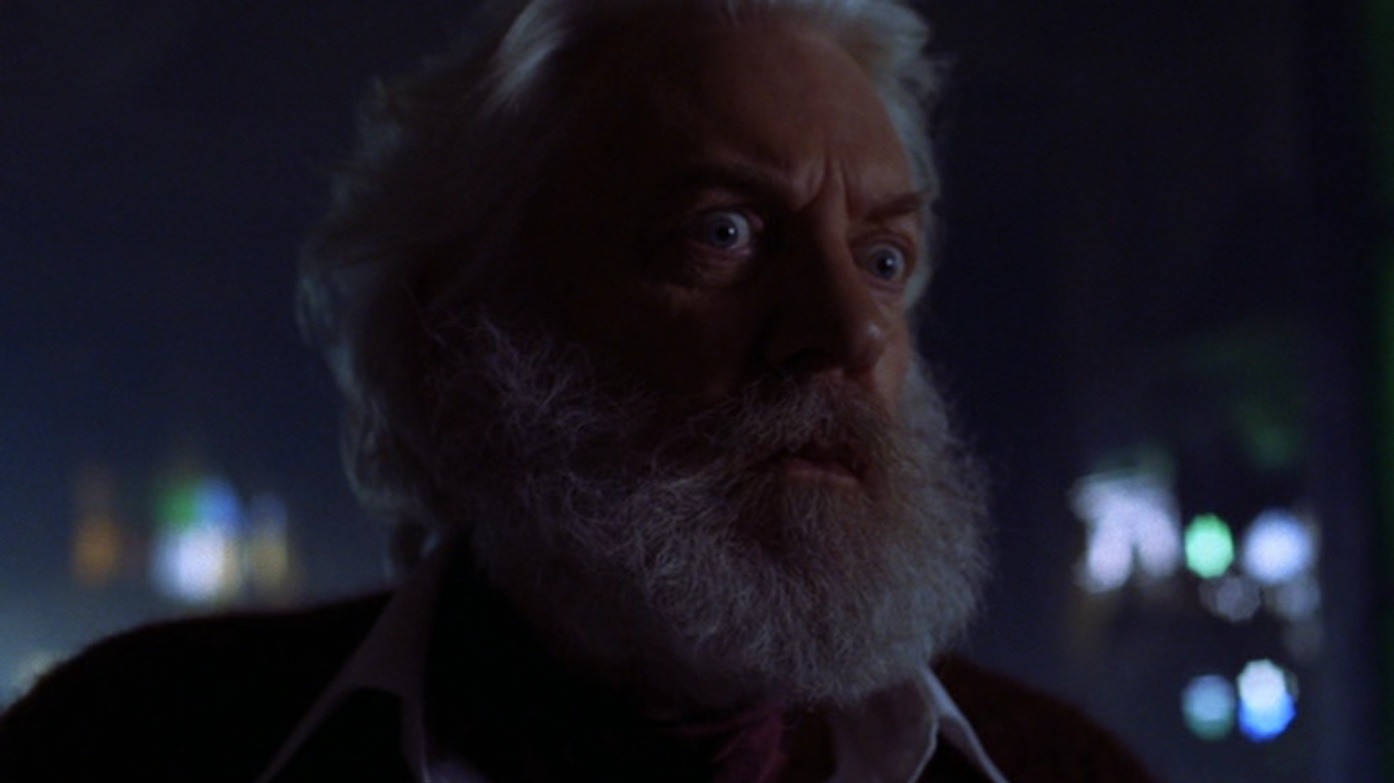
Donald Sutherland in Salem's Lot (2004) Halloween 2018Salem’s Lot (2004)

In a very on-brand move, I decided to check out this TNT miniseries adaptation of the Stephen King favorite, after having watched Larry Cohen’s in-name-only “sequel” earlier this month and still without having seen the Tobe Hooper version people actually like.

And it’s … not bad? Occasionally fun, even? Rob Lowe intones the clearly-from-the-text narration like he just stepped out of Stand By Me: Vampire Chronicles, but he’s serviceable in the lead, atop a talented cast who cumulatively don’t get to shine much but have their moments. Donald Sutherland in particular suffers from minimal screen time, if only because he’s so much fun when he does show up, and I missed Sam Fuller‘s Nazi-hunter from Return.

This Halloween season is grinding me down with the exhaustingly Kingian “this ground / hotel / house / person / car / dog is not good, no sir” narrative, but Salem’s Lot is a compelling enough story at heart: you can go home again, but it’ll be filled with monsters.

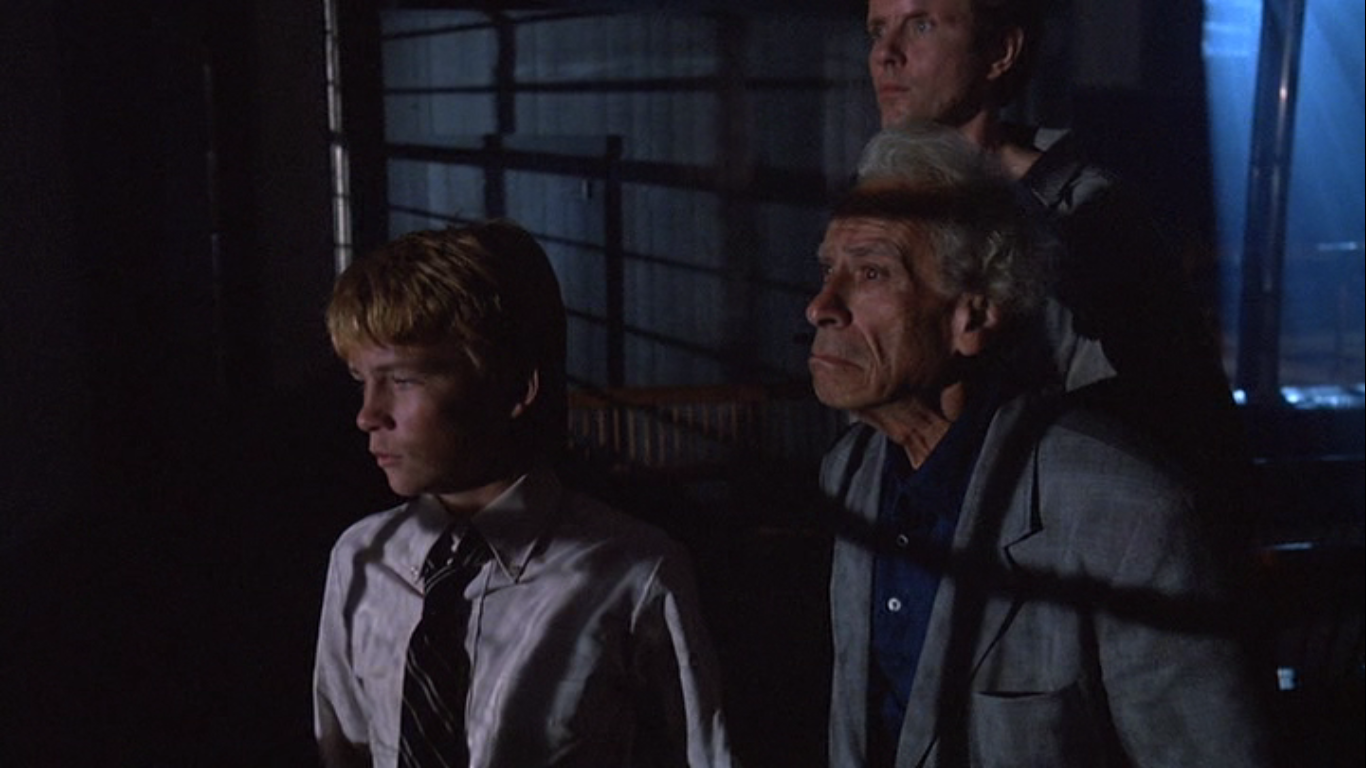
The Visitor (1979) Halloween 2018The Visitor

Liz wrote about this 1979 drive-in head-scratcher back in the decidedly less Halloween-y month of April, but I only experienced its wonders this week.

And boy howdy, is it wondrous.

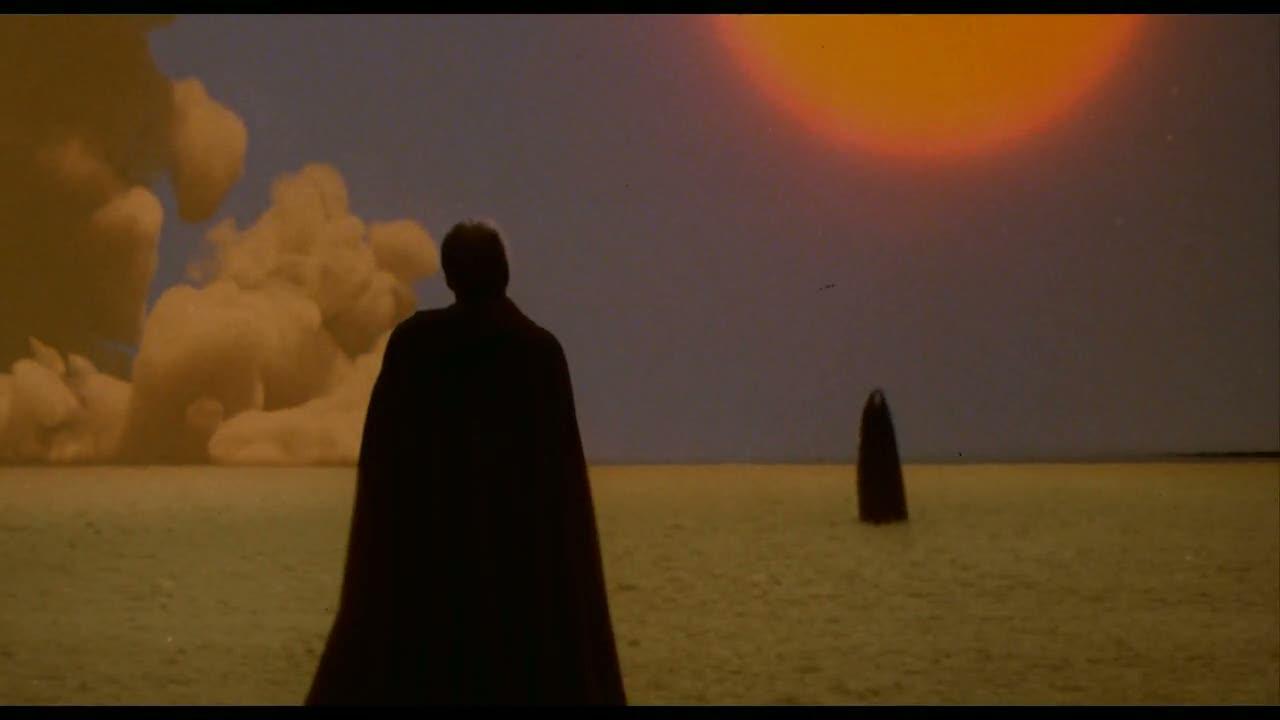
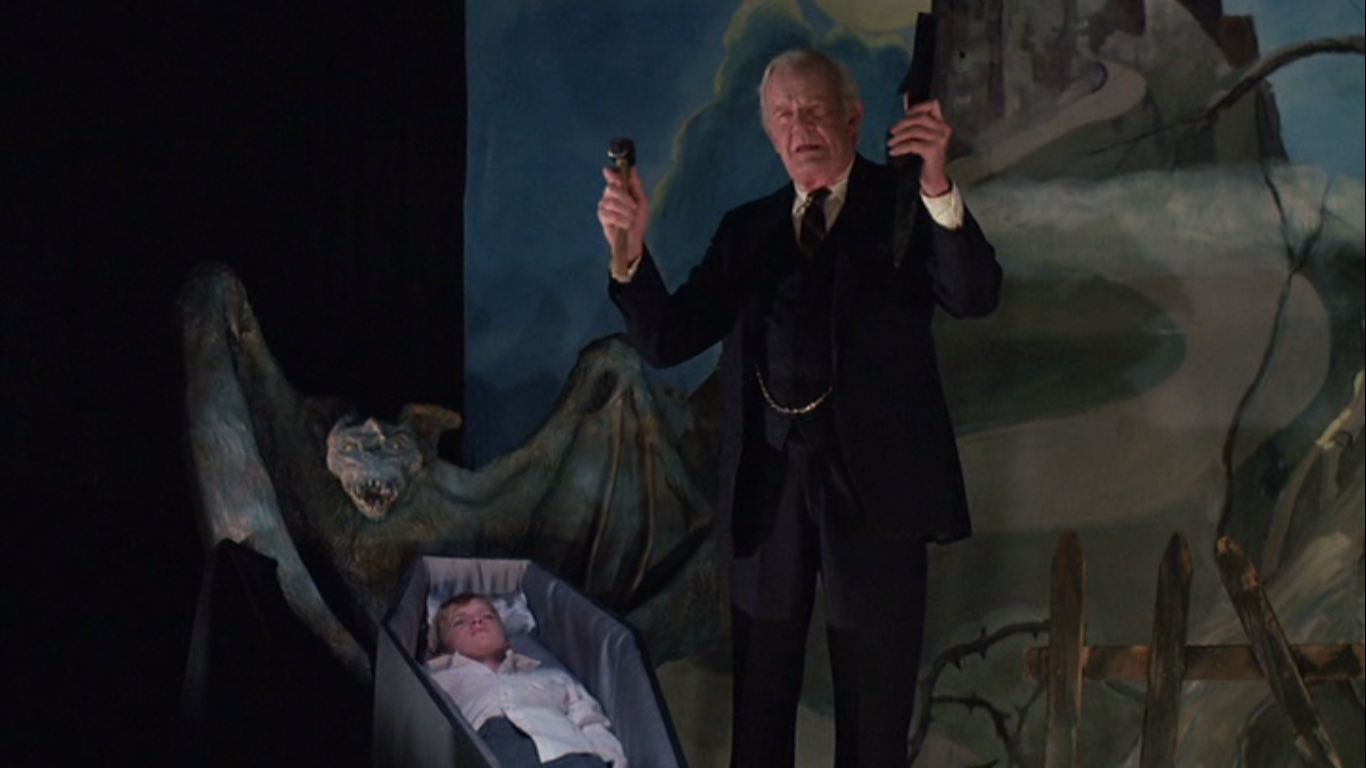
From John Huston‘s space-eyed turn as a kind of celestial bounty-hunter for monstrous, telekinetic children to an inexplicable set-piece set in the world’s ugliest basketball arena to, in Liz’s words, “the presence of Yahweh, an extremely cult-leader-looking man who seems to live in a spa,” The Visitor is operating on a logic only the 1970s could produce, or understand. It’s my favorite movie I’ve seen this October.

Side note: Franco Micalizzi‘s score is all kinds of awesome, and I’m considering carrying it around with me (on my Walkman) to add some horror-funk grandeur to my entrances.

October 24, 2018 0 comments
0 FacebookTwitterPinterestEmail
Shirley Jackson The Lottery 1969
CommentaryFilm

Shirley Jackson’s The Lottery Traumatized Schoolkids in 16 mm

by rick October 18, 2018
written by rick

The works of horror fiction luminary Shirley Jackson might always play best in the chilly, overcast weeks leading up to Halloween, when gathering around a fire to elegantly process trauma seems to make more intuitive sense than in, say, June. That’s clearly the bet Netflix made in timing the release of its 10-part adaptation of The Haunting of Hill House, only the latest treatment of her classic. As it happens, the same logic held nearly 50 years ago, when, on October 17, 1969, Encyclopædia Britannica Films released its 18-minute, 16 mm version of Jackson’s short story The Lottery. This was an “educational” effort that presumably served primarily to educate kids not to trust their teachers uncritically, since they might at any moment introduce them to some grim, grim shit in the middle of the day.

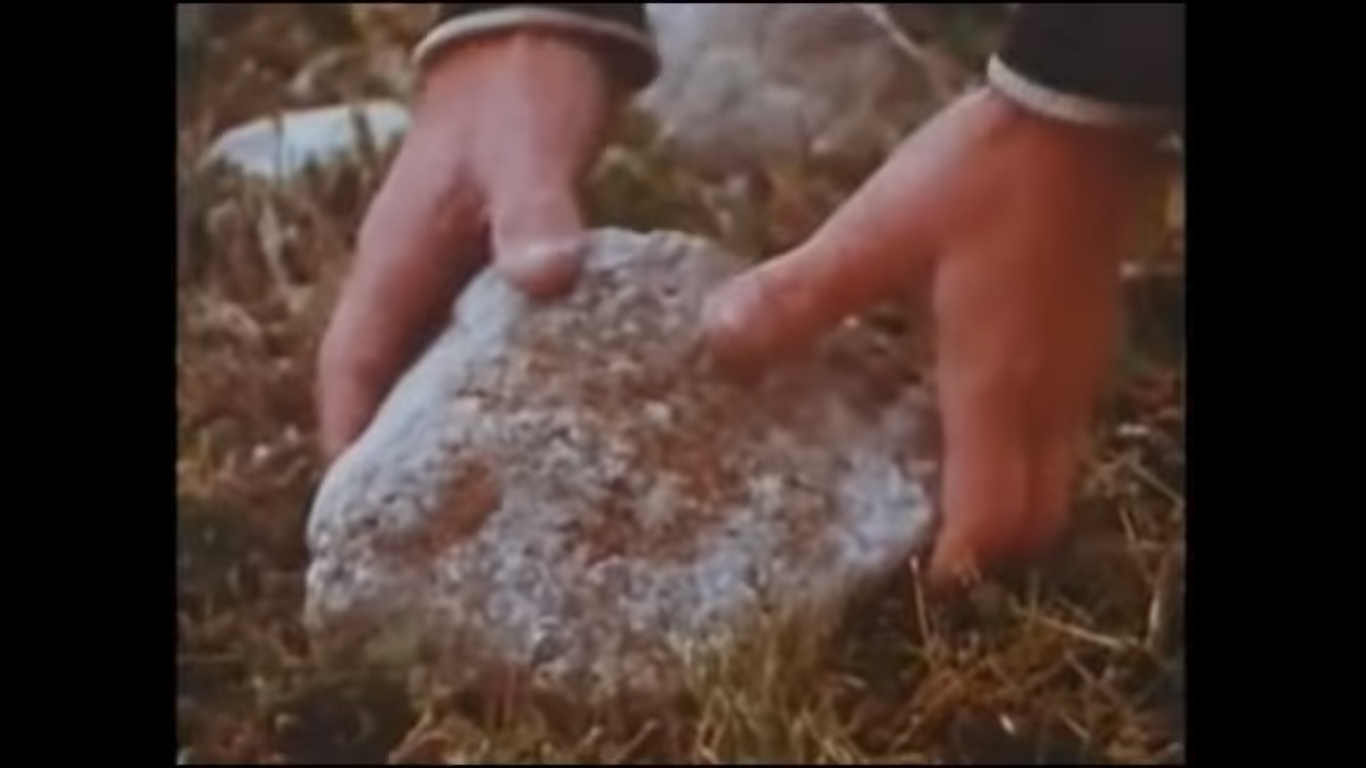
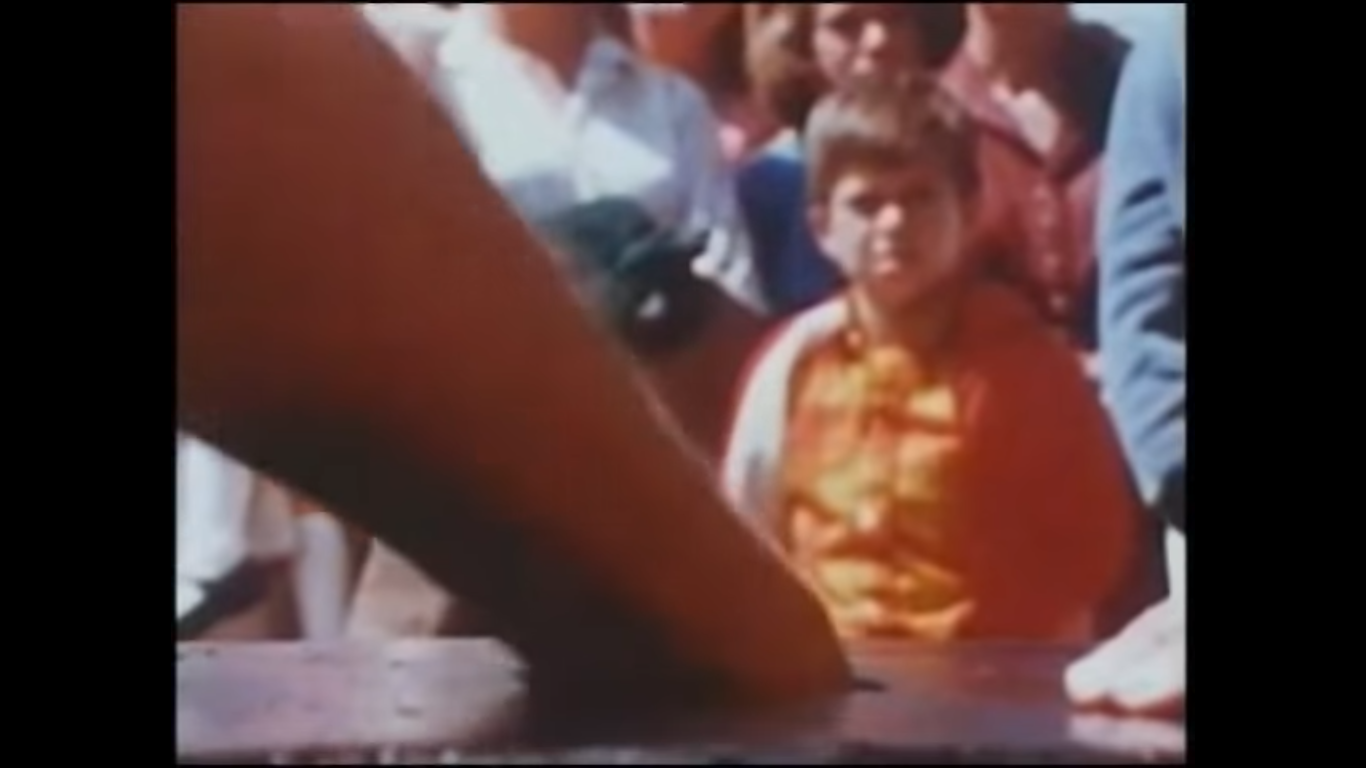
Shirley Jackson The Lottery 1969 ballot boxThe bone-brittle plot of The Lottery is well known. (Read the story here if you don’t want spoilers about a seven-page story from 1948.) The residents of a small town gather in its square one morning, the adults chatting quietly outside their temporarily shuttered storefronts and empty homes, the kids ominously gathering stones while playing. The town’s head honcho welcomes everyone to the annual festivities and ascertains that everyone’s been able to make it, or is represented by proxy. Various logistics are run through for the event: a lottery, in which slips of paper are drawn from a box by each family. The sense of a slightly forced conviviality Jackson introduced at the start gives way to an edgier mood in the crowd as the representatives step forward to take their turn. There are some mutterings about how neighboring towns have done away with the lottery, and some insistent admonitions from older folks about how there’s always been a lottery and always should be. Finally, one family draws the marked paper; each member of the family draws again individually; the mother draws the marked paper. The entire village stones her to death. She dies protesting the unfairness. The end.
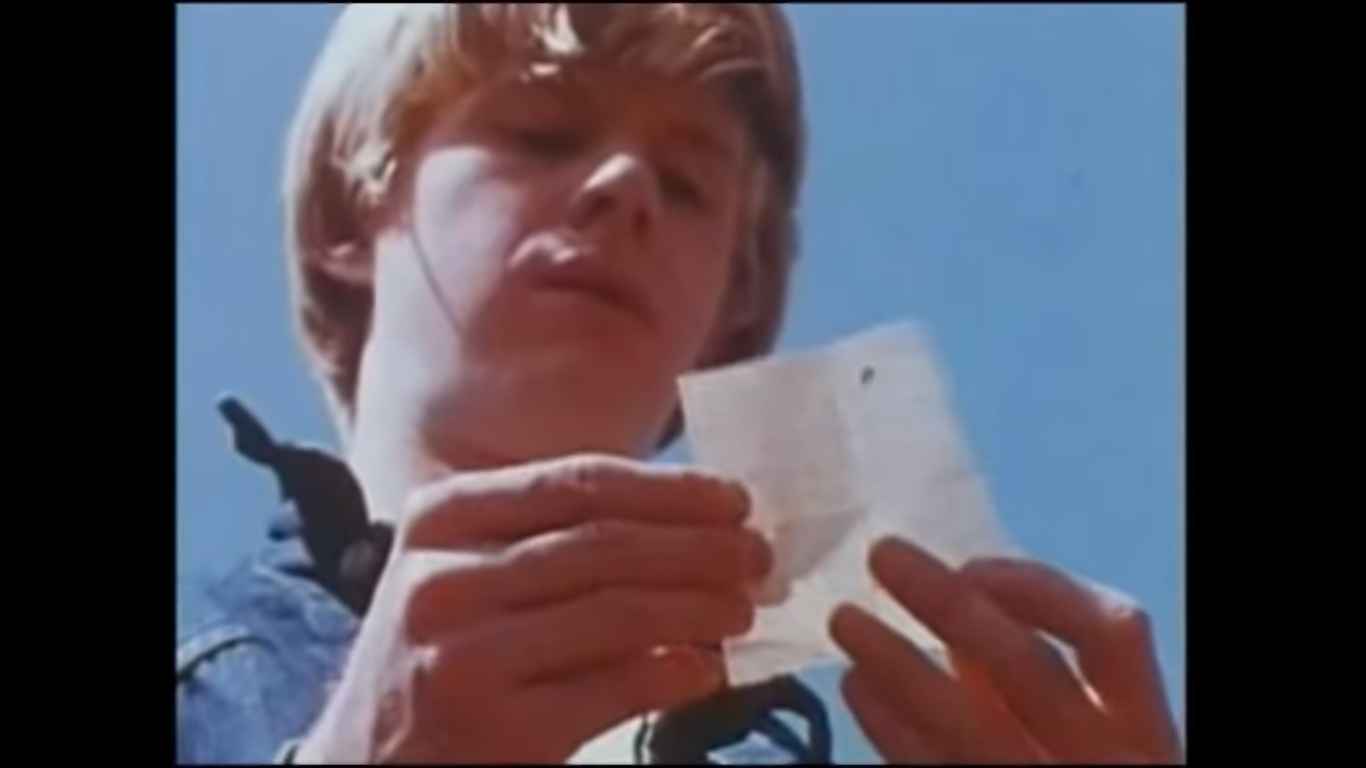
It’s a harrowingly spare vision of baseless groupthink, conformity, and calcified custom, with subtexts about the construction of masculinity through violence. What’s less clear is why someone would read The Lottery and think, “Now here’s a movie for children!”

But that’s precisely what happened at Encyclopædia Britannica Films. Perhaps, in the context of 1969, these themes were urgent enough to provide the production’s go-ahead, though the generation of unexpectedly scarred teen viewers who show up in the YouTube comment section still seem kind of irritated about it.

Shirley Jackson The Lottery 1969 Ed Begley JrThe film’s treatment of Jackson’s material is extremely faithful, down to the sparse dialog; how could it not be, adapting such an elemental seven pages? The Lottery plays out its hand methodically and mercilessly. Its only flourishes are quick, disorienting pans across faces in the crowd to heighten the sense of social claustrophobia in the still, open air. It lacks Jackson’s austere but pointed style — one commenter remarks, “My favorite part is when they point the camera at someone and he talks” — but it gets the job done, while also introducing the world to Ed Begley, Jr.
The 1969 Lottery was directed by Larry Yust, son of longtime Encyclopædia Britannica editor-in-chief Walter, and was among EB Films’ best-selling educational films. Yust directed a whole host of entries, including others in the series of literary adaptations of which The Lottery was a curious part; Hawthorne, Melville, Conrad, Hemingway and Ionesco and more were available on 16 mm for the classroom, alongside fare like “How To Measure Time”, “Maps for a Changing World (The Airplane Changes Our World)”, and “Simple Machines: The Lever Family (Lever, Pulley, Wheel and Axle)”.

And so the proliferation of 16 mm projectors, federal funding issuing from a patriotic Cold War educational urgency, expansive private sector profit margins, and popular idealism about lighting young minds all combined for a strange moment when the children of America sat down in classrooms to learn about electrons and watch villagers stone each other to death. What a time to be alive (or not).

October 18, 2018 0 comments
0 FacebookTwitterPinterestEmail
CommentaryFilm

Shocktober 2018 II: Another Reshockening (of Horror)

by Sam and Rick October 15, 2018
written by Sam and Rick

The month’s half-over, but there’s plenty of time left for October horror. (Or so I reassure myself, as I watch my horror friends’ lists spiral into the dozens, as they report back from 24-hour scare-a-thons, and generally act like a bunch of goddamn lunatics with weird time-management skills and no regular jobs! Get a job, weirdos!)

Anyway, here are some reportbacks from our relatively modest horror intake, before we crawl back into the crypt and sequester ourselves from the light of the day.

Rick’s

Katherine Isabelle in the Soska Sisters horror American MaryAmerican Mary

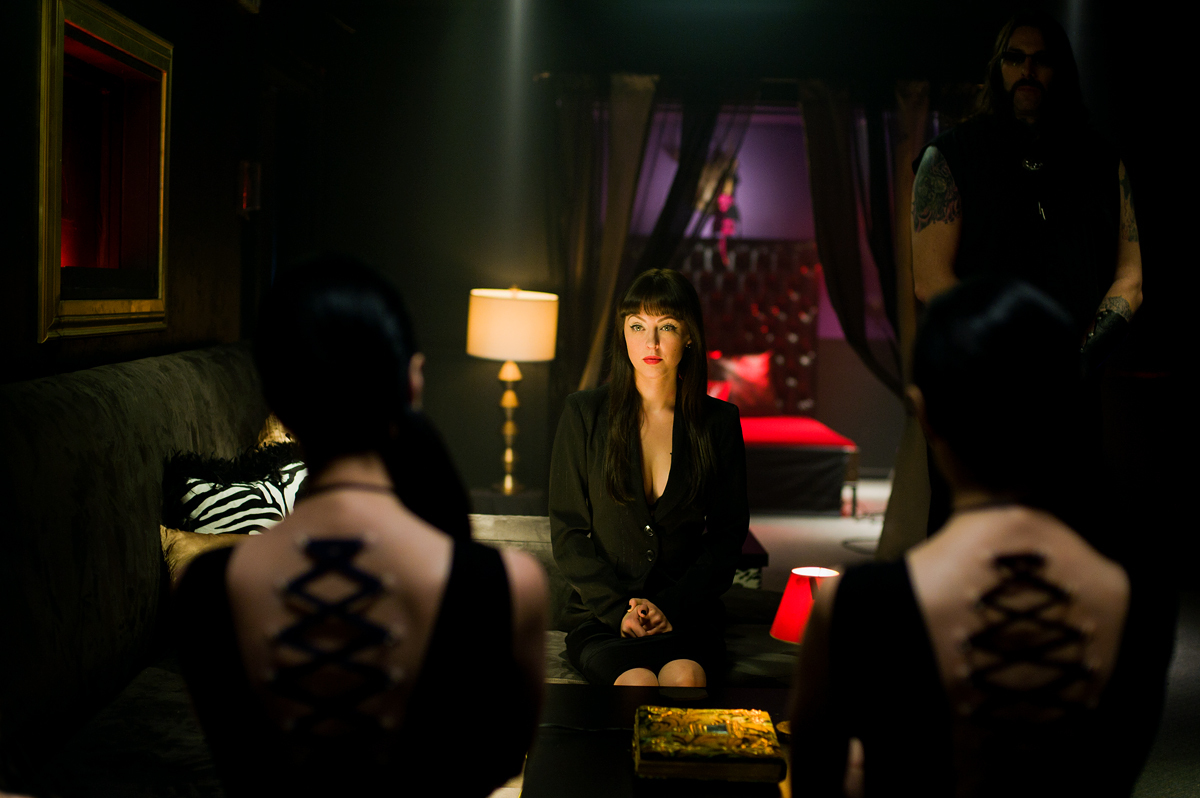
Setting a Fauxnenbergian feminist horror in the world of body modification surgery seems like such a brainy no-brainer that it’s curious there aren’t more films like American Mary.

And for most of its running time, the Soska Sisters gleefully showcase as many squirm-inducing tweaks to the flesh as they can manage, infusing American Mary with both splatter and philosophical considerations of the malleability, vulnerability, and desires of the flesh.

Why, then, do we need yet another sexual assault as character motivation? The film’s logic doesn’t demand it, and it feels obligatory, as most deployments of the trope are starting to feel. The fact that the writer/directors are women doesn’t blunt this much.

Still, American Mary works on the strength of its central conceit and a wonderfully mercurial lead performance from Katherine Isabelle.

Alex Garland's AnnihilationAnnihilation

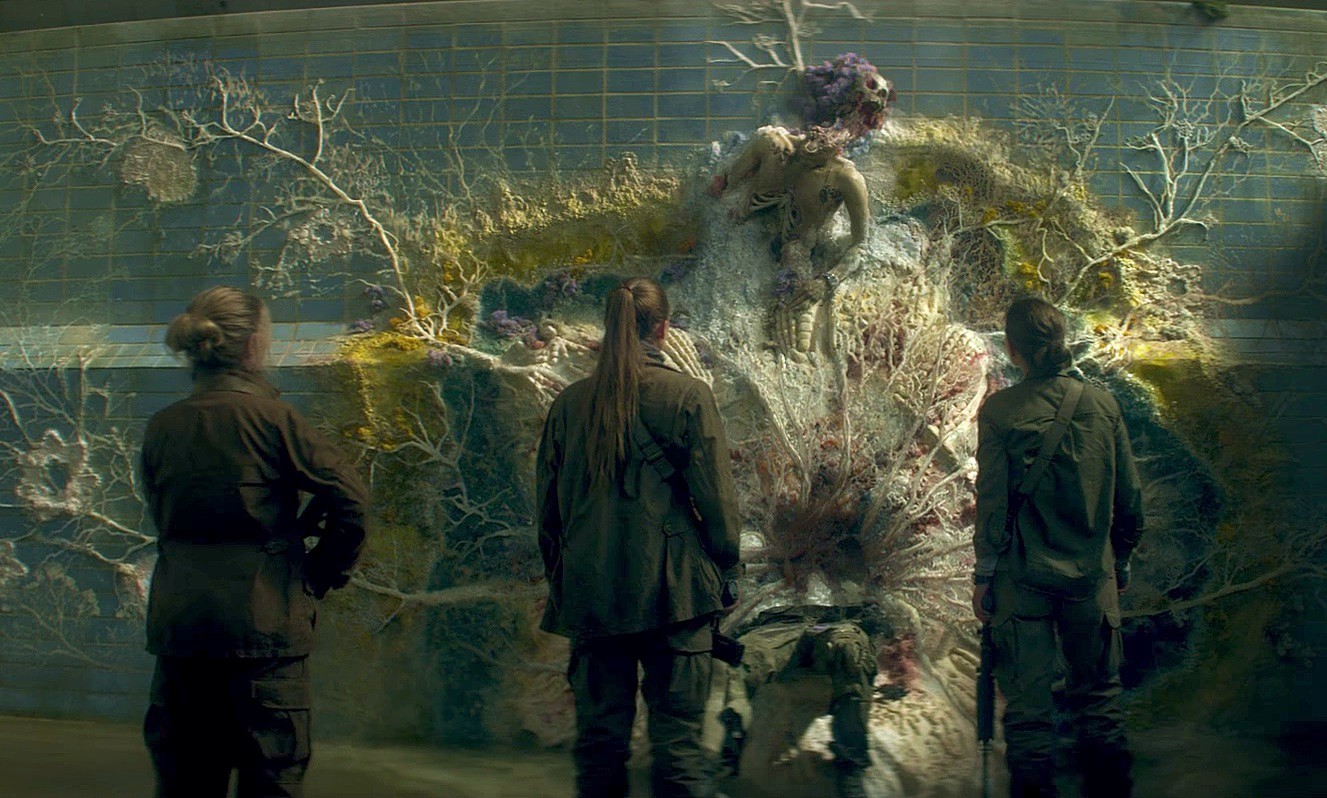
Finally caught up to one of the year’s more divisive genre movies – divisive, at least, among friends who thought the whole thing was a bit of an incoherent if intriguing mess and those who consider it another slept-on masterpiece from Alex Garland. (Probably also divisive in terms of whether it belongs on this horror list at all, but that’s another story. It has monsters, so we’re including it.)

Annihilation seems to me like a classic case of a film biting off more than it could chew. A terrific high-concept start gives way to an increasingly frightening second act, and then to a disappointing non-resolution that lands with a thud. I’ve never read the source material, so perhaps things are more gracefully unraveled on the page, or maybe Garland should’ve adapted it as a multi-installment mini-series or something.

As it is, there just doesn’t feel like enough time to get to know the characters (all well-played by the mostly female cast) who’ve signed up for a likely death investigating a “shimmer” that’s swallowing the world, much less wrap your head around the ideas. The film can’t pull off its own ambitions, but it’s fun to watch it try.

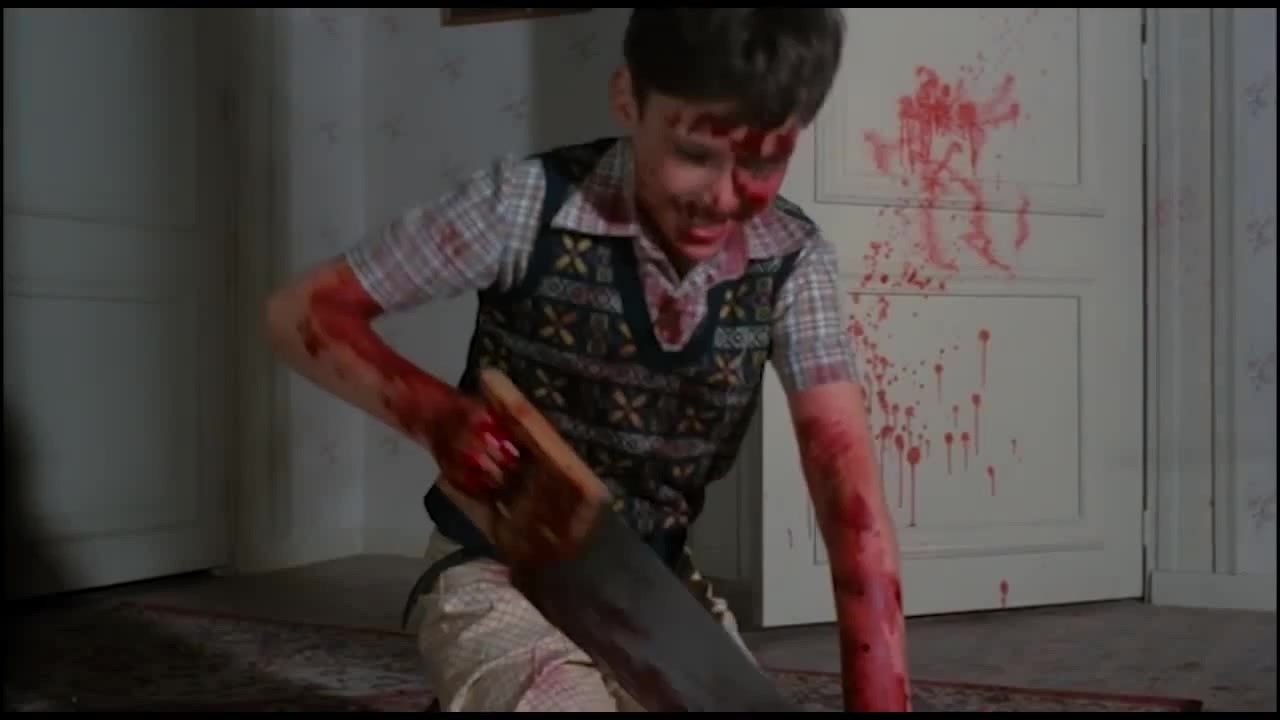
Damien Omen II Jonathan Scott-Taylor close-up horrorDamien: Omen II

Middle school is hell!

This is the takeaway from the oddly reserved second installment in the franchise, in which the Antichrist goes to a military academy and kills people with a bird.

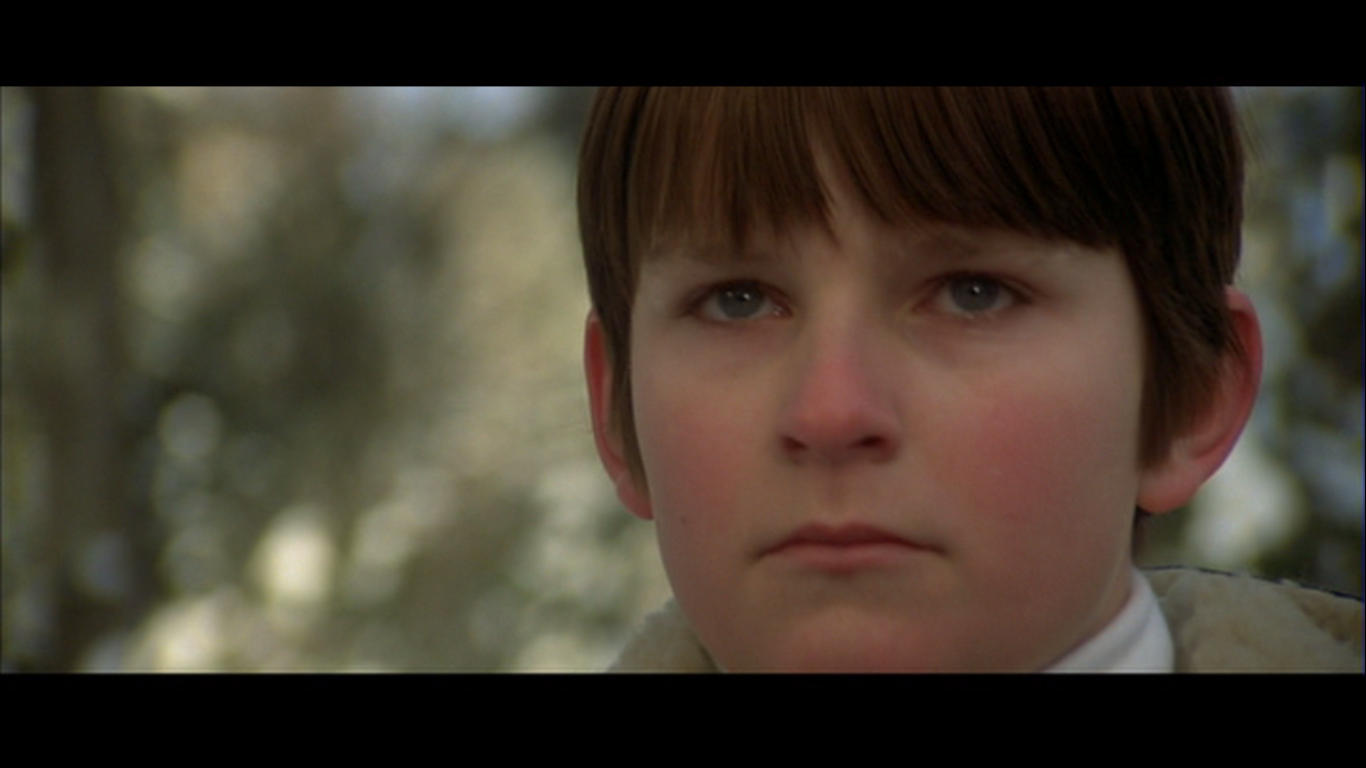
William Holden replaces Gregory Peck and Lee Remick is swapped out for Lee Grant in her peak B-horror years, but this is Damien’s show, and it’s hard not to feel for Jonathan Scott-Taylor. He isn’t given much to work with and is, in a perhaps related development, bad.

This inadvertently ups the pathos, though, since middle school is already awkward. It’s kind of nice to know that’s true even for the Devil.

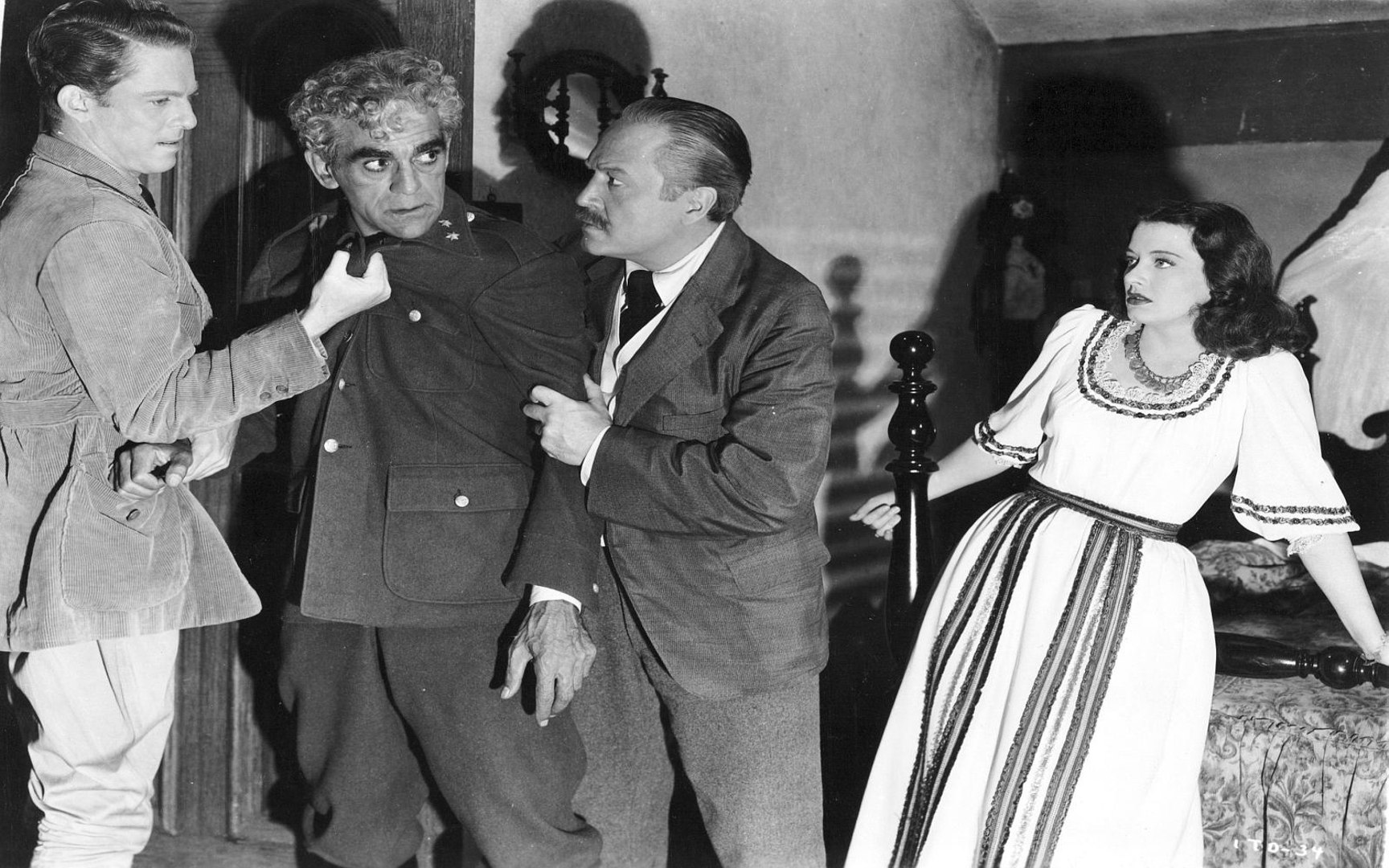
Boris Karloff in Val Lewton Mark Robson horror Isle of the DeadIsle of the Dead

The film that started the vorvolaka craze, when vorvolakas began appearing in all of your favorite films, radio serials, and breakfast cereals. Famously, when four of the vorvolakas boarded Pan Am flight 101 and left London Airport early on 7 February 1964, bound for New York City, they were swarmed by thousands of adoring fans and kicked off the Vorvolaka Invasion.

Wait, that was the Beatles. The vorvolaka is actually a ghostly fixture of Greek mythology, and Isle of the Dead is probably the only vorvolaka movie, and therefore the best.

A lesser-loved Val Lewton RKO production, directed by The Seventh Victim‘s Mark Robson and starring Boris Karloff, Isle of the Dead is spooky in a “foggy isolated island” way and really quite fun, if resolutely downbeat.

Karloff is a merciless general introduced casually ordering a subordinate to kill himself for being late, alerting us to his by-the-books approach to being terrible and also his fascist lunacy. Robson fills the frame full of mouldering wartime corpses and images riffing off the famous metaphysical horror of the Arnold Böcklin paintings that give the film its title. A science vs. mysticism debate fuels much of its subtext, but Isle of the Dead seems way more interested in piling on the fog machines than any high-minded clearing of the air.

That’s good: Lewton movies always work best when they just lurk.

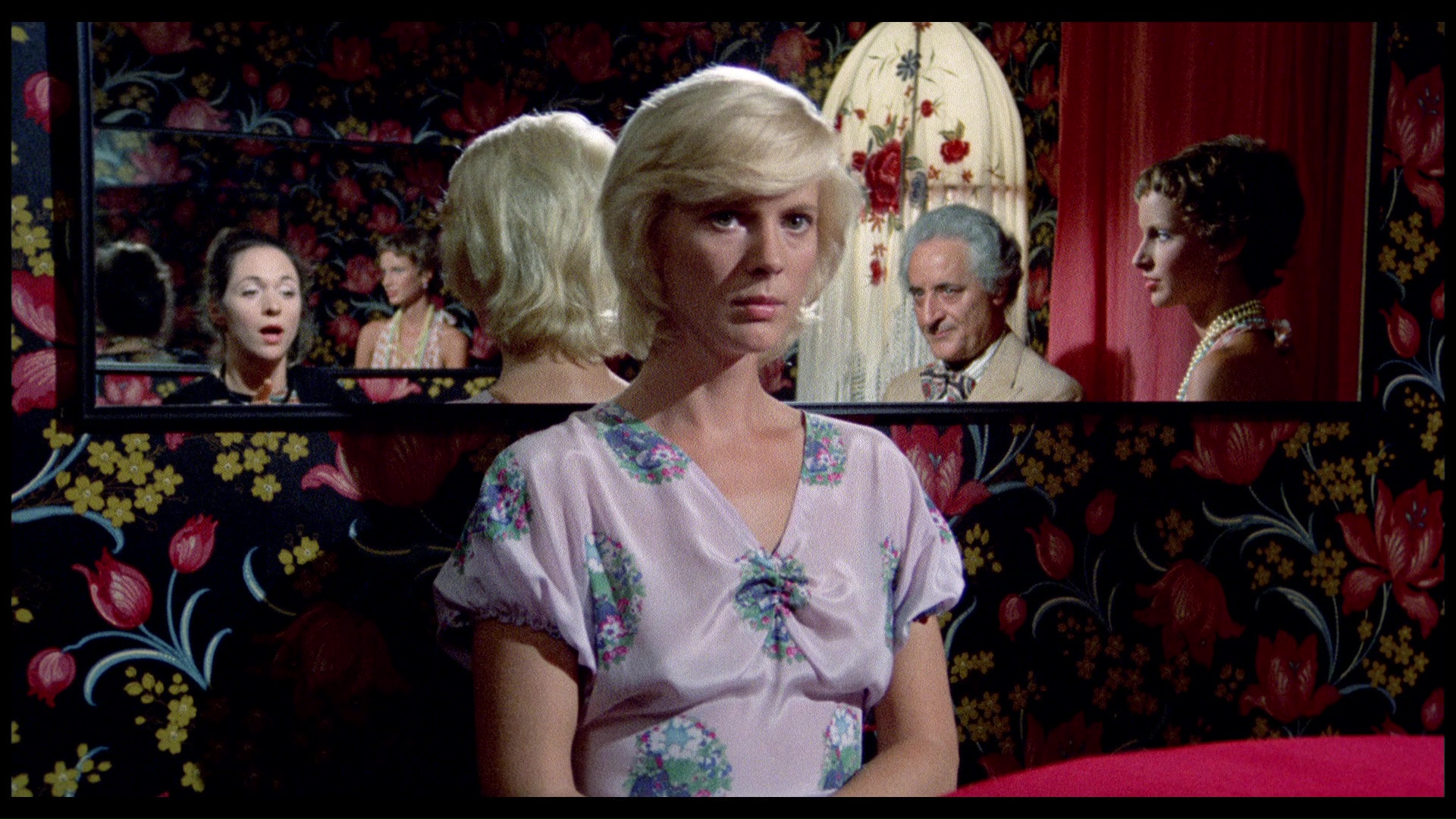
Mimsy Farmer in The Perfume of the Lady in Black giallo horrorThe Perfume of the Lady in Black

Half oneiric giallo and half Rosemary’s Baby Satanic cabal riff – rounded out with some Repulsion angst and a female revenge narrative (I think) – Francesco Barillo‘s inscrutable whatsit is hypnotic and kind of confounding.

Mimsy Farmer plays the lead, an industrial scientist plagued by hallucinations and childhood trauma. The film aims to destabilize: reality and vision, act and memory. Enormous splashes of color abound, as you’d expect/hope, but just as often, there’s a darker, grimier palette, and then an entirely different feeling of candy-colored soap opera. And that’s all before the killing even starts.

It’s a dreamy, unsettling affair, as overstuffed as its Italian horror calling-card title. And even if it doesn’t make too much sense, at least there’s no gratuitous rape sce…. Oh, there it is. Goddammit.

Sam Fuller, Michael Moriarty and Ricky Addison Reed in Larry Cohen's horror A Return to Salem's LotA Return to Salem’s Lot

It turns out that Stephen King as processed by Larry Cohen looks nothing like Stephen King and very much like a Larry Cohen movie.

This “sequel” has hilariously little to do with its predecessor, a potential bug that becomes more and more of a charming feature as the madness mounts. A Return to Salem’s Lot features, oh let’s see:

  • Vampires who have evolved to feed off non-human animals, except on special occasions (kind of like reverse Michael Pollans)
  • A vampire/human coupling in which the human is really the one doing something creepy, which is not something you see every day
  • A resultant vampire/human pregnancy, which I wasn’t aware was a possible danger
  • An entire vampire/human caste system that is briefly alluded to and then seemingly forgotten
  • A hugely dickish Michael Moriarty introduced shooting a mondo movie and then being forced to raise a child, badly
  • That child falling in love with Tara Reid
  • A cigar-chomping Sam Fuller as a Nazi-hunter who pivots on a dime to hunting vampires instead, while still never missing a chance to bad-mouth Nazis and wistfully reminisce about killing them.

So this movie is great.

Liz’s

I used Pieces to introduce a couple of friends to the giallo, and I think it might be the perfect film for that purpose.

Pieces (1982)It really hammers home the alternate history feel of the whole genre: “What if all horror movies, instead of copying Halloween, copied Psycho instead?” There is the slashing (pretty grisly, as far as tempura paint goes), but also a complex and pointless cop drama (the murders are happening on a college campus; for some reason, one of the students is asked by the cops to help) and an undercover cop/international tennis champ angle. Plus, it has two different fake-out freeze-frame endings, both of which are classics of the form.
(I also watched Tenebrae, another giallo. Not much to say but that it’s great, and that it has John Saxon headbanging to prove his fedora won’t come off. If that’s not a gif, the gif is dead.)

October 15, 2018 0 comments
0 FacebookTwitterPinterestEmail
Benjamin Christensen's Häxan
CommentaryFilm

Häxan is a movie made by a movie character

by Lark October 11, 2018
written by Lark

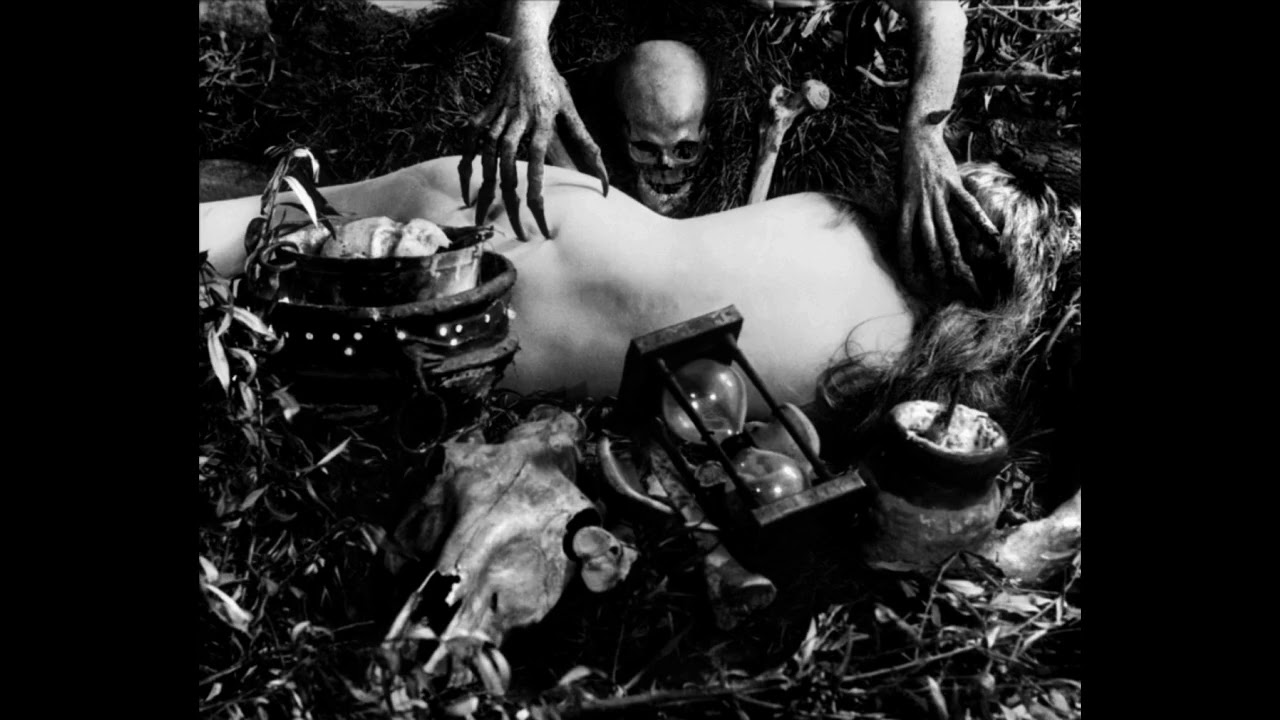
He’s a classic, essential horror movie stereotype. He has hung around for centuries, but he really came into his own once movies about hauntings turned “scientific”: The Haunting or The Stone Tape, for example. He’s the scientist who wants to empirically study demonic/ghostly activity, and he’s one of my favorite character types in the classic era. That stereotype somehow became real and made a movie, and that movie is Häxan.

That cliché has split into two over the last couple decades, into the complete scientist atheist non-believer empiricist of The Last Exorcism or the hard-nosed empirical but deeply religious and believing exorcists of The Conjuring. That split is extremely irritating: it not only gives a patina of seriousness to the scam artist Warrens, but removes all the weird, liminal fun of figures like Dr. John Markway from The Haunting.

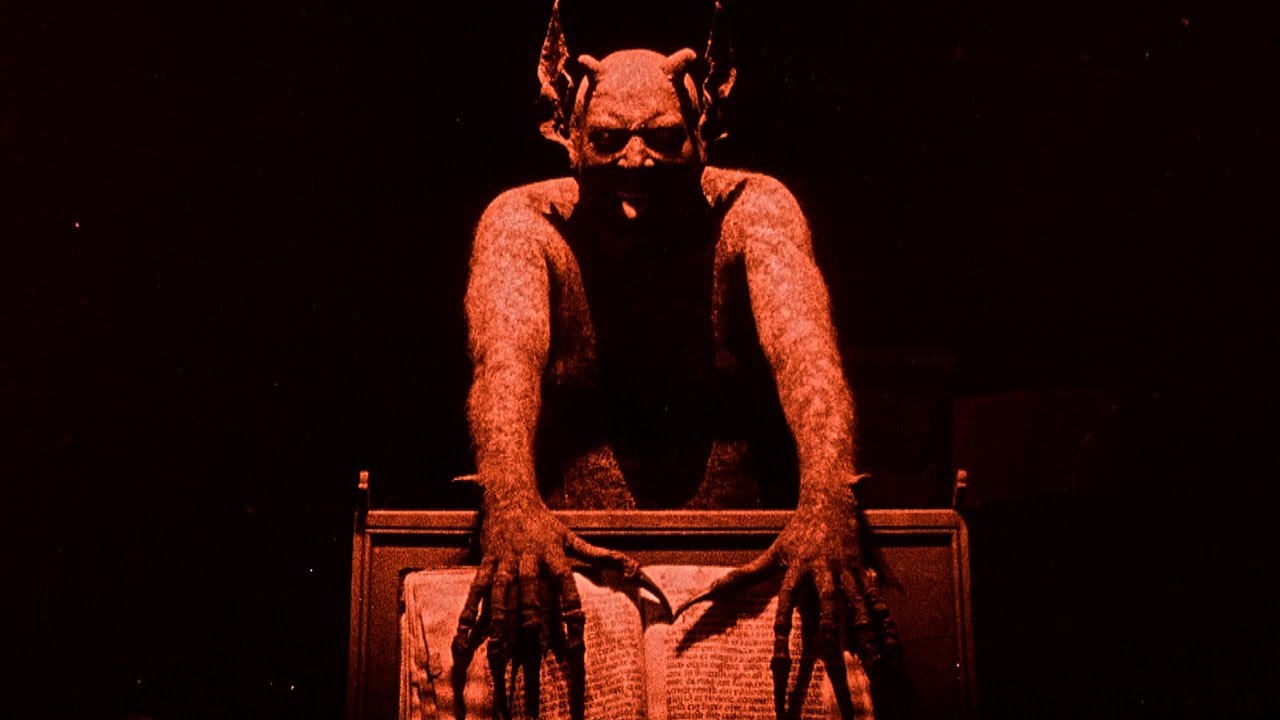
Benjamin Christensen's HäxanHäxan is chock-full of liminal fun. Benjamin Christensen, the director and writer, dances through a number of roles. He is the researcher, who put together all of this material on historical witchery (mostly snatched uncritically and salaciously from the admittedly salacious Malleus Maleficarum). He is the narrator, who occasionally slips into the first person in the slides.

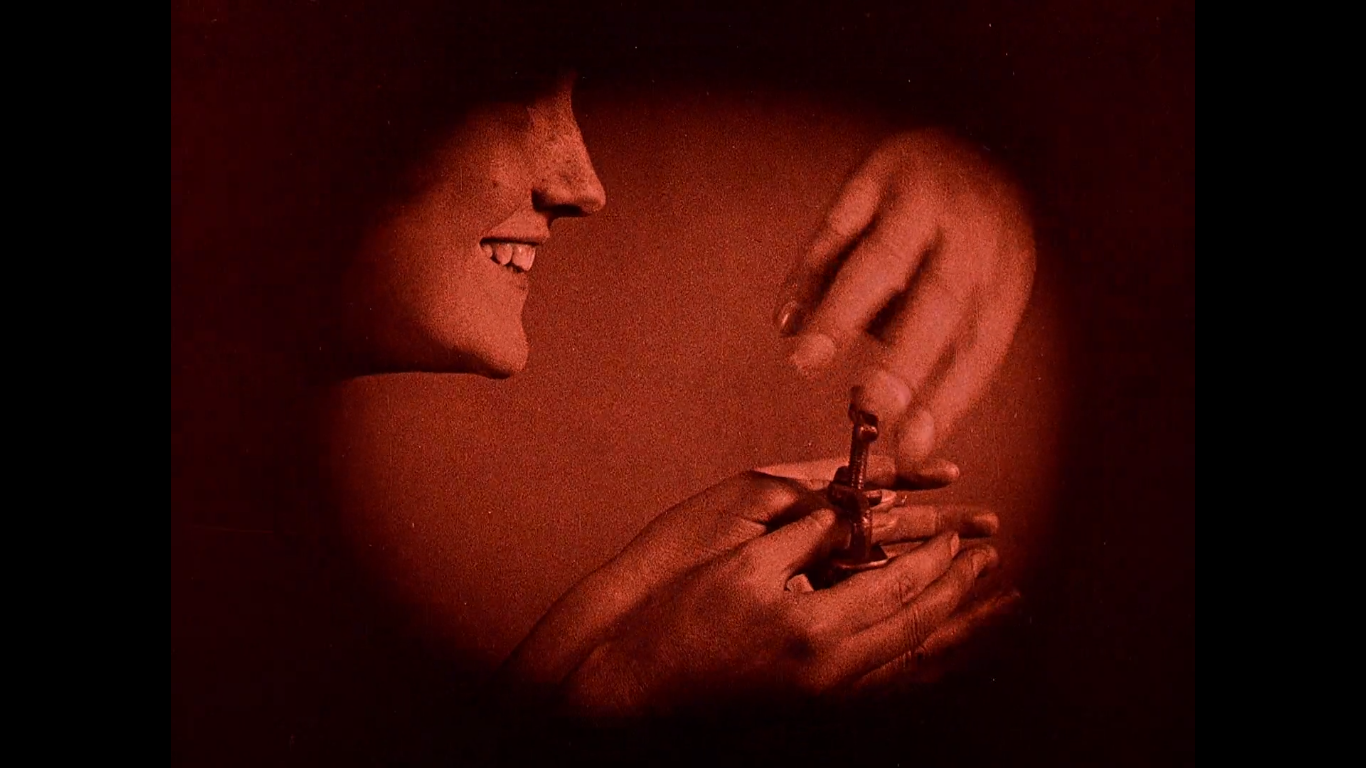
He is the director, directing the Halloween haunted house torture show, to whom the actors as actors occasionally speak. (At two points, he is placed within the world of the re-enactment. Once, a woman playing an elderly victim of the inquisition tells him she has seen the devil. Later, a young actress “insists” on trying out the thumbscrew; the camera cuts away as she begins to grimace, and there is a Hitchcockian slide about the “secrets” he got out of her.)

He has a scientific mind, and scorns the absurd beliefs of the horrible past – but ends the film with a sequence in the present day, drawing connections to contemporaneous misunderstandings of mental health. (Unfortunately, Christensen is rather in love with the diagnosis “hysteria”, which makes him seem only a little more informed than the inquisitioners.)

Benjamin Christensen's Häxan thumbscrewDirector, writer, researcher, scientist: an objective mind, dealing with the matter objectively.
But then there is Christensen as someone who takes delight and pleasure in the entire unscientific thing. He is the first enjoyer of the film we are watching.

When we see drawings from the past, they are prefaced by his slides, some of which make plainly aesthetic judgments (he delights in one medieval toy that depicts hell). As the slides direct us to parts of the picture, his is the quivering, phallic stick that helps guide us – and strokes the pictures, almost lovingly.

He clearly has some fascination with young, bound women that can’t be excused by the material. By placing himself within the world of the recreation – with the aforementioned slide about the thumbscrew, for example – he makes clear his pleasure in the entire production.

That fascination cloaked within a cover of scientific authenticity is what always draws me through Häxan no matter how many times I watch it. I can’t imagine anything but Benjamin Christensen running off as soon as the movie is over with some primitive sensitive equipment and a couple of students to an old mansion, as much excited to find ghosts as certain he won’t.

October 11, 2018 0 comments
0 FacebookTwitterPinterestEmail
Lamberto Bava's Demons Dario Argento shocktober
CommentaryFilm

Shocktober 2018

by Sam and Rick October 7, 2018
written by Sam and Rick

As in many corners of the internet, October is horror movie country here at Luddite Robot. For the past two years, we’ve tried to be rigorous about following a movie-a-day Shocktober regimen, with categories for inclusion and various bells and whistles.

But 2018 finds us a bit exhausted with everything. (It’s not an uncommon condition). On top of that, the huge swath of genre offerings that rely on sexual violence as a character motivator or narrative crutch, never their most admirable quality, look particularly grotesque this October.

Still, at least one of us looks forward to the horrors of fall all year — you can try to figure out which from the number of write-ups below; it’s a fun game! — so we’ll be charting the films we get to. There’s also an argument to be made that horrifying times are precisely when we should examine the horrors we project on to screens. This Shocktober, it’ll still be mostly first-watches, hopefully representing a range of horror aesthetics and across time and place. We’ll see what we find scary this year. Here’s Shocktober batch #1.

Rick’s entries

Assassination NationAssassination Nation

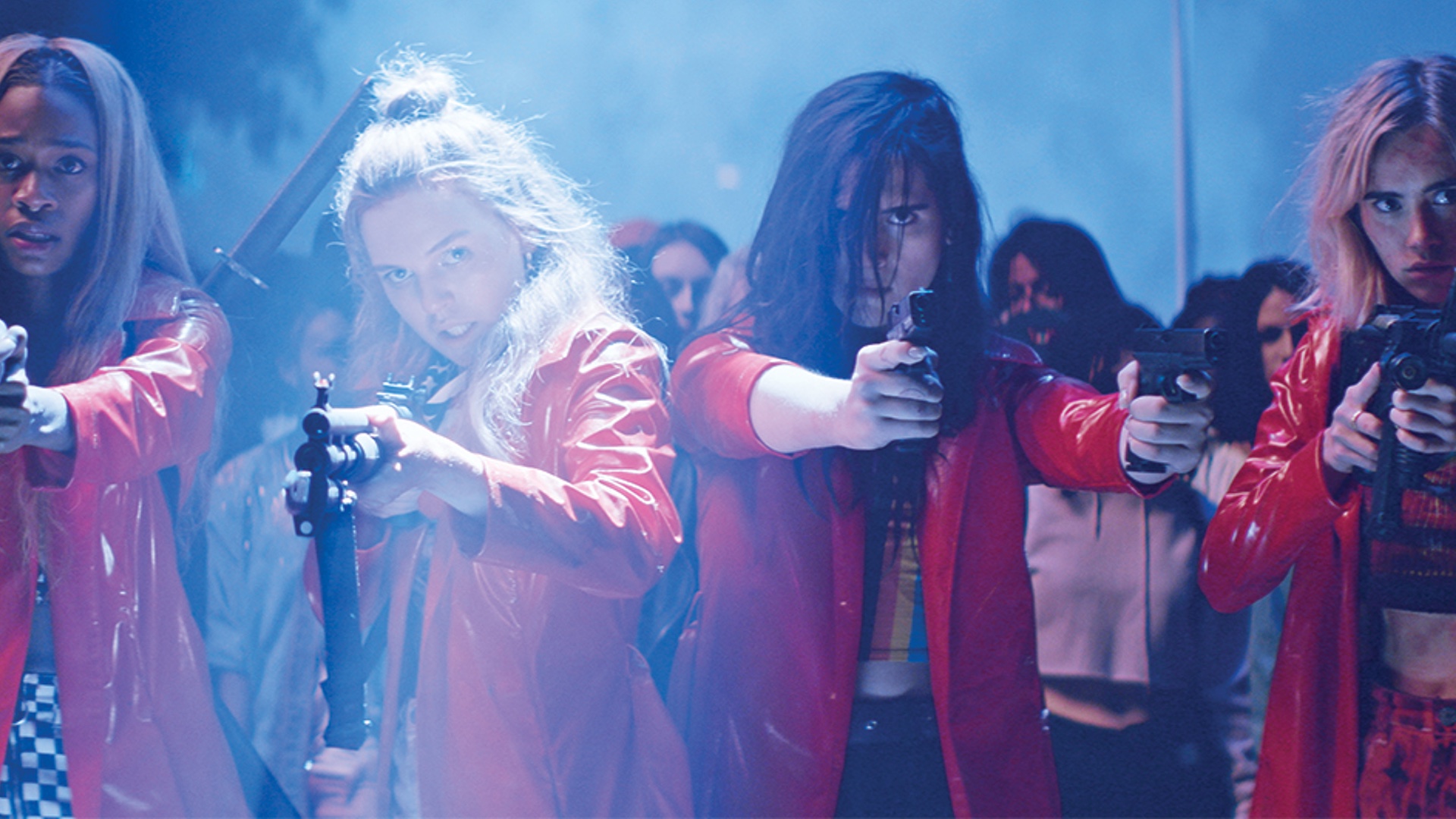
From its opening moments – with semi-satirical “trigger warnings,” overlaid on top of scenes from later in the film, and an ostentatiously Godardian title sequence – Sam Levinson‘s frenetic Assassination Nation announces itself.

This will be very Of The Moment (a horror-ish, #MeToo-suffused Salem Witch Trials riff, in the age of doxxing), and also rooted in the classics of cinematic provocation. Neither ambition really works out, but points for trying.

Levinson’s wears his influences like a verified Twitter check mark. This can cut both ways: like Tarantino, say, Assassination Nation has an acutely trained eye for kinetic violence and the Badass(TM) image; and like Tarantino, it effortlessly squanders goodwill in hot pursuit of cool-as-fuck revenge narratives that indulge in every impulse they castigate. The story – a town’s fury at the sudden absence of digital privacy lands full-force on four specific girls – doesn’t make much sense, and you can feel the film’s defense: what sense is there these days, though, dude? Patriarchy is wild out here.

Well, ok. The central performances are all strong, and the film’s sympathetic, rarely cloying treatment of the quartet’s lone trans member is commendable. But there’s an unshakeable sense that Assassination Nation started as an idea of combining influences (“The Purge but in Dogville but with the internet but …”) that played better as pitch than movie.

Lamberto Bava's Demons maskDemons

Decades ago, before “binge-watching” had entered the lexicon, I would sit in a smoky basement, listening to metal and ingesting horror movie after horror movie, all day and night, frequently on mute, from my friend Jon’s extensive VHS collection.

It was a year-round, bargain-bin Shocktober. This is because we were “cool” then, and “old” now.

You might guess that the Italians figured prominently in our proto-Shocktober rotation, and you would be correct. As such, I settled in for a Demons rewatch lo these many years later, and promptly realized that I remembered nothing about it.

This may have been because we were invariably stoned and had the volume turned down so often, or (just as likely) it may be that I’d only retained Demons 2. (Demons 2 rules.) Plus, turning the volume up means you get to rock out to this:

Awesome.

Dario Argento‘s name may dominate its poster art, but director Lamberto Bava should get proper credit for all of Demons‘ gooey greens and blood reds, not to mention maintaining the appropriate momentum for his cinema-bound, New Wave creature-feature nonsense.

Demons is compulsively watchable, provided you aren’t put off by all the vomiting, and setting the shenanigans in a movie theater gives it a fun meta-gloss. (Not that Bava and co. take this too far; “Shocktober splatter Kiarostami” this is not.) The climax is a case study in ludicrous plotting, but who cares? This is 80s midnight movie schlock served up with flair, Onibaba masks and Billy Idol and a lot of viscous reminders of the many ways a body can come apart.

Jeremy Saulnier's Hold The Dark shocktoberHold The Dark

The year’s best horror movie seems destined to be shrugged out of the genre itself.

It almost certainly should find itself booted from anything calling itself “Shocktober”: too slow, too contemplative, too lacking in thrills, and, most of all, too ambiguous in approach and theme. (I don’t know if director Jeremy Saulnier and writer Macon Blair actually called this “Snow Country For Old Men” on set, but I hope they did.)

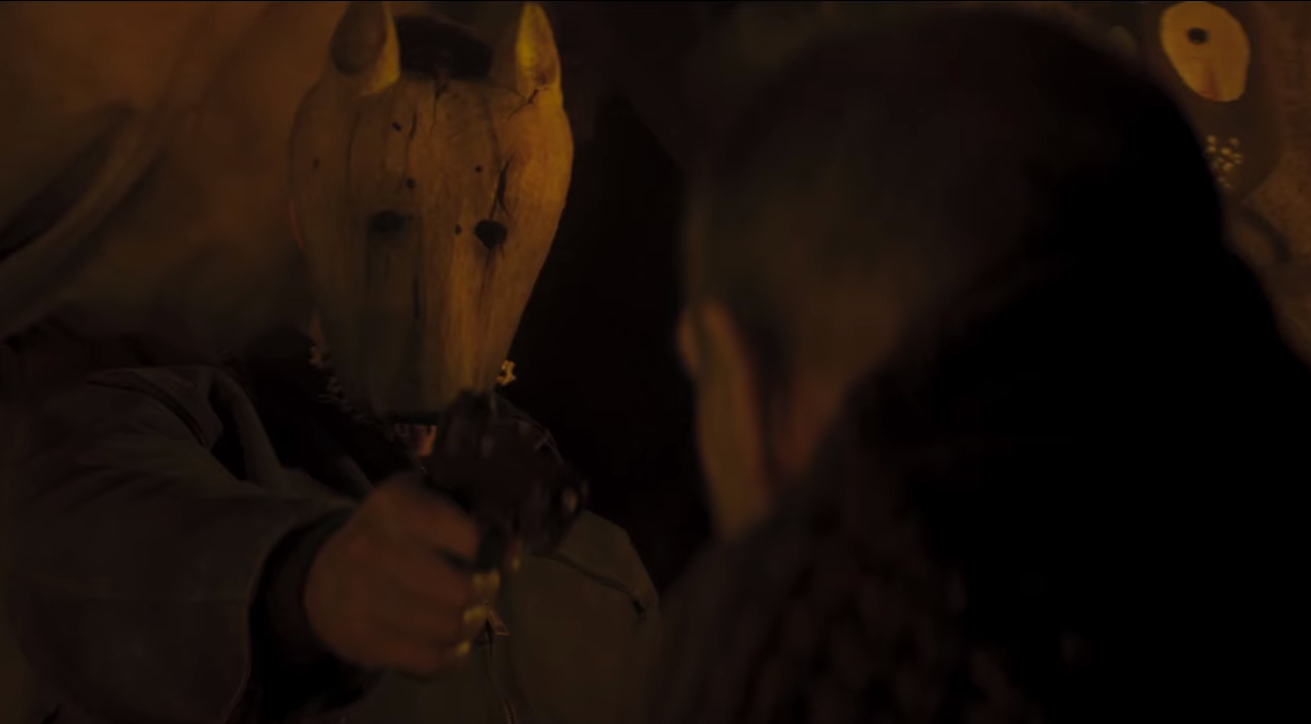
Oh well; everybody can choose their hall of horrors, and Hold The Dark occupies a central shadow corridor in mine. Saulnier mostly abandons the taut pulse of Blue Ruin and Green Room for a morose, often wordless fairy tale, spare as a sketch and encompassing as a prophecy. Walter Chaw puts it better than I can: Saulnier and Blair compose an Alaskan horror story

about mythologies–how they explain the capricious chaos of the world in terms understandable, using images that are universal to us. Mother, father, child, dark, blood, fire. He tells all of this complex story of revenge, betrayal, and the hunt in these broad archetypal strokes; it’s a film written on a cave wall, and at the heart of it what are a movie and a cinema but images animated by a flicker to be told in the company of others?

Jeffrey Wright is an aging wolf expert called upon to investigate the abduction of a child by wolves, and to kill the wolf; he accepts the mission in order to be closer to his own daughter, to retrieve her from lost time and chances. Alexander Skarsgård is the child’s dead-eyed father, introduced in a swirl of competing violences in Afghanistan, wounded and returning home to embark on other missions. Riley Keough is the boy’s mother, who may not be what she seems, pursued by Skarsgård, who may not want the things he appears to desire.

Hold The Dark is insistent on its title’s evocative metaphor. The dead child who sets the wilderness narrative in motion is an invisible ache at the film’s center, and the horror is in the absence of closure, of any possibility of closure or revelation, of the need to continue on in full knowledge that we will fail. “There’s something wrong with the sky. Have you noticed?” Saulnier and Blair’s haunted picture of absence chills.

Shocktober 2018: PumpkinheadPumpkinhead

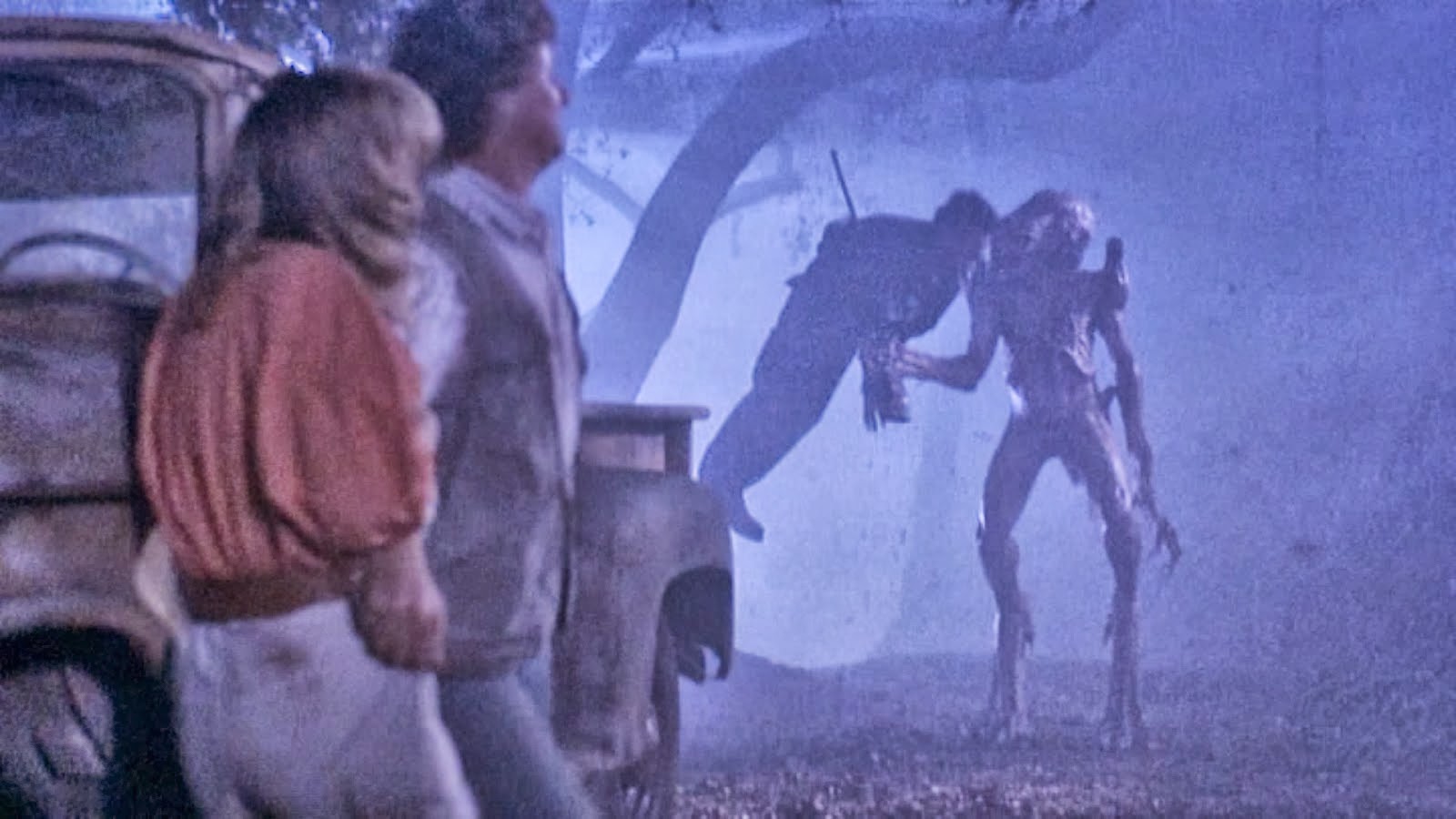
Pumpkinhead never really attained the horror cache of his monstrous contemporaries, probably in part because they called him fucking Pumpkinhead.

If A Nightmare on Elm Street had featured Mr. Pointy Wrinkles and Halloween mined jump scares from its protagonist, Capt. Stoneface McCrazystabs, they would’ve had a steeper hill to climb, too.

Alas, Pumpkinhead is both a frightening Stan Winston creation and a big ol’ Pumpkinhead. Winston also directed, competently enough, thereby setting the stage for other effects maestros to step behind the camera. The film itself is pretty by-the-numbers – Lance “this is my smile” Henricksen loses his comically beloved son to some dumb motorcycle-riding teenagers outside the family fruit stand (?), and calls on an ancient evil for vengeance.

We never really learn much about the town or the people or why the fruit stand, but things kick into gear once the monster gets a-monsterin’. This first Shocktober rewatch in 20 years made clear that my friends and I must’ve routinely skipped the first hour of the movie, an advisable approach. (Rick)

Liz’s entries

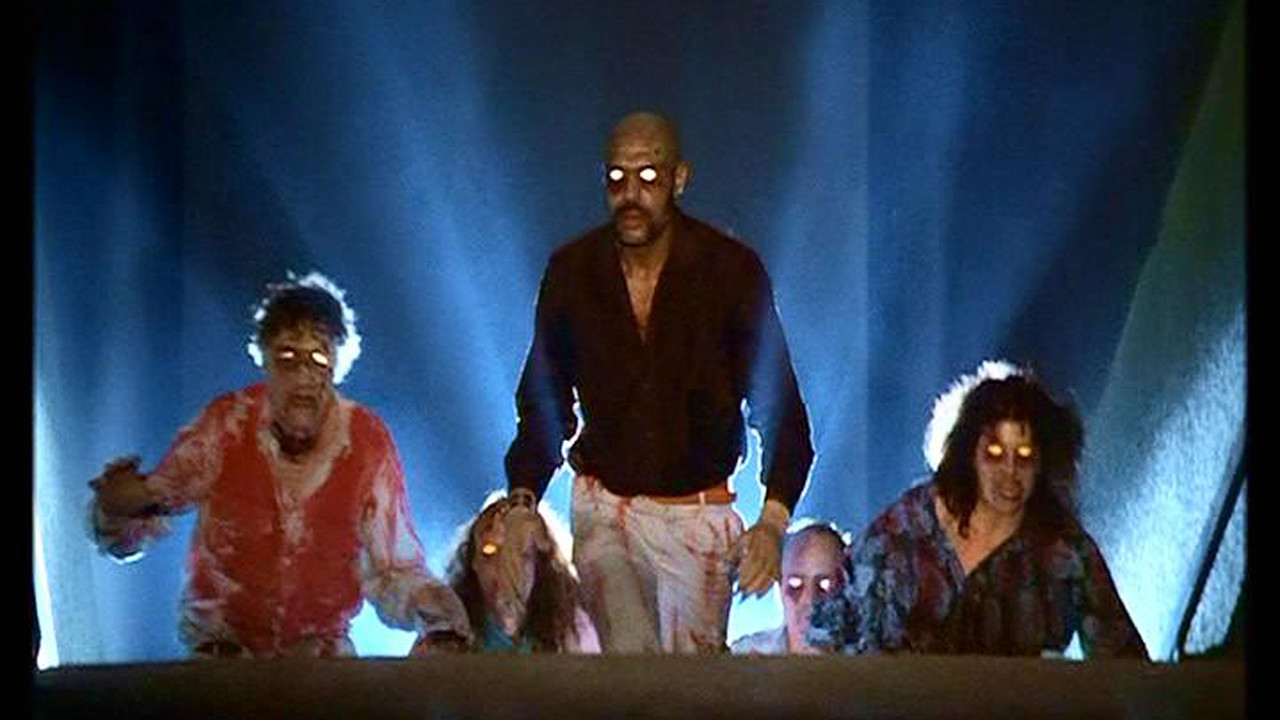
PhantasmI haven’t really been feeling horror season this year. I started Unfriended: Dark Web, for example, and had to shut it off after the violence started. Anyone who knows me knows my undying love for the original, but something about watching the entirely-too-real human trafficking violence in the sequel was just un-stomachable this time. (And no poop ghosts that I could see! Come on.)
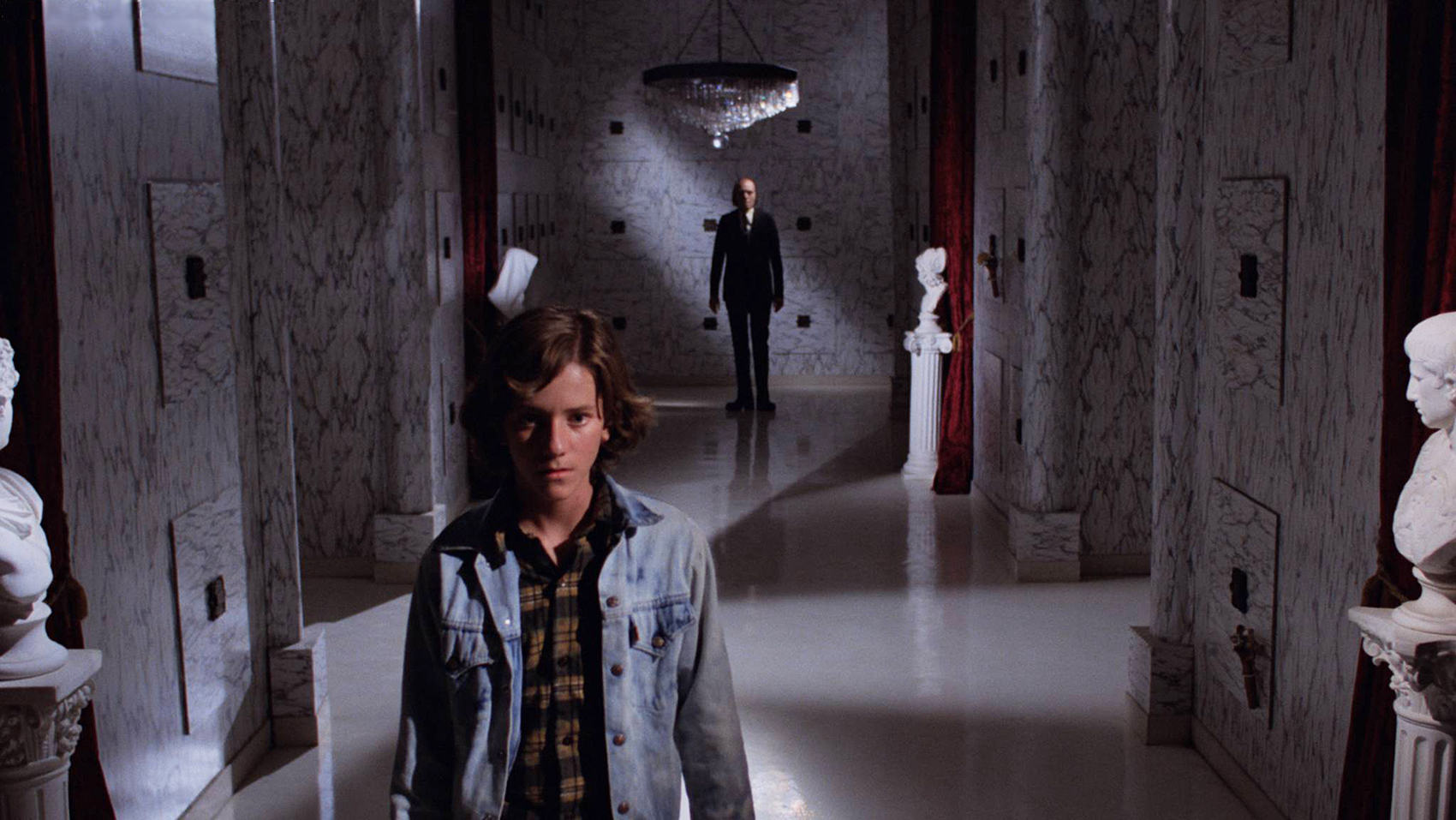
I did actually watch Phantasm again, and it continues to be one of my favorite things from the 70s. (Sequel-wise, I’ve only made it as far as Phantasm II, which felt like a film version of a 90s FMV horror adventure game.)

There’s almost too much to talk about (this movie just totally steals a scene from Dune, and no one told them not to), but the editing is totally out-of-this-world. Scenes meld into each other in a fantastic way, to the point where this may be the only film that earns its “all a dream” ending.

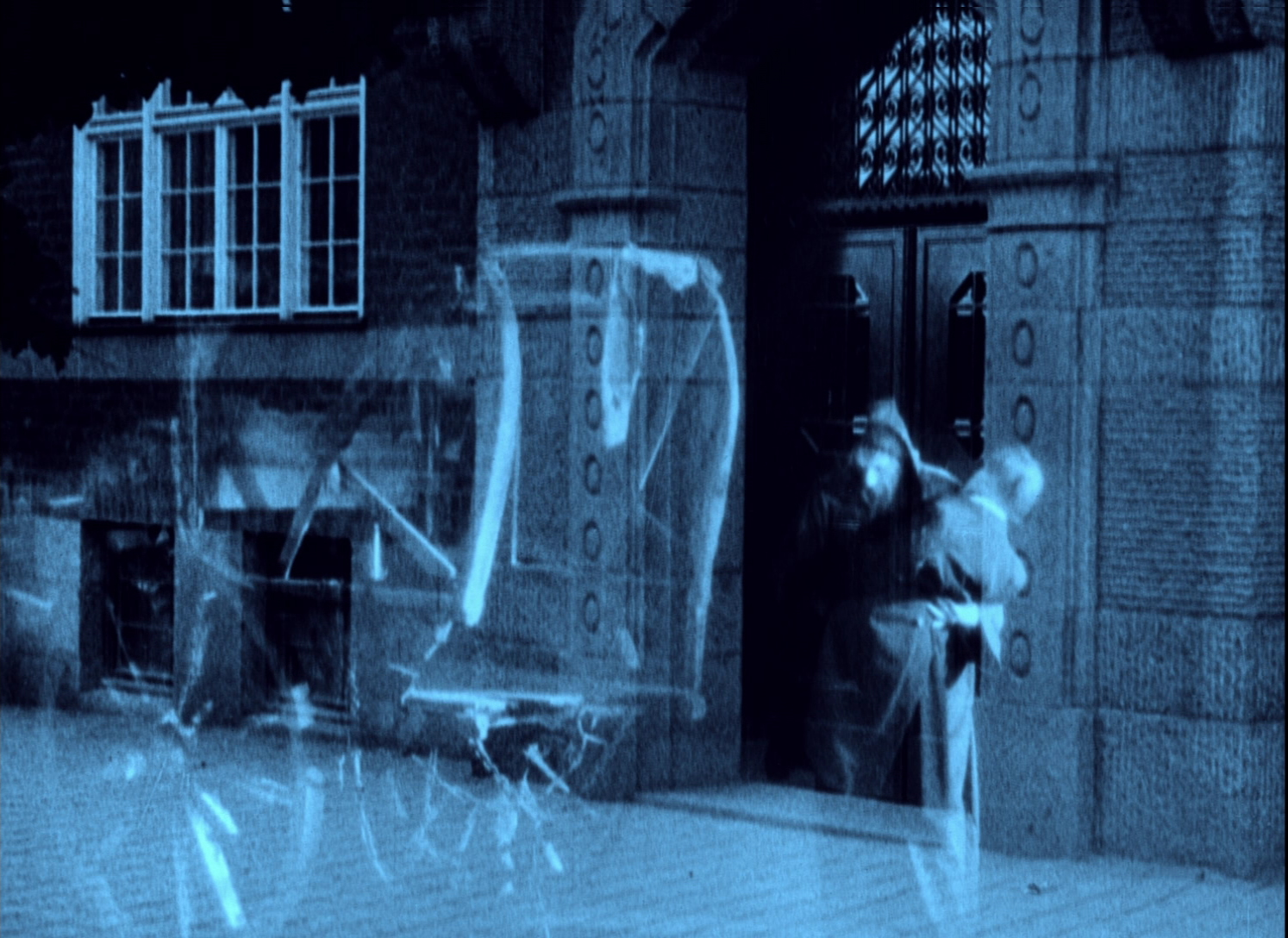
Phantom CarriageI also watched The Phantom Carriage, a fantastic ghostly Swedish silent from 1921. The last person to die on New Year’s Eve is forced to drive Death’s carriage for the next year, picking up the souls of the recently departed.

One year, it happens to be David, a consumptive ne’er-do-well abusive husband and general sack of shit; Death prepares him for his new job by taking him to the house of Sister Edit, a dying Salvation Army nurse who caught consumption from David and is desperate to help him “turn over a new leaf” before she dies.

All of this justifies flashbacks that cover David’s career of astonishingly petty monstrosity, and leads up to a real goofball ending.

Oh well – when your film is based on a novel written because someone paid the author to warn the public about the dangers of consumption, a melodramatic ending is what you should expect.

October 7, 2018 0 comments
0 FacebookTwitterPinterestEmail
Spring Night Summer Night
CommentaryFilm

Unprofessional! Spring Night, Summer Night

by Lark October 3, 2018
written by Lark

At one point in Synecdoche, New York, the Charlie Kaufman-stand-in Caden is giving his actor — a twenty-something man playing the role of Willy Loman — a note in his production of Death of a Salesman. “Try to keep in mind that a young person playing Willy Loman thinks he’s only pretending to be at the end of a life full of despair. But the tragedy is that we know that you, the young actor, will end up in this very place of desolation,” he tells him.

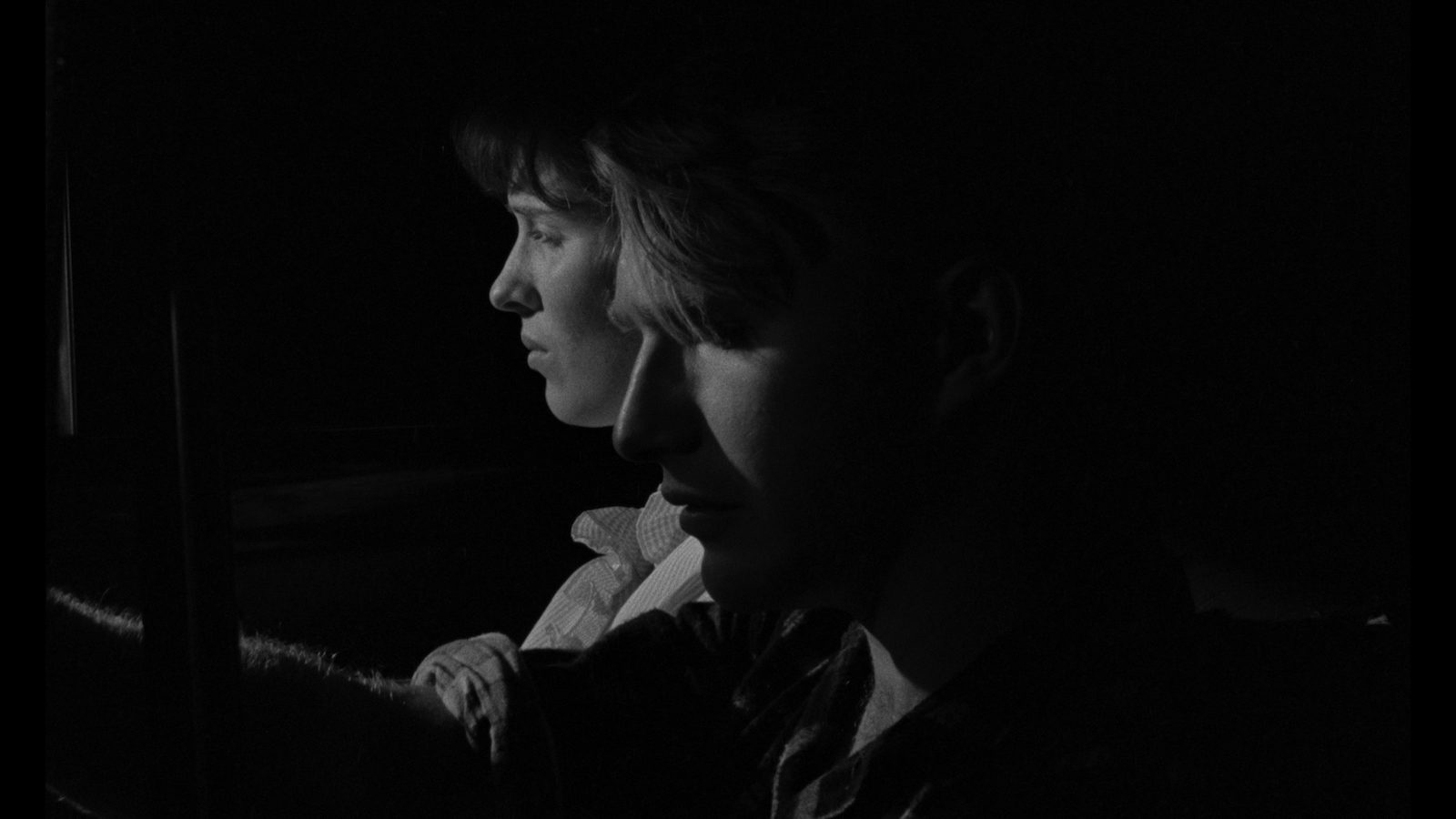
That ambiguity is present everywhere in Spring Night, Summer Night, a long-lost American film shot with (very) non-professional actors in the 1960s. The plot hinges on a rural Southern family made up of Jessica and Carl, half-siblings, and Mother and Father. (Father is played by John Crawford, whose filmography of bit parts — including what must be a record-setting twelve appearances on Gunsmoke as twelve different characters — is the closest thing to a career anyone in Spring Night had.)

Spring Night Summer NightFor the first quarter, the film seems like a moseying depiction of the desperate boredom of the small southern town: there is a fight around a dinner table; a grandmother goes to a revival meeting; the youths dance to fiddle music. Then, suddenly, returning home from a bar, Jessica and Carl have sex.
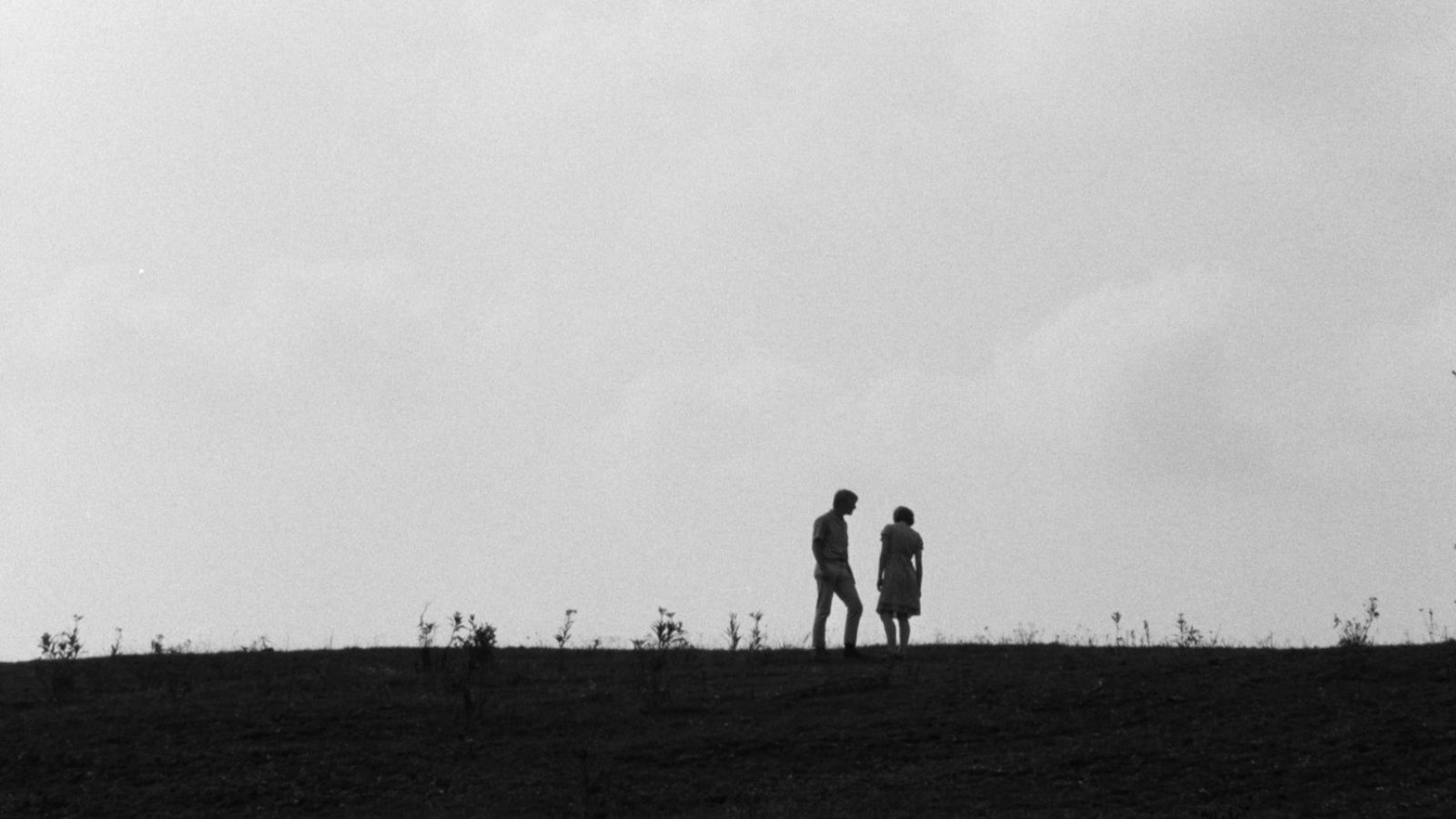
Just as suddenly, it’s some time later. Carl has run off and is hitchhiking back to town, and Jessica is pregnant. Father is circling town and interrogating teenagers, trying to figure out who the baby’s father is, while Mother drinks with her lover.

It’s a desperately melodramatic plot, and one that, if a northerner had written it, would reflect some of the laziest stereotypes about the rural south. But Spring Night‘s narrative membrane isn’t taut enough to ever really feel melodramatic. (There’s an eddy of tension around Carl running away and not helping out during the summer; when he and Father finally meet again at the end of the film, it’s barely mentioned and immediately defused.)

Spring Night Summer NightInstead, like the audience in Kaufman’s film, you try to interpret how much of the irony of the character is at different discursive levels. How much do the actors and director know about how a national U.S. audience would interpret their depiction of rural life?
Did they anticipate that a northerner would see a story of siblings having sex and feel like some of their subconscious assumptions were justified? Is the constant questioning of Jessica and Carl’s blood relationship — Mother is not Carl’s mother, and it is suggested but never confirmed that Father isn’t her real father — an attempt to consciously play with these assumptions?

I ended up realizing, strangely, that my barely-conscious assumptions about the rural south led me to be more surprised by the open adultery in the film than the incest. Is that a conscious subversion on the part of the filmmakers?

A melodramatic plot in a major motion picture explains itself: It’s what the studio knows people want, and they want to sell as many tickets as possible. But a melodramatic plot in an independent film with openly non-professional acting, a movie that seems not to be aiming at wide release, complicates things in a quietly fascinating way. Perhaps there is nothing metatextual to Spring Night, Summer Night, but it’s hard not to wonder.

October 3, 2018 0 comments
0 FacebookTwitterPinterestEmail
Wild Boys Bertrand Mandico
CommentaryConversationFilm

The Wild Boys: A Luddite Robot Conversation

by rick September 30, 2018
written by rick

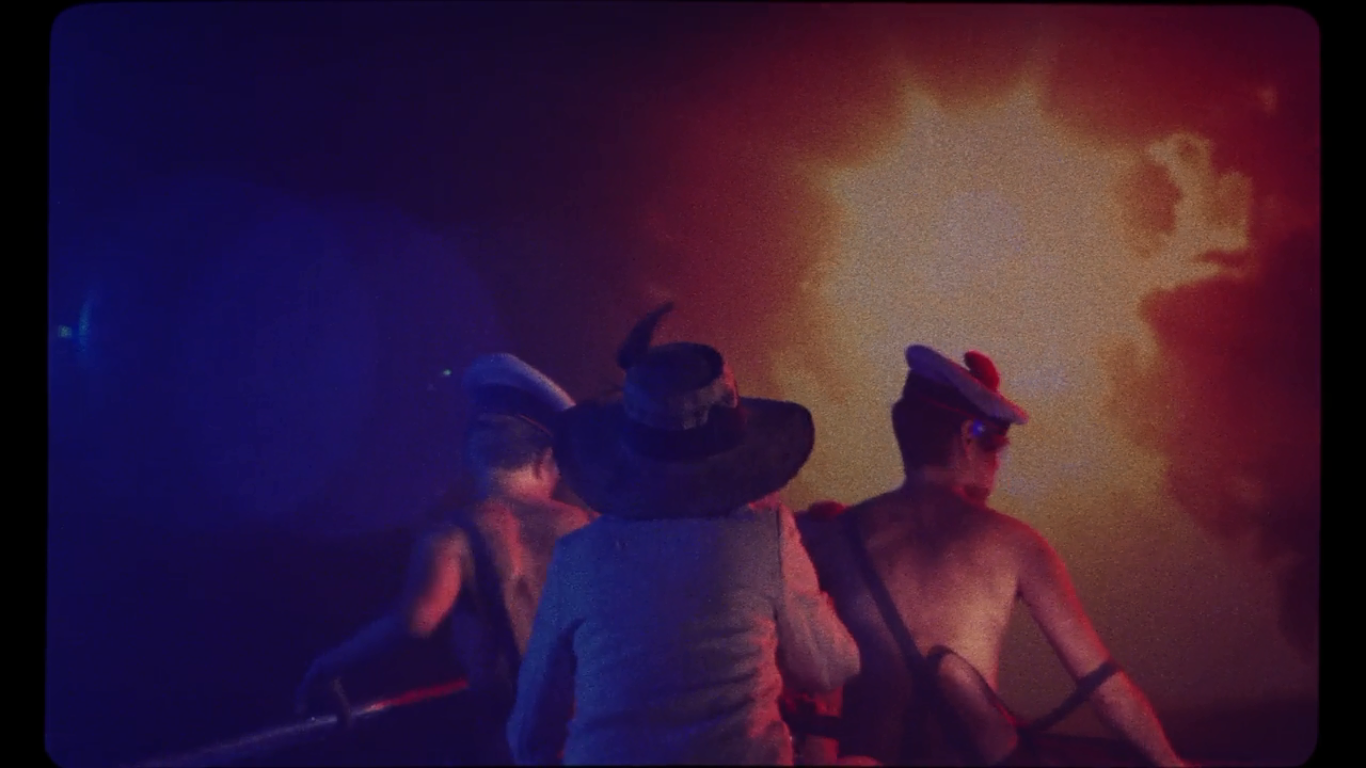
The Wild Boys, Bertrand Mandico’s feverish and gleefully overstuffed debut feature, is many things at once, and not all of those things make immediate sense together. It’s a highly theatrical coming-of-age story set on the high seas, featuring boys played by women becoming men who become women. It’s an island confinement narrative where the prison is an island of pleasure, where sexuality is a hovering menace and a source of connection to the natural world. It’s an explosion of impressionist color filmed in frequent high-contrast black and white.

And it’s nearly impossible to talk about without invoking a cascade of references, cinematic and otherwise. We give it a shot below. Climb aboard, but watch your step.

(Spoilers to The Wild Boys follow)

Wild Boys Trevor skullLiz: Well, Rick, I’ve now picked two movies for our discussion pieces – Eisenstein a couple weeks ago, and now The Wild Boys — and it turns out if I get to pick movies, they end up very weird and very gay. I just happened across this one as the Movie of the Day on Mubi, and usually Mubi’s new release gets are — forgive me, it’s a wonderful service — boring as hell.
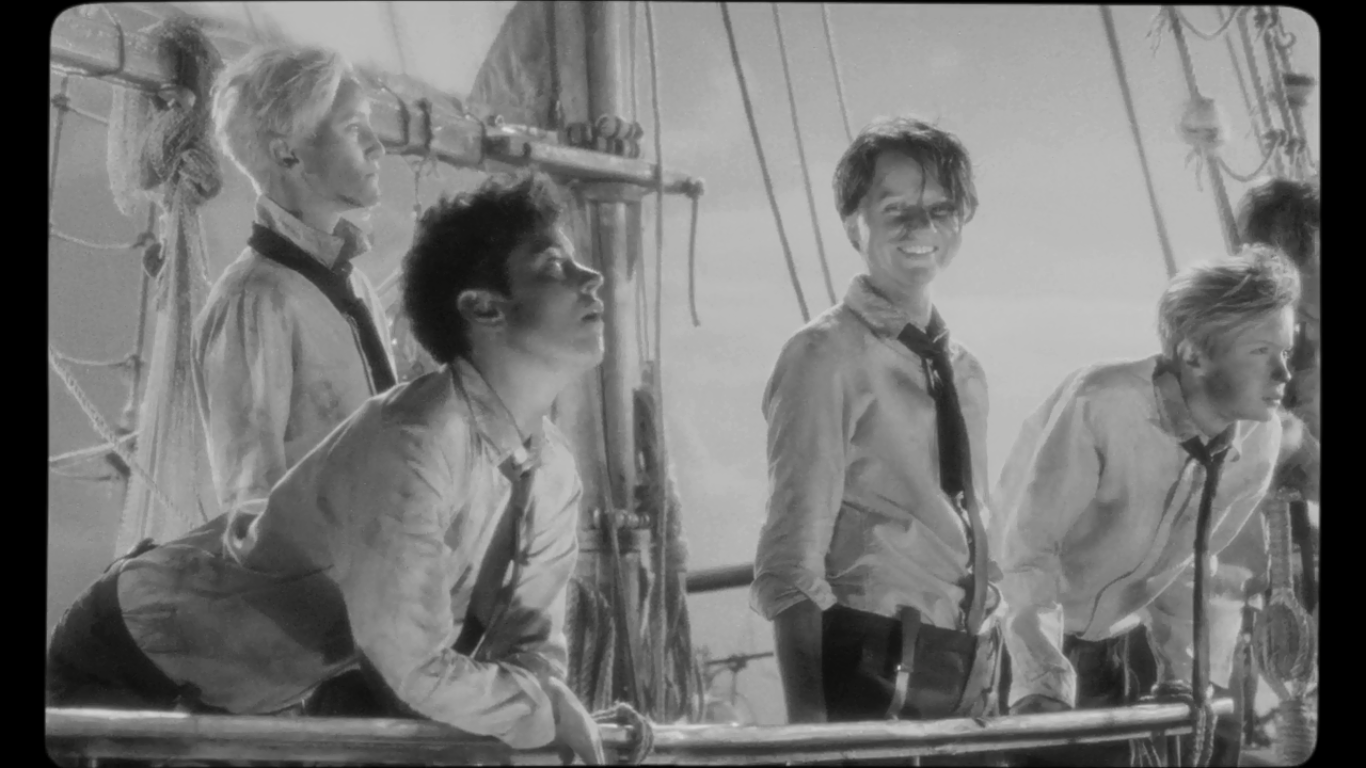
I think we are about as far from boring as you can be with this thing. Boats with sails coated in body hair, phallic and vaginal fruits, boys on leashes, rear-projection weirdness, high contrast black and white interrupted by woozy scenes of color, mysterious islands that change your gender: this movie is almost too filled with ideas to talk about.

I might start with saying as a trans person, this is a movie I really responded to. The five wild boys are all played by women (between this and Suspiria, it’s quite the year for cross-gender casting, huh), and a lot of the themes of the film revolve around that performance of masculinity (literally, here).

It’s interesting to me as a kind of twist on the traditional story of the transition out of childhood. The transition from boy to man is something that, traditionally, has to happen in secret, outside of the public eye, because it’s supposed to be impossible: Man must always have been Man, it gains its power from its timelessness. That’s the purpose of the boy’s sea tale: to give the boy somewhere outside of the social world (but still inside the economic one, often) to process his transition.

Wild Boys on shipHere we kind of hold on that transition, and play with it in weird ways. In the traditional Western gender roles, boy children are basically considered girls; here, instead of boy-girl children maturing into men, unequivocally male children/teenagers “mature” into women.
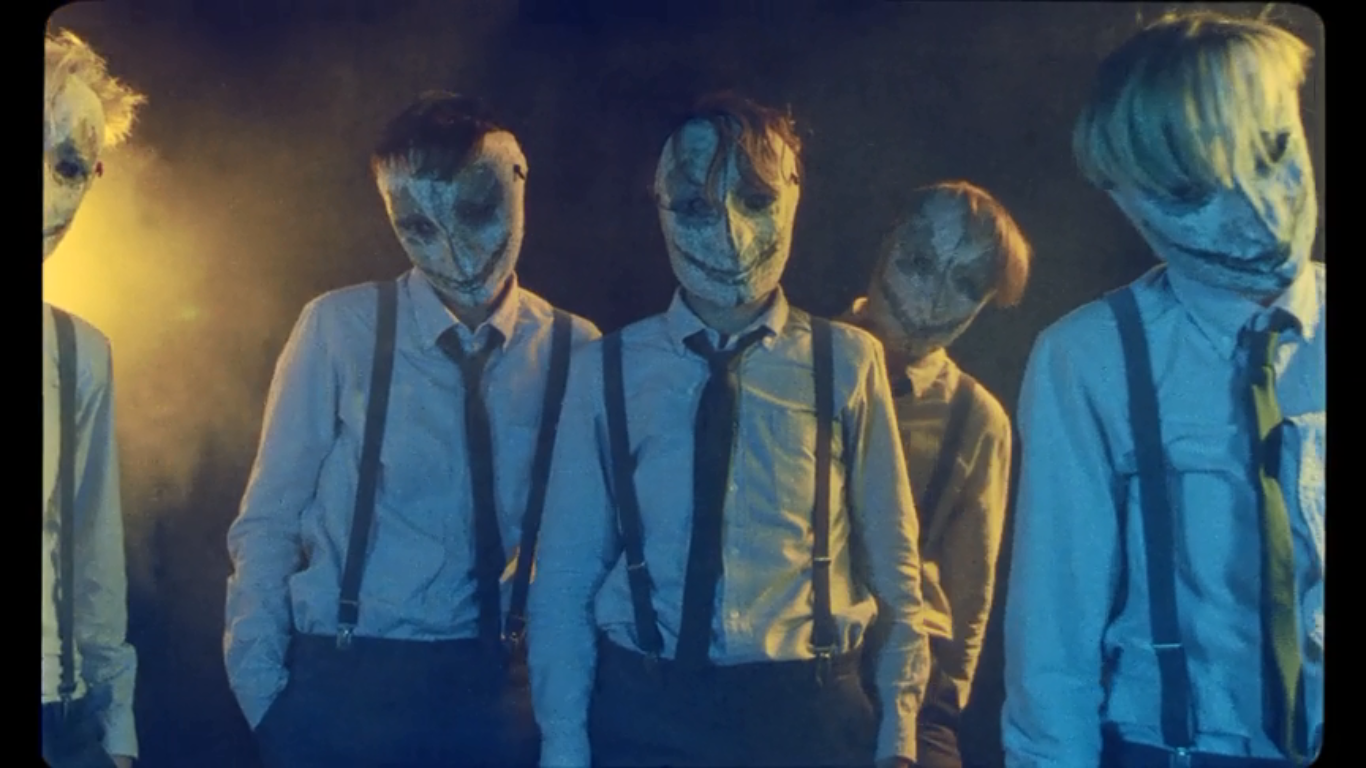
There’s a lot going on here – what did you think of it?

Rick: There sure is! And as with Eisenstein, there’s a frequently comical quality to all the camp excess. (Incidentally, Camp Excess might be a good alternative title for The Wild Boys, or for a program of films at the Liz Lerner Festival.)

The Wild Boys is director Bertrand Mandico’s feature debut, following a number of short and medium-length films that I’m totally unfamiliar with, and even though it’s a bit of a dismissive cliché to attribute an excessive amount of ideas to debut features, there might be some of that going on here. In an interview, Mandico says:

[M]y core desire was to make an unlikely hybrid between a Robinson Crusoe-style adventure à la Jules Vernes and William Burroughs. I was also thinking of the paintings of Henry Darger. But also, from a purely cinematic point of view, there was a whole kaleidoscope of films that fuelled my fire on this movie: Buñuel’s The Young One, Peter Brook’s Lord of the Flies, Mackendrick’s A High Wind in Jamaica, Suzuki’s Fighting Elegy, Toshio Okuxaki’s Naked Pursuit, Fassbinder’s Querelle, Kenton’s Island of Lost Souls, von Sternberg’s The Saga of Anatahan, Koundouros’ Young Aphrodites, Genet’s A Song of Love, Wakamatsu’s Gewalt! Gewalt: shojo geba-geba, Imamura’s Profound Desires of the Gods, Schrader’s Mishima: A Life in Four Chapters and Carpenter’s The Fog.

That … would be a lot. And all the thematic excess is matched by The Wild Boys’ similarly overstuffed, hypnotic aesthetic, vibrant colors and high-contrast black and white, rear projection, a generally Guy Maddin-like frenzy in the editing. (It’s hard to write about this film without evoking other filmmakers!) All told, I found it rapturous and woozy, but also a sometimes jarring experience. One of the wild boys in question is described as “a strange mix of acid and milk,” and this might as well be characterizing The Wild Boys itself.

Since you chose this and Eisenstein back to back, I’m wondering what you think links them and how they differ?

Wild Boys masksLiz: Well, for starters, I think that, for all of those references — some of which I definitely recognize — in Wild Boys, the film is much less interested in showing off and making sure you know them than Eisenstein is (and as Greenaway is in general). I can imagine Greenaway making you take a quiz to make sure you’re ready for Eisenstein in a way I can’t imagine with Wild Boys.
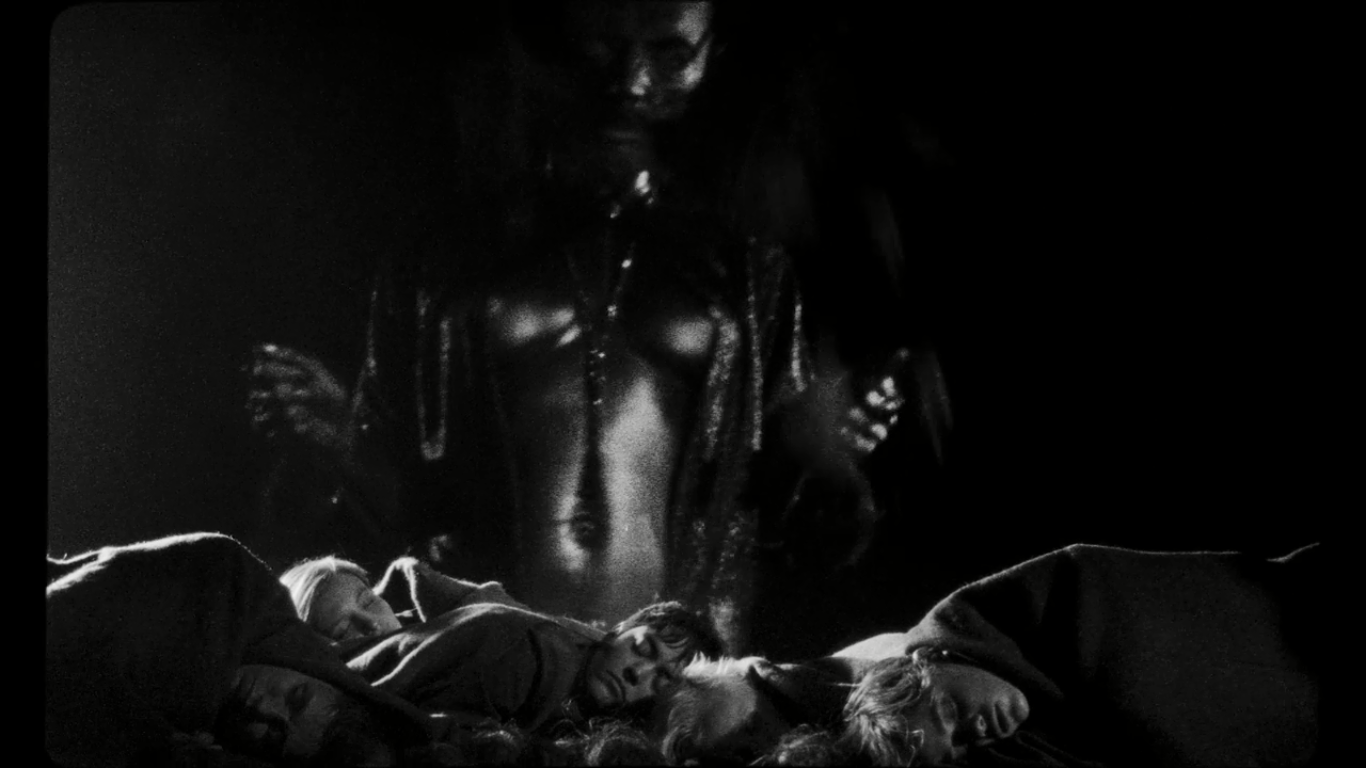
I also get the sense that those references and citations — to Crusoe, to Verne, to all those films — are not historicized in the way references are in Eisenstein. Greenaway’s references take place within an artistic and cinematic history; Mandico is, I think, more interested in all these works for their vibe (or if I want to use proper academic-ese, their affect). The film is set in a vague not-present, something like the past of desire rather than the past of history.

It’s almost as if Mandico had to place the narrative in a world where gender roles were more well-defined so we can properly enjoy their transgression. I’m reminded of how Georges Batailles, pornographer and weirdo, was wholly against sexual liberation, because he thought desire only is enjoyable in the presence of constraint.

There’s also a real sexual menace at play in the sexuality of this film that is absent from Eisenstein, I think. The boys are introduced raping their English teacher, and that moment lingers over the rest of the film for me: we (or I, at least) are waiting for the sexual violence to reappear in some way.

What do you think of the sexual violence at play in the film?

Rick: It’s the inescapable question. To be honest, it took me out of it right from the beginning, to the point that re-engaging with the film was challenging. I don’t think it was the (mostly arthouse-rendered) sexual violence itself so much as the way it’s depicted in that first scene. There’s a dreamlike quality to everything in The Wild Boys, but that particular sense at the start feels especially barbed: the layering of an unnamed narrator’s voiceover, carrying an air of fatalism with it, the intoxicated images (of intoxicated adolescents in masks), and, more than anything, the porous border between play and violation, performance and enactment. By starting The Wild Boys in this way, Mandico seems to announce, “Don’t get too comfortable.”

Blurring borders, investing desire with danger (and menace), and reveling in unresolvable contradictions — these are all at the heart of the film, I think, and so it makes sense to lead this way. But I have to imagine not everyone will stick things out for another 100 minutes after this introduction.

Liz: Yeah, the rape of the teacher in particular was very close to turning me off for good from the film, honestly. I’m not sure why knowing the actors were women made it a little less uncomfortable for me. (I hadn’t looked up the director yet, and I suppose imagined he was a woman, too, for some reason.)

I’m much choosier about violence than most of the film buffs I know, and there are a lot of things that will disqualify a movie for me for good. (I’m probably never going to watch I Spit on Your Grave, for example.) But once the reality of it was over, and it was more just a hovering intensity in the film — a threat of violence that was always about to come back and repeat itself with the captain, and then with the person on the island, and then with the boys themselves in the final scenes — I do think it communicated … something, although I’m not sure what.

Wild Boys rear projectionIn queer circles, there often is this complicated sense of micro-power dynamics, that threaten to replicate the patriarchal structures that people in theory are trying to escape. The way that as soon as some of the boys begin to transform into women at the end of the film, they open themselves up to being victims of sexual violence, seemed to me to be the culmination of that thread through from the teacher (to the questionable figure of the judge at the school, to some extent) to the captain of the ship to the boys themselves. It seemed fully explored enough that I didn’t feel like it was just a matter of exploitative sexual prurience.
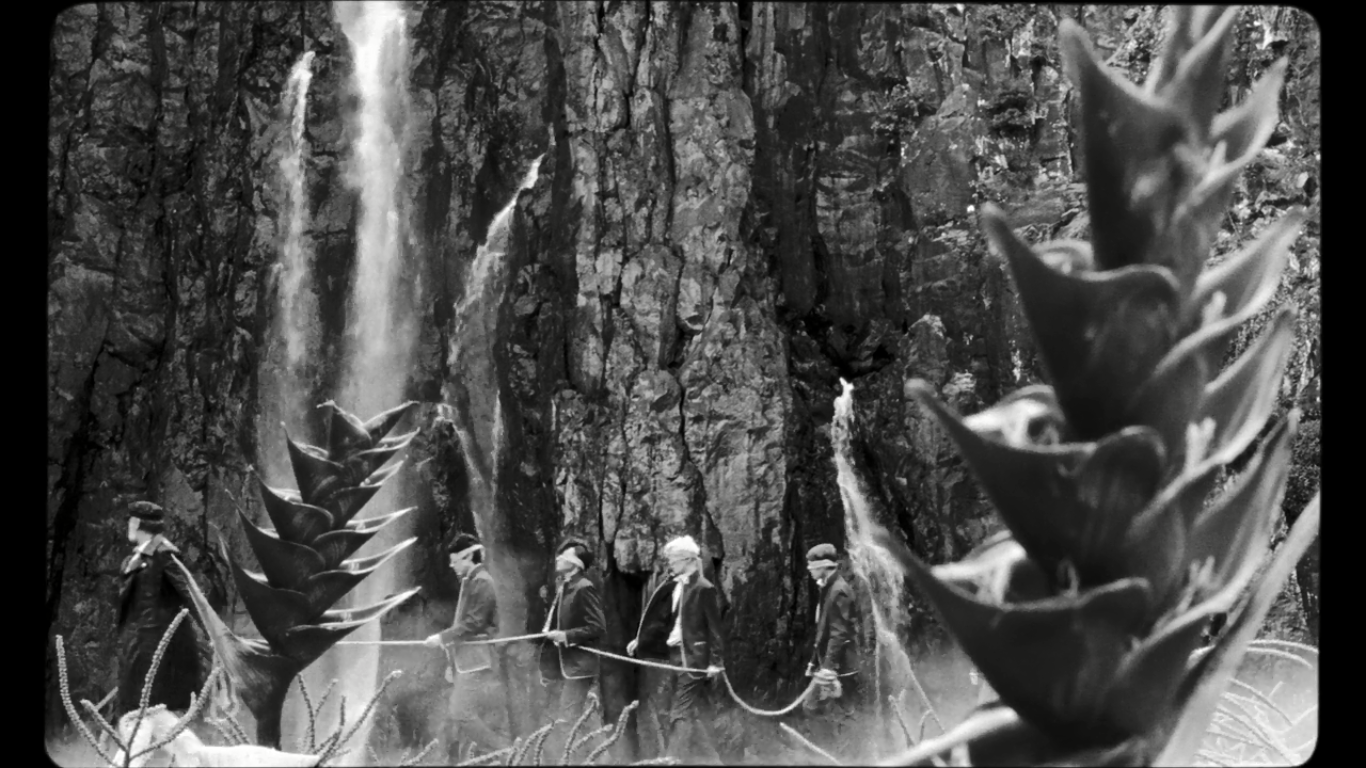
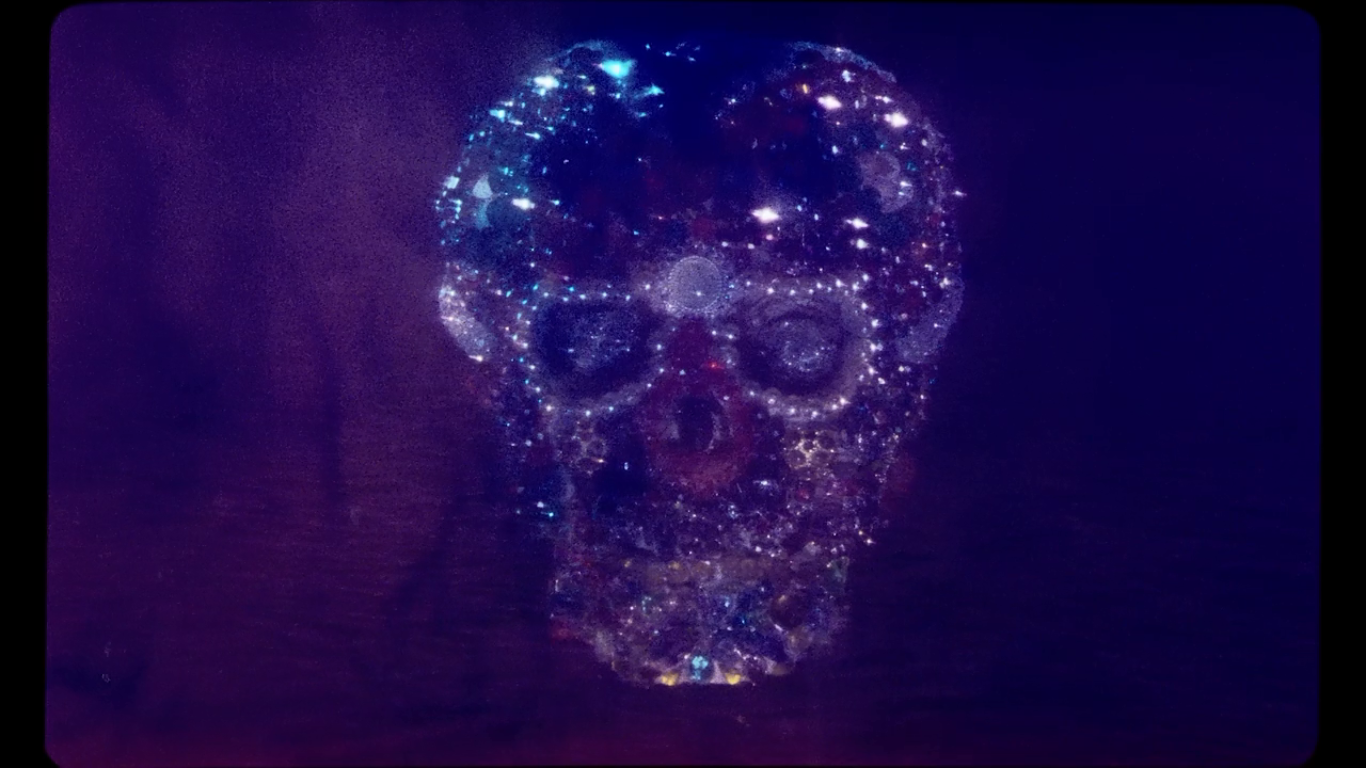
To go back to the earlier conversation, I think it’s interesting to think about how this movie relates to the “body horror” thing. It definitely has some similarities to body horror – the phalli really remind me of Naked Lunch – but I don’t think it’s particularly horrific, at least in that way. It’s more of a body transformation thing, but in a grotesque, beautiful way, like Cronenberg uncoupled from capitalism or social “points”. What do you think of that whole aesthetic — plants that act like bodies, fruits that act like bodies, bodies that turn into other bodies, and a weird floating skull that floats through all of that?

Rick: There is absolutely a Cronenbergian quality to those Mugwump blowjob plants! (Side note: now there is a sentence I didn’t expect write.) Approaching The Wild Boys as a body horror with the horror stripped out — or, if you like, translated instead as an intensity — seems about right.

Wild Boys waterfallBut that way in which it is horror-but-not-quite, that genre trope playfulness, applies across the board. Mandico is clearly having a lot of fun mixing and matching, not “subverting” tropes so much as sending them spinning against each other. The very notion of being sent to an island of pleasure as a form of transformative punishment is part of this set of contradictions and imploded binaries.
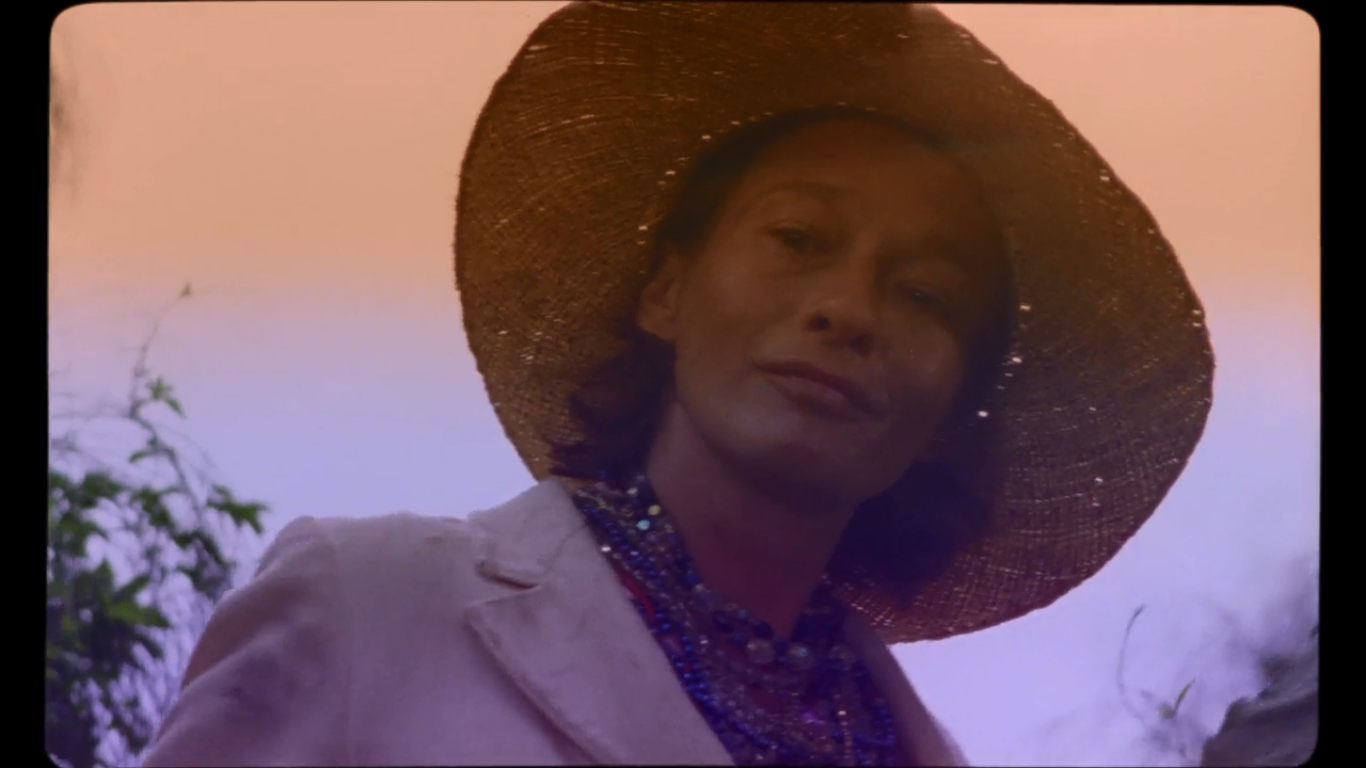
The instability of all these various identities is, again, matched by the instability of the aesthetic: the black and white and color, the silent film conventions and the action movie, the body horror and orgies shot like lurid dance, the rear projection that suddenly turns figures into monstrous presences in the background, submission and deliverance. Your reference to Batailles and the need for a stability to undermine makes me think of how much The Wild Boys seems to loathe artificial divisions even as it enacts them. As Mandico says, he “hates boundaries but loves smugglers.”

Liz: The punishment thing — I hadn’t thought about that, but it is interesting how the film kind of revolves around this idea of punishment as maturity, or maturity as punishment. The boys are sent off on the boat by their parents, who are promised their kids will return as model citizens. That model citizen is represented by a boy who has returned on a leash, completely docile.

But is that boy the successful end point of the punitive process? Even before they leave, the captain forces them to start eating the genital fruits that will turn them into women. It’s interesting to think of the actual process, of bringing them to this island to explore their pleasures, from a Lacanian perspective: we want to put the seed of woman-ness inside of you, because that will civilize you enough that we can accept you as men. But the conversion works too well and turns them completely into women — which, paradoxically, turns them into permanent outsiders, who, as we see in the last moments, prey on other boats of men.

I think there’s something very Lacanian-superego about the structure of the film, the version of a superego that says — Go out there, enjoy! (Within an endless number of implicit rules that you will only find out when you break them, so don’t really enjoy, don’t really follow any desire too much.) Use your penis, mangle it in whatever ways you want! (But don’t mangle it so much that you stop being a man, which you can’t be allowed to enjoy.)

I don’t know, there’s a lot going on here that rewards re-watching.

Elina Löwensohn in The Wild BoysRick: And further discussion! We’ve talked all this time and haven’t really touched on the remarkable performances.

I’d single out Vimala Pons, as the swaggering alpha of the group, Jean-Louis, and Elina Löwensohn, who plays a sort of post-gender master of the island named Severin(e). Löwensohn, who also appears this year in Hélène Cattet and Bruno Forzani‘s latest genre freak-out Let The Corpses Tan, seems to be Mandico’s muse, starring in many of his shorts, and she’s fascinating in The Wild Boys, imperious, mischievous, and menacing. Pons and the rest of the wild boys really drive home how unusual it is to see women playing roles like this, complicated coming-of-age depictions rooted in adolescent masculinity. There’s a real sense of freedom and nuance in their performances that holds together all of the film’s unstable threads, at least for the time it takes for them to unravel.

But like you said, this is an endlessly beguiling movie that almost definitely would reward revisits. I look forward to whenever the seas wash me back into its deeply strange waters.

September 30, 2018 0 comments
1 FacebookTwitterPinterestEmail
Kusama Infinity
FilmReviews

Kusama: Infinity Expands Beyond The Canvas

by rick September 25, 2018
written by rick

With several months still to go, and no shortage of forthcoming releases, there’s already been talk about 2018 as The Year of Documentaries. Heather Lenz’s Kusama: Infinity probably won’t top too many year-end lists of these, but it merits inclusion: a solid, empathetic look at an artist whose body of work deserves the attention it’s finally receiving.

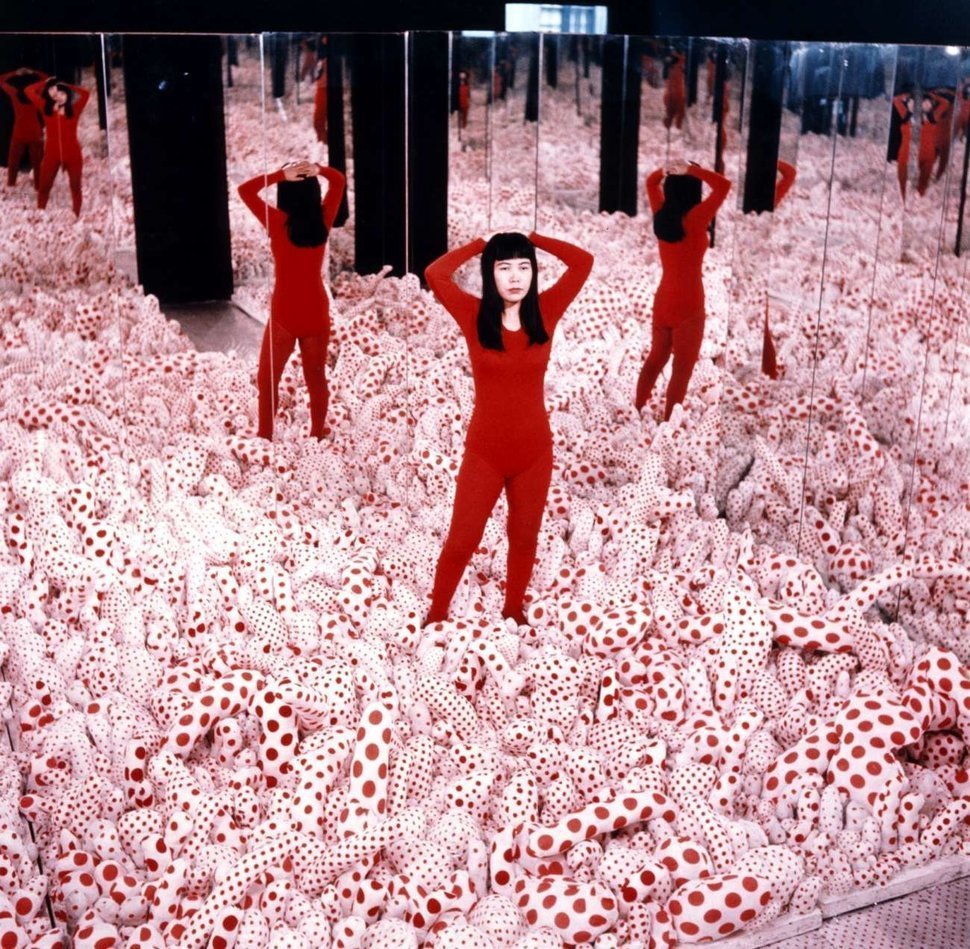
Kusama: Infinity mirror installationKusama’s relatively recent acclaim was a long time coming. She’s currently most associated with the touring Infinity Mirrors exhibit — like much of her work across media, it’s patterned, recursive, and endlessly hypnotic, with a sense of self-obliteration that ironically seems to mesh perfectly with Instagram sensibilities — but Lenz’s portrait makes clear that there’s more to her art than ready-made selfie opportunities. Like a feature-length retrospective, Kusama: Infinity takes us through an aesthetic magical mystery tour of early watercolors, soft sculpture installations, skewed mirror and light assemblages, pop-art, 60’s nudist happenings, dark collages crafted in a mental hospital, and Kusama’s ubiquitous polka dots. Lenz allows the art to do nearly all of the heavy lifting in the film, the camera panning slowly over the pieces like an appreciative museum-goer. Kusama: Infinity keeps everything at a respectful distance, even when you wish it would probe deeper, but it wears its heart on its sleeve. The film wants to pique your interest in Kusama, and it does.
Born into a wealthy, unhappy family in rural Japan, Yayoi Kusama wanted to be a painter from the very start, attempting to mount exhibits in the local male-dominated art scene before leaving for the States, with Georgia O’Keefe’s encouragement, to try her hand in a different male-dominated milieu across the Pacific. In America, she faces the double-bind of sexism and exoticist racism; Kusama: Infinity leaves little doubt that, had she been a white guy, it wouldn’t have taken decades to make her name.

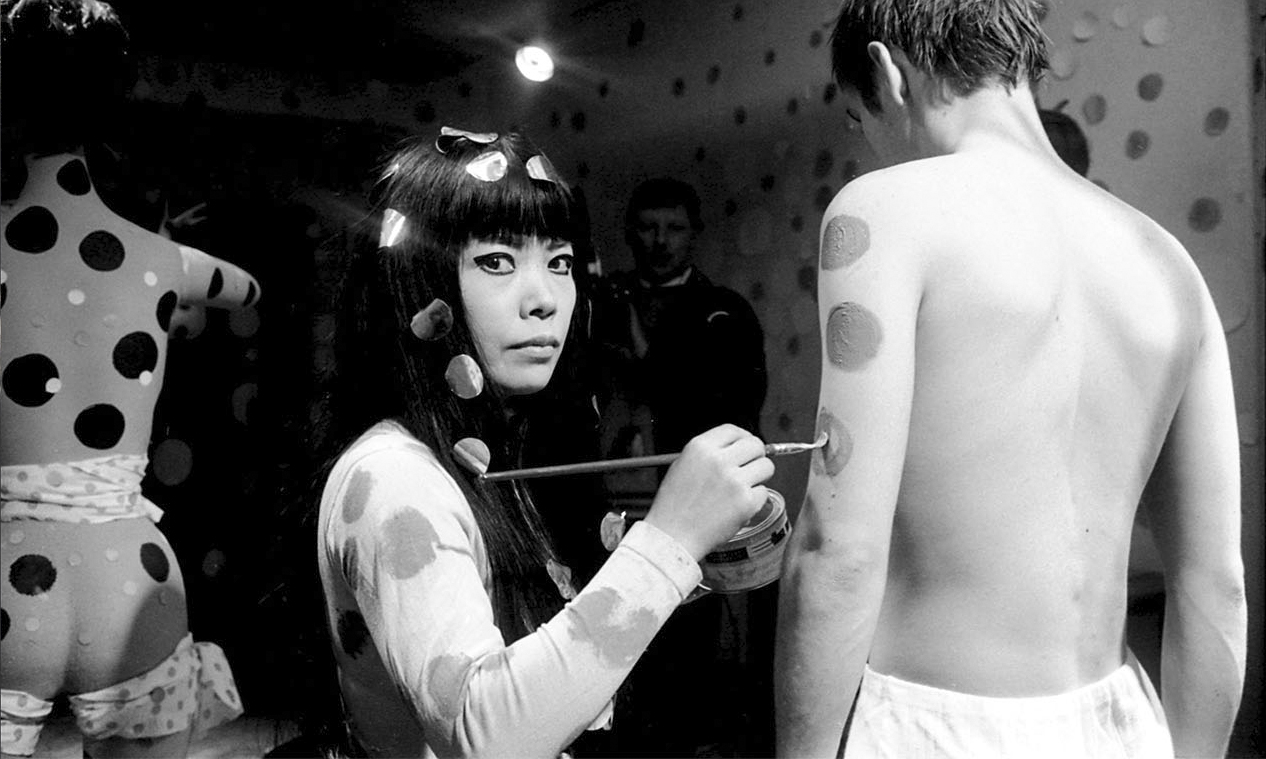
Indeed, on multiple occasions, we watch as Kusama’s innovations and experiments are greeted with relative disinterest from the art world, only for their aesthetic repackaging — or outright theft — by Respected Names like Warhol and Oldenburg to be immediately received as masterpieces. Kusama’s spirited forays into nude public art, near-Dadaist spectacle (selling her pre-packaged readymades for $2 outside of the MoMA), and arrestable anti-war interventions, polka dots all around, are described as scandalous, disreputable attention-seeking. The same politically engaged approaches, coming from a male artist, would almost certainly cement a brave legacy of “ballsiness”; instead, they effectively banish Kusama from the public eye, contribute to suicide attempts and worsening mental health.

Kusama: Infinity nude polka dotsLenz’s biographical portrait is affecting both for what it reveals and withholds about its subject, and the film mostly functions as an admiring appeal for wider appreciation, but we’re left with some crucial questions that Kusama: Infinity clearly feels are outside of its scope. We are casually told that an early trauma in a field of flowers led to a sense of being swallowed into the landscape, informing her lifelong fixations, but this thread just trails off. Is it ghoulish to insist on more information from the film on this, if we’re going to talk about it all? Probably, but its inclusion — and Kusama’s own insistence on its centrality to her aesthetic — begs the question. In a sense, it’s very much like David Lynch‘s story in The Art Life, about the neighbor he saw as a child, “Mr. Smith”, wandering at night in some sort of prefigurative Idaho of the mind: “And then Mr. Smith came out … I can’t finish the story.” We’re left with our own worst conclusions, and with the art.

The details of the traumas aren’t clear, but the existence of trauma sure is, and through Lenz’s lens we come to understand Kusama’s work as a nearly endless grappling with it. “I come up with new ideas and my canvas cannot keep up with me,” she says, and Kusama: Infinity serves as loving testimony to the braveness of perseverance, despite patriarchy’s best attempts to stifle and obliterate visions it can’t control.

It’s also a remarkable and inspiring picture of one person’s rigorous management of trauma; these days, she keeps a rigorous schedule, dividing her time between the mental hospital where she lives and the studio she and her team have built next door. It’s to the film’s credit that this never seems gloomy or exploitative; that same workmanlike distance, which keeps us at arm’s length narratively, also allows us to simply witness Kusama single-mindedly attending to her affairs in the best ways she can devise, casting wide nets of color that hold things together on canvasses that expand without end. For a life of relentless creativity and equally persistent under-appreciation, it’s as happy an ending as you could hope for.

September 25, 2018 0 comments
0 FacebookTwitterPinterestEmail
Newer Posts
Older Posts

About

About

Towards a provisional theory of the cinema, or, failing that, just some shit about movies

Authors
Rick Kelley
Lark Lundberg

Keep in touch

Facebook Twitter

Categories

  • Conversation
  • Film
  • Film By Film
  • Great Movie Project
  • Great Movies: The Counter Programming
  • Guest
  • News
  • Other
    • Commentary
    • Film
    • Interview
    • Reviews
    • Song for a Sunday
  • Streaming Selections
  • TV
  • Uncategorized
  • Vegan Horror

Archives

  • April 2019
  • March 2019
  • January 2019
  • December 2018
  • November 2018
  • October 2018
  • September 2018
  • August 2018
  • July 2018
  • June 2018
  • May 2018
  • April 2018
  • March 2018
  • February 2018
  • January 2018
  • December 2017
  • November 2017
  • October 2017
  • September 2017
  • August 2017
  • July 2017
  • June 2017
  • May 2017
  • April 2017
  • March 2017
  • February 2017
  • January 2017
  • December 2016
  • November 2016
  • October 2016
  • September 2016
  • August 2016
  • July 2016
  • June 2016
  • May 2016
  • April 2016
  • March 2016
  • February 2016
  • January 2016
  • December 2015
  • October 2015
  • September 2015
  • August 2015
  • July 2015
  • June 2015
  • May 2015
  • April 2015
  • March 2015
  • February 2015
  • January 2015
  • December 2014
  • November 2014
  • October 2014
  • August 2009
  • September 2008

Recent Posts

  • China Girls, Death Proof, and the Hidden Face
  • Old News: Old Noise Edition
  • Old News: April 1, 2019
  • Nicolas Winding Refn, Marginalia, and the Deaths of Cinema
  • And now, let us praise Kanopy

Recent Comments

  • Franklin Kat on Michael Shannon shines again in Frank & Lola
  • Sean Tempesta on Cinema and dream-logic in Meshes of the Afternoon
  • ludditerobot on The Left-Wing Slapstick and Iconic Songs of 1937’s Street Angel
  • Franklin Kat on The Left-Wing Slapstick and Iconic Songs of 1937’s Street Angel
  • Arijit Mukherjee on Great Movies Project: The Counter-Programming
  • Facebook
  • Twitter

@2021 - All Right Reserved. Designed and Developed by PenciDesign


Back To Top
Luddite Robot
  • Reviews
  • Commentary
  • Great Movie Project
    • Great Movie Project
      Bride of Frankenstein is a movie for and…

      January 25, 2018

      Great Movie Project
      The Enduring Appeal of Nick and Nora in…

      November 29, 2017

      Great Movie Project
      The Ahistorical Fever Dream of The Scarlet Empress

      August 2, 2017

      Great Movie Project
      Dreams, Mundanity, and the Anarchist Yearnings of L’Atalante

      July 12, 2017

      Great Movie Project
      Duck Soup Is And Will Always Be A…

      April 19, 2017

  • Counter Programming
    • Great Movies: The Counter Programming
      Walking and Talking in the Shadow of Kanchenjungha

      March 7, 2018

      Great Movies: The Counter Programming
      A Brief Encounter in My Mother and Her…

      February 9, 2018

      Great Movies: The Counter Programming
      Horror’s Refusal in Farrokhzad’s The House Is Black

      October 13, 2017

      Great Movies: The Counter Programming
      The rage and beauty of The Cloud-Capped Star

      October 3, 2017

      Great Movies: The Counter Programming
      The daylight noir and social issue empathy of…

      June 22, 2017

  • Vegan Horror
    • Vegan Horror
      Julia Ducournau doesn’t think her film Raw is…

      June 7, 2017

      Vegan Horror
      Licking our wounds: The vampiric masculinity of Ravenous

      December 13, 2016

      Vegan Horror
      Eggertsson and animals: An approach to horror cinema

      September 15, 2016

      Vegan Horror
      “It’s Not My Nature” – Vegetarianism, Body Horror,…

      August 30, 2016

      Vegan Horror
      Bodies and Carcasses in Predator 2

      August 23, 2016

  • Interview
    • Interview
      Jasmine Leyva’s doc The Invisible Vegan aims to…

      May 3, 2017

      Interview
      Bridging The Abyss: An Interview With The Directors…

      November 28, 2016

      Interview
      7 Days in Ohio: An Interview with Nathan…

      September 12, 2016

      Interview
      Film Critic Phil Dy talks New Filipino Cinema

      June 17, 2016

      Interview
      “I Love Seeing Film Projected.” A Conversation with…

      March 22, 2016