Top Posts
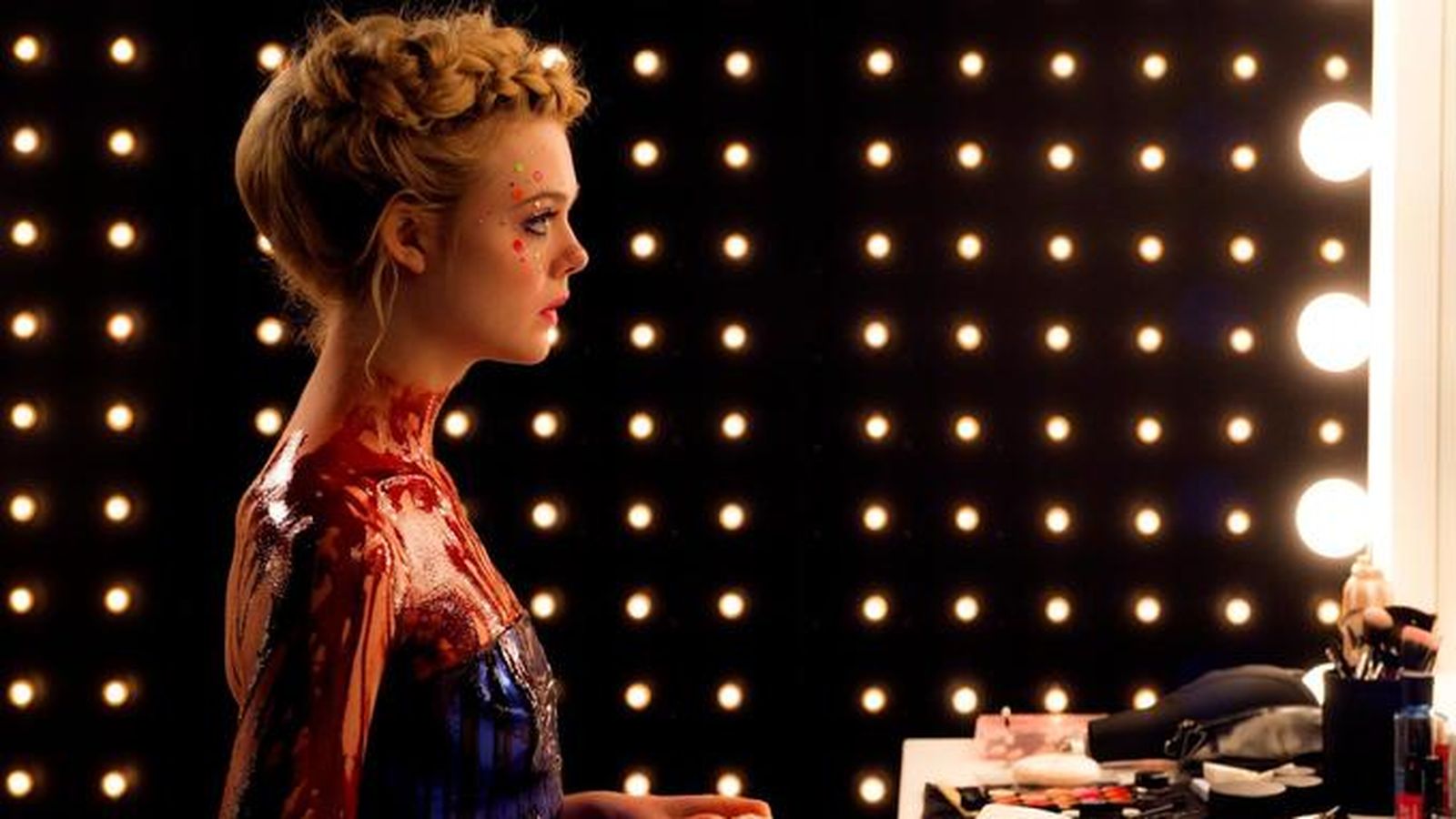
Madeline’s Madeline: An Unclassifiable Panic Attack Maybe-Masterpiece
Shoplifters Steals Moments of Wonder from the Mundane
Burning and Forgetting What’s Not There
Kusama: Infinity Expands Beyond The Canvas
Mandy Risks Little, Wins Little
In We The Animals, The Children Are Away...
The Seagull Isn’t Quite Chekhov, But It’s Still...
5 Million Ways Boots Riley Isn’t Sorry To...
American Animals’ and the Queasiness of the Heist
A Star Is Born In Hearts Beat Loud
  • Reviews
  • Commentary
  • Great Movie Project
    • Great Movie Project
      Bride of Frankenstein is a movie for and…

      January 25, 2018

      Great Movie Project
      The Enduring Appeal of Nick and Nora in…

      November 29, 2017

      Great Movie Project
      The Ahistorical Fever Dream of The Scarlet Empress

      August 2, 2017

      Great Movie Project
      Dreams, Mundanity, and the Anarchist Yearnings of L’Atalante

      July 12, 2017

      Great Movie Project
      Duck Soup Is And Will Always Be A…

      April 19, 2017

  • Counter Programming
    • Great Movies: The Counter Programming
      Walking and Talking in the Shadow of Kanchenjungha

      March 7, 2018

      Great Movies: The Counter Programming
      A Brief Encounter in My Mother and Her…

      February 9, 2018

      Great Movies: The Counter Programming
      Horror’s Refusal in Farrokhzad’s The House Is Black

      October 13, 2017

      Great Movies: The Counter Programming
      The rage and beauty of The Cloud-Capped Star

      October 3, 2017

      Great Movies: The Counter Programming
      The daylight noir and social issue empathy of…

      June 22, 2017

  • Vegan Horror
    • Vegan Horror
      Julia Ducournau doesn’t think her film Raw is…

      June 7, 2017

      Vegan Horror
      Licking our wounds: The vampiric masculinity of Ravenous

      December 13, 2016

      Vegan Horror
      Eggertsson and animals: An approach to horror cinema

      September 15, 2016

      Vegan Horror
      “It’s Not My Nature” – Vegetarianism, Body Horror,…

      August 30, 2016

      Vegan Horror
      Bodies and Carcasses in Predator 2

      August 23, 2016

  • Interview
    • Interview
      Jasmine Leyva’s doc The Invisible Vegan aims to…

      May 3, 2017

      Interview
      Bridging The Abyss: An Interview With The Directors…

      November 28, 2016

      Interview
      7 Days in Ohio: An Interview with Nathan…

      September 12, 2016

      Interview
      Film Critic Phil Dy talks New Filipino Cinema

      June 17, 2016

      Interview
      “I Love Seeing Film Projected.” A Conversation with…

      March 22, 2016

Luddite Robot
Film critique, theory, and assorted nonsense.
CommentaryFilm

China Girls, Death Proof, and the Hidden Face

April 14, 2019

Old News: Old Noise Edition

April 8, 2019

Old News: April 1, 2019

Nicolas Winding Refn, Marginalia, and the Deaths of Cinema

CommentaryFilm

And now, let us praise Kanopy

January 24, 2019

Warren Sonbert and the Relief of Anti-Narrative

January 14, 2019

The World Is Ending and It Doesn’t Matter

The Best Films of 2018

FilmReviews

Madeline’s Madeline: An Unclassifiable Panic Attack Maybe-Masterpiece

December 21, 2018

Shoplifters Steals Moments of Wonder from the Mundane

December 11, 2018

Burning and Forgetting What’s Not There

Alien, Musicology, and Reading Soundtracks

CommentaryFilm

Shocktober III: Halloween 2018 Edition

October 24, 2018

Shirley Jackson’s The Lottery Traumatized Schoolkids in 16 mm

October 18, 2018

Shocktober 2018 II: Another Reshockening (of Horror)

Häxan is a movie made by a movie character

CommentaryFilm

Shocktober 2018

October 7, 2018

Unprofessional! Spring Night, Summer Night

October 3, 2018

The Wild Boys: A Luddite Robot Conversation

Kusama: Infinity Expands Beyond The Canvas

Commentary

A Luddite Robot Year-In-Review

by rick December 31, 2016
written by rick

It’s New Year’s Eve! Now that we’ve taken care of the Best of 2016, why not read some shameless Luddite Robot self-promotion?

For better or worse, your impressively humble narrator managed to post quite a few pieces in 2016. Some are better than others, but all of them have one thing in common: namely, words. Here’s a moment to highlight some of the words I consider worth a look. Consider this an end-of-year In Case You Missed It. None are “essential” but I like them well enough. Maybe you will, too — and if you’re not careful, you just might learn something!

Unlike Matt Singer at ScreenCrush, I haven’t come up with a list of film-related resolutions for the new year. I have a few ideas, though, which you can expect to be reflected here. I’ve pledged to watch 52 films by women, a seemingly easy hurdle to clear but one that, based on 2016 viewing, I apparently (and rather embarrassingly) need to emphasize for myself. I plan to keep the Great Movie Project and its Counter-Programming going, and double-down on the Vegan Horror series.

Finally, I will make a concerted effort to include more interviews, both because I find the experience fascinating and readers seem to enjoy them, and I will once again try to expand Luddite Robot to include other voices besides mine. (Contact me if you’re interested.) Beyond that, I guess we’ll see. Let me know if you have ideas!

In any case, here are some favorites that I consider worth your time. See you in 2017.
Great Movie Project

passion4

  • THE REVOLUTIONARY, COLLIDING IMAGES OF MAN WITH A MOVIE CAMERA
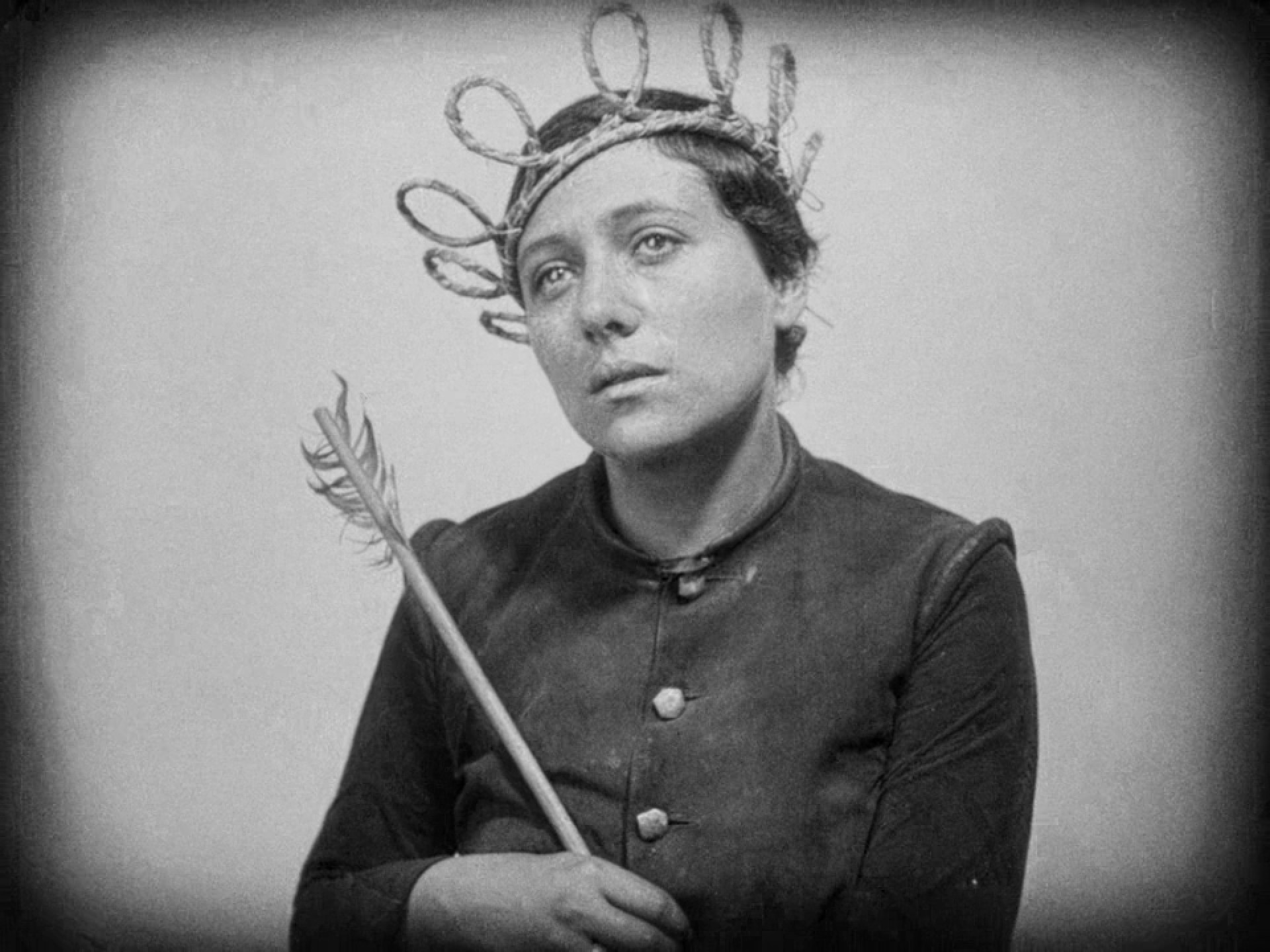
  • FLESH, SPIRIT AND FACES IN THE PASSION OF JOAN OF ARC
  • BUSTER KEATON, THE GENERAL, AND THE LOST CAUSE
  • THE TORTURED SPACES BENEATH PHANTOM OF THE OPERA

Counter-Programming The Great Movies
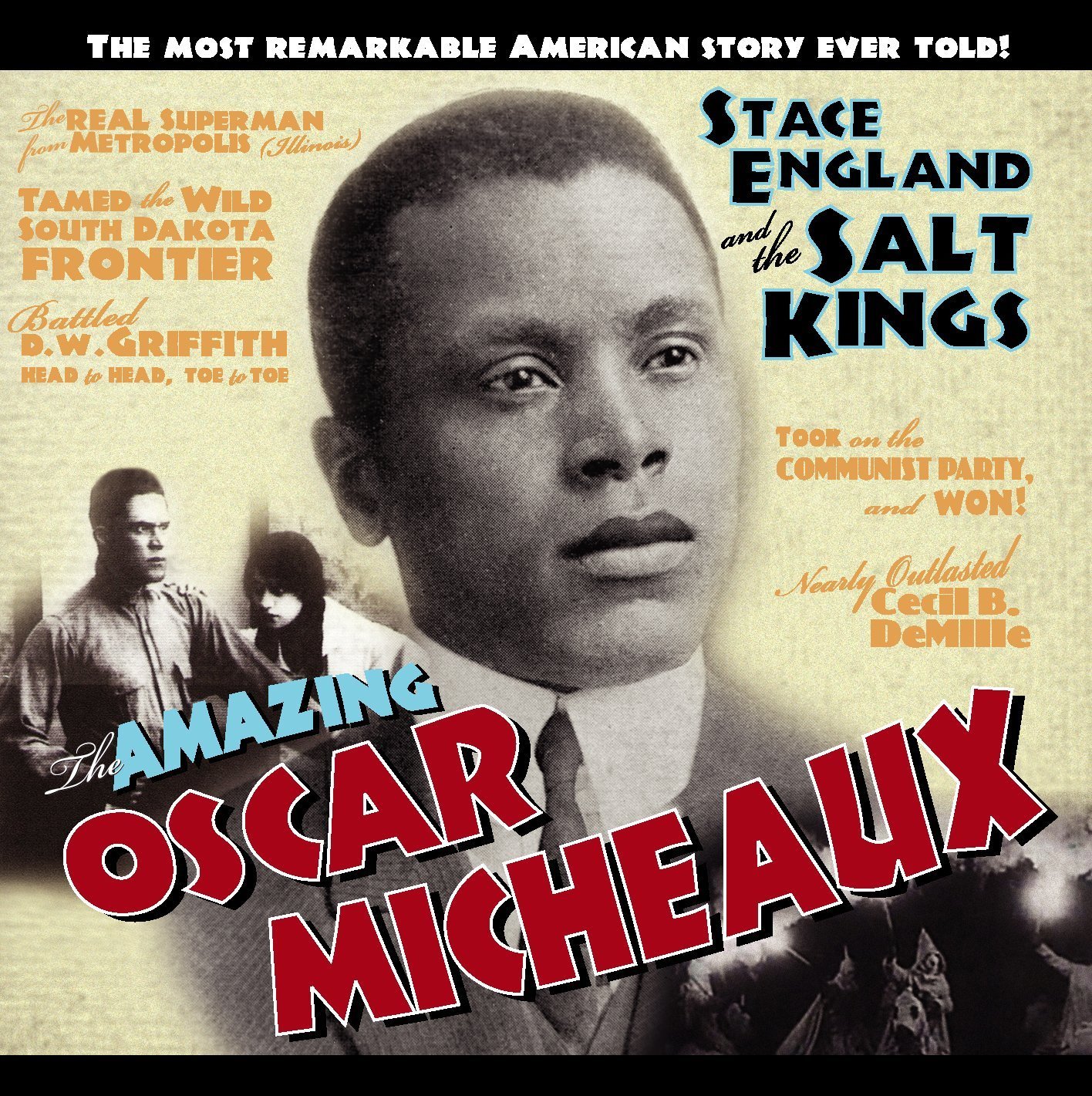
micheaux hi res

  • THE INCESTUOUS RACIAL POLITICS OF OSCAR MICHEAUX AND THE AMBIGUOUS TEXT IN GOD’S STEP CHILDREN
  • IN 1934, THE GODDESS TOOK AIM AT THE ANGEL/WHORE DICHOTOMY
  • AWAARA, RAJ KAPOOR, AND EARLY BOLLYWOOD
  • COMMUNITY, CAPITAL, AND PATRIARCHY IN WILD GEESE
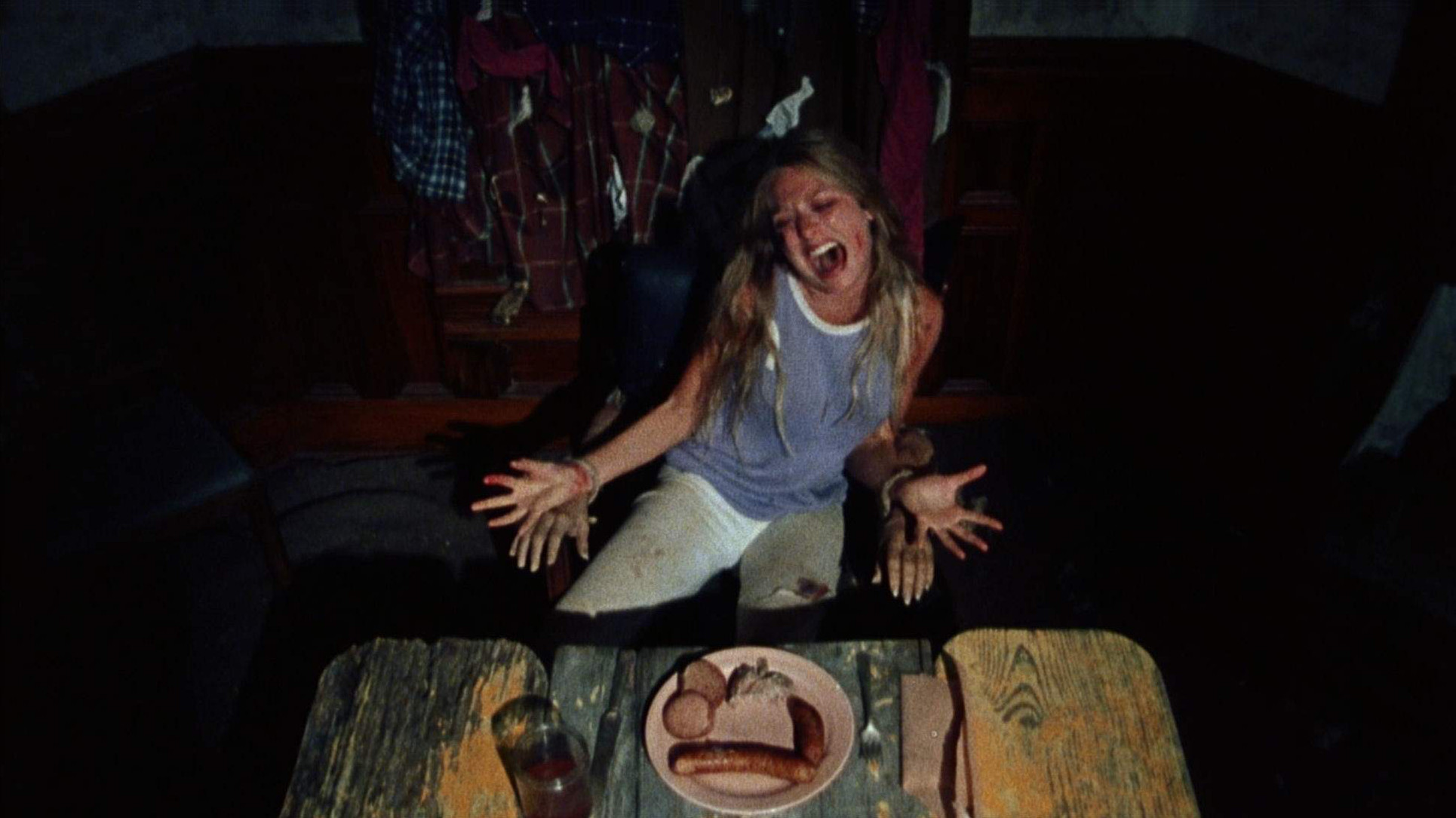
Vegan Horror

texas chainsaw4

  • LICKING OUR WOUNDS: THE VAMPIRIC MASCULINITY OF RAVENOUS
  • BODIES AND CARCASSES IN PREDATOR 2
  • TEXAS CHAINSAW VEGAN HORROR: I LIKE MEAT, PLEASE CHANGE THE SUBJECT!
  • HUMAN AND NONHUMAN HORROR CINEMA

Interviews

14269698_10154380542822696_1718928173_n

  • BRIDGING THE ABYSS: AN INTERVIEW WITH THE DIRECTORS OF NOTES ON BLINDNESS
  • 7 DAYS IN OHIO: AN INTERVIEW WITH NATHAN RABIN
  • FILM CRITIC PHIL DY TALKS NEW FILIPINO CINEMA
  • “THERE’S JUST A WEALTH OF FILMMAKING THAT COULD BE SHOWN”: A CONVERSATION WITH SUSAN OXTOBY
Standalone Reviews

the happening 1

  • DISLOCATION, EXPLODED BINARIES AND SURNAME VIET GIVEN NAME NAM
  • CARS, KIDS, AND KIAROSTAMI: TASTE OF CHERRY
  • 46 THINGS THAT HAPPEN IN THE HAPPENING
  • ALAN RICKMAN MADE GALAXY QUEST AN UNLIKELY MASTERPIECE
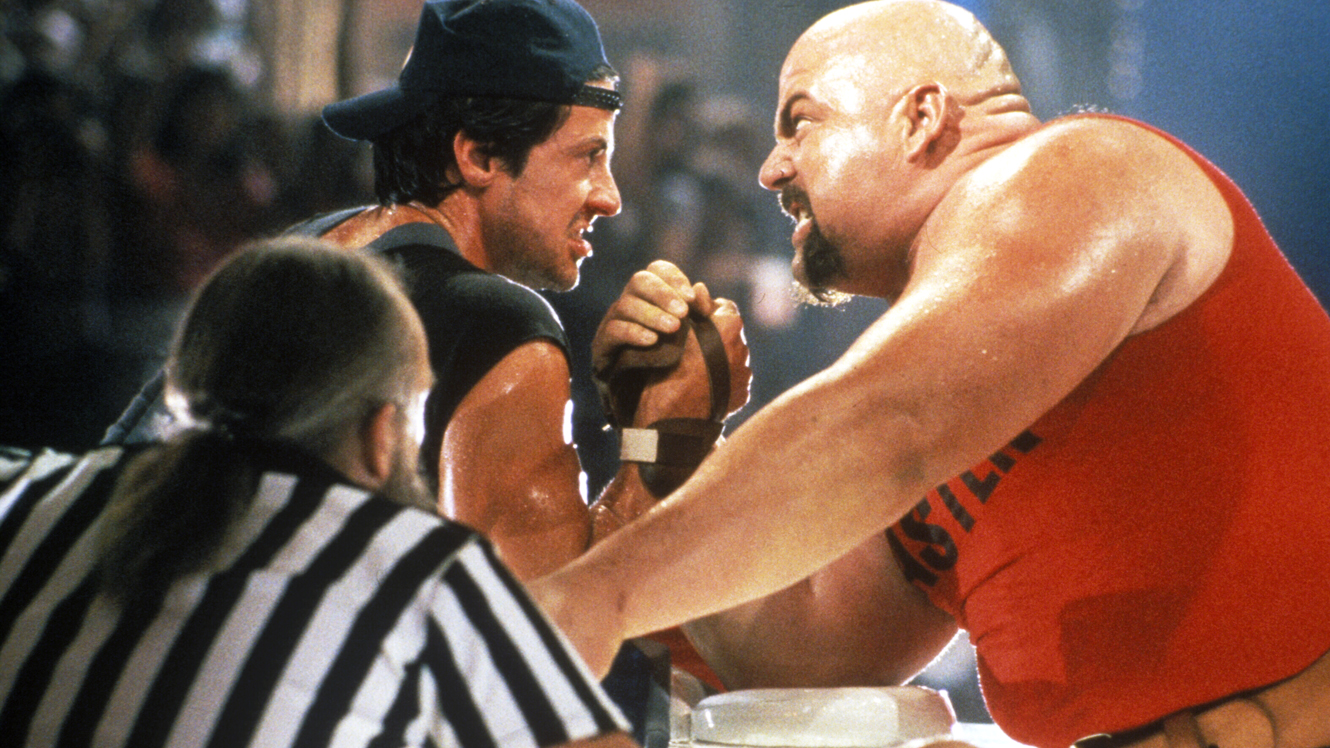
Commentary

over the top hi res

  • WHY ISN’T SOUTHLAND TALES A CULT CLASSIC?
  • ON SUBMISSION, SURRENDER, POWER, AND RADICAL VIEWERSHIP
  • OVER THE TOP STILL LIVES UP TO ITS NAME
  • THE COENS, BY WAY OF CAMUS
  • THE FUTURES OF DOCUMENTARY PAST
  • FROM B.O.B. TO CALIGARI TO HITLER
  • THE VAST EMPTINESS OF QUENTIN TARANTINO

Miscellaneous Nonsense

sportsball

  • THE SANTA CLAUSE WAS THE SCARIEST FILM OF 1994
  • NEW ON NETFLIX: JAWS, JAWS, JAWS, AND JAWS. IT’S JAWS!
  • THE STEWARDESSES’ LUCRATIVE 3D PORN NIGHTMARE
  • THE DISSOLVE: SOME (HIGHLY SUBJECTIVE) HIGHLIGHTS
  • THE BEST SPORTS MOVIE OF ALL TIME (THIS YEAR)
  • THE COBBLER VS. LEFT BEHIND
December 31, 2016 0 comments
0 FacebookTwitterPinterestEmail
Film

Best of 2016

by rick December 30, 2016
written by rick

By general agreement, 2016 was not the best.

The election of a know-nothing fascist clown to the U.S. presidency, ushering in what threatens to be a reactionary era of overt white supremacy while simultaneously placing his frightening clown-child-fingers next to nuclear-launch buttons? Not the best.

The deaths of a number of beloved pop-culture figures didn’t help matters, even if that seems likely only to increase, since beloved pop-culture figures tend to be kind of old and we’re paying more attention than usual. But, sure — not the best.

Small matters like the refugee crisis, epidemics of police brutality, the atrocities in Syria, the fact that climate change is probably past the point where we can reasonably counter it and we’re all going to drown or starve? Not terrific, much less the best.

Of course, many years have been not the best. 1347 was pretty bad, what with 50 million people dying of the plague. 1941 was pretty dark. The volcanic super-eruption in 72,000 B.C. wasn’t exactly a picnic, either.

In any case, 2016 was certainly not the worst year for movies ever. (That title goes to 2012, for the sole reason that it was the year Foodfight! was released.) Alongside all the serious business, the issue of whether a year was good or bad for film seems relatively frivolous – not that this has ever stopped anyone from speculating. And that speculation usually seems to land on the negative side of things. As a rule, anxieties about the death of a medium tend to run high in eras of technological change. And film sure seems to be on the verge of dying a lot.

Still, from where I’m sitting, 2016 was a pretty great year at the cinema. The best? No, probably not. But from horror-infused freak-out to small-scale storytelling, intimate documentary to absurdist farce, the past year delivered some gems. Here are 10 of those.

10. The Neon Demon

neon-demon

At this point, it is basically a truism that a new Nicholas Winding Refn film will feature prominently on both “Best of” and “Worst of” lists for the year. He’s that kind of filmmaker.

The Neon Demon lands solidly on this Best of. Sure, it’s nasty, meandering, stylish to a fault. But all of Winding Refn’s strengths are on full display, assuming you consider them strengths — lurid compositions, Argento-style splashes of color, and an extremely mean streak that fits the narrative. Elle Fanning sells the hell out of her cliched ingenue-in-L.A. role, a corn-fed beauty running headlong into the cannibalistic patriarchy of the world of modeling. (Special supporting shout-outs to the incomparable Jena Malone and an insidious turn from Keanu Reeves.) People talk here as though they’re in a movie — maybe not even a particularly good one — and Natasha Braier‘s cinematography entrances as much as it unsettles. (The fact that The Neon Demon was met with the usual charges of misogyny is somewhat hilarious given its overt narrative, but the fact that its DP and two of its three writers are all women makes it even stranger.)

This is also a funnier film than people seem to give it credit for. No matter. By the time the models are literally eating each other to further their place in the hierarchy, we are fully in Nicholas Winding Refn’s world. It’s deliriously gross, uncannily beautiful, and there’s nothing else quite like it.

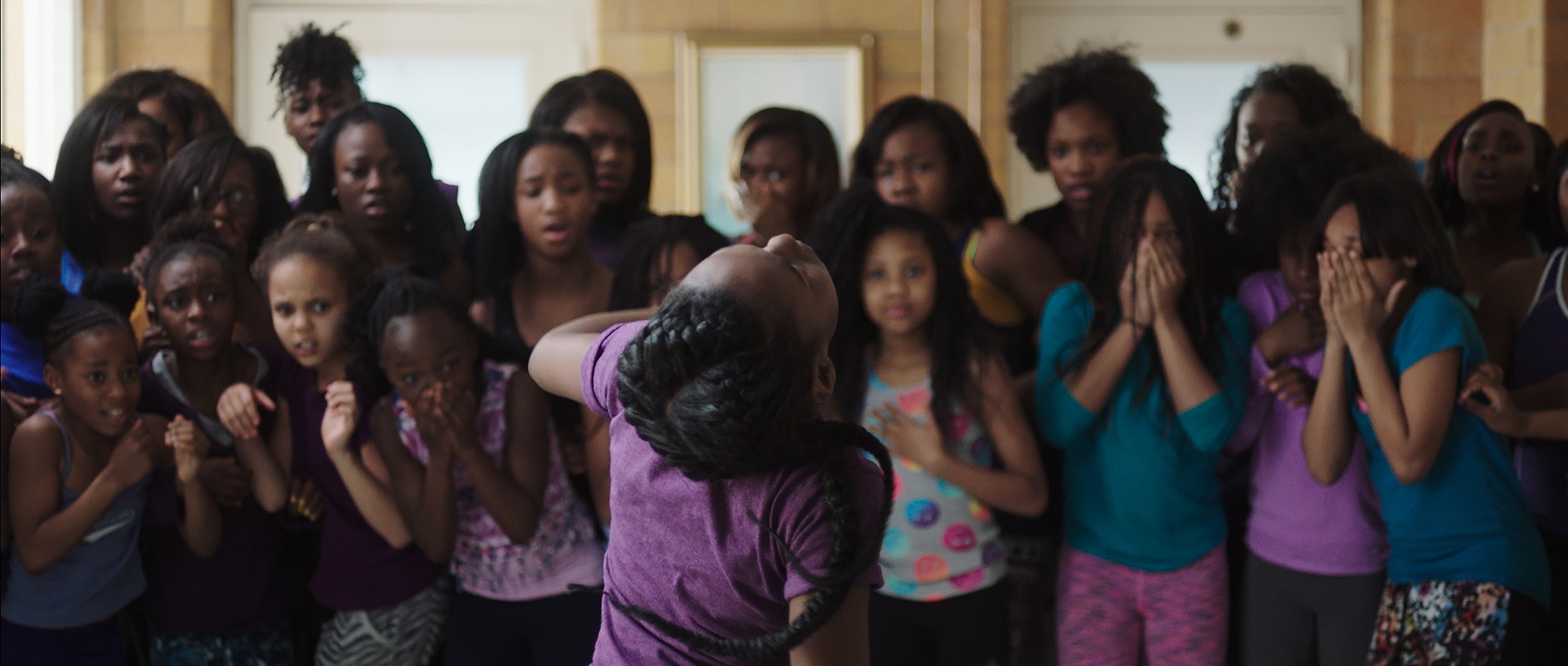
9. The Fits

the-fits

The breakout feature of the year — both for director Anna Rose Holmer and insta-star Royalty Hightower — The Fits is exceedingly difficult to summarize while adequately conveying its atmosphere and concerns. Let’s put it simply: here is a story about a tomboy somewhat alienated in school, a group of dancers she’s both enticed by and hesitant to join, and an unexplained outbreak of seizures that starts to infect all the girls.

Is there really an illness? Does it have to do with the water? Or is this an 80-minute metaphor for the pressures of conformity and Black femininity and adolescence? The latter seems strongest, but all options are on the table; in the age of shamefully ignored lead-poisoning (like in Flint, MI), the material explanations have resonance, too.

What’s extremely clear is the director’s sure touch (watch the many instances where key scenes are delivered through static shots of their observers rather than the action), the subtle and devastating lead performance from Hightower, and a climax that amazes even on second viewing. “Mood-piece” is no one’s favorite term, but it fits here (as it were). The Fits sustains an air of mystery and ambivalence for its whole running time, and it casts a spell.

8. 13th

13th-2

Earlier this week, I summed up Ava DuVernay’s masterful 13th for Cut Print Film’s best of 2016 list:

13th is a moral reckoning, an excavation of the image, and a call to action. Through its elegant staging and overlaid text, it entices the viewer to engagement. In this foul year, it’s compulsory viewing for anyone who wants to stare clear-eyed at the situation we’ve allowed to fester. And then get to fucking work.

I don’t have much more to add here. Watch it if you haven’t.

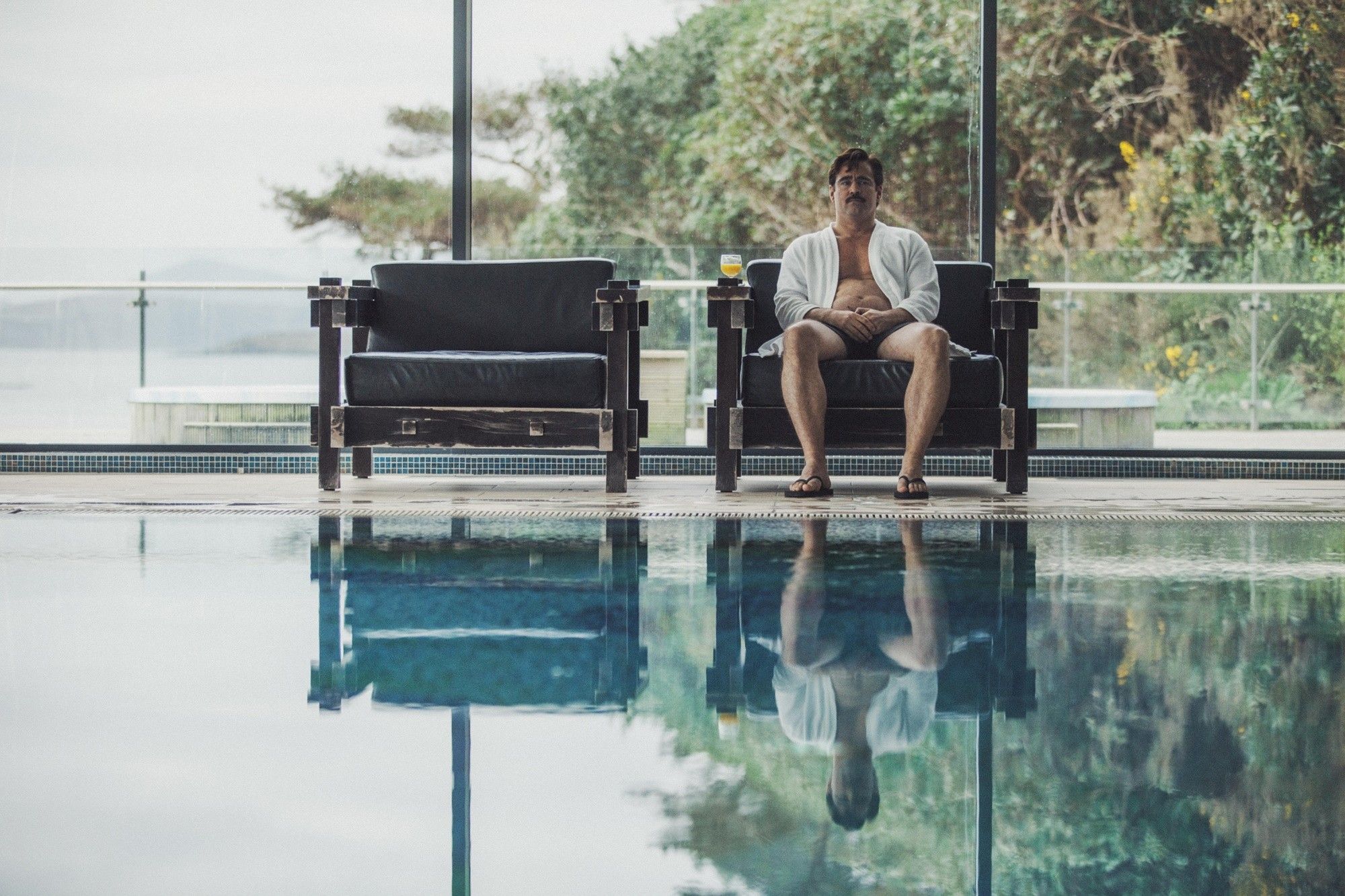
7. The Lobster

Lobster4

Loner Leader: Do you love her?

Campari Man: With all my heart

Loner Leader: How much do you love her? On a scale of 1 to 15.

Campari Man: 14.

It’s hard to imagine a drier, or odder, wit than that of Yorgos Lanthimos, and The Lobster is his wittiest, oddest outing to date. Its premise — a world in which coupledom is so rigorously enforced that those who fail to partner up are eventually forced to relinquish their humanity and be changed into animals of their own choosing — is weird enough. What’s weirder, though, is Lanthimos’ deadpan commitment to it.

There’s an aching melancholy to Colin Farrell’s central performance that serves as a ballast, rooting the absurdities of statist monogamy in a real-world loneliness, and Lanthimos is eager to mine both the humor and the pathos. Instead of ending up somewhere in between, The Lobster leaves the viewer on an entirely different plane, where mood, atmosphere, and characterization all work in different ways simultaneously. The film’s a tightrope walk, and it’s incredible they manage to pull it off at all. Like any tightrope walk, though, it’s ultimately thrilling, full of uneasy laughter and a disquieting sense that this world isn’t too different than ours, come to think of it.

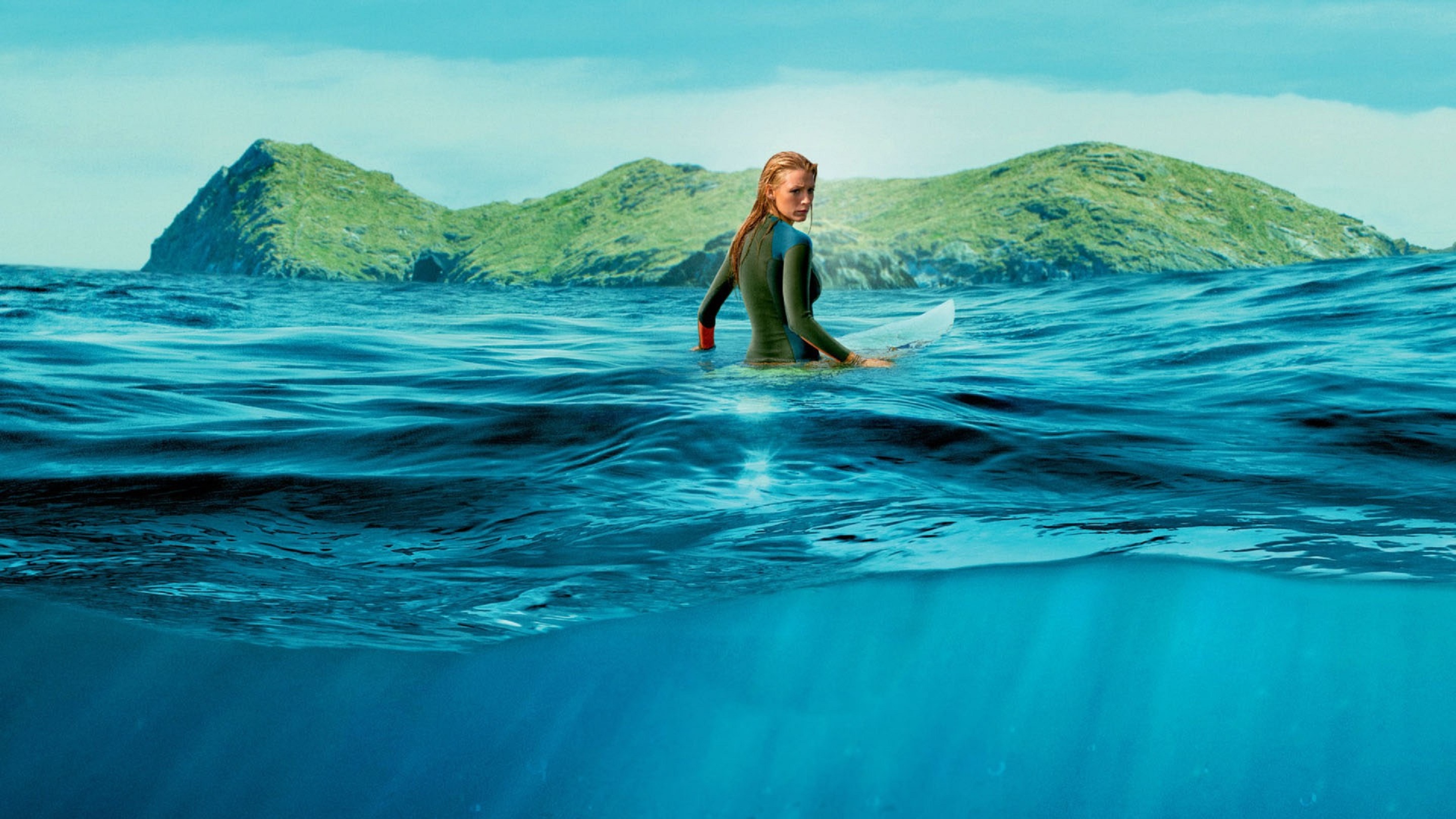
6. The Shallows

shallows4

Blake Lively is close to shore, 200 yards, but hunted by a shark. That’s it.

Everything else — the somewhat plodding back-story, the often gorgeous cinematography, the unnecessary final minutes that threaten to undo the film with sentiment no asked for or wanted … that’s all beside the point. The Shallows strips things down to the elemental, and delivers a white-knuckle genre film that entirely succeeds on its own terms. Sometimes, you just want to go to the movies and be entertained, and this was the most entertaining movie of the 2016 summer.

It also features a seagull as a central character, formally listed in the credits as “Sully ‘Steven’ Seagull'”. So points for that.

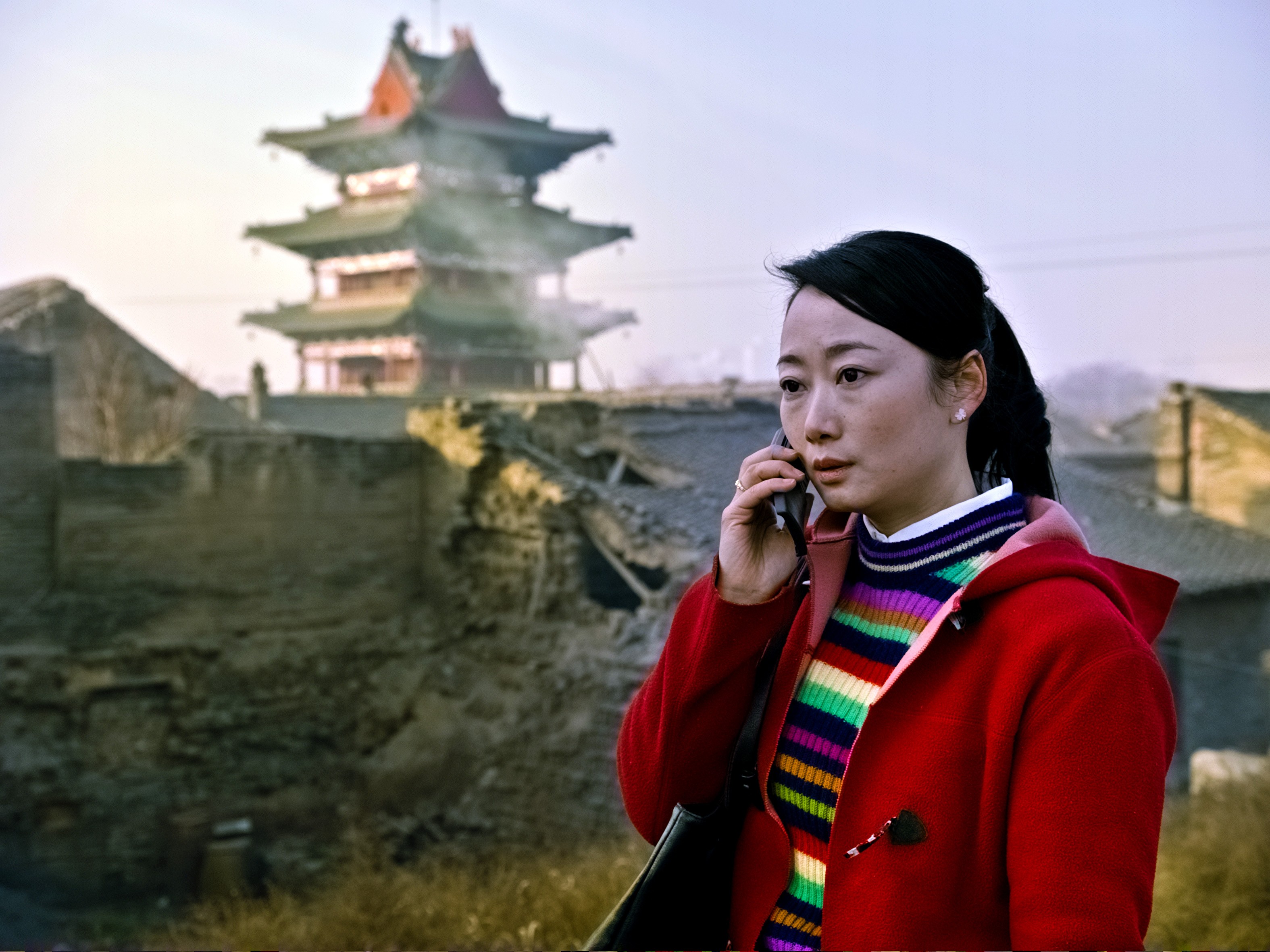
5. Mountains May Depart

mountains-may-depart-2

Jia Zhangke is mainland China’s foremost chronicler of the changing moment we find ourselves in, a sort of Abbas Kiarostami from Fenyang (and not just because he enjoys shooting inside vehicles). Mountains May Depart may not be his masterpiece, but it’s probably his most accessible film so far. And it’s beyond gorgeous.

A triptych that follows three characters through three eras (including the future, and shot in three separate aspect ratios to boot), Mountains May Depart is Jia’s rumination on history, globalization, and the things we lose along the way. Incorporating aspects of Hollywood melodrama and sly self-allusions, the film depicts a central love triangle over the years, the allure and danger of capital, and, in its wildly divisive third section, Jia’s concerns about the world to come.

It’s a heady mix of speculative fiction and grounded concern, anchored by his wife and muse Zhao Tao’s rapturous performance. There’s too much here, much too much, for a few paragraphs. Mountains May Depart is a film that stays with you — rigorously intelligent, aesthetically impeccable, and ever-shifting.

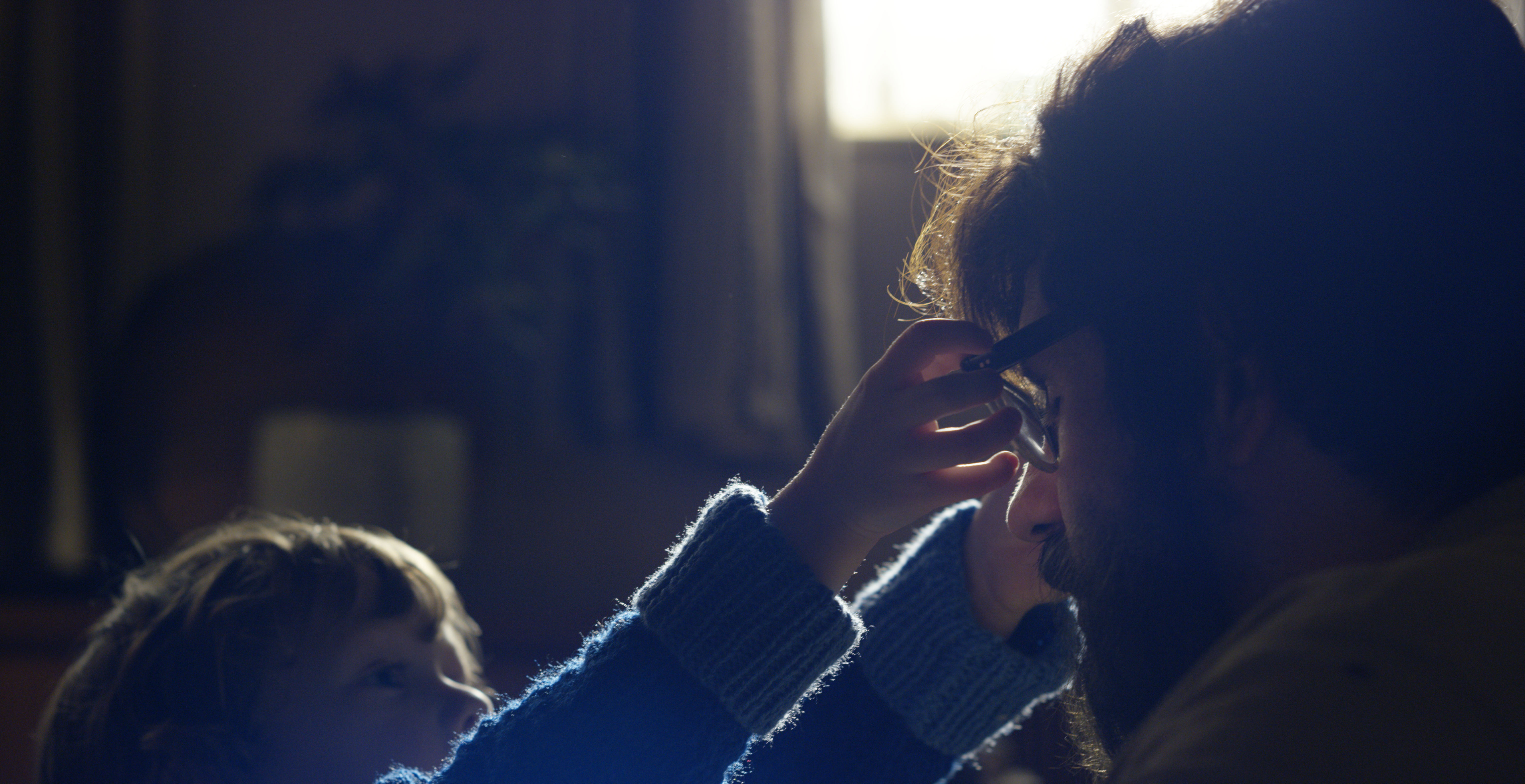
4. Notes on Blindness

notes-on-blindness-glasses

How do you make a film about the loss of sight and the emergence of a new mode of engagement with the world around you?

With grace and profound insight, Pete Middleton and James Spinney’s Notes on Blindness posits a few suggestions. Their film focuses on the British theologian John Hull, who spent years compiling an audio diary of just such a transition. The result is a film unlike any other released in 2016 — haunting, haunted, and hopeful by turn, it grapples with sound and image in ways that are both experimental and immediately familiar. Hull’s eloquent recordings are aligned with accomplished, lip-syncing actors, while the sound design (from Joakim Sundström, who’s also worked with Lars von Trier and on Berberian Sound Studio) fully immerses us in a world that isn’t so much opening or closing as it is transforming. We arrive at something like a cinema of blindness.

 Our (sighted) assumptions may imagine this as a slog, a dirge for inevitable loss. Instead, the directors told me:

[John] concluded that, on the other side of a complex process of mourning, of trying desperately to compensate for the loss of these things, in the end they cease to matter. Because ‘being human is not seeing’, he said, ‘it’s loving’.

Notes on Blindness seeks to pay tribute to that love. To say it succeeds is a vast understatement. This is a masterpiece of humanism and grace.

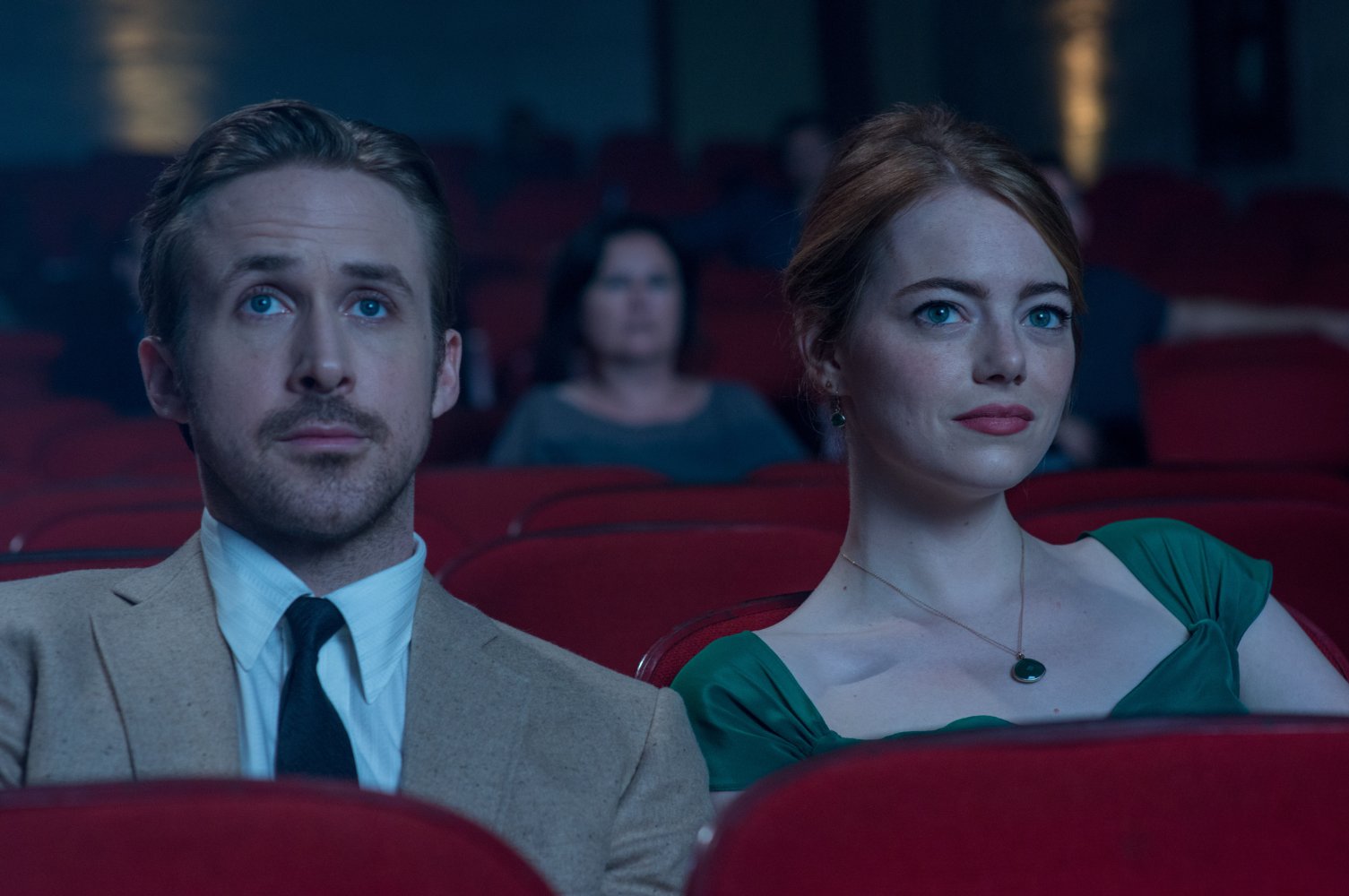
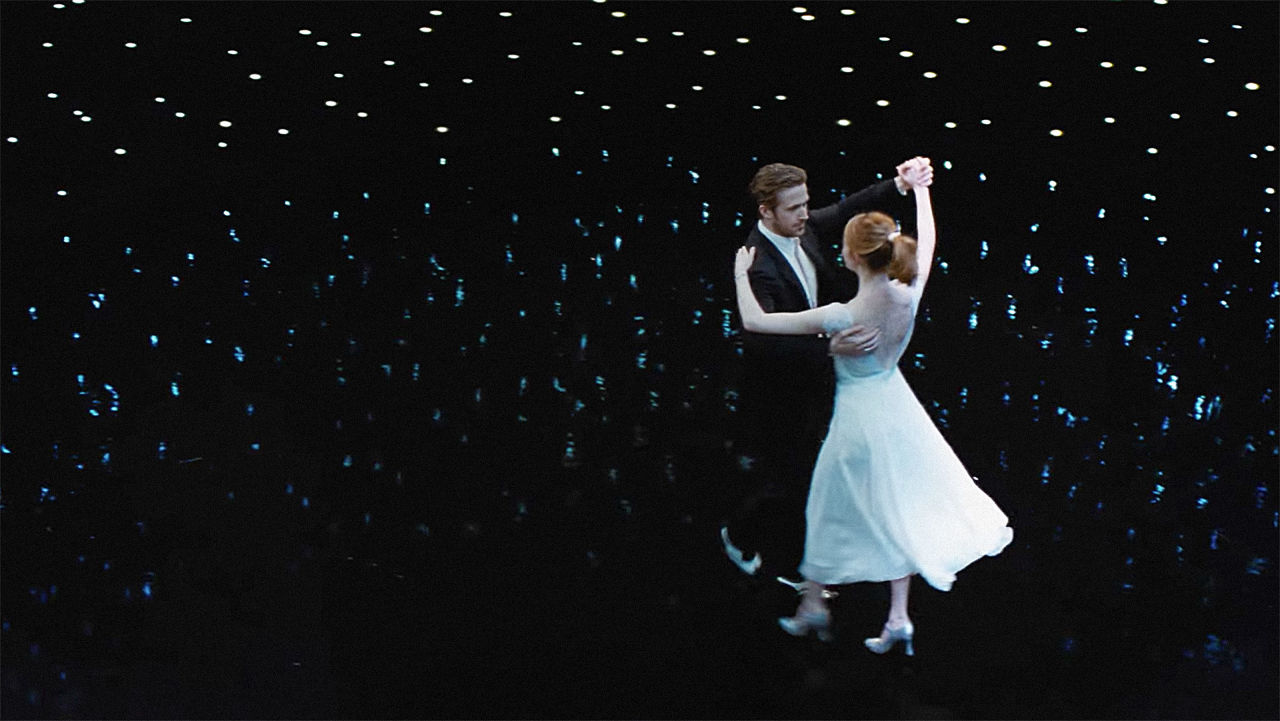
3. La La Land

la-la-land4

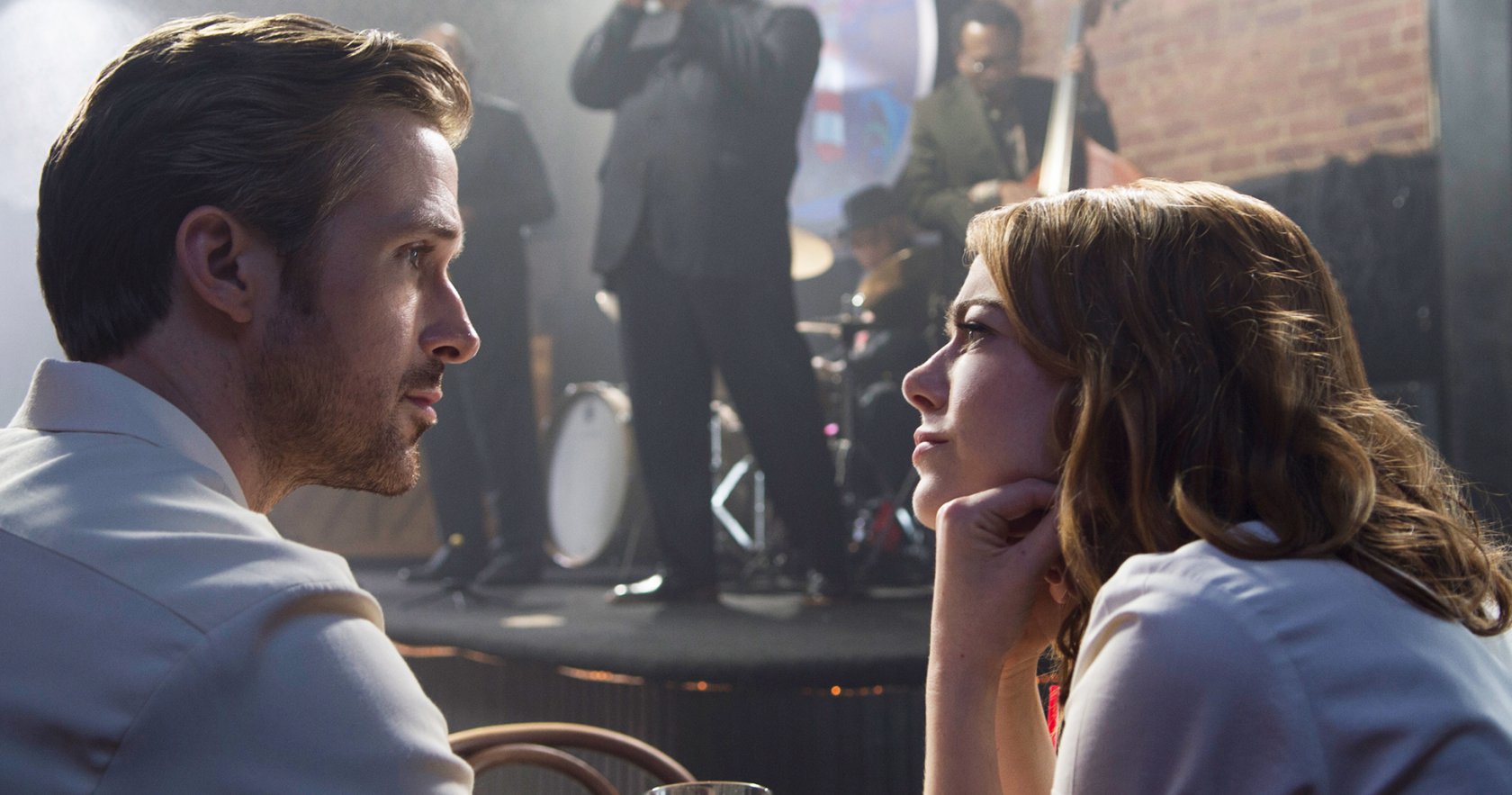
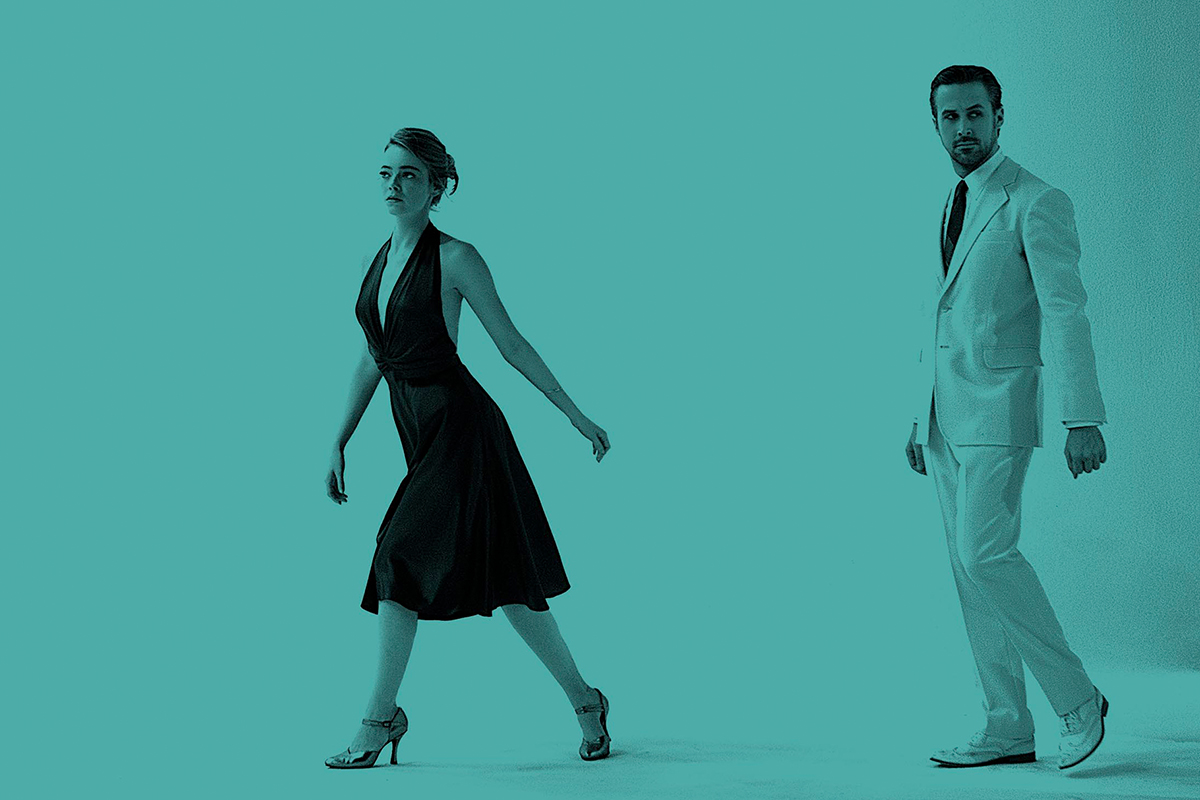
Ignore the critical disputes. Damien Chazelle’s follow-up to Whiplash improves mightily on that effort (indeed, how could it not?), crafting an ambivalent love letter to Cinemascope musicals while also firmly keeping its feet on the ground.

La La Land is not a movie about jazz or Hollywood, or even about our perceptions of jazz or Hollywood. It’s a movie about the collision of dreams and the workaday world that undermines them. It’s lovely and sad and funny, and neither Ryan Gosling or Emma Stone have ever been better.

In its final moments, before the technical wizardry of movie-magic allows us to indulge in some wish-fulfillment, Stone sings, “Here’s to the fools who dream / Crazy as they may seem.”

The emphasis is on “fools,” as it should be — a word that applies to their characters as much as the rest of us in the dark. Smile and wipe your tears away, and then head back into the world … a little sadder, a little wiser, and a little more entertained. What do we even go to movies for?

2. Certain Women

certain-women6

Kelly Reichardt is one of our most committed visionaries in film, focused, laser-like, on the moments other directors would leave out of the movie. A bare foot running along a lover’s back as he’s getting dressed, a pile of rocks outside an old man’s house, an awkward silence in a parking lot.

This is the stuff of drama in Certain Women, another triptych that starts nowhere, goes nowhere, and ends up in between. Based on the stories of Maile Meloy, Reichardt’s film is, unsurprisingly, at no pains to explain and in no hurry to get to the end. Its Montana setting shapes and encircles its characters, nearly all women, navigating the understated crises of their lives.

Only Reichardt could make this film, which understands that the most important things that happen in our days rarely involve explosions, of any kind. They involve routines, interactions at cross-purposes, internality in groups, the way the sky looks at particular moments, the dog who runs alongside us while doing chores, the effort to express something and the failure to get it across. We’re lucky to have her.

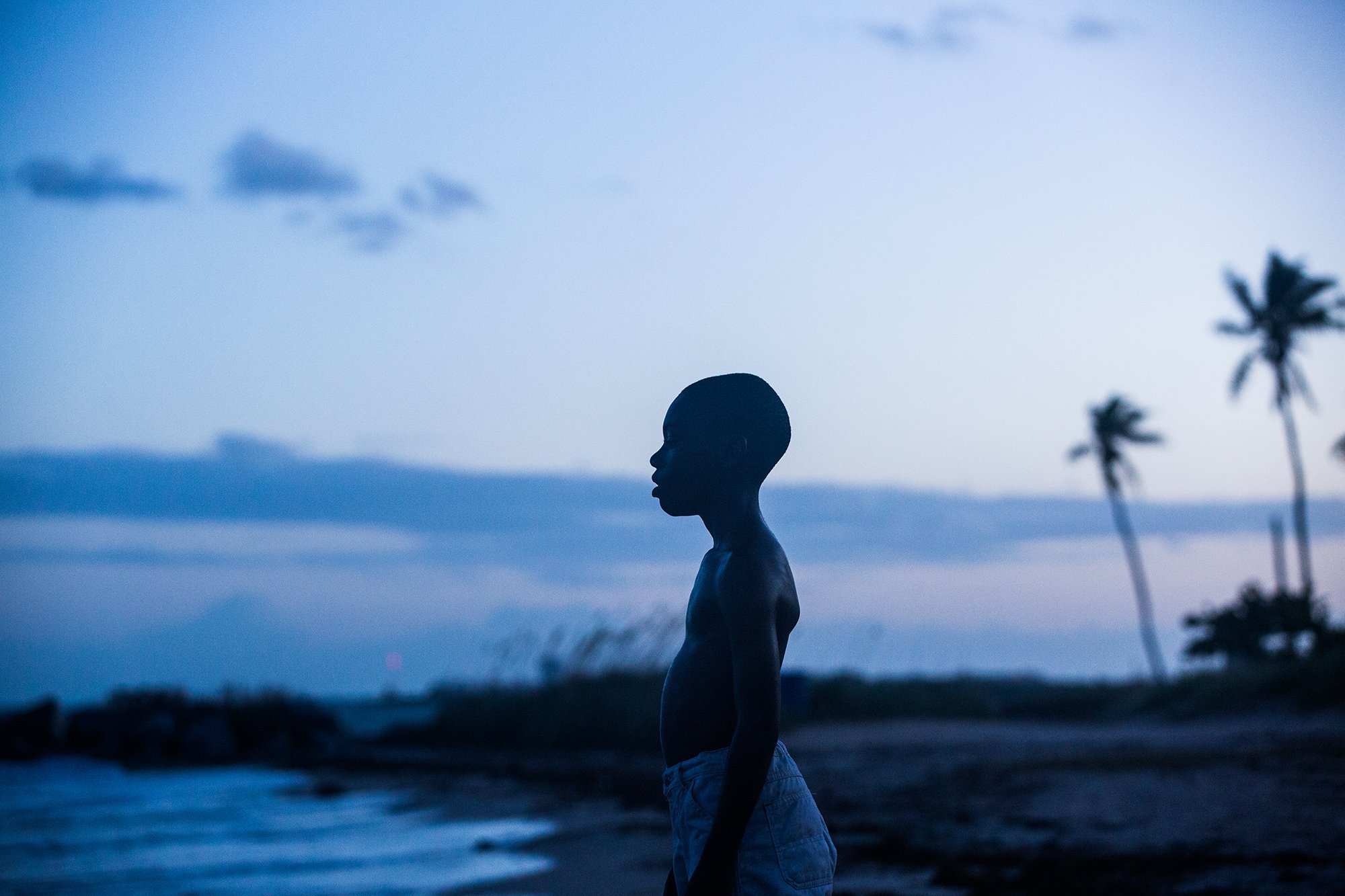
1. Moonlight

moonlight

Well, the title of my original post about Moonlight probably killed any real surprise here.

Barry Jenkins’ film, an adaptation of the unproduced play “In Moonlight Black Boys Look Blue”, startled me in the theater and hasn’t left my mind since. Awash in that titular blueness, it’s a visual marvel, but that’s only one of its accomplishments. Here is another film about the inexpressability of the things that most define us, all the more poignant because they are so elusive, so fragile, so dangerous.

Moonlight is about Blackness and queerness and the passage of time, in ways that open up insight without ditching specificity. This is, above all, not a film that can casually be said to touch on “the universality of the human condition,” or some similar phrase that manages to praise while also uncoupling its narrative from the world it depicts. This is a film about a life as it is lived, full of contradictions and pain and quiet joy.

Mahershala Ali shines in a supporting role; all three actors who play our hero at different stages of his life fully inhabit him. We sense where he came from and understand the how and why, but are left wondering where he’s going. Moonlight provides no easy answers. We simply find ourselves immersed in its images, like a young child encountering the ocean for the first time.

There will be Oscar-talk in the coming months, maybe outrage at slights. (Seriously, if Ali doesn’t get a nod, I’ll be there in person to burn the whole thing down.) But, as important as that kind of recognition can be, Moonlight already has changed the conversation. It stands as testament to a unique vision and a bracing honesty, carried on by a conviction in its truths that we rarely see. It’s a genuine cinematic event, and the best film of the year.

December 30, 2016 0 comments
0 FacebookTwitterPinterestEmail
FilmReviews

What The Self-Satisfied Scolds of the Internet Get Wrong About La La Land

by rick December 21, 2016
written by rick

At some point, it became fashionable to dislike films sight unseen.

The internet is awash in trailers, and studios don’t help by dripping out details, arriving eventually at the ludicrous end-game of the trailer-for-a-trailer. We’ve all been rooked by this. One unfortunate consequence is the heightening of expectations, and our weird desire to see those expectations undermined. Many folks go into theaters hoping to dislike the film they just paid to see, if only to get belated credit for their presumptive “wokeness”.

la-la-land4

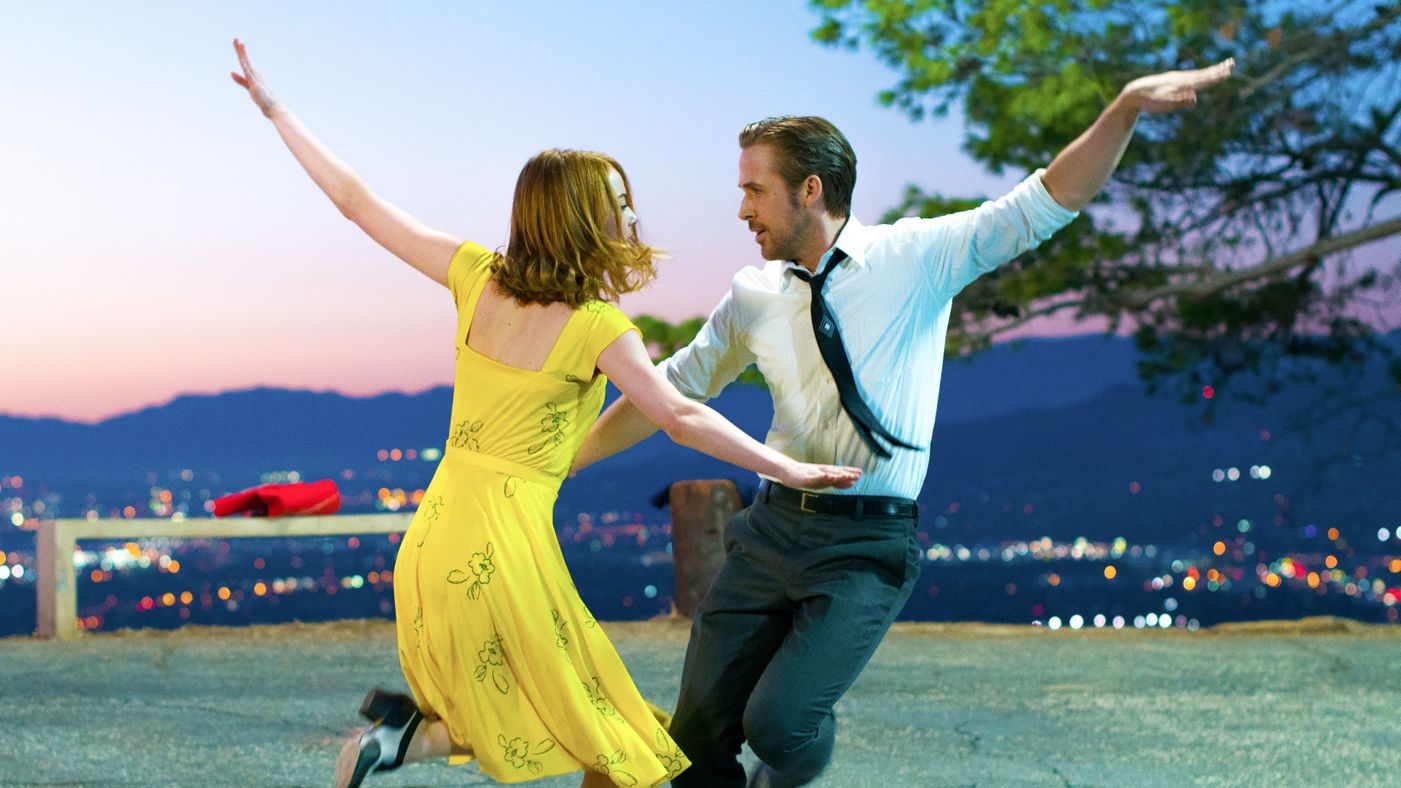
La La Land is starting to seem like the latest victim of the internet’s navel-gazing posturing. A huge step up from the embarrassingly embraced Whiplash, a movie that actually suffers from the exact missteps people have now decided to pin on its sequel, director Damien Chazelle has crafted a beautifully ambivalent love-letter to the form, channeling Jacques Demy and the lustrous Cinemascope fantasias of yesteryear, but sending both on a collision course with modern sensibilities.

la-la-land6

You’d never know it if you believe what you read, cranked out by click-hungry killjoys who’ve mastered the art of outrage-enthusiasm but haven’t learned yet how to see what’s staring them right in the face.

Here is a film whose protagonists, a struggling and sub-par jazz pianist and a not particularly terrific actress, work shitty jobs to follow their dubious dreams. We open on a spectacularly staged song-and-dance number set in L.A. traffic, alerting us immediately to the uncomfortable merging of dream and reality.

Sebastian (Ryan Gosling) imagines himself a latter-day proselytizer for jazz, even though he’s not good enough to keep a job at playing Christmas songs for the disinterested. Circumstances conspire to throw him into the orbit of Mia (Emma Stone), an actress who splits her time between auditioning for dumb roles, living in her group house, and holding down a gig as a barista in a sound-stage coffee shop.

How seriously does La La Land take Sebastian’s pretensions to greatness? On their first date, he waxes rhapsodic to Mia about the interplay of tones and musicians in classic bebop. She’s not into it. How could this be! “Well, I listen to it, and I don’t like it,” Mia replies.

la-la-land2

La La Land traffics in references to classic Hollywood for the specific purpose of undermining them. If it has a fault, it’s Chazelle’s insistence on this theme. Somehow, its critics refuse to get the joke. If the film fails to serve as fodder for the analysis, so much the worse for the film.

Fortunately, for the rest of us, it’s a joy. Chazelle reconstructs the vocabulary and grammar of the best entries in the genre — the opening shot is one for the ages, but there are numerous examples — to suck us in, and then he pulls the rug out. Instead of the frothy concoction we are led to expect from all the matching dresses and full-shot dance numbers, we encounter a narrative about love, loss, and unfulfilled dreams. La La Land is the saddest time at the movies you’ll have this year while also smiling.

la-la-land3

Gosling and Stone are terrific. The fact that they can’t sing that well, just one of the many strawmen erected by people in the Strawman Industry, underscores the film’s point. We no longer live in the time of musicals. We’re too hip for that sort of thing, even if artifice underwrites our interactions on the day to day.

But, every once in a while, we are able to drop our pretenses and be moved to the sky. It won’t, can’t, last. We wish desperately that it might, even though we know all this going in.

La La Land isn’t a movie about jazz. (I mean, look at the title!) It’s about how we navigate dreams, and our failures to realize them, exactly. It’s a gorgeous and daring film that will undoubtedly outlast its snide detractors.

December 21, 2016 0 comments
0 FacebookTwitterPinterestEmail
CommentaryFilm

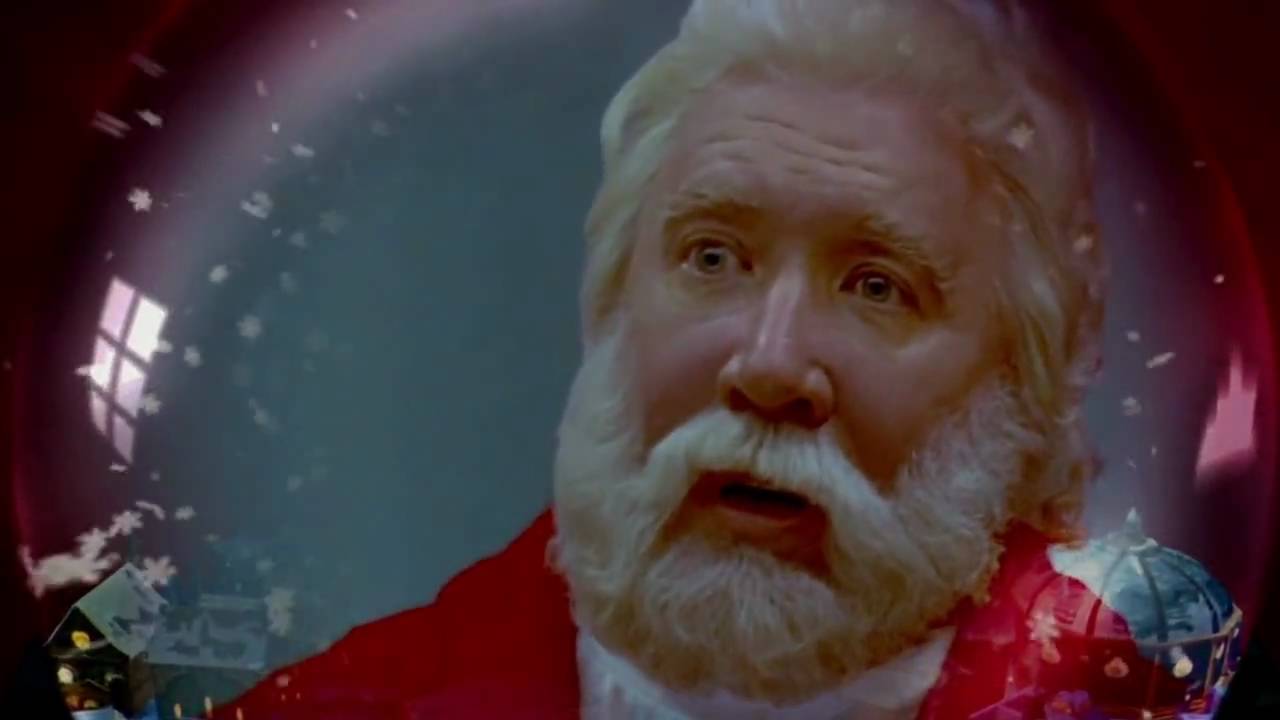
The Santa Clause was the scariest film of 1994

by rick December 19, 2016
written by rick

Quality horror films rarely make a huge amount at the box office, at least since the grindhouse days. Word-of-mouth only counts for so much, and many movies we now recognize as genre classics have had to wait for their cult followings. But 1994 was an exception.

Tom Hanks’ soulful depiction of the chocolate-loving shrimp-profiteer Forrest Gump and Disney’s stridently pro-Royalist piece of anti-hyena propaganda, The Lion King, occupied the top spots in 1994. But this was also the year that snuck into the house at night and left true terror under our tree, in the form of the year’s 4th-highest grossing feature, The Santa Clause.

On the surface, The Santa Clause is a film about imagination and family. But like its predecessors The Texas Chain Saw Massacre and The Stepfather, this is a veneer that director John Pasquin (Miss Congeniality 2: Armed and Fabulous) and Space Jam scribes Leo Benvenuti and Steve Rudnick meticulously strip away, revealing the angst beneath. Dig deeper into The Santa Clause and you’ll find a morally conflicted engagement with the ethics of self, the ways in which we both are and are not whole, and the routes by which our cherished delusions come to infect those we love most.

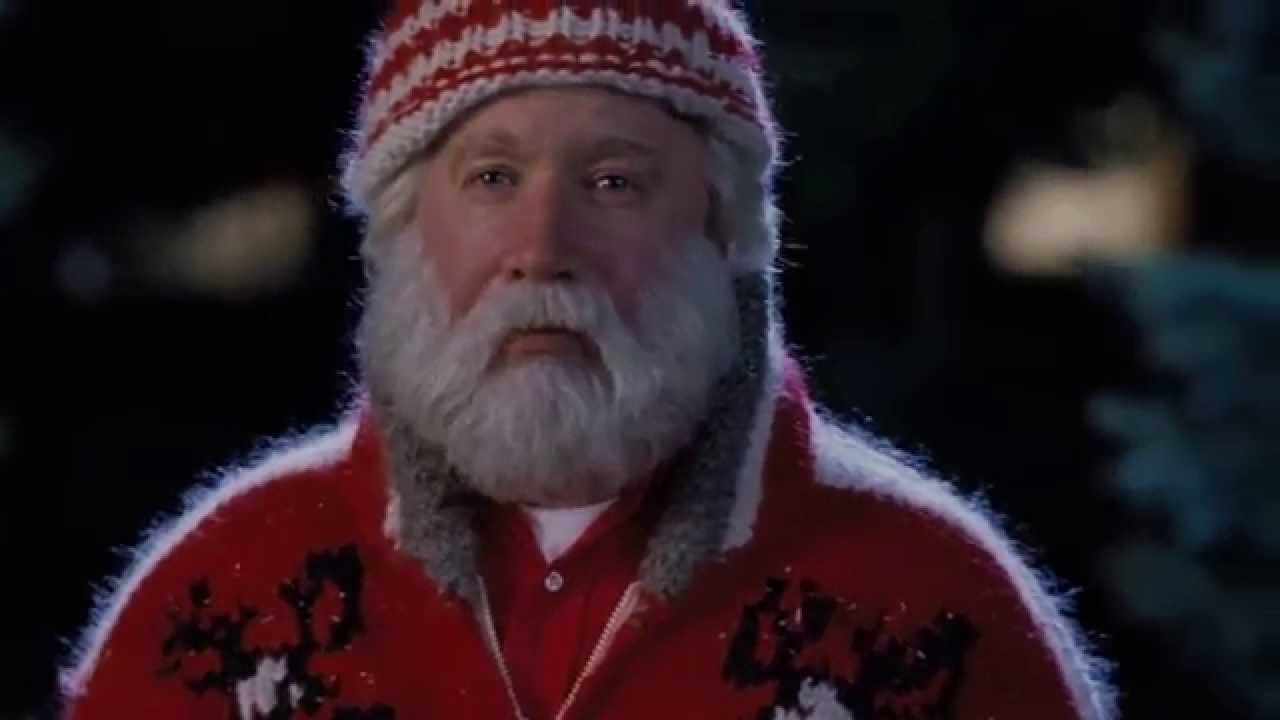
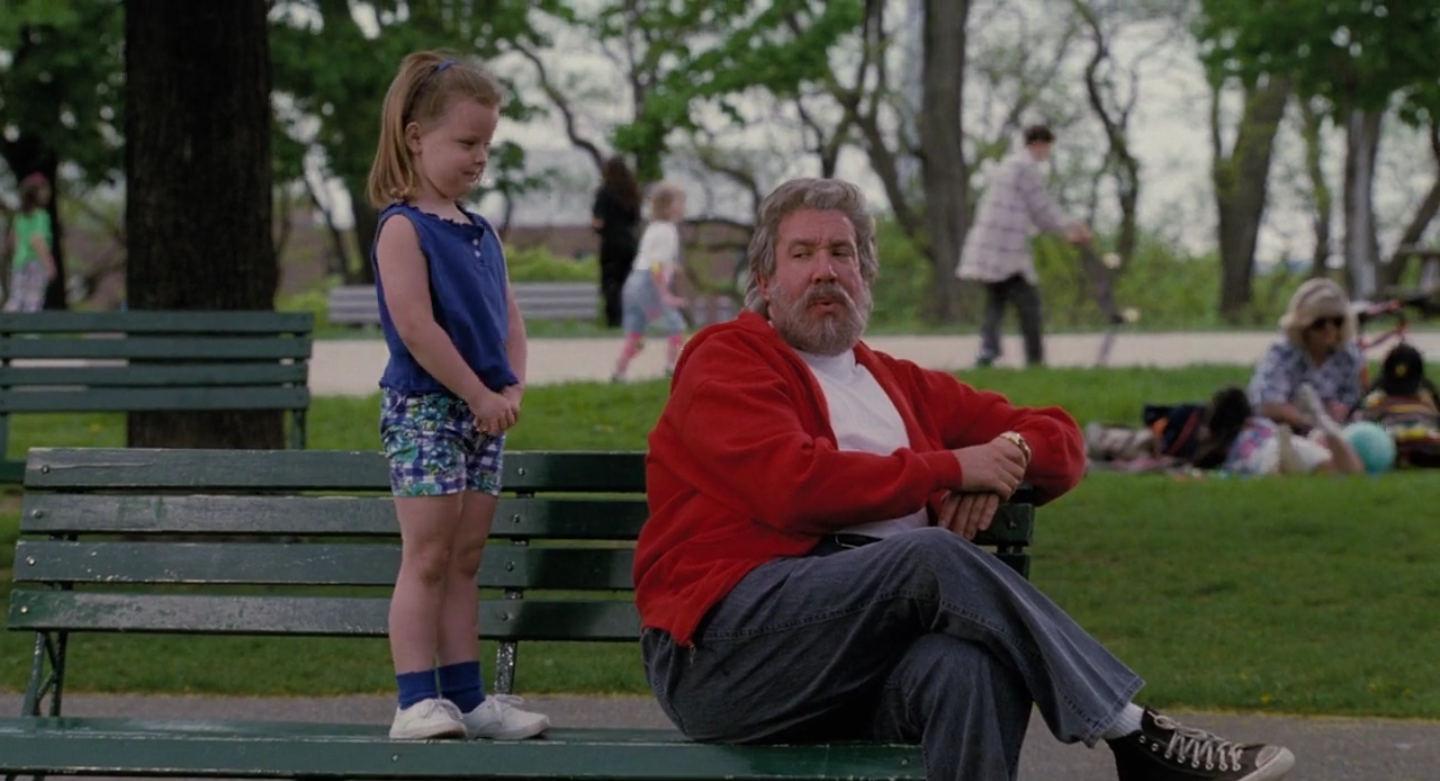
For those who don’t recall, The Santa Clause focuses on a sociopathic advertising rep named Scott Calvin (Tim Allen at his most nefarious). Introduced accepting corporate congratulations for a record-setting sales year in the Midwest, Calvin is a social climber and narcissist, a seething Patrick Bateman-like figure in the world of toy hucksterism. He lies as easily as he breathes, but his charm is palpable.

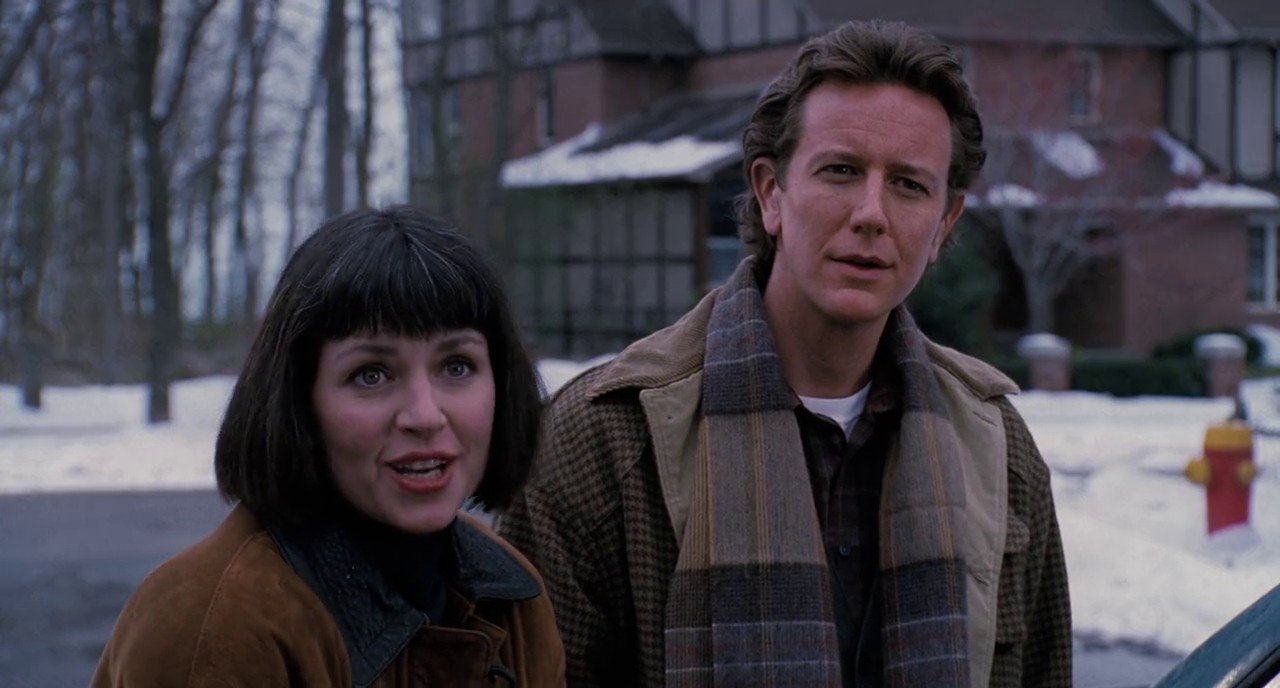
Calvin is divorced from Laura (Wendy Crewson, excellent), though they share custody of their frighteningly sincere son Charlie (Eric Lloyd, a modern-day Damien). Laura has remarried, building a new life with the film’s protagonist, Dr. Neil Miller (Judge Reinhold). Neil is a sensible psychiatrist and the only character in the film who consistently recognizes Calvin’s descent into yuletide madness; tragically, his observations go unheeded by a world so confused it desires its own self-annihilation. Time and again, there are opportunities to pull back from the brink, but the force of malevolence embodied by Calvin’s psychosis proves too appealing.

santa-clause-3

One night, Calvin returns to his house and murders a man he finds on his roof. In a dramatically resonant sequence, he steals the dead man’s clothes, a metaphorical skinning that pointedly invokes one of Freud’s stories of infantile dysphoria in The Interpretation of Dreams. Like Bateman, Leatherface, Buffalo Bill in The Silence of the Lambs, and The Cobbler‘s Max Simkin, Calvin’s uncanny power is rooted in bodily transference, his fetishization of skin and cloth marking the emptiness that defines him. (Later, this tendency is underlined by a repeated focus on Reinhold’s sweaters, as key to The Santa Clause‘s symbolic universe as the fur muff in Kafka’s “The Metamorphosis”.)

Flash forward: Calvin now believes he is Santa Claus, the fictitious “man from the north” commonly associated with rigid surveillance and tyrannically moral calculation. After the murder, he imagines a trip to the “North Pole”, doubling both as physical and erotic location, where he lords his power over a factory staffed by child slaves. Upon waking, Calvin puts on a huge amount of weight and grows an improbable beard, becoming a living embodiment of unrestrained Id. (And also an embodiment of Allen’s commitment to the villainous role, as he actually gained and lost nearly 300 pounds for the part.)

santa-clause

As Dr. Miller, school administrators, and the police try to stave off his worst impulses, Calvin’s sociopathy just increases, and the structures of sensibility and shared experience give way. Young Charlie comes to believe in his father’s frightening lies, and slowly the wider community succumbs to their appeal. That appeal is, at root, about the erasure of passion in favor of symbolic neutering, a genuflection before the altar of discursive affect. As Lacan notes:

The sufferings of neurosis and psychosis are for us a schooling in the passions of the soul, just as the beam of the psychoanalytic scales, when we calculate the tilt of its threat to entire communities, provides us with an indication of the deadening of the passions in society.

Further, the Lacanian notion of castration — as a rupture between body and law  — finds its corollary in The Santa Clause‘s final moments. After the entire town is drawn into Calvin’s delusion and rendered passive and compliant, Reinhold’s Dr. Miller is the final hold-out, much like Donald Sutherland in Invasion of the Body Snatchers.

But he is himself finally undone by Calvin’s master-stroke — the delivery of a phallus-shaped fetish item (a so-called “Oscar Meyer Weiner Whistle”) that the doctor desired as a pre-critical child. While positing an emotional return to genital wholeness, The Santa Clause actually emphasizes the original separation. It’s impossible to watch Reinhold’s tortured reaction without awe.

santa-clause-2

That “awe,” of course, is at the root of all horror — the quickening of the sublime, our powerlessness in the face of the universe’s absurdity. This is what The Santa Clause understands so painfully.

We may not recognize it at first, but it is felt to our core, waiting to manifest. As Little Elf Judy says, “Seeing isn’t believing. Believing is seeing.” The Santa Clause sees, believes, and ruthlessly takes stock. That’s all we can really ask from horror narratives.

December 19, 2016 0 comments
0 FacebookTwitterPinterestEmail
Film

New on Netflix: Blue Jay

by rick December 16, 2016
written by rick

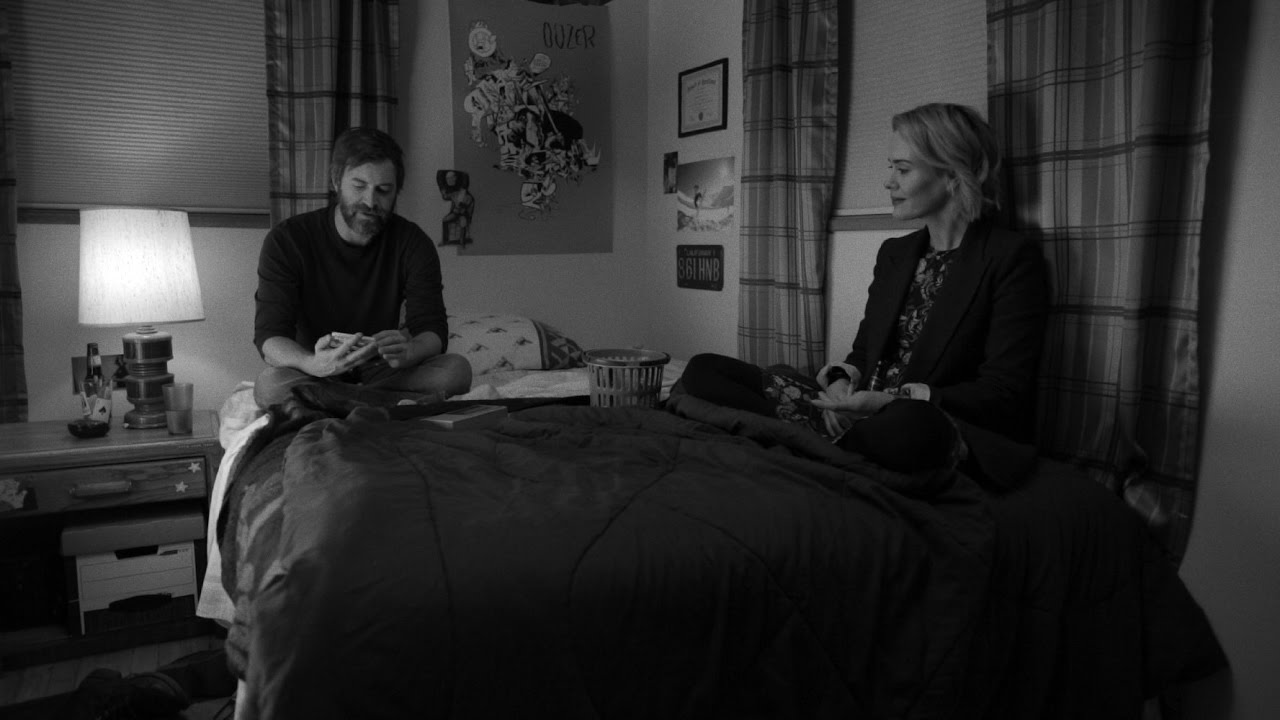
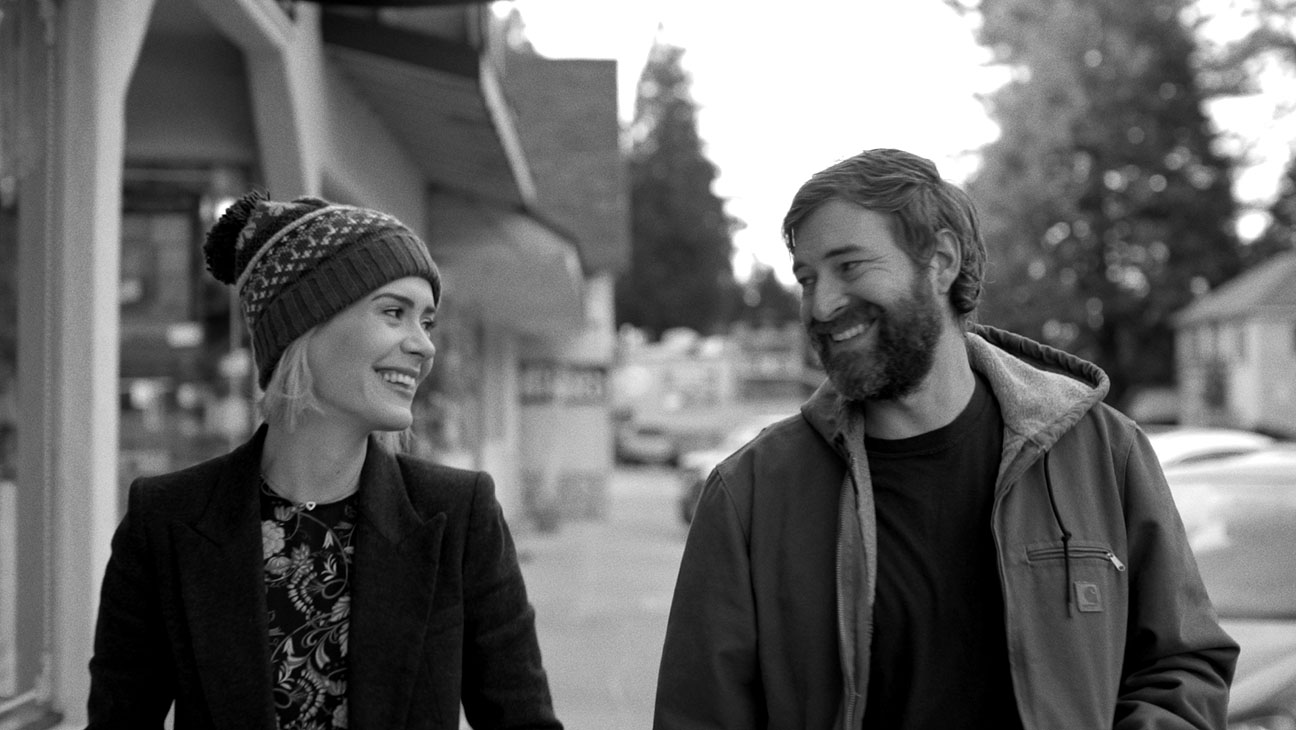
For the near-entirety of its 80 minute running time, Blue Jay is a resolutely understated affair, more interested in partially-concealed longing and lingering, unspoken hurt than emotional fireworks.

Alex Lehman‘s character study comes pretty close to blowing this tone in its final moments, as we’re treated to outbursts we didn’t ask for and the film doesn’t need, but up until that point, it’s a lovely portrait of two people navigating their shared pasts and conflicted presents. Mark Duplass and Sarah Paulson both turn in remarkably nuanced performances, investing Blue Jay with warmth and emotional weight.

This is a very good thing, since, with the brief exception of veteran character actor and one-time Western star Clu Gulager, their Jim and Amanda have the only lines in the film. Blue Jay seems to take place in a world where every other competing force has dropped out, leaving just these two people and their memories.

blue-jay3

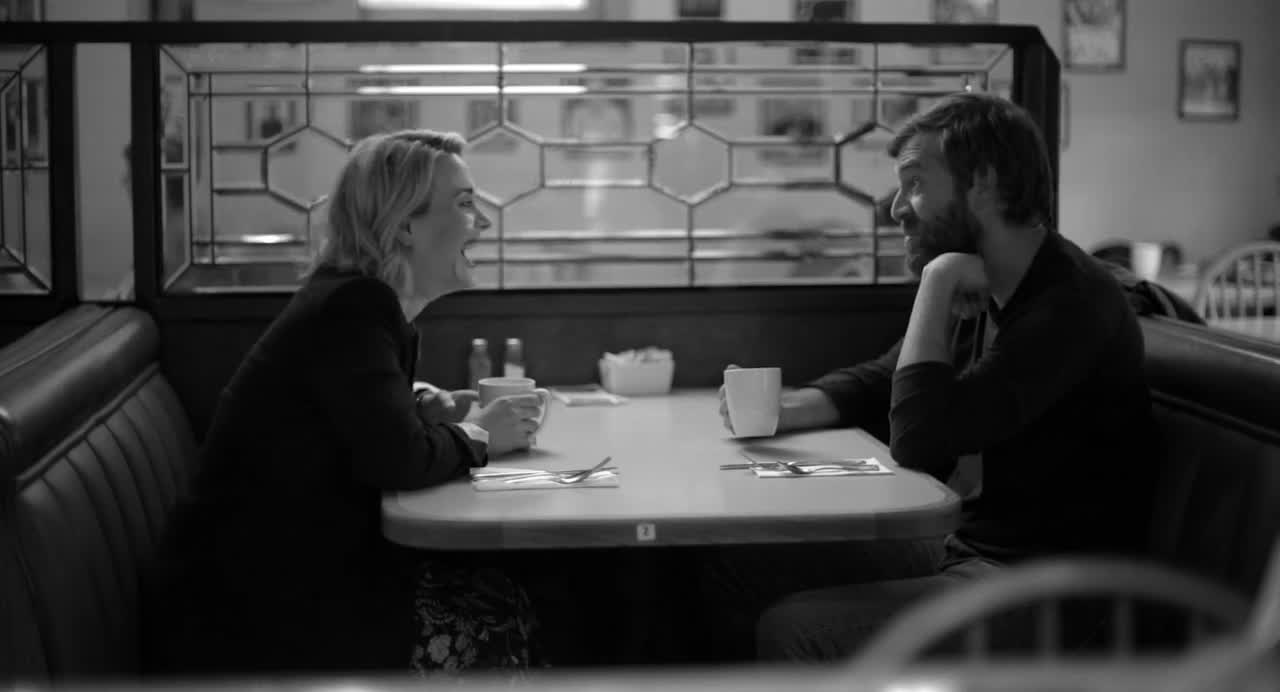
Jim and Amanda were high school sweethearts who drifted apart over the years. They run into each other at a grocery in their hometown, performing an awkward dance as they recognize each other and gauge the situation to see if they should even interact. We get the sense that there’s some sort of trauma that underlined their split, and Duplass especially sells Jim’s hesitation and embarrassment.

Of course, they clear this hurdle and end up spending the day together. (Good thing, or there’d be no film.) They visit old stomping grounds, like the titular Blue Jay Cafe, buy beer from the same store they used to haunt as teens, and listen to silly old recordings they made at Jim’s mom’s house, which he’s now renovating since her passing. Things are wistful and halting, in ways familiar to anyone who has loved and lost. Which is to say nearly everyone.

blue-jay

Paulson puts on an acting showcase, and the ubiquitous Duplass (who also wrote the screenplay) gets some room to breathe outside of his standard mumblecore motions. The essential staginess of Blue Jay‘s set-up is undercut by its black and white cinematography, sense of place, and reaction shots. Moments that could be maudlin — a dance sequence set to Annie Lennox’s “No More I Love You’s”, for instance, or an impromptu role-play of the happy bourgeois couple they once imagined they’d inevitably become — end up working in spite of themselves. Other, quieter ones — like the look on Paulson’s face when Duplass saves her the pink jellybeans in the bag (“Your favorites,” he shrugs) — land with surprising intensity.

These are entirely believable people whose greatest joys and sorrows are inextricably linked to places, people, and connections decades gone. They’ve moved on because they’ve had to — bad choices, unsent letters, things left silent that should’ve been voiced. Blue Jay is a slight film about the big issues that came to define us before we even knew who we were. Its third-act missteps are forgivable in context, if only because its leads are so strong. Here, as ever, you can’t go home again, and this awareness haunts its characters’ every smile. You might find a lot of yourself in Blue Jay‘s silences.

Quick Links

Chevalier

chevalier

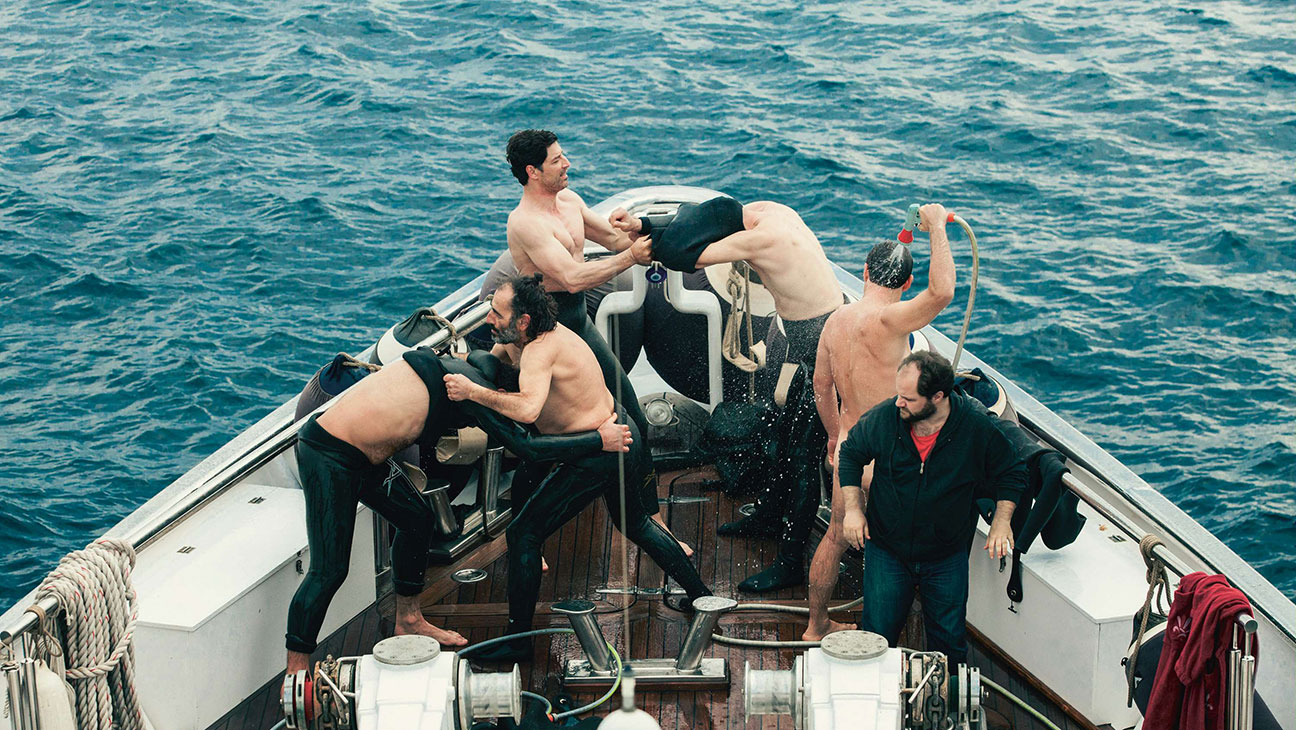
Like her Greek filmmaking compatriot Yorgos Lanthimos, whose Dogtooth and The Alps she produced, Athina Rachel Tsangari likes skewed takes, awkward silences, and mining discomfort for black comedy. These sensibilities are all on display in Chevalier, an attack on competitive masculinity and group-think that is never quite as bracing as it means to be but remains worth watching all the same.

On a fishing boat, a group of friends find themselves competing with each other in matters large and small. Eventually, they hit upon a great idea: determining who is “The Best, In General”. Let the games begin. Chevalier grapples with many ideas, and finds bleak, escalating humor in these macho competitors’ absurd self-satisfaction and mercenary will to win. If the whole thing ends with more of a whimper than a bang, and suffers by unfair comparison to Lanthimos’ 2016 masterpiece The Lobster, at least it’s a fun ride.

Hush

hush

Mike Flanagan’s films do not necessarily inspire confidence immediately. But Oculus, about a death mirror that kills you with death, was a surprisingly strong horror entry in 2013, and his Ouija: Origin of Evil (which I haven’t seen yet) got even more surprisingly strong reviews, at least insofar as it’s a film called Ouija: Origin of Evil.

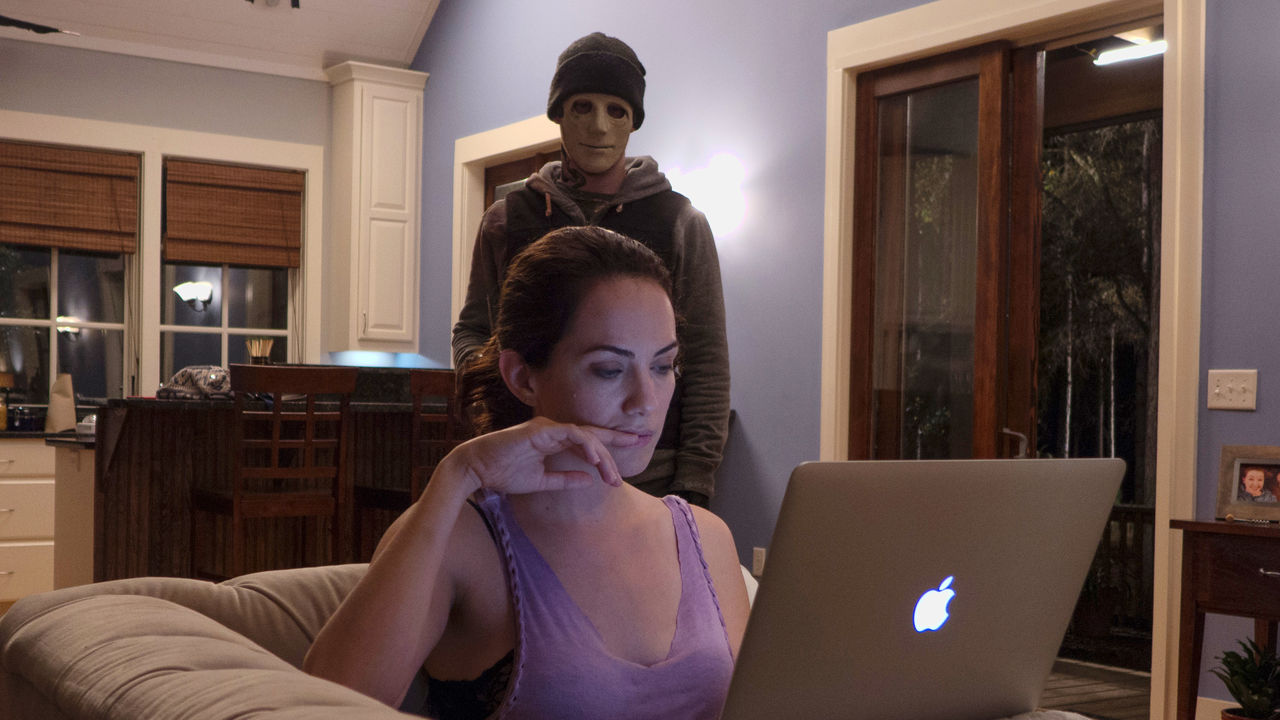
Hush might make a trifecta. This is no groundbreaking cinematic experience, but it is an entirely solid, effective home invasion thriller, complete with a compelling twist and a strong performance from lead (and co-writer) Kate Siegel.

I’ve long maintained that there is little scarier than suddenly seeing a face you didn’t know was there through a window. Hush agrees with me, pairing that face with our deaf protagonist’s dread and apparent powerlessness. There are jump-scares and a bit of gore, but the strength of the film is elemental. A shadow, a guy peering in, a silence. Scary enough for me.

Boyhood

boyhood

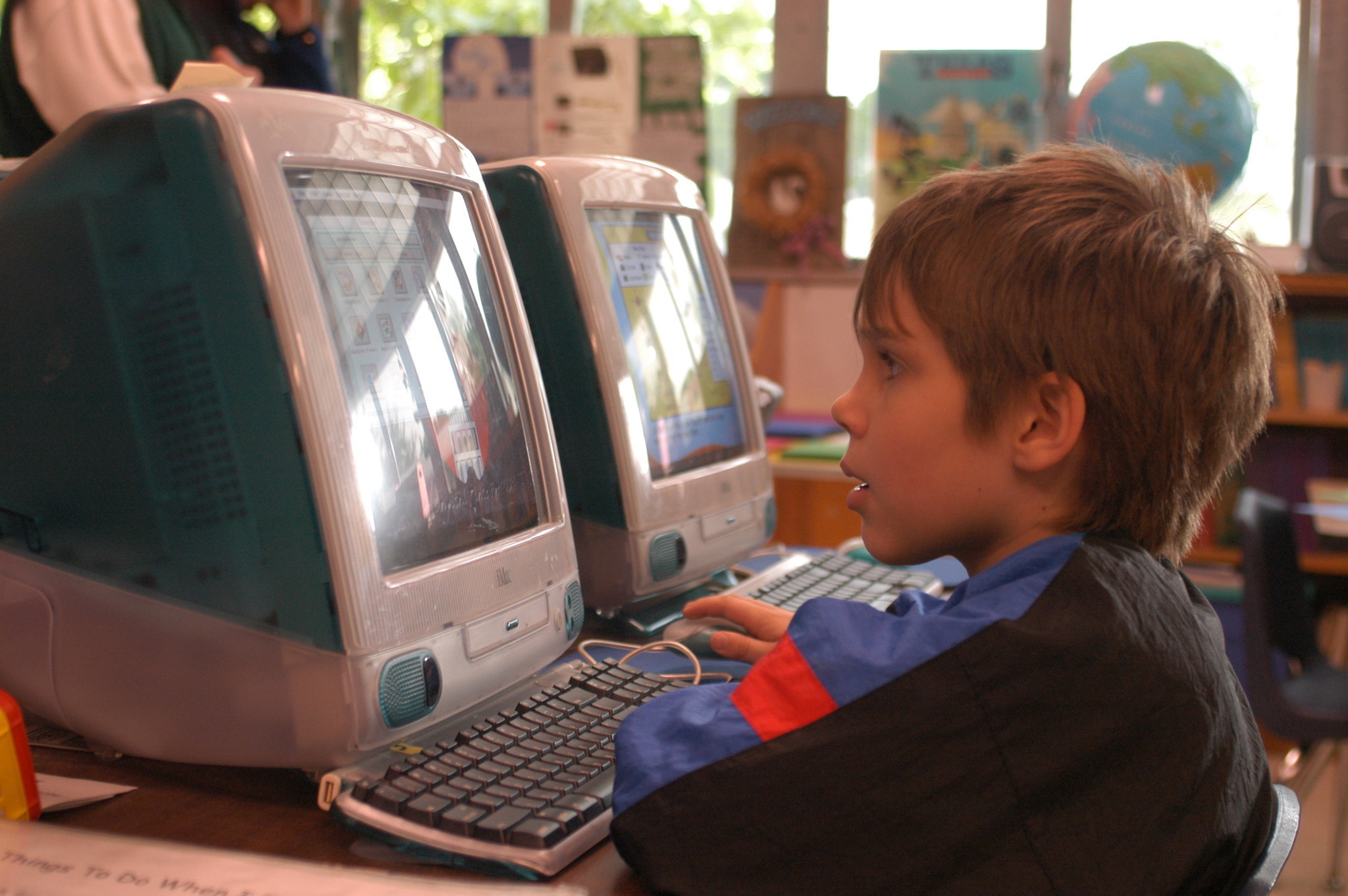
If this year’s Everybody Wants Some!! — Richard Linklater‘s affectionate ode to bros, bongs, and college baseball — felt slight, that might just be because it came on the heels of Boyhood, the purest single-film distillation of his tone and approach. Famously shot over the course of 12 years with the same cast, Linklater’s Texan opus caused a stir on its release, generating swooning praise and a fair amount of backlash.

Now that the hoopla has died down, maybe we can appreciate Boyhood for what it is: a monumental commitment to a single narrative, lovingly rendered by our most American auteur.

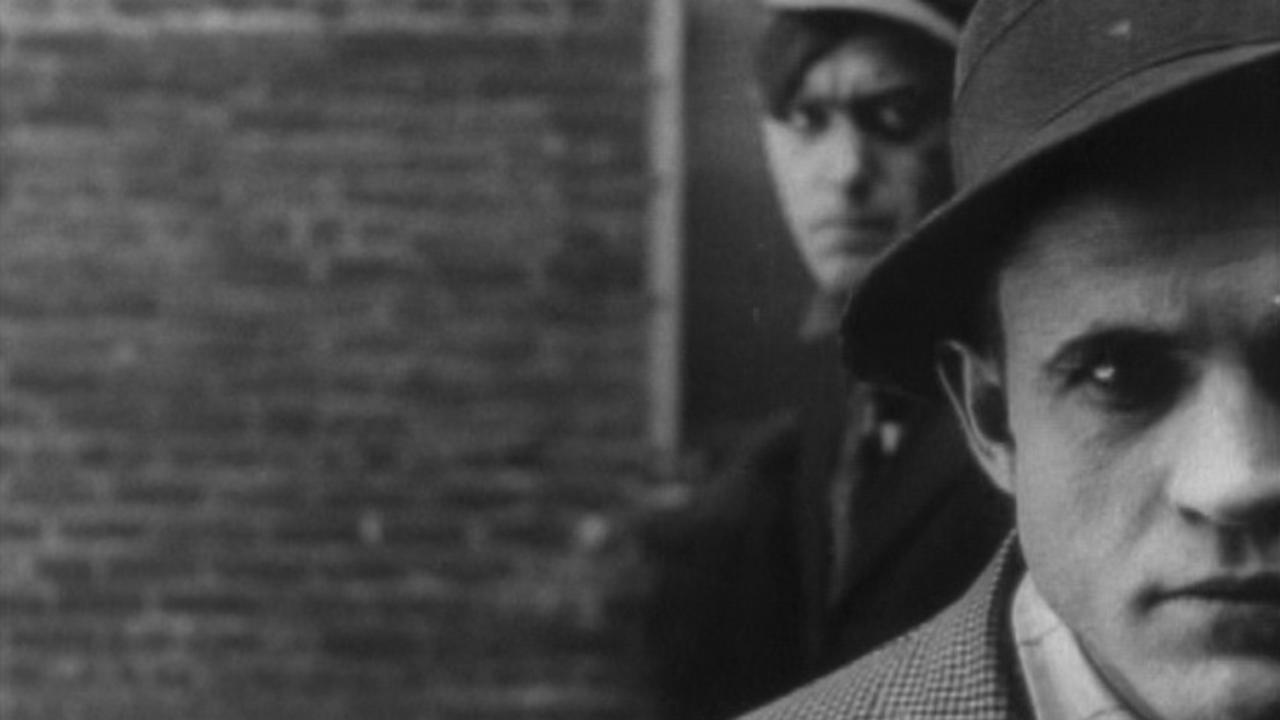
 The Musketeers of Pig Alley

the-musketeers-of-pig-alley

Another entry in this Netflix column that is not, in fact, on Netflix, D.W. Griffith‘s 1912 short is often hailed as the first gangster movie, and it’s now available to watch in streaming HD from the Museum of Modern Art.

It’s fairly remarkable to revisit it over a century later. Featuring as many social realist touches as gunfights, with Lillian Gish an obvious star-in-the-making, the 15-minute spectacle also stood at a crossroads, as MoMA notes:

Rich in plot, characterization and social observation, Musketeers pushes the limit of the one-reel format of early cinema, looking forward to the feature-length films that would conquer the industry one year later.

This is the first film from MoMA’s collection of restorations to be released in this format, with others to follow. For anyone fascinated by cinema history (or gangster movies, for that matter), that’s cause for celebration.

December 16, 2016 0 comments
0 FacebookTwitterPinterestEmail
Robert Carlyle in Antonia Bird's Ravenous
Vegan Horror

Licking our wounds: The vampiric masculinity of Ravenous

by rick December 13, 2016
written by rick

Antonia Bird‘s film Ravenous is a number of things. It’s a horror, and a comedy, and an odd collision of vampire and cannibal tropes, and a frontier narrative. It’s also a vegan, feminist, and anti-colonial attack on mythologies of masculinist virility.

Wait, don’t close the tab. It’s true.

Ravenous bears out this basic claim. Consumed by notions of flesh-eating, power, the construction of maleness, and the possibility of undermining it, Bird’s film is particularly  pointed; it will shock no one who watches it to discover her vegetarianism. Ravenous is never polemical, but — from the title on down — it’s also never particularly subtle about its assumptions.

David Arquette in Antonia Bird's Ravenous

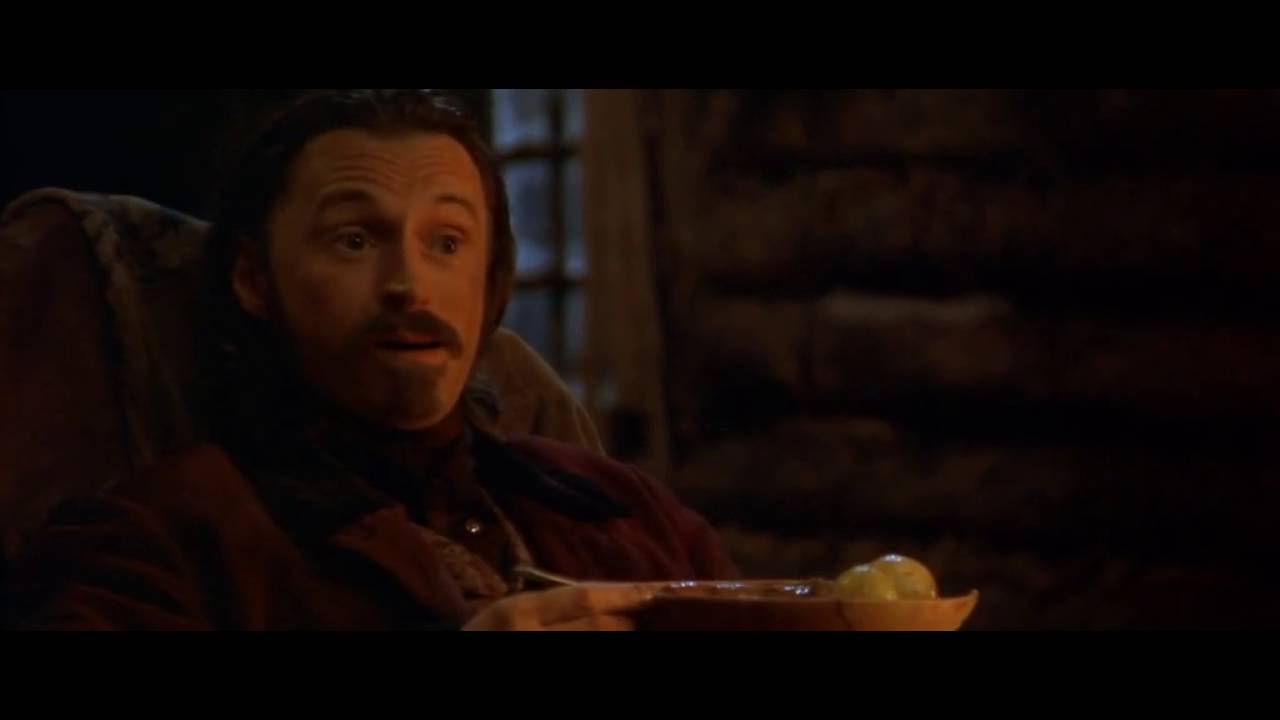
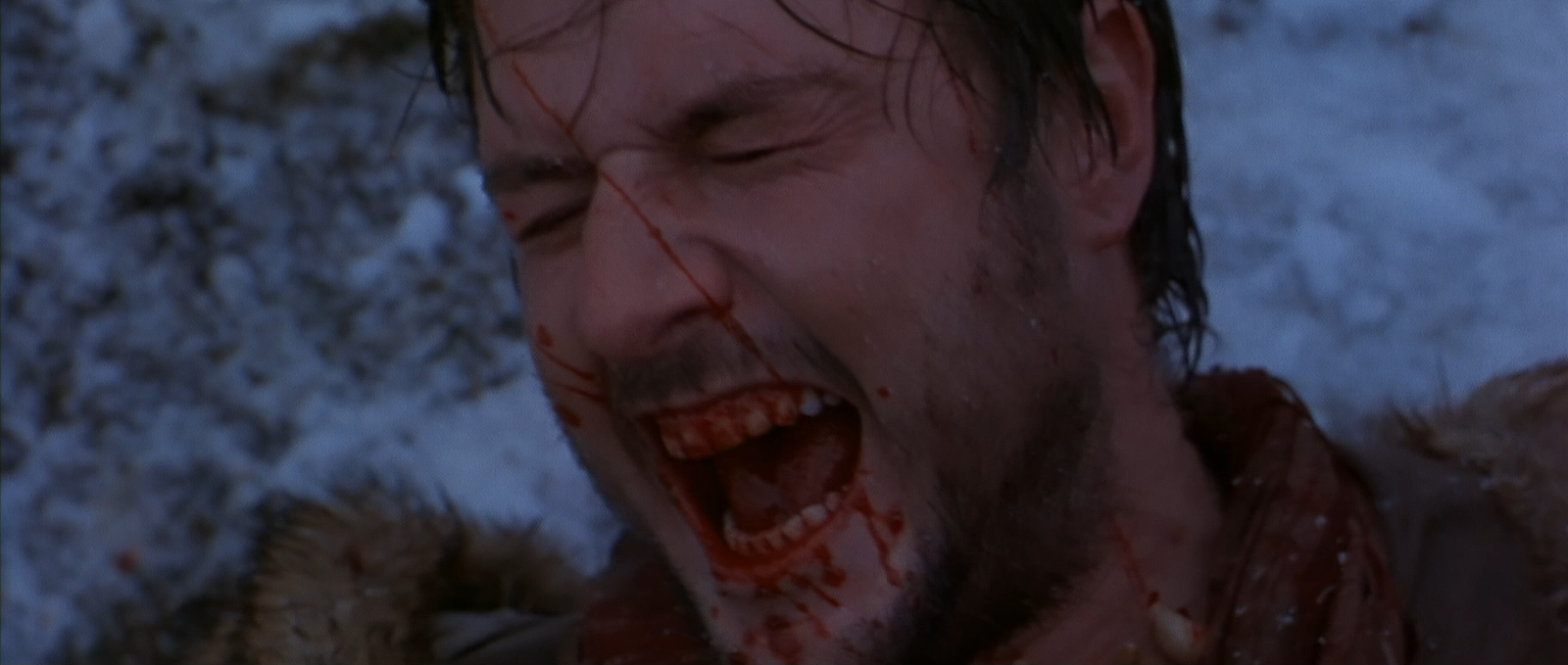
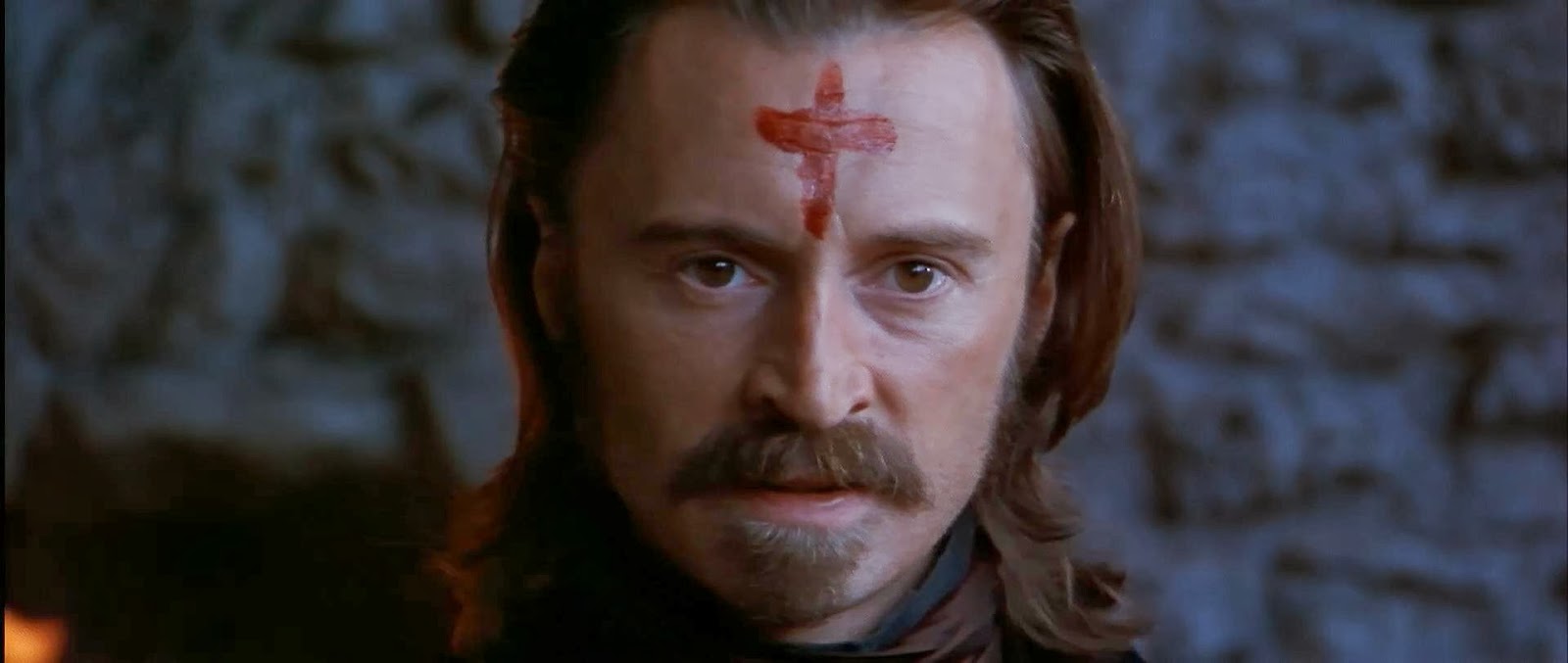
Released in 1999 to tepid reviews, Bird’s film has garnered a cult following over the years. Guy Pearce, fellow vegetarian, is here two years after L.A. Confidential, stumbling around in what might fairly be termed “a Guy Pearce-like” daze. One of the lesser, more visibly stony Arquettes is on hand (frequently getting stoned with the locals, appropriately enough). Character actor Jeffrey Jones, so good on Deadwood, almost steals the show, and Robert Carlyle (Trainspotting, The Full Monty, all the things) makes an excellent villain.

Bird puts this semi-star-studded cast through a series of horror vignettes, escalating the brutality and moral squishiness as the film proceeds. Ravenous focuses on Pearce’s Capt. John Boyd, a hero of the Mexican-American War compromised from the outset: he actually freaked out during combat, hid beneath corpses to elude detection, and, importantly, gained improbable strength through drinking the blood of his fallen comrades. He’s a tortured vampiric sort of being now, both enticed and repulsed by the possibilities of his actions.

Banished to a remote outpost in the Sierras by a commander who can’t denounce his heroism but feels he’s a coward all the same, Boyd plops down in a place where nothing much happens. The handful of half-mad troops here are essentially holding the line: smoking weed, stoking fires against the cold, claiming space for the nation’s westward expansion. Their presence is a colonial absurdity, another kind of vampiric cannibalism. It’s no real surprise when an actual cannibal shows up.

Robert Carlyle in Antonia Bird's Ravenous

This is where things get interesting.

Ravenous is singlemindedly fixated on consumption and instrumental use, but is less concerned with zombie abjection than desire and masculinity. Boyd escapes certain slaughter through a performance of death, and is rewarded, thanks to the blood of others, with a newfound strength. The film — which opens with Nietzsche’s quote about battling monsters — repeatedly invokes the notion of the “wendigo“, a rapacious figure of indigenous mythology who turns cannibal from greed. Vampires need to suck blood to live, zombies are urged on by uncontrollable desire for flesh, and, in Ravenous, men can only truly be men through meat-eating.

This is of a piece with decades of marketing, instantly familiar to anyone in western cultures. We are told that flesh-consumption built bigger brains, structured our bodies, made us what we are. Curiously, this framework usually assumes that “what we are” is something desirable, but that’s a topic for another screed.

The point is that man’s dominance over other animals, typified by their subjugation and the literal consumption of their bodies, signifies strength and virility. “Where do you get your protein?” is probably the most frequently asked question vegans hear, occupying a key spot on the defensive omnivore bingo card. Even if milk does a body good, it’s steak that makes the man, and the bloodier the better. It “taps into something primal,” as we’re often reminded. The additional fact that “dairy” — by which I mean “bovine lactation” — is marketed mostly to women (for instance, to combat osteoporosis) only reinforces this gendered separation.

As Carol Adams wrote in her landmark book The Sexual Politics of Meat:

[W]hat, or more precisely who, we eat is determined by the patriarchal politics of our culture, and that the meanings attached to meat eating include meanings clustered around virility. We live in a racist, patriarchal world in which men still have considerable power over women, both in the public sphere (employment and politics) and in the private sphere (at home, where in this country woman-battering results int he death of four women a day). Gender politics [structures] how we view animals, especially animals who are consumed. Patriarchy is a gender system that is implicit in human/animal relationships. Moreover, gender construction includes instruction about appropriate foods. Being a man in our culture is tied to identities that they either claim or disown — what “real” men do and don’t do. “Real” men don’t eat quiche. It’s not only an issue of privilege, it’s an issue of symbolism. Manhood is constructed in our culture, in part, by access to meat eating and control of other bodies.

This is the axis on which Ravenous turns. After setting itself up as straight-ahead horror, Bird pulls the rug out. The film becomes something of a moralist parable infused with feminist concerns, as Pearce’s Boyd fends off entreaties to join the now super-protein-powered, masculinist clique in charge. They do not want to kill and eat him; they want him to kill and eat. His refusal to do so is subject to mockery (in the early scenes, he can’t stomach animal meat due to his earlier taboo-crossing, which marks him as a lily-livered vegetarian), and eventually coercion and violence.

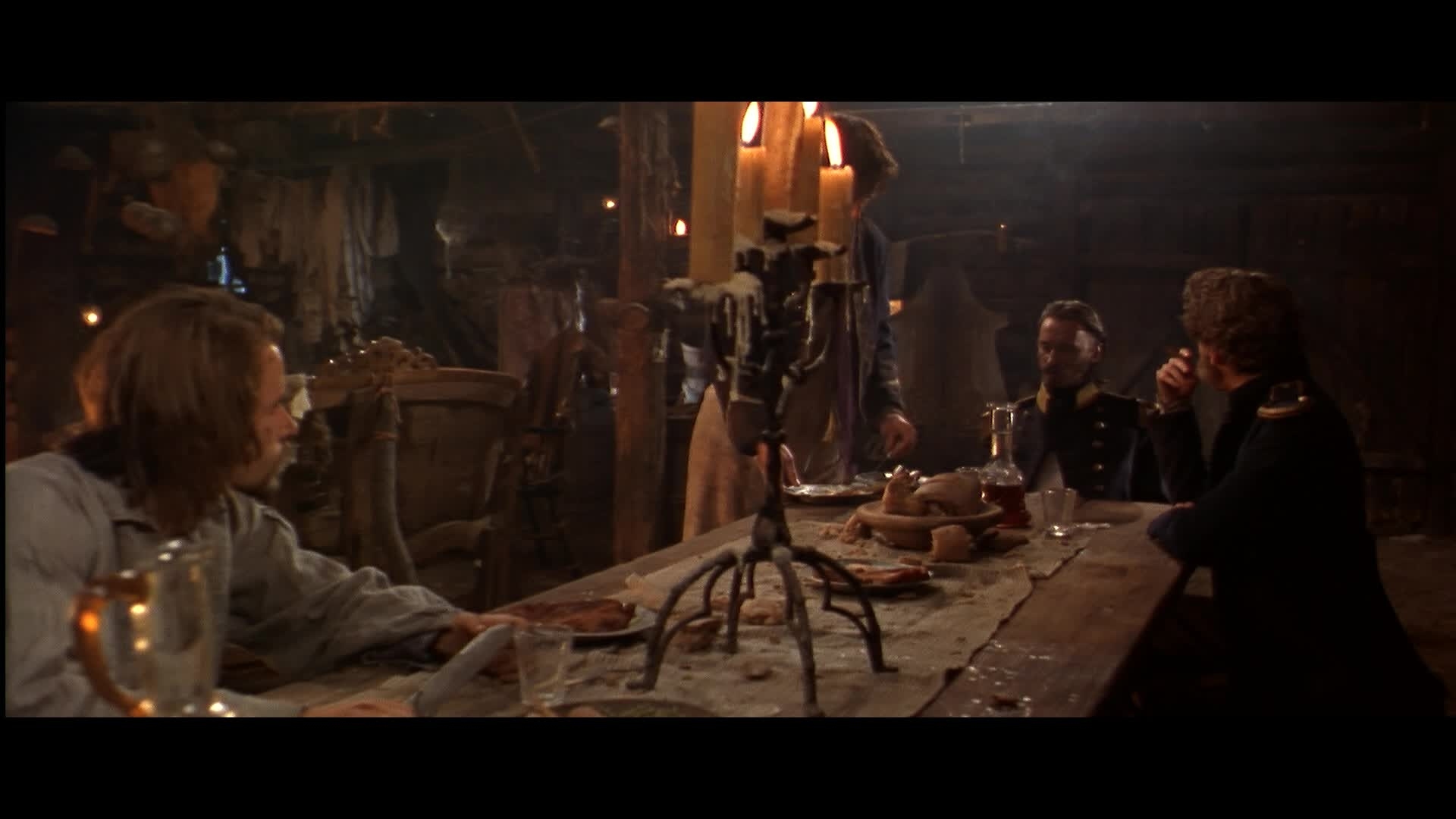
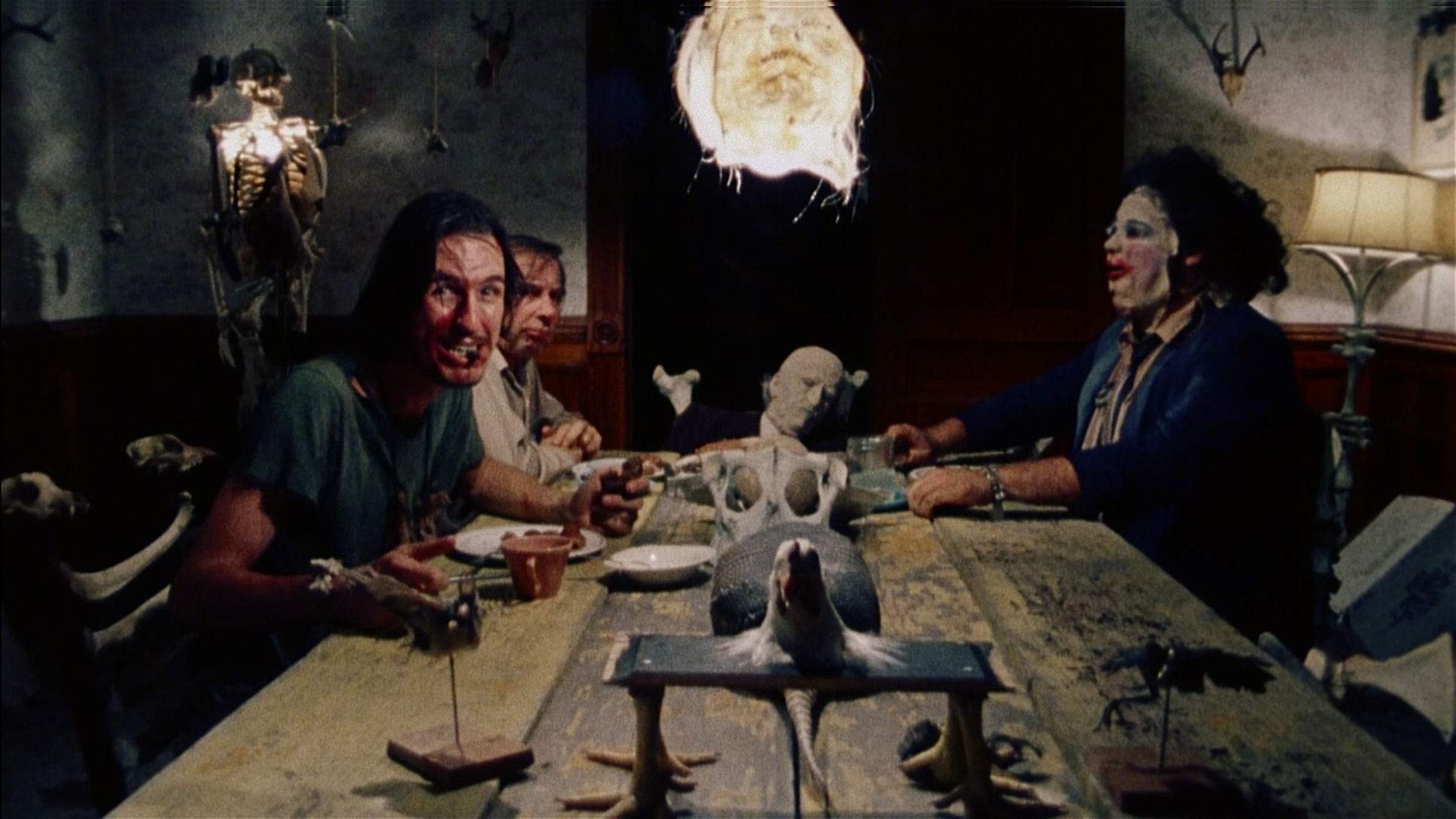
Clever cinematic framing and allusion reinforce Ravenous‘ relation to older entries in the annals of cultural anxiety. Several sequences emphasize the grostequerie of simmering stew, as the sound drops out and we simply encounter the reality of indeterminate bodies presented for consumption. A dinner table sequence explicitly invokes the pioneering vegan horror of The Texas Chainsaw Massacre.

ravenous-meal2

(Ravenous)

texas chainsaw(The Texas Chain Saw Massacre)
In both cases, people in remote locations abandoned by more genteel society resort to gleeful cannibalism. But in both cases, the seeds of dominance and abuse had been planted long before our story began. To be a man, in either situation, is to be a murderer and a cannibal.

At the end of Ravenous, there is no way out. Bird’s story ends with the violent, and joint, annihilation of both figures. This is no dialectic resolution, offering a third way. Masculinity and its discontents die in each other’s arms. Perhaps there was no other way out.

Perhaps that’s an ultimately nihilistic conclusion. But Ravenous, as a whole, firmly endorses the value of the struggle. If we go down, we go down swinging. Of course, the frontier will still soldier on, with its intractable, masculinist logic.

There, again, is the horror. But it’s not the film’s job to solve the problem. It only has to draw attention to it in ways that startle and animate, to argue, as Adams wrote, “with the mythologies we are taught to live by until suddenly we are able to see the same thing differently. At that moment a fact becomes a contradiction.” This is one of the ways Ravenous succeeds.
.

December 13, 2016 0 comments
0 FacebookTwitterPinterestEmail
FilmReviews

Moonlight is the best movie of the year

by rick December 7, 2016
written by rick

Moonlight is a genuine cinematic event. It’s the best movie of the year.

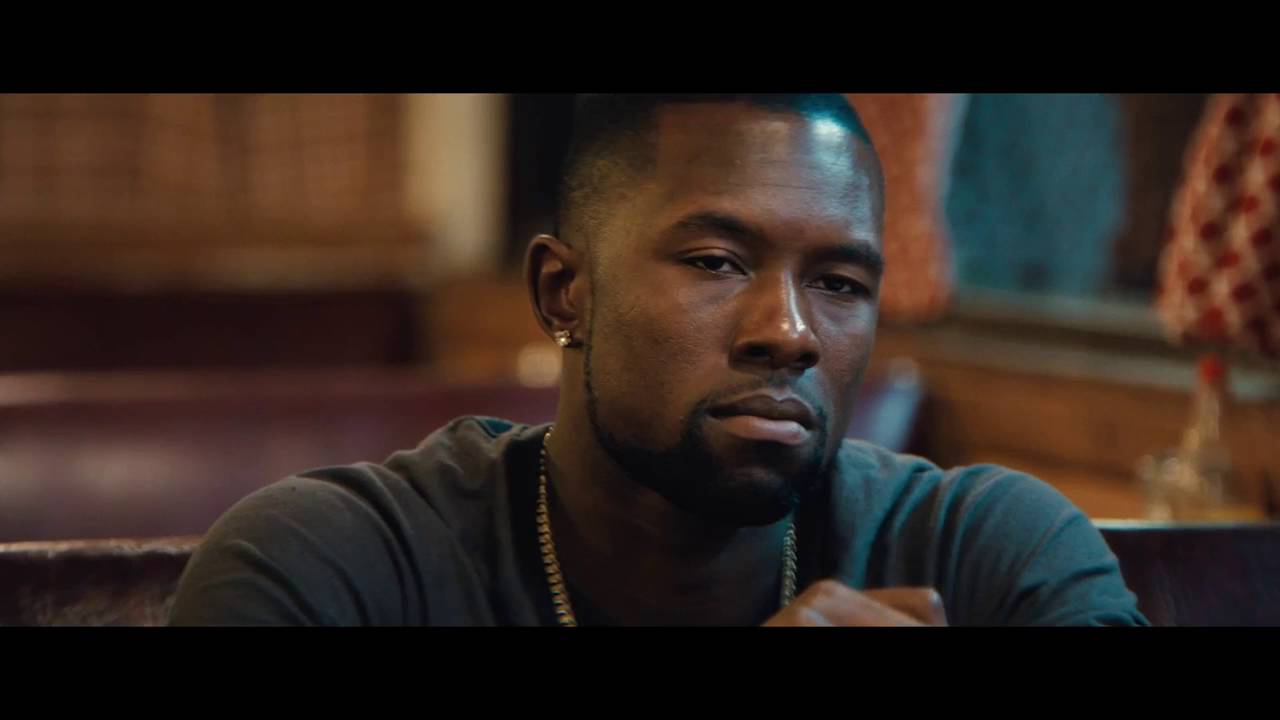
This is starting to seem like received wisdom, as Moonlight picks up awards and accolades. Good. Barry Jenkins’ film is a rebuke — the tenderest imaginable — to normative assumptions about who should be on screen, and why, and how those stories should unfold. But it is never didactic. Why would it be? Moonlight doesn’t have time to argue — it’s too busy immersing you in worlds and lives, framing bodies on lonely beaches, exploring halting desires in half-light, being honest and scared.

moonlight2

Roger Ebert famously called cinema “an empathy machine”. It almost ranks as an injustice that he’s not alive to appreciate this film. More than any others in recent memory, Moonlight is a film that stands before you and demands your engagement — here is a character, here is his life. He is Black, and gay. He is a bullied child, and a fierce adult longing for … something. Moonlight is attuned to the contradictions of modern existence and their uneasy (non)resolutions, never once shrinking from its story. Jenkins never blinks; the story never seeks a gimmick. This counts as narrative bravery in 2016.

The critical shorthand has seemed to settle on Moonlight as “the Black Boyhood.” This is lazy, and actually manages to obscure things more than it opens them up, conflating what’s special about both Boyhood and Moonlight. By telling the story of one individual — Little as a kid, Chiron as an adolescent, Black as an adult — Jenkins opens up an entire world of storytelling.

moonlight

Where Boyhood focused on the ebb and flow of individual sensory perception and the swirl of experience, Moonlight is a triptych, with clearly demarcated episodes. In this way, it has more in common with Kelly Reichardt’s Certain Women than Linklater’s generation-in-the-making opus — and as it happens, Reichardt’s film is the only other contender for the year’s best. Also, perhaps not coincidentally, both Reichardt and Jenkins pick things up at odd moments, drop them just when most films would start. One barely features a man; the other, to the surprise of some critics, features not a single white face.

Moonlight is based on  Tarell Alvin McCraney’s In Moonlight Black Boys Look Blue. The cinematic gesture of that title can’t go unnoticed. Cinematographer James Laxton takes it to heart. Swirling shots disorient; static ones are bathed in luminous grace. The terrifying youth, brutal adolescence, and worried adulthood of our protagonist merge under washed-out skies; love and connection tremble under threat, always just short of being stomped out by a frightened world.

There is no one in Moonlight who does not deserve a mention. Here’s a sincere and gratified salute to Mahershala Ali as our protagonist’s surrogate father, secularly baptizing his charge in the ocean and delivering the gut-punch line, “You could be gay, but don’t let anybody call you a faggot.” Here’s to Naomie Harris as the mom, trying and failing to do right. And here’s to each of the actors playing our hero — Alex Hibbert, Ashton Sanders, and Trevante Rhodes. There is not a false note to be found.

moonlight4

In the age of #OscarsSoWhite, it seems impossible that a film like Moonlight could feature prominently in the Academy Awards, no matter which prizes it picks up before then. And it still might not. But the very fact that a super queer film about negotiating the intricacies of Black masculinity is even in the conversation is starting to feel like a triumph. In 2016, that shouldn’t be true, but here we are.

In any case, make no mistake. Barry Jenkins, and his cast and collaborators, have created an earthquake of a film. Moonlight isn’t just the film of the year; it might be the film of the century to date. And, sitting in the audience watching its effortless moves, it’s remarkable how little the film seems to care.

It seems like it’s always existed, and had just been waiting for us to notice. That’s what makes it art.

December 7, 2016 0 comments
0 FacebookTwitterPinterestEmail
CommentaryFilm

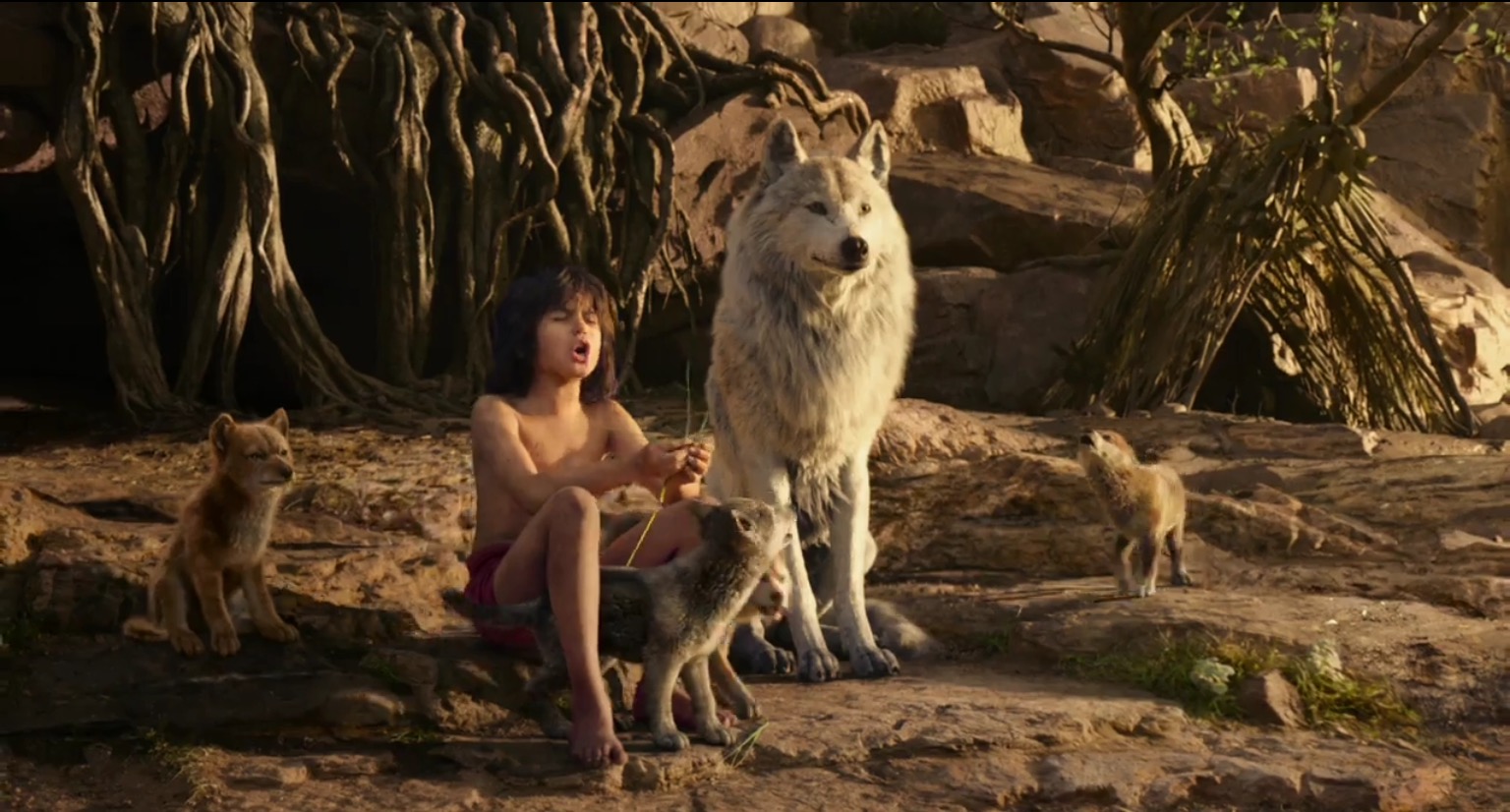
New on Netflix: The Jungle Book

by rick December 2, 2016
written by rick

The tradition of updating Rudyard Kipling’s classic The Jungle Book every 25 years or so continued in 2016, with Jon Favreau’s very beautiful, decidedly dark and tense take on the story, new to Netflix this week. Although Bill Murray gets some laughs as Baloo and belts out “Bare Necessities”, this Jungle Book mostly finds the young Mowgli in crouched peril or running for his life, which allows for lots of impressive set-pieces but also begs the question who this thing is supposed to be for. (The pitch: “Kids love it when the protagonist is constantly about to die! I think?”)

It’s gorgeous to look at anyway.

jungle-book2

The crux of Kipling’s story remains intact, though there are some pretty big deviations in the climax, and the laconic, goofin’-off-in-nature tone of the much-loved 1967 animated version is more or less jettisoned. In Favreau and screenwriter Justin Mark’s Jungle Book, we mostly watch Mowgli become an outcast, be perpetually set upon by a murderous tiger, almost get strangled by a terrifying talking snake, narrowly avoid a terrible fate at the hands of an orangutan, and perch precariously over a fiery hellscape. Things are tough for Mowgli.

jungle-book

None of which is to say The Jungle Book isn’t worth watching. The movements of the animals are astounding visually, with believably sinuous gestures and lifelike physiques. The nature backdrops are uniformly impressive and screensaver-worthy, and it’s certainly never boring.

The biggest hindrance to enjoying The Jungle Book is its lead (newcomer Neel Sethi), who simply cannot act at all, but this is more or less overcome by the visuals and atmosphere; the sound design, all chirping jungle birds and buzzing insects, is also worthy of note. And who doesn’t love the notion of hanging out as a member of a wolf pack, training in the trees and howling together?
jungle-book3

It’s unfortunate that all the villains happen to be endangered species, and that the only human in the film is most notable for killing everybody and then setting the world on fire, but it’s probably best not to read too deeply into the The Jungle Book‘s Foucault-like discourse on biopower. At its best, The Jungle Book is an impressively presented portrait of a kid who swings on vines, a bear who enjoys honey, and a scary tiger, and on those terms it succeeds.

Quick Links

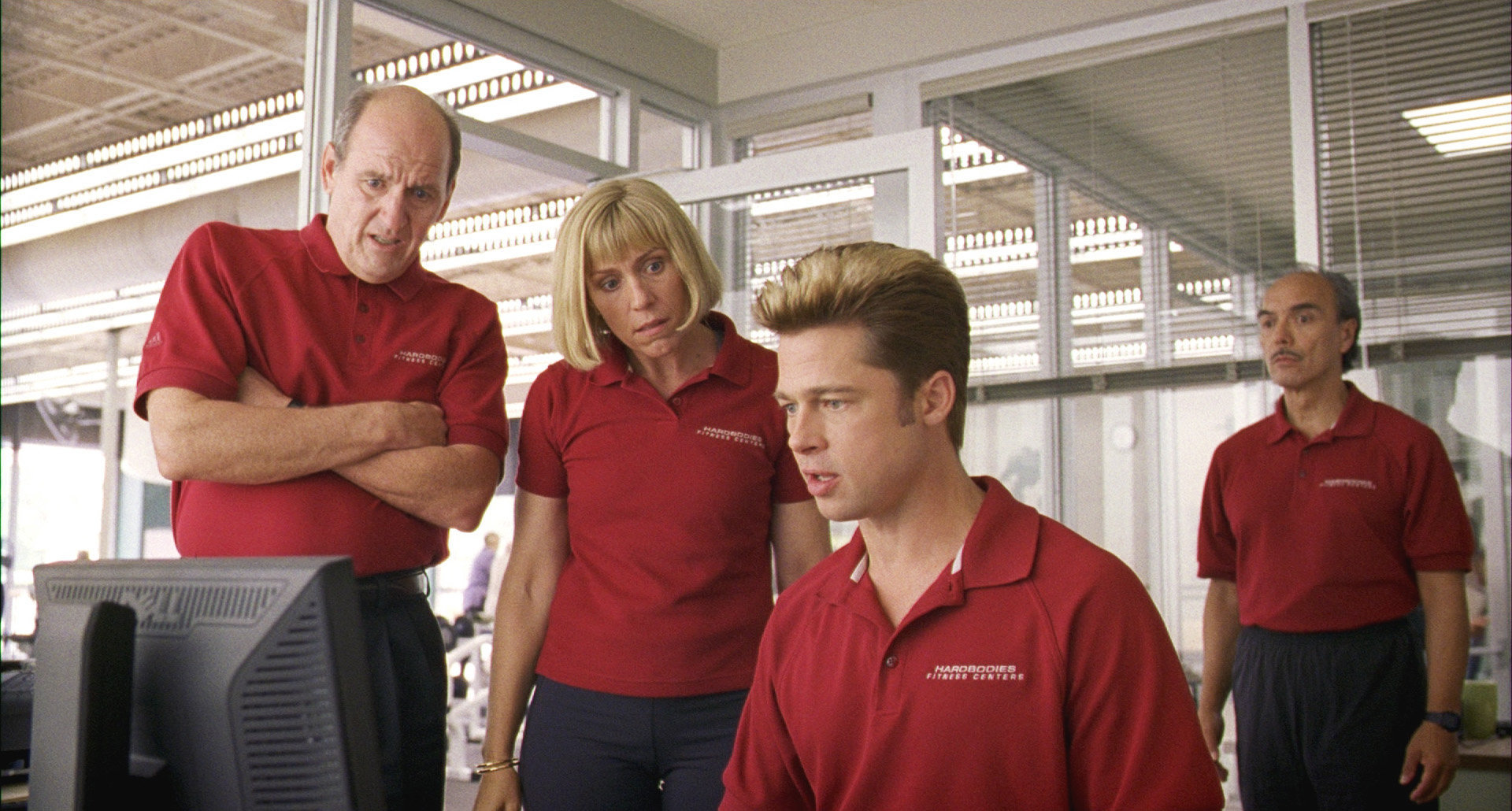
Burn After Reading

burn-after-reading

The Coens followed up their brilliant, Oscar-winning No Country For Old Men with this ramshackle farce and, true to form, it tackles many of the same themes from a different, more absurdist angle. Even if that approach gets made a bit explicit by the film’s end (“What did we learn, Palmer?”), it works hilariously for most of Burn After Reading, which also boasts another fine ensemble cast, Brad Pitt’s funniest, danciest performance, and some truly inspired work from Emmanuel Lubezski, who contrasts the low-stakes, workaday world of the Hardbodies gym with the international intrigue its moron employees think is afoot.

Charges of glibness and callousness toward their characters tend to haunt the Coen Brothers, and they’re not all unfounded. Burn After Reading definitely has something of a nasty edge. But as a depiction of absurd, comic meaninglessness, of the vast gulf between how we see ourselves and how we’re seen by others, it’s hard to beat.

Ravenous

ravenous

Antonia Bird‘s darkly comic cannibal tale (and future vegan horror entry) Ravenous offers a feast of character actors hamming it up, some hilarious gross-outs, and even some actual scares between the self-conscious jokes. Guy Pearce’s characteristic blankness works in the film’s favor, David Arquette’s late-19th c. stoner is basically the role he should play in every movie, and Deadwood‘s Jeffrey Jones adds the appropriate amount of naturalism to his haplessly conscripted, jovial flesh-eating apprentice. There’s plenty more to say about Ravenous — its central conceit, that men who consume flesh on the frontier receive superhuman strength but also become monsters in the process, is tailor-made for some philosophical musings — but the larger point is that it’s a fun, often silly movie about cannibalism. Which is more than enough to recommend it.

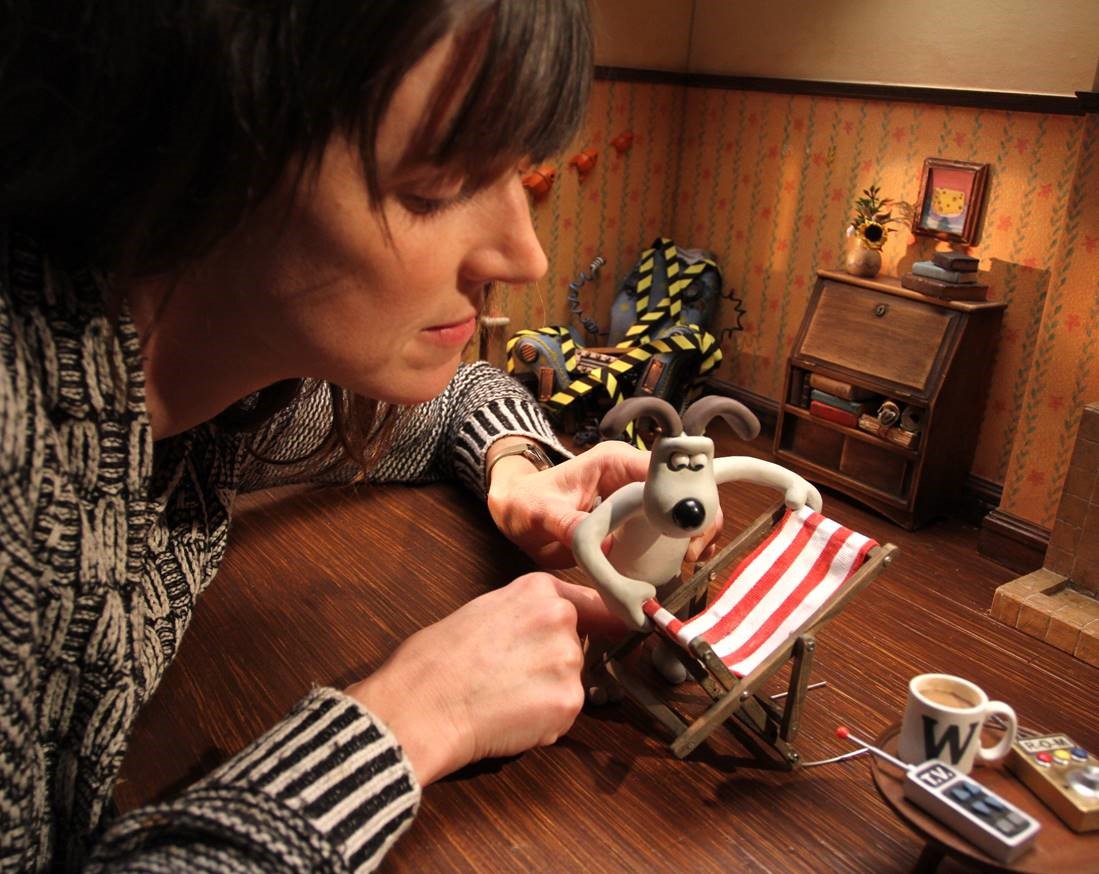
A Grand Night In: The Story of Aardman

aardman

A serviceably told, if rather slight and fawning, history of Aardman Animation, A Grand Night In is still a treat for any fans of the stop-motion masters. Not that fans need an excuse to hang out with Wallace and Gromit or Shaun the Sheep. The documentary traces the development and innovations of the Bristol-based shop, with founders Peter Lord and David Sproxton reflecting on their history with help from Brad Bird, Matt Groening, David Tennant, John Lasseter, Jeffrey Katzenberg, and others. The behind-the-scenes sequences are the most fascinating, clearly revealing the level of obsessive detail and dedication to tiny movements that go into producing their extraordinary work.

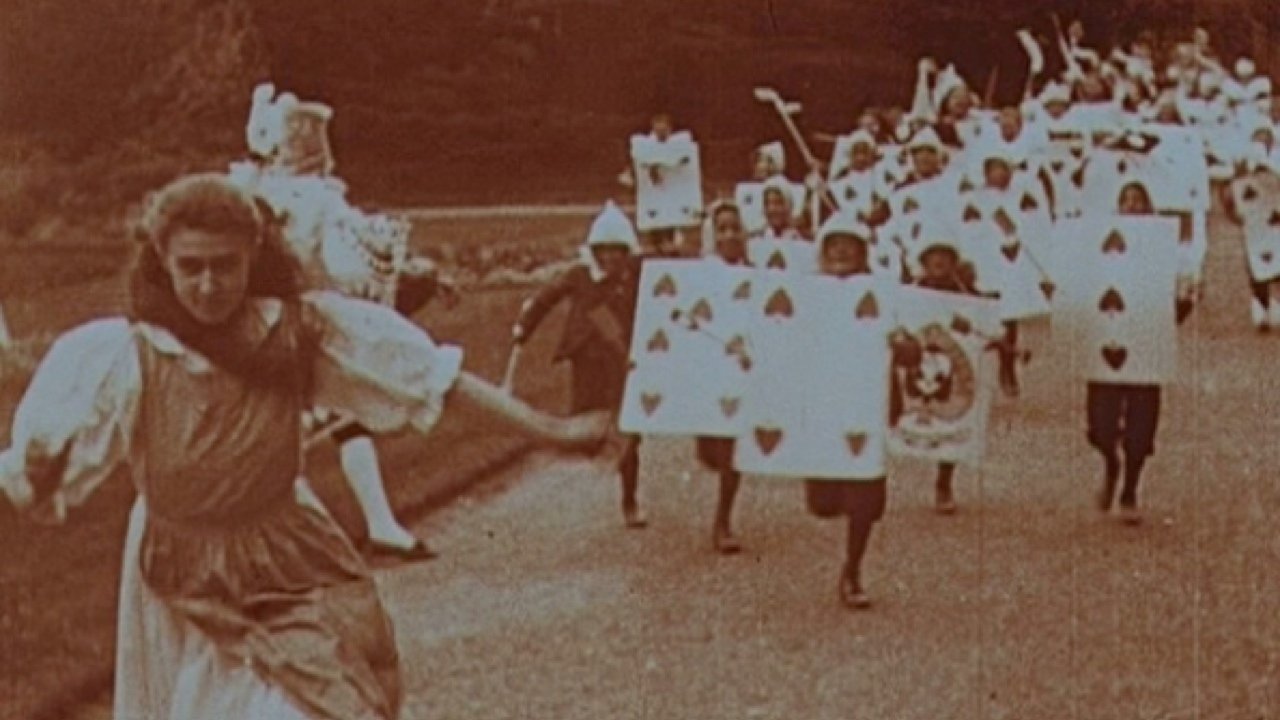
Alice In Wonderland (1908)

alice-in-wonderland

This is actually not on Netflix, though lucky for you, it’s embedded right below.

Newly restored by the BFI after 113 years, the first adaptation of Lewis Carroll’s story put to screen clocks in at less than 10 minutes (though 2 minutes remain missing from the original). It’s an incredible watch, though — the special effects put to use for the shrinking and growing Alice are especially delightful.

Karl Grovenor notes of the film:

The brainchild of Cecil M. Hepworth, who wrote, directed, produced, filmed and played the role of “The Frog” in the adaptation, Alice in Wonderland also stars early silent film actress May Clark in the titular role of Alice.


Both Hepworth and Clark are better remembered for, and would later be immortalised in, their work on the timeless classic Rescued by Rover. Often considered one of the most important productions in the history of cinema, and the turning point at which the general public’s perception of film shifted from “novelty to…art”, Rescued by Rover was the first film in history to feature paid actors, and is today considered the United Kingdom’s first major fiction film.

 It’s an exciting look into the past and a tribute to the ongoing efforts of film preservationists everywhere. Check it out below.

December 2, 2016 0 comments
0 FacebookTwitterPinterestEmail
CommentaryGreat Movie Project

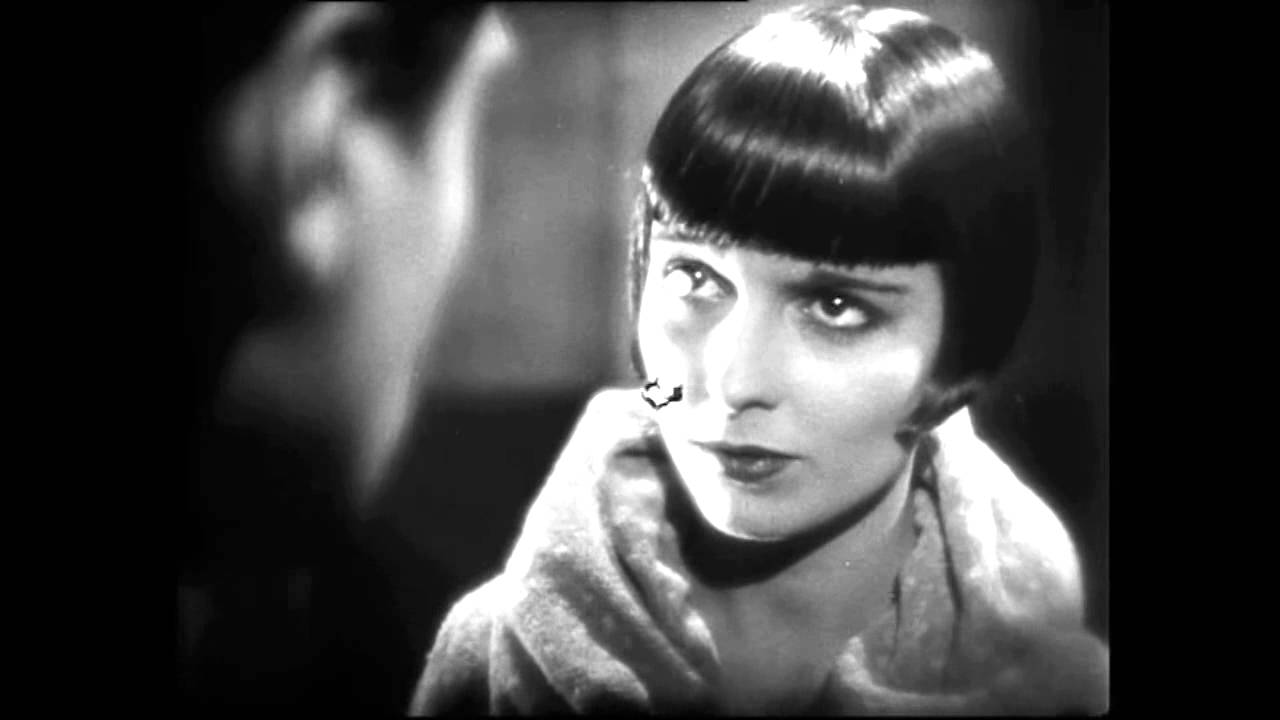
Lulu in Weimar: The Scandalous Innocence of Louise Brooks in Pandora’s Box

by rick November 30, 2016
written by rick

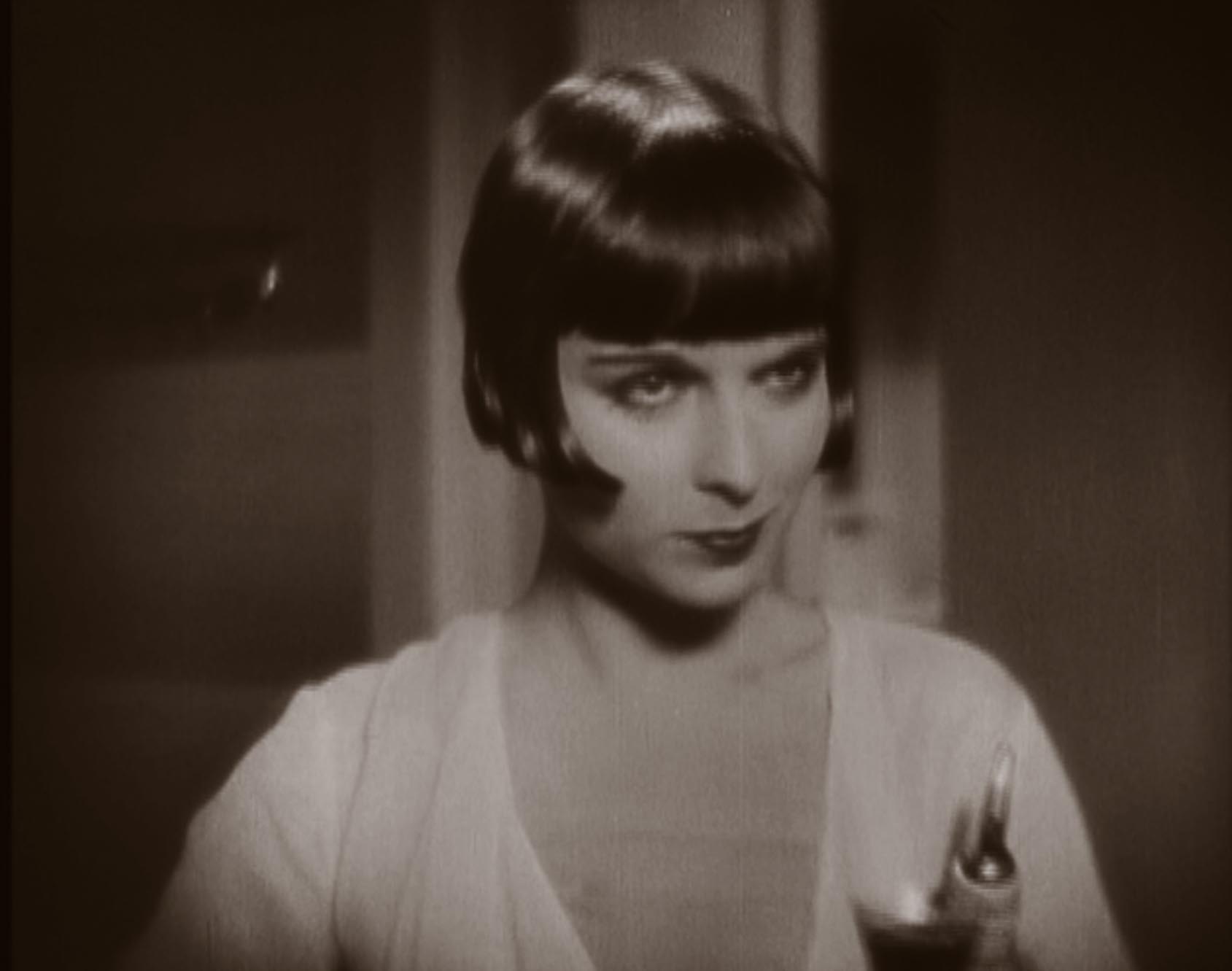
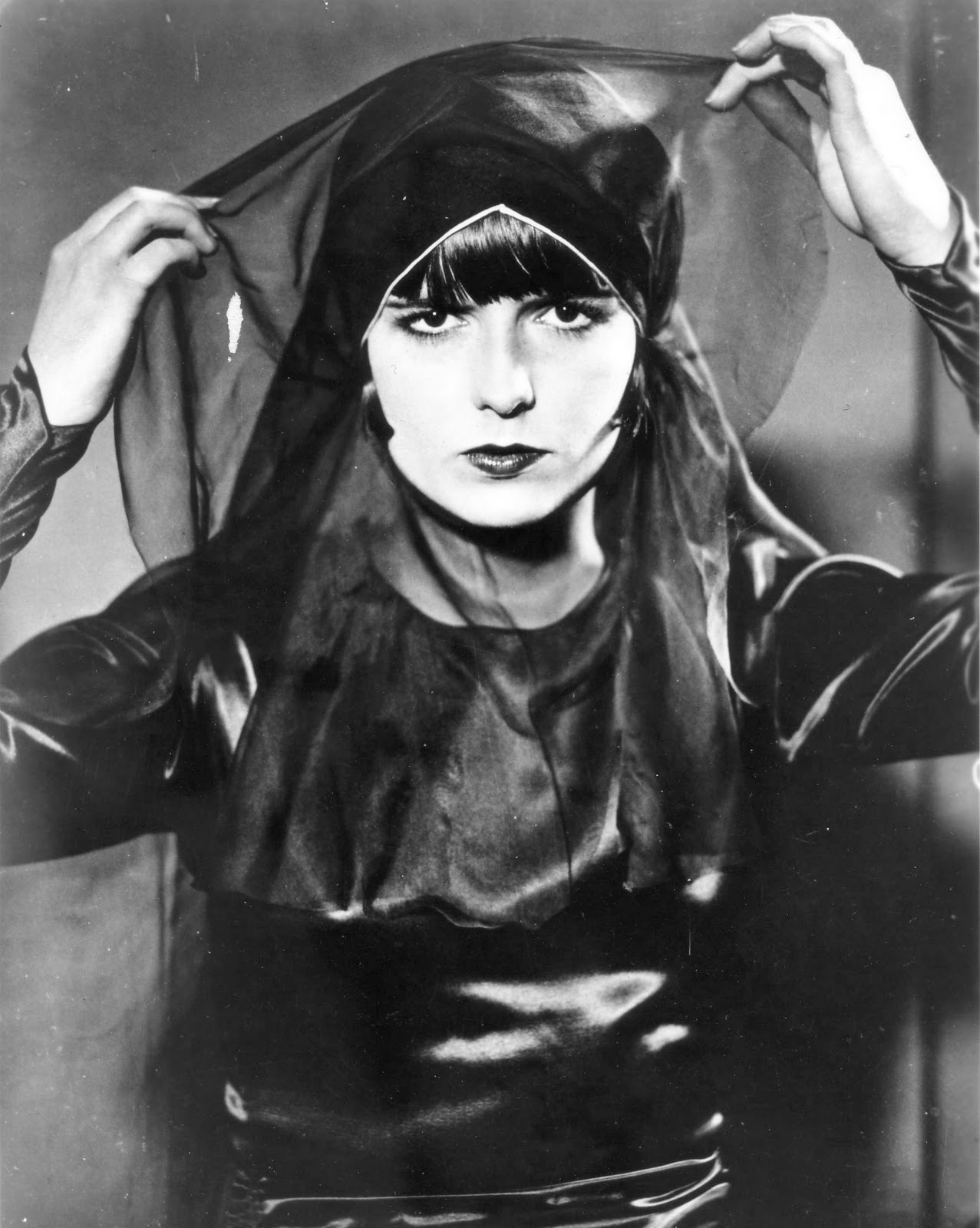
It is impossible to talk about G.W. Pabst’s 1929 masterpiece Pandora’s Box without talking about Louise Brooks. Brooks’ innocent, irrepressibly pansexual Lulu isn’t merely the heart of the film but the film itself. The story itself dates back much further, and Pabst is one of the great Weimar directors, but Brooks’ image — both the public’s perception of her at the time and the literal image of her face — animates everything about it, then and since.

This is no ordinary association between star and role. The Louise Brooks Society (“the leading source for all things Lulu”) titles its almost obsessively detailed web archive “Pandora’s Box”. J. Hoberman notes, “[S]eldom has an actress been more closely identified with a particular part, and even less often has a single role been used to reflect on a performer’s life, not least by the performer herself.”

pandoras-box5

After an early career in the Follies, Brooks amassed 24 acting credits to her name — from collaborations with her friend W.C. Fields through Howard Hawks’ A Girl In Every Port and the Pabst films, before being summarily run out of the film business on a rail — but she will forever be remembered as Lulu. (Even to herself, apparently, famously titling her notorious memoirs Lulu In Hollywood).

Taken on its on terms, Pandora’s Box is something of a bloated affair, combining Pabst’s naturalism with a convoluted melodrama about sex, scandal, and the dangerous force of female desire. Based on playwright Frank Wedekind’s story cycle, it can be read as an attack on bourgeois repression, but by the time Lulu is on a steamship, waiting patiently for her lover to cheat at cards to pay off a blackmailer who wants to sell her to an Egyptian brothel, it’s hard not to feel that the film could’ve used a bit of paring down. Wedekind’s meandering tale was beloved at the time by German audiences — members of which reacted hostilely to casting the mostly unknown American ingenue in the first place — and there’s a distinct sense that Pabst and scenarist Ladislaus Vajda didn’t dare leave any plot points out.

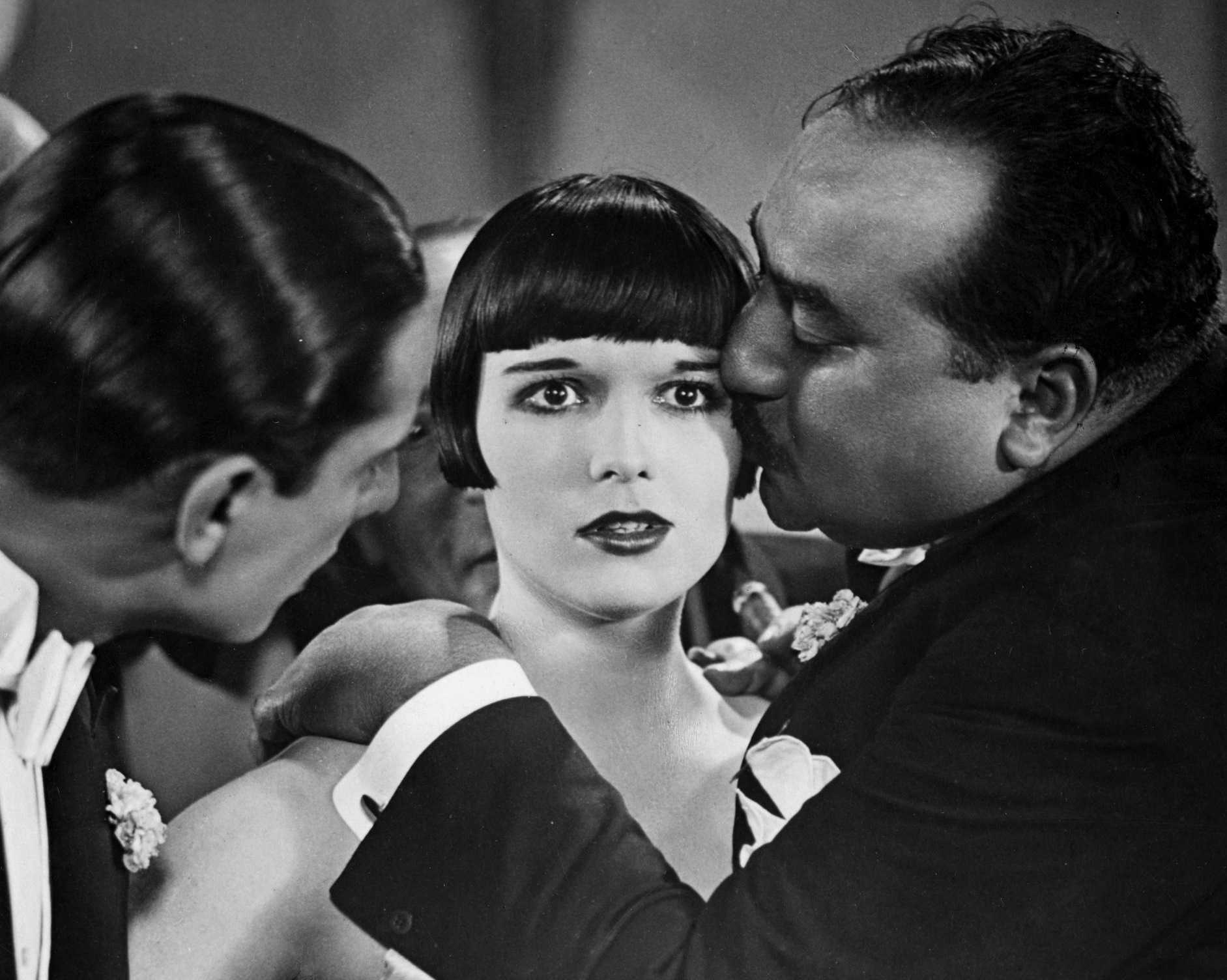
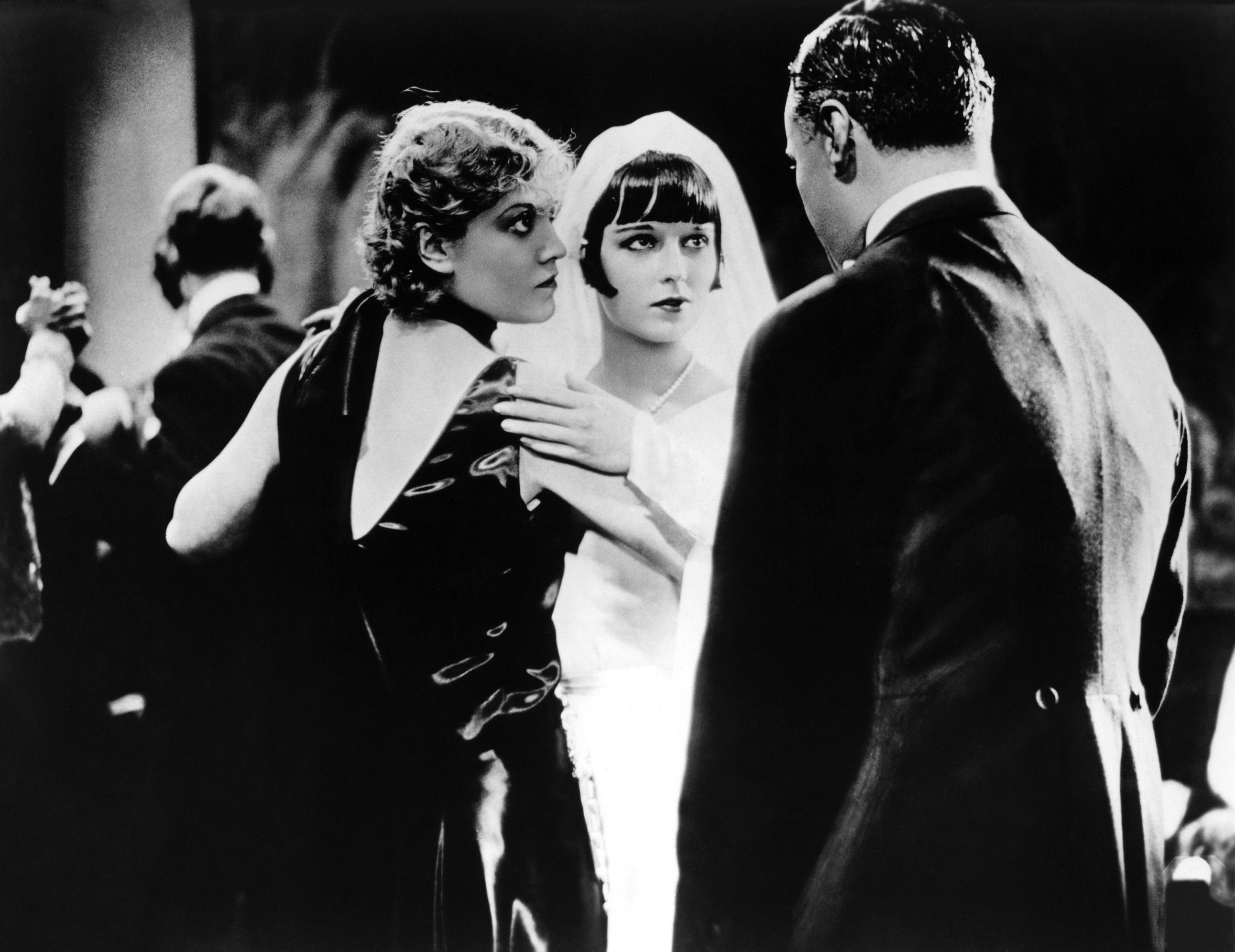
Still, Pandora’s Box is entirely engaging for most of its running time. Brooks’ Lulu is a dancer and mistress to a bourgeois newspaper publisher, who finds himself compelled to marry her after they’re discovered making out backstage at her performance. His son is in love with her, too, though — as are, it seems, Countess Anna Geschwitz (perhaps the first overtly lesbian roles in film) and even the creepy old drunk Schigolch, her “first patron” and implicitly her pimp. Basically, everyone is in love with Lulu.

pandoras-box2

A shocking scene finds her new husband demanding Lulu shoot herself for her transgressions; he winds up dead instead, and Lulu tried for his murder. Thus begins the second part of Pandora’s Box, filled with intrigue and the looming threat of the Egyptian brothel.

With all due respect to Wedekind, Pabst, and fans of the original stories, none of this much matters. Pandora’s Box is as enraptured with Brooks as its characters, placing her in luminous close-up and sexy mid-shot. Pabst misses no opportunity to emphasize her severe, iconic bob and low-cut dresses, and definitely puts her background as a dancer to pointed use. Pandora’s Box asks Brooks to portray an effortlessly entrancing naïf, a personification of guileless desire. She’s more than up to the task. (It’s instructive to think how disastrous it would’ve been had Pabst regular Marlene Dietrich been cast, as originally planned; this Lulu is world’s apart from the sort of smoky sensuality and knowing manipulation synonymous with Dietrich.)

pandoras-box4

That innocence and almost instinctive sexuality struck many fans and critics at the time as a failure on Brooks’ part to understand the role — or perhaps, simply a lack of talent. Variety wrote, “Louise Brooks, especially imported for the role, did not pan out, due to no fault of hers. She is quite unsuited to the vamp type, which was called for by the play from which the picture was made.” Another called her “an inanimate dummy.” Siegfield Krakauer, later famous for authoring From Caligari To Hitler, thought she wasn’t “enough of a whore.” (All quotes from The Louise Brooks Society.)

Later viewers would beg to differ, recognizing Pandora’s Box as her defining role and arguably Pabst’s greatest film. In 1953, no less an esteemed cinephile than Henri Langlois would declare: “There is no Garbo, there is no Dietrich, there is only Louise Brooks!” (As Ebert wryly notes, “Brooks must have smiled to hear her name linked with two of her reputed lovers.”)

The year prior to the release of Pandora’s Box, Brooks was starring opposite Richard Arlen and Wallace Beery in Beggars of Life, an excellent Hollywood film that nonetheless felt compelled to explicitly cloak her femininity, sending her out to ride the rails dressed as a boy to protect her from sexual violence. In Weimar Germany, amid the Red Light Districts and after-hours clubs she loved so much that Pabst forbid her from leaving the hotel lest the gossip columns pick up on it, Brooks exuded an entirely different kind of sensibility on screen.

pandoras-box

On both sides of the Atlantic, Brooks burned bridges like a hobby, quitting Paramount over a salary dispute, unapologetically carousing and taking lovers (like Charlie Chaplin), generally embodying the exact kind of dangerously carefree love of life that we celebrate in male stars of screen and stage. As punishment, she would be cast out, blacklisted, and forgotten for half a century. The inevitable rediscovery of Pandora’s Box, by Langlois and others, cemented her legacy, though, and stands as testament to a singularly unique figure in the history of cinema.

The patriarchal scolds and hypocrites of the industry might’ve killed her career, but they also ensured Louise Brooks an almost unparalleled cult following that she more than earned, simply by being herself.

Favorite Ebert quote:

This synopsis could apply equally to a great or a laughable film. Brooks makes it a great one. She seems to stand outside “Pandora’s Box.” She looks modern: She doesn’t have the dated makeup of many silent stars, but could be a Demi Mooreor Winona Ryder, electronically inserted into old scenes by computer. As she careens from one man to another, the only constant factor is her will: She wants to party, she wants to make love, she wants to drink, she wants to tell men what she wants, and she wants to get it. There is no other motive than her desire: Not money, not sex, just selfishness. It could get ugly, but she makes it look like fun. You can’t get something for nothing, but if you can put off paying the bill long enough, it may begin to feel like you can.


November 30, 2016 0 comments
0 FacebookTwitterPinterestEmail
FilmInterview

Bridging The Abyss: An Interview With The Directors of Notes On Blindness

by rick November 28, 2016
written by rick

Peter Middleton and James Spinney began with a relatively modest, if challenging, objective: to render cinematic the blind experience of snowfall. Years later, the result is their remarkable film Notes on Blindness, which premiered at Sundance and screened at festivals across the country (including SFIFF, where I was fortunate enough to catch it), picking up awards and accolades along the way. It now opens in locations across the U.S.

In its aesthetic, innovations, and ambition, Notes on Blindness is something much more profound and far-reaching than that original logline might imply. Told through the overlaid audio diary of the partially-sighted and eventually blind theologian John Hull, Notes on Blindness recreates the scenarios described, deploying accomplished lip-syncing actors and a wealth of expressionism. The film presents a “cinema of blindness”; it deconstructs notions of seeing, so key to the very idea of film, while skillfully posing questions about how we encounter and represent our worlds.

At the same time, Notes on Blindness is the deeply personal tale of one articulate man’s journey — not from light to darkness, but from one mode of being to another, with all the pain and grace that entails. And like all stories of discovery and rebirth, it is, at its heart, also a love story.

Middleton and Spinney took some time out from a busy schedule to discuss the development of Notes on Blindness, the challenges (some self-imposed) they faced doing justice to Hull’s insights and legacy, and the exciting ongoing efforts to promote inclusivity in the cinema for blind and partially-sighted audiences.

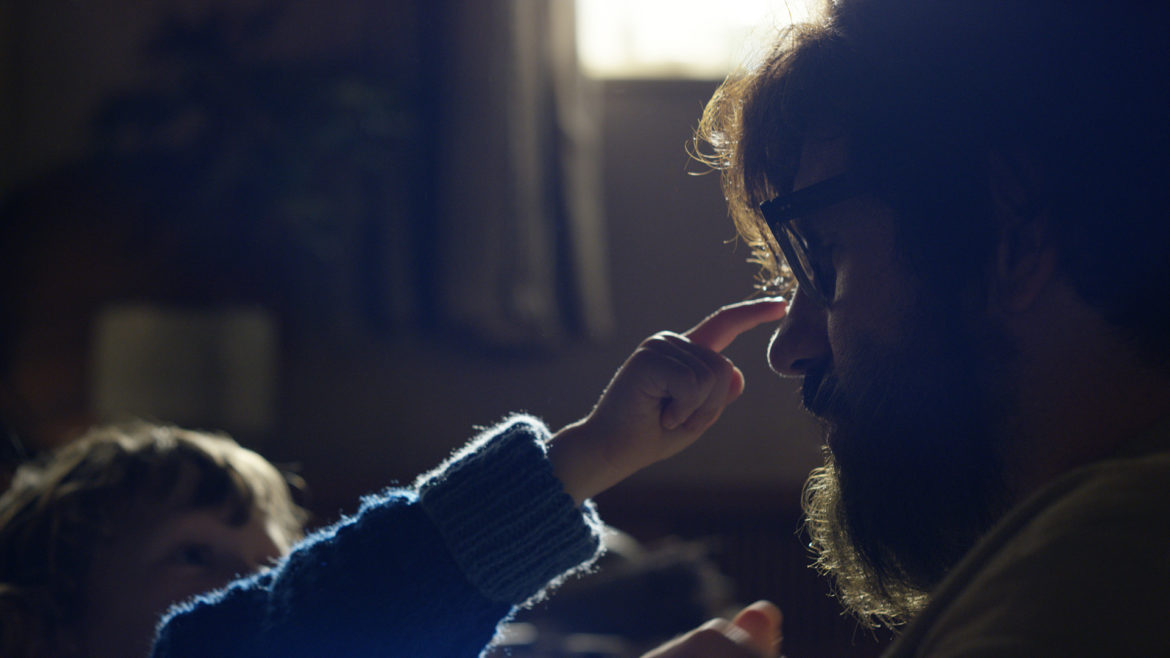
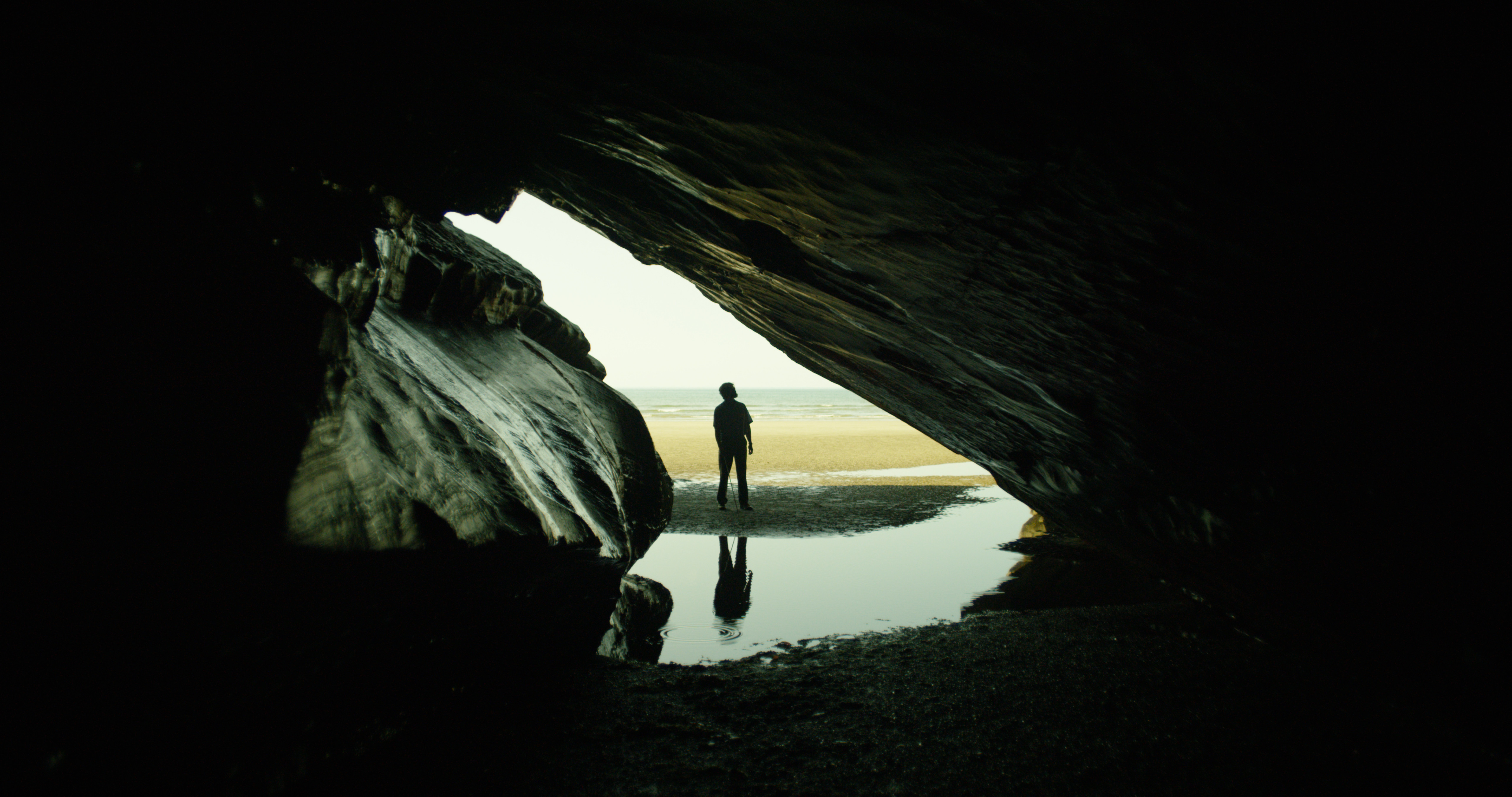
Notes on Blindness cave

Rick Kelley: In a New York Times piece, you note that you met John and Marilyn while filming a short doc on the blind experience of snowfall, implying the issues Notes on Blindness explores have captivated you for some time. What was your entry point into all of this?

Pete Middleton and James Spinney: That’s right. Around six years ago now, we began reading first-person accounts of blindness to inform a short film about experiences of snowfall. And we came across John’s book – Touching The Rock: An Experience of Blindness. The book contains a chapter concerning snow, in which John describes how snow blurs the contours by which you might navigate with your cane, as well as dampening the acoustics of environments. For this reason, snow is sometimes called ‘the blind man’s fog’.

After collaborating with John on this project, we asked him about the audio recordings upon which his book was based. John had recorded an audio diary in the early 1980s, a three year project, documenting experiences of sight loss. He was generous enough to share these recordings with us – a dusty box of C-90 cassettes containing sixteen hours of audio recordings. These tapes became the starting point for Notes on Blindness.

RK: And the feature emerged from a series of shorter pieces?

PM and JS: Absolutely. Listening to John’s audio diaries for the first time, we knew that such a profound journey, from grief and loss to rebirth and renewal, demanded a long-form treatment. But it presented huge challenges in terms of structure and style, which were both exciting and daunting. It was also a difficult project to pitch. So we began making a series of short films, partly as a way of experimenting with the material, partly as an attempt to give a sense of what the feature might become. We were confident that anyone who heard John’s diaries would get a sense of the power of his account – and the depth and poetry of his enquiry.

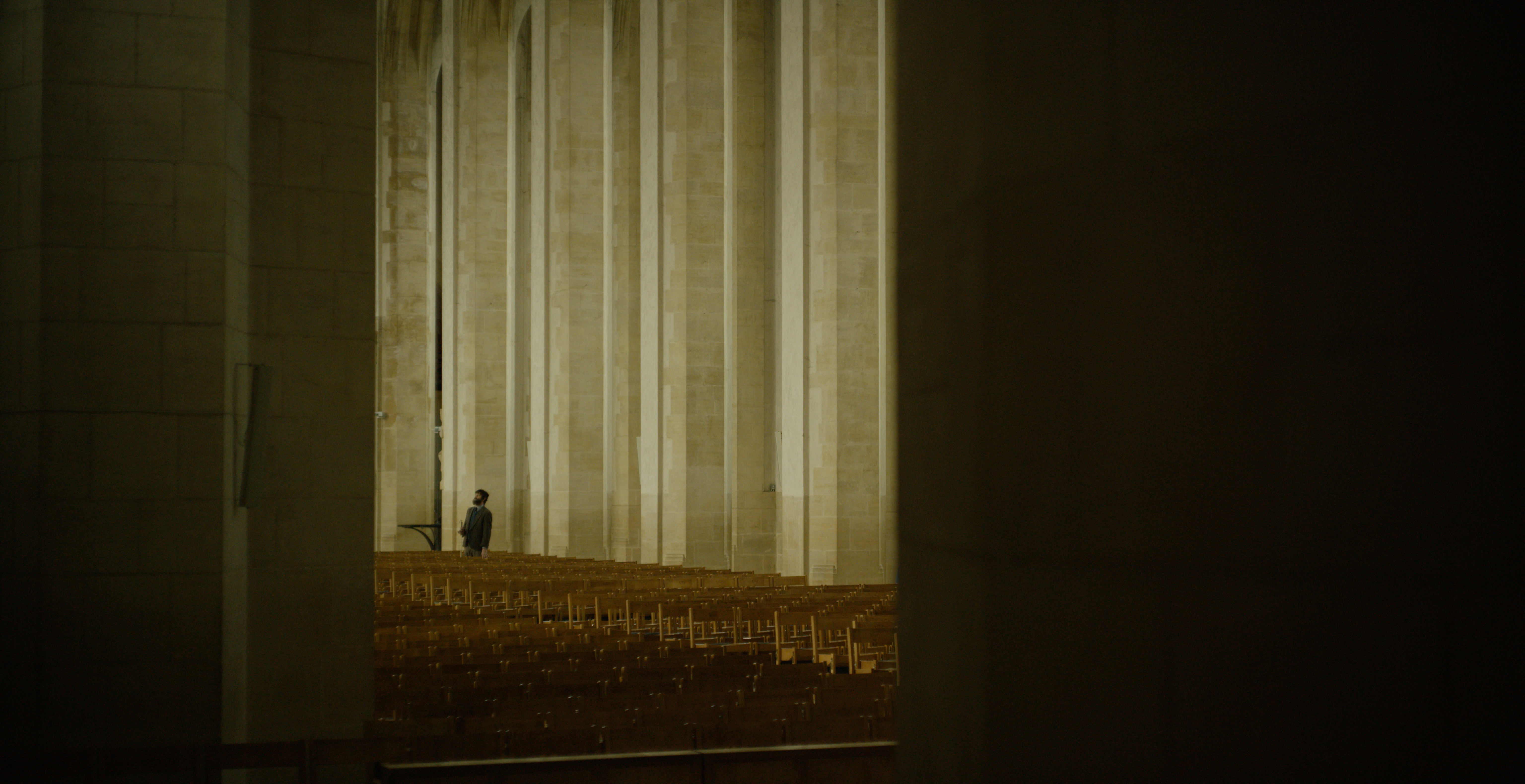
Notes on Blindness church

RK: Notes on Blindness relies on that pre-recorded audio and also lip-syncing from the actors, a technique shared with Clio Barnard’s film The Arbor, about Andrea Dunbar. I thought it works tremendously well in your film, and adds a kind of haunting quality to the aesthetic, but also imagine it must’ve required extensive preparation. How did you settle on this technique, and how did the cast and crew respond to its demands?

PM and JS: Well, from the beginning it was clear that John’s original audio recordings had to be front and centre – that the film had to be told in John’s own words. But the account is a very internal journey, exploring his dreams, his fading visual memories, his imaginative world, as well as new sensory awakenings.

Of course, these are difficult areas to access through a conventional documentary approach, especially when the diaries were kept thirty years ago. So we began thinking about creative ways to follow John on this very internal journey, whilst preserving the authenticity of the voices.

The Arbor was an important reference in developing this approach, which led to an approach in which actors Dan Skinner and Simone Kirby play John and Marilyn on-screen, lip-syncing to the original recordings. And the soundtrack is built not only from John’s diaries and the interviews we did with them, but also tens of hours of home audio recordings, which captured Christmases, birthdays, bedtime stories, which contain the voices of the entire family.

Dan and Simone spent the weeks running up to the shoot familiarising themselves with the audio, working with mp3s of each line of dialogue. Each line was preceded by a series of beeps to help cue them in. Working like this meant that we didn’t record any sound on set; instead we had someone who triggered the audio clips, responding to Dan and Simone’s performance. And at times we had to recut dialogues on set if the rhythms felt wrong and there was need for additional pauses.

Funnily enough, after a couple of weeks it became strangely normalised. I suppose there are plenty of processes in filmmaking that are equally bizarre. Ultimately, we were amazed, from the first audition to the final day of shooting, at Dan and Simone’s ability to naturalise such a precise technique, and to subsume it into a much greater and more subtle performance.

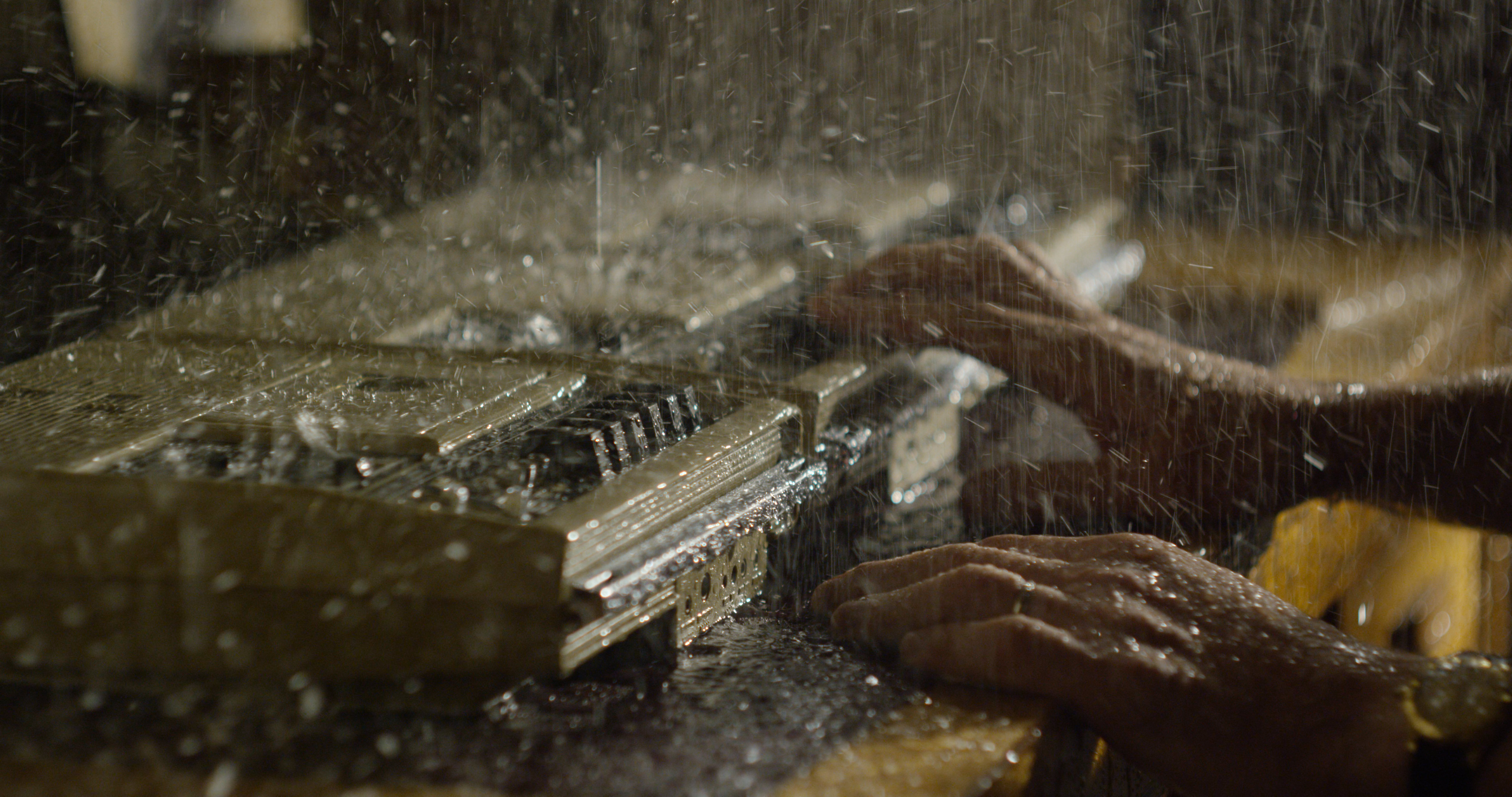
Notes On Blindness tape recorder

RK: I hadn’t initially appreciated that Joakim Sundström, who also worked on the very excellent Berberian Sound Studio, was the supervising sound editor on the Notes on Blindness. Given the centrality of sound design here, can you talk a bit about the process and about that collaboration? Did you have a very strong sense going into the project of how this should function, or did things develop as you went along?

PM and JS: We worked with Joakim on the short film in 2013, so we’d been talking about the project for a number of years. During that time we were sending audio edits for the feature back and forth, culminating in a 90-minute sound cut which would provide the structure for filming of the visuals. Many scenes were constructed with sound as the starting point.

We spent a lot of time in early discussions with Joakim talking about how to embed the documentary audio. The original tapes are pretty raw, so our re-recording mixer Per Boström spent a great deal of time de-noising the diary recordings to make them easier to understand, whilst at the same time trying to preserve the distinctively analogue quality of the tapes. Wherever possible we layered in material from John’s archive in more subliminal ways, such as the baptism scene early in the film, or the voices of the students in the scenes of John at work in the University of Birmingham, which are all from his tapes.

Aside from these recordings, all of the sound was built in post production, so Joakim and his team embedded John’s original recordings within textured sound environments, emulating the necessary ambience and presence of the locations into which they had been re-staged. Much of the textural detail is constructed from foley work, recorded to match the movements of the actors, who in turn had matched their movement to the documentary audio. It was an experimental process. Though we felt confident in the approach, there were no guarantees that it was going to come off!

RK: It does! I’m interested in this whole notion of a cinema of blindness. There’s a lovely quote in your piece: “One of the great tensions of the work is that it is constantly working at the limits of expression, straining language dominated by visual referents and imagery. Yet it is at these moments that the account is at its most poetic.” Could you elaborate on this a bit? And how does it relate to Hull’s sense that “blindness is the easiest disability to simulate by closing your eyes but it’s the hardest to empathize with. Behind those closed eyelids you have a sighted person’s brain”?

PM and JS: Yes, those two ideas feel very closely related. John said that for several years he didn’t feel he was a blind person, he was a sighted person who couldn’t see. In other words, his mind expected and longed to see, he felt an absence of vision. But as the diary develops, John begins to register a change. Partly through a conscious attempt to no longer live in ‘the nostalgia of the visual world’, partly through an unconscious neurological rewiring, he says that increasingly ‘the things which once one took for granted, then mourned the loss of, then tried so desperately to compensate for, in the end cease to matter. One begins to live by other interests, other values, one begins to take up residence in another world’. At this point John felt that he was no longer a sighted person who could not see: he had become blind.

John and Marilyn talk very movingly in the film about the concept of ‘different worlds of experience’, and their struggle not to lose one another on either sides of this divide. And part of John’s diary project is an attempt to reconcile these different worlds, to find a bridge through communication. In some ways, our everyday language assumes common experience. And in John’s writing he powerfully finds a way to deconstruct both the sighted experience he is leaving behind and the blind identity he comes to discover, analysing how the senses play into our sense of identity, our relationships, in such a way that recognises and values what is individual to how we each perceive the world, but always as an attempt to, in his words ‘bridge the abyss’ that separates different worlds of experience’ and find ‘a common humanity’.

Notes on Blindness christmas

RK: You’ve spoken about specific, self-imposed restrictions you deployed – for instance, making faces elusive in the frame, shooting on longer lenses, avoiding wide establishing shots, refusing to shoot the reverse of supporting characters in Notes on Blindness. To me, this almost brings to mind Lars von Trier’s The Five Obstructions (on which Joakim Sundström worked too, as it turns out). What were the motivations and advantages of such an approach? What were the difficulties?

PM and JS: Certain shooting conventions felt instinctively wrong when thinking about how to approach this material in a way that was empathetic to the subjectivity of John’s account. It felt wrong to shoot clean establishing wide shots when John talks about the initial shrinking of his perceptual environment. It felt wrong for the audience to clearly see the faces of John’s children when his narration describes his distress at losing precious memories of their faces.

This is something we developed with our cinematographer Gerry Floyd whilst working on the short film and in development of the feature, so from the start of the shoot we were always thinking within this mindset. As is often the case with restrictions, the limitations came to be creatively freeing: the visual style of the film is largely a response to them.

RK: Notes on Blindness has a VR companion piece, which has been exhibited at Sundance and Tribeca, will soon be more widely available, which seems tremendously exciting. How does it tie in to the film itself?

PM and JS: Yes indeed, the virtual reality experience is now available for free on the Oculus store, iTunes and Google Play. Like the film, the VR is also narrated by John, from material edited from his audio diaries, but it’s an animated 360 experience led by binaural sound.

And sound was very much the starting point: exploring the development of John’s awakening perception of ‘acoustic space’ – how multi-layered patterns of sound bring depth, detail and contour to an environment. Though there are two chapters that bridge both the feature and the VR, they’re very different experiences. So we’re excited about how they speak to each other, and how they can provide different entry points to John’s account of blindness.

RK: There are also plans for different types of exhibition formats that will emphasize accessibility for blind and partially sighted audiences. This sounds pretty unlike anything else I know about going on right now.

PM and JS: Well, cinema can often be quite an unrewarding experience for blind and partially sighted audiences. Often the process of making films accessible is an afterthought in the creative process – and undervalued by distributors and exhibitors. We’ve been working closely with the UK’s leading blindness charity, the RNIB, to make Notes on Blindness part of a conversation about how film is experienced by blind and partially sighted audience.

The result is that audiences can choose from four soundtrack options. As well as the standard version of the film’s soundtrack, you can choose an audio description track by Louise Fryer, a leading audio-describer, or by the actor Stephen Mangan. The two versions are very different in their tone and dramatic character.

We’ve also worked on an ‘enhanced soundtrack’, which works as an audio piece. Instead of relying on the voice of an external narrator, we’ve edited in about five more minutes of narration from John and Marilyn, as well as additional sound design and music cues so that it works entirely without picture. This version has been mixed in Dolby 5.1 so it can be a cinematic experience. In the UK release we’ve been working with our distributor Curzon Artificial Eye to put on screenings of the audio-described and enhanced soundtrack versions.

All three versions are also available via an app called ‘MovieReading’, which means they can be accessed even at cinemas that don’t have AD headsets, as well as at home. And the different versions of the soundtrack are also available on the DVD and via on-demand services. It’s been a fascinating process, and we hope one that other filmmakers and distributors can build upon in thinking about how cinema can be made more inclusive.

Notes on Blindness Australia

RK: Over the course of your work, from the earlier pieces through Notes on Blindness, you came to know John Hull quite well. In closing, I’d like to ask what you personally came to value most about your interactions, and also what you think he’d want emphasized, if anything, as his legacy?

PM and JS: One thing that we’re conscious the feature film doesn’t quite capture is John’s tremendous sense of humour. Which was one of the motivations for producing a companion piece called RADIO H, a ten-minute short film narrated by John’s eldest daughter Imogen, featuring the recordings that she and John kept together in her youth. This captures something more of John’s warmth, his irreverence, as well as his political activism.

In terms of what John might have wanted to emphasise in with regard to the film, a few years ago we asked him to go back to certain passages from his audio diaries and respond to them now. And in particular, the diary entry from 1983, where he confronted the loss of precious visual memories of Marilyn and his children.

He concluded that, on the other side of a complex process of mourning, of trying desperately to compensate for the loss of these things, in the end they cease to matter. Because ‘being human is not seeing’, he said, ‘it’s loving’.

November 28, 2016 0 comments
0 FacebookTwitterPinterestEmail
Newer Posts
Older Posts

About

About

Towards a provisional theory of the cinema, or, failing that, just some shit about movies

Authors
Rick Kelley
Lark Lundberg

Keep in touch

Facebook Twitter

Categories

  • Conversation
  • Film
  • Film By Film
  • Great Movie Project
  • Great Movies: The Counter Programming
  • Guest
  • News
  • Other
    • Commentary
    • Film
    • Interview
    • Reviews
    • Song for a Sunday
  • Streaming Selections
  • TV
  • Uncategorized
  • Vegan Horror

Archives

  • April 2019
  • March 2019
  • January 2019
  • December 2018
  • November 2018
  • October 2018
  • September 2018
  • August 2018
  • July 2018
  • June 2018
  • May 2018
  • April 2018
  • March 2018
  • February 2018
  • January 2018
  • December 2017
  • November 2017
  • October 2017
  • September 2017
  • August 2017
  • July 2017
  • June 2017
  • May 2017
  • April 2017
  • March 2017
  • February 2017
  • January 2017
  • December 2016
  • November 2016
  • October 2016
  • September 2016
  • August 2016
  • July 2016
  • June 2016
  • May 2016
  • April 2016
  • March 2016
  • February 2016
  • January 2016
  • December 2015
  • October 2015
  • September 2015
  • August 2015
  • July 2015
  • June 2015
  • May 2015
  • April 2015
  • March 2015
  • February 2015
  • January 2015
  • December 2014
  • November 2014
  • October 2014
  • August 2009
  • September 2008

Recent Posts

  • China Girls, Death Proof, and the Hidden Face
  • Old News: Old Noise Edition
  • Old News: April 1, 2019
  • Nicolas Winding Refn, Marginalia, and the Deaths of Cinema
  • And now, let us praise Kanopy

Recent Comments

  • Franklin Kat on Michael Shannon shines again in Frank & Lola
  • Sean Tempesta on Cinema and dream-logic in Meshes of the Afternoon
  • ludditerobot on The Left-Wing Slapstick and Iconic Songs of 1937’s Street Angel
  • Franklin Kat on The Left-Wing Slapstick and Iconic Songs of 1937’s Street Angel
  • Arijit Mukherjee on Great Movies Project: The Counter-Programming
  • Facebook
  • Twitter

@2021 - All Right Reserved. Designed and Developed by PenciDesign


Back To Top
Luddite Robot
  • Reviews
  • Commentary
  • Great Movie Project
    • Great Movie Project
      Bride of Frankenstein is a movie for and…

      January 25, 2018

      Great Movie Project
      The Enduring Appeal of Nick and Nora in…

      November 29, 2017

      Great Movie Project
      The Ahistorical Fever Dream of The Scarlet Empress

      August 2, 2017

      Great Movie Project
      Dreams, Mundanity, and the Anarchist Yearnings of L’Atalante

      July 12, 2017

      Great Movie Project
      Duck Soup Is And Will Always Be A…

      April 19, 2017

  • Counter Programming
    • Great Movies: The Counter Programming
      Walking and Talking in the Shadow of Kanchenjungha

      March 7, 2018

      Great Movies: The Counter Programming
      A Brief Encounter in My Mother and Her…

      February 9, 2018

      Great Movies: The Counter Programming
      Horror’s Refusal in Farrokhzad’s The House Is Black

      October 13, 2017

      Great Movies: The Counter Programming
      The rage and beauty of The Cloud-Capped Star

      October 3, 2017

      Great Movies: The Counter Programming
      The daylight noir and social issue empathy of…

      June 22, 2017

  • Vegan Horror
    • Vegan Horror
      Julia Ducournau doesn’t think her film Raw is…

      June 7, 2017

      Vegan Horror
      Licking our wounds: The vampiric masculinity of Ravenous

      December 13, 2016

      Vegan Horror
      Eggertsson and animals: An approach to horror cinema

      September 15, 2016

      Vegan Horror
      “It’s Not My Nature” – Vegetarianism, Body Horror,…

      August 30, 2016

      Vegan Horror
      Bodies and Carcasses in Predator 2

      August 23, 2016

  • Interview
    • Interview
      Jasmine Leyva’s doc The Invisible Vegan aims to…

      May 3, 2017

      Interview
      Bridging The Abyss: An Interview With The Directors…

      November 28, 2016

      Interview
      7 Days in Ohio: An Interview with Nathan…

      September 12, 2016

      Interview
      Film Critic Phil Dy talks New Filipino Cinema

      June 17, 2016

      Interview
      “I Love Seeing Film Projected.” A Conversation with…

      March 22, 2016