Top Posts
Madeline’s Madeline: An Unclassifiable Panic Attack Maybe-Masterpiece
Shoplifters Steals Moments of Wonder from the Mundane
Burning and Forgetting What’s Not There
Kusama: Infinity Expands Beyond The Canvas
Mandy Risks Little, Wins Little
In We The Animals, The Children Are Away...
The Seagull Isn’t Quite Chekhov, But It’s Still...
5 Million Ways Boots Riley Isn’t Sorry To...
American Animals’ and the Queasiness of the Heist
A Star Is Born In Hearts Beat Loud
  • Reviews
  • Commentary
  • Great Movie Project
    • Great Movie Project
      Bride of Frankenstein is a movie for and…

      January 25, 2018

      Great Movie Project
      The Enduring Appeal of Nick and Nora in…

      November 29, 2017

      Great Movie Project
      The Ahistorical Fever Dream of The Scarlet Empress

      August 2, 2017

      Great Movie Project
      Dreams, Mundanity, and the Anarchist Yearnings of L’Atalante

      July 12, 2017

      Great Movie Project
      Duck Soup Is And Will Always Be A…

      April 19, 2017

  • Counter Programming
    • Great Movies: The Counter Programming
      Walking and Talking in the Shadow of Kanchenjungha

      March 7, 2018

      Great Movies: The Counter Programming
      A Brief Encounter in My Mother and Her…

      February 9, 2018

      Great Movies: The Counter Programming
      Horror’s Refusal in Farrokhzad’s The House Is Black

      October 13, 2017

      Great Movies: The Counter Programming
      The rage and beauty of The Cloud-Capped Star

      October 3, 2017

      Great Movies: The Counter Programming
      The daylight noir and social issue empathy of…

      June 22, 2017

  • Vegan Horror
    • Vegan Horror
      Julia Ducournau doesn’t think her film Raw is…

      June 7, 2017

      Vegan Horror
      Licking our wounds: The vampiric masculinity of Ravenous

      December 13, 2016

      Vegan Horror
      Eggertsson and animals: An approach to horror cinema

      September 15, 2016

      Vegan Horror
      “It’s Not My Nature” – Vegetarianism, Body Horror,…

      August 30, 2016

      Vegan Horror
      Bodies and Carcasses in Predator 2

      August 23, 2016

  • Interview
    • Interview
      Jasmine Leyva’s doc The Invisible Vegan aims to…

      May 3, 2017

      Interview
      Bridging The Abyss: An Interview With The Directors…

      November 28, 2016

      Interview
      7 Days in Ohio: An Interview with Nathan…

      September 12, 2016

      Interview
      Film Critic Phil Dy talks New Filipino Cinema

      June 17, 2016

      Interview
      “I Love Seeing Film Projected.” A Conversation with…

      March 22, 2016

Luddite Robot
Film critique, theory, and assorted nonsense.
CommentaryFilm

China Girls, Death Proof, and the Hidden Face

April 14, 2019

Old News: Old Noise Edition

April 8, 2019

Old News: April 1, 2019

Nicolas Winding Refn, Marginalia, and the Deaths of Cinema

CommentaryFilm

And now, let us praise Kanopy

January 24, 2019

Warren Sonbert and the Relief of Anti-Narrative

January 14, 2019

The World Is Ending and It Doesn’t Matter

The Best Films of 2018

FilmReviews

Madeline’s Madeline: An Unclassifiable Panic Attack Maybe-Masterpiece

December 21, 2018

Shoplifters Steals Moments of Wonder from the Mundane

December 11, 2018

Burning and Forgetting What’s Not There

Alien, Musicology, and Reading Soundtracks

CommentaryFilm

Shocktober III: Halloween 2018 Edition

October 24, 2018

Shirley Jackson’s The Lottery Traumatized Schoolkids in 16 mm

October 18, 2018

Shocktober 2018 II: Another Reshockening (of Horror)

Häxan is a movie made by a movie character

CommentaryFilm

Shocktober 2018

October 7, 2018

Unprofessional! Spring Night, Summer Night

October 3, 2018

The Wild Boys: A Luddite Robot Conversation

Kusama: Infinity Expands Beyond The Canvas

CommentaryFilm

The Ewok Villages and Bare Costner Butts of Robin Hood, the Prince of the Thieves

by rick November 22, 2016
written by rick

Aaron and Pete, the good folks at the We Love To Watch podcast, once included me in their complicated love-fest for Predator 2. Like a couple of Danny Glovers, trying to give Bill Paxton the benefit of the doubt, they invited me back on to discuss Robin Hood: Prince of Thieves for their 90’s nostalgia month.

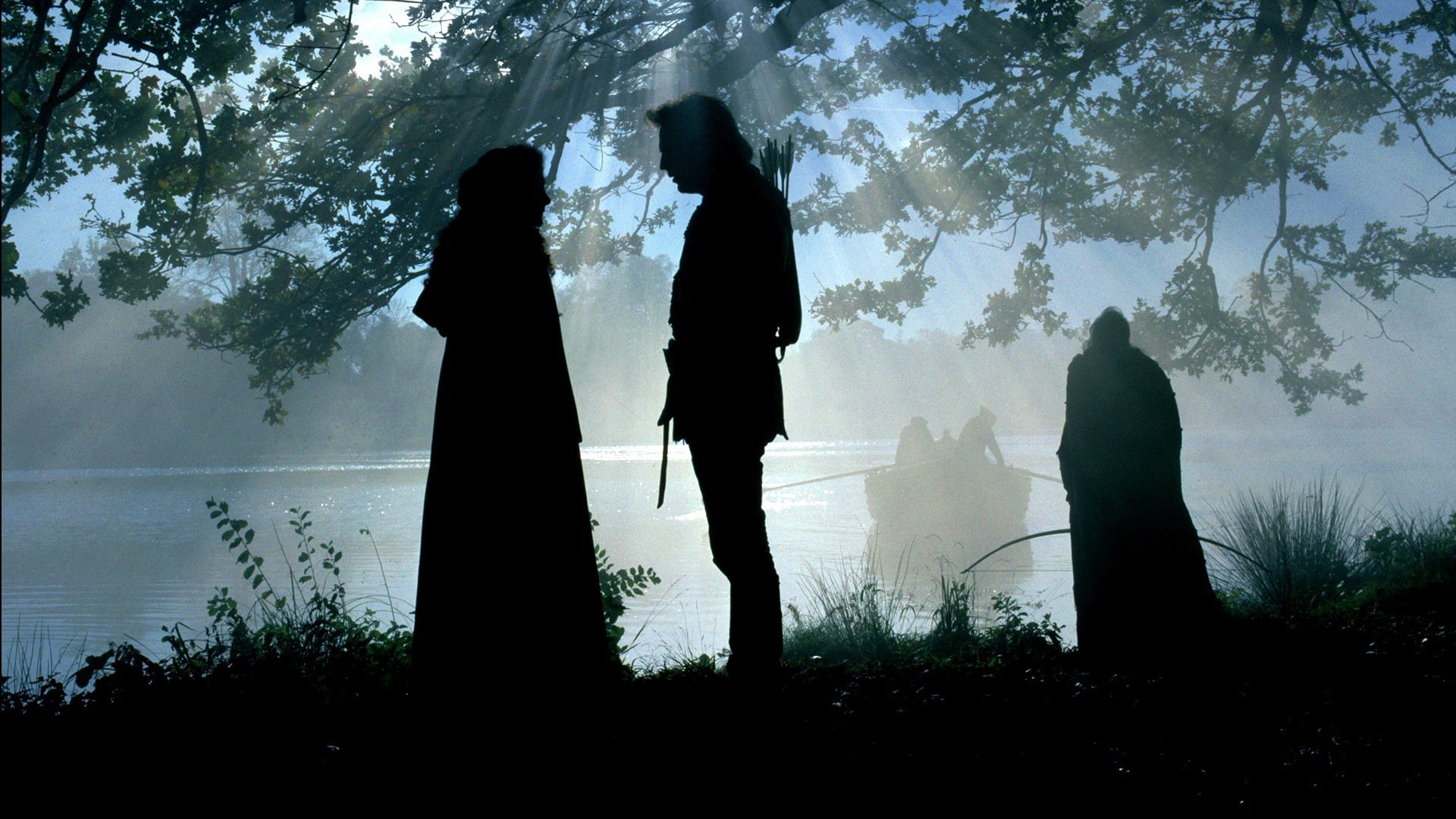
Why Robin Hood: Prince of Thieves? Why not? It has everything: Kevin Costner is Robin Hood, the Prince of Thieves! He speechifies on a log! Kevin Costner bathes in a stream, as Robin Hood, the Prince of Thieves, is wont to do. Kevin Costner fires flaming arrows while Bryan Adams sings, like a regular Robin Hood, the Prince of Thieves. Everything!
robin-hood-prince-of-thieves2

How does the 2nd-highest-grossing film of 1991 hold up today? It is a decidedly mixed bag. Alan Rickman is fantastic, presumably because he was allowed to ignore the script. Others do not fare quite so well. Costner’s basic decency looks a little bit ridiculous when he’s standing on a log, declaiming, and Morgan Freeman is both the inventor of the telescope and a born obstetrician. Robin Hood: Prince of Thieves very much wants to ingratiate itself and be saluted for its princely nobility, but it’s kind of weird. And that’s before that one scene …

We also discuss horror movies, drive-ins, RiffTrax, and whether Aaron is now old enough to buy his own weed.


Give it a listen here.

November 22, 2016 0 comments
0 FacebookTwitterPinterestEmail
Raj Kapoor in Awaara
CommentaryFilmGreat Movies: The Counter Programming

Awaara, Raj Kapoor, and early Bollywood

by rick November 21, 2016
written by rick

A stern judge, obsessed with questions of lineage and social order, casts out his pregnant wife for supposed infidelity. A fatherless child born to the slums falls in love with a girl impossibly out of his league, only to meet her again under much different circumstances as an adult. Class and caste collide, amid expository songs, Chaplin references, scandalous sexuality, generational conflict, mythic invocation, and an elaborate dream sequence. Raj Kapoor’s 1951 mega-hit Awaara set the stage for many Bollywood productions to follow.

Kapoor was only 27 when Awaara was released, “not too long after 1947 and at a time when the business of Independence (and of course Partition) [was] still unfinished.” He’d go on to become one of the seminal and most beloved figures in Indian cinema, but in 1951, Awaara was just the third release from his newly-minted R.K. Films. The timing informs its themes and helps explain its incredible international success, but also underscores the ambition of Kapoor’s vision.

Awaara presents an elliptical narrative, told mostly through flashback and digression. A frame-story functions as a unifying thread; we begin near the end and move backward, before circling around to the present and closing the days to come. (The frame-story technique is especially relevant, given Awaara‘s self-conscious similarity to the Ramayana, one of the earliest frame-stories that exists.)

Kapoor shares a name with his protagonist, and we begin with Raj’s trial for the attempted murder of the illustrious-looking Judge Raghunath (Prithviraj Kapoor). Our expectations shift almost immediately, though, as a beautiful defense attorney named Rita (Nargis) begins interrogating the judge on the stand. It’s a deft touch. We question who exactly is on trial here, and gradually discover there are connections, for the moment only implied, between each of these three characters. Awaara will spend the next three hours teasing those out.

Elaborate sequence in Awaara

To make a very long story short, Raghunath was married to the virtuous Leela (Leela Chitnis), but his draconian position on criminality came back to haunt him. The judge sentenced a man named Jagga (K.N. Singh) to prison for a crime he didn’t commit, based solely on class prejudice; the jailed would become, predictably, a notorious bandit. Seeking revenge for this original sin, Jagga kidnaps Leela and intends her harm. But upon discovering her pregnancy, he comes to a different plan: he will allow the judge to think his wife was assaulted (a crime that falls on the woman’s honor), and then take vicarious pleasure in the unborn son’s misfortune, which will disprove the pompous judge’s notions of moral predestination. Jagga will effectively play with the fates of man to prove a point, like one of the guys from Trading Places, except more prone to knifing.

 Leela Chitnis and Raj Kapoor in Awaara

In due time, Raj develops a lifelong adoration for his classmate Rita, but his attempts at courtship and decent living are foiled at every turn by an unforgiving society. The nature vs. nurture themes play out against the backdrops of both slum and high society, with Raj eventually embracing his outcast status … to a point.

He’s more lovable than ruined (usually), facing hardship with a wink, a skip, and a pratfall (though Awaara gets much darker than the Chaplin films Kapoor clearly adores). Jagga, Raj’s Fagin-like surrogate father, brings him into a life of crime, while Raghunath, actual patriarch, remains disastrously oblivious to his paternity. A reckoning is coming.

Throughout Awaara, there are echoes of both earlier Russian films, with their evocative editing and denunciations of social oppression, and contemporary Italian neorealism, particularly doomed odes to the urban preterite like Shoeshine and Bicycle Thieves (though with significantly more dancing than either of those).

Kapoor and DP Radhu Karmakar film the rainy streets, the romantic boat rides, and the perversely ornate interiors of the wealthy with an eye for the emotive image — a scorned thief hanging out with a dog, both lit by a circle of streetlamp; Raghunath alone in his palace of shadows; Raj and Rita’s reflections in the water with the moon behind them. To say nothing of the elaborate dream sequence.

Dream sequence in Awaara

Awaara is excessive on every level. Its visual overload peaks during the dream sequence, but it’s the film’s defining characteristic more generally. This is an ode to Chaplin, a dour social realist agitation, a bouncy musical with a remarkable (and unfortunate) similarity to Carousel, the sort of film that can transition from quiet melodrama to an actual battle between Heaven and Hell without seeming forced.

It was also the sort of film that resonated far and wide: it was rapturously received in Russia and China, where audiences related to it intensely. Russian authorities found it ideologically satisfactory. Its theme, Awaara hoon, was apparently Mao’s favorite. Jia Zhangke sings its praises (and in The Platform, characters are shown watching Awaara.) In 2015, a contestant on a Turkish reality TV show made it his own. Something struck a chord.

Yet, despite the film’s international success, Kapoor’s breakthrough remains resolutely Indian, not just in location photography or technique but text. One critic finds a material-historical reading in the question of paternity and social order:

Prithviraj [as the judge] also represents the bourgeois bureaucratic order of the newly emergent nation-state that cancels out the greater ‘Independence’ promise of profound social upheaval and true liberation from class/caste struggles and so forth. His perspective testifies to an ‘older’ obsession with bloodlines, genealogical purity, and colonial obsession with legal frameworks. His class is that which historically transcended the pre-Independence/post-Independence divide, the very social grouping which stunted the true empowerment of the disenfranchised in a new nation that promised precisely this.

Another emphasizes the mythic:

A thought that occurred to me … was that Awara picks up where the Ramayana ends. The film’s “prologue” has Prithviraj Kapoor—playing Judge Raghunath—facing a terrific reversal in which he stands trial at an attempted murder case where he is actually supposed to be the victim and Raj Kapoor the accused. Raghunath’s  ward, a lawyer played superbly by Nargis, defends Raj Kapoor and  confronts the gargoyle-like Raghunath (the regretful and brooding Ram in this film) for years ago expelling from his household his very own “Sita”, a wife he believes to have been raped and impregnated with a child he imagines to be the spawn of the “Ravana” of the story, here in the form of Jagga, a vengeful bandit. So it is not Sita who is on trial in Awara’s Ramayana commentary, nor even the perceived “seed” of Ravana (Raj Kapoor) but rather Ram himself, who here, in this moment, becomes “the accused” for his iconically faithless gesture.

Watching Awaara today, without anything approximating familiarity with these contexts, I’m most struck by the film’s ambition. I have no doubt that both these readings have a solid basis — “it can be two things,” as we say. Kapoor’s film synthesizes any number of influences but places them in a unique framework that draws equally on sacred allusion and anxieties animating the moment of its production. And then, he adds spectacle, humor, tragedy, and song.

That’s a lot of lifting for any film to accomplish, a lot of contradictory impulses pulled together into what is, ultimately, an enormously crowd-pleasing piece of entertainment. Awaara‘s success is like a magic trick, or like one of Raj’s sleights of hand. Kapoor would go on to a storied career, but the debut of his Tramp character, and the winding story of his trials and tribulations, would cement his legacy right from the start.

November 21, 2016 0 comments
0 FacebookTwitterPinterestEmail
FilmGreat Movie Project

The revolutionary, colliding images of Man With A Movie Camera

by rick November 14, 2016
written by rick

It’s relatively rare for a film to begin with a mission statement, but Man With A Movie Camera — Dziga Vertov’s 1929 Constructivist ode to man, machine, and revolution — is not an ordinary film.

Before Vertov presents a dizzying, self-reflexive montage of a day in the life of post-Revolutionary Russia, he informs the viewer:

THIS FILM PRESENTS AN EXPERIMENT IN THE CINEMATIC COMMUNICATION OF VISIBLE EVENTS
WITHOUT THE AID OF INTERTITLES


WITHOUT THE AID OF A SCENARIO


WITHOUT THE AID OF THEATER


THE EXPERIMENTAL WORK AIMS AT CREATING A TRULY INTERNATIONAL ABSOLUTE LANGUAGE OF CINEMA BASED ON ITS TOTAL SEPARATION FROM THE LANGUAGE OF THEATER AND LITERATURE.

It’s hard to imagine a more succinct statement of principle (though that’s not enough to stop one YouTube commenter from complaining, “Honestly, I don’t get the point of this film. Yes, you can look at its history of advancing editing, but right now, it’s just a bunch of images to me. There’s no storytelling going on.” Oh well.)

man-with-the-movie-camera5

Vertov is true to his word. Drawing on Eisenstein’s theory and practice of montage and advancing some of the techniques he himself developed in the earlier Enthusiasm, Man With A Movie Camera dispenses entirely with story and character, attempting to elicit ideas and emotion from image and contrast alone. So we witness work, leisure, a couple getting divorced, a baby being born, a woman washing her face and getting dressed, sport, trains arriving and departing, the industrial swirl of a modern city. Vertov’s wife and creative partner Elisaveta Svilova edits Man With A Movie Camera at a fever pitch, with an average shot length of “2.3 seconds, which is four times faster than most films of that time and the speed of the average action film made today.”

As Noel Murray writes, the two “cut together images sometimes due to their thematic connections, but just as often because they liked the emotional effect of the juxtapositions.” The splashes of water to the woman’s face as she starts her day cut immediately to power washers cleaning off shop storefronts at dawn, perhaps implying the unity of the individual and social processes.

Images of bourgeois grooming in hair salons collide with washer-women, hands immersed in soapy water. The trains that serve as a recurring motif are intercut with divers and swimmers and shop-floor workers. Bureaucratic terminations of marriages fold into delivery room footage of a baby being born. There is no pedantic reading to be had, aided by the guiding hand of a storyteller; we’re immersed in each image, and in the relations that seem to arise between them. Man With A Movie Camera is intoxicated by the images themselves, the resonances between them, and the lives they depict.

man-with-the-movie-camera4

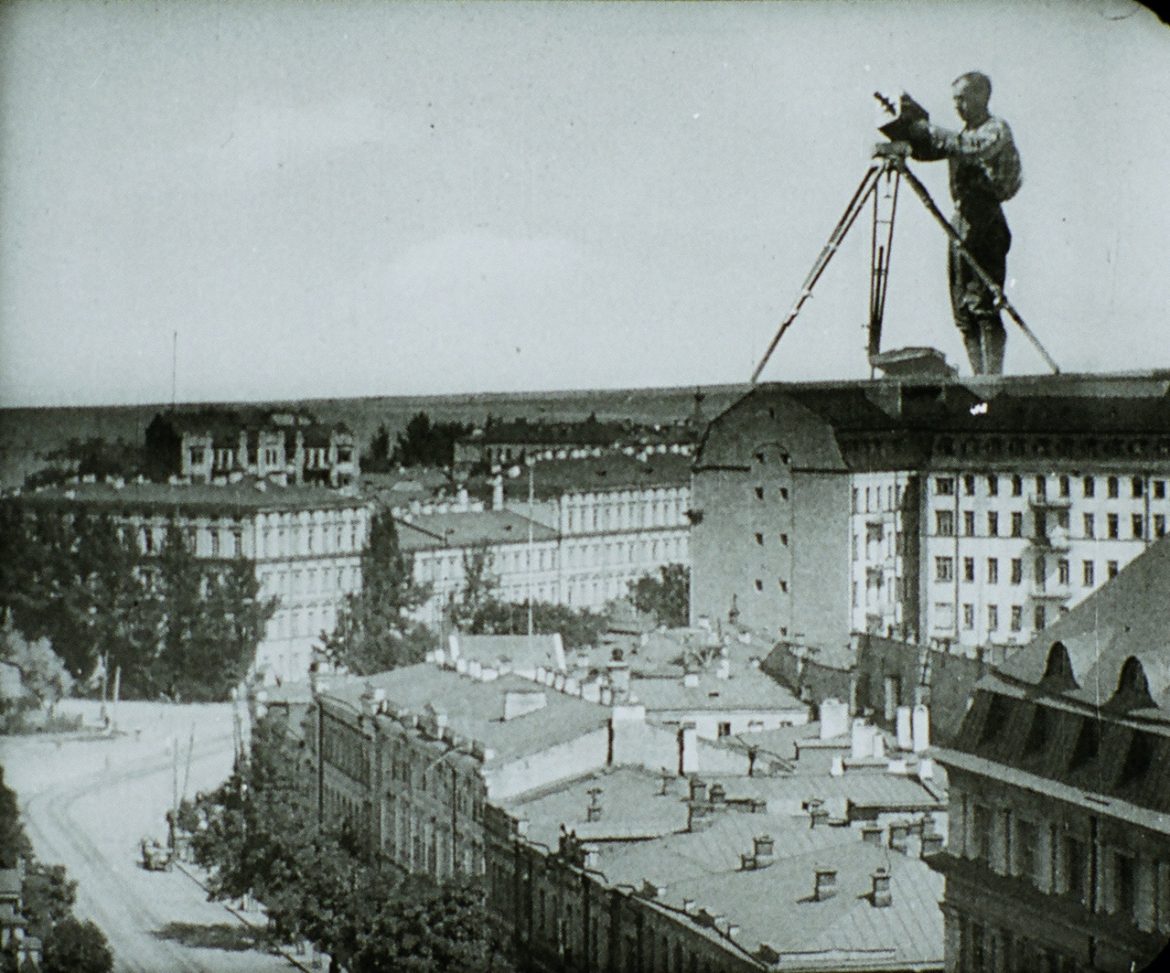
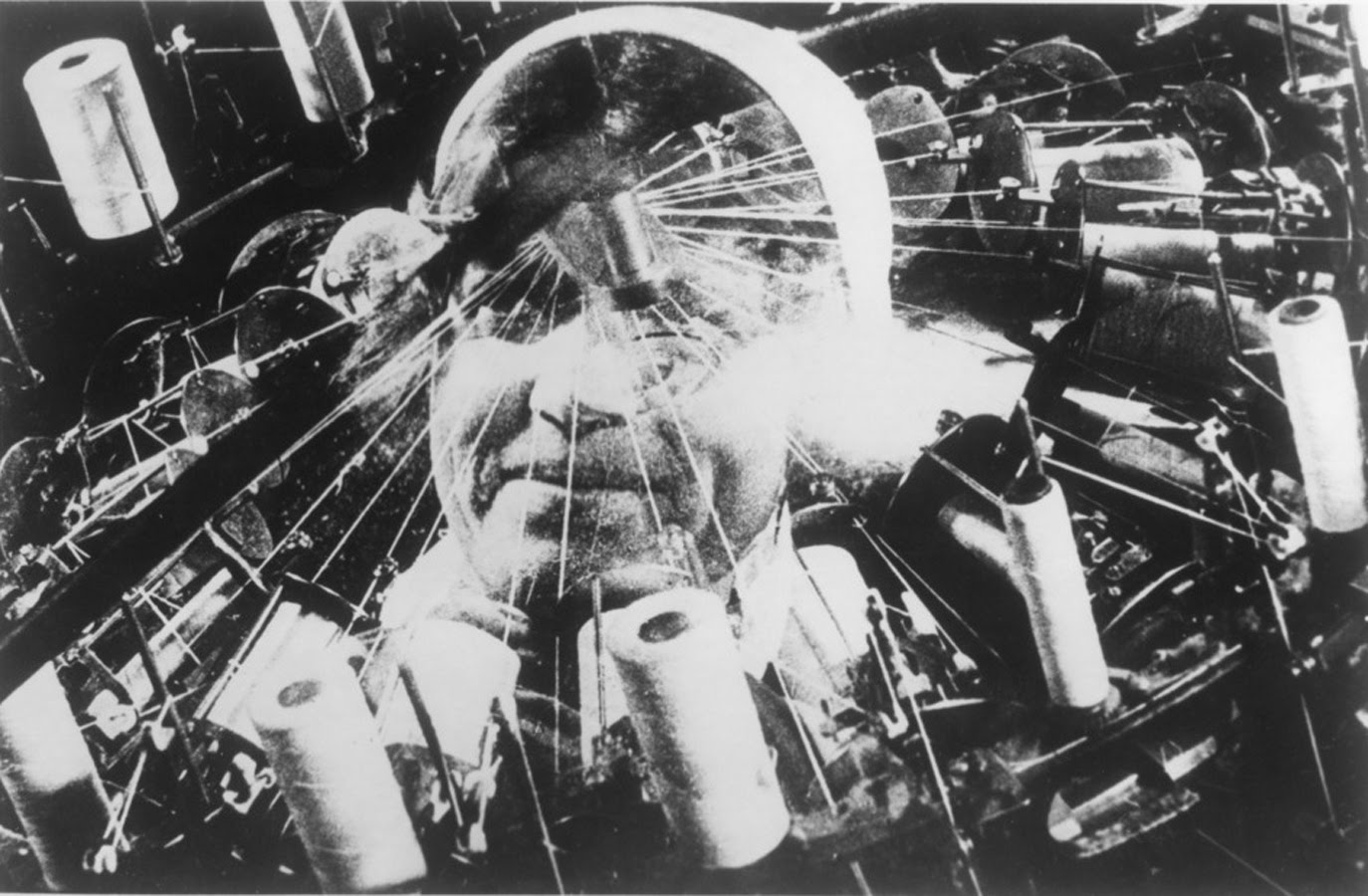
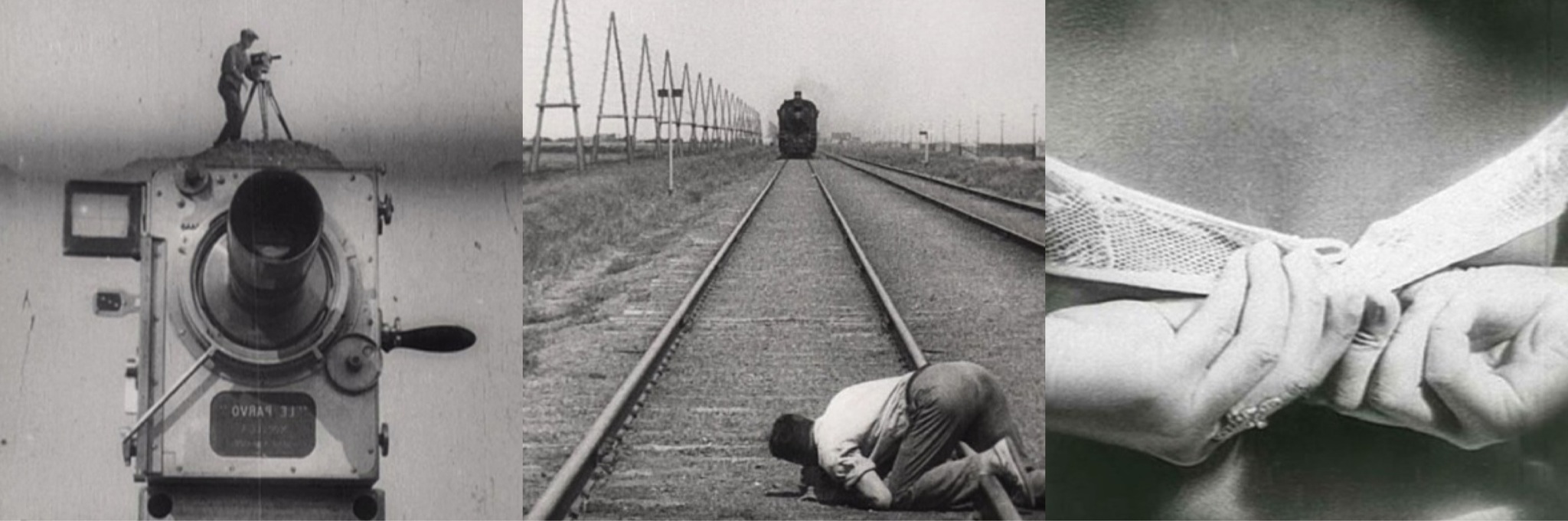
At the same time, Vertov undercuts this notion of directorial absence with frequent self-referentiality, from the title on down. The man with a movie camera is the closest thing we have to an on-screen protagonist. He is everywhere: through superimposition, he is on top of buildings and vanishes into a glass of beer at a pub; he’s riding alongside the action in a speeding car; he’s climbing a railroad trellis, and later positioning himself on the track itself to get a shot of a train’s undercarriage.

In fact, he’s the first person we meet, threading his film into a projector, as an audience takes their seats to watch the film of their lives. There is an emphasis on capturing these images, the work that it entails, and the connection between the machinery of city life and the machinery of representation.

Vertov's Man With A Movie Camera

Vertov’s revolutionary affiliation consumes the film he has made about it — we even see Svilova snipping away at the film, as the frame rate slows to a series of stills. At the end of Man With A Movie Camera, double exposure allows the captured city to fold in on itself, as demonstrative a portrait of creative destruction as the medium allowed.

Watching the film today, the paradox is striking. In Man With A Movie Camera, we have a directorless cinema “the true purpose [of which] was just to capture scenes of daily life, as naturally as possible,” but also one in which the politics and presence of the director are inextricable from the sequence of images and their impact. This conflict would animate documentary experiments like Jean Vigo’s À propos de Nice (released the following year) to Riefenstahl, not to mention present day debates over the very possibility of apoliticism of the image. Particularly in the current political climate, these are not debates that are going away.

\

The far-reaching influence of Man With A Movie Camera is hard to overstate. Ben Nicholson emphasizes Vertov’s (literally) revolutionary use of five specific techniques — the dissolve, slow motion, stop motion, split screen, and double exposure — and examples of their later deployment in everything from Doctor Zhivago to Charlie’s Angels, Carrie to The Matrix, Star Wars to Inception. None of the techniques originated with Man With A Movie Camera, but their combined weight in Vertov’s experiment made a lasting impression.

The film itself is an aesthetic wonder. As an interrogation of the politics of representation, it continues to raise more questions than it answers.

Favorite Ebert quote:

By filming in three cities and not naming any of them, Vertov had a wider focus: His film was about The City, and The Cinema, and The Man With a Movie Camera. It was about the act of seeing, being seen, preparing to see, processing what had been seen, and finally seeing it. It made explicit and poetic the astonishing gift the cinema made possible, of arranging what we see, ordering it, imposing a rhythm and language on it, and transcending it. Godard once said “The cinema is life at 24 frames per second.” Wrong. That’s what life is. The Cinema only starts with the 24 frames — and besides, in the silent era it was closer to 18 fps. It’s what you do after you have your frames that makes it Cinema.

November 14, 2016 0 comments
0 FacebookTwitterPinterestEmail
CommentaryFilm

The Pacifier had a lot on its mind, and poop on its face

by rick November 10, 2016
written by rick

Ivan Reitman’s Kindergarten Cop – the 1990 comedy in which a kid-hating Arnold Schwarzenegger goes undercover as a teacher in order to catch a drug dealer, but ends up learning a thing or two himself – is a touchstone for many childhoods. It introduced the unlikely catchphrase “It’s not a toooom-mur” into the cultural lexicon, and won big at Cannes in the Best Scatology Category. (The second part might not actually be true.) Fifteen years later, action star and noted “candy ass” Vin Diesel tried to repeat the same trick in The Pacifier.

It didn’t go well. Critics rightly pointed out the facts that it is very bad and not funny and also terrible, but The Pacifier did gross $113M, enough to qualify it as the 17th highest-grossing film of 2005 (and legitimate Forgotbuster). Audiences seemed primed for Diesel’s send-up of his persona, or at the very least decided that sounded marginally better than Cheaper By The Dozen 2, Are We There Yet?, and Monster-In-Law.

Like its Schwarzenegger-hamming predecessor, The Pacifier is all in on puns and poop, not necessarily in that order. Diesel plays a Navy SEAL by the very Navy SEAL-like name of Lieutenant Shane Wolfe, a best-of-the-best military man known for his bravery, skill, and ability to neutralize, even pacify, his enemies.

A top-secret project, involving Serbian rebels and a safety deposit box, goes violently awry, leading to the death of his commander, and Wolfe finds himself assigned to both protect the man’s family and unravel this international mystery. In the process, he will fight North Korean martial arts experts and perform a series of stunts lifted wholesale from Indiana Jones and the Last Crusade, all while bonding with a mop-topped pack of rapscallions, instilling military discipline in the house, teaching the teenager daughter to drive, directing the son’s adaptation of The Sound of Music, turning a Brownie troop into a Navy SEAL-esque fighting force, falling in love with the principal, and getting pooped on frequently.

the-pacifier2

Writers Thomas Lennon and Robert Ben Garant, both most well-known for their work on The State, seem to have something more subversive in mind than what appears on the screen. The Pacifier wants to do (sigh) double-duty, a family-friendly romp that also functions as a satire of the genre’s tropes, something like They Came Together for people who enjoy nut-shots with alarming enthusiasm.

If so, it seems they forgot to tell the cast. Everyone is so bland and playing things so straight that the laughs are strangled to death, Navy SEAL-like, long before they have any chance to materialize. Almost-funny moments – like Diesel proclaiming “These kids are in for a rude awakening” before waking them up with a whistle, rudely – sit awkwardly next to maudlin moments, like when our hero bonds, through rooftop conversation, with the daughter over shared paternal loss. Like a tough-guy military man suddenly in charge of raising other people’s children, The Pacifier has no idea what it’s doing.

the-pacifier3

This doesn’t just apply to Diesel’s uncomfortable attempts at sentiment. In one of the film’s stranger plot points, the machismo-fueled idiot of a wrestling coach discovers a swastika patch in the son’s locker. Convinced that the effeminate, theater-loving child whose young manhood he routinely insults is, in fact, a genocidal fascist, rather than starring in The Sound of Music (which, admittedly, also doesn’t make any sense but is at least more in fitting with the character), Diesel is hauled into the principal’s office.

Appealing to everyone’s good graces and empathy, The Pacifier plaintively notes, “Look, he’s a troubled kid, but … he’s not a Nazi.” Diesel’s delivery suggests exasperation, as though this is a normal thing and one he often has had to emphasize over the years to school administrators. As Nazi jokes go, it’s pretty lackluster.

Unfortunately, The Pacifier finds it funny. The Pacifier finds many things funny – poop in diapers, poop on faces, Neo-Nazi-based misunderstandings, the notion that Vin Diesel has boobs. But the film’s most curious fixation is on the family’s crotch-and-ear-biting pet duck, Gary.

Why the family has this psychopathic pet duck is never really grappled with in any serious way, though Gary apparently found his way into the script when Jackie Chan was signed on to play Diesel’s role. (Chan, who viewers may remember i Asian, wanted to cook Gary and eat him, sufficiently horrifying the kids to the point that Gary became part of the family. This is what is known as “stupid”, and also “racist”.)

Gary is never funny, but he did offer Diesel the opportunity to drop this bizarre stream-of-consciousness reflection on a hapless interviewer:

How tough was working with the duck?


The duck was everything you could imagine. The duck was supposedly a very gentle duck. I mean, when they described how the bite would feel, they basically did this to my finger [rubs finger]. It’ll never be more than that. Are you sure that’s not going to draw blood and I’m going to get infected by some kind of lake disease? No, because there’s no lake.

I’m sure Diesel is a very nice man, but as this reveals, he’s also clearly insane. The duck was “everything you could imagine”? What does this mean? Why would I imagine anything about Gary the Duck, much less everything? Why is Diesel recreating this conversation about “lake disease” in real-time for some trade writer who just wanted a funny duck story?

Honestly, The Pacifier would’ve benefited from more of this sort of madness, which is more interesting than anything on screen. Instead, we have a film that alternates between tepid and bizarrely violent, wacky and sappy, overloaded and underplayed.

Diesel has shown the ability to be pretty charming, and The State writers have had many funny moments, but The Pacifier provides no evidence for either claim.

Unless you think poop is funny, in which case, you’ve found your new favorite movie.

November 10, 2016 0 comments
0 FacebookTwitterPinterestEmail
Film

New on Netflix: Bob Roberts

by rick November 4, 2016
written by rick

Is 5 days before the blessed end to one of the objectively grossest, most cynical elections in American history the best time to revisit Tim Robbins’ equally cynical 1992 satire Bob Roberts? As it’s new to streaming this week, Netflix apparently thinks so.

And why not? Perhaps you’d like nothing more than an acerbic, deeply nasty portrait of political hucksterism and crypto-fascist populism right about now. Robbins — writer, director, and star — cast what seems to be every working actor of 1992 (and also Gore Vidal) for his riff on Robert Altman’s Tanner ’88, tossing in some Spinal Tap touches and cross-pollinating the whole thing with righteous liberal indignation.

The character of “conservative rebel” Bob Roberts — greed-and-selfishness-championing folk singer, pious rejector of post-’60s lawlessness, corrupt day trader, promising Senatorial candidate — becomes a vehicle for every barb Robbins can throw at political hypocrisy and charming, aw-shucks totalitaritariasm. Bob Roberts the film is often exhausting (and sometimes dated in its particulars), but Bob Roberts the character is inspired, and many of those barbs still land with horrifying familiarity.

bob-roberts2

Robbins’ film frequently lays it on so thick that some of the funniest, most biting moments emerge in between the bromides. The late Alan Rickman is especially good as Roberts’ CIA-affliated puppet-master Lukas Hart III, sporting an insidiously unconvincing smile and tossing off lines like “Now if you’ll excuse me, I have to go pray,” with all the conviction of a man who has never once stepped foot inside a house of worship but understands media relations perfectly. Liberals aren’t immune, either. When John Cusack, preparing for an appearence on a SNL-like show, delivers a long-winded, improv screed against Roberts’ militarist corporatism, one castmember says it’s too controversial, but another one is more on the mark: “Also, it’s not funny.” (Keith Olbermann, take note.)

Still, there are plenty of laughs in the broader moments, even if they come out a little angry and bitter these days. Surely, the 2016 Candidate Who Shall Not Be Named would jump at the opportunity to have Roberts on stage with him, perhaps playing one of his Dylan-esque protest tunes off The Times Are A-Changin’ Back or Bob on Bob. And Bob Roberts would’ve made an ideal VP, a signficiant step-up from that walking vision of the banality of evil Mike Pence. Hell, Roberts even hosted a beauty pageant! So I’m sure they’d have plenty to discuss

bob-roberts

The main thing that separates Bob Roberts from his erstwhile real-life running mate is the “crypto” part of crypto-fascism. Slickness is his main attribute, and Robbins’ film is afraid of this first and foremost. The poster for Bob Roberts featured its protagonist literally wrapped in the American flag, a nod to the famous quote about how fascism will come to this country, but the film itself argues that this is only one small piece of the creepy conspiracy. Our complacency, the media’s desire for appealing narratives, and the candidate’s mastery of optics and presentation all contribute to creeping danger.

It’s hard to imagine Bob Roberts lashing out at anyone, at least when there’s a camera on him, much less getting into Twitter wars with minor celebrities; he’d be too busy cashing in on foreign conflicts. On the other hand, in his popular number “Retake America,” Roberts sings:

This land is my land

This land is our land

You gotta be proud to be

In the land of the free

This land was made for us

This land was made for me.

Perhaps the times are a-changin’ back after all.

Quick Links

Hero 

hero

Too much American political intrigue? How about a saga of pre-Unification China instead?

Zhang Yimou’s historical epic / gravity-defying martial arts spectacular is also new to streaming this week. The words “ravishing” and “sumptuous” get thrown around a bit much in its description, but they fits. Christopher Doyle’s cinematography is nothing short of gorgeous, infusing the nesting-doll narrative with particular colors and moods for particular stories, and all of the leads are excellent. This is a movie to get lost in.

Particle Fever

particle-fever

Charting the trials and tribulations, frustrations and successes of working scientists doesn’t necessarily sound like gripping cinema, but Particle Fever is well-told, compelling portrait of experimentation and inquiry. Plus, the Large Hadron Collider simply looks amazing, even if we need to be told what it does. (Thankfully, numerous people are on hand in the documentary to help out with that.)

Balancing illuminating portraits of the individual players with the historic discoveries they hope to find, the film generates real tension, while educating those of us who never got past high school physics. It’s a fascinating look at applied science and the people who apply it.

Trainspotting

trainspotting

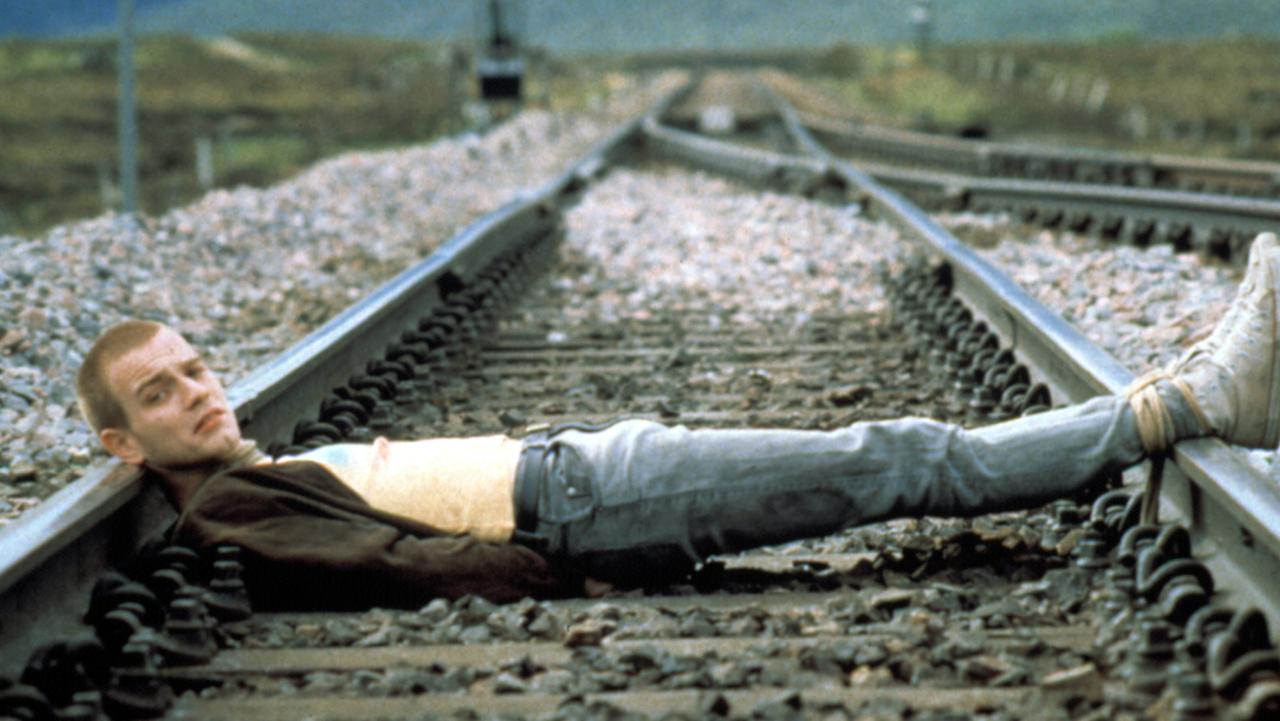
With the recent release of its sequel’s trailer, now’s a good time to revisit Danny Boyle’s 1996 breakthrough. It’s still as anarchic and nihilistic and occasionally disgusting as ever. Irvine Welsh’s cynicism creeps in, but there’s more to it than just that — not least, Ewan McGregor in his defining, non-Obi Wan role.

Che

che

Any treatment of Che Guevara’s exploits will arrive to already polarized audiences, and Stephen Soderbergh’s two-part epic didn’t try particularly hard to smooth things over. It’s a simultaneously romantic and weirdly removed biopic, running nearly three hours, all told, while steadfastly refusing to get inside its subject’s head.

As such, plenty of critics have found it wanting, more a tribute to Soderbergh’s directorly impulses than an even-handed approach to a controversial figure. Oh well! I’m not sure who dictated that such films need to be even-handed in the first place, much less “get inside” anyone’s head. Che is a masterfully constructed film, with a deeply nuanced performance from Benecio del Toro and some startling cinematography courtesy of Soderbergh himself. It’s more than worth a watch.

November 4, 2016 0 comments
0 FacebookTwitterPinterestEmail
FilmGreat Movie Project

The Man Who Laughs and the last gasps of silent Expressionism

by rick November 3, 2016
written by rick

The stories of Victor Hugo provided a wealth of material throughout the Silent Era, a source of inspiration that cinema would return to again and again. By the time Universal coaxed German Expressionist master Paul Leni to Hollywood to helm The Man Who Laughs in 1928, a full 53 separate treatments of Hugo had already been released in the previous 23 years. That’s a startling commitment, across media, to an authorial vision.

The monstrous, the tragic, and the doomed featured prominently — The Man Who Laughs joins The Hunchback of Notre Dame, as well as Gaston Leroux’s The Phantom of the Opera, as primary examples of this fixation. Perhaps this was because the new cinematic technologies allowed directors, editors, set designers, and makeup artists to emphasize the uncanny qualities of the image, and nothing is more uncanny than disfigurement and bodily mystery. (In both Phantom and The Man Who Laughs, faces are often obscured, heightening tension and suggestion.) Or perhaps audiences simply thrilled to see familiar Gothic tales rendered through horror photography and the moving image, with all their attendant shadow-play and haunting close-ups.

The Man Who Laughs, however, is not quite horror, though Leni fills the frame with so much ominous atmosphere — all crooked sightlines and macabre insinuation — that it sometimes seems to be. Unlike his previous Waxworks and The Cat and the Canary, and The Last Warning (released the following year, just before his untimely death), the horror is incidental to the story here.

The other films all skillfully combine frightening set-pieces with wacky hijinks, setting the stage for many a horror-comedy to follow. But The Man Who Laughs has no such assurance: it’s a brooding horror one moment, a tragic romance the next, a satire of court politics, and eventually a swashbuckling adventure. This creates a strange tension, and the sense that Leni isn’t quite sure what the film is supposed to be.

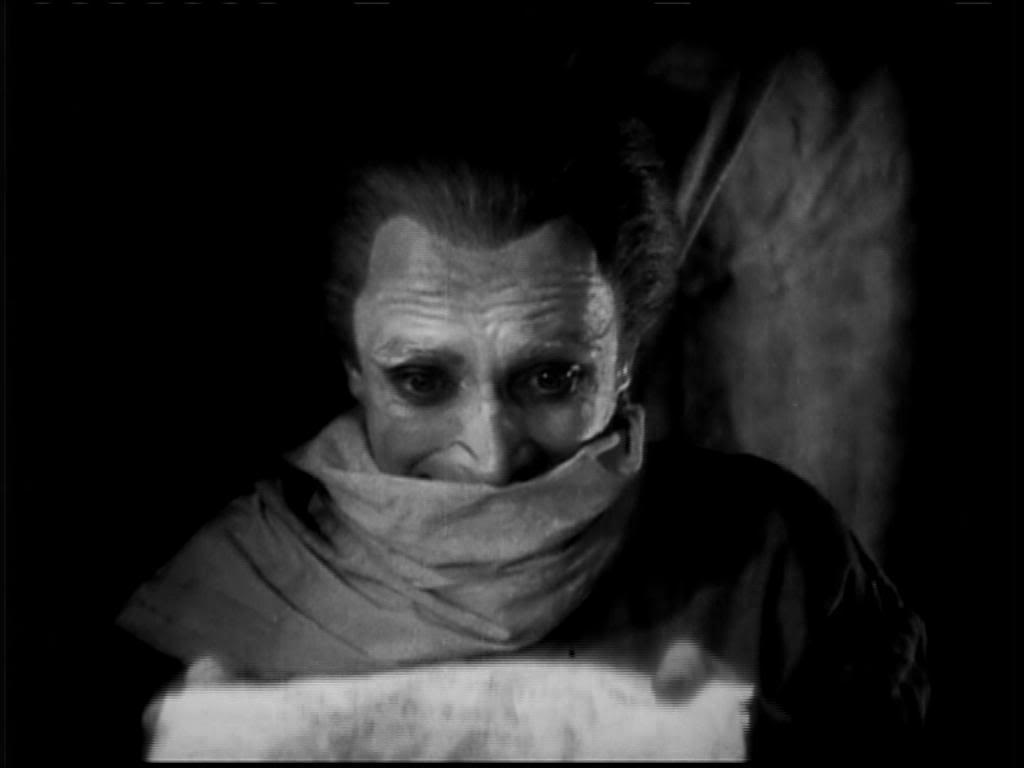
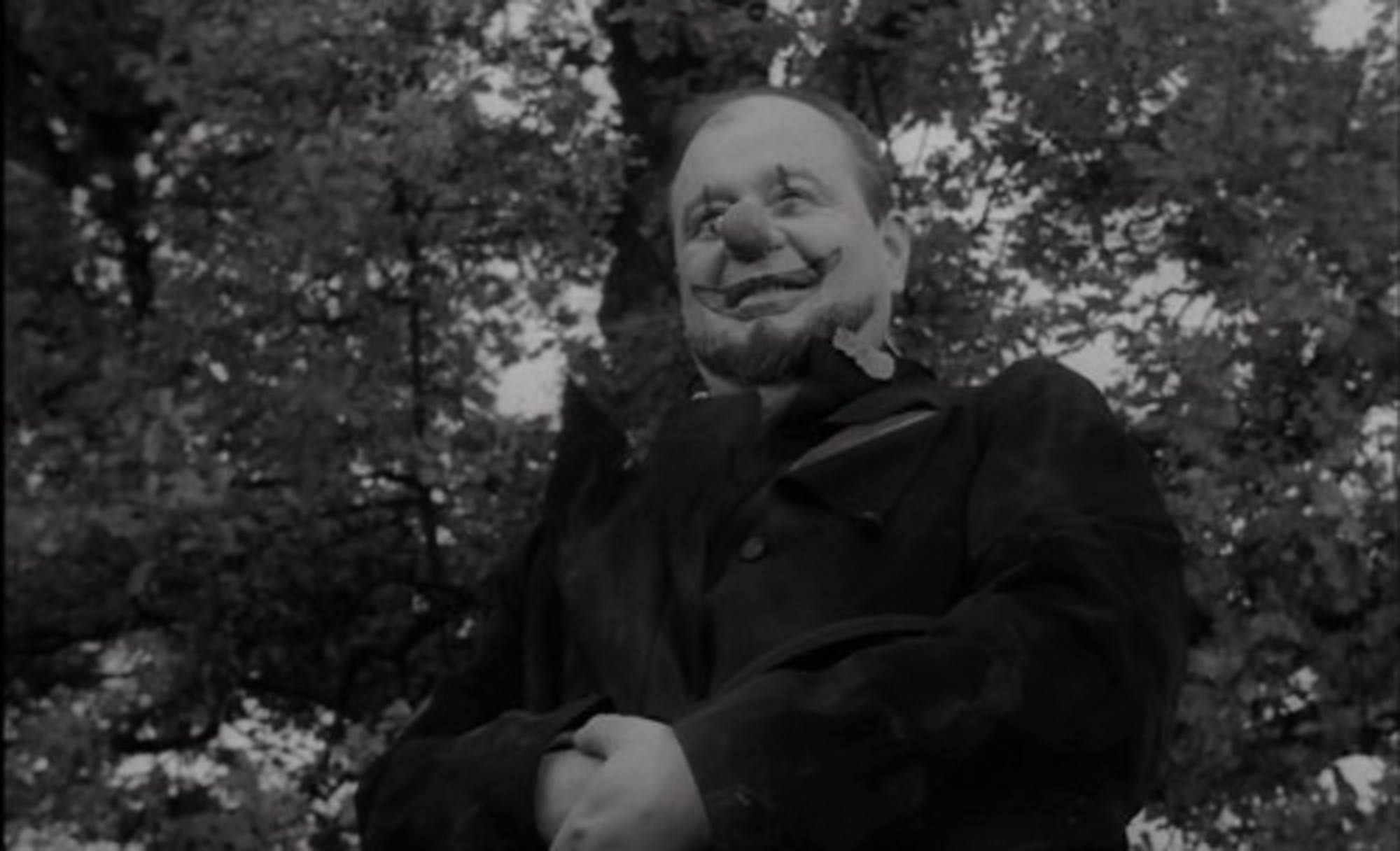
the-man-who-laughsIn any case, The Man Who Laughs starts horrifyingly enough. The young Gwynplaine (Conrad Veidt, the somnambulist of Caligari and, much later, the unforgettable Major Strasser of Casablanca) is son to a Scottish nobleman (also Veidt) who defies the king. He must watch his father put to death in an iron maiden. Then, doubling down on the nastiness, the king orders that Gwynplaine have a permanent smile carved into his face, so he will forever laugh at his father’s folly.
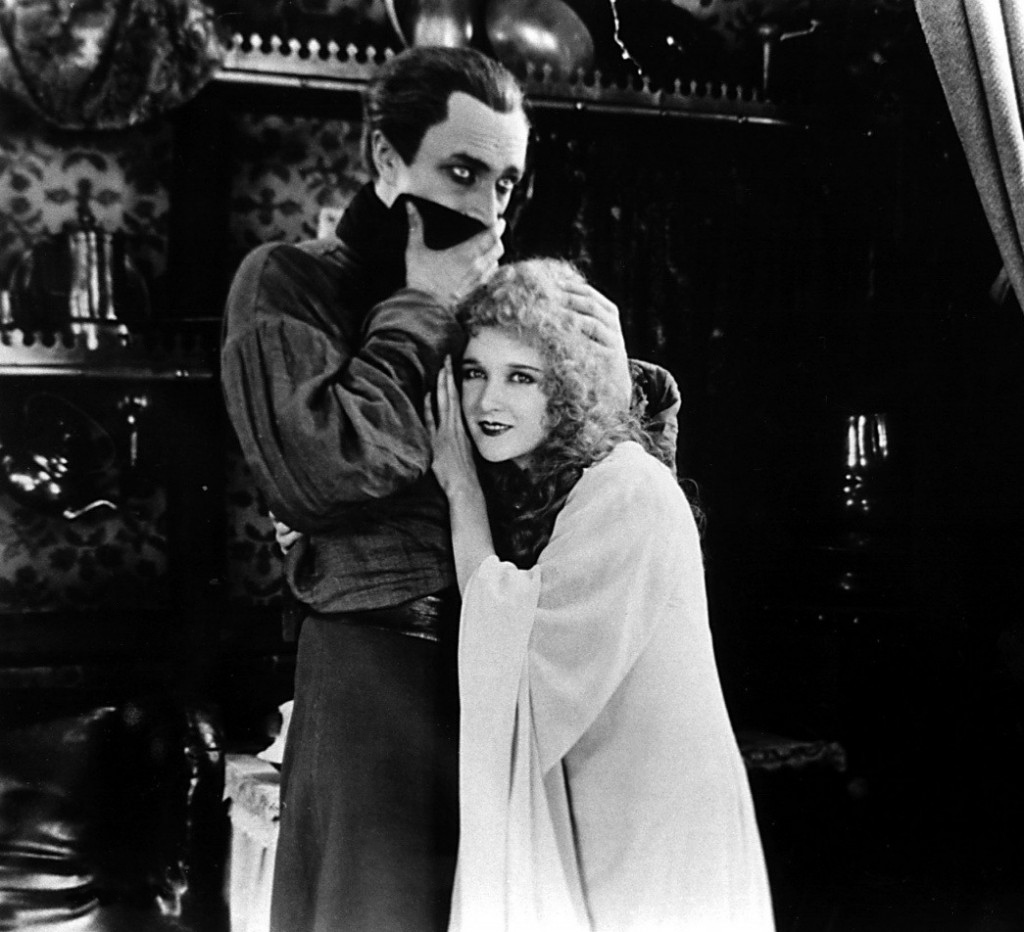
That’s … pretty horrific.

We pick up years later, as Gwynplaine first rescues a baby in the snow, and then finds comfort, shelter, and employment for the two of them with a traveling band of montebanks. His disfigured face is the centerpiece of the traveling troupe’s performances, sending audiences into fits of laughter and glee at his expense. He’s a star, but at significant cost to his dignity and well being. Thus, we have a truly pathetic protagonist: the saddest clown ever.

The baby Gwynplaine rescued grows up to be the blind Dea (Mary Philbin, who we recently met as Christine in Rubert Julian’s much more cohesive adaptation of Phantom); the two — one a disfigured beast-clown who can’t bear to be looked at, the other a beautiful Belle who couldn’t see him if she tried — fall in love, of course.

man-who-laughs4

Meanwhile, it comes to the attention of Queen Anne that Gwynplaine is a nobleman, despite his off-putting visage, and she decrees that he should marry the vain and tempestuous Duchess Josiana (Olga Baclanova, the Madonna-lookalike villainess of Todd Browning’s Freaks, another film obsessed with tragic deformity and the cruelty of “polite” society). So begins an entirely different kind of film, focused on the mockery Gwynplaine faces from the well-cultured monsters of the House of Peers and Josiana’s simultaneous attraction to and revulsion from his appearance. A reckoning is coming, as the film(s) try to balance all this broad melodrama with the more personal stories buried inside.

man-who-laughs2

It doesn’t quite work. But what certainly does work is Veidt’s commitment. Throughout all these machinations, it’s impossible to look away from his Gwynplaine. Veidt’s performance is essentially divided between the two halves of his face: eyes that convey love, sorrow, fear, and rage above, and that unchanging rictus grin below. It’s hard to imagine pulling it off in the sound era — indeed, Kirk Douglas considered doing so, before thinking better of it. After The Man Who Laughs, Veidt feared type-casting solely in monstrous roles and swore off them; this is a good one to go out on.

At nearly two hours, The Man Who Laughs is over-packed with narrative. Leni makes good use, as you’d expect, of light and dark, constructing a 17th century England for Hollywood that looks more like a German Expressionist fever dream of nowhere in particular. An evocative scene recalls Murnau’s Nosferatu; elsewhere, the attacks on royal pedigree, arrogance, and dissolution — often conveyed through dress and manner — call to mind any number of works disgusted with the ruling class. The Man Who Laughs is firmly on the side of the dispossessed and star-crossed lovers.

For all of that, Leni’s film is still a frustratingly scatter-shot affair, throwing everything at the screen and hoping it gels. It doesn’t really, and there’s a lingering sense that we are watching the last gasps of Expressionist silent cinema, the final moments of Hollywood’s enthusiasm for the Germanic baroque.

Still, Veidt delivers a master performance that would live on in the imagination. Indeed, a number of years later, his pathetic image would be reborn, infused with significantly more malice, and made memorable for generations in the comic book figure of The Joker. It’s hard to imagine that’s what Hugo, Leni, or Veidt would’ve particularly wanted for Gwynplaine, but influence works in strange ways.

Favorite Ebert quote:

The film is more disturbing than it might have been because of Leni’s mastery of visual style. In The Haunted Screen, her history of the German silent period, Lotte Eisner notes that the Expressionists often used unusually low ceilings and doorways in order to force their characters to walk stooped over or sideways. Their staircases rarely climbed frankly from floor to floor, but seemed to twist away into mystery. Dramatic lighting left much of the screen in darkness. Concealment and enhancement, not revelation, was the assignment of the camera. Eisner quotes Leni on the visual style of his “Waxworks,” made four years before “The Man Who Laughs”: “All it seeks to engender is an indescribable fluidity of light, moving shapes, shadows, lines, and curves. It is not extreme reality that the camera perceives, but the reality of the inner event…”


November 3, 2016 0 comments
0 FacebookTwitterPinterestEmail
Film

October horror wrap-up! Now, on to Naughty November, which is not a thing

by rick November 2, 2016
written by rick

Well, the 31 days of thrills, chills, spooks, and scares are now behind us, so it’s time to bid farewell to October Horror. And, presumably, move on to Naughty November, during which we compile a list of 30 sexploitation films and frantically watch them all. (This is, I hope, not an actual thing. I’m a little done with list challenges at this point, as fun as that sounds.)

How did I do? For the first time, I actually did first-watch 31 horror movies for the month, and satisfied all the criteria I’d laid out except for one category. Take that, October Horror naysayers!

Seven franchise entries, seven different countries and one self-governing island, not just five decades but at least one film from every decade since the 20s, nine from before 1970, four silents, an original and its remake, two classic Universal horrors, a Stephen King adaptation, five involving witchcraft, and two Tobe Hooper films. The ball was only dropped when it came to including five movies from Bava, Argento, Lenzi, Fulci, Henenlotter, Romero, and Stuart Gordon. I can live with that.

The final handful of mini-reviews are below. My favorites for the month?

  1. Possession
  2. Martin
  3. The Devils
  4. Fright Night (2011)
  5. Carnival of Souls

If you haven’t seen these, seek them out! If you don’t, all of my efforts will have been in vain, like a guy who travels miles to come to your aid and is promptly stabbed by a minor character as he enters the house where you’ve been cornered at roughly the 80 minute mark.

Point being, they are quite good.

The Cat and the Canary (U.S., 1927, before 1970, silent)

cat-and-the-canary-2

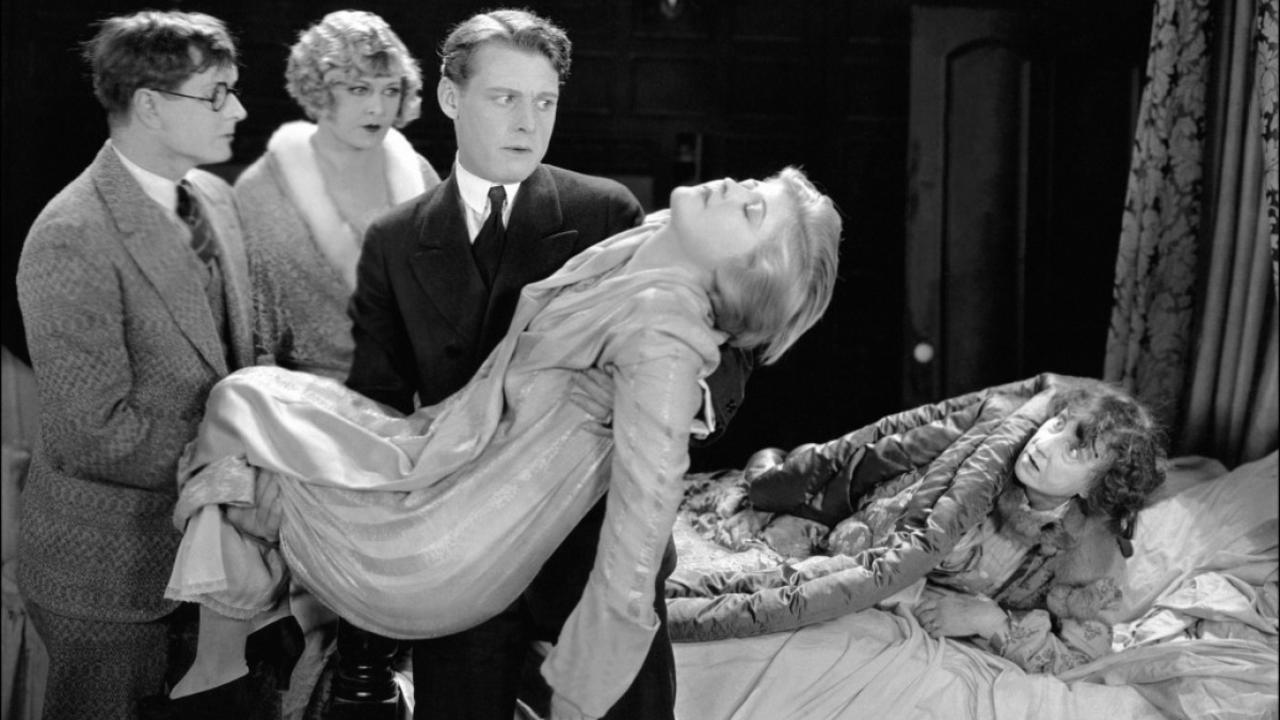
The first of three Paul Leni films included in this batch of October horror, The Cat and the Canary finds the German Expressionist in his most purely enjoyable mode, and the one in which he seemed most comfortable: horror comedy. Like his final film The Last Warning, released two years later, 1927’s The Cat and the Canary leans heavy on shadows for the scares and a cowardly proto-Shaggy for the laughs. He gets both. The plot — about an inheritance, several family members sequestered together to read the will, and one nefarious plotter out to bump off whoever stands in their way — is almost incidental, treated with all the solemnity of Scooby-Doo. And I mean that as a compliment. It’s a lot of fun.

Dead Snow (Norway, 2009)

dead-snow

Like many a film before it, Dead Snow features a bunch of youngsters, off for some partying and pairing up in the country, who encounter unimaginable October horror from beyond the grave. The twists? That country is Norway, and that horror arrives thanks to … Nazi zombies.

In other zombie films, there is a lingering sense of empathy even for the face-biting, entrail-eating undead. These were, after all, people once, and there’s a tragedy in their transition to the monstrous. Dead Snow isn’t having any of that! Nazi zombies elicit no such touchy-feely emotions, so, once the film finally gets going, it is all in on the gore.

A hilarious set-piece involves one protagonist dangling from a cliff by the bloody, unspooled intestines of a zombie. Only you can determine whether that sounds like a good time at the movies.

Guilt (Denmark/Faroe Islands, 2014)

guilt

Heidrik á Heygum’s creepy short is only 30 minutes long, and makes the most of its compression. The subglacial Faroe Islands provide an ideal backdrop for this expertly-paced and beautifully uneasy film’s meditations on loss, repression, and (yes) guilt. A suitably shocking ending ties it all together. If you’ve got a half an hour and you’re looking to be both entranced and creeped out, queue this one up.

I Am The Pretty Thing That Lives Inside The House (U.S., 2016)

i-am-the-pretty-thing-that-lives-inside-the-house

Last Friday, I wrote:

This is, above all, a strikingly intelligent haunted house story. There’s nothing wrong with a strikingly dumb one, per se, and I’m a fan of many. But I Am The Pretty Thing That Lives Inside The House comes across like Under The Skin by way of “The Yellow Wallpaper”, mining issues of sight, agency, and the repressed feminine through a horror lens.

The subsequent five days have not changed my view.

The Innkeepers (U.S., 2011)

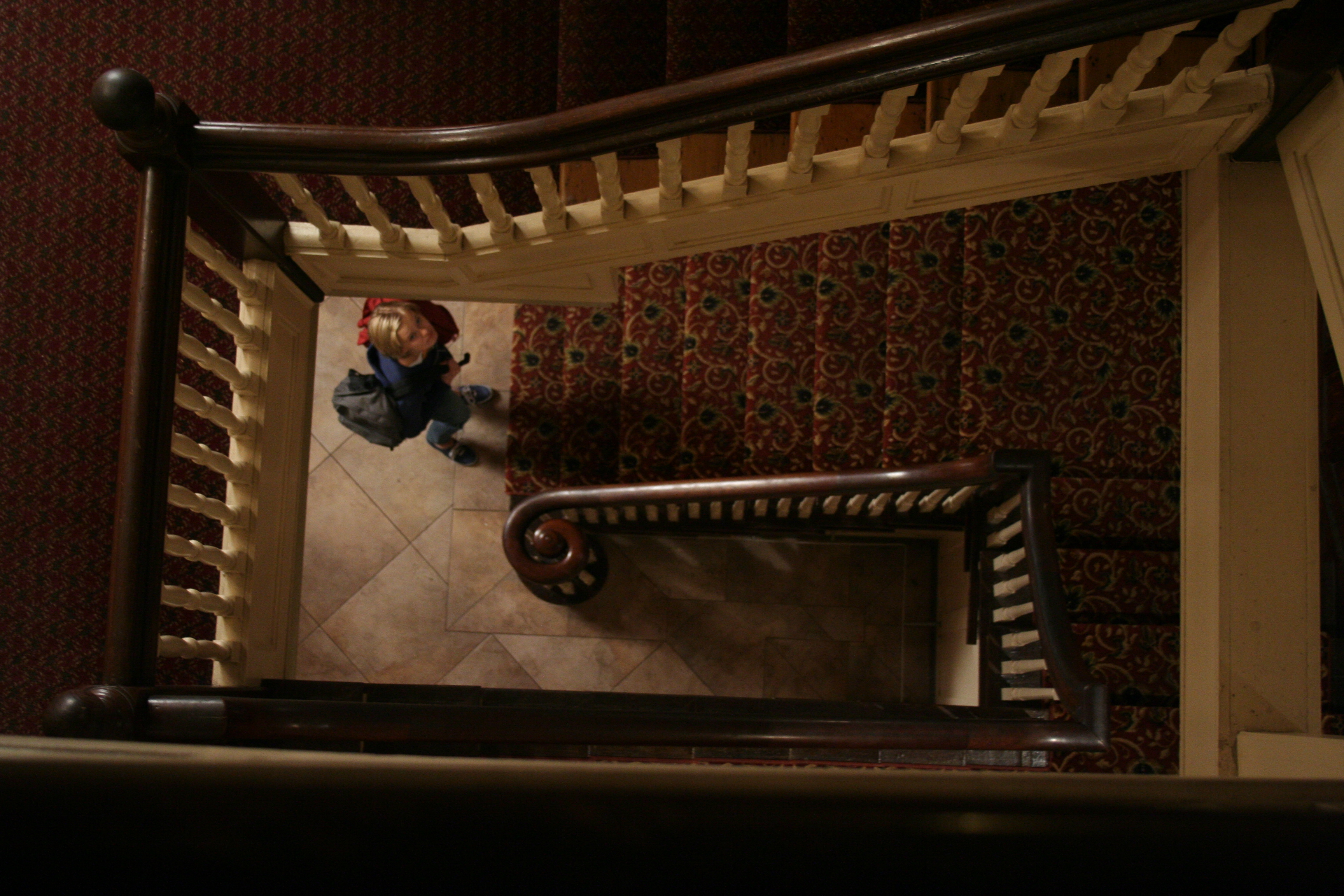
innkeepers

I know many horror fans who adore Ti West, but I’ve yet to join the club. Maybe one of his films will reel me in, but it won’t be The Innkeepers.

All the aspects of West’s filmmaking that grate — its stylistic remove, faux-hip mannerisms, self-conscious throwbacks to older horror conventions that play out more ironic than affectionate — are in evidence here, draining The Innkeepers of both horror and comedy. (In this regard, the movie reminded me of James Wan’s underwhelming The Conjuring 2.) When the scariest and funniest moment in your horror movie arrives via a fake-out jump-scare on an in-frame laptop, I’d submit that your movie is neither very scary nor funny. There are moments when West amps up some real anxiety, and he clearly has a good eye for ominous visuals, but nothing ever really coheres, and then it’s all over.

I obviously won’t write off Ti West until I see some more (I haven’t even checked out The House of the Devil, which trusted friends assure me is a masterpiece), but The Innkeepers disappointed.

Island of Lost Souls (U.S., 1932, before 1970)

island-of-lost-souls

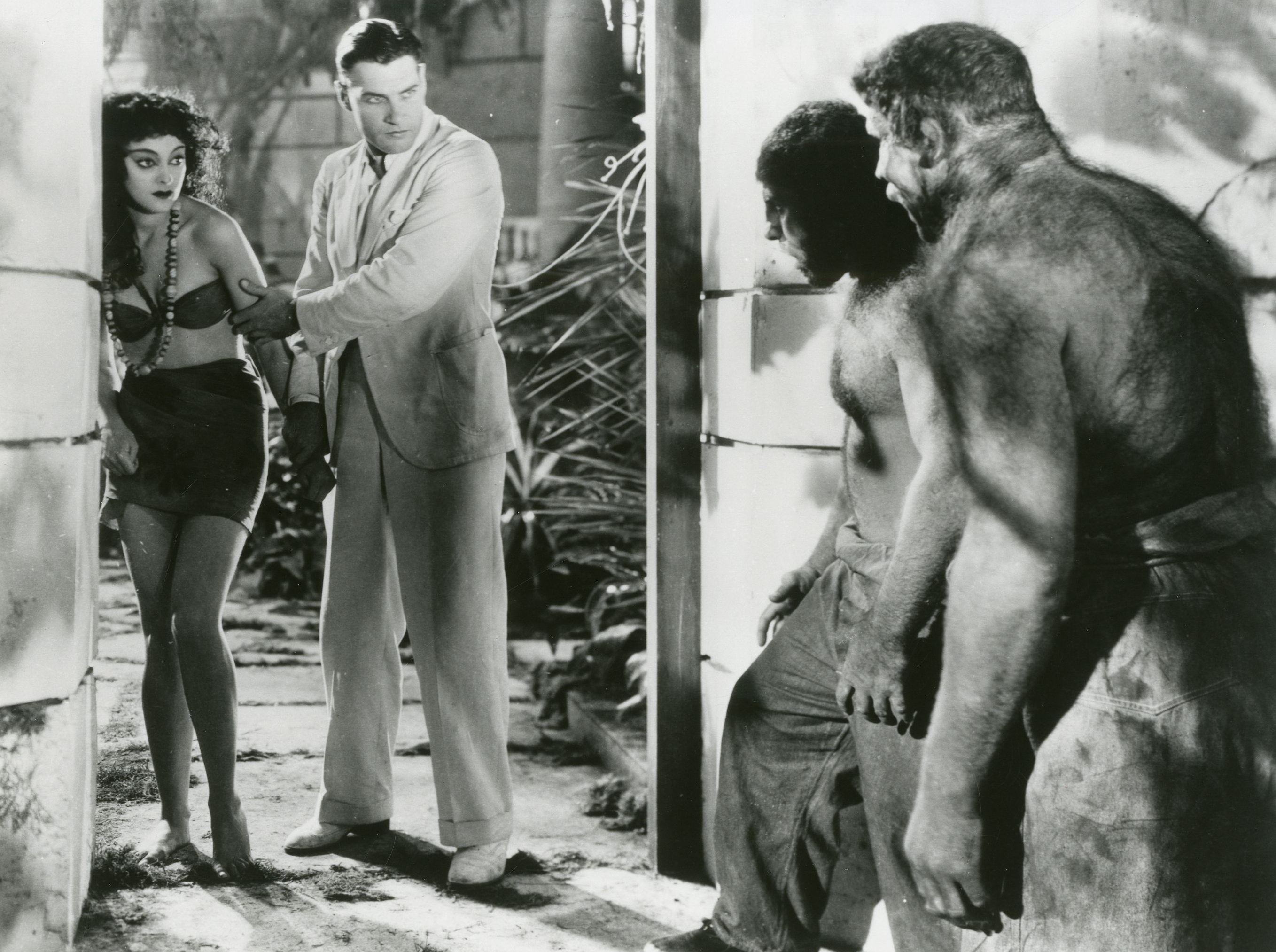
Edward Kenton’s adaptation of H.G. Wells alternates between frightening Mad Scientist tropes and total pre-Code camp, less October Horror than dystopian sci-fi infused with screwball laughs. Charles Laughton gobbles up the scenery, Bela Lugosi’s on hand to play another tragically monstrous antagonist, and much of the photography is luminous in Criterion’s restoration. There’s a broad goofiness underlying all the science vs. nature themes — not to mention the apparent idea that human-animal hybrids will mostly be defined by their hairier-than-usual backs — but, released in 1932, they’re of a piece with the anxieties haunting the Western world at the time: eugenics, fascism, the horrifying implications of science in service to pathology.

Of course, those are anxieties that haunted society before 1932 and since, which is at least part of the reason films like Island of Lost Souls are so immediately recognizable and resonant. Generally speaking, there’s always someone willing to seize power, control lives, and “tamper in God’s domain,” as a famous man once put it, in the celebrated film Bride of the Monster.

The Man Who Laughs (U.S. 1928, silent)

the-man-who-laughs

Paul Leni returns to the list with a film that I almost hesitate to count as “horror,” October horror or otherwise. But The Man Who Laughs does often get included under that rubric, mainly for its central conceit and influence on the character of The Joker. It is, after all, the story of a guy who kills a man he believes slighted him, and then has a permanent grin carved into the face of the man’s son, so that he might laugh forever at his father’s folly. That’s pretty horrifying.

We’ll take a much longer look at this film later in the week — it’s next up in the Ebert’s Great Movies series — but for now: despite the esteem in which it’s held, The Man Who Laughs felt over-long, over-stuffed, and too many genres all at once. It’s a horror, a love story, a historical drama, a tragedy, and a swashbuckling adventure, at a minimum. The result feels muddled, and Leni, brought over to Hollywood on the strength of his earlier work, seems unsure how to balance it all. There are lovely and menacing set-pieces that evoke the visual splendor of his pure horror and horror-comedy films, but, taken as a whole, the film is exhausting and frustratingly scatter-shot.

The image of Conrad Veight’s impossibly unmoving grin, however, will live on, regardless of any of the film’s shortcomings.

Waxworks (Germany, 1924, before 1970, silent)

waxworks

Long before V/H/S, Creepshow, or even Kwaidan, Paul Leni brought an anthology horror to the screen. The film’s framing device — a writer is commissioned to pen eerie tales for various figures in a wax museum, which we then watch play out with him in the lead — is surprisingly daring for 1924, and, as usual with Leni, the off-kilter sets and shadowy production design amps up the dread.

Truth be told, the first story runs on a bit long, and the second is mostly redeemed by its creepy climax. But the final moments of Waxworks are pure October Horror, as Jack The Ripper takes center stage and Leni rolls out every in-camera trick he can think of to startle and discomfit. If The Cat and the Canary and The Last Warning find the director in his most comfortable wheelhouse, Waxworks might still be the best distillation of his sensibility — narratively adventurous, excited about the camera’s possibilities, and gleefully macabre.

It’s a fitting place to end this month. See you next October.

November 2, 2016 0 comments
0 FacebookTwitterPinterestEmail
Film

New on Netflix: I Am The Pretty Thing That Lives Inside The House

by rick October 29, 2016
written by rick

At one point in the spectacularly creepy, evocatively-titled I Am The Pretty Thing That Lives Inside The House, our narrator tells us, “We make our own ghosts by looking, but pretending not to see.” It’s not exactly a skeleton key to the film’s meaning and approach, but it resonates throughout.

The narrator is Lily (Ruth Wilson), a shy hospice nurse who has just moved into the house of Iris Blum (Paula Prentiss). Blum had been an author of some renown — penning horror novels that, we are told, people might buy at the airport — but now suffering from near-dementia and close to death. Lily, too, will die: this is no spoiler, since it’s revealed in the second sentence of narration, roughly a minute into the film. We watch I Am The Pretty Thing That Lives Inside The House to find out how, and why.

Director Oz Perkins — with substantial help from cinematographer Julie Kirkwood’s ghostly imagery and Elvis Perkins’ dread-inducing score — holds off on answering those questions, preferring a kind of free-floating anxiety and ominous slow-burn. I Am The Pretty Thing That Lives Inside The House is slow to the point of lunacy. Perkins doesn’t just demand the viewer’s patience; his film is almost a dare, challenging our jump-cut sensibilities. This could prove a hindrance to some horror fans’ enjoyment, but it’s entirely effective on its own terms. When the outright scares do come, they’re magnified by the near-silence that preceded them.

iamtheprettything

This is, above all, a strikingly intelligent haunted house story. There’s nothing wrong with a strikingly dumb one, per se, and I’m a fan of many. But I Am The Pretty Thing That Lives Inside The House comes across like Under The Skin by way of “The Yellow Wallpaper”, mining issues of sight, agency, and the repressed feminine through a horror lens. (Notice, it is not “the pretty thing who lives inside the house”.)

This house, after all, has been decreed by Blum’s will to serve as a writing space for women authors; her most famous book, which comes to take on an outsized role in the ghostly goings-on, is titled “The Lady In The Walls”. So Perkins’ film is already grappling with crumbling domestic spaces, hidden secrets, doppelgangers and isolation.

By the time Lily begins worrying about the accumulating mold on the fixtures, we know it’s far too late. But then, perhaps it was far too late from the opening frame.

Happy Halloween.

Quick Links

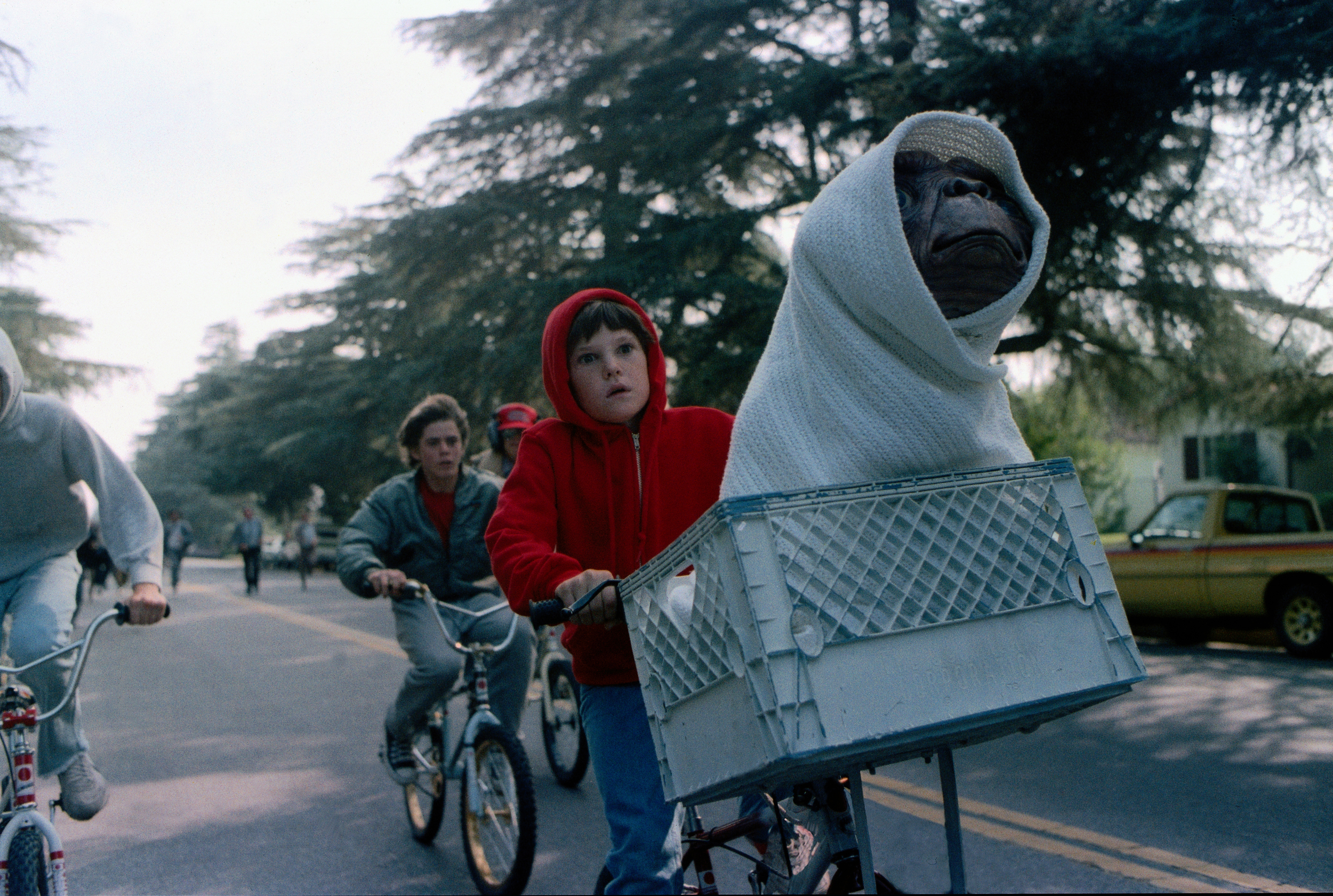
e-t

E.T.: The Extra Terrestrial: Do you really need convincing to watch E.T.? It’s E.T., for god’s sake. Go watch it again.

In the mean time, you could also read Roger Ebert’s Great Movies review, structured as a letter to his grandkids. It’s the sweetest thing imaginable. (And no, I’m not crying, you’re crying.)

cinema-paradiso

Cinema Paradiso: After watching this for the first time, my future brother-in-law declared, “That was a very beautiful story of love and the cinema.” I have nothing more to add.

moonrise-kingdom

Moonrise Kingdom: Wes Anderson tends to polarize viewers into two camps — those that marvel at his ludicrously obsessive set design and turbo-charged whimsy and those who overdose on all the twee. Moonrise Kingdom is probably the closest he comes to splitting the difference. (At least in live-action: The Fantastic Mr. Fox wins this prize hands down.)

Chalk it up to its focus on actual children, maybe, and its lack of Rushmore-style cynicism. Anderson’s sensibility seems perfectly suited to the small Summer Camp adventures of the narrative, a skewed coming-of-age story that is entirely on the side of the kids and their dreams. Sure, it’s painfully adorable, and suffused with all the stylistic hijinks you’d expect, but it’s a difficult film to dislike; its heart is on its sleeve. For a director who’s constantly accused of preferring glossy, ironic constructions over actually earned feeling, Moonrise Kingdom‘s earnestness and affection stand out.

jauja

Jauja: As long as we’re focused on the resolutely slow and quiet, why not check out Argentinian director Lisandro Alonso‘s weird, Western-tinged journey into the unknown? It’s a hazy, subdued dreamscape of a movie, with Viggo Mortenson and Viilbjørk Mallin Agger, father and daughter, traveling from Denmark to … somewhere or other.

Comparisons to Dreyer and Herzog are apt, but Alonso is very much on his own melancholy wavelength here, composing images in a 4:3 aspect ratio and seeming more interested in textures than story. That may or not be your thing, and I have no real sense of what Jauja is all about, exactly. But it’s gorgeous to observe.

October 29, 2016 0 comments
0 FacebookTwitterPinterestEmail
CommentaryFilm

Racing against the clock: October Horror 4

by rick October 27, 2016
written by rick

October horror update, the Twenty Seventh Day of the Tenth Month in the Year of our Lord Two Thousand and Sixteen.

Alligator (U.S., 1980, crazy animal)

alligator

Or as I prefer to call it, “Alligator, A John Sayles Film“.

It’s true that Sayles’ first screenwriting credit is for Piranha, the Joe Dante schlock classic, which he followed up several years later with werewolf standard The Howling. Sayles no stranger to low-budget horror. But there’s still something vaguely amusing about the esteemed auteur who brought us Matewan, Eight Men Out, and Lone Star charting out the plot-beats for a film in which Robert Forster tracks down mutant sewer alligators and obsessively worries about his male pattern baldness.

Alligator is fun for exactly this reason: it’s entirely competent and a little bit odder than it really needs to be, perhaps reflecting a good writer diving deep for things to entertain himself amid the Crazy Animal hijinks. Playing off the enduring urban legend of pet alligators flushed down city toilets and growing to enormous proportions underground, Alligator makes the odd decision of becoming a police procedural. It’s basically the story of how a deeply committed cop — on the outs with his superiors, grappling with previous trauma and anxiety about growing old — foils a serial killer. It’s just that the serial killer happens to be a mutant reptile.

I expected little from this film and was delighted. File under: not precisely October Horror, much better than an alligator movie needs to be.

Night of the Demon (U.K., 1957, before 1970, witch/witchcraft)

curse-of-the-demon

In his 1940’s films for RKO, especially the Val Lewton-produced Cat People and I Walked With A Zombie, Jacques Tourneur generated scares with almost nothing but shadow, tension, and a sense of the uncanny.  For Columbia a decade later, his Night of the Demon pulls out some of the same tricks.

Like both those earlier low-budget affairs, Night of the Demon contrasts the rational and the supernatural, though here it becomes much more explicit. An American professor arrives in the U.K. to give a talk about “parapsychology”, specifically the ways death cults operate and how people are tricked into believing in demons and ghosts. Instead — wouldn’t you know it — he finds his faith in logic shaken when confronted with actual witchcraft and esoterica.

A whole paper could be written about the implications of this confrontation between new and old worlds, reason vs. the inexplicable supernatural. Or we could just enjoy the beautiful photography and an October Horror entry that fire-monsters its way through the narrative at an appropriately breakneck pace.

Eaten Alive (U.S., 1976, crazy animal, Tobe Hooper)

eaten-alive

Confession: I turned this on expecting to watch Umberto Lenzi’s cannibal film Eaten Alive! Instead, I found myself in a coked-up Tobe Hooper fantasia. I’m not sure which would’ve been more pleasant.

Eaten Alive certainly wouldn’t get saddled with that description. Hooper’s bloody, scythe-wielding, throat-slashing, child-shrieking, alligator-mauling, cowboy-hatted Texsploitation follow-up to The Texas Chainsaw Massacre seems almost fixated on delivering the gore its wildly successful predecessor did not. This is understandable, but slightly disappointing, as the lack of gore is one of Texas Chainsaw‘s most fascinating characteristics.

On the other hand, this is a bonkers entry in Hooper’s odd filmography. Right from the outset, Eaten Alive announces it intends to test your patience, and as the film progresses, this only becomes more clear. There’s a lot of incoherent mumbling, banging and screaming and gratuitous stabbing here. But there’s also an assured use of smoke and mist, a constant soundtrack of country and Tejano music adding something incongruous, and splashes of Argento-inspired color saturation. The very fact that the Psycho-esque motel doubles as a zoo, with its primary feature being a voracious alligator (or crocodile, no one is ever certain) in the front yard, places Eaten Alive in some weird netherworld, a nightmarish and lurid locale filled with maniacs, brothel owners, and people lost at night.

Or maybe that’s just Texas.

Fright Night (U.S., 1985, original + remake)

fright-night-1985

After checking in on the hyper-self-aware Fright Night from 2011, it was interesting to jump back 27 years to the original. There are jokes here, and it’s fun to map Marti Noxon’s genre tweaks, but Tom Holland’s 1985 horror-comedy is surprisingly heavy on the horror. Several of the transformation scenes are legitimately gross and gripping, and Chris Sarandon’s impossibly 80’s vampire is creepy from the get-go. Even the irritating friend — who Noxon does a particularly good job fleshing out in the remake — becomes a source of eeriness and pathos by the end of the film.

For some reason, Fright Night was relegated in my mind to pure camp silliness, but it’s actually a nifty little vampire movie.

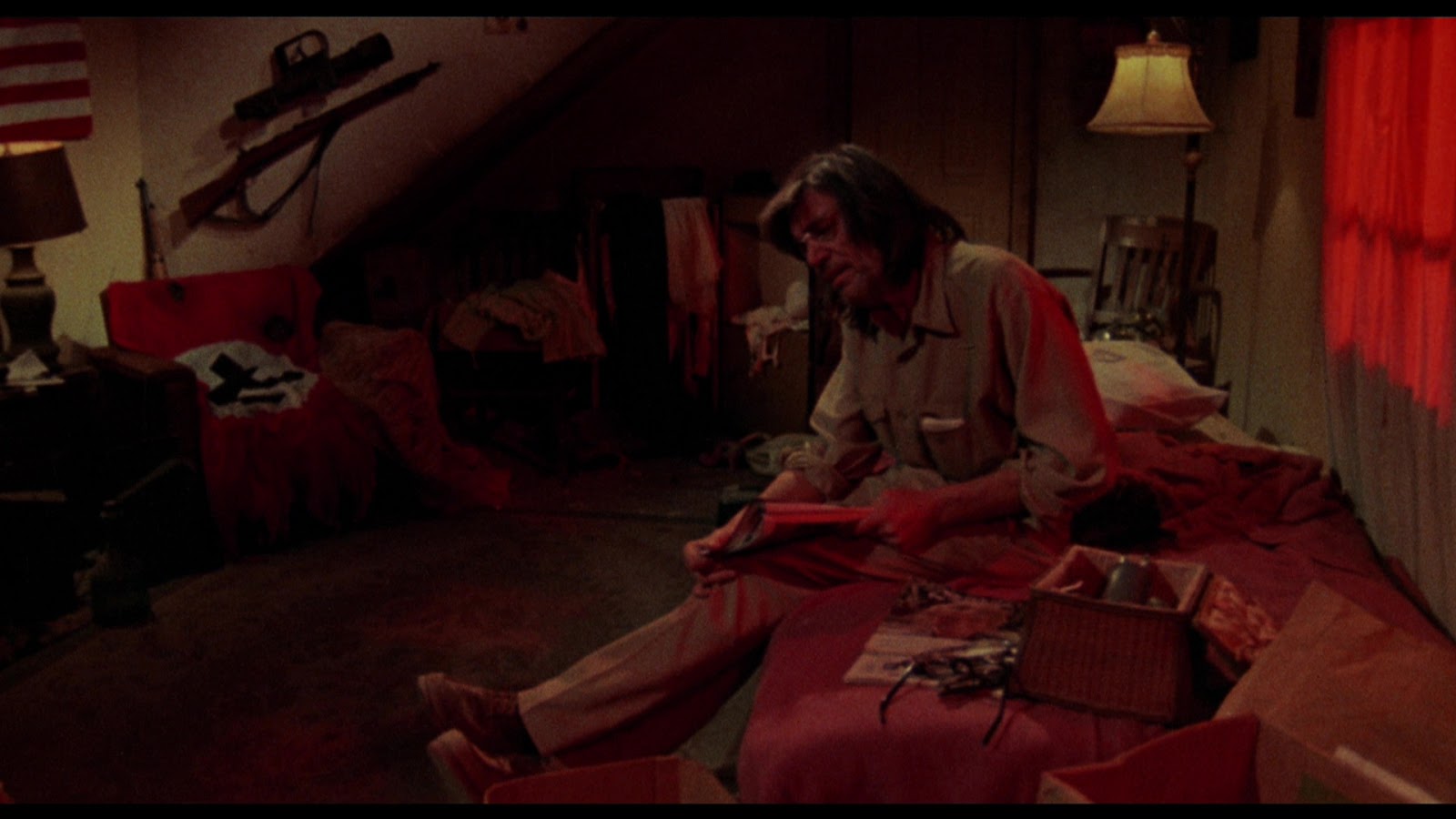
Martin (U.S., 1977, Romero)

martin

George Romero’s melancholy, quasi-vampire tale Martin is the most unexpected movie on this October horror list, and the less you know about it beforehand, the better. One of its primary joys is guessing where Romero is headed next. Suffice to say: rather than the grislier aspects of Night of the Living Dead and its progeny, Martin has more in common with arthouse fare. It’s quiet, subdued, intent on undermining its genre trappings. Its title character may or may not be Nosferatu; the horror may lay elsewhere. Romero shoots small-town Pennsylvania with the eye of a resident, firmly grounding terror in the mundane and making things all the more terrifying for it.

But somewhere in its heart or thereabouts, this is also a film about depression and alienation. Many vampire stories dwell on loneliness, but usually align that sensibility with the agelessness of its suave protagonists. Martin is not ageless, or suave. Romero’s film becomes a meditation on adolescence and desire. There’s plenty of blood, if that’s what you’re after, but the film leaves a different, creepier feeling in its wake.

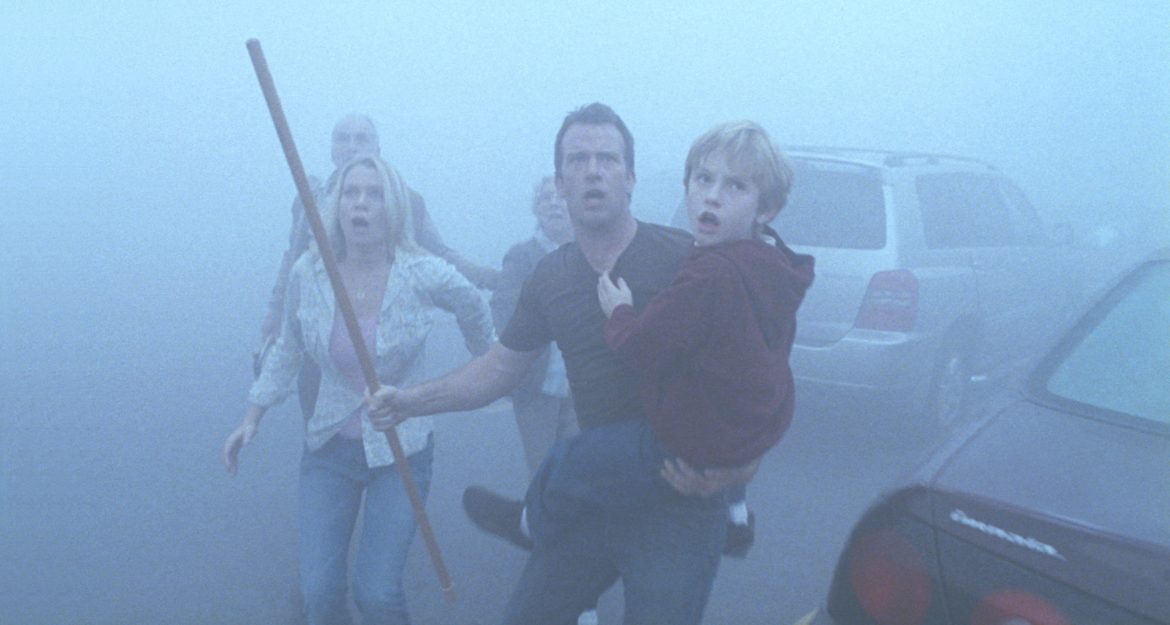
The Mist (U.S., 2007, Stephen King)

the-mist2

Director Frank Darabont spent years trying to bring Stephen King’s “The Mist” to the screen. The result was, according to many, one of the great horror films of all time.

Others, myself included, watch it in frustration. There are so many good ideas here, but arguably too many to quite cohere. The film is at its best when, for the first half, the residents of a small town find themselves trapped inside a grocery store, surrounded by a mysterious, possibly chemical mist that is killing anyone who ventures out. Darabont draws out tension, fatigue, and creeping mania from the claustrophobic environment. In stage-play fashion, we enter a Sartrian world where hell is indeed other people: factions form, millenarian prophecies butt up against rational explanation, people’s worst impulses take hold.

By the time we venture out, we can only be disappointed by the monsters we find. (The CGI doesn’t help, though I’m told it works better in black and white.) The Mist ends on the most cynical of notes, a tragic collapse that Darabont fought for. It is indeed shocking.

But there’s still a sense of compromise: October horror viewers will not sit still for too long, you can hear someone saying, so the unknown has to be revealed. On top of that, Darabont insists on distractingly frequent shot-reverse shot constructions, soft focus, and swelling orchestration that weirdly undermines the horror.

The Mist works best before all that. And even with those critiques, it’s not hard to see why the film is so admired. The idea that the clouds rolling in hide something terrible, that they map onto what we can’t know about things surrounding us in plain sight, is a child’s fear. And horror, at its best, is a genre for children.

October 27, 2016 0 comments
0 FacebookTwitterPinterestEmail
CommentaryFilm

New On Netflix: A Light Beneath Their Feet

by rick October 22, 2016
written by rick

A Light Beneath Their Feet, the sophomore feature from director Valerie Weiss and first-time screenwriter Moira McMahon, could have been disastrously cliched, and at certain moments threatens to veer into Lifetime movie territory. Instead, the film proves emotionally resonant and honest, buoyed by two empathetic central performances and a nuanced approach to familiar beats.

College-bound Beth (Madison Davenport) should be exuberant as high school winds down and a new chapter of her life opens, but instead spends most of her time caring for her bipolar mom Gloria (Tarryn Manning, Orange is the New Black). Davenport movingly conveys Beth’s inner conflict, her desire for freedom and autonomy (represented by her private preference for UCLA over close-to-home Northwestern) and the pull of a responsibility she never asked for but can’t rightly dismiss.

light-beneath-their-feet3

One of many neat tricks A Light Beneath Their Feet, and Davenport especially, pulls off is to render this relationship entirely believable, not simply fodder for an overly broad mental illness tale. Mother and daughter are, by turns, the grown-up and the child (a theme sensitively, if repeatedly, rendered by cinematographer Jeffrey Waldron), and Gloria’s struggles never lapse into caricacture. Alongside the effects of her illness is something much more common — an empty-nest anxiety, exacerbated by the fact that Beth is her keeper, her charge, and her only friend all at once.

light-beneath-their-feet4

Meanwhile, there is a requisite, serviceable romance with a troubled boy (climaxing in a genuinely lovely prom scene), some mean-girl plot contrivances that don’t really land, and a rather convoluted back story to round things out. But A Light Beneath Their Feet is Beth and Gloria’s story, so those slightly undercooked narrative aspects can be forgiven. In the end, it’s a portrait of the complicated but enduring love between a mother and a daughter, each navigating what they need from each other and what they want for themselves.

If this all sounds a little Nicholas Sparks-y for your taste, that’s understandable. (The indie-rock musical cues don’t help matters.) But in context, that’s not quite fair. A Light Beneath Their Feet rings true, with two fully-drawn protagonists. There are no ludicrous final-act reveals, a la Sparks. Weiss and McMahon seek to tell their story from a resolutely female perspective, and they succeed where any number of similar coming-of-age dramas stumble.

Quick Links

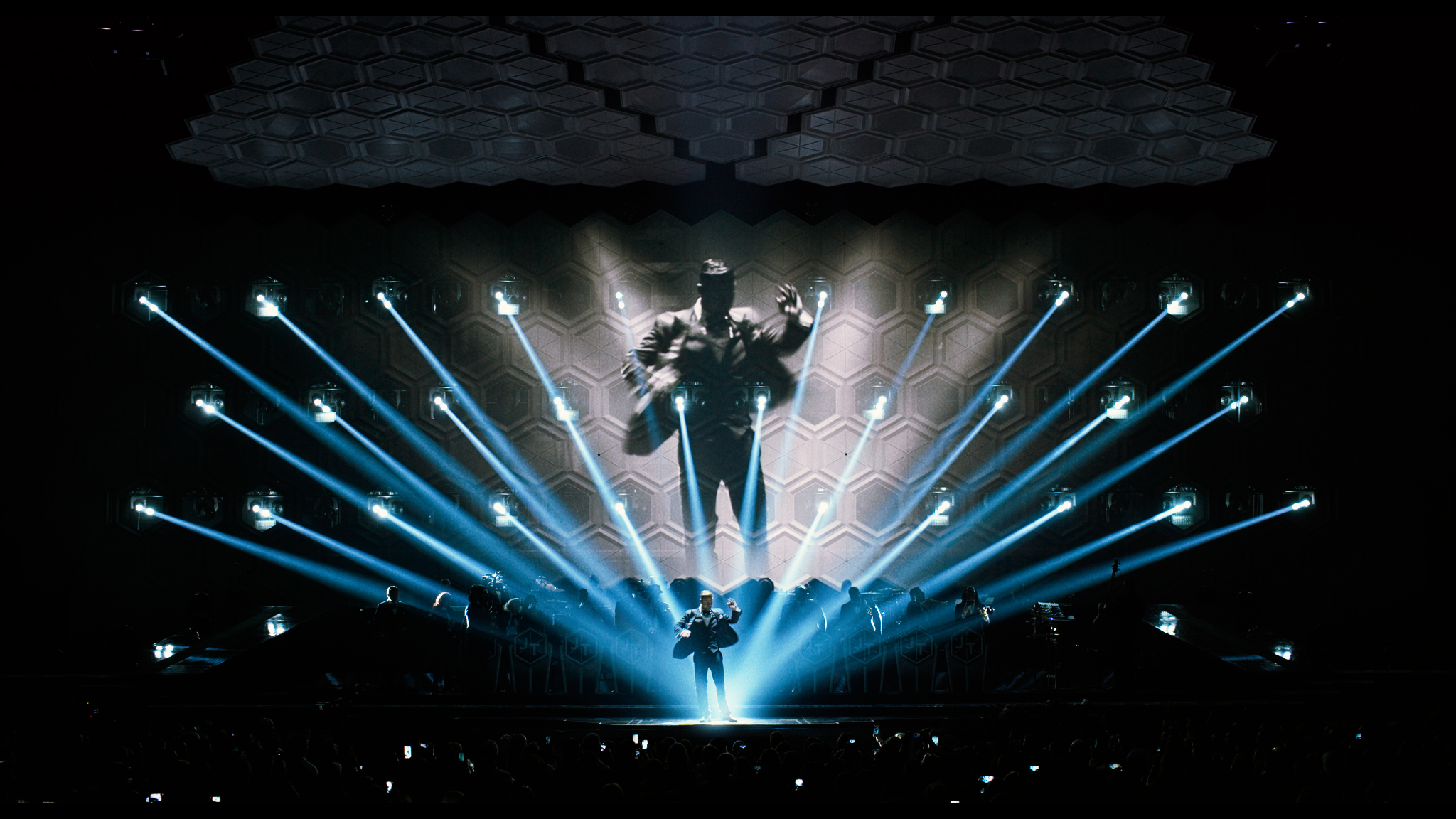
justin-timberlake-and-the-tennessee-kids3Justin Timberlake & The Tennessee Kids: Also brand new to Netflix, and produced for the service, Jonathan Demme’s concert film is expectedly accomplished, entertaining, and revealing. Justin Timberlake (or JT, as it seems everyone in the world calls him) is this generation’s jack-of-all-trades superstar: singer, dancer, actor, all-around charming guy. In Demme’s film, he comes off like Gene Kelly crossed with Michael Jackson, and even if you don’t particularly care for his music (I don’t), the film is never less than engaging. This is, at least in part, due to Demme’s insistent focus on the mechanics of putting on a large stage show (sometimes the literal mechanics).

The film’s best moments are less show-stopping numbers than interstitial scenes, like watching JT wait in darkness on the hydraulic lift below the stage as the countdown to his appearance begins, drinking bottled water, strangely alone and isolated in the frame while tens of thousands cheer in the stadium seats above. Demme also goes out of his way to introduce us to the back-up dancers, singers, and musicians who constitute JT’s “Tennessee Kids”; as in Demme’s Stop Making Sense, the unqualified greatest concert film of all time, this generosity adds a lot to the scenes to follow, since we feel we know each of them a bit as the camera pans across the stage. This is, of course, no Stop Making Sense, but nothing else is either. However, it is an entirely fascinating look at the sweaty hard work of pop stardom, a must for JT fans and entirely worthwhile for everyone else, too.

heathers

Heathers: If the mean-girl subplot of A Light Beneath Their Feet is its weakest aspect and you’re looking for something darker along those lines, Heathers is always here for you. Winona Ryder’s’ strongest performance, Christian Slater at his arch Jack Nicholson-est, and pitch-black through and through, it’s high-school pathology played for laughs, a coming-of-age-through-violence genre tweak. It’s still fun as hell.

quiz-show

Quiz Show: The staid trappings of Robert Redford’s mannered, Old Hollywood take on scandal and a changing media landscape look more wily in retrospect. Featuring stand-out performances from John Turturro and Ralph Fiennes, Redford’s film deftly examines class bigotry, unstated but entirely evident anti-Semitism, and the desire for heroes in the Television Age. Rob Morrow’s investigation into game-show fixing uncovers all kinds of affinity and cross-purposes, and Quiz Show becomes a tragedy in the end. It’s compelling filmmaking, sometimes seemingly forgotten 22 years later. It shouldn’t be.

meeks-cutoff

Meek’s Cutoff: Kelly Reichardt’s newest film Certain Women is a masterpiece of understatement and longing; no surprise, since understated masterpieces are Reichardt’s stock in trade. Meek’s Cutoff, for my money and many others’, finds her at her lyrical peak, painting a story of people caught between here and there on a wide, Western canvas. Michelle Williams has never been better, and the frontier tensions of home and elsewhere, self and other, are laid bare. It’s gorgeous to look at, and troubling to consider, but Reichardt has a knack for drawing out themes without crushing us with them. Meek’s Cutoff is a different kind of Western: poetic, contemplative, fraught with contradiction, sparsely sketched but set against impossibly expansive landscapes. In other words, the Kelly Reichardt kind.

October 22, 2016 0 comments
0 FacebookTwitterPinterestEmail
Newer Posts
Older Posts

About

About

Towards a provisional theory of the cinema, or, failing that, just some shit about movies

Authors
Rick Kelley
Lark Lundberg

Keep in touch

Facebook Twitter

Categories

  • Conversation
  • Film
  • Film By Film
  • Great Movie Project
  • Great Movies: The Counter Programming
  • Guest
  • News
  • Other
    • Commentary
    • Film
    • Interview
    • Reviews
    • Song for a Sunday
  • Streaming Selections
  • TV
  • Uncategorized
  • Vegan Horror

Archives

  • April 2019
  • March 2019
  • January 2019
  • December 2018
  • November 2018
  • October 2018
  • September 2018
  • August 2018
  • July 2018
  • June 2018
  • May 2018
  • April 2018
  • March 2018
  • February 2018
  • January 2018
  • December 2017
  • November 2017
  • October 2017
  • September 2017
  • August 2017
  • July 2017
  • June 2017
  • May 2017
  • April 2017
  • March 2017
  • February 2017
  • January 2017
  • December 2016
  • November 2016
  • October 2016
  • September 2016
  • August 2016
  • July 2016
  • June 2016
  • May 2016
  • April 2016
  • March 2016
  • February 2016
  • January 2016
  • December 2015
  • October 2015
  • September 2015
  • August 2015
  • July 2015
  • June 2015
  • May 2015
  • April 2015
  • March 2015
  • February 2015
  • January 2015
  • December 2014
  • November 2014
  • October 2014
  • August 2009
  • September 2008

Recent Posts

  • China Girls, Death Proof, and the Hidden Face
  • Old News: Old Noise Edition
  • Old News: April 1, 2019
  • Nicolas Winding Refn, Marginalia, and the Deaths of Cinema
  • And now, let us praise Kanopy

Recent Comments

  • Franklin Kat on Michael Shannon shines again in Frank & Lola
  • Sean Tempesta on Cinema and dream-logic in Meshes of the Afternoon
  • ludditerobot on The Left-Wing Slapstick and Iconic Songs of 1937’s Street Angel
  • Franklin Kat on The Left-Wing Slapstick and Iconic Songs of 1937’s Street Angel
  • Arijit Mukherjee on Great Movies Project: The Counter-Programming
  • Facebook
  • Twitter

@2021 - All Right Reserved. Designed and Developed by PenciDesign


Back To Top
Luddite Robot
  • Reviews
  • Commentary
  • Great Movie Project
    • Great Movie Project
      Bride of Frankenstein is a movie for and…

      January 25, 2018

      Great Movie Project
      The Enduring Appeal of Nick and Nora in…

      November 29, 2017

      Great Movie Project
      The Ahistorical Fever Dream of The Scarlet Empress

      August 2, 2017

      Great Movie Project
      Dreams, Mundanity, and the Anarchist Yearnings of L’Atalante

      July 12, 2017

      Great Movie Project
      Duck Soup Is And Will Always Be A…

      April 19, 2017

  • Counter Programming
    • Great Movies: The Counter Programming
      Walking and Talking in the Shadow of Kanchenjungha

      March 7, 2018

      Great Movies: The Counter Programming
      A Brief Encounter in My Mother and Her…

      February 9, 2018

      Great Movies: The Counter Programming
      Horror’s Refusal in Farrokhzad’s The House Is Black

      October 13, 2017

      Great Movies: The Counter Programming
      The rage and beauty of The Cloud-Capped Star

      October 3, 2017

      Great Movies: The Counter Programming
      The daylight noir and social issue empathy of…

      June 22, 2017

  • Vegan Horror
    • Vegan Horror
      Julia Ducournau doesn’t think her film Raw is…

      June 7, 2017

      Vegan Horror
      Licking our wounds: The vampiric masculinity of Ravenous

      December 13, 2016

      Vegan Horror
      Eggertsson and animals: An approach to horror cinema

      September 15, 2016

      Vegan Horror
      “It’s Not My Nature” – Vegetarianism, Body Horror,…

      August 30, 2016

      Vegan Horror
      Bodies and Carcasses in Predator 2

      August 23, 2016

  • Interview
    • Interview
      Jasmine Leyva’s doc The Invisible Vegan aims to…

      May 3, 2017

      Interview
      Bridging The Abyss: An Interview With The Directors…

      November 28, 2016

      Interview
      7 Days in Ohio: An Interview with Nathan…

      September 12, 2016

      Interview
      Film Critic Phil Dy talks New Filipino Cinema

      June 17, 2016

      Interview
      “I Love Seeing Film Projected.” A Conversation with…

      March 22, 2016