Top Posts
Madeline’s Madeline: An Unclassifiable Panic Attack Maybe-Masterpiece
Shoplifters Steals Moments of Wonder from the Mundane
Burning and Forgetting What’s Not There
Kusama: Infinity Expands Beyond The Canvas
Mandy Risks Little, Wins Little
In We The Animals, The Children Are Away...
The Seagull Isn’t Quite Chekhov, But It’s Still...
5 Million Ways Boots Riley Isn’t Sorry To...
American Animals’ and the Queasiness of the Heist
A Star Is Born In Hearts Beat Loud
  • Reviews
  • Commentary
  • Great Movie Project
    • Great Movie Project
      Bride of Frankenstein is a movie for and…

      January 25, 2018

      Great Movie Project
      The Enduring Appeal of Nick and Nora in…

      November 29, 2017

      Great Movie Project
      The Ahistorical Fever Dream of The Scarlet Empress

      August 2, 2017

      Great Movie Project
      Dreams, Mundanity, and the Anarchist Yearnings of L’Atalante

      July 12, 2017

      Great Movie Project
      Duck Soup Is And Will Always Be A…

      April 19, 2017

  • Counter Programming
    • Great Movies: The Counter Programming
      Walking and Talking in the Shadow of Kanchenjungha

      March 7, 2018

      Great Movies: The Counter Programming
      A Brief Encounter in My Mother and Her…

      February 9, 2018

      Great Movies: The Counter Programming
      Horror’s Refusal in Farrokhzad’s The House Is Black

      October 13, 2017

      Great Movies: The Counter Programming
      The rage and beauty of The Cloud-Capped Star

      October 3, 2017

      Great Movies: The Counter Programming
      The daylight noir and social issue empathy of…

      June 22, 2017

  • Vegan Horror
    • Vegan Horror
      Julia Ducournau doesn’t think her film Raw is…

      June 7, 2017

      Vegan Horror
      Licking our wounds: The vampiric masculinity of Ravenous

      December 13, 2016

      Vegan Horror
      Eggertsson and animals: An approach to horror cinema

      September 15, 2016

      Vegan Horror
      “It’s Not My Nature” – Vegetarianism, Body Horror,…

      August 30, 2016

      Vegan Horror
      Bodies and Carcasses in Predator 2

      August 23, 2016

  • Interview
    • Interview
      Jasmine Leyva’s doc The Invisible Vegan aims to…

      May 3, 2017

      Interview
      Bridging The Abyss: An Interview With The Directors…

      November 28, 2016

      Interview
      7 Days in Ohio: An Interview with Nathan…

      September 12, 2016

      Interview
      Film Critic Phil Dy talks New Filipino Cinema

      June 17, 2016

      Interview
      “I Love Seeing Film Projected.” A Conversation with…

      March 22, 2016

Luddite Robot
Film critique, theory, and assorted nonsense.
CommentaryFilm

China Girls, Death Proof, and the Hidden Face

April 14, 2019

Old News: Old Noise Edition

April 8, 2019

Old News: April 1, 2019

Nicolas Winding Refn, Marginalia, and the Deaths of Cinema

CommentaryFilm

And now, let us praise Kanopy

January 24, 2019

Warren Sonbert and the Relief of Anti-Narrative

January 14, 2019

The World Is Ending and It Doesn’t Matter

The Best Films of 2018

FilmReviews

Madeline’s Madeline: An Unclassifiable Panic Attack Maybe-Masterpiece

December 21, 2018

Shoplifters Steals Moments of Wonder from the Mundane

December 11, 2018

Burning and Forgetting What’s Not There

Alien, Musicology, and Reading Soundtracks

CommentaryFilm

Shocktober III: Halloween 2018 Edition

October 24, 2018

Shirley Jackson’s The Lottery Traumatized Schoolkids in 16 mm

October 18, 2018

Shocktober 2018 II: Another Reshockening (of Horror)

Häxan is a movie made by a movie character

CommentaryFilm

Shocktober 2018

October 7, 2018

Unprofessional! Spring Night, Summer Night

October 3, 2018

The Wild Boys: A Luddite Robot Conversation

Kusama: Infinity Expands Beyond The Canvas

CommentaryFilm

Why Isn’t Southland Tales A Cult Classic?

by rick September 29, 2016
written by rick

Recently, the good folks at Swampflix invited me onto their podcast to talk about the films of Richard Kelly: Donnie Darko, Southland Tales, and The Box. (I’m leaving aside Domino, because he did not direct it, and because it is both atypical, a Tony Scott film, and also bad.)

This invite may or may not have arrived because I, too, am named Richard Kelley, and therefore presumably have a unique insight into the mind of my doppelganger. (This would certainly make sense to Richard Kelly, I think.) But, instead, after several days spent in the weird, watery, alternate dimensions of his work, I have more questions than answers.
Among them: why is the cosmically baffling Southland Tales not considered a cult classic?
southland-tales-4

Donnie Darko is a perennial favorite for critics and freshman college students alike and The Box is Kelly’s secret masterpiece. But why hasn’t official cult status been conferred on Southland Tales? It seems to have everything it would require.

Sure, you could reply with the stock answer, “Because Southland Tales is bloated, incomprehensible, and not very good.” That would be fair, and it was certainly how it was received in 2006, at what Roger Ebert called “the most disastrous Cannes press screening since, yes, ‘The Brown Bunny’”.

It has its defenders these days, but it’s not exactly beloved. On Rotten Tomatoes, it stands at 36% for critics and a slightly more generous 41% from audiences, and while the Swampflix folks and I had positive things to say, our friends over at We Love To Watch were decidedly less enthusiastic.

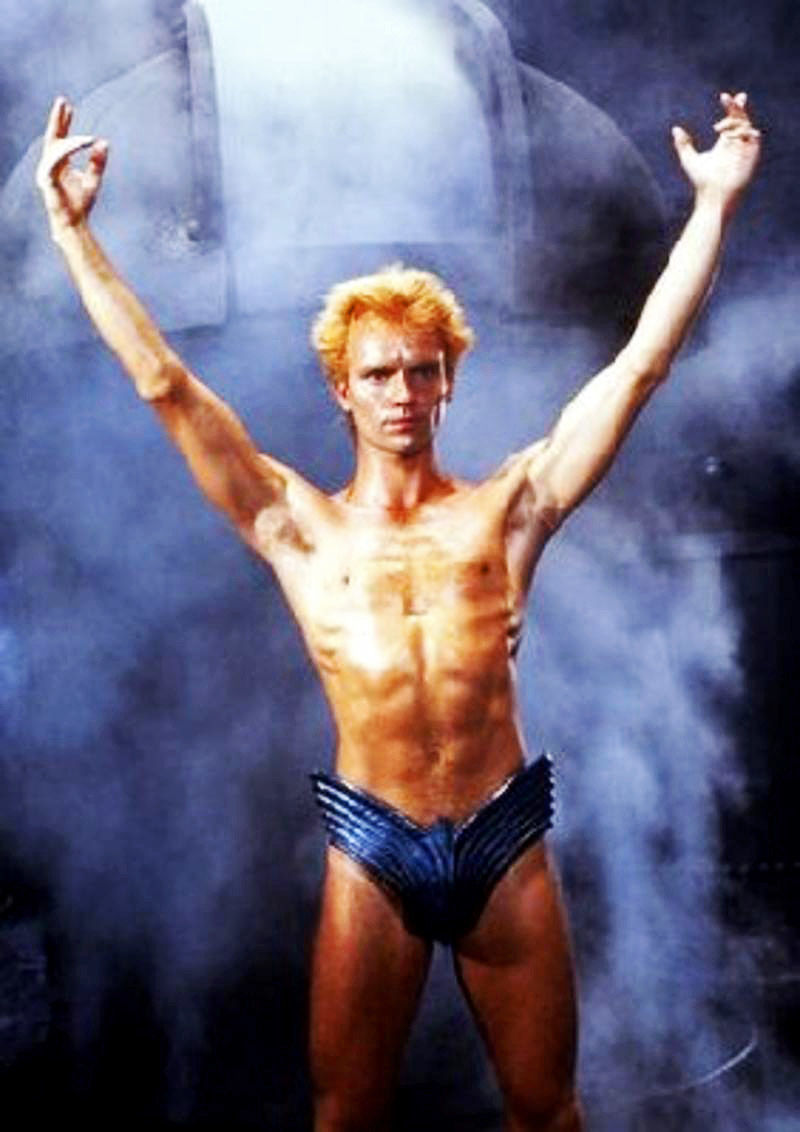
But an unfavorable, even disastrous reception and a clunky, overextended narrative doesn’t fully explain it. Poor box office is basically a requirement of the category. “Bloated and incomprehensible” certainly didn’t get in the way of recuperating David Lynch’s Dune as a cult materpiece for a significant chunk of viewers, some of whom now see in it the stamp of its auteurist creator where once people mostly just saw Sting in a Speedo from the future and Kyle Maclachlan saying things like, “Stilgar, do you have wormsign?”
sting-speedo-southland-tales

This should seem to bode well, actually, for the ludicrously overextended, much-derided Southland Tales: Kelly is nothing if not peculiarly fixated on his pet themes and aesthetic, and his previous Donnie Darko is as good a candidate as any for the paradigm of the modern cult classic. (In fact, it’s Entry #1 in Scott Tobias’ series The New Cult Canon on the AV Club.) So why not his follow-up?

At least part of the answer lies with the question of intent. The films that end up embraced by a legion of die-hards are often issue from directors with a singular, sometimes dubious vision. This isn’t always true, but there are plenty of examples. The very same ambition that can produce a masterpiece can also produce something so wildly misjudged that it becomes lovable for that very reason. You can tell where it was supposed to land, but something went kind of wacky along the way.
the-room-tuxedo-southland-tales

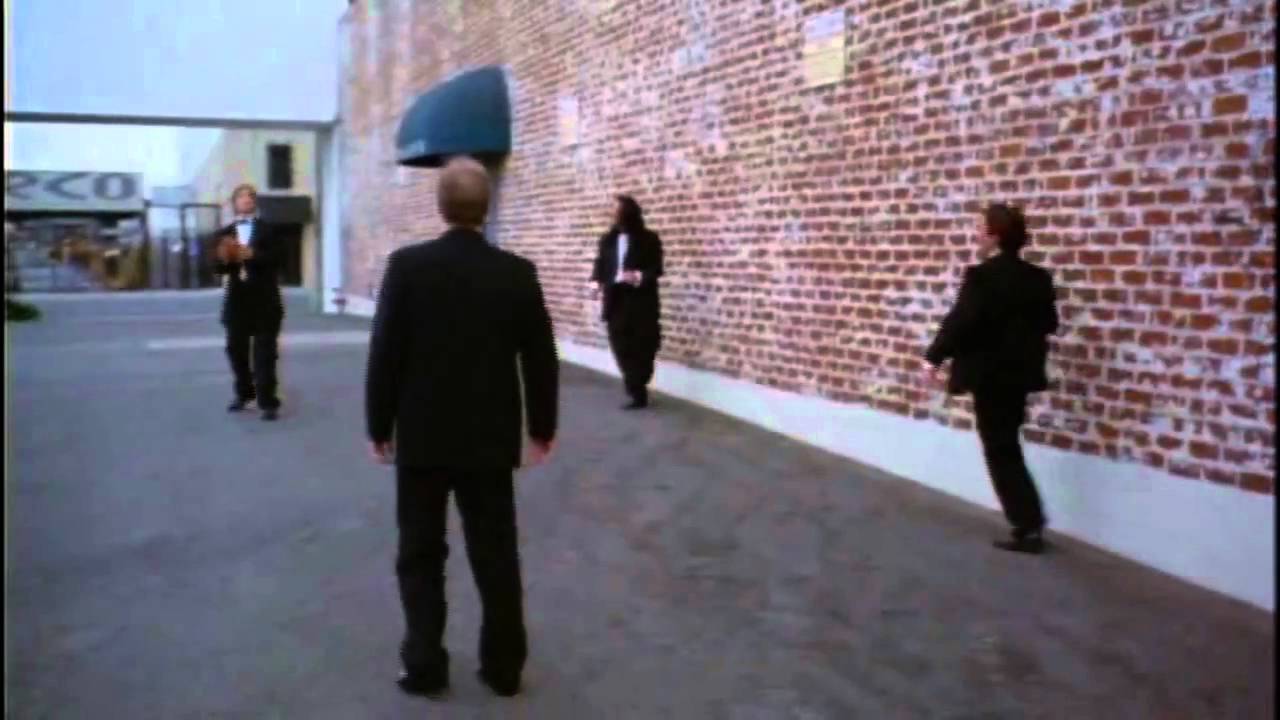
To take one recent example: audiences continue to buy tickets for screenings of The Room because it’s so readily apparent from scene to scene what Tommy Wiseau has in mind, as well as the degree to which he misses the mark. When Wiseau decided a scene meant to convey male bonding should involve a bunch of guys in tuxedos awkwardly tossing a football to each other in an alley, it’s hard not to be mesmerized by the enormous gap between intention and execution. But the intent was there.

In Southland Tales, it is never clear what Kelly is aiming for, on either the micro or the macro scale. Tones and moods butt up against each other; in individual scenes, characters behave as thought they’re in different movies. It’s not hard to see how this might happen in a narrative that focuses on Bush-era paranoia, surveillance, porn star reality shows, the apocalypse, time-travel, secret societies, meta-screenplays, Neo-Marxist resistance movements, amnesia, a drug called Fluid Karma, and a flying ice cream truck. But still.
southland-tales-8

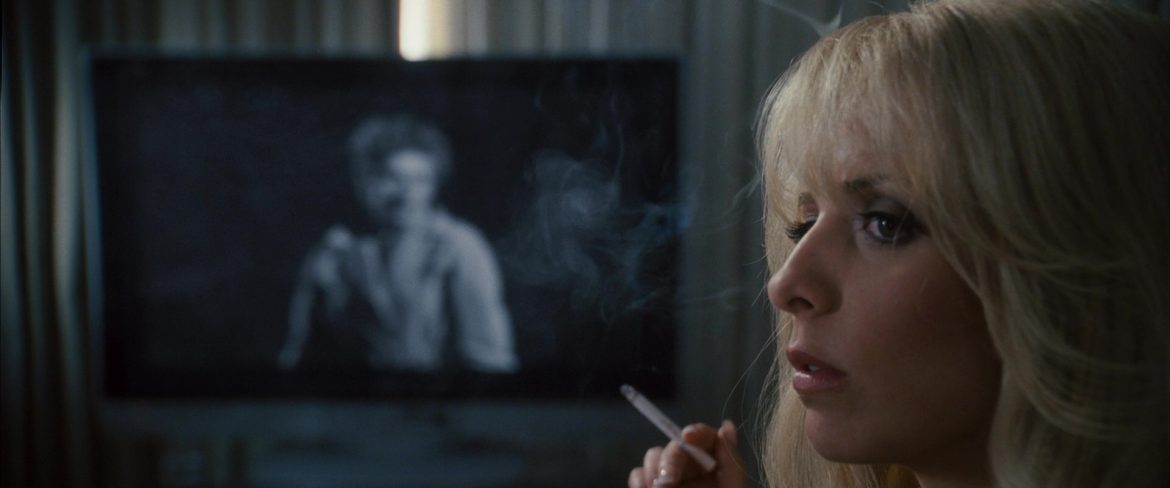
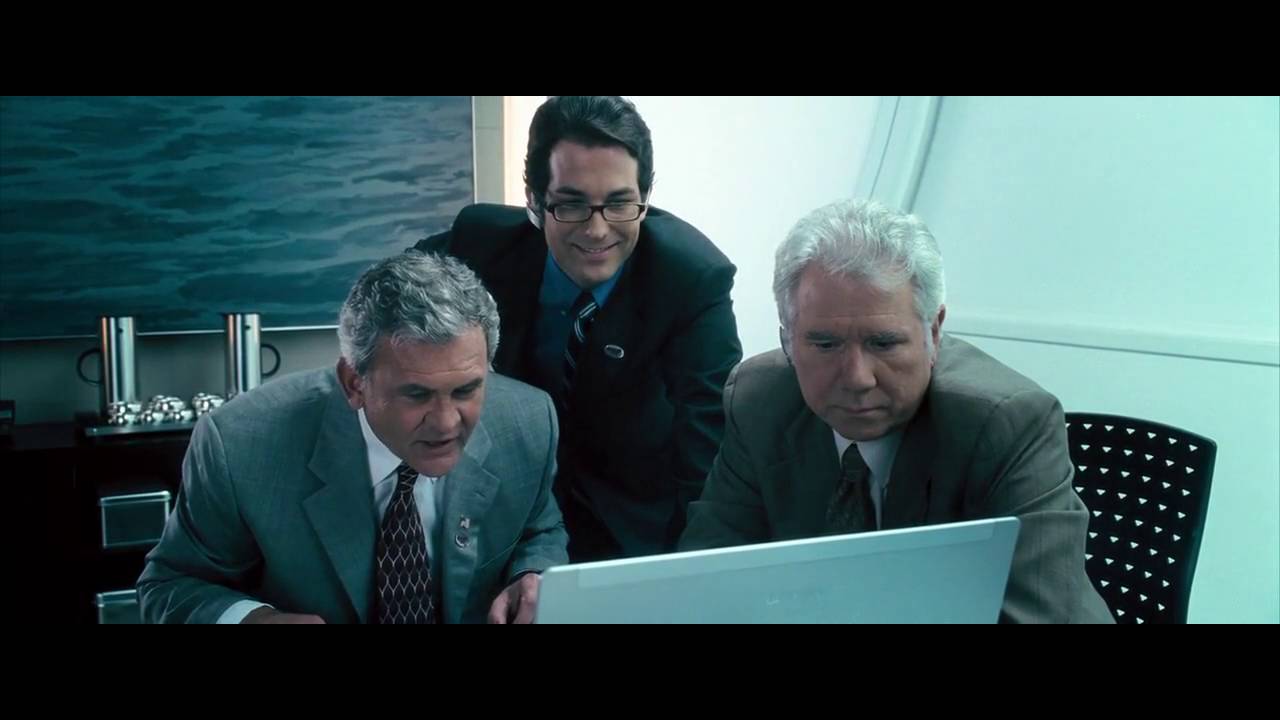
At one moment, Southland Tales seems to be rooting around in the same soil as Idiocracy (released the same year): World War III is sponsored by Hustler Magazine and Bud Light, a political ad portrays to SUVs having graphic car sex, Sarah Michelle Gellar’s porn star, Krysta Now, spouts gibberish on her TV show and is promoting a record called “Teen Horniness Is Not A Crime”.

southland-tales-6

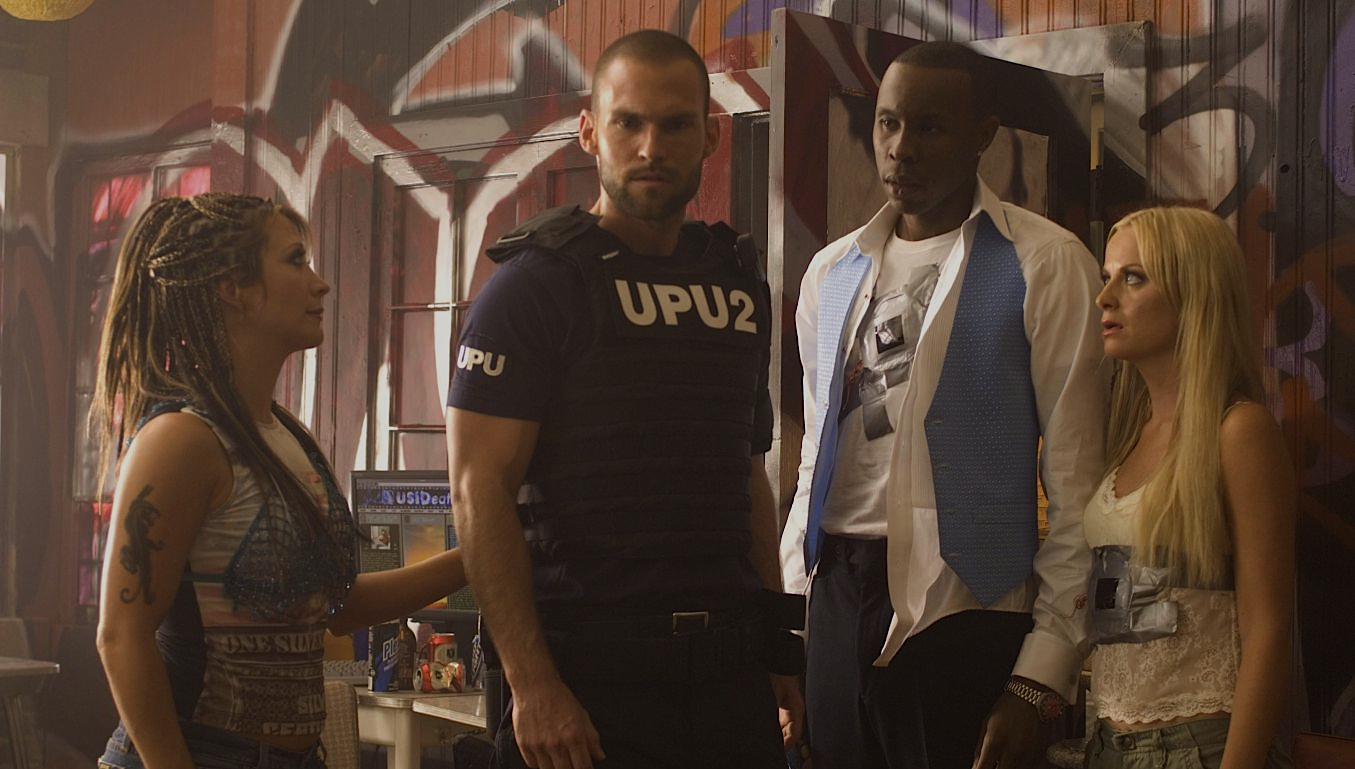
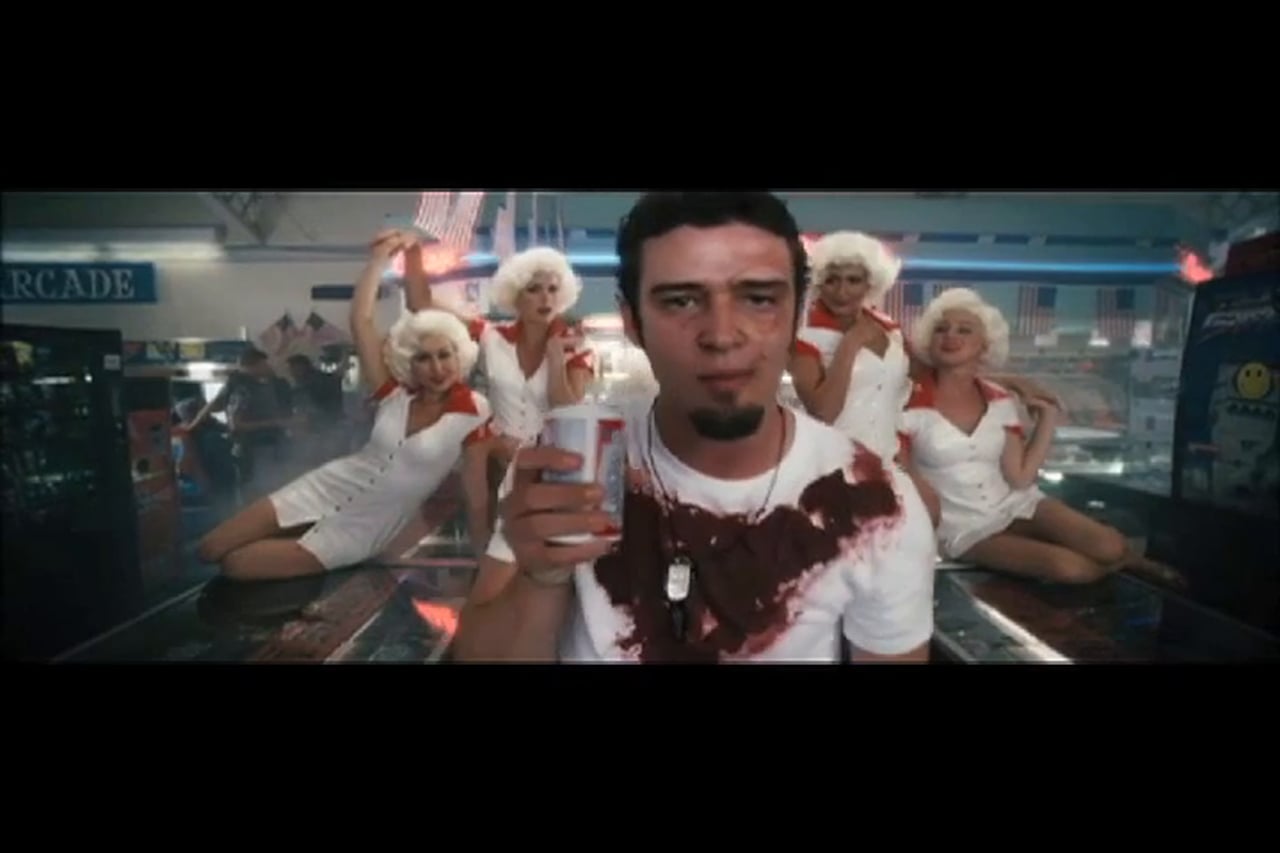
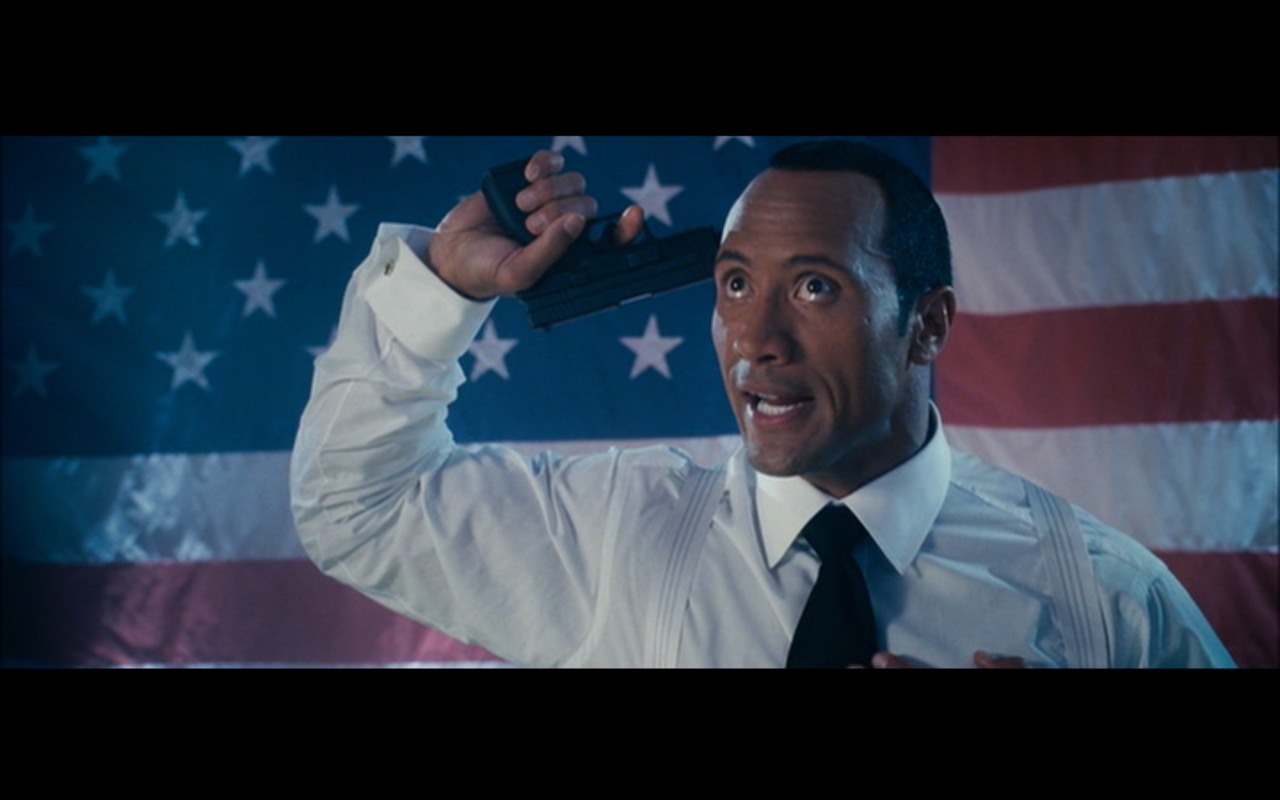
But meanwhile, Seann William Scott is involved in a sci-fi melodrama played almost entirely straight. Dwayne Johnson does a comic thing with his fingers from time to time and gets to mug a little bit, but generally seems to have arrived from an action and/or spy movie. Wallace Shawn, bent on world domination, is dressed like a rave-wizard with unlimited credit at JoAnn’s Fabrics. When not inscrutably narrating the story from a machine gun turret in the ocean, Justin Timberlake likes to stop the film entirely to lip-sync to The Killers, while bewigged, dancing nurses swarm around him.
southland-tales-3

And there’s the whole thing with the space-time continuum.

What could it possibly all mean? Perhaps to assist us, Kelly fills Southland Tales with literary and film references. This is another of his quirks, on display in Donnie Darko (E.T., Stephen King’s IT, Graham Greene, Watership Down)  and The Box (Sartre’s “No Exit”)  as well, but he takes it to the point of absurdity here.

This is a film that draws heavily on The Book of Revelation, which Timberlake’s Pilot Abilene is constantly reading. (Abilene was also one of the Texas towns nuked in the intro.) T.S. Eliot’s “The Hollow Man” makes several appearances. The suspiciously George W. Bush-like vice-presidential candidate quotes Robert Frost’s “The Road Not Taken,” twice. (Also, his character’s name is Bob Frost. Funny?) Langston Hughes’ “miles to go before I sleep” is pointedly deployed. Unsurprisingly, the Neo-Marxists enjoy casually tossing in some political philosophy (“Anyone who knows anything of history knows that great social changes are impossible without feminine upheaval”), though it’s hard to know what to make of a Marxist group who use anarchy symbols in their logo. For some reason, the lyrics to Jane’s Addiction’s “Three Days” are repeatedly cited without context.
southland-tales-7

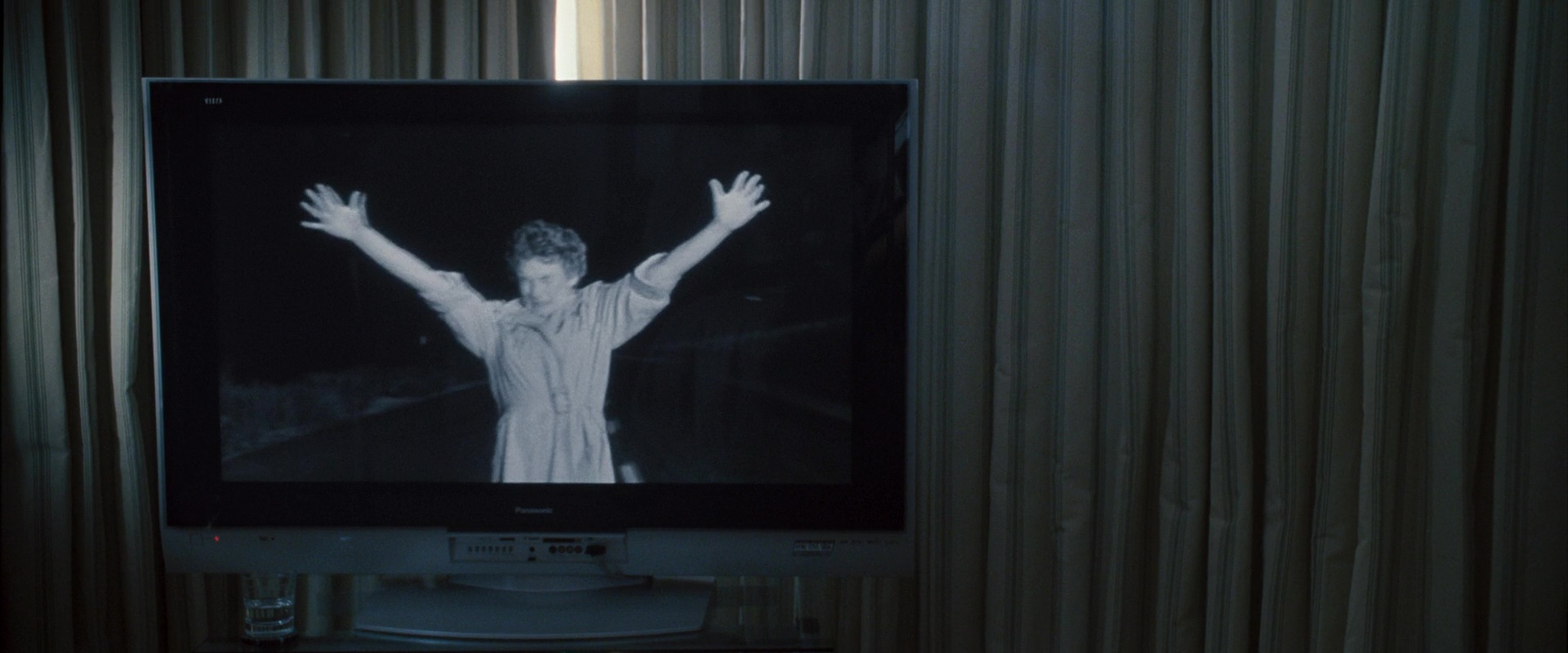
Robert Aldrich’s 1955 weirdo-noir Kiss Me Deadly serves as something of an organizing theme in Southland Tales, much as it did a decade earlier in Pulp Fiction (though the apocalyptic notes of Aldrich’s classic seem more at home here). It’s playing on TV when two central characters meet, and it’s playing in the background again at the climax. The name Dr. Soberinn Exx (Curtis Armstrong … yes, Booger from Revenge of the Nerds, just one of the dozens of odd casting choices) is a direct reference to the evil doctor of Kiss Me Deadly.

Meanwhile, Mulholland Drive‘s Rebekah Del Rio shows up to croon for us again, and Johnson’s character — both in his screenplay and the film-within-the-film that draws from it — is named Jericho Cain, the moniker of Arnold Schwartzenegger’s protagonist in the 1999 action movie End of Days.

So that should clear things up. (For a heroic attempt to list these out, see Thomas Rogers in Salon.)

But to get back to the central idea here, the cumulative effect of all this navel-gazing and jarring tonal shifts isn’t to generate intrigue but exhaustion, just as the individual scenes don’t reveal a weird, mesmerizing tension but a flatness. While cult favorites often move towards narrative inexplicability, the particular variety of ambitious overreach in Southland Tales seems more like a director demanding his film be decoded. This is not a good look, and the movie’s insistence on being grappled with actually keeps the viewer at a distance instead.

Still, while these things might constitute roadblocks to cult status, Southland Tales has so many ideas that it proves compulsively watchable. I spent my first viewing laughing and shaking my head at how misconceived it truly is … then watched it again the next day.
southland-tales-1

There are some scenes that really work well, and if it fails to cohere, it’s never dull. When Timberlake says, “Venice Beach was the home to the Neo-Marxist underground. They were the disciples of the German philosopher, Karl Marx,” it’s unclear whether Kelly meant it to be funny, but I laughed both times.

There’s even an argument to be made that the sheer enormity of exposition and narrative, and its frantic aesthetic, make Southland Tales an ambitious failure that nevertheless expressed much about the period in which it was made. When Kelly divides the screen like a DVD-chapter menu, with jabbering talking heads all telling us aspects of the plot at once, it could be construed as a commentary on information overload. The references bounce off each other in ways too opaque to process. And all the while, surveillance cameras capture our every move, as tyrants extend their grip on power and our identities as citizens, or even stable personalities, become increasingly less coherent. This would remain relevant today.

Or maybe Southland Tales is just a mess, as many people conclude; a second-time director granted a staggering amount of studio resources to capture every idea he ever had, then methodically editing away to the point of incoherence. It’s still a fascinating, enervating film to encounter, if only to ask, “What was everybody thinking?”

In a less-than-rave at the time of its release, Roger Ebert, citing ambition but failure to stick the landing, called Donnie Darko “the one that got away.”

Of course, he hadn’t seen Southland Tales yet, which really seems to earn this title through sheer, baffling conviction. It might never attract a committed enough audience to constitute a bona-fide cult classic, but there’s no denying its wild ambition, and even wilder missteps.
September 29, 2016 0 comments
1 FacebookTwitterPinterestEmail
CommentaryFilm

Vegan Horror and the Abject: Zombie!

by rick September 26, 2016
written by rick

The zombie occupies a unique position in the cultural imagination. Neither living nor dead, neither human nor animal, it is a boundary-blurring figure.

It can be, and usually is, frightening in its monstrosity and lack of category cohesion, but it can be tragic, too: most zombie stories involve the shock and sadness of seeing loved ones become … not quite themselves. And because the zombie generally lives to consume flesh (or brains), it becomes not just a stand-in for fears of cannabilism, a metaphor for out-of-control consumption, or an oblique approach to discontinuity, but another entry in the annals of vegan horror. Its guts, as it were.

Zombies have a long and storied tradition in literature and film. The concept of the living undead, of course, has deep roots in Vodou culture, while the word itself was first recorded in English in 1819 (in a history of Brazil). The OED traces it to West Africa, according to Wiki, “and compares it to the Kongo words nzambi (god) and zumbi (fetish).” Along with the werewolf and the vampire, it’s pretty safe to say that the zombie rounds out the triumvirate of monstrous horror icons.

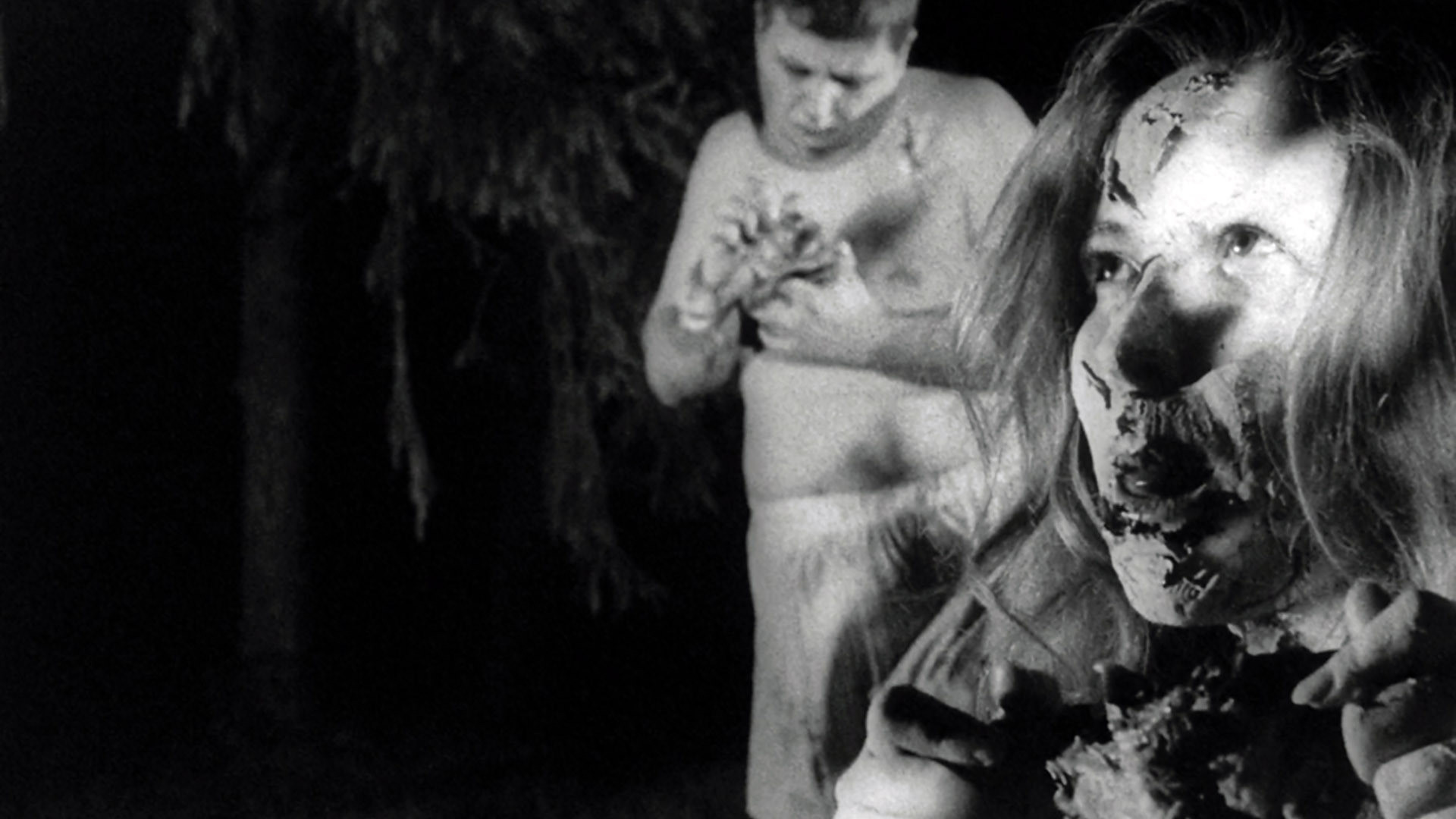
night-of-the-living-dead-zombie

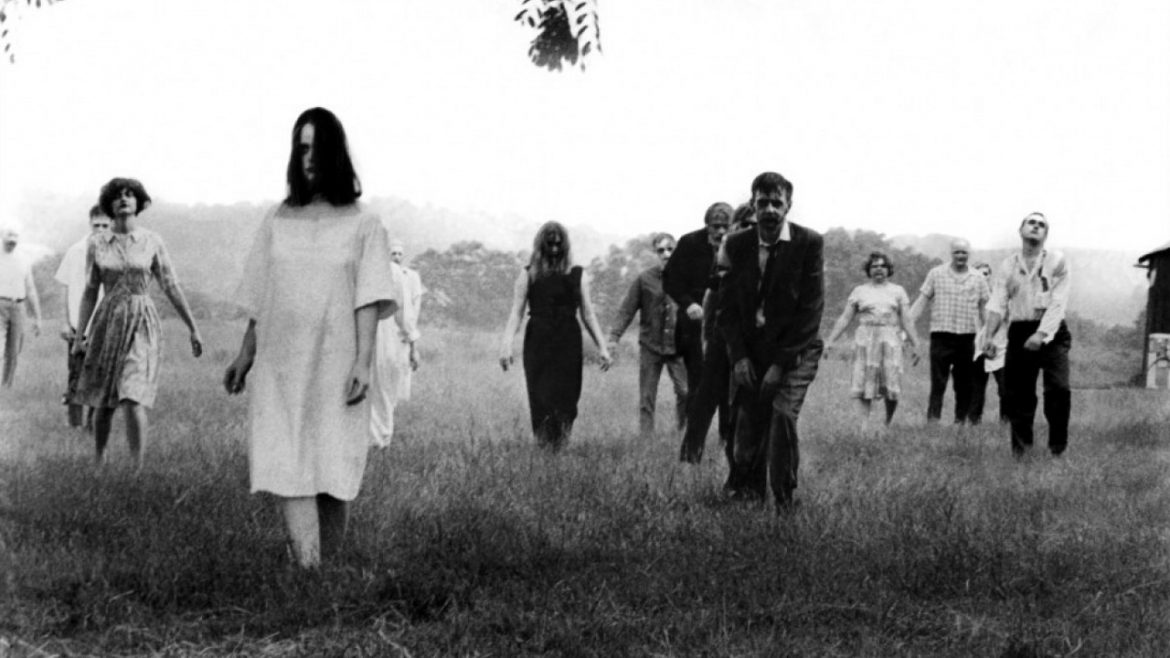
The examples are too many to list (and bleed into sci-fi of course), but, for our purposes here, George Romero’s The Night of the Living Dead will suffice. It’s an iconic version, a horror game-changer in many ways. To bring it closer to home, Romero’s low-budget masterpiece was also the first movie to truly scare me. (Why network TV aired it at all, and why I was allowed to watch it at age 7, both remain mysterious. But it made an impact.)

This was surely attributable, in part, to all the viscera, the weird spectacle of seeing a young girl with a blood-smeared face feasting on a kill, and the claustrophobia of the interior shots. There was a sense that normal people could become monsters that got under this young film viewer’s skin, so to speak.

But there was also something else, something hard to pinpoint. A simultaneous revulsion and appeal that lies at the root of horror’s lure. In the opening paragraph to her influential treatise “Powers of Horror: An Essay on Abjection”, Julia Kristeva attempted to locate it:

There looms, within abjection, one of those violent, dark revolts of being, directed against a threat that seems to emanate from an exorbitant outside or inside, ejected beyond the scope of the possible, the tolerable, the thinkable. It lies there, quite close, but it cannot be assimilated. It beseeches, worries, and fascinates desire, which, nevertheless, does not let itself be seduced. Apprehensive, desire turns aside; sickened, it rejects. A certainty protects it from the shameful—a certainty of which it is proud holds on to it. But simultaneously, just the same, that impetus, that spasm, that leap is drawn toward an elsewhere as tempting as it is condemned. Unflaggingly, like an inescapable boomerang, a vortex of summons and repulsion places the one haunted by it literally beside himself.

No, at seven years old, I was not considering post-Lacanian analysis, but the notion of abjection was latent in the figure of the zombie.

From the standpoint of this series, Kristeva’s framework makes a lot of sense. The zombie is neither human nor animal, but it induces a particular kind of terror, born of “the human reaction … to a threatened breakdown in meaning caused by the loss of the distinction between subject and object or between self and other.”

The unending desire to feed is, if not representative of animality, certainly related to our constructions of it. We often demarcate the human specifically in opposition to such “base” tendencies, always terrified of the beast within. Kristeva writes “The abject confronts us, on the one hand, with those fragile states where man strays on the territories of animal.”

Eating, feeding, consumption. These are the very things that sacred texts spend an awful light of time delimiting, via dietary restrictions and stories. In The Night of the Living Dead, our protagonist Ben shouts: “Don’t you know what’s going on out there? This ain’t no Sunday School picnic!” Indeed it is not.

It’s an ironic line that gains resonance with this passage from Kristeva:

From its very beginning, the biblical text insists on maintaining the distance between man and God by means of a dietary differentiation. Thus the Lord (Genesis 3:22), after noting that “man is become as one of us, to know good and evil,” decides to prevent this pretentious “scholar” from also becoming immortal. He thus prohibits certain foods by banishing him from the garden of Eden, “lest he put forth his hand, and take also from the tree of life, and eat, and live for ever.” If a certain kind of eating, that of the apple of knowledge,’could not have been held back from Adam, who was tempted by Eve, herself tempted by the Serpent, another food will be absolutely banned, in order to forestall the chaos that would result from the identification of man with the immortality of God. One should note that it is a feminine and animal temptation that is concealed under the first dietary trespass; for we shall encounter the reference to woman only fortuitously in the later abominations of the Levites.

This is precisely why, contra Eggertsson, I opt to include the zombie — and the werewolf, and the vampire — in the vegan horror discussion. What Kristeva calls “the semiotics of Biblical abomination” often hits right to the heart of horror precepts, and marks the moment of their boundary-complicating ideas. We are not simply afraid of monsters; we are afraid monstrosity might implicate us, that our identities are not so stable, that our free will is not so free.

In the years since The Night of the Living Dead, Romero and many others have refined, subverted, and rerouted the zombie trope. At this point, it could mean almost anything — in daily life, we refer to our fellow worker cogs on the subway as zombie-like. David Cronenberg — a post-Lacanian’s wet dream — has his late-capitalist sex zombies in their pre-fab high-rises. Shaun of the Dead had a good time wondering if we’d ever even notice the undead apocalypse.

But, underlying all of this, there is an intractable worry about categories and identities, about the human, the non-human, and the anti-human. The zombie is an instructive entry point to horror cinema for exactly this reason, occupying no specific space but organized around its feeding in ways that lend themselves to analysis.

When Johnny jokingly remarks, “They’re coming to get you, Barbara!”, the irony is he’s absolutely right. They really are.
But the deeper concern is that maybe there’s no “they” to speak of at all. Kristeva, one last time:

I experience abjection only if an Other has settled in place and stead of what will be “me.” Not at all an other with whom I identify and incorporate, but an Other who precedes and possesses me, and through such possession causes me to be.

To put it in more familiar terms for genre fans, perhaps the zombie call has been coming from inside the house. If identities are malleable and unstable, forged through confrontation with the monstrous others we create, this means “humanity” itself might be a useful fiction, at best.

night-of-the-living-dead-zombie2

Meanwhile, outside, a small girl is gleefully devouring entrails.

September 26, 2016 0 comments
1 FacebookTwitterPinterestEmail
Film

New on Netflix: Zootopia

by rick September 23, 2016
written by rick

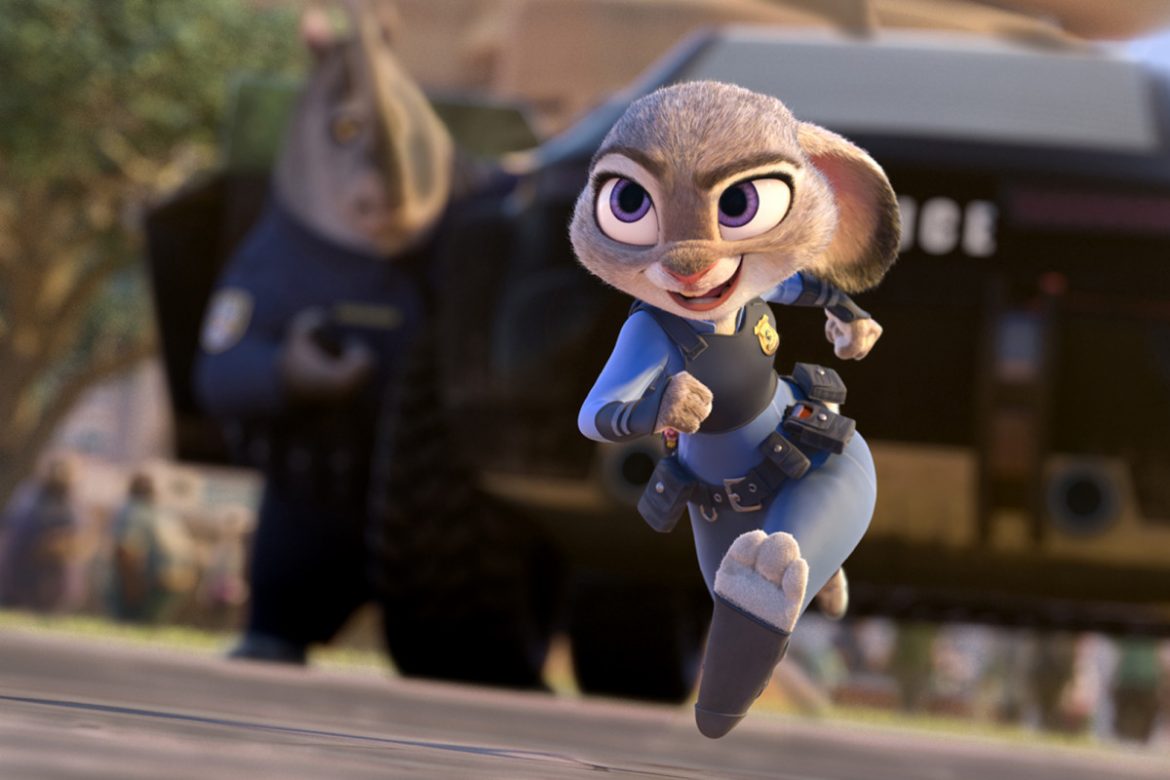
Creating a believably “lived-in world” is both a necessity for accomplished animation and a critical cliche. That phrase has to be up there with “dream-like” and “too on-the-nose” in someone’s list of Things Critics Need To Stop Trotting Out. Yet it’s true: Disney’s Zootopia, the Mouse House’s best feature in years, looks and feels entirely lived-in. It’s an elaborately designed and constructed universe, delightful to behold, hilarious in execution for kids and adults alike. And it even traffics in some wisdom.

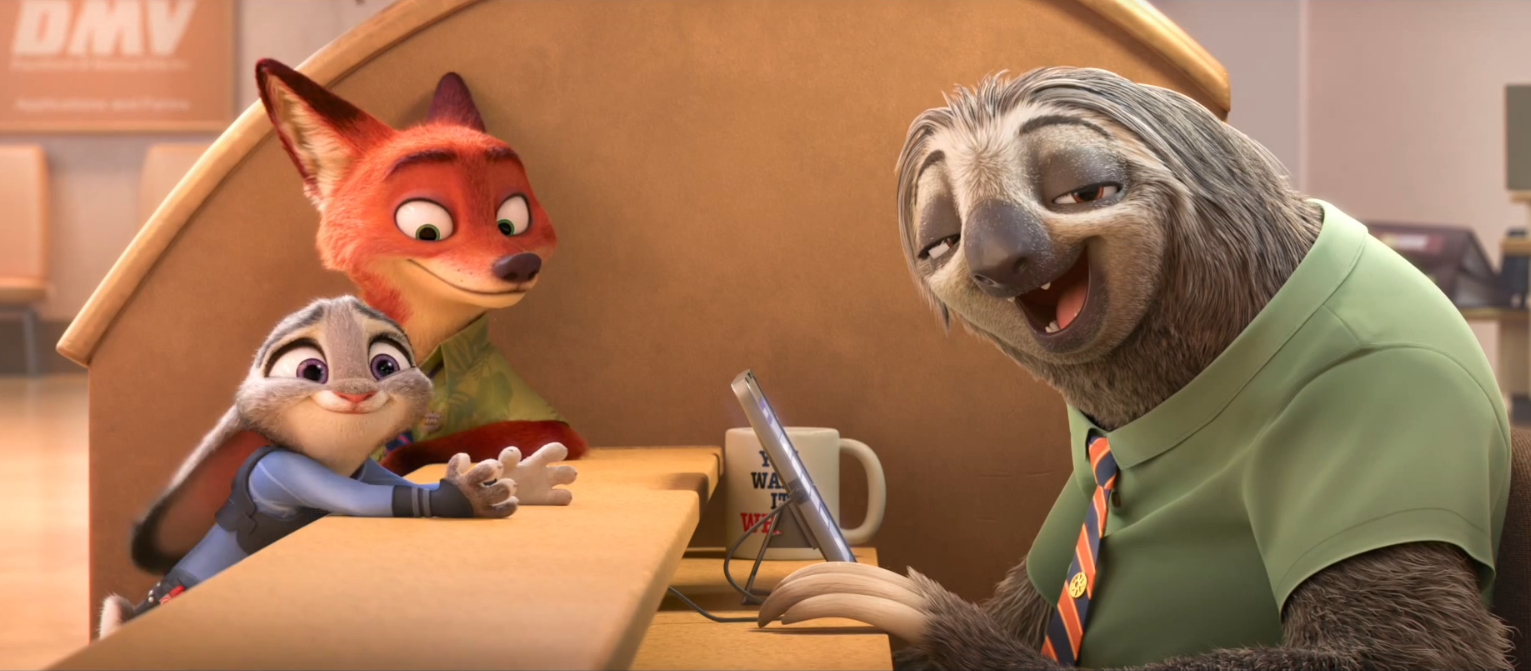
Humans seem not to exist in the world of Zootopia. This is for the best. For one thing, it allows an aesthetic distance so that we can enjoy both the animal in-jokes (our bunny protagonist has hundreds of siblings and carries fox-repellent) and their human double-entendres (sloths run the DMV; rodents staff the local bank, named Lemming Brothers).

The plot is a smart send-up of classic noir, a country-bumpkin-with-dreams coming to the Big City, and a series of culture clashes all at once. A missing person (ok: a missing otter) provides the MacGuffin for the central narrative, but Zootopia has more on its mind. The metropolis is held together by an uneasy detente between predator and prey, providing space for some kid-friendly reflections on racial profiling and reflexive Othering. It’s actually pretty heady stuff, and if it doesn’t exactly cohere upon reflection, Zootopia deserves enormous points for trying.

It also deserves enormous points for ambition. There’s an entire subplot about the lure of home, its safety and complacency contrasted with the unknown possibilities of life elsewhere, for instance. The narrative dips and dives and keeps moving, drawing out legitimately interesting themes of solidarity and hope amidst all the inspired silliness. Gennifer Goodwin is ideal as our protagonist’s voice, and Jason Bateman makes a solid case that he should basically always be cast as an animated fox.

zootopia2

And then there are those sloths, who get the biggest laugh. Zootopia is smart, funny filmmaking, unexpectedly anti-racist and committed to its basic ideas. If you have a kid and they haven’t watched this yet, you should fix that. If you don’t, you should watch it anyway.

Quick Links

raiders

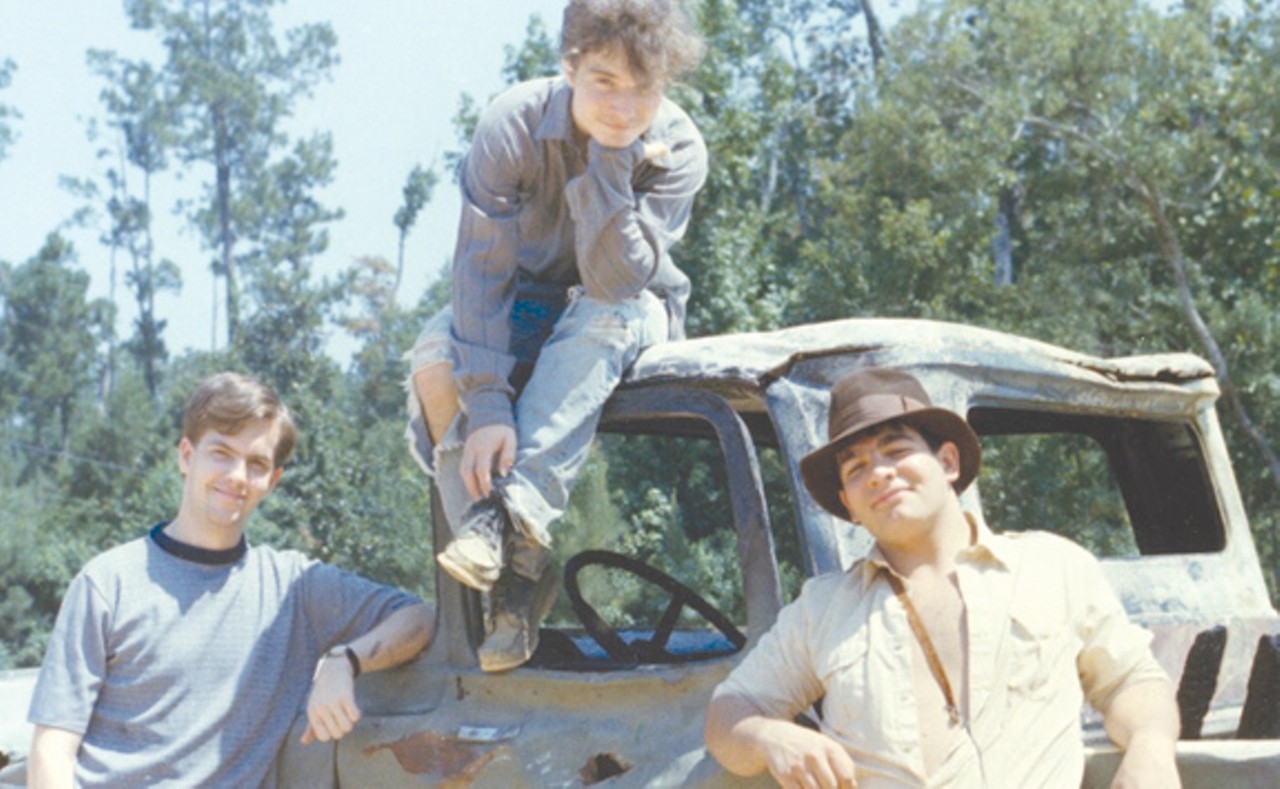
Raiders! The Story of the Greatest Fan Film Ever Made:  If you want a documentary that will charm your socks off, this is the one. No more socks.

In the early 80’s, some 11 and 12 year olds began a shot-by-shot remake of Raiders of the Lost Ark. They continued filming, when summer breaks and vacations allowed, throughout their adolescence, carried by a kind of cine-mania and the absurdly relentless dedication to a questionable vision that only childhood can provide. The film became an underground legend, true outsider art. Years later, they reformed to shoot the final scene they never could manage as children. Raiders! could easily have been a maudlin portrait of idiot youth. Instead, it’s a genuinely feel-good ode to the power and safe haven of imagination, to the images that sustain us, and to the heartfelt notion of pursuing your dreams, no matter how goofy they are. These guys are my heroes.

high-rise

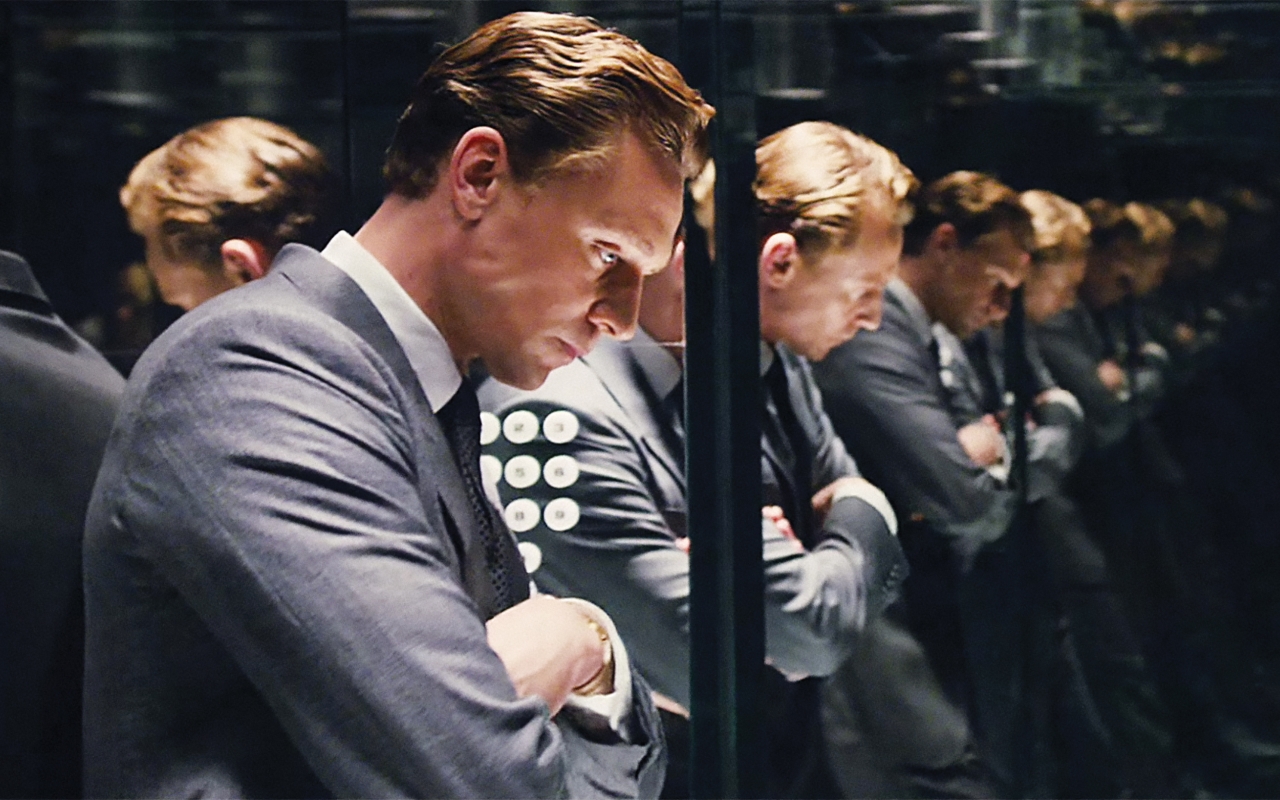
High-Rise: It’s hard not to think of David Cronenberg’s Shivers when watching the J.G. Ballard adaptation High-Rise. After all, Shivers essentially provided the template for pre-fab isolation terror and Cronenberg would go on to adapt Ballard himself with Crash (best abbreviated review pull ever: “Sex … and car crashes”), and that’s only the beginning of the overlaps. But Ben Wheatley’s film is more interested in external class conflict than the more, um, embodied variants of Cronenbergian horror, even if people do go around reading The Psychopathology of Everyday Life like they are frightened we’ll miss the point. Instead, High-Rise is filled with jarring set-pieces and the unease of modern life, which oozes in a slightly less overt way. It’s still horrifying.
re-animator

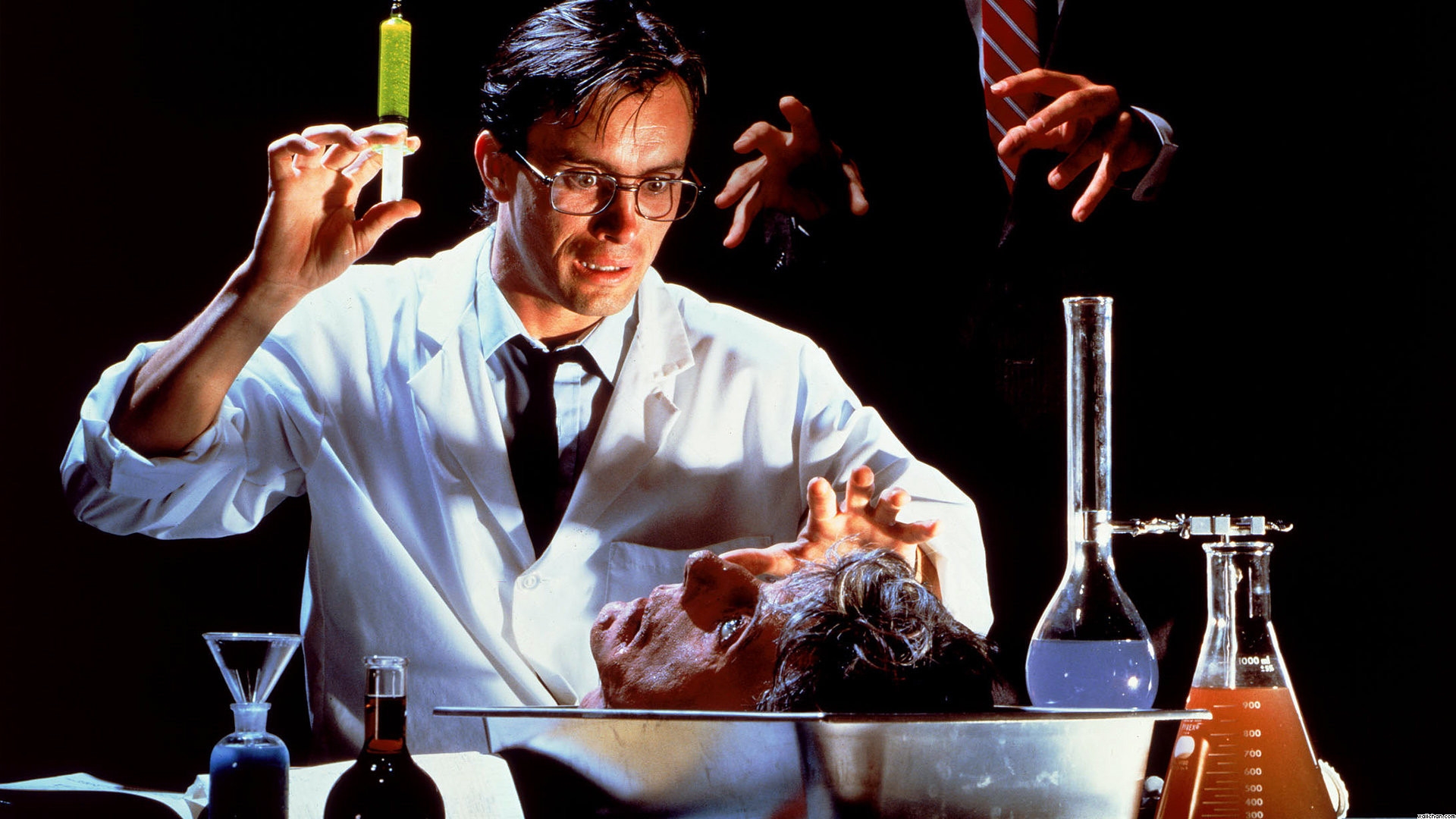
Re-Animator: It’s almost Halloween (which is how I generally describe the end of September), so why not watch Stuart Gordon’s classic? It’s funny, it’s gross, and it includes lines like “I must say, Dr. Hill, I’m VERY disappointed in you. You steal the secret of life and death, and here you are trysting with a bubble-headed coed. You’re not even a second-rate scientist!” Fire up your machine and animate some undead hijinks.
footloose

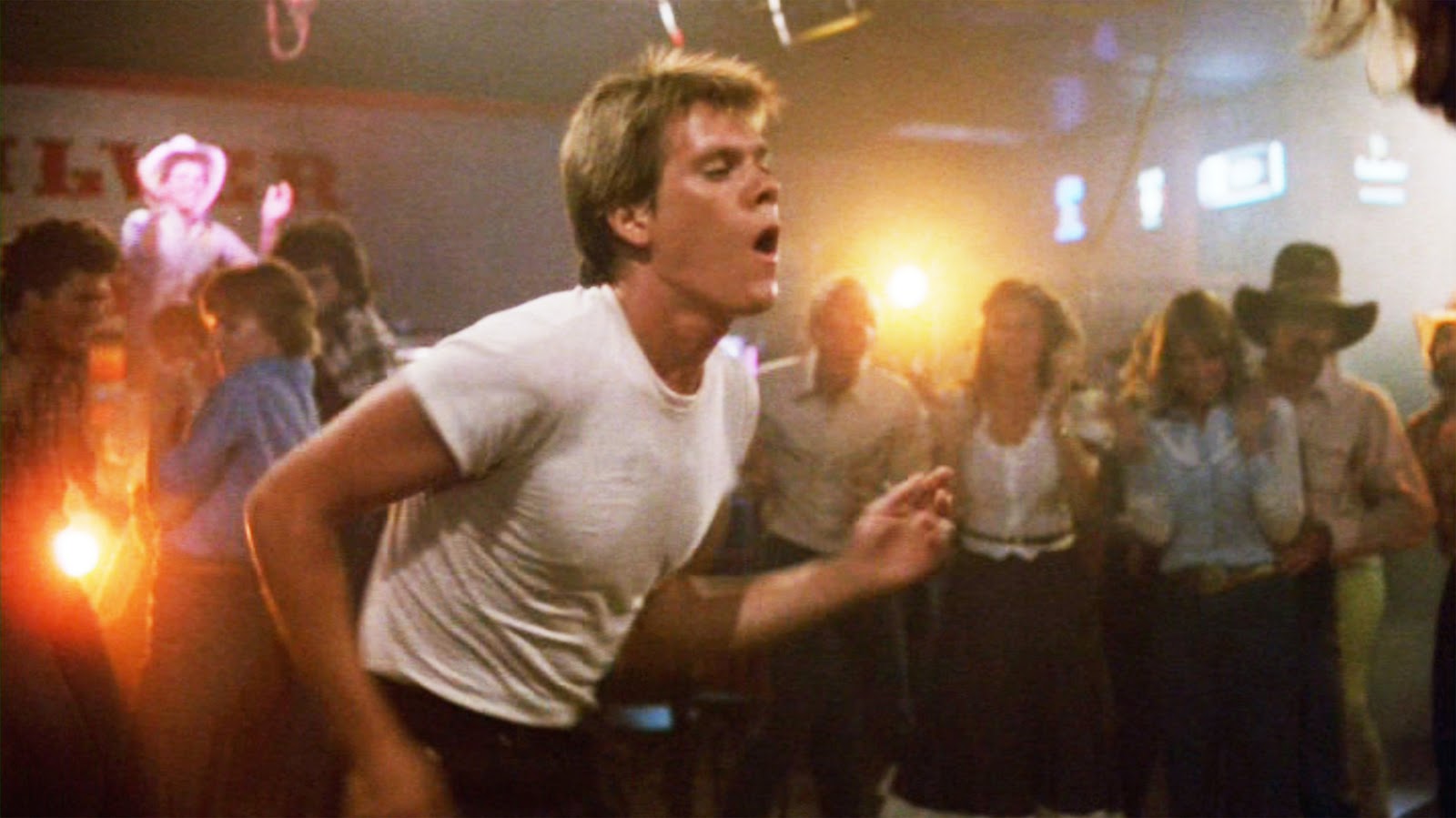
Footloose: Is that all a little intense or sub-culture-y? Fair. How about Kevin Bacon teaching Chris Penn how to dance in a cornfield, while Lori Singer cheers on a game of tractor chicken and her dad John Lithgow grapples with the crisis of conscience dancing provides?

Quit pretending you’re above it. You absolutely tear up at City Council meetings when people quote Ecclesiastes and you know it. Kick off your Sunday shoes, find the closest abandoned warehouse where you can let off some steam, and then join the dumb party with the rest of us! Kevin Bacon will be there, which will make you 1 degree from Kevin Bacon.

September 23, 2016 0 comments
0 FacebookTwitterPinterestEmail
CommentaryFilm

Suspense shows horror has always been in the borrowing business

by rick September 22, 2016
written by rick

One of the fascinating revelations gleaned from the Silent Era is the degree to which there really is nothing new under the sun. As Martin Scorsese told Roger Ebert, “Each film is interlocked with so many other films. You can’t get away. Whatever you do now that you think is new was already done in 1913.” Suspense, co-directed by Lois Weber and her then-husband Philips Smalley and not coincidentally appearing in that same year, is a case in point.

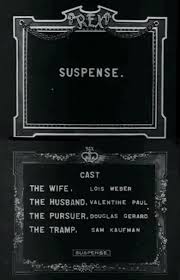
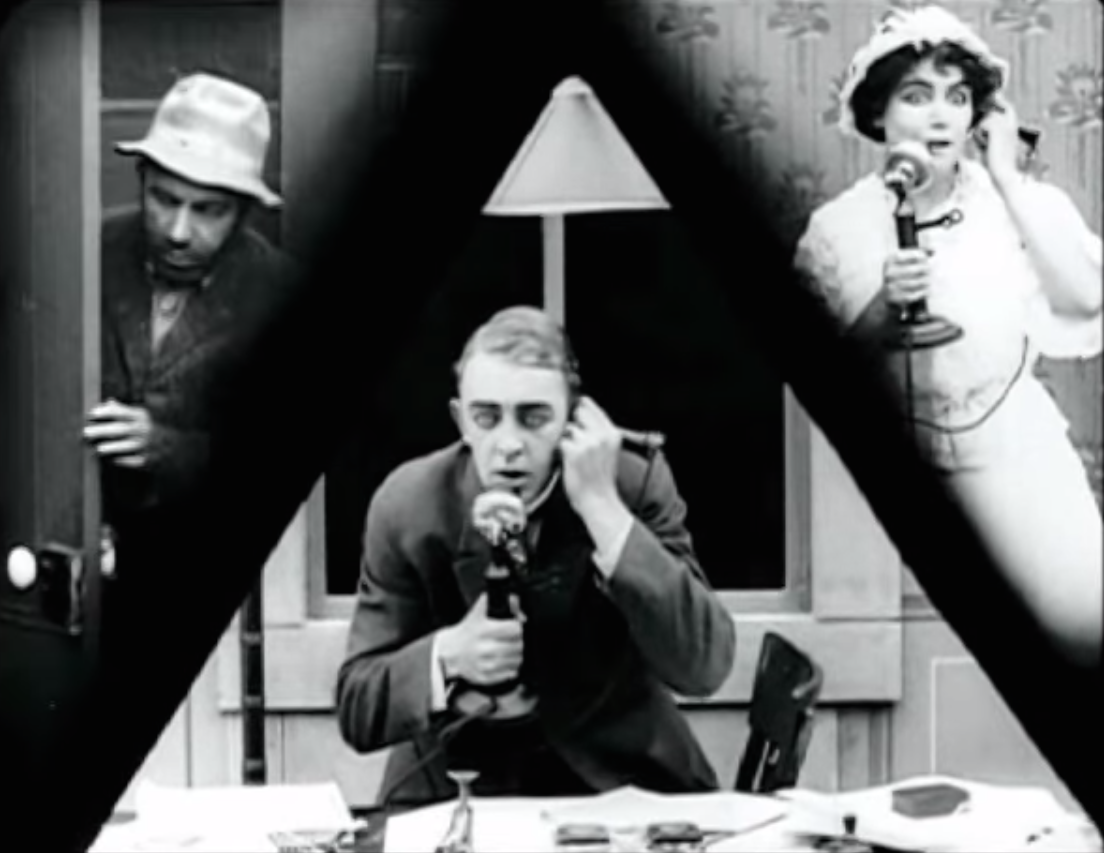
Suspense traffics in tropes that are immediately recognizable for modern audiences — an isolated potential victim, a menacing figure outside the home, possible help from a third character (in this case, the husband) who is some distance away, a clipped phone cable shutting down contact to the outside world.

suspense2

Weber and Smalley might’ve called their film Suspense, but it just as easily could’ve been titled “Horror”, were that word not so associated with monsters and the macabre at the time. Weber herself is a fascinating figure, the leading female filmmaker in early Hollywood and, for a time, its highest paid. A dedicated suffragist who often deployed the camera for political purposes, making controversial, moralistic pictures about capital punishment, drug abuse, and contraception.

In Suspense, nothing is high-minded (though Charlie Keil argues that the film “shows us how the social- patriotic drive to celebrate women as icons of domesticity unravels”). Weber plays the female lead, a mother tending to an infant at home. Her servant walks off the job for reasons left mostly unexplained: her note simply indicates she can not work in “so lonesome a place,” an interesting touch of foreboding to the proceedings.

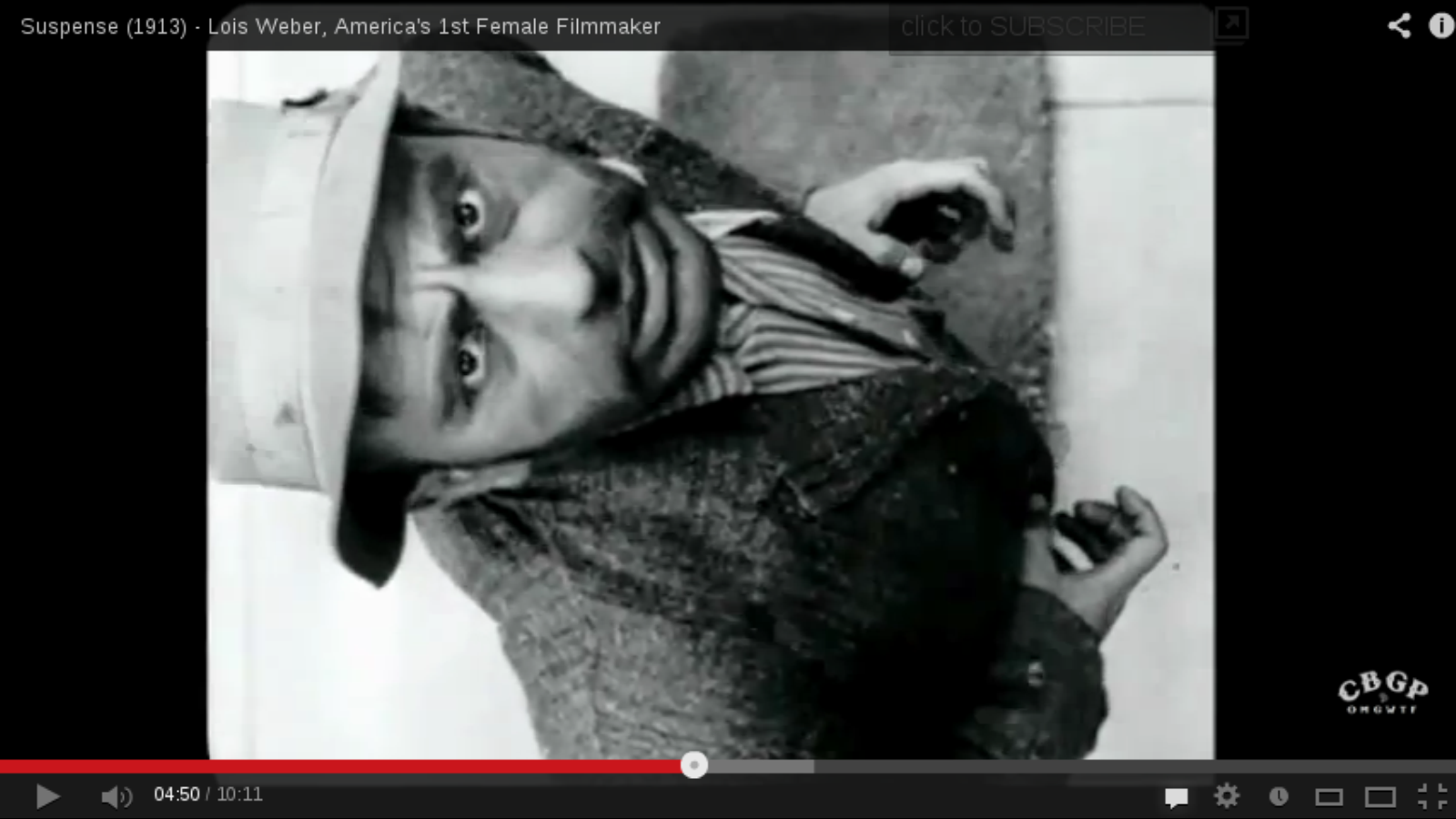
Meanwhile, her husband is off in the city at his office, and a menacing tramp is lurking about the grounds. Weber’s character, isolated in the empty home, is in danger. Her panicked phone call to the husband ends abruptly as the Tramp cuts the line; the husband, frantic, steals a car and races home to her rescue, even as he’s chased by the police and the car’s owner, who don’t understand the peril and urgency. This is all the stuff of horror movies, right down to the uncomprehending authority figures who are placed in a position, through their ignorance or disbelief or arrogance, of standing in rescue’s way.

Weber and Smalley introduce a number of technical innovations to this familiar tale. Bordwell recounts them. There are menacing close-ups as the Tramp climbs the stairs directly to the stationary camera, which watches his approach with mounting dread rather than following him laterally. There’s an incredible shot — “near-Hitchcockian” — that views the Tramp from above, taking the wife’s POV from an upstairs window as he looks up.

suspense3

Another shot frames him in the corner of the window while she’s on the phone; instead of cutting between them, they occupy the same space, in ways familiar to anyone who ever got a jolt from a jump-scare. Suspense, indeed.

suspense1

And then there are the split-screens. The most famous shows the wife making the call, the husband receiving it, and the Tramp breaking into the house. Bordwell notes that this serves to:

substitute for crosscutting: instead of giving us three shots, we get one, showing the plot advancing along different lines of action. These splintered frames function much like Brian De Palma’s multiple-frame imagery in Sisters, Blow-Out, and other films.

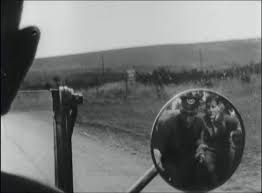
Later, as the stolen car barrels down the road, we catch a glimpse of his pursuers in the side-mirror, once again exploiting POV (in this case, the frantic husband’s) to both call up identification and to rather ingeniously keep the action moving in a way that propels us forward through the narrative and frame, rather breaking it up with cuts between subjects.

suspense-mirror

These formal techniques, now commonplace or even cliche (see the De Palma reference above, for instance), still seem startlingly original for 1913. But the narrative itself was anything but. Bordwell again:

If the plot sounds familiar, it’s probably because you know that one of D. W. Griffith’s most famous films, The Lonely Villa (1909) tells the same basic tale.There are still earlier versions, including one, The Physician of the Castle (Le Médécin du chateau, 1908), which may have inspired Griffith. The ultimate source seems to be a 1902 play by André de Lord, Au téléphone.

From cinema’s beginnings, working and reworkings of narrative are more the rule than the exception. Perhaps that’s even more true for genre pieces like Suspense and the horror / thriller / action entries to follow over the next century.

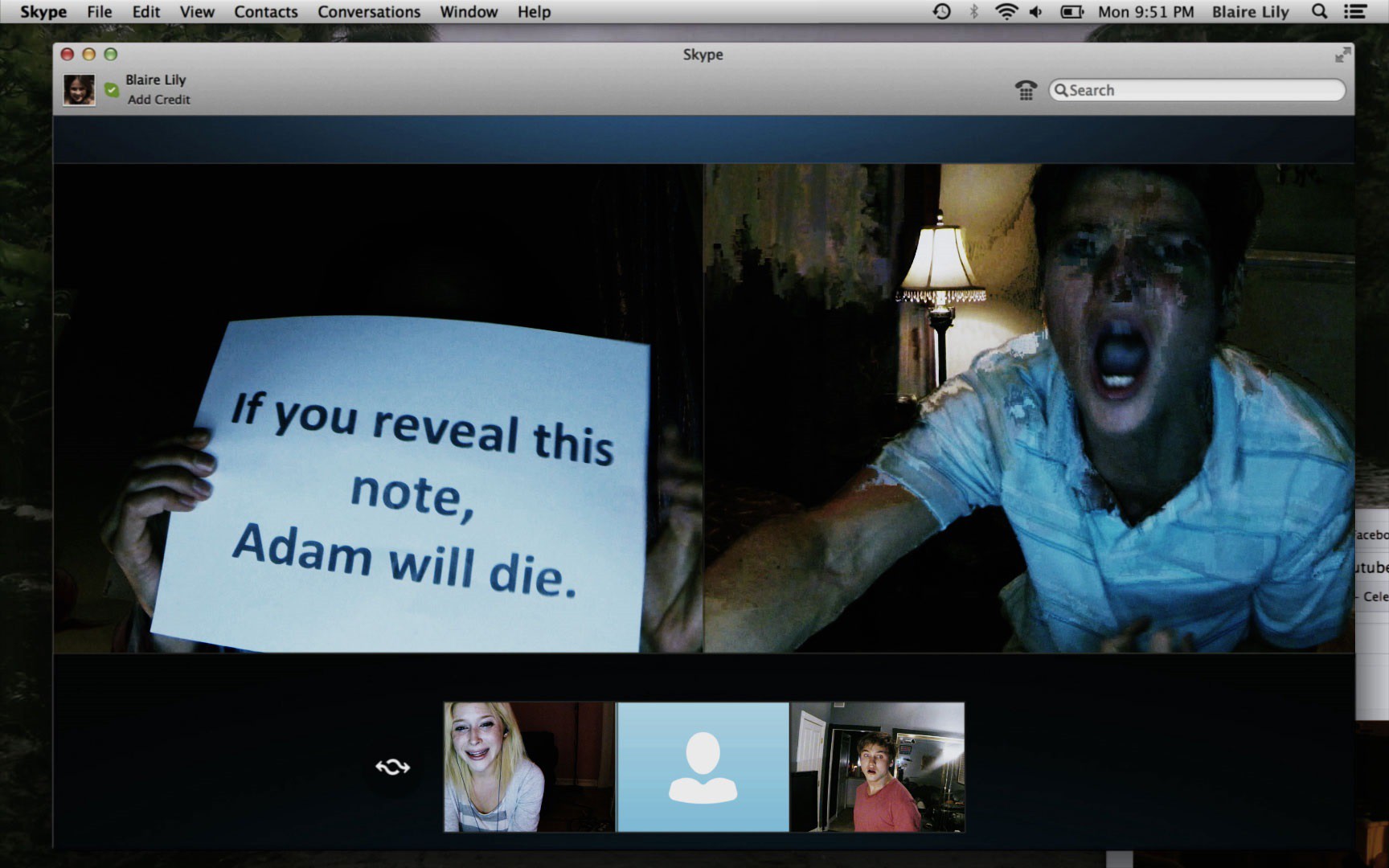
In a recent piece titled “America has a horror movie problem”, Greg Cwik bemoans what he perceives as a lack of originality in the current crop of genre offerings. He makes several valid points — and briefly goes to bat for the often and unfairly derided Unfriended, my favorite found-footage-inspired movie in a long while and a fun treatment of that same split-screen technique, made recognizable for a new generation — but there’s a still a sense throughout the piece that the trend he assails dates back a full 100 years.

unfriended

The well-received Don’t Breathe is, Cwik writes, “by no means bad, and has certain admirable qualities … but we’ve seen — and heard — this before.” Indeed we have. But I’m not convinced this is a negative, or even avoidable. The re-routeing and re-consideration of genre tropes are acts that lie at the heart of these kinds of creations; I’m not even sure they’re avoidable, without ceasing to be genre pictures.

In fairness, Cwik raises up two films — The Witch (which I’ve seen) and The Love Witch (which I haven’t) — as exceptions. Rather than simple retreads of formal and narrative tropes, pastiche and homage trafficking in things audiences have been mercilessly trained to recognize and appreciate in and of themselves, each of these films “uses its influences to say something. That’s what homage should do.”

Fair enough, but a look at something like Suspense also indicates that formal innovation and narrative re-purposing go hand in hand. Weber didn’t set out to tell a new story, but rather to use the camera to tell an old story in a way that felt new.
Cwik could, and I assume would, respond that this is the point: the films he feels fall short do so for precisely this reason, their failure to feel new.

That’s subjective, of course, but it’s a familiar enough sense. But even in 1913, filmmakers were poaching stories from a decade prior for their treatments. In the case of Suspense, there were layers still to uncover. It seems likely this will always be the case.

You can watch Suspense below on YouTube:

September 22, 2016 0 comments
0 FacebookTwitterPinterestEmail
FilmGreat Movie Project

Flesh, Spirit and Faces in The Passion of Joan of Arc

by rick September 19, 2016
written by rick

It is an article of faith among your more generous cinephiles that you should never be embarrassed by the classics you haven’t yet seen. Everyone has blind spots, no one has time to see everything, and a gap in your viewing only indicates how much you have to look forward to! Fair enough. Yet, as a silent film enthusiast, I remain mortified that it took me this long to watch Carl Th. Dreyer’s The Passion of Joan of Arc in full. It’s as close to a perfect film as I can imagine.

Why did it take so long? For one thing, Dreyer’s masterpiece is so enshrined in cinematic lore and the collective experience of the image that it can almost feel as though you’ve seen it already. (Speaking for myself, the film’s famous interpolation into Godard’s Vivre Sa Vie may have added to this sense, but more on that later.)

passion4

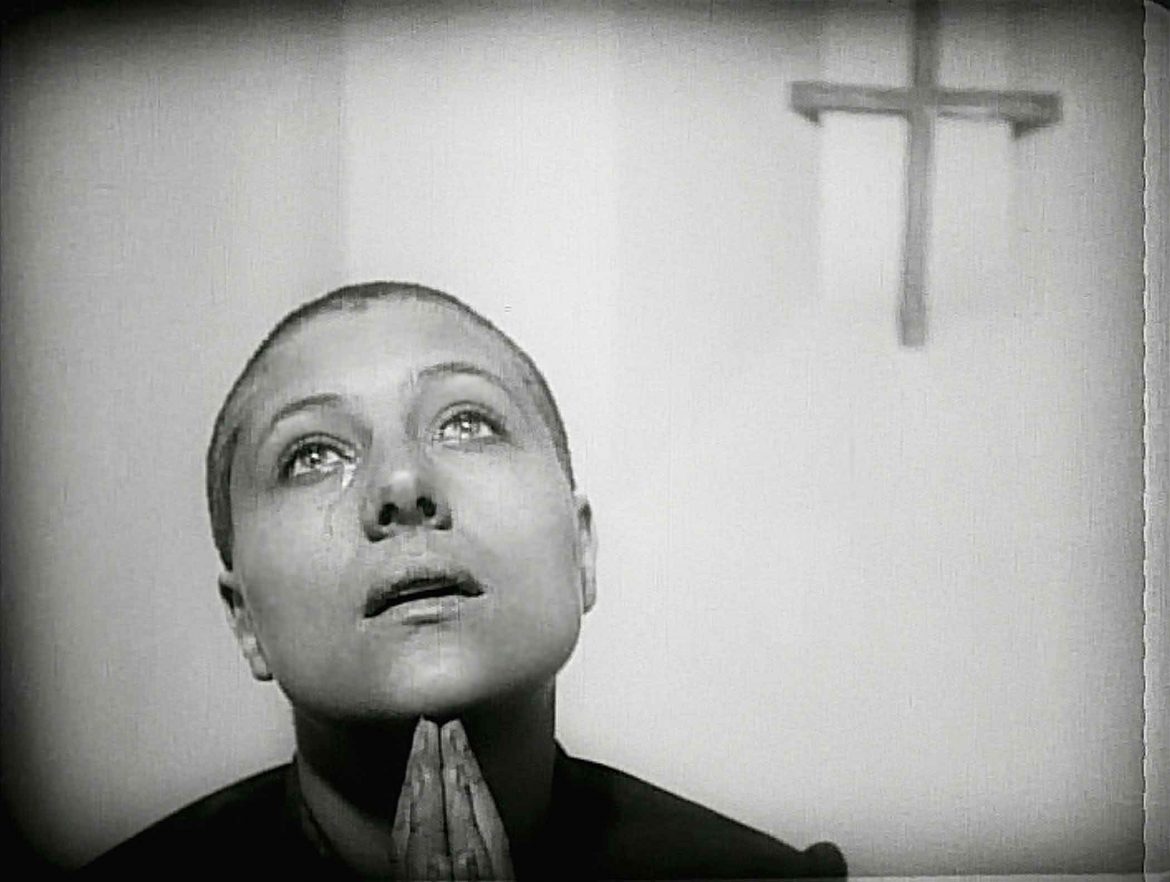
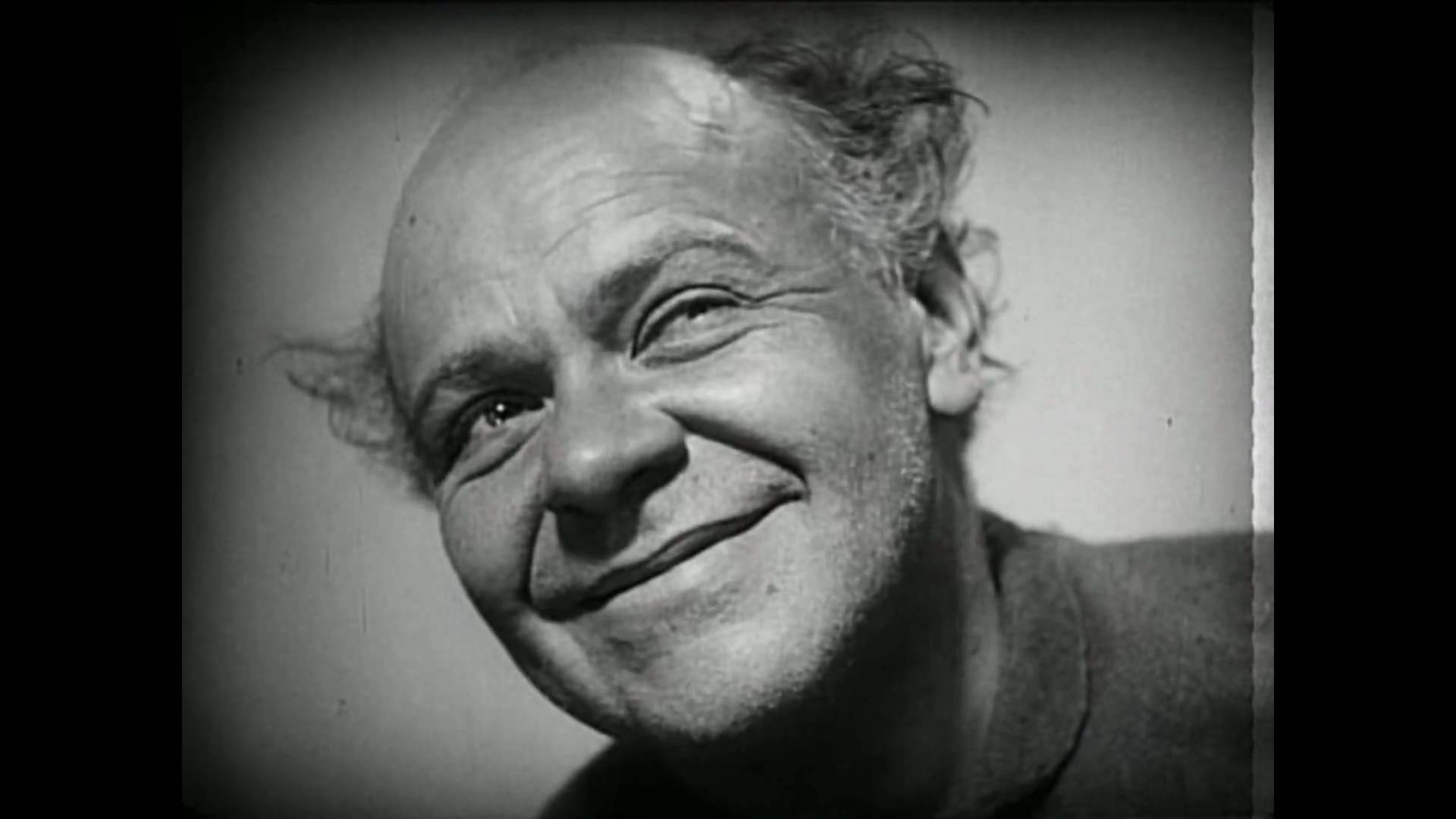
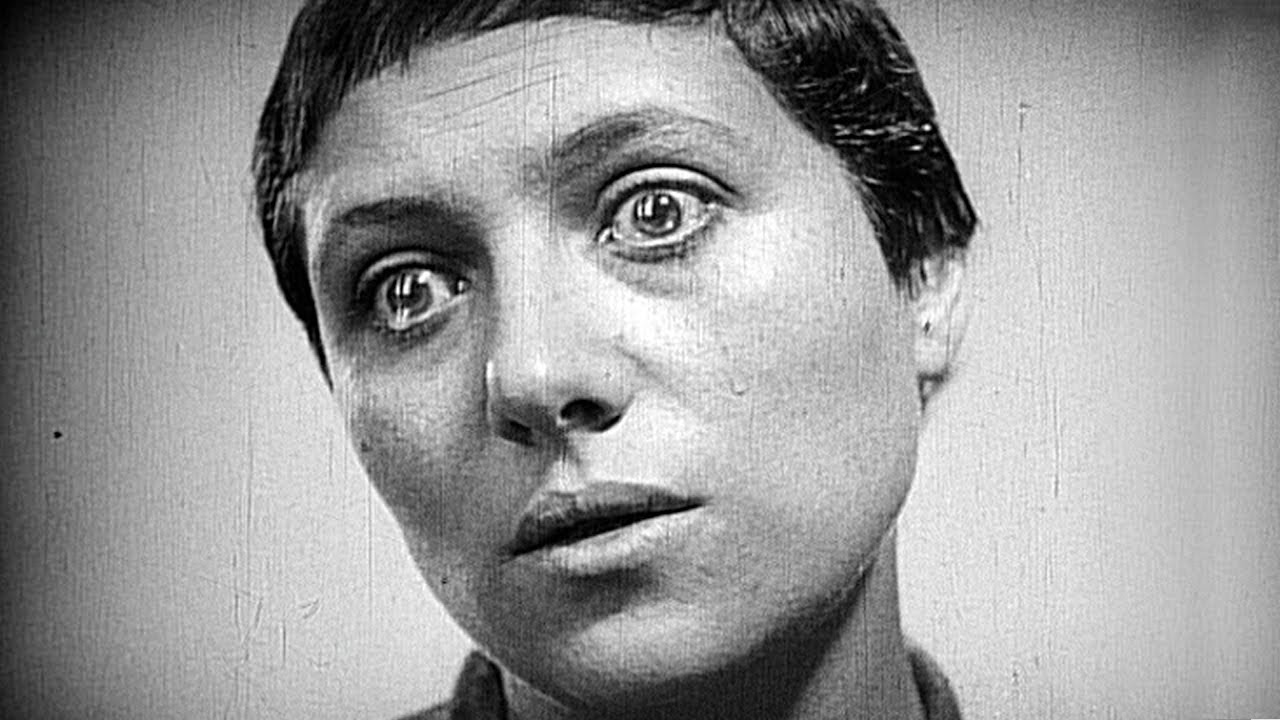
As Joan, shot by Dreyer and cinematographer Rudolph Maté almost invariably in tortured close-up, Maria Falconetti appeared on the screen here in 1928 and promptly vanished, leaving iconic expressions of grace, suffering, and devout fervor for the ages.

Like a handful of images from the Silent Era — Harold Lloyd on the side of the department store building, Keaton miraculously unharmed by the falling house, Chaplin frantically grappling with the mechanical wheel, the Husband and Wife of Sunrise lost in their shared reverie in the middle of a busy street, the mechanical birth of Metropolis‘ Evil Maria … you choose — Falconetti’s face, fearful or defiant or gripped by heavenly longing, lingers in the imagination. Even the imaginations of those, like myself, who arrived to its contemplation late.

The Passion of Joan of Arc is completely disinterested in Joan’s military exploits during the Hundred Years’ War. Instead, Dreyer focuses on her trial for heresy. In real life, her interrogation alone went on for more than a month; in a bold act of compression, Dreyer portrays the events as transpiring over the course of a single day, the better to emphasize the unrelenting cruelty of her inquisitors and her suffering at their hands.

passion3

Dreyer’s film is justly famous for the ubiquity of close-ups, but this general fame obscures just how radical The Passion of Joan of Arc is for viewers. David Bordwell, a critic whose formalist analysis can often miss the forest for the trees, is actually essential here. Bordwell notes that “Of the film’s over 1,500 cuts, fewer than 30 carry a figure or object over from one shot to another; and fewer than 15 constitute genuine matches on action.”

The effect is dislocating and jarring, willfully violating the 180 degree rule and leaving the sense of disembodied, slightly off-centered faces suspended in spaces made symbolic by their simplicity and emptiness. We never know quite where we are, or how to look.

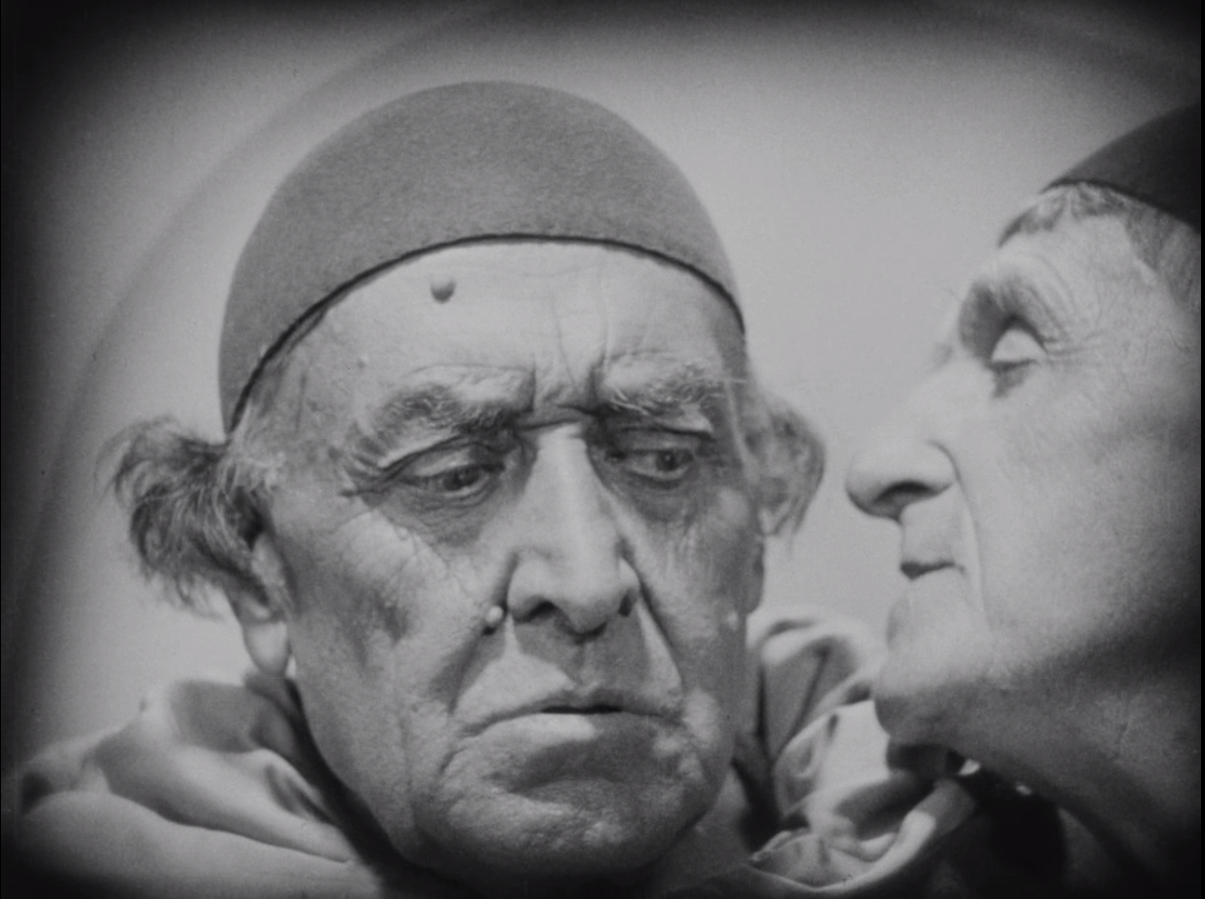
The camera pans, generally, from left to right across faces (an incredible scene seems to depict a game of telephone, as inquisitors pass along a question to trap their victim), before cutting abruptly to Joan. Holes were dug in the ground for cameras to emphasize distance and stature; she appears small, her interrogators outsized, enormous, monstrous figures of fear and admiration. (For a more in-depth discussion of these issues, see Matthew Dessem’s profoundly insightful analysis.)

passion5

There are few breaks in the action as the film relentlessly hammers home the masculinist power of the state and church brought to bear on a single woman convinced of her visions. Dreyer forbid the use of any makeup, so facial blemishes are emphasized, individual pores highlighted.

The Passion of Joan of Arc can, at times, take on the urgency of a documentary made in the 15th century. (Cocteau: Dreyer’s film is “like an historical document from an era in which the cinema didn’t exist.”)

And throughout it all, there is Falconetti, embodying one of the purest presences in cinema history. Given the tepid response to now-iconic films like Metropolis or others in this series, it’s noteworthy that this was recognized at once by contemporary critics. In The New York Times, Mordaunt Hall praised her performance in 1929 as one “that rises above everything in this artistic achievement,” continuing, in words still difficult to argue with 87 years later:

The scenes where Jeanne is finally led to the stake in the Place du Vicux Marché, Rouen, are agonizing in their remarkable realism, and this is, of course, one of the reasons that Britain has banned “The Passion of Jeane d’Arc.” America benefits where Britain loses, for as a film work of art this takes precedence over anything that has so far been produced. It makes worthy pictures of the past look like tinsel shams. It fills one with such intense admiration that other pictures appear but trivial in comparison.

The story behind The Passion of Joan of Arc is nearly as famous as the film itself. Dreyer had decided to make a film about a French woman; the Maid of Orleans was reputedly chosen by drawing straws. He spent a year or more in research on the topic, deciding eventually to ignore her military exploits and focus entirely on her trial at the hands of the disbelieving male prelates and to base the film almost entirely on the newly-famous transcripts of her trial.

Dissatisfied with his casting options (Lillian Gish was briefly considered, further angering the French clerics who already felt the agnostic Danish director had no business making this film), Dreyer discovered Falconetti in a comic stage performance and decided he had found his Jeanne.

The film was shot chronologically, a highly unusual approach — indeed, Falconetti had hoped this would buy her time to talk Dreyer out of having her cut her hair at the film’s end. No such luck.

Enormous amounts of studio money were used to build a replica Medieval village which Dreyer barely shows on screen, to the chagrin of his financiers. The intention, apparently, was to force the cast to feel they were of the moment with the subject at hand, that they were in fact living centuries prior. By all accounts, it worked, leading to a kind of ecstatic mania among the performers.

passion6

Dreyer was notoriously ruthless and intent on realism, in ways that would never be allowed today (nor should they) — encouraging real tears, having Falconetti kneel for hours on stone, the deployment of actual fire, and so forth.

And for all this trouble? The Passion of Joan of Arc was heavily censored, rejected by the Church, banned in England, and eventually destroyed. Dreyer painstakingly recreated the film from outtakes and the remaining footage. This version, too, was destroyed.

Bastardized copies, disavowed by the director and panned by critics as unrepresentative of the original intent, circulated for years. Then, in 1981, a miracle occurred: a nearly pristine original was discovered … in the closet of a mental hospital in Oslo! How it got there remains a mystery. The strange overlap of thematic treatments of visions and possible madness in the film with the location of its discovery is both entirely appropriate and entirely bizarre.

It seems almost too perfect, but then so does The Passion of Joan of Arc. This is uncompromising filmmaking, a perfect combination of subject, performance, and auteurist approach. (How auteurist? Dreyer remarked, “Allowing others to prepare a scenario for a director is like giving a finished drawing to a painter and asking him to put in colors.”).

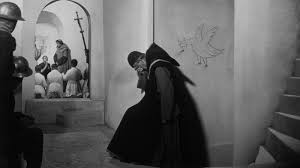
The sets by Jean Hugo and Hermann Warm, who previously handled this role for The Cabinet of Dr. Caligari, are striking in their austerity. The effortlessness of the camera’s movement indicates an entire crew committed to a singular vision.

In the end, that vision is, more than anything else, the human face. When Godard’s Nana retreats to the cinema in Vivre Sa Vie, it is of course The Passion of Joan of Arc that she attends, her tears in the audience mirroring the close-ups on screen. Ebert quickly explained that this is because both are “about a woman judged by men.” Perhaps. Others have found more formal (and more convincing) explanations. The lingering impression in both cases, on the most basic level, is the fascination with those flickers of life, light, and sorrow that the face reveals in darkness, the ways we connect to and find ourselves in the images before us.

passion2

For Dreyer, this was the foundation of the cinema. More than narrative, more than Epstein’s photogénie or the later Cahiers emphasis on mise-en-scène. For Dreyer, “Nothing in the world … can be compared to the human face. It is a land one can never tire of exploring. There is no greater experience in a studio than to witness the expression of a sensitive face under the mysterious power of inspiration. To see it animated from inside, and turning into poetry.”

The Passion of Joan of Arc begins with a text, focuses on an interrogation, passes through torture at the hands of a threatened leadership, and ends with a death in flames, as birds, symbols of grace and transcendence, blend into clouds.

But it’s Falconetti and Dreyer’s great triumph that the cumulative impact of their film is resolved into a single human face containing multitudes, alone in the frame but imbued with the inexpressible wonder of life as it is lived, as it is represented, and as it might be. All arguments flitter away like those same birds. There are only faces, and then there is sky.

Favorite Ebert quote:

To modern audiences, raised on films where emotion is conveyed by dialogue and action more than by faces, a film like “The Passion of Joan of Arc” is an unsettling experience–so intimate we fear we will discover more secrets than we desire. Our sympathy is engaged so powerfully with Joan that Dreyer’s visual methods–his angles, his cutting, his closeups–don’t play like stylistic choices, but like the fragments of Joan’s experience. Exhausted, starving, cold, in constant fear, only 19 when she died, she lives in a nightmare where the faces of her tormentors rise up like spectral demons.


Perhaps the secret of Dreyer’s success is that he asked himself, “What is this story really about?” And after he answered that question he made a movie about absolutely nothing else.

September 19, 2016 0 comments
0 FacebookTwitterPinterestEmail
FilmReviewsUncategorized

New on Netflix: The Measure of a Man

by rick September 16, 2016
written by rick

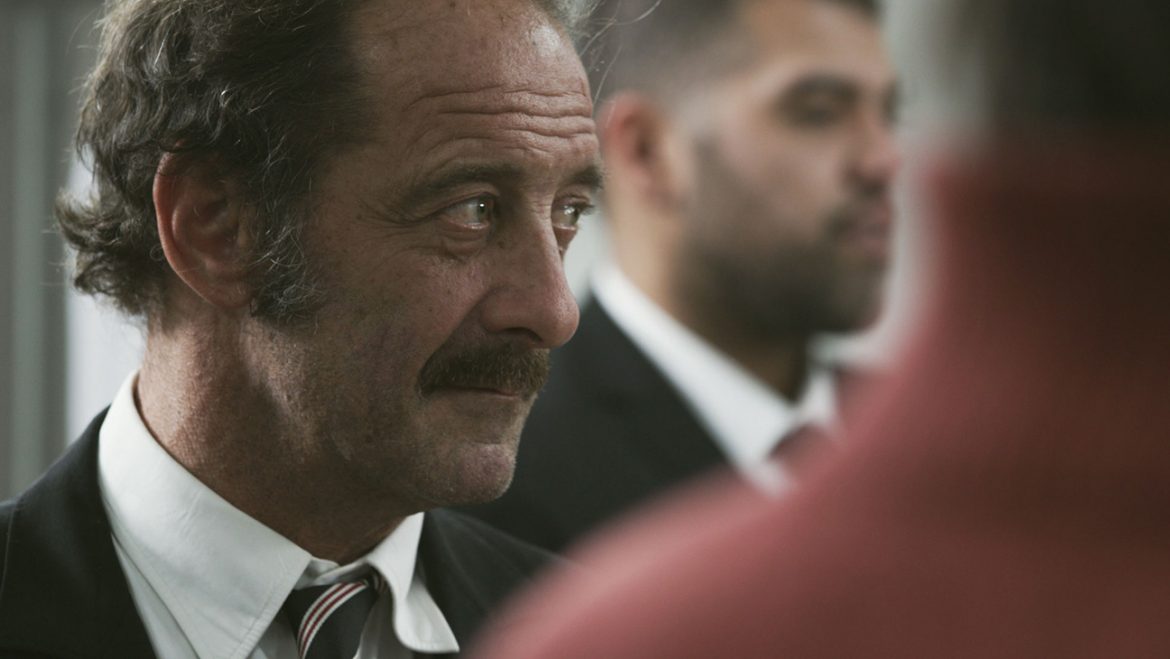
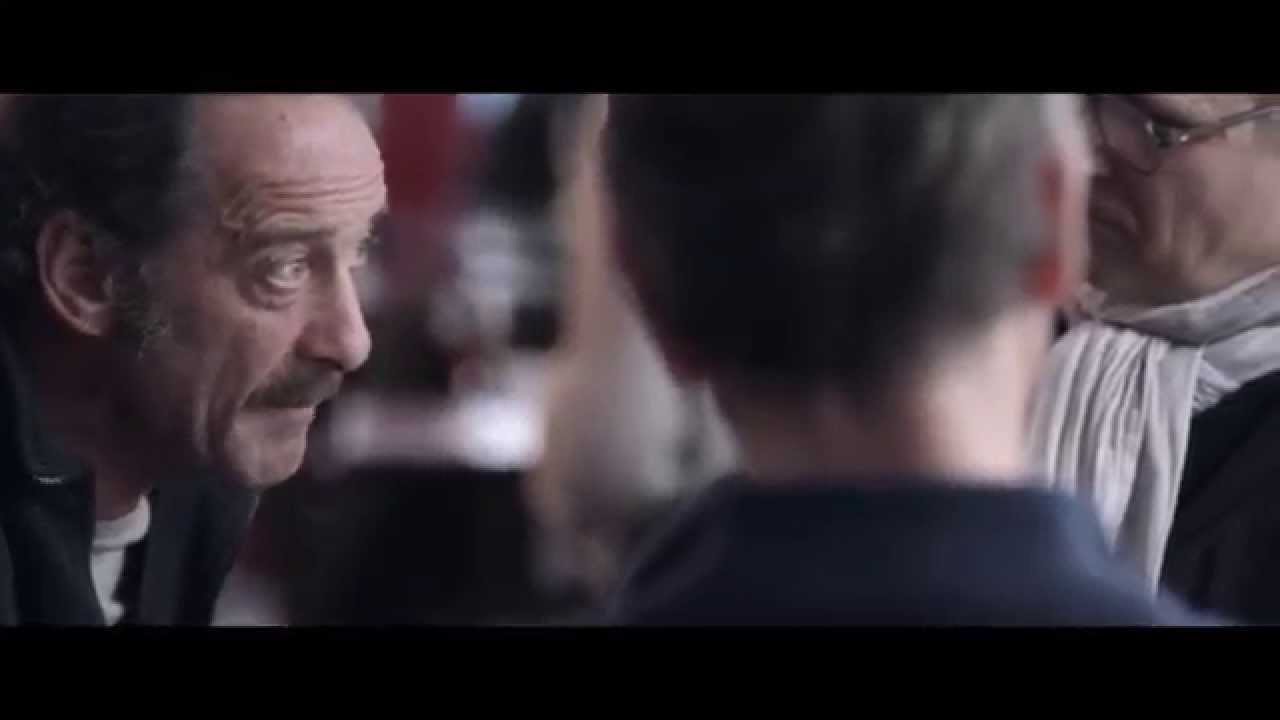
With his expression of thoughtful weariness and a face that inevitably brings to mind the word “hangdog,” Vincent Lindon owns every moment of Stéphane Brizé’s recession-era morality play The Measure of a Man (La loi du marché). As protagonist Thierry Taugourdeau, Lindon, who won Best Actor at Cannes and a César for his performance, is expertly nuanced in the role, frequently silent but always comprehensible, a downtrodden Everyman. He’s a fundamentally decent man forced into awkward and uncomfortable social positions, bruised by the ruthless machinations of capitalism while trying to do right.

The Measure of a Man opens with Thierry in tense conversation with a job recruiter. Laid off from his previous factory position, Thierry has been out of work for many months, taking training courses that lead nowhere, suffering through interviews for jobs he clearly knows he will not get. The frustration is showing.

the-measure-of-a-man2

His former coworkers, similarly laid off for a “downsizing” they rightly suspect has more to do with corporate profit than workplace necessity, have lawyered up, but Thierry is tired of this fight. He has a wife, a mortgage, a disabled son, and dwindling savings. He’s less out for the satisfaction of legal revenge than simply stable employment and the self-worth it seems that entails. Indeed, as he begs off the struggle against his old bosses, he explains it succinctly: it threatens his “mental health.”

As Thierry dutifully pursues options — a horrifically uneasy Skype interview, a meeting with a no-nonsense financial advisor, a cringe-inducing roundtable discussion to improve his “presentation” and job prospects — cinematographer Eric Dumont keeps him in shallow focus. It’s a smart choice, all the better to observe the naturalistic flickers of anxiety that cross Lindon’s face, while the camera underscores them with nervous, near-vérité quivers itself. Comparisons to the Dardennes are warranted (indeed, The Measure of a Man would work well paired with 2 Days, 1 Night), but Brizé, Dumont, and Linton have separate qualities to recommend their work here.

measure-of-a-man3

When he finally does land a gig as an underpaid security guard at a grocery store, The Measure of a Man takes a decisive turn, from humanist, Dardennes-inspired narrative to social critique. Thierry has far more in common with the petty thieves, struggling shoplifters, and exploited co-workers just trying to get by than he does with the bosses who pay him a pittance to rat them out. Brizé emphasizes the total surveillance of the supermarket, the ubiquity of cameras making it seem less a place of business than a prison. A reckoning is coming.

When it does, it is, like the film as a whole, a decidedly understated affair. But the message, never hammered polemically but emerging with sad inevitability from Lindon’s performance, is clear enough. The film’s French title translates as “the law of the market.” For anyone caught up in the moral compromises and routine degradation of late capitalism, it will come as no surprise that this law is merciless. Whoever it benefits, it’s not the workers. When Thierry makes his decision — quietly but resolutely — it’s a declaration of allegiance, to human value and self-worth outside the artificial demands and draconian restrictions of bosses everywhere.

Quick Links

the-invitation

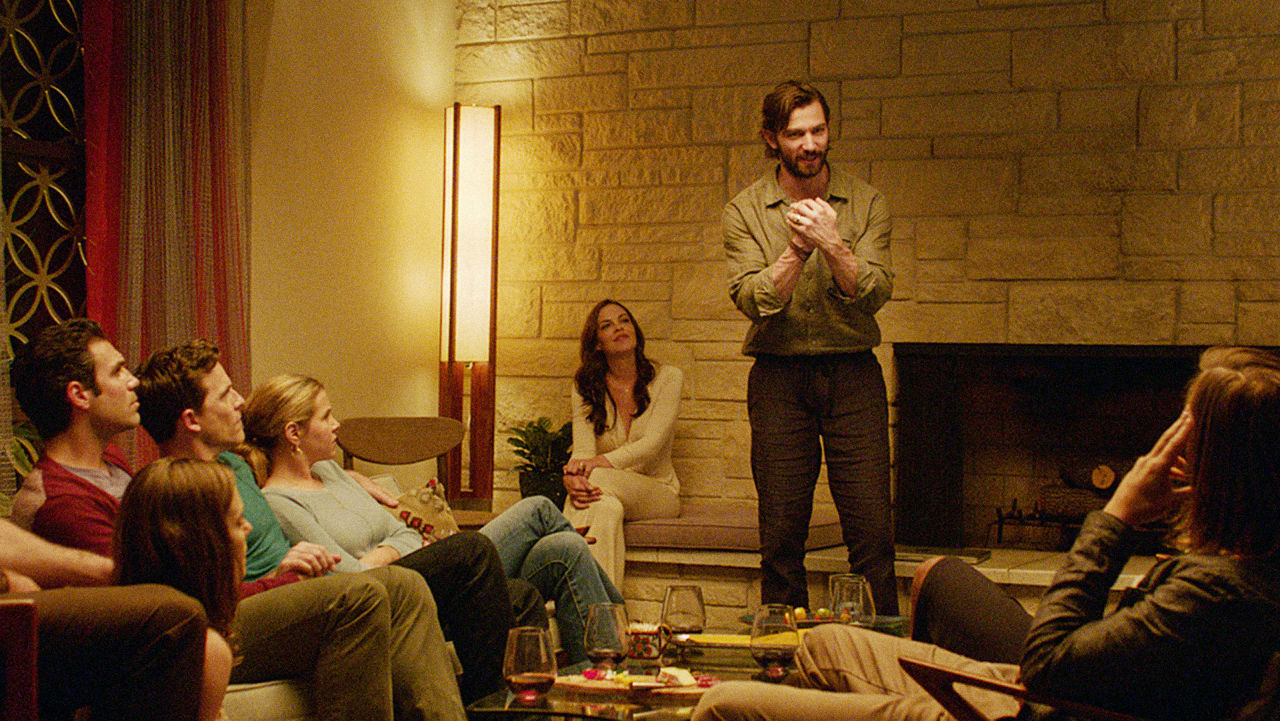
The Invitation: On first viewing, I was a bit luke-warm on the latest from Karyn Kusama (Girlfight, Æon Flux, the Diablo Cody-penned Jennifer’s Body), but it’s grown on me and has plenty to recommend it. Slightly unequal parts friend-reunion drama, bloody climax, and creepy final reveal, Kusama builds the dread with aplomb, focusing on the disparate relationships and buried tensions among the ensemble with enough nuance to generate investment in their individual fates. If The Invitation overplays its hand a bit by beginning with a clunky metaphor and starting from a position of obvious unease (seriously, who would stick it out with these creepers as hosts?), the film proceeds skillfully and sticks the landing. It’s worth a late-night watch.

battle-royale

Battle Royale: Long before The Hunger Games pilfered many of its central conceits and saddled them in service to a milquetoast love triangle, Battle Royale was the standard-bearer of the dystopian kids-killing-kids-for-sport genre. While its distant American cousin built up to a revolutionary metaphor increasingly enamored with itself, Battle Royale was content to stick to the basics: deranged glee, gore, and some earned pathos. It’s superior in every way.

man-on-wire

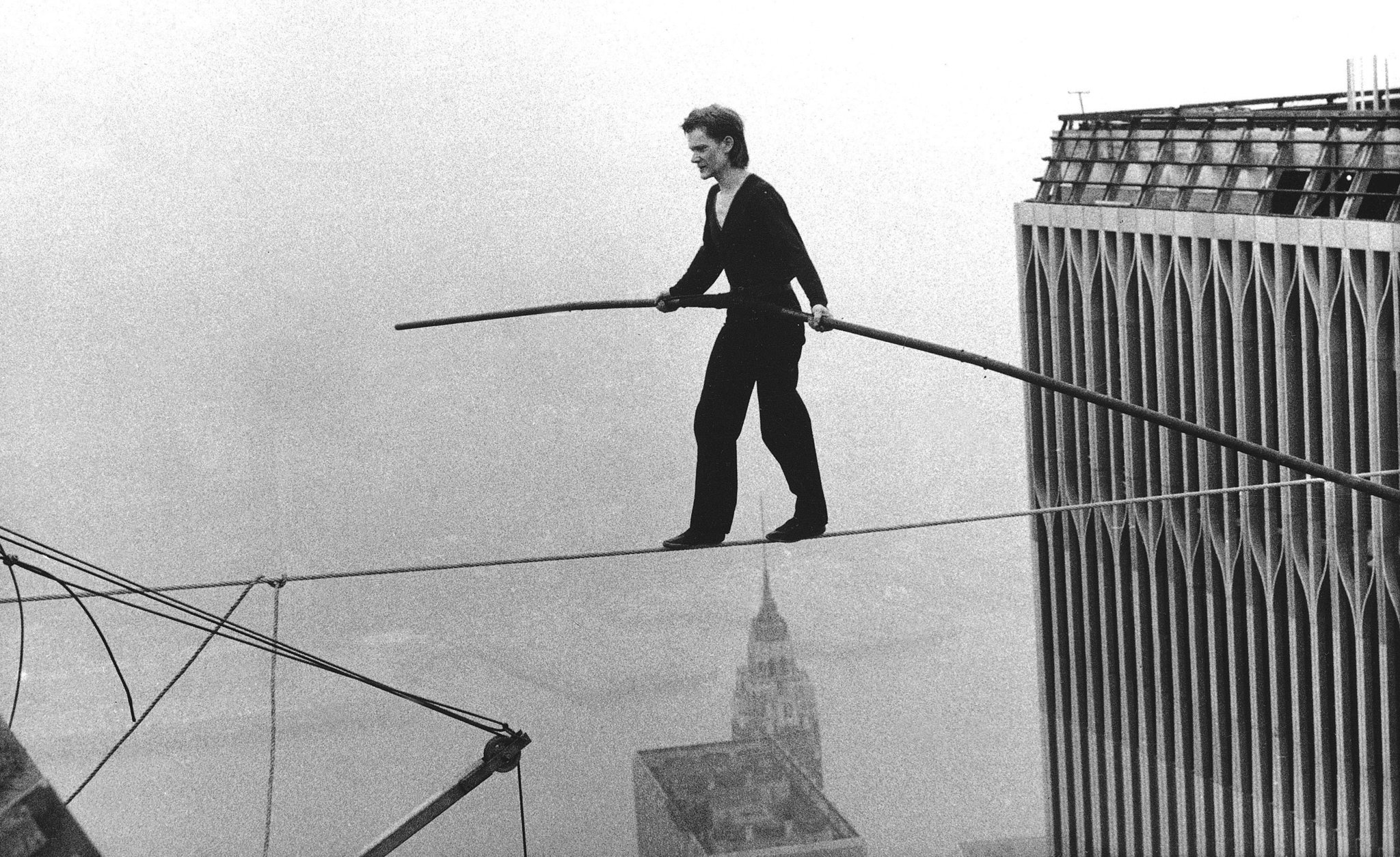
Man On Wire: James Marsh’s time-capsule portrait of daredevil / lunatic Philippe Petit, who famously (and very illegally) walked a tightrope between the Twin Towers in 1974, is gripping and honest. Petit comes off as a man obsessed, fearless, incredibly charming and, maybe for that reason, rather smarmy. But there’s no denying his commitment or dedication to cheating death. The footage of his stunt alone is worth a viewing, a white-knuckle escapade that makes you never want to set foot on a roof again. In a good way.

y_tu_mama_tambien

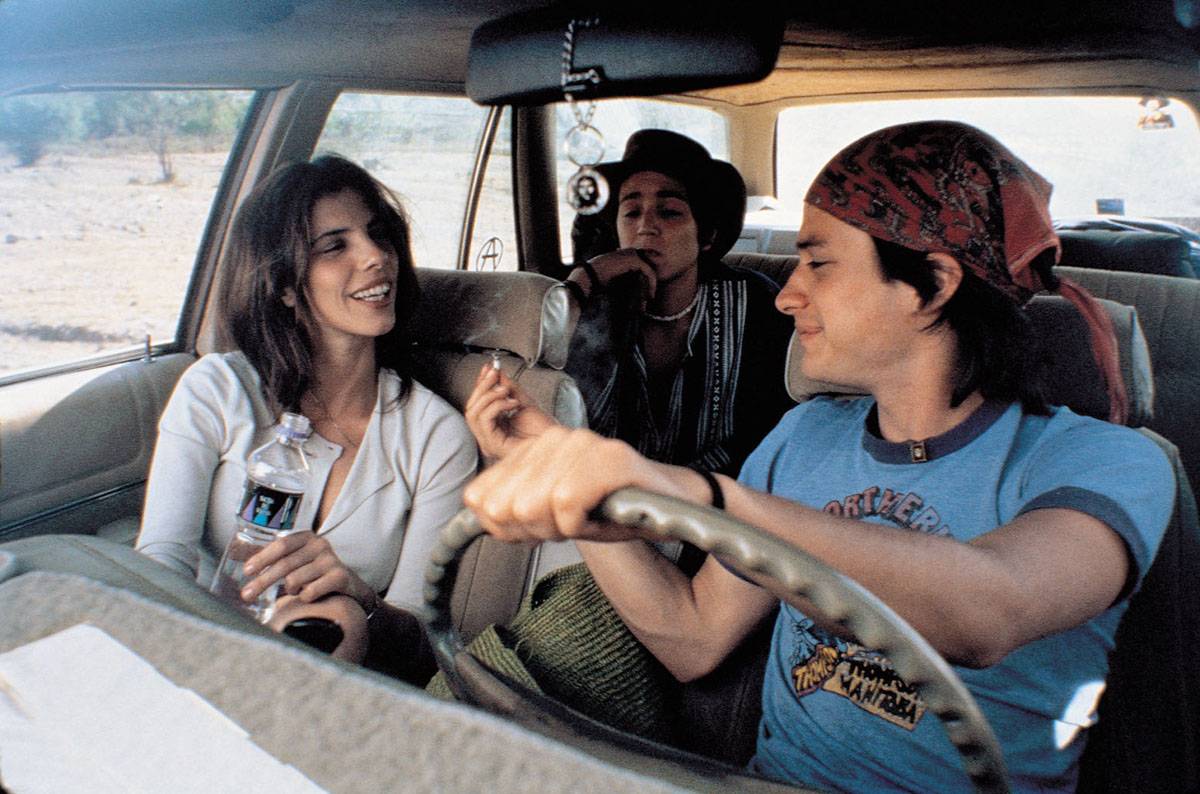
Y Tu Mama Tambien: Alfonso Cuarón’s feature debut remains his most satisfying film, hilarious and melancholy by turn, and sexy throughout. The central cast is wonderful, with a standout performance from a young Gael García Bernal, the pacing is ideal, and the undertones of political discontent and social concern add gravity to the proceedings. This is a film that combines coming-of-age tropes with social concern in wise ways and with an assured touch. It succeeds as a road movie too, but the film’s anxious heart is with its protagonists, uneasily growing up in changing times but entirely relatable.

September 16, 2016 0 comments
0 FacebookTwitterPinterestEmail
Vegan Horror

Eggertsson and animals: An approach to horror cinema

by rick September 15, 2016
written by rick

When I began writing about horror cinema as a form of oblique artistic grappling with our real-life treatment of nonhuman animals, it was with enthusiasm and several convictions. First, that this approach would merge two of my primary interests, philosophical issues of animal rights and their aesthetic representation and also scary movies. And second, that no one was really addressing these themes in much detail.

Well, one out of two isn’t bad.

As it turns out, Gunnar Theodór Eggertsson — then a student at the University of Iceland and now a professor — spearheaded just such an investigation a decade ago. His paper “Animal Horror: An investigation into animal rights, horror cinema and the double standards of violent human behaviour” is a fascinating look at how these tropes play out, rigorously argued and entirely persuasive.

blood-of-the-beasts

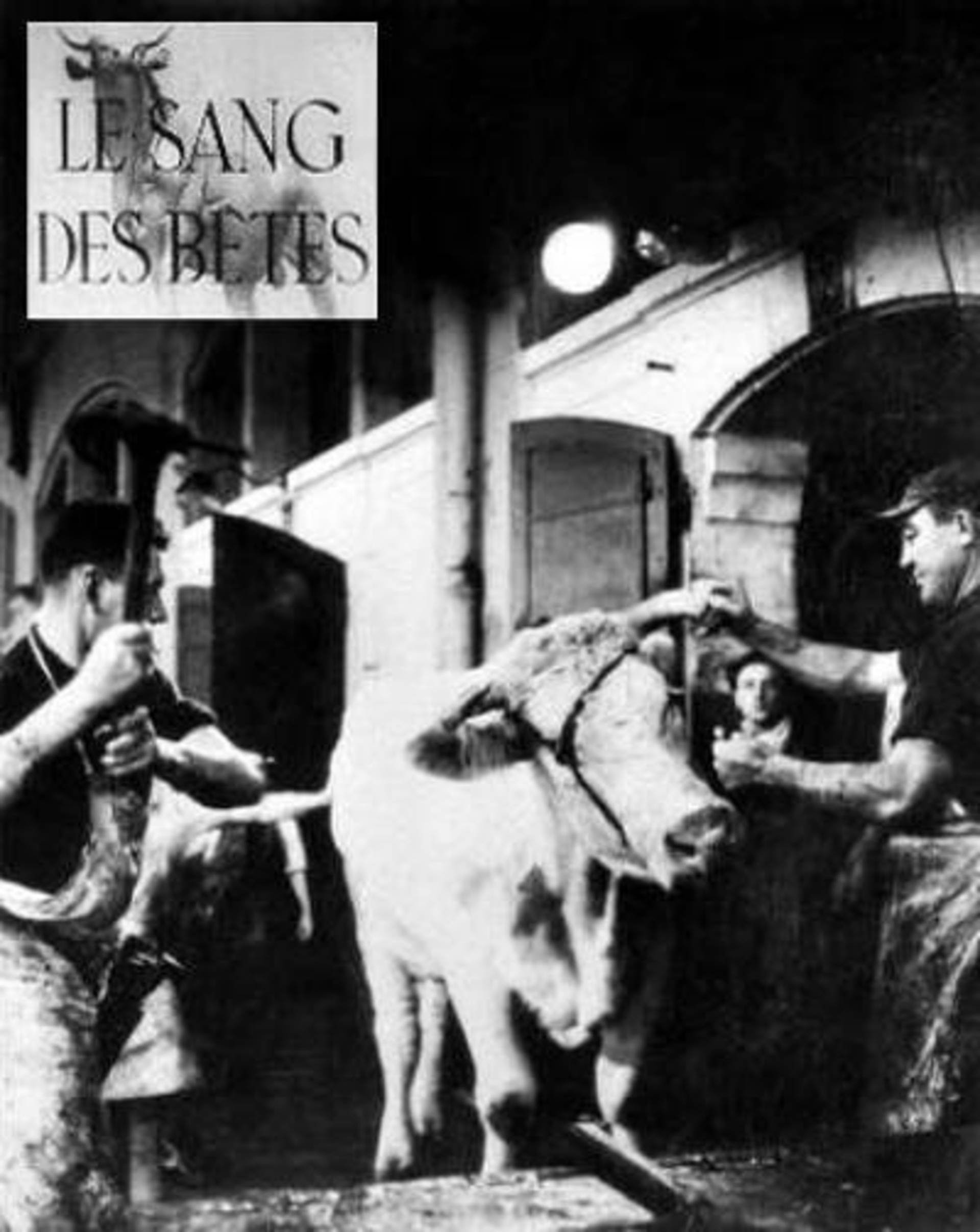
Beginning with a look at Georges Franju’s notorious Le Sang des bêtes (Blood of the Beasts) — which Eggertsson rightly calls “a landmark in the animal rights movement for its realistic depiction of behind-the-scenes meat production” that reveals “the unknown reality that exists under the surface of suburban life and vividly places it right in front of the unsuspecting viewer” — the paper lays out its ambition in clear terms. An analysis of these horror tropes will:

creat[e] a theoretical bridge between certain distinctions of the extreme horror genre and animal rights theory [… and] analyze parts of horror cinema as representative of animal treatment. […] [T]he violent act and its representation […] can be read as being symbolic of the violence that occurs against other species all over human society and is justified by the terms of human pleasure (be it for consuming, decorating, sport or clothing). By the end of this essay I will have argued e.g. that criticism of violence in a film such as The Texas Chain Saw Massacre (USA: Tobe Hooper, 1974) is arbitrary if it is not made out to include other species.

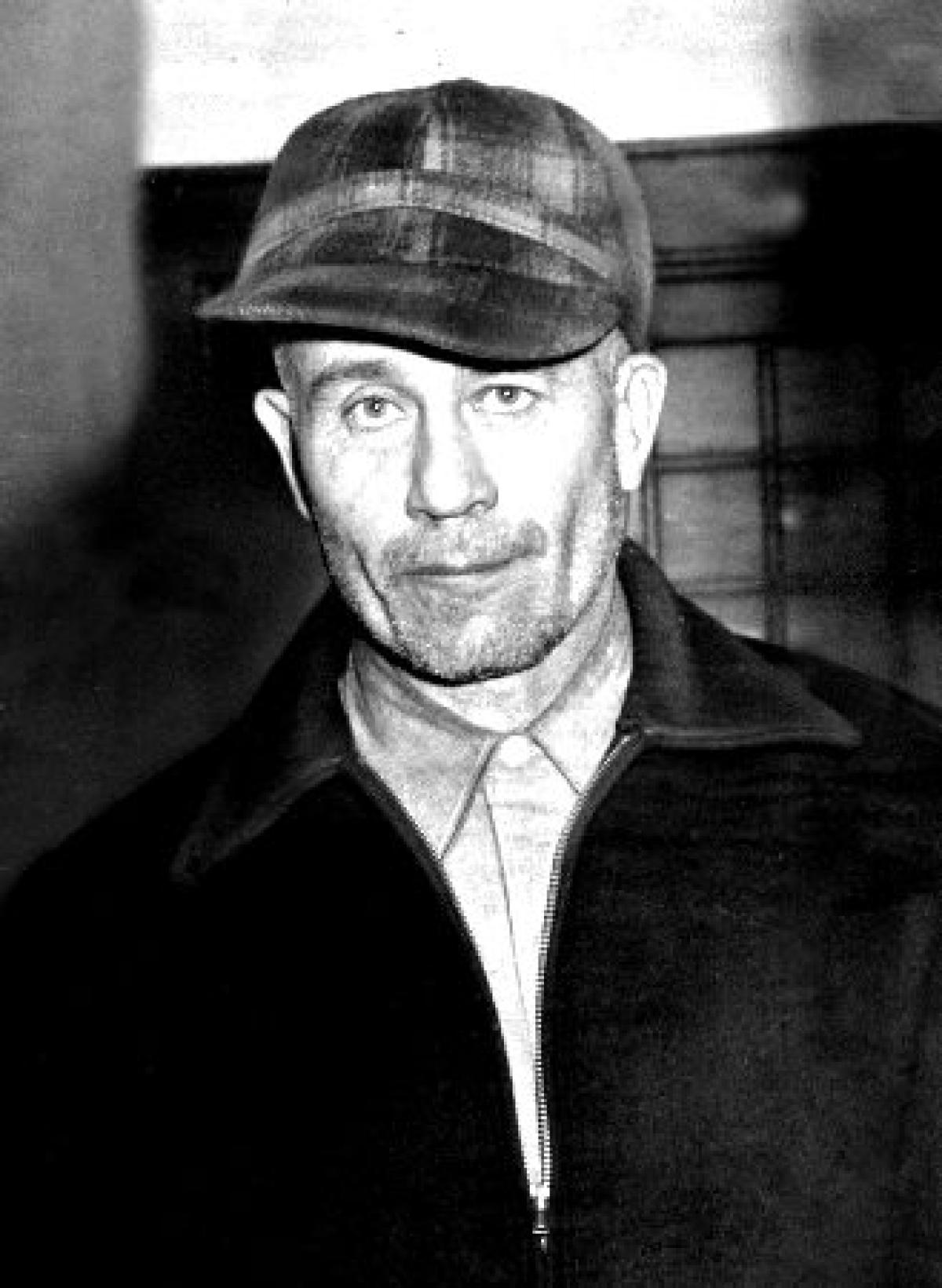
It’s no accident that both Eggertsson singles out The Texas Chain Saw Massacre for his thesis; I did the same earlier in this series. With its overt emphasis on slaughterhouse work and the resolutely instrumental aspect of Ed Gein-inspired brutality, Tobe Hooper’s text is perhaps the most unavoidable in this sort of discussion.

ed-gein

We both also address Hostel, an example of horror cinema that goes out of its way to connect “losing touch” with the instrumental use of nonhuman animals and the brutality inflicted on their human surrogates through a horror lens. In Hostel and elsewhere, animality is the absent referent that structures such treatments, lurking barely below the surface and infusing the signifiers with a terror born of a return of the repressed.

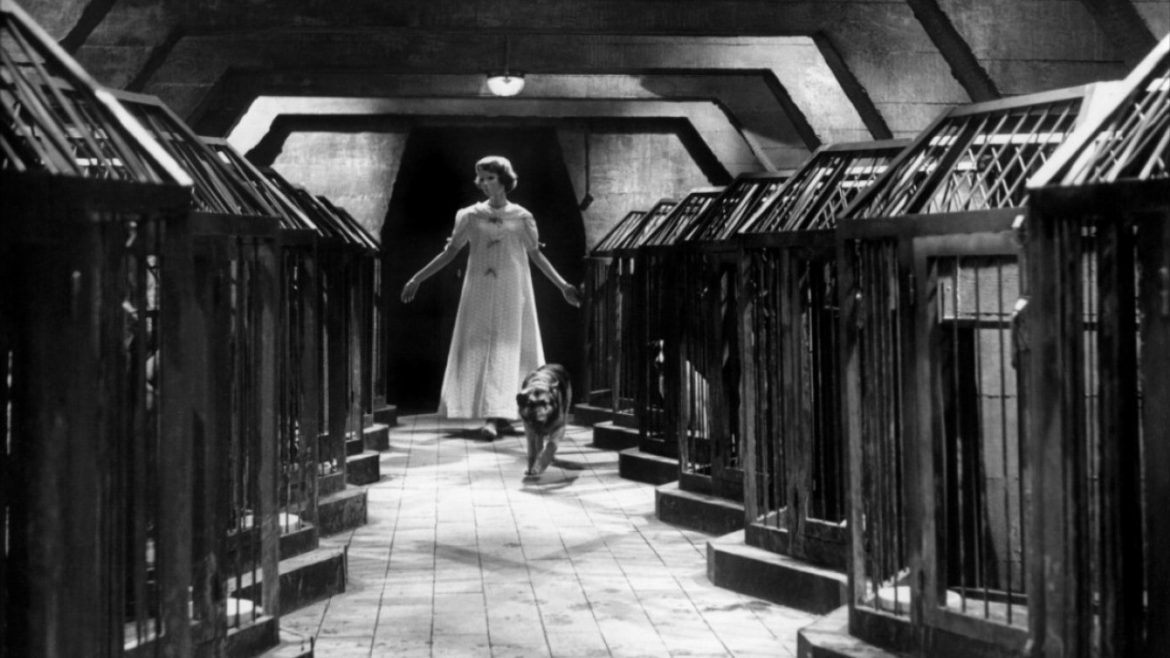
Eggertsson takes a look at several other films — Wolf Creek, Calvaire, Zombie Honeymoon, The Hills Have Eyes, Les Yeux Sans Visage (Franju again)– but the really interesting thing is how he structures the argument.

Following animal rights theorist Tom Regan, he draws a distinction between moral agents and moral patients; that is, “individuals who have various sophisticated abilities, most importantly the ability to apply impartial moral principles to determine what morally ought to be done in a given situation and to freely choose to act or not to act as their conception of morality requires them to act” and those who “do not possess the prerequisites that would enable them to make moral decisions about the extent of their actions and can therefore not be held morally accountable for what they do.”

The classic view here, inscribed in law and buttressed by general notions of common sense, would include sentient, adult humans on the one hand — who are morally culpable for their actions — and all the other groups (very young children, the mentally disturbed or challenged, nonhuman animals) who are not. We would not try a lion for the murder of a gazelle; the idea is absurd. If a very young child commits a grievous act, our moral reasoning generally excuses them from true culpability, which is why we (hopefully) do not put 5 year olds in prison for, say, candy bar theft.

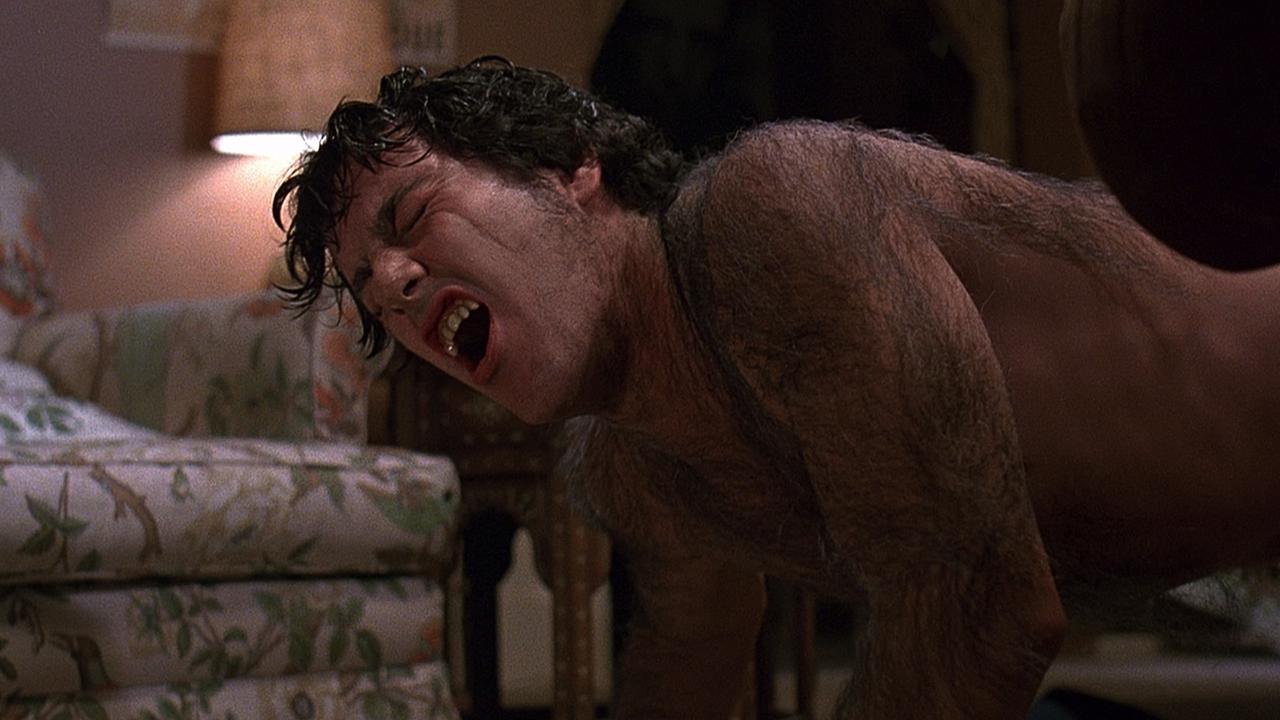
For Eggertsson, then, the most relevant considerations for that “theoretical bridge between certain distinctions of the extreme horror genre and animal rights theory” lies in situations where the substitution of human for nonhuman animal involves moral agents. This would tend to rule out most zombie films, in which the zombies can’t rightly be blamed for their impulse to eat brains and bodies. (Zombie Honeymoon is an exception for reasons explained in the piece.) Werewolves presumably would fall into the same quandary. Vampires would also be a questionable category, assuming they need human blood to subsist. All such “dual creatures” would be more akin to carnivorous predators in this moral calculation, at least after moments of transformation.

american-werewolf-in-london

This is a point on which Eggertsson and I differ. The rigorous distinction between moral agent and patient is appropriate in the context of his paper, but it shuts off from consideration a number of avenues. There is clearly something going on in the cinematic imagination where zombies and vampires are concerned, less because of their moral status and more because of boundary-blurring between rationalist humanity and “sub-rational” animality. If Texas Chain Saw and Hostel posit human substitutes for nonhumans in visions of our interactions, the classical ideas of vampires, werewolves, and zombies all wonder what it would be like if we were of a piece, both human and nonhuman at once. This is part of an imaginative continuum.

Even more than that, there is the entire genre of the “vegetarian vampire,” an explicit linking of concerns with a long history and a recent resurgence, whether in Buffy/Angel, the Twilight films, True Blood, or even Count Duckula. Future entries in this series will tackle some of those ideas.

But Eggertsson’s essay is a must-read for anyone interested in these topics, a real contribution to the discourse. By examining the animal rights subtexts of a maligned genre, he effectively seeks to recuperate extreme horror cinema, wrenching it from the bloody talons of its detractors and revealing the deep anxieties that underwrite its tropes.

As long as animals are being slaughtered, we will tell stories about them, one way or another. Rather than castigating the violence on our screens, we should take a close look at how it relates to the violence in our lives.

September 15, 2016 0 comments
0 FacebookTwitterPinterestEmail
CommentaryFilm

Dislocation, exploded binaries and Surname Viet Given Name Nam

by rick September 14, 2016
written by rick

Things are not quite what they appear to be in Surname Viet Given Name Nam, Trinh T. Minh-ha’s masterful 1989 documentary.

Beginning as an apparently straightforward portrait of several women’s lives in past and present Vietnam, the film grows increasingly experimental as it continues, morphing into a feminist, post-colonial interrogation of form, positionality, the authority of the image, and film ethnography itself. Trinh upends expectations, and the result is far more insightful film than the earnest documentary it initially appears to embody.

Surname Viet Given Name Nam — a title that already, as Jonathan Rosenbaum astutely notes, “undermines conventional notions of unity and identity” — features interviews with several different women, each of whom reflect different aspects of what we might call “the Vietnamese experience” (though that totalizing notion will be dispensed with soon enough).

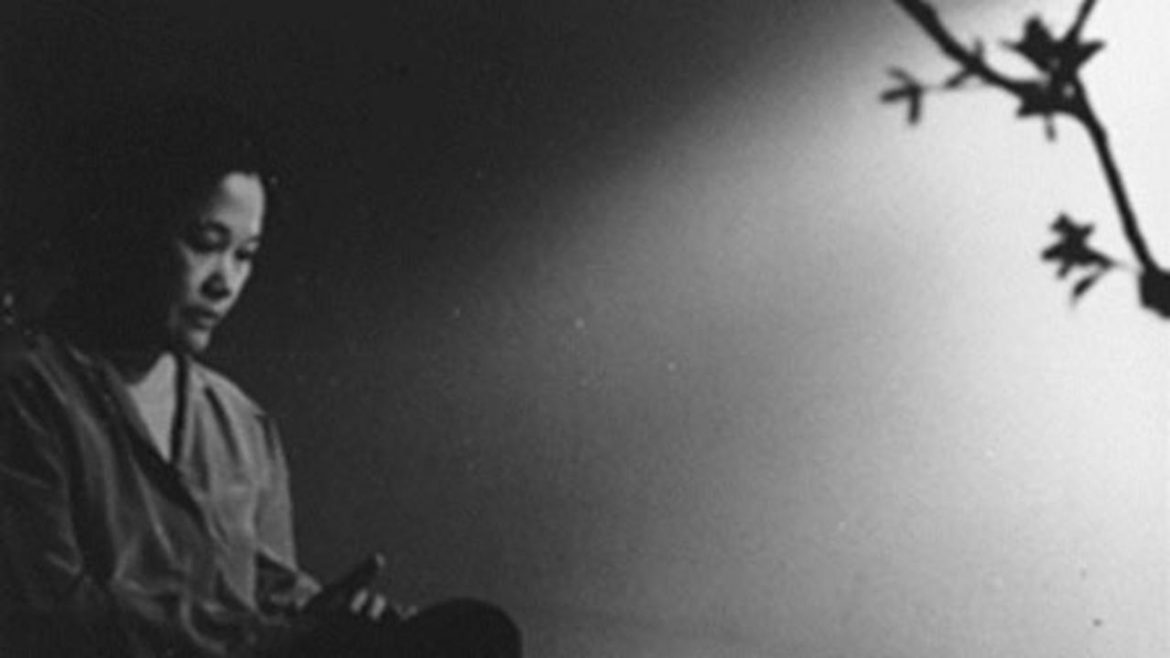
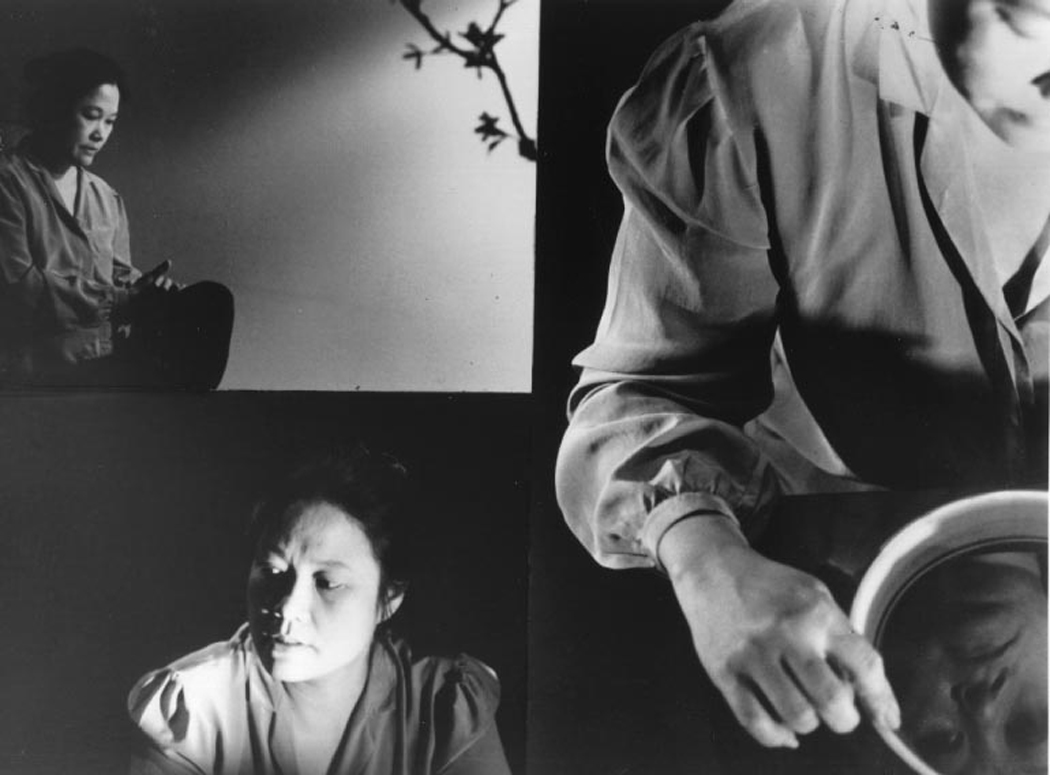
surname2

There is a disillusioned Leftist deeply suspicious of the ways in which the government has deployed the female peasant to ground their power and give the illusion of liberation, a housewife reflecting on the pressures she has faced over the years, and so on. Trinh’s camera catches them at odd angles, in half-darkness, or she keeps the frame on their hands rather than faces, then impatiently moves in unexpected directions. Sometimes they pace and speak off-camera entirely. Her subjects can speak movingly and eloquently in sometimes heavily accented, near-inaudible English, with the occasional subtitle or supplementary text appearing on screen. At various moments, the sincerity fades and something “artifical” seems to underlie the proceedings.

And indeed it does, to a degree (and if you accept the distinction between the artificial and the Real, which you should not). Artifice abounds in Surname Viet Given Name Nam. For one thing, these are all revealed to be actors playing parts, reading the words of others. Trinh displaces them, and us — we follow the actors, all refugees, instead to their lives in the U.S., where we visit a classroom, a wedding, a Miss Vietnam USA competition. It is as though they are in two places at once in the film, everyone doubled, here and not-here. In the “Vietnam” section, they speak English; in “America”, Vietnamese.

This is an apt approach to diasporic truth, as well as translation or Derridean iterability. (“Do you translate by eye or by ear?” asks one narrator. The film seems more interested in translation by heart, or instinct.) It’s also an ideal visual representation of Trinh’s focus on the “inappropriate/d other”, which she addressed in an interview with Slovenian philosopher and artist Marina Gržinić:

We can read the term “inappropriate/d other” in both ways, as someone whom you cannot appropriate, and as someone who is inappropriate. Not quite other, not quite the same. Of course, there are many other terms which I’ve handled similarly in my writings, such as “the moon” or the colors “red” and “gray” for example. Depending on the context, one term may prove to be more relevant than the other. In response to your question, I would say certainly, for how can a notion like “the inappropriate/d other” be subjected to the times for its effectiveness, when its very function is to resist appropriation? All depends on how the notion is lived and carried on. Since inappropriate(d)ness does not refer to a fixed location, but is constantly changing with the specific circumstances of each person, event or struggle, it works differently according to the moment and the forces at work.


To relate this situation in which one is always slightly off, and yet not entirely outside, I’ve also used the term “elsewhere,” to which I’ve often added “within here”-an elsewhere within here. That is, while one is entirely involved with the now-and-here, one is also elsewhere, exceeding one’s limits even as one works intimately with them. This is a dimension that one develops simultaneously, not something that happens linearly and successively in two time-phases, with one coming before the other.

In Surname Viet Given Name Nam, Trinh artfully aims at a cinema of inappropriate/d otherness. The non-diegetic layering of traditional song over recreated interview, as refugees recite the words of others translated from Vietnamese to French to English, all serve to dis-locate us from any stable position. The goal is not just to get at truth through a lie, but to functionally liberate meaning from the authoritarian structures of patriarchal demands. At one point in the film, Trinh herself asks, “How many, already, have been condemned to premature deaths for having borrowed the master’s tools and thereby played into his hands?”

surname3

For all this heady business, Surname Viet Given Name Nam is also rapturously beautiful to behold, a mix of slow movements and intuitive framing that creates something like a trance in the viewer. Ironically, and perhaps incidentally, this is an inversion of the earliest forms of film ethnography, particularly Margaret Mead and Gregory Bateson’s use of 16 mm cameras to “capture” the rituals and daily life of the Balinese communities they considered more prone to trance-like engagements. For Mead and Bateson, and many to follow, cinematic and photographic representations of culture were prized as unmediated truth, forgetting there is always someone behind the camera. For Trinh Minh-ha, the mediation is the message.

Comparisons to more recent documentaries that play with the “fictive” and the “real”, like those of (for instance) Errol Morris or Joshua Oppenheimer, are inevitable, as are invocations of the oldest ethnographies, like Flaherty’s famous half-stagings in the snow.

But Trinh’s film has far more in common with someone like Abbas Kiarostami: in the blocking, in the pacing (of film and subjects), in the deployment of artifice to dig for deeper resonances, she is not merely working in the realm of the “fictive” and “real”, form and content, but sabotaging that binary, and many more besides.

surname4

In an as-yet-unpublished interview (graciously provided by the director), she speaks of this project — breaking from such binaries, the intermingling of production and reception — as one of the central concerns of her art. At its root, Surname Viet Given Name Nam is not a “puzzle movie” or simply self-reflexive, avant-garde documentary.

It’s an invitation to engagement rather than interpretation, a multiplicity of meanings that turn in on themselves while still attempting to “map” the infinite modes of being, presentation, and iterability in the worlds in which we live. And as in many of Kiarostami’s films, Trinh’s approach aims to find itself in itself, leaving open texts for readers to inhabit and, in that way, create for themselves.

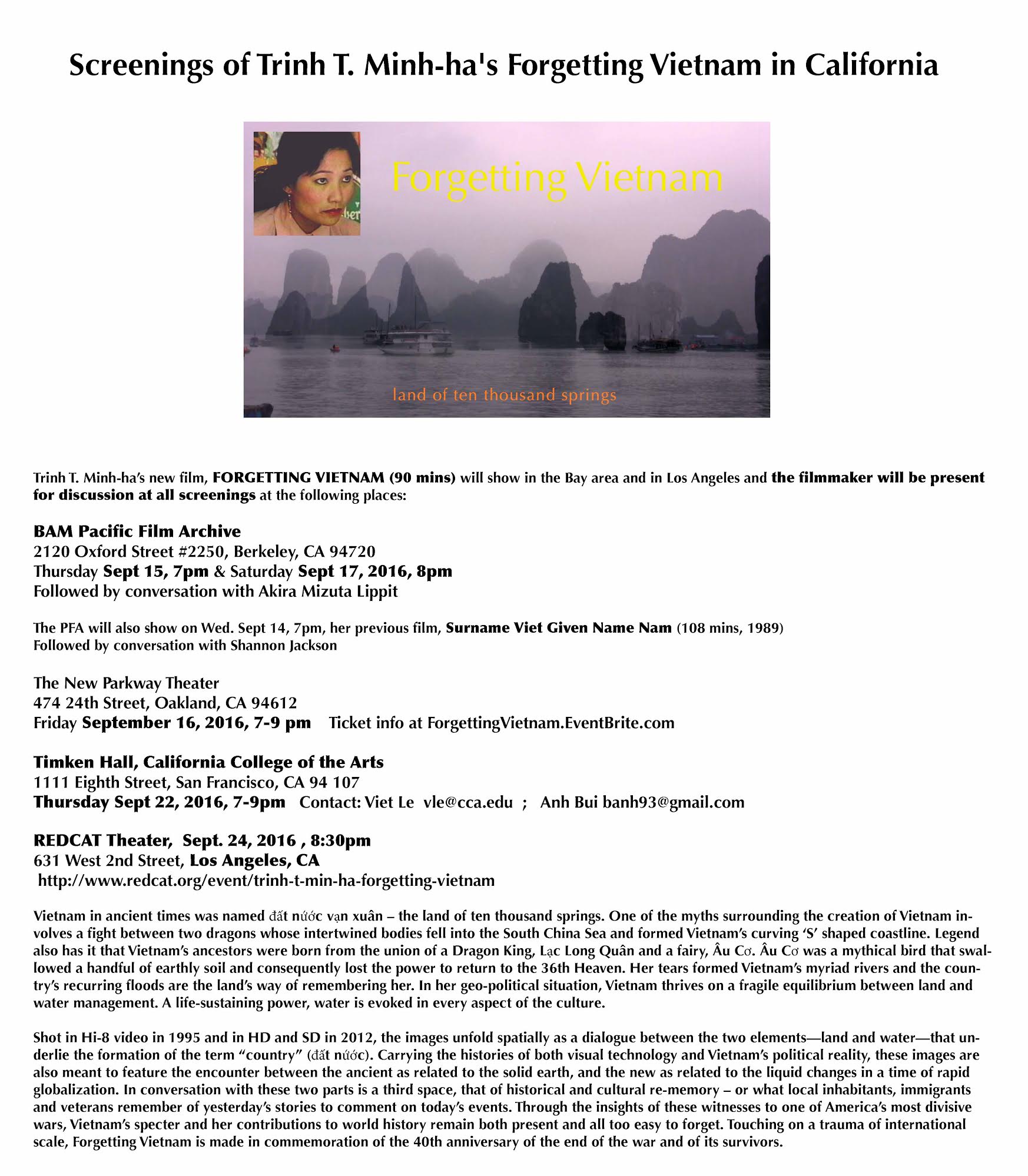
Surname Viet Given Name Nam plays tonight at the Berkeley Art Museum and Pacific Film Archive, with Trinh Minh-ha in conversation afterwards. Her new film, Forgetting Vietnam, will also be playing this week at the PFA. Other dates are listed below.

forgetting-vietnam

September 14, 2016 0 comments
0 FacebookTwitterPinterestEmail
Film

Cyborg analysis is back, now in podcast form

by rick September 12, 2016
written by rick

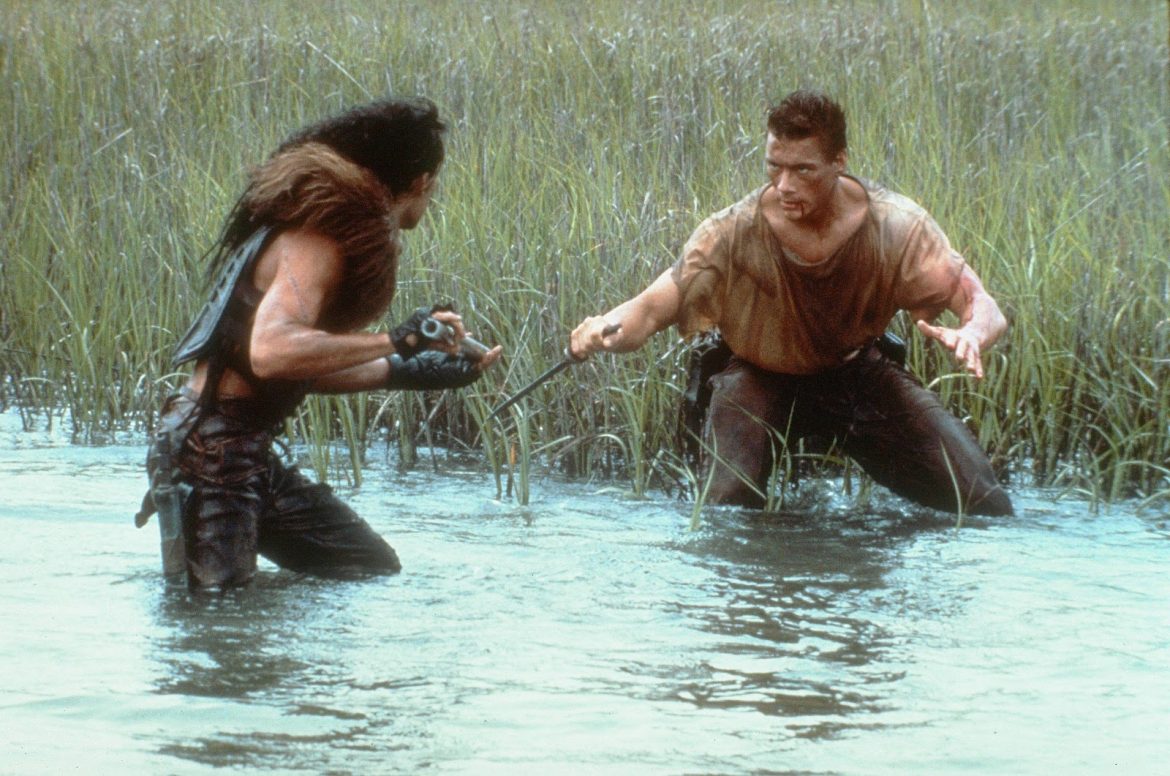
Last month, we took a look at the curiously crucifixion-focused, cyborg-lacking endeavor Cyborg, featuring Jean-Claude Van Damme and the leftover costumes from Cannon Films’ abortive attempts to make Spiderman and a Masters of the Universe sequel. As I noted at the time:

Cyborg is fascinating for a number of reasons, but the connection between its eroticism and death fetish is its most notable. For reasons left unexplained, Fender and his men simply love nailing people to crosses. It’s their favorite thing to do. Their other favorite thing is to remove the flesh of their victims — an interesting corrollary to the film’s fixation on pre-removed flesh. It’s a fleshy affair.


After stumbling through high-profile disasters like Superman IV: Quest For Peace and Over The Top, Cyborg marked a return to Cannon’s bread and butter: shitty exploitation filmed on the cheap, with little or no concern for coherence and a whole lot of attention to profit margins. It worked, though not quite well enough to save them in the end.


Today, Cyborg is a cult classic, one of the true “has to be seen to be believed” exercises in popcorn-gobbling incompetence. It remains a bewildering fact that the same guys who made Cyborg financed Love Streams, but the 80s were a weird time no matter how you slice it.

Indeed. The world is a desolate hellscape and everyone is named after an electric guitar or drum-set component. Jean-Claude Van Damme is not a cyborg, but this other lady is. Another lady tags along on a trip to Atlanta for some reason, but that lady is the worst and keeps getting Jean-Claude Van Damme in trouble with a guy who has really blue eyes.

Yeah, I don’t know.

I joined the good folks at Crushed Celluloid to discuss this strange film in more detail, and you can listen to the podcast here.

September 12, 2016 0 comments
0 FacebookTwitterPinterestEmail
Interview

7 Days in Ohio: An Interview with Nathan Rabin

by rick September 12, 2016
written by rick

Nathan Rabin — original head writer of The AV Club, author and memoirist, prolific pop cultural critic, noted Juggalo — is one of the funniest and sharpest observers of our current media landscape and the way we live now. His work, rooted in a bemused outlook and anti-cynical, democratic approach to material, is as likely to tackle the 1966 Batman movie or the vapidly handsome train-wreck that is Ryan Lochte as it is the rise of comedy geek culture or his own experiences of recent fatherhood.

Rabin’s view is expansive, to put it mildly.

His new book, out tomorrow, contrasts the Republican National Convention and Insane Clown Posse’s annual festivities. 7 Days In Ohio: Trump, The Gathering Of The Juggalos And The Summer Everything Went Insane is a portrait of clowns and cartoonish maniacs, and also ICP fans.

With the book barreling toward your Kindle like a backyard wrestler in clown makeup, Rabin was kind enough to field a few of our most pressing questions, including whether or not RNC delegates shared their drugs with him, if he considered starting a riot, and to what degree his experiences echoed the classic American film MacGruber.

14269698_10154380542822696_1718928173_n

Rick Kelley: So how did the idea for 7 Days In Ohio first come about? Obviously, you’re already something of a Juggalo chronicler — arguably the preeminent one. But was it just the weird happenstance that the Gathering was occurring so close (in time and place) to the RNC? Were there other motivating factors that made you connect the two events?

Nathan Rabin: I suspect it might horrify my wife to admit this, but, real talk, going to the Gathering of the Juggalos is a highlight of every year, personally and professionally. It’s what The Long Shot podcast‘s Jamie Flam might refer to as a “place of enchantment.” Tragically, however, people’s fascination and curiosity about Juggalos has a limit, so I need to find a new angle to cover it every year. Last year my angle was “family.” I was supposed to write specifically about families with the questionable judgment to bring children to The Gathering but I expanded it to be about family in all its forms — biological, surrogate, even the family of man as found in the gospels of Juggalos For Jesus, an interesting group of true believers trying to spread the message of Christ to Juggalos. I ended up writing about Juggalos for Jesus fairly extensively.

So when my long-lost half brother Vince re-entered my life unexpectedly about three months ago, brandishing a massive homemade sword that he had made for me, and radiating a very Juggalo kind of desperation, I knew I had my angle: I would reconnect with my brother and have this intense, spiritual, cultural and familial experience attending my fifth Gathering and his first. THAT, alone, I think would have made for a really compelling piece. But then I found out that the Republican convention was being held on overlapping days in the same state and I saw an opportunity to take a really big idea and make it positively epic. So I seized upon the overarching concept of dysfunctional family reunions and violently differing takes on our country’s future and problems and thank God, the experience lived up to my expectations. I had a chance to say something important about a singular moment in our culture. Hopefully I succeeded.

RK: One of the striking things about your writing is the way you meld personal experience and social/cultural observation. That’s been true for a long time, and prior to the book, you wrote a really fascinating piece about this whole Juggalo/Trump endeavor and reconnecting with your brother. Did you anticipate how intense this was going to be?

Rabin: I think I anticipated it being intense because my brother is intense. Really intense. Like, pummelingly intense. And that’s a big part of what made him so fascinating to me. I think I am a little less intense because I’ve had an easier life. I write about silly movies and go to The Gathering. He uses fire and iron to forge steel to his will. He’s been in multiple knife fights. At various points in my life, I’ve collected ALL of the early EPs of both The Smiths and Belle & Sebastian. And my brother is tormented by his relationship with our biological mother because it’s so intense whereas I am liberated from it, in a strange way, by having her out of my life. So I think I realized going in that this wouldn’t work if my brother and I were both super intense, so I think he was intense, and then his wife and myself tried to be mellowing influences, with some success. The Gathering began on kind of a weird, dark note but it improved tremendously.

download

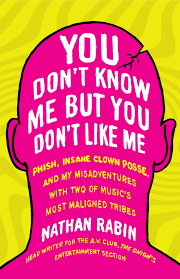
RK: In your earlier book You Don’t Know Me, But You Don’t Like Me, you go out of your way to shelve cynicism and try to find the redeeming aspects and connective threads between frequently despised subcultures — in that case, not just ICP but Phish fandom. Are you in any way able to recuperate Trump’s lunatic legions of supporters? Are they somehow redeemable in context, or at least explicable? Or are they exactly what they appear to be — namely, garbage bigot monsters?

Rabin: I was wondering about this going in. When I went to my first Gathering a long, long time ago I knew almost nothing about them except that people thought they were the worst, they dressed like clowns and sprayed Faygo and did that silly “Miracles” song. And I was writing a book about them! So I learned through experience that they were not what people derided them as being, or at least were a whole lot more complicated and impressive than the stereotypes held. On the other hand, I knew far too much about Trump going in. And he’s EXACTLY what his detractors accuse him of being. So while there was half of one percent of my brain that wondered, “What if you go there and Trump starts to make sense to you? What if he converts you?” I doubted that anything there would change my opinion of Trump and his supporters. And nothing did. If anything, it made him seem even MORE terrifying and wrong.

RK: The Gathering is known for the pervasiveness of clowns and drugs. The RNC, of course, has no shortage of clowns, but I’m curious if you went full Hunter Thompson and ate a ton of mescaline to deal with it. In retrospect, are there narcotics you wish had been distributed more freely to the delegates?

Rabin: To be brutally honest I had two different visions for the trip. In one, I would take a Greyhound bus to Cleveland with the whole Fear & Loathing accessories unit, with mushrooms and molly and pot but I had to choose between taking a bus 14 hours so I could be on some powerful drugs I shouldn’t have been on in the first place, or go the sober route and save myself the time and the hassle. So I went the sober route in Cleveland and the very non-sober route in Thornville and I’m glad I did. The convention was trippy and nightmarish enough without drugs, and the wall-to-wall ubiquity of cops would have freaked me out if I had been stoned. And while a lot of the revelers seemed to be drunk and possibly coked up at the RNC, it was, on the whole, less of a druggy scene, or at least no one was sharing their stash with me.

That’s what I really hate about Trump supporters. They’re selfish in all respects, including not sharing their drugs with me.

rnc

gathering

RK: I watched some of the Republican National Convention, and it was a resolutely dour affair. One of the great ironies here, it seems, is that ICP has been deemed, alternatively, a pitiful subculture of losers (Mr. Trump’s favorite word) or a dangerous clown gang (by some of the very people attending the RNC). Yet it’s The Gathering that seems the more positive, affirming event. What do you think explains this weird nexus of political rage and carnival joy, given that both are in essence spectacles?

Rabin: I think Trump’s brand, as a politician, is fear. It’s xenophobia. It’s racism. It’s sexism. It’s racial and cultural division. Those are all scary, dark, paranoid qualities to build a political brand around. To Trump and his supporters, being pro-American or patriotic is shorthand for anti-immigrant and xenophobia. The Gathering, in sharp contrast, is a celebration. It’s supposed to be heaven on earth, a place where people who are mocked and ridiculed are elevated and revered. It’s supposed to be the four happiest, most upbeat days of a Juggalo’s year. And they need it, because Juggalos lives tend to be hard, whereas I imagine most of Trump’s delegates have pretty cushy lives. The same can’t be said of a lot of his working class supporters, but then they’re looking to build themselves up by tearing other people down, which is a very un-Juggalo way to go about things.

RK: This is a film website, so I figure I should close with a film question. What movie did your experiences at the RNC, the Gathering, and the spaces between them most evoke, and why is it MacGruber?

Rabin: That is a good question, and also a good answer.

The RNC did remind me of MacGruber in that Trump is a dithering idiot convinced he’s a genius whose dangerous incompetence threatens the lives of the more competent and less insane people around him. And it’s hard to get around the obvious Idiocracy parallels.

But I’m going to go in an even more obvious direction and go with Medium Cool, particularly the RNC parts. At its most electrifying, I felt like I was watching history unfold in front of me and I would be lying if there wasn’t some part of me that secretly kind of pined for a riot. Even one I would perish in. That’d sell another 100 copies of each of my books at least. I was on my Mookie/Sly & The Family Stone shit, and I ended up doing the right thing. Which in this case was not starting a riot. Confusing, huh?

RK: Lastly, the basics: when do you expect the book to come out and how can people get it?

Rabin: The book comes out on September 13th! (which is probably, at this point, the distant future) and is only available on Amazon. [Ed. note: That’s actually tomorrow.] I’ve got nothing against conventional booksellers. In fact I love them and appreciate their support through the years, but this story was perfect for a Kindle “short reads” so that is the form it ended up taking.

Nathan Rabin’s 7 Days In Ohio: Trump, The Gathering Of The Juggalos And The Summer Everything Went Insane is available for purchase here. If you like funny, smart things, you should buy your copy immediately.

Thanks once again to Nathan for taking the time to chat. 

September 12, 2016 0 comments
0 FacebookTwitterPinterestEmail
Newer Posts
Older Posts

About

About

Towards a provisional theory of the cinema, or, failing that, just some shit about movies

Authors
Rick Kelley
Lark Lundberg

Keep in touch

Facebook Twitter

Categories

  • Conversation
  • Film
  • Film By Film
  • Great Movie Project
  • Great Movies: The Counter Programming
  • Guest
  • News
  • Other
    • Commentary
    • Film
    • Interview
    • Reviews
    • Song for a Sunday
  • Streaming Selections
  • TV
  • Uncategorized
  • Vegan Horror

Archives

  • April 2019
  • March 2019
  • January 2019
  • December 2018
  • November 2018
  • October 2018
  • September 2018
  • August 2018
  • July 2018
  • June 2018
  • May 2018
  • April 2018
  • March 2018
  • February 2018
  • January 2018
  • December 2017
  • November 2017
  • October 2017
  • September 2017
  • August 2017
  • July 2017
  • June 2017
  • May 2017
  • April 2017
  • March 2017
  • February 2017
  • January 2017
  • December 2016
  • November 2016
  • October 2016
  • September 2016
  • August 2016
  • July 2016
  • June 2016
  • May 2016
  • April 2016
  • March 2016
  • February 2016
  • January 2016
  • December 2015
  • October 2015
  • September 2015
  • August 2015
  • July 2015
  • June 2015
  • May 2015
  • April 2015
  • March 2015
  • February 2015
  • January 2015
  • December 2014
  • November 2014
  • October 2014
  • August 2009
  • September 2008

Recent Posts

  • China Girls, Death Proof, and the Hidden Face
  • Old News: Old Noise Edition
  • Old News: April 1, 2019
  • Nicolas Winding Refn, Marginalia, and the Deaths of Cinema
  • And now, let us praise Kanopy

Recent Comments

  • Franklin Kat on Michael Shannon shines again in Frank & Lola
  • Sean Tempesta on Cinema and dream-logic in Meshes of the Afternoon
  • ludditerobot on The Left-Wing Slapstick and Iconic Songs of 1937’s Street Angel
  • Franklin Kat on The Left-Wing Slapstick and Iconic Songs of 1937’s Street Angel
  • Arijit Mukherjee on Great Movies Project: The Counter-Programming
  • Facebook
  • Twitter

@2021 - All Right Reserved. Designed and Developed by PenciDesign


Back To Top
Luddite Robot
  • Reviews
  • Commentary
  • Great Movie Project
    • Great Movie Project
      Bride of Frankenstein is a movie for and…

      January 25, 2018

      Great Movie Project
      The Enduring Appeal of Nick and Nora in…

      November 29, 2017

      Great Movie Project
      The Ahistorical Fever Dream of The Scarlet Empress

      August 2, 2017

      Great Movie Project
      Dreams, Mundanity, and the Anarchist Yearnings of L’Atalante

      July 12, 2017

      Great Movie Project
      Duck Soup Is And Will Always Be A…

      April 19, 2017

  • Counter Programming
    • Great Movies: The Counter Programming
      Walking and Talking in the Shadow of Kanchenjungha

      March 7, 2018

      Great Movies: The Counter Programming
      A Brief Encounter in My Mother and Her…

      February 9, 2018

      Great Movies: The Counter Programming
      Horror’s Refusal in Farrokhzad’s The House Is Black

      October 13, 2017

      Great Movies: The Counter Programming
      The rage and beauty of The Cloud-Capped Star

      October 3, 2017

      Great Movies: The Counter Programming
      The daylight noir and social issue empathy of…

      June 22, 2017

  • Vegan Horror
    • Vegan Horror
      Julia Ducournau doesn’t think her film Raw is…

      June 7, 2017

      Vegan Horror
      Licking our wounds: The vampiric masculinity of Ravenous

      December 13, 2016

      Vegan Horror
      Eggertsson and animals: An approach to horror cinema

      September 15, 2016

      Vegan Horror
      “It’s Not My Nature” – Vegetarianism, Body Horror,…

      August 30, 2016

      Vegan Horror
      Bodies and Carcasses in Predator 2

      August 23, 2016

  • Interview
    • Interview
      Jasmine Leyva’s doc The Invisible Vegan aims to…

      May 3, 2017

      Interview
      Bridging The Abyss: An Interview With The Directors…

      November 28, 2016

      Interview
      7 Days in Ohio: An Interview with Nathan…

      September 12, 2016

      Interview
      Film Critic Phil Dy talks New Filipino Cinema

      June 17, 2016

      Interview
      “I Love Seeing Film Projected.” A Conversation with…

      March 22, 2016