Top Posts
Madeline’s Madeline: An Unclassifiable Panic Attack Maybe-Masterpiece
Shoplifters Steals Moments of Wonder from the Mundane
Burning and Forgetting What’s Not There
Kusama: Infinity Expands Beyond The Canvas
Mandy Risks Little, Wins Little
In We The Animals, The Children Are Away...
The Seagull Isn’t Quite Chekhov, But It’s Still...
5 Million Ways Boots Riley Isn’t Sorry To...
American Animals’ and the Queasiness of the Heist
A Star Is Born In Hearts Beat Loud
  • Reviews
  • Commentary
  • Great Movie Project
    • Great Movie Project
      Bride of Frankenstein is a movie for and…

      January 25, 2018

      Great Movie Project
      The Enduring Appeal of Nick and Nora in…

      November 29, 2017

      Great Movie Project
      The Ahistorical Fever Dream of The Scarlet Empress

      August 2, 2017

      Great Movie Project
      Dreams, Mundanity, and the Anarchist Yearnings of L’Atalante

      July 12, 2017

      Great Movie Project
      Duck Soup Is And Will Always Be A…

      April 19, 2017

  • Counter Programming
    • Great Movies: The Counter Programming
      Walking and Talking in the Shadow of Kanchenjungha

      March 7, 2018

      Great Movies: The Counter Programming
      A Brief Encounter in My Mother and Her…

      February 9, 2018

      Great Movies: The Counter Programming
      Horror’s Refusal in Farrokhzad’s The House Is Black

      October 13, 2017

      Great Movies: The Counter Programming
      The rage and beauty of The Cloud-Capped Star

      October 3, 2017

      Great Movies: The Counter Programming
      The daylight noir and social issue empathy of…

      June 22, 2017

  • Vegan Horror
    • Vegan Horror
      Julia Ducournau doesn’t think her film Raw is…

      June 7, 2017

      Vegan Horror
      Licking our wounds: The vampiric masculinity of Ravenous

      December 13, 2016

      Vegan Horror
      Eggertsson and animals: An approach to horror cinema

      September 15, 2016

      Vegan Horror
      “It’s Not My Nature” – Vegetarianism, Body Horror,…

      August 30, 2016

      Vegan Horror
      Bodies and Carcasses in Predator 2

      August 23, 2016

  • Interview
    • Interview
      Jasmine Leyva’s doc The Invisible Vegan aims to…

      May 3, 2017

      Interview
      Bridging The Abyss: An Interview With The Directors…

      November 28, 2016

      Interview
      7 Days in Ohio: An Interview with Nathan…

      September 12, 2016

      Interview
      Film Critic Phil Dy talks New Filipino Cinema

      June 17, 2016

      Interview
      “I Love Seeing Film Projected.” A Conversation with…

      March 22, 2016

Luddite Robot
Film critique, theory, and assorted nonsense.
CommentaryFilm

China Girls, Death Proof, and the Hidden Face

April 14, 2019

Old News: Old Noise Edition

April 8, 2019

Old News: April 1, 2019

Nicolas Winding Refn, Marginalia, and the Deaths of Cinema

CommentaryFilm

And now, let us praise Kanopy

January 24, 2019

Warren Sonbert and the Relief of Anti-Narrative

January 14, 2019

The World Is Ending and It Doesn’t Matter

The Best Films of 2018

FilmReviews

Madeline’s Madeline: An Unclassifiable Panic Attack Maybe-Masterpiece

December 21, 2018

Shoplifters Steals Moments of Wonder from the Mundane

December 11, 2018

Burning and Forgetting What’s Not There

Alien, Musicology, and Reading Soundtracks

CommentaryFilm

Shocktober III: Halloween 2018 Edition

October 24, 2018

Shirley Jackson’s The Lottery Traumatized Schoolkids in 16 mm

October 18, 2018

Shocktober 2018 II: Another Reshockening (of Horror)

Häxan is a movie made by a movie character

CommentaryFilm

Shocktober 2018

October 7, 2018

Unprofessional! Spring Night, Summer Night

October 3, 2018

The Wild Boys: A Luddite Robot Conversation

Kusama: Infinity Expands Beyond The Canvas

CommentaryFilm

New on Netflix: From Afar (Desde allá)

by rick September 10, 2016
written by rick

Winner of the 2015 Golden Lion in Venice, Lorenzo Vigas’ From Afar (Desde allá) is the slowest of slow burns. A story of distance, proximity, and perspective, it teases out the hidden meanings behind character surfaces in ways that either prove thrilling or excruciating, depending on your tolerance for long stretches of silence and similar arthouse trappings. Think a queerer, more tense Kiarostami-by-way-of-Caracas and you might be getting close.

from-afar3

Armando (Alfredo Castro, the very picture of a middle-aged nobody) specializes in repairing dentures, but spends much of his time picking up young boys from the street. Notably, he masturbates to them, but touching isn’t among his interests. The volatile Elder (Luis Silva, the very picture of smoldering hustler street youth) robs him, but the two form a bond anyway. It’s bad news from the start.

The slightly twisted father-son relationship that develops forms the basis of From Afar. It reveals aspects of both, but the narrative has more in mind than that — first, the ways in which it underscores other paternal relationships, and second, as prelude to a last-act reveal of motivation. Vigas’ story plays things close to the vest, and Sergio Armstrong’s cinematography revels in out-of-focus shots and pivotal offscreen action we don’t get to see. From Afar is mysterious in more ways than one.

from-afar

That blurry distance and shallow depth Armstrong achieves is entirely appropriate to a narrative in which things are not what they seem, fields of vision in which either the teeming streets have become a shadowy mass or, paradoxically, all eyes seem to be on our protagonist. The solid colored walls of Caracas take on an oneiric quality as people pass by them; it feels both dangerous and entirely unreal.

By the film’s end, it’s all-too-real. Scenes echo each other, but From Afar isn’t really a puzzle movie so much as a set of allusions and impressions. Fake fathers and fake sons, the artifice of false teeth, even desire itself is questionable from moment to moment. If you can stick with Vigas’ dream-like but occasionally lurid riffing here, there’s a lot to chew on.

Quick Links

nightbreed

Nightbreed: Boasting both a bonkers David Cronenberg performance in front of the camera and a 34% on Rotten Tomatoes, Clive Barker’s famously mauled follow-up to Hellraiser is actually a lot of gonzo fun. Monsters galore, mutilation murders, a subterranean demon-land, and a very possible subtext I’ll leave for you discover. You already know if you want to watch this.
wickerman

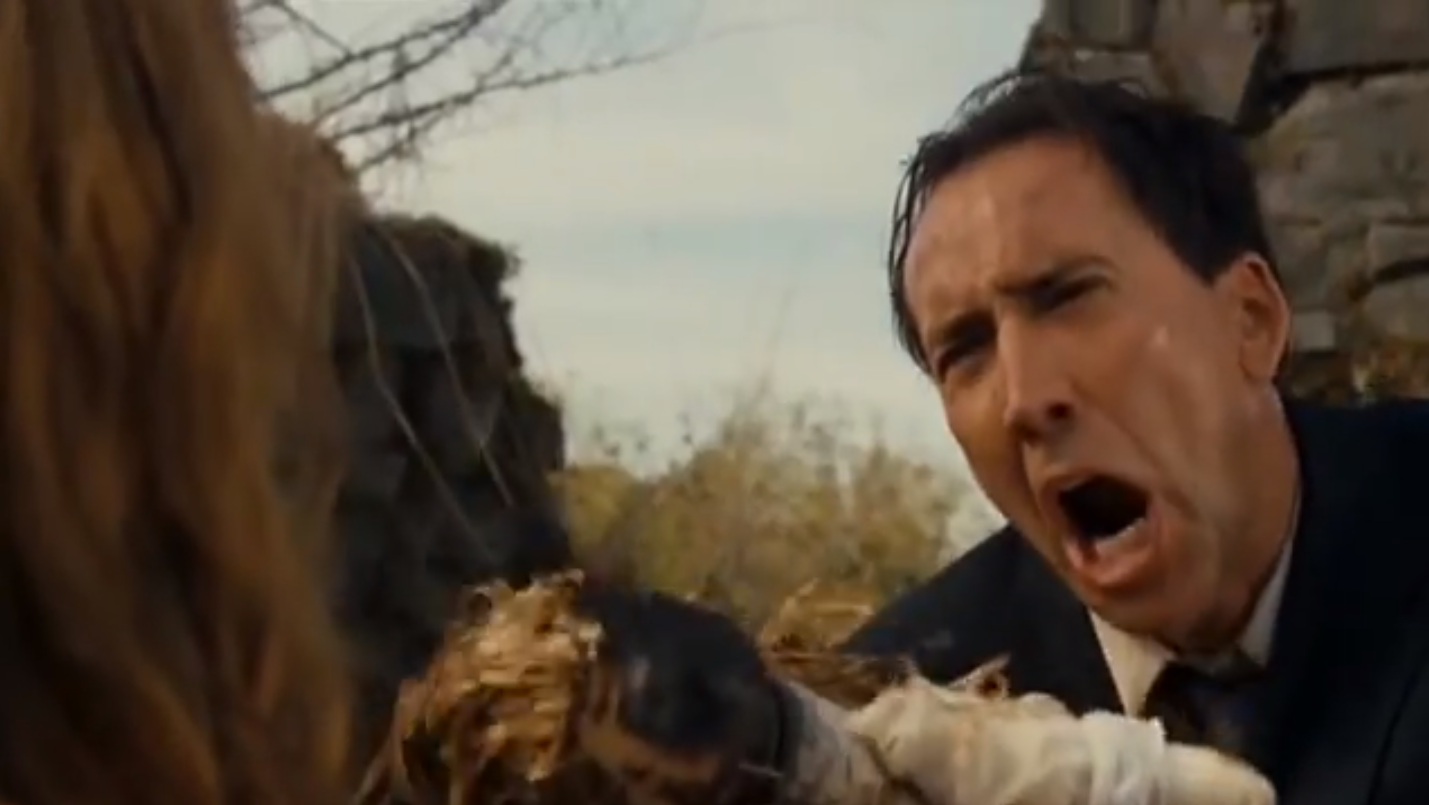
The Wicker Man: Yes, yes. The Nic Cage Wicker Man is known primarily as the source of goofball clips and memes of Cage frantically shouting, “No, not the bees!” But guess what? First of all, bees are totally scary and if someone dumped them on your face, you would yell that, too. Secondly, the remake of the 1973 classic isn’t half-bad. Neil Labute is entirely up to the task of delving into its fundamentally gross, more or less misogynist narrative, and there are a whole lot of effective moments among the cringe-worthy bits. Pour yourself some honey mead and see for yourself.

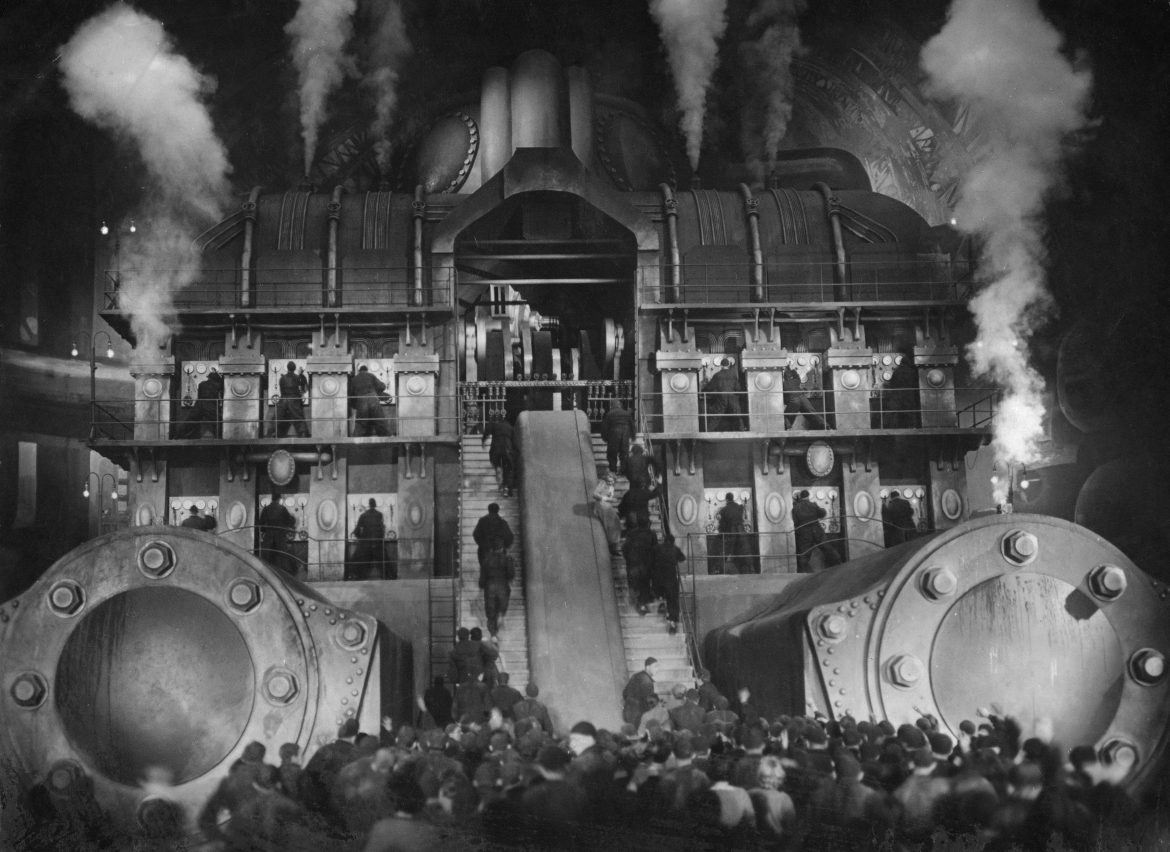
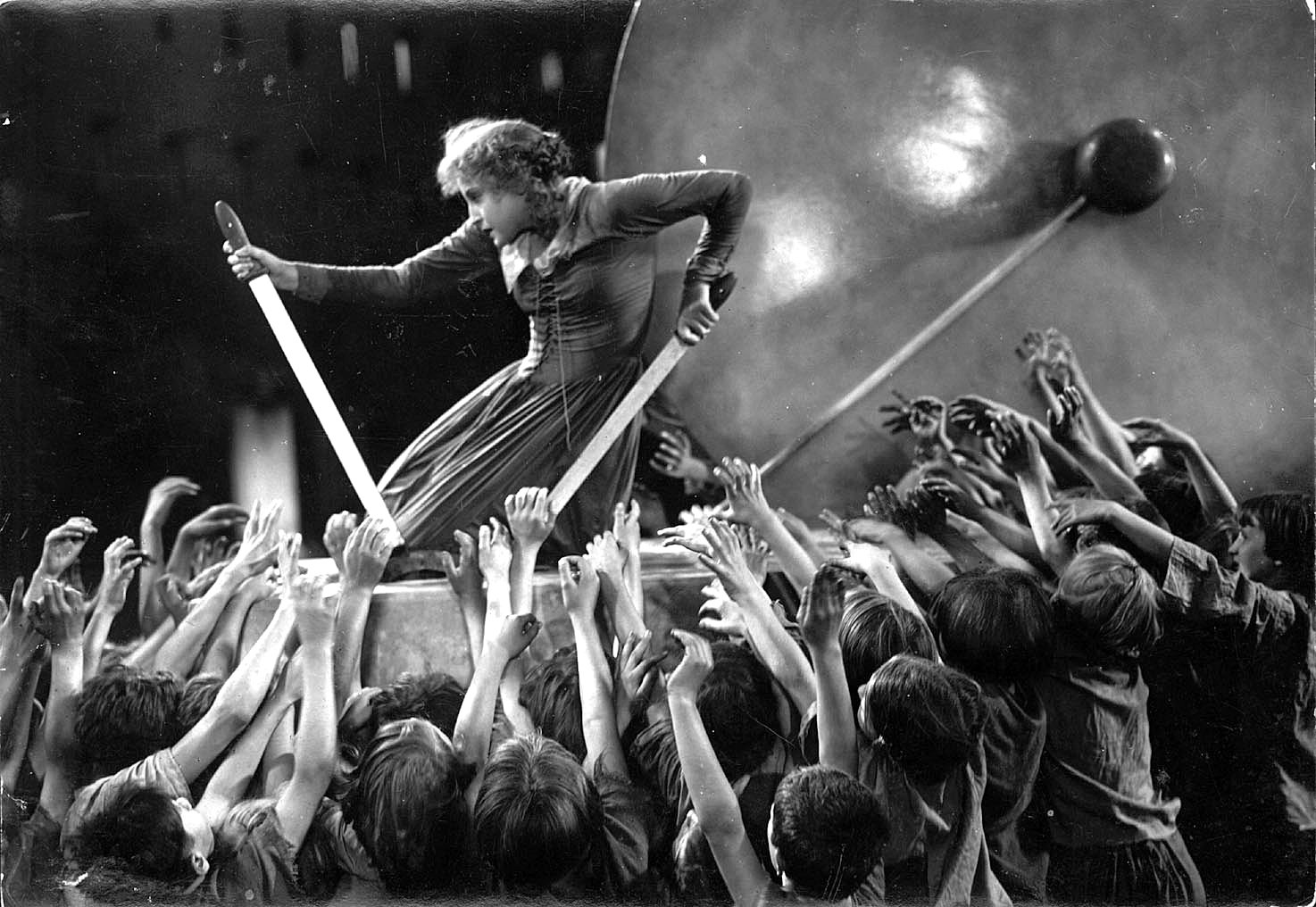
metropolis7Metropolis: It was only yesterday that I wrote, in not terribly flattering terms, about Fritz Lang’s sci-fi masterpiece. But honestly, if you haven’t seen it, you must. In terms of pure spectacle and technical ingenuity, it’s unsurpassed almost 90 years later. Hell, you could pair it with 1921’s Destiny, also streaming on Netflix, and make it a Fritz Lang double feature. Hope you didn’t have any other plans.
over-the-top

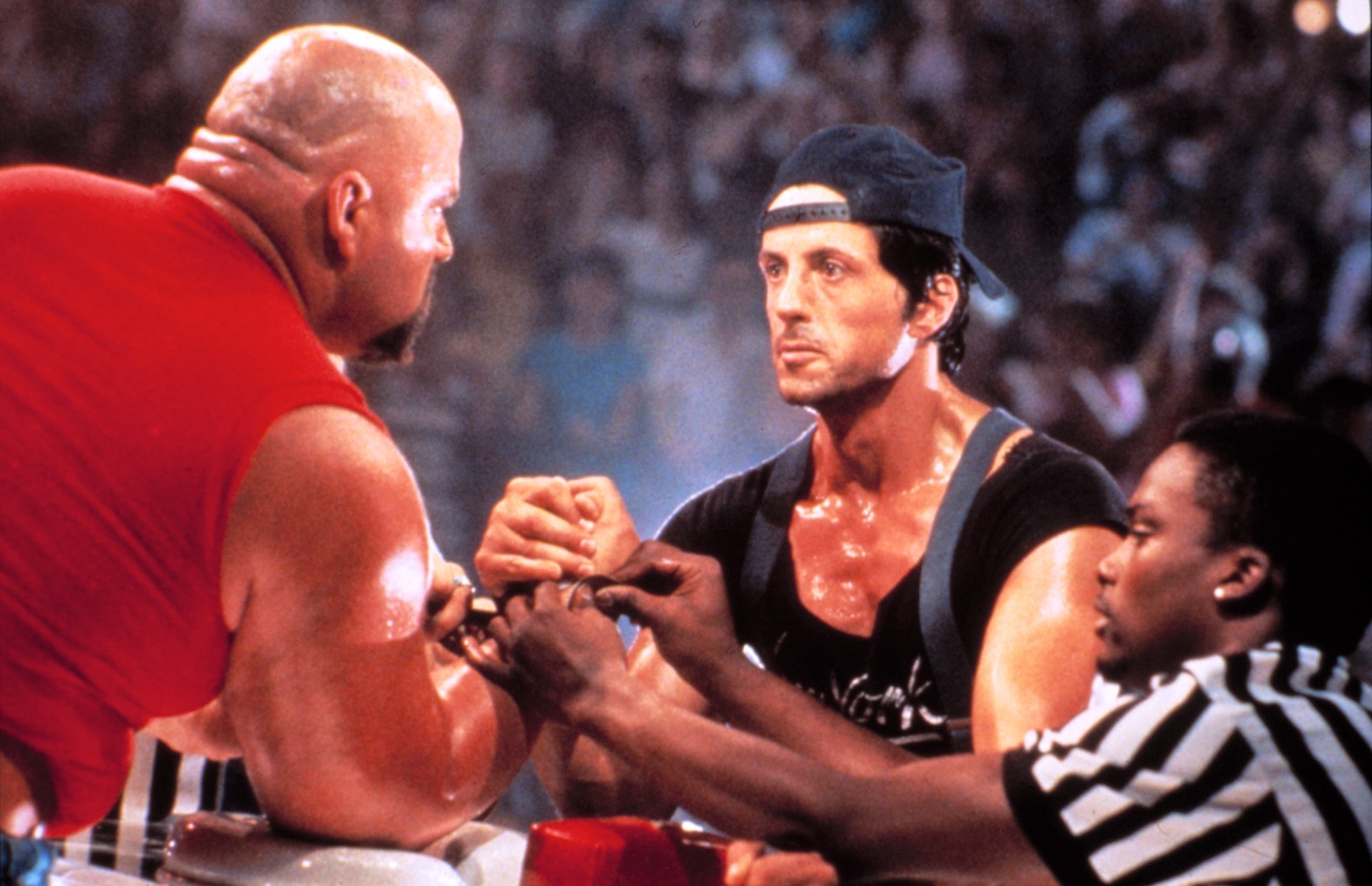
Over The Top: Is early Fritz Lang too silent for you? You know what’s not? Cannon Films. And Over The Top is a perennial favorite, despite playing a large role in bankrupting the legendarily dubious production house responsible for it. Arm-wrestling movies never really caught on, despite Golan and Globus’ best efforts, but we’ll always have Sly Stallone working out on the side of the road to Kenny Loggins.
September 10, 2016 0 comments
0 FacebookTwitterPinterestEmail
FilmGreat Movie Project

The gorgeous images and narrative incoherence of Metropolis

by rick September 9, 2016
written by rick

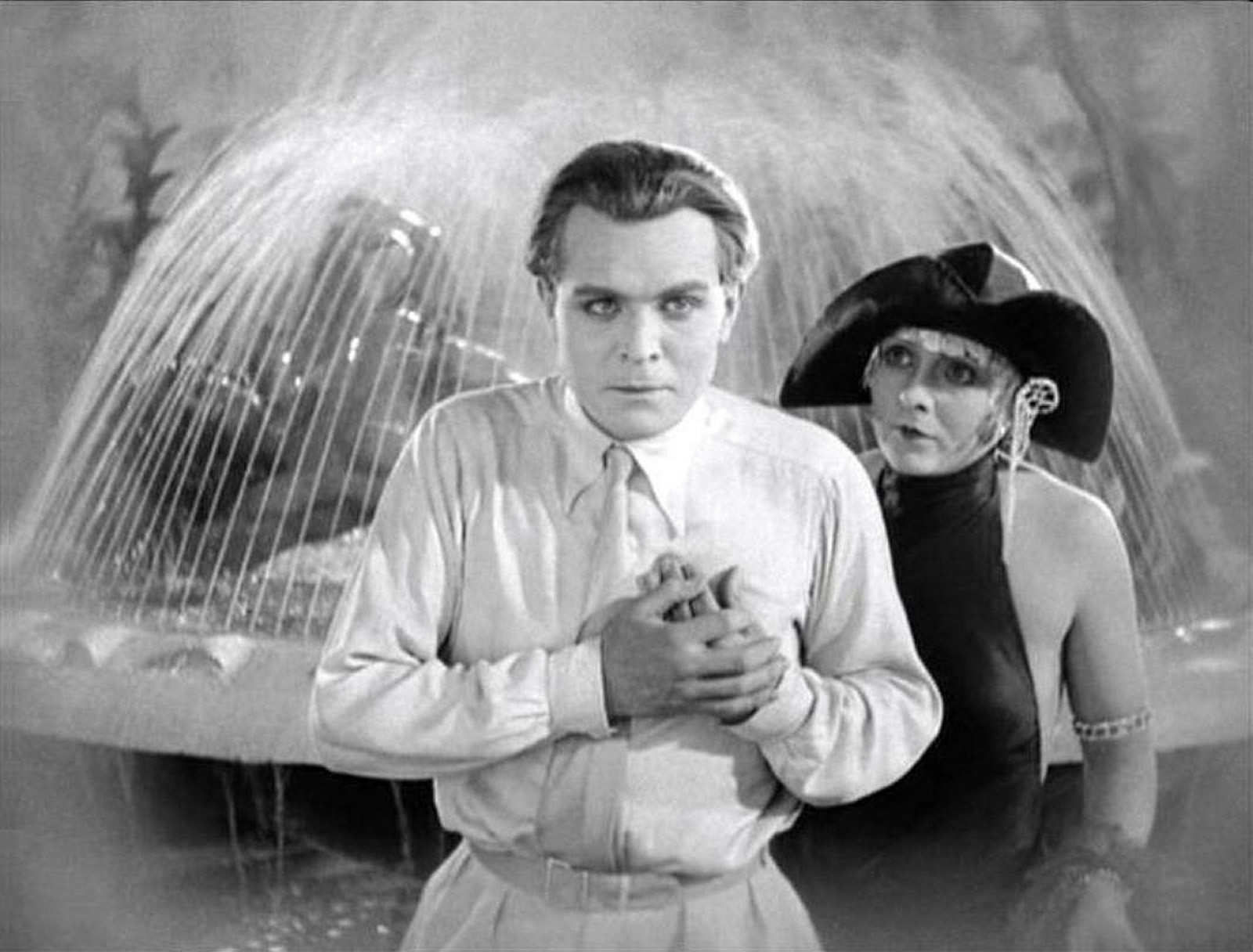
Metropolis is indisputably one of the most celebrated films of the Silent Era and the generally agreed-upon cinematic pinnacle of Weimar. A dystopian sci-fi landmark distinguished by incredible set design and in-camera tricks, director Fritz Lang’s monumental ode to “the heart” as the “mediator of head and hands” was hugely influential on dozens and dozens of films to follow.

It is also not very good.

metropolis5

Is this heretical? Critics at the time, including voices as different as H.G. Wells and Buñuel, tended to agree, and Lang himself had this to say in 1965:

I have often said that I did not like Metropolis and this is because I can’t accept today the leitmotif of the message of the film. It is absurd to say that the heart is the intermediary between the hands and the brain, that is, of course, between the employee and the employer. The problem is social and not moral. Naturally, during the shooting of the film, I liked it, if I hadn’t I couldn’t have continued to work on it. But later I started to understand what didn’t work. I thought, for example, that one of the faults was the way I had shown the work of the man and the machine together. You remember the clocks and the man who works in harmony with them? He became, so to speak, a part of the machine. Well, that seemed to be too symbolic, too simplistic in its evocation of what is called “the evils of mechanization.”

Still, there’s no denying the film’s staggering production design and influence on everything from Brazil to Star Wars to Blade Runner to Alphaville to, well, basically everything that imagines a future city of towering structures or any film featuring a crazy-haired mad scientist flailing about in a lab somewhere.

The story is almost embarrassing in its naivete to relay, but here goes. In the future, the city of Metropolis is divided between the opulence and decadence of an above-ground playground for the rich and a subterranean hellscape where workers toil in anonymity and suffering. Freder, son of the city’s architect ruler Fredersen, discovers that his pleasure is rooted in the pain of the workers and seeks to help their lot, with the assistance of a salvational figure in the form of Maria. However, the workers await the arrival of a Messiah / Mediator who will lift them up and ameliorate the disconnect between rich and poor. With an impressive lack of humility and more than a touch of sexism, Freder decides he will be that Messiah, not Maria.

metropolis6

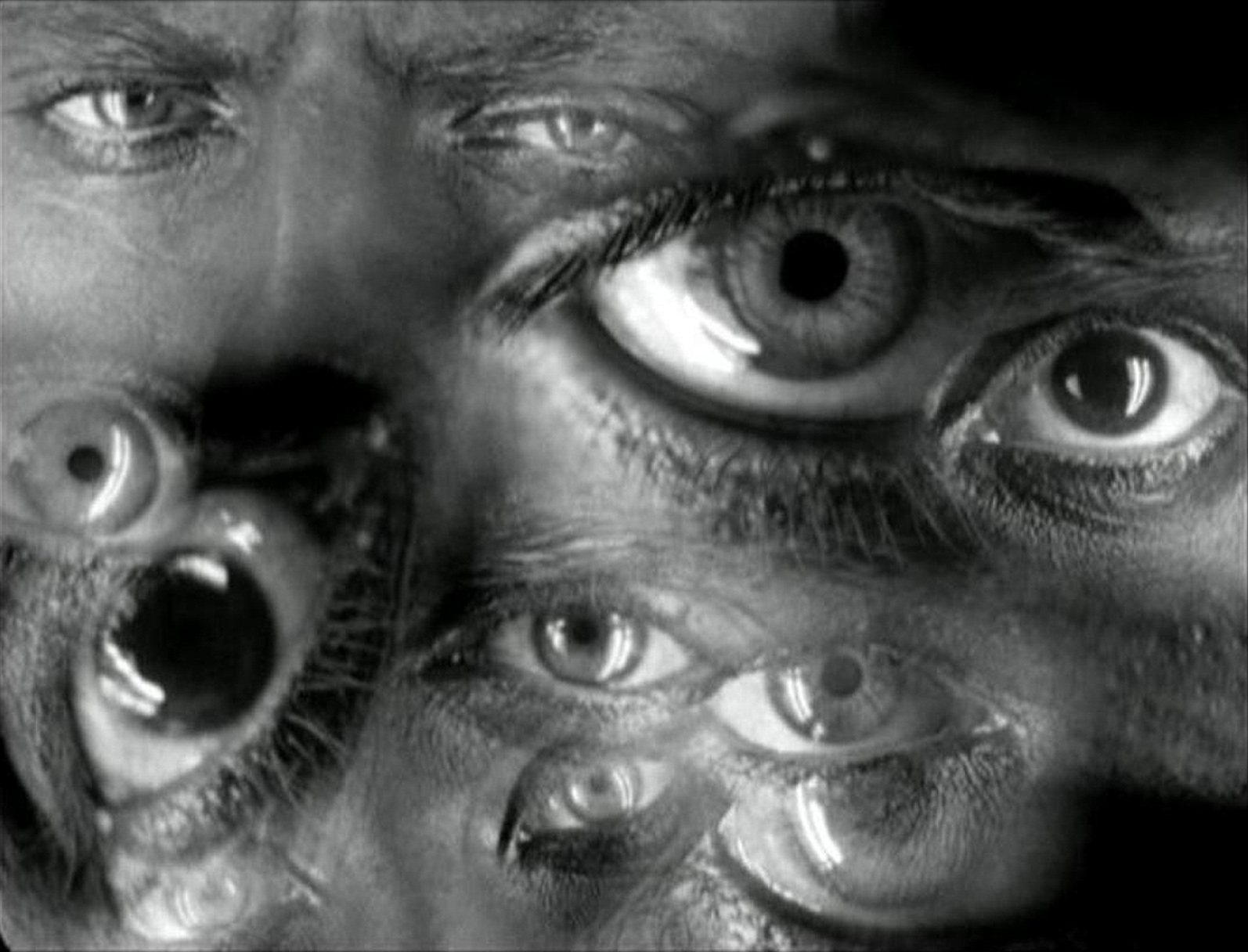
Meanwhile, in an attempt to hold on to power and further the subjugation of the masses, Fredersen turns to mad-scientist Rotwang, who has been working on robot technology. They kidnap Maria and make a figure in her likeness, an anti-Maria who will foment discord among the workers and bring them to their own ruin through revolutionary, Luddite-like incitement, via hip gyrations. In a startling tableau, Lang communicates the intoxicating visual effect on the workers through superimpositions of eyes, as False-Maria’s sexuality rerouts desire to destruction:

metropolis4

The plan doesn’t work, ultimately, and the ruse is revealed. Fredersen has a change of heart, Freder literally unites the two classes in mutual harmony, and all is right with the world, which presumably goes right back to the status quo.
There’s little point in explicating how little sense any of this makes. What’s really striking is the way in which Metropolis has often been remembered as itself somehow revolutionary.

metropolis3

Quite the opposite: although depicting extreme class stratification, its narrative hinges on the desirability of such separation, which is probably one of the reasons it was so popular with the Nazi Party that Lang’s then-wife and co-writer Thea von Harbou would go on to enthusiastically support. Indeed, Metropolis boasts the dodgy honor of being Hitler’s favorite film. As Michael Atkinson notes:

The statement about class warfare made by the film’s visual gigantism and visions of humans fed into the furnaces at a radical disconnect from the story’s play-nice denouement. Will the workers just go back to the caverns and man-eating generators? In fact, when the villainous anti-Maria yowls “Death to the machines,” she speaks the people’s truth. The problem is, this was just 10 years after the Russian Revolution shocked and horrified every government leader, CEO and aristocrat on the globe.


Which is why Metropolis, a film that ostensibly sympathizes with the workers, had to be an anti-revolutionary narrative–in the shadow of the Bolshevik uprising, a dystopia that maintained clear class separation in a civil manner seemed to be a desirable alternative. For the filmmakers and the Nazis who loved them, Metropolis was a massive turbine built to provide a negative charge against Soviet propaganda, and to idealize the top-down social model quickly constructed out of National Socialism.

I have focused largely on the politics of Metropolis because they are so central to both its narrative and critical reception. Aesthetically, of course, the film is a miracle, blending Art Deco architectural visions and a kind of manic Futurism with the externalized psychologies of its characters, in the typical German Expressionist fashion that Lang mastered.

metropolis7

Metropolis is the epitome of visual splendor at the service of weak, borderline incoherent storytelling. The 2008 discovery of missing reels in Buenos Aires helped clarify some things, as well as revealing the film to be more of a meshing of genres than the pure sci-fi film its often considered, but nothing can really alter the fact that Metropolis is, as H.G. Wells indelicately alleged, “silly”. Of course, the same has been said of the Star Wars films, a series it very much influenced, and those seem to have done pretty well with audiences over the years.

Still and all, Lang and his crew’s technical achievements were substantial, and Metropolis remains one of the most visually stunning films ever made. That’s something.

Favorite Ebert quote:

The result was astonishing for its time. Without all of the digital tricks of today, “Metropolis” fills the imagination. Today, the effects look like effects, but that’s their appeal. Looking at the original “King Kong,” I find that its effects, primitive by modern standards, gain a certain weird effectiveness. Because they look odd and unworldly compared to the slick, utterly convincing effects that are now possible, they’re more evocative: The effects in modern movies are done so well that we seem to be looking at real things, which is not quite the same kind of fun.

September 9, 2016 0 comments
0 FacebookTwitterPinterestEmail
CommentaryFilm

A Boy and His Dog leads off our Month of the Year, 1975

by rick September 6, 2016
written by rick

In an online film community of which we are both members, my pal Liz Lerner suggested a novel and fascinating idea. For the entire month of September, we are watching and considering films from a specific, arbitrarily chosen year, attempting to locate their concerns, aesthetics, and quirks in the material conditions of their creation and examining what they might have to say to each other. The year we landed on is 1975.

Jaws. Barry Lyndon. Escape To Witch Mountain. Grey Gardens. Monty Python and the Holy Grail. One Flew Over The Cuckoo’s Nest. Nashville. The Rocky Horror Picture Show. Picnic at Hanging Rock. The Stepford Wives. Shivers. (These are just some of the ones I’ve seen.)

There are plenty of reasons to scoff at the notion that any one year’s filmic resume is illustrative of anything in particular. For one, some things may have been gestating for a while, only emerging in their final form at a particular moment for any number of extraneous reasons. For another, I don’t mean to suggest some reductive analysis that says, “Well, of course both Jaws and Nashville appeared in theaters: that was the year Space Mountain opened, and you can clearly see its influence on every film from 1975.”

space mountain

That would be silly.

But there are throughlines, I’d posit. Certain approaches and attitudes tend to animate art at given moments in time, and viewing them through the lens of a particular year seems as valid as any other approach.

My mission for the month on this score is to chart some first-watches from 1975. I already watch Jaws all the time (and its sequels), and there’s no way I’m watching Rocky Horror again, because it is terrible. But, hopefully with some help, we’ll dive into 1975 and see what we find.

A quick glance at the events of 1975 reveal a pervasive unease and a world in transition. To rattle off only a few, this was the year that Watergate exploded and OPEC raised gas prices 10%, exacerbating the oil crisis of 1973. Squeaky Fromme tried to kill Gerald Ford, the Weather Underground detonated explosives in the State Department, the Red Army Faction was active in Berlin and Stockholm, and the IRA bombed the London Hilton. Papua New Guinea, Angola, Suriname, Cape Verde, São Tomé and Principe, The Comoros, and East Timor all declared independence from their colonial overseers, with often bloody results. The Vietnam War drew to something of a close with the Fall of Saigon, and the Cambodian Khmer Rouge nominally surrendered. 200,000 people died in China after the failure of the Banquio Dam. There’s a coup d’etat in Chad and the beginning of the Lebanese Civil War.

That’s heady stuff, a tectonic shift in social and global relations. On screen, it seems most reflected in the anxious dystopias, fraught insurgencies, and forced isolation narratives of things like 1975’s The Adventures of the Wilderness Family, Breakheart Pass, Death Race 2000, Dog Day Afternoon, and even something like Jeanne Dielman, 23 quai de Commerce, 1080 Bruxelles. There is a sense that things are falling apart, or already have.

Nowhere is this more true than with one of my 1975 first-watches, the entirely bananas Harlan Ellison adaptation A Boy and His Dog.

boy and his dog

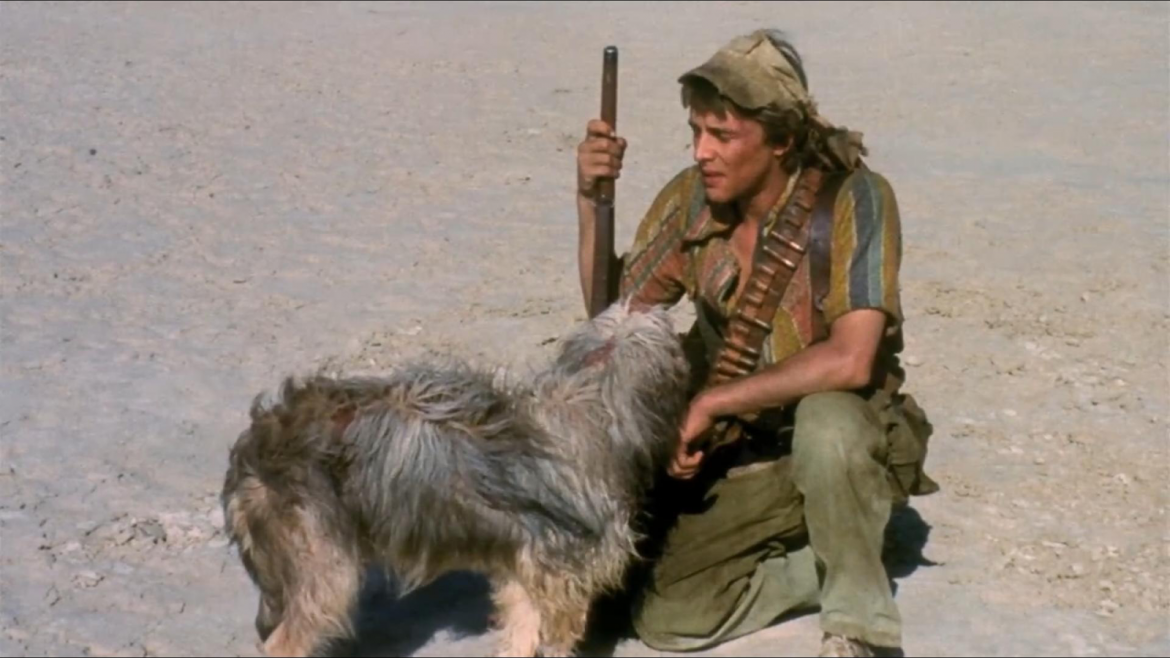
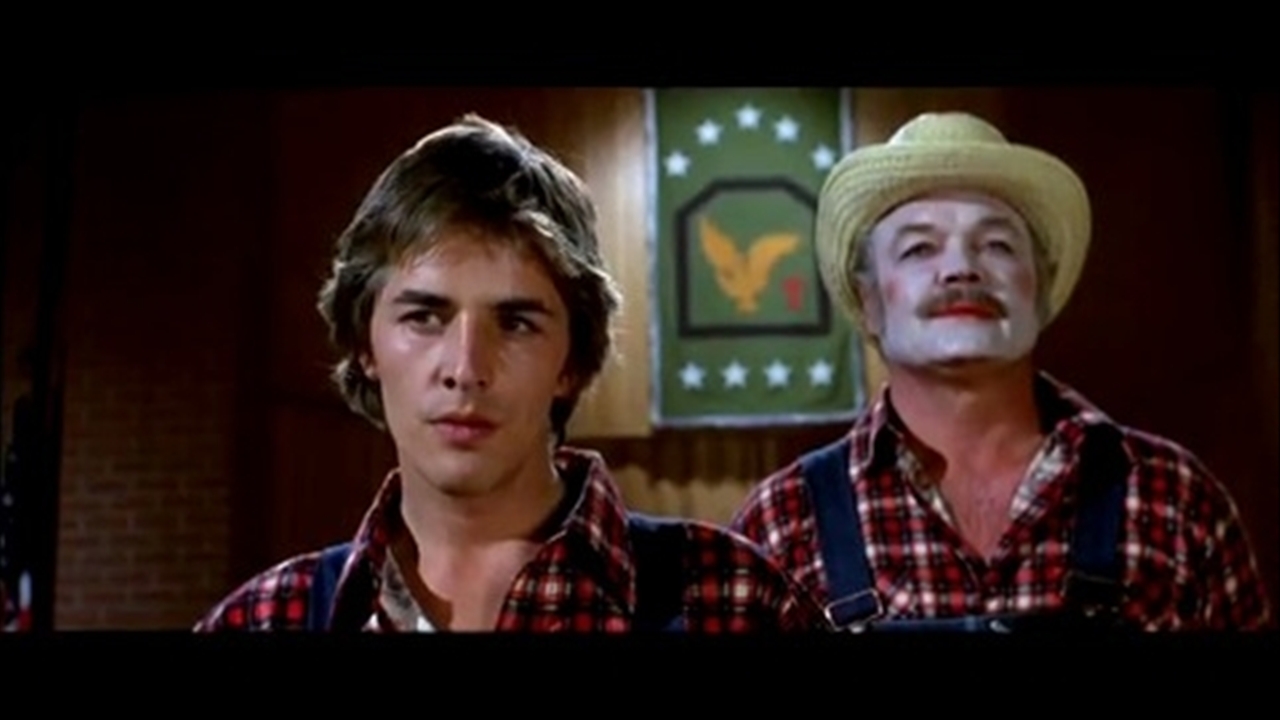
Starring Don Johnson — the Man Who Would Be Sonny Crockett, and who once made a surprisingly popular music video where he threw a child over a wall like a crazy wrestler, in service to a very poor song — and a very irritating, telekinetic dog named Blood, this is a strange and jarring film, but entirely of a piece with the year in which it appeared.

Simply put, A Boy and His Dog is the post-apocalyptic story of Don Johnson’s desperate attempts to get laid. In the film, “getting laid” is indistinguishable from “sexual assault,” either because that’s how things will be after the nukes go off or because it’s 1975 and that’s just how it was, because we, as humans, are fucking horrible.

In the future year of 2024, there isn’t much to go around, on any front. The only films that survive are softcore pornography, which men gather to watch in shantytowns. Don Johnson and Blood, the telekinetic dog, basically roam the countryside, sniffing around for food or women. (Hold onto to that line in your head.)

boy and his dog2

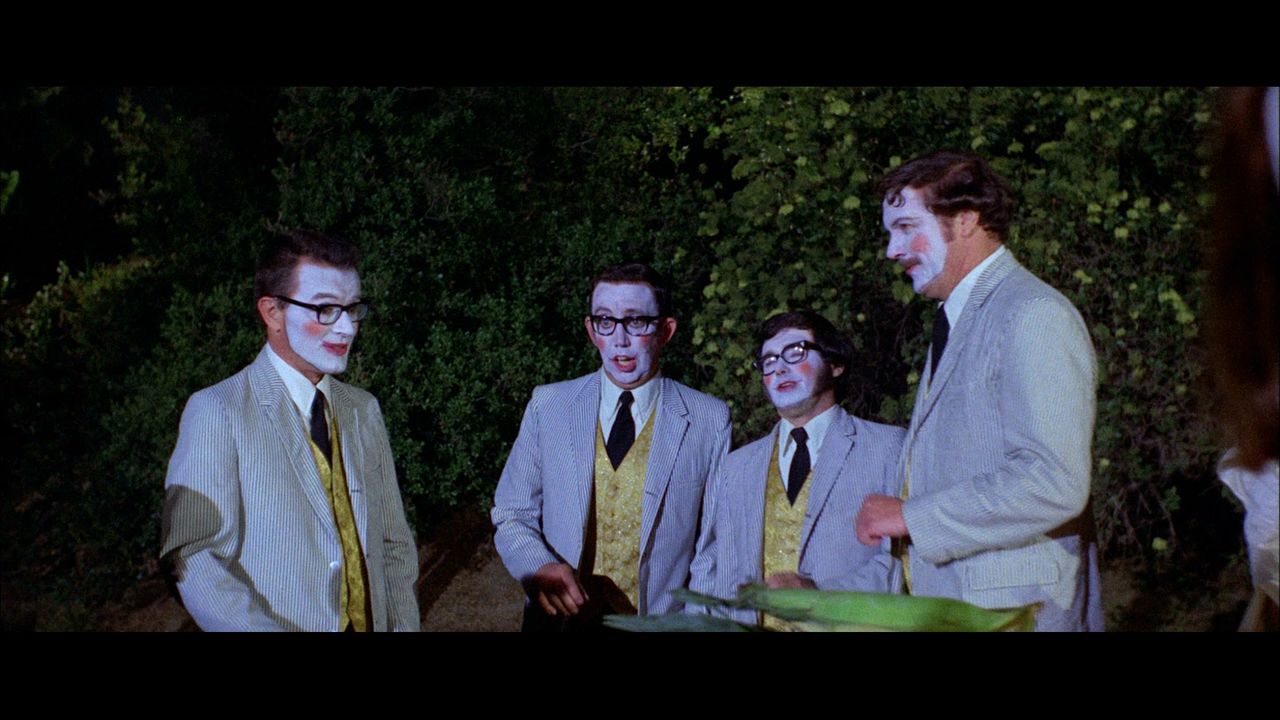
Eventually, Johnson descends to an underground world and A Boy and His Dog takes a remarkable turn to satirizing the bourgeois middle class, depicted here in clown makeup, presumably because they are clowns. These folks are concerned with continuing life below, not unlike the premise supposed at the end of Kubrick’s Dr. Strangelove. However, it’s reversed here: rather than the masculinist suggestion of a stacked ratio of nubile young women to dirty old men Strangelove envisions, it’s our protagonist who is restrained and hooked up to a sperm-sucking machine for procreative purposes, with surreal weddings performed at his bedside.

boy and his dog5

There’s a lot of misandry and fear that courses through this narrative, alongside the very 1975 worries about economic and resource privation. The film seems to deeply and uncritically sympathize with Johnson’s profound need to fuck somebody (though why homosexuality is out of bounds is never really clear), and it views with alarm the body horror aspect of his temporary subjugation. By the time the film lands on its closing laugh line, which Ellison despised, it doesn’t come as any real surprise. A Boy and His Dog has what we might generously call “issues with women”.

It’s been suggested to me that the emergence of “body horror” tropes — prominently featured here, but even more especially in David Cronenberg’s Shivers, another 1975 release — might reflect male anxieties about the emergence of the women’s movement and abortion specifically. That would make a certain amount of sense, though such themes date back at least to Mary Shelley’s Frankenstein. And indeed, Rosemary’s Baby appeared on the scene seven years prior, inculcating a generation in the idea that structures of power are very much at play where your reproductive system is concerned.

The difference in A Boy and His Dog is perspectival, and right there in the title: this is not a film about women. Like the curiously well-regarded One Flew Over The Cuckoo’s Nest, this is a film about the threats women pose to otherwise solid connections between men (and dogs).

In any case, several years before the first Mad Max, Don Johnson and Blood were making their way through the fraught landscape of the post-apocalypse, stealing supplies and grappling with collapse. This seems deeply resonant of the time it was made, the animating concerns of the people who made it and the audience they expected to attend. In the year of Watergate, perhaps, people might not be what they seem.

boy and his dog4

Over the course of the month, we’ll consider a few more. Next up: The Adventures of Sherlock Holmes’ Smarter Brother, an idiot comedy from the beloved and dearly departed Gene Wilder, and Cleopatra Jones and the Casino of Gold, a blaxploitation affair that fails to live up to its terrific title.

Got some more 1975 suggestions? Feel free to tell me in the comments.

September 6, 2016 0 comments
0 FacebookTwitterPinterestEmail
CommentaryFilm

5 Labor Movies for Labor Day

by rick September 5, 2016
written by rick

Happy Labor Day!

You know, the day in early September that Grover Cleveland declared a federal holiday as a halfhearted apology for his troops murdering several workers during the Pullman Strike in 1894, a desperate, election-year attempt to stave off radical reform while also conveniently distancing the U.S. from the rest of the world’s celebration of the far more militant May Day, with its overtones of worker solidarity and outright revolution!

Oh well, at least some people get the day off, anyway. Let’s talk about movies.

The notion of the “labor film” is fairly malleable. After all, work, however defined, constitutes much of our lives; you don’t have to be a Marxist theorist to notice how greatly a character’s job or need for income frequently drives narrative. We could call every heist movie a “labor film” if we were so inclined. If someone is either rich or poor or in between, that’s a “labor film”. Class-consciousness and the oppressive demands of workaday society — accepted, grappled with, rejected for alternative modes of being, ignored altogether in favor of escapism for audiences looking to forget about a bad day at work themselves … these are “labor films”. In a very real sense, there are only labor films.

But we approach tautology. Over the years, many films have focused specifically on work and class, often explicitly intertwined with race and family (and how could they not be?). Several have already been included in the Great Movies series and its Counter-Programming companion: The Battleship Potemkin, The Last Laugh, Safety Last!, Let’s Go With Pancho Villa!, God’s Step Children, Street Angel, The Goddess. It is an enduring theme that has animated the cinematic imagination since the beginning.

In that spirit, here are five more recent favorites. The contexts, locations, and politics may shift, but work itself is a constant. Until the revolution comes, here are some suggestions for your queue.

1) Salt of the Earth

salt of the earth

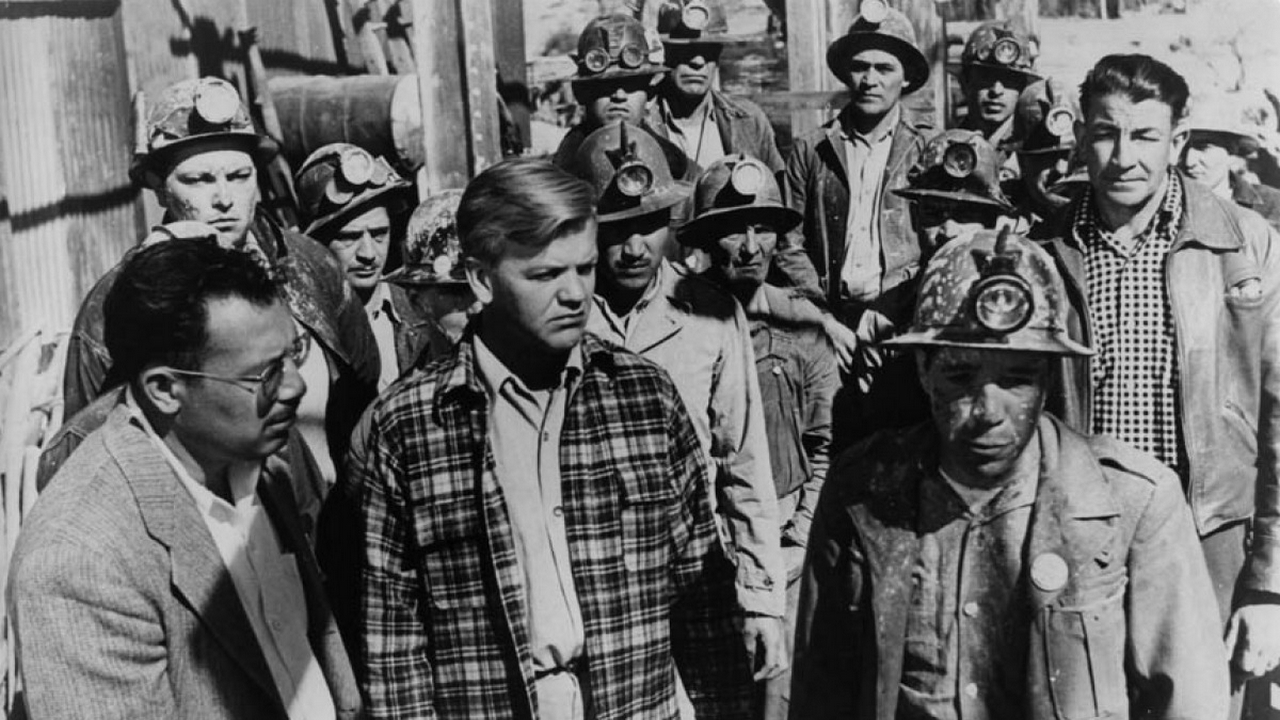
Long-banned and notoriously hard to view for years, Salt of the Earth (1954) is a truly radical film. Scripted and shot by blacklisted filmmakers, it’s the story of a general strike called for by exploited Mexican workers at a zinc mine in New Mexico. The attention to class struggle and immigrant status would be striking enough for 1954, but Salt of the Earth goes much further, zeroing in on gender conflict within the community of working people and laying bare the ways in which masculinity itself is defined by class under capitalism. It’s an incredible film that should be compulsory viewing for anyone interested in social change.

2) Matewan

matewan

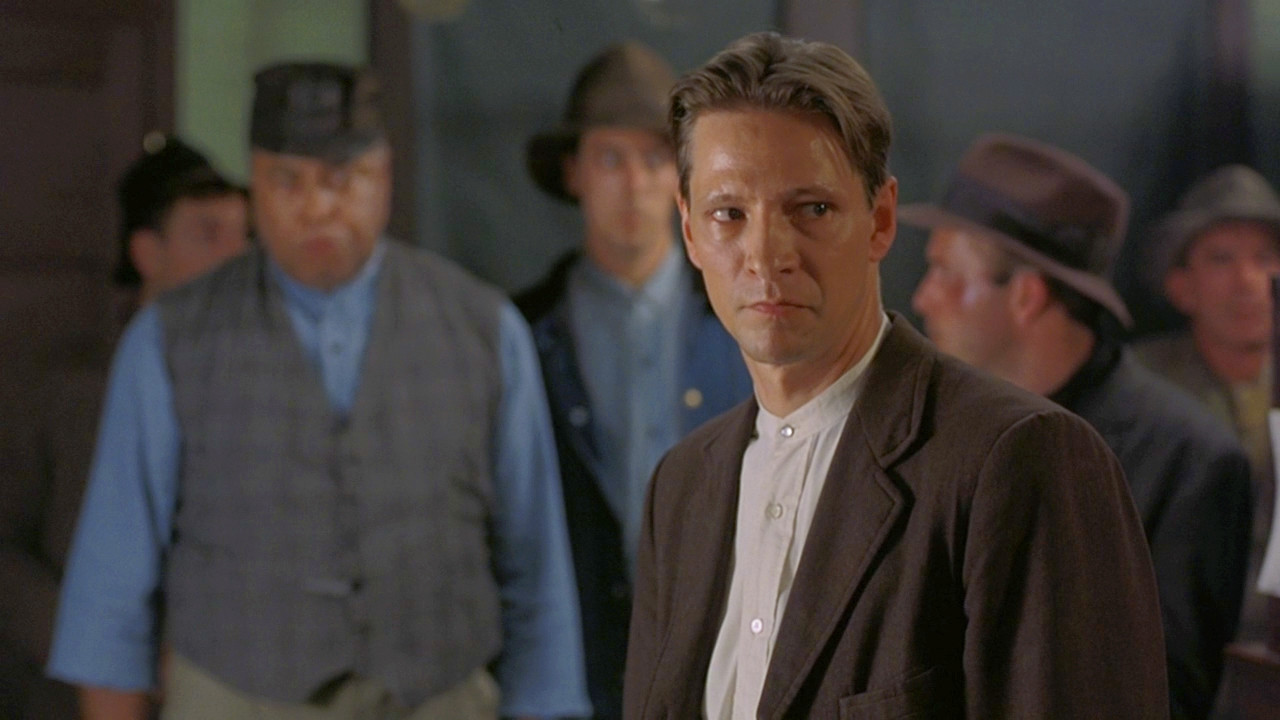
John Sayles’ depiction of the bloody events of 1920 is another film preoccupied with intersectionality, skeptical strikers, and uneasy solidarity. Tracking a West Virginia coal miners’ strike encompassing white, Black, and foreign workers, Sayles delivers a cinematic love letter to the IWW’s “One Big Union” concept — the notion that, as Chris Cooper’s organizer protagonist proclaims, “There’s only two classes: them that work and them that don’t,” race be damned. “We work. They don’t.” A young Will Oldham, of Palace and Bonnie “Prince” Billy hipster-fame, steals the show as an aspiring preacher who finds in Scripture a call to solidarity and rejection of the bosses, declaring, as he leaves the pulpit to escape armed Pinkerton agents, “And if Jesus were alive today, he’d be a Union man.” His elder relative, almost silent the whole film, responds, “Praise Jesus” as he flees.

I love this fucking movie.

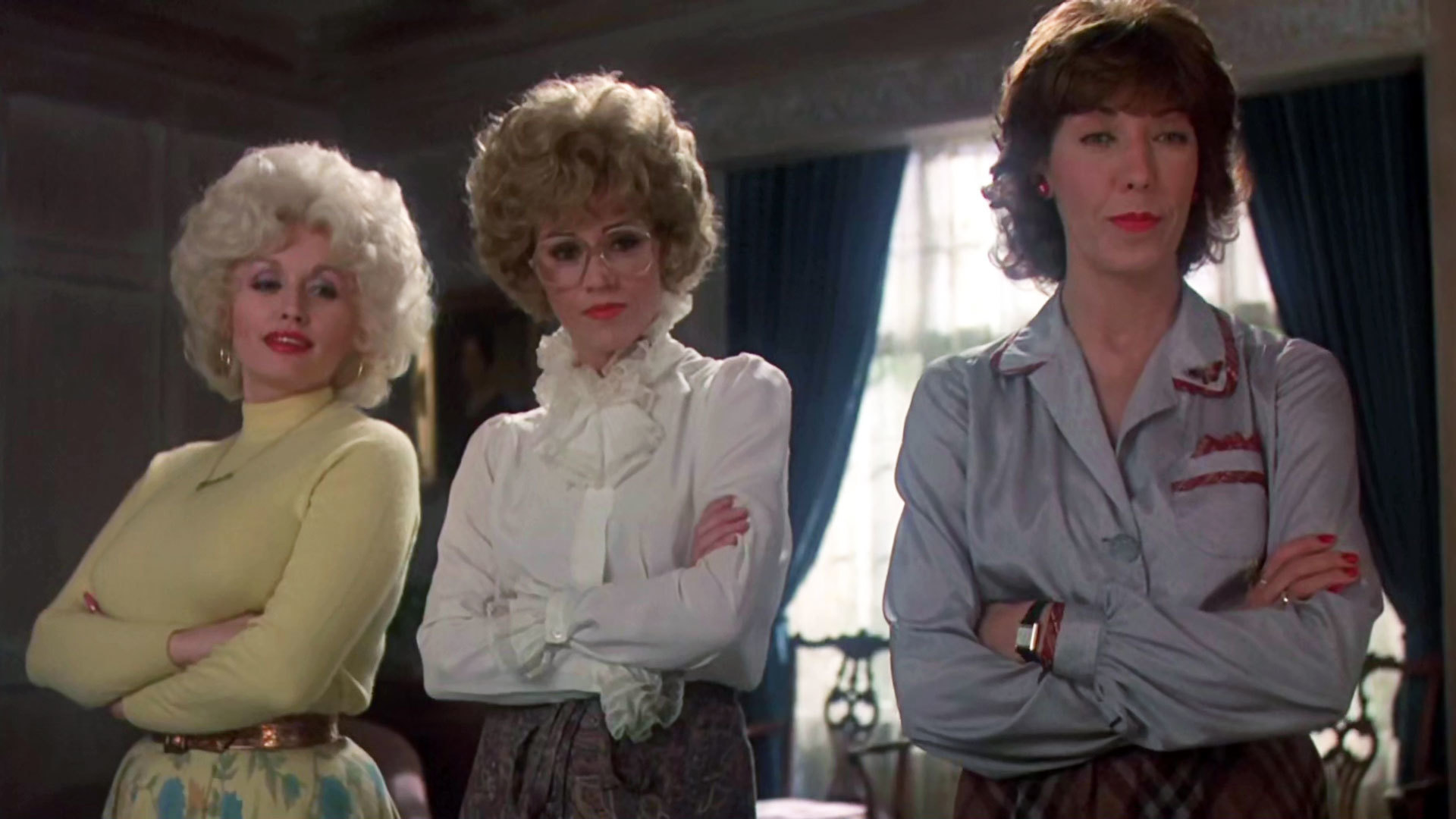
3) 9 to 5

9 to 5

A comedy so radical and forthright in its feminism and class-consciousness it features not one, not two, but three fantasies about killing your boss. I still can’t believe it was ever made, much less successful with audiences. It’s a gonzo, bananas narrative about workplace takeover, it’s attenuated to gender and class expectations, and it works on every level. The theme song has remained a classic, but many forget just how confrontational it is.

They shouldn’t; it’s right there in the damn song! “It’s a rich man’s world, no matter what they call it / And you spend your life putting money in his wallet.” You tell ’em, Dolly.

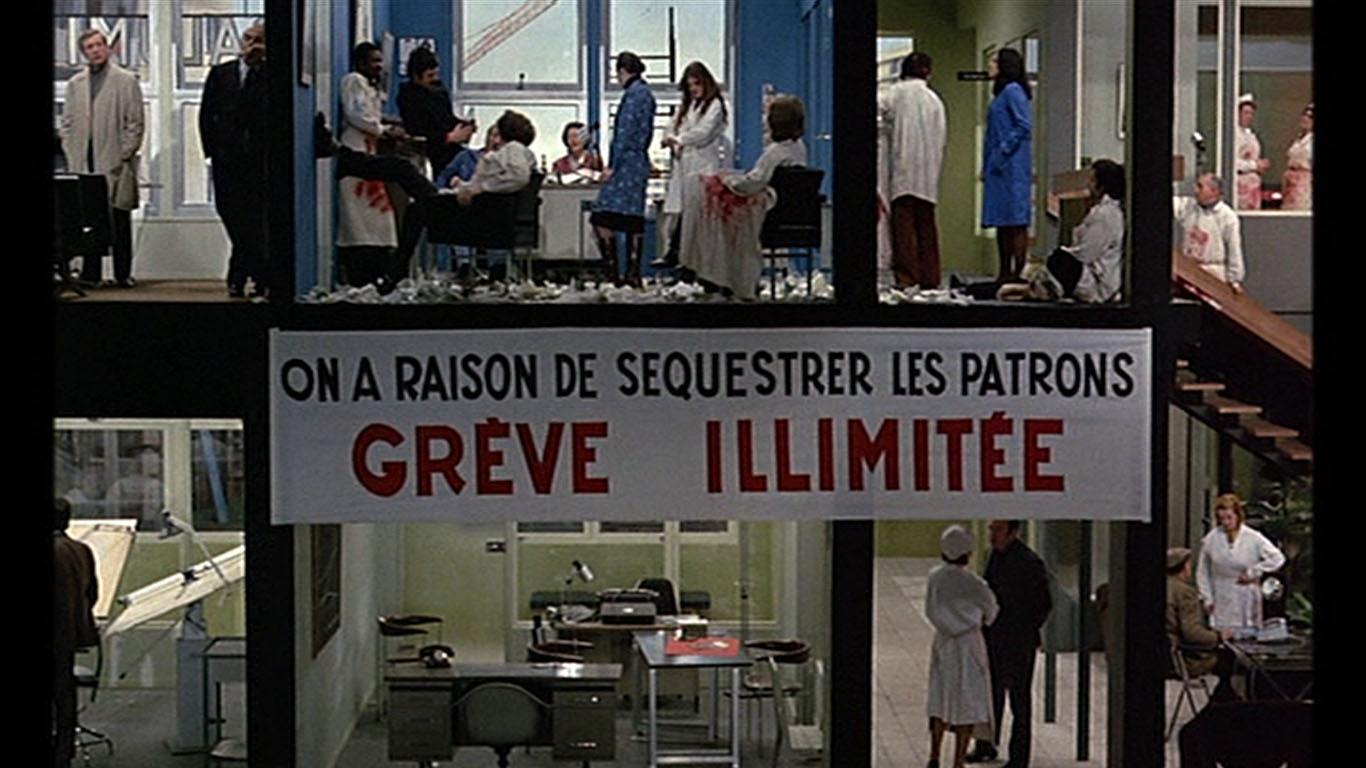
4) Tout va Bien

tout va bien

Godard’s feverish hate-letter to consumer capitalism, Tout va Bien is positioned exactly between the well-liked New Wave period and the much-derided Maoist productions of this auteur’s auteur. In some ways, it’s a synthesis of both sensibilities. A sausage factory strike sets the (rather literal) stage for Godard’s evisceration of systems out to dehumanize and deligitimize, while Jane Fonda and Yves Montand break fourth walls and generally lay waste to narrative expectations. Filmed like a stage-play gone mad, Tout va Bien is a post-’68 grenade hurled at the viewer, an irrepressible intervention in the cinema of discontent.

5) The Gleaners and I

gleaners and i

Agnes Varda’s self-reflexive portrait of people digging through the refuse to find and repurpose things mainstream society has discarded might not seem to fit the bill here, but I think it’s among the greatest labor films ever made. (Incidentally, the English translation of the French title — Les glaneurs et la glaneuse — isn’t just gramatically awkward; it actually obscures the centrality of her role and its meaning. Fucking Americans.)

Implicitly addressing consumerism and the ideologies that create “waste” in the first place, Varda approaches her subjects’ labor on the margins with wit, compassion, and nuance, while also drawing attention to the kinds of work we do as viewers and meaning-makers. Unlike Godard above, there’s no fist in the air. This is a melancholy reflection on outsider status and changing modes of living, but also a celebration of the ways in which humans refuse to knuckle under to oppressive control. It’s a beautiful and incredibly smart film, absorbed by possibilities and struck through with empathy.

September 5, 2016 0 comments
0 FacebookTwitterPinterestEmail
Film

New On Netflix: Jaws, Jaws, Jaws, and Jaws. It’s Jaws!

by rick September 2, 2016
written by rick

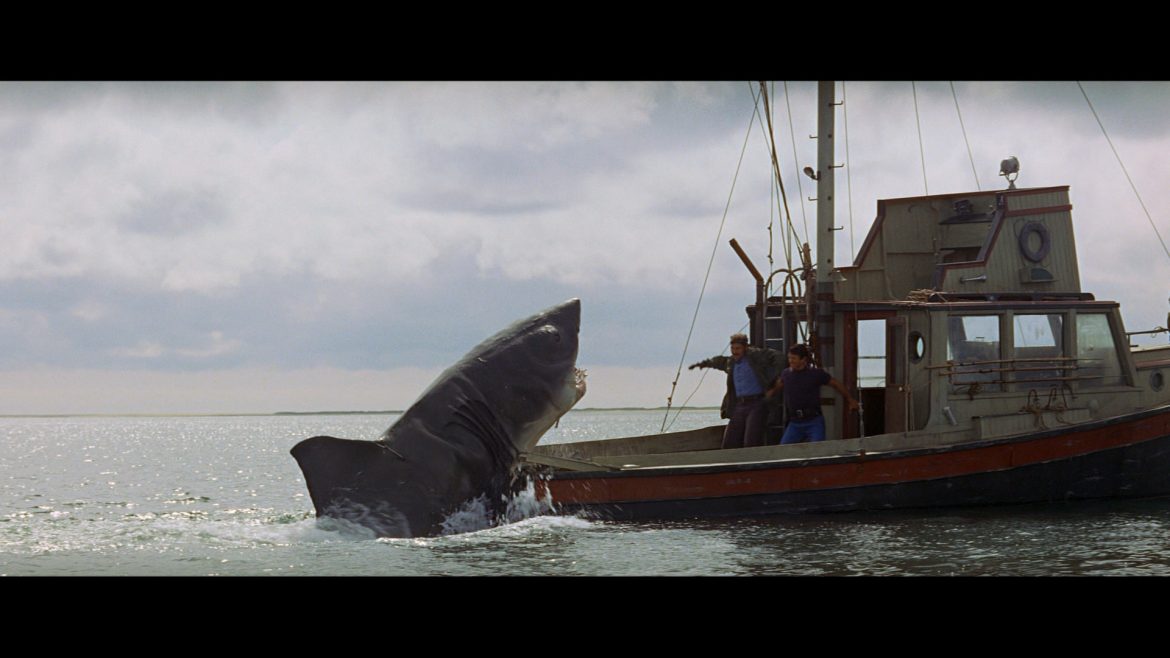
The original Jaws is a stone-cold classic. Its director, some guy named Steven Spielberg who probably has a promising career ahead of him, expertly paced the original summer blockbuster, drew nuanced performances from Roy Scheider, Richard Dreyfuss, and Robert Shaw, and had the good sense to show as little of the titular shark as possible, allowing dread to build and imaginations to run wild. If you haven’t watched Jaws in a while, it’s always worth revisiting.

Jaws 2, Jaws 3D, and Jaws: The Revenge were, shall we say, less accomplished.

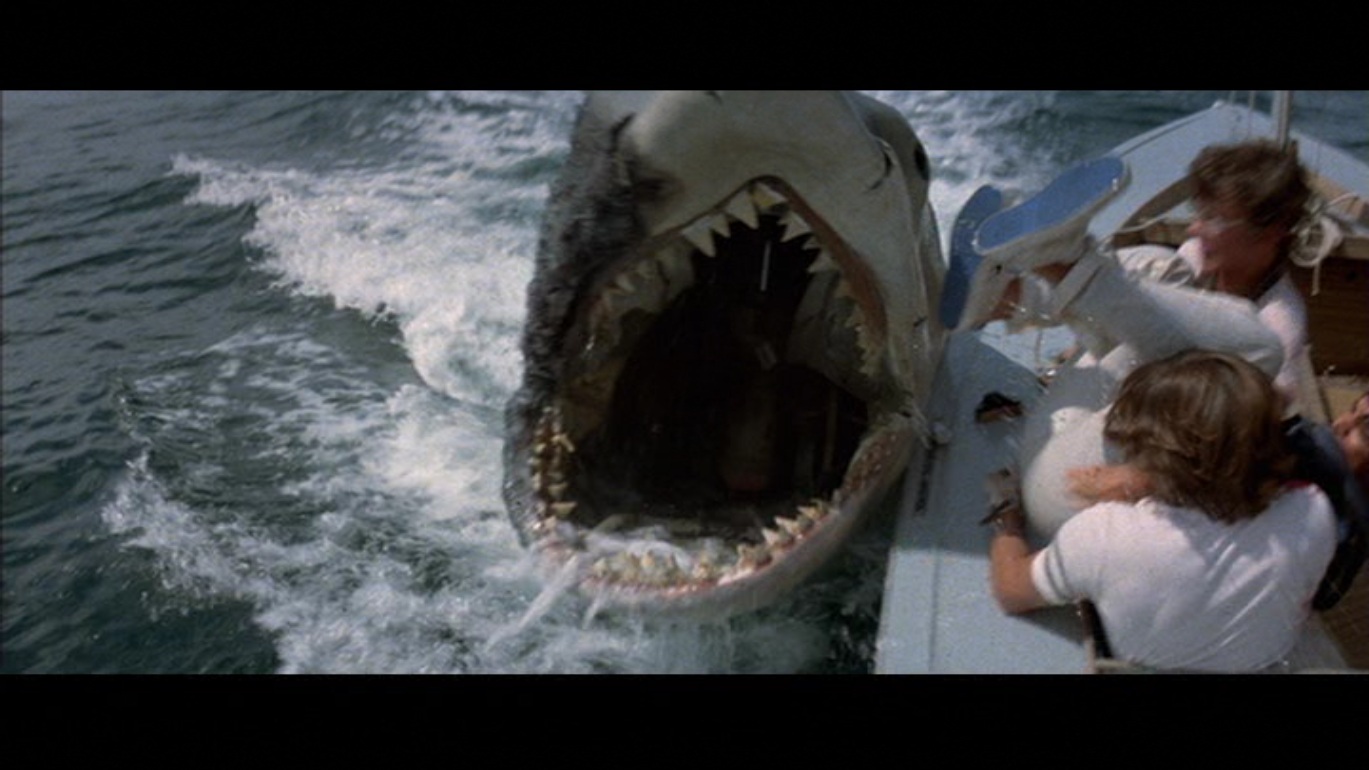
Jaws 2, essentially a retread of the first, is for my money the worst of the sequels, if only because it is simply dumb, not sublimely so. Scheider returns, playing his Chief Brody of Amity as a man on the verge of a shark-related nervous breakdown. No one heeds his warnings about the carnage to come, possibly because he keeps doing things like firing his gun at schools of fish on a crowded beach. The Chief is having a tough time, personally, professionally, and in terms of people getting eaten by animatronic shark robots.

jaws2_1

Will he eventually save face, and the day? Watch and find out! (The answer is yes.)

Jaws 3D breaks with canon entirely, ditches the Brody’s and Amity, and plops us down in SeaWorld with Dennis Quaid and Louis Gossett, Jr., whose Calvin Bouchard is a regular water theme-park P.T. Barnum. Quaid — whose exact job is never entirely clear, seeming to involve piloting submarines, welding, and fighting sharks — and his dolphin-training love interest Bess Armstrong are gearing up for a big opening day at the park, along with everyone else, when (wouldn’t you know it) a Great White shows up. They’ve also got to grapple with the publicity hounds Calvin as brought in, photographer Philip FitzRoyce (played by the wonderfully-named Simon MacCorkindale) and some other guy who carries his stuff.

This third entry obviously also boasts some hot 3D action, with entire scenes hilariously staged to maximize this effect, including a sequence shot inside the shark, things hurtling towards you in slow motion, and whatever this image is meant to evoke.

jaws 3d

Jaws 3D is the second-worst of the sequels, rising above its predecessor through sheer outlandishness and dialog like this:

Bess Armstrong: “Do you think he could’ve got trapped in the Spanish galleon?”

Dennis Quaid: “Yeah. He could’ve got caught in the superstructure.”

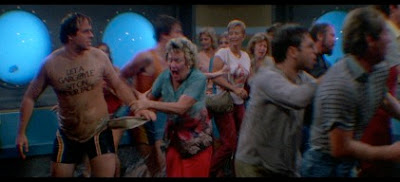
Indeed he could’ve, Dennis Quaid. Another fun fact: the 3D effects team boasted veterans of 1969’s softcore extravaganza The Stewardesses, though I’m sorry to report that Jaws 3D does not feature anyone having weird, acid-fueled sex with a lamp modeled on the head of Alexander The Great. On the other hand, it does feature this extra — never explained or seen again — wearing a shirt that says, “Let A Gargoyle Sit On Your Face”. So … points for that, I guess?

jaws3_gargoyle

Finally, there’s Jaws: The Revenge, which is easily the most enjoyable of these three cash-grabs. We return to the Brodys and conveniently ignore the fact that Jaws 3D ever happened, which is a reasonable enough position. Ellen Brody is now a widow, which we know because Roy Scheider’s picture is prominently and lovingly displayed on the wall of the Amity Police Station, but she’s haunted by sharks. As well she should be, since it turns out the Brodys are being hunted by sharks. Her son (also a marine biologist) was recently killed by one.

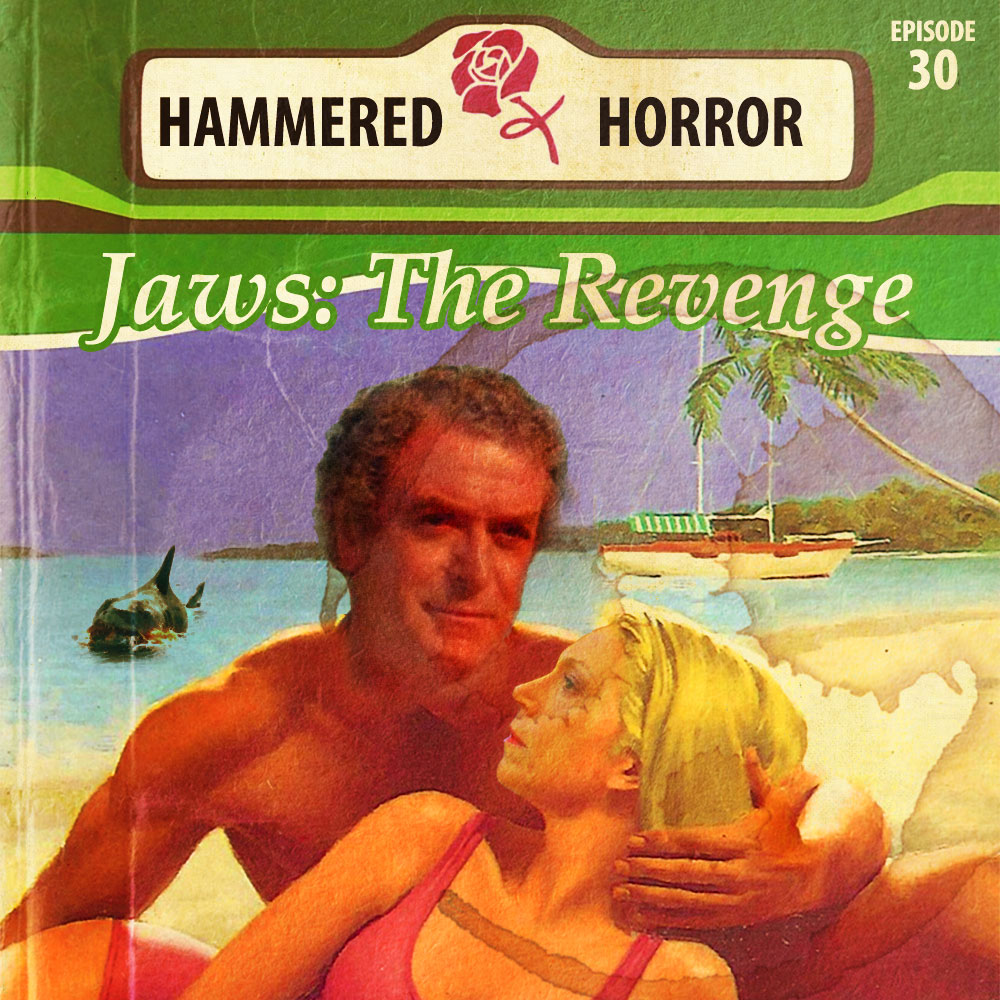
Taking off for The Bahamas with her other son Michael (also a marine biologist, because you can never have too many marine biologists), his wife, and their very irritating child Thea, Ellen begins to fall for Michael Caine’s pilot character, named “Hoagie” for some reason. An entire subplot seems to involve the possibility that Hoagie is also a drug runner, but Jaws: The Revenge forgets about this almost as soon as it brings it up. I am told it’s addressed in more detail in the film’s (frankly incredible-looking) novelization:

jaws the revenge2

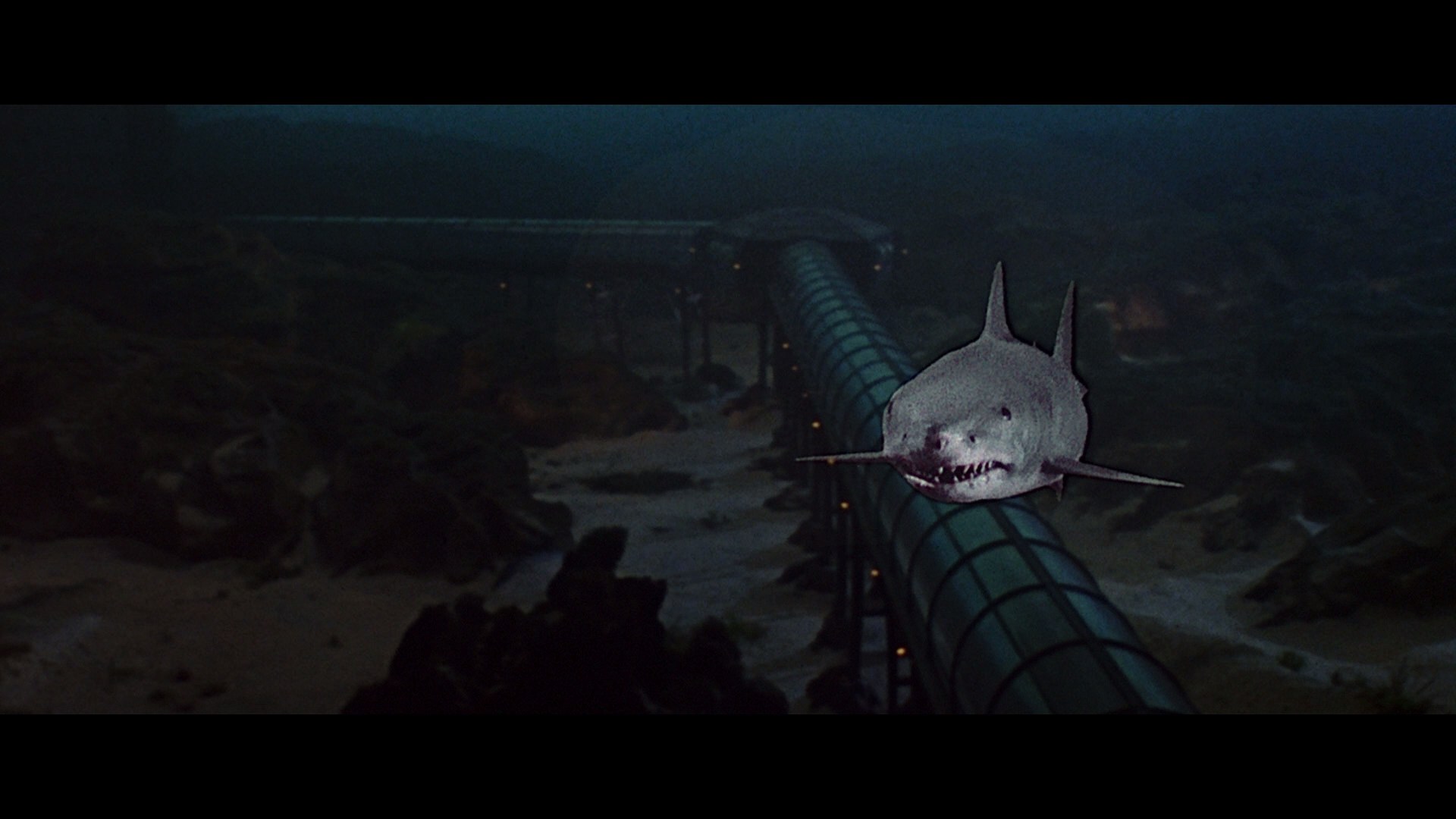
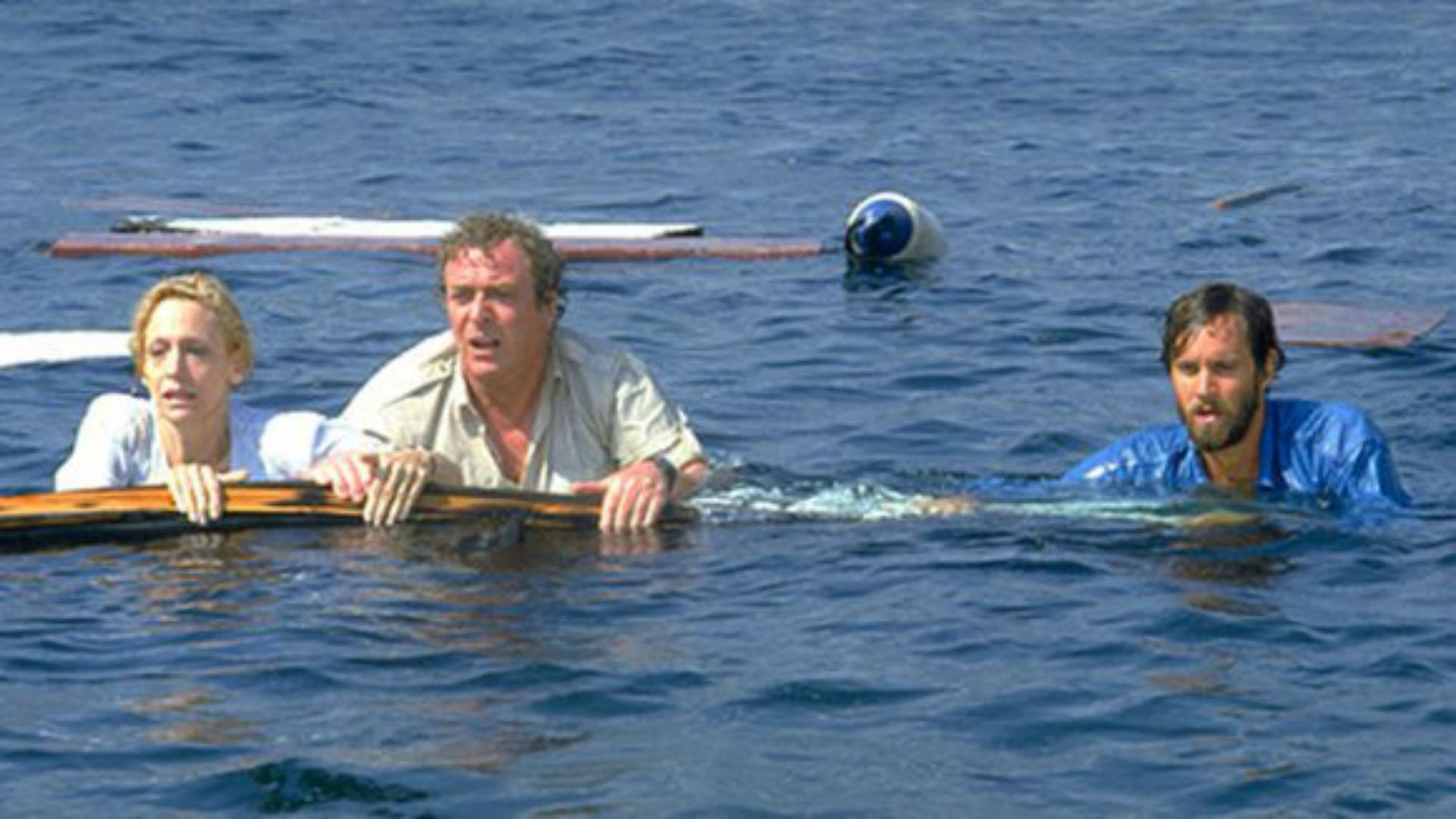
Meanwhile, Michael and his research partner Jake (played by Mario van Peebles in dreadlocks and affecting a hilariously ill-considered pan-Caribbean accent) come across another Great White. But wait! It’s the same Great White, seeking revenge for having been killed twice, maybe. Bad news for the Brody clan, Hoagie, Jake, and that other guy who frequently joins the research team for no discernible reason.

jaws the revenge

Featuring stilted dialog, vaguely racist caricatures, and plot holes so big they’d need to hire a master welder like Dennis Quaid to repair them, Jaws: The Revenge is idiot fun for your idiot brain. Here’s some Michael Brody sexiness for you, as he puts the moves on his wife Carla, who, like Quaid before her, is a welder as well, though she uses that for her barely-discussed art, which mainly seems to consist of making terrible sculptures for the government of The Bahamas:

“I’ve always wanted to make love to an angry welder. I’ve dreamed of nothing else since I was a small boy.”

Yeah, I don’t know what that’s supposed to mean, either. Perhaps one of the actors could explain the thought process that went into it. (Probably not Caine, though, who famously quipped, “I have never seen [Jaws: The Revenge], but by all accounts it is terrible. However, I have seen the house that it built, and it is terrific.”)

Roger Ebert’s perplexed review of Jaws: The Revenge is also worth quoting at length for fun:

Here are some things, however, that I do not believe: That Mrs. Brody could be haunted by flashbacks to events where she was not present and that, in some cases, no survivors witnessed. That the movie would give us one shark attack as a dream sequence, have the hero wake up in a sweat, then give us a second shark attack, and then cut to the hero awake in bed, giving us the only thing worse than the old “it’s only a dream” routine, which is the old “is it a dream or not?” routine. That Mrs. Brody would commandeer a boat and sail out alone into the ocean to sacrifice herself to the shark, so that the killing could end. That Caine’s character could or would crash-land his airplane at sea so that he and two other men could swim to Mrs. Brody’s rescue. That after being trapped in a sinking airplane by the shark and disappearing under the water, Caine could survive the attack, swim to the boat, and climb on board – not only completely unhurt but also wearing a shirt and pants that are not even wet. That the shark would stand on its tail in the water long enough for the boat to ram it. That the director, Joseph Sargent, would film this final climactic scene so incompetently that there is not even an establishing shot, so we have to figure out what happened on the basis of empirical evidence.

For my part, I believe that Jaws: The Revenge is the ideal film to half-watch over the weekend while you get more important things done, like folding laundry or studying to become a marine biologist.

Quick Links

immigrant

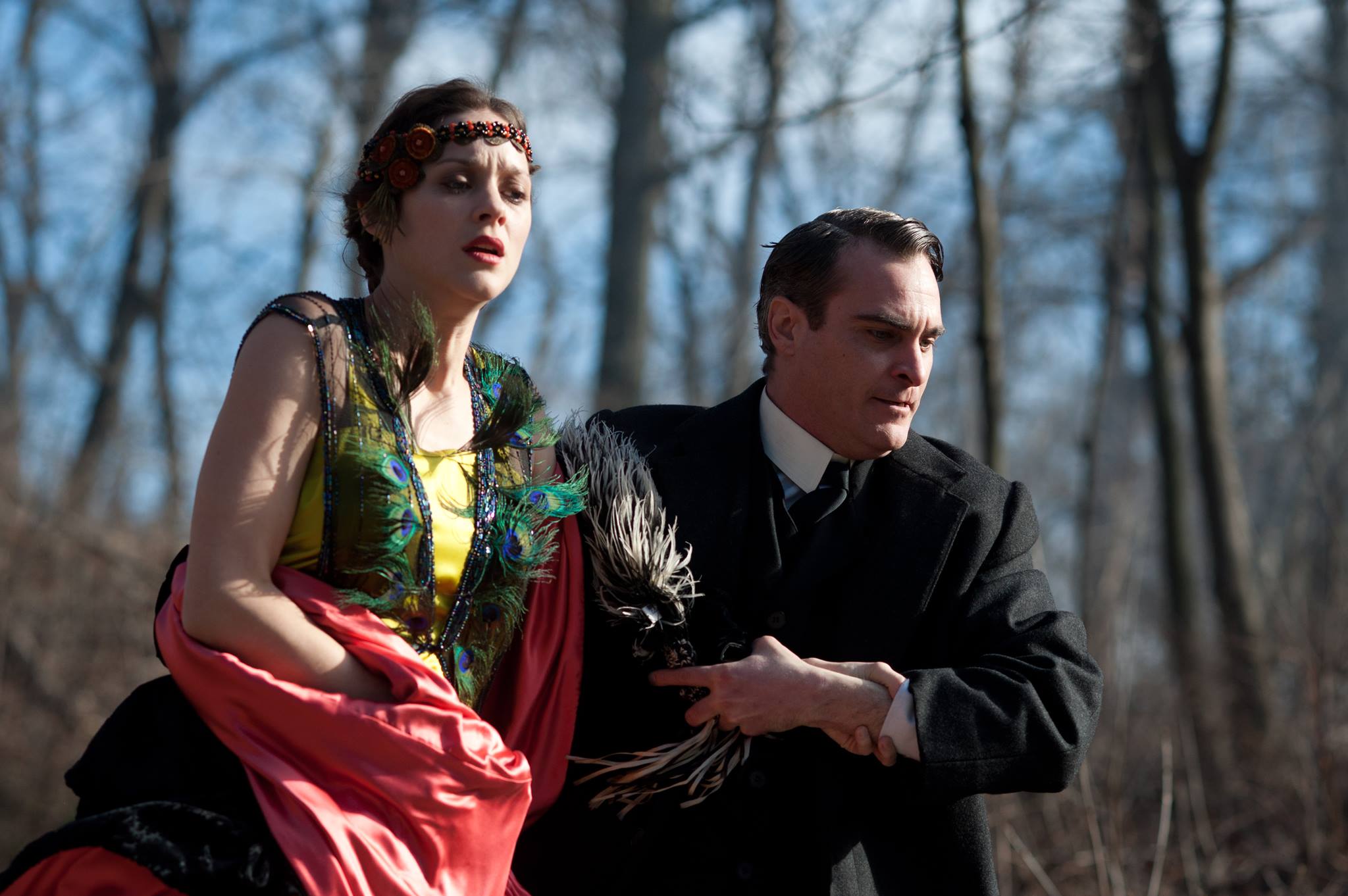
The Immigrant: James Gray is one of our most under-valued working directors, and The Immigrant is one of his best. Beautifully-told and gorgeously-framed, the film juggles themes of innocence and experience, guilt, exploitation, longing, and home with a skill that calls to mind a much older sensibility from cinema’s past. Marion Cotillard is luminous and fragile in the lead and Joaquin Phoenix (arguably the best American actor we’ve got) turns in yet another perfectly modulated performance. Catch up with this one if you haven’t, or just stare at the lushness of its visuals again.

eagle vs. shark

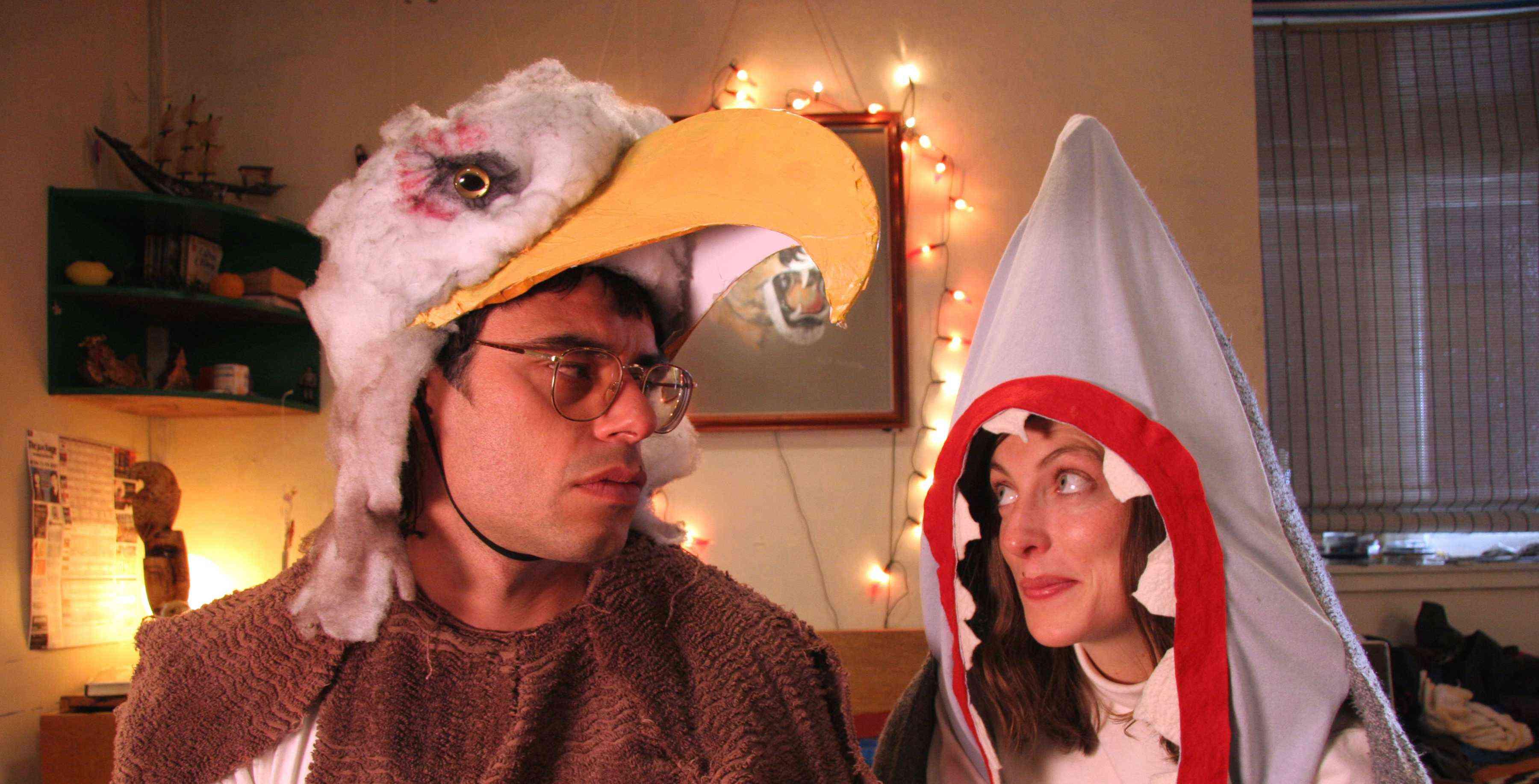
Eagle Vs. Shark: Flight of the Conchords fans would already be primed to enjoy a Taiki Waititi-helmed, Jemaine Clement-starring, offbeat rom-com sort of affair, but plenty of others might, too. It’s light, charming, and self-consciously wacky in a way that invites criticism for being too twee. But it’s also really sweet and often very funny. With Waititi working on the (presumably) much-different Thor film for Marvel right now, why not check in on his slightly less expensive projects? Unless he surprises us all, and Thor: Ragnorak is actually a stealth remake of Eagle Vs. Shark, in which case you should see the original anyway.

the-warriors

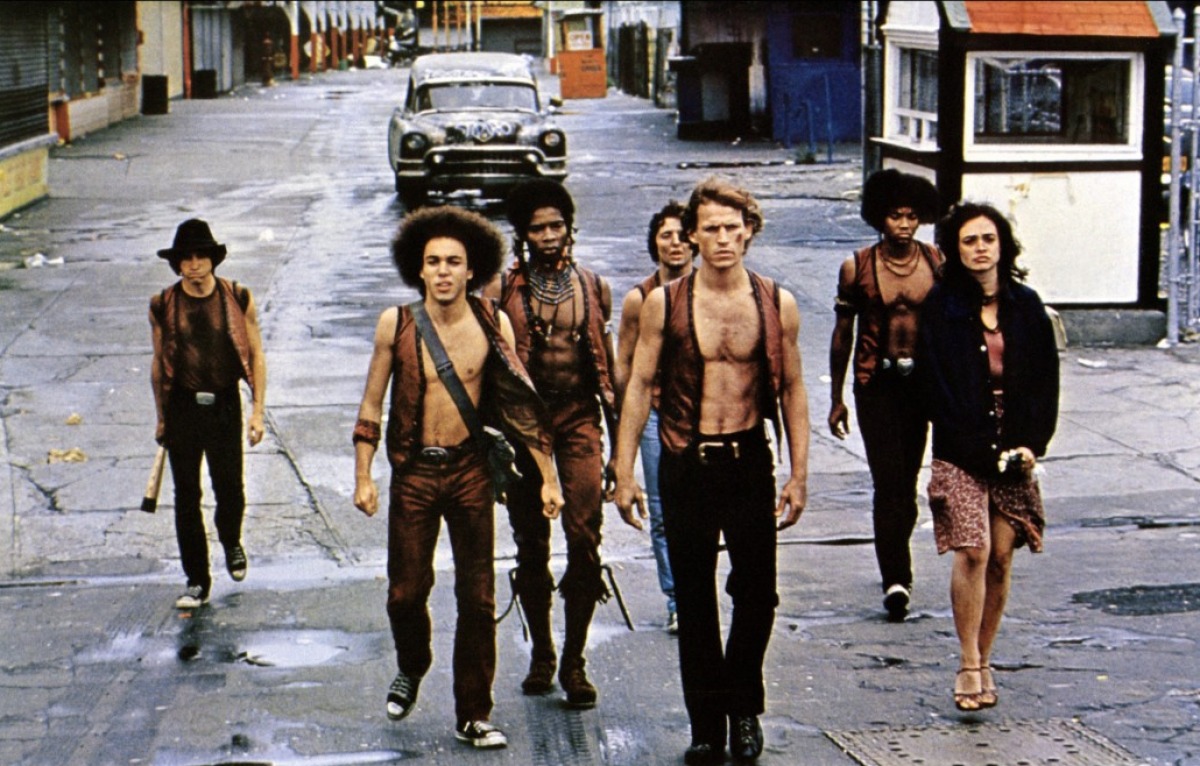
The Warriors: Like Escape from New York or Assault On Precinct 13, Walter Hill’s classic, profoundly 1979-grounded vision of a dystopian gangland NYC holds up as both time capsule and gonzo action movie. The themed gangs — The Warriors, The Gramercy Riffs, The Rogues, The Baseball Furies — are the stuff of comic book goofballery and outsized caricature, A Clockwork Orange without the nihilism, and the whole thing remains a ton of fun. Come out and play.

hoot

Hoot: An eco-minded kid’s story about saving endangered owls imperiled by runaway development and greed, adapted from Carl Hiaasen and starring Brie Larson and Luke Wilson? Sure, why not. I first saw this in a hotel as a grown man, watching it on cable with my boss, another grown man. We almost missed our flight because we wanted to see how it ended. So that’s my Hoot story. Watch it with your kid, or maybe your boss.

September 2, 2016 0 comments
0 FacebookTwitterPinterestEmail
CommentaryFilm

The Incomplete Dream of Maya Deren and Duchamp

by rick August 31, 2016
written by rick

The works of Maya Deren are hugely influential touchstones for experimental cinema, frequently cited and studied. Her luminous debut Meshes of the Afternoon, covered here as part of the Counter-Programming The Great Movies series, is a widely recognized classic of the form, a dreamlike visual interrogation that, in Deren’s words, “externalizes an inner world to the point where it is confounded with the external world.”

meshes

Yet Meshes was also “a point of departure” (Deren again). A curious fact about the filmmaker: she left behind far more “unfinished” works than those we would call “complete”. (Though this simply underscores the question of what we mean by “complete,” exactly.)

It was only recently that I discovered, via Dangerous Minds, that one of those unfinished works was a collaboration with the great Surrealist and urinal-exhibitor Marcel Duchamp. The jaggedly edited Witch’s Cradle, a roughly 12-minute short assembled after Maya Deren’s untimely death and intended for exhibition at Peggy Guggenheim’s short-lived The Art of This Century gallery in Manhattan, blends images of the occult and the mundane in ways that provide unique insight into Deren’s process and obsessions. It’s allusory cinema as feminist doom metal video, and full of surprises. (I’m not kidding about the metal. As a silent, you are free to score it as you see fit; I recommend eyehategod’s “In The Name of Suffering”.)

witch's cradle3

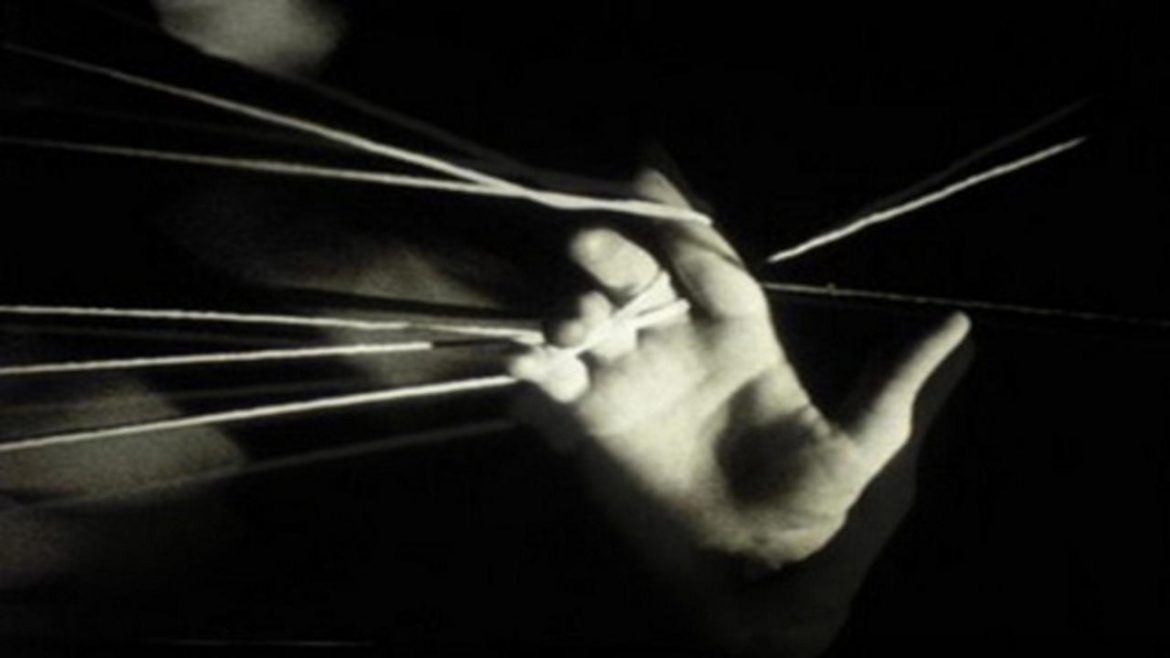
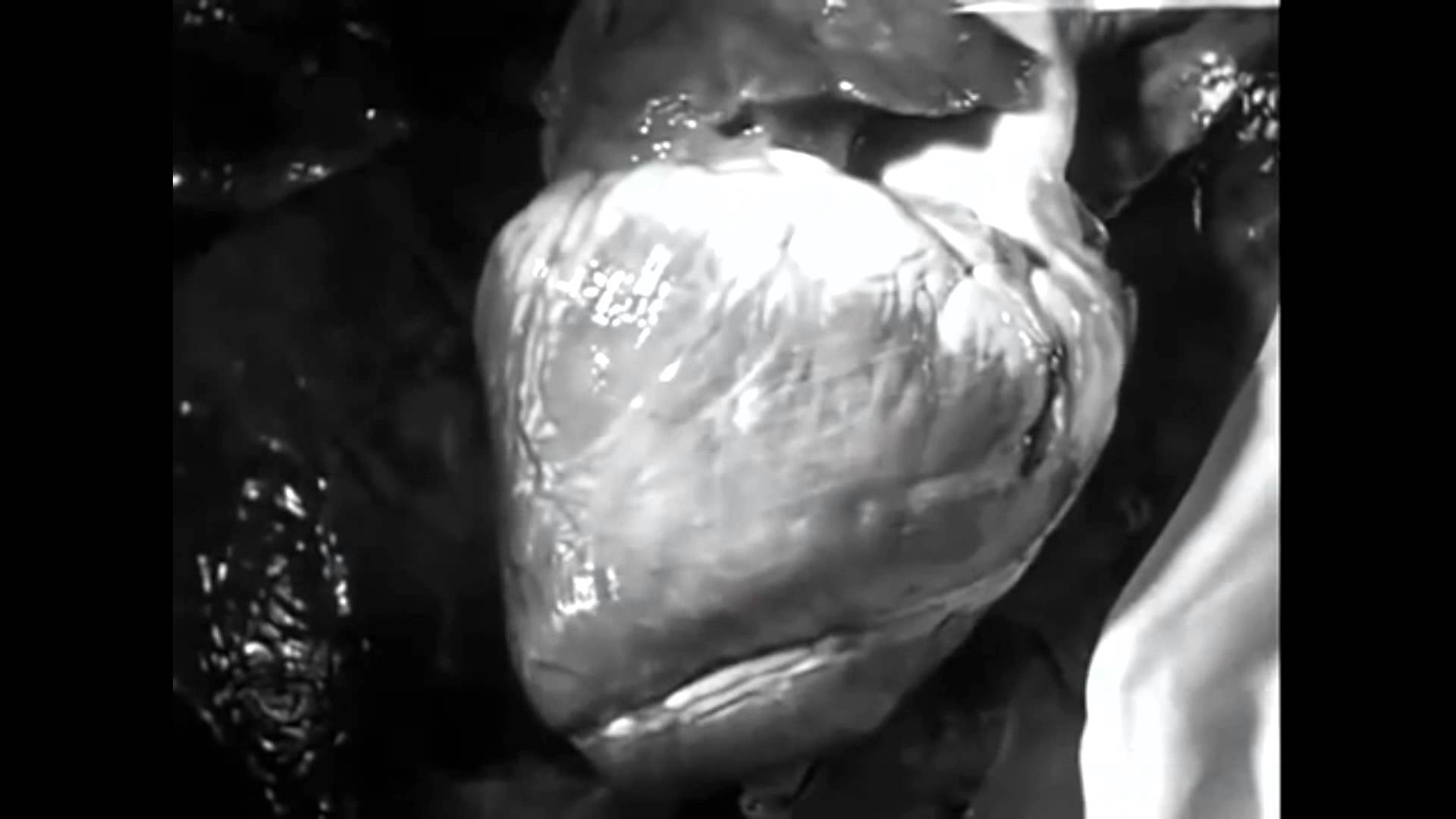
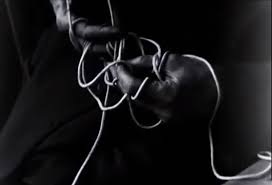
Like Meshes, Witch’s Cradle doesn’t so much tell a story as evoke sets of colliding sensitivities. Its central figure is a woman tracing a network of string, arranged like a cat’s cradle on disembodied hands but also issuing from shoelaces and elsewhere. Exposed hearts pulse. She discovers, to her apparent horror, a pentagram emblazoned on her forehead. The string itself is revealed to emanate from a mysterious male character played by Duchamp.

witch's cradle4

Drawing on a background in choreography, Witch’s Cradle is a spectacle of movement, a truly open-ended text interrupted routinely by intra-frame leader and scratched image, which only heightens its uncanny otherworldliness and resolute lack of completion. Writing to James Card of the George Eastman House in a different context, Deren once noted:

This principle — that the dynamic of movement in film is stronger than anything else — than any changes of matter… that movement, or energy is more important, or powerful, than space or matter — that, in fact, it creates matter — seemed to me to be marvelous, like an illumination, that I wanted to just stop and celebrate that wonder, just by itself…

In Witch’s Cradle, a shawl on the floor raises itself to cloak the body extending to pick it up. A commentator observes:

Gravity and space don’t work like we expect them to and the most simple of actions suddenly has a new dimension which we can start learning about in the film.

As in dreams, Maya Deren places us at the cinematic mercy of logic we recognize but must parse in the moment, without any firm ground to stand on. It is shifting before our eyes, and the meaning seems to lie in the shift.

Drawing on themes from Lacan, Foucault, Derrida, and others, critics like Sarah Keller have emphasized theories of absence and incompletion as central to Deren’s work, and it’s not difficult to see why. Even 15 years after Meshes of the Afternoon, Maya Deren was attempting to revisit and reconceptualize it, perhaps the way we revisit earlier nightmares and rerout them for present purposes, whether we mean to or not. Our inner texts, like all texts, keep changing, interweaving.

witch's cradle1

Still, it’s startling to come across something like Witch’s Cradle, which suggests a pivotal meeting between two brilliant, elusive minds and yet seems largely forgotten … perhaps precisely because it’s understood to be an “unfinished work.”

It doesn’t look that way from this vantage point. Maya Deren’s late-period fascination with the culture of vodoun is of a piece with the staggered occult of Witch’s Cradle, combining Surrealism with dance and a notion of the beyond, a kind of secret language of the image that she was after throughout her too-short career.

To this point, Maria Popova, again, draws from Deren’s letter to the George Eastman House:

[L]ooking back, it is clear that the direction was away from a concern with the way things feel and towards a concern with the way things are; away from personal psychology towards nerveless metaphysics. I mean metaphysics in the large sense… not as mysticism but beyond the physical in the way that a principle is an abstraction, beyond any particulars in which it is manifest.

The “incomplete” Witch’s Cradle is a Duchamp-like window into this precise idea. Its flickers and rough edges — and, yes, total occult creepiness — are exactly what make it interesting and vital to anyone concerned with Deren’s work.

Watch for yourself.

August 31, 2016 0 comments
0 FacebookTwitterPinterestEmail
Vegan Horror

“It’s Not My Nature” – Vegetarianism, Body Horror, Hostel

by rick August 30, 2016
written by rick

Eli Roth is a man out to generate strong emotions. Whether through his gleeful repurposing of ’70s cannibal exploitation schlock, or his recent, unfortunate foray into trolling what the internet has dubbed Social Justice Warriors (that is, generally speaking, people who care about things at all), Roth’s not the easiest guy to champion. But, whether by accident or design, he made something of a horror masterpiece with Hostel, shot through with anxieties about Ugly American imperialism and (yes) animal rights themes.

Hostel is routinely lumped in, and not unjustifiably, with the much-derided “torture porn” genre that flourished at the time, a weirdly resonant U.S. film trend almost impossible to divorce from the Bush era that grounded it. (Like Scott Tobias, I prefer the term “extreme cinema” to “torture porn,” but I’m willing to let it go for our purposes here — there’s a lot of torture in Hostel, after all.)

hostel3

Roth creates a subterranean world of torture-for-hire, a shadow economy where wealthy folks from around the globe can pay to exact their worst impulses on kidnapped travelers. We follow three young Americans as they backpack through Europe, following in the footsteps of either literary heroes (“Oh, you’re from Prague? Kafka!”) or simply pursuing sexual hijinks, like any number of young morons before them. It doesn’t end well.

A chance encounter in Amsterdam leads our knucklehead crew to a hostel in a Slovak city that doubles as a holding facility. They are wined, dined, and bedded by lovely women, but it’s simply a fattening before the slaughter. (We could dub it “free range” … or, if you like, the “clean side” that will be contrasted with the “dirty” one.) People check in but never seem to check out; they just vanish.

hostel1

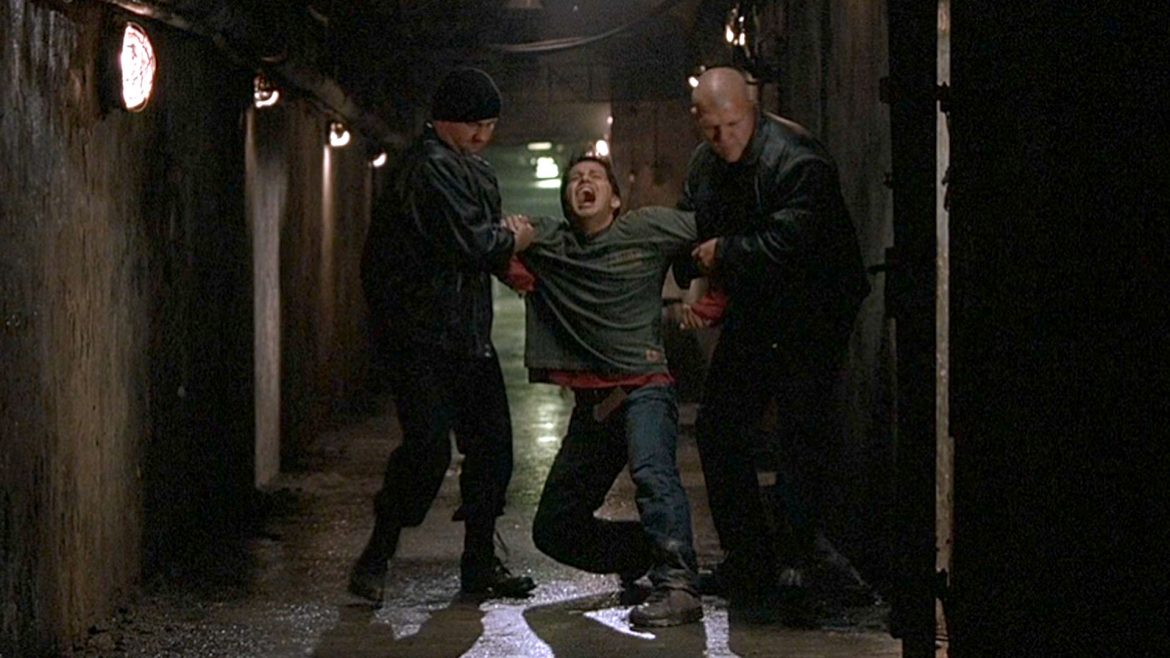
As the protagonists’ numbers dwindle, we realize why: there really is an entirely different world underground, a network of cells where, for a fee, the global moneyed elite can have free rein to do their worst to the bodies of the imprisoned. And so they do. Anti-Americanism holds supreme, but there are victims of other nationalities, too: the only real connecting thread between them is their subservience to the whims of capital and the horrific, no longer sublimated, cruelty of man.

Josh (Derek Richardson) is the audience stand-in among the travelers, at least in Hostel‘s initial framing, but his buddy Paxton (Jay Hernandez) will become primary. He’s also, explicitly and notably, a vegetarian.

On a train, the pair have a run-in with the film’s primary villain, unbeknowst to either (or to us). When Paxton refuses an offer of meat and the creepy companion begins shoveling it into his mouth with bare hands, we get this exchange, which reverberates throughout the rest of the film:

Paxton: …you need a fork there chief?


The Dutch Businessman: No. I prefer to use my hands. I believe people have lost their relationship with food. They do not think “this is something that died for me so that I would not go hungry.” I like that connection with something you die for. I appreciate it more.


Paxton: Well I’m a vegetarian.


The Dutch Businessman: I am a meat-eater. It is human nature.


Paxton: Well I’m human and it’s not my nature.

Hostel emphasizes this divide over the course of its narrative. The underground lair is divided into pens, not unlike the stalls in The Herd (a film that owes Roth a substantial, slightly ironic debt). The counter-intuitive notion that individual suffering is redeemed through individual participation also weirdly echoes the still-fashionable focus on “humane slaughter” among the more New Age-inclined, hip sectors of the omnivorous world, who argue the real problem is not the killing but its industrialization. The problem is the distance between victim and murderer; a more honest, ethical approach would be to get blood on our own hands, to feel life bleed out. Or so we are told.

The reduction of humans to objects of torture has clear political connotations in Hostel, but it also invokes the networks of power that guide human treatment of nonhuman animals.

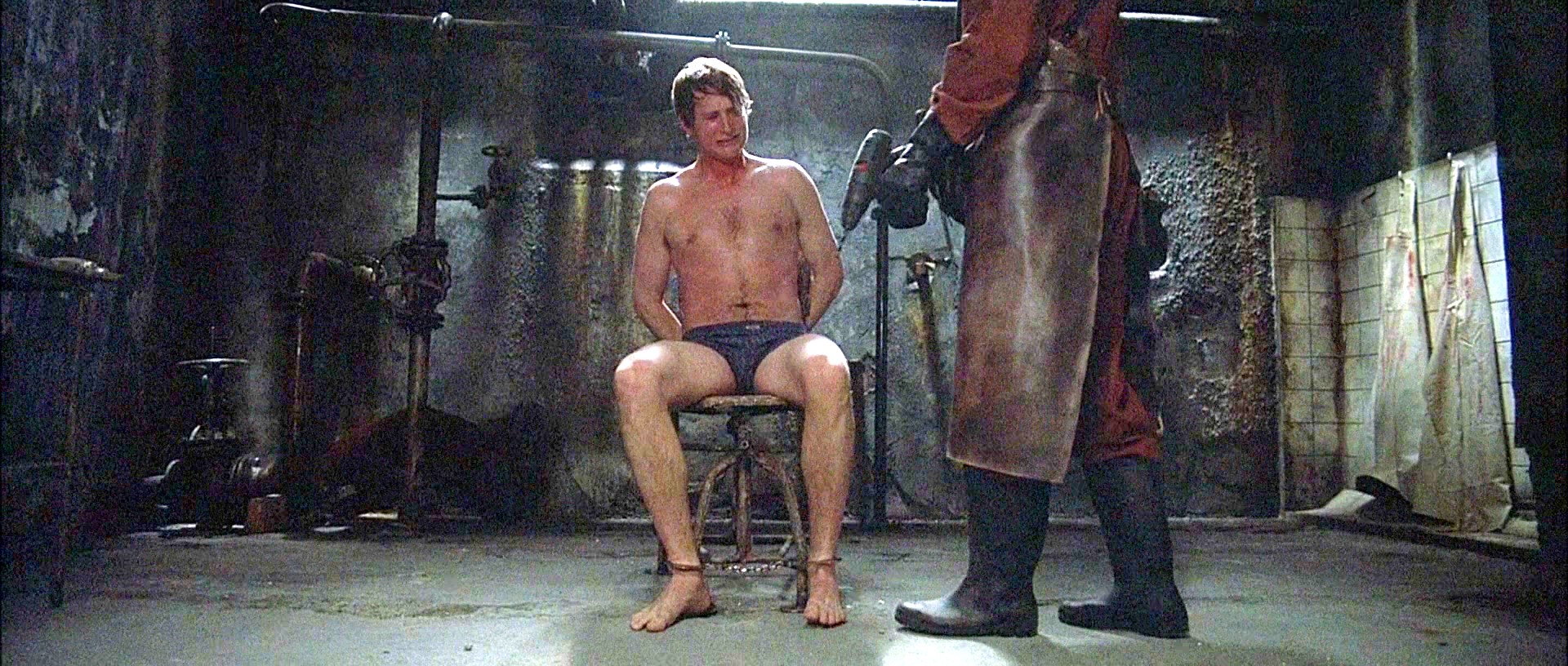
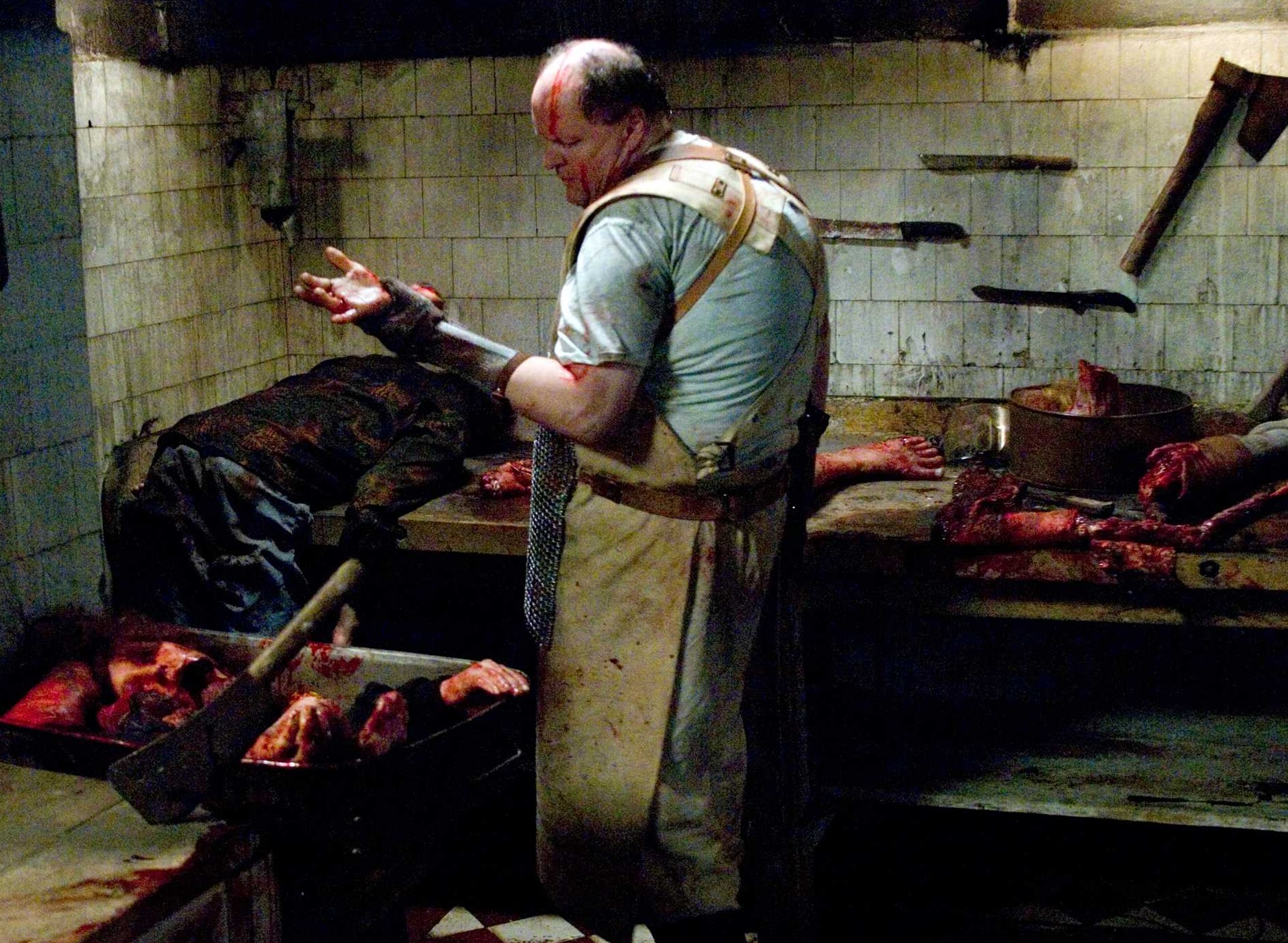
In fact, Hostel‘s real shock comes through that elision. The victims’ powerlessness and the overt pleasure taken in manipulation of their flesh by their captors can’t help but call to mind a slaughterhouse, with its casual viciousness and the glee we sometimes see revealed in undercover videos on the part of workers. Roth emphasizes this through additional footage of carcasses on trolleys and floor-drains for offal.

hostel4

To a certain degree, Hostel only takes the central conceit of the “hunter becoming the hunted” to a lunatic extreme. The final, cliched line of the execrable Cannibal Holocaust, a film so full of actual animal slaughter footage that it qualifies as snuff, seems to echo: “Who are the real savages anyway?” It is no accident that Roth is an enormous fan of that Ruggero Deodato schlock stand-by, or that Deodato himself makes a cameo in Hostel‘s sequel, in a scene in which he is filleting and eating a man alive. Roth can be accused of many things; subtlety is not one of them.

But the fascinating thing about Hostel is how these themes of power and domination are merged and integrated with larger questions of blowback from Bush-era “enhanced interrogation” techniques. There is an uncanny sense that, in the age of late-capitalism, it’s not too far a step from the slaughterhouse to the torture pen, from Abu Graib to torture-for-hire.

There are latent killers everywhere we look, and men who will argue the only real problem is that we’ve contracted out the murders. “I like that connection,” they will tell us, right before slamming closed the iron cell door that places us too, irrevocably, on the chopping block.

August 30, 2016 0 comments
0 FacebookTwitterPinterestEmail
CommentaryFilmGreat Movies: The Counter Programming

Community, Capital, and Patriarchy in Wild Geese

by rick August 29, 2016
written by rick

Shirō Toyoda’s The Mistress is based on Mori Ogai’s Romantic novel Wild Geese  (and sometimes referred to by the title of the original, as Criterion does). The film is in some ways a familiar melodramatic narrative about the crushing of a woman’s desire under patriarchy — a treatment dismissively summarized in 1959 by Bosley Crowther of The New York Times as “a morally mawkish situation upon a tear-misted screen.” But this (ironically patriarchal) scorn misses so much of the film’s nuance and historical context, not to mention the beauty of its images.

In his early days, Toyoda apprenticed under Yasujirō Shimazu, whose Our Neighbor, Miss Yae was discussed earlier in this series. The two share similar social concerns and a focus on a changing society, not to mention a fluidity with camera movement that distinguishes their approach from the more celebrated works of artists like Ozu.

Shirō Toyoda director of Wild Geese

The narrative of The Mistress / Wild Geese is simple enough on its face. Our protagonist Otama (the great Takemine Hideko) was once tricked into a false marriage, and is now deemed “damaged goods” (a term her scheming neighbor feels comfortable deploying to her face).

With an ailing father and few other options, she agrees to become the mistress of Suezo, a man she believes to be a widower who runs a kimono shop.

In fact, she is tricked once again: his wife’s not dead at all, and he’s a despised moneylender. In the mean time, she falls in love with a local college student, Okada, who passes by her new house every day, but circumstances conspire to keep her trapped, like the caged bird on her windowsill. Okada will be leaving to pursue a medical career in the West, her father (initially far more sympathetic) has grown accustomed to living in less brutal poverty than before, and Suezo vows never to let her go.

wild geese3

It’s not hard to see how Crowther and others might simply read this as a “weepie” and blithely move on. But, even ignoring the fact that “weepies” have long been dismissed by male critics for entirely insulting reasons, the subtexts both Ogai and Toyoda sneak into the tale make it far richer.

The Mistress / Wild Geese is also the story of a conflict between rationalism and individual desire, head and heart, with special attention to a woman’s place in a changing Japan. Set in the late-19th century but screened for audiences after the Second World War, there’s a palpable sense of outrage and sorrow for the traditional “caged bird” of such melodramas. As the story progresses, Okada begins to consider breaking free from the shackles imposed upon her, but this desire butts up against the contradictory realities of her situation.

As Joel Irvin writes:

In Toyoda’s film, the heroine, Otama, is no longer resigned to suffer in silence. Like her contemporaries, she raises her voice in rebellion against the one who has caged her. This Romantic ideology of victim consciousness resonated strongly· with the audience of postwar Japan. This criticism of authority is also found in the popular 1947 novel, The Setting Sun, by Osamu Dazai, when the character Kazuko speaks of a time when adults taught their children that revolution and love were evil. After the war, however, distrust of the former beliefs developed and Kazuko “came to believe that revolution and love in fact are the best and most delicious things in this life … Humans were born for love and revolution.”

This sensibility is contrasted with the feudal-borne sense of duty and propriety voiced constantly by the other characters, especially their repeated refrain to “be reasonable,” to recognize the limitations of desire and love-matches and provide for the community (in this case, embodied as literal patriarchy by Otama’s father). These rationalist societal codes aren’t so much contrasted with the anti-communal, capitalist impulses embodied by the moneylender as they are integrated with them. This is a society rife with contradiction, but only resulting in further female subservience, now to capital and the dominant norms of the community.

Rationalism takes other forms, too. Her college-student love is studying to be a doctor, that ultimate rationalist profession, and hoping to pursue a career opportunity in Germany, that ultimate rationalist nation. He may love Otama, but there’s no place for that here, and he has things to accomplish. (How single-minded is he? Irvin notes that in the book, Okada’s evening walks are so rigorously routine that neighbors use them as markers of time, a sly reference to a famous legend about the regularity of Immanuel Kant’s afternoon constitutional in Königsberg.)

wild geese1

Meanwhile, Toyoda time and again frames his heroine through the slats of her new home, evoking a symbolic prison. Suezo’s gift of a caged bird with which to “amuse” herself doubles down on this symbology (as does the heroic Okada’s killing of a snake who threatens the bird; the snake is dispatched, the whole in the cage filled, the bird once again without recourse to the sky).

The Mistress / Wild Geese exhibits all of this without laying it on as thick as it might sound; we spend far more time studying the shifting looks on faces and the spaces between foreground and back, emphasizing power relations and internal psychologies. And, though the film focuses most acutely on the relations between mistress, scorned wife, maid, and the assorted neighbors Suezo profits from as a usurer, there’s enough unease to go around.

Okada’s friend, a liberal arts student who knows he’s in love with Otama before he does, puts it plainly, implicating the entire society with a shrug:

You’re a brilliant student in medical school, and she’s an uneducated, kept woman. In today’s Japan, you two can’t be involved romantically. Just like her, neither you not I are free from the restrictions of this Meiji era. But for all that, will you conform to those restrictions or break out of them?

That is: head or heart? There is little doubt which one the men of this film will choose. Otama may be a different story. As we watch her watch the wild geese of the title ascend in the film’s closing frames, her face is impassive, revealing nothing. Perhaps she’s resigned to this fate. Perhaps she’s looking to a new day and a less rigid social order. Perhaps she’s making a plan.

Toyoda keeps it in tight close-up. We’re left only to wonder.

August 29, 2016 0 comments
0 FacebookTwitterPinterestEmail
FilmReviews

New On Netflix: Cormac McCarthy’s The Road

by rick August 26, 2016
written by rick

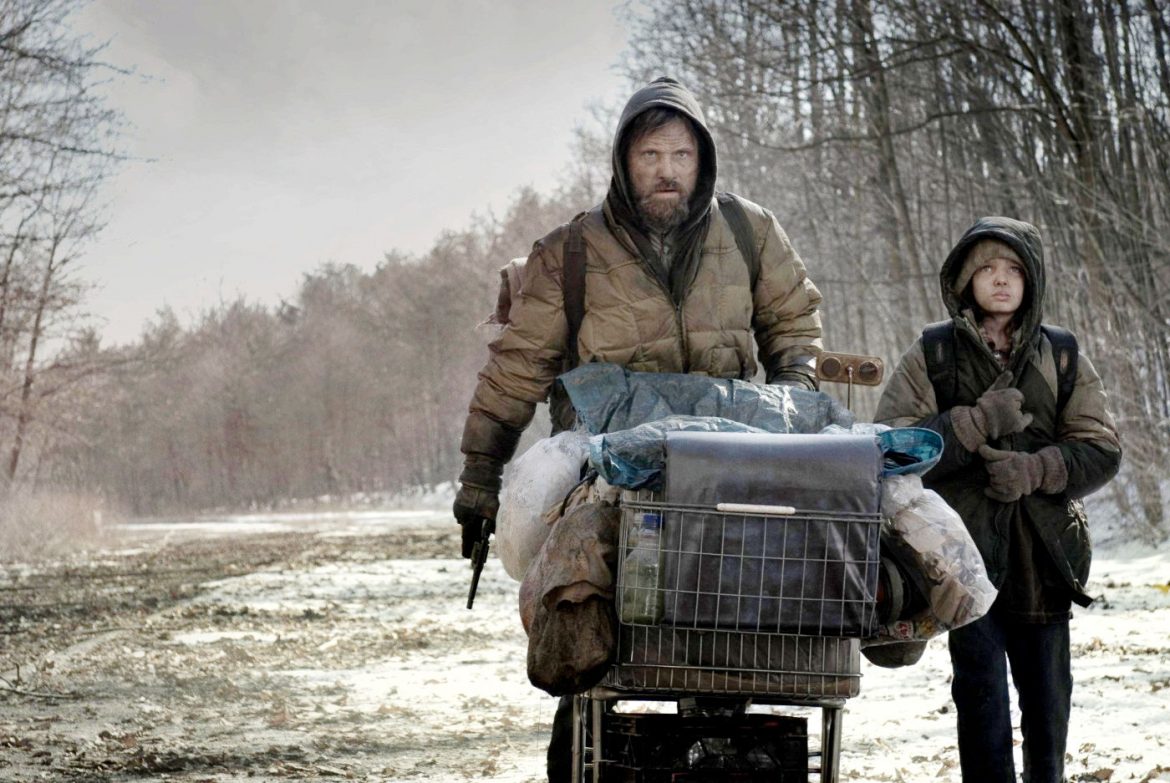
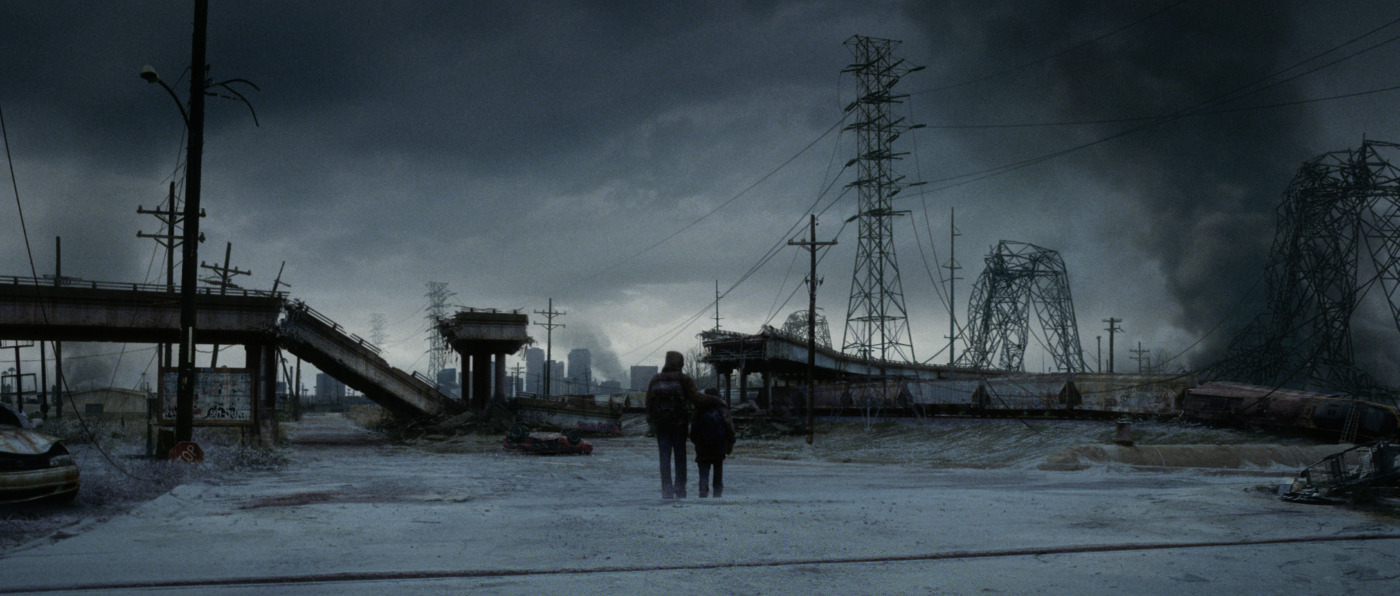
Resolutely dour and shot in various shades of washed-out grey, John Hillcoat’s adaptation of Cormac McCarthy isn’t a very cheerful affair. But the atmosphere Hillcoat and DP Javier Aguirresarobe create in The Road, shooting on location and intercut with flashbacks to a brighter world, is entirely appropriate to the post-apocalyptic narrative. Nick Cave’s score is pitch-perfect, and Viggo Mortensen’s performance is better than some of the sentimental lines he has to deliver.

McCarthy’s story, as adapted by Joe Penhall, is elemental in its simplicity — to the point that Mortensen is credited as “Man” and his son (Kodi Smit-Mcphee, adequate) as “Boy”. The world has collapsed into an empty, frightening wasteland, and no one has time for names anymore.

road2

We follow the Man and the Boy as they head south in what used to be the U.S., searching for the coast and what they hope will be some kind of promise of survival. In the meantime, they dodge cannibalistic gangs, rifle through the refuse for scraps of food (neither crops nor animals have survived), hide at the slightest sound of approach, and keep a loaded gun in case suicide becomes necessary to stave off worse fates. We are watching them starve, but Mortensen urges his charge to “carry the fire” — that is, hope, a belief in “good guys” and decency itself, the basic idea of a new day coming.

This is McCarthy’s frontier existentialism taken as far as it can go, and everyone in The Road is up to the challenge. Some scenes approach horror formulations, but most focus on the grinding realities and necessities of survival — the search for a warm place to sleep, shoes to wear, a bunker to pillage for supplies. Audiences might find it a tough slog; The Road makes only rare concessions to those hoping for glimmers of light in the dark.

road3

Still, it’s a film of total conviction to its premise. This, unfortunately, is probably what it will be like after the fall. The gonzo antics of something like the Mad Max series might make for a better time, but The Road has a different, more grim vision: the future will be lonely and cold, and we will be hungry and lost, and the people who survive will, by and large, have become monsters.

Will anyone be able to carry that fire? In the age of Donald Trump, I guess we’ll see.

Quick Links

A013_C008_0426DX

Doomsdays: Post-apocalyptic and dystopian futures seem to be having a moment, but then that’s always seemed kind of true. If The Road is too bleak for your taste, here’s Doomsdays to lighten up the mood. Its protagonists, a nihilistic fake-scholar in a professor’s outfit and a peak oil-obsessed sociopath, aren’t waiting for the end of days to start prepping. Traveling around the Catskills, they plunder vacation homes and stay until there’s nothing left or the owners show up.

Along the way, they pick up a naive little goober who admires their hobo-chic slumming and a woman who they each promptly fall for in turn, as the very world they sneer at starts to infiltrate their anarchic circle in exceedingly bourgeois ways. Justin Rice and Leo Fitzpatrick have a nice chemistry, and writer/director Eddie Mullins strikes a nice balance between the pessimistic and twee-comic, as he send his characters on a journey to nowhere in particular. The film kind of putters out towards the end, as though they ran out of things to say, but there are enough quality character interactions and well-constructed imagery to make Doomsdays worth recommending.

to catch a thief

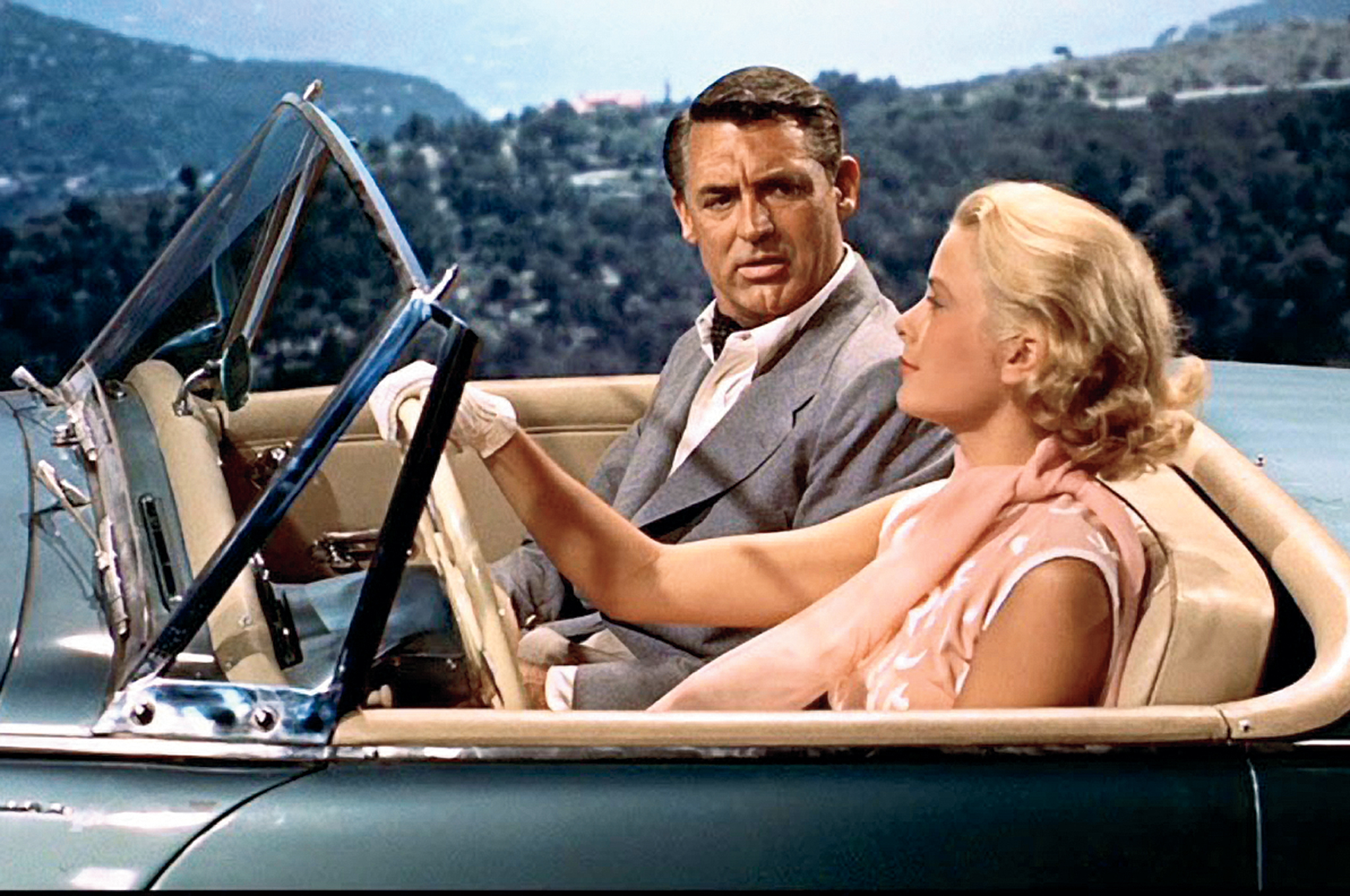
To Catch A Thief: By almost any measure, To Catch A Thief is not top-tier Hitchcock. The “suspense” at its center is almost non-existent, and it boasts a remarkable lack of theivery for something that purports to be a heist movie. But, man, is it beautiful to look at. Cary Grant is impossibly debonair, Grace Kelly is delightful and lovely as ever in her almost-final film before going off and becoming an actual princess, and Edith Head’s costumes are things to marvel at. Hitchcock’s deployment of VistaVision makes the French Riviera look like a kind of heaven you want to live in forever, and there’s plenty of witty banter to keep you entertained. It’s no Vertigo or Rear Window, but what is? (Aside from Vertigo and Rear Window.) I can imagine a worse way of losing two hours than luxuriating in all this splendor.

best of enemies2

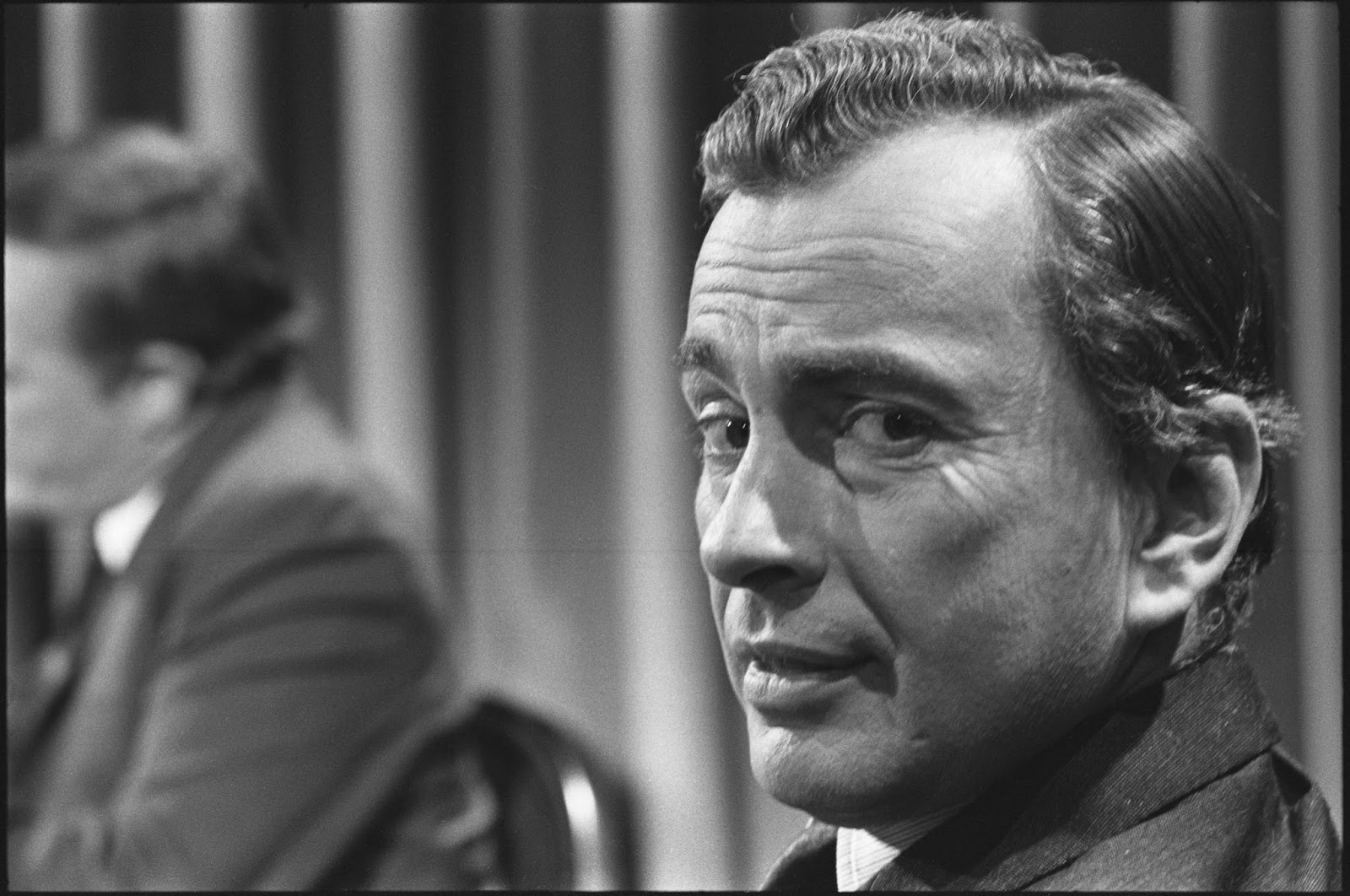
Best of Enemies: Gore Vidal and William F. Buckley did not care for each other. At all. This documentary tracks a pivotal showdown between the two during the 1968 Republican National Convention, the first time a TV network aired such a gloves-off, live debate. There was no love lost, and it shows. The doc grinds to an uncomfortable halt when it tries to provide coverage of the fallout from their legendary encounter, but the actual archival footage is absolutely riveting. We live in the world this interaction helped create, where people are far more concerned with takedowns than coherent points. But, in its infancy, we get to see two extraordinarily large personae who genuinely, profoundly disliked each other going to war with relish, each of them armed with a kind of fluency and candor that’s completely gone from our TV screens these days. It’s a spectacle, in the best sense.

girlhood

Girlhood: Have I recommended Girlhood recently? Oh, I have? Too bad, I’m doing it again.

Céline Sciamma’s third feature (after 2011’s Tomboy and 2007’s Water Lilies, both essential) is a masterpiece, and if you haven’t seen it yet, now’s the time. Anchored by an incredibly assured performance by Karidja Touré, Girlhood explores race, class, and gender in consistently thrilling but never pedagogical ways. It’s a film about non-male relationships that never once hedges its bets by empty appeals to universality or narrative conventions that might put audiences at ease; in other words, it’s relentlessly honest. Schiamma needs to make more movies, because no one is doing a better job right now of charting confusion, conflict, love, and release, and doing so with an eye towards beauty in the margins.
August 26, 2016 0 comments
0 FacebookTwitterPinterestEmail
CommentaryFilm

An Abbas Kiarostami Career Retrospective

by rick August 24, 2016
written by rick

I’m pleased to announce the first entry in an ongoing column about the beautiful, challenging films of Abbas Kiarostami is live on CutPrintFilm.

Kiarostami has become a favorite director of mine, and I’m grateful to the CutPrintFilm folks for giving me the opportunity to explore his body of work in more detail.

kiarostami2

This first entry covers the period of 1970-1975, when Kiarostami first began making films. For those like myself who had been primarily familiar with Close-Up and A Taste of Cherry, which I reviewed here and look forward to revisiting, it’s fascinating to see the ways in which he had and hadn’t changed as a filmmaker since those early days.


The piece begins:

When Abbas Kiarostami died this past July after a battle with cancer, there was a veritable deluge of tributes from across the world.


Beloved by many cinephiles and even more fellow directors (like his friend Martin Scorsese, who lovingly memorialized him recently, this towering figure of Iranian cinema and culture was a fixture in film conversation, from Tehran to Cannes to Venice. His short The Bread and Alley appeared in 1970, the first production of the newly-founded Institute for the Intellectual Development of Children and Young Adults in Tehran. But it took another two decades and the release of Close-Up to bring him to international prominence.


To hear Kiarostami tell it, this was never much of a problem, or at least not something on the forefront of his mind. He seems always to have been making films for himself. Beguilingly self-reflexive, fixated on the ethics and mysteries of filmic representation itself and with a clear soft spot for children, Kiarostami carved out a unique position for himself. Taken as a whole, his films reflect both a plain-spoken truth-teller and a philosopher of the image, cloaking increasingly complex reflections on texts, viewers, and engagement in a veneer of simplicity.

Read the rest on CutPrintFilm, and stay tuned for more!

August 24, 2016 0 comments
0 FacebookTwitterPinterestEmail
Newer Posts
Older Posts

About

About

Towards a provisional theory of the cinema, or, failing that, just some shit about movies

Authors
Rick Kelley
Lark Lundberg

Keep in touch

Facebook Twitter

Categories

  • Conversation
  • Film
  • Film By Film
  • Great Movie Project
  • Great Movies: The Counter Programming
  • Guest
  • News
  • Other
    • Commentary
    • Film
    • Interview
    • Reviews
    • Song for a Sunday
  • Streaming Selections
  • TV
  • Uncategorized
  • Vegan Horror

Archives

  • April 2019
  • March 2019
  • January 2019
  • December 2018
  • November 2018
  • October 2018
  • September 2018
  • August 2018
  • July 2018
  • June 2018
  • May 2018
  • April 2018
  • March 2018
  • February 2018
  • January 2018
  • December 2017
  • November 2017
  • October 2017
  • September 2017
  • August 2017
  • July 2017
  • June 2017
  • May 2017
  • April 2017
  • March 2017
  • February 2017
  • January 2017
  • December 2016
  • November 2016
  • October 2016
  • September 2016
  • August 2016
  • July 2016
  • June 2016
  • May 2016
  • April 2016
  • March 2016
  • February 2016
  • January 2016
  • December 2015
  • October 2015
  • September 2015
  • August 2015
  • July 2015
  • June 2015
  • May 2015
  • April 2015
  • March 2015
  • February 2015
  • January 2015
  • December 2014
  • November 2014
  • October 2014
  • August 2009
  • September 2008

Recent Posts

  • China Girls, Death Proof, and the Hidden Face
  • Old News: Old Noise Edition
  • Old News: April 1, 2019
  • Nicolas Winding Refn, Marginalia, and the Deaths of Cinema
  • And now, let us praise Kanopy

Recent Comments

  • Franklin Kat on Michael Shannon shines again in Frank & Lola
  • Sean Tempesta on Cinema and dream-logic in Meshes of the Afternoon
  • ludditerobot on The Left-Wing Slapstick and Iconic Songs of 1937’s Street Angel
  • Franklin Kat on The Left-Wing Slapstick and Iconic Songs of 1937’s Street Angel
  • Arijit Mukherjee on Great Movies Project: The Counter-Programming
  • Facebook
  • Twitter

@2021 - All Right Reserved. Designed and Developed by PenciDesign


Back To Top
Luddite Robot
  • Reviews
  • Commentary
  • Great Movie Project
    • Great Movie Project
      Bride of Frankenstein is a movie for and…

      January 25, 2018

      Great Movie Project
      The Enduring Appeal of Nick and Nora in…

      November 29, 2017

      Great Movie Project
      The Ahistorical Fever Dream of The Scarlet Empress

      August 2, 2017

      Great Movie Project
      Dreams, Mundanity, and the Anarchist Yearnings of L’Atalante

      July 12, 2017

      Great Movie Project
      Duck Soup Is And Will Always Be A…

      April 19, 2017

  • Counter Programming
    • Great Movies: The Counter Programming
      Walking and Talking in the Shadow of Kanchenjungha

      March 7, 2018

      Great Movies: The Counter Programming
      A Brief Encounter in My Mother and Her…

      February 9, 2018

      Great Movies: The Counter Programming
      Horror’s Refusal in Farrokhzad’s The House Is Black

      October 13, 2017

      Great Movies: The Counter Programming
      The rage and beauty of The Cloud-Capped Star

      October 3, 2017

      Great Movies: The Counter Programming
      The daylight noir and social issue empathy of…

      June 22, 2017

  • Vegan Horror
    • Vegan Horror
      Julia Ducournau doesn’t think her film Raw is…

      June 7, 2017

      Vegan Horror
      Licking our wounds: The vampiric masculinity of Ravenous

      December 13, 2016

      Vegan Horror
      Eggertsson and animals: An approach to horror cinema

      September 15, 2016

      Vegan Horror
      “It’s Not My Nature” – Vegetarianism, Body Horror,…

      August 30, 2016

      Vegan Horror
      Bodies and Carcasses in Predator 2

      August 23, 2016

  • Interview
    • Interview
      Jasmine Leyva’s doc The Invisible Vegan aims to…

      May 3, 2017

      Interview
      Bridging The Abyss: An Interview With The Directors…

      November 28, 2016

      Interview
      7 Days in Ohio: An Interview with Nathan…

      September 12, 2016

      Interview
      Film Critic Phil Dy talks New Filipino Cinema

      June 17, 2016

      Interview
      “I Love Seeing Film Projected.” A Conversation with…

      March 22, 2016