Top Posts
Madeline’s Madeline: An Unclassifiable Panic Attack Maybe-Masterpiece
Shoplifters Steals Moments of Wonder from the Mundane
Burning and Forgetting What’s Not There
Kusama: Infinity Expands Beyond The Canvas
Mandy Risks Little, Wins Little
In We The Animals, The Children Are Away...
The Seagull Isn’t Quite Chekhov, But It’s Still...
5 Million Ways Boots Riley Isn’t Sorry To...
American Animals’ and the Queasiness of the Heist
A Star Is Born In Hearts Beat Loud
  • Reviews
  • Commentary
  • Great Movie Project
    • Great Movie Project
      Bride of Frankenstein is a movie for and…

      January 25, 2018

      Great Movie Project
      The Enduring Appeal of Nick and Nora in…

      November 29, 2017

      Great Movie Project
      The Ahistorical Fever Dream of The Scarlet Empress

      August 2, 2017

      Great Movie Project
      Dreams, Mundanity, and the Anarchist Yearnings of L’Atalante

      July 12, 2017

      Great Movie Project
      Duck Soup Is And Will Always Be A…

      April 19, 2017

  • Counter Programming
    • Great Movies: The Counter Programming
      Walking and Talking in the Shadow of Kanchenjungha

      March 7, 2018

      Great Movies: The Counter Programming
      A Brief Encounter in My Mother and Her…

      February 9, 2018

      Great Movies: The Counter Programming
      Horror’s Refusal in Farrokhzad’s The House Is Black

      October 13, 2017

      Great Movies: The Counter Programming
      The rage and beauty of The Cloud-Capped Star

      October 3, 2017

      Great Movies: The Counter Programming
      The daylight noir and social issue empathy of…

      June 22, 2017

  • Vegan Horror
    • Vegan Horror
      Julia Ducournau doesn’t think her film Raw is…

      June 7, 2017

      Vegan Horror
      Licking our wounds: The vampiric masculinity of Ravenous

      December 13, 2016

      Vegan Horror
      Eggertsson and animals: An approach to horror cinema

      September 15, 2016

      Vegan Horror
      “It’s Not My Nature” – Vegetarianism, Body Horror,…

      August 30, 2016

      Vegan Horror
      Bodies and Carcasses in Predator 2

      August 23, 2016

  • Interview
    • Interview
      Jasmine Leyva’s doc The Invisible Vegan aims to…

      May 3, 2017

      Interview
      Bridging The Abyss: An Interview With The Directors…

      November 28, 2016

      Interview
      7 Days in Ohio: An Interview with Nathan…

      September 12, 2016

      Interview
      Film Critic Phil Dy talks New Filipino Cinema

      June 17, 2016

      Interview
      “I Love Seeing Film Projected.” A Conversation with…

      March 22, 2016

Luddite Robot
Film critique, theory, and assorted nonsense.
CommentaryFilm

China Girls, Death Proof, and the Hidden Face

April 14, 2019

Old News: Old Noise Edition

April 8, 2019

Old News: April 1, 2019

Nicolas Winding Refn, Marginalia, and the Deaths of Cinema

CommentaryFilm

And now, let us praise Kanopy

January 24, 2019

Warren Sonbert and the Relief of Anti-Narrative

January 14, 2019

The World Is Ending and It Doesn’t Matter

The Best Films of 2018

FilmReviews

Madeline’s Madeline: An Unclassifiable Panic Attack Maybe-Masterpiece

December 21, 2018

Shoplifters Steals Moments of Wonder from the Mundane

December 11, 2018

Burning and Forgetting What’s Not There

Alien, Musicology, and Reading Soundtracks

CommentaryFilm

Shocktober III: Halloween 2018 Edition

October 24, 2018

Shirley Jackson’s The Lottery Traumatized Schoolkids in 16 mm

October 18, 2018

Shocktober 2018 II: Another Reshockening (of Horror)

Häxan is a movie made by a movie character

CommentaryFilm

Shocktober 2018

October 7, 2018

Unprofessional! Spring Night, Summer Night

October 3, 2018

The Wild Boys: A Luddite Robot Conversation

Kusama: Infinity Expands Beyond The Canvas

CommentaryFilm

New on Netflix: Dirty Mary, Crazy Larry

by rick August 5, 2016
written by rick

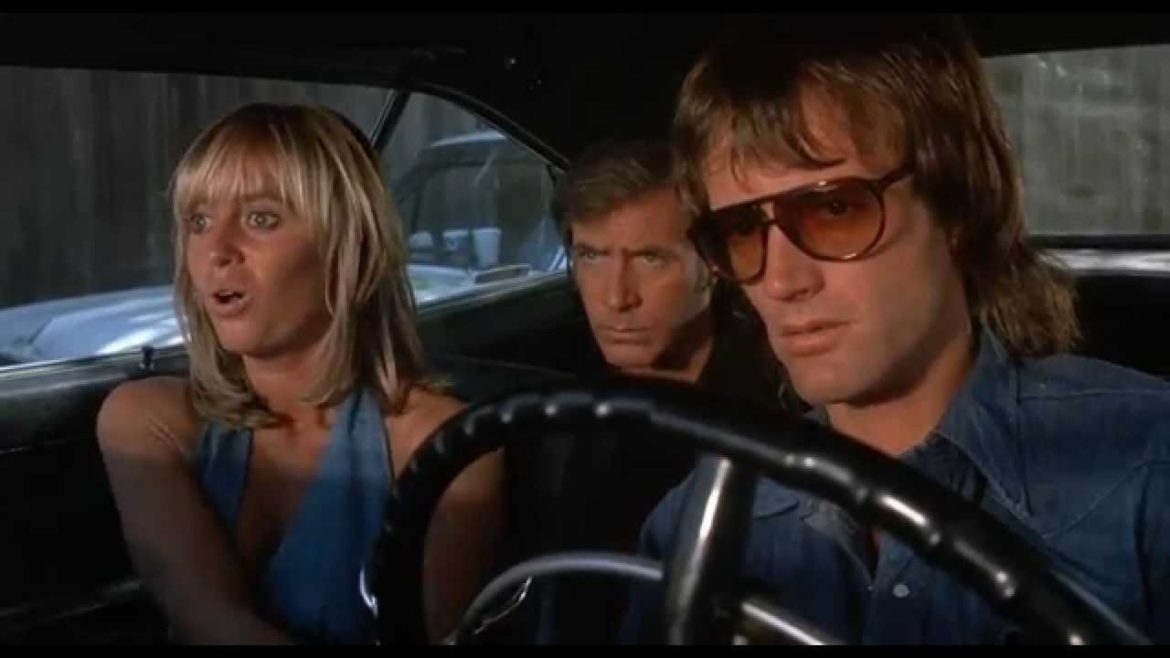
“Well, I ain’t talkin’ philosophies, I’m talkin’ cars,” says the local sheriff in Dirty Mary, Crazy Larry, a 1974 chase movie that was all-but-forgotten until predictable super-fan Quentin Tarantino started peppering his films with references to it.

The sheriff is referring to his own department’s need for vehicles, but out of context it could stand in as the film’s tagline. Dirty Mary, Crazy Larry is in love with motion, revving engines, practical stunts, and spinning wheels. Everything else is secondary, including plot, coherence, continuity, character depth, and logic.

In other words, it’s awesome.
dirty mary1

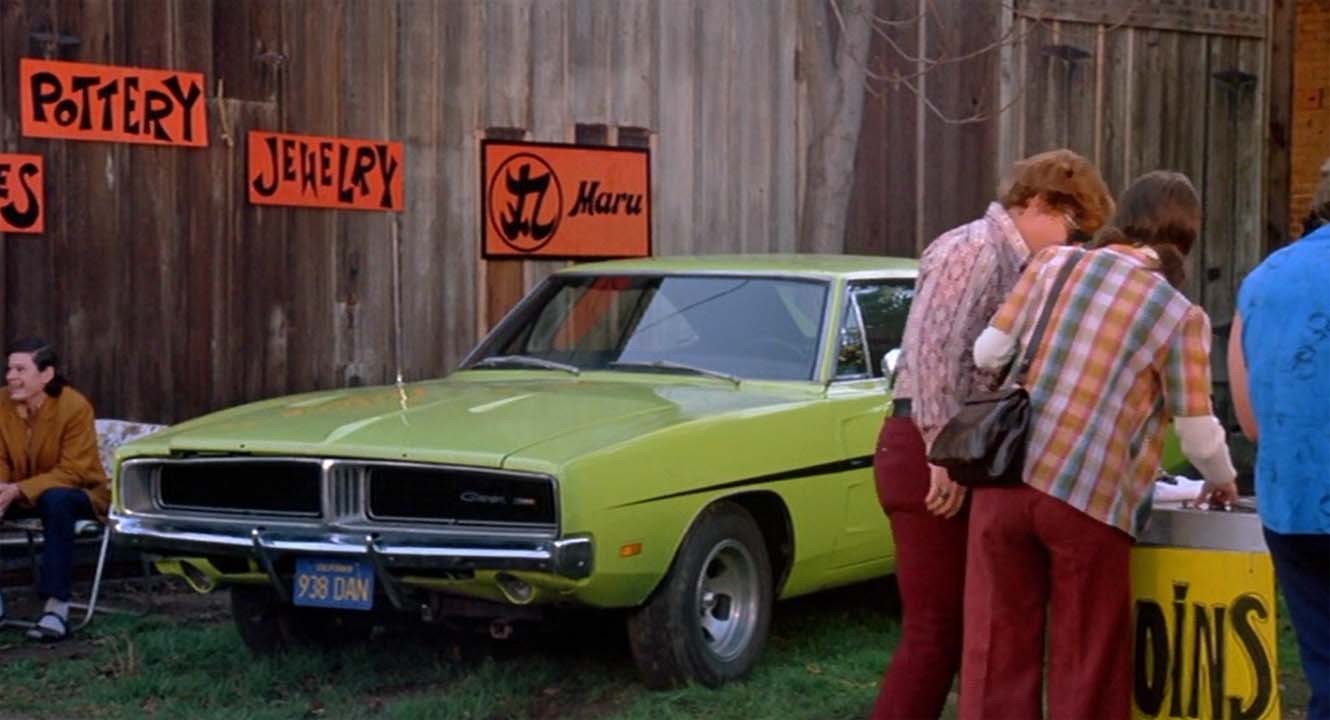
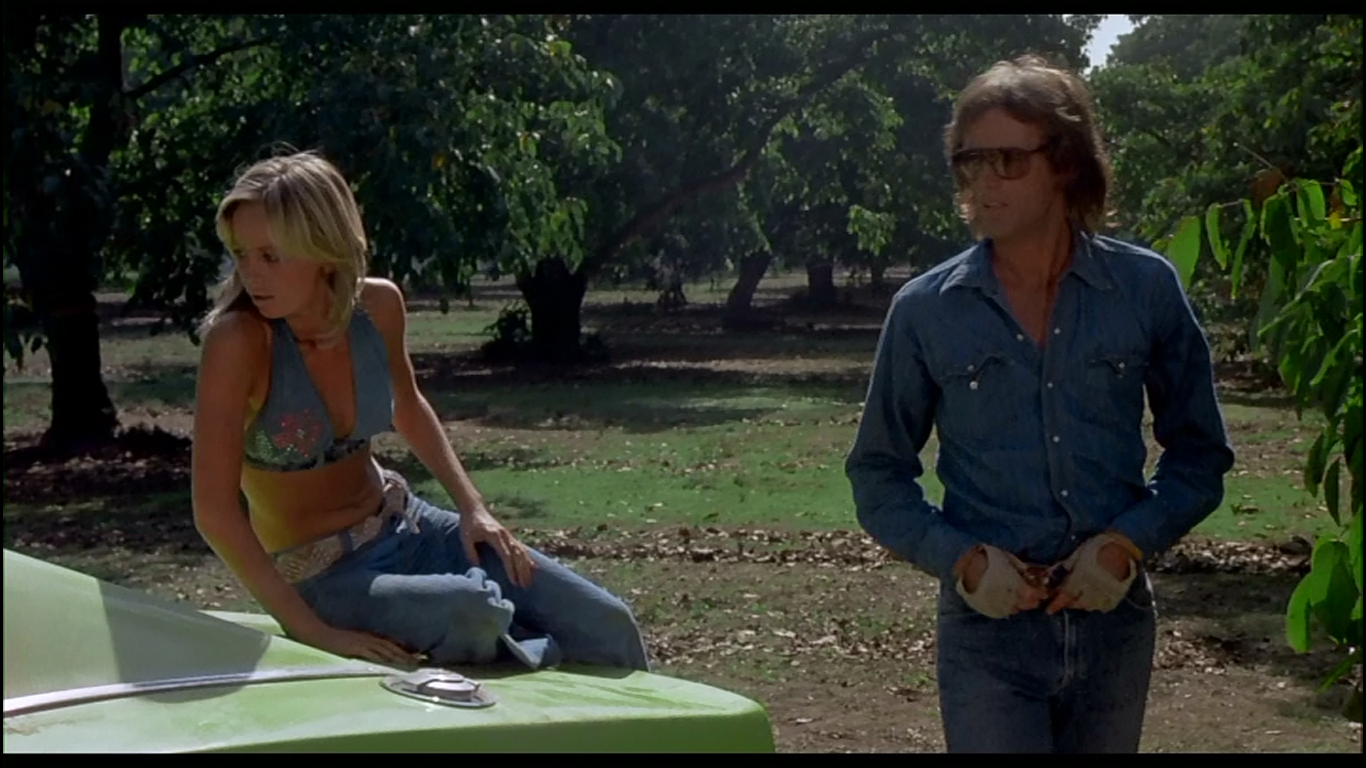
Unlike its better-regarded, car-obsessed contemporaries Bullitt and Vanishing Point, Dirty Mary, Crazy Larry makes no attempt at respectability. This is exploitation through and through. (See: title.) Counter-culture icon Peter Fonda stars as Larry, who is crazy. Susan George, three years removed from a star-making turn in Straw Dogs, is Mary, who is dirty. (Because she sleeps around. The gender politics of this film are abysmal.)

The two are introduced after a one-night stand, as Fonda goes off to rob a store of $150k (because, sure, stores often have $150k lying around). She ends up insinuating herself into the heist Larry and his accomplice Deke (Adam Rourke) have planned, and the three bicker their way across the Midwest at high speeds.
dirty mary3

None of the rest matters. The offhand nihilism and slut-shaming gives way to long, long chase sequences, clearly orchestrated in ways no film would allow today. The camera shakes violently inside the car, or focuses in on the fetishized chrome, tires, and waves of dust as the trio flees a fleet of cops, an obsessed sheriff, and even a helicopter on loan from Fish & Wildlife. It’s that kind of movie.

Like I said, awesome. Between their hyper-verbal banter and the bonkers exploitation trappings, it’s no wonder Tarantino is a fan, going so far as to reference the car’s license plate number in Death Proof and showing the film in the background of a scene in Jackie Brown.

It’s viscerally thrilling, palpably dumb, and it’s now on Netflix for all your lizard-brain, vroom-vroom needs.

Quick Links

clueless

Clueless: Amy Heckerling’s riff on Jane Austen’s Emma has held up remarkably well, anchored by a breakout performance from Alicia Silverstone and given some real sweetness by apparent ageless vampire Paul Rudd. Both Heckerling’s updates and faithfulness to the material are inspired, and the cast is ideal. Revisit it and remember that glorious time, a halcyon age when Stacey Dash was a talented comedian and not the worst person in the world.
full metal jacket

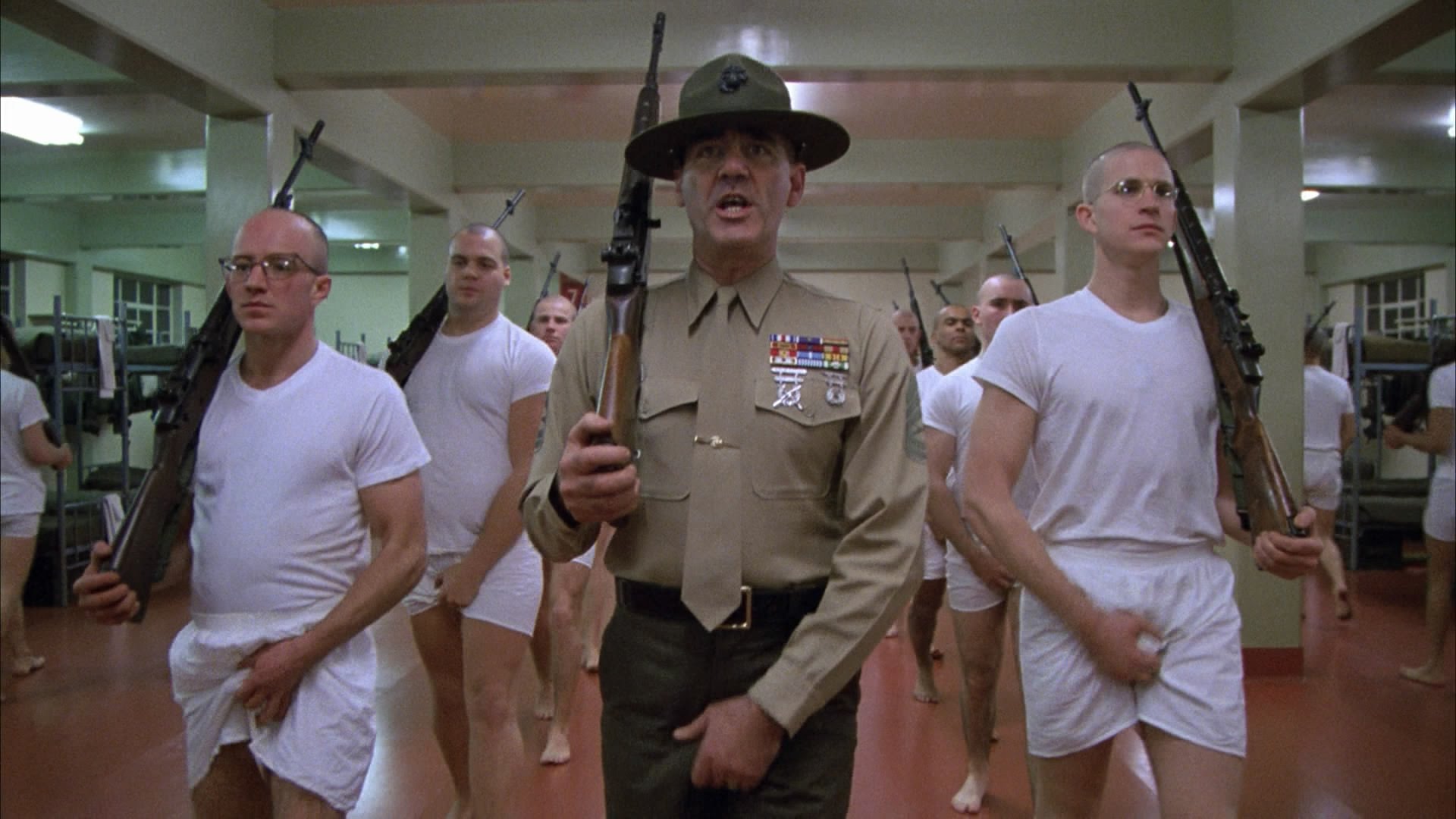
Full Metal Jacket: One of Kubrick’s more divisive films, even among Kubrick die-hards, Full Metal Jacket remains entirely worth watching. There’s no denying the gripping urgency of its first half, a Vietnam-era boot camp hell navigated by young men out of their depth. When we abruptly shift to the war itself, some viewers think the film loses the thread; others think that’s the point. Watch it, or rewatch it, and decide for yourself.
pontypool

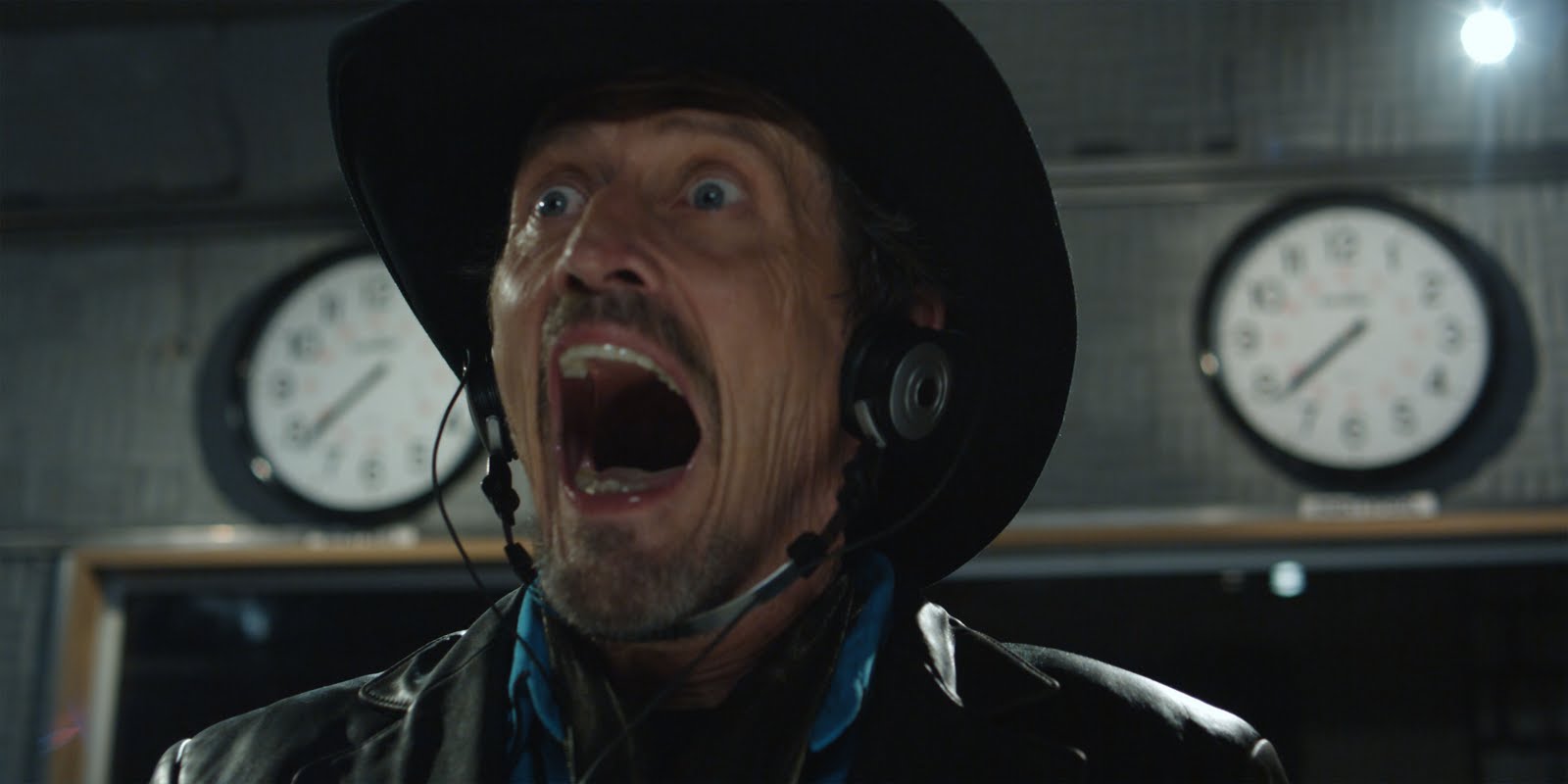
Pontypool: The horror selection on Netflix streaming is, by and large, a festering morass of shitty sequels, direct-to-video fare, and whatever Avalanche Sharks is supposed to be. 2009’s Pontypool, on the other hand, is almost too clever — a film about mass infection via language. It’s scary, funny, and smart, and it has no place in the dregs of the horror section here. Watch it before someone realizes and replaces it with Avalanche Sharks 2: They All Fall Down.
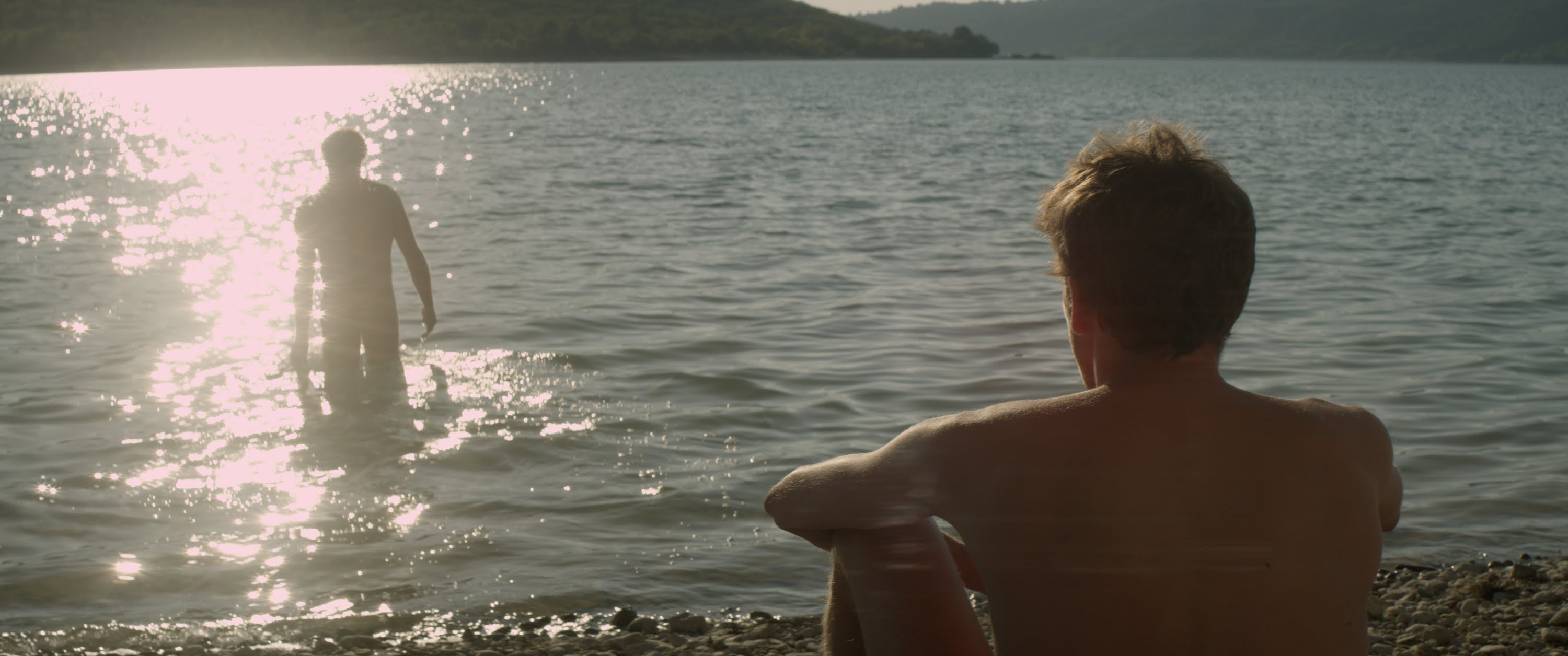
stranger by the lake

Stranger By The Lake: Striking for its frank depictions of gay cruising culture, but most memorable for the ominous mood it creates, Alain Guiraudie’s feature is mysterious, disturbing, and insightful, by turn. The captured moments of anonymous sex on a hidden beach would be exciting enough in and of themselves, even if there weren’t a murderer lurking about. These exploitation trappings give way to something much more evocative, a startlingly subdued rumination on danger and desire.
August 5, 2016 0 comments
0 FacebookTwitterPinterestEmail
Vegan Horror

Human and Nonhuman Horror Cinema

by rick August 4, 2016
written by rick

A recent episode of the excellent We Love To Watch podcast focused on Motel Hell, a quite poor film with fascinating subtexts. It got me thinking about the prevalence of animal rights themes in film, and in horror specifically. Horror’s fixation on the notion of the human and the nonhuman provides a kind of secret key to understanding an unease at the root of modern existence.

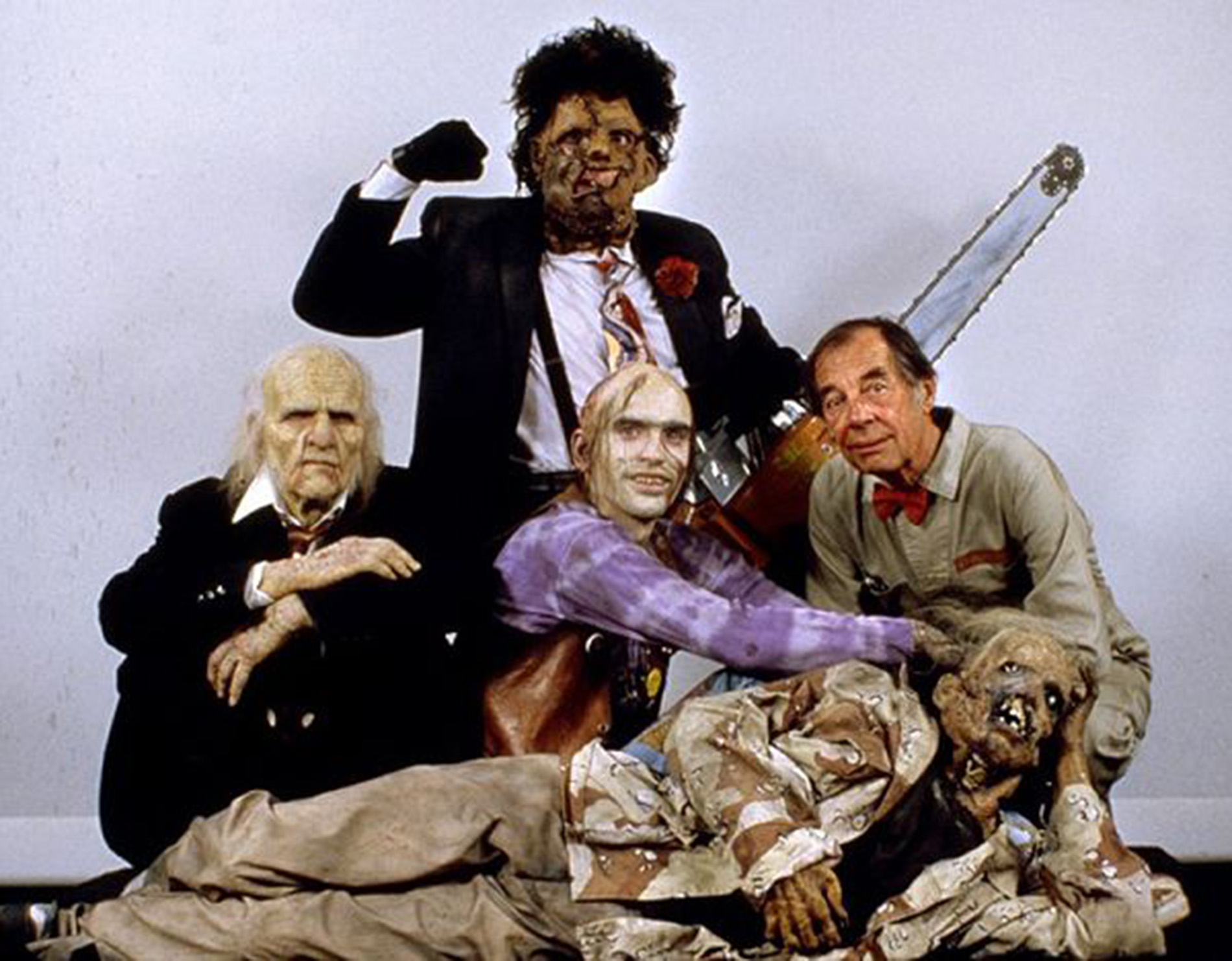
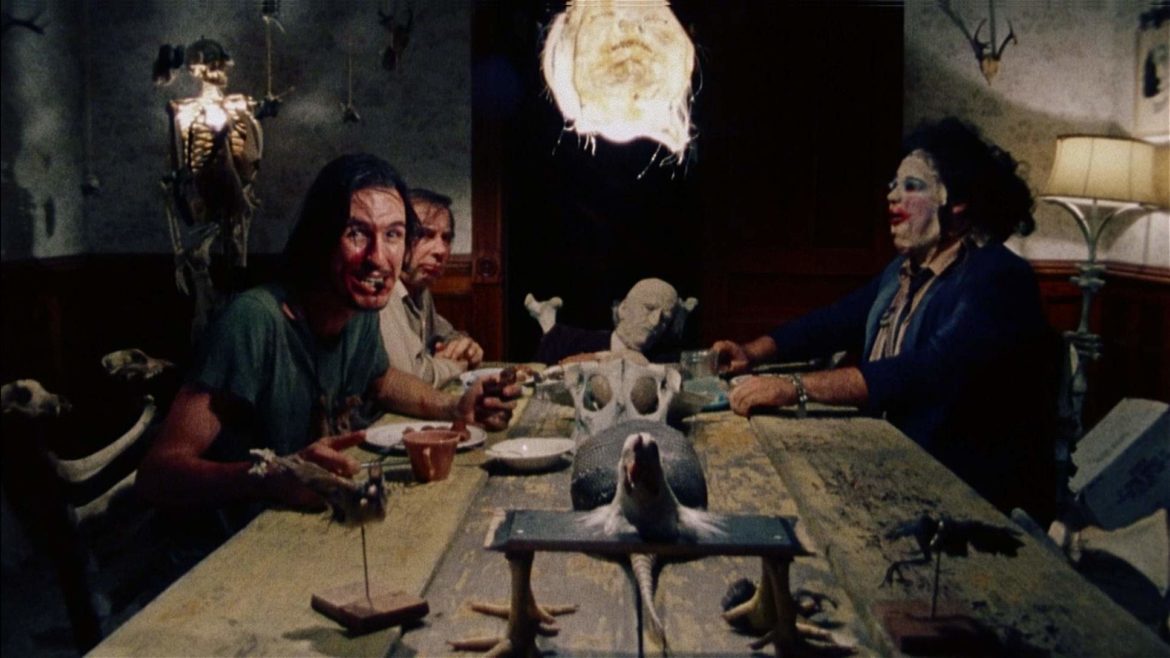
texas chainsaw2

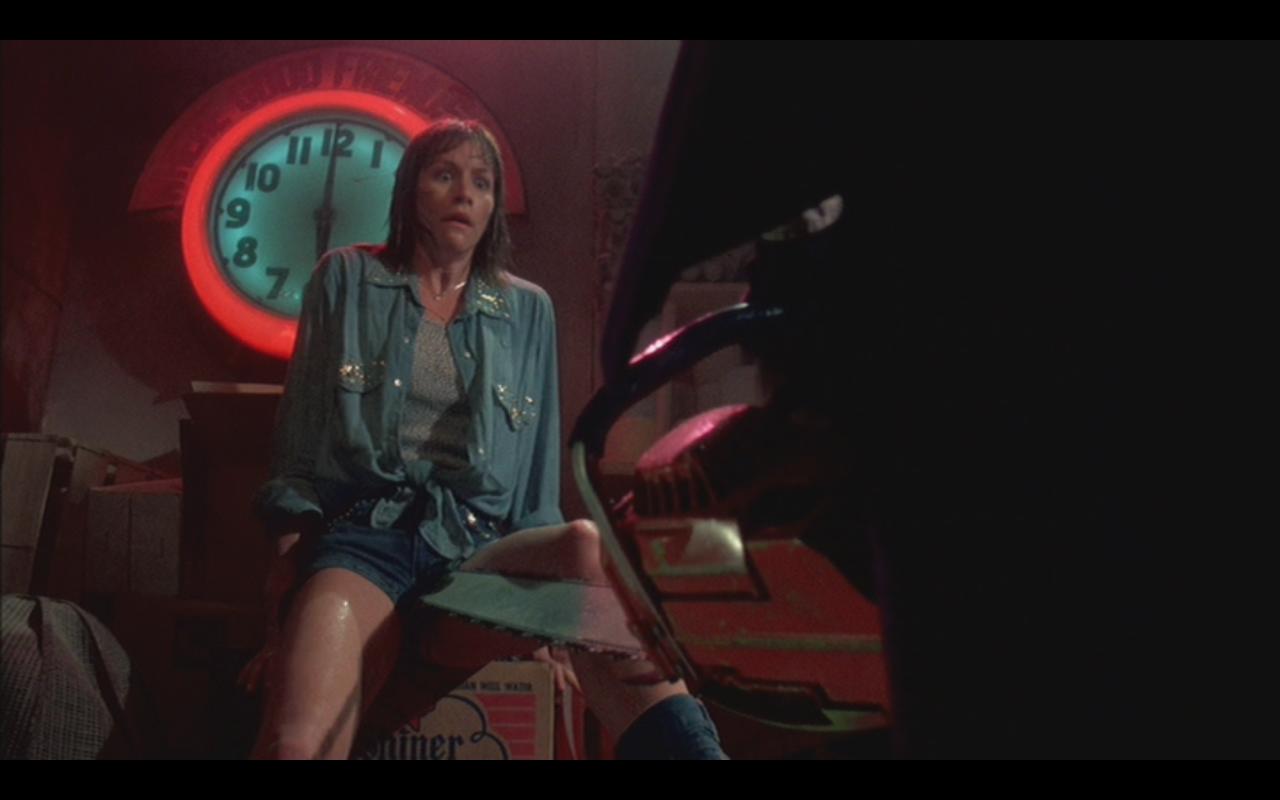
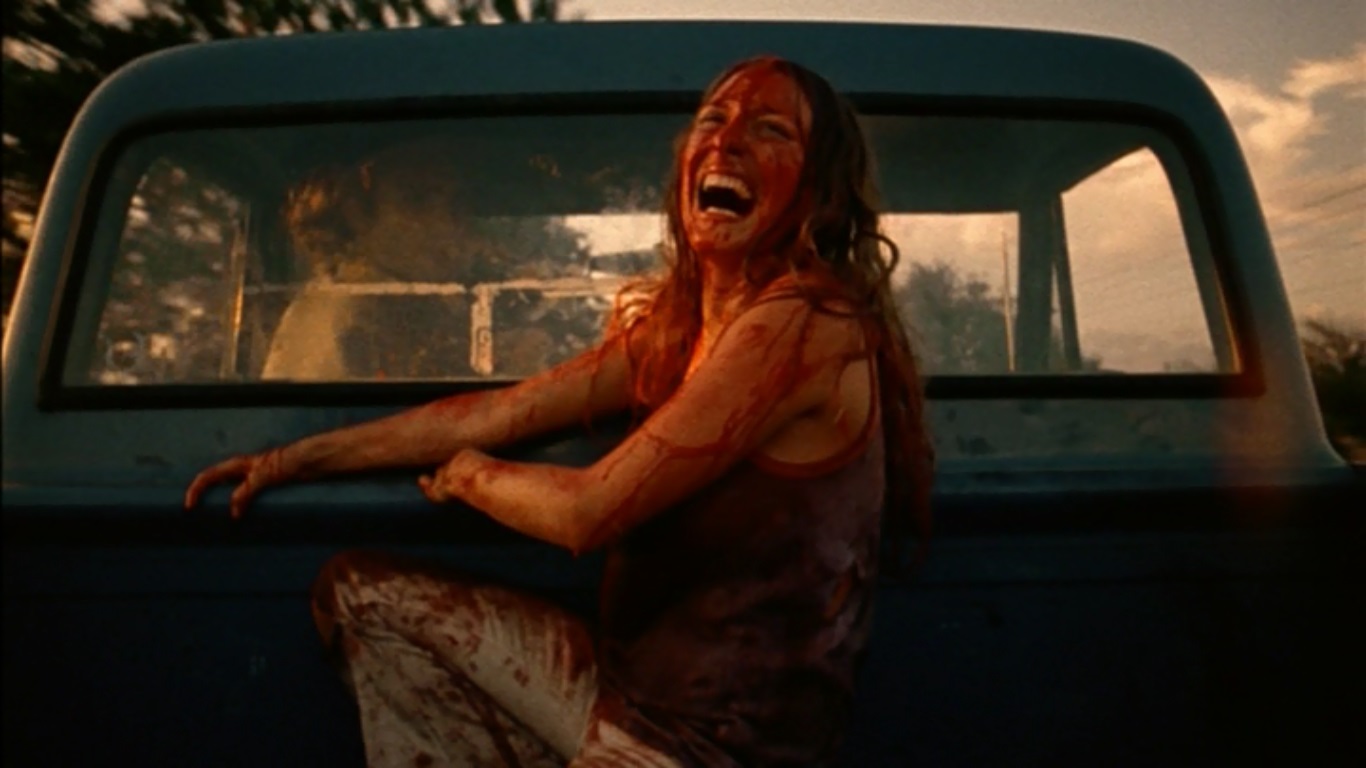
There is no shortage of examples. The most famous are probably Tobe Hooper’s The Texas Chainsaw Massacre (in which a girl is impaled on a meat hook by ex-slaughterhouse workers turned cannibal during an economic downturn) and its Cannon Films-produced sequel, which drops the subtext for comedy and, instead, features its villainous protagonists winning chili cook-offs with their stews of murdered victims.

“We love this town, because this town loves meat!” Drayton Sawyer exclaims. (Lest we miss the point, his weasel-faced portayor, Jim Siedow, is credited as “The Cook”.) Cleverly, Texas Chainsaw 2 also mapped this vision of cannibalistic body horror onto mainstream films, in a comedic jab implying horror exists everywhere.

texas chainsaw two

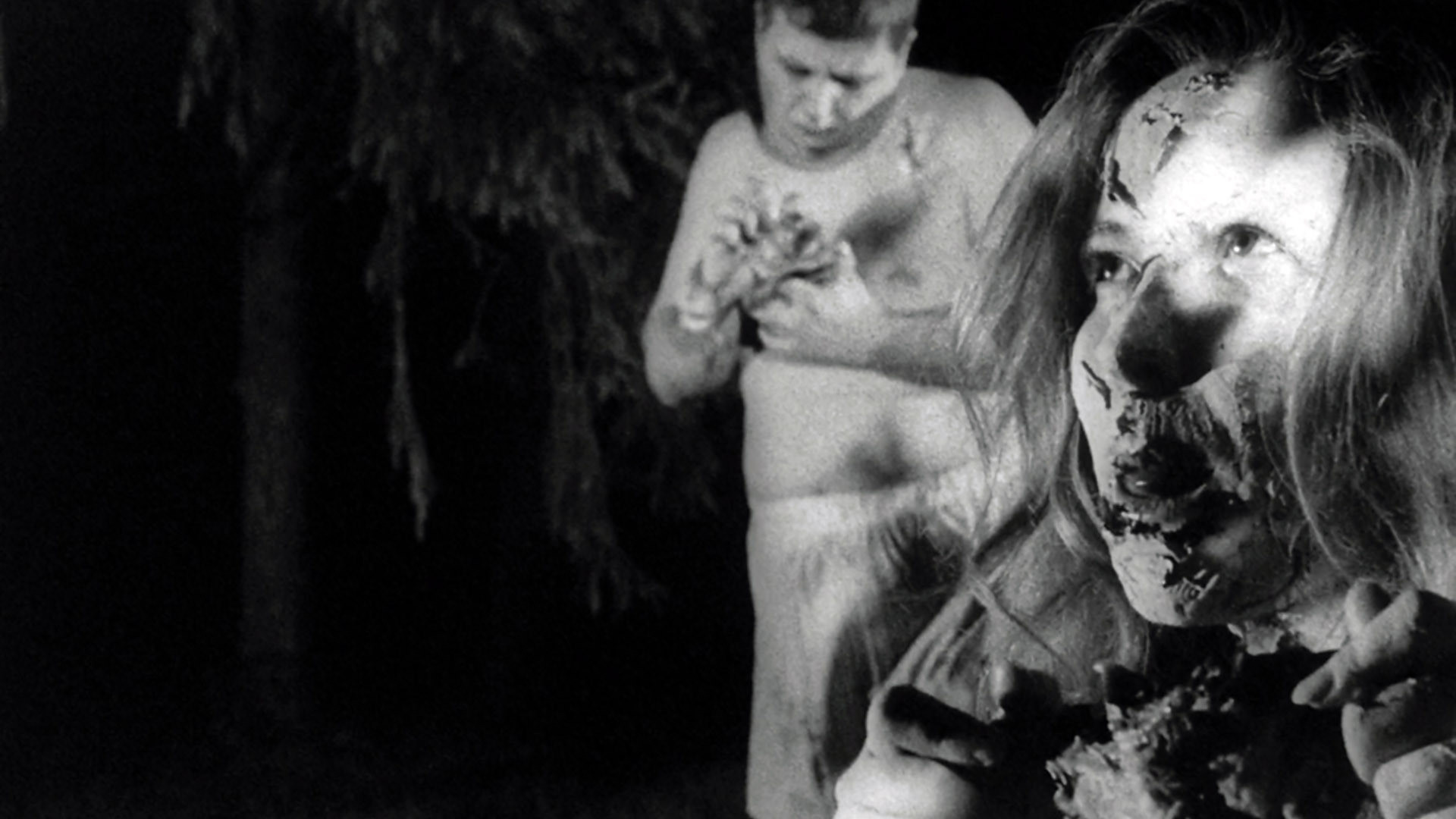
We could rattle off dozens more: Hostel, episodes of “Buffy” and “Angel”, Troll 2, Night of the Living Dead and really any treatment that blurs the line between human and nonhuman exploitation. The more interesting thing — to me, as a vegan cinephile — is why this should be so. It’s not as though the makers of all these films and stories are dedicated animal rights activists. Yet the theme won’t seem to die, as it were.

There are some easy answers. The kinds of vulnerability, powerlessness, and terror embodied in many of these things find a recognizable analog in human treatment of the nonhuman, and the natural world more generally. (“Treating x like a piece of meat” is a pretty standard thing to say.) And it is not hard to see the appeal of rerouting the narrative: “Imagine if you were the livestock!”, basically. Pretty scary, and evocative. Such treatments foreground our complicity but place us in a position we rightfully find terrifying.

That powerlessness, and the instrumental use from which it gains its power to terrify, can become an open-ended metaphor for any and all oppression, too. Think of the clear link between the treatment of animals and women, as embodied in the Texas Chainsaw films, or the specter of race haunting Night of the Living Dead, a film about America eating itself as much as a boundary-blurring discourse on bodies.

Night-of-the-Living-Dead

Still, time and again, it’s our animality, and a latent fear that we are doing grossly wrong by the world, that seems to pulse throughout horror and sci-fi history. The notion that the chickens will, as they say, come home to roost.

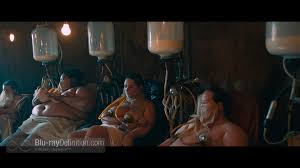
This can be ridiculous or deep, played for laughs or scares. But it speaks to a deep unease felt by mainstream society as much as by my beloved vegan fringe. Hostel is not a terrific movie, and Eli Roth is a mammoth pain in the ass, but it traffics in these tropes, imagining a world of torture-for-hire that resembles nothing so much as a farm constructed out of imperialist urges. Mad Max: Fury Road literalizes the notion of human dairy farms, where subjugated pregnant women are milked like the tortured sows of this world. (“We are not things!” is it’s rallying cry.) The young woman dangling on Texas Chainsaw‘s meathook is both startlingly disturbing and disturbingly familiar. We know what these things mean, even if we can’t say it out loud.

mad max milk farm

These images occur so frequently that we can become immune to their power, dismiss them as tropes from a disreputable genre deployed for cheap scares. But I’d suggest instead that they tap into a sense of discomfort, latent or not, with the real horrors we’re frightened to name. That’s part of horror’s appeal. Coming in from an oblique angle, it can name the horrors we live with and engage in: patriarchy, racism, and essentially instrumental use. There are few better ways to render these unpalatable truths than through images drawing on our treatment of animals.

texas chainsaw two2

Make no mistake: I consider our treatment of nonhuman animals to be nothing short of a real-life horror story. And so I’m open to charges that I’m bending analysis to suit my politics. Maybe so. But watch one of these films and tell me I’m completely wrong.

The nexus of vulnerability, fear, instrumental use, and single-minded fixation of psychopaths forms the center of horror cinema. As it happens, it also defines our real lives.

Or maybe not. Maybe it’s a just a weird coincidence.

August 4, 2016 0 comments
0 FacebookTwitterPinterestEmail
FilmReviews

Men Ruin Everything, including Bad Moms

by rick August 3, 2016
written by rick

Bad Moms is a movie to root for. Starring a hugely talented, nearly all-female cast, aimed squarely at a neglected demographic, and addressing issues that surely resonate with audiences, you want so, so badly for it succeed.

It brings me no great pleasure to report that, apart from a few big laughs, it does not.

Let me say, well in advance: Bad Moms has riotous moments. In particular, perpetual bit player Kathryn Hahn gets a chance to steal every scene she’s in, and in fact all three leads are terrific. Christina Applegate makes the most of a single-note part, too. I have absolutely no doubt that the issues it touches on — including, but not limited to, exasperating over-work in an unpaid economy, ungrateful but still-loved families, judgment from other moms, shitty and self-absorbed bosses two decades younger in a hipster economy, feminine solidarity, the desire to break free and enjoy life, and much more — will resonate with a lot of folks. These are the good parts.

bad moms4

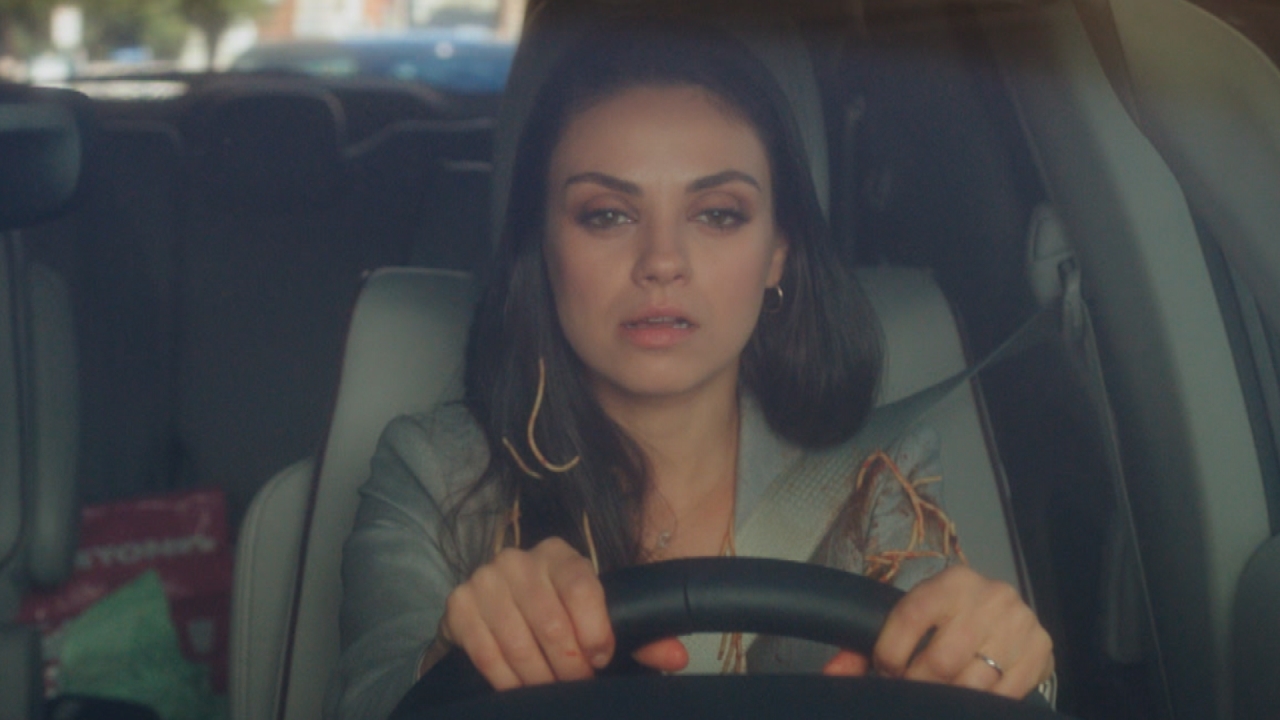
I’ll get to the bad parts in a moment. First, the narrative. In hasty exposition, we meet Amy (the impossibly beautiful Mila Kunis, who for some reason the film has decided is only so-so in the looks department), a do-it-all mom run ragged by her obligations. She works at the kind of coffee company lorded over by do-nothing millenials who’d rather play ping-pong, while simultaneously doing her son’s homework, helping her over-achieving 12-year-old daughter score extra-curriculars for eventual Ivy League enrollment, and picking up after her under-achieving man-child of a husband, who talks like he just strolled out of a parody of stoner comedies. In other words, she is a type.

The narrative crux of Bad Moms hinges on a singularly bad day. Everything goes wrong, and when she dutifully shows up at the remarkably man-free PTA meeting, she’s had enough. Gwendolyn (Applegate) is the fascist mom in town, running the meeting and the school, and Amy tells her she’s out — these women have luxuries Amy does not, and she has better shit to do than screw around with her kids’ lives as a hobby. She’s out.

It’s a scene aimed straight at the many viewers who have felt similarly, a sort of Network-esque cri de couer for moms everywhere. The first but not the last, unfortunately, in a movie that feels nothing’s worth saying if it’s not worth saying twice.

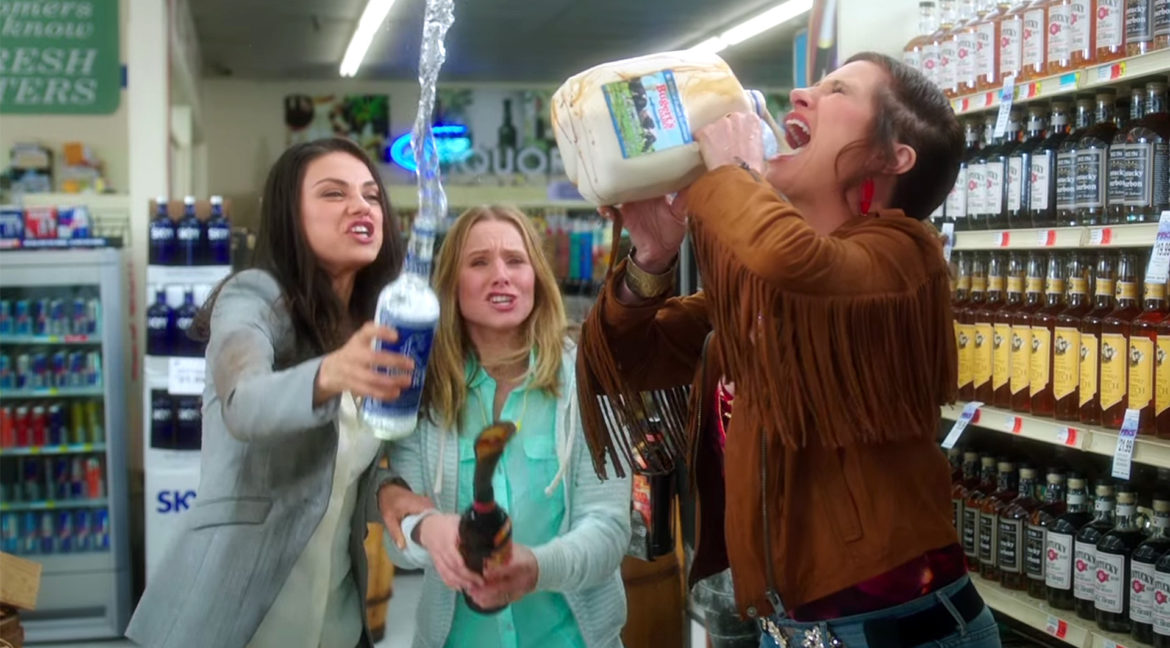
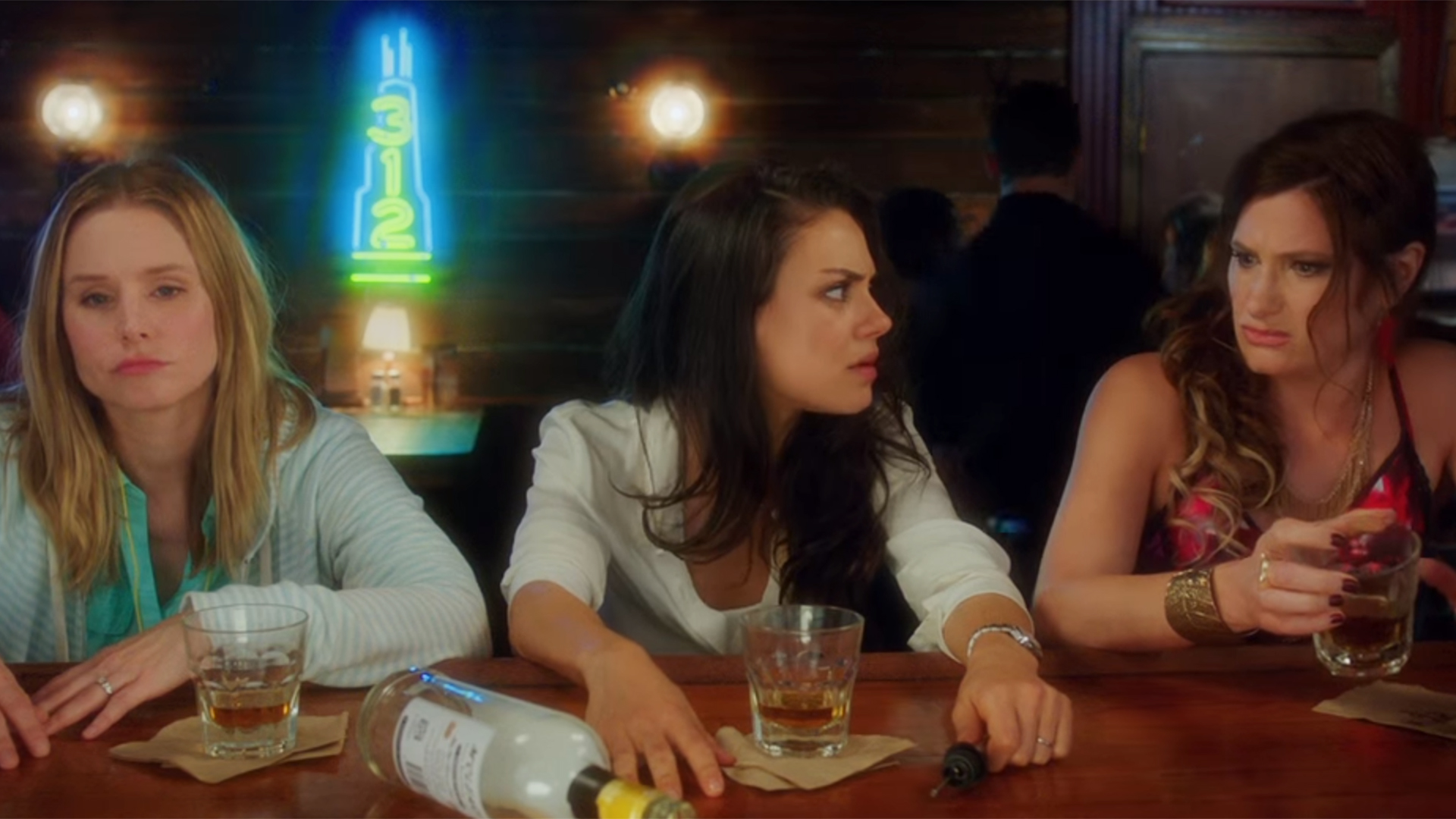
Retiring to a bar for a much-needed drink, Amy meets Carla (Hahn), the Slut, and Kiki (Kristen Bell), the Prude. They form a fast friendship, decide that momship is fucked, and promptly take out their rage on the hapless clerks of a grocery store. The scene is shot in digital slo-mo, what would’ve been called “MTV-ready” a generation ago. It’s fitfully amusing.

Bad Moms trailer

Bad Moms trailer

Through a variety of plot manipulations, their pact to be Bad Moms, own up to the difficulty of child-rearing, and be all real and shit leads Amy to run for PTA president to displace the tyrannical Gwendolyn. (A truly ironic notion, given that this is buying into the exact system that oppresses them, but the film has no time for such nuances.) In between, Amy ditches her shitty husband, starts a romance with remarkably wooden widower Jessie (Jay Hernandez), and generally tries to “own” her life. Carla gets drunk and kisses girls. Kiki tells off her barely-seen stereotype of a disapproving spouse and discovers she enjoys doing nitrous. It all ends with an inspirational speech about the freedom to be imperfect, as Amy comes to helm the PTA, before flying off on a private jet with her erstwhile frenemey.

Liberation!

This is all mixed in with some rather sweet reflections on life balance, a real love of family, and an admirable commitment to gags. I don’t want to be misunderstood here: Bad Moms is often very funny, despite its faults. Kunis, Hahn, and Bell are immensely talented comedic performers.

But the bad parts include sit-com plotting, beat-waiting for a laugh, disinterested direction, overuse of slo-mo gags, and the presumption that the word “cock” is funny in and of itself, when uttered by a lady person. Far worse, the notion that the primary problem with today’s society is how women treat each other, rather than the way society treats women, and the primary solution is a rising self-consciousness that urges women to change their behavior and their relations.

bad moms2

It would be unreasonable to ask a silly, gag-filled comedy to tear down the patriarchy, but one might hope it didn’t traffic in its tropes, in a desperate attempt to prove that Ladies Can Also Be Vulgar(TM). One might also hope it didn’t lamely recycle jokes from other movies, retro-fitted for new demographics in clear cash-grabs.

The blame for this can be laid at the feet of Jon Lucas and Scott Moore, its extremely dude-bro writers and directors. Known primarily for the strikingly similar, gender-reversed Hangover movies, the duo specializes in an uneasy blend of faux-scandalous farce and faux-earnest schmaltz. The second is supposed to balance out the first, but the truth is neither really work. Why anyone thought these two men would deliver an honest, comedic paean to the travails of over-taxed moms is beyond me.

It is extremely telling that the film’s best moment comes during the credits. Instead of spittakes and post-Apatow improv shenanigans, we get the female leads talking with their actual moms. It’s truer than anything that preceded it, and makes you consider what a movie like this would look like if the dudes weren’t there, shaping it.

I am not the target audience for this film, but I really wanted to like it. With all apologies to the many moms who will gladly skip the latest kid favorite or superhero catastrophe to consume Bad Moms and its halting moments of laugh-out-loud goofballery and what passes for truth-telling in a Hollywood that can’t imagine women telling their own stories, I’m guessing it could be much better.

August 3, 2016 0 comments
0 FacebookTwitterPinterestEmail
Shared smoke in Jean Genet Un Chant d'Amour
FilmGreat Movies: The Counter Programming

Jean Genet and Cinema’s Open Fly: Un Chant d’Amour

by rick August 3, 2016
written by rick

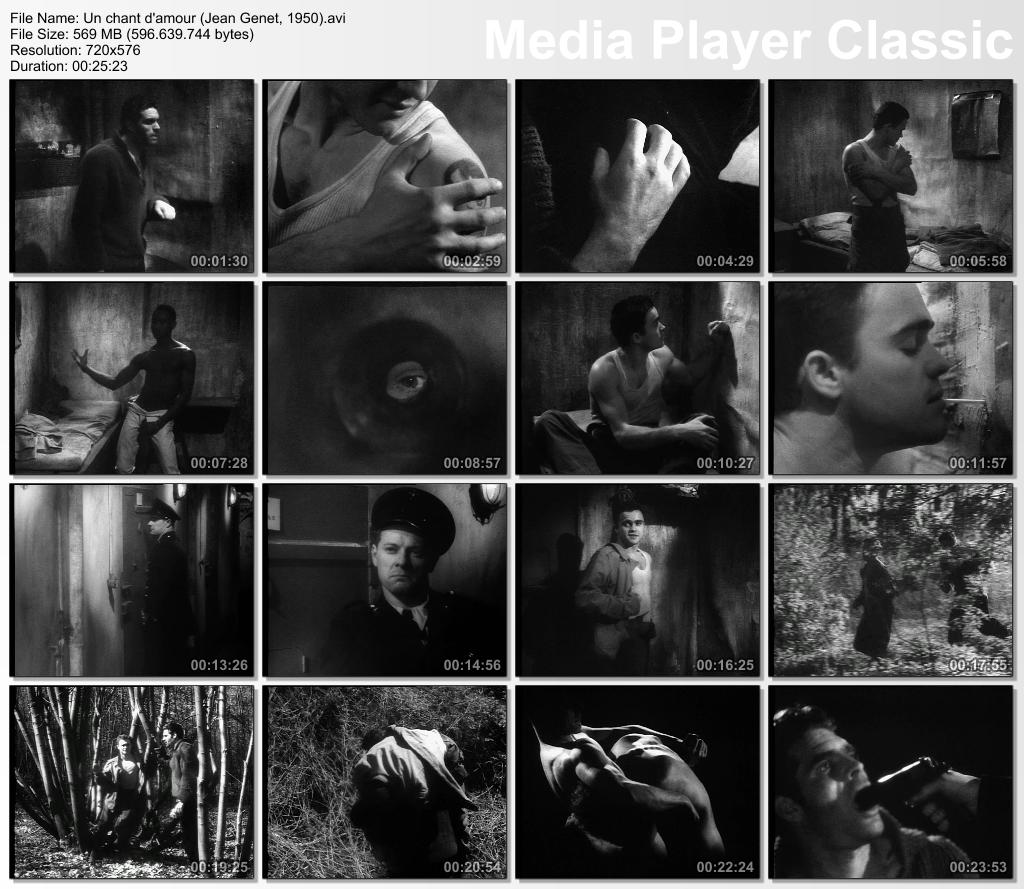
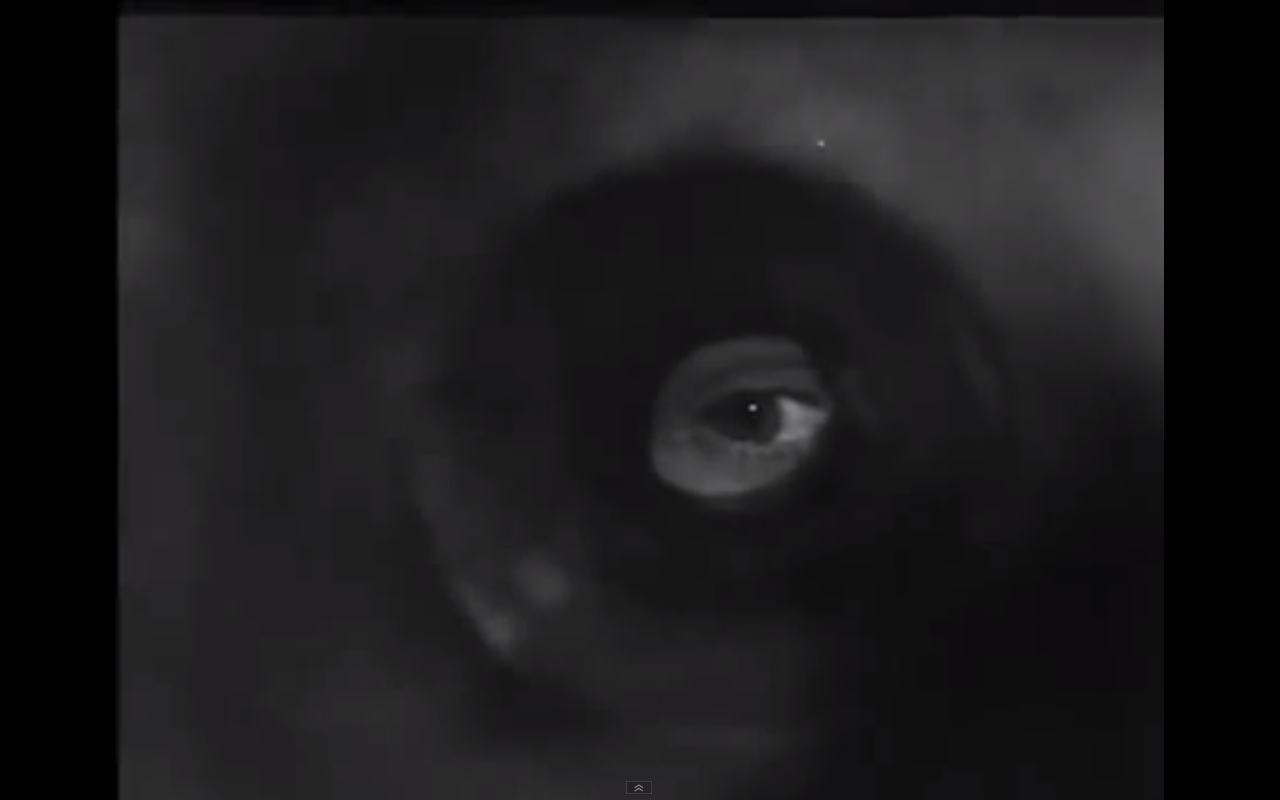
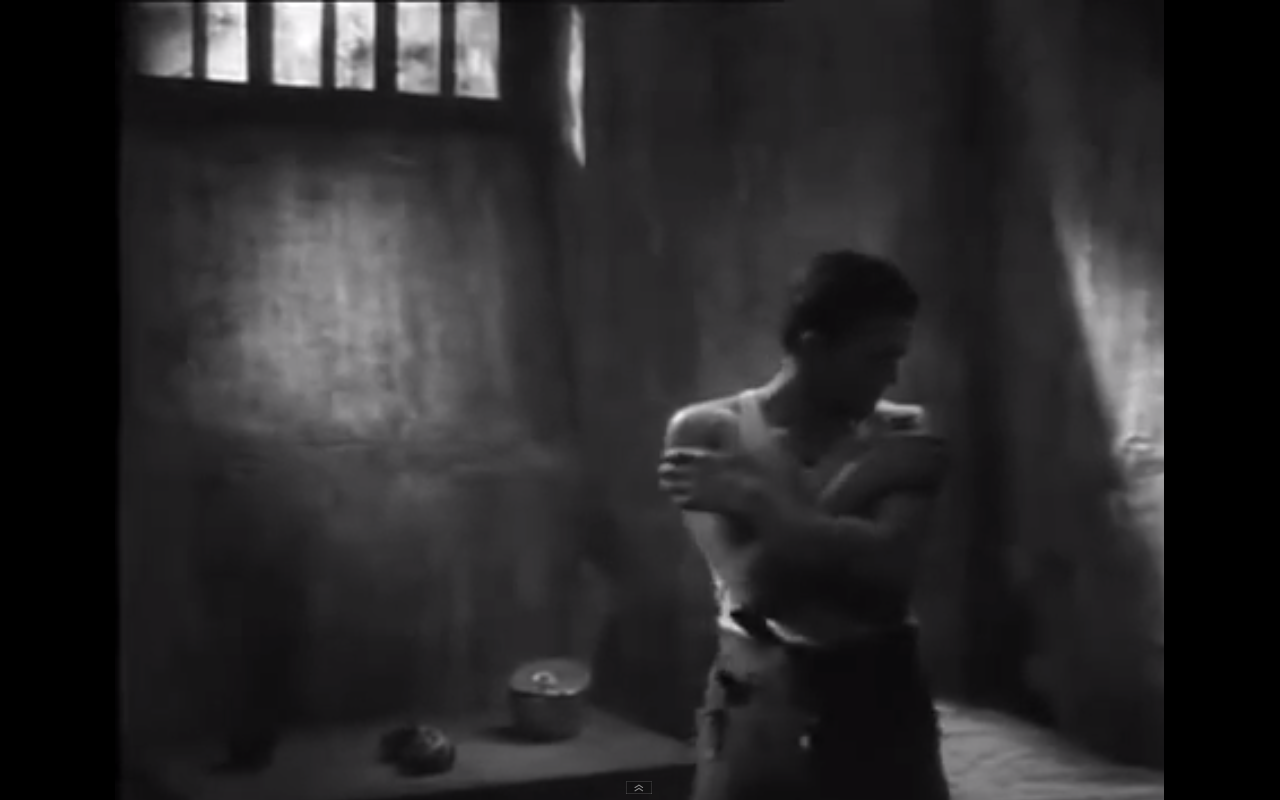
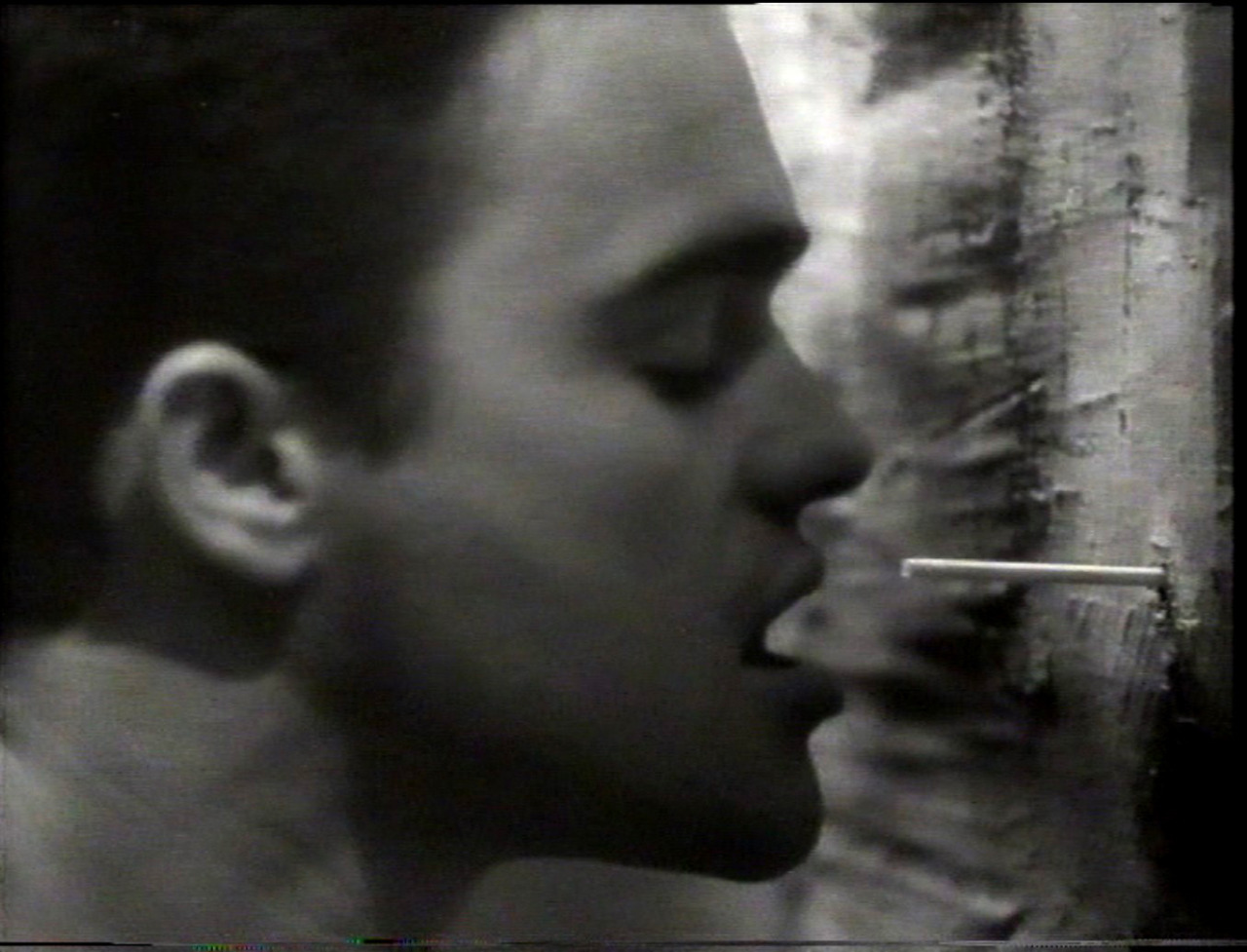
Un Chant d’Amour is Jean Genet’s only film: a 26-minute, black-and-white, imagistic collage and fantasy of ideas. It’s startlingly beautiful, sensuous, and animated by themes — homosexuality, transgression, dominance, voyeurism — that characterize all of the mercurial artist’s work.

The short is also fairly, and hilariously, summed up by Letterboxd user Tyler, as “Almost definitely the best film ever made about gay men masturbating in prison.”

Stills from Jean Genet Un Chant d'Amour

Frequently banned and famously litigated after an unauthorized attempted showing in Berkeley, CA in 1966, Un Chant d’Amour is arguably remembered now more for its notoriety than its content.

Like Cocteau’s “Orphic Trilogy”, Un Chant d’Amour is rooted in both film and dance. (Indeed, Cocteau is rumored to have shot the film itself.) It is, notably, a silent, in an era when that marked a definite aesthetic decision rather than a technical need. It focuses on an imprisoned man’s relationship with the man in his neighboring cell, and, it would seem, the jailer’s jealousy of their relationship.

For Genet, these things merge in a Surrealist fashion — a triad of dominance and submission in flux. It is never clear exactly who is in control: the nature of the relations seem to indicate a subversive reversal of expectation. It is the jailer who is shut out and the prisoners who are linked despite their walls. He eyes them through outsized cell windows, powerless to stop the lust he controls but cannot participate in. His entry into this congress comes via punishment: for instance, the use of his gun to demand allegorical fellatio. Voyeur in Jean Genet Un Chant d'AmourOh, gosh! That’s our Genet!

There are other prisoners — notably a Black man who disrobes and masturbates, apparently embodying yet another variation of desire, gesture, and otherness — but it is these two we are drawn to. At one point, they make a break for the woods, and enjoy each other’s bodies there in ways the cells disallow. Of course, this is impossible, so we know we are in a fantasy realm. It is always up for debate whose fantasy we are experiencing.

Genet blurs the lines so effectively that Un Chant d’Amour becomes a set of reflections on desire rather than a narrative. The idea — clearly conveyed in exquisite photography that is indeed pornographic but so removed from the digital thrusting of our age that the word barely seems to apply — is that all of these images exist at once, in conversation. No one dreams alone. It’s scandalous in a fundamental way. As has often been the case, the censors were not wrong.

Cell and window in Jean Genet Un Chant d'Amour

It’s a simple narrative, but its power lies in its evocations, invocations, and the montage-based contradictions the images introduce. There’s an extreme kind of seduction going on that mirrors that between the figures presented, a looming question of power and presence. Genet may have only made one film (though not for lack of trying), but it’s a heady mix of fear and desire. And, yes, also gay men masturbating.
And who was Jean Genet, the force behind the provocations of Un Chant d’Amour? An excellent question clouded by a lengthy history of self-mythologizing, answerable only through a mind-boggling resume of scandal, oppositional politics, and counter-cultural beatification.

Genet was an orphan, raised in a poor village in remote France by foster parents who eventually shipped him off to a penal colony for several years. Dishonorably thrown out of the Foreign Legion for extreme gayness, he reconstituted himself as a thief and prostitute, spending a fair amount of time in jail here and there.
His writing brought him to the attention of Cocteau, who he idolized and imitated, along with Picasso, Sartre (who wrote an entire book, “Saint Genet”, in his honor), and later Derrida. After May ’68, Genet became immersed in revolutionary politics, an outspoken proponent and ally of the Black Panthers in the U.S., the Baader-Meinhoff faction in Germany, and the Palestinian liberationists (he was in Beirut at the time of Sabra and Shatila, an experience that seems to have affected him deeply). He was the titular inspiration for David Bowie’s “The Jean Genie” and Glenn Milstead’s Divine in John Waters’ works, who took the name from one of Genet’s novels. Genet died an icon, controversial to the end, of liberationist struggles and groundbreakingly frank depictions of queerness. His legacy is long and weird, contradictory and subject to the kinds of routine re-inventions he himself seemed to treasure.
Mouth and straw in Jean Genet Un Chant d'Amour

It’s tempting to apply some of these tendencies to Un Chant d’Amour, to decode it by way of the auteur. Throughout his art, he would return to images of wooded areas, as he does in the film. Do these evoke a nostalgia for his own provincial youth, re-routed through long-simmering desire? The peepholes and jailers could surely relate to his own imprisonments, punitive spaces where he ironically also discovered a truer sense of himself and his sexuality. The holy, sexy criminals that haunt the film, the mixture of pleasure and pain, the sensuality invented on the margins and in opposition … we could keep going.
Is Un Chant d’Amour, as the Alameda County Superior Court ruled in Landau v. Fording, simply “cheap pornography calculated to promote homosexuality, perversion and morbid sex practices”? Perhaps (though it certainly doesn’t look cheap). But I prefer to watch it as a fully realized expression in and of itself, a film in love with bodies, images, and the grace of the silents its creator grew up watching.

Pornography, to quote another famous case, is something one knows when one sees it. For Genet, obsessed with the eye in the doorway and bodies on display, seeing is always the point. And cinema, focused on gesture and figure and shadow, is ideal for this. As he wrote, with a characteristic eye toward scandal, “In effect the cinema is basically immodest. Let us use this faculty to enlarge gestures. The cinema can open a fly and search out its secrets…”

Un Chant d’Amour is just that – an opening of a fly. It’s deeply immodest and entrancing. It earned its notoriety.

August 3, 2016 0 comments
0 FacebookTwitterPinterestEmail
CommentaryFilmGreat Movie Project

Buster Keaton, The General, and The Lost Cause

by rick August 1, 2016
written by rick

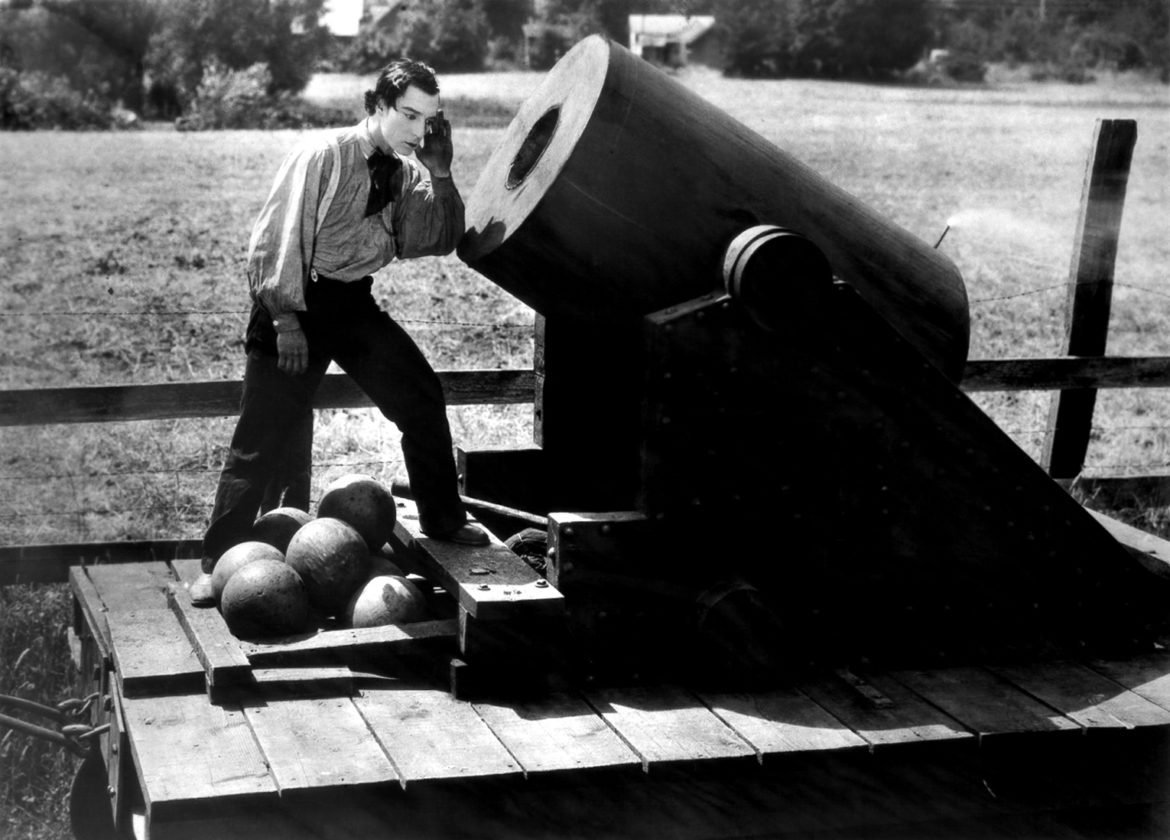
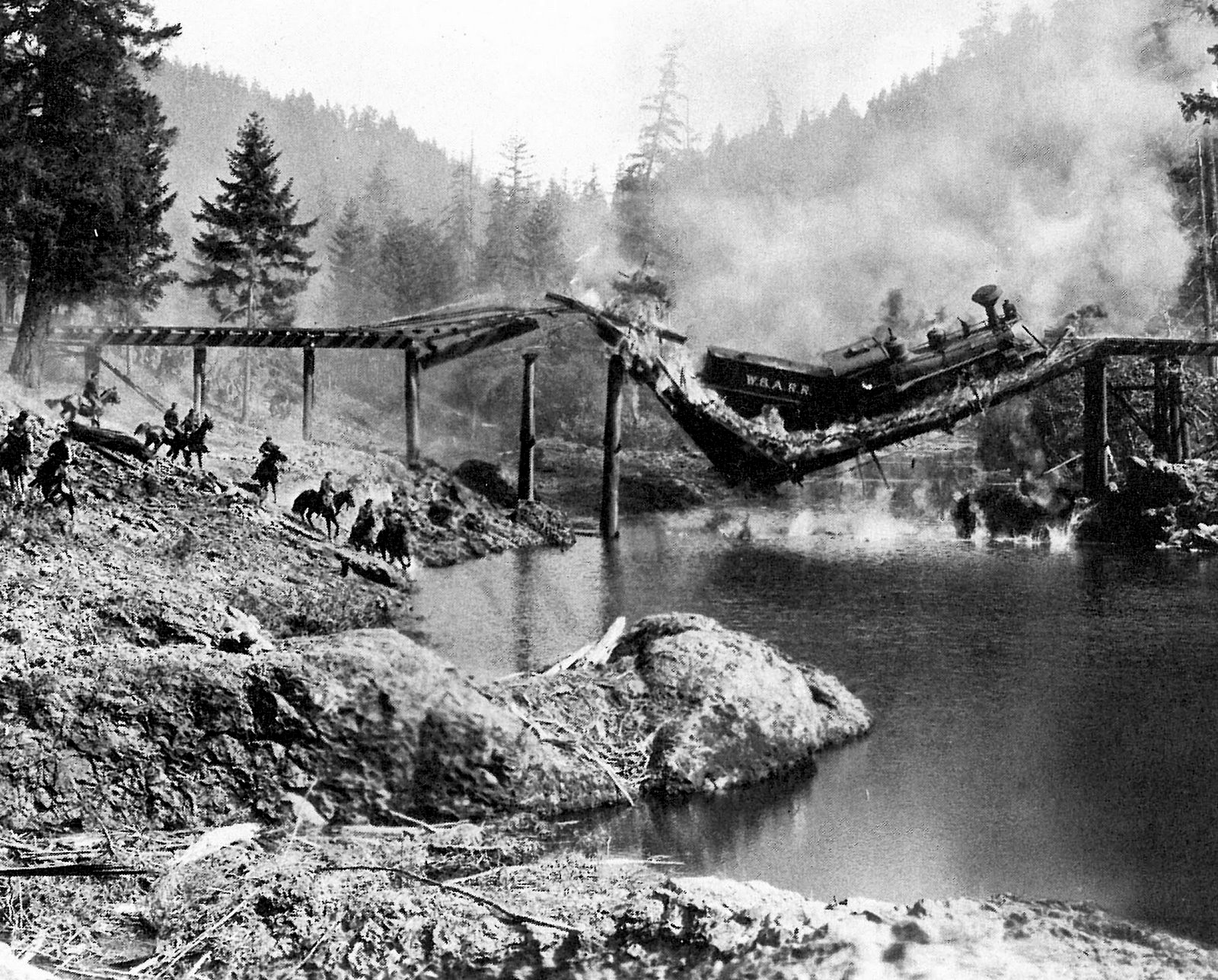
The collapsing house that miraculously spares Buster Keaton in Steamboat Bill, Jr. might be the most famous image in the great comedian’s body of work, but the collapsing bridge in The General remains (reputedly) the most expensive single stunt in all of silent film. The General was Keaton’s favorite of his own films, and, 90 years after barely breaking even at the box office, it routinely finds itself on lists of the greatest in the history of cinema.

general4

It’s not hard to see why, on either score. Audiences didn’t feel they got what they presumably paid for — the wacky hijinks, surrealist comedy, and approachable existentialism of Keaton’s earlier films, unencumbered by narrative drama.

For later viewers, The General has come to represent the culmination of Keaton’s sensibility, the lasp gasp of his independent work before his catastrophic alliance with MGM and steady slide into alcoholism, curious obsession with solitaire, and eventual anonymity in an industry he helped build, only recuperated by legions of cinephiles a generation later.

The General rests on an uncomfortable narrative, but one typical of the times. Based on a real-life incident, popularly retold in an 1863 novel titled The Great Locomotive Chase, in which Union soldiers, led by a civilian, staged a daring raid to steal a Confederate train. Keaton reversed the emphasis: he plays Johnnie Gray, a train engineer who finds himself trying to recover that train from the conspirators. (In real life, those Northerners were hanged: unsurprisingly, The General doesn’t touch on this pesky detail.)

As so often, the narrative is rooted in the Keaton character’s failed attempts to impress a woman who he hopes to marry. When war breaks out — located here, as throughout Lost Cause cinema, with the firing on Fort Sumter, not in the legacy of the slave trade — he rushes to enlist, but it’s decided he’s more valuable on the homefront as an engineer. Despondently, he slinks away, leading his belle and her family to consider him a coward instead.

Almost immediately, he gets a chance to prove his mettle. Union soldiers steal his train, The General, with his love on board, and we set off on a feature-length chase film.

general1

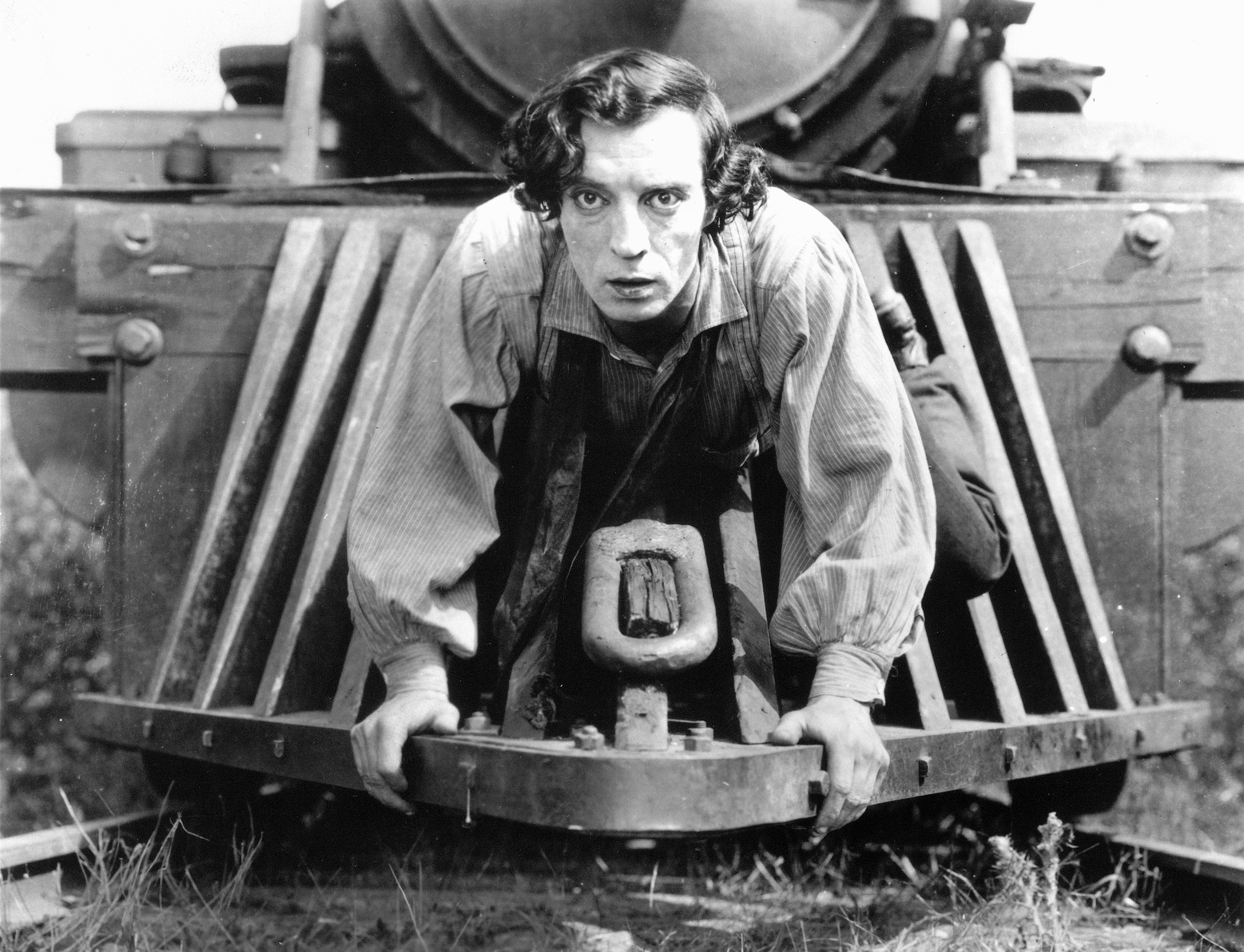
Cleverly rooted in Keaton chasing their train and, in the film’s second half, their train chasing him, it provides ample opportunity for characteristically outlandish stunts — running across train tops, removing planks of wood from the track as he sits on the front, comic setpieces that rely on his obliviousness to everything but what is directly in front of his view.

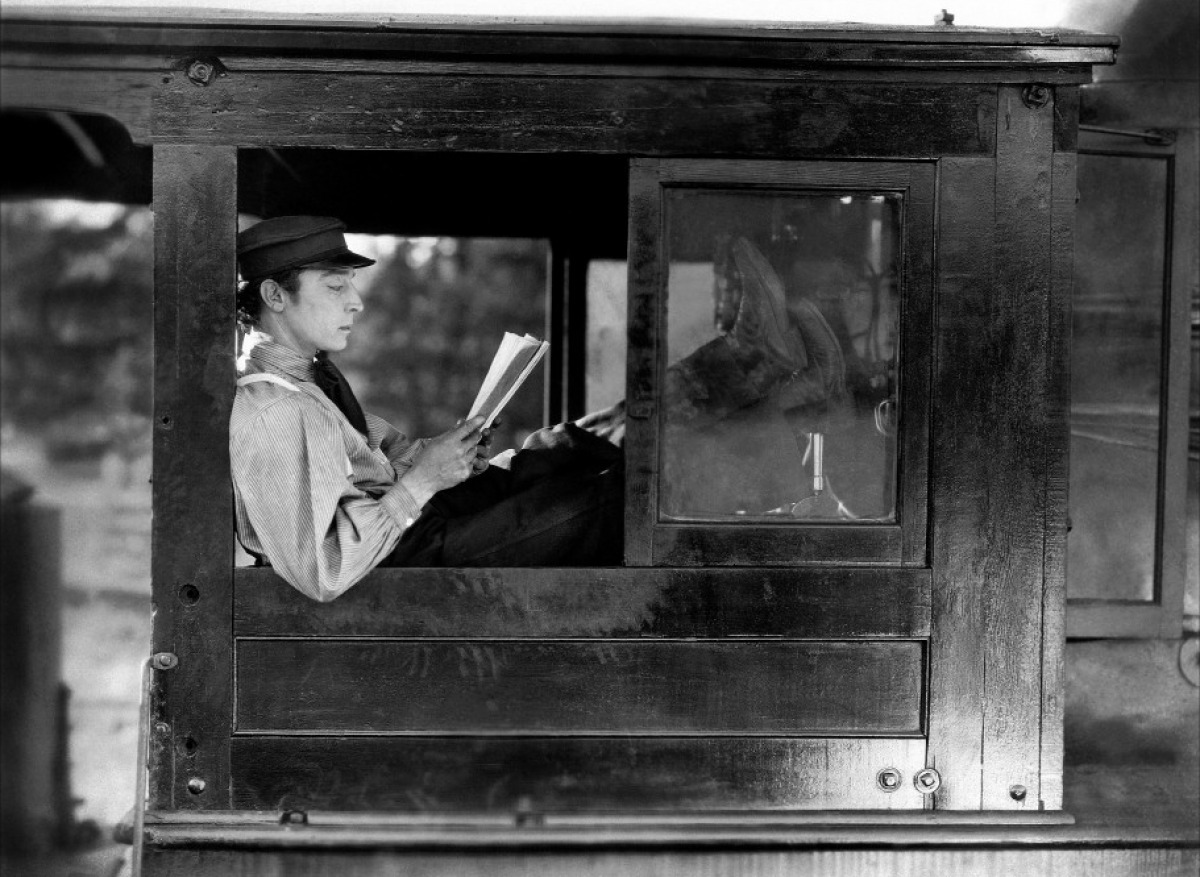
As a director (along with Clyde Bruckman), Keaton had a genius not just for the justly lauded, and absurdly dangerous, physical comedy, but for framing images and timing. We always know more than he does — it’s a comic gift to an audience, who laugh at the absurdity of his earnest attempts to affect a world that seems to have it in for him.

But, of course, he always pulls through, barely. Keaton’s filmic world is constructed of chance, tragic and comic in equal measure. Cinematically, it’s in the long-shots he loved so much (“Close-ups are too jarring on the screen, and this type of cut can stop an audience from laughing,” he said) — we’re watching under the aspect of eternity, and if it’s funny, it’s funny to the exact degree that we recognize both his character’s vulnerability, the looming danger, and the complete happenstance that defines his survival. His deadpan expression is the look of a man trying to do the right thing in a world gone mad; the stiller the face, the greater the idiocy, the bigger the laugh.

general5

Taking place in Marietta, Georgia but filmed in Cottage Grove, Oregon, The General is several steps removed from its source material, which is deployed far more for the physical possibilities it offers than anything resembling the political. But all art is political: certainly in a story of the Civil War, based on a true narrative of Union exploits rerouted to a Southern perspective because Keaton explicitly believed “It’s awful hard to make heroes out of the Yankees.”

His reasoning, as explained at length by Eileen Jones, is less absurd than it might sound. Jones traced the history of Southern Lost Cause narratives on film, and found them the overwhelming majority of cinematic treatments. Underdogs play better in narrative, for one thing (and in comedy, Keaton would say). It’s a weird rerouting of today’s notion of “punching up” — only in this case, the idea is you ought not to beat up on an already defeated seat of white supremacy. That’s not, I imagine, something that makes a lot of sense to modern considerations.

But there are larger considerations — a longing for an agrarian past that never was, animated by current concerns; a desire for platitudes about reconciliation rather than conflict, and the primacy of the family or love relationship in the process; a desperate desire to code or sublimate actual white supremacy under cover of a vague humanism or anti-war paean to Brotherhood; so forth. This tendency began with Birth of a Nation and is carried through all the odes to Southern nobility, all the way to the Western. As Jones writes:

Agrarian utopias can take root in a sparsely settled wilderness, which also raises the possibility of growing townships, new industry, railroads, and all the trappings of modernity as either a threat or a promise, or both. The honor code of the Southern gentleman can be absorbed into and somewhat disguised by the character of the free-ranging Western hero whose past is often obscured. A cross-section of regional types from North and South can mix together in barrooms and on stagecoaches. And “the Negro problem” is nicely avoided out West, where slavery never spread. Or rather, it’s transformed into a common enemy that white Northerners and Southerners can fight together as “the Indian problem.”

These are animating concerns that haunt even The General, a film that, it should be said, doesn’t have an overtly racist bone in its body. (Keaton’s The Paleface? Yeesh, maybe not so much.) But the point isn’t to “absolve” art: it’s simply to recognize the context in which it arises. This is, after all, the heroic story of a Southern man who blows up a bridge to save a slave-owning community from attacks by marauders who want, among other things, to end slavery. Played for laughs. That doesn’t sit all that comfortably, and every critique of The General that ignores it in favor of a focus on the mastery of physical comedy is, at least in part, willfully obscuring a crucial issue that haunts both society and our representations of it to this day, in ways that demonstrably kill.

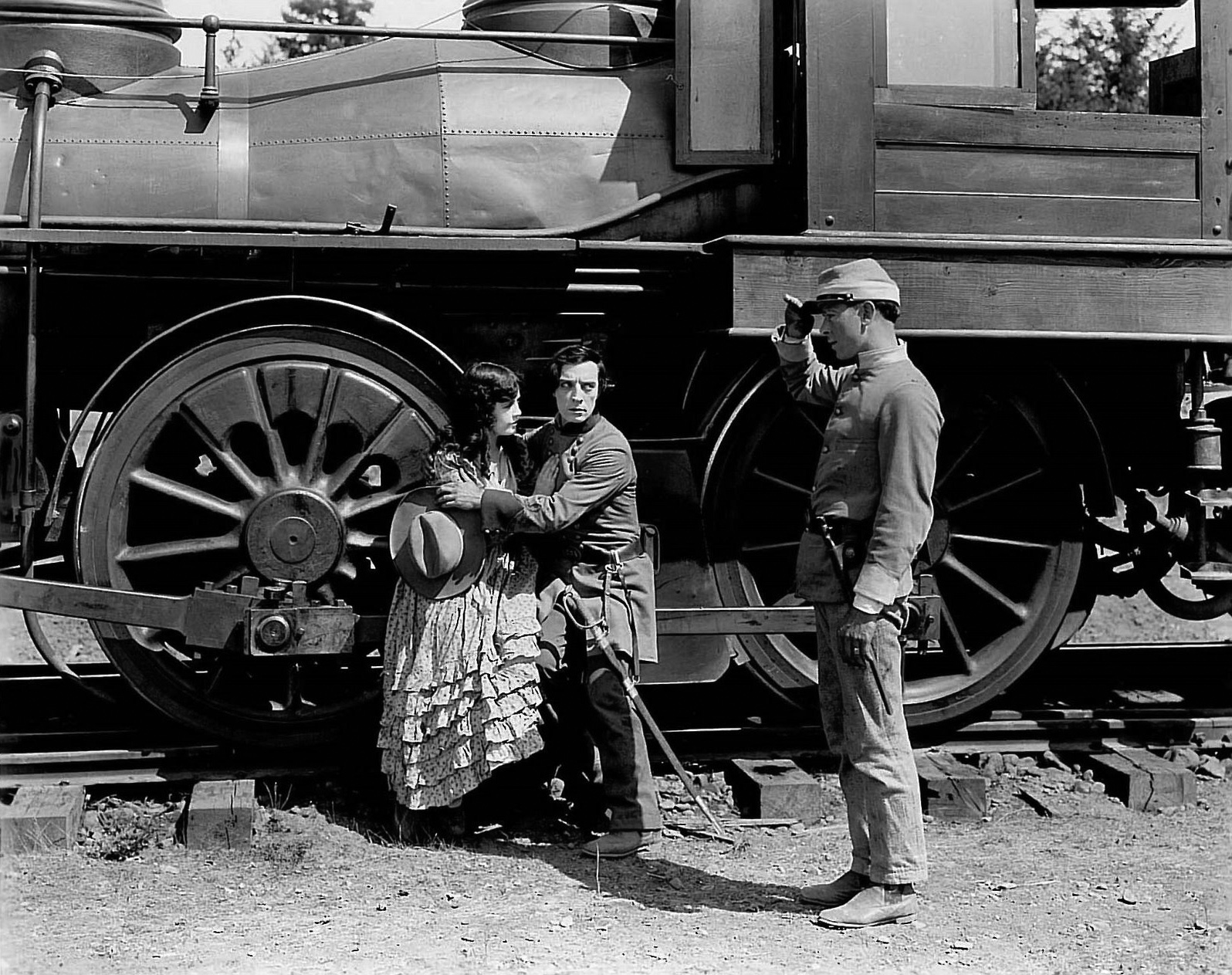
So Buster Keaton’s a murderer? Of course not. He was a product of his time, with a shrewd understanding of what would play on screen and, in my opinion, the greatest comic presence in the history of American film. Or at least the one I relate to the most. There’s a deep loneliness that underwrites the “Stoneface” character, a sense of ludicrous imperturbability in the face of constant catastrophe that surely kept audiences at arms-length in a way that sabotaged greater success in his own time, along the lines of a Chaplin or a Lloyd. It is deeper and richer than either of those genius’ legacies. The moment when Union soldiers run one direction off-frame, and then the actors switch to Confederate uniforms and run back the other way is a facile notion that erases difference, a great gag that echoes the film’s larger structure, and an absurd vision of war. It’s all those things.

The point is not to castigate art from a moral distance, but to understand how and why it was made, why it worked or didn’t work then, and the context in which it exists today. The General never succumbs to the worst impulses of the time, but it’s still both a deeply uncomfortable narrative and a work of inimitable genius. It’s emblematic of a narrative impulse that underwrites American film, and it’s a showcase for a superbly athletic Vaudevillian with philosophical leanings.

general6

It’s a masterpiece, and masterpieces need unpacking. Even the silliest and the most accomplished. The General outlives many of its contemporaries precisely because it is so rich, hilarious, spellbinding, and inherently troubling. Buster Keaton was one of the best we ever had, and it would be a disservice to him to pretend otherwise.

Favorite Ebert quote:

Today I look at Keaton’s works more often than any other silent films. They have such a graceful perfection, such a meshing of story, character and episode, that they unfold like music. Although they’re filled with gags, you can rarely catch Keaton writing a scene around a gag; instead, the laughs emerge from the situation; he was “the still, small, suffering center of the hysteria of slapstick,” wrote the critic Karen Jaehne. And in an age when special effects were in their infancy, and a “stunt” often meant actually doing on the screen what you appeared to be doing, Keaton was ambitious and fearless. He had a house collapse around him. He swung over a waterfall to rescue a woman he loved. He fell from trains. And always he did it in character, playing a solemn and thoughtful man who trusts in his own ingenuity.

August 1, 2016 0 comments
1 FacebookTwitterPinterestEmail
Film

New On Netflix: No Country For Old Men

by rick July 29, 2016
written by rick

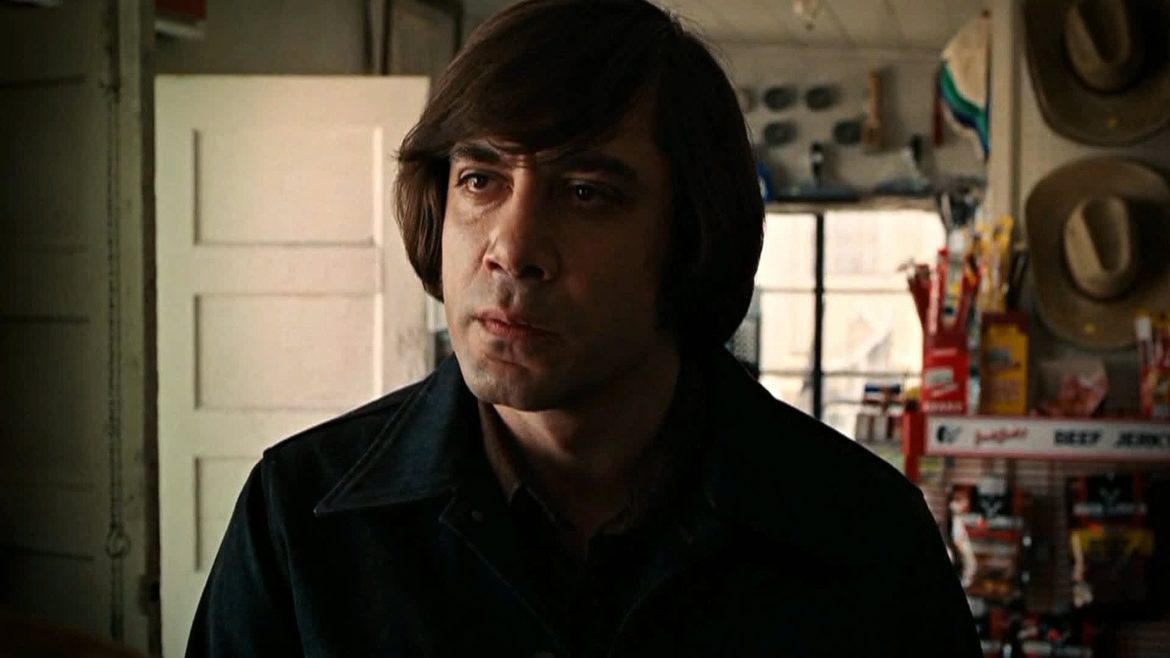
The Coen Brothers’ filmography tends to swing wildly from lighthearted, goofball larks to existential nightmare tours of wounded psyches and uneasy human relations in a fallen world. (A good argument can, and has, been made that the two modes are in direct conversation.) 2007’s acclaimed No Country For Old Men, new to Netflix in August, is firmly in the second category.

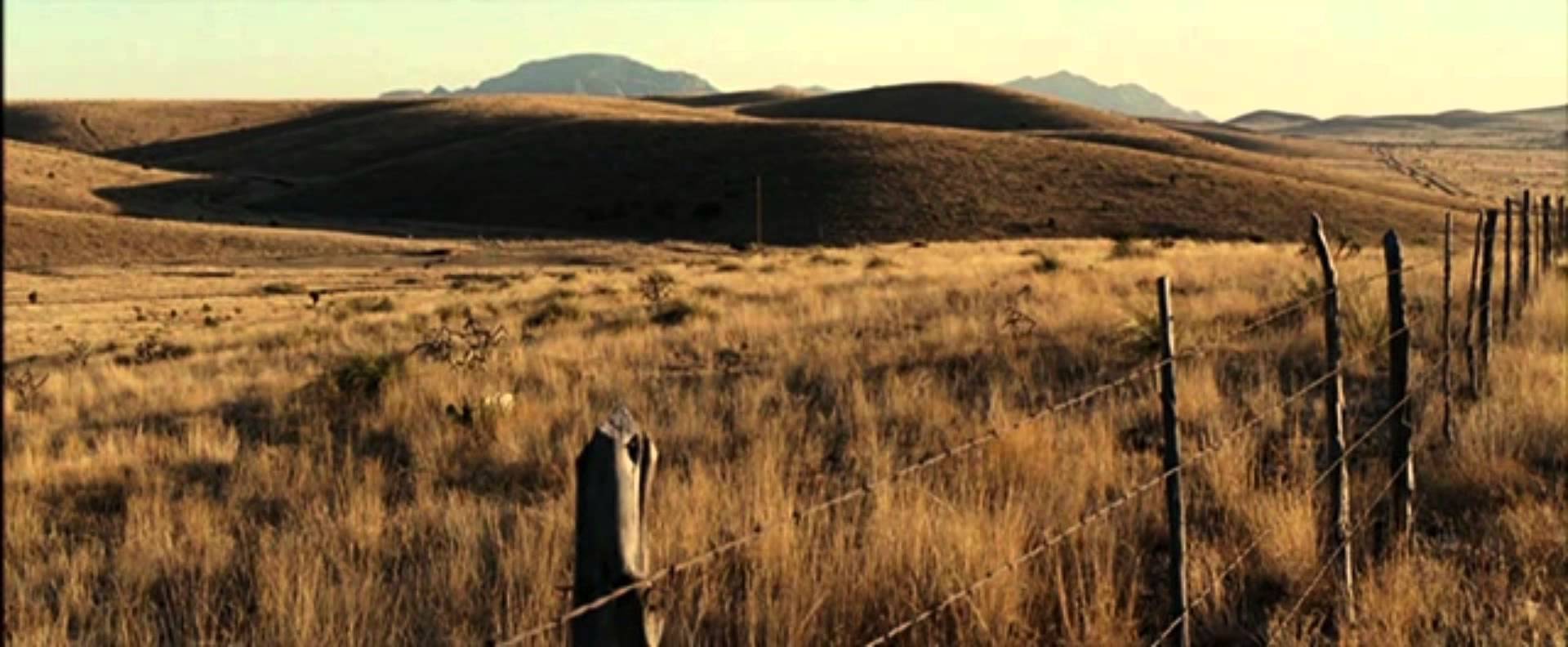
Based on Cormac McCarthy’s typically brooding novel, and featuring three gripping central performances (from Tommy Lee Jones, Josh Brolin, and Javier Bardem), No Country For Old Men tells a grim, Western tale of bad choices and incomprehensible evil. Six years prior to sending folksinger Llewyn Davis on “a stroll through the outermost circle of hell”, the Coens dove directly to its center.

no country2

Like nearly all their films, No Country rolls out with a sense of inevitability and inscrutability, as things compound in ways no one seems able to control. Bardem’s now-iconic villain — if villian is even the word for personified, unknowable menace — haunts the countryside, a figure of lurking doom. The film’s closing moment, sometimes disparaged for opacity but more often recognized as the masterstroke it is, explains nothing. There is nothing to explain here. We’re in the dark heart and soul of the compromised West, and answers will not be forthcoming.

If you haven’t seen No Country For Old Men, get to it. It’s available on Netflix on August 11th.

Quick Links

defending your life

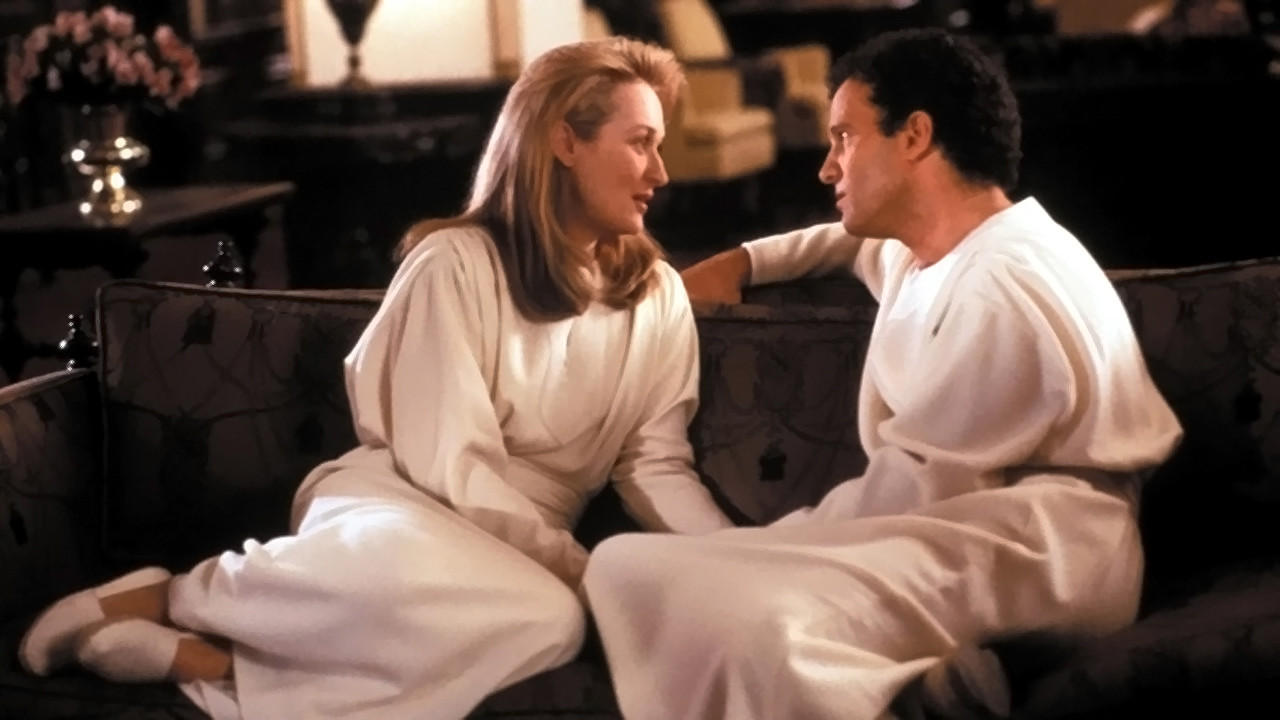
Defending Your Life: Earlier this month, cinephiles rejoiced at the news that all of Albert Brooks’ films are also now available for streaming. Defending Your Life is a favorite, pairing Brooks and Meryl Streep in an after-life fantasia where you finally have to explain yourself, as images of your best and worst moments are presented to a celestial jury. Like all of Brooks’ work, it’s exceedingly smart, relatable, and very funny.

dale and tucker

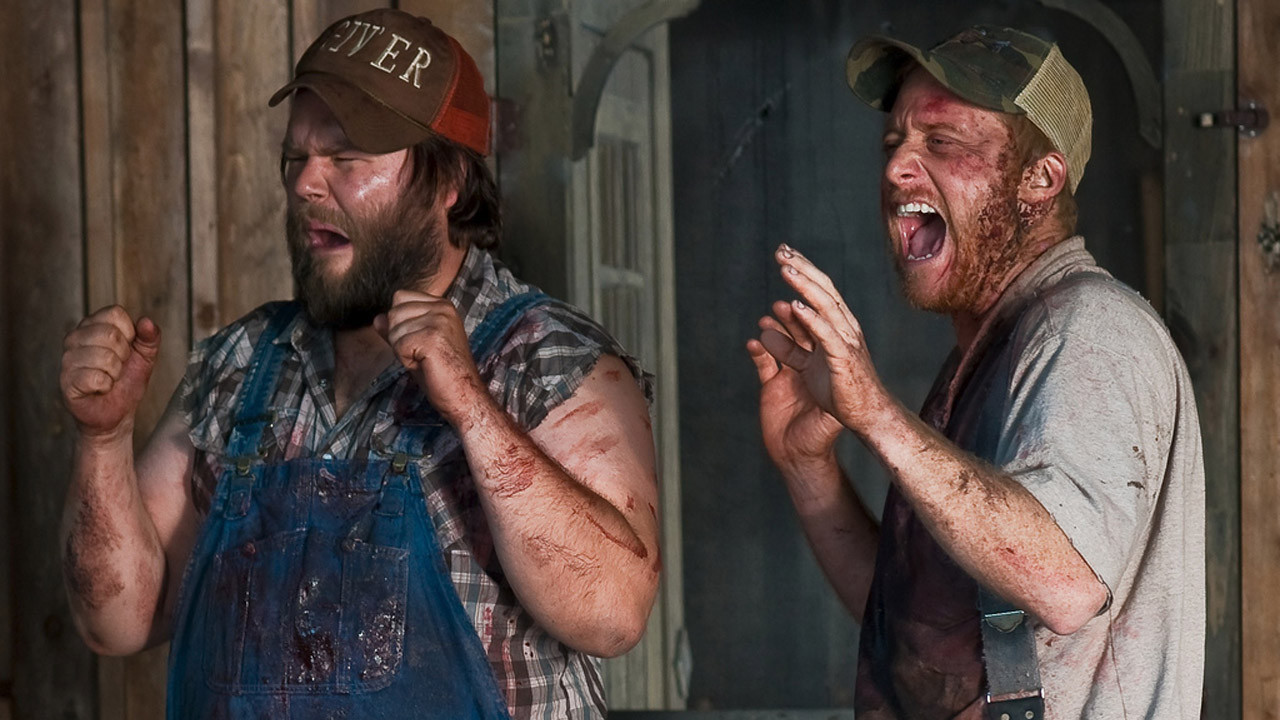
Dale and Tucker vs. Evil: Do you like your horror movies laced with irony and silly shenanigans? Before Joss Whedon and Drew Goddard were hilariously sending up the genre in The Cabin in the Woods, Eli Craig’s Dale and Tucker vs. Evil had a huge amount of fun with horror cliches and conventions, as its two doofus, redneck protagonists can’t stop getting misindentified as slasher film villains. It’s bloody and clever.

i'm still here

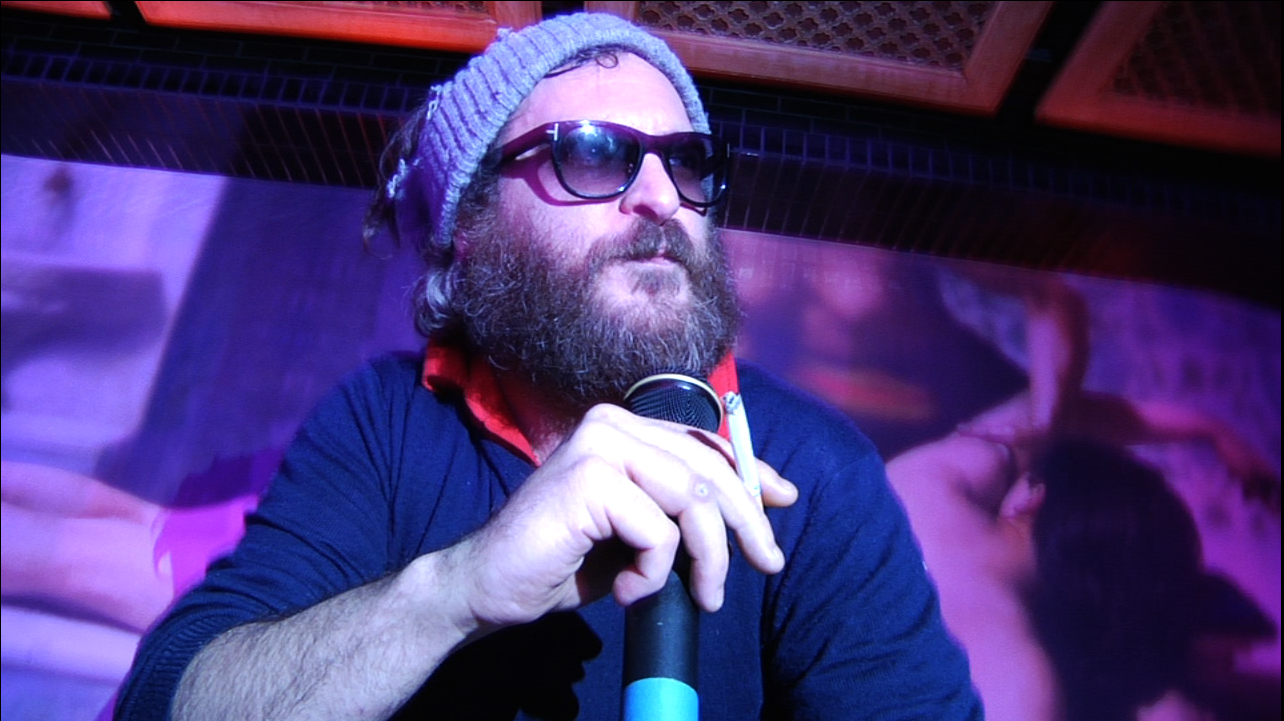
I’m Still Here: Widely received as a disastrous career misstep and/or an insufferable prank that distracted audience attention from James Gray’s excellent Two Lovers, which he was supposed to be promoting at the time, Joaquin Phoenix’s Casey Affleck-directed meta-documentary about his decision to “quit” movies and become a terrible rapper is an incendiary gut-punch, excoriating fame and fandom in equal measure. It’s decidedly weird, but much smarter than it got credit for. (Except, of course, from Nathan Rabin, who knows what’s up.)

sunset blvd

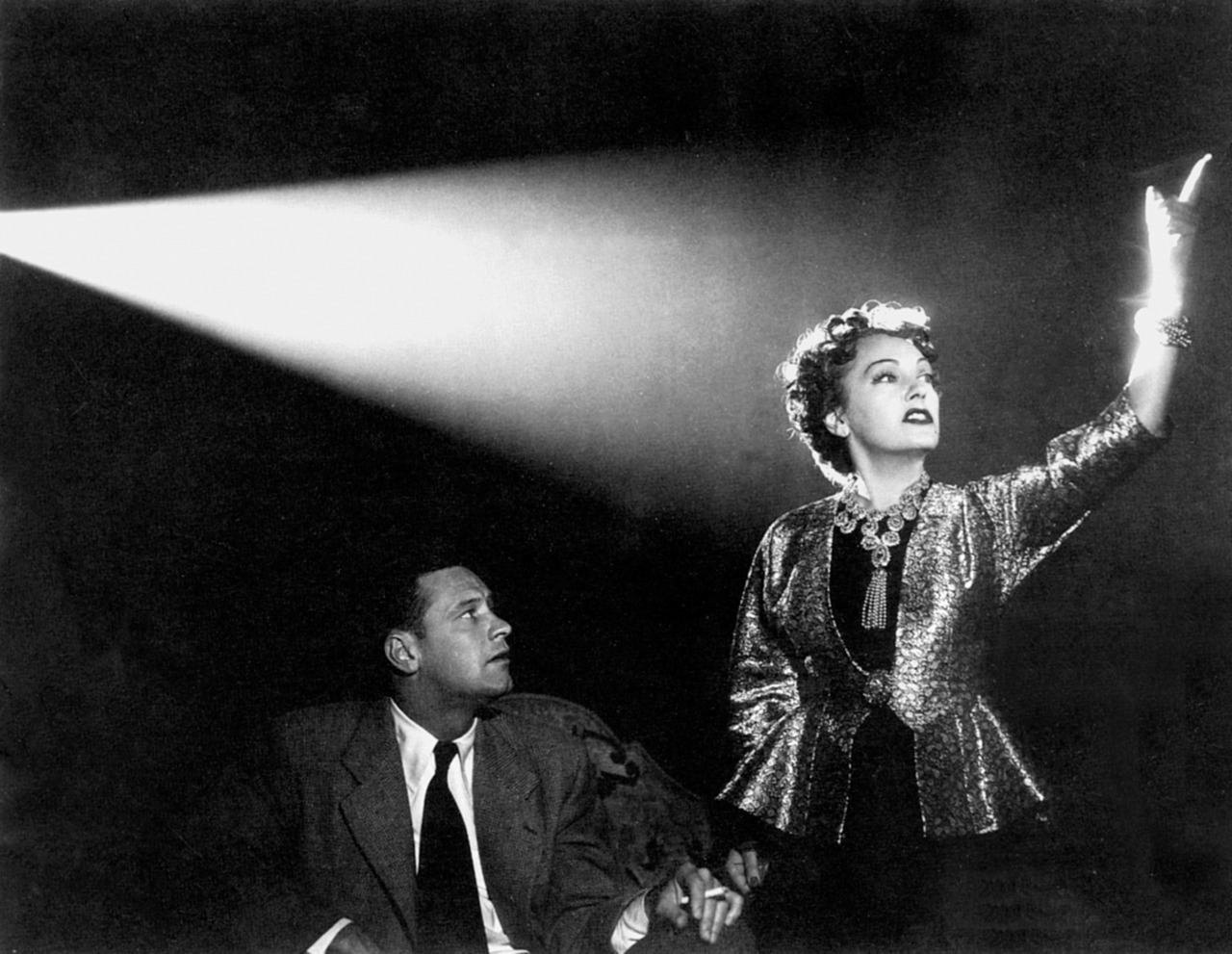
Sunset Blvd.: Over the course of one of the greatest and most wide-ranging careers in film, Billy Wilder could get pretty dark. But this narrative of obsession, delusion, and the eternal lure of the image, might be the darkest entry in his illustrious catalog. As Norma Desmond, Gloria Swanson created an instantly classic depiction of madness and aching need that still disturbs to this day, creating a bridge from the silents to the surreal provocations of David Lynch. It’s a gorgeous and troubling dive into presentation, femininity, and the movies.

July 29, 2016 0 comments
0 FacebookTwitterPinterestEmail
Film

Cars, kids, and Kiarostami: Taste of Cherry

by rick July 26, 2016
written by rick

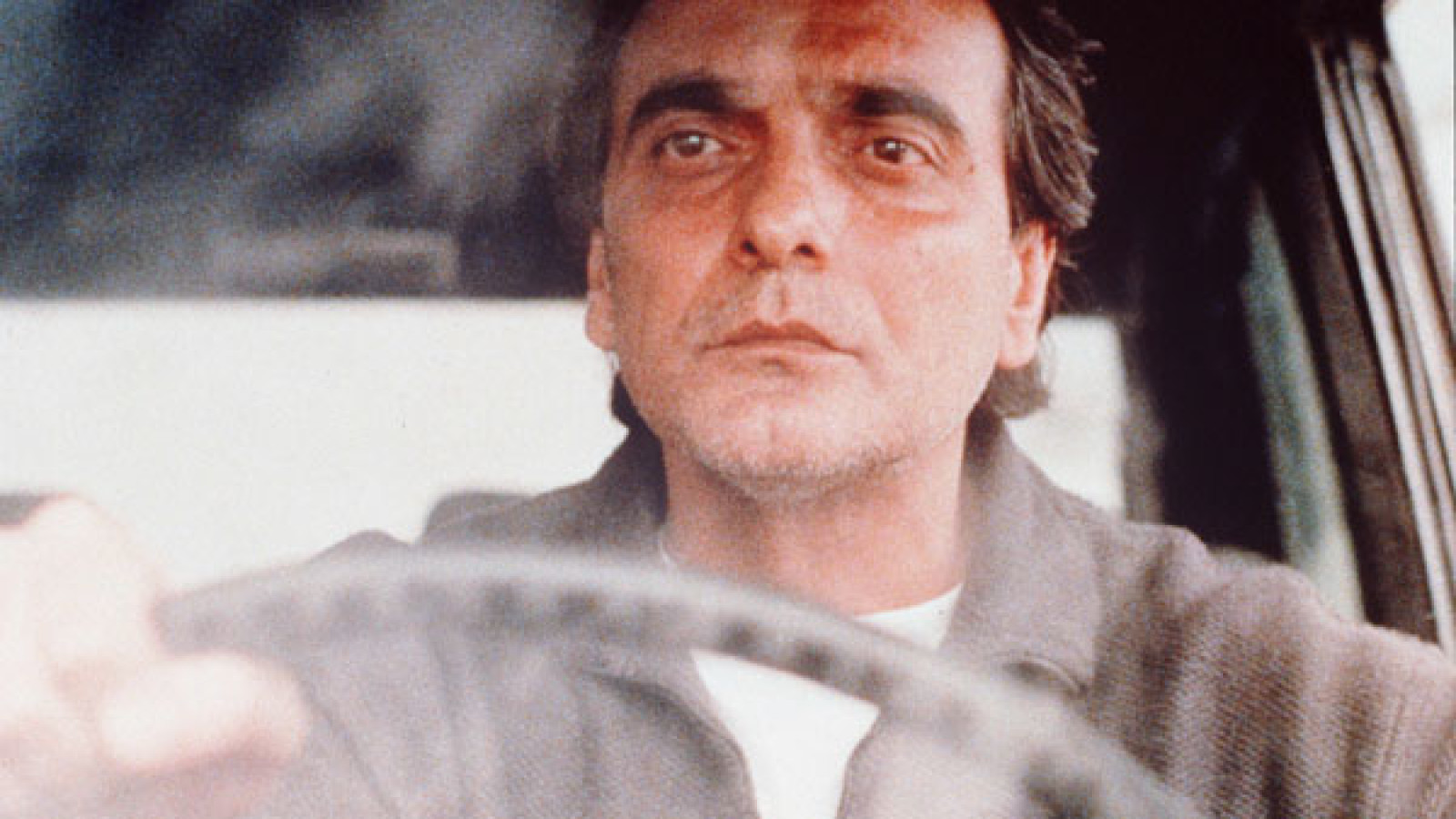
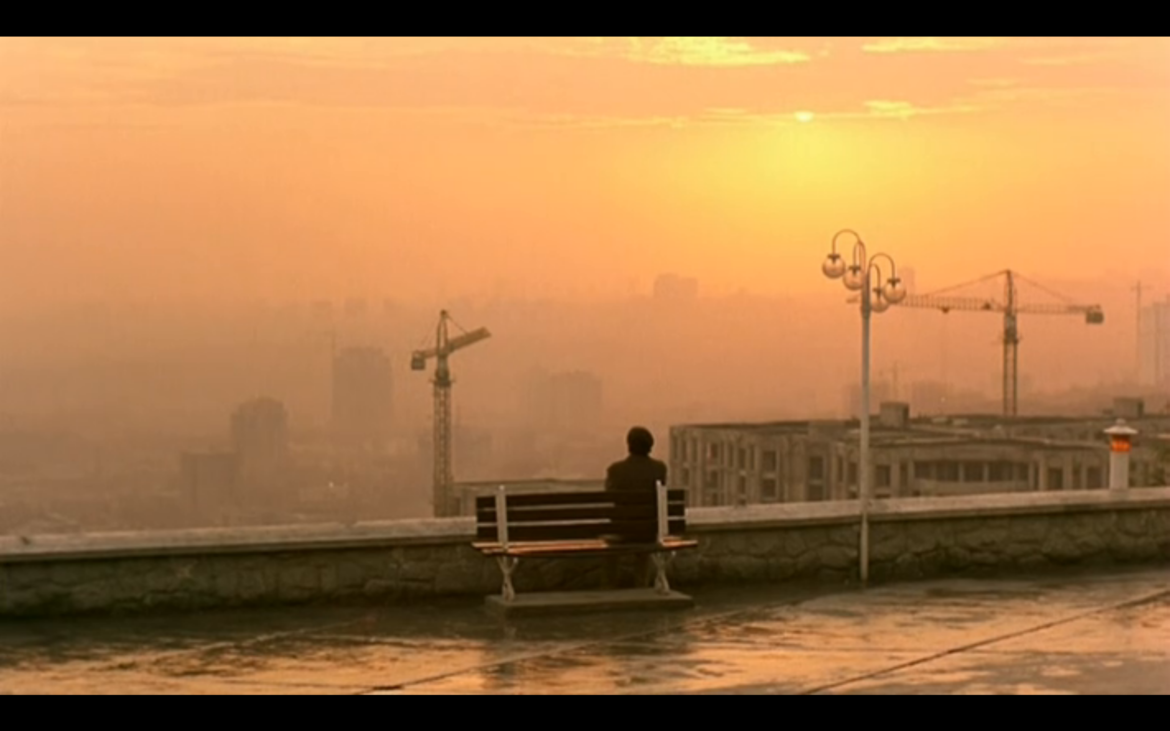
In Taste of Cherry, Abbas Kiarostami’s 1997 Palme d’Or winner at Cannes, we almost never stop moving. It is a film about a man whose life has crept to a halt, filmed in ceaseless motion.

There is almost no way to talk about Taste of Cherry, about its most resonant aspects, without what our generation has termed “spoilers.” There are spoilers here.

taste of cherry1

A spoiler-free narrative summary, almost entirely beside the point: Mr. Baadi is introduced behind a wheel, looking for someone, in a desolate hellscape of excavation outside Tehran, to help him with something. He drives his car around and meets people. Most are creeped out; others are unseen. His mission is opaque. Eventually, a Turkish guy, a taxidermist, can help. But he dislikes the idea. The film ends with a radical reversal of expectation. It’s heartbreaking and a spectacularly puzzling end to a narrative. It’s a narrative that devours itself.

Did that make things clear? No, it did not. But this is not an essay about the childish, festishistic demand for narrative innocence implied by “spoiler alerts”. Read on for details.

Mr. Baadi (Homayoun Ershadi) wants to die. We don’t know this right away, but we suspect it. The laborers who he passes in his car assume he wants either workers or sex. He wants neither.

He wants to be buried under a tree after he kills himself. Everyone he proposes this to is frightened. A shy, drafted soldier, a Kurd, flees as soon as hears. An Afghan security guard, standing watch alone over a region decimated by excavation trucks, won’t hear of it — he can’t leave his post, for one, and he has an omelette on the stove. A cleric-in-training agrees to take a ride in his care, but proceeds to lecture him about sin. Baadi is unmoved.

taste of cherry3

Only an unseen man, Mr. Bagheri (Abdolrahman Bagheri: note the name), takes him up on his offer. Baadi is offering substantial payment — he will take sleeping pills, you will make sure he’s dead, and you will throw some dirt on him. Not a bad day’s work. Bagheri accepts, to support a disabled daughter.

It’s a ripe narrative. And it’s not really what Taste of Cherry is about.

This is a film, so typical of Kiarostami, about the failures of communication, about the things that separate us from each other, and about the lure of images. Over and over again, obstructions block our view, or our hearing. “What was that?” is probably the most common refrain of the characters. We can’t see. We can’t hear. We can’t feel. We’re locked in, trying to claw our way out. Our notions of freedom are captive to structures we can’t control.

“What are you doing?” Badii asks some kids, rifling through the refuse. “We’re playing cars!” one responds, leaning out a window.

taste of cherry4

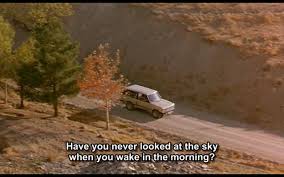
In one of the best scenes in Taste of Cherry, Badii stands in front of an excavation site, covererd in dirt while still standing. Someone asks him why he’s there, and he appears like he doesn’t know, or can’t explain. Bagheri later tells him a heartwarming story of how he once, too, considered suicide, but was rescued by the deliciousness of mulberries and the laughter of children. It seems a world far removed from the one we’re viewing. Here, kids play on slopes made of dust. The only cherry tree is the one Badii dreams of being buried beneath.

In its closing moments, Taste of Cherry revels in Kiarostami’s obsessions: artifice, illusion, the notion that images belong to those who find them. A blinking Badii, buried alive, witnesses a lightning storm, and we fade to black. It’s an arthouse ending, a pessimistic vision. “What happened?” you will ask. This is how arthouse films work. It is up to your discretion.

But not here. Instead, we cut from the stately film we’ve been witnessing to hyper-saturated video. Everything is blue and green. Ershadi emerges into the frame, a dead man from the grave. He lights a cigarette, and then walks up to Kiarostami himself, who is framing a scene. Someone yells out, “This is a sound take!” The soldiers, previously viewed only from a distance, are goofing off in the foreground.

What does it mean? Well, for one thing, that it’s a movie. That we cannot expect movies to replicate real life, that there is always intervention.

But in a larger sense, I think Taste of Cherry is about the ways in which we construct meaning. People try desperately to find them, and Kiarostami is acutely aware of this. But he’s also unwilling to be a liar. And that unwillingness to lie entails a desire to undermine the very images that construct truth.

It’s a hugely ambitious project, and it was his whole life’s work. We want the story to end, we want the man to choose one way or the other. We hope he chooses life, but we can’t be sure. Not until the final frame.

taste of cherry5

The final frame turns in on itself, and we discover we were watching a film. For Kiarostami, “the story” is about how stories don’t end. When that video comes on, and the dead man rises, we are aware that cinema is a lie, a metaphor. But, like Pynchon wrote, it’s a lie that aims at truth.

I’m tempted to call Taste of Cherry my favorite film of all time. But I just saw it for the first time; that would be hyperbolic. Kiarostami would giggle quietly at me, from behind sunglasses.

But it’s one of the truer things you will ever see. It knows exactly how we relate to images, and then proceeds to scramble the code.

It’s gorgeous and perfect, and, having only just discovered him, too late, I miss him a lot.

July 26, 2016 0 comments
0 FacebookTwitterPinterestEmail
FilmGreat Movies: The Counter Programming

Gentle narrative, odd coda: Hometown of the Heart

by rick July 19, 2016
written by rick

Stories of childhood occupy a central place in our collective storytelling legacies. Like any art form, cinema has no shortage of entries: Truffaut’s The 400 Blows, Kiarostami’s Where Is The Friend’s Home?, Erice’s The Spirit of the Beehive, Spielberg’s E.T., and probably whatever you just watched. Yong-Kyu Yoon’s gentle 1949 Hometown of the Heart (Maeum ui kohyang) is a classic of the genre.

Why is this so? Perhaps because we – artists, readers, writers, filmmakers, filmgoers – all were children once. Perhaps because the progress from childhood to adulthood provides ample narrative space for a range of recognizable tensions and transitions, in the traditional Bildung fashion. Maybe, Occam’s Razor-style, we just generally think kids are pretty cute.

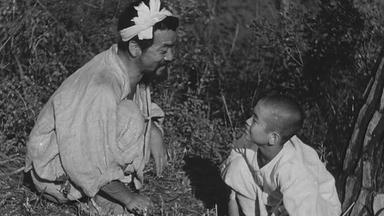
Min Yu, who plays Hometown of the Heart’s protagonist Do-Seong, sure is. He’s an orphaned child, with a mother in Seoul he longs for and a father he never knew. He is being raised in a Buddhist temple, an environment defined by rigor and routine he finds stultifying. His orphan status make him a pariah to the village kids, who mock his enforced monkishness as they frolic in nature. Do-Seong dreams of a mother’s return, of city life in glamorous Seoul, or, if nothing else, the freedom to play in the woods.

Director Yong-Kyu Yoon approaches the story with stately grace, lingering on small moments. Comparisons to Ozu are apt. Pillow shots are absent – Yoon prefers twilight landscapes and movement, compared to that Japanese master’s insistence on low-angle domesticity – but the sensibility seems close. Both eschew dramatic fireworks for simple, empathetic images that manage to emphasize both internality and the relations between humans in the world.

Do-Seong in A Hometown in HeartIn Hometown of the Heart, Do-Seong’s dreams come true, but in complicated fashion. He discovers a new maternal figure in Eun-hee Choi, the great Korean actress in an early role as a widow who lost her own son. Their connection is immediate and obvious – a child without a mother and a mother without a son. The arrival of his prodigal birth mother complicates matters. This is a story of family, invented, lost and found. It’s also a story of a longing for rootedness, for other people and places to complete you.

In a revelatory essay, Dafna Zur contrasts the film with Homeless Angels (Jip oepnneun cheonsa), made a decade earlier and representing a different approach. Whereas war-era Korea imagined a childhood progress from a state of wildness to one of productivity, Hometown of the Heart nearly fetishizes the release both the forest and the city could provide – a new freedom characterized by escape from structure and stricture. In this and so many other ways, the Bildung is rooted in and animated by concerns of time and place. When we tell the story of a child, we tell stories about ourselves.

Hometown of the Heart has several odd codas. The film was rejected by South Korean censors for its apparent political bent (in fairness, it feels quite leftist in orientation), and its director eventually moved to the North instead. Its star, Choi Eun-Hee, went on to fame and glamour, but was kidnapped half a century later by North Korean agents in her older age and amid a declining career. (North Korea denies this, but North Korea denies a lot of things.)

hometown3

It’s a bizarre story, and one it’s hard to believe hasn’t been made into a movie: in order to create a desperately desired homegrown film industry, Kim Jung-Il and his family spearheaded abductions of filmmakers and stars, holding them in bondage and forcing the creation of cinema. A few classics were created through this coercive, nightmare process. Like The Act of Killing, it stands out as a testament to the desire and horror that images generate, our desire to exist and to replicate the things we adore.

Hometown of the Heart is a world removed from these – a small story of a boy who misses his mom. But every story exists in a context. This is a fascinating and troubling one.

July 19, 2016 0 comments
0 FacebookTwitterPinterestEmail
Great Movie Project

Battleship Potemkin, Propaganda in Action

by rick July 18, 2016
written by rick

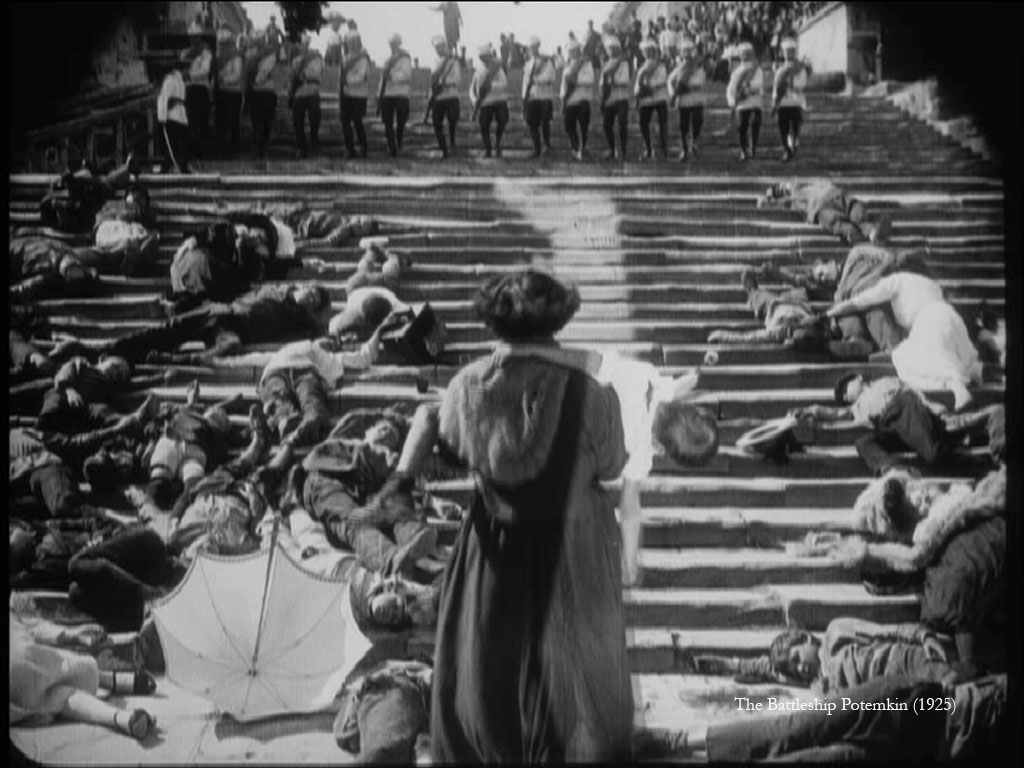
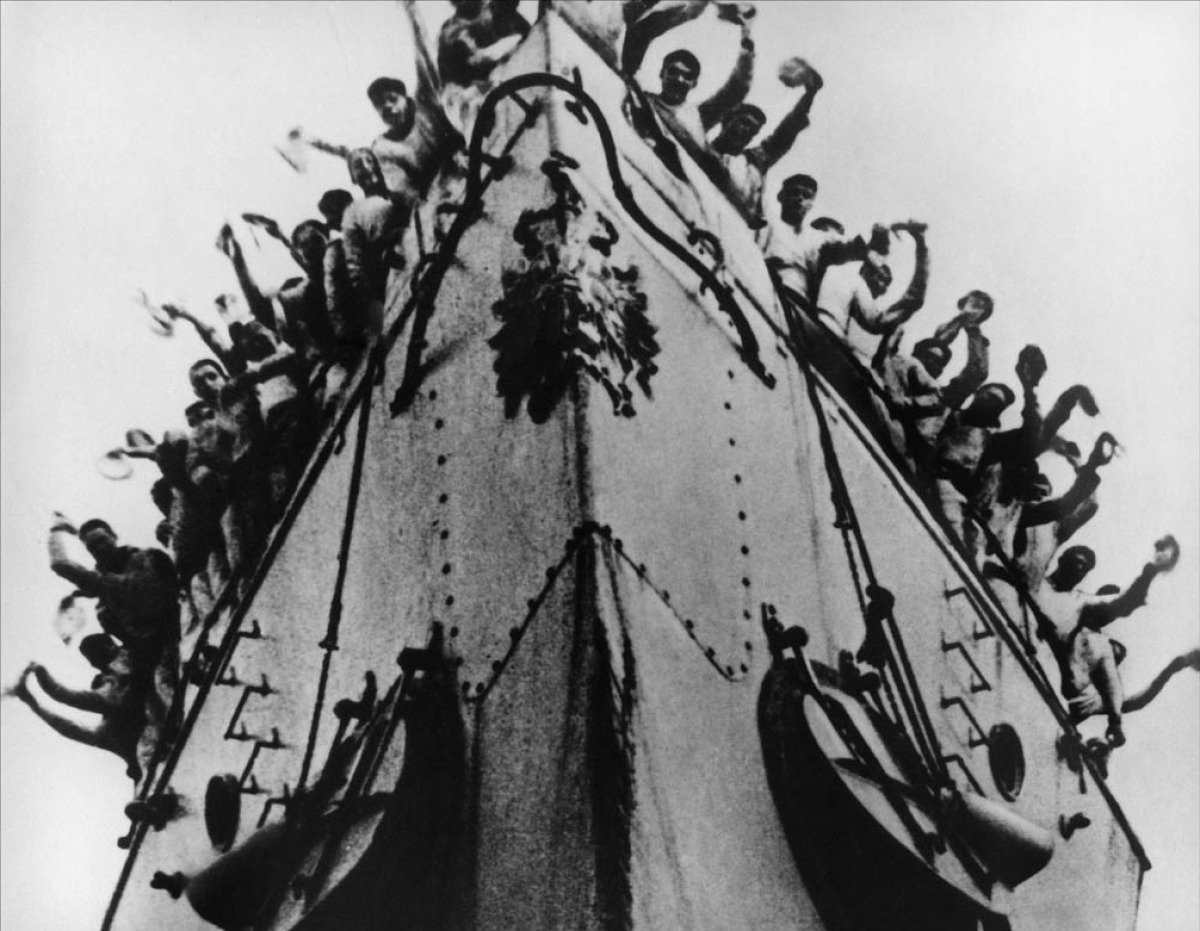
Battleship Potemkin and Sergei Eisenstein, its visionary creator and Soviet film theorist, loom so large over the history of cinema that there seems little left to say at this point. Treatises, books, films, encyclopedia entries have all been produced on the film’s tale of mutinous sailors and the triumph of the proletariat over murderous Czarist forces.

Potemkin burst onto the scene in 1925, poorly received in the new Soviet state where audiences were just beginning to enjoy the imported narratives from abroad but, ironically, widely championed for its formal daring in the very places producing those narratives. There are many pieces of criticism heralding its innovations, and many are very good.

If a little exhausting. Nearly any discussion of montage in a given film now will feel obliged to trot out the term “Eisensteinian”, with or without explanation and whether or not it’s actually germane to the topic.

potemkin9

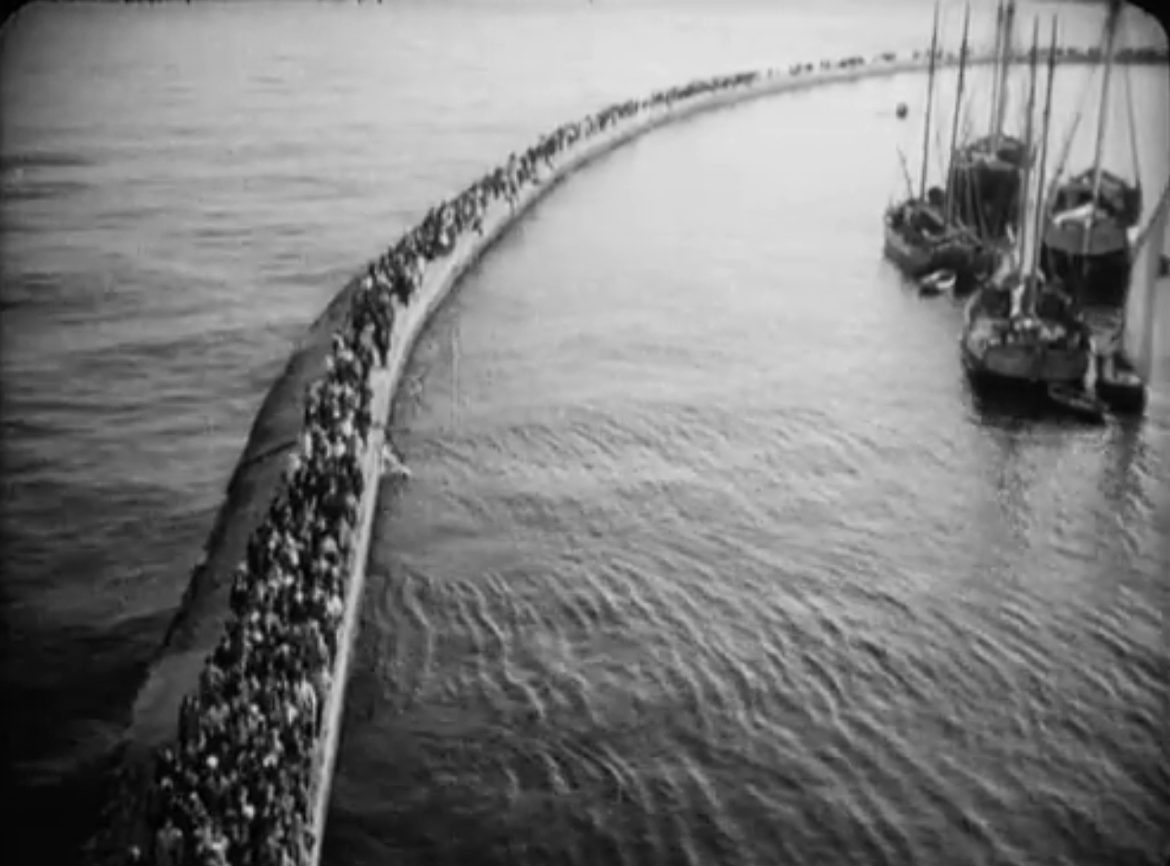
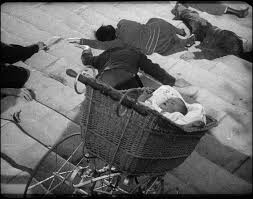
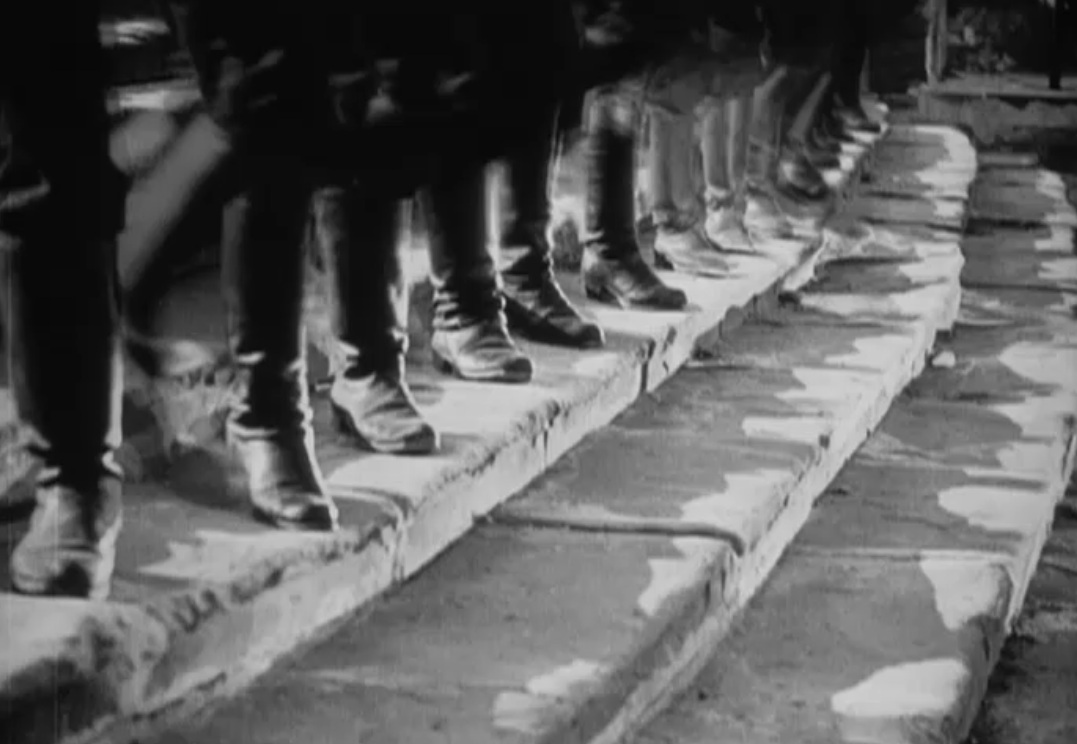
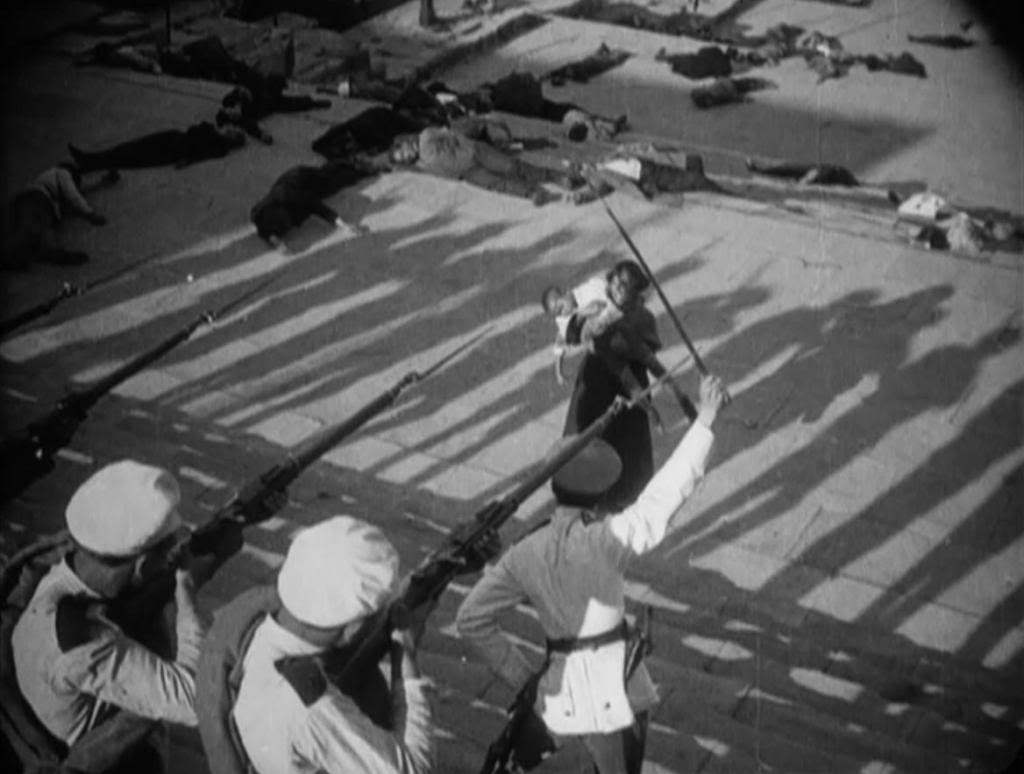
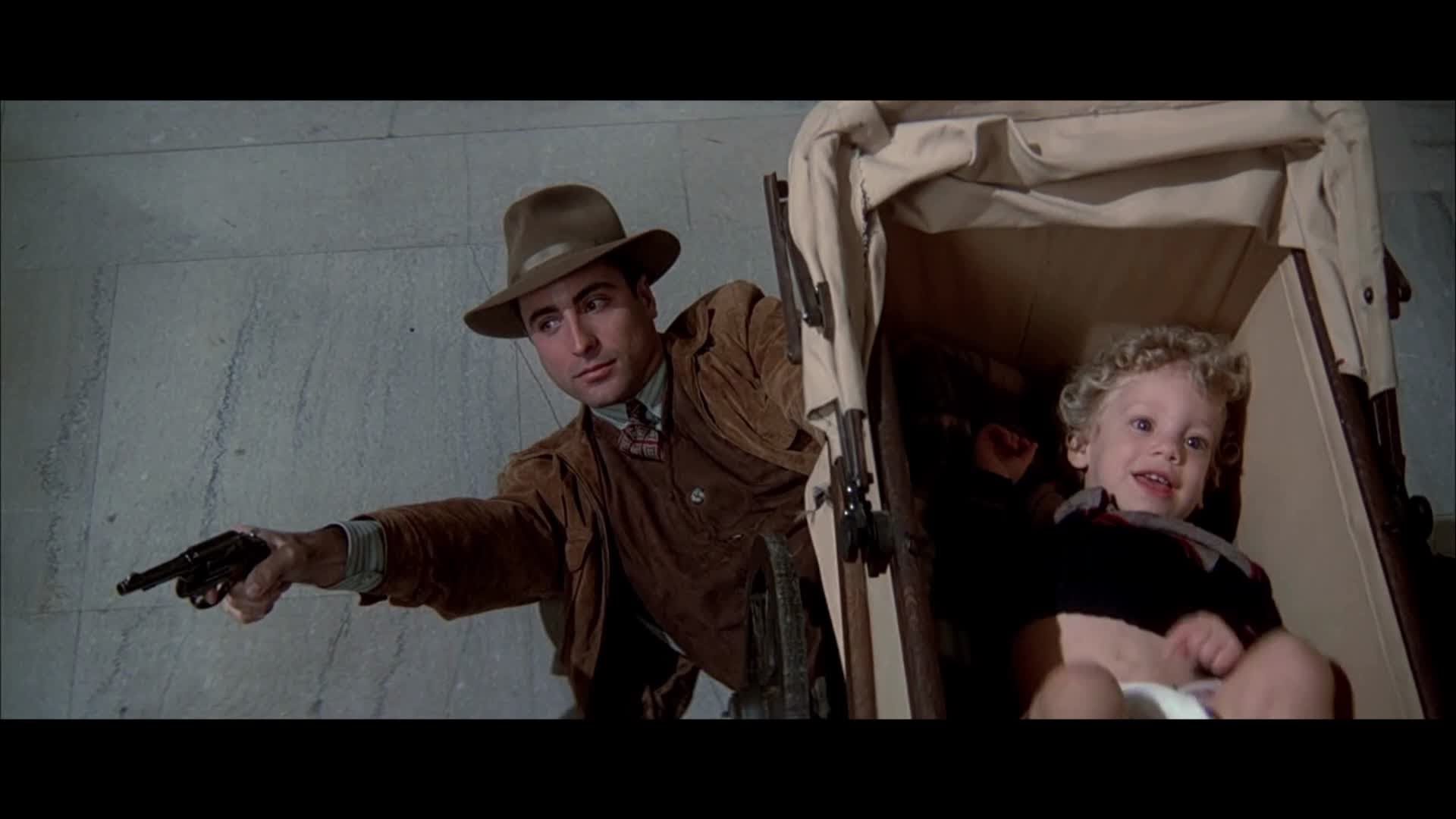
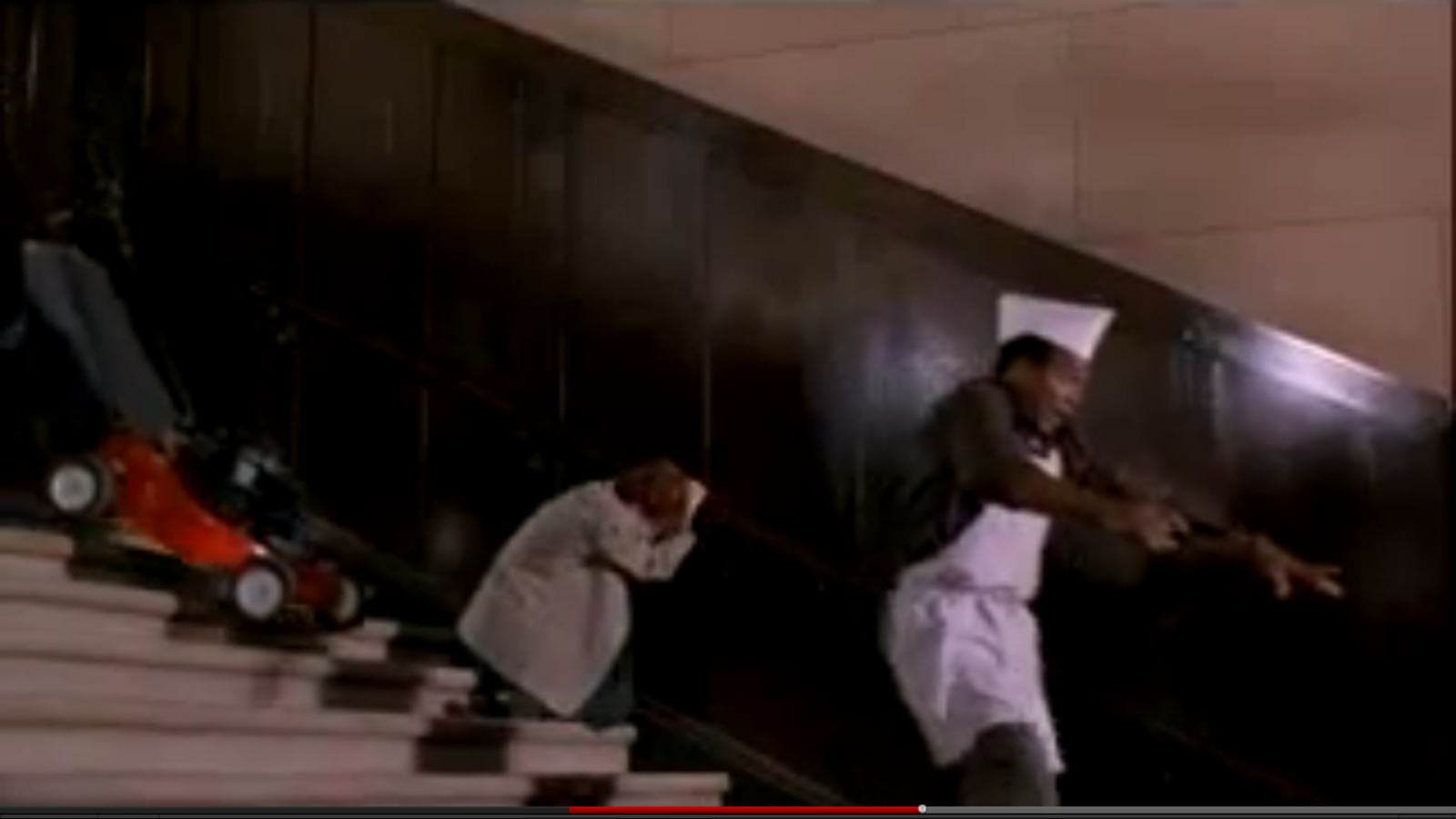
The “Odessa steps” sequence revolutionized film grammar while also startling and scandalizing enough audiences that Potemkin was banned in the U.K. through the ‘50s; by our time, in turn, it’s enough of a cliché to be included in outlandish comedies like Naked Gun 33 1/3 and The Untouchables. (Was De Palma’s film not a comedy? My mistake.)

untouchables odessa stepsodessa steps naked gunAs a consequence, Potemkin’s actual effect is somewhat lost in the historical notes and anxieties of influence it produced. Instead of formalist analysis (this one is fine) or deep dives into the material conditions of its development and creation (here’s a well-done entry from a sectarian Marxist), we are going to aim for something a bit more basic. Namely, what is it like to watch Battleship Potemkin in 2016?

I agree with those who say films must be received and evaluated within the contexts of their time and place, and that couldn’t possibly be more true than something like Battleship Potemkin. But we also encounter them in a time and place of our own.

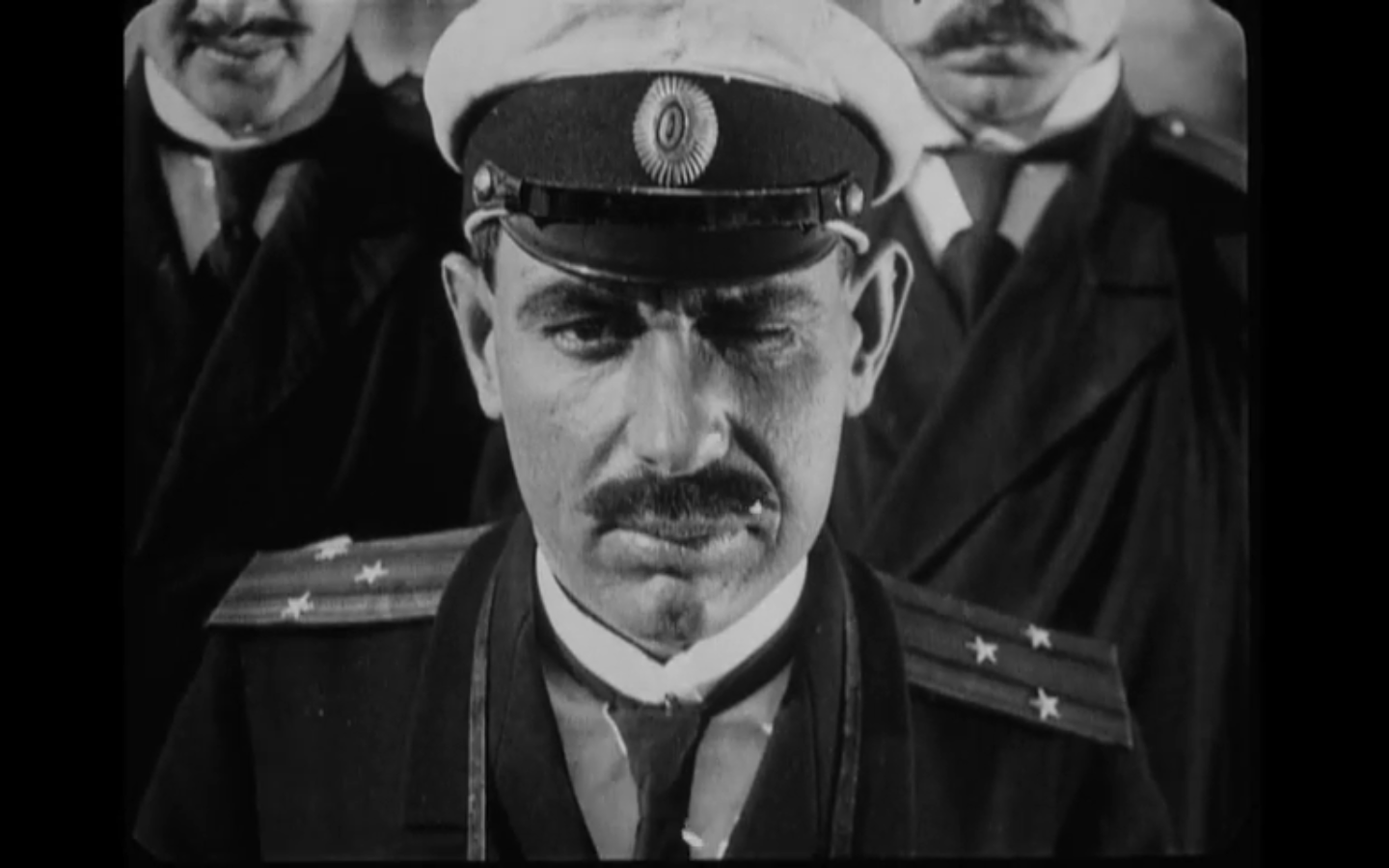
potemkin10The first and most obvious point is that the film’s propaganda function is so overt as to be almost laughable. When villains actually twirl their mustaches villainously while sending men to die, you know you are not in the most subtle narrative possible.

potemkin4Still, this is to be expected – Potemkin’s propaganda function is its defining characteristic, whatever the formalists might argue. There are more interesting aspects.

A striking one is the heavy reliance on title cards. This surprised me, on this fifth or sixth watch: for all the well-deserved accolades about the film’s dynamism and emphasis of movement, it’s startling to see how frequently the action is broken by unnecessary exposition.

A year prior, Murnau told a deeply individualistic story in The Last Laugh without a single title card (except, of course, for one, the dumbest in film history). This individualism itself is at a huge remove from Potemkin‘s project, which is in many ways the cultivation of an anti-individualistic aesthetic. Still, the received wisdom holds that this collectivity will be constructed from pure image and visual juxtaposition. Strange, then, that Eisenstein breaks up the rhythmic flow with regular interjections, often simply repetitions of the previous line with exaggerated emphasis.

On the other hand, the two central set-pieces – the massacre of common people on the Odessa steps and the climactic, nail-biting naval engagement between the revolutionaries and those sent to destroy them – are indeed thrilling. The editing is justly lauded. But more than the montage itself, it’s striking to see how his theories of “conflict” are embodied in the frame.

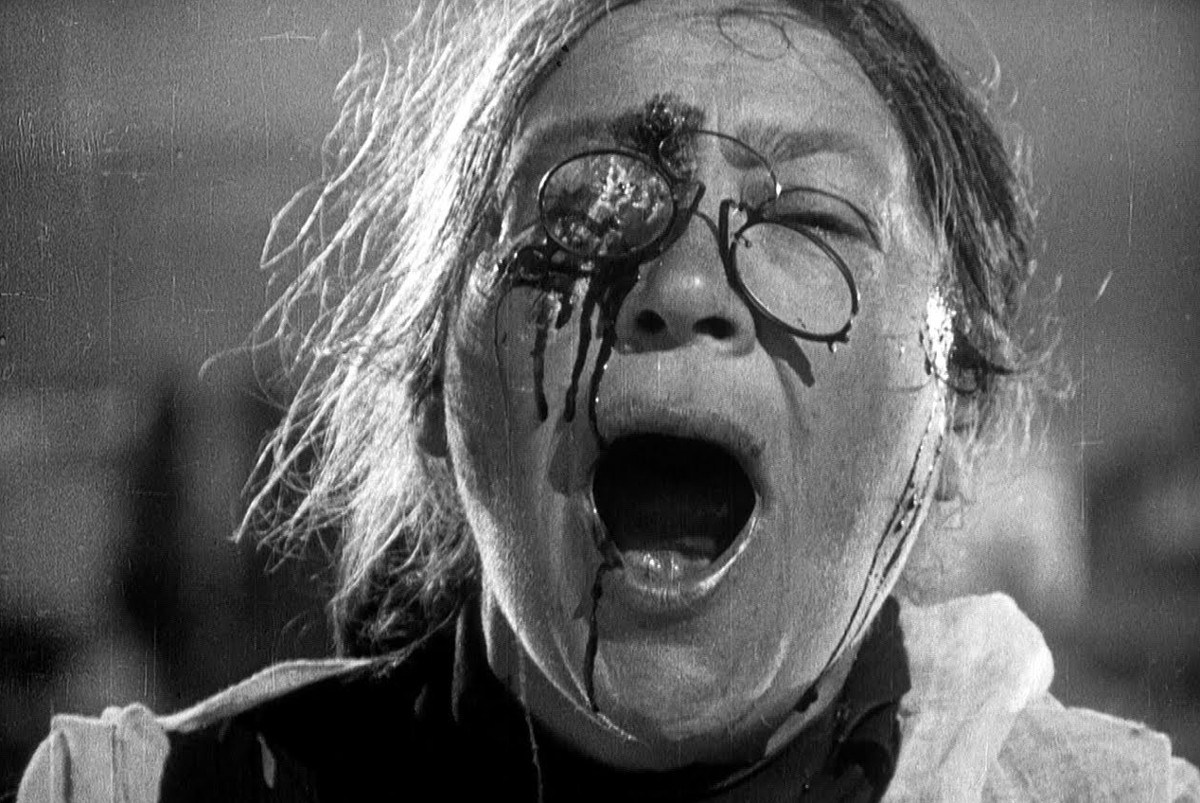
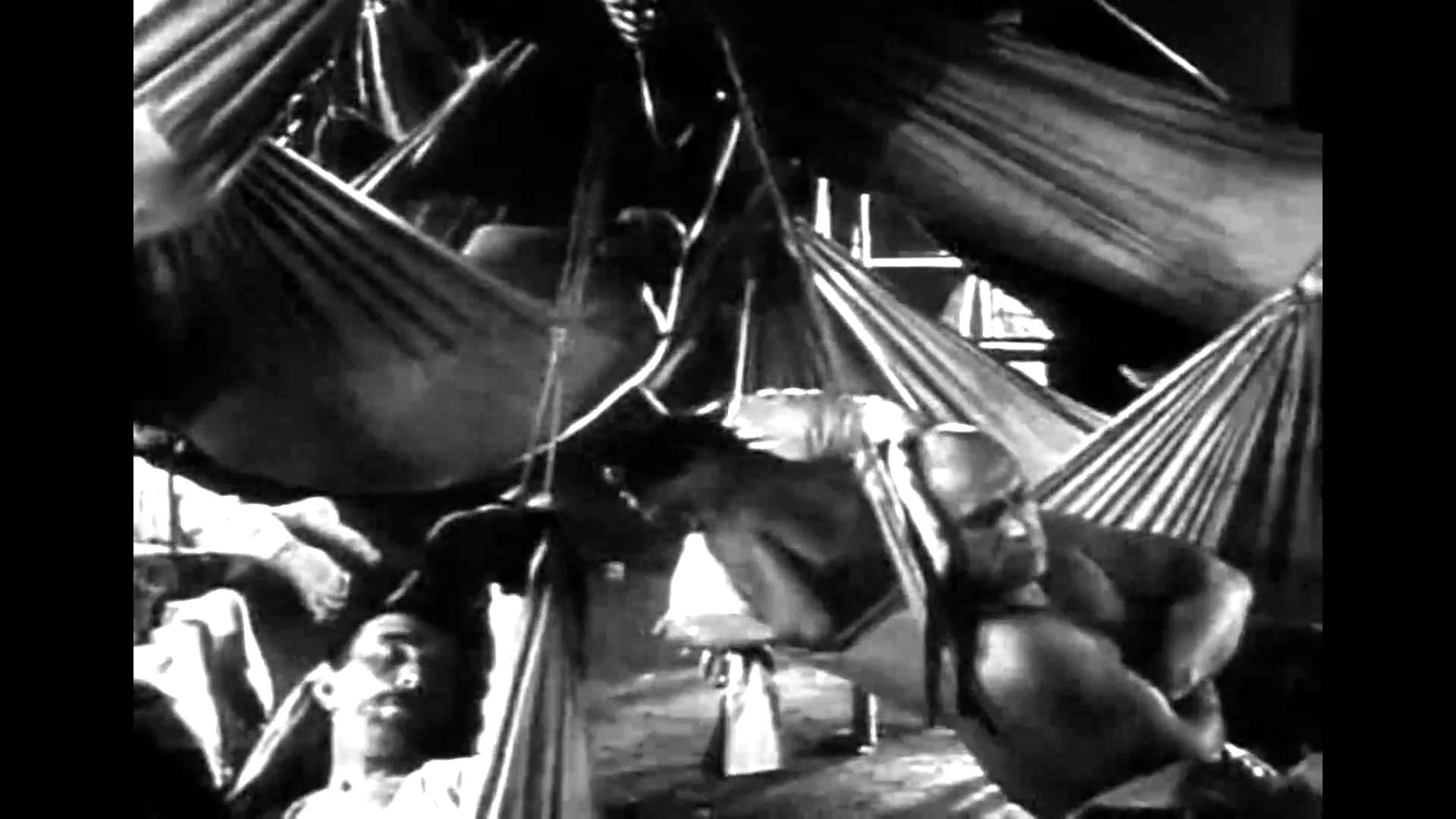
potemkin2The most jarring images are often not the most famous, which tend towards bloodied close-ups or teetering baby carriages, but the juxtaposition of light and dark, and a huge emphasis on contrasting angles that put you on edge. The viewer is fully aware, as any Marxist would encourage her to be, of oppositions and tension, rendered aesthetically in lines and form. These sailors at rest in overlapping hammocks is a good example:

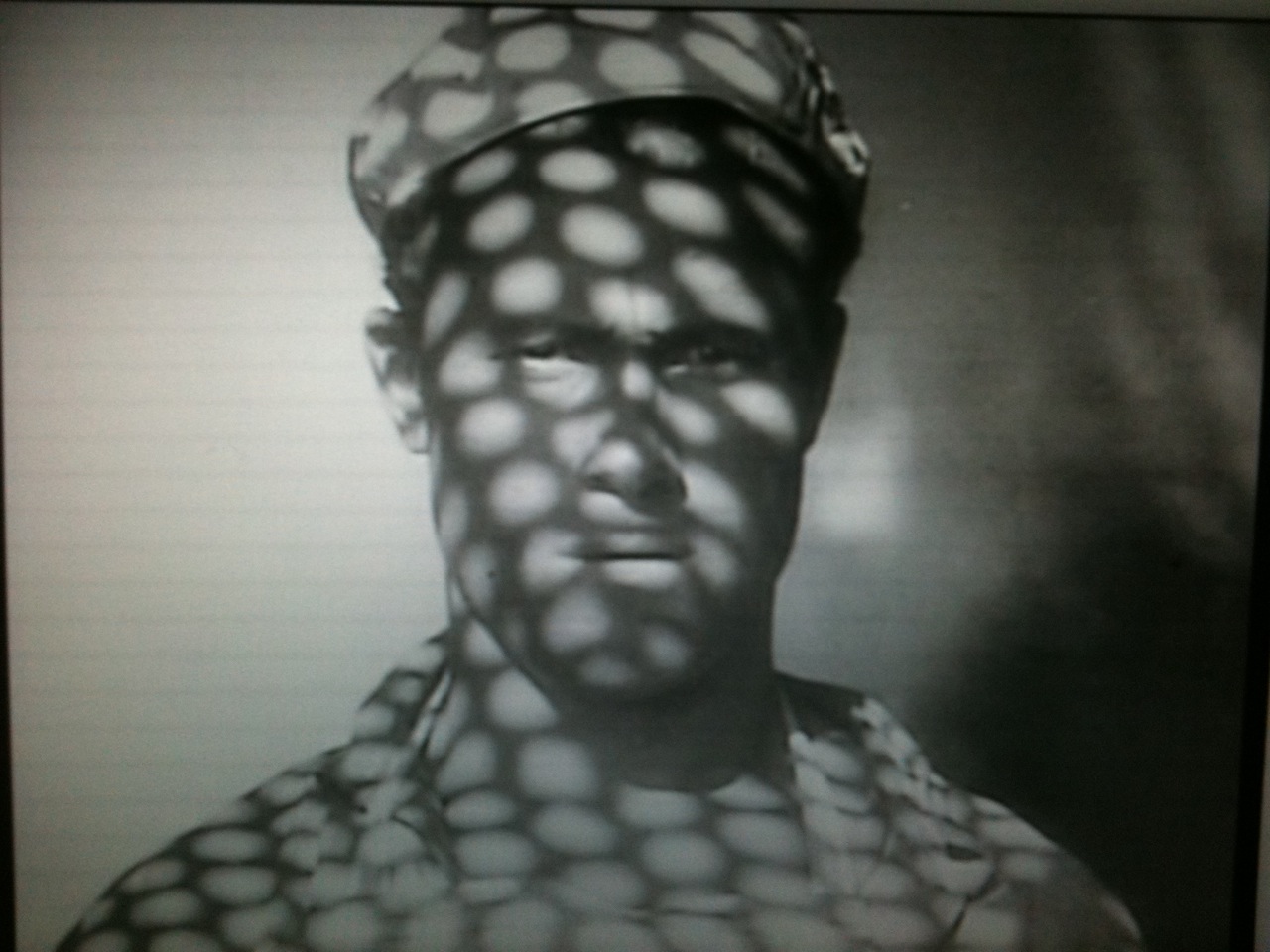
potemkin6So is this rather erotic sailor image, more Kenneth Anger than Marx and Engels:

potemkin8

It’s not a far leap from the jagged positioning of looming white-coated troops and helpless victims below on the Odessa steps to the most characteristic aspects of Soviet Realist painting and design. Interestingly, Eisenstein, the patron saint of motion and montage, seems just as much an influence on the static art meant to convey collision.

potemkin1


Even at little more than an hour, though, Battleship Potemkin can drag, despite moments of extreme tension and carnage; lay this at the feet of the polemical title cards. It’s still an extremely engaging movie, an action flick before that was even a term. (Indeed, Matyushenko and Vakulinchuk, the first two characters introduced, seem to prefigure some sort of revolutionary buddy-tragedy, as opposed to buddy-comedy.)

The formalist constructions are of enormous import, and there are obviously issues of world-historical consequence at play, but Battleship Potemkin is also still a movie about mistreated dudes stealing a ship and sticking it to the bastards who fed them rotten meat and shitty soup.

potemkin5

They are undermined by superiors, linked to their comrades, and out to make a difference, no matter the cost. This is the logic of the action movie, one imbued with political content even in a non-revolutionary context.

potemkin3

I’ve emphasized the difficulty of writing something new about Potemkin. The question, fair enough, might be raised: why write anything at all about it, then? Obviously, I was prompted by this series to do so, but more generally, I think it’s similar to the rationale for revisiting texts in the first place. As a gauge of where you are, as a viewer and participant, that kind of engagement in valuable. If there aren’t exactly new scenes to discover, there are always new experiences to process. If there aren’t profound revelations, there are resonant moments of connection and disjunction, and an awareness that the viewer, however positioned, helps create the text. Potemkin is a classic for many reasons, but one of them is surely its ability to be found, image by image, strange again.

Favorite Ebert quote:

That there was, in fact, no czarist massacre on the Odessa Steps scarcely diminishes the power of the scene. The czar’s troops shot innocent civilians elsewhere in Odessa, and Eisenstein, in concentrating those killings and finding the perfect setting for them, was doing his job as a director. It is ironic that he did it so well that today, the bloodshed on the Odessa Steps is often referred to as if it really happened.

Part of an ongoing effort to watch each of the films in Roger Ebert’s Great Movies series. The introduction and full list can be found here.

July 18, 2016 0 comments
0 FacebookTwitterPinterestEmail
CommentaryFilm

New on Netflix: Sworn Virgin

by rick July 15, 2016
written by rick

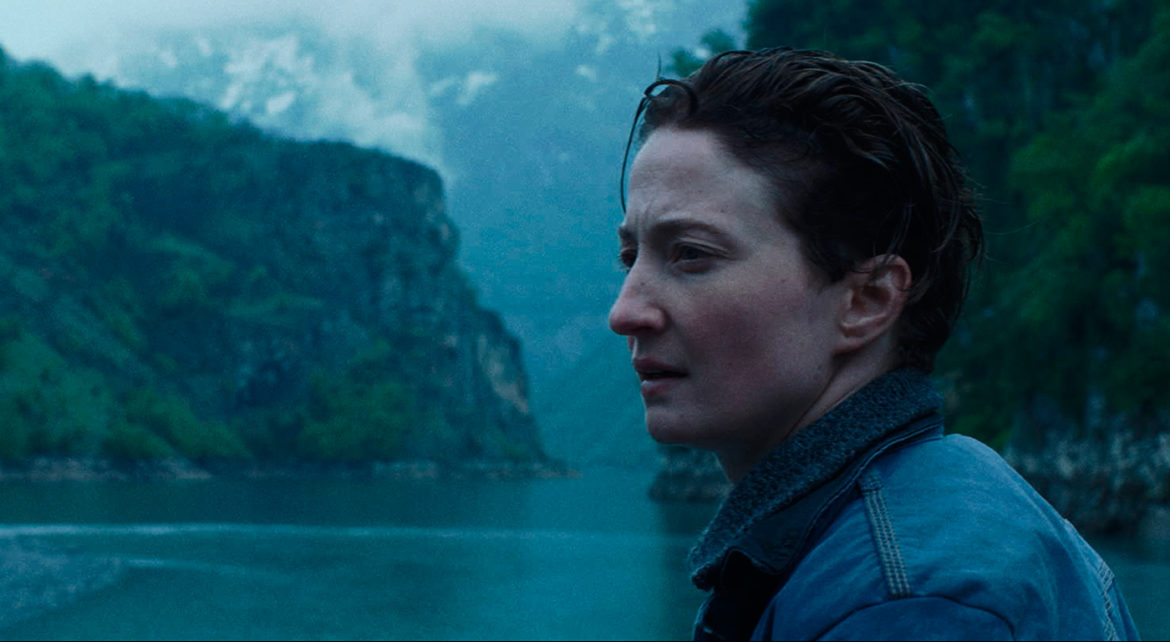
Laura Bispuri’s Sworn Virgin is, in her own a words, “a whole discourse on the body.” It’s an exploration of gender fluidity butting up against social norms as rigid as the mountains that surround its central Albanian village. In lyrical flourishes and with quiet, moving grace, Bispuri presents an unusually fraught journey to an authentic self. A standout on the festival circuit, Sworn Virgin is now available to stream on Netflix, and you should jump at the chance.

The film follows a young orphan named Hana, whose parents both died in an unexplained accident that she survived. This is an astute choice: the deadly accident’s very unmentionability makes it both a universal state of existence and a particular one that haunts our protagonist, separating and marking her.

Adopted by a local family, she grows up with a new sister, Lila. The two form a close bond formed of mutual gender oppression, constantly warned of the appropriate behavior to which they should aspire at all times. Lila flees these rural confines eventually, taking off for Italy with a lover, while Hana chooses to remain, but transitions instead to Marc. A curious exception to enforced gender stability and normativity exists in such Albanian villages: by taking a vow of celibacy for life — one last, ironic policing of boundaries — Hana is permitted this escape.

Did Hana always feel they were Marc, and seize the opportunity? Is it related instead to the relative freedoms conferred on maleness, and the ability to stay in the only place they’ve known? Sworn Virgin provides no answers, though hints at various possibilities. As Marc tracks down Lila in Italy, now a wife with a daughter of her own, those possibilities spider out, with correspondences seen across places and between bodies.

Bispuri is far more interested in these resonances, and complicating our understanding of bodies and spaces, then in any sort of strict pedagogical function. Sworn Virgin is a poem, not a treatise. And it’s a lovely one at that.

Quick Links

mountains may depart

1. Mountains May Depart, also new to Netflix this week, is Jia Zhangze’s latest sprawling study of the hopes, fears, and dreams of mainland China, constructed as a tryptych complete with three different aspect ratios. I haven’t seen it, but I’ve admired his previous work and will check it out this weekend myself (maybe along with Walter Salles’ Jia Zhangze, A Guy From Fenyang, a documentary about the filmmaker that also comes new to streaming).

lethal weapon

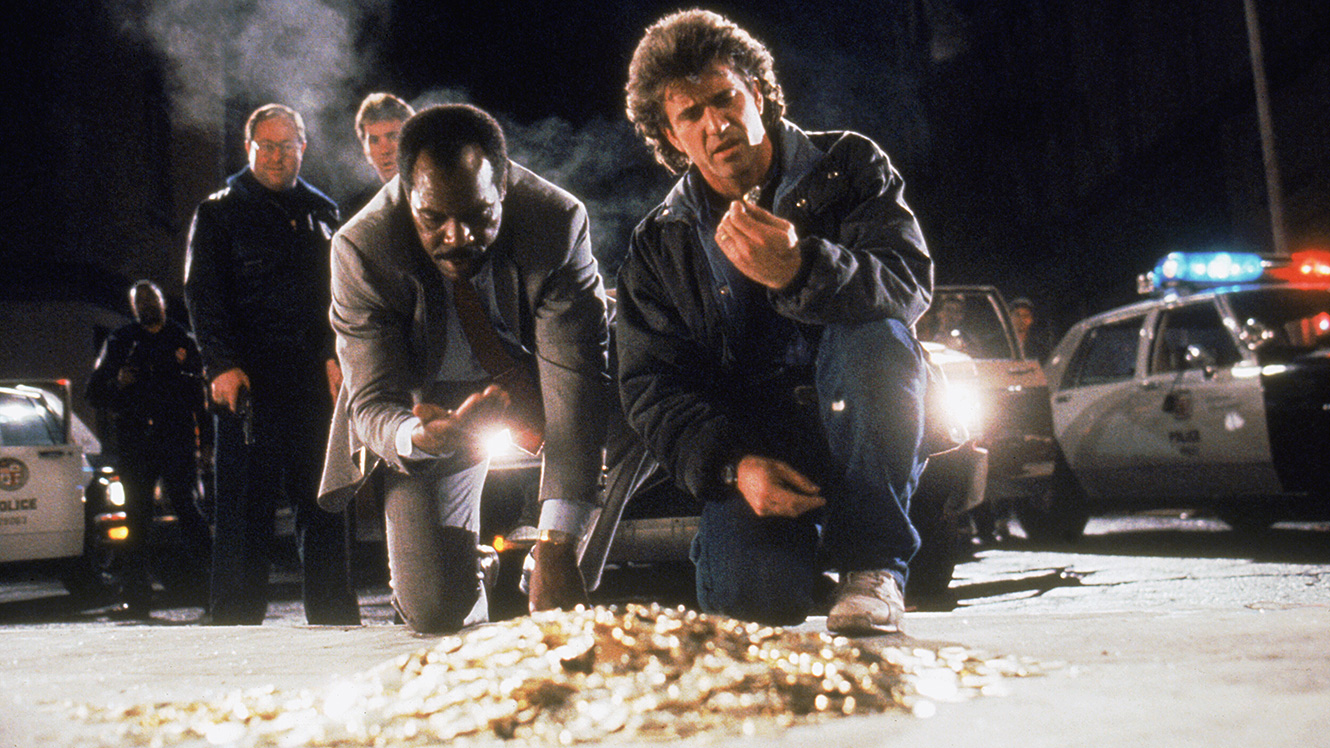
2. Did you read Noel Murray’s excellent consideration of the Lethal Weapon movies on The AV Club yesterday? You can complete your journey through the iconic set-pieces, snappy repartee, and diminishing returns of the series: all are available for streaming.

fruitvale station

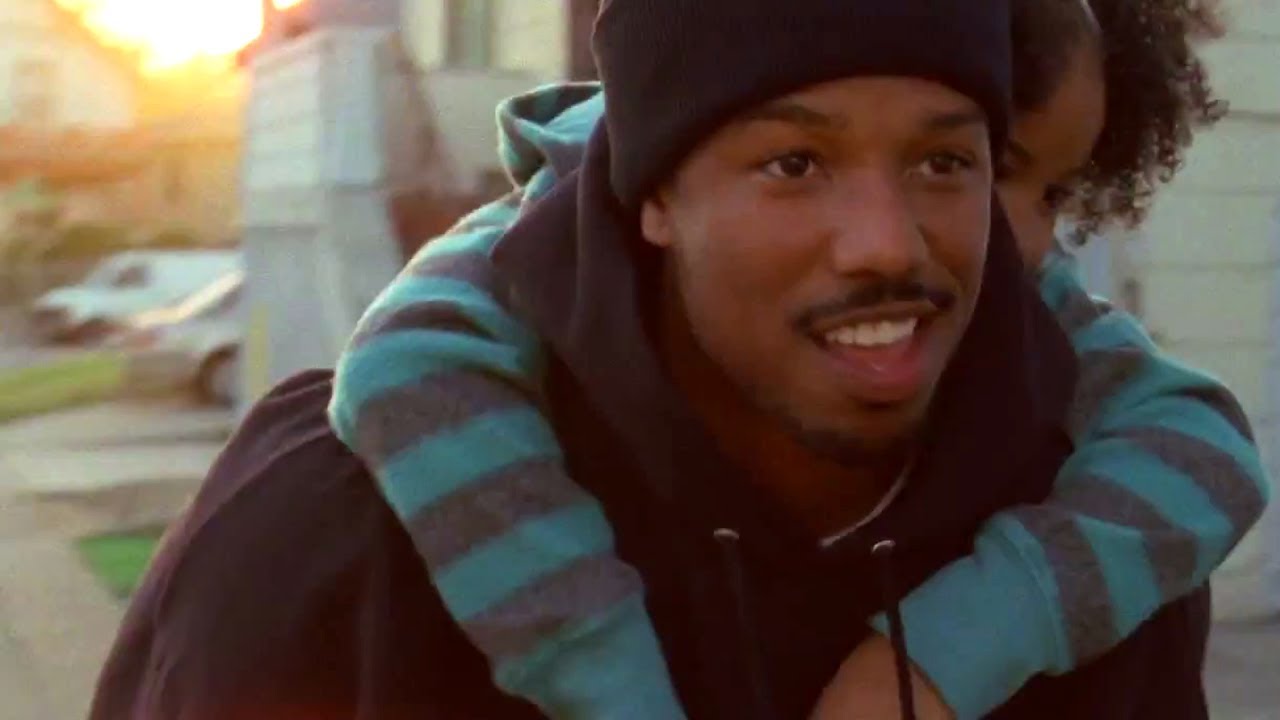
3. Ryan Coogler‘s breakthrough Fruitvale Station, with a heartrending Michael B. Jordan performance as Oscar Grant, is more pertinent than ever. Unfortunately. Don’t believe the critics who shrugged at its portrayal of the events in Oakland, or found it either too polemical or too pandering. It’s a tremendously accomplished film that perfectly captures little details of the East Bay without drawing attention to itself, and its anger and sorrow are well-earned, to put it mildly.

trip to the moon

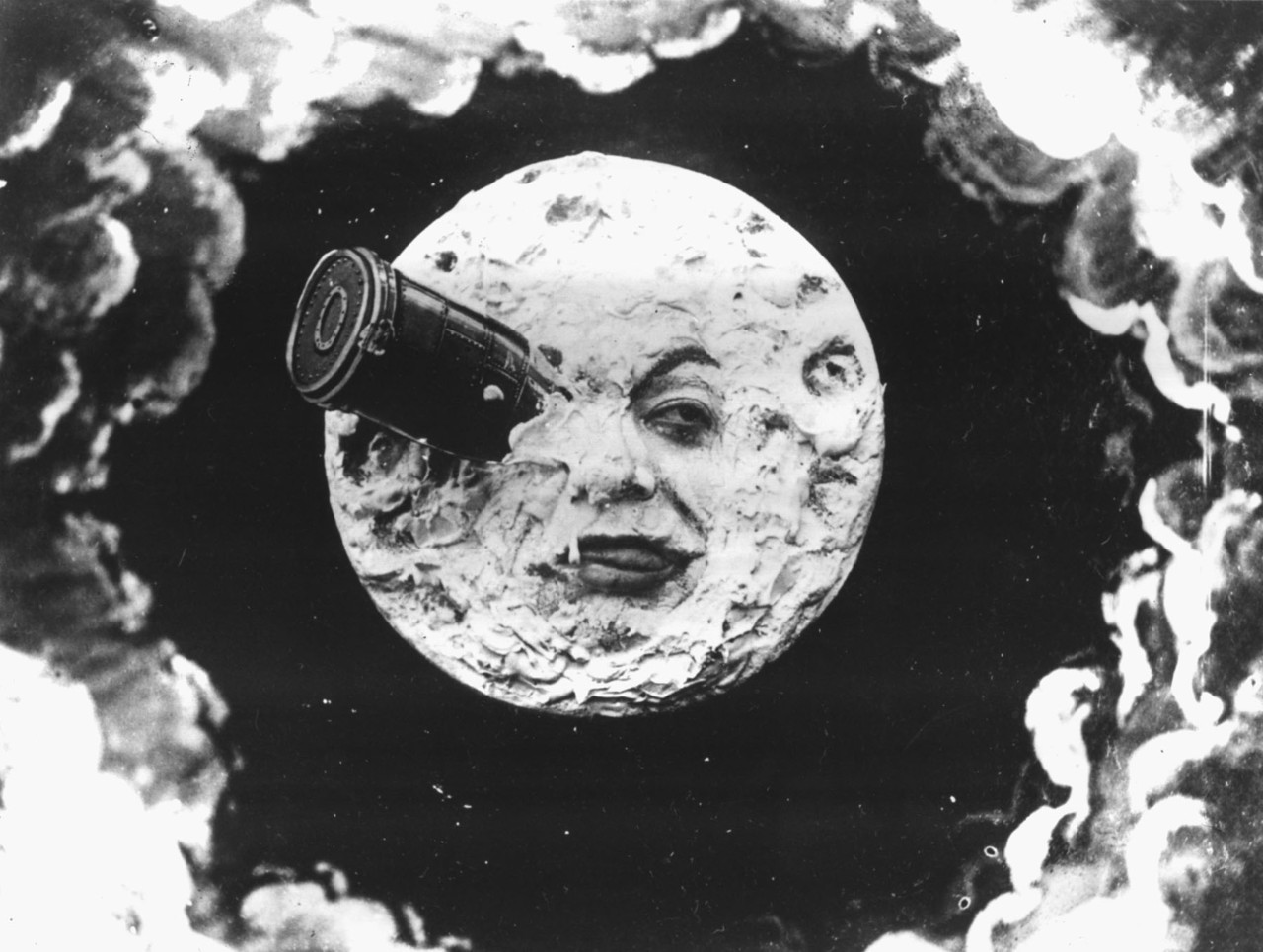
4. Something a bit lighter? Trying to catch up on pivotal classics in the history and development of cinema? Tired of the standard Netflix garbage? Georges Méliès’ A Trip To The Moon is as thrilling and funny today as it was in 1902, and it’s only 12 minutes long. You can do this!

July 15, 2016 0 comments
0 FacebookTwitterPinterestEmail
Newer Posts
Older Posts

About

About

Towards a provisional theory of the cinema, or, failing that, just some shit about movies

Authors
Rick Kelley
Lark Lundberg

Keep in touch

Facebook Twitter

Categories

  • Conversation
  • Film
  • Film By Film
  • Great Movie Project
  • Great Movies: The Counter Programming
  • Guest
  • News
  • Other
    • Commentary
    • Film
    • Interview
    • Reviews
    • Song for a Sunday
  • Streaming Selections
  • TV
  • Uncategorized
  • Vegan Horror

Archives

  • April 2019
  • March 2019
  • January 2019
  • December 2018
  • November 2018
  • October 2018
  • September 2018
  • August 2018
  • July 2018
  • June 2018
  • May 2018
  • April 2018
  • March 2018
  • February 2018
  • January 2018
  • December 2017
  • November 2017
  • October 2017
  • September 2017
  • August 2017
  • July 2017
  • June 2017
  • May 2017
  • April 2017
  • March 2017
  • February 2017
  • January 2017
  • December 2016
  • November 2016
  • October 2016
  • September 2016
  • August 2016
  • July 2016
  • June 2016
  • May 2016
  • April 2016
  • March 2016
  • February 2016
  • January 2016
  • December 2015
  • October 2015
  • September 2015
  • August 2015
  • July 2015
  • June 2015
  • May 2015
  • April 2015
  • March 2015
  • February 2015
  • January 2015
  • December 2014
  • November 2014
  • October 2014
  • August 2009
  • September 2008

Recent Posts

  • China Girls, Death Proof, and the Hidden Face
  • Old News: Old Noise Edition
  • Old News: April 1, 2019
  • Nicolas Winding Refn, Marginalia, and the Deaths of Cinema
  • And now, let us praise Kanopy

Recent Comments

  • Franklin Kat on Michael Shannon shines again in Frank & Lola
  • Sean Tempesta on Cinema and dream-logic in Meshes of the Afternoon
  • ludditerobot on The Left-Wing Slapstick and Iconic Songs of 1937’s Street Angel
  • Franklin Kat on The Left-Wing Slapstick and Iconic Songs of 1937’s Street Angel
  • Arijit Mukherjee on Great Movies Project: The Counter-Programming
  • Facebook
  • Twitter

@2021 - All Right Reserved. Designed and Developed by PenciDesign


Back To Top
Luddite Robot
  • Reviews
  • Commentary
  • Great Movie Project
    • Great Movie Project
      Bride of Frankenstein is a movie for and…

      January 25, 2018

      Great Movie Project
      The Enduring Appeal of Nick and Nora in…

      November 29, 2017

      Great Movie Project
      The Ahistorical Fever Dream of The Scarlet Empress

      August 2, 2017

      Great Movie Project
      Dreams, Mundanity, and the Anarchist Yearnings of L’Atalante

      July 12, 2017

      Great Movie Project
      Duck Soup Is And Will Always Be A…

      April 19, 2017

  • Counter Programming
    • Great Movies: The Counter Programming
      Walking and Talking in the Shadow of Kanchenjungha

      March 7, 2018

      Great Movies: The Counter Programming
      A Brief Encounter in My Mother and Her…

      February 9, 2018

      Great Movies: The Counter Programming
      Horror’s Refusal in Farrokhzad’s The House Is Black

      October 13, 2017

      Great Movies: The Counter Programming
      The rage and beauty of The Cloud-Capped Star

      October 3, 2017

      Great Movies: The Counter Programming
      The daylight noir and social issue empathy of…

      June 22, 2017

  • Vegan Horror
    • Vegan Horror
      Julia Ducournau doesn’t think her film Raw is…

      June 7, 2017

      Vegan Horror
      Licking our wounds: The vampiric masculinity of Ravenous

      December 13, 2016

      Vegan Horror
      Eggertsson and animals: An approach to horror cinema

      September 15, 2016

      Vegan Horror
      “It’s Not My Nature” – Vegetarianism, Body Horror,…

      August 30, 2016

      Vegan Horror
      Bodies and Carcasses in Predator 2

      August 23, 2016

  • Interview
    • Interview
      Jasmine Leyva’s doc The Invisible Vegan aims to…

      May 3, 2017

      Interview
      Bridging The Abyss: An Interview With The Directors…

      November 28, 2016

      Interview
      7 Days in Ohio: An Interview with Nathan…

      September 12, 2016

      Interview
      Film Critic Phil Dy talks New Filipino Cinema

      June 17, 2016

      Interview
      “I Love Seeing Film Projected.” A Conversation with…

      March 22, 2016