Top Posts
Madeline’s Madeline: An Unclassifiable Panic Attack Maybe-Masterpiece
Shoplifters Steals Moments of Wonder from the Mundane
Burning and Forgetting What’s Not There
Kusama: Infinity Expands Beyond The Canvas
Mandy Risks Little, Wins Little
In We The Animals, The Children Are Away...
The Seagull Isn’t Quite Chekhov, But It’s Still...
5 Million Ways Boots Riley Isn’t Sorry To...
American Animals’ and the Queasiness of the Heist
A Star Is Born In Hearts Beat Loud
  • Reviews
  • Commentary
  • Great Movie Project
    • Great Movie Project
      Bride of Frankenstein is a movie for and…

      January 25, 2018

      Great Movie Project
      The Enduring Appeal of Nick and Nora in…

      November 29, 2017

      Great Movie Project
      The Ahistorical Fever Dream of The Scarlet Empress

      August 2, 2017

      Great Movie Project
      Dreams, Mundanity, and the Anarchist Yearnings of L’Atalante

      July 12, 2017

      Great Movie Project
      Duck Soup Is And Will Always Be A…

      April 19, 2017

  • Counter Programming
    • Great Movies: The Counter Programming
      Walking and Talking in the Shadow of Kanchenjungha

      March 7, 2018

      Great Movies: The Counter Programming
      A Brief Encounter in My Mother and Her…

      February 9, 2018

      Great Movies: The Counter Programming
      Horror’s Refusal in Farrokhzad’s The House Is Black

      October 13, 2017

      Great Movies: The Counter Programming
      The rage and beauty of The Cloud-Capped Star

      October 3, 2017

      Great Movies: The Counter Programming
      The daylight noir and social issue empathy of…

      June 22, 2017

  • Vegan Horror
    • Vegan Horror
      Julia Ducournau doesn’t think her film Raw is…

      June 7, 2017

      Vegan Horror
      Licking our wounds: The vampiric masculinity of Ravenous

      December 13, 2016

      Vegan Horror
      Eggertsson and animals: An approach to horror cinema

      September 15, 2016

      Vegan Horror
      “It’s Not My Nature” – Vegetarianism, Body Horror,…

      August 30, 2016

      Vegan Horror
      Bodies and Carcasses in Predator 2

      August 23, 2016

  • Interview
    • Interview
      Jasmine Leyva’s doc The Invisible Vegan aims to…

      May 3, 2017

      Interview
      Bridging The Abyss: An Interview With The Directors…

      November 28, 2016

      Interview
      7 Days in Ohio: An Interview with Nathan…

      September 12, 2016

      Interview
      Film Critic Phil Dy talks New Filipino Cinema

      June 17, 2016

      Interview
      “I Love Seeing Film Projected.” A Conversation with…

      March 22, 2016

Luddite Robot
Film critique, theory, and assorted nonsense.
CommentaryFilm

China Girls, Death Proof, and the Hidden Face

April 14, 2019

Old News: Old Noise Edition

April 8, 2019

Old News: April 1, 2019

Nicolas Winding Refn, Marginalia, and the Deaths of Cinema

CommentaryFilm

And now, let us praise Kanopy

January 24, 2019

Warren Sonbert and the Relief of Anti-Narrative

January 14, 2019

The World Is Ending and It Doesn’t Matter

The Best Films of 2018

FilmReviews

Madeline’s Madeline: An Unclassifiable Panic Attack Maybe-Masterpiece

December 21, 2018

Shoplifters Steals Moments of Wonder from the Mundane

December 11, 2018

Burning and Forgetting What’s Not There

Alien, Musicology, and Reading Soundtracks

CommentaryFilm

Shocktober III: Halloween 2018 Edition

October 24, 2018

Shirley Jackson’s The Lottery Traumatized Schoolkids in 16 mm

October 18, 2018

Shocktober 2018 II: Another Reshockening (of Horror)

Häxan is a movie made by a movie character

CommentaryFilm

Shocktober 2018

October 7, 2018

Unprofessional! Spring Night, Summer Night

October 3, 2018

The Wild Boys: A Luddite Robot Conversation

Kusama: Infinity Expands Beyond The Canvas

FilmReviews

The Shallows succeeds wildly at being exactly what it is

by rick July 13, 2016
written by rick

There is a certain modest genius to a well-crafted disaster film. Unfussy and unpretentious, the best of these keep the proceedings simple, but their apparent simplicity can cloak the care with which plot details are placed and timed, the way individual moments correspond to each other. Like all magic, you don’t even know you’ve been fooled until it’s too late. The Shallows is just such a trick. Taken in context, it’s the best movie of the summer, maybe the year. Taken on its own terms, The Shallows is a small masterpiece.

Yes, the thing with Blake Lively and a CGI shark is possibly the best movie of the year so far.

shallows2

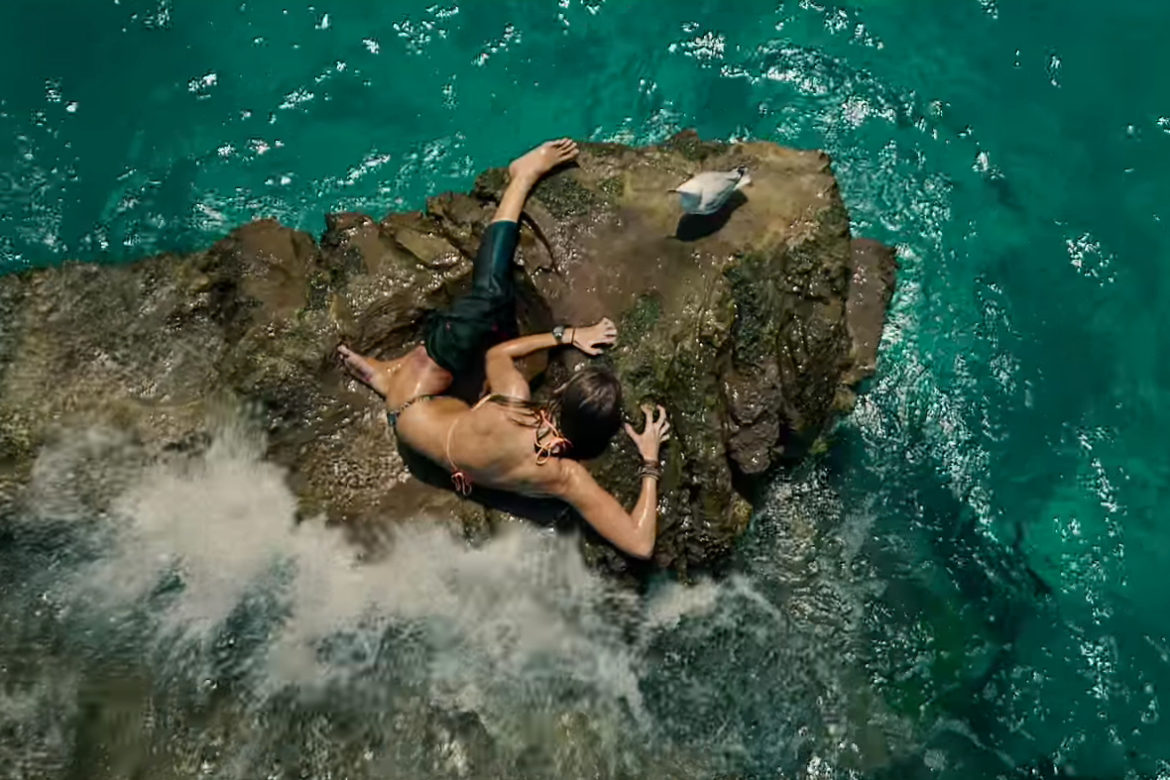
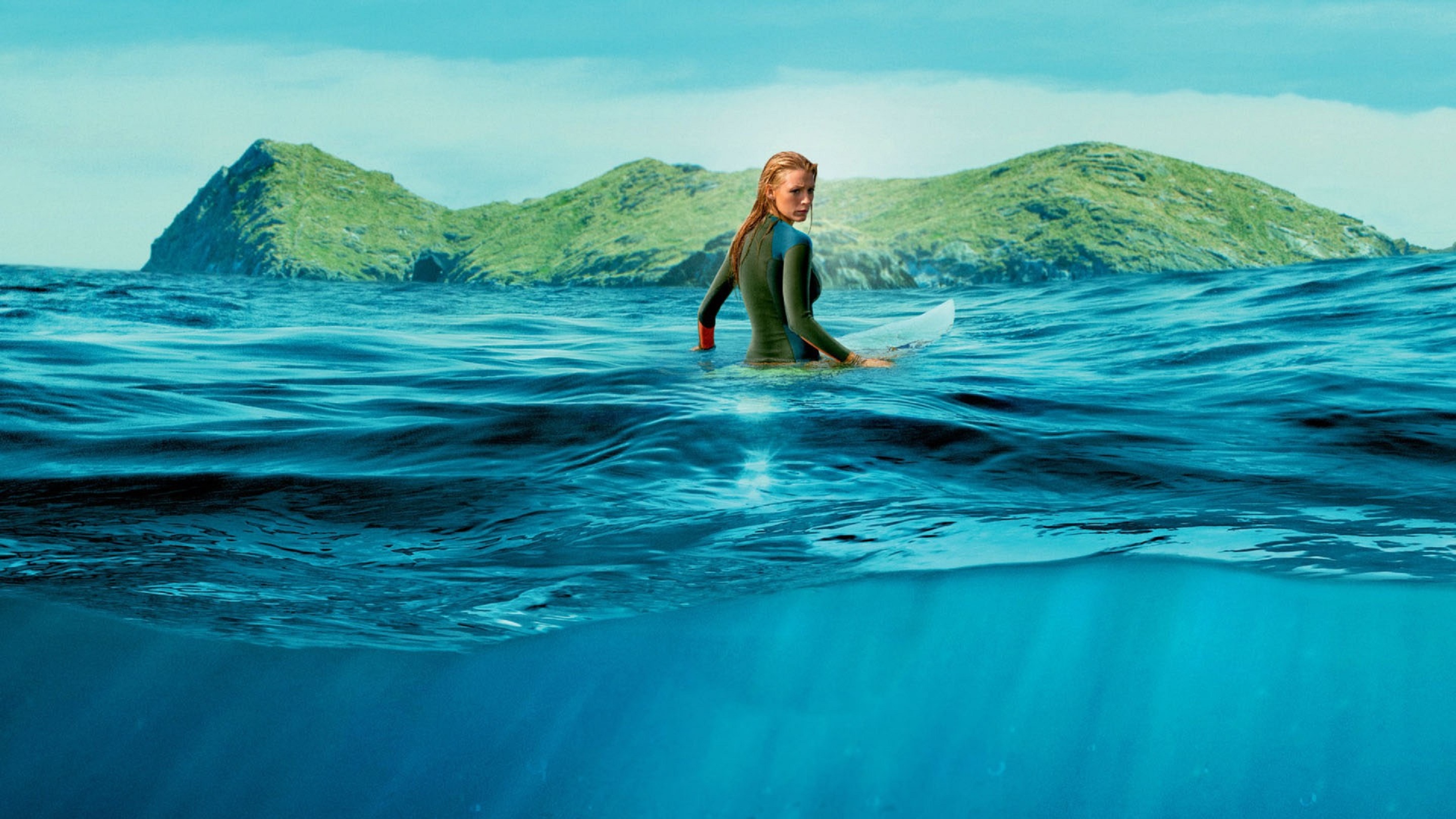
Of the many genre virtues The Shallows boasts, and there are several, the most crucial is its single-minded narrative. A young woman (Lively) is just out of medical school, and she’s also a surfer looking for some solace and time for reflection after her mom’s recent death. She goes in search of a secret beach where the waves are the stuff of legend. Her friend bails on her, so she ends up taking the journey alone. A shark attacks her, stranding her on a small, isolated rock, injured but just 200 yards from shore. But it’s a long 200 yards. With just resourcefulness and a will to survive, she has to determine an escape path. That’s it.

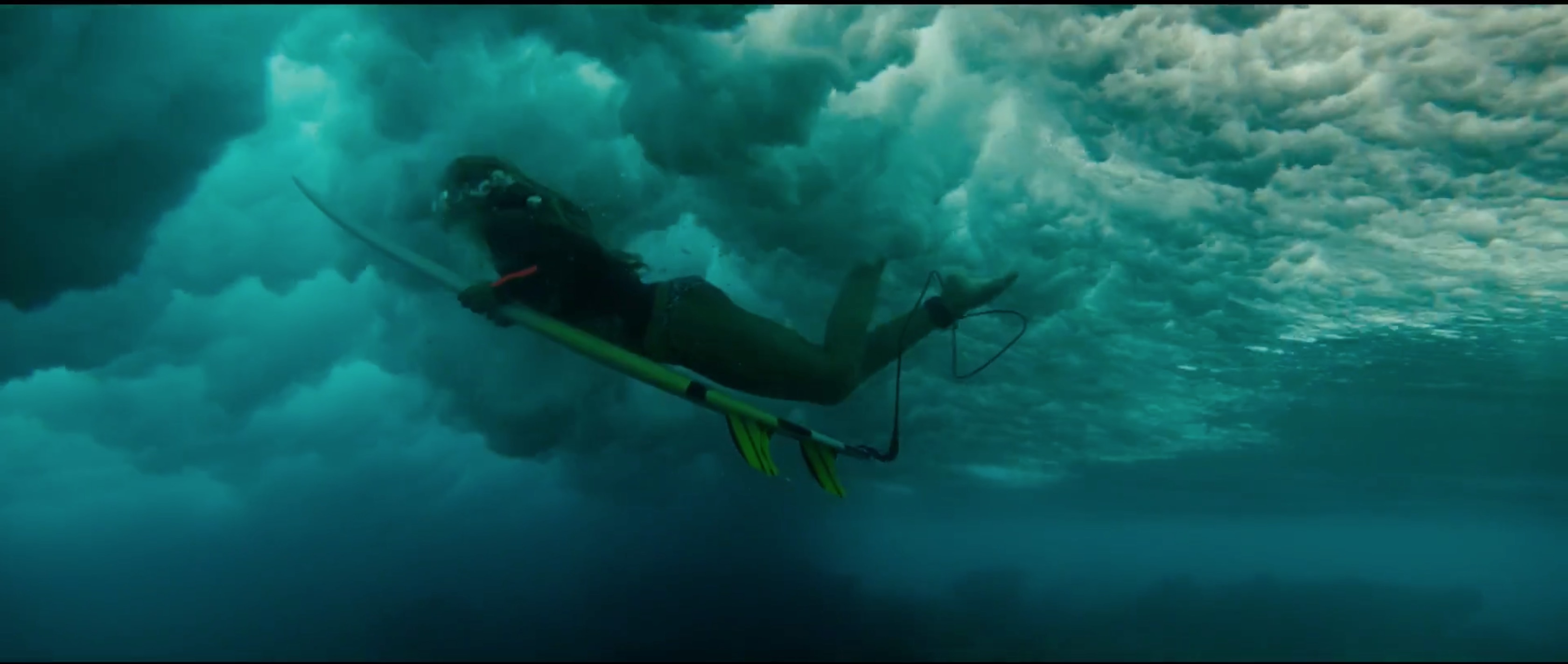
Director Jaume Collet-Serra times everything perfectly. Early, kinetic POV shots emphasize Lively’s joy in motion – the surfing footage is a lot of fun, even if you could care less about surfing and might consider the notion that people actively seek out such dangers a bit insane – but there’s also a lingering sense that she’s desperately trying to keep private sorrow at bay.
shallows4

These shots are intercut with a decidedly more ominous, underwater POV, ratcheting up tension out of nothing but the contrast. Lively is charming and capable, but very, very much alone – especially after the only other people she meets depart. Collet-Serra alternates between tight close-ups and gorgeous aerial shots, full of color and wonder at the beauty of the surroundings, but methodically and skillfully increasing our awareness of how small this person really is, and how vast is the world in which she’s placed herself. Even in these early moments, and without mimicking the hammering musical cues of the film to which it will inevitably be compared, The Shallows keeps you on edge.

Nothing in screenwriter Anthony Jaswinski’s resume hints at the economy and skilled compression of his excellent script. There is no detail that doesn’t have its payoff, but it never feels hacky. (Well, almost never: more on that in a minute.) Instead, Jaswinski simply seems to know exactly how to layer a small, simple story – if the camera zooms in on some aspect of the frame, we know it will have import. We pay attention.

shallows3

As the only person on screen for nearly the entirety of The Shallows, Lively simply has to carry it. She succeeds. Her resolute insistence on survival, its grounding in character detail, and her capability to cheat certain death all ring true. She’s an impressive lead here, a sort of self-reliant female corollary to Matt Damon’s character in The Martian. Sure, it’s a bit handy that she just got out of med school directly prior to having to treat her battered body in the middle of the ocean, but lots of people go to med school. Why not? In any case, she nails the role.

Collet-Serra – the Liam Neeson vehicle vet who made, among other things, a previous genre masterpiece (Non-Stop), a stinker (Unknown), the underrated horror flick Orphan, and whatever House of Wax was supposed to be – is at peak form here. He occasionally relies a bit too much on the integration of every digital technique he can manage: instead of Non-Stop’s text messages, we get Skype calls and a Go-Pro headcam. But his astute visual sense combines a mastery of framing and a real love of color and shadow. The Shallows is not some sort of Citizen Kane: The Shark Years, but it’s precisely what it needs to be to work best. Even more: it’s legitimately thrilling and beautiful.
shallows5

The film stumbles in its final moments into arguable hackiness, with a coda no one asked for or needed. But it’s a small price to pay for the most engaging and accomplished genre picture in years. When people dismissed The Shallows out of hand before its release, as though it were going to be Sharknado with (more) boobs, there was more than a whiff of sexism about the whole thing. Time will be much kinder to The Shallows than those who dismissed it sight unseen.

If you enjoy well-plotted, well-paced, exciting films with visual flair and solid performances – and you really should – go see The Shallows on the screen.
July 13, 2016 0 comments
1 FacebookTwitterPinterestEmail
CommentaryFilm

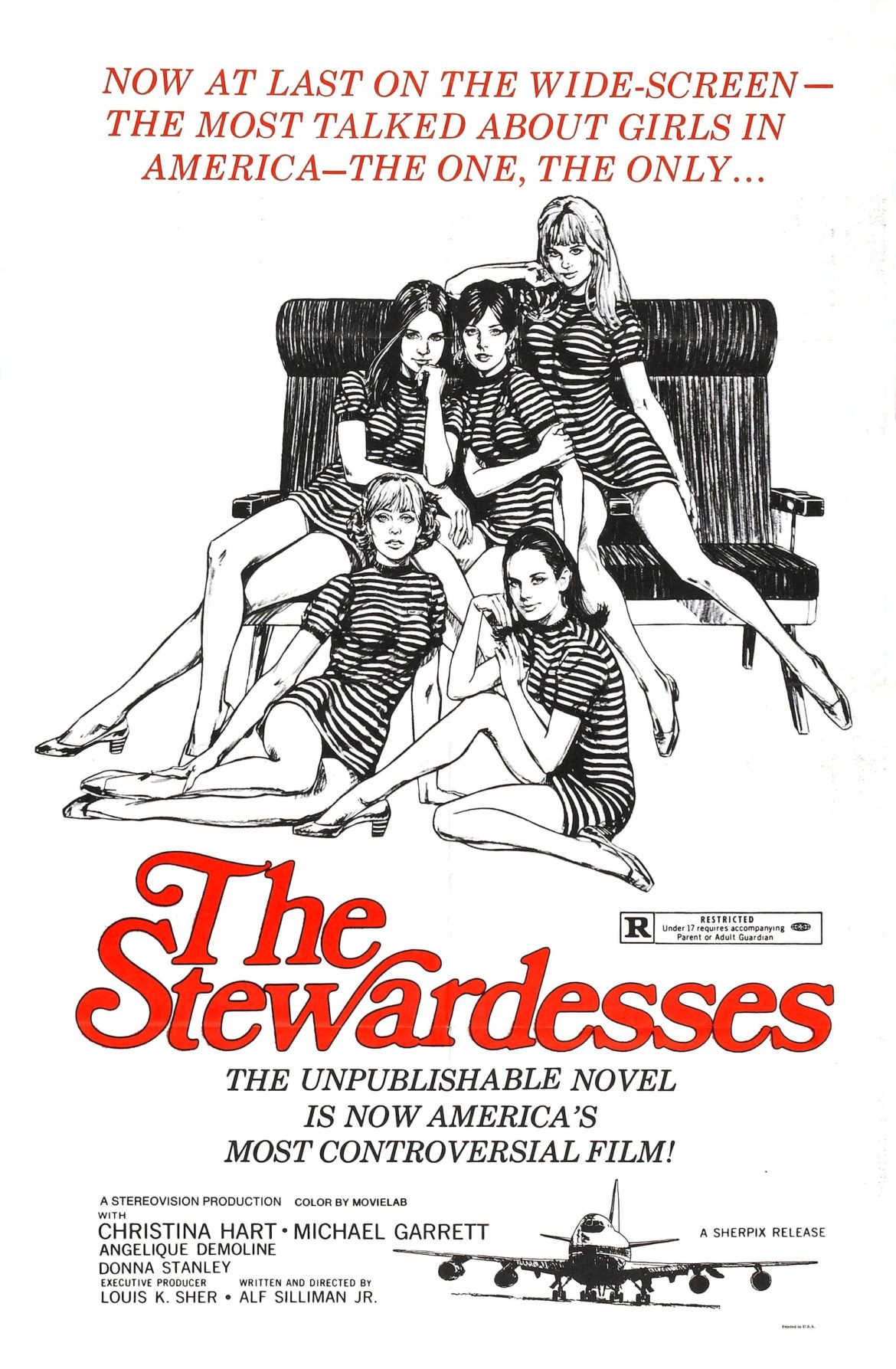
The Stewardesses’ lucrative 3D porn nightmare

by rick July 12, 2016
written by rick

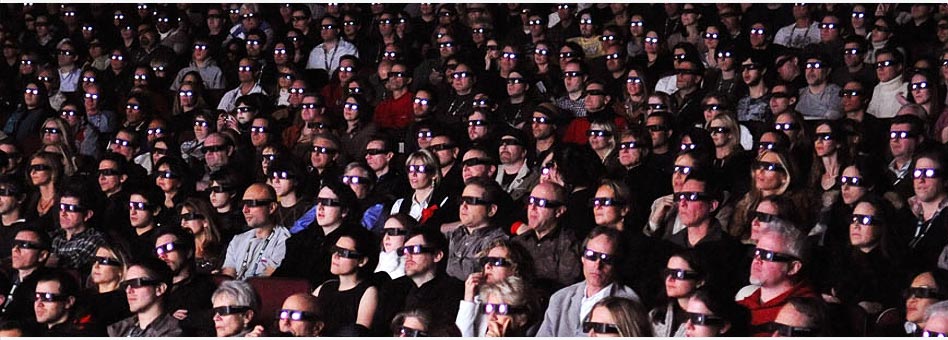
When Gaspar Noé released his excruciatingly boring porno cum arthouse provocation Love in 2015, a lot of ink was spilled about its central conceit: that the whole ponderous thing was shot in 3D, allowing Noé to figuratively spew bodily fluids in the audience’s face. (It was probably only health and safety regulations that, thankfully, kept him from literally doing so.) Love was received as the latest mad gesture from an enfant terrible, but its 3D gimmick had plenty of precedent, dating back at least to 1969’s bafflingly successful The Stewardesses.

A low-budget soft-core that promised to “leap from the screen to your lap,” The Stewardesses 3D had an incredible run, grossing 250 times its budget and playing to entranced late-‘60s / early-’70s audiences for years, despite being, objectively speaking, the fucking worst.

I’m not sure exactly how “forgotten” this Forgotbuster is – its mildly comic standing as one of the most financially lucrative films of all time and a notable innovation in 3D technology probably assure some amount of familiarity, at least to film historians, future-tech enthusiasts, and drug-addled weirdos – but it doesn’t exactly get talked about much. This is probably related, at least in part, to how mind-bogglingly terrible it is. It really has to be seen to be believed, and even now that I’ve seen it, I’m not sure I believe it. Like one of its characters, I might’ve taken some bad acid and imagined the whole thing.

Written, directed, and produced by incomparably-named apparent auteur Al Silliman, Jr. (IMDB notes his credit “as Alf Silliman, Jr.”, which just increases the ridiculousness of the whole thing), The Stewardesses 3D occasionally lays on the plot but mostly sticks to the fucking.

For the most part, this is a wise decision, since the “plot” Silliman arrives at is a deeply uncomfortable one. Like most sexploitation, the narrative is a thin, skeletal frame to provide some justification for the nudity. As a genre rarity, however, it also features a woman who drops acid, gets naked, and makes out passionately with a lamp. (Did I mention The Stewardesses is deeply weird?)

Al/Alf Silliman was also known as “Allan Silliphant”, and best known for writing the story for MST3K favorite The Creeping Terror (“Is she really going out with him?”). Silliphant, whose brother Stirling (are you still with me?) had a successful screenwriting career, kind of parlayed the family name into something like fame and fortune, a jetstream that eventually carried him to The Stewardesses.

Phew. Anyway, the stewardesses of The Stewardesses are played by Christina Hart, Anita de Moulin, Paula Erikson, Kathy Ferrick, and more (including a young Monica Gayle, who would go on to star in the semi-well-known Switchblade Sisters and the, um, less-celebrated Dr. Dildo’s Secret).

We are introduced to them mid-flight on their very swank plane, part of the Trans-Pacific SPA fleet (a fiction that Silliman, hilariously, later made real by founding his own plane company – is there anything this guy can’t do?). They are dolled-up in the traditional attire of 1960s flight staff, or at least the traditional fantasy of such attire as imagined by dirty old men.
They’re landing in L.A. after a trip from Hawaii and have an evening to kill. In the next 12 hours or so, they will smoke a lot of weed, stand around inexplicably naked to stretch, attend some psychedelic rock band’s terrible concert (featuring an uncredited, very stoned Paul Shortino, later of Quiet Riot), and have a lot of grinding sex in various combinations.

3DAll the while, the camera zooms in and out, clumsily mounting an attempt to get the most out of the 3D. It’s dizzying, and counter-intuitively unsexy despite the copious nudity. It’s hard to imagine anyone with the capacity to both keep their eyes in focus and masturbate during The Stewardesses, but I guess that’s a skill, like rubbing your stomach and patting your head, that takes practice.

The lamp sequence is the funniest and best part of The Stewardesses. One of our protagonists arrives at her parents’ house in L.A. to discover they’ve gone on a trip. “Maybe,” she considers out loud, “I’ll take a trip of my own … ON ACID.” And so she does.

Apparently because LSD either greatly increases desire or sharply reduces its user’s sense of the absurd to more manageable levels, she proceeds to writhe and grind while kissing a lamp that is made out of a statue of Alexander The Great’s head. No explanation is provided for any of this, and the scene goes on for a little over four minutes. Quick, trippy 3D flashes of Alexander The Great’s face are intercut with her fantasies and her nude, lustful form. It’s unclear how or why Silliman imagined this would be erotic. Instead, it alternates between hilarious and outright terrifying. Points for trying something new, I suppose.

stewardesses2

Weird as it is, though, the Alexander-The-Great-head-statue-lamp-fucking business is ultimately a lot more pleasant than the narrative that takes hold for the film’s final minutes. In between the assorted couplings, experimentation with the wild world of lipstick lesbianism, and a bout of cockpit sex (a pun The Stewardesses, rather inexplicably, doesn’t employ), we follow one character who dreams of being an actress. By happenstance, and the demands of pornography plotting, one of the guys on the plane works in advertising, so she promptly works to connect with him.

And this is where The Stewardesses briefly turns into a horror movie. In their scene together, it’s revealed that the wealthy, apparently well-adjusted advertising agent is wrestling with some serious demons. He casually informs us, by way of explaining the industry’s dangers, that he was sexually traumatized himself by a male superior at the firm, going along with it presumably to advance his career.

After delivering this terrible, baldly homophobic, and completely out-of-nowhere monologue, he and the stewardess lie down for what we assume will be yet another long scene of 3D sex. Instead, he appears to attack her – implicitly, we are meant to understand that his own prior assault has damaged his sexuality, and this jarringly invoked story of gay workplace exploitation has made him an apparent rapist. To put it mildly, this is not a welcome plot pivot for The Stewardesses.

In tears, she recovers from this bit of inexplicable, utter nastiness, picks up a lamp (again – The Stewardesses really emphasizes lamps for some reason), and smashes his face in, before leaping to her death from 30 floors up.

We then smash-cut to Monica Gayle back on the flight, welcoming passengers aboard and introducing the flight crew (one of whose names she clearly blanks out on … and then forgets her own character’s name. Silliman apparently didn’t feel the need to reshoot this scene). Gayle’s welcoming smile and endearing tone stands in stark, deeply un-groovy contrast to the awfulness we literally just witnessed moments ago.

stewardesses5The plane takes off, and credits roll. The implication seems to be that these things will continue and repeat forever. We thought Silliman was offering a good-time romp, but it turns out The Stewardesses is an existential nightmare of eternal return.
How did audiences receive this at the time? It seems unlikely only hippies were populating the theater — and in fact, it seems unlikely hippies would’ve wanted to check this thing out at all, being too busy with the reefers and doses and humping of household objects, presumably.

This is a movie for titillated squares — it speaks to mainstream fascinations and anxieties. But it features so dark and bewildering an ending that the mind reels. After an hour and half of halting narrative, jettisoned as quickly as it starts in favor of good old fashioned porn, this is the closing storyline?  Sexual assault, violent vengeance, and suicide? Is Silliman hinting at the darker aspects of the late ‘60s, some premonition of an Altamont-of-the-mind sneaking into his already quite bizarre piece of 3D garbage porn?

In any case, I certainly didn’t see it approaching. It has to be emphasized: all of that transpires over the course of the film’s final five minutes, as though someone said, “Hey, I’ve got an idea. It won’t take long; let’s just cut the footage in before the credits.” Who or why remains mysterious, and The Stewardesses moves from goofy curiosity to candy-colored nightmare-fuel.

Perhaps that’s why people don’t bring the film up too much. Audiences in 1969, on the other hand, were wild about The Stewardesses, which was cut down from an X to an R to capitalize on their voyeuristic enthusiasm, and repeatedly cut while it ran in theaters, with new footage being added and old scenes subtracted on the fly, so that audiences in different cities experienced different films depending on when they attended.

The marquee advertising emphasized this, rather cleverly: “Now with new footage you won’t believe!” and so forth. Part-provocation and part-dare, The Stewardesses grossed $25 million and became a sensation, the 14th top-grossing film of the last year of the ’60s.

Its development team went on to work on things like Jaws 3D, and, as mentioned, Silliman started an airline to cash in on Stewardesses­-related fandom. These things have mostly faded with time, and now the film is both a relic and something of a weird legend.

If it’s remembered well by sexploitation fans, it’s probably for the 3D gimmick and not the inscrutably horrifying ending. I’m not sure what people will remember about it 47 additional years from now.

Speaking for myself, I’m guessing it’ll be the lamp-fucking.

This piece was written for The Solute, a contribution to a series celebrating Nathan Rabin’s Forgotbusters entries on the late, lamented Dissolve. Please read all of Rabin’s pieces! And check out The Week of the Dissolve here on this site, which commemorated the anniversary of its closing.

July 12, 2016 0 comments
1 FacebookTwitterPinterestEmail
CommentaryGreat Movie Project

The tortured spaces beneath Phantom of the Opera

by rick July 11, 2016
written by rick

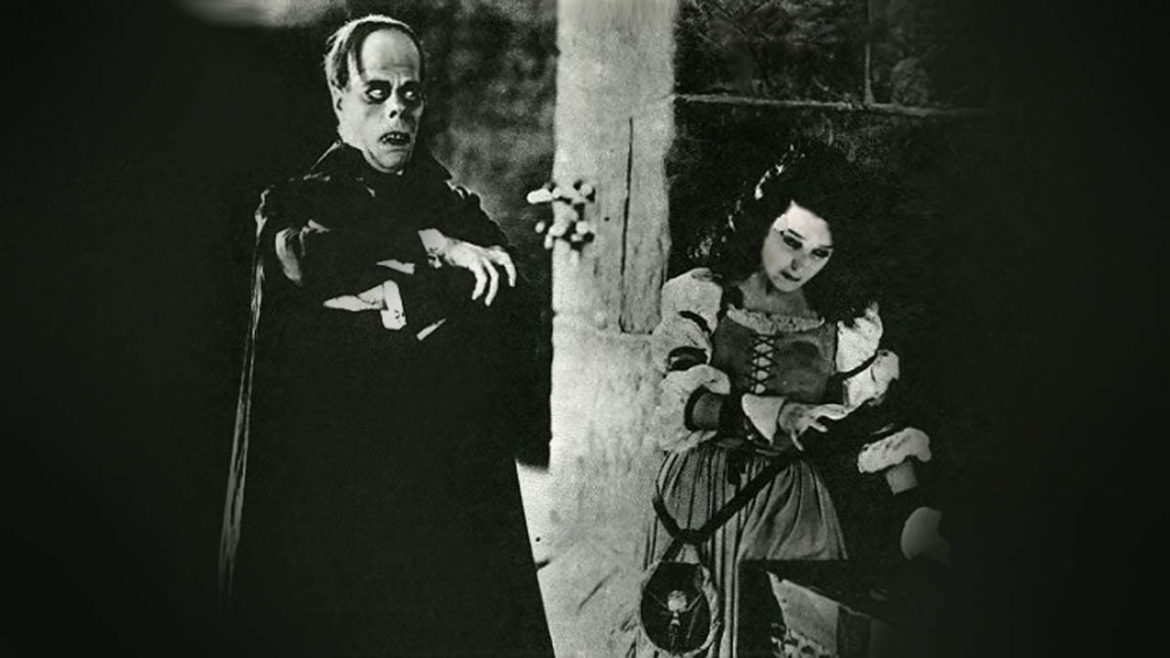
As Broadway’s longest running musical, “The Phantom of the Opera” tells a story of unrequited, impossible love and longing, set to soaring music and adored by legions of Andrew Lloyd Webber fans. What a surprise it is to discover, then, that its 1925 film incarnation, like the Gaston Leroux novel on which it is based, is a lot more like Saw.

phantom3

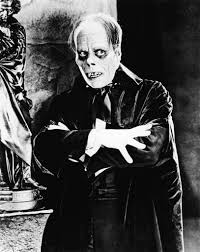
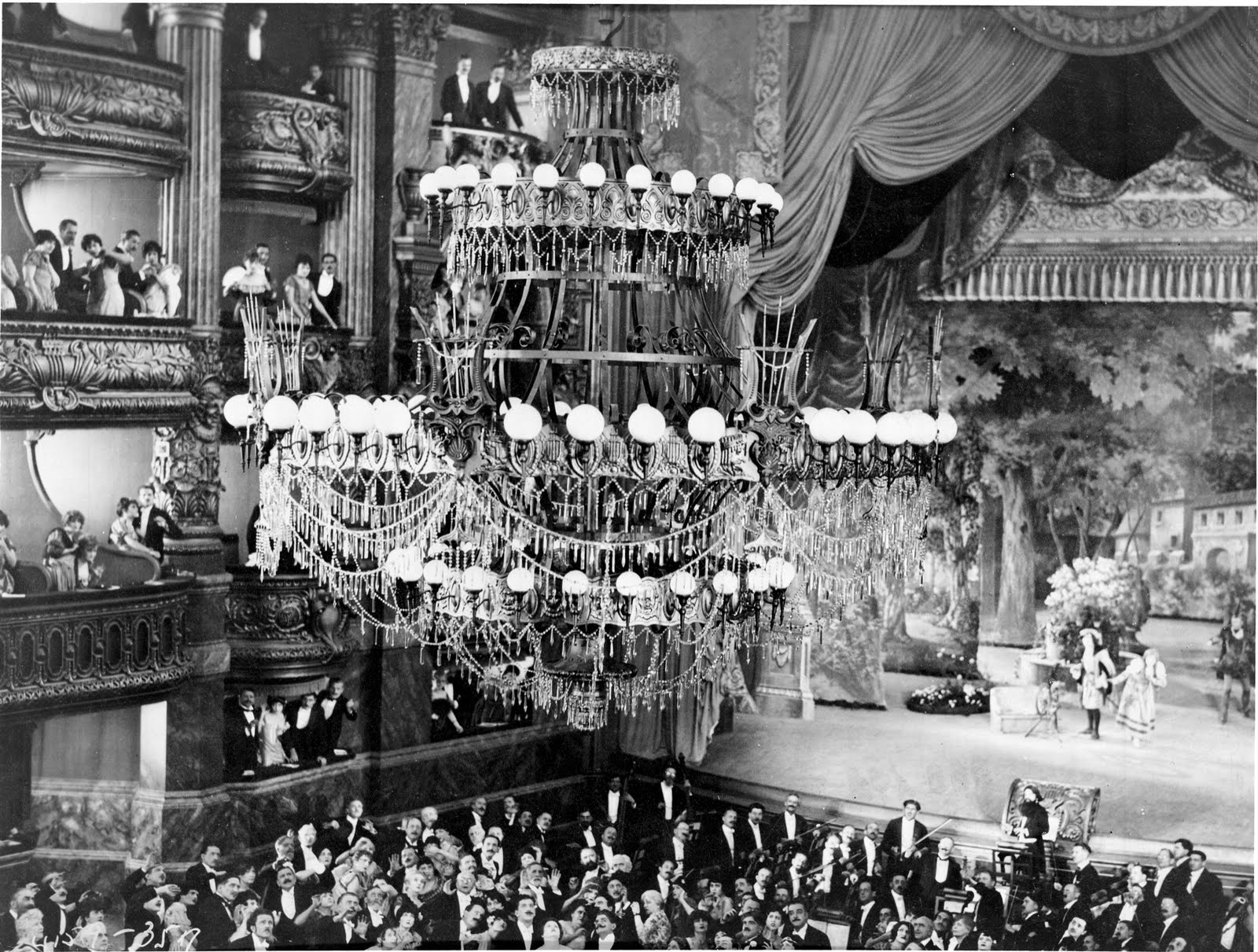
This Phantom, as embodied by Lon Chaney, Sr. (who famously created his own makeup for the part, as he did a year prior in The Hunchback of Notre Dame), is a monster. Deformed from birth, he was exiled to Devil’s Island for criminal insanity but escaped, and now haunts the catacombs below the Paris Opera House, terrorizing its guests and working his malevolent will on its performers. This is not a misunderstood lover and anti-hero: this is the kind of guy who rigs chandeliers to fall on audiences, traps people in ovens, and tries to drown them alive. “Music of the night,” indeed.

Rupert Julian’s silent version of the story had a tortured history coming to the screen, befitting its title character. Going through multiple cuts due to poor critical and audience response, and even Julian’s removal from the project, The Phantom of the Opera is a work of many hands. At certain moments, it shows. But it’s also a testament to the singular genius of the silent film industry, which created masterpieces out of disparate parts.

phantom4

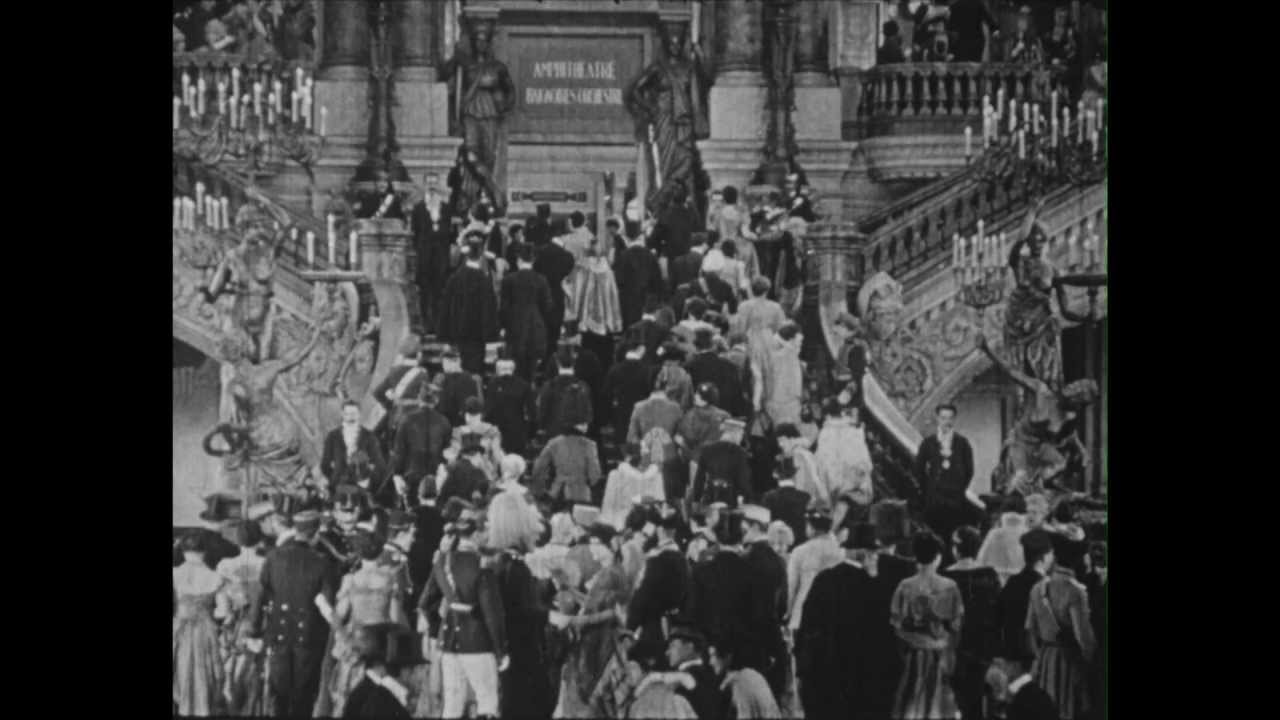
We open on the Paris Opera House, in a wide shot that emphasizes the mammoth set design. (Soundstage 28 at Universal Studios would last until 2014, hosting many films in its long run.) Dancers frolic, but a title card warns us that the entire edifice, while “a sanctuary of song lovers,” is also built over “medieval torture chambers and dungeons, long forgotten.” This Gothic note – a return of the repressed underpinning ephemeral beauty – sets the stage.

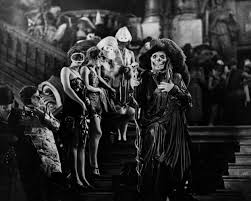
Almost immediately, there are shadows on the walls, black cats crossing paths, winding staircases, trapdoors. The Opera House has recently changed management, with the old proprietors ominously warning of a presence in Box #5.

Carlotta the Diva is being upstaged by protégé Christine, and none too pleased. Christine has the backing of a mysterious fan, who sends threatening notes demanding she take center stage. When one night, in a performance of Faust, the new owners send Carlotta on instead, a chandelier crashes into the crowd, killing dozens it would seem. Christine, who has been talking to a voice behind the walls, vanishes, from the characters but not from us. We follow her, prisoners of the Phantom, into the subterranean world in which he lives, complete with a “black river” that runs below the stage.

It’s a fascinating metaphor the film taps into: the “Phantom” doubles as art itself. This is made especially clear when Christine refuses her beau Raoul on the grounds that she can’t have both him and her work – the Phantom repeatedly refers to himself as her Master, a point literalized by her actual subjugation. The iconic mask from the Broadway t-shirt is pulled to reveal a truly hideous skeletal presence – art and life are contrasted, and the presence of death is everywhere.

phantom5

Eventually, life triumphs, but not before the Phantom attempts to burn Raoul and another would-be rescuer alive, and then drown them for good measure, while he keeps his muse prisoner in a torture chamber. Townsfolk, with requisite pitchforks and flames, throw the monster into the Seine.

This is pretty dark stuff all around. The director(s) add light touches: a comic drop through a trapdoor, ballerinas who flit and spin even offstage when hearing of the horrors. But there is nothing light about the film as a whole: it’s a deep dive into a peculiar kind of fear, that what we love may take physical form, and consume us. That we may be shut out from what animates our passions, like the Phantom himself in the cellar, and that those passions may turn hideous.

phantom2

There is over-acting (I am looking at you, Raoul) and clumsy intertitles, but, generally speaking, it works. The shadows recall Nosferatu, as do the slow-turning doorknobs and creaks we can’t hear but imagine. The enormity of the stage owes a bit to Cabiria, especially a gaping mouth through which dancers emerge and depart. A long shot of an artfully constructed stairway seen through slats is akin to German Expressionism. This Phantom of the Opera feels like it threw every nightmare detail it could think of at the wall, to see what we’d remember when we tried to fall asleep later that night.

It’s terrifying and uncanny, despite some pacing problems and edits that show. In fact, those same problems might increase the horror – The Phantom of the Opera, as envisioned in 1925, seems to give form to multiple people’s anxieties at once.

Fans of the musical, beware: there are no duets of desperate longing involved. This is a horror story, though imbued (like the best of those) with despair, and it’s one of the greatest. The Phantom of the Opera is not subtle. But subtlety is an over-cherished virtue. The film tries very hard to scare and haunt, and it succeeds.

Favorite Ebert quote:

In a strange way, the very artificiality of the color adds to its effect. True, accurate and realistic color is simply … color. But this form of color, which seems imposed on the material, functions as a passionate impasto, a blood-red overlay. We can sense the film straining to overwhelm us. The various scores (I listened to the music by the great composer for silent film Carl Davis) swoop and weep and shriek and fall into ominous prefigurings, and the whole enterprise embraces the spirit of grand guignol.

Part of an ongoing effort to watch each of the films in Roger Ebert’s Great Movies series. The introduction and full list can be found here.

July 11, 2016 0 comments
0 FacebookTwitterPinterestEmail
CommentaryFilm

Thanks for everything, Dissolve team

by rick July 8, 2016
written by rick

So, today we wrap up The Week of The Dissolve. It’s been a fun, occasionally melancholy stroll down meta-memory lane. I hope you’ve enjoyed it.

As should be abundantly clear by now, The Dissolve meant a lot to me, and still does. Given the horrific events of this past week, as we’ve watched the country implode under the weight of white supremacy and unconscionable violence, you might wonder why it’s even worth discussing some website about movies that doesn’t even exist anymore.

I get that, and it’s fair. For me, there are two reasons. First, The Dissolve was always a refuge, a place to consider viewpoints on art that expand the world rather than shrinking it down. There’s an inherent value to that. Secondly, its community of writers and readers made me feel a little less alone. I don’t know about you, but that’s something I could use today more than ever. Are the topics frivolous when viewed in the context of world-historical events and relentless sorrow? Sure, I guess. But sometimes frivolity is a needed reprieve. And some other times, seemingly minor discussions offer avenues to deeper insight.

The Dissolve was a unique and important thing. As evidenced by the ferocity of its enthusiasts, it still hasn’t faded. It burned bright and left a mark.

We close with a round-up, necessarily partial, of where its writers can be found now. Thanks for reading my stuff this week, and thanks for reading their stuff yesterday, today, and tomorrow.

As they say, see you at the movies.

__

  • A good portion of the original crew is back in podcast form! The Next Picture Show is a delightful collection of astute critics doing what they do best. If you’re not listening, you are missing out.
  • Nearly everyone has a letterboxd account and a Twitter presence, if that’s your thing.
  • Nathan writes two columns for The AV Club, My World of Flops and Silly Little Show-Biz Book Club. And two for Rotten Tomatoes: Sub-Cult and The Simpsons Decade. He’s also got a column going on Splitsider (Pod-Canon), and another at Mom.me (which I can’t recommend highly enough). You can also find him at TCM Backlot.
  • Tasha’s got some AVC stuff too, and her writing on The Verge is truly excellent.
  • Scott is everywhere, including NPR, The Washington Post, and who knows where else. All the places.
  • Noel helpfully rounds up his links weekly on his site, and you would be well-advised to read them all. He writes for Rolling Stone, The L.A. Times, AVC, and more.
  • Keith is now the editorial director at Uproxx.
  • Genevieve writes for New York Magazine.
  • Matt is doing good work at Screencrush, and also eating a bunch of bullshit. (Sam Adams is over there, too! Enjoy.)
  • Rachel has taken her hilarious voice and much-needed insight over to MTV.
  • Charles’ meteoric rise continues at Rolling Stone, despite being, as I understand it, a child goddammit stop being so good it’s annoying. (Not that I’m bitter or something.)
  • Matthew Dessem is on Slate, and recently published a book that I really, really need to read.

I’m sure I’m forgetting people, and probably fucking up the resumes of those I’ve included. But that’s a start. Let me know if I missed important stuff, and I’ll fix it.

Thanks again, everybody, for writing, and reading, and caring about things. Talk soon.

July 8, 2016 0 comments
1 FacebookTwitterPinterestEmail
CommentaryFilm

The Dissolve Legacy

by rick July 7, 2016
written by rick

The Week of The Dissolve soldiers on.

At this point, you may well wonder how much more I could possibly have to say. It’s not an unreasonable thing to wonder, but you may be surprised — I’ve actually been pretty moderate in my gushing praise so far. In my mind, I am a polite guest at a party, nodding amiably and praising the appetizers, helping bus the tables, making sure the elderly have chairs. Point being: I’m just happy to be invited.

Is that a ridiculous way to construe engagement with a website? In a word, “yes.” But in two other words, “also yes.” The answer, it turns out, is basically yes. Spoiler.

After Monday’s Keynote and Tuesday’s highlights, I wrote a bit, in general terms, about you glorious bastards whose comments both supplemented and constituted the site. Today, we get more specific.

One of The Dissolve’s defining features was its generosity — in scope and analysis, but also in participation. Its readers were often creators in their own right, and many others became creators afterwards. (I’d suggest this was not a coincidence.)

There’s a certain element of internet creation and engagement that shuts things down. I, personally, have often felt anxious about posting anything, because people will jump down your throat. Or you might read through things so overloaded with references you shake your head and decide you’ll never have a seat at the table — it just feels silly. Like, “How can I even get into this conversation? I don’t know anything.” The internet can be a dispiriting, shitty place.

The Dissolve, on the other hand, opened things up. It was an invitation. The prevailing sense, fostered by writers and mostly maintained by readers, was that there were plenty of seats, so calm down and come on in. If you saw a movie, then you have exactly as much authority as everyone else. Or, to get political on you, authority itself is the illness infecting the social body. As a person who exists, your viewpoint is worthwhile.

I was on BART last night, coming home from work. The seat in front of me had lots of graffiti scrawled on it. But the one that I focused in on was a simple statement, written in plain text with an exclamation point.

It read, “SAY IT!”

Here are some sites Dissolvers have been posting on, and some various endeavors. They represent a number of different avenues, and a variety of ways people have considered the mediated worlds in which they exist. I’d like to think they embody a particular kind of inquisitiveness The Dissolve itself fostered.

Please check them out and support them.

Thanks for efforts, folks. I know it’s not easy, and I’m so grateful you exist.

Without further ado, here are some things! If I missed you, feel free to self-promote.

LINKS

  • The Solute is the most overt offshoot of The Dissolve, as its name cheekily implies. Read all their stuff.
    • Dissolver and Soluter (?) Michael Guarnieri  has a thing in a book, which is pretty neat, if you’re into books or whatever I guess
    • Check out Sam “BurgundySuit” Scott’s business
    • And John Bruni’s. (Also, his book “Astonishment and Recognition: Observing Systems in the Films of John Cassavetes”, is under review at University of Fordham Press, and if you get a copy before me, please send it, because that sounds amazing.)
  • The Dissolve Lives On features movies of the week, always well-curated and worth your time.
  • The Making of a Superhero Musical
  • Mason Maguire’s Compendium Review Page
  • Zach’s Film Thoughts
  • The Flip Side of the Coin
  • Sean Duffy makes the films
  • Medleyana
  • Aaron Armstrong and Peter Moran have a wonderful podcast, We Love To Watch. It’s terrific and the best and you should listen to it right now and I’m absolutely not just saying that because they had me on.
  • Ethan Warren made a movie. See if it’s headed your way.
  • Here’s an experimental short from Erik Jarvis.
  • Marcus Jones’ Crushed Celluloid is one of my favorite things. It should be one of yours, too.
  • Jason Ooi writes for The Playlist, but got his start over here.
  • Tom Peeler points cameras at things and calls it art.
  • Mike Vanderbilt writes for something called The AV Club, The Daily Grindhouse, Consequence of Sound, and Night Flight. He also hosts Drinks On Monday, if you enjoy drinking or Mondays, and Revenge of the Pod People, which is probably not as terrifying as it sounds. He also once made a movie called Space Werewolf, which finally answers the question I’ve been considering since childhood: what if there was a space werewolf though? Think about it.
  • Joseph J. Finn, noted Dissolver and Person Most Likely To Have A Middle Initial, also has a podcast. It’s called Try It, You’ll Like It! You should in fact try it, and discover it is enjoyable for you.
  • Kevin McLenithan is a staff writer at Christ and Pop Culture, which I assumed was a site focused on the Church’s views on soda advertising, but is actually more interesting than that.
  • Michael O’Malley has a terrific blog.
  • And Swampflix! Please read Swampflix.
July 7, 2016 0 comments
1 FacebookTwitterPinterestEmail
Commentary

The Dissolve and “The Dissolve” – On Readership

by rick July 6, 2016
written by rick

We kicked off The Week of The Dissolve with some personal reflections on what the site meant to me, and then followed that up yesterday with a few of the many highlights from its editors, staff writers, and contributors during its too-brief run. Today, we focus on the readership.

As I’ve repeatedly emphasized, one of the more remarkable things about The Dissolve was the community it fostered among its readership – a community that has outlasted the site.

I can’t think of too many similar examples, and I know for a fact I’ve never been part of one. It’s not an exaggeration to say that, for myself and quite a few others, the collapse of The Dissolve was painful and worrisome not just because we valued the insight of its writers and the scope of their knowledge, but also because we feared the loss of connection to people who started, in the comments, as relative strangers, but became a lot more like friends you’d never actually met.

How did that happen? For veterans of various internet forums, it’s probably not too weird. (And for Dissolvers, this is probably an unnecessary retread.) But for those of us, like myself, who always shied away from that kind of participation, it retains an air of mystery. Why The Dissolve, and not some other site’s comment section? It’s not like the internet is lacking comment sections.

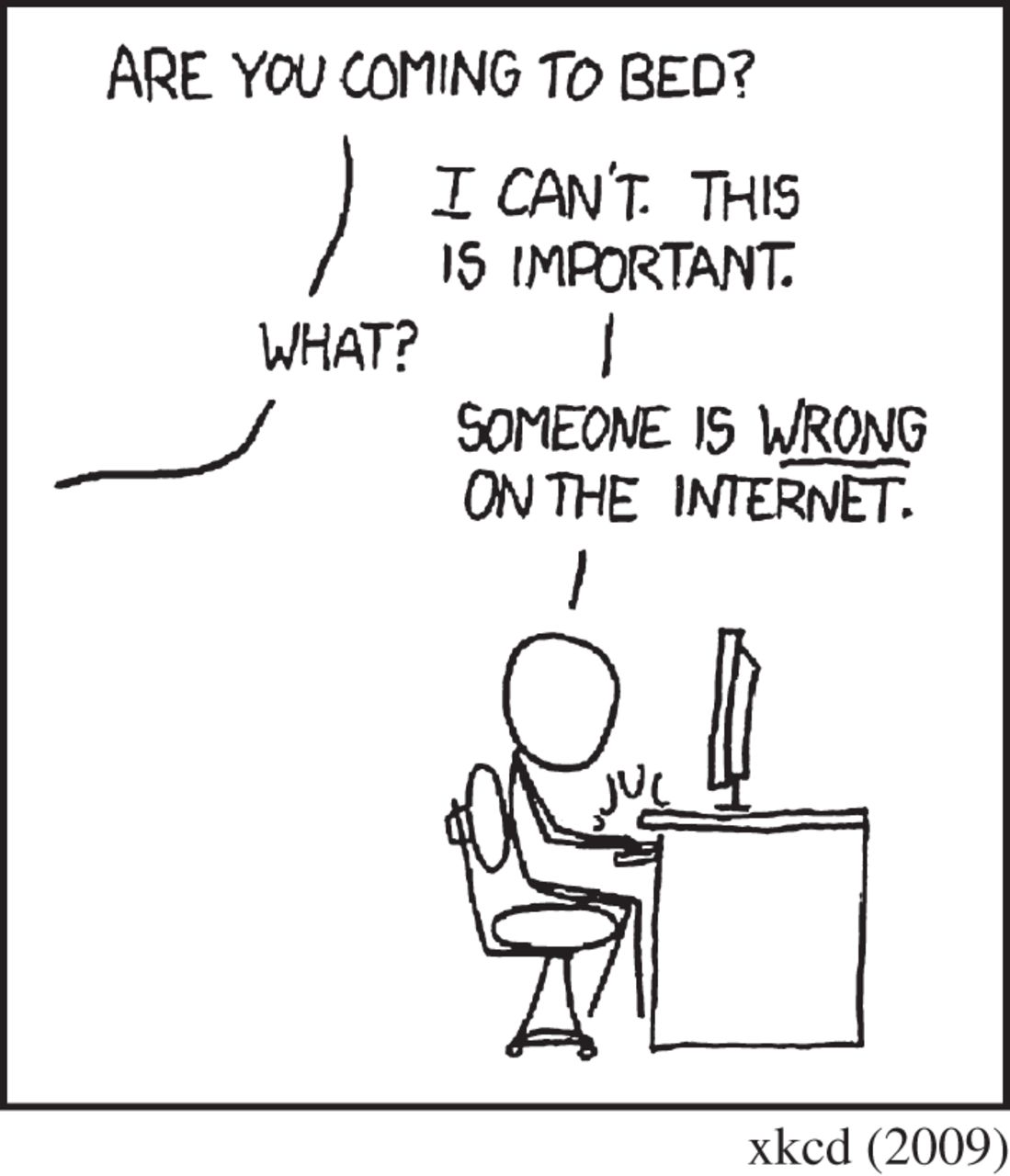
On the other hand, those comments section usually look a bit more like this:

someone on the internet is wrong

The Dissolve readership? A bit less so. There were a few reasons I can think of off-hand for this.

First, the nature of the analysis and topics addressed encouraged participation, reflection, and friendly debate. A year ago, I summed up my take on the implicit tone and emphasis of The Dissolve:

[T]hat there’s validity to your viewpoint and you can approach things without tearing them down, but just to engage with them, see how they work, invite others to agree or disagree without it turning into some nasty or cynical endeavor to show how smart you are.

As a result, this tone carried over to the conversations beneath any given article, which overwhelmingly maintained an air of camaraderie that was almost entirely lacking the standard internet vitriol. It was an exception then and remains one now.

But a lot of the charm and the participatory impulse can’t be attributed to the writers at all. (No offense to them, of course, and I’d imagine they’d agree.) There was an admirable sense of initiative that animated the discussions among its readership. Folks effectively commandeered the comment sections for our own purposes, which the site’s editors may or may not have found laudable. Comments are surely welcomed; your readership using your work as a launching pad for entirely extraneous endeavors might conceivably be annoying. To its great credit, The Dissolve took a largely hands-off approach to the discursive runaway train its comment sections became – if anything, the occasional presence of its contributors in those discussions encouraged their growth, blurring the line between text and (literal) subtext.

Daily features appeared in the comments, as well as a number of self-born series. It became its own world down there. A profoundly non-exhaustive list: there was Lovefest, where people wrote essays about derided films they nevertheless enjoy (Hatefest fared less well, with people eventually deciding it was too toxic and contrary to the spirit of the thing); there was the Self-Promotion Thread, where people claimed space to talk about what they’d been working on; there was a Corner of Happiness, in which we took a moment to celebrate something good in our lives; there was The Dissolve Record Club, the Summer of Rabin, and a million more I’m forgetting.

For the various recurring sub-features, enterprising commenters created posting schedules, so people weren’t talking over each other. There were no hard and fast rules handed down by erstwhile moderators, but something very much like a democratic process invented on the fly. Whether people knew it or not, they were engaged in what seems, in retrospect, to be a model of anti-authoritarian discourse and organization, even if we mostly eschewed overt politics for discussions of culture both meaningful and deeply silly.

Or at least I thought so. (I’ve been accused in the past of making too much of things, and I wouldn’t argue too strenuously against that notion.) But what remains strikingly clear, reading through some of those threads now, is how committed and passionate people were to the discourse, and to the atmosphere.

It would be so, so easy to make fun of all of this – and some surely did. It was a touchy-feely, super-sensitive forum, filled with people eager to congratulate each other, to disagree agreeably, and to engage in smart, polite conversation. All of these things are anathema to the wider culture. And The Dissolve was valuable for that reason alone. (You will notice how easily I slip between using “The Dissolve” to refer to the site and to refer to the community, the readership and its site-within-the-site. This is emblematic of the sort of identification it fostered, as well as the weird, subterranean set of connections it allowed, whether it meant to or not.)

I’m quoting someone – I don’t remember who – when I call The Dissolve “the last bastion of decency on the internet.” I’d go further and call it – the sub-Dissolve – a radically democratic experiment in being kind.

It was a wonderful thing while it lasted, and a small miracle that it’s continued in offshoots and different forms since the overarching framework The Actual Dissolve provided ran its course. The Dissolve Facebook group has grown to over 1,000 members, and many of the features born in the comments have made the transition. Of course, Facebook has its own problems, which moderators and participants have worked to navigate. It’s not a perfect substitute, but it’s an admirable attempt to keep something meaningful alive.

The Dissolve, to make a long story longer, was made by committed and passionate writers, and sustained by a readership who made it their own in unique ways. Since the site folded, many of its participants and enthusiasts have also launched projects of their own. (Many, of course, were working on projects long before they found The Dissolve, too.) Tomorrow, we’ll spotlight as many of these as we can.

The lines between reader and writer were always porous on The Dissolve during its run. It’s fitting that its legacy should involve both.

__

Tomorrow, we’ll check in on what some readers have been up to in the months since The Dissolve folded. On Friday, we’ll wrap this thing up by emphasizing the various greener pastures in which the site’s writers can be found these days.

July 6, 2016 0 comments
1 FacebookTwitterPinterestEmail
CommentaryFilm

The Dissolve: Some (Highly Subjective) Highlights

by rick July 5, 2016
written by rick

Yesterday, we kicked off The Week of The Dissolve with what the site itself, in one of its “Movie of the Week” features, might’ve called a Keynote. Today, continuing this meta-One Year Later appreciation thread, we move on to some Essentials.

The Dissolve’s core team produced a veritable hit parade of reviews, commentaries, interviews, re-considerations, and features, bolstered by a solid roster of consistently insightful contributors. There’s no way to do their collective output justice in a single post, so I’m not going to try.

Instead, here are a handful of pieces that stick out in my mind and which I’ve returned to since their publication. The selection process wasn’t exactly rigorous. There were no specific criteria apart from that, and I didn’t spend much time combing through the stacks. These are, simply put, representative samples of an impressive body of work, according to one reader. In each case, you might well respond, “Sure, but what about this other one, though!” and I’d probably shrug and agree.

These are some candidates for inclusion. Feel free to add your own in the comments. (Or just follow the links and enjoy — The Dissolve is, thankfully, still available for your reading pleasure.)

[Editor’s note: Images do not necessarily correspond with authors mentioned. Except for Rabin’s, who is, in fact, a dead ringer for Burt Reynolds.]

Charles Bramesco

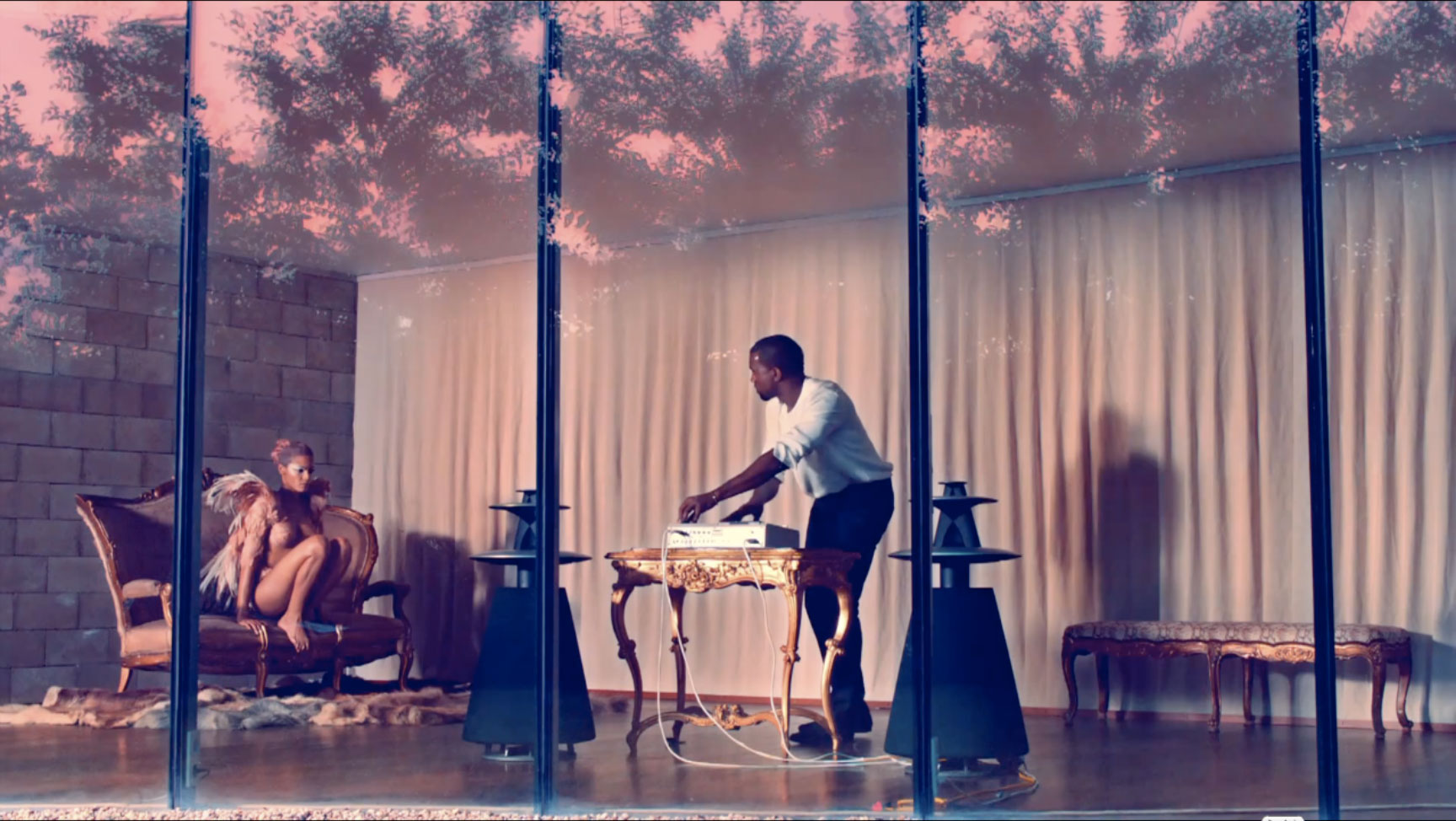
kanye

A later addition to The Dissolve team, Bramesco ably reported on the news of the day with wit and insight. But I’m particularly fond of longer pieces like this one on “Kanye West, filmmaker”, which combined clearly personal fandom with a wider lens on less-considered intersections of cinema and pop-culture. It’s good stuff:

West’s ability to simultaneously self-aggrandize and self-efface has made him the polarizing figure the public loves to hate, and his films place that contradiction front and center. “We Were Once A Fairytale” finds a lightly fictionalized version of West drunk as hell and acting a fool up in the club. After clumsily failing to impress women with his status as a celebrity, and generally embarrassing himself, West stumbles into the bathroom, where he stabs himself with a conveniently available  knife. Instead of viscera, however, rose petals spill forth from West’s wound, along with a little stop-motion critter credited as “Henry” (a nifty throwback to Charles, the anthropomorphic dog-headed man from Jonze’s video for “Da Funk” by Daft Punk). The film shows both sides of Kanye—the self-proclaimed International Asshole, and the hurting, artistic soul—without using one to explain away the other.

Mike D’Angelo

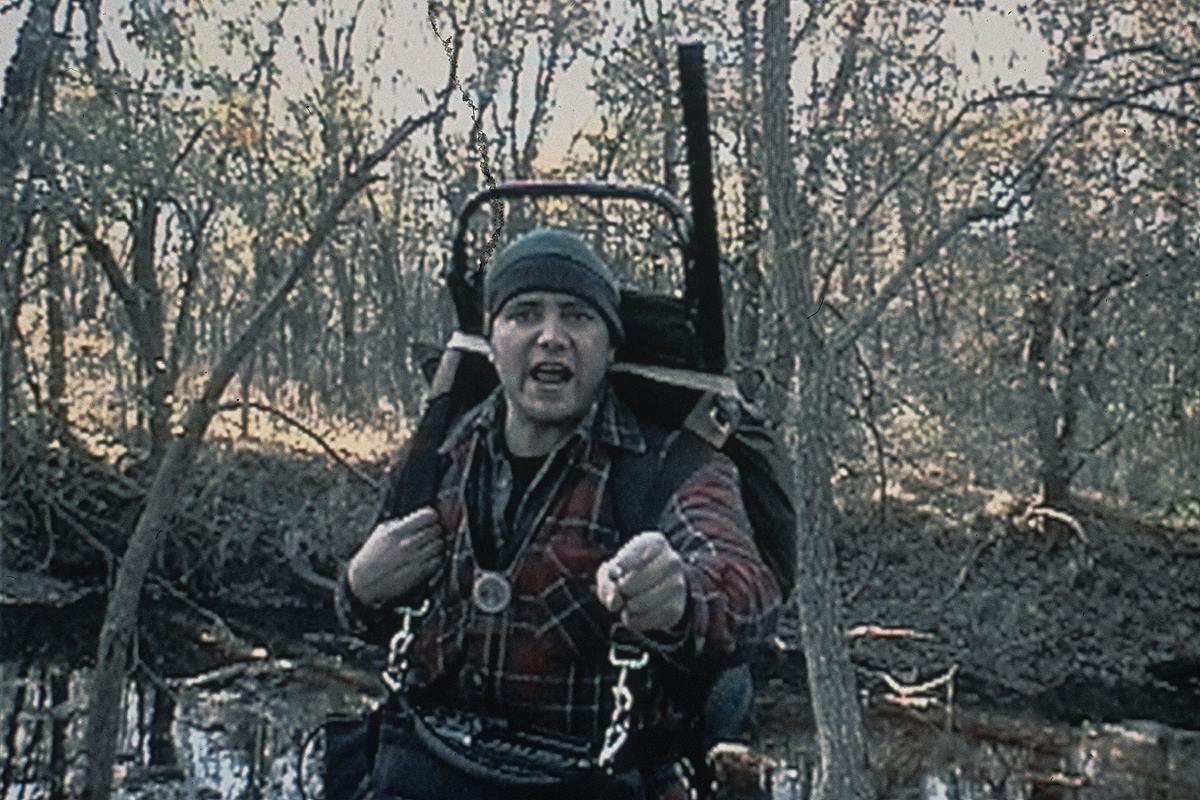
blair witch2

D’Angelo is always fascinating to read, bringing both an obvious breadth of film knowledge and some refreshingly idiosyncratic viewpoints to the table. (Read the comments on any given D’Angelo piece and they usually seem split between those who generally agree and others who think he must’ve watched an entirely different film.)

Reviews aside, though, it’s in things like “15 years beyond the hype and hatred of The Blair Witch Project” that his insight pays off. This offhand (parenthetical, even!) observation about the central role editing played in the ultimate found-footage success story is typical:

(Quick aside: Part of what makes this approach so unusually effective here is that Blair Witch, though ostensibly consisting of the footage these three kids left behind when they disappeared, has been trimmed down to the bone. Myrick and Sánchez, who edited as well as directed, are utterly ruthless about cutting away from any shot the instant it becomes less interesting; many of the film’s “scenes” last 10 seconds or less, especially early on. This makes no sense at all in terms of the found-footage conceit—Who’s supposed to have assembled it so efficiently? The people who found it? The witch?—but it serves both the pace and the actors extremely well. Any moments when fiction and reality weren’t in sync were tossed aside, and if that demanded the inclusion of a single line or expression ripped from its context, so be it.)

Matthew Dessem

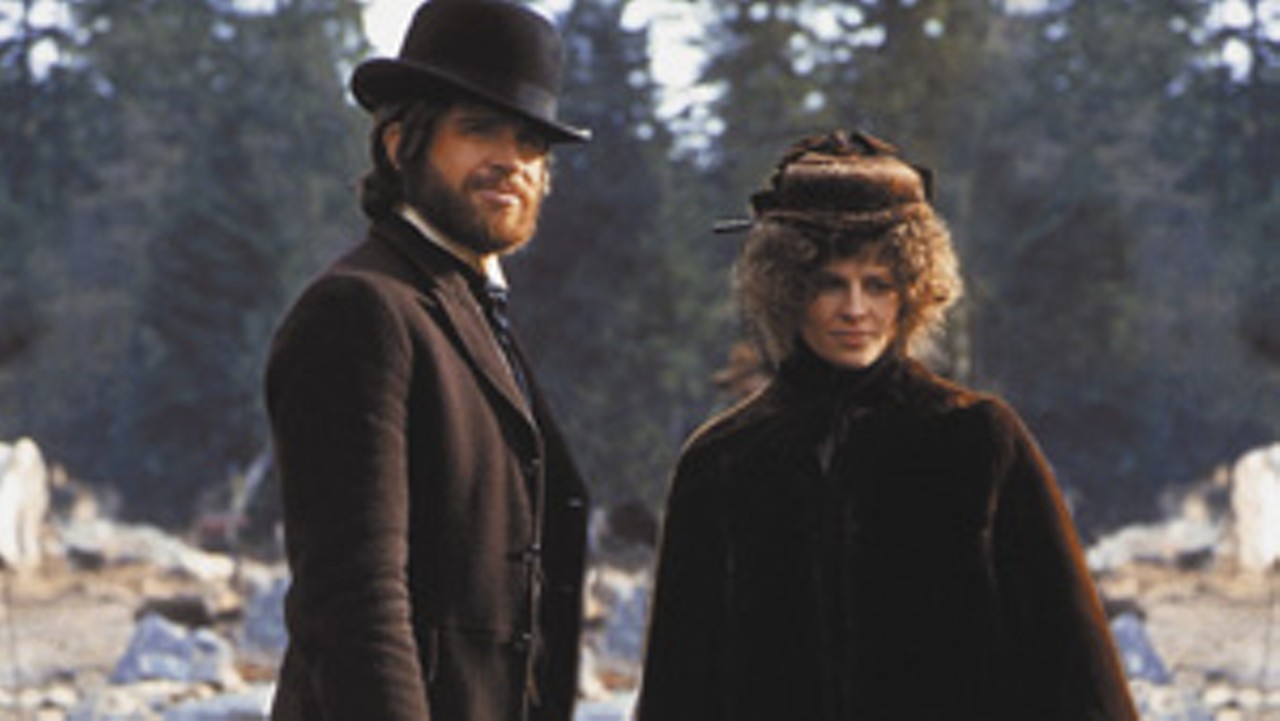
mccabe

Dessem is one of the most astute critics around (and I don’t say this just because I share his fascination with early film). In “The making and unmaking of McCabe & Mrs. Miller“, he took one of his standard deep dives into the creation of a classic, exploring the conditions and contradictions of Altman’s adaptation in absorbing detail. It’s one of my favorite pieces The Dissolve ever published, and I re-read it regularly:

Not to say that after all that, the writing was the most crucial part of Altman’s style in McCabe & Mrs. Miller. It was essential, but not sufficient. The real truth Kael was getting at by ignoring the writers is that a lot of how the film feels is found around the margins. In the unimportant, half-captured dialogue. In the tiny scenes that go nowhere, while the main engine of the story moves along elsewhere. So although it’s wrong to say Altman transformed a story that meant something different into McCabe & Mrs. Miller, it’s entirely accurate to say he changed the way the story felt.

David Ehrlich

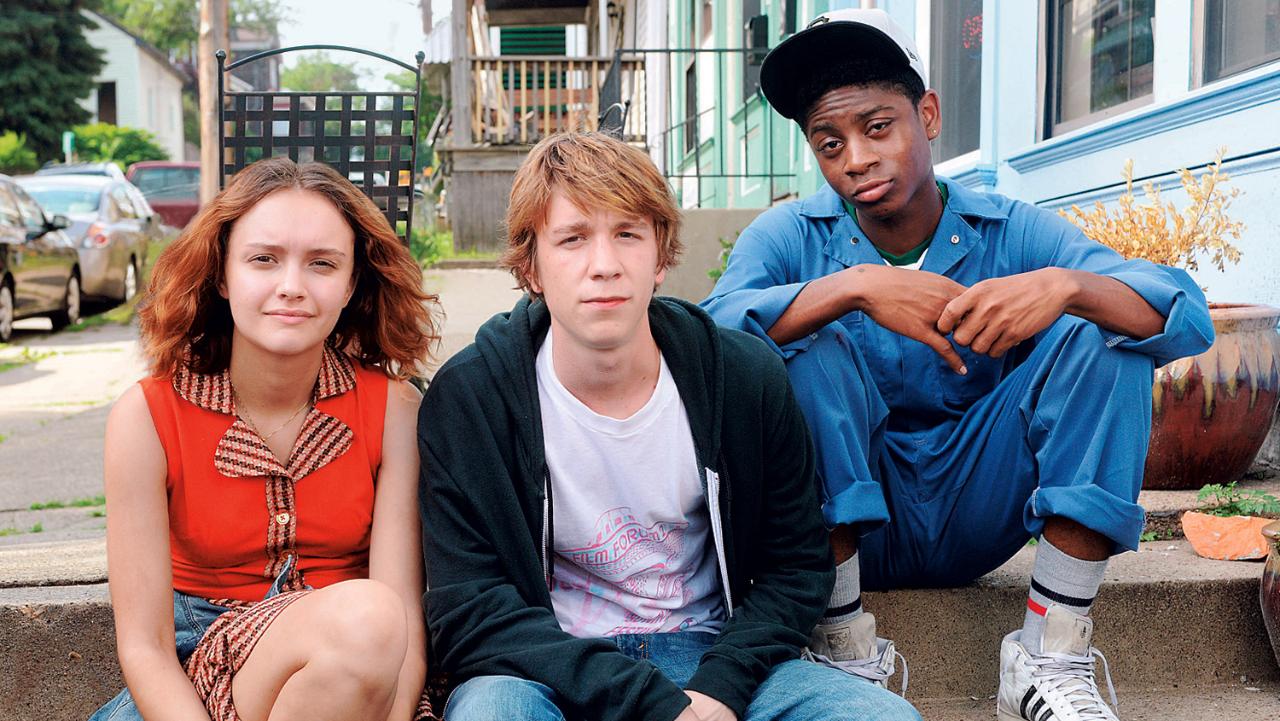
me and earl and the dying girl

Ehrlich is another idiosyncratic writer and critic, the kind of guy who will nominate Girl Walk // All Day as the 10th best movie of the century so far and surprise absolutely nobody with such an offbeat selection.

But his piece “This is the part where I defend Me And Earl And The Dying Girl” is an entirely different beast. Intensely personal and gorgeously constructed, it’s the single most painful piece of film of writing to which The Dissolve ever gave space. Given that it’s hard to imagine any other site doing the same, maybe it’s also the most important one:

This is an article about perspective, written by somebody who currently doesn’t have any. It’s an article about death, written by somebody who can only talk about it like he’s speaking a second language. It’s an article about why, in the most confusing time of my life, one of the only things I’m sure of is that some stupid Sundance movie is being widely misunderstood. Maybe that put me in the perfect headspace to write about Alfonso Gomez-Rejon’s controversial new film (controversial on Film Twitter, at least), but if I knew what I wanted to say about it, I had no idea how. I still don’t. I wasn’t sure if I should make this personal—I wasn’t sure if I should make it about me—and so it is and it isn’t, lost in the limbo between a diary and a term paper, part Xanga and part Film Comment. I’m not ready to write about this stuff, but I so desperately want to be that I couldn’t stop myself.


Anyway, spoiler warning: You probably shouldn’t read this before you’ve seen Me And Earl And The Dying Girl. Or after.

Rachel Handler

oscars

Rachel Handler was one of the newer voices on The Dissolve, and one of the funniest. There are a number of pieces I could’ve chosen here — her Read On selections of “Essential Film Writing” were always well-chosen and often filled with endearing running gags — but it was her Female Stuff column, with the deadpan subheader “How’s The Movie Industry Treating Women This Week?”, that I most looked forward to. Rounding up extensive news items and commentary and presenting them in a singular, wry, and slightly exhausted voice, she brought much needed attention to issues of representation that were in short supply elsewhere. This summation of Oscar diversity (or lack thereof) can stand in for the important discussions she emphasized:

Overall, was this a positive, negative, or neutral week for women in movies, Rachel?


Well, Rachel, I’m gonna have to go with negative. I know, I listed more good signs than bad here, but the bad signs were pretty damn bad, weighing heavily in the balance. The Oscars, which are (somewhat sadly) arbiters of taste to millions, are failing to honor significant achievements by women and people of color, and the industry’s employment of women is somehow declining, even though it feels like something we’re talking about now more than ever. It’s 2015, people! Let’s get our shit together.

Genevieve Koski

jurassic world

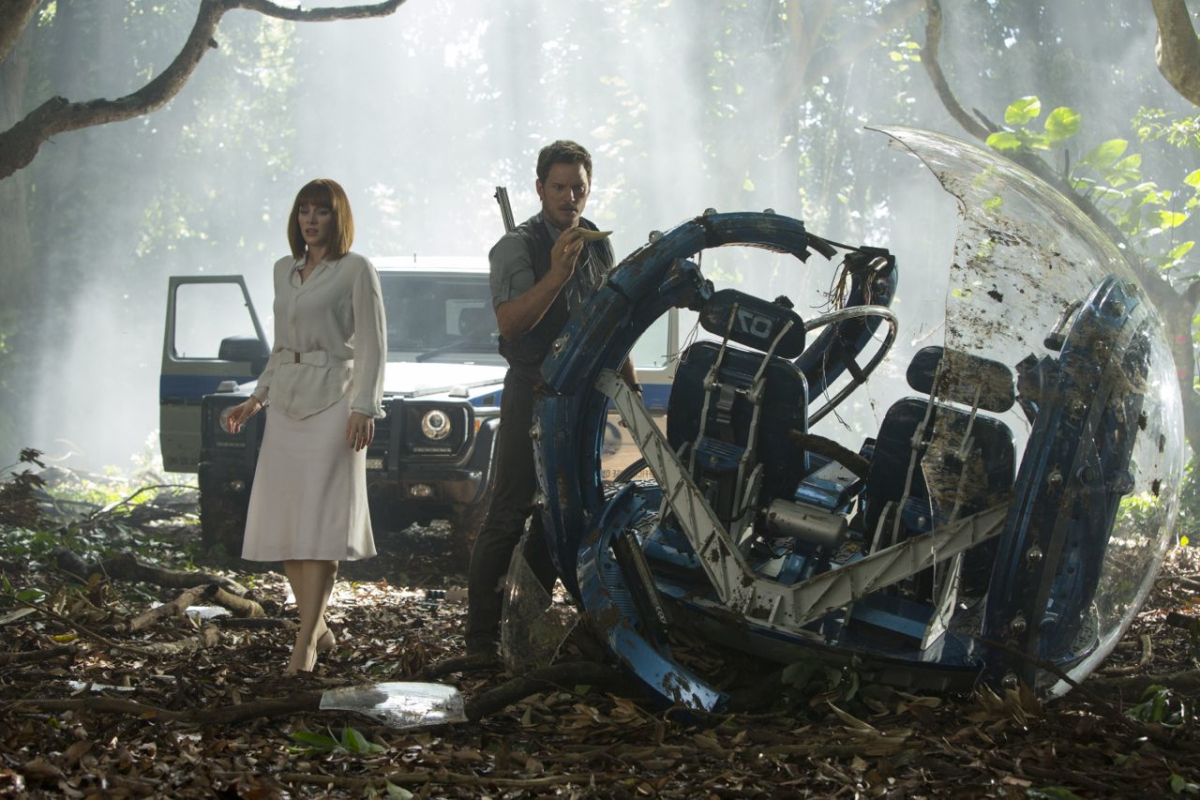
Based on sheer output, Dissolve Managing Editor Genevieve Koski likely played a larger role behind the scenes than on the page, but her writing was always a treat. A memorably insightful and witty entry on “Jurassic World, high heels, and why wardrobe matters” focused in on the gendered design aspects of mainstream film; a later one expanded on “Hollywood’s ‘female stuff’ problem,” a worrying narrative impulse that “reduces the inclusion of women and stories that speak to them down to a gimmick, something to be grafted onto a project to expand its potential consumer base”:

This may not seem like an important point, because it’s not, relatively speaking. (The absurdity of Claire’s footwear in the film has already been mocked, in characteristically charming fashion, by none other than Pratt himself.) It’s a minor flaw in an otherwise solidly realized, if not exactly groundbreaking, character. But it provides a handy object lesson in why wardrobe matters: Wardrobe is a storytelling tool, same as production design and music and even CGI, all of which Jurassic World make smart, ample use of. Wardrobe allows filmmakers to reveal details about characters, or show their development, without drawing attention to it through dialogue. Wielding wardrobe sloppily may not ruin a character, but it’s a missed opportunity for a deeper level of characterization.

Noel Murray

dissolve murray

Dissolve Staff Writer Noel Murray was, and remains, an almost frighteningly erudite and knowledgeable pop-culture encyclopedia. Reading his stuff, there’s often a disconcerting sense that he knows literally everything about everything. Surely, this can’t be true — I assume he just knows a lot about a lot, while also being an accomplished researcher. (Or at least I hope this is the case. The alternative is eerie, and, if true, we should probably prepare ourselves for his eventual takeover of the planet.)

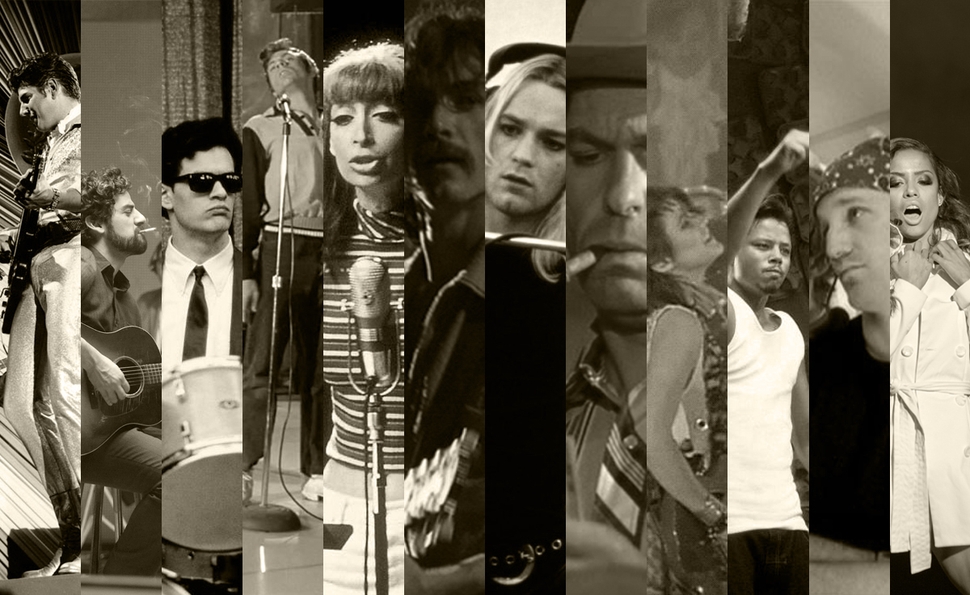
Here is one example of many, but a favorite: “The history of American pop, via 12 fictional acts”. It’s a listicle, that oft-derided feature. But on The Dissolve, and in Murray’s hands, it’s one that actually informs while it entertains, thanks to his expertise and enthusiasm:

The 12 acts below—some solo, some bands—appear in comedies, dramas, musicals, and art films, and represent multiple genres and eras. There are plenty of other fake musicians who could replace or complement them, but this dozen collectively fills an alternate-universe timeline of chart-toppers and obscurities, stretching back over a half-century. Together, they function as a mosaic of American popular music, illustrating what artists have struggled with since the emergence of rock ’n’ roll: trying to connect simultaneously with young people and with the older corporate lackeys who are signing the checks.

Keith Phipps

laserblast-1Keith Phipps, Dissolve Founder and Editorial Director, seemed to wear a number of hats, as his title would indicate. But my favorite was resident sci-fi guy, deploying an apparently encyclopedic knowledge of the genre and its particular instantiations in the Laser Age feature.

I’m not a sci-fi guy by a long shot, and I always found these entries fascinating, like when he gamely revisited MST3K favorite Laserblast and placed it and some contemporaries in almost loving context:

In the three-year gap between Star Wars and The Empire Strikes Back, film after film appeared thanks to that logic, with a surprising number of them able to make it into theaters just a year or so after Star Wars’ release. Some movies are easy to rip off on a low budget, as evidenced by the pile-up of slasher movies that started appearing seemingly from the moment news of Halloween’s box-office returns was passed around. In that case, all anyone needed was a knife, some screaming victims, and a halfway novel premise. (Or sometimes just a knife and some screaming victims.) Star Wars isn’t one of those cheaply reproducable films, yet that didn’t stop some producers from trying.

Nathan Rabin

burt-reynolds-photo

By now, expressing my admiration for former Dissolve writer Nathan Rabin seems like belaboring the point.

I have written a straight-up appreciation. I have shamelessly stolen his ideas: the “You Might Also Like” concept (two times), the “Mutations” conceit (once), and a soon-to-be-posted “Forgotbuster” entry or two. (It’s here! And here!) I watched and reviewed Foodfight!, despite the facts that his review for the AV Club needed no epilogue and, frankly, I didn’t need Foodfight! in my life. Rabin’s one of my favorite writers, full-stop. His work combines wide-eyed incredulousness and incisive wit with a genuine sympathy for the overlooked and much-maligned in ways I find deeply affecting. And he makes it look so easy.

Any number of pieces could stand in for the more general tenor of his work here. I would be remiss if I didn’t link to his Philip Seymour Hoffman piece, which is sad and perfect, and which captured a lot of the sorrow film fans experienced at that artist’s unexpected loss in 2014.

I opt here instead for this delightful write-up of two Burt Reynolds films, published as part of that same “Forgotbusters” series that I will soon be mangling in his honor for your amusement. Neither Hooper or The End seem remarkable in their own right, but Rabin uses an astute analysis of both as a launching pad to discuss wider issues of celebrity and 1970s cinema. Affectionate but bemused, it’s typically engaging and funny:

Hooper eventually steers in the direction of a dramatic conflict similar to that of countless previous heroes torn between their need for safety and security, and the irresistible pull of that one final job that promises to send them out in a blaze of lucrative glory. But it’s a tribute to the filmmakers that for its first hour or so, Hooper doesn’t seem headed anywhere much at all. It’s a markedly 1970s movie, one less concerned with plot than with people being people. Much of the first two acts are devoted to Hooper and his buddies simply goofing around, trading impressions and affectionate insults, and sharing in the folklore of the stuntman trade. But because this is Burt Reynolds and Hal Needham’s version of a rambling 1970s character study by way of a goofball comedy, the things the characters do while passing the time include getting into a wonderfully high-spirited bar fight with a group led by Terry Bradshaw. The fight concludes, in the traditional fashion, with the principals being thrown out of the bar’s window.

Tasha Robinson

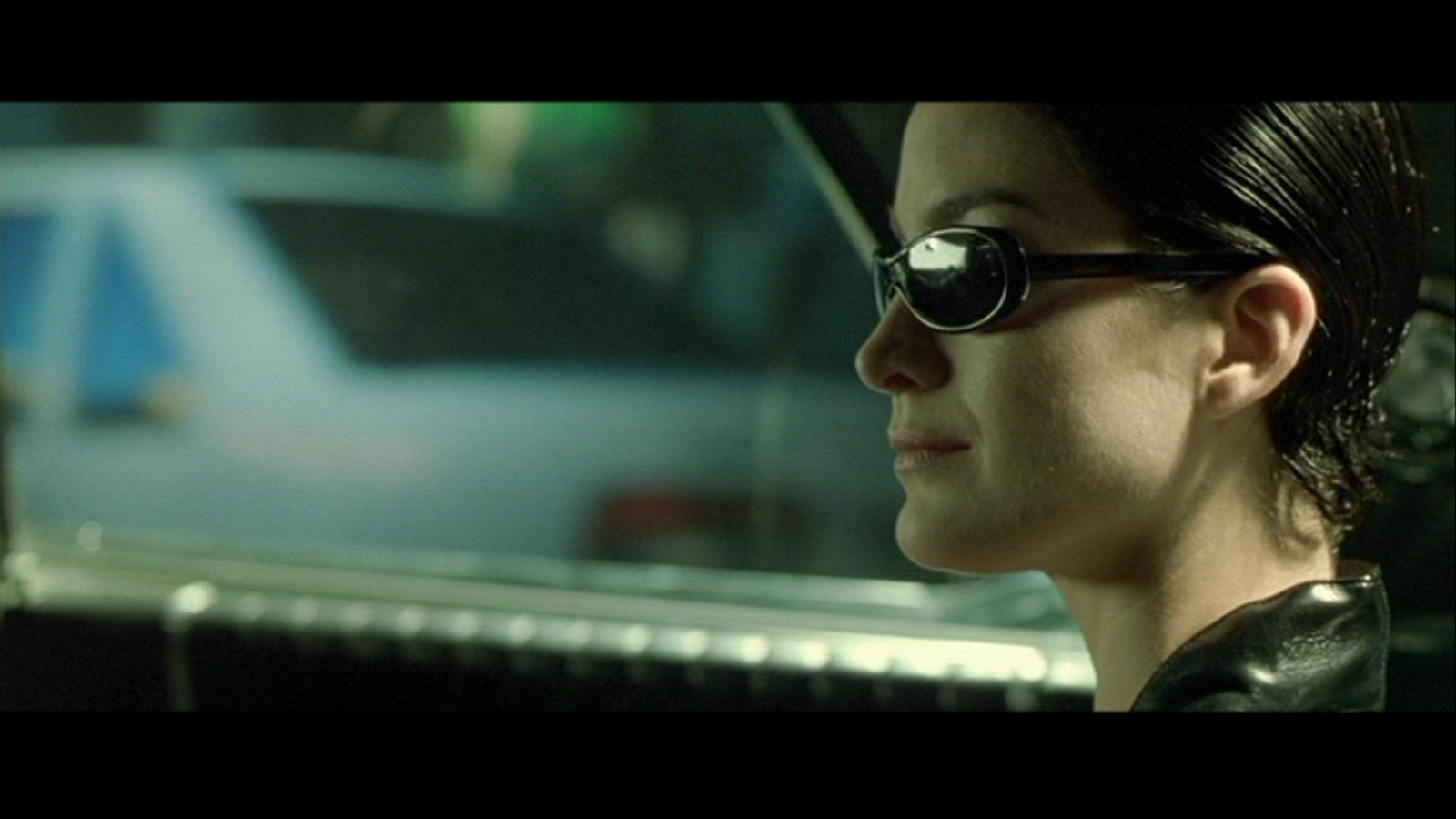
trinityIn her bio, Dissolve Senior Editor Tasha Robinson, and frequently hilarious foil to apparent frenemy Scott, described herself as growing up “with limited access to movies, but a great deal of access to film criticism.” It shows. (The second part, I mean.)

In incisive pieces that pay particular attention to subtexts hiding in plain sight — not to mention masterful interviews — Tasha’s writing on The Dissolve time and again made me reconsider and recontextualize films I thought I already knew. (See: Clueless.) She also frequently shined a light on larger trends best seen through a wider lens. Her essay “We’re losing all our Strong Female Characters to Trinity Syndrome” is a personal favorite, and a classic of the form:

“Strong Female Character” is just as often used derisively as descriptively, because it’s such a simplistic, low bar to vault, and it’s more a marketing term than a meaningful goal. But just as it remains frustratingly uncommon for films to pass the simple, low-bar Bechdel Test, it’s still rare to see films in the mainstream action/horror/science-fiction/fantasy realm introduce women with any kind of meaningful strength, or women who go past a few simple stereotypes.


And even when they do, the writers often seem lost after that point. Bringing in a Strong Female Character™ isn’t actually a feminist statement, or an inclusionary statement, or even a basic equality statement, if the character doesn’t have any reason to be in the story except to let filmmakers point at her on the poster and say “See? This film totally respects strong women!”

Matt Singer

stallone

Though he’s gone on to fame and fortune (I assume) as the critic most likely to eat some gross shit for work, Matt Singer was once the Newswire editor at The Dissolve, as well as a witty reviewer and commentator more generally. (His line about one of the Transformers films — “Give Age Of Extinction this much credit: Of all the Transformers movies, this is the longest.” — surely ranks among the great sentences in 21st century thought.)

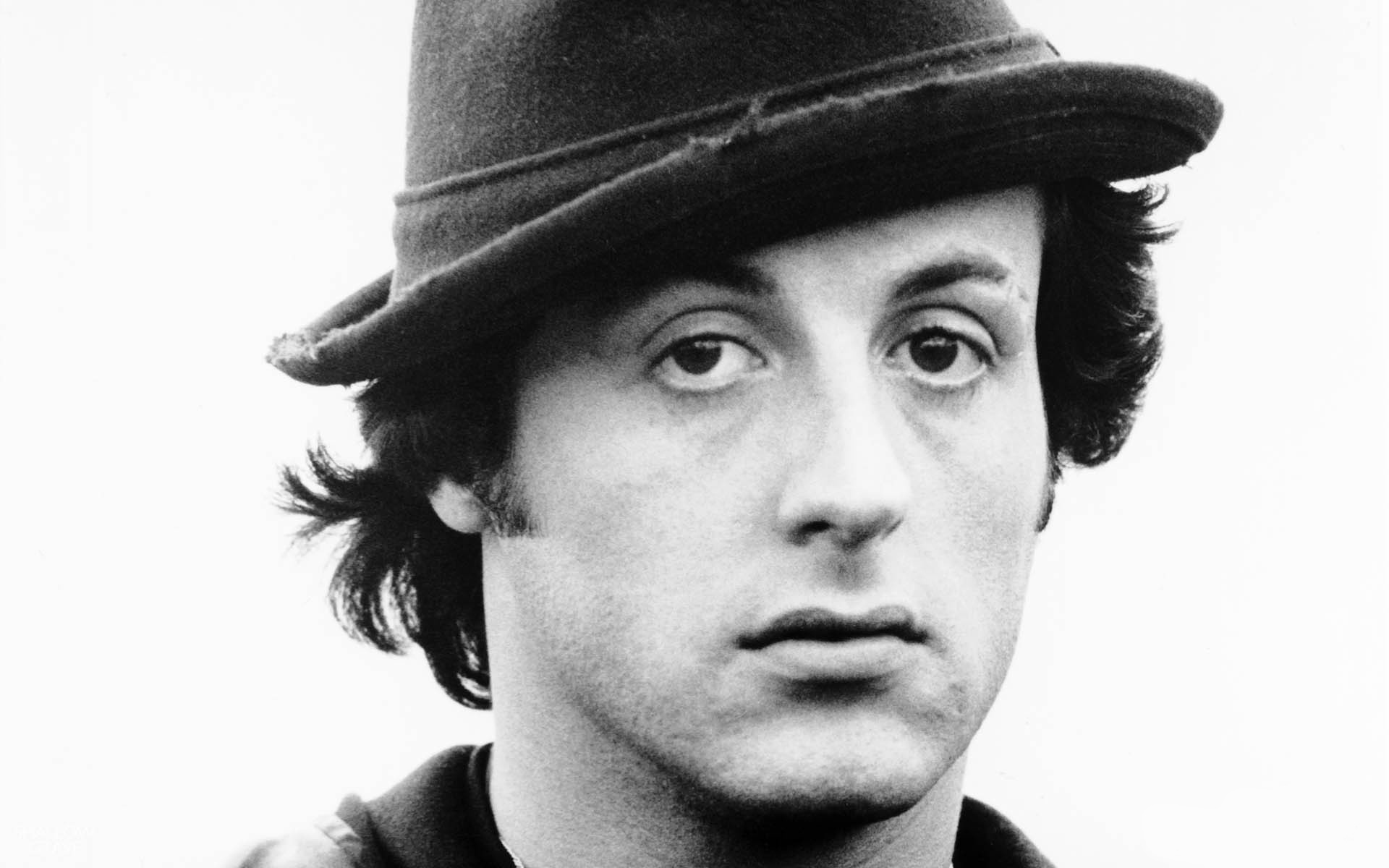
But his Career View column on Sylvester Stallone is the one I remember most, an elaborate and studied consideration of a cinematic fixture that never veers into easy chuckles. You might even come out of it with a renewed appreciation for the guy:

When he appeared on The Late Show With David Letterman in October to promote his recent film Escape Plan, Sly was introduced with an astounding statistic: He’s the only man alive who’s had a No. 1 box-office hit in each of five consecutive decades. It hasn’t always been easy; after his remarkable early success and a long run as one of the most bankable stars in Hollywood, he bottomed out in the dregs of direct-to-video thrillers. But years after his action-hero peak, Stallone returned to his roots and sparked one of the most remarkable comebacks in movie history. When things looked their bleakest, he rallied for one more climb up the Art Museum steps. This is the story of how Sylvester Stallone went the distance.

Scott Tobias

eraserheadDissolve Editor Scott Tobias is always a pleasure to read, constructing well-argued, cogent pieces in clear, unfussy prose. He also occasionally exhibits an outre taste I share (De Palma obsession notwithstanding). His reflections on David Lynch’s Eraserhead capture much of the enduring mystery of that early masterpiece, the heady mix of surrealism, horror, and the uncanny mundane we call “Lynchian”:

“In Heaven, everything is fine,” the Lady In The Radiator assures us. She’s the closest Eraserhead gets to it, despite the softball-sized masses growing out of her cheeks, and the squished beasts that dot the sort of zigzag performance space Lynch re-created later in Twin Peaks. But in Spencer’s world, the thought of any transcendence, even one this weird and grotesque, is still a daydream away from the unearthly howls and mechanical clunks defining his environment.

__

There are so many more I could cite, but that seems like enough. Apologies to all those I omitted, but a heartfelt thanks to everyone involved.

I don’t know if I’m smarter for having read these things, but I feel like they were worthwhile, and made me consider aspects of art and approaches to analysis that I might not have if I’d never encountered them.

One of the primary values of any critique is the way in which it makes familiar things strange and exciting again. That’s something these writers did, and do, consistently.

__

The Week of the Dissolve continues tomorrow, with some thoughts about readership.

July 5, 2016 0 comments
0 FacebookTwitterPinterestEmail
CommentaryFilm

Topkapi, or: Rififi, The Wacky Years!

by rick July 4, 2016
written by rick

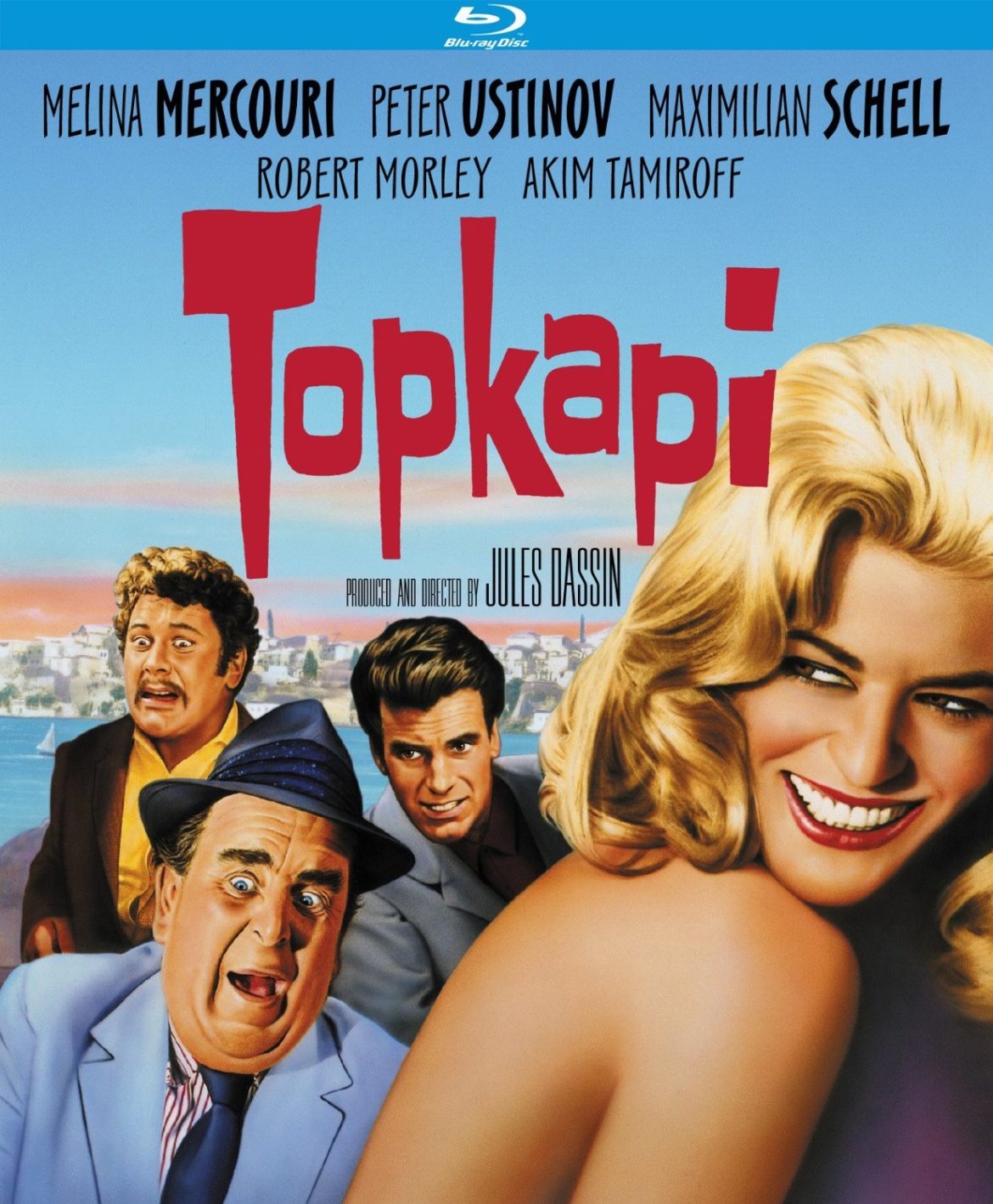
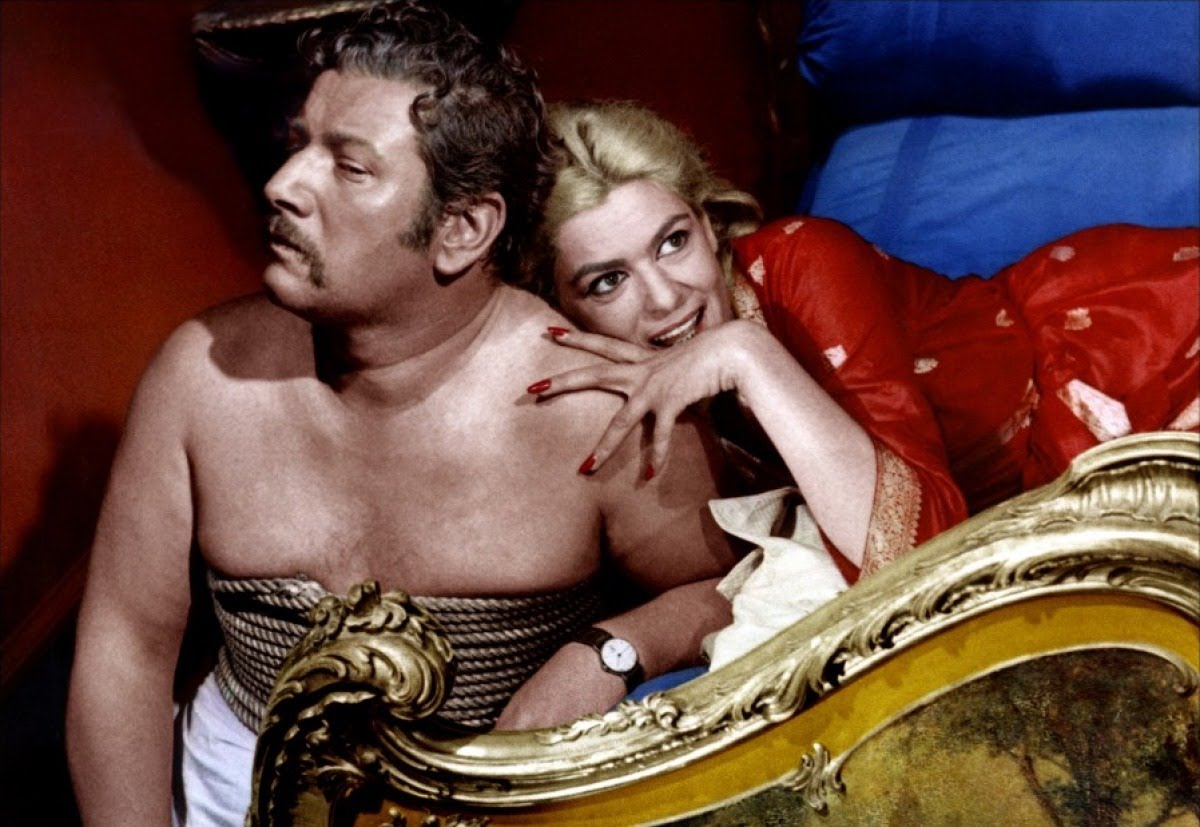
Quick! Free association game. I’ll go first: Maximilian Schell, Peter Ustinov, Melina Mercouri! Did you answer: Topkapi?

Probably not. (Though congrats if you did.)

These are huge names, but Topkapi is not. Between the three leads, they amassed 86 prestigious awards and nominations, including Oscars, Emmys, Grammys, Cannes triumphs, and whatever a CableACE award is. None of these recognitions, however, were associated with Topkapi, 1964’s 23rd top-grossing film. [Editor’s note: Ustinov actually did win an Oscar for Topkapi. I’m sorry if you lost at trivia in the brief moments this post has been live.]

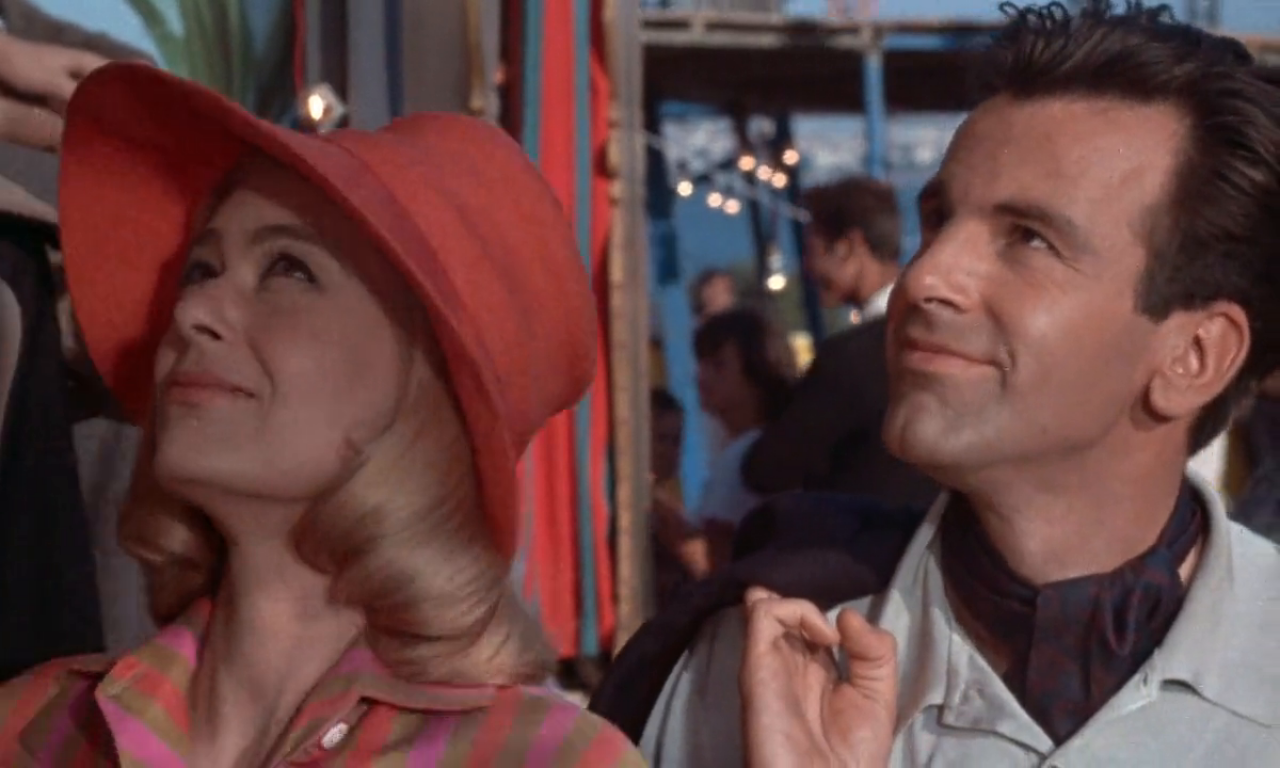
This Jules Dassin-helmed, self-mocking Rififi knock-off starred all three, not to mention Marcel Marceau’s old mime buddy Gilles Ségal and archetypal curmudgeon Robert Morley. (Crime film veteran Akim Tamiroff gets prominent billing, though he’s barely on screen — a year later, he’d appear in Alphaville, so I imagine he didn’t mind.) Yet the film seems like a dream, a pre-psychedelic fantasia caught between noir and late ’60s farce — too colorful and goofy to be taken seriously and too committed to its weird obsessions and genre conventions to be read as farce. It’s an odd piece of business.

But a piece of business audiences loved in 1964, apparently. Critics were also kind: “It is another adroitly plotted crime film, played this time for guffaws, and if you don’t split something, either laughing or squirming in suspense, we’ll be surprised,” wrote the NYT’s Bosley Crowther, a critic it’s kind of hard to imagine guffawing, splitting things, laughing, squirming, or being surprised (though that use of the royal “we” seems about right).

Today, Dassin’s Rififi retains its place in the cinematic pantheon, while the mention of Topkapi seems more likely to induce blank stares than gushing praise. This can’t be entirely attributable to the fact that its title sounds, when enunciated, like a guy from Boston skeptically considering the first of the free weekly newspapers on the stack.

(Because it’s the “top copy”. C’mon, try it, ya schmo. Hey? Hey? Fine, never mind.)

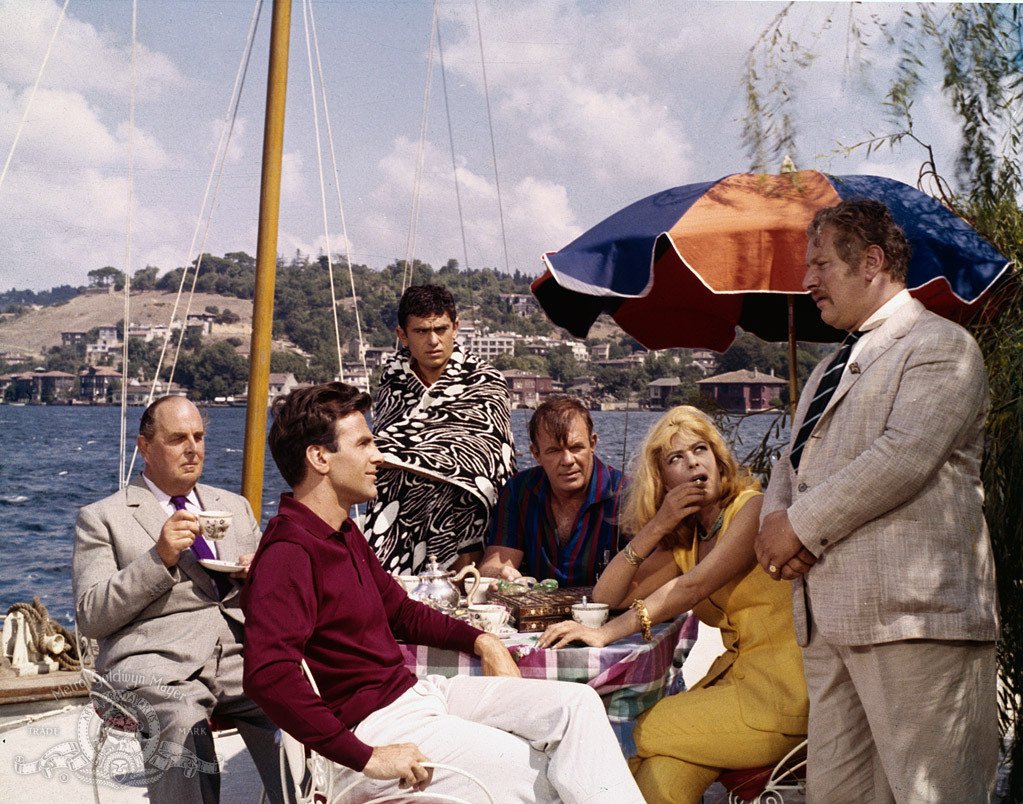
topkapi1In any case. Topkapi is a heist movie, like the film it affectionately sends up. Schell is Walter Harper, a dashing master thief, and Mercouri is Elizabeth Lipp, his sultry protégé who is also a nymphomaniac. (Mercouri’s lustful asides are, believe it or not, a highlight of the film.)

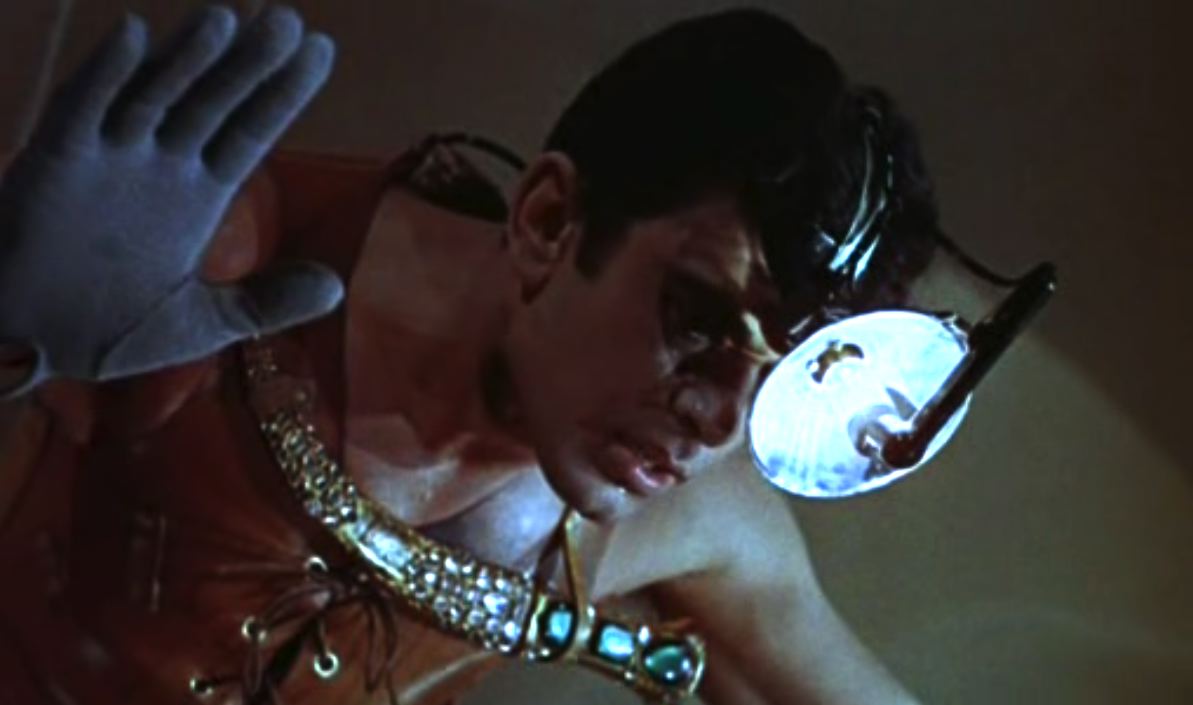
The two haven’t seen each other in years, but reconnect when she’s hatched a plan to steal a particular emerald-encrusted sword from Istanbul’s Topkapi Museum. It’s one of several endearing touches in the film: neither anti-hero seems to need the money. Harper just likes a challenge, and Lipp, apparently, just really likes emeralds, presumably to wear when fucking. It’s the ’60s, man.

topkapi3The twist? They will put together the usual crack team of criminals, but build it entirely of amateurs. This counter-intuitive conceit is explained away: they want to avoid people with long rap-sheets who might attract attention from the authorities. If you think about this for two minutes, you will realize it doesn’t make any sense, but the narrative chugs along at such a steady pace, and the frame is filled with so many colorful images, you are encouraged to cool it and just see how things play out.

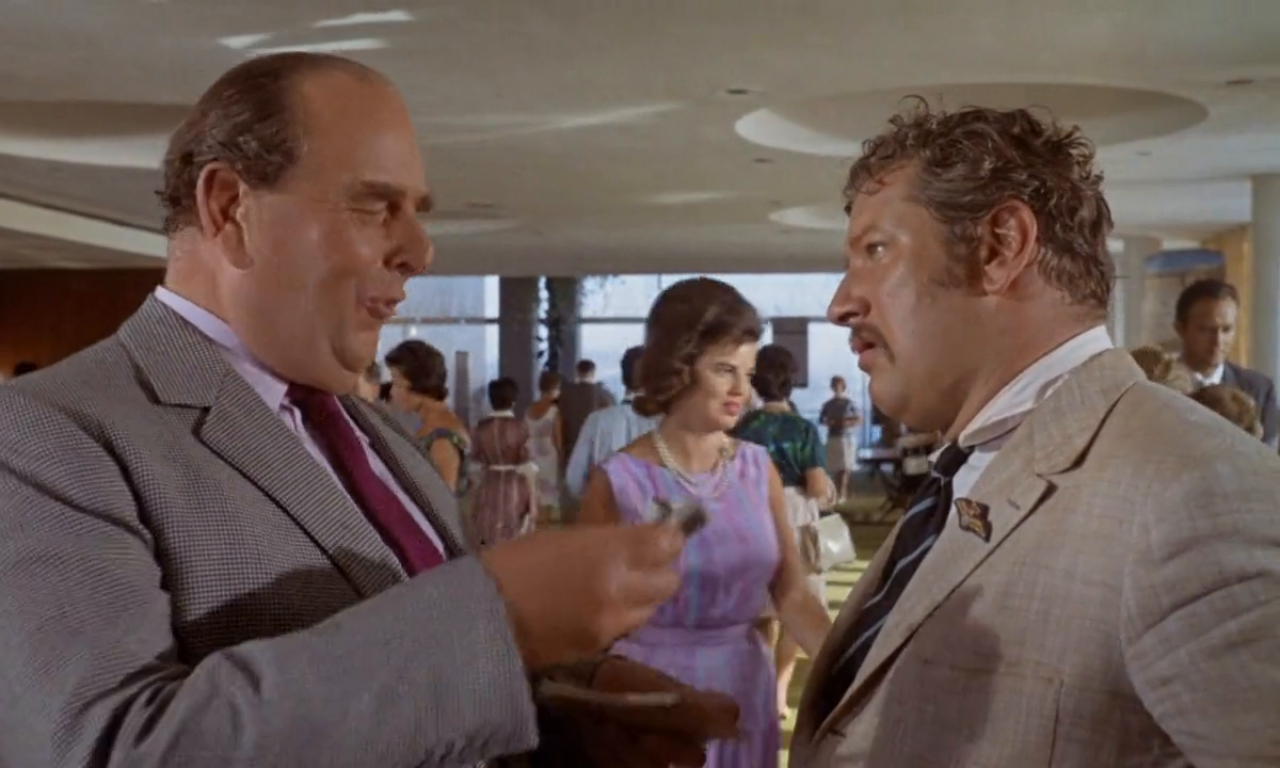
And so we meet the rest of the crew. Morley’s Cedric Page is an expert on eluding surveillance and alarms, the kind of guy whose house is equipped with self-closing blinds and wheeled mechanisms that bring you a drink when he presses a button. (Impressive, in the same year as Goldfinger? Not really. But cut the guy some slack, he’s trying.) Jess Hahn is, um, Hans, the muscle (as well as an implicit challenge to any future Forgotbuster-appreciation writer who would like to reference “Hahn’s Hans”.)  Gilles Ségal is enormously irritating, and also a “Human Fly” called Giulio. If you expect that we will, at some point, see him climb walls and dangle precariously from things, you are not wrong.

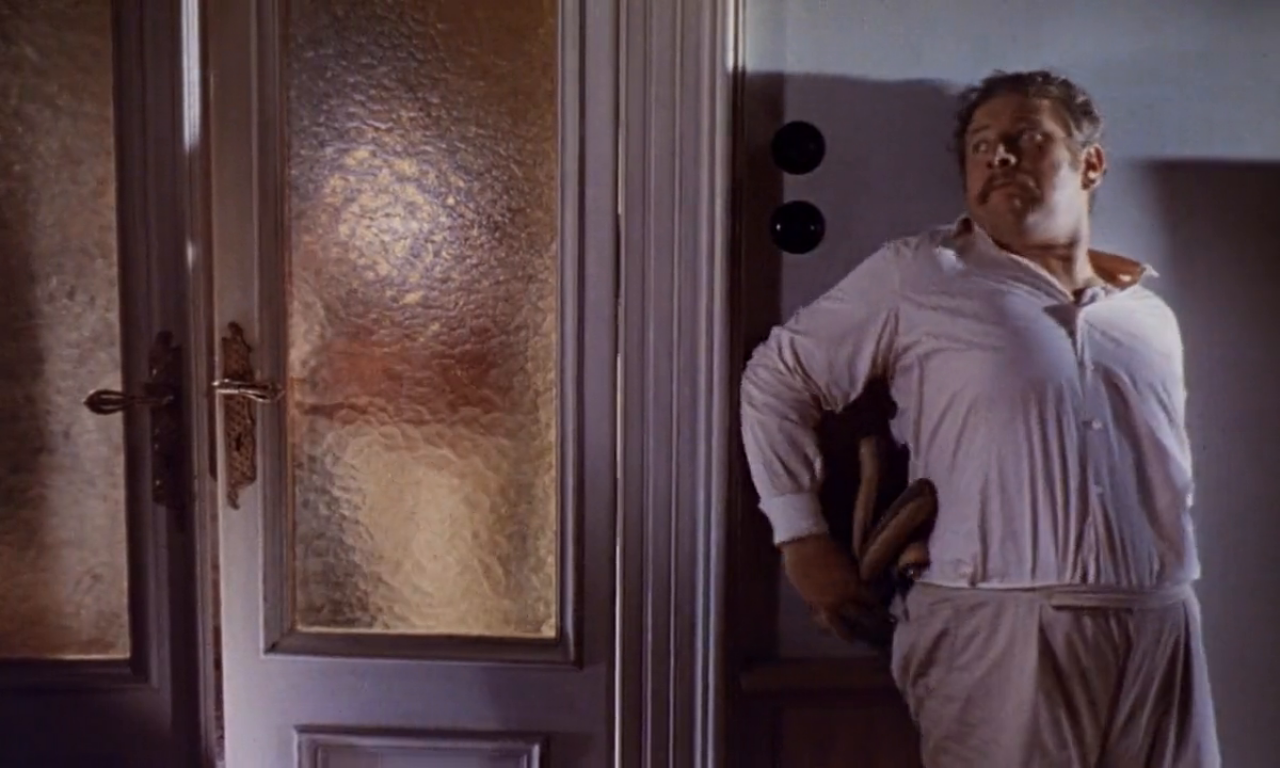
topkapi5All of which leaves us with Ustinov. His character is saddled with the name Arthur Simon Simpson: yes, he is British, in fact, and also, as we are repeatedly informed, “a schmo.” (There is a strong sense that the scriptwriters recently discovered the word “schmo” roughly three hours before shooting started and simply couldn’t stop repeating it. In fairness, it’s a terrific word.)

Simpson is introduced at a Greek seaport trying to sell tourists bogus historical relics (like a schmo) and failing (like an even bigger schmo). Harper and Lipp make him their mark, and entice him to drive across the border to Turkey with their gear, including assorted weaponry (needed, we are reassured, for shooting out searchlights). Being a schmo, Simpson agrees, and – surprise! – gets promptly caught. This is one of the many easily foreseeable problems with intentionally employing amateurs and schmos for high-stakes international crime, but our protagonists are undeterred.

topkapi4Rather than arresting him, the Turkish police forces enlist Simpson as a spy; given the cache of hidden weapons, they think, not unreasonably, that terrorism is afoot. Having no choice, Simpson agrees, but he’s eventually, and pretty comically, turned into an idiot double agent. Ustinov sells this frivolous narrative nonsense through sheer will and charm, channeling a sort of paunchy, doofus Peter Sellers, as he’s taken into the criminal fold.

Eventually, we get to the heist itself. As in Rififi, it occupies a significant chunk of film time. Unlike in Rififi, it also involves a long segment where the entire crew attends a Turkish wrestling match at a coliseum, by way of distracting the authorities.

Dassin, who also directed the wrestling-themed Night and the City while on Blacklist exile a decade and a half prior, seems to be a fan. The sequence takes nearly as long as the heist itself, and its hilariously overt homoeroticism is weirdly contrasted with the lascivious enjoyment Mercouri finds in the spectacle. (It’s played for laughs, as Schell grows increasingly irritated with her lip-licking – Lipp-licking? – enthusiasm).

After we watch a whole lot of half-naked dudes grappling for an hour or two, the team manages to execute the heist. It’s a suitably tense affair: no one should doubt whether the guy who made Rififi knows how to ratchet up quiet tension. Ustinov’s Simpson, it turns out, also has vertigo, so that adds another wrinkle to the rooftop shenanigans. Palms are rendered appropriately sweaty as our protagonists and goofball stand-in hold taut ropes, delay searchlights, climb through high windows, and pull off their largely silly crime. But, in its closing moments, Topkapi reveals they didn’t plan for everything.

topkapi2This is all pleasantly diverting, and it’s not hard to find its appeal. It’s a comedy, but there is just enough intrigue for audience members hoping for suspense, and just enough contrived sexiness for people who always hoped to see Peter Ustinov blush. But more generally, Dassin follows Hitchcock’s lead from To Catch A Thief: the location becomes the star, an exotic getaway the protagonists simply pass through for our amusement. Unlike Hitchcock’s oddly heist-free heist movie, Dassin at least does the audience the favor of showing people steal stuff.

Filming for the first time in color, he seems swept away by its sensuous possibilities. Scenes are overloaded with an intoxicated rush that audiences must’ve found entrancing. Where Hitchcock buried night sequences in ominous, portentous greens, Dassin obstinately sets nearly all his shots in daylight, luxuriating in brightness and flash. Topkapi is a film about surfaces. In 1964, audiences seemed to respond.

Why, then, is the film remembered (if it is remembered at all) as something of a curiosity? At least part of it must have to do with the glut of wacky caper films of the 1960s, a trend Topkapi seems to both engage in and satirize. The earnest, straight-ahead heist movies modern cinephiles tend to admire — Rififi, of course, but earlier noir-tinged classics like Kubrick’s The Killing, Melville’s Bob Le Flambeur, Huston’s The Asphalt Jungle, Raoul Walsh’s High Sierra — had given way to much lighter fare, filled with hijinks and overstuffed casts, like It’s A Mad, Mad, Mad, Mad World, and location-emphasizing affairs, like The Italian Job. Not to say the grittier or more serious variety of heist film vanished entirely — it never will. But those originals will probably always be remembered more fondly than the wave of imitators and gentle parodies that appeared in their wake.

topkapi7Topkapi is firmly in the latter camp, and is a lesser entry by any standard. It stands somewhere between the VistaVision spectacle of To Catch A Thief and the gang’s-all-here fun of Ocean’s Eleven, while managing to capture the magic of neither. In 1964, audiences may have been looking to the cinema for a vacation abroad and little else: a few laughs from more or less familiar faces, some naughty bits, an exciting centerpiece, and a suitable climax.

Topkapi still delivers all of those. But, like the museum you visited briefly two summers ago when traveling (presumably not to actually rob it yourself), you’ll likely only remember its most basic details.

This piece was written for The Solute, a contribution to a series celebrating Nathan Rabin’s Forgotbusters entries on the late, lamented Dissolve. Please read all of Rabin’s pieces! And check out The Week of the Dissolve here on this site, all week.

July 4, 2016 0 comments
0 FacebookTwitterPinterestEmail
Commentary

The Week of the Dissolve: Keynote

by rick July 4, 2016
written by rick

It’s been a year since The Dissolve shuttered its virtual windows, packed up its stuff, and moved on.

Welcome to a week commemorating its passing.

Recently, I was talking to a friend, and started wistfully recalling it, in the hushed terms we usually reserve for good friends. He responded, pretty reasonably, “I have no idea what you’re talking about.”

So this week is dedicated to remedying that.

Long story short: The Dissolve was a website. A pretty good one. It meant a lot to a bunch of people. It had a solid run, and folded a year ago this week.

A year seems both a long and a short time ago. A long time, because so much has transpired since. A short one, because so much of what I valued about The Dissolve has morphed into other forms: its writers migrating to different arenas, its readers congregating in different conversations.

But there was still something ineffable about the original encounter that I’ll always miss. I want to talk a bit about why.

I wasn’t even there from the start, and don’t lay particular claim to anything, but I distinctly remember the shitty feeling that washed over me when I read the formal announcement, ominously titled “The End”, after hours of panicked speculation in the comments. It came as a shock, though in retrospect it really shouldn’t have.

And that shock was combined with a queasy, self-mocking feeling: “Why do you care so much? It’s a website. There are other websites. And, as a matter of fact, since when do you even care about websites, you total nerd?”

Grappling with this existential quandary and sudden, unexpected inclination to insult myself in unusually personal terms, I wrote the following on this blog the same day:

More than any other place online, [The Dissolve] fostered a sense of community among its commenters. I think this wasn’t an accident: the generosity in the commentaries of its editors and writers, the wide range of films they featured, the sense of open discourse they encouraged … these all help generate genuine discussion, debate, and camaraderie. The sense was that we were all in it together, trying to figure out how these things work and what they mean.

This is what I still remember most fondly: The Dissolve was, for a whole host of reasons, a locus point, a collection of fascinating, well-curated content but also something of a meeting space. As I also pointed out in that hastily written piece, I’ve never been much of a comment section participant. But The Dissolve was different. For me – and, I feel confident wagering, for others – it became what so many sites promise but fail to deliver: a community.

As the curiously wounded (and arguably overdramatic) remnants of that commentariat made our way to social media groups and elsewhere, we’ve done alright at keeping that community going. Conversations have continued, and friendships have been maintained, fostered, and created. That’s pretty remarkable, actually, and speaks to the strength of the initial connections The Dissolve, its writers and editors, made possible.

Entire critical endeavors have been more or less born out of all this. (Most definitely the site you’re reading right now, for better or worse.) I’ll gather up some links later in the week. But for today, I just want to tip my hat to a film website that, in its brief run, became much more than that to many of us.

The Dissolve was a repository of critical insight, a corner of the online world where like-minded pop-culture obsessives could nurse private fixations in public, a journal of thought in which contributors and audience merged in conversation, and a set of conditions that enabled independent creation. Readers became writers simply out of a desire to participate, discovering a kind of courage and self-confidence through our interactions.

If this sounds overblown, so be it. But The Dissolve made a lot of things possible, and greatly exceeded whatever modest expectations its originators might’ve held for its success. Even if the market couldn’t support it, it made its mark on the world.

The Dissolve is still dead. Long live The Dissolve.

__

After today’s keynote, we will take a look at some (highly subjective, occasionally personal) favorites from The Dissolve’s run. Later in the week, we’ll consider some memorable conversation topics from the community of commenters, highlight an array of projects that represent its legacy, and check in on what its writers have been up to since. Stay tuned!

July 4, 2016 0 comments
1 FacebookTwitterPinterestEmail
FilmReviews

New On Netflix: Girl Walk // All Day

by rick July 1, 2016
written by rick

The title of this post is a lie in at least two ways: Girl Walk // All Day is neither new nor on Netflix.

But I only just came across Girl Walk (so it’s new to me). It’s readily available for your viewing pleasure (free on Vimeo and YouTube, so that’s even better than a paid streaming service for our purposes here). And the film is a goddamn delight. Go watch it right now. Or if you’ve already seen it, go watch it again.

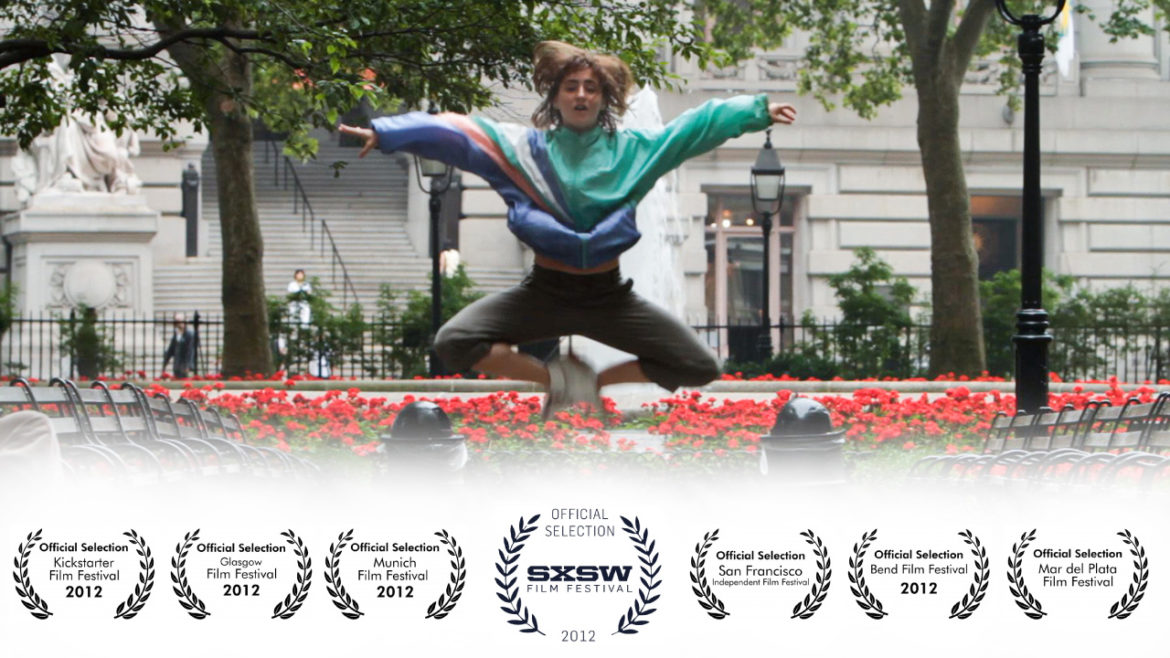
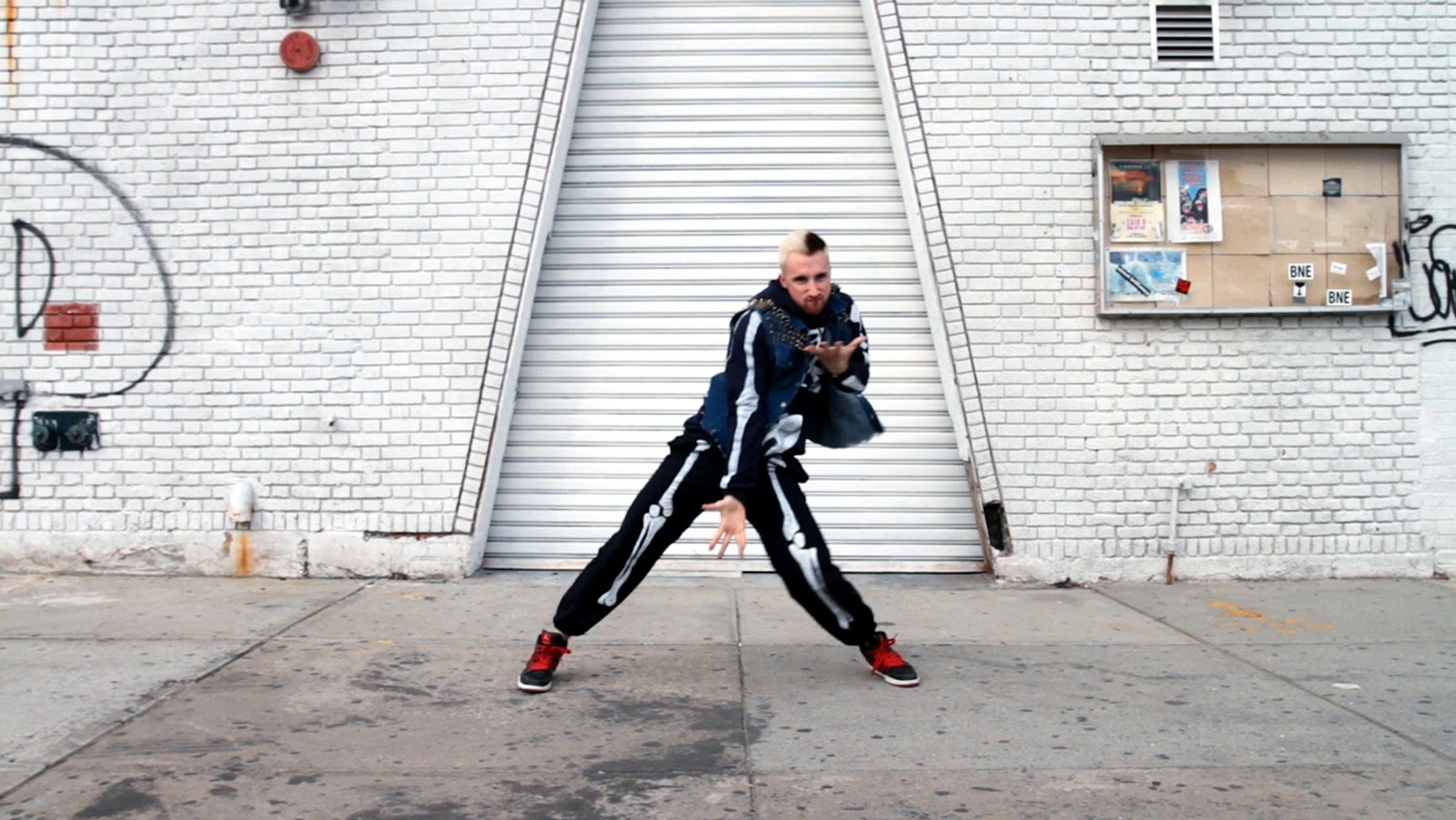
Girl Walk // All DayA semi-choreographed, semi-improv, semi-narrative set to Gregg Gillis (aka Girl Talk)’s infectious “All Day”, Jacob Krupnick’s Girl Walk // All Day is, according to the film’s website, “a feature-length dance music video and tale of urban exploration that follows three dancers across New York City. They turn the city’s sidewalks, parks and architecture into an evolving stage as they spread their joy of movement.”

Girl Walk // All Day is also, according to esteemed if rather unconventional critic David Ehrlich, the 10th best movie of the century. He’s not wrong.

Girl Walk // All DayIt was also the Movie of the Month for June on Swampflix, a friend of the site, and those good folks have lots of interesting things to say. I will only add that if you are a fan of musicals, or a fan of mashups, or a fan of fun in general, here’s the movie for your weekend.

There’s a keen eye for color and contrast, and a savvy sensibility for pacing, behind the jaw-dropping movement, but you’d be forgiven if you didn’t even notice, because you were too busy grinning like a fool or started dancing yourself.

Long story short: it feels silly to write dry prose about something so vital. Just go watch. You’ll be smiling for days.

Quick Picks (that actually are streaming on Netflix)

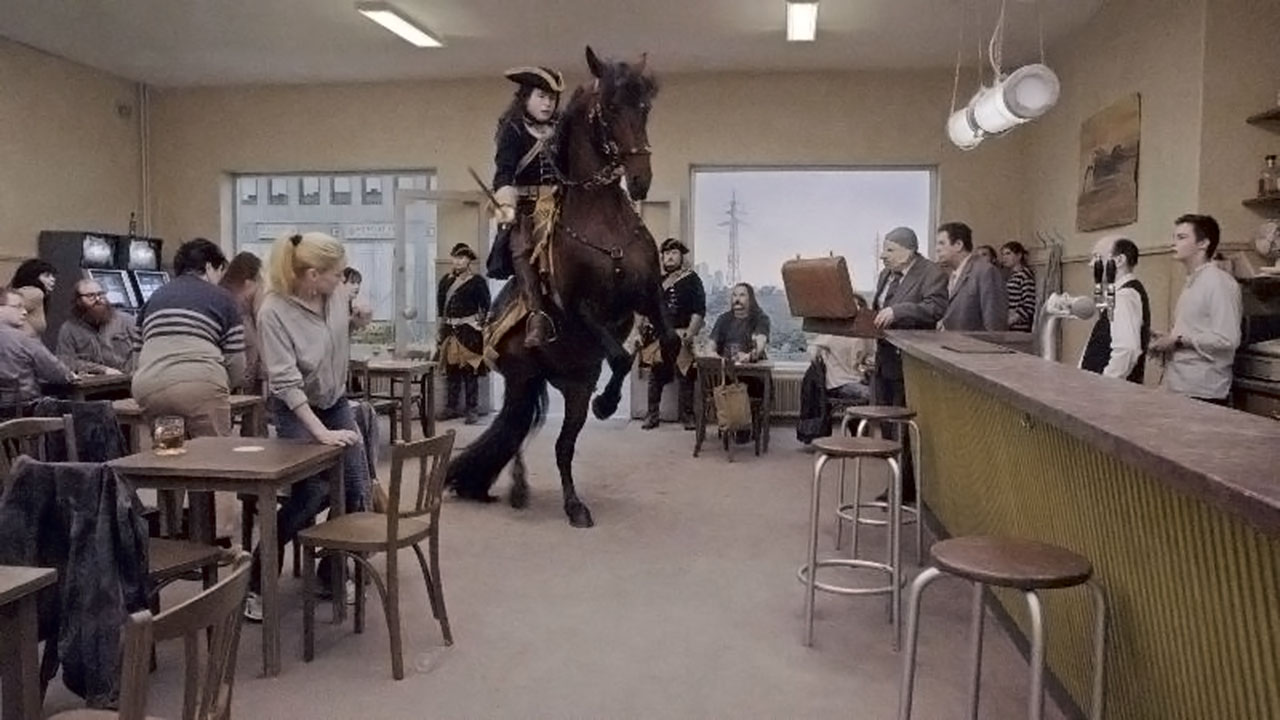
(1) A Pigeon Sat On A Branch Reflecting On ExistenceA Pigeon Sat On A Branch Reflecting On ExistenceTwo traveling salesmen attempt to sell gag gifts to profoundly disinterested potential customers. Phones ring and people ignore whatever is transpiring in front of them, routinely deadpanning, “I’m glad you’re doing fine” to whoever is on the other end. At one point, the film stops for a while because an army commandeers it. Roy Andersson’s pitch-black comedy (is it even a comedy? is it funny?) will satisfy any absurdist cravings you might feel over the holiday weekend.

2) Roman HolidayAudrey Hepburn in Roman HolidayThere are still few more enjoyable ways to lose two hours than traipsing about Rome with paparazzo Cary Grant and runaway princess Audrey Hepburn.

3) The Duke of Burgundy

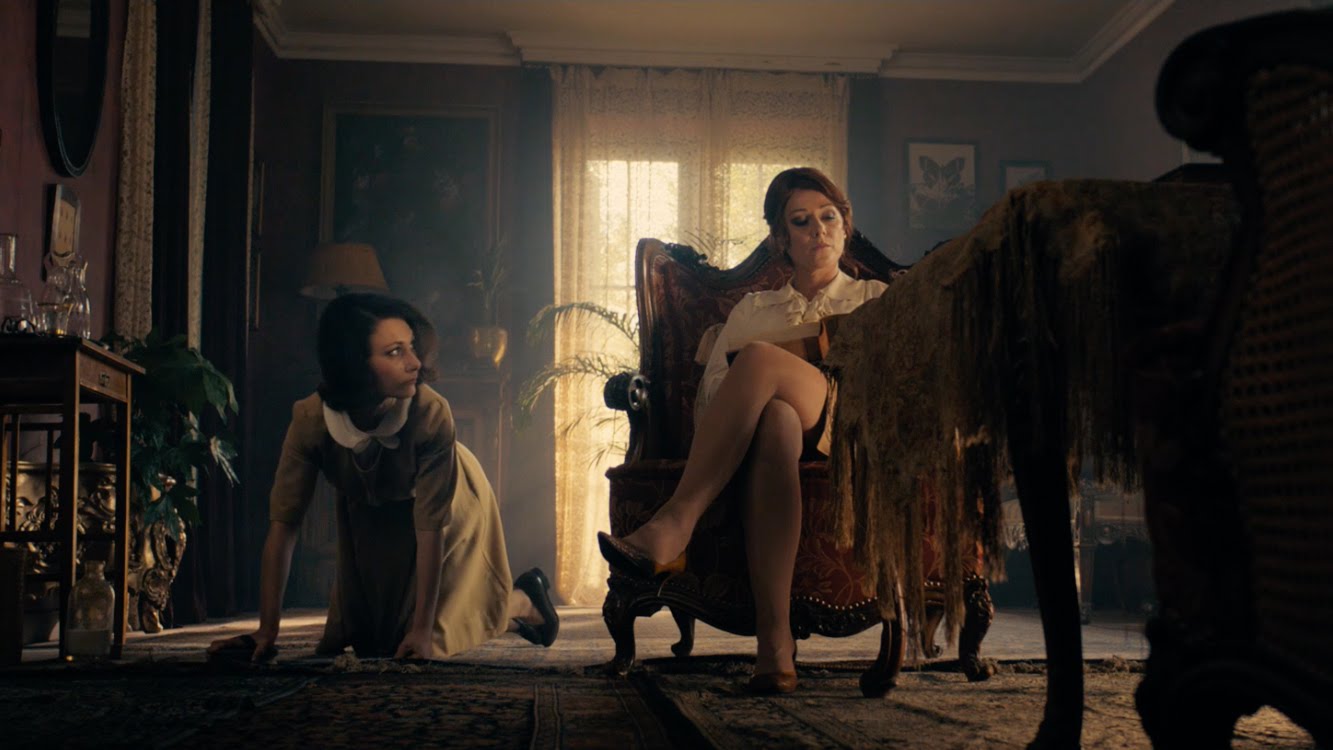
duke of burgundyIn the mood for something a little edgier? Peter Strickland’s visually stunning and thematically scandalous love-story-of-a-sort might work. Just be warned: urinating into your lover’s mouth plays a much more prominent role here than in Roman Holiday (apart from the infamous director’s cut, but the less said about that, the better).

4) The Secret of Kellssecret of kells

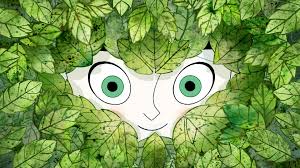
Perhaps you’ve got a few younger ones in tow and are looking for a change of pace from whatever movie they’ve insisted on watching 5 times today already. In that case, The Duke of Burgundy is probably a terrible idea, so how about Tomm Moore’s ravishingly lovely The Secret of Kells? Drawing on Irish folklore, full of magic and wonder, and completely transfixing, you’ll enjoy it as much as they will. It really is fun for the whole family.

July 1, 2016 0 comments
0 FacebookTwitterPinterestEmail
Newer Posts
Older Posts

About

About

Towards a provisional theory of the cinema, or, failing that, just some shit about movies

Authors
Rick Kelley
Lark Lundberg

Keep in touch

Facebook Twitter

Categories

  • Conversation
  • Film
  • Film By Film
  • Great Movie Project
  • Great Movies: The Counter Programming
  • Guest
  • News
  • Other
    • Commentary
    • Film
    • Interview
    • Reviews
    • Song for a Sunday
  • Streaming Selections
  • TV
  • Uncategorized
  • Vegan Horror

Archives

  • April 2019
  • March 2019
  • January 2019
  • December 2018
  • November 2018
  • October 2018
  • September 2018
  • August 2018
  • July 2018
  • June 2018
  • May 2018
  • April 2018
  • March 2018
  • February 2018
  • January 2018
  • December 2017
  • November 2017
  • October 2017
  • September 2017
  • August 2017
  • July 2017
  • June 2017
  • May 2017
  • April 2017
  • March 2017
  • February 2017
  • January 2017
  • December 2016
  • November 2016
  • October 2016
  • September 2016
  • August 2016
  • July 2016
  • June 2016
  • May 2016
  • April 2016
  • March 2016
  • February 2016
  • January 2016
  • December 2015
  • October 2015
  • September 2015
  • August 2015
  • July 2015
  • June 2015
  • May 2015
  • April 2015
  • March 2015
  • February 2015
  • January 2015
  • December 2014
  • November 2014
  • October 2014
  • August 2009
  • September 2008

Recent Posts

  • China Girls, Death Proof, and the Hidden Face
  • Old News: Old Noise Edition
  • Old News: April 1, 2019
  • Nicolas Winding Refn, Marginalia, and the Deaths of Cinema
  • And now, let us praise Kanopy

Recent Comments

  • Franklin Kat on Michael Shannon shines again in Frank & Lola
  • Sean Tempesta on Cinema and dream-logic in Meshes of the Afternoon
  • ludditerobot on The Left-Wing Slapstick and Iconic Songs of 1937’s Street Angel
  • Franklin Kat on The Left-Wing Slapstick and Iconic Songs of 1937’s Street Angel
  • Arijit Mukherjee on Great Movies Project: The Counter-Programming
  • Facebook
  • Twitter

@2021 - All Right Reserved. Designed and Developed by PenciDesign


Back To Top
Luddite Robot
  • Reviews
  • Commentary
  • Great Movie Project
    • Great Movie Project
      Bride of Frankenstein is a movie for and…

      January 25, 2018

      Great Movie Project
      The Enduring Appeal of Nick and Nora in…

      November 29, 2017

      Great Movie Project
      The Ahistorical Fever Dream of The Scarlet Empress

      August 2, 2017

      Great Movie Project
      Dreams, Mundanity, and the Anarchist Yearnings of L’Atalante

      July 12, 2017

      Great Movie Project
      Duck Soup Is And Will Always Be A…

      April 19, 2017

  • Counter Programming
    • Great Movies: The Counter Programming
      Walking and Talking in the Shadow of Kanchenjungha

      March 7, 2018

      Great Movies: The Counter Programming
      A Brief Encounter in My Mother and Her…

      February 9, 2018

      Great Movies: The Counter Programming
      Horror’s Refusal in Farrokhzad’s The House Is Black

      October 13, 2017

      Great Movies: The Counter Programming
      The rage and beauty of The Cloud-Capped Star

      October 3, 2017

      Great Movies: The Counter Programming
      The daylight noir and social issue empathy of…

      June 22, 2017

  • Vegan Horror
    • Vegan Horror
      Julia Ducournau doesn’t think her film Raw is…

      June 7, 2017

      Vegan Horror
      Licking our wounds: The vampiric masculinity of Ravenous

      December 13, 2016

      Vegan Horror
      Eggertsson and animals: An approach to horror cinema

      September 15, 2016

      Vegan Horror
      “It’s Not My Nature” – Vegetarianism, Body Horror,…

      August 30, 2016

      Vegan Horror
      Bodies and Carcasses in Predator 2

      August 23, 2016

  • Interview
    • Interview
      Jasmine Leyva’s doc The Invisible Vegan aims to…

      May 3, 2017

      Interview
      Bridging The Abyss: An Interview With The Directors…

      November 28, 2016

      Interview
      7 Days in Ohio: An Interview with Nathan…

      September 12, 2016

      Interview
      Film Critic Phil Dy talks New Filipino Cinema

      June 17, 2016

      Interview
      “I Love Seeing Film Projected.” A Conversation with…

      March 22, 2016