Top Posts
Madeline’s Madeline: An Unclassifiable Panic Attack Maybe-Masterpiece
Shoplifters Steals Moments of Wonder from the Mundane
Burning and Forgetting What’s Not There
Kusama: Infinity Expands Beyond The Canvas
Mandy Risks Little, Wins Little
In We The Animals, The Children Are Away...
The Seagull Isn’t Quite Chekhov, But It’s Still...
5 Million Ways Boots Riley Isn’t Sorry To...
American Animals’ and the Queasiness of the Heist
A Star Is Born In Hearts Beat Loud
  • Reviews
  • Commentary
  • Great Movie Project
    • Great Movie Project
      Bride of Frankenstein is a movie for and…

      January 25, 2018

      Great Movie Project
      The Enduring Appeal of Nick and Nora in…

      November 29, 2017

      Great Movie Project
      The Ahistorical Fever Dream of The Scarlet Empress

      August 2, 2017

      Great Movie Project
      Dreams, Mundanity, and the Anarchist Yearnings of L’Atalante

      July 12, 2017

      Great Movie Project
      Duck Soup Is And Will Always Be A…

      April 19, 2017

  • Counter Programming
    • Great Movies: The Counter Programming
      Walking and Talking in the Shadow of Kanchenjungha

      March 7, 2018

      Great Movies: The Counter Programming
      A Brief Encounter in My Mother and Her…

      February 9, 2018

      Great Movies: The Counter Programming
      Horror’s Refusal in Farrokhzad’s The House Is Black

      October 13, 2017

      Great Movies: The Counter Programming
      The rage and beauty of The Cloud-Capped Star

      October 3, 2017

      Great Movies: The Counter Programming
      The daylight noir and social issue empathy of…

      June 22, 2017

  • Vegan Horror
    • Vegan Horror
      Julia Ducournau doesn’t think her film Raw is…

      June 7, 2017

      Vegan Horror
      Licking our wounds: The vampiric masculinity of Ravenous

      December 13, 2016

      Vegan Horror
      Eggertsson and animals: An approach to horror cinema

      September 15, 2016

      Vegan Horror
      “It’s Not My Nature” – Vegetarianism, Body Horror,…

      August 30, 2016

      Vegan Horror
      Bodies and Carcasses in Predator 2

      August 23, 2016

  • Interview
    • Interview
      Jasmine Leyva’s doc The Invisible Vegan aims to…

      May 3, 2017

      Interview
      Bridging The Abyss: An Interview With The Directors…

      November 28, 2016

      Interview
      7 Days in Ohio: An Interview with Nathan…

      September 12, 2016

      Interview
      Film Critic Phil Dy talks New Filipino Cinema

      June 17, 2016

      Interview
      “I Love Seeing Film Projected.” A Conversation with…

      March 22, 2016

Luddite Robot
Film critique, theory, and assorted nonsense.
CommentaryFilm

China Girls, Death Proof, and the Hidden Face

April 14, 2019

Old News: Old Noise Edition

April 8, 2019

Old News: April 1, 2019

Nicolas Winding Refn, Marginalia, and the Deaths of Cinema

CommentaryFilm

And now, let us praise Kanopy

January 24, 2019

Warren Sonbert and the Relief of Anti-Narrative

January 14, 2019

The World Is Ending and It Doesn’t Matter

The Best Films of 2018

FilmReviews

Madeline’s Madeline: An Unclassifiable Panic Attack Maybe-Masterpiece

December 21, 2018

Shoplifters Steals Moments of Wonder from the Mundane

December 11, 2018

Burning and Forgetting What’s Not There

Alien, Musicology, and Reading Soundtracks

CommentaryFilm

Shocktober III: Halloween 2018 Edition

October 24, 2018

Shirley Jackson’s The Lottery Traumatized Schoolkids in 16 mm

October 18, 2018

Shocktober 2018 II: Another Reshockening (of Horror)

Häxan is a movie made by a movie character

CommentaryFilm

Shocktober 2018

October 7, 2018

Unprofessional! Spring Night, Summer Night

October 3, 2018

The Wild Boys: A Luddite Robot Conversation

Kusama: Infinity Expands Beyond The Canvas

CommentaryFilmGreat Movie Project

Unchained cameras and uniforms in The Last Laugh

by rick July 1, 2016
written by rick

In 1928, following the one-two punch of his celebrated U.S.-made releases Faust and Sunrise, and four years after he made The Last Laugh for UFA, the great German director F.W. Murnau predicted that the “films of the future will use more and more of these camera angles, or, as I prefer to call them, these dramatic angles. They help photograph thought.”
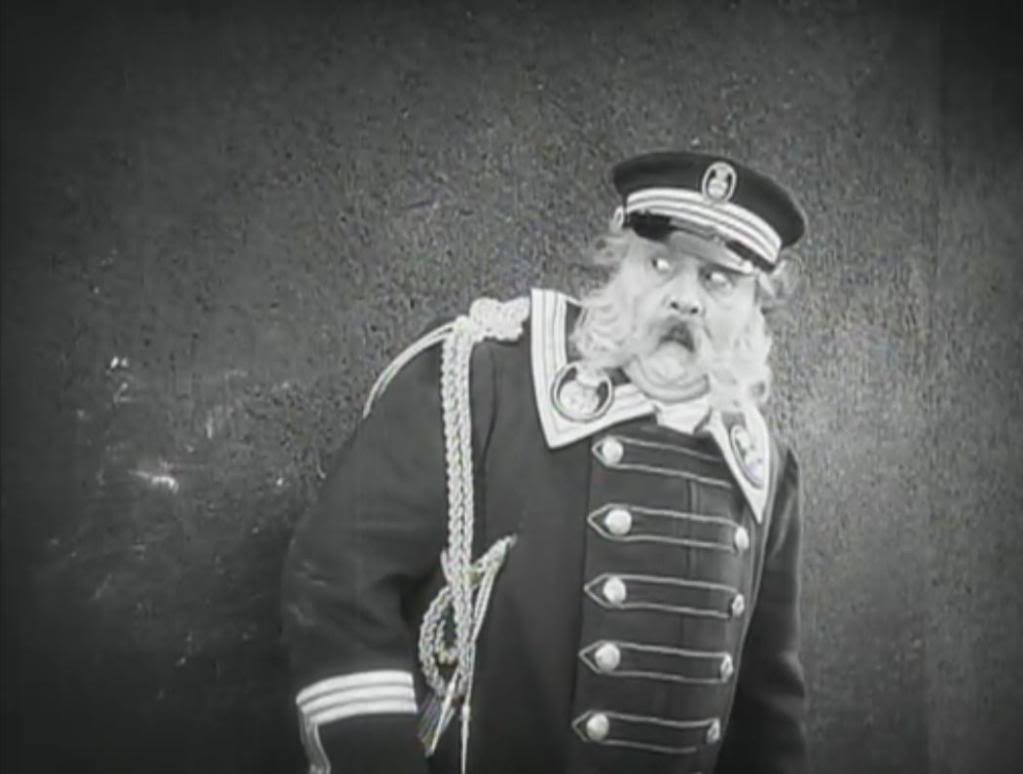
Emil Jannings in Murnau's The Last LaughThis is a much more useful vantage point from which to consider The Last Laugh than its famous plot synopsis, attributed to historian Stephen Brockmann: “a nameless hotel doorman loses his job”. True enough, as far as it goes, but not quite the whole story.

Murnau’s 1924 silent, shot by the legendary Karl Freund and starring a pre-disgraced Emil Jannings, does indeed hinge on that narrative. But its influence – on everyone from Welles to Ozu – is far greater than Brockmann’s cheeky summation would imply. But let’s start with the story, credited to Carl Mayer, anyway.

The portly, genial-looking Jannings is a doorman at the Atlantic Hotel, a glistening totem of modernity and luxury the film contrasts with the modest working-class tenement he inhabits. Jannings, sporting a ludicrously full beard and Father Christmas twinkle in his eye, is proud of his job and his doorman’s uniform, and is treated almost as a celebrity by his neighbors, who fawn over his arrivals and departures from home. In obsequious postures that come off as so hammy even by the generous standards of early silents that they almost feel ironic, the neighbors cheer their resident success story.
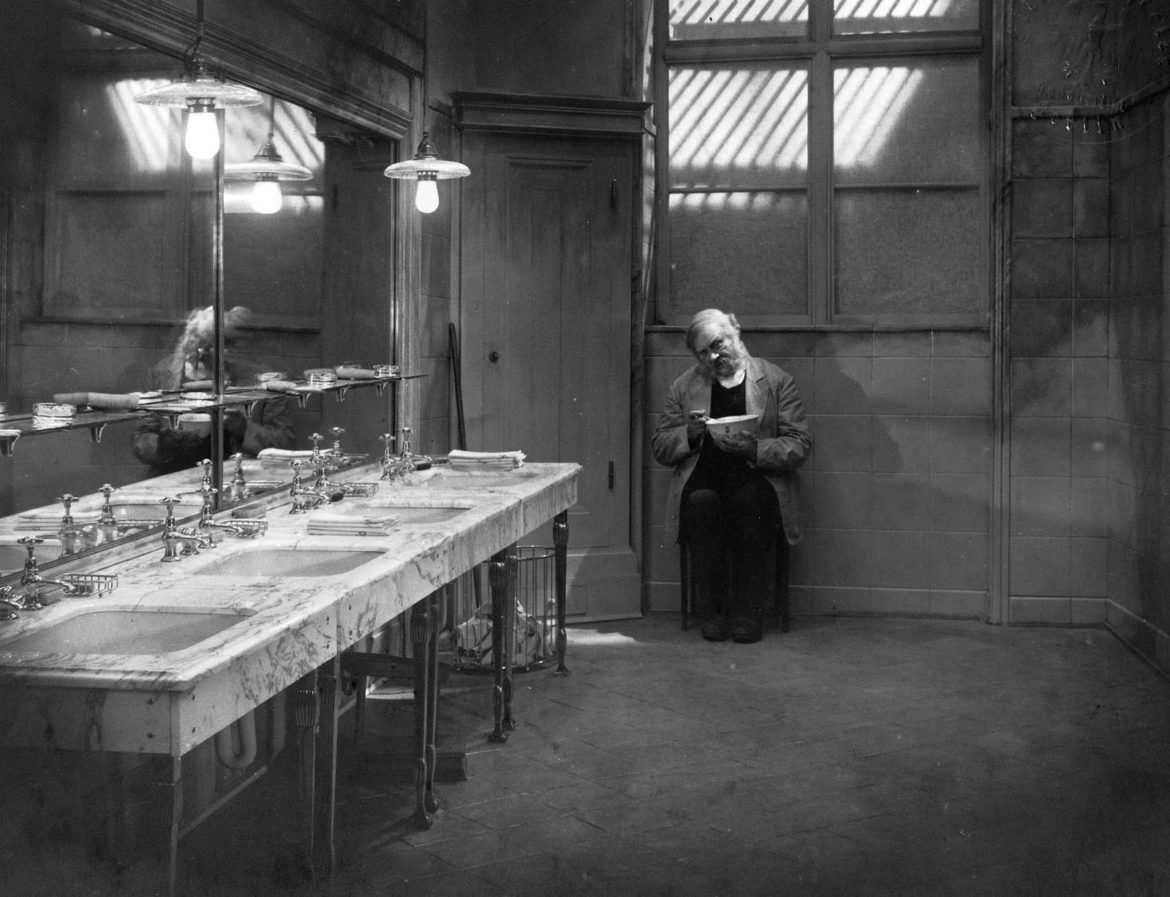
Emil Jannings, in Murnau's The Last LaughBut we can tell right away that things will take a turn. Jannings is increasingly struggling to carry the hotel guests’ luggage, his large frame looking less respectable than a bit silly. When he takes a break to catch his breath at work, his manager makes a note of it. It comes as no real surprise when he’s summarily pushed out of the position for someone younger. To add insult to injury, he’s not only stripped of the uniform that constitutes his identity, and that allows him a sort of class mobility and ease, but demoted to washroom attendant. Jannings the actor seems to shrink on screen to a shadow of his former self – stooped and chastened, his superiors may as well have castrated him, as far as he’s concerned. It’s a precipitous fall from grace.

The former doorman can’t allow anyone at home to discover his professional failure, and so he steals back the uniform. If he must suffer indignity at work, his self-construction and class-consciousness can’t allow it at home, so he attempts to keep it secret and thereby maintain the illusion of prosperity.
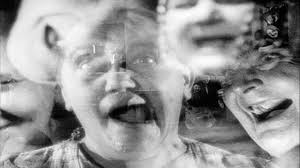
Multiple faces in nightmare sequence in The Last LaughOf course, this can’t last, either. When his rather pitiful ruse is revealed, the neighbors prove all too ready to engage in some classic schadenfreude – the uniform has become a mark of disgrace rather esteem, and a nightmarish sequence of overlaid mocking faces and derisive laughter follows him. Perhaps everyone was waiting for this, after all … for the revelation that he is no better than them.

It’s a tragic story built out of the barest elements. Or it would be, if not for a ludicrously tacked-on happy ending, introduced with the following sardonic half-apology from Murnau, the only intertitle in a film that bravely (and remarkably) avoids the convention throughout:
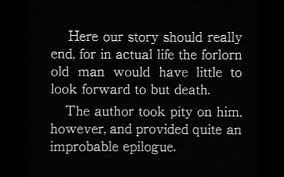
last laugh4

So, rather than a tragedy, the film capitulates to what it expects an audience would demand, and we close instead with the doorman inheriting a fortune from a stranger. In case this were not heartening enough, Jannings doles out wealth to all the porters and washroom attendants, invites his old pal the night watchman to feast in the hotel, and even invites a tramp to ride off with him in a horse-drawn carriage. It’s wish-fulfillment on an almost comic scale, the sort of thing a child might imagine happening one day. (“But then he found a gazillion dollars and ate all the cake he wanted!”)

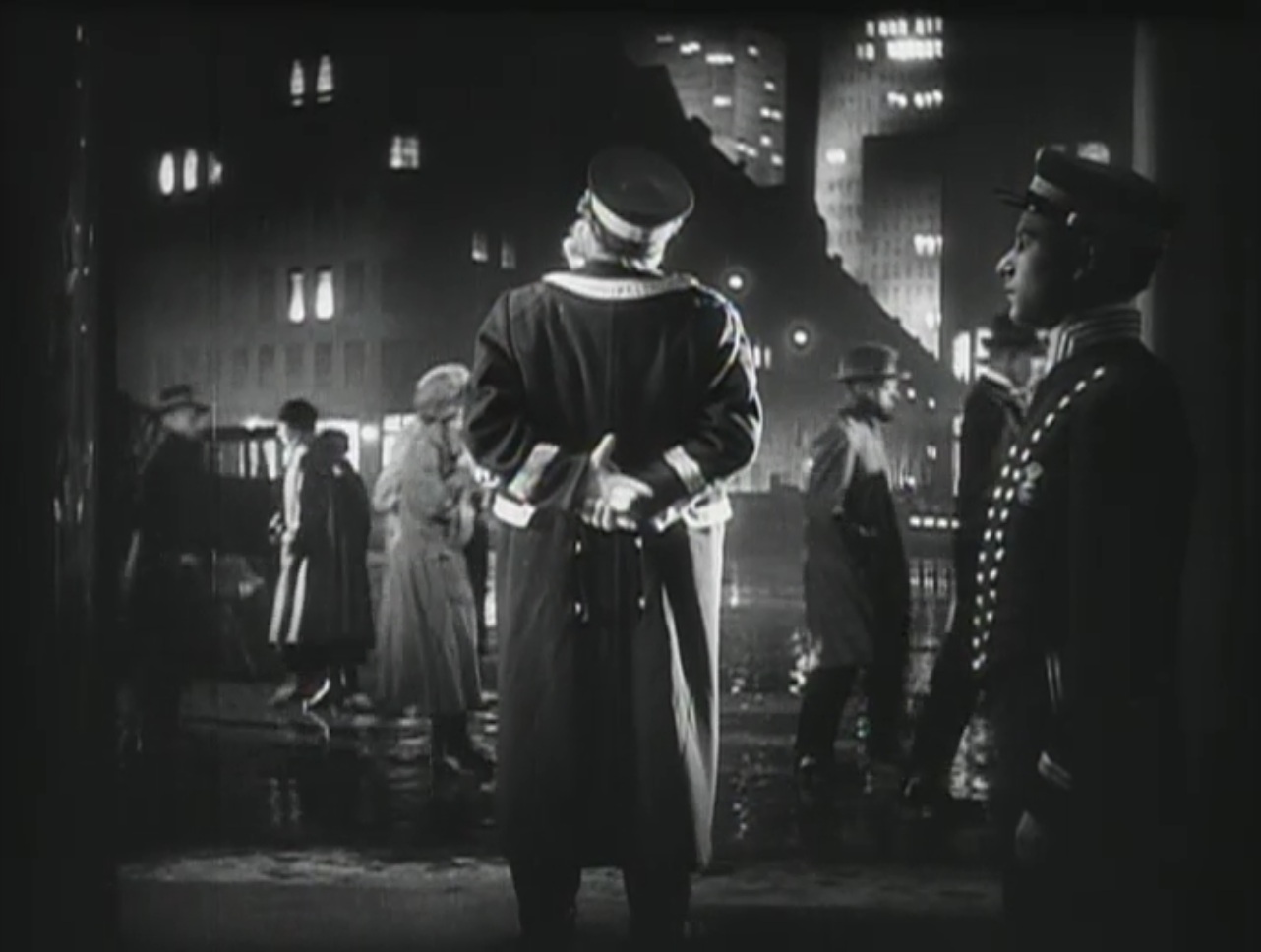
Of course, The Last Laugh didn’t make its mark on cinema history because of its thin narrative. It’s a spectacular visual accomplishment, embodying what would later be called “entfesslte Kamera” (unchained camera). Freund famously affixed the camera to his chest and bicycled through the set (notably, Murnau filmed entirely on sets, including the scenes in pouring rain). Another sequence was created by attaching the camera to a wire. Perspective is warped, with some camera movements played in reverse and structures towering above the doorman, conveying his psychological state. A memorable section visualizes his drunken state through in-camera tricks. Superimpositions abound. There’s a wealth of invention throughout the film, and a realized sense that Murnau and Freund were attempting nothing less than the invention of a purely cinematic language. It’s often thrilling.
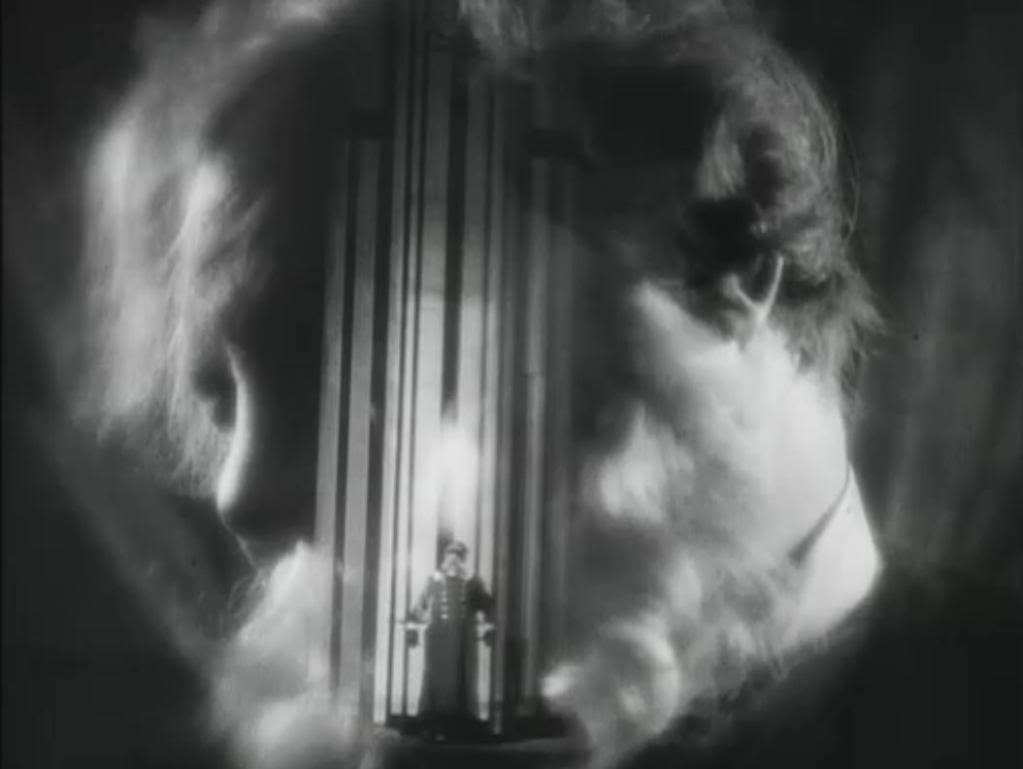
Superimposition in Murnau's The Last LaughAnd even though the narrative remains thin and its denouement fails as storytelling, there’s plenty of richness in its contours. As a reflection of Weimar anxieties, The Last Laugh is as evocative as Caligari or M. – there’s pessimism lurking beneath the splendor, a sense that stability is illusory and contingent, a class divide hiding in plain sight as the doorman tries, and fails, to straddle worlds.

There’s also the huge, looming import of the uniform. It is tempting to associate this, as Ebert himself does, with the coming rise of the Nazis – and there’s little doubt that the uniform is deeply fetishized in The Last Laugh. Like the black hand covering a map in Fritz Lang’s film, perhaps the uniform, as a locus of meaning and identity, signals the horrors to come. Emil Jannings, after all, would go on to a prominent role in the Third Reich, and from there to an eminently well-deserved position of universal scorn.

All of which is interesting but speculative. What’s clear watching Murnau’s masterpiece (one of his masterpieces, anyway) is that cinema, once it incorporated the film’s spirit of technical abandon and experimentation, would never be the same. Alfred Hitchcock, who apprenticed with Murnau, thought The Last Laugh a “nearly perfect film,” and a young Orson Welles was obviously paying attention – at least one shot in Citizen Kane is an outright homage.

Favorite Ebert quote:

His tragedy “could only be a German story,” wrote the critic Lotte Eisner, whose 1964 book on Murnau reawakened interest in his work. “It could only happen in a country where the uniform (as it was at the time the film was made) was more than God.” Perhaps the doorman’s total identification with his job, his position, his uniform and his image helps foreshadow the rise of the Nazi Party; once he puts on his uniform, the doorman is no longer an individual but a slavishly loyal instrument of a larger organization. And when he takes the uniform off, he ceases to exist, even in his own eyes.

Part of an ongoing effort to watch each of the films in Roger Ebert’s Great Movies series. The introduction and full list can be found here.

July 1, 2016 0 comments
0 FacebookTwitterPinterestEmail
spring in a small town
CommentaryFilmGreat Movies: The Counter Programming

Ruins and Hope in Spring In A Small Town

by rick June 30, 2016
written by rick

A crumbling city wall runs along the hillside above the Dai estate, a once-great residence in similar disrepair. Through its cracks, we see the empty skyline stretching forever, and stones are scattered among the weeds. It’s an image of loneliness, faded glory, and nostalgia, and it forms the metaphorical centerpiece of Fei Mu’s 1948 masterpiece Spring In A Small Town.

A hushed melodrama that many have compared to Strindberg, Ophuls, and Renoir – and that clearly influenced Wong Kar-Wai, whose In The Mood For Love could be called a variation on its themes – Spring In A Small Town has had a curious history.

Rarely seen for decades, Fei Mu’s film was deemed politically regressive after the Communist Revolution, with state censors “suspicious of the film’s refusal either to romanticize the lives of ordinary people, or to make two-dimensional fools of the property-owner classes.” In fairness, those censors were, thankfully, correct on both counts. If sensitive portrayals of yearning and loss set amid post-war ruins are legitimate grounds for hiding art from public view, then Spring In A Small Town should’ve indeed been refused distribution. Of course, a less totalitarian sensibility would hold those qualities in high esteem instead, and it’s now more often referred to as one of the greatest Chinese films of all time.

The focus on the film’s political undercurrents is a bit ironic, given how steadfastly Mu focuses on the quiet, quotidian, and interpersonal. All art is, in some sense, political, but Spring In A Small Town is first, foremost, and overwhelmingly a melodrama, far more Letter From An Unknown Woman than Man With A Movie Camera.

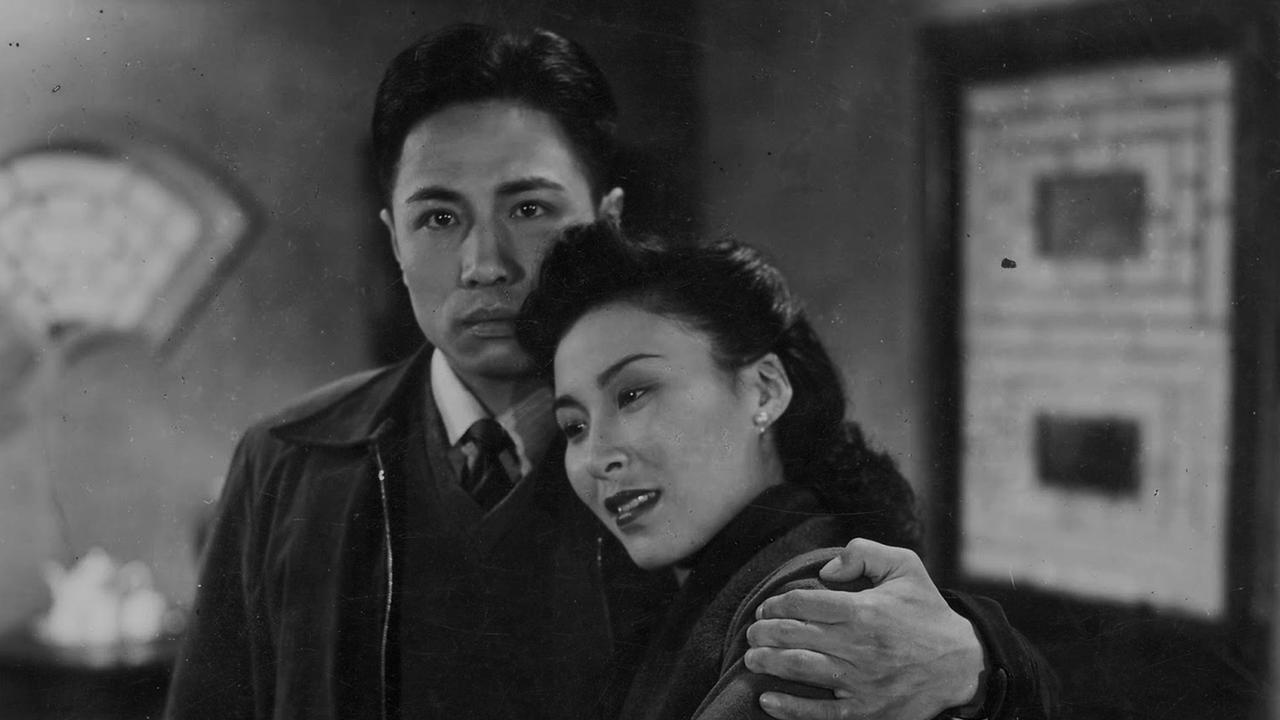
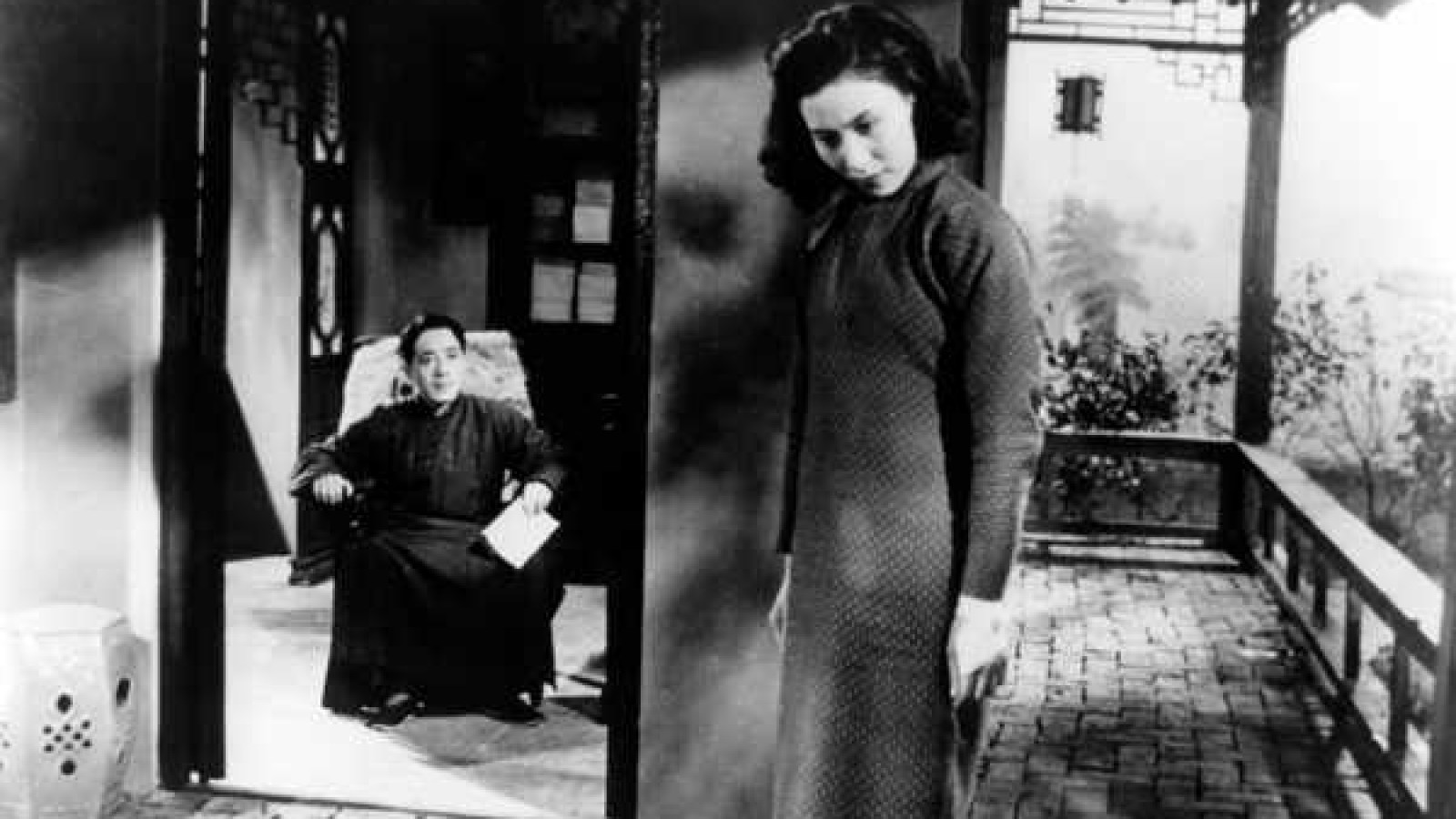
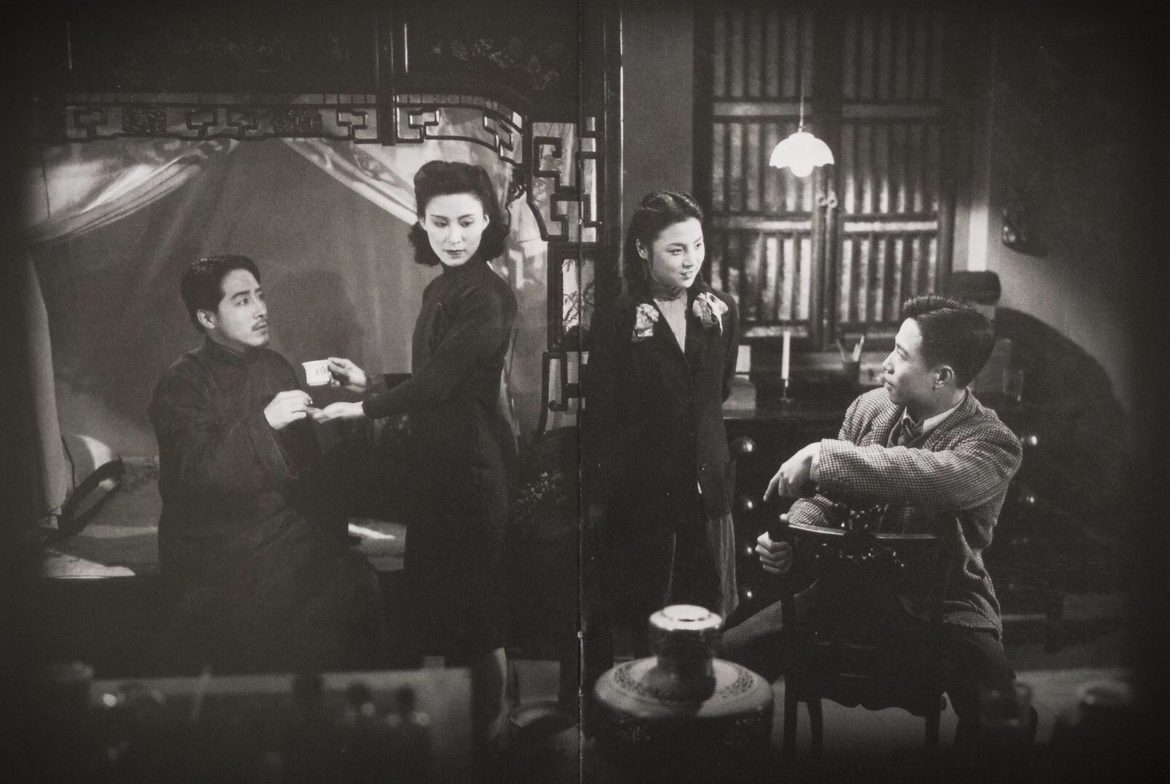
Wei Wei in spring in a small townWith only five characters and a handful of sets, the film is highly theatrical, relying on the evocation of mood (through repetition, framing, and design) to hint at internal dynamics. Its focus is a woman named Yuwen (Wei Wei), who introduces us to the time and place via voiceover. It’s from her vantage point we will mostly process the rest of the story.

Yuwen is married to Liyan (Shi Yu), the heir to the Dai estate who has watched it fall into disrepair after the Sino-Japanese War – the characters navigate a broken landscape they have no money left to fix. Their marriage, though characterized by pro forma kindness and respect, is similarly bruised, seemingly fixed in time. Liyan believes he suffers from tuberculosis, a source of stress for the couple; his younger sister Meimei tends to think his ailment more mental than physical. It’s unclear what Lao Huang, the last remaining servant, thinks – he appears and vanishes, in and out of the frame, like a kindly ghost from long ago.

Yuwen deals with the depressive monotony of an unchanging, fallen landscape and a more or less loveless marriage to an invalid through walks along the ruined city wall. In fact, this is where we first meet her, and the two – woman and wall – are joined in our minds. Her subjectivity and interiority are made manifest through the image; at the same time, the locale implies an escape from drudgery, a permeable barrier that’s both stone and what lies beyond.

Things change suddenly with the arrival of Zhang Zhichen, Liyan’s childhood friend, now a doctor and adorned in western dress, returned after a decade to the radically changed estate. Yuwen’s portentous narration implies early on what we come to discover – she too has a history with Zhichen. The two were young lovers but missed their chance, and now reconnect under impossible circumstances for all involved.

spring in a small townGenerally speaking, little transpires outwardly – Spring In A Small Town is far more interested in longing than resolution, in glances than embraces. The narrative follows how each of these characters navigate an emotional chasm that none of them are eager to address out loud, but recognize to a person. As a result, the film takes on a sense that the things that matter are those that go unsaid, and the dialog features repetitions and polite placeholders desperately concealing the tumult beneath.

Meaning is conveyed instead through physical metaphor and framing. In a series of masterful choices, Mu fills us in on what characters cannot say. An early scene features the central four characters on a rowboat, taking the rare day out of the house: as the younger sister sings and the husband smiles, the camera moves languidly from Yuwen’s face, clenched, to Zhichen’s, pained, and back. It is as though we’re stealing the glance that the lovers cannot.

spring in a small townIn others, Mu emphasizes divisions within the frame – doorways separate husband from wife, again evoking notions of passage and separation; light from a single window creates frames within the frame, literalizing the emotional distance between characters. These are quiet touches that become more and more resonant as the film continues.

In the end, Liyan attempts to abandon this life, at least in part out of love for the wife who he (with his illness) and fate (in its ambivalence) have made miserable. But Zhichen, the doctor and friend who would’ve conceivably benefited from that sacrifice, brings him back. Leaving town, Zhichen promises the younger sister he’ll return the following spring, perhaps even in time for her summer vacation. The husband climbs the hill to the ruined wall to join his wife, the first time we’ve seen them together at this locus of the film’s meaning, and they gaze into an unsure future as the camera fades.

It’s an evocative and powerfully ambiguous climax. What happens next is anyone’s guess, but it’s clear that things are not as they have been. The introduction of vitality and life, in the form of Zhichen and nearly forgotten love, has reanimated a static emotional landscape. It’s not clear there is happiness in his wake, but there’s hope. If not for something better, than for something different.

Is this what the censors feared? There’s something unstable and dangerous in the kind of desire Mu portrays, even if the portrayal itself is a remarkable portrait of repression. The “narcotizing effect” they decried only throws into relief this final moment – neither resignation nor resolution, it’s an image of potentiality, blocked by the ruined walls of the past and a cloudless sky which might, eventually, explode.

Part of an ongoing effort to watch a set of films from non-White, non-U.S., non-male, and/or non-straight filmmakers and depart a little from the Western canon. The intro and full list can be found here.

June 30, 2016 0 comments
0 FacebookTwitterPinterestEmail
FilmReviews

Honor and lack thereof: A Girl In The River

by rick June 28, 2016
written by rick

The winner of last year’s Academy Award for Documentary (Short), Sharmeen Obaid-Chinoy’s A Girl In The River is a 40-minute gut-punch. As cinema, it’s not particularly groundbreaking. As a bracing call to arms against the institution of honor-killing, specifically in Pakistan, it’s entirely effective.

Obaid-Chinoy’s film focuses on a single case, unfolding as both police procedural and horror story.
It’s a simple, rending story. Her protagonist is a woman named Saba, who had the misfortune to find herself in love with a man her family viewed as beneath their station. The two eloped, but didn’t spend a full day together before Saba’s father and uncle retrieved her, swore they meant her no harm, and promptly shot her in the face. Her body was stuffed into a sack and tossed into the dark water of a river at night.

Incredibly, Saba survived. The bullet, intended for her brain, actually only grazed her cheek — she was disfigured but alive, and managed to pull herself from the weeds of a shallow grave.

girl in the river2A Girl in the River begins after the fact, interviewing Saba from her hospital bed. Her survival presents a legal dilemma. Under Pakistani law (at the time of filming, at least), honor killing is viewed through a different lens than other attacks. Her attackers — that is, her close relatives — may be exonerated with her forgiveness. Saba is unwilling to do so, and her lawyer and the criminal investigator, both of whom barely conceal their disgust for a system that would allow this situation, support her. But local elders strongly endorse reconciliation. After all, everyone has to live near each other in the neighborhood.

Saba’s uncle is stridently unrepentant, believing he and his brother to have done right. Her sister echoes their views. Saba’s mother believably protests she knew nothing about it, would never have sanctioned it, but still bemoans the willfulness of a daughter who didn’t abide by custom. From his jail cell, her father is righteous and indignant, and untroubled: “I have other daughters,” he proclaims.

girl in the river3This is a lot to take. Obaid-Chinoy’s indignation in A Girl in the River is clear through the structure of the narrative, and even occasionally compelling in its visualization (cinematographer Asad Faruqi gets some impressive shots of rooftops and claustrophobic villas, but is mostly content with static framing as people tell their stories, declaim, and alternately accept and evade responsibility).

At its heart, A Girl In The River is an examination of the colliding forces of a kind of traditionalism and a kind of modernity. There’s a sense that the film elevates police and statist forces to a position of righteousness they might not always occupy, but there’s little reason to doubt the sincerity of the advocates in Obaid-Chinoy’s film. Indeed, many more are needed. The overt patriarchy on display is painful.

Since the film’s release, some things have changed — a groundbreaking law has been passed, despite continuing opposition, which Pakistani Prime Minister Nawaz Sharif explicitly attributed to the film. Others have not: as recently as May, a horrific example made the international news — notable, given that many cases apparently go unreported even locally. “In 2014 about 1,000 women died in honour-related attacks and 869 in 2013,” the BBC reports.

When focusing on any given atrocity elsewhere in the world, there’s a danger of exocitizing it. Of imagining that this, this, is something we could never do (whoever “we” is supposed to be in that scenario). This is real, and worth remembering.

But it also does nothing to diminish the horror of the atrocity itself, or the need for solidarity, and outrage. A Girl In The River is a specific form of advocacy documentary, crafted by someone familiar with local nuances, and it should infuriate anyone and everyone.

Watch Sharmeen Obaid-Chinoy’s powerful acceptance speech below.

June 28, 2016 0 comments
0 FacebookTwitterPinterestEmail
FilmReviews

Ovarian Psychos Birth A Movement

by rick June 27, 2016
written by rick

In their mission statement, the Ovarian Psychos succinctly explain what they’re about:

We are an all womxn of color bicycling brigade cycling for the purpose of healing our communities physically, emotionally and spiritually by addressing pertinent issues. We envision a world where women are change agents who create and maintain holistic health in themselves and their respective communities for present and future generations.

In other words, don’t call them a “bike gang,” a dismissive term they vocally reject. (“Why are we a ‘gang,’” one member asks angrily. “Is it because we’re from the ‘hood?”) Their aims are much bigger than that.

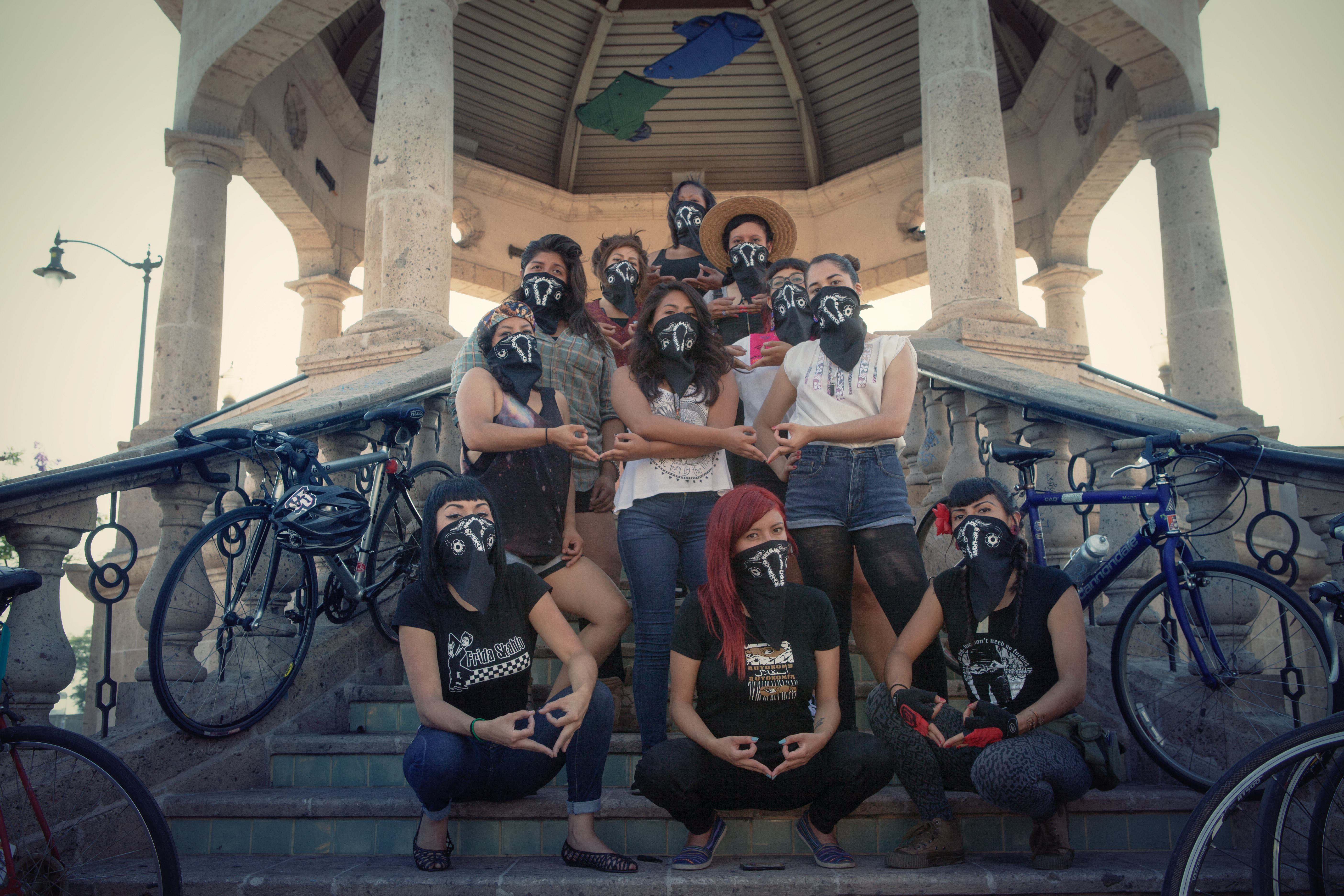
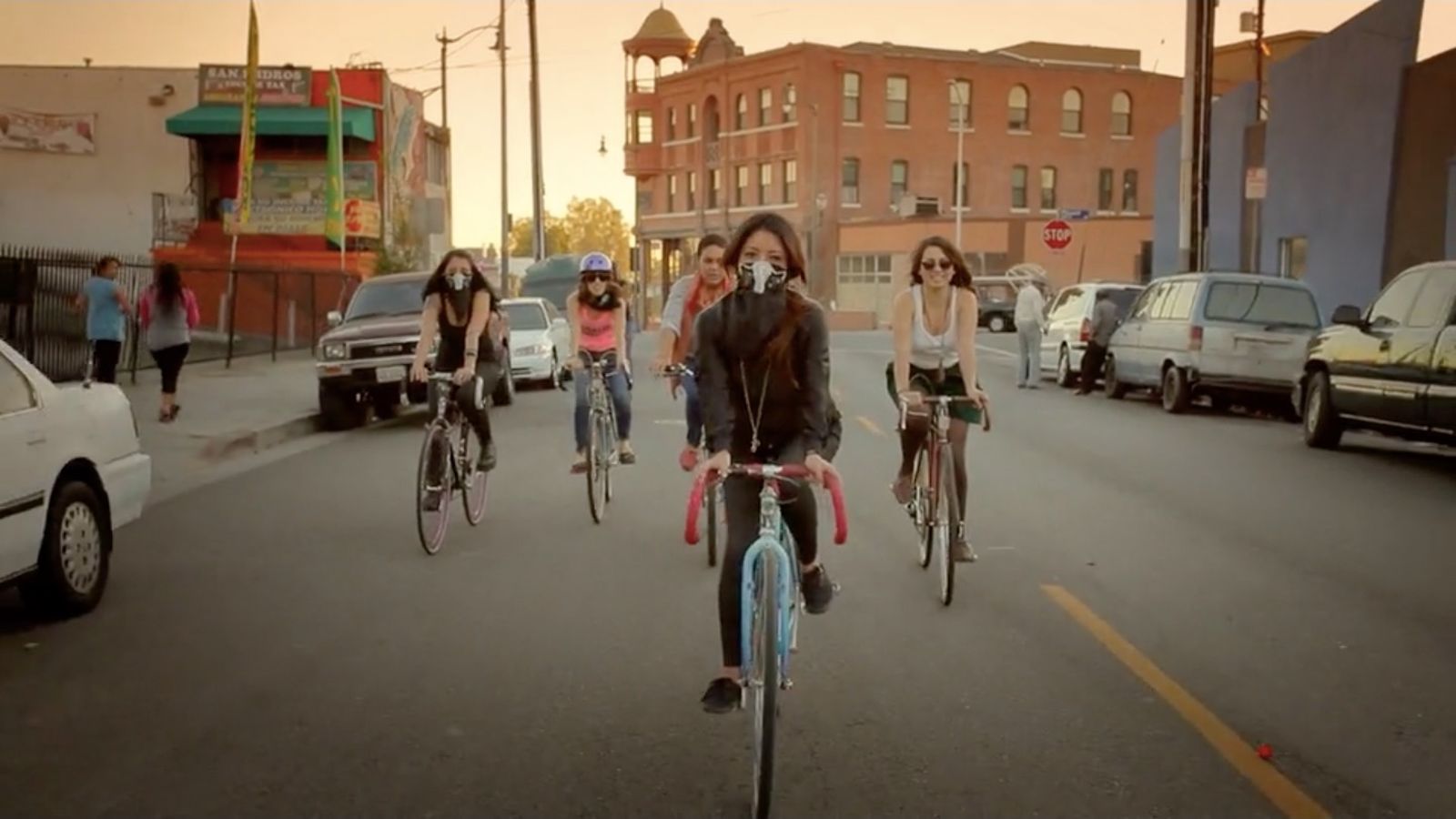
ovarian psychos1Joanna Sokolowski and Kate Trumbull-Lavalle’s new documentary, simply titled Ovarian Psychos (and how could they resist?), profiles this group of young womxn in East L.A., who for several years have been organizing and staging communal rides as a means of empowerment, visibility, and resistance. (I will be using the alternate spelling the group prefers.)

Ovarian Psychos is powerful, if a bit overstuffed: there’s simply a lot to talk about, at times perhaps too much all at once. But Sokolowski and Trumbull-Lavalle do an admirable job of juggling themes and working to integrate the issues in ways that mirror the intersectionality of the Psychos’ own approach.

After a brief history of how the group came together, we focus on three members: Xela, its founder and a single mom grappling with childhood trauma while trying to figure out how best to raise a daughter of her own; Andi, an artist and organizer; and Evie, a new recruit who we watch come into her own.

Xela started the group, in part, so that womxn of color in the neighborhood could meet and organize – against domestic violence (and violence against womxn more generally), against the machismo of traditional bike culture and presumptions of what constitutes appropriate “feminine behavior” in what she terms “the post-colonial Mexican family,” and for a sense of agency and empowerment for her fellow Chicanas in East L.A., birthplace of the Brown Berets and the Chicano Movement more generally.

From there, the Ovarian Psychos grew into a more wide-ranging movement, unapologetically feminist and radical in its organization. (Several other groups have taken up the mantle in other cities since.) Non-hierarchical structures and decision-making are emphasized, and connections to indigenous culture take a number of specific forms. While focused on practical planning, meetings also embody aspects of consciousness-raising sessions – personal struggles are relayed, solutions proposed, solidarity fostered. Connections between multiple forms of oppression arise.

ovarian psychos3None of this rigor should obscure the fact that The Ovaries (speakers alternate freely between this shortening and “Psychos”) are also pretty hilarious. When they catch heat, online and off, from the usual trolls decrying their womxn-only approach as exclusionary, Andi shakes her head: “You ask ‘why can’t it be for guys, too?’ Dudes! Everything is for y’all.” Their iconography is cleverly confrontational, in a punk rock, Riot Grrl by way of hip-hop fashion: their bandanas are adorned with images of ovaries, and they wittily appropriate (and subvert) the trappings of criminal culture with ovary-evoking “gang signs.” People who are doing support work are referred to as LROs – “left and right ovaries.” There’s time for fun amid the work of building community and defending safe space.

However, this is only one aspect of the Ovarian Psychos. In each of the three central threads, we also meet the protagonists’ respective families – mothers in each case (fathers are notably absent throughout). Sokolowski and Trumbull-Lavalle examine these relationships – their moms’ anxieties and hopes, their own desires for relative freedom. Traditionalist (or “post-colonial traditionalist,” to follow Xela) attitudes butt up against the young womxn’s unrepentant, slightly in-your-face approach and attitudes. In Xela’s case, there’s the struggle to be active in the community and also present for her own daughter, who she wants to raise much better, and much differently, than she herself was.

ovarian psychos4This becomes a bit of a problem in Ovarian Psychos: it’s not an intuitively easy fit between this multitude of themes, and there’s a sense that every moment spent on one topic takes away from the time available for every other one. In a recent screening, it wasn’t revealed until the Q&A why certain locations and routes were chosen for rides — it turns out, unsurprisingly, there’s a lot of intention behind it, and it’s something you might think the filmmakers’ could’ve included in the film itself.

Still, it works more often than not, and it’s all fascinating. In some sense, the thematic jumble is itself formally appropriate: the people we are following are also overwhelmed by the sheer amount of struggle, inter-relations, and pressures of the world they are seeking to change.

ovarian psychos5None of these structural or narrative complaints matter much in the end, though. After all the analysis and debate, there are the rides themselves: the Ovarian Psychos setting out en masse into the streets, a moving image of sisterly solidarity, agency constructed out of trauma, and a self-created community on two wheels. It’s impossible not to cheer.

June 27, 2016 0 comments
0 FacebookTwitterPinterestEmail
james white
CommentaryFilm

New On Netflix: James White

by rick June 24, 2016
written by rick

James White, currently streaming on Netflix, announces its focus right away, in its title. Probably, prospective audiences might rightfully imagine, this will be a film about a guy called “James White”. There’s something vaguely old-fashioned about it, Victorian. Not even “The Sorrows of James White” or “The Continuing Adventures of James White.” Just a name.

It’s appropriate. The film is the directorial debut of Josh Mond, who previously produced, among other things, 2011’s spectacular Martha Marcy May Marlene – a very different film but another one with a title composed of names, interestingly enough. The latter focused on group dynamics in a cult; here, Mond is similarly interested in small moments of interaction and solitary questioning. It’s about how a monumentally self-absorbed guy grapples with duty and sudden responsibility. Let it be said up-front: James White can be a bit of an asshole, and James White can be a tough ride.

james white 1

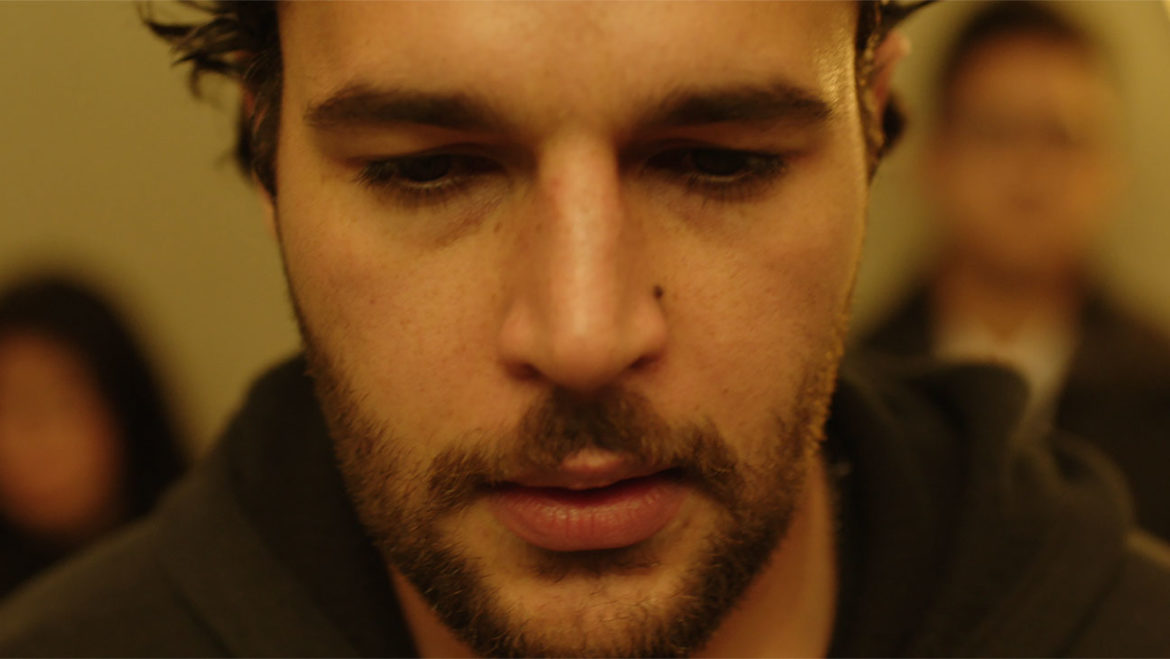
The payoff, however, is enormous. Mond and his DP Mátyás Erdély (who shot the incredible Son of Saul last year, too) zoom in uncomfortably close to the titular lead character. Literally and figuratively: played, in a tour de force, by Girls’ Christopher Abbott, and loosely based on Mond himself, James White the character is front and center, trying and failing to cloak inner turmoil. Even on a beach in Mexico, chatting up Jayne (Makenzie Leigh), who’s way too young for him. Even carousing with Nick (Scott “Kid Cudi” Mescudi), a close family friend who’s willing to fight alongside him in a bar but maybe the only person around who calls him on his bullshit.

We meet James in a club, sweating, drinking, dancing. He seems one false step away from a stroke, but we don’t know why. He exits, and it’s morning. A cab across town takes him to an apartment. Inside, people are grieving. His dad, who he never much knew, has died. His mother, who raised him and who he who loves fiercely, has been grappling with cancer. And still: James spent the night getting desperately fucked up, hitting on women, generally looking like someone searching for an exit door. It’s hard to hate him for it. He’s got a lot going on.

Abbott plays him as an aimless but mostly well-intentioned young man, prone to dramatic mistakes, arrogance, and self-pity, but also one who wants to do right. In scene after scene, Erdély’s camera stays tight to his face, registering each small moment of pain, denial, sweetness, anger, and hope.

james white 3As his mother, Cynthia Nixon delivers an impressive performance herself. She seems to shrink in physical stature as her illness grows, but also projects a kind of fierceness in the face of the inevitable. The relationship between the two of them is palpably rendered, occasionally uncomfortable, and true. By the time James tries to comfort her with stories clearly drawing on lessons she herself taught him, Mond has structured something devastating.

This is tough stuff, but it’s honest. James’ imperfections alone redeem what might have been a miserabilist slog, or yet another story of an overgrown man-child learning how to live. The film has more on its mind than that, and while it might not sound like a terrific time, there’s something to admire in every scene.

Quick Picks

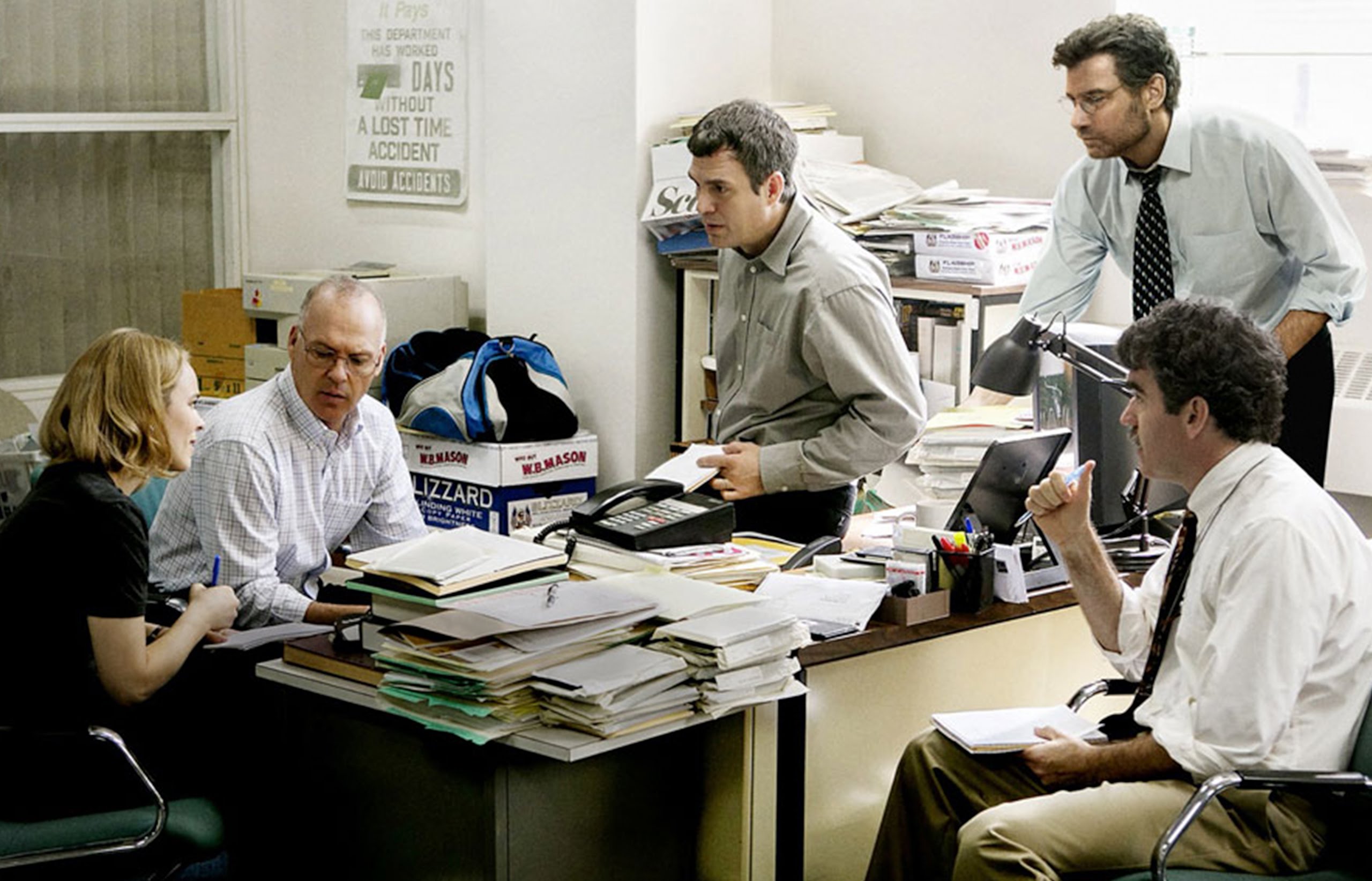
spotlight(1) Spotlight, last year’s Best Picture winner, is also now available for streaming. If you haven’t seen it, now’s the time. Don’t listen to anyone who refers to the film as visually staid or too by-the-numbers: it’s quietly heartbreaking and entirely accomplished, boasting a great script and solid performances, with a cinematographic palette and design entirely appropriate to its subject. It’s also the best Best Picture winner in nine years.

forbidden room

(2) With his gleeful absurdity and deep love of silent film, Guy Maddin is, generally speaking, a bit of an acquired taste. So why not acquire it? The Forbidden Room lacks the personal touch of his masterpiece My Winnipeg, or the bonkers narrative of his other masterpiece Brand Upon The Brain!, or the concision of his other masterpiece The Heart Of The World, but it’s (you guessed it) a masterpiece. His most film if not his best film, it’s required viewing for any aspiring Maddin-phile.

2001

(3) 2001: A Space Odyssey changed cinema in profound ways, and Kubrick’s classic is about to vanish from Netflix streaming. See it now, before it speeds off into a world made of stars.

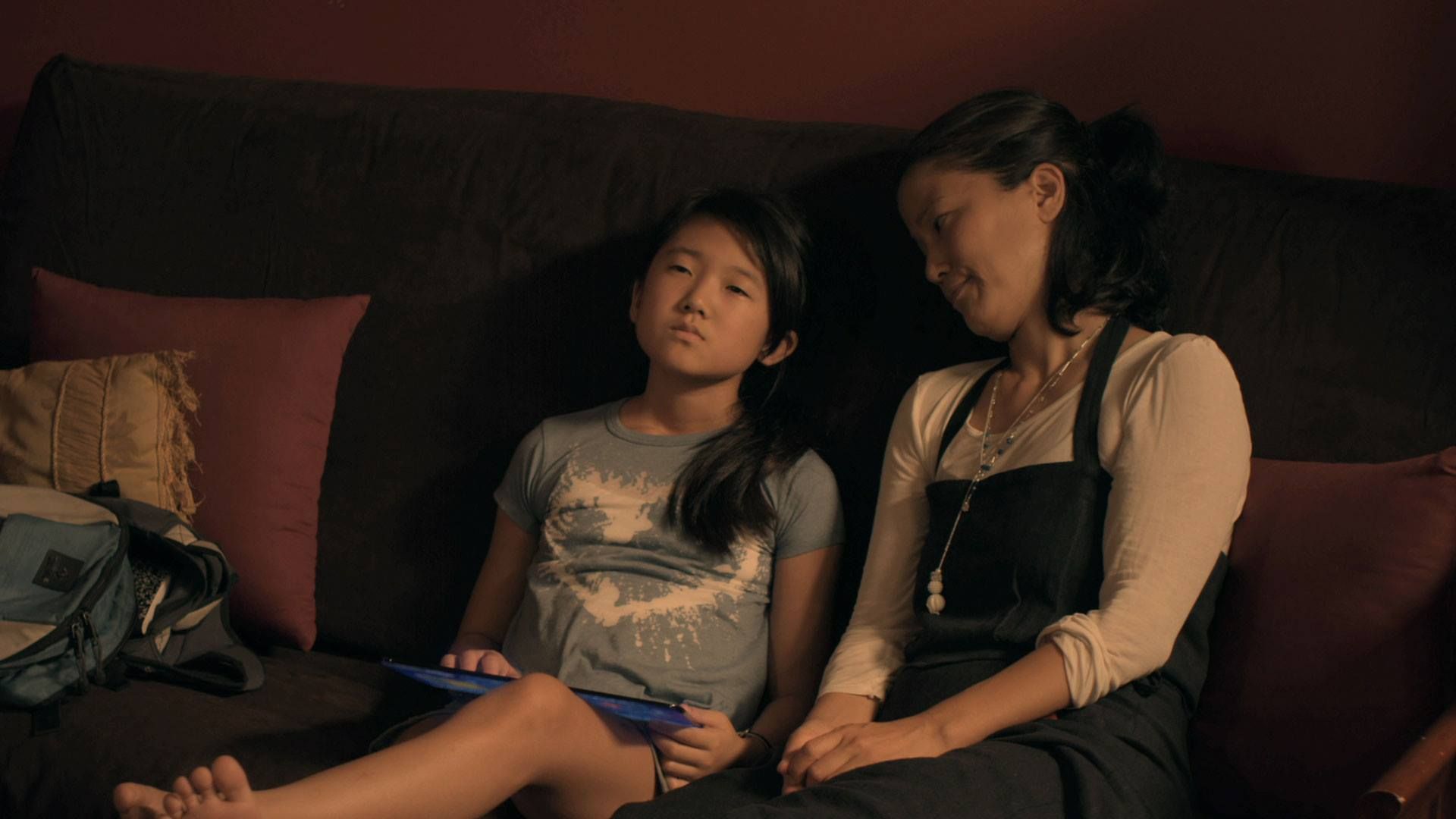
advantageous(4) Advantageous was one of the best sci-fi movies in recent years, a feminist take on neo-realist dystopia that breathed new life into an increasingly moribund genre. Director Jennifer Phang and star Jacqueline Kim play with heady themes and still tell an engaging story. If you like Blade Runner and Margaret Atwood, here’s a movie you should see as soon as possible.

June 24, 2016 0 comments
0 FacebookTwitterPinterestEmail
CommentaryFilmGreat Movies: The Counter Programming

Anti-Militarism and Let’s Go With Pancho Villa!

by rick June 23, 2016
written by rick

Towards the end of Fernando de Fuentes’ 1936 epic Let’s Go With Pancho Villa!, Miguel Ángel del Toro ‘Becerrillo’ (Ramón Vallarino) asks, “The Revolution will triumph. Why do we stay?”

It’s the central question in this stridently anti-authoritarian, anti-militarist, and (possibly) anti-Revolutionary drama, considered to be the first Mexican “super-production”. The third in a celebrated trilogy but also a disastrously received film that nearly derailed its director’s career, Let’s Go With Pancho Villa! almost definitely contributed to his posthumous reputation as, in A.O Scott’s words, “the Mexican John Ford.”

With its huge battles, bitter characterization, and emphasis on figurative landscapes, the Ford comparison is apt. For his part, de Fuentes had this to say instead: “Mexican cinema ought to be a faithful reflection of our severe and tragic way of being, not a poor imitation of Hollywood.”

In any case, the film is certainly severe and tragic. Becerrilo (“little calf,” a play on his surname bestowed upon him by none other than insurgent leader Pancho Villa) is one of six central characters, collectively dubbing themselves “The Lions of San Pablo,” who join the fight for Mexican independence, but find their fervor and loyalty deeply betrayed.

Long before Becerillo utters his fateful words, de Fuentes foreshadows what’s to come. The film opens with a scrolling prologue, half expository intro and half apology-in-advance, emphasizing that the events depicted are meant to honor bravery but also acknowledge the cruelty of war, drawing a parallel between the bloody Mexican countryside and the trenches of France. A montage follows (the first, but not the last, nod to contemporaneous Russian filmmaking) that introduces images of guns firing, a woman making tortillas, and logs being split. This triad – heroic violence, domesticity, and division – animates the rest of the movie.

Becerillo is the first of our protagonists to make an appearance. He’s a prisoner of the haughty local general, and the one splitting those logs. Blamed, rightly or wrongly, for selling off a gun to local rebels who’ve been busy shooting soldiers at the base, he escapes, and finds his way back to the town of San Pablo. It’s there that he, the honorable Don Tiburcio Maya (Antonio R. Frausto), Melitón Botello (Manuel Tamés), Martín Espinosa (Rafael F. Muñoz), and the brothers Rodrigo and Máximo Perea (Carlos López and Raúl de Anda) resolve to join with Pancho Villa’s forces and fight for their homeland.pancho villa2The narrative, drawn from well-known source material of the time and assuming audience familiarity with the revolutionary context, doesn’t waste time filling us in on details. Back stories are in short supply: we simply head off to war.

Francisco “Pancho” Villa himself (played by Domingo Soler, alternating between a heroic posture, an aloof presence, and deeply unhinged sociopathy) is introduced doling out corn to peasants. He welcomes the new recruits, and they beam with pride at his attention.

It’s not long, however, before their nighttime conversations turn to discussions of how they would like to die, how they wish they could live, and how they would like to be remembered. There is a longing for home, but the focus – whether it’s a true one, or an act for their comrades, is open to question – is on what constitutes “a good death.” A prolonged scene details each of their fatalistic desires; each will be fulfilled in turn, with maximum irony.

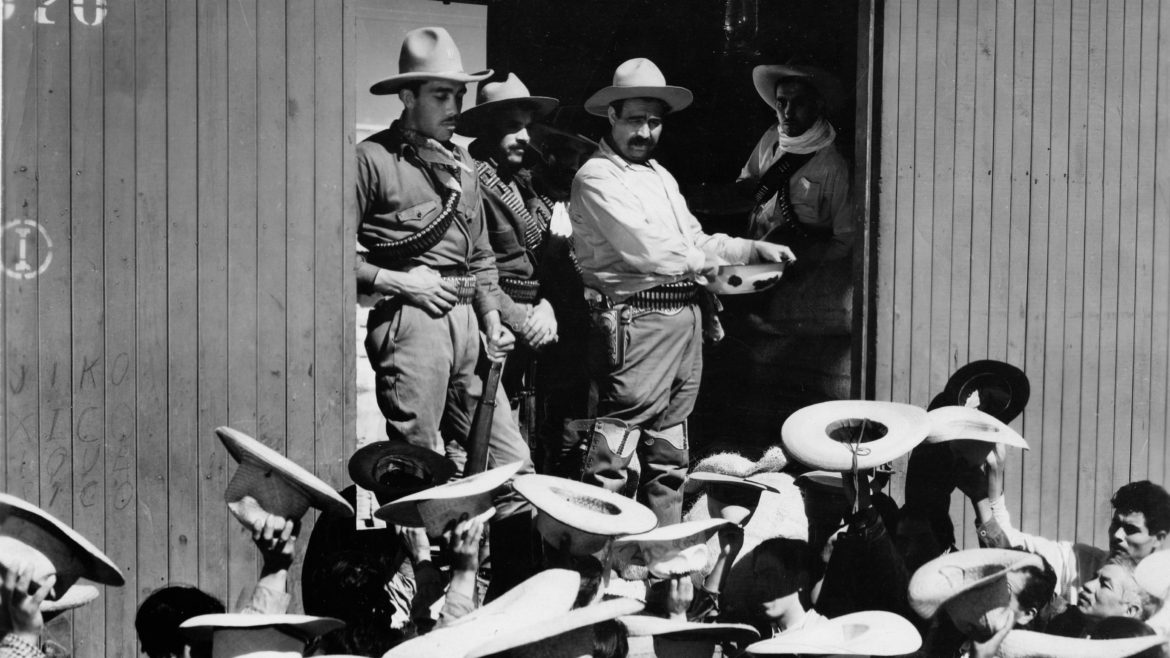
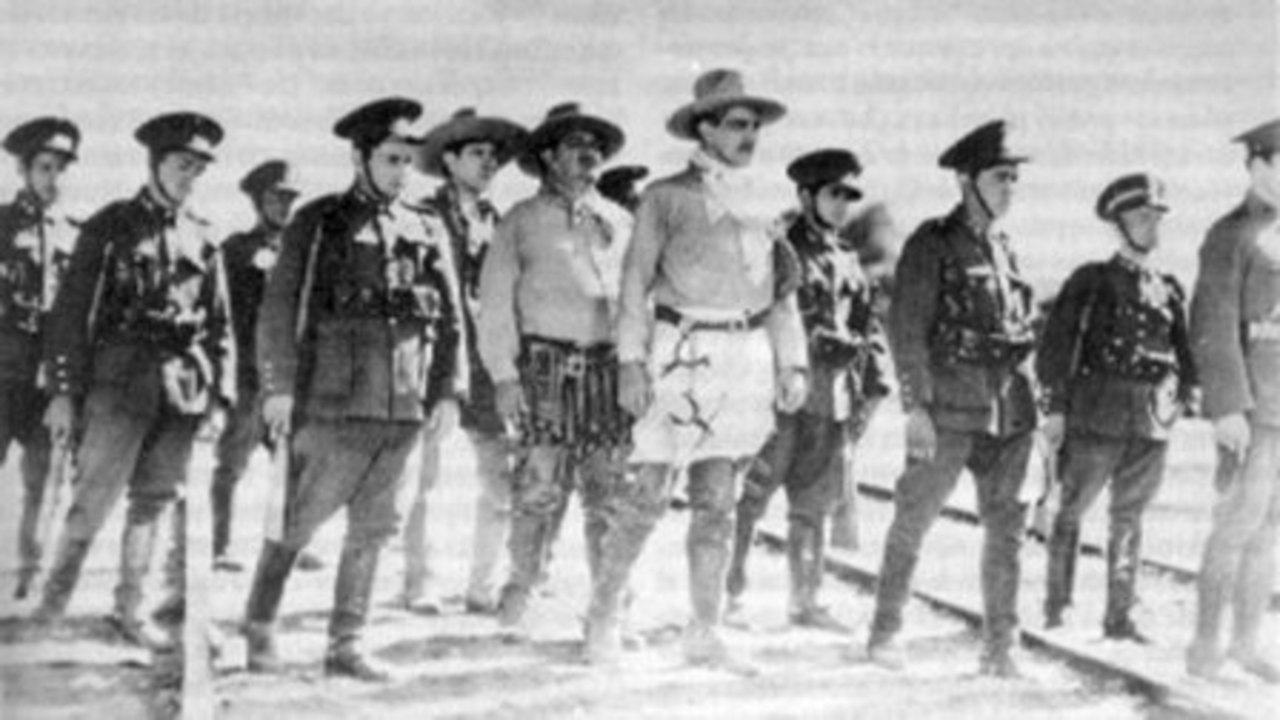
De Fuentes films several gripping battle sequences, each staged on epic landscapes or in the shadows of monumental structures. He favors low shots of faces set against empty skies, slightly askew angles, and a general sense of foreboding and menace, of small bodies eclipsed by the looming structures that tower above them. As our heroes die one after another, he frames their deaths in tableau – draped over stationary weaponry, or surrounded by bewildered comrades. One shot, of bodies strewn across a trench stretching into the distance, recalls Griffith’s image, introduced with the title card “War’s Peace” in Birth of a Nation. It’s grisly business out there, and the chasm between machismo rhetoric and facts on the ground is emphasized.

By the end of the film, only Tiburcio remains, as his friends and townsmen predicted. Becerillo, who wondered why they stayed on, has contracted smallpox, and Tiburcio is ordered to burn him alive lest others get infected. (Why can’t you shoot him first? This question is never even posed.) The “Little Calf,” who wanted a military funeral, is consumed by flames while a solitary trumpet plays, and Tiburcio salutes, weeping.

In return for this unfailing loyalty, Tiburcio is scorned by Villa and his men, all afraid he may now himself be a carrier. The final shot tracks Tiburcio’s solitary walk, along train tracks, back into the night, as the heroic revolution departs in the other direction.

It’s not hard to see why audiences might’ve recoiled from such an enormously negative vision of the father of Mexican independence. But honestly, the film laid the groundwork long before. There is what amounts to a game of Russian roulette in a cantina presided over by the capricious general – a hero’s life is sacrificed for no other reason than it is bad luck for 13 men to drink at a table. And watch how Soler doles out badges to the surviving members of the Lions of San Pablo: noticing one is missing and discovering he died, Soler’s Pancho Villa absent-mindedly tosses and catches the medal while hearing the story. “A shame,” he notes, as if discovering dinner would be slightly late.

From its title’s exclamation point on down, Let’s Go With Pancho Villa! is seething with anger and irony, which only throws into relief de Fuentes’ mastery of heroic tropes. It’s unfortunate that no better transfer of the film exists to date – some enterprising restoration folks should really get on that. It would be far better served by a cleaner print than I was able to find.

But the version we have demonstrates in no uncertain terms what was intended. Even the prologue knows already what audiences will discover – this is an epic concerned far more with the small-scale tragedies of individual lives and deaths than anything approaching the grandeur of national revolution. It reserves as much affection and time for peasant songs and tortilla-making as it does for machine gun battles. And huge, visceral, carefully orchestrated military set-pieces are deployed in the service of empathy for minor characters … the ones who fight and die in the wars they are sold, by men who mostly hide behind them.

Is that fair to Pancho Villa? This is a film that does not care. Its allegiance is firmly with the abandoned soldier, walking alone into the night. It’s propaganda of the most humane sort.

Part of an ongoing effort to watch a set of films from non-White, non-U.S., non-male, and/or non-straight filmmakers and depart a little from the Western canon. The intro and full list can be found here.

June 23, 2016 0 comments
1 FacebookTwitterPinterestEmail
Johnson & Hart
FilmReviews

Little Hart, Big Johnson: Central Intelligence

by rick June 22, 2016
written by rick

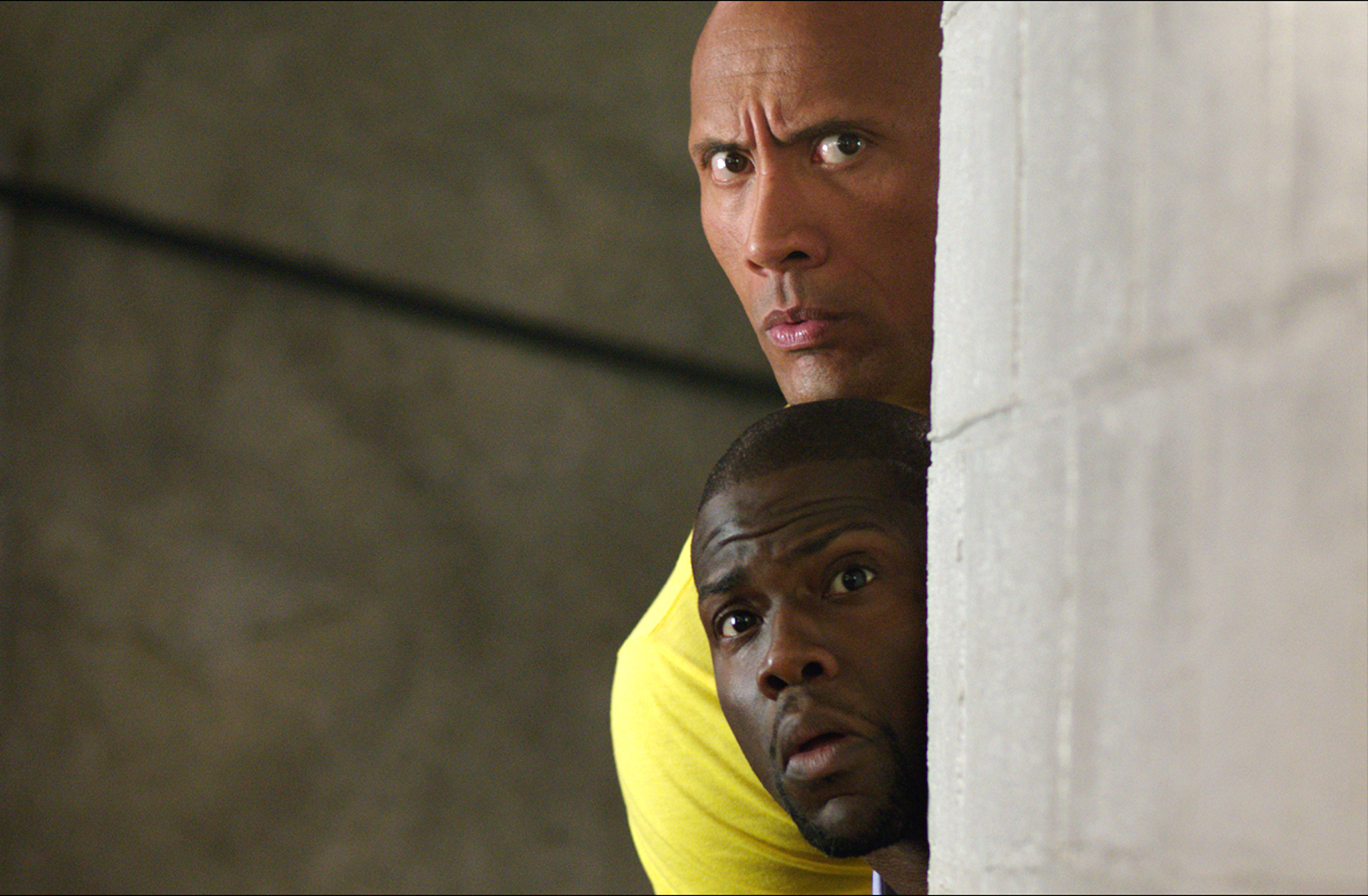
Central Intelligence’s tagline – “It takes a little Hart and a big Johnson” – is one of those rare constructions in entertainment advertising, jokes so stupid they come out the other side clever. In this way, it’s the ideal teaser for a film that marries its pro-forma buddy-comedy structure to an admirable willingness to stick with the joke until the end, trusting in its leads to carry the day.

The same can’t be said of the attempts Central Intelligence makes at more emotive characterization, though you can feel it giving it a go there, too.

Frankly, though, most audiences aren’t coming to a Kevin Hart / Dwayne Johnson action comedy for profound reflections on the vagaries of life as we transition from adolescence to adulthood, and they’ll be too busy laughing too much of the time to notice or care if the film falls short on that score.

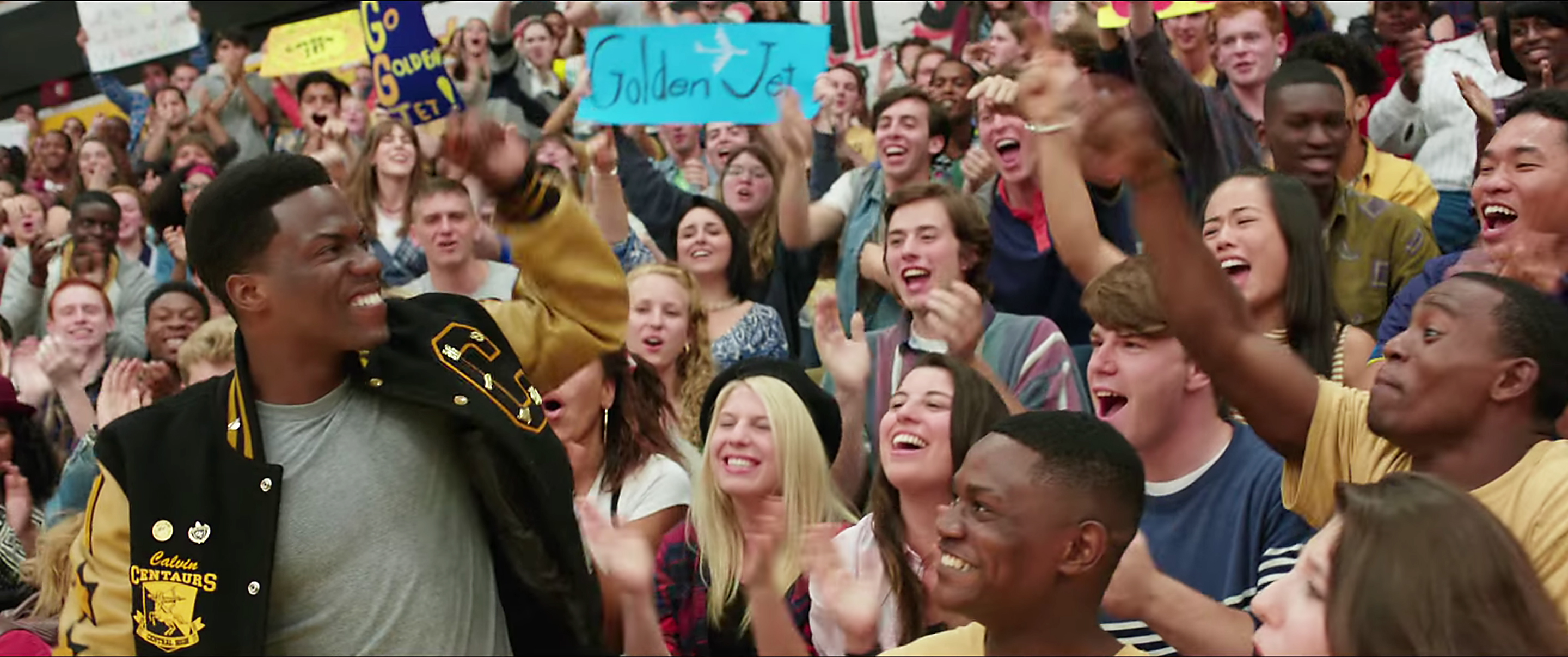
central intelligence3Hart plays Calvin Joyner, once a comically over-achieving high school success story now reduced to something of a sad-sack life as a “forensic accountant” (an actual but rarely cinematically-invoked job title that the film rather curiously treats as commonplace).

In a departure from his usual motor-mouthed shtick, post-high school Hart, married to his sweetheart Maggie (Danielle Nicolet, perfectly acceptable but given almost nothing to do) and living in the Maryland suburbs, ably conveys a sense of lost promise. Good as he may be in his boring line of work, this was not, he feels, what his classmates had in mind when they voted him Most Likely To Succeed.

A sudden disruption comes when, on the eve of his 20th high school reunion, he accepts the Facebook Friend Request of one “Bob Stone”. Bob, it turns out, was the bullied fat kid Joyner once extended some meager kindness to when no one else would. Bob’s idolized him ever since.

Now grown into an Adonis (or, as the film cheekily suggests, a “Hercules”) in the form of Dwayne Johnson, Bob invites Calvin out on the town. Almost immediately, events indicate Bob might know, and be, more than he lets on. Without further ado, director Rawson Marshall Thurber launches us into an action film.

Why does Bob react to danger like some sort of Jason Bourne? Why did he bring Hart along? As things escalate, we are invited to wonder about the significance of Amy Ryan’s Agent Pamela Harris, hot in pursuit. There are chases and explosions and questions about Bob’s true motives. It all has to do, we learn, with codes to satellites. Or something.

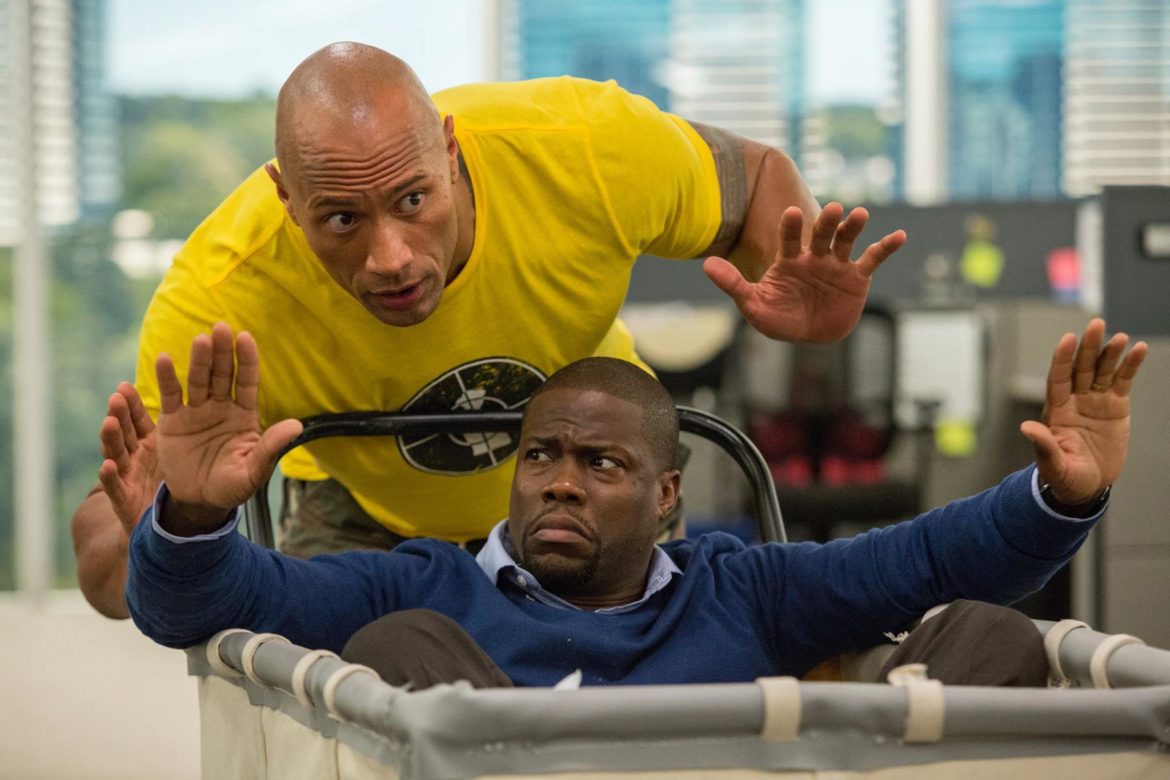
central intelligence2None of this matters. Some of the action set-pieces are actually pretty fun and engaging, but Central Intelligence is first and foremost concerned with the comic physical difference between its two leads, and a sly reversal of expectation.

The hulking Johnson, getting the better end of the deal and the best lines, is all smiles and unicorn t-shirts (“the most lethal animal on the planet,” he deadpans), both a killing machine and a perpetually star-struck teenager who quotes Sixteen Candles but rips throats like Patrick Swayze in Road House.

Hart, the man he’s absurdly in thrall to, is a terrified and milquetoast middle-manager who’s long forgotten his glory days as “The Golden Jet,” the guy who could do back-flips on command and also win the drama award for his performance in Hamlet.

Those flip-sides to their personae – Johnson hilariously sensitive, Hart defeated and resigned, both sheltering disappointments in who they were and who they’ve become – never get the dramatic mileage they might have. They’re played for laughs, but the film hints at another, sadder reading underneath. It’s enough to make you wonder what Central Intelligence might’ve been with a softer touch.

No matter. The hijinks compound and the drama is shelved; bullets and jokes fly; our unlikely heroes get in and out of trouble. Johnson is one of the most charismatic actors working today, never better than when he’s undermining the presumptions of his own physique. (It’s no accident that Pain & Gain is the only Michael Bay film worth remembering.) By dialing it down, Kevin Hart rolls out some pitch-perfect timing, perhaps a surprise to those who assume he only has one register.

Central Intelligence also boasts wall-to-wall 90s jams that had this critic’s audience literally dancing. It feels a little dickish to point out the scripting flaws when all evidence indicates a clear crowd-pleaser. (More dickish: to point out that while Kevin Hart might’ve been part of the Class of ’96, as posited, Dwayne Johnson almost certainly was not, no matter how much make-up was applied.)

Still, we end up with an often inspired comedy rooted in one hugely winning performance, an occasionally diverting action movie, and a failed drama that abandons its own premise. You could do a whole lot worse. And there’s always dancing in the aisles to Biggie if you get bored.

June 22, 2016 0 comments
0 FacebookTwitterPinterestEmail
FilmInterview

Film Critic Phil Dy talks New Filipino Cinema

by rick June 17, 2016
written by rick

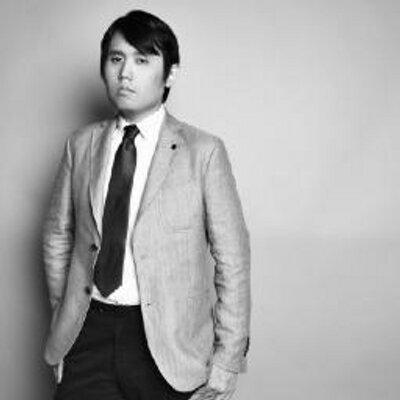
Phil Dy is one of the most prominent Filipino film writers working today, a staunch advocate for the emerging cinema of the Philippines and a sharp, vocal critic of institutional problems in the industry.

He’s also the co-curator of New Filipino Cinema 2016, a film series screening through July 3rd at San Francisco’s Yerba Buena Center for the Arts.

phil dy

Dy was kind enough to answer a few questions about the SF program, his excitement about the gains made in regional cinema, the critic’s role in society, and the pressures, concerns, and promise of the contemporary Filipino screen.

Unsurprisingly, he also doesn’t mince words.

(Many thanks to my friend, astute cinephile Kieff Iporac, who provided invaluable input.)

Rick Kelley: The lineup for this year’s festival is quite diverse, in terms of content and concerns. Can you talk a bit about the selection process? What were your criteria? And how do you see the film series developing in the years to come?

Phil Dy: The whole point of the showcase is to highlight the kind of Filipino films that tend to not make it abroad. Filipino films have been around the festival circuit regularly for the last ten or so years, but only certain types of films and filmmakers tend to make it out there.

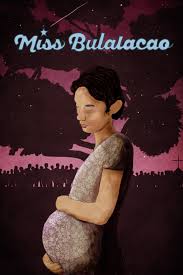
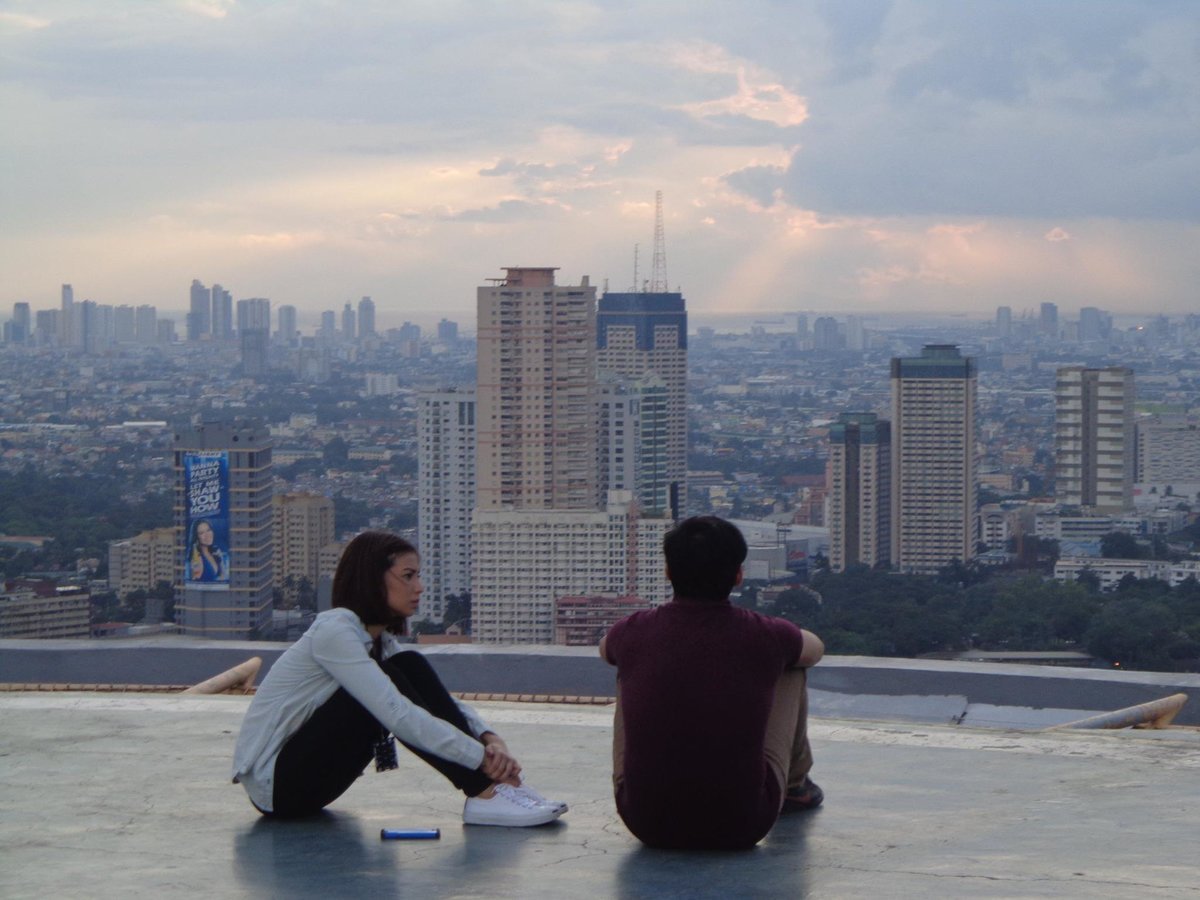
So while we do try to make room for films that already have buzz, our first priority is to highlight the diversity of Filipino cinema. Although to be honest, it’s pretty tough for us to get big new films anyway. But we’re more than happy to shine a spotlight on stuff like Miss Bulalacao and Sleepless over other films.

Miss Bulalacao sleepless

Joel [Shepard, YBCA curator] and I basically program this thing over emails, based on what we like and what we can actually get. It isn’t too complicated. We just try to hash it out.

Tonight, I was able to finally see Lino Brocka’s 1976 masterpiece Insiang screened, in a newly restored print. In your introduction to the film, you spoke a bit about its influence. What specific resonances do you see issuing from it in the new crop of Filipino cinema showcased at the festival?

I can tell you right now that if a film is shot in the slums, or in any poor community, it is working under the shadow of Insiang.

insiang3I think Brocka showed us how to shoot the slums, how to find the strange beauty within the squalor, and how to highlight the humanity that shines within the latent injustice. Something like Manang Biring, despite being worlds apart from Insiang, owes plenty to what Brocka established in his masterpiece.

You see and review nearly every movie that comes out in metro Manila each week. What sorts of trends – in terms of the productions themselves, their distribution, or audience response – do you find most exciting right now? What are the most pressing challenges Filipino filmmakers face?

The most exciting thing in Filipino cinema right now is the rise of regional cinema. For most of our hundred-year history of making movies, production has been centered in Metro Manila. The Philippines is a very diverse place, its geographic makeup allowing for the development of very different cultures all within the same nation. A film from Bicol is very different from a film in Cebu. Seeing those differences builds a cultural discourse that just hasn’t been seen in our history.

A Filipino cinephile friend (and an admirer of yours, I might add!) notes that almost every film festival in the Philippines is funded by the festival itself, often either privately funded or funded by the government. In recent years, he reports, the festivals retain the rights to these movies, which makes it harder for them to be distributed within the country and outside its borders. This is a topic you’ve written about. Do you have any further thoughts on this dilemma, and how to address it?

I don’t. It’s a fair enough tradeoff. The money’s not super great, but the platform that these festivals provide might be enough to get you a real start in this industry. And having a film tends to be better than not having a film.

patinteroAnd there are options. If you don’t want to give up your rights, you can apply to a festival like QCinema, which doesn’t take those rights. Patintero and Sleepless were QCinema products.

My friend also singled out the Metro Manila Film Festival – obviously a huge deal in terms of raising the profile of specifically Filipino film, but a fraught one, dating back to its inception under Imelda Marcos. Are you hopeful for the prospects moving forward? And what role does a program like the San Francisco series play in this dynamic?

The MMFF is certainly changing. There was a congressional hearing last year that basically revealed that the entire thing was being run by just one person (or a very small group of people answering to that person). They’ve already announced a restructure, and a complete overhaul of the submissions process.

I’m not entirely convinced that the changes made will necessarily make things better, but I do like some of the people in place right now. I’m always hopeful.

Our program does nothing to change the MMFF.

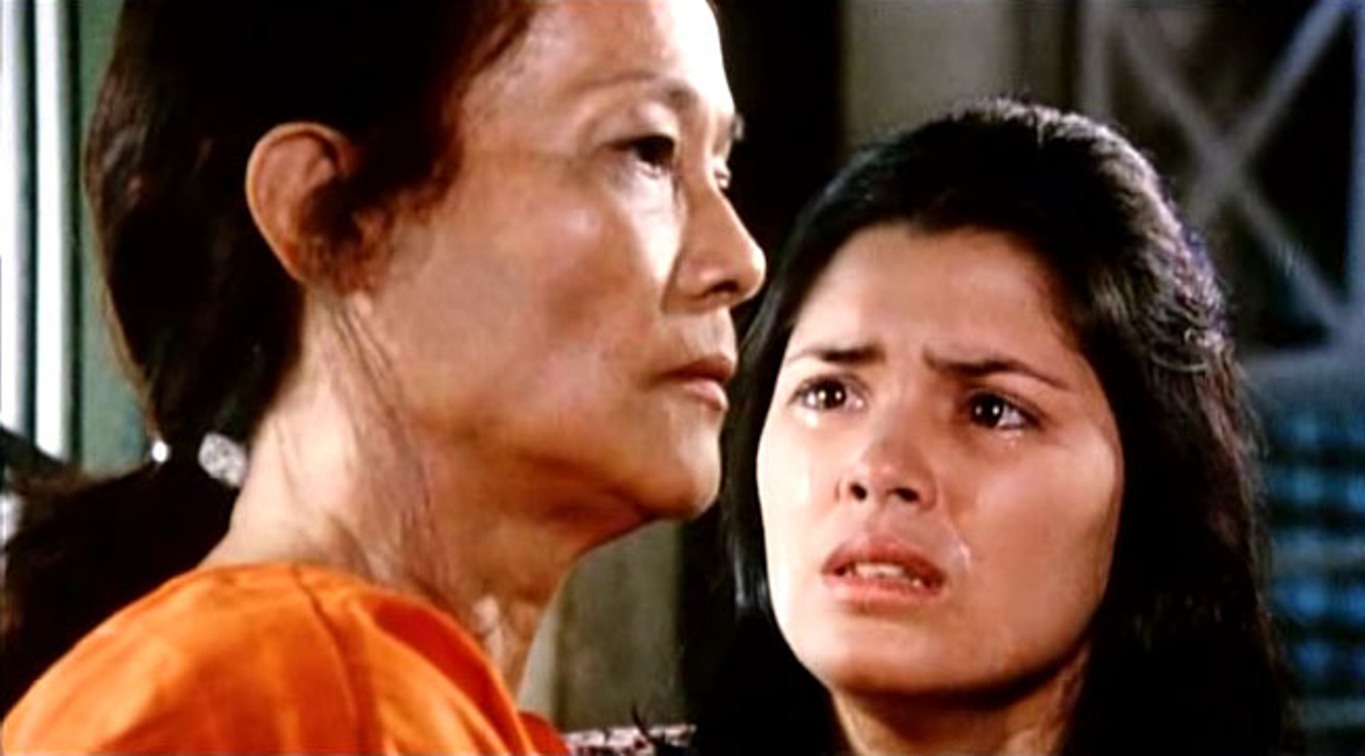
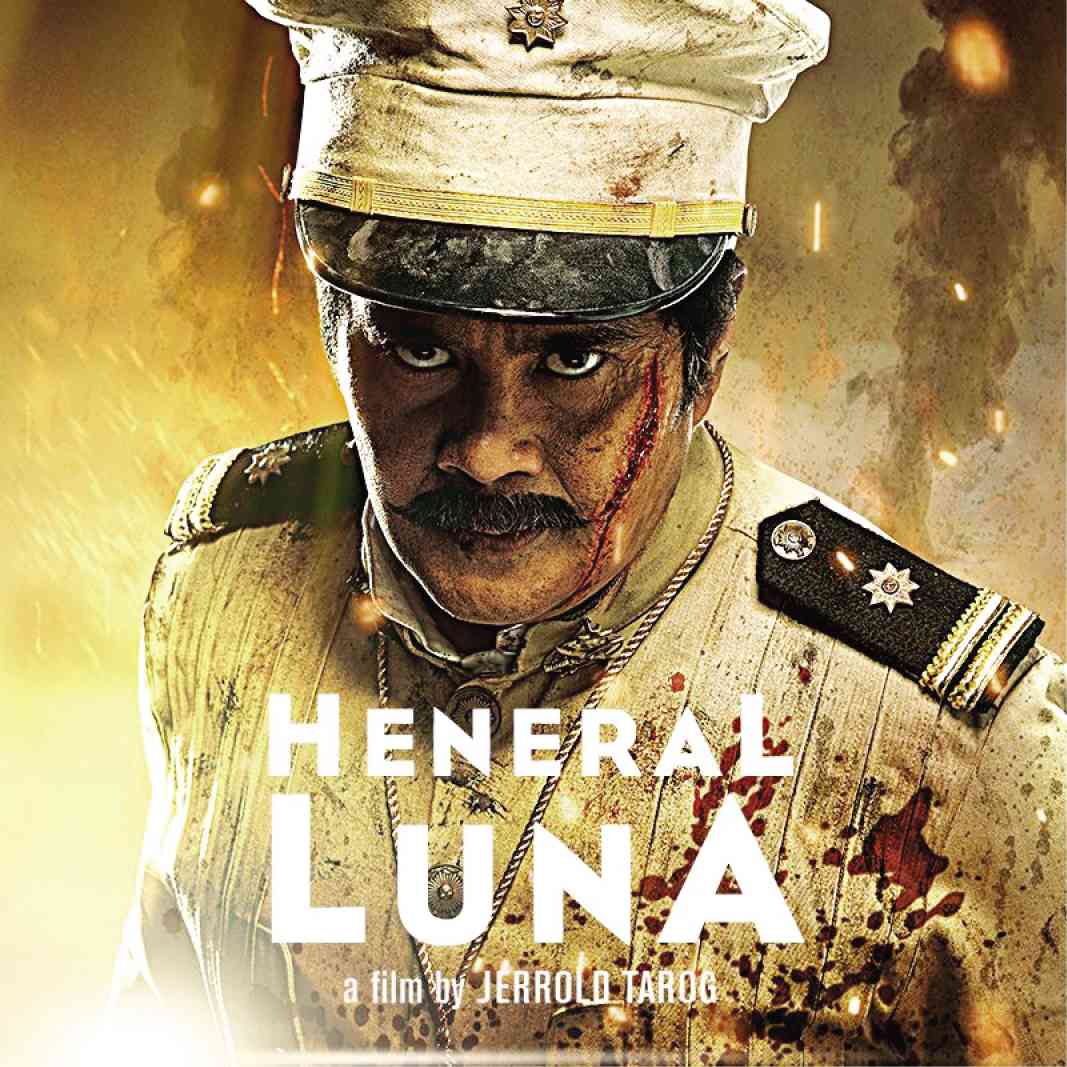
Distribution and the power of local cinemas has been a recurring theme in my reading on the Filipino scene, particularly its effect on independent film. Movies are directly competing with Hollywood productions, often to the detriment of Filipino independent filmmakers, and some theaters have blocked R-18 movies entirely, affecting the sorts of films available for general audiences. My friend reports that Heneral Luna, screening at the YBCA, almost didn’t make it to cinemas in its 2nd week but was saved by good word of mouth, and expressed similar sentiments about Honor Thy Father, a film he highly recommends and one you’ve also included. Can you speak to this issue and how the situation appears to you?

heneral-luna honor thy fatherThe cinema owners aren’t at all concerned about building audiences for local films. To be honest, it doesn’t make economic sense for them to do so. It would be good for everyone in the long run if every kind of film made money, but right now it makes a lot more sense to minimize risk and go with products that everyone recognizes.

It isn’t the cinema owners’ responsibility to make sure that the independent scene thrives, though. The entity that would be best suited to protecting this burgeoning industry is the government, who could make it worth the cinema owners’ while to keep these films in cinemas. It’s a model that’s worked well enough for South Korea, and I could see it working here, too.

Or a forward-thinking business person could come in and create alternative spaces that focus on screening these films. And it’s starting to happen with small, non-traditional spaces, like the A Space gallery, or the Pineapple Lab, or Cinema ’76. But I think somebody could make a decent amount of money with a real theater showing these films that people actually want to see.

In your impassioned intro to the festival’s lit, you write,

It was a year of battles. For too long, the more serious aspects of Filipino cinema were shunted off to the side, where they could compete among themselves and make no real dent in the fabric of the national consciousness. But this year we fought.

It seems clear you’re no mere observer of an art form. In closing, I wonder if you could speak to what you consider the critic’s role in shaping the discourse and engaging with cultural production.

I’m one of a very small number of critics in the Philippines, so our role is magnified somewhat. Two of the more serious critics in my circle happen to be in the selection committees of a couple of the local festivals, so they actually have a lot of influence in what gets made. I’ve mostly turned those roles down, except for last year, when I took a seat at the selection committee for the MMFF, and subsequently burned the place down. I’ve kept up my status of being an outsider, and this allows me to be less polite in talking about things that go wrong in our industry. So I blew the whistle on the absurdity of the selection process, and ended up testifying in congress. If granted the chance to actually change something, I’ll always try to take it.

But for the most part, all I really want to do is to get people talking. My presence as a critic is most felt on Twitter, where I encourage people to express real opinions about our cinema. We don’t have a culture of criticism in the Philippines, and I’ve tried to take on the role of being a moderator of sorts, asking people questions to try and get them to express themselves in a way that adds value to the conversation.

You can follow Phil Dy on Twitter at @philbertdy (and you should). The YBCA’s New Filipino Cinema 2016 runs through July 3rd; check out the full program. 

June 17, 2016 0 comments
0 FacebookTwitterPinterestEmail
CommentaryFilmReviews

New on Netflix: The Trials of Muhammad Ali

by rick June 16, 2016
written by rick

[schema type=”movie” url=”http://www.imdb.com/title/tt2489734/fullcredits?ref_=tt_ql_1″ name=”The Trials of Muhammad Ali” description=”The legal battles of the great American boxer against being conscripted into the US military during the Vietnam War.” director=”Bill Siegel” producer=”Leon Gast, Justine Nagan, Rachel Pikelny, Gordon Quinn, Kat White” actor_1=”Muhammad Ali” ]Welcome to the first installment of a new end-of-week series, in which we profile something new to streaming, and round-up a few other recommendations for your weekend. I’ve opted to go with Netflix, since that seems to be the most common platform right now, and so hopefully relevant to your house.

(If you have Hulu Plus, my apologies for the wayward focus. Also, please invite me over to watch Criterion Collection films with you and your family. Let me know the evening’s program in advance and I will bring a thematically appropriate side-dish)

ali3This year has, sadly, marked a number of high-profile celebrity deaths, including those of David Bowie, Prince, and Alan Rickman. (To say nothing of the recent, less celebrity-based horrors transpiring in my country, a deep national shame that deserves a separate post.)

But few losses have generated as much genuine sadness – and as many self-serving eulogies from professional bullshit artists – as that of Muhammad Ali.

Ali is a towering figure, a kind of supernova around which gravitate many of the most fraught and meaningful issues and events of the late 20th century.

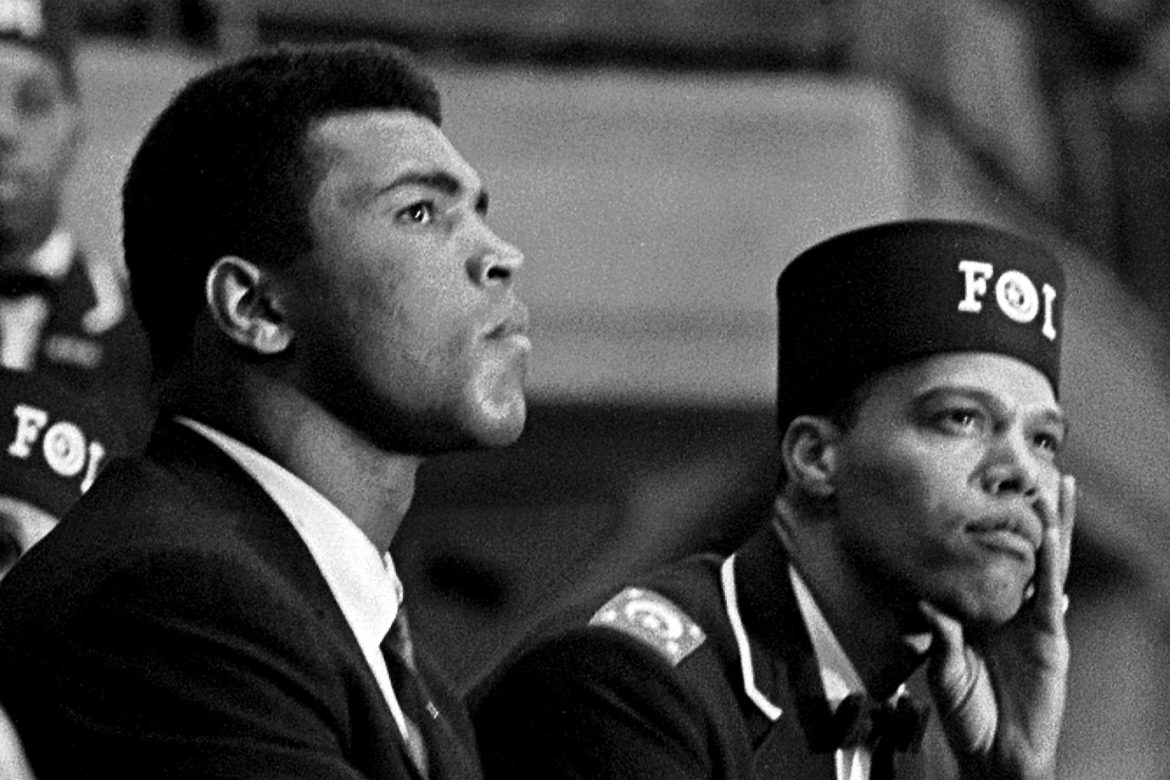
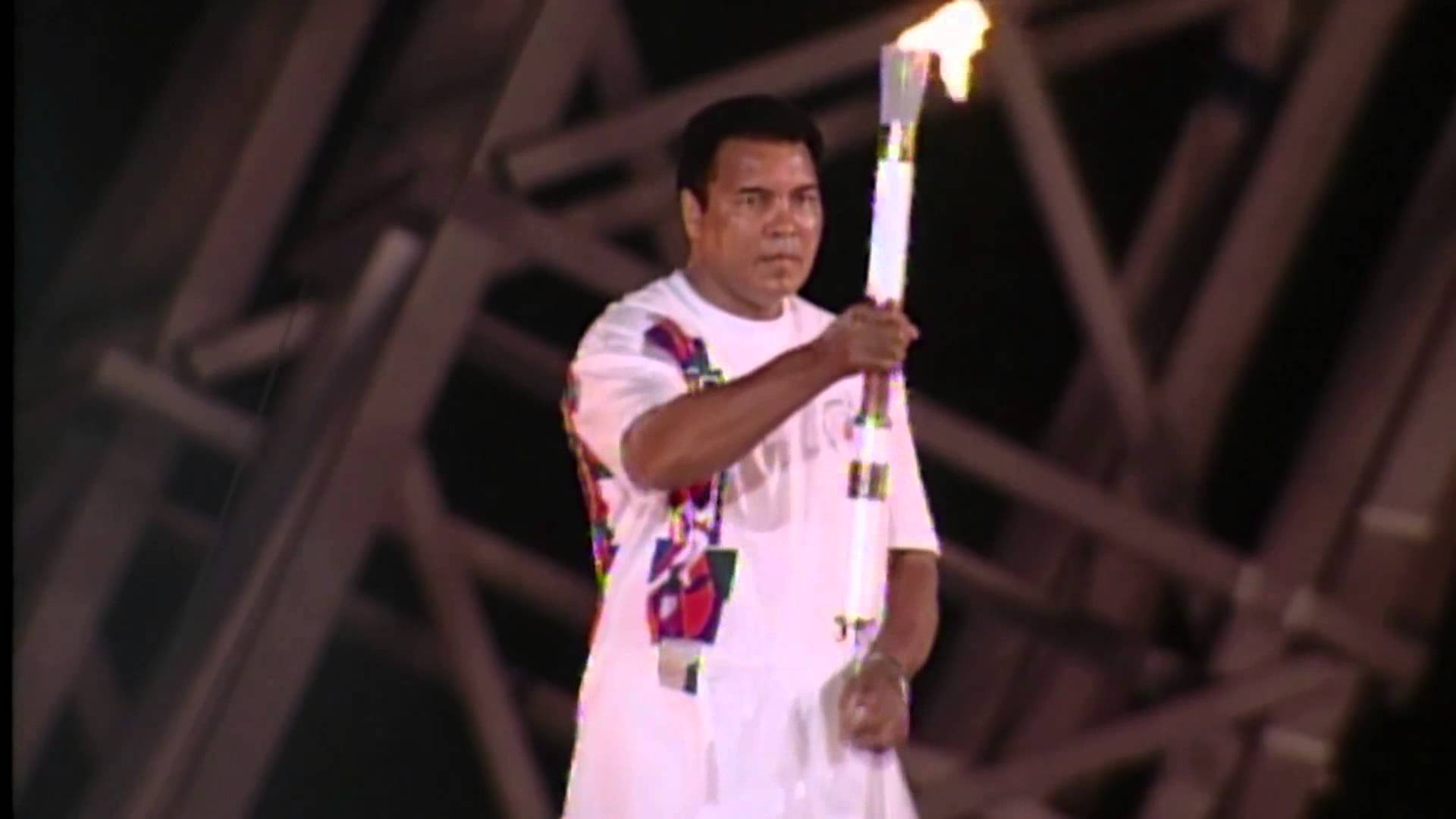
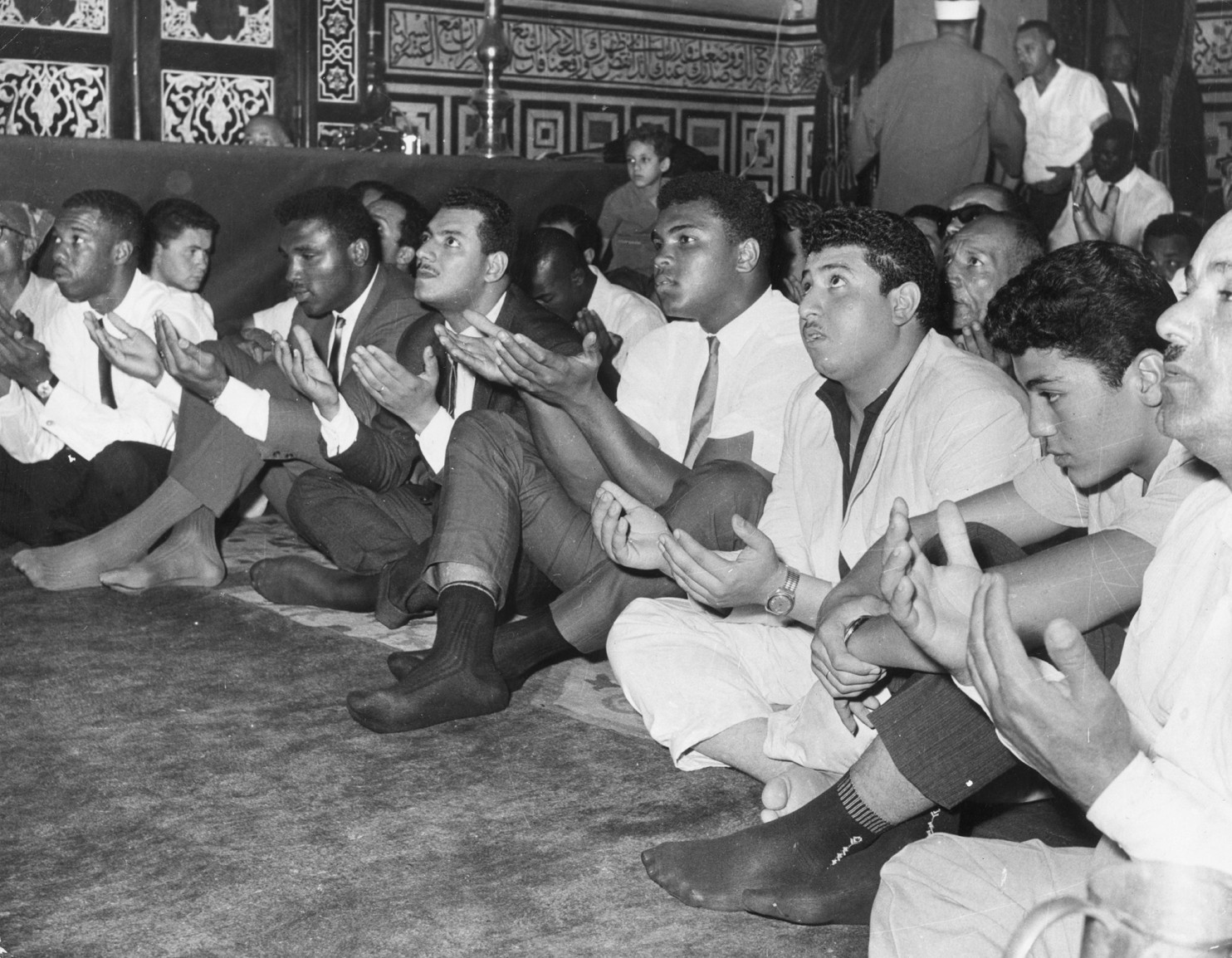
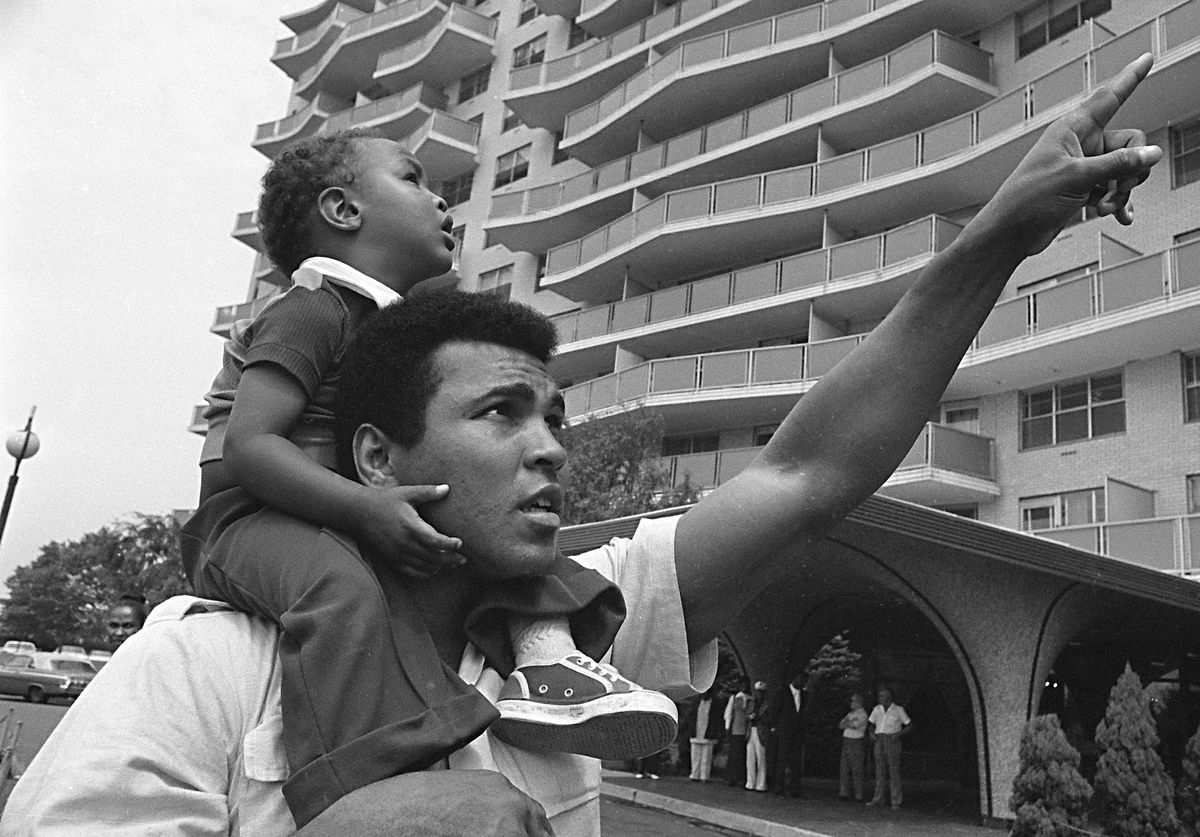
As a young kid called Cassius Clay, growing up in Louisville, Kentucky, his ambitions began and ended with becoming the greatest boxer around. He did, bringing home Olympic gold and smiled fondly upon by those who wanted the respect he’d bring, but not the conflict. The best moments of The Trials of Muhammad Ali, Bill Siegel’s 2013 documentary available for streaming this week on Netflix, zero in on the tension between the Clay the nation demanded and the Ali it got instead.

Other films have already explored Ali’s most famous fights in the ring, particularly the gripping and enormously dodgy Oscar-winner When We Were Kings. But whereas that film zoomed in on the endless madness surrounding the “Rumble In The Jungle,” Ali’s heavyweight championship bout with George Foreman in Kinshasa, Trials focuses instead on the fighter’s rise, his conversion to Islam and complicated relationship to Elijah Muhammad, and the years in which no state would sanction a fight, due to his refusal to fight in Vietnam.

ali2

It’s a natural fit for Siegel, whose only other directorial credit is The Weather Underground, another aesthetically staid but historically informative look at period counterculture. Through archival footage, we get to see Cassius Clay morph into Muhammad Ali, slowly but steadily honing his rhetorical skill. The title can be taken literally or figuratively, as a young man undergoes a series of struggles, inside and outside of the courtroom.

There are moments of high pathos and outrage – the giggling white kids, not yet a half-century gone, holding signs that read “Lynch Black Protestors” as Ali speaks on a college campus should give everyone pause. There are also scenes that sting, as he doubles down on his support for the Nation of Islam and rejects Malcolm X as guilty of apostasy.

The point is a very simple one: no one, not even those elevated to the status of heroes, know what the future holds, and everyone is trying to figure it out the best they can. The white politicians who wax rhapsodic about Ali today would’ve pilloried him in his time. It wasn’t until Parkinson’s rendered him unthreatening that mainstream American society decided he was fit for public consumption. To its credit, The Trials of Muhammad Ali recognizes both his shortcomings and the immeasurable ways he embodied a spirit of rebellion and Black pride.

ali4

Any figure worth adulating is a complex one, and, I suspect, Ali would deem us all figures worthy of adulation, in our ways. His legacy is a strange and fraught one, and in constant danger of being sold out by the off-handedly racist hagiographers of the right. The Trials of Muhammad Ali is a welcome corrective.

Quick Picks

Not in the mood for a documentary about boxing and racism, and simply unable to watch The Do-Over again? Fair enough! Here are four other ideas.

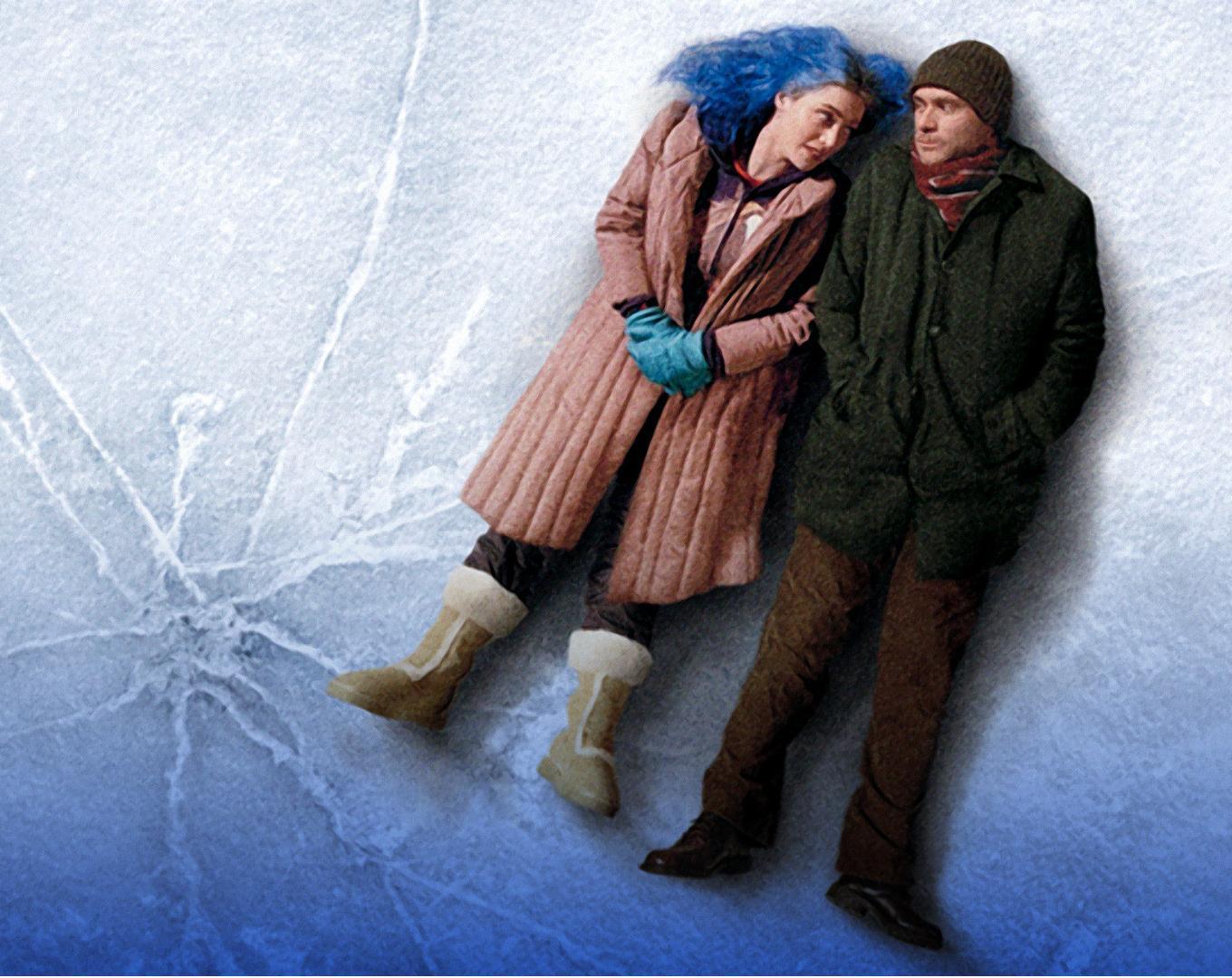
eternal sunshine

(1) Michel Gondry’s Eternal Sunshine of the Spotless Mind remains heartbreaking and lovely, and you can remind yourself how good Jim Carrey can be.

upstream color

(2) Upstream Color, Shane Carruth’s gorgeously inscrutable follow-up to his equally inscrutable Primer, will keep you guessing into the night, and then probably for the rest of your life.

babadook

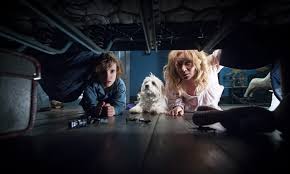
(3) The Babadook is crazy scary, while also managing to be a terrific depiction of parental anxiety.

barbarella

(4) Barbarella remains the greatest thing Jane Fonda has ever done, and not just because of the space-age orgasm machine. I dare you to smoke a joint and watch this film without an idiot smile on your big, dumb face.

See you next week.

June 16, 2016 0 comments
0 FacebookTwitterPinterestEmail
FilmReviews

The Conjuring 2 has jump-scares but little else

by rick June 15, 2016
written by rick

[schema type=”movie” url=”http://www.imdb.com/title/tt3065204/” name=”The Conjuring 2″ description=”Lorraine and Ed Warren travel to north London to help a single mother raising four children alone in a house plagued by malicious spirits.” director=”James Wan” producer=”Richard Brener, Rob Cowan, Walter Hamada, Jenny Hinkey, Dave Neustadter, Peter Safran, James Wan” actor_1=”Patrick Wilson, Vera Farmiga” ]When James Wan released Insidious in 2010 and the original The Conjuring three years later, it surprised a lot of horror audiences and critics. The director of Saw, and the producer of its string of increasingly grisly sequels, seemed to have taken a sharp right turn, abandoning what fans call “extreme cinema” and detractors dismiss as “torture porn” for haunted-house atmospherics and a more creeping variety of dread.

It was a welcome change of pace. While someone like Hostel director Eli Roth continues to mop up the viscera and indulge his endless affinity for 1970s cannibal schlock with increasingly diminishing returns, limping into the decade like some sort of guy who’s had his Achilles tendon razor-bladed, Wan’s lighter touch has proved defter, and scarier.

In the years since, he’s continued in that direction (while also taking time to helm the enormously successful Furious 7 and the upcoming Aquaman to boot). The spate of extreme cinema / torture porn productions seem to have fizzled, and Wan now seems better positioned, solidly in the Creepy Things In The Shadows Go BOO! Business, which has always proven lucrative. It helps that he’s also, occasionally, a very effective filmmaker, building tension and generating the screams audiences pay to have elicited from them. The Conjuring 2 is his latest ghost, sneaking up behind you in the dark.

Too bad, then, that it proves a little too familiar. And more than a little silly.

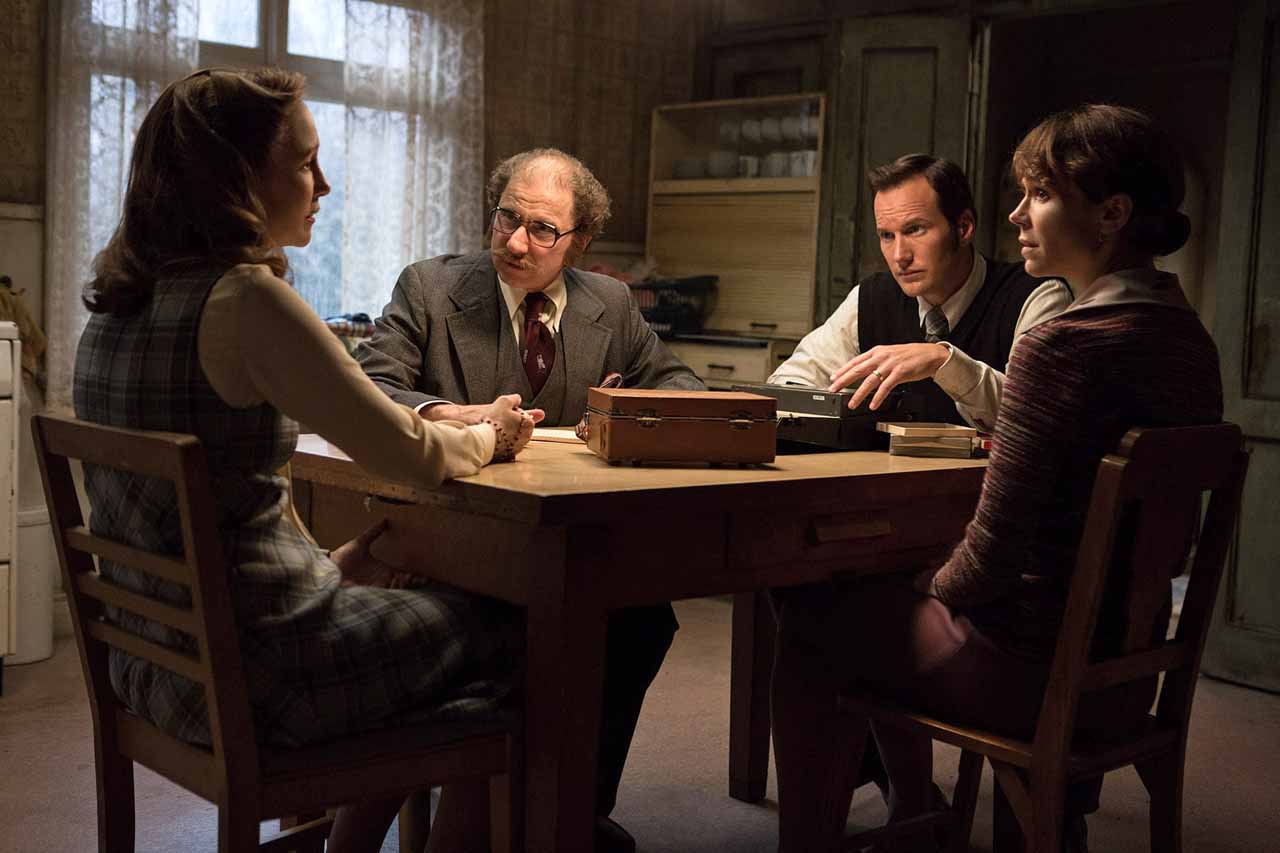
MK1_4255.dngLike its predecessor, The Conjuring 2 follows real-life scam arti… excuse me, “paranormal investigators” Ed and Lorraine Warren, played once again by a game Patrick Wilson and a far-too-good-for-this-bullshit-but-the-paycheck-must-be-nice Vera Farmiga. The sequel’s subject is the notorious Enfield haunting, widely considered to be almost the paradigm of the wave of supernatural hoaxes that emerged in the years after William Friedkin’s The Exorcist exploded into the public consciousness.

Wan and his story collaborators Chad and Chris Hayes play it completely straight, however, doubling down on their narrative contention that the Warrens are heroic truth-tellers in a world too cynical to believe in ghosts. In fact, The Conjuring 2 is at pains to posit the couple as long-suffering protagonists, gripped by premonitions of doom but bound by their love for each other. People do not go to films like this for hackneyed love stories, but points for trying something emotive, I guess.

In any case, the story rolls out. In a house in North London, weird shit is afoot. The Hodgson family – mom Peggy (Frances O’Connor), daughters Janet (Madison Wolfe) and Margaret (Lauren Esposito), and sons Billy (Benjamin Haigh) and Johnny (Patrick McAuley) – is beginning to notice something ghostly might be going down. Janet has been sleepwalking, for one thing, while others hear noises. Things that were in one place vanish, only to appear in another. A chair in the corner seems particularly occupied.

conjuring2-3

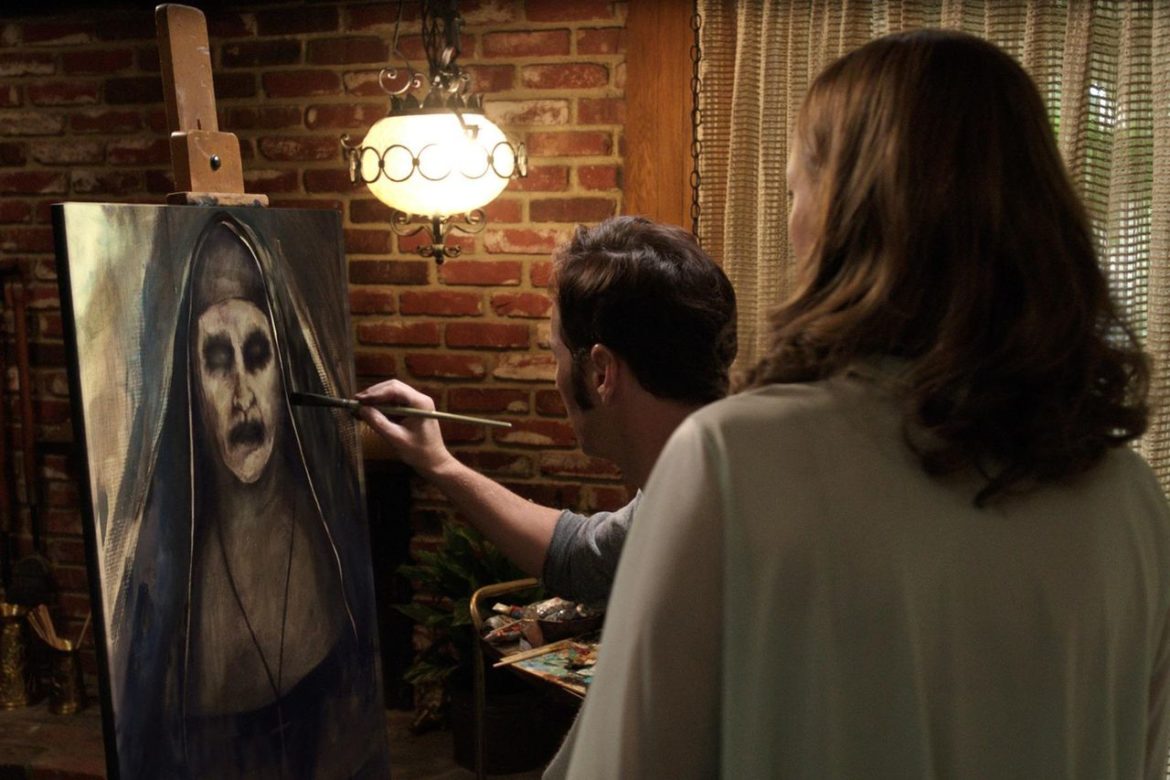
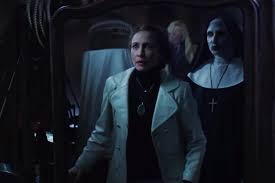
In short order, the haunting escalates, and actual presences are seen – an old man who lived and died there, but even more notably, a figure of a nun (bearing an uncanny resemblance to Marilyn Manson) who previously showed up in one of Lorraine’s visions, half a world away. Cops arrive, and are promptly spooked by the goings-on. A police officer recommends the family seek help from a pastor instead of the state.

conjuring2-1

The Warrens are dispatched – by the Church: it is an article of faith in The Conjurings that “The Church” routinely dispatches the Warrens, like they are on retainer – and things get as spooky as you expect. Crosses are turned upside down, Janet (apparently the vehicle of choice for the demonic spirits at play) begins speaking in growls and eerie old-man voices, shoulders are bitten by unseen mouths, and it’s generally not a relaxing time for the Hodgson’s, as their home as become a battleground with the beyond.

Throughout this escalation, Wan ably ratchets up the tension. His general technique involves quick glimpses of figures just out of focus and just out of the line of vision, alternating between static shots that allow the creep-factor to build and a restless camera that sweeps and dives, as though it were itself trying to get out of the house. It works well, up to a point.

conjuring2-2

The problem is that the build-hold-release aesthetic proves exhausting, and even comic, after a while. The Warren’s relationship is nowhere near as engaging as the screenwriters imagine, and a long segment in which Patrick Wilson plays the entirety of Elvis’ “Fools Rush In” on acoustic guitar, while the children sing back-up and Peggy weeps, is hilariously miscalculated. (If you’re wondering why he does this, it’s because the absent father took all the records. “When he left, the music left with him,” Peggy observes. “I’m sure it feels that way …” Ed responds. “No, I mean he literally took all the music.”)

By the time Ed heads to a water-filled basement that Wan has ripped wholesale from Lucio Fulci’s The Beyond, The Conjuring 2 has long outstayed its welcome. Here is a film that in no way, shape, or form needed to clock in at two full hours. The atmosphere begins winningly ominous, and a few jump-scares land with enormous success, but there’s not enough here to sustain that kind of running time.

Some folks have decried the valorization of the real-life Warrens, but that’s not the real issue here. Wan can take them at their word and dive deep into the menace, but the payoff has to be worth it. The Conjuring 2 simply drones on after its initial jolt, mired in a marital drama in which the audience has no investment and a series of misjudged narrative devices like premonitions that go nowhere. The addition of a CGI “crooked man who walked a crooked path” drew vocal chuckles from the audience of teenagers I watched it with.
Still, if you like your houses haunted and your shadows populated by demons, there’s enough here to recommend. If only the extraneous stuff had been stripped out, and Wilson hadn’t wasted five minutes with his dumb song, Wan might’ve delivered some real, lasting scares.

His real talent, in horror, lies in a sense of unease, but he undercuts that throughout The Conjuring 2, falling back time and again on the power of someone jumping at you.

Will you jump, in turn? Probably. Will you remember it tomorrow? Unlikely.

June 15, 2016 0 comments
0 FacebookTwitterPinterestEmail
Newer Posts
Older Posts

About

About

Towards a provisional theory of the cinema, or, failing that, just some shit about movies

Authors
Rick Kelley
Lark Lundberg

Keep in touch

Facebook Twitter

Categories

  • Conversation
  • Film
  • Film By Film
  • Great Movie Project
  • Great Movies: The Counter Programming
  • Guest
  • News
  • Other
    • Commentary
    • Film
    • Interview
    • Reviews
    • Song for a Sunday
  • Streaming Selections
  • TV
  • Uncategorized
  • Vegan Horror

Archives

  • April 2019
  • March 2019
  • January 2019
  • December 2018
  • November 2018
  • October 2018
  • September 2018
  • August 2018
  • July 2018
  • June 2018
  • May 2018
  • April 2018
  • March 2018
  • February 2018
  • January 2018
  • December 2017
  • November 2017
  • October 2017
  • September 2017
  • August 2017
  • July 2017
  • June 2017
  • May 2017
  • April 2017
  • March 2017
  • February 2017
  • January 2017
  • December 2016
  • November 2016
  • October 2016
  • September 2016
  • August 2016
  • July 2016
  • June 2016
  • May 2016
  • April 2016
  • March 2016
  • February 2016
  • January 2016
  • December 2015
  • October 2015
  • September 2015
  • August 2015
  • July 2015
  • June 2015
  • May 2015
  • April 2015
  • March 2015
  • February 2015
  • January 2015
  • December 2014
  • November 2014
  • October 2014
  • August 2009
  • September 2008

Recent Posts

  • China Girls, Death Proof, and the Hidden Face
  • Old News: Old Noise Edition
  • Old News: April 1, 2019
  • Nicolas Winding Refn, Marginalia, and the Deaths of Cinema
  • And now, let us praise Kanopy

Recent Comments

  • Franklin Kat on Michael Shannon shines again in Frank & Lola
  • Sean Tempesta on Cinema and dream-logic in Meshes of the Afternoon
  • ludditerobot on The Left-Wing Slapstick and Iconic Songs of 1937’s Street Angel
  • Franklin Kat on The Left-Wing Slapstick and Iconic Songs of 1937’s Street Angel
  • Arijit Mukherjee on Great Movies Project: The Counter-Programming
  • Facebook
  • Twitter

@2021 - All Right Reserved. Designed and Developed by PenciDesign


Back To Top
Luddite Robot
  • Reviews
  • Commentary
  • Great Movie Project
    • Great Movie Project
      Bride of Frankenstein is a movie for and…

      January 25, 2018

      Great Movie Project
      The Enduring Appeal of Nick and Nora in…

      November 29, 2017

      Great Movie Project
      The Ahistorical Fever Dream of The Scarlet Empress

      August 2, 2017

      Great Movie Project
      Dreams, Mundanity, and the Anarchist Yearnings of L’Atalante

      July 12, 2017

      Great Movie Project
      Duck Soup Is And Will Always Be A…

      April 19, 2017

  • Counter Programming
    • Great Movies: The Counter Programming
      Walking and Talking in the Shadow of Kanchenjungha

      March 7, 2018

      Great Movies: The Counter Programming
      A Brief Encounter in My Mother and Her…

      February 9, 2018

      Great Movies: The Counter Programming
      Horror’s Refusal in Farrokhzad’s The House Is Black

      October 13, 2017

      Great Movies: The Counter Programming
      The rage and beauty of The Cloud-Capped Star

      October 3, 2017

      Great Movies: The Counter Programming
      The daylight noir and social issue empathy of…

      June 22, 2017

  • Vegan Horror
    • Vegan Horror
      Julia Ducournau doesn’t think her film Raw is…

      June 7, 2017

      Vegan Horror
      Licking our wounds: The vampiric masculinity of Ravenous

      December 13, 2016

      Vegan Horror
      Eggertsson and animals: An approach to horror cinema

      September 15, 2016

      Vegan Horror
      “It’s Not My Nature” – Vegetarianism, Body Horror,…

      August 30, 2016

      Vegan Horror
      Bodies and Carcasses in Predator 2

      August 23, 2016

  • Interview
    • Interview
      Jasmine Leyva’s doc The Invisible Vegan aims to…

      May 3, 2017

      Interview
      Bridging The Abyss: An Interview With The Directors…

      November 28, 2016

      Interview
      7 Days in Ohio: An Interview with Nathan…

      September 12, 2016

      Interview
      Film Critic Phil Dy talks New Filipino Cinema

      June 17, 2016

      Interview
      “I Love Seeing Film Projected.” A Conversation with…

      March 22, 2016