Top Posts
Madeline’s Madeline: An Unclassifiable Panic Attack Maybe-Masterpiece
Shoplifters Steals Moments of Wonder from the Mundane
Burning and Forgetting What’s Not There
Kusama: Infinity Expands Beyond The Canvas
Mandy Risks Little, Wins Little
In We The Animals, The Children Are Away...
The Seagull Isn’t Quite Chekhov, But It’s Still...
5 Million Ways Boots Riley Isn’t Sorry To...
American Animals’ and the Queasiness of the Heist
A Star Is Born In Hearts Beat Loud
  • Reviews
  • Commentary
  • Great Movie Project
    • Great Movie Project
      Bride of Frankenstein is a movie for and…

      January 25, 2018

      Great Movie Project
      The Enduring Appeal of Nick and Nora in…

      November 29, 2017

      Great Movie Project
      The Ahistorical Fever Dream of The Scarlet Empress

      August 2, 2017

      Great Movie Project
      Dreams, Mundanity, and the Anarchist Yearnings of L’Atalante

      July 12, 2017

      Great Movie Project
      Duck Soup Is And Will Always Be A…

      April 19, 2017

  • Counter Programming
    • Great Movies: The Counter Programming
      Walking and Talking in the Shadow of Kanchenjungha

      March 7, 2018

      Great Movies: The Counter Programming
      A Brief Encounter in My Mother and Her…

      February 9, 2018

      Great Movies: The Counter Programming
      Horror’s Refusal in Farrokhzad’s The House Is Black

      October 13, 2017

      Great Movies: The Counter Programming
      The rage and beauty of The Cloud-Capped Star

      October 3, 2017

      Great Movies: The Counter Programming
      The daylight noir and social issue empathy of…

      June 22, 2017

  • Vegan Horror
    • Vegan Horror
      Julia Ducournau doesn’t think her film Raw is…

      June 7, 2017

      Vegan Horror
      Licking our wounds: The vampiric masculinity of Ravenous

      December 13, 2016

      Vegan Horror
      Eggertsson and animals: An approach to horror cinema

      September 15, 2016

      Vegan Horror
      “It’s Not My Nature” – Vegetarianism, Body Horror,…

      August 30, 2016

      Vegan Horror
      Bodies and Carcasses in Predator 2

      August 23, 2016

  • Interview
    • Interview
      Jasmine Leyva’s doc The Invisible Vegan aims to…

      May 3, 2017

      Interview
      Bridging The Abyss: An Interview With The Directors…

      November 28, 2016

      Interview
      7 Days in Ohio: An Interview with Nathan…

      September 12, 2016

      Interview
      Film Critic Phil Dy talks New Filipino Cinema

      June 17, 2016

      Interview
      “I Love Seeing Film Projected.” A Conversation with…

      March 22, 2016

Luddite Robot
Film critique, theory, and assorted nonsense.
CommentaryFilm

China Girls, Death Proof, and the Hidden Face

April 14, 2019

Old News: Old Noise Edition

April 8, 2019

Old News: April 1, 2019

Nicolas Winding Refn, Marginalia, and the Deaths of Cinema

CommentaryFilm

And now, let us praise Kanopy

January 24, 2019

Warren Sonbert and the Relief of Anti-Narrative

January 14, 2019

The World Is Ending and It Doesn’t Matter

The Best Films of 2018

FilmReviews

Madeline’s Madeline: An Unclassifiable Panic Attack Maybe-Masterpiece

December 21, 2018

Shoplifters Steals Moments of Wonder from the Mundane

December 11, 2018

Burning and Forgetting What’s Not There

Alien, Musicology, and Reading Soundtracks

CommentaryFilm

Shocktober III: Halloween 2018 Edition

October 24, 2018

Shirley Jackson’s The Lottery Traumatized Schoolkids in 16 mm

October 18, 2018

Shocktober 2018 II: Another Reshockening (of Horror)

Häxan is a movie made by a movie character

CommentaryFilm

Shocktober 2018

October 7, 2018

Unprofessional! Spring Night, Summer Night

October 3, 2018

The Wild Boys: A Luddite Robot Conversation

Kusama: Infinity Expands Beyond The Canvas

FilmReviews

Melodrama and Revenge in Lino Brocka’s Insiang

by rick June 14, 2016
written by rick

Insiang, Lino Brocka’s celebrated 1976 melodrama of the Manila slums and the first Filipino film to ever screen at Cannes, opens with several ghastly, uninterrupted minutes inside a slaughterhouse.

It’s dirty, bloody, and brutal – pigs, hung upside down, bleed out from hastily punctured throats, before being tossed into vats of boiling water. As in nearly the entirety of the film that follows, Conrado Baltazar’s camera remains static, trapped, either refusing to look away or unable to do so. The soundtrack is a cacophony of death cries.

Welcome to Brocka’s Manila.
insiang1

It’s a horrifying introduction. (Even this critic, a fan of horror films, as well as a vegan who has seen more than his fair share of slaughterhouse footage, gasped.) But, in its grisliness and near-vérité approach, it sets the stage for the series of interrelated stories to come. It also signals Brocka’s sensibility throughout Insiang: this is a world of casual cruelty, limited options, and cycles of violence that circumscribe the community like the actual garbage dumps that burn constantly along the perimeter of the slum. It’s a claustrophobic world of crushing poverty, where people do what they feel they have to, pitilessly, to survive.

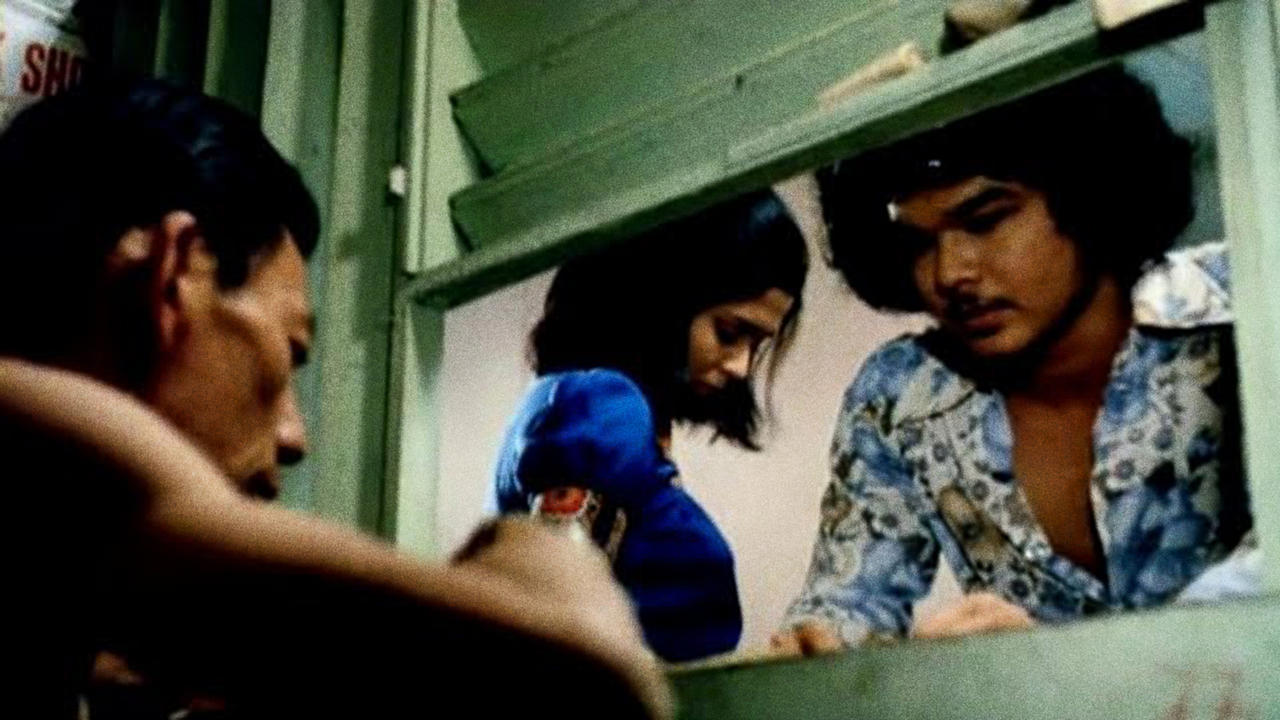
The slum is called Tondo, and the guy introduced doing the stabbing on the line is Dado (Ruel Vernal). We will learn that he is a bully, a petty criminal, and a rapist to boot – in his first scene, he is simply a laborer engaged in the desensitizing drudgery of a particularly awful line of work. Later developments, however, will pointedly remind us of this moment we met him.

Dado has taken the much older Tonya as a lover (the strikingly-named and very accomplished actress Mona Lisa, a star of the 1930s Filipino screen, whose familiarity must have proved as jarring to Filipino audiences of the time as Jimmy Stewart’s turns for Hitchcock shook Western audiences, subverting expectation and image).

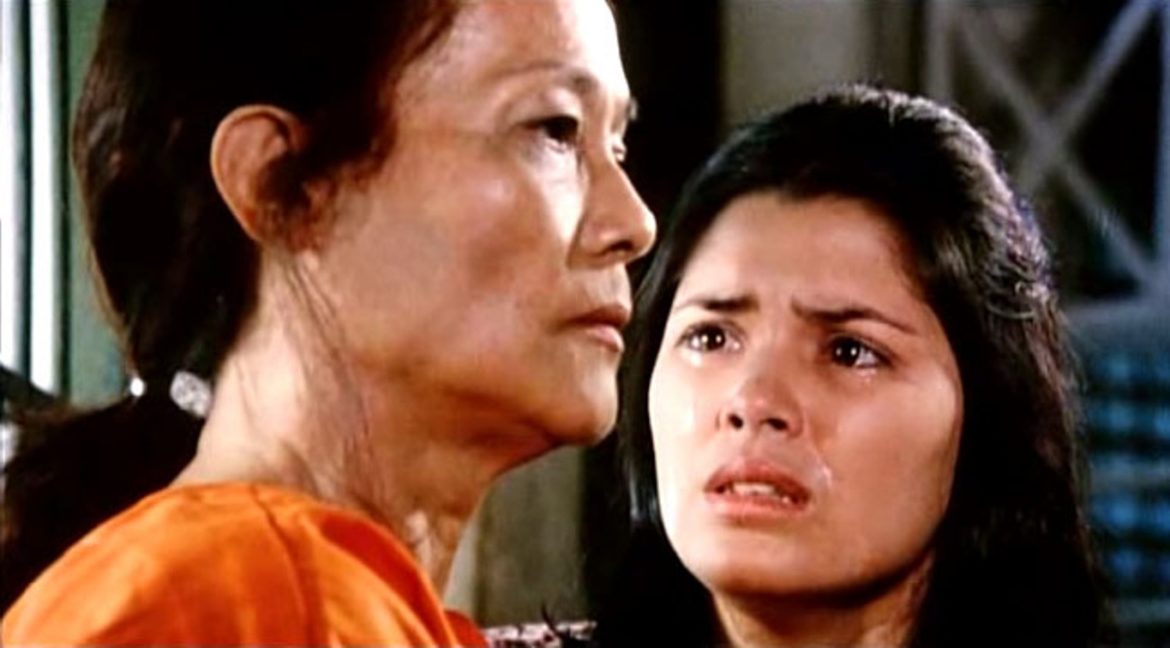
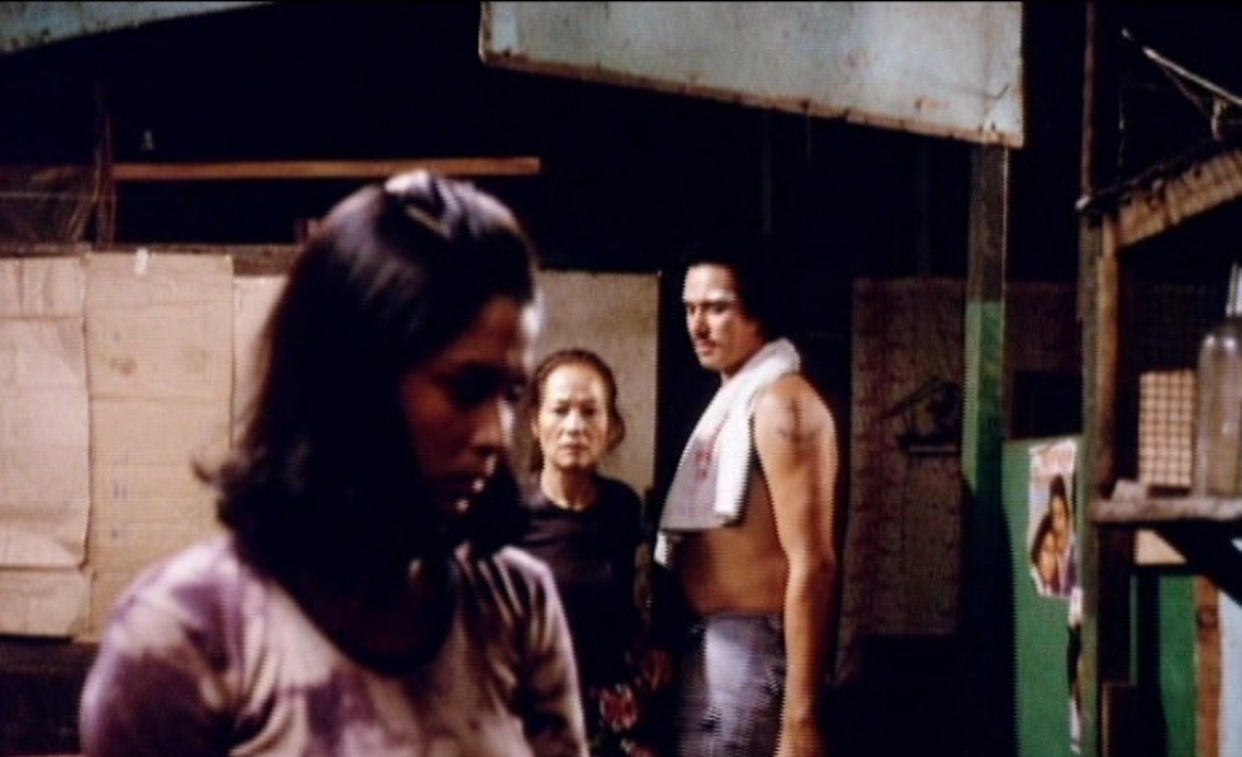
Tonya is also a nasty piece of work: still seething with rage at her abandonment by her ex-husband, she harangues anyone close at hand, emitting venom like some sort of wounded snake. Most of her nastiness falls on her daughter Insiang (the luminous Hilda Koronel, seemingly the only glimmer of beauty in Tondo).
insiang4

Insiang is blameless and long-suffering, more or less holding the tiny house (initially crowded with extended family) together, but Tonya seems to view her as little more than the living reminder of how badly she herself has been betrayed by fate and a dissolute man. The notion of thanking Insiang for her work in and out of the house never for a moment occurs to Tonya: as far as the mother is concerned, her daughter owes her everything and more. A lifetime of service and abuse wouldn’t come close to fulfilling Tonya’s expectations of repayment.

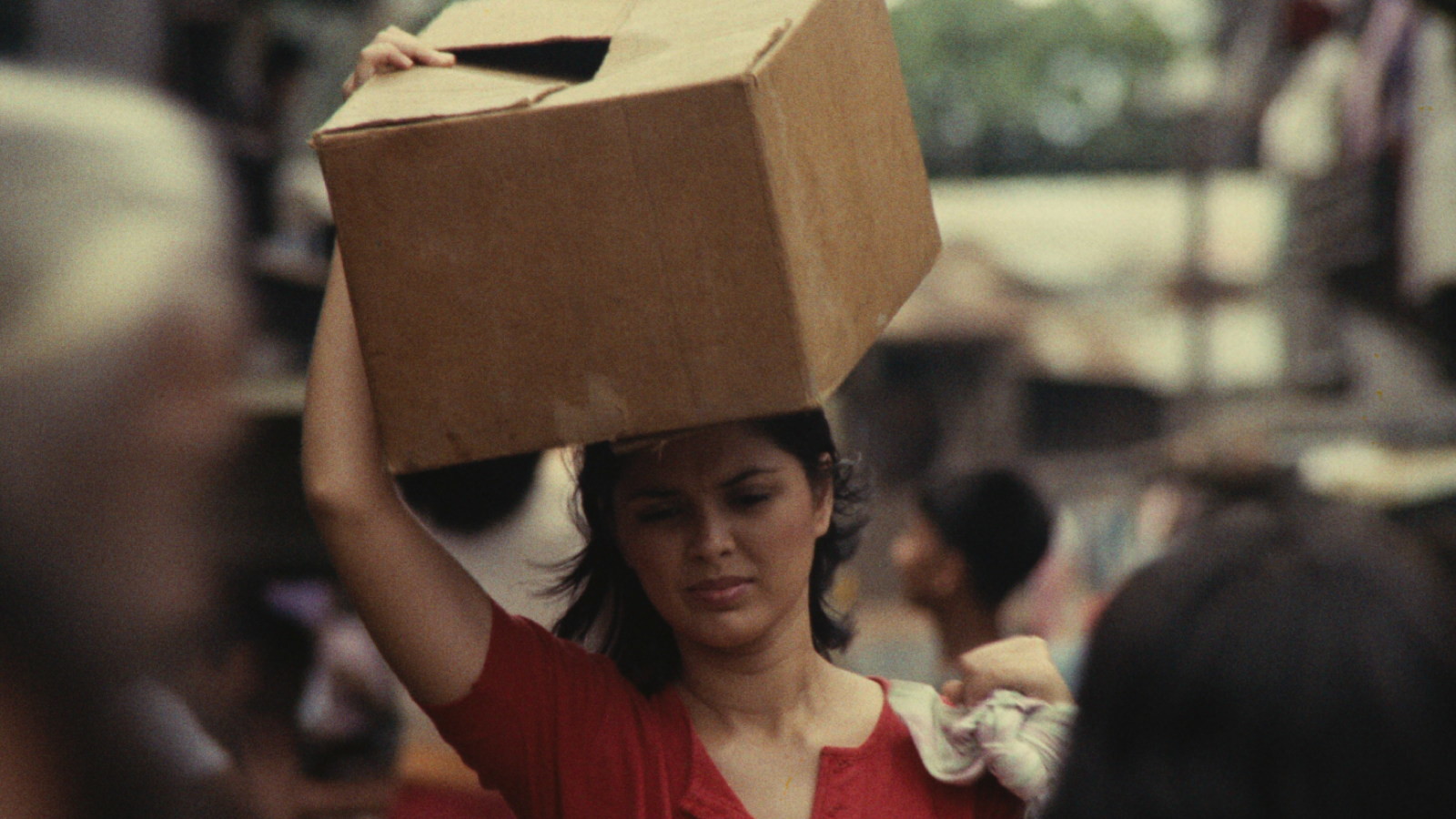
Insiang dutifully accepts her lot in life, washing and delivering laundry, visiting the market, shouldering the insults and demands hurled her way. Tonya, in a decidedly Tonya-like move, throws the extended family out of the house – her reasoning is that, as they are the absent husband’s family and not contributing, they don’t deserve her charity. Her actual motive is much more carnal: to make room for her lover. Unfortunately, like seemingly everyone in town, Dado has designs on Insiang. Untrustworthy, duplicitous, and violent, he is not the roommate anyone would choose. Insiang rebukes his advances, while also obeying orders to leave the tap running at night, so the basin filling with water can obscure the sounds of her mother’s sex issuing from mere feet away. We are primed for a classic maternal melodrama.
insiang5

Brocka and screenplay co-writer Mario O’Hara (on whose teleplay the film is based) give us that and more. Insiang is indeed a melodrama – it shares more than a little with Fassbinder’s contemporaneous productions, half a world away and similarly indebted to classic Hollywood – but takes a sharp turn in its final third. Its title character begins as innocent naïf, but the crushing demands of the world, and the relentless brutality of twin oppressions – poverty and patriarchy – create something of a monster.

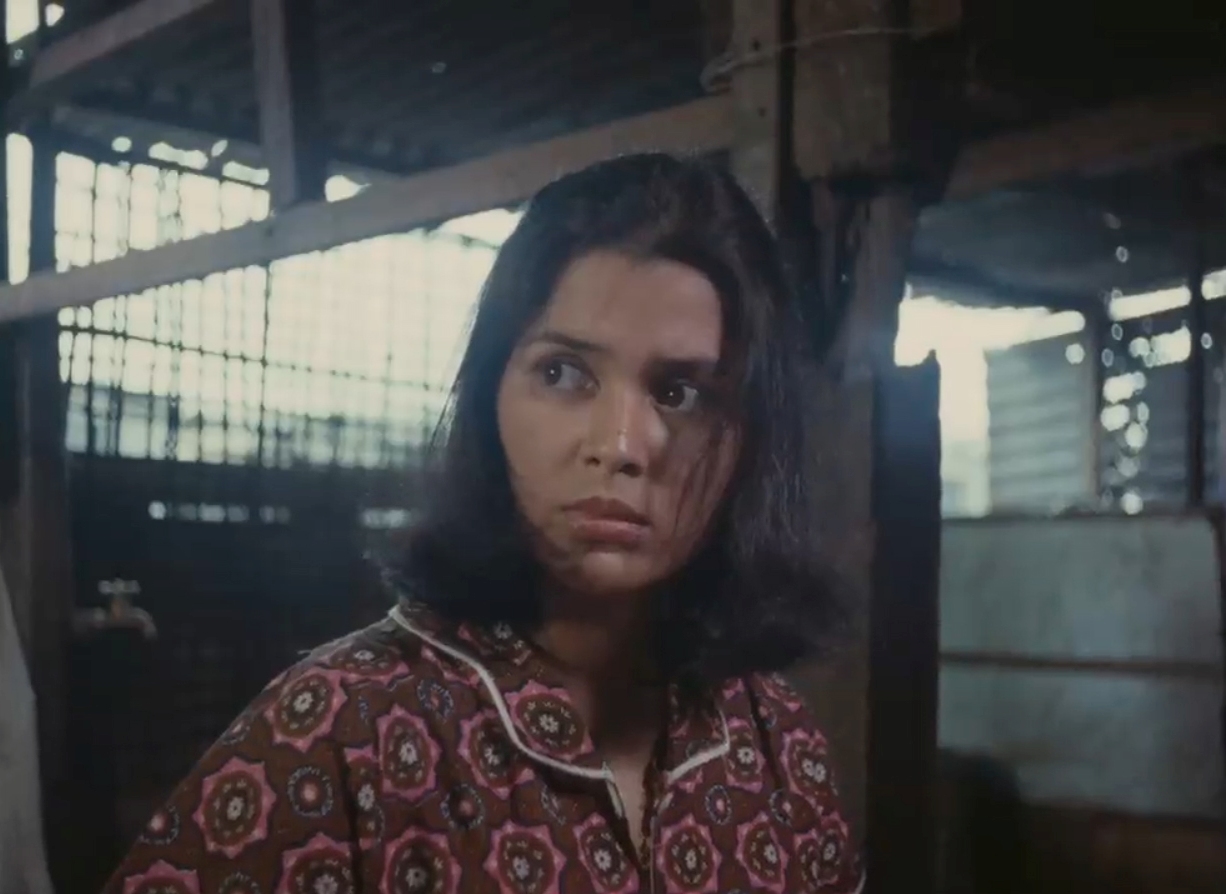
Victimized by Dado, abused and mistreated by Tonya, used and discarded by her young “fiance” Bebot, Insiang crafts a revenge plot that ensnares and punishes everyone involved. Quietly but resolutely rejecting her status as cypher and tool, she grasps her own agency and becomes fully real by rerouting a world of violence back on those who thought her meek. Beware, as Fassbinder said, the holy whore.

No one, Brocka seemed to angrily declare with Insiang, gets out of this world clean.
insiang6

The movie made a splash with French cinephiles on its Cannes showing, but struggled to catch on in the U.S., where Brocka has remained a minor figure. In an astute 2006 analysis of Insiang in Film Comment, José B. Capino wonders why. He attributes it to:

a curious disdain among American critics for [Brocka’s] melodramatic predilections … and the faulty (and contradictory) premise that his work aspires toward either neorealism or cinéma vérité.

The same could be said of Fassbinder. It’s an odd and ironic turn of events: adherents of Hollywood melodrama transposed its assumptions and precepts to local concerns, and somehow made the tradition unrecognizable in its country of cinematic origin, where audiences had long ago dismissed it as passé in favor of realist models imported from Europe and a strange, colonialist preference for exoticism and poverty porn.

Neither of which applies to Brocka here. Insiang is a morally complex, visually rich tragedy. Its crowded universe, where no one can so much as take a piss in private, provides ample opportunity for collision in the static visual field, but, as Noel Vera rightly observes, its classic three-act structure is almost austere (maybe resulting from its origin as a teleplay). There’s a sense of inevitability that runs throughout. The opening scene of slaughter maps perfectly onto a final one, and Insiang’s obvious pleasure in the culmination of her ploy – skillfully orchestrated by Brocka, who keeps you guessing at motivations – obscures any notion of innocence. Make no mistake: this is a fallen world. It’s everyone’s fault, and no one’s.
insiang2

The Marcos Administration’s censors demanded the original ending – in which Insiang vocally rejects her mother – be changed, reasoning it immoral for a daughter ever to do so. Brocka complied, but got the last laugh. Not for the first time, statist censors succeeded only in ironically highlighting the degree to which they do not understand art.

Instead of a denunciation delivered with a fist in the air, as Brocka and O’Hara intended, Insiang closes with our protagonist silently wiping away tears, steeling herself as they dry, and then vanishing, ghost-like, back into the world that created her. The steady, motionless camera observes her as she fades.

It’s a truly haunting image, delivering the exact message the censors should’ve feared more, if they weren’t literalists.

That she’s still out there. That, as long as social conditions like grinding poverty and patriarchy are the rule of the day, her vengeance – just, unjust, outside of considerations of justice: you choose – is waiting, accumulating, like running water filling a basin or the garbage that lines the outskirts of town, waiting for a match to set it aflame.

(Insiang screened as part of the New Filipino Film Festival 2016 at the Yerba Buena Center for the Arts in San Francisco this past weekend. The program continues through July 3.)

June 14, 2016 0 comments
0 FacebookTwitterPinterestEmail
CommentaryFilm

The Best Sports Movie Of All Time (this year)

by rick June 13, 2016
written by rick

[schema type=”movie” url=”http://www.imdb.com/title/tt0169102/” name=”Lagaan” description=”The people of a small village in Victorian India stake their future on a game of cricket against their ruthless British rulers.” director=”Ashutosh Gowariker” producer=”Reena Dutta, Aamir Khan” actor_1=”Aamir Khan” ]All the way back in March, I announced The Great Sports Movie Bracket of 2016, with the intention that a victor would be crowned by the end of March Madness. That … did not happen.

It turns out watching 16 movies, discussing them, and then deciding on victors in individual pairings takes a little while.

But never fear! Just in time for the inevitable victory of my Golden State Warriors over my Cleveland born-and-bred girlfriend Carrie’s Cavaliers (sorry, love, you know it’s true), I am pleased to present the final decisions in each match-up.

The sweat, the struggle, the heartbreak, the glory! Who will prevail? Read on to find out.

brackets_final2-1024x768

As you may or may not recall several months later, Carrie and I each picked four favorite sports movies. Another eight – none of which either of us had seen before – were determined by a very scientific process involving asking friends for recommendations. The entries were then seeded based on vote tallies and a bracket was determined.

THE SWEET 16 (IN WHICH WE RAMBLE ON AT SOME LENGTH)

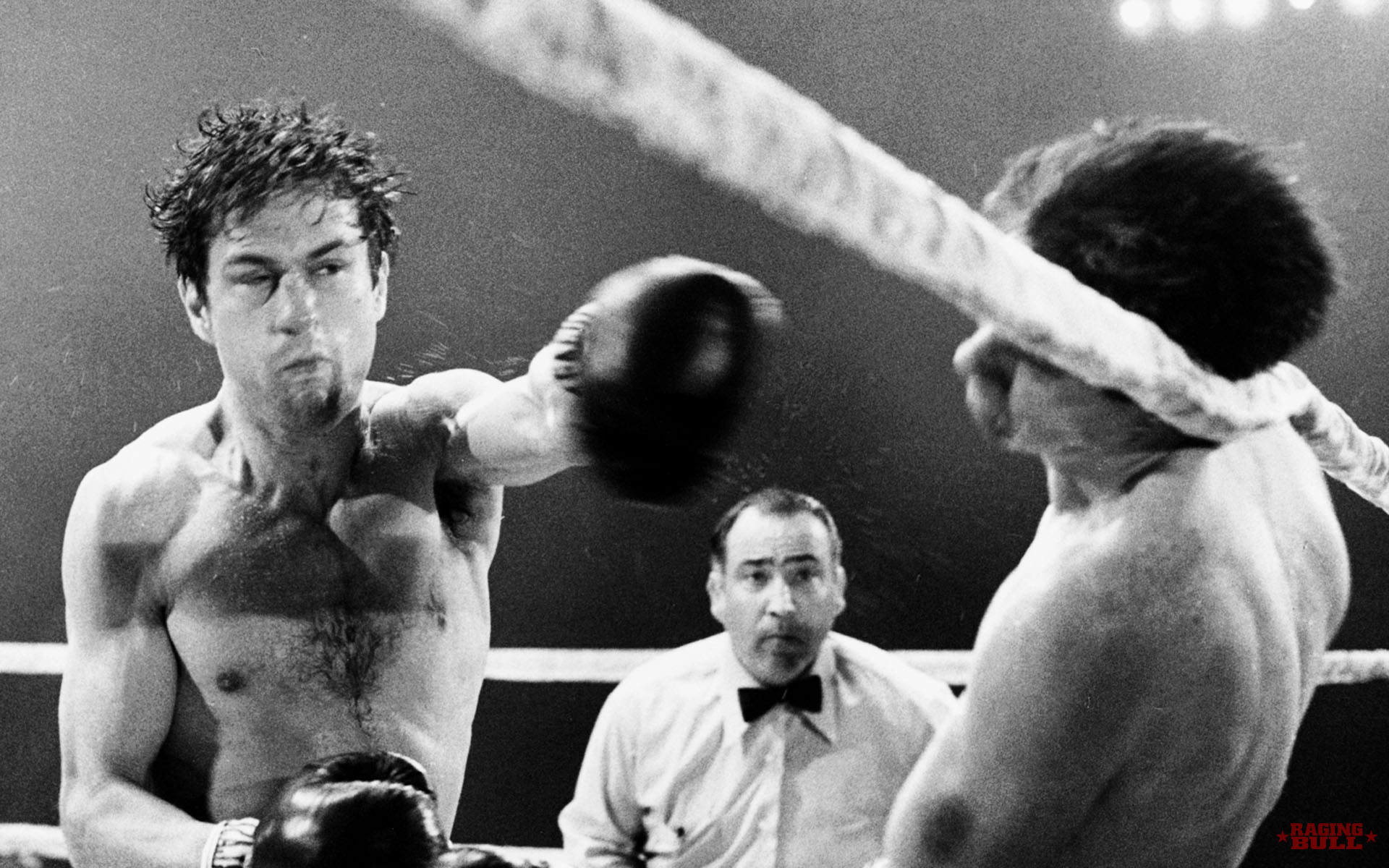
Raging Bull vs. North Dallas Forty

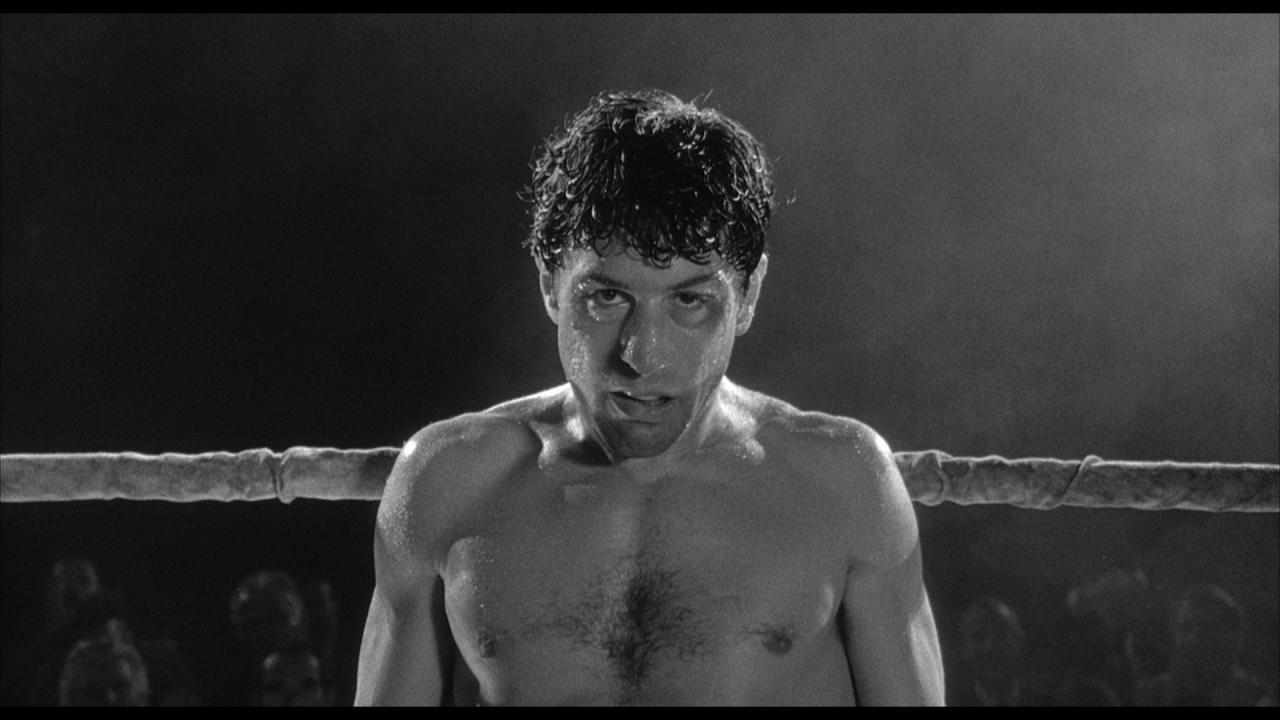
Winner: Raging Bull

Raging_Bull_wallpapers_3685

In a surprise to very few, Robert De Niro triumphed over Nick Nolte, and Martin Scorcese over, um, Ted Kotcheff. (Kotcheff would not appear in the Games again; Ol’ Grizzly Nick, however, will have another shot down the road.)
Raging Bull was my top pick, which I referred to in my intro as “a bracing, tense experience, and one of my favorite films, period.” So it’s not surprising I stuck to my guns here. Carrie, who had never seen it, abhorred its physical and emotional violence but conceded that she was on the edge of her seat.

Neither of us particularly understood why North Dallas Forty, the prototypically gritty and dour 70’s portrait of down-and-out Texas football players, has a cover that makes it look like Caddyshack. North Dallas Forty is a number of things, and none of those things involve wacky hijinks or drinking champagne out of oversized cowboy boots.

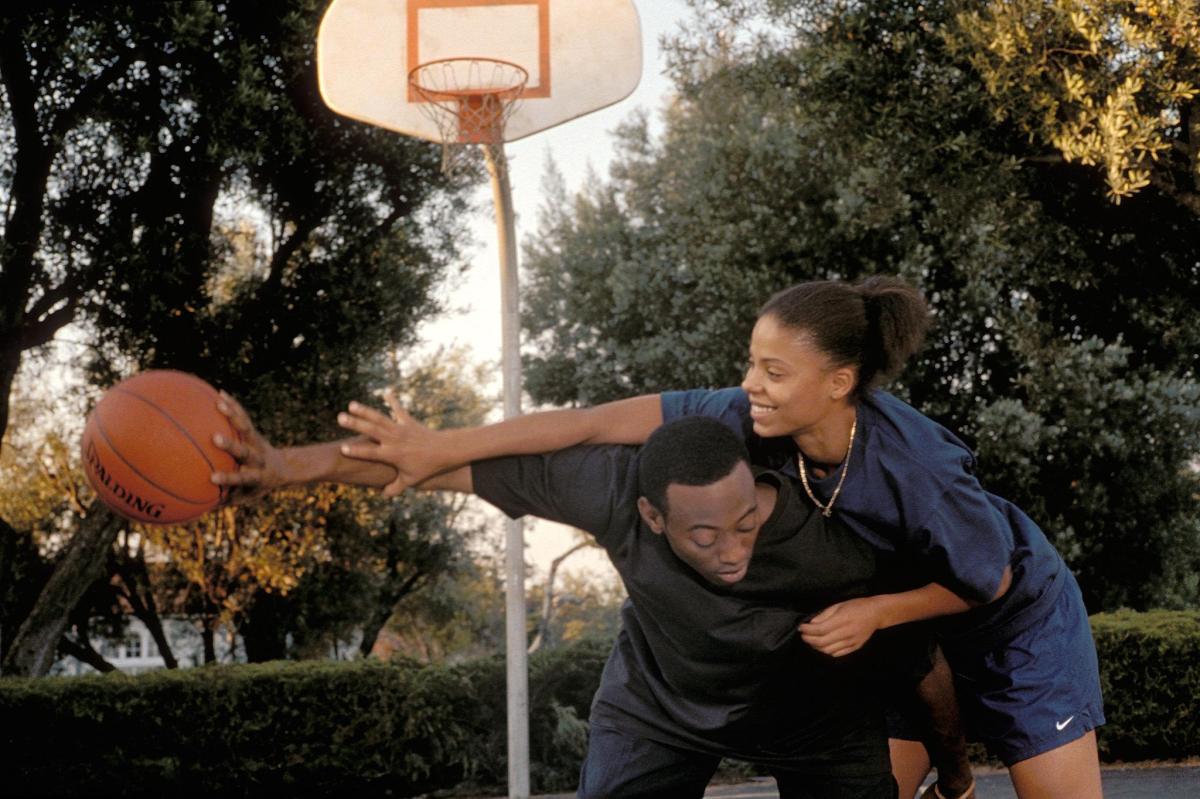
Love & Basketball vs. The Loneliness of the Long Distance Runner

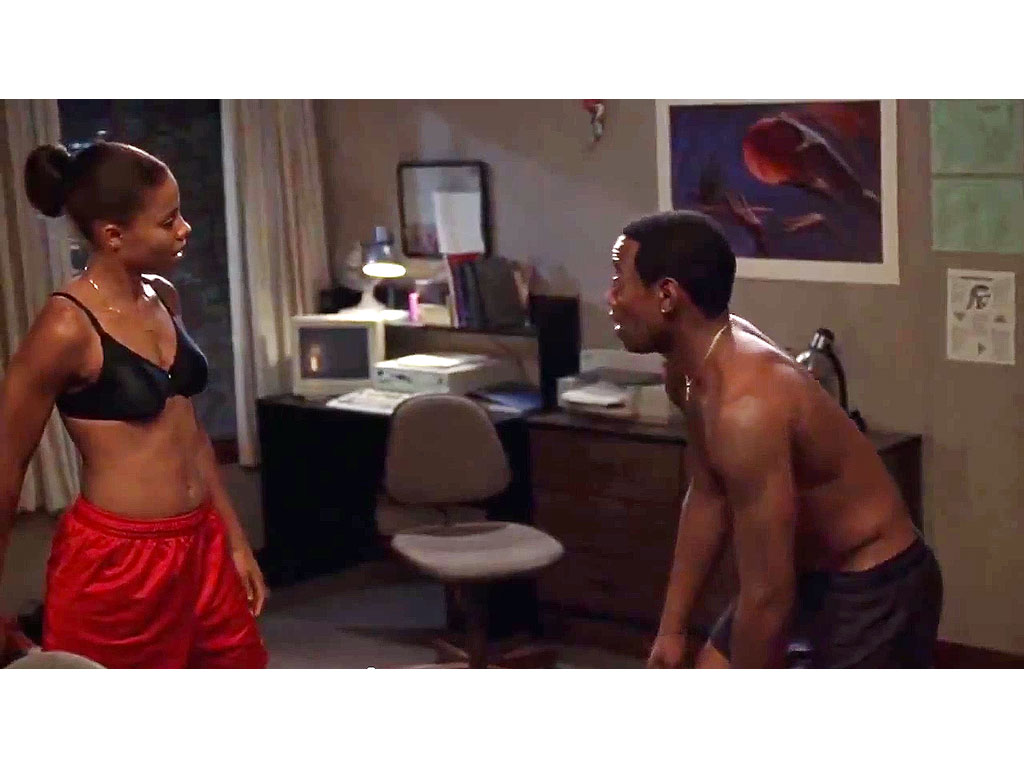
Winner: Love & Basketball

love-and-basketball-one

Gina Prince-Bythewood’s perennial favorite, featuring endlessly lovable performances from both Sanaa Lathan and Omar Epps, topped Carrie’s list, a film she described as about “love, relationships, dreams, disappointment, supporting one another, and finding your priorities.” I love it plenty myself, and we concurred that it should advance here, edging out Tony Richardson’s kitchen-sink realism and Tom Courtenay’s iconic Angry Young Man.

However, it wasn’t as easy you might suppose! We were both struck by The Loneliness of the Long Distance Runner, particularly its cinematography and Courtenay’s performance. This is in many ways an austere film, but its examination of working-class rebellion, alienated British youth, and the freedom one can find in a chosen sport impressed us. Of all the films we first-watched for this series that didn’t move on in the tournament, this might well be a new favorite all the same.

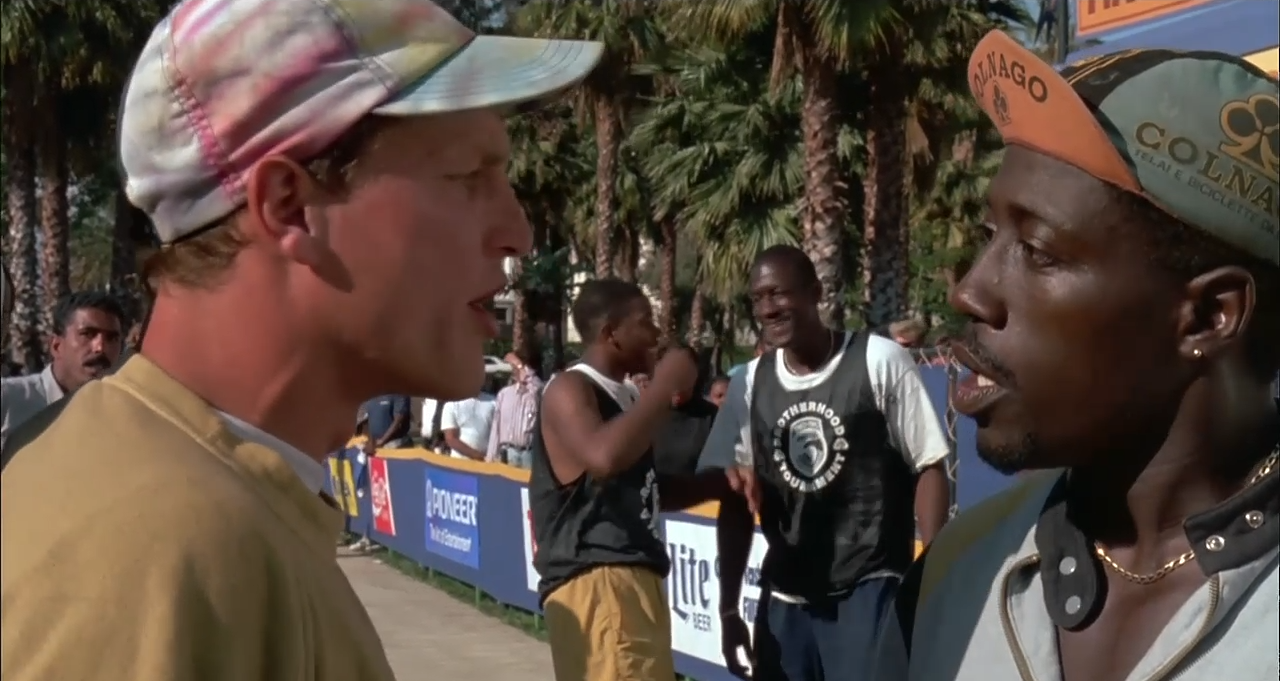
White Men Can’t Jump vs. Murderball

Winner: White Men Can’t Jump

WHITE MEN CANT JUMP

Murderball is a fascinating documentary, a glimpse into a world neither of us were familiar with (or had ever really considered). But, visceral and heartbreaking as it is, there is simply no way it could triumph over Ron Shelton, King of the Sports Movie.

White Men Can’t Jump gamely (and hilariously) tackles issues of race, class, and gender, deploying sports movie tropes for what ends up amounting to a sensitive set of character studies. Wesley Snipes and Woody Harrelson have rarely been this good, and Rosie Perez turns in the best performance of an illustrious career. It’s a powerhouse of a film, and the smartest comedy that also features 1,000 Yo Momma jokes around.

We were both ultimately frustrated by a lack of narrative coherence in Murderball, which is inherently interesting in terms of subject matter but seems to lose the thread in its last third. White Men Can’t Jump, on the other hand, starts and finishes strong. It’s a genre masterpiece with more on its mind than sports.

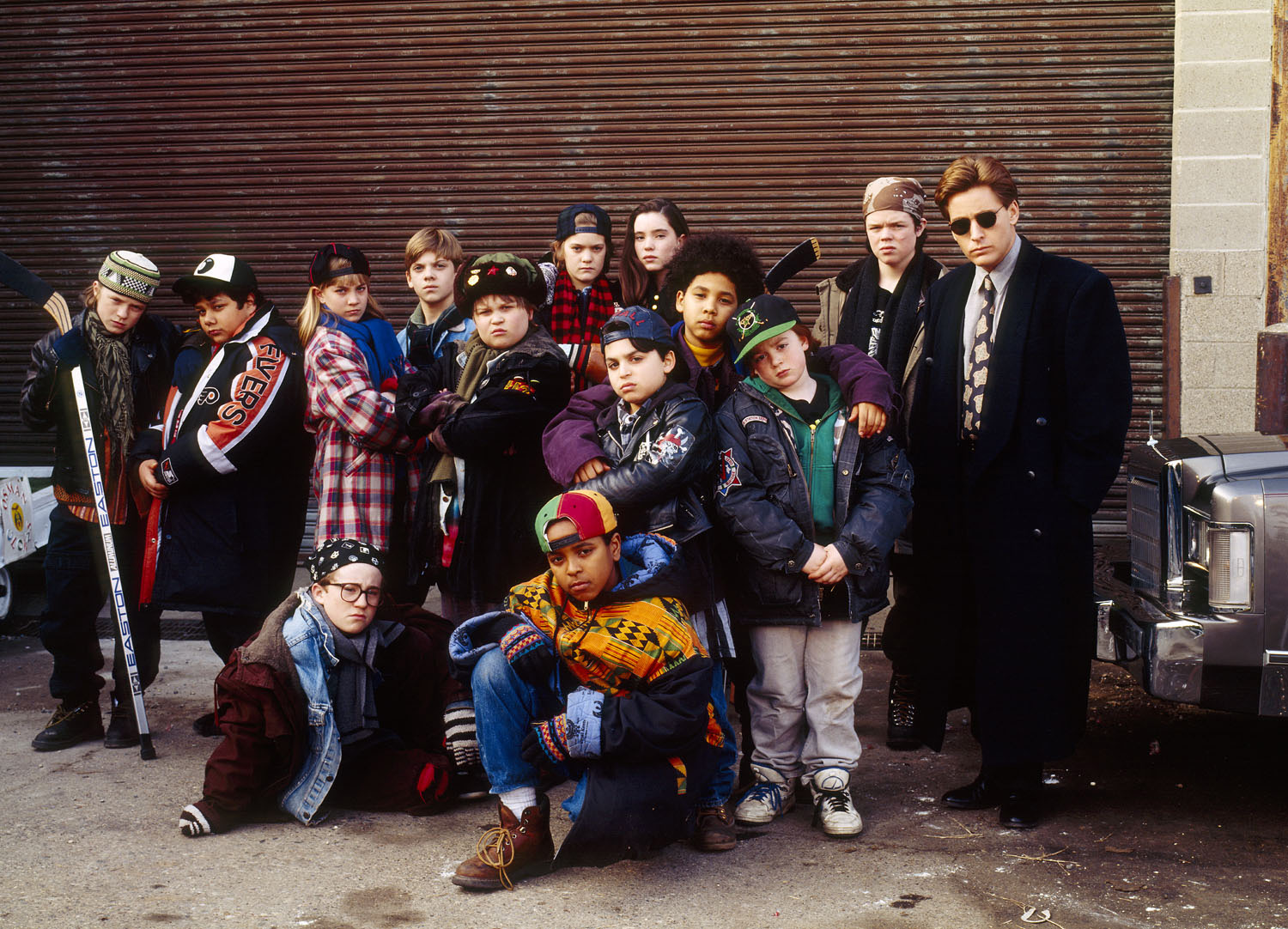
The Mighty Ducks vs. Slap Shot

Winner: The Mighty Ducks

mighty ducks2

In one of our rare contests between films focused on the same sport, there was no contest. Despite spending several years in Minneapolis, I had, somehow, never seen The Mighty Ducks, and while I found it corny, I also thought it succeeded on its own terms. Carrie, on the other hand, confesses to growing up wanting to be a Mighty Duck, so Slap Shot had a lot of ground to cover if it was going to triumph.

It did not. In fact, we both found Slap Shot offhandedly nasty and unpleasant, with its litany of gay jokes and bargain-bin characterization. Neither effective as critique or comedy, we were mystified why it’s considered a classic. The formulaic gentleness of The Mighty Ducks won in a rout.

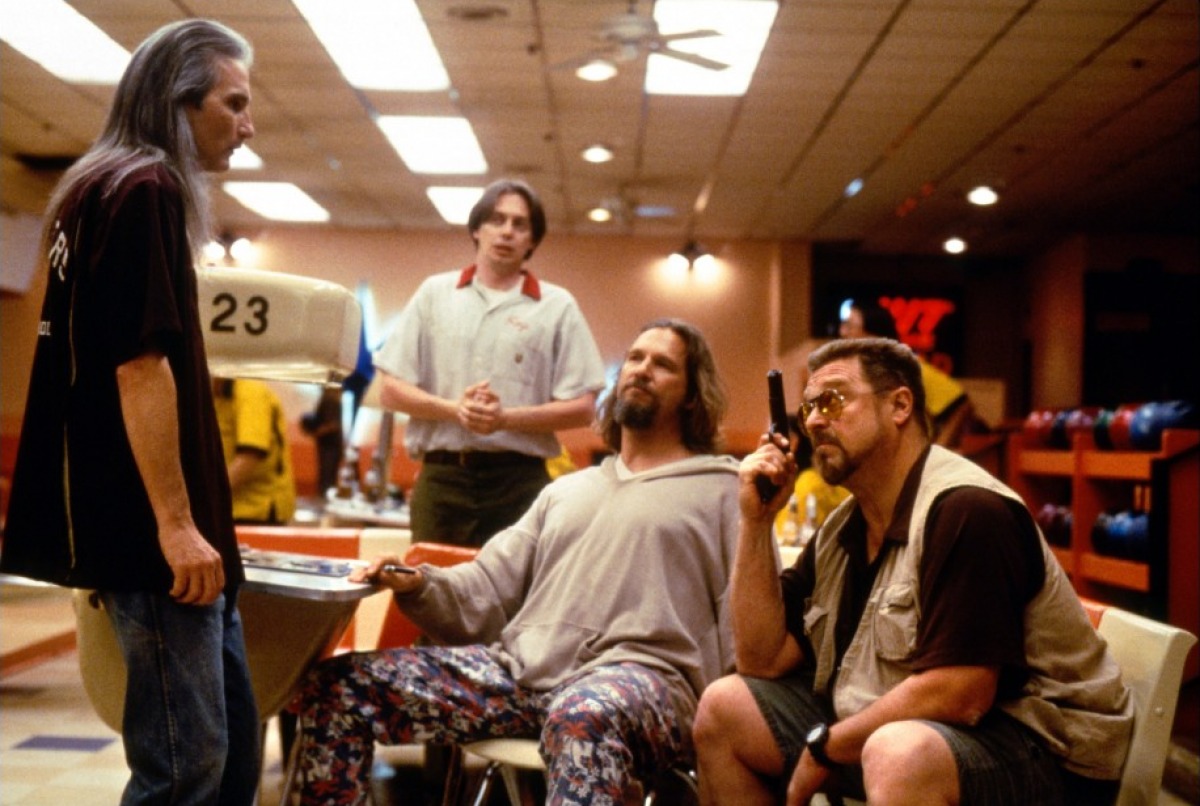
The Big Lebowski vs. Shaolin Soccer

Winner: The Big Lebowski

big-lebowski-1998-13-g

I have received, and continue to receive, a bunch of guff from sports movie pedants who dispute The Big Lebowski’s claim to the genre. “Why is that even here?” they ask, holding signs outside my house and badgering me at the store. (Note: this doesn’t actually happen.)

Well, upon yet another rewatch, I started to agree with these critics. The Coen brothers’ ode to bowling, weed, and White Russians isn’t exactly a sports movie … but then it’s not exactly anything. It centers , hilariously and typically for my favorite filmmakers, around a competition that’s ultimately of no consequence: semifinals, actually, which we don’t even get to see. In a surprise turn of events, Carrie, initially very skeptical, ended up being more sympathetic to my nomination after rewatching it. The sport of bowling is the wobbly structure on which the shaky narrative hangs, and it serves multiple functions in the film. It’s a sports movie that isn’t interested in the sport, except as a means of community and connection.

Stephen Chow’s amusing and inventive Shaolin Soccer was a lot of fun, mashing up genre motifs and producing one of the single biggest laughs of our sport-related adventures (if you’ve seen it, you can probably guess which one). But The Dude abided and The Coens advanced.

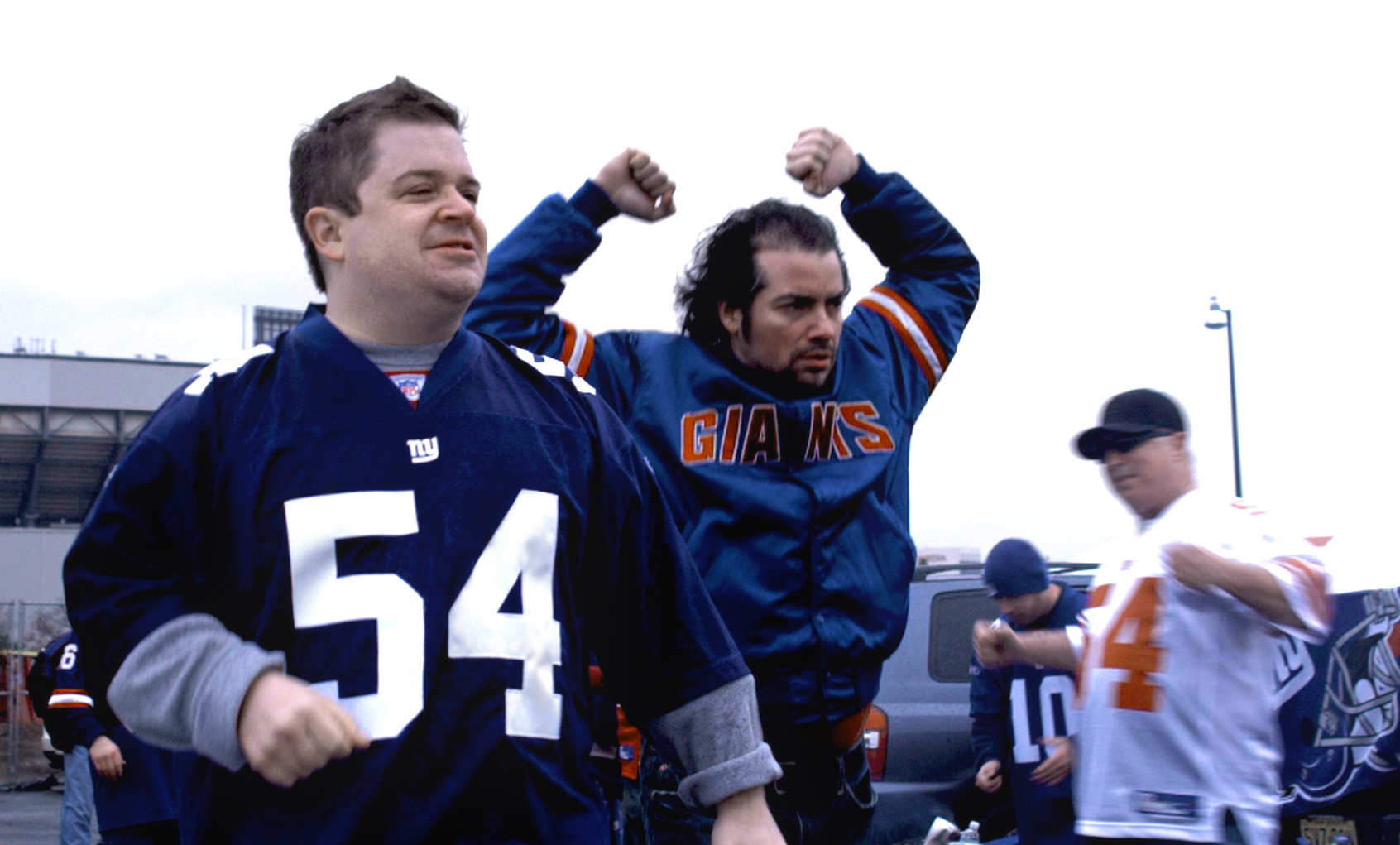
A League of Their Own vs. Big Fan

Winner: Big Fan

big fan

The first (but not the last) bona-fide upset!

Carrie’s enthusiasm for A League of Their Own notwithstanding, we were equally impressed with the pitch-black comedy of Big Fan, in which director Robert Siegel and star Patton Oswalt turn the genre lens to fandom. It’s the story of a crisis of faith masquerading as a football movie, and it mines unexpected depths.

It may just be my sensibility, but the saccharine quality of Penny Marshall can’t stand the cold light of day. In A League of Their Own, Geena Davis is winning and Tom Hanks is at his Tom Hanksiest, but the cutesy quality never really lets the film breathe. It’s still a pleasant diversion, but even Carrie, whose love of the film remains unvarnished, was blown away by the off-kilter and askew focus of Big Fan. It’s a cult favorite for a reason, and it won the day.

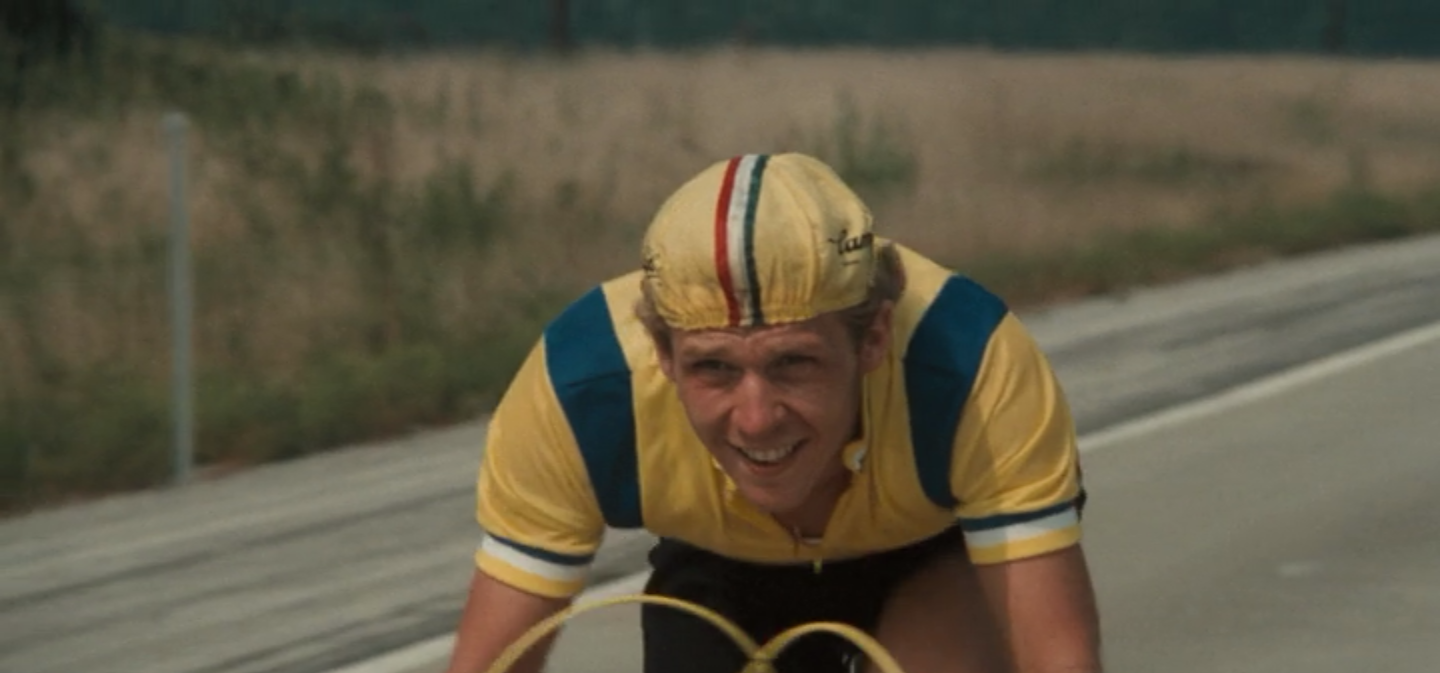
Breaking Away vs. Warrior

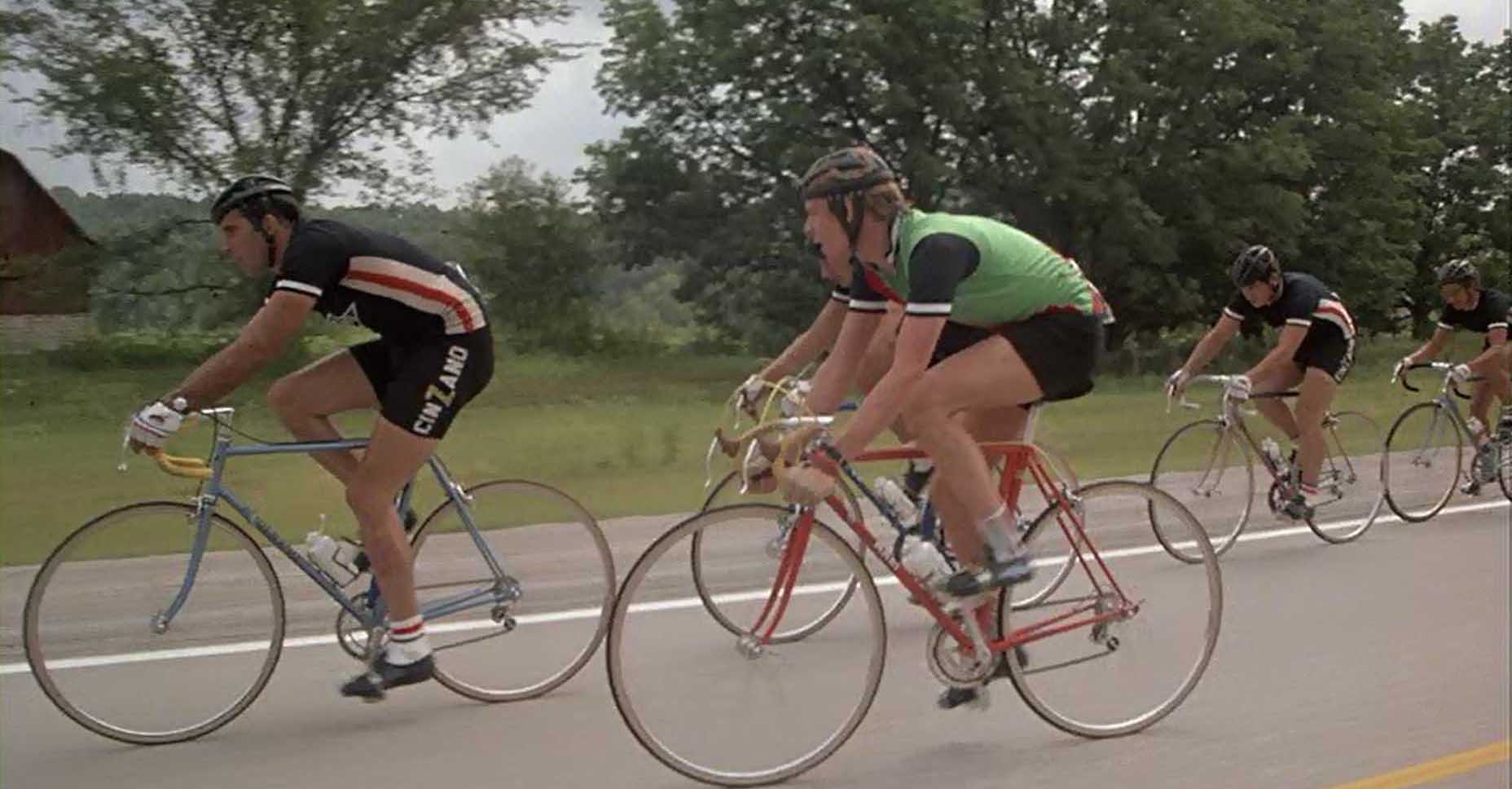
Winnter: Breaking Away

breaking away

Another “no contest” decision.

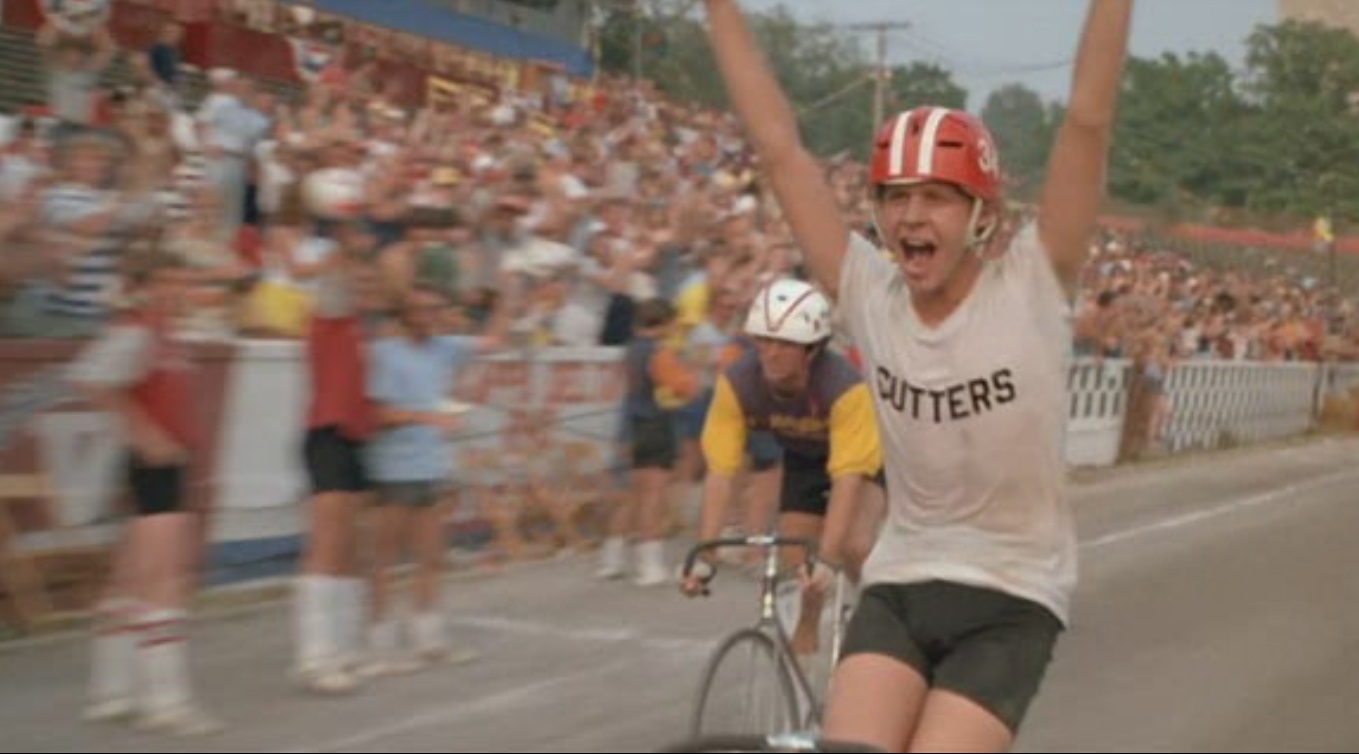
Warrior, we decided, is a mess, a muddled mix of tones and impulses that never grabbed either of us. The central, brotherly rivalry seemed unmoored, despite Tom Hardy’s fierce commitment to the role and Joel Edgerton’s biceps. Nick Nolte showed up again, many years and many beers down the line from his earlier, sexily mustachioed appearance in North Dallas Forty, but with no better result, as far as we were concerned.

Breaking Away? Oh, you mean the film about bikes, Italian opera-singing in the shower, the dreams of the future entertained by working-class kids on the cusp of adulthood in a Midwestern college town, and friendships forged, strained, and reinforced through ultimate cycling triumphs? Yeah, I already loved it, and Carrie just might’ve found her new favorite movie.

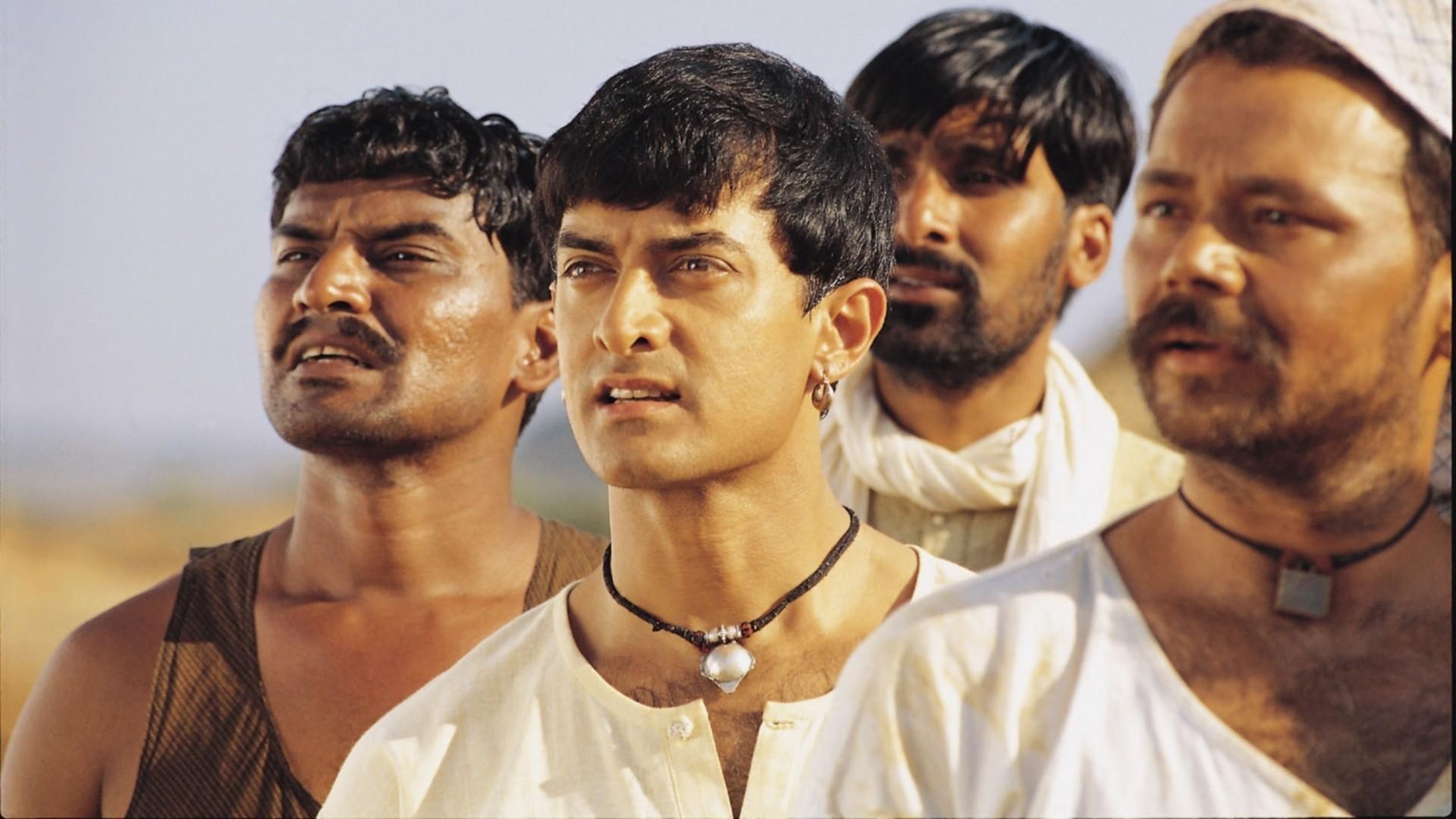
The Sandlot vs. Lagaan

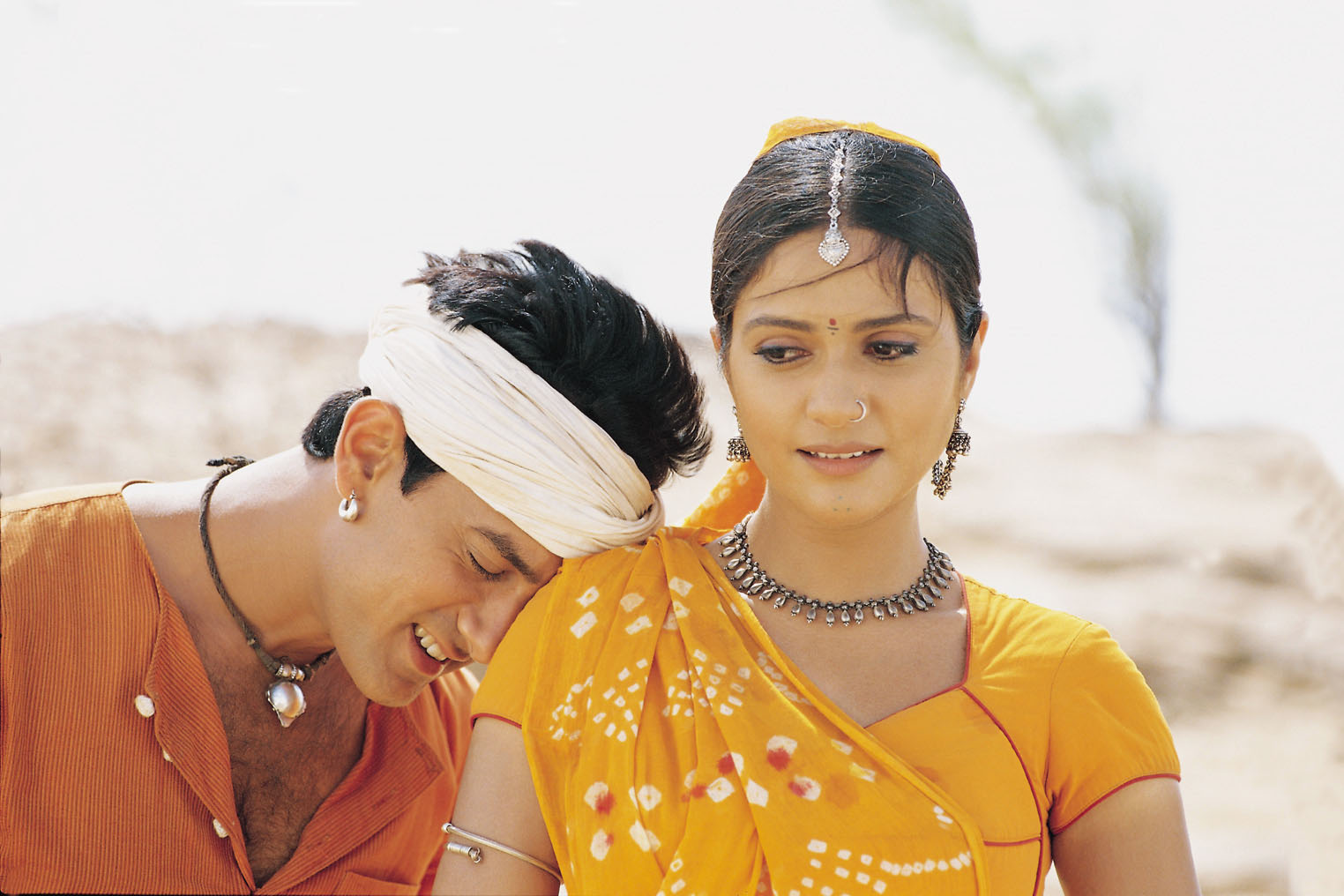
Winner: Lagaan

lagaan

This was technically an upset – the unseen Bollywood production Lagaan edging out Carrie’s second-seed – but it was less surprising in the moment.

Despite routinely using the phrase, “You’re killing me, Smalls” in real-life, I’d never actually seen The Sandlot, and it’s pretty clear why: I missed it when I was 10, and I’ve never managed to be 10 again since. Like The Mighty Ducks, it’s a perfectly acceptable movie for youngsters, and even kind of sweet in its way. But the plodding narration seems like it was excised from a made-for-TV version of Stand By Me and generally hokey. Also, I didn’t really like the kids, which can’t help matters.

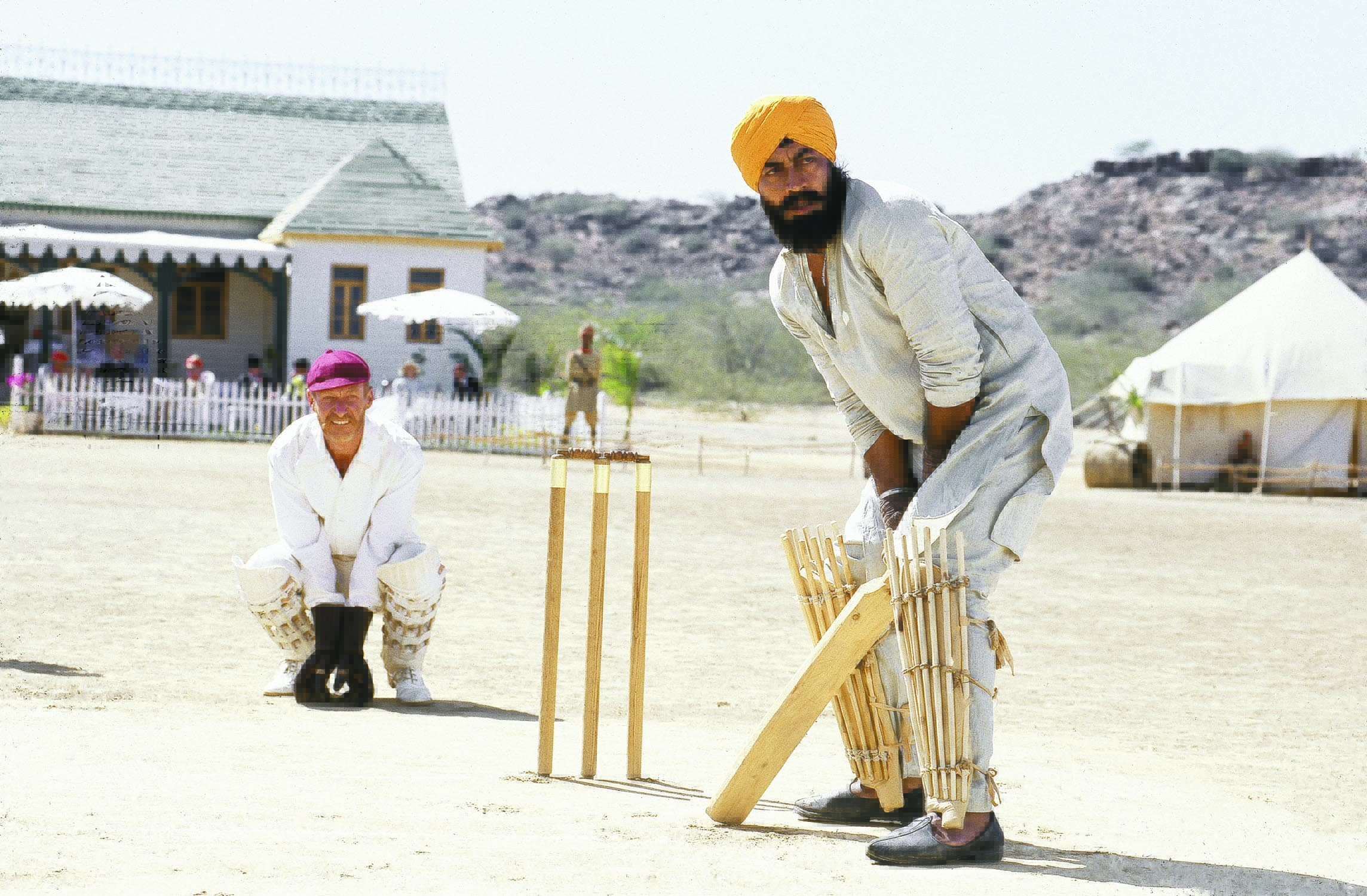
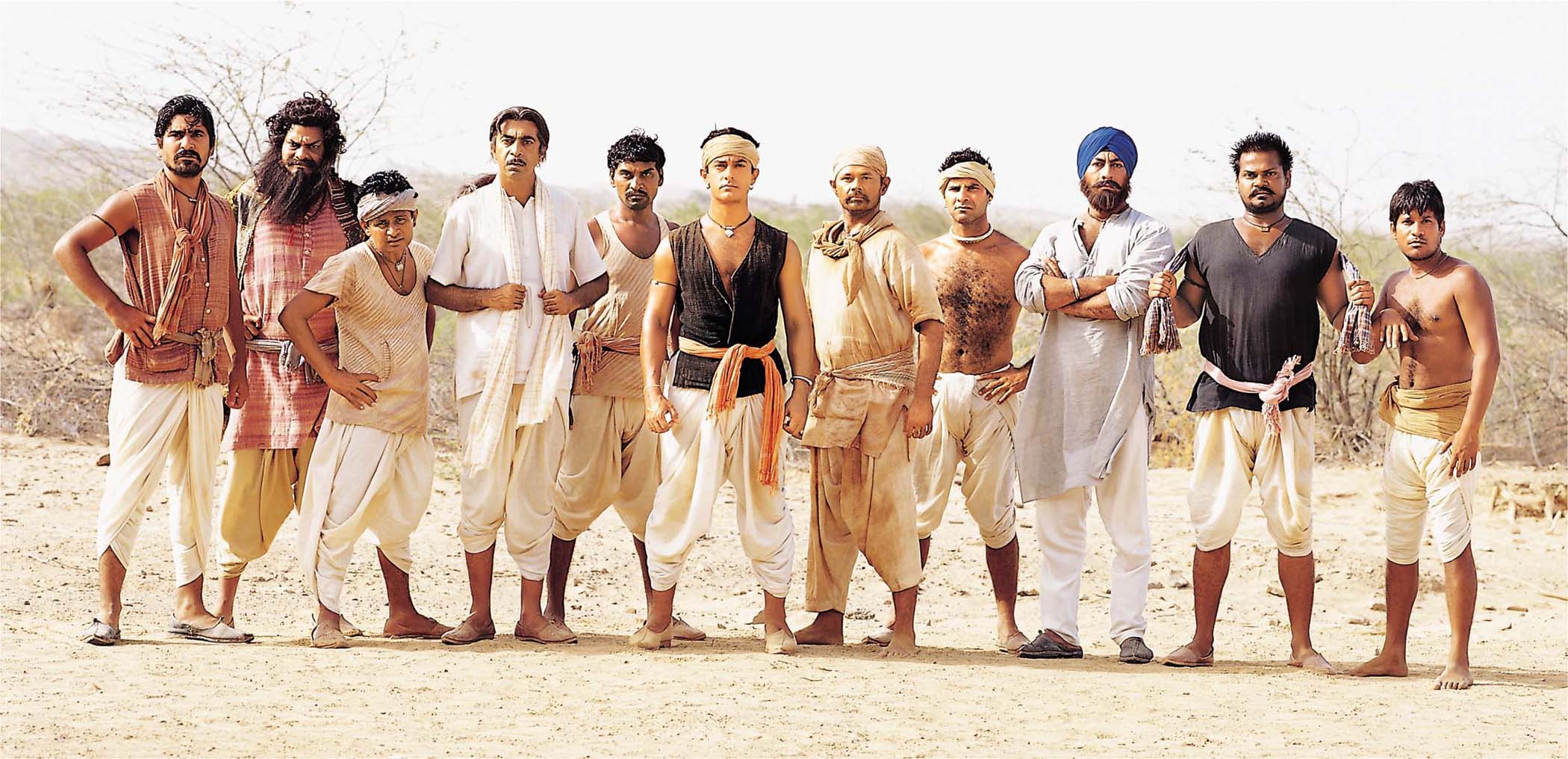
The real surprise was Lagaan. In two ways: first of all, that it’s four fucking hours long, and second, how much we enjoyed it. A Bollywood cricket movie didn’t seem like it would be up either of our alleys, but we adored every minute – the training montages, the romance, the songs, the anti-colonial narrative. It’s really just an immensely enjoyable film. People would come through the room while we watched and end up sitting for a while, unable to tear themselves away from a movie about a sport they don’t even understand particularly. It’s a Good Time At The Movies, as they say, and it beats the hell out of The Sandlot.

THE ELITE EIGHT (IN WHICH WE SPEED THINGS UP A BIT)

Raging Bull vs. The Big Lebowski

Winner: Raging Bull

raging bull2

A cursory look at bowling was enough to propel the Coens through the first round, but it couldn’t withstand this pairing. Raging Bull places you in the thick of its depiction, beating you mercilessly inside and outside of the ring. Disastrous machismo prevailed.

Love & Basketball vs. Big Fan

Winner: Love & Basketball

basketball-1024

While we were both impressed, somewhat unexpectedly, by the queasy-comic nuances of Big Fan, Monica and Quincy’s love – for each other, for the sport – will not be denied.

Breaking Away vs. White Men Can’t Jump

Winner: Breaking Away

breaking away2

Both my picks, and I would’ve been fine with either advancing. But Carrie’s adoration of Breaking Away proved too much even for my Ron Shelton boosterism. These are both immensely enjoyable films, but we agreed that Breaking Away is the more winning of the two, sports movie-wise. This match-up is still the definition of a can’t-lose proposal.

Lagaan vs. The Mighty Ducks

Winner: Lagaan

lagaan2

Let’s face it: The Mighty Ducks was only really here because it faced off with the execrable Slap Shot. At the end of the day, it’s a goofball lark with Emilio Estevez and some kids. Lagaan is straight-up awesome, and has better dancing.

THE FINAL FOUR (IN WHICH WE DESPERATELY WRAP THIS THING UP, BEFORE THE GAME STARTS LATER)

Raging Bull vs. Breaking Away

Winner: Breaking Away

breaking away3

Are you surprised?

Love & Basketball vs. Lagaan

Winner: Lagaan

lagaan3

And here we met the single most difficult decision of the tournament.

Love & Basketball holds a special place in both of our hearts. Lagaan amazed, surprised, and entertained us for a solid four hours.

It could’ve gone either way, but the wily upstart knocked off the top-seed. Sports! They are unpredictable.

And so we arrive at the Championship. Breaking Away, initially seeded #2 in my bracket and suddenly beloved by Carrie, squaring off against the unseen Lagaan, recommended by some kind souls on The Dissolve Facebook group, a film neither of us had so much as heard of prior to this endeavor.

AND THE VICTOR……..

lagaan4

Lagaan

Despite my fond remembrance of Breaking Away, it was actually carried this far by, well, Carrie. Rewatching it, I found the comedy broader than I recalled, though the class aspects still resonated and, fundamentally, bikes are cool. As should be clear by now, Carrie simply adored it, for a whole host of eminently justifiable reasons.

But Lagaan simply has too much going for it. It is maximalist in the best sense: it’s bursting with life and fun. It’s a sport movie that goes out of its way to explain the sport (very helpful, for those of us who’ve never seen a cricket match), but integrates that explanation into a broader narrative encompassing a critique of colonialism, a lovely romance, and more. The requisite scenes in which the unlikely team is assembled are self-aware and funny, the performances are uniformly strong, the songs are catchy as hell, the dancing slaps an idiot smile on your face, and the plucky upstarts stick it to the prigs. What more do you want?

So there you have it. As of today, Lagaan is officially the greatest sports movie of all time.

We’ll see how it holds up next year, and if we can manage to get through this in fewer than four months next time.

Stay tuned, and get your ballots ready.

June 13, 2016 0 comments
0 FacebookTwitterPinterestEmail
CommentaryFilmGuest

Failure Is Not An Option: As Above, So Below

by Liz Lerner June 13, 2016
written by Liz Lerner

It may seem peculiar to go back and talk about a film two years after its release, especially one as forgotten as 2014’s As Above, So Below – so let me explain why anyone should care about the film first.

It’s a general rule in clowning – and I know with that phrase I’m already in danger of losing some of you, but stick with me – that you have to do something really cool and skilled before you can fail amusingly.

If you just start juggling and drop all your balls, no one knows whether to laugh or not, because they’re not sure if it’s a choice or a mistake; if you juggle perfectly, then fail on something easy, they know you’re choosing to fail, and are comfortable laughing. (Andy Kaufman famously inverts this with his brilliant Elvis interpretation routine.)

Something similar happens with filmmakers.

13460894_121056371651103_1153599994_o

Many filmmakers’ first efforts dole out narrative pleasure in a traditional way, before heading in more experimental directions. This is often just because of the realities of production. But their later filmography seems to make a promise: if the movies are not actively entertaining, it’s on purpose.

But what if we read all films against the grain? What if instead of merely discounting films that fail to thrill us traditionally, we took them at their word, and explored those places they weren’t quite right as interesting in and of themselves?

That’s my general methodology: I’m obsessed with films that fail, and believe that films that fail often can do more to change how we watch movies than those that succeed. Take 2014’s As Above, So Below.

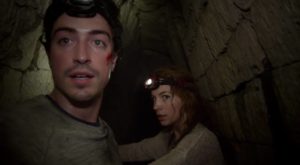
As Above So Below 2

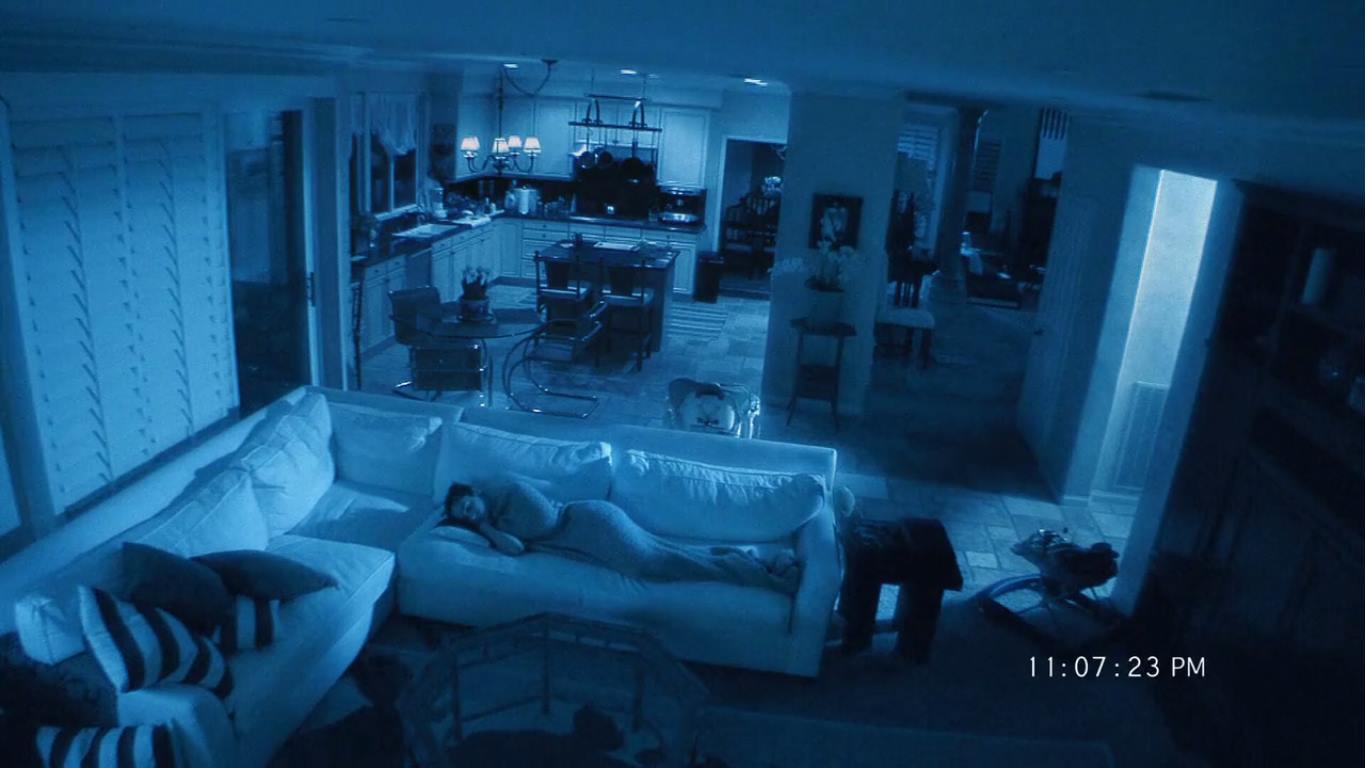
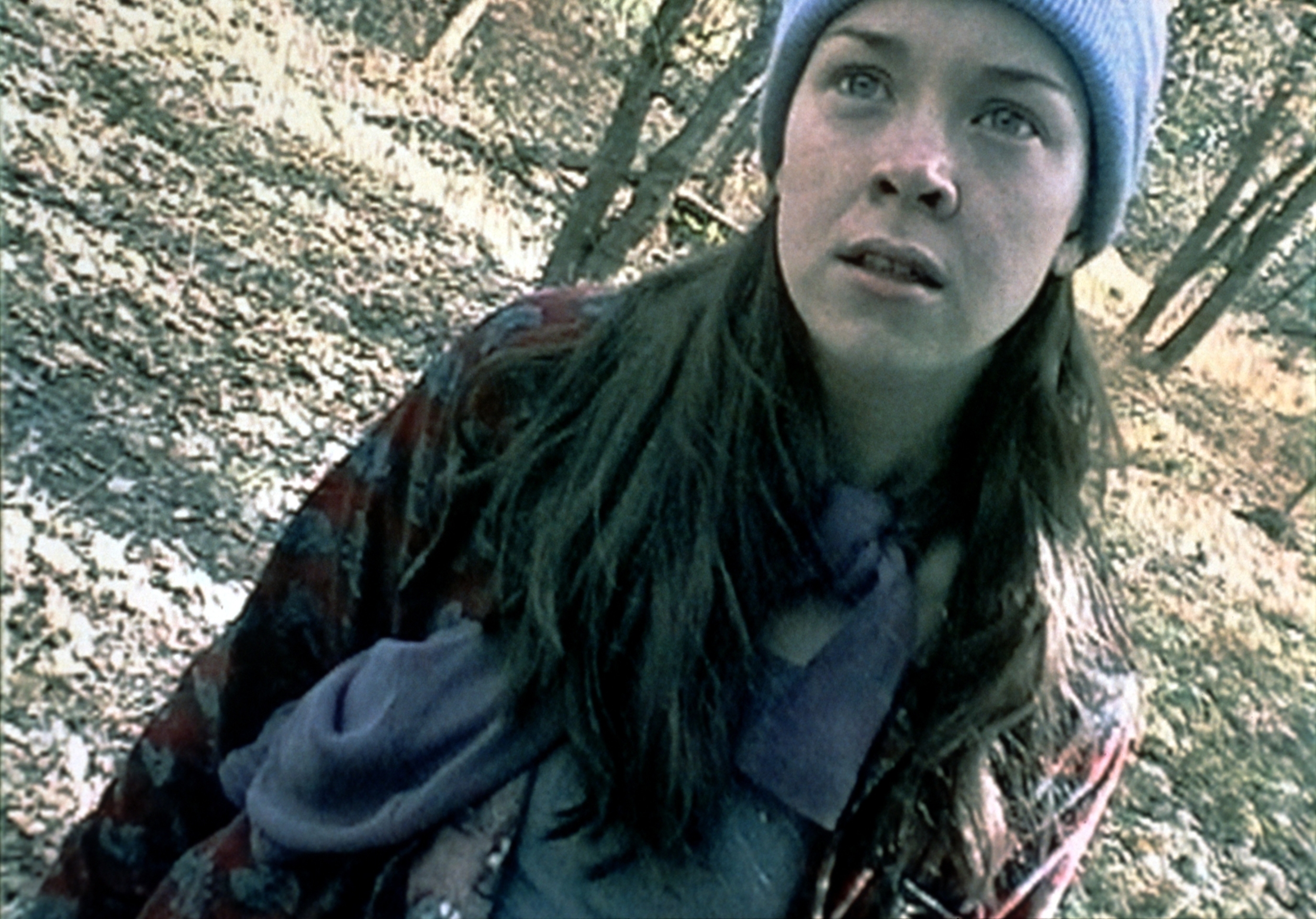
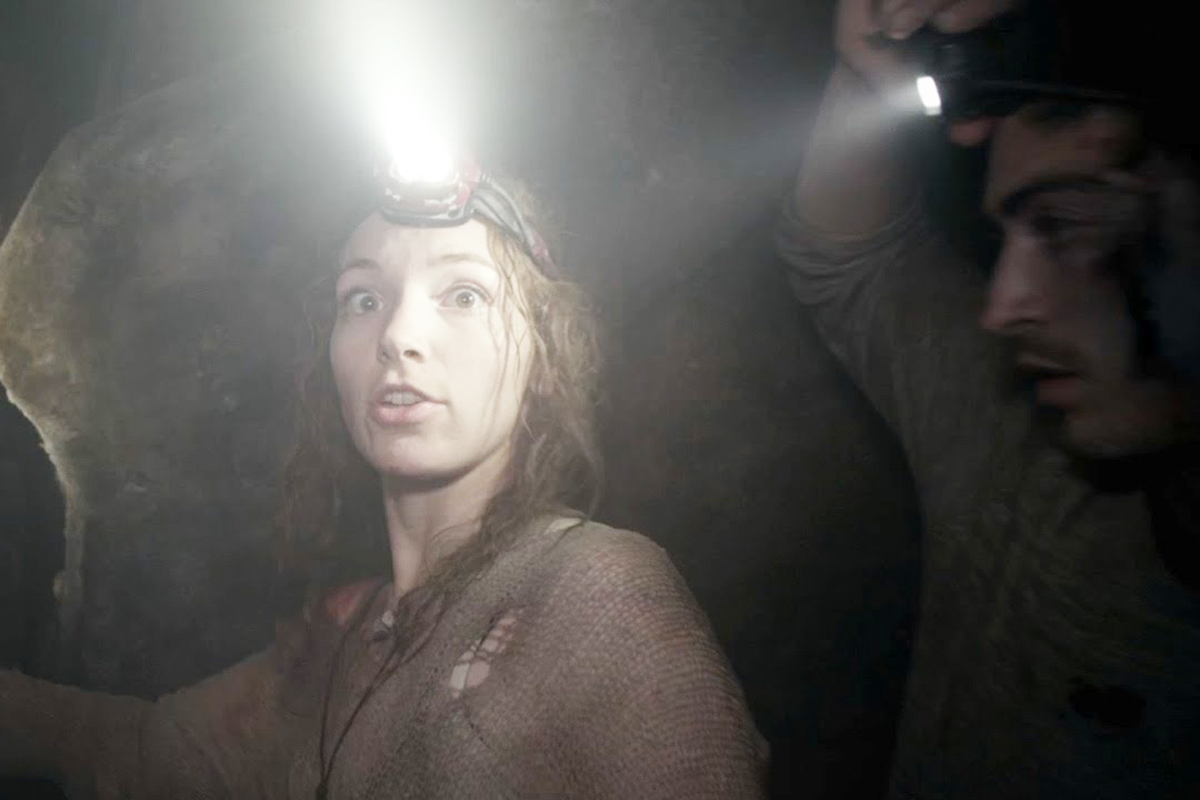
It’s a peculiar mashup of Indiana Jones-style archaeology thriller and found-footage horror film. It is a stretch to call it a found-footage movie, though. Such films usually make open spaces feel claustrophobic – for instance, the giant Californian houses of Paranormal Activity, or the forest of The Blair Witch Project.

paranormal activity1blair witch1

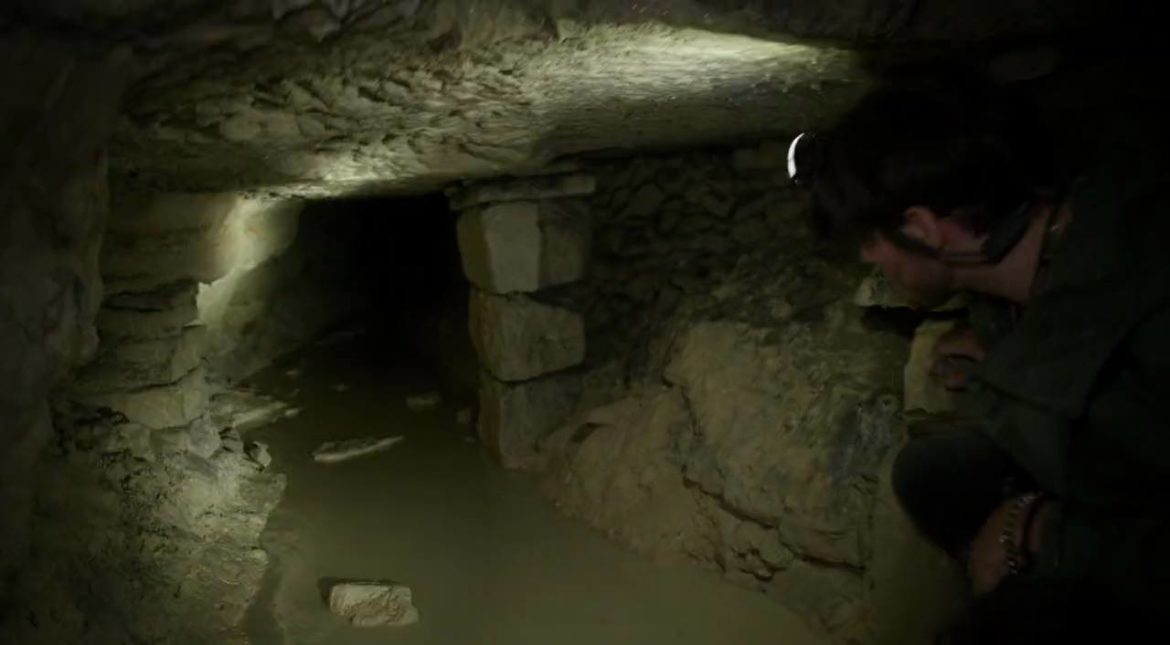
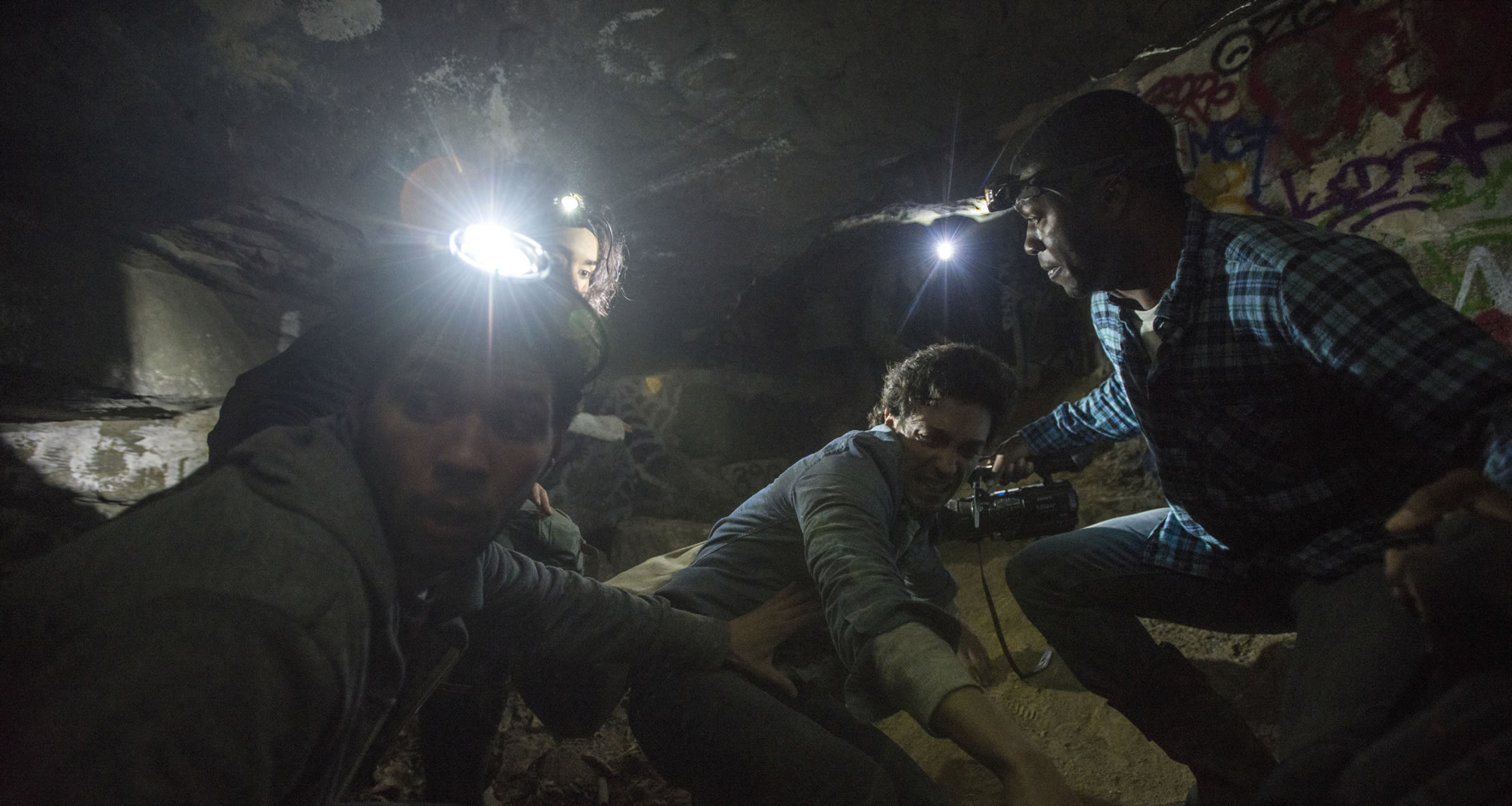
While the cameras are explained diagetically in As Above, So Below, almost all of the movie is spent investigating the catacombs under Paris, in places so narrow that even extradiagetic cameras would have nowhere else to be placed. The viewer can easily forget for long stretches that it is “found footage,” and even the filmmakers seem to forget: hallucinations that seem to be subjective are shown by the camera in moments.

as-above-so-below

What the film wonderfully depicts, however, is the profoundly unromantic nature of caves. Almost all found-footage movies – with the exception of The Visit – are just visually ugly. The closest analogue I can see for many of these films are the Dogme 95 movement’s output.

Roughly 75 minutes of As Above are lit in various shades of brown, and one can’t help but think of Tomb Raider and Indiana Jones’ green and verdant caves, full of natural beauty. These catacombs do not even have the color to be ominous. There is nothing in this film but the slow claustrophobia of thin caves going nowhere. (Interestingly, one character is introduced as being profoundly claustrophobic… a characteristic that is never brought up again.)

As_Above_So_Below_review

And yet, we as the viewer are never able to fully give in to the claustrophobia, because even as they endlessly dig down into the rock, we know there will always be a path forward. There will be no absolute dead end, because the film has not reached the 90 minute mark after which it can safely terminate. The climax and finale, in fact, serve as a sort of breath of wafting fresh air waiting for the protagonists down every spindly crevice.

There is much more to say about this film. The narrative doles out one major past sin to each character to confess, there’s the invention of the term “individual” in the Catholic confessional, and the found-footage film itself offers us the indivisible Cartesian cogito observing the world objectively. But what is interesting here is exactly how badly it fails, and how thoroughly it makes adventure seem unadventurous.

After this movie, those cavernous passages of National Treasure, with their perpetually well-lit torches and complex puzzles of light, will never seem quite right.

June 13, 2016 0 comments
0 FacebookTwitterPinterestEmail
FilmReviews

Popstar smartly skewers celebrity culture, but could use some more heart

by rick June 8, 2016
written by rick

[schema type=”movie” url=”http://www.imdb.com/title/tt3960412/” name=” Popstar: Never Stop Never Stopping” description=”When it becomes clear that his solo album is a failure, a former boy band member does everything in his power to maintain his celebrity status.” director=”Akiva Schaffer, Jorma Taccone” producer=”Judd Apatow” actor_1=”Andy Samberg” ]

The best “mockumentaries” – This Is Spinal Tap, Waiting For Guffman, A Mighty Wind – pull off a neat trick. They tend to endear you to the characters they poke fun at, slyly subverting types and tropes while remaining affectionate in the process. The fitfully hilarious Popstar: Never Stop Never Stopping, the second cinematic outing by The Lonely Island guys (Andy Samberg, Akiva Schaffer, and Jorma Taccone), produced by Judd Apatow, aims at similar satirical heights as those classics, but can’t quite pull it off. It’s this lack of affection that keeps a very funny film from being great.

popstar5

Popstar’s general approach lampoons the recent spate of hagiographic documentaries like Katy Perry: Part of Me and (of course) Justin Bieber: Never Say Never, which combine “Behind The Music” talking head interviews with concert footage, videos from a tour, and more intimate moments. Written by all three and directed by Schaffer and Taccone, Popstar uses the form to needle those folks, but also to satirize the entirety of modern, YouTube celebrity culture – some jokes are aimed directly at The Beebs, but the heartiest laughs are rooted in a more general atmosphere of overexposure and self-mythologizing hype.

Samberg plays Connor4Real, a solo artist who was the breakout star of an earlier trio, also featuring Schaffer and Taccone, called the Style Boyz. Evoking both the Beasties and ‘N Sync, the Style Boyz were enormously influential in their time, as a long string of real-life luminaries tell us. (It would ruin some of the fun to name too many of these cameos and brief appearances, but a quick perusal of Popstar’s extensive cast-list will give you an idea.)

Like Justin Timberlake in ‘N Sync, Beyoncé in Destiny’s Child, or, well, Andy Samberg in The Lonely Island, Connor was the member of the ensemble chosen for attention by the fans. Branching out as “Connor4Real”, he’s taken the world by storm, amassing legions of fans and hangers-on. His former band mate Owen (Taccone) has risen with him, as a DJ who does nothing but hit play on an iPod, while third member Lawrence (Schaffer), alienated and betrayed, has abandoned the music biz to become a farmer in Colorado.

Very much like This Is Spinal Tap, Popstar follows Connor4Real’s most recent tour, which gradually shifts from disappointing sales number to outright embarrassing disaster. His manager (unsung hero of the film, Tim Meadows), his publicist (Sarah Silverman), and his entourage try to keep things afloat, while Connor makes terrible decision after terrible decision.

popstar1

Connor4Real’s awkwardly public fall from grace involves tone-deaf songs, the addition of aggressive (and better-selling) rap star Hunter The Hungry to the bill (Chris Redd, fiercely committing to the ludicrous role), a stunt marriage to girlfriend Ashley (Imogen Poots) that somehow results in the singer Seal being mauled by wolves, a Daft Punk-influenced helmet, and an ill-fated line of kitchen appliances that play his songs when you use them. The joke is not just that Connor4Real sells out – if you don’t, he reminds Owen, people will just assume no one asked you – but that his compromises so routinely blow up in his face.

Much of this can be very funny, but there still seems to be something missing in the depiction – namely, that heart that animates the Christopher Guest projects. In the end, the team is reunited, and it’s actually quite sweet, but so much of the humor seems rooted in laughing down at these guys.

The lack of affection for the material is most evident in the songs, where you’d expect the film would be funniest. You’d be mistaken. There are definitely laughs, for instance, in the LGBT-anthem “Equal Rights”, a Macklemore parody in which Connor4Real’s support for equality becomes increasingly tinged with assurances that, no, he is not, himself, gay, just to clarify. But the joke – both its premise and target – seems a little easy. (And does anyone love Macklemore? I guess they’re out there, but I feel like Pauline Kael talking about Nixon voters: “Where they are I don’t know. They’re outside my ken.”) Connor’s wildly inappropriate single comparing his sexual prowess to the military killing bin Laden doesn’t fare all that much better – you laugh at the central conceit, and then politely wait for the song to end. Popstar starts to drag in places, sometimes mid-song, which ideally wouldn’t be a problem for a film that clocks in at 87 minutes and doesn’t even feature all that many songs.

Of course, these are meant to be terrible, showcasing how incredibly out-of-touch the doofus protagonist has become. But compared to Spinal Tap’s idiot commitment to their bad songs (which are often “good,” in their way – seriously, “Sex Farm Woman” is an awesome tune), the terribleness overshadows any sense that the songwriters or performers believe in it. That goofy, endearing quality is missing, and on-stage Samberg seems to be an amalgam of caricatures of people The Lonely Island holds in low regard. It can be funny, but it would be better if they liked the stuff they were mocking.

As a result, Popstar has a strange shape – it’s funniest when other people besides the central crew are on screen, and sweetest when it focuses on the relationships off-stage rather than through the music these guys make and the personae they adopt.

popstar4

The sheer overload of cameos from celebrities waxing nostalgic about the rise of the Style Boyz becomes its own joke – it’s amusing, then it’s repetitive, then it’s gone on for so long it becomes hilarious again. Bill Hader makes the most of a brief appearance as a roadie who is obsessed with the largely forgotten 1990 film Flatliners, even casually dropping the name of its Director of Photography in conversation. (This is doubly amusing in that real-life Hader seems to be something of a cinephile, too.) Maya Rudolph is also wonderfully, briefly inane as a corporate sales rep, while Will Arnett almost steals the movie in his two scenes as a cackling, soda-swilling Harvey Levin stand-in for some bottom-feeding TMZ-style outfit.

Arnett more or less specializes in embodying such loathsome characters. But Samberg’s at his best when he’s exhibiting a goofy, clueless charm – something Popstar allows him to do only sporadically. Connor4Real’s incredulousness at his tanking numbers and inability to notice he is being put on by his army of yes-men is a little too Zoolander at points, but it’s still much better than the sub-Family Guy joke in which he takes a shit in the Anne Frank house and then mimics Jim Carrey’s “Don’t go in there!” as he exits the bathroom (an on-the-nose elided reference to Justin Bieber’s adventures in Amsterdam and Miami). At the beginning and end of Popstar, we get to see the three band mates and friends together, and there’s a sweetness and familiarity to their interactions that would’ve benefited the entire middle section of the movie.

Still, when Popstar is on, it’s really on, and the way in which it constructs Connor’s narrative to skewer celebrity culture more generally is inspired more often than not. Unsurprisingly to fans of their previous film Hot Rod or their videos, it looks incredibly good, perfectly capturing the tics and conventions of the media it mocks and filling the frame with as many visual jokes as verbal ones. One additionally amusing aspect of The Lonely Island’s cinematic outings is how much they don’t half-ass it: the modest Hot Rod, for instance, was shot by Andrew Dunn, a DP with plenty of mainstream prestige credentials, while, in Popstar, Brandon Trost continues to make ridiculous comedies look unusually pretty.

All of which is to say: Popstar has so much going for it that it’s a shame it doesn’t quite hit the mark. Like all of the things Samberg, Schaffer, and Taccone produce, it’s more than good enough to ensure a cult following down the road, but this one could’ve been great with a few tiny tweaks. Instead, it’s “merely” hilarious. That’s still pretty good.

In closing, and after all this talk of affection for the material, here’s one that just can’t get old. A sick beat, film-nerd jokes, and a love letter to Michael Bolton’s outsized ridiculousness. If you can’t make it out to Popstar today, you always have the option of watching this 20 times in a row.

June 8, 2016 0 comments
0 FacebookTwitterPinterestEmail
FilmReviews

The Last Warning: German Expressionist Scooby Doo

by rick June 7, 2016
written by rick

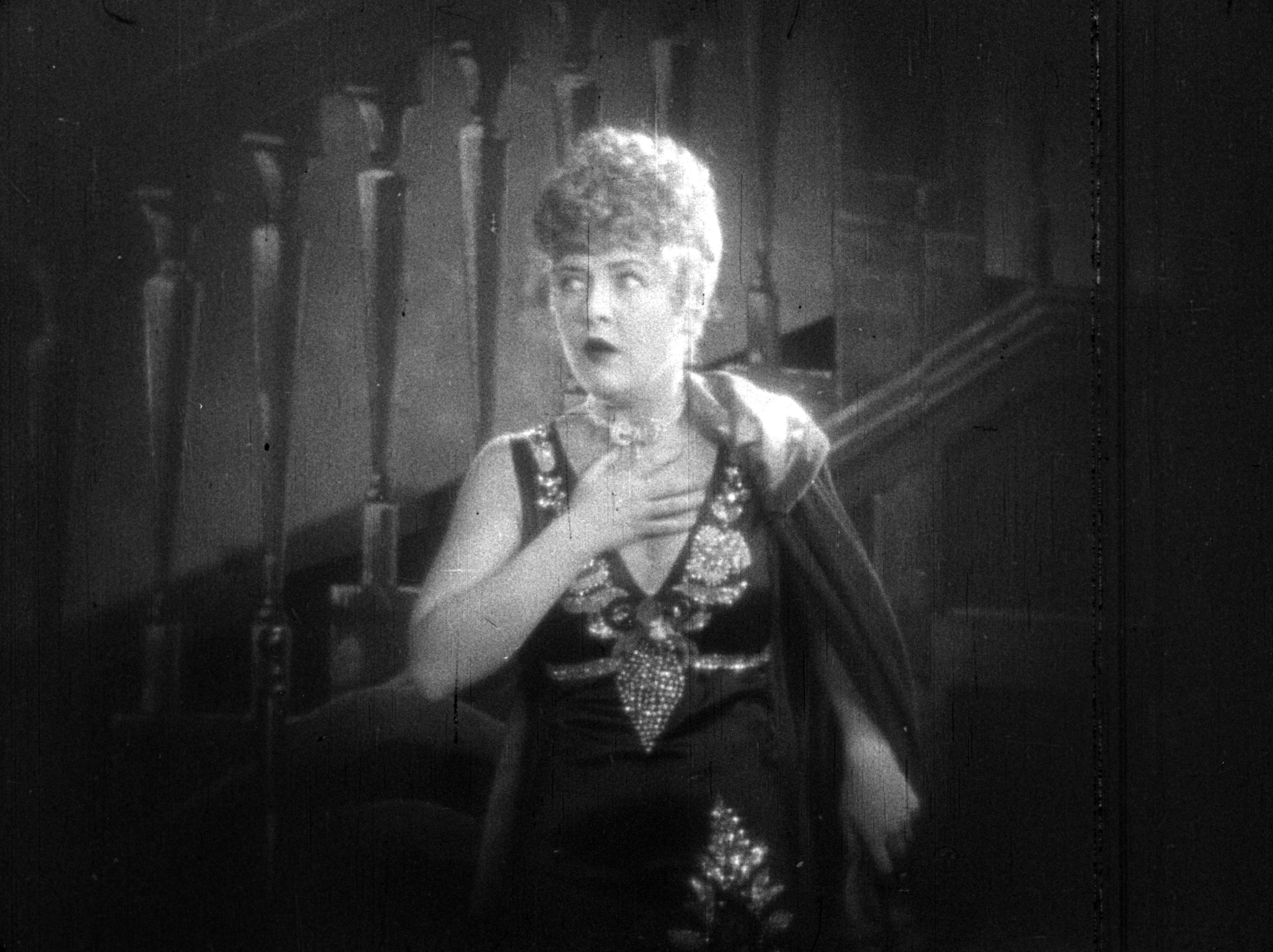
One of the great curiosities about early horror films, particularly the American variety: why are they so scared of horrifying? Paul Leni’s The Last Warning (1929) – more or less a reboot of his previous The Cat and the Canary from 2 years prior, swapping a spooky old Broadway stage for a spooky old mansion – is typical of this impulse. It’s impeccably decked out and dressed up, but is almost distractingly committed to draining any scares from the proceedings. It’s German Expressionism as Scooby Doo episode, complete with knock-kneed protagonists, limp laughs, and a final-act, mask-removing reveal.

the-last-warning-1

It’s still a lot of fun – of course, so is Scooby Doo if you’re in the right mood (read: a child, or stoned).

Leni rose to prominence in his home country of Germany as a prolific art director, but it was his involvement with Waxworks that brought Hollywood calling. His Expressionist sensibility and playfulness is evident throughout The Last Warning, and elevates it above your standard Spooky Old [Insert Place Name Here] lark.

the-last-warning-3

The narrative is boilerplate, an excuse for Leni to play around in his Expressionist sandbox. It’s really most notable for the facts that a) it’s based on a story by Wadsworth Camp (father of A Wrinkle In Time author Madeline L’Engle) and b) it bears a strong resemblance, in broad strokes, to the incredibly poorly received 2015 found-footage film The Gallows.

The film throws us right into the action, as police clear a theater following the mysterious death of its proprietor, John Woodford, on stage. With the murder unsolved and the theater deemed haunted, it’s shuttered for years, until Woodford’s “friend” Arthur McHugh (Montagu Love, having a tremendous amount of fun) appears, intent on reopening it. The cast of that fateful night is reconvened for an encore performance … though McHugh may have more on his mind than an artistic tribute to the dearly departed Woodford.

Ok, of course he does. The play they were performing, and will perform again? It’s titled “The Snare.” The play’s the thing, so forth.

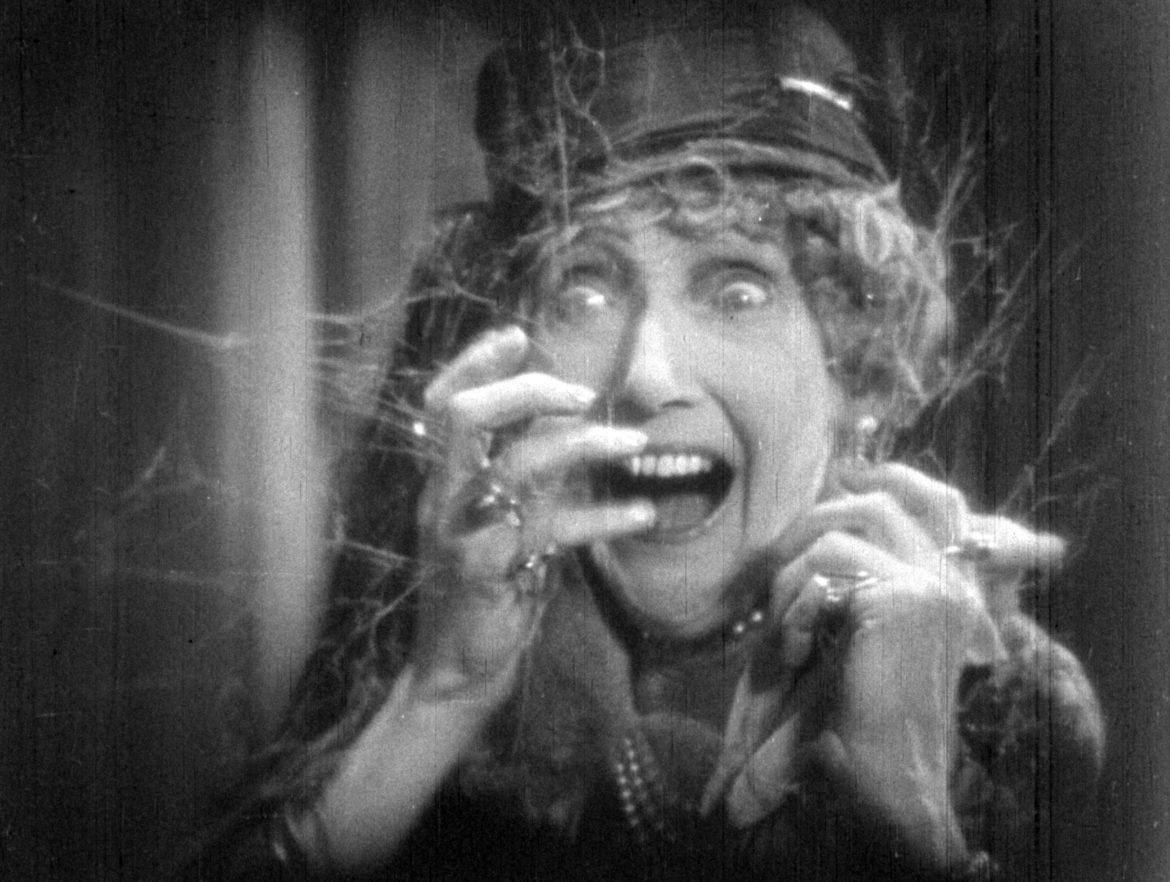
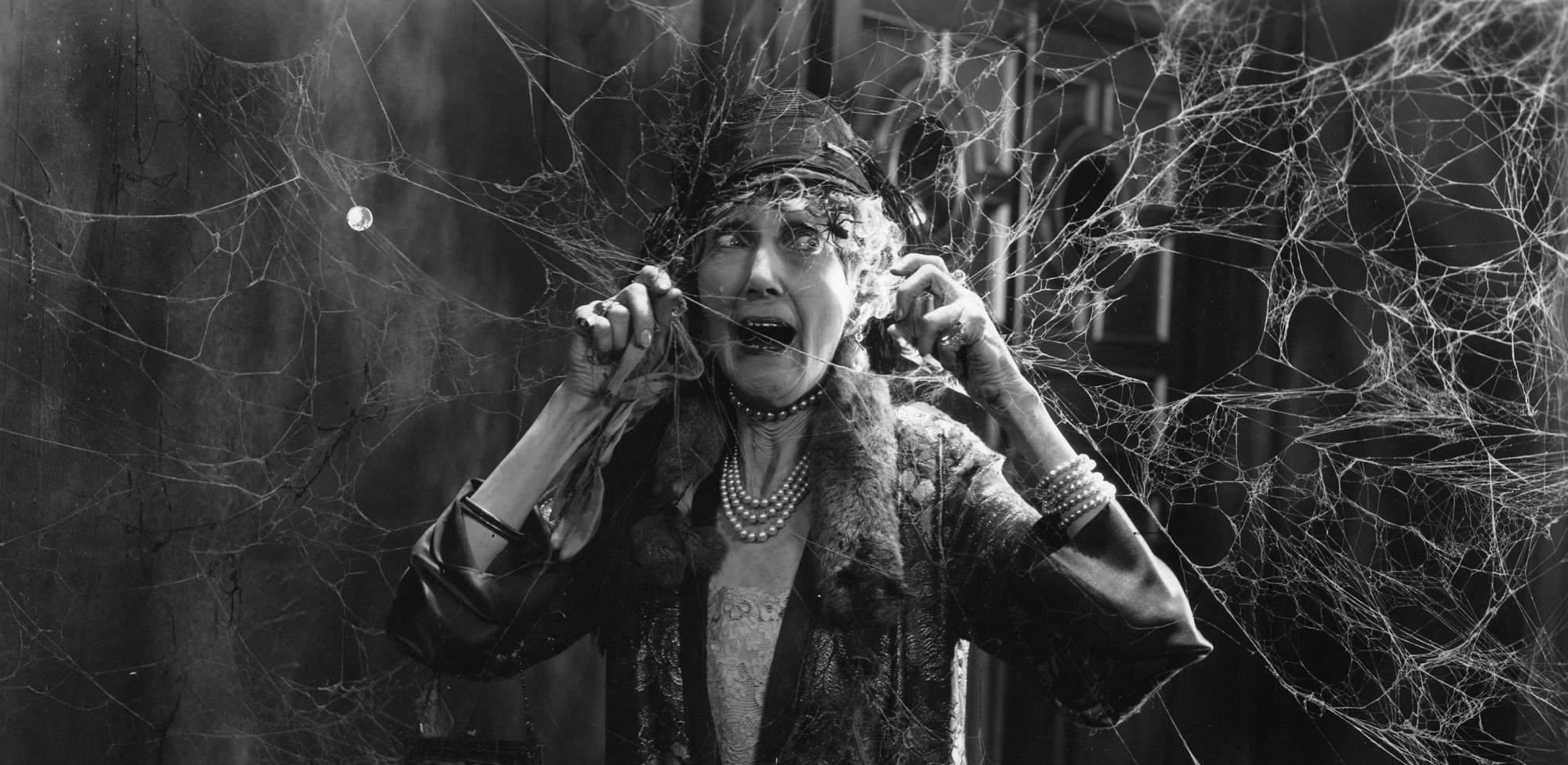
In any case, all the performers and various stagehands and technicians return, despite the palpable danger (and creaky boards, and scratching sounds, and spiderwebs, and trapdoors, and hidden passageways, and the fact that a dude died last time they did this). Some return because they need the money, others because they fear failure to do so will cast them in a suspicious light.

the-last-warning-2

In one of the Leni’s best touches, the reopening of the theater, as the players convene, resembles a supernatural building coming to life, its two upper windows like eyes opening as the blinds are pulled. It’s reminiscent of The Amityville Horror, among many other haunted house genre entries, and it’s just one of several moments when the film flirts with real scares. But for whatever reason – lack of trust in the audience, skepticism of the commercial appeal of horror, or just a reflexive desire to make ‘em laugh – these moments are abandoned as quickly as they are conjured.

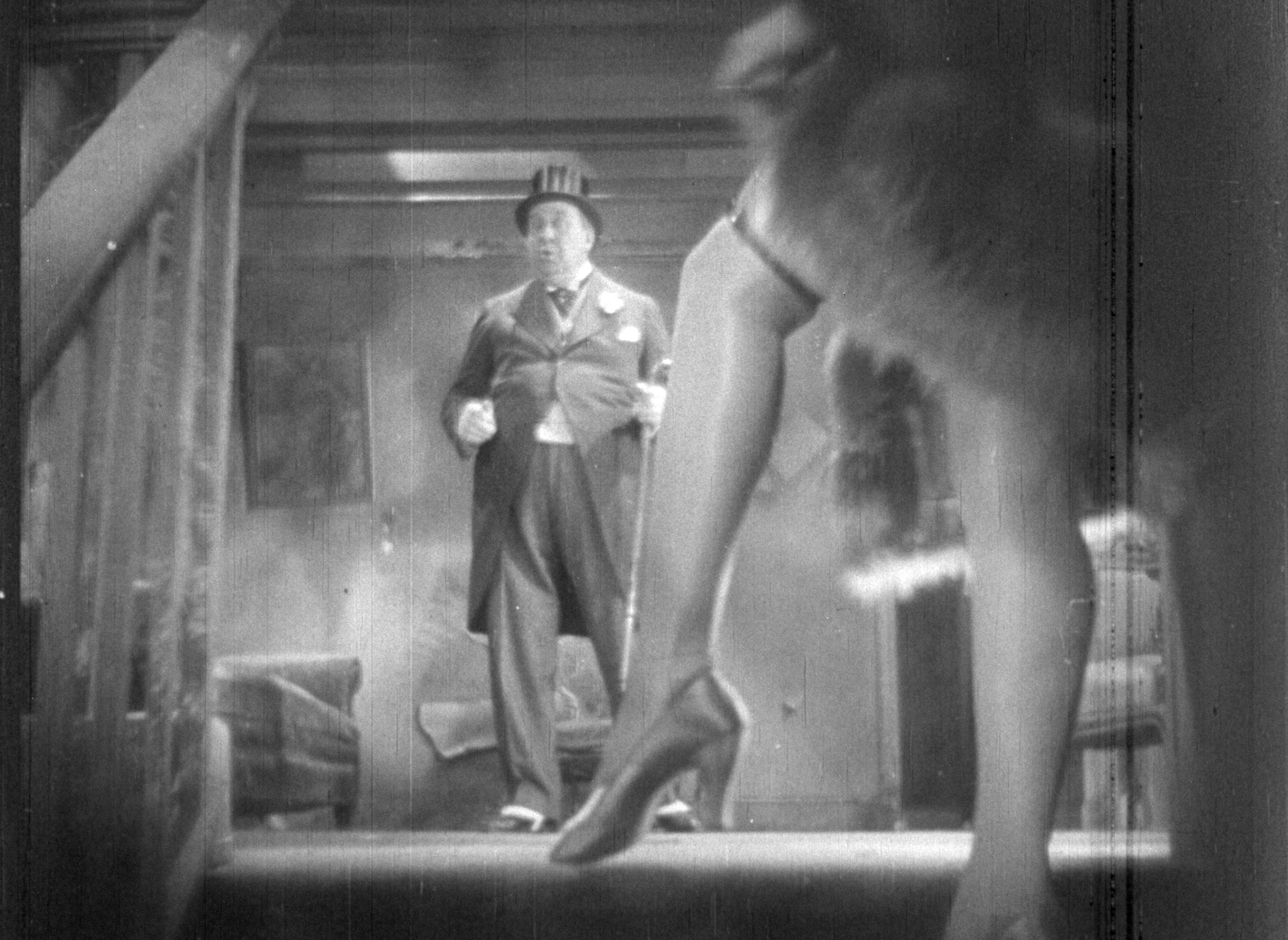
The Last Warning volleys between incipient fright flick, murder mystery whodunit, and low comedy (complete with a fart joke! In a silent!). None of these modes ever really takes hold, so its main appeal lies in admiring Leni’s skill with the camera, the placement of bodies in the scenes, and goofy touches, like intertitles that try to “scream” as text (or, memorably, the words of two brother financiers, which overlap on screen, implying their comic tendency to say the same thing at the same time). Leni even finds time for some pre-Code sexiness.

the-last-warning-5

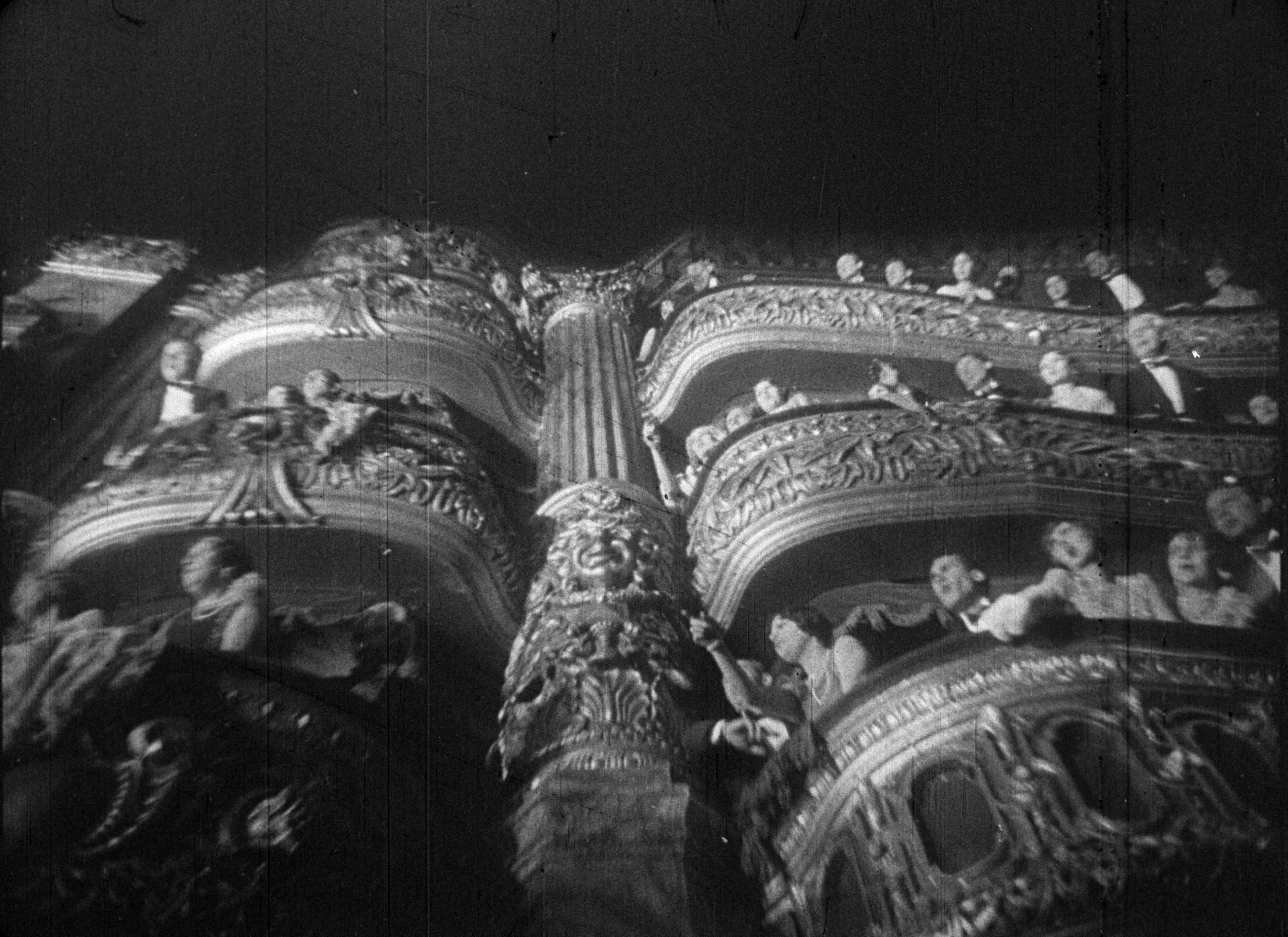
There are a few good laughs (the fart joke is not among them, I am sad to report), and the final chase scene through the theater – across balconies, up and down trellises, swinging the camera from a rope – is kinetic and exciting. The chase itself reveals one of the key advantages of the silents, which could concern themselves with movement without worrying about the integration of clumsy recording equipment.

None of this is exactly undone by the Scooby Doo ending, but it’s hard not to think The Last Warning would hold up better today if it believed in ghosts. Perhaps this is demanding too much from an earlier age: the admirably lunatic commitment of something like Robert Eggers’ 2015 The Witch is just not going to be found in a 1929 haunted house silent (fine: haunted stage). It was made with different assumptions and for a different audience. But there are enough hints of the horror to come to make you wish Leni had bucked convention a bit more.

He never had another chance. The Last Warning was Paul Leni’s last film, dying young of blood poisoning shortly after. Tragic as it is, perhaps someone like Eggers might think about restaging that story – there’s little doubt Leni would’ve enjoyed the idea. And maybe this time, instead of a prosaic villain who would’ve gotten away with it if it weren’t for those pesky kids, the narrative might land on something truly unsettling instead.

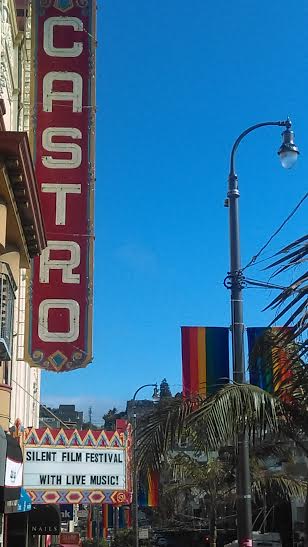
castro1

One final note: The Last Warning was screened at the SF Silent Film Festival, with live musical accompaniment by Donald Sosin on piano. Sosin’s playing improved the film immeasurably, and if you get a chance to see a film with him in attendance, do it! You won’t regret it.

June 7, 2016 0 comments
1 FacebookTwitterPinterestEmail
FilmReviews

Hobo Androgyny, Louise Brooks, and Beggars of Life

by rick June 4, 2016
written by rick

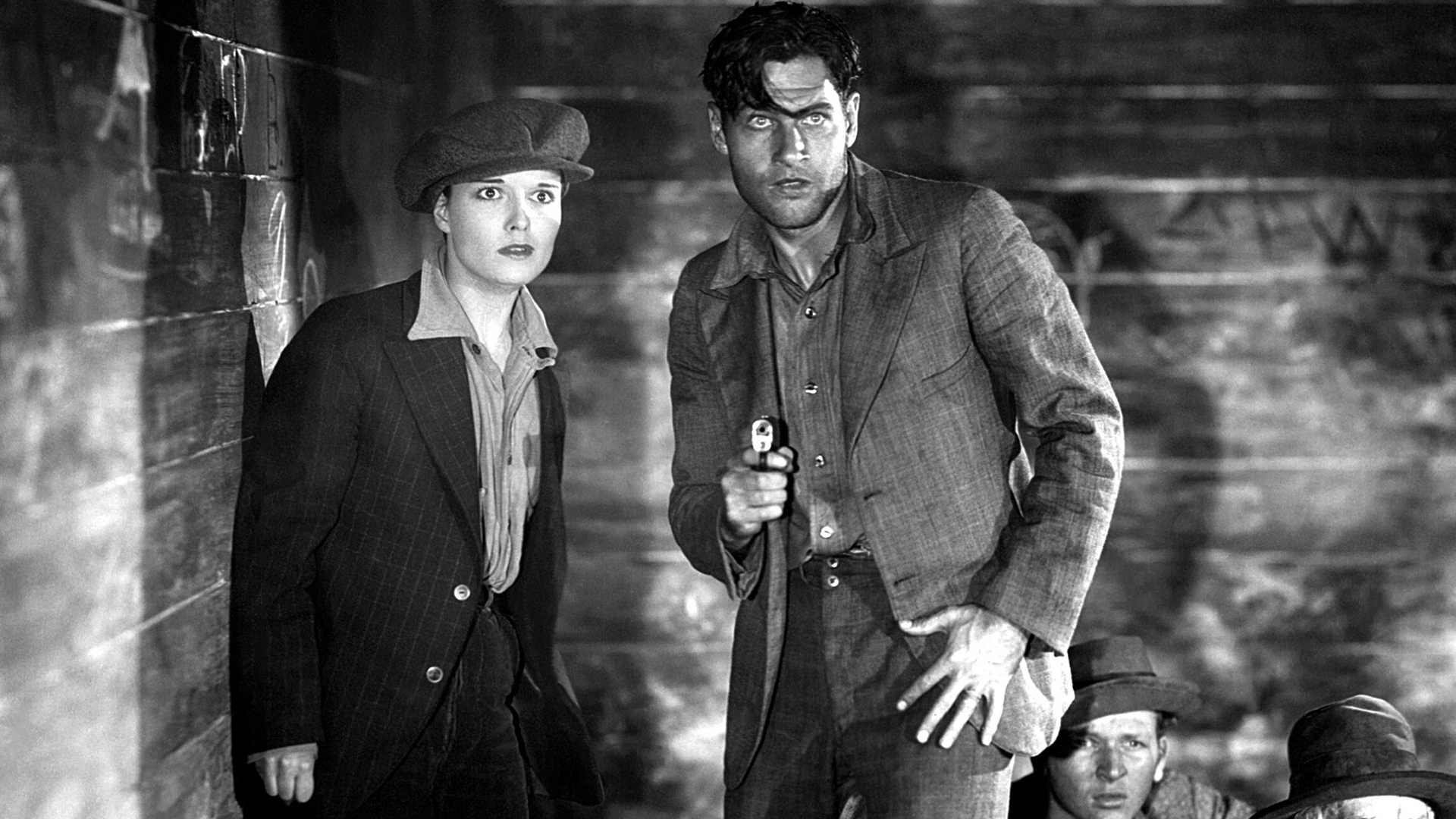
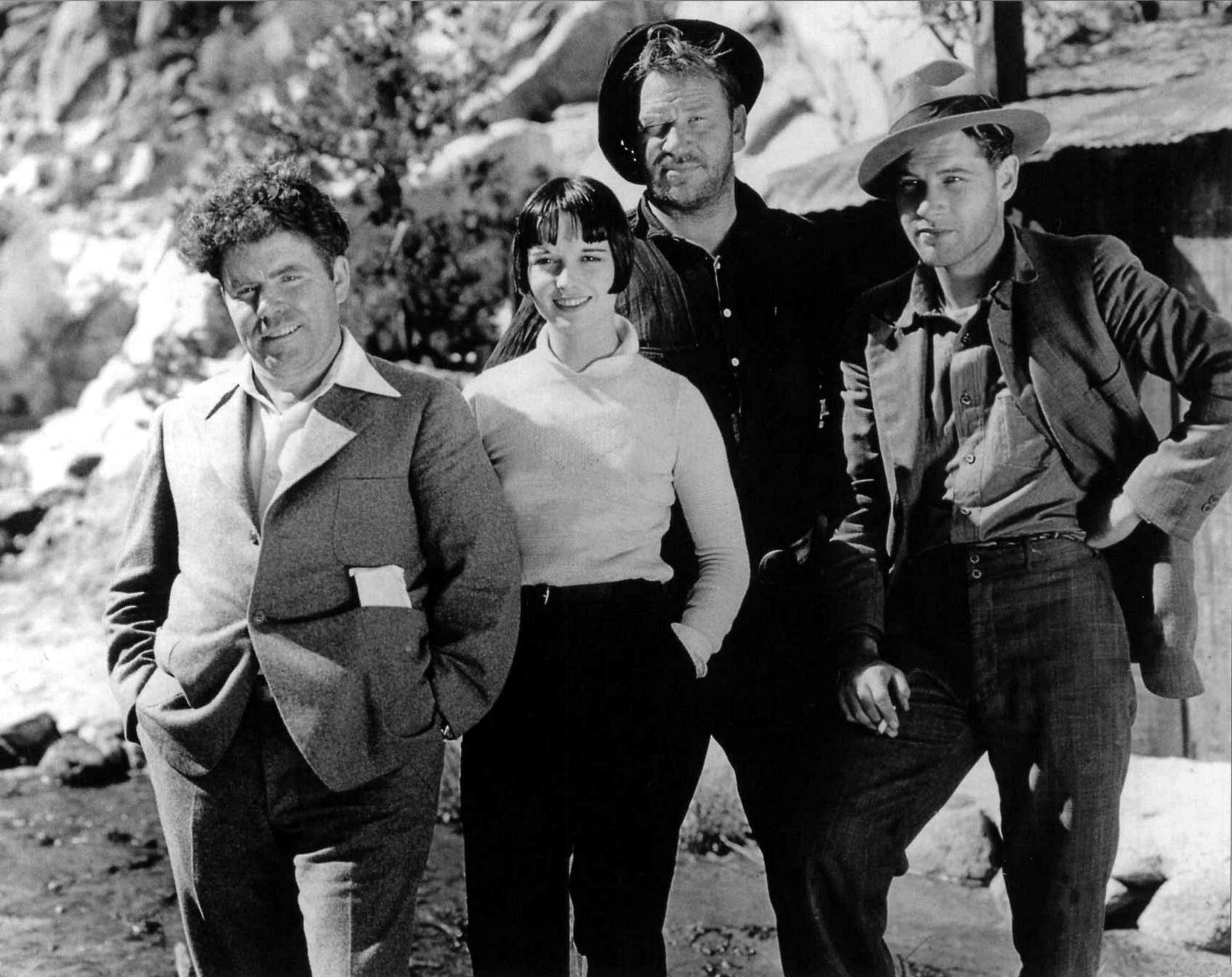
Starring the great Louise Brooks, in her final American film before high-tailing it abroad and becoming an icon in G.W. Pabst’s Pandora’s Box (1929), the gritty, tragi-comic hobo yarn Beggars of Life opened the 2016 San Francisco Silent Film Festival last Thursday.

It’s a reasonable selection. Combining light gags, physical comedy, dour realism, and exciting train sequences (courtesy of director William Wellman, a year after his Wings won the first Academy Award for what we now call Best Picture), Beggars of Life is typical of any number of 1928 films. But it also marks a moment of transition on several fronts.

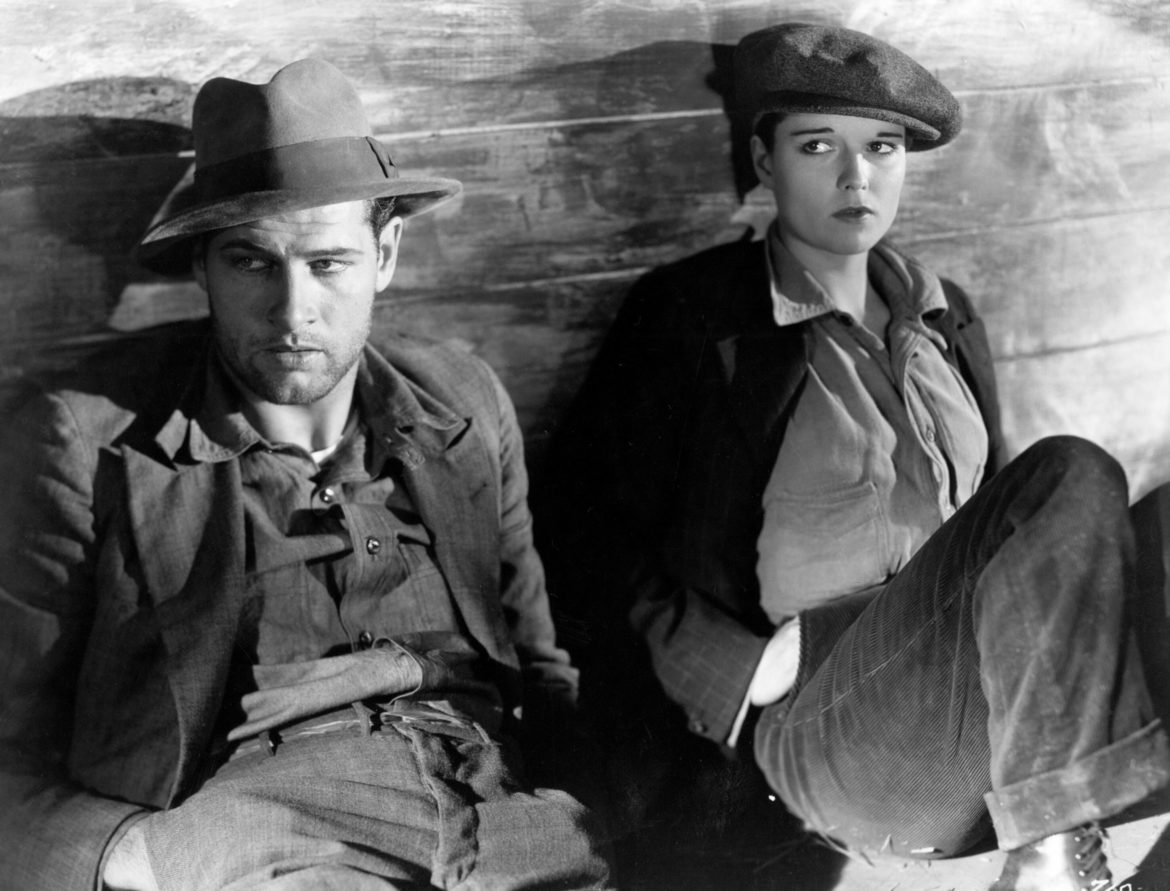
beggars of life1

Not only does it feature an androgynous Brooks in hobo clothes rather than her previous Ziegfeld Follies outfits, and a characteristic fascination with the train-hopping lifestyle that prefigures Depression-era films (as well as post-Depression depictions like Preston Sturges’ Sullivan’s Travels), but it also signals the twilight of the silent years.

louise brooks

In something of an ironic choice for a Silent Film fest, Beggars of Life was actually marketed as Paramount’s first sound picture, thanks to a brief song (“Hark The Bells”) apparently belted out by top-billed Wallace Beery (a la Al Jolson in The Jazz Singer). The sound didn’t survive the years, though, so Wellman’s picture is once again a true silent.

Beery may be top-billed, and turns in a performance Brooks called “a little masterpiece,” but he doesn’t even show up until nearly halfway through Beggars of Life. This is decidedly Brooks’ show. Credited only as The Girl in this adaptation of Jim Tully’s novel, her character is introduced having just shot and killed her lecherous father – she and wandering hobo Richard Arlen meet-cute over the corpse, a rather grisly touch by any standard.

Arlen takes her under his wing, promising to get her on a train headed east while he makes his way west and up to Canada, where a family relation has a homestead he hopes to work. (Here, as throughout the film, everyone’s ambitions and hopes lie forever Elsewhere.) Of course, Brooks and Arlen end up making their way together, she in men’s clothes seeking to avoid detection – by the cops, for murder, and by her fellow transients, who invariably mean her quite specific ill. The threat of sexual assault looms over everything – cross-dressing and androgyny is no mere affectation here, but a survival strategy.

beggars of life4

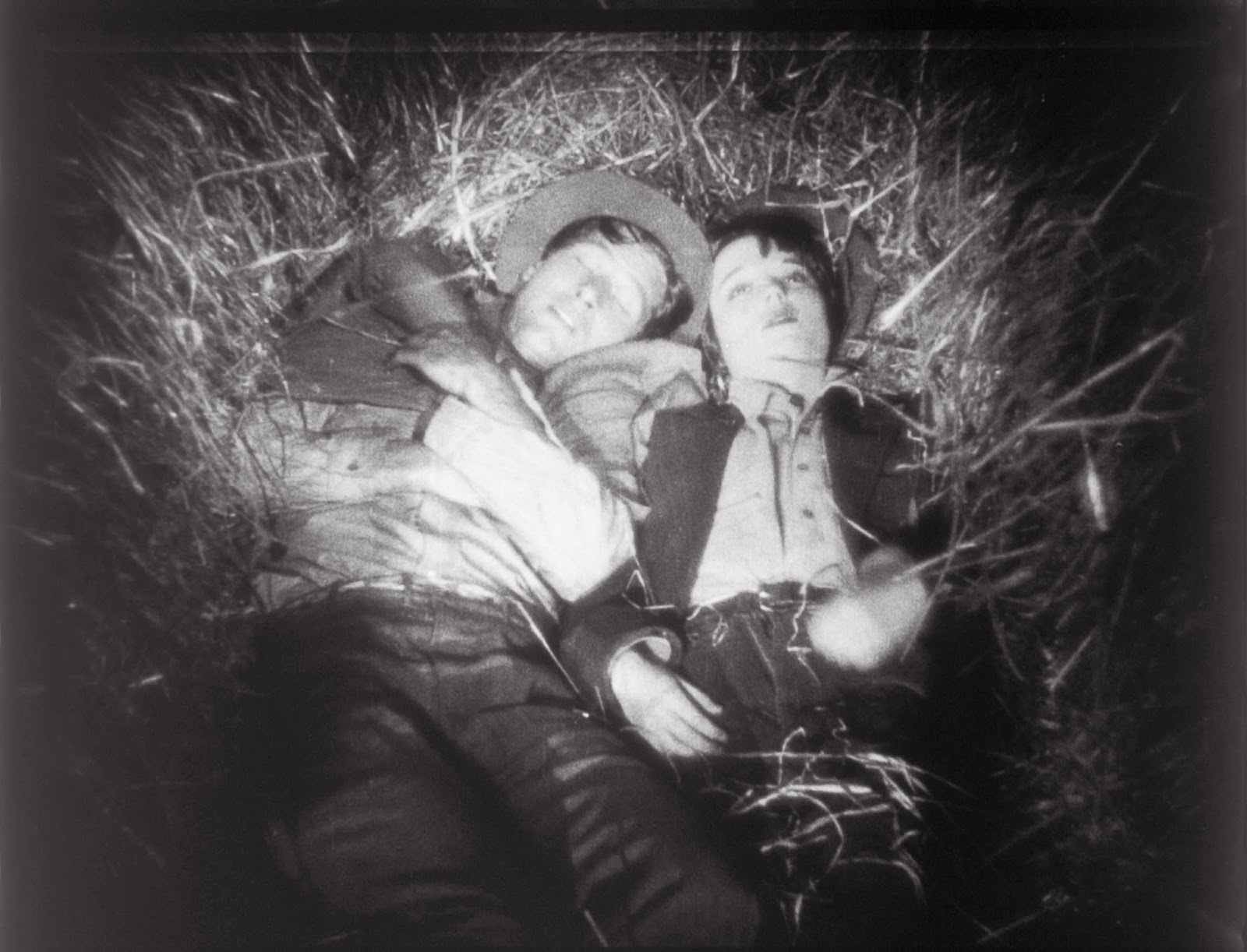
After some adventures on the road, including an adorable night spent bunking down inside a hay pile, Beery’s Oklahoma Red shows up at a hobo encampment referred to as “The Jungle,” bringing with him a keg of booze, singing the song we no longer get to hear. He’s immediately recognized, and feared. When The Girl is revealed as, in fact, a girl, things get dodgy pretty quick, and the noble Arlen more or less staves off a gang rape. The “dicks” show up looking for the murderess, and the entire encampment flees to board a passing train.

In a long sequence, most notable for a series of punny, wordplay-focused intertitles (a curious comic strategy for an inherently visual medium), Oklahoma Red presides over a kangaroo court to decide the fates of The Boy and The Girl. The outcome is pre-ordained, but chaos ensues anyway and our heroes make a break for it.

beggars of life2

Several exciting (and dangerous) train chases later, Wellman and Tully redeem Oklahoma Red, who (somewhat improbably for a guy who not long before was contemplating spearheading a gang rape) finds himself so impressed by the devotion of the young lovers that he helps them escape the clutches of the law, at great cost to himself.

A lone Black character, Big Mose (Edgar “Blue” Washington, described in Cari Beauchamp’s Film Fest essay as a “former prizefighter and Negro League baseball player”), plays a minor role – as usual for the period, he’s portrayed as a bit of simpleton, but, unusually, he’s also not a purely comic foil, conveying something of an inherent dignity not frequently granted Black actors and operating on more or less equal footing with his white co-stars. Things don’t end well for everyone, but our lovers are joined, on the road again, and Brooks is, at long last, adorned in feminine finery as the pair make their way to a new life in the north.

Beggars of Life was tepidly received in its day: The New York Times, while admiring Brooks’ performance, called it a “rather a dull and unimaginative piece of work, which is largely confined to scenes of tramps hopping freight trains;” Photoplay disagreed on the matter of dullness, but still managed only to deem it “good entertainment,” with “incidents from tramp life [that] are interesting because of their novelty.” Both reviews and others focused more on the effectiveness, or lack thereof, of the brief sound effects, signaling again the film’s position at a crossroads.

Viewing it today, the focus on androgyny and the frankness with which it treats the threat of rape are its most notable qualities. Neither are unique to Beggars of Life – in fact, the “novelty” Photoplay refers to is shared, as Mary Mallory points out in the Festival’s materials, with films like Miss Nobody (1926), Alias The Deacon (1927), Wellman’s own Wild Boys of the Road (1933), and Half A Sinner (1934), not to mention Sturges’ much later classic, all of which depict not just hobo life but the need for “sheboes” (an actual term popularized by a serialized novel by Tiffany Wells) to cloak their femininity in male attire to avoid attack on the road.

beggars of life5

This would be Brooks’ last foray into such material, however. Plagued by rumors and gossip, most of which she later confirmed in famously frank tell-all memoirs, she would leave the continent the following year for Pabst, Pandora’s Box, and celebrated status (including boasting one of the Hairstyles That Changed The World), while Beery would go on to win an Oscar for The Champ three years later and a long career playing what might be called “Wallace Beery types.” “Wild Bill” Wellman would continue cranking out a steady stream of hits – The Public Enemy, A Star Is Born, The Ox-Bow Incident – through the late ‘50s, while Richard Arlen was left to grouse about missing out on stardom he felt was rightfully his but continuing to work (mostly in television) for decades.

Still, in Beggars of Life, all four contributed to something that remains fascinating today – nuanced performances, comic touches, social critique, and train stunts that still thrill in the Eastman Museum’s restoration – all perched on the cusp of a new moment in cinema’s history.

June 4, 2016 0 comments
0 FacebookTwitterPinterestEmail
FilmReviews

Ménilmontant, Kirsanoff, & the avant-garde

by rick June 2, 2016
written by rick

[schema type=”movie” url=”http://www.imdb.com/title/tt0147039/” name=”Ménilmontant” description=”A couple is brutally murdered in the working-class district of Paris. Later on, the narrative follows the lives of their two daughters, both in love with a Parisian thug and leading them to separate ways.” director=”Dimitri Kirsanoff” producer=”Dimitri Kirsanoff” actor_1=”Nadia Sibirskaïa” ]Here’s what transpires in the astonishing first 56 seconds of Ménilmontant, Dimitri Kirsanoff’s 1926 avant-garde masterpiece.

menilmontant1

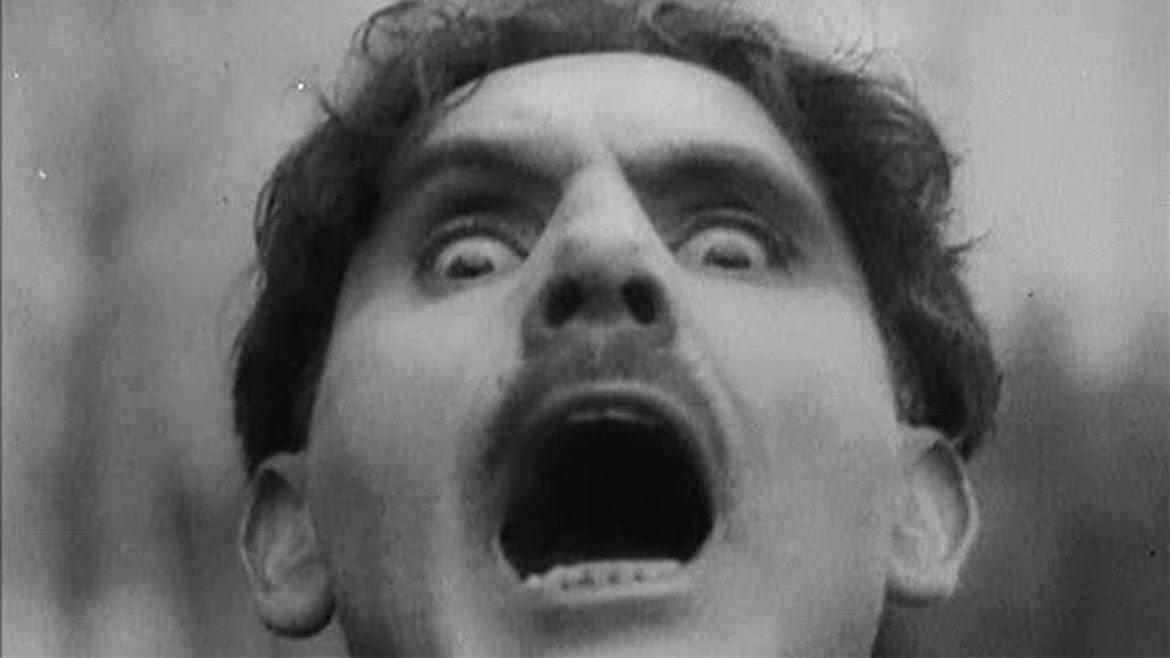
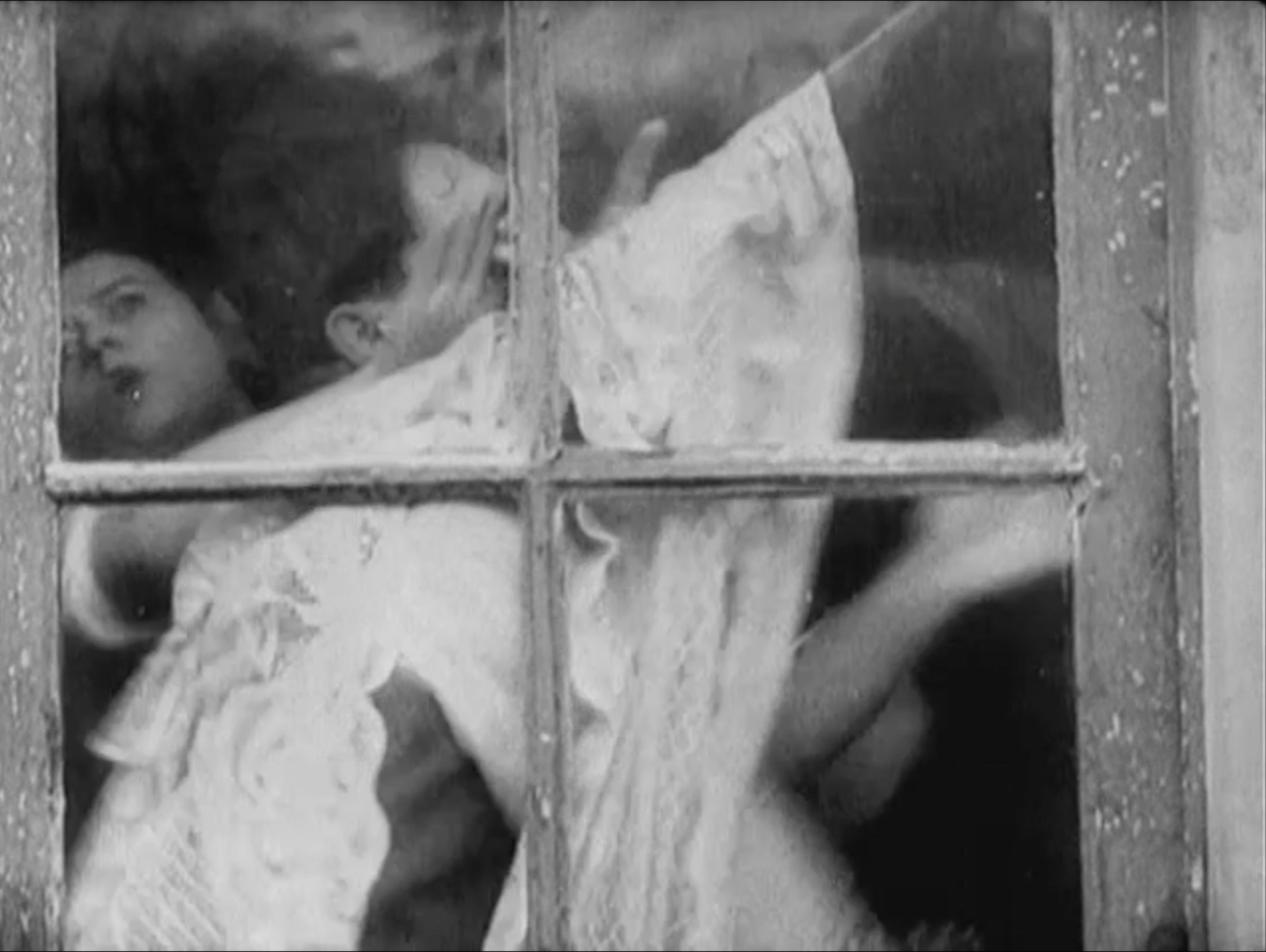
Delicate curtains flutter inside a home’s open window. Suddenly, a woman’s frightened face appears behind them, an assailant trailing. The doorknob turns frantically. The door finally opens and the woman emerges. The scene repeats and a similarly terrified man emerges. We cut to the crazed face of the man chasing them both. The man and woman are thrashed in turn, continuity falling by the wayside. An ominous axe leans against the house. Quick cuts to: the woman’s bloodied face; the man, head tilted back in open-mouthed horror; the axe raised aloft. Relatively longer shots: barren trees in the distance, the axe thrown into a puddle of mud and rainwater; the open door to the house and the mess left behind; a fire still burning in the hearth. Finally, a haunting cut to two young girls playing happily in the woods with a kitten.

It’s a remarkably violent, explosive, and highly stylized opening sequence, through which the Soviet-French director Kirsanoff conveys a surprising amount of information in less than a minute. Typical of his style, however, and characteristic of the rest of the film, it’s very much up to the audience to determine how these pieces of information fit in Ménilmontant.

An odd, elliptical, elegiac film – a classic melodrama starring Kirsanoff’s wife and muse Nadia Sibirskaia, bookended by acts of shocking violence – Ménilmontant remains largely overlooked (despite its apparent status as Pauline Kael’s favorite movie). A closer look reveals its status not just as a work of art, but as a fascinating window into conflicting and evolving elements of the period’s cinematic avant-garde.

Of course, “avant-garde” is a notoriously nebulous term. In this context, it joins together Kirsanoff, generally associated with French Impressionism, with artists as diverse as Man Ray, Hans Richter, Marcel Duchamp, Fernand Léger, and Jean Epstein (all of whom, among others, are included on Kino’s “Avant-Garde: Experimental Cinema of the 1920s and ‘30s”). This is counter-intuitive: Kirsanoff’s focus on narrative, however oblique, is worlds apart from Dadaist pure cinema, the Surrealists’ scorn for anything resembling the “bourgeois trappings” of story and character, or the Futurists’ single-minded fascination with technology and movement for its own sake. Poet Robert Desnos claimed the unifying strands were “[A]n exaggerated respect for Art, a mysticism of expression … standing out because of its production’s speed, its absence of any human emotion and the danger it represents to all the rest of the movie industry.” But only the first three qualifiers really characterize Ménilmontant.

Kirsanoff’s avant-garde bonafides mostly arise from general association and from operating outside of the governing systems, self-funding projects that allowed for freer experimentation. Ménilmontant draws liberally from multiple new sources – especially wedding Eisenstein’s Soviet theories of the montage and “conflict” to aspects of the French auteurs’ focus on subjective experience – but also reaches back to much older, standard melodrama.

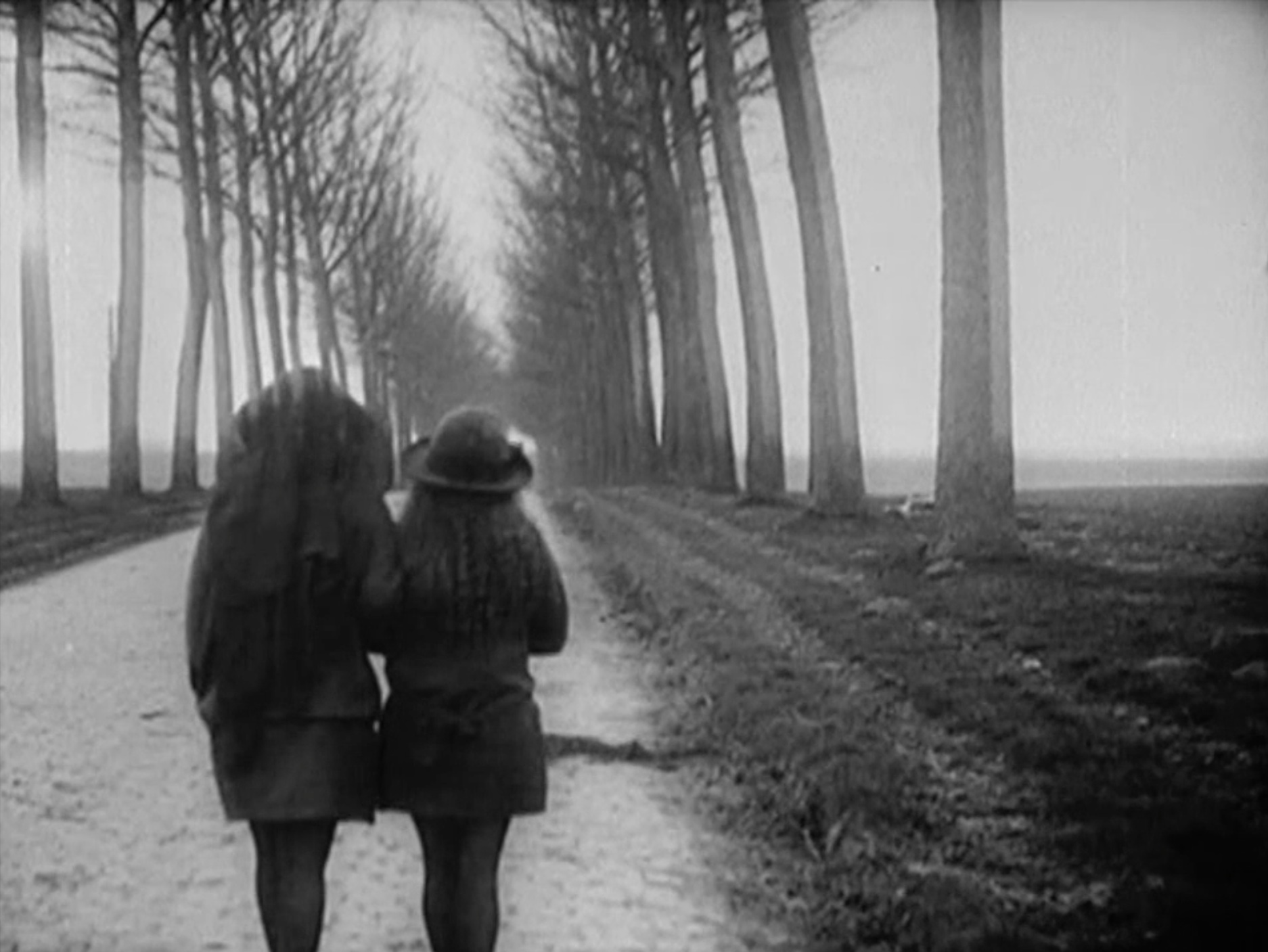
After Ménilmontant’s brazen opening, we enter into a narrative recognizable to anyone familiar with Pabst or von Sternberg. Without a single title card – and there are, impressively, none to be found at all throughout Ménilmontant, all information conveyed either through image or carefully incorporated words in the mise-en-scene, like “To My Father” and “To My Mother” on a tombstone – we gather that the murdered adults were parents to the two young girls. The crime itself is never explained, leaving a sense of unease that haunts the film, and is only resolved in its conclusion by a parallel, and similarly ambiguous, act of violence. The children are glimpsed walking down an empty, tree-lined street in a series of elegant dissolves, and an overgrown graveyard marks the passage of time.

screen-shot-2014-05-20-at-17-00-23

We next catch up with them in the working-class neighborhood of Paris that gives the film its title. Perhaps a decade has passed, and the two eke out a living making artificial flowers while sharing an apartment. As in most melodrama, a man comes between them: in this case, a womanizer who seduces Sibirskaia, the younger of the two. A sexually frank sequence finds her in his apartment, where the two flirt and touch fleetingly, before an Eisensteinian montage of cityscapes and traffic stand in for their actual sex. (Even such Futurist touches are deployed by Kirsanoff in the service of narrative.) Some critics have implied that Sibirskaia’s character is raped instead, but there’s little reason to think so from the text, despite that being a frequent enough trope: in fact, Kirsanoff’s camera adores her face and movements, all of which imply innocence and coyness (fidgeting with her leg, turning her back, stealing a quick kiss with a smile). The clanging montage might indicate an innocence lost, the country girl now fully citified, but there’s not much to suggest an attack on her lover’s part.

menilmontant3

In any case, she finds herself eventually abandoned and, to make matters worse, observes her ex-lover seducing her own sister, who we have previously glimpsed waiting in vain for her return. To make worse matters even more dire, we cut to Sibirskaia entering a maternity ward. We are now firmly in the realm of conventional melodrama, informed by Kirsanoff’s array of in-camera tricks, quick editing, and poetic eye.

The realist narrative – the seduced and abandoned single mother fending for herself in the ambivalent city – continues to butt up against Kirsanoff’s impressionist sensibilities. A long sequence cuts between Sibirskaia cradling her baby, her face full of despair, and the waters of the Seine. (Kirsanoff adores water: in one of several startling superimpositions, her face and the Seine share the same space on film, implying her thoughts of an uncanny merger between the two.) Is she contemplating suicide? Child-murder? Both? The subjective emphasis is clear, even if the exact details aren’t, and for an agonizing minute – and eternity by the standards of Ménilmontant – we hold our breath.

menilmontant4

She decides against it (whatever “it” was, precisely), and we find her on a public park bench. In a deeply humanist scene that Chaplin must’ve admired – and that Pauline Kael surely did, too – an old man quietly and without eye contact shares a piece of bread and salami with her. The simple act of kindness brings her to silent tears.

Ménilmontant closes with a reunion of the two estranged sisters, the older of whom now appears to work as a prostitute outside of a seedy motel. Glimpsing her nephew for the first time, the elder embraces the younger, suggesting that the bonds of sisterhood are stronger than the nefarious and patriarchal forces of the modern city. In case there’s any lingering doubt, the film’s final moments showcase another brutal sequence, as the young man is bludgeoned and beaten by two previously unseen attackers (a woman and a man, in an inversion of the film’s opening). As viewers, we could surmise that he is a pimp or a crook, in context, but the narrative is open-ended. Perhaps this is an attack as random as the parents’ murder, or perhaps he simply has callously used one too many women in Ménilmontant.

What’s most interesting, though, is the existence of a narrative at all. While Kirsanoff’s film shares much with the art films being made at the same time, and draws heavily on the dynamism of his homeland’s montage technique, Ménilmontant grounds the experimentation in something approaching melodramatic realism, at least by avant-garde standards. The film should be better known, if for no other reason than the contributions Kirsanoff makes to bridging the gap between early and later experiments in form.

As for Kael’s admiration, it’s not hard to imagine why. When she wrote, in “Trash, Art and the Movies”, that “for the greatest movie artists … there is a unity of technique and subject,” she may very well have had Ménilmontant in mind.

Of course, in the same essay, Kael wrote:

Simply to be enjoyable, movies don’t need a very high level of craftsmanship: wit, imagination, fresh subject matter, skillful performers, a good idea – either alone or in any combination – can more than compensate for lack of technical knowledge or a big budget.

Despite Kirsanoff’s own protestations (“knowing nothing” about film technique), the low-budget Ménilmontant is clearly not lacking in craftsmanship. But it’s in the areas of imagination, skill, performance, and the newness of its narrative and aesthetic configurations that it most stands out.

June 2, 2016 0 comments
0 FacebookTwitterPinterestEmail
CommentaryFilmReviews

The Futures of Documentary Past

by rick June 1, 2016
written by rick

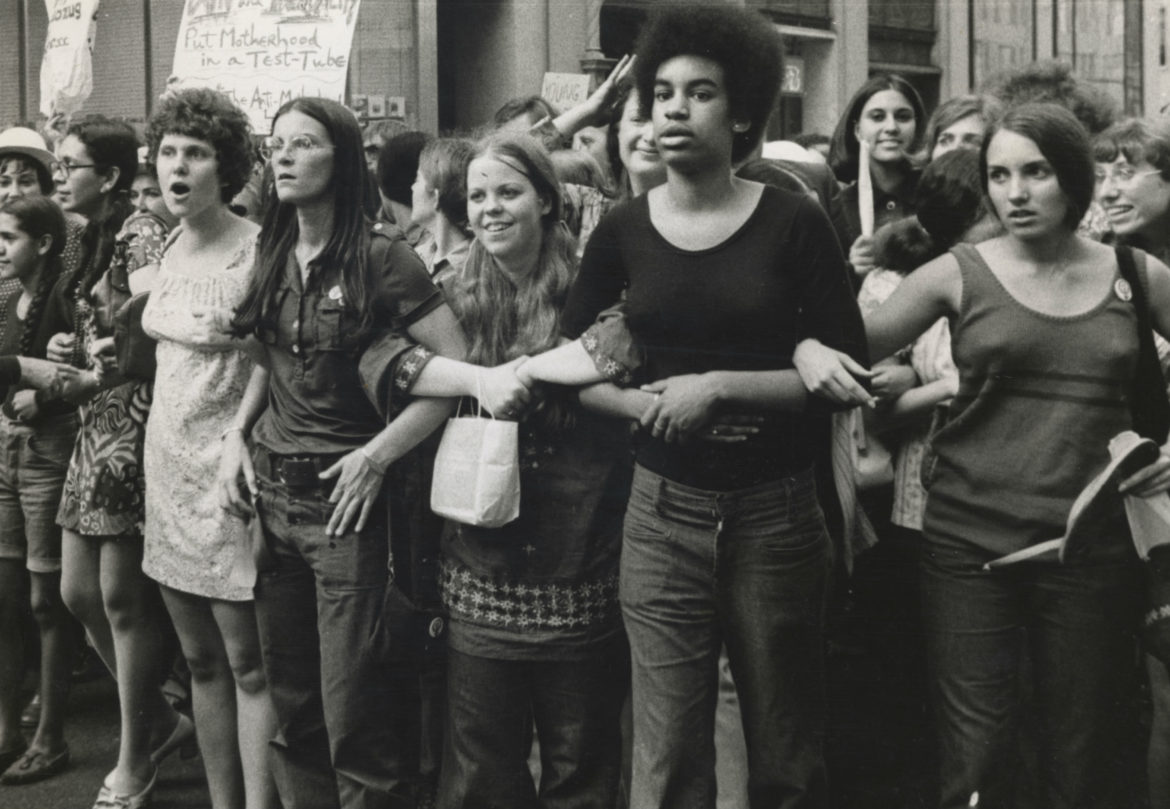
Watching She’s Beautiful When She’s Angry, director Mary Dore’s perfectly agreeable and accomplished 2014 documentary about the birth of the modern women’s movement in the U.S., it’s hard not to feel there’s something staid about the proceedings.

She's Beautiful When She's Angry documentaryThis is less the fault of the film itself than a reflection of how exciting the landscape of documentary film has become in recent years. There has been such a steady stream of formally daring and aesthetically interesting entries in the genre that good, old-fashioned expository docs can’t help but seem prosaic, with their array of talking heads in mid-shot, narrative-driving needle drops, and carefully curated archival footage.

That’s not to say She’s Beautiful When She’s Angry is unnecessary or without important things to say – if anything, its discussions of concerted political attacks on women’s health, heroic examples of community self-help, the dangers of resistance movements replicating the power dynamics they assail, and the importance of intersectionality are more timely than ever. But the film’s aesthetic throws into sharp relief the innovations that have been taking place in the form.

Of course, multiple modes and narrative traditions of documentary film have co-existed for most of film history. From the early actualities and Flaherty’s Nanook of the North through Dziga Vertov’s montages, from avant-garde juxtapositions and more poetic treatments to journalistic approaches, pure propaganda, cinéma vérité and direct cinema – just to scratch the surface – a diversity of forms is nothing new.

But the last few years have seen a remarkable resurgence of experimentation, or at least a renewed mainstream attention to it. For a while, it seemed that things like Michael Moore’s performative interrogations and Errol Morris’ self-reflexive films  (along with the more cult favorite status of someone like Ross McElwee) represented the only really viable alternative to what most of us probably think of as “the standard documentary.” Even a madman like Werner Herzog’s forays into documentaries, while consistently fascinating, have hewed pretty close to convention (though he’s been quick to deploy newer technical approaches and all are imbued with his characteristic weirdness).

act of killing documentaryMore recently, however, Joshua Oppenheimer’s remarkable masterpiece The Act of Killing, and more conventional but still bracingly participatory The Look of Silence, represented a sudden, dramatic shift. (In fairness, Herzog and Morris were both involved as producers of Oppenheimer’s projects. But as far as institutional appeal, it’s worth noting that the first lost out at the Oscars to the crowd-pleasing 20 Feet From Stardom and the second to the heart-breaking Amy, both entirely worthy but more conventional choices.) Sarah Polley’s Stories We Tell, which saw the doubt inherent in the approach of someone like Morris and raised it substantially, represents another offshoot into new areas. Elsewhere, on a wall somewhere, Frederick Wiseman is still out there, doing his Frederick Wiseman thing.

Romeo Is Bleeding documentaryAs it happens, my favorite films from the past two years at the San Francisco Film Festival were documentaries – Jason Zeldes’ Romeo Is Bleeding last year and Peter Middleton and James Spinney’s Notes On Blindness this time around. And, interestingly, both Zeldes and Middleton/Spinney have cited Oppenheimer and Polley as influences, in spirit if not necessarily in specific form. Romeo Is Bleeding blends numerous narrative and aesthetic strategies – in Zeldes’ words, “it’s vérité meets archival meets theater, dance, and poetry” – and Notes On Blindness seeks nothing less than the creation of an entirely new mode of filmic storytelling, one that grapples with the paradox of a cinema of blindness. Both are tremendously successful in different, unique ways.

Notes on Blindness documentaryAll of which makes me wonder if the traditional, expository form She’s Beautiful When She’s Angry takes is likely to become more the exception than the rule one day. There will always be a demand for well-told histories, and Dore’s film is certainly that: the interviews with 60s and 70s luminaries like Rita Mae Brown and Roxanne Dunbar-Ortiz are full of wisdom, the archival footage (some of it provided by local SF heroes Oddball Films) still thrills, and, with the exception of some painfully unnecessary staged readings (ironically, the film’s only real attempt at mixing things up aesthetically), all of the pieces fit. The film also deserves bonus points for its frank airing of internal grievances, its emphasis on its subjects’ reappraisals of tactics in hindsight, and how far it goes out of its way to complicate the overwhelming whiteness of the movement’s founders, giving plenty of space to the Black and Brown feminists who forced their way into a discussion that didn’t seem to realize it was shutting them out.


Or maybe this will remain the dominant approach. It may be that audiences will always prefer it to other, more challenging or jarring ones, and so, therefore, will those who bankroll documentary film. There’s something reassuring about its familiarity, as archival footage of a young person morphs into a contemporary interview, and name cards comfortingly locate us. We can’t get lost or lose our footing, even for a moment. We are in the capable hands of creative technicians with worthy stories to tell, in ways we recognize without hesitation.

Which is fine. None of this is to say that the archival approach is without merit, or that, somehow, archives themselves are of any diminished value. (Quite the opposite.) But the hopes for new insight in the documentary films to come lie more with the modes being explored by the Oppenheimers and Polleys – and the Zeldes’ , Middletons, and Spinneys – than they do in the discreet forms of the past we’ve come to know so well, which ably inform but fail to startle.

June 1, 2016 0 comments
0 FacebookTwitterPinterestEmail
CommentaryFilmGreat Movies: The Counter Programming

Fireworks: Look Back On Kenneth Anger

by rick May 27, 2016
written by rick

[schema type=”movie” url=”http://www.imdb.com/title/tt0039383/” name=”Fireworks” description=”A surrealist dream of a dream involving homoerotic fantasy, sailors, and masochism.” director=”Kenneth Anger” producer=”Kenneth Anger” actor_1=”Kenneth Anger” ]Like his hero Jean Cocteau, Kenneth Anger is a mercurial and scandalous figure in 20th century art. An Aleister Crowley-influenced occultist, associate of counter-culture figures ranging from Mick Jagger to Charles Manson acolyte and convicted murderer Bobby Beausoleil, and author of the notorious Hollywood Babylon, a profoundly dubious book of gossip which The New York Times famously proclaimed to be “without one single redeeming merit,” Anger’s notoriety often threatens to overshadow his artistic output as an avant-garde filmmaker. But Fireworks – his first film, made before he turned 20, and a seminal (pun intended) work of experimental gay cinema – stands as testimony to a startlingly unique vision.

As legend has it, Anger (born Kenneth Anglemyer) filmed Fireworks in his parents’ Hollywood home while they were away for the weekend. Like Cocteau’s Blood of a Poet and Maya Deren’s Meshes of the Afternoon, both earlier entries in this series, Anger’s short takes the form of a “trance-film,” a series of images that don’t merely blur the division between the fictive and the real but destabilize the notions themselves. (Anger himself called Fireworks “a dream of a dream.”)

Should we summarize the “plot” of a dream?

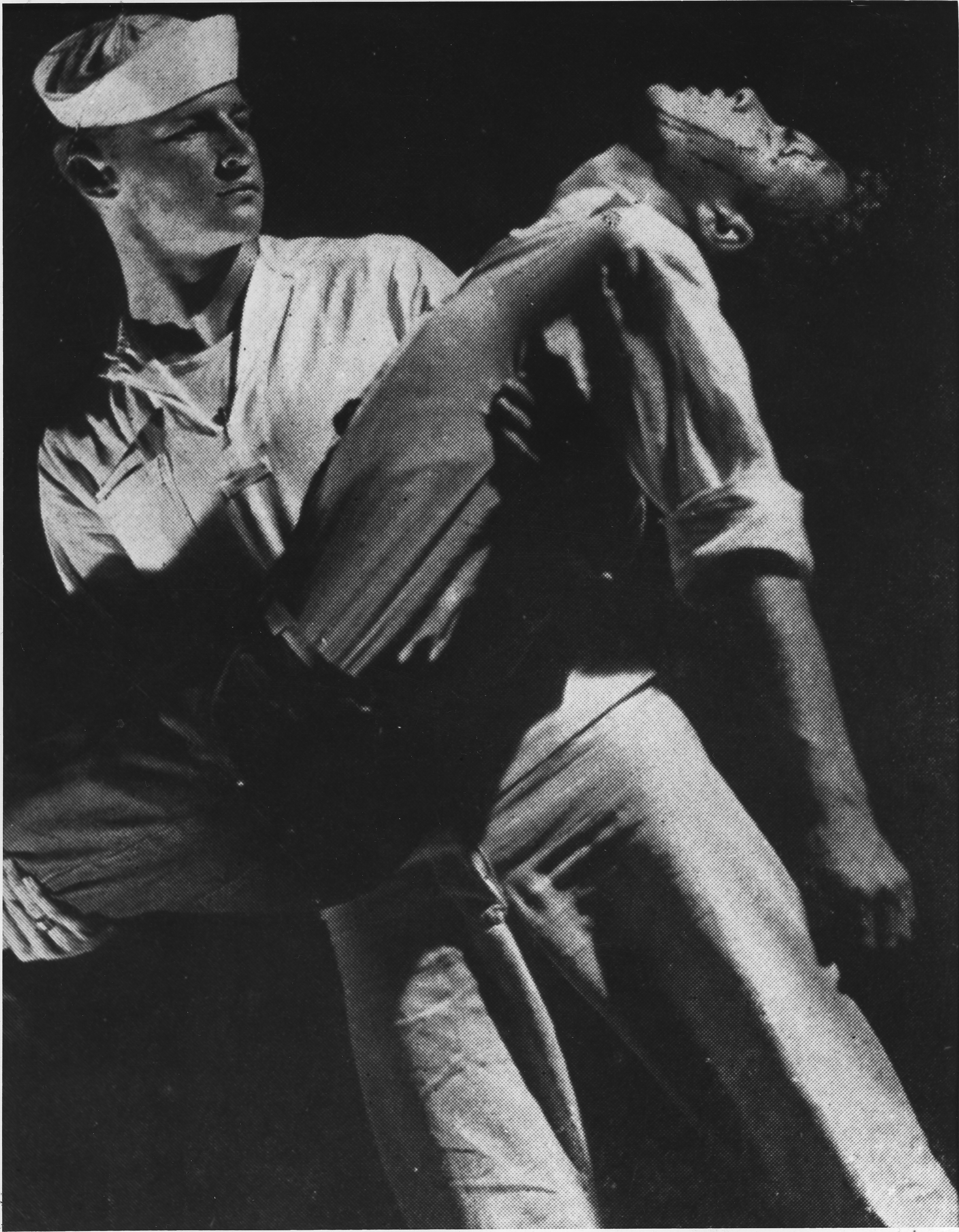
Fireworks opens on a skewed vision of the Pieta, with a sailor clutching a prone man in his arms, before seguing onto a sleeping figure (Anger himself), seeming to awaken, seemingly with an erection. He removes the bedsheet to reveal what seems to be a carved African idol of some sort where the phallus would seem to be. He gets dressed, languorously, the camera lingering on his torso and, briefly, his crotch.

fireworks2

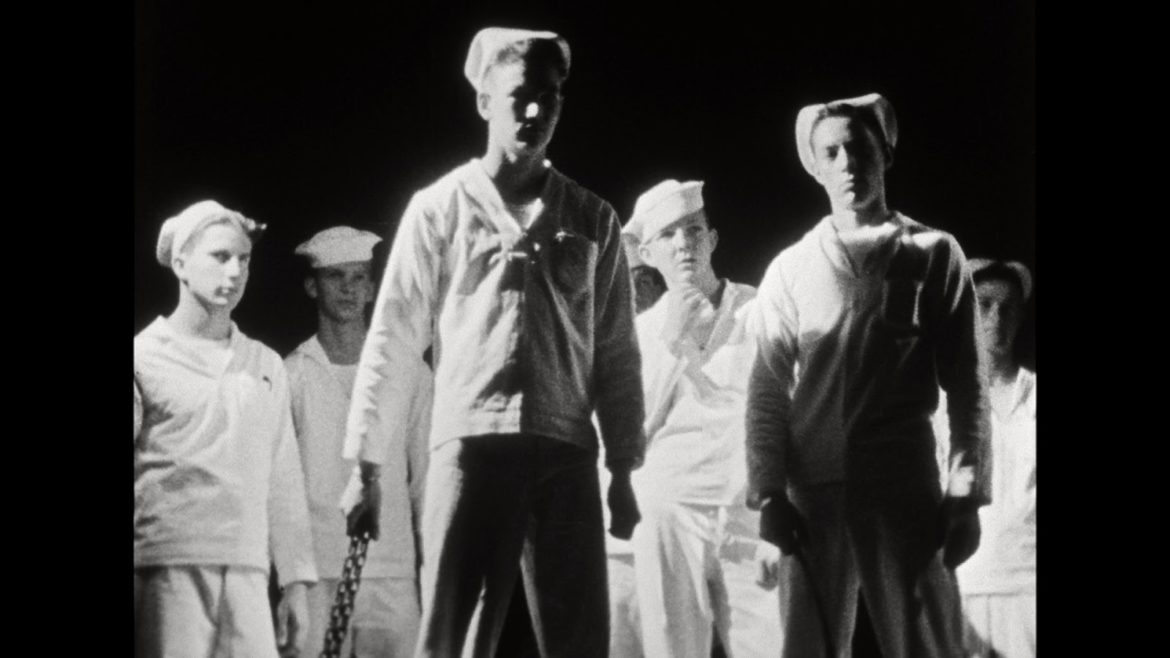
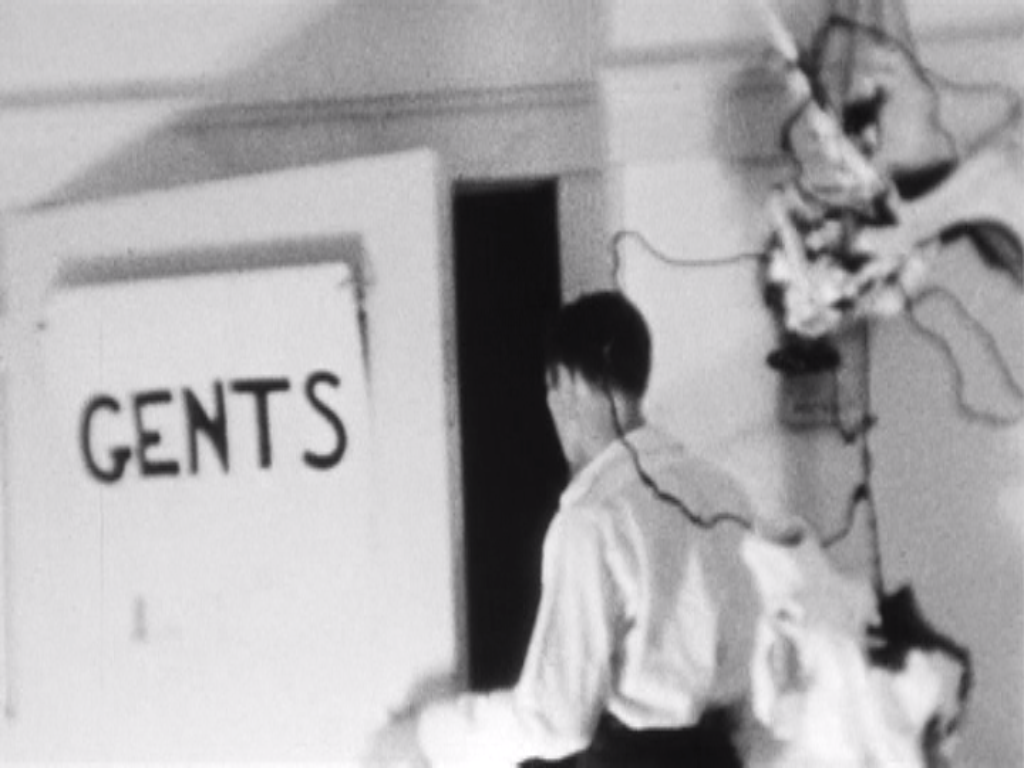
A door on the other side of the room reads “GENTS”, with a wire sculpture dangling in front of it that unmistakably recalls Cocteau, and he enters. On the other side, he encounters a sailor, bare-chested and flexing. We cut back to the original room, where the sailor lights our protagonist’s cigarette with a flaming pile of sticks. (The first, but not the last, bit of linguistic camp Anger has up his sleeve.) Still smoking, Anger re-enters the GENTS room, where he is brutally – and, by all evidence, willingly – assaulted by what has now become a group of sailors, all fists and chains and metal rods.

fireworks3

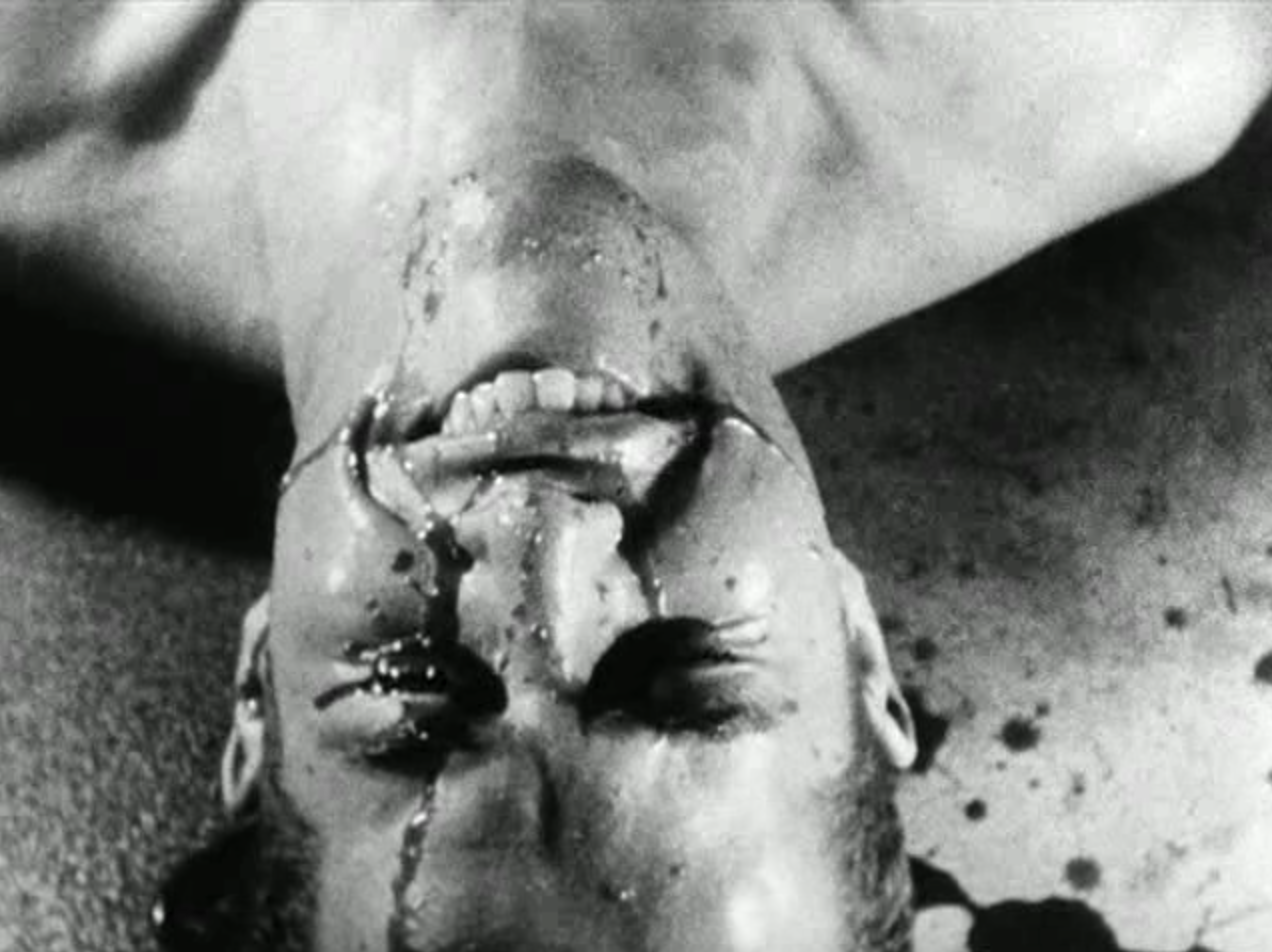
The camera flashes over his face again and again as fingers plunge into his nostrils, releasing a torrent of blood and fluid. A bottle of milk is smashed over him, and glass from the bottle is used to eviscerate his chest, revealing a mechanical heart. The milk itself than pours over his body, viscous and white, washing away the blood. He is again physically intact after the violations.

fireworks5

He once again enters the “GENTS” room, which now leads, as one would’ve initially expected, to a row of urinals, before which we briefly glimpse our protagonist, prone, now wearing the sailor’s cap.

fireworks4

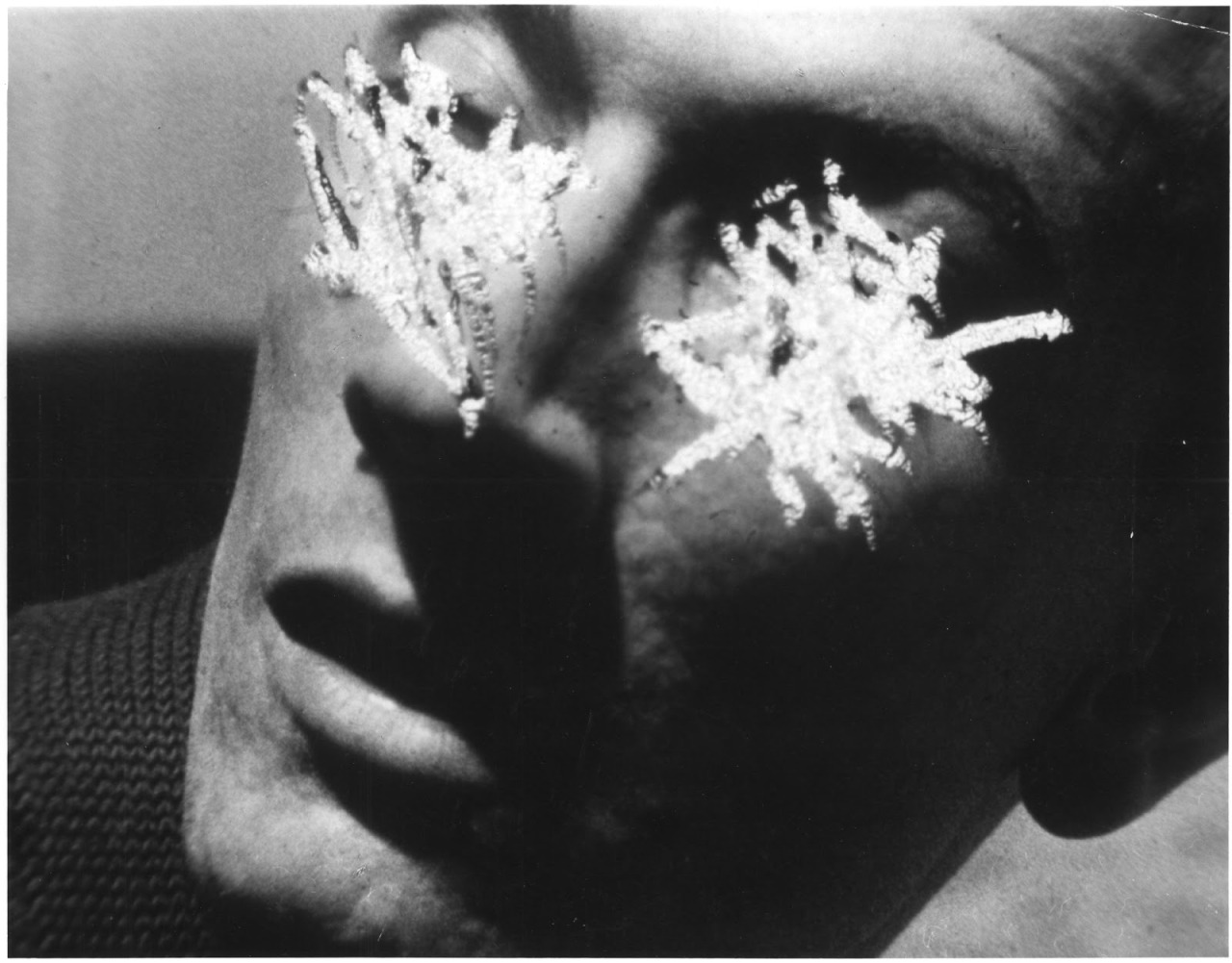
We jump-cut back to the bedroom, where the original bare-chested sailor approaches. The sailor opens his pants to reveal an explosion of the titular fireworks emanating from his crotch, and we close on a jumpy image of the two in bed, with physical scratches to the film creating a halo of light around the dream-sailor’s head and eyes, and what seems to be a Christmas tree on fire.

fireworks6

Much has been written about “what it all means” – from analysis as the pre-Stonewall fantasies of queer youth to deep Lacanian readings about phallic displacement and “masochism as an act of subversion” – and I certainly won’t pretend to know. The overriding sense is one of loose connection – of desire, violence, submission, transgression, explosion as processed metaphorically and viscerally in turn. As in Blood of a Poet, the body is centralized and made profoundly unstable and vulnerable, and as in Meshes of the Afternoon, there is never certain, solid ground on which to stand, as allusions multiply and contradict.

Iconic figures of masculinity take on different, fraught resonances (and may come replete with low jokes: seaman, semen). Even milk, that “wholesome” staple of the All-American diet, is deployed with tongue firmly in cheek. As a teenager, Anger exploded in Fireworks as a fully-formed provocateur, even if it’s never quite clear what he’s “saying.” If we’re to take him at his word, it’s this: “This flick is all I have to say about being 17, the United States Navy, American Christmas, and the Fourth of July.”

That’s probably true, as far as it goes. But the fact that it’s up for debate for 70 years later, and still manages to scandalize probably means he did his job.

Part of an ongoing effort to watch a set of films from non-White, non-U.S., non-male, and/or non-straight filmmakers and depart a little from the Western canon. The intro and full list can be found here.

May 27, 2016 0 comments
1 FacebookTwitterPinterestEmail
FilmReviews

The Existential Deadpan of The Lobster

by rick May 23, 2016
written by rick

The Lobster, Greek writer/director Yorgos Lanthimos’ deadpan dystopia and English-language debut, plays its fairy-tale absurdity completely straight, and its weird power accumulates from there.

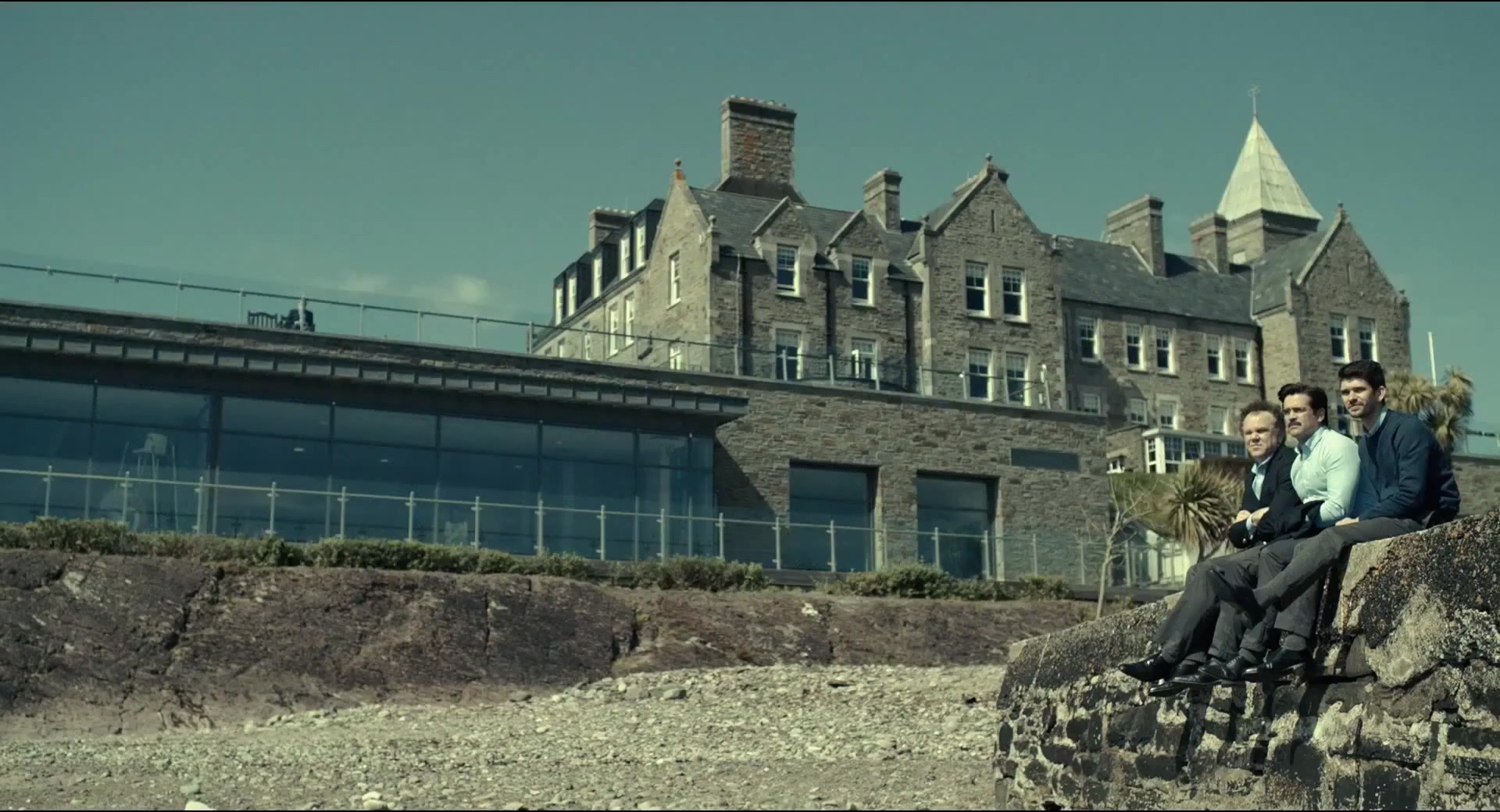
A plot summary reads as farce, and there are certainly farcical elements. In a world that is recognizably ours and yet exhibits all the trappings of a near-future period piece, or maybe a Wes Anderson whimsy turned poisonous, coupledom is the norm: singles are sequestered into a castle-like hotel and given 45 days to find their mate. If at the end of their stay they remain single, they will be turned into an animal of their choosing – effectively relinquishing their humanity for the crime of singlehood. Renegade singles have fled to the woods and set up a mirror society in which coupledom is banished instead – flirting, much less pairing off, is a transgression leading to gruesome punishment. The singles of the castle can buy a few extra days by hunting down the escapees.

lobster6

It only gets more ridiculous from there. The basis for coupling can be the most mundane aspects possible – near-sightedness, being prone to nosebleeds, heartlessness, and any number of bizarro-world, OkCupid-ready match attributes are enough to form a union and allow the lucky couple to move to the City, a gleaming land of shopping malls and express trains where the authorities check papers to ensure that no single people are lurking around threatening the social order of binary monogamy. Unsurprisingly, this leads some hotel denizens to fake conditions in the hopes of securing deliverance from the beastliness of spinsterism.

A nearly unrecognizably paunchy and sunken Colin Farrell, playing well against type (and simply playing well), is our protagonist David. (A review of the IMDB credits reveals he’s one of the few named individuals: everyone else comes saddled, appropriately enough for this world, with monikers like Nosebleed Woman, Limping Man, and, my favorite, Biscuit Woman.) Having recently been divorced by his wife, David gives the film its title: his animal of choice, should he fail to mate, is the titular lobster, which he notes lives for 100 years, remains fertile all its life, and, after all, he’s “always loved the sea.” (The hotel manager, a gloriously matter-of-fact Olivia Colman, commends him: “Most people choose dogs. This is why there are so many dogs everywhere.”)

Lobster4

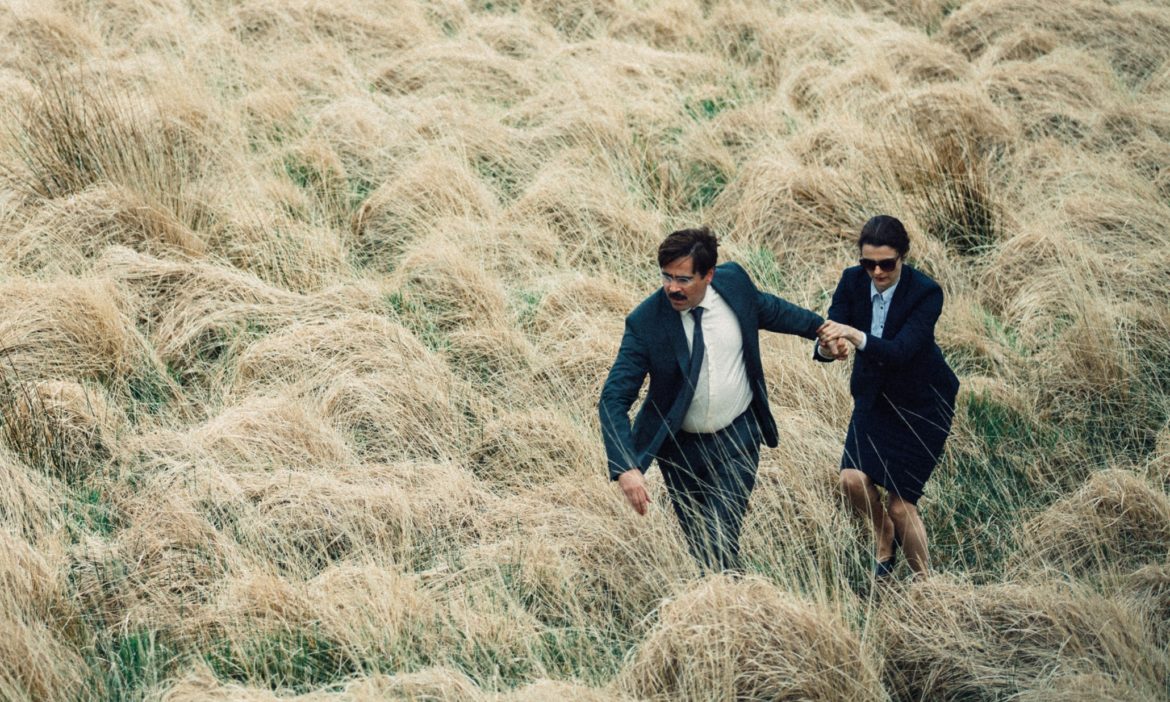
Lanthimos details daily life in the hotel in exacting detail. There are painfully awkward dances, prom-style celebrations/coronations when matches are made, painful punishments exacted when rules, like the one against masturbation, are transgressed. (Poor John C. Reilly, perfectly cast, discovers this.) As David tries and fails to engineer a match with Heartless Woman (Angeliki Papoulia), he eventually finds himself with the renegades, and a second and third act follow, as we follow our anti-heroes in their cultish outings among the desolate trees and brooks outside the Hotel’s walls.

Lanthimos has a great deal of fun with the contrast between rigidities. If the tyranny of the couple rules inside, the revolution is no less exacting in its rejection of anything approaching individual union. In a wonderful touch, the renegades dance too, but always alone, to antiquated Discmen on headphones. (Léa Seydoux’s Loner Leader, in humorous contrast to her Bond Girl turn, blithely explains, “This is why we only listen to electronic music.”) Rachel Weisz, a fellow renegade and as near-sighted as David himself, provides occasional narration – the similarity of their impediments indicates trouble ahead for everyone.

There are moments of brutality and moments of tenderness, but The Lobster functions primarily as a satire – of modern notions of connections in the internet age, where a single attribute is considered enough to form a bond; of cultural expectations which view the unmarried or uncoupled with suspicion; of group dynamics formed on what amount to totalitarian systems of human relations, and the ways in which their rejection and countering end up replicating their worst aspects. It’s a heady mix for a film in which the protagonist’s brother is named Bob The Dog.

If this sounds like a drag, it really shouldn’t. (Except for the parts where it really, really should.) A running gag involves the random former humans/current animals just traipsing through the back of the frame – a crucial conversation occurs as a camel walks by, unremarked upon. Lanthimos never once blinks, and neither do his leads. There is no backing away from the central conceit, which adds an uncanny, odd, and occasionally heartbreaking mood to what could have either been a laugh-out-loud comedy or a horror story. It’s commitment to its world of unremitting loneliness and alienation recalls a film like Spike Jonze’s Her (indeed, Farrell and Her’s Joaquin Phoenix share more than a few superficial aspects of demeanor), but Lanthimos’ vision is decidedly darker.

lobster5

But The Lobster is neither purely comic or horrific. It’s not purely anything. It’s something else entirely – a deadpan and comic examination of how we live, the ways in which we are judged and deemed worthy, and a skeptical, anxious, and intermittently horrified consideration of the cruelties we casually inflict on each other in the search for connection.

May 23, 2016 0 comments
2 FacebookTwitterPinterestEmail
Newer Posts
Older Posts

About

About

Towards a provisional theory of the cinema, or, failing that, just some shit about movies

Authors
Rick Kelley
Lark Lundberg

Keep in touch

Facebook Twitter

Categories

  • Conversation
  • Film
  • Film By Film
  • Great Movie Project
  • Great Movies: The Counter Programming
  • Guest
  • News
  • Other
    • Commentary
    • Film
    • Interview
    • Reviews
    • Song for a Sunday
  • Streaming Selections
  • TV
  • Uncategorized
  • Vegan Horror

Archives

  • April 2019
  • March 2019
  • January 2019
  • December 2018
  • November 2018
  • October 2018
  • September 2018
  • August 2018
  • July 2018
  • June 2018
  • May 2018
  • April 2018
  • March 2018
  • February 2018
  • January 2018
  • December 2017
  • November 2017
  • October 2017
  • September 2017
  • August 2017
  • July 2017
  • June 2017
  • May 2017
  • April 2017
  • March 2017
  • February 2017
  • January 2017
  • December 2016
  • November 2016
  • October 2016
  • September 2016
  • August 2016
  • July 2016
  • June 2016
  • May 2016
  • April 2016
  • March 2016
  • February 2016
  • January 2016
  • December 2015
  • October 2015
  • September 2015
  • August 2015
  • July 2015
  • June 2015
  • May 2015
  • April 2015
  • March 2015
  • February 2015
  • January 2015
  • December 2014
  • November 2014
  • October 2014
  • August 2009
  • September 2008

Recent Posts

  • China Girls, Death Proof, and the Hidden Face
  • Old News: Old Noise Edition
  • Old News: April 1, 2019
  • Nicolas Winding Refn, Marginalia, and the Deaths of Cinema
  • And now, let us praise Kanopy

Recent Comments

  • Franklin Kat on Michael Shannon shines again in Frank & Lola
  • Sean Tempesta on Cinema and dream-logic in Meshes of the Afternoon
  • ludditerobot on The Left-Wing Slapstick and Iconic Songs of 1937’s Street Angel
  • Franklin Kat on The Left-Wing Slapstick and Iconic Songs of 1937’s Street Angel
  • Arijit Mukherjee on Great Movies Project: The Counter-Programming
  • Facebook
  • Twitter

@2021 - All Right Reserved. Designed and Developed by PenciDesign


Back To Top
Luddite Robot
  • Reviews
  • Commentary
  • Great Movie Project
    • Great Movie Project
      Bride of Frankenstein is a movie for and…

      January 25, 2018

      Great Movie Project
      The Enduring Appeal of Nick and Nora in…

      November 29, 2017

      Great Movie Project
      The Ahistorical Fever Dream of The Scarlet Empress

      August 2, 2017

      Great Movie Project
      Dreams, Mundanity, and the Anarchist Yearnings of L’Atalante

      July 12, 2017

      Great Movie Project
      Duck Soup Is And Will Always Be A…

      April 19, 2017

  • Counter Programming
    • Great Movies: The Counter Programming
      Walking and Talking in the Shadow of Kanchenjungha

      March 7, 2018

      Great Movies: The Counter Programming
      A Brief Encounter in My Mother and Her…

      February 9, 2018

      Great Movies: The Counter Programming
      Horror’s Refusal in Farrokhzad’s The House Is Black

      October 13, 2017

      Great Movies: The Counter Programming
      The rage and beauty of The Cloud-Capped Star

      October 3, 2017

      Great Movies: The Counter Programming
      The daylight noir and social issue empathy of…

      June 22, 2017

  • Vegan Horror
    • Vegan Horror
      Julia Ducournau doesn’t think her film Raw is…

      June 7, 2017

      Vegan Horror
      Licking our wounds: The vampiric masculinity of Ravenous

      December 13, 2016

      Vegan Horror
      Eggertsson and animals: An approach to horror cinema

      September 15, 2016

      Vegan Horror
      “It’s Not My Nature” – Vegetarianism, Body Horror,…

      August 30, 2016

      Vegan Horror
      Bodies and Carcasses in Predator 2

      August 23, 2016

  • Interview
    • Interview
      Jasmine Leyva’s doc The Invisible Vegan aims to…

      May 3, 2017

      Interview
      Bridging The Abyss: An Interview With The Directors…

      November 28, 2016

      Interview
      7 Days in Ohio: An Interview with Nathan…

      September 12, 2016

      Interview
      Film Critic Phil Dy talks New Filipino Cinema

      June 17, 2016

      Interview
      “I Love Seeing Film Projected.” A Conversation with…

      March 22, 2016