Top Posts
Madeline’s Madeline: An Unclassifiable Panic Attack Maybe-Masterpiece
Shoplifters Steals Moments of Wonder from the Mundane
Burning and Forgetting What’s Not There
Kusama: Infinity Expands Beyond The Canvas
Mandy Risks Little, Wins Little
In We The Animals, The Children Are Away...
The Seagull Isn’t Quite Chekhov, But It’s Still...
5 Million Ways Boots Riley Isn’t Sorry To...
American Animals’ and the Queasiness of the Heist
A Star Is Born In Hearts Beat Loud
  • Reviews
  • Commentary
  • Great Movie Project
    • Great Movie Project
      Bride of Frankenstein is a movie for and…

      January 25, 2018

      Great Movie Project
      The Enduring Appeal of Nick and Nora in…

      November 29, 2017

      Great Movie Project
      The Ahistorical Fever Dream of The Scarlet Empress

      August 2, 2017

      Great Movie Project
      Dreams, Mundanity, and the Anarchist Yearnings of L’Atalante

      July 12, 2017

      Great Movie Project
      Duck Soup Is And Will Always Be A…

      April 19, 2017

  • Counter Programming
    • Great Movies: The Counter Programming
      Walking and Talking in the Shadow of Kanchenjungha

      March 7, 2018

      Great Movies: The Counter Programming
      A Brief Encounter in My Mother and Her…

      February 9, 2018

      Great Movies: The Counter Programming
      Horror’s Refusal in Farrokhzad’s The House Is Black

      October 13, 2017

      Great Movies: The Counter Programming
      The rage and beauty of The Cloud-Capped Star

      October 3, 2017

      Great Movies: The Counter Programming
      The daylight noir and social issue empathy of…

      June 22, 2017

  • Vegan Horror
    • Vegan Horror
      Julia Ducournau doesn’t think her film Raw is…

      June 7, 2017

      Vegan Horror
      Licking our wounds: The vampiric masculinity of Ravenous

      December 13, 2016

      Vegan Horror
      Eggertsson and animals: An approach to horror cinema

      September 15, 2016

      Vegan Horror
      “It’s Not My Nature” – Vegetarianism, Body Horror,…

      August 30, 2016

      Vegan Horror
      Bodies and Carcasses in Predator 2

      August 23, 2016

  • Interview
    • Interview
      Jasmine Leyva’s doc The Invisible Vegan aims to…

      May 3, 2017

      Interview
      Bridging The Abyss: An Interview With The Directors…

      November 28, 2016

      Interview
      7 Days in Ohio: An Interview with Nathan…

      September 12, 2016

      Interview
      Film Critic Phil Dy talks New Filipino Cinema

      June 17, 2016

      Interview
      “I Love Seeing Film Projected.” A Conversation with…

      March 22, 2016

Luddite Robot
Film critique, theory, and assorted nonsense.
CommentaryFilm

China Girls, Death Proof, and the Hidden Face

April 14, 2019

Old News: Old Noise Edition

April 8, 2019

Old News: April 1, 2019

Nicolas Winding Refn, Marginalia, and the Deaths of Cinema

CommentaryFilm

And now, let us praise Kanopy

January 24, 2019

Warren Sonbert and the Relief of Anti-Narrative

January 14, 2019

The World Is Ending and It Doesn’t Matter

The Best Films of 2018

FilmReviews

Madeline’s Madeline: An Unclassifiable Panic Attack Maybe-Masterpiece

December 21, 2018

Shoplifters Steals Moments of Wonder from the Mundane

December 11, 2018

Burning and Forgetting What’s Not There

Alien, Musicology, and Reading Soundtracks

CommentaryFilm

Shocktober III: Halloween 2018 Edition

October 24, 2018

Shirley Jackson’s The Lottery Traumatized Schoolkids in 16 mm

October 18, 2018

Shocktober 2018 II: Another Reshockening (of Horror)

Häxan is a movie made by a movie character

CommentaryFilm

Shocktober 2018

October 7, 2018

Unprofessional! Spring Night, Summer Night

October 3, 2018

The Wild Boys: A Luddite Robot Conversation

Kusama: Infinity Expands Beyond The Canvas

CommentaryFilmReviews

46 Things That Happen in The Happening

by rick May 16, 2016
written by rick

[schema type=”movie” url=”http://www.imdb.com/title/tt0949731/?ref_=nv_sr_1″ name=”46 Things That Happen In The Happening” description=”A lot happens in The Happening. Here are 46 of those things.” director=”M. Night Shyamalan” producer=”Gary Barber” actor_1=”Mark Wahlberg” ]I have now watched M. Night Shyamalan’s The Happening three times in as many days, and it remains entirely perplexing.

I tried several times to conjure up a proper review, but the film itself is so fragmented and bizarre that a standard write-up would fail it.
the happening 5

Instead, I present to you: 46 things that happen in The Happening, and a handful of related critiques.

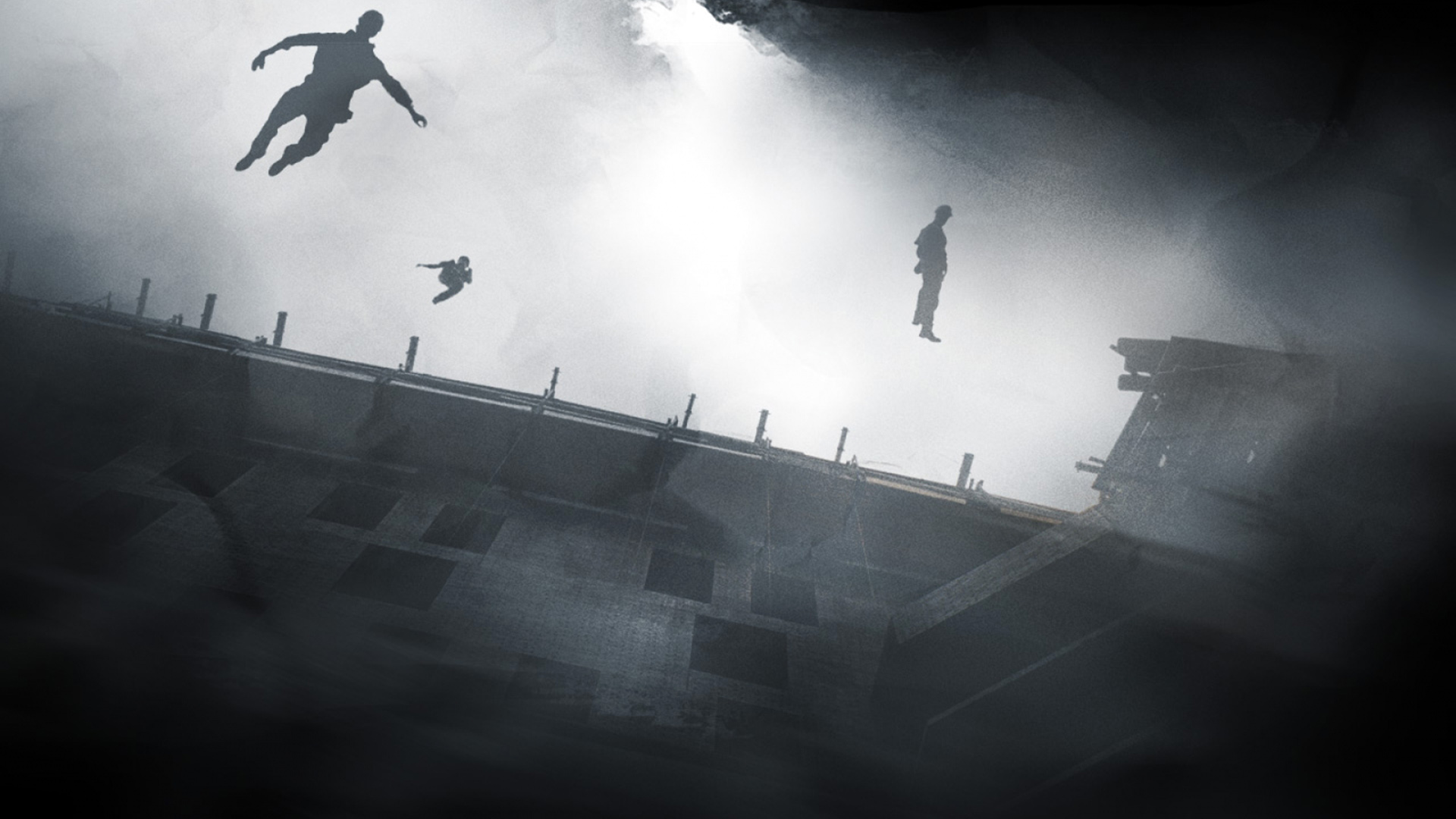
  1. The Happening is the story of a global event in which the plants fight back, releasing neurotoxins (maybe) that induce humans to kill themselves.
  2. When the first of several construction workers plummets to his death, his colleague notes, “Christ, McKenzie fell.” We never meet any of these characters again.
  3. The Happening is also the story of a rocky marriage between Elliott (Mark Wahlberg) and Alma (Zooey Deschanel), though it’s never really clear Wahlberg realizes this. Elliot teaches science. Alma has enormous eyes. Neither talk like humans.
  4. The Happening is also the story of science itself being inexplicable, including to high school science teachers.
  5. The Happening sometimes seems to be a story about parenthood and responsibility, and being caught in transit, and train conductors who abandon trains without explanation, unless high school science teachers ask.
  6. We move from place to place, house to house, and each are fraught with, I suppose, meaning. But none of the pieces fit, to the extent that the entire film becomes a study in contrasts. Inscrutable contrasts.
  7. We open on ominous clouds as the titles roll, and immediately encounter a curiously specific time stamp: “8:33 a.m.” Women are talking on a bench, seemingly enjoying a leisurely morning in the park. One of them begins repeating phrases, and promptly stabs herself in the throat with the world’s sharpest hairpin. Do people wear hairpins that are indistinguishable from knives? This is, perhaps, another thing science will never properly explain.
  8. As the film progresses, we begin to suspect that parks are integrally related to the epidemic of mass suicide. Oh, did I say we suspect it? No, we are repeatedly told so. In one of my favorite scenes, everything stops so we can watch a news broadcast on a TV rolled into a bar, along with the characters.
  9. To call such exposition “clumsy” would be a vast understatement. The effect is comic, and you start to wonder if M. Night Shyamalan was, in fact, making a farce.
  10. Moments later, a random woman, never heard from again, remarks, “Oh my God, look at this!” And we watch grisly footage on her cell phone.
  11. There’s almost – almost – a sense in the film that the horror is mediated through multiple forms of technology. Perhaps our technology, and its distancing, is the mechanism that has made the plants fight back. This would be a generous reading.
  12. Wahlberg’s Elliot is, of course, a science teacher. He teaches high school, and apparently believes his job is to convince his students of the uselessness of science in the face of That Which Will Never Be Understood.
  13. It’s an odd decision on his part, and Shyamalan’s, but let’s go with it. His introduction involves the rapid decline of honeybee populations and, after soliciting several possible explanations from his unusually involved high school students, decides that we basically will never know why.
  14. In a hot second, we are thrust back into catastrophe. But first, we inexplicably hear from Elliot’s friend, and fellow high school teacher, Julian (John Leguizamo) about our protagonist’s marriage problems, which apparently began on their wedding night, when Julian saw Alma crying.
  15. “She’ll never be the one to stand up when you need her,” Julian says – this is prompted by little, and it’s a terrible thing to say. We are primed for a separate plot. Or three.
  16. There’s a mad rush to flee New York. The assumption, reasonable enough, is that it was a terrorist attack. This is one of several moments when The Happening threatens to become a decent, intelligent film. Terrorism is absolutely the assumption people would jump to. Later, in another nod to the possibility of a movie that is not almost pathologically tone-deaf, people suggest CIA-related conspiracies.
  17. The Happening does not embrace these possibilities, or really any reasonable depiction of human life. Whether this is good or bad may be left to individual taste. But it sure is a spectacle to behold.
  18. In the train station, Julian tells Alma that the tickets were “as hard to get as Cabbage Patch kids back in the day.” I suppose this is a reference Shyamalan thinks will resonate.
  19. For a brief period in real life, my grandma made off-brand Cabbage Patch kids by hand. If she were alive today, I think she would view that scene and remark, “No one will know what you are saying. Why are you saying that.”
  20. It turns out the poison has spread to the fields of Philadelphia. There is panic. For some reason, Alma is still trying to fend off the telephonic advances of some guy named Joey, who she once ate tiramisu with. This is never explained in much detail. But I suppose dessert is the sexiest course.
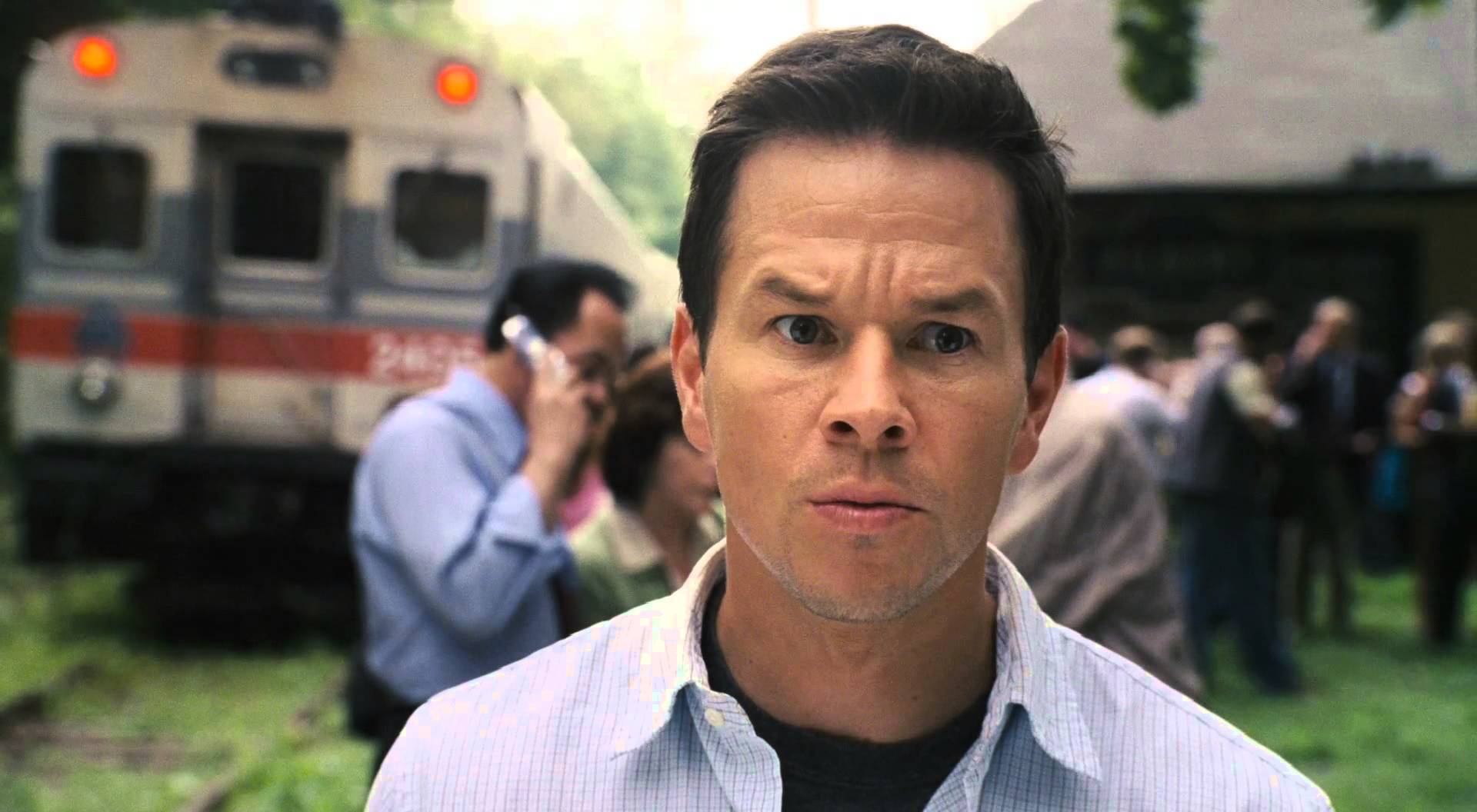
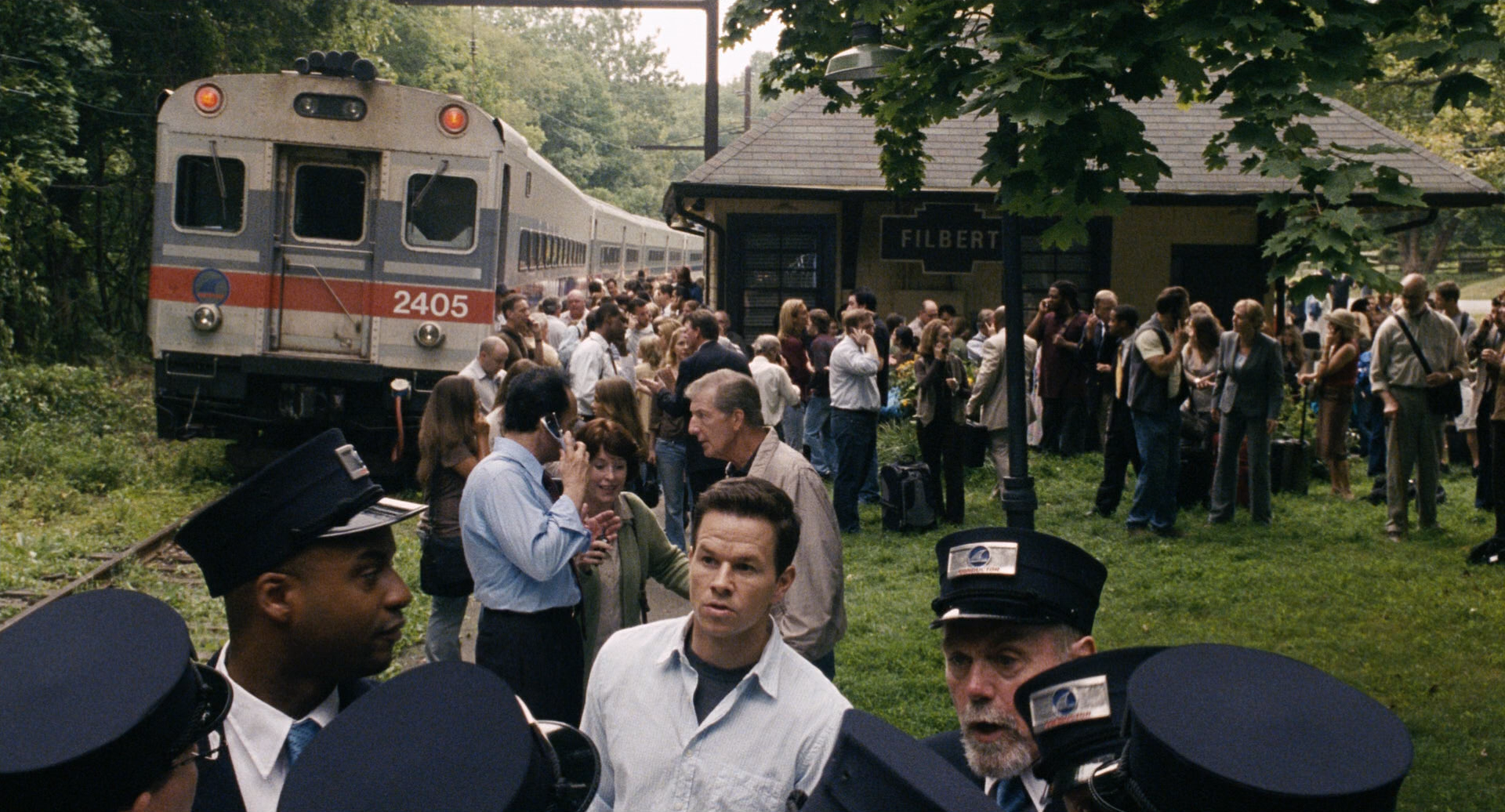
  21. After the train suddenly stops in the Northeastern town of Filbert (bizarre), we enter a bar. There are two people working, and what seems to be hundreds of patrons.
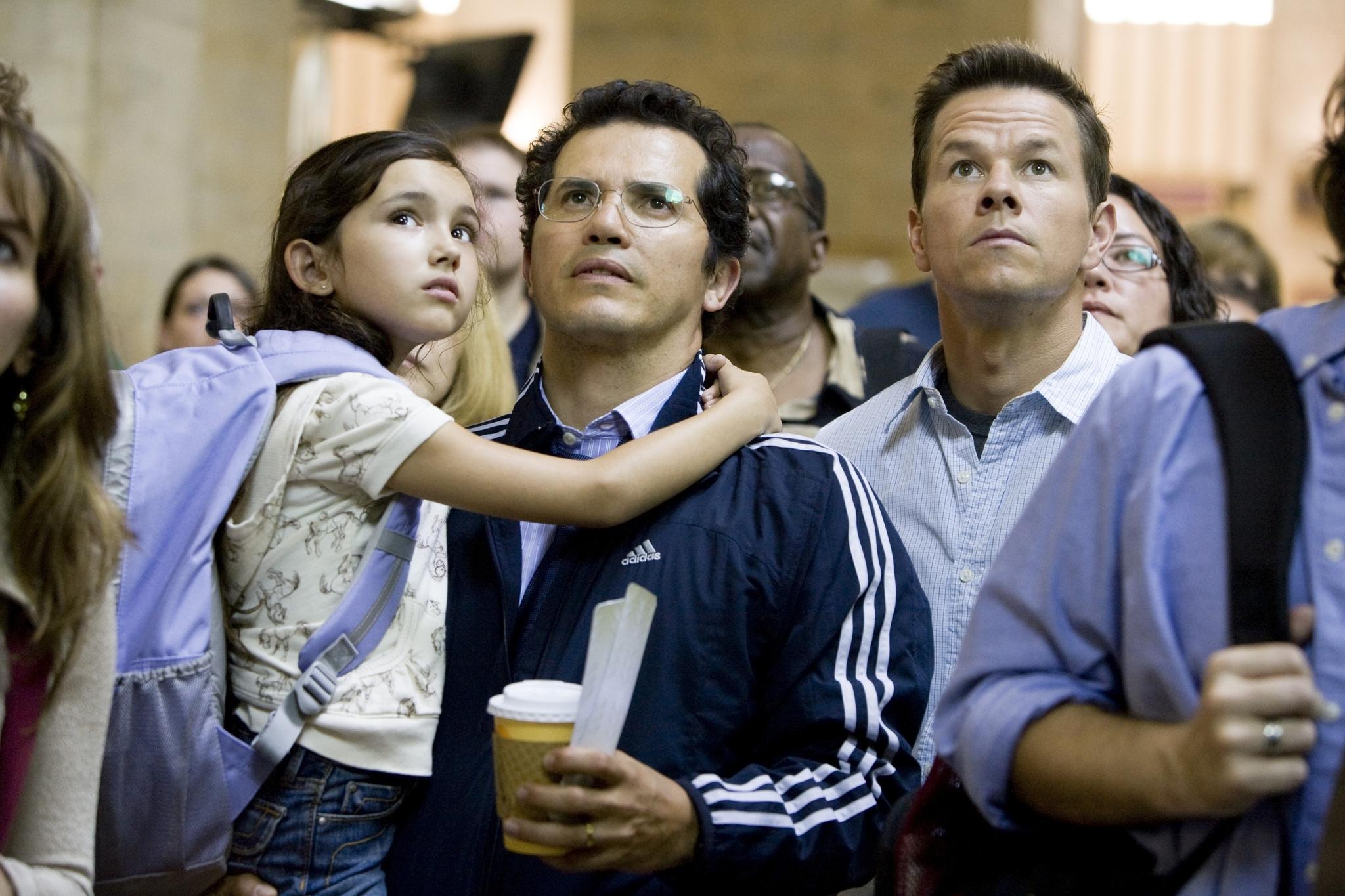
  22. The TV, rolled in, informs us of the events we missed. But in the meantime, Marky Mark entertains Julian’s daughter Jess (Ashlyn Sanchez) with a mood ring. Remember mood rings? Perhaps your Cabbage Patch kid wore one.
  23. Julian abandons his daughter to go search for his wife. This is, from the start, a dubious prospect, and even though he chastises Alma for comforting Jess – “Don’t take my daughter’s hand unless you mean it!” – he still jumps in a jeep bound for Trenton. The reminder of his distrust for Alma’s conviction to her marriage makes for an odd moment. Wahlberg and Leguizamo fight back tears at his departure.
  24. Now we meet The Hot Dog Man. His name does not matter. He runs a plant nursery (plants!) and enjoys hot dogs. In the film’s single greatest line, he says, “Hot dogs get a bad rap. They’ve got a cool shape, full of protein. You like hot dogs, don’t you?” Mark Wahlberg, rightly, shrugs.
  25. Hot Dog Man has info, however. He knows plants, and he points out how they communicate. The narrative asserts itself.
  26. We travel with Hot Dog Man and his wife – who, when confusion strikes and our team has to peer into the distance, gets the epic line, “There are binoculars in the trunk. You got them to spy on our neighbors,” as though this made any sense and wouldn’t in fact make Hot Dog Man even weirder – further north. We are always traveling north.
  27. The notion is conveyed that the plants only attack groups of people. A military man gives orders. We split up.
  28. Elliott and Alma’s group, with Jess in tow, run away from a scene of overheard carnage. They also adopt Jerry and Jake, two young guys who will play a huge, inexplicable part in the story, while also reaffirming the focus on parentage.
  29. Jerry offers Elliott some unsolicited relationship advice. It is unclear why this teenager has so much wisdom to impart, or why he would.
  30. We arrive at a house, filled with hostile loners.
  31. In order to convince the inhabitants of their normalcy, Elliott sings the refrain from everyone’s favorite contemporary band, The Doobie Brothers. His assurance, “See? We’re completely normal” fails to land.
  32. Things do not go well. Gratuitous violence ensues. Note to teenagers everywhere: Do not demand, “Open the door, you pussies!” during a global event.
  33. Fleeing the Death House, we travel instead to a cottage presided over by Mrs. Jones. Mrs. Jones is easily the best part of The Happening.
  34. We are casually informed that Mrs. Jones is a war widow. She lives alone. She tells us she “mends my own things, grow my own food.” It is unclear where the wheat from the biscuits she serves came from. Perhaps her garden. Of wheat.
  35. We are told, a propos of nothing, that there’s a spring house in the back with a tube through which you can speak to the main house. It was used to house runaway slaves. This is conveyed with enormous import. It does not mean anything.
  36. Mrs. Jones entertains the remaining protagonists, and introduces extraordinarily awkward conversation. Later, Alma describes her as “Exorcist-y,” which is absolutely a descriptor people might use, and not an entirely weird thing to say.
  37. In the middle of the night, Mrs. Jones is disturbed by the couple’s whispering, and accuses them of intending to rob or murder her. Wahlberg replies, “What? No!” It is delightful.
  38. In the morning, Alma and Jess go play in the spring house, despite the fact that going outside at all seems like a poor idea. Elliott tries to find Mrs. Jones, because he “wants to talk.” After three viewings, I am still unclear on what he wants to talk about.
  39. Elliott enters Mrs. Jones’ bedroom, to find a doll sleeping in her bed. In a jump-scare, she appears and demands the accidental family leave.
  40. The poison has reached even this community.
  41. Wahlberg and Deschanel are each trapped in their respective locations – the main house and the spring house. Speaking through the tube we know would become important, they reaffirm their love and reminisce about their first date. The mood ring plays a role, again.
  42. On their first date, Alma’s mood ring turned purple. Elliott said this meant she was in love. Turns out, it meant she was horny. This conversation occurs while Jess is there, and no one finds this odd.
  43. In a scene sure to touch the hearts of lovers everywhere, the two walk across the field, despite the danger. Also bringing the child, who really, at this point, just seems along for the ride.
  44. One would think they move quicker, or that only one set would go, or wear some sort of respirator, instead of meeting halfway across the field and imperiling everybody. But that is not how things work in The Happening.
  45. However, for reasons that are never explained – presumably because science is, itself, inexplicable – they are unaffected. Thanks, science!
  46. Another TV informs us the event has ended, a day after it began. The plants have calmed down … or have they???

The Happening is a bad movie with several seeds of a better one buried inside it, like some sort of complicated and inexplicable plant. Roger Ebert liked it, a fact that should be mentioned as frequently as possible, because it is equal parts hilariously misguided and an aspect of why some of us love Roger Ebert.
the happening 6

It’s undeniably well-made … in parts. The swaying grasses actually start to generate some tension, though I don’t think wind-storms work like that. Mrs. Jones is amazing. There’s a kernel of an idea about the Earth’s retaliation for human transgressions, but it’s lost in the incompetence of the execution. It becomes a hilarious comedy instead of a horror film, which is instructive in and of itself.
the happening 2

My good friend has suggested that the film depicts a movement from feminine spaces to masculine ones, as represented through the houses. Almost despite itself, The Happening moves us through physical, enclosed locations – the school, the shared apartment, the weirdo loner house, Mrs. Jones’ abode – and each serve to locate us in different ways. The school is thoroughly masculine – Wahlberg even teases the female principal, calling her “The Dark Lord,” to the kids’ weird amusement, before bro-talking with Julian about his marriage – and the final arrival at Mrs. Jones’ place hints at something much odder, where he is out of place, disoriented. This reading also reveals aspects of the various gazes which define the film, including Zooey Deschanel’s absolutely bizarre eyes.

She also rather brilliantly noted that fans generally enjoy combinations of pastiche and realism held in equal measure. One of the many fascinating things about The Happening is just how badly the film gets this wrong. The scene in which we enter a house where all the fixtures are fake – wine glasses half-full with fake wine, plastic food, an entirely unrealized and immovable life – aims for something deep, but because there is no balance, we just stare wide-eyed at it, like Alma.
the happening 4

At the time of its release, Shyamalan was being heralded as the new Speilberg. Time has not treated this notion kindly. But there is definitely something going on here. It’s a fractured vision that doesn’t cohere, but contains elements of fascination.

So is this reading too deeply into The Happening? In a word, maybe. But all cultural artifacts have layers, and this is a weird one worth paying attention to.
May 16, 2016 0 comments
0 FacebookTwitterPinterestEmail
CommentaryFilmGreat Movies: The Counter Programming

Cinema and dream-logic in Meshes of the Afternoon

by rick May 10, 2016
written by rick

[schema type=”movie” url=”http://www.imdb.com/title/tt0036154/” name=”Meshes of the Afternoon” description=”Maya Deren’s experimental masterpiece opened up the fields of anti-narrative and dream.” director=”Maya Deren and Alexander Hammid” producer=”Maya Deren and Alexander Hammid” actor_1=”Maya Deren” ]

Part of an ongoing effort to watch a set of films from non-White, non-U.S., non-male, and/or non-straight filmmakers and depart a little from the Western canon. The intro and full list can be found here.

Maya Deren’s hugely influential 1943 short Meshes of the Afternoon played a key role in kicking off the New American Cinema Group, and has lost none of its power to entrance in the 70-plus years since. Whether taken as feminist allegory, surrealist intervention, cinematic mindfuck, puzzle movie, or Lynchian horror story, it’s impossible to look away. By literalizing the unconscious on film, Deren opened up new possibilities for representation and anti-narrative.

Deren is a fascinating figure in mid-century art, theory, and critique – and one who arguably has never received her due, despite a cinematic lineage that includes such luminaries as Stan Brakhage and Jack Smith. In a short piece, dated 1960 and titled “Some Metaphors For The Creative Process”, she wrote, “The problem of the artist, then, is to rob the vaults only of those riches that are relevant to his need.” In Meshes of the Afternoon, we find her and husband-collaborator Alexander Hammid at the peak of their banditry of the subconscious.

Meshes of the Afternoon 2

Meshes of the Afternoon seems to tell a story – or perhaps our viewership simply imposes one on the sequence of images, because we expect one to be there. Silent and circular, Deren is much more interested in resonances and magical, Symbolist association than narrative in any traditional filmic sense.

Meshes of the Afternoon 3

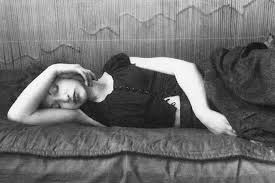
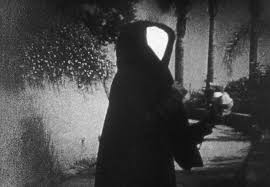
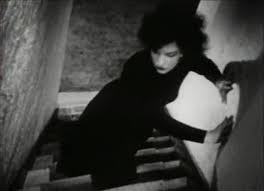
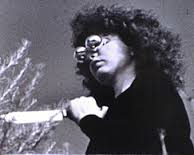
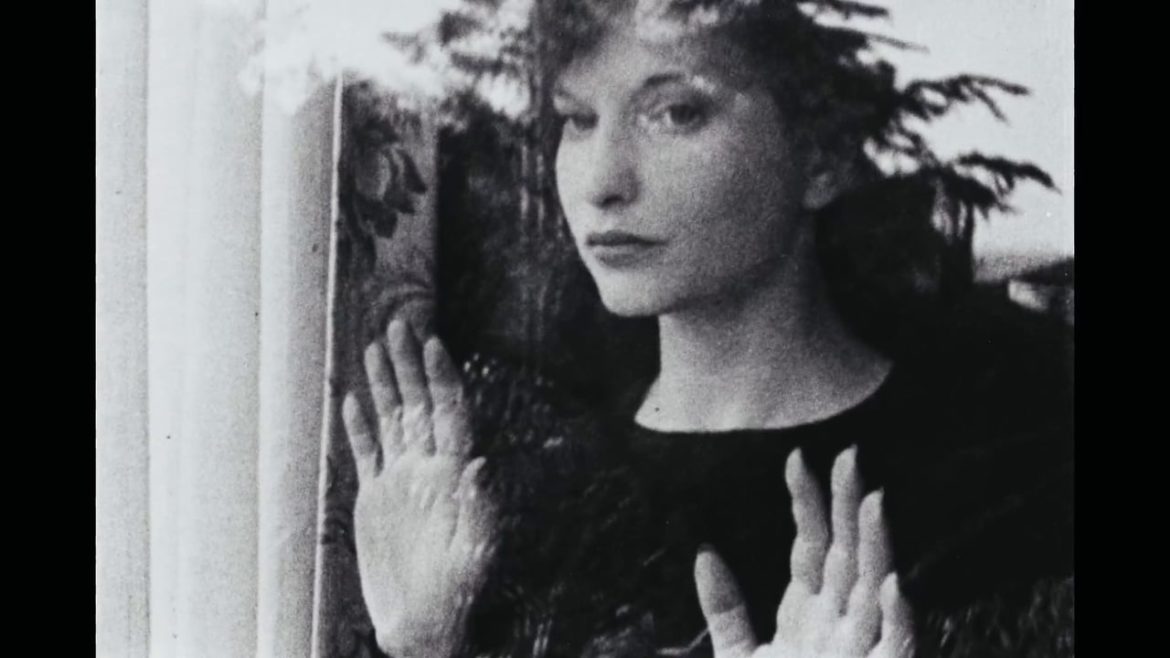
Our protagonist (played by Deren) falls asleep on a couch, shortly after glimpsing a figure on the street. We enter something of a dream-like state. Specific images occur and reoccur – a key, a knife, a piece of bread. A record player spins, though no sound is emitted. A flower becomes a motif. Certain figures play prominent roles, notably a Grim Reaper-like character with a mirror for a face, reflecting nothing.

Meshes of the Afternoon 4

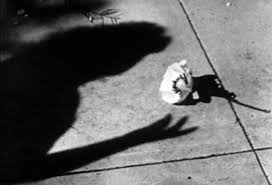
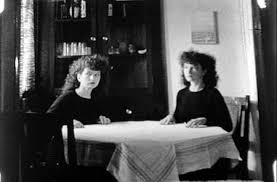
Deren’s unnamed woman tries desperately to race after the cloaked Death-Mirror-Person, but finds herself in slow-motion, always lagging behind as it turns a cobblestone corner. Suddenly, we cut back to the sleeping Deren, who observes these goings-on from her window. The scenes are repeated from the point-of-view of her double, who seems encased behind the glass of her bedroom window, trapped. Later, there is a tripling, and three Deren’s sit at the kitchen table – surrounding … a key, a knife, a loaf of bread.

Meshes of the Afternoon 5Meshes of the Afternoon 6

Male figures emerge, and it is an open question whether they represent lovers or murderers. When one moves in close to her, we actively wonder if it’s for a kiss or a kill. Deren remains impassive throughout, but her gaze occasionally wanders back to the camera, a look that seems to represent a challenge to the audience. She doesn’t exactly break the fourth wall, but the emphasis on artifice is clear. It’s like the moment in a dream when you realize you are asleep, but powerless to affect any changes in the story your brain, or heart, or something else has in mind.

Meshes of the Afternoon 7

It’s an aggressively elusive 14 minutes. Like the Surrealists, an association Deren herself rejected but which seems hard to avoid while viewing the film today, Meshes of the Afternoon comes across as fixated on the unknowable, resonant but always out of reach. The initial experience that begins the film is fractured and mediated through all kinds of anxieties and dim connections as our protagonist dozes. She might die, or she might just dream of dying, or dream of a dream. The entire film is an astute exploration of things that can’t be said or explained, but only shown. Like many an experimental filmmaker to follow, Deren swears by the integrity of the image itself … and then seeks to undermine it. There is no ground to stand on in this realm. As in Cocteau’s Orphic Trilogy, we float through instead, prisoners to the camera lens.

Meshes of the Afternoon 8

You could go on forever about the meanings buried in this particular text. It invites and eludes analysis. Watching it for the first time recently, I was enraptured by the movements, repetitions, and score, which punctuates scenes rhythmically. Does Deren’s character’s encasement in glass seek to comment on patriarchy? Or on the various gazes that constitute viewership (and, so, patriarchy)? Is theorist Wendy Haslem right that, “As European émigrés, Deren and Hammid invest their film with an acute sense of restlessness and alienation … reflect[ing] this uncanny estrangement in the doubling, tripling and quadrupling of its central character … and in its cyclic narrative, a structure that seems condemned to repetition”? Are we dealing with Nietzsche’s notion of eternal return? Why is the hooded Death figure constructed as a kind of mirror? What would the key unlock?

Meshes of the Afternoon 9

But, like waking from a dream, it all blurs together into a mood, a sense of the uncanny, and no answers are provided. Unlike a dream, Meshes of the Afternoon is 14 minutes you can play back if you so choose, and wonder at it all over again.

Next up: Kôzaburô Yoshimura’s The Ball At The Anjo House (1947)

[schema type=”movie” url=”http://www.imdb.com/title/tt0036154/” name=”Meshes of the Afternoon” description=”A woman returning home falls asleep and has vivid dreams that may or may not be happening in reality. Through repetitive images and complete mismatching of the objective view of time and space, her dark inner desires play out on-screen.” director=” Maya Deren” ]

May 10, 2016 1 comment
0 FacebookTwitterPinterestEmail
FilmReviews

The Summer of Frozen Fountains is a charming portrait of Tblisi, despite nothing happening

by rick May 9, 2016
written by rick

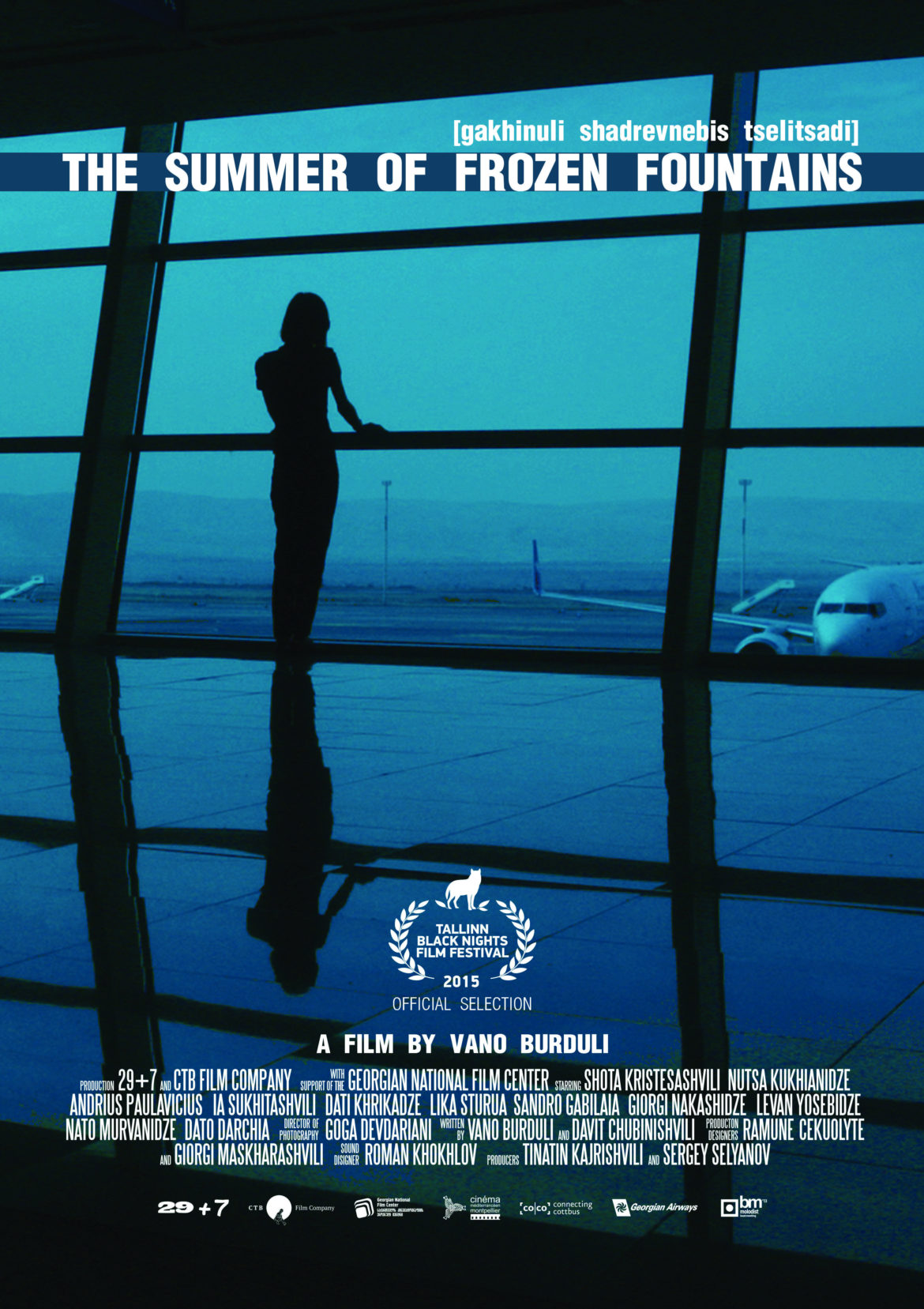
[schema type=”movie” url=”http://www.imdb.com/title/tt4949272/?ref_=fn_al_tt_1″ name=”The Summer of Frozen Fountains” description=”The Georgian film The Summer of Frozen Fountains, director Vano Burduli’s second feature, is a curious beast. It’s light on its feet, dipping in and out of the lives of numerous characters, but seems almost stubborn in its refusal to amount to much.” director=”Vano Burduli” producer=”Vano Burduli” actor_1=”Dato Darchia” ]The Georgian film The Summer of Frozen Fountains, director Vano Burduli’s second feature, is a curious beast. It’s light on its feet, dipping in and out of the lives of numerous characters, but seems almost stubborn in its refusal to amount to much.

Things happen, connections are implied, and narratives intersect … but Barduli seems opposed to the notion of resolution. This can be entrancing or frustrating, depending where you’re seated.

Summarizing the film is a fool’s errand. IMDB tried, and came up with this monstrosity:

“Does air temperature really matter for fountains to be frozen or melt? One just need to stop and look around… It’s a mosaic of several interrelated characters in search of their own happiness. It’s about hopes and disapointments, betrayal and forgivness… and of course it’s all about love…”

Yeesh.

Anyway, we are in Tblisi. Two kids are in love, and we hang out with them by waterfalls. The boy’s brother is off in America, and people wonder after him – though we’re never quite sure who knows what. The girl has a dog named Bono, named after the portrait of the U2 singer that adorns her wall, and her boyfriend is on a romantic mission to get her something from the actual guy, so he bugs everyone in town about whether they have any contacts in Dublin. He has a friend in an older village guy named Gio, once close with his brother, whose wife was in a car accident. Relief turns to discomfort as the accident reveals she was having an affair. An Irish photographer is in town, capturing on film the things he think define the Georgian experience. He’s in love with a neighbor whose father, a once-famous photographer himself, now takes pictures from a single vantage point outside his apartment window. A trio of men, discussing the weather, the gossip, and occasionally cuddling a beloved kitten, serve as a Greek chorus of sorts.

People watch planes.

forzen fountains1

What is it all about? Barduli weaves a tapestry of individual moments, some of which intersect, most of which don’t. The film aspires to be a lived-in portrait of modern life in Georgia – this is fine, but it’s not clear what we are supposed to be experiencing. Several questions haunt the film, in ways that are less interesting than simply unresolved. It’s like Love, Actually, if no one ever met.

frozen fountains2

And yet …

The film undeniably builds an atmosphere, a mood, that signals possibility. We wait for expected revelations that never come. When the Irishman is asked what he’s looking for, he responds, “Like everyone, I’m looking for paradise on earth.” It’s a tossed-off line that gains resonance. The streets of Tblisi are a window into a kind of romanticism that would never be satisfied with clear narrative lines and a final kiss in a light rain. That’s not how things go here.

Still, viewers might hope for something a little more grounded, a single story that resolved. Barduli does not seem like he’s interested in providing that. The film’s best moments – the young lovers, the stray street animals, the attention to visual detail on the buildings and cobblestones – hint at a dream. Everyone is here, but everyone is leaving, wishing they were elsewhere or wondering how things are going outside of town. The general sense is bittersweet.

The Summer of Frozen Fountains, saddled with an unfortunate title that the film does no favors when it comes time to explain it, is a dip into a vast pool. Whether this is a good or a bad thing will depend on individual taste. Maybe you’ll be entranced, or maybe you’ll doze off, or maybe you’ll write the worst IMDB summary ever. I’m not sure Barduli cares either way. His focus is on small moments, and it’s a technique that has small rewards.

May 9, 2016 0 comments
0 FacebookTwitterPinterestEmail
FilmReviews

Michael Shannon shines again in Frank & Lola

by rick May 6, 2016
written by rick

[schema type=”movie” url=”http://www.imdb.com/title/tt1290138/?ref_=fn_al_tt_1″ name=”Frank & Lola” description=”Matthew Ross’ inspired, tense debut Frank & Lola wears its influences on its sleeve – De Palma, Polanski, echoes of Eyes Wide Shut.” director=”Matthew Ross” producer=”David Atrakchi” actor_1=”Michael Shannon” ]

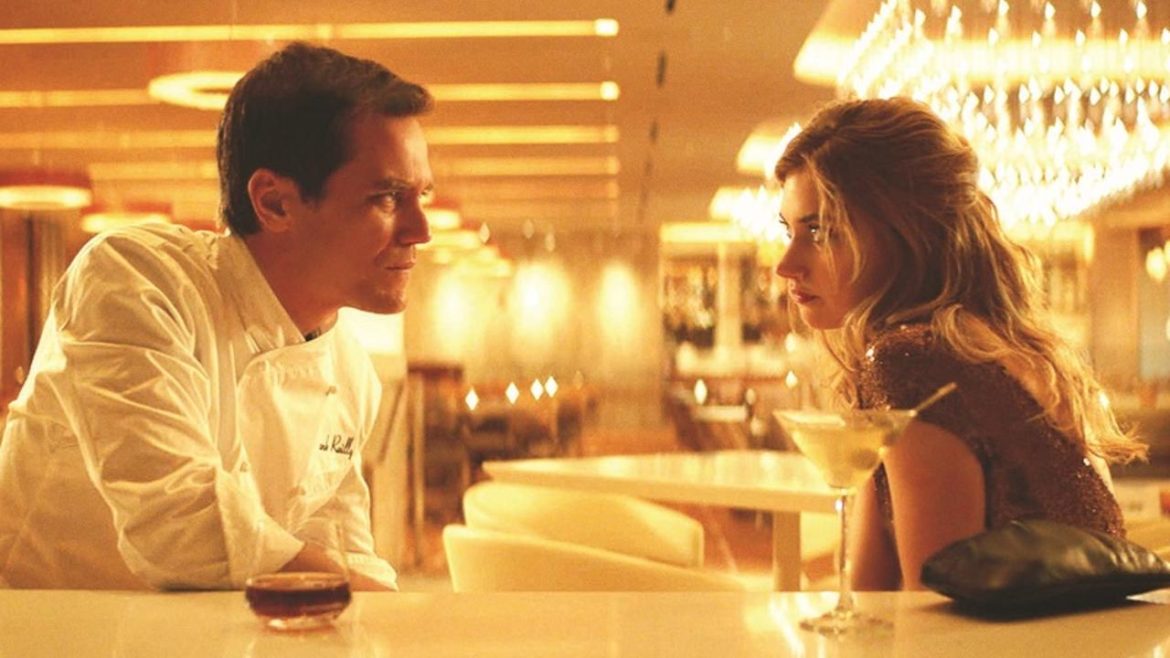
Matthew Ross’ inspired, tense debut Frank & Lola wears its influences on its sleeve – De Palma, Polanski, echoes of Eyes Wide Shut. It makes the most of leads Michael Shannon and Imogen “Best Name In Show Business” Poots, both of whom are having banner years with Midnight Special and Green Room, respectively, and upends audience expectations at regular intervals.

Frank & Lola is, unsurprisingly, the story of Frank and Lola. Shannon’s Frank is a chef who cuts his teeth in the cafes of Paris but has been working in less esteemed locales while he saves up funds for his own restaurant. Lola walks into his workplace one evening and is wowed by a fancy omelet. The meet-cute leads to a relationship, and the relationship to the unearthing of some fairly dark secrets about her past.

In one of many smart moves, Ross wastes no time moving from omelet-euphoria to the more shadowy intricacies of their coupling. In fact, the film opens with the lovers already together in bed, circles back around to the meeting, and then into the paranoid narrative that constitutes most of the film. In clever impressionistic touches, Ross overlays later conversations on earlier footage, disorienting us from the start. Frank & Lola sometimes seems like it’s taking place in a memory or a fantasy, a technique that works much better than it might sound.

Like the audience, Frank doesn’t know much about Lola’s past, which is doled out in small, sometimes contradictory fragments. She also spent time in Paris, and the film is decidedly stingy on cluing us into just why, with whom, and to what ends. Ross constructs the narrative such that we inhabit Frank’s increasingly suspicious point of view – a trick that pays off, Vertigo-style, when it becomes clear the film is more interested in the dynamics of male jealousy and obsession than any conventional whodunit focus. By aligning the audience with Frank and denying any sure footing, Ross makes us complicit. Every mystery is, in some sense, a conspiracy in which the viewer plays a part, and Frank & Lola is very intrigued by just how this works.

frank and lola2

Given the nature of its script and execution, I wouldn’t dream of giving away Frank & Lola‘s secrets. Suffice to say that Frank winds up tracking down a man (Michael Nyqvist, excellent) who played a nefarious part in Lola’s past – but as soon as the film threatens to enter the globe-trotting revenge space of Taken and its ilk, Ross pulls the rug out yet again. We are, thrillingly, never sure what to believe or anticipate.

Shannon and Poots make an entirely believable couple here, both harboring deep reserves of secrets and rage (though one look at Shannon’s mile-long glower should be enough to assure you of that). Justin Long has a nice turn as the owner of a firm where Lola finds a job, both charming and smarmy, and Nyqvist plays the “is he or isn’t he?” role with the studied menace of a French aristocrat. Not a moment or a look is wasted here.

Frank & Lola might not be for every taste, but if you like tense, psychosexual mindfucks, and if the words “De Palma, Hitchcock, Eyes Wide Shut” do anything for you, this is one you won’t want to miss.

May 6, 2016 1 comment
1 FacebookTwitterPinterestEmail
FilmReviews

Bonanza, Blade Runner, and Escapes

by rick May 5, 2016
written by rick

[schema type=”movie” url=”https://ludditerobot.pages.dev/other/film/bonanza-blade-runner-and-escapes/” name=”Escapes” description=”Hampton Fancher starred on “Bonanza” and co-wrote Blade Runner. He also he ran away from home at 15 to become a flamenco dancer, renaming himself “Mario Montejo”.” director=”Michael Almereyda” producer=”Michael Almereyda” actor_1=”Hampton Fancher” ]

If you know one thing about Hampton Fancher, it’s very likely either his early success on “Bonanza” or that he’s credited with co-writing Blade Runner, Ridley Scott’s classic adaptation of Philip K. Dick.

But did you know he ran away from home at 15 to become a flamenco dancer, hopping a boat to Spain and renaming himself “Mario Montejo”? Or that he briefly married Sue Lyon of Lolita, romanced Teri Garr and Barbara Hershey, and took jobs such as ditch-digger when he couldn’t land any roles in Hollywood for a time? Or that he was best friends with Brian Kelly, handsome star of the bizarrely successful television show “Flipper”?

fancher2

I didn’t. Michael Almereyda’s documentary Escapes fills in these rather odd blanks. Almereyda described the film to a San Francisco audience as “a work in progress” – a candidly self-effacing but recognizably true statement. The film is mostly comprised of Fancher recounting his exploits and loves, like an older family member setting down his history for a memory book. It’s not spectacular filmmaking but, as it happens, Fancher’s had some adventures and tells a great story, so we don’t mind.

Almereyda is a savvy director, though, and fills the screen with archival footage as Fancher holds court, syncing reaction shots from “Bonanza” and elsewhere to the stories we hear. It’s a funny and warm touch.

fancher1

The stories themselves are consistently engrossing. Growing up in a predominantly Latino community, Fancher’s oddly specific fixation at a young age was flamenco dancing. In an early indication of a fierce and contrarian temperament, he changed his name and ran away from home to pursue his dreams abroad. It didn’t work out, and he came back home to California hoping to make it in the movies.

“Bonanza” was his huge star turn. He winningly recounts the ups and downs of unexpected success, and the long dry spell that followed. Throughout the film, Fancher is nothing if not honest, puncturing any notion of pretense by acknowledging – even dwelling on – his failures in love. It sometimes approaches a humblebrag – “I didn’t do right by all these beautiful women I romanced” – but it also feels like a man earnestly facing up to his shortcomings. It plays as charming instead of vain.

fancher3

The film’s two longest sections are also its most fascinating. First, his relationship with Brian Kelly is dealt with in detail. Fancher’s affection for his friend is clear and touching, and his acknowledgment of envy for Kelly’s good looks and easy charm humanizes him. At a party, we’re told, he spent the whole night lusting after this one woman; when she finally approached him, the big star, he discovered she just wanted an introduction to the star of “Flipper” instead.

It isn’t all funny. Fancher relates how a motorcycle accident robbed Kelly of his mobility and aspects of cognition – an accident on Fancher’s bike, no less. It’s one of the few moments where the self-mythologizing shows real cracks, and while he says he’s not guilty about it per se, his expression suggests otherwise.

The final section deals mostly with the writing of Blade Runner, as you’d expect. It turns out Barbara Hershey played a huge role here, insisting Fancher keep at it when he’d decided it would never amount to anything. (Thanks, Barbara Hershey!) Stories of writers writing are, to be generous, not the most riveting thing you could imagine, but, again, Fancher spins the yarn compellingly. If you’re a fan of the film, or of sci-fi in general, it’s a story you might like to hear.

All in all, Almereyda should be taken at his word – Escapes looks and feels like a work in progress. But it’s also a chance to sit down with a raconteur, have a few drinks, and hear about the old days. It’s visually interesting and witty, and Fancher is definitely someone you’d invite to your next dinner party. (Just remind him in advance that nobody says “wetbacks” anymore – jeez, Uncle Hampton! I know you’re 77 and you consider yourself an honorary Latino, but you got to cut that shit out, brother.)

May 5, 2016 0 comments
0 FacebookTwitterPinterestEmail
FilmReviews

In Little Men, too much doesn’t go nearly far enough

by rick May 4, 2016
written by rick

[schema type=”movie” url=”http://www.imdb.com/title/tt4919484/” name=”Little Men” description=”In Ira Sachs’ new film Little Men, you can see the gears turning and wheels spinning the whole time.” director=”Ira Sachs” producer=”Joseph Alibert” actor_1=”Greg Kinnear” ]In Ira Sachs’ new film Little Men, you can see the gears turning and wheels spinning the whole time.

It’s a message-machine about gentrification, couched in a fleetingly charming story of youthful friendship, that never once feels effortless or honest. Sachs attempts to cloak the calculated nature of the screenplay by aspiring to be a hangout movie at times, but this, along with the ever-present musical cues, only draws more attention to its manipulations. It’s a picture of honesty, not an honest picture.

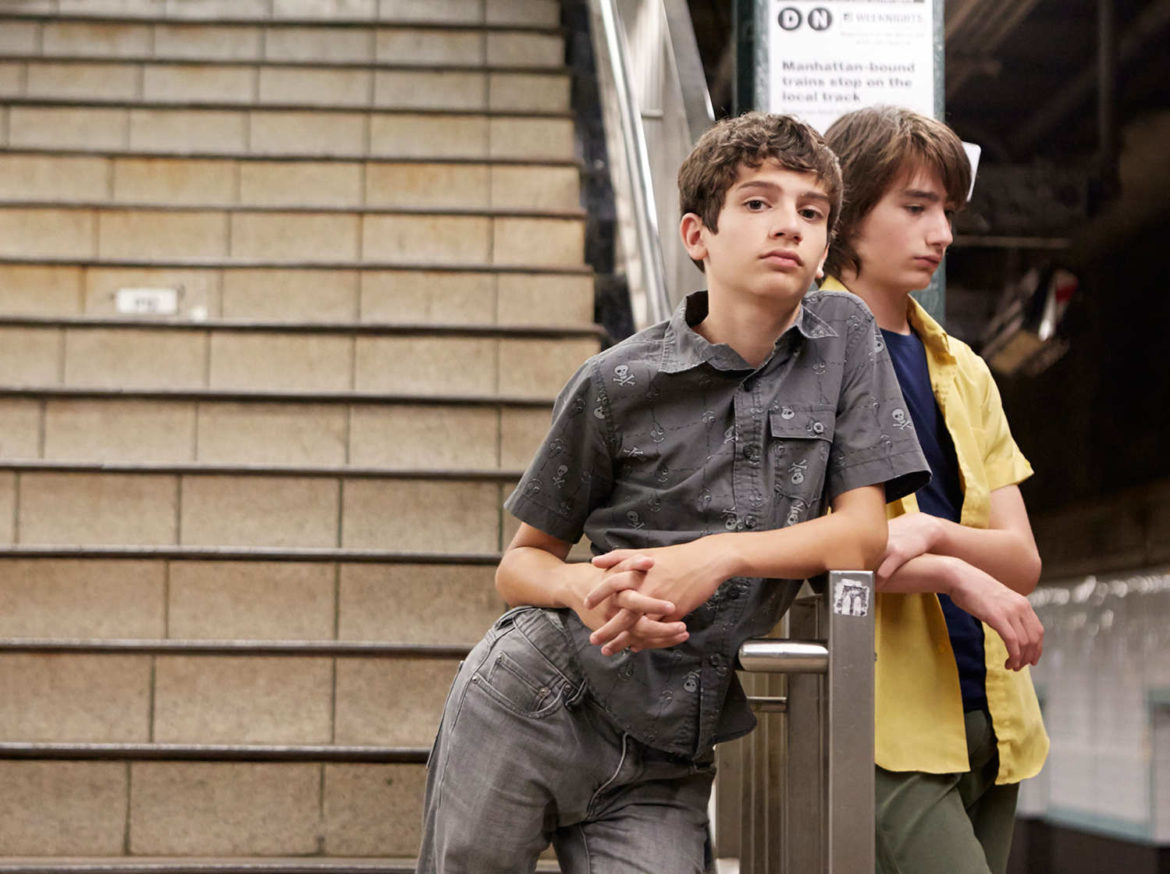
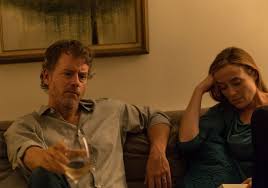
Little Men introduces us to the Jardines – Kathy (Jennifer Ehle), Brian (Greg Kinnear), and their son Jake (Theo Taplitz) – who have recently relocated from Manhattan to Brooklyn after the death of Brian’s dad. The elder Jardine has left them the apartment building he’d lived in for years, which is convenient since Brian’s acting career hasn’t exactly been taking off. Kathy is gainfully employed, but the financial pressures are weighing everyone down. The move comes at the right time for the family (though Jake is none too pleased to have to change schools and make new friends).

little men3

Luckily for Jake, as soon as they arrive – and I mean, as soon as they pull up to the curb – he becomes best buddies with Tony Calvelli (Michael Barbieri), the similarly-aged son of the Chilean woman, Leonor (Paulina Garcia), who owns and manages a dress shop on the ground level. The two boys are from different worlds, but both are artistically inclined – Jake’s an artist, Tony wants to be an actor, both want to go to a prestigious school for the arts – and they bond over a love of video games. Where Jake is studious, Tony brags that he got a B+ on a school assignment, even though he barely tried: “Teachers are wack. Spend an hour and get a good grade. Really try and they fail you.”

little men 2

The film is at its meager best when we hang out with the two of them, and Sachs gets some sporadically interesting moments out of both. An acting exercise in which Tony and a teacher square off, shouting and interrogating each other, is a highlight. As Jake, Taplitz channels the anxieties of a quiet, sensitive boy pretty well, and the bond between them can be affecting, when they’re not saddled with the stilted dialog Sachs provides.

But these humanistic moments are really foils for the larger gentrification narrative. The white family who has moved in is on a collision course with the Chilean single-mother downstairs, and the boys, inevitably, will be stuck in the middle.

little men4

“The neighborhood is changing,” Brian tells Leonor, “and you can’t expect to pay what you’ve always paid.” It’s a phrase – “The Neighborhood Is Changing” – that Sachs repeats no fewer than three more times, in case we missed it. I half-expected it to appear on a billboard – “Welcome to the changing Brooklyn!” Maybe it did, in the background of one of the five interminable cityscape montages.

Kinnear plays Brian as a wounded and exhausted person trying to do the right thing, but it rings false throughout, even with a callous sister character, existing for the sole purpose of humanizing Brian, who has no compunction about evicting the free-loading Chilean dressmaker who their father coddled during his lifetime. As Leonor, Garcia fares better, conveying both her character’s worries about the future and her pride. But she’s undone, too, by a screenplay that asks her to insult Brian’s manhood and financial situation on his dead father’s behalf. Nothing about this works.

In the end, things shake out as they must, or as Sachs feels they must, and we’re presented with the sting of childhood loss. Did I say “presented with”? No, we are bombarded with it, as soaring strings insist, “This is the part where you cry.” My reaction was closer to irritation than empathetic grief.

Sachs’ previous film, Love Is Strange, dealt with the trials and tribulations of modern-day New York life on the economic margins in much more nuanced terms, though he had the benefit of John Lithgow and Alfred Molina (who briefly appears here too, unsurprisingly making the most of his two minutes of screen time).

That film was also writerly, but it was heartfelt in a way that Little Men never approaches. Everyone is trying so hard here that it feels almost mean-spirited to knock the film, but the effort is exactly the problem. It’s more a junior-high essay than a movie, the kind of thing Tony would’ve dashed off in an hour before heading to the park to play soccer. Unlike Tony’s paper, this is not a B+ affair. Hopefully, Sachs’ next film will mine the things that clearly concern him about East Coast life in 2016, but in a way in which the seams aren’t quite so frustratingly evident.

May 4, 2016 0 comments
0 FacebookTwitterPinterestEmail
CommentaryFilmGreat Movies: The Counter Programming

Migration, sin, and redemption in The Blood of Jesus

by rick May 3, 2016
written by rick

Part of an ongoing effort to watch a set of films from non-White, non-U.S., non-male, and/or non-straight filmmakers and depart a little from the Western canon. The intro and full list can be found here.

Famously included as part of the “Tyler, Texas Black Film Collection” – a trove of early race films uncovered in a warehouse in that town, 80 miles outside Dallas, in the 80s – Spencer Williams’ The Blood of Jesus (1941) has had a strange journey to prominence in discussions of the period in which it was filmed.

The film itself was long considered “lost” (though the Library of Congress, at least, had a copy a decade before Tyler). Originally funded, like many race films, by white entrepreneurs looking to capitalize on the segregated Black market denied entrance to mainstream theaters, it was widely viewed as a bit of curiosity, despite being enormously successful in its day.

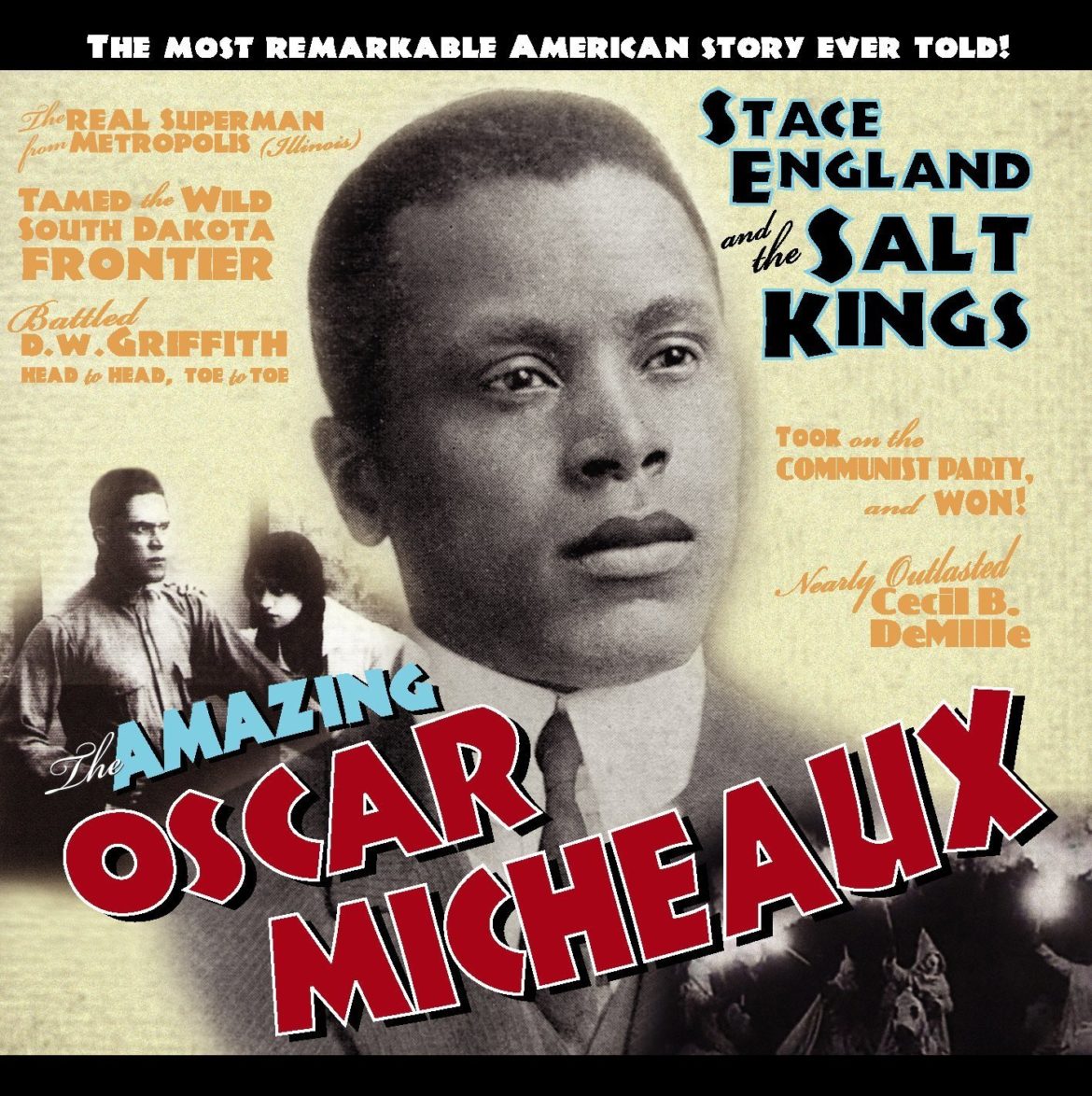
Williams – a long-time bit player in the silents (including as a tornado-swept passerby in Buster Keaton’s iconic Steamboat Bill, Jr.) and later most famous for playing Andy “Hogg” Brown in the still-controversial “Amos n’ Andy” radio show – is an interesting figure. A prominent director, he tended (then as now) to be overshadowed by his more prolific, celebrated, and independent compatriot Oscar Micheaux. The minstrely-inflected nature of “Amos n’ Andy” didn’t help his legacy, which is still being recuperated from some amount of general embarrassment.

blood of jesus8

The Blood of Jesus is a full-on passion play, exhibiting many of the trappings one would expect of the kind of theatrical performances that occurred (and still do) throughout many churches around Easter. Its focus is on the rural Southern Black church, its intended audience, and it features numerous Gospel and Blues numbers (usually contrasted against each other in interesting ways).

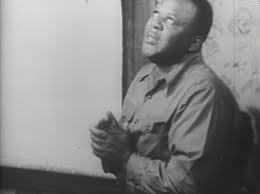
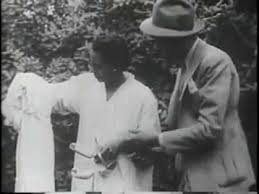
The film tells the story of Martha Ann Jackson (Cathryn Caviness), a devout woman accidentally shot by her non-religious husband Razz’s falling rifle. (Williams himself plays the wayward husband finding faith through killing his blameless wife.)

blood of jesus4

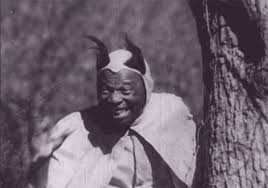
As she lays on the bed dying, we follow her into a kind of spiritual limbo. She meets a guardian angel (Rogenia Goldthwaite) and a slick agent of the devil known as Judas Green (Frank H. McClennan), both of whom try to sway her to their sides. Green flatters her with new clothes and tempts her with the worldly ways of nightclubs and that horrible jazz music, but, after briefly becoming embroiled with a pimp in a roadhouse who wants her services (which seem more about robbing patrons than servicing them), she eventually flees to the sanctity of Christ.
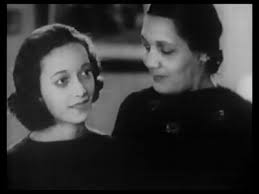
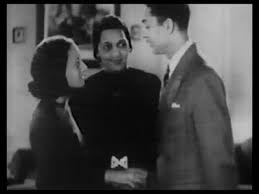
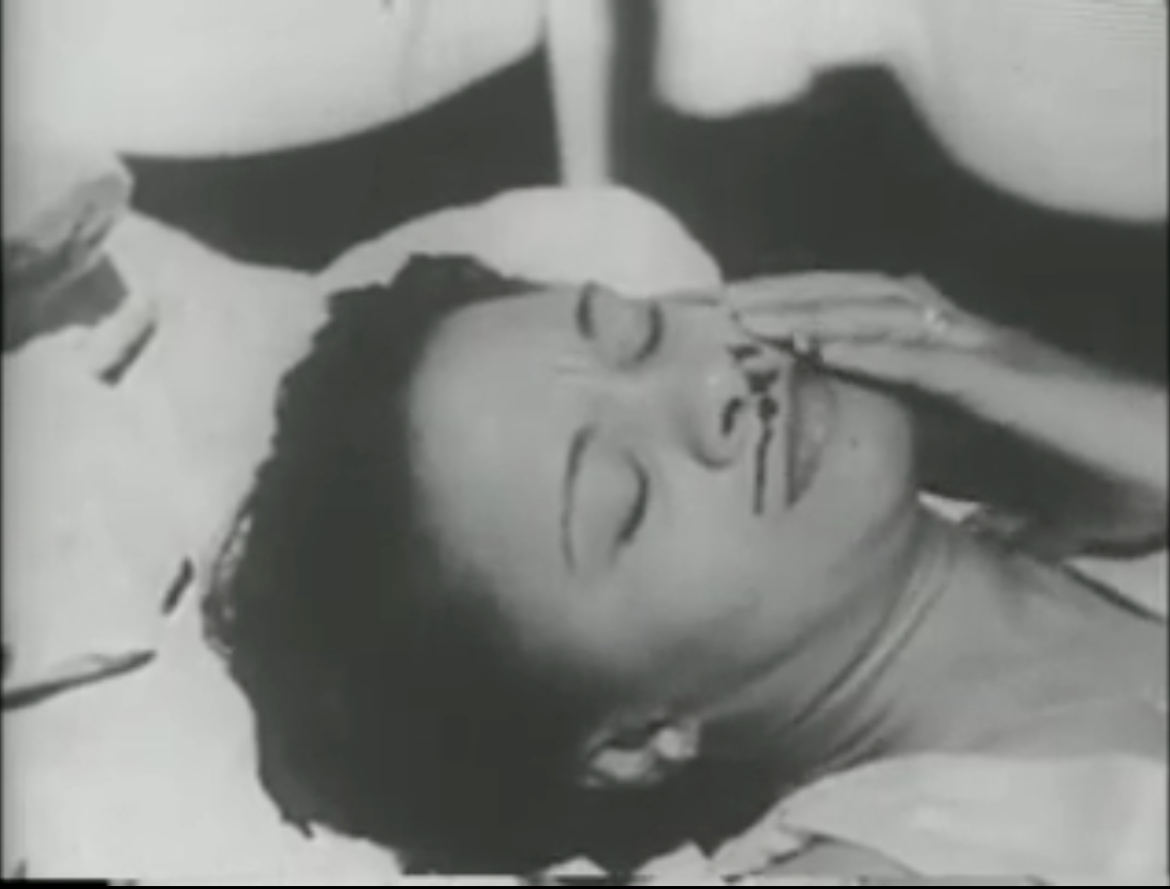
Prone before the t-shaped sign at a crossroad, offering Hell one way and Zion the other, she sees instead the Son of God on the Cross. She’s smeared (rather messily on the face) with his blood, and given another chance at life on earth. In the meantime, her husband has found faith and been redeemed through his grief at her bedside. The miracle seals the deal.

blood of jesus8jpeg

There is a lot to unpack here. The film opens on a community Baptism, including that of Martha. Williams gets some laughs out of one would-be Church member who flees the water thinking there’s a snake – “Last year, it was an alligator,” someone mutters. Not everyone is so hyped for the next world. The broad[schema type=”movie” url=”http://www.imdb.com/title/tt0033406/?ref_=fn_al_tt_1″ name=”The Blood of Jesus” description=”Famously included as part of the “Tyler, Texas Black Film Collection” – a trove of early race films uncovered in a warehouse in that town, 80 miles outside Dallas, in the 80s – Spencer Williams’ The Blood of Jesus (1941) has had a strange journey to prominence in discussions of the period in which it was filmed.” director=”Spencer Williams” producer=”Alfred N. Sack” actor_1=”Spencer Williams” ] comedy might play now as embarrassing, but I’m willing to bet audiences at the time laughed at the cartoonish speed with which he runs out of there.

We meet Razz back at the couple’s home, having just killed a boar – hunting on the Sabbath being the first indication that he’s shirking his duty to the Lord. As it turns out, he wasn’t “hunting” so much as “shooting one of his neighbor’s boars and stealing the body,” so his sin is compounded. The violation of the Sabbath would be bad enough; this is a violation of community norms, too. And then he lies about it to his wife.

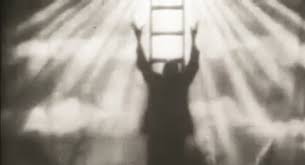
After the gun falls to the floor, and Martha with it, we are treated to a depiction of Heavenly ascension that borders on the avant-garde. One might wonder how Williams was able to get the gauzy images and large cast heading skyward on a meager $5,000 budget. It turns out he borrowed it outright – the footage is from a 1911 Italian film, L’Inferno, simply interpolated into the film itself. It’s one of several direct nods Williams makes to earlier productions, as well as evidence of some rather scrappy, if copyright-shrugging, techniques.

blood of jesus2

At one point in a wide-ranging, fascinating lecture and Q&A about race films, preservation, and Williams, scholar Jacqueline Stewart remarks that his natural filmic descendant today is Tyler Perry. She contrasts this lineage with that of Oscar Micheaux, whose set of cinematic impulses might be found most prominently in the work of someone like Spike Lee.

Stewart quickly complicates the comparisons and argues against any sort of straight line of influence – Lee has claimed never to have seen any race films until after leaving film school, for one thing. But watching The Blood of Jesus, it’s clear what she means more generally. If Micheaux’s focus on intra-racial conflict, interrogation of hierarchies, and appeal to uplift calls to mind Spike’s work, there’s more than a touch of Perry in the morality play that is The Blood of Jesus. (Of course, Spike also went to Kickstarter for his Ganja & Hess reboot, Da Sweet Blood of Jesus, which draws heavily on similar themes, but that’s a story for another day.)

For one thing, as Stewart notes in the video above, The Blood of Jesus is a redemptive tale – but who is redeemed? Sister Martha is the one who goes through the trials and tribulations and temptations, but it is her husband who finds God – she was already on the side of the righteous. Numerous shots link her suffering with the Savior’s, but the narrative implicitly places her as a figure watched and observed by the central male figure.

blood of jesus1_devil

As in many such tales, the Devil (played to the cheap seats by a a near-comically theatrical James B. Jones) employs a surrogate to prey on her vanity in order to win her over to sin; vanity, of course, being the classic feminine foil. Where Micheaux – in Body and Soul, for instance – controversially attacked the hypocrisies of the Black Church, Williams’ narrative is solidly within the socio-theological framework, one that audiences would surely recognize. As Stewart notes, the question of “authenticity” haunts race films in general, but it’s surely part of the appeal of Williams. Paired with musical standards sung by an actual local choir, cast with local amateurs in the leads and every other part, and reiterating a well-known story, The Blood of Jesus is populist entertainment and intended more for spiritual than social uplift.

blood of jesus7

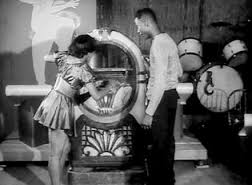
The use of music bears further mention. The choir songs and deathbed dirges signal one such use, but there’s also the nightclub jazz on the other, the soundtrack to the “city” that exists as temptation for Martha, steering her away from the Lord.

Stewart and others astutely note that this adds an additional subtext to the film – a juxtaposition of city and country that speaks to anxieties about the Great Migration. Here, there is considerable overlap with Micheaux: just as in God’s Step Children, our protagonist takes in a show, listens to some city blues numbers, sees an acrobatic dancer, and so forth, all definitive aspects of city life in the film’s vernacular. The moralizing is a bit less strong in Micheaux’s deeply weird film – in fact, the two viewers there are a semi-incestuous couple, an upright brother and his half-sister right out of the convent, which is scandalous – but the semiotics are the same. Jazz represents the lure away from grounded rural communities to an unstable, potentially wicked city life.

blood of jesus6

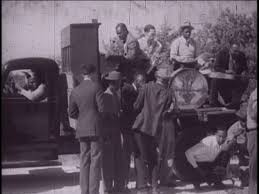
Williams takes this even further. Not only are the music and clothes of urbanity a lure away from the traditional homes in the community and Church, they are outright diabolical. In a touch that must’ve seemed a bit excessive even in 1941, Williams stages the climax before the cross with a jazz band playing on the back of a truck driven by the devil, who abruptly drives off to Hell after Christ banishes him from the sacred space on which Sister Martha has fallen, face all covered with the Blood of the Lamb.

In its apparent technical amateurism, it’s easy to ridicule The Blood of Jesus as naive or “primitive” – or to exalt it for just that reason, as J. Hoberman of The New York Times would do when he called it “a masterpiece of folk cinema” (though his writing about it now seems more nuanced).

The words “primitive” and “naive” always come off distasteful, a haughty, near-colonialist positioning of viewer over text. In this context, in which I am a white viewer watching a film by and for Black audiences from 75 years ago, this is even more dodgy.

In any case, watching The Blood of Jesus directly after Micheaux’s God’s Step Children, I’m not sure “amateur” is in any way how I would describe Williams’ film – the line-readings are better, the performers are clearly more comfortable, and he’s made the most of his miniscule funding. There is, as it were, a good faith attempt to depict relations between believers and non-believers, and no real condescension or ironic approach to the passion play. Though grounded in the rural, Southern Black Church of the early 20th century, it’s not an unfamiliar narrative to anyone who came of age attending Mass at Easter, but it’s also imbued with the politics and debates of its time and place. The material aspects of its production only deepen the resonance it must’ve had for its audience in 1941.

Again, like all the race movies glimpsed in this series so far, The Blood of Jesus is testimony to the ways in which cinema was being deployed to address anxieties and issues of interest to communities shut out, violently, from the theaters and the mainstream. I struggle to imagine what it must’ve felt like to see anything resembling your experience on screen for the first time.

Viewing these films, I find myself drifting further and further away from notions of “the text itself,” the idea that you must view a film in its four corners and nowhere else. The more you look at old films, the more arbitrary this idea becomes. The question isn’t whether this is a good or bad film, but rather what it means that it existed in the first place, how it came to be preserved, and how it should be viewed today.

Refusal of “extra-textuals” is a mark of bourgeois, and incredibly dull, privilege, and does little to contextualize the cinematic production we encounter. Spencer Williams and Oscar Micheaux continue to have things to say today, and not all of those things are in the films — though the films themselves remain crucial to watch.

Next up: Meshes of the Afternoon, Maya Deren, 1943

May 3, 2016 0 comments
0 FacebookTwitterPinterestEmail
FilmReviews

The auditory cinema of Notes On Blindness

by rick May 2, 2016
written by rick

[schema type=”movie” url=”http://www.notesonblindness.co.uk/” name=”Notes On Blindness” description=”A beautiful grappling with life, bodies, and spirit.” director=”Pete Middleton, James Spinney ” producer=”Mike Brett” actor_1=”Dan Renton Skinner” ]In 1980, the British theologian John Hull began to lose his eyesight permanently. Having struggled with vision problems his whole life, the process had irrevocably started toward total blindness. As he grappled with all that this would entail, he began keeping an audio diary, titled Notes On Blindness and eventually encompassing hundreds of hours of material – thoughts, reflections, anxieties, loneliness and isolation creeping in, but also a stubborn insistence: “If I was going to be blind,” he says, “then blindness must be understood.”

From the raw audio material – Hull’s soft, intelligent voice and clearly articulated ideas, the occasional commentary from and conversation with his wife, the heartrending and ghostly appearances of his children on tape – directors Peter Middleton and James Spinney craft in Notes On Blindness  a deeply moving portrait of a man grappling with an entirely new way of engaging the world. It’s one that draws on incredible reserves within him, but also one that tests his faith – a particularly acute and painful course to take for a theologian.

How do you make a visual document about the loss of sight? Middleton and Spinney find an ingenious, complex, and emotionally devastating solution. As Hull’s tapes play, actors mouth the words recorded, portraying the events described while the cinematography itself takes on the golden and sepia tones of memory, or the flickering of lights as they fade. Hull’s stand-in (Dan Renton Skinner) is frequently framed low in the shot, dwarfed by the suddenly imposing structures all around.

The central paradox – a cinema of blindness, based entirely on the aural – is always on our minds. The effect is striking and calls to mind Terrence Malick in documentary form, as lush fields and lonely seascapes are conjured while disembodied voices hazily remember things that are already threatening to vanish entirely. It’s a technique that approaches the spiritual, which is entirely appropriate to the topics at hand.

notes on blindness3

There are numerous moments of heartrending insight and quiet power. Hull relates a conversation he had with his young son inside a tent made of blankets:

“’Will you always be blind?’ he asks me. ‘Yes, I will.’ ‘Why can’t the doctors help you?’ ‘They tried, but sometimes there’s nothing left to try.’ ‘Why can’t God help you?’ ‘He does. He gives me strength and courage.’”

Hull’s daughter suggests that, if she cried directly into his eyes, he would be healed. “I realized,” Hull notes, “this idea came straight from Rapunzel.”

These are moments of high pathos, but most of Hull’s reflections are quieter, spoken in a clipped accent betraying his Australian youth. They are equally sad — a Christmas scene in which Hull struggles to enjoy, for the children’s benefit, the unwrapping of gifts he cannot see — but they also reveal an academic determined to come to grips with the only question that matters: How does one live now? It just so happens that, for Hull, this question has taken on a different sort of urgency and import.

In an incredible and impressionistic touch, the filmmakers gradually emphasize sound design as Hull speaks more and more of the sharpening of other senses. He listens to the rain, and we hear the different cadences of the water and where it falls – it’s a world suddenly made new through differentiated sound … raindrops in puddles, off eaves, patterns ebb and flow. “If only,” he wishes, “it could somehow rain inside the house.” And so it does, on film – the family sits around the kitchen table while unseen skies pour down on them.

notes on blindness2

The film ends on an appropriately questing note, with more than a little hope from Hull: having given up on a miracle, he decides the new possibilities of a different life are a kind of gift.

In its gentle beauty and sometimes bruising honesty, Notes On Blindness is also a kind of gift to us – an engaged and gorgeous attempt to manifest a world we couldn’t see if we tried.

May 2, 2016 0 comments
0 FacebookTwitterPinterestEmail
FilmReviews

Agonies, Ecstasies, and Impermanence in Home Care

by rick April 29, 2016
written by rick

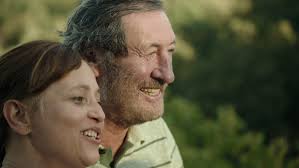
Slávek Horák’s Oscar-submitted debut feature Home Care is promising but uneven. A characteristically Czech mixture of comic-tragic tones, it leap-frogs from one mood to another. Some land while others don’t, but it’s a humanist film that never condescends to its characters.

But it showcases two fine, nuanced central performances – from Czech stars Alena Mihulová as our questing protagonist Vlasta, and Bolek Polívka as her husband Láda, by turns stoic, reproachful, and heartbroken, though consistently drunk – and some lovely glimpses of life in the vineyards a few hundred miles outside Prague.

Vlasta is a home care health worker, traveling by bus, car, motorbike, and foot to treat the invalids of her village. Her life has been given over to the health of others, which makes it all the more painful for everyone involved when an accident reveals she has health issues of her own. Given only half a year to live by the matter-of-fact doctors, she pursues a different course. In the past, she’s scorned the New Age wisdom of folk practitioners and cultish women’s self-help groups, but now she finds herself in need of the hope they provide.

home care2

So begins a clash between the materialist (and masculinist) logic of modern medicine and a different, more esoteric sort of engagement with the body and the world. At first, Horák seems to tip the scales heavily in favor of the ladies, and we expect a didactic critique — the village comedy by way of Katie Couric and Michael Moore. Instead, we get a much more ambivalent, bordering-on-cynical sort of look at both sides of the debate raging inside Vlasta. But the film’s heart is with the people, come what may.

There are comic touches throughout, resolutely preventing what might otherwise be a total slog. When a doctor asks if Vlasta drinks alcohol, she says, “No, mostly just wine.” Horák himself appears as the older couple’s eventual son-in-law – he offers to drive her to an appointment with a patient (she continues to practice despite increasing illness) and finds himself half-naked in a bathtub so she can clean an obese invalid, then walking out to the car. His fiancee, waiting outside for presumably a long time, quietly asks, “Did you … take a bath?”

These are light moments; others are less so. This is, after all, a film about a terminally ill woman taking care of terminally ill patients (and one guy who uses a wheelchair because he has “a fear of falling”).

Hovering over everything is an anxiety about money and the future. Láda – when not working on quixotic projects in his shed or pouring drinks upon waking – is angry from the start that she spends more cash on these people than she brings in, though it’s never quite clear what he does himself for the household finances. He can’t even stuff a bedsheet properly, for Christ’s sake.

But the relationship between them grows fascinating. It’s clear the film wants to contrast the two, in the same way it somewhat methodically sets up a masculine / feminine divide in the context of medicine. But as in that case, things are deeper and more complicated than they appear. He gives her a birthday gift, and Horák’s hand-held camera makes a quick jump, barely perceptible – this constitutes a big moment for her. Later, one of Vlasta’s new female friends insists he kiss her, because love is what she needs, and he storms out, either embarrassed by such openness or unwilling to be talked down to by the hippies who’ve infiltrated not just his village but his home.

home care3

Not all the pieces fit in Home Care – some of the symbolism is heavy-handed, the tonal shifts are abrupt, and there’s an unfortunate tendency for people to declaim rather than act. It’s clear that this is a first time director grappling with big themes on a small scale. But as we travel through the (frankly gorgeous) countryside, often in silence, and take in these lives, it’s difficult not to be at least somewhat charmed and affected.

The film closes on a wedding, as many others have and many more will. The only song in the film occurs, sung by Vlasta to her daughter. It’s an awkward heartbreaker, recounting their often fraught relationship since Vlasta’s own pregnancy with her – the kind of thing you hope nobody does at your wedding, in front of everybody. But it’s also a sincere tribute to all Vlasta knows will be left behind, written in plain verse and set to a folk melody.

As she sings, some guests watch in rapture, while others text on cell phones. It’s a true and poignant set of images, and Horák is a filmmaker worth watching.

April 29, 2016 0 comments
0 FacebookTwitterPinterestEmail
CommentaryFilmGreat Movies: The Counter Programming

The incestuous racial politics of Oscar Micheaux and the ambiguous text in God’s Step Children

by rick April 27, 2016
written by rick

[schema type=”movie” url=”http://www.imdb.com/title/tt0028942/” name=”God’s Step Children” description=”A young light-skinned Negress struggles to find her place in both the black and the white worlds.” director=”Oscar Micheaux” producer=”Oscar Micheaux” actor_1=”Alice B. Russell” ]Part of an ongoing effort to watch a set of films from non-White, non-U.S., non-male, and/or non-straight filmmakers and depart a little from the Western canon. The intro and full list can be found here.

Oscar Micheaux – the wildly prolific and successful early 20th century director of “race films” and generally considered to be the first Black filmmaker – courted controversy throughout his career. His depictions of Black middle-class life and values, and his often negative portrayals of some of his characters who did not embody what he saw as the best moral and social hopes for his people (rooted, in part, in an admiration for Booker T. Washington and a focus on social uplift), did not always sit well with other leaders at the time. Or since.

This was never more true than in God’s Step Children (1938), a film that drew actual pickets from the NAACP and others. Watching it today, it’s not hard to see why. Even if the focus on “passing” and the still-shocking statement from its protagonist that “the Negro does not like to think” somehow didn’t draw outrage, the constant theme of incest presumably would have.

We began this series with looks at two other Micheaux films: Within Our Gates and Body and Soul. Both contained similar elements that characterize Micheaux: a pedagogical focus rooted in cultural uplift, a celebration of bourgeois virtue, and, of course, the near-total absence of white characters. These were films by, for, and starring members of the American Black community, imbued with Micheaux’s rather heavy-handed politics.

They were also both silents, unlike God’s Step Children – to the detriment of the latter. The stilted phrasing of the actors skirts self-parody, and, on the whole, the film has a thrown-off kind of feeling. Indeed, Micheaux is said to have favored first-takes and refused re-writes. Still, if the dialog is abysmal and the delivery worse, God’s Step Children remains a fascinating narrative grappling, however clumsily, with big themes, and, as in the earlier two films, plays around with its narrative in interesting ways.

gods step children4

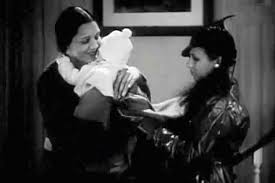
Loosely drawing on themes from 1934’s Imitation of Life (famously, and gorgeously, remade by Douglas Sirk 25 years later), God’s Step Children tells the story of Naomi, a light-skinned girl dropped off as an infant with Mrs. Saunders, a devout neighbor who raises her as her own. The reason for Naomi’s abandonment isn’t spelled out, but it’s safe to infer that her skin tone has something to do with it.

We flash forward to a school-aged Naomi, now a young terror and miscreant. When she’s dropped off at the local school for Black children, she hightails it instead to the one for local whites – even in elementary school, her rejection of her race, and her desire to pass, is clear. Mrs. Saunders might be blind to this, but her other child Jimmy is not, who even declares Naomi should have the notion beaten out of her. As Naomi morphs into a full-fledged antagonist and Jimmy becomes the film’s moral center, it’s not hard to tell where Micheaux’s allegiances lie.

When Naomi is caught maliciously tripping her classmates on the playground and asked to atone for her misdeeds, she literally spits in the teacher’s face, declaring, “I hate you and I hate this school.” Punishments ensue from teacher and foster mother alike, leading Naomi to create rumors intended to get her teacher fired. She’s portrayed as a pretty loathsome little girl – any sympathy for the existentially and racially adrift orphan is more or less absent. Deciding they have no other option, the adults ship her off to a convent school instead, if she’s ever going to make something of herself and tame her nastiness.

gods step children2

The narrative picks up many years later. Adult Jimmy is a handsome, debonair figure, dressed in fashionable suits and sporting a Duke Ellington mustache. He’s engaged to the teacher’s daughter Eva (played, curiously, by Ethel Moses, the same actress who played the teacher – it makes for a confusing moment in the film). Eva is a model of bourgeois femininity and grace, which we know because she plays the piano.

Jimmy is a self-made man, having worked as a Pullman porter, saved scrupulously, and is now set to buy his dream farm. By all available evidence, this represents Micheaux’s, or the film’s, vision of respectability and honest success. When another Black man tries to tempt Jimmy with get-rich quick schemes running rackets, he’s haughtily rejected, leading to Jimmy’s famous denunciation of the “Negro [who] does not like to think,” a blistering speech that still manages to make one queasy. It’s an irony that seems lost on Micheaux’s film: we are meant to despise Naomi and admire Jimmy, though both adamantly reject their fellow Blacks in exceedingly broad terms, though in differing ways.

gods step children3

At this point, Naomi returns from the convent, a beautiful young woman in fashionable dress. And cue the mind-bogglingly overt incest themes. As Jimmy and Naomi cautiously check each other out after all these years, their mother makes the following pronouncement:

“Well. I have never seen such a meeting between brother and sister. You act like two long-lost lovers. Come now, boy, take her in her arms and kiss her. Can’t you see what she needs?”

Yes, yes, I suppose we can, Mrs. Saunders.

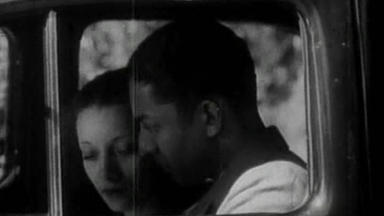
The two take off for the city for some post-convent fun. They take in a show, featuring a quite lascivious dance, which Naomi at first stares at bewildered but then begins to enjoy, perhaps a bit too much, gazing sidelong at Jimmy with desire. It is true that they are not related by blood, but that does nothing to drain this part of the narrative of shock.

gods step children5

Naomi makes plain her love for Jimmy, suggesting how happy they could be if he broke it off with Eva and married her instead, but this is not something Jimmy is prepared to do. (Does he want to? The text is ambiguous.) Fidelity – to say nothing of anti-incestuous uprightness – is emphasized as a middle-class virtue to which one aspires. Instead, Jimmy and the mom set her up with a neighboring farmer named Clyde, portrayed as Black country bumpkin, well-meaning and well-liked, if not sophisticated and easily duped. The film deals with Clyde roughly. Naomi agrees to marry him despite her vocal distaste, not just for his manners but his appearance: “I could never love a man who looks … like that!” she declares. Yikes, Naomi.

A year later, there’s a baby in tow, but he’s introduced only to be foisted off by Naomi on (once again) Mrs. Saunders. The narrative has come full-circle – the light-skinned infant from the start, rejected for that reason, has been replaced by a dark-skinned infant at the end, rejected just the same. Mrs. Saunders accepts out of duty in both cases, because that’s what one does. Naomi then reprises the famous speech from Imitation of Life, in which she brazenly declares her total rejection of her race and leaves for the city to pass as white.

This, as in all “passing films”, does not end well. This is not a genre I had quite realized was so prominent, though — in its combination of fraught anxieties, palpable tragedy, and inherent narrative tension — it’s not hard to understand its appeal. Micheaux’s film doesn’t punish Naomi with violence from without, a common trope, but rather self-harm. Returning to the farm to discover a blissful vision of middle-class life in which she no longer has a part, having relinquished her claim to participation both in the family and the community, she takes her own life. Her young son glimpses her at the window peering in, but is told there was no one there. Did Mrs. Saunders not see her prodigal daughter, or is this simply her final rejection of the foolish young woman who refused to know herself? The text is, again, ambiguous.

I have addressed little of the actual cinematic qualities of the film. This is for two reasons. First, if they are to be taken at face value, there is little to discuss. God’s Step Children is not a visually distinguished film, and Micheaux, never particularly heralded for his eye, seems totally indifferent to images here. Secondly, the film itself was cut and re-cut in response to protests, and entire scenes are said to be missing. This is almost a paradigm of the free-floating text, a copy for which no original exists. We have only the text to examine. But what a bizarre, rich text.

This is a film steeped not just in intra-racial anxiety but, by necessity, that of class. God’s Step Children posits several possibilities: the boot-strapped and heroic Jimmy, the no-good racketeers operating on the fringes and doing their own people discredit, the bourgeois schoolteacher, Clyde the old-style but still virtuous farmer, Mrs. Saunders, devout and bourgeois. Naomi functions mostly as a threat to her family’s class ascendancy – the implication being that a good faith embrace of Blackness and the wider community will lead to social uplift, when paired with Christian virtue and a rejection of sin. It is Black pride as civic virtue. Her rejection of her people leads to her exclusion from the self-made racial communities, and ultimately to her downfall and death.

So, what about that incest, though? Comparing the film to Michaux’s Veiled Aristocrats (1932), which dealt with similar themes, J. Ronald Green writes:

“The meaning of this repeated incest configuration is unclear but suggestive. The meaning is surely inflected by the main difference between these two instances: in Veiled Aristocrats the woman is healthier in two ways – she is afraid of the incestuous moment and she rejects leaving her race; in God’s Step Children, the woman is unhealthy in those respects – she vamps her brother semi-incestuously … and she obsessively hates her race and passes for white.”

A reasonable reading, though it doesn’t exactly explain why it should be incest rather than something else that serves this narrative function. One possibility, already discussed, is that it lays bare Micheaux’s convictions about the relation between virtue and social uplift – it’s just a particularly shocking model to deploy, and fits in well with the melodramatic/tragic impulses of the time (and themes borrowed from the Victorian literature he loved so much).

One final possibility: it is yet another double in a film full of them. We already have two infants, at the beginning and the end; two farmers, embodying separate modes of engagement; two couples, in Jimmy/Naomi and Jimmy/Eva; two models of masculine behavior, in Jimmy and the racketeers; we even have an extra-textual doppelganger in Ethel Moses, who plays both a mother and her own daughter. Why not the supreme doubling as a metaphor for a community at odds with itself, under the unspoken social pressures and racist terror of the age?

Does Micheaux intend any of this? I would submit it doesn’t matter. When you have only a text, many readings become possible. God’s Step Children is a scandalous one, but also a striking sociological examination of the cultural tensions that animated 1930s film, and art more generally, on the margins.

Next up: The Blood of Jesus, Spencer Williams, 1941

April 27, 2016 0 comments
0 FacebookTwitterPinterestEmail
Newer Posts
Older Posts

About

About

Towards a provisional theory of the cinema, or, failing that, just some shit about movies

Authors
Rick Kelley
Lark Lundberg

Keep in touch

Facebook Twitter

Categories

  • Conversation
  • Film
  • Film By Film
  • Great Movie Project
  • Great Movies: The Counter Programming
  • Guest
  • News
  • Other
    • Commentary
    • Film
    • Interview
    • Reviews
    • Song for a Sunday
  • Streaming Selections
  • TV
  • Uncategorized
  • Vegan Horror

Archives

  • April 2019
  • March 2019
  • January 2019
  • December 2018
  • November 2018
  • October 2018
  • September 2018
  • August 2018
  • July 2018
  • June 2018
  • May 2018
  • April 2018
  • March 2018
  • February 2018
  • January 2018
  • December 2017
  • November 2017
  • October 2017
  • September 2017
  • August 2017
  • July 2017
  • June 2017
  • May 2017
  • April 2017
  • March 2017
  • February 2017
  • January 2017
  • December 2016
  • November 2016
  • October 2016
  • September 2016
  • August 2016
  • July 2016
  • June 2016
  • May 2016
  • April 2016
  • March 2016
  • February 2016
  • January 2016
  • December 2015
  • October 2015
  • September 2015
  • August 2015
  • July 2015
  • June 2015
  • May 2015
  • April 2015
  • March 2015
  • February 2015
  • January 2015
  • December 2014
  • November 2014
  • October 2014
  • August 2009
  • September 2008

Recent Posts

  • China Girls, Death Proof, and the Hidden Face
  • Old News: Old Noise Edition
  • Old News: April 1, 2019
  • Nicolas Winding Refn, Marginalia, and the Deaths of Cinema
  • And now, let us praise Kanopy

Recent Comments

  • Franklin Kat on Michael Shannon shines again in Frank & Lola
  • Sean Tempesta on Cinema and dream-logic in Meshes of the Afternoon
  • ludditerobot on The Left-Wing Slapstick and Iconic Songs of 1937’s Street Angel
  • Franklin Kat on The Left-Wing Slapstick and Iconic Songs of 1937’s Street Angel
  • Arijit Mukherjee on Great Movies Project: The Counter-Programming
  • Facebook
  • Twitter

@2021 - All Right Reserved. Designed and Developed by PenciDesign


Back To Top
Luddite Robot
  • Reviews
  • Commentary
  • Great Movie Project
    • Great Movie Project
      Bride of Frankenstein is a movie for and…

      January 25, 2018

      Great Movie Project
      The Enduring Appeal of Nick and Nora in…

      November 29, 2017

      Great Movie Project
      The Ahistorical Fever Dream of The Scarlet Empress

      August 2, 2017

      Great Movie Project
      Dreams, Mundanity, and the Anarchist Yearnings of L’Atalante

      July 12, 2017

      Great Movie Project
      Duck Soup Is And Will Always Be A…

      April 19, 2017

  • Counter Programming
    • Great Movies: The Counter Programming
      Walking and Talking in the Shadow of Kanchenjungha

      March 7, 2018

      Great Movies: The Counter Programming
      A Brief Encounter in My Mother and Her…

      February 9, 2018

      Great Movies: The Counter Programming
      Horror’s Refusal in Farrokhzad’s The House Is Black

      October 13, 2017

      Great Movies: The Counter Programming
      The rage and beauty of The Cloud-Capped Star

      October 3, 2017

      Great Movies: The Counter Programming
      The daylight noir and social issue empathy of…

      June 22, 2017

  • Vegan Horror
    • Vegan Horror
      Julia Ducournau doesn’t think her film Raw is…

      June 7, 2017

      Vegan Horror
      Licking our wounds: The vampiric masculinity of Ravenous

      December 13, 2016

      Vegan Horror
      Eggertsson and animals: An approach to horror cinema

      September 15, 2016

      Vegan Horror
      “It’s Not My Nature” – Vegetarianism, Body Horror,…

      August 30, 2016

      Vegan Horror
      Bodies and Carcasses in Predator 2

      August 23, 2016

  • Interview
    • Interview
      Jasmine Leyva’s doc The Invisible Vegan aims to…

      May 3, 2017

      Interview
      Bridging The Abyss: An Interview With The Directors…

      November 28, 2016

      Interview
      7 Days in Ohio: An Interview with Nathan…

      September 12, 2016

      Interview
      Film Critic Phil Dy talks New Filipino Cinema

      June 17, 2016

      Interview
      “I Love Seeing Film Projected.” A Conversation with…

      March 22, 2016