Top Posts
Madeline’s Madeline: An Unclassifiable Panic Attack Maybe-Masterpiece
Shoplifters Steals Moments of Wonder from the Mundane
Burning and Forgetting What’s Not There
Kusama: Infinity Expands Beyond The Canvas
Mandy Risks Little, Wins Little
In We The Animals, The Children Are Away...
The Seagull Isn’t Quite Chekhov, But It’s Still...
5 Million Ways Boots Riley Isn’t Sorry To...
American Animals’ and the Queasiness of the Heist
A Star Is Born In Hearts Beat Loud
  • Reviews
  • Commentary
  • Great Movie Project
    • Great Movie Project
      Bride of Frankenstein is a movie for and…

      January 25, 2018

      Great Movie Project
      The Enduring Appeal of Nick and Nora in…

      November 29, 2017

      Great Movie Project
      The Ahistorical Fever Dream of The Scarlet Empress

      August 2, 2017

      Great Movie Project
      Dreams, Mundanity, and the Anarchist Yearnings of L’Atalante

      July 12, 2017

      Great Movie Project
      Duck Soup Is And Will Always Be A…

      April 19, 2017

  • Counter Programming
    • Great Movies: The Counter Programming
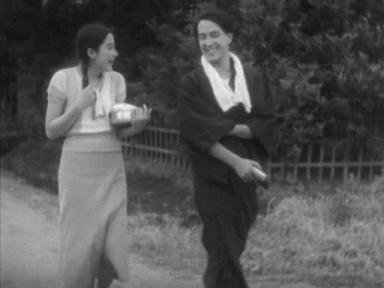
      Walking and Talking in the Shadow of Kanchenjungha

      March 7, 2018

      Great Movies: The Counter Programming
      A Brief Encounter in My Mother and Her…

      February 9, 2018

      Great Movies: The Counter Programming
      Horror’s Refusal in Farrokhzad’s The House Is Black

      October 13, 2017

      Great Movies: The Counter Programming
      The rage and beauty of The Cloud-Capped Star

      October 3, 2017

      Great Movies: The Counter Programming
      The daylight noir and social issue empathy of…

      June 22, 2017

  • Vegan Horror
    • Vegan Horror
      Julia Ducournau doesn’t think her film Raw is…

      June 7, 2017

      Vegan Horror
      Licking our wounds: The vampiric masculinity of Ravenous

      December 13, 2016

      Vegan Horror
      Eggertsson and animals: An approach to horror cinema

      September 15, 2016

      Vegan Horror
      “It’s Not My Nature” – Vegetarianism, Body Horror,…

      August 30, 2016

      Vegan Horror
      Bodies and Carcasses in Predator 2

      August 23, 2016

  • Interview
    • Interview
      Jasmine Leyva’s doc The Invisible Vegan aims to…

      May 3, 2017

      Interview
      Bridging The Abyss: An Interview With The Directors…

      November 28, 2016

      Interview
      7 Days in Ohio: An Interview with Nathan…

      September 12, 2016

      Interview
      Film Critic Phil Dy talks New Filipino Cinema

      June 17, 2016

      Interview
      “I Love Seeing Film Projected.” A Conversation with…

      March 22, 2016

Luddite Robot
Film critique, theory, and assorted nonsense.
CommentaryFilm

China Girls, Death Proof, and the Hidden Face

April 14, 2019

Old News: Old Noise Edition

April 8, 2019

Old News: April 1, 2019

Nicolas Winding Refn, Marginalia, and the Deaths of Cinema

CommentaryFilm

And now, let us praise Kanopy

January 24, 2019

Warren Sonbert and the Relief of Anti-Narrative

January 14, 2019

The World Is Ending and It Doesn’t Matter

The Best Films of 2018

FilmReviews

Madeline’s Madeline: An Unclassifiable Panic Attack Maybe-Masterpiece

December 21, 2018

Shoplifters Steals Moments of Wonder from the Mundane

December 11, 2018

Burning and Forgetting What’s Not There

Alien, Musicology, and Reading Soundtracks

CommentaryFilm

Shocktober III: Halloween 2018 Edition

October 24, 2018

Shirley Jackson’s The Lottery Traumatized Schoolkids in 16 mm

October 18, 2018

Shocktober 2018 II: Another Reshockening (of Horror)

Häxan is a movie made by a movie character

CommentaryFilm

Shocktober 2018

October 7, 2018

Unprofessional! Spring Night, Summer Night

October 3, 2018

The Wild Boys: A Luddite Robot Conversation

Kusama: Infinity Expands Beyond The Canvas

CommentaryFilm

On Bernie Sanders, Rabbi Manny Shevitz, and The Donald, or: Cultural Production In The Age Of Deborah Gibson

by rick April 25, 2016
written by rick

[schema type=”movie” url=”http://www.imdb.com/title/tt0120488/” name=”My X-Girlfriend’s Wedding Reception” description=”A commentary on the film careers of Bernie Sanders and Donald Trump.” director=”Martin Guigui” producer=”Martin Guigui” actor_1=”Bernie Sanders” ]The 2016 election cycle has proven to be one of the more contentious in recent memory. The execrable possibility of President Donald Fucking Trump, Goddammit has cast a shadow on all the goings-on, but even the relatively mild-mannered Dems have been getting, well, a bit testy.

Competing cries of “Hillary’s a fascist war-mongering shill, and also a woman, which is just kind of weird and gross in and of itself if you think about it” and “Bernie Bros are killing America and Sanders supporters are complicit unless they set up re-education camps for the dumbest among them” echo across the land, or at least the internet, dividing erstwhile comrades, disrupting polite Democratic meals, making light-hearted jokes increasingly difficult. It’s a dark electoral time in the land of the free and easily distracted.

And so it is at this point I’ve decided to go ahead and examine Bernie Sanders’ and Donald Trump’s respective film careers. What could go wrong?

For the record, I wanted to include Clinton and Ted Cruz, but there wasn’t enough material. Hillary has shown up repeatedly on SNL, a show which hasn’t been interesting in at least a decade, and of course on Broad City, but there’s just not much to say. She’s Hillary and appearing on television, which seems the extent of the joke. This has parallels to Trump’s film career, but it’s not particularly fascinating. Ted Cruz’s IMDB entries are a dark, depressing portal into the fever dreams of the right, and I just can’t fathom looking at his fucking face more than is required by this sorrowful age in which we find ourselves. I didn’t even consider John Kasich, which, in its wisdom, also seems to be the prevailing view of the electorate.

Sanders, however, appeared in a cameo in My X-Girlfriend’s Wedding Reception, a little-seen and instantly forgettable film most notable for said appearance, but which turns out to be rather instructive. And the Donald, of course, has had an illustrious cameo career, appearing in everything from “The Fresh Prince of Bel Air” and “The Nanny” to “Sex and the City” and everyone’s favorite exemplar of the Trump brand, Home Alone 2: Lost In New York, in which he gives half-hearted directions to a lost child and then just walks away. “The Apprentice”, of course, was a veritable cultural phenomenon and one which its star parlayed into the most depressing political launching pad of our time, despite its fundamental characteristic of being largely unwatchable and dispiriting.

To be clear, I do not mean to equate the two guys. But the fact that these cultural products exist is odd and interesting, and some nuggets of insight might be gleaned from their examination. Or so I would quixotically suggest. We’ll see, I suppose.

Let’s start with Bernie, swiping left, as it were. As his list of credits demonstrate, he hasn’t been too prominent in the world of entertainment, which itself makes his turn in My X-Girlfriend’s Wedding Reception notable, if a little bizarre. The film is a low-budget lark, directed by Martin Guigui, otherwise “best known” for his video short Rock Candy Funk Party: Groove Is King. (In other words, not particularly well-known.) A culture-clash comedy imbued with a very Vermont, very DIY aesthetic, it is – to be generous – not particularly accomplished. Yet there’s a warmth and sincerity underlying its terrible puns and tired stereotypes that actually elicits an occasional chuckle.

Former teen pop sensation Deborah (formerly Debbie) Gibson plays the lead, a Jewish bride who has just wedded her of-Italian-descent groom. In oversized, broad caricatures, the two families come together at the reception, and the expected, reductive hijinks ensue. Promises are broken, tensions are revealed, bridesmaids are banged. Sanders plays the Rabbi, saddled with the deeply unfortunate moniker “Rabbi Manny Shevitz,” a joke that would’ve been stale in a Zucker Brothers comedy 30 years ago and certainly didn’t somehow become hilarious in the ensuing decades. His opposite is inhabited by Dom DeLuise, who gets his own terrible name: “Father O’Rdeal.” Sigh. This is how things go in My X-Girlfriend’s Wedding Reception.

Sanders essentially does a riff on his persona, a persona few outside of Vermont were familiar with at the time of the film’s release, but which gains resonance now. He’s basically playing Larry David playing Bernie Sanders, which at the very least speaks to a kind of genial self-awareness and admirable lack of self-seriousness – both qualities he’s frequently accused of lacking these days. Rabbi Manny Shevitz’s speech to the congregated families begins and ends with well wishes to the happy couple, but takes a long detour in the middle, as he angrily recalls, a propos of nothing, how the Dodgers left Brooklyn. It’s not the greatest thing, but it’s kind of funny – a well-meaning stump speech from a Vermont Jew who momentarily gets lost in his own thoughts.

Not long ago, when news of this unlikely entry in the political cinematic pantheon spread across the internet like so much Kosher-for-Passover wine spilled as someone’s uncle reached for the haroset, The Times of Israel noted that it was a rare example of Sanders explicitly acknowledging his Judaism. I mean, “Rabbi Manny Shevitz” is not the sort of role a man trying to downplay his religion takes. Sanders’ Jewishness is a fundamental aspect of his persona and, one imagines, of his identity – not to mention the unspoken punchline of Larry David’s send-ups of the Senator. But it is also, curiously and more than a little disconcertingly, not something we hear much of now. I personally know people who are surprised to learn of it at all, somehow. “The First Female President” is a stock staple of Clinton lore; “The First Jewish President” is, well, not something people say very often, and definitely not something that animates the Sanders campaign message itself. You can draw your own conclusions about why that might be. (Spoiler: it’s anti-Semitism.)

I’m sure the campaign would argue instead that they are less interested in “identity politics” than in the broader economic message, the “revolution” they hope to foster. And that’s fair enough – no one is required to trumpet their theological or cultural allegiances on the campaign trail. But it’s interesting to note just how much this was not always the case. My X-Girlfriend’s Wedding Reception is a time capsule revealing a different, more light-hearted Bernie, and an unequivocably Jewish one. Even the basic joke of his monologue seems rooted in Catskills comedy – in a certain sense, it’s a cut-rate Marx Brothers bit, with flashes of Henny Youngman. The film also features a brief appearance from Jon Fishman – the drummer and namesake of cult favorite Phish, beloved by young, pot-smoking Jewish boys everywhere – dressed as a baby. I don’t know what that means, apart from “an image that now haunts my sleep,” but it bears mentioning.

And now we pivot to the decidedly darker space occupied by one Donald Trump. In cameo after cameo, the Donald cements his brand. What is that brand? He is – proudly, unapologetically – a rich man named Donald Trump.

There is rarely another joke – it is hard to imagine Trump playing “Rabbi Manny Shevitz” and good-naturedly telling long-winded stories about the baseball teams of his youth. No, Trump is Trump. When he walks through the door on “The Fresh Prince of Bel Air”, he literally announces, “I am Donald Trump.” Carlton, our goober-dancing California cousin, so far removed from the b-ball courts outside of the schools of West Philadelphia, repeats it, in disbelief and wonder: “You’re Donald Trump!” Then he faints in joy, an overwhelmed lover of all things capitalistic encountering his God in the flesh.

This is a theme that is repeated ad nauseum. There is no other joke. When Macaulay Culkin encounters Trump in the hotel lobby in Home Alone 2, we are simply meant to register, “Hey, look, that’s Donald Trump.” The candidate’s actual actions in the film are, if you consider them, rather shitty – he could’ve been credited as “man who does not try very hard to help child.” But of course, he is credited instead as “Donald Trump.” One wonders if there is a significant difference, but I’m not going to get all political, calm down!

What’s striking is how Trump deploys his own self-performance as brand-building, over and over. This is not what you would generally think of as acting. They are walk-on parts of a real, terrible person in fictional worlds. But for years, this in itself was perceived as endearing. It is as though he’s doing us a favor by showing up, and just being the wonderfully egocentric and fantastically wealthy person he is. Home Alone 2 never for a minute considers that it is anything but charming that Donald Trump walked through a room, which is almost literally the only thing he does. In Sex and the City, the Donald is desired at the dining table, but leaves scornfully when no table has been reserved. This, too, seems intended to be charming, despite the fact that anyone who behaved like this in real life would be perceived as a monumental dick. There is little evidence that this is not, in fact, how Donald Trump behaves in real life.

In short, Trump puts the capital in social capital – his cameos are uncanny reflections of his own demeanor. But, for whatever reason, this is constructed and intended to be received as a delightful spoof that requires no actual spoofing. It is not a vision of the thing but the thing itself. For some reason, we are meant to admire him, just for being him. (Spoiler: that reason is capitalism.)

These are, I should add, not particularly good cultural products. They are even, one might say, very bad. But both Trump’s referentially soulless cameos and Sanders’ Manny Shevitz schtick in a no-budget comedy that also features Debbie Gibson and members of Phish hint at aspects of what it means to engage with art on a public stage, and accidentally (perhaps) reveal qualities of the time in which we live and create and register the political connotations of allegedly non-political work.

__

A final note and disclaimer, because I would remiss if I didn’t point it out and my girlfriend would be mad at me. I may have been more generous to My X-Girlfriend’s Wedding Reception than others in part because Debbie Gibson was my first arena show. “Lost In Your Eyes” and “Electric Youth” played on repeat as I hung out in the basement of my parents’ house, cassettes I recall actually wearing out, sadly. I was so excited at the show I vomited in the parking lot, much like a Phish fan, I suppose, except with fewer narcotics in my system and many more melodies. In any case, I just thought it should be acknowledged. Don’t ever say I wasn’t upfront about my questionable allegiances.
April 25, 2016 0 comments
0 FacebookTwitterPinterestEmail
FilmReviews

Faith-based filmmaking done right – Jeff Nichols’ “Midnight Special”

by rick April 19, 2016
written by rick

[schema type=”movie” url=”http://www.imdb.com/title/tt2649554/” name=”Midnight Special” description=”Jeff Nichols is a faith-based filmmaker, and Midnight Special is his religious E.T.” director=”Jeff Nichols” producer=”Glen Basner” actor_1=”Michael Shannon” ]Jeff Nichols is a faith-based filmmaker, and Midnight Special is his religious E.T.

Before you throw up your hands in thinkpiece-allergic disgust, let me say: I have no idea what Nichols’ faith might be. I haven’t researched it, and don’t particularly plan to. The films speak for themselves.

Like the Coen brothers, his films – Shotgun Stories, Mud, Take Shelter, and now Midnight Special – mine particular areas of the American theological imagination. They’re genre pictures with G-d on their mind. And like the Coens, Nichols’ films might even be said to work as Existentialist parables, lived-in depictions of deeply conflicted people trying to navigate a fallen world without guidance.

midnight special1

In Nichols’ case, this became most clear with Take Shelter, one of the greatest American films in a decade. Through the story of a father and husband (Michael Shannon) granted the knowledge of impending doom (maybe), Nichols draws out the line and suspends our disbelief. Is Shannon mad or does he really have access to something like the divine? In its ambivalent focus on fatherhood, Take Shelter becomes a clear retelling of the story of Isaac – the bomb shelter in the yard substitutes for a sacrificial altar, as we watch a man grapple with opposing truths. As in the Coens’ similarly Old Testament-fueled A Serious Man, we end on the cusp of revelation, disaster looming. And then the credits roll.

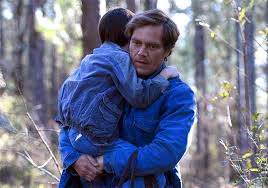
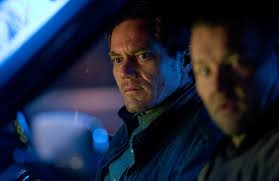
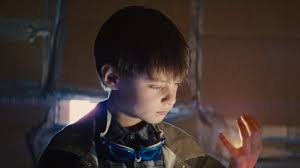
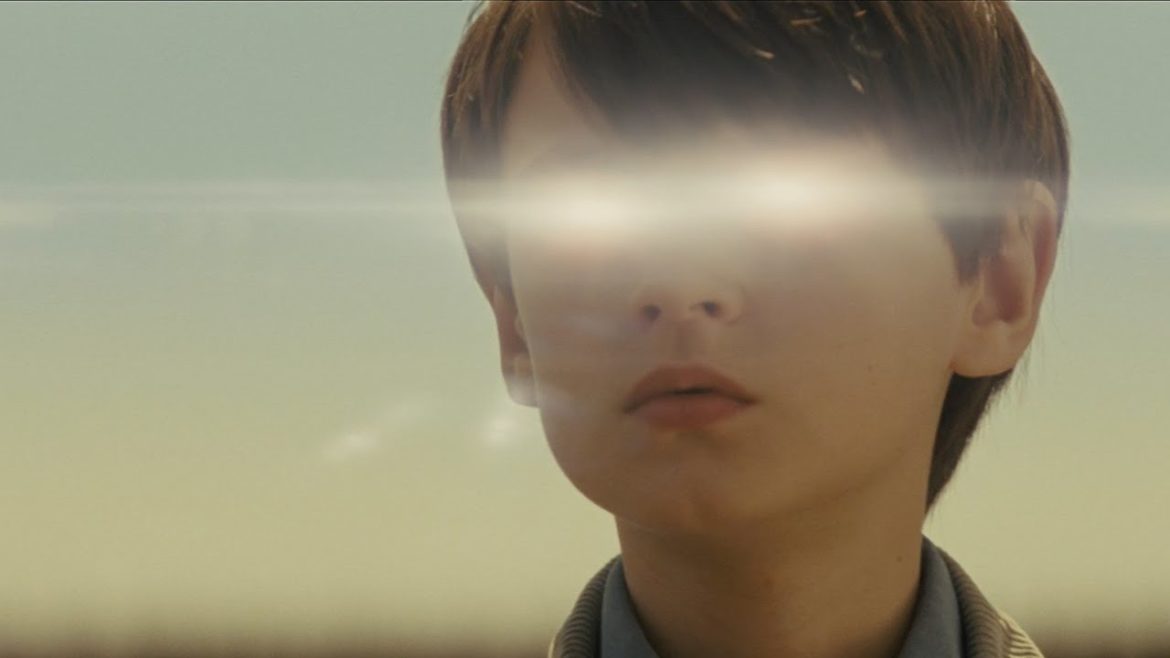
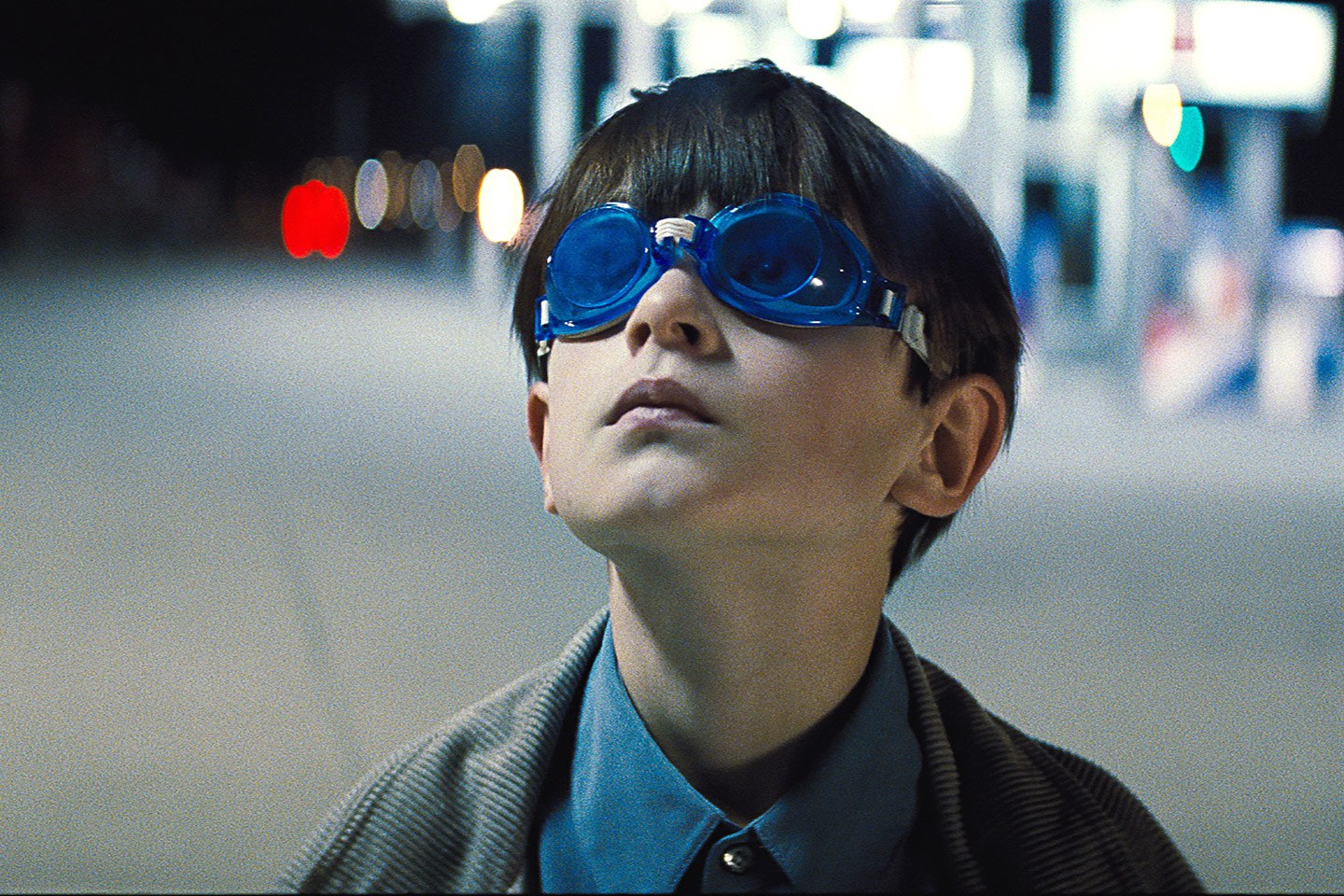
Despite its sci-fi trappings, Midnight Special is up to something similar. The young Alton Meyer (Jason Lieberher, continuing Nichols’ streak of eliciting powerful performances from kids) is introduced to us in goggles and headphones, hiding under a bedsheet like the actual E.T. Roy (Shannon yet again) helps spirit him to a car with the help of accomplice Lucas (Joel Edgerton, in a performance that quietly steals the show). A TV informs us that we’re witnessing the next phase in a kidnapping – Amber Alerts ring out, along with sketchy information about our protagonists.

midnight special6

But it becomes clear we’re in Spielberg territory, with echoes of Stephen King. Alton is actually an unusually gifted little guy: he can shine blinding light out of his eyes, bring down satellites, and hear radio waves. Both of his “kidnappers” have other stories to tell – Roy is his father, deeply committed to his safety; Lucas is Roy’s friend, a state trooper who helps out of loyalty and eventually out of belief.

midnight special5

In a nod to the great, paranoid chase films of the 70s and 80s, we discover Alton’s very much in demand by nefarious forces. The government thinks he’s a weapon. A doomsday cult thinks he’s their savior. Alton doesn’t wish to be either. The three of them rush to the house of Sarah Tomlin (an impressive Kirsten Dunst), Alton’s mom and Roy’s ex, who fled the weirdo cult commune for reasons left mostly undiscussed. Everyone is after them.

Throughout all this, Nichols builds an uncanny mood and atmosphere. Alton is a pint-sized adult, a Spielbergian otherworldy sort before we even discover his gifts, and really the most calm person around. The adults say more with their eyes and bodies than they do with their words. As we cross the Bible Belt, from Texas to Louisiana, attempting to find the coordinates Alton has foretold as the site of some great Happening, Nichols creates a serious disjunct between the magic realism of the narrative and the everyday Southern trappings of the sets. This is where he excels as a director: making the ordinary pulse with portent, filling quiet spaces with ominous depth. From the cars to the filling stations to the motels to the fields, this is a recognizable world. The fact that it contains a boy who shoots lasers from his eyes seems almost incidental.

midnight special2

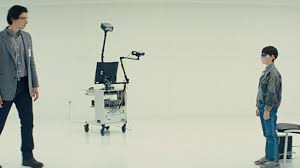
Much like in E.T., we are firmly on the side of the freak. Every rational system lines up against his freedom, seeing him only as a means to an end. (The suddenly ubiquitous Adam Driver has yet another terrific turn as an NSA analyst who’s tempted … well, by the dark side, I guess. Interestingly, in Nichols’ world, that Dark Side is also the rational one.)

midnight special3

It’s difficult to speak much more about Midnight Special without spoilers. Some commenters have responded without enthusiasm to its climax. I thought it worked extraordinarily well both in terms of the narrative and the metaphor of parenthood, or care, underlying it. There’s no doubt Nichols moves slowly; this is occasionally one of the slower “chase” movies I can imagine. Until it’s not.

Perhaps that’s because the film is less interested in the chase than the wonder underlying it. Other critiques have said the parts are underwritten. Nope. Shannon excels as a man grappling with another impossible set of decisions, Edgerton is affecting in his stoic role (and his transition), and Dunst completely sells the final moments. Her character, initially seeming a minor role, ends up being the crucial one, and the looks that pass over her face in the end are an acting showcase. She actually reminded me a bit of Ruan Ling-Yu in The Goddess, channeling multiple internal emotions at once.

midnight special7

As in Take Shelter, Nichols’ focus is on the unknowable and the inexplicable – in a word, the metaphysical. But it’s the link between that and our sense of duty as living agents that gives his films so much power. The connections between his characters pulse with life and empathy, as they make decisions without any clue whether they are doing right. They simply must choose. He’s a serious filmmaker whose stature will only grow.

April 19, 2016 0 comments
0 FacebookTwitterPinterestEmail
FilmReviews

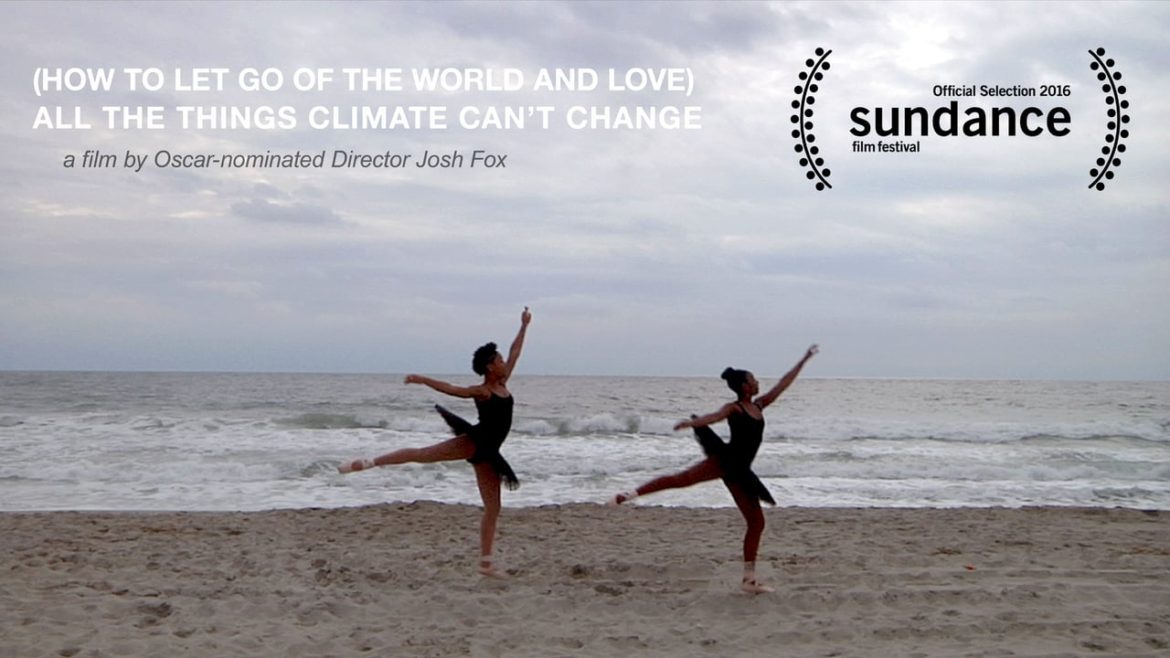
Dancing in the face of climate change: “How To Let Go Of The World And Love All The Things Climate Can’t Change”

by rick April 18, 2016
written by rick

[schema type=”movie” url=”http://www.imdb.com/title/tt5246328/” name=”How To Let Go Of The World And Love All The Things Climate Can’t Change” description=”Documentarian Josh Fox (“Gasland”) travels the globe to meet with global climate change “warriors” who are committed to reversing the tide of global warming.” director=”Josh Fox” producer=”Deia Schlosberg” actor_1=”Josh Fox” ]Anyone who has thought seriously about climate change has, at some point, reached the conclusion that we’re pretty well fucked at this point.

If you count yourself in this group, Gasland director Josh Fox’s new documentary – the half-charmingly, half-clunkily titled How To Let Go of the World: And Love All the Things Climate Can’t Change – is aimed straight at you.

It’s not a pretty picture. The essentially unanimous warnings from scientists, the overwhelming evidence of coming calamities, and the shameful responses from governments of the world who do nothing (or, worse, soldier on to the brink) – this is the stuff ecological depression is made from. And, as usual, the brunt of the climate disaster will fall, inexorably and seemingly inevitably, on the most vulnerable communities of the world, human and non-human alike. To its credit, Fox’s film wonders out loud what many of us only mutter privately: What’s even the point anymore?

Eventually, we are provided some speculative answers, but first, the film digs deep into the issues, criss-crossing the globe and putting human faces to the grim numbers that advocacy docs usually trot out humorlessly. From An Inconvenient Truth on, there’s been an unfortunate PowerPoint flavor to such efforts, burying the lives of real people under the weight of finger-wagging statistics to the point that the effect is closer to boredom than outrage. This, thankfully, is not something anyone will accuse How To Let Go of perpetrating.

how to let go3

We open on some ingratiating footage of Fox dancing joyfully to “Obla Di Obla Da” in his apartment – this is several years ago, hot on the heels of a local victory to protect the Delaware River Basin. It’s a silly, celebratory moment (it turns out Fox has a background in dance), but the weight and scope of the struggle emerges almost immediately.

A battle has been won, but the war for a livable planet isn’t going well. Starting from the personal – the tree he planted as a child is dying from an onslaught of insects whose presence is directly related to climate change – Fox rattles off the requisite numbers regarding expected sea level rise, acidification of the oceans, the intractable influence of the fossil fuel industry, the effects of animal agriculture, and on and on. In something approaching a crisis of faith, he wonders if he’s dancing too soon. Hoping for something to hold onto, Fox travels the world to view firsthand the impact climate change is having on communities right now, and to bear witness to what those communities are doing about it.

We talk to some experts who lay out the increasingly desperate facts. We visit the islands of the South Pacific, where ancestral lands stand to vanish. We talk to accidental activist Tim DeChristopher, who served two years in prison for gumming up the works of a Utah land auction. We encounter the ravages of Hurricane Sandy, standing in for the extreme weather events we can expect only to increase. In the film’s best section of this sort, we travel to coal-smog-filled Beijing, a “city of 20 million people who never open their windows,” and meet a young girl whose health problems have resulted in a startling familiarity with scientific measurements and jargon.

how to let go2

Her youthful expertise is both impressive and enraging – no child should be forced to be an expert on air pollution. She has no choice but to be one. (Fox and his crew seem barely to make it out of China with their footage, providing one of several unexpectedly gripping sequences, somewhere between verite and an action movie.)

how to let go4

This is only the tip of the iceberg (to use an unfortunate metaphor), and Fox admits to hopelessness. Instead of wallowing in it, he decides instead to find someone, anyone organizing and fighting back. The narrative is then split into concepts like resilience and bravery. In Zambia, a local man seeks to integrate solar in remote regions. In the South Pacific, a canoe-flotilla of indigenous activists block an oil tanker. Local struggles across the globe are emphasized, leaving the impression of a ramshackle quilt of resistance.

The common thread between them is a joy, a shared struggle, in the face of impossible odds. Dancing returns several times – a war dance, a ballet on a beach. It’s a motif that might be cloying under some circumstances, but it works here. (It helps that the scenes are shot in consistently interesting ways visually.)

Clocking in at over two hours, some viewers might deem How To Let Go overlong or a bit scattered, but the slow build of the first third and its unwinding in the final segments are appropriate to the subject and the mood. I’m not sure Fox needed to be on screen quite so much, even in what amounts to a personal filmic essay on some level; this is particularly the case in the canoes vs. oil tanker segment, which inscrutably seems to be as much about the danger his camera faced as the threat to the activists. And his ubiquitous Yankees cap and low-key, travelogue interviews will also conjure up inevitable comparisons to Michael Moore – a disservice to Fox, who is an infinitely more honest filmmaker than Moore has ever been, at least since Roger & Me.

But the overall sense you get from How To Let Go is a deep and serious consideration of the challenges ahead, an honest reckoning with the feeling of being overwhelmed, and a resolute insistence on the moments of connection and joy that make the fight worth fighting. There’s also something fundamentally admirable, in the current climate of choir-preaching, about an advocacy doc that doesn’t pretend to know all the answers. There’s a sense of questing and honest interrogation that lends How To Let Go an unusual dignity, even when Fox is dancing around like a big dork. That alone is worth the price of admission.

How To Let Go opened the San Francisco Green Film Festival last week, and has been making the festival rounds. It opens theatrically this week, and look for it on streaming services in the days to come.

The producers are also putting together an ambitious plan to screen it in 100 locations for free, frequently tied to relevant local struggles – a nice touch that emphasizes the film’s commitment to that patchwork of communities refusing to knuckle under to the inevitable and to the powerful. It’s a rare impulse for this kind of thing, and Fox and friends should be commended for putting their time and money where their mouths are.

April 18, 2016 0 comments
0 FacebookTwitterPinterestEmail
FilmGreat Movies: The Counter ProgrammingReviews

The Left-Wing Slapstick and Iconic Songs of 1937’s Street Angel

by rick April 15, 2016
written by rick

[schema type=”movie” url=”http://www.imdb.com/title/tt0183828/” name=”Street Angel” description=”In old Shanghai, two sisters, a prostitute and a singer, tried to escape from the local scoundrels with the help of a trumpet player and a newspaper seller.” director=”Muzhi Yuan” producer=”Muzhi Yuan” actor_1=”Xuan Zhou” ]Part of an ongoing effort to watch a set of films from non-White, non-U.S., non-male, and/or non-straight filmmakers and depart a little from the Western canon. The intro and full list can be found here.

Yuan Muzhi’s Street Angel (1937), not to be confused with Frank Borzage’s silent of the same name from 9 years prior, is an odd assemblage of filmic impulses.

It’s often, for good reason, grouped together with films like The Goddess as part of the left-wing filmmaking movement of 1930s China, but it’s also a wacky sound picture filled with broad shenanigans, and also something of a musical. Two of its central songs – “The Wandering Songstress” and “The Song of Four Seasons” – are said to occupy something like the space Western audiences reserve for “As Time Goes By” or “Somewhere Over The Rainbow” … iconic, instantly familiar refrains that moved from cinema to the popular consciousness.

The politics are evident, but they seem to butt up against a more populist, Hollywood-spectacle sort of sensibility. Broad comedy gives way to melodrama, and back again, all underwritten by a palpable political outrage. It’s a strange film.

Muzhi opens with a montage of Shanghai street scenes, but before that, we get a glimpse of an imposing, “Western”-style building. The iconic lions of the Hong Kong and Shanghai Banking Corporation (HSBC) make an appearance, if we need help connecting the dots of inequality, and situating the film in the context of colonialism and Chinese post-Opium War subjugation to the British.

lionlion2


From the get-go, Muzhi emphasizes a city and a culture in transition, and sharply delineated worlds of haves and have-nots. The camera swoops from the moneyed heights down into the slums, and the implication is clear: these edifices are built on the backs of struggling people, suffering and singing and slapsticking their way through life as it’s lived down below. The film’s allegiances are announced.

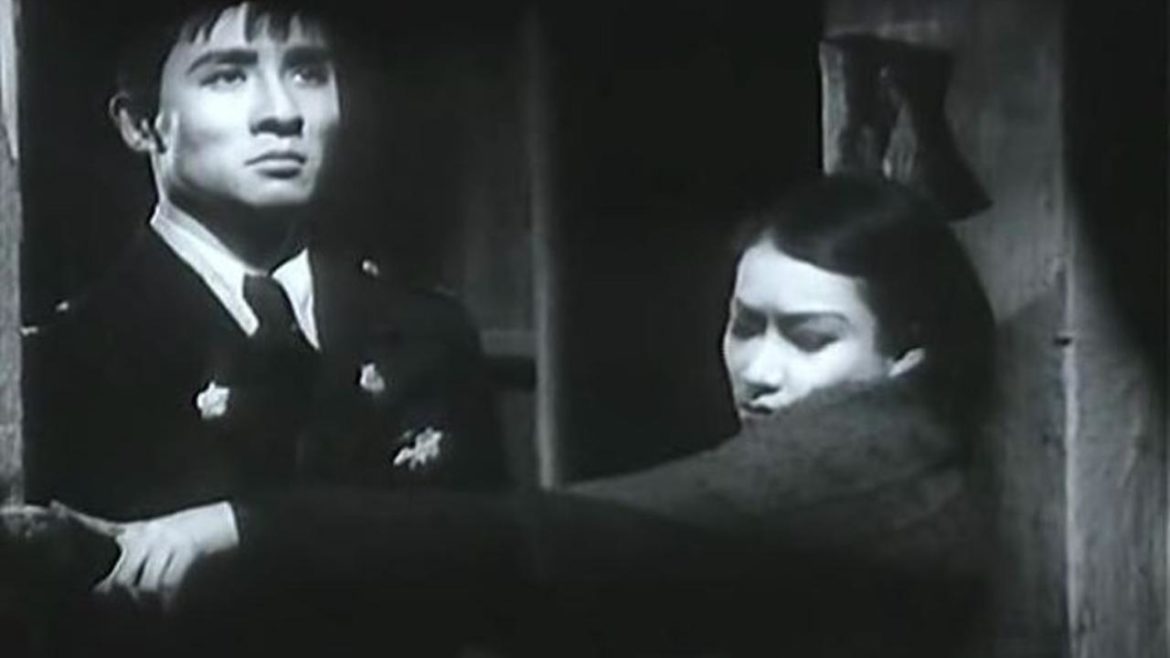
The narrative begins in earnest as we’re introduced to Xiao Chen (Dan Zhao), one of our key protagonists. He’s playing trumpet in a parade, while also cavorting with his newspaper-selling pal Lao Wang (Heling Wei) and trying to make eyes at Xiao Hong (popular singer of the time Xuan Zhou).

It’s a comical sequence – I mean, he trips over somebody’s feet, he blows copious amounts of spit through his trumpet like a big dork, and so forth – but the parade itself gives off an air of casual militarism. Muzhi may be poking fun at such displays, but there’s also a bit of a camraderie with the youth who find themselves in the middle of it. The clumsy marching trumpeter who really just wants to hang out with the girl is, in its way, a pretty familiar and charming figure.

street angel couple

The girl, Xiao Hong, is in a bad spot. Both she and her sister Xiao Yun (Huishen Zhou) are more or less indentured servants to abusive adoptive parents – Xiao Hong sings for pay in their bar, while her sister has been forced to work as a prostitute for extra money. Whereas The Goddess boldly posited its heroine as an unashamed sex worker making sacrifices for her family, Street Angel constructs a more coercive, angrier narrative – these are not women with agency, but exploited figures in a new class society, toiling anonymously in the shadow of Shanghai skyscrapers.

street angel sisters

Yet Muzhi routinely interrupts the expected melodrama with out-and-out goofballery, like a stutterer who’d give Michael Palin’s Ken in A Fish Called Wanda a run for his money, and romance, in the desire between our trumpeter and singer, who sing songs of deep longing to each other. The kids go out drinking at one point, and we get some laughs at little fools who can’t hold their liquor.

But all this time, Xiao Hong’s sad prostitute lurks in the background, despised not only by her “parents” but by the gang of good-natured kids we mostly follow throughout the film. It’s interesting that Muzhi takes her character for his title – she haunts the comedy like a ghost, perched in the back of the frame reminding audiences that it’s not all fun and games.

Eventually, our “Singing Girl” (as the credits would have it) is to be sold off to a local gangster, and hijinks ensue as the team tries to spirit her away to safety (and true love). A shocking act of violence closes the story, tears are shed, and the camera pans back up a skyscraper. The effect is something like that of The Naked City – here is just one of the stories from the street, that the people in the new shiny buildings can’t see. There are, of course, many others.

A scholar on Chinese history could find many more resonances than I can. For instance, “The Four Seasons Song” contains lyrics evocative of rupture and split, and being pushed south of the Yangtze River – all of which are no doubt resonant and related to cultural touchstones. Most remarkable to me is the split between tones and moods, shifting from clear politically charged allegory to almost Marx Brothers-esque comedy to deep melodrama, and the interpolation of songs into the narrative.

Muzhi seems to have embraced the possibilities of sound films, casting a popular singer, commissioning songs that would become part of the fabric of Chinese cinema and cultural memory. (Here’s a fantastic version of “Song of the Four Seasons”, as performed by some wonderful random lady in 2007.)

In some ways, I’m reminded of Satyavit Ray’s The Music Room, another film that blended styles, spoke to changing norms and social relations in transition, and one that managed to be narrative cinema full of music rather than a musical.

The Goddess is, in my humble opinion, an outright masterpiece, but Street Angel shouldn’t suffer by comparison. There is a tremendous amount of ambition here, along with the lovely music. If the parts don’t fit completely in the end, it’s engaging from start to finish, and it’s not hard to see why it might be beloved. It aims to give audiences everything they might want from a film – romance, comedy, terror, outrage, melodrama, music – and it’s well worth a look.

Next up: God’s Step Children (Note: I skipped Let’s Go With Pancho Villa, since I can’t find a version with English subtitles and I don’t speak Spanish. Do you know where I can find one? Do you want to teach me how to speak Spanish? Lemme know!)

April 15, 2016 2 comments
1 FacebookTwitterPinterestEmail
FilmReviews

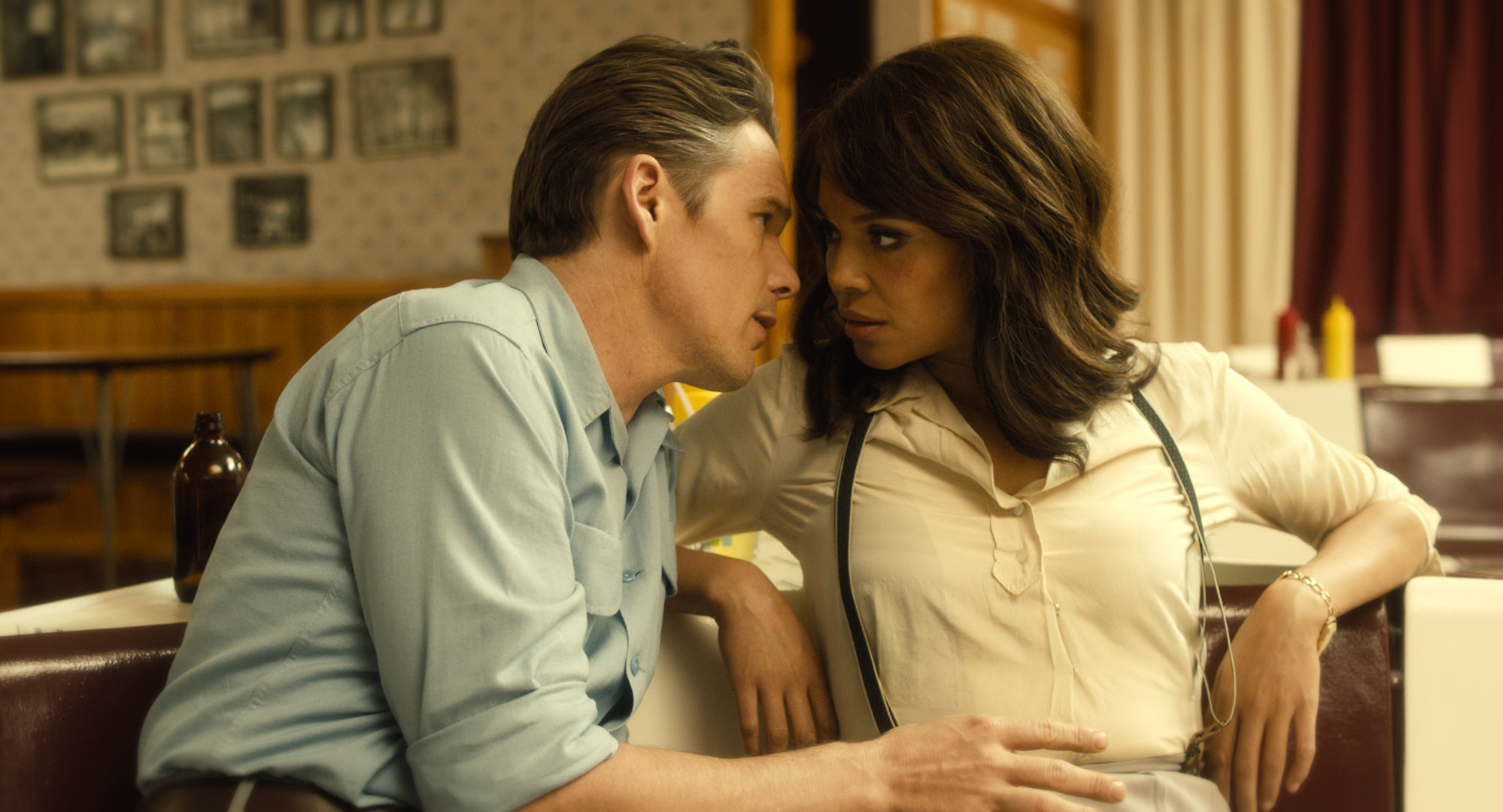
Chet Baker as wounded, inevitable disaster in Born To Be Blue

by rick April 6, 2016
written by rick

[schema type=”movie” url=”http://www.imdb.com/title/tt2133196/” name=”Born To Be Blue” description=”A re-imagining of jazz legend Chet Baker’s musical comeback in the late ’60s.” director=”Robert Budreau” producer=”Terry Bird” actor_1=”Ethan Hawke” ]Chet Baker is not an unlikely candidate for a biopic.

The very image of the dope-addled West Coast jazz cat undone by his vices, his biography is full of, shall we say, “incident.” Still, there’s a lingering sense of either lost promise or also-ran status that separates him from the usual towering figures we find in such films. Baker was never, musically or in terms of influence, on the groundbreaking level of a Miles Davis (soon to be profiled in Don Cheadle’s similarly long-awaited but just-released Miles Ahead) or, outside of jazz, a Hank Williams (currently being run through the critical wringer in I Saw The Light).

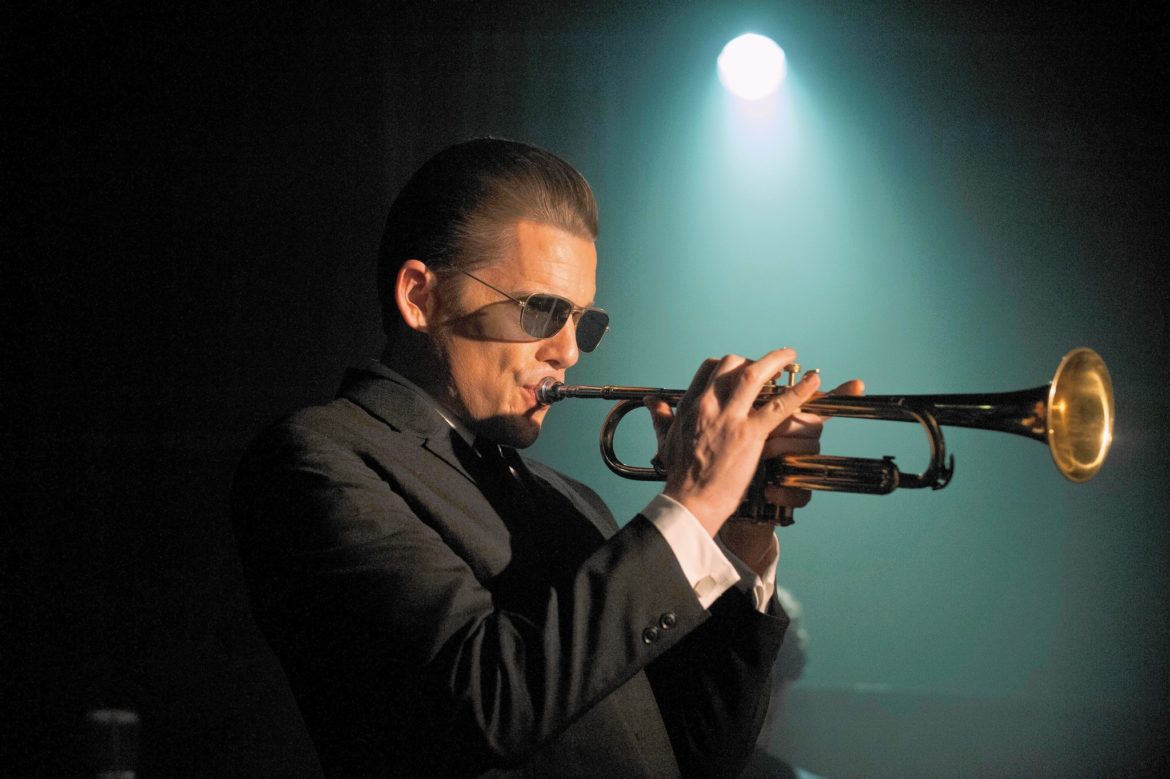
Born To Be Blue, Robert Budreau’s telling of Baker’s tale, with an impressive Ethan Hawke in the lead, seems eager to acknowledge this, and so aims at something a little different – a musician biopic that’s occasionally contemptuous of its own genre, fully aware of the cliches in which they traffic, though full of respect for the highs and lows of artistic creation itself. It stumbles here and there, like some sort of junkie, but by and large succeeds on its own terms.

As to those “incidents.” This is a guy who was locked up for a year and a half in an Italian jail, expelled from multiple countries for a litany of reasons, beaten close to death by drug dealing goons who he owed money to, experienced a meteoric rise to heartthrob status and an equally precipitous fall, only to rise again (after getting all his teeth replaced after the beating) as a weirdo crooner who, with a distinctively aching, almost-flat cadence, made jazz standards his own. There are seemingly countless stories to tell. Wisely, Born To Be Blue only tells a few of them, and does so, at least in the early going, in an impressionistic fashion that recalls Todd Haynes’ I’m Not There.

The film opens with a bit of cinematic sleight-of-hand: we watch Baker’s first performance at Birdland, with a dismissive Miles Davis and Dizzy Gillespie in attendance, followed by his first foray into heroin as he cheats on his partner.

born to be blue3

But it’s artifice, a re-creation: we’re actually watching Baker re-enact those same events for an ill-fated (and actually attempted) biopic a decade after they transpired. It’s a wink from Budreau, and an effectively startling tweak on the formula. Baker, the film seems to say, is and will always be fractured through the ways in which his story is told. All the themes are announced from out of the gate: the anxiety of influence, a desire to impress those he knows in his heart are better than him at the only thing he’s good at and a sorrow that he can’t, drugs, sex, and illusion. It’s a bold and clever stroke.

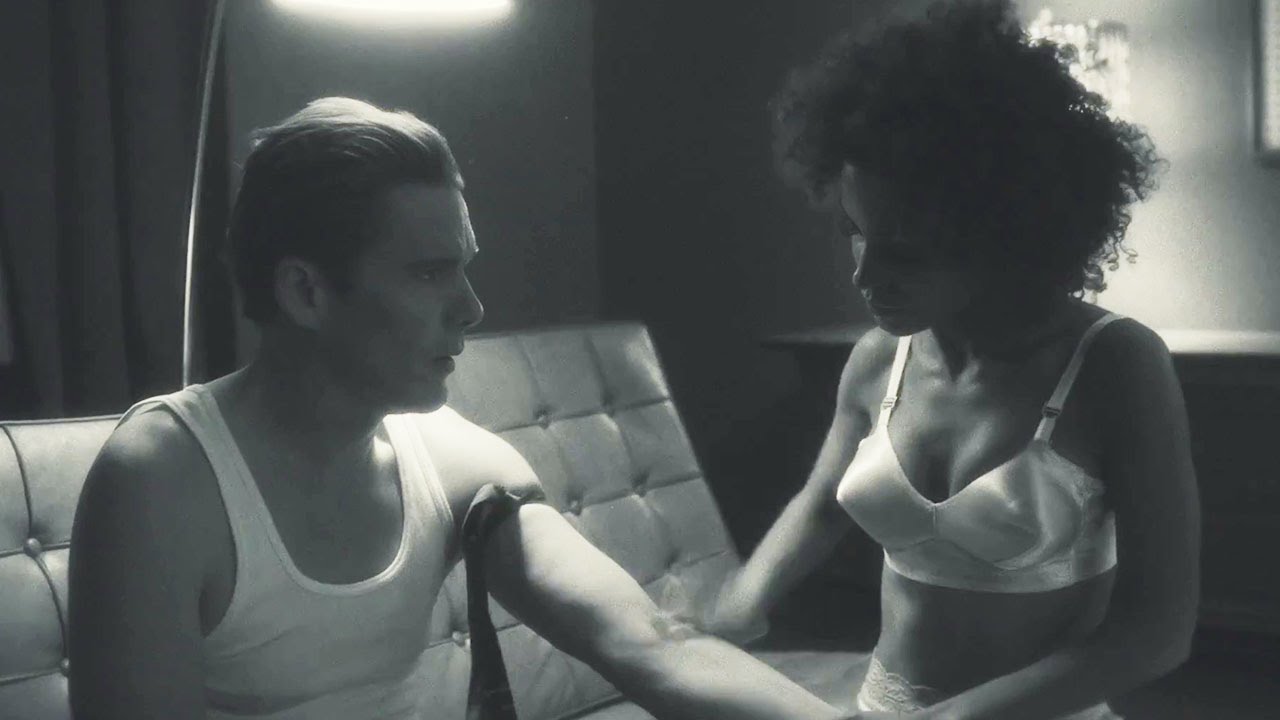
The film returns to such devices several times, but they become fewer as it progresses – too bad, since they are its most unique aspect. Instead, we mostly focus on a few years in the late 60s, as Baker falls in love with Jane (Carmen Ejogo, captivating but only as relevant to the story as the script lets her be), tries to get clean, fails, gets his face kicked in, works to mount a comeback, and succeeds, with some heroin-related caveats. The conventional biopic pokes its tired head out, despite Budreau’s attempts to keep it at bay.

born to be blue 2

This would be more of a problem if the chemistry between the leads weren’t so palpable, and if Hawke weren’t so good. His Baker is not just born to be blue, but born to lose. He knows it. Everyone knows it. Part of the film’s courage is that it refuses to divorce his failings from his best attributes. This is not a redemption tale (a fact anyone familiar with the real-life Baker’s colossal and repeated shitbaggery will be pleased to learn). It’s the story of a talented person whose gifts are intertwined with his weaknesses, and who can’t seem to resist a path that is bound to lead him off a cliff.

If you love something, and you’re loved for it, but it also ensures your self-destruction, what do you do? Maybe you give it up, and choose a more pedestrian route, rejecting the thing that makes you special. If you’re Chet Baker, you simply can’t accept that as an option.

In the film’s most memorable scene, here we have a nearly fatally beaten man, out of the hospital, with a full set of dentures from teeth that were kicked completely in, who is advised to not put too much strain on his mouth. He agrees – and promptly sits in a bathtub to try and relearn his instrument, forming visibly torturous embouchures with his lips as blood pours out of the trumpet into the drain.

That’s not a sane thing to do. But some people can’t help themselves.

The “giving it all for your art” motif might sound cloying, but Hawke brings a wounded fragility to the role, as well as a sharp edge of self-absorbed prickishness. It’s a very true performance. He’s brittle and insecure, but he knows this is what he’s here for, and he knows it’s ridiculous, and he knows it’s hurting everyone he loves, and he does it anyway. That’s neither contemptible nor admirable. It’s just how a certain kind of person might behave.

There are plenty of faults to Born To Be Blue: Ejogo, whose Jane is a composite of numerous women, is woefully under-scripted; there are lovely shots of the Pacific Ocean, but much of the cinematography is pretty indifferent; there’s an unfortunate line repetition, and an even more unfortunate slow-clap; the title cards at the end really aren’t needed.

But there is plenty to recommend it, too, for Baker fans and non-fans alike. Budreau aimed to skew the genre – maybe to find a narrative form that echoed both the music itself and the halting, self-sabotaging nature of its subject – and in Hawke found an actor game to play along. Like Baker, it’s captivating, melancholy, uneven, but ultimately lovely and frustrating by turn.

April 6, 2016 0 comments
0 FacebookTwitterPinterestEmail
CommentaryFilmInterview

“I Love Seeing Film Projected.” A Conversation with Susan Oxtoby

by rick March 22, 2016
written by rick

In Part 2 of our discussion with Susan Oxtoby, Senior Film Curator at the Berkeley Art Museum and Pacific Film Archive, we talk a bit about film preservation and restoration, about archives and collective memory, and the future of film in the digital age.

susan oxtobyOxtoby also went out of her way to encourage folks to come out to the Nuri Bilge Ceylan series, emphasizing “his use of the natural landscape in Turkey combined with his aesthetic,” and Bam/PFA’s three-day event with Charles Ferguson. I will be following this advice and hope to see you there.

(This interview has been lightly edited for clarity. Part 1 is here.)
______

Rick Kelley: Can we talk about preservation for a second? What are the general difficulties and concerns today to preserving film and film ephemera?

Susan Oxtoby: The challenges are always time, money, and changing formats. The good news is that a lot of very important work is already being cared for by the world’s film archives. It’s so exciting to be in the digital era, because a lot can be done using digital techniques to help restore aspects of film. There are all the ethics around that, as well …

RK: Yeah, I got some questions about that, too. [laughter]

SO: Yeah. I’m not going to be able to go too deep on this one, but one of the challenges of just the overhead and management of digital archives or having … I mean, you’re always trying to protect the original format. So if that’s celluloid, it’s important to have it stored under proper conditions and well cared for, but then a digital interface can [be useful] in restoration. But the costs associated with the digital technology is more expensive than working in photochemical restoration.

I think, though, when you look at what’s been happening internationally, it’s really exciting, all that’s being done. [And] here in the U.S., from the film studios and the nonprofit archives to the universities to the schools that are teaching the next generation of archivists. There’s a lot that’s happening very well. And a lot of material is getting saved. If you just look over the last 15 years, even the thought that this term “orphan films” exists … there’s a sense that we need to have our collective memory preserved by archives, even when it comes to the tradition of home movies or video. This is all very exciting. We learn so much about ourselves from what’s been recorded on film.

RK: Is that how you would define archives, as a repository of collective memory?

SO: Sure, that would be a good definition. [Pause] Yes. [laughter]

Unfortunately, archivists have to be so selective in terms of what they can give the full treatment of preservation to. In the sense that, often, you need to protect the things that are the most highly threatened – if it’s nitrate composition breakdown or it’s color fading or material that’s affected by vinegar syndrome. So in some ways you both have to save the things that are unique and maybe most greatly threatened. And then there are the aesthetic choices that one makes, protecting the legacy of important film directors or artists working in film.

Part of that is public awareness. You know, from country to country, there are different ways that funding archives works. The tradition in Europe may [include] more financial support for culture, the overhead of what it takes to do archiving. There’s some countries in the first world that are lagging behind in this area.

RK: You also hear horror stories of vast swaths of collections just being lost, just being gone.

SO: And that could be because of war, bombing, and things that get lost for that reason. Or it could be climate conditions, maybe in Southeast Asia and collections that are in parts of the world affected by humidity and heat and rapidly changing temperatures really affecting how things are stored. And it’s not cheap to run an archive. I mean, the energy bills are quite extreme. So it’s a lot altogether.

The good news is that there are a lot of international partnerships and there’s been, even when it comes to filling in holes in the history of American film production, there are things that have been found in different parts of the world.

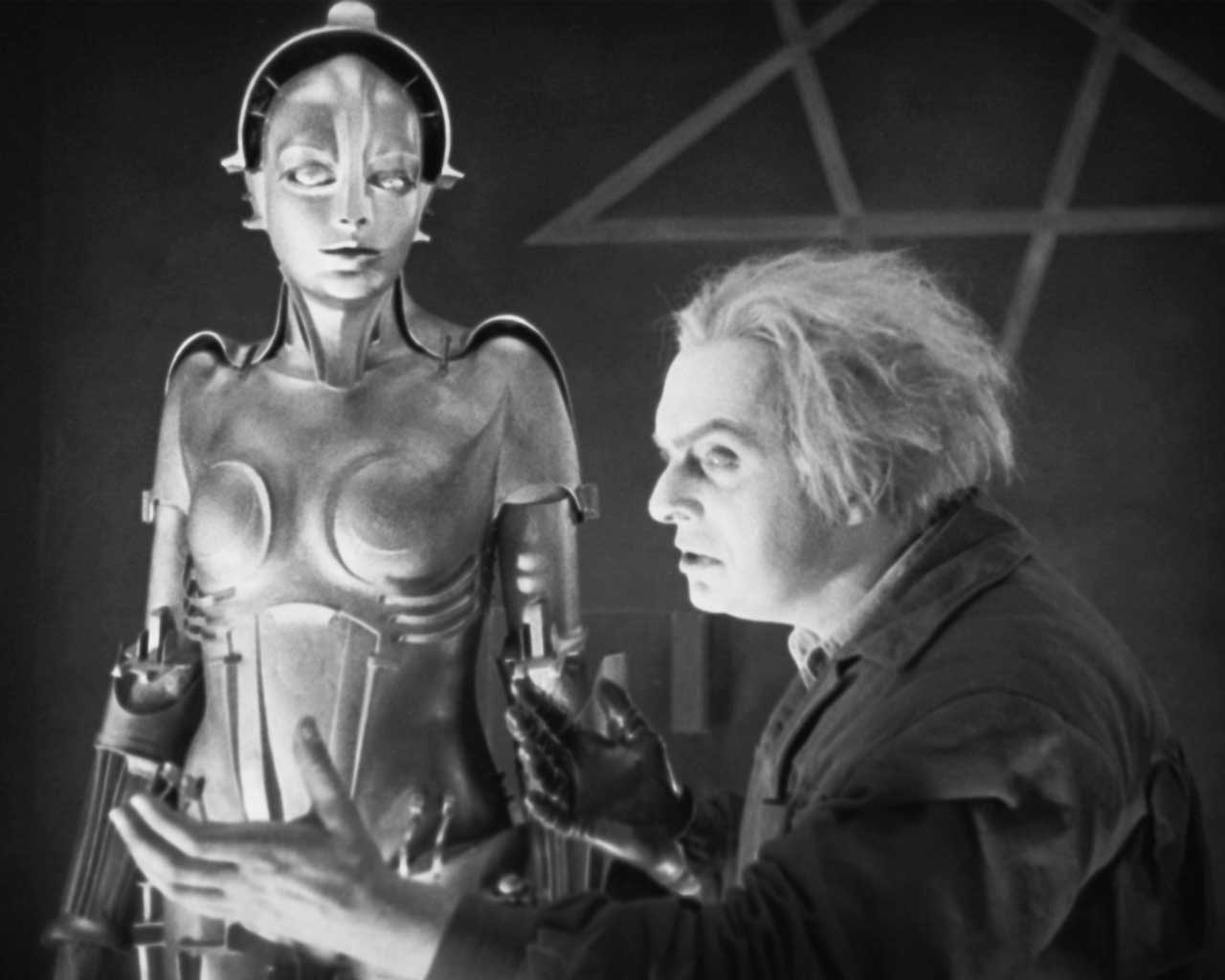
metropolisRK: Do you have a favorite discovery along those lines? Like, [lost reels of] Metropolis famously turned up years ago.

SO: I don’t know if I can name one right here and now, but it is amazing just how it’s a constantly evolving history. Things keep being found and keep being added to what we’ve already preserved.

The long and short of it is, it’s always a work in progress. You always protect your originals, because you know at some point there may be a better technology developed to help us with restoring works, or there could be new material found.

RK: Your comment earlier about the use of digital to help with restoration seems to imply that you’re not … you know, there’s the whole “film vs. digital” divide that happens and these sort of debates that go on. It seems like you have a more nuanced view of that.

SO: I love seeing film projected. So of course, if we can show a film, we will. And we go to great lengths and expense to import prints to include them in our public program.

Increasingly, I see digital restorations that I’m okay with, but I will still often be looking at digital restorations and saying, “Aw, this is paling from my sense of how this film should look on the screen.” There are good combinations of archivists working with particular lab technicians who are getting it right, and [who are] very, very concerned about how you can replicate a work in digital format that’s a really good rendering of its original film format. So I’m not opposed to it at all. But I certainly love the fact that our theater is set up and still the majority of what we show on screen is film, celluloid.

RK: Absolutely. [But] it seems like everyday there’s a new doomsday scenario about how theatrical exhibition is just going to go away. Just last week, Sean Parker’s Screening Room idea, which you might’ve heard about …

SO: I have not.

RK: Ok, so the idea is users pay, you know, $50 to get a special box and you can put on your own cinema at your house …

SO: I guess that sounds great, in the sense that people can learn issues about curation. [laughter] And how to DJ your own film program. Why not?

I’m just not opposed to digital. I mean, when I was in university, they were kind of between the 16 mm reduction print and early VHS. That’s when I was studying films and had to write papers. But then, when DVD came along as a way to preview at home or be able to go back and study something closely and see how a film is actually put together? I’m all for that. I think it’s very important to be able to have access to a work. It’s important to see it projected well in a theater and to have the cinema experience with other people in the audience, and hopefully it’s a very well presented experience of the film. But to be able to go back and study it? I think that’s very important personally to have access to digital copies. I would think that film criticism is better off when we have greater access to work in digital copies.

Of course, I’m not troubled over film attendance patterns, but then I’m also not actually programming in a commercial theater! I’m working in a very specialized context, so …

RK: How do you see the PFA’s role in that?

SO: It’s very important to have all options catering to the next generation of cinephiles, and to be offering general filmgoers a chance to understand what makes film an art form, to interact with filmmakers. I really feel like young … I’m sorry, “cinephiles” is a little precious. But I think it’s certainly important for, say, junior high students to be introduced to interesting cinema, well-programmed films, well-made films, and the sense of watching a film with an audience in a nice cinema. You don’t want to wait until university for that to happen, you know? These are art-going patterns that you want to instill at a young age, and you want people to get excited about the world of culture younger.

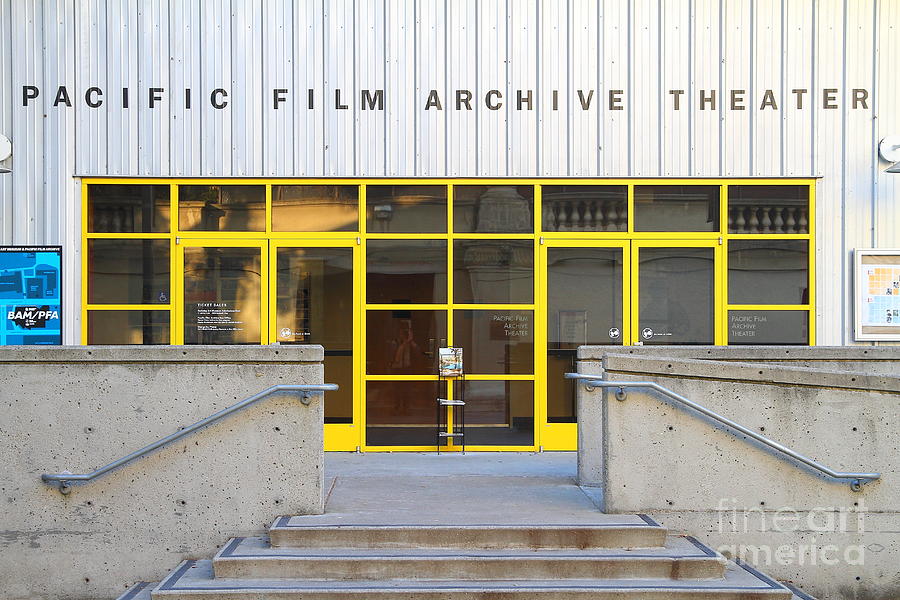
So yeah – I think it’s really important. It would be nice if people could often see films in a theatrical context, but that’s not always the case. But … I think we do well in that role and that we offer a really nice venue in the new theater.

my winnipegRK: Speaking of the new theater, when I saw Guy Maddin’s My Winnipeg here last month – a really hilarious, fascinating, striking movie visually – but also it sounded so good. How involved were staff with the specifications for the design of the theater itself?

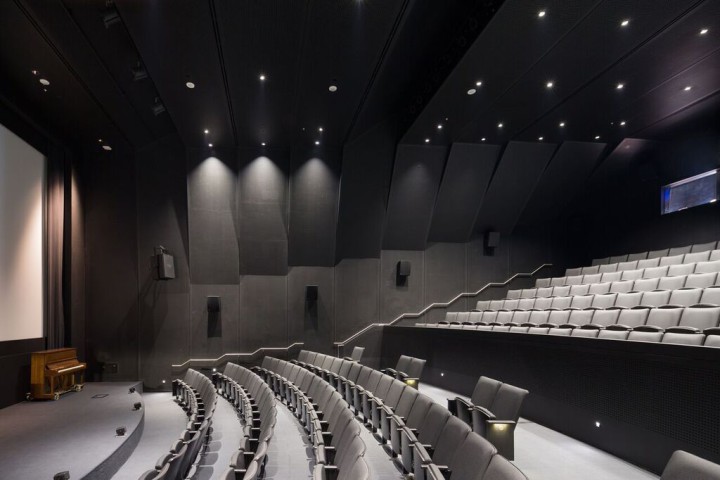
SO: We had quite a bit of input. Part of that input was to create a theater that had a high enough ceiling that it recedes out of your consciousness, that you’re not conscious of a ceiling that’s closing down on the projected image. I wanted it to be high enough that it receded from your mind. And to have a well-masked image, a movable masking on the top and bottom and right and left. To have a theater where the rows have a slight curve – we have so many events where we have guests, and the fact that there’s a Q&A discussion and the audience can see the person who might be speaking at the end of the row. I think that curve was very important, and [it was] was something that we requested.

And we lucked out, because Meyer Sound very generously donated. They fed into the acoustical design of the room with the architects and AV consultants who were designing the room, but they also of course produced the speakers and worked very hard to make the acoustics in that space just ideal for cinema.

PFA theater

RK: It really shows.

SO: Yeah. So this is great: we can play the volume on these films at just the right level and you hear all the elements of the soundtrack.

I’m very happy with the sight-lines – we actually asked for a combination of a gentle rake down at the front of the theater and amphitheater towards the back. We had a theater in mind that we were modeling the rake after. So we fed into this quite a bit.

The darkness of the room is something we all were suggesting would be very important. [And] the stage – that was another request, that we have a short stage. I previously had worked at the Art Gallery of Ontario – the Cinemateque Ontario was based at the Art Gallery of Ontario when I was there. Some of the features of this room remind me very much of [that] theater. I do like the fact that the person at the podium is looking into the room almost at eye-level. That’s good. And I think the lighting in the theater is a big improvement for us, because we can do a lot with it, and at the same time, it’s so nice to have an inviting space for discussions.

RK: Yeah, again, Guy Maddin was my recent experience and it did feel really approachable. It didn’t feel like I was at a lecture so much as a communal screening.

SO: Good!

RK: So to wrap up, what in the rest of the season are you most excited about?

SO: All of them! All of them. [laughter] Oh, let’s see. I’m not going to dodge the question.

One of the things I do love is when you see a lot of programs, you see the throughlines between different series, the way that they work off each other. That’s one way it’s lovely. But I’ve really been enjoying the Jean Epstein series. The thing is, Epstein’s work, I’d only seen a few of these programs after all these years. Many of these works are recently restored, and [with] Epstein as a filmmaker and as someone who began in the silent era, the films are beautifully composed and the editing is very fluid, so it’s an eye-opener for me to get to know his body of work.

RK: So after all these programs and different locations, there are still things for you to encounter …

SO: Oh, absolutely. It’s always like that. And I’ll never even see all the films I’d love to see in my life.

March 22, 2016 0 comments
0 FacebookTwitterPinterestEmail
CommentaryFilmInterview

“There’s Just a Wealth of Filmmaking That Could Be Shown”: A Conversation with Susan Oxtoby

by rick March 21, 2016
written by rick

Susan Oxtoby knows film.

Over the course of her career, the current Senior Film Curator at the Berkeley Art Museum and Pacific Film Archive (Bam/PFA) has programmed countless series and retrospectives, introducing audiences to under-seen, rarely-screened masterpieces from throughout the world and across cinema history.

A filmmaker in her own right (her late friend Stan Brakhage charmingly provides her film All Flsusan oxtobyesh Is Grass with the most Stan Brakhage-esque recommendation imaginable), Oxtoby’s passion for and commitment to cinema — its preservation and exhibition, its relevance to our lives and cultural memory — are evident.

Both were very much on display when she graciously agreed to sit down and chat about Bam/PFA’s first two months in its new location, what she’s most looking forward to this season, and what surprises future seasons might hold.

This is Part 1 of our interview: tune in tomorrow for a closer look at the challenges of film preservation, the role of archives in the modern world, and a curator’s thoughts on the “film vs. digital” debate.

(This interview has been lightly edited for clarity.)
_______

Rick Kelley: So it seems to me you have the world’s coolest job. What led you to enter the world of film curation in the first place? What was your path like?

Susan Oxtoby: In terms of curating films, programming films, that really began in a student film society at the University of Toronto. It was called the Innis Film Society – Innis was one of the 8 colleges in the School of Arts and Sciences system at the University of Toronto, but it was also where cinema studies as a program and discipline was based. And so I had actually gone through that cinema studies program at the University of Toronto and was in another degree, studying film production, and I realized I should get involved with the student film society because they were showing such great work.

And so there was a period of about 7 years – this is the essay answer! – where I was completing my second degree but I was also back at the University of Toronto showing this very impressive year-round program of largely avant-garde film, or art films. It was a Thursday night program, so that was where I got a sense of how to construct programs. Every year, we brought in about 15 visiting filmmakers, Canadians and Americans, some international guests, but usually it was working in the area of avant-garde film.

tiff cinemateque

Then, my early jobs were actually in independent film distribution. In Toronto, there’s the Canadian Filmmakers Distribution Centre, which is much like Canyon Cinema, the same kind of philosophy. So I worked in distribution for about 3 years representing independent work in an artist-run center and was always meeting with visiting film curators from all over the world, and helping them interpret this large collection of some 3,000 films, largely Canadian but also international in character. A position opened up at the very young Cinemateque Ontario, which is now TIFF Cinemateque. So I kind of joined and became a young film programmer for my first professional position in curating back in 1993 and stayed with that institution for 12 years and became the Director of Programming.

That was an interesting period because that was a young institution – I’d say for its first 15 years it kind of went from 0 to 60 in terms of becoming very well-known for its programming. Of course, I was working with the wonderful James Quandt, who was the founding Director of Programming and is still there as the Senior Curator. So that was great. And we really built it up. You know, we were modeling ourselves largely after the Cinémathèque québécoise in Montreal and, frankly, the Pacific Film Archive.

old BAMPFA

RK: It all comes full circle!

SO: It comes full circle. And so we were in very close contact with this international network of film archives, and we partnered a lot with the curatorial staff here at the PFA.

RK: So it was sort of a natural transition when you came over here. You already had the groundwork laid in some ways.

SO: Yeah. But that was how I got into programming. And, you know, from my early teens, I really got interested in foreign films. My parents were cinephiles, so I saw a lot growing up. [They] were really into films, concerts, interesting international travel. And I was growing up as a child of the ’70s, let’s say, in my university days, and that was when a lot of places would have the latest Fassbinder film, the latest new, contemporary Italian film playing in art houses around Toronto. So I very quickly got into following that as a major.

RK: And you made a few films of your own, too. You’re a filmmaker in your own right.

SO: I definitely studied film production and I worked with independent filmmakers for a couple of years, filmmakers in Toronto, either avant-garde filmmakers or documentary or narrative filmmakers. And then I have two 16 mm films that are in distribution.

RK: So, for those of us (like myself) who don’t really know, what is a day in the life of a film curator like? What do you, you know, do?

SO: [laughs] I think a lot of people think, “Oh, you spend your whole day watching films!” Actually, this is not the case.

We spend our days in correspondence, and, of course, as the head of our department, I spend a lot of time in meetings. And then I’m fortunate to see most of our programs, so I spend my evenings at the theater. But it’s interesting. When you’re dealing with contacts all over the world, I start my day very early, corresponding with Europe, and then of course the East Coast, and whatever I can get done by the end of the day in Pacific Standard Time. And maybe by the end of the afternoon, we’re working with contacts in Asia, trying to get those emails off …

RK: It sounds exhausting, actually!

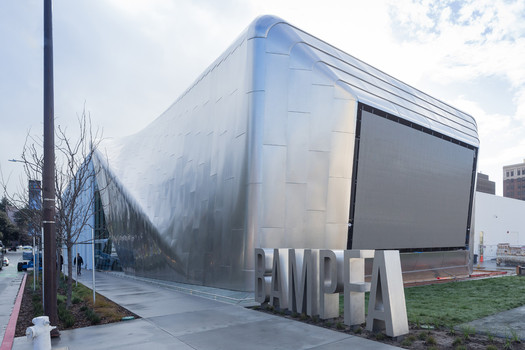
SO: [laughs] Yeah, but you know, you work against the world’s time zones. I mean, it’s extremely varied. I love the fact that we’re in this new location, Bam/PFA, and that we have so many visitors coming in, like this chance to chat with you today or to host [filmmakers]. There’s a visiting filmmaker yesterday, Wang Bing from mainland China, who’s here in the Bay Area for a few days, and he wanted to come over and meet with our staff. So that was exciting. We’re not even hosting his work right now, he just wanted to come see our institution. It was fun to show him around the galleries, the couple of theaters and the outdoor screen, and talk about what we might be able to do in the future.

bampfa

So that’s the thing. It’s been so exciting for us now to be in this new location meeting with so many visitors. It happens a lot, and in any given week we’ll have the guests that we’re bringing in for our programming but also meeting with the public.

I’m really delighted that in this spring semester, we’re offering some programs that are lecture screenings – the In Focus: The Role of Film Archives and this upcoming series of Japanese film classics – and that’s where I selected the programs we’re showing and invited guest speakers to come in and share their knowledge on specific film programs or topics. One of the things I think we do particularly well at Bam/PFA is the involvement of guests and specialists, from filmmakers to archivists to practitioners who might be editors or the wonderful academic talent here at UC Berkeley and beyond.

RK: How does the PFA build its collection? I know there were large donations back in the day, but how do things work now?

SO: Well, it’s very difficult for us to actually raise funds to go out and purchase prints. Some of our patrons are learning that it’s possible to make a gift that would go toward our film acquisition budget if it’s designated for that. But a lot of prints come in currently from film distributors who know they’re getting out of the business. [They] understand that we are an archive and that they can offer their prints to us and, if those prints are still in exhibition condition, we would take them in and be able to show them over time. So basically, donations from filmmakers and film distributors, acquiring films outright, [and] also working with other archives that might have recently worked on restoration … that’s the perfect time for us to acquire a new print.

We recently purchased a copy of The Seventh Seal from the Swedish Film Institute, and I’d love us to be doing as much of that as we can possibly manage, because it’s a great way to build the collection. We had some local donors who helped underwrite that, and it’s the perfect film for us to have in the collection. It will get screened a lot over the years. We had three very full programs [already].

RK: With the new location, did the move alter the programming, or change the audience, in any way?

SO: It has definitely changed the audience. Our numbers are really great. I think downtown Berkeley has … you know, I think there are more people going out for a bite and coming to the new Bam/PFA to see a film, look at the galleries. So it’s great. We’re now joining with all the other cultural venues based in the downtown core – the jazz festival or Berkeley Rep, Freight and Salvage or the new university theater …

RK: Sure. It’s very much in the community.

SO: It makes a big difference to be on the same block as BART. We’ve heard a lot from people who are just grateful we’re so much easier to get to. And then there are also all the restaurants, and just more night life at this end of the campus. So that really is great.

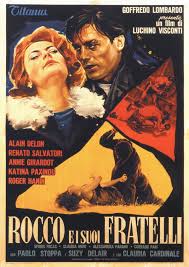
But I do think that just by launching this building, more people have found out about our programs and there’s been a great public response. The only thinone floor belowg that’s rocco and his brothersreally changed in our programming is that we’ve introduced some limited engagement films, so that’s a place where we might have three screenings of Rocco and His Brothers or, upcoming, we’re showing a contemporary Romanian film, One Floor Below. We’re showing that four times. The only other time that film has shown recently has been at Mill Valley. So it’s a chance to see a contemporary film from Romania, and there’s been a new wave of Romanian filmmaking that’s been highly recognized.

We really wanted our inaugural season to be reflective of all the great strengths that we are known for, in terms of showing beautiful silent films with musical accompaniment or avant-garde film programs, or the focus on documentary filmmaking as always in our spring season. Plus complete retrospectives like the Maurice Pialat or the Jean Epstein series that’s on the screen right now. Upcoming, we’ve got the Turkish director Nuri Bilge Ceylan, and that’s a rare chance to see his works to date in a complete retrospective. To my knowledge, the only venue in the U.S. that’s done a complete Ceylan series is MoMA in New York about a year and a half ago.

bampfa pialat bampfa ceylan bampfa epstein

So our hope is that we will be on a closer to year-round schedule on our five-day-a-week program when the museum is open, which means we’re going to be showing more films than we were at our old location. And by allowing some of those to be repeated, make it a little easier for the public to get more of those films in their schedules.

It’s hard when you only show something once. I mean, we do, and they do very well, but giving more chances, more opportunities to see particular programs will help us build our membership.

RK: One of the more notable projects in the old location that you were involved in was “Discovering Georgian Cinema”, and I was curious first of all how that came about, and what you think is vital about showing underseen or even never-seen films?

SO: “Discovering Georgian Cinema” was such a wonderful opportunity for me personally, because I had no background in Georgian film before I took on that project. But I think I did have the right kind of background to take on such a complex program because of my connections in the international archival community. So it was this wonderful opportunity and something I know I’ll be returning to, doing more with this area of cinema.

But it started from the point that Bam/PFA’s film collection has, in fact, the largest collection of Georgian films in North America, and I may be right in saying the third largest collection outside of Moscow.

RK: That’s amazing. And similarly true of Japanese films as well, right?

SO: Yes, that is true. Our Japanese collection is a very important study collection, and a portion of it would be of exhibition quality. But it’s definitely very important for researchers, especially researchers who might not have the Japanese language as a capability.

With the Georgian project, I received a grant from the Andy Warhol Foundation to allow me to visit a number of archives and to visit Georgia and make connections with the local film community there. So I went to Tblisi, I went to Berlin where there’s a very large collection, and to Moscow, as well as archives in Europe like Amsterdam and Toulouse. And I was partnering on this project with the Museum of Modern Art. It was so important to be working with MoMA because that really increased the profile of our series. It was about 57 different programs here in Berkeley, which is bigger than anything we’ve done. And [it was] an opportunity to bring in filmmakers from Tblisi or from Europe, and experts on Georgian cinema. So it was a great learning experience

RK: Is that one of the key roles an institution like the PFA plays, to bring these kinds of things to new audiences?

SO: Absolutely. And we thought carefully about calling it “Discovering Georgian Cinema”, but I think it is absolutely the case that a lot of these films are completely unknown here in the U.S. If you actually went through to see how many of these films had never been shown by any institution in North America, there would be a good percentage of them represented in that category.

RK: I’m hard-pressed to name too many Georgian films.

SO: [laughing] Exactly. But it is a beautiful body of work. And of course in many different types of ways.

But we were able to do a lot of different things with that program. I think certainly to show enough work from the silent era. Soviet Georgian filmmakers really were doing very inspired silent films. And then there’s the period from about the mid-’50s through the ’80s, which is kind of a beautiful period of narrative cinema and development, in terms of Georgian filmmakers perhaps being critical of the Soviet regime and their relationship within the Soviet Union. But also always making works that were very much about the history of Georgia, the spirit of the Georgian people, the music and poetic and dance traditions.

I’m sure we’ll circle back and present more of these films another time round. You know, we could focus on particular directors or … I think contemporary Georgian film is really exciting right now. Things are coming together and there are a lot of really creative young filmmakers, so I think it’s an area of the world to watch.

RK: Earlier today, I was making a list of all the different filmmaker retrospectives you’ve been involved in over the course of your career, and I eventually just gave up, because there were too many. And I just wrote, “Pretty much everyone I’ve ever heard of.”

But are there series you remember particularly fondly? Perhaps in terms of exceeding your expectations for audience engagement or for really lively discussions?

SO: Many, many. That’s what keeps me going – the relationship between the guests we bring in and the audience response to their work. But I’m a real generalist. I mean, I do have specialties – avant-garde film and now Georgian cinema for sure are two of those. But I really do enjoy the fact I’ve usually been with institutions that show 400+ films a year, and so I’ve always been researching in an area that’s new to me. And I think you need to be a generalist in a lot of ways. I find that very exciting, and I’m constantly learning from the films I’m involved in selecting, but also from my colleagues.

One area I want to come back to – and I haven’t been doing this in the last decade that I’ve been in Berkeley – but I’m fascinated by abstract cinema. Which is squarely within the avant-garde tradition. But I did a series in Toronto called “Abstract Cinema: A Century of Light Play”, and it brought together French films from the 1920s, some German avant-garde film. It was a chance to bring in experimental filmmakers to present their work and show it. One area of cinema that I love, and I think it’s also related to my time going to music concerts, is just films that deal with rhythm and color in a very abstract way. And maybe it’s because I’m somewhat challenged when it comes to narrative cinema. [laughter] I might forget how a story ends, but I’ll remember the mood and atmosphere quite well.

So I would love to start introducing kind of an ongoing series that looks at abstract cinema. I think it’s perfect for us, because we’re also an art museum, and I think that there’s crossover … whether it’s music, poetry, or fine art, [audiences] can connect to that kind of cinema very well. There’s just a wealth of wonderful filmmaking that could be shown. That’s something I’d love to do.


March 21, 2016 0 comments
0 FacebookTwitterPinterestEmail
CommentaryFilmReviews

Selection Sunday – The Great Sports Movie Bracket

by rick March 14, 2016
written by rick

As all good sports fans know, yesterday was Selection Sunday, in which brackets for the NCAA tournament and March Madness were revealed. I did not know this, as I am not a good sports fan, until my sport-savvier girlfriend Carrie informed me a few weeks back. However, if the two of us don’t have the same working knowledge of sports timelines, there is one thing we definitely agree on, and that is that sports movies are awesome.

So in the spirit of the season, we decided to watch several. Normal people would probably just move on from this discussion and turn on a movie; we, on the other hand, are nerds, so we turned it into a game. We each chose 4 top movies of the genre, and then polled others for their favorites. From here, we created a seeded bracket, with our respective top 4’s competing against the winners in general voting which neither of us had already seen. Here it is:

brackets_final2

Throughout the month of March, these films will be going head to head, like so many NCAA basketball teams — whether it’s in pairings that make a certain amount of sense like The Mighty Ducks vs. Slap Shot, or less so, as when Big Fan squares off with A League of their Own. Winners will be decided on the basis of an ad hoc and arbitrary system of our own devising, and which we may change randomly if it pleases us.

Below, we each provide a case for our top picks as an introduction. Stay tuned for further exciting developments as things heat up.

CARRIE’S TOP FOUR SEEDS

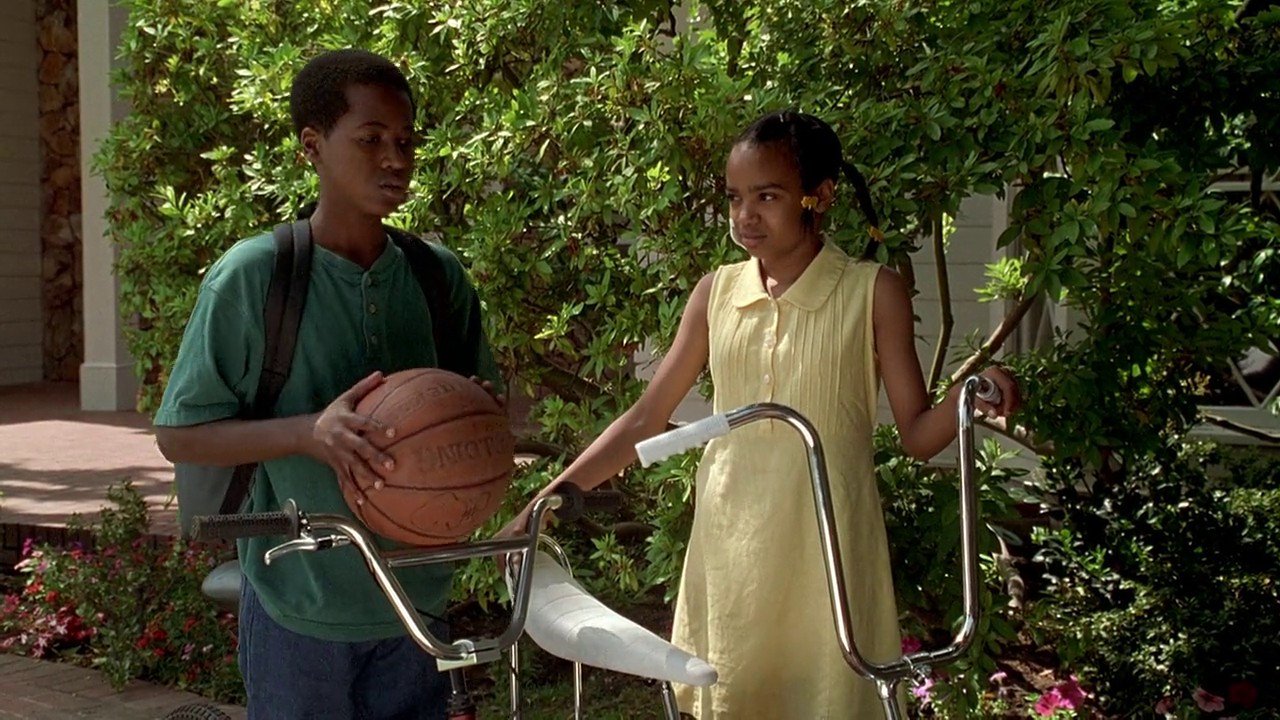
love and basketball

#1: Love & Basketball
Many sports movies lead up to a climax of a championship, a big race, or a long-awaited game against a rival, but this one is just about the love of a sport, the dream of playing that sport, and the complication of balancing that dream with gender expectations, relationship expectations, and familial expectations. Although it’s a movie that’s really about love, relationships, dreams, disappointment, supporting one another, and finding your priorities, basketball is at the center of every conversation. And winning in this movie isn’t necessarily about the score, but about getting to play. Plus, I just love watching it. Every time. Over and over.

sandlot

#2: The Sandlot
Its been over 20 years, and people are still seeking out The Sandlot. I only narrowly beat the single other customer in the video store to the one copy they had. The library had its one copy out, plus another hold in front of mine. And every other movie in our bracket was just… available. My initial thought when I think of The Sandlot is, strangely, a twinge of sadness. Mostly because its deep dose of nostalgia hits me hard. It’s a baseball game that has no beginning or end, no winner, and only momentarily even has a second team. It captures the magical ‘present’ moment of childhood, where imagination, friendship, adventure, and dreams are all unified into a perfect thing that is impossible to capture again. Maybe except in rewatching The Sandlot, and maybe that is why its hard to get a copy.

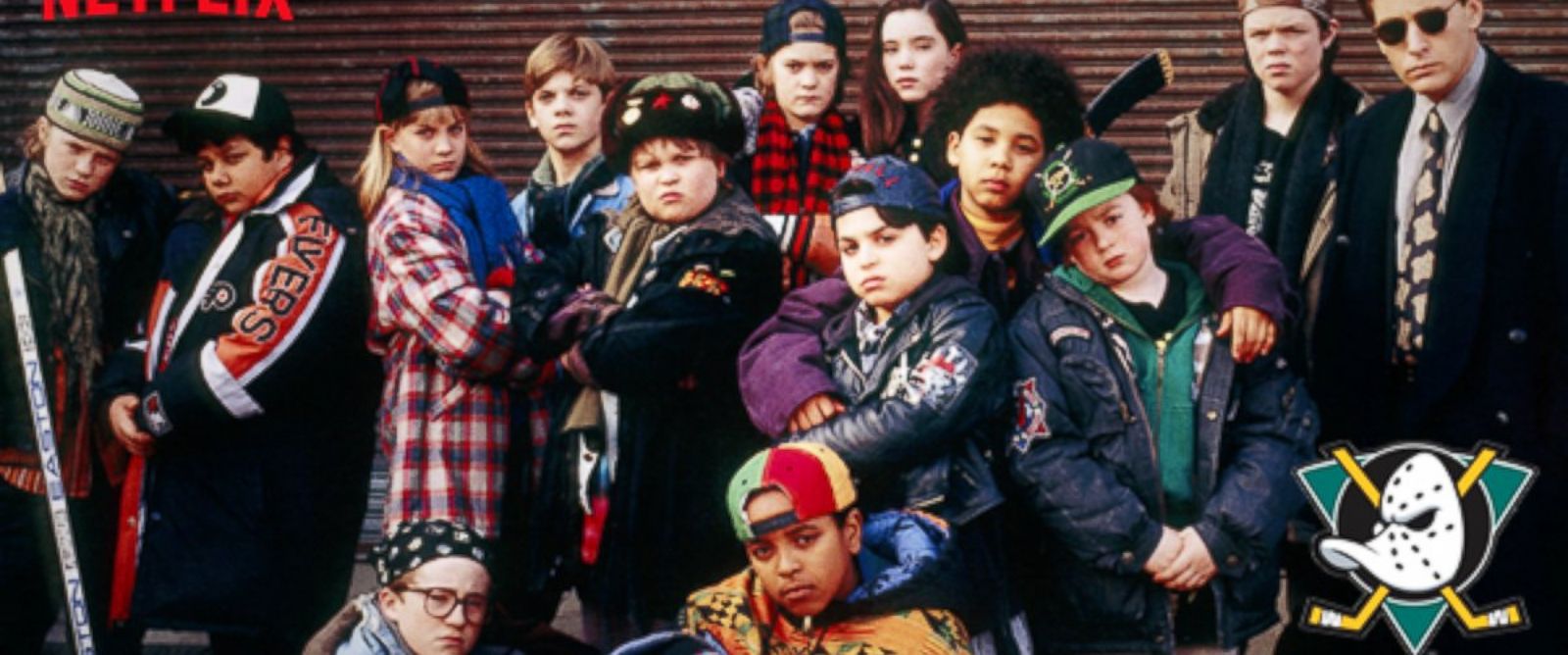
might ducks

#3: Mighty Ducks
When I think of the quintessential sports move, the first thing that pops into my head is mighty ducks. It follows what I think of as the sports movie formula – hopeless group of misfits, come together (and have fun, its not all about winning), and somehow pull off an upset over the team of bullies. It wasn’t the first, but it’s the one that stuck with me. Also, as a kid who loved to ice-skate, it really captured that love of ice-skating, and made me want to ice-skate, and play hockey, and to be a mighty duck.

A-League-of-Their-Own

#4: A League of their Own
I had a hard time filling in my fourth slot, but A League of their Own fills a unique spot in sports movies. In this case the unlikely team, defying all odds, and winning, isn’t about a single team, but is about an entire league. What happens when you open up an entire sport to a group that has been excluded from it? The movie is fun and heartbreaking and complicated. I also loved this movie because it so wonderfully undermines one of my most hated of often-used statements: ‘you throw like a girl.’


RICK’S TOP FOUR SEEDS

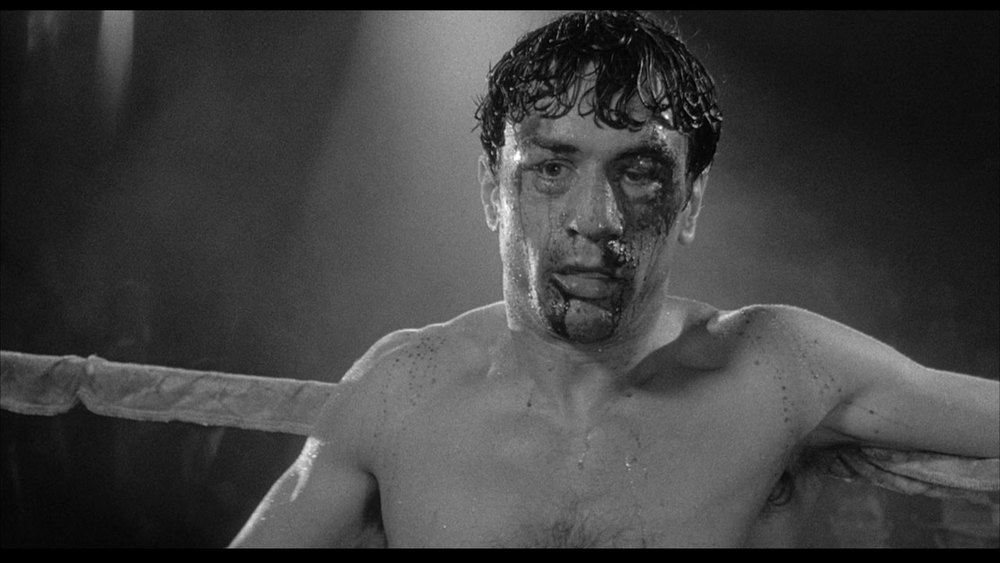
raging-bull1

#1: Raging Bull
Scorcese’s magnum opus, with its masterful editing, luminous cinematography, and the blisteringly iconic performance from Robert De Niro as boxer Jake LaMotta, isn’t exactly what many of us would think of as a “sports movie.” Sure, much of it transpires in the ring as Paul Schraeder’s script follows Lamotta’s quest for a title bout, but nearly as much focuses on the boxer’s personal life and his almost pathological tendency to destroy himself and everything around him. But it’s the links between those two narratives that makes Raging Bull top my list. It’s an epic character study and an examination of unhinged masculinity, but it also deploys a standard sports movie trope: the guy who’s only good at one thing. The provocation at the heart of Raging Bull asks, “But what if that thing is violence?” De Niro’s Lamotta is a pulsing live wire, a cyclone of animus, paranoia, fear, and self-loathing. However, he doesn’t exactly channel these into the boxing ring; the ring is almost incidental, a limited space where these flaws are celebrated rather than viewed with horror. Lamotta can’t help but fight, inside the ring or outside of it, as he seeks to prove something even he doesn’t seem to understand, and leaves a trail of pain in his wake. It’s a bracing, tense experience, and one of my favorite films, period.

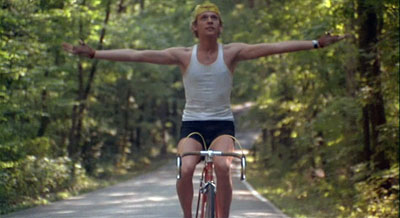
breaking-away1

#2: Breaking Away
Breaking Away has everything you could want from a sports movie: a scrappy underdog narrative, disillusionment with heroes, lightweight jokes paired with much more serious undercurrents related to class and identity. At points where it could veer into broad Slobs Versus Snobs territory, the film opts instead for a much more nuanced kind of entertainment … goofy and stand-up-and-cheer fun, sure, but also filled with characters who grapple with the limitations of their circumstances and want something better for their families. In “the Cutters,” Breaking Away also gave us a shorthand for the townies, the locals living their lives in a university town where the rich and prospering visit and leave. (And if nothing else, it also provided inspiration for this excellent song by The Hold Steady.) The class sentiment is never laid on too thick, and doesn’t get in the way of the jokes or the final uplift, but instead rounds out the contours of this place and time. And it’s about bikes! Bikes are fun.

white men cant jump

#3: White Men Can’t Jump
Director Ron Shelton is king of the sports movie. He brought us Bull Durham and Tin Cup, both legitimate contenders for the crown, but, for my money (which Woody Harrelson and Wesley Snipes would surely con me out of almost immediately), White Men Can’t Jump is the best of the bunch. It’s a story of street hustles at pick-up games, but Shelton’s got much more on his mind: issues of race, class, personal growth and personal responsibility all arise amid the hilarious banter, and the performances are uniformly delightful (a special shout-out to Rosie Perez, at her very best here). If the film can’t quite regain the comic brilliance of its first half, it succeeds on so many levels that it doesn’t get old, despite the outfits and slang that, by any reasonable account, should keep it locked up in a time capsule from the day-glo 1990s. I think it has lasted because of its wit but also because of moments of much quieter insight into its characters. For a movie with so many Yo Momma jokes, it packs an impressive emotional wallop.

lebowski

#4: The Big Lebowski
Like Raging Bull, I got some pushback on whether or not the Coens’ ode to bowling, bathrobes, slackerdom, weed, White Russians, and rugs that really tie the room together was, in fact, a “sports movie” at all. Of course it is! Jeff Bridges’ dazed, accidental would-be detective is yet another guy who’s only good at one thing (and it’s not being a detective) — he operates on the margins, gets swept up in things he doesn’t understand, haunts low-stakes bowling alleys and lower stakes murder mysteries, and generally takes it easy for the rest of us (when not getting knocked around by virtually everyone he meets). The Coens might not care one way or another if it’s a sports movie — “That movie has more of an enduring fascination for others than it does for us,” Joel Coen has said, in case you want to clarify just how much they’d prefer to talk about anything else — but Lebowski is a film that has only grown in stature over time, despite its single-minded determination to be little more than an entertaining lark. Bowling comes to represent a number of things throughout the film, surely enough to justify the sports movie tag, and the film is full to bursting with quotable lines and perfect performances. What it “means” is, as always in a Coens universe, a different matter. It ends, appropriately enough, with a shrugged “Fuck it, let’s go bowling,” an almost Chinatown-esque concession to the fundamental incomprehensibility of the universe, but with a sport there to provide some measure of stability and community. If that’s not a sports movie, then I don’t know what is.
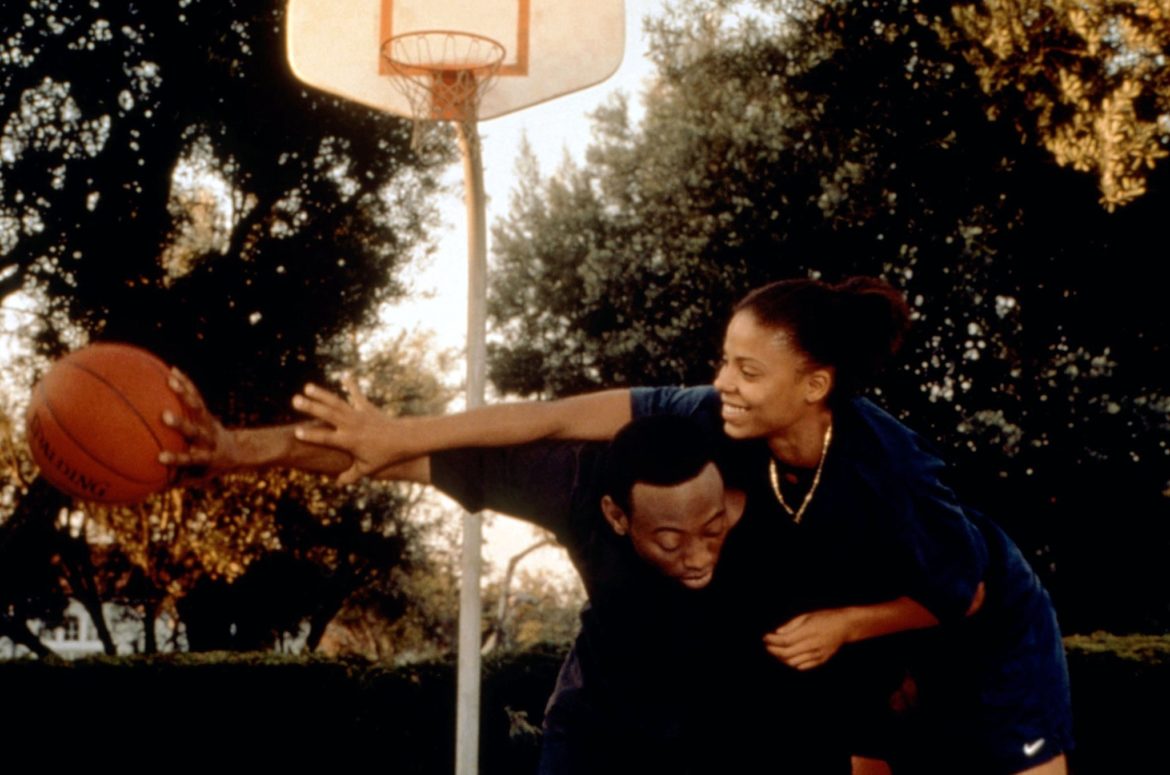
March 14, 2016 0 comments
0 FacebookTwitterPinterestEmail
CommentaryFilmReviews

30 Films from 30 Countries in 30 Days, Part 1

by rick March 11, 2016
written by rick

Every March, some folks over at Letterboxd hold a 30 Films In 30 Days From 30 Countries challenge, in which, unsurprisingly, you are challenged to watch 30 films in 30 days from 30 countries.

I’m giving it a go this year, though as you can see, I’ve already fallen behind schedule. I’ll occasionally cross-post these here throughout the month.

30 Countries in 30 Days #1: Uncle Boonmee Who Can Recall His Past Lives (Thailand, 201o)

uncle boonmee

There are moments in Uncle Boonmee which seem plucked from a much more interesting movie.

Unfortunately, the rest is a slow, exasperating march through magic realist tropes and the kind of extended takes that give “arthouse” a bad name. I actually had a pretty visceral feeling of irritation with it, but some of the images are definitely beautiful to look at.

#2: The Loneliness of the Long Distance Runner (UK, 1962)

loneliness

Tom Courtenay’s Angry Young Man dominates nearly every frame of the film, scowling and smirking, playing the authorities for fools and waiting for his chance to undermine them.

The film definitely fits snugly in the British working class genre of its day — the cramped confines of shitty apartments, the offhand petty crimes and carousing of its misunderstood anti-heroes — but it’s Courtenay’s performance and the B&W, New Wave-ish cinematography that stands out.

I watched The Loneliness of the Long Distance Runner in the context of comparing a bunch of “sports movies,” and that turned out to be an interesting lens to consider it through. Its aesthetic is obviously very much of its moment, but, as a film about “sport” in a general sense, it also features many recognizable aspects from that genre. Sports, first football and then track, symbolize different things for different characters here: an isolation and relative freedom for Courtenay’s Colin, who’s locked up in reform school; a means of success in the outside world for Michael Redgrave’s bourgeois Governor (but also a chance for his working class ruffians to stick it to the posh students and their coaches); and a mechanism for both social cohesion and individual rebellion, depending on where you’re seated.

Certain segments are edited to mimic aspects of the sport itself, or its individual affect on participants. The film flashes back to Col’s youth and all the things that led him here while he runs — the running itself seems a kind of meditation for him, or a way to reckon with the world. The freedom he finds in it is also reflected in a beautiful sequence when he is allowed to take off by himself through the forest, his pace and gait becoming a kind of solo dance number.

Those are just some of the interesting choices that director Tony Richardson and author Alan Sillitoe (adapting his own story) make. The combination of kitchen-sink realism and anti-hero sports story is a pretty fascinating one.

#3: Blackboards (Iran, 2000)

blackboards

Samira Makhmalbaf’s portrait of wandering Kurdish teachers, seeking pupils in the mountains near the Iran-Iraq border during wartime, plays out like a fever dream. And like a dream, it’s fascinating, allusive, and occasionally boring.

The title refers to the blackboards these men carry on their backs, as they go around trying to find a school in need of a teacher or a pupil who can pay (if only in food). These blackboards serve double, triple, quadruple duty — they are for instruction, to provide shade from the elements, to shield members of the groups from gunfire, to carry and assist the wounded, and more. “Blackboards” are a free-floating metaphor throughout, a literal blank slate covered with attempts at instruction and then washed clean with water, or covered in mud to provide camouflage.

Makhmalbaf has things to say here, largely about the relative value of contemplative learning in a world where it’s impossible to sit still. But the film’s insistence on repetition of phrases, underlining of previous conversations, and the ways in which the teachers wear down everyone else in their vain attempts to impart knowledge that the pupils really don’t have time for ultimately become tiresome.

On the other hand, the location shots of the mountainous region are often stunning, and there’s sly comedy and some solid performances amid all the haranguing, shouting, and preaching.

#4: Our Neighbor, Miss Yae (Japan, 1934)

miss yae

A charming slice-of-life picture, introduced with an impressive lateral tracking shot that places us as viewers solidly in the middle-class world of our protagonists. It also demonstrates right away that this will not be an epic, or a story of samurai, or a grueling melodrama.

Instead, Our Neighbor, Miss Yae is a story of regular folks living regular lives, of teenage longing and middle-class striving, of changing norms for women in society, of the pleasure of a day spent with friends at a movie theater in the city. It’s almost entirely without incident — unless you count a baseball breaking a window — but never slow.

In short, it’s charming as hell.

(Full review, as part of the Counter-Programming series, here.)

#5: Embrace of the Serpent (Colombia, 2015)
serpent

The word “oneiric” is clumsy and almost always a little irritating, but it fits Embrace of the Serpent well. This is a dreamlike passage down a river and through time, occasionally punctuated by bracing (and surreal) moments of colonialist violence. Fans of Apocalypse Now and Aguirre, its clear touchstones in many ways, will admire it, but I think it would be reductive to just leave it with those comparisons.

Embrace aims at something more mystical and allusive, while still pulsing with anger at the despoilment of the world. It’s structured around two stories running in parallel, about people who are the same and yet different, and it all comes back around, eating itself by design. It’s a gorgeous and unique film.

(Also: I feel lucky to have seen it on a screen, and if you can, do that. The images alone are worth it.)

#6: The Forbidden Room (Canada, 2015)
forbidden room
I don’t even know what to say about this. Nobody makes movies like Guy Maddin. And The Forbidden Room is the most movie I’ve seen in a movie in a long time, maybe ever.

The plus-side: It’s endlessly inventive. The down-side: it’s kind of exhausting. Maddin’s trademark infatuation (bordering on fetish) for early film is on elaborate display here. So are the jokes: compared to My Winnipeg, Brand Upon The Brain, and the shortThe Heart of the World, which are the others I’m most familiar with, The Forbidden Room is fucking hilarious.

There are jokes aplenty in the other ones, but the very nature of this movie — tiny featurettes created from lost silents and rumored titles, not so much strung together as stuffed inside of each other narratively, like Russian nesting dolls — is funny.

We open in a submarine where people are eating flapjacks to survive, because they have little air pockets. A woodsman knocks on the door. (Yes, the submarine door.) He tells his story to the bewildered submarine crew, but that story gets interrupted by another, and that one by another, and another. There are kidnapped maidens, thieving cave-dwellers, men who can listen to the snow, a musical interlude about guy who gets brain surgery to remove his obsession with butts, an amnesiac. This goes on for so long that the film finally has to resort to a “Book of Climaxes” at teh end to sort everything out. And it still doesn’t mean anything at all.

Maddin, the most mild-mannered guy around, is an anarchist of a filmmaker, part Situationist insurrectionary, part post-Freudian prankster, and part little kid playing with pictures on the floor.The Forbidden Room might be a bit too up its own ass for its own good, but Maddin certainly didn’t take any half-steps.

This is an absurdist tale of the future, aggressively (and humorously) presented in the vocabulary and grammar of cinema’s past, and if I’d seen this last year, it would’ve probably topped my list. It’s every movie, real or imagined, as filtered through a very unique sensibility.

In short, I like this weirdo movie very much.

#7: Valerie and Her Week of Wonders (Czechoslovakia, 1970)

valerie

Of all my oddly and accidentally surrealist “March Across The World” choices, Valerie and Her Week of Wonders is the most pure so far in its dream-like aesthetic.

A coming-of-age story taking place (maybe? maybe?) in the unconscious, slightly-askew Czech New Wave auteur Jaromil Jires draws on fairy tales, vampire myths, and apparently deep wells of angst about incest. It’s impossible to say what happens and what does not: the mundane and the magical overlap consistently, and it’s not even clear what time period we’re visiting.

Such as it is, Jires tells the story of young Valerie, a wide-eyed and oddly beguiling 13-year-old who has just got her period (memorably represented with drops of blood on a daisy, as in the picture used here). She then floats through a series of adventures involving young love, vampires determined to steal youth, clerical corruption and pedophilia, witches burned at the stake, enchanted earrings, forest-based orgies, and so forth.

Valerie, to her credit, takes it more or less in stride, which is probably good advice for the viewer, too. This is less allegory than collision of sensibilities and images, many of them extraordinarily beautiful and many of them confounding … which is actually a very good way to depict growing up.

#8: Before The Rain (Macedonia, 1994)
before the rain
It’s hard to believe that this is Milcho Manchevski’s debut feature, and only one of 9 listed directing credits on IMDB (though his more general list of accomplishments goes on and on). It’s a visually striking puzzle-box of a movie, capturing the landscapes, faces, and passions of its world in interesting ways, while its narrative loops back on itself in a way critics frequently compare to Pulp Fiction.

It’s also the first and only Macedonian film I’ve ever seen, so I don’t have much to compare it to on that score. But at its heart, it’s the kind of elliptical and sorrowful film that places you right in the middle of its absurd confrontations and moral ambiguity.

There are three central stories — a young monk shielding an Albanian girl on the run, an English reporter covering the events in the region, and her sometimes-lover Alexsander, a war photographer returning to his village in Macedonia for the first time in more than a decade. Manchevski arranges the narrative in a set of three, and then skews them, playing them against each other and juggling time and incident in ways that suggest this may go on forever, or it may be possible to end it tomorrow. The film makes no argument one way or the other.

Rade Serbedzija, as the emotionally-wounded Alexsander, makes the biggest impression, but the cast is full of well-chosen faces and presences. “Before The Rain”, the title, refers to a moment full of possibility, promise, and danger, and Manchevski literalizes it a bit much by the end.

But this imagistic vision of a world coiled around itself, and its people stuck in loves and antagonisms almost beyond their control, lingers after its done.

March 11, 2016 0 comments
0 FacebookTwitterPinterestEmail
FilmGreat Movies: The Counter ProgrammingReviews

The Cute, Clumsy Kids of Our Neighbor, Miss Yae

by rick March 8, 2016
written by rick

[schema type=”movie” url=”http://www.imdb.com/title/tt0160994/” name=”Our Neighbor, Miss Yae” description=”Keitaro (Obinata Den) is a law student and Yaeko (Aizome Yumeko) is a high school girl. They are neighbors, and their friendship is starting to develop into something more romantic.” director=”Yasujirô Shimazu” producer=”Yasujirô Shimazu” actor_1=”Yumeko Aizome” ]Part of an ongoing effort to watch a set of films from non-White, non-U.S., non-male, and/or non-straight filmmakers and depart a little from the Western canon. The intro and full list can be found here.

The camera tracks from left to right through a lower middle-class suburb in Japan, establishing the textures, geography, and architecture of the neighborhood before arriving at two older boys tossing a baseball around in a yard. The quickness and confidence in director Yasujirô Shimazu’s camera movement almost obscures just how much we learned in less than 30 seconds about the world in which Our Neighbor, Miss Yae takes place.

This will not be a drama transpiring in a royal court or among the wealthy and dissolute, nor will it be an epic. There will be no samurai. This is the world of regular people, doing regular things.

missyae2

Regular, clumsy people, as it turns out, which we discover almost immediately as older brother Keitaro promptly throws the ball through the neighbor’s window. (Not for the first time, we also learn.)

Shimazu’s gentle story is one about flirtatious youth who pass the time playing sports or going to American movies, duty-bound fathers who are careful not to talk about how much they hate their jobs when the kids are around, and wives and mothers with their own views on life and desire. But it’s also the frequently comic story of doofuses who keep breaking things.

Keitaro is a law student and his kid brother Seiji is an aspiring baseball player. Their worlds overlap with their next-door neighbor Yaeko, who teases and flirts with them in turn. Her clear preference is for Keitaro, whose debonair looks her friend Etsuko compares to Hollywood’s Fredric March (one of several indications these kids’ minds are far from their provincial surroundings). It’s not clear whether he even notices … or if he just absently enjoys the attention.

missyae3

Out of nowhere, Yaeko’s bolder, more worldly, and unhappily married older sister Kyouko returns to the family house, complicating these relationships further, in the soft but epically-felt way teenage relationships become complicated. In the meantime, the drinking buddy fathers commiserate over their not particularly powerful lot in life with good humor, while their wives fret over the kids and the house when not serving sake.

Shimazu finds moments of quiet, adorable teenage longing – Yaeko’s routine grumpiness at being seated away from her crush, whether at the movies or a restaurant, is delightful – and broad comic interludes – as when Keitaro knocks over tea and a plate of food, tries to hide it in a cushion, only to end up being teased for his trouble.

“Slice of life” is a term that gets thrown around a lot, but it fits Our Neighbor, Miss Yae perfectly. The plot is thin to the point of non-existence, and the film has the feeling of a late afternoon unfolding. Like his fellow early filmmaker Yasujirô Ozu, Shimazu favors carefully framed observation over dramatic incident, though (perhaps in solidarity with his Hollywood-mad teenage protagonists) he skips the rigor of Ozu’s famous tatami-mat perspectives for a more fluid, casual form of storytelling. People are almost always in motion, standing, embracing or teasing.

miss yae1

He also gently pulls back the surface of his characters’ measured, traditional interactions for exchanges that seem much truer – class arises in no uncertain terms in the disillusionment of the grown-ups with work, women’s changing roles in society are alluded to and tepidly accepted, the incursion of Western culture (via cinema especially) is a defining feature of the lives the younger generation lead.

But it would be odd indeed to insist on Our Neighbor, Miss Yae as a fundamentally political picture, except in the sense that all art is political. It’s a drink with a friend after returning from a job you’d hoped would mean more, a window broken again by a baseball and quick conversations about to handle the disastrous situation, a shy look down the aisle in the movie theater at the boy you like and who you wish were sitting a bit closer to.

It charms and charms, and then it ends. Like the Betty Boop cartoon we watch with the kids, it’s a good time at the movies.
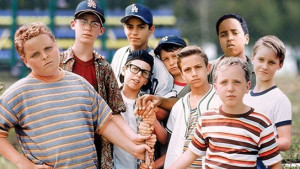
March 8, 2016 0 comments
0 FacebookTwitterPinterestEmail
Newer Posts
Older Posts

About

About

Towards a provisional theory of the cinema, or, failing that, just some shit about movies

Authors
Rick Kelley
Lark Lundberg

Keep in touch

Facebook Twitter

Categories

  • Conversation
  • Film
  • Film By Film
  • Great Movie Project
  • Great Movies: The Counter Programming
  • Guest
  • News
  • Other
    • Commentary
    • Film
    • Interview
    • Reviews
    • Song for a Sunday
  • Streaming Selections
  • TV
  • Uncategorized
  • Vegan Horror

Archives

  • April 2019
  • March 2019
  • January 2019
  • December 2018
  • November 2018
  • October 2018
  • September 2018
  • August 2018
  • July 2018
  • June 2018
  • May 2018
  • April 2018
  • March 2018
  • February 2018
  • January 2018
  • December 2017
  • November 2017
  • October 2017
  • September 2017
  • August 2017
  • July 2017
  • June 2017
  • May 2017
  • April 2017
  • March 2017
  • February 2017
  • January 2017
  • December 2016
  • November 2016
  • October 2016
  • September 2016
  • August 2016
  • July 2016
  • June 2016
  • May 2016
  • April 2016
  • March 2016
  • February 2016
  • January 2016
  • December 2015
  • October 2015
  • September 2015
  • August 2015
  • July 2015
  • June 2015
  • May 2015
  • April 2015
  • March 2015
  • February 2015
  • January 2015
  • December 2014
  • November 2014
  • October 2014
  • August 2009
  • September 2008

Recent Posts

  • China Girls, Death Proof, and the Hidden Face
  • Old News: Old Noise Edition
  • Old News: April 1, 2019
  • Nicolas Winding Refn, Marginalia, and the Deaths of Cinema
  • And now, let us praise Kanopy

Recent Comments

  • Franklin Kat on Michael Shannon shines again in Frank & Lola
  • Sean Tempesta on Cinema and dream-logic in Meshes of the Afternoon
  • ludditerobot on The Left-Wing Slapstick and Iconic Songs of 1937’s Street Angel
  • Franklin Kat on The Left-Wing Slapstick and Iconic Songs of 1937’s Street Angel
  • Arijit Mukherjee on Great Movies Project: The Counter-Programming
  • Facebook
  • Twitter

@2021 - All Right Reserved. Designed and Developed by PenciDesign
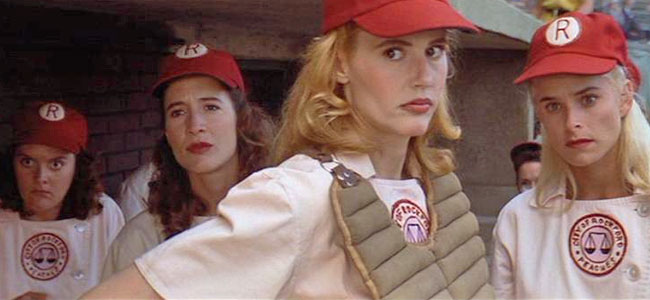

Back To Top
Luddite Robot
  • Reviews
  • Commentary
  • Great Movie Project
    • Great Movie Project
      Bride of Frankenstein is a movie for and…

      January 25, 2018

      Great Movie Project
      The Enduring Appeal of Nick and Nora in…

      November 29, 2017

      Great Movie Project
      The Ahistorical Fever Dream of The Scarlet Empress

      August 2, 2017

      Great Movie Project
      Dreams, Mundanity, and the Anarchist Yearnings of L’Atalante

      July 12, 2017

      Great Movie Project
      Duck Soup Is And Will Always Be A…

      April 19, 2017

  • Counter Programming
    • Great Movies: The Counter Programming
      Walking and Talking in the Shadow of Kanchenjungha

      March 7, 2018

      Great Movies: The Counter Programming
      A Brief Encounter in My Mother and Her…

      February 9, 2018

      Great Movies: The Counter Programming
      Horror’s Refusal in Farrokhzad’s The House Is Black

      October 13, 2017

      Great Movies: The Counter Programming
      The rage and beauty of The Cloud-Capped Star

      October 3, 2017

      Great Movies: The Counter Programming
      The daylight noir and social issue empathy of…

      June 22, 2017

  • Vegan Horror
    • Vegan Horror
      Julia Ducournau doesn’t think her film Raw is…

      June 7, 2017

      Vegan Horror
      Licking our wounds: The vampiric masculinity of Ravenous

      December 13, 2016

      Vegan Horror
      Eggertsson and animals: An approach to horror cinema

      September 15, 2016

      Vegan Horror
      “It’s Not My Nature” – Vegetarianism, Body Horror,…

      August 30, 2016

      Vegan Horror
      Bodies and Carcasses in Predator 2

      August 23, 2016

  • Interview
    • Interview
      Jasmine Leyva’s doc The Invisible Vegan aims to…

      May 3, 2017

      Interview
      Bridging The Abyss: An Interview With The Directors…

      November 28, 2016

      Interview
      7 Days in Ohio: An Interview with Nathan…

      September 12, 2016

      Interview
      Film Critic Phil Dy talks New Filipino Cinema

      June 17, 2016

      Interview
      “I Love Seeing Film Projected.” A Conversation with…

      March 22, 2016