Top Posts
Madeline’s Madeline: An Unclassifiable Panic Attack Maybe-Masterpiece
Shoplifters Steals Moments of Wonder from the Mundane
Burning and Forgetting What’s Not There
Kusama: Infinity Expands Beyond The Canvas
Mandy Risks Little, Wins Little
In We The Animals, The Children Are Away...
The Seagull Isn’t Quite Chekhov, But It’s Still...
5 Million Ways Boots Riley Isn’t Sorry To...
American Animals’ and the Queasiness of the Heist
A Star Is Born In Hearts Beat Loud
  • Reviews
  • Commentary
  • Great Movie Project
    • Great Movie Project
      Bride of Frankenstein is a movie for and…

      January 25, 2018

      Great Movie Project
      The Enduring Appeal of Nick and Nora in…

      November 29, 2017

      Great Movie Project
      The Ahistorical Fever Dream of The Scarlet Empress

      August 2, 2017

      Great Movie Project
      Dreams, Mundanity, and the Anarchist Yearnings of L’Atalante

      July 12, 2017

      Great Movie Project
      Duck Soup Is And Will Always Be A…

      April 19, 2017

  • Counter Programming
    • Great Movies: The Counter Programming
      Walking and Talking in the Shadow of Kanchenjungha

      March 7, 2018

      Great Movies: The Counter Programming
      A Brief Encounter in My Mother and Her…

      February 9, 2018

      Great Movies: The Counter Programming
      Horror’s Refusal in Farrokhzad’s The House Is Black

      October 13, 2017

      Great Movies: The Counter Programming
      The rage and beauty of The Cloud-Capped Star

      October 3, 2017

      Great Movies: The Counter Programming
      The daylight noir and social issue empathy of…

      June 22, 2017

  • Vegan Horror
    • Vegan Horror
      Julia Ducournau doesn’t think her film Raw is…

      June 7, 2017

      Vegan Horror
      Licking our wounds: The vampiric masculinity of Ravenous

      December 13, 2016

      Vegan Horror
      Eggertsson and animals: An approach to horror cinema

      September 15, 2016

      Vegan Horror
      “It’s Not My Nature” – Vegetarianism, Body Horror,…

      August 30, 2016

      Vegan Horror
      Bodies and Carcasses in Predator 2

      August 23, 2016

  • Interview
    • Interview
      Jasmine Leyva’s doc The Invisible Vegan aims to…

      May 3, 2017

      Interview
      Bridging The Abyss: An Interview With The Directors…

      November 28, 2016

      Interview
      7 Days in Ohio: An Interview with Nathan…

      September 12, 2016

      Interview
      Film Critic Phil Dy talks New Filipino Cinema

      June 17, 2016

      Interview
      “I Love Seeing Film Projected.” A Conversation with…

      March 22, 2016

Luddite Robot
Film critique, theory, and assorted nonsense.
CommentaryFilm

China Girls, Death Proof, and the Hidden Face

April 14, 2019

Old News: Old Noise Edition

April 8, 2019

Old News: April 1, 2019

Nicolas Winding Refn, Marginalia, and the Deaths of Cinema

CommentaryFilm

And now, let us praise Kanopy

January 24, 2019

Warren Sonbert and the Relief of Anti-Narrative

January 14, 2019

The World Is Ending and It Doesn’t Matter

The Best Films of 2018

FilmReviews

Madeline’s Madeline: An Unclassifiable Panic Attack Maybe-Masterpiece

December 21, 2018

Shoplifters Steals Moments of Wonder from the Mundane

December 11, 2018

Burning and Forgetting What’s Not There

Alien, Musicology, and Reading Soundtracks

CommentaryFilm

Shocktober III: Halloween 2018 Edition

October 24, 2018

Shirley Jackson’s The Lottery Traumatized Schoolkids in 16 mm

October 18, 2018

Shocktober 2018 II: Another Reshockening (of Horror)

Häxan is a movie made by a movie character

CommentaryFilm

Shocktober 2018

October 7, 2018

Unprofessional! Spring Night, Summer Night

October 3, 2018

The Wild Boys: A Luddite Robot Conversation

Kusama: Infinity Expands Beyond The Canvas

FilmReviews

Cannon Films made Death Wish 3, but they also made Love Streams. Thank you, Cannon Films.

by rick February 26, 2016
written by rick

[schema type=”movie” url=”http://www.imdb.com/title/tt0087644/” name=”Love Streams” description=”Two closely bound, emotionally wounded siblings reunite after years apart.” director=”John Cassavetes” producer=”Menahem Golan” actor_1=”John Cassavetes” ]One of the enduring mysteries of Cannon Films’ brief, spectacularly absurd success in the 1980s – aside from whether Sly Stallone’s character in Over The Top is named “Lincoln Hawk” or “Lincoln Hawks”, and which name would be dumber in the first place – is how the Golan-Globus group managed to crank out so much drivel while still laying the groundwork for genuine masterpieces.

The guys who brought you Death Wish 3 also produced Franco Zeffirelli’s Otello. They held a black-tie gala in a parking garage for the release of the Chuck Norris-tastic Delta Force, easily one of the most racist pieces of jingoistic nonsense ever afflicted on a non-war time population, while also releasing Barbet Schroeder’s Barfly, an underperforming gem based on a script by gutter-poet Charles Bukowski.

And in 1984, the same year Cannon wasted the good will generated by its first Breakin’ by soiling its own legacy with the ludicrously-titled Breakin’ 2: Electric Boogaloo, they financed and released Love Streams, arguably the greatest film from John Cassavetes, one of the true originals in American independent cinema.

Notoriously difficult to work with from the get-go, Cassavetes was dying of cirrhosis of the liver during its production. His portrayal of an aging playboy and artist, locked into alcoholism and manic attempts to generate meaning from a life that seems emptier by the minute, is almost brutal in its realism and introspection. This is a hard movie to watch, if only because you get the sense you are watching a genius murder himself on screen. And it’s a fucking Cannon Films production.

There’s a certain kind of sense to it, though. Menahem Golan, Cannon impresario, desperately wanted Cassavetes on his resume, and was entirely willing to allow for his hijinks and bullshit, if it meant he got to see his logo right before the film started. This was crucial, and served a purpose. It seemed to say, “Yes, we make the worst movies around, but we also make important ones.” It was a shrewd move, and totally in line with Golan’s vision of himself as a patron of the arts (arm-wrestling movies and skin flicks notwithstanding).
love streams1

In I’m Almost Not Crazy, the behind-the-scenes doc that accompanies Criterion’s version of Love Streams (a film virtually lost for two decades), you hear Golan relate that he screened the film, loved it, but asked that Cassavetes trim 15 minutes out of it for release. Cassavetes agreed … and returned with a movie that was 15 minutes longer. “It’s shorter, nevertheless,” he explained. Golan laughs when he tells the story. Buy the ticket, take the ride.

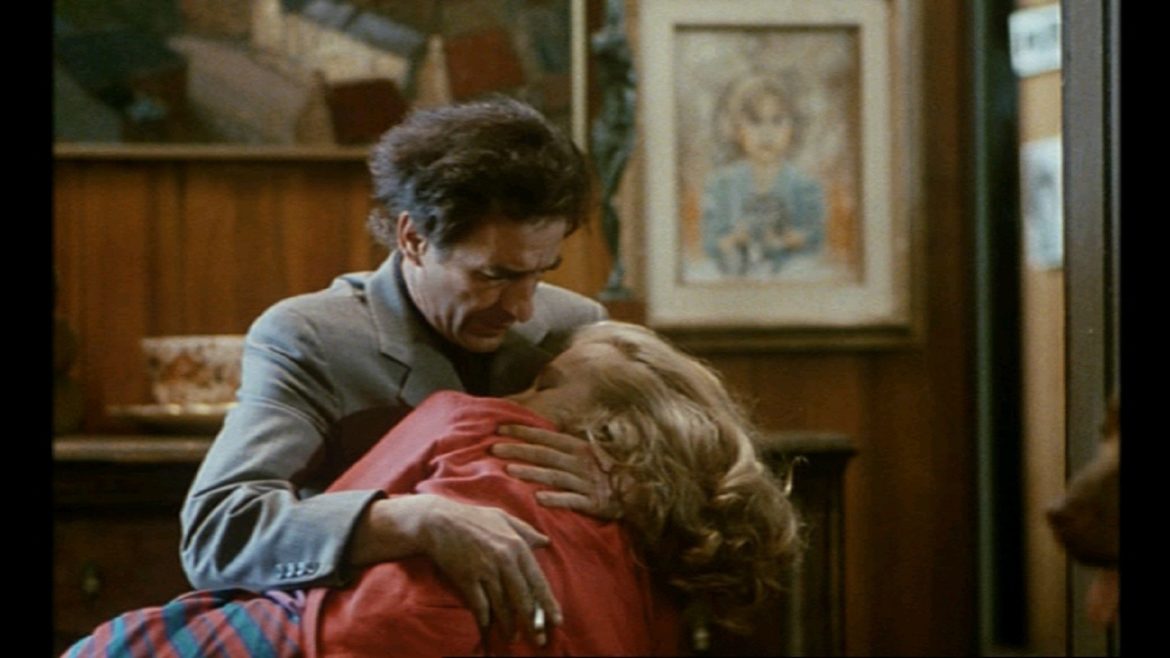
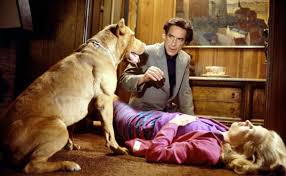
In Love Streams, Cassavetes (casting himself at the last minute in the lead) is Robert Harmon, a successful author of books about women. (We don’t know much about these books aside from that, and that they are lurid.) His work mirrors his life – he lives in a large house (Cassavetes’ actual house served as the set) filled with hookers who come and go, beloved by their benefactor … until they’re not. It’s not even clear if he fucks them. He just seems to like having them around, and occasionally interviewing them for material. He haunts gay clubs because he likes the performers. He drinks way, way, way too much, charms and abuses people in equal measure, passes out in strangers’ houses, barely makes it home every night. One day, a former lover deposits a son on his doorstep, who he promptly decides to take to Vegas, and just as promptly abandons to the hotel workers. He’s, in short, a fucking mess.

love streams3

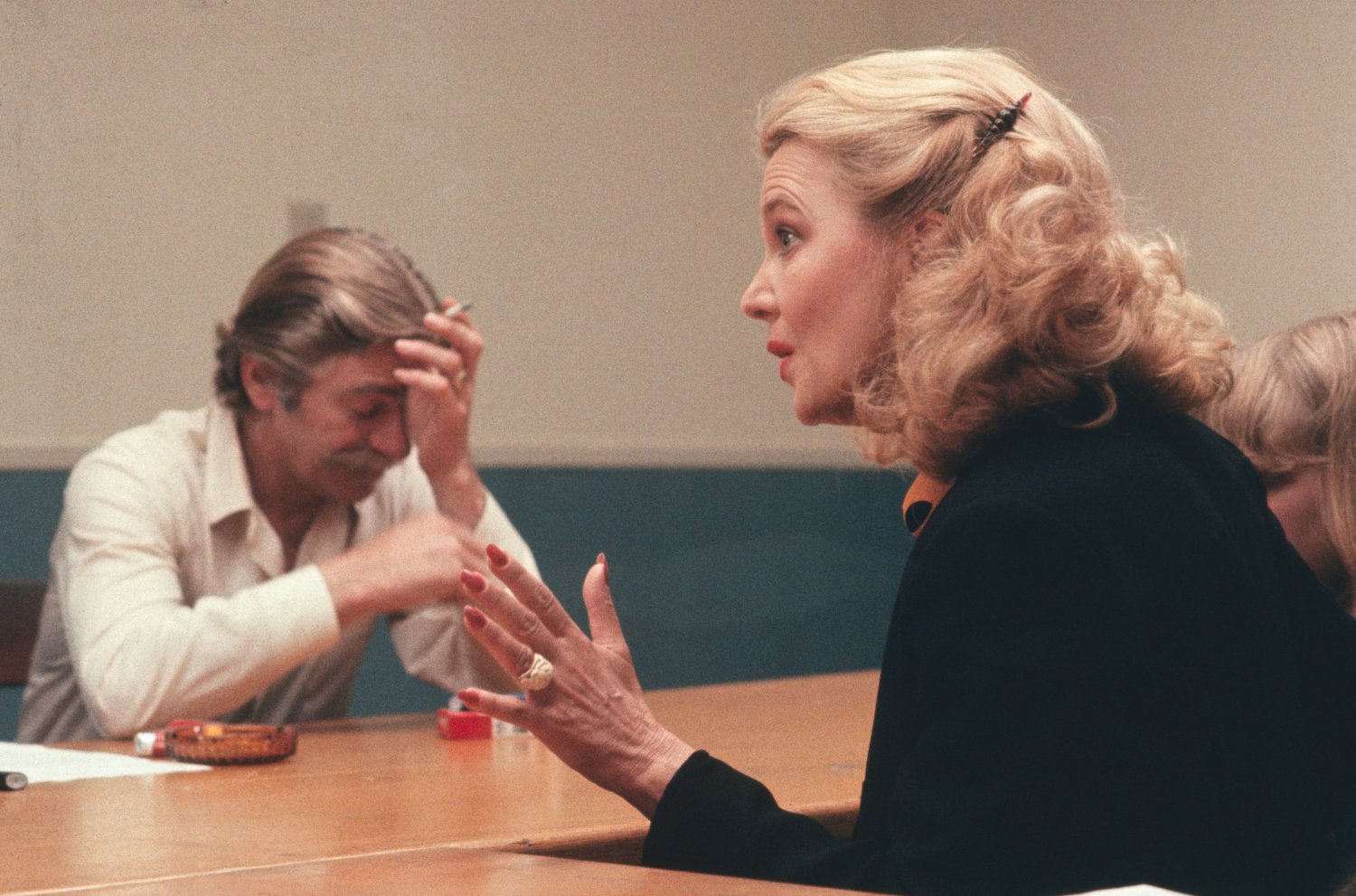
Gena Rowlands, Cassavetes’ real-life partner and frequent collaborator, is Sarah Lawson, an unhinged woman going through a messy divorce and custody dispute. It takes more than an hour and a half to find out she’s Harmon’s sister. Their stories run in parallel, and only eventually, casually merge. Rowlands is masterful, suggesting both the damaged aspect and the fundamental integrity of her character. She moves in with her brother, and the two set about finding something true and real in their lives of artifice and shallow entitlement.
love streams4

Both characters have children, but neither seems remotely close to the kind of responsibility parenthood entails. Hell, they’re barely adults themselves. A long, improvised scene finds Rowlands playing a desperate game of “make ’em laugh” with her daughter and ex-husband – in excruciating long takes, Cassavetes allows Rowlands to strip herself bare emotionally, trying and failing to elicit a moment of frivolousness and fun with people who are just completely over her bullshit. It might be the single most awkward and bruising sequence I’ve ever seen in a movie. You want to leap into the movie and help.

But of course you can’t. That’s not how movies work, and Cassavetes is only too happy to remind you of this. Eventually, the brother finds himself caring for a bunch of animals his sister bought him – she reasons he “needs a baby,” and delivers him more than a few. As goats and dogs roam the premises, the siblings’ joint madness subsides into a kind of domesticity … and then she leaves, impulsive as ever, with a lover she found in a bowling alley. Cassavetes remains, hallucinating in an empty living room, whiskey by his side, cackling maniacally.

lovestreams5

What is so funny? Apparently, he didn’t explain the scene to anyone else, and the crew was genuinely alarmed at his laughter, which goes on seemingly forever and is, frankly, odd and disturbing all these years later. It’s the laugh of a man who has given up on the notion of tears. Rain beats down in almost ludicrous volume, pounding the house. The dog his sister left morphs into a bearded man, who smiles knowingly. Cassavetes laughs and laughs some more.

In its closing frames, Cassavetes doffs his hat and waves out the window. He literally says goodbye to the audience, and then, outside of celluloid, goes off to die. It is not too often that an artist actually signs off in this fashion. But Cassavetes did, and the folks at Cannon – the most disreputable production house outside of pure porn – made it happen. It’s an incredible thing.

Cannon, the most divisive production company of all time, produced the final “personal film” of John Cassavetes, one the most divisive directors in U.S. history. What seems, at first, to be inexplicable turns out to be completely appropriate.

We can laugh all we want at Over The Top, but if it paid for Love Streams, I call it a win. God bless Cannon Films.
February 26, 2016 0 comments
0 FacebookTwitterPinterestEmail
CommentaryFilmReviews

Over The Top still lives up to its name

by rick February 25, 2016
written by rick

[schema type=”movie” url=”http://www.imdb.com/title/tt0093692/” name=”Over The Top” description=”Lincoln Hawk(s) is a trucker and arm wrestler who attempts to reconcile with his estranged son and win the world arm wrestling championship.” director=”Menahem Golan” producer=”Menahem Golan” actor_1=”Sylvester Stallone” ]Over The Top is not a good movie. In fact, it would be fair to call it an extremely bad movie. At no point, over the course of its surprisingly merciful hour-and-a-half running time, does it feature recognizable human beings, engaged in the activities human beings are generally known for. Yet it’s compulsively watchable.

It is a paradox, an enigma wrapped inside of a riddle, then stuffed, turducken-style, into a joke. It’s an arm-wrestling movie – an arm-wrestling movie – that spends most of its time trying to generate pathos out of a father-son relationship built around big-rigs. The father (Sylvester Stallone) is a doofy galloot. The son (David Mendenhall) is a preening, constantly whining goober who any reasonable person would abandon at the next truck-stop. The problems the duo face don’t seem to mimic anything ordinary people encounter, despite the film’s urgent insistence that they are the salt of the earth. Nothing makes any sense.

For the record, here is the plot.

We are introduced to two characters: Michael Cutler, a pre-teen kid graduating from military school (but the kind of rules-following child who won’t toss his hat in the air, because of … I don’t know. Because of dirt, I guess? The gross dirt of the underclass?) and Lincoln Hawk, a truck driver who, it appears, likes to wash his truck, because of … I don’t know.

Hawk shows up at Michael’s graduation, much to Michael’s chagrin. Turns out he’s the estranged dad. The two of them travel to go see Michael’s mom, who is dying of a cancer-like, but never specific, disease, and wants them to bond, big-rig-style.

over the top2

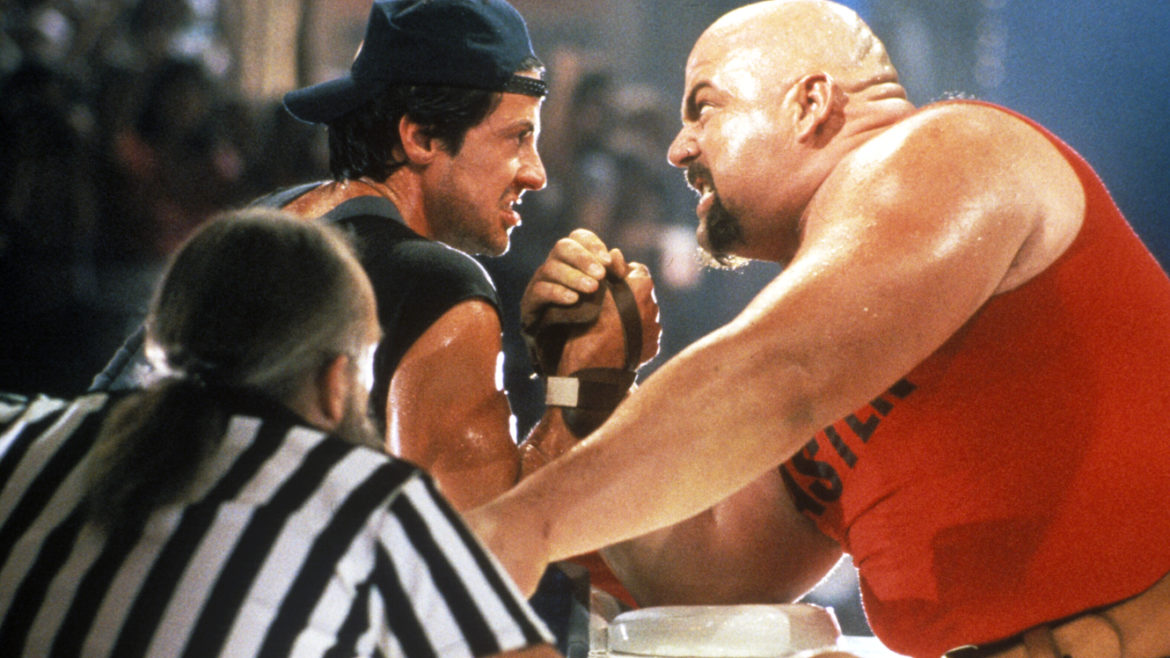
Michael is a pain in the ass, occasionally leaping into traffic, but eventually warming to Hawk’s way of living, via Kenny Loggins workout montages. As fate and extraneous plot development would have it, Hawk is also an amateur arm wrestler, a trade Michael (rightly) finds absurd, but he eventually discovers that arm wrestling is a means of self-fulfillment and honor. He finds this by being cajoled into arm-wrestling some idiots in a truck stop, on top of a pinball machine. The scene aims at something liberating, and doesn’t come close.

Moments later, he’s briefly kidnapped by the incompetent henchmen of Robert Loggia, fresh out of Scarface and the tanning salon, who is Michael’s rich grandfather, and holds an unreasonable grudge against declasse Hawk. The two reunite, but in the meantime, Michael starts to think maybe he shouldn’t hang out at truck stops so much with his weird arm-wrestling dad – frankly, a well-supported position. In response, Hawk drives his truck through his father-in-law’s gate, over his fountain, and literally into his house, before being reminded that this is a bad way to get custody of your kid.

He retreats, but vows to win the day … namely, by being the best arm-wrestler in a competition in Vegas, which boasts not just a cash prize but a new truck, which is convenient, given the whole “wrecking your truck as you crash into a house” plot that just happened.

It looks like all is lost in Vegas. These guys are tough, man. But, because Hawk taught his kid how to drive, Michael steals a car and heads straight for the arena, just in time to give a speech to his wayward dad about not giving up. As it’s a double-elimination tournament – a fact Over The Top is almost insanely committed to underlining for viewers – there’s still time. Will Hawk win? Will the family triumph? Have you ever seen a movie?

If Over The Top sounds like a movie invented on the fly, built on familiar tropes but with arm-wrestling incongruously inserted, you might be on to something.

Stallone received $16 million for the performance, paid out by Cannon Films’ Menahem Golan and Yoram Globus, who apparently thought this was what audiences craved. Audiences did not crave this, and Over The Top was one of several nails in the coffin of the Israeli cousins’ empire. The film marked the first, but not the last, example of Cannon’s profound over-reach. The filmhouse that gave us Breakin’ and all the Death Wish sequels had met its match. That match was selling big-budget, and incredibly uncinematic, depictions of arm-wrestling, a “sport” no one (outside of deeply involved insiders) cared much about. Golan and Globus would try this again with the lambada a few years later, after their split. Again, audiences side-eyed these attempts to generate interest in fads that existed pretty much only in the minds of the films’ producers.

It is difficult to pinpoint the exact moment that Over The Top becomes its own parody. The workout scene is a good nominee – the gate-crashing also works, as does Michael running across lanes of traffic, presumably killing dozens – but I’d also suggest the voiceover from the arena announcer, as Hawk prepares to enter the fray in Vegas. That man says, “Arm-wrestling is a feat of speed, strength, and skill.” This is among the greatest lies sports movies have ever conveyed with a straight face. You can argue all you want for the legitimacy of arm-wrestling as a sport, but there is just no way that it’s a feat of speed. That man is wrong.

Why, then, is the movie so fun? It has no right to be. But, as one of the few Golan-directed entries in the Cannon canon (sorry about that), it is governed by a kind of lunatic conviction.

Towards the end of the film, before the big showdown, Golan cuts to each of the individual arm-wrestlers, in faux-documentary takes. The lines are amazing. Stallone explains how turning his cap backwards makes him a different person when he arm-wrestles. His nemesis “Bull” Hurley boasts that “I drive truck, break arms, and arm wrestle. It’s what I love to do, it’s what I do best.” The one Black guy, named (kind of racistly) Harry Bosco, says, “My whole body is an engine. This is a fireplug… and I’m gonna light him up.” You may notice, upon reflection, that this last quote makes absolutely no sense. So it goes, in the world of Over The Top.

I haven’t even touched on how the film can’t decide if Stallone is called “Hawk” or “Hawks”, but, at a certain point, it just feels like piling on. Over The Top is an idiot fantasy, a movie for children and those who always wanted to work out on the side of the road with Sylvester Stallone while Kenny Loggins scored your muscle-bound dream. It succeeds on some reptilian-brained level, and survives to this day as a testament to what you can achieve if you adamantly refuse to examine anything but the surface.

That’s a kind of triumph, right? Like a guy who wins a truck in Vegas through the speed of his arm-wrestling, to win the heart of the kid he abandoned when he opted to focus on driving trucks. The world, as we are reminded twice, won’t meet you halfway. You got to take it.

February 25, 2016 0 comments
1 FacebookTwitterPinterestEmail
CommentaryFilmReviews

Electric Boogaloo — The Manic, Misguided Genius of Cannon Films

by rick February 23, 2016
written by rick

[schema type=”movie” url=”http://www.imdb.com/title/tt2125501/” name=”Electric Boogaloo: The Wild, Untold Story of Cannon Films” description=”The history of the independent film company, The Cannon Film Group, Inc.” director=”Mark Hartley” producer=”Nate Bolotin” actor_1=”Sam Firstenberg” ]At one point in Electric Boogaloo: The Wild, Untold Story of Cannon Films, the late Menahem Golan, the inexhaustibly enthusiastic producer of movies that probably did not merit anything close to his hilariously exaggerated boosterism, lays out his own view of his company’s legacy: “Sometimes we made good films, sometimes we made not so good films, but we made films.”

This could serve as both mission statement and post mortem for Cannon Films, the now-legendary purveyor of factory-generated bottom-of-the-barrel schlock and occasional arthouse masterpieces. It also neatly encapsulates Golan’s mixture of candor, pride, and total disinterest in anything but movie-making. Electric Boogaloo is an affectionate, and affecting, portrait of Golan and Cannon, and essential viewing for anyone who grew up watching movies on TV in the 1980s.

“But we made films.” Did they ever.

cannon2

From its inception in 1967 until it was acquired (for $500,000) by Golan and his cousin Yoram Globus in 1979, the company produced about 40 films – ranging from tripped-out late 60s fantasias like Alejandro Jodorowsky’s Fando and Lis to the violent, reactionary anti-counter-culture hit Joe, and eventually settling into the Happy Hooker series and films with such dubious titles as The Yum Yum Girls and Cheerleaders Beach Party. Soft-core skin flicks made money, but not enough. The Golan-Globus group, already boasting the biggest box office success in Israeli history (Lemon Popsicle), were desperate to break into the U.S. market.

The result? Cannon cranked out nearly 200 movies in the following 17 years, including at least 28 in 1987 alone. (By way of comparison, Warners produced 18 that year, if you generously include its co-productions with companies like Cannon.)

Death-Wish-2-hoboBronsonbloodsportBrash, generally disreputable, often lacking narrative coherence, full of nudity and violence and muscles and questionable fashion choices and breakdancing, Cannon’s films are synonymous with the 80s. Even if you aren’t a bad movie connoisseur, you probably know some of the titles. These were the staples of many a young film fan’s diet during the decade: Death Wishes 2 and 3 and 4, all of the Chuck Norris vehicles like the Missing in Action series and Delta Force, King Solomon’s Mines and Allan Quartermain and the Lost City of Gold (both starring a young Sharon Stone, cast because Golan demanded “that Stone woman,” meaning Kathleen Turner from Romancing The Stone … oh well, let’s just go with it), Cobra, Superman IV, Bloodsport and Kickboxer and Cyborg.

cannon6

Cannon was deeply schizophrenic in its choices. Its first legitimate hit was Breakin’, an actual, honest-to-God watershed moment in hip-hop and breakdancing history that the cousins just stumbled into … and then promptly shit the bed with their quick-release, cash-in sequel, Breakin’ 2: Electric Boogaloo, a title the internet has latched onto to denote anything ridiculous and shark-jumping.

For every record paycheck made out to a Sylvester Stallone for things like the ill-fated arm-wrestling saga Over The Top, there was an art film like John Cassavetes’ swansong Love Streams (two films we’ll look at later this week). The company green-lit Tobe Hooper’s gonzo-comic sequel to Texas Chainsaw Massacre, starring a deeply unhinged Dennis Hopper, while also funding Franco Zeffirelli’s alarmingly beautiful adaptation of Otello. Golan wrote up a contract on an actual napkin and signed Jean-Luc Godard, the auteur’s auteur, to direct an avant-garde King Lear with Norman Mailer, while still generating movie after movie about improbably American ninjas and the Dolph Lundgren-focused Masters of the Universe live-action He-Man story, a comic action film aimed at kids and adults, and roundly rejected by both. It was, by all accounts, a weird ride.

cannon3

Electric Boogaloo (the documentary, not the good-will-wasting sequel from 1984) charts this weirdness, the rise and fall of a company drunk on its on cinematic enthusiasm. It’s very funny, but also poignant. Golan and Globus were outsiders through and through – as Israelis who had succeeded in their home country’s film industry through sheer will and relentless self-promotion, they were not the sort of folks who were going to tone it down for the U.S. market, and they were treated as interlopers and, maybe, charlatans. (There’s more than a hint of barely coded anti-Semitism to some of their enemies’ pronouncements – “The Bad News Jews” was a moniker that got tossed around, alongside The Go Go Boys and many others.)

Their business model – sell a film on its poster, collect pre-sales, get the movie made on the cheap, kick it out the door, use the funds to finance the next one, slip in some money for prestige art pictures, repeat – wasn’t ever going to be sustainable, and of course it all came crashing down. But holy shit, what a run. And Cannon basically invented the entire notion of “pre-sales,” which now structure the industry and are taken as commonplace. The real problems, as many people in the documentary point out, arose when the cousins strayed from this model, taking on big-budget projects like Superman IV and Over The Top, which they didn’t have the money to do right by … or in the latter case, probably shouldn’t have done in the first place. But who knows? Maybe, if the stars had aligned slightly differently, we’d have seen an explosion of arm-wrestling movies. It’s not likely, but it’s not impossible.

cannon4

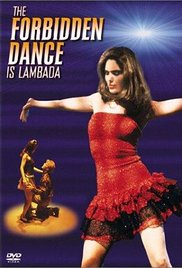
Golan and Globus eventually split – the insane and out-of-touch nature of the split exemplified by their mad, competing rush to beat each other back to their earliest success with Breakin’ by being the first to release a lambada movie, glorifying a dance craze that never existed and never will. Golan’s limping remnant of Cannon put out Lambada, while Globus countered with The Forbidden Dance (Is Lambada), under the rubric of his newly founded, and slightly suspicious sounding, “21st Century Film Corporation.” Appropriately and ridiculously enough, the two films were released on the same day. The public did not take sides, opting instead to laugh at the pre-fab oddness of competing lambada movies. They died quiet, presumably sexy deaths.

lambadaforbidden dance

It’s a poignant, sublimely absurd coda to an often exuberant, sublimely absurd story, but so it goes. Electric Boogaloo does an excellent job conveying the manic, arguably misguided passion behind the Cannon saga, though, and it’s hard not to salute Menahem Golan by the end. (Movie-mad Golan overshadows business-man Yoram Globus in every way here.) There’s something eternally 10-years-old in Golan’s approach, his childlike excitement to have anything to do with making movies … though perhaps that’s just my own 10-year-old self speaking, a little moron in front of a VHS player who considered Bloodsport an unqualified masterpiece.

At its heart, the Cannon story is really about the highs and lows of cinephiliac passion, about the questionable choices people make when they refuse to pause and consider what they’re doing. On the other hand, as Golan says so eloquently and inarguably: “we made movies.” Good, bad, indifferent. Borderline pornography or arthouse triumphs that never made their money back, but are now held dear by fans across the world. “We made movies.” Yeah, they did.

In any case, nothing’s ever totally finished. Upon catching wind of Electric Boogaloo: The Wild, Untold Story of Cannon Films, the cousins refused participation with the project and instead reunited to produce their own self-documentary, The Go Go Boys: The Inside Story of Cannon Films. You can almost hear Menahem Golan shouting, “If anyone’s going to produce this fucking movie, it’s going to be us!” And so they did.

The cousins’ film, the producers of Electric Boogaloo wryly note in its closing frame, made it to the screen several months ahead of their own.

February 23, 2016 0 comments
0 FacebookTwitterPinterestEmail
CommentaryFilmGreat Movie Project

Like many films, Safety Last! is better if you don’t think too hard about it

by rick February 17, 2016
written by rick

Part of an ongoing effort to watch each of the films in Roger Ebert’s Great Movies series. The introduction and full list can be found here.

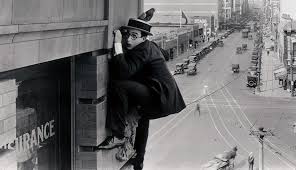
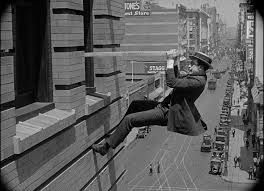
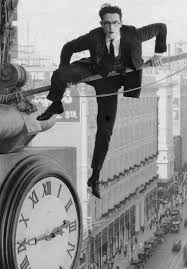
Why did the image of Harold Lloyd‘s “Glasses character” – pasty, spectacled, straw boater still perched precariously on his head – dangling from the minute hand of a clock 12 stories up become one of cinema’s most enduring images?

Many people know the shot even if they don’t know the film, or anything about the Silent Era for that matter, and it’s lingered in the cultural imagination in ways only truly iconic images can. (Sure, Back To The Future probably helped its legacy, too, but bear with me.)

Harold Lloyd in Safety LastAt least one reason lies in its improbability – that this nerdy, kind of boring-looking fellow should be in such peril. Even as a still, there’s an incongruous humor to his situation – a situation which is frankly terrifying, if you have any fear of heights, I might add – since it seems someone who looks like Lloyd shouldn’t be up there at all. What is he even doing?

Harold Lloyd in Safety Last

This is central to Lloyd’s charm. Unlike Chaplin‘s Tramp, an exaggerated and often (delightfully) sentimental figure, or Buster Keaton‘s stone-faced character, whose gag-filled misfortunes and their consequences seem almost cosmic in scope, Lloyd is … just some guy. In Safety Last!, he’s a kid from the small town working in a big city department store, where he routinely messes things up. All he wants is to do a good job, a position that pays enough to bring his sweetheart to live with him, but … these things just keep happening to him.

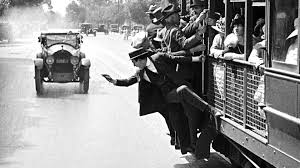
Harold Lloyd in Safety LastThe irony from our perspective is that Lloyd’s athleticism is what enables him to pull off the general gag of being a putz. Like Chaplin and Keaton, he created a proper character – the hapless but well-meaning Everyman who defies the odds and ends up with the girl. He’s so normal you temporarily forget he’s not Lloyd himself, the kind of hapless Everyman who can also apparently climb walls and fall off trains, and once blew up his thumb and forefinger in the line of comedic duty. It’s no surprise at all that martial artists like Jackie Chan admire him, along with the other two. In Safety Last!, Lloyd’s athleticism is on full display.

This is a good thing, because, after a half dozen viewings, I’m convinced the film could be a paradigm of Roger Ebert’s notion of the Idiot Plot: “Any plot containing problems that would be solved instantly if all of the characters were not idiots.”

See, in Safety Last!, Lloyd promised his sweetheart that he had already succeeded in the city. So, when she comes to visit, he has to pretend he’s a big-shot. This leads, as you expect, to some problems, since no one particularly respects him at all.

Harold Lloyd in Safety Last department store gag In some alternate universe, he could take The Girl aside and say, “I’m sorry, The Girl. I am not the General Manager of this department store. I felt pressure to succeed and to fulfill your hopes for us, but I was ashamed, and so I may have exaggerated things. The important thing is our love for each other.”

Of course, there would then be no movie at all, so he does not say this. Cue the gags, and the eventual circumstance that Lloyd himself has to climb a 12-story building, rather than the far more qualified pal he set up the gig for in the first place.

The hammy plot is forgivable for two reasons. First, those gags turn out to be inspired and amazing. And not just the climactic final scene. The first 10-15 minutes of Safety Last! are jam-packed with wonderful routines.

The film opens on a visual joke that should be at least as famous as Lloyd battling the pigeons on the side of the department store, in which everything we see indicates a hanging is about to take place, until the perspective shifts and we’re actually seeing our protagonist off at the train station. From there, he grabs the luggage and boards the wrong train; we meet him in the city, where he and his broke pal hide from the landlady by leaping into coats hung on the wall; he’s early to work but gets whisked off by a laundry truck and struggles to find a ride back to town, in hilarious fashion; sneaks back into work pretending to be a mannequin; and on and on.

Harold Lloyd in Safety LastThe famous final 15 minutes of Safety Last! deserve all their praise, but I laugh harder every time at its first 15, and frankly enjoy them more, as my palms don’t sweat. There’s a manic, wonderful sense that the filmmakers and gag-writers wanted to cram every joke they could think of into the frame, and they do.

Second, director/legend Hal Roach, Lloyd, and their fellow filmmakers actually do craft a pretty well-rounded narrative out of the goofy central idea (something that distinguishes Lloyd’s films from Keaton’s in many cases, which always seemed a bit shaky on the narrative front). Idiot Plot issues aside, the story proceeds along in its 7 reels pretty efficiently, especially for a film that strings together so many elaborate gags. Special mention should also go to the intertitles, which not only advance the story but are often full-fledged jokes themselves. (A favorite: “There were certain days she could expect a letter from him. Those days were Monday, Tuesday, Wednesday, Thursday, Friday, Saturday, and Sunday.”)

Of course, the climb up the department store facade is what most viewers remember. And why not? It’s incredible. We now know Lloyd didn’t do it quite as it’s presented, but he did plenty. And in any case, those are definitely people scurrying up several stories like Human Flies, or balancing precariously on edges. The real magic is in the camera perspective, in its effect on us, not just the willingness of actors to break their necks (though they did that frequently enough). For good reason, current health and safety codes forbid this sort of thing, but the combination of adventure movie thrills and comic shenanigans in Safety Last! still informed so many movies over the years.

safety last 2Deeper meanings? Some have pointed out that climbing the building is a literalization of the struggle to achieve and succeed under capitalism, as Lloyd ascends to respectability and marriage. This seems a totally reasonable reading, certainly in the context of period. But as far as authorial intent goes, I tend to think Harold Lloyd saw a guy climbing up a building one day and thought it would look awesome on film.

He was right.

Favorite Ebert quote: “I didn’t find myself laughing, but I watched in fascination. I don’t love the Glasses character with the intensity I reserve for Buster and the Little Tramp. But I was there with him every inch of the way up that building, and I shared the physical joy of his triumph at the top. I could understand why Lloyd outgrossed Chaplin and Keaton in the 1920s: Not because he was funnier or more poignant, but because he was merely mortal and their characters were from another plane of existence. Lloyd is a real man climbing a building; Keaton, as he stands just exactly where a building will not crush him, is an instrument of cosmic fate. And Chaplin is a visitor to our universe from the one that exists in his mind.“

Next up: Souls for Sale – Robert Hughes, 1923

February 17, 2016 0 comments
0 FacebookTwitterPinterestEmail
CommentaryFilmGreat Movies: The Counter ProgrammingReviews

In 1934, The Goddess took aim at the Angel/Whore dichotomy

by rick February 16, 2016
written by rick

Part of an ongoing effort to watch a set of films from non-White, non-U.S., non-male, and/or non-straight filmmakers and depart a little from the Western canon. The intro and full list can be found here.

[schema type=”movie” url=”http://www.imdb.com/title/tt0195256/” name=”The Goddess” description=”Street walker by night, devoted mother by day, a woman fights to get her young son an education amid criminal and social injustice in China.” director=”Yonggang Wu” producer=”Minwei Tian” actor_1=”Lingyu Ruan” ]When I first conceived of this series, one of the things I hoped for was to “discover” masterpieces. If not lost masterpieces exactly, then at least ones that had simply flown under my personal radar, so attuned – like many of ours’ presumably are – to the noise and echoes of the canon. Yonggang Wu’s The Goddess is that masterpiece, and the central performance by Ruan Ling-Yu is a revelation.

Here is a film I knew nothing about two days ago, but would now rank among the greatest of the silent era. The story of an unwed mother on the margins of Chinese society, doing everything in her power to help her son succeed, The Goddess displays an enormous depth of emotion, nuance, and social critique.

the goddess 1

These are conveyed by expressive cinematography and naturalistic pacing, but more than anything by the power of Ruan’s portrayal. Referred to as “the Greta Garbo of Shanghai”, Ruan pours her soul on the screen here, seemingly drawing from a deep connection to the role. Her presence is palpable all these years later, her face flickering with conflicting emotions and a tumultuous inner life that, unfortunately, proved all too real. The Goddess was released in 1934. Ruan would be dead a year later by her own hand. Reportedly, more than 100,000 people joined her funeral procession. She was 24.

The thrust of the narrative in The Goddess is a familiar one, not too different from a number of pictures at the time, including those of G.W. Pabst and Josef von Sternberg. A patriarchal society limits a woman’s options to get by in the world, so she opts to work as a prostitute to make ends meet and provide for her loved ones (in this case, her beloved son, who she is determined to ensure succeeds as she never could). Of course, in its hypocrisy, that same society castigates her for this, further marginalizing her for the crime of trying to survive.

the goddess 4

One key difference between The Goddess and many of those “fallen women” stories: the total absence of judgment or pure sentimentality. Ruan’s unnamed protagonist is an active agent in her life, pushing back against these social forces that would constrain her life, and far less concerned with her virtue (or supposed lack thereof) than simply creating a future for her (also unnamed) boy. This in and of itself is striking. The Goddess is not moralistic on the individual level, though the left-wing politics of its director are never far from mind as far as the wider structures are concerned. Ruan is a victim of injustice here – the greed of the gangster who insinuates himself as her pimp, the nasty gossip of the local women who consider themselves above her – but also a fierce advocate for her own interests, doing her best to navigate impossible circumstances. It’s hugely sympathetic and affecting.

the goddess 3

Aesthetically, The Goddess feels surprisingly modern. Ruan’s performance certainly carries with it a kind of Method authenticity and naturalism, and Wu fills the screen with montage sequences of the flashing lights of the Shanghai skyline, conveying both the pulse of a modern city and its dangers and illusions. One memorable shot frames Ruan clutching her child as seen from low on the floor, visible between the legs of the evil gangster exploiting them both. It’s an image of connection, devotion, and love amid powerlessness, with the looming presence of volatile masculinity, that would seem appropriate in a film from the New Hollywood. But here it is, in a Shanghai production from 1934. Like its unapologetic championing of the downtrodden, and refusal to sentimentalize their suffering, The Goddess‘ images seem far ahead of their time.

The film ends in the final expression of long-simmering violence, a sacrificial prison sentence, and a new day dawning for the young boy. The series of expressions that illuminate Ruan’s face in its closing frames speak to her power as an actress on the screen – grief, tempered joy, resignation, satisfaction, all clearly delineated though at odds with each other, all felt by turn and then all at once. She can’t win – this is a melodrama, after all – but she has no choice but to try. And she did it all for love, and she’d do it again. Wu clearly aimed to frame her suffering in political allegory, as a critique against the lingering prejudices of feudalism, but what sticks most upon watching The Goddess is the character Ruan embodied so effortlessly. It’s a performance for the ages.

the goddess 5

But that effortlessness proves haunting. Ruan was also the child of a widowed mother, who worked as a maid in a rich family’s house, yet was able to send her daughter to a private school for well-to-do children. Just as in The Goddess, an invitation to come hear her child sing in a school performance led to social ostracism – in the film, because the locals gossip about what she does for a living; in Ruan’s childhood, because it ultimately led her to cross paths with Zhang Damin, the child of her mother’s employer, beginning a lifelong and disastrous relationship. In New Women, filmed around the same time and released the following year, Ruan’s character overdoses intentionally on sleeping pills, just as Ruan herself had tried to do, unsucessfully, a few years prior, and just as she would do again in a few months.

How much of these echoes in cinema of her real-life struggles found their way into her performances? These are always dicey propositions, associating art with personal struggles, but it seems hard to ignore here. The complexity of Ruan’s performance in The Goddess indicates an actress drawing deeply from experience, and its power is undeniable. The film was heralded immediately, but the press was also full of stories of her strife with Damin and her other love relationships. Juicy stuff sells, then as now.

It would all be over within the year. Hounded by the Shanghai tabloids, who were eager to print columns either about her “salacious” roles or more private scandal, and trapped in an abusive relationship, Ruan mixed three bottles of sleeping pills into a bowl of congee and ate it. Her final note to the world read: “Gossip is a fearful thing.”

To complete the tragedy, her lover, discovering her suicide attempt, bypassed several local hospitals to take her to one further out of town. He hoped to avoid attention, for her but, it seems, also for him. She died on International Women’s Day, several hours before she was scheduled to speak to a girl’s school for the occasion. While “the Greta Garbo of Shanghai” might’ve stuck, Ruan shares more than a little with another icon – Marilyn Monroe. Indeed, even her death couldn’t stop the lurid tales, and might’ve fed them even more, while still others seized on her as an emblem for any number of political critiques. In death as in life, she was pilloried and exalted, apparently the only two options we have for complicated women in culture.*

It would be absurd to claim that every bit of this comes through in The Goddess. But I knew none of it coming into the film and can attest that some of it surely does. Ruan Ling-yu was clearly a remarkable actress, and this film finds her at the height of her powers, and battling tremendous demons. This is something silent films know, and can reveal, in ways that later cinema often can’t – Ruan lights up the screen with her vitality and her pain, conveyed in gestures and eyes, with no need to get bogged down in exposition.

the goddess 6

“The Goddess” – shennü – is a term used coyly here: it can refer either to a selfless protector or, as in old slang, a prostitute. The corrosive “virgin/whore dichotomy” rarely gets made so explicitly, or critiqued so movingly. That Ruan Ling-yu understood this, and agonized over it, is evident in every frame. The world did not do right by this young master of her craft, but she lives on in cinema, defiant and proud to the end.

Next up: Our Neighbor, Miss Yae, Yasujirô Shimazu

* All taken from The Buffalo Film Seminars, 24 January 2006, XII:2 (PDF)

February 16, 2016 0 comments
0 FacebookTwitterPinterestEmail
Commentary

The Coens, by way of Camus

by rick February 11, 2016
written by rick

[schema type=”movie” url=”http://www.imdb.com/title/tt1019452/” name=”A Serious Man” description=”Larry Gopnik, a Midwestern physics teacher, watches his life unravel over multiple sudden incidents. Though seeking meaning and answers amidst his turmoils, he seems to keep sinking.” director=”Ethan Coen, Joel Coen” producer=”Tim Bevan, Ethan Coen, Joel Coen, Eric Fellner, Robert Graf” actor_1=”Michael Stuhlbarg” ]The Coen Brothers are the closest thing we have to existentialist filmmakers working today.

Before you dismiss this out of hand, consider the following. The Man Who Wasn’t There, probably their most underrated film, is essentially an adaptation of Albert Camus’ “The Stranger” (at least as much as A Serious Man is a retelling of The Book of Job). Fargo actively evokes notions of the Absurd, with Marge Gunderson’s final speech an almost paradigmatic example of existentialist reflection – “And it’s a beautiful day. Well, I just don’t understand it” – in fact, the critically-acclaimed TV series spinoff made this connection explicit by titling one of its episodes “The Myth of Sisyphus.” No Country For Old Men is a horrified vision of the confrontation between reason and the inexplicable. We could continue.

In any case, the release of Hail, Caesar!, generally received as a feather-weight complement to their more serious work, actually ends up reaffirming this. On the AV Club, Asher Gelzer-Govatos considers how it echoes Inside Llewyn Davis, arriving at a pretty convincing argument that the Coens make every movie twice – as, like Marx wrote, first tragedy, then farce. Focusing on theology, David Ehrlich thinks of it as the New Testament version of A Serious Man.

Hail, Caesar! could also easily be a companion piece to Barton Fink, two different but related tales of Hollywood. But following Ehrlich, I am going to compare it to A Serious Man, though instead of strictly theological implications, let’s talk some philosophy.

Since we have 3 rabbis in one film and an extended joke about the Christian Trinity in the other, here are 3 quotes from Camus, and some reflections on how the films echo each other and diverge.

“Man stands face to face with the irrational. He feels within him his longing for happiness and for reason. The absurd is born of this confrontation between the human need and the unreasonable silence of the world.” ~ The Myth of Sisyphus

hail caesar georgea serious man 3

Camus’ philosophical lodestone, The Myth of Sisyphus is a short, dense summation of his way of looking at the world. Cursed to forever roll a stone up a mountain, only to see it fall back to the ground, Sisyphus is a tragic figure, the very image of the absurd. And yet, Camus insists, “one must imagine Sisyphus happy.” One must. In meeting absurdity head-on, and in embracing the likely futility of our efforts, the constant knowing that none of this matters and we must do it anyway, there’s a kind of freedom. Sisyphus’ happiness is an act of rebellion against the silence of the gods. Asking “why?” can never help – the only question is how to consider things.

This is a point of view Larry Gopnik finds unacceptable. A Serious Man is, among other things, a study of the universe’s refusal to explain itself, and one man’s insistence that it must be explained. As a professor, he relies on mathematics and physics to detail the goings-on – there is always an equation. In fact, there are even equations that explain why some things can’t be explained (a joke Camus would’ve appreciated). But Gopnik’s problem – one of many – is this “confrontation.” As he asks Rabbi Nachtner, one of the three rabbis he consults, “Why does [Hashem] make us feel the questions if he’s not going to give us answers?” It’s a plaintive cry in the dark. Nachtner’s response? “He hasn’t told me.” This is, at root, the fundamental motivating idea behind Camus’ existentialism, and it animates the Coens films again and again. How do you live when nothing is there to instruct you if you’re doing it right? It’s a hard world for those hoping for guidance. We are on our own – free, and cursed with reason in an unreasonable place. Yet one must act. There’s no other choice, really.

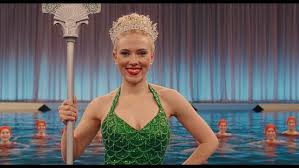
In Hail, Caesar!, our protagonist Eddie Mannix is a Hollywood fixer tasked with keeping the engine of commerce humming. He’s beset on all sides by problems — a pregnant star who can’t fit into her mermaid outfit, a cowboy who has no place in the mannered drama the studio wants him to star in, a marquee star kidnapped by cut-rate communists. Things just seem to happen, and happen, and happen, and it’s Mannix’s job to keep the ship afloat. Conspiracies turn out to be mundane, grand plots are foiled not by intrepid sleuths but by the incompetence of the plotters. His search for meaning isn’t as agonized as Gopnik’s, but he’s still face to face with incongruity — the distance between meaning and reality. He goes to confession daily, but can’t find much to confess. He’s an important man in a silly world, and there are no signposts. Representatives from Lockheed want him on board, plying him with tiki drinks and impressive photos from the bomb site at the Bikini Atoll. What is any of this all about?

“If absolute truth belongs to anyone in this world, it certainly does not belong to the man or party that claims to possess it.” ~ “Socialism of the Gallows,” in Resistance, Rebellion, and Death.

hail caesar 1a serious man 4

There is no surer way to court catastrophe in a Coen Brothers film than to assume you have all the answers. What some critics have deemed their “smugness” or disdain for their characters is more often than not a rejection of individual arrogance, a sometimes gleeful, sometimes pointed take down of anyone who thinks they have it all figured out. The brothers’ absurd worlds can’t allow for the sin of pride, and the prideful end up with more than they bargained for.

In ASM, Larry Gopnik certainly can’t be faulted for claiming to possess absolute truth – quite the opposite. He’s adrift in the world, vainly searching for cosmic answers under circumstances that test his faith not just in G-d but meaning itself. Everyone else in the movie, though, appeals to higher powers and higher truths, and are routinely revealed to come up short. Profound insights amount to little – “The Tale of the Goy’s Teeth,” one of the film’s best sequences, maps this out as comic allegory; at the story’s end, Nachtner more or less shrugs off Larry’s sputtering desire for a moral. “We can’t understand everything,” he notes. “It sounds like you don’t understand anything,” Larry blusters. There is no absolute truth to be found, and anyone claiming it is a fool. The world offers no answers, because that’s not the way of the world.

In Hail, Caesar!, the critique of totalizing systems is played more broadly, without Larry’s tragic Old Testament subtexts. The Hollywood Communists are a collection of spiteful morons, and Whitlock’s “conversion” to their Cliff Notes version of Marxism hinges on the fact that he’s a moron, too. But the studio system the commies seek to undermine doesn’t fare that much better: Mannix holds the fictions together through fictions of his own, and even if the Coens are more sympathetic to the ephemeral beauty of make-believe than the hypocrisy of opportunistic Leftists, they don’t let anyone off the hook. Mannix’s daily trips to the confessional speak to his crisis of conscience, despite the fact that the worst thing he admits to is sneaking cigarettes even though he promised his wife he’d quit. The Church isn’t much help, the round table discussion between faith leaders about the depiction of the Trinity is played for laughs, and it all pales in comparison to the ludicrous but satisfying fantasies of The Christ that the studio puts on the screen.

“He who despairs of the human condition is a coward, but he who has hope for it is a fool.” ~ L’Hote

a serious man 2hail caesar 2

Contradictions inform all of Camus’ work. The very notion of the Absurd demands them, and the Coens share this throughout their filmography. This is a pretty resonant quote: its combination of cynicism and clear-eyed determination – do not despair, but keep your hope in check; marvel at the seriousness of the world, but laugh at anyone who would take it too seriously – is endlessly applicable. ASM and Hail, Caesar! both contain its echoes.

Larry Gopnik is in despair – why wouldn’t he be? A modern-day Job, bad shit just keeps piling up, and, as he keeps reminding us, he “didn’t do anything.” But his frequent protestations also underscore his passivity, and his cowardice: the double meaning is clear – he didn’t do anything to deserve this, but he also didn’t do anything at all.

He feels he’s entitled to answers, and discovers, over and over, that those answers will not be forthcoming. The root of his problems aren’t just grounded in the absurd, in Camus’ “confrontation between … human need and the unreasonable silence,” but in his coasting through life, his assumption that simply doing what has been asked of him is enough. After all, he has a good job, he’s up for tenure, he has a nice house in the suburbs for the family he rarely sees and doesn’t understand, he’s faithful to his wife, he’s more or less religiously observant. And yet, things are getting away from him, and he despairs. And, when good news finally arrives at the film’s end, it’s paired with cataclysms both personal (bad X-ray results) and apocalyptic (in the form of a literal tempest threatening to swallow everything). Despair always comes too early, and hope is a bad idea. Roll credits.

Passivity is not Eddie Mannix’s problem. In stark contrast to Gopnik, Mannix is the quintessential man of action – in fact, the guy the studio turns to when problems need fixing. The entirety of Hail, Caesar!is defined by movement, relentless and ridiculous, by Mannix’s decisions and refusal to give in to despair. But in his private moments, he’s torn – by doubt about his work’s value, whether any of it is worth the trouble. His daily trips to the confessional betray a man of action not quite sure he’s on the right path after all, and a “regular” job with war-mongerers holds a certain appeal. (Offers from the Devil often do.)

Does this make him an existentialist hero, insisting on the hopeless active over the despairing passive, direct engagement over ennui and fruitless searches for truths the world is unlikely to affirm? At no point is Mannix ever really hopeful or despairing, yet he’s still caught in a whirlwind of activity. He’s barely holding on, and the absurdity of his situation makes itself clear in every scene. He really is a serious man, but what he’s serious about is as close to total frivolousness as you can get. Still, the Coens seem to posit him as something like a hero – aware, and suffering, and duty-bound, without a trace of sentimentality, as he goes about the business of holding fictions together. Much of the film showcases the meaninglessness of those fictions, and we laugh right along.

Mannix has no time for laughter, or tears for that matter. There’s just the world and the responsibility to keep going. Hail, Caesar!‘s narrative evokes another famous Camus quote: “Where there is no hope, it is incumbent on us to invent it.” Amid all the zaniness, this could be the film’s more earnest subtitle – and where else do we find hope but in the movies?

“The invention of hope” through action, in a world of artifice, illusion, and unanswerable questions is about as existentialist as it gets, and a silly Coen Brothers comedy ends up mining unexpected depths.

February 11, 2016 0 comments
0 FacebookTwitterPinterestEmail
FilmReviews

Hail, Caesar! is the Coens at their wackiest

by rick February 9, 2016
written by rick

[schema type=”movie” url=”http://www.imdb.com/title/tt0475290/” name=”Hail, Caesar!” description=”A Hollywood fixer in the 1950s works to keep the studio’s stars in line.” director=”Ethan Coen, Joel Coen” producer=”Tim Bevan, Ethan Coen, Joel Coen, Catherine Farrell, Eric Fellner, Robert Graf” actor_1=”Josh Brolin” ]Given their frequent forays into philosophical contemplation and the various tantalizing Easter eggs sprinkled into their filmography for the devout, it’s sometimes overlooked that the Coen brothers are very, very funny. If you’ve forgotten, Hail, Caesar! is here to remind you – it’s the filmmaking team’s most explicitly comedic outing in years, and one of their best.

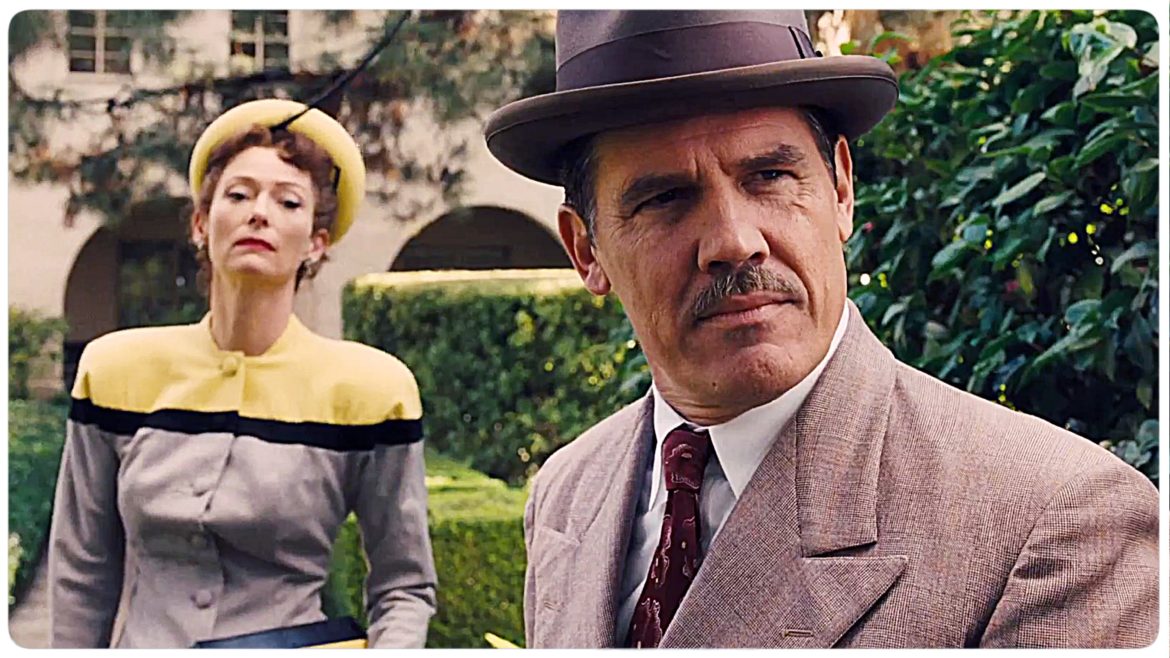
Eddie Mannix (Josh Brolin, playing a same-named Hollywood “fixer” loosely based on a real, and notorious, historical figure) is having a rough 48 hours. He’s tasked with keeping the studio’s “assets” in line and out of the tabloids, a tough job when you’ve got a pregnancy to hide, a cowboy actor struggling to transition to romantic leading man, and, last but not least, a marquee star in one Baird Whitlock (George Clooney), who has just been kidnapped by a shadowy organization calling itself “The Future.” He’s also being courted for a job at Lockheed, which promises more regular hours and less stress (H-bomb tests notwithstanding).

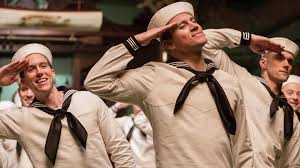
hail caesar georgehail caesar scarlet

Brolin is perfect in the role, a mix of duty-bound tough-guy sincerity and private vulnerability. The latter is showcased in his daily visits to confession, which even the priest is starting to feel is a bit too often. The narrative is routinely interspersed with clips from the various films-within-a-film he’s tasked with managing, as though no one can focus on any one thing for too long. Mannix has no choice, however: holding narratives together is his job, so that the studio can bring its visions to an awed public who just want to see their favorite stars do their thing. Politics intrudes, in the silliest ways possible, and so does religion – Hail, Caesar! (the movie in the movie, not this movie, specifically) is subtitled “A Tale Of The Christ”, so how could it not? Mannix might not be a Christ-figure, but he’s certainly suffering, stoically, for someone‘s sins.

As ramshackle in its shaggy-dog playfulness as The Big Lebowski, as full of absurdist gags as Burn After Reading, and as epic in its knowing ridiculousness as O Brother! Where Art Thou, Hail, Caesar! is a love letter to classic Hollywood written in its own cinematic tropes, but, like any Coens joint, there’s a fair amount of bitterness accompanying all the genial goofballery. There’s also a wealth of allusion and plenty to chew on after it’s done, from questions of faith and duty to critiques of any and all totalizing systems. The brothers’ trick, here as always, is to take their own jokes seriously, and to never miss an opportunity to joke about their seriousness (and everyone else’s). It’s a hard thing to pull off – and a hard thing to analyze without spoilers, for that matter – but they make it look easy.

hail caesar channing

None of which should surprise their fans. In A Serious Man, their best film to date, the story of Job became an Old Testament comedy about existential dread and the apocalypse. David Ehrlich has posited that Hail, Caesar! is ASM‘s New Testament counterpart, and this idea has much to recommend it. (Tune in tomorrow for a more in-depth look at that.)
But it could just as easily be the manic, madcap flip-side to their Barton Fink: both tell stories of men adrift in Hollywood, facing pressure from all sides as they vainly struggle with art and artists and what it means to be authentic. If Barton Fink is the horrifying Tinseltown nightmare, Hail, Caesar! might be its more fanciful daydream recollection, played out on backlots where unserious men (and women) take extremely seriously the frivolous business of playing dress-up for legions of adoring movie-goers.

Sitting in the dark, staring up at the screen, we all want to believe, and Hollywood is here to make sure the cracks don’t show in our fantasies. The Coens, of course, are off to the side, giggling that anyone could swallow this tripe, but also reveling in it with us. It’s no coincidence that a climactic shot features a central character staring up at the unseen Divine, on a soundstage, a small figure dwarfed by an image revealing his own powerlessness, as much an audience as we ever were. What is faith if not the suspension of disbelief in the impossible, a willingness to allow for artifice in the name of a greater truth? The Coens certainly don’t believe Jesus turned water into wine – indeed, a hilarious round table sequence in which people try and fail to explain the Trinity implodes any notion of reverence – but, contrary to their dour reputation as smug know-it-alls, they seem fairly warm-hearted at the prospect that others might. Whatever works.

The Coens self-references are reaching Pynchonian levels at this point, or at the very least something like a low-key Marvel Cinematic Universe. To name only a few examples: Nicolas Cage’s H.I. in Raising Arizona worked for Hudsucker Industries, which shares its name with Tim Robbins’ employer in The Hudsucker Proxy. The studio in question in Hail, Caesar! may be a stand-in for MGM, but it also shares its name, Capitol Pictures, with the folks who hired Barton Fink to write wrestling movies he felt were beneath him – and what’s more, there’s even a “Wallace Beery Conference Room” in Hail, Caesar!, referencing the star Barton was brought on board to write a picture for. Baird Whitlock may even be a reference to a man of the same name who was Dean of Bard College at Simon’s Rock when the Coens attended – and who was also a noted Christian author, including penning a text that told the story of the Christ through conflation of the Gospels of Matthew, Mark, Luke, and John, a fact no Coen-phile could possibly dismiss as accidental, at least not out-of-hand.

Are these connections full of transcendent meaning, or cosmic goof-offs / piss-takings from pranksters in love with story, image, and the endless permutations of meaning? Or something of both? Well, that’s the question, isn’t it? If it weren’t so funny, it might be infuriating.

And, of course, the film itself is a composite of other filmic references. Hail, Caesar!‘s individual set-pieces evoke the water choreography of Esther Williams movies, the delight of a Gene Kelly dance, the over-the-top self-importance of a Charlton Heston swords-and-sandals epic like Ben-Hur, the countrified charm of a Gene Autry cowboy movie, and so forth, each lovingly recomposed (right down to aspect ratios, like the nerds these guys are) by master cinematographer Roger Deakins, doing some of his best work in a towering career. Hail, Caesar! isn’t just a movie – it wants to be all the movies at once, in front of and behind the camera.

hail caesar ralphhail caesar cowboy

What does it all mean? Is that even the question to ask? How do you ask it, when you can’t catch your breath from laughing at the absurdity?

The Coens have never seemed like they think an answer is forthcoming – which is maybe the truest thing about their approach. We can search and question, but in the meantime, we also have to live in all this artifice and madness, making up our ethics as we go along, answerable to everyone and no one, utterly without reassurance in our conclusions. Which is one key to their work: only fools believe without hesitation, and doing so usually results in catastrophe. There are no real antagonists in Hail, Caesar!, only people who think they have it all figured out. The Coen’s stock response to that crowd: Well, we’ll see about that.

As theology goes, that probably leaves a bit to be desired. But no one ever said the movies were supposed to pull back the curtain on the divine, unless it was just to reveal some guy huffing and puffing, pretending to enlightenment. Holy visions are always one-step removed from slapstick.

Just because you have questions, the filmmakers say here and elsewhere, doesn’t mean you’re entitled to answers. Would that it were so simple.

February 9, 2016 0 comments
0 FacebookTwitterPinterestEmail
FilmGreat Movie ProjectReviews

Documentary truth, falsehood, and the spaces between in Nanook of the North

by rick February 2, 2016
written by rick

Part of an ongoing effort to watch each of the films in Roger Ebert’s Great Movies series. The introduction and full list can be found here.

What is a documentary? What are its aims, ambitions, and responsibilities – to its subjects, to its audience? To what degree is it permissible to shape the realities on display, rather than stand back as much as possible from the events depicted? Is it even possible to extricate a filmmaker from a film? Is it desirable? Is filmic truth bound by what we think of as journalistic ethics?

These are vital questions that continue to be asked to this day – indeed, Romeo Is Bleeding director Jason Zeldes brought them up in a recent conversation on this very blog – and they date back to Robert Flaherty‘s 1922 Nanook of the North, often cited as the first example of the form. (As many have pointed out, this isn’t quite true: the vast majority of early films depicted “actualities” – people emerging from a factory, trains in motion, etc. – but Nanook is almost certainly the first to approach what we generally think of as a “documentary” today.)

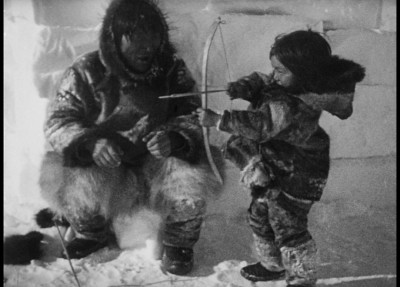
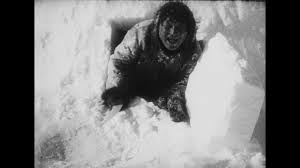
Allakariallak in Flaherty's Nanook of the NorthNanook, one of the first 25 films selected for preservation in the National Film Archive, is Flaherty’s chronicle of a season in the Arctic with an Inuit family. We watch Nanook (actual name Allakariallak, one of many liberties taken) as he hunts salmon, seals and, in a memorable scene, a walrus. We visit a white trading post with the family to trade for spears and other supplies. In the film’s most celebrated sequence, we discover how an igloo is built from the ground up, complete with a window. In the tradition of Western ethnography, little happens apart from the machinations of day-to-day life, or what the film would have us believe to be day-to-day life for these people. It’s by turns brutal and tender, and often rather boring, but there’s no doubt it presents a series of “exotic”, nearly alien images of a landscape and way of life that had never been caught on film before.

Of course, that way of life was already on is way out when Flaherty and his crew arrived. Many of the sequences were reenacted by Allakariallak and his “family,” none of whom he was actually related to. (In fact, one of his “wives” was actually Flaherty’s common-law wife, a rather problematic discovery.) The Inuit stars wore traditional garb for the camera that they wouldn’t wear in real life. Rifles had already been introduced and largely replaced the ubiquitous hunting spear that Flaherty seems to exalt. Several of the hunts were entirely staged. During the visit to the trading post, Allakariallak pretends to be amazed by a gramophone, even curiously biting on a record in wonder, in a rather insulting portrait of the naive native. Even the famous igloo sequence isn’t immune from this: upon discovering that there wasn’t adequate light to shoot inside an actual igloo, and building a larger one led to its collapse, Flaherty and his team instead created a three-walled version for “interior” shots. And on and on.


These liberties – and outright fabrications – have their critics and their defenders. For one thing, while we now expect that a documentary filmmaker will not entirely stage scenes and present them as recorded truth in the moment, Flaherty had no models on which to rely. In the process of inventing the documentary, he simply doesn’t seem troubled by them, and at no point does it feel exploitative, exactly. If anything, his clear affection for his subjects and their culture, or at least his interpretation of their culture, is what shines through. Allakariallak was an enthusiastic collaborator on the project, and dailies were screened for the cast and (largely native) crew. There are moments when they turn directly into the camera and smile with a wink – no one is being fooled here. And, indeed, “Nanook” became something of a star on the film’s release.

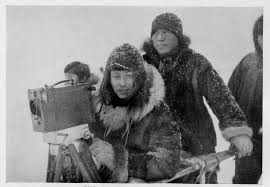
Native crew on Flaherty's Nanook of the NorthThe question, then, is whether any of these things matter. Flaherty did create a record, a document, of people and place, and captured incredible images of a land that seems almost like a dreamscape, or a distant planet. In any case, no camera technology at the time would’ve allowed him to follow everyone around recording their daily lives; to a degree, reenactments might have been the only reasonable way to proceed. But the question of truth or falsity haunts the picture, just as it continues to do with modern documentaries. (See the discussions about 2015’s wonderful film The Wolfpack, and the occasional sense of betrayal in them, if you have any doubts about that.)


What makes Nanook of the North extraordinary is the sense that a genre is being created on the fly. Instead of a depiction of banal “actualities” that served mainly to advertise the camera, and instead of a narrative feature rooted in the world of fiction, Flaherty traveled to the far ends of the earth to make a hybrid. Nanook means to record something like everyday life for a particular community, but to do so with a narrative sense, and with a protagonist.

Allakariallak in Flaherty's Nanook of the NorthInterestingly, the director made an earlier version on an earlier trip, but, upon returning, discovered it wasn’t compelling at all – just a collection of vignettes with nothing tying them together. (This version is lost: Flaherty dropped a cigarette on the nitrate film stock, underscoring the incredible fragility of early film.) In what now seems an obvious insight but at the time was anything but, he realized that a focus on a single person and his world could be more engaging and illuminating for audiences – someone we could relate to, and a structure on which to hang the various loose threads of observation. It would be, basically, a movie, just one with real people in it, in a real place most of us don’t get to see, doing things they (sometimes, maybe) ordinarily do. In 1922, that was revolutionary, and we’re still grappling with the ethical and aesthetic questions Flaherty was instrumental in raising, whether he knew it or not.


One final note, aimed square at the animal lovers in the crowd: this was a particularly tough watch for this particular vegan cinephile. With the incredible igloo-building sequence aside, Nanook is essentially an hour and a half of watching depictions of hunting, skinning, processing, and storing animal carcasses. This is understandable, since these things do and did occupy much of the time for people like the film’s subjects, carving out survival in an unforgiving land, and one in which nothing much grows at that. But you might want to steel yourself, because the constant killing really never stops until the closing frame.

Favorite Ebert line: “The film is not technically sophisticated; how could it be, with one camera, no lights, freezing cold, and everyone equally at the mercy of nature? But it has an authenticity that prevails over any complaints that some of the sequences were staged. If you stage a walrus hunt, it still involves hunting a walrus, and the walrus hasn’t seen the script.”

Next up: Safety Last.

February 2, 2016 0 comments
0 FacebookTwitterPinterestEmail
CommentaryFilm

A trip to the Berkeley Art Museum and Pacific Film Archive (BAMPFA)

by rick February 1, 2016
written by rick

This past Sunday was “Community Day” at the Berkeley Art Museum and Pacific Film Archive (BAMPFA), marking most people’s first opportunity to take a look inside the newly redesigned space on downtown Berkeley’s Center Street. It’s been years in the making – the previous location opened in 1964 but was shuttered at the end of 2014, due to seismic concerns – and hundreds turned out to see what rock star design firm Diller Scofidio + Renfro (and $112 million in privately raised funds) had come up with.

Architectural hot take: the new BAMPFA is gorgeous. Retrofitting the museum and theaters into the 1939 UC printing plant turns out to be a wonderfully quirky adaptive use: the museum is angular, airy, and clean, filled with natural light and vaguely futuristic, while also hearkening back to its original industrial use in interesting ways.

bampfa2

In Sam Lubell’s essay in Sunday’s commemorative program, he writes, “the tension between styles and atmospheres plays out more explicitly as you follow what Renfro calls a ‘cinematic’ progression of space,” which is less of a stretch than it sounds. This sense is amplified by installations like a projector screening film into a pre-fab shack on the ground level, a “film house” inside a museum dedicated in part to housing film. Outside, the existing Art Deco structure is wrapped in twisting stainless steel, giving a sense, as Lubell also notes, of “torqued filmstrip.” One side of the facade features an exterior screen to project films and images to a small courtyard. The BAMPFA seems to have taken the “PFA” part of the acronym pretty seriously.

Picture 001Picture 002

The new space has two theaters: a 232-seater boasting a custom-designed sound system and sleek black paneling throughout, equipped to screen everything from archival prints to 4K digital projection, and a tiny 32-seat theater that director Lawrence Rinder notes “will be available to students and other researchers, while also serving as a venue for public film programs.” (When I was there, the smaller theater was inscrutably showing a short film depicting open heart surgery, a beautiful / kind-of-icky vision from the inside of a human body. Was this programming choice meant to reflect the changes on display? Did the parents who brought their kids in there realize what they were getting into? Who knows! The seats were comfortable and the sound was great, in any case.) F6602589-82C8-44BE-ABC2-6C6E6A434D32

(Me, using my fear of heights to try and forget about the open heart surgery movie I just watched)

On the lowest level, you’ll find the Film Library and Study Center, a huge collection of cinematic ephemera that now has the added benefit of being more accessible and under the same roof as the museum itself.

There’s already a pretty robust slate of screenings and film series for the coming months, from an inaugural showing of The Seventh Seal through retrospectives on everyone from Nuri Bilge Ceylan to Nicholas Ray, along with a slew of film education courses. It all looks tremendously promising and exciting.

Most in attendance on Sunday seemed to share that view, and the line of folks hoping for stand-by tickets to check it out extended way down the block. Berkeley being Berkeley, there was of course a protest: the Student Labor Committee seized the opportunity to draw attention to wage theft and exploitation of contract workers at the university and to contrast it with the expense of the new space. Important points to be sure, though others were quick to note that the space was financed with private funds and doesn’t employ any contract workers. Still, the image of students posed with placards against a museum wall – a place where one goes (hopefully) for active engagement with the world through art and creative intervention – seems entirely appropriate. Good for them.

In any case, the building itself is an impressive achievement, and light years ahead of what the East Bay Express called the “quintessential piece of brutalist architecture” that formerly housed all this amazing stuff. I imagine I’ll be a regular visitor here – upcoming highlights include a bunch of Guy Maddin screenings, Ousmane Sembène’s revered Black Girl, and a series of Japanese masterpieces in the spring. The new BAMPFA is architecture and design worthy of its collection and mission, and cinephiles throughout the Bay Area should consider ourselves lucky to have it.

February 1, 2016 0 comments
0 FacebookTwitterPinterestEmail
FilmReviews

The paradox of the dull atrocity in Beasts of No Nation

by rick January 29, 2016
written by rick


Beasts of No Nation is a strange film. It’s anchored by two powerful performances, deals with timely and horrific subject matter, and is ably directed and photographed, but leaves almost no impression. If anything, it actually manages to make its cavalcade of horrors … kind of boring and distancing. Whether that’s by accident or design, the film’s an overlong slog that might’ve worked better as a mini-series, rather than Netflix’s first foray into full-on cinematic releases.

Focused on the awful realities of children conscripted into guerrilla warfare in an unnamed West African country, Beasts of No Nation follows Agu (nuanced and impressive first-timer Abraham Attah), a young, slight boy whose family is brutally killed by government forces. Escaping into the bush, he falls under the spell of the Commandant (Idris Elba), a Fagin-like figure leading a battalion of traumatized children.

From here, horrors mount – brutality, rape, murder, the numbing use of narcotics by grade-school kids to inure them to the savage conditions in which they find themselves. Director Cari Joji Fukanaga makes the most of depressing images – heavily armed children carrying boxes of ammunition through the jungle, the Commandant’s charismatic team spirit exercises blending traditional animist ritual with brainwashing, machetes cleaving heads in two. Some of the action-oriented set pieces are appropriately tense and frightening, carried out in a similar, long-take spirit to Fukanaga’s work on True Detective.

beasts of no nation 2

As the film continues, though, the repetition of atrocities becomes deadening. In one sense, this might be a question of technique – Agu, as audience surrogate, is also increasingly hardened, his easy laughter vanishing and replaced by cold-eyed, pitiless stares at the events transpiring. Perhaps we’re meant to share in this, turning cold ourselves along with our protagonist.

But it’s hard not to feel that, when a woman is shot in the head while being raped by soldiers and the overall effect is something like boredom, something has gone terribly wrong in the telling. The contrast between these scenes and the plodding narration add to the tonal strangeness, too, as does the plot device of using a semi-fictional country as the locale. Both indicate a film that doesn’t know what it wants to be, except Serious.

Along with Attah’s impressive transition from carefree youth to tiny, baby-faced war machine, Elba’s turn as the Commandant is also masterful. Bringing his enormous amount of charisma to a terrifying role, he manages to thread the needle, revealing both wanton cruelty and the kind of charm that would appeal to these abandoned children, and finally a wounded vulnerability as things spiral out of control.

There was a lot of hand-wringing and allegations of racism when he wasn’t nominated for an Academy Award – much of it extremely justified – but there’s also the not-insignificant issue that the Commandant was always going to be a hard sell, no matter how good the performance. It’s not too surprising that Academy voters – conservative, enamored with portrayals of nobility and grace (especially for Black actors, for whom this usually means “slave” or “Magic Negro”) – might shy away from a monstrous, child-raping war criminal who gradually turns into a mad, rebel Aguirre, setting up a bizarre empire in the remote jungle.

But the performances aren’t what Beasts of No Nation leaves in its wake, so much as a sense of its weird, uneven pacing and litany of evils that turn uncomfortably banal. Maybe that banality is a triumph of realism, of a sort, but it’s not much fun to experience. Being fun isn’t necessarily a film’s job, but being interesting should be, and Beasts‘ interest fades minute by minute from the halfway point on. It would be unfair to say the performances are “wasted,” but both Elba and young Attah deserve a better script than the one they got.

January 29, 2016 0 comments
0 FacebookTwitterPinterestEmail
Newer Posts
Older Posts

About

About

Towards a provisional theory of the cinema, or, failing that, just some shit about movies

Authors
Rick Kelley
Lark Lundberg

Keep in touch

Facebook Twitter

Categories

  • Conversation
  • Film
  • Film By Film
  • Great Movie Project
  • Great Movies: The Counter Programming
  • Guest
  • News
  • Other
    • Commentary
    • Film
    • Interview
    • Reviews
    • Song for a Sunday
  • Streaming Selections
  • TV
  • Uncategorized
  • Vegan Horror

Archives

  • April 2019
  • March 2019
  • January 2019
  • December 2018
  • November 2018
  • October 2018
  • September 2018
  • August 2018
  • July 2018
  • June 2018
  • May 2018
  • April 2018
  • March 2018
  • February 2018
  • January 2018
  • December 2017
  • November 2017
  • October 2017
  • September 2017
  • August 2017
  • July 2017
  • June 2017
  • May 2017
  • April 2017
  • March 2017
  • February 2017
  • January 2017
  • December 2016
  • November 2016
  • October 2016
  • September 2016
  • August 2016
  • July 2016
  • June 2016
  • May 2016
  • April 2016
  • March 2016
  • February 2016
  • January 2016
  • December 2015
  • October 2015
  • September 2015
  • August 2015
  • July 2015
  • June 2015
  • May 2015
  • April 2015
  • March 2015
  • February 2015
  • January 2015
  • December 2014
  • November 2014
  • October 2014
  • August 2009
  • September 2008

Recent Posts

  • China Girls, Death Proof, and the Hidden Face
  • Old News: Old Noise Edition
  • Old News: April 1, 2019
  • Nicolas Winding Refn, Marginalia, and the Deaths of Cinema
  • And now, let us praise Kanopy

Recent Comments

  • Franklin Kat on Michael Shannon shines again in Frank & Lola
  • Sean Tempesta on Cinema and dream-logic in Meshes of the Afternoon
  • ludditerobot on The Left-Wing Slapstick and Iconic Songs of 1937’s Street Angel
  • Franklin Kat on The Left-Wing Slapstick and Iconic Songs of 1937’s Street Angel
  • Arijit Mukherjee on Great Movies Project: The Counter-Programming
  • Facebook
  • Twitter

@2021 - All Right Reserved. Designed and Developed by PenciDesign


Back To Top
Luddite Robot
  • Reviews
  • Commentary
  • Great Movie Project
    • Great Movie Project
      Bride of Frankenstein is a movie for and…

      January 25, 2018

      Great Movie Project
      The Enduring Appeal of Nick and Nora in…

      November 29, 2017

      Great Movie Project
      The Ahistorical Fever Dream of The Scarlet Empress

      August 2, 2017

      Great Movie Project
      Dreams, Mundanity, and the Anarchist Yearnings of L’Atalante

      July 12, 2017

      Great Movie Project
      Duck Soup Is And Will Always Be A…

      April 19, 2017

  • Counter Programming
    • Great Movies: The Counter Programming
      Walking and Talking in the Shadow of Kanchenjungha

      March 7, 2018

      Great Movies: The Counter Programming
      A Brief Encounter in My Mother and Her…

      February 9, 2018

      Great Movies: The Counter Programming
      Horror’s Refusal in Farrokhzad’s The House Is Black

      October 13, 2017

      Great Movies: The Counter Programming
      The rage and beauty of The Cloud-Capped Star

      October 3, 2017

      Great Movies: The Counter Programming
      The daylight noir and social issue empathy of…

      June 22, 2017

  • Vegan Horror
    • Vegan Horror
      Julia Ducournau doesn’t think her film Raw is…

      June 7, 2017

      Vegan Horror
      Licking our wounds: The vampiric masculinity of Ravenous

      December 13, 2016

      Vegan Horror
      Eggertsson and animals: An approach to horror cinema

      September 15, 2016

      Vegan Horror
      “It’s Not My Nature” – Vegetarianism, Body Horror,…

      August 30, 2016

      Vegan Horror
      Bodies and Carcasses in Predator 2

      August 23, 2016

  • Interview
    • Interview
      Jasmine Leyva’s doc The Invisible Vegan aims to…

      May 3, 2017

      Interview
      Bridging The Abyss: An Interview With The Directors…

      November 28, 2016

      Interview
      7 Days in Ohio: An Interview with Nathan…

      September 12, 2016

      Interview
      Film Critic Phil Dy talks New Filipino Cinema

      June 17, 2016

      Interview
      “I Love Seeing Film Projected.” A Conversation with…

      March 22, 2016