Top Posts
Madeline’s Madeline: An Unclassifiable Panic Attack Maybe-Masterpiece
Shoplifters Steals Moments of Wonder from the Mundane
Burning and Forgetting What’s Not There
Kusama: Infinity Expands Beyond The Canvas
Mandy Risks Little, Wins Little
In We The Animals, The Children Are Away...
The Seagull Isn’t Quite Chekhov, But It’s Still...
5 Million Ways Boots Riley Isn’t Sorry To...
American Animals’ and the Queasiness of the Heist
A Star Is Born In Hearts Beat Loud
  • Reviews
  • Commentary
  • Great Movie Project
    • Great Movie Project
      Bride of Frankenstein is a movie for and…

      January 25, 2018

      Great Movie Project
      The Enduring Appeal of Nick and Nora in…

      November 29, 2017

      Great Movie Project
      The Ahistorical Fever Dream of The Scarlet Empress

      August 2, 2017

      Great Movie Project
      Dreams, Mundanity, and the Anarchist Yearnings of L’Atalante

      July 12, 2017

      Great Movie Project
      Duck Soup Is And Will Always Be A…

      April 19, 2017

  • Counter Programming
    • Great Movies: The Counter Programming
      Walking and Talking in the Shadow of Kanchenjungha

      March 7, 2018

      Great Movies: The Counter Programming
      A Brief Encounter in My Mother and Her…

      February 9, 2018

      Great Movies: The Counter Programming
      Horror’s Refusal in Farrokhzad’s The House Is Black

      October 13, 2017

      Great Movies: The Counter Programming
      The rage and beauty of The Cloud-Capped Star

      October 3, 2017

      Great Movies: The Counter Programming
      The daylight noir and social issue empathy of…

      June 22, 2017

  • Vegan Horror
    • Vegan Horror
      Julia Ducournau doesn’t think her film Raw is…

      June 7, 2017

      Vegan Horror
      Licking our wounds: The vampiric masculinity of Ravenous

      December 13, 2016

      Vegan Horror
      Eggertsson and animals: An approach to horror cinema

      September 15, 2016

      Vegan Horror
      “It’s Not My Nature” – Vegetarianism, Body Horror,…

      August 30, 2016

      Vegan Horror
      Bodies and Carcasses in Predator 2

      August 23, 2016

  • Interview
    • Interview
      Jasmine Leyva’s doc The Invisible Vegan aims to…

      May 3, 2017

      Interview
      Bridging The Abyss: An Interview With The Directors…

      November 28, 2016

      Interview
      7 Days in Ohio: An Interview with Nathan…

      September 12, 2016

      Interview
      Film Critic Phil Dy talks New Filipino Cinema

      June 17, 2016

      Interview
      “I Love Seeing Film Projected.” A Conversation with…

      March 22, 2016

Luddite Robot
Film critique, theory, and assorted nonsense.
CommentaryFilm

China Girls, Death Proof, and the Hidden Face

April 14, 2019

Old News: Old Noise Edition

April 8, 2019

Old News: April 1, 2019

Nicolas Winding Refn, Marginalia, and the Deaths of Cinema

CommentaryFilm

And now, let us praise Kanopy

January 24, 2019

Warren Sonbert and the Relief of Anti-Narrative

January 14, 2019

The World Is Ending and It Doesn’t Matter

The Best Films of 2018

FilmReviews

Madeline’s Madeline: An Unclassifiable Panic Attack Maybe-Masterpiece

December 21, 2018

Shoplifters Steals Moments of Wonder from the Mundane

December 11, 2018

Burning and Forgetting What’s Not There

Alien, Musicology, and Reading Soundtracks

CommentaryFilm

Shocktober III: Halloween 2018 Edition

October 24, 2018

Shirley Jackson’s The Lottery Traumatized Schoolkids in 16 mm

October 18, 2018

Shocktober 2018 II: Another Reshockening (of Horror)

Häxan is a movie made by a movie character

CommentaryFilm

Shocktober 2018

October 7, 2018

Unprofessional! Spring Night, Summer Night

October 3, 2018

The Wild Boys: A Luddite Robot Conversation

Kusama: Infinity Expands Beyond The Canvas

FilmReviews

From B.o.B. to Caligari to Hitler

by rick January 28, 2016
written by rick

When Atlanta rapper B.o.B. released his contemptible / ridiculous Neal deGrasse Tyson diss track “Flatline” earlier this week – in which he manages to tie together Flat Earth theories, Lizard People conspiracies, Holocaust denial, and a healthy dollop of “Protocol of the Elders of Zion”-inspired anti-Semitism into one shitty, shitty package – the internet erupted.

By turns horrified, bewildered, and amused at the stupidity on display, the collective voices of the world responded with the only appropriate retort: “What?”

Similarly, when B.o.B. rapped, “You better read your David Irving” – referring to the infamous British historian who maintained there was no Final Solution during WWII, and who once mentioned that, while he enjoyed seeing Black families at the airport together, he disliked it when non-white people read “his” news to him on television – the world glanced nervously around the kitchen table and replied quietly, “No. No, B.o.B, I don’t think I will do that.” And when he just went for it, declaring, “Stalin was way worse than Hitler / That’s why POTUS gotta wear the kippah,” there was a mad rush for the door, to get away from the weird, possibly disturbed guy and his terrible rhymes.

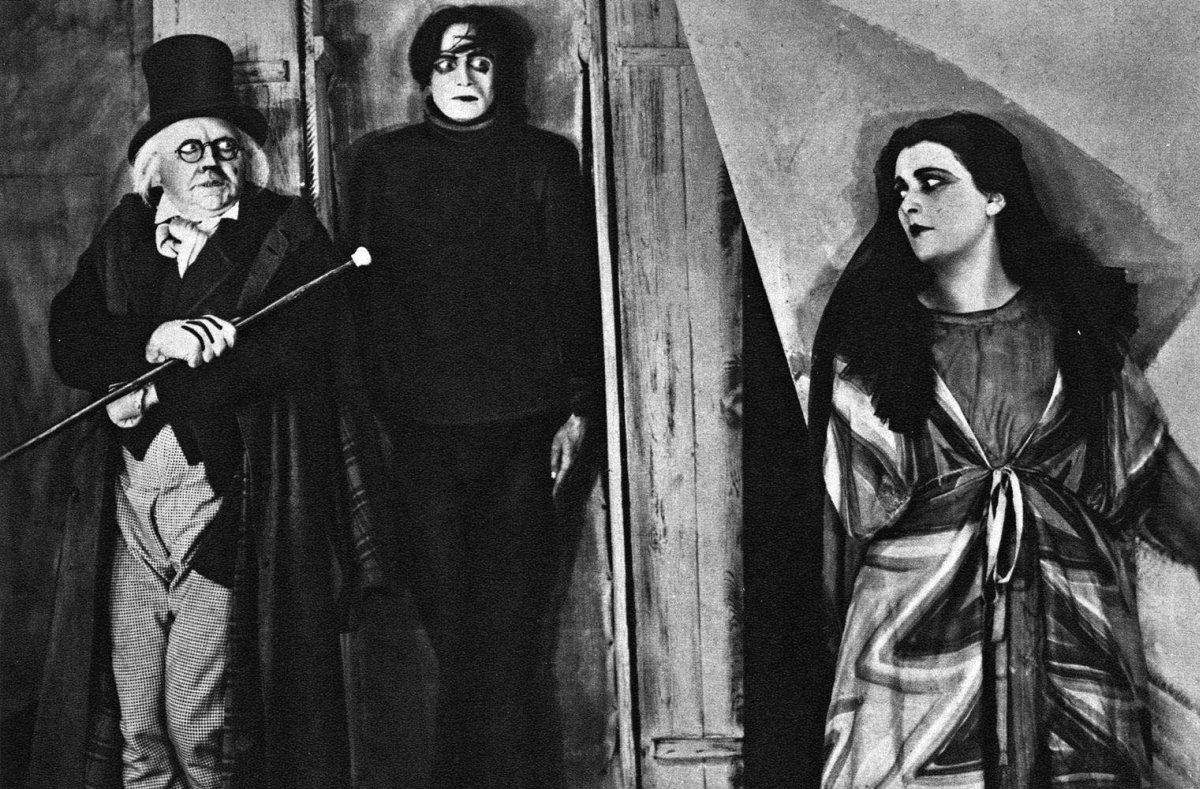
So now – with B.o.B.’s crackpot notions an unfortunate part of the discourse, and on the 71st anniversary of the liberation of Auschwitz, no less – it seems as good a time as any to recommend the Netflix documentary From Caligari To Hitler: German Cinema In The Age Of The Masses, a treasure trove of restored images from Weimar film. If its central theme – that cinema prefigures social changes to come even as it reflects current concerns – turns out to be so totalizing that it can’t possibly prove its case, the film is still a valuable insight into a neglected period, and it’s often revealing.

caligari3caligari15

The film shares its title with a 1947 book by Siegfried Kracauer, a German exile trying to make sense of the cataclysmic horrors in his home country, to understand how the exuberance and hope of Weimar vanished almost as soon as the republic began, a brief explosion of art and culture that now can’t help but seem a footnote to the gas chambers. How could things go so deeply, genocidally wrong? Maybe, both book and film suggest, cinema holds the answer.
caligari to hitler

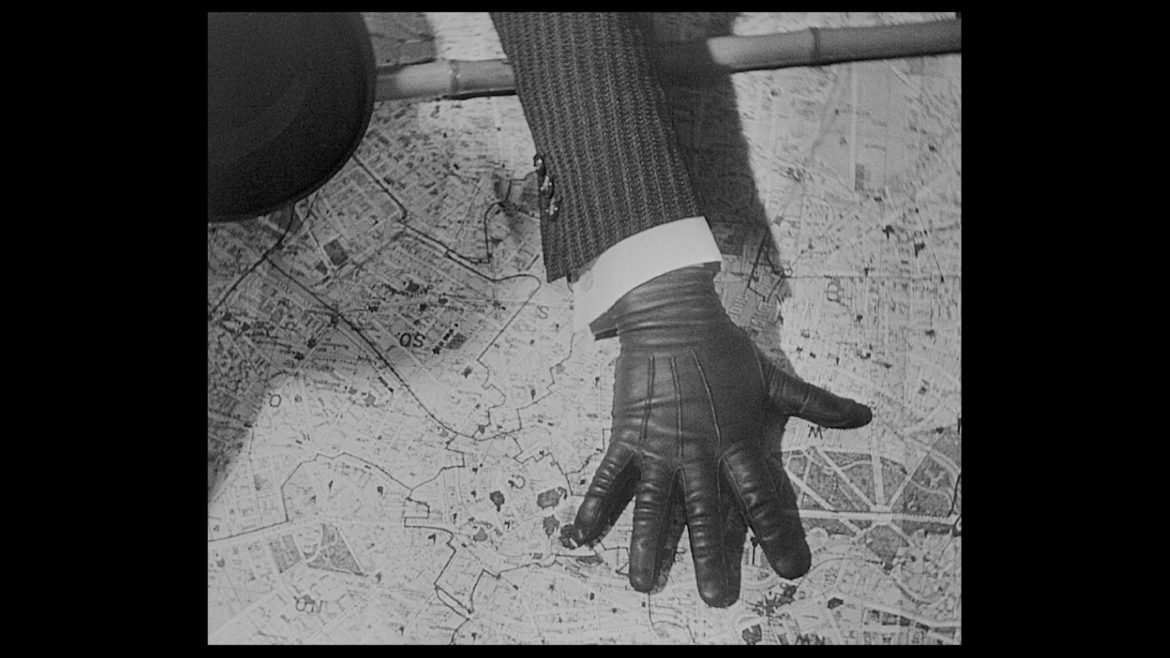
So From Caligari to Hitler becomes, to a degree, an archaeology of the image, a search for clues in the documents. The black-gloved hand on a city map in Fritz Lang’s M, and an almost identical shot in The Last Will of Dr. Mabuse, indicate the coming surveillance and total social control. In film after film, it’s pointed out, there are desires for central planning, a keen awareness (as in Lang’s story of a child murderer) that uncontrollable forces lurk among the people, and a general sense that these must be smothered by the mysterious and powerful counter-forces of the state. Sleepwalkers abound, as in Caligari, and so do an easily duped populace, another kind of sleepwalking, as in Metropolis. It becomes difficult to separate the justifiable power of governance from their doppelgangers in the criminal underworld. Bad things are afoot.

The film makes the case well, but there’s still a sense of trying too hard to impose a unifying vision on disparate elements, like the conclusion preceded the evidence, and so much is left out. (Jay Weissberg makes this argument compellingly in Variety.) There is curiously little talk of the ubiquitous anti-Semitic representations of the period (and not just in Germany). When I rewatched F.W. Murnau’s Nosferatu last year, I found them overwhelming – the shadowy figure from the East, from over the mountains, with his plague and rats and hook-nose and long fingernails and mansion, who lives on the blood of the innocent who he corrupts. You don’t have to dig too deep here to at least entertain the notion that something very specific is being invoked, and likely something audiences of the time would recognize without hesitation.

nosferatu1

That this doesn’t emerge as a central theme is additionally odd, because I’d think it would help the filmmakers’ general case about how art – and cinema especially, with its visceral impact via the image – shapes life. From Caligari to Hitler more or less leaves this rock unturned, and I wish it didn’t.

It gets a lot else right, though. It is filled with extremely gorgeous examples of the kinds of art flourishing at the time, and a series of talking head interviews help illuminate the period’s influence on future filmmakers and others. Anyone into German culture or film history will find much to admire.

The film’s greatest strength, though, is also its weakness – the totalizing theory of art at its center. It doesn’t cohere in the end, at least in my view, because it is way too convinced of its own obvious truth, but the idea that film both reflects current thought and paves the way for things to come is worth considering.

B.o.B. is not a Murnau or a Lang, and this is not the Weimar Republic, but the fact remains that no art exists in a vacuum. Ideas have cultural valency, and representations impact the way we view the world. That’s one reason art matters – it shapes the world we’ll come to live in.

I confess also my personal investment here, since the person I love is Jewish, as are members of my family, as are many of my friends and almost literally everybody I grew up with. The temptation to laugh at some dude from Atlanta’s bullshit is strong, but as From Caligari To Hitler reminds us, it’s vitally important to pay attention to the words and images our cultures create. That’s a matter of ethics and justice and basic decency, but also a matter of survival. Future generations will read us as we read those who came before. Here’s hoping we do better than they did.
January 28, 2016 0 comments
0 FacebookTwitterPinterestEmail
CommentaryFilm

The Cobbler vs. Left Behind

by rick January 26, 2016
written by rick

Netflix’s recommendations have long been a source of amusement and morbid curiosity, deploying complex algorithms (or possibly just straight-up sales pitches) to come to unlikely conclusions about your personal preferences.

Did you enjoy the “cerebral, imaginative” World of Tomorrow? Why not check out its obvious spiritual prequel … Stanley Kubrick’s The Shining! Are you a fan of 2015’s technically groundbreaking, exuberant, visceral, and touching Tangerine? Just move on over to Consinsual, a dubious looking film about a “couple who seem to have it all pushing their sex life to the edge.” It’s like it’s the same movie!

In a previous entry in this series – a concept stolen wholesale from the great Nathan Rabin, by the way – I shelved my skepticism and allowed Netflix to guide me. It didn’t go well. As it turns out, the charming Easy A does not, in fact, pair comfortably with the gutter-trawling shittiness of Chris Columbus’ adaptation of I Love You, Beth Cooper … unless by this we mean, “Makes one appreciate the charming Easy A,” in which case, mission accomplished.

I thought I’d give it another try. But with a twist: since starting with a movie I enjoyed didn’t deliver the goods, maybe I should begin with one I did not.

And this how I ended up watching both The Cobbler and the Nicolas Cage-starring entry in the Left Behind series, on a dark, bewildering January day, in this year of our Lord, two thousand and sixteen.

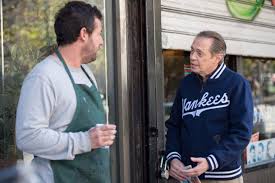
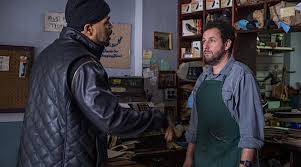
The Cobbler, of course, is the most celebrated movie Tom McCarthy made in 2015, nominated for several Oscars for its ensemble cast and searing insight into child abuse cover-ups in the Catholic Church and the intrepid reporters who broke the story. Wait … no, that’s Spotlight, his other 2015 movie. The Cobbler is the intermittently racist movie in which Max Simkin (Adam Sandler) wears magic shoes to fight gentrification, and also apparently have sex with his mom while pretending to be his dad, so she can die happy.

It is not a good film.

cobbler3

McCarthy has to top some list of directors, releasing his most acclaimed and most reviled movies in the same year. If Spotlight scores big at the Academy Awards, perhaps most will forgive him for the confusion and emotional trauma of The Cobbler. I, for one, will never forget.

Leaving aside the squickiness and near-complete tonal incompetence of this Adam Sandler vehicle, it has one certain thing going for it: it’s never boring. (Neither are car crashes, but the point stands.) This is not something that can be said of Left Behind, a film Netflix thought I might also like, thanks to my Cobbler-related enthusiasm.

Left Behind is the latest entry in the evangelical Christian series about the Rapture, based on the terrifyingly popular books by Tim LaHaye and Jerry Jenkins. I have not read those books, as I am not insane, nor have I seen the previous films, which both starred fleshy humanoid boil Kirk Cameron, famous for his role on “Growing Pains”, for winning the War on Christmas with discussions in a parked car, and for being a complete and total dick all the time.

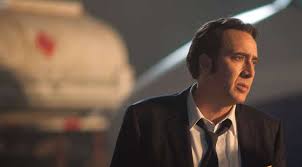
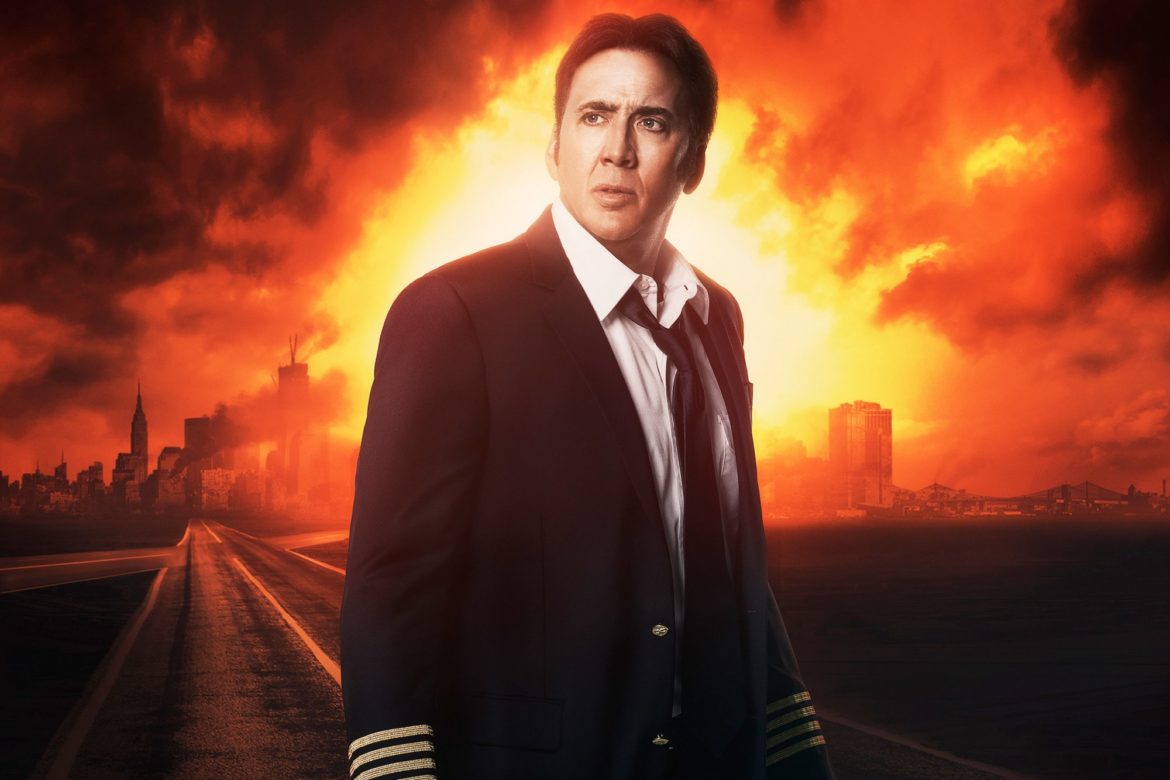
None of this sounds promising, I grant you, but … it has Nicolas Cage! An over-the-top film about a world ravaged after God has selected his chosen people and sucked them up into Heaven, starring fucking Nicolas Cage as a passed-over pilot attempting to do right in a world gone mad? This couldn’t possibly be uninteresting!

left behind2

Oh, but it could, and it is. The Lord works in mysterious ways.

Cage stars as the wonderfully-named Rayford Steele, a top-notch pilot, implied womanizer, and bad father to his daughter Chloe (Cassi Thomson), whose name we know because everyone keeps repeating it as though they are worried they might forget. Steele’s wife Irene (a very sad Lea Thompson, who may be thinking of the coming turmoil or, instead, may be thinking about how she’s in a movie where’s married to a guy named “Rayford”) has recently found God, and pretty much freaked the family out with the fervency of her devotion and her unwillingness to talk about anything else. Hell, you’d probably want to bang the flight attendant too, if you were a womanizing pilot named Rayford Steele!

But the joke’s on him (and much of the world’s population), when suddenly, inexplicably people vanish in an instant all across the globe! While he’s in mid-flight, his co-pilot and many passengers vanish — the rest are just … left behind. Now, with the world on fire, with deep moral questions abounding, and most importantly, with no place to land and not enough fuel for the plane, the heathens must save themselves, in this, our darkest hour.

Rayford Steele isn’t in it alone, though – he has help not only from Chloe (“Chloe!”) on the ground, but also from the equally wonderfully-named Buck Williams (Chad Michael Murray, inheriting the role from Kirk Cameron, noted festering wound masquerading as a person). He’s an apparently famous reporter on board the plane, who also happened to fall in love with Chloe (“Chloe!”) at the airport, when he saw her make a crazy old lady feel stupid. (Classic Chloe.) The odds are stacked against our team of repentant sinners and temporarily doomed unbelievers, but they just might have a shot ….

This is actually not the worst plot ever, which is one of the many strange aspects of Left Behind. If we get past the milleniarian nuttery of its set-up, it reads a lot like an action movie in which casting Cage would make perfect sense. There are even moments when various people’s crises of faith generate some interest, and there’s a narrative lurking just below the surface about the compassion and resilience of ordinary people under extraordinary, existentially-fraught circumstances. It could’ve been Non-Stop: The Reckoning, if that narrative had somehow muscled to the front.

But, no. That narrative, unfortunately, stays way in the back, buried well below the surface of a movie that can’t decide if it’s Evangelical propaganda or Con-Air. At all the places the tension should mount, confusion does instead. So does unintentional comedy.

For some reason, for instance, Jordin Sparks is there. The American Idol contestant plays an unhinged passenger who assumes the disappearance of her Heaven-bound child is a plot by her basketball-playing husband, and seizes a Rapture’d air marshal’s gun to threaten the people she considers his accomplices. A belligerent little person squares off with a Muslim man, with predictably inappropriate comments bandied about on all sides. It’s a situation that involves a whole lot of Buck Williams speeches, which are exactly as thrilling as they sound.

And all this time, Cage is in the cockpit, coordinating an emergency landing with his daughter. Chloe (“Chloe!”) almost jumped to her death earlier in despair, but was saved by a) a cell phone call, and b) the sudden inclusion of an explicitly religious song on the soundtrack, which I assume she must’ve been able to hear, too.

Deciding, thanks to unexpected cell phone reception and extremely awful country music, to soldier on in this fallen world, she takes it on herself to clear a makeshift runway for her father’s damaged plane, clearing debris with a series of commandeered vehicles that would not, in fact, clear very much debris in real life. But no matter: the debris is really a metaphor for all the things that stand between her and a meaningful life in Jesus Christ – or between her and forgiveness for her dad missing her birthday, or between her and her mom, who was super right about how God’s going to kill everybody — so she steals a bunch of cars and just runs that shit over, like the Bible says you should. It’s all about family and faith.

left behind3

Which brings us back to The Cobbler. Like Left Behind, McCarthy’s 2015 misfire also dealt with faith, family obligations, and age-old prophecy, and like Left Behind, it did so in the clumsiest ways possible, though with significantly more shoe metaphors. Considering Netflix’s logic, it becomes clear that both films are Biblical in their pronouncements, in a sort of deeply stupid Old vs. New Testament kind of way. Both are about the possibilities for growth and change lurking beneath the trappings of everyday life, if we would just wake up and recognize the Invisible Powers. And both are terrible.

But viewing them back to back reveals something else: they’re both deeply confused about what sort of film they want to be. Is The Cobbler a comedy? If so, why is it so unfunny, and so seemingly committed to its unfunniness, and why is Adam Sandler so sad, and why does he fuck his mom, maybe? Is Left Behind an action movie? If so, why is it so boring, and Nicolas Cage so serious? Why do you cast Sandler and Cage in roles they could conceivably make at least arguably entertaining by just doing their regular thing, and insist instead that they mope around, depressed shadows of their own personae?

cobbler2

These are mysterious questions, and I won’t pretend to offer an answer. Only God — or his team of shape-shifting, Oedipal boot magicians — knows for sure.

Did I enjoy Left Behind, based on my weird fascination with The Cobbler? No. If anything, it made me appreciate the utter absurdity of McCarthy’s strange ode to working class, magical Jews and their fabled ability to “walk in someone else’s shoes” all the more.

But at least this time, I see the connection, tenuous as it may be. In a world that demands action but withholds instruction on how to act, we do what we can. But we still might, like some sort of Max Simkin or Rayford Steele, find ourselves adrift, searching for meaning, or a method, or a Method Man, or a place to land a plane full of insufficiently contrite stereotypes. It’s a strange world.

What can you do in such a world, except care for those you love, and occasionally change shape and form so as to better accomplish this goal, and frequently yell your daughter’s name into a cell phone that isn’t working, because God smited it?

These are truly things to ponder. The world is full of mystery and boredom and totally inexplicable developments, and this is something Netflix knows. We understand what we can, and have faith in that which we cannot.

January 26, 2016 0 comments
0 FacebookTwitterPinterestEmail
CommentaryFilmReviews

Alan Rickman Made Galaxy Quest An Unlikely Masterpiece

by rick January 21, 2016
written by rick

It’s been a rough couple of weeks. After the shocking and seemingly sudden passing of David Bowie — one of our greatest, weirdest, and universally beloved artists — the great Alan Rickman went and died last Thursday. It’s a terrible loss.

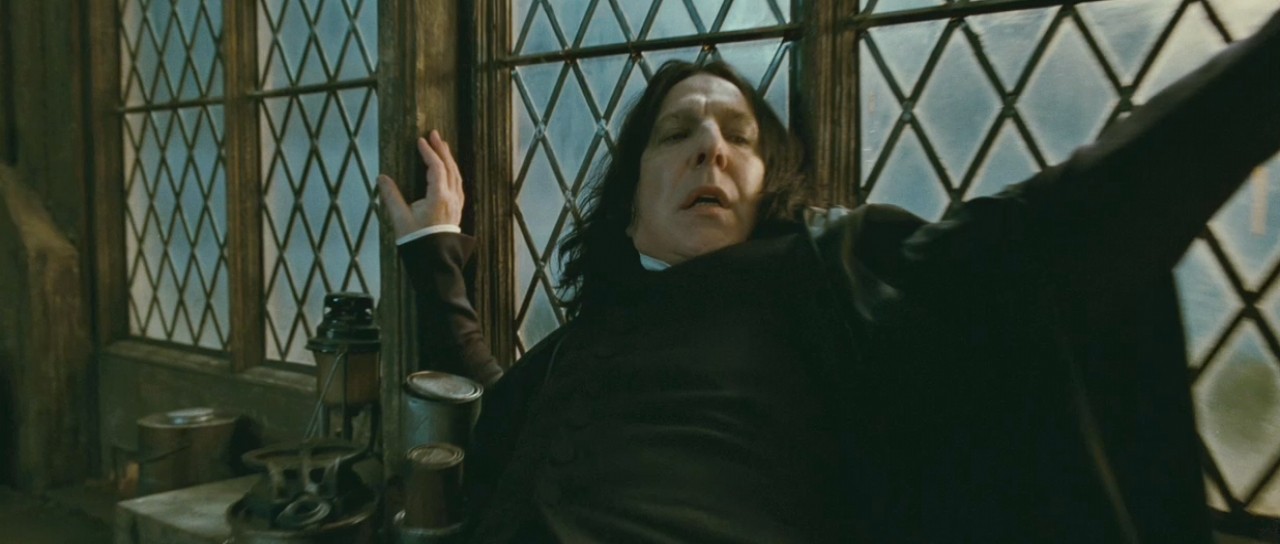
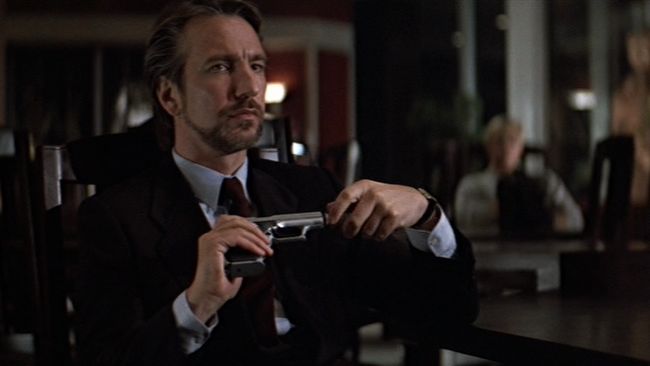
Known primarily as Hans Gruber to movie fans my age, in cinema history’s greatest Christmas film (sorry, Frank Capra), and as Snape in the Harry Potter series to many, many more, Rickman was a formidable talent who brought an enormous amount of nuance to every role he played.

alan-rickman-as-severus-snapeHans-Gruber-Die-Hard

Of course, he was also much more than Hans Gruber or Snape. Rickman was a classically trained actor with years of stage experience before becoming intimately related to the phrase “Now I have a machine gun. Ho ho ho” (at least in my mind). And it showed. His combination of sardonic wit, exasperation, and menace elevated many films to a level of quality that they might not, honestly, have deserved. But his full investment in characters routinely improved the goings-on.

Case in point: Galaxy Quest.

I did not know about Galaxy Quest until Rickman’s passing, when a surprising number of people I know started singing its praises. “That Tim Allen movie?” I asked myself. “Why do all these people like that Tim Allen movie?”

galaxy quest 2

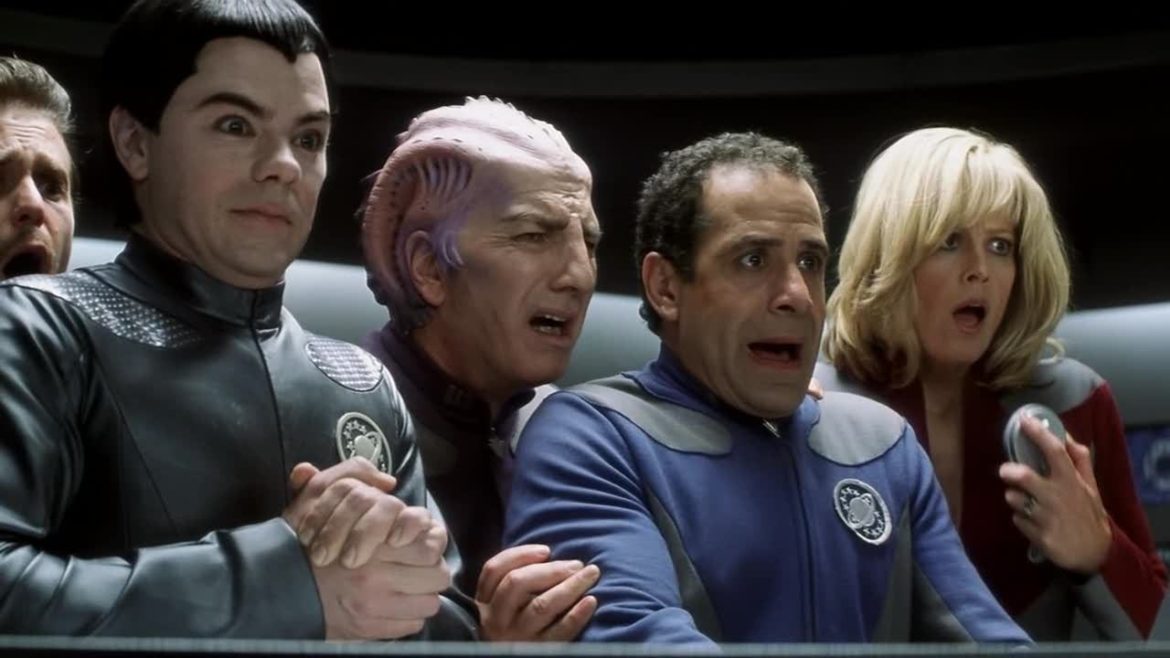
Having watched it now, I understand: because it’s really “that Alan Rickman movie.” He steals scene after scene, a quiet, hilarious part of a pretty winning ensemble, in a story that revels in its own silliness.

Improbably, the story of a group of TV actors — led by the guy from “Home Improvement” and The Santa Clause 3: The Clausening*, who get confused by aliens with their screen personas and have to go fight in space in real life — turns out to be enormous fun, and even thoughtful. It’s a credit to the entire cast, but to Rickman most of all.

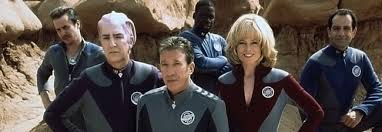
Galaxy Quest is a TV show inside the movie – think an amalgamation of Star Trek tropes. It went off the air years ago, but the cast continues to make a living going to Cons, fan meet-and-greets, promotions, and the like. Tim Allen is the commander, shepherding his adventurous crew through space and time.

Rickman is a sort of Spock-like figure named Dr. Lazarus on the show (Alexander Dane in “real life”), but also brings to the role something of Patrick Stewart, hilariously referencing his own training to portray an actor who realizes he’s been type-cast in an art-form he clearly finds beneath him. It’s all kinds of meta, and simply hearing Rickman deliver his most hated (and most popular) line, “By Grabthar’s hammer …” is enough to provoke laughs. (He even has to deploy it in pitches: “By Grabthar’s hammer … what a savings.”)

galaxy quest

Through a whole lot of plot I won’t go into, a race of aliens have come across Galaxy Quest and believe it to be a historical document, and, unable to process the notion of fiction, have come to seek the crew’s help in their struggle with an actual space monster named Sarris. Hijinks and space-thrills ensue, and the film finds humor and insight in a goofy fish-out-of-water plot, whereby our intrepid, clueless heroes have to save the universe.

This is all much more fun than it has any right to be. But at the heart of it is Rickman, generating actual pathos from a guy who feels he’s always been second fiddle to Tim Allen’s commander, who resents his rather profitable career for pigeonholing him into cut-rate television sci-fi at the expense of something more meaningful, but who ultimately comes to accept the power of his influence on his fans. I expected many things from Galaxy Quest – I did not expect Alan Rickman to effortlessly turn it into an acting showcase of a sort, or to nearly start crying at a movie where, at another point, Tony Shalloub makes out with an octopus.

But that’s the sort of thing Rickman could pull off. As with the layers he added to Hans Gruber, a character who could just as easily have been a one-dimensional baddie but instead became the ultimate action movie villain. As with Snape, a character who definitely did not need to be so complex for the plot to function, and who audiences ate up every time he appeared on screen.

And as with so many others. Galaxy Quest is a lark, silly and fun and escapist, and it might not be the greatest film of all time, but Rickman makes the case for it with his every gesture, every time he lets loose his English baritone to say something wry and exhausted. It’s the sort of movie in which, if nothing else, you can point at one person on screen and say, “See? It helps when the people in the movie care.” Alan Rickman always seemed to care, and that’s one of the things that made him a master of his art.

* Not actual title of Santa Clause 3. Actual title is “The Santa Clause: Clause This!”

January 21, 2016 0 comments
0 FacebookTwitterPinterestEmail
FilmReviews

An Incomplete, Oscar-Nominated Look At Ukraine

by rick January 20, 2016
written by rick


Winter on Fire: Ukraine’s Fight For Freedom, the Netflix original just nominated for a best documentary Oscar last week, has two inescapable problems.

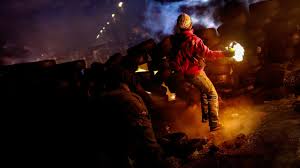
First, because the filmmakers are largely embedded with the Ukrainian resistance in 2013 and 2014 – and, understandably, because they want a narrative of heroic revolution that audiences can cheer – the film never really strays from a single set of viewpoints and experiences. Even the gripping riot sequences and the solidarity on display at Euromaidan – the name used to refer both to the central square in Kiev that Ukraine’s students, workers, and regular folks used much like the Egyptians at Tahrir, as well as their desire for closer ties to Europe rather than Russia – feel more like action movie set-pieces, complete with plucky youngsters fighting against all odds.

winter2

This is not to suggest that’s necessarily wrong – and definitely not to say director Evgeny Afineevsky should’ve interviewed the security forces brutally attacking protesters, much less sat down with Vladimir Putin, in a room I imagine is resplendent with bear-skin rugs and a series of pictures of himself fighting those bears while topless, to get his take on the whole thing. It’s just that, for the sake of immediacy, something is lost in terms of insight and, in some ways, accuracy.

Second, the film is necessarily partial in scope. There’s no way for a documentary chronicling a world historical event unfolding in real time to predict what will happen after the cameras stop rolling and the editing is complete. That’s a mundane and common issue for any “on-the-ground” depiction, but it’s pretty glaring here. The viewer is left energized by individual actors’ passion amid the outrageous violence of state forces, but also acutely aware that the story of Ukraine is far from over when the credits roll.

Taken on its own terms, though, Winter on Fire often succeeds enormously at its goals. There is no way to consider the people’s basic demands – that they want a say in how Ukraine positions itself to the world, that they want free and fair elections, an end to corruption and cronyism, and so forth – and the murderously authoritarian response to those demands with anything other than horror. The pitched street battles Afineevsky captures, and the offhand heroics of badly out-gunned dissidents, are indeed thrilling. It’s pretty hard to argue that things like AutoMaiden – a contingent of cars that kept a moving perimeter around the encampment – and ingenious sets of barricades are anything but awesome and inspiring. The film wants its audience wowed, outraged, and hopeful in the prospects for people-power. Mission(s) mostly accomplished.

winter1winter3


winter4

But here’s where the two looming problems come racing back.

Despite the film’s single-minded commitment to portraying no one but heroes among the protesters, we now know that neo-fascist white supremacists played a not insignificant role in the events being portrayed. The Azov Battalion, for instance, made this very clear, expressly associating the Ukrainian struggle with leading “the White Races of the world in a final crusade for their survival.”

Not just that, but this wing, often at the forefront of skirmishes, received US training and financial support – an amendment to the federal budget prohibiting arming and funding neo-Nazi militants was actually stripped out of the final version, as The Nation reported (as it happens, on the same day Academy Award nominations were released). Your enemy’s enemy, and all that. By most accounts, groups like these were the exception rather than the rule, though the explicitly fascist Svoboda party ”won 10 percent of the vote in Kiev and placed second in Lviv [and its] candidate actually won the mayoral election in the city of Konotop” last October. These are not things you will learn from Winter on Fire.

As for scope, the film only mentions Russia’s annexation of Crimea in a footnote at the end, and provides little in the way of wider insight into the enormous regional clusterfuck. In some ways, this is not the filmmakers’ fault: your movie has to end somewhere, and you craft narrative with the footage you’ve got. But even leaving aside the practicalities, that’s a pretty big omission. You would be forgiven for thinking that the revolution succeeded without fail or setback and that Ukraine is now a peaceful democratic and egalitarian utopia, thanks to the efforts Winter on Fire depicts. That’s … not quite true.

I get it: capturing the world as it happens is extremely difficult and morally fraught, and Winter on Fire aims more to present a moment in time than deep political analysis. But for all the shock and exhilaration of its best sequences, the film still feels slight in the end, and incomplete.

January 20, 2016 0 comments
0 FacebookTwitterPinterestEmail
FilmReviews

The Innocence of Experience in World of Tomorrow

by rick January 19, 2016
written by rick

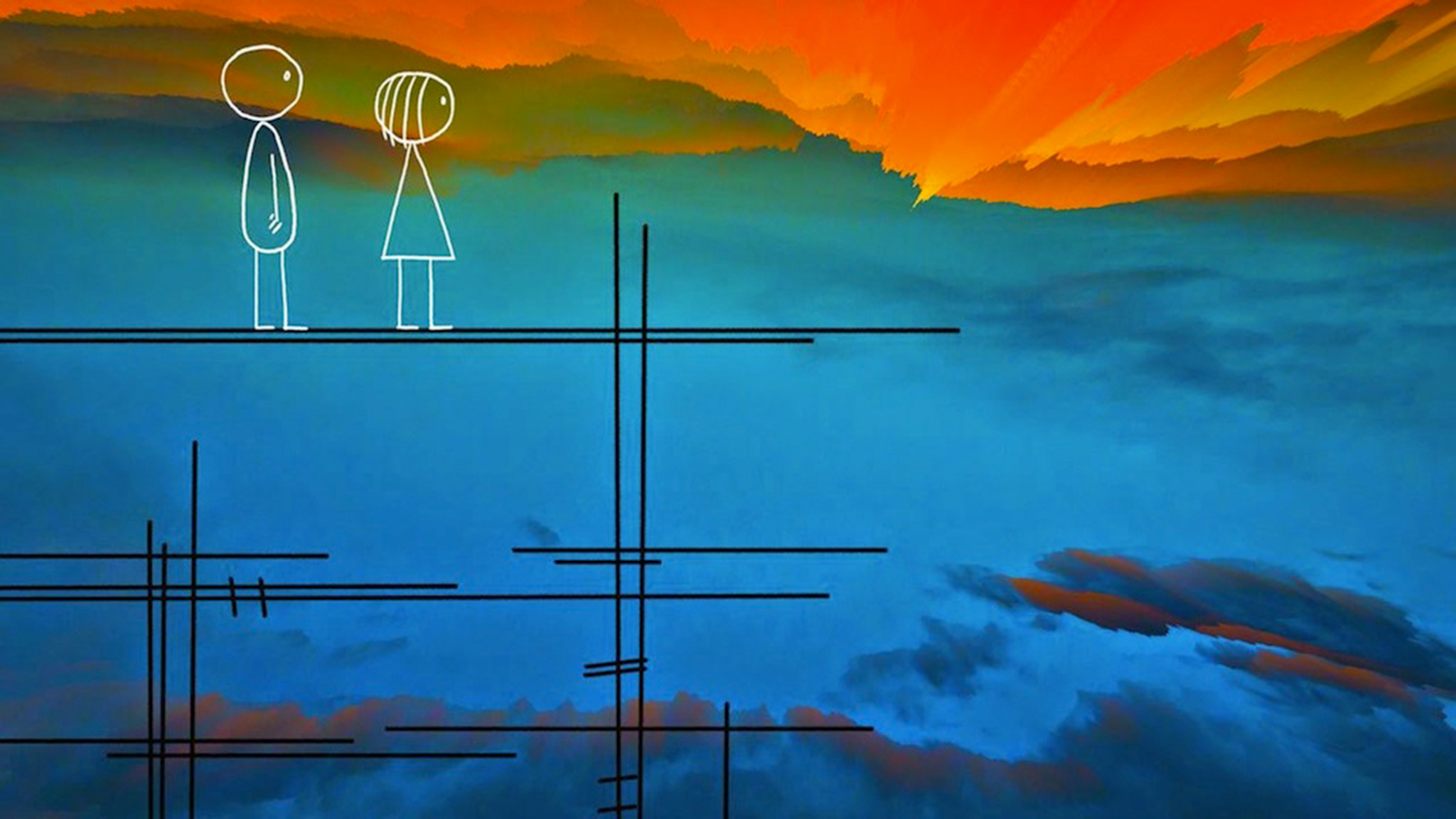
Don Hertzfeldt is a magician. Beginning with basic elements – rudimentary stick figures and bemused, detached commentary on modern life – he constructs elaborate universes. Their small details become invested with meaning and heartbreak, and the intentionally simple becomes endlessly complex. He did this in It’s Such A Beautiful Day, one of my favorite films of 2012, and he did it again in World of Tomorrow, one of my favorite films of 2015.

The key difference between the two? Roughly 45 minutes. Both share Hertzfeldt’s existential playfulness, uncanny ability to generate deep empathy from absurdist humor, and deep sadness, but the compression of time (and, so, themes) in World of Tomorrow actually works to its benefit. Judged solely on ideas, it’s the headiest 15 minutes you’re likely to spend watching a film today. It might also be the most beautiful.

For a 15-minute short film, World of Tomorrow is also remarkably hard to summarize. This might also result from the fact that I don’t want to give away the good jokes (and there are a lot of good jokes), but let’s give it a try.

In essence, WoT is the story of Emily Prime, a toddler visited by her own clone from the future, a “third-generation” Emily who has come to take her on a tour of the world she will live in and explain how things will work when she grows up. In a structural sense, it’s a familiar story of the future fantastic, not that far removed from It’s A Wonderful Life or A Christmas Carol.

Unlike Capra or Dickens, though, Hertzfeldt doesn’t start with a protagonist on the brink of disaster or marked by his own cruel choices – he starts with an adorable young girl who serves as an audience surrogate, as oblivious to where we’re headed as we are. Emily Prime’s blinking lack of comprehension, typical 3-year-old’s read on the messages being conveyed, and occasional insight, overwhelming in its innocence, is one of the film’s recurring themes.

It’s a discourse between innocence and experience – the in-joke is that we viewers are also innocent about the world of tomorrow the film sets out to describe. As it turns out, the world of tomorrow is pretty bleak.

For one thing, the earth is uninhabitable. The elite and the prosperous have taken off for different realms first-class, mapping their consciousnesses into small black boxes shot into space, while the poor and desperate book their transit with budget space-travel companies, trips that routinely don’t end well. The process of cloning has led to eternal life of a sort, though our future selves are subject to predictable deterioration and acute existential angst. Category confusion emerges: you might fall in love with a rock, for instance. Desire outlasts the ability to make sense of what one desires. But, third-generation Emily assures Emily Prime, on the whole things have worked out, so don’t worry. Emily Prime’s response: “I had lunch today.”

In It’s A Beautiful Day, these sorts of offhand jokes started to run a bit long by the end. That’s a profoundly emotional film and has much to recommend it, but it’s also one that seems calculated and almost callous by comparison to WoT. The deep investment in this world, and especially in these characters, and even more especially in Emily Prime, add a certain gentleness that is, by the end of WoT‘s 15 minutes, utterly devastating.

As Noel Murray wrote (in what I consider the definitive review and which you should go read right now), this is a film focused on how “humanity is obsessed with preservation and nostalgia” – its central conceit is a visit from the future, in part to acquire an old memory, something real and tangible to hold onto. As third-generation Emily tells us, most memories in the future are of people watching people watching people watch screens. Emily Prime’s innocence and active, direct engagement with her world have a vitality her future version admires and longs for, centuries ahead. “Now,” she is told by her sort-of-self, “is the envy of all the dead.”

So a film portraying a dystopian techno-future ends up being an affirmation of life as its lived. The skewed view, seen through a child’s eyes and the spellbinding geometric shapes that make up most of the world(s), reveals so much more about today than the future. That’s always been the goal of speculative fiction, but it’s a rare thing to pull off, with a mastery of visual storytelling and with what seems so little effort.

World of Tomorrow is a kind of small magic, and it’s the best short film I’ve ever seen.

January 19, 2016 0 comments
0 FacebookTwitterPinterestEmail
CommentaryFilmGreat Movies: The Counter Programming

Encountering a new (old) story in The Dancing Girl of Izu

by rick January 15, 2016
written by rick

Part of an ongoing effort to watch a set of films from non-White, non-U.S., non-male, and/or non-straight filmmakers and depart a little from the Western canon. The intro and full list can be found here.

The narrative of “The Dancing Girl of Izu” is apparently a familiar one in Japan.

From a short story by Yasunari Kawabata (the first Japanese person awarded a Nobel Prize, in 1968), it’s a simple tale: a university student goes on a trip to the country, falls in with a troupe of traveling musicians, develops a crush on one of the girls, and eventually has to go back home, melancholy to leave his new friends but energized by the adventure. It’s popular enough that Heinosuke Gosho’s 1933 silent is the first of six film versions. Not only that, but the story has penetrated daily life such that the express train from Tokyo to the Izu Peninsula is known as the Odoriko (“dancing girl”) in honor of Kawabata’s novel.

If you are anything like me, you did not know these things. This, it occurred to me, is partly why I started the Counter-Programming series in the first place. It is also why I had to watch The Dancing Girl of Izu twice.

I’m all for limiting “extra-textuals” and simply encountering a work of art on its own terms, but there’s “extratextual information” and then there’s basic context. For the first time in this series, it became clear how much nuance is lost if you simply don’t know the rich histories of the myths and stories some films draw on, particularly among silents.

Initially, I understood that this was the story of a summer vacation, a break from normal life, and perhaps a 1930s Japanese version of slumming it for the university student … weirdly, like a silent, Depression-era Almost Famous in reverse, except with many more inexplicable discussions about gold mines and blackmail for some reason. My second viewing was, unsurprisingly, far richer.

Starring the great Kinuyo Tanaka – who also appeared in Gosho’s The Neighbor’s Wife and Mine two years prior (Japan’s first “talkie”), not to mention memorable turns in some of the most esteemed films in cinema history, Japanese or otherwise, working with Mizoguchi, Ozu, and Kurosawa – Gosho’s The Dancing Girl of Izu starts with the basics of the story and works from there.

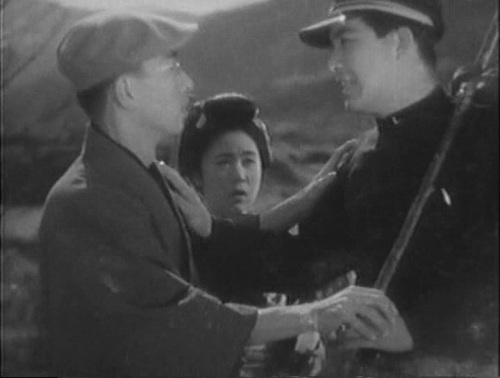
Kauro (Tanaka) is a dancer on the road with other traveling players, and Mizuhara (Den Obinata) is the university student who meets her on a walking tour of Izu. Through a series of plot contrivances, they end up spending several days together, and an ill-fated romance blooms. Ill-fated not because of some terrible tragedy, but in the way many summer loves are for young people – because they can’t last. Nearly the entire film is shot in daylight, an endless summer, with evocative shots of water that function similarly to those in Mario Peixote’s Limite, implying a tumult of emotion beneath the surface.

The film adds layers of melodrama and additional plotlines to the barebones narrative, and finds many moments of fleeting beauty and (arguably) some sociopolitical subtext. At its heart, though, it’s still the story Kawabata told, of brief, impossible love and young friendship, the search for beauty, and the eventual, inevitable parting of ways.

dancing-girl-of-izu-2

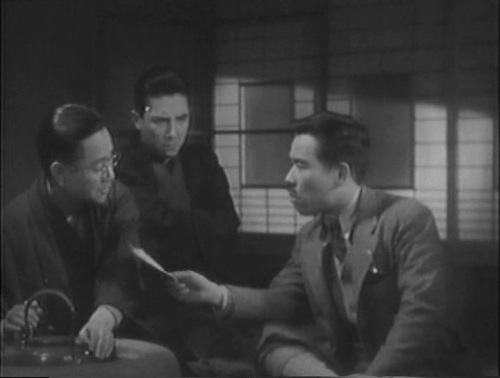
And also gold mines. Intriguingly, while Gosho was associated with the junbungaku movement — which “privileged fidelity to the original source … presented the story in linear fashion, ‘literally (and cinematically granted center stage, or center frame’ to the plot, and refrained from cutting or adding content to the narrative” (source) – he takes extensive liberties here. An entirely separate plot emerges about Kaoru’s brother having lost a gold mine due to his gambling, which is why they are now destitute traveling players. Increasingly complicated interactions result from this, including blackmail, which sometimes threaten to put the love story on hold while we resolve the issue of gold mine ownership. It’s kind of odd, but it does add at least a separate window into these lives, as well as evidence that Gosho was, perhaps, not as committed to the purity of film adaptation as making an interesting film.

dancing-girl-of-izu-3

Or maybe he just couldn’t resist widening the short story’s scope. Arthur Nolletti, in The Cinema of Gosho Heinosuke: Laughter Through Tears, associates this focus on money with the economic downturn in Japan at the time. That’s an appealing read, though an emphasis on social station and the uncrossable chasms between classes has characterized so much of Japanese cinema (including, apparently, nearly all of Gosho’s — this is my first). In any case, it’s hard to ignore so blatant an addition of theme, especially coming from a filmmaker at least on paper opposed to adding to the source material on principle.

In any case, gold mine shenanigans aside, the final feeling is one of sweet nostalgia coupled with sweeping melodrama – a series of tearful close-ups as the would-be couple parts is a highlight – and light comedy, as when two new friends swap hats and one admires his new look in a shop window. Gosho’s handle on the material is assured and obvious, and Tanaka is as expressive, charming, and heartbreaking here at 23 as she’d be in the ensuing decades.

As I mentioned at the start, one of the big revelations of watching The Dancing Girl of Izu, for me, was the awareness of how little I knew about the cultural context out of which it arose. This hasn’t been quite the case with this series until now. Even without background reading, I immediately get some of the resonances from Reiniger drawing on the stories of Aladdin or Cocteau on Orpheus. The first entry explored the links between Oscar Micheaux’s Within Our Gates and what’s become something of a foundational myth itself, Griffith’s Birth of a Nation. But here was a film rich with nuance, and I just didn’t know the backstory at all.

I suppose I could view this as a fatal failing, and something that might invalidate me from writing hundreds of words about Gosho’s adaptation. Instead, it seems more like an opportunity. It’s not like I’ve gained some sort of cultural expertise by watching a single movie and reading some things on the internet, but I know slightly more, and recognize a few more connections, than I did previously. That’s reason enough to seek out something like The Dancing Girl of Izu, a lovely coming-of-story in its own right, filled with small moments of sadness and joy. These places we encounter in film, filled with new stories and old emotions, can make our own worlds at least a little bigger than they were before.

Next up: The Goddess, Yonggang Wu

January 15, 2016 0 comments
0 FacebookTwitterPinterestEmail
FilmReviews

Waking in Fright – The Nightmare

by rick January 13, 2016
written by rick

In The Nightmare (2015), Room 237 director Rodney Ascher updates his enjoyable 2012 portrait of a handful of people with some … colorful interpretations of Stanley Kubrick’s The Shining, mapping similar themes onto an entirely different, much scarier vision.

The earlier film allowed ample, hilarious space for these Kubrick obsessives to present their wildly improbable visions of his true intent, but at the same time it served as an examination of the ways in which meaning is created. It was a movie for film-nerds and horror aficionados doubling as an inquiry into the mysteries of how we think, and how closely theorizing resembles paranoia.

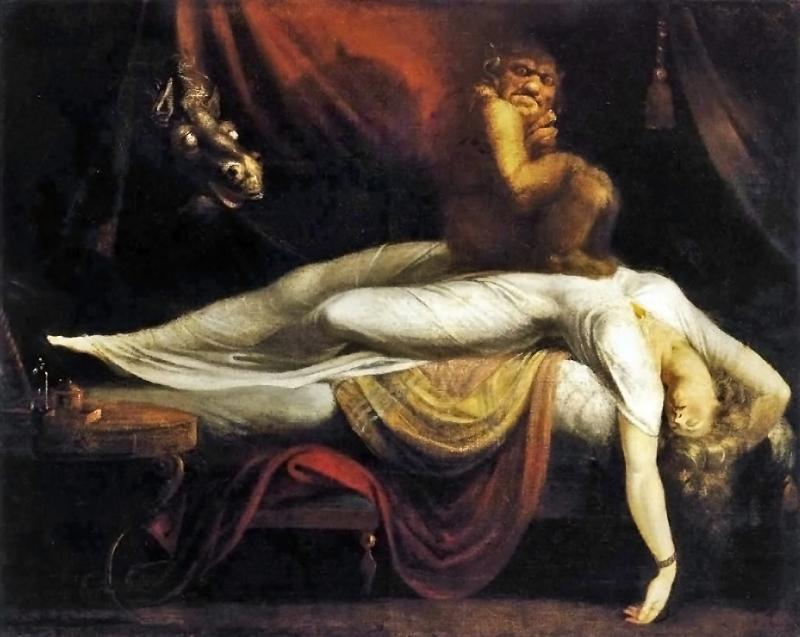
Similarly, The Nightmare is a documentary about a phenomenon – sleep paralysis – but also about how that phenomenon is experienced, perceived, explained, and represented. And it’s often as scary as any of the horror movies that draw on it.

And what is sleep paralysis? That’s easy – it’s my new greatest fear! Apparently afflicting 6.2% of the general population, it’s a condition that renders sleepers suddenly conscious but immobile, unable to move or speak for varying degrees of time. As the film explains in detail, it’s also associated with auditory and visual hallucinations that are remarkably similar from person to person throughout the world. Unsurprisingly, this leads some to suspect these aren’t hallucinations at all, but something different … more primal, or more supernatural, or more demonic. In any case, a lot more than a slight psycho-physical reaction.

Ascher – who, it turns out, experiences this himself – again lets his subjects talk at length, and often fascinatingly, about what it feels like to be trapped in their own bodies and minds, somewhere between sleep and waking. And it sounds absolutely terrifying.

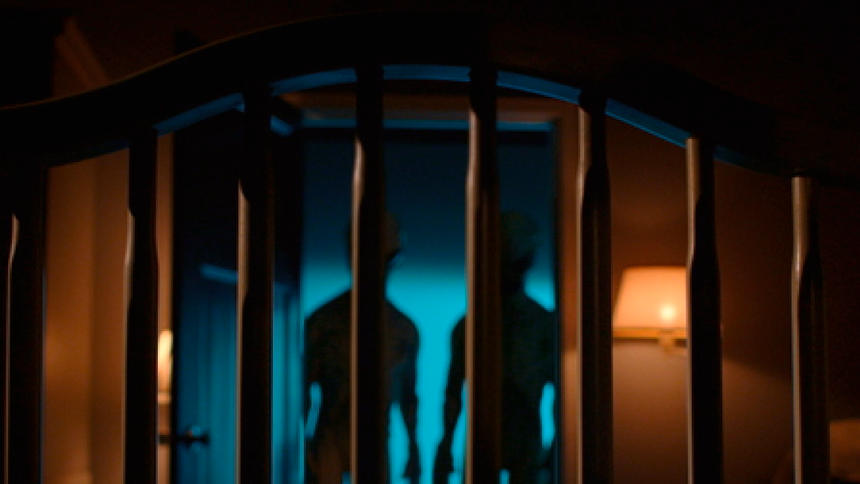
Most report a buzzing, like bees or television static, and feelings of pulsing electricity that sometimes morph into what many are convinced are physical presences. For one man, these shadowy figures resemble our cartoon visions of aliens, all bug-eyed and sinister-mouthed, and he comes to believe that many reports of alien abductions might be related to undiagnosed sleep paralysis.

nightmare5

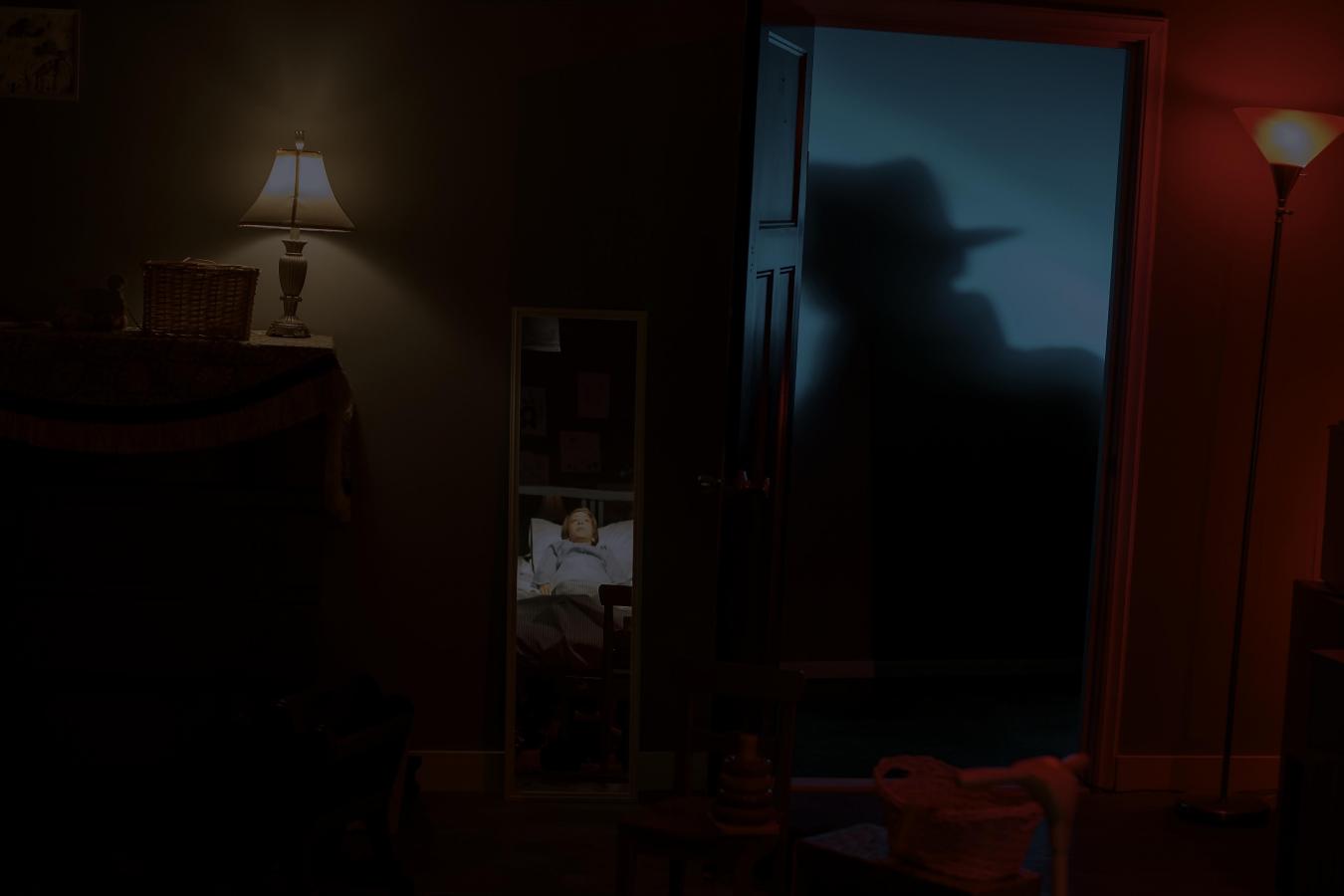
For many others, they are flickering shadow-men looming in corners or over their bed, or felt just beyond the door – it is weirdly common for people to report that these are henchmen of another figure, often wearing a hat or something that distinguishes them from the other two. They are always shadowy, in any case, often come in a set of three, and uniformly carry with them a sense of malevolence or outright evil.

the nightmare

The film reenacts many of the episodes described. At first, this is a funny and slightly goofy touch, like if Errol Morris had made The Thin Blue Line about demons. The reenactments also draw on the sort of “Alien Autopsy”-style programs you might find on your local cable station late at night – they’re intentionally broad, and almost seem to be poking fun. But as the film progresses, and the commonalities become apparent, that goofiness vanishes and is replaced by something a lot more like horror movies, jump-scares and all.

This is the film’s deftest touch – it examines not just sleep paralysis, and not just how people desperately try to explain their experience, but also how our perceptions are shaped by representations of them. They draw on film for context – it’s like Jacob’s Ladder, it’s like Communion, it’s a lot like A Nightmare On Elm Street. Ascher himself details how a figure momentarily included in a horror movie credit sequence uncannily resembled a figure he saw lurking in his room, while paralyzed in his bed.

The question might be, “Which came first, then?” It isn’t answered, probably because it can’t be. Did the creators of modern myths draw on these experiences, or are these experiences informed by their creations? Or something else entirely? Why do a man in England and a woman in Southern California who’ve never met see and feel the same presences as they struggle to wake up? Why have similar tales been told all over the world for hundreds of years?

thenightmare2

Of the subjects, some grapple with it to this day, and expect it to get worse until they die. Some rationalize it, and associate the startlingly singular descriptions to Jungian archetypes. One woman discovers the presences can be good as well as evil. Another finds God, and believes she can will these actual demons away with the name of the Lord. Ascher doesn’t present a thesis or resolution, and the film is all the more disturbing for that.

At the end of every day, everyone lies down and retreats into their head alone, into their thoughts and fears, the unexplainable and the things we can’t will away so easily. There’s no pushing things out of your mind when your mind is in charge. And for a significant chunk of people, this also means falling into a spectral realm where shadows threaten, electric pulses buzz, and distant screaming is heard, a realm they feel they may or may not be able to escape.

Explanations only go so far. Good luck falling asleep after The Nightmare.

January 13, 2016 0 comments
0 FacebookTwitterPinterestEmail
FilmReviews

The Fantastic Realism of Advantageous

by rick January 12, 2016
written by rick

There are many ways to approach science-fiction narratives, but one of the best has always been to create a lived-in world, filled with strange events and logic that often go unremarked upon by the characters. That’s always been part of the charm of the original Star Wars trilogy, for instance – you didn’t need to know what, exactly, a “nerf herder” or a “gundark” is, or where Ord Mantell is located, to get the points being conveyed. It’s enough that the characters know. That off-hand familiarity lends the fantastic a kind of realism. Jennifer Phang’s Advantageous – a feminist dystopian examination of beauty standards and impossible choices – isn’t Star Wars, but in this key respect, it’s learned that basic lesson well.

Phang’s film is also gorgeously photographed, with surprisingly strong special effects for what is, in many other regards, a low-budget, character-based political melodrama.

It’s about one woman’s struggle to provide for her child in a world in which women are underpaid and even railroaded out of the workplace by social conservatives and urged back into the home, and where impossible beauty standards, foisted on half the population by the joint forces of capitalism and patriarchy, delimit choices and structure lives.

In other words, a world not too far removed from this one … just with more flying spaceships and the occasional rebel attack in the back of the frame.

Gwen Koh (Jacqueline Kim, who co-wrote the screenplay with Phang) has long been the commercial face of The Center for Advanced Health and Living, a sort of Cronenbergian future-tech corporation. However, times are changing, and her employers are looking for someone to “appeal to a younger demographic,” and, it is none-too-subtly implied, someone with a bit more “universal appeal” (read: whiter). Her firing comes at the worst time: she desperately needs funds to send her daughter Jules (Samantha Kim, exceptional) to a prestigious academy, hoping to maximize her chances of success in a world where everything depends, for women, on entering the social elite. Bad timing leads to desperation.

After exhausting the few options she has – her job placement service has nothing for her except work as an egg donor (women’s bodies have largely stopped producing ova, for reasons the film, smartly, doesn’t much bother to explain), a phone call to her estranged parents doesn’t go well, and her (also-estranged) cousin Lily (Jennifer Ikeda) has her own kids to worry about – Gwen agrees to become the first public test subject for a new procedure. This will ensure Jules’ future options, but comes at a price. The procedure involves the transfer of her consciousness into an entirely new body, which, she’s warned, will be risky and involve “pain that will never go away.” Only in the film’s final 30 minutes do we discover how true that might turn out to be.

It’s an ingenious twist on the body-switch trope, mapped not only onto feminist critiques of identity and the commercialization of women’s bodies but also intelligent sci-fi considerations of consciousness and the continuity of self. It’s a heady mixture of themes, and Phang creates real drama around Gwen’s decision and its aftermath.

Apart from some unnecessarily expository dialog (so at odds with the more general show-don’t-tell sensibility guiding the film’s visuals and pacing), Advantageous is remarkably self-assured for a director with only one full-length film on her resume (2008’s Half-Life, which I now want to seek out). The performances are all strong – particularly the younger Kim’s, whose over-achieving, angsty Jules is torn between loving her mother as she was and living with what she has become – and the images impressive.

But the real draw for Advantageous are the ideas, for the most part effortlessly conveyed, and the gnawing sense that this is a world all too easy to imagine.

January 12, 2016 0 comments
0 FacebookTwitterPinterestEmail
FilmReviews

The Vast Emptiness of Quentin Tarantino

by rick January 8, 2016
written by rick

At the end of 2015, The Hateful 8 barnstormed across select theaters, a whirlwind, even prior to its release, of debate. Positions were staked well in advance, and much of it came down to rather esoteric arguments about 70 mm projection and the future of film. It was the great, very white hope, and in some cinephile circles, it seemed canonized as an idea before it ever screened. To reject Quentin Tarantino’s presumptive film-saving masterpiece seemed tantamount to rejecting film itself, aligning oneself with the philistines.

This was, of course, bullshit, and remains so. Tarentino, for all his many, well-documented faults, can easily be admired for his commitment to the medium, and also rejected for the specific outcomes of that commitment. A Panavision version of your baby taking an exceedingly nasty dump IN GLORIOUS 70 MM says nothing one way or the other about the value of the film it was shot on. But it still might be rather unpleasant.

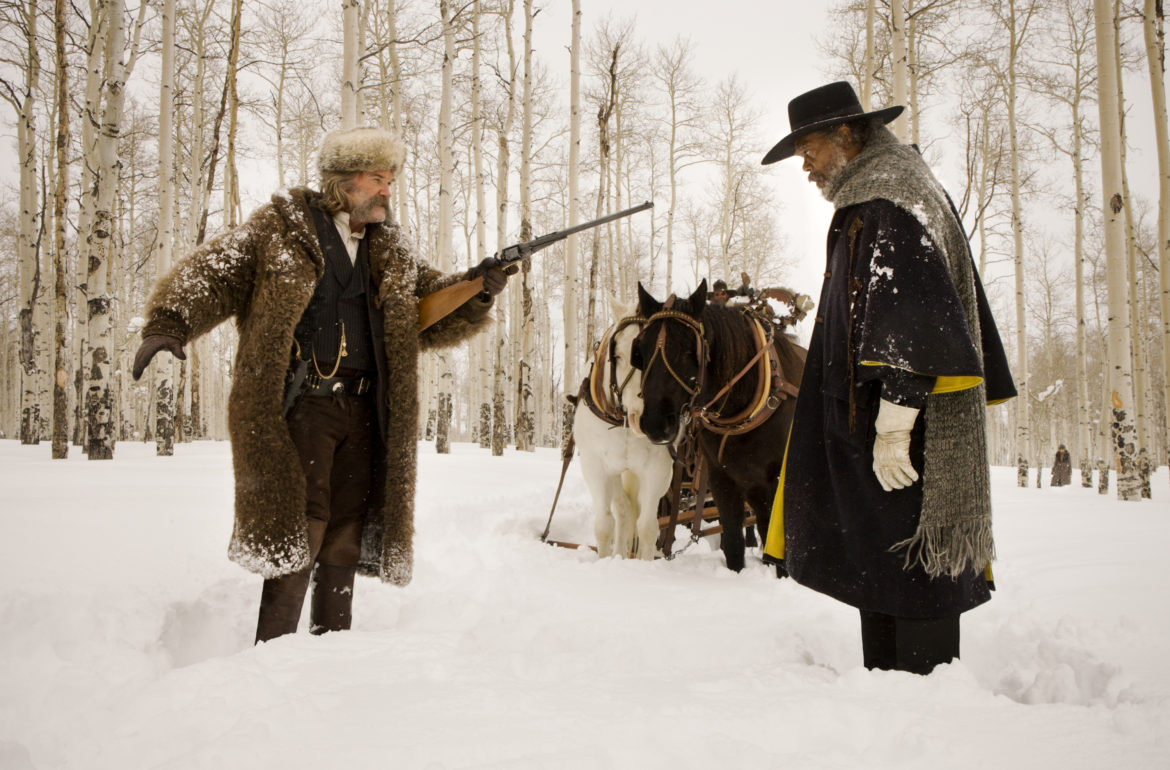
And so, with that gross metaphor, I come to the film itself. The Hateful 8 – for me, far more the paragon of hype than The Force Awakens – is dead on arrival. It’s the ultimate expression of something that’s become clear about Tarentino’s output for years: the prioritizing of style to cover an utter absence of substance, an almost pathological need to appropriate the struggles of marginalized groups and cram them uncomfortably into the exploitation trappings of the films he clearly adores, and a pretension far more nefarious than anything Alejandro Innaritu has managed to be guilty of. It’s not just a bad movie – it might be an evil one.

Why? For one thing, because of his skill. Let there be no misunderstanding: Quentin Tarentino is some kind of cinema savant. He has absorbed so many of its tropes and mechanisms that the exhilarating experience of encountering one of his more recent films utterly obliterates the total lack of meaning inside the image. He constructs a vast series of empty referents, sets them against each other, and watches them explode. Explosions are, by definition, exciting. He counts on this, and he’s savvy to do so. But once the spectacle has worn off, you are left with the sneaking suspicion that you’ve been epically cheated.

hateful82

This was true in Inglorious Basterds, where he killed Hitler for us (thanks, man!). This was true in Django Unchained, where he made Blaxpoitation over in his own, revenge-fantasy image – an obsessed cinephile’s counter-history, formed far more from image-fetishism than anything like conviction. And it reaches its pinnacle in The Hateful 8, a drawing-room drama by way of The Thing and The Searchers. One main difference between the previous two and this latest installment in the Quentin Tarentino Revenge Chronicles On Other People’s Behalf is that language fails him, the least expected of failures from a Tarentino film. Having leapt down a rabbit hole of his own making, into pure images, he’s evidently at a loss of things to say at all, and so falls back on the only few words that have worked in the past. They do not work.

hateful83

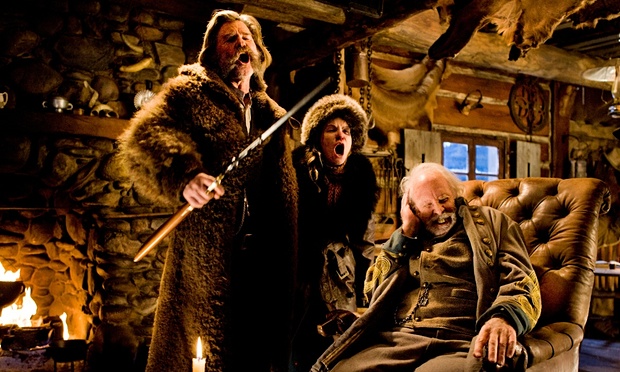
Drawing, as ever, on the tropes of revisionist westerns, Tarentino brings together a mix of types, all compromised and all justified in their own minds, and puts them on a collision course. One of many perversities, he deploys the epic scope of his 70 mm approach to focus on faces in a room rather than widescreen expanses, less McCabe and Ms. Miller than 12 Angry Men (And One Brutalized Woman). A bounty hunter and his prey; a Black Union soldier who may or may not have a letter from Lincoln, but he certainly has a reputation for brutality; a sheriff on his way to his post, but with a Confederate history and a grudge or two; a Confederate officer full of bile; and … some others.

As per usual, the narrative is oddly structured and turns back on itself, a trope that hasn’t seemed fresh since the avalanche of post-Pulp Fiction knockoffs a near-generation ago. The difference here is the maximalism, the total commitment to gross-out moments, and an absolute devotion to racist and misogynistic language. This, he might be saying, is the root of the America in which we find ourselves. It works better on paper.

I confess some prejudices underwriting my reaction. First, I did walk out exhilarated. It’s hard not to. A few moments actually drop jaws with the gorgeousness of the snowy, desperate images; a few genuinely shock with jump-scares more appropriate to a horror movie; a few ugly laughs are elicited. It’s a decidedly nasty film, and it knows it. This, I take it, is to its credit, according to many viewers. But the more I thought about it, the more I chalked my own reaction up to unearned good will, to the fact I wanted so much for it to move and surprise me. It didn’t – it steamrolled me, which is not the same thing.

On top of that, it is perhaps unfair to judge a movie based on its audience, but watching The Hateful 8 in the theater was one of the most uncomfortable experiences I can remember at the movies. A nearly uniformly white, male audience belly-laughed at each use of the word “nigger,” as though that were a joke in and of itself, and doubled-over every time Jennifer Jason Leigh was punched in her face. What was so funny? Why was this generating so much laughter?

hateful84

I’d like to think it’s because they were uncomfortable too, and we often respond to discomfort with laughter. But there wasn’t much nervousness there. It was what they came to see. They were the same guys with Travis Bickle posters on their dorm-room walls, who waited with baited breath for the “transgressive” moments in any low-budget film where women were abused. It’s not a bug, as they say; it’s a feature.

None of which would matter, or would matter a lot less, if the film delivered on its revisionist promises. It doesn’t, and manages to be both hyper-excited and under-cooked. It’s image as pure fetish, and scandalousness as spectacle. There’s a temptation to find in its final shot a metaphor for a west giving way to uneasy alliances, unified over particular brutality, but there’s little reason to think that’s anything but a hopeful reading of a hopeless film, more in love with itself than animated by anything else at all.

Quentin Tarentino is a master of form and style, and not everyone who admires him falls into the bro-camp of nasty gigglers who watched it with me. But he’s also a filmmaker with nothing left to say, as far as I can tell. Film 10 can’t come soon enough. Maybe he has a book in him.

January 8, 2016 0 comments
0 FacebookTwitterPinterestEmail
FilmReviews

Carol is Todd Haynes’ Sirkian Masterpiece

by rick January 8, 2016
written by rick

With Carol, Todd Haynes cements his place as his generation’s Douglas Sirk, the master of decorous, ravishing melodramas focused on the plights of women, their interior lives manifesting in heightened visual splendor and the weight of the world pressing them down. With Safe and Far From Heaven already out there, there was little doubt of his claim to this title before, but Carol is his Sirkian masterpiece to date, an adaptation of the Patricia Highsmith novel “The Price of Salt” that finds his gauzy sensibility firing on all cylinders.

The narrative follows its titular character, expertly played by Cate Blanchett as the most elegantly fashionable cypher likely to show up on screen any time soon, as she meets a young shopgirl (the ethereal Rooney Mara) with the evocative name Therese Belivet.

It is love at first sight, between two women who would be well-advised not to fall in love – not just because they are two women in a society that abhors such a possibility, but also because of the great distance between them in age and social station. Their first meeting puts it all out there in the image: Carol, adorned in a full-length fur coat with perfectly coiffed hair, and Therese, working a department store doll counter in a floppy Christmas hat, vaguely elfin and probably half Carol’s age. Nothing is said in the moment, but as the camera, taking on Therese’s POV, finds Carol wandering through the store, and their eyes lock in, it’s clear that no amount of sensible argument will stop the inevitable.

carol4

The rest of the film follows their tentative friendship, their budding romance, and its disastrous fallout, in ways that it’s probably best to leave mostly unsaid here. Suffice to say: Carol is married and a mother of a young girl, and she’s going through a divorce. Therese is being pursued by several young male suitors, neither of whom can understand her apparent lack of interest in them, nor her alarmingly sudden and deep infatuation with this older woman.

Haynes, working from a script by Phyllis Nagy, with the incomparable cinematography of Edward Lachman, and the sweeping, lovely score from Carter Burwell, creates a dream-like state that echoes both Therese’s experience of first love and Carol’s quiet alienation from a world that doesn’t understand her, and doesn’t want to.

CATE BLANCHETT stars in CAROL.

Repeated images feature mirrors, windows, frames within frames, and similar devices that underscore how central the act of looking is to these characters … and, as David Thomson points out in his book The Big Screen, to us as audience, who’ve always been at the movies, fundamentally, to look. This is different than the act of being seen, and the film toys with the distinction at length. Haynes’ mastery is an full display, if subtly.

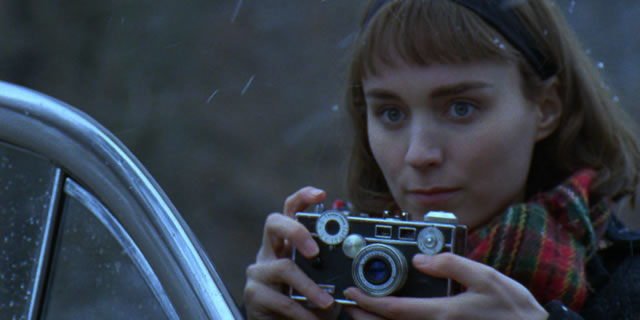
Carol works best in its first half, before the walls have started closing in, at least in part because the character of Carol works best as a mystery, one which Therese is, in some sense, trying to solve along with us. Therese’s budding career as a photographer underlines this, too – she is a would-be professional looker, taking in the world one image at a time, hoping to find what lies beneath.

carol2
There are indelible moments throughout. The quietness of the film lends surprising power to small aspects – a hand on a shoulder, the color of nail polish. Its genius lies in the way such details move the story along and provide a wealth of information visually. There’s tenderness, lust, and heartbreak in Carol, from its plot points to the smallest movements and briefest glances. It’s a wonder of visual storytelling, backed up by nearly perfect performances all around.

January 8, 2016 0 comments
0 FacebookTwitterPinterestEmail
Newer Posts
Older Posts

About

About

Towards a provisional theory of the cinema, or, failing that, just some shit about movies

Authors
Rick Kelley
Lark Lundberg

Keep in touch

Facebook Twitter

Categories

  • Conversation
  • Film
  • Film By Film
  • Great Movie Project
  • Great Movies: The Counter Programming
  • Guest
  • News
  • Other
    • Commentary
    • Film
    • Interview
    • Reviews
    • Song for a Sunday
  • Streaming Selections
  • TV
  • Uncategorized
  • Vegan Horror

Archives

  • April 2019
  • March 2019
  • January 2019
  • December 2018
  • November 2018
  • October 2018
  • September 2018
  • August 2018
  • July 2018
  • June 2018
  • May 2018
  • April 2018
  • March 2018
  • February 2018
  • January 2018
  • December 2017
  • November 2017
  • October 2017
  • September 2017
  • August 2017
  • July 2017
  • June 2017
  • May 2017
  • April 2017
  • March 2017
  • February 2017
  • January 2017
  • December 2016
  • November 2016
  • October 2016
  • September 2016
  • August 2016
  • July 2016
  • June 2016
  • May 2016
  • April 2016
  • March 2016
  • February 2016
  • January 2016
  • December 2015
  • October 2015
  • September 2015
  • August 2015
  • July 2015
  • June 2015
  • May 2015
  • April 2015
  • March 2015
  • February 2015
  • January 2015
  • December 2014
  • November 2014
  • October 2014
  • August 2009
  • September 2008

Recent Posts

  • China Girls, Death Proof, and the Hidden Face
  • Old News: Old Noise Edition
  • Old News: April 1, 2019
  • Nicolas Winding Refn, Marginalia, and the Deaths of Cinema
  • And now, let us praise Kanopy

Recent Comments

  • Franklin Kat on Michael Shannon shines again in Frank & Lola
  • Sean Tempesta on Cinema and dream-logic in Meshes of the Afternoon
  • ludditerobot on The Left-Wing Slapstick and Iconic Songs of 1937’s Street Angel
  • Franklin Kat on The Left-Wing Slapstick and Iconic Songs of 1937’s Street Angel
  • Arijit Mukherjee on Great Movies Project: The Counter-Programming
  • Facebook
  • Twitter

@2021 - All Right Reserved. Designed and Developed by PenciDesign


Back To Top
Luddite Robot
  • Reviews
  • Commentary
  • Great Movie Project
    • Great Movie Project
      Bride of Frankenstein is a movie for and…

      January 25, 2018

      Great Movie Project
      The Enduring Appeal of Nick and Nora in…

      November 29, 2017

      Great Movie Project
      The Ahistorical Fever Dream of The Scarlet Empress

      August 2, 2017

      Great Movie Project
      Dreams, Mundanity, and the Anarchist Yearnings of L’Atalante

      July 12, 2017

      Great Movie Project
      Duck Soup Is And Will Always Be A…

      April 19, 2017

  • Counter Programming
    • Great Movies: The Counter Programming
      Walking and Talking in the Shadow of Kanchenjungha

      March 7, 2018

      Great Movies: The Counter Programming
      A Brief Encounter in My Mother and Her…

      February 9, 2018

      Great Movies: The Counter Programming
      Horror’s Refusal in Farrokhzad’s The House Is Black

      October 13, 2017

      Great Movies: The Counter Programming
      The rage and beauty of The Cloud-Capped Star

      October 3, 2017

      Great Movies: The Counter Programming
      The daylight noir and social issue empathy of…

      June 22, 2017

  • Vegan Horror
    • Vegan Horror
      Julia Ducournau doesn’t think her film Raw is…

      June 7, 2017

      Vegan Horror
      Licking our wounds: The vampiric masculinity of Ravenous

      December 13, 2016

      Vegan Horror
      Eggertsson and animals: An approach to horror cinema

      September 15, 2016

      Vegan Horror
      “It’s Not My Nature” – Vegetarianism, Body Horror,…

      August 30, 2016

      Vegan Horror
      Bodies and Carcasses in Predator 2

      August 23, 2016

  • Interview
    • Interview
      Jasmine Leyva’s doc The Invisible Vegan aims to…

      May 3, 2017

      Interview
      Bridging The Abyss: An Interview With The Directors…

      November 28, 2016

      Interview
      7 Days in Ohio: An Interview with Nathan…

      September 12, 2016

      Interview
      Film Critic Phil Dy talks New Filipino Cinema

      June 17, 2016

      Interview
      “I Love Seeing Film Projected.” A Conversation with…

      March 22, 2016