Top Posts
Madeline’s Madeline: An Unclassifiable Panic Attack Maybe-Masterpiece
Shoplifters Steals Moments of Wonder from the Mundane
Burning and Forgetting What’s Not There
Kusama: Infinity Expands Beyond The Canvas
Mandy Risks Little, Wins Little
In We The Animals, The Children Are Away...
The Seagull Isn’t Quite Chekhov, But It’s Still...
5 Million Ways Boots Riley Isn’t Sorry To...
American Animals’ and the Queasiness of the Heist
A Star Is Born In Hearts Beat Loud
  • Reviews
  • Commentary
  • Great Movie Project
    • Great Movie Project
      Bride of Frankenstein is a movie for and…

      January 25, 2018

      Great Movie Project
      The Enduring Appeal of Nick and Nora in…

      November 29, 2017

      Great Movie Project
      The Ahistorical Fever Dream of The Scarlet Empress

      August 2, 2017

      Great Movie Project
      Dreams, Mundanity, and the Anarchist Yearnings of L’Atalante

      July 12, 2017

      Great Movie Project
      Duck Soup Is And Will Always Be A…

      April 19, 2017

  • Counter Programming
    • Great Movies: The Counter Programming
      Walking and Talking in the Shadow of Kanchenjungha

      March 7, 2018

      Great Movies: The Counter Programming
      A Brief Encounter in My Mother and Her…

      February 9, 2018

      Great Movies: The Counter Programming
      Horror’s Refusal in Farrokhzad’s The House Is Black

      October 13, 2017

      Great Movies: The Counter Programming
      The rage and beauty of The Cloud-Capped Star

      October 3, 2017

      Great Movies: The Counter Programming
      The daylight noir and social issue empathy of…

      June 22, 2017

  • Vegan Horror
    • Vegan Horror
      Julia Ducournau doesn’t think her film Raw is…

      June 7, 2017

      Vegan Horror
      Licking our wounds: The vampiric masculinity of Ravenous

      December 13, 2016

      Vegan Horror
      Eggertsson and animals: An approach to horror cinema

      September 15, 2016

      Vegan Horror
      “It’s Not My Nature” – Vegetarianism, Body Horror,…

      August 30, 2016

      Vegan Horror
      Bodies and Carcasses in Predator 2

      August 23, 2016

  • Interview
    • Interview
      Jasmine Leyva’s doc The Invisible Vegan aims to…

      May 3, 2017

      Interview
      Bridging The Abyss: An Interview With The Directors…

      November 28, 2016

      Interview
      7 Days in Ohio: An Interview with Nathan…

      September 12, 2016

      Interview
      Film Critic Phil Dy talks New Filipino Cinema

      June 17, 2016

      Interview
      “I Love Seeing Film Projected.” A Conversation with…

      March 22, 2016

Luddite Robot
Film critique, theory, and assorted nonsense.
CommentaryFilm

China Girls, Death Proof, and the Hidden Face

April 14, 2019

Old News: Old Noise Edition

April 8, 2019

Old News: April 1, 2019

Nicolas Winding Refn, Marginalia, and the Deaths of Cinema

CommentaryFilm

And now, let us praise Kanopy

January 24, 2019

Warren Sonbert and the Relief of Anti-Narrative

January 14, 2019

The World Is Ending and It Doesn’t Matter

The Best Films of 2018

FilmReviews

Madeline’s Madeline: An Unclassifiable Panic Attack Maybe-Masterpiece

December 21, 2018

Shoplifters Steals Moments of Wonder from the Mundane

December 11, 2018

Burning and Forgetting What’s Not There

Alien, Musicology, and Reading Soundtracks

CommentaryFilm

Shocktober III: Halloween 2018 Edition

October 24, 2018

Shirley Jackson’s The Lottery Traumatized Schoolkids in 16 mm

October 18, 2018

Shocktober 2018 II: Another Reshockening (of Horror)

Häxan is a movie made by a movie character

CommentaryFilm

Shocktober 2018

October 7, 2018

Unprofessional! Spring Night, Summer Night

October 3, 2018

The Wild Boys: A Luddite Robot Conversation

Kusama: Infinity Expands Beyond The Canvas

CommentaryFilm

Best First-Watches of 2015

by rick January 4, 2016
written by rick

I’ve already covered my favorite films that came out in 2015. But that is only half the story. First-watches are at least as important, and probably more so.

Here are some of the films that meant the most to me that I saw this year, regardless of when they came out.

There are probably a number of unifying threads between them — for one thing, it seems, in retrospect, I was struck most by simple stories told well.

Maybe I’m getting older, and there’s a certain appeal to that kind of storytelling — things that strip away the unnecessary veneer to get at more basic truths. On the other hand, children love simple stories, too. Maybe that’s a distinction without a difference.

I originally had a much longer list, but I am very lazy, and writing things is very hard. So — leaving out such minor titles as Tokyo Story, Wild Strawberries, and the work of Chris Marker — here are 10 films (ok, 12) that I loved in 2015.

If you find yourself at a loss for a thing to watch, may I suggest the following for your 2016. In chronological order:

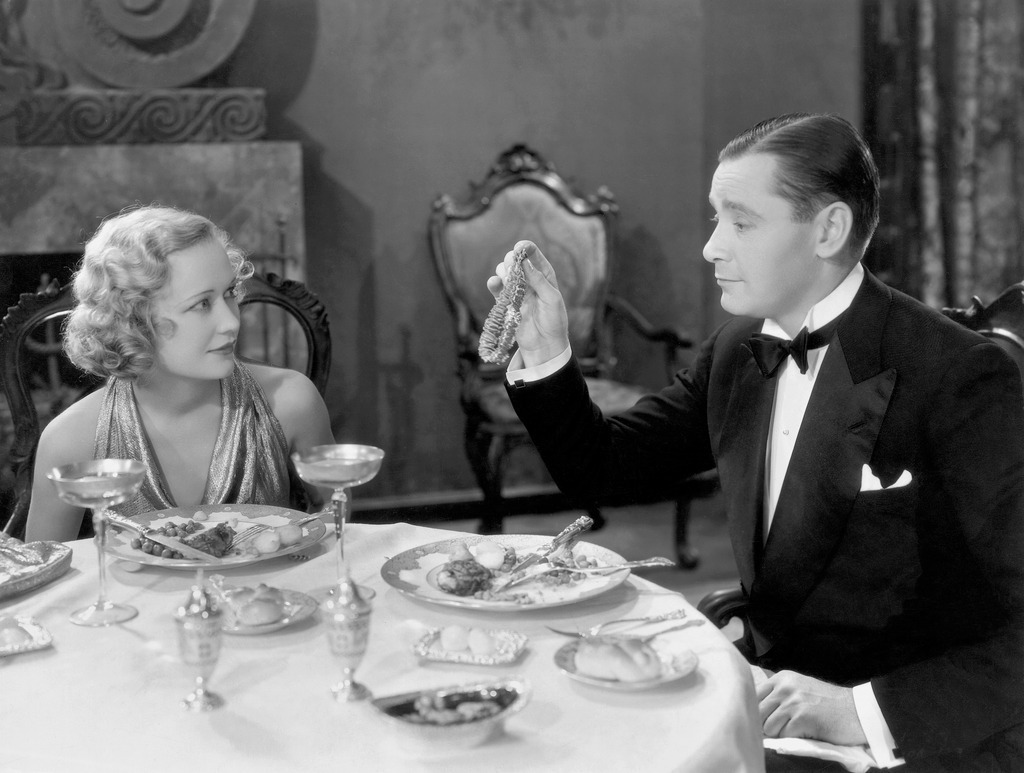
  1. Trouble In Paradise – Ernst Lubistch (1932)
trouble in paradise

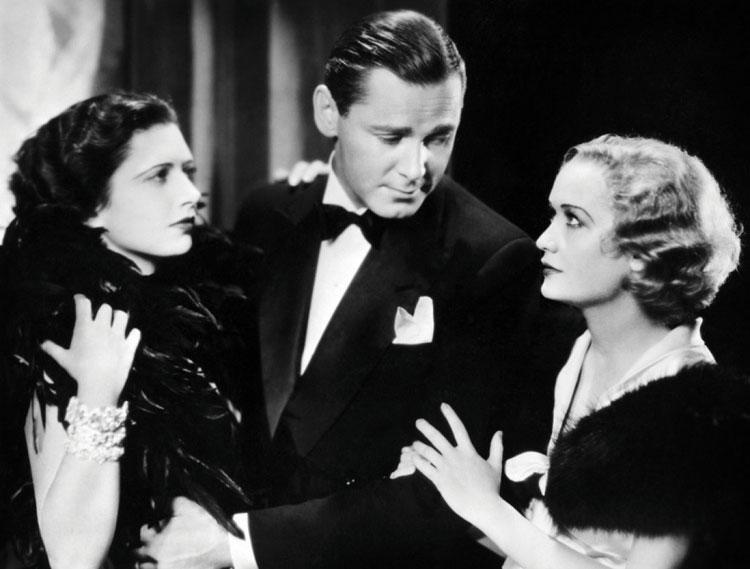
A charming, hilarious, bawdy pre-Code love triangle filled with shenanigans and good-natured intrigue, as unrepentant thieves become glamorous protagonists. The “Lubitsch touch”, whatever that means, is everywhere. And the dialogue is scandalously delightful:

“If I were your father, which fortunately I am not, and you made any attempt to handle your own business affairs, I would give you a good spanking — in a business way, of course.”

“What would you do if you were my secretary?”

“The same thing.”

“You’re hired.”

I’m not sure you could get away with that now, 84 years later.

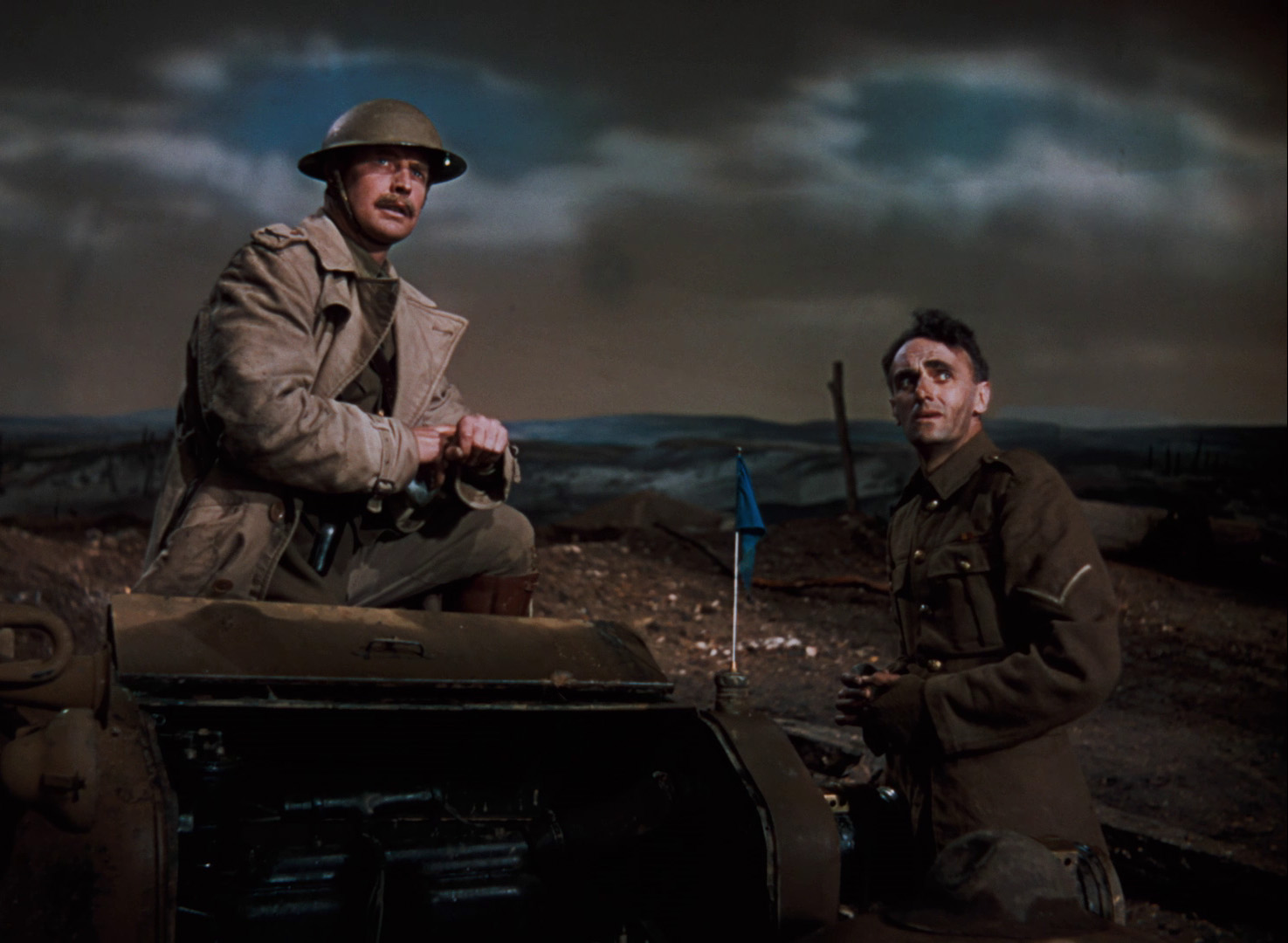
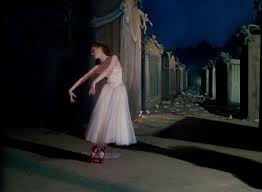
  1. The Life and Death of Colonel Blimp (1943); A Matter of Life and Death (1946); The Red Shoes (1948) – Michael Powell and Emeric Pressburger
Blimp-4a matter of life and death

2015 was, among other things, the year of The Archers for me.

We all have blind spots, but this was a particularly acute one for me: despite Powell and Pressburger’s prominence in the history of British cinema, and despite their enormous influence on their greatest fan, Martin Scorcese, I hadn’t seen a single one of their films. Suffice to say, I was missing out.
red shoes

Shot through with playful romanticism, visual splendor, a willingness to combine forms at will, and consistently inventive narrative structures, the triumvirate of Colonel Blimp, A Matter of Life and Death, and The Red Shoes dominated my cinematic education this year. (I’ve yet to see Black Narcissus, but that will be remedied quickly … followed by all the rest.)

Colonel Blimp’s epic scope and nuanced characters, AMOLAD’s existential beauty and Technicolor fantasias, and the unparalleled, balletic intricacy of The Red Shoes’ adaptation of Hans Christian Anderson, with the performances of Deborah Kerr, Moira Shearer, David Niven … I finished each of these and simply shook my head in disbelief that it had taken me so long. And then promptly went and read Powell’s two-volume memoirs.

Of all the films on this list, these three stand out as examples of why you should never be embarrassed by the famous titles you haven’t seen. That just means you have so much to look forward to.

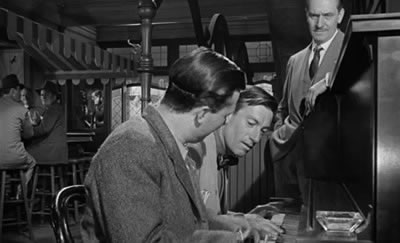
  1. The Best Years of Our Lives – William Wyler (1946)
best-years-of-our-lives

Wyler’s ode to the struggles, triumphs, friendships, and melancholy in the U.S. following the Second World War elicits great, nuanced performances from all involved. With a yearning, realist tone pervading its story of veterans readjusting in ways big and small to civilian life, it’s an elegy for a time already passed and a hopeful nod to a new day – two meanings expertly, and sadly, encapsulated in its title. Its three interweaving stories form a tight narrative structure, and each are moving, and the ending feels totally earned. For once, closing on a wedding isn’t corny at all. Try not to cry; I dare you.

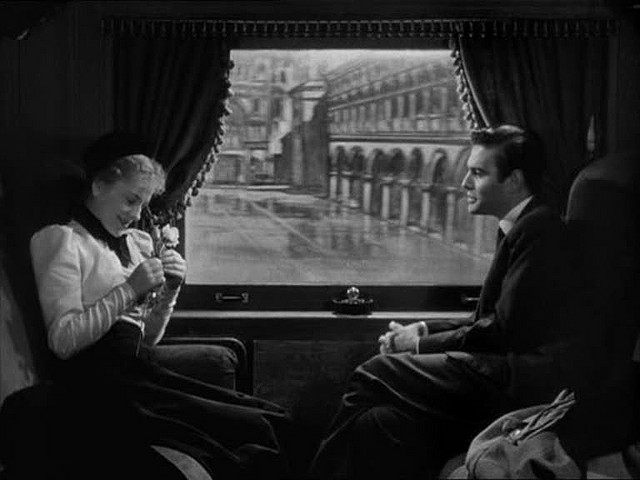
  1. Letter From An Unknown Woman – Max Ophüls (1948)
Letter-From-An-Unknown-Woman-Train

A ravishing melodrama told in a series of interweaving flashbacks, Ophüls’ film casts something of a spell. We know where we’re going, but, like the carnival tour of “foreign lands” on which lovers Jean Fontaine and Louis Jordan embark mid-way through the film, there’s no way out. Artifice, yearning, and responsibility are emphasized — those three never settle into a comfortable match. Not in 1948 and not now.

Letter From An Unknown Woman is often characterized as “a weepie,” that utterly sexist throw-off genre delineation that seems to assume pictures about women’s desires and experiences are always of fundamentally less interest than their male counterparts. That’s an idiotic notion to start with and one which barely needs a counter-argument, but if you’re looking for one, this is as good a place to start as any. On the other hand, the film isn’t interested in such arguments. It’s a narrative masterpiece and as deeply felt as anything I saw all year.

  1. Orpheus – Jean Cocteau (1950)

orpheus

As part of the Counter-Programming The Great Movies series, I watched and reviewed Cocteau’s Blood of a Poet earlier in 2015, but that entry in his Trilogy pales in comparison to the inventiveness of Orpheus.

Small gestures – a hand putting on a glove, a step through a magic mirror, a walk down a hall – are invested with all the magic of myth. Cocteau, poet and visual dreamer, conjured something strange here, with the most basic of camera effects. In the age of CGI, it still works, and it’s a little startling. It might sound fussy or like Abe Simpson shouting at a cloud, but it’s true — the best magic tricks don’t need that much help from your new-fangled machines. The old machines can still amaze.

  1. Ikiru – Akira Kurosawa (1952)

ikiru

I have seen many of Kurosawa’s films, and but it wasn’t until this year I discovered my favorite.

Ikiru is a simple story – A man who knows he will die realizes how little he’s actually managed to accomplish in all his days of work, and decides to do one last meaningful thing before his time is up. He will see that a park is built, and he will help the community of women who demanded it through the same bureaucracy that has crushed him.

That’s it.

Out of this, Kurosawa constructs a humanist tale affirming that, even in the face of oblivion, we can find meaning through human connection and acts of kindness. Whether anyone understands us or not.

The film says: Let them debate our legacy after we’re gone. In the meantime, make of your life what you can. Ikiru is the most hopeful movie I’ve ever seen, and it’s about a guy with stomach cancer. Only a master filmmaker could possibly make that true.

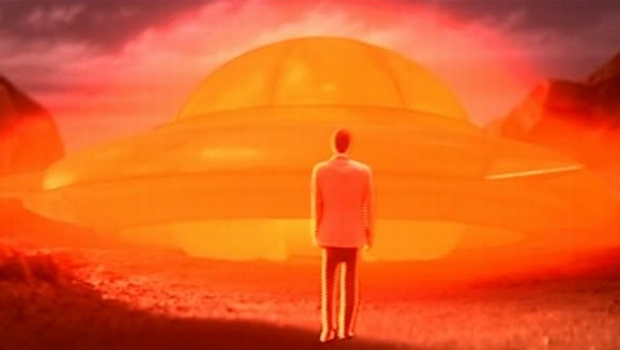
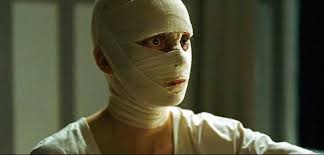
  1. Goke, Body Snatcher From Hell – Hajime Sato (1968)
goke

Here’s a film that announces its intentions and aesthetic right in the title.

Does it sound awesome to you? Then you will probably enjoy it.

Need more convincing? How about this tagline: “A fiendish vampire from a strange world in outer space drains his victims’ blood and turns them into weird corpses!”

Macabre, animated by anxieties about nuclear apocalypse, and efficiently clocking in at barely over an hour, it delivers the sci-fi goods. If you are one of those people who considers such things good. I am one of those people.

  1. Head – Bob Rafelson (1968)

head

Bob Rafelson essentially co-founded the New Hollywood, directed the bona-fide classic Five Easy Pieces with Jack Nicholson in the lead, and generally helped provide the early backbone for counter-culture filmmaking in the late 60s and early 70s.But the weird genius at work in his debut Head has to be seen to be believed.

A Monkees vehicle that seems to find the Monkees bizarrely (and admirably) committed to torpedoing their own pre-fab careers, it’s a surreal slice of psychedelia, equal parts tripped-out be-in and stream-of-consciousness, anti-plot cinematic meandering.

With a walk-on part for Frank Zappa and a whole lot of gleeful loathing for themselves and the system that made them, it’s like the stars’ turned their enormously popular sit-com inside out. Watching it feels a bit like going insane – if your descent into madness regularly featured the Monkees bantering in an empty black room. I know mine probably will.

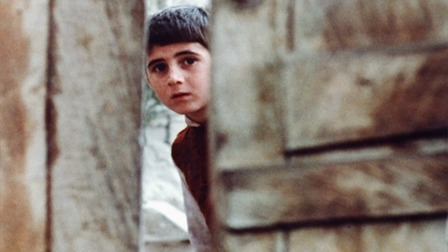
  1. Where Is The Friend’s Home – Abbas Kiarostami (1987)
where-is-the-friends-home-still

As directed by Kiarostami, eight-year-old Ahmed seems in perpetual danger of being crushed by the world, the frame pressing him down. He’s a small boy on a simple quest – returning a schoolbook to a friend. This leads to a great and terrifying adventure, in which he travels from village to village, slowly expanding the scope of his world.

“The Friend” doubles as a name for the Prophet, adding a deep, spiritual nuance to the tale. The child, a naif, has to buck tradition, local customs, and the finger-wagging of shrill adults to do what he knows is right. Here is a fable that captures the confusion of childhood, but infuses it with the richness of adult doubt. It’s gripping and lovely.

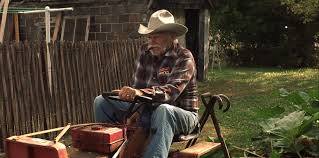
  1. The Straight Story – David Lynch (1999)
straight story 2

Apparently, in 2015, I was rather taken by stories of simple people doing simple things. David Lynch’s The Straight Story may be the pinnacle of this sensibility.

I love Lynch’s skewed visions, from Eraserhead through Mulholland Drive (sorry, I’ve yet to make it through Inland Empire), and knew going in that this film was famous for how dramatically it diverged from auteurist expectation. Well, it does and it doesn’t.

Richard Farnsworth learns his brother is dying. He can’t drive a car, but he has to go see him, patch things up (whatever those things are that need patching). So he gets on a tractor in Laurens, Iowa and heads out for Mt. Zion, Wisconsin. His tractor breaks down. He has to start again. He does. It’s the world’s slowest road-trip. Along the way, he meets some people. Weird things happen, in a G-rated sort of way. It’s just a man and his tractor, some gorgeous shots of the Midwest, and an old man who wants to say goodbye.

Like Kurosawa in Ikiru, Lynch spins something entirely magical out of this. The Straight Story makes clear something I should’ve known about Lynch a long time ago – his corn-fed, off-kilter awkwardness isn’t entirely an act. There is deep love for people and place here, and Farnsworth is utterly amazing, a quiet performance as a quiet man in a quiet film, quietly but resolutely pushing forward in a straight line to achieve a simple end. I loved every minute of it.
January 4, 2016 0 comments
0 FacebookTwitterPinterestEmail
CommentaryFilm

The best films of 2015, according to me

by rick December 30, 2015
written by rick

It’s a truism that top 10 lists are fundamentally a silly endeavor.

There’s no inherent value, and maybe even a whiff of distaste, to ranking anything, but it’s also, let’s face it, kind of fun. And year-end lists also provide markers, for ourselves and others, of what we enjoyed at a certain moment in time, and hopefully a bit about why.

At Screencrush, Matt Singer prefaced his own list by noting, “In a year with so many great movies, there was only one way to narrow things down: Picking the movies that meant the most to me personally.” I think this is the right approach. The temptation to front-load everything with likely Oscar winners, the Year’s Most Important Films™, or titles that might speak to your critical acuity and fascinating arthouse taste is strong, but yielding to it isn’t of much value.

At its heart, “What were the top 10 movies of the year?” should be considered a way of asking, “What resonated with you in cinema over the last 12 months? What were you moved, intrigued, excited, or struck by? Which will last, for you?”

I think the films below will last, for me. There are many more: 2015 was indeed a stellar year for movies, and I haven’t come close to seeing most of the notable ones, much less all of them. (For additional arbitrary comparisons, you can find my top 30 here.)

And while the final list I’ve arrived at violates a core belief I’ve had all year – namely, that any list without What We Do In The Shadows is fundamentally flawed, because that movie is hilarious – it’s still an accurate reflection of things I’ll return to, and so therefore things I presumably think you ought to check out if you haven’t.

10. Phoenix

phoenix

Given the glut of films focusing on the Holocaust, it’s a little strange to think of how few there are that survey its immediate social aftermath. Phoenix is here to fill that gap.

Sure, I realize that more or less all of recent German cinema has grappled with its legacy, but the tendency has always seemed mixed with anxiety about the Economic Miracle (see: Fassbinder). Many of those films are outright masterpieces, but the real, basic, haunted question – how does one live now? – has often proved elusive.

And it continues to do so in Phoenix. A woman, returned from the camps but presumed dead, haunts her previous life. She’s the same, but also somehow unrecognizable. In order to connect with those she holds closest, she must impersonate herself, for a man who knows he betrayed her but still has uses for her yet.

We are in Vertigo territory. The film proceeds like a dream – key shots feature hollowed out buildings, ruins, and a deep sense of the uncanny. No one, it turns out, really wants to hear about the camps; it’s inconvenient. The film becomes a mystery – not just who did what to whom and why, but how anyone can soldier on in so unstable a world.

Heavy? Sure. But it’s also gorgeous and appropriately unnerving. And it features the single greatest mic-drop ending of 2015.

9. Brooklyn

brooklyn

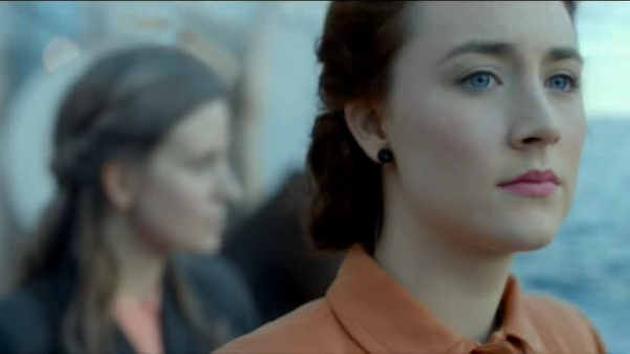
No film, with the arguable exception of Bridge of Spies, hearkened back more overtly to older Hollywood than Brooklyn. In its luminous close-ups, family dramas, earnest yearning, and belief in the value of basic dignity and the striving to find fulfillment, Brooklyn is an ode to the American Dream, released in a year where such things seem mighty quaint. More power to it.
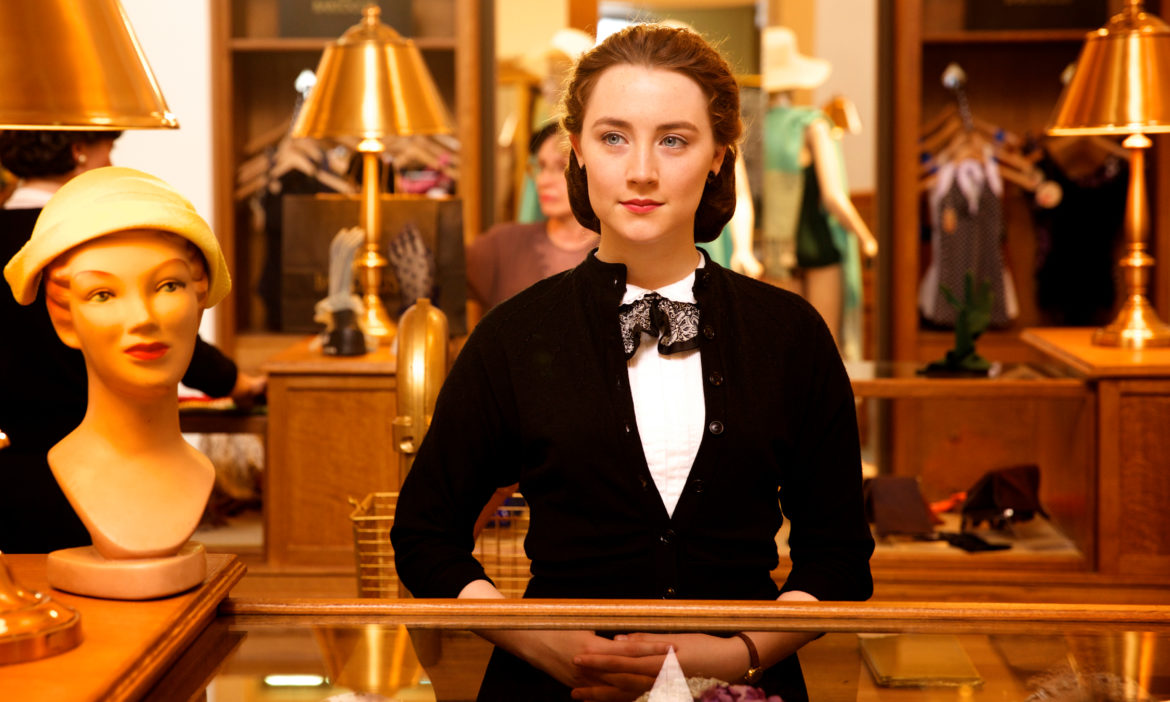
Saoirse Ronan almost literally lights up the screen, in a wonderful performance as an Irish shopgirl who finds a new life in America. Torn between home and her new land, she is faced with real decisions – not least of which is what “home” is really supposed to mean. We wait and watch, hoping her choices align with ours, an older convention in cinema we don’t see quite so much anymore. Are the ones she arrives at correct?

That’s the wrong question. They are hers, finally, and – in perfectly framed, lit, and colored moments – they become ours, too. Brooklyn is a rebuttal against anti-immigrant fervor, but it’s the quietest rebuttal possible. It tells a simple story beautifully, and it’s a story we could stand to hear more often. (Review here.)

8. About Elly

about elly

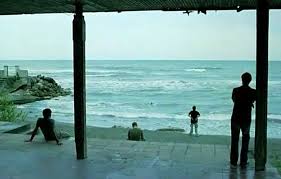
Asghar Farhadi’s feature-length debut made a belated appearance to North American audiences this year, following his brilliant features A Separation (2011) and The Past (2013). But, in its poetic focus on the individuals living in his native Iran, and their conflicted desires and responsibilities, it fleshes out those masterpieces and adds even more nuance.

Casually updating Michelangelo Antonioni’s L’Avenntura and making it his own, About Elly also focuses on a group trip, a mysterious disappearance, and its ramifications for everyone involved. The pace is seductive, and we find ourselves drawn into a mystery we know might not be solved.

It’s a dreamscape haunted by very real, very wide-awake social pressures, a murder mystery where there is no murder and no villain, and a film that is more focused on brief, meaningful glances than the words being said. Fans of his earlier/later films will be entranced, but then so will everyone else.

7. Romeo Is Bleeding

RomeoIsBleeding_Filmpage_476x286

A surprise inclusion!

No, probably not. I’ve now written about this excellent documentary twice, and chatted with its director extensively about the film, so this is a bit of a no-brainer.

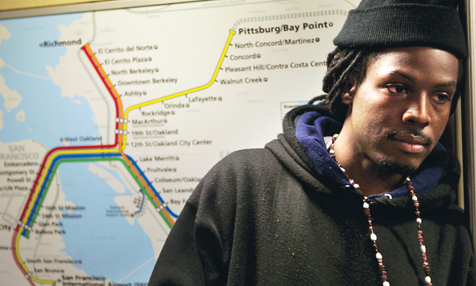
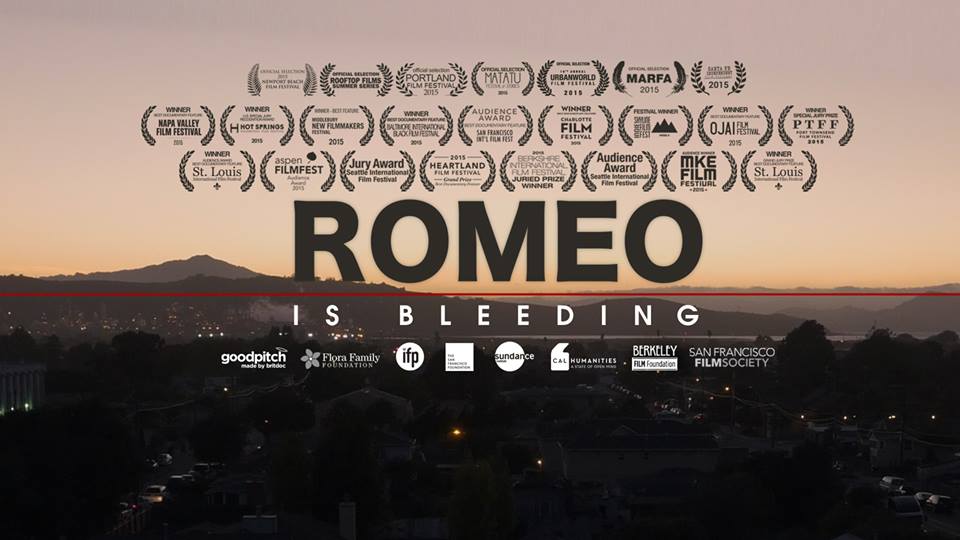
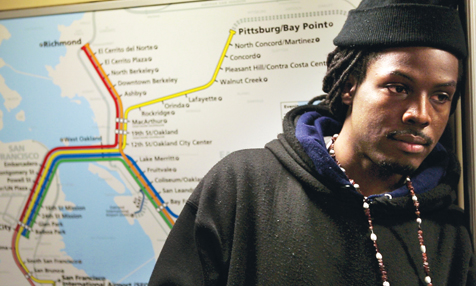
Jason Zeldes’ portrait of life in Richmond, CA and a group of young poets launching an adaptation of Romeo and Juliet is deeply moving, inventively filmed, and masterfully edited. It was easily my favorite documentary of the year, but it was also one of the best and most personally felt films I saw of any genre.

Find screenings and updates about Romeo Is Bleeding at the film’s website or on Facebook.

6. Inside Out

inside out

Pixar’s latest masterpiece raises an interesting question: What do you with a kids movie that isn’t really made for kids?

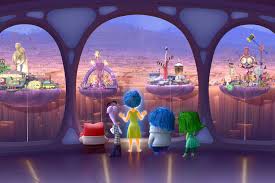
Inside Out operates in a kind of Neverland, equal parts innocence and experience – there are lessons for the young viewers, paired with enough adventure and hijinks to keep it from turning ponderous, and then there is this entire other well of wisdom it’s drawing from, which is most decidedly on the Adult side. There’s a nostalgic current not just running through it, but actually governing its logic. Inside Out is a kids movie for adults who still remember they were kids once.

Its central conceit – that our inner lives are governed by the competing interests of different emotions in a sort of cognitive headquarters, who, like the gods of Greek mythology, argue with each other, come to compromises, and eventually learn to live together, while resolutely pursuing their own ends – is clever, and allows for a lot of funny riffing and narrative. (The garbagemen who throw out all memories of piano lessons except Ode to Joy and Chopsticks will never fail to make me smile.)

But it’s wiser than that. The downer character of Sadness ends up being central, despite the fact we wish it weren’t. Sorrow can’t be banished, and some amount of melancholy – the collision of Joy and Sadness, with, maybe, a dose of Fear, Anger, and Disgust – will always creep in. And that’s really okay. In fact, that’s what it means to be alive.

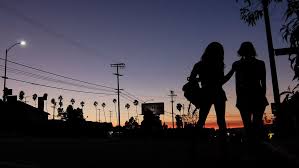
5. Tangerine

tangerine

In a marketplace that all too often finds cys-male actors portraying trans women in prestige pictures, Tangerine is a bracing reminder that it doesn’t have to be this way. It also happens to be a hilarious, visceral, heartbreaking march through a Los Angeles we don’t often see on the screen, filled with immigrant cab drivers and their families, assortments of junkies, drunks, pimps, and cops, and that ubiquitous glare from the sun beating down.

But the main draw here is twofold: the two lead performances – Kitana Kiki Rodriguez as Sin-Dee, fresh out of jail and on a mission, and her long-suffering friend Alexandra (Mya Taylor) – and the fact that the film was shot on modified iPhones with custom-made lenses.

Transpiring over the course of several frantic hours in late December, it’s the Christmas movie you didn’t know you needed. Appropriately enough, it ends on a moment of tenderness and grace, after all the shouting has stilled. It’s a ramshackle masterpiece. (Review here.)

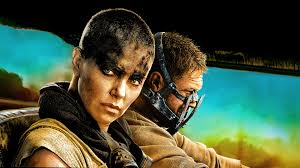
4. Mad Max: Fury Road

mad max fury road

Decades after the last installment, director George Miller exploded back onto screens with the kind of film that gives hope to fans of action movies everywhere.

It’s a dystopian, feminist adrenaline-overload, from its first moments to its last. Incredible practical stunts, filmed in ways that are never muddled and keep the action front and center, dropped audiences’ jaws, and the film has even racked up a fair number of prestigious awards, something most of us had long assumed was off limits to genre pictures.

But this is no normal genre picture. The political subtexts are hard to miss, and so is the artistic mastery. Car chases have never been so visceral, and guys playing flame-shooting metal guitars have never been so awesome. Buckle up. (Review here.)

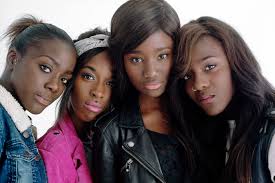
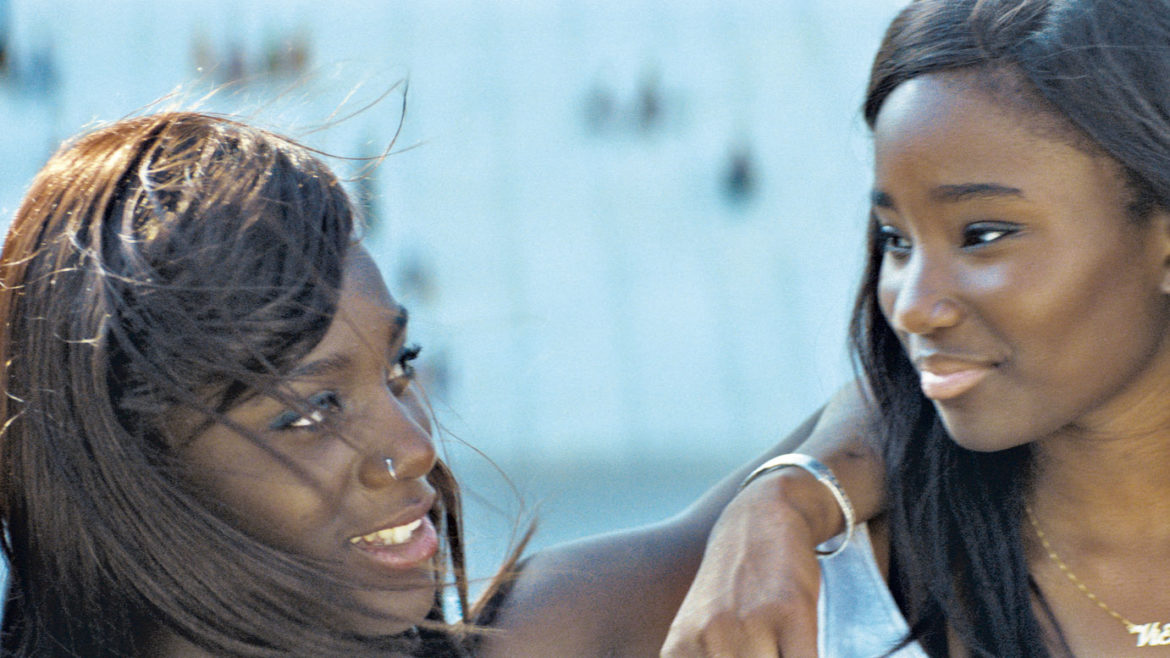
3. Girlhood

girlhood

Another title on this list has understandably topped many people’s compilations of the year’s best musical sequence, including David Ehrlich’s impossibly classy annual super-cut. But as far as I’m concerned, the “Diamonds” sequence in Girlhood, in which our protagonist and several friends dance in a hotel room to Rihanna, was 2015’s most joyous cinematic moment.

The film itself isn’t exactly joyous – it’s a coming-of-age story set in Paris’ banlieues, in which Marieme (Karidja Touré) grapples with gender expectations, poverty, race, and all the intersections in between, and finds herself at a number of crossroads as adolescence ends.

It’s an often gritty depiction of teenage life on the social margins, but it also makes time for moments like these, when friends shrug off all the things foisted on them and share a moment of release and longing. It’s an unforgettable scene in a film filled with them. (Review here.)

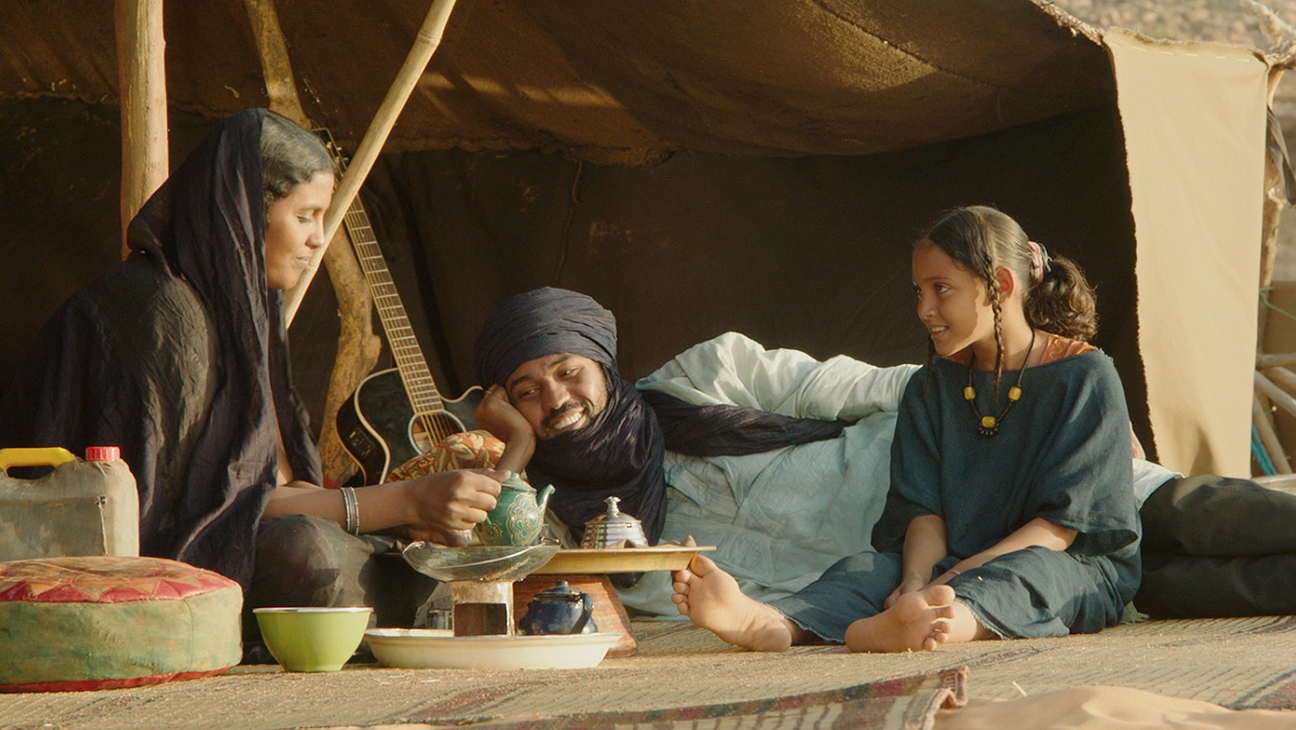
2. Timbuktu

timbuktu_family

Abderrahmane Sissako’s portrait of encroaching evil in the desert of Mali is neatly divided in two: languid, deeply humanistic sequences of rural life and family relations, on the one hand, and unimaginable tragedy imposed by self-appointed, and self-deluded, spokesmen for the divine on the other. The slowness and beauty of the former make the final gut-punch of the latter all the more powerful.

With gorgeous cinematography, some sly absurdist humor, and stellar performances all around, Timbuktu aims to enrapture and outrage. It succeeds enormously. (Review here.)

1. The End of the Tour

end of the tour

Many of the films above vied for this spot, but in the end, I just really have to be honest. James Ponsoldt’s semi-biopic of legendary writer David Foster Wallace hit me the hardest of all the movies I saw this year.

I didn’t write a full piece on The End of the Tour, but it remains the only movie this year I saw four times, the only one I’ve recommended to everyone I know, and the only one I finished and then promptly read the screenplay. That sounds a lot like someone’s favorite movie.

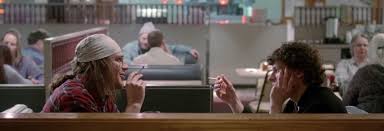
As Wallace, Jason Segel turns in an unexpectedly moving performance, and Jesse Eisenberg is at his reptilian best as the interviewer who idolizes, envies, and despises this man, who puts his own writing to shame and who he wants to be, regardless of his protestations.

It’s a stealth production – The End of the Tour exhibits all the trappings of a conventional biopic, but has the good sense to focus instead on a sliver of time and the nuances of a brief relationship. Instead of dramatic, fiery set-pieces, it builds an increasingly fascinating mood based on nuances of character, and ends up confronting issues of loneliness, jealousy, and what it means to be authentic in a fallen world.

DFW fans may not get what they came for, and anyone expecting dramatic explosions will end up disappointed. But The End of the Tour is an actor’s showcase, an exploration of American ennui for a certain segment of people at a certain moment of time, and the tightest script around. There’s beauty here, and pain. It’s the best movie of the year.

Again, for me. Did I egregiously omit your favorite? Tell me about it in the comments!

Happy new year, kids.

December 30, 2015 0 comments
0 FacebookTwitterPinterestEmail
Interview

Interview: Director Jason Zeldes on Romeo Is Bleeding

by rick December 29, 2015
written by rick

Jason Zeldes’ directorial debut Romeo Is Bleeding is one of the year’s best and most powerful films.

The film deftly tells multiple stories. The story of poet Donté Clark,  the story of kids countering violence with art, the story of Richmond, California. We’re introduced to a program known as RAW Talent, and we follow Donté and others as they launch Te’s Harmony, an adaptation of Romeo and Juliet, to address issues in their lives and community.

The documentary is in many ways designed to teach Te’s Harmony alongside Shakespeare’s perennial favorite in classrooms, with other uses in social studies, history, theater, and media classes. It’s also slated for eventual broadcast and streaming.

JasonZeldes_Director-240x300 As an editor, Zeldes has turned in memorable work on films like 2014’s Oscar-winning 20 Feet From Stardom, but he’s taken a more immersive approach for his first feature-length directing credit.
Zeldes — who emphasized his appreciation to Michael Klein, Rajiv-Smith Mahabir, Katey Zouck, and Kevin Klauber for taking this journey with him — was kind enough to chat for a while about the film, about the risks, rewards, and responsibilities of storytelling, about the prospects for aspiring filmmakers these days, and, briefly, about hula dancing grandfathers.

Rick Kelley: There are a lot of compelling aspects about Romeo Is Bleeding – the performance footage, Donté’s sheer talent, the intricacies and drama of these kids’ lives, the past and present conditions in Richmond, and on and on. You pack a lot of stuff in there. Did you have a sense of all that going into the project, or how did you tease out the narrative strands?

Jason Zeldes: Well, it all kind of started with Donté. My cousin [Molly Raynor], who’d been teaching poetry for years, was telling me about how incredible he was, and so she told me he was doing this play that was autobiographical. It sounded like a good start, or at least a good short, you know? I went up [to Richmond] originally thinking, ‘Ok, it’s about an artist doing an autobiographical piece.’ But once I actually arrived, I got to see that he really was an amazing artist, and this autobiographical story and his artwork draw on this much bigger narrative, which is about post-industrial America, and the systematic injustices that exist in a lot of minority communities.

That, I think, was the big revelation when I was actually in Richmond: that Donté’s story was representative of an entire community. And that by telling it, or by following him telling his own story, I would have the opportunity to tell a very big story from a personal, intimate perspective, which is something I’m always looking for. I’m also really interested in making films about artists who are facing bigger forces or impossible circumstances. Donté certainly checked off all those boxes. Once I figured out it was kind of all part of the same narrative, I just had to figure out how to prove it [laughs] with my footage and, you know, we’re in pretty good shape.

RK: Was there a particular moment, once you started shooting, when you thought, ‘Oh, ok. There is actually something really important going on out here’? Or is that something that built up over time?

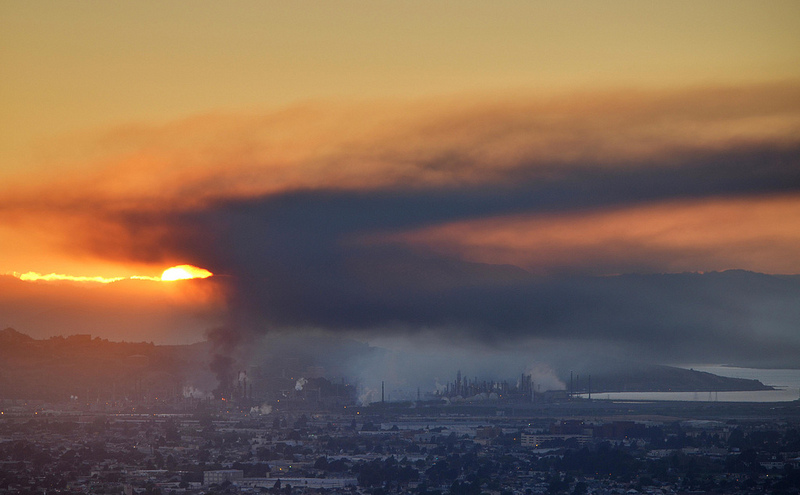
JZ: No, there is a very visceral reminder of that right off the bat. My very first day filming in a RAW Talent classroom was the day the Chevron refinery caught fire.
chevron

RK: Wow.

JZ: So that was, you know, like I said, visceral. I mean, we’re filming a writing workshop with high school students and all of a sudden there’s air raid sirens and a mushroom cloud on the edge of town. And it’s just obvious that there are bigger stories in the community, and the play they were producing was wrestling with all these issues. Chevron was already written into the script. So [it was] a perfect jumping-off point to talk about everything happening in the community.

RK: Was there a temptation to lead the film with the Chevron explosion, since that actually was the first experience that you had up there shooting it? The way it plays out, it comes somewhat organically in the telling, but I could see there being an impulse to focus on that.

JZ: That’s actually a pretty good idea, because we have to cut it down to 52 minutes for broadcast. [Laughter] Maybe I’ll think about that.

But, yeah, that was actually really tricky footage to figure out how to use. A lot of advisors were telling me to cut that scene out of the movie. For a long time, it was really tangential. But I worked with our editors for a long time making sure that it wasn’t tangential. And it ended up being this launching-off point to this big, crucial ‘historical context’ scene.

RK: Yeah, it’s one of my favorite parts of the movie. I think it does a good job of bringing things back towards the larger structures.

JZ: Thank you. That one was a scene that we spent an enormous amount of time on before we got it right.

romeo4

RK: In previous interviews, you’ve also spoken about having to build trust with the kids to get them to open up a bit more, and I was wondering if you could talk a bit about that. And how did those personal relationships you developed affect the final film?

JZ: We did spend a lot of time without the cameras rolling to just become friends with everybody and develop the comfort level. So when the cameras were rolling, they didn’t think of us so much as the ‘camera crew’ as ‘oh, Jason and Mike and Jeeves are back.’

And I think all of that starts with the fact that my cousin Molly has done such a great job building this program, and is so close to all her students, that the mere fact that she could vouch for me – and say, ‘Jason’s cool’ – was a really good starting point in the classroom. And once we’re in the classroom, I started to make friends with a lot of students individually. And they became more comfortable with us – so, you know, ‘Can we come with you to your home? Can we shoot at your home?’ And some said yes.

So next thing you know, we’re out in the community, we’re visiting homes and meeting community members. And we tell them what we’re doing, and now the community members want to talk with us. It all starts with having that relationship with my cousin, but then, you’re in the heart of North Richmond talking to three generations, and everyone’s getting excited, saying, “Oh! You got to talk to this guy next.” And so we’re talking to just about everybody.

RK: Do you feel like people were particularly excited to have the opportunity to tell their stories? I’m thinking of the older folks in particular – maybe people don’t ask those questions so much.

JZ: Oh, for sure! I mean, when we went and did kind of man-on-the-street interviews in North Richmond, people were really excited to tell their stories. It’s not every day that someone is out at Shields-Reid Park asking, “Hey, what’s it like growing up here?” So every day that we did that – we did maybe three man-on-the-street days in North Richmond – we would draw a crowd. And it was great, because we had Donté with us, who, again, would vouch for us. We always made sure, wherever we were going, we were welcomed there. We had a member of the community with us saying, ‘This is what’s happening and this is why it’s important.’ And Donté’s such a leader in the community anyway that having him along with us kind of opened up a lot of doors.

RomeoIsBleeding_Filmpage_476x286

RK: Totally. So Donté’s obviously such a central figure in the film, but he’s not the only one by a large margin. The scope widens as the film goes on, and these other stories get told. I’m curious how much of that was part of the plan and how much of it made itself clear on the ground, or in the edit bay?

JZ: Donté was always going to be the main guy in the film. But we did film with a lot of other students; we actually filmed with far more students than actually ended up in the movie. What ended up happening is we filmed with everybody, but then ended up focusing on Donté. And then, in the process of editing, the more that we focused on Donté, the better and more focused the film became. So lots of characters, all the other RAW Talent interns, kind of fell to the cutting room floor.

But the relationships that helped to focus Donté’s story the most were the ones that ended up sticking, [like] Deandre Evans. And then D’Neise [Robinson], because she was playing the role of Juliet, and because she had such a strong narrative in her own right and went on such a journey as a character … she was great. And she was funny, because, you know, in the film you see, at this time in her life, she was pretty guarded. And the same applies to the film crew. I mean, she invited us to her house and everything, but she really only filmed with us a couple of days.

dneise

RK: Oh wow, really?

JZ: Yeah. So we had these opposite problems to solve as filmmakers or in the edit bay: We have mountains of footage with Donté and we have to figure out the best parts to use, and with D’Neise we have such a finite amount of footage, we got to stretch it and make it as effective as possible. And we used almost every bit of footage we have with D’Neise.

RK: That’s interesting. I was going to say that I was struck by the focus on young women’s experiences. People have mentioned this to me as well, largely female viewers: D’Neise and the other girls talking about the different pressures and expectations they deal with as women. In a film that’s largely about male violence, that stands out.

JZ: It was always our goal to have a comprehensive view of what it’s like growing up in Richmond. And that’s why we talked to every generation. That’s why we talked to police, that’s why we talked to city officials. And a big part of that is what it’s like growing up as a woman in Richmond. And all the voices that were a part of that. We did sit-down interviews with all the students at RAW Talent, and we followed several of them home to film their personal lives. So it was sad to see them fall to the cutting room floor, because it’s a film and not a TV show. But that [sequence] was a really nice way to let their voices, their experiences shine.

And it would be disingenuous to just show the male perspective, because there are a lot of young women who are there, and struggling, and their voices matter. D’Neise ends up being representative for a lot of them. But there’s some amazing women artists coming out of Richmond right now. Like Nya, who does the Chevron poem in the film. She’s like a super Slam champion now. She’s the coolest.

RK: Can we talk about documentary filmmaking in general for a minute? You’ve been involved, in different capacities, with a string of documentaries now over the last 7 years, I think?

JZ: Yep, sounds about right.

RK: – directing Romeo, but also editing 20 Feet From Stardom and others. What’s your take on the genre and its different possibilities right now? For instance, Romeo is far more immersive than 20 Feet, but there are certain similarities in the shooting and editing, like in the performance sequences, I’d say.

JZ: Alright!

RK: Yeah, I mean – the ‘Gimme Shelter’ sequence in 20 Feet From Stardom is amazing, and I sort of see links between that and certain things in Romeo, but I also see certain differences. So I’m wondering about your take on documentaries at this moment in time.

20 feet

JZ: Well, good read on that one. Because I think a lot of the DNA of 20 Feet is alive in how we treat performance footage. I think in 20 Feet we let the performances speak for themselves and structure entire scenes. And then in Romeo, we would pick a poem and let that structure an entire sequence, and kind of pepper in some recorded sounds, so yeah, we did treat the performances almost the same. And actually, the Romeo post-production crew was almost identical to the 20 Feet post-production crew …

RK: What do you know!

JZ: I mean, yeah. Documentaries as a genre right now are pretty fun, especially if you are kind of new to the scene, like I am. In that, there’s a lot of experimentation going on in the form that is being accepted by the community at large. So basically, that means there are very few rules right now, and experimentation is encouraged and often celebrated. You can push the form.

I’d like to think that Romeo is pushing the form, in that it’s vérité meets archival meets theater, dance, and poetry. It’s a mixture of a million different art forms pushed down into a documentary. Which I think is cool, and try to bring to a lot of other projects. Like, I’m in Honolulu right now working on a hula dancing prison documentary, starring a bunch of men who want to be grandfathers. That’s pretty juicy.

RK: A hula dancing prison documentary, about people figuring out how to be grandfathers?

JZ: Yeah.

RK: Ok.

JZ: [Laughing] Yeah. It’s a lot of different stuff happening all at once. And it takes a lot of experimentation to be able to integrate all these different elements. I think documentaries in general are exciting because there are very few rules that govern the space, and you’re allowed to be creative. And I always feel like I’m giving back a little bit to the communities that are being documented on these projects.

And yeah, it’s fun. There’s always … ‘stranger than fiction’ is the lamest trope to fall back on. But life is really weird, man.

RK: That actually leads me to another thing, which is the responsibility or ethics of documentary filmmaking. To me, one of Romeo’s central themes is the kids finding their voices, right? And expressing themselves in the midst of all this madness. And you do a great job of showing this on screen. But as a documentarian, and as an editor, you’re shaping their story for presentation, for audiences to encounter and process. Do you feel like that confers a kind of responsibility on you to that community? Does it impact the kinds of narrative or aesthetic choices you make?

JZ: I think it’s a huge responsibility when someone trusts you to tell their story. I felt a big responsibility to be true to Donté’s spirit, and to the spirit of Richmond and the community. But as far as filmmaking, you do run into moments when you might, you know, change the chronology of something, or you might change a specific reaction to something…

RK: Sure, or even just practically, your first day of shooting doesn’t show up until the middle of the film. That’s just a fact.

JZ: Yeah, exactly. But I think that there comes this larger question which I love to geek out about with other filmmakers: where is that ethical line? You’re not a journalist, you’re a filmmaker. And I think that’s pretty upfront – these things are consumed in a movie theater, not a news broadcast. So where does that line come, as far as filmmaking versus being disingenuous or unethical?

I think what guides a lot of my decisions on that front is: you can change the chronology of something, or you can change little, tiny details about something, if it still serves the larger truth of the people you are documenting, the community that you’re documenting. And if it supports the larger truth, or makes the larger truth ring far more true, than you’re in great shape, because you’re telling the story in a heightened reality, as opposed to changing the reality. As soon as you start to change the reality, or change the larger truth of the situation, you’ve crossed the line and you need to reexamine what you’re doing.

RK: Could you see yourself making an Errol Morris film, or something like Joshua Oppenheimer with The Act of Killing or The Look of Silence?

JZ: Oh man, I’d hope so. I love The Act of Killing. I thought that was a great film. But also, that takes a very particular topic to warrant that sort of treatment. Like, imagine if I were to go to Richmond and trick Donté into participating or something! [Laughter] It has to fit the topic. But yeah, that’s another example of pushing the form. I don’t think anything has pushed the form more than The Act of Killing did, and that’s why I love that film so much.

RK: And then on the other hand, there are folks working like Frederick Wiseman, with a sort of fly-on-the-wall, ‘this is what’s happening on the ground in real time’ kind of vibe.

JZ: Yeah. Another filmmaker I love and respect. I haven’t tried to make a Frederick Wiseman film yet. [Laughter] I think that takes a very particular eye. That’d be something I’d have to develop over time. I’m not there yet!

RK: Speaking of your eye, you’re an editor by trade, so I’m sure that guided you in a number of ways.

JZ: I think that being an editor is the best training ground for directing, because if I walk into a room to cover a vérité scene for example, I can take a look around and say, ‘Well, ok, we should cover the scene from these two angles, with these three cutaways, and … GO.’ You know? And that’s kind of how we would operate on set. I was actually the production sound recordist on set, so I’d have my two cameramen with me and they’d be looking through the lens, following the action, and I’d be linked into the action but also looking around the space, figuring out, ‘Well, they’re talking about this, so let’s get these five shots to support that idea.’ I could kind of be editing on the fly, and that results in pretty solid coverage for the most part.

As far as conducting interviews, I’ve had the really good fortune to be able to edit the footage of a lot of great directors. So I know how they go about conducting interviews – I know what they do well, I know all the questions that you ask in the moment and all the questions you wait to ask until you’re more comfortable, in a better headspace with your subject. I felt like that editing experience really came in handy. Suddenly, it’s you sitting in that chair, and you’re drawing on experience you weren’t totally even aware you had.

RK: So, you folks hustled for money to get Romeo made – there was an initial Kickstarter to get through principal photography, you borrowed equipment from filmmaker friends, you sought grants and other more traditional funding sources to get it finished. On the one hand, that seems to imply that barriers of access are in some ways being lowered, because there are a number of different avenues you can take to get it done, but at the same time, that seems like a lot of work, with no real assurance that you will get it done. How do you deal with that on the day to day when you’re shooting? And what does it mean more generally for aspiring filmmakers?

JZ: You know, making a film is really hard. One of the many things that I learned. [Laughter]

It was fun, it was a little scary, and I don’t think I’ll be able to make a film exactly this way ever again. It was kind of something that lined up perfectly in that moment of my life.

RK: How so? In terms of access to being able to do it or in terms of the subject matter?

JZ: In terms of just about everything. You know – Molly introduced me to Donté, who’s starting a big project that’s compelling to me. But I am also very young at the moment we started this film. I did the Kickstarter, and the Kickstarter got a number of my friends excited about it. And basically all the Kickstarter paid for was rent to move a couple of my friends up to the Bay with me.

RK: Well, it’s fucking expensive up here.

JZ: Yeah, exactly! And that’s what it paid for. I mean, I just convinced three of my friends to move to the Bay Area for a couple of months, and spend every day following these kids. And then we bought a microphone. And then the Kickstarter money was gone.

But that got us enough really good footage that we were then able to start putting together really serious grant proposals. I completely ran out of money, and I moved to Colorado and worked on Racing Extinction for seven months in the middle of Romeo. And in that time, we started to get some grant responses back, so we now officially had enough money between me saving up and a couple of grants to just say, ‘Alright, I’m going to work on Romeo and just Romeo for the next six months.’ And I did. And then I needed to take another job, so I did. But then we got some more grants.

I mean, you really have to be hustling and working on several projects at any given moment. But Romeo was always kind of my baby and my number one priority, so I would carve out six months here, four months here, and always writing grants. It wasn’t until very late in the day that we officially were fully funded. We were pretty close to heading up our final mix when we got our finishing funds. It’s a never-ending process. And we’re still fundraising, for outreach.

RK: So I first saw Romeo at the SF International Film Fest, where I also first saw Tangerine, which is shot on iPhones. I’m wondering what sort of technical shifts you’ve seen since you’ve started doing this, and what sort of new possibilities might be emerging.

tangerine

JZ: Camera technology is changing so fast it’s hard to keep up with. Principal photography for Romeo was done on a pair of 5Ds. And I remember when 5Ds came out, they were like beautiful machines and everyone was using them. By the time I shot Romeo in 2012, 2013, 5Ds were like a dirty word. But you know what? They look great for what we were doing, so it was the right camera for the job.

Now what’s happening with camera technology is you’re getting these 4K images – or more, they’re now doing 6K cameras, 8K cameras – that come basically in the size of a 5D. And I think that the more affordable, and the more sort of undercover these things can be, the more access documentarians can get to certain places. It’s just a different beast than working on a narrative film – sometimes you need to be mobile and quick and dirty, and that’s definitely becoming possible at the highest resolution. That’s interesting.

But at the end of the day, it doesn’t really matter what camera you’re working with. It’s all about the story. That’s what’s been drilled into my head for the last 15 years of my life. Just get the story. And make sure you have really good sound, because no one is going to sit through a movie that sounds terrible. [Laughter]

The answer to your question, I guess, is that yes, there’s a million new points of access, because of enhanced technology. And I think that because of the enhanced technology, the barrier to entry is a lot lower than it ever was. But that doesn’t diminish the importance of having a good story. Because if you don’t, then you’re just a guy with a really nice camera who is filming stuff that doesn’t add up to much.

romeo5

RK: What do you hope for Romeo? In some ways, it’s an appeal for arts education, or at least a spirited defense of it, but it’s also not really a polemic or, thankfully, a sort of artless call to social action, with a URL at the end and a number to call. What do you hope people take home?

JZ: Yeah. I mean, if it was more your classic social advocacy doc, with a URL at the end, it would be a lot easier to market. [Laughter]

But being what it is, which is the movie I wanted to make, it’s … you know, Dan Riley, who runs the RYSE Center where Molly and Donté work now, I was talking to him on the phone a couple of weeks ago, and we’re talking about educational uses. And he was saying, ‘It’s so hard to inspire people.’ And he’s someone who puts on poetry shows all the time. He’s like, ‘People come to the poetry shows, and they get inspired. And then they go home, and it kind of wears off sooner than something like a film can.’ You make a film like this that has a lot of heart, I hope, and it can really stick with you, and kind of be this bug in your ear for a long time.

So, in this particular instance, it’s about encouraging people to find their voice, right? So we’re doing a big push to get it into schools, and we’re writing curricula around the movie, to get it to students, at-risk youth, community centers, juvenile justice centers. And really encourage the youth that, regardless of where you’re coming from, sharing your experiences and letting your voice be heard is a valuable thing, and could open up some pretty surprising and unexpected doors if you’re persistent with it. So that’s our big push. And then, there are your more traditional things, like, we’re going to have a broadcast, and we’re going to be on Netflix and iTunes eventually.

So yeah. I’m very pleased with how this whole journey has gone, especially when you consider that my initial goal was just to finish the damn thing. Now that it’s finished, it’s really exciting to see such a diverse group of people respond so positively.

romeo awards

RK: That’s really exciting. So what’s next for you?

JZ: What’s next is an interesting question that I’m actively working on. I really did enjoy being a director, and I think that I will do it again. But I also get a lot of great opportunities to work on other people’s stories in the editing chair, which is a skill set I’ve been refining for a lot longer than my directing skills. Right now, I’m working on a really great project, and then after that, I have more opportunities to work on other great projects in a number of different roles. So I’m just kind of letting my gut lead me toward stories that I find most inspiring. And some of those stories I would direct, some of those stories I would edit, some of those stories I would produce, but I think the important thing is telling stories I connect with, and stories that could be really powerful or meaningful for people.

So all of that is to say … I’m not really sure what I’m going to do. [Laughter] But there are some cool things on the horizon.

December 29, 2015 0 comments
0 FacebookTwitterPinterestEmail
FilmReviews

Cinema and Coping: Laurie Anderson and Heart Of A Dog

by rick December 18, 2015
written by rick

What do you do when confronted with loss? Many of us flip through old photographs, read letters, watch videos from years gone by. Or, to bring it up to date, scroll through saved files of various kinds. Maybe you talk it through with those close to you, who understand and get the context and import and strange resonances. Maybe your thoughts turn towards the spiritual, and you find yourself trying to arrange the fragments of pain into a coherent whole, in which the pieces fit and you find some solace. Or maybe you let memories skip across your mind, like stones over water.

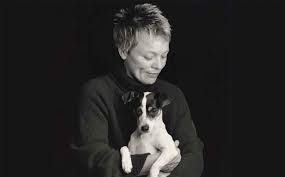
Or maybe, like musician, poet, and performance artist Laurie Anderson, you make a movie.

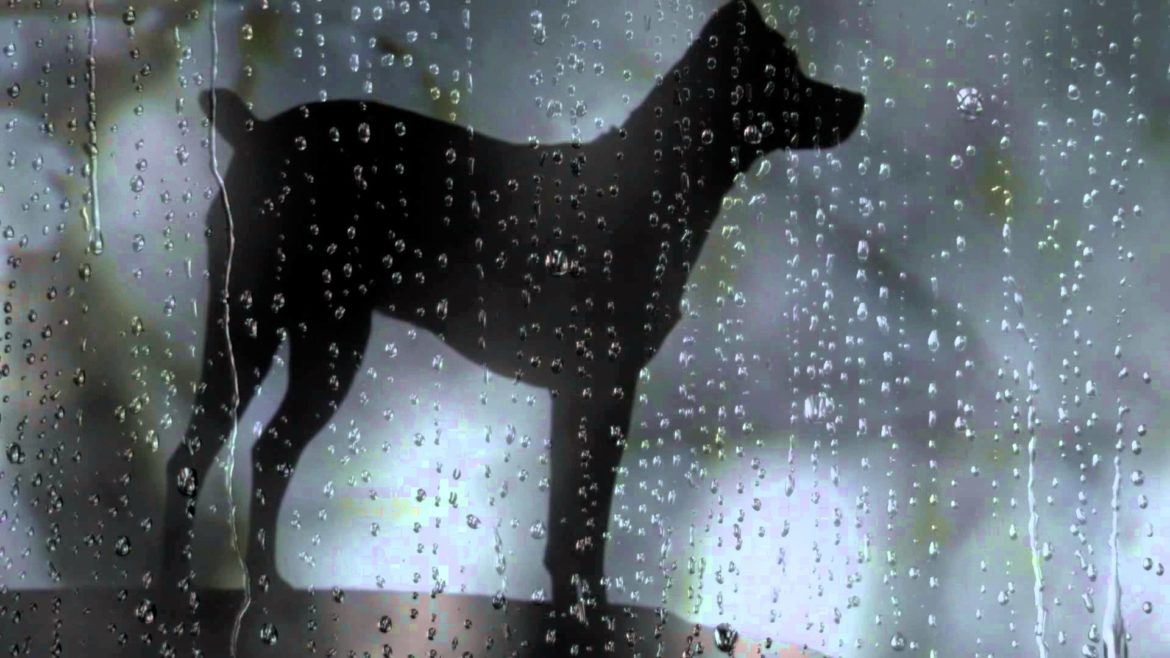
Heart of a Dog is a documentary, I guess. But it is a world apart from most of the titles that would fit under that heading. It’s part eulogy, part diary entry, and part prayer. It’s an impressionistic whisper of a film that really only exists to trace the contours of one person’s sorrow, and, if you can get on its wavelength, it’s a staggering vision of grief and reconciliation … not just with oneself, but with the universe. It’s a film about god that is also a film about a particular dog. It’s that stone skipping over that water.

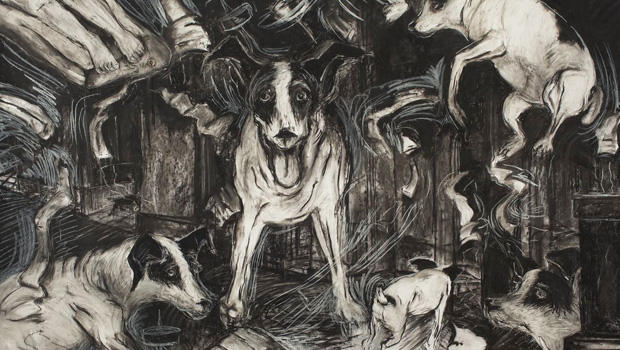
What is it about? Well. It’s about Lolabelle, Anderson’s beloved and adorable rat terrier. The two of them flee New York after the 9/11 attacks, when Manhattan suddenly became full of soldiers and the New Normal, to the California coast. Anderson has read that rat terriers understand 500 words and she wants to find out what they are. But California is too beautiful, so they spend most of their days exploring the hills and beaches instead. It’s about Lolabelle growing old, becoming blind, and learning how to play the piano (seriously … and she’s really great, actually). It’s about Lolabelle growing old and dying, as we all have a tendency to do, and the ways in which Anderson deals with this, including by illustrating her visions of Lolabelle’s travels through the tumultuous afterlife. (The Tibetan Book of the Dead plays a very large role here.)

heart-of-a-dog-artwork-620

It’s also about the death of Anderson’s mom, and implicitly about the death of her husband Lou Reed, to whom the film is dedicated (and who appears in key scenes). Certain scenes trigger memories, and we hear about childhood moments that have lingered on and which have particular subtext and echoes. The stone skips and skips.

Words appear on the screen from time to time – brief, elliptical poems and quotations, ranging from Wittgenstein to Kierkegaard. Super 8 footage shot a generation ago merges with hand-drawn illustration. Some images appear to come from a camera affixed to Lolabelle, or a stand-in, for a dogs-eye view of the world. Anderson’s narration and music is pervasive, invoking something trance-like in the audience. “Where is the beautiful philosophy?” she asks. It’s everywhere throughout her short film.

At one point, she quotes David Foster Wallace: “Every love story is a ghost story.” And there are ghosts aplenty here, in the corner of every frame. A Goya painting, atypical, all gold with a dog surfacing in the corner, plays a central role. But this is a dream landscape, so there’s little point in finding referential meaning. Heart of a Dog is a hymn to life and loss, and hymns don’t explain themselves as such.

Did this resonate with me so much because I live with a dog who looks and acts quite like Lolabelle (though he can’t play piano for shit)? Do you have to ask?

bandit

heart of a dog

Will it resonate with others? As with much of Anderson’s body of work, it probably depends on how much patience you have at the moment and what you’re willing to allow. The images are frequently gorgeous, and her narration is often funny in that wry way we associate with people who have nothing left to lose. Your mileage may vary.

I think it’s one of the more heartfelt things I’ve seen all year, but I also think it’s steadfastly opposed to reductive analysis. If Heart of a Dog has a message, it’s, “Hold on to each other, now.” It’s a film focused on dying that is totally unafraid of death. It’s clear-eyed, pure, and counter-intuitively joyful.

And it might break your heart, in a good way.

December 18, 2015 2 comments
0 FacebookTwitterPinterestEmail
FilmReviews

Brooklyn is the humanist immigrant story we need right now

by rick December 16, 2015
written by rick

John Crowley’s Brooklyn – an achingly earnest immigrant coming-of-age story, adapted by Nick Hornby from Colm Tóibín’s novel and featuring a revelatory performance from Saoirse Ronan – is a picture out of time.

Everything about it seems imported from an earlier period of film history: the total absence of cynicism, the self-assurance in its quiet moments, its elegant but understated framing, its close-ups on luminously lit faces, its resolute insistence on small personal dramas to provide context for the much larger ones that frame them all hearken back to another age. It’s old-fashioned but never fussy, and its warm-hearted sincerity is profoundly reassuring and welcome. In fact, in the ugly year of Donald Trump, its basic decency almost feels revolutionary.

Ronan plays Eilis, a shopgirl in a small, mid-century Irish town where not much is really going on. When we meet her, she’s meek and shy, bossed about by her off-handedly nasty employer and living with her mom and sister Mary (Maeve McGrath, quietly devastating). She seems utterly without agency, carried through life on a current not of her choosing. She goes to the dances with her friend, but there’s little to suggest she cares much if she meets “a fella” – it’s just what one does. And in any case, Mary has already arranged Eilis’s transit to New York via Father Flood (the great Jim Broadbent), a friendly Irish priest who lives there, and who has found her a boarding house and a job in a department store. Is this what Eilis wants? Maybe or maybe not. In any case, it’s already done. We understand Mary wants opportunities for her sister that aren’t possible for herself. Wiping away tears, the family sees her off to the ship, and Eilis is off to Brooklyn.

“Brooklyn.” The name carries a different, older weight here, and the film painstakingly presents it as, if not the new world, than at least a very different one. It’s something of a homebase for an immigrant diaspora, including for the incoming Irish. After a bout of homesickness, Eilis begins to settle into a new routine, tentatively finding her bearings in a strange land, but one with strongly emotive ties to the old. A beautiful Christmas sequence, in which Eilis helps Father Flood serve a holiday meal to the homeless and impoverished Irish workmen, the guys “who built the tunnels and the bridges,” climaxes in a hymn in Gaelic. The rowdy crowd is silenced, staring wanly into their beers or longingly out of the frame, at the snow falling.

Eventually, Eilis meets a fella after all, and at a dance at that. Tony (Emory Cohen) is Italian, but he likes to go to Irish dances. (Smart guy.) The two hit it off and tentatively begin a relationship – or, to be true to the film, a courtship. With small glances and shy, halting words, they grow closer. It’s pretty adorable. Tony routinely meets Eilis outside the night school where she’s taking classes to become certified as a bookkeeper. They tell each other about their lives and dreams, and she meets his rambunctious family. He tells her about the Brooklyn Dodgers, his team. She tells him about her family back at home.

The naturalism of all this can’t be overstated. The chemistry between Ronan and Cohen is something fierce, in the quietest way something can be fierce, and their budding love is totally believable. Ronan’s Eilis is transformed. Her eyes light up, she’s quicker to smile, and she writes Mary back home that she finally feels like she belongs, that she’s not just a stranger in a strange land but truly living her life.

So of course tragedy strikes, and brings Eilis back to Ireland for a short visit that keeps getting extended. It’s at this point things get complicated, as they must. The underlying narrative throughout Brooklyn is the push and pull between living a new life Elsewhere and the demands and requirements of Home, Family, Responsibility.

It’s the oldest story there is, really – Eilis is not Odysseus, but Brooklyn operates with similar dynamics. The main difference is determining what “home” is supposed to mean. She has roots and desires in two places, and she can’t live in both. Back in Ireland, she finds herself charmed by Jim Farrell (Domhnall Gleeson, giving his second-best performance of 2015), a totally decent and worthwhile local guy who finds he loves her, this girl he may never have noticed prior to her self-discovery abroad.

This is where the narrative of Brooklyn excels. There are no villains really (the gossipy shopkeeper excluded, and she’s really more petty tyrant than monster, more pathetic than terrible). And there are good reasons for Eilis to stay, and good reasons for her to return. Where she once had no options, she now almost has too many, and must choose. The film never plays this for maudlin melodrama, since it’s the stuff of real life. Sometimes, there will be heartbreak either way. But in the end, we all have to choose what to do, which also means choosing who, what, and where to be.

If this sounds old-fashioned, that’s because it is. Like Steven Spielberg’s 2015 release Bridge of Spies, Brooklyn is utterly unafraid to be square, and this is to its great credit. That’s just one of many points in its favor. The gorgeous photography (courtesy of Yves Bélanger, who also shot Wild and Laurence Anyways) lights Ronan like a silent film actress, and she illuminates nearly every scene of the film. Audiences have watched her grow up on screen, from her memorable role as a child in Atonement through Wes Anderson’s The Grand Budapest Hotel, a progression that adds a powerful subtext to her emergence here as a full-fledged star in an awards-worthy performance. Hornby sensitively adapts the material, and imbues it with moments of light comedy, deep melancholy, and quiet revelation. The film is wonderfully paced, and all the minor parts work for the whole.

I have no doubt that a lot of viewers will roll their eyes a bit; we’re a cynical lot at this point. But Brooklyn is a masterpiece of honest storytelling, well-constructed, impeccably performed, and beautifully presented. It’s a film that, in 2015, reminds us of the power of the image to convey conflicting sentiments simultaneously, to reveal desires that hide just below the surface of ordinary human exchanges. It reaffirms the fundamental notion that people everywhere can, and do, hope for a better life, and, without belaboring the point or even raising its voice, reminds us that we should welcome and support them in their journeys.

I don’t know about you, but I think that has value, right now more than ever.

December 16, 2015 0 comments
0 FacebookTwitterPinterestEmail
FilmReviews

So Many Dicks – Felt vs. The Patriarchy

by rick December 12, 2015
written by rick

In Felt, our lead Amy is haunted and, it would seem, somewhat damaged. We’re never told the exact nature of the trauma that has plunged her into a barely communicative fugue state, but it’s clear it was related to men and to some sort of (likely sexual) violation.

An artist, she prefers the world of made things to the humans around her, sometimes including her girlfriends, who seem to genuinely want to help. In a more general sense, she’s a wounded soul attempting to survive society’s war on women, hanging on to her sanity by a literal thread.

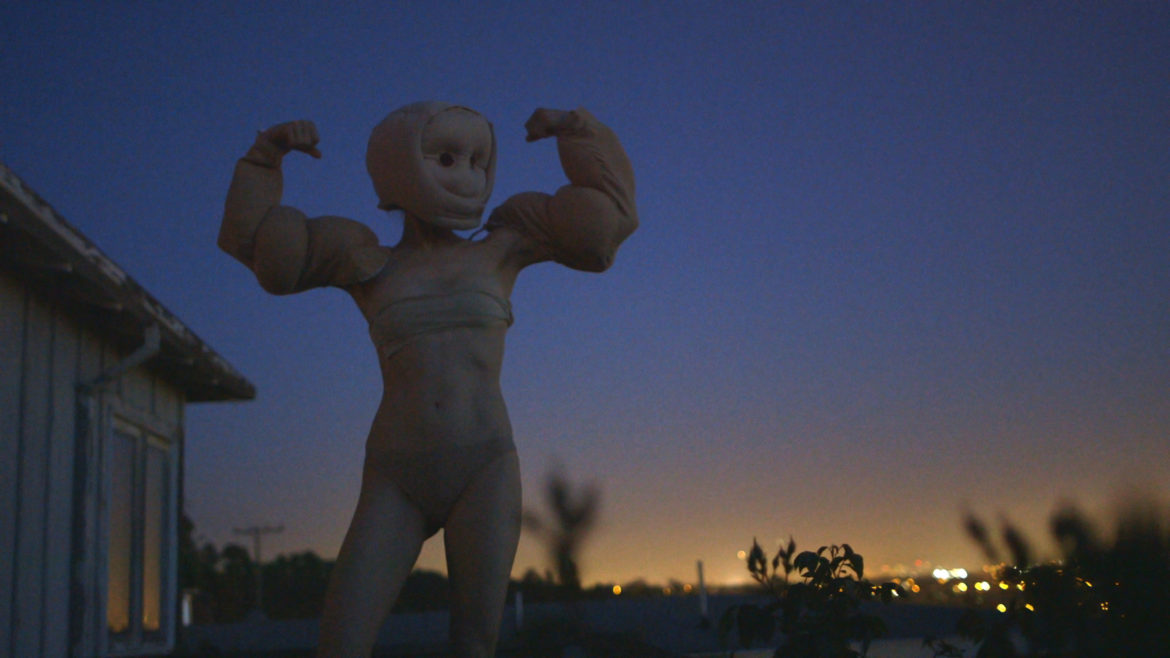
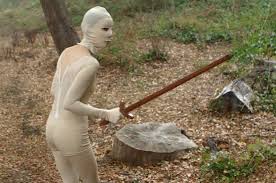
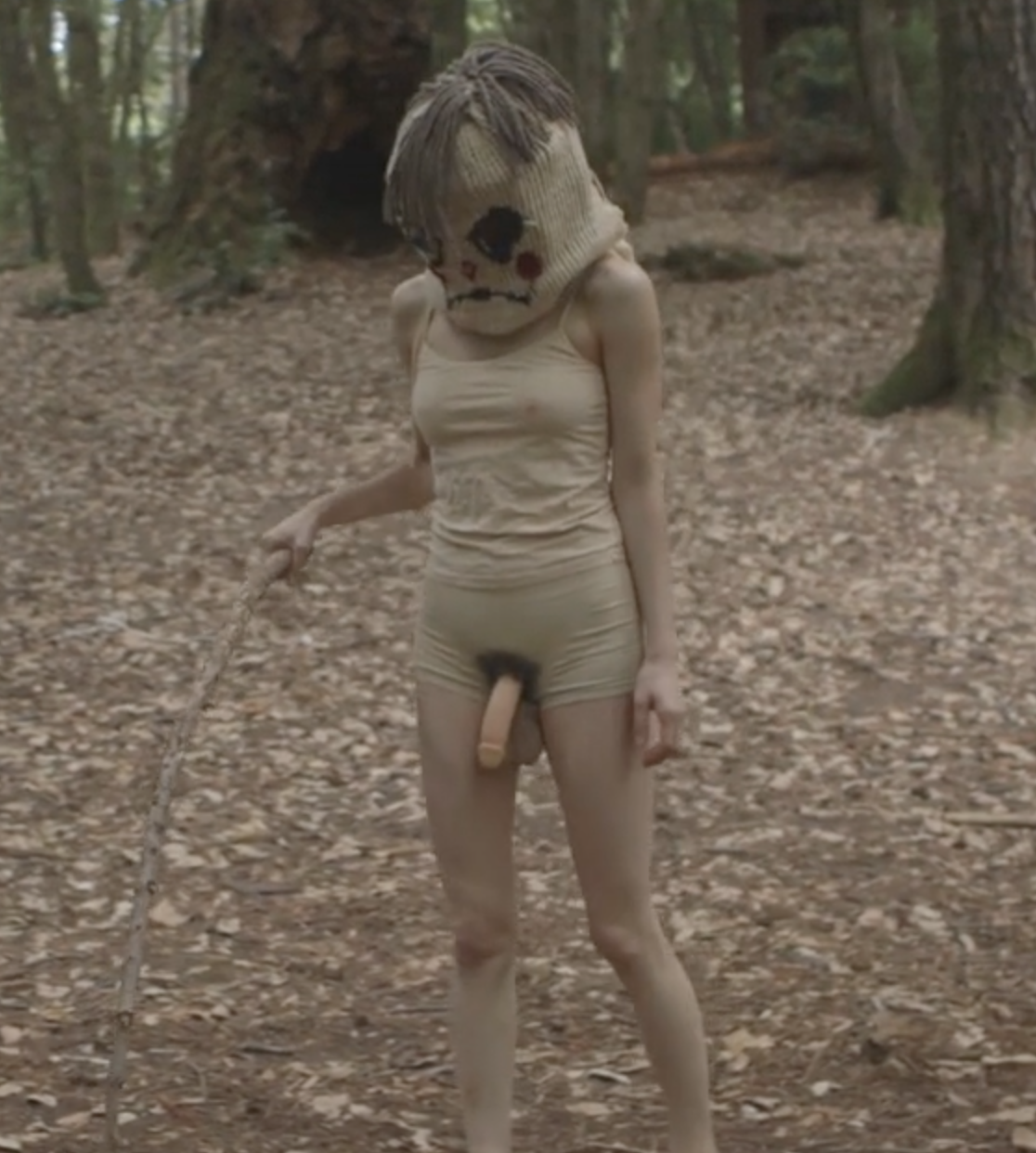
The film’s plot is meandering and, in true post-mumblecore fashion, much more interested in subtext and evoking moods than in telling a story, exactly. Amy goes to a party and alienates the men in attendance. Amy walks in the woods, dressed in one of her bizarro superhero costumes that she creates by hand, always adorned with a phallus or vagina.

felt1felt3


She goes to a soft-core porn shoot dressed in possibly the least sexy outfit imaginable, a grotesque caricature of the female form, and giggles about how she can’t stop farting. She ends up befriending the other woman there, her profane undermining of the photographer’s attempt at “sexiness” paving the way for sisterly solidarity and a new ally.

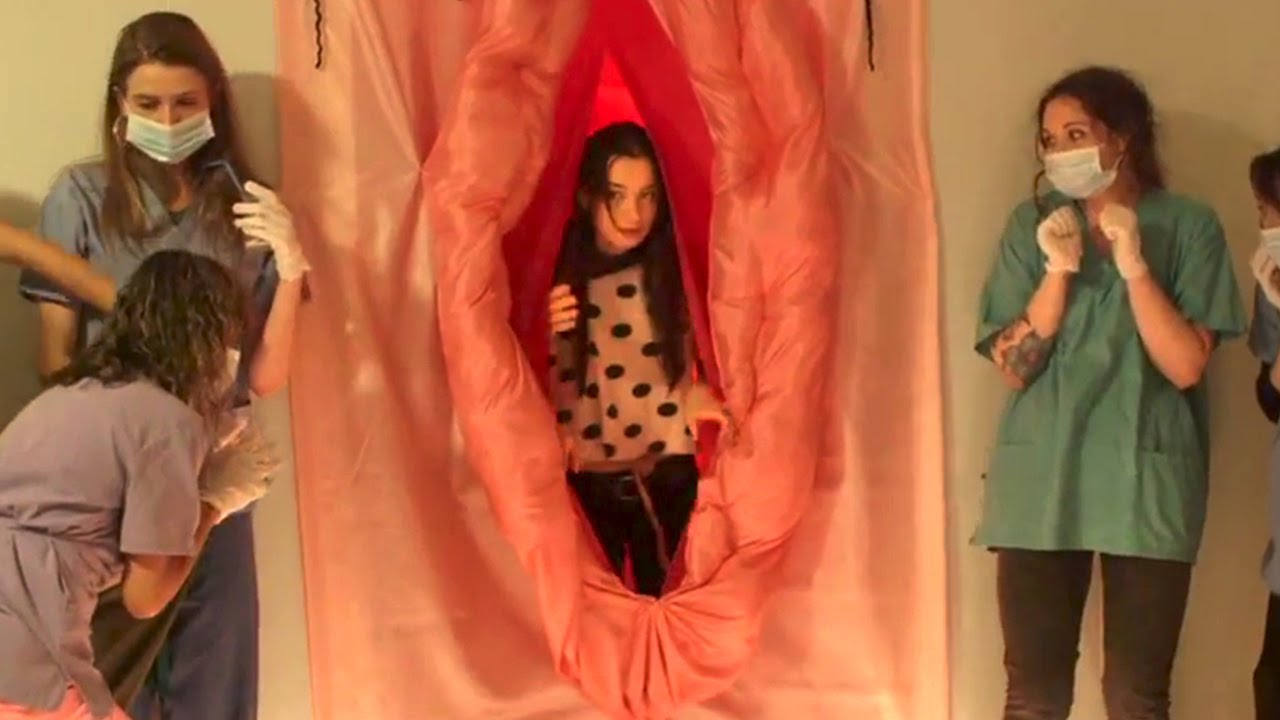
Eventually, she meets a man, Kenny, who is kind and understanding enough of her to throw a surprise birthday party, where they both emerge into a room full of her friends via a mock birth canal he made.

felt4

The two traipse about San Francisco, have romantic outings by the Golden Gate Bridge, and act the way such people behave in indie rom-coms. But something is off. Felt is not an indie rom-com, Amy is no manic pixie dream girl, and, like so many others, Kenny may not be what he seems, either.

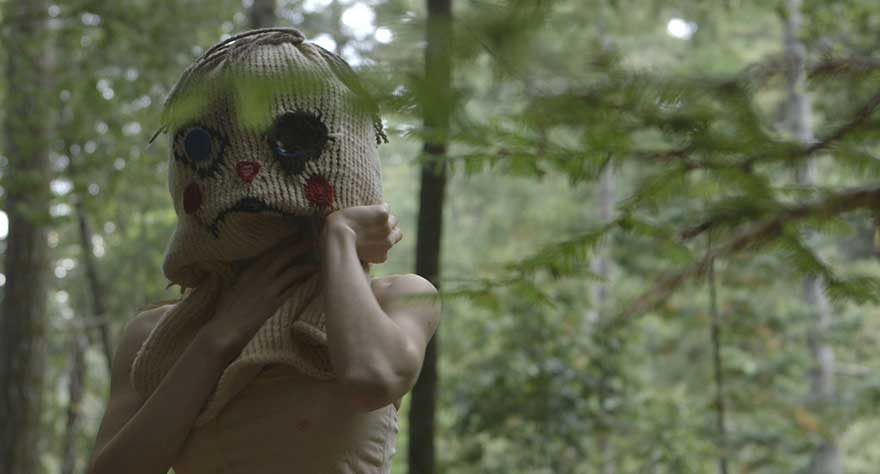
In a film so obsessed with oblique resonances and multiple meanings, it’s appropriate that Felt’s title does (at least) triple-duty, semantically. It’s a film about touching and not wanting to be touched, with “felt” implying a passivity and a lack of autonomy. It’s a film about trauma and emotional experience, what it feels like to be a woman under the heel of patriarchy. And it’s a film about an artist who works with felt as a medium, for reasons that aren’t crystal clear and that she may not be able to articulate herself. Her art is tactile and steeped in dream-logic – superhero suits, nightmare masks, a felt baby Hitler fetus she “killed in the womb” and now keeps in a box (“think of how many people I’ve saved,” she notes), countless felt cocks decorating her bedroom. She shrinks from human touch, yet seems to gain a kind of agency and power from the symbolically castrated nature of these inanimate objects, created by hand. She disappears into her various fraught uniforms, like a warrior collecting parts of the enemy to ward them off by, in part, becoming them.

felt5

The frame is constantly filled with images that are hard to shake. (See above image.) Some are horrifying and others are comic in a Lynchian sort of way. Apropos of nothing (apart from more costuming and felt outfits), Amy has a job wearing a chicken suit and waving a sign for a restaurant on the side of the road – one memorable sequence features her sitting, still in uniform, drinking soda into her chicken-mouth through an extra-long straw in an empty fast-food joint. The human-sized chicken serving as a hype-man (or woman) for its own consumption calls to mind both Carol Adams’ classic The Sexual Politics of Meat and, more recently, the online collections known as “suicide food”, the most emblematic example of which would be the busty, sexualized cartoon chicken so excited for consumers to literally devour them.

chickengalore

For 9/10s of its brief, 88-minute running time, Felt is a moody, misandrist, mumblecore masterpiece, but it closes on a (to keep the alliteration going) maximalist note of gruesome rage. Its climax – and that is definitely the right word – might make thematic sense, but it feels too on-the-nose and, I suspect, will be filed under “way, way too much” for many if not most viewers who even make it that far (particularly any penis-havers in the audience). In addition, the largely improvised dialog and jittery hand-held camerawork may be stumbling blocks for some, and, though the on-screen violence is minimal (up to a point), there is a deeply unsettling aspect that may turn off people who don’t consider horrifying masks and people casually pricking needles into the felt urethra of a penis puppet inherently engaging.

But Felt is also a daring feminist vision, boiling over with portent and haunting, skewed images, and it’s unlike anything else around in 2015. Star and art director Amy Everson has indicated she drew from her own experiences, as though the personal nature of her provocative film, in which every character shares a name with the actor portraying them, needed to be confirmed. For all her film’s shortcomings, Everson has staged a full-frontal assault on rape culture and the patriarchy, and Felt has more than enough ideas coursing through its strange veins to make it an essential watch for the adventurous.

December 12, 2015 0 comments
0 FacebookTwitterPinterestEmail
FilmGreat Movie ProjectReviews

Is Murnau’s Nosferatu Still Scary A Century Later?

by rick October 31, 2015
written by rick

Part of an ongoing effort to watch each of the films in Roger Ebert’s Great Movies series. The introduction and full list can be found here.

As our shared monsters and shadowy nightmare figures go, the vampire is particularly stubborn in its refusal to vanish from the scene. “Deathless,” one might say. (Editor’s note: Stop saying that.) F.W. Murnau’s Nosferatu, an adaptation of Bram Stoker’s Dracula so shameless in its pilferings the Stoker estate sued, is arguably the cinematic touchstone for this impulse that will not die.

Why the vampire? Books can, and have, been written about this, and there are probably as many explanations as there are explainers. In the vampire, we have an archetypal Other, the one from Over There. He always comes from the east, from across the mountains – there’s a fair amount of anti-Roma prejudice in its DNA, and anti-Semitism, too, but the text is open. We have blood, decaying castles, lust, plague, eternal youth, boundless memory and thus centuries of injustice and revenge, the more unexplained motivations guiding unknowable evil, the predatory impulses reduced to their essentials. In some tellings, we have sex incarnate; in others, we have a figure of impotence turned violent in lieu of release. In more recent ones, the plague fears that animate its creation are mapped to AIDS, to the venereal, to blood-borne pathogens in general. Every age, it appears, will have its vampiric menace.

A few years ago, it seemed we had hit Peak Vampire. The Twilight saga – with its pining lovers and increasingly ludicrous plotting – had become transparently ridiculous and almost single-handedly elicited a collective groan from movie-goers who hoped for some of the old magic. (The subsequent careers of Kristen Stewart and Robert Pattinson, two of the best actors working today, might make us tone down that harshness, though, in retrospect.) How had we sunk so low?

As usual, the obituaries were printed too early. Jim Jarmusch’s Only Lovers Left Alive was a shot in the arm for the mythology, with its Vampire Rock Stars and blood popsicles; Ana Lily Amirpour’s A Girl Walks Home Alone At Night found new and different subtexts to bring forward. The post-Flight Of The Conchords mockumentary What We Do In The Shadows was the funniest movie of last year, and dove right into the genre with an abashed glee, both lovingly and knowingly. The vampire had returned, as is its wont. If nothing else, the vampire is very good at returning.

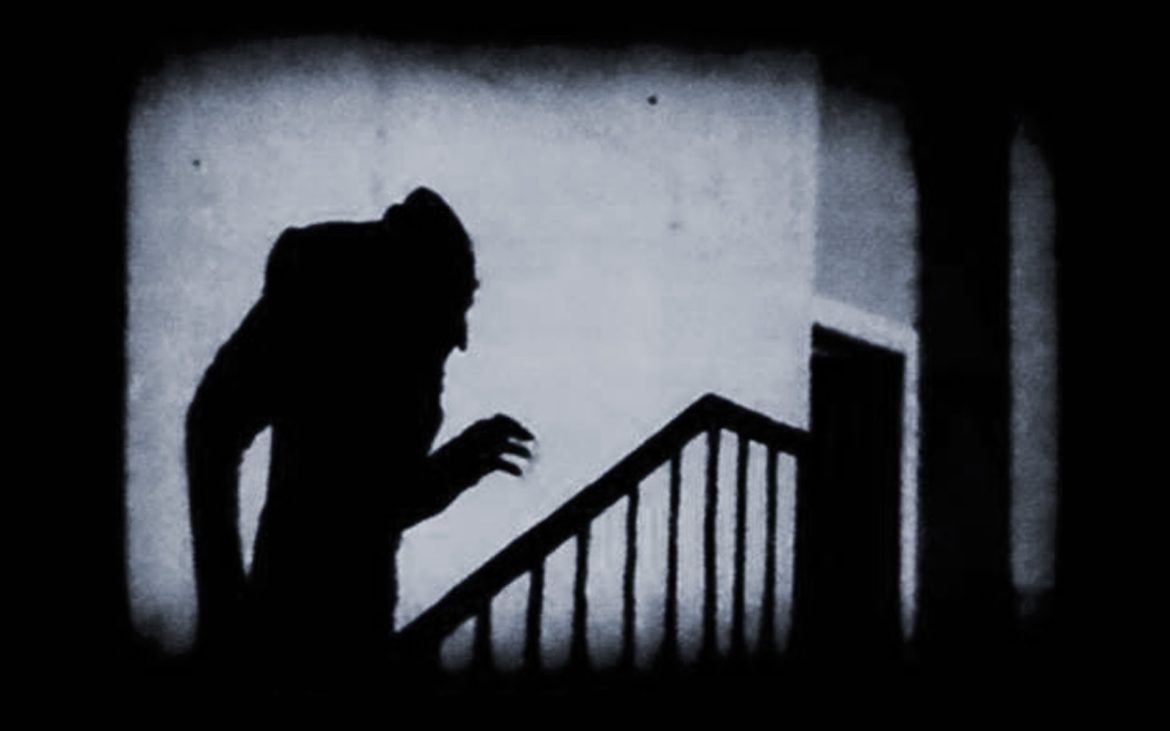
Max Schreck in Murnau's NosferatuBack in 1922, at the height of German Expressionist Cinema, Murnau’s Nosferatu told a different tale. With an arsenal of arched doorways, coastal graveyards, uncanny moments of telepathy, looming shadows, wafting fog, keyhole dissolves, and the sense that things were deeply wrong in the fabric of our waking dreams, his vampire was neither cool, nor feminist, nor funny. He was meant to be scary, and he was.

Is he still? I think so. As played by Max Schreck – all bat ears, shocked and open eyes, bald head, long fingers, and those rat-like teeth – Nosferatu’s about as far removed from Sexy Dracula as one could get. He’s not of this world. His movements are stiff and lumbering, and his power never in doubt. More than anything, he’s a malevolent force, and an old one. We get the sense that Jonathon Harker – called Hutter in Murnau’s German reading, and played clumsily by Gustav von Wangenheim (a much scarier name, incidentally) – has unleashed something unspeakable when he shows up in the Carpathian Mountains to close his famous real estate deal, which will provide him and his love with funds, in exchange for becoming neighbors with Evil itself. Nosferatu has been waiting.

From its earliest moments, the film is full of menace and portent. The high-backed chairs on which Harker’s boss Renfield sits are out of place and odd. Shadows lurk everywhere in Nosferatu. People are so aware of what’s coming they make terrible jokes, like Renfield telling Harker his trip might cost him “a little blood.” Later, a professor showcases the Venus Fly Trap for his students as it devours a fly; Murnau cuts to Renfield, at this point locked away in a madhouse, catching and eating flies himself. Audiences then knew the story, maybe better than we do now, and nothing good is coming.

Max Schreck in passageway in Murnau's NosferatuSchreck is the crux of the film’s horror, and it works to this day. His introduction, emerging from the shadows at his impossibly Gothic castle; the quickness with which he sucks blood from Harker’s accidentally cut finger; the way he moves, coming slowly but terrifyingly upright from a coffin, or emerging wide-eyed from below a boat’s hold … a boat, called “The Demeter”, filled with corpses and plague … this is the stuff of horror, for sure. Murnau’s genius is in the pacing, and the ever-shifting darkness, and the tiny, uncanny details, like the frames within frames. Everyone in Nosferatu has nightmares that they shrug off. Everyone in this film can, without explanation, sense almost telepathically the danger others are in across the world. It’s a dreamscape filled with rats, plague, and inexplicable menace, and one which Murnau never feels compelled to explain down to the detail. This helps enormously; there is nothing worse than hearing someone tell you what a dream means.

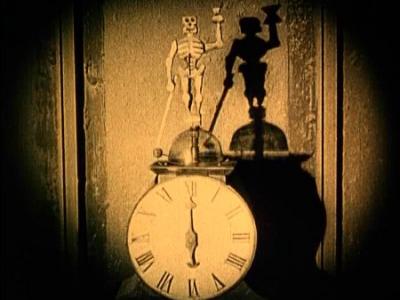
nosferatu clockThe weak spot here, as in every adaptation I know of, is Harker. For such a central figure, it’s odd how insistently he slips into the background. He should be an audience stand-in, but mostly feels like a plot device. In Murnau’s telling, he’s somewhat of a boor and a big-city goofball, laughing hysterically at the peasants’ fears of the night and almost comically throwing down a book about vampires to the floor out of bewilderment with small-town ways, while setting off for the most dangerous castle in the Carpathian Mountains.


This makes sense as a knock on over-serious Modern Cosmopolitans who disdain the provincial and all the old stories – and that’s certainly a theme horror would return to again and again. But it doesn’t generate much sympathy for the character, who by all rights we should be somewhat aligned with. Watch him laugh and laugh at the villagers on his way to the castle, and then try to feel bad for him; it’s not possible. There is something tricky about Harker, some nuance filmmakers have never really captured in my opinion, and which reached its nadir with Keanu Reeves trying, and failing in spectacular fashion, to appear serious in Coppola’s Bram Stoker’s Dracula. Harker is fundamentally an interior character, a set of thoughts and a pair of eyes through which to observe. But this doesn’t help much on screen.

In any case, though, Nosferatu is not his story. Or not anymore. This tale belongs to the vampire and his coffins full of plague soil, his unquenchable thirst for innocent blood, and the fear we all have, sometimes, that there’s no explanation for this business at all. Where Coppola created a backstory of ancient love, and where Twilight preferred essentially a supernatural high school love triangle, Nosferatu has a different, and more punishing, vision. Schreck and his creeping, shadowy fingers, his single-minded gaze, suggest maybe evil exists across years, and maybe it can’t be dealt with in any way. At all.

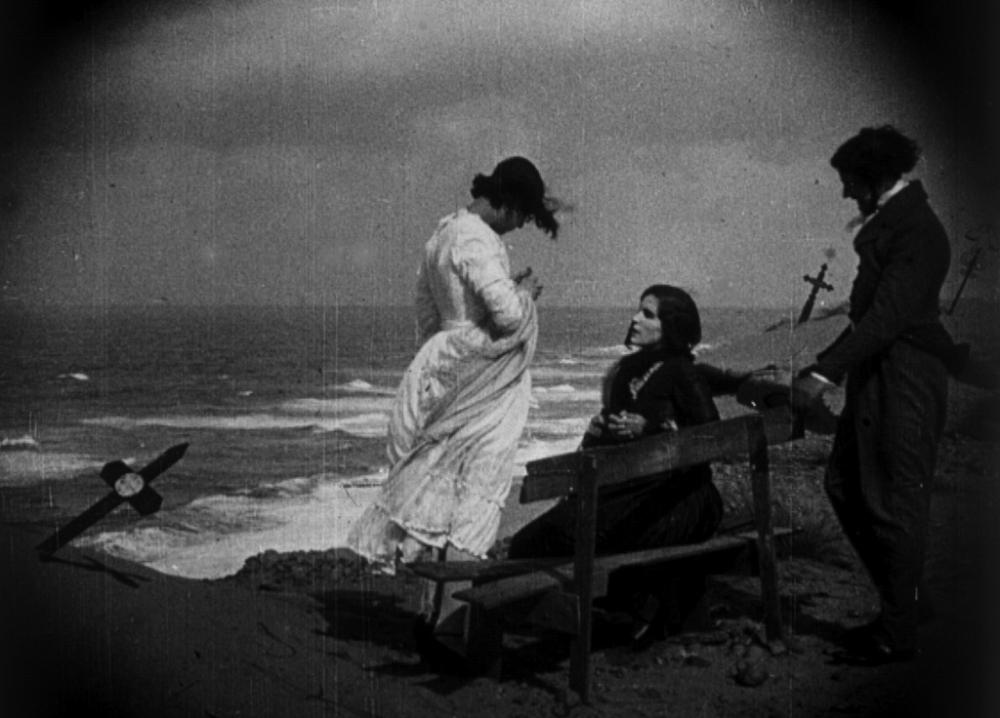
nosferatu graveyardAs in most horror, of course, the monster is vanquished at the end. You can’t send the audience out in depressed terror in 1922.

But then you remember an early title card that referred to “the first Nosferatu.” Not the last. Who knows what cargo ships are carrying, right now, to the graveyards near your shores.

Favorite Ebert line: “It is commonplace to say that silent films are more “dreamlike,” but what does that mean? In “Nosferatu,” it means that the characters are confronted with alarming images and denied the freedom to talk them away. There is no repartee in nightmares. Human speech dissipates the shadows and makes a room seem normal. Those things that live only at night do not need to talk, for their victims are asleep, waiting.”


Next up: Nanook of the North

October 31, 2015 0 comments
0 FacebookTwitterPinterestEmail
FilmReviews

Becoming who you are, in Girlhood

by rick October 2, 2015
written by rick

In Céline Schiamma’s Girlhood, it’s all about the eyes.

Specifically, the eyes of Marieme (Karidja Touré), a quiet, reserved teen living in the Parisian projects. Throughout this excellent and unique coming-of-age film, Marieme goes through a number of phases and re-inventions, like we all do, but the constant is a singular sense of self we register in her eyes. Whether she’s skeptically surveying the local bad girls, both hesitant and drawn to them, or beaming as she and her new friends dance along to Rihanna in a hotel room, or flashing with anger at finding her younger sister poised to follow in her footsteps, Touré’s Marieme conveys it with a look. It’s a nuanced performance in a sensitive story.

Far more sensitive, really, than a film originally titled Bandes De Filles (Girl Gang) might lead you to expect. For once, the English-language title, though unfortunately implying it’s Boyhood’s Gallic cousin, gets it right.

We meet Marieme, and the film’s theme of created communities on the margins, in a clever fashion – playing all-girl’s football in full gear, a sight that probably doesn’t introduce too many movies. She lives in a tenement building with her strict, physically imposing older brother and her younger sister, herself on the cusp of adolescence.

In many ways, Schiamma’s set-up is classic slice-of-life stuff: Marieme has a crush on a local guy, who is also friends with her brother, and wants to protect her little sister as they try to make their lives work. She wants to get ahead and go to high school rather than vocational training, despite having already repeated a year. This is an economically depressed, absent-parent, kids-raising-themselves sort of situation familiar to fans of the Dardennes and others, but the unspoken, ever-present factor is race – in the early parts of the film, the only white people are implied off-camera or barely glimpsed, as in a conversation Marieme has with the school counselor. We never once cut to the counselor, the camera held in near close-up to Marieme, her longing and frustration in her voice and (where else?) her eyes.

Things begin to head in a different direction, though. For reasons that are left somewhat ambiguous – though surely related to escaping a stifling home life under brother’s thumb, and the more basic desire to get closer to the cute boy – Marieme falls in with Lady (Assa Sylla), Adiatou (Lindsay Karamoh), and Fily (Mariétou Touré), effectively forming the girl gang of the title. She starts bullying white girls for lunch money, killing time at the mall while pushing back at racist shopkeepers, and getting into fights, some more physical than others, with rival crews.

girlhood

Tellingly, this vision of “gang” life is not characterized by guns so much as by sheer allegiance, like particularly fierce cliques. Rather than out-and-out criminal enterprises, these are more surrogate families based in general antagonism on the margins.

Schiamma’s narrative also emphasizes how important gender is to them, as well, and performative identity especially – a key scene (and a wonderful one) features the four of them dancing and singing along, in beautiful dresses and make-up, to the entirety of Rihanna’s “Diamonds”. It’s an unusually femmed-out sequence for an often gritty depiction of their lives, but the song’s endlessly repeatable hook – Eye to eye, so alive / We’re beautiful like diamonds in the sky – speaks wonderfully to the worlds the characters inhabit and to their longings, which really are less about boys and wealth than about safe spaces to be themselves. Lovingly shot in slightly unreal, video-ready filter and backlighting, the sequence is an exhilarating moment of release and relative freedom.

More self-creation follows, and more transformation. Marieme eventually falls in a crew of boys, who seem to accept her after she kicks the crap out of a rival, a harrowing sequence that also involves not only removing her fallen opponent’s tank top but cutting off her bra. This motif of exposure, vulnerability, and power is an evocative choice on Schiamma’s part, and fairly uncomfortable. The bra itself is like a war prize, which she holds aloft. A whole piece could be written about what’s going on here (and the ways it might both echo Marieme’s earlier advice to her sister to wear baggy clothes so her growing body won’t be noticed and foreshadow her own later attempts to alter her appearance), but regardless, it’s a striking theme.

girlhood2

By the film’s end, Marieme has gone through yet more reconstructions of look and identity. White people show up en masse for a single scene, at a party where she acts as a drug courier, wearing a blond wig and looking nothing like herself. She hides in her outfits, wigs, hairstyles, and shifting, situation-specific demeanor, but her eyes continue to betray a teenager without many options, racing to figure herself out.

The final third of the film begins to drag, raising questions it doesn’t have the time or inclination to really answer, but the whole of it is fascinating and compulsively watchable. People come and go from Marieme’s life in a way that’s both exaggerated and yet familiar – earlier friends simply aren’t mentioned again and choices that alienate her from family mean those people just aren’t around. As viewers, we coast along with Marieme, wondering what she’ll do next, and who she’ll grow to become.

After the closing credits, we still might be wondering, which is to the film’s credit. But her late decisions, and, as always, the look in her eyes, suggest both that she’s not done searching for herself, and that she might just be alright in the end, whoever she finds.

October 2, 2015 0 comments
0 FacebookTwitterPinterestEmail
CommentaryFilmReviews

On Romeo Is Bleeding, and the benefits of second viewings

by rick September 26, 2015
written by rick

Back in May of this year, I caught Romeo Is Bleeding at the SF International Film Fest. At the time, it was not only my favorite documentary of the year, but my favorite film of any genre I’ve seen in a theater in 2015.

Seeing it again last Thursday, four months later, this remains true. (Sorry, Mad Max; you’re still awesome, though, and you have decidedly more flame-shooting guitars.) But it’s striking how many things can shift from viewing to viewing. These can depend on what you bring to the film, maybe the head-space you’re in or the crowd you’re watching it with, but they can also involve what the film brings to you. Some aspects that went unnoticed (or that you downplayed in favor of others) on a first viewing seem to stand out, and others take on a different resonance.

Romeo Is Bleeding tells the story of several young poets in Richmond, CA staging a version of Romeo and Juliet, drawing on their own experiences as Black youth in a dangerous environment to rewrite, remap, and update Shakespeare’s text. The gangs, the divisions, the family tensions, the painful histories circumscribing people’s current choices, and the desperate love across borders that inform the original all find echoes in their lives, and the film places the whole endeavor in the specific contexts of a particular city at a particular moment in time. Shakespeare didn’t specifically address the environmental racism and lineages of oppression in Verona, of course, but maybe he would now.

In my original review, written directly after seeing the film screened, I focused largely on that guiding narrative. It’s easy to see why — in many ways, Romeo Is Bleeding paints on a large canvass, despite its local focus, and brings in themes of historical migration, corporate malfeasance, absent fathers in the community and by extension the prison-industrial complex, and much more. But it does this so deftly, and the central story of the play is so compelling, that it’s easy to overlook how much is going on here. On second viewing, these subtexts move into clearer view.

romeo3

In particular, the film is concerned with women and girls’ experiences in ways I wish I’d drawn more attention to the first time around. Despite his humbleness on camera and low-key demeanor, Donté Clark is a towering and compelling presence in the film, and he’s Richmond’s poet laureate for a reason — he’s amazing. (His performance of a new poem last Thursday after the show, called “Somewhere in America”, removed any doubt of that, if for some reason anyone in attendance was skeptical.)

But this shouldn’t obscure the centrality of the play-within-the-film’s Juliet, D’Neise Robinson, who more than holds her own. More than any other scene this time around, I was caught speechless by an interlude where she discusses her relationship (or lack thereof) with her father, and how that comes out in her re-writing of a key moment in the play. Directly afterwards, the film gives room for a number of young women to talk about the pressures they feel specifically as young women — grappling with stereotypes of “Richmond girls” and assumptions about “down girls” who’ll hide a lover’s gun or otherwise reckon with expectations of them inside and outside their communities. The line “I don’t want to be that. I’m too pretty to go to jail” got a laugh at both screenings, but the second time came through with a melancholy and a steely determination I hadn’t picked up on the first. It would’ve been easy for the filmmakers to focus exclusively on Donté; it’s important that they didn’t, and that should be recognized.

Further, knowing what’s to come in a film frees up the viewer to notice technical aspects that can blow by in the excited rush to see what happens next. For Romeo Is Bleeding, I especially singled out the ways in which both the editing and sound design give the film texture and pace. Right out the gate, the mixing is compelling and advances the film; you feel hurtled forward, in a sort of rush of ambient sound, breathless poetry, whispers, and the unexpected “BANG” that keeps you on edge. The editing is crisp and feels extremely sure of itself, effortlessly integrating images and holding them exactly long enough to make indelible impressions.

RomeoIsBleeding_Filmpage_476x286

My only second-viewing quibble — and I have to have one, that’s also a consequence of watching things more than once — was with the hand-held cinematography of the evacuation during the Chevron explosion. It must’ve been irresistible to include it, and it speaks to the frantic nature of the experience, but it also draws attention to itself in a way absolutely no other sequence does. For a movie that steadfastly avoids the charge of being “gimmicky”, this is the moment it comes closest.

But even there, it’s in service to the story. Or rather, the stories. Romeo Is Bleeding walks a narrative tightrope, and what director Jason Zeldes and his compatriots pull off is the rare film that just gets more worthwhile and admirable the closer you look. It’s currently continuing to make its rounds on the festival circuit, and you should go check it out if you can.

And then see it again, for the nuances you missed the first time around.

September 26, 2015 0 comments
0 FacebookTwitterPinterestEmail
FilmReviews

Health, Safety, and Solidarity – Two Days, One Night

by rick August 29, 2015
written by rick

The Dardenne brothers, Jean-Pierre and Luc, are known for their naturalistic, slice-of-life pictures, without exception focused on those existing on society’s margins. The Belgian filmmaking team prefers hard-scrabble protagonists – the downtrodden, the down-on-their-luck, and those stuck with impossible, occasionally tragic choices while trying to get by. Their latest, 2014’s Two Days, One Night, fits so solidly and efficiently in this vein it almost seems, after a number of films, a belated mission statement.

Relentlessly and uncompromisingly zeroing in on questions of solidarity, precarious employment, stress, workplace violence, and the alienation of late-capitalism, it’s also a masterpiece uncannily reflecting the hazards people face on the job, and the personal anxieties those hazards induce.

Sandra (Marion Cotillard, in a staggering, Oscar-nominated performance) works in a small solar panel factory, but has been on medical leave for depression. Our first glimpse of her is in her bed, ignoring her telephone’s ring.

The root causes of her depression are never spelled out, but her pill-gobbling and tendency to leave the room to cry make clear she’s been through something – or perhaps is just weighed down by the world’s demands. She feels ready to return to work, though, and has been medically cleared to do so. Her husband Manu (Fabrizio Rongione, excellent) is supportive but concerned for her health. At the same time, both of them know they and their two kids need the money her salary provides.

2days3

Her absence from the shop floor, however, has made clear to her boss M. Dumont (and his nasty foreman) that the job can be done by 16 as easily as by 17. In an almost dastardly Machiavellian proposal, he’s offered the other workers a choice: Sandra is let go and everyone else gets a €1,000 bonus, or Sandra stays and no one gets a bonus at all.

Of course, the initial vote doesn’t go her way, and of course the workers were threatened with retaliation and other, more subtle threats. Still, two impassioned comrades speak on her behalf. Sandra and her friend convince the boss he’d look better with a more honest vote, and another is scheduled for Monday morning. She has little more than 48 hours to plead her case to those, similarly struggling, who will lose an often desperately needed bonus if they vote her back on the workforce.

At this point, it becomes clear that the Dardennes are constructing a fable. Though Dumont cites pressure from Chinese firms and the rising costs the small outfit faces, this is still not a reasonable move on his part, and looking at it too closely reveals it’s probably his worst choice (assuming he is not a sociopath). But the film’s neat trick is to play out this somewhat outlandish morality play in the most naturalistic way possible.

At first unable to even process it – she recovers from illness only to find her job is contingent on the say-so of her bribed co-workers – Sandra begins to take action. On Maru’s gentle but insistent recommendation, she visits each co-worker in turn, and we come along. The reactions are what you’d expect: shame at their own greed followed by apology; outrage at her daring to even show up on their doorsteps begging and making them feel bad; guilty but resigned responses that they really need the money (and some sure seem like they might). One woman Sandra considered a friend refuses to answer the door at all. Two different encounters lead to family battles, one more physical than the other. It’s brutal, and Sandra’s lingering depression isn’t helping matters. The words “Put yourself in my shoes” (which aptly sums up the Dardennes’ vision of cinema) occur again and again, from all sides. In the meantime, the screenplay ratchets up the tension by revealing that the foreman has been calling these people, too – an employer-led counterforce to her attempt at worker power.

2days1

As she crisscrosses the city, from small tenements to large countryside houses to a laundry where an immigrant colleague works for under-the-table cash, Sandra is barely holding it together, and the Dardennes make this clear in interesting ways. There are also small moments of joy, like a rock n’ roll sing-a-long in the car at night, and her triumphant smile when one co-worker breaks down, thanking her for the opportunity to vote the way he knew he should’ve in the first place. The bleak narrative disguises hidden wells of strength and connection, and the film clearly announces that, at the end of the day, there is power in all kinds of unions.

The knock against the film from some corners seems to be that it is the same thing over and over: Sandra gets an address, pleads her case, and gets an answer to add to the vote tally. This makes it sound like an airless Lobbying Day at the State Capitol. It isn’t that.

Instead, the film’s most poignant and resonant moments come from the nuance of the individual interactions, and the implicit critique of a system that would make people fight tooth and nail for the very right to the means of subsistence. In its heart of hearts, Two Days, One Night is a film that believes fiercely in the dignity of working people, and the strength (and grace) located in the struggle to improve one’s lot. The world is a cruel place, the bosses can be capricious, the workers are compelled to fight over scraps … but that’s all the more reason to pull it together and demand the right to exist, and fight for a better world in which one can, at a minimum, hold their head up high.

Does she win the vote? Well, watch the movie. Like few other filmmakers working today, the Dardennes know how to stick the landing. As in their The Kid With A Bike (my nominee for the greatest final scene of the last 10 years), Two Days, One Night refuses cynicism while also not letting anyone – characters or viewers – off easy. Which fables never should.

Instead, we are left contemplating solidarity, the forces that impede it in the workplace, the ways in which external pressures structure our lives (inner and outer), and our power, as individuals and as members of larger structures, to stand up and fight back.

Despite its plot summary, Two Days, One Night is not a cynical film at all. The Dardennes are humanists through and through, existentialists in the Camus tradition, and their love is evident in every frame.

It’s never a moment too soon to be reminded that the fight is worth it, win or lose, and that we’re not alone.

August 29, 2015 2 comments
0 FacebookTwitterPinterestEmail
Newer Posts
Older Posts

About

About

Towards a provisional theory of the cinema, or, failing that, just some shit about movies

Authors
Rick Kelley
Lark Lundberg

Keep in touch

Facebook Twitter

Categories

  • Conversation
  • Film
  • Film By Film
  • Great Movie Project
  • Great Movies: The Counter Programming
  • Guest
  • News
  • Other
    • Commentary
    • Film
    • Interview
    • Reviews
    • Song for a Sunday
  • Streaming Selections
  • TV
  • Uncategorized
  • Vegan Horror

Archives

  • April 2019
  • March 2019
  • January 2019
  • December 2018
  • November 2018
  • October 2018
  • September 2018
  • August 2018
  • July 2018
  • June 2018
  • May 2018
  • April 2018
  • March 2018
  • February 2018
  • January 2018
  • December 2017
  • November 2017
  • October 2017
  • September 2017
  • August 2017
  • July 2017
  • June 2017
  • May 2017
  • April 2017
  • March 2017
  • February 2017
  • January 2017
  • December 2016
  • November 2016
  • October 2016
  • September 2016
  • August 2016
  • July 2016
  • June 2016
  • May 2016
  • April 2016
  • March 2016
  • February 2016
  • January 2016
  • December 2015
  • October 2015
  • September 2015
  • August 2015
  • July 2015
  • June 2015
  • May 2015
  • April 2015
  • March 2015
  • February 2015
  • January 2015
  • December 2014
  • November 2014
  • October 2014
  • August 2009
  • September 2008

Recent Posts

  • China Girls, Death Proof, and the Hidden Face
  • Old News: Old Noise Edition
  • Old News: April 1, 2019
  • Nicolas Winding Refn, Marginalia, and the Deaths of Cinema
  • And now, let us praise Kanopy

Recent Comments

  • Franklin Kat on Michael Shannon shines again in Frank & Lola
  • Sean Tempesta on Cinema and dream-logic in Meshes of the Afternoon
  • ludditerobot on The Left-Wing Slapstick and Iconic Songs of 1937’s Street Angel
  • Franklin Kat on The Left-Wing Slapstick and Iconic Songs of 1937’s Street Angel
  • Arijit Mukherjee on Great Movies Project: The Counter-Programming
  • Facebook
  • Twitter

@2021 - All Right Reserved. Designed and Developed by PenciDesign


Back To Top
Luddite Robot
  • Reviews
  • Commentary
  • Great Movie Project
    • Great Movie Project
      Bride of Frankenstein is a movie for and…

      January 25, 2018

      Great Movie Project
      The Enduring Appeal of Nick and Nora in…

      November 29, 2017

      Great Movie Project
      The Ahistorical Fever Dream of The Scarlet Empress

      August 2, 2017

      Great Movie Project
      Dreams, Mundanity, and the Anarchist Yearnings of L’Atalante

      July 12, 2017

      Great Movie Project
      Duck Soup Is And Will Always Be A…

      April 19, 2017

  • Counter Programming
    • Great Movies: The Counter Programming
      Walking and Talking in the Shadow of Kanchenjungha

      March 7, 2018

      Great Movies: The Counter Programming
      A Brief Encounter in My Mother and Her…

      February 9, 2018

      Great Movies: The Counter Programming
      Horror’s Refusal in Farrokhzad’s The House Is Black

      October 13, 2017

      Great Movies: The Counter Programming
      The rage and beauty of The Cloud-Capped Star

      October 3, 2017

      Great Movies: The Counter Programming
      The daylight noir and social issue empathy of…

      June 22, 2017

  • Vegan Horror
    • Vegan Horror
      Julia Ducournau doesn’t think her film Raw is…

      June 7, 2017

      Vegan Horror
      Licking our wounds: The vampiric masculinity of Ravenous

      December 13, 2016

      Vegan Horror
      Eggertsson and animals: An approach to horror cinema

      September 15, 2016

      Vegan Horror
      “It’s Not My Nature” – Vegetarianism, Body Horror,…

      August 30, 2016

      Vegan Horror
      Bodies and Carcasses in Predator 2

      August 23, 2016

  • Interview
    • Interview
      Jasmine Leyva’s doc The Invisible Vegan aims to…

      May 3, 2017

      Interview
      Bridging The Abyss: An Interview With The Directors…

      November 28, 2016

      Interview
      7 Days in Ohio: An Interview with Nathan…

      September 12, 2016

      Interview
      Film Critic Phil Dy talks New Filipino Cinema

      June 17, 2016

      Interview
      “I Love Seeing Film Projected.” A Conversation with…

      March 22, 2016