Top Posts
Madeline’s Madeline: An Unclassifiable Panic Attack Maybe-Masterpiece
Shoplifters Steals Moments of Wonder from the Mundane
Burning and Forgetting What’s Not There
Kusama: Infinity Expands Beyond The Canvas
Mandy Risks Little, Wins Little
In We The Animals, The Children Are Away...
The Seagull Isn’t Quite Chekhov, But It’s Still...
5 Million Ways Boots Riley Isn’t Sorry To...
American Animals’ and the Queasiness of the Heist
A Star Is Born In Hearts Beat Loud
  • Reviews
  • Commentary
  • Great Movie Project
    • Great Movie Project
      Bride of Frankenstein is a movie for and…

      January 25, 2018

      Great Movie Project
      The Enduring Appeal of Nick and Nora in…

      November 29, 2017

      Great Movie Project
      The Ahistorical Fever Dream of The Scarlet Empress

      August 2, 2017

      Great Movie Project
      Dreams, Mundanity, and the Anarchist Yearnings of L’Atalante

      July 12, 2017

      Great Movie Project
      Duck Soup Is And Will Always Be A…

      April 19, 2017

  • Counter Programming
    • Great Movies: The Counter Programming
      Walking and Talking in the Shadow of Kanchenjungha

      March 7, 2018

      Great Movies: The Counter Programming
      A Brief Encounter in My Mother and Her…

      February 9, 2018

      Great Movies: The Counter Programming
      Horror’s Refusal in Farrokhzad’s The House Is Black

      October 13, 2017

      Great Movies: The Counter Programming
      The rage and beauty of The Cloud-Capped Star

      October 3, 2017

      Great Movies: The Counter Programming
      The daylight noir and social issue empathy of…

      June 22, 2017

  • Vegan Horror
    • Vegan Horror
      Julia Ducournau doesn’t think her film Raw is…

      June 7, 2017

      Vegan Horror
      Licking our wounds: The vampiric masculinity of Ravenous

      December 13, 2016

      Vegan Horror
      Eggertsson and animals: An approach to horror cinema

      September 15, 2016

      Vegan Horror
      “It’s Not My Nature” – Vegetarianism, Body Horror,…

      August 30, 2016

      Vegan Horror
      Bodies and Carcasses in Predator 2

      August 23, 2016

  • Interview
    • Interview
      Jasmine Leyva’s doc The Invisible Vegan aims to…

      May 3, 2017

      Interview
      Bridging The Abyss: An Interview With The Directors…

      November 28, 2016

      Interview
      7 Days in Ohio: An Interview with Nathan…

      September 12, 2016

      Interview
      Film Critic Phil Dy talks New Filipino Cinema

      June 17, 2016

      Interview
      “I Love Seeing Film Projected.” A Conversation with…

      March 22, 2016

Luddite Robot
Film critique, theory, and assorted nonsense.
CommentaryFilm

China Girls, Death Proof, and the Hidden Face

April 14, 2019

Old News: Old Noise Edition

April 8, 2019

Old News: April 1, 2019

Nicolas Winding Refn, Marginalia, and the Deaths of Cinema

CommentaryFilm

And now, let us praise Kanopy

January 24, 2019

Warren Sonbert and the Relief of Anti-Narrative

January 14, 2019

The World Is Ending and It Doesn’t Matter

The Best Films of 2018

FilmReviews

Madeline’s Madeline: An Unclassifiable Panic Attack Maybe-Masterpiece

December 21, 2018

Shoplifters Steals Moments of Wonder from the Mundane

December 11, 2018

Burning and Forgetting What’s Not There

Alien, Musicology, and Reading Soundtracks

CommentaryFilm

Shocktober III: Halloween 2018 Edition

October 24, 2018

Shirley Jackson’s The Lottery Traumatized Schoolkids in 16 mm

October 18, 2018

Shocktober 2018 II: Another Reshockening (of Horror)

Häxan is a movie made by a movie character

CommentaryFilm

Shocktober 2018

October 7, 2018

Unprofessional! Spring Night, Summer Night

October 3, 2018

The Wild Boys: A Luddite Robot Conversation

Kusama: Infinity Expands Beyond The Canvas

FilmReviews

Every Poem Is A Coat Of Arms – Jean Cocteau and Blood of a Poet

by rick August 23, 2015
written by rick

Part of an ongoing effort to watch a set of films from non-White, non-U.S., non-male, and/or non-straight filmmakers and depart a little from the Western canon. The intro and full list can be found here.

Jean Cocteau rejected the label “Surrealist.” Contrary to notions of fundamentally unknowable art, born of dream and mining allusion, he began 1932’s Blood of a Poet with a title card that reads almost like a battle cry:

Every poem is a coat of arms.
It must be deciphered.

That’s pretty much a line in the sand, though Cocteau proceeds to complicate it every step of the way.

For all the surrealist (small s) touches, Blood of a Poet often plays more like a dance than story. It’s a balletic masterpiece, and not just because of the frequently stage-like movement. Neatly divided into four scenes depicting the infiltration of art into real life and the ways in which the artist grapples with it, it’s meticulous in its way. And although the words “dream-like” and “oneiric” appear in virtually every review, there’s a clear artistic, and intentional, drive behind all of it. This is a dream that knows it’s a dream.

There is some serious baddassery involved in this thing. To take one example. Cocteau — poet, dramatist, friend and/or lover to everyone in the early 20th c. avant-garde you’ve ever heard of — financed the film with borrowed money, and then featured his backers applauding a death scene he cut in later.

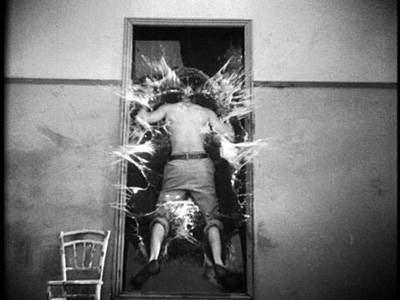
On the other hand, while Dali, Bunuel, or Man Ray’s approaches would seek to transcribe or represent impossible dream states, Cocteau had his feet on the ground. Shaky ground, sure, but ground nonetheless. Others might imagine someone waking up “through the looking glass”; Cocteau has his protagonist violently dive through a mirror into a shadow realm. It’s hallucinatory but also tactile and real.
blood of a poet 5

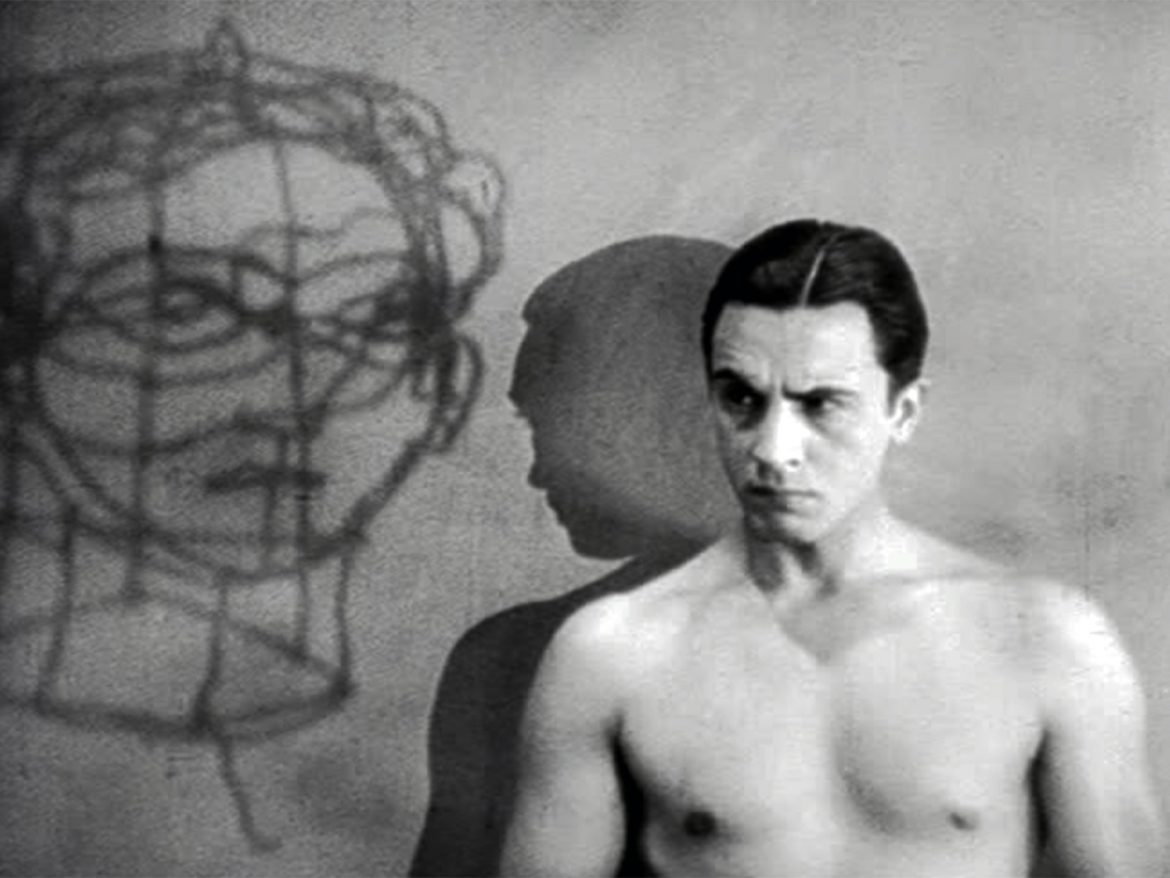
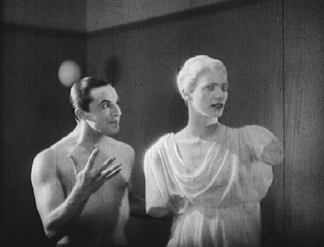
Blood of a Poet is basically about the struggle to create, both art and oneself. In the first section, an artist sketches a face, and its mouth becomes lodged in on his hand when he tries to rub it out — he and his art are joined, not very happily. In the second, desperate to escape, he jumps through a mirror into a hotel, where he watches people through keyholes, presumably gaining information about the world (and the world is very weird). Following the instructions of a statue come to life, he shoots himself in the head, and is reborn. But in a fury, he smashes the statue, his savior and creation. She’s reborn in section three, as shitty little kids throw snowballs at each other, turning increasingly violent, and using the poet’s frozen body as a weapon, along with rocks. Finally, his prone, bleeding body provides a foil in the last bit (titled “The Profanization of the Host”): as card sharks play for high stakes, his body hides an ace of spades, and a sexy (male) guardian angel comes to rescue him. We close with images of the lyre and a muse, looking back at us coyly as she departs.
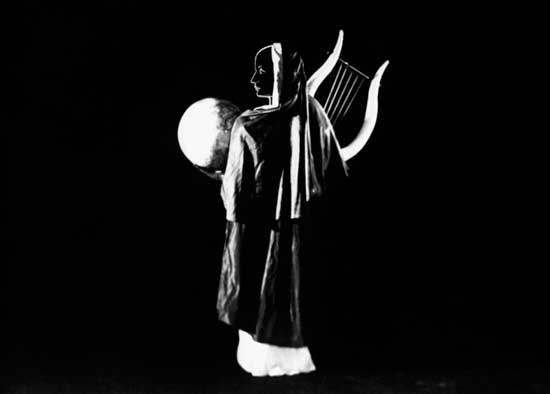

blood of a poet 3blood of a poet 4

There’s a lot of Cronenberg here, and Thomas Pynchon for that matter: In the second section, Cocteau had the floor painted to resemble the walls, so it disorientingly appears as though people are either flying or scurrying like particularly acrobatic insects. He called the segment “Learning To Fly”, after allowing us a view (through the protagonist’s keyhole peeping) at a woman whipping her child. Kinkiness and obscurity abound, and you get the distinct sense they are supposed to. Sex and violence are the baseline assumptions in this vision of the world.

As are visions of sacraments. Cocteau structures a world where desire and communion are linked to the uncanny — statues come alive, mouths breathe from hands, snowballs become marble, angels are objects of desire. His demand for interpretation becomes as ludicrous as the narrative.

The release of Blood of a Poet was delayed for years. Even in 1932, the Church, the censors, and the financiers were creeped out, at least a little.

Time has also proved them right. It’s an utterly scandalous film, adhering to mad logic that will never make sense, and, in its 55 minutes, filled with images any censor would deem “questionable.” God bless it for that.
blood_of_a_poet

Cocteau’s film is simultaneously a winking depiction of the terrors associated with creating any worthwhile art, and a lurid depiction of the weird things people might think along the way, and about as furious a bomb thrown from the back row as you’re likely to see.


August 23, 2015 0 comments
0 FacebookTwitterPinterestEmail
FilmReviews

Directing Against The Script: David Cronenberg’s Maps To The Stars

by rick August 19, 2015
written by rick

Even if his early “body horror” films have now been canonized as classics (of a sort), and even if his more recent, less outre mainstream work has been often enthusiastically received, David Cronenberg has always been a divisive figure. This is more true of 2014’s Maps To The Stars than it has been in a while.


A Hollywood “satire” that he has implored people not to call a satire – a rule I will abide by from here on out – it’s a nasty, curious piece of work. It has, for instance, remarkably low ratings on Rotten Tomatoes, where phrases like “shallow,” “disappointing,” and (especially) “ugly” abound, and audiences don’t seem much more enthralled than the critics. It’s also far more interesting than either group grants, though more for structural and aesthetic than narrative reasons.

The narrative, from a script by Bruce Wagner, tracks several, mostly awful characters in an amoral and bankrupt Hollywood, doing things one might expect such people to do: taking meetings, angling for roles, writing scripts and pursuing acting gigs while driving a limo to pay the bills, getting caught up in generational cycles of incest, revenge, and suicidal purification rituals while fleeing the ghosts of dead children, drinking smoothies. Wait, what was that second-to-last one?

maps-to-the-stars-2maps-to-the-stars-fb01

Julianne Moore (excellent and horrifying) is Havana Segrand, a famed actress now struggling to even get roles in middle age, ensconced in her luxurious mansion and attended to by new hire Agatha Weiss (Mia Waskowski), a burn victim with something of a troubled past. Benjie (Evan Bird) is a teen celebrity shitheel in a mock-Justin Bieber mold, who thinks himself gracious for giving out iPads to dying kids in the hospital on good will tours, while also getting their maladies wrong and berating his staff. John Cusack plays his dad, a cynical doctor/guru for hire, selling vomitous self-help volumes on the TV and offering transparently empty advice to his celebrity clients. Olivia Williams is his wife Christina, a brittle and, for most of the film, inscrutably damaged and worrying figure in the background.

Moore’s Segrand is up for the role of a lifetime – her own mother, a famous actress in her own right, who died during Segrand’s youth, also in a fire and perhaps after abusing her daughter. Themes of abuse, incest, fire, and water abound throughout the film, and it’s not surprising when all the narrative threads begin to tie together in deeply uncomfortable ways. We’re in Cronenberg territory, with or without the exploding heads, sexually penetrated leg wounds, and stomach vaginas that characterized so much of his early work.

What’s most interesting about Maps to the Stars, however, isn’t its shock factor (though Moore’s response to news of a toddler’s death, and its consequences for her career, has to be seen to be believed). For all its sometimes heavy-handed and “comic” attacks on Hollywood nastiness, the most striking thing is the disjunction between the tone of the script and Cronenberg’s approach to the material. As in films like Dead Ringers and Crash, there is a cold remove in the images and pacing, an almost anthropological dissection of the narrative. Wagner’s script burns hot with almost broad moments and ultra-heightened characterizations, but Cronenberg’s direction (and Howard Shore’s almost ambient score) takes the exact opposite path. In the Dissolve interview linked above, he emphasizes this point as well, quoting Truffaut’s line about “directing against the script.” It becomes increasingly disconcerting and uncanny as the film draws on.

Robert Pattinson also has another nice turn for the director, after his inspired performance in Cosmopolis (another terrific film none too pleasantly received in some quarters). From Stephen Lack in Scanners to Peter Weller in Naked Lunch or James Spader in Crash, Cronenberg likes his leading men affectless and slightly alien, and his new muse does that well here, too. He’s arguably the only likeable person in the film, yet he’s still a cypher and somehow fundamentally unknowable. By extension, the film seems to be saying, that seems the best Hollywood has to offer in terms of personalities, since everyone else is a monster.

Maps To The Stars closes on an almost mystical note, but it’s of a piece with everything that preceded it. This is a movie that’s hard to like, exactly – arcane, brutish, broad at some points and almost impossibly removed at others, thanks to the structural weirdness and cold aesthetic. It’s also extremely difficult to look away from it … I won’t say, “like a car crash,” but, you know, draw your own conclusions.

What’s clear is that the Canadian enfant terrible hasn’t mellowed with age, even if the shocks are less overt and the twisted bodies more in the soul than the flesh. Cronenberg isn’t done with his provocations, though, and that’s a very good thing.

August 19, 2015 0 comments
0 FacebookTwitterPinterestEmail
FilmGreat Movies: The Counter ProgrammingReviews

The Camera-Brain Poetry of Mario Peixote’s Limite

by rick August 19, 2015
written by rick

Part of an ongoing effort to watch a set of films from non-White, non-U.S., non-male, and/or non-straight filmmakers and depart a little from the Western canon. The intro and full list can be found here.

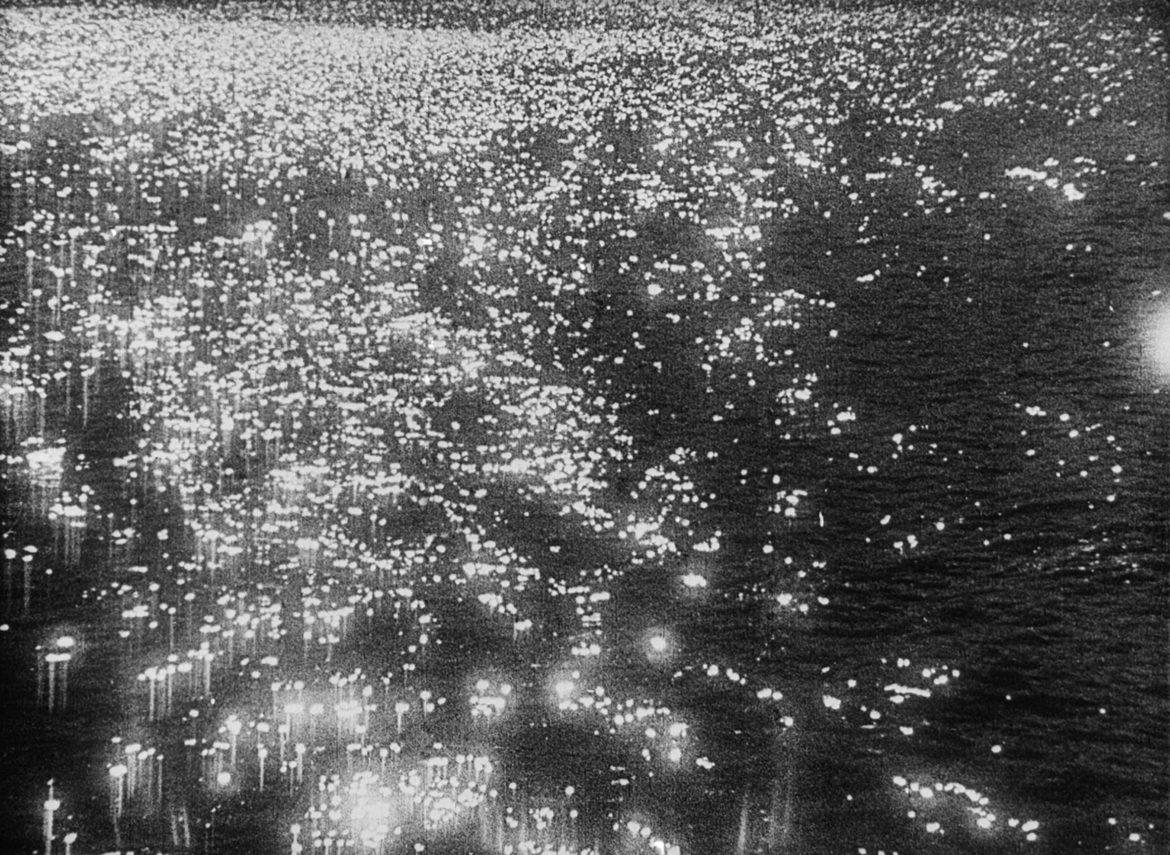
The first image we see is a still of bound hands and a woman’s face. It’s also the last image we see two hours later. In between, the camera alternates between quick shots of feet in motion and machines at work, and very long takes of the sea, sky, and the faces of three people stranded on a small boat. Mario Peixote’s 1931 Limite is the only film the Brazilian author and poet ever completed, and its anti-narrative experiments continue to beguile and confound.

Long considered lost – its restoration from a final existing negative lasted from 1959 to 1978 – Limite is now routinely voted one of, if not the, great landmarks of Brazilian cinema. Rejecting both standard narrative aspects as well as the more pointed or political Surrealism of Bunuel and Man Ray, Peixote was fixated instead with what he and others called “the camera-brain,” the working through ideas through pure image alone. His scenario for Limite lists 220 camera shots, organized according to an internal structure he likened to “the invisible wheels of a clock.”

As such, there’s not much point in discussing “what happens” in Limite. The film is far more interested – exclusively interested, really – in the juxtaposition of frames, exploring angles of view and light sources, the fluid passage of time as we flashback to the pasts of our three boat-bound protagonist (and learn little along the way), the workings of wheels on a train track or the crashing of waves against rocks. If there’s a “lesson” in its visual sequences – and there’s almost certainly not – it might be the ways in which all things are bound to cycles and to each other.

But Peixote would reject that out of hand. His interest is in kinetic movement and stillness, and the spaces in between. There is an existential emptiness to the figures on the boat, and arguably a sense of alienation as the camera trains in on nothing but feet in movement in a city square, while ignoring the rest of the bodies those feet are attached to. Still, this is inserting meaning where none was intended, apart from the meaning found in the collision of perspectives, silences, and the images themselves.

Peixote never made another film, though not for lack of trying. Limite was screened for Orson Welles on a trip to South America, and Eisenstein was (unsurprisingly) a fan. (An interesting sidenote: an article praising the film attributed to Eisenstein was, in fact, written by Peixote himself, further obscuring its weird history and reception.)

Limite shouldn’t be relegated to a footnote to the Avant-Garde, however. It’s a feature-length exploration of the moods and resonances film can generate, especially in its total rejection of analysis. It’s a shame Peixote’s other cinematic projects never came to fruition, because Limite stands as a testament to a unique vision and approach that’s rather unlike anything else.

Next up: Jean Cocteau’s Blood of a Poet (1932)

August 19, 2015 0 comments
0 FacebookTwitterPinterestEmail
FilmReviews

Farce and Tragedy in Timbuktu

by rick August 7, 2015
written by rick

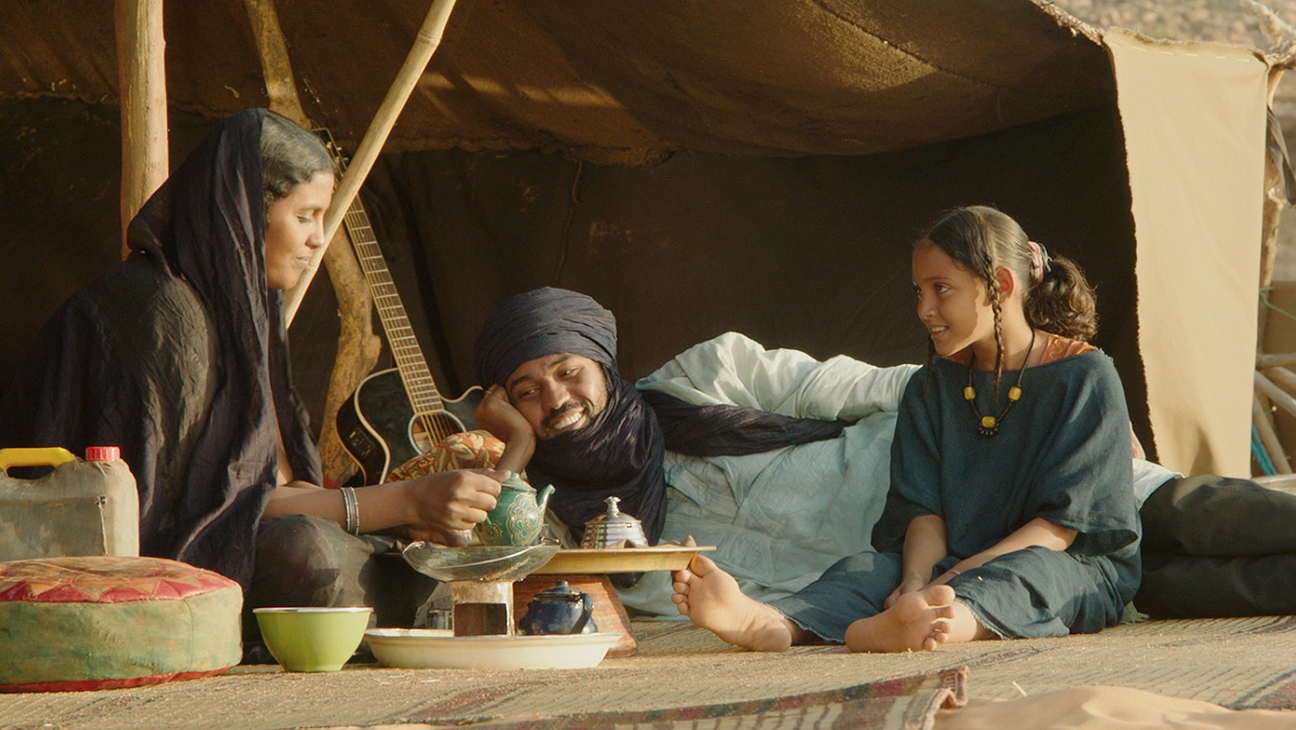
The sand seems to stretch forever under cloudless skies, and time is marked by routine – herding cattle, relaxing with family under the humble shelter of a lean-to style tent, discussing the future, drinking tea. Timbuktu’s first half hour or so is a slow, quiet portrait of desert life in Mali; if it’s not exactly paradise, what with the sand whipping around and garments covering faces to protect them from the elements, it’s not too far from it, either. But things are changing, and not for the better.

Kidane (Ibrahim Ahmed) and his wife Satima (Toulou Kiki) are the last of their neighbors in the remote region, all the others having moved on after sensing the dangers of the new fundamentalists who are trying to bring foreign notions of Shari’a law to the region. They, their daughter Toya (Layla Walet Mohamed), and the young shepherd Issan (Mehdi A.G. Mohamed) are stubbornly holding on to the life they’ve known. Kidane, in particular, is tired of running. Do they not recognize the extent of the danger, or simply refuse to knuckle under to these self-important, pious clowns who believe they and they alone understand God’s will?

timbuktu_family

So begins the harrowing journey of Timbuktu, gorgeously directed by Abderrahmane Sissako and filled to bursting with nuanced performances by everyone involved. Mauritania’s submission for the 2015 Academy Awards, Timbuktu begins as farce, almost playful, and ends in the bleakest of tragedies. It’s spellbinding and deeply, deeply sad.

The transition between its two modes is so graceful and fluid that, like the characters, you only gradually noticed the way in which horror is impinging on this place. At the film’s start, Timbuktu is a place out of time, and the fundamentalists are absurd figures viewed with bemused detachment by the local Bedouins and others. The edicts – woman are to wear gloves even when selling fish, the length of men’s pants are rigidly monitored, and so forth – are absurd, and greeted as such. “All my pants are like this,” one man notes, upon being told they are unacceptable. Of course, this can’t last.

As things escalate, Sissako constructs some amazing images and sequences. After soccer is banned by the zealots, the kids pantomime a game without a ball, passing, shooting, and cheering their phantom goals and stops. It’s a small act of defiance but a desperate attempt to circumvent the draconian rules being placed on them. The image itself suggests that no amount of stricture can kill the imagination or the desire for freedom, and it throws into stark relief the absurdity of fundamentalism.

Such moments are quickly becoming a thing of the past. After Kidane runs into trouble with a neighboring fisherman, he falls into the clutches of the would-be regime. At this point, Timbuktu becomes decidedly darker. The absurdist touches shift to a palpable sense of terror – these men, bent on the subjugation of women and the imposition of irrational order, are no longer to be laughed at or shrugged off. As sham trials escalate – refusing gloves, singing and playing music, being unaccompanied with a man, any number of minor infractions – it becomes clear that joy itself is under attack. There’s no room for it in this vision of the world, sent down from on high (no matter what the local cleric says). Power will be enforced, and brutally.

Along with some utterly beautiful framing (a long shot of two men struggling recalls Lawrence of Arabia), Sissako’s best decision is to refrain from sermonizing or shouting, neither of which would have a place here.

timbuktu_fight

Timbuktu is a resolutely quiet film about encroaching evil, and by immersing us in all of the absurdities and sorrows of its characters’ world, the emotional payoff is heightened enormously. Some scenes take a long time to play out because conversations must be translated between Arabic, the local dialect, French, and sometimes English – the colonial past is never far from our mind, and the legacies of power are showcased by the difficulty of communication.

The one misstep – Abel Jafri’s militia leader Abdelkerim smokes cigarettes, despite their ban, a too on-the-nose depiction of hypocrisy – does nothing to overshadow the subtly of the rest. Timbuktu is a film intended to outrage, but in the quietest way possible. What starts as farce ends in tragedy, and you walk away amazed, again, at both the cruelty of humans and our resiliency.

Towards the end, we watch Toya run, breathless, through the desert, a small girl trying to outpace the guns of a false god. Here’s hoping she makes it. Here’s hoping we all do.

August 7, 2015 0 comments
0 FacebookTwitterPinterestEmail
CommentaryFilmReviews

I Love You, Beth Cooper is no Easy A

by rick August 4, 2015
written by rick

Back on the late, lamented film site The Dissolve, national treasure Nathan Rabin had an ongoing column called “You Might Also Like”, which used the various internet algorithms that recommend one movie on the basis of another to investigate whether one would, in fact, also like the second movie. I tried this last night: starting with the charming Easy A, an updated riff on both the Mean Girls genre of high school transformation and clique pressures and, on the other hand, Nathaniel Hawthorne’s The Scarlet Letter, I ultimately arrived at director Chris Columbus’ 2009 I Love You, Beth Cooper.

Did I also like it? I did not. In fact, the phrase that keeps springing to mind is “steaming pile of hot garbage left on the curb on a summer’s day.” And that’s the most generous one I can muster.

A wildly misconceived effort on basically every level, ILY,BC (as it is referred to by nobody, probably) plays like a laugh-free parody of itself. On high school graduation day, valedictorian Denis Cooverman (the strikingly charmless Paul Rust) seizes the opportunity his speech affords to declare his love for Beth Cooper (the monstrously awful Hayden Panettiere). In fact, he utters the words, “I love you, Beth Cooper” from the dais. (Ripping off MST3K, I shouted, “We have a title!” Still got a laugh.)

The only problem is she has no idea who he is. He’s a big dork, she’s a popular girl, et cetera. Through a series of misadventures that can only be described as “unlikely” – “stupid” is another possible descriptor – the two of them end up running around engaged in wacky hijinks until dawn, along with her vacant friends Cammy and Treece, and his best bud Rich, who the movie never tires of lampooning for his closeted homosexuality (and his repeated meta-references to older films). There’s a joke that never gets old. Denis is put through the increasingly humiliating rites of passage in films such as these, on the assumption that it’s always hilarious when bad things happen to clueless morons.

The conceit that allegedly is supposed to make their interactions amusing is that, while he has idealized her as a paragon of beauty and grace, she’s actually a dangerous lunatic. What’s more, her roided-out boyfriend is now on the hunt for Denis and Rich, and so our heroes scamper through hallways, lose their clothes through tortured plot developments, and generally act like the most cut-rate Jack Lemmon and Tony Curtis you’re likely to find on the wacky teen beat. All the while Rust mugs for the camera and waits a beat too long, begging the audience for a laugh we are unlikely to provide. It’s some painful shit.

By the time Columbus – the very definition of milquetoast middlebrow goofballery, responsible most recently for foisting the widely-reviled Adam Sandler project Pixels on an unsuspecting world – gets around to layering on the unearned pathos, ILY,BC has long outstripped any generosity a reasonable person might have been expected to offer it. It’s just awful, a collection of moldy jokes, incoherent characterization, lazy gay mockery, and grim attempts at mining laughs from cartoon violence. It is at pains to demonstrate that its heart is in the right place — you almost expect someone to say, “Not that there’s anything wrong with that!” after yet another “LOL UR GAY” moment — but that’s just more bad faith from a film that’s essentially a dollar sign become sentient.

What does this have to do with the cute, low-stakes Easy A, which now looks to me like a full-on masterpiece for the ages by comparison. Well, there’s a high school. That’s true. And Denis goes from zero to hero, sort of, which is kind of a transformation. We learn there are hidden depths to people and that misunderstandings can multiply, albeit in the dumbest ways it is possible to learn these things.

But the real divergence is between Emma Stone’s charm in Easy A and that film’s interest in the ways teenagers actually communicate and process their world. In other words, Easy A is an honestly comic examination of high school, femininity, the rumor mill, and the screwball implications of rapidly compounding misunderstandings. I Love You, Beth Cooper is a dishonest and off-handedly lazy cash-grab from people who were apparently convinced kids will watch fucking anything.

And then I remember that I just watched it, too. And my girlfriend spent $2.50 on it.

Well played, cash-grabbers. Well played.

August 4, 2015 0 comments
0 FacebookTwitterPinterestEmail
FilmReviews

Amy Schumer is as funny as Trainwreck will let her be (and that’s still very funny)

by rick August 4, 2015
written by rick

Trainwreck is Amy Schumer’s movie (a very good thing), but there’s no mistaking the influence of director Judd Apatow.

Almost without exception, Apatow’s “transgressive” comedies are, at their heart, deeply conservative. For all the naughty bits and ostentatious dancing around the line of decency, things are generally reconciled in the end in the name of family, monogamy, and the need for his man-children to grow up and take on responsibility in their lives. Trainwreck, Amy Schumer’s first feature (which she, rather than Apatow, scripted), ends up in a similar place, and follows some familiar beats, despite featuring a woman-child as its protagonist. But it would be easier to fault the film for laziness on that score if it wasn’t frequently so hilarious, and actually edgy in some places.

Amy Schumer is, well, “Amy,” a journalist at a shameless gossip magazine who harbors bigger dreams for her writing and career. But she’s also – as the film never tires of demonstrating – a fuck-up of enormous proportions in her personal life. A “trainwreck,” if you will.

She drinks too much, smokes too much weed, blacks out and wakes up in strangers’ beds, and generally behaves like an extremely irresponsible college student, despite being quite a few years out of college. A funny scene features a montage of her endless collection of lovers, who she’s constantly juggling and awkwardly managing, and the charmingly goofy opening scene implies this was destined: back in the day, her wayward dad had her and her sister, as children, repeat the phrase, “Monogamy is not realistic” over and over, by way of explaining why their parents no longer live together.

In other words, she’s a bizarro-world Steve Carrell from The 40 Year Old Virgin crossed with Seth Rogen from Knocked Up. You wouldn’t need to squint very hard to guess Apatow was somehow involved with this picture, and that she’ll eventually find love but need to learn a few things in order to realize it. But I won’t spoil anything.

In any case, she goes on assignment for the magazine to cover Aaron, a famous sports doctor (Bill Hader), which the film hilariously presumes is a thing that happens. Aaron is also good friends with basketball superstar Lebron James, who Amy fails to recognize at all. (Another good bit follows when she’s asked her favorite teams, and responds with a series of gibberish-based franchises.)

Do they fall in love? Do you need to ask? The Amy/Aaron romance is the weakest aspect, seemingly shoehorned in to give everyone something to do – Schumer and Hader have great comic chemistry, but romantic? Not so much. This would seem to be a big problem, since it’s the plot, but really it’s a contrivance to hang Schumer’s gags on, and those gags work more often than not. A few jokes fell with an audible thud in the theater, but others had the audience doubled over. (Important note, though: I think the audience was full of stoned Schumer fans who were only too ready to laugh, and that proved infectious.)

Trainwreck is interesting for another reason, though, apart from some solid jokes. By inserting Schumer into the traditionally male Apatow formula, the movie ends up with some actually transgressive moments. Where Seth Rogen and crew would trot out some dick jokes and mock gay-panic, Schumer has a bit involving tampons that kills, and that alone made it different. In another clever move, James, as Aaron’s sidekick, is playing what would traditionally be the best girlfriend role, protective of his friend and skeptical of this newcomer and her motivations. The Hader/James scenes work, too, especially a chat on romance they have while playing one-on-one basketball. (James, it turns out, is better at basketball than Bill Hader, but the scene marches along as though they don’t notice.) In fact, James gets some big laughs (please don’t do a new Space Jam, Lebron), as does SNL’s Vanessa Bayer, continuing the Cleveland love, as Schumer’s goofily excitable confidante.

Schumer’s been accused of hipster racism on her popular TV show, and there’s some of that here, unfortunately. But there are also inspired comic asides, like when Aaron asks if she has any Black friends and then asks to see a picture on her phone; she scrolls through until she finds a waitress pouring a glass of water in a restaurant selfie she took. It’s not the most profound critique, but it shows a level of amusing self-awareness of her character’s obliviousness.

It’s also certainly refreshing to see a female protagonist who doesn’t look like a model and yet still gets laid all the time, and is allowed to have a number of faults and distinguishing aspects. She’s a comic exaggeration, but she’s still recognizably human, which is more than you can say for many representations of women in U.S. movies.

In the end, Trainwreck lives and dies on its laughs. Is it indifferently directed, in the traditional Apatow mode? Definitely. Is it a series of gags and one-liners strung together around a loose, familiar narrative? Sure. Is it funny? Yes, it’s very funny.

August 4, 2015 0 comments
0 FacebookTwitterPinterestEmail
CommentaryFilm

And here are my 50 greatest movie characters: 11-20

by rick July 19, 2015
written by rick

Here are Greatest Movie Characters entries 11-20. First part is here. This is not a ranked list, and the ones below are entered in alphabetical order.

11) Clarice Starling (Silence of the Lambs)

silence of the lambs
Anthony Hopkins might get the acclaim for his delightfully twisted turn as Hannibal Lector in Jonathan Demme’s Silence of the Lambs, but it’s Jodie Foster’s Clarice Starling that makes it work. In mostly small moments, and often just by the context or flickers of guarded emotion on her face, we realize just how stranded she is, in the man’s world of the FBI, in terms of class and her own shame of her “white trash” roots, and in her desire to prove herself, maybe to herself. Foster conveys Clarice’s simultaneous vulnerability and strength, often in the same scene, and our terror mounts in direct proportion to how much we relate to her. It’s an incredible performance that doesn’t get enough praise, and her character is the one that lingers, notwithstanding quotable Hannibal Lector lines. The patriarchy is out in full force throughout this film, and Clarice is the understated warrior pushing back — in part to save the woman who’s been taken captive, but also to save her own sanity and sense of self.

12) Emmi (Ali: Fear Eats The Soul)

ali
Fassbinder’s post-German Economic Miracle melodramas are not to everyone’s taste, but Ali: Fear Eats The Soul might be the exception. A carefully drawn, achingly beautiful love story about an older white woman and an immigrant Moroccan laborer who fall for each other, against all odds and objections, it has the kind of appeal that wears down modern sensibilities skeptical of earnestness. As Emmi, Brigitte Mira conveys her loneliness and need for connection so effortlessly that you can’t help but want the best for her, and there’s joy in her unlikely connection to El Hedi ben Salem’s Ali that you can’t help but celebrate. Alas. Things being what they are, the differences in age and race don’t go down well with either of their circles, and we’re headed for a precipitous fall. There are many scenes in Fassbinder’s masterpiece (one of them, anyways) that stand out; I think of Emmi’s face in the shitty bar, pressed against his shoulder as they dance to the jukebox. If there’s a better single image of what it is to be cast out by cruel society and wanting basic human comfort and companionship, I don’t know what it is. That ben Salem would commit suicide not much later is the kind of extra-textual note some critics despise, but it adds an almost unbearable sadness to an already very sad film.

13) Ethan Edwards (The Searchers)

searchers
John Ford and John Wayne had made 11 films together, and cemented the iconic “John Wayne-type” in westerns, before 1956’s The Searchers, in which they seem intent on burning their mythos to the ground. Wayne’s Ethan Edwards is not the stoic, wry gunslinger compelled by circumstance to take care of business whether he wants to or not, a reluctant hero with a rough exterior sheltering a wounded soul, a man’s man in an unforgiving land. No, Ethan Edwards is a racist piece of shit, the kind of guy who casually shoots out the eyes of Comanche corpses on principle, because he knows the desecration of their bodies complicates their journey into the afterlife. He’s also the kind of guy who rejects his own kin due to their 1/8 Comanche blood, and who is willing to commit all kinds of violence and suffer all kinds of depredation to rescue Natalie Wood from the natives, whether or not she wants rescuing. He’s fixated on purity — racial and gendered — and his quiet mania leaves bare to the ugliness at the heart of the genre. It’s such a bold characterization that we’re still trying to figure out what was going on here. And why, when he runs into his brother’s burning house, does he cry out for his brother’s wife? Edwards is an enigma with unsettling depths and secrets, with hate at his core, and he changed the western forever.

14) Jackie Brown (Jackie Brown)

jackie brown
Pam Grier is a badass. On this, we all can agree, I’d hope. Her sequence of Blaxploitation films — some of them quite bad — were always recuperated by her performances and formidable screen presence. In Quentin Tarantino’s love letter to her, by way of adapting an Elmore Leonard novel, she towers above everyone else, and the camera loves her. She’s sweet, calculating, and more than able to hold her own, and she helped Tarantino make his best film. The halting, anxious desire between her and bailbondsman Robert Forster is a thing of beauty, but in the end, this is Grier’s film. Jackie Brown is the title of Jackie Brown for a reason. The opening sequence alone — as she walks through the airport in a single tracking shot — would’ve made this true. The plot twists and her foresight, getting the best of everyone around her and looking fabulous while doing it, cement it.

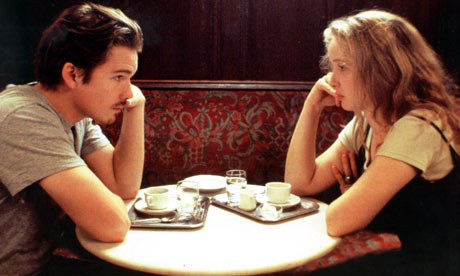
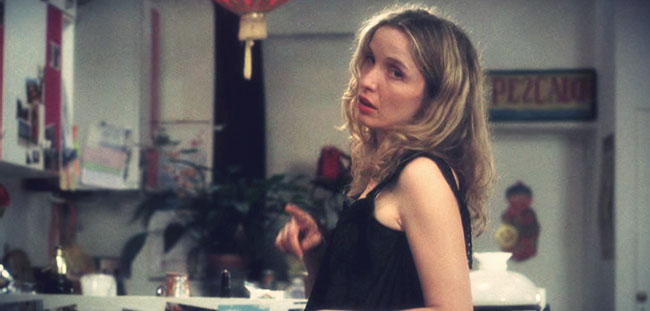
15) Jesse and Celine (Before Sunrise, Before Sunset, Before Midnight)

Before-Sunrise-001BeforeSunset_2

NO SALES. AP PROVIDES ACCESS TO THIS PUBLICLY DISTRIBUTED HANDOUT PHOTO PROVIDED BY SONY PICTURES CLASSICS FOR EDITORIAL PURPOSES ONLY. This undated publicity photo released courtesy of Sony Pictures Classics shows Ethan Hawke, left, as Jesse and Julie Delpy as Celine, in the film, "Before Midnight," directed by Richard Linklater. (AP Photo/Sony Pictures Classics, Despina Spyrou)

They meet-cute on a train in Europe and talk through the night. They’re reconnected years later and pick up where they left off. When we join them again, they are all grown up and grappling with the pressures of adulthood, and the accumulation of all the slight injustices and resentments a lifetime can bring. Richard Linklater’s Before Trilogy is not just an early practice attempt at the time-lapse of his later Boyhood; it’s a masterpiece in its own right. The characters of Jesse and Celine are so specific, so filled with endearing and maddening attributes, and so painfully familiar that they don’t have to do much but engage in the films’ discursive dialog to pull you into their sphere. The almost-kiss in the sound booth, the nearly one-take gondola ride, the closing moment of agreed-upon fiction between them (clearly echoing Satyajit Ray’s The World of Apu) … these and so many other moments add up to something heartbreaking and wonderful. And it’s all borne out of the characters themselves, the way they relate and come to know each other, call each other on their bullshit, love each other despite it. Ethan Hawke and Julie Delpy, together with Linklater, crafted characters for the ages here. They are too real to ever feel dated.

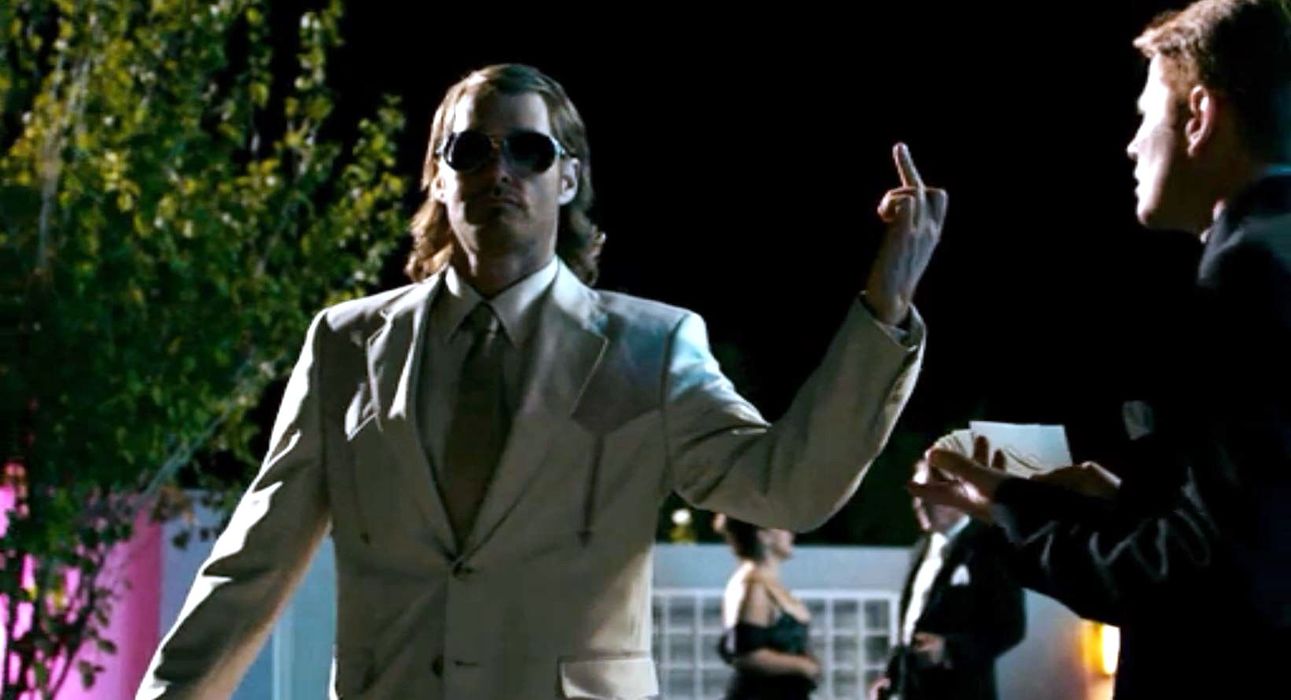
16) MacGruber (MacGruber)

Macgruber - 10
Audiences flatly rejected MacGruber, an unlikely feature-length spin-off from a throwaway SNL sketch. This is due to several things — caustic Lonely Island humor, a go-for-broke dedication to the awkward scenario, extreme violence in a comedy — but mainly I think it’s MacGruber’s character himself. Every single detail about him is played for maximum discomfort — his catchphrase, aimed at nemesis Dieter von Cunth (Val Kilmer), is “Let’s go pound some Cunth,” which probably in and of itself would’ve killed any box office aspirations. (Sidekick Ryan Philippe almost steals the show with this exchange: “Do you have to say that?” “What, it’s my catchphrase! It’s witty!” “Is it?”) But the total commitment to not giving a fuck carries the day. As MacGruber, Will Forte delivers his most indelible performance, and any allegations of stupidity and bad taste just get kind of written off. Witness his explanation of how he and Cunth came to be enemies and tell me it’s not horrifyingly funny.Or the montage where he gets the old team back together — who happen to be, to a member, professional wrestlers. Classic MacGruber.

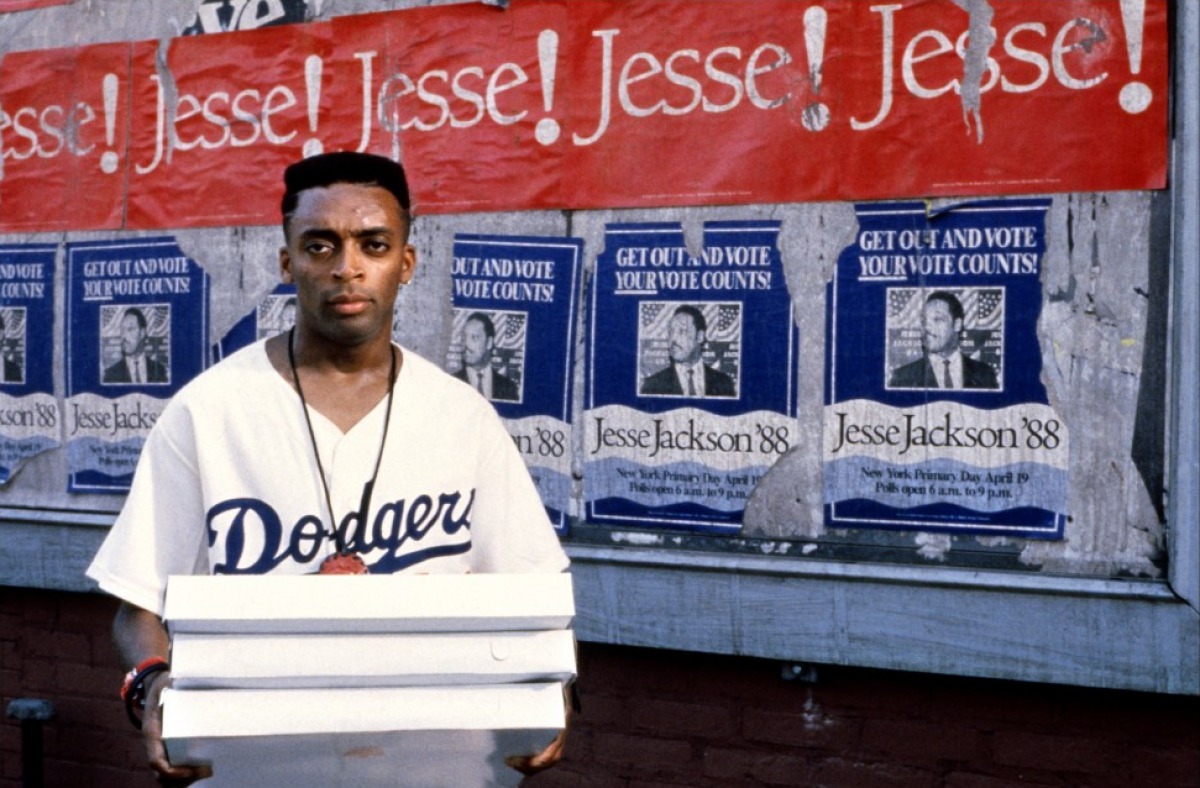
17) Mookie (Do The Right Thing)

do-the-right-thing
Since its release, debate has raged whether Spike Lee’s Mookie did, in fact, do the right thing. Lee, of course, was smart enough not to show his hand, and that’s what lends so much power to the character. Mookie is caught between worlds that don’t particularly seem like they’re going to coalesce, and his final explosive decision is his first real act of agency in the film. How could it be otherwise? But he’s a fully realized character (Lee’s best) and audience stand-in, sort of a Virgil guiding us through a sweltering day in hell. His scenes with Rosie Perez are wonderfully intimate, his relationships with the other characters believably conflicted, and imbued with a detachment that can’t last. It all works — he grounds the film in his gestures and expressions, and it closes with the repercussions of an act no one saw coming. People still can’t agree what it means, but it means something.

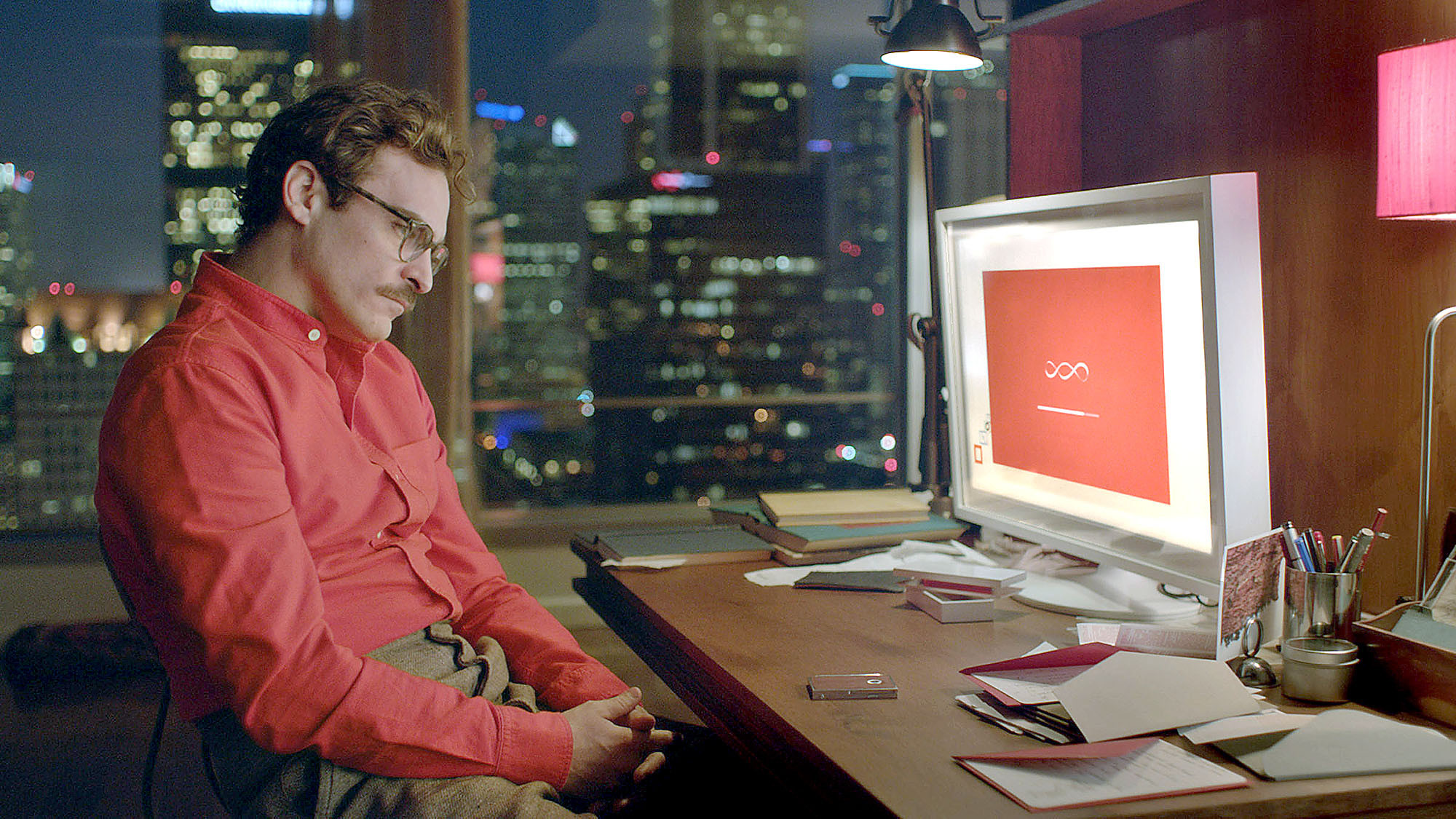
18) Samantha (Her)

JOAQUIN PHOENIX as Theodore in the romantic drama "HER," directed by Spike Jonze, a Warner Bros. Pictures release.

In the run-up to Her, there was a lot of hand-wringing about the notion of a guy (Joaquin Phoenix) falling in love with his operating system, which has the voice of a woman and an AI component that make her something of a made-to-order surrogate for his desire. In a marketplace where women get few good roles and most romances center on the men, that’s an admittedly icky proposal. However, Phoenix, director Spike Jones, and especially Scarlett Johanson as Samantha subvert those expectations in incredible form. Not only is Samantha the most fleshed-out character in the film, she’s as real as a character can be in fiction … which is sort of the point. Without a face to convey expressions or a physical form at all (a particularly ironic note, given Johanson’s relentlessly sexualized image), Samantha becomes instantly knowable and poignant. This is a film where the central character, whose growth drives it, never appears on screen. Those early protests came too soon; there’s a lot more going on here than the sublimation of female experience in favor of the male protagonist. In fact, the opposite is true. Samantha stands out through her physical absence, and yet is as real as any other character on film.

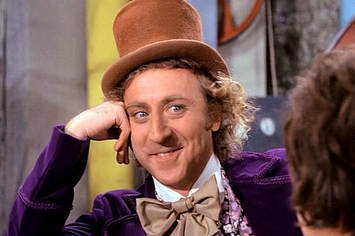
19) Willy Wonka (Willie Wonka and the Chocolate Factory)

willy wonka
For all the faults of his current fetish for dandyish costuming, outlandish accents, and forced whimsy — and they are many — late-period Johnny Depp did do everyone a favor when he and Tim Burton remade Charlie and the Chocolate Factory. The two of them threw into stark relief the brilliance of Gene Wilder’s performance in the original. By turns comic, exasperated, soulful, melancholy, and outright terrifying, Wilder’s Willy Wonka is a singular achievement (and now an instantly meme-able fixture). The same guy who sings “A World of Pure Imagination” also arranges for the gruesome dispatching of children (not to mention the Boatride Through A Tunnel In Hell, which haunted my nightmares for years) — and the climactic scene when he dismisses Charlie continues to sting. Movies generally intended for kids don’t usually skew so dark, but Roald Dahl’s material was never quite cuddly, exactly. And Willy Wonka — puckish, filled with one-liners and witty asides, and offhand malevolence — embodies everything magical about this film, which will continue to both amuse and keep 9 year olds up at night for many years to come.

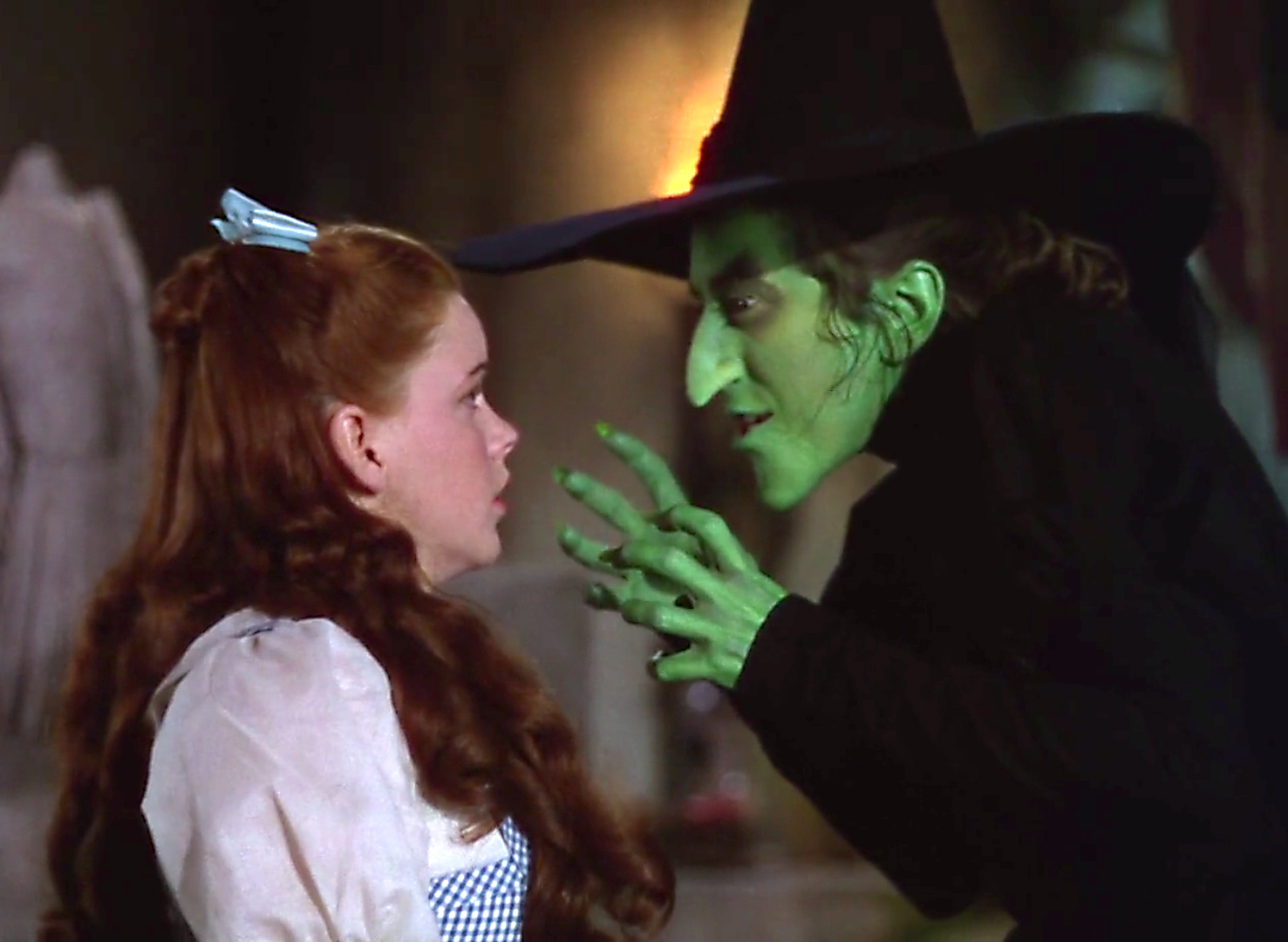
20) The Wicked Witch of the West (The Wizard of Oz)

the-wicked-witch-of-the-west-oz
The green face, the cackle, the flying monkeys. The Wicked Witch of the West occupies a role of very specific villainy for generations of film-goers. Like Dorothy’s dream, she exists in an alternate dimension, where it seems like anything could happen that she wills. In all the discussions of The Wizard of Oz, Dorothy’s quest for “home” and what that might mean, the escapism embodied by Technicolor and the mundane black and white, dust-swept Kansas, the ways in which the familiar is made uncanny, The Wicked Witch stands out. She’s an archetype but also unique in her details, and still manages to intimidate. The scene in which Auntie Em’s face in the crystal ball morphs into hers is one of the great moments of cinema — as children, what could be scarier than the idea that those you most trust could also harbor villains of epic proportions? Of course, leaving all the formal analysis aside, she’s just scary as hell.

July 19, 2015 0 comments
0 FacebookTwitterPinterestEmail
CommentaryFilm

And here are my 50 greatest movie characters

by rick July 17, 2015
written by rick

The folks over at Flavorwire compiled a list of their 50 greatest movie characters, and it’s pretty solid. However, on the premise that one list is never as good as two lists (otherwise known as The Law Of The Internet), I composed my own. Here are the first 10; more to follow.

This is both subjective and authoritative. You may think I missed someone, but I’m certain you’re mistaken. (Ok fine, I might’ve missed someone — tell me who they are!)

In alphabetical order, the first 10 of the 50 greatest characters are:

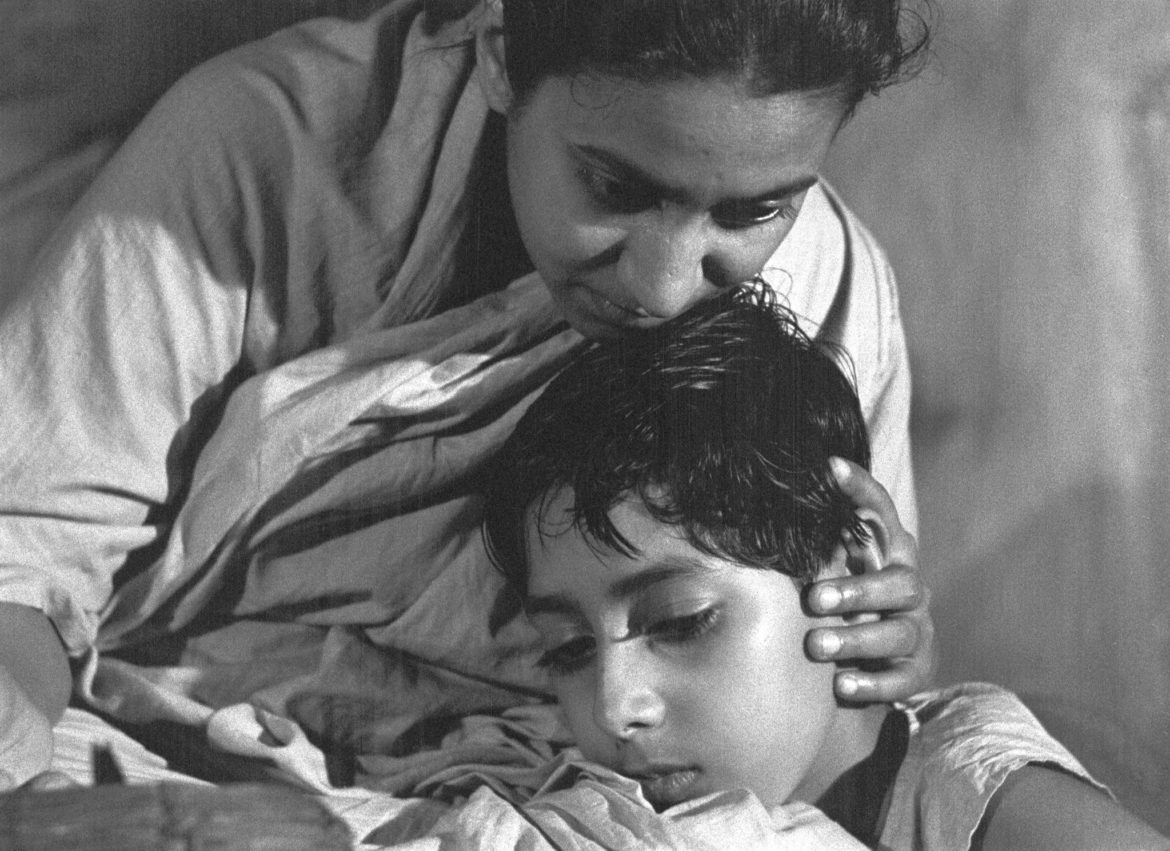
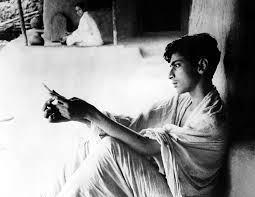
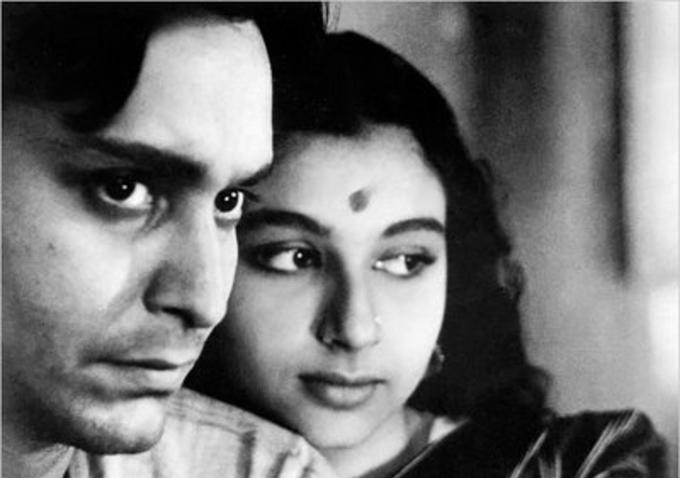
1) Apu (The Apu Trilogy)

apu-trilogyapu aparajitoapu world
The character of Apu probably benefits greatly from his appearence at the center of not one, or two, but three classic films by the Bengali genius Satyavit Ray — Pather Panchali, Aparajito, and The World of Apu — collectively known as the Apu Trilogy. We follow him as a young boy, then a conflicted and casually cruel adolescent, then a wounded man trying to make things right with time. It’s a luminous vision of struggle and how we grow, or fail to, and it’s anchored by the figure of Apu. No character in cinema is more fully drawn out and realized, and by the end, even with all his failings and missteps, he is imbued with a nobility you can’t shake. After all, we’ve watched him every step of the way. He’s as close to a personal friend as you’ll ever find on the screen.

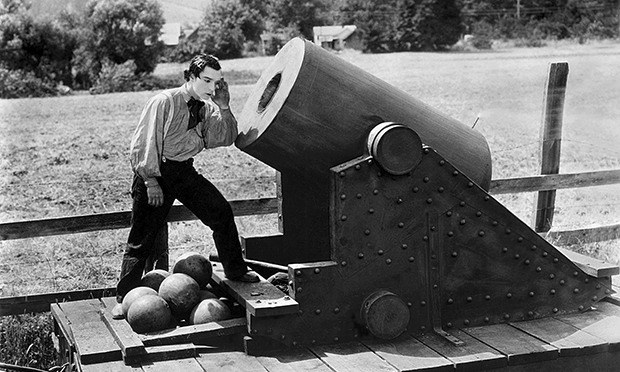
2) The Buster Keaton character

The General - Buster Keaton
While Charlie Chaplin’s Tramp character captured the hearts of millions and Harold Lloyd’s bespectacled Everyman resonated deeply, the Buster Keaton character, in movies as different as The General and Sherlock, Jr., holds up the best. Invariably deadpan, oblivious, and unfailingly well-intentioned, even as he leaves chaos in his wake, Keaton’s screen persona managed to be both an archetype and a very specific, relatable sort of guy. He is sometimes heroic and sometimes a buffoon, but in neither case is he at all aware of it, which makes it agonizingly hilarious — and living proof of the old adage, “A man wearing a funny hat is not funny. A man who doesn’t realize his hat is funny is comedy.” The audience laughs at his antics, but we also see something of ourselves — he’s just trying to get by and do the right thing in a world continually gone mad around him.

3) Don Corleone (The Godfather)

the godfather
No list of this sort would be complete without a mention of Marlon Brando’s mush-mouthed mafioso. As an honorable man, bound by old-world ethics and ruthless logic, who orders unconscionable things to be done, Don Corleone is a towering figure. Brando takes what is essentially a stock character from a pulp novel and imbues him with dignity, restraint, and internal conflict; director Francis Ford Coppola keeps the pacing langurous enough for us to settle into his world, and Gordon Willis’ iconic photography bathes him in half-light and shadows, visually bringing his dual nature to the screen. But it’s Brando who gives him a soul — a tortured one, but a soul nonetheless.

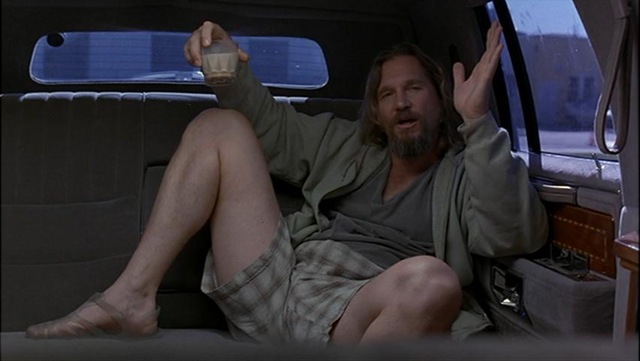
4) The Dude (The Big Lebowski)

dude-in-limo
In the Coen Brothers’ comic masterpiece, Jeff Bridges takes what could be a one-note joke — the stoned, slacker protagonist who stumbles through the day, accidentally getting involved in intrigue — and lends him a kind of cosmic grace. The details pile up — his particular way of talking, the way he looks a few seconds too long and uncomprehendingly at his friends and enemies, his taste for White Russians and bowling, his hatred of The Eagles — and their combined weight gives substance to the character. It helps that Bridges is absolutely hilarious, and surrounded by other characters who could just as easily take his place on this list. But The Big Lebowski ultimately belongs to The Dude — it’s his sensibility and affable goofball outlook that drives the film, and earns it the mountains of goodwill audiences have delivered back. There’s a reason people throw Lebowski-themed parties and film screenings, and no one’s dressing up like Steve Buscemi. The Dude abides.

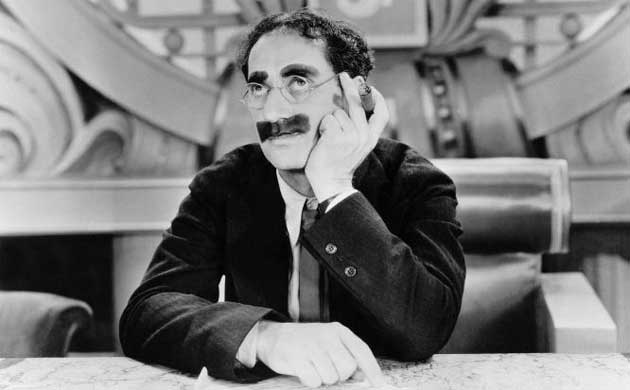
5) Groucho Marx (Everything)

groucho
The anarchic comedy stylings of the Marx Brothers are legendary, and much of the fun comes from the interplay between the various comedians. But in the end, Groucho owns. Chico’s “aviator speech” in Night At The Opera might be the single funniest moment in all of their work, but it’s Groucho behind him who gets the laughs. And in Duck Soup, he simply cannot be stopped — his interactions with Margaret Dumond, the Brothers’ unsung heroine, are as funny as anything since. The vaudevillian walk, the mustache, the lecherous raised eyebrow and one-liner — in every outing, Groucho brought a fully fleshed-out and recognizable persona that gave shape to the sometimes loosely-linked shenanigans. He also brought the sense of danger, that things can off the rails at any moment. When they do, you can’t say you weren’t warned.

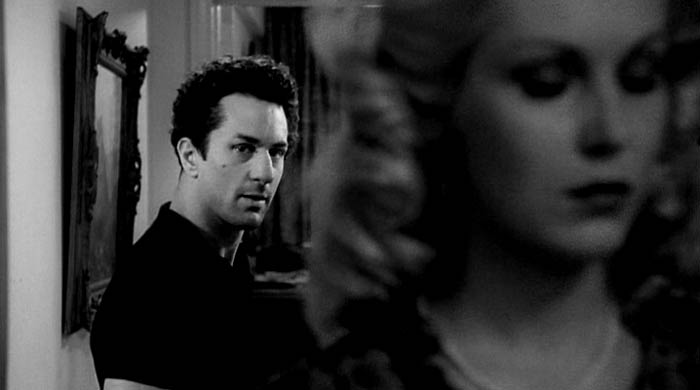
6) Jake Lamotta (Raging Bull)

?????????????

Back when Robert DeNiro cared, there was no one better. In Martin Scorcese’s Raging Bull, DeNiro’s volcanic vision of boxer Jack LaMotta is a pot permanently about to boil over, whether it’s at his brother, his wife, his perceived enemies (sometimes his brother or wife), or his opponents in the ring. What makes the character so true and queasily compelling is the mess of contradictions and the obvious internal strife visible even in the way he carries himself on the street, not to mention in front of an audience and in battle with another man in the ring. After his utterly unavoidable fall from grace (did you think this guy was going to make it?), punching the walls of a prison holding cell until his knuckles bleed, he’s as transfixing as before, but the desperation and fear have taken over from the bravado and aggression. He’s a man who lashes out because his first object of scorn is himself, and he knows it. Raging Bull is a harrowing journey thanks to LaMotta’s character arc and DeNiro’s absolute commitment to the role.

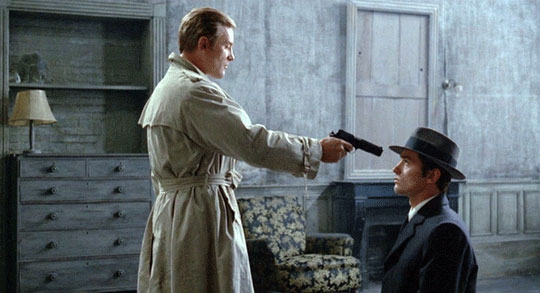
7) Jef Costello (Le Samourai)

le-samourai-01
In Jean-Pierre Melville’s Le Samourai, Alain Delon’s protagonist Jef Costello is a cypher. He says little, betrays virtually no emotion, and purposefully walks through the careful, detached motions of his day as a hitman. But his characterization is all in the details — his clothes, his hat, his pet bird, the way he arranges his spare room, the flickers of motivation that pass across his face, which returns to a mask before anyone else can notice. It must have been difficult to craft a meaningful character from a man whose defining characteristic is his lack of emotional or intellectual response to those around him, but Melville and Delon pull it off, largely through the reliance on ritual and unspoken code (which give the title its resonance). The film’s climax reveals hidden depths, and they’re totally earned. Sure, he’s scary (he’s a fucking hitman), but he’s also human, despite all evidence to the contrary.

8) Noni (Beyond The Lights)

beyond-the-lights-purple-hairs
It is a sad truism that complex, personal depictions of Black women are few and far between in contemporary American film. Gugu Mbatha-Raw’s Noni in Beyond The Lights stands out even more than it might’ve due to this fact. Noni is a pre-fab superstar bristling under the weight of expectations, hyper-sexualized to make her more marketable and clearly miserable in the role that’s been foisted on her. When she finds love and a real personal connection, she begins to rebel against the strictures that confine her, and come into her own. Her final performance in the film, of Nina Simone’s “Blackbird” to a crowd of strangers who don’t know she’s famous, is a tour de force, and cements her claim to Great Movie Character. Gina Pryce-Bythewood’s film is wonderful for a lot of reasons, but most of those reasons are Noni.

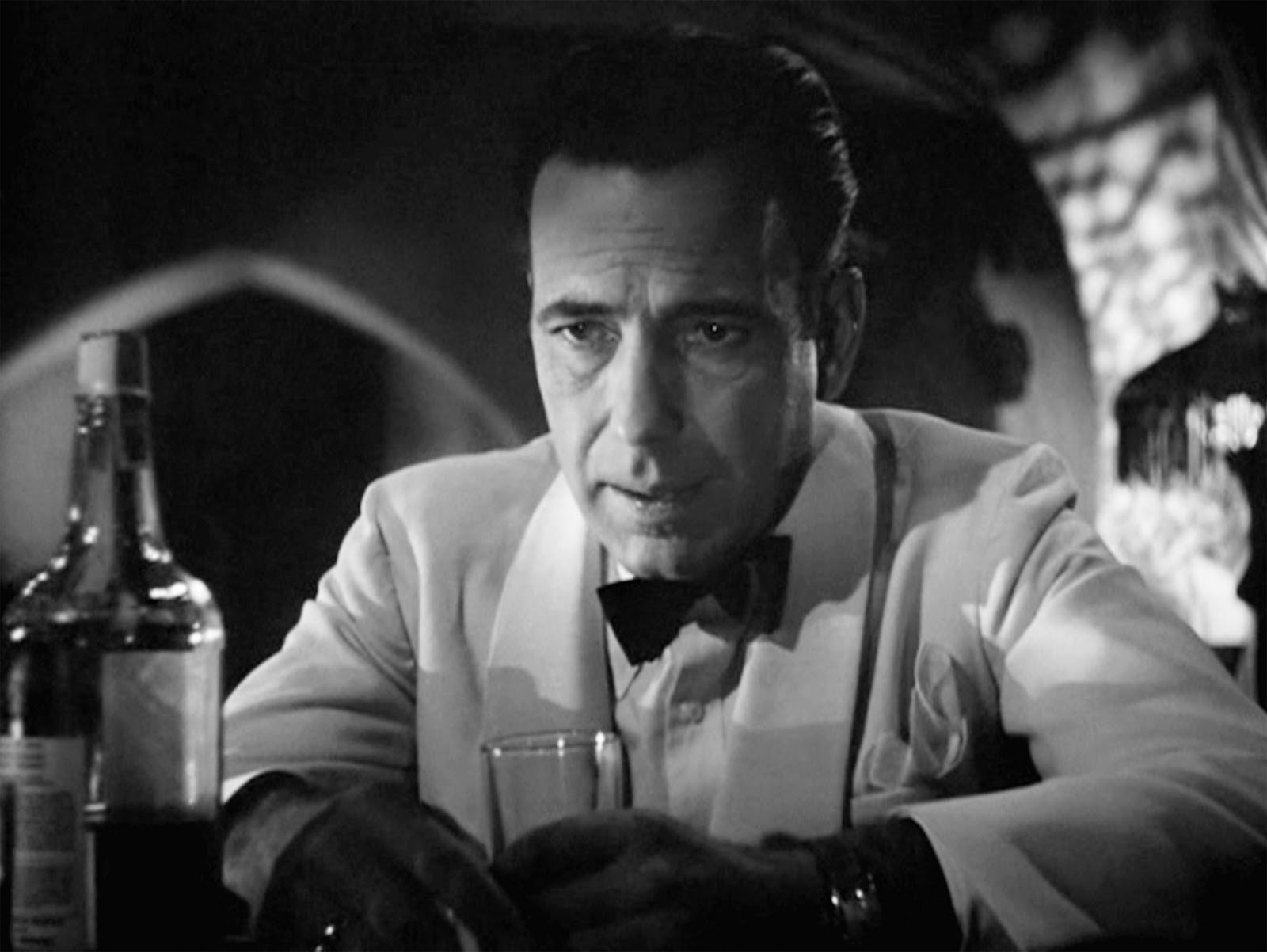
9) Rick Blaine (Casablanca)

casablanca-amargura2
It’s amazing to think that Casablanca wasn’t rapturously received in its day, given its stature now. Or that no one involved really thought they had much of a film on their hands. (Or that it was tentatively titled Everybody Comes To Rick’s; dodged a bullet there.) Of course, time changes all things, including our perception of earlier art, and the film now can expect inclusion on most lists of greatness. Humphrey Bogart found one of his most iconic roles here — as war-time bar-owner and full-time piner for lost love, his wheeling and dealing Rick has just the right touch of melancholy and savvy. He knows how to get by and his heart is firmly in the right place, but circumstances require some wriggling in the margins and that he maintain whatever face is most useful for the situation. In the end, his nobility is almost comical, but Bogart plays it straight, and so no one laughs. Instead, we just marvel at how he stayed a step ahead, and admire his common sense. He’s the kind of guy you want on your team.

10) Travis Bickle (Taxi Driver)

travis bickle
Of all the characters Robert DeNiro and Martin Scorcese have developed, Travis Bickle sticks out the most and lingers in the cultural memory. His iconic mohawk towards the end of the picture has generated a million Halloween costumes, and his “You talkin’ to me?” monologue a million bad imitations, but from the start, he’s endlessly fascinating. Bickle is filled with barely concealed loathing for the streets and the people he sees, but also with tenderness for a girl like Jodie Foster’s young prostitute, who he wants to save, and Cybill Shepherd’s campaign worker, who he tries to woo in the most anxiously, embarrassingly clueless way possible. When he finally snaps, the world has no choice but to take note. DeNiro pulls the weird trick of making us start to root for his sociopathic avenger even as we realize he’s completely out of his mind, a menace not just to the Bad Guys but maybe to everyone. Scorcese’s most unsettling film in a career often devoted to making us unsettled, Taxi Driver ends on a cynical and caustic note of thanks to its aimless, angry protagonist — an irony maybe missed by all the college students with Travis Bickle posters creepily adorning their walls. But there’s no denying the power of the performance and the greatness of the anti-hero character.


July 17, 2015 0 comments
0 FacebookTwitterPinterestEmail
FilmReviews

The Homesman, The East, the Superiority of Kelly Reichardt

by rick July 14, 2015
written by rick

The Easthomesman

It might seem odd to group The Homesman and The East together for consideration. The first is a solid but somewhat frustrating Western, with a feminist edge. The second is an embarassingly broad, largely contemptible genre picture about cartoonish, dumpster-diving eco-terrorists that consistently rings false. One is a worthwhile attempt at reinvigorating a genre; the other is exploitation of the worst sort.

I liked The Homesman; I did not care for The East. I prefer Kelly Reichardt to either. More on that in a second.

They are different films but certain things link them. Both center on a female lead who is compelled by circumstance to deal with a male protagonist with whom she shares little. Both relate her journey from a position of power, strength, and resilience to a kind of co-dependency, as she begins to take on aspects of those around her and her expectations shift. Both deal with “going back to nature,” on some level, and leaving the trappings and comforts of polite society behind. Both films are unsure whether they are about her dynamism or the roughneck, anti-hero allure of their compromised men, or desire on the margins of respectability. In both, desire proves deadly.

Tommy Lee Jones’ The Homesman is an anti-Western. Contrary to form, it features women at is center, and is specifically focused on the horrors they face. Jones’ George Briggs, rescued from a near-hanging, is enlisted to accompany Hilary Swank’s Mary Bee Cuddy and her three, damaged female charges across the Nebraska Territory to a sanitarium in the east. He only gets wrangled into this thanks to his incompetence and hated status; no one wants this job. Swank is pious and devout; Jones is wily, weary, and dissolute. Of course, it becomes, as Mike D’Angelo noted,  a buddy road trip.

A second act catastrophe stills any giggling, though it makes perfect sense. This is a world God has seen fit to abandon. Jones has agreed to transport the woen to Ohio for payment, and lays it out as clear as he can: “There’s $300 at the end. There’s nothing else.” Swank protests, but there’s the sense that even she knows he’s right. In all the long shots of setting suns across the plains, you never expect to get away. There’s open land, but there’s no way out.

In The East, Brit Marling is a government agent who infiltrates a group of anarchists. Like Swank’s Cuddy, she finds herself removed from the world she’s known. Whereas she presumably used to eat apples from the store, for instance, now she has to eat apples the store threw out. The humanity! The film seems to find this shocking, and, in a climactic scene, empowering. We are all day-off apple eaters, aren’t we. It’s mostly just boring. It is a film frantically struggling to be hip and relevant to the kids. My sympathy extends to the kids.

The East is the name of a revolutionary splinter cell, with a penchant for Dantean retribution. “Spy on us? We’ll spy on you!” says the tagline. One character’s dad, a resolute polluter, is made to bathe in polluted water, and a too-long segment revolves around the ethics of “an eye for an eye.” A pharmaceutical company gets a taste of their own medicine! Got it? Well, I’d hope so.

Brit Marling is unsurprisingly strong, but the rest of the cast is checked out, perhaps realizing how silly they sound. For long segments of the first hour, we are introduced to dumpster-diving as if it were exotic, we watch a cultish dinner in which people have to eat off plates in straight-jackets to demonstrate their commitment, and suffer through an interminable game of spin the bottle, which aims to demonstrate both the aspirations and shortcomings of polyamory and also the tribulations of being an undercover agent, and also just being shy and hot, but mainly succeeds in affirming the fact that I wouldn’t mind making out with Ellen Page and/or Alexander Skaarsgaard. Which I already knew.

As the plot proceeds, and we come to learn what new “jams” (as they insist on calling them) the dissidents have planned, it gets exponentially less involving. Marling’s non-Bureau life is dull, so it’s easy to see why she might glom onto these folks, but the stakes still feel low. The anarcho-radicals are, to a person, caricactures, as is Patricia Clarkson as her boss on the side of cynical law (she mainly wants a solid bust to boost departmental stats and career advancement). Nothing seems to have any substance or weight. Even multiple deaths don’t seem to up the ante.

I will at this point admit my profound prejudice. As Will Potter as heroically noted, the whole notion of “eco-terrorism” is a canard, and I disliked seeing it played this way. We are meant to identify with Marling’s agent against these (transparently) dangerous radicals — the fact that the they are a fiction, and no such figures have ever killed people notwithstanding. I don’t really care about the plots people dredge up — I don’t actually think throwaway narratives in shitty movies structure our lives, exactly — but this one stings, at least in part because it’s so stupid and ill-considered.

Years ago, I helped do legal work in a town preparing to host a major national political convention. Various groups were infiltrated; in fact, people later found out that those close to them had been spies. It’s deeply unsettling. One time, we drove out of a parking lot in the middle of the night with our lights turned off, hoping to elude surveillance as we transported legal documents. That’s bananas, but it happened. That’s something I bring to the movies.

So this film, which posits the state as a corrupt but ultimately stabilizing force confronted by a wellspring of activist discontent that helps it right the ship kind of hit a nerve. The filmmakers are smart enough to cover their bases, which kind of made it worse. People play banjos at jamborees, they bemoan the waste inherent in consumer culture, they speak of self-care, they do a number of things that — sorry, won’t lie — are kind of familiar. But they are also sociopathic and cultish, and the narrative organizes them as a dangerous loose end, a set of goofy aberrations to be reconciled. It’s firmly on the side of order, even if it winks that it’s not.

Which brings us back around The Homesman. After an entire narrative focused on patriarchy and the ways in which frontier cruelties zero in on women, it ends up with a man at its center. He’s a surrogate for the women he’s helped, and he’s learned a thing or two on the long road home. Good for him. Like The East, it wants to say something about how, when our choices are circumscribed, we do the best we can. But like The East, it can’t figure it out. The delivery of the women to their new home is an afterthought; we are left with the meaningless warbling of an old man on a barge, slapping his knees, and even his mission turns up empty. We are alone in the night.

Is it a brave message? The Homesman argues that the West is no place for a woman; The East argues that no one good gets out alive. In neither case is it particularly uplifting. I think Jones’ film at least centers on women in a genre traditionally skeptical of them, and it’s interesting for that reason alone. It doesn’t quite pull it off, but there are flashes of brilliance (and some incredible shots of sunsets on the prairie). I think The East is a confused film that doesn’t know what it wants to do, and ends up with a politically soppy vision of both resistance movements and state power. No one learns anything, least of all us.

I also think Kelly Reichardt made both these films already, and so much better: Meek’s Cutoff examined the lonely role of women in The West, the demands placed on them, and the unease with which men enter the scenario and give directions; Night Moves remains the best examination of radical conviction and humanistic doubt around, a film in which the pivotal event is a muffled echo a long way away and its consequences all too close.

Neither of these films come close to hers, but then few do. Let’s all go watch Kelly Reichardt. Watch The Homesman if you like Westerns, and especially if you like the Beady Small Eyes of Tommy Lee Jones. Just skip The East. Your time would be better spent liberating animals, please and thanks.

July 14, 2015 3 comments
0 FacebookTwitterPinterestEmail
FilmGreat Movies: The Counter ProgrammingReviews

The Impressionistic Melodrama of Teinosuke Kinugasa’s Crossroads (Jujiro)

by rick July 11, 2015
written by rick

The term “melodrama” gets a bad rap these days, implying artificially heightened emotions and stagy, contrived narratives, but few genres or tendencies have held such continuing appeal over time. In the silent era, these were more the norm than the exception, and Teinosuke Kinugasa‘s Crossroads (1928) shows this to be as true in Japan as anywhere else in the film-making world.

Crossroads (sometimes translated as Crossways or Slums of Tokyo; the original title is Jûjiro) is a “weepie,” to be sure, but a fascinating one. Rikiya and his sister Okiku live in the Red Light District of 18th c. Edo, struggling to get by. Or rather, she struggles, mending clothes and performing odd jobs to keep the two of them afloat. Rikiya spends most of his time in town, infatuated with the courtesan O-ume. Unfortunately, O-ume is both desired by every other man in town, including some very powerful ones, and also treacherous and vain. Figuratively blinded by a distinctly pathetic version of schoolboy love, he ends up squaring off with one of her paramours and is literally blinded from ashes thrown in his eyes. His helplessness only increases the burden on Okiku.

Teinosuke Kinugasa's Crossroads (1928)To make matters worse, he believes he’s killed the rival suitor, placing both him and his sister in a precarious position. As he holes up in their apartment and she tries to negotiate these dangerous waters, the world impinges on them both. Kinugasa finds shadows even in the darkness they live in, which is occasionally near-total. There is little light, and little hope for redemption. All the figures in the story either want something from Okiku or strategize how to best exploit Rikiya’s situation. This is an unforgiving world that punishes people for having the temerity to fall in love.
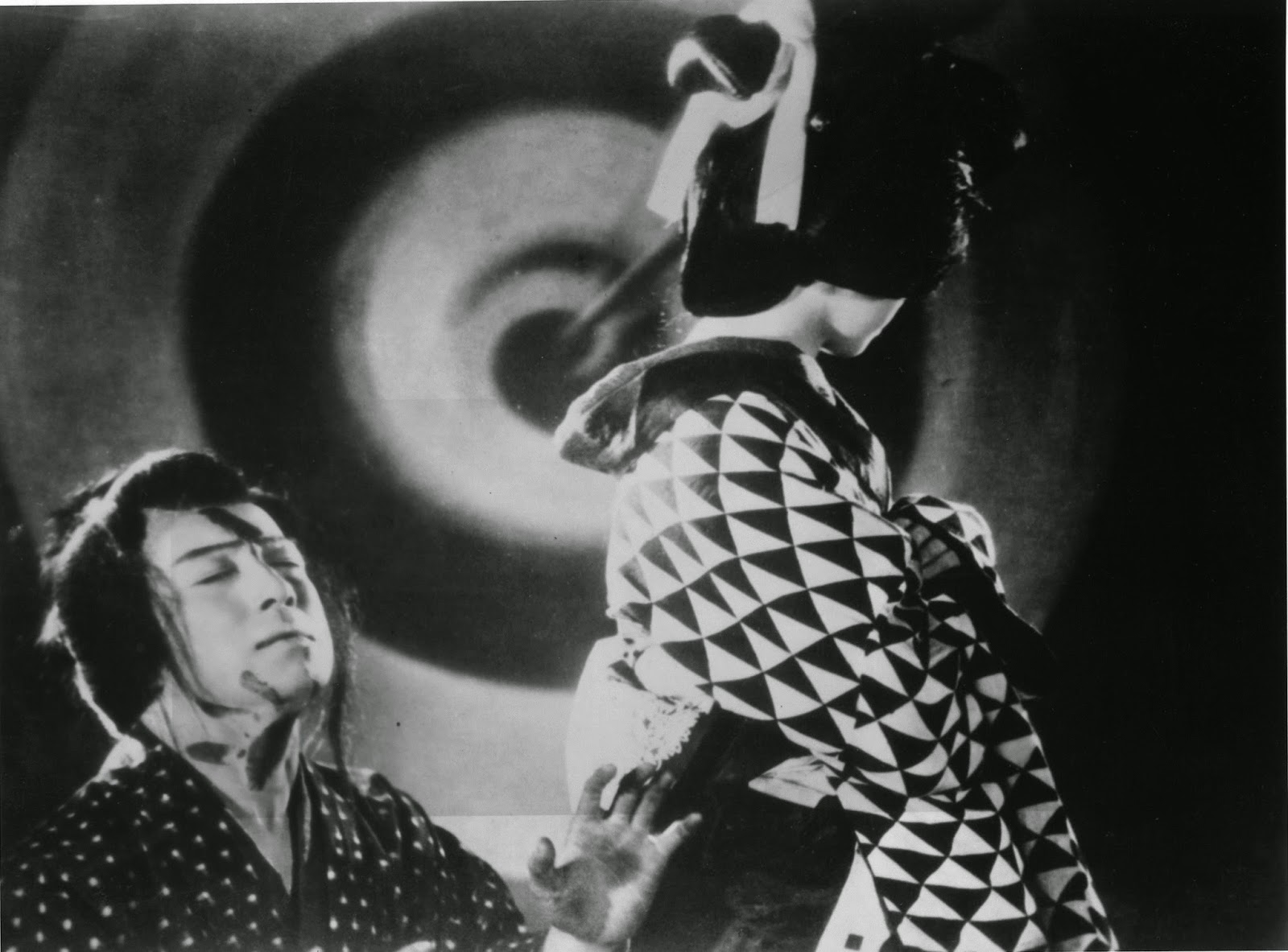
On the other hand, Rikiya makes pretty awful choices all along the way, and the rigid gender structures (not to mention his unquestioning belief that his sister ought to be supporting him) make him a bit hard to root for. That may just be imposing a modern sensibility on an old film looking back on an even older age, but it can’t be ignored. When he collapses in tears upon being challenged for his lover’s hand, he makes for a particularly pathetic and useless figure, especially compared to his stoic sister, who actually tries to solve problems and take care of things on the day to day.

Teinosuke Kinugasa's Crossroads (1928)In the end, it doesn’t matter. In classic melodrama fashion, the facts of the world are immovable and the choices that have been made irrevocable. Things are headed for a fall from the start. In the meantime, though, Kinugasa fills the frame with impressionistic touches that put us fully in the place of the characters. Some are pretty bold — he deploys superimpositions and double exposures and a spinning camera, turning wheels and rotating lanterns as motifs. Crossroads flashes back and forward with ease, emphasizes the rush of memory through quick cutting, and fades to bright lights and what seems to be falling snow to indicate wounded eyes struggling to come into focus. The decision to position us in individual characters’ points of view, visually, is an unusually evident stylistic choice for 1928.

There are several touching scenes between the brother and sister as she nurses him back to health. There’s a sense that family provides the only solace in a world marked by cruelty, rapaciousness, and greed, though this glosses over the fact that he’s as reckless as she is faithful. Still, as in all good melodrama, you hope things will work out for these people, even as you become more and more certain they simply can’t.

From a historical angle, and from the vantage point of this series, Crossroads is also interesting as an example of the collision of early cinema and regional stage conventions, in this case kabuki. Kabuki is no stranger to notions of heightened emotion and exaggerated behavior, and I wonder to what degree silent films played differently for Japanese audiences than they may have for others. I don’t have any idea, but it’s a thought that kept bouncing around throughout the film — the characters are archetypes even more than they would’ve been in many Western films of the period, and perhaps this fits in with particular cultural expectations of art. (Kurosawa’s Throne of Blood springs to mind, a Macbeth stripped of individual characterization and writ large.) At no point in Crossroads does anyone bother to provide a back story — we never even find out why Rikiya and Okiku are in such desperate straits, or where the rest of their family is (though Okiku states her brother is “all she has”). It’s as though Kinugasa is simply saying, “This is how things are.”

Still, the fundamental techniques of the silent film that Kinugasa uses tend to neutralize this sense — the close-ups are luminous, the motivations of the individuals (particularly Okiku) clearly delineated and felt, and the overall sense seems closer to modern, small-scale tragedies than epic, ancient portrayals of larger-than-life people and the collapse of order. With all the cinematic techniques he could muster, Kinugasa finally tells a personal, sad story of life on the margins, and how some people just can’t catch a break.

Part of an ongoing effort to watch a set of films from non-White, non-U.S., non-male, and/or non-straight filmmakers and depart a little from the Western canon. The intro and full list can be found here.

Next up: Mario Peixoto’s Limite.

July 11, 2015 0 comments
0 FacebookTwitterPinterestEmail
Newer Posts
Older Posts

About

About

Towards a provisional theory of the cinema, or, failing that, just some shit about movies

Authors
Rick Kelley
Lark Lundberg

Keep in touch

Facebook Twitter

Categories

  • Conversation
  • Film
  • Film By Film
  • Great Movie Project
  • Great Movies: The Counter Programming
  • Guest
  • News
  • Other
    • Commentary
    • Film
    • Interview
    • Reviews
    • Song for a Sunday
  • Streaming Selections
  • TV
  • Uncategorized
  • Vegan Horror

Archives

  • April 2019
  • March 2019
  • January 2019
  • December 2018
  • November 2018
  • October 2018
  • September 2018
  • August 2018
  • July 2018
  • June 2018
  • May 2018
  • April 2018
  • March 2018
  • February 2018
  • January 2018
  • December 2017
  • November 2017
  • October 2017
  • September 2017
  • August 2017
  • July 2017
  • June 2017
  • May 2017
  • April 2017
  • March 2017
  • February 2017
  • January 2017
  • December 2016
  • November 2016
  • October 2016
  • September 2016
  • August 2016
  • July 2016
  • June 2016
  • May 2016
  • April 2016
  • March 2016
  • February 2016
  • January 2016
  • December 2015
  • October 2015
  • September 2015
  • August 2015
  • July 2015
  • June 2015
  • May 2015
  • April 2015
  • March 2015
  • February 2015
  • January 2015
  • December 2014
  • November 2014
  • October 2014
  • August 2009
  • September 2008

Recent Posts

  • China Girls, Death Proof, and the Hidden Face
  • Old News: Old Noise Edition
  • Old News: April 1, 2019
  • Nicolas Winding Refn, Marginalia, and the Deaths of Cinema
  • And now, let us praise Kanopy

Recent Comments

  • Franklin Kat on Michael Shannon shines again in Frank & Lola
  • Sean Tempesta on Cinema and dream-logic in Meshes of the Afternoon
  • ludditerobot on The Left-Wing Slapstick and Iconic Songs of 1937’s Street Angel
  • Franklin Kat on The Left-Wing Slapstick and Iconic Songs of 1937’s Street Angel
  • Arijit Mukherjee on Great Movies Project: The Counter-Programming
  • Facebook
  • Twitter

@2021 - All Right Reserved. Designed and Developed by PenciDesign


Back To Top
Luddite Robot
  • Reviews
  • Commentary
  • Great Movie Project
    • Great Movie Project
      Bride of Frankenstein is a movie for and…

      January 25, 2018

      Great Movie Project
      The Enduring Appeal of Nick and Nora in…

      November 29, 2017

      Great Movie Project
      The Ahistorical Fever Dream of The Scarlet Empress

      August 2, 2017

      Great Movie Project
      Dreams, Mundanity, and the Anarchist Yearnings of L’Atalante

      July 12, 2017

      Great Movie Project
      Duck Soup Is And Will Always Be A…

      April 19, 2017

  • Counter Programming
    • Great Movies: The Counter Programming
      Walking and Talking in the Shadow of Kanchenjungha

      March 7, 2018

      Great Movies: The Counter Programming
      A Brief Encounter in My Mother and Her…

      February 9, 2018

      Great Movies: The Counter Programming
      Horror’s Refusal in Farrokhzad’s The House Is Black

      October 13, 2017

      Great Movies: The Counter Programming
      The rage and beauty of The Cloud-Capped Star

      October 3, 2017

      Great Movies: The Counter Programming
      The daylight noir and social issue empathy of…

      June 22, 2017

  • Vegan Horror
    • Vegan Horror
      Julia Ducournau doesn’t think her film Raw is…

      June 7, 2017

      Vegan Horror
      Licking our wounds: The vampiric masculinity of Ravenous

      December 13, 2016

      Vegan Horror
      Eggertsson and animals: An approach to horror cinema

      September 15, 2016

      Vegan Horror
      “It’s Not My Nature” – Vegetarianism, Body Horror,…

      August 30, 2016

      Vegan Horror
      Bodies and Carcasses in Predator 2

      August 23, 2016

  • Interview
    • Interview
      Jasmine Leyva’s doc The Invisible Vegan aims to…

      May 3, 2017

      Interview
      Bridging The Abyss: An Interview With The Directors…

      November 28, 2016

      Interview
      7 Days in Ohio: An Interview with Nathan…

      September 12, 2016

      Interview
      Film Critic Phil Dy talks New Filipino Cinema

      June 17, 2016

      Interview
      “I Love Seeing Film Projected.” A Conversation with…

      March 22, 2016