Top Posts
Madeline’s Madeline: An Unclassifiable Panic Attack Maybe-Masterpiece
Shoplifters Steals Moments of Wonder from the Mundane
Burning and Forgetting What’s Not There
Kusama: Infinity Expands Beyond The Canvas
Mandy Risks Little, Wins Little
In We The Animals, The Children Are Away...
The Seagull Isn’t Quite Chekhov, But It’s Still...
5 Million Ways Boots Riley Isn’t Sorry To...
American Animals’ and the Queasiness of the Heist
A Star Is Born In Hearts Beat Loud
  • Reviews
  • Commentary
  • Great Movie Project
    • Great Movie Project
      Bride of Frankenstein is a movie for and…

      January 25, 2018

      Great Movie Project
      The Enduring Appeal of Nick and Nora in…

      November 29, 2017

      Great Movie Project
      The Ahistorical Fever Dream of The Scarlet Empress

      August 2, 2017

      Great Movie Project
      Dreams, Mundanity, and the Anarchist Yearnings of L’Atalante

      July 12, 2017

      Great Movie Project
      Duck Soup Is And Will Always Be A…

      April 19, 2017

  • Counter Programming
    • Great Movies: The Counter Programming
      Walking and Talking in the Shadow of Kanchenjungha

      March 7, 2018

      Great Movies: The Counter Programming
      A Brief Encounter in My Mother and Her…

      February 9, 2018

      Great Movies: The Counter Programming
      Horror’s Refusal in Farrokhzad’s The House Is Black

      October 13, 2017

      Great Movies: The Counter Programming
      The rage and beauty of The Cloud-Capped Star

      October 3, 2017

      Great Movies: The Counter Programming
      The daylight noir and social issue empathy of…

      June 22, 2017

  • Vegan Horror
    • Vegan Horror
      Julia Ducournau doesn’t think her film Raw is…

      June 7, 2017

      Vegan Horror
      Licking our wounds: The vampiric masculinity of Ravenous

      December 13, 2016

      Vegan Horror
      Eggertsson and animals: An approach to horror cinema

      September 15, 2016

      Vegan Horror
      “It’s Not My Nature” – Vegetarianism, Body Horror,…

      August 30, 2016

      Vegan Horror
      Bodies and Carcasses in Predator 2

      August 23, 2016

  • Interview
    • Interview
      Jasmine Leyva’s doc The Invisible Vegan aims to…

      May 3, 2017

      Interview
      Bridging The Abyss: An Interview With The Directors…

      November 28, 2016

      Interview
      7 Days in Ohio: An Interview with Nathan…

      September 12, 2016

      Interview
      Film Critic Phil Dy talks New Filipino Cinema

      June 17, 2016

      Interview
      “I Love Seeing Film Projected.” A Conversation with…

      March 22, 2016

Luddite Robot
Film critique, theory, and assorted nonsense.
CommentaryFilm

China Girls, Death Proof, and the Hidden Face

April 14, 2019

Old News: Old Noise Edition

April 8, 2019

Old News: April 1, 2019

Nicolas Winding Refn, Marginalia, and the Deaths of Cinema

CommentaryFilm

And now, let us praise Kanopy

January 24, 2019

Warren Sonbert and the Relief of Anti-Narrative

January 14, 2019

The World Is Ending and It Doesn’t Matter

The Best Films of 2018

FilmReviews

Madeline’s Madeline: An Unclassifiable Panic Attack Maybe-Masterpiece

December 21, 2018

Shoplifters Steals Moments of Wonder from the Mundane

December 11, 2018

Burning and Forgetting What’s Not There

Alien, Musicology, and Reading Soundtracks

CommentaryFilm

Shocktober III: Halloween 2018 Edition

October 24, 2018

Shirley Jackson’s The Lottery Traumatized Schoolkids in 16 mm

October 18, 2018

Shocktober 2018 II: Another Reshockening (of Horror)

Häxan is a movie made by a movie character

CommentaryFilm

Shocktober 2018

October 7, 2018

Unprofessional! Spring Night, Summer Night

October 3, 2018

The Wild Boys: A Luddite Robot Conversation

Kusama: Infinity Expands Beyond The Canvas

CommentaryFilm

The Dissolve – An Awkward, Sincere Eulogy

by rick July 8, 2015
written by rick

So The Dissolve called it quits today. This is a shame. During its two-year run, it was the go-to place for smart, insightful, hilarious film writing. Its team of writers will go on to do more awesome stuff, to be sure, but it’s still a bummer for those of us who read it regularly.

More than any other place online, it fostered a sense of community among its commenters. I think this wasn’t an accident: the generosity in the commentaries of its editors and writers, the wide range of films they featured, the sense of open discourse they encouraged … these all help generate genuine discussion, debate, and camaraderie. The sense was that we were all in it together, trying to figure out how these things work and what they mean. And they paired it with extensive news round-ups, worthwhile outbound links, deep dives into individual films, and fun, engaging compendiums. I don’t know how it could be done better, at least to my taste. (Oh, and the podcast is great, go listen to it.)

There’s a lot more to be said about the whole situation, and about the economics of online journalism, but I’m not the person to do that. I’m mostly grateful that it existed in the first place, and, spurred on by another commenter, I list a few reasons below.

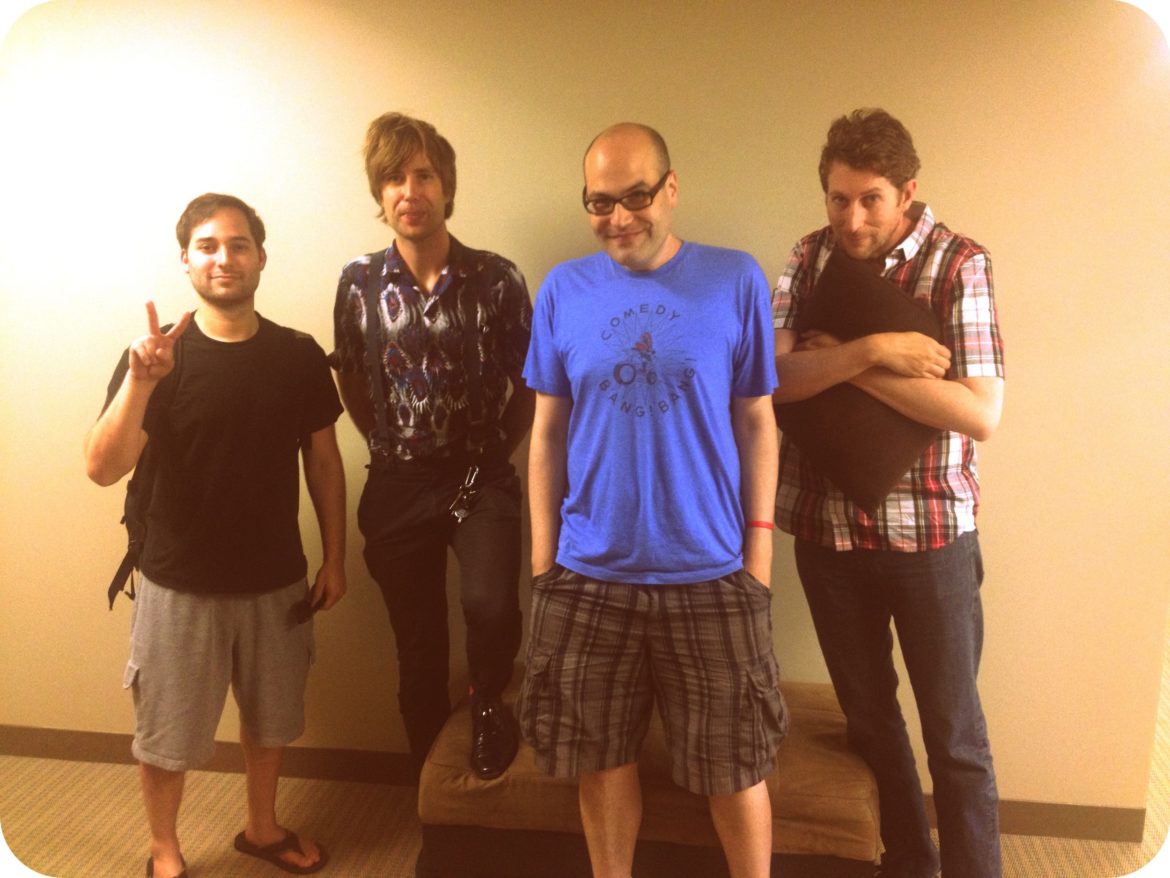
That’s fitting. The Dissolve served as a platform for some of the most talented critics around — Slate rounds up some highlights — but a big part of my takeaway is the curious community that came out of it, in the internet’s most awesome comment section.

Even right now, people are self-organizing little pockets of discourse and debate; from the start of my involvement, I admired how people created and negotiated different tangents, and how much passion was behind it. I hope things come around full circle, and this work that has meant a lot to people can continue; failing that, I hope that all the freelancers get their due. In the meantime, it’s heartening to see how eager folks are to connect.

The Dissolve filled a niche and was meaningful. I guess it’s up to us now.

My Dissolve Story —

I am an inveterate website lurker. Aside from the occasional, extremely specific forum related to work or activism, I’ve always shied away from commenting at all. Part of this has been a general, not particularly interesting shyness and reluctance to debate (“I don’t really wanna get into a whole thing and shit, I mean, whatever, it’s the internet”); part of it has been just being overwhelmed, as others have said, when confronted with a 738 comment thread I happened upon, even if I did have what seemed a worthwhile insight or funny joke; and part of it has been the feeling that other people are a) so closely linked in their referential discourse and Simpson’s jokes I have to look up that it would be pointless, and b) anything I might have to say has almost certainly been said, far better, by someone else way down in the mix. So I’d read and chuckle and nod approvingly and get annoyed, but generally just assume there wasn’t much of a reason to chime in.

I came to The Dissolve because I like movies, and like Rabin’s writing. I don’t really play video games or watch tv or read comic books, so it was always movies I was there for in the first place. The idea of a great collection of writers focused solely on film was like a present, so I dutifully lurked, as is my wont. But reading through the comments, it became immediately apparent that something else was going on here. The sincerity of the posts, the way people expressed themselves respectfully but still mixed in legitimately hilarious and nerdy jokes (that I got! sometimes!), and the overall genial vibe that pervaded the discussion was different. So eventually, I spoke up about something or other. To my surprise, I felt like I just slid into the conversation, rather than being an ignored outlier or, worse, dismissed. This never happens, not online anyway. I felt like I got to know different voices and different personalities in legitimate, fascinating back-and-forths, and the contributors chimed in, too. It just felt so fucking approachable.

I actually started writing about movies in the last little bit or so simply based on the confidence I found in these discussions. That there’s validity to your viewpoint and you can approach things without tearing them down, but just to engage with them, see how they work, invite others to agree or disagree without it turning into some nasty or cynical endeavor to show how smart you are. That’s been really valuable to me and added a lot to my life. Plus, both Dissolve posts/articles and you folks in the comments have steered me toward all sorts of things I might’ve missed, and encouraged me to take film more seriously. I’m now like reading books about early film history, reading biographies, seeking out one-week runs of restored classics, and so forth.

The entire thing has brought me a lot of joy, and I really appreciate it.
July 8, 2015 2 comments
0 FacebookTwitterPinterestEmail
FilmReviews

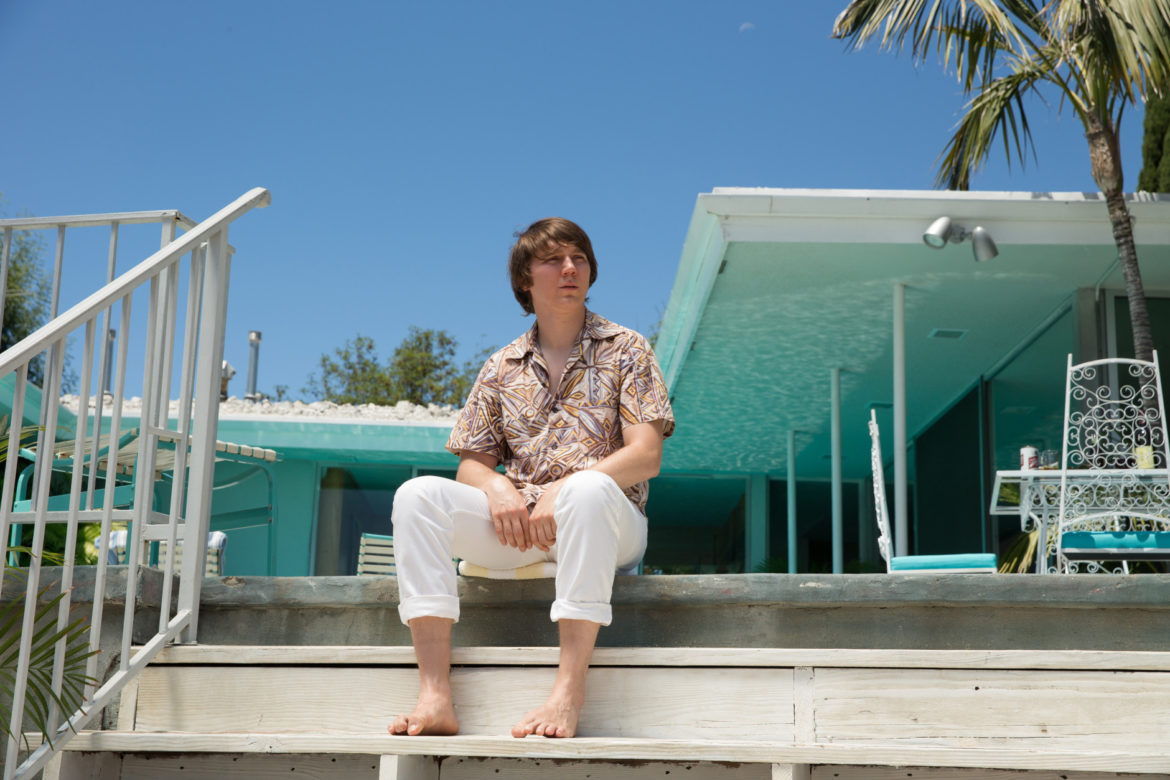
Love and Mercy, or: how not to make a biopic, in 5 easy steps

by rick June 23, 2015
written by rick

Love & Mercy is a bad film made with the best of intentions.

It has been championed by various critics and has its fair share of blurb-ready accolades, but, with all due respect, those people are mistaken. To its great credit, however, it provides an opportunity to examine exactly why the biopic is such a toxic, unpleasant, and inherently ridiculous affair.

Love & Mercy is about Brian Wilson of The Beach Boys, and its running time is pretty evenly divided between the recording of the band’s (arguably) pivotal record Pet Sounds and Wilson’s sad later life, after his manipulation by those close to him and his own mental illness extracted a terrible toll. Director Bill Pohlad and writers Oren Moverman and Michael A. Lerner hope to find some meaning in the disparity between the two, and the downward slide that unites them.

They do not succeed.

Instead, they lay out ways not to make a biopic. Here are five.

  1. Assume your audience is deeply invested in your subject

You simply cannot enjoy Love & Mercy if you do not enjoy the music. The filmmakers’ do a good job of showcasing the act of musical creation during the Paul Dano segments, but this can only take you so far. There’s an assumption that John Cusack, as the older Brian Wilson, is inherently tragic, but this presumes you know the story and care about the Beach Boys. Otherwise, Cusack’s just some twitchy dude who maybe used to surf. Emotional investment shouldn’t be a given.

  1. Split your narrative between a compelling young actor and a sad old man

Many of the film’s boosters seem to enjoy the fact that the narrative leap-frogs back and forth between young Paul Dano in the studio and in love, and old John Cusack hiding out at home, being a shadow of his old self. I found it distracting. In fact, each individual plotline made me wish we were back with the other guys; then we got there, and I remembered that also sucked. It’s not the kind of thing you want to call attention to.

  1. Include on-the-nose musical cues, especially in a film about music

Paul Dano soldiers on heroically through this movie, which is far beneath him, but not even he can carry the scene in which he writes “God Only Knows.” Pohlad’s montage is embarrassing, and we are so aware of the fact that we are watching a movie. It begs for Tom Servo to crack a joke. (To be fair, the sound design itself is one of the film’s most recommendable features. It sounds great, even as it insults you.)

  1. If you can, find a way to state the point of a scene in the most expository way possible

I admit, I was already tending towards officially dissatisfied with this film by the time the band went swimming, but even at this point, I was unprepared for the silliness. Brian Wilson, genius, is in the deep end; the rest of the band, sub-genius, are not. He beckons them to come out. Someone says, “We can’t go in the deep end, Brian. I guess we’re too shallow.” It was at this point I started to hate Love & Mercy.

  1. If you can find one tyrannical father figure, surely you can find two

The Wilson kids’ early life is characterized by their exploitative father, and Brian’s later life is circumscribed by the weirdness of his diabolical manager cum guardian Dr. Eugene Landy, played by Paul Giamatti in a predictably impressive performance (with a head of hair that is as striking as his awfulness). That is interesting, and speaks to the ways Wilson engages with the world. There’s a whole story there, waiting to be told. This movie does not really tell that story, any more than this paragraph did. It’s a bummer.

Brian Wilson is a fascinating person, and deserves something better than this business – something that takes into account the times, the context, the rivalries, the mania. There are flashes in Love & Mercy when it seems like a different movie might be taking hold, but it never does. It’s not enough to jump between promising youth and paranoid adulthood, and occasionally play a catchy tune. You have to give people a reason to care. Love & Mercy never does, and it feels like a squandered opportunity.


June 23, 2015 0 comments
0 FacebookTwitterPinterestEmail
FilmReviews

The grand, personal sweep of the Apu Trilogy

by rick June 20, 2015
written by rick

There are dozens upon dozens of indelible moments in Satyajit Ray’s Apu Trilogy that could be held up as emblematic of the glorious whole, its empathy and gentle wisdom. The three films – Pather Panchali (1955, and filmed over the course of the previous four years), Aparajito (1956), and The World of Apu (1959) – are awash in masterful touches, perfectly framed and naturalistically performed scenes, psychological depth, and haunting beauty.

And yet, in isolation, such moments will always fail to convey the trilogy’s sweep and cumulative impact. Like life itself, these films are more – much more – than the sum total of seconds which constitute them. And like life itself, they need no real argument. They exist, in all their ineffable wonder, because they had to.

The films trace the impoverished childhood, conflicted adolescence, and complicated adulthood of Apu, the son of an itinerant priest raised mainly by the women in his life. Pather focuses on his early years and life in a Bengali village (the title is translated as “Song of the Little Road,” presumably referring to the only way in or out of town). His childhood is marked by tragedies great and small, but Ray is in no hurry to exaggerate or over-emphasize – as an audience, we spent much of our time simply coming to know and love the characters, watching their daily routines, listening to the gossip, bristling at the unfair allegations casually whispered here and there, and sharing in their struggles.

apu5

For Apu, this is largely a wonderful time, though the adults would surely beg to differ. He has run of the forest, interesting people abound, he’s swathed in unconditional love and provided the occasional meal, even the rare treat. Time is marked by natural cycles, and less natural ones, like the arrival of Chinibas, the Sweets Seller. It’s a grand adventure to set out alone with his sister to see a train firsthand. Ray and his (henceforth) longtime cinematographer Subrata Mitra pay as much attention to tall grasses and the ubiquitous animals as they do to their characters; in some sense, the place is itself the star of Pather Panchali, this “home” they share, these facts of the world eclipsing the contingent people who flesh them out. On the other hand, this poeticism never loses sight of the narrative that drives it.

The first film closes with the family setting out for a new, precarious life, away from the father’s ancestral land, where things haven’t gone well, sadly. The second one, Aparajito (The Unvanquished), opens in Calcutta, which is a world away from the little village we’d known. The streets bustle and teem with life, and the pace has changed. Apu has aged a few years, and is now more interested in palling around with the city boys than sticking it out at home with the grown-ups. This only becomes more true after still more tragedy befalls the family, and they must relocate yet again.

A glimmer of hope appears in Apu’s unexpected aptitude for schooling (unexpected, at least, by some). He steadfastly fights his way into school, despite the expense and the fact that he should, in his mom’s initially more pragmatic view, follow in his dad’s priestly footsteps and make a living in the short-term to support his kin. He does so, but sensibly argues that he can balance both work and education. His natural inquisitiveness, so subtly evoked in Pather, takes the form of intellectual curiosity, and he wins a scholarship. Soon, he’s off to college, abandoning not just the provincial life he’s come to resent but those who made his survival possible.

apu6

It’s one of Ray’s boldest, truest gestures as a director and screenwriter (adapting a famous and popular novel by Bibhutibhushan Bandyopadhyay). The adorable child of Pather Panchali isn’t exactly cuddly as he grows up, but he’s instantly recognizable. He has his own ambitions, his own desires, and they are all easy to understand; at no point is he ever actually unsympathetic, and the transition from the wholeness of youth to a rebellion against all that he feels ties him down is painfully believable. But it is impossible to watch his adolescence in Aparajito, and the particular arrogance it shares with so many of ours (mine, anyways), and not actively wish he’d wise up. But then we might feel the same way if someone happened to capture ours on film, and most of us didn’t wise up either, at least not at 17. Aparajito is not a documentary, but it sure feels like one at points. Similarly, his smothering, long-suffering mom is never less than fully realized, even if she’s often less than fully justified in her individual actions. But who is? These are real people living real lives, and they are deeply, wonderfully, sadly imperfect.

We close with The World of Apu, catching up to our protagonist as a grown man. He accidentally happens into a marriage, with all the joy and sorrow that can bring. He’s struggled to become a writer and has had to deal with enormous setbacks and failures, but this marriage proves a solace to him, a new sense of human connection that he’d gone so far out of his way to avoid since childhood.

apu4

The wide-eyed boy and the smartass teen have coalesced into a kindhearted but ultimately dissolute man – there’s the sense of lost promise, and long-delayed, never-realized passions. He’s charming but sad, and he’s lost a lot over the course of these films of his life. In one of the great endings of all time, he persuades the young son he abandoned to join him on the next adventure by promising to take him to “his father” in the big city – though the child seems to know, on some level, they are playing a game. The trilogy ends with a hope for human connection founded on illusion, which, not coincidentally, could describe the art of cinema itself.

The story of the films themselves is well known, but worth repeating. Pather Panchali was Ray’s first film – allegedly, he’d never held a camera. The “actors” were never screen-tested, the film was written largely on the fly, and shot on location in 16 mm. Rapturously received at Cannes, Venice, and Berlin, trumpeted by Truffaut and others, it became the first true international arthouse hit, and Ray, who’d never intended a sequel, basically had to make two more to satisfy audience demand. (There’s more than a little of The 400 Blows in Ray’s evident allegiance to his young prodigy protagonist.)

His progression as a filmmaker is clear throughout the trilogy, but there’s still a beauty to the first that only comes from a place of love, not expertise. It’s tempting to call it naïve art or something similar, except there’s little amateurism to be found, despite it being a textbook definition of an amateur production. The shots are luminous and the sense of place is palpable, to the point where one starts to doubt the official story. There is little exposition, and no condescension. If the other two suffer a bit by comparison, it’s only the unfortunate consequence of expectation. Pather Panchali is one of the true originals in cinema history. The remainder of the trilogy accomplishes every one of its goals.

I feel fortunate to have been able to see the newly restored version of the trilogy, screened in 4K at a theater during a weeklong run. If you can do the same, do so. I’d seen Pather Panchali years ago for the first time and was moved; I saw a better version last year and was struck by how contemporary it suddenly felt; I watched this version and it was a revelation. The original prints were catastrophically burned in a fire two decades ago, and Criterion and Janus performed their standard, bewildering magic to try and fix this, through use of negatives and other such technical business I barely understand. The original score by the then-unknown Ravi Shankar is included.

Roger Ebert famously declared cinema “an empathy machine,” a point some have had issues with over the years. But I think this is exactly the sort of film he had in mind. I was struck by the fact that, like Apu, I also know what it is to come home to a home that was never yours – in the best of times, many of us do, and in times of economic uncertainty, perhaps most of us do. So with Apu: he doesn’t return to the village of Pather – it’s never seen again, in fact. He returns to new homes, to various versions of the new normal, but their relation to bucolic childhood is tenuous at best. Time moves on; we move on. “Home” itself is a relation more than a place, but the sensuousness of childhood always agitates against this truism – the wind and water, the full house, the generations living together, the magic of that time. We grow out of it, not away from it, and may spend a lifetime trying to reconstruct its innocence and wholeness. We inevitably fail, and so forge our lives the best we can instead. (Of course, this is a particular vision of a particular variety of childhood, one in which joy and pain are doled out in equal measure. Not everyone is so “lucky,” if that’s the word. But like Linklater’s recent Boyhood, the film doesn’t need to apologize for not being everything to everyone. It’s a snapshot, and a true one.) You do not need to have grown up impoverished in a Bengali village to relate to the longing for connection, meaning, and beauty.

In Aparajito’s opening moments, I found myself inexplicably on the verge of tears. Simply recognizing the father was enough to cause a lump in the throat. It was only two days prior that I’d seen Pather but I realized right away what it was – I was happy to be back in this world. It was like seeing old friends – not any old friends, but my old friends. All the emotional swell of their lives returned full force in moments, in small figures and smaller gestures. The deeply unsure of aspect of Pather’s ending was at last resolved, in Aparajito, into this: “So, you made it, then.” A remarkable thing – the pacing, characterization, mood, and narrative of the first is so languid and seductive, it sneaks up, and you don’t notice your profound investment until it’s too late to shrug off.

Then you walk outside, back in your place and time, and promptly leave behind the chirping birds, lily pads fluttering in the breeze, adventures in the woods, the small material stakes of a child’s world and their looming counterparts among the anxious adults who want mainly to shield and protect, and the bickering, the play, the sorrows that don’t have names yet. But as the second starts, it floods you, and you realize you’ve missed these places and these people, the ones who’ve survived and the ones lost to time and chance. I don’t know if I’ve ever started weeping 30 seconds into a film before.

By the time Apu and this lost child of his own walk off together in the closing frames of The World of Apu, in an agreed-upon fiction they both find necessary, there’s virtually nothing left to say, and no reason to say it. It’s all on the screen. This, as Ebert concluded, is what cinema can be.

June 20, 2015 0 comments
0 FacebookTwitterPinterestEmail
Satyajit Ray's The Big City
FilmReviews

The Women Are Coming: Mid-Century Indian Feminism in The Big City

by rick June 14, 2015
written by rick

The Big City, Indian master Satyajit Ray’s deeply feminist and empathetic 1963 depiction of a changing Calcutta, is nearly perfect in every way.

With nuanced performances, especially from the luminous Madhabi Mukherjee as Arati Mazumder and Anil Chatterjee as her wry, conflicted husband Subrata (Bhambal), and an effortless sense of place, custom, and the economic pressures that challenge tradition, the film is an utterly absorbing experience, by turns uplifting and heart-rending. It draws from both melodrama and neorealism, creating something entirely unique – an honestly felt love story about family, freedom, and the hope for a better day against continually crushing odds.

Ray exploded onto the scene a decade prior with Pather Panchali, often considered the first international arthouse hit. The influence of that film, the first in Ray’s Apu Trilogy, is hard to overstate, if its long list of vocal admirers is any indication (François Truffaut, Abbas Kiarostami, and Wes Anderson among them). Characterized by subtle textures, a languid pace that matches that of the village in which they are set, and naturalistic performances, they were immediately recognized as masterpieces of cinema.

Satyajit Ray's The Big CityAt the start, The Big City shares much with his earlier work. We open in the Mazumder house in Calcutta, which is small but warm, and filled with life. Subrata and Arati give the immediate sense of a loving couple, his teasing eliciting knowing smiles and slight sarcasm as they start their day. His sister lives there as well, also receiving her fair share of teasing, while the youngest child plays games off in a corner, occasionally piping up with something adorable. Subrata’s parents also live here – the house seems full but happy.
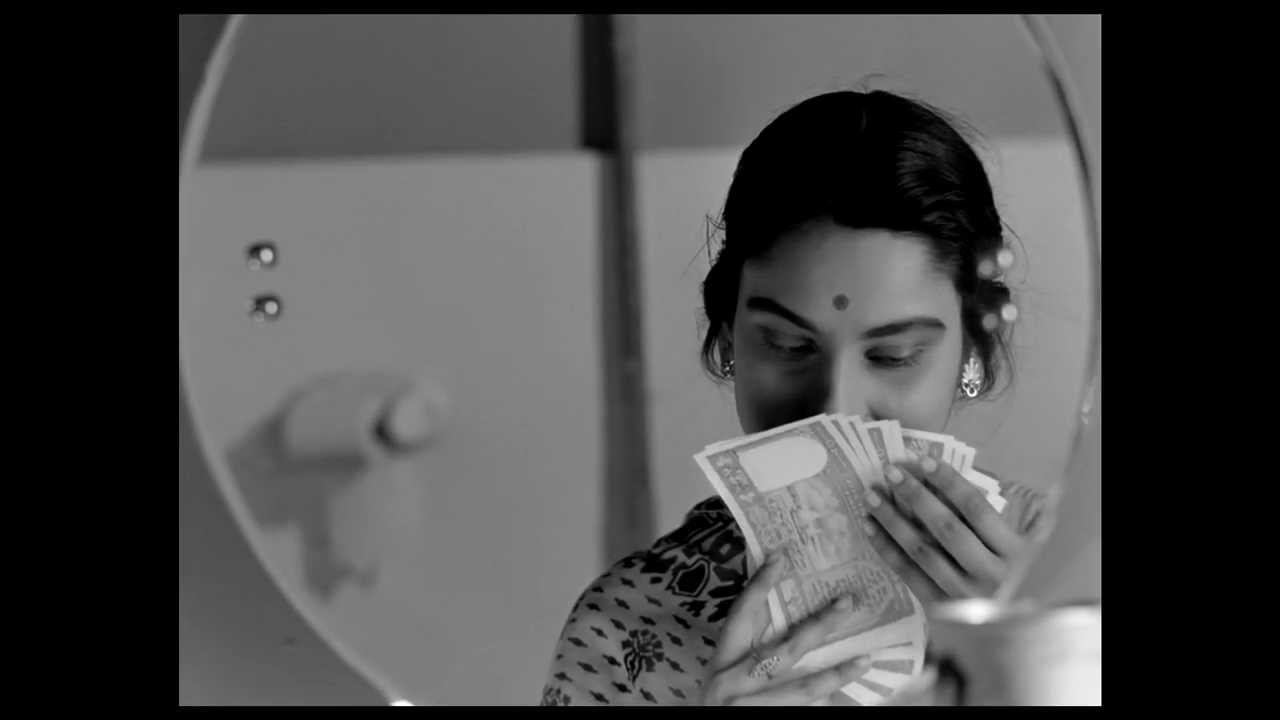
In a wonderful touch, the camera often remains stationary as people come and go through what seems an endless series of doors, popping in to add to the conversation or just on their way elsewhere. The effect would be stage-like except for how gorgeously it is shot, and eventually the camera does track them in turn through the house, becoming more reminiscent of Altman or early Linklater than the theater. It’s quintessentially cinematic, but also understated. There’s no rush, and the audience feels like their getting a glimpse into real lives.

Eventually, the story kicks into gear. Subrata works at a bank but money is tight. There is food for three days, but no one seems too concerned about this – it seems there is also enough money for three days. Plans are made for months down the line, once he can land a part-time gig. But upon hearing that one of his friend’s wives has taken a job, Arati determines to do the same. This will have consequences big and small.

She lands a gig as a salesgirl, selling a knitting machine door to door. In one of the great sequences, not only of the film but of cinema, she and her fellow trainees hit the streets to sell their wares, and the previously stately camera turns shaky and hand-held, reflecting their anxiety. But also their pride: one by one, the hand-held 16mm tracks backward as the women walk with determination towards it. The intent and effect are clear: the women are coming, and this is a new day. The expressions on their faces are intensely affecting. There is freedom, exuberance, and apprehension in equal measure. Ray’s depiction is flawless.

Satyajit Ray's The Big CityIt turns out Arati is exceptionally good at her new job, and before long is making more than her husband. Her father-in-law, bound by tradition, was already dismayed by the situation, refusing to talk to the family or accept gifts bought with this ill-got money, from a housewife employed outside the home. Now Subrata, formerly seeming quite progressive and practical about the whole thing, now feels a sting, too. Even young Pintu resents his mom’s absence (though he can bought off fairly easily, if temporarily, with new toys). Subrata demands she resign for the good of the household, promising to get that part-time job at once.


Fate has other things in store, however. The economic climate, particularly among upstart banks who aren’t exactly on solid ground with their clients’ money, intervenes, and Arati retains her position; in fact, she’s even offered a promotion. But a final twist, a moment of sisterly solidarity with a fellow worker, complicates things further, and seems to leave the couple worse off than they started. But the film’s final moments reveal the depth of their love, of his respect for her integrity, and their shared determination to forge ahead. The gorgeous closing shot finds them smaller and smaller as the camera cranes above, just two lovers in a tumultuous city, down but certainly not out. And they have each other.

There are many other delightful touches and indelible moments, but they should be experienced cold. Ray’s genius is on evidence throughout in the framing, the pacing, the totally sincere dialog and characterization. The camera work is as good as it gets, and the exploration of tensions between home and freedom, the individual and society, the desire to do what’s needed and the impulse to do what’s right feel contemporary at every turn. This is a film that cannot date itself – The Big City shows that, even if the details change, those tensions will always be deeply felt. And it shows this and more with the effortless grace of one of the true masters of cinema.

June 14, 2015 0 comments
0 FacebookTwitterPinterestEmail
FilmReviews

The latest from Spike Lee is ambitious, clunky, and wildly erratic

by rick June 13, 2015
written by rick

As Spike Lee’s Kickstarter-funded 2014 outing Da Sweet Blood of Jesus begins, its lead rattles off a full minute of arcane, uninterrupted exposition about the Ashanti culture, ancient blood transfusions, the collapse of their civilization thanks to addiction, and how this ties into the present day. Clunky, over-determined, and full of an intense ambition to draw connections between lurid exploitation and sociopolitical commentary, it’s the film in a nutshell. The fact that it also swings between boring and unintentionally campy fits right in, too.

Lee’s weird, ill-considered updating of the 1976 cult classic Ganja & Hess makes one thing clear – no one really needed an updating of the 1976 cult classic Ganja & Hess. Yet there’s a single-minded fixation evident here – from the opening call-back to earlier Lee films in the form of a street dancer in gritty locations to the sometimes gorgeous framing of bodies to the heavy-handed blood metaphors and their relation to the African diaspora – that makes it hard to simply write the film off. If nothing else, Lee was determined to bring this to the screen, for reasons maybe only he knows. As an auteur gesture, it’s undeniably interesting. What it isn’t is any good.

Our protagonist is Dr. Hess Green, an expert on African art and the Ashanti culture in particular. After being run through with an ancient, newly discovered blade, he finds himself returned to life, but with an insatiable bloodlust. He learns to satiate in different ways, as vampires are wont to do, and in one inspired scene has an HIV-scare related to an ill-chosen victim. (This is one of the few updates of the original that really works.)

After a time, he falls in love and then marries Ganja Hightower, the Dominican-born ex-wife of a colleague. The two of them then settle into what should be a life of leisure on Hess’ palatial estate – he is so wealthy, we learn, because he was the only child of the first Black family-owned company on Wall St., a typically on-the-nose touch – but instead revert to ennui broken up by lurid sex, weed-smoking, and casual violence. It’s not too different in some regards from Jim Jarmusch’s recent vampiric outing Only Lovers Left Alive, but, while Jarmusch basically made his standard hang-out movie with bloodsucking hipsters instead of regular hipsters, Lee wants Da Sweet Blood of Jesus to say something big.

But what does it say? The details – the role of blood in Christianity, the Black church as a place of reconciliation with God and community, the notion of violence transmitted through generations, discourses on addiction and frailty, the close tie between sex and violence – pile up, but they don’t form anything besides a tableau that is, despite its lurid flourishes, ultimately dull. It’s a shame, because with that many themes bumping around, a filmmaker as talented as Lee should’ve been able to pull off something exciting.

Some of the blame has to fall on Stephen Tyrone Williams who, as Hess, reads every line in a wooden tone implying he just received the script for each scene 15 minutes before shooting. Zaraah Abrahams fares better as Ganja, bringing a sensuality to the part that’s sorely missing from a movie that needs to be way sexier than it is. But the lion’s share of it has to stay with Spike Lee himself – none of the pieces fit, whole segments are unintentionally comic, the pacing is resolutely off, and no one alive (or dead) could make some of this dialog sound anything but rushed and expository.

All that said, you have to hand it to Lee, at least somewhat. He was determined to make this movie, he collected the funds independently, and he made it. There are flashes of brilliance, as there always are in his films, and no one can knock the ambition that drives it. But sometimes ambition is not nearly enough to salvage material that should’ve been left buried in the cult canon or the Ashanti excavation site.

June 13, 2015 0 comments
0 FacebookTwitterPinterestEmail
CommentaryFilm

Nathan Rabin, and Giving the World the Benefit of the Doubt

by rick June 8, 2015
written by rick

Note: This was written as part of The Dissolve commentariat’s tribute to Nathan Rabin.

In a recent piece, Nathan Rabin reflected on a vicious review his memoir received, which baselessly took him to task for snark and cynicism.

Although this particular review didn’t have much ground to stand on, he (rather generously) concedes:

I realized I sometimes used humor, or at least jokiness, as a crutch so I resolved to be more nakedly sincere and open in my writing. And though I retained an interest in the world of snarkitecture, and kept a subscription to Snarkitectural Digest, the only magazine that covers homes constructed solely out of nasty cynicism, I vowed not to be the person described…

This, to me, is Rabin’s work in miniature, and what has always stood out about it.

He can write a blistering, hilarious pan of a truly bad film – as could Roger Ebert, the critic I think he resembles more than anyone else working today – but there is a distinct lack of nastiness. In the “daddy blogging” piece linked above (which, c’mon everyone, read that thing, it’s fucking unbearably adorable), he cites the birth of his son as an event that changed his “brain chemistry itself,” making snark “a luxury [he ] couldn’t afford.”

I believe him. But I also think that his work has always been defined by a certain generosity, a hope that even a terrible film or book might have insights or redeeming aspects, and an empathy totally missing from much of the “discourse” that passes for online criticism, which all-too-often boils down to a punchline in search of a foil.

In short, he’s never been out to tear things down for the sake of a cheap laugh, and his (often inspired) jokes tend to land because they take the side of the underdog. Like Ebert, he sincerely wants the thing to be fun and enjoyable and smart; the knives only really come out when there’s bad faith on the part of the film. This might not sound like much, but it’s been important to me – as a reader, as a film-watcher, and as someone who shares this foundational approach. Reading Rabin’s stuff, I’ve often felt that he was putting into (far better) words what I would’ve said, but even more than that, putting them into a context to which I’m deeply sympathetic. There is very little condescension, and an unabashed glee even when things go off the rails. Pop culture, I would say, is supposed to be enjoyable. You wouldn’t know this if you read many other folks; you couldn’t possibly ignore it if you read Nathan Rabin.

I first became aware of Rabin through the My Year of Flops series, which also serves as a wonderful testament to the very things I’m trying to get at here. Indeed, its central conceit – revisiting films that were roundly rejected, to see how they hold up now – encapsulates much of it. Going to bat for MacGruber, I’m Still Here, Freddy Got Fingered, and Heaven’s Gate takes a certain amount of chutzpah; being willing to sit through Basic Instinct 2: Risk Addiction, The Beaver, Mr. Wrong, and Santa Claus: The Movie represents an almost unbelievable commitment to the benefit of the doubt. (To say nothing of Foodfight!, a film I still haven’t quite forgiven him for introducing me to, despite it producing one of the single funniest reviews I have ever read.) But in all of these cases, and so many more, Rabin’s prose works and the jokes land because of the underlying sincerity. There’s an affection for the material, and for the medium, even at its nadir. It’s only things like Sin City: A Dame To Kill For, which traffic in the banality of evil, that really get the full brunt of his righteous, and profoundly well-deserved, indignation. This is a lesson I take to heart – to quote one of our great cinematic prophets, you should be nice until it’s time to not be nice.

In his non-film writing – specifically the excellent, Washington Post-panned memoir The Big Rewind and the strikingly empathetic and generous You Don’t Know Me But You Don’t Like Me – he exhibits the same fiercely democratic spirit that I admire. The former uses pop culture artifacts as insights into a tumultuous childhood; the latter examines fandom and cultural outsider status through the lens of Phish and Insane Clown Posse. Once again, there is a desire to make connections between disparate elements, to mine the generalized pop culture landscape for the moments of personal revelation and connection. I’ve kept using the word “empathy,” but “personal” is another word that should be emphasized; throughout his writing, Rabin zeroes in on how it felt, where he was, what it meant. This has been useful and insightful to me.

After all, our connections to the songs we love, the films that speak to us, the books that resonate are deeply personal. We bring to them all sorts of baggage, and sometimes they help us sort it out. Sometimes they don’t; in fact, sometimes they confuse us even more. But art is relational, and experiential. It’s a borderline cliché but it’s true – you can hear a bit of a song, overhear someone making a joke you enjoyed 10 years ago from a film you forgot you even saw, and you can be transported. You can learn things from art in a way no other form of expression can approach. That’s why we keep doing it, even though it has, at best, nominal value to the world at large. Rabin gives voice to this, and recognizes that even the throwaway moments can have pretty profound meaning.

The flip-side of this is that art also builds community. Film creates community – communities of reference and understanding and insight, and cheap gags, and gleeful chuckles when they fuck it up. From Simpsons jokes to lists of cinematographers, we can recognize a tribe of sorts, and feel like we have a place. Like very few others, Rabin sees this connection between the individual experience of pop culture and its wider social impact, the way our minor obsessions move from solipsism to shared joy. It’s a valuable contribution to a conversation that will always go on late into the night.

I think part of the reason that so many of us relate to Nathan Rabin’s work is for its sincerity and that basic recognition, that he doesn’t stand apart but rather is an active participant in the conversation. Yes, he’s better than almost anybody at amusingly framing things, and yes, his grasp on arcane references is almost troubling, but his work is always approachable, drawing connections between high art and the lowest art imaginable.

So this is what I’ve learned from him, give or take: be enthusiastic, be sincere, and have the intellectual courage to enjoy Freddy Got Fingered on its own terms. I find these lessons valuable, and aspire to incorporate them into all the things I do. (Maybe the first two more than the last.)

June 8, 2015 0 comments
0 FacebookTwitterPinterestEmail
CommentaryFilmReviews

Mostly Terrible Movies In A Baltimore Hotel

by rick June 7, 2015
written by rick

As a committed luddite and card-carrying hipster douchebag, I obviously have no regular access to a medium so pedestrian as “television.” But as someone shaped by the technology around me and in some ways desirous of it — let’s call this the “robot” part of the equation — I also obviously seize every opportunity to watch someone else’s television whenever possible. So, after a week in a Baltimore hotel room, it is no surprise that I watched some mostly terrible movies I might otherwise have actively avoided. Here they are.

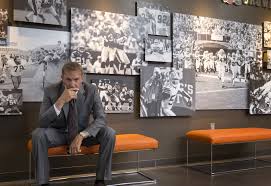
draft day

Draft Day: Enjoyable enough as schlock, though the ticking timeline and heightened tension never really explains why anyone would be excited to join the Cleveland Browns. Costner is in his element, though I was distracted the entire time by how weird his ears are, something I’d never noticed.

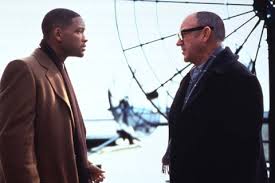
enemy of the state

Enemy of the State: I haven’t seen this in years, and it held up pretty well. The 1998 NSA fears are kind of prescient, even in an over-the-top format, and it’s a reminder of when Will Smith was a superstar (and why). Casting grizzled Gene Hackman as a former spy gone rogue is a nice touch, evoking The Conversation in reverse even if that was unintentional. Tony Scott’s action sequences are fun for the most part. And fun fact: one scene was filmed in an apartment adjacent to where I once lived; Smith jumps out my old window and lands miles away, which I will always enjoy.

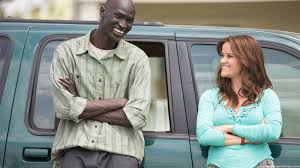
good lie 2

The Good Lie: Woo boy. Reese Witherspoon is a jaded case worker finding jobs for immigrants, in this case Sudanese refugees. She learns a thing or two about Sudan … and herself. At one point, the three Sudanese men tell a why did the chicken cross the road joke and laugh hysterically, because apparently there were no jokes in Sudan. This is not a good film.

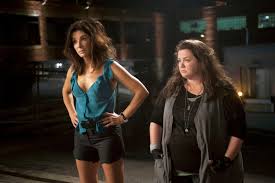
the heat

The Heat: I laughed twice. Apparently, Paul Feig thought it was funny when Melissa McCarthy yells obscenities and that people inscrutably think Sandra Bullock is a trans woman. This is also not a good film.

endless love

Endless Love: The funniest comedy of last year (and heads and shoulders above The Heat, which meant to be funny). From my understanding, it completely inverts much of the storyline of the original text, but that’s a small price to pay for the nonstop laffs. On the other hand, the movie looks respectable at every turn visually, which is what you’d expect from Andrew Dunn, the cinematographer who brought you The Butler, Precious, and, um, Hot Rod, for some reason.

harry potter 3

Harry Potter and the Goblet of Fire: This was on and I watched it. It’s still fine.

girl interrupted

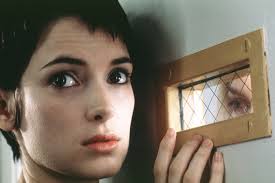
Girl, Interrupted: There are moments when this movie seems authentic, but they are few and far between. Angelina Jolie is so contemptible for so much of it that there’s little to enjoy, and Winona Ryder’s final voiceover narration kills any good will it might’ve built up. I’d never actually seen this before. I did not like it.

that awkward moment

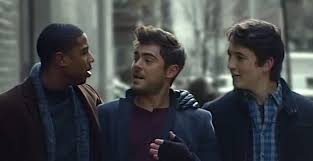
That Awkward Moment: What a confused movie this is. There’s actually a pretty fun cameraderie between Michael B. Jordan, Miles Teller, and the impressively vacant Zac Ephron, but the things they say are remarkably stupid. I won’t lie, though — it has its moments. Also, Imogen Poots — my nominee for best name in show business — is extremely pretty. This is neither here nor there and not actually relevant to the film, but there you go. Also, boner jokes are funny but they’re not really that funny; on the other hand, Miles Teller getting hit by a car is a lot funnier here than in Whiplash. The latter movie convinced me he’s actually a pretty good actor, but he still has one of the most punchable faces I’ve ever seen, so I enjoyed that thoroughly.

tokyo drift

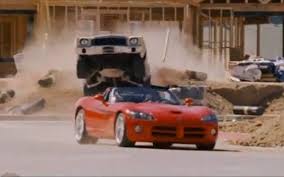
Fast and Furious: Tokyo Drift: I confess that this is the first FaF movie I’ve seen. I enjoyed it a lot actually, at least in part because I was extremely drunk.

June 7, 2015 0 comments
0 FacebookTwitterPinterestEmail
FilmGreat Movies: The Counter ProgrammingReviews

Lotte Reiniger’s “Prince Achmed” beat Disney by a decade

by rick May 30, 2015
written by rick

Part of an ongoing effort to watch a set of films from non-White, non-U.S., non-male, and/or non-straight filmmakers and depart a little from the Western canon. The intro and full list can be found here.

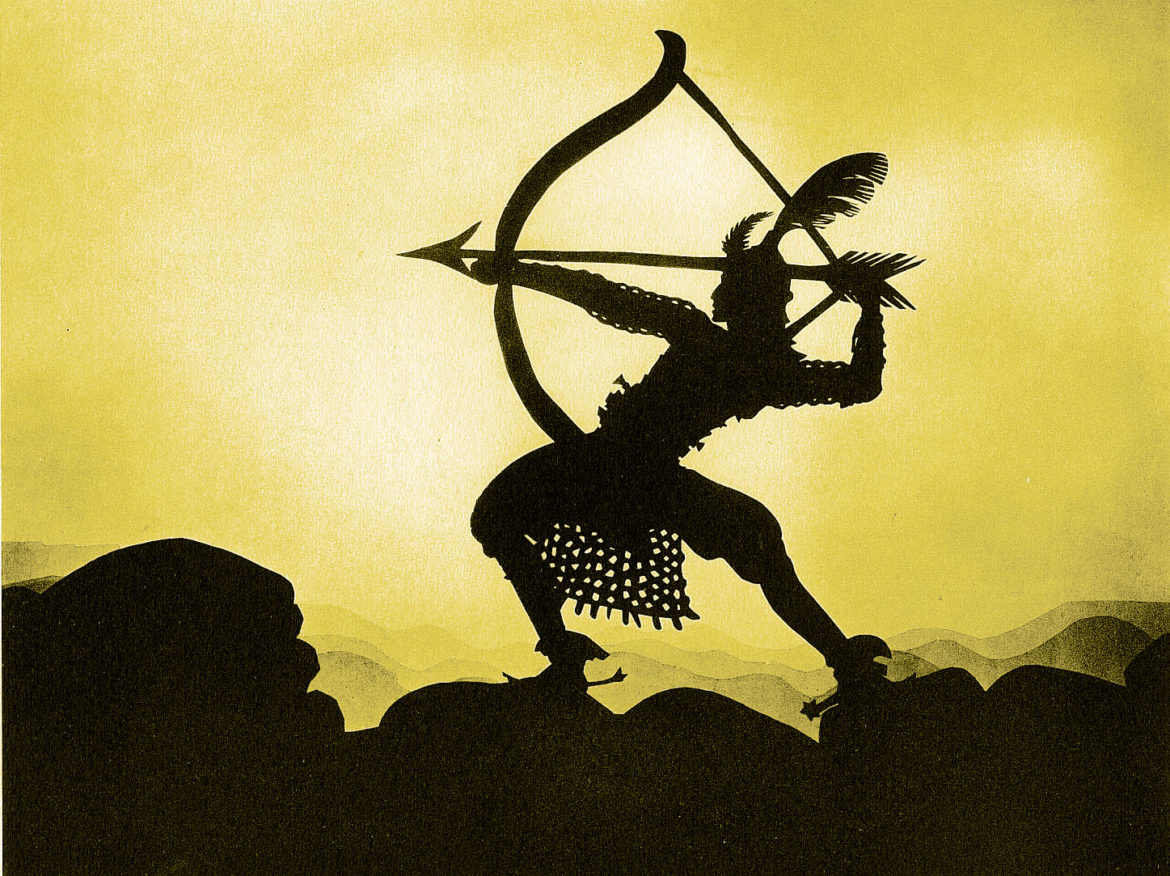
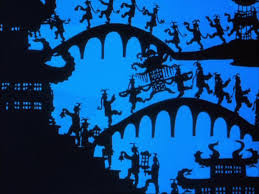
For many of of us, I’d wager, animation starts with Walt Disney. But the first animated feature that still survives is German silhouette artist and director Lotte Reiniger’s The Adventures of Prince Achmed (1926), anticipating Disney by a full decade.  What’s more, her Prince Achmed used a version of the multiplane camera, deployed to memorable effect in 1937’s Snow White and the Seven Dwarfs 11 years later. Watching the film now, it’s a staggering, visually sumptuous 65 minutes — it’s hard to watch it at all without marveling at the sheer amount of work it required. Lit from behind and filmed from overhead, with intricate cut-outs and wire mechanisms to control their movement, it’s a miraculous achievement.

achmed2

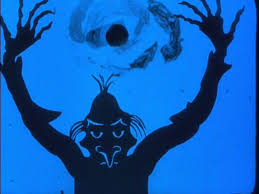
A pastiche tale assembled from One Thousand And One Nights, Reiniger’s film combines the story of Pari Bonu (beloved by Prince Achmed), who is kidnapped/rescued from Wak Wak (the land of the demons), and the likely more familiar narrative of Aladdin and the magic lamp. These two stories run side by side, and then intersect at the end. The plot is driven by the (somewhat troubling) narrative device of the African magician, who lusts after the Caliph’s daughter, and his nemesis, The Witch of the Flaming Mountain, who sides with the two pairs of young lovers and helps deliver them to safety.

It’s actually less confusing than it sounds, but it’s safe to say that the film’s notion of narrative coherence isn’t exactly the same as today’s.

achmed5

We begin with the magician, the most powerful in the land. He creates a flying horse, who can be controlled almost mechanically by his mane and some sort of lever towards his tail. The magician presents his invention to the Caliph, who wants to buy it badly. Sneakily, the magician rejects all amount of treasure for its sale, and tricks the Caliph into trading his daughter Dinarsade. The scene is played with real pathos, as Achmed, her brother, tries to intervene. Unfortunately, he ends up on the flying horse, with no way of controlling his direction. All of this is largely conveyed without title cards — the jerky, sometimes grieving motions of the characters convey it all.

achmed6

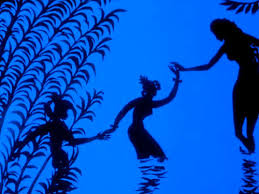
So Achmed’s adventures begin. He flies (beautifully) through the clouds before figuring out the horse controls, and descends back to earth, landing on an island in Wak Wak. He stumbles about, and the interiors and settings are gorgeous. In a reminder that animation was not always intended for the littlest among us, he finds a group of sexy ladies who greet him as “attractive stranger,” and proceed to fight for his attention. He flees, only to find Pari Banu (who he immediately and somewhat creepily adores) and her consorts bathing on a different island. It’s pretty sexy silhouette action over here.

achmed7

But the magician steals her away after Achmed gets entangled with a snake, and she’s deposited across the world, as tribute to the Emperor of China (after the very existence of the African Magician, this is the first time race really shoulders its way into the film, pretty offensively. It’s not the last.). Achmed has been trapped under a boulder in a flaming mountain, but it turns out the Witch who runs it is mortal enemies with the Magician. They arm themselves and prepare for war and rescue.

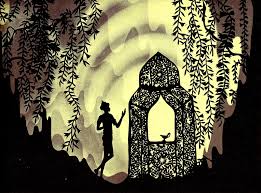
Here, we somewhat awkwardly shift to the Aladdin story. Achmed saves him, and Aladdin launches into a flashback about where he’s been. It turns out he’s in love with Dinarsade, who, through magic we don’t need to go into, has been vanished, along with the palace he built for her. The two band together and, with the help of the Witch and the hordes of genies in Aladdin’s lamp (imagined as essentially good vibes), they vanquish the magician, reunite the lovers, and restore order to this chaotic world.

The story’s parts don’t always make a lot of sense, and there’s a definite sense that they are being smushed together to make a feature out of shorts. But it never matters because the images are so mind-boggling. Reiniger and her team — including a number of avant garde animators in Germany at the time — construct elaborate, beautiful scenes.

The idea that each of these cut-outs requires manipulation to simulate movement, not to mention the incredible amount of care taken in the cut-out itself, is staggering. Watching it, I had the distinct sense of what it must’ve felt like in the earliest days of cinema — the feeling that anything is possible. There’s a kid-like wonder in just seeing the silhouettes and the color tinting. After all, kids have been making shadow puppets for well on several thousand years now, so it taps into something primal. There’s a distinct sense throughout of, “How did they do that?” One of the greatest aspects of all early cinema is that sense of wonder, and The Adventures of Prince Achmed delivers it over and over.

achmed3

There are certainly aspects of the film that should give us pause: the hook nose and Nosferatu-like nails of the villains, the evilly boilerplate African magic man, the caricatures of the Chinese, the fact that several people involved in the production would later go on to contribute to Riefenstahl’s propaganda work in the coming years. It’s impossible to ignore, even though Reiniger and her crowd were by and large left-wing, and she and her husband bounced around Europe for years, in semi-exile. The iconography is hard to miss.

But what lasts in the film is the fluidity of the animation, the gorgeously backlit silhouettes, and the extreme amount of love and attention paid to the images and figures themselves. And, of course, the fact that a female animator and director laid the groundwork for many of the techniques developing at the time, which is something I didn’t know before watching this.

Aesthetically, The Adventures of Prince Achmed is simply incredible, and Reiniger should be celebrated as much as Disney. These are stunning, bewilderingly labor-intensive images from the dawn of feature-length cinema.

Next up: Teinosuke Kinugasa’s Crossroads (1928)

May 30, 2015 0 comments
0 FacebookTwitterPinterestEmail
FilmReviews

“We are not things” – Mad Max: Fury Road explodes, furiously

by rick May 25, 2015
written by rick

[schema type=”movie” url=”http://www.imdb.com/title/tt1392190/” name=”Mad Max: Fury Road” description=”A woman rebels against a tyrannical ruler in postapocalyptic Australia in search for her home-land with the help of a group of female prisoners, a psychotic worshipper, and a drifter named Max.” director=”George Miller” producer=”Bruce Berman, Graham Burke, Christopher DeFaria, Chris deFaria, Genevieve Hofmeyr, George Miller, Doug Mitchell, Steven Mnuchin, Holly Radcliffe, Iain Smith, Courtenay Valenti, P.J. Voeten” actor_1=”Charlize Theron” ]If Mad Max: Fury Road ended after its first five, insanely kinetic minutes, it would still be a contender for the best action movie in years. That the movie only gets more intense and visceral from there is a nearly impossible feat, and one writer/director George Miller pulls off as though it were the easiest thing in the world. Neat trick.

Set in the post-apocalyptic world Miller explored in the previous entries in the series (most recently in Beyond Thunderdome – and by recently, I mean 20 years ago), Fury Road seems packed with every idea he’s had in the meantime. With a smart nod to climate change worries – the fundamental resource is now water, not gasoline – and a smart decision to ditch aging anti-Semite Mel Gibson for young Brit Tom Hardy, the movie explodes out of the gate.

One of its key virtues – along with jaw-dropping practical stunts, instantly iconic imagery, and a set of narrative themes that can legitimately be described as feminist – is how much it trusts the audience to go along for the ride without excess exposition. Things will be explained, more or less, but first we have some fucking awesome car chase scenes through the wasteland.

The plot is, by and large, really simple anyway. Tom Hardy’s Max is, as usual, being hunted, this time by agents of the tyrannical Immortan Joe, who rules the land. A nuclear apocalypse of some sort has decimated everything in view, and the people are desperate for water, which Immortan Joe theatrically doles out to maintain total social control. He also maintains a harem of young women for breeding purposes, and a nightmarish wet nurse station that is, for all intents and purposes, a dairy farm. The appropriation of bodies is a recurring theme, from the wet nurses to the use of others as “blood bags” to extend the half-lives of the minions. This is a masculinist, caste-based world, a patriarchy founded on violence and subjugation of bodies.

Imperator Furiosa (Charlize Theron) is in a favored position for the great leader, but has plans of her own. As she heads out on a supply run, she deviates from the course, and it’s revealed she’s transporting the enslaved women to a fabled colony far in the desert. Known as “The Green Place,” it’s said to be somewhere run by women, where women can live in peace and where plants still grow. Immortan Joe does not take kindly to the theft of his female property, and all hell breaks loose as he tries to get them back. Still haunted by all those he’s failed to save over the years, Max becomes enmeshed in their run for freedom as he struggles for his own.

I won’t spoil things further through plot description – suffice to say, things aren’t so simple as getting to The Green Place, and the plan becomes full-on anti-patriarchal insurrection against the state. Miller’s set-pieces dominate the film visually, with armadas of jerry-rigged cars converging on the resistors and doing battle. It’s spectacle at the highest level – gripping, innovative, and clearly-delineated action numbers that are choreographed like a ballet of violence. Compared to something like Michael Bay’s visual mush, Miller and his team have a remarkable ability to make clear what is happening. It’s never confusing, which is an accomplishment given all the different parties converging in violent collision. And all of this is given heart and substance by the performances of Theron and Hardy, and wit by the inclusion of such loving details as the guy who scores sections of the film from the back of a vehicle, blasting metal chords and fire out of his guitar while drummers pound out two-fisted beats.

It was inevitable that there would be some backlash against the film’s celebrated feminism. Notably, Feminist Frequency’s well-regarded Twitter feed categorically claimed it is not feminist – that simply transposing women for men as the inflictors of violence is no victory, and that the camera fetishizes the bodies of the harem as much as it does the explosions and related destruction, implying a masculinist lens even if it seems to be deconstructing the same. It’s a worthwhile point to consider; it’s also just not borne out by the movie. The one scene that most clearly depicts the male gaze in film is a joke on the male gaze in film, and the feminist intent is so overt that it’s barely a subtext at all. As for violence per se? The film seems to think that totalitarian structures demand resistance, and that in a world where you can be crushed and tortured at the whim of others, you’re probably going to have to fight back. Do they enjoy the fighting back? Wouldn’t you? Mad Max: Fury Road is certainly not alone in this view. To its credit, it is firmly on the side of the women (and handful of others) resisting.

As important as those discussions are, though, Mad Max: Fury Road is a movie concerned first and foremost with delivering thrills and indelible images. Which it does, relentlessly and with so much skill that it’s kind of mind-boggling. It should be seen on the biggest screen possible, and, if you like, discussed into the night. It’s the most fun I’ve had at a movie theater in years.

May 25, 2015 0 comments
0 FacebookTwitterPinterestEmail
FilmReviews

Zombeavers delivers zombie beavers, beaver jokes

by rick May 23, 2015
written by rick

Zombeavers starts on familiar ground. Three sexy, nubile co-eds arrive at a remote lakeside cabin for a weekend getaway, and are later joined by their three horny, male counterparts. There’s an older couple who live nearby and a leering, hick-type hunter who pops up from time to time, but that’s about it. There’s no cell service. Beer is consumed, sex is had. But there’s also an evil force in these woods that begins to menace the kids before outright terrorizing them. People die in bloody fashion as those remaining make a desperate bid for safety.

Sound familiar? Director/co-screenwriter Jordan Rubin is counting on it, as the references to other horror movies are dished up liberally. The absurdist twist is that the menace is not the human undead but radioactive killer beavers – or “zombeavers,” if you will – and the central conceit is that the filmmakers are in on the joke. That joke wears pretty thin, though the movie has its moments.

The girls are divided, as required by horror law, between The Virgin, The Whore, and The Smart One, and the guys have their Jock, Clown, and Unfaithful Boyfriend. (Their actual names in the film are by and large irrelevant.) After two idiot truck drivers spill toxic waste into the lake (as one does) and create mutant, animatronic zombie beaver killing machines (as one will), the kids hole up in the cabin in terror, figuring a way out. The Clown already had his foot bitten off and is in bad shape; they need to get him to a hospital, but the beavers are in the way and show no signs of letting up their terrible beaver death spree. One by one, the kids meet gruesome ends, until The Final Girl makes it to safety … or does she?!

So, yeah. If that meta-awareness and smirking also sounds familiar, that’s because Joss Whedon and Drew Goddard’s Cabin In The Woods just did this recently, much better and with far fewer terrible beaver puns. Zombeaver has some truly laugh-out-loud moments – the truck drivers are amiably dopey and subvert the gay jokes you think are coming, the old neighbor memorably writes off the commotion next door as “probably just those kids, scissoring and listening to Lady Gaga,” and the hick has an amusing tendency to add “goddamn” before every short sentence (“Goddamn beavers!”) – but they are way too infrequent for a movie this intentionally silly. The girls’ constant state of undress starts as a slasher joke, but after a while I think Rubin just preferred it that way. The ludicrousness of the beaver puppets is fun for a while, and there’s a bonkers final twist that packs in some gross-out gore so you get your money’s worth, but there’s just not enough here to recommend, even at 77 tight minutes.

The sub-bro humor – did you guys know “beaver” can mean “vagina”? Haha! – comes as no surprise once you learn that Rubin wrote for “The Man Show” and “Crank Yankers,” among other dire television series aimed at frat brothers and the people who saw Idiocracy and thought, “You know, I’d watch ‘Ow, My Balls.’” And this is, if nothing else, a movie that knows its audience.

The problem isn’t just that it isn’t very funny, or scary, or silly, or sexy. The real problem is that the self-awareness shtick comes off more smug than smart – with the success of Sharknado and its sequels (which Zombeaver resembles in every way except its production value), it’s now lucrative to crank this stuff out, pitched to the lowest common denominator. Where a movie like The Room achieved a kind of lunatic grace by believing in its genius despite all evidence to the contrary, these latter movies are simply trafficking in badness, which doesn’t make them better for knowing it; it just makes them more annoying. I realize it’s asking a lot of a no-budget genre send-up saddled with a joke title to be a bit smarter, but there you are.

In any case, if you are in the mood for intentionally terrible puppetry, copious female nudity paired with no male nudity whatsoever (surprising!), five or six good jokes, and watching a man’s stunt penis be devoured by a zombeaver (symbolism!), this might be the movie for you. If you enjoy good movies, or even good-bad movies, I’d swim for another shore. Quickly, before the zombeavers eat your brain and/or genitals.

May 23, 2015 0 comments
0 FacebookTwitterPinterestEmail
Newer Posts
Older Posts

About

About

Towards a provisional theory of the cinema, or, failing that, just some shit about movies

Authors
Rick Kelley
Lark Lundberg

Keep in touch

Facebook Twitter

Categories

  • Conversation
  • Film
  • Film By Film
  • Great Movie Project
  • Great Movies: The Counter Programming
  • Guest
  • News
  • Other
    • Commentary
    • Film
    • Interview
    • Reviews
    • Song for a Sunday
  • Streaming Selections
  • TV
  • Uncategorized
  • Vegan Horror

Archives

  • April 2019
  • March 2019
  • January 2019
  • December 2018
  • November 2018
  • October 2018
  • September 2018
  • August 2018
  • July 2018
  • June 2018
  • May 2018
  • April 2018
  • March 2018
  • February 2018
  • January 2018
  • December 2017
  • November 2017
  • October 2017
  • September 2017
  • August 2017
  • July 2017
  • June 2017
  • May 2017
  • April 2017
  • March 2017
  • February 2017
  • January 2017
  • December 2016
  • November 2016
  • October 2016
  • September 2016
  • August 2016
  • July 2016
  • June 2016
  • May 2016
  • April 2016
  • March 2016
  • February 2016
  • January 2016
  • December 2015
  • October 2015
  • September 2015
  • August 2015
  • July 2015
  • June 2015
  • May 2015
  • April 2015
  • March 2015
  • February 2015
  • January 2015
  • December 2014
  • November 2014
  • October 2014
  • August 2009
  • September 2008

Recent Posts

  • China Girls, Death Proof, and the Hidden Face
  • Old News: Old Noise Edition
  • Old News: April 1, 2019
  • Nicolas Winding Refn, Marginalia, and the Deaths of Cinema
  • And now, let us praise Kanopy

Recent Comments

  • Franklin Kat on Michael Shannon shines again in Frank & Lola
  • Sean Tempesta on Cinema and dream-logic in Meshes of the Afternoon
  • ludditerobot on The Left-Wing Slapstick and Iconic Songs of 1937’s Street Angel
  • Franklin Kat on The Left-Wing Slapstick and Iconic Songs of 1937’s Street Angel
  • Arijit Mukherjee on Great Movies Project: The Counter-Programming
  • Facebook
  • Twitter

@2021 - All Right Reserved. Designed and Developed by PenciDesign


Back To Top
Luddite Robot
  • Reviews
  • Commentary
  • Great Movie Project
    • Great Movie Project
      Bride of Frankenstein is a movie for and…

      January 25, 2018

      Great Movie Project
      The Enduring Appeal of Nick and Nora in…

      November 29, 2017

      Great Movie Project
      The Ahistorical Fever Dream of The Scarlet Empress

      August 2, 2017

      Great Movie Project
      Dreams, Mundanity, and the Anarchist Yearnings of L’Atalante

      July 12, 2017

      Great Movie Project
      Duck Soup Is And Will Always Be A…

      April 19, 2017

  • Counter Programming
    • Great Movies: The Counter Programming
      Walking and Talking in the Shadow of Kanchenjungha

      March 7, 2018

      Great Movies: The Counter Programming
      A Brief Encounter in My Mother and Her…

      February 9, 2018

      Great Movies: The Counter Programming
      Horror’s Refusal in Farrokhzad’s The House Is Black

      October 13, 2017

      Great Movies: The Counter Programming
      The rage and beauty of The Cloud-Capped Star

      October 3, 2017

      Great Movies: The Counter Programming
      The daylight noir and social issue empathy of…

      June 22, 2017

  • Vegan Horror
    • Vegan Horror
      Julia Ducournau doesn’t think her film Raw is…

      June 7, 2017

      Vegan Horror
      Licking our wounds: The vampiric masculinity of Ravenous

      December 13, 2016

      Vegan Horror
      Eggertsson and animals: An approach to horror cinema

      September 15, 2016

      Vegan Horror
      “It’s Not My Nature” – Vegetarianism, Body Horror,…

      August 30, 2016

      Vegan Horror
      Bodies and Carcasses in Predator 2

      August 23, 2016

  • Interview
    • Interview
      Jasmine Leyva’s doc The Invisible Vegan aims to…

      May 3, 2017

      Interview
      Bridging The Abyss: An Interview With The Directors…

      November 28, 2016

      Interview
      7 Days in Ohio: An Interview with Nathan…

      September 12, 2016

      Interview
      Film Critic Phil Dy talks New Filipino Cinema

      June 17, 2016

      Interview
      “I Love Seeing Film Projected.” A Conversation with…

      March 22, 2016