Top Posts
Madeline’s Madeline: An Unclassifiable Panic Attack Maybe-Masterpiece
Shoplifters Steals Moments of Wonder from the Mundane
Burning and Forgetting What’s Not There
Kusama: Infinity Expands Beyond The Canvas
Mandy Risks Little, Wins Little
In We The Animals, The Children Are Away...
The Seagull Isn’t Quite Chekhov, But It’s Still...
5 Million Ways Boots Riley Isn’t Sorry To...
American Animals’ and the Queasiness of the Heist
A Star Is Born In Hearts Beat Loud
  • Reviews
  • Commentary
  • Great Movie Project
    • Great Movie Project
      Bride of Frankenstein is a movie for and…

      January 25, 2018

      Great Movie Project
      The Enduring Appeal of Nick and Nora in…

      November 29, 2017

      Great Movie Project
      The Ahistorical Fever Dream of The Scarlet Empress

      August 2, 2017

      Great Movie Project
      Dreams, Mundanity, and the Anarchist Yearnings of L’Atalante

      July 12, 2017

      Great Movie Project
      Duck Soup Is And Will Always Be A…

      April 19, 2017

  • Counter Programming
    • Great Movies: The Counter Programming
      Walking and Talking in the Shadow of Kanchenjungha

      March 7, 2018

      Great Movies: The Counter Programming
      A Brief Encounter in My Mother and Her…

      February 9, 2018

      Great Movies: The Counter Programming
      Horror’s Refusal in Farrokhzad’s The House Is Black

      October 13, 2017

      Great Movies: The Counter Programming
      The rage and beauty of The Cloud-Capped Star

      October 3, 2017

      Great Movies: The Counter Programming
      The daylight noir and social issue empathy of…

      June 22, 2017

  • Vegan Horror
    • Vegan Horror
      Julia Ducournau doesn’t think her film Raw is…

      June 7, 2017

      Vegan Horror
      Licking our wounds: The vampiric masculinity of Ravenous

      December 13, 2016

      Vegan Horror
      Eggertsson and animals: An approach to horror cinema

      September 15, 2016

      Vegan Horror
      “It’s Not My Nature” – Vegetarianism, Body Horror,…

      August 30, 2016

      Vegan Horror
      Bodies and Carcasses in Predator 2

      August 23, 2016

  • Interview
    • Interview
      Jasmine Leyva’s doc The Invisible Vegan aims to…

      May 3, 2017

      Interview
      Bridging The Abyss: An Interview With The Directors…

      November 28, 2016

      Interview
      7 Days in Ohio: An Interview with Nathan…

      September 12, 2016

      Interview
      Film Critic Phil Dy talks New Filipino Cinema

      June 17, 2016

      Interview
      “I Love Seeing Film Projected.” A Conversation with…

      March 22, 2016

Luddite Robot
Film critique, theory, and assorted nonsense.
CommentaryFilm

China Girls, Death Proof, and the Hidden Face

April 14, 2019

Old News: Old Noise Edition

April 8, 2019

Old News: April 1, 2019

Nicolas Winding Refn, Marginalia, and the Deaths of Cinema

CommentaryFilm

And now, let us praise Kanopy

January 24, 2019

Warren Sonbert and the Relief of Anti-Narrative

January 14, 2019

The World Is Ending and It Doesn’t Matter

The Best Films of 2018

FilmReviews

Madeline’s Madeline: An Unclassifiable Panic Attack Maybe-Masterpiece

December 21, 2018

Shoplifters Steals Moments of Wonder from the Mundane

December 11, 2018

Burning and Forgetting What’s Not There

Alien, Musicology, and Reading Soundtracks

CommentaryFilm

Shocktober III: Halloween 2018 Edition

October 24, 2018

Shirley Jackson’s The Lottery Traumatized Schoolkids in 16 mm

October 18, 2018

Shocktober 2018 II: Another Reshockening (of Horror)

Häxan is a movie made by a movie character

CommentaryFilm

Shocktober 2018

October 7, 2018

Unprofessional! Spring Night, Summer Night

October 3, 2018

The Wild Boys: A Luddite Robot Conversation

Kusama: Infinity Expands Beyond The Canvas

CommentaryFilm

In 1986, Don Johnson finally had the chance to sing, and the world was ready

by rick May 13, 2015
written by rick

Note: This was originally posted as part of The Dissolve commentariat’s tribute to Nathan Rabin. The idea was to continue some of the columns he started before he was unceremoniously bounced. Thanks, Nathan, for being the most consistently entertaining and insightful pop culture writer working today, and apologies in advance for the pale facsimile that follows.

Now everyone, go read his new stuff, and then his old stuff, and then give him all your money. I’m not kidding.

**

Mutations explores some of the lesser-known variations of  familiar characters from movies.

It’s not unusual for actors to have side gigs in bands or musical vanity projects. There’s a veritable laundry list of examples, which range from the upper tiers of the arguably acceptable (Zooey Deschanel’s She and Him, Steve Martin’s bluegrass labor of love Steve Martin and The Steep Canyon Rangers) to the lower, less celebrated rungs, where Corey Feldman’s Truth Movement and Steven Seagal & Thunderbox reside.

It’s rarer for such a project, from an actor at the height of his celebrity, to score a single that hits #5 on the Billboard Charts and sells worldwide, despite one of the more perplexing videos you’re likely to encounter, featuring the presence of a shredding Dweezil Zappa, a bicycle gang, and what seems to be an homage to Antonioni (or possibly, in one scene, the Worldwide Wrestling Federation crossed with Full Metal Jacket – there’s a lot going on here).

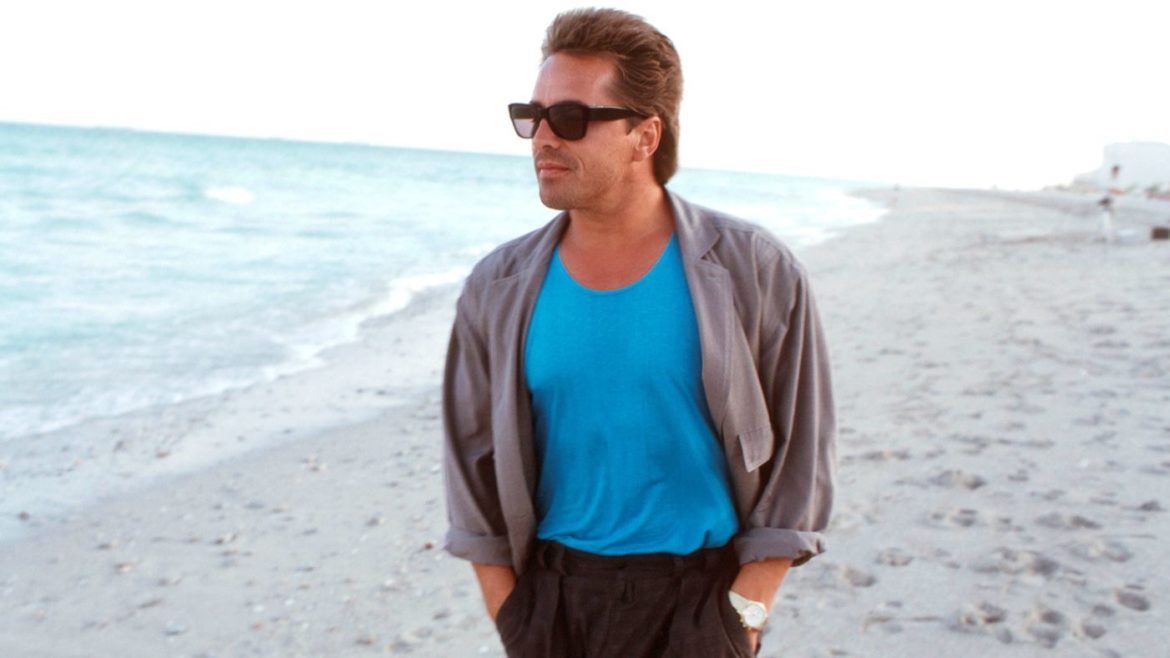
I’m referring, of course, to Don Johnson’s 1986 smash hit “Heartbeat”, the single of his eponymous debut.

Though Sonny Crocket wouldn’t appear on film for another 20 years, and even then in the form of Colin Farrell in Michael Mann’s version of Miami Vice, I’m counting it for our purposes here.

In any case, two years after the small-screen Miami Vice premiered, and at the very height of Johnson’s fame, his record lit up the charts like some sort of pastel-clad Floridian cop sparking a Lucky Strike in a Ferrari and/or speedboat. In a gushing L.A. Times piece from late August of that year – saddled with the distinctively defensive-sounding title, “Don Johnson: Yes, He Can Really Sing” – he revealed that he “wanted the record to be modern, tough rock,” but acknowledged that his TV celebrity might lead audiences to think he wasn’t the real thing. (The Pepsi commercials probably didn’t help, as well as the questionable use of the word “tough”).

In 1986, it didn’t matter. After years of, by all accounts, drug-fueled bouncing around the scene — including associations with Andy Warhol (who designed the cover of Interview magazine featuring him that year) and a string of TV movies and curious cinematic outings, including 1971’s acid-western Zachariah, which I really need to see — Johnson was on top of the world. Miami Vice was a veritable cultural phenomenon, and he was generally regarded as an iconic star. What else does one do but record an album?

In context, it’s not too surprising; MTV hit the air in ’81, but this still marks the dawn of the video age, and Miami Vice was nothing if not MTV-ready. And precedents had been set, from often unlikely sources — only a year prior, even the Chicago Bears were awkwardly rapping about their Super Bowl Championship, to the apparent delight of millions who always wanted to hear Walter Peyton dubiously proclaim, “We’re not doing this because we’re greedy / The Bears are doing it to feed the needy.” Hell, Johnson’s co-star Philip Michael Seymour beat him to the punch with 1985’s ill-fated Living The Book Of My Life — it failed to sell, just another sidekick indignity for Tubbs. On the other end of the spectrum, Eddie Murphy’s “Party All The Time” hit #2 on the charts. The people, it seemed, wanted their actors to sing, at least occasionally. So sing they did.

Unlike Murphy’s amiably goofball anthem or Philip Michael Seymour’s self-conscious odes to Miami, Johnson’s Heartbeat aimed for legitimacy. It featured songs penned by Tom Petty, Bob Seger, and Bonnie Raitt, and featured not only Dweezil Zappa but Stevie Ray Vaughan. Such was Johnson’s mysterious power in 1986, when heartfelt ballads paired with inscrutable, possibly insane images of war, protest, and Don Johnson apparently body-slamming a child were, for some reason, in vogue.

Audience desire and right-place-right-time alignments of the stars coincided for “Heartbeat” the song, though the video is never less than ridiculous. And the ridiculousness comes early and often.

Directed by John Nicolella (who helmed many episodes of Miami Vice and would later produce Johnson’s comeback series, Nash Bridges, not to mention directing Vanishing Son I through 4, a China-set TV-movie franchise I somehow missed out on, presumably because I was doing literally anything else), it tells a convoluted story that only gets stranger the more you look.

We are first introduced to Johnson’s filmmaker persona, a documentarian (I think). He covers some sort of street protest, which is most notable for being completely without context and for how many times one guy in a terrifying mask walks through the frame. Is Johnson trying to capture the “heartbeat of the streets,” as the lyrics would have it? Perhaps, but he’s then teleported to a war zone. Was it a war protest? Was the man in the mask a spectre of omnipresent militarism? What’s clear is that there is, as Dweezil’s father Frank would have it, trouble every day. Don Johnson: Filmmaker is capturing it, while he empties his heart about a woman who has scorned him.

More questions arise: Is this the same woman who he captures on film at the protest, and then again later, standing unperturbed in front of a burning car? Or later still, staring at him intently before tying what seems to be pantyhose over her face (which, for the record, is not a good technique for protection during riots)? It’s hard to say. But Nolella and Johnson seem to be going for a juxtaposition between the images he’s capturing, his own psychology, and the world outside. It’s like Blow-Up, basically, if Antonioni had included lines such as “Everybody tells me how / I can beat the odds for now / I´ve been standing by the fire / I just can´t feel the heat,” and if Blow-Up were terrible.

From here, the video just gets stranger. Johnson’s filmmaker persona rescues a child in the war zone by hurling him past a stone barricade. But the force with which he accomplishes this rescue is unintentionally comic; I hope to God there was a mattress back there or something. Back on the stage – weirdly reminiscent of Pat Benatar’s set-up in the much better “Invincible” (the theme to the immeasurably awesome The Legend of Billie Jean) or even Depeche Mode’s set-up in the “Just Can’t Get Enough” video – he emotes wildly while dancers perform what has to be the laziest choreography of 1986, aptly described on Grantland as “the electric slide done without an ounce of emotion.” The contrast is disconcerting.

Why would Don Johnson make this? It would be easy to say “money,” and you’d rarely go wrong with that guess. “Hubris” would also be a stock answer. But maybe he also profoundly wanted to sing songs, and was using his newfound fame to achieve this (fairly awful) end. In that L.A. Times article, Johnson traces his attraction to show business to singing harmony in the church choir, and then to R&B, Elvis, and The Beatles: even as he transitioned to acting, and copious drug and alcohol abuse, “music … remained a personal passion.” But the success of Miami Vice opened a door: Goldberg remarks, “The great thing we have going for us in Don, aside from the fact that he genuinely can sing, is that ‘Miami Vice’ has a credibility with record buyers that normally TV shows don’t have.”

And let it be said, Johnson can sing well enough, I guess. In the sense that, absent the visuals, it sounds like every song you ever heard from 1986. But why Miami Vice lent credibility to the project remains puzzling, as evidenced by Johnson’s amiably dorky-uncle-like appearance on the MTV Music Awards to promote the record, while also introducing 5 much, much better songs. (For the record, they are: Kate Bush, “Running Up That Hill”; Aretha Franklin, “Freedom Of Love”; Whitney Houston, “How Will I Know?”; Grace Jones, “Slave To The Rhythm”; and Tina Turner, “We Don’t Need Another Hero.” Whitney won.)

I can only attribute it to the particularly 1980’s combination of sex appeal, outlandish fashions, badboy chic, and the curious notion that “someone we enjoy doing one thing will probably also be enjoyable doing another thing.” Oh, and cocaine. Probably cocaine, too. Don may have been sober at this point, but whoever planned and orchestrated the intro scene of the Chrystler Building shot like a phallic, ascending space shuttle assuredly was not.

But here’s another, perhaps too literal thought – maybe Johnson really wanted to be a director. In the L.A. Times article, we’re told, “Goldberg … recalled flying East a few weeks ago with Johnson when the actor fell asleep for two hours. ‘When he got up, he looked at me and said, ‘My God, the only thing I dreamed about was camera angles.’ ”

And indeed, Johnson’s credited on IMDB with the “idea” for the video, and that idea is for him to be behind the camera (and later at an editing table, for good measure). What if Don Johnson’s singing career – bizarrely successful for a year, anyway – was a Trojan Horse for his desire to be taken more seriously as a visual artist? And what if he chose the worst possible, most lucrative way of realizing this dream? The “Heartbeat” video then becomes significantly more poignant. Its failures – which we could also describe as “its components” – might point to a different drive the man never found an appropriate outlet for.

I was too young at the time to really get into Miami Vice, and don’t particularly recall listening to Don Johnson’s attempted crossover records. (His follow-up, Let It Roll, failed to chart domestically but did well in Germany, to the surprise of very few. The compilation The Essential Don Johnson, based on these two records and released by Sony in 1997, quickly vanished, despite its hopeful title.)

But reading up on him now for this piece, I tend to think there might be something to that. He’s a guy who hung out in art scenes, scrambled for a decade to get into film or television, and went through what Dewey Cox would call “a dark fucking period.” And then, at the very top of the mountain, he decided he wanted to pursue a childhood dream of success in the music industry, and be taken seriously as an artist, not just a lavender-shirted object of lust.

But when he tried, and succeeded past all expectations, he cast himself in his hit song’s video as a filmmaker on location, getting gritty footage, and also a lonely man desperate for a woman he doesn’t even know, and also a man with an impressive child-throwing arm. Is it a sad story about being lonely at the top, or just a shitty song that inexplicably features Dweezil Zappa? In any case, it’s a weird entry on the Billboard charts, a weird video that is all the more confounding for the song’s popularity, and a time capsule from a deeply weird age, when seemingly every celebrity in movies, television, and football either wanted or was required to sing their heart out.

May 13, 2015 0 comments
0 FacebookTwitterPinterestEmail
FilmReviews

God Help The Girl is lovely and insubstantial

by rick May 10, 2015
written by rick

As James, the guitarist in the band at the center of Stuart Murdoch’s God Help The Girl, Olly Alexander at one point describes himself as having “the constitution of an abandoned rabbit.” That vivid, sad, self-deprecating throw-off line is God Help The Girl in a nutshell – sort of adorable, sort of pretentious, totally genuine in its affection for the hurt and lost, and twee as twee can be. It doesn’t really work as a whole, but it’s very charming in snippets.

Murdoch founded Scottish pop ensemble Belle & Sebastian, which has been an indie touchstone for nearly 20 years now, since the 1996 releases If You’re Feeling Sinister and their earlier debut Tigermilk. Rooted in his sensitively literate, God-and/or-sex-obsessed lyrics (which often take young women as their protagonists), the songs’ often cinematic storylines, the iconic cover art, and Murdoch’s vocals (invariably described as “lovely” and “ethereal,” though “precious” might be another way of putting it), the band’s sound and temperament are at this point a brand, synonymous with their name. It’s whimsical, wistful, gentle, discursive, a pastiche of influences, and, above all, pretty.

In a surprise to no one, all these words apply to Murdoch’s 2014 film debut God Help The Girl, too. It’s not necessarily a great film, but it’s a great distillation of the melancholy, nostalgic moods and sometimes subversive themes he’s been using Belle & Sebastian to sneak onto pop records for years. (The title track from If You’re Feeling Sinister — “She was into S&M and Bible studies / Not everyone’s cup of tea, she would admit to me” – remains a favorite.)

God Help The Girl focuses on Eve (Emily Browning), a young woman in Glasgow who’s been grappling with an eating disorder and suicide attempts. Not exactly the cheeriest or most comfortable way to start what amounts to a mostly adorable musical, but this is a Stuart Murdoch production, so what are you going to do. She links up with James (Olly Alexander) and Cassie (Hannah Murray), who recognize her musical ability, both as a singer and songwriter. It’s interesting that Murdoch basically casts a female lead in his autobiographical role – even the eating disorder stands in for his earlier battles with Chronic Fatigue Syndrome, which he credits songwriting for helping him grapple with.

The three do things like go on canoeing day trips, dance in incongruously 50’s-themed parties, and roam through the city, clad in the height of fashion – by which I mean, the fashion of the early-to-mid 60s specifically. Berets abound, as do homages to the French New Wave and Richard Lester. It’s a love letter to what Murdoch at least seems to take as a sweeter, more gentle time. (History notwithstanding – but it’s a bit hard to be cynical when everyone is so cute.)

The film sort of builds to the band’s unveiling at a rapturously received show, young people bopping and looking delightful as far as the eye can see. But its heart seems to lie more with Eve’s needs and sorrow, and her desire to get out of town, pursue her dreams. The other two know they can’t hold her back, and, in the classic style, we’re treated to a lost summer, a moment when everything aligned, kids formed a community and fell in love, and then moved on, as they always do.

In between, the film adds original songs performed by the actors, and they are nearly all wonderful. Browning especially kills it with her vocals. Sure, it’s a pastiche musical, and some of the songs and scenarios come pretty close to a parody of Belle & Sebastian motifs, but it’s hard not to be charmed, at least a little.

Ultimately, the film falters. I just don’t think Murdoch’s sensibility has nearly 2 hours of film time in it, which is why the short films and videos have always been standouts. As pointed out to me later, there’s also something a bit troubling and appropriative in the eating disorder subplot, which is in total contrast to much of the film’s celebratory yet nostalgic tone. Eve’s no Manic Pixie Dream Girl – if anything, the other characters serve to further her self-discovery, not the other way around – but that whole plot feels shoehorned into a movie that doesn’t need it.

I’d love to see Murdoch transpose these themes into a proper narrative that didn’t rely so heavily on what he’s already associated with. But it’s also a debut, it looks gorgeous on multiple occasions, and I just can’t quit beautiful Belle & Sebastian songs. It’s a gift to the fans and a tribute to the images and sounds he admires, and that’s fine. Sometimes, just some adorable dancing in fashionable outfits to an irresistible melody is enough for a pleasant hour or two.

May 10, 2015 1 comment
0 FacebookTwitterPinterestEmail
FilmReviews

El Cordero: In Like A Lion, Out Like A Lamb

by rick May 9, 2015
written by rick

Juan Francisco Olea’s feature debut is a curious and not entirely comfortable mix of tones and themes. Is it a “black comedy”? That’s what the promotional materials promise. Yet it is never funny, although plenty bleak. It has moments of levity, but veers more towards an existential examination of doubt, faith, and action. The Coen’s A Serious Man got there several years ahead, and did it much better. Still, it has aspects to recommend it, even if those aspects seem at times in complete opposition to each other. El Cordero is like several films fighting to emerge. The one that does fails to satisfy their individual promises.

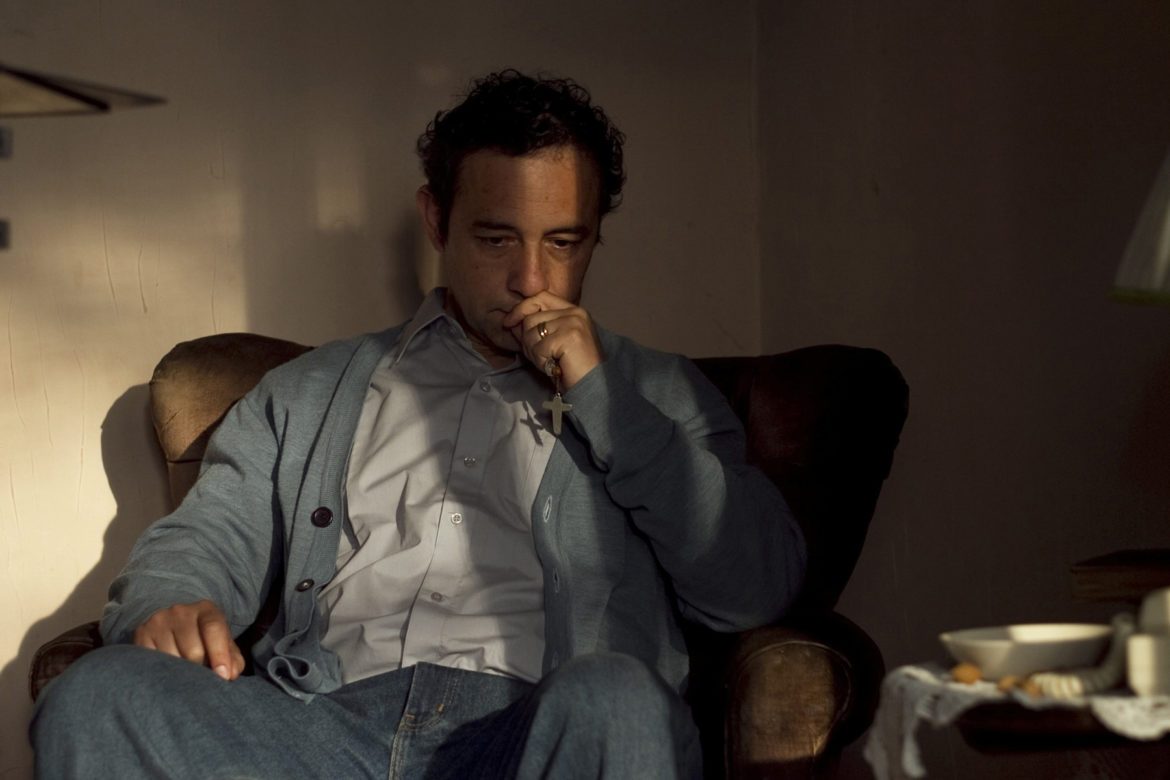
Domingo (Daniel Muñoz) is a devout Christian, a loving husband and father. His life is so run of the mill that even the local priest seems bored with his confessions, dutifully doling out penance for mundane transgressions that barely even need it.

One night, Domingo encounters who he takes to be thieves at a warehouse he’s responsible for, and shoots one of them. As it happens, they were lovers just looking for a place to hook up. It’s a tragedy for all involved, but for Domingo it’s a revelation – he has killed, wrongly, and discovers he feels no guilt whatsoever. Nothing. His life is structured around penitence for laughable sin, but actually killing someone weighs on him as lightly as possible. He’s intrigued.

Almost as an experiment, he sets out to sin some more. Maybe sin itself is what he has been missing in his life – and surely, if such things were as morally atrocious as he assumes, God would punish him for them. And yet He does not. Domingo pulls pantyhose over his face and prowls the night, stealing and otherwise violating his own ethical code, as though on a dare from the universe. Still nothing. If anything, he seems more confident than before.

It could be said that he’s “tormented” by his lack of guilt, but that’s not how it plays. Olea structures Domingo’s crimes as a comedy, though a fairly laughless one. There’s not much torment to be found. Domingo remains respected in the community, and, in a dark closing act twist, finds himself exalted and much more comfortable in his own skin for a truly heinous act. We close with a bourgeois sense that everything is right with the world.

Olea is Chilean, and there’s a likely subtext here about how repressed crime runs through the body politic. But El Cordero can’t match this ambition. Muñoz has the face for the titular lamb, placid and willing to go along, but the film itself doesn’t pack the punch it means to. It’s mildly amusing at one moment and then jarringly unpleasant the next. The pieces don’t fit.

There are moments that seem to indicate where this could’ve gone, but they are few and far between. Overall, it’s attractively shot by Leonardo Diaz, and many of the performances are solid. But it’s a film that thinks it has more to say than it actually does, and takes too long to say it.

May 9, 2015 0 comments
0 FacebookTwitterPinterestEmail
FilmReviews

‘Tangerine’ and the Brave New World of iPhone Filmmaking

by rick May 9, 2015
written by rick

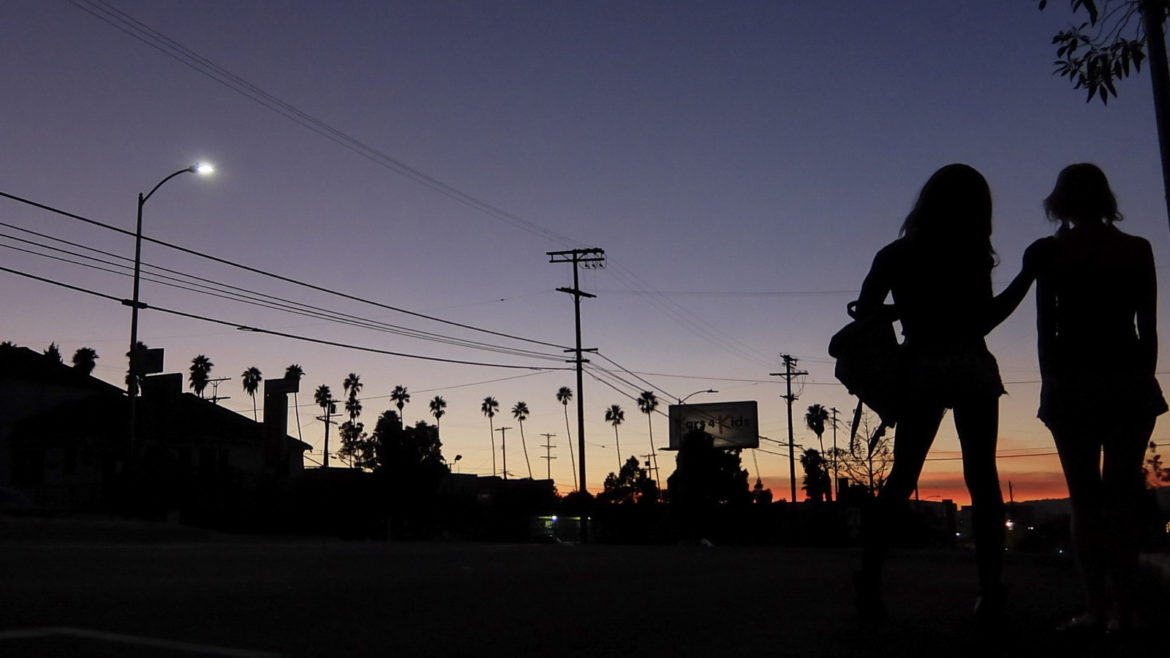
Describing Sean Baker’s Tangerine is essentially making a list of dodgy propositions. It was shot entirely on iPhone 5s. It features two non-actors in the leads (though surrounds them with more established people like James Ransone, who played Ziggy on The Wire and will appear in the upcoming Sinister 2, and a whole cast of Armenian performers who are well-known abroad). Its narrative follows a day in the life of two trans sex workers in L.A. – and that day happens to be Christmas Eve.

It’s not hard to imagine this going poorly, or diving deep into maudlin melodrama or even exploitation. There’s a relief when it doesn’t. Tangerine is ultimately ingratiating and compassionate – it’s screamingly loud at the beginning (and elsewhere) but nearly silent at the end. It has a tenderness that sneaks up on you.

Sin-Dee (Kitana Kiki Rodriguez) is fresh out of jail. She meets up with her best friend Alexandra (Mya Taylor) and they make their way across town. Alexandra has some sort of show later on in the evening, and passes out flyers everywhere she goes (hilariously, including at the end of otherwise antagonistic encounters), but all consideration of this is dwarfed by Sin-Dee’s discovery that her boyfriend/pimp has been cheating on her while she was locked up. The two traverse the city, trying to find this lover, who they only know has a name that starts with a D, for the express purpose of fucking her up. That’s Sin-Dee’s plan, anyway; Alexandra’s exasperation with her friend shows from the start.

Their frantic journey of jealous comeuppance is juxtaposed with Razmik (Karren Karugulian), a married Armenian cab driver with a kid, and who, as it turns out, knows the trans sex worker community pretty damn well. Baker and fellow screenwriter Chris Bergoch fill the back of Razmik’s cab with a cross-section of an “underworld” community that doesn’t seem very hidden in this vision of L.A. – drunks, junkies, pimps, and prostitutes make up most of the world we meet.

All the while, Sin-Dee and Alexandra scour the land, searching. The camera – sometimes jerky and nervous, often edited to match the dub-step and hip-hop rhythms of the film’s Soundcloud-curated score – drags us along. The two eventually find their prey, and a harrowing several minutes transpires before a tonal shift takes the anxiety down a notch, and the film settles into a more contemplative mood.

That is, until all the characters’ paths cross simultaneously – not just our two protagonists and the woman they basically kidnapped, but also Ransone’s Chester, Razmik, his mother-in-law, his wife, and child – in a late-night donut shop. Things get dialed back up pretty fast and pretty loud.

It’s best not to talk about the closing frames, but they’re wonderful – after all the drama, we land on a moment of deep vulnerability and companionship that’s all the more striking for its relative silence.

At the beginning of the film, there’s a real sense that the characterizations of Sin-Dee and Alexandra might go too broad – everything is Bitch this and Bitch that – but as the film progresses, it finds a lot more depth than its opening moments suggest. These are characters we rarely see, and that alone is valuable (though the recent Sworn Virgin, also screened at SF International Film Fest, addressed trans issues too, from a very different angle).

Ransone is, unsurprisingly, a standout, and Karugulian conveys his cab-driver’s familial dissatisfaction and sexual repression well. (The connection between the relative sexual freedom he discovers in his cab and the oppressive aspects of his immigrant home life could’ve gotten more attention, though.) The two leads may just be playing versions of themselves, but they do that engagingly; Taylor, especially, inhabits her character, the quieter and more self-aware of the two. I hope she gets more work on screen.

The tiny, digital elephants in the room, of course, are the iPhones. How does it work in the end? I think it works very well, overall. There’s a kinetic momentum behind the film that compliments the handheld shots and the pulsing, frantic soundtrack. During some tracking shots, the jitteriness is distracting, but not in the standard way – rather than the dizzy-making vibe that often accompanies such experiments, it’s more as though everything were a few frames per second too many (though Baker and Bergoch, in the Q&A at SFIFF, said this was not technically the case). It did not come off gimmicky, though I’d be surprised if any viewer wasn’t able to notice that something was different about the image. More often than not, though, it’s effective. There’s a visceral sense of the L.A. streets and the characters who inhabit them, and the medium aligns with the message.

The possibility that – with a couple of phones, some stabilizing equipment, editing software, and the vast amount of independently created music available online from young artists – you can just go out and make a movie is undeniably exciting. It holds the promise of lowering the barrier of entry to visual storytelling, which has always been the dream of independent film. There are some kinks to be worked out, and technical issues to be determined, but in the end, it means that more stories might be told, which we’d never otherwise discover. Will some of them be terrible? Probably. But Tangerine isn’t.

Debates about the decline of celluloid and “true film” forget this too often. Personally, I want both masterful visions on film and upstart provocations from those working on the margins with new technology. Tangerine wasn’t my favorite film of the year so far, but it’s 2015’s most audacious challenge to filmmakers and viewers. If you have a good story, and some performers, and some time, and a phone or two, why not make a movie? And if you’re not going to make your movie, who will?

May 9, 2015 0 comments
0 FacebookTwitterPinterestEmail
FilmReviews

The 360-Degree Femininity of ‘Sworn Virgin’

by rick May 6, 2015
written by rick

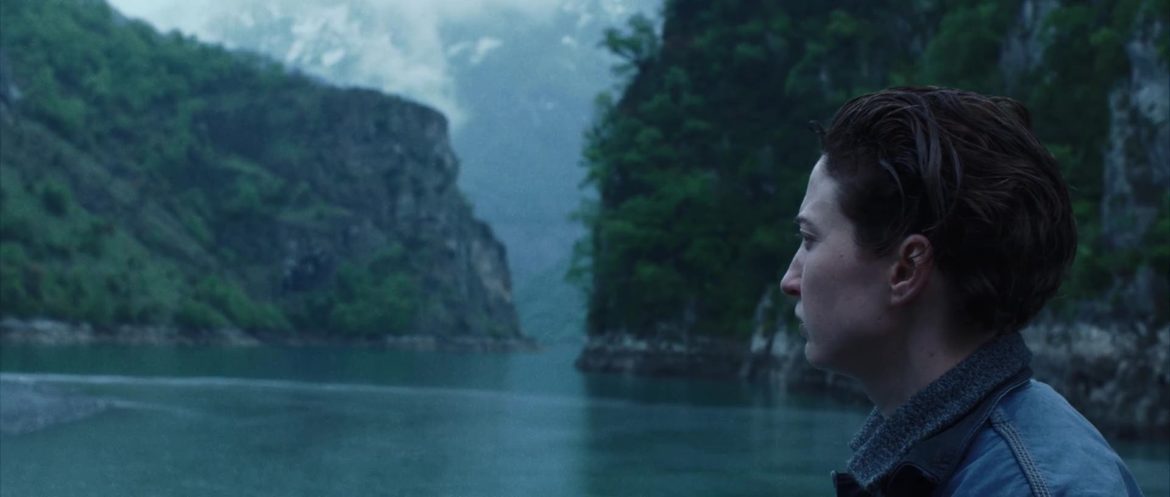
In the mountains of Albania, rigid gender roles dominate. But a curious exception exists: some residents born biologically female are permitted to become men if they swear to remain virgins for life. They do this for many reasons: maybe that’s the gender identity they recognized to be true from the start, maybe the family lacks a son and heir, or maybe they simply desire the freedom maleness provides. For Hana, the protagonist in Laura Bispur’s lovely, elliptical, and compassionate Sworn Virgin, all three are true to an extent.

Hana is the adopted daughter of a small family, who was rescued from an unnamed catastrophe that killed her parents. She and her new sister Lila have the rules laid out: you do not go into the woods without a man; you do not speak before or contradict him; you smile but you do not laugh. In short, you know your place.

“Your place.” It’s one of the film’s central themes — who am I, and where? How do I behave, and to what end? The film locates this placeness in the body, but also in the worlds bodies inhabit, and in the people who fill those worlds. Lila flees the stone confines of the mountain village with a lover, but seems slightly mournful for home after relocating and starting a family in Italy. In a formal ceremony, Hana transitions to Marc in order to stay, but is lost in his own way. Later, his dying father encourages him to leave and find his place in the outside world. Marc responds, “This is my place. You are my place.” The phrase lingers, but Hana/Marc’s socially constructed body has its own designs and desires.

He shows up on Lila’s doorstep unannounced. Lila is taken aback, confronted with a place she left behind. Her daughter Jonida is even less enthused, suspicious of this never-before-mentioned uncle (and, in a nice touch, mostly pissed she has to give up her room). Only Lila’s husband seems pleased. Is he happy to have a man in this house of women, someone to drink raki with after dinner, or just welcoming of old-country reminders in a foreign land? The film is no hurry to spell it out. Viewers have to decide.

The rest of the film is Marc’s painful, haunting, and often sweet journey towards a sort of comfort in his own skin. Bispuri fills the frame with arresting images — the mountains breathtakingly invoke the cold impermeability of custom in the early scenes, and Jonida’s synchronized swimming practices showcase the demand for uniformity imposed on women’s bodies even in this new world. The long shots in the pools also imply the tumult that lies beneath the water’s surface, and the performative nature of identity. It’s masterfully done.

By the film’s end, Hana and Marc seem to arrive at an agreement between themselves — we close with an old song in a new place. But things will remain complicated. In a great interview with The Dissolve’s Tasha Robinson, Bispuri says “Hana is a 360-degree female character who travels through femininity in a 360-degree manner by traveling through masculinity. It’s a whole discourse about the body, about the difficulty of being a woman in terms of the body, and the difficult, fatiguing journey women have to take in terms of accepting their own bodies.” What she leaves out — the 360-degree journey is not a renunciation of masculinity, that Marc is not left behind. Things are, as ever, more complicated when bodies are involved. And bodies are always involved.

Recently, Stéphane Delorme, editor-in-chief of French film magazine Cahiers du Cinéma, said, “There’s a real indulgence in defeat and cowardice and in dealing with exclusively negative feelings. I wrote about lyricism to ask filmmakers to show us they believe in something, that there’s some hope. If people love other people, if they love actors or places, why don’t they film what they love?”

Sworn Virgin is just such a film — it’s a cinema of hope and self-reconciliation, filmed with obvious love. Unlike much of the current landscape, it breathes, pulses, and believes in something, and has the audacity to be vulnerable and conflicted. We need more films like it.

May 6, 2015 0 comments
0 FacebookTwitterPinterestEmail
FilmReviews

Romeo Is Bleeding (Jason Zeldes, 2015)

by rick May 4, 2015
written by rick

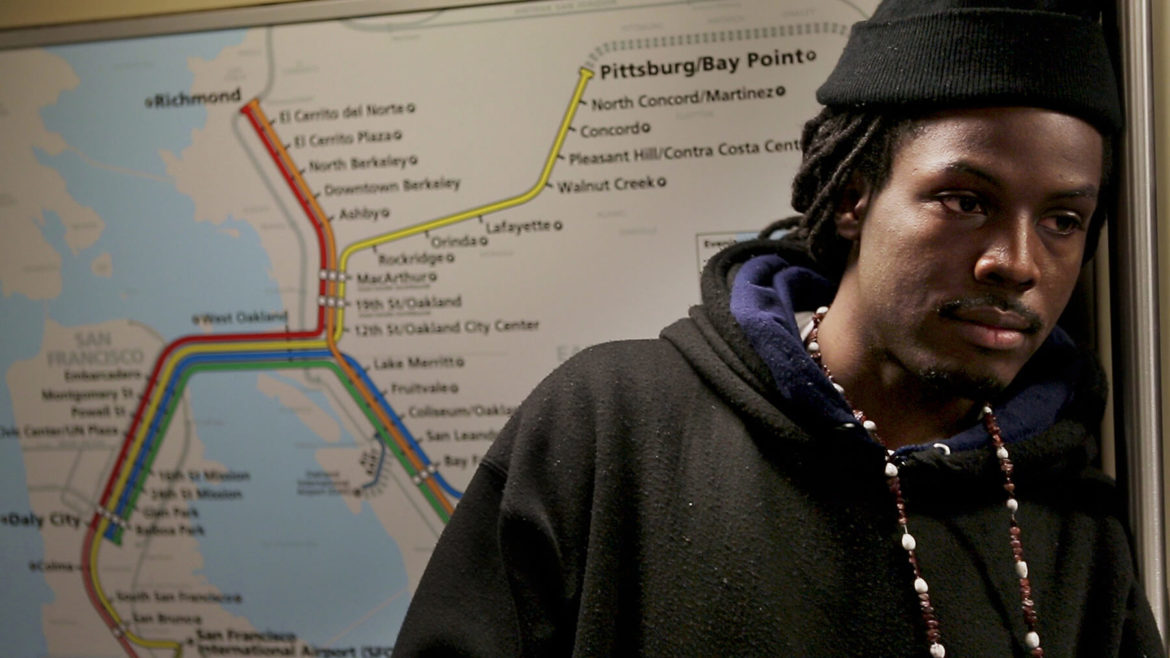
It’s only May, but the top contender for documentary of the year has already arrived. Jason Zeldes’ portrait of Richmond, CA and the struggles of its youth in an incredibly dangerous environment is a staggeringly emotional and moving film. It provides narrative context for its subjects, and is both visually interesting and accomplished, but it also has the good sense to let these kids speak for themselves. Holy shit, do they ever.

The film portrays a city under siege, where those from the north and central parts are locked in intractable violence, dating back decades. Or more: the unincorporated part of the north side was where Blacks who came westward to work in the shipyards were pushed a generation ago, a division literally demarcated by train tracks. The Chevron refinery, prone to blowing up every few years (including during the production of Romeo Is Bleeding), spews toxins into the community. Draconian gang injunctions – arguably borne out of a desperate attempt to still the gun violence – essentially criminalize the vast majority of the population. It’s the kind of place where almost no one at all is untouched by the ongoing strife and agonizing list of fatalities.

And in the midst of all this, kids write poetry, trying to get a hold on what they’re experiencing.

The film focuses on Donté Clark, an older but still young poet, and Molly Raynor, who together set up a spoken word and mentorship program for the youth of Richmond. Clark’s a lifelong resident, with family ties to a pivotal incident that might’ve played a huge role in opening the chasm between North and Central, which has been steadily filling with murdered Black men ever since. Without putting too fine a point on it, it’s clear this weighs on him. To the film’s credit, though, he’s not a salvational figure, and neither is Molly. They’re both driven primarily to give voice to the kids – or rather, allow the kids’ voices to come into their own, convinced that the silencing itself is a precondition for the violence.

After remarking on how the balcony of a particular theater they find themselves in would make for a good Romeo and Juliet, Molly proposes they stage one. Donté laughs it off – what do Shakespeare’s star-crossed lovers have to do with Richmond. “Nobody would come to that play,” he laughs, not without reason. Then a bit later, he remembers how he read it again, no longer a disaffected 15 year old but as a 22-year-old poet and thought: “Oh shit, this is my life.” It is, after all, the story of violence between crews, of turf wars, of kids who’ve inherited the world their fathers fucked up and so find themselves acting out vendettas they don’t even really understand any more.

The decision? Donté and the group of young poets rewrite the play, holding on to plot beats and some of the language, while transposing it to Richmond and infusing it with rapid-fire spoken word and hip-hop rhythms. The poets draw on their own experiences to talk about home, family, doubt, grief, and rage. And they debut it in El Cerrito, for a crowd of their peers.

If you’re not sort of tearing up at the prospect, I worry about you.

In between footage of rehearsals, we get unobtrusive back stories and snippets of others – neighbors, family, even cops – talking about how things play out in Richmond. We get the frantic evacuation of their practice space downwind from the Chevron explosion, something the film makers couldn’t have anticipated but which just underlines the environmental racism of the situation.

And things being what they are, we bear witness to yet more tragic loss. It’s a lot to take, and the film doesn’t take it lightly, but it also keeps bringing things back to the topic at hand – the neighborhoods aren’t going to be fixed over night, but these kids have things to say and a forum in which to say them. This is valuable, they desperately want it, and self-expression has to start somewhere. To its profound credit, the film takes them totally seriously as both artists and goofy children all too aware of the dangers they face.

There are many ways this could’ve gone off the rails. It could’ve been maudlin, or disrespectful, or “important” (that “eat your vegetables” variety of damning with faint praise) or so worshipful that it obscured the flawed humanity and anxious doubt coursing through the whole thing. It is none of those things. It’s an honest, beautiful, and ultimately profound mediation on art and life, located in a particular place and time, and filled with individuals you immediately want to know better. It was screened at the San Francisco International Film Fest, where it received standing ovations at each of its three showings.

There may be a better documentary this year, but there won’t be a more vital one. It should be screened in every high school in the country. Or, as Raynor suggested in the Q&A, paired with Shakespeare’s play in the curricula. With the near-annual laments about declining readership for The Bard, maybe that’s something everyone can get behind. The connections these poets make to the source material are deep and wonderful, and the stories they tell need to be heard far outside the borders of Richmond, California.

May 4, 2015 0 comments
0 FacebookTwitterPinterestEmail
FilmReviews

A Girl Walks Home Alone At Night (Ana Lily Amirpour, 2014)

by rick May 3, 2015
written by rick

Irresistibly billed as “the first Iranian vampire Western,” A Girl Walks Home Alone At Night, writer/director Ana Lily Amirpour’s first feature is a strikingly shot, glacially paced wonder.

Its tagline could’ve included a range of other influences: noir, especially, the early 80’s indie sensibilities of Jim Jarmusch, occasionally the uncanniness of Lynch. If it sometimes comes across as too much of a formalist exercise, its sheer audacity takes it a long way. I’m not sure the world realized it needed a moody, noirish black and white vampire Western in Persian, but Amirpour knew better.

The film’s bait-and-switch mentality, and subtle wit, are on display even the title, which promises a variety of horror in which it is totally uninterested. The Girl in question (the excellent Sheila Vand, credited, of course, as “The Girl”) is not the one in any external danger; the men on the street are, particularly those who oppress and abuse women. Even so, though horror tropes are invoked, this is not a remotely scary film. Amirpour’s script turns conventions on their head, and we end up instead with a darkly lit, ominous morality play that hinges on her protagonist’s sexuality and desire.

The vampire femme fatale has a long, not particularly illustrious history, and the vampire has always been soaked in sex and anxiety as a figure in film. Cloaked in a hijab and riding a skateboard through the streets of “Bad City” at night, Vand feeds on those who mean women harm, occasionally frightening little boys into avoiding their fate. She’s a feminist avenger in the dark, but also a woman grappling with her own needs.

When she meets Arash, another poker-faced Bad City resident with a junkie for a father, he’s loaded on drugs he just stole from one of her victims (and dressed as Dracula, natch). Their quiet, tenuous friendship seems to grow into something more, though it’s hard to tell. What’s not hard to tell is how problematic this is going to be for both of them.

The story, and its subtle treatment, are of great interest, but the main takeaway at all times are the mood, the off-kilter shots, the lighting, and the luminous black-and-white dreamscapes Amirpour and her DP Lyle Vincent sustain throughout.

There’s a sense that this is taking place between worlds – The Girl likes disco, New Wave, and Lionel Ritchie, which she plays on vinyl, just as Jarmusch’s ancient protagonists do in his recent, cool-saturated (or exhausted) foray into vampirism, Only Lovers Left Alive. Arash’s car even has a tape deck. Unlike the Jarmusch genre entry, we never get a sense of the specifics of The Girl’s condition – no flashbacks or origin stories or too-cute references to their good friend Christopher Marlowe. A Girl Walks Home Alone At Night takes place in the here and now, though both those words are up for grabs.

The leads are terrific but ultimately overshadowed, as it were, by the gorgeous, confounding images in which they’re placed. There are probably a number of messages to tease out, but the greatest impact lies not in the story but in the frame. This is not a knock on Amirpour – what’s in the frame is more than enough.

The film didn’t work for me as well as it seems to have for others I’ve read, but it’s an undeniably memorable and ambitious debut, a singular film from a director to watch. IMDB describes her next film, The Bad Batch, as a “dystopian love story in a Texas wasteland and set in a community of cannibals.” It’s slated for a 2016 release, and I’ll be the first in line.

May 3, 2015 0 comments
0 FacebookTwitterPinterestEmail
FilmReviews

John Wick (Chad Stahelski, 2014)

by rick May 2, 2015
written by rick

Before I review the ludicrous, wonderful John Wick, I need to tell two stories.

A few years ago, driving back from camping in Sequoia National Forest, some friends and I approached a traffic light around Visalia, CA and saw a little dog dancing around in the intersection. It’s one of those roads that has stoplights every few miles or so but is otherwise like a two-lane, 55 mph highway. Farm country. There were dead dogs on the side of the road all the time. We picked him up and drove him around, asking people if they knew him. No such luck. It was a holiday and the shelters were closed. He was filthy and neglected. He stayed the night and never left. He’s called Bandit.

bandit

Maybe a year or so later, my partner at the time was approached by another dog wandering lost near where she worked. Again, no one seemed to know this dog in the neighborhood. Protocol was followed: signs were put up, her picture placed in the book at the shelter, and so forth. She moved in, too. She’s called Emma.

emma

In time, they became very close friends, even if Bandit’s skepticism of the situation has never quite worn off.

bandit and emma

These stories are relevant, because it’s important to situate yourself. I could pretend to be a reviewer (and do!), but I’m first and foremost someone who watches movies, and brings to them my experiences. So when John Wick (Keanu Reeves) is gifted with a dog from his dead wife, her last gift to him, you can imagine where my sympathies fall. When the awful, privileged children of organized crime casually kill his dog, in the midst of a frivolous car theft, you can imagine my horror.

And when John Wick recovers and decides to basically go to war with anyone involved, racking up an absurd body count as retribution, you will be unsurprised at my approving nod. This is a virtuous cause.

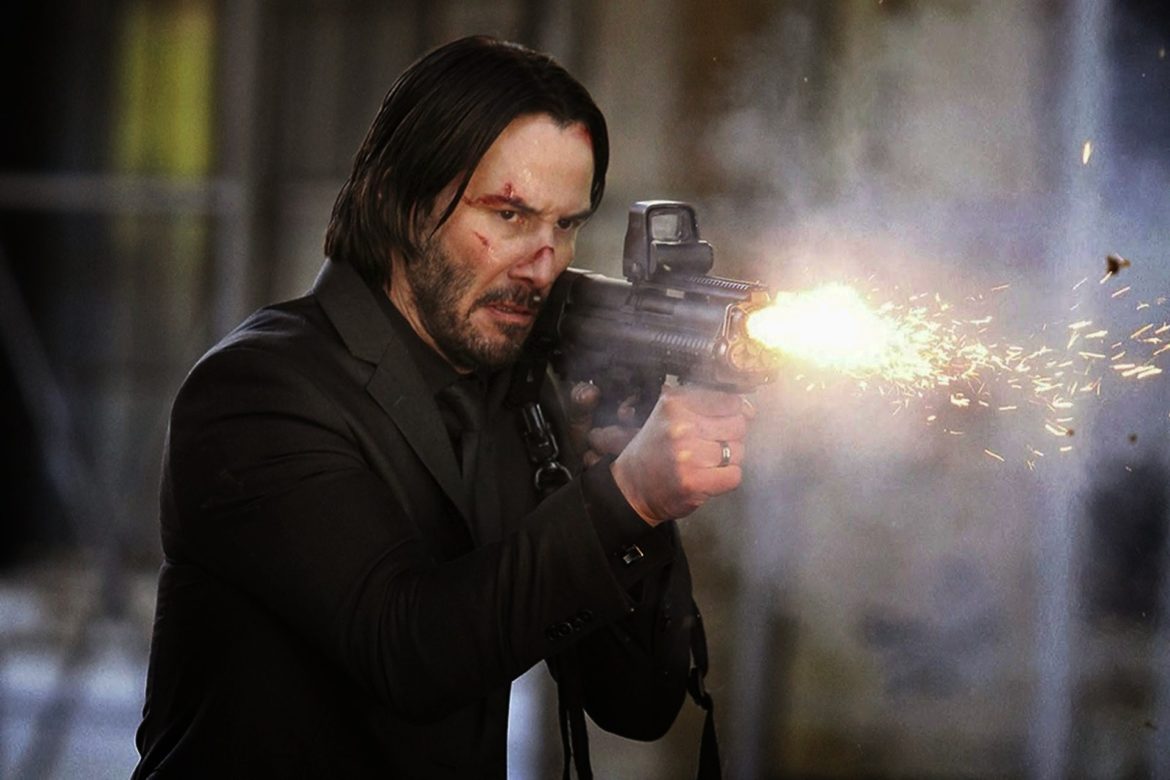
There is almost nothing to talk about when talking about John Wick, aside from action and vengenance. Also, Willem Defoe is in it, so that’s good. Reeves walks a line just short of parody, but manages enough schlock gravitas to sustain the whole thing.

Deeply indebted to Hong Kong fisticuffs, grappling, and pulsing set pieces, John Wick at its best when things are in motion, and drags every time people talk. Luckily, the whole kinetic thing mostly avoids talking. There is a plot – Reeves is a former hit man, other things happen – but it is irrelevant. This is a movie about a man whose innocent friend was killed, and who means to see him avenged. Even if it that means squaring off with every other killer in town, possibly the world. It’s a matter of principle.

This stylish, lovably dopey entry in what is hopefully a Keanu Reevesaissance (or, in a brilliant phrase from among The Dissolve commentariat, the “Kea-NU Wave”) cries out to be replayed, or at least certain scenes do. It’s shot and edited well, and some of the choreography is fantastic. Most of all, it’s completely accepting of its own ludicrousness, and so just keeps dialing it up. The spectacle is absurd, and fun.

If you are averse to wanton violence, it’s not for you. If, on the other hand, you like car chases, smashy-smashy, well-placed kicks to the leg, and the bad guys getting what they deserve, you will probably enjoy it.

If you fall into the latter camp and also love dogs, you should go watch it right now.

May 2, 2015 0 comments
0 FacebookTwitterPinterestEmail
FilmReviews

The Black Panthers: Vanguard of the Revolution (Stanley Nelson, 2015)

by rick April 26, 2015
written by rick

Sometimes, movies are released at exactly the right time, gaining impact and resonance thanks to events in the offscreen world.

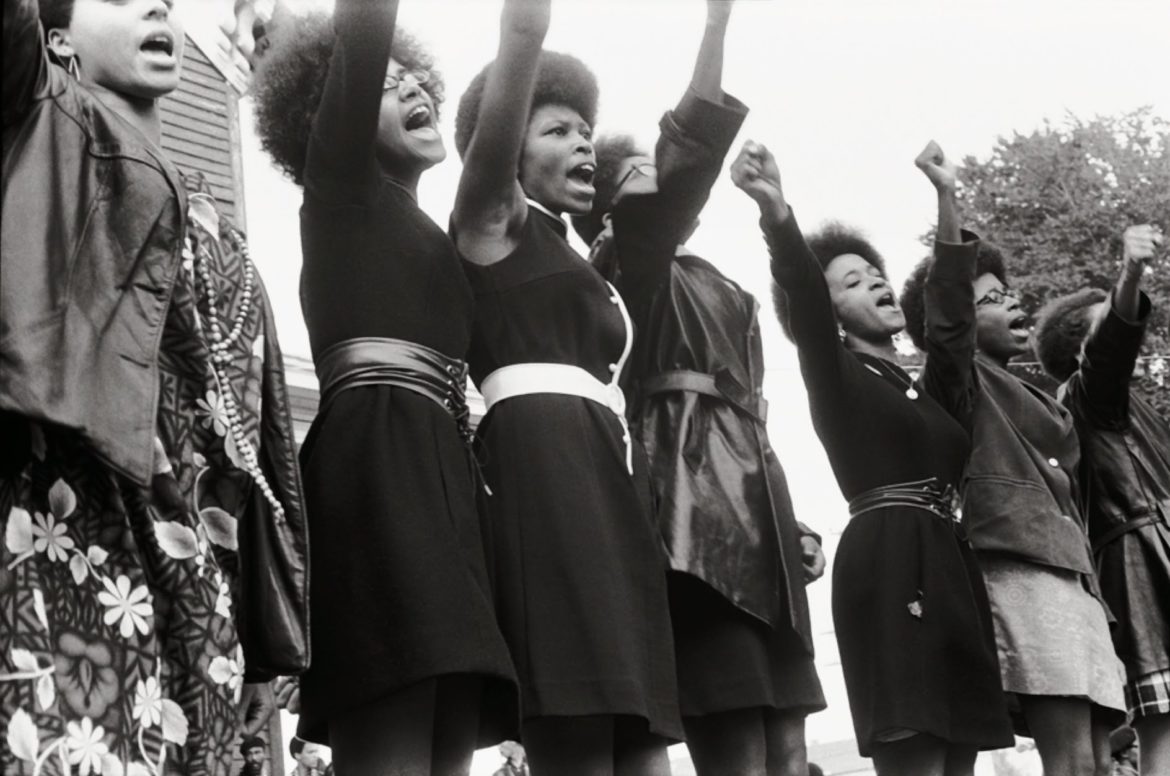
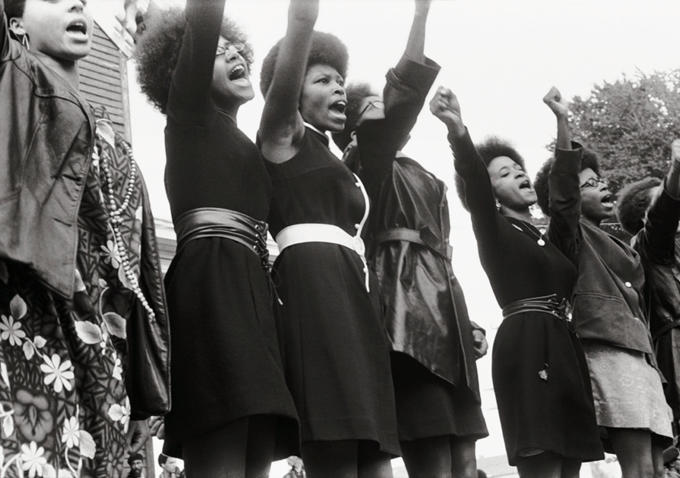
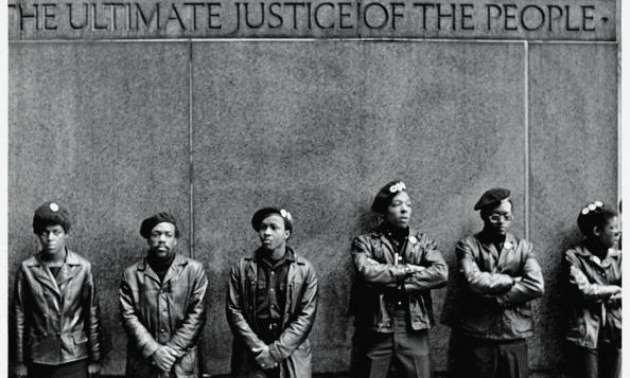
Stanley Nelson’s new documentary The Black Panthers: Vanguard of the Revolution is accomplished and compelling, if not particularly daring in any way aesthetically. It’s an earnest, crisply edited entry in the standard format – talking heads reminiscing, wisely incorporated archival footage and photos, an awesome period soundtrack – and it seeks to tell the Panthers’ story as comprehensively as it can. It is totally successful on its terms, and as good an entry point into this history as any.

Released in 2015, though, with multiple incidents across the country suddenly highlighting the widespread police brutality that’s always been there in Black and poor communities, the film takes on an added urgency. These issues have never gone away, but a lot of eyes are on them right now. This makes the early footage of Huey Newton and Bobby Seale organizing locally against the racist police in Oakland, California all the more inspiring, and the ultimate splintering and dissolution of the Black Panther Party all the more distressing.

Nelson tells the story of the Black Panther Party chronologically. We follow it from its birth in Oakland as a local self-defense and cop-watch group, to the spread of chapters across the country, to the eventual international office in Algeria headed up by an exiled Eldridge Cleaver. The murder of Fred Hampton in Chicago is covered in detail, as is the notorious four-hour shoot-out in Los Angeles that followed.

bpp2

Along the way, we learn from former Panthers like Elaine Brown about the roles and identities of women in the Party, and efforts to address problematic gender relations. A major theme in the film is the tension between those, like Newton, pushing the “Survival Pending Revolution” programs (free breakfasts for kids, free medical clinics, housing assistance), and others, like Cleaver, who argued that the job of the Panthers was armed revolution, not social services.

To the film’s credit, the contrast is not exactly that tidy. A range of voices insist that, in the tumult of the period and in an organization that spread like wildfire, things were complicated. The creation of J. Edgar Hoover’s notorious COINTELPRO program, which explicitly sought to “expose, disrupt, misdirect, discredit, neutralize or otherwise eliminate” the Panthers (among others) and prevent the rise of what Hoover called “a Black Messiah,” complicated things further. The assassination of Fred Hampton by Chicago Police is the awful capstone of this campaign, but the FBI’s manipulation is everywhere, and in ways a lot subtler than open murder. The Bureau accomplished their mission eventually, with the split between Newton and Cleaver, leading to increasingly authoritarian and erratic leadership all around. It’s not pretty.

Somehow, the film also fits in a long segment on Bobby Seale’s outrageous treatment during the Chicago 8 trial after the 1968 Democratic National Convention protests, the Panther 21 acquittal in New York, and much else besides. It’s a credit to Nelson that the movie never feels overstuffed. It covers a wide range of events deftly, and incorporates numerous perspectives without ever really dragging.

black-panthers

On the other hand, it never really soars. With one exception: when one of the Panthers involved in the L.A. shootout thinks back on being trapped in a sandbagged building, in a pitched battle with the LAPD, his eyes light up and he says, “I never felt so free.” It’s a rare electric moment (the audience at the SF Film Fest broke into applause). For the most part, though, The Black Panthers: Vanguard of the Revolution has a story to tell, and does so in a straightforward, workmanlike fashion.

Which is fine. It’s a hell of a story, filled with lessons about self-determination, organizing, power, and the dangers resistance movements face. During the Q&A after the film, Nelson said they’re trying to raise a bit more money to hold local screenings across the country, in addition to its theatrical release and eventual airing on PBS. He mentioned bringing it to Ferguson, and more generally to audiences that don’t go to film festivals. It’s a smart idea for a timely film.

April 26, 2015 0 comments
0 FacebookTwitterPinterestEmail
FilmReviews

Fear and Desire (Stanley Kubrick, 1953)

by rick April 25, 2015
written by rick

“I guess I wasn’t built for this.”
“Nobody was. It’s all just a trick we perform, when we’d rather not die immediately.”

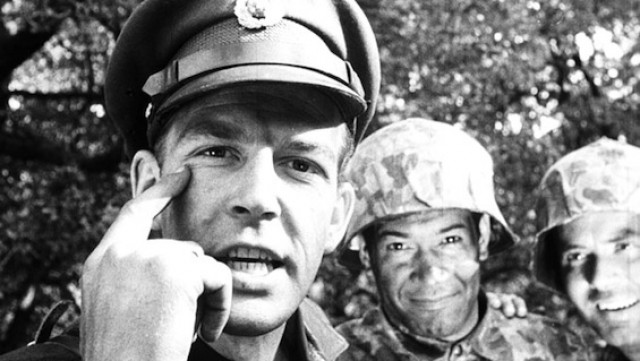
Stanley Kubrick’s first feature Fear and Desire – famously considered lost for years, and famously dismissed by Kubrick himself as “a bumbling amateur film exercise” – is an existentialist war movie. And, with all due respect to its creator, it’s a kind of masterpiece.

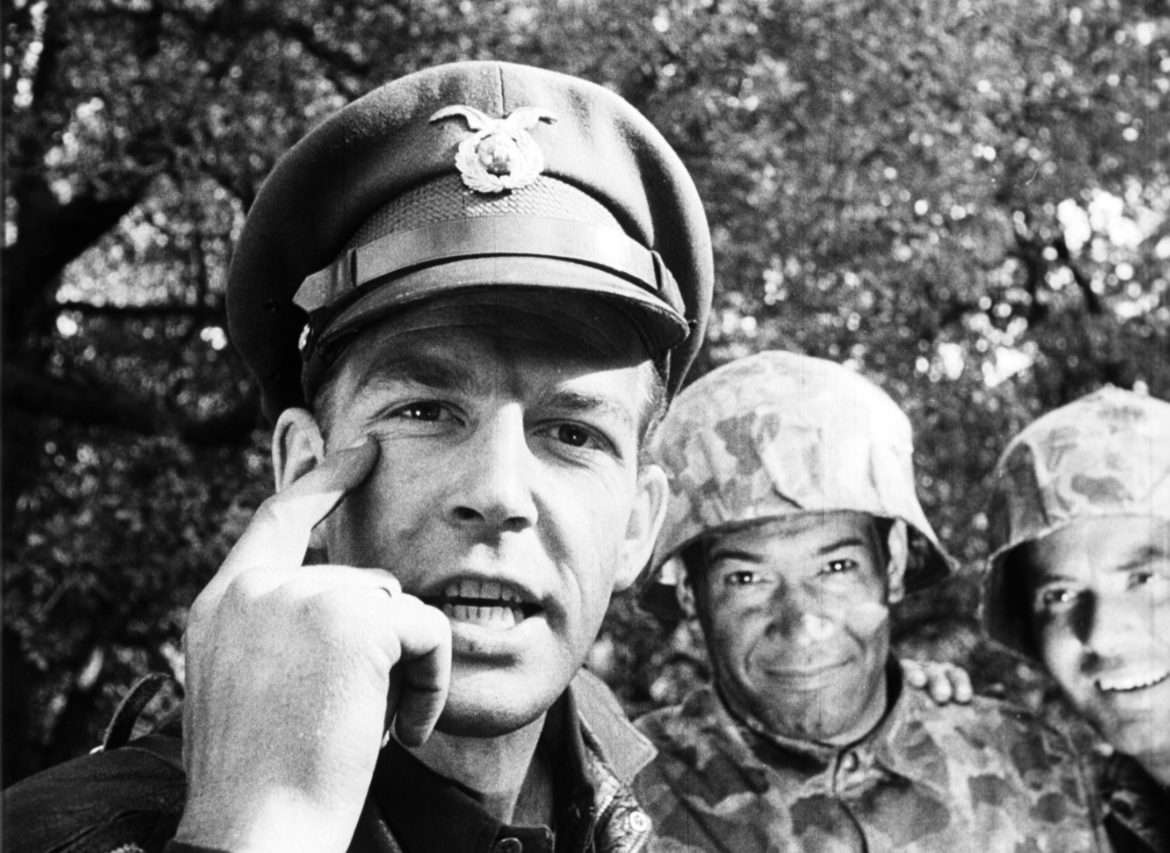
There are hints at future Kubrick efforts throughout, especially Paths of Glory (and, to a lesser extent, Full Metal Jacket). Yes, it is over the top and enamored with its own insights in the way only the works of young artists can be. Yes, the performances are broad, and the whole thing is ostentatiously, sometimes clumsily shot. It is clearly the work of a young photographer-turned-director finding his footing. But in its focus on two unnamed countries at war, its stated insistence in the opening narration that the events exist “outside history” and that its characters’ “have no country but the mind,” and in its final reveal, Fear and Desire has an ambition that far outstrips its tiny budget and related shortcomings.

From the start, the film takes place in a nowhere space. Fog constantly obscures the wide shots. Shadows abound. Close-ups, which show all the hallmarks of Kubrick’s career as a photographer, seem to expose every pore on faces, but bring us no closer to these characters as individuals. Our four protagonists are clearly American (they wear recognizable camo uniforms and get dickishly frustrated when others don’t speak English) but that’s about the only signpost.

Fear-and-Desire-e1351071871527

More an archetype or fable than anything else, the film comes on like some sort of wartime Godot: the central characters are behind enemy lines (whoever the enemy might be) and cut off, trying to make their way back down the river and out of danger, and in the meantime mostly grappling with the absurdity of their situation. At least one goes mad.

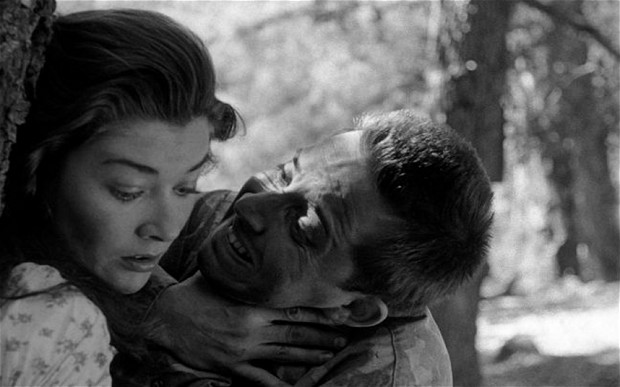
In their effort to escape danger, the crew comes across a peasant woman returning through the woods, and ends up tying her to a tree lest she reveal their position (there are brief suggestions of a kinkier subtext here, but the film doesn’t belabor the point). She’s entrusted to Pvt. Sidney (future director Paul Mazursky, who passed away last year); the private takes the opportunity to speak endlessly at her, pouring out his anxieties, mounting dread, and plaintive desires, despite her inability to understand a word of what he is saying.

fearanddesire_2460741b

Meanwhile, the rest of the crew works on putting a raft together to float out of danger. Once they discover an enemy General is close by – how many times do you get the chance to kill an enemy General? – the plan shifts. Its last moments argue that the “country of the mind” in which they find themselves might be theirs and theirs alone.

Aside from the climactic raid on the General’s camp, there’s little more to the story than that. Clocking in at almost exactly an hour, it has the air of a glorified short as much as a feature. Like Paths of Glory and Full Metal Jacket, there is a deep skepticism of war in and of itself – its absurdities stand in for the impossible relations humans have with each other and ourselves more generally. (It’s hard not to read the title echoing Kierkegaard’s foundational existentialist work “Fear and Trembling,” another account of a world that demands action while withholding any guidance on how to act.)

Unlike those later films, Fear and Desire is a full-on dreamscape, or, if you like, a nightmare. It’s not hard to see why the notoriously perfectionist Kubrick distanced himself from it further on in his career – it’s hardly subtle, and, while the low budget led to inspired improvisation (reportedly, tracking shots were done simply by affixing the camera to a baby carriage), it lacks the formal grace that we generally mean when we say “Kubrickian.”

But many of the later hallmarks are here, in sometimes staggering form, right out the gate. The photo-realism and composition of the shots stand in contrast to the eerie atmosphere and sense of inescapability, and its philosophical bent makes it completely compelling. Three years later, The Killing would remap these themes through the vocabulary of film noir; 27 years later, a very similar set of themes would emerge in The Shining, one of the most accomplished horror movies of all time (no matter what Stephen King thinks).

Fear and Desire might not live up to later Kubrick’s standards, or the standards of later Kubrick films, but so what? Little else does, either. It’s not only an incredible debut, but a striking exploration of what it means to exist.

April 25, 2015 0 comments
0 FacebookTwitterPinterestEmail
Newer Posts
Older Posts

About

About

Towards a provisional theory of the cinema, or, failing that, just some shit about movies

Authors
Rick Kelley
Lark Lundberg

Keep in touch

Facebook Twitter

Categories

  • Conversation
  • Film
  • Film By Film
  • Great Movie Project
  • Great Movies: The Counter Programming
  • Guest
  • News
  • Other
    • Commentary
    • Film
    • Interview
    • Reviews
    • Song for a Sunday
  • Streaming Selections
  • TV
  • Uncategorized
  • Vegan Horror

Archives

  • April 2019
  • March 2019
  • January 2019
  • December 2018
  • November 2018
  • October 2018
  • September 2018
  • August 2018
  • July 2018
  • June 2018
  • May 2018
  • April 2018
  • March 2018
  • February 2018
  • January 2018
  • December 2017
  • November 2017
  • October 2017
  • September 2017
  • August 2017
  • July 2017
  • June 2017
  • May 2017
  • April 2017
  • March 2017
  • February 2017
  • January 2017
  • December 2016
  • November 2016
  • October 2016
  • September 2016
  • August 2016
  • July 2016
  • June 2016
  • May 2016
  • April 2016
  • March 2016
  • February 2016
  • January 2016
  • December 2015
  • October 2015
  • September 2015
  • August 2015
  • July 2015
  • June 2015
  • May 2015
  • April 2015
  • March 2015
  • February 2015
  • January 2015
  • December 2014
  • November 2014
  • October 2014
  • August 2009
  • September 2008

Recent Posts

  • China Girls, Death Proof, and the Hidden Face
  • Old News: Old Noise Edition
  • Old News: April 1, 2019
  • Nicolas Winding Refn, Marginalia, and the Deaths of Cinema
  • And now, let us praise Kanopy

Recent Comments

  • Franklin Kat on Michael Shannon shines again in Frank & Lola
  • Sean Tempesta on Cinema and dream-logic in Meshes of the Afternoon
  • ludditerobot on The Left-Wing Slapstick and Iconic Songs of 1937’s Street Angel
  • Franklin Kat on The Left-Wing Slapstick and Iconic Songs of 1937’s Street Angel
  • Arijit Mukherjee on Great Movies Project: The Counter-Programming
  • Facebook
  • Twitter

@2021 - All Right Reserved. Designed and Developed by PenciDesign


Back To Top
Luddite Robot
  • Reviews
  • Commentary
  • Great Movie Project
    • Great Movie Project
      Bride of Frankenstein is a movie for and…

      January 25, 2018

      Great Movie Project
      The Enduring Appeal of Nick and Nora in…

      November 29, 2017

      Great Movie Project
      The Ahistorical Fever Dream of The Scarlet Empress

      August 2, 2017

      Great Movie Project
      Dreams, Mundanity, and the Anarchist Yearnings of L’Atalante

      July 12, 2017

      Great Movie Project
      Duck Soup Is And Will Always Be A…

      April 19, 2017

  • Counter Programming
    • Great Movies: The Counter Programming
      Walking and Talking in the Shadow of Kanchenjungha

      March 7, 2018

      Great Movies: The Counter Programming
      A Brief Encounter in My Mother and Her…

      February 9, 2018

      Great Movies: The Counter Programming
      Horror’s Refusal in Farrokhzad’s The House Is Black

      October 13, 2017

      Great Movies: The Counter Programming
      The rage and beauty of The Cloud-Capped Star

      October 3, 2017

      Great Movies: The Counter Programming
      The daylight noir and social issue empathy of…

      June 22, 2017

  • Vegan Horror
    • Vegan Horror
      Julia Ducournau doesn’t think her film Raw is…

      June 7, 2017

      Vegan Horror
      Licking our wounds: The vampiric masculinity of Ravenous

      December 13, 2016

      Vegan Horror
      Eggertsson and animals: An approach to horror cinema

      September 15, 2016

      Vegan Horror
      “It’s Not My Nature” – Vegetarianism, Body Horror,…

      August 30, 2016

      Vegan Horror
      Bodies and Carcasses in Predator 2

      August 23, 2016

  • Interview
    • Interview
      Jasmine Leyva’s doc The Invisible Vegan aims to…

      May 3, 2017

      Interview
      Bridging The Abyss: An Interview With The Directors…

      November 28, 2016

      Interview
      7 Days in Ohio: An Interview with Nathan…

      September 12, 2016

      Interview
      Film Critic Phil Dy talks New Filipino Cinema

      June 17, 2016

      Interview
      “I Love Seeing Film Projected.” A Conversation with…

      March 22, 2016