Don’t let the name or the opening moments trick you: Self-Criticism of a Bourgeois Dog is not really about dogs. But that feint is itself representative of Julian Radlmaier’s comedy, which propels itself along by sudden swerves.
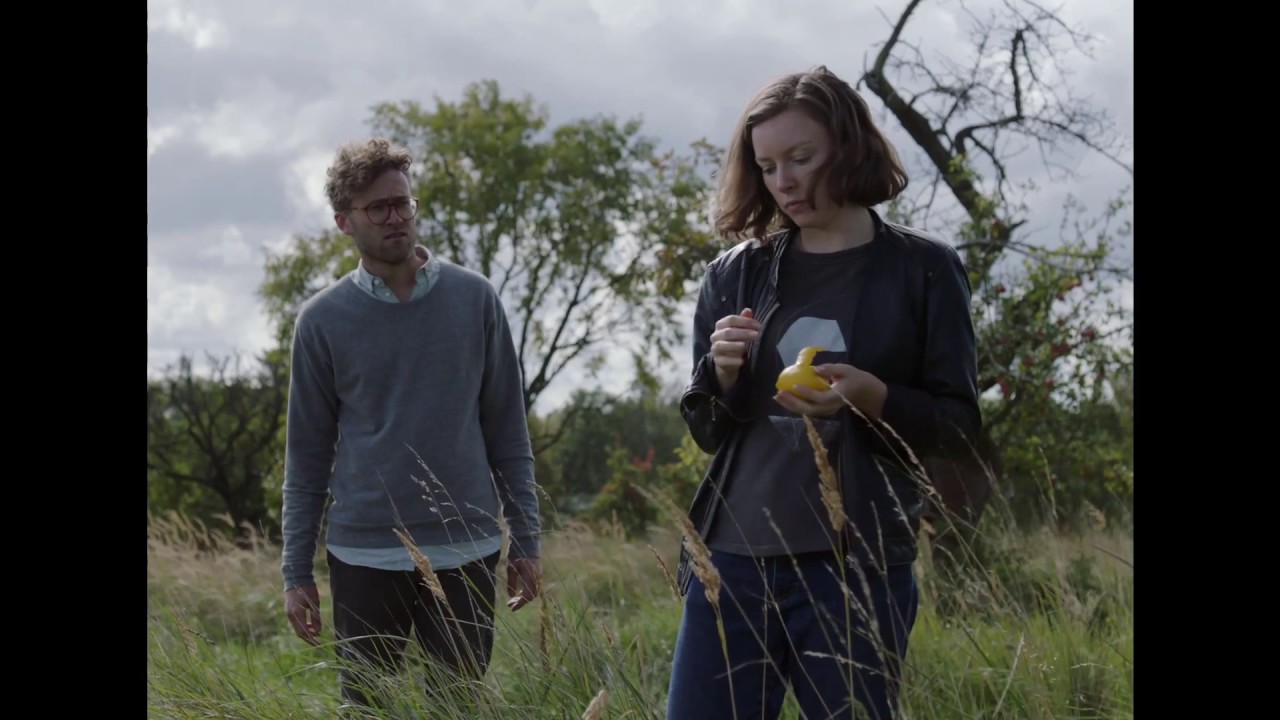
Its first real narrative thread is inauspicious: Radlmaier, playing himself, out of money to make his next film, is forced to work at a peach-picking plantation, convinces a woman (Deragh Campbell) he is doing research for a new film that he wants her to star in. (She’s rightfully suspicious: he just wants to sleep with her.) It is the dullest variation on the dullest story (director makes a film about himself trying to make a film), but it quickly turns into a meandering comedy.
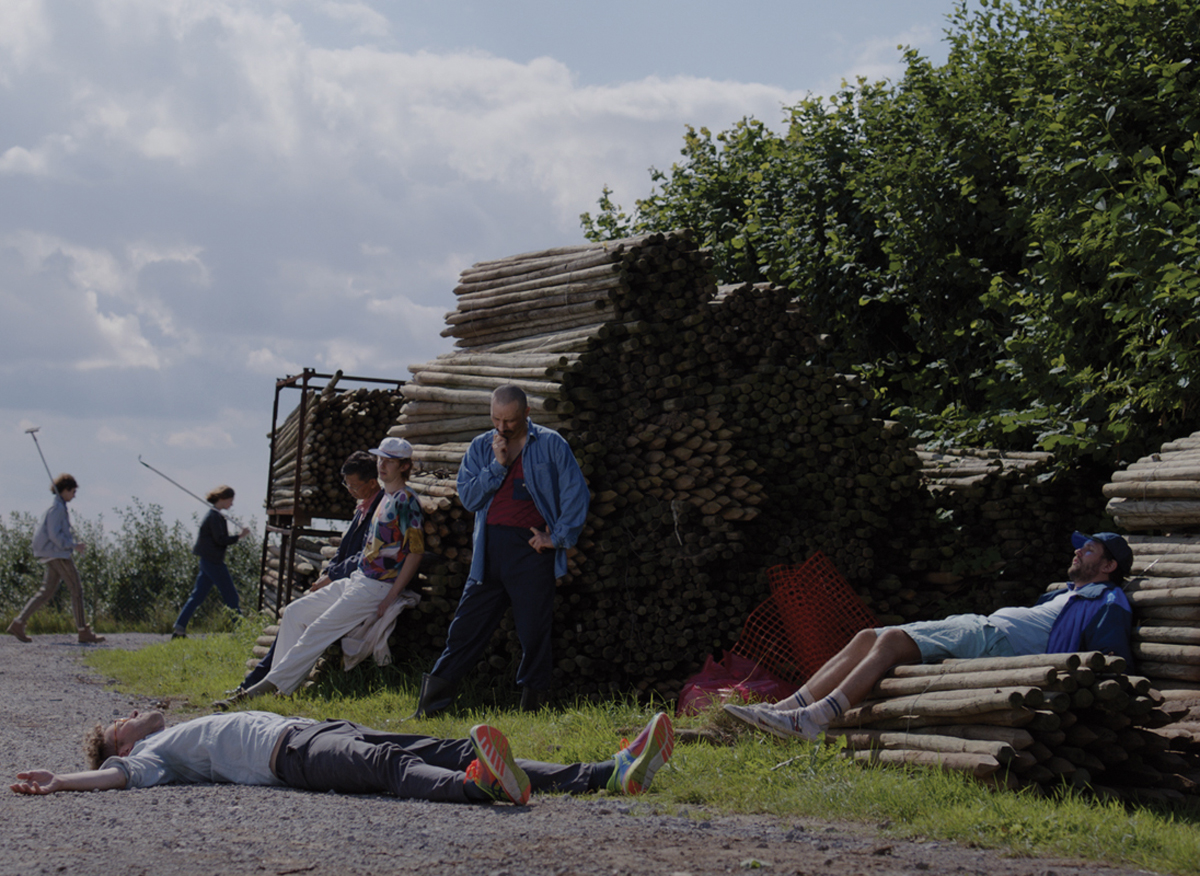 The politics of the plantation are a little blunt and simplistic (the term “neo-liberalism” could be used a lot in describing it), but the film is saved by Radlmaier’s incredible eye for comedic shot construction. As both director and star, he has a Chaplinesque combination of skills, both at framing a shot to tell a joke on its own and at using his tall, lanky body in inherently funny ways.
Eventually, he fades away, and Bourgeois Dog becomes more of a free-floating comedy on Marxist themes. One section in particular — in which two workers are convinced that the Communists have taken over Italy, and wander around, convinced every sign is proof of the successful revolution — is such a clever idea that I’m shocked I haven’t seen it before.
MUBI’s description compares it to Bunuel, but I’m not sure outside of their shared political beliefs that’s entirely fair. Bunuel may have abandoned narrative form, but usually held carefully onto his concepts. Godard seems a better comparison, both for Radlmaier’s careful Academy ratio compositions and for his floating form.
But if he’s like Godard, it’s Godard at his funniest, his most humane, and his least doctrinaire. Despite some touchy aspects (even as the subject of a comedy, no one needs another film about misogynist directors), it’s a real accomplishment and something to be shared.
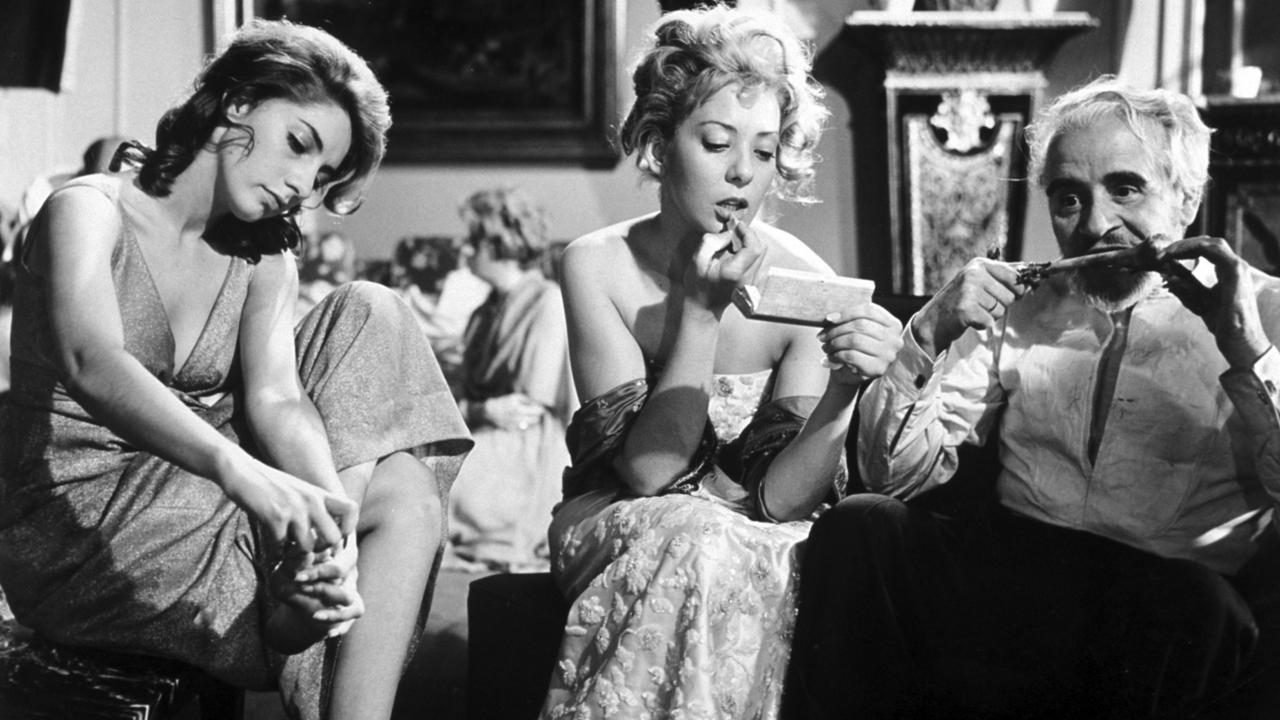
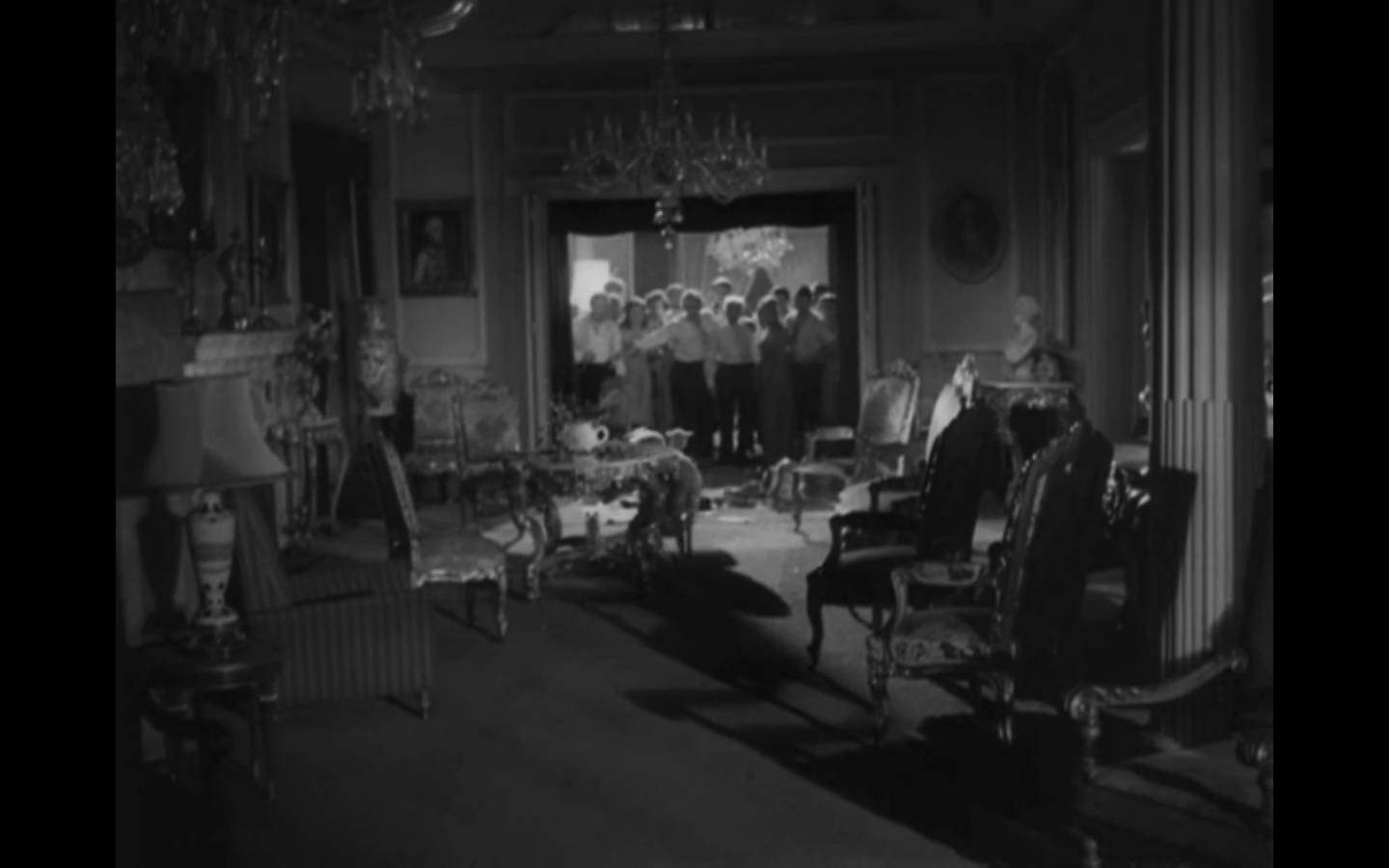 It’s a fantastic idea, and Buñuel has wonderful fun with it. (The police, for example, set up a heavily guarded perimeter—even though it is, they admit, just as impossible to enter the house as to leave it.) But once the absurdity of the premise is accepted, what we end up with is another movie about the barbarous breakdown of the upper class. The core of the film, the million petty ways in which the inhabitants aggravate one another, could play out just as easily on a deserted island, around a plane that crash-landed in the Alps, or anywhere else. In other words, the surreality does not suffuse the push of the film.
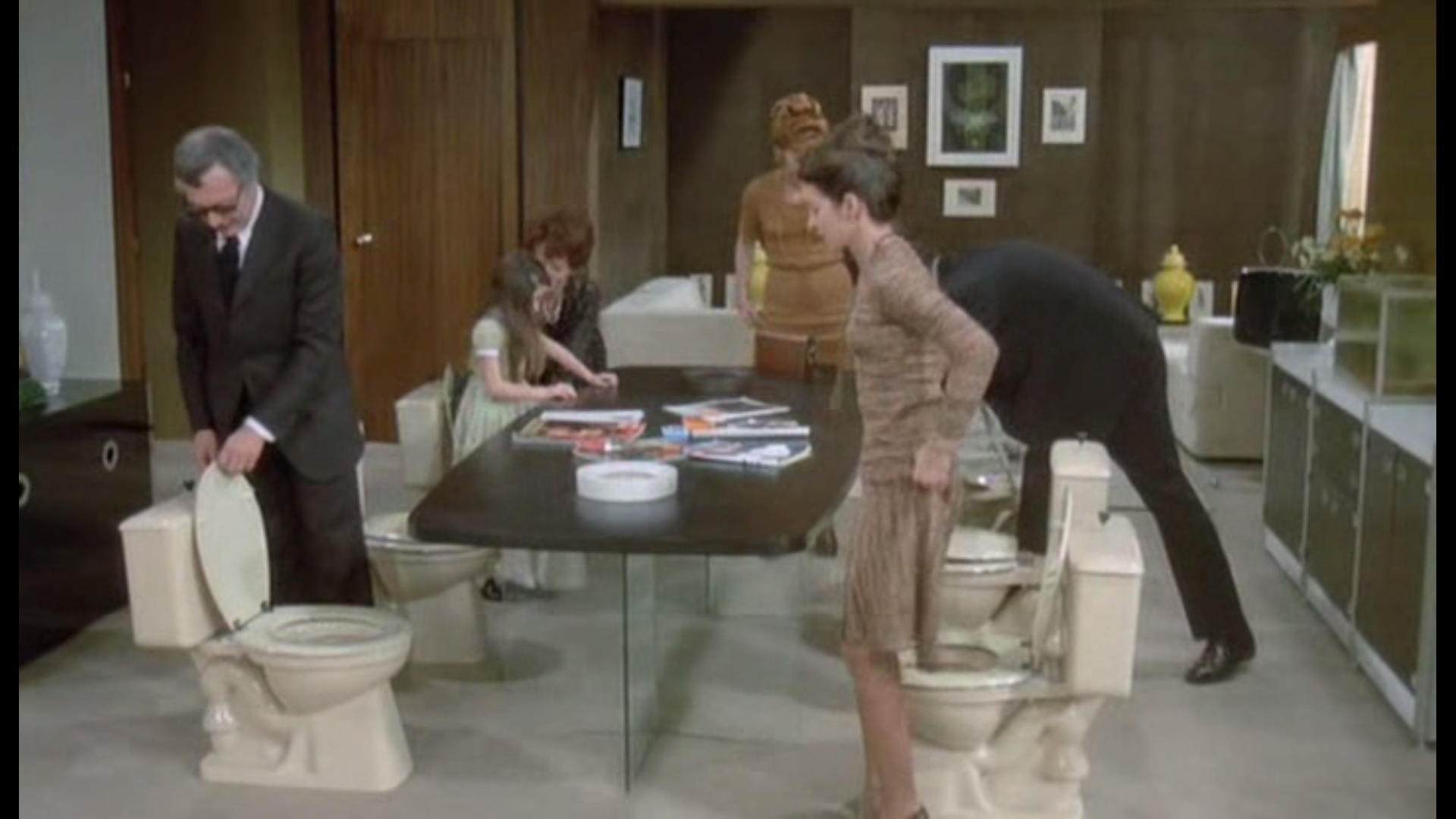 party that refuses to end, the dinner party refuses to start. We begin with one dinner, planned by four upper middle-class couples, but every time they are about to sit down for dinner something interrupts them—at first, relatively simply (there is confusion about the date; the restaurant is somehow sold out of all food), but then for increasingly absurd reasons (the couples are all arrested for drug trafficking; a group of terrorists murder them all).
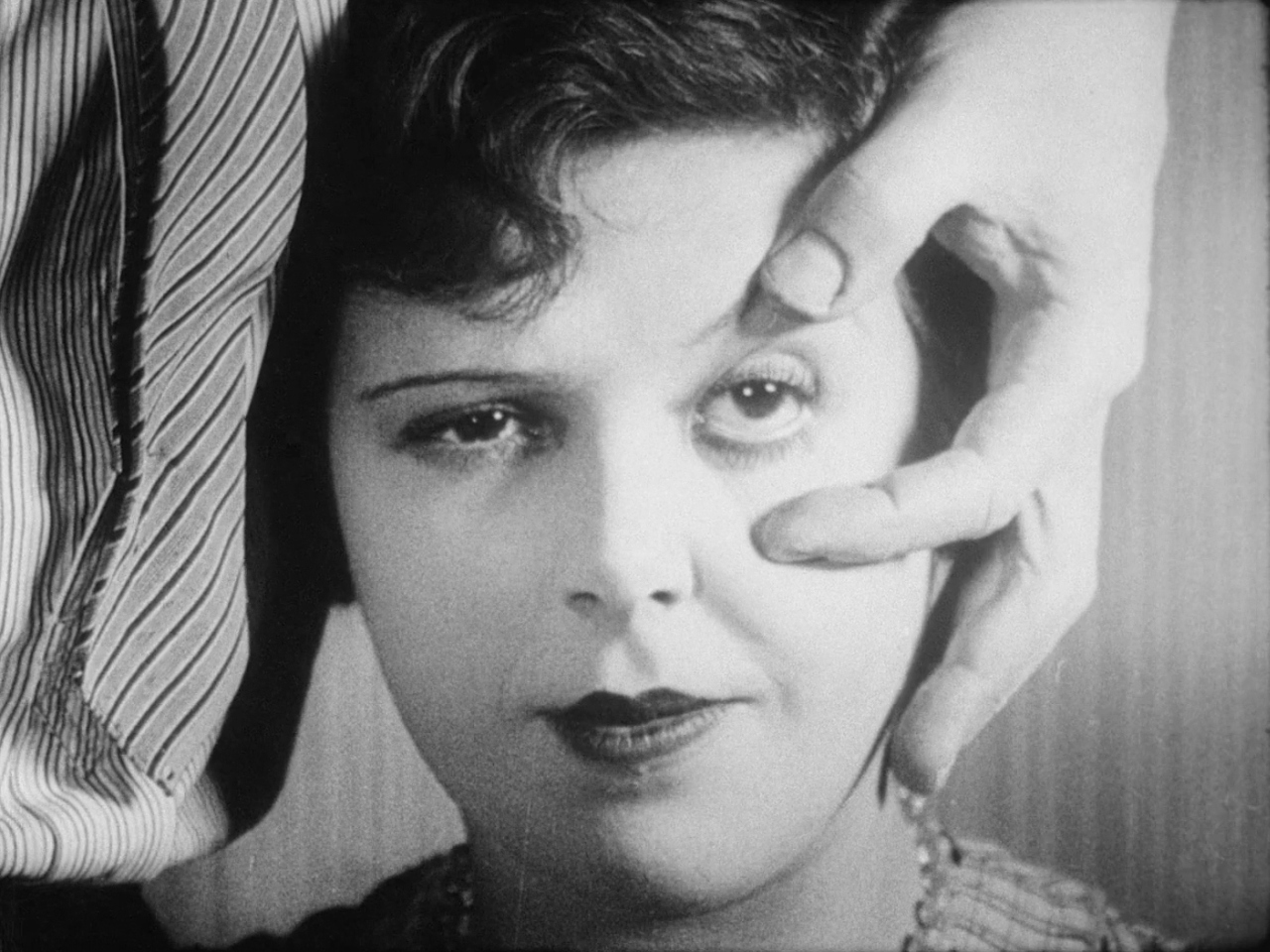 Buñuel’s two films really represent two kinds of surrealism. The highly romantic one that can be traced backwards from Angel to Un Chien Andalou (