Top Posts
Madeline’s Madeline: An Unclassifiable Panic Attack Maybe-Masterpiece
Shoplifters Steals Moments of Wonder from the Mundane
Burning and Forgetting What’s Not There
Kusama: Infinity Expands Beyond The Canvas
Mandy Risks Little, Wins Little
In We The Animals, The Children Are Away...
The Seagull Isn’t Quite Chekhov, But It’s Still...
5 Million Ways Boots Riley Isn’t Sorry To...
American Animals’ and the Queasiness of the Heist
A Star Is Born In Hearts Beat Loud
  • Reviews
  • Commentary
  • Great Movie Project
    • Great Movie Project
      Bride of Frankenstein is a movie for and…

      January 25, 2018

      Great Movie Project
      The Enduring Appeal of Nick and Nora in…

      November 29, 2017

      Great Movie Project
      The Ahistorical Fever Dream of The Scarlet Empress

      August 2, 2017

      Great Movie Project
      Dreams, Mundanity, and the Anarchist Yearnings of L’Atalante

      July 12, 2017

      Great Movie Project
      Duck Soup Is And Will Always Be A…

      April 19, 2017

  • Counter Programming
    • Great Movies: The Counter Programming
      Walking and Talking in the Shadow of Kanchenjungha

      March 7, 2018

      Great Movies: The Counter Programming
      A Brief Encounter in My Mother and Her…

      February 9, 2018

      Great Movies: The Counter Programming
      Horror’s Refusal in Farrokhzad’s The House Is Black

      October 13, 2017

      Great Movies: The Counter Programming
      The rage and beauty of The Cloud-Capped Star

      October 3, 2017

      Great Movies: The Counter Programming
      The daylight noir and social issue empathy of…

      June 22, 2017

  • Vegan Horror
    • Vegan Horror
      Julia Ducournau doesn’t think her film Raw is…

      June 7, 2017

      Vegan Horror
      Licking our wounds: The vampiric masculinity of Ravenous

      December 13, 2016

      Vegan Horror
      Eggertsson and animals: An approach to horror cinema

      September 15, 2016

      Vegan Horror
      “It’s Not My Nature” – Vegetarianism, Body Horror,…

      August 30, 2016

      Vegan Horror
      Bodies and Carcasses in Predator 2

      August 23, 2016

  • Interview
    • Interview
      Jasmine Leyva’s doc The Invisible Vegan aims to…

      May 3, 2017

      Interview
      Bridging The Abyss: An Interview With The Directors…

      November 28, 2016

      Interview
      7 Days in Ohio: An Interview with Nathan…

      September 12, 2016

      Interview
      Film Critic Phil Dy talks New Filipino Cinema

      June 17, 2016

      Interview
      “I Love Seeing Film Projected.” A Conversation with…

      March 22, 2016

Luddite Robot
Film critique, theory, and assorted nonsense.
CommentaryFilm

China Girls, Death Proof, and the Hidden Face

April 14, 2019

Old News: Old Noise Edition

April 8, 2019

Old News: April 1, 2019

Nicolas Winding Refn, Marginalia, and the Deaths of Cinema

CommentaryFilm

And now, let us praise Kanopy

January 24, 2019

Warren Sonbert and the Relief of Anti-Narrative

January 14, 2019

The World Is Ending and It Doesn’t Matter

The Best Films of 2018

FilmReviews

Madeline’s Madeline: An Unclassifiable Panic Attack Maybe-Masterpiece

December 21, 2018

Shoplifters Steals Moments of Wonder from the Mundane

December 11, 2018

Burning and Forgetting What’s Not There

Alien, Musicology, and Reading Soundtracks

CommentaryFilm

Shocktober III: Halloween 2018 Edition

October 24, 2018

Shirley Jackson’s The Lottery Traumatized Schoolkids in 16 mm

October 18, 2018

Shocktober 2018 II: Another Reshockening (of Horror)

Häxan is a movie made by a movie character

CommentaryFilm

Shocktober 2018

October 7, 2018

Unprofessional! Spring Night, Summer Night

October 3, 2018

The Wild Boys: A Luddite Robot Conversation

Kusama: Infinity Expands Beyond The Canvas

China Girl
CommentaryFilm

China Girls, Death Proof, and the Hidden Face

by rick April 14, 2019
written by rick

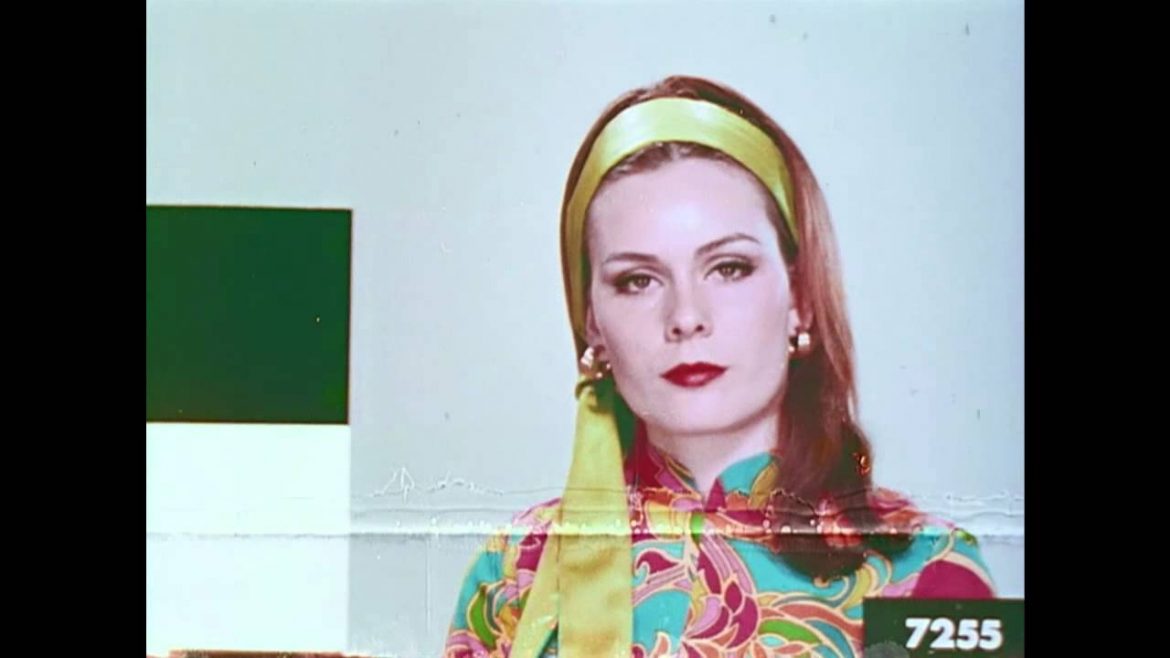
Like many people in the post-cinema age, I suspect, I first encountered them in the closing sequence of Quentin Tarantino‘s Death Proof: Leader Ladies – or Shirley Cards, or in the off-puttingly Orientalist language by which they’re more traditionally known, China Girls. They close out Tarantino’s contribution to the film-nostalgic double-feature Grindhouse, flashing one after another between the credits in the sort of anachronistic pastiche flourish for which the director is known.

And like many viewers, I wasn’t quite sure what to make of them at the time. “OK,” begins a May 2007 post on the Tarantino Archives Forum, a month after the film’s release, “please don’t laugh at me because I honestly don’t know who these chicks are.” Commenters offer up theories on these “subliminal women” and what they’re “supposed to mean”: “I didn’t recognize them as movie actresses though. They just looked like models from 70’s fashion magazines.” “Maybe the photos are of women in his life like his mom or Sally Menke (spelling?)” “I have no idea what you’re talking about.”

Eventually, some nerd by the name of Raptor steps in: “The images in the end credits are known as Shirley cards. When professionally processing film and prints, the company that produces the equipment and chemistry provides perfectly exposed, but unprocessed film and print tests, along with a copy that has been properly processed. You process one of the pre-exposed tests, then compare it to the control print to make sure everything looks as it should.”

That nerd was right. As the Harvard Film Conservation Library writes, using a different term for the women depicted, “China Girls have been used since at least the 1920s in color or density test frames made by labs to assure standardization of print quality.”

Leader example, Chicago Film Society

Via the Chicago Film Society (https://www.chicagofilmsociety.org/projects/leaderladies/): “Here is a diagram of typical film head leader. “China Girls” usually appear somewhere between the “10” and the “3” shown in the countdown below (though they appear elsewhere as well).”

But as Genevieve Yue exhaustively demonstrates in The China Girl on the Margins of Film, this only scratches the surface of a fascinating history and attendant discourse. Appropriately enough, Tarantino’s use of the images primarily serves – like the assemblage’s double-feature structure, de rigeur sprocket holes, continuity glitches, and parody intermission – to mark Grindhouse as a film pastiche about surfaces (surface pleasures, the gleaming techno-surfaces of cars and guns, the tactile surfaces of film): lovingly constructed but flat, ironic, without a future. The film, and its fragmentary closing images, are proof enough of some kind of death. (That the credits are set to April March’s “Chick Habit” – an English-language reworking of the Serge Gainsbourg-penned “Laisse tomber les filles” that somehow sounds more like a ye-ye anthem than the original – only increases this hauntological sense that “the time is out of joint”.)

That futurelessness feels baked into the untethered stills, which, given their intended use as calibration tools, seem unstuck in time. But they exceed this instrumental use. They push back against it, in part because they are also snapshots of actual women, often lab workers, at particular historical moments, in service to specific technologies that necessitated both their presence as leader and their absence from the “film itself”. If, in the meta-text of Tarantino’s Death Proof, they function as symbolic time-stamps and ironic punctuation marks, R. F. Hall of the Chicago Film Society points out that they also represent:

a fleeting visual document of the film industry’s vast off-screen labor pool. They remind us that every film made on film stock has a physical history, that each print we encounter in the projection booth, or projected onto the screen from the audience (or reproduced digitally on a laptop screen) passed through the hands of lab workers and technicians before it came to us.

That embodied material history also colors how we receive them: the China Girl is at once utterly grounded in real proximity to the modes of production, necessitated by its technological dictates, and in excess of that context, evocative but vulnerable to the demands of viewership, too. As Vivian Sobchack writes, “technology is never merely used, never simply instrumental. It is always also incorporated and lived by the human beings who create and engage it within a structure of meanings and metaphors in which subject-object relations are not only cooperative and co-constitutive but are also dynamic and reversible.”

Even her nomenclature — “China Girl” — arrives overdetermined and fraught. The origin and intention of the term is itself a matter of debate, as the Chicago Film Society (which hosts a fascinating collection) explains:

One popular theory connects the term to a “Chinese-style” garment (most often a colorful shirt) worn by the model in some test frames. Another suggests that early test frames used porcelain (“china”) mannequins instead of live women. Regardless of origin, “china girl” is by far the most common American term for them. (Others recorded include “lady wedge”, “china doll”, “girl head”, and “leader lady”). In France, they’re called “Lili,” perhaps after the traditional name of the slate used in Technicolor shoots.

Regardless, what Death Proof does do with these images is precisely what they’re not intended for: it shows them. As Yue points out:

Film viewers do not typically see the China Girl. In any given reel of a commercially produced 16mm or 35mm film, three to six China Girl frames are usually cut into the countdown leader, normally between the numbers 10 and 3. Yet this part of the filmstrip is not meant to be projected. The only way a China Girl may be glimpsed in a theater would be if a projectionist failed to switch reels at the correct time, allowing the ends of the film to run out. Even then, the short duration of the China Girl’s appearance would be just as easy to miss, lost in the blink of an eye.

That mysterious ephemerality is part of their appeal, an ephemerality mirrored by the technology of film itself.
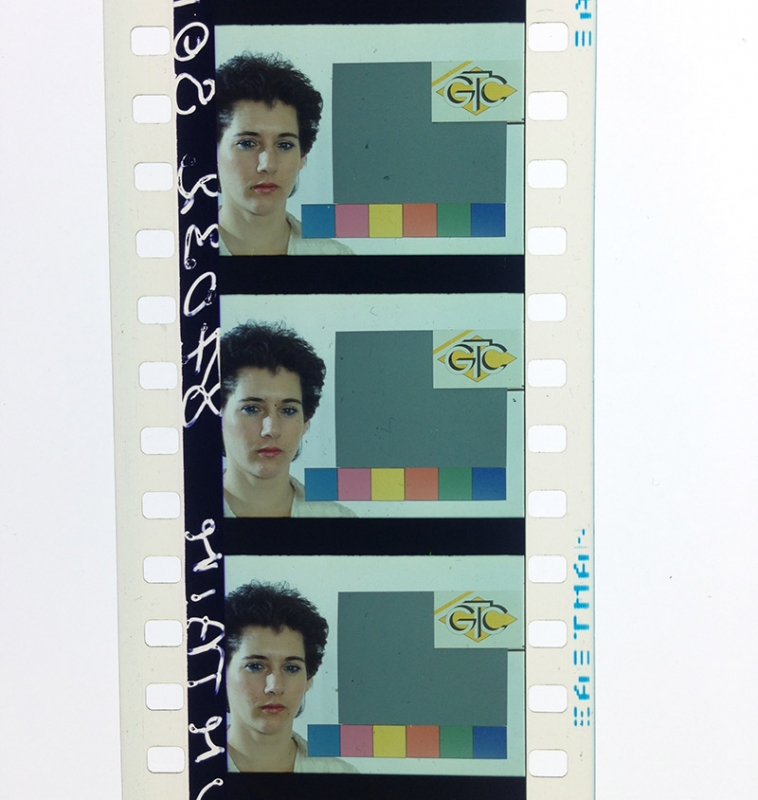
China Girl - Candy Mountain from Chicago Film SocietyAll images carry a sense of the ghostly; how much more so by these blink-and-you’ll-miss them splices of screen tests, captured in a long-ago moment and transported, utterly without context, into very different aesthetic surroundings.

These are liminal images in the truest sense, straddling the borders of the film object even as they physically occupy its literal margins. For me, there’s something of a spooky, hushed thrill about her mode of presence — the ghostly, the secret, the buried, the returned. It’s hard not to lapse into a preacher’s cadences. China Girls seem not far removed from any number of art objects found buried in film canisters in the Yukon, written in the margins of illuminated manuscripts, found scrawled on Michaelangelo’s Florence prison walls or coded in invisible UV paint inside Basquiats — a kind of art behind the art. It’s, in some basic way, a desire for the revealed word, but it’s also the object of desire for archivists, detectives, people who look.

What distinguishes the China Girl is that the Word should be a Face, and that this looked-upon object should be so intrinsically hard to grasp. Unlike the Warhol screen tests, for instance, or the face of Falconetti in The Passion of Joan of Arc — faces we are meant to study for “lies that tell the truth” or gaze into like oceans of feeling — the face of the China Girl is structurally obscured. Rather than a “reveal[ing] an invisible face within that of an actor,” Yue posits, “the China Girl that appears behind the scenes figures a different kind of invisible face, one that speaks to a film’s most fundamental conditions of visibility.” She is:

positioned differently in relation to the faces onscreen: She is not the invisible other buried within the visible image but something that remains outside the field of vision afforded by the screen. Though China Girls are on rare occasions produced for individual films, their production and usage exist independently of the films to which they are spliced. A China Girl can thus accompany any number of films, and in some cases, especially with restored or duplicated films, several different China Girls can accumulate on the same strip of leader, artifacts from different laboratory processes. From the perspective of viewers who are mostly unaware of her existence, the China Girl structures an absence, and an imperceptible one at that. She is an extreme manifestation of what the suture seeks to exclude, though she is no less critical in determining cinema’s system of representation as, following Laura Mulvey, a gendered construct.

So here we have ghostly presences, highly gendered and Othered, that offer inroads to the material, embodied processes by which the technologies (the essences of which are never technological) shape and structure our relation to the world. Given the currents of modern scholarship, with its highly instructive emphasis on the marginal and overlooked, on the vast army of women vanished from the history of aesthetics and their material production, China Girls are worthy of increased attention outside cinephilic circles.

“The face resists possession, resists my powers,” Levinas wrote; “[it] speaks to me and thereby invites me to a relation.” But that relation is here fixed in time, even in the context of otherwise moving pictures, the fundamental aspect of which is their need for constantly “coming-into-being”:  the China Girl becomes an appropriable representation, more like the photograph that functions as

a ‘being-that-has been’ (a presence in a present that is always past). Thus, and paradoxically, as it materializes, objectifies, and preserves in its acts of possession, the photographic has something to do with loss, with pastness, and with death, its meanings and value intimately bound within the structure and aesthetic and ethical investments of nostalgia.

Even in the transition to the electronic and to post-cinema, she has remained just off-screen, enjoying a cult of her own among film enthusiasts — a cult without agency, of course, despite the occasional efforts of experimental filmmakers to offer her a way out. The obstinacy of her haunting seems odd because she’s clearly outlived her technical usefulness, but this is also how we know that she says more about our relationship to image-making and image-owning:

As a face, however, the China Girl suggests something more, an attachment that approaches a kind of pathos or sentimentality, which is evident in the many private collections of clipped China Girl frames. As film facilities shrink or shut down, the China Girl has become one of the more poignant symbols of an outmoded industrial model in an era of profound technological change. Its ephemerality, the anonymity of the women who posed as models, the abstractions and rare mentions of the image in industrial manuals, and the literally marginal position the figure occupies in relation to the history of cinema may be, somewhat ironically, the traits that best express a sense of nostalgia for a vanishing medium.

The China Girl’s unique position is characterized by multifold hybridity: it is a photographic construct deployed for the needs of the cinematic that assumes, as a set of free-floating copies increasingly distant from any notion of an “original,” a range of new senses and affect in the electronic. Her encounter — for instance in Death Proof — is a case study in the ways in which “[N]arrative, history, and a centered (and central) investment in the human lived body and its mortality become atomized and dispersed across a system that constitutes temporality not as a coherent flow of mordantly conscious experience but as the eruption of ephemeral desire and the transmission of random, unevaluated, and endless information.” She, and we, are unstuck. The time remains perpetually out of joint.


April 14, 2019 0 comments
1 FacebookTwitterPinterestEmail
poly styrene
FilmNews

Old News: Old Noise Edition

by rick April 8, 2019
written by rick

1. Lost Noise and Found Sound

– Sounds of the projector box (h/t Sam): “These recordings, made in 2016 and 2017, document the shifting sonic texture of the cinema projection box, as it changes from 35mm to digital projection.”

– Noise collections: “After realizing that I was using the wrong sounds, I got to work trying to find the right ones. I contacted several film archives, expecting them to have vast collections of studio sound effects. To my surprise, they didn’t. It turns out the studios didn’t really value their sound effects, and the rolls of optical film sound generally were taken by the sound editors as they moved from job to job. Editors shared and traded sounds with their friends, much like what we do with freesound.org.”

– “There was so much artistic creativity happening in music, art and film in NYC in the mid to late 1970s and early 80s … The East Village was a thriving colony of artists of all kinds and you could walk down any street in the area most days and run into others and end up having stimulating conversations on the street or in some local cafe.” – The Collective Discordance of the No Wave Group Ut

– Do you need an oral history of The Ramones’ “Pet Sematary”? I think that you do.

Bikini Kill via https://www.vintag.es/2017/11/untypical-girls-early-photographs-of.html?m=12. Fragments from the memory palace

– Early photographs of women in punk.

– Recent genre releases from Scream Factory include Boris Karloff and Bela Lugosi in Robert Wise’s extremely essential The Body Snatcher, and Sam Waterson and Yaphet Kotto in 1985’s rather less essential eco-horror Warning Sign.

– Peter Rist’s reflections on The Nitrate Picture Show continue, in black and white. (The entirety of Senses of Cinema’s Issue 90 — Valérie Massadian, the necropolitics and fluids of Roma, To Save and Project, the “Romantic aesthetics” of Lars von Trier, Deleuze and the global refugee crisis — is worth diving into.)

3. Archives

– The marked uptick in white supremacist menace continues in the U.S. as elsewhere; multiple Black churches were burned in a single Louisiana parish this week. In Tennessee, the deeply suspicious fire at the historic Highlander Center included the destruction of its archives.

– Blue Ridge Streaming presents a “semi-randomized,” 24-hour assemblage of local programming dating back to the ’70s, a signal-and-noise nostalgia of forgotten cooking shows, birthday announcements, and travelogues, stitched together, presumably for PBS authenticity’s sake, with pledge drives.

– The appropriate response to this research report on “the dire state of news archiving in the digital age” is almost certainly yikes:

Meanwhile, interviewees frequently (and mistakenly) equated digital backup and storage in Google Docs or content management systems as synonymous with archiving … Instead, news organizations have handed over their responsibilities as public stewards to third-party organizations such as the Internet Archive, Google, Ancestry, and ProQuest, which store and distribute copies of news content on remote servers. As such, the news cycle now includes reliance on proprietary organizations with increasing control over the public record. The Internet Archive aside, the larger issue is that these companies’ incentives are neither journalistic nor archival, and may conflict with both.

– A fascinatingly engaged inquiry into feminist scholarship, the internet as “a nearly infinite number of unique, individual, personalized performances,” and “the challenge of preserving the historical record of #MeToo”:

The Schlesinger staff’s choices shape the archive to a degree that’s unusual, and a little unwelcome. Standard collections have implicit boundaries: they’re the papers of a person or an organization or perhaps the surviving documentation of a single event, such as the March for Life. But #MeToo—which drew strength from millions of sources and exerted influence in every direction—can only be captured in what archivists call a “constructed” or “artificial” collection, an assemblage of objects of disparate provenance, with borders that are imposed, not absolute. The Schlesinger has other constructed collections, such as a survey of early women’s blogs, but the #MeToo project is by far the most ambitious. It pushes the library to the edge of its traditional role in a field that draws a stark line between archivists, who leave as few fingerprints as possible, and scholars, who mold history from the assembled clay.

Varda film shack4. Varda tributes

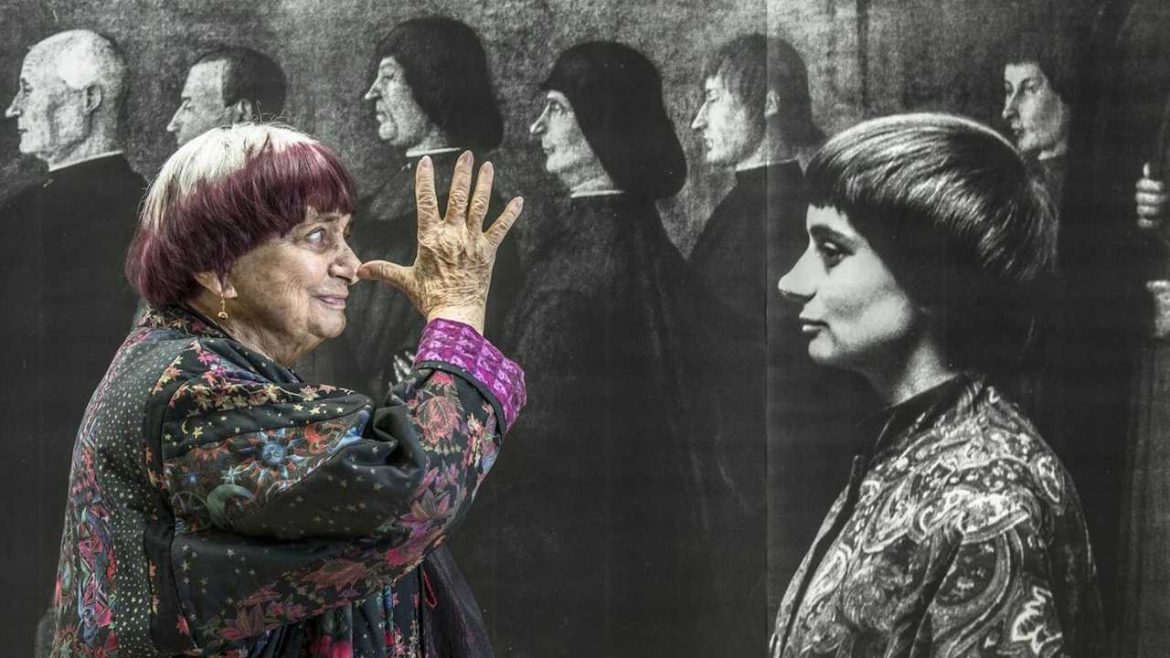
– Lovely: “While I Live, I Remember”: Agnès Varda’s Way of Seeing

– Manohla Dargis on the Agnès Varda she knew.

– Criterion.

– “Seven facets of Agnès Varda” from Sight & Sound contributors: pioneer of the New Wave, the (self) portraitist, at play with the world, multimedia artist, le chat d’une poete, spaces places, and the visual stylist.

– Indiewire has reflections from critics and appreciations from women filmmakers.

– Joan Dupont’s profile and interview from last winter’s issue of Film Quarterly is remarkable:

Just as we finally settle down, Agnès mentions that people will be dropping by later. Friends? “Friends from cinema, people who are writing about me that I appreciate, but don’t read,” she adds with a laugh, and I wonder if I am one of them. We are friends, but she has so many. Never mind. We sit in the garden and have our tea.

5. Lost images resurfacing amid resurgent fascism

Timing is a funny thing: the sudden, woefully under-publicized flurry of “Polish nationalist rallies around the [U.S.] … protesting the new [Polish] Holocaust restitution legislation” this past week coincides with the restoration of a pointedly relevant film, only recently rediscovered:

Across the Atlantic ocean, Poland was going through its own internal strife. Under communist rule, with a population still confronted by the devastation caused by the Second World War, the government unleashed an anti-semitic campaign to force its Jewish population out of the country. At the time, most Jews were totally assimilated into Polish society, having all but hidden their Jewish identity following the Holocaust. During the campaign, which last from 1968 until 1971, many Jews were fired from their jobs or kicked out of school, then forced to renounce their Polish citizenship. It was largely non-violent, but affected more than 14,000 people.


Back in the US, a little known experimental filmmaker named Fred Engleberg caught wind of what was happening and flew overseas to document the event. He ended up in Copenhagen, Denmark, where many of the refugees had fled. Denmark welcomed them, granting them temporary stay in an off-season cruise ship while they figured out more permanent accommodations. Engelberg’s film documented the experience as the two cultures came together, trying to figure out how to build a new home.

The recent rallies — again, in cities across the U.S. — seem to have featured a mix of boilerplate national pride and collective grievance, with predictably coded currents of anti-Semitism only occasionally rising to the surface. This past weekend’s “Awakening” conference in Finland, explicitly organized to further the internationalization of white supremacist ideology, was less shy about its ambitions. All of this context adds an unsettling sense of urgency to recent screenings of The City Without Jews, the newly restored 1924 German satire — a tongue-in-cheek “expulsion” fairy tale which prefigured actual Nazi atrocity — that a collector discovered at a Paris flea market in 2016.

6. RIP

– Genevieve Oswald, founder and curator of the New York Public Library’s dance collection, was 97.

– Editor Barry Malkin, frequent Coppola collaborator (including on The Godfather: Part II and Rumble Fish), was 80.

– Joseph Pilato (Day of the Dead, as well as a bunch of other Romeros) was 70.

April 8, 2019 0 comments
0 FacebookTwitterPinterestEmail
Agnes Varda
News

Old News: April 1, 2019

by rick April 1, 2019
written by rick

1. Local news

Local to me, anyway.

  • The SFFILM Festival kicks off on the 10th, with highlights including tributes to Claire Denis, Laura Dern, Laura Linney, and John C. Reilly; Jennifer Kent’s follow-up to The Babadook, a “state of cinema address” from Boots Riley; and a Maya Deren program with a live score. As in years past, I expect it’ll be most memorable for unexpected discoveries. (I’m excited about What We Left Unfinished, focusing on the “literal buried treasures” of the Afghan Film Archive, and The Grand Bizarre, the feature debut from experimental animator Jodie Mack.)
  • Meanwhile, the SF Silent Film Festival announced its calendar (May 1 – May 5), with a program featuring Buster Keaton (The Cameraman and Our Hospitality), Aleksandr Dovzhenko’s 1930 masterpiece Earth, the awesomely-named Rapsodia Satanica, 1911’s L’Inferno (the first feature-length Italian film), and much more.
  • BAMPFA’s African Film Festival series is ongoing through May, and announced an upcoming program (beginning April 25) of renowned Tibetan filmmaker Pema Tseden.

Free Angela and All Political Prisoners2. Women’s History Month 
March may be over, and with it “Women’s History Month”. But it’s always a good time to focus on contributions and perspectives from those excluded from the dude-canon. (How’s your #52FilmsByWomen going, by the way?)

  • Throughout last month, SyFyWire ran a great “forgotten women in genre” series, shining a spotlight on overlooked artists like editor Margaret Sixel, production and costume designers Eiko Ishioka and Vera West, producer/director Debra Hill, and lots more.
  • Milicent Patrick, who designed the iconic Gill-Man creature from the Black Lagoon, is beginning to get her due, as the subject of a new book and many related reexaminations.
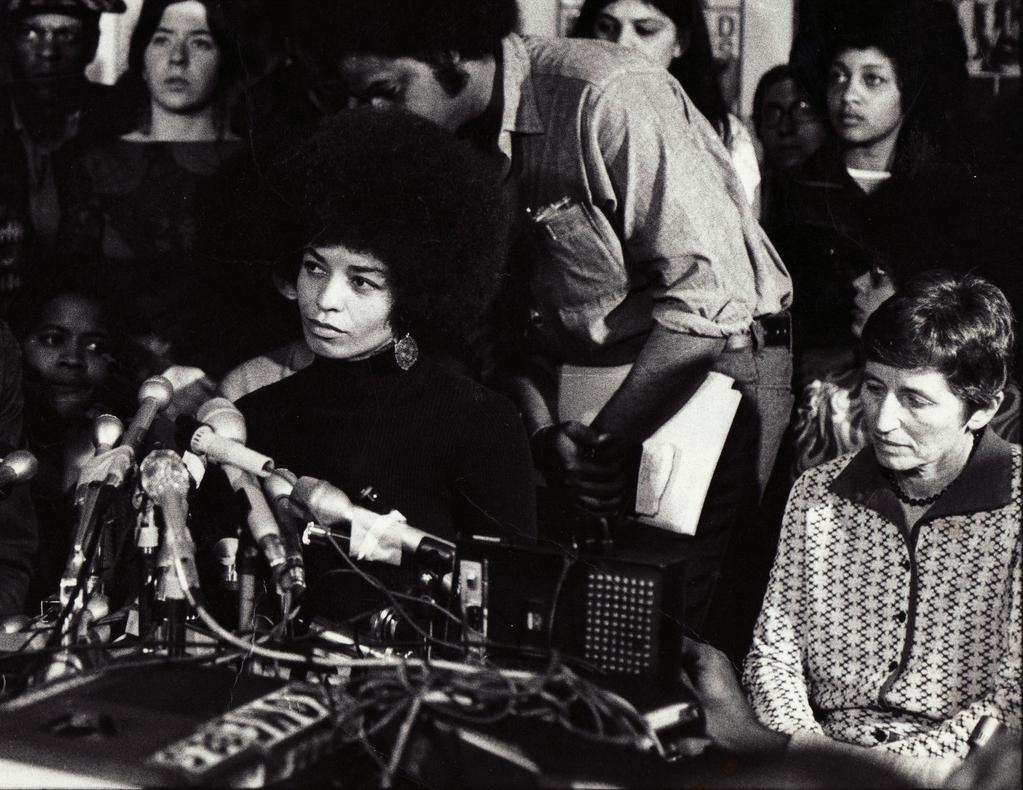
  • PBS rounded up some streaming docs on activist women, including the very excellent Free Angela and All Political Prisoners.
  • And Richard Brody reports back on a new book of interviews with Lois Weber:

In 1928, she wrote of the rapidly declining fortunes of female directors in Hollywood (of whom she was only one of many), saying, ‘Women entering the field now find it practically closed. Frequently a male writer is given a directorial chance on the supposition that he ought to know better than anyone else how his story should be presented on the screen. But you do not hear of a woman writer being so favored.’ Moreover, she wrote, ‘Men bosses are also less tolerant of failure or mediocrity in a woman director than in a man.’ The sexist culture on sets and in offices also posed a problem. ‘Men also like men’s talk in a business which may or may not always be attuned to the ears of women,’ she wrote.

The more things change …

3. Archives

  • Archives are an instrument of cultural memory, but as that term implies, the specifics of their use are fraught with political implications. Patrick Gathara argues that they, rather than museums, can assist in a process of colonial reckoning, but only if the objects on which colonialism is inscribed are returned to those who were oppressed, making them “curators of their own history.” Meanwhile, Chelcie Juliet Rowell and Taryn Cooksey argue for an ethic of care in confronting, and preserving, ugly histories, so that efforts to retain and make available hateful cultural products do not make us accomplices in their present-day promulgation.
  • Digitizing historical footage in Connecticut: “Thanks to that grant for about $24,000 from the Institute of Museum and Library Services, the society was able to loan approximately 75 films to a company called George Blood LP, which specializes in digitizing audiovisual media. CHS has about 50 more films in its collection but will have to apply for another grant to complete the digitizing project. The grant, received in September 2017, also allowed them to digitize thousands of photos and negatives as well as maps, architectural drawings, lithographs and posters.”
  • The odyssey of Scarecrow Video: “As for Scarecrow, it survived bankruptcy, the threat of closing and the death of its charismatic founder. In 2014, it became a nonprofit. And now, after 30 years, with more than 132,000 titles — many on VHS, laser disc and DVD — it is as much a cultural warehouse as anything else.”

Shackleton discovery4. Exhibition, Streaming, Unearthing

  • The Guardian has a look at the dynamic between cinema exhibition, video clubs, cell phones, and the use of public space across Africa: “Meanwhile not all the old cinema buildings house shops. ‘Every 15 kilometres in Ghana, they used to have a cinema,’ said Cooke. ‘They’ve all closed down. They’ve turned them into churches.’
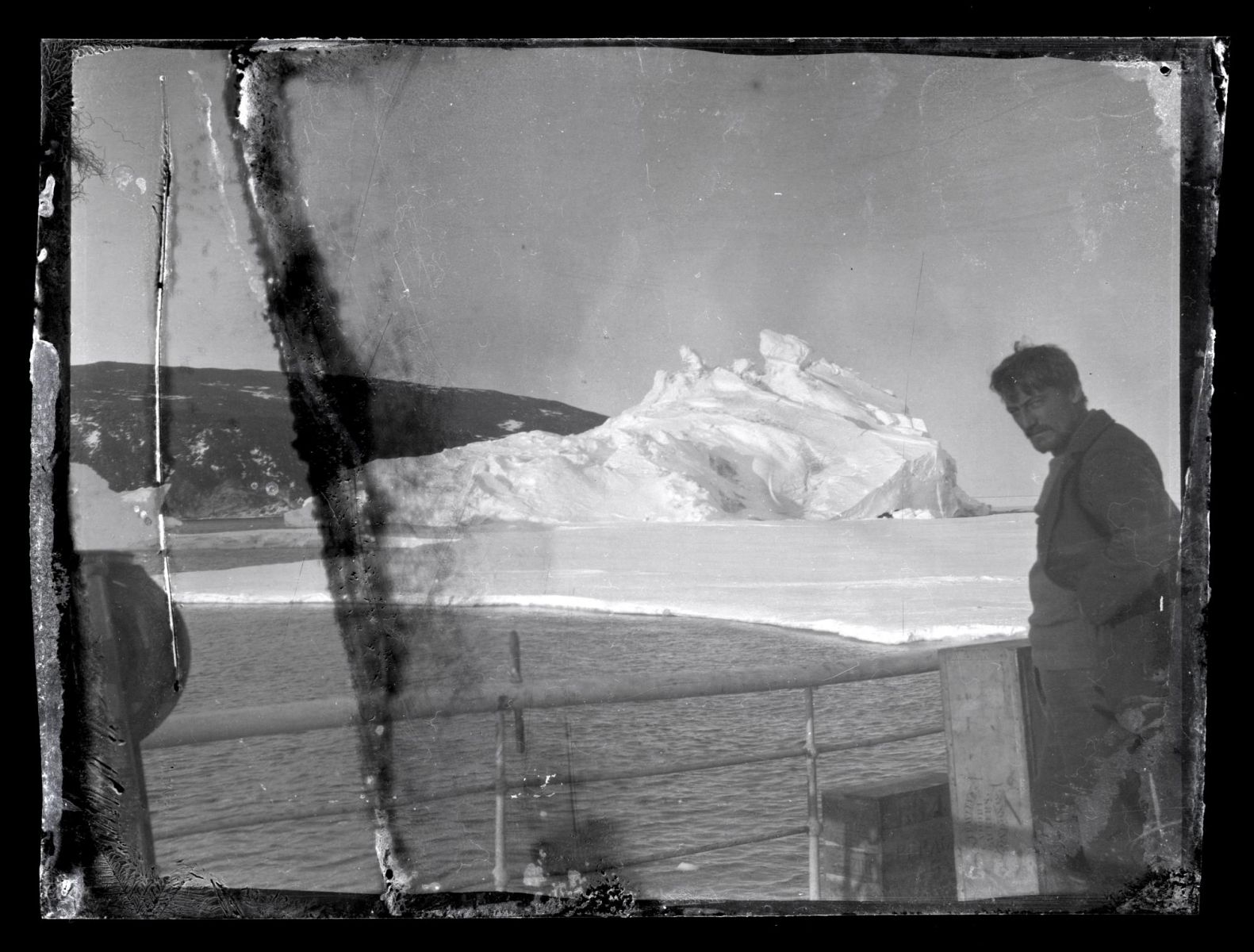
  • A fascinating account of more celluloid documents beneath our feet: “For the past 100 years, a box of never-before-seen negatives has been preserved in a block of ice in Antarctica. Recently, Conservators of the New Zealand Antarctic Heritage Trust came across the 22 exposed, but unprocessed, cellulose nitrate negatives during an attempt to restore an old exploration hut.”
  • Terry Collins argues that “the death of the physical medium has been greatly exaggerated”: “So, I’m grateful to home video for this kind of preservation, and I know I’m not alone. Yes, some folks might be dumping their DVD collections, but an equal number are getting some amazing deals in the online classified ads or at stores who specialize in used media. These same collectors are also purchasing new movies on Blu-ray – the prices of which have fallen substantially on thousands of catalog titles and can be found in Dollar General chain stories discounted for as little as $2.99 each.”
  • Which sounds great. Unfortunately, Samsung, the market titan in Blu-ray players, also announced it’s abandoning their production.
  • In the streaming realm, Ovid.TV is live: Wang Bing, Chris Marker, Mila Turajlić, and Jean Rouch among the offerings. Criterion’s streaming service officially launches on the 8th, after a steady, predictably stellar roll-out of weekly movies-of-the-week like Mikey and Nicky, Wanda, and To Sleep With Anger.
  • Video Psychosis digs into low-budget horror, cult esoterica, and other miscellaneous vaults of disrepute. Episode 3 — “Killer turkey men, bad acid trips, Egyptian sacrifices, human flamethrowers & MORE” — here.

Agnes Varda on beach5. RIP

When I thought to include an in memorium section in this inaugural round-up, I didn’t anticipate how emotional it would be. I expect, as we mark anniversaries of cinema’s first century and a quarter, we’ll have to get used to this.

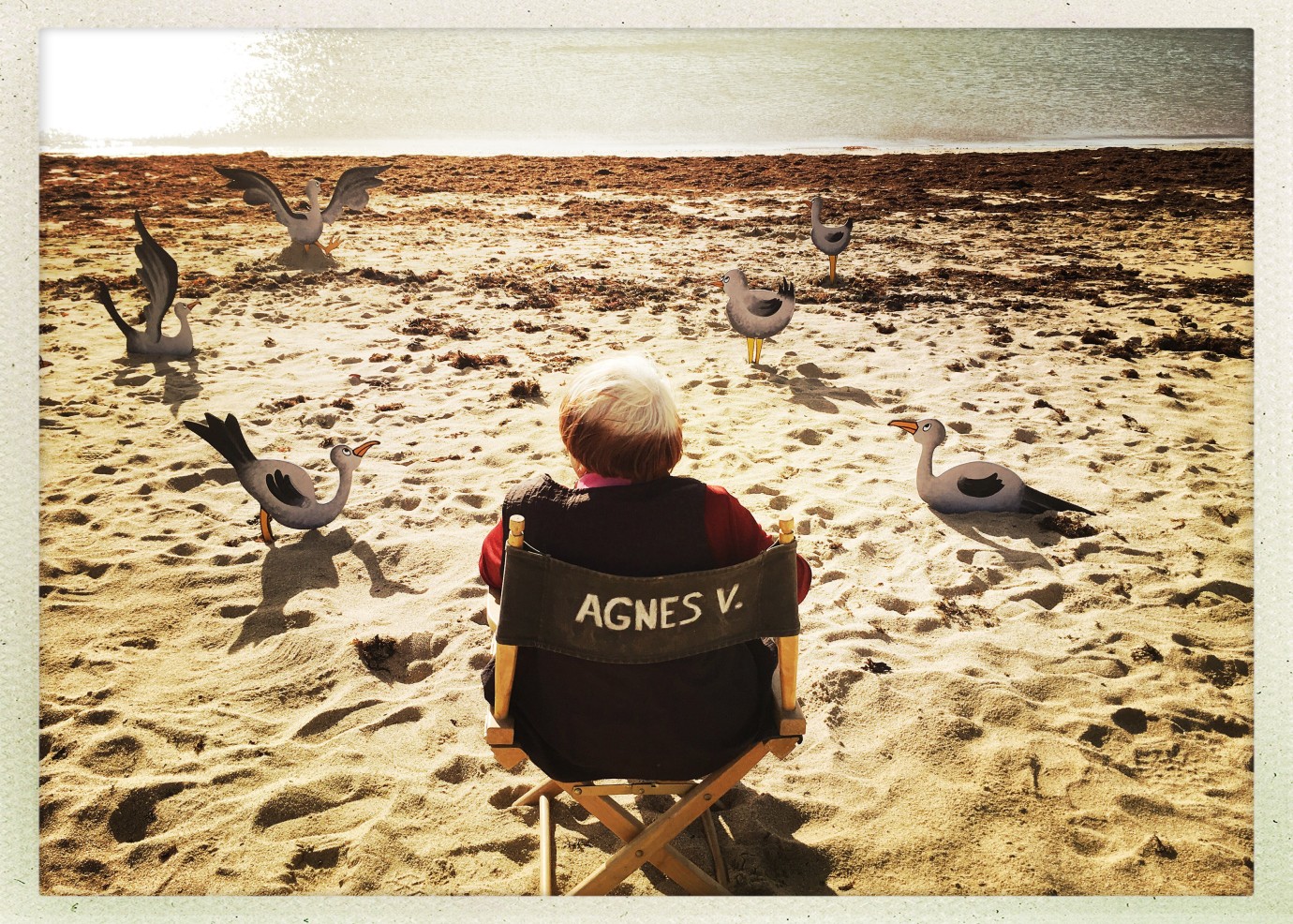
  • It seems impossible — intolerable — that Agnès Varda is gone. Despite living 90 years, and with diary films frequently fixated on death and impermanence, she always seemed too curious to rest. There are many tributes, and many more to come. This Bright Wall/Dark Room interview is essential (“I am in time. I’m old. I’ve been crossing time for years. I love the idea that even with a bad memory I can pick something which is years ago or someone I met years ago and I am here, and I enjoy it.”). So is this one in The Guardian (“’The grandmother of the New Wave!’ I found it funny, because I was 30 years old!”) I took a break from reading the obits and then came across this deliciously confrontational 1977 discussion, and missed her all over again (“If women must independently find their images, what of feminist-friendly men? ‘If men want to join, leave the door open. They can listen,’ Varda says.”) Elsewhere, she told an interviewer: “Finding fun where sometimes it’s just a bore; finding fun when it’s a burden. You can always make something look different.” When I think of Agnès Varda, I think of possibility, and light, and lightness, and the world seems heavier without her.
  • We also lost another irrepressible auteur in Larry Cohen. Subject of the recent Shudder doc King Cohen, he’s often summarily inserted under the heading “cult director” — true enough, but it doesn’t come close to encapsulating his long, weird career and singular visions. Film School Rejects has a “Larry Cohen starter kit”. Will Harris’ oral history of Q: The Winged Serpent for The Dissolve remains a hilariously insightful tribute.
  • Enigmatic, fiercely beloved pop chameleon Scott Walker died at 76.  Many of his incarnations are intertwined with cinema, from the films he scored (Carax’s Pola X, notably, and Vox Lux just last year among them) to the ones he programmed as part of the Meltdown Festival.
  • Hollywood Reporter: “John Carl Buechler, whose Hollywood horror makeup and special effects made movies like Hatchet, Deep Freeze and the Michael Moriarty-starrer Troll into classic frightfests, has died. He was 66.”
  • Pioneering performance artist, avant-garde filmmaker, and general creative force Carolee Schneeman passed on at 79. Maggie Nelson’s piece in The New Yorker, on Schneeman’s “re-enchantment,” is astute and affecting: “Carolee’s long-standing devotion to pleasure and atrocity, ecstasy and rage, protest and preservation has provided and will continue to provide a lavish example of what it might mean to meditate on these two crucial questions in the course of a life.”


April 1, 2019 0 comments
0 FacebookTwitterPinterestEmail
CommentaryFilm

Nicolas Winding Refn, Marginalia, and the Deaths of Cinema

by rick March 14, 2019
written by rick

Cinema, according to Nicolas Winding Refn, is “generally not an art form anymore.” Too extreme, or not extreme enough? It is “dead … [and] clings on to our feet as we move forward.”

Film’s physicality is one aspect of Refn’s gleeful proclamations of doom. We simply live in a post-film world, with the hoary conventions, technical challenges, and byzantine structures of ownership and distribution seeming with each passing day to belong to another time and place. To the degree that film exhibition and actual film itself are considered constitutive of “cinema,” the proper place for it now is the museum, where lithographs and daguerreotype live. The enthusiasm for it is the collector’s passion or the scholar’s; “cinephilia” is a rarefied structure of feeling and unlikely to go away anymore than opera has gone away, but marginal and with more than a whiff of fetish. Everyone else is on their phone. (Including, I could add as someone who currently works at a movie theater, in the movie theater.)

David Lynch may rail against the cell phone as an affront to artistry, but Refn is matter of fact: “The only thing to know is that the cinema screen and the phone are co-existent. One is not better than the other. They are co-existent.” This embrace is not so unusual, particularly if we interpret “the cell phone” as a stand-in for digital more generally. This is especially evident among those most indebted to or admiring of the film auteur tradition: Godard‘s late-period embrace of digital is legendary (his Skype press conference for The Image Book being only a particularly puckish recent exclamation point), for instance, and recently Paul Schrader, whose First Reformed reveled in appallingly banal digital surfaces, has taken to social media to declare cinema itself “a questionable term … Cat videos or Shoah? What’s the difference?”

We could chalk this up to good old-fashioned curmudgeonism, a weird variant by which Old Man Yells At Cloud becomes Old Man Extols Cloud. (“In a digital world,” Refn proclaims, like an anarchist philosopher-king, “‘free’ is a currency.”) But the auteurism itself of these spokespeople for Cinema’s Death underscores another point: it’s precisely the possibilities of streaming and the non-hierarchy adherent to digital production that excites, that makes possible new and fresh personal expressions. From this vantage point, it’s not so unlike the ways in which hand-held film cameras and low-budget productions gave birth to the nouvelle vague and, later, independent American film in the good old days of cinephilic worship.

The more curious tension is between the celebration of digital possibility and the archival impulse. It seems it’s those who most fervently declare cinema dead again who also rush to its preservation. The Image Book, like the magisterial Histoire(s) du cinéma before it and from which it draws its method and aesthetic, can be read as a digital processing of the analog memory. First Reformed is in conversation not only with Bresson, Dreyer, and the “transcendental style” Schrader has written about extensively, but with the very flat surfaces of our digital Anthropocene that either give way to despair or provide glimpses of grace. Refn, of all people, simply started buying old films.

Nest of the Cuckoo Birds byNWR RefnThe result — byNWR, a free online portal to some of his acquisitions — is as strange as the ironies that underwrite it. Why restore forgotten exploitation movies, no-budget curios, apocalyptic “gospel grindhouse” fragments of anti-Communism if cinema is dead? Why show this digital archive of half-forgotten marginalia, as Refn recently did, in the decidedly analog, decidedly high-fashion space of Fondazione Prada? (“Prada stands for – progression,” Refn offers, unhelpfully.) Why these weird movies, and not others? Why any at all?

To Refn, they are “individual expressions,” unbound by our current aesthetic malaise in which “everything is so generalised and democratic and everyone’s opinion has to be valued, everyone’s department has to be heard, everyone’s idea of acceptability is thought out.” Auteurs, as they say, gonna auteur. The choices are indeed singular, and might even shed light on Refn’s own maximalist provocations. (Watching them, you may find yourself, as I have, appreciating Refn’s work more than before.)

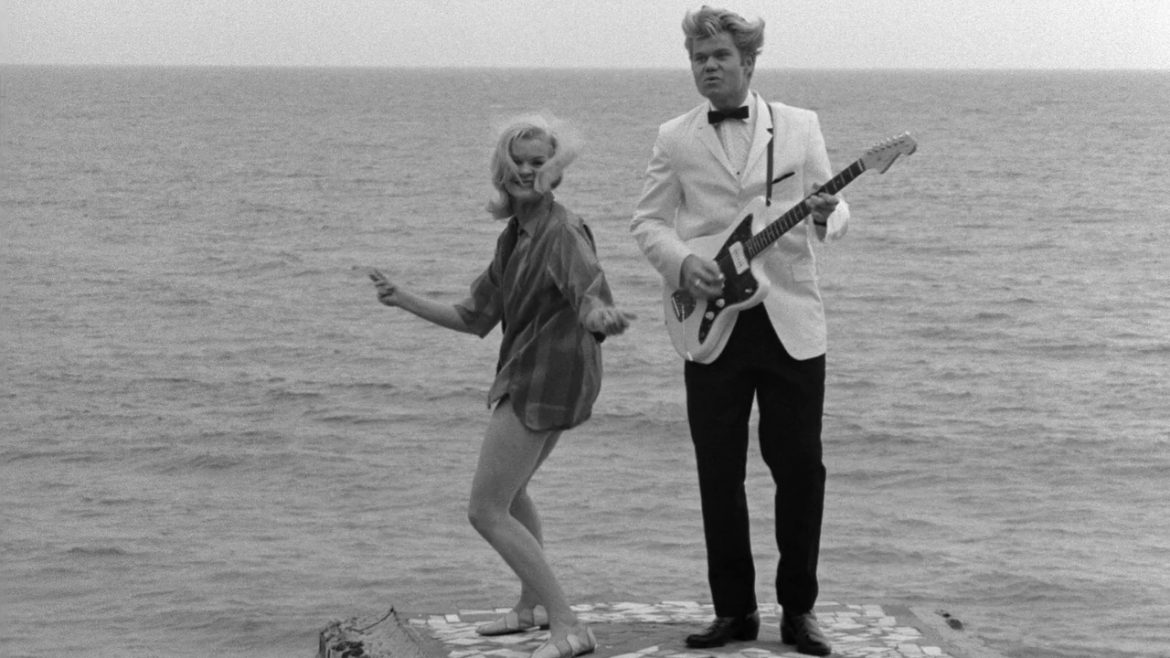
If Footmen Tire You byNWR RefnHere are a few favorites from this archive of the undead. The monthly releases are presented as chapters in volumes, each curated by a guest editor: “Regional Renegades,” with stand-out Nest of the Cuckoo Birds, a truly strange swamp Gothic that looks like a broke-ass Night of the Hunter, seems to forget where it’s going, and builds to something delirious. “Missing Links” – which “sheds light on the weird cultural enclaves of American society during the mad mid part of the 20th century” – contains the truly batshit evangelical anti-Communist screed If Footmen Tire You, What Will Horses Do?, almost certainly the only movie you’ve ever seen in which a Soviet officer who wants to replace Jesus with Fidel Castro shoves pencils into a child’s ears so he can’t hear the word of the Lord. “Hillbillies, Hustlers, and Fallen Idols” is “a beguiling selection of stories about those who instinctively mingle their creativity with criminality, habitually push the boundaries of common sense and good taste, and seem to thrive on a chaos of their own making.” Mention must be made of House on Bare Mountain, which pairs (kind of adorable) nudie-cutie prurience with a plot involving a school for girls that serves as a cover for a moonshining operation staffed by a werewolf. But my personal favorite is Wild Guitar, in which Arch Hall, Jr. is your low-rent Elvis and Arch Hall, Sr. your discount Colonel Tom Parker. (Yes, the team behind Eegah! bring you a rags-to-riches rock n’ roll fantasy, a world where nothing looks quite right but is also partially shot, with inappropriate beauty, by Vilmos Zsigmond.)
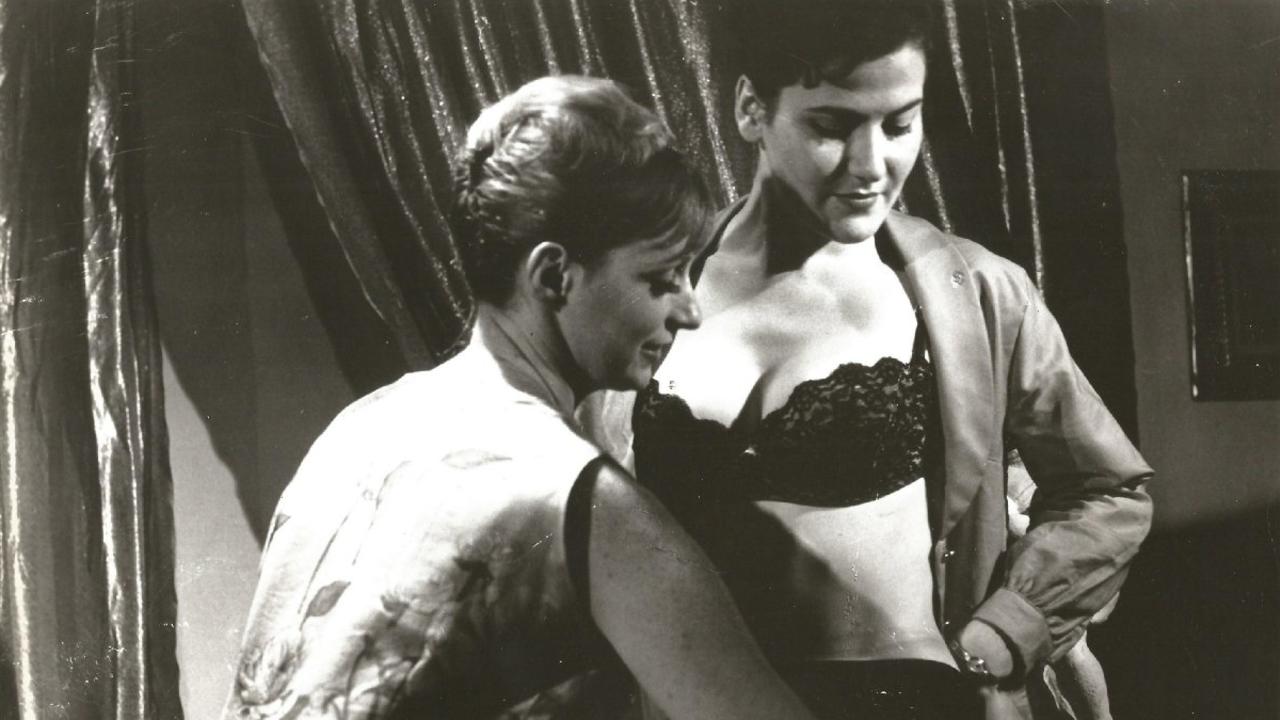
Chained Girls byNWR RefnThe fourth volume, “Smell of Female” (from a song by The Cramps, natch), was just released; its first entry is Chained Girls, an fake-ethnographic sexploitation fantasia of lesbianism that is both hilarious and repellent, sometimes simultaneously. Guest editor Ben Cobb wisely decided to hand over the copious commentary on this volume to “all-girl gang of writers, designers, photographers, artists, editors, musicians and thinkers;” the result aims to be an interrogating and artistic dialog with the archival material.

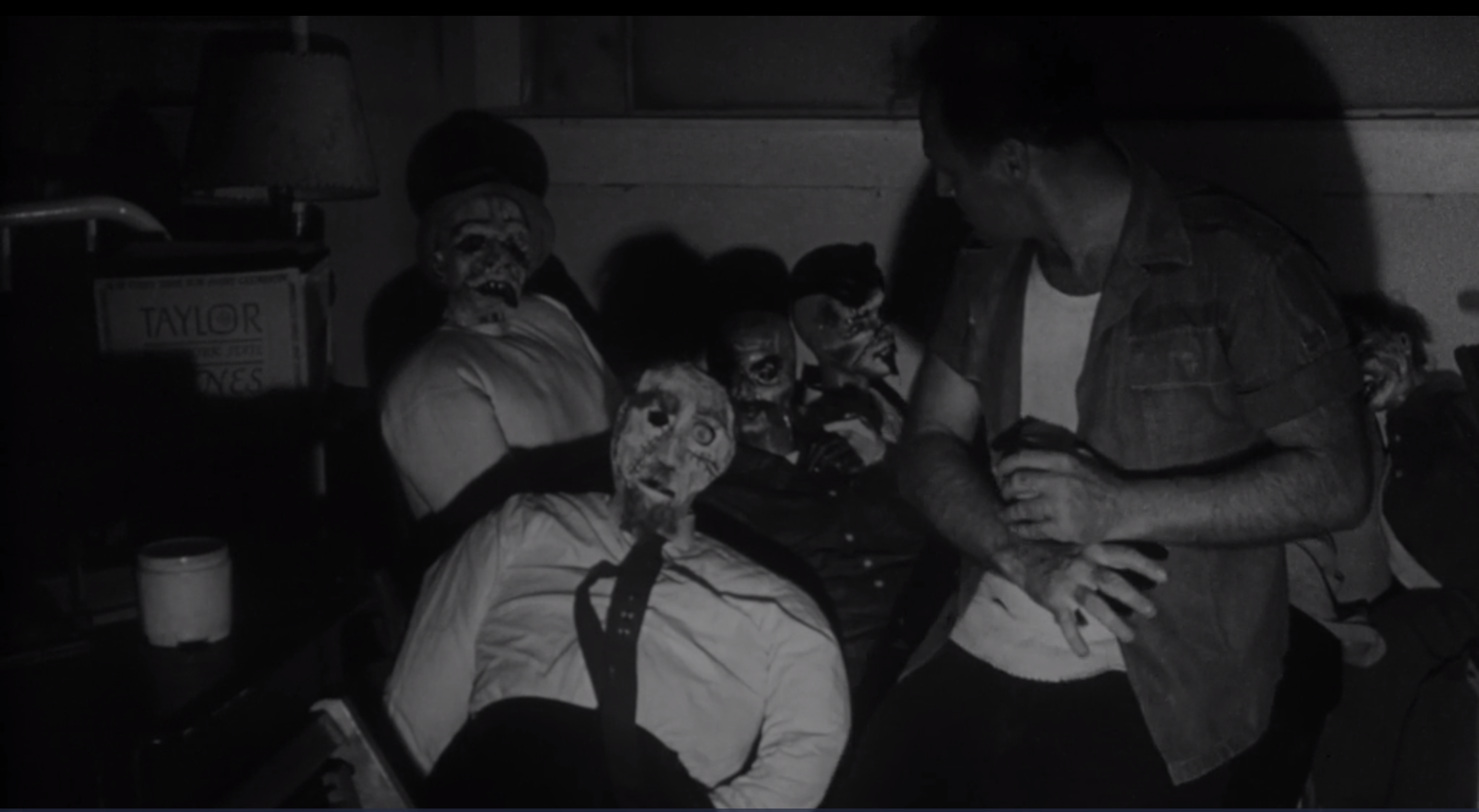
All of which is to say, Refn and his accomplices are up to something truly missing from the vast, flat expanses of streaming: curation, and supplements that go beyond the cursory. Some of the swirling discourse is as idiosyncratic as the films on offer. Did Cuckoo Birds really need a barely related, if fascinating, expose on Florida murder families? Did the John Waters-esque camp of Hot Thrills and Warm Chills warrant an entire biography of its country-music impresario of a director Dale Berry, including links to his non-hits “Varmints In My Garments” and “There’s A Map Of Texas On My Heart”? Did Curtis Harrington’s wonderfully bizarre Night Tide – starring an impossibly boyish Dennis Hopper as a sailor on leave falling in love with a carnie who might be a killer mermaid – obviously call out for a gorgeously constructed rumination on growing up in the shadow of the H-Bomb?

Of course not, but these are the kind of obsessive unearthings and adjacent exorcisms that archival endeavors make possible. If cinema is dead, as Refn insists, then this whole project is a curious half-light séance, an invocation of hauntologies, and a map of non-places. It might be better to consider cinema’s shadow-play as ghostly from the start, and these the strange bursts from vanishing peripheries. Maybe we’ve always been the afterlife.
.


March 14, 2019 0 comments
0 FacebookTwitterPinterestEmail
Kanopy Blank City CBGB Celine Danhier
CommentaryFilm

And now, let us praise Kanopy

by rick January 24, 2019
written by rick

In a world of near-constant commercial imperatives, the library’s very existence is something of a miracle. It’s easy to forget just how rare it is to simply exist in a space where you aren’t expected to purchase something until you’re standing in one. I mean, you can just take the things! And, instead of chasing you, the people are actually pleased you took them, and politely ask that you bring you them back sometime soon! How odd.

Reading about the new indie streaming service OVID.TV (slated to launch in March and featuring titles from “six different independent film distributors — Bullfrog Films, Distrib Films US, First Run Features, Grasshopper Film, Icarus Films, and KimStim,” according to IndieWire) made me reflect on the public library. This is no slam on OVID.TV or any paid service, per se. With the demise of FilmStruck, a new streaming service offering films from “Chantal Akerman, Michael Apted, Nikolaus Geyrhalter, Patricio Guzman, Heddy Honigmann, Chris Marker, Ross McElwee, Bill Morrison, Raoul Peck, Jean Rouch, Wang Bing, and Travis Wilkerson” is certainly welcome. And of course, the cinephile-beloved FilmStruck is itself set to be reincarted, in a fashion, joining MUBI, Fandor, Amazon, Netflix, Shudder, and who knows what else, dotting the ever-shifting landscape of information transfer, CRM segmentation, and contractual agreements once known as “movie-watching”.

You could spend a fortune on all that. And you might! Then there are the less legal avenues, from questionably proprietary YouTube uploads to out-and-out file-sharing.

Which brings us to Kanopy. Many public libraries have long had impressive film and video collections (and still do, now adding Blu-ray to the mix), but the vast radness of their streaming selections is something I’ve only recently come to appreciate. Libraries that offer Kanopy to anyone with a library card are doing something important in terms of public access to cultural history in the digital age, and something libraries are uniquely positioned to do: stripping away the flattening sameness of streaming. It’s our paradox, which became more acutely felt and articulated after FilmStruck called it quits – what Joana Scuts termed “a slow erosion of cultural heritage under the guise of infinite availability.” Speaking to the central problem of corporate curation, Richard Brody wrote that “the best analogy for, and the best use of, streaming video is as a supplement to new releases, particularly of films that aren’t likely to get wide theatrical distribution:

Streaming puts the low-budget, independent, or foreign film on the same footing of wide availability as a studio tentpole film. But when it comes to classics, the era of streaming is as the days of repertory theatres—with the difference that, then, the limits were technical as well as financial. Film prints and projectors are costly and cumbersome. Now the limits are those of manufactured scarcity in the guise of abundance, manufactured dependence marketed as freedom. Consumers have been weaned off disks with the promise of convenience, of weightlessness, spacelessness, infinite portability, and a large (but unstable) library of offerings. In exchange, they’re tethered to the mothership for good.

In some sense, Kanopy is simply a different mothership, but anyone who genuinely considers it would almost certainly prefer to board the one steered by the public library, which is at the very least less likely to explode on a whim. (Funding, of course, is a different matter.)

Kanopy - Jonas Mekas' Paradise Not Yet Lost Screening RoomOn a practical level, there’s just something revelatory about scrolling through. Kanopy services differ regionally, but from where I’m sitting, I can watch nearly the entirety of the A24 catalog. Frederick Wiseman‘s documentaries are nearly all here, from Titicut Follies to 2017’s Ex Libris (about the New York City Public Library, appropriately enough). Yesterday, as news of Jonas Mekas’ death at 96 and appreciations of his astounding legacy filled my social media feeds, I took the opportunity to watch him in conversation on “Screening Room”, a Boston public access show that ran for 10 years and featured most of the luminaries of experimental (or, as Mekas prefers, independent) cinema. Kanopy has episode after episode: Mekas, Bruce Baillie, Brakhage, showing their work and art they admire or that influenced them, wearing ugly 80s pants and saying things like, “God created the artist to make the work, but God also created the archivist for the outtakes.” It’s delightful.
The curatorial impulse shows up in the subject groupings: Films Directed By Women (which I’ve repeatedly groused isn’t available on other platforms, and which any #52FilmsByWomen enthusiast should value); a robust LGBTQ+ category; Must-See Classic Films and Film 101, a primer for many of the very titles in danger of being washed away by the streaming tide; Criterions aplenty, to fill the gap FilmStruck left. There are Sundance and NYT Staff picks, shorts, early film, and more. And this is to say nothing of the documentary and educational offerings, which focus on language, history, philosophy, and the arts. It’s as expansive as any library, and as free. There’s a practical constraint — a set number of “credits” for users to cash in — but it’s far, far better than nothing. (The Berkeley library sets this at a mere seven per account, unfortunately, though that still is seven more than you might otherwise have. Meanwhile, the L.A. Public Library allows users to watch as many Criterion titles as they’d like.)

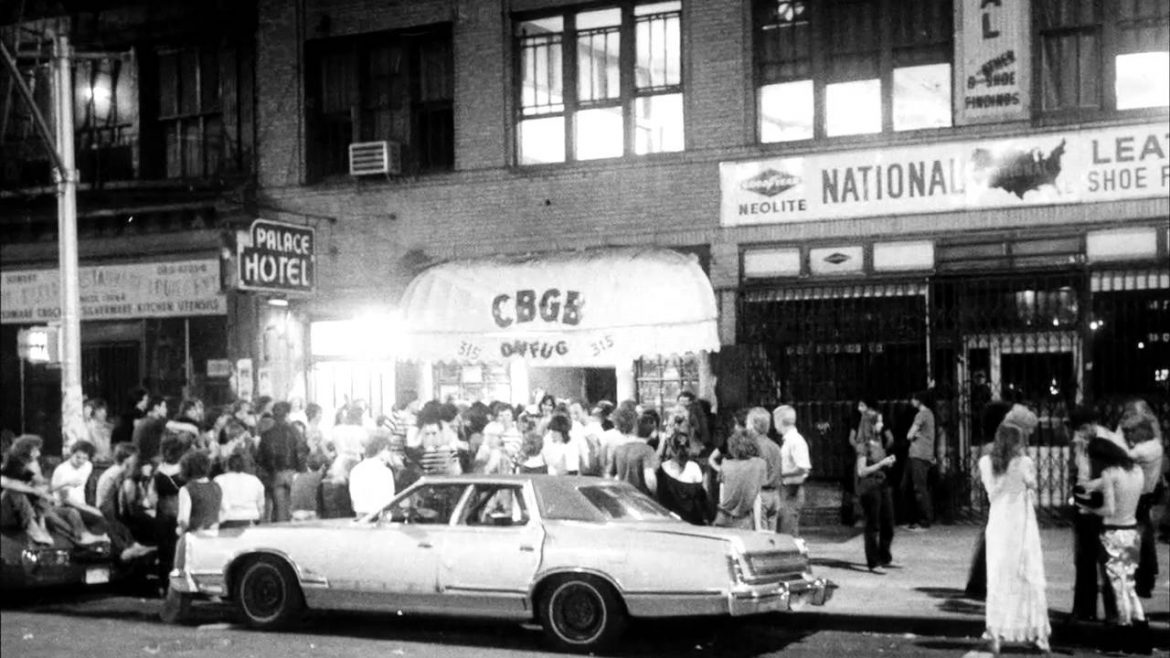
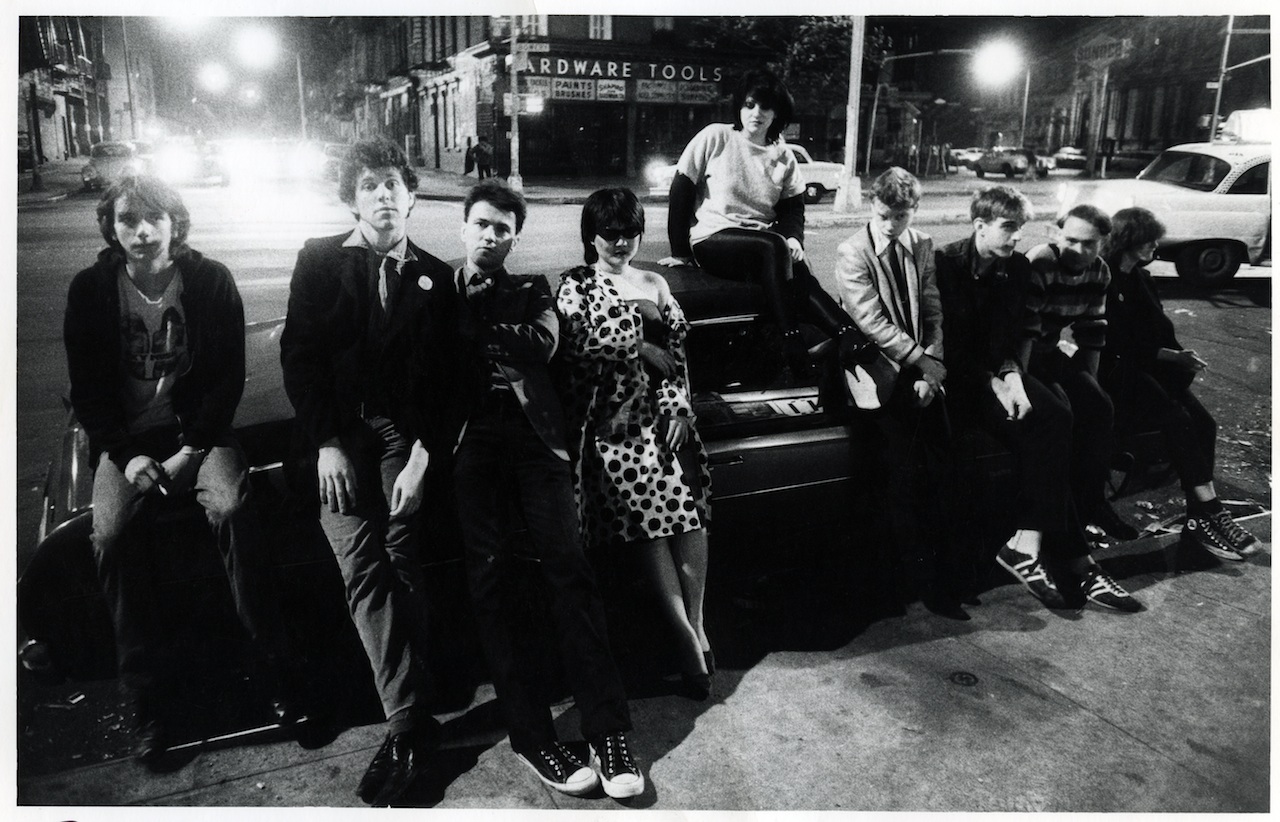
Kanopy - Celine Danhier's Blank City group street shotMost recently, I finally watched Celine Danhier‘s Blank City, an engrossing portrait of No Wave that I’ve been trying to lay hands on for a while. It’s fantastic and vital, mixing archival footage with snippets from No Wave artists, anchored by contemporary interviews with those who came out of the scene or were scene-adjacent: Jarmusch and Lurie and Buscemi and Waters, Lydia Lunch, Vivienne Dick, Richard Kern, Nick Zedd and the Cinema of Transgression representatives (as well as those still pissed they ever got lumped in). James Chance is there, tweaking about, and a baby-faced Thurston Moore peeks out from the back of an old photo. We get conflicting assessments of Basquiat and Wild Style‘s LES panorama at the moment of hip-hop’s birth. It’s as gripping a depiction of bombed-out NYC as you can get, and I couldn’t help thinking how weird it would feel to pay Jeff Bezos to watch it.

Not that Kanopy is above the “Because You Watched …” algorithm that increasingly defines our relation to our machines. Blank City prompted recommendations for Rumble, the new doc about the influence of American Indian musicians on rock n’ roll, and Salad Days, about the birth of Dischord and post-hardcore in DC. Perhaps I might want to check out Jarmusch’s Permanent Vacation, which Sam wrote about eloquently a year ago (and in which I did know the cast had to move a sleeping Jean-Michel Basquiat around the room to keep him out of the shot). Or Susan Seidelman‘s Smithereens, or Bette Gordon‘s Variety?

The thing is: yes. Yes, I might. The last time I logged in to Netflix, my enthusiasm for Mystery Science Theater led to a recommendation to check out their apparently quite similar production, Voltron: Legendary Defender. With all due respect to the Super Robot, I think I’d rather be at the library.

January 24, 2019 0 comments
1 FacebookTwitterPinterestEmail
Warren Sonbert Short Fuse
Commentary

Warren Sonbert and the Relief of Anti-Narrative

by rick January 14, 2019
written by rick

It was about 20 minutes into the interminable Keanu Reeves / Winona Ryder vehicle Destination Wedding that my whole being shuddered and rejected it, like an immune system refusing a skin graft.

It wasn’t just the grating banter from otherwise likable film presences, or the lazy ugliness of its images, or their coddling familiarity. Destination Wedding, a rom-com without romance or comedy, congratulates itself on plotlessness but is mired in the worst quicksands of narrative. It’s a plotty plotlessness, shots still as Columbus without anything to look at but the corners of the screen, where we insert our own expectations of narrative resolution. They are fulfilled, banally, before credits roll, and we walk away having achieved the level of viewer participation to which our cinema aspires: the ability to recount a story.

Twelve hours later, I found myself instead in the silent darkness of the Berkeley Art Museum and Pacific Film Archive‘s Barbro Osher Theater, as the radically fractured, mysteriously cohesive 16mm films of Warren Sonbert washed over us. Hundreds of shots, edited without conventional continuity or narrative thrust, constitute these films. Sonbert was called a diarist, which he’s not, and his compositions (for they are composed, like songs in which images are notes) summed up as “explosions in a postcard factory,” a serious misreading. But I kept thinking back to Destination Wedding, and marveling at what we’re willing to settle for: cinema, with its vast arsenal of tools for sorcery, invocation, mythic resonance, reduced to scenarists’ notes.

“Oh, I haven’t seen that one; what happens?” We might as well report back from a museum visit with a count of apples in the still lifes.

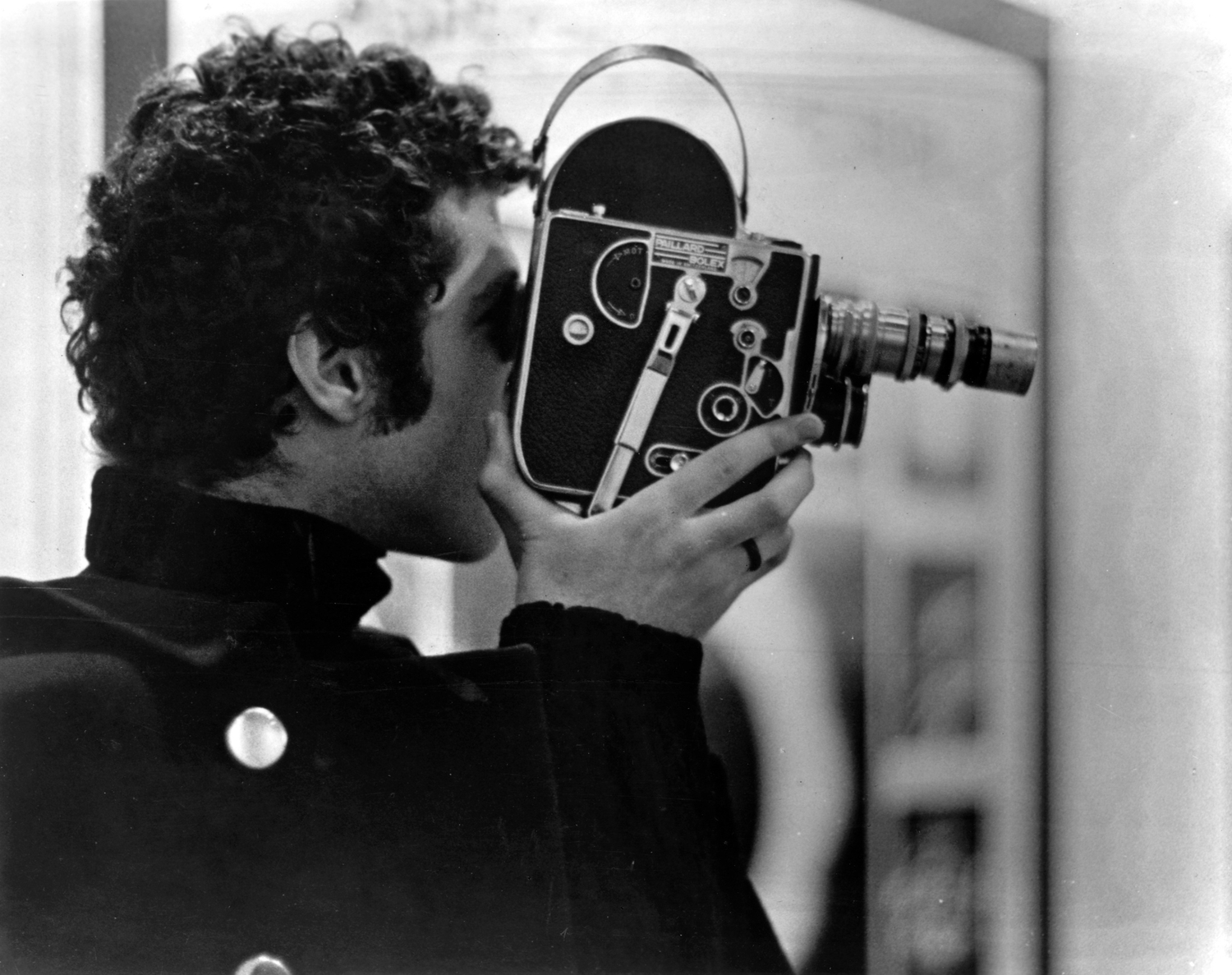
Warren Sonbert with cameraWhat happens in Sonbert’s work? (BAMPFA screened the early, Warhol-adjacent Hall of Mirrors (1966), and then Divided Loyalties (1978), The Cup and The Lip (1986), and Short Fuse (1991), all of which are more properly in Sonbert’s trademark style of rapid-fire montage.) Well, activity happens. People happen. Parades, circuses, hang-gliding, kittens, tigers, cafes, protests, military displays, children’s basketball, plane takeoffs and landings, train tracks receding. There’s an emphasis on youth and vitality, sex, intimacy. There are graveyards and ACT-UP militancy. There are tightrope walkers and gay rights rallies and dogs waiting for scraps at picnic tables. There’s a surgery and a gynecological exam and surfers in the ocean. There are light leaks, a feeling of ephemerality. There is, blessedly, not a story in sight, but a guiding feeling of symphonic surprise. Anything could happen and, if you have a camera, you might catch some of it. Sonbert had a camera.
It’s not merely that Sonbert avoids narrative. The cuts themselves undermine it. Like Brakhage, Sonbert’s editing is intuitive but without a “point,” in the hectoring sense of Eisensteinian montage. Its only allegiance is to rhyme, echo, and trigger, though it’s not without humor. (A communist gathering spliced with a group of mice running in circles, recalling Eisenstein’s elision of Trotsky and a peacock, only shows that Sonbert’s rules are made to be broken.)

There’s something profoundly liberating in its true plotlessness, something akin to the West Coast language poets with whom Sonbert was associated (or, to return east from whence he came, something like a feint at No Wave artlessness). We live in plotty times, strangled by the endlessly recursive, preening narratives of the corporate comic book empires, both too fan-servicingly ironic and blithely, falsely earnest. (“Earnestness kills art,” a sound recording of Sonbert asserted in between the satisfyingly material clicks of the projector, like a mischievous voice from the grave.)

Watching Sonbert’s films call to mind a quote from Hirokazu Kore-eda: “Films need people more than stories. Landscapes also harbor emotions. Music can blow like the wind through a scene.” For an exhausted viewer in an exhausting age, it’s ironic that 20-minute films composed of hundreds of cuts feel like a return to something simple.

January 14, 2019 0 comments
0 FacebookTwitterPinterestEmail
Two-Minute Warning fan flag
CommentaryFilm

The World Is Ending and It Doesn’t Matter

by Lark January 2, 2019
written by Lark

Bluray was meant for the grand, beautiful classics of the film world: your Lawrences of Arabia, your Two Thousands One. But it has also done a service to a different, much less distinguished kind of film. It has recovered the shocking ugliness of films like Two-Minute Warning.

Two-Minute Warning is a corrective to every movie like The Long Goodbye that gives Los Angeles a mystique. We see every frame of 1976 Los Angeles in this film through a thick, mucky haze so viscous you feel like you need a breathing mask.

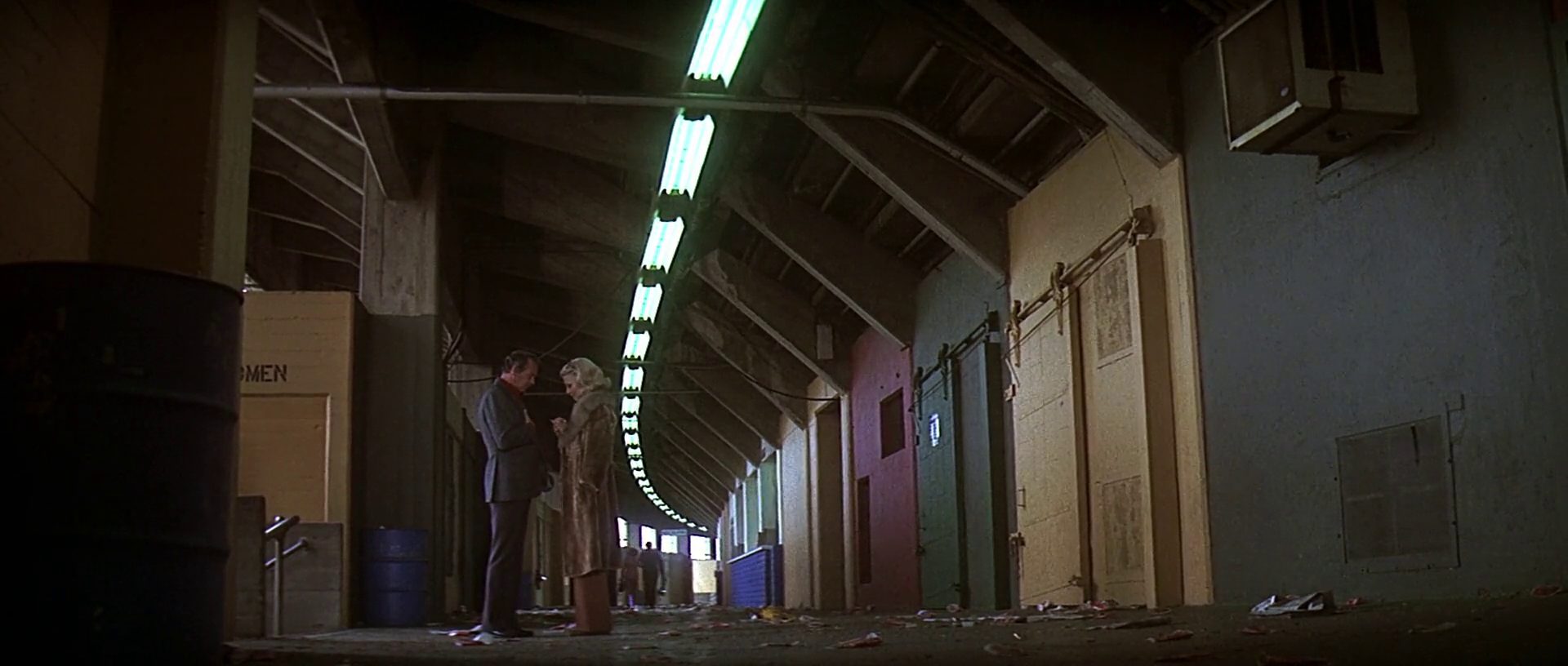
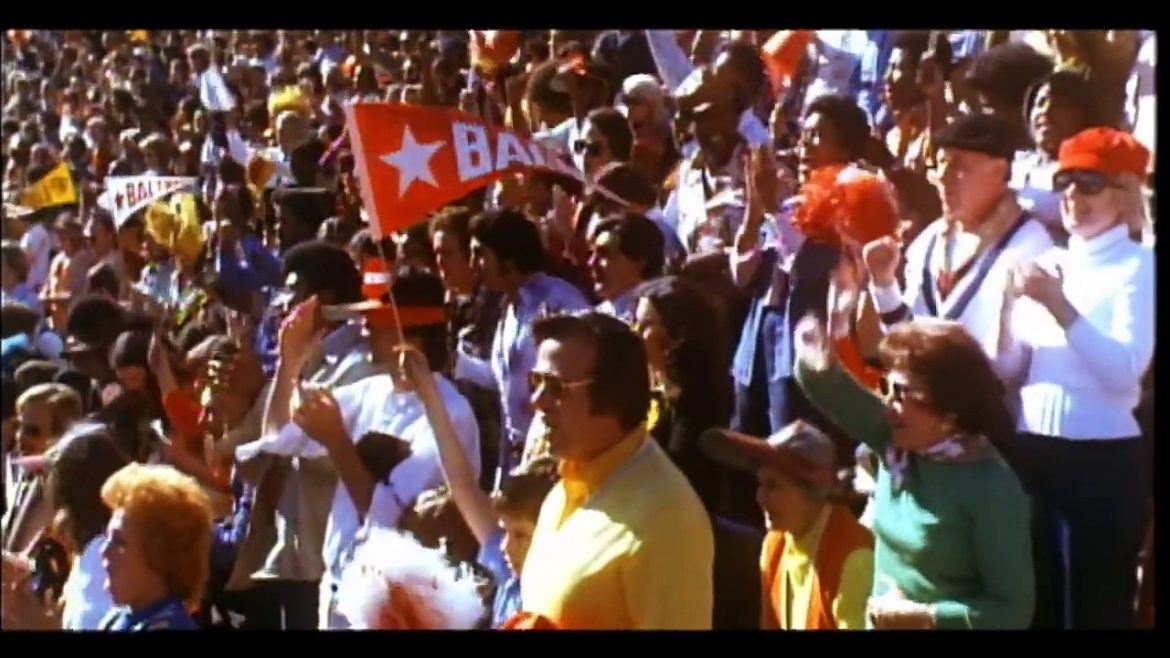
Two-Minute Warning garbage hallwayAlmost the entire film is set outside at the Los Angeles Memorial Coliseum, which is hosting “Championship X” (a stand-in for the Super Bowl). The stadium is just as monstrously ugly as it (presumably) was in real life: trash blows by, plants are dying, and every seat looks too filthy to sit on.

It’s a grim, gross world in Two-Minute Warning, without even the charm and imagination of degradation. The characters match it, a mix of TV stars (David Janssen from The Fugitive, Pamela Bellwood from Dynasty, David Groh from Rhoda, Mitchell Ryan from Dark Shadows) and movie stars at the ends of their career (Jack Klugman, Charlton Heston, Walter Pidgeon, John Cassavetes and his wife/collaborator Gena Rowlands). All form couples, romantic or otherwise: a love triangle between a woman, her date, and her male seatmate; an older couple who bicker like George and Martha; a young family, trying to relax after the child-smacking father lost his job; an in-too-deep gambling addict who begs his seatmate, a priest, to “put in a good word for him.”

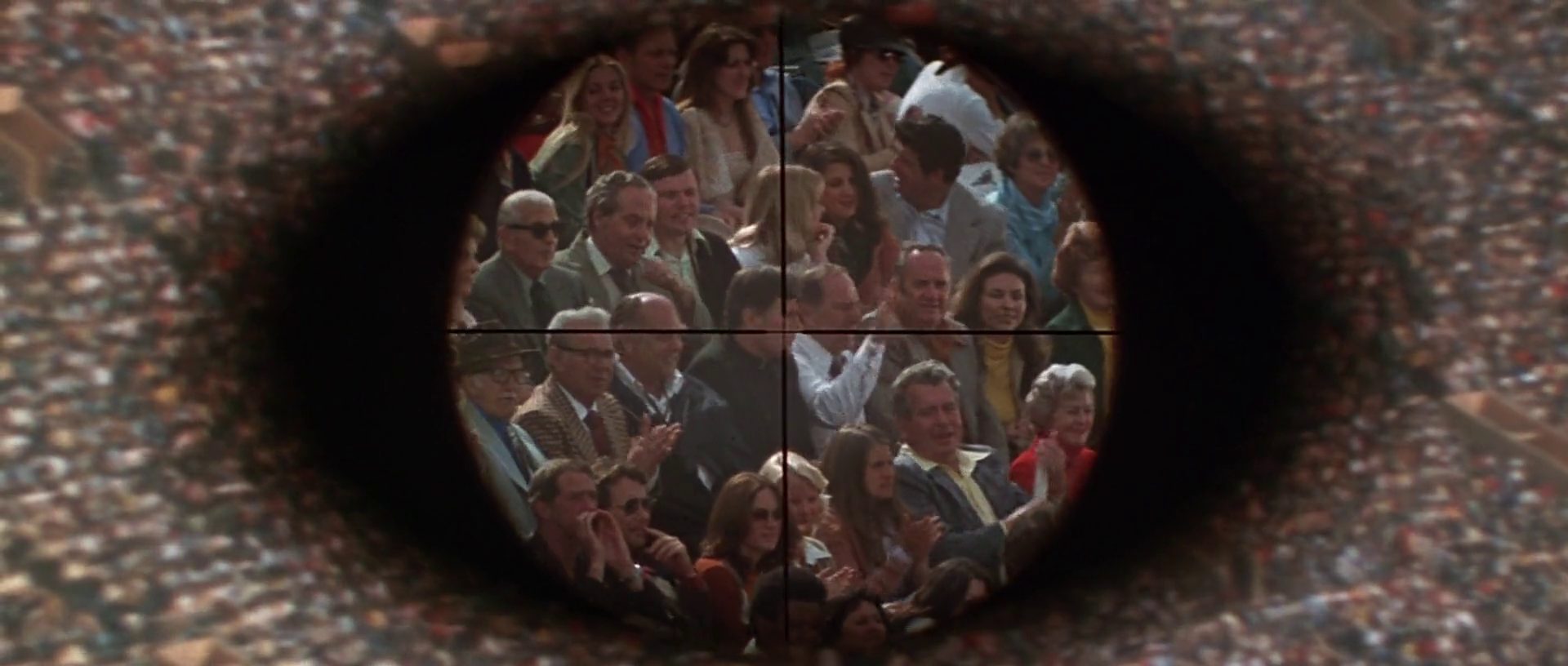
Two-Minute Warning scopicNone of it matters. In the grand 70s disaster movie style, it’s all just setup for the Big Event: a sniper on the roof, ready to pick off random civilians. What follows is a desperately stupid attempt by police (headed by Heston) and SWAT (headed by Cassavetes) to stop him without panicking the stupidest audience ever created (whose dull storylines continue for a hundred minutes and two murders).
All of this, combined with the actively ugly lighting (completely natural, taking us from glaringly bright sun to dim shadows), creates a somewhat fascinating whole. Any film involving a scope becomes, sooner or later, grist for a reading about the scopic drive — how we as viewers are in the position of the scope-possessor — but the utterly boring nihilism of Two-Minute Warning really does put us in the mind of the sniper.

We end up in a place not of hoping the sniper opens fire, but of not caring. The sniper places the scope over one miserable couple. For a moment, he seems to decide whether to shoot or not. Does it matter? No. He places it over the head of the visiting mayor, but spares him for a moment. Does it matter? Not at all.

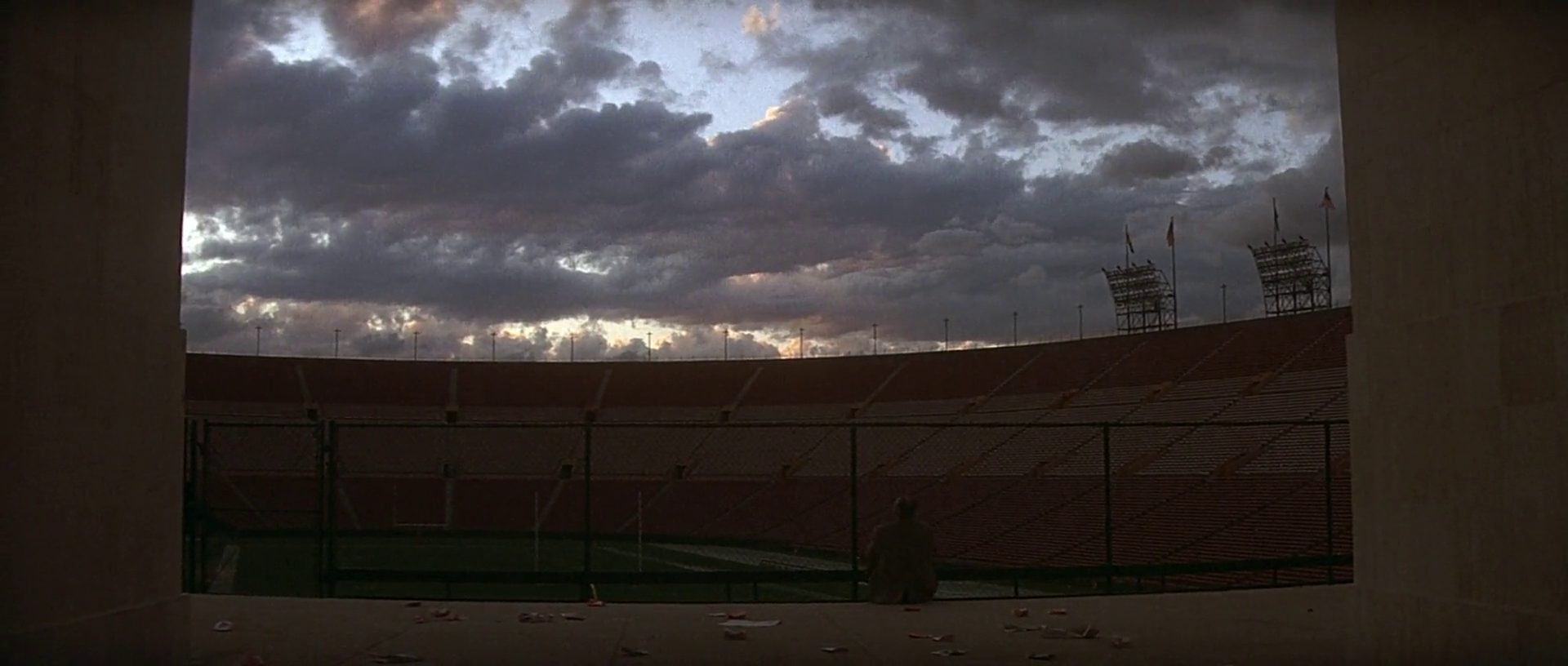
Two-Minute Warning sunsetAll this plays out over footage of that most boring of all sports, football (with their team names taken from them, it feels even more pointless). One team moves up the field; the other team moves back down it. Some people cheer; some other people cheer. There is a hole at the center of all of it.
When the sniper finally begins to shoot in the last fifteen minutes and the audience turns into a horrific, seething stampede, it is horribly cathartic. At last, something is happening. Something irreversible and meaningful has happened. The world is ending: at least that’s something new.

The cops, after an entire film of incompetence, finally kill the sniper, but it doesn’t matter. Half of our characters are shot or stampeded, but it doesn’t matter. One cop sits, watching the sun set through the haze of Los Angeles. It reminds us of nothing more than the rotation of one blue-green rock, spinning in space, wasting energy, until everything is cold and dead.

January 2, 2019 0 comments
0 FacebookTwitterPinterestEmail
We The Animals (2018)
CommentaryFilm

The Best Films of 2018

by rick December 28, 2018
written by rick

There’s a near-consensus among critics that 2018 was an unusually strong year for film, and I can’t disagree. My list for the year is heavily tilted to the 4-star and above, even with some glaring gaps in the mix – I missed BlacKKKlansman, for instance; I’m waiting to see Roma screened at the Castro in 70 mm, like the cinephile tool I am; I didn’t see the new Claire Denis, or the new Andrew Bujalski, or the new Hang Sang-soo, or the new Frederick Wiseman. Barry Jenkins’ If Beale Street Could Talk hadn’t opened at the time of this writing. No chance for The Image Book.

No matter; I could make 10 lists from the ones I have seen. And, as Richard Brody notes, “The gap between what’s good and what’s widely available in theatres—between the cinema of resistance and the cinema of consensus—is wider than ever.” By “cinema of resistance,” Brody carves out a wide, circuitous ravine through geographies of the image:

Resistance takes many forms, including cinematic ones. But the cinema of resistance isn’t necessarily overtly political (though it may well be that, too—as in many of this year’s best films). Movies of resistance offer, foremost, aesthetic resistance: they resist the making of images and the telling of stories that take their own power for granted. They resist clichés of audiovisual thought, which are as desensitizing to the individual mind as they are deluding in the forum of social debate. They challenge received ideas of what stories and images are, and challenge their makers’ own artistic practices; they expand viewers’ imaginations, deepen and sensitize their emotional responses, and create forms of perception that go far beyond the events depicted in the movies to become enduring experiences in themselves, enduring incarnations of their time.

With this in mind, here are some of the experiences that challenged, energized, and captivated me in 2018. (In alphabetical order, with links to earlier write-ups when appropriate.)

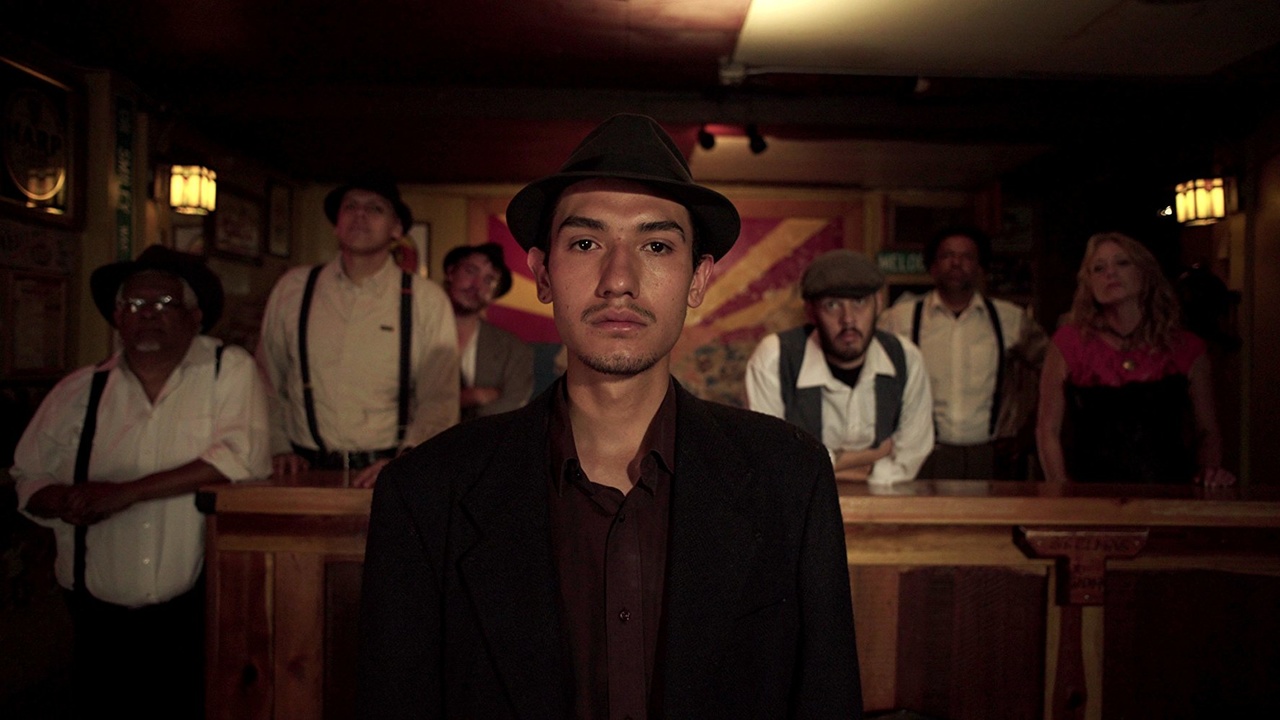
Solidarity Forever in Robert Greene's Bisbee '17 (2018)Bisbee ’17

Robert Greene‘s stunningly class-conscious interrogation of memory (always contingent) and forgetting (always political) is as entertaining as it is incendiary. It starts as a documentary about a particularly heinous act of strike-breaking in a mining boom town before morphing into something else entirely, drawing together legacies of racist xenophobia, colonialism, and identities forged through class struggle with the performative act of storytelling itself — the stories we tell about ourselves, our country, and each other. It’s a monumental work.

Burning

Less a mystery, in the genre sense, than simply mysterious, Lee Chang-dong‘s latest is a compulsively perplexing portrait of a trio of young Koreans locked in unstable, indeterminate relationships to each other, to their country, and to their memories. It’s a masterpiece of puppet-string-tugging, indelible performances, and expert use of sound (including the year’s best recontextualization of music – you don’t have to know Miles Davis’ theme from Elevator to the Gallows, just as you don’t have to know the intricacies of Korean formal address, but it sure can’t hurt).

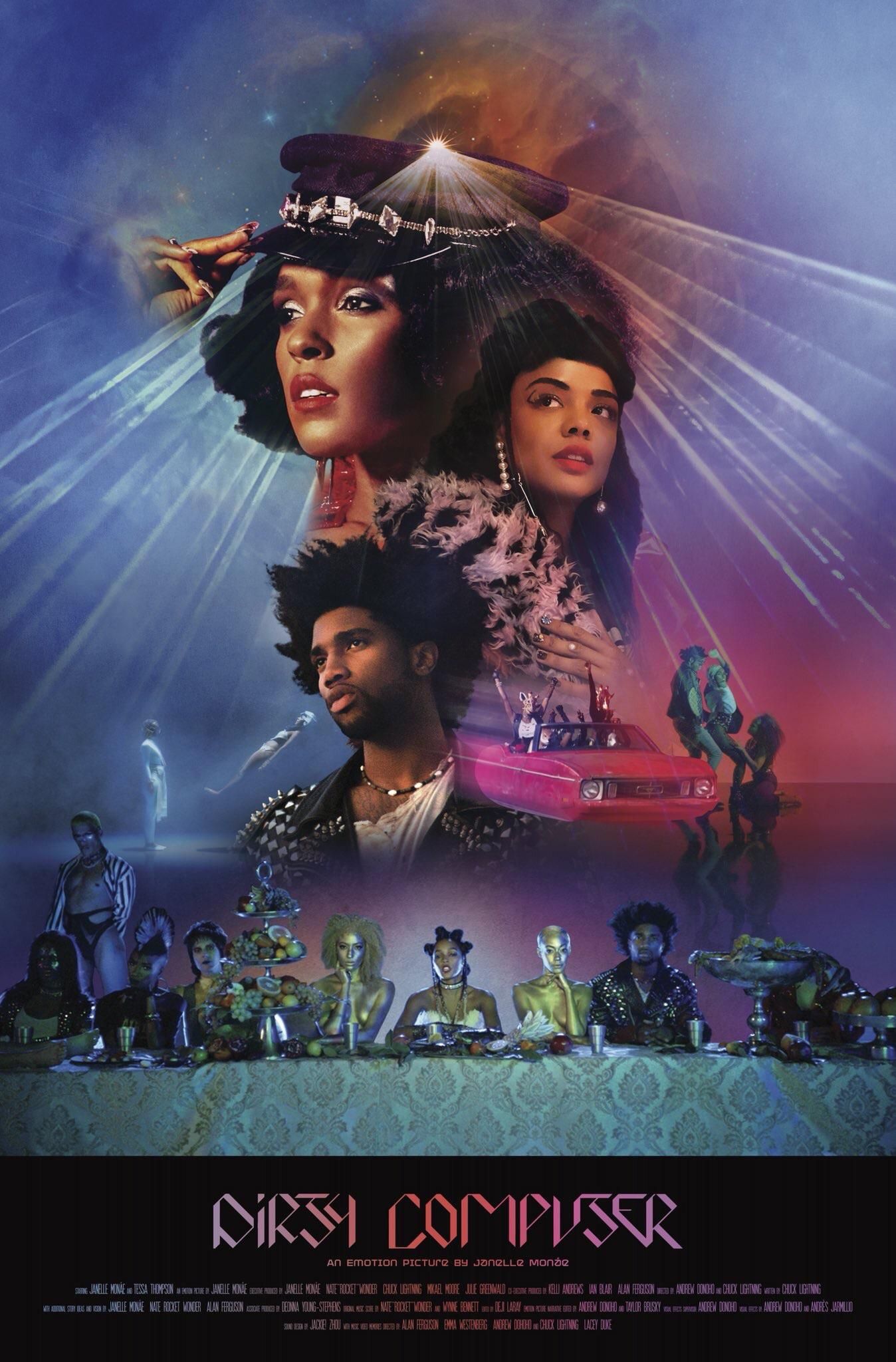
Janelle Monae Dirty Computer (2018)Dirty Computer

Black Panther has received most of the accolades for 2018’s Afro-Futurism, but Janelle Monáe has been at it for years, and her quirky whatsit Dirty Computer feels like a summation of sorts. The album arrived with a full movie (and Tessa Thompson) attached, complimenting Monáe’s self-reflections and explorations with sci-fi imagery and a narrative about identity erasure and resistance. That YouTube pulled it due to complaints about “explicit content” is so on-brand we might consider it meta-text. 2018 may offer ever more avenues for creators, but system-wide freak-outs in the face of Black Power gender fuckery remain.

Eighth Grade

There was no shortage this year of returning masters, but 2018 was also host to a staggering number of unexpectedly strong debuts from first-time filmmakers. I’m not sure who anticipated the level of empathy, comic realness, and horror-movie-level queasiness of Bo Burnham‘s Eighth Grade, but it definitely wasn’t me. Breakout star Elsie Fisher charms her awkward way deep, deep into your heart as an introvert who makes videos full of advice she doesn’t follow, but it’s Burnham’s emphasis on the sheer, terrifying performativity of growing up today that sticks. No generation has ever had to cope with this level of self-documentation and expectation to constantly reveal, reflect, and deflect, and it’s almost impossible for us olds to imagine. Burnham’s debut, and the hours of YouTube research that inform it, helps.

First Reformed

Paul Schrader’s career-best comes late in the game for him, but thematically it’s right on schedule. First Reformed is 2018’s most serious grappling with climate despair, filtered through Schrader’s fixations on Dreyer and Bresson and anchored by Ethan Hawke in the year’s best performance, and maybe — maybe — its picture of hope in the ruins. In any case, it’s a local favorite around these parts, Brody’s cinema of resistance to a tee.

Alex Honnold in Jimmy Chin and Elizabeth Chai Vasarhelyi's Free Solo (2018)Free Solo

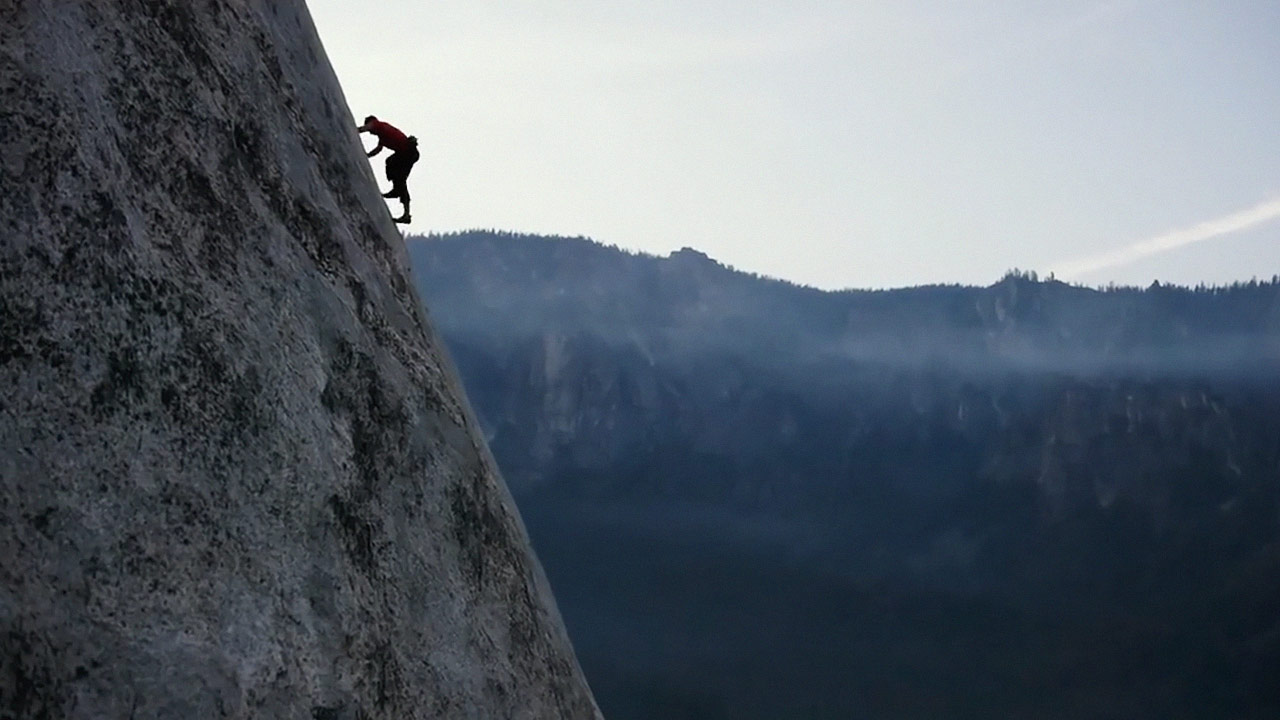
What impresses most about this white-knuckle chronicle of Alex Honnold’s rope-less ascent of Yosemite’s El Cap are all the ways the filmmaking team finds to bring the story back down to earth. Instead of simply presenting a collection of images of a man on the side of the mountain — terrifying, sure, but of presumably diminishing power — Free Solo breaks down the climb into a series of discrete problems to solve, wonders out loud whether documenting this endeavor is irresponsibly adding, Heisenberg Uncertainty Principle-style, to the danger, and explores, albeit briefly, what it’s like for a man who lives in a van to move into a house. All of this humanizes what it is, in essence, a superhuman feat, sure, but it also gives viewers an inroad, something to hold onto.

Also, those images of a man on the side of a mountain? Fucking terrifying.

Hereditary 

In a year full of the horror of intergenerational trauma, Hereditary had the most lasting effect, its juggling of distinct modes of genre storytelling seeming less haphazard in retrospect than part of a larger design. If nothing else, one single, simple shot, with offscreen sound filling in its desperate silence with all the grief in the world, might be the movie moment of 2018.

Hold The Dark

Divisive among horror fans and Jeremy Saulnier fans alike, Hold The Dark is long, cold, and, yes, dark. It rewards patience, but not in the ways you might expect, and it provides windows into myth-level grief and primordial fear, though not in the places we usually look. This is cinema as shadow puppetry on cave walls, buffeted by winds, told together to feel briefly less alone.

Debra Granik's Leave No Trace (2018)Leave No Trace 

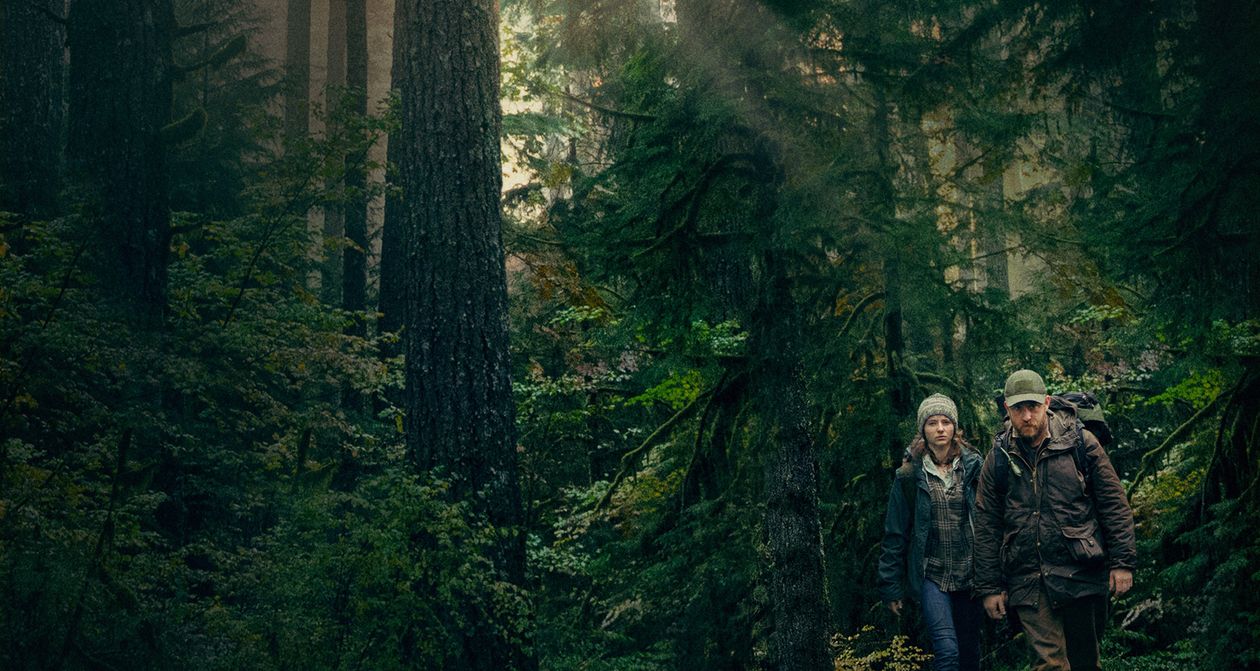
Debra Granik‘s first narrative film in nearly a decade is another kind of elemental wonder, as lush as Hold The Dark is spare. Its focus on stalwart youth in the face of societal constraints — not to mention its staggeringly accomplished first-time lead — recalls her breakthrough Winter’s Bone, but there’s a profound gentleness at the heart of Leave No Trace that sets it apart. The story, about a father and daughter living just barely off the grid, is a wisp of a thing, and the entire film seems in danger of being lost in the endless greenery of the Pacific Northwest, too. But it’s a tender, sad character study, of characters grappling with demons and seeking, in whatever ways they can manage and barely articulate, to hold on to each other. No other 2018 film has grown on me more in the days and weeks since I stumbled out of the vividness conjured in the dark of the theater, out into a world suddenly more alive.

Madeline’s Madeline

Josephine Decker is a pivotal artist of our moment’s complexity, and this immersive depiction of mental illness, performance art, storytelling contradictions, and the ethics of representation is her grand statement, in all its messy, disquieting glory. Decker is seeking something like a new language here, and what she finds is astounding. There’s nothing like it in 2018, or possibly ever. See it right now.

Sandi Tan's Shirkers (2018)Shirkers

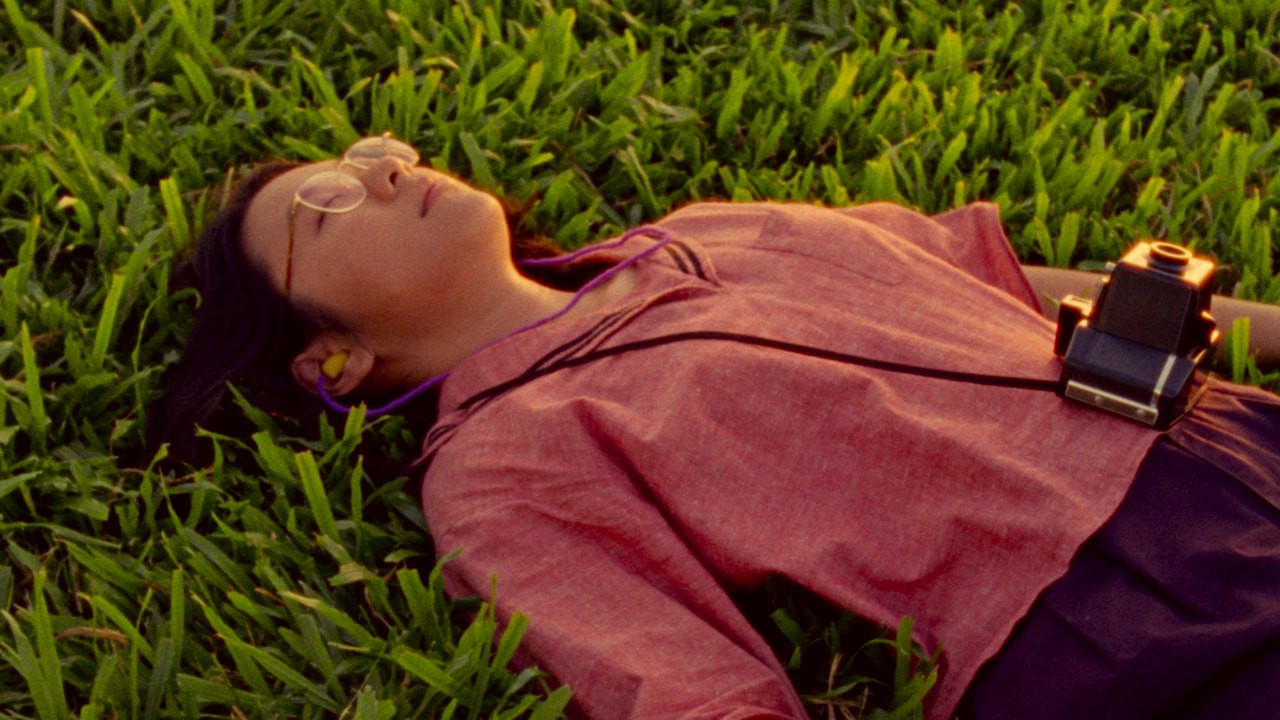
In a year of stellar documentaries, Sandi Tan’s looking-glass-rupturing Shirkers was a standout.

Ostensibly the story of the film she made and lost, Shirkers is a necromancy disguised as a Weird Tale, full of implausible true events, charismatic villains, and cinematic revolutions that never were.

2018 had a special place in its heart and on its screens for this kind of ghost-film nostalgia — the reconstructed memory, the artifact given new, monstrous life — but Tan’s humor and intelligence make this one special. We may never have been gifted the New Singapore Cinema she and her punk rock comrades were plotting to unleash, but we’re lucky to get a glimpse, along with something else — jagged, mysterious, rebellious — entirely.

Shoplifters

Hirokazu Kore-eda specializes in the understated and naturalistic, mining moments of enormous emotional resonance from the everyday. Shoplifters, which won the Palme d’Or at Cannes and remains a surprisingly robust domestic box-office draw here at the end of 2018, is all of that and more. Focusing on a semi-chosen family on the social, economic, and moral margins, Kore-eda composes portraits of a Japan we’re not accustomed to seeing on screen, which might help explain its appeal to U.S. audiences. Fundamentally, it’s a clear-eyed telling of a murky narrative, in which the relationships between protagonists are never entirely delineated and hands are rarely held while trying to piece things together. It’s gorgeous and problematic and sad, and it’s final moment is invested with a world of wonder. This one is hard to shake.

Lakeith Stanfield and Tessa Thompson in Boots Riley's Sorry To Bother You (2018)Sorry To Bother You

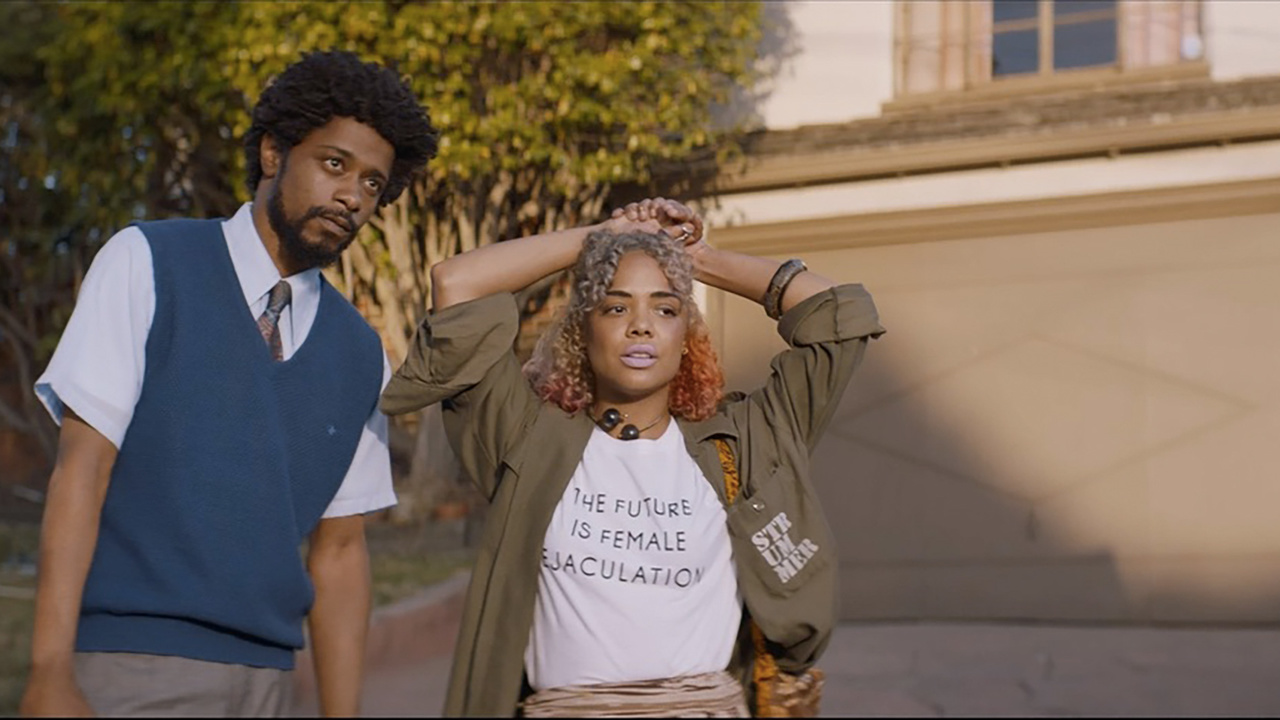
Speaking of hard to shake! Possibly no 2018 film featured quite the left turn (or Left turn) of Boots Riley’s surrealist grenade from the back row, but the less said about that, the better. If Sam hadn’t already busted out “Groucho Marxism” for Self-Criticism of a Bourgeois Dog, I’d use it for this, another debut of startling confidence. Suffice to say that Sorry To Bother You combined lunatic energy, class-conscious rabble-rousing, and biting satire like nothing else this year. I saw it twice in the theater and I’d go again, if only to marvel at the profound discomfort of a white Berkeley audience to a certain moment in the film. Screen it with Black Panther and Blindspotting for a triptych of 2018 Oakland.

We The Animals

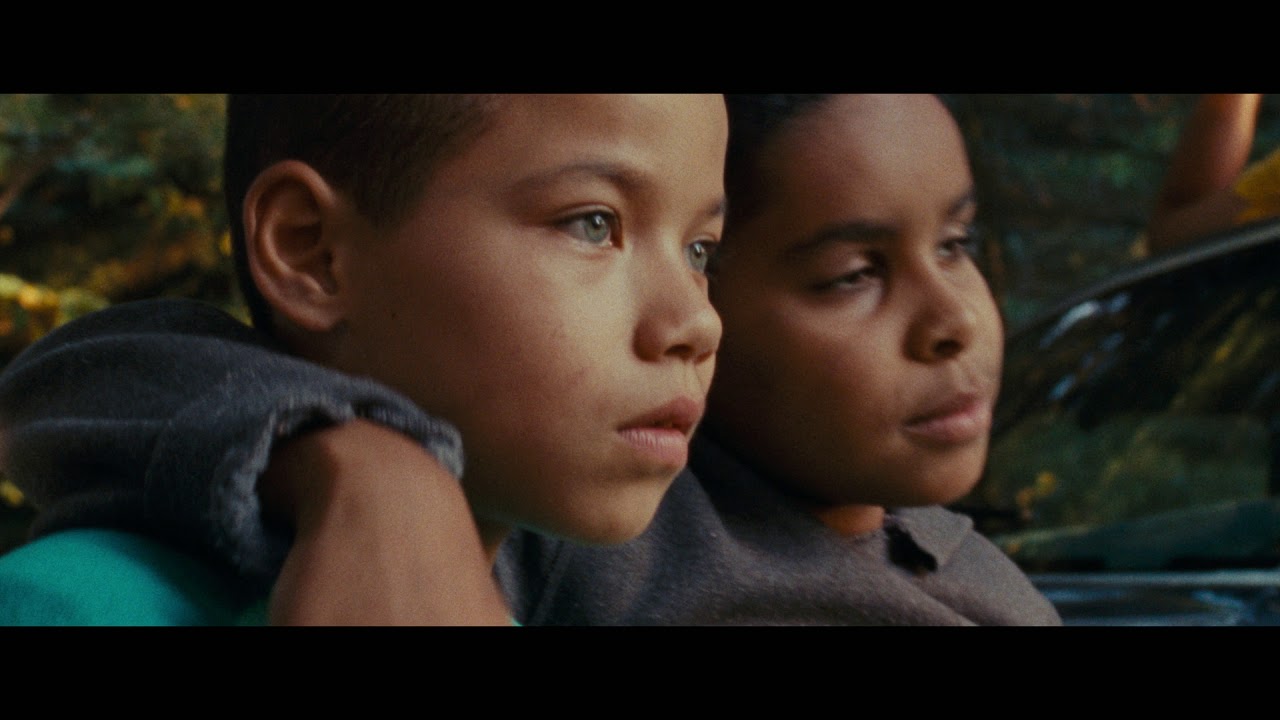
One of the blink-and-you’ll-miss-it releases around these parts, Jeremiah Zagar’s adaptation of Justin Torres’ book unspools like an unusually gorgeous dream. Combining elements of The Florida Project and Moonlight and filtering them through the gauze of late-afternoon light and memory, We The Animals is a special film all its own, a narrative that feels experimental in its emphasis on image motifs and recurrence. It feels like childhood, or at least a childhood. There’s magic in it.

Zama

I’m always here for Lucrecia Martel, even when she suddenly relocates from her native Salta for the first time and plunges into historical setpiece drama, more Aguirre expanse than the horizontal claustrophobias associated with the Argentinian New Wave. Still, this is Martel through and through, from its absurdly detailed sound design to the aching questions of  post-colonial identity filled with suspicion and defensiveness – “an absurd, nationalistic identity,” she says; “It’s not a healthy identity.”

All of that absurdity is bound up in the figure of Don Diego de Zama, a minor functionary in a colonial outpost, who imagines some sort of European majesty clings to him even as he’s mired in all the pettiness of empire. Martel’s politics may be hard to pinpoint — the film certainly finds something pitiable and sad in its protagonist, not merely contemptible — but her sympathies are not, and Zama is a film about impossible sympathies. Martel pointedly, strenuously insists she does not care about making movies any more, so we should welcome the ones we get.


December 28, 2018 0 comments
1 FacebookTwitterPinterestEmail
Madeline's Madeline Helena Howard
FilmReviews

Madeline’s Madeline: An Unclassifiable Panic Attack Maybe-Masterpiece

by rick December 21, 2018
written by rick

Josephine Decker‘s work carries with it a high-wire sense of danger, an aesthetic of possibility and collapse. Whether in the costumed genre trappings of Thou Wast Mild and Lovely, the shifting and uneasy ambivalence of Butter on the Latch‘s just-this-side-of-horror stay at a Balkan folk gathering, or (especially) the self-immolation of Flames, in which Decker’s camera focused with supreme discomfort on her own relationship, the viewer is simultaneously at a remove and much, much too close, piecing together fragments with a mounting sense that the whole edifice could topple. Hers is a performance art sensibility transferred to cinema, and Madeline’s Madeline is her wobbly magnum opus.

Helena Howard in Josephine Decker's Madeline's MadelineFitting, then, that Madeline’s Madeline should explicitly focus on performance art. The title evokes Proust — appropriate for a film pitched between memory and enactment — but also identity and self-determination for the film’s actual Madeline (instant star Helena Howard). Madeline is a 16 year old struggling with some sort of obliquely referenced mental illness, a source of constant worry to her constantly worried mom (Miranda July, rounding out the performance art meta-text but expertly cast against type).
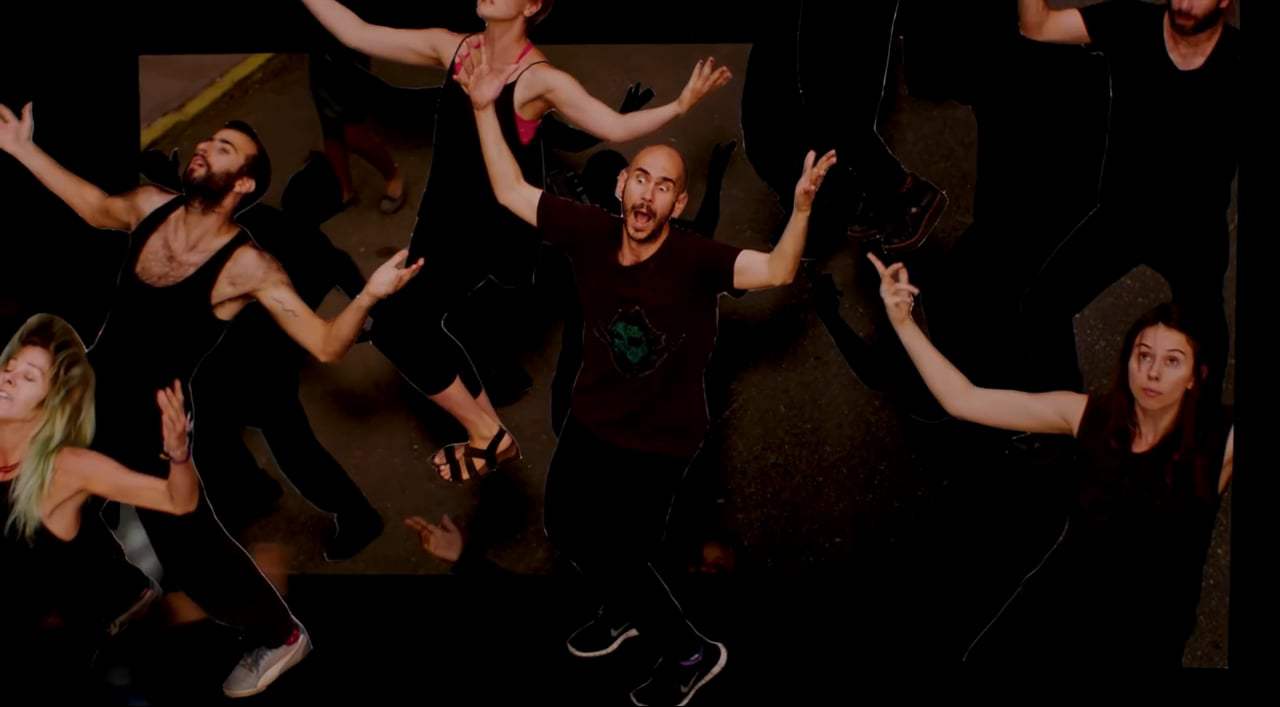
Her father is apparently absent, and things at home have been tough, which makes it all the more meaningful when Madeline discovers a home away from home: an avant-garde ensemble somewhere in the Village, which registers as both surrogate family and a near-cultish group of true believers in thrall to the charismatic Evangeline (Molly Parker), who’s mounting a collectively determined piece about … mental illness. Things will go through the looking glass shortly, with a far more convincing portrait of destabilizing dance magic than the overwrought extra witchiness of Suspiria could muster.

If ever there were a film that should be experienced rather than described, it’s Madeline’s Madeline, so we’ll leave the plot there. Decker, cinematographer Ashley Connor, editors Harrison Atkins and Elizabeth Rao, composer Caroline Shaw, and the Pig Iron Theater Company aim for something more like synaesthesia than spectatorship — this is participatory immersion cinema, and Madeline’s Madeline feels off-putting and new.

Pig Iron Theater Company in Josephine Decker's Madeline's MadelineDecker, after all, is the same woman who sat across from Marina Abramović and took her own clothes off, until the cops dragged her out; she wanted to be “as vulnerable to [Abramovic] as she constantly makes herself to us,” but it’s hard not to think that this impulse also relates to a suspicion of calcified art, of unresponsive aesthetics. Madeline’s Madeline is in a constant state of psychic undress, and it’s not entirely a pleasant experience.

But it might be a masterpiece. Its themes — of the ethics and responsibilities of representation, the boundary-blurring and existential dangers of making art together, the Frankenstein-like ambiguities of parenting and care, the blindnesses to race and class and gender even in spaces dedicated to their exploration — are as timely as they come. If Decker never made another film — and it seems she barely made this one, unconvinced of her work’s relevance, a heaving anxiety that makes it every bit as nail-biting as recent panic attacks like Good Time — Madeline’s Madeline establishes her as a pivotal artist of our moment.

December 21, 2018 0 comments
0 FacebookTwitterPinterestEmail
Shoplifters Kore-eda
FilmReviews

Shoplifters Steals Moments of Wonder from the Mundane

by rick December 11, 2018
written by rick

When we talk about “chosen families,” we usually mean close-knit circles which, through our agency in their construction, stand as more authentic than the biological ones we were born into. They might be safe havens from the abusive homes to which fate has assigned us, but even when they’re not, the simple act of selecting them grants them a different, truer status. Characters in Hirokazu Kore-eda‘s understated, perfectly modulated gut-punch Shoplifters, which won the Palme d’Or at Cannes, wonder aloud about whether or not this is true, and the film never offers an answer. But Kore-eda plants us so firmly in the lives and desires of Shoplifters‘ protagonists that our hearts can barely stand the idea that it might not be.

Hirokazu Kore-eda's ShopliftersNobuyo (Sakura Andô) and Osamu (Lily Franky, of Kore-eda’s 2013 Like Father, Like Son) live in a crowded, barely two-room flat on the outskirts of town, a space overflowing with books, beds, boxes, and assorted stuff. It’s the very opposite of some stereotypical, Ozu-like geometric minimalism, and not far removed from the kind of space you’d see in a kitchen-sink melodrama, though everyone sits on the floor or contentedly lies on pallets, as opposed to screaming at each other next to alley windows.

The husband and wife share the living quarters with Granny (Kirin Kiki), who pays the rent with a pension from her ex-husband and handouts from his guiltily estranged family; a lonely younger woman (sister? cousin? auntie?) Aki (Mayu Matsuoka), who works at a sex shop; and the young floppy-haired, quick-witted Shota (Jyo Kairi), introduced alongside Osamu as they steal food from the market (but, to his and Nobuyo’s chagrin, forgetting to pocket some shampoo). It’s only later we discover that none of the people in Shoplifters‘ tight-knit clan are, technically, related.

We add one more charge to the mix, in the form of Yuri (Miyu Sasaki), an even younger child the central couple discover sitting alone in the cold. Her shyness and skittishness, not to mention functional abandonment in the night, speak to a rotten homelife; the scars and burns on her body attest to it. One burn in particular matches a similar one on Nobuyo’s arm; the abused child and the childless mother are linked by flesh. Yuri stays the night but is free to go — indeed, it starts to seem a lot like kidnapping, and would probably be safer for everyone but Yuri if she left. She chooses not to.

Hirokazu Kore-eda's ShopliftersThis is where Shoplifters begins to make explicit its core ideas about chosen families. Poverty, abuse, and the demands of survival dictate the terms; our freedom to construct our lives is circumscribed. The rest of the film tracks the family’s collective and individual choices under conditions not of their choosing, and revelations about each character’s background and motivations undercut any purity of the ideal. Kore-eda’s commitment to empathetic realism overwhelms the sentimentality of the narrative; this world is much less cute than audiences might hope.

But it’s all the more deeply felt for that. The glimmers of connection and beauty are wondrous, but Shoplifters is clear-eyed as it breaks our hearts. There’s always possibility, ephemeral as it might be, and we’re all linked, if only in the moments we manage to steal, from a world we didn’t create.

December 11, 2018 0 comments
0 FacebookTwitterPinterestEmail
Newer Posts
Older Posts

About

About

Towards a provisional theory of the cinema, or, failing that, just some shit about movies

Authors
Rick Kelley
Lark Lundberg

Keep in touch

Facebook Twitter

Categories

  • Conversation
  • Film
  • Film By Film
  • Great Movie Project
  • Great Movies: The Counter Programming
  • Guest
  • News
  • Other
    • Commentary
    • Film
    • Interview
    • Reviews
    • Song for a Sunday
  • Streaming Selections
  • TV
  • Uncategorized
  • Vegan Horror

Archives

  • April 2019
  • March 2019
  • January 2019
  • December 2018
  • November 2018
  • October 2018
  • September 2018
  • August 2018
  • July 2018
  • June 2018
  • May 2018
  • April 2018
  • March 2018
  • February 2018
  • January 2018
  • December 2017
  • November 2017
  • October 2017
  • September 2017
  • August 2017
  • July 2017
  • June 2017
  • May 2017
  • April 2017
  • March 2017
  • February 2017
  • January 2017
  • December 2016
  • November 2016
  • October 2016
  • September 2016
  • August 2016
  • July 2016
  • June 2016
  • May 2016
  • April 2016
  • March 2016
  • February 2016
  • January 2016
  • December 2015
  • October 2015
  • September 2015
  • August 2015
  • July 2015
  • June 2015
  • May 2015
  • April 2015
  • March 2015
  • February 2015
  • January 2015
  • December 2014
  • November 2014
  • October 2014
  • August 2009
  • September 2008

Recent Posts

  • China Girls, Death Proof, and the Hidden Face
  • Old News: Old Noise Edition
  • Old News: April 1, 2019
  • Nicolas Winding Refn, Marginalia, and the Deaths of Cinema
  • And now, let us praise Kanopy

Recent Comments

  • Franklin Kat on Michael Shannon shines again in Frank & Lola
  • Sean Tempesta on Cinema and dream-logic in Meshes of the Afternoon
  • ludditerobot on The Left-Wing Slapstick and Iconic Songs of 1937’s Street Angel
  • Franklin Kat on The Left-Wing Slapstick and Iconic Songs of 1937’s Street Angel
  • Arijit Mukherjee on Great Movies Project: The Counter-Programming
  • Facebook
  • Twitter

@2021 - All Right Reserved. Designed and Developed by PenciDesign


Back To Top
Luddite Robot
  • Reviews
  • Commentary
  • Great Movie Project
    • Great Movie Project
      Bride of Frankenstein is a movie for and…

      January 25, 2018

      Great Movie Project
      The Enduring Appeal of Nick and Nora in…

      November 29, 2017

      Great Movie Project
      The Ahistorical Fever Dream of The Scarlet Empress

      August 2, 2017

      Great Movie Project
      Dreams, Mundanity, and the Anarchist Yearnings of L’Atalante

      July 12, 2017

      Great Movie Project
      Duck Soup Is And Will Always Be A…

      April 19, 2017

  • Counter Programming
    • Great Movies: The Counter Programming
      Walking and Talking in the Shadow of Kanchenjungha

      March 7, 2018

      Great Movies: The Counter Programming
      A Brief Encounter in My Mother and Her…

      February 9, 2018

      Great Movies: The Counter Programming
      Horror’s Refusal in Farrokhzad’s The House Is Black

      October 13, 2017

      Great Movies: The Counter Programming
      The rage and beauty of The Cloud-Capped Star

      October 3, 2017

      Great Movies: The Counter Programming
      The daylight noir and social issue empathy of…

      June 22, 2017

  • Vegan Horror
    • Vegan Horror
      Julia Ducournau doesn’t think her film Raw is…

      June 7, 2017

      Vegan Horror
      Licking our wounds: The vampiric masculinity of Ravenous

      December 13, 2016

      Vegan Horror
      Eggertsson and animals: An approach to horror cinema

      September 15, 2016

      Vegan Horror
      “It’s Not My Nature” – Vegetarianism, Body Horror,…

      August 30, 2016

      Vegan Horror
      Bodies and Carcasses in Predator 2

      August 23, 2016

  • Interview
    • Interview
      Jasmine Leyva’s doc The Invisible Vegan aims to…

      May 3, 2017

      Interview
      Bridging The Abyss: An Interview With The Directors…

      November 28, 2016

      Interview
      7 Days in Ohio: An Interview with Nathan…

      September 12, 2016

      Interview
      Film Critic Phil Dy talks New Filipino Cinema

      June 17, 2016

      Interview
      “I Love Seeing Film Projected.” A Conversation with…

      March 22, 2016