Top Posts
Madeline’s Madeline: An Unclassifiable Panic Attack Maybe-Masterpiece
Shoplifters Steals Moments of Wonder from the Mundane
Burning and Forgetting What’s Not There
Kusama: Infinity Expands Beyond The Canvas
Mandy Risks Little, Wins Little
In We The Animals, The Children Are Away...
The Seagull Isn’t Quite Chekhov, But It’s Still...
5 Million Ways Boots Riley Isn’t Sorry To...
American Animals’ and the Queasiness of the Heist
A Star Is Born In Hearts Beat Loud
  • Reviews
  • Commentary
  • Great Movie Project
    • Great Movie Project
      Bride of Frankenstein is a movie for and…

      January 25, 2018

      Great Movie Project
      The Enduring Appeal of Nick and Nora in…

      November 29, 2017

      Great Movie Project
      The Ahistorical Fever Dream of The Scarlet Empress

      August 2, 2017

      Great Movie Project
      Dreams, Mundanity, and the Anarchist Yearnings of L’Atalante

      July 12, 2017

      Great Movie Project
      Duck Soup Is And Will Always Be A…

      April 19, 2017

  • Counter Programming
    • Great Movies: The Counter Programming
      Walking and Talking in the Shadow of Kanchenjungha

      March 7, 2018

      Great Movies: The Counter Programming
      A Brief Encounter in My Mother and Her…

      February 9, 2018

      Great Movies: The Counter Programming
      Horror’s Refusal in Farrokhzad’s The House Is Black

      October 13, 2017

      Great Movies: The Counter Programming
      The rage and beauty of The Cloud-Capped Star

      October 3, 2017

      Great Movies: The Counter Programming
      The daylight noir and social issue empathy of…

      June 22, 2017

  • Vegan Horror
    • Vegan Horror
      Julia Ducournau doesn’t think her film Raw is…

      June 7, 2017

      Vegan Horror
      Licking our wounds: The vampiric masculinity of Ravenous

      December 13, 2016

      Vegan Horror
      Eggertsson and animals: An approach to horror cinema

      September 15, 2016

      Vegan Horror
      “It’s Not My Nature” – Vegetarianism, Body Horror,…

      August 30, 2016

      Vegan Horror
      Bodies and Carcasses in Predator 2

      August 23, 2016

  • Interview
    • Interview
      Jasmine Leyva’s doc The Invisible Vegan aims to…

      May 3, 2017

      Interview
      Bridging The Abyss: An Interview With The Directors…

      November 28, 2016

      Interview
      7 Days in Ohio: An Interview with Nathan…

      September 12, 2016

      Interview
      Film Critic Phil Dy talks New Filipino Cinema

      June 17, 2016

      Interview
      “I Love Seeing Film Projected.” A Conversation with…

      March 22, 2016

Luddite Robot
Film critique, theory, and assorted nonsense.
CommentaryFilm

China Girls, Death Proof, and the Hidden Face

April 14, 2019

Old News: Old Noise Edition

April 8, 2019

Old News: April 1, 2019

Nicolas Winding Refn, Marginalia, and the Deaths of Cinema

CommentaryFilm

And now, let us praise Kanopy

January 24, 2019

Warren Sonbert and the Relief of Anti-Narrative

January 14, 2019

The World Is Ending and It Doesn’t Matter

The Best Films of 2018

FilmReviews

Madeline’s Madeline: An Unclassifiable Panic Attack Maybe-Masterpiece

December 21, 2018

Shoplifters Steals Moments of Wonder from the Mundane

December 11, 2018

Burning and Forgetting What’s Not There

Alien, Musicology, and Reading Soundtracks

CommentaryFilm

Shocktober III: Halloween 2018 Edition

October 24, 2018

Shirley Jackson’s The Lottery Traumatized Schoolkids in 16 mm

October 18, 2018

Shocktober 2018 II: Another Reshockening (of Horror)

Häxan is a movie made by a movie character

CommentaryFilm

Shocktober 2018

October 7, 2018

Unprofessional! Spring Night, Summer Night

October 3, 2018

The Wild Boys: A Luddite Robot Conversation

Kusama: Infinity Expands Beyond The Canvas

FilmReviews

Hope, Harm, and Empathy in The Miseducation of Cameron Post

by rick April 11, 2018
written by rick

There’s a distinct lack of fury at the heart of Desiree Akhavan‘s The Miseducation of Cameron Post. This is worth noting, since the “gay conversion therapy” boarding school on which it focuses offers plenty to be furious about. But in adapting Emily M. Danforth‘s 2012 novel, Akhavan aims for a different tone than righteous indignation. The result is a sad, often funny, ultimately hopeful coming-of-age narrative that takes the alienations and desires of its protagonists seriously, and even extends a measure of empathy to its villains. Whether the latter deserve it may be left up to the viewer.

With cues from But I’m A Cheerleader, One Flew Over The Cuckoo’s Nest, and Short Term 12, The Miseducation of Cameron Post trades the YA novel’s Montana for a generalized Rural Everywhere — it’s shot in a particularly gauzy upstate New York, where it’s always late afternoon — in the early 90s. Chloë Grace Moretz plays the lead of the title, introduced at a Church group where she flirts with Coley (Quinn Shephard) and then rushes home to passionately make out with her. Akhavan doesn’t treat this as a shocking development so much as another lazy Sunday, shot through with desire and an illicit thrill.

Neither of them is out to anyone else. The film staggers their lovemaking with brief snippets of family time and a heteronormative, recognizably dismal prom that turns disastrous when their dates catch them together, half-clothed in the backseat of a car. It’s a passionate montage of desire and despair, and a strikingly frantic opening to a film that will slow down considerably.

The narrative abruptly abandons Coley — an abruptness I admired, from a character psychology standpoint and because that’s also how memory functions sometimes — to follow Cam (as she prefers) to “God’s Promise”. A religious camp for those “suffering from same-sex attraction” (or SSA, in local jargon), God’s Promise is presided over by the benevolent, goofily guitar-strumming “ex-gay” Reverend Rick (John Gallagher Jr.). But the real power lies with its founder, his “Disney villain” sister Dr. Lydia Marsh (Jennifer Ehle). A Nurse Ratched for the teen set, the good doctor coldly presides over group therapy breakdowns and casually refuses to shorten Cam’s name because, as she notes, its abbreviated androgyny only exacerbates our hero’s identity confusion. Charming.

The Miseducation of Cameron PostA quietly rebellious central trio forms as Cam befriends bad girl Jane (American Honey‘s Sasha Lane) and Adam (Forrest Goodluck), a Lakota teen who identifies as two-spirit, bonding over a shared interest in the weed the two therapy vets are growing in the nearby woods. (Unaccompanied hikes are allowed, even if the weed’s not.) There’s a real sweetness and chemistry in the group, especially between Lane and Goodluck, who heartbreakingly convey a mutual affection and instinctive understanding through small gestures and looks. Ashley Connor bathes the forest scenes in a soft light that contrasts with the dark bedrooms and clinical interiors, and Akhavan does an excellent job pacing and framing the interactions. She finds a wellspring of gallow’s humor in the uncomfortable closeness, much as she did in the very different conditions of 2014’s Appropriate Behavior.

Akhavan suffuses the material with sadness, though. The whip-smart jokes and cringe-comedy — Moretz’s hilarious “… okay” is the only possible response to being told her crush on Coley is akin to a cannibal’s desire to eat an enemy and steal their powers — alternate with a much more melancholy air, emphasized by long takes and unexpected silences. The camp’s denizens are individuals rather than sets of quirks, and Miseducation takes its time introducing them and their routines. When an entirely preventable tragedy on the outskirts of the story occurs, it’s with an air of inevitability. This is a sick hospital filled with healthy patients, tended to by, at best, woefully misguided healers.

The character of Reverend Rick, whose alleged success at praying away the gay was the impetus for the camp’s founding, is the film’s most discordant note, or at least its most surprising. As played here, he is much more tragic and pitiable than malicious. There’s a definite sense that he cares deeply, in fact. Whether or not he believes his sister’s bullshit and has truly made it his own is an open question, but it’s also irrelevant — he’s doing a great deal of harm, no matter how his motivations and psychology are parsed. The Miseducation of Cameron Post is arguably over-kind to him, but give the film points for avoiding the easy out.

If The Miseducation of Cameron Post is sometimes curiously lacking in outrage at outrageous circumstances, its eyes are wide open to this shared sorrow. In the grips of the social and hormonal pressures of adolescence, most teens already feel they’re not quite right, that something inside of them is different, or broken. These teens are told God agrees. The cruelty really doesn’t need to be shouted. It’s everywhere the characters look.

Except, of course, in each other. Without overstatement or false promises, The Miseducation of Cameron Post finds hope in its protagonists’ fugitive moments, along with danger. The world of God’s Promise is a paragon of inauthenticity, and the one outside its gates is fraught and scary, but their solidarity is real.
April 11, 2018 0 comments
0 FacebookTwitterPinterestEmail
Ethan Hawke in Paul Schrader's First Reformed
FilmReviews

In First Reformed, Ethan Hawke’s Country Priest Searches For Another Kind of Prayer

by rick April 9, 2018
written by rick

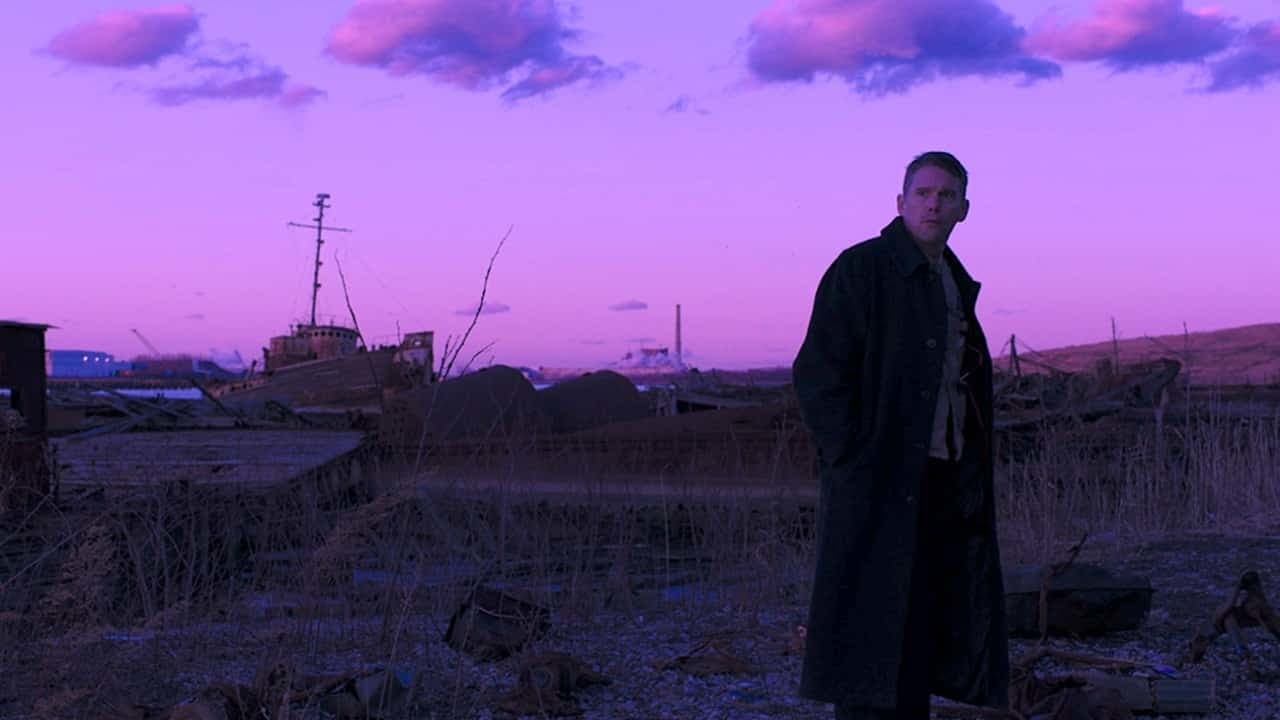
One of cinema’s great ironies is that, for all the talk of representation and making the hidden visible, much of its power comes from withholding instead. Certainly this is true of slow cinema, of that poetic tendency which, in his landmark 1972 treatise, Paul Schrader called “the transcendental style in film.” The eternally self-lacerating Taxi Driver scribe’s brilliant latest, First Reformed, deserves a chapter in the updated edition – and the boxy image of a despairing reverend, mixing whiskey and Pepto Bismal while researching suicide vests on a laptop in a parsonage, should go on the cover. It withholds to the point of perversity, before exploding in swirling rapture.

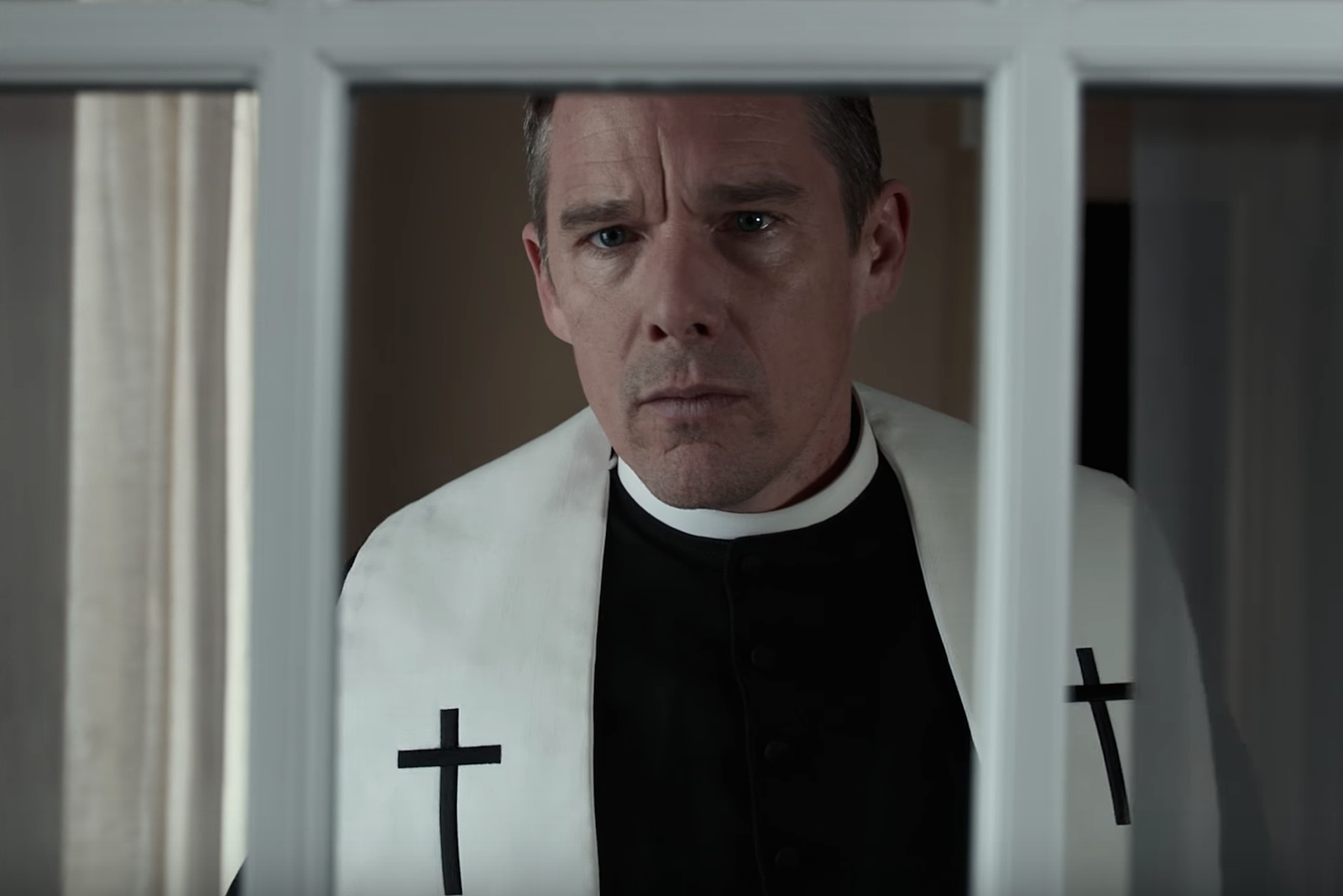
Ethan Hawke plays that man of God, Rev. Toller. A former military chaplain now presiding over a parish so antique it’s a literal museum and giftshop, Hawke’s face is a faded text, struck through with loss, spare as a sketch on a ruined wall. First Reformed is the historic church itself: once a New York way station for the Underground Railroad, it’s a souvenir relic, barely staffed, rarely prayed in, mostly notable for its graveyard and currently broken pipe organ, limping to its 250th anniversary in the shadow of the corporate mega-church that funds its upkeep.

Ethan Hawke in Paul Schrader's First ReformedWe know Toller is a broken man long before we hear about his past. With a nod to Bresson, he has determined to keep a journal, in long-hand, recording his days with brutal honesty for exactly one year, after which it will be destroyed. The Thomas Merton enthusiast has no ambitions to publish or reveal himself to the world; it’s a “project,” his word, though what it’s for remains nebulous. He’s a priest who has trouble praying; the existentialist in him thinks the written word will mark a genuine engagement, “another kind of prayer.”

We are distanced again in First Reformed by the self-epistle – what was on the pages that have been torn out, what do we not get to read? Hawke’s affectless voiceover is no real help; the static Ozu stylizations – tatamis in the vestibule – refuse to editorialize; there’s no score; the 4:3 ratio (which Schrader fought for; his preferred black and white was a no-go) centers everything in obscuring symmetry. We lean in closer.

Amanda Seyfried in Paul Schrader's First ReformedThe listlessness is broken up by the introduction of a pregnant parishioner, Mary (natch), played by Amanda Seyfried. Her husband is recently out of prison for unspecified activist infractions, likely some sort of environmental civil disobedience. Toller agrees to minister to him (the non-religious husband still prefers First Reformed to the resource-heavy Abundant Life, which is more “a business than a church”), and Schrader’s plotting comes into focus, slowly, slowly.
First Reformed makes a few very good decisions here. As much as the tradition Schrader holds dear demands abstraction (“Religion and art are parallel lines which intersect only at infinity, and meet in God,” wrote Gerardus van der Leeuw), his films are very much of the earth. Here, this is taken to its literal conclusion: Mary’s husband knows, and can demonstrate with copious evidence, that we’ve passed the point of no return, climate change-wise. There were moments when we could’ve chosen differently, and we refused. Is this God’s creation? Well, we have destroyed it. How can a baby be born into this world, his baby? How will we look that child in their innocent eyes and tell them, “Yes, we knew, and we did it anyway”? Will God forgive us?

The husband is not long for this world, and he leaves behind a pregnant wife, a conflicted reverend, a cache of papers implicating everyone and everything, and a box of explosives in the garage. “Will God forgive us?” shows up on the whiteboard outside of First Reformed. The “reconsecration” of the church at 250 approaches, a media spectacle underwritten by moneylenders in the temple and local energy magnates. Toller’s physical illness matches the one in his soul, silently dipping bread into whiskey for breakfast in an ironic communion with God (and Bresson). As in the best of slow cinema, the boredom is thrilling. Something is coming, and we’re co-conspirators in a mission we can’t abort.

The other half of Schrader’s dialectic involves Seyfried’s Mary, a force of mystery and transcendence haunting the edges of Toller’s fractured solipsism. One scene involves a kind of magic of the flesh, a merging of carnal and sacred that makes emotional sense even as it shatters the formal austerity, not to mention anything like realism. “If you don’t break the rule you make,” Schrader notes, “how will anyone know there was a rule?” And in its closing moments, First Reformed evokes the film that made him famous … though its ambiguity has less in common with the cynical Scorsese of Taxi Driver than the rapturous Dreyer of Ordet. First Reformed is part of a conversation.

That conversation is out of time, in both senses. But with a head in the clouds and feet on the ground, First Reformed might just be Schrader’s masterpiece.

April 9, 2018 0 comments
0 FacebookTwitterPinterestEmail
The Visitor (1979) Halloween 2018
CommentaryFilm

The cult film apparatus of 1979’s The Visitor

by Lark April 6, 2018
written by Lark

All movies, of course, come to us pre-packaged in some way, sure. But there is packaging, and there is packaging.

1979’s The Visitor is firmly in the second camp, at least for those of us who see it for the first time now, in hi-def, remastered form and given an aura of the cult secret.

It’s hard to know how I would have taken the movie without the critical paratext (a phrase Gerard Genette uses to denote everything that comes with “the text” but is not “the text” itself). The plot cribs from The Exorcist, Rosemary’s Baby, and The Omen, but does not mix them together as much as has them all play simultaneously.

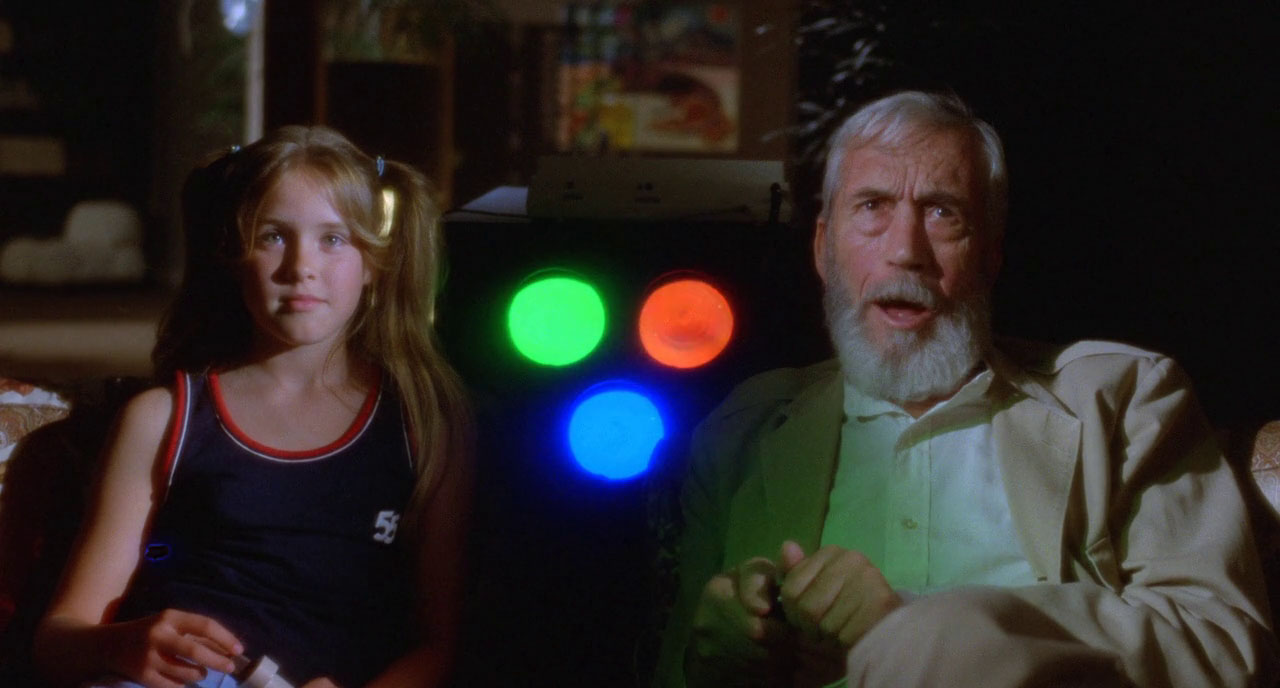
Paige Conner and John Huston in The VisitorThere’s an 8-year-old girl, Katy (Paige Conner), who has loosely-defined developing psychic powers and who is somehow possessed by a demonic force. Her mother, Barbara (Joanne Nail), is being pressured by her boyfriend, who is in league with Satanists, to have another child to further their loosely defined goals.

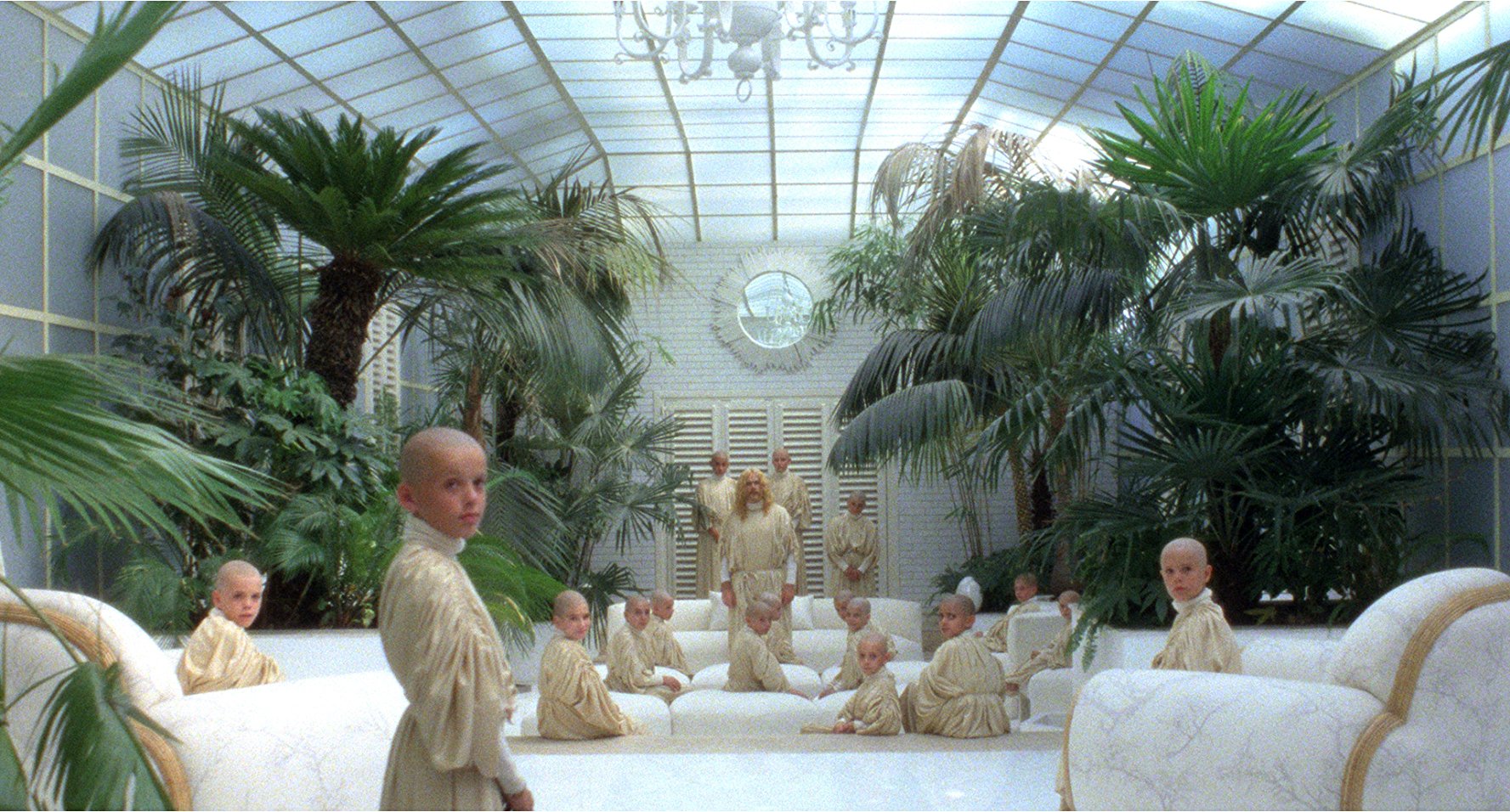
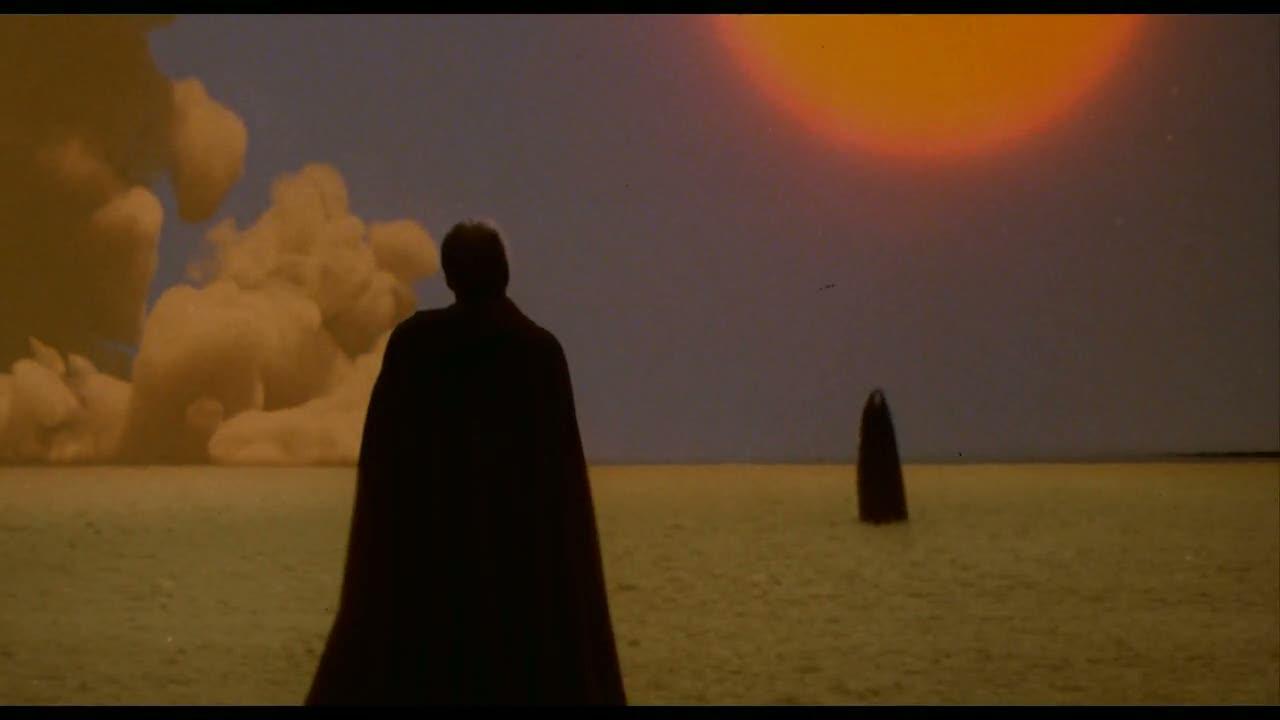
All of this is wrapped in a peculiar sci-fi frame as an Obi Wan-esque figure (played by John Huston, bizarrely) comes to Earth to stop the Satanists, whose god is in fact the evil intergalactic fugitive Zatteen (spelling courtesy of Wikipedia). He is hoping to save Katy’s human form so she can hang out with other bald children in the presence of Yahweh, an extremely cult-leader-looking man who seems to live in a spa.

Bald children in The VisitorThis leaves out a number of subplots that surface for a while and exist mostly to keep the opening and closing credits a little farther apart. Glenn Ford is a detective who seems to be channeling his irritation at being in a bit part directly into his sour and irascible performance, and who dies quickly enough for him to make his tee time. Barbara is paralyzed by a gunshot and ultimately turns to her doctor ex-husband (Sam Peckinpah, again, bizarrely). Shelley Winters somehow manages to make her role as an astrologist maid even more unlikeable than the murderous Satanic child.

But no synopsis, no matter how disjointed, can represent the film’s aimless narrative style. From minute to minute, there is almost some sense of coherence, of narrative drive, but suddenly ten minutes have passed and nothing has happened. I counted three clear climaxes, each of which undid the others. Through all of this, the visual style can only be described as “high-budget softcore porn.”

Abstract still from The VisitorAll of this returns me to the opening question: How would we take this film, unadorned by cult apparatus? How would it have been taken if it hadn’t been so hard to track down for so long, if it were available at every Blockbuster? Would it have a mystique still, or would it just be one more wandering, mediocre horror movie?
That would be a tragedy. The Visitor is a remarkable movie, even though it’s not very good. We should acknowledge the way the paratextual apparatus of the “cult genre film remaster,” just as the paratextual apparatus of the “Criterion Collection remaster,” shape and frame our expectations.

But we should do this not so that we can correct for it, like a warped lens distorting our view. We should instead pay attention so we can choose to apply it more generally, not just when the vicissitudes of the market force it on us. There are a hundred 70s horror movies just as aimless and weird as The Visitor, but that’s no reason to ignore The Visitor – it’s a reason to go out and find them.

April 6, 2018 0 comments
1 FacebookTwitterPinterestEmail
Malcolm McDowell - Boredom is Counterrevolutionary: The 1968 Youth Revolts of If... and Wild In The Streets
CommentaryFilm

Boredom is Counterrevolutionary: The 1968 Youth Revolts of If… and Wild In The Streets

by rick April 4, 2018
written by rick

Amid all its other signifiers, then and now, 1968 was about youth – its dangerous and liberatory possibilities. Two years earlier, Godard had cheekily announced the arrival of “the children of Marx and Coca-Cola,” but ’68 was their decidedly anarchic coming out party, from Nanterres to Columbia University to Mexico City to the Red Square. The youth uprising was one of many, but it was a through line, on the streets and screens.

In one sense, it had been a long time coming before the open repressions of 1968 put a point on it, making the state indistinguishable from its unremittingly adult brutality and perversity. At the same time, newness itself seemed suddenly new. Richard Neupert, in A History of the French New Wave Cinema, writes:

It is startling to recall that the term ‘teenager’ first entered everyday language in 1945, and it was really the 1950s that saw young people identified as a separate, definable age group falling between childhood and adulthood… While sociologists, psychologists, and community leaders debated the potential social dangers of this new lifestyle, its perceived existence and differences helped fuel a widespread fascination with all things young and new.

The Nouvelle Vague is a notoriously tenuous term – encompassing fashion, politics, modes of production and distribution, location photography, cinejournals, and more – and these days seeming, like pornography, more recognized when seen than rigorously defined. Still, youth was front and center – the films were fast, cheap to produce, full of life, vernacular, and sex.

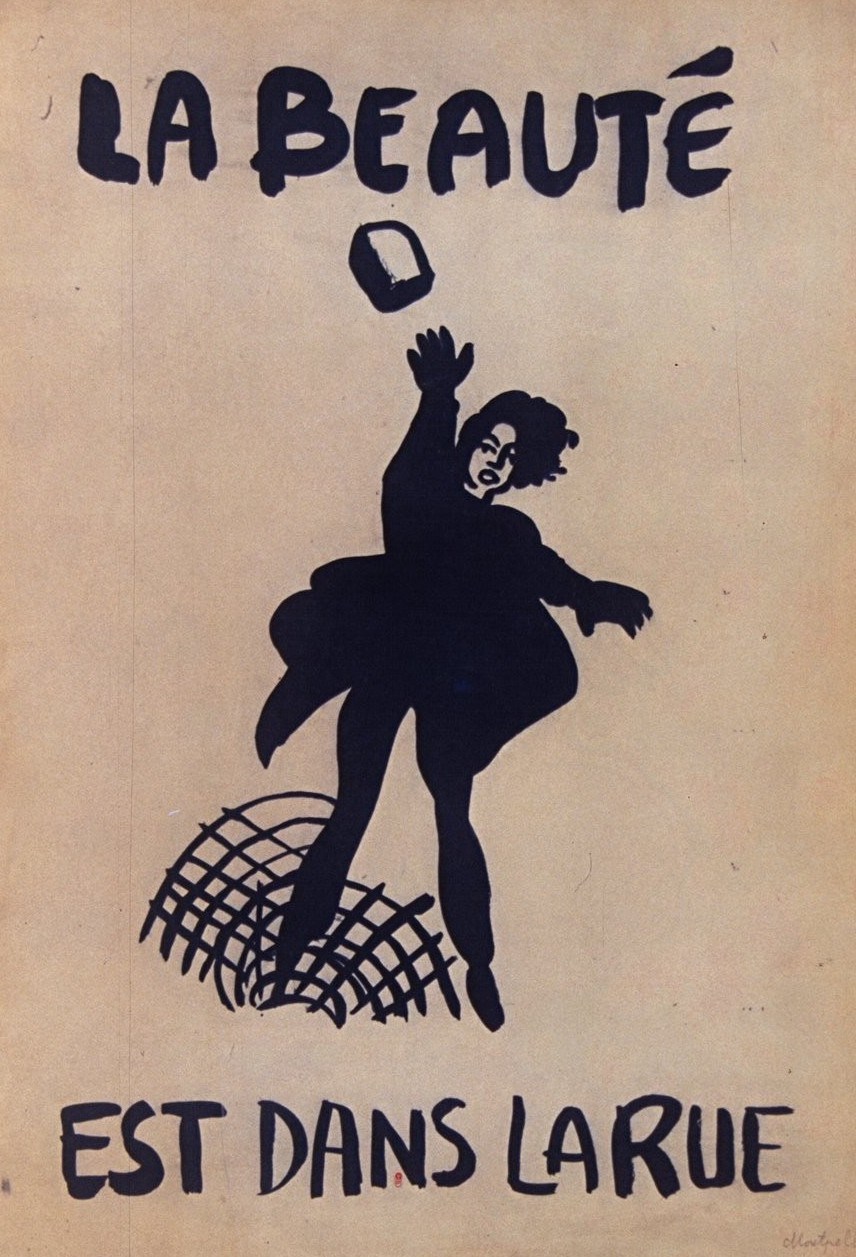
Beauty is in the street - Boredom is Counterrevolutionary: The 1968 Youth Revolts of If... and Wild In The StreetsBoredom is Counterrevolutionary: The 1968 Youth Revolts of If... and Wild In The StreetsBoredom is Counterrevolutionary: The 1968 Youth Revolts of If... and Wild In The StreetsBoredom is Counterrevolutionary: The 1968 Youth Revolts of If... and Wild In The StreetsBut for the youth of ’68, raised on the Bardot of … And God Created Woman and denunciations of the French “tradition of quality,” the New Wavers were already a generation gone; no longer young Turks themselves, Chabrol, Godard, and Truffaut were the fathers and honorary guardians of the revolution, even as they sat on the frontlines.
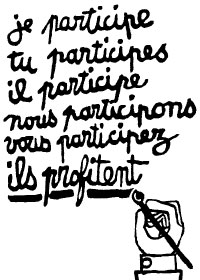
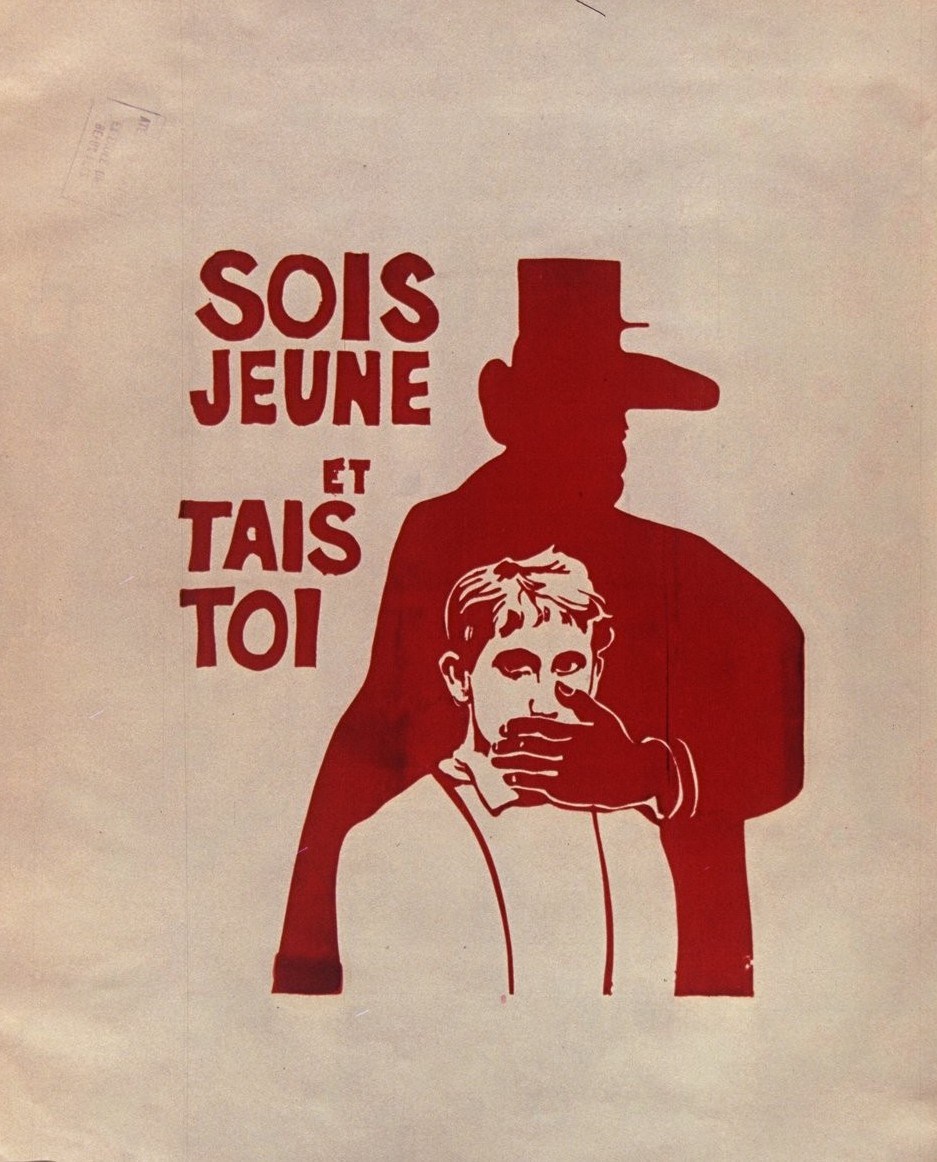
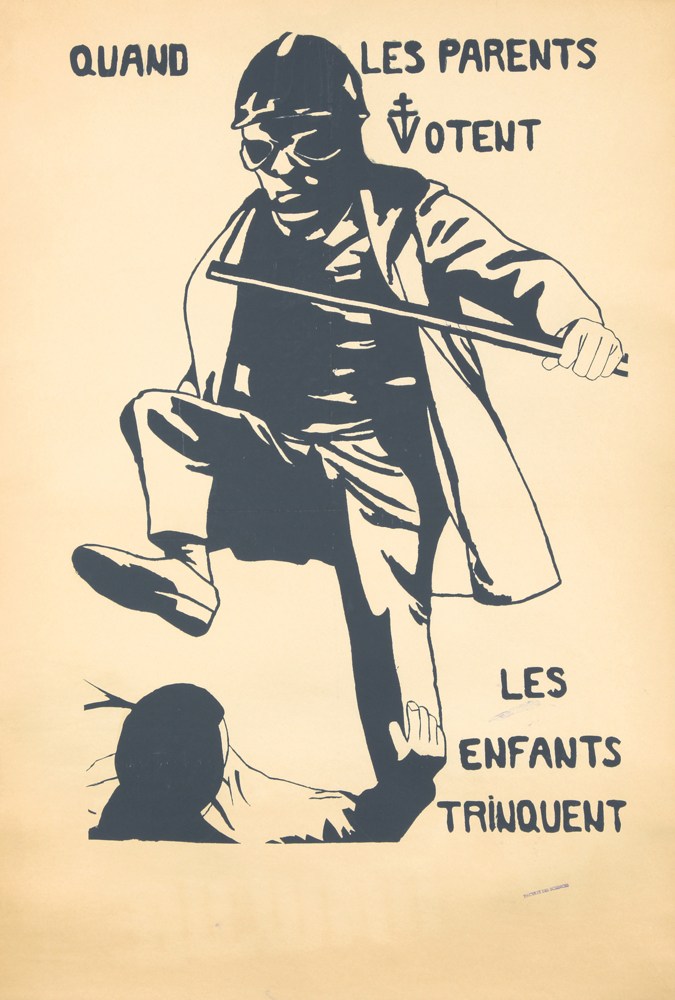
The image of a slightly nerdy Chabrol as interlocutor between protestors and riot cops never fails to amuse, with the kids fighting for “something about Langlois” and the cops bashing heads because they are cops and cops are eternally stupid. The slogans of 1968 – Beauty Is In The Streets; Faster, Comrade, The Old World Is Behind You; Live Without Dead Time; A Single Nonrevolutionary Weekend Is Infinitely More Bloody Than A Month Of Total Revolution – speak of a young man’s game as much as “Never trust anyone over 30” ever did.

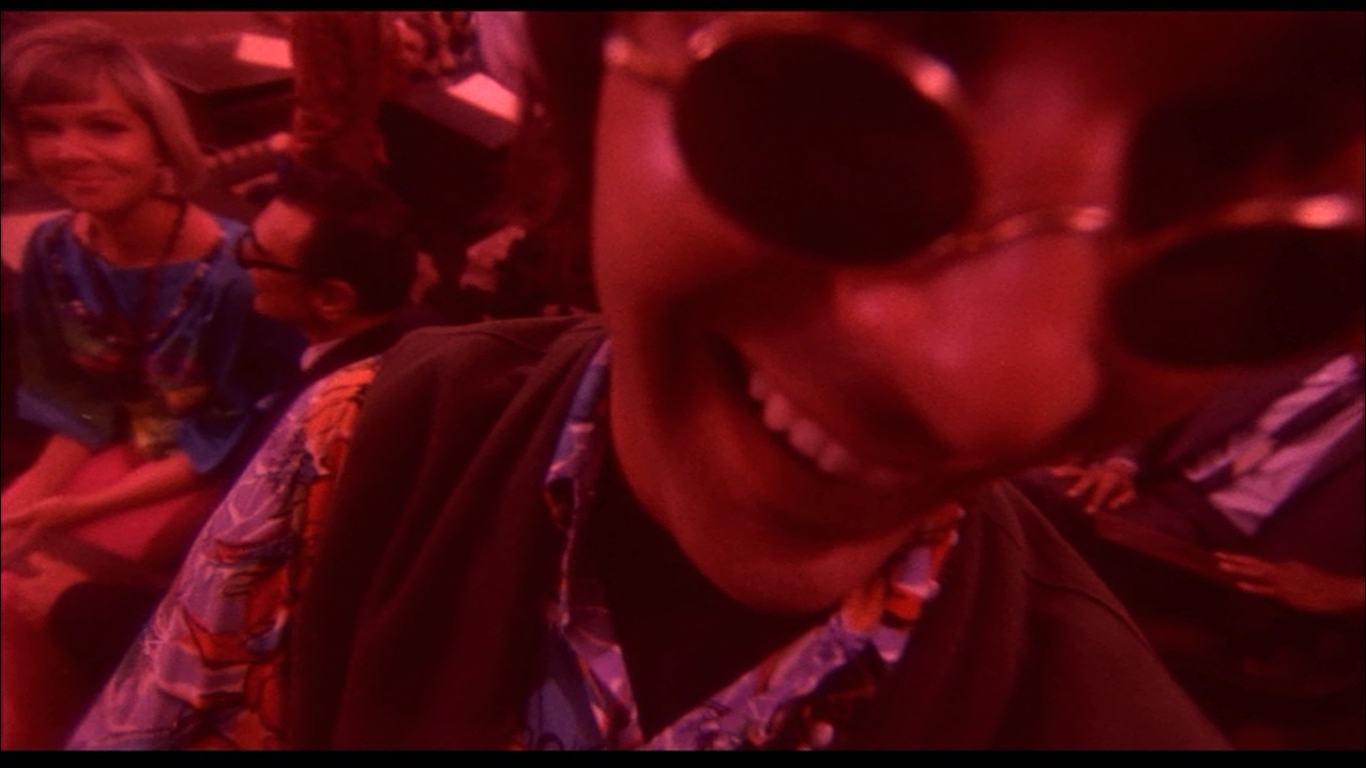
Acid trip - Boredom is Counterrevolutionary: The 1968 Youth Revolts of If... and Wild In The StreetsIn other words, outnumbering adults 5 to 1, the youth of ’68 wanted the world and they wanted it now. It’s perhaps useful to move out of the cobblestone riot streets of Paris to get a perspective on the aesthetic revolutions of that moment. Two films, one American and one from the U.K., can help.
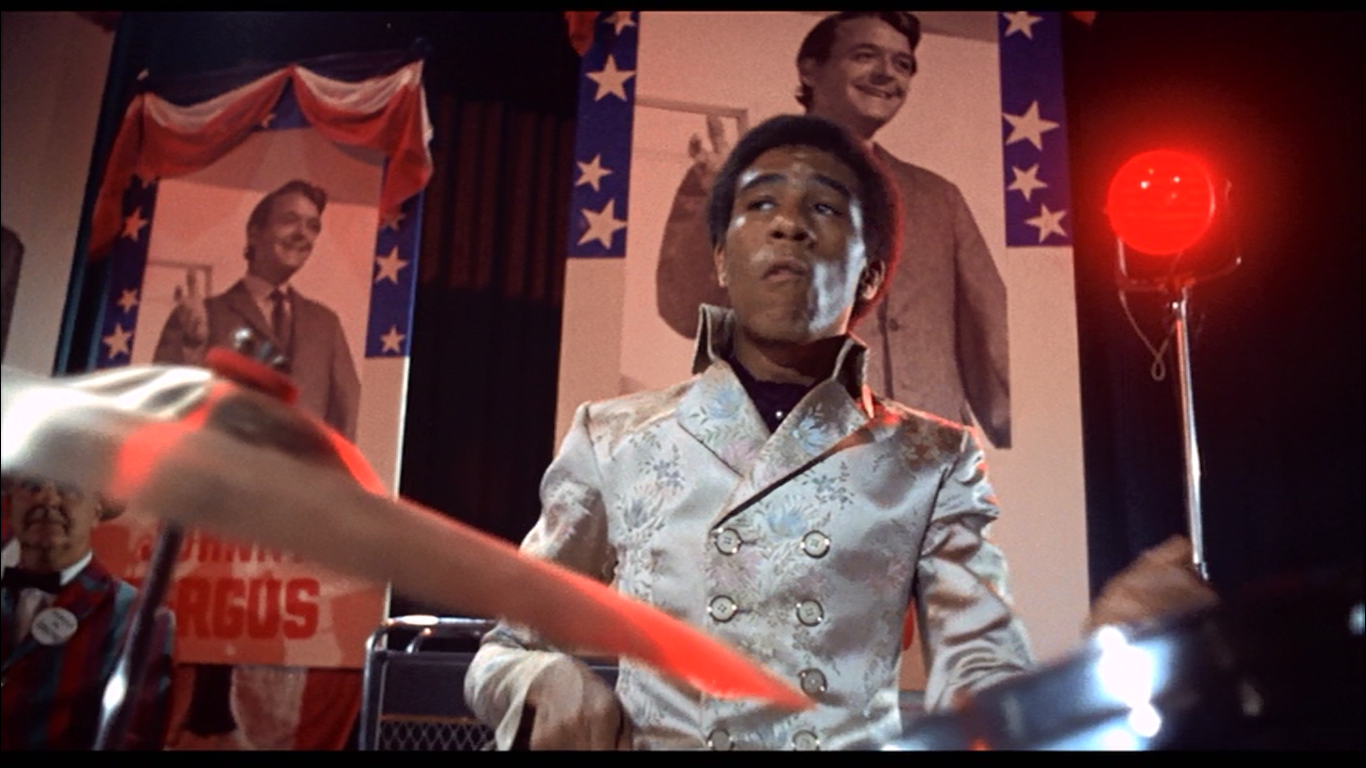
Released in May ’68 proper, Wild In The Streets is the first, and the much sillier. A U.S. drive-in sensation, the 40th top-grossing film of 1968 is the reductio ad adsurdum of never trusting anyone over 30; in its “chilling,” Twilight Zone-aping final moments, it imagines a future where the ceiling for civic participation will be set at 10 years old. It’s an exuberantly cynical text, dressed up in youth culture and dripping with disdain. The kids loved it, as a commenter on Roger Ebert’s bemused review remembers:

In the Summer of 1968, I won tickets to see the movie at the Midtown Theater, Chestnut Street, Philadelphia, PA for the East Coast Premier, sponsored by radio station WFIL-AM. I still have the original ticket. I invited my girlfriend Caryl, we took the train from the suburbs. Besides meeting the Disc Jockeys, they closed off Chestnut Street and had two go-go dancers suspended in giant birdcages, dancing to Rock music. I liked all the spotlights and sounds – a real happening.

Cool.

Richard Pryor - Boredom is Counterrevolutionary: The 1968 Youth Revolts of If... and Wild In The StreetsWild In The Streets is about the meteoric rise of Max Frost, who escapes a childhood of suburban drudgery and Freudian overstatement to become the Lizard King-like frontman of a rock outfit. (They sound like Strawberry Alarm Clock — in fact, the fictional Max Frost and the Troopers’ “Shape of Things to Come,” bemoaning the game-changing police massacre that catalyzes the youth rebellion’s escalation, reached #22 on the non-fictional Billboard charts, like some sort of acid rock Spinal Tap — and Richard Pryor plays the drummer. I never said Wild In The Streets made sense, or 1968 for that matter.)
A politician courting the youth vote (Hal Holbrook, looking lost even before he gets forcibly fed LSD) makes the mistake of enlisting Max’s help; Holbrook’s Vietnam-inflected quest to lower the voting age to 18 is hijacked, with the accelerationist rock star announcing from the stage that it ought to be 14 instead. Les jeunes in the streets of Paris may be comparing reforms to chloroform on the screenprints cascading out of occupied studios and demanding total revolution, but their American counterparts in Wild In The Streets are all about the ballot box.

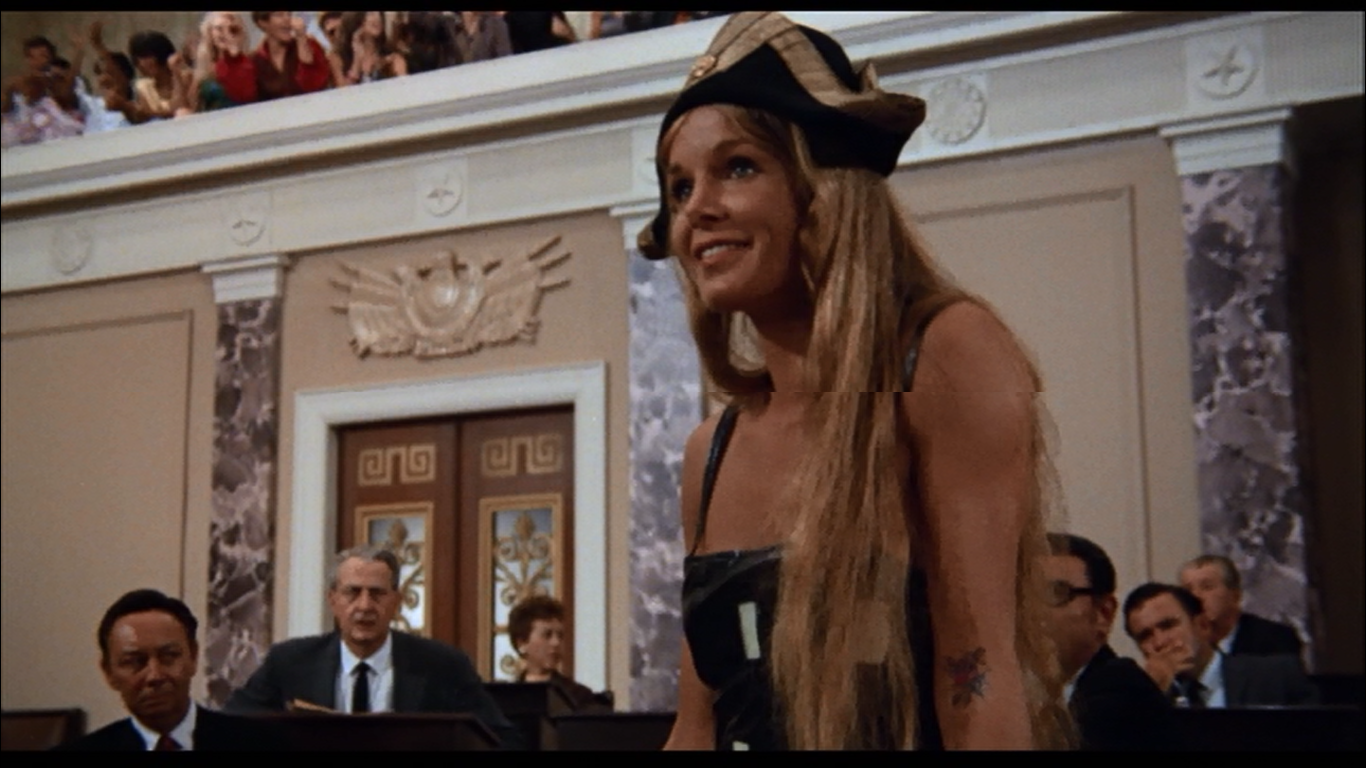
Congress - Boredom is Counterrevolutionary: The 1968 Youth Revolts of If... and Wild In The StreetsFor a while. After getting Holbrook elected, they campaign for one of their own – the film’s most memorable sequence involves their newly elected spokeswoman, with a three-pointed hat and a tambourine, declaring to Congress that “America’s greatest contribution has been to teach the world that getting old is such a drag.” From there, it’s on to the Frost Presidency and the … re-education camps. Wild In The Streets beat Jello Biafra to this particular joke by a decade, though the “hippie fascists” here really only mean to get the olds out of the way. The rivers are spiked with LSD, the camps don’t feature any possibility of exit, and Hawaii, the only state that resisted Frost’s shamanic charms electorally, is effectively drugged into oblivion.
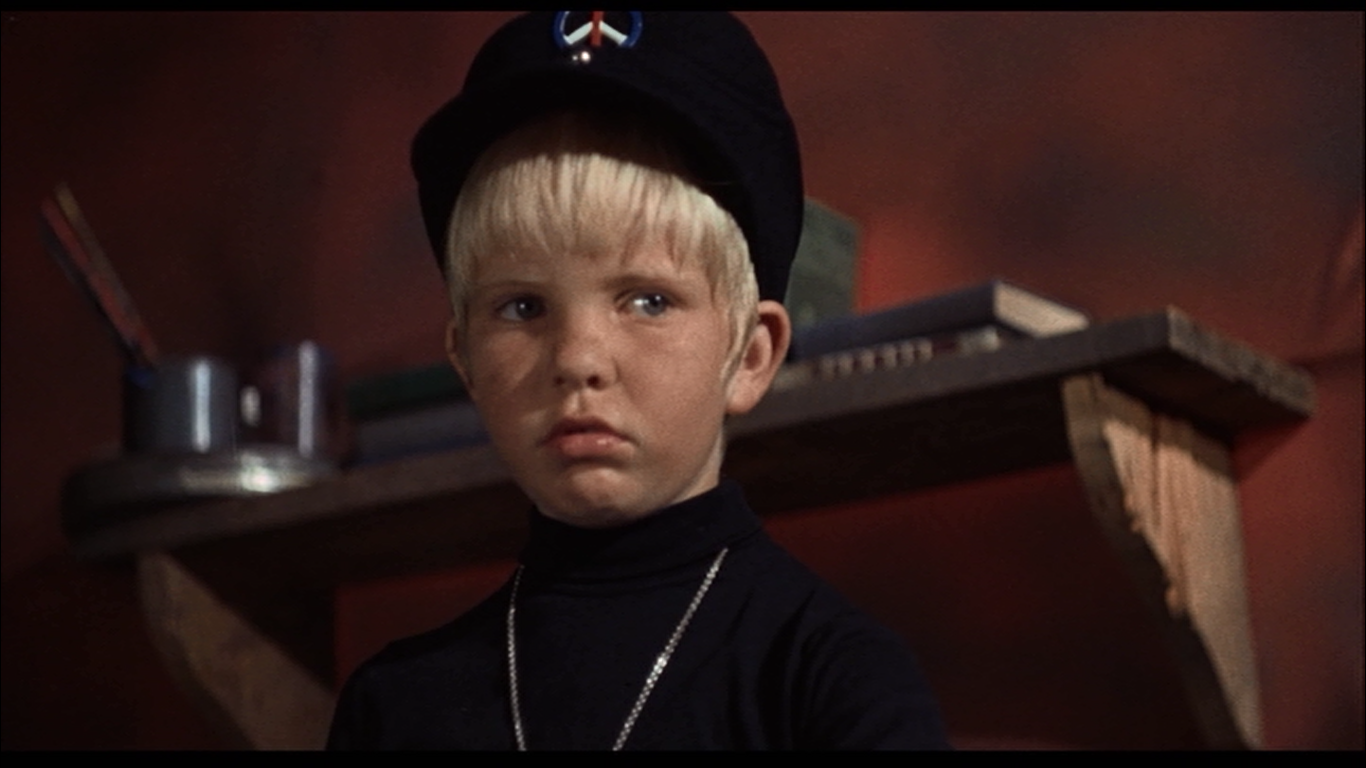
Next generation - Boredom is Counterrevolutionary: The 1968 Youth Revolts of If... and Wild In The StreetsThe rest of the world is only briefly mentioned, in that typically American fashion; we never find out how revolutionaries elsewhere respond to the youth takeover, and the whole freaky endeavor seems a lot more like the following year’s The Stewardesses 3-D than the previous one’s La Chinoise. We do, however, discover a flaw in the system, along with Max; when the newly installed regime leaders scoff at a 9-year-old child questioning their legitimacy, he responds that 24 years old is ancient.
The counter-revolutionary attempt at “but dig this!” satire in Wild In The Streets is blindingly stupid, and must have been met with giggles from whatever stoned audience members were still paying attention by the end even at the drive-in. But its not-quite-square anxiety about the direction all this youth tumult is headed seems real enough. In December 1968, a British director would address it with much more skill and nuance.

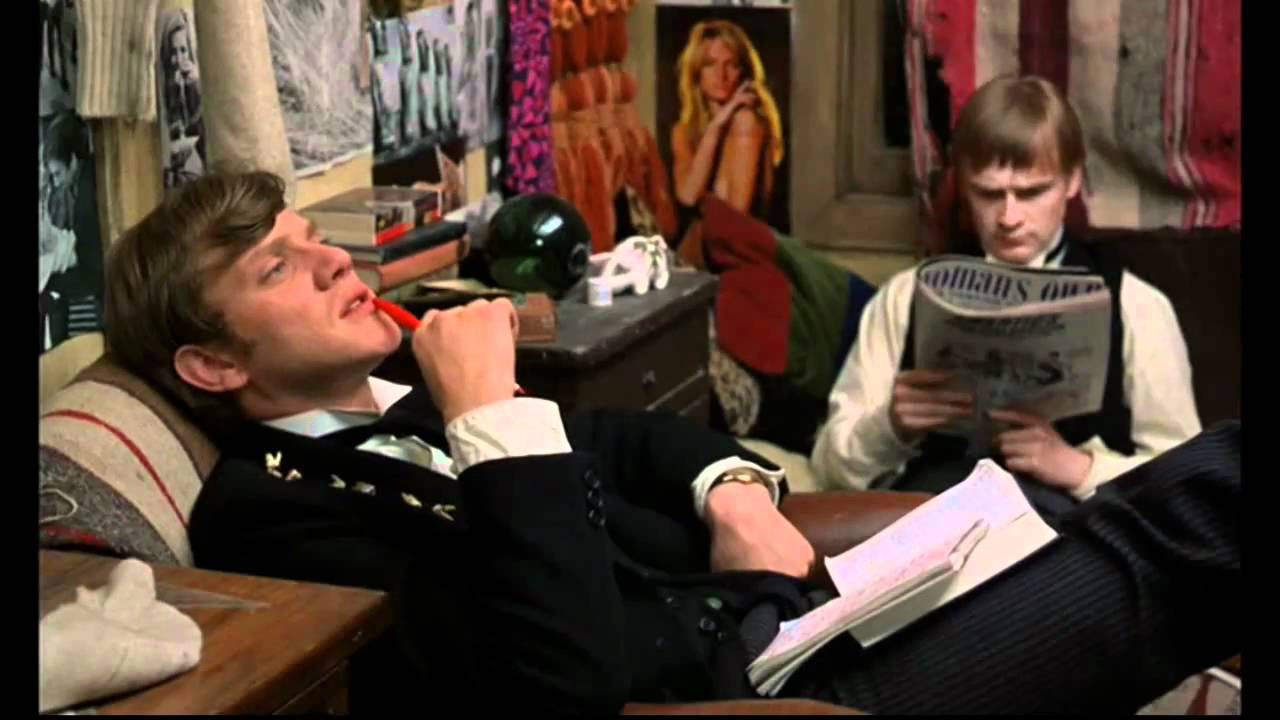
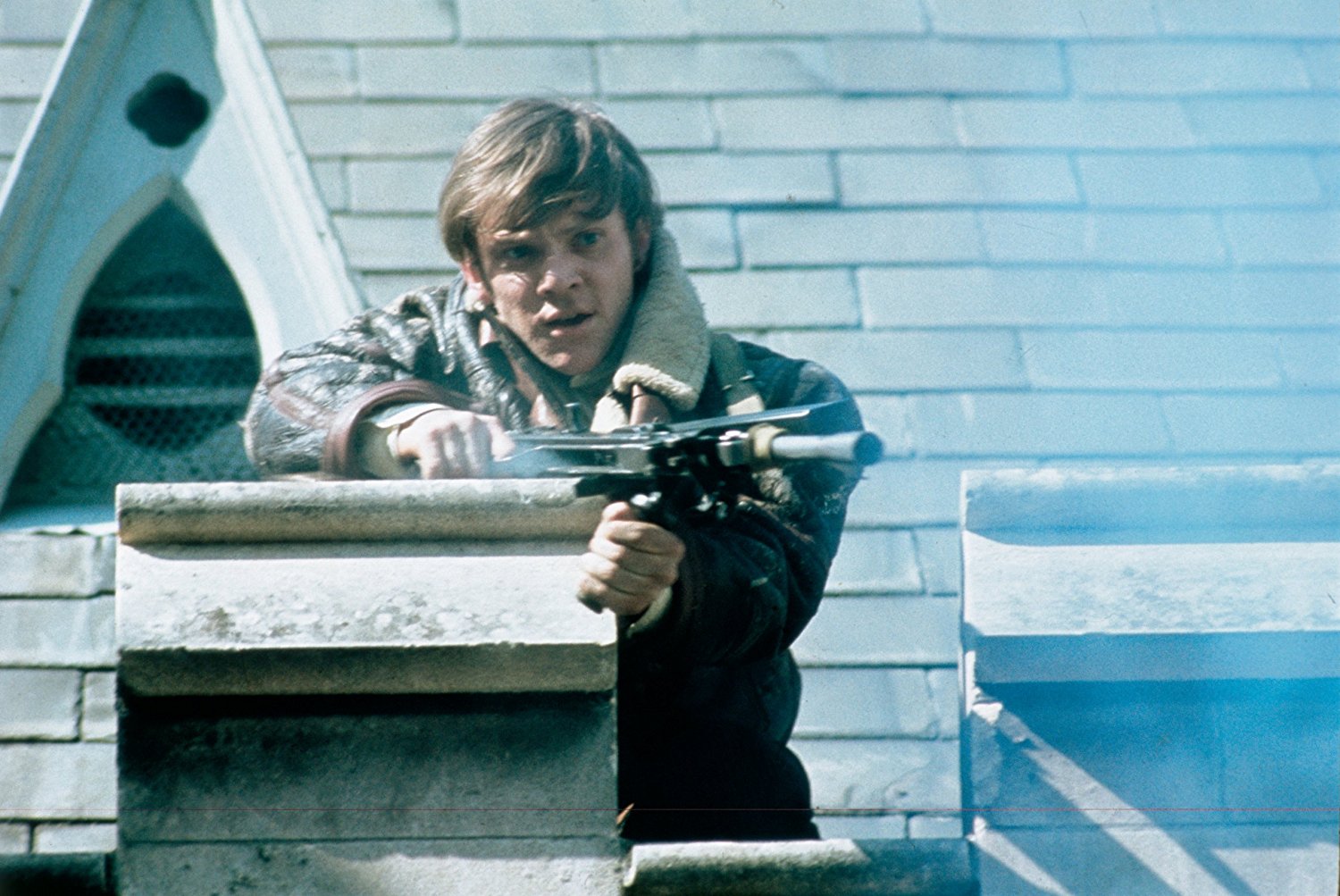
Malcolm McDowell - Boredom is Counterrevolutionary: The 1968 Youth Revolts of If... and Wild In The StreetsWhat’s most striking about watching Lindsay Anderson‘s If… today is how little of it, climactic guerilla gunfight notwithstanding, is overtly political — how conventional, even mannered it often seems. In sentiment, though, it has much more in common with the Situationists’ “If we only have enough time…” then the Kipling poem it shares a title with.

There are pictures of Che on the prep school walls – some things never go out of style – and Malcolm McDowell‘s Mick Travis enjoys aphoristic proclamations like, “Violence and revolution are the only pure acts,” but its real focus is youth, what it’s like to be young, what it looks and feels like. (Even that proclamation has the ring of youth to it, to say nothing of “When do we get to live? That’s what I want to know,” as David Ehrenstein points out.) The radical shifts between color and black and white – amusingly, a technical accommodation Anderson embraced rather than a piece of aesthetic anarchism or bonus nod to Vigo – give If… a feeling of memory or dream.

At the same time, the gorgeous homoeroticism of its second-most famous sequence points to a space of cinematic desire that is political enough on its own terms, even if it’s not exactly a rock through the cop station window (or, in Wild In The Streets‘ image, a homemade bomb tossed in Dad’s new Chrystler). If… is full of youth’s cries of protest, but they’re fractured and isolated, bouncing off the school’s stone walls.

Rooftop insurgent - Boredom is Counterrevolutionary: The 1968 Youth Revolts of If... and Wild In The StreetsPower too is fractured, and that’s where Anderson’s anxieties prove most resonant. The face of authority in If… is less the tyrannical schoolmasters – they seem, for the most part, oblivious and irrelevant – than the Whips that serve them like prison guards.
The hierarchy of the school is much more realistic and frightening than your run-of-the-mill vision of oppression, because it’s the entitled splinter groups of the young quashing their fellows in anti-solidarity. The enemy is among us, and the revolution is going to be complicated.

If… is a great film, Wild In The Streets is not. But they both share a pessimism about the times that connects them, as 1968 films that both stand somewhat apart from the Langlois Affair and its participants and also share a deep distrust of authority, including the structures of revolutionary leadership. There are no drugs or rock and roll, but quite a bit of sex, in Anderson’s vision; there’s hardly any sex and virtually nothing but drugs and rock n’ roll across the pond. And while neither speaks directly to Vietnam, as Godard decided all films of the time ethically must, you can feel its presence all the same. From the perspective of youth revolution commentary, though, the children of Marx and Coca-Cola have turned out to be anxious insurgents.

April 4, 2018 0 comments
0 FacebookTwitterPinterestEmail
Akira Kurosawa's Rashomon
CommentaryFilm

Fear and Knowing in Kurosawa’s Rashomon

by Lark March 29, 2018
written by Lark

How did I first come into contact with the idea of Rashomon? It was definitely a sitcom episode — but which one? Was it the episode of All in the Family that copied it? Or the episode of Everybody Loves Raymond in which Ray and Debra gave different versions of a fight?  Or the episode of The Dick Van Dyke Show? Or the episode of CSI (helpfully titled “Rashomama”)? Or the two different episodes of Frasier?

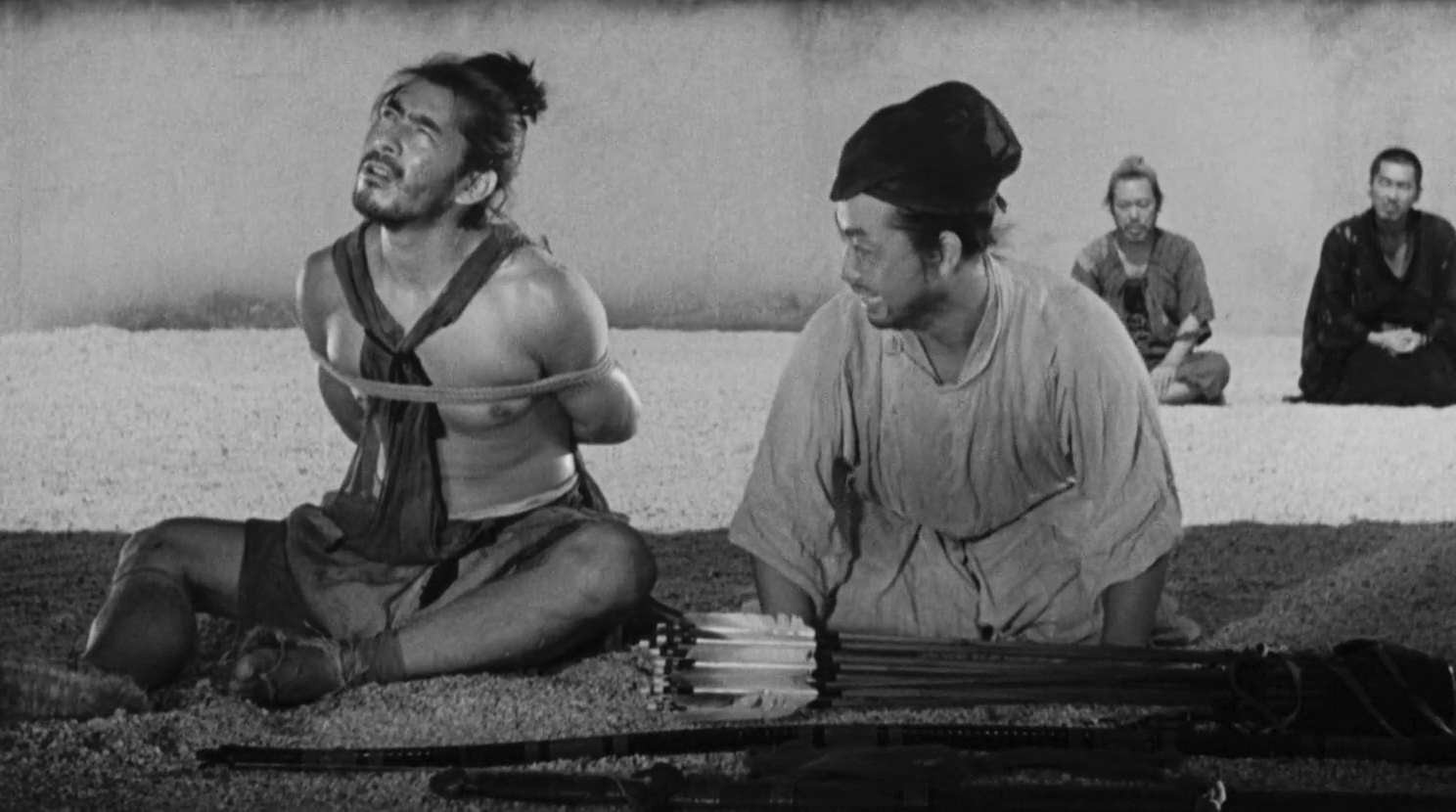
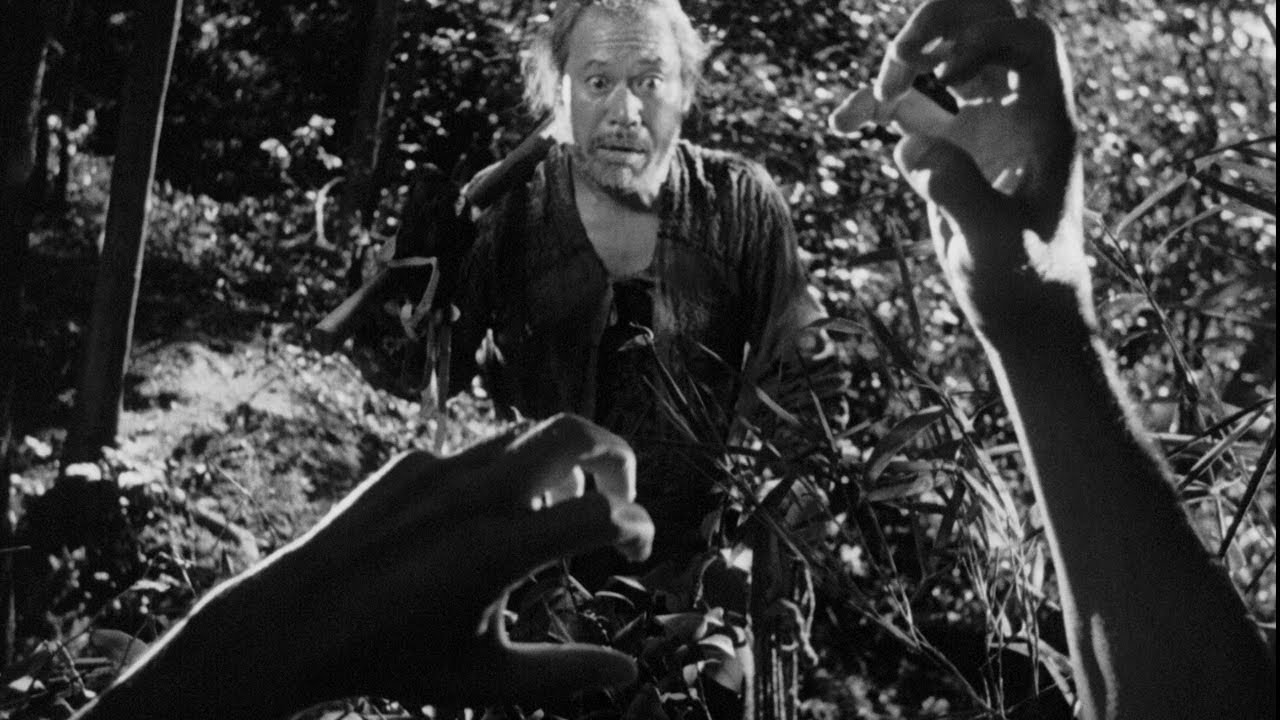
Akira Kurosawa's RashomonRashomon is a movie that comes to the modern media-literate viewer pre-watched. We expect a number of conflicting stories, each of which exonerates the speaker and villainizes everyone else. We — or, at least, I — expect there to be some sort of “neutral” description at the end that shows the real event.

That was what the sitcom version of the movie prepared me for. In the sitcom parody, there is always the voice of reason to cut through the distortion at the end. After Dick and Mary give their versions of their fight on The Dick Van Dyke Show, the goldfish finally gives us the real story. After Archie and Michael both give their versions of an Italian plumber and his black assistant — to Archie, the black assistant is a menacing criminal, and to Michael, he’s a submissive figure under the thumb of his boss; these two positions are treated as equal distortions — Edith comes through to give the real story.

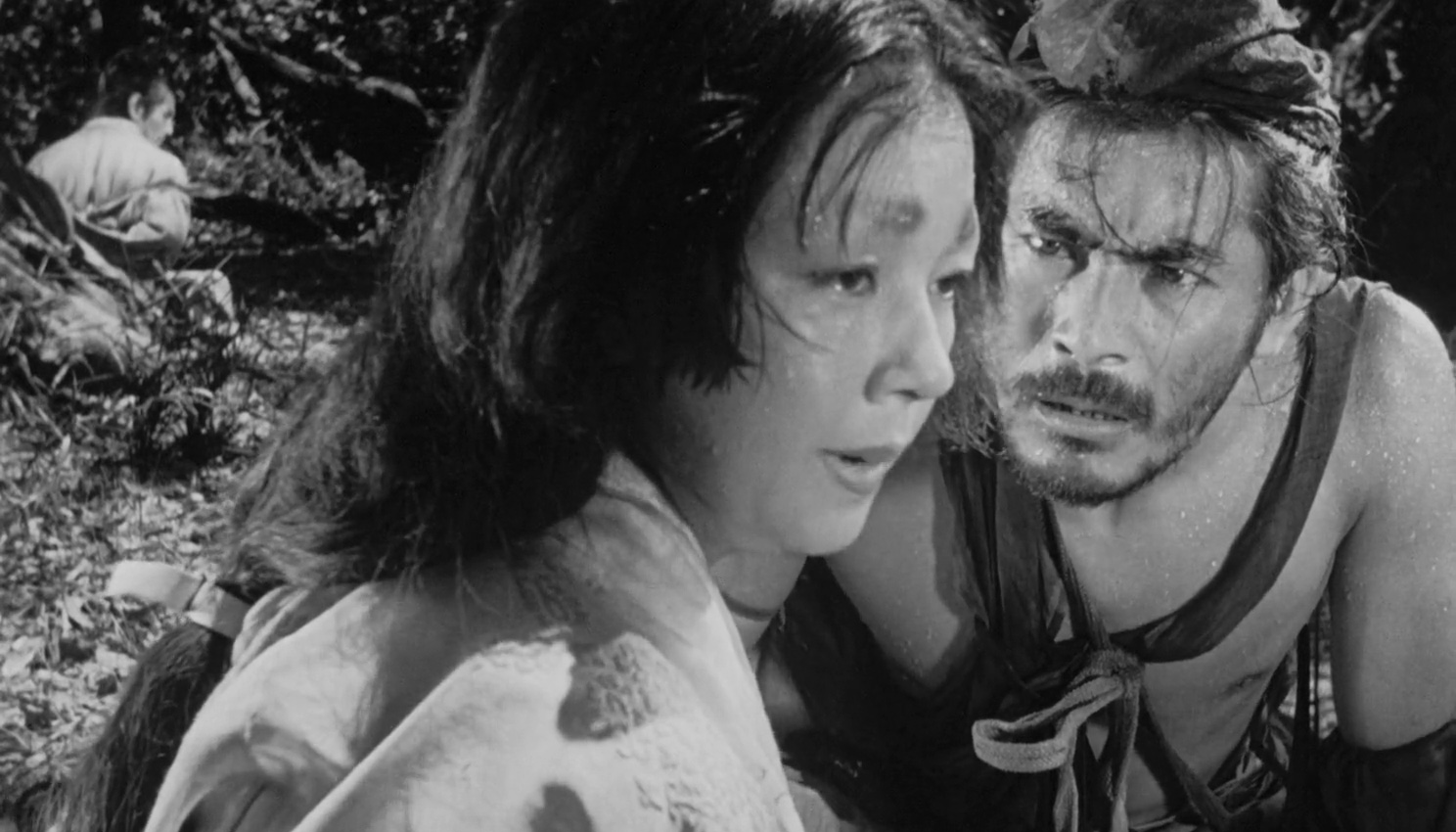
Akira Kurosawa's RashomonSo I was surprised by the reality of Rashomon, which is as much as you can usually ask from a six-decade-old film. I knew, in general, that the film revolved around authorities hearing the conflicting testimony of three suspects in a murder case: a bandit, who attacked the samurai and raped his fiancée; the woman, who was travelling with her samurai fiance; and the murdered samurai, who gives his testimony through a medium. These testimonies are given through the frame of two men, a priest and a woodcutter, who were present at the hearing and describe the events to a third man while waiting for a rainstorm to pass.

“It is enough to make me lose my faith in the human soul,” the priest tells the stranger as he begins his story. It’s easy to assume, if you are led by the countless parodies, that the priest is haunted by the narcissism and selfishness of humanity: that each person only sees the tragedy through their own interests. In reality, the film presents something completely different.

The three suspects do not lie to exonerate themselves; in fact, each entirely takes the blame for the murder. In each story, they and only they murdered the samurai (or committed suicide, in the samurai’s testimony). Moreover, there seems to be no reason for them to lie about what happened.

Akira Kurosawa's RashomonThis changes the entire tone of the work. What we are dealing with is far more than just the evil that people do. We are dealing with the impossibility of collective knowledge at all, of even comprehending what biases there are for which we need to correct. This is the meaning of the priest’s crisis as the film opens: the soul is not even a Protestant source of evil, but is simply unknowable and baffling.

There is, ultimately, a partial form of resolution. The woodcutter, it turns out, was a secret witness to the murder, and gives a fourth version. He is found to have left something out, that he stole a valuable dagger. Finally, he redeems himself by rescuing a baby left in the building in which the men are hiding. The priest regains his “hope in the human soul,” and the film can end on a humane note.

One could point out that this final act of charity is not depicted on screen, and that we only get his promise that he is planning on raising the child as his own. But it is more interesting, I think, to point out that it is only by finally getting a clear example of selfishness (the woodcutter stealing the dagger, and, in response, the stranger stealing from the crying baby) that the priest can regain his hope for the human soul (through a clear act of charity in response to evil).

In that sense, Rashomon is more a film about the fear, not of a universe filled with malevolent selfishness, but of a universe in which desires are not clearly organized and understood. That is what the film seems to fear more than selfishness: a lack of knowledge, a lack of clarity of desire.

And so, by returning to the film, we return to confront the fear beneath the fear. We believe we fear selfishness, but do we, perhaps, simply fear the unknowable reality of desire itself?

March 29, 2018 0 comments
0 FacebookTwitterPinterestEmail
henri langlois phantom cinematheque
CommentaryFilmReviews

Troublemakers and Henri Langlois: Phantom of the Cinematheque

by rick March 27, 2018
written by rick

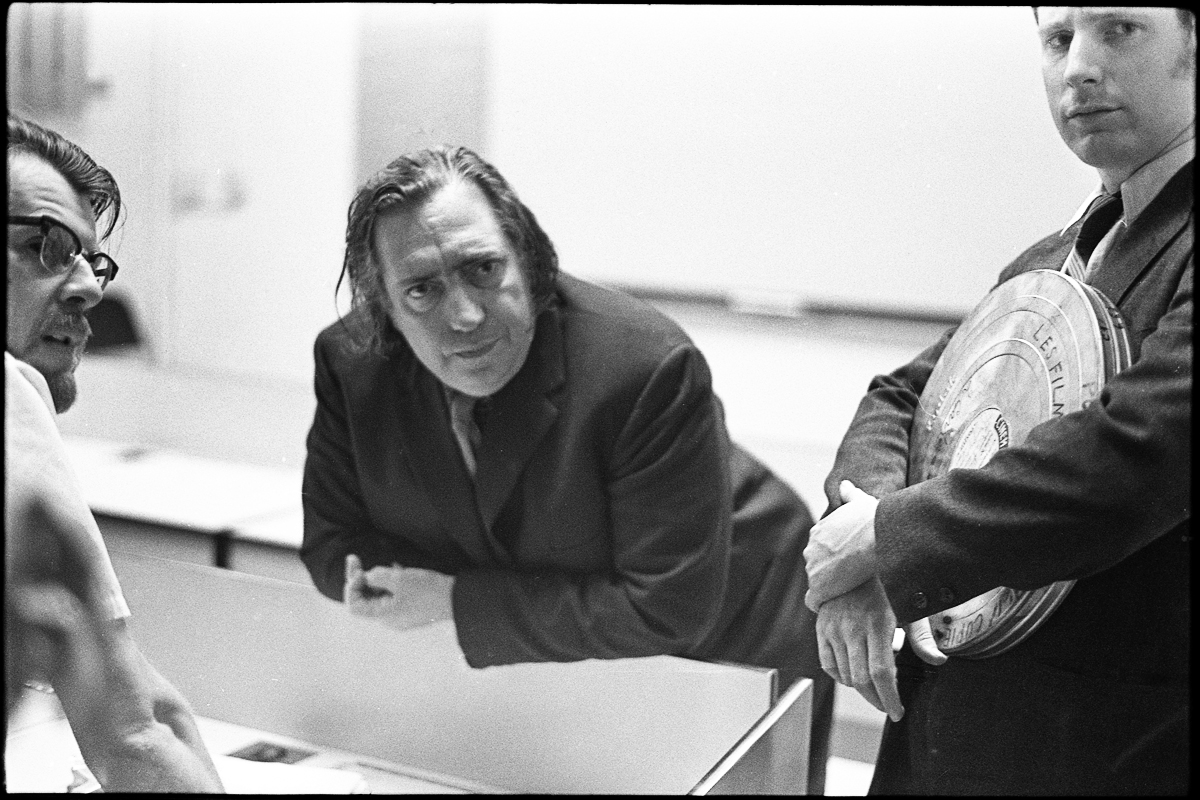
With the 50th anniversary of May ’68 – and the famed “events” thereof – approaching, it was a good time to come across the vital documentary Henri Langlois: Phantom of the Cinematheque at my local library. Jacques Richard‘s seven-years-in-the-making account of the father of film preservation only briefly touches on those events, and has its eyes too fixed to the screen to contextualize them rigorously in the larger social upheaval of that year, but it’s scope feels right all the same. Like the museum he created, Langlois’ story is the story of cinema, the battles for its relevance, how it illuminates and how it catches fire.

With copious footage both recent and archival – and help from those Langlois nurtured and celebrated and battled with – Richard fleshes out the mythic. Phantom of the Cinemateque is a love letter from and to cinephiles, with that particular French flair for a grandiosity that can jump from endearing to insufferable in an instant. But if anyone has a claim to the grandiose in film history, it’s Henri Langlois.

Nosferatu still in Henri Langlois: Phantom of the CinemathequeAfter founding the Cinémathèque Française in 1936 with Georges Franju, Jean Mitry, and a paltry 10 films, it quickly became the social center of every film nut in Paris, the cinephiles awaiting the coining of the term. They were only 4 decades removed from the debut of the Lumière’s L’Arrivée d’un train en gare de La Ciotat; it was the year of Modern Times, appropriately enough. A whole host of famous names appear in Richard’s account, describing this heady milieu – the difficulty in even seeing films, the revelation of silent film, the magic of being in the small crowd not only taking the art seriously but burning like nitrate to see them all, everything, immediately, now. Langlois was their spokesperson, benefactor, funds-raiser and funds-spender, programmer, lecturer, patron saint of an establishment that showed Nosferatu on one floor and Sunrise on the other, with Diary of a Lost Girl screening for a dozen people in the stairwell.

In the war years, the Cinémathèque lived on, in the imagination of Langlois and, when necessary, in secret locations around Vichy France, illicit screenings in apartment flats and empty buildings as necessary. Langlois saved The Blue Angel and The Great Dictator from the Germans, to posterity’s insufficiently grateful benefit. He lost out on others – his regret about passing on a sale of the Theda Bara-starring Salomé is palpable (at the time, he shrugged at the star, the studio, what he presumed to be the useless spectacle), and it’s now lost forever. One of the doc’s many virtues is driving home the random notion of early preservation efforts; the merits of many films were determined by the naked eye, squinting at celluloid, deciding whether or not it deserved to live, or by reputation, usually third, fourth, fifth-hand. The Salomé  experience taught Langlois that his own instincts, however enthusiastic, shouldn’t be trusted; masterpiece or forgettable garbage, they all had to be saved. Irrelevant footage might contain vital clues, like a detective investigating our lineage. Pornography, Claude Chabrol points out, can tell us about furniture. A work that seems minor might be the key to everything. It doesn’t matter. They must be preserved, all of them.

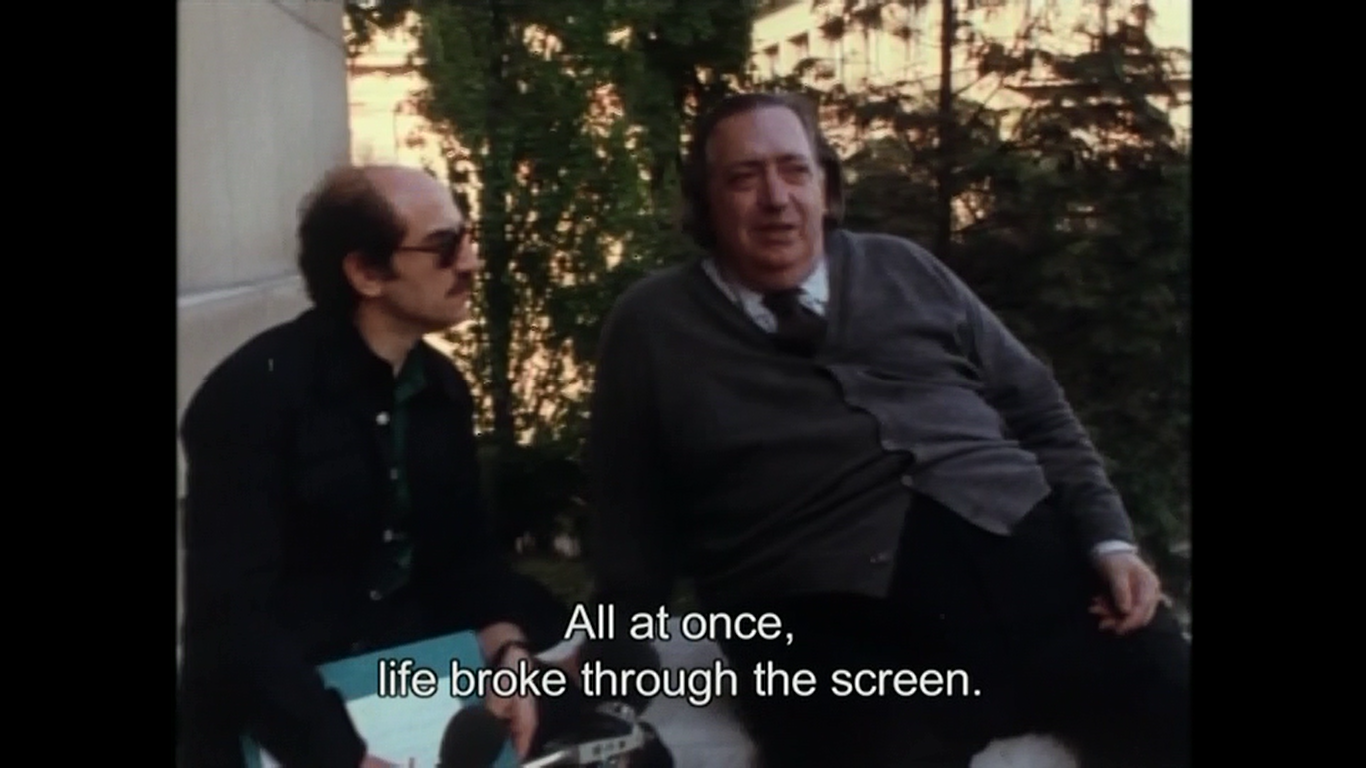
All at once life broke through the screen Henri Langlois: Phantom of the CinemathequeIs it too much to say that the Cinémathèque’s post-war screenings created the New Wave? New Wavers themselves certainly thought so. The doc points out that Langlois’ obsessive programming made authorial stamps across a diffuse body of work so obvious that Truffaut couldn’t help but arrive at the notion of the auteur – Langlois was practicing the theory before the theory could ground his practice. When ’68 did arrive, and the allies of Malraux pushed him out in favor of a more managerial, bourgeois professionalism, it wasn’t received as an inevitable development in a fundamentally conservative state of affairs so much as a statist attack on cinema itself. It was personal and philosophical, an attempt by the forces of order to clamp down on anarchic poeticism by going after its most visible, most ardent proponent. It was a slap in the face, and a warning shot. To the barricades!
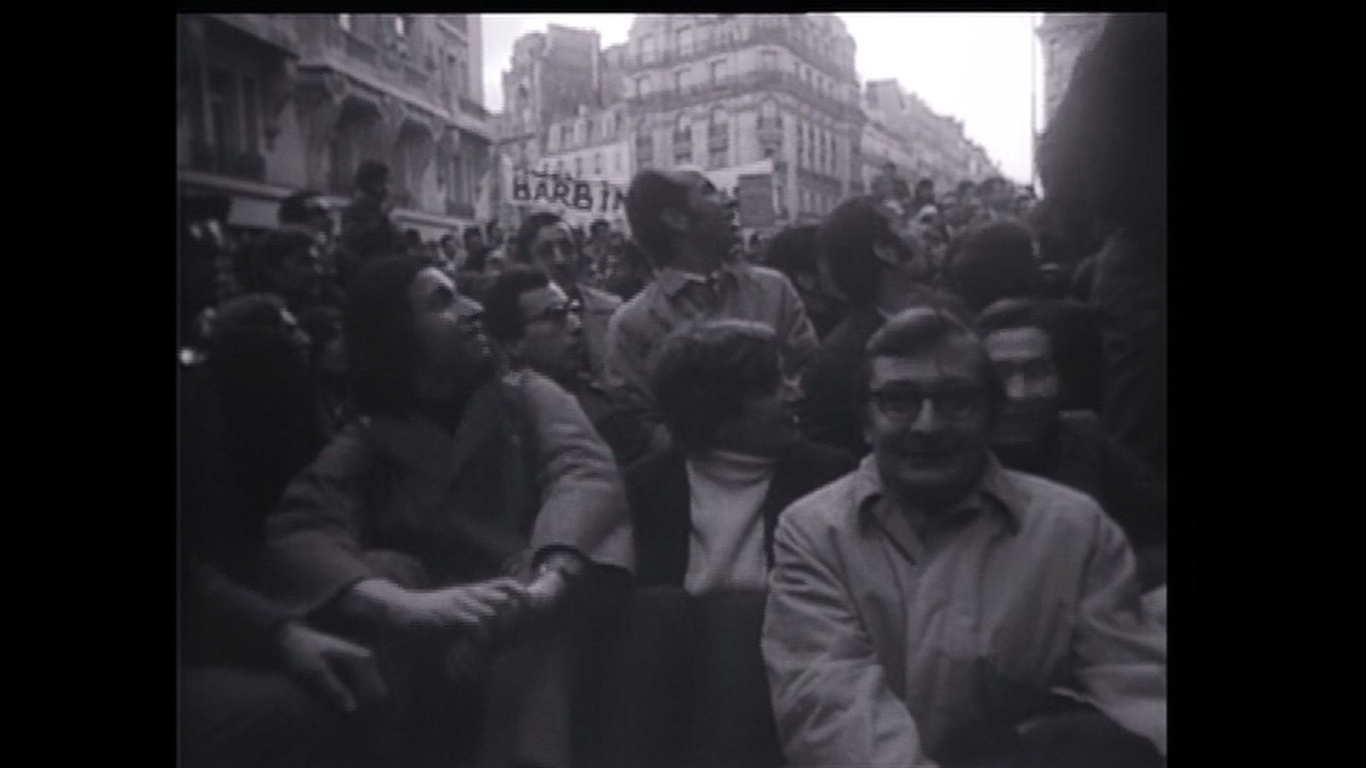
Imagine being so mad for cinema. But then we are talking about people so possessed by a passion for film preservation and presentation that it eclipsed any reasonable notion of self-preservation, people who had risked lives in fleet dealings with occupying Nazis, handing over relatively minor footage in place of the films the enemy deemed dangerous and demanded be destroyed. Imagine spending every last dime on films you had no way of knowing were any good, except that they were no good lost, and then spending the dime you found to get them shown. (A wonderful story finds Langlois selling his return ticket from New York to buy a rare film, figuring he’ll plead poverty later to the embassy and hopefully they’ll repatriate him.)

Claude Chabrol and others in '68 in Henri Langlois: Phantom of the CinemathequeImagine the ouster of a cinema director, archivist, and programmer leading to buildings seized by the people in protest, imagine the riot police being called, imagine throngs of film-lovers armed with sticks and prepared for physical confrontation in defense of art. Of art!
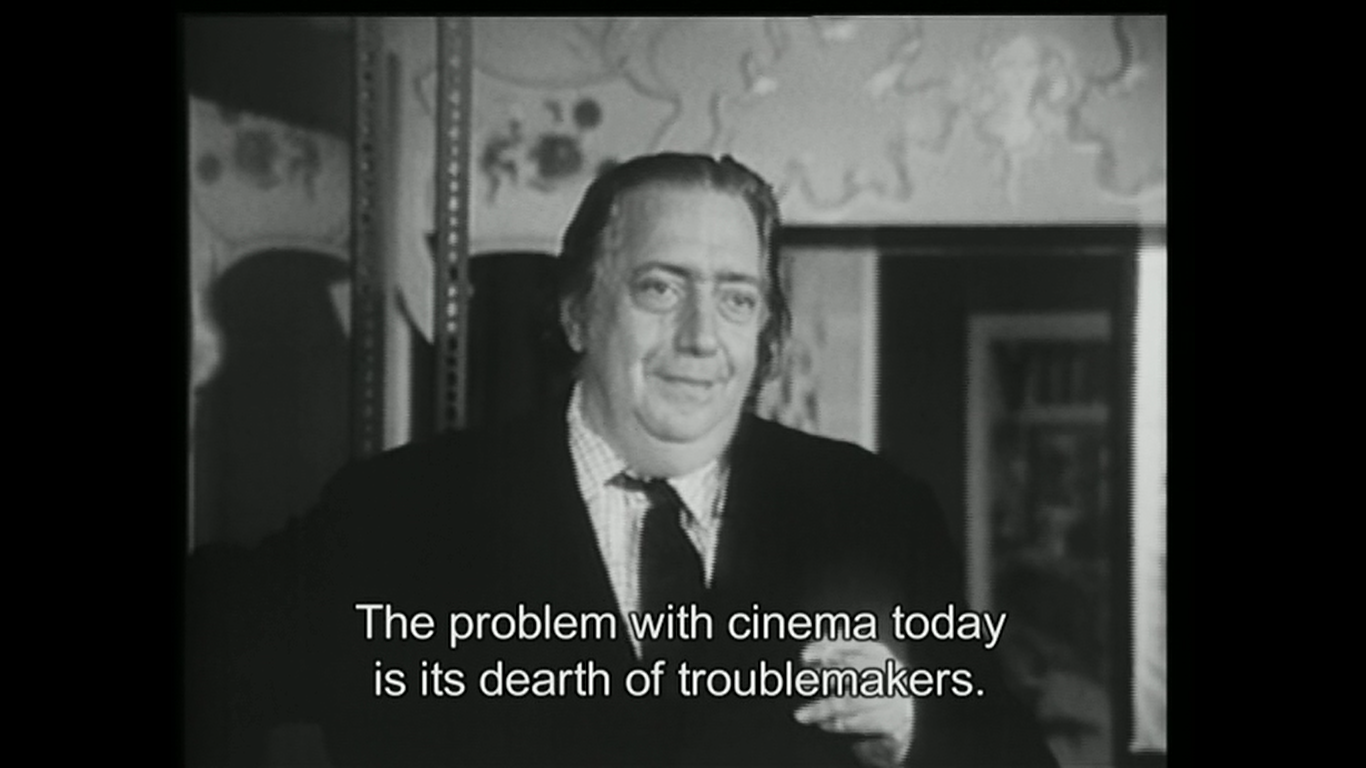
Of course, those confrontations outside the Cinémathèque were more complicated, arriving amid the events of 1968 and their precursors, only briefly intersecting with Langlois (and one from which he was largely publicly absent). Director Romain Goupil reflects on the moment when, “probably on orders from Cohn-Bendit,” they took back the building, in the name of Cinema but equally in the name of Fuck The Police:

Godard got clubbed. That was all the proof we needed – we were 15 or 16 – that the state was a terrifying force capable of clubbing the best among us, because they’d made Far From Vietnam and were participants in a whole series of demonstrations. And then, the police lashed out over a sad and dubious matter I didn’t understand one bit. Something about Langlois. Basically, they were right. Simply because the cops were wrong. Systematically wrong about everything, no matter what.

Plus ça change. Still, can we ever love films like this, love the very idea of film like this, its fierce defenders and outlaw voices? Nostalgia’s always old hat, and deadly boring, though the story of Langlois is nothing if not a tribute to its generative possibilities. What’s more, the notion that our best years are behind us is a hallmark of cinephilia in particular – Langlois was already doing it himself decades before his death, looking back to the Russian audiences he argued had been fed so much bad filmic food that their aesthetic taste buds had gone numb by the time Ivan The Terrible arrived … in 1944. (When he was finally given a university class, in Montreal, to teach, it was titled The Future of Cinema. Langlois screened Chaplin.)

So we too look at a CGI landscape cluttered with monster trucks and monsters that turn into trucks and cookie-cutter genre offerings, everything horrifically available, flat. Our misnamed auteurs flee to television, and so we debate the auteurist possibilities of television. Box office receipts reflect social isolation, the screens get smaller and smaller, the social firmament is removed and the entire relation is tenuous. Who will climb barricades for Jessica Jones, fight pitched street battles with the police in defense of Kevin Feige’s obligatory visions and the latest tentpole space opera? What would that even mean? The idealism of cinephilia has been eclipsed by the toxic entitlement and tribal alienations of fandom, internet riots that may as well hinge on dish-soap preferences and whether Netflix belongs at Cannes. Le cinema est mort, vive le cinema.

Troublemakers and Henri Langlois: Phantom of the CinemathequeIt’s silly. Of course, it’s silly. That horrific availability also means wonderfully expanded viewing opportunities, a democratized audience, a democratized universe of voices (or as much aesthetic democracy as capital opts to permit). In one interview, Langlois celebrates the development of newer, cheaper cameras – “we have writers because everyone can write,” he notes cheerfully. It’s not difficult to imagine his possible excitement at the iPhone releases of a Sean Baker or a Soderbergh, the proliferation across platforms, the broadening of our ability to capture, invent, remix, and preserve.
More than anything, it means trouble, thank god. Troublemaking and troublemakers amid all the stasis. And even in dark moments when nothing new seems possible, some rabble-rouser is lurking, watching, waiting, remembering, and pushing forward. That’s part of cinema’s story, too.

March 27, 2018 0 comments
0 FacebookTwitterPinterestEmail
Strangers Prey At Night
FilmReviews

Synthesizers and Slasher Catharsis in The Strangers: Prey At Night

by Lark March 21, 2018
written by Lark

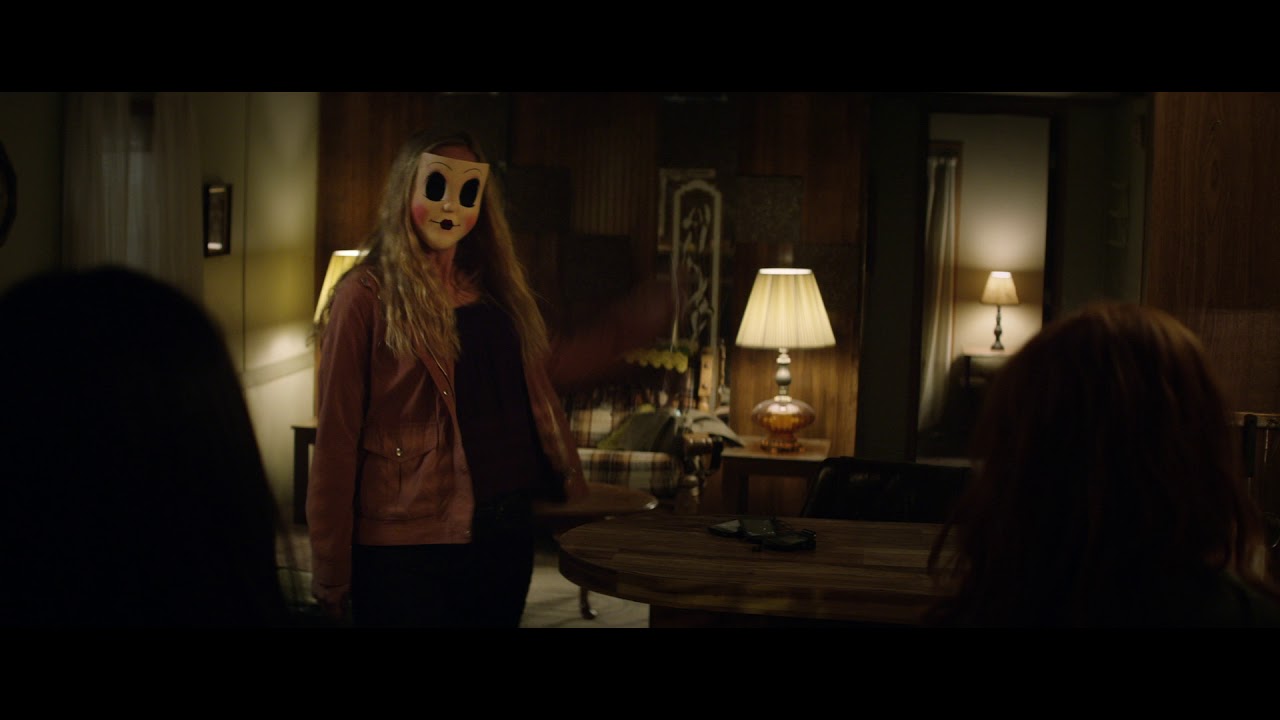
The Strangers: Prey At Night isn’t quite the 80s movie the music and trailers suggest, and it’s not quite the 70s movie that the logo other trailers suggest. (It’s too bad about the colon; The Strangers Prey At Night could legitimately be the title of a forgotten original-generation slasher.)

Strangers Prey At Night masked in carThis isn’t really a Carpenter homage like It Follows. The titular strangers have picked up an inexplicable obsession with 70s/80s pop music in between films, but the soundtrack doesn’t feature the heavy synths we associate with the era; silent for long periods, when the soundtrack does rouse itself, it’s made up of shrieking strings and other standard fare.

I only caught one Carpenter homage, and it’s a very telling one: a few shots late in the film copied from Christine. Christine is a fascinating movie, one that serves as a horror-based inversion of Back to the Future. Where Marty McFly uses a car to return to the 50s and re-integrate his awkward nerd father into the social fabric, Christine is about a car that returns from the 50s to remove an awkward nerd from the social fabric.

Bailee Madison in Strangers Prey At NightPrey At Night is as haunted by the 80s as Christine is haunted by the 50s, and expresses it in the same way: diagetic music and cars. The doomed family of PAN is on a road trip to the new boarding school of troubled teen Kinsey (Bailee Madison), who we know is a troubled teen because she smokes and wears a Ramones shirt.

The arrival of the murdering strangers is really an extension of the familial drama, not an escape from it. Their unexplained obsession — particularly the “father”’s — with the 80s pop music that blasts out of their massive car as they track their victims down cements them as spectral projections of the family dynamics.

It takes a long while to pick up — you can arrive about 70 minutes in and not miss much — but, by the end, PAN becomes a deeply cathartic movie about parents and families that doesn’t need to state anything too openly. Hopefully it will lead us to actually try to appreciate the dark side of our 80s obsession, rather than mine it for synthesizer cues.

March 21, 2018 0 comments
0 FacebookTwitterPinterestEmail
Cast of Be Cool
CommentaryFilm

Fan Service: Get Shorty and Be Cool

by rick March 20, 2018
written by rick

Welcome to Fan Service, a new, typically sporadic (#onbrand) feature in which I feed the hungry beasts / wonderful humans of Patreon by focusing on a subject of their choice. (As with most things, this is borrowed from Nathan Rabin, though in fairness, for all his accomplishments, I’m not sure he can technically claim to have invented “taking requests.”) We start off with a request from Patreon subscriber David “No, Not That David Simon” Simon, who asked that some of our attention be briefly directed at Elmore Leonard adaptations; specifically, the very fun, snappy Get Shorty, which he enjoys, and its significantly less fun, strikingly snap-less Be Cool, which he does not.

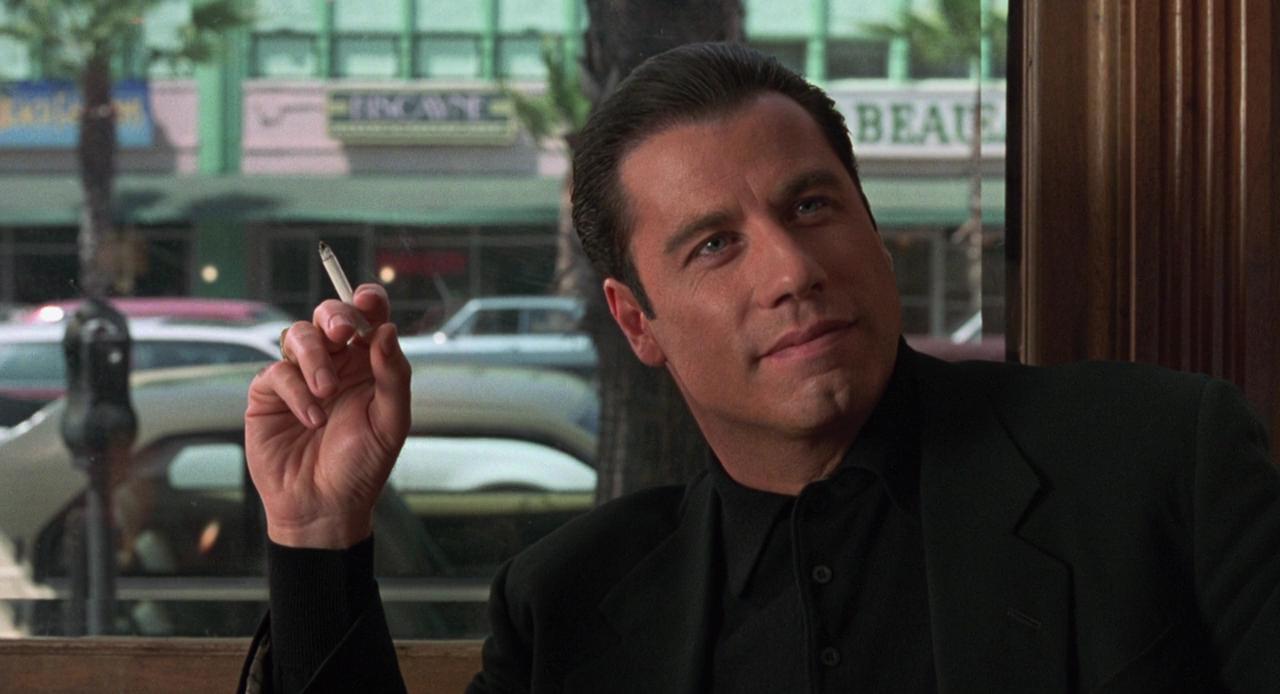
John Travolta in Get ShortyAs David “No, Not That David Simon” Simon pointed out to me, these are effectively the same movie, or more specifically that Be Cool is like the simultaneously gaunt and over-stuffed shadow of its predecessor, hitting all the same beats except more stupider, like a toddler listening attentively to a song and then trying to bang it out himself on a plastic xylophone while John Travolta nods arhythmically, in a doomed attempt to seem more human and less Travoltish. It doesn’t work, is what I’m saying.
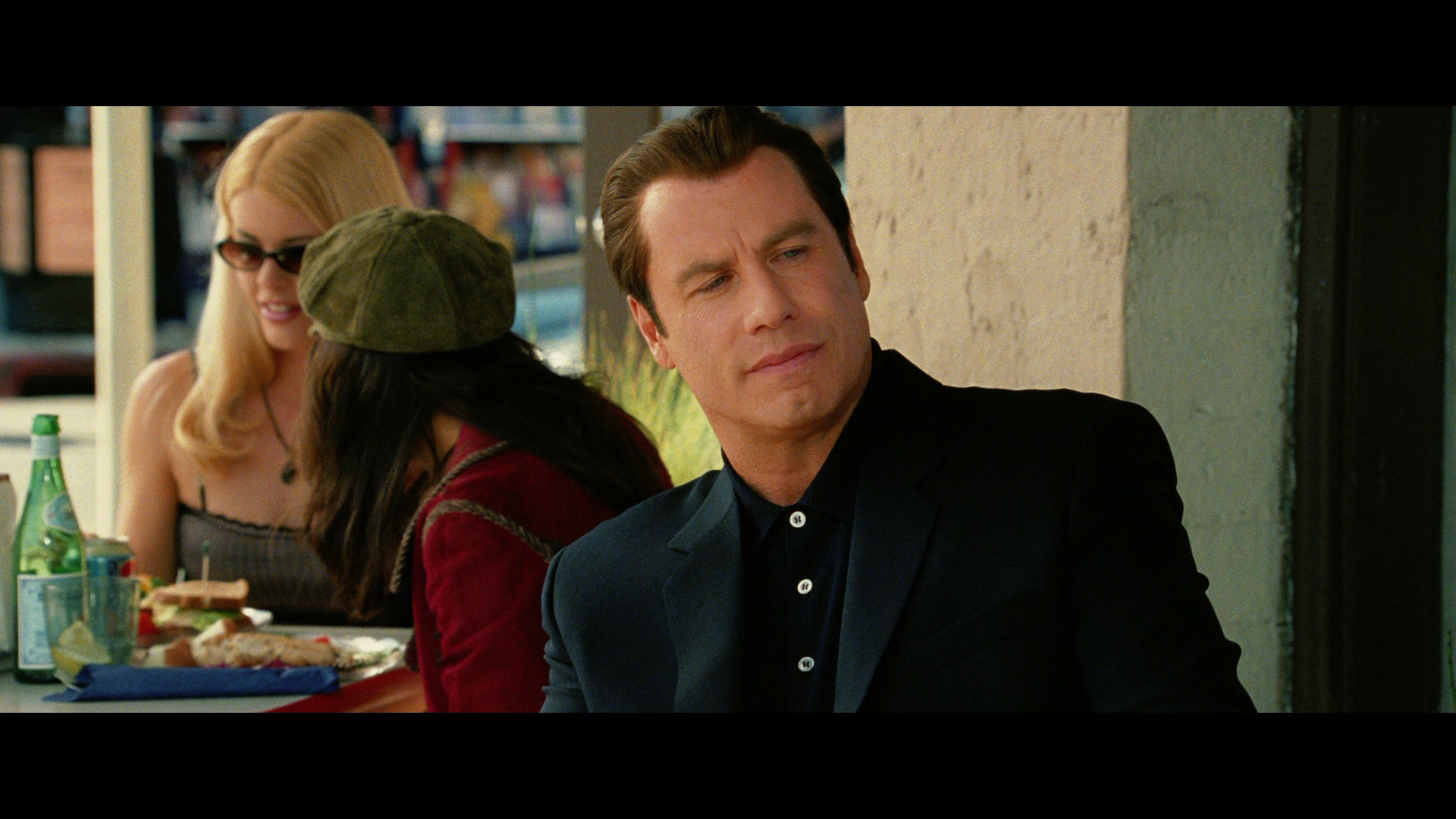
It’s not really the fault of John Travolta (or that hypothetical xylophone-playing toddler’s, for that matter). Get Shorty appeared in 1995, a year after Pulp Fiction, when Leonard’s meta-gangster riffery, not to mention a new-lease-on-professional-life Travolta, probably seemed of the moment and actually, well, cool. It’s good-natured and zips along. It boasts the solid competence of director Barry Sonnenfeld and writer Scott Frank, who translates Leonard’s MacGuffin-filled hipster-noir with some flair and panache.

John Travolta in Be CoolBe Cool was decidedly less fortunate. (Who, by the way, spent the previous 10 years hoping to check in on Travolta’s irritatingly-named Chili Palmer?) For one thing, it replaces Sonnenfeld with F. Gary Gray, not exactly the king of the light touch, and Frank, who wrote Out of Sight, with Peter Steinfeld, who wrote Analyze That.
None of that sounds good, and it’s not. But the problems with Be Cool just cascade down from these already low elevations. For starters, Be Cool opens with Travolta and James Woods observing a billboard on the side of the road for an upcoming film, and cracking wise about how sequels never live up to the first one WHICH SHUT UP JESUS. The only thing worse than movies that think it’s funny that they are movies is singers in bands who sing about being singers in bands. It is not, has never been, and will never be clever. And the only thing worse than either of those two things is James Woods, so Be Cool has really dealt itself a terrible hand before it even gets underway. (On the plus side, James Woods immediately dies, which is how every film with James Woods except Videodrome and Contact should play.)

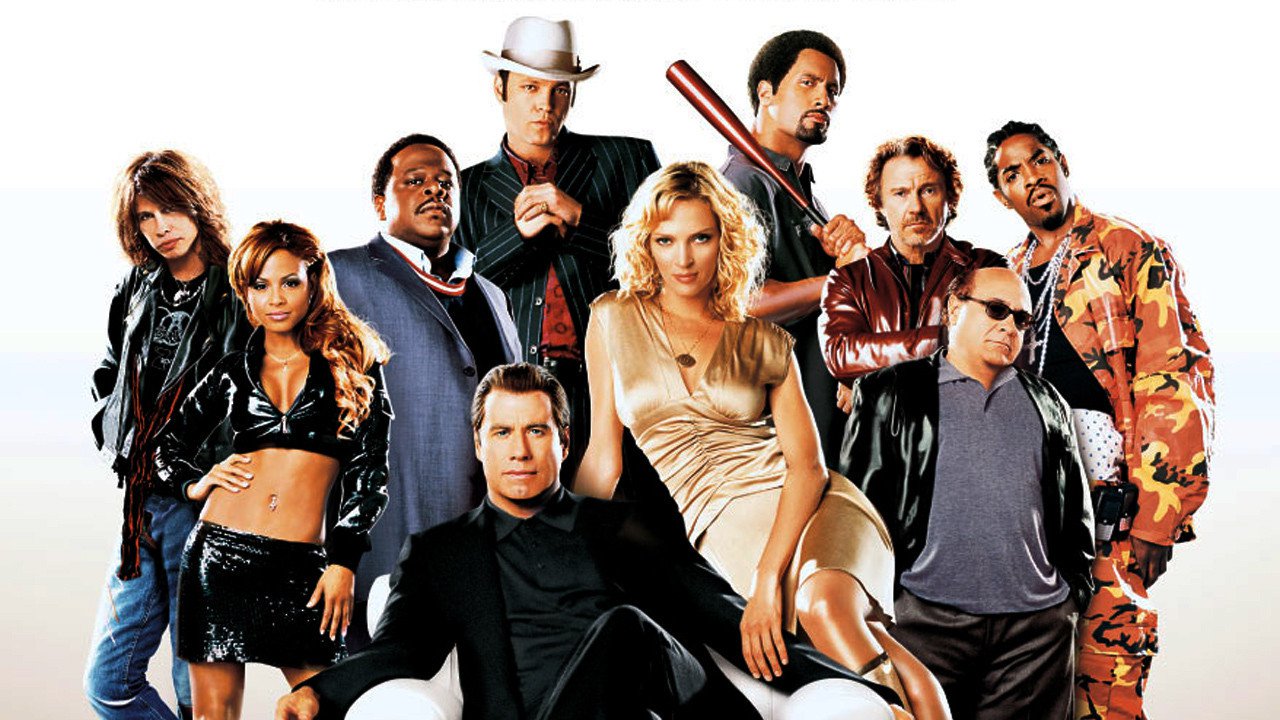
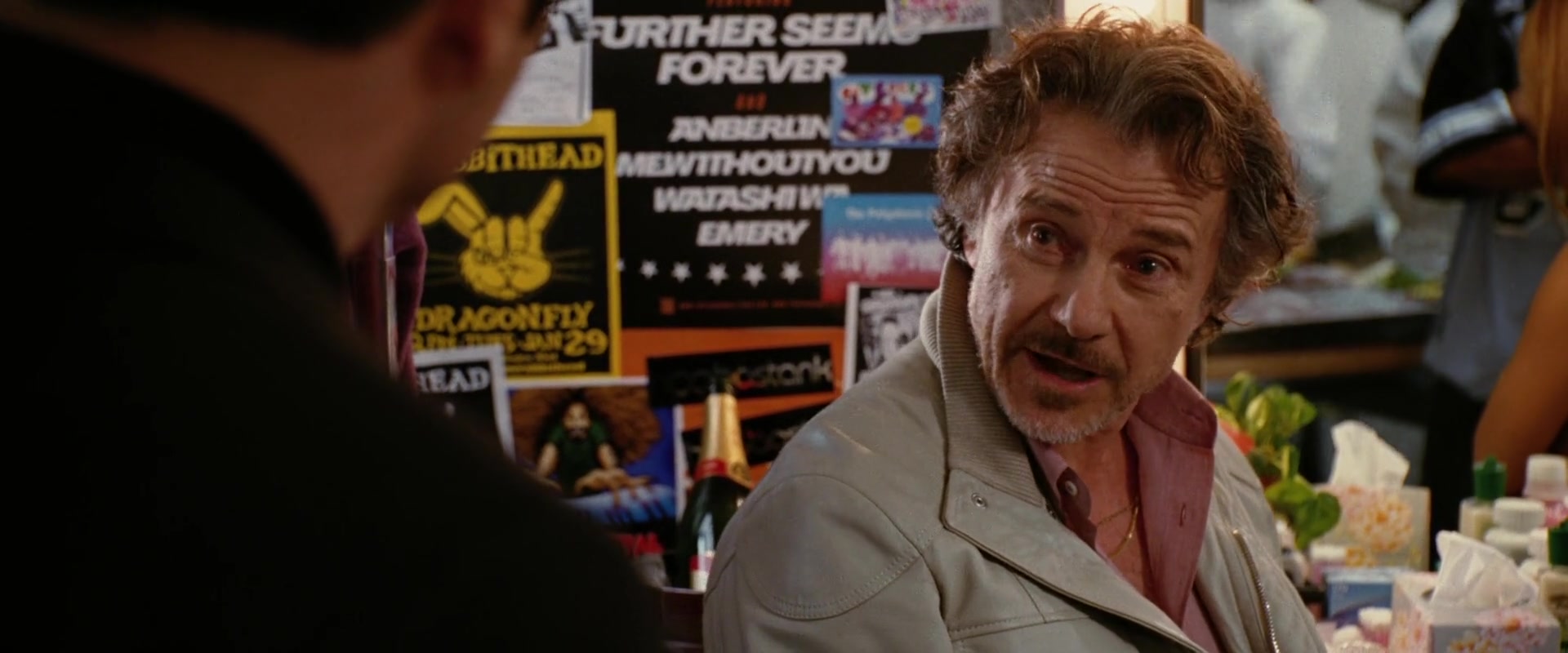
John Travolta and Harvey Keitel in Be CoolFor much of the rest of its strikingly uncool playing time, Be Cool seems to have resulted from a dare to see how much racist and homophobic content a 2005 film featuring John Travolta, Uma Thurman, Vince Vaughn, Harvey Keitel, and Danny DeVito can shoehorn in before it becomes commercially untenable. And when it’s not being racist and homophobic, Be Cool decides its claim to greatness will lie in its fascinatingly dedicated commitment to dating itself.
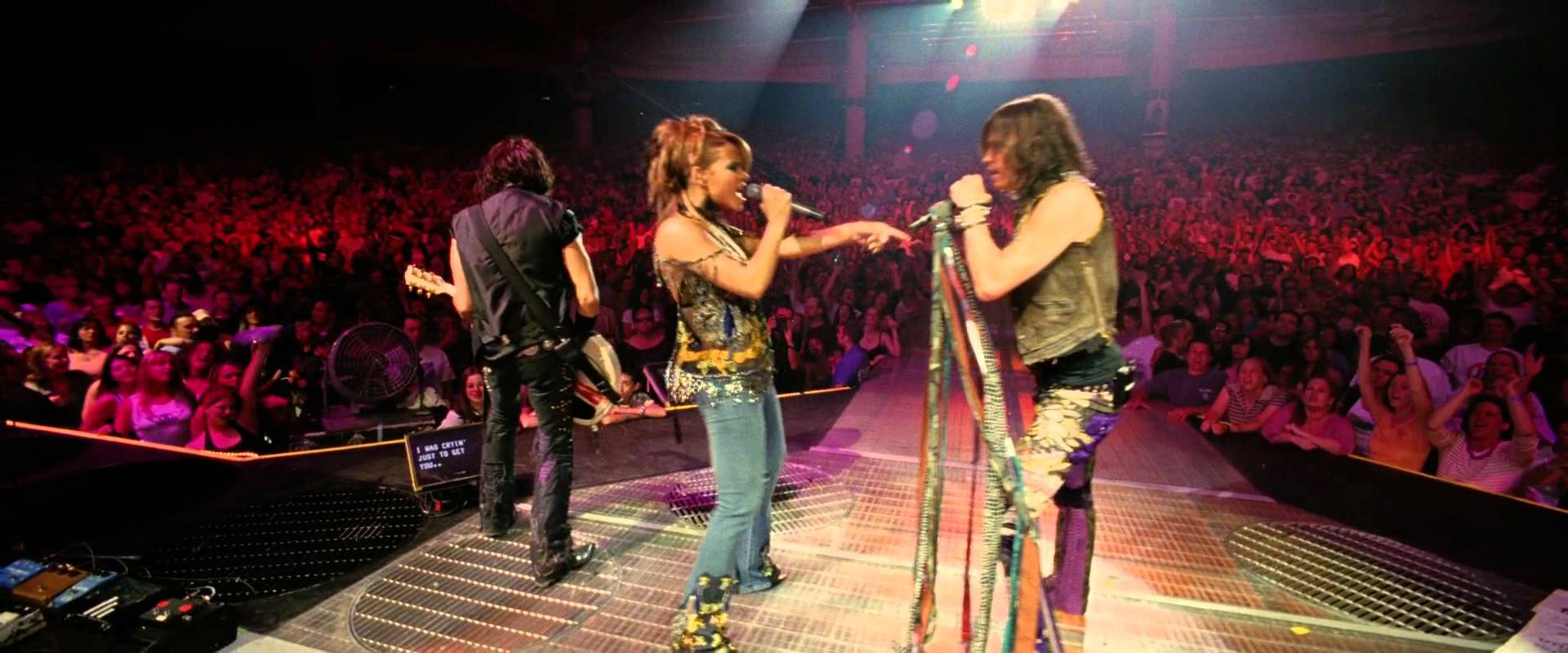
This is a film that hinges on engineering a soul singer’s success by getting her on stage with Steven Tyler. (He was in a band called Aerosmith, by the way. Thurman has their tattoo on her lower back.) Everything can be solved, in the world of Be Cool, by getting in tight with Steven Tyler. Steven Tyler is apparently the gatekeeper of the entertainment industry. Once you have that patented Tyler Stamp of Approval, the sky is the limit. Perhaps you’ll even receive a Grammy, presented by fellow needs-no-introduction luminary Wyclef Jean.

Christina Milian and Steven Tyler of MOTHERFUCKING AEROSMITH in Be Cool Be Cool is curiously obsessed with demonstrating its pop culture bona fides through cameos that must’ve seemed strange even at the time, winking appearances that don’t scream “insider!” so much as “available that day, and probably most days!” Fred Durst is there, and Gene Simmons. The Black Eyed Peas feature prominently, alongside Wyclef and Steven Tyler (of Aerosmith, the band).


In fact, Travolta initially impresses Thurman with his knowledge of the music business by pointing out he wasn’t really into “Black Eyed Pea’s music until they teamed up with Sergio Mendes,” a truly baffling statement that Be Cool resolves by then featuring a full song performed live by The Black Eyed Peas (feat. Sergio Mendes). This is how things go in Be Cool. A recurring setpiece involves a club that apparently only plays the neo-swing music of one of those terrible fucking bands that hadn’t been horribly, inscrutably popular since around the time of Get Shorty‘s release, back when Hollywood took a look at Vince Vaughn and thought, “Now this seems like a likable guy! A little Cherry Poppin’ Daddies and we’ll be so money!” This is less a movie out of time than an artistic shipwreck full of drowning people grasping at signifiers.

In short, Be Cool is a mess, and not in a fun way. Only Dwayne Johnson comes through relatively unscathed, probably because his cartoonish self-send-up has an underlying cheerfulness the rest of the ensemble can’t be bothered to summon.

I realize now I’ve spent this entire time regurgitating Be Cool rather than celebrating Get Shorty, but so it goes. It’s never news when an airplane lands safely, as they say, and Get Shorty is a smooth, pleasant flight, unlike its ill-fated and ugly disaster shadow-double. Oh well. It’s nothing a warm bath and some of today’s popular musical bands can’t fix. Maybe I’ll check out this Aerosmith I’ve heard so much about.

March 20, 2018 0 comments
0 FacebookTwitterPinterestEmail
Kenneth Branagh as Poirot in Murder on the Orient Express
FilmReviews

Too Many Poirot’s

by Lark March 13, 2018
written by Lark

Few literary characters have ever been interpreted as definitively as David Suchet’s Poirot. The two have become so inextricable that I can’t imagine one without the other. And there are not even any extra stories to adapt: from 1989 to 2013, Agatha Christie’s Poirot adapted every single Poirot novel and short story into feature-length episodes.

Who could have the confidence to look at this achievement, not five years later, and say, “I can do it better”? Well, with 2017’s Murder on the Orient Express we have our (retrospectively obvious) answer: Kenneth Branagh.

I can’t hide my general feelings about Branagh: I think he’s a smug shit. I think he only succeeds (Gilderoy Lockhart, say, or Benedick in Much Ado) as an actor when he plays smug shits. (He probably thinks these performances are successful because he is such a skilled actor, and not just because they are so similar to his real self; this, in turn, amplifies his smug shittery.)

Kenneth Branagh as Poirot in Murder on the Orient ExpressBranagh’s Poirot is not simply awful because he is different from Christie’s novels; he is awful because he is different in ways that serve only to make him more boring. This Poirot takes time out to stare longingly at a picture of a lost love (who has no particular characteristics except being lost and being loved), when the original Poirot seems to have misplaced his penis and never spent much time trying to find it. This Poirot repeatedly gets into fights and chases. This Poirot is stern and serious and interrogates his suspects like Perry Mason.
OK, fine. He is something much more boring than Poirot the character ever was before: just another detective, one that could have stepped out of any CBS procedural, complete with obsessive-compulsive disorder and a steely stare. He is a Protestant Poirot, not a Catholic one. But as Peter Ustinov said, when he overheard Christie’s granddaughter complaining that “he wasn’t anything like Poirot”: “Well, that’s how he is now!”

So what are we left with when we ignore Branagh’s performance? We are left with yet another adaptation of one of the most over-adapted mystery novels, Murder on the Orient Express.

There is no real way to make a big-budget adaptation of most classical detective novels. Other than the detective, and occasionally their goofy assistant, there are no real impressive roles. None of the innocent suspects get to emote much more than to break down under questioning; the guilty suspect rarely gets to do much but flee when it all comes out.

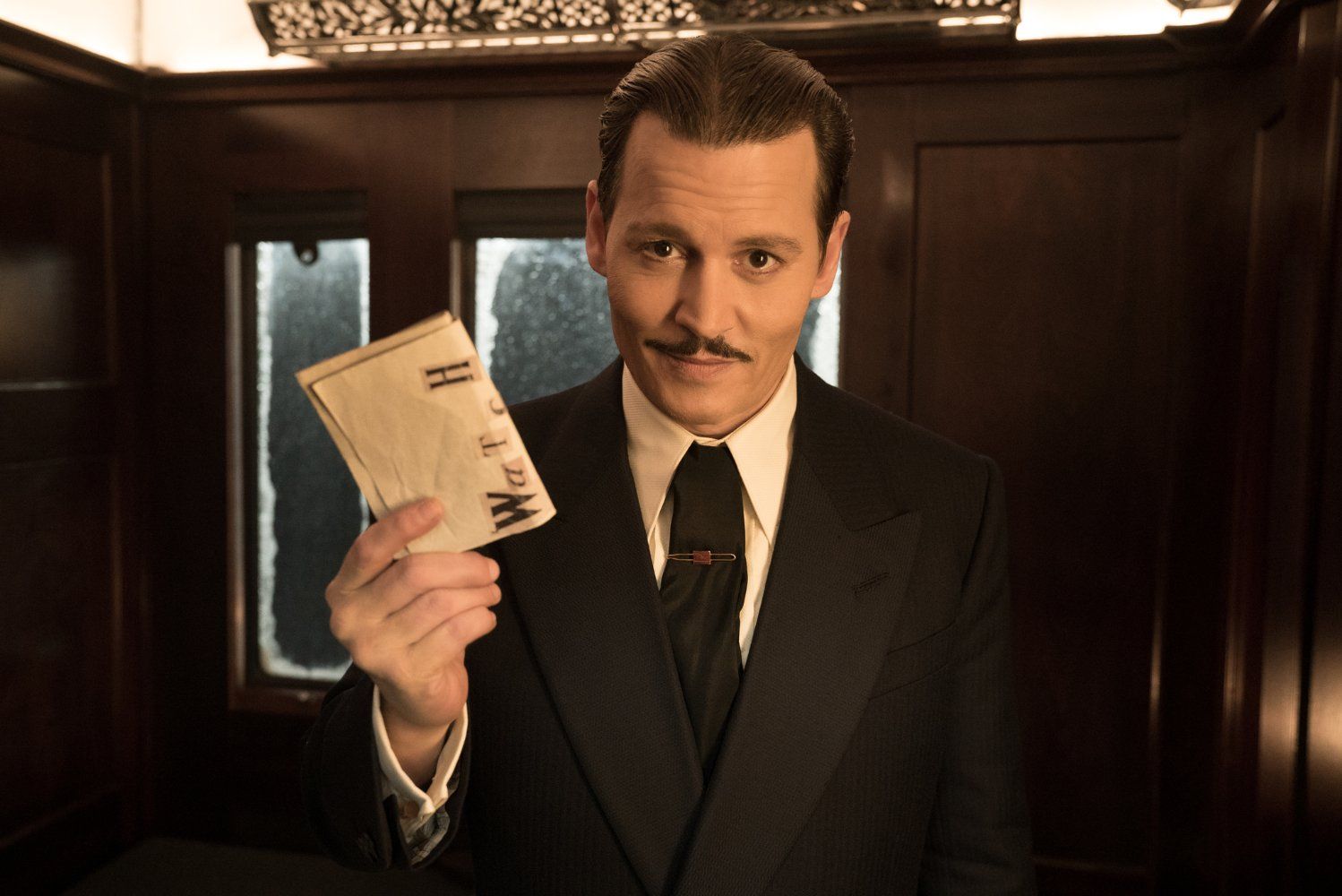
Johnny Depp in Murder On The Orient ExpressOrient is different. (Spoilers, I suppose, for an 84-year-old novel.) The twist is basically common knowledge: all the passengers on the train committed the murder together. They are mostly travelling under false names and false stories; they all came to murder the repulsive Ratchett (Johnny Depp, who, in a very cathartic scene, is stabbed repeatedly).

And so we get a cast packed with British and American actors, each of whom require three scenes to lie in and one scene to break down in. We are left with a film desperately longing for emotional depth.

But this is the mistake that even the BBC’s Poirot made in adapting Orient Express. It is so easy to try to wedge a metric ton of emotional heft into the final pages, when Poirot decides not to report the truth and let the murderers free.

But neither the Poirot character nor the Poirot novels — not even the classical murder mystery in general — work with emotional depth. Poirot is a character of surfaces, and all of Poirot’s mysteries are mysteries of surfaces. Is that enough? It was enough for the best seasons of Poirot–the-show; it was enough for generations of Christie’s readers; it was enough for hundreds of the classical murder mysteries that were written.

We may simply be at a point with Hollywood where it is difficult to make movies truly of surfaces. That may or may not be a shame, but it makes it impossible to make a good film out of a Poirot novel. In its final moments, Orient Express threatens a sequel, and having done decently at the box office it just might get it; hopefully they find less fertile ground for digging there.

March 13, 2018 0 comments
0 FacebookTwitterPinterestEmail
Storm Reid in A Wrinkle In Time
FilmReviews

Woo-Woo Business Aside, A Wrinkle In Time Is An Open-Hearted Success

by rick March 12, 2018
written by rick

Arriving to overblown fanfare and unreasonable expectations, Ava DuVernay‘s A Wrinkle In Time was never going to live up to the hype.

It was bad enough that box office watchers openly wondered how A Wrinkle In Time would compete with Black Panther, a money-printing machine of historic, multi-hyphenate proportions. A non-franchise adaptation of a beloved if wonky Christian children’s fantasy novel, one that intuitively seems better suited for a Netflix series than a 110-minute standalone, DuVernay’s picture was somehow tasked with proving that a) Black female directors can helm $100M+ tentpole spectacles, and b) that the audience exists to justify further studio spending on majority-minority casts in such films. (The internet being the internet, the film was also greeted by the usual anonymous gangs of sad little white men trying to tear it down in advance; that tesser is always on time.) Simply being an entertaining, visually stunning kid’s movie stamped by a personal vision was never going to be sufficient. A Wrinkle In Time had to change the world to justify its existence.

Storm Reid in Ava DuVernay's A Wrinkle In TimeWell, it doesn’t and it won’t. Instead, A Wrinkle In Time and its team will have to settle for being an entertaining, visually-stunning kid’s movie stamped by a personal vision and aimed at youthful audiences who don’t often see themselves on screen.
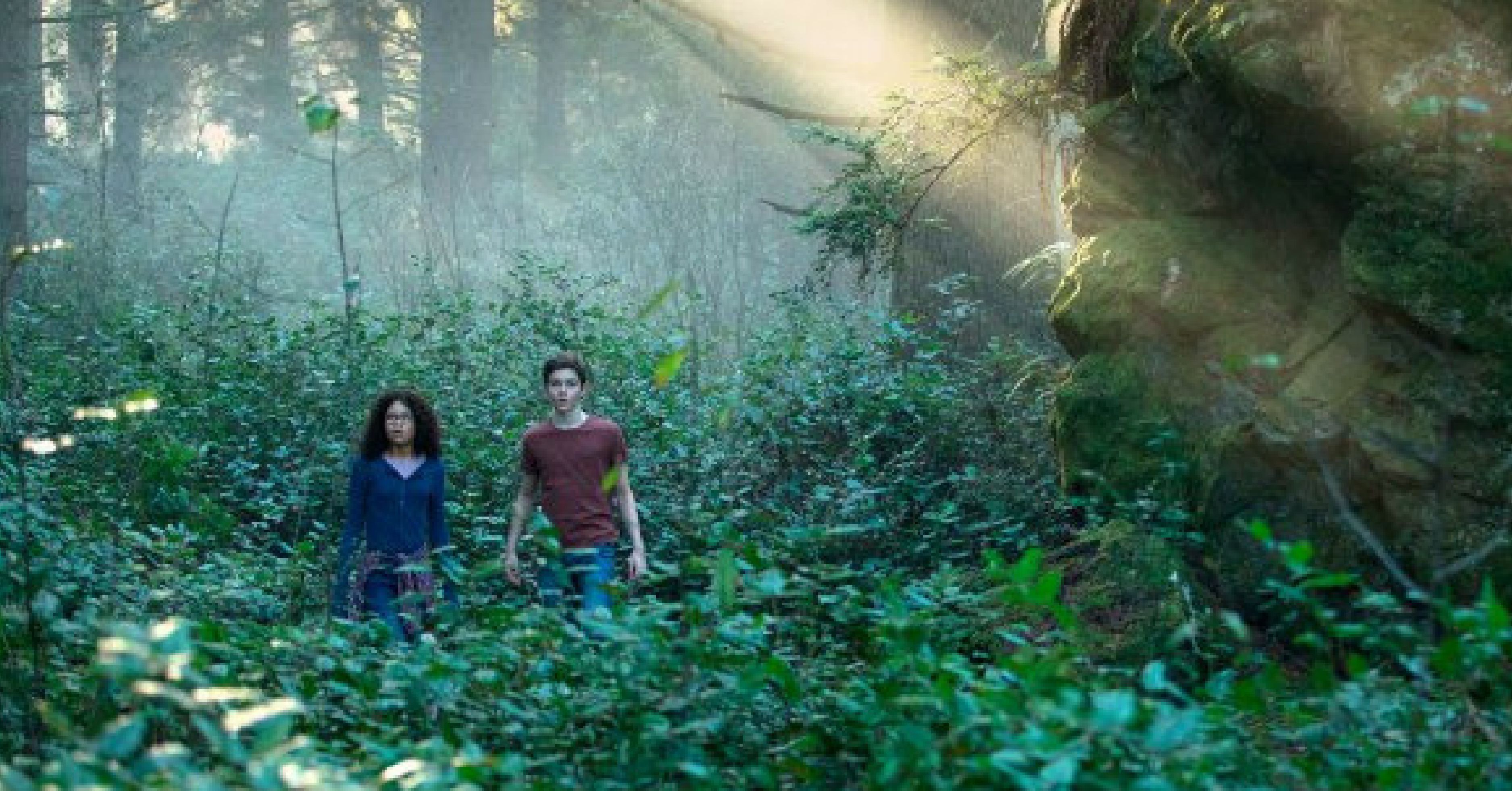
The plot, for those who never read or barely remember Madeline L’Engle’s classic, concerns our young protagonist Meg (Storm Reid, A Wrinkle In Time‘s breakout star and, with all due respect to Oprah, unquestionably its biggest asset). Introduced discovering the wonders of physics alongside her loving scientist dad (Chris Pine), Meg is an adorably precocious audience surrogate. In short order, she acquires an adopted little brother – the even more precocious, significantly more irritating Charles Wallace (Deric McCabe) – but loses her father, who vanishes without a trace while working on some high-level science stuff with the kids’ mom (a severely underused, under-developed Gugu Mbatha-Raw).

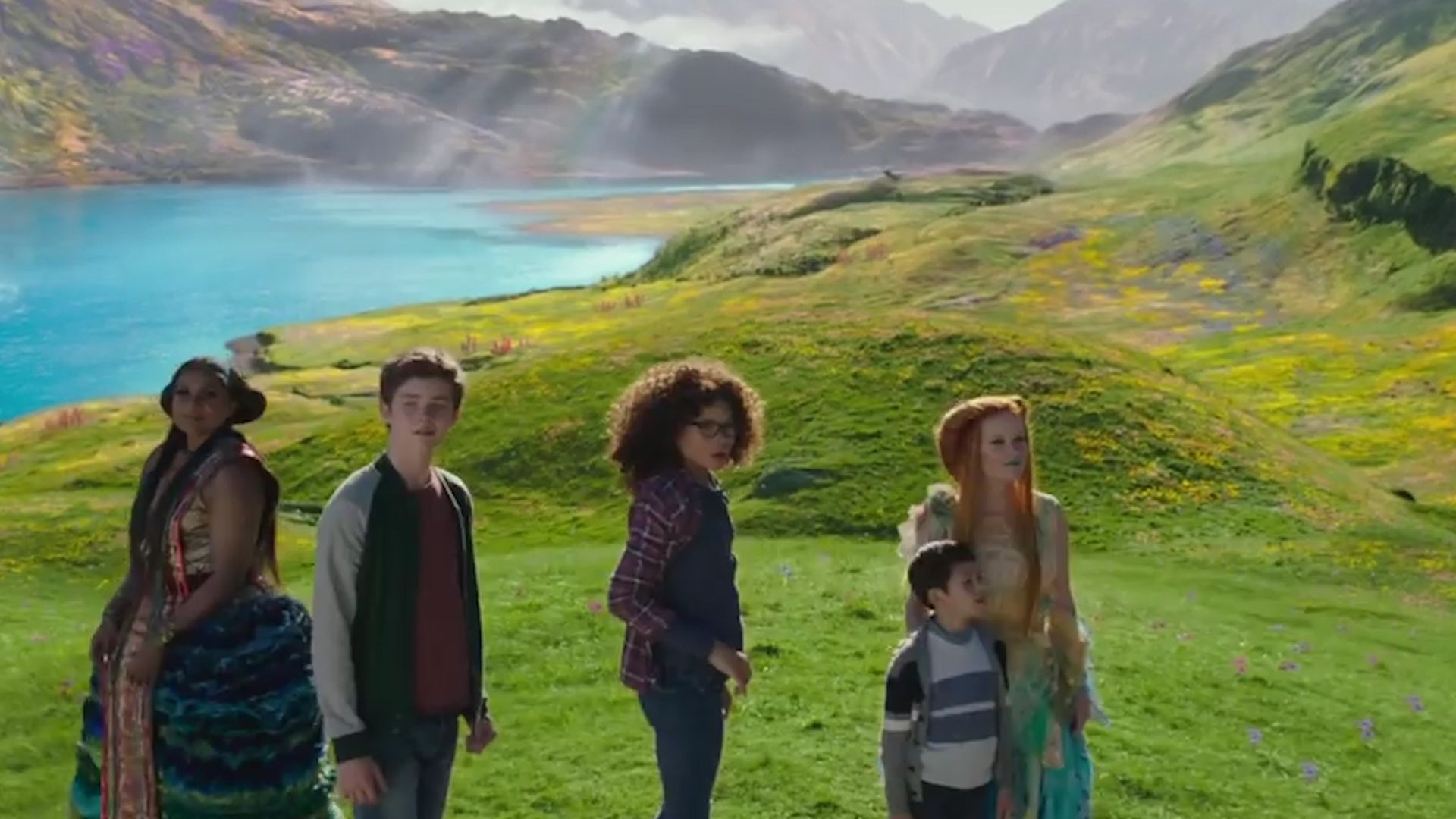
Storm Reid and Levi Miller in Ava DuVernay's A Wrinkle In TimeDad’s tragic absence, and the quest to find him across space and time, drives the narrative. After a brief check-in regarding Meg’s struggles in school four years later, a hero’s journey is set in motion by the unexpected arrival of a strangely-clad woman named Mrs. Whatsit (Reese Witherspoon, striving mightily to sell clearly novelistic lines like “Wild nights are my glory!” as she runs out into the rain). Meg, Charles Wallace, and the extremely clingy love interest Calvin (Levi Miller), whose primary character attributes seem to be his moderately inappropriate infatuation with Meg’s hair and a general air of fanboy adoration, will meet the other two members of L’Engle’s Trinity – the ever-smiling Mrs. Who (Mindy Kaling) and the terrifyingly astrally-projected Mrs. Which (Oprah) – and A Wrinkle In Time is off.
If this all seems abrupt, that’s because it is. DuVernay and screenwriters Jennifer Lee and Jeff Stockwell never really get a handle on the pacing; the intro seems too short, parts in the middle seem unexpectedly leisurely, and it all ends like a timer went off or the money ran out. (Perhaps Reese may had had to film a featurette for something.)

A Wrinkle In TimeStill, amid the unsteady pacing, there are some glorious images. In order to find Dad, the trio is introduced to the tesseract, a space-time continuum, the title’s “wrinkle.” They fly across alien skies, interact with sentient flowers, hang out with a very funny Zach Galifianakis, and, eventually, encounter a force of pure malevolence known as The It (menacingly voiced by David Oyewolo). The effects team conjures up some striking visuals all along the way, and Meg’s woo-woo tour guides through the cosmos gently coax her into self-confidence and recognition of her unique value as an individual.

A Wrinkle In Time wears its heart so prominently on its sleeve that faulting it for that very aspect just seems unkind. There’s a particular moment of self-realization – you’ll know the one – that’s among the more powerful depictions of self-doubt, adolescent fear, and even biracial anxiety that I can remember in a recent kid’s movie. It’s raw stuff, standing out even more than it otherwise might amid all the outsized New Agery on display.

Reese Witherspoon is a flying vegetable in Ava DuVernay's A Wrinkle In TimeIs it weird that Witherspoon, Kaling, and Winfrey, the ostensible draws, make the least impact and are the least developed characters, apart from Mbatha-Raw? Functioning, as Scott Mendelson notes, as “the kind of ‘now you go here’ guides found in a video game,” they more or less arrive and depart at random, smiling knowingly through their makeup. They do provide a sense of wonder and magic, though it’s not too much to wish they’d been given more to do. (Or say. Kaling’s Mrs. Who, who speaks only in the words of others because she has “grown past language,” except for when she doesn’t, is especially contradictory and useless.) Oh well; it’s not their film anyway. Storm Reid’s Meg is the focus, as she ought to be, and she’s fantastic.

It still feels like A Wrinkle In Time is fated to be a victim of its expectations. And it’s not all a nefarious conspiracy. Some of these expectations can reasonably be laid on the producers and the marketing departments – did we really need an introductory featurette attesting to how hard everyone worked on the project, a form of pre-emptive apology I last encountered at a Regal Cinema trying to convince me to see Reese Witherspoon’s instantly forgotten Home Again? Or Armie Hammer inscrutably firing hot dogs from a hot-dog-shaped hot-dog cannon at a preview audience during the Oscars? Or Nissan creating custom Wrinkle In Time electric vehicles, like they did for that last little modest studio effort, Star Wars: The Last Jedi? – but, for the most part, they came from outside. To take a random example, when DuVernay told Vanity Fair that the story’s protagonist is “hopping planets and flying and saving the freakin’ world,” and Refinery 29 titled their same-day piece “Ava DuVernay Hopes That A Wrinkle In Time Will ‘Save The Freaking World’,” it’s hard to place that at DuVernay’s feet. This bizarre elision of creator and created seems reserved for her alone. It’s instructive to ask why. (I imagine DuVernay channeling Bob Dylan in Don’t Look Back: “Did you misquote Rian Johnson like that?”)

In the end, this seems like the sort of film that will find the audience that needs it. Uneven and charming in equal measure, it gets the job done. And the kids in the row behind me – you know, the intended audience – loved it. Outside the theater, one little girl declared, “That was great” to no one in particular. On some level, the rest is just a bunch of boring old people talking over her.

March 12, 2018 0 comments
0 FacebookTwitterPinterestEmail
Newer Posts
Older Posts

About

About

Towards a provisional theory of the cinema, or, failing that, just some shit about movies

Authors
Rick Kelley
Lark Lundberg

Keep in touch

Facebook Twitter

Categories

  • Conversation
  • Film
  • Film By Film
  • Great Movie Project
  • Great Movies: The Counter Programming
  • Guest
  • News
  • Other
    • Commentary
    • Film
    • Interview
    • Reviews
    • Song for a Sunday
  • Streaming Selections
  • TV
  • Uncategorized
  • Vegan Horror

Archives

  • April 2019
  • March 2019
  • January 2019
  • December 2018
  • November 2018
  • October 2018
  • September 2018
  • August 2018
  • July 2018
  • June 2018
  • May 2018
  • April 2018
  • March 2018
  • February 2018
  • January 2018
  • December 2017
  • November 2017
  • October 2017
  • September 2017
  • August 2017
  • July 2017
  • June 2017
  • May 2017
  • April 2017
  • March 2017
  • February 2017
  • January 2017
  • December 2016
  • November 2016
  • October 2016
  • September 2016
  • August 2016
  • July 2016
  • June 2016
  • May 2016
  • April 2016
  • March 2016
  • February 2016
  • January 2016
  • December 2015
  • October 2015
  • September 2015
  • August 2015
  • July 2015
  • June 2015
  • May 2015
  • April 2015
  • March 2015
  • February 2015
  • January 2015
  • December 2014
  • November 2014
  • October 2014
  • August 2009
  • September 2008

Recent Posts

  • China Girls, Death Proof, and the Hidden Face
  • Old News: Old Noise Edition
  • Old News: April 1, 2019
  • Nicolas Winding Refn, Marginalia, and the Deaths of Cinema
  • And now, let us praise Kanopy

Recent Comments

  • Franklin Kat on Michael Shannon shines again in Frank & Lola
  • Sean Tempesta on Cinema and dream-logic in Meshes of the Afternoon
  • ludditerobot on The Left-Wing Slapstick and Iconic Songs of 1937’s Street Angel
  • Franklin Kat on The Left-Wing Slapstick and Iconic Songs of 1937’s Street Angel
  • Arijit Mukherjee on Great Movies Project: The Counter-Programming
  • Facebook
  • Twitter

@2021 - All Right Reserved. Designed and Developed by PenciDesign


Back To Top
Luddite Robot
  • Reviews
  • Commentary
  • Great Movie Project
    • Great Movie Project
      Bride of Frankenstein is a movie for and…

      January 25, 2018

      Great Movie Project
      The Enduring Appeal of Nick and Nora in…

      November 29, 2017

      Great Movie Project
      The Ahistorical Fever Dream of The Scarlet Empress

      August 2, 2017

      Great Movie Project
      Dreams, Mundanity, and the Anarchist Yearnings of L’Atalante

      July 12, 2017

      Great Movie Project
      Duck Soup Is And Will Always Be A…

      April 19, 2017

  • Counter Programming
    • Great Movies: The Counter Programming
      Walking and Talking in the Shadow of Kanchenjungha

      March 7, 2018

      Great Movies: The Counter Programming
      A Brief Encounter in My Mother and Her…

      February 9, 2018

      Great Movies: The Counter Programming
      Horror’s Refusal in Farrokhzad’s The House Is Black

      October 13, 2017

      Great Movies: The Counter Programming
      The rage and beauty of The Cloud-Capped Star

      October 3, 2017

      Great Movies: The Counter Programming
      The daylight noir and social issue empathy of…

      June 22, 2017

  • Vegan Horror
    • Vegan Horror
      Julia Ducournau doesn’t think her film Raw is…

      June 7, 2017

      Vegan Horror
      Licking our wounds: The vampiric masculinity of Ravenous

      December 13, 2016

      Vegan Horror
      Eggertsson and animals: An approach to horror cinema

      September 15, 2016

      Vegan Horror
      “It’s Not My Nature” – Vegetarianism, Body Horror,…

      August 30, 2016

      Vegan Horror
      Bodies and Carcasses in Predator 2

      August 23, 2016

  • Interview
    • Interview
      Jasmine Leyva’s doc The Invisible Vegan aims to…

      May 3, 2017

      Interview
      Bridging The Abyss: An Interview With The Directors…

      November 28, 2016

      Interview
      7 Days in Ohio: An Interview with Nathan…

      September 12, 2016

      Interview
      Film Critic Phil Dy talks New Filipino Cinema

      June 17, 2016

      Interview
      “I Love Seeing Film Projected.” A Conversation with…

      March 22, 2016