Top Posts
Madeline’s Madeline: An Unclassifiable Panic Attack Maybe-Masterpiece
Shoplifters Steals Moments of Wonder from the Mundane
Burning and Forgetting What’s Not There
Kusama: Infinity Expands Beyond The Canvas
Mandy Risks Little, Wins Little
In We The Animals, The Children Are Away...
The Seagull Isn’t Quite Chekhov, But It’s Still...
5 Million Ways Boots Riley Isn’t Sorry To...
American Animals’ and the Queasiness of the Heist
A Star Is Born In Hearts Beat Loud
  • Reviews
  • Commentary
  • Great Movie Project
    • Great Movie Project
      Bride of Frankenstein is a movie for and…

      January 25, 2018

      Great Movie Project
      The Enduring Appeal of Nick and Nora in…

      November 29, 2017

      Great Movie Project
      The Ahistorical Fever Dream of The Scarlet Empress

      August 2, 2017

      Great Movie Project
      Dreams, Mundanity, and the Anarchist Yearnings of L’Atalante

      July 12, 2017

      Great Movie Project
      Duck Soup Is And Will Always Be A…

      April 19, 2017

  • Counter Programming
    • Great Movies: The Counter Programming
      Walking and Talking in the Shadow of Kanchenjungha

      March 7, 2018

      Great Movies: The Counter Programming
      A Brief Encounter in My Mother and Her…

      February 9, 2018

      Great Movies: The Counter Programming
      Horror’s Refusal in Farrokhzad’s The House Is Black

      October 13, 2017

      Great Movies: The Counter Programming
      The rage and beauty of The Cloud-Capped Star

      October 3, 2017

      Great Movies: The Counter Programming
      The daylight noir and social issue empathy of…

      June 22, 2017

  • Vegan Horror
    • Vegan Horror
      Julia Ducournau doesn’t think her film Raw is…

      June 7, 2017

      Vegan Horror
      Licking our wounds: The vampiric masculinity of Ravenous

      December 13, 2016

      Vegan Horror
      Eggertsson and animals: An approach to horror cinema

      September 15, 2016

      Vegan Horror
      “It’s Not My Nature” – Vegetarianism, Body Horror,…

      August 30, 2016

      Vegan Horror
      Bodies and Carcasses in Predator 2

      August 23, 2016

  • Interview
    • Interview
      Jasmine Leyva’s doc The Invisible Vegan aims to…

      May 3, 2017

      Interview
      Bridging The Abyss: An Interview With The Directors…

      November 28, 2016

      Interview
      7 Days in Ohio: An Interview with Nathan…

      September 12, 2016

      Interview
      Film Critic Phil Dy talks New Filipino Cinema

      June 17, 2016

      Interview
      “I Love Seeing Film Projected.” A Conversation with…

      March 22, 2016

Luddite Robot
Film critique, theory, and assorted nonsense.
CommentaryFilm

China Girls, Death Proof, and the Hidden Face

April 14, 2019

Old News: Old Noise Edition

April 8, 2019

Old News: April 1, 2019

Nicolas Winding Refn, Marginalia, and the Deaths of Cinema

CommentaryFilm

And now, let us praise Kanopy

January 24, 2019

Warren Sonbert and the Relief of Anti-Narrative

January 14, 2019

The World Is Ending and It Doesn’t Matter

The Best Films of 2018

FilmReviews

Madeline’s Madeline: An Unclassifiable Panic Attack Maybe-Masterpiece

December 21, 2018

Shoplifters Steals Moments of Wonder from the Mundane

December 11, 2018

Burning and Forgetting What’s Not There

Alien, Musicology, and Reading Soundtracks

CommentaryFilm

Shocktober III: Halloween 2018 Edition

October 24, 2018

Shirley Jackson’s The Lottery Traumatized Schoolkids in 16 mm

October 18, 2018

Shocktober 2018 II: Another Reshockening (of Horror)

Häxan is a movie made by a movie character

CommentaryFilm

Shocktober 2018

October 7, 2018

Unprofessional! Spring Night, Summer Night

October 3, 2018

The Wild Boys: A Luddite Robot Conversation

Kusama: Infinity Expands Beyond The Canvas

Matt Damon in Downsizing
FilmReviews

Who On Earth Is Downsizing For?

by Lark March 9, 2018
written by Lark

One of the great joys of the film dork is finding a new What the hell is this? movie, one that they can share with their friends as a baffling experience. There are, however, some fine gradations to the uncategorizable surprise that are sometimes overlooked.

There are What the hell? movies that are really two movies put together, and which switch suddenly switch gears, like Audition; there are What the hell? movies that only seem to have no structure, but which are actually about slowly and inexorably increasing the intensity of the strangeness, giving a firm structure to its structurelessness, like Hausu; and a hundred other varieties.
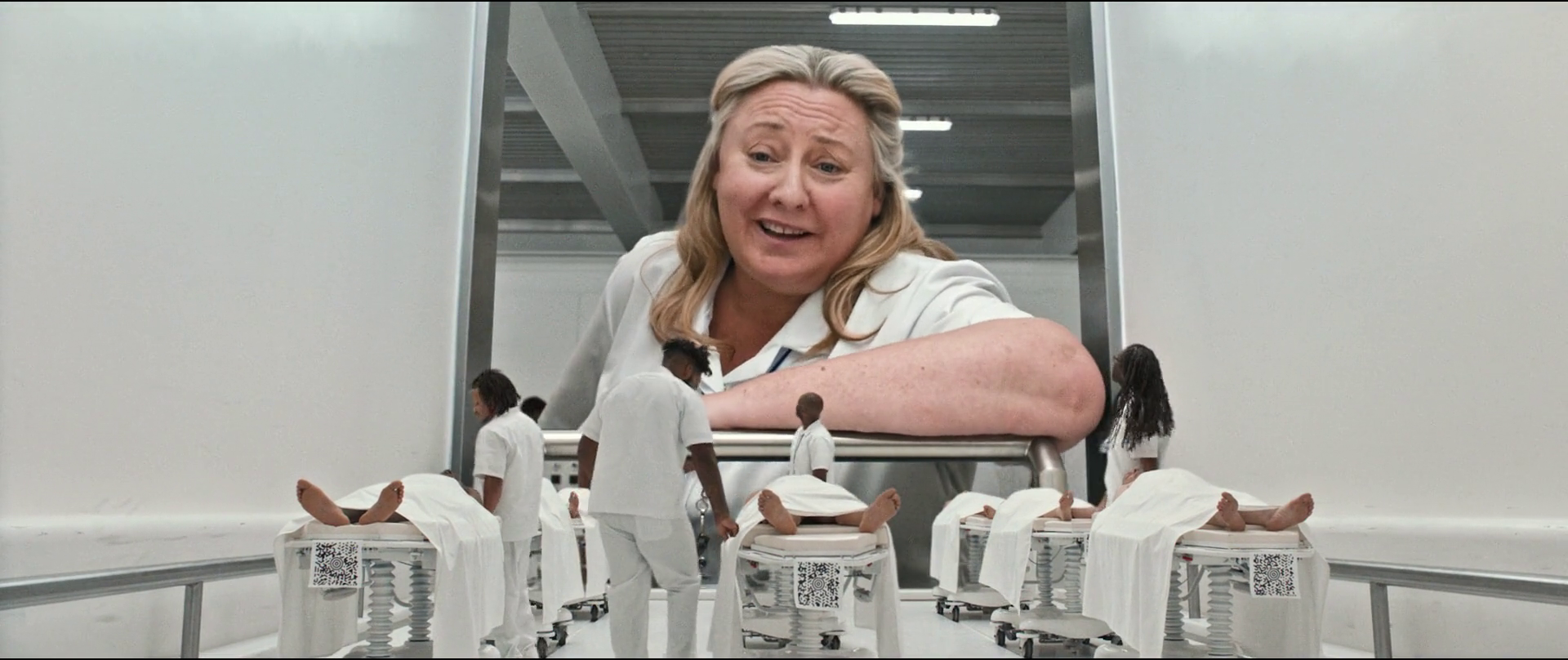
Downsizing big nurse ladyOf those varieties, none are more boring than a movie with a clever idea and nothing else. Who on Earth is Downsizing for? Who wants a high-concept sci-fi/fantasy comedy/drama from the director of Sideways? Why is Laura Dern in Downsizing for approximately 30 seconds? Why is Downsizing suddenly a white-savior movie? Is Downsizing entirely an excuse for some movie producer with a vore fetish? What is this?

It’s necessary to go through this maze of a script beat-by-beat to accurately communicate its complete senselessness. After the customary “scientific discovery” introduction, we are introduced to Paul Safranek (Matt Damon); we are to infer his life is pathetic from the fact that he is picking up food from a chain restaurant.

He is taking care of his sick mother. And then, suddenly, he’s not; after 4 minutes of nothing, it is suddenly 10 years later, and he, looking identical, is married to Audrey (Kristen Wiig). We’re now given half an hour of awkward, quiet marital strife as they attend a college reunion and shop for houses. They wander around, delivering lines in that moderately-awkward Payne style (a style Matt Damon simply does not have enough charisma to pull off).
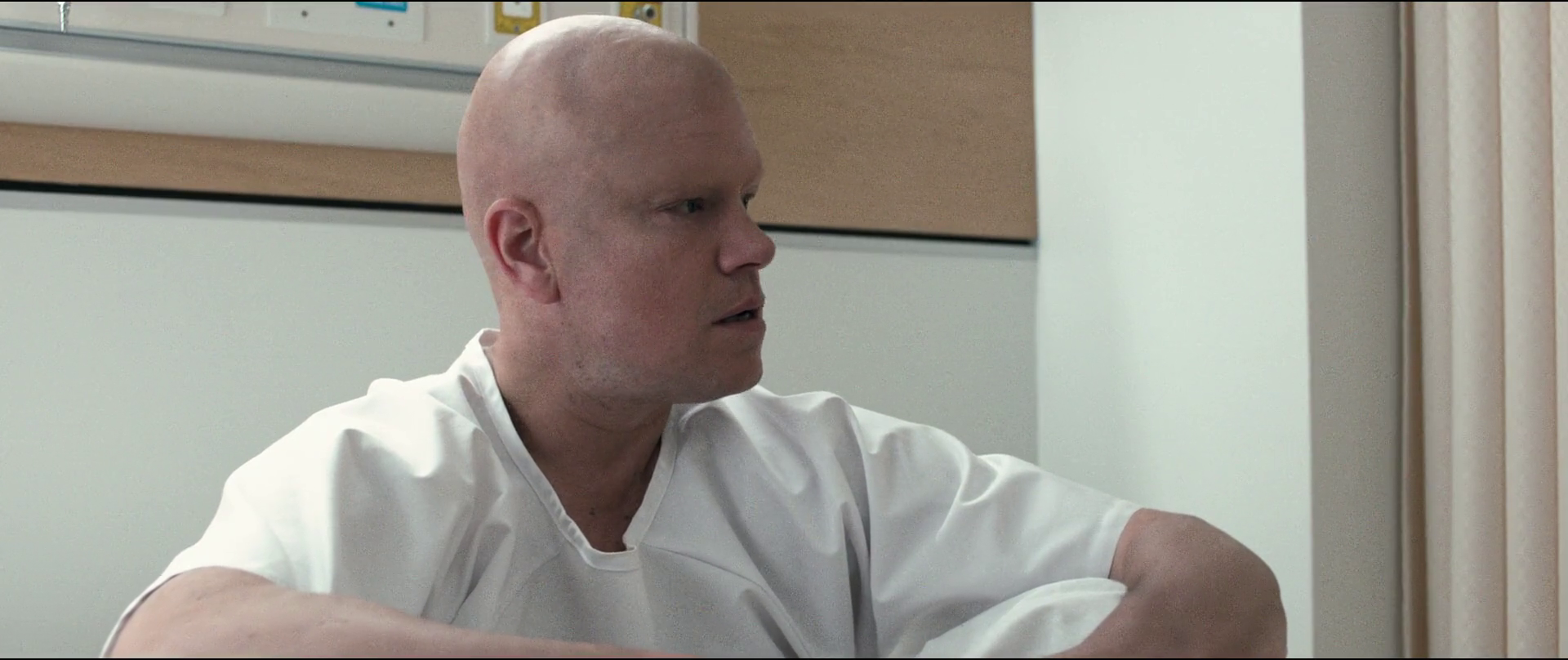
Hairless Matt Damon in DownsizingIt is only at minute 33 that we get to the titular downsizing, by far the most fascinating sequence in the film. For some reason, to be made “little,” you have to have your hair shaved and your teeth removed. So, set to an off-brand Danny Elfman-style tune, Paul is shaved, leaving us the image of a hairless and eyebrowless Matt Damon looking like Guy Pearce at the end of Prometheus.

It’s grisly, as we see dentists drill out dozens of patients’ teeth; it’s weirdly poetic in moments, as their hair is shaved off; it is completely, absolutely pointless.
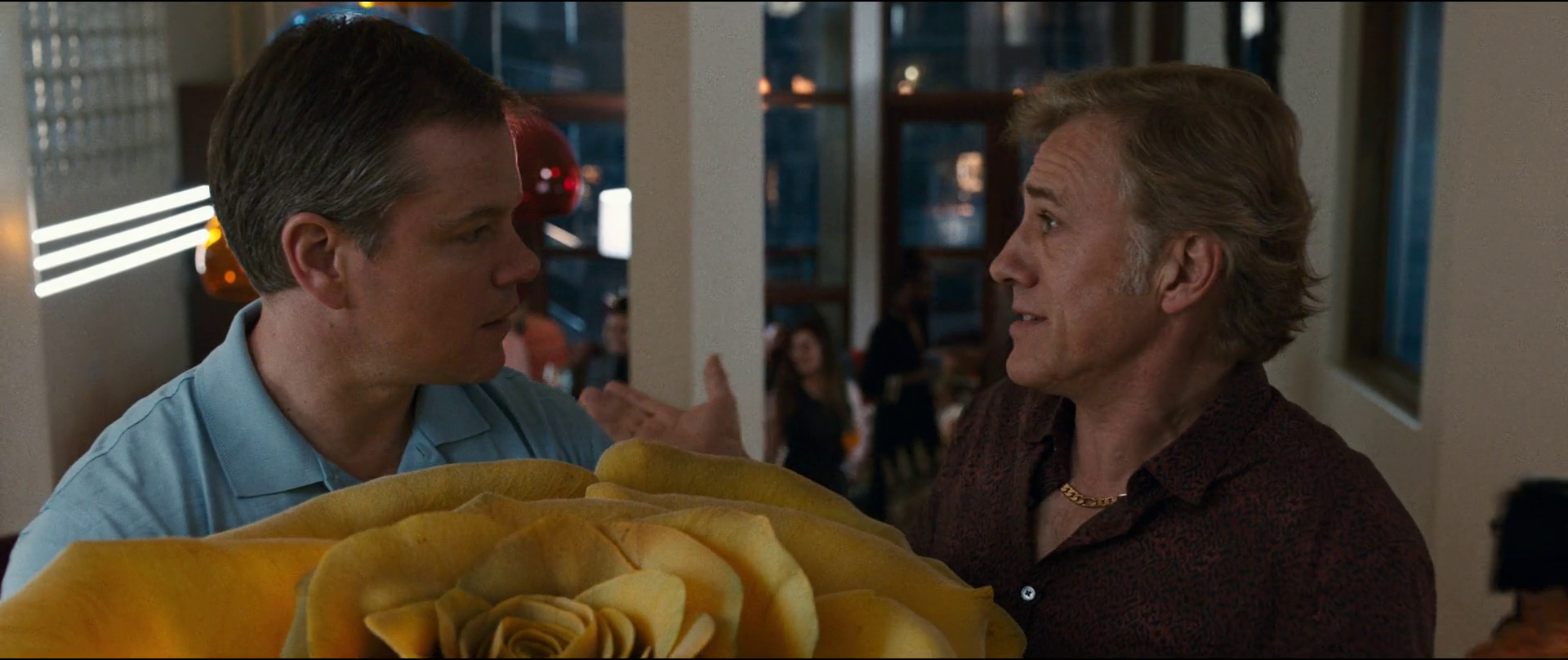
Matt Damon and Christoph Waltz in DownsizingThis is the 50-minute mark, and we are almost done with Downsizing‘s preamble. Audrey refuses to get the procedure and divorces Paul, and, through the slow, wandering process by which white middle-aged divorced men fall within the orbit of the kooky non-whites, he ends up neighbors with and attends a party hosted by Dusan (Christoph Waltz, playing a Serbian and speaking in lightly-broken English).

Paul wanders around a party for 15 minutes — at this point, I was half certain I was being pranked — and the real film finally begins. This is actually simply another white savior movie, in which our hero meets Dusan’s housekeeper Ngoc Lan Tran (played by Hong Chau, probably best known for Inherent Vice; here, she speaks entirely in heavily-broken English, which we are supposed to, it seems, find funny).
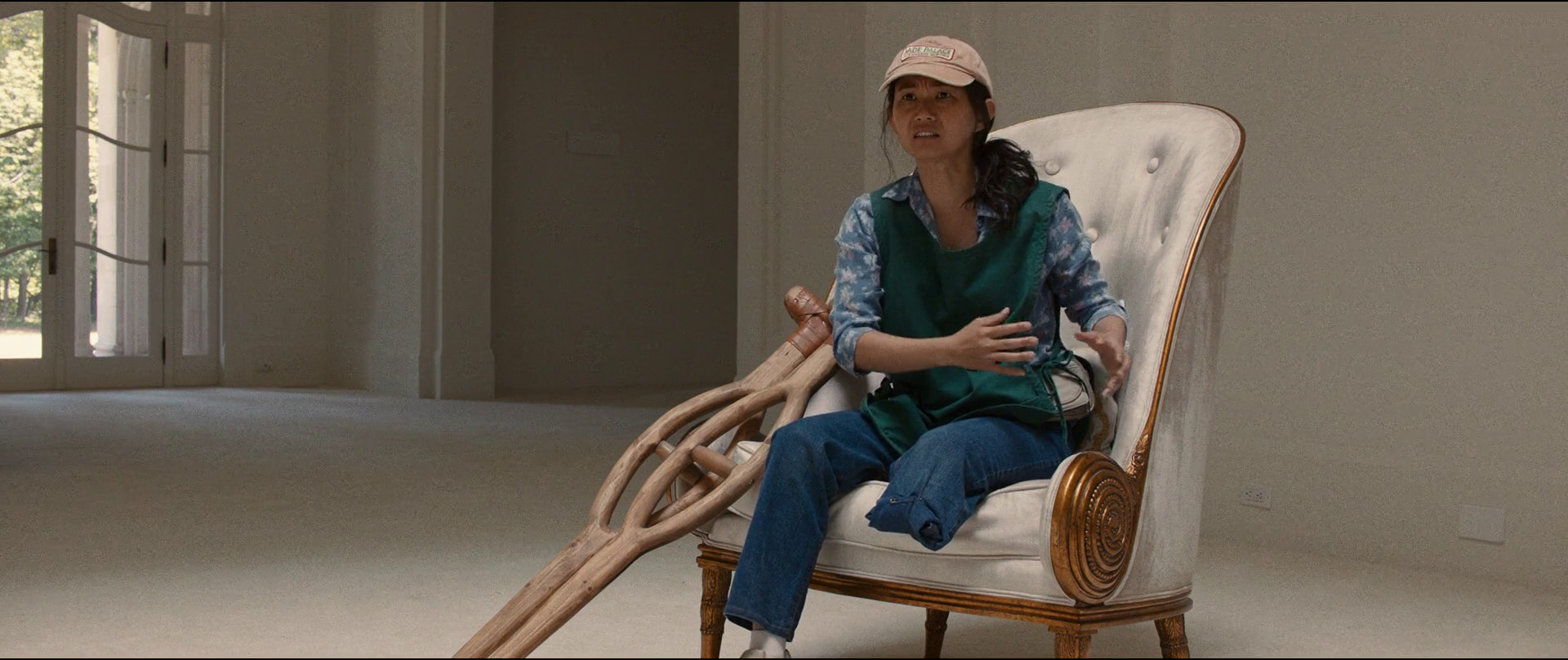
Hong Chau in DownsizingPast this point, the plot is not worth recapping. Nick purposefully breaks Tran’s prosthetic foot so he can help her take care of those living in the “little” slums. (Is any of the destitution supposed to be some sort of black comedy? In their first scene together, Nick and Tran accidentally overdose a sick friend on Percocet and kill her. Is that supposed to be funny?)

As a backdrop to all of this are references to global warming, and the pair end up being offered a position on a Noah’s ark-style attempt to save humanity. They, of course, reject it to continue taking care of the poor and sick, turning the extinction of humanity into little more than an opportunity for a white man to sacrifice himself.

Man Ray famously said that the worst films he had ever watching had 10 minutes worth seeing. Downsizing has at most eight, with the incredible, inexplicable depiction of the process itself. Outside of that, though, it is a useful reminder of a basic rule of film watching: just because something is bizarre doesn’t mean that it’s interesting.

March 9, 2018 0 comments
0 FacebookTwitterPinterestEmail
kanchanjangha
CommentaryFilmGreat Movies: The Counter Programming

Walking and Talking in the Shadow of Kanchenjungha

by rick March 7, 2018
written by rick

For most revered mid-century filmmakers, noting that a particular film featured their first original screenplay and was their first in color would seem to guarantee it additional attention. Curiously, that’s not really the case for Satyajit Ray‘s Kanchenjungha (1962). A careful tapestry of small interactions set against a backdrop of physical grandeur and social change, it seems to get lost in the critical shuffle, functioning as a kind of way station between the narrative sweep of the first two entries in the Apu trilogy and the more refined, self-aware craftsmanship of The Big City and beyond.

That’s unfortunate, because it’s a wonderful movie, but it was there from the start in Kanchenjungha‘s reception — this sense of something ephemeral or slight. Bosley Crowther, for instance, rather impatiently reviewed Kanchenjungha for the Times in 1966 (it took 4 years after its release to premiere in the U.S., further evidence of its curious also-ran status). Approaching Ray with impatience is, of course, a pretty bad idea in general, as Crowther’s assessment demonstrates:

Lest one be misled by the title of Mr. Ray’s unfamiliar film into thinking it may have something to do with mountain climbing on the world’s third highest peak, be assured that there is nothing as dramatic or strenuous as mountain climbing in it. Indeed, the great mass of Kanchenjungha is revealed only at the end, when the mists roll away and we are shown it as an evident symbol of the emergence of Indian society—or social snobbery—out of the mists of the past.

Armed with a backhanded compliment and dreaming of another epic of Bengali impoverishment (or possibly, inscrutably awaiting the arrival, 26 years later, of Cliffhanger), Crowther concluded that Ray had “not bitten off as much as he could chew.”  Watching it for the first time this year, I was instead struck by how much Ray managed to cram into the text, and how forward-looking Kanchenjungha is, what a break it represents.

Where the “one-man New Wave” of the Apu bildungsroman focuses on the struggling and striving rural poor, with the kind of formal “naivety” that only someone actually making it up as they go along can manage, and The Big City on the social tensions of a more urban modernity, Kanchenjungha falls somewhere in between. The film’s narrative concerns an upper-class family on holiday in Darjeeling, in the shadow of the titular mountain … or what would be its shadow, if the rains would ever lift. Ray creates an almost-familiar nouvelle vague dynamic; his characters seem suspended, held together by place and circumstance for the duration, playing out small, interrelated, naturalistic dramas between them in the open air. Kanchenjungha‘s basic tension comes from this: it’s at once intimate and expansive, grounded in isolated family discourse that clearly hints at tumultuous worlds beyond the fog.

“The idea,” Ray told Andrew Robinson, “was to have the film starting with sunlight. Then clouds coming, then mist rising, and then mist disappearing, the cloud disappearing, and then the sun shining on the snow-peaks. There is an independent progression to Nature itself, and the story reflects this.”

That story concerns the stridently pro-British patriarch Indranath (Chhabi Biswas, so memorable as a very different sort of figure in 1958’s The Music Room); his cowed wife Labanya (Karuna Bannerjee), subservient but possessing hidden reserves of agency; their eldest daughter Anima (Anubha Gupta), unhappily married to Shankar (Subrata Sensharma); dissolute playboy son Anil (Anil Chatterjee); and the youngest daughter Monisha (Alakananda Ray), who they hope will find a man on this mountain excursion. 

Monisha is the moral center of the narrative and the audience surrogate. Pressed to converse, and hopefully pair up, with Mr. Bannerjee (N. Viswanathan) — the Anglicized favorite of her Anglophile industrialist of a father — her attentions turn instead to Ashok (Arun Mukherjee), a young, barely employed figure of the new generation. Poetic, passionate, working class, unapologetic in his anti-colonial patriotism, contemptuous of the idle wealthy, and linked with the natural world, Ashok is everything Bannerjee (and her father) is not. When Indranath offers Ashok a job when they all return to Calcutta, Ashok declines, a moment of small revolution. A reckoning is coming for all of India, a generational struggle boiled down to multiple sets of two.

Final shot of KanchenjunghaThat reckoning won’t happen within the structure of Kanchenjungha. The holiday ends without a marriage (or, for that matter, a divorce). Ray is content to set up the dominoes, and far less interested in knocking them over. The film’s ending is open to any number of possibilities, though, contra Crowther, the long-delayed appearance of the mountain itself isn’t just symbolic of “the emergence of Indian society” (whatever that means). It seems instead part of a continuum, a brute, beautiful fact reasserting itself but transformed; its textual meaning is more a function of the fact that Indranath fails to even notice its emergence … this event that the whole film, the whole holiday in the film, has waited for. He’s lost in thought instead.
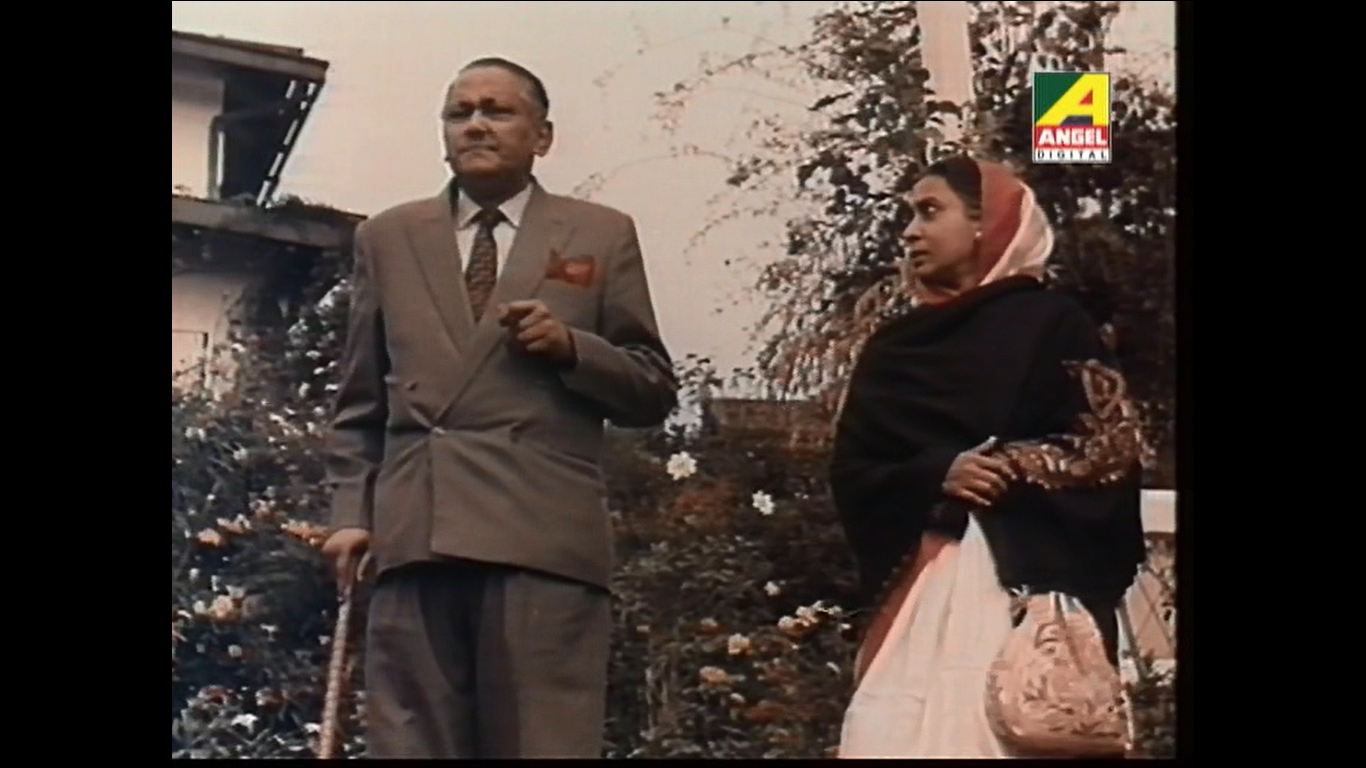
Unlike his contemporary (and earlier entrant in this series) Ritwik Ghatak — for whom Partition is a metaphysical presence, a ghostly “hunk of iron and steel,” or an entirely physical one, like a train bisecting the countryside — Ray constructs the entire mise-en-scene in Katchenjungha as a post-colonial contradiction. The mountain itself can’t be said to denote Partition any more than it stands in for a generational divide. It looms, mostly unseen, over the characters strolling contemplatively, stopping, arguing, dismissing, apologizing, reconnecting; there’s something almost Linklater-like in the desperate conversation, an eddying stillness. The relations between them, physical and emotional, and their movements give shape to the larger themes of the film, as Ruma Chakravarti notes:

The film unrolls in the form of several conversations between pairs of characters as they take long rambling walks. At no point in the film are these characters more than a few minutes apart from each other. I felt the different stretches of mountain roads were almost an allegory for the different paths people take. The married couples have their conversations in situations where they are generally static. The younger un-married characters such as Monisha, Mr Banerjee and Ashok are shown walking almost constantly.

If the Apu trilogy charted Ray’s engagement with the Bengali underclass, The Music Room with a patriarch’s fading glory, and The Big City with a tumultuous modernity, Kanchenjungha is located at a crucial mid-point, where any number of paths are open and history is actively being contested. It’s an essential masterpiece from a career that seems to have produced only masterpieces.

March 7, 2018 0 comments
0 FacebookTwitterPinterestEmail
Suspiria red and blue
CommentaryFilm

Suspiria Is A Movie About The Color Red

by Lark March 5, 2018
written by Lark

What is Suspiria about? It’s about an American woman who goes to an extremely Italian Germany to attend a prestigious dance academy, and who slowly discovers that it is actually being run by a coven of demonic witches. (She would have figured it out a lot earlier if she could have listened to the soundtrack, in which a semi-diagetic voice occasionally whispers “witch!”)

But it’s really not about that at all. Just as Diva was, in the words of one critic, a movie about the color blue, Suspiria is a movie about the color red — and green, and yellow, and blue, and a handful of others.

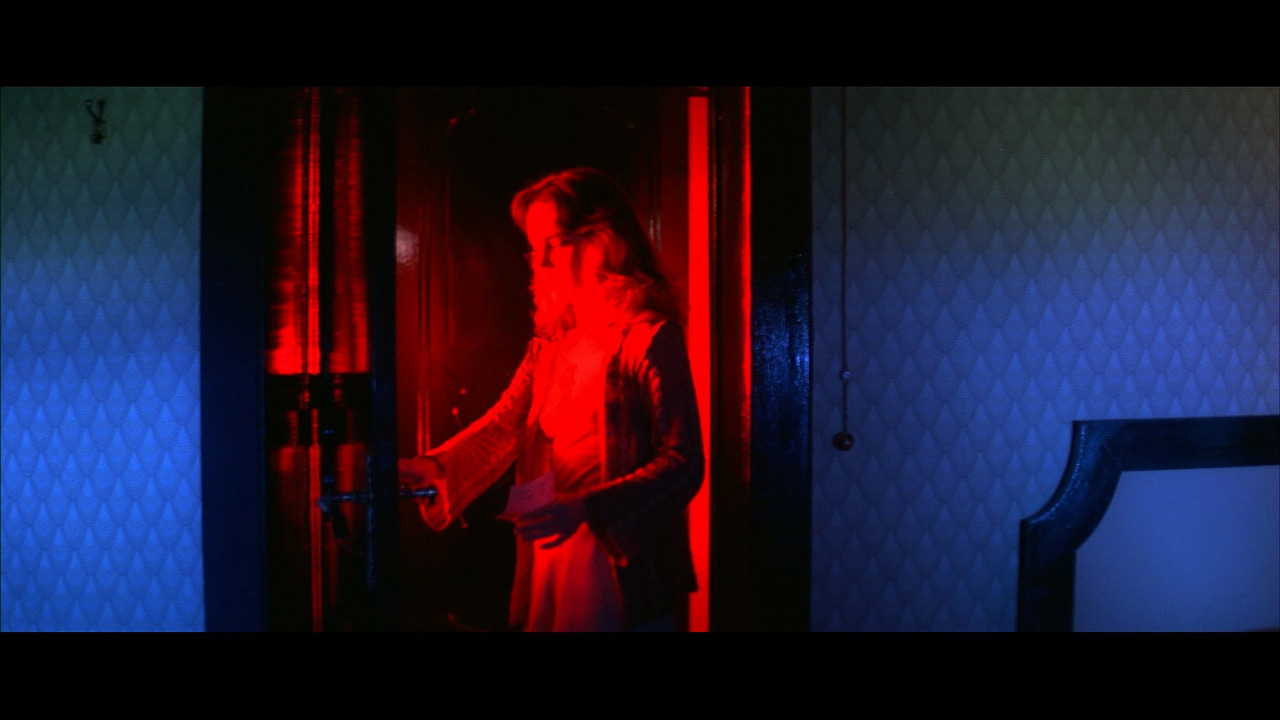
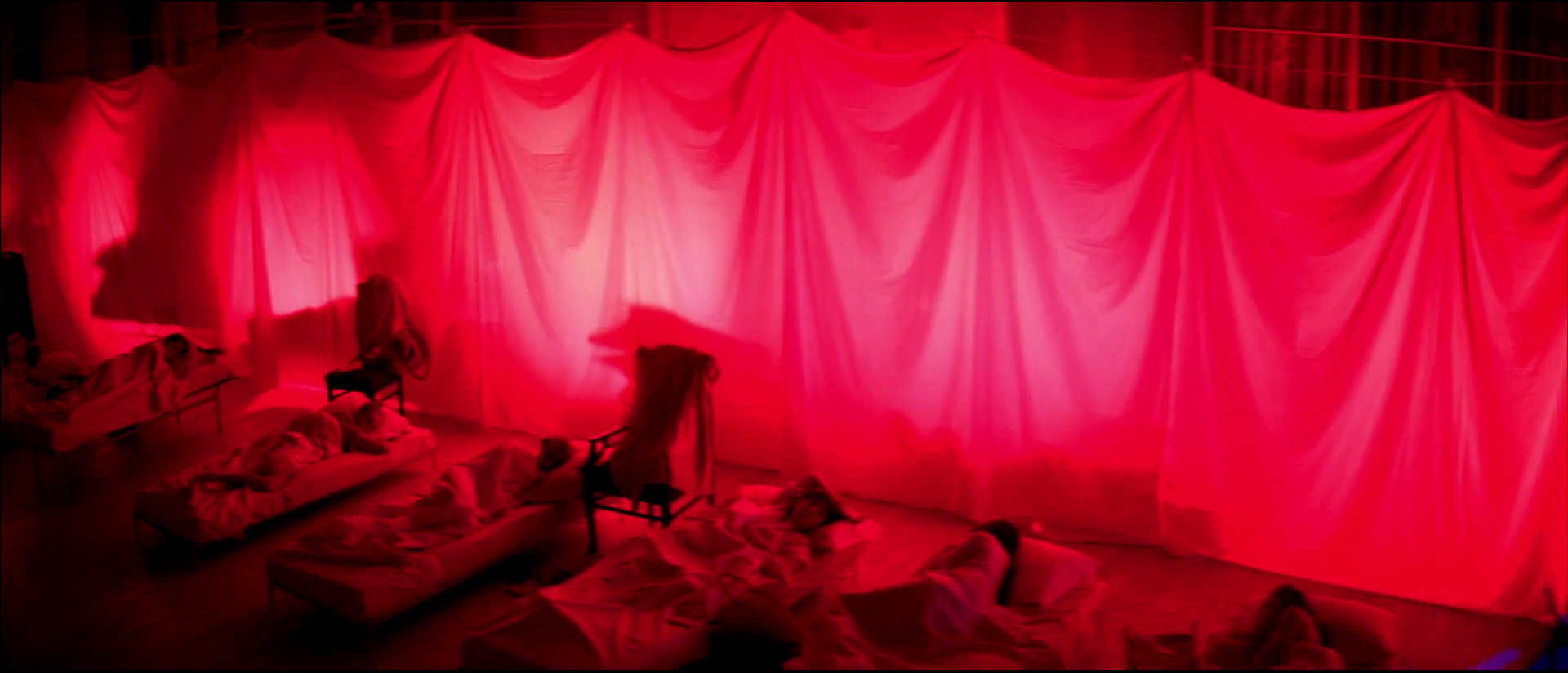
Suspiria red bedsThe colors coat every surface, to the point where it becomes impossible to tell how much is paint and how much is lighting. They are impossibly, cartoonishly vibrant, almost becoming a form of violence against the viewer. They are so garish one has to turn away from the screen. In their own way, they take the place of the violence typical of the giallo genre (not that, in brief flashes, the film isn’t violent enough on its own).
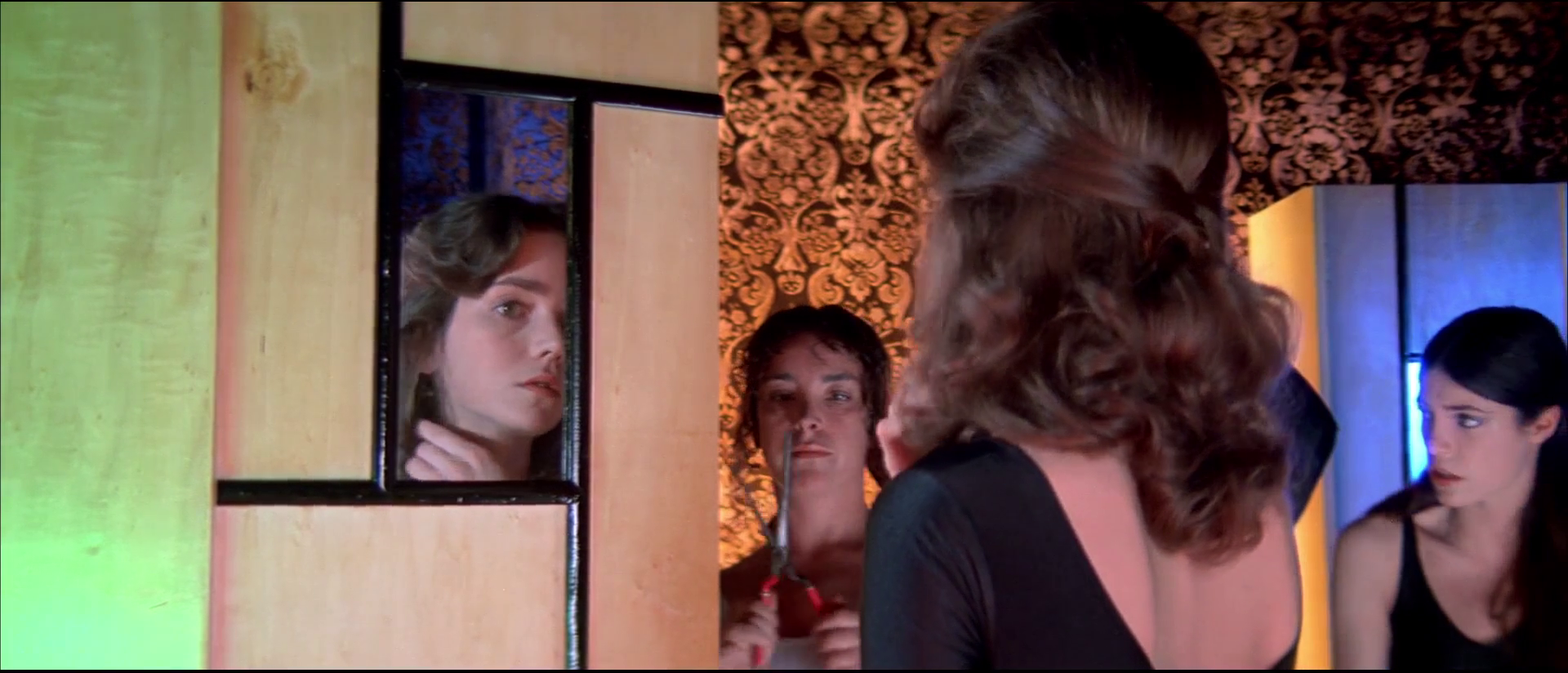
Suspiria green blueWhat strikes me most about Suspiria‘s colors is the way they completely fail to coordinate in any meaningful way. The colors may be technically complementary — the blue and gold so notoriously overused in movie posters make quite a few appearances — but they don’t act as complements to one another, with one breaking up the other as an accent.
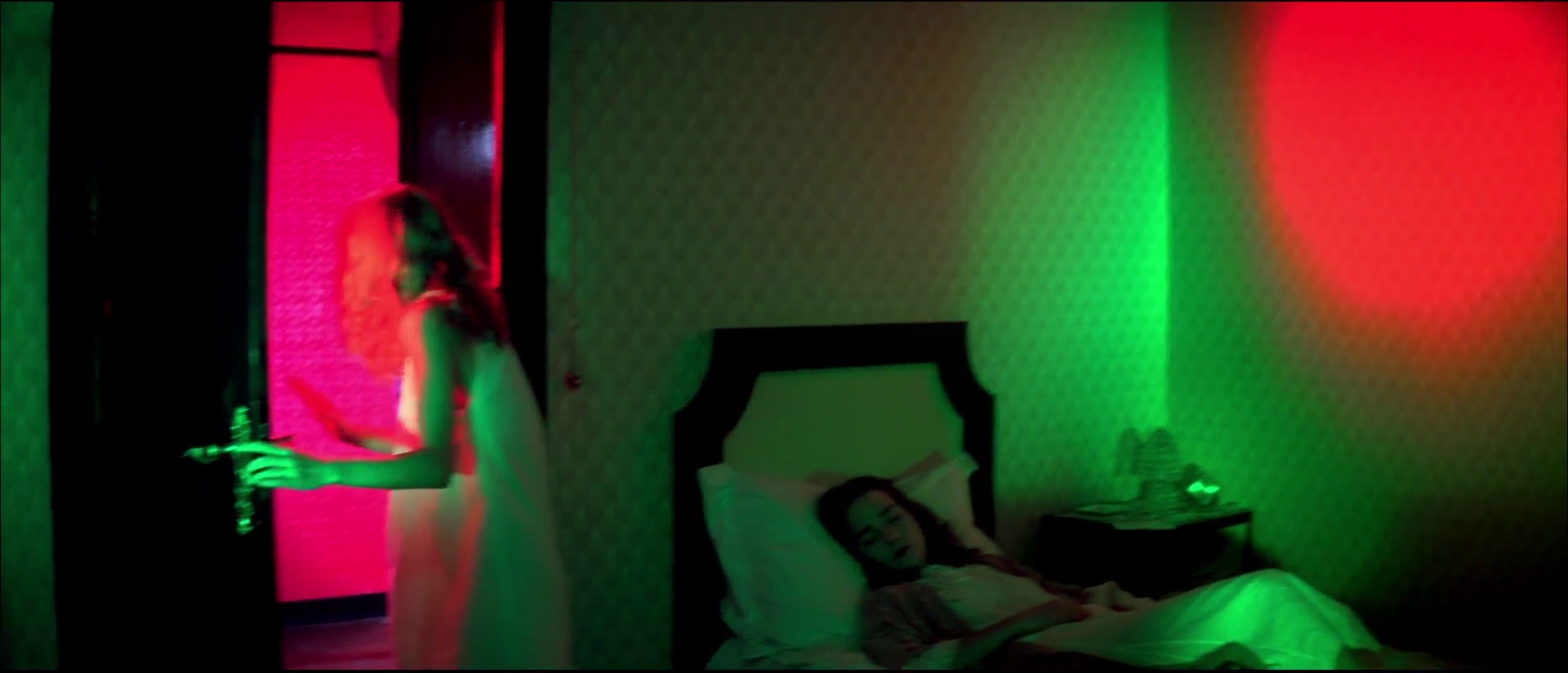
Instead, the world of the shot is divided up into three-dimensional realms within which one color dominates, autonomous zones with little or no visual relationship to one another. Within each zone, the color’s brightness and dominance curiously brings us back to the world of the black-and-white film.

Suspiria red green shadowsThe very impossible brightness of the brightest patches and the completely monochromatic design draw our eyes to the shadows and the nuances in a way the typical use of color does not. It is as if we are watching a black-and-white movie, but one in which there are different kinds of white at play.
The silent, black-and-white film was famously neither silent nor black and white; the projectionist used a number of gels to indicate a sense of location. Suspiria seems to follow directly from that tradition. It is as truly a color film as the great noirs are black-and-white films, a world of color as whiteness.

March 5, 2018 0 comments
0 FacebookTwitterPinterestEmail
CommentaryFilm

2018 Oscar Predictions

by rick March 2, 2018
written by rick

The 2018 Oscar ceremony is nearly upon us, bringing to a close the annual tradition known in cinephile circles as “The Grouchy Season”!

In past years, I’ve grouched along, with alternative nominations for every category (either from the previous year’s releases or from the Nicolas Cage canon, as appropriate). But who has time for that? In any case, even while agreeing that the Academy has been consistently wrong for 90 straight years, the nominees for 2018 Oscars are far from the worst we could’ve reasonably expected. (Looking at you, 78th Academy Awards.)

Recent attempts to revamp and expand the universe of voters seem to have helped: it’s hard to imagine Get Out, Lady Bird, or Call Me By Your Name figuring so prominently in previous years, for one thing. Or perhaps that’s less a reflection of structural changes in the process than larger shifts in the culture. Either way, it’s a welcome change — Black voices, women’s voices, queer narratives, genre movies, personal visions, Meryl Streep. (Ok, maybe not the last part.) Here’s to incremental progress and inclusion, anyway.

Click through for my 2018 Oscar predictions — not my favorites of the year (that list is here), but what I anticipate will win this Sunday. If the past is any guide, I will probably be more wrong than right, so don’t bet the farm on these tips, but it’s all a guessing game anyway. Let’s guess!

Pages: 1 2 3 4 5 6 7 8 9 10 11 12 13 14 15 16 17 18 19 20 21 22 23 24 25

March 2, 2018 0 comments
0 FacebookTwitterPinterestEmail
CommentaryFilm

Geostorm and the Infallible Presidency

by Lark February 28, 2018
written by Lark

In Geostorm, there is an evil mastermind at work in the American government who has a plan to destroy the world with “extreme weather” via the wonderfully silly plot device of a satellite-based weather control system. The guilty party, the protagonists believe, is the President, but of course it isn’t.

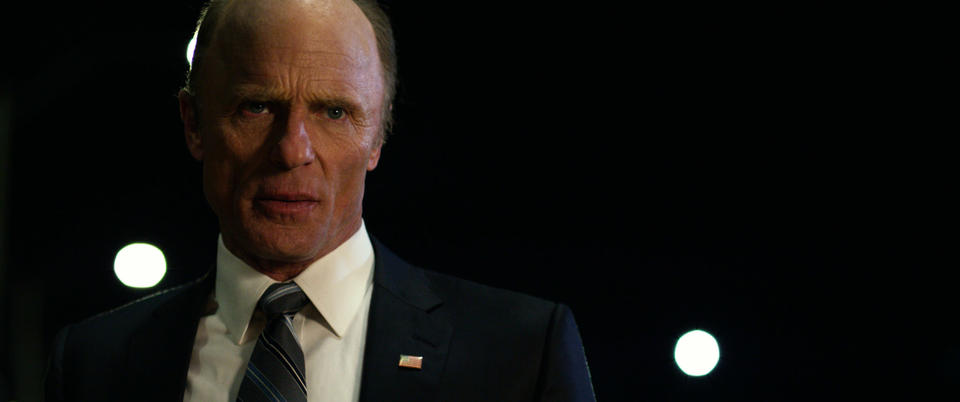
Ed Harris in GeostormWe know it isn’t because Ed Harris keeps wandering through scenes, and instantly gives himself away for three reasons: he is the Secretary of State, a government role perhaps second only to Vice President in obvious evilness; he’s the most famous actor in any of his scenes; and, of course, he is Ed Harris, an actor who, if he played Jesus, would make Judas look trustworthy.

But we also know it’s not the President because these global blockbusters in the Emmerich vein have a fascination with the role of the President. Geostorm writer-director-producer Dean Devlin co-wrote Independence Day, a film which takes this fascination past the point of parody, but the idea of the President as a uniquely incorruptible figure is a given any time America is under threat.

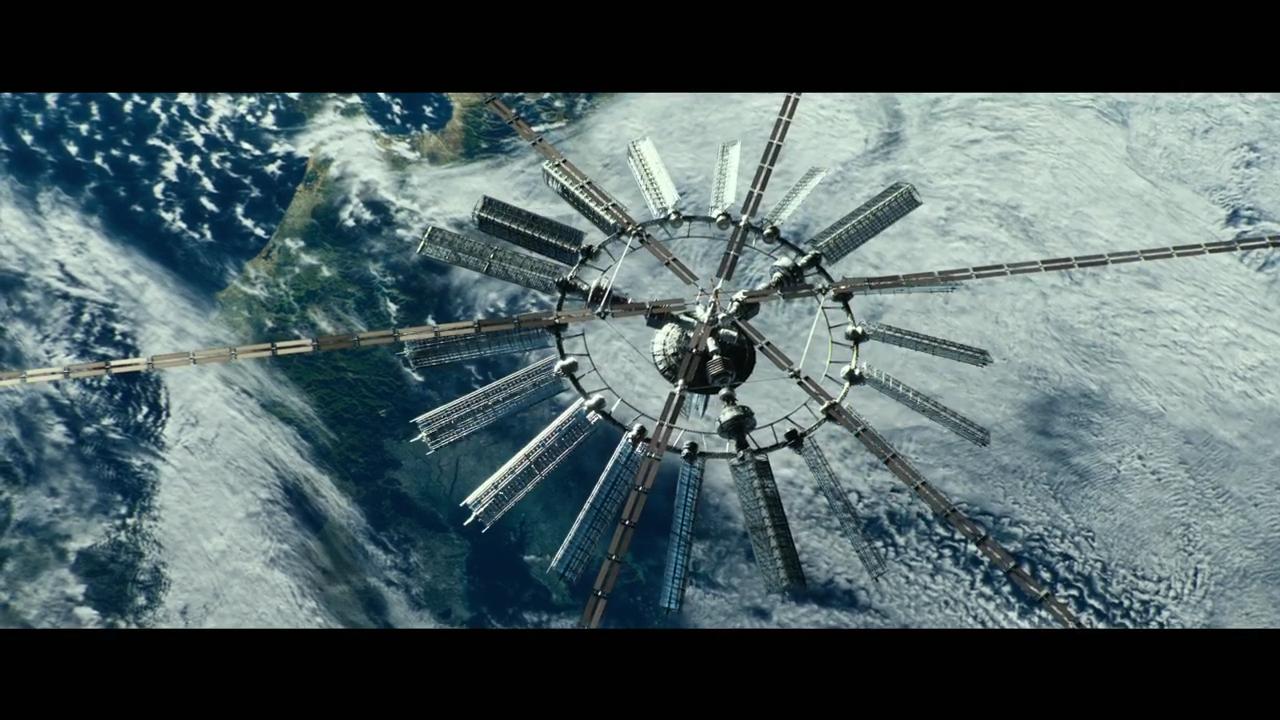
Geostorm satelliteGeostorm is a movie that continually hints at the presence of international politics: the satellite system, we are constantly reminded, was built as a joint project under the U.S.’s jurisdiction; it is, of course, about to be handed over to the UN, which is treated as a powerful force opposed to the U.S. in the way it only is in blockbuster movies; and the cast is commendably international.

But the figure of the American president still serves as a lynchpin, pinning it to a specifically American sense of the world. And it’s because of this that the foisting of the role of conspirator off onto Harris is so revealing of its goals.

The weather satellite, we are constantly reminded, works perfectly, only became dangerous because of a virus. In the same way, the parasitically evil staff member reinforces the idea that the role of the President, and the country he stands for, works perfectly. Harris’ motives, which he helpfully rants about as he’s being dragged away, are to “turn the clock back to 1945, when America was on top of the world,” an opportunity the President manfully refuses.

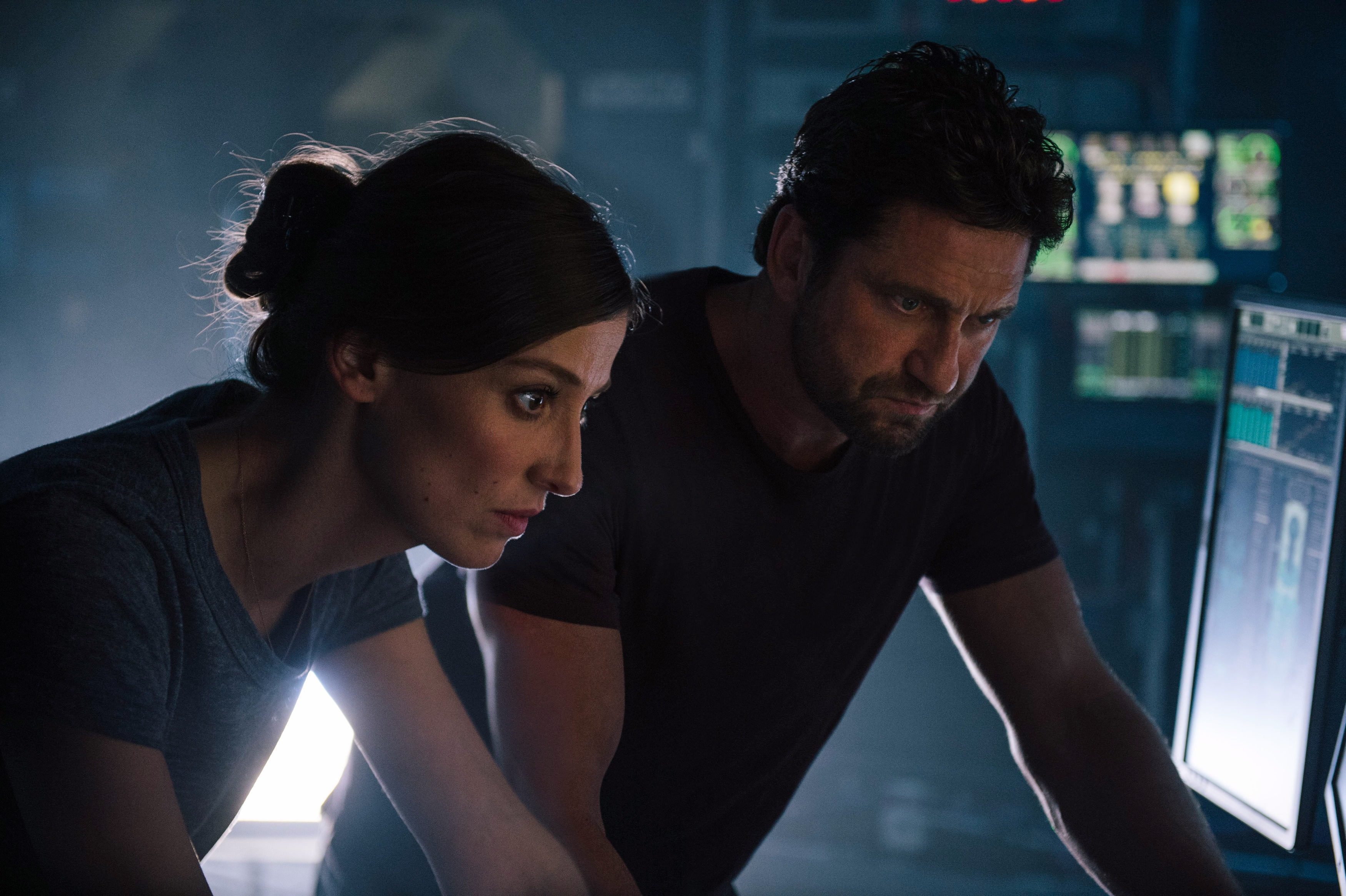
Gerard Butler and Alexandra Maria Lara in GeostormIn the final moments, we are set up for Gerard Butler’s impossibly fit engineer to sacrifice himself in the most Armageddon-aping way imaginable (someone, for some reason, has to stay behind to input codes manually). But he ultimately survives, because his sacrifice is unnecessary. Bruce Willis could sacrifice himself in Armageddon because he was doing it to protect his daughter and her fiancé. It was really the fullest expression of the father, as defined by terrible movies: to “guard” his daughter until she marries (her husband then taking the place of the father). Willis’ sacrifice was more of a dissolution than an absence.

Butler’s sacrifice is unnecessary because, in the choice to pass on power to “the world,” that sacrifice has already been made. America gives the world the gift of independence, and in doing so dissolves itself: it will always be the one who freed the world to be free, and thus can make a gift of what was inevitable. Maybe Devlin can adapt Barthelme’s The Dead Father next.

February 28, 2018 0 comments
1 FacebookTwitterPinterestEmail
Harris Dickinson in Eliza Hittman's Beach Rats
CommentaryFilmReviewsStreaming Selections

Beach Rats

by Sam and Rick February 24, 2018
written by Sam and Rick

On several occasions in Eliza Hittman‘s shimmering, woozy Beach Rats, Frankie (Harris Dickinson) insists, “I don’t know what I like.”

It rings false — Beach Rats is a catalog of desires, a kind of aesthetic carnival of lazy afternoons near the water, glistening skin, boardwalk trysts, neon clubs (which reminded me of Hittman’s excellent 2011 short Forever’s Gonna Start Tonight), desperate fumblings between bodies in secluded spaces, fireworks — but there’s an element of truth to it. 

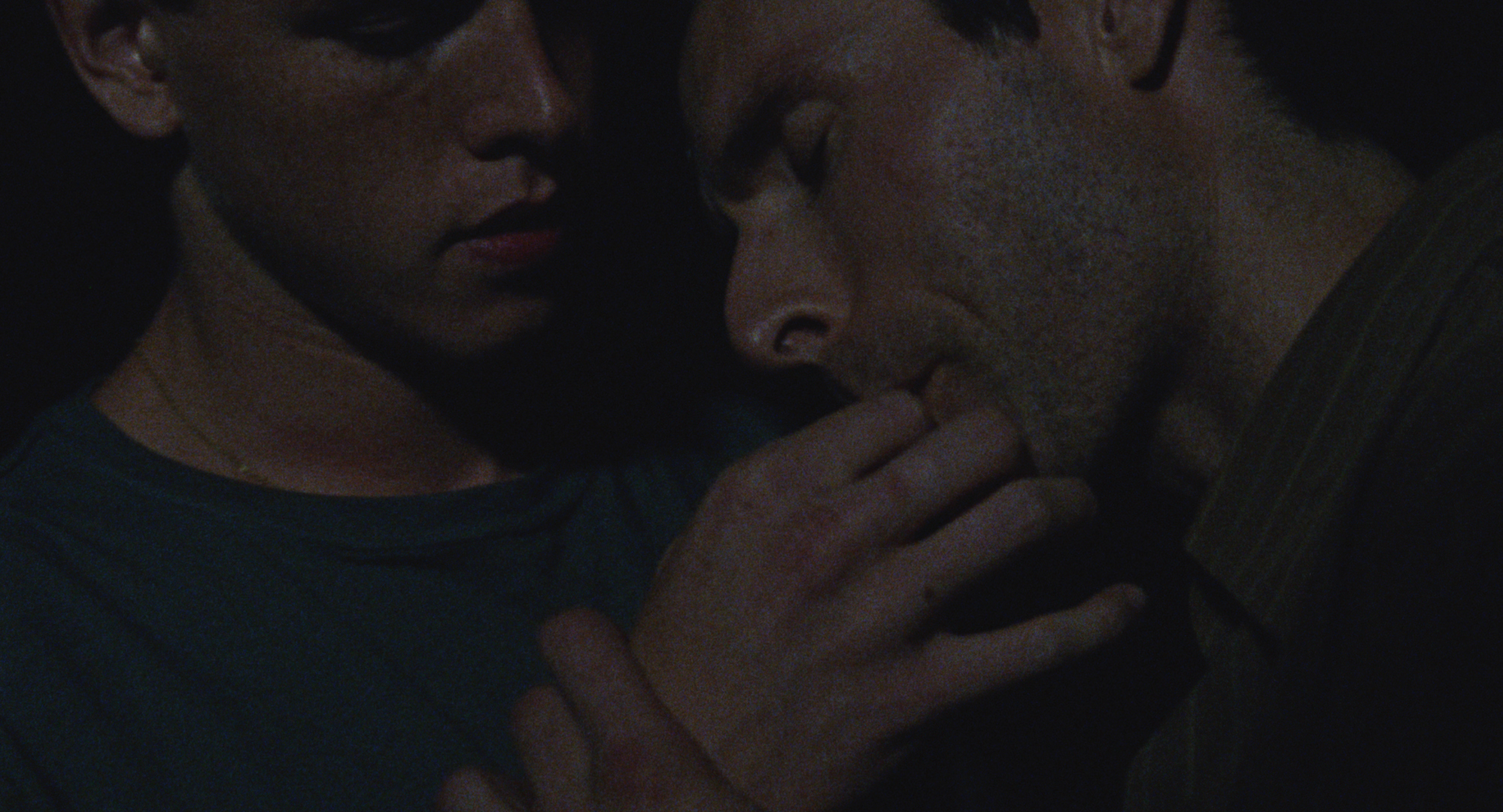
Harris Dickinson in Eliza Hittman's Beach RatsFrankie is a closeted teen, trying and mostly failing to square the low-rent machismo of his idiot Brooklyn friends with his own desires, which he retreats to at night in chatrooms and, later, in furtive hook-ups. Much of the mood and atmosphere sets the viewer up for some sort of Stranger By The Lake narrative twist, but Beach Rats doesn’t go that route. Instead, Hittman follows Frankie’s journey with a huge amount of empathy and a rare wisdom — it’s not clear whether it will, indeed, get better for him, at least not within the structure of Beach Rats itself. Hittman’s strategy is observational, her images mirroring Frankie’s confusion and desire. It’s tense and undeniably intoxicating. 

Harris Dickinson and Madeline Weinstein in Eliza Hittman's Beach RatsNewcomer Dickinson is stellar, and so is Madeline Weinstein as Simone, a girl Frankie meets on the boardwalk who, at least for a time, offers a heteronormative out. The emotions generated, mostly conveyed through small gesture and flickers across faces, feel painfully genuine throughout — Beach Rats is quietly tragic, without ever putting too fine a point on it.
Hittman constructs a powder keg of adolescent sexuality, and then refuses to light the fuse. We simply encounter these people, these fraught, complicated bodies, at a moment of particularly heightened sensitivity and, like adolescence itself, it feels profoundly dangerous. (Rick – Streaming on Amazon Prime)

Quick Links

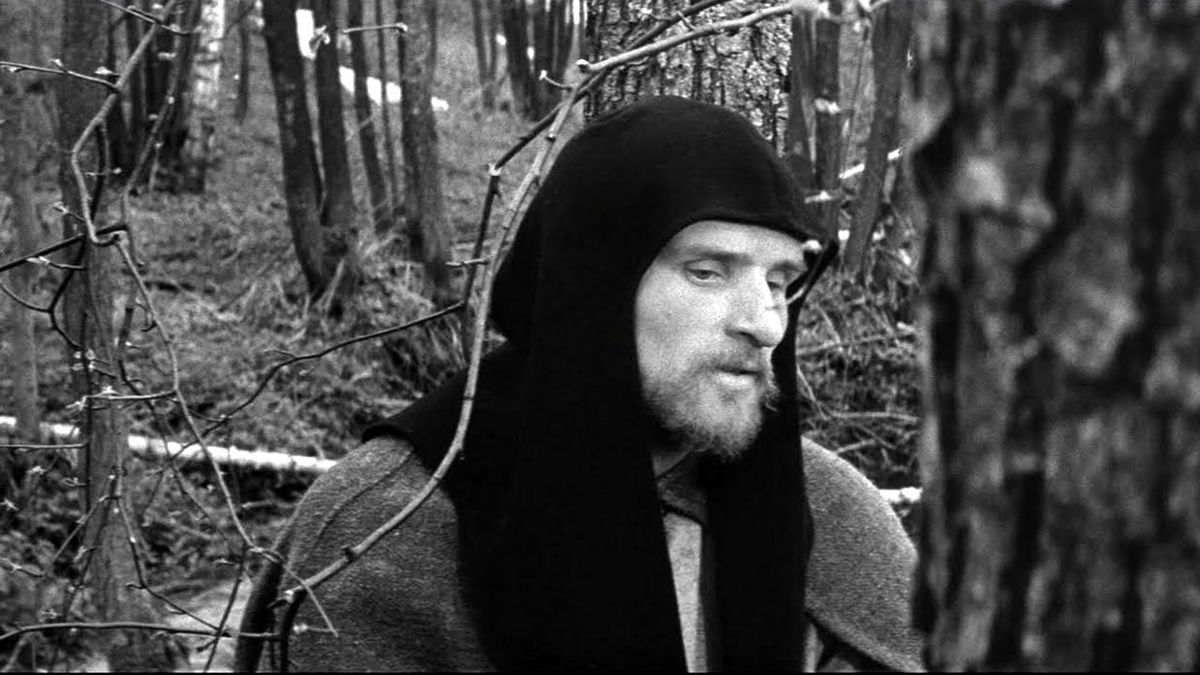
Andrei Rublev

Tarkovsky's Andrei Rublev

It is, I’ve found, much easier to interest Western audiences, even cinephile audiences, in Tarkovsky‘s science fiction films like Solaris and Stalker than in his “realist” films. That’s a shame, because his films like Andrei Rublev have a tremendous amount to offer the careful viewer.

I understand being frightened off by a lengthy exploration of the life of a medieval icon painter; if Russian culture is an inscrutable monolith for many Westerners, the Eastern Orthodox Church is the monolith of monoliths. My advice: treat this wonderful, mysterious film like one of his sci-fi movies, accepting as artifice what you don’t understand. Given Tarkovsky’s extremely loose use of historical material, you may be closer to reality than you think. (Liz – Streaming on Filmstruck)

The Breadwinner

Nora Twomey's The Breadwinner

One of the 5 nominees for Best Animated Feature next month, Nora Twomey‘s story of a young girl’s quest to free her schoolteacher father from a Taliban-controlled prison is perfectly told and exquisitely rendered. Like her previous films The Secret of Kells and Song of the Sea, it’s steeped in mythology and childlike wonder, though The Breadwinner alternates between that gentleness and a much darker, much scarier realism. 

Our protagonist Parvana (voiced by Saara Chaudry) makes for a wonderful audience surrogate, though, quietly bucking a horrific system out of necessity, and Twomey’s presentation of particular gender concerns — social oppression, family dynamics, friendship — are both nuanced and integral to the narrative. It’s a tough balancing act all around, with the vast Afghani vistas and dark interiors contrasted with the geometric designs of Kells and Sea that animate a story-within-the-story, and The Breadwinner pulls it off to great emotional effect. It’s further proof that the Irish Cartoon Saloon is the real deal. (Rick – Streaming on Netflix)

Raiders of the Lost Ark, Indiana Jones and the Temple of Doom, Indiana Jones and the Last Crusade

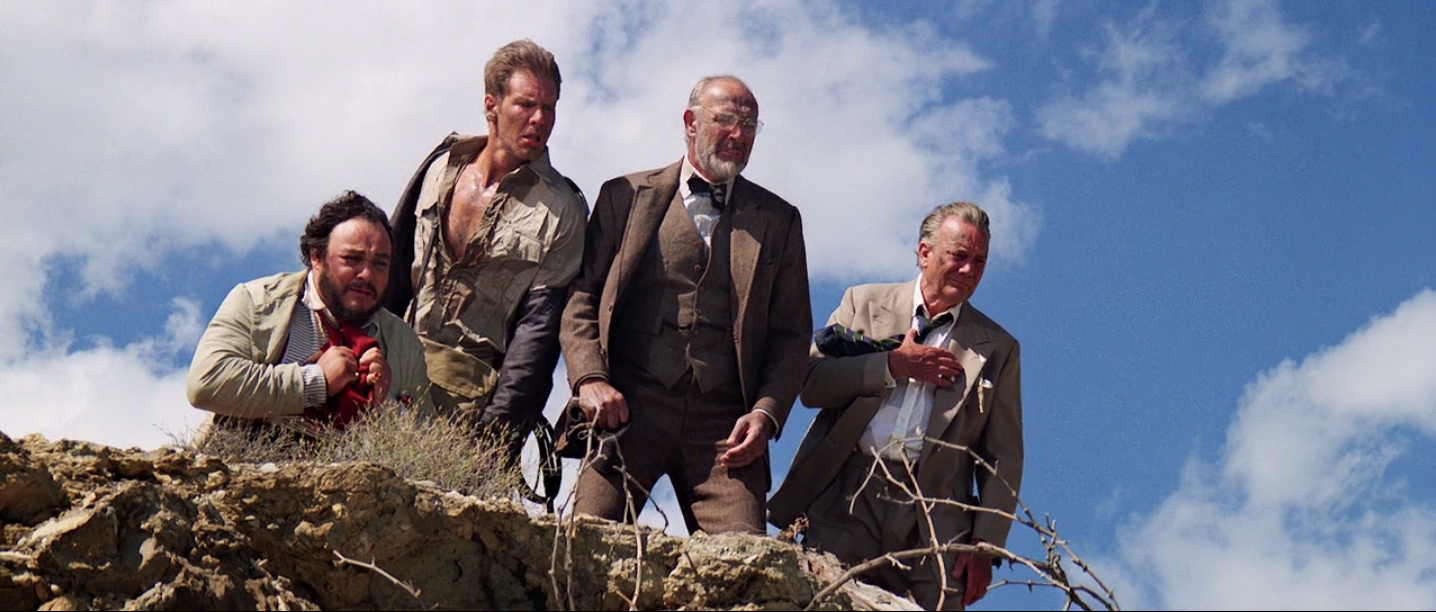
Indiana Jones and the Last Crusade

I ate a bunch of cannabis and watched all 3 of these in a row. Recommended! (Rick – Streaming on Amazon Prime)

Red Dawn

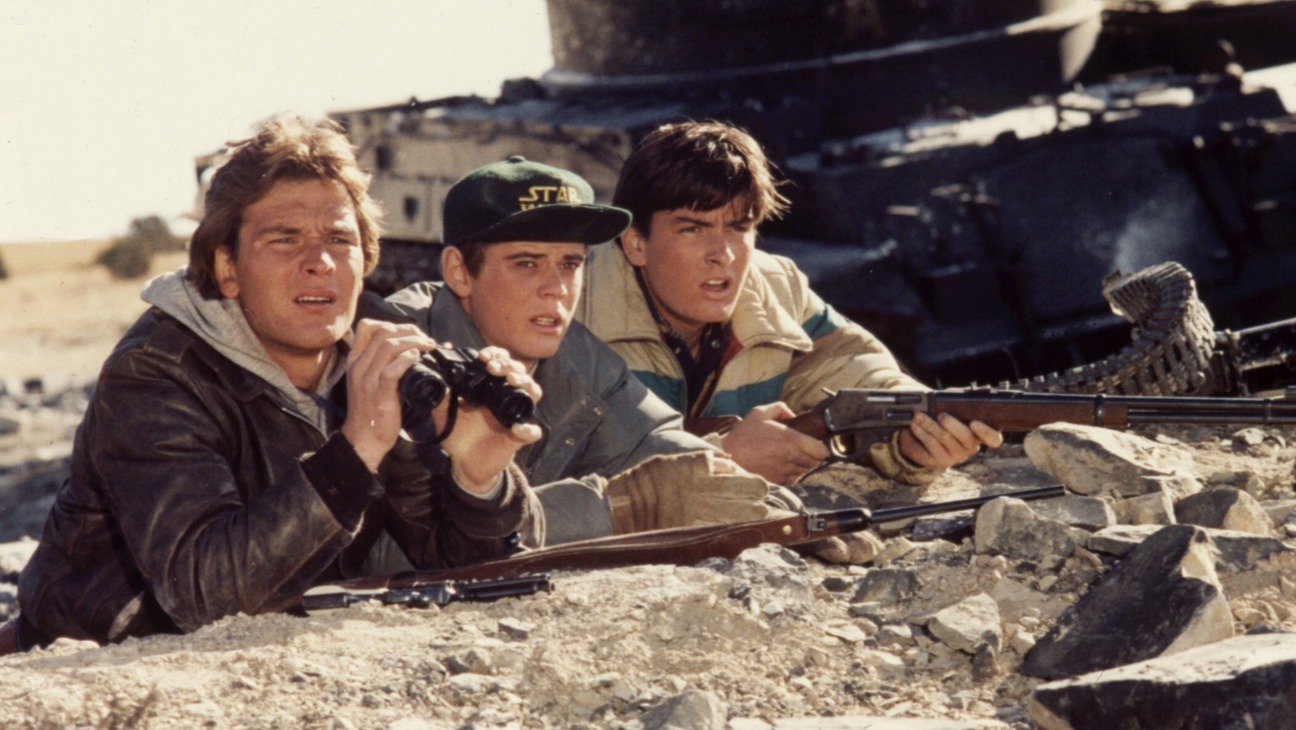
Patrick Swayze, C. Thomas Howell, and Charlie Sheen in Red Dawn (1984)

The movie that John Milius believes led to his de facto blacklisting, presumably because Liberal Hollywood wasn’t ready for this variety of bold truth-telling and/or for Patrick Swayze firing rocket launchers at the Cubans and Russians who have occupied all the McDonald’s franchises of the heartland.

Everything about Red Dawn is ridiculous and overblown, but holy shit is it a sight to behold. Not only do you get a revolutionary, insurgent Brat Pack (with C. Thomas Howell, Charlie Sheen, Lea Thompson, and Jennifer Grey rounding out the trenches, under Swayze’s Eagle Scout leadership), but Powers Boothe is there to bring news from the front lines, and Harry Dean Stanton is the dad, who actually yells out “Avenge me!” Red Dawn‘s got it all.

What’s most striking about this particular piece of conservative Cold War fantasy is how Milius stages an inverse Vietnam, as though, in order to heal the psychic wound left by the realization that America is not invincible, he would finally deliver the U.S. a victory as the Viet Cong. The Apocalypse Now-scribe always regretted not being able to go to Southeast Asia and fight himself — or so he claims, anyway — and Red Dawn serves as his belated contribution to the war effort. By bringing together his obsession with Teddy Roosevelt, his cartoon masculinity, and his clearly genuine enthusiasm for his vision of the American character, it’s almost certainly Milius’ most personal film. Make of that what you will. (And, if you just can’t get enough of the chest-pumping bravado, you can move right along to the documentary Milius, also on Prime.) (Rick – Streaming on Amazon Prime)

February 24, 2018 0 comments
1 FacebookTwitterPinterestEmail
Emma Roberts in Nerve
CommentaryFilm

Nerve, Ingrid Goes West, and All These Goddamn Phones

by rick February 22, 2018
written by rick

It’s a platitude to say that emerging technologies inform our fiction. How couldn’t they? The raw material of everyday experience – our buildings, schools, livelihoods, family structures, routines, modes of communication – has always weaseled its way into cultural production, realist or speculative. The very ways we capture and represent our experience shift with each new development, and so do the content and form of the stories we tell and consume. It will surprise no one reading this on a phone that phones themselves are having something of an inevitable moment. 2016’s millennial action narrative Nerve and last year’s prickly Ingrid Goes West indicate some of the reasons why.

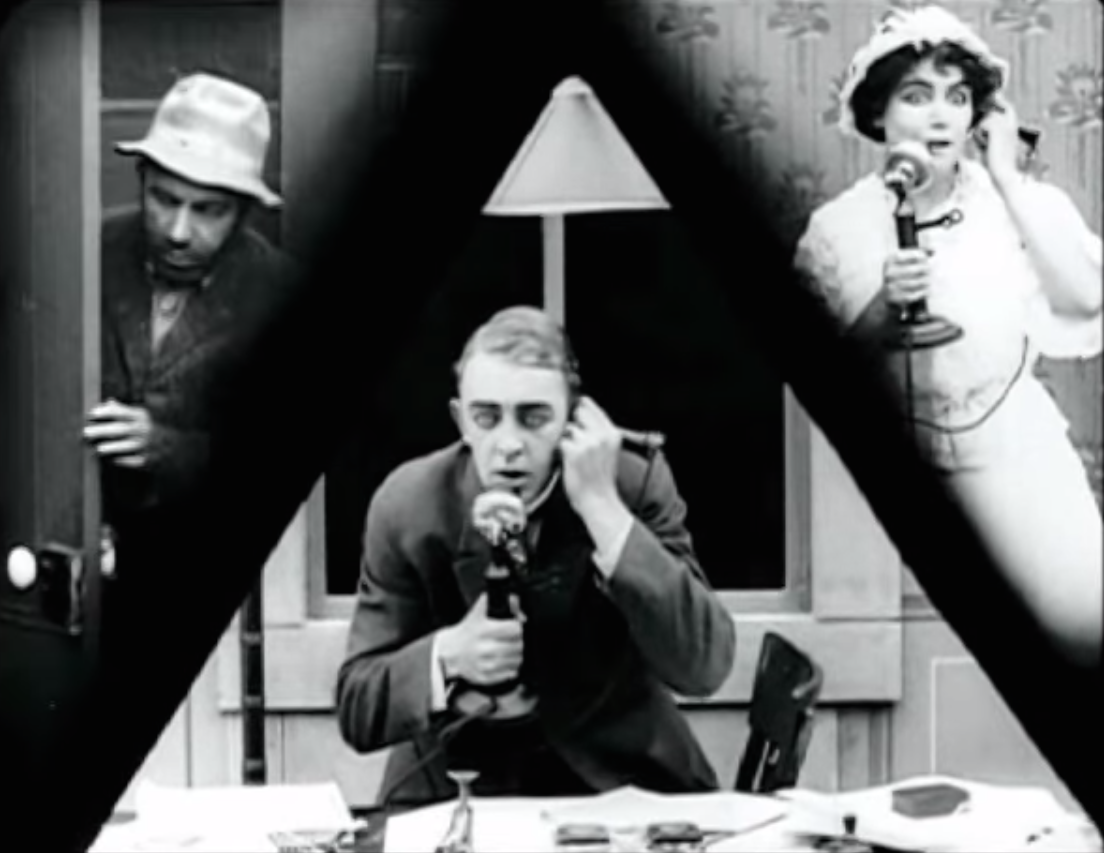
Triple image on phones in Lois Weber's SuspenseThe emphasis, in itself, is nothing new. High art or low, schlock or masterpiece, we’ve been fed a steady cinematic diet of people on the phone. (Lois Weber’s tri-furcated Suspense (1913) generates most of its, well, suspense from a woman on the phone and a threatening man at the door. We will see this more than a few times in the following 105 years.)
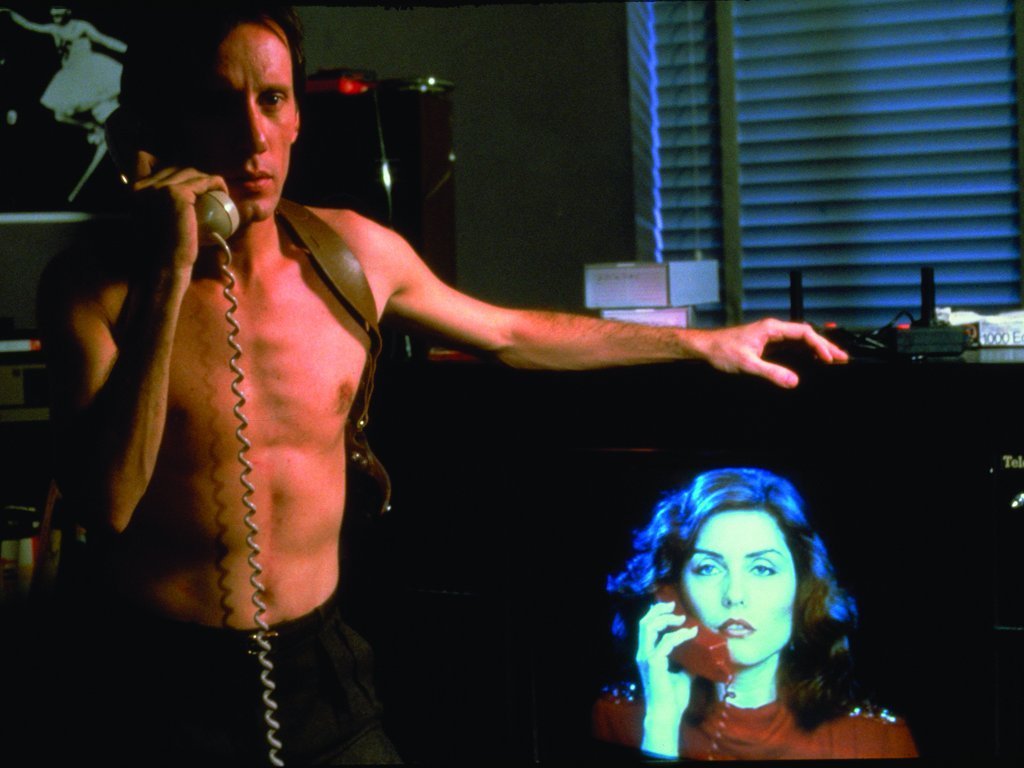
The ubiquity of various telecom devices – and their resulting paranoias, alienations, or possibilities for escape/subterfuge – is a sci-fi trope, of course; Star Wars or Trek or Blade Runner or 2001, the pervasive screens of Videodrome, Jack Palance‘s uncomfortably close videographic mouth in Cyborg 2, the comically large phone deployed by a comically large Rainer Werner Fassbinder in Kamikaze ’89. Hand-held space-age devices, glimmering screens that allow for proto-FaceTime interactions, telepathic James Woods and Debbie Harry on phones in Videodromecommunication, AI … these are all familiar background elements, the sometimes literal wallpaper of the past’s dreams of the future, which, as Nick Pinkerton wrote about Kamikaze, “tells us more about the moment it was made than the future it imagines.”
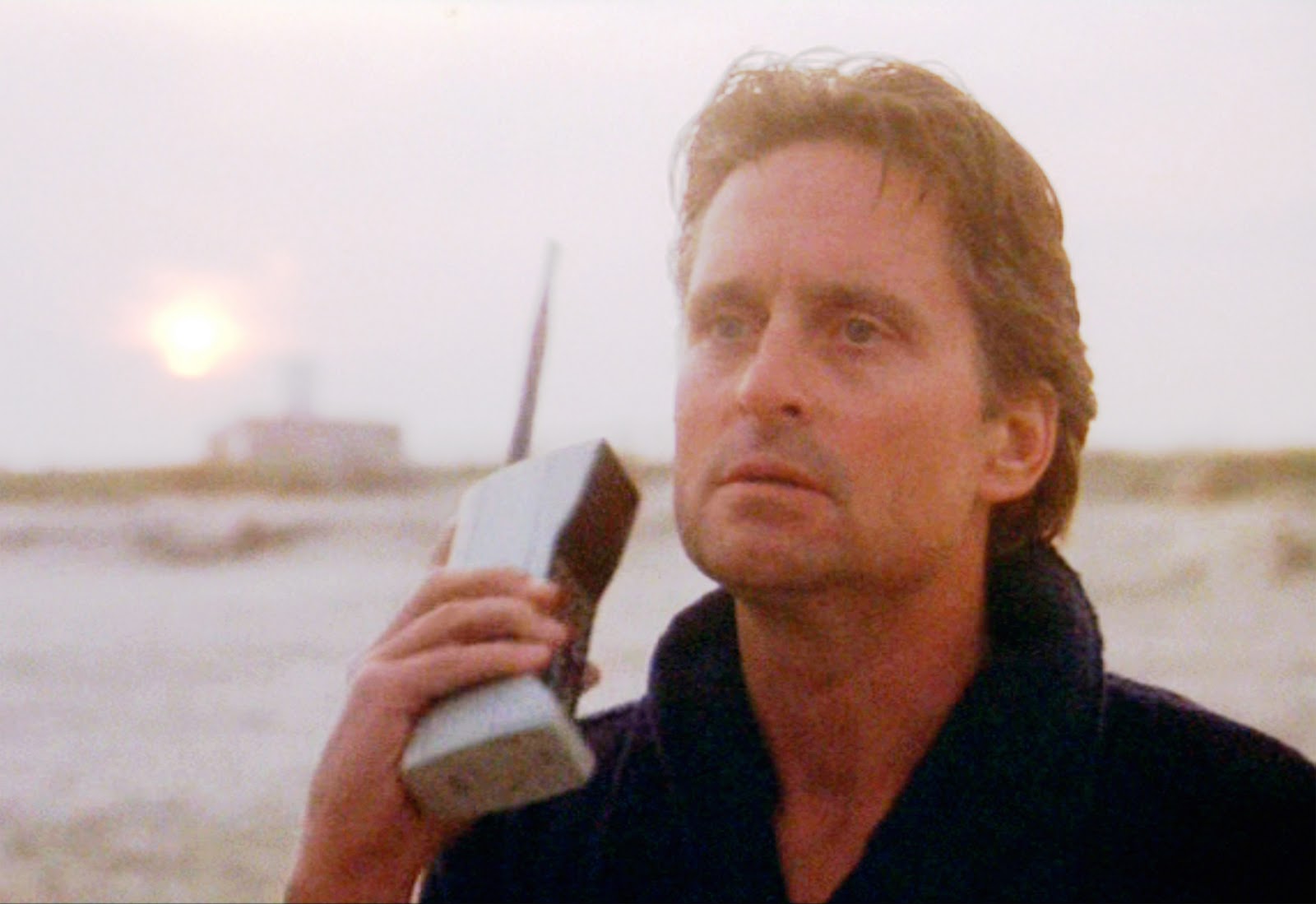
In less speculative contexts, the devices themselves are enlisted for symbolic reasons, giving us a sense of the characters and their relations – Gordon Gecko’s monstrosity in Wall Street, for instance, is funny now, but it’s clearly meant to give a sense of who he is, how his identity is constructed and how he functions in the narrative world we’re encountering.

Michael Douglas' ridiculously big phone in Wall StreetNerve and Ingrid Goes West mark a fairly radical shift from that construction, though. In Wall Street, the phone is an accoutrement, a capitalist signifier of Gecko’s own power and ubiquity, and those of people like him. In these newer films, the relation is reversed. Our protagonists are creatures of the phone in a way completely alien to a creation like Gecko; the worlds we encounter in Nerve and Ingrid Goes West, the interesting parts of those worlds anyway, largely do not exist outside of the phone. It’s not that the world are fake, as in the “gnostic movies” of 1998/1999 films that Liz has been tackling; it’s that the characters only matter in relation to their technologies, which give shape to the narrative and images.
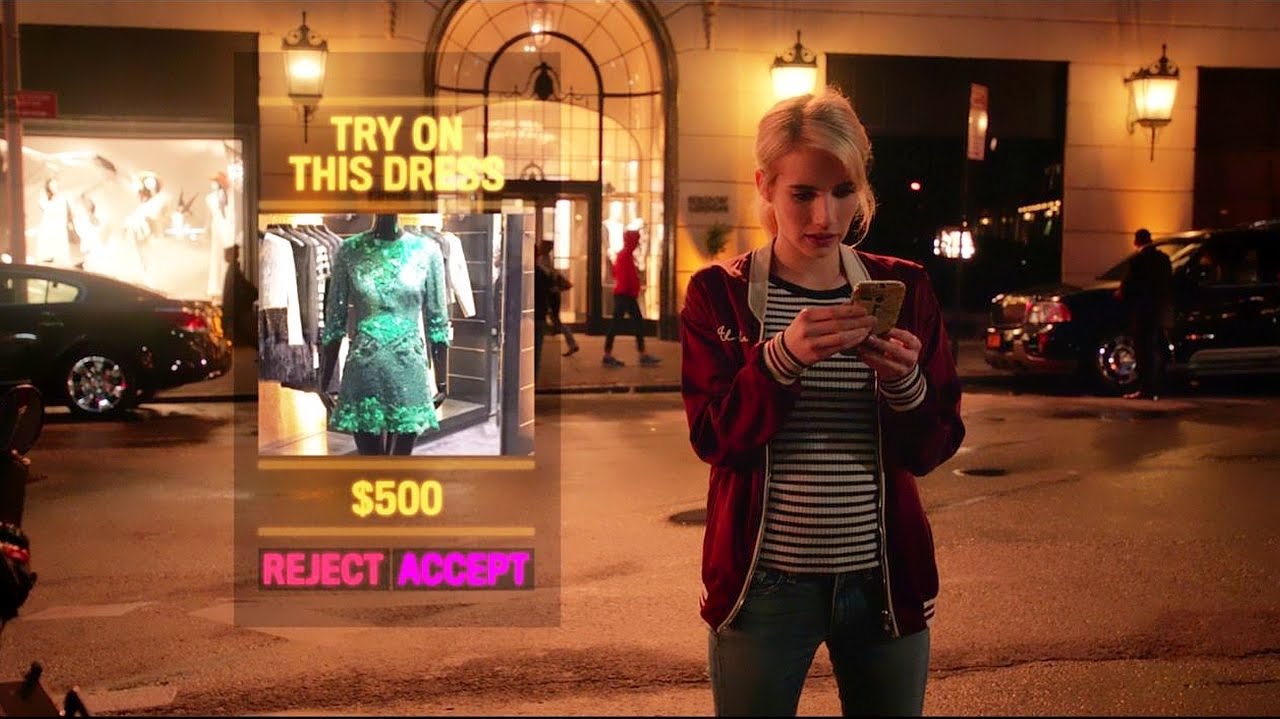
Emma Roberts considering a dare in NerveNerve tells the story of a sort of Dark Web interactive game, in which users sign on as “players” or “watchers”. The watchers suggest outlandish dares, ranging from Jackass-style cringe-comedy to life-threatening stunts, and the players seek to outdo each other for the anonymous approval of strangers (and also prize money). Directors Henry Joost and Ariel Schulman, and cinematographer Michael Simmonds, give Nerve an appropriately videogame pastiche aesthetic, with overlaid text flickering against a garish vision of the world-as-casino; even the diners look like you’re somewhere off-Strip in a YA-friendly Vegas. A once-shy Emma Roberts and a suspiciously casual Dave Franco traverse city streets doing wacky shit, but their real home in the story is somewhere more amorphous and crowd-sourced.

Aubrey Plaza checks her phone in Ingrid Goes WestMeanwhile, Ingrid Goes West takes place mostly in a sun-dappled L.A., where Aubrey Plaza’s protagonist, an Aubrey Plaza type, has fled after an unfortunate stint in the mental hospital. She, too, is more an accessory to her phone than the other way around. Consistently refusing to realize that, as David Ehrlich puts it, “No one is as happy as they seem on Instagram, as depressed as they seem on Twitter, or as insufferable as they seem on Facebook,” Plaza’s character constructs her identity through the always-almost obtainable desires of social media. The film’s title, which doubles as her username, hints at a journey of self-discovery and conquest, but in practice it amounts to stalking an Instagram celebrity and remaking herself in that digital image. (Think The King of Comedy by way of The Bling Ring.) Ingrid’s madness is indistinguishable from the technologies that inform it, and the formal trappings that director Matt Spicer rolls out – voiceovers filled with hashtags and awkwardly enunciated emoji descriptions, animated hearts popping out of the image – make sure that no one can fail to notice.
The resolution of these narratives is less interesting than the very fact that they exist. (For the record, Nerve cheats a bit, veering sharply into well-trod conspiratorial vagueness and didactic uplift; Ingrid Goes West has the “courage” of its cynical convictions, and ends on a distinctively unpleasant note.) In both films, the technologies have specific relational functions – Roberts takes these dares to prove herself more adventurous than her friends imagine her; Plaza is presented as a vessel hollowed out by her phone’s expectations but ultimately legitimized in her “realness” by the approbation of strangers. Both are forms of social madness.

There’s something distasteful about all of that, particularly in Ingrid, but something undeniably felt. It’s not simply a question of being alone in a crowd, or falling behind in the aspirational rat-races of presentation, or that our attempts to connect can distance us instead; as in Personal Shopper, where the madness and confusion of grief manifests most acutely in a back-and-forth text exchange, identity itself often hinges on these devices in our cinema right now. The paranoia isn’t really about who is on the other end of the line, or if the call is coming from inside the house. The point is that the house is inside the call.

February 22, 2018 0 comments
1 FacebookTwitterPinterestEmail
CommentaryFilm

The Unlikeable Secret Doubles of Michael Haneke

by Lark February 19, 2018
written by Lark

There are a lot of ways a filmmaker can be hard to like. They might make incredibly long films, or incredibly slow films, or incredibly slow, long films; they might be hard to track down, or hard to find in decent-looking formats; they might make wonderful films but be awful in real life. Michael Haneke doesn’t quite fit into any of those categories. (At least, I didn’t think he fit into the last one; his recent, incredibly dumb comments on #MeToo make him sound like a candidate.)

His movies aren’t fun, but they’re not really slow or particularly long, and after a few brushes with Oscar success, a lot of his movies are pretty easily accessed.

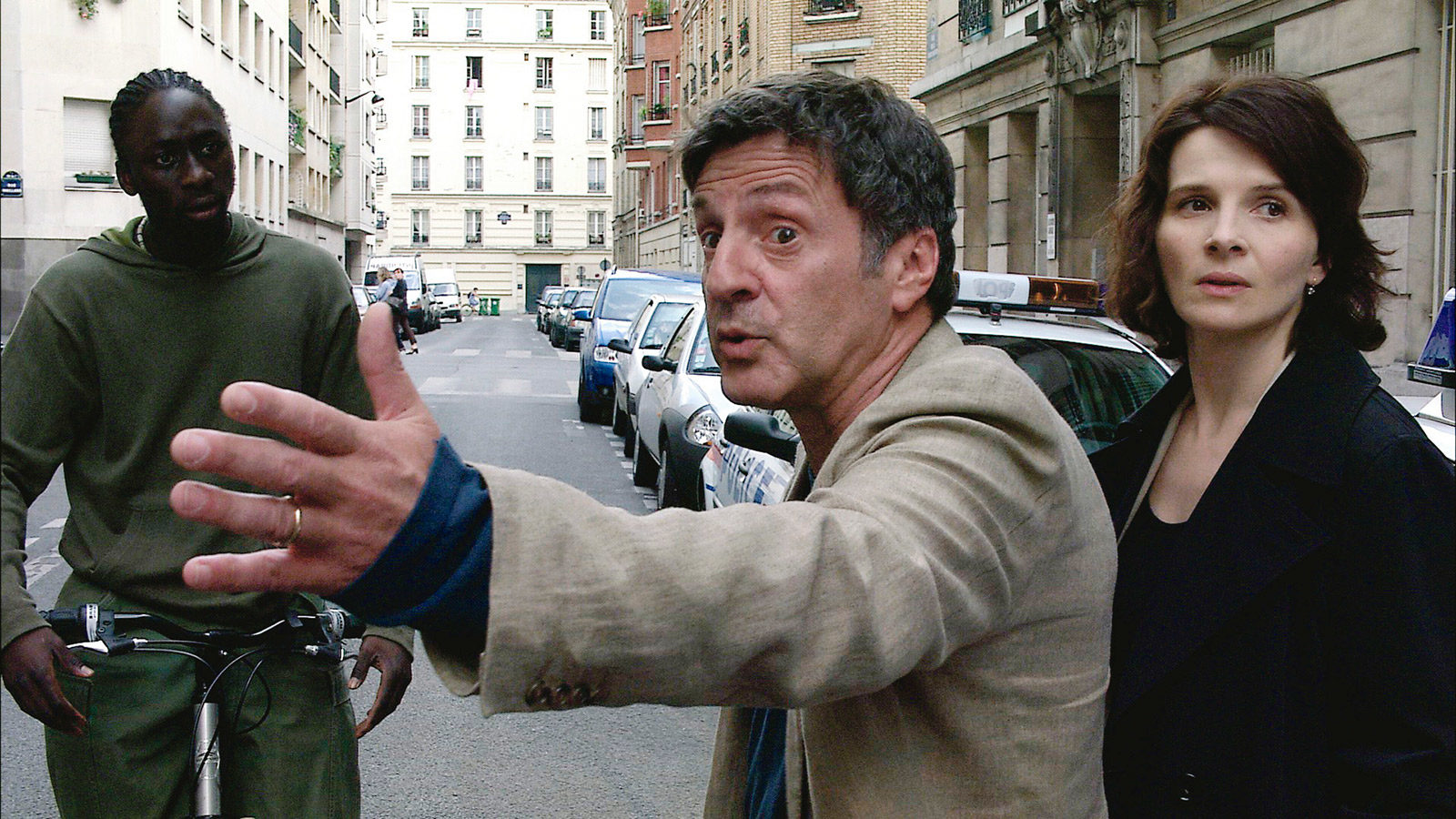
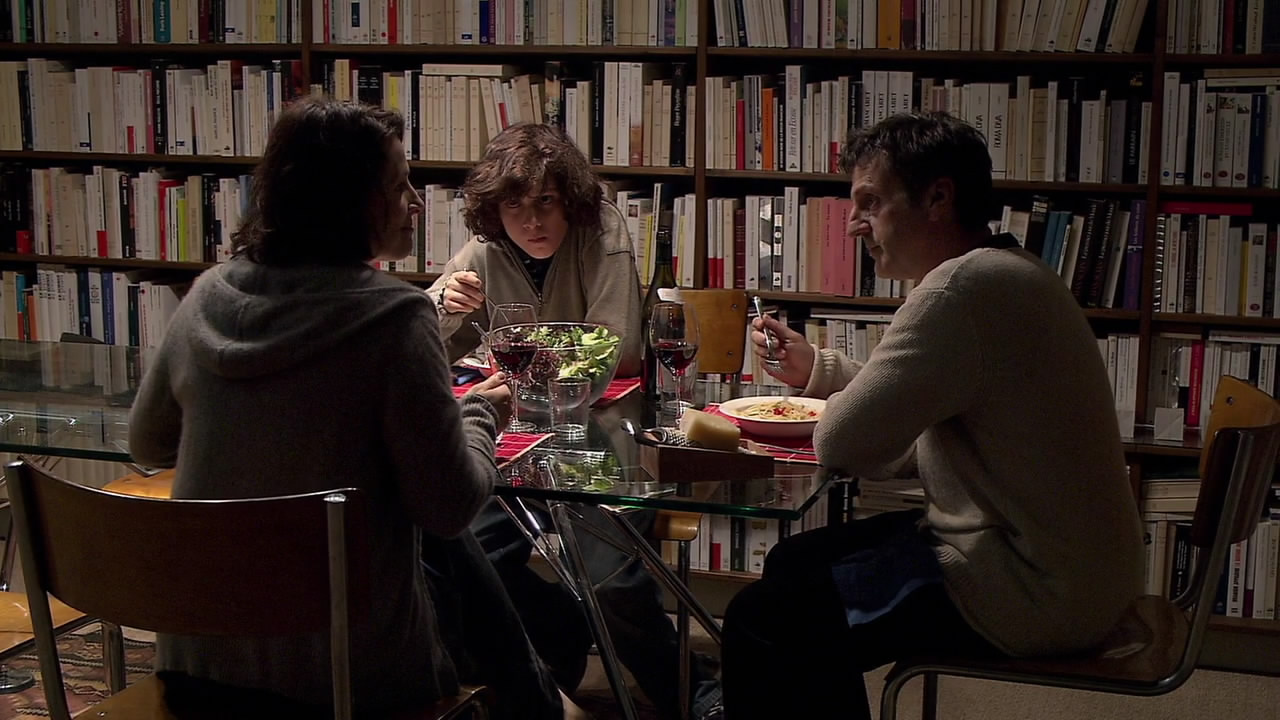
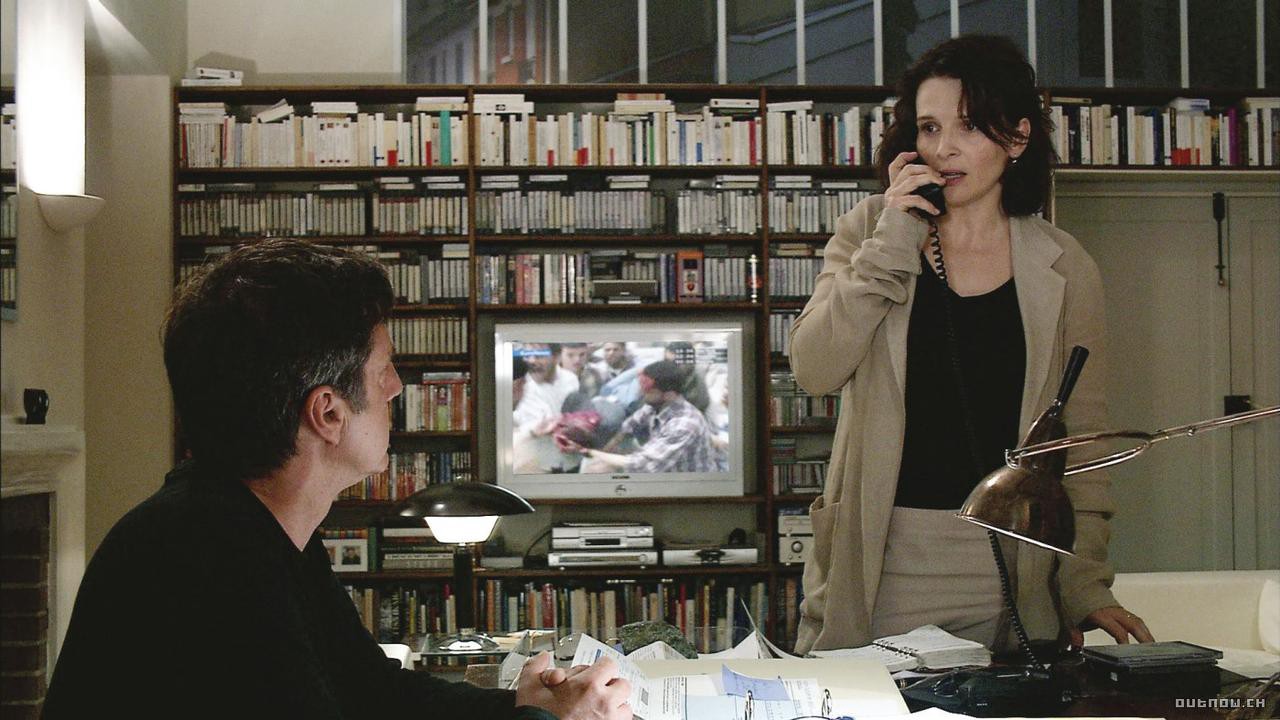
Daniel Auteuil and Juliette Binoche in Michael Haneke's CacheHow do you identify the off-putting thing about Haneke’s movies? Is it that they’re dour? Sure, but there have been plenty of great dour filmmakers. Is it that he’s preachy? Sure, but most of the things he’s preaching against — racism and the casual cruelty of people with cultural power — are legitimately horrible.
No one is better at depicting the quiet suffocation of modern life, but in his worst movies, like the two basically identical versions of Funny Games, that suffocation seems to leak from the screen into the theater. There is so little room for creative freedom on the part of the viewer that one wonders why one is even watching at all. (Which was the ultimate problem with Funny Games, a movie that openly tells the audience not to watch it.)

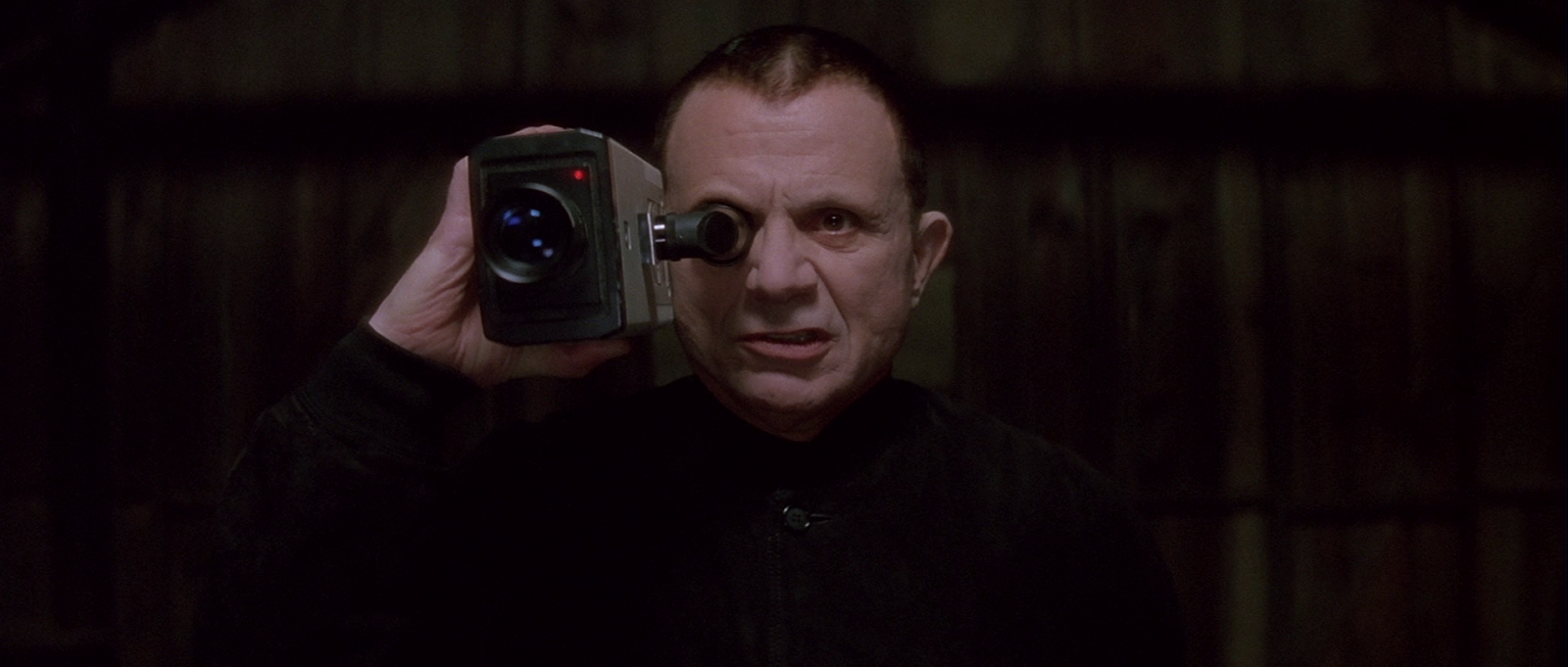
Robert Blake as the Mystery Man in David Lynch's Lost HighwayI’m not sure if 2005’s Caché is one of his films that escapes this sense of suffocation, or if it is simply one that uses it most effectively within its own context. The plot is basically identical to the first half of Lost Highway: a tense and highly-strung marriage is interrupted by a series of mysterious tapes left on their front porch.

But where Lynch escapes into imagination, Haneke sticks with his surveilled couple. In Highway the motivating factor is a future-bound paranoia: the tapes move Bill Pullman inevitably towards the horrific murder of his wife. In Caché, the motivating factor is a past-bound guilt.

The husband (Daniel Auteuil, who I believe has never smiled in his life) is immediately convinced of the culprit: an Algerian orphan (Maurice Bénichou) who his parents almost took in as a child, but who Auteuil lied about and who was sent away to live a life of poverty.

In his previous attempts to address racism, Haneke had depicted the lives of immigrants, but any real exploration of bigotry from the side of the oppressed has to contrast the joy of life with the horror of its squelching, and Haneke simply does not seem to have the skill to present joy well. Instead, his oppressed figures are mostly objects of pity.

External shot of apartment in Michael Haneke's CacheBy placing Caché in a fantastic world, though, by presenting an impossible mystery — we know from the first shot that, despite Auteuil’s search for the culprit, the tapes could not be recorded by any real human — Haneke stops trying to guilt racism away and gives himself real space to explore the oppressor’s world.

Caché is a movie about guilt, paralyzing guilt that multiplies harm exponentially. Because of his childish mistakes, Auteuil caused his almost-brother far more pain than he could have guessed. And his impossible need to deny what happened leads him to denying it pathologically instead of making restitution.

It’s never said outright, but the tapes seem almost to be a physical manifestation of Auteuil’s guilt. By holding onto the guilt of his sin, he manages to make Benichou’s life even worse.

Daniel Auteuil and Juliette Binoche in Michael Haneke's CacheAll of this makes Caché one of Haneke’s most remarkable movies. But what does it in turn say about Haneke’s earlier works? The opening shot, a long static shot with credits overlain that turns out to be the first tape which the couple is watching, already blends the film itself and the videotapes within it.

If the tapes are a manifestation of Auteuil’s guilt, can’t one also say that Haneke’s early attempts to address racism are, in some way, manifestations of his guilt as a white Austrian? It’s this kind of secret doubleness that makes Haneke’s filmography more subtle and nuanced than their miserabilist front. It’s also hard to know how much of this is purposeful metacommentary and how much is not, but it is there either way. And it is problems like that that make Haneke hard to like.

February 19, 2018 0 comments
1 FacebookTwitterPinterestEmail
Meryl Streep and Tom Hanks in Steven Spielberg's The Post
FilmReviews

The Post is a rushed exercise in lifeless Boomer Nostalgia

by rick February 14, 2018
written by rick

How much sentimental Boomer Nostalgia does it take to turn a gripping historical moment into a chore? Steven Spielberg’s The Post, hurriedly rushing onto the pre-fab Oscar dais, asks and answers this question: exactly an hour and 56 minutes worth.

Spielberg is one of cinema’s greatest technicians and, increasingly, one of its dullest storytellers. This is a strange turn of events for a guy who made his considerable name on the strength of meat-and-potatoes narratives, from the elemental Duel on. But the pulpy, wonderstruck director of Jaws, Raiders of the Lost Ark, Close Encounters, and E.T. has left the building. Hell, even the relatively nuanced moral observer of Munich or Catch Me If You Can is nowhere to be found. We are left with high-minded, middlebrow fare, another paean to the inherent decency of the American project presented as guileless as National Dad Tom Hanks’ earnest face, seemingly designed to elicit melancholy, self-contented sighs from a generation who remembers better days. The rest of us seize the opportunity to nap.

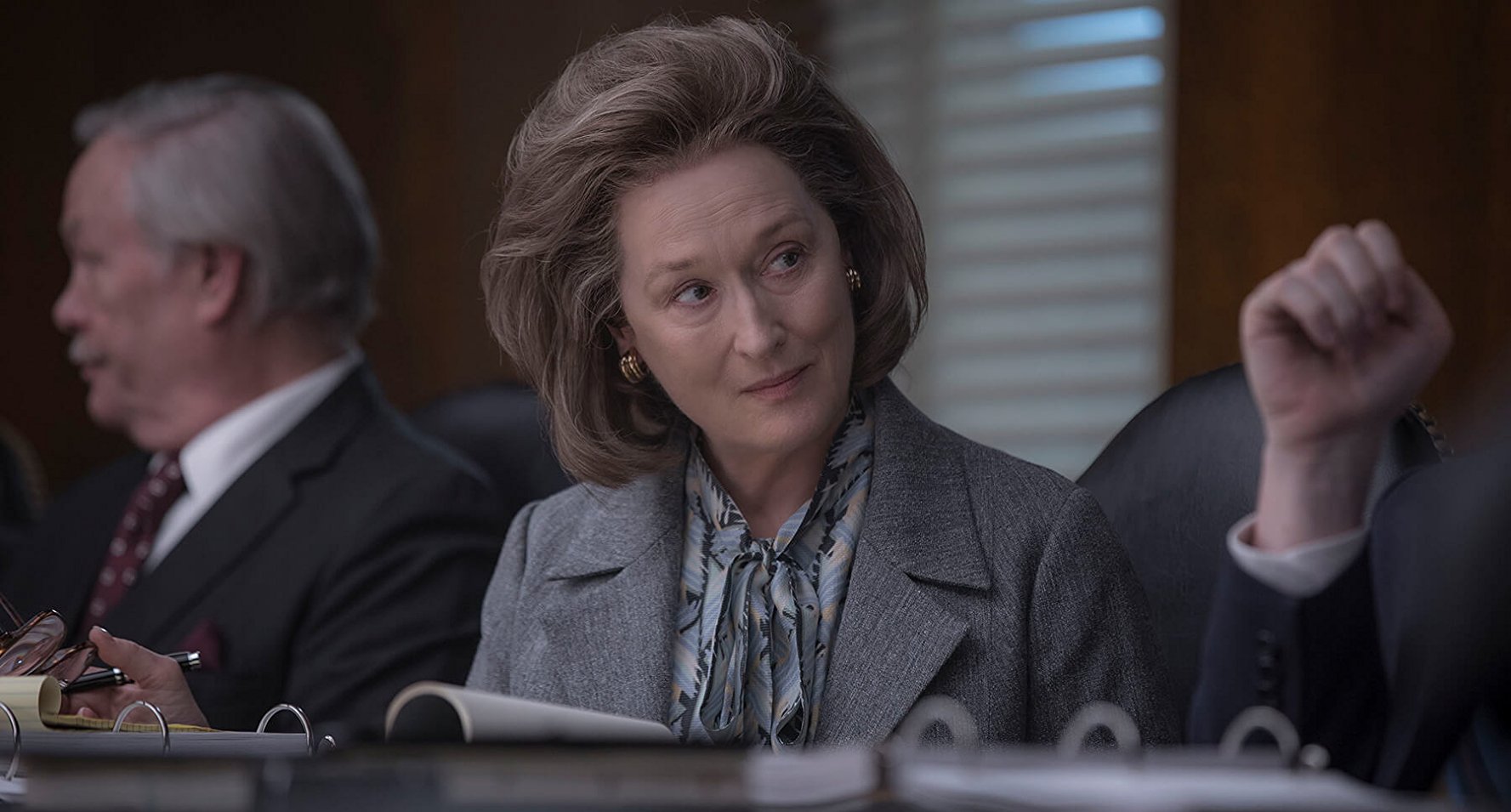
Meryl Streep as Katharine Graham in The PostThe Post tells, once again, the story of Daniel Ellsberg, The Pentagon Papers, and public and private trials and tribulations of The Washington Post as the outlet went head to head with the Nixon administration. Hanks steps into the growly Ben Bradlee role, doing his best Jason Robards. A monologuing, tic-accented, and coiffured Meryl Streep is Katharine Graham, who came to head up The Post after her husband’s death. A set of character actor all-stars and cable regulars – Sarah Paulson, Bob Odenkirk, Tracy Letts, Bradley Whitford, Alison Brie, David Cross, Jesse Plemons – round out the background, doing precisely what is asked of them to advance a story everyone knows and nothing else.
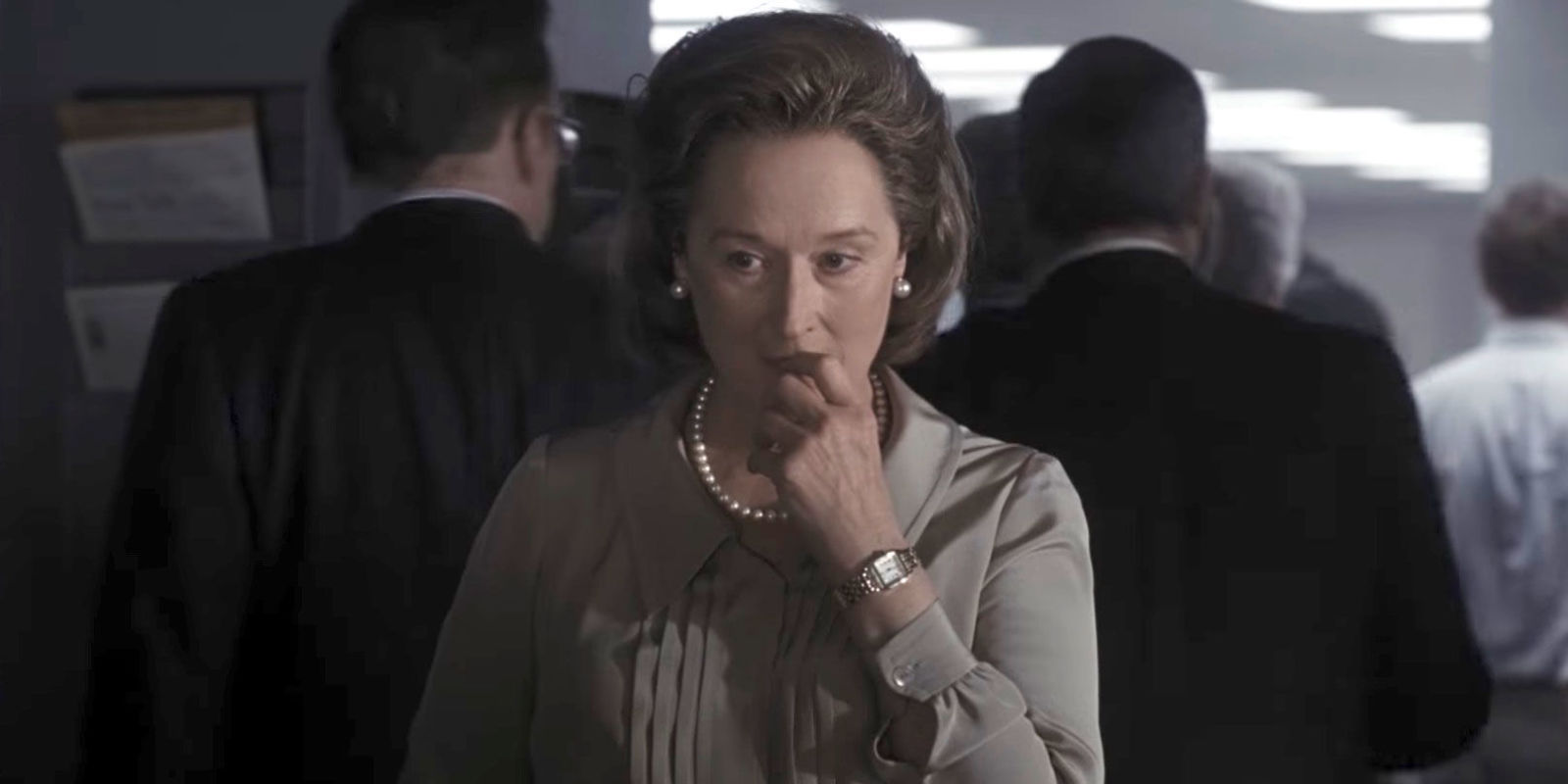
Meryl Streep in the Boy's Club of Steven Spielberg's The PostSpielberg is at his best in The Post when he lets the images do the sermonizing for him. The blue-collar materiality of the paper’s production – The Post loves its typesetters, machines, and ink-stained scribes, as noble and unerring as any Gus from The Wire – hint at the discovery and presentation of truth as a collaborative social endeavor. Streep’s isolation in the boy’s club, and her wrestling with legacy as she builds up some glass-ceiling shattering nerve, is conveyed in some striking visual moments. The Post could’ve used a lot more of that.
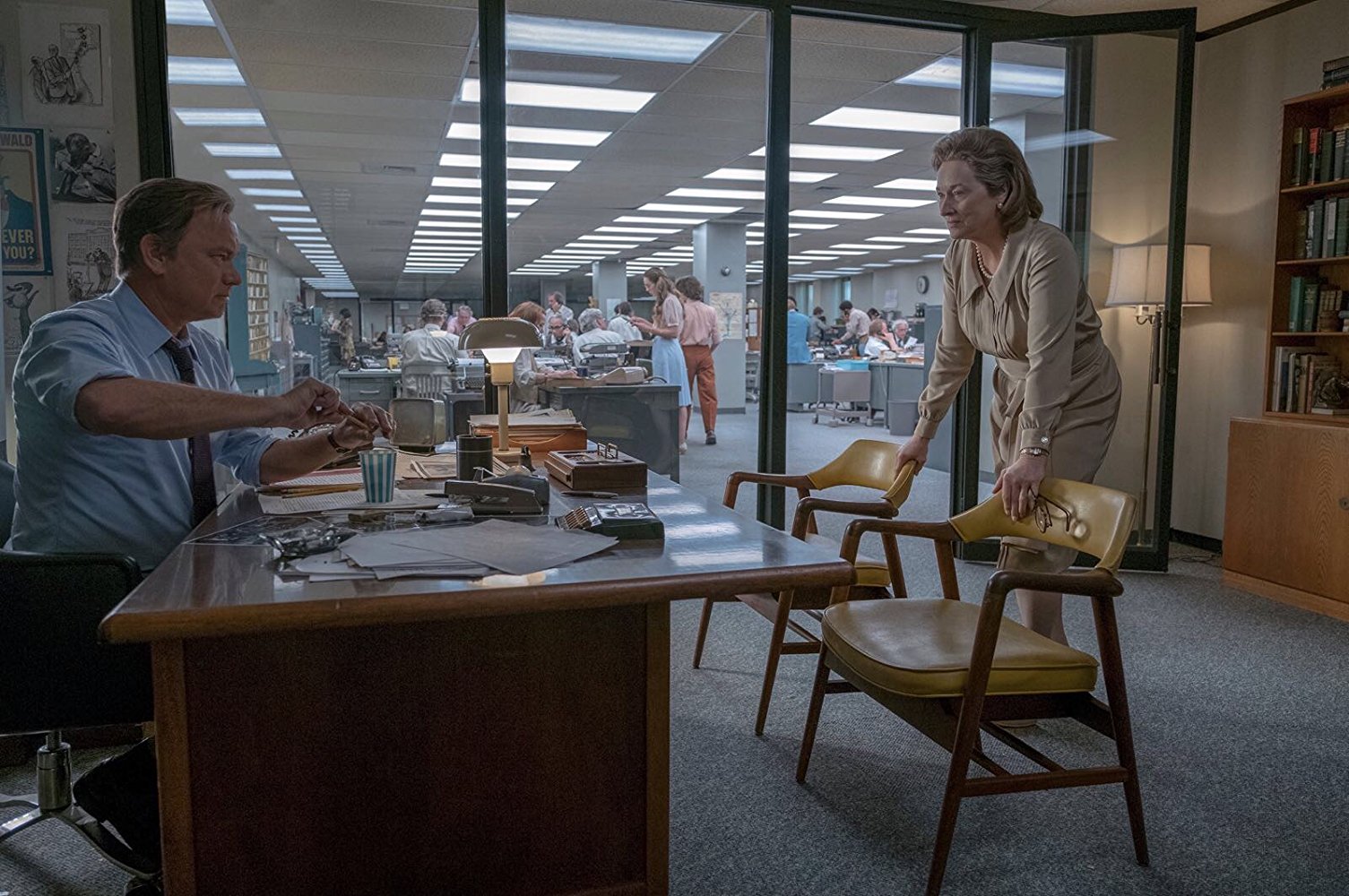
Instead, we get monologues and what passes for witty repartee between Graham and Bradlee, utterly without drama. (One scene finds Streep pouring her heart out at such length that it actually comes as a shock when the reverse-shot reminds us she’s been talking to her daughter, who never appears again in the film, for the past several minutes. It verges on a jump-scare in the midst of a teary confessional.) Scenes frequently hinge on phone calls, and not even Steven Spielberg can make someone with a phone to their ear any more exciting than a guy sitting at a typewriter.

The irony here is that The Post was acquired, filmed, and kicked out the door in an urgent 11 months, with one eye on Trump’s White House and the other on L.A.’s Dolby Theater – this, the film insists, is the story our moment desperately needs. The Post is an absolutely committed act of devotion to objective truth and the Fourth Estate, but its lack of anything approaching nuance undermines that sincerity. Its urgency is trapped in amber. It’s a spirited, simplistic defense of an idealism that was much more complicated then and nearly irrelevant now.

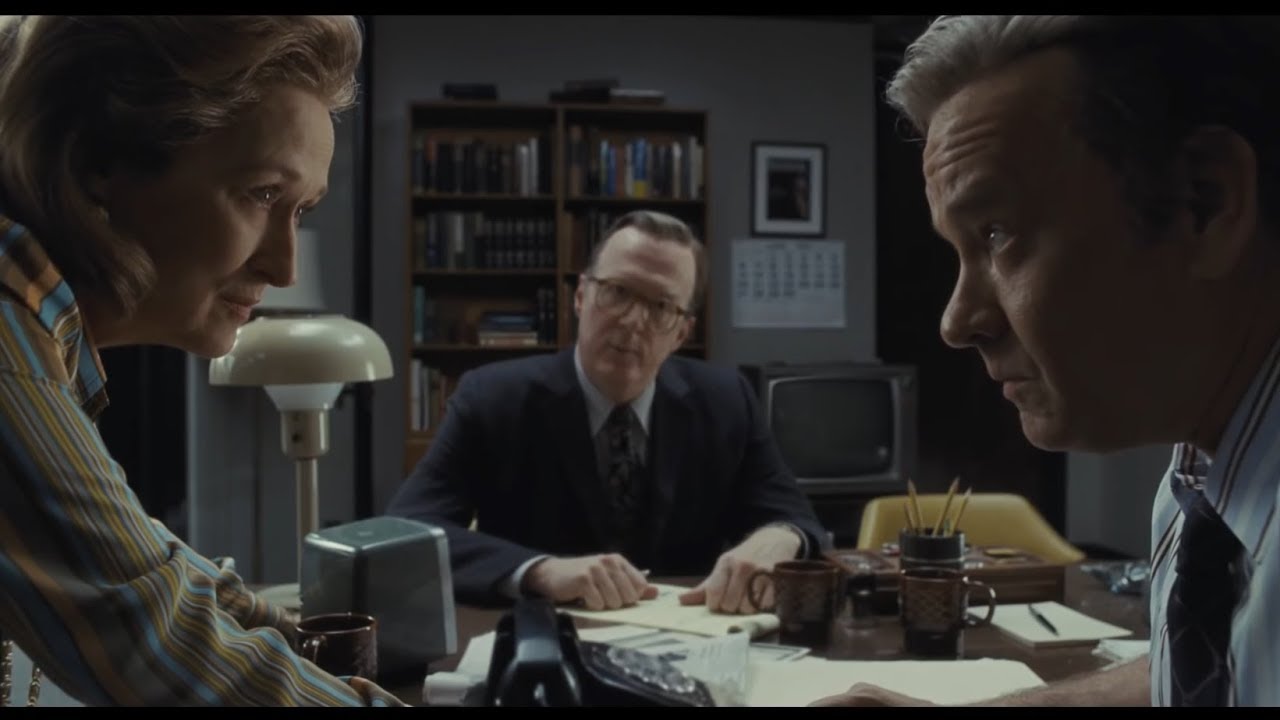
Tom Hanks and Meryl Streep in office in Steven Spielberg's The PostThose complications, and their attendant questions, occasionally threaten to rise to the surface. Do Graham’s socialite friendships with the powerful, or Bradlee’s allegiances to the Kennedys, affect the stories that can be told? What does the development of the Post’s ownership model, or its scoop-heavy ambitions, portend for the kinds of media that would proliferate in the years to come? Is a woman who occupies the most rarefied, whitest, wealthiest echelons of social power really the #MeToo icon the moment demands, a construction The Post goes out of its sappy way to underscore in the cringiest slo-mo shot of the year? Where are all the Black people?

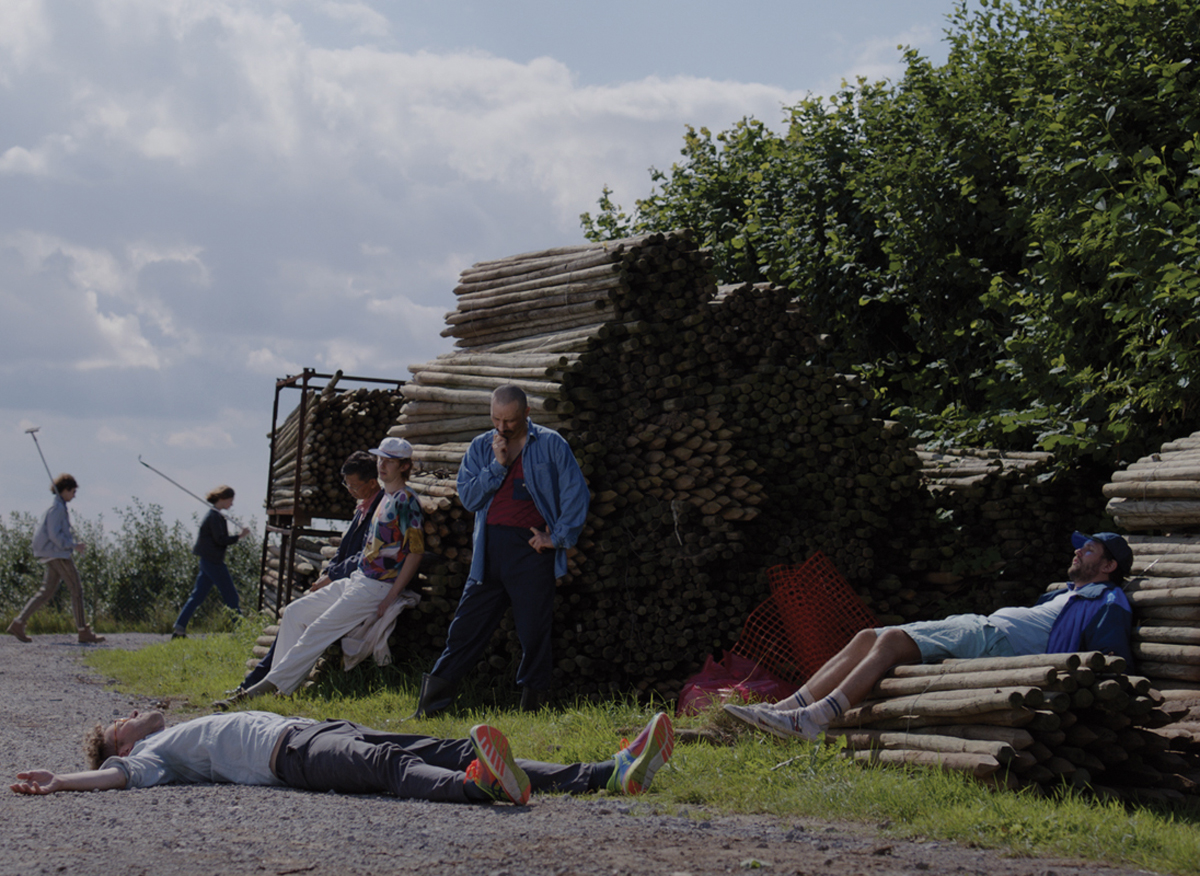
Spielberg and The Post entertain some of these questions, ignore others, and generally tamp down anything that can’t be encapsulated in declarative moments of lifeless uplift. Everyone is fine, everything looks fine, all the edges have been sanded down and the nostalgia custom gift-wrapped. Released with breathless urgency and no shortage of good intentions, The Post will be forgotten moments after exiting the theater. Of course it secured some nominations.

February 14, 2018 0 comments
0 FacebookTwitterPinterestEmail
Self-Criticism of a Bourgeois Dog
FilmReviews

Groucho Marxism: Self-Criticism of a Bourgeois Dog’s Socialist Comedy

by Lark February 12, 2018
written by Lark

Don’t let the name or the opening moments trick you: Self-Criticism of a Bourgeois Dog is not really about dogs. But that feint is itself representative of Julian Radlmaier’s comedy, which propels itself along by sudden swerves.

Its first real narrative thread is inauspicious: Radlmaier, playing himself, out of money to make his next film, is forced to work at a peach-picking plantation, convinces a woman (Deragh Campbell) he is doing research for a new film that he wants her to star in. (She’s rightfully suspicious: he just wants to sleep with her.) It is the dullest variation on the dullest story (director makes a film about himself trying to make a film), but it quickly turns into a meandering comedy.

Self-Criticism of a Bourgeois DogThe politics of the plantation are a little blunt and simplistic (the term “neo-liberalism” could be used a lot in describing it), but the film is saved by Radlmaier’s incredible eye for comedic shot construction. As both director and star, he has a Chaplinesque combination of skills, both at framing a shot to tell a joke on its own and at using his tall, lanky body in inherently funny ways.

Eventually, he fades away, and Bourgeois Dog becomes more of a free-floating comedy on Marxist themes. One section in particular — in which two workers are convinced that the Communists have taken over Italy, and wander around, convinced every sign is proof of the successful revolution — is such a clever idea that I’m shocked I haven’t seen it before.

MUBI’s description compares it to Bunuel, but I’m not sure outside of their shared political beliefs that’s entirely fair. Bunuel may have abandoned narrative form, but usually held carefully onto his concepts. Godard seems a better comparison, both for Radlmaier’s careful Academy ratio compositions and for his floating form.

But if he’s like Godard, it’s Godard at his funniest, his most humane, and his least doctrinaire. Despite some touchy aspects (even as the subject of a comedy, no one needs another film about misogynist directors), it’s a real accomplishment and something to be shared.

February 12, 2018 0 comments
1 FacebookTwitterPinterestEmail
Newer Posts
Older Posts

About

About

Towards a provisional theory of the cinema, or, failing that, just some shit about movies

Authors
Rick Kelley
Lark Lundberg

Keep in touch

Facebook Twitter

Categories

  • Conversation
  • Film
  • Film By Film
  • Great Movie Project
  • Great Movies: The Counter Programming
  • Guest
  • News
  • Other
    • Commentary
    • Film
    • Interview
    • Reviews
    • Song for a Sunday
  • Streaming Selections
  • TV
  • Uncategorized
  • Vegan Horror

Archives

  • April 2019
  • March 2019
  • January 2019
  • December 2018
  • November 2018
  • October 2018
  • September 2018
  • August 2018
  • July 2018
  • June 2018
  • May 2018
  • April 2018
  • March 2018
  • February 2018
  • January 2018
  • December 2017
  • November 2017
  • October 2017
  • September 2017
  • August 2017
  • July 2017
  • June 2017
  • May 2017
  • April 2017
  • March 2017
  • February 2017
  • January 2017
  • December 2016
  • November 2016
  • October 2016
  • September 2016
  • August 2016
  • July 2016
  • June 2016
  • May 2016
  • April 2016
  • March 2016
  • February 2016
  • January 2016
  • December 2015
  • October 2015
  • September 2015
  • August 2015
  • July 2015
  • June 2015
  • May 2015
  • April 2015
  • March 2015
  • February 2015
  • January 2015
  • December 2014
  • November 2014
  • October 2014
  • August 2009
  • September 2008

Recent Posts

  • China Girls, Death Proof, and the Hidden Face
  • Old News: Old Noise Edition
  • Old News: April 1, 2019
  • Nicolas Winding Refn, Marginalia, and the Deaths of Cinema
  • And now, let us praise Kanopy

Recent Comments

  • Franklin Kat on Michael Shannon shines again in Frank & Lola
  • Sean Tempesta on Cinema and dream-logic in Meshes of the Afternoon
  • ludditerobot on The Left-Wing Slapstick and Iconic Songs of 1937’s Street Angel
  • Franklin Kat on The Left-Wing Slapstick and Iconic Songs of 1937’s Street Angel
  • Arijit Mukherjee on Great Movies Project: The Counter-Programming
  • Facebook
  • Twitter

@2021 - All Right Reserved. Designed and Developed by PenciDesign


Back To Top
Luddite Robot
  • Reviews
  • Commentary
  • Great Movie Project
    • Great Movie Project
      Bride of Frankenstein is a movie for and…

      January 25, 2018

      Great Movie Project
      The Enduring Appeal of Nick and Nora in…

      November 29, 2017

      Great Movie Project
      The Ahistorical Fever Dream of The Scarlet Empress

      August 2, 2017

      Great Movie Project
      Dreams, Mundanity, and the Anarchist Yearnings of L’Atalante

      July 12, 2017

      Great Movie Project
      Duck Soup Is And Will Always Be A…

      April 19, 2017

  • Counter Programming
    • Great Movies: The Counter Programming
      Walking and Talking in the Shadow of Kanchenjungha

      March 7, 2018

      Great Movies: The Counter Programming
      A Brief Encounter in My Mother and Her…

      February 9, 2018

      Great Movies: The Counter Programming
      Horror’s Refusal in Farrokhzad’s The House Is Black

      October 13, 2017

      Great Movies: The Counter Programming
      The rage and beauty of The Cloud-Capped Star

      October 3, 2017

      Great Movies: The Counter Programming
      The daylight noir and social issue empathy of…

      June 22, 2017

  • Vegan Horror
    • Vegan Horror
      Julia Ducournau doesn’t think her film Raw is…

      June 7, 2017

      Vegan Horror
      Licking our wounds: The vampiric masculinity of Ravenous

      December 13, 2016

      Vegan Horror
      Eggertsson and animals: An approach to horror cinema

      September 15, 2016

      Vegan Horror
      “It’s Not My Nature” – Vegetarianism, Body Horror,…

      August 30, 2016

      Vegan Horror
      Bodies and Carcasses in Predator 2

      August 23, 2016

  • Interview
    • Interview
      Jasmine Leyva’s doc The Invisible Vegan aims to…

      May 3, 2017

      Interview
      Bridging The Abyss: An Interview With The Directors…

      November 28, 2016

      Interview
      7 Days in Ohio: An Interview with Nathan…

      September 12, 2016

      Interview
      Film Critic Phil Dy talks New Filipino Cinema

      June 17, 2016

      Interview
      “I Love Seeing Film Projected.” A Conversation with…

      March 22, 2016